Softly Softly: Task Force – Better Than Doing Porridge

S0312 (22nd December 1971). Written by Tony Hoare, directed by Keith Williams

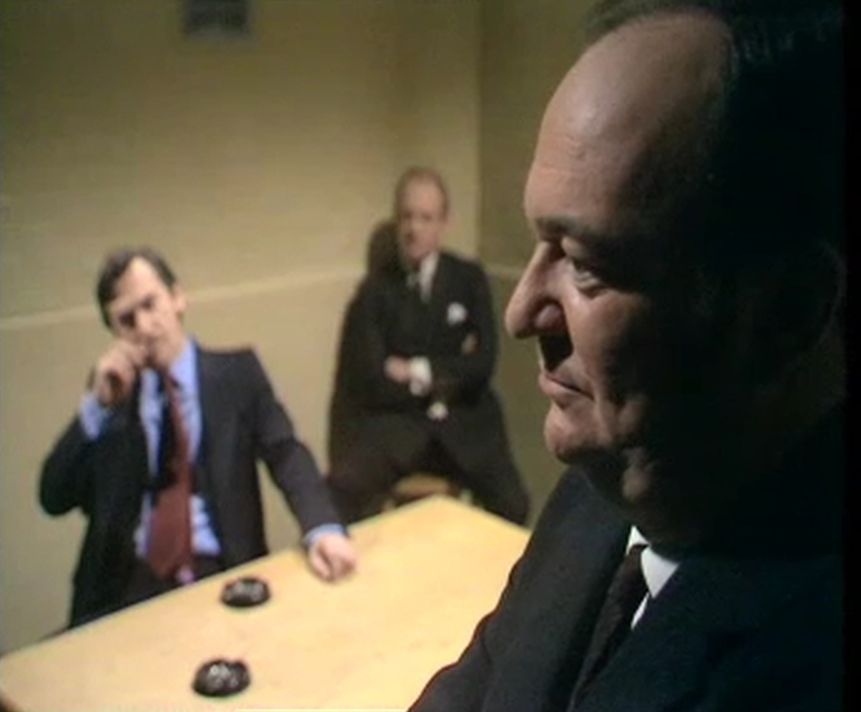
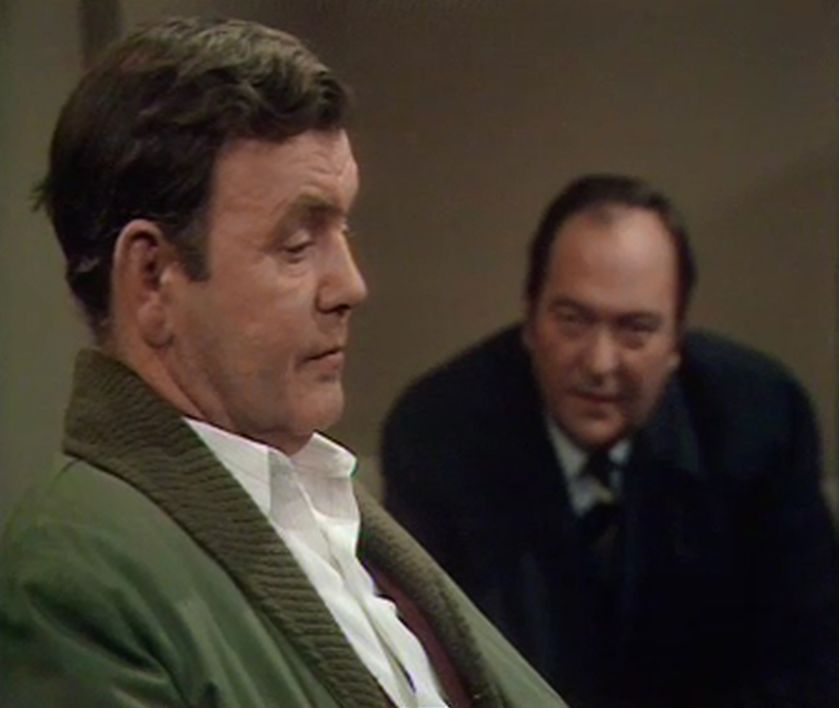
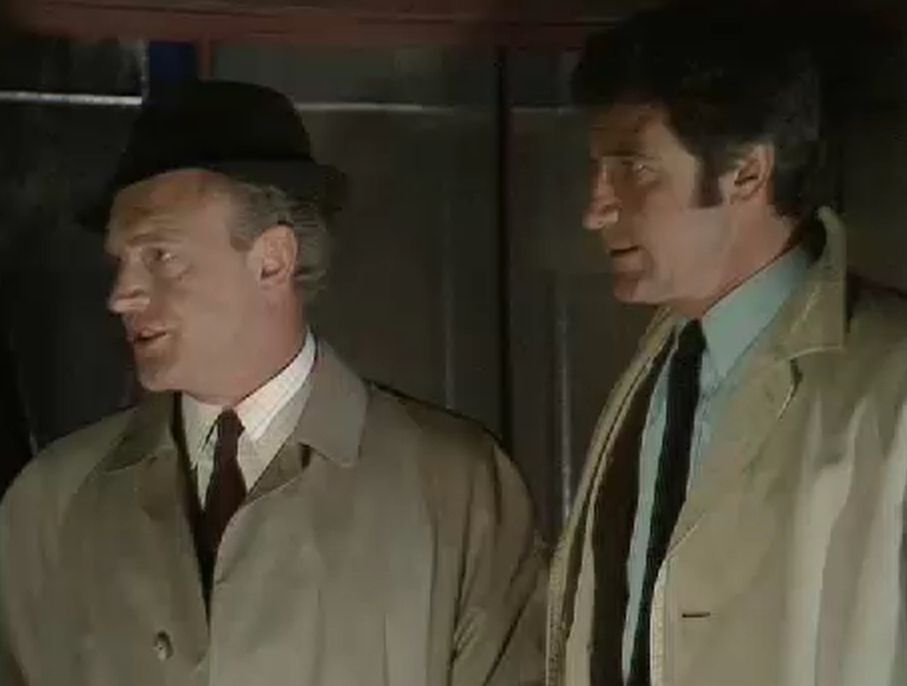
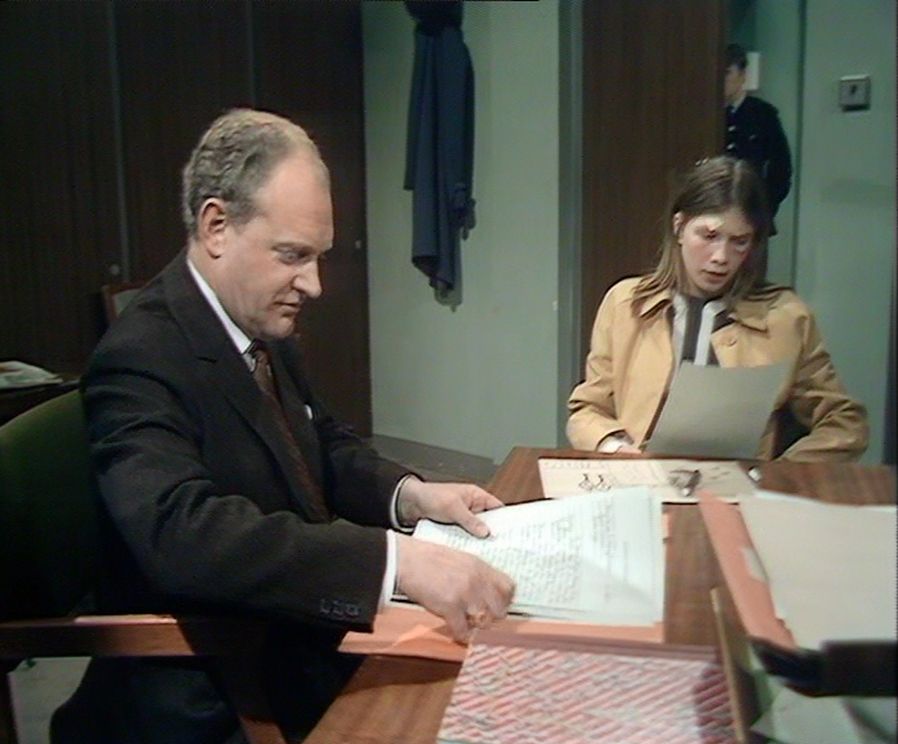
Ernie Johnson (Patrick Troughton) is an experienced career criminal and therefore seemingly the last person to volunteer a confession to Barlow. But with Ernie’s trial just hours away, Barlow has a plan …

Better Than Doing Porridge was the first Softly Softly: Task Force script written by Tony Hoare (and one of his earliest television credits). Doing porridge was something that Hoare was more than familiar with – having spent the best part of ten years in one prison or another. Eventually deciding that writing was “better than going to a factory in the morning or doing bird” he started to turn his life around. This began during his final prison stretch where he wrote a book, called The Chaps, which was later turned into a radio play.

Hoare’s background was something that, for obvious reasons, informed most of his television work. Later he became a key writer on Minder, but before that – during the early to mid seventies – he plied his trade on a number of series (Crown Court, Villains, Within These Walls, The Sweeney) which all benefited from his previous criminal background.

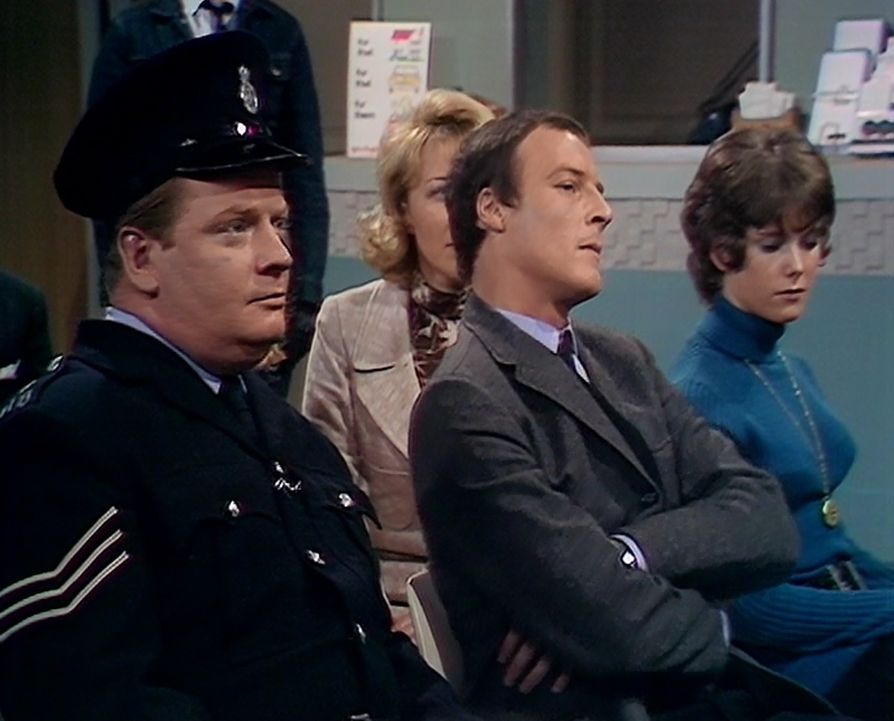
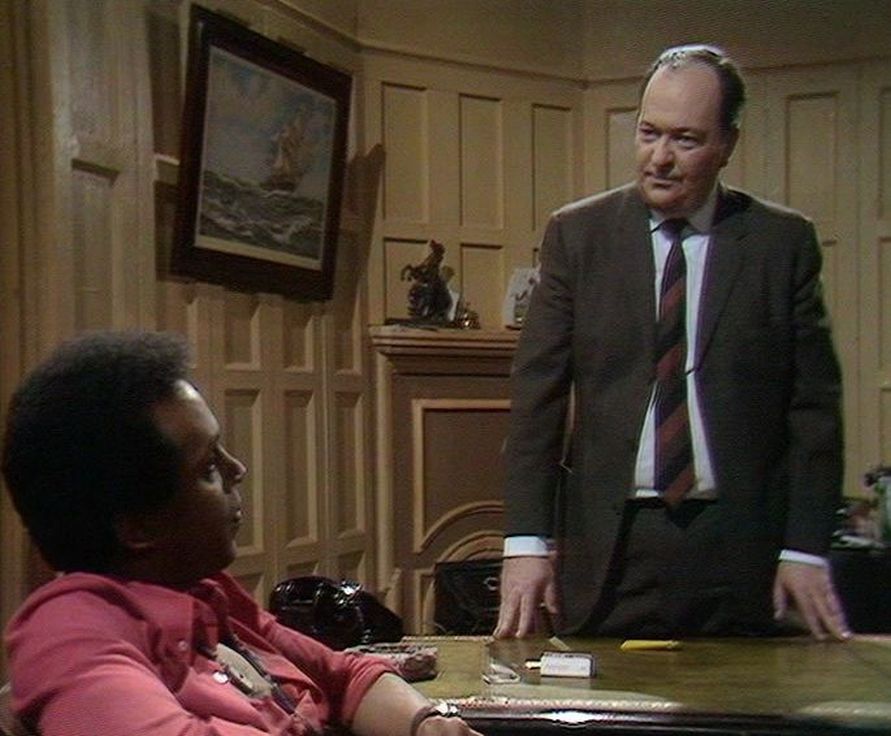
This can also been seen in his work for SS:TF. The main settings of today’s episode – a holding cell and interview room beneath a crown court – and the interaction between the prisoners and warders all has an unmistakable air of authenticity.

Barlow professes to understand the way Ernie’s mind works. It’s not quite admiration – although Ernie is portrayed as an older, more honourable villain (compared to his younger and more vicious colleagues) – but rather Barlow is confident that he knows which of Ernie’s buttons to press in order to get the result he wants. Watt is a little less sure but Barlow’s desire for a result overrides any other consideration.

Apart from a few brief location shots, the episode remains underground. So the lack of natural light and an obvious feeling of claustrophobia begins to seep through the screen after a while.

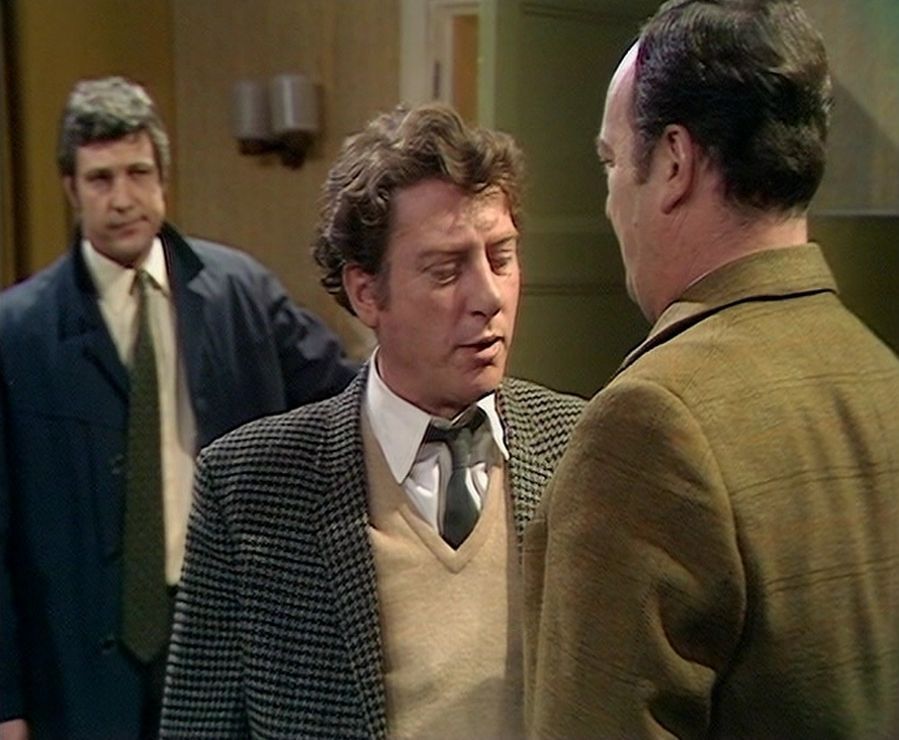
After Ernie goes off to speak to Barlow and Watt, his associates – Georgie Benson (Billy Murray), Harry Grant (Ralph Watson) and David Morgan (Frank Jarvis) – remain behind. Initially, Ernie seemed to be the leader – the one that the others deferred to (because of his age and the amount of prison time he’d done?). But as the time ticks away and still Ernie doesn’t return, a palpable sense of unease begins to haunt the other three. Could Ernie, despite his strong adherence to the criminal code, be considering grassing them up?

Murray, Watson (yay, Web of Fear reunion) and Jarvis are all perfectly cast. Billy Murray makes the strongest impression out of the three and their holding cell conversations are given a little extra spice thanks to the presence of Desmond Wetherby-Jones (Michael Lees). He’s an immaculately spoken conman, due to appear in a separate trial, and though he appears to have little in common with them, he still manages to rub along quite agreeably. Glynn Edwards, as the senior prison officer, offers another solid performance.

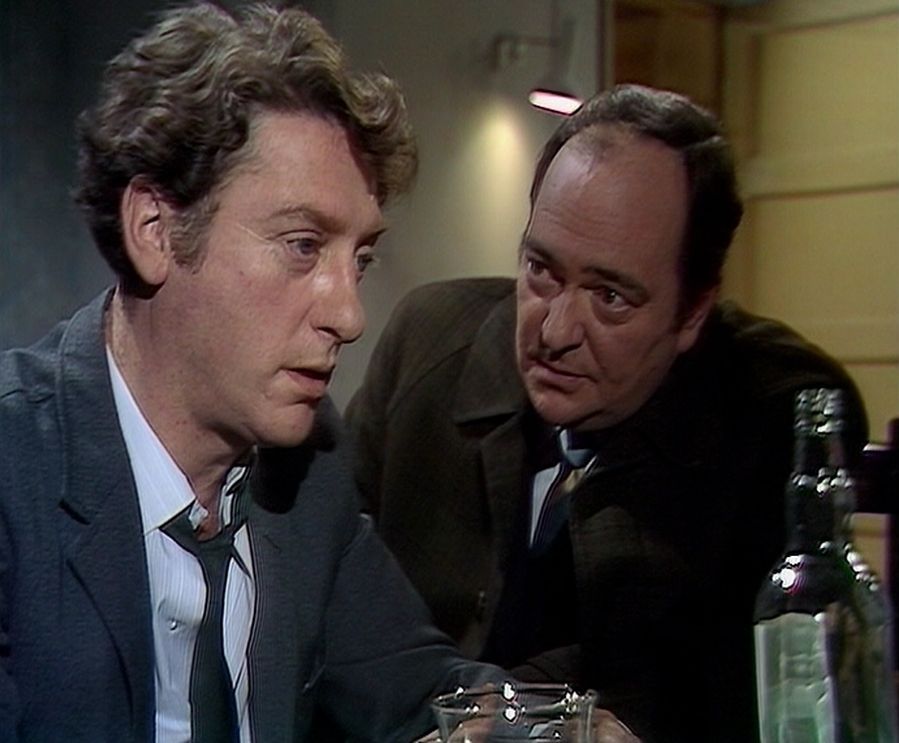
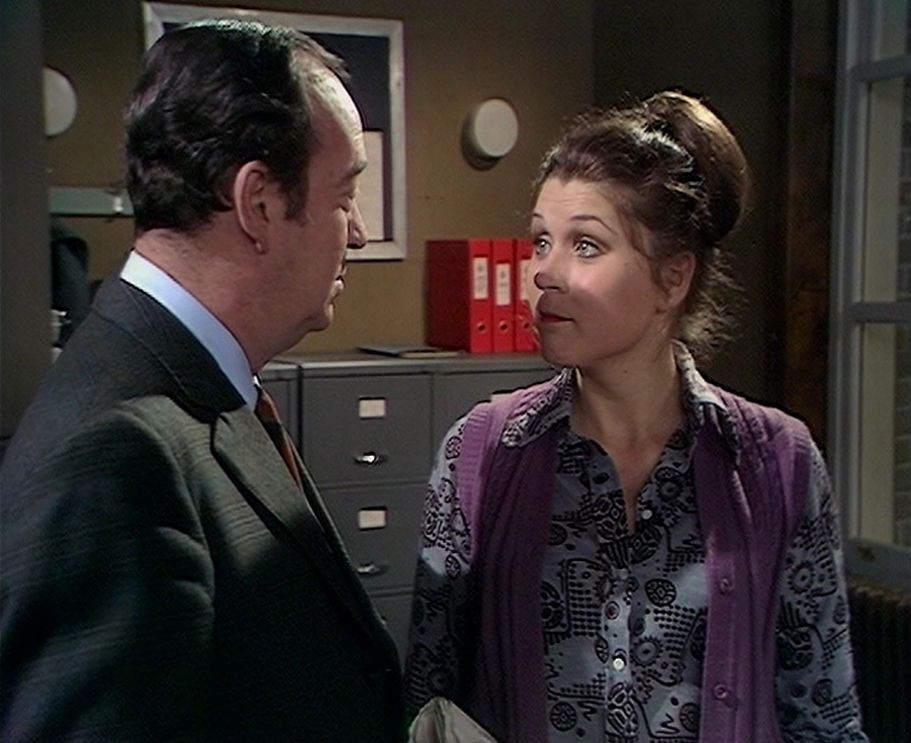
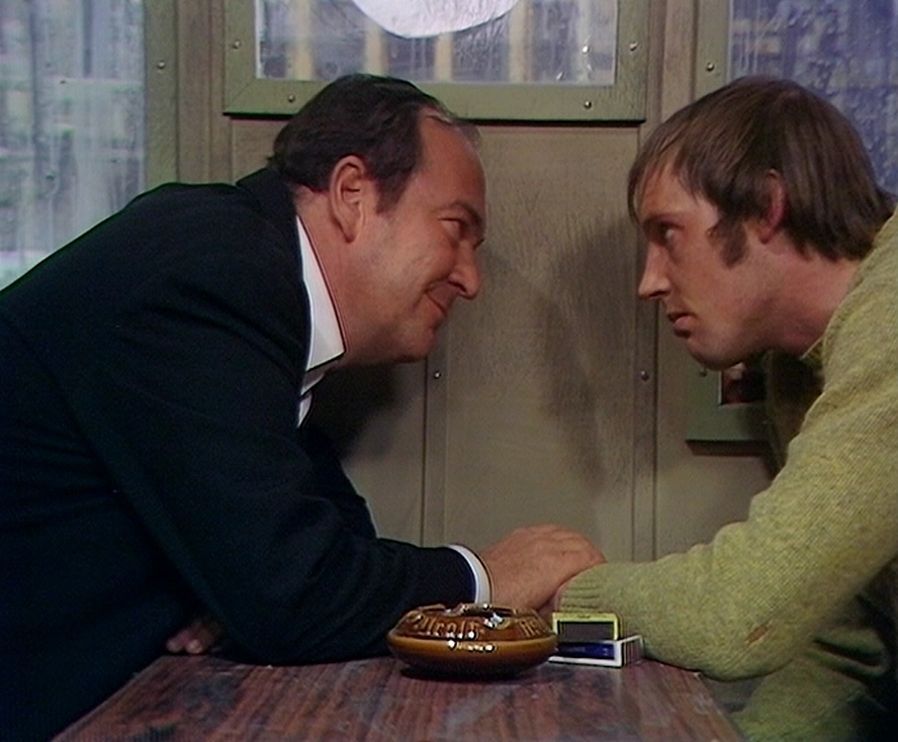
The bulk of the episode revolves around Ernie’s increasingly fraught conversations with Barlow and Watt. They take turns playing bad cop and worse cop, although there aren’t that many threats – Barlow is content to slowly chip away at Ernie’s self image. That Ernie’s façade only shatters after his wife (Gabrielle Hamilton) convinces him to cooperate with Barlow does slightly negate the lengthy Barlow/Watt/Ernie scenes. Dramatically it would have been good to see Barlow finally break his man, but it feels more realistic this way. It goes without saying that Troughton is immaculate throughout.

Ernie’s future (a reduced sentence and then release into a criminal world that will know he’s grassed) seems bleak. Especially since the criminal code was the most important thing in Ernie’s life (until, at the last minute, he was persuaded to put his family first). Better Than Doing Porridge concludes with a satisfied Barlow and Watt leaving the cells, but Tony Hoare’s script suggests that the cost to Ernie and his family is a substantial one. Definitely an unusual episode, which makes it all the more fascinating.

Softly Softly: Task Force – Good Touches

S03E11 (15th December 1971). Written by Arnold Yarrow, directed by Frank Cox

PC Drake is concerned about a recent crimewave which has seen the same people burgled on multiple occasions. One victim especially – Helen Morris (Elaine Mitchell) – is now so traumatised that she’s become a virtual prisoner in her own flat …

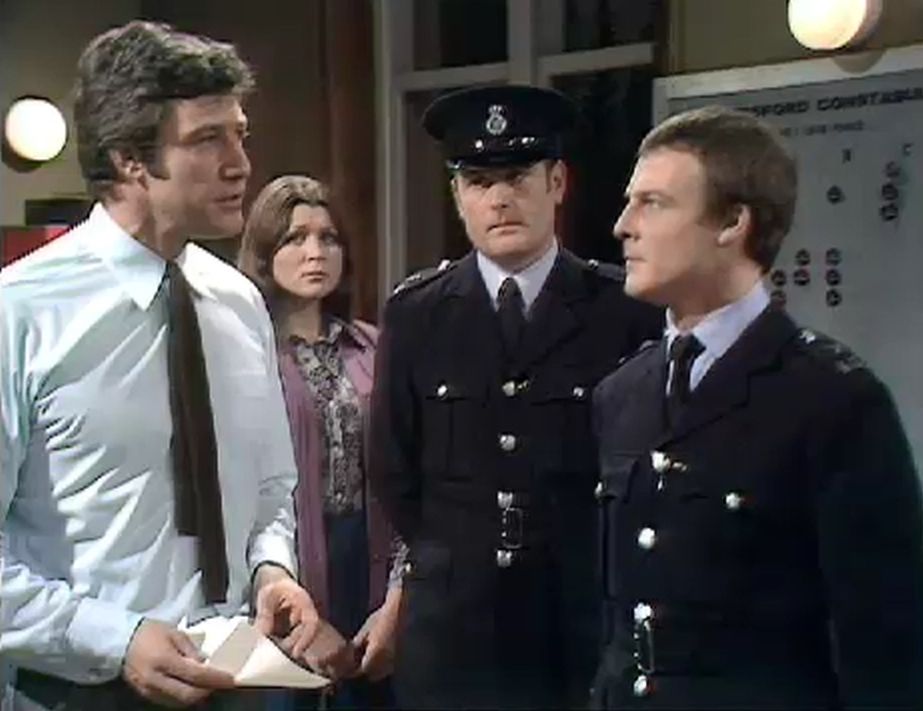
Good Touches pleasingly brings the character of PC Drake to the fore. This was Brian Hall’s seventh appearance, and it’s really the first to find out what makes Drake tick. We also discover his first name (Ted) which the others start calling him on a regular basis. This takes a little getting used to.

Drake kicks off the story by visiting Miss Morris. Several years before he’d been part of the team who investigated her first burglary and decided to investigate when he saw her name on a recent crime sheet. That he rushed out of the office without telling anyone where he’d gone doesn’t please Hawkins (not one little bit). Barlow and Watt are both mentioned, but never seen, so it’s Hawkins running the show today – and he’s content to give Drake a hard time.

Later on, there’s a few more nuggets of information about Drake dished out. We learn that he used to be a plain clothes CID officer – so why is he now a uniformed constable? That remains a mystery, but it suggests that his career has been a checkered one. His lackadaisical approach to paperwork (allied to a photographic memory which gets him out of trouble at the last minute) is a character beat that’s been established before, and is repeated here.

Drake and Forest team up today as they toil to work out a statistical model to predict which previously burgled victims might be vulnerable again. Having not had much to do for a while (Julie Hallam last appeared in Marksman, but didn’t feature heavily) this is also a decent episode for Forest, whose ability to crack jokes at the most inappropriate times remains a key character trait.

That the cocky and streeetwise Drake isn’t half as clever as he thinks is made plain after he pumps an old snout, Sam Lester (Anthony Collin), for information. Lester’s unreliability is known to both Hawkins and Snow (and by this point in the episode also by the audience, who will have worked out that Lester is passing information onto today’s villains – Dave and Allen Venner).

Apart from Miss Morris, the episode also sketches out several other multiple burglary victims – the affluent Mr and Mrs Spender (Kenneth Watson and Libby Glenn) and the far from affluent (but remarkably cheery) John Tyler (Donald Eccles). So with several potential victims, Arnold Yarrow is able to leave the audience in suspense for a while about who will suffer again.

That Miss Morris is chosen works well from a dramatic viewpoint (her utter collapse as the Venners drill through her door is well played) although it does seem a little illogical. The only item of value she appears to have now is a new colour television set – I know they were relatively rare in the early seventies but it seems a poor reward for an aggravated burglary.

A good episode from a character viewpoint, even if the plotting isn’t always watertight.

Softly Softly: Task Force – Man of Peace

S03E10 (8th December 1971). Written by Elwyn Jones, directed by Philip Dudley

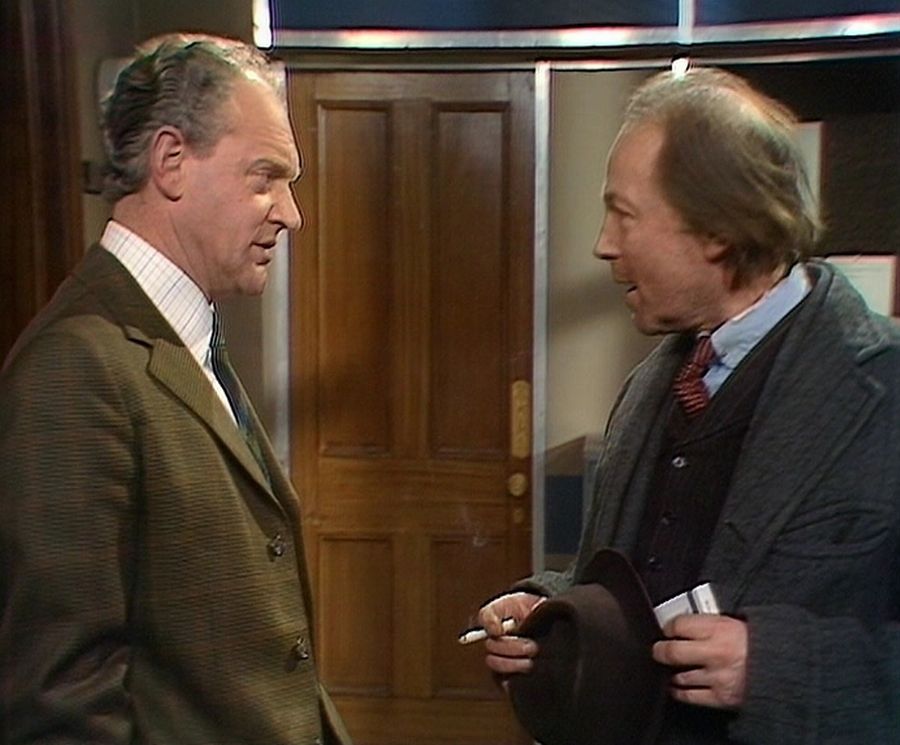
Even compared to other series of this era, Softly Softly: Task Force often had a very leisurely approach to storytelling. Man of Peace is a good example of this.  Watt is visited by a petty criminal and informer from his distant past (Tim Patrick, played by Allan McClelland) who has some interesting information to pass on.

But nearly ten minutes elapse before we learn what it is (Patrick claims to know where a large number of revolvers can be bought). As so often, this crime isn’t the focus of the episode.  Instead Elwyn Jones is much more concerned with developing character – in this case, Patrick’s.

Patrick is endlessly slippery, which helps to generate interest, as do the reactions of those he encounters. John Watt for one, who initially treats him with barely concealed contempt before kicking him out. The fact that Watt is then forced to track him down (when it becomes clear Patrick does know something) is a humiliation – made worse by the fact that Barlow is on hand to twist the knife.

It’s interesting that the previous episode revolved around Barlow’s interaction with a face from his past and Man of Peace does the same with John Watt. And like the previous episode, Tim Patrick is a character who’s never actually appeared in Z Cars or Softly Softly (although Allan McClelland did have several Z Cars credits to his name and would also turn up later in the Barlow/Watt Jack The Ripper).

This is an episode very much powered by a guest performance  (the experienced McClennad is excellent value). Man of Peace has a faint comic air, although I don’t know whether PC Snow’s Irish accent was supposed to be that bad.

An appearance by Anthony Booth is another plus of a typically dialogue-heavy story which in the last ten minutes or so begins to generate a faint feeling of suspense.  Booth (playing Smith) was always an imposing actor and he’s well matched when placed opposite Terence Rigby’s Snow.

It’s true that Snow, posing as an Irish terrorist, does infiltrate Smith’s gang rather easily (which turns out to be a rather feeble one) but as previously stated, SS:TF wasn’t a wham-bam series. Character development was always more important than simply nicking villains.

Softly Softly: Task Force – Copper Wire

S03E09 (1st December 1971). Written by Keith Dewhurst, directed by Peter Cregeen

The district has recently been hit by a wave of metal thefts. When a lorry carrying copper wire is stopped and the passenger turns out to be Tiger Mulholland (Peter Kerrigan), an old adversary of Barlow from his Newtown days, he can’t resist stepping in to see if he can break him once more …

Copper Wire only features two regulars – Evans and Barlow – which means that there’s plenty of time to develop the character of Tiger. For example, an early scene where he’s enjoying breakfast in the company of Alice West (Barbara Keogh) and her daughters Marie (June Page) and Janice (Pauline Quirke).

The episode could have excised this scene and it wouldn’t have hurt the story that much, but I’m glad it was kept in as it reveals a great deal that Tiger later verbally confirms to Barlow. Tiger’s estranged from his wife and is living (uneasily) with Alice, but has his eye on her underage daughter, Marie. This is a tad unsettling, although it doesn’t become a major story beat – it’s just a detail that helps to flesh out Tiger’s character.

June Page gets a few lines, but Pauline Quirke doesn’t (although she did earn a credit). Given this, it’s surprising that Linda Regan went uncredited, as though she also didn’t have any lines, she was on the screen for about the same length of time as Quirke. Regan’s role wasn’t a taxing one – she played a dollybird in a very short skirt who is pawed by Tiger’s colleague, Jeff (James Marcus).

I wonder if Quirke had some dialogue which was later cut? There are certainly a few abrupt scene transitions early on which suggests that some material might have been trimmed in order to bring the episode down to its required length.

The episode veers from comic to dark. Touring yards where metal thefts might occur, Evans speaks to Cosway (Wally Thomas) about the need to tighten up security. But Cosway spends most of his time lecturing Evans about his excessive weight (the Sergeant then reveals the fascinating nugget that he’s learning ju-jitsu at evening classes!)

Barlow’s usual driver is unavailable, so Evans – in the early hours of the morning – is given the job of picking up his very refreshed superior and delivering him safely home. Of course, things don’t work out like that, after Barlow learns that Tiger is in custody …

Once at the station, Barlow begins by demanding plenty of coffee and then runs roughshod over the unfortunate Inspector Lipton (Victor Brooks). Later on he proceeds to criticise the nightwear of Osbaldeston (Allan Surtees) – the man dragged out of bed to examine Jeff’s lorry.

At this point it almost feels like the episode could descend into farce thanks to a tipsy Barlow, but then events take an abrupt about turn with a pulsating twelve minute scene between Barlow and Tiger. There’s so much to unpack during this lengthy scene, beginning with Barlow’s nostalgic reminisces about their Newtown days (a pity that Peter Kerrigan hadn’t actually appeared alongside Stratford Johns in an old Z Cars episode, but Copper Wire insists that he did, so I’m sure the audience would have been prepared to take it on trust).

It seems that Barlow’s unlikely to break a wily old-timer like Tiger, and indeed the tables begin to turn as Tiger wonders if Barlow – always an ambitious man – in happy now he’s achieved several promotions. There’s a sense that he’s personally unfulfilled (the oft-mentioned but never seen Mrs Barlow won’t be waiting up for him).

Tiger does eventually confess (because he’s afraid he’s dying). Barlow offers him a fraction of comfort (the gentlest of taps on the shoulder) before leaving. Was he really moved? His conversation immediately afterwards with the Inspector suggests not – so was their entire one-to-one discussion all an act from Barlow? Maybe, maybe not. Keith Dewhurst’s script (his first for the series) lets the viewer make their own minds up.

It’s getting a bit monotonous to keep on saying so, but the series is really going through a purple patch at the moment.

Softly Softly: Task Force – Marksman

S03E08 (24th November 1971). Written by Allan Prior, directed by Brian Parker

After a bungled armed robbery at a betting shop, which leaves a young constable blinded in both eyes, the hunt is on for three men …

Marksman opens with Hawkins and Watt both taking a weapons refresher course. Hawkins throws himself into everything with extreme gusto (and kudos to Norman Bowler, who clearly didn’t mind getting rather muddy). Afterwards, Hawkins is remarkably blasé – declaring that when the time comes, he’ll have no more trouble shooting a live target than the paper ones he’s been blasting away at today. Watt, older and more cynical, isn’t so sure.

From these opening scenes it’s not hard to guess how the story will develop, but although the ending is predictable (based on what’s been established right here) the story still carries a punch. That’s because gunplay in SS:TF was pretty rare – yes, we’ve seen armed robbers before (in Hostage, for example) but guns tend to be waved around, rather than actually fired.

In that respect, SS:TF has little in common with later, more action-based, police series like The Sweeney. That’s not a criticism though – the fact guns are used sparingly gives them much more of an impact whenever they are central to a story (plus, as seen in this episode, weapons aren’t portrayed in a glamourous light).

The unfortunate PC Harris wanders into a rather crowded betting shop. But by the time Watt and Hawkins turn up, many of the customers have mysteriously vanished. In production terms this is easy to understand (most of the actors were non-speaking extras and so couldn’t have contributed anything). Mrs Goldsmith (Dot Temple), one of those left, is able to provide Watt with several important nuggets of information. Most crucially, a lead to one of the robbers – Joey (Oscar James).

That they’re not the most organised of villains is made plain by the fact that, under stress, they shouted out each others names (overheard by the calm in a crisis Mrs Goldsmith). The fact that the shooter – Blakey (William Corderoy) – used his own vehicle as the getaway car is another black mark against them.

Blakey is a loathsome individual – a loud-mouthed, cocky type with no redeeming features at all. The way he treats his poor downtrodden wife, Marion (Sarah Golding), hammers this point home. When the pair first meet on screen he calls her a “silly bitch” and he ends the episode by punching her in the face.

Compared to him, Murray (Tony Caunter), is a knight in shining armour. As an experienced criminal, he knows that Blakey’s exuberance with the shotgun spells disaster for them all. Quite why Murray remains holed up with Blakey and Marion in their farmhouse is a little hard to fathom – yes, it’s isolated but surely Murray would have been sensible enough to put some distance between them?

I can understand in story terms why it didn’t happen – Blakey and Murray need to remain together so they can talk through the implications of their situation – but it does slightly jar.

Cullen has a few brief, but very telling scenes. Firstly, bristling with anger at the thought of PC Harris’ condition and then electing to lead from the front as he tells Mrs Harris (Julie Neubert) the bad news about her husband. We’re not privy to that conversation, but it’s easy to imagine just how painful and awkward it must have been.

Joey, who decided not to remain with the others, is swiftly tracked down by Watt, Hawkins, Snow and Forest. His rooms are given a violent once-over and Watt is pretty rough (verbally, not physically) when questioning him. Excellent work from both Frank Windsor and Oscar James here.

Thanks to Joey, the Task Force now know where the others are hiding and Hawkins, Snow and Watt arm themselves in preparation. Again, the difference between Hawkins and the others is marked – he receives his gun and ammo casually, whilst Snow and Watt are far more sober. In this scene Snow seems to suggest that Radar won’t be present during the operation (for him, as for the audience, the death of his previous dog – Inky – still resonates).

That moment is somewhat negated later though, as Snow sets Radar on the fleeing Murray. For one terrible moment it looks like another police dog might bite the dust – but good old Radar was more than a match for Murray (played in this scene by a stuntman – Murray’s sudden increase of hair is a bit of a giveaway).

That just leaves Blakey, who’s shot (dead, I assume) by Hawkins. And of course, after Hawkins has seen the reality of his actions, all his earlier self assurance rather crumbles away …

There’s little to fault in Marksman. Frank Windsor leads from the front, with Norman Bowler providing solid support (which suggests how the series will feel once Stratford Johns has departed for his own series).

Softly Softly: Task Force – The Bounty Hunter

S03E07 (17th November 1971). Written by Robert Barr, directed by Gilchrist Calder

The series has been on a bit of a roll recently. I wonder if this good run will continue? (Spies Robert Barr’s name in the opening credits). Oh dear ….

That’s possibly a little unfair, as although Barr’s scripts haven’t always been the strongest, The Bounty Hunter isn’t that bad, even though the first twenty minutes moves at a glacial pace.

The episode opens with the arrival of a man called James Langley (David Sinclair). He wanders around the town, taking in the sights, but it becomes clear that he’s searching for something (Langley’s taking his time about it though). The film work during these scenes are nice enough, but it just feels like padding (or maybe the series had a certain film allocation for the episode and was determined to use it – whether it benefited the story or not).

We learn that Langley is looking for William Ross (Prentis Hancock). Ross is an associate of Jimmy Price (Hugh Murray), who’s currently serving time for bank robbery. Langley speaks to Price’s father (played by Jimmy Gardner), his wife Betty (Bonnie Hurren) and a friend – Lawrence Morgan (David Hargreaves). All claim not to know where Ross can be found, but eventually (about twenty minutes in) Langley and his fellow strong-arm colleague, Harry Dalton (Mark Moss), manage to run him to ground.

By this point you’re probably wishing that Langley had met Ross within the first five minutes or so, it certainly would have saved all this faffing about. Positives from the first half of the episode? Jimmy Gardner provides a nice turn as Price Snr and there’s a few brief, but entertaining, scenes between Barlow and Watt.

But it’s only when Langley meets Ross and can begin to explain today’s plot that the story really gets going. Price Jnr, Ross and Morgan pulled a bank job several years ago – Ross is doing time for it, but the money (never recovered) is still somewhere on the outside. Langley and Dalton want half of it ….

Villains robbing villains is a nice twist on the more traditional type of plot and David Sinclair exudes considerable menace as Langley (he’s not an actor that I’ve ever really noticed before, but I’ll keep an eye out for his performances in the future). More familiar faces from this era of television for me were David Hargreaves and Prentis Hancock.

Ross (Hancock) – modelling a nice moustache – is the unfortunate one who gets beaten up several times by Langley and Dalton. Although it’s very noticeable that it always happens off-screen (Ross simply reappears with a dash of blood about his mouth or a bruise on his cheek). Was the series that squeamish about pre-watershed violence?

The Task Force are less essential to the story than usual. True, they round up all the baddies at the end and retrieve the money, but the guest actors are the ones who get the most to do. Barlow and Watt share a nice (if brief) pub scene early on though and there’s some comic mileage to be mined from the bun-eating Sergeant Evans.

Slow to get going then, but it turns out to be worth it in the end. The Bounty Hunter was the first of twelve SS:TF stories directed by Gilchrist Calder who would later also work on Barlow at Large and the Barlow/Watt spin offs Jack the Ripper and Second Verdict.

Softly Softly: Task Force – An Inside Job

S03E06 (10th November 1971). Written by James Doran, directed by Keith Williams

As the episode title suggests, Barlow is convinced that a supermarket manager called Dent (Ray Mort) was involved in a robbery from his store (four thousand pounds was taken from the safe). Harry Hawkins is less sure though ….

One of those episodes with a small supporting cast, An Inside Job features a memorable performance from the always-dependable Mort. Dent is obviously a weak man (capable of sudden outbursts of bluster, but easily bested by both his wife and teenage son) which makes it easy to believe that he could have given the keys to a criminal type.

Barlow is sure this is so and delights in putting the squeeze on the increasingly twitchy Dent. When Hawkins later queries whether he’s been too hard, Barlow responds with the flicker of a wolfish smile. You really never, ever want to get on Charlie Barlow’s bad side ….

Dent seems to have few allies. His wife – Alice (Eve Pearce) – wants to be supportive but finds it easy to believe the worst of him whilst his teenage son, Philip (Spencer Banks), delights in spilling the beans about his father’s past misdemeanours.

DC Forest has another fairly substantial role – initially teemed up with the always droll Evans (who’s seemingly fully recovered from the trauma of the previous episode). It’s good to note that Julie Hallam during the last few episodes has been very solid (hopefully her performance in Aberration was just a one-off).

There’s a late visit by Hawkins to a criminal hidey-hole, which is decked out in a breath-taking example of gloriously bad-taste seventies décor. The clothes, sported by Brabham (Roy Macready) and the other villains are also very entertaining.

An Inside Job, thanks to Mort, is a vaguely uncomfortable watch. Although the crime is solved, it’s plain that the repercussions will linger on (the final scene between Barlow and Dent is very compelling).

Softly Softly: Task Force – Moving On

S03E05 (3rd November 1971). Written by Arnold Yarrow, directed by Keith Williams

It’s possible to argue that by this point SS:TF had settled into rather a cosy rut (although the series was still producing high quality stories on a regular basis). If you accept this, then Arnold Yarrow’s Moving On is certainly a shock to the system …

The episode begins quietly enough, with some more character development for PC Drake. His somewhat lackadaisical approach to paperwork and a lack of respect for his superiors irritates the more strait-laced PC Snow and there’s a nice feeling of tension teased out between them. Although later, when assigned together on the night patrol, they work together well.

With Barlow absent entirely and Watt away from the district (chasing up a subplot on a cross-channel ferry) it falls to Sergeant Evans to marshal the troops. We’ve seen flashes of Evans’ hard side before, but he’s never been quite as remorseless as this.

He kicks off by dismissing a sticker campaign that offers help with “drugs, landlords, contraception, abortion”. These aims are laudable enough, but Evans doesn’t like the people offering advice (which will become a key theme of the episode). Evans then informs the squad that their targets tonight will be “layabouts, hippies, whatever they like to call themselves”.

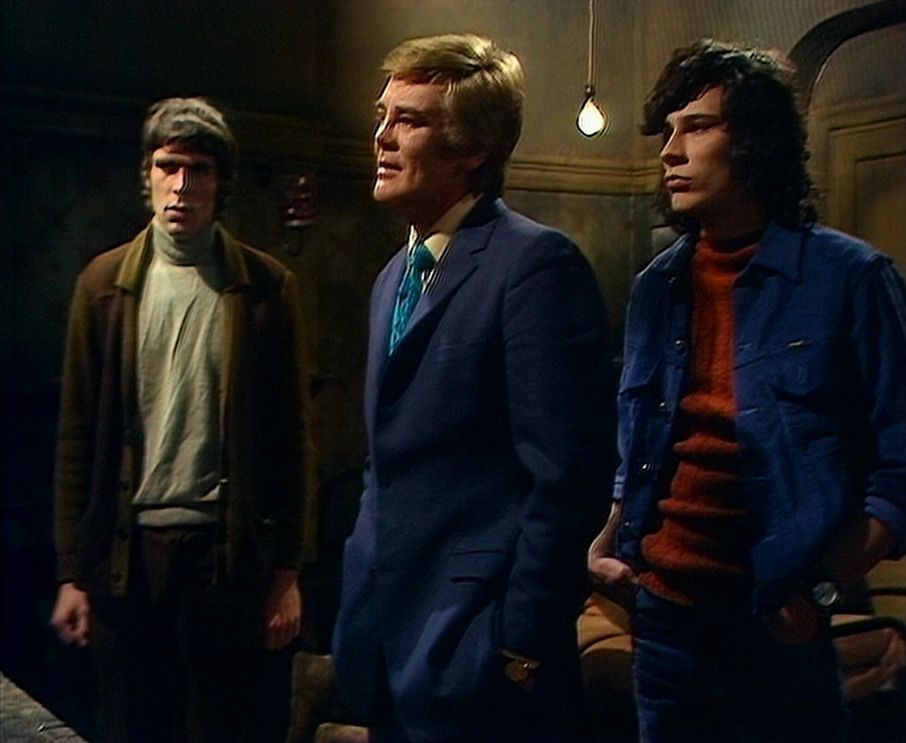
Evans and WDC Forest pay a visit to Ernie’s café. It’s an unappealing greasy spoon sort of place which quickly clears – leaving just a handful of people behind, the two of interest being David Greenwold (Stephen Leigh) and Mark Dean (Peter Marinker). David is a young lad of 15, nicely spoken and clearly a fish out of water (bafflingly, Evans at one point declares that Greenwold isn’t an English name). Dean is a different proposition altogether – older, also well spoken and educated but by no means cowed by Evans’ intimidating persona.

Evans spells out just why the café should be a no-go area for any respectable types – not only Ernie’s sexual proclivities (young boys) but also the way that the place is used as a drugs haunt.

Later, Snow and Drake visit the café and are equally as hectoring, especially Snow. Now present is Marion Greenwold (Shelley Harris), who’s come to seek help from Dean (the architect of the sticker campaign). Marion is only seen briefly, so when Evans discovers a woman in the railway station toilets with both wrists slashed, it’s not immediately apparent that it’s her.

Being a pre-watershed series, we obviously don’t linger on the blood (although there’s an establishing shot which makes it plain just how much there is). Evans’ bloody hands help to serve as a reminder for the rest of the episode though.

This sort of graphic violence, even when handled sensitively, is unusual for the series. Marion’s death spins the episode off into a different direction as a shocked Evans goes rogue – leaving Forest behind, he has only one thought (to track down Dean – who Marion asked for help he couldn’t, or wouldn’t, supply).

At this point, the subtext of the episode becomes especially interesting. How culpable is Dean? In Evans’ eyes wholly – which explains why he teeters on the edge of violence (eventually deciding that Dean deserves a little bit of roughing up). But before he can do any serious damage Snow stops him, memorably saying that “I’m not against bumping him one. I’d bump him one myself if he tried to be funny with me. But there’s no score in doing it for its own sake – it’s like kicking shit, you just get your own boots dirty”.

By a remarkable coincidence, the villain hunted by Watt is hiding out in the same squat as Dean. Earlier, when learning that Evans had planned to visit the squat as part of a routine sweep, Watt ordered him to stand down. Seeing red after Marion’s suicide, Evans of course went blundering in – with the inevitable result that Watt’s prey escaped. Fair to say that Watt’s not a happy man.

Moving On is an excellent vehicle for David Lloyd Meredith (who in total would clock up an impressive 107 SS:TF appearances). It certainly offers him something a little different – Evans is usually called upon to be the avuncular comic relief, but not today. Peter Marinker played well opposite him, although Mark Dean is a character I’d have like to have seen developed a little more (but with only 50 minutes to play with, there wasn’t the time).

With Arnold Yarrow having now relinquished the role of script editor to Gerry Davis, you can’t fault Davis for approaching him to pen this script, as he knew exactly what made the characters tick. Yarrow would continue to contribute scripts for the rest of SS:TF‘s run, and if they’re all as good as this one I won’t be complaining.

Softly Softly: Task Force – Aberration

S03E04 (27th October 1971). Written by Elwyn Jones, directed by Leonard Lewis

Aberration opens with a lovely scene between Barlow and Watt. Watt’s home alone (his wife, a GP, is away for the week) and he’s invited Barlow round for a slap up meal (prepared before she left by Mrs Watt – this was the 1970’s after all). Barlow then invites him over for a meal (Mrs Barlow will be doing the cooking of course).

There’s some nice character building here (we see Watt’s vulnerable side for a fleeting moment) but the scene does have a plot purpose – a locum doctor calls round asking for the surgery keys. Watt hands them over, but the next day we learn that the man wasn’t a doctor after all …

We can put this terrible lapse down to the fact that both had clearly imbibed a substantial amount of alcohol. In the cold light of day Barlow is forced to eat humble pie in front of Dr Mancroft (Raymond Huntley). Johns and Huntley share several excellent scenes – there’s nothing more enjoyable than watching two old timers squaring off against each other.

Aberration is the first episode to feature a major role for DC Forest (Julie Hallam). Forest is remarkably cheeky (talking back to both Barlow and Watt) and I have to say that I found Hallam’s performance to be quite broad. Because the other regulars are all pretty naturalistic, Hallam’s overexuberance is more noticeable. But since this was her first (and indeed last) television role, it’s worth cutting her some slack – possibly over time she’ll settle down a little.

Apart from some stolen prescription pads, the villain – James (Gary Waldhorn) – has also pinched several patient’s files. That we’re in different times is demonstrated when homosexuality is classed alongside child molesting as the sort of aberration which would be ideal fodder for a blackmailer. Later, the inoffensive-looking Norman Bird (as Tomkins) is wheeled on as a bondage fetishist (he’s one of the unlucky people being blackmailed by James).

As I’ve slowly made my way through the series, I’ve received the odd comment (very odd, in fact) complaining that I’m pursuing some agenda by highlighting moments like this. That’s not my intention – I simply find it interesting to touch upon the way attitudes and values have changed over time (ignoring them would be strange).

I’ve always accepted archive television for what it is – a window into a different world (other people can argue whether it’s a better or worse one, but I’d sooner they take their arguments away from this blog).

Tonally, Aberration is a strange one. At times Elwyn Jones portrays Barlow and Watt as a bumbling comic pair (especially when interacting with the sassy WDC Forest) but the fate of the wretched Tomkins moves the story into darker waters. It almost has the feel of a script written by someone unfamiliar with the series, but Jones was hardly that. Something of a curio then.

Softly Softly: Task Force – The Floater

S03E03 (20th October 1971). Written by Allan Prior, directed by Paul Ciappessoni

Since it’s primarily a water-based story, it’s apt that The Floater has a lazy, meandering feel.  That isn’t a criticism, but it’s certainly an episode that takes its time to get up and running. For example, the first fifteen minutes are concerned with Hawkins and Snow who – thanks to a tip-off from Snow’s informer – are targeting Ian Yellop (Roger Tallon).

They believe he uses the river to ferry drugs (low level stuff like hash) but both he and his girlfriend Rae (Vicki Michelle) appear to be clean.  It takes a third of the episode to establish this fact (no doubt other series would have dealt with the set up much quicker).

Tallon impresses as the shifty Yellop (his television debut) with Michelle (her second credited television role – the first had been a previous episode of SS:TF) also catching the eye. At this early stage of her career she was getting typecast playing girls on the wrong side of the law.  With a strong cockney accent, Michelle is delightfully twitchy as someone who may know more than she’s letting on.

With a small guest cast, Neil Wilson (an actor who’ll always be Sam Seeley from the Doctor Who story Spearhead from Space to me) is excellent value as the river copper Inspector Daley.

But it’s really Barlow’s episode. He might enter it late, but as soon as he does the tempo instantly picks up. As ever, Stratford Johns is ridiculously good.  Barlow’s implacable interrogation of Yellop carries a real punch – his sudden angry outbursts and his quieter reflective moments are equally riveting.  Tallon – an actor whose later credits seem a little thin – more than holds his own against Johns’ onslaught.

Earlier, Barlow had his first on-screen meeting with PC Drake. In story terms, it’s a pretty negligible scene (after much prompting, Drake admits that the information about Yellop came from Snow) but it’s what’s going on under the surface that’s so interesting. As we’ve seen before, Barlow delights in genially grilling his subordinates – here he gently tells Drake that he doesn’t want to be surrounded by yes men. And Barlow’s facial reaction when he discovers Snow’s part in the operation is priceless – if there’s one officer who tends to get a harder time from him than most, it’s P.C. Snow …

I love the way that the second half of the episode veers off in a different direction from the first.  First rate.

Softly Softly: Task Force – Hostage

S03E02 (13th October 1971). Written by Robert Barr, directed by Brian Parker

Hostage opens with the most sedate bank robbery I’ve ever seen. It’s true that the villains are vaguely dressed as guards (so from a distance they look official) but even when the truth becomes known (they’re taking money out of the bank with guns rather than delivering it) none of the bystanders – ladies with prams, etc – seem terribly concerned.  The Sweeney this isn’t.

With six hundred banks in the area, Watt is faced with a nightmare (especially since the firm doesn’t appear to be local). And since the Task Force can’t identify them, how on earth will they be able to predict where they’ll strike next?  It’s therefore something of a cop-out that in the very next scene Watt, Hawkins and co just happen to stumble across them. Not the tightest bit of plotting I’ve ever seen.

With the four villains – Frank (Leslie Schofield), Eddie (George Sweeney), Dick (Derek Martin) and Steve (John Hartley) – now holed up inside a bank with multiple hostages, another staggering plot development occurs.  Sgt. Evans and PC Drake (Brian Hall) wander into the bank via the back entrance and offer themselves up as hostages. Since they have no idea just how dangerous the men are, this rather beggars belief.

Leslie Schofield is the sort of actor who plays unstable types very well but it’s a pity that the other three villains don’t get to do much (George Sweeney was a very dependable criminal sort, but he remains largely mute throughout). The bank-based stand off in the second part of the episode is the definite highlight of this one, as Evans – his usual stolid self – faces off against the cocky Frank.

Whenever I see the name Robert Barr on the credits I confess to slightly shuddering, but Hostage is a pretty decent story – albeit not without its odd moments. I’ve already touched upon the way the Task Force just happen to turn up mob handed when the latest raid was in progress, but also hard to swallow is the way that Frank and the others make their escape.

They offer Watt a deal – if they’re provided with a car, then they’ll let all the hostages go and leave their guns behind, as long as Watt promises to give them a one hour head start. Really? Watt agrees to this, which is even odder.

Those expecting an all guns blazing finale will probably be disappointed, but the sting in the tail orchestrated by wily old Cullen is quite neat.

In series terms, this episode is notable for being the first to feature Brian Hall as PC Drake. Probably best known for playing Terry in Fawlty Towers, Hall tended to get typecast as criminal types. Which, as we’ll see, turned out to be useful …

Like WDC Forest in the previous episode, Drake isn’t given a big introduction – by the way the others treat him, it seems that he’s been in place for a little while. Drake has taken over the administrator’s role (previously held by Sergeant Jackson and Inspector Armstrong) albeit with a different style. Jackson and Armstrong were bookish, non-operational types – whereas Drake, a more flippant and down to earth character, is happy to get right into the thick of the action.

Softly Softly: Task Force – Once Bitten

S03E01 (6th October 1971). Written by Elwyn Jones, directed by Simon Langton

As ever, the dynamic between Barlow and Watt is fascinating. Barlow, having been away for a while, returns to find that Watt’s been efficiently minding the shop in his absence (although Watt hasn’t been averse to rifling through Barlow’s mail). Has Barlow really been romantically involved with a female informer young enough to be his daughter? The evidence of his mail suggests so but he’s not letting on.

Barlow’s keen to keep the others on their toes, intending to come down hard on any tawdry response times. But Watt rather spoils this plan by tipping the others off ….

It’s impossible not to notice that Barlow has returned to Thamesford a lovely shade of orange. This is because he’s been starring in a three-part spin off (Barlow at Large) which aired in September 1971, just before the start of SS:TF series 3. Eventually Stratford Johns would depart SS:TF for this series, so we should make the most of him here whilst we can.

WDC Donald has sadly departed and WDC Forest (Julie Hallam) has been swiftly slotted in as her replacement. Watt seems to be keen on her (“a cracker”). First impressions are that she’s a jolly sort as well as being practical (diving without hesitation into the canal to rescue one of the villains who’s suddenly realised he can’t swim).

The fact that Forest has been in place for a few months means she’s already on good terms with the regulars (accepting the offer of a pint with Evans and bantering affably with Harry Hawkins).

A hairy Tom Chadbon (playing Andrews, one of three textile warehouse robbers) and a cravat wearing Michael Sheard (as Dickenson, the keyholder of the warehouse) are the most familiar faces guesting.

Andrews’ main skill is handling dogs (a canine whisperer, he’s easily able to deal with the rather vicious guard dogs on site). A tense dog-related stand off then develops when the Task Force turn up.  Andrews and the others are trapped inside the warehouse, the dogs have been released and are roaming the yard with Hawkins the only one brave enough to chance his arm.

He loses his trousers and his dignity to the vicious canines, but I suppose it could have been worse.

A low-key sort of crime then, but Chadbon’s excellent value and the byplay between the regulars (a nice scene between Snow and Evans, for example) is typically solid. Elwyn Jones’ script is a slow burn (we open with Watt pottering around Barlow’s office) but you have to remember that we’re in an era when series openers felt under no pressure to be spectacular. And that’s fine by me.

Softly Softly: Task Force – Cash and Carry

S02E26 (10th March 1971). Written by Elwyn Jones, directed by Simon Langton

Stock is being pilfered from a local Cash and Carry.  The two men responsible – James (David Spenser) and Fox (Roland Curram) – are quickly identified but Barlow is concerned that this relatively small-scale affair might only be the prelude to a larger crime.

Cash and Carry is one of those stories which is more than content to take its time.  We initially see Snow and Radar, passing the Cash and Carry at night, become suspicious after they spy a light inside the building.  Officers are then called out in force along with the keyholder Mr Lodge (Peter Sallis).  None of them find anything so they leave empty-handed.  By this time a good ten minutes has elapsed without the plot advancing a great deal.

The next day it’s quickly worked out how such a large amount of stock could have gone missing – James and Fox work at the Cash and Carry, driving the delivery van, and they simply pile it up with stolen stock and sleep in the building overnight, leaving the next morning as if nothing has happened.  Donald likens it to the Trojan Horse, which is a neat description.

But this crime is so humdrum that there has to be more to the story.  Barlow seems to think that an attempt will be made to rob the cashiers department on its busiest day (when there could be as much as twenty thousand pounds for the taking).  If that’s the case (and Fox and James were the gang’s inside men) then it seems very foolish for them to have jeopardised the whole operation in order to make a little profit on the side.

Possibly the weakest part of Elwyn Jones’ script is Barlow’s sixth-sense which decides that an armed robbery is the real endgame. Just how did he work this out? The story would have probably been more satisfying if the information about the intended robbery had come from an informer and the stock pilfering section had been excised (the time spent on this dead-end part of the plot could have been used to develop the individual characters of the gang).

Barlow and Cullen clash over the potential operation.  Barlow believes that the gang stand their best chance of succeeding if they make their attempt before the security guards arrive to take the money away, i.e. when the store is still open. Cullen argues that if they let things play out then innocent members of the public could get hurt.  Barlow agrees, but he wants to catch them in the act and not just arrest them for conspiracy.  Given that Cullen has always been portrayed as strong-willed and single-minded it seems a little uncharacteristic that he reverses his opinion so quickly and allows the covert operation to go ahead.

When Donald replaces one of the cashiers it’s easy to believe this is something of a sexist move (seemingly the only woman on the Task Force working at the till).  But amusingly this is undercut just a few seconds later when Barlow tells Lodge that he plans to replace another of his cashiers with Armstrong, who he says even looks like a cashier.  And with Watt dressed in overalls, shifting boxes into the back of a lorry, there’s another brief moment of humour to be enjoyed.

Will there be an attempt to steal the cash?  Looking down the cast list, names such as Alan Chuntz, Dinny Powell and Terry Walsh should provide you with the answer. Mind you, it’s fair to say that it’s a very long build-up for a very brief moment of mayhem (nobody’s ever going to mistake Softly Softly: Task Force for The Sweeeny).  Evans gets shot, but only in the leg, so I’ve a feeling he’s going to live.

Softly Softly: Task Force – Black Equals White

S02E25 (3rd March 1971). Written by Elwyn Jones, directed by Keith Williams

A group of protesters occupy the first floor of a local hotel – their target a group of businessmen and their wives.  The leader of the protest group, Leroy (Neville Aurelius), wants the businessmen to sign a letter admitting that their company discriminates against hiring black people in all but the most menial of positions. Barlow is keen to ensure that a peaceful solution is found, but this may not be possible ….

The colour problem was a topic that regularly turned up during this era of television.  Sometimes it was handled in a rather ham-fisted manner (the Callan episode Amos Green Must Live springs to mind) but on other occasions, as here, it provided some genuine food for thought.  Although that’s not to say that Black Equals White doesn’t have a few cringeworthy moments.

The protestors are a mixed group, male and female, black and white.  To begin with, Leroy is seen to be the obvious leader and he appears to advocate a policy of non-violence. This concept of a peaceful protest is shared by most of the others (there are quite a few “hey mans” bandied about and this, together with the endless protest songs. are a couple of reasons why this part of the story hasn’t aged terribly well).

But after a while it becomes clear that there’s another strong character upstairs, Mac (James Copeland).  Unlike Leroy, Mac is white and he also advocates more direct and threatening action.  Barlow later succinctly sums Mac up.  “Party member I reckon. Closed mind, bitter.  Wherever there’s trouble that’s where you’ll find him.”  Given that Mac’s aims and ideals seem to be diametrically opposed to Leroy’s, it seems strange that they’ve joined forces.

The hotel manager, Mr Henry (Angus MacKay), wants them out and he wants them out now.  MacKay’s ever increasing exasperation at the way that Barlow and Watt seems to be dragging their heels provides the episode with a rare shaft of humour.

A successful raid manages to extricate Leroy and he’s brought downstairs.  This only inflames Mac, who brings out a petrol bomb and tells the others that they may just have to use it.  Given that the rest are long-haired student types it seems clear this isn’t what they signed up for, although as most of them are non-speaking extras there’s not a great deal of debate possible.

Barlow and Leroy cross swords.  Neville Aurelius continues to play his part broadly whilst Stratford Johns is quite subdued and restrained.  This isn’t a bad choice from Johns as it allows Barlow to soak up Leroy’s various barbs without displaying the anger that Leroy was no doubt hoping to see.  Some of Leroy’s points might have struck home but there’s counter-arguments too – Snow mentions that unemployment is a problem for everyone, regardless of their skin colour.  In the end Barlow tells Leroy that the law isn’t perfect but it’s what they have and it’s what everybody has to live by.  Leroy sneers that white man’s laws don’t apply to him.

Barlow pleads with Leroy to tell the others to leave peacefully but he refuses which leaves Barlow no alternative but to send officers up in force.  It’s an interesting choice that we don’t see what happens to the protestors, instead we hear their screams whilst the camera focusses on both Barlow and Leroy.  Barlow’s faintly disgusted whilst Leroy seems satisfied.  He might not have openly advocated violence like Mac but he’s pleased enough that it’s happened, admitting to Barlow that it helps the cause.

Mr Henry pops up to express his feelings as the screams continue (“good god”).  But any fleeting thoughts that he’d suddenly gained a conscience are negated when his next words are “I’m losing business”.

Black Equals White may be content to paint its characters in fairly broad brush strokes but that doesn’t mean that it’s completely without merit.  Stratford Johns once again commands the screen as Barlow

All this plus Pat Gorman gets a couple of lines as well.  He might be one of the most familiar extras from this era of British television, but I can’t recall him speaking that often.   Which makes this appearance a notable one for Gorman watchers (I suspect we’re a small, but dedicated, group).

Softly Softly: Task Force – Held For Questioning

S02E24 (24th February 1971). Written by Robert Barr, directed by Gerald Blake

The Task Force are out in numbers, looking for safebreaker Tommy Lee (Norman Jones).  Watt suspects that Lee was responsible for three recent robberies (in the latest, a security guard was shot and injured).  Hawkins brings in Jack Taylor (Denis Quilley), a known associate of Lee – although unlike Lee, Taylor has never been convicted of any crime.  Hawkins is convinced that Taylor knows where Tommy Lee is, but he proves to be a tough nut to crack ….

After a run of indifferent episodes, Robert Barr finally comes up with something very decent.  The clash between Hawkins and Taylor (and later Watt and Taylor) is very watchable, although the story does have one major plot flaw.  Watt strongly suspects that Lee and Taylor are partners and that Lee will attempt to contact Taylor at the filling station he owns.  If that’s the case, then why bother to arrest Taylor?  They could have simply posted a few men in the vicinity, well hidden, and nabbed Lee when he turns up (which is pretty much what they do in the end anyway).  Since neither Hawkins or Watt manage to get Taylor to talk, the whole evening at the station has to be written off as a complete waste of time (but it’s good television though).

Denis Quilley was a heavyweight actor (enjoying lengthy spells at the National Theatre appearing opposite the likes of Laurence Olivier and John Gielgud) which means that his casting helps to give Held for Questioning an extra lift.  To begin with, Taylor claims he hasn’t seen Lee for five years.  Later he admits that they have met a few times recently, but that he’s not involved with Lee’s criminal activities.

Taylor maintains an air of amused indifference during his interview with Hawkins.  He rarely seems flustered, meaning that any progress Hawkins makes is agonisingly slow.  There are a few flashpoints but it’s not until Watt turns up that the sparks really start to fly.  Watt asks exactly the same questions, but does so in a highly aggressive manner, causing the first signs of real anger from Taylor.  Windsor and Quilley – facing each other eyeball to eyeball – are both mesmerising in this scene.

There’s also a fascinating clash between Taylor and the duty officer, Chief Inspector Rankin (Michael Griffiths).  Taylor is well known to the officers at the station, especially Rankin.  When the Chief Inspector pops his head around the interview room door, Taylor takes the opportunity to aim a few will-timed jibes in his direction.  His claim that he was attacked by several officers the last time he was there could be dismissed as simple troublemaking, but when Cullen arrives he confirms it did actually happen (and that officers were suspended).

Given that Taylor’s never been convicted of any crime, this moment shines a little light on police methods at the time.  Barr’s script doesn’t condone or condemn, but the inference is plain – also spelled out earlier by Hawkins – that you may be innocent in the eyes of the law but that doesn’t stop you from being regarded as guilty by the police.  It’s a brief, but disquieting, moment.

Norman Jones, as Lee, doesn’t have a great deal to do as he’s holed up for most of the episode, vainly attempting to contact Taylor.  In fact it’s easy to see how the story could have dispensed with his on-screen appearances completely (a quick message to say that he’d been captured would have sufficed).  Indeed, if the story really wanted to do something a little different then it could have taken place entirely within the confines of the interview room (at first I thought that was the way the episode would go).  A bit of a shame they didn’t go down this route, as all the best scenes do take place there and everything outside is of secondary importance.

A few minor quibbles apart, this is a fine showcase for Windsor, Bowler and Quilley.

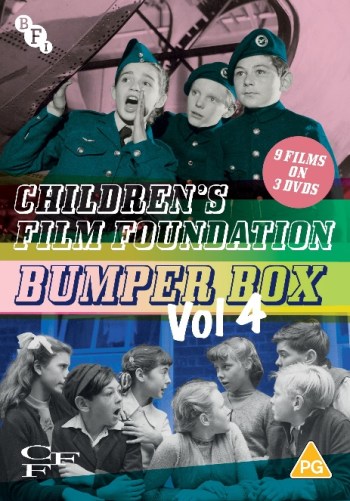
Children’s Film Foundation Bumper Box Vol. 4 – BFI DVD Review

The Children’s Film Foundation (CFF), founded in the early fifties, was a non-profit organisation that sought to produce quality home-made features to supplement the American serial fare that was a popular staple of children’s Saturday morning film matinee presentations.

It received money from the Eady levy (a tax on box office receipts) and tended to turn out around half a dozen short films each year. By the 1980’s, with cinema attendances falling and the Eady levy no longer available, the number of new films began to dwindle as the CFF started to concentrate more on television production. Renamed the Children’s Film and Television Foundation and more recently the Children’s Media Foundation, today it lobbies for the funding and regulation of content for children.

This three DVD set contains nine features, the earliest one being …

The Dog and the Diamonds (1953)

An urban tale, revolving around the young inhabitants of a tower block, whilst The Dog and the Diamonds is low in gritty realism (to put it mildly) it still has many positives.

The young-un’s may be little scamps (accidentally breaking windows and running the long-suffering caretaker – played by George Coulouris – ragged) but you know their hearts are in the right places (all are impossibly well spoken too).

Throw in a cute dog given a diamond necklace by a gang of delightfully old-fashioned spivvy crooks who (of course) the children manage to run to ground and you’ve got an engaging time capsule of the period. It was produced and directed by Peter Rogers and Gerald Thomas (of Carry On fame) although the innuendo level remains low.

The Stolen Airliner (1955)

You can probably guess what’s going to happen in this one from the film’s title …

It’s another black and white treat, peopled with remarkably smart crooks (hats, ties and cigarette holders are the order of the day) and children with cut glass accents. There’s the chance to spot some familiar faces – like Peter Dyneley and Ballard Berkeley – who enhance the story (a rip roaring adventure where our resourceful young heroes remain calm throughout every crisis).

A bunch of crooks steal an experimental aircraft – the Z09. Only the children know what’s going to happen, but – of course – the grown ups simply won’t believe them. Luckily though, juvenile pluck saves the day once again – nothing fazes our youthful heroes (not even the prospect of having to parachute out of the Z09 whilst it’s in mid air).

Blow Your Own Trumpet (1958)

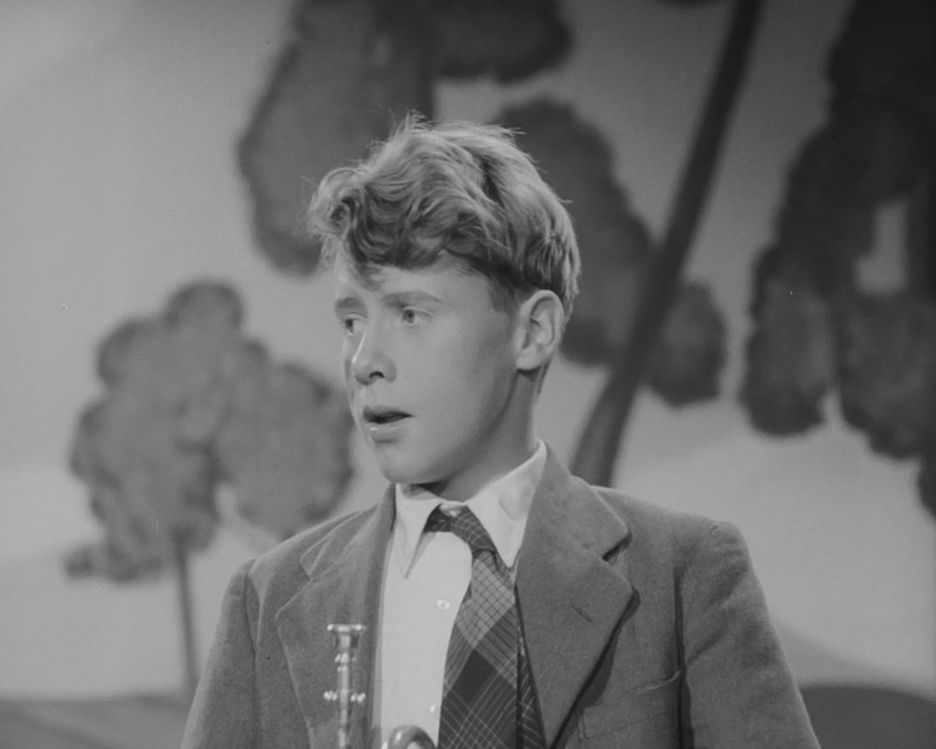
We’re heading up North for this musical tale (although much of the filming was done in Surrey, which explains why some of the Northern accents are just a little off). Peter Butterworth is excellent value as the kindly conductor Mr Duff and the award-winning Arley Welfare Band (the band of the National Coal Board) add a touch of class to proceedings.

Some of the young stars – Michael Crawford, Michael Craze – would go on to forge successful adult careers (Crawford’s character, Bert, is in the thick of the action throughout). And like many a CFF, Blow Your Own Trumpet features a cute dog (Tina the Dog as herself) .

Bert dreams of joining the colliery band as a cornet player. But he lacks a cornet (and – at the start – any talent). However, with a second hand instrument and the patient tutelage of Mr Duff things begin to look up for him. But will he be able to beat his hated rival and take up his place in the band?
The Missing Note (1960)

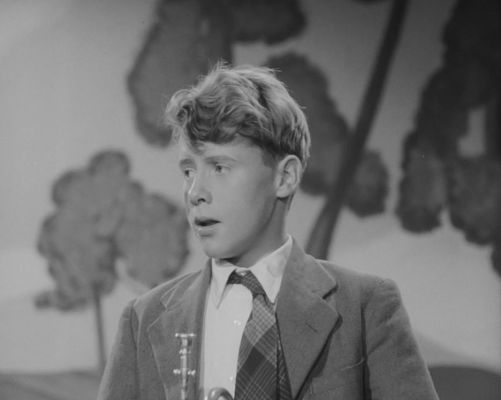
Joan (Heather Bennett) is the young heroine of this film. A talented musician, she has to make do with using a battered old piano at the local church hall. All is well, until the piano is sold – and to complicate matters it’s been used to store the booty from a smash and grab raid …

The Missing Note shares some similarities with Blow Your Own Trumpet, but in this one a jewel robbery subplot has been added to the mix. Toke Townley is the unlikely smash and grab merchant whilst the equally familiar Tommy Godfrey is the scrap dealer who buys the piano and promptly sells it onto a mystery buyer.

Townley’s on good comic form and there’s some fascinating snapshots of a vanished London in a film which has links to the straight-laced CFF output of the 1950’s but also anticipates how the series would develop during the more relaxed 1960’s.

The Big Catch (1968)

We now leap forward eight years, to the end of the 1960’s – and the first film in this boxset to be made in colour. And colour is certainly a benefit as it allows the glorious Scottish landscape to be shown to its fullest effect. The locations may be the star, but the tale – local lad Ewan (David Gallagher) clashing with well-heeled newcomer Lindsey (Ronald Sinclair) – is a pretty decent one.

Blinker’s Spy Spotter (1972)

For many, the 1970’s were the peak years of the CFF. Certainly many of the best-remembered films hail from this period (possibly due to their television rescreenings during the 1980’s). It was certainly a time when the films became looser and more fantastical – with odd inventions cropping up regularly.

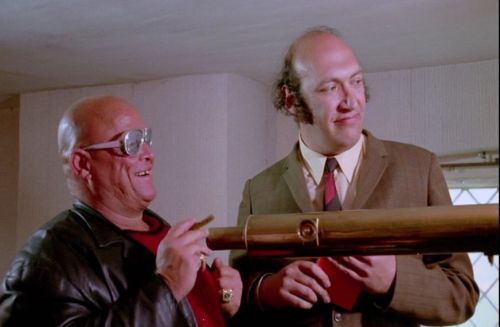
Blinker’s Spy Spotter is a good example, as our eponymous young hero (played by David Spooner) is the creator of a number of bizarre inventions (although it’s the work of his scientist father that’s targeted by the villains). The adult cast is one to savour – Bernard Bresslaw, Michael Robbins, David Battley, Patrick O’Connell – as is the soundtrack, which should warm the heart of anyone who loves library music from this era.
The Flying Sorcerer (1974)

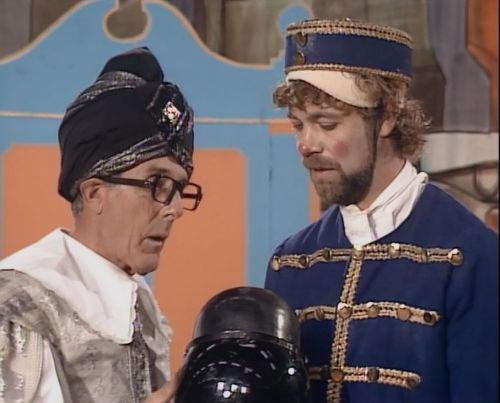
The next film continues the fantasy trend, as a young lad is transported back in time to an age of wizards and fire-breathing dragons. The dragon is an impressive creation (although, it’s fair to say that he’s not the speediest of movers). But chuck in another collection of well known comic actors – Bob Todd, John Bluthal, Eric Chitty – and a tight script from Leo Maguire and Harry Booth and I doubt many will be complaining.

Mr Selkie (1978)

Although many CFF films were designed for pure entertainment, there were times when the series would slip in a message amongst the comedy or drama. Mr Selkie is a good case in point, as there’s a strong anti-pollution theme throughout. Mr Selkie (Peter Baylis) is a seal who’s assumed human form (of course) and teams up with a group of children to teach their elders on the local council that it’s wrong to pollute the sea (sadly a message that seems to have fallen on deaf ears these days).

As ever, there’s several actors – Noel Howlett, Zara Nutley, Molly Wier – who are instantly recognisable and they help to power the story along.

Gabrielle and the Doodleman (1984) 

The last main feature on this release comes from 1984, and it’s at a point when the CFF was on its last legs. The rise of Saturday morning children’s television in the late seventies (Swop Shop, Tiswas) had sounded the death-knell for the traditional Saturday morning picture show – indeed, this one was shot on videotape, rather than film, and was always intended to go straight to television.

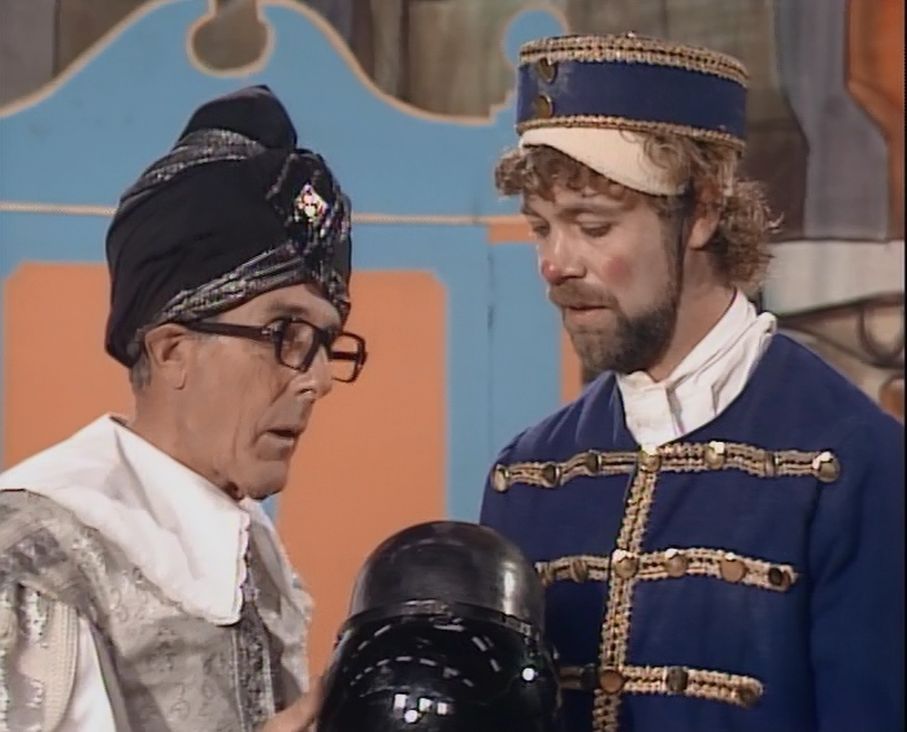
But it’s not all bad news since it has a cast list to die for. Matthew Kelly, Eric Sykes, Windsor Davies, Anna Dawson, Lynsey de Paul (she wrote the theme song, Kelly sang it), Gareth Hunt, Josephine Tewson and (yet again) Bob Todd. If they don’t get your pulse racing then nothing will.

Wheelchair-bound Gabrielle (Prudence Oliver) is in a depressed state – relations between her and her father are distant and so she spends most of her time playing computer games (on a state of the art BBC Model B, no less). Doodleman (Kelly) is a computer sprite who comes to life and leads Gabrielle into a series of adventures peopled by the aforementioned film and television greats.

Apart from these nine films (which each run between 50 and 60 minutes) there’s a further four shorter films (all around the fifteen minute mark) – the pick of these being The Chiffy Kids – Pot Luck from 1976, which features Harry H. Corbett in full Steptoe mode (despite his claims that Steptoe & Son typecast him, you do have to say that many of his other roles did have more than a whiff of Harold about them …)

To round off the package, there’s a ten minute cinemagazine from 1952, a new fifteen minute documentary about some of the London film locations used in the CFF films as well as a typically informative booklet.

With a range of films spanning three decades, there should be something for everyone here and this release comes warmly recommended.

Children’s Film Foundation Bumper Box Vol. 4 is released by the BFI today, RRP £26.99, and can be ordered direct from their website via this link.
Softly Softly: Task Force – In The Public Gaze

S02E23 (17th February 1971). Written by Elwyn Jones, directed by Peter Cregeen

Returning home after a less than enjoyable social function, Cullen spies a young officer, PC Pugh (Martin C. Thursley), being attacked by two men – Dawson (Michael Finbar) and Wilson (Gawn Grainger).  Without a seconds hesitation Cullen steams in, pulls both men off the stricken officer and bangs their heads together.  Although Cullen obviously saved Pugh from further punishment he’s laid himself open to an assault charge, which is further complicated after Dawson drops dead the next day ….

Episodes where Cullen is central to proceedings are rather rare, so In The Public Gaze is something of a treat.  Gotell’s firing on all cylinders right from the start as he subdues PC Pugh’s two attackers.  Snow, next on the scene, reacts with barely disguised admiration at the way the Chief Constable handled himself and it’s impossible not to agree with him.  Prior to the attack we have an opportunity to observe Cullen’s wry sense of humour as he tells his driver they might as well listen to the light programme on the way home and then proceeds to switch the radio over to the police frequency!

Walter Gotell and Stratford Johns share some sharply-written two-handed scenes as Cullen and Barlow mull over the possibilities.  Cullen declares that he’s not a man of violence whilst Barlow reflects on the way he’s trying to conserve his energies.   For example, Chief Superintendent Leach (Reginald Marsh), is a capable enough officer, but not when he’s worried or flustered.  And the arrival of the Chief Constable at his station is just the sort of thing to drive Leach to distraction so Barlow is careful to treat him with kid gloves, rather than lose his temper with him. It’s surprising that Marsh isn’t given more to do, but he’s still quite effective at looming in the background looking anxious.

It’s stated several times that Wilson is a troublemaker who will delight in laying the blame for his injuries at Cullen’s door.  What’s interesting is that we don’t see Wilson or Dawson during the period that they’re in custody – either whilst they’re being interviewed or later when they’re charged.  The first time we hear either of them speak is the following day, when the pair are presented at the magistrates court, prior to a possible trial.

Most other police series would have chosen to display them as cocky, arrogant types, but that isn’t the case here.  Both are hesitant and stumbling in the way that they question Pugh about the attack, which is an unexpected touch.  Armstrong conducts the police case, but he’s unsuccessful in keeping Cullen out of the witness box .  This infuriates Barlow, who maintains that a word in the right ear could have saved them all this hassle.  Cullen ironically jibes him about the old boy network, but Barlow doesn’t see anything wrong in bending the law in a good cause.

After Dawson’s death, the story moves to the coroner’s court.  It’s established that Dawson had an aneurism and so could have died at any time, but was there a reason why it happened now?  The Chief Constable is called to give evidence and Gotell once again commands the screen as Cullen gives a clear, concise statement about the events in question.  When questioned about whether he’s set any guidelines concerning the amount of force which should be used by his officers, he answers in the negative but adds “I do not want my men to get involved in a fight. But if they do, I expect them to win.”

A verdict of death by natural causes is recorded, but Wilson continues to harangue Cullen. The coroner makes the good point (he’s the first to do so) that Wilson has to share some of the blame since he involved Dawson in the attack on Pugh, but this falls on deaf ears.  And Wilson doesn’t let up – bombarding the press and members of the police committee with letters.  Barlow muses to Armstrong that something has to be done about him ….

In The Public Gaze is another excellent script by Elwyn Jones.  As touched upon, Gotell excels throughout whilst the solution to neutralising Wilson is a neat one.  PC Snow is responsible for delivering the metaphorical knock-out punch, with Terence Rigby on typically good and intimidating form.

Softly Softly: Task Force – Games

S02E22 (10th February 1971). Written by Arnold Yarrow, directed by Michael Simpson

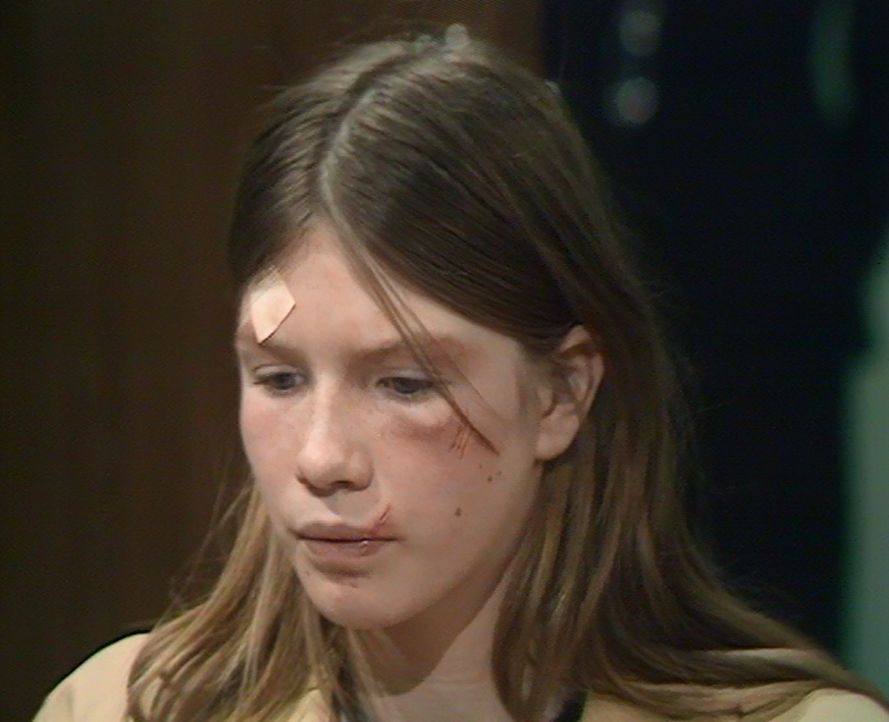
A thirteen-year old girl called Emma Jones (Jane Sharkey) is brought into one of the local stations by Donald.  Emma has cuts and bruises to her face and tells Donald that she was assaulted by an unknown man.  One of Emma’s school friends, David Ransom (Andrew Benson), provides a statement which gives a clear description of her attacker – a tramp with a flapping shoe.  Watt, passing through all the stations in the area whilst investigating their security procedures, becomes intrigued with the case and lends a hand ….

One aspect of the series which is sometimes overlooked is that the Task Force is a mobile unit which can be deployed to assist officers and stations in the force area.  That theme is explored here, as the entire story takes place within an unfamiliar police station.  But there’s a touch of contrivance about this since Watt and Armstrong aren’t there because of this case, they’re simply in the right place at the right time to lend assistance to Hawkins and Donald (although it seems that Hawkins begins to rue Watt’s presence just a little).

Watt’s first appearance is memorable.  Striding through the station door with Armstrong and another officer either side, Watt tells the desk sergeant (played by Colin Rix) that he’s “a militant Black Panther.”  Pointing to the two officers with him he then tells the befuddled sergeant that “he’s got a petrol bomb in his hands, and he’s a skinhead under detention. With over a hundred mates outside threatening blue murder if you don’t let him go, what would you do?”  The sergeant manages to provide a suitable reply to this hypothetical question, which pleases Watt slightly, although he’s not too impressed with the fairly flimsy security procedures currently in place.

If Stratford Johns (sitting this episode out) is never less than first-class, then the same must be said of Frank Windsor.  This is an excellent script for Watt, allowing him to take centre-stage (even though it’s really Hawkins’ investigation not his).

Donald takes a statement from the girl and is as sensitive as you’d expect.  Emma seems a little shell-shocked at first but then slowly springs into life.  But there’s a lingering sense that something isn’t quite right and many might have guessed the answer before Watt spells it out towards the end of the episode.  Emma wasn’t attacked – she threw herself down the embankment deliberately, causing her injuries.  David’s statement is false as well, meaning that both children have deliberately told a pack of lies.  This then explains the episode title  …..

We don’t find out what David’s reasons were (although the probability is that he agreed to help Emma because he’s fond of her).  Emma’s motivation is much clearer – after her father remarried (and with someone not much older than herself, she says with disgust) she admits to feeling neglected.  And although she still lives with her mother, Mrs Jones is more interested in her new boyfriend than she is with her daughter, so there’s neglect on that side as well.

It’s telling that we never see either of Emma’s parents in the flesh, which helps to reinforce Emma’s sense of isolation.  Instead, a neighbour called Mrs Lacey (Jean Boht) is on hand to explain to Watt why Mrs Jones can’t be contacted.  She’s spending the day with her boyfriend, who happens to be married, and the pair don’t want to be bothered.  Watt is aghast at this, surely she would want to know that her daughter was attacked?  But Mrs Lacey (maybe speaking for Mrs Jones as well) tells Watt that the girl’s only got cuts and bruises, so why make a fuss?

The lack of parental interest is reinforced later – Watt sends a car round for Mrs Jones and we’re told that her boyfriend was less than pleased to be disturbed by the police.  But it’s interesting that since Emma’s parents are denied a voice of their own we’re clearly not shown the full picture – only the one that Emma wants us to see.  And given her actions, it’s open to debate as to exactly how truthful that is.

Hawkins and Watt regard the two children very differently.  Hawkins wants to throw the book at them and their parents, but Watt elects to let them go with the minimum of fuss.  Since they want to be the centre of attention he’s simply denying them this chance.

This is a tight studio-bound story by Arnold Yarrow.  It seems that Jane Sharkey only had one further television credit following this (on The Bill some two decades later) which is slightly surprising as she’s got a decent screen presence.  The sub-plot of the hunt for a suspect tramp means that the station is overrun by them, most notably Terence de Marney as Timothy Lee.  A very experienced theatre, film and television actor, this was his penultimate credit before his death in 1971.

After a few fairly indifferent episodes, Games is a return to form.

Softly Softly: Task Force – Something Big

S02E21 (3rd February 1971). Written by Robert Barr, directed by Ronald Wilson

Detective Chief Superintendent Alan (John Woodvine) of the Regional Crime Squad asks for Barlow’s help.  He’s interested in two known criminals, Hulton (William Abney) and McBride (Godfrey Quigley), who he believes are in the Task Force’s area.

Watt discovers they’ve been seen in the company of Peter Thornley (Jeremy Wilkin).  Thornley owns a substantial house which is packed with valuable works of art.  But Hulton and McBride aren’t interested in burglary – they want to use Thornley’s house for a high-stakes evening of gambling.  It isn’t the gambling that interests Alan though, he’s hopeful that the evening will entice a much wanted criminal, Rendell (David Morrell), into making a rare public appearance ….

I’ve not been the greatest admirer of Robert Barr’s contributions to series two and although Something Big is solid enough, there’s still something missing.  Peter Thornley remains a rather nebulous character, as it’s never established exactly why he should decide to throw in his hand with Hulton and McBride.  It can’t be money, since Thornley inherited numerous valuable pieces (paintings by Constable, etc) from his father.  He does seem mildly besotted with Pat Anderson (Vicki Woolf), a hostess introduced to him by Hulton and McBride, but since, like Thornley, she has very little dialogue it’s a relationship that lacks substance.

Thankfully John Woodvine is on hand to bring a touch of class to the story.  There’s a vague sense of combative one-upmanship between Barlow and Alan, but although Alan plays his cards close to his chest to begin with, he doesn’t leave Barlow in the dark for too long.  In truth, Alan’s dialogue is nothing special, but Woodvine has the sort of natural gravitas which is well able to give light and shade to even fairly undistinguished material.

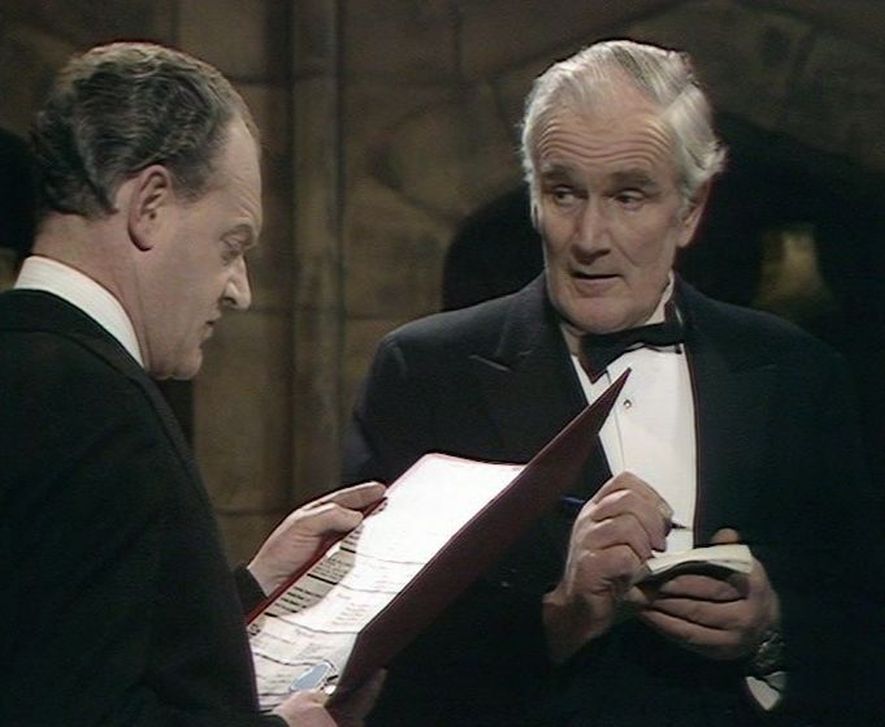
A brief appearance by Desmond Llewellyn proves to be another highlight in a fairly average story that rather splutters to a conclusion.  We’re told that Rendell might be armed and is certainly dangerous, but everything passes off without a hitch when he’s taken into custody.  Rendell is another character who barely utters a handful of words, meaning that it’s hard to feel at all invested in his fate.  A shame that they couldn’t have featured the same character in an earlier story, that way his appearance here would have had a certain impact.

As it is, his capture stirs no emotions.  We’ve been told he’s a bad ‘un, but we’ve never had the chance to witness it for ourselves.  Show not tell is a basic rule of storytelling, but unfortunately it’s not adhered to here.

Softly Softly: Task Force – Final Score

S02E20 (27th January 1971). Written by Elwyn Jones, directed by Paul Ciappessoni

Final Score offers a good opportunity to see Barlow in action.  He begins by questioning Mrs Young (Avis Bunnage).  She works for Khan as a cleaner and had assisted Tommy Nunn in the recent robbery from Khan’s jewellers (Tommy did the robbery, Mrs Young took possession of the stones).

She’s taciturn during Barlow’s interview with her, offering little more than non-committal answers.  The director, Paul Ciappessoni, favours close-ups of Barlow and Mrs Nunn during this scene, quickly cutting between the two.  This helps to create a sense of anxiety and claustrophobia.

Although he doesn’t make much headway with Mrs Nunn, he has rather more fun with Khan.  Having recovered the stolen stones from Mrs Young, Barlow’s interested to see if Khan will claim them (which seems unlikely, since they were already stolen before he received them).  Stratford Johns, Norman Bowler and George Pravda all sparkle in this scene – Khan has the persona of a slightly confused foreigner, whilst Barlow alternates between charming and threatening.  Hawkins chips in to increase the pressure a little more.

Watt wants to turn the screw on Tommy Nunn by telling him that Mrs Young will be charged with both robbery and possession of the stones.  He asks Evans to do it, but he’s hesitant – it’s a lie and he doesn’t like telling lies.  Watt’s reaction is swift – he tells him to go back to normal duties, as he’s too delicate for this type of work.

After Evans exits Watt’s office he’s clearly kicking himself about his offhand comment.  We’ve seen before that Evans seems to have had a certain leeway in the way he interacts with his superiors, so it’s possibly not surprising that eventually his off-hand conduct might catch up with him (not for long though, as Barlow soon finds him another job to do).

If it hadn’t been for the playing of George Pravda and Roddy McMillan then the crime part of the story probably wouldn’t have been as interesting as it turned out.  Given this, it’s a little debatable whether it should have been spread out across two episodes.

On the plus side, there’s some character moments between the regulars which help to keep the interest level up during the second half of this episode.  Snow pops up with a present for Barlow from Watt – a bottle of whisky.  Barlow then asks Snow if he’s passed his sergeant’s exam.  Snow says he has, but doesn’t want to apply just at the moment, due to his attachment to Radar.  He’s not interested in continuing as a dog-handler when he’s made up to sergeant, but he’ll stick with Radar as long as he’s able to do the job.  And after Radar retires he’ll then move up the ranks.

But just as the story seems to be rather meandering to a halt, there’s shocking news – Mrs Young is dead (she committed suicide in her cell).  Unsurprisingly we don’t witness the aftermath of Mrs Young’s death – it’s only reported – and neither is any concern expressed that her death might trigger an investigation.  Madeline Mills made her only SS:TF appearance as WPC Berry, who’d been assigned to watch Mrs Young.  Given the paucity of female characters in the series it’s a pity her character (or someone similar) wasn’t retained.