Although we learnt in episode one that the Tong of the Black Scorpion (“fanatical followers of an ancient Chinese god called Weng-Chiang”) seem to be involved in this devilish business, it now becomes clear that Chang is merely a subordinate character and his master – Weng-Chiang (or at least someone masquerading as him) – is the one directing events.
Weng-Chiang, or Magnus Greel to give him his real name, lives beneath the Palace Theatre. Why he should do this – unless he’s a devotee of The Phantom of the Opera – is never made clear. But since Chang is performing at the theatre it makes some sort of sense that Greel is close at hand – especially since Chang has been abducting girls off the street for him.
The science-fiction elements of the story now begin be pulled together as we learn that Greel is a refugee, afraid of the intervention of time-agents. Why he wants the girls is also explained (“the disease grows worse. Each distillation lasts less than the time before”) and that until he recovers the Time Cabinet he’ll never be whole again.
It’s a remarkable coincidence that the Time Cabinet is in Lifefoot’s possession. He’s unaware of its significance, regarding it as little more than a Chinese curio, although we’ll learn more about this in episode three.
For those who worry about such things, then the timeline of this story is very odd. If Litefoot’s had the cabinet for decades, what has Greel been doing all this time? We see that his body is in collapse, with only the life-essence from young female donors keeping him alive, so how has be survived during this period? He can’t have been in London for more than a few weeks (based on the number of girls abducted) so are we really supposed to believe he’s only just decided that reclaiming the Time Cabinet might be a good idea? And since Litefoot’s father was a notable member of the British government in China, surely it wouldn’t have been too difficult to work out that his family was the one gifted the Time Cabinet ….
Episode two sees the Doctor encounter Jago for the first time. There’s a characteristic gear-change from the Doctor – to begin with he’s jovial – pretending to be a music-hall act ( “dramatic recitations, singing, tap-dancing. I can play the Trumpet Voluntary in a bowl of live goldfish”) – but in a double-heartbeat he turns serious. As touched upon before, Tom could do this better than anyone and both he and Benjamin make these scenes – largely expository ones – sparkle.
Another signature moment occurs when Leela and Litefoot enjoy a bite to eat, with Leela’s table-manners being somewhat lacking. Litefoot, the perfect host, elects to copy his guest in order not to make her feel awkward, which gives Trevor Baxter another nice character moment.
Following the recent death of Trevor Baxter, I pulled Talons off the shelf for another rewatch. For me, it remains the ultimate Who experience, Robert Holmes blending together a mix of literary sources in order to serve up a potent brew of Victoriania menace.
It has its critics though, most of whom find John Bennett’s performance as Li H’sen Chang distasteful. I think Bennett is wonderful, but the fact that he’s a British actor made up to appear Chinese is a stumbling point for many. This was a common practice during this era of television though – the pool of ethnic actors in the UK being somewhat limited – and the fact that Timothy Coombe struggled to find good Chinese actors for relatively small parts in The Mind of Evil suggests that the problem had been a long-term one.
Had Bennett’s performance been a caricature (“me velly solly”) then it would be easier to side with the critics. But Chang is a sharply-drawn, multi-faceted character who’s much more than just an Oriental heavy. Throughout the story Bennett is able to give Chang considerable light and shade, meaning that by the end it’s possible to believe he was just as much a victim of Greel as everyone else was.
I’ve often wondered if Bennett’s casting was, in part, something of a sly joke. The most famous Chinese magician on the early 20th Century British stage was probably Chung Ling Soo, remembered mainly for his dramatic on-stage death. The fact that Chung Ling Soo was actually an American (William Ellsworth Robinson) makes it possible that the audience at home were being invited to wonder whether Chang was also pretending to be Chinese. I may be over-thinking this though ….
Chang might have a heavy Chinese accent when performing on stage, but off-stage he’s quite different. It’s never emphasised throughout the story, but there’s something of an irony in the fact that Chang – imbued with great powers by his master, Greel – can only utilise them on the music hall stage. The fact that he’s a Chinaman in London means that any other doors (business, polite society) are barred to him.
Talons was written to a strict deadline, which might explain why Holmes was content to borrow so heavily from existing texts (especially The Phantom of the Opera and the tales of Fu Manchu). But even given the pressure he was under, Holmes didn’t skimp on the dialogue, with the result that Talons is an actors gift – with Christopher Benjamin (as Henry Gordon Jago) the prime recipient.
Holmes liked to pair characters off and we can see this with Jago, as throughout the story he teams up with – in order – Casey (Chris Gannon), the Doctor and Professor Litefoot (Trevor Baxter). With Casey, Jago is dominant (as befits his status as Casey’s employer), like everybody he’s immediately subordinate to the Doctor (Jago’s hero-worship of him is a delight). He also defers to Litefoot to begin with (a question of social standing presumably) but the pair quickly forge a more equal relationship in the heat of adversity.
In this story, even the minor characters are vividly sketched. Patsy Smart’s dribbling crone, on hand to watch the police fished a badly mutilated body out of the river, is a case in point. “On my oath, you wouldn’t want that served with onions. Never seen anything like it in all my puff. Oh, make an ‘orse sick, that would”.
Earlier, the Doctor and Leela had stumbled across a Chinese gang carrying this body (cab-driver Joseph Buller). Buller might not have been on-screen for long, but the scene immediately prior to his death – stalked by Chang’s knife-welding ventriloquist dummy Mr Sin (Deep Roy) – is a memorable one.
Tom Baker’s Doctor is treading a fine balance here. When one of the Chinese gang dies a horrible death in front of his eyes (via a poison capsule surreptitiously supplied by Chang) his first reaction is to laugh uncontrollably. The Doctor quickly becomes business-like, but it’s a jarring moment that possibly only Baker could have pulled off.
An interesting point about this episode is that there’s no tangible science fiction elements. The giant rat (not terribly good, but I think we can take that as a given) might be the first indication that there’s more to this story than just a mysterious murder, but we’ll have to wait until part two before things become clearer.
Following the death of his mother in childbirth, the young Oliver Twist (Bruce Prochnik) is placed in the indifferent care of the state. His childhood is a miserable one and eventually he runs away to London to seek his fortune. There he encounters the devious Fagin (Max Adrian) who has no compunction in manipulating the trusting and naïve Oliver to serve his own ends ….
Published between February 1837 and April 1839, Oliver Twist was Charles Dickens’ second novel and remains one of his evergreen tales, evidenced by the numerous film, television and stage adaptations it has inspired. David Lean’s 1948 film and the stage/film musical by Lionel Bart (Oliver!) are possibly the most memorable, although there have also been multiple television adaptations as well.
This one, broadcast between January and April 1962, was the first BBC version and as might be expected remained very faithful to the original novel. Constance Cox had already adapted Bleak House and would go on to tackle several other classic Dickens novels during the 1960’s (The Old Curiosity Shop, Martin Chuzzlewitt, A Tale of Two Cities) although sadly out of those three only a few episodes from A Tale of Two Cities currently exist.
Bruce Prochnik, playing the eponymous Olivier, had a pretty short television career (1961 – 1965) with Olivier Twist by far his most substantial role (he had a handful of later credits in series such as Taxi! and Emergency Ward-10). It’s interesting to note that post-Olivier he popped up a couple of times on Juke Box Jury. Clearly this serial had been successful enough to turn him into a household name for a short time.
An early signature moment occurs when Olivier, by this point a starving inmate of the workhouse, timorously asks for another bowl of gruel. There’s a grimy hopelessness about these early episodes. Workhouse life is shown to be hard and unrelenting (with a piece of bread, once a week on Sundays, about the only thing the boys have to look forward to).
Bruce Prochnik
Mr Bumble (Willoughby Goddard), the Parish Beadle, is shocked by Oliver’s behaviour. It’s hard to imagine anybody could have been better cast as Bumble than the corpulant Goddard, who’s always a pleasure to watch.
Olivier’s insurrectionist behaviour makes him an embarrasment to the workhouse board, so they decide to remove the problem. He’s apprenticed to the undertaker Sowerberry (Donald Eccles), although it’s debatable whether he’s better off here than he was in the workhouse. Mrs Sowerberry (Barbara Hicks) certainly has little time for the boy (Oliver’s first meal are the cold scraps which had been left out for the dog). Hicks, who had gone way over the top in Barnaby Rudge, is thankfully more restrained in her brief appearance here.
Once this section of the story is completed, the action moves to London where the innocent Olivier falls in with the worst crowd possible. Two very familiar actors (Melvyn Hayes and Alan Rothwell) appear as the Artful Dodger and his wise-cracking sidekick Charley Bates. Both Hayes and Rothwell make for appealing rogues, although their roles in the story are fairly slight.
It’s the grotesque Fagin (Max Adrian) and the intimidating Bill Sikes (Peter Vaughan) who will come to dominate the narrative. Adrian was a noted classical stage actor who also managed to carve out an impressive film and television career. Across the decades Peter Vaughan would rack up some memorable appearances in Charles Dickens serials and his portrayal of Bill Sikes is a typically impressive one – from the moment we first meet him there’s an air of menace and simmering violence in the air.
The corruption of the green Oliver (Prochnik continues to radiate a sense of wide-eyed innocence) by Fagin, Dodger and Charley is another horrifying and distubing scene. Far removed from the chirpy cockney sing-alongs of Oliver!, this adaptation accurately reflects the bleakness of Dickens’ original novel.
Max Adrian & Bruce Prochnik
As the serial progreases, the plot-threads deepen. Why does a gentleman like Monks (John Carson) consort with the likes of Fagin and why is Monks so insistent that Fagin keeps a tight grip on Oliver? Carson, later to take the lead in Dombey & Son, was one of those actors who enhanced any production he appeared in (his tortured, conflicted Monks is no exception to this rule).
Everybody we’ve met so far has either mistreated Oliver or desired to use him for their own ends, so it’s therefore jolting when he finally runs into somebody who treats him with kindness. Mr Brownlow (George Curzon) initially accused the blameless Oliver of picking his pocket (Dodger and Charley were responsible). The contrite Brownlow takes him home and nurses the emaciated boy back to health.
Now that Oliver has a benevolent benefactor, his luck finally seems to have changed. But Fagin and Sikes, convinced that Oliver intends to inform on them, are determined to snatch him back ….
Bill Sikes’ relationship with the prostitute Nancy (Carmel McSharry) runs through the middle part of the serial with Nancy’s most famous scene – her murder at the hands of a vicious Sikes – proving to be a shocking moment. Although it’s not graphically violent, Vaughan and McSharry manage to give the scene considerable resonance by their performances alone. Sikes’ clubbing to death of the unfortunate Nancy was deemed to be so disturbing that it was later edited down before the serial was offered for sale (the prints we have here were recovered from overseas, hence the reason why they’re slightly edited at this point).
Poor Olivier is again ensnared in Fagin’s web of crime although it’s not too long before he finds himself free once more. It slightly stretches credibility that Olivier would stumble across another well-to-do family who elect to take him in, although this sort of plotting (and remarkable coincidences regarding Olivier’s parentage) are par for the course with early Dickens.
The production – as with the other Dickens serials recently released by Simply – is very studio-based. Photographic blow-ups of buildings are used to give a sense of depth (these work pretty well, although there’s no doubt that on the lower-definition television sets of the 1960’s the illusion would have been even more convincing). Sound-effects are utilized to generate a sense of hustle and bustle whilst Ron Grainer’s incidental music is used sparingly at key moments.
If Bruce Prochnik begins to irritate after a while (his Olivier is rather squeaky and a little too clean-cut) then there’s substantial acting compensations to be found elsewhere. Apart from those already mentioned, Peggy Thorpe-Bates and the always entertaining William Mervyn help to enliven proceedings.
The telerecordings were restored by Peter Crocker at SVS (Crocker, well known in archive television circles for his work on the Doctor Who DVDs, is the very definition of a safe pair of hands). VidFIRE seemed to be out of the question (presumably because the telerecordings weren’t of a sufficient standard) but the restoration helps to make the serial a more pleasant viewing experience than it would have been before.
Whilst there’s numerous adaptations of Olivier Twist to choose from, this one – thanks to the fidelity it displays to Dickens’ original novel and the performances (especially Peter Vaughan’s rampaging Bill Sikes) – is certainly worth checking out. Recommended.
Olivier Twist is available now from Simply Media, RRP £19.99. It can be ordered directly from Simply here.
Barnaby Rudge was the first of Charles Dickens’ two historical novels (the other being The Tale of Two Cities). Set during the late eighteenth century, it climaxed at the Gordon Riots of 1780. Largely forgotten today, the Gordon Riots were an anti-Catholic protest which quickly spiralled out of control. A group of between 40,000 and 60,000 protestors nursing various grievances – including the increasing Catholic influence sweeping the country, high taxes, overcrowded cities and repressive laws – ran amok on the streets of London. The riots raged on for several days until the army were eventually able to brutally restore order. But by this point some 285 people had been shot dead with several hundred more wounded.
If the Gordon Riots are forgotten today, then a similar fate has befallen Barnaby Rudge. Easily Dickens’ most obscure novel, this is evidenced by the fact that this 1960 serial remains the only television adaptation. Published between February and November 1841, it came quite early in his career – which explains why it feels a little episodic and unfocused at times.
Barnaby Rudge himself (played by John Wood) is a simple-minded chap, buffeted along by events rather than directly influencing them. It’s a difficult part to play – there’s no malice in Barnaby – but Wood is generally pretty effective as the easily-manipulated innocent. But whilst he may be the title character he’s not the central one – Barnaby drifts in and out of the narrative, appearing and disappearing as required.
John Wood & Isabel Dean
Episode one opens with a stranger (played by Nigel Arkwright) asking the local innkeeper about the nearby grand house owned by Geoffrey Haredale (Peter Williams). It’s a dark and stormy night outside – achieved via sound effects and camera trickery (simple but effective).
Arthur Brough, later best known as Mr Grainger in Are You Being Served?, here plays John Willet, the innkeeper. Puffing on a long pipe he helps to tease out a strange story which much will later become significant. The mysterious murders twenty two years ago of Geoffrey’s brother, Reuben, and Reuben’s loyal servant Rudge (Barnaby’s father) are mysteries which are still debated by the locals to this day.
Arkwright doesn’t offer a subtle performance, but it’s a menacing one as he brings out the simmering violence which powers his character. Joan Hickson, as Mrs Varden, also isn’t holding back, but this broad playing suits the shrewish character she plays.
The remainder of the Varden household are also deftly sketched out. Head of the household, Gabriel (Newton Blick), is an affable sort who’s often to be found allied with his attractive young daughter Dolly (Jennifer Daniel) against their wife and mother.
Rellgious dogma will later become the central theme of the story, although to begin with it’s teased out in a casual manner – Mrs Varden’s constant quoting from the bible or the way that John Chester (Raymond Huntley) regards Emma Haredale (Eira Heath) as an unsuitable wife for his son due to her religion – but as the serial progresses the conflict between Catholics and Protestants will become more marked. Huntley, playing to type as the austere and flinty Chester, offers a standout performance. Some others may essay broad, comic performances during the serial, but Huntley is agreeably more naturalistic.
Gabriel Varden, a locksmith by trade, has an apprentice, Simon Tappertit (Timothy Bateson), who has set his cap at Dolly (although she regards him with casual indifference). As in Bleak House, Bateson delivers a lovely comic performance, although there’s a harder edge to this character. Like many others, he possesses a simmering discontent (although with him it’s not relgious concerns, instead his ire is directed towards those he regards as his wealthy oppressors).
As the first half of the serial progresses, various plotlines are developed. Simon’s links with a group of dissident apprentices who meet in secret and dream of violent disobedience against their oppressive masters, the curious link between Barnaby’s mother and the mysterious stranger, Joe Willit’s (Alan Haywood) longing for the flitish Dolly and the forbidden love between Edward Chester (Bernard Brown) and Emma Haredale are all teased out.
Eira Heath & Jennifer Daniel
Mid way through the serial, several major new characters – such as anti-Catholic agitator Lord George Gordon (Anthony Sharp) – are introduced as we proceed on the path to the Gordon Riots. Gordon is a fanatic, whose cry of “No Popery” quickly becomes a popular sentiment amongst the masses.
Geoffrey Haredale, a staunch Catholic, spells out what precisely what these two simple words could mean. “I have, tonight, seen an ignorant and unhappy people roused. They know nothing of what the repeal of the act means, but ‘No Popery’ is the cry that is going to right all their wrongs. ‘No Popery’ is the cry that is going to give them food, shelter, clothes, work and drink”.
Those who cannot remember the past are condemned to repeat it …..
The production design is very sound. Real horses (never easy to control in a studio) occasionally appear and the outside of Geoffrey Haredale’s house is depicted via a painted backdrop. This is a very theatrical way of generating a sense of depth and scale, but it works. More backdrops are in evidence when the action moves to the streets of London, whilst the later episodes are also opened out thanks to a judicious use of filmed inserts. Unsurprisingly, the scale of the riots was far beyond the means of the production, but director Morris Barry marshalled his resources well. Even with the limited number of extras at his disposal, Barry was effectively able to show the ugliness of mob violence.
It’s fair to say that some parts of the story work better than others. Edward and Emma’s romance never really sparks into life – not really the fault of the actors though, it’s simply that the two characters are never sharply defined. Barbara Hicks, as the Varden’s maid Miggs, gives a performance that can best be described as “broad”. It’s a typically comic Dickens character, but Hicks’ shrieking does become wearying after a while.
But on the credit side there are many fine performances, most notably that of Raymond Huntley. His timing is spot-on (plus his brief interactions with Timothy Bateson and Joan Hickson are rather delightful).
The introduction of Lord George Gordon is the point at which the story rapidly changes direction. This is a little jarring, but the influx of new characters does help to give the serial a fresh impetus. One notable new arrival is Esmond Knight (previously he had memorably played Silas Wegg in Our Mutual Friend) . Here he appears as Dennis the Hangman, one of a number of individuals who encapsulate the baser end of society.
Like other surviving drama of this era, the source materials are telerecordings taken from the original 405 line broadcasts. The recordings may exhibit the occasional spot of damage or dirt, but overall the picture quality is more than watchable (although the concluding episode is notably poorer than the others).
Although a handful of performances are less than effective and the story feels somewhat disjointed (it’s essentially two seperate tales bolted together) Barnaby Rudge is still a serial of considerable interest. The theme of the later episodes feels eerily topical, offering a sharp change of pace from the countryside intrigues of the first half. It’s another well-crafted Classic Serial which, despite its length, never outstays its welcome. Well worth adding to your collection.
Barnaby Rudge is available now from Simply Media, RRP £19.99. It can be ordered directly from Simply here.
Richard Carstone and Ada Clare (Colin Jeavons and Elizabeth Shepherd) are two young wards of court, enmeshed in a seemingly unending court case – that of Jarndyce and Jarndyce. John Jarndyce (Andrew Cruickshank) also has an interest in it and despite being on the opposing side to Richard and Ada is happy to take custody of them both.
So Richard and Ada, along with Ada’s companion Esther Summerson (Diana Fairfax), take up their residence at Jarndyce’s country home, Bleak House. Others, such as the nearby Lady Dedlock (Iris Russell), are also connected to Jarndyce and Jarndyce, but that isn’t the reason why the arrival of Richard, Ada and Esther impacts so dramatically on her hitherto quiet life ….
Originally published between March 1852 and September 1853, Bleak House is a typically sprawling work by Dickens, notable for the way it switches between first and third person narration.
It has been tackled three times for television, with two further adaptations (in 1985 and 2005) following this one. Both of the later adaptations are, in their different ways, of interest. The 1985 Bleak House was one of the earliest BBC Dickens productions to be made entirely on film – this glossy production style would quickly become a standard production model, signalling the death knell for the old-style videotaped Classic Serial productions which until then had been a staple of the schedules for decades.
When Bleak House next hit the screens, via Andrew Davies’ adaptation in 2005, it was hailed as innovative – due to its half-hour twice-weekly scheduling which, according to the critics, gave it a soap-like feel as well as simulating the partwork feel of Dickens’ originals. Presumably these critics must have been unaware that the running time for the Classic Serials, broadcast between the 1950’s and the 1980’s, also tended to be half an hour …
Elizabeth Shepherd, Diana Fairfax and Colin Jeavons
It’s unfortunate that, despite a lengthy career, Elizabeth Shepherd seems fated to be remembered for the part that got away – that of Emma Peel in The Avengers. Despite having already filmed some material for her first episode, for whatever reason it was quickly decided to dispense with her services and Diana Rigg was hastily drafted in. Although Ada is the least developed of the main roles, Shepherd still acquits herself well. Ada’s a sweet, uncomplicated girl, with none of the subconscious dark secrets that trouble Esther.
At this point in his career, aged thirty, Colin Jeavons was no stranger to either television or Charles Dickens. He’d played Herbert Pocket in Great Expectations (also 1959) and the same year had also appeared as Henry V in The Life and Death of Sir John Falstaff. Jeavons made a career out of playing slightly off-key characters and although Richard seems at first to be quite level-headed, there’s still a faint air of instability about him – something which Jeavons is well able to tease out as the serial progresses. Richard is a young man with a bright future, but it’s precisely what that future will be which proves to be the problem.
Diana Fairfax was also no stranger to classic serials. Prior to Bleak House she’d appeared in The Diary of Samuel Pepys whilst the next year, 1960, would see her perform in both Emma and Kipps. Esther is the moral centre of the story, although it takes some time for her importance to become obvious (to begin with, she appears to be little more than Ada’s loyal companion).
Andrew Cruickshank might have been a few years away from his defining role – that of the curmudgeonly, but kindly Dr Cameron in Dr Finlay’s Casebook – but he’d been a familiar face on both the big and small screen since the late 1930’s. Cruickshank is excellent as John Jarndyce – a lonely man who delights that his house has been brought back to life by the influx of three young people.
Andrew Cruickshank
As is usual, Dickens created a rogues gallery of supporting players – all of whom are gifts for any decent actor. Timothy Bateson appeals as Mr Guppy, a young solicitor with an unrequited love for Esther. This is obvious from their first meeting when he appreciates her fresh-faced country look (“no offence”). Bateson’s comic timing is given full reign here.
It’s always a pleasure to see Michael Aldridge (playing Mr George) whilst another very dependable character actor, Jerome Willis, also enlivens proceedings as Allan Woodcourt. Nora Nicholson offers us a vivid portrait as Miss Flyte – an elderly woman now more than a little deranged from her own endless court case (if Richard and Ada pursue the case of Jarndyce and Jarndyce, will they end up like her?)
He may not be on screen for too long, but Wilfred Brambell sketches an appealing cameo as the grasping Krook. Brambell had also made a memorable appearance in the previous BBC Dickens, Our Mutual Friend, and wasn’t the only actor to have appeared in both serials. Richard Pearson and William Mervyn also have that honour, with Pearson – here playing the dogged Inspector Bucket – also catching the eye.
Tulkinghorn, the oppressive lawyer who digs into Lady Deadlock’s long-buried secret is another key character. John Phillips doesn’t have Peter Vaughan’s menacing screen presence (Vaughan played Tulkinghorn in the 1985 adaptation) instead he essays a sense of remorseless blankness, which works just as well.
As might be expected, the serial is pretty much studio bound with the occasional brief film insert. The telerecordings are slightly muddy, but no worse than other examples from the same period. And while the prints may exhibit occasional damage there’s nothing too dramatic – meaning that the serial is more than watchable.
Lacking the visual sweep of the later adaptations, this version of Bleak House has to stand or fall on the quality of its actors. Luckily, there’s very little to complain about here. There are some fine central performances – Fairfax, Cruickshank and Jeavons especially – whilst, as touched upon earlier, there’s strength in depth from the supporting players with Timothy Bateson standing out.
Another strong early BBC Dickens serial, Bleak House comes warmly recommended.
Bleak House is released by Simply Media today. RRP £19.99. It can be ordered directly from Simply here.
As Ken arrives at Highfield, Sir Edward’s sumptuous country pile, the incidental music is erring towards “moody and sinister”, so that gives us fair warning that the upcoming meeting might eventually turn out to be a sticky one for Mr Masters.
Sir Edward is in full country squire mode – flat cap, old jacket and shotgun (shooting some unfortunate clay pigeons to within an inch of their life). Ken, on the other hand, is favouring white trousers, a yellowish shirt and a chequered jacket (complete with rolled-up sleeves). Not quite Sir Edward’s style I feel ….
When Ken confides that he’s always imagined one day owning a place like Highfield, Sir Edward shows considerable restraint by not laughing in his face (the viewers at home might not have been so restrained). Sir Edward – with the smile of a friendly shark – is Ken’s best new friend. He’s happy to bankroll Leisure Cruise and with his money maybe one day Ken might be in a position to take over Relton Marine. Ken Masters as a major player, crossing swords with Charles at Relton? Difficult to see, but it’s an intriguing image.
Ken’s happy to get into bed with Sir Edward, but Sarah isn’t so sure. He agrees with her that Sir Edward is using them but is also confident that they’ll be able to emerge on top if they just hold their nerve. “There’s a whole world out there waiting for us Sarah. Sir Edward holds the key”.
Tom and Jack are discussing their potential design for the America’s Cup. Well, Tom’s discussing it and Jack’s shouting. Jack doesn’t take Tom’s suggestion that they bring Emma on board terribly well (a woman helping to design a boat?). Although it’s easy to argue that Tom has a vested interest – he and Emma have become closer over the last few episodes – it’s also undeniable that her skills would be an undeniable asset. And at the moment when Jack’s really going off the scale about Emma, she walks in. Timing – in soaps as well as sitcoms – always tends to be immaculate.
Jan’s hosting a fashion show. Rather daringly, considering that Tarrant’s weather tends to veer from the awful to the miserable, it’s being held outdoors. As a parade of models traipse up and down wearing a selection of interesting togs (I admit I’m no fashion expert) Jan’s on the microphone, giving us a running commentary. Jan’s wearing a nice hat it must be said. Given that all the models have to parade by a pool I was waiting for one of them to fall in – no such luck I’m afraid (an opportunity missed).
The show is a success and a journalist tells Jan and Anna (sporting some very impressive shoulder pads) that Anna’s designs should see her go far. “Today, an unknown designer, tomorrow Europe. Before too long I’m sure your designs will be known throughout the world”. Just don’t let her go anywhere near a speedboat and everything will be fine.
Charles and Mr Serozawa are examining the latest piece of barren land which Charles believes could be transformed. He promises that it will boast “sporting and recreational facilities”. In other words, a golf course which will enable Mr Serozawa and his chums to get a quick eighteen holes in whenever they decide to visit. Given that Charles has been buying areas of land for redevelopment since the start of series one, I’m a little amazed that there’s anything left in the Tarrant area he hasn’t built on. And where are the environmentalists, protesting that the natural beauty of the area is being spoilt? Nowhere to be found it seems.
Charles is getting concerned. He knows that his father is up to something, but what? Gerald assures him that a full takeover would be impossible, but could Sir Edward be targeting Charles’ American subsidiaries? Charles isn’t interested in calling a truce though, he believes that with Serozawa’s help he can force his father out of the business park. So a quick trip to New York is in order.
Reconciliation’s in the air between Charles and Avril. It’s rare to hear him speak of personal priorities, but his relationship with Avril this year has humanised him just a little (not as much as Paul Merroney’s marriage to April in The Brothers though). He asks Avril to come with him to America, so they can combine business with pleasure.
Kate and Sir Edward enjoy another day at the races. He drops her off home where he meets Leo for the first time. Both are polite, although once again the incidental music (downbeat) is rather obviously underscoring the mood we should feel.
A glammed-up Anna invites Leo to join her and her friends for a night out. It looks as if he’s sooner spend the evening at home, alone with his thoughts and the television (although there’s nothing on). But at the last minute he changes his mind (incidental music = happy, just to hammer the point home that this was a good move) which suggests he’s begun the process of moving on from his ruptured marriage. It’s interesting that the last we ever see of Amanda was in the previous episode where she exited in a very low-key way. Possibly she deserved a little better, but as we’ll shortly see her presence was no longer required.
Cindy Shelly had been absent from series three in order to concentrate on stage work. But now Abby’s makes a most unexpected return. It would have been just as easy to hold her back to the start of the fourth series, but her wordless appearance here is a masterstroke as it provides us with another strong hook into the next batch of episodes.
Presumably if Shelly hadn’t decided to return then Amanda and Leo might have got back together. That would have been an interesting plotline to develop, but sadly it wasn’t to be. Anyway, who’s the first person that Abby goes to see? Need you ask? She looks at Leo, Leo looks at her, their eyes fill with tears (probably a large section of the audience gets a little misty-eyed too) and they hug. Aww.
I like the way that Sir Edward looks just a little shifty when Jan asks him about his links with Ken. If Sir Edward, through Ken, destroys Relton then the Mermaid (including Jan) will end up as collateral damage. He’s a smooth one, that Sir Edward, especially since his next move is to proffer her a rather impressive piece of jewellery. “Yes, my darling, I am proposing to you. You would do me a very great honour if you would consider being my wife”. Crikey!
As we reach the end of the series, let’s summarise. The state of play between Sir Edward and Charles still isn’t clear. Leisure Cruise are now a public company, making Ken and Sarah paper millionaires (they celebrate – how else? – by quaffing champagne). Leo and Abby are reunited. Jan’s considering whether Sir Edward is the right man to make an honest woman out of her. Ken’s Mermaid-designed boat, the Puma, is launched (he takes the opportunity to grab some more champagne). Anna looks set to become an internationally renowned designer.
Everything’s going swimmingly then, but there has to be a sting in the tail somewhere. Tom, Bill and Emma have a heated inaudible discussion, making it plain that something’s up. And just as Sir Edward and Jack are meeting for the first time, Tom sidles over. “I’m afraid I’ve got some bad news. There’s been a message from the coastguard. An aircraft went down in the early hours of this morning. Avril was on board. And so was your son.”
It’s more than a little convenient that Jack and Sir Edward were together when Tom had to break this unhappy news, but nobody said HW was ever connected to real life. Closing on a piece of wreckage floating in the middle of the sea, it’s a strong image to end on and with so many intriguing plotlines unresolved there’s no doubt that the opening episodes of series four will be very interesting indeed. There was very little flab in the third series of HW and I wonder if the standard will be maintained? Shortly we’ll find out.
Breaking news! It’s a sunny day in Tarrant which makes Charles and Gerald’s breakfast business conflab aboard Charles’ boat visually appealing. Charles, of course, is continuing to attempt to out-manoeuvre his father – maybe a new business associate, Serozawa, could turn out to be something of a lever or possibly David Lloyd might hold the key. He promises to spill some juicy information about both Ken and Sir Edward ….
I should have known it, the bright spell doesn’t last. After Tom and Avril return from a sail (business clearly, but they seem more relaxed in each other’s company than they have for a good while) Jan’s on hand to break the bad news. Ken’s cheque for the next instalment of the powerboat has bounced and it seems the Tarrant weather taps into their mood by darkening considerably.
Ken might be bouncing cheques and coming increasingly under pressure from the bank (Ken’s banker, Sir John, remains a firm associate of Sir Edward remember) but he seems curiously unconcerned. Feet up, reading a magazine, he affects an air of casual indifference whilst Sarah frets that Leisure Cruise’s days are numbered. I wonder if Ken has a plan or maybe he simply has the Jack Rolfe mentality – always content to wait for his luck to change.
Ken’s encounter with Sir John is an uncomfortable one, albeit masked with a veneer of courtesy. Sir John’s old-world charm never dims as he politely informs Kenneth why the bank has decided to call in Leisure Cruise’s loans. Sir John does suggest a way out though – if Ken can raise venture capital (from someone like, say, Allan Parker) the bank would be content.
At present it seems if Ken is being used as an unwitting pawn in the endless chess game being conduced by Charles and Sir Edward. The parallels between their manoeuvres and chess is an apt one – a few episodes earlier we saw Sir John playing several chess matches as his deliberations with Sir Edward continued, providing us with a not-so subtle visual signifier.
After indulging in some typically acid banter with Jan, a suited Jack’s heading off for a rendezvous. Vanessa’s the lucky woman and the pair of them share an intimate moment aboard a boat (where else?) . It’s obvious that, her marriage notwithstanding, Jack’s more than keen to restart their relationship (this would happen eventually, but she doesn’t pop up again until series five). I wonder if the original plan was to include Lana Morris in S4, but for some reason she wasn’t available? If not, then this is an impressive piece of forward planning.
Leo and Amanda seem to have both decided that their marriage was a mistake. They come to this conclusion on top of a windy hill whilst the incidental music plays out a synthy, sad refrain. Much as I love Simon May’s various bombastic sailing themes, some of the other music (such as this piece) are rather less successful. So I think this scene might have played better without any musical accompaniment. We finally maybe get a glimpse of the real Amanda – a confused young woman who admits that she doesn’t really know what she wants. Leo, sporting a bright blue jacket, is suitably mournful and doesn’t attempt to talk her around. He too, seems to have come to his senses.
Leo’s jacket is a thing of beauty, but that’s not the only fashionable treat on show. Charles is a vision in a white dinner jacket (clearly auditioning for James Bond) whilst Avril is glammed up as well as they, and the rest of Tarrant’s fashionable society, head off for the marina launch. But both are mixing business with pleasure (with Charles is there any other way?) as they entertain Hitoshi Serozawa (Vincent Wong).
Serozawa’s father was ruined by Charles’ father, so this explains why Charles is interested in bringing him on board. And when Serozawa catches sight of Sir Edward, it’s fair to say he’s not chuffed. Our clothes-watch continues with Jan, who looks rather stunning in a pink sleeveless dress with a jaunty hat. Hopefully the sight of her will take Sir Edward’s mind off the sight of the son of an old business enemy.
One more point about this moment. As Serozawa stares from a distance at Sir Edward, the music – jaunty jazz – doesn’t quite match the mood. This wasn’t soundtrack music of course, but it’s a slightly odd moment anyway.
Glyn Owen is just wonderful. Jack-related treats in this episode include his sheepish hangdog look when Tom catches him out in a lie (he claimed he was at a sales conference when in fact he was canoodling with Vanessa). But there’s even better to come – as a drunken Jack in full flight is a joy to behold. Here, with Leo and Bill as his willing drinking companions, he expounds his theory that the Howard men are all reasonable people whilst the Howard women (especially Jan) aren’t. Jack’s full-blooded assault on Sailing (he manages to encourage the rest of the locals in the Jolly Sailor to join in as well) is yet another top moment.
There’s plenty of evidence to suggest that Amanda was the anti-Abby. Apart from the obvious (both their names start with an “A”) they also had very similar backgrounds. Born into wealthy families, they were both indulged from an early age and possessed a driven, business-like father (who we can assume was rarely approachable) and a mother with whom they couldn’t really bond with (we’ve had plenty of evidence of Polly and Abby’s stuttering relationship whilst Amanda’s mother – in the brief moments we’ve spent in her company – has never seemed like the sharpest knife in the draw).
But whilst both had similar upbringings, from there on their paths diverged. Amanda became a hedonistic playgirl, desperately searching for something to fill the void in her life. Leo seemed to be the answer, but wasn’t. Abby didn’t take this route, her quest to find contentment took in various causes (notably animal rights) but it was the birth of her son which finally – after much anguish – seemed to centre her.
As for Leo, he’s spent the last few years denying that Abby was ever anything more to him than a good friend. Late last year it seemed as if he was finally going to tell Abby what he really felt, but at the last minute he backtracked. But here, for the first time we hear him tell Tom that Amanda’s not the woman for him, Abby is …..
This is a noteworthy moment which leads nicely into the final episode of series three.
Charles and Avril’s personal relationship seems to have hit a bump. She’s always been appalled at his ruthless business streak but has somehow managed not to let this interfere with their non-business life. But now, as Charles gleefully outlines the way he plans to bring his father to his knees, it’s plainly a bridge too far. She tries to tell him that any eventual victory will be a hollow one if he has no-one to celebrate it with.
But with Sir Edward also confident that he now has the means to bring Charles to heel, it’s fair from clear who will finally emerge triumphant. Will the season closer give us an answer or will their fighting spill into S4? Next time we’ll find out.
Leo’s not the free spirit he once was as he’s now a be-suited 9 to 5 man. Amanda’s not keen to join him in the rat race though, she’d much sooner just have a good time – which leads to her swanning off for a day out with some very tactile friends. This leaves poor Leo standing on the sidelines and looking more than a little downcast.
Charles and Sir Edward meet again. Now that Charles and his father are business partners they have to find a way to work together – although on Charles’ side there’s a very clear sense of unease. We see Sir Edward on horseback (and sporting a very jaunty cowboy hat to boot) which is another passion he shares with his son (Charles can often be found in the saddle). Presumably this is another subtle reminder that there’s more than unites them than divides them. But maybe the fact they’re so similar – despite Charles’ erlier comment that Sir Edward, unlike him, isn’t interested in the future – is the reason why they don’t get on. An icily polite press conference with the two of them is something of a treat – this sees Charles forced to wear his happiest face.
Ken’s keen to float himself the open market (Ken Masters PLC) although with David Lloyd (in reality, Charles’ man) advising him, it’s seems probable that he’s heading for a fall. Amanda’s father Allan Parker, a top stockbroker, is well placed to advise Ken – although Mr Masters isn’t put off by the warning that if things don’t work out he’ll take a considerable financial hit. It seems that everybody Ken approaches has links to the Frere family. Last time it was David Lloyd and Charles – here it’s Allan Parker and Sir Edward (although the hapless Allan looks set to be a decoy in Sir Edward’s latest devious scheme).
Tom and Jan, for a divorced couple, seem to be getting on very well. They enjoy a convivial boat trip (in S1, Jan was positioned as the outsider in the Howard family regarding boats – Tom, Lynne and Leo were all keen, Jan wasn’t) with a moment of tenderness once they reach dry land again.
Jack and Tom, still smarting over Barracuda, aren’t happy to deal with Relton again, although Jan is. This leads to the unusual sight of Jan and Avril being on the same side (although it’s just business of course). Tom’s won over by Jan’s argument and Jack – aware that he’s always going to be outvoted – is happy to go along with the consensus. I don’t like it – Jack’s far too pliant at present. Either he’s booze-sozzled or he’s got a plan ….
There’s another lovely scene between Jack and Kate. Jack seems to have given up using Kate as a conduit to try and reign Jan in, although he can’t resist making it plain that his newest business partner is a mere novice compared to him. “The only time your daughter will be able to tell a good year from a bad one is when she’s been in the business nearly as long as I have”.
Kate’s not pleased to hear Jan spoken about in this way but Jack doesn’t pay heed to the warning signs and so continues to pour fuel on the flames. “She’ll never learn because she never listens. She’s headstrong your daughter”. Kate’s comeback is priceless. “Well, at least she’s not a stubborn old boating museum, forever living in the past”. And what better way to end the scene than with Glyn Owen giving one of his hangdog looks? Wonderful.
Richard Spencer, ace powerboat racer, and Avril have another business lunch. He continues to regard her with longing (his tongue isn’t hanging out but it might as well be) whilst she treats him in a cool, professional way. The tinkling piano in the background slightly wrong-footed me – it took a few minutes for me to work out whether it was playing in the restaurant or on the soundtrack (it tuned out to be the latter).
It’s interesting that in this episode Anna seems to be a much more confident personality – speaking to Jan as if she was an equal. Maybe this is because she’s finally broken free of her father’s influence (or it might be slightly inconsistent scripting). And whilst Sir Edward and Jan might be apart in this one, there’s still a sense of closeness between them (he calls her “darling” which is an endearment I don’t believe he’s used before).
Ken hasn’t given up on Jan. “I feel we should seriously think about getting back together again”. Jan doesn’t say anything, but she doesn’t dismiss it out of hand. At present it seems that Jan’s cup runneth over – with Sir Edward, Tom and Ken all jostling for her favours. Leo isn’t so fortunate though. He’s only got Amanda, and it seems he hasn’t actually got her at all. When she returns home, late from her day out, he’s not at all pleased. They have another argument, which ends with her flouncing off and him staring into space with a pained expression. I think their marriage is already on the critical list and fading fast ….
Anyway, Richard Spencer demonstrates his powerboat prowess to Charles, Avril and the watching media It’s plain that there’s trouble on the horizon though – another boat is weaving an unsteady course through the water, its driver swigging from a can (with Sonic Boom Boy playing on the radio for good measure). The rapid intercutting between the two boats suggests that a collision is imminent, but what happens is even more entertaining. Spencer’s blown off course and his boat mounts the bank (in a somewhat James Bond-ish way). Thanks to his lightening quick reflexes, he leaps out just before the boat explodes (it’s a good stunt, if slightly unbelievable).
This week’s cliffhanger finds Leo yet again observing Amanda from a distance. It seems plain that she’s two-timing him, so this is the cue for Edward Highmore to once again deliver his anguished look. Something he’s been doing an awful lot of recently.
After a quick opening scene in which Sir Edward spells out his endgame for those not previously paying attention (he’s been buying up companies in order to establish himself as Charles’ business partner) we switch to an unusual POV shot, as a mysterious stranger approaches Anna.
It turns out to be her father (the always wonderful Burk Kwouk). It’s fair to say though that Kwouk hasn’t exactly been stretched during his appearances, since Mr Lee hasn’t been called upon to do anything more than look menacing and unapproving. Anna’s story – a young woman caught between tradition and the desire to strike out in her own right – would have been a decent one to explore, but it’s been tackled in a fairly superficial way. No doubt this is due to the fact that Anna has never been really established as a character in her own right – instead she’s more of a cipher, designed to fulfil the plot function of strengthening (and then weakening) Jan’s business empire.
Most of the regulars are still in Cowes, toasting Tom’s victory, and this is where Avril and Emma meet. Icy best describes their brief chat although Tom and Avril do enjoy a brief moment of rapprochement.
The triumph of the Barracuda is also the point at which many of the rifts in the Howard family are healed. Jan tells Tom that she’s proud of him, which is a sharp reversal from her position in S1, where Tom’s desire to join the Mermaid and design the Barracuda was the cause of a great deal of strife. Leo’s also on hand to share in the sudden glow of warmth that exists between his parents and although Lynne is far away, in one way she’s present (via a congratulatory letter).
It’s notable that since Leo and Amanda got so unexpectedly hitched, we’ve not spent any time with them alone. All of their scenes have been with others, which has made assessing their current state of happiness difficult. But the cracks seem to be showing here as Leo – sporting the rolled-up jacket sleeves look again, sadly – and Amanda don’t seem to be able to have the briefest of conversations without bickering. And when he sees her flirting with Ken, the blood pressure begins to rise ever so slightly ….
Leo returns home later, bunch of flowers in hand, keen to apologise for his recent moodiness. But the sight of Amanda jiving to the sounds of Rick Astley with a couple of friends doesn’t please him at all. This is just another flashpoint in their brief, but unhappy, marriage.
I had a feeling that Jan’s good mood wouldn’t last long. She’s less than pleased that work on her boat design is progressing so slowly. Tom tries to tell her that it’s a process of trial and error whilst Bill is even more blunt. “It might not matter if a dress doesn’t fit. You can always pull it together with a safety pin. Not the innards of a boat though”. As so often, Jan is cast as the villain – impatient and arrogant (which is a pity since it rather reduces her character).
The continual pressure she’s been heaping on Anna also doesn’t show her in a good light. Once again Jan’s placed her own business interests first, not caring that Anna’s been in a state of turmoil for some time. This all comes to a head during a fashion shoot at Sir Edward’s country house – she keels over, with Sir Edward coming to the rescue (he scoops her up in his arms). That he seems more concerned about Anna than Jan does is another telling moment. Is this because, for all his hard-bitten business attitude, he’s got a core of old-fashioned decency or is it more to do with the fact that he recognises Anna is an asset? Without Anna, Jan’s fashion business would be a dead duck. There’s no right answer, so the viewer can make their own choice.
Jack’s business relationship with Jan isn’t going terribly smoothly. He seems to have accepted he can’t remove her, so instead he beetles round to Kate and asks her if she could possibly have a word with her daughter. Poor Jack. His tale of woe (Jan accused some of the lads of being lazy and then told Jack he didn’t know his own job!) leaves Kate unmoved. It’s a delightful moment when Jack explains why Kate’s the right woman for this job. “I mean, you stick your nose in here, there and everywhere. I think that’s where Jan gets it from”. Jack and Kate have enjoyed some lovely comic scenes over the years, but this must be one of the most enjoyable.
Charles has given Gerald several days off which allows us the unusual sight of Gerald and Polly out and about and enjoying each other’s company. Their time together is also the catalyst for Polly to make an important life choice – she’s going to get a job. She wants to work at one of Jan’s boutiques but is hesitant to ask her old friend, feeling that it would encroach on their relationship. But wouldn’t you know it, before she can ask for a job, Jan’s offered her one. Spooky! Jan denies that Gerald had pulled any strings so it must just have been synchronicity.
This is the first episode in which we hear Sir Edward express an opinion about Ken. “Barrow boy” is his summation, so you can expect that any business dealings between them will be brief and unpleasant. But it looks as if Ken will be facing problems on several fronts, as one of his new employees – ex Relton-man David Lloyd (Bruce Bould) – turns out to be a mole for Charles. So whilst Charles hasn’t mentioned Ken recently, it appears that he’s still interested in crushing him like a grape ….
There’s funky music as we open at Cowes Harbour. I love the DJ’s cheesy chat. “Whoa. Level 42 and Hot Water. Taking you from Hot Water to choppy waters”. Steve Wright would have been impressed with that link.
In addition to the traditional Fastnet race, there’s also the Wolf Rock – a handicap race in which Tom’s entered the Barracuda. Aussie journalist Michael, along with Leo, Amanda and Jack, are crewing – although Jack’s disappeared and Michael seems more interested in taking photographs of the alluring Amanda. Can’t really blame him for that. But tempers flare later after Leo starts to become rather ticked off at the attention he’s paying her. It’s not really a major scrap, Leo gives him a bit of shaking and that’s about it.
Jack’s nipped off to meet an old flame, Vanessa (Lana Morris). Never mentioned in the series before, her appearance therefore comes as something of a jolt. During their conversation a few details are teased out – Jack’s the one who contacted her after realising she was in the area and he muses how he ever let her slip away. There’s a straightforward explanation – when they knew each other Jack was still married and now she is. Given that he’s rarely shown any interest in the opposite sex – apart from a brief infatuation with Dawn – this scene helps to broaden Jack’s character (although it won’t be until series five – when Vanessa becomes a regular – that things really start to develop on this score). Romantic Jack? That’ll take some time to get used to.
You have to love coincidence. The Barracuda has set off without him, so Vanessa begs Richard Spencer (John Moulder-Brown) to give Jack a lift to the starting point. Richard recognises the Rolfe name – he hopes to work with Avril in the future – and is happy to assist. The sight of Jack, lounging in the back of Richard’s speedboat as they cut through the waves, is a delightful one.
Gerald has a meeting with Charles. Having been AWOL, Gerald is bracing himself for trouble but Charles confounds him (and possibly the viewers as well) by being more than understanding. Giving Gerald a blank cheque to cover the money he had to pay out for James’ treatment is just one way that Charles demonstrates how much he values Gerald’s business skill (and yes, friendship. He mentions friendship too).
So following Charles’ glowing appreciation of his friend and colleague (I believe this is the first time it’s been acknowledged that they’ve known each other since their university days) it’s a neat twist that when Gerald returns home, Sir Edward is waiting for him ….
Sir Edward has a tempting offer and a stern test of Gerald’s loyalty. Leave Charles and come and work for him for a vastly increased salary, a chauffeured car and a swanky foreign apartment. Will Gerald put material gain over friendship and loyalty? The way that Polly’s eyes light up at Sir Edward’s offer make it plain that she’s all for it. Gerald’s not, but after his recent streak of wilful independence, it seems that he’s retreating into his shell as Polly persuades him not to say yea or nea straight away.
Gerald wants to stay with Charles. Partly due to old fashioned concepts such as integrity and principle, but also because he quite enjoys working with him. Polly can’t quite understand this, but she tells him that it’s his decision. For the moment this is a new, improved Polly. But how long will it last?
You might have assumed that Jan would be delighted to see Anna again, but she’s still furious about being left in the lurch. “I picked you out from a college line-up to follow in the footsteps of a designer of international reputation. Have you forgotten what that means?” Jan seems to have no understanding that Anna’s very youth and inexperience are partly the reasons why she’s been so torn about her impending arranged marriage (which she’s finally decided not to go ahead with). We never really see Jan react to this news – in her world, her interests come first and everybody else trails distantly behind.
Is it just me, or has series three of Howards’ Way been somewhat fixated on backsides? After having previously been invited to appreciate the rear-ends of both Sarah and Leo, this week it’s Avril’s (admittedly attractive) derriere which is on display. As the smooth-talking Richard, having hot-footed his way from Cowes, meets with her, the camera lingers on Avril’s bottom as he looks on (the way his eyes briefly flicker downwards seems to suggest he’s not unappreciative of the sight before him). And is it just a coincidence that Avril’s line (“it’s very impressive”) is delivered as her back’s turned and her bottom’s to the fore?
Ken and Jan have a convivial meal. Their upwardly mobile status is confirmed by the choice of food (the lobster’s very good apparently, it comes from Devon) and whilst Ken has to concede that he’s not in Sir Edward’s league yet, he’s blithely confident it won’t be long. Is he still attempting to rekindle their relationship or is it more about business? With Ken, you can never be sure, but I’ve a feeling that business will always win out.
Now that Jan’s a shareholder in the Mermaid, she’s popping up at the board meetings at Relton Marine and crossing swords with Charles. Her relationship with Sir Edward is something which Charles finds disquieting and when Avril and Jan both team up to push for the Barracuda to go back into production, no doubt that also serves to slightly irk him. A later private meeting between Charles and Jan is as awkward as you’d expect although once again you have to be impressed with the way that Jan’s become an expert in the boat world in such a short space of time.
Charles asks her to maintain the confidentially of Relton’s board meetings. So when Sir Edward later asks her what Relton intend to do with the Barracuda, does she hesitate at all before breaking this confidence? Nope, she’s quite happy to blab away with no compunction (Sir Edward must be delighted to have such a pliant spy in the enemy camp).
Barracuda wins the Wolf Race of course, was there ever any other outcome? This means that Charles is finally forced to put it back into production. Hurrah!
Tom, tinkering with the Barracuda, is approached by a journalist called Michael Hanley (Michael Loney). Michael’s an Australian (if this wasn’t obvious by his accent, then the fact his first word was “G’day” might have been a not terribly subtle clue). He wants to write the story of Tom’s life and Tom – desperate for any good publicity – is happy to agree.
There’s anger in the air at Leisure Cruise. Ken’s more than a little miffed about the way Sarah spoke to a potentially important client and he makes his feelings plain – firstly through snarled comments and then with a raised fist. Stephen Yardley’s certainly not holding back in this scene, although had Ken not been wearing a stripey jacket which looks something like a deckchair then possibly it might have been a little easier to take him seriously. Sarah-Jane Varley’s ramping up the histrionics too – Sarah gives Ken a slap and as he walks away she collapses into a contrite, sobbing heap.
A tear-stained Sarah decides not to sell out to Relton after all (she still looks gorgeous through the tears) whilst Ken is dignified and stoic, telling her that they both have to live with the guilt of Mark’s death. Is it wrong of me to suppose that this guilt weighs much less heavily on Ken than it does on Sarah?
Avril’s very much the hard-headed businesswoman these days. Colin Linsdale (Peter Penry-Jones) has been a key member of Relton Marine for some time – but not any more after Avril fires him with very little ceremony. Had he really fallen down on the job or can his removal be partly explained due to Avril’s increasing closeness to Charles? (i’s tempting to ponder whether she’s beginning to think and act like Chares Frere). Although Colin’s featured regularly from series two onwards he’s never been a central character, so losing him won’t impact the series in any way. But he serves a purpose as a handy sacrificial lamb, illustrating the back-stabbing world of big-ish business.
Here’s something I thought I’d never see, Ken and Tom shaking hands and acting friendly. Ken wants the Mermaid to build him a boat, although Jack (when he learns it’s a speedboat) isn’t interested. But when Ken mentions that he’d like it built in wood, Jack perks up somewhat! Jack Rolfe seems to be somewhat more kindly disposed to Jan these days – she’s still hanging around the office and he’s not raging about it, so that’s progress of a sort.
It’s interesting to record that although the previous episode had seen Jan mentioning she’d be something of a sleeping partner – her own business interests being so plentiful – that’s not been the case so far. The fact she’s suggested a new design possibility for Tom to look into (a lightweight craft, able to be towed behind an ordinary car) supports this. It’s slightly hard to believe that on her first day she could pinpoint a lucrative gap in the market that neither Tom or Jack had previously considered, but this is fiction after all ….
An unshaven and ghastly looking Gerald staggers home. It’s yet another tour-de-force scene for both Ivor Danvers and Patricia Shakesby. Gerald finally confirms what most of the audience would have suspected for some time – James, who has just died, had been suffering from AIDS. Maybe it’s Gerald’s bitter grief which makes him turn on Polly somewhat, acidly reassuring her that she’s in no danger (suggesting that their loveless marriage has never been consummated).
When Gerald confirms that he’s in the clear, Polly expresses heartfelt relief, although he fails to understand why. This is another fascinating character moment which asks us to reassess what we’ve learnt about these two characters during the last few years. Gerald has always appeared to be an affable, dutiful husband (never able to give Polly much time or any love, but still content to keep his side of the bargain) but his recent diatribes suggest that his true feelings towards his wife are much bitterer ones.
In contrast, Polly has tended to treat both Gerald and Abby with disdain and indifference, although – again – this isn’t the whole picture. She tells him that “through all these years, through our wreck of a marriage, you have never wanted me. But I need you, Gerald. I love you”. Polly’s always been an isolated character, but this year her disconnect has been total (not even Jan, her best friend, has spent any time in her company).
Tempers are fraying at the Mermaid with Jan and Jack (an odd couple) keen to take Ken’s commission and Tom opposing them. Tom wonderfully taunts Jack that he’s only interested in the job since it’s made of wood. “This yard might stand a better chance of surviving if everything you built didn’t look like the Mary Rose”. Hah! A great line. The notion that Jan and Jack would be on the same side is a delicious one, although they’ve got very different motives – Jack just wants to work in wood whilst Jan (facing the prospect of her fashion business dwindling to nothing now that her designer’s gone AWOL) spies a money-making opportunity and Jan loves money ….
Just when you think things can’t get any better, the door opens and Leo and Amanda walk in. Howards’ Way is certainly firing on all cylinders at the moment – witness the nonplussed reactions of Jack, Tom and Jan after Leo breaks their happy news.
Is it just a coincidence that Emma looks very similar to Avril? Given that Emma and Tom are becoming increasingly closer – and he’s only just broken up with Avril – possibly not. She’s been keen to take their relationship further but he (thanks to his chaotic recent life) has been reluctant to commit. But since they’re staring into each others eyes as the romantic, slow version of the HW theme plays, it’s fairly obvious that a lock of the lips is only a few seconds away.
I love Kate’s greeting to Amanda. “You are Amanda? Well you’re very pretty”. This is delivered in the no-nonsense way that Dulcie Gray excelled at. When Amanda’s father, Mr Parker, makes an appearance, stormy waters seem to lie ahead – but Tom is neatly able to direct him into a safe harbour when he suggests they both go off for a drink. Tom’s good humour is nice to see. After having been something of a haunted, wretched figure for the first half of S3 it’s pleasant that he’s finally sparking back into life.
Jan has to come clean to Sir Edward about her missing designer. Manhandling a big cigar, he’s very much playing the businessman, which seems to discomfort Jan, who was probably hoping that Edward – the man – would have made an appearance. He does make a good suggestion though (find another designer) which given the way Anna fell into her lap does sound a reasonable one. I wonder why Jan hasn’t considered it?
Tom and Jan present a united front over the marriage of Leo and Amanda. They may both have doubts, but they also both realise that the young couple have to find their own way – Leo and Amanda will either sink or swim, but they’re the ones who have to steer their course from now on (sorry, that’s the last nautical metaphor, I promise).
There’s a decent cliffhanger as Jan opens the door to … someone. We don’t see who it is for a few seconds, but her shocked expression makes it plain that it’s an unexpected visitor. Anna’s back ….
Jan toddles up to the Mermaid, champagne in hand, keen to celebrate her new shareholding in the yard. Tom’s face is a picture – he’s still not been able to pluck up the nerve to break the news to Jack, although it turns out he doesn’t have to. When Jack rolls in from the Jolly Sailor, still chuffed about finding the pieces of the catamaran (which proves that the break-up wasn’t a design fault), he’s aghast to find Jan with her feet firmly under the table, already dishing out orders and offering suggestions.
Brilliant, brilliant, brilliant. The sight of Jack’s appalled face suggests that this new partnership isn’t going to be plain sailing. The fact that he tells her she has no place in his yard (it’s his yard again, mind) and pours away a proffered celebratory drink only reinforces this point. “Damn him” says Tom, although Maurice Colbourne could have ramped up the anger just a touch more.
It’s a little hard to credit that Jan – after all the carping she’s previously made about the Mermaid – would want to sink her money into the business (although I guess you can explain this away by the fact that she’s changed considerably since S1 and now views the yard as purely a good investment). But you could – if inclined – also view it as the first stage in a reconciliation. Jan helps Tom out financially and in time they get back together.
Jan asks Bill to give her a guided tour. She receives some wolf-whistles from the men and when Jack saunters by (“you still here? Thought you had some knitting to do”) she really hits the roof. Jan then gives them all a stern lecture – whilst she may not know how to build a boat, she knows how to run a business (“which clearly none of you do”).
The irony is that Jan’s brilliant business empire is having a slight wobble. The departure of Anna (due to the pressure of being forced into an arranged marriage) throws Jan into a tizzy. Anna asked Leo to give her mother the news and it’s entirely characteristic that mother and son both view Anna’s plight very differently. Leo emphasises with the way Anna feels trapped between two worlds whilst Jan simply wails at her son, wondering why she didn’t attempt to prevent her leaving. Doesn’t he realise that without Anna she’s sunk?
Another partnership under pressure is that of Ken and Sarah. She’s still keen to sell her shares to Charles – so what can the diplomatic Ken say to win her back round to his side? “God, you’re sick, do you know that?” Hmm, possibly not the best opening gambit. But Ken’s always a man keen to broaden his business portfolio and sets his sight on Leo. Since Leo hates Ken’s guts with a passion this seems like an odd approach, but once Ken gives him a spin in his powerboat he’s putty in his hands …..
Meanwhile, Gregory de Polnay and his comedy accent returns. Werner Grunwald’s function in the plot is to put Charles under pressure (he spies unfriendly takeovers and problematic venture capital looming). The ins and outs of the financial dealings aren’t terribly interesting, but the way that Charles – for pretty much the first time – is being placed under extreme pressure, is.
Leo has an uncomfortable meeting with Amanda’s parents. Mother is vague in the extreme whilst father is still convinced that Leo’s nothing but a gold-digger. But the more he attempts to warn Leo off, the more dogged Leo will be in declaring his love for Amanda. And since Leo lacks a common-sense voice in his life at present (both his parents are too wrapped up in their own worlds to offer coherent counsel) there’s no-one around to give him advice. This helps to explain why he later makes a life-changing decision.
The familiar face of James Warwick pops up as Geoffrey Silberston, a smoothie who catches Polly’s eye whilst Tom and Emma enjoy an embrace. At the moment this is all business related – she once again comes up with some good suggestions about how he can restablish his professional reputation – but maybe business will turn into pleasure over time.
Jack’s grumpy mood continues – not even the common-sense beacon that is Kate Harvey can make him see sense over Jan – whilst Amanda and Leo go to the ball. I’m not sure whether it’s due to Francesca Gonshaw’s slightly distracted performance or simply the way that the part was written, but Amanda is something of an unfathomable character. Whether she actually loves Leo or is simply toying with him is a moot point. Both lose their clothes when playing spin the bottle (a scene which has something for everybody since both are reduced to their underwear) but it’s the aftermath – Amanda decides they should get married and Leo agrees – which is the key moment. And they don’t let the grass grow under their feet – one quick trip to the Registry Office and they’re Mr and Mrs Howard.
With an increasingly flaky Polly fretting that Gerald’s withdrawn £100,000 from their account and then disappeared (“Gerald, what have you done? Where are you?”) things are shaping up nicely as we approach the last half dozen episodes of this run.
The episode opens with Mark’s funeral. Sarah – a vision in black – is still clearly very distressed, but it doesn’t take long before business matters rise to the surface again. Now that Sarah owns two-thirds of the business, Ken’s in a vulnerable position. Sir John pops up to break this bad news to him (and remains the only person to call him Kenneth). The later twist that she plans to sell her shareholding to Charles is a delicious turnabout.
Leo’s turning into quite the lad. He’s all hands on with a lady windsurfer, helping her to get a grip of the board (this he mainly achieves by moving his hands up and down her body!). Amanda seems to have a spasm of jealousy about this, but it quickly passes. I’m just glad that Leo’s not topless this time ….
Jan’s delighted with her life – now that she has three outlets she’s convinced that the whole of the South Coast will shortly fall to her. But she’s so busy dreaming of future conquests that family concerns – such as Leo – fail to interest her. Despite Kate’s pleading, Jan doesn’t want to waste time connecting with Leo (Kate’s convinced that he’s still pining for Abby). But Kate leaves her with a very telling remark – if she’s not careful then one day when she returns home all the rooms will be empty.
Charles Frere is a perfect example of this – a businessman who has no other life. And indeed his father is pretty much the same – Sir Edward might have been married, but it’s already been made clear that he didn’t treat his late wife very well at all. Throw in Gerald and Polly’s loveless marriage of convenience as well and the point is obvious – you can be a success in the business world or you can have a rich, nurturing home life, but you can’t have both.
Sir Edward (spotting a roll-neck sweater) and Jan (a vision in one of the boutique’s dresses) enjoy another dinner at his country house. As she’s about to leave you can tell that he’s itching to give her a kiss, but her momentary hesitation throws him off course. He’s not to be denied though and, approaching her from behind, nuzzles her neck like an elderly Dracula. Jan’s expression is hard to read – is she disgusted or aroused? Given that she turns around and they lock lips I think we can safely say the latter.
The next day we learn that she stayed out all night, a fact which ticks Leo off no end. Kate’s concerned that Leo’s anger will push him into a disastrous relationship with Amanda (this helps to partly explain why Leo’s been acting so erratically recently). Tom approaches Jan for financial help – but he doesn’t want a loan, instead he suggests that she buys some of his shares in the yard. This is an interesting move which will tie them together professionally, even though their personal relationship is now severed.
One of the drawbacks with Avril’s placement at Relton is that these days she’s rarely in the same room as her father. That’s a pity as Jack/Avril scenes are always good fun. But there is a nice one in this episode as Jack pushes her for more money to keep the Mermaid afloat. Jack’s an arch manipulator and is quite happy to use a touch of emotional blackmail – Avril rails at this, but she can’t bring herself to say no to him. So she promises to speak to Charles (or Charlie, as Jack calls him – albeit not to his face).
There’s a tender scene between Ken and Jan. Ken, despite the combination of a yellow shirt and a blue tie, is in a humble mood – telling Jan that he’s pleased she’s made such a success of her life. “I still miss you” he says and Jan’s later wistful look, as she heads off to join her dinner party, suggests that she still has some feelings for him too.
Patricia Shakesby and Ivor Danvers continue to impress. Gerald’s now being pushed to the limit whilst Polly looks on – a concerned, but powerless, spectator. When she tells him that she wishes he’d just go back to being himself, the response is immediate and angry. “Myself? What, you mean the man that you’re used to walking all over, Polly?” When Gerald then wearily responds that his life gives him no pleasure, it’s yet another bleak moment which Danvers delivers well – after all this time playing the yes man, its plain that he’s relishing some juicier material.
Emma continues to burn the midnight oil, looking for a solution to Tom’s problem. She believes that the Lynnette collided with something – but proving it will be difficult, if not impossible. But she’s reckoned without Jack, Leo and Amanda who manage to find the wrecked hull, even though it must have been like looking for a needle in a haystack. Hurrah!
If Jack’s been a bit quiet for a few episodes then the balance is redressed here. He delivers a long and heartfelt speech to Tom, apologising for his attitude and the way he’s failed to appreciate Tom’s hard work in the yard. For Jack, a man never known for admitting he’s in the wrong, it’s a surprising moment. It rather takes the wind out of Tom’s sails though, since he was about to mention that Jan’s going to buy into the yard. But after such a glowing testimonial from his partner, Tom slinks away (deciding to fight that battle another day).
The first step in Leo’s quest to become a tycoon starts here. He can’t help but crow a little to his mother and grandmother about the fact he’s now a man of business – albeit bankrolled by a shady lady. Series three was obviously the point when it was decided to turn Leo Howard into the series’ hunk, as these days he seems to spend some time each episode with his shirt off. Although it’s nice to see that equality between the sexes is maintained – last time we were invited to ogle at Sarah’s backside, this week it’s Leo’s rear which is prominently displayed (and also receives a slap from Amanda for good measure).
Meanwhile, Sarah’s frantic. Mark’s disappeared and she’s fretting that he’s gone straight to a solicitor to initiate divorce proceedings. You won’t be surprised to learn that Ken’s taking things much more calmly, although his male ego is clearly bruised after Sarah tells him that her husband means more to her than he does. But he doesn’t want to lose Mark either – good business partners are hard to find. Jan continues to be a hard-headed businesswoman as we see her effortlessly managing to negotiate the best price for the latest part of her ever expanding business empire.
Anna needs a heart to heart with someone and in Jan’s absence naturally gravitates towards Kate. Where’s Jan? Back noshing at the big house with Sir Edward and crowing about what a top businesswoman she is. Mmm, given that Tom’s looking slightly more hopeful these days (convinced that he can prove the catamaran design is sound) there must be an equal and opposite downturn on the cards for Jan soon.
Just as Bill has taken over some of Avril’s function in the yard (as a sounding board and a buffer between Tom and Jack) so Avril herself has rather displaced Gerald as Charles’ closest confidant (and their personal lives are becoming ever closer too). Their latest wheeze is selling business units to the “right people” and Jan is an interested party, although when she learns that she’d have to deal with Avril it’s not surprising she’s rather less keen. They do meet though – a delightfully awkward experience for both of them, although Jan once again manages to put her business ahead of any personal feelings.
Charles is a hard-headed rational businessman, except where his father’s concerned. At that point he loses all reason – if he feels threatened by him then he’s going to go all out to attack, no matter what the financial consequences might be. This reckless attitude appals Gerald, who angrily wonders why Charles bothers to pay him if he won’t listen to his advice. The cracks in their relationship are beginning to show and it concerns Charles enough to seek out Polly. Is Charles operating under the guise of friendship or is it purely business? Business of course.
Polly discovers the identity of Gerald’s terminally ill friend – James Gittings – and he explains that he’s paying his passage to America as there’s a chance that new medical research there might help him. It’s not spelt out yet exactly what’s wrong with him, but it’s not difficult to guess.
Tom meets Emma Neesome (Sian Webber). She’s an engineer who may be able to help him in his quest to vindicate his design for the catamaran. Tom’s offer to buy her the most expensive dinner she’s ever had doesn’t seem to impress her that much (but we shouldn’t judge by first impressions).
Amanda and Leo continue to enjoy each other’s company – frolicking in the sea following a powerbike ride for example. But then her father, Allan Parker (Leon Tanner), pops up and drops the bombshell that Amanda’s already engaged, which manages to wipe the smile off Leo’s face.
Tom and Jan celebrate their divorce with a glass of champagne. They seem much more at ease with each other now that their marriage is over (which has lead many to surmise that had Maurice Colbourne not died and HW had gone to a seventh series, Tom and Jan would have got back together.
Mark – briefly – returns and although he doesn’t get the chance to duff up Ken he does exit very much in a blaze of glory.
Leo’s continuing to keep an eye on his father. A spot of father/son sailing takes Tom’s mind off his troubles – but only temporarily, as always in the background is the shadow of the broken catamaran. As I’ve touched upon before, good weather in Tarrant is usually a rarity and this sailing day is no different – so quite why Leo’s wearing sunglasses when they get back to the dock is anybody’s business.
One of my favourite Ken moments occurs about five minutes in when he stares at Sarah’s shapely bottom as she’s bending over doing a spot of filing (typical Ken!). But Sarah’s backside fades into the distance, as it were, after Mark grizzles that Ken’s entered the big powerboat race (£10,000 to the winner) without informing him. So Mark vows to enter as well, setting up a juicy head to head between them (not only the race of course, but the question of Sarah too).
One of the more unusual developing relationships (even harder to swallow than Leo and Amanda) is that of Jan and Sir Edward. After Jan makes her presentation to Sir Edward and the board, he suggests they discuss her work further over dinner. Uh oh ….
It’s interesting that Jan won’t tell Leo who she’s going to be having dinner with. Leo’s more forthcoming, telling Kate that he’s heading out for a date with Amanda. It’s a small world, as Kate is able to tell him that Amanda’s grandfather used to be a beau of hers.
It’s not only a small world but Tarrant is obviously also a small place since Jan and Sir Edward choose the same restaurant as Ken and Sarah. Sarah’s impressed with Jan’s dinner-date (“not bad, if you’re attracted to the mature type”) but Ken’s convinced that Jan’s interest is purely financial. The way Ken laughs off Sarah’s suggestion that he’s jealous of Jan’s new companion is nicely done.
Leo might have been a bit quiet on the causes front recently, but the inequality of life clearly still rankles with him. And Amanda, one of the idle rich, becomes his latest target as he asks her whether she ever feels guilty about her aimless existence. “Driving around in a fancy car, owning a boat you never use, doing nothing with your life”.
Leo’s clearly not one for diverting smalltalk then, admitting to Amanda that he’s never really had a girlfriend. He briefly chats about Abby – mainly touching upon the fact that she’s everything that Amanda isn’t. Then Amanda decides that she’d like to invest her money in Leo – they’d become partners (not only in business, but personally). This has all the hallmarks of ending very badly ….
The Dixon of Dock Green connections continue. Last week it was Gregory de Polnay, this time it’s Nicholas Donnelly (here playing Peter Melrose, the solicitor placed in opposition to Jack and Tom). The general opinion is that there was a design fault with the catamaran – something which Tom doesn’t take at all well (although his spasm of anger is brief).
While Tom continues to suffer, Jan’s upward mobility continues. After mentioning to Sir Edward that she’s always admired his country house, he spies an opening and invites her for lunch and a guided tour. Although he claims not to be lonely, the reality seems somewhat different as he rattles around his country pile. Like Charles, his business is his life, but is Sir Edward looking for something more?
I think that Jack thinks more logically when he’s drunk. Although he’s weaving dangerously from side to side at the Jolly Sailor, he still manages to come up with a good idea – if they can put the pieces of the catamaran back together then they’ll be able to prove that the break-up wasn’t a design fault. Glyn Owen was always a top drunk actor (let’s be honest, as Jack he had plenty of practice). Compared to him then, Maurice Colbourne’s pretty much a novice (he’s not a bad drunk actor, simply not in Owen’s class). Jack’s attempt to lead the reluctant drinkers at the Jolly Sailor in a chorus of For He’s A Jolly Good Fellow is something of a treat.
It’s all smiles between Charles and Avril as they stand on the quayside as the big powerboat race is about to begin (Charles will be handing over the prize at the end, hopefully to Relton’s own boat). Simon May cranks up the incidentals – wailing saxophones ahoy – as the boats set off. But the smiles are soon wiped off their faces as Ken comes in first and Mark second. Ken – a vision in yellow – can’t help but crow ever so slightly as he accepts his winnings from Charles.
There’s a sense that the rather misfiring love triangle between Ken, Sarah and Mark is finally coming to a head. Mark’s apparently set off on a business trip – but that’s just a ruse. As Sarah and Ken canoodle aboard a boat, he’s standing on the shore, binoculars in hand, wearing a resigned expression (“oh dear” says Ken when they spot him). But given how far the boat is away from Mark, they must have extremely good eyesight ….
Since the Tarrant weather once again isn’t very appealing, you have to give top marks to Sarah Varley for wearing a bikini without shivering. As for the cuckolded Mark, he’s failing to exhibit much in the way of hurt or anger – mild inconvenience yes, anger no. Will he finally decide to give Ken a well-deserved duffing up next time? Fingers crossed ….
A recent post by Simply Media has inspired me to select my favourite Agatha Christie adaptations (due to the parameters of this blog I’ll concentrate on television only).
06. Peter Ustinov in Thirteen at Dinner (1985). I’ve a lot of time for the 1980’s American Christie television movies. They may take liberties with the source material (this one, for example, is updated to the present day – giving us the odd sight of Poirot guesting on David Frost’s chat show) but you can’t help but love Ustinov’s idiosyncratic and entertaining Poirot.
It boasts a wonderful guest cast – David Suchet as Japp!, Faye Dunaway in a duel role with Bill Nighy, Diane Keen, John Barron and Jonathan Cecil as the ever-loyal Hastings offering solid support. Certainly well worth a look.
05. Francesca Annis and James Warwick in Why Didn’t They Ask Evans? (1980). Prior to the 1980’s, Agatha Christie adaptations on television were a rarity. This was due to Christie and later on her estate not wishing to see her stories distorted (although given some of the, ahem, more interesting adaptations during recent years I guess the copyright holders now hold a more relaxed view). Therefore the early 1980’s ITV adaptations were something of a trial run – with Poirot and Miss Marple off-limits, ITV had to scrabble around amongst the more obscure corners of Christie’s catalogue in order to prove that they could do her works justice.
Why Didn’t They Ask Evans? isn’t classic Christie, but it’s a more than decent mystery. Annis and Warwick, as Lady Frankie Derwent and Bobby Jones, team up nicely (a few years later they’d return to the world of Christie as Tommy and Tuppence Beresford). Evans has another cast to die for – a pre-Marple Joan Hickson, James Cossins, Madeline Smith, Eric Porter and an amusing cameo from John Gielgud. It’s maybe slightly too long, but it’s still very agreeable.
04. And Then There Were None (2013). I may loathe Sarah Phelps’ adaptation of The Witness for the Prosecution with a passion, but there’s no denying that And Then There Were None is a quality production. The main problem I have with Witness is that it’s mostly Phelps with very little Christie showing. And Then There Were None is more recognisably Christie, albeit with a few tweaks. An all-starish cast helps to bring to life one of her darker works.
03. The Moving Finger (1985). Whilst the debate about the best Sherlock Holmes isn’t clear cut, surely there can’t be much of a question about who was the best Miss Marple? In every respect Joan Hickson wipes the floor with her ITV counterparts (as well as Margaret Rutherford – a fine actress, but no Miss Marple). If Hickson is first-rate, then so too are the twelve BBC adaptations she starred in. All-film productions, with high production values, they just ooze class and style.
With Roy Boulting on directing duties and some fine performances (always a pleasure to see John Arnatt and Richard Pearson, amongst others) The Moving Finger is one of the best of the early Hickson Marples. It may not be the most taxing mystery Christie ever wrote, but it has more nuanced characters that we sometimes saw – for example, the relationship between Gerry and Megan is an atypical touch.
02. David Suchet in The Third Floor Flat (1989). The Suchet Poirots were clearly following in the footsteps of the Hickson Marples with a similar glossy all-film style. That Suchet managed to film the entire canon is laudable, although it’s a little sad that some of the later adaptations began to veer severely away from the originals. Possibly this is why I’m most fond of the earlier runs which began by concentrating on Christie’s short stories. It’s true that some of them are a bit thin (Christie’s early short stories can be fairly perfunctory in some respects) but the television versions are nicely bulked out thanks to the sympathetic adaptations.
01. Joan Hickson in The Body in the Library (1984). Back to Hickson for her debut as Miss Marple, broadcast on BBC1 during Christmas 1984. Sarah Phelps has recently restarted the tradition of a “Christie for Christmas” – hopefully her next one won’t be quite so depressing though.
Allo,Allo! fans will be able to spot a pre-Crabtree Arthur Bostrom, Jess Conrad is perfect as the pearly-white Raymond Starr, Andrew Cruickshank is an intimidating Conway Jefferson whilst David Horovitch and Ian Brimble begin their careers as Slack and Lake – two police officers destined to always be at least two steps behind the elderly spinster who may look harmless but possesses a mind like a steel trap.
It’s interesting to see how Bill’s moved more into the office this year (effectively replacing Avril as a – less attractive – buffer between Tom and Jack). Tom’s not a happy man – the production of Barracuda has been temporarily suspended and he’s convinced that Charles is pursuing a vendetta against him. Jack’s delightfully laid back about it all, as usual he’s quite happy that something will turn up to save them.
Tom and Avril have another confrontation. I have to confess that Avril’s puffy sleeves captured my attention for a few seconds, but once Maurice Colbourne started ramping up the drama I snapped back into following the plot. Tom’s paranoia continues to bubble away. Given the breakup of the catamaran it’s possibly no surprise that the Barracuda also has to be considered suspectl but he clearly doesn’t see it like that. Instead it’s obvious to him that Charles is interested in breaking him due to his relationship with Avril.
The thrusting wheeler-dealer that is Ken Masters has negotiated a deal with Robert McIntyre (Fraser Kerr). Mark isn’t happy though, he’s convinced that McIntyre’s boats aren’t the sort of thing they should be selling (suddenly Mark’s turned into a mini-Jack, concerned about quality and craftsmanship). Or does he suspect that his wife is embroiled with Ken? Hmm.
Jan effortless rise to the top continues apace. Anna’s father, Mr Lee (Burt Kwouk), seemed to be a potential problem – but he quickly agrees that his daughter can go and work for Jan. This seems all too easy – surely there must be a few roadblocks ahead? Compared to Tom, who seems to be on an equally effortless rise to the bottom, Jan is leading a charmed life at present. And then she spies an advert from Sir Edward Frere – offering venture capital for new businesses (her eyes light up at this).
There’s another brief insight into Gerald’s private life when he takes a call from a Dr Reynolds. Even before we hear what the call is, the soundtrack helpfully (or too obviously, depending on your point of view) makes it plain that it’s bad news. Polly hears the call (bad news about someone) but once again Gerald can’t – or won’t – share his worries.
But the tightly-wound Gerald can clearly not be wound any further. When he discovers that Polly’s been on yet another spending spree, he reacts by smashing her latest purchase. But this is only a pretext – it’s not her that he’s railing against, instead it’s his own internalised pain. To give her credit, Polly is concerned and wants to help, but at present Gerald still can’t let her in.
Gregory de Polnay, probably best known as DS Mike Brewer in Dixon of Dock Green or possibly D84 (“I heard a cry”) in the Doctor Who story The Robots of Death, pops up as the slightly shady businessman Werner Grunwald. His accent – I believe it’s supposed to be Swiss – is something to behold.
Do you remember the time when Avril wouldn’t even let Charles through her front door without a shudder? Maybe it’s the passage of time, but now she’s moved into a swanky new flat things seems to have changed. She accepts a housewarming present from him – an expensive picture – with an expression of delight (last year she probably would have smashed it over his head!) But the increasing closeness of Charles and Avril does serve an important plot purpose – it allows Charles to articulate the feelings he has (mainly bad) about his father.
The ever-optimistic Leo decides to set up in business by himself as a general boat handyman. And his first customer? Amanda, of course. Amanda is still madly keen on Leo, whilst he’d sooner just repaint her boat (he’s a strange lad). She tells him it’s such a lovely day they should be enjoying themselves (that’s stretching it somewhat – it’s typically overcast in Tarrant). So they go dry skiing – Amanda’s good, Leo’s not so good. But he seems to be smiling a little more – which suggests he’s slowly coming round to her charms, although he initially refuses her later invitation to kiss him (he doesn’t refuse for long though).
Dulcie Gray’s husband, Michael Denison, makes his first appearance as Admiral Francis Redfern. It’s only a brief appearance here, but he adds a touch of class to proceedings.
Tom’s moved out of The Jolly Sailor and is currently living in the paint store at the Mermaid Yard. This – along with his wild-eyed, unshaven appearance – is a good indication just how far he’s fallen. Jack knew about his problems but didn’t offer to give him a bed at his house. So it falls to Leo, so often the conscience of the family, to step in. He’s concerned about his father and wants to help – which leads into a nice moment of father/son bonding.
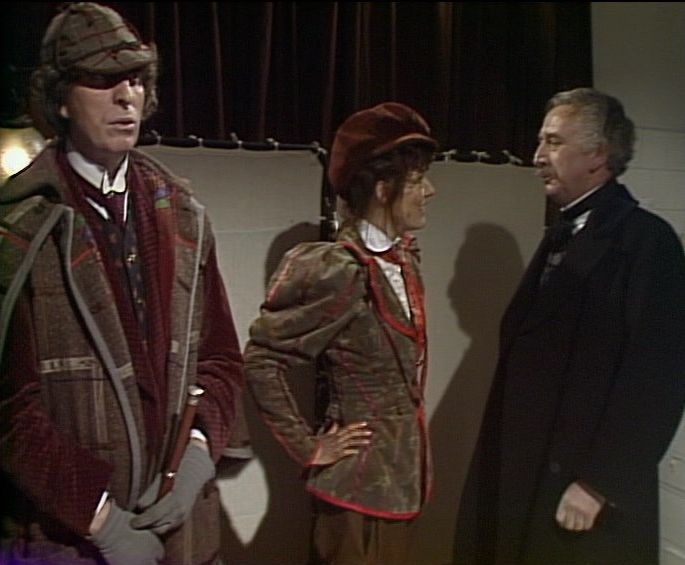
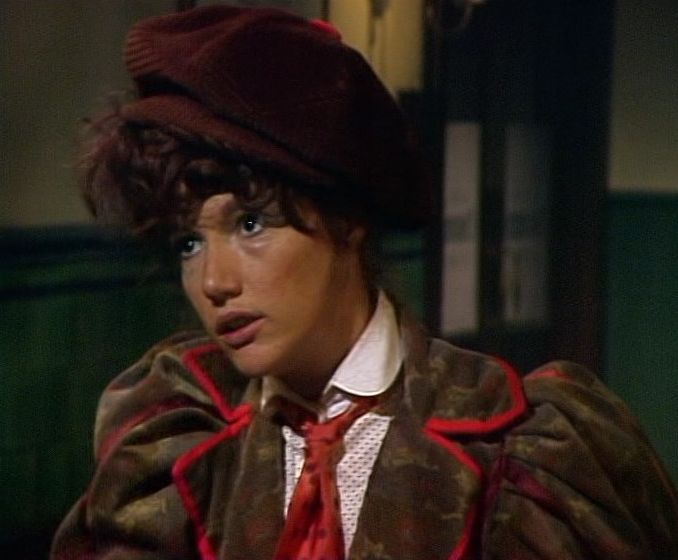


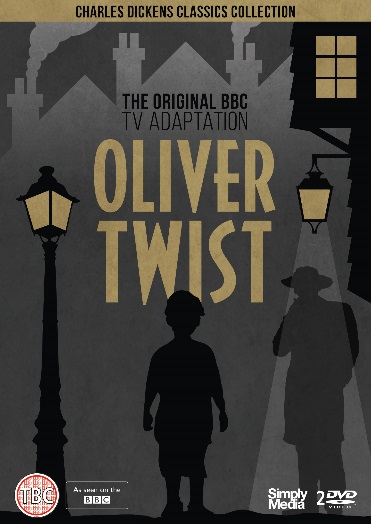
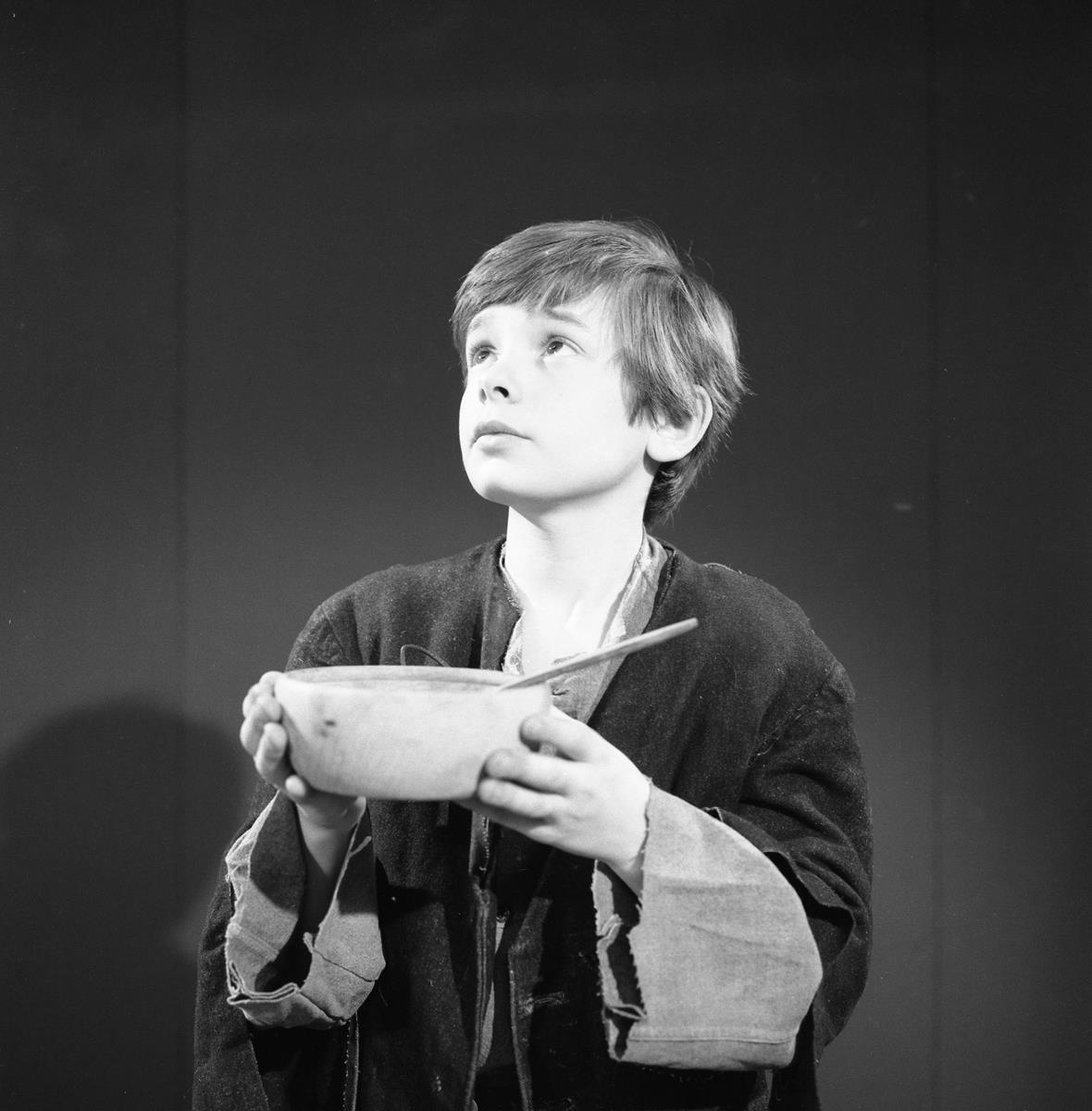
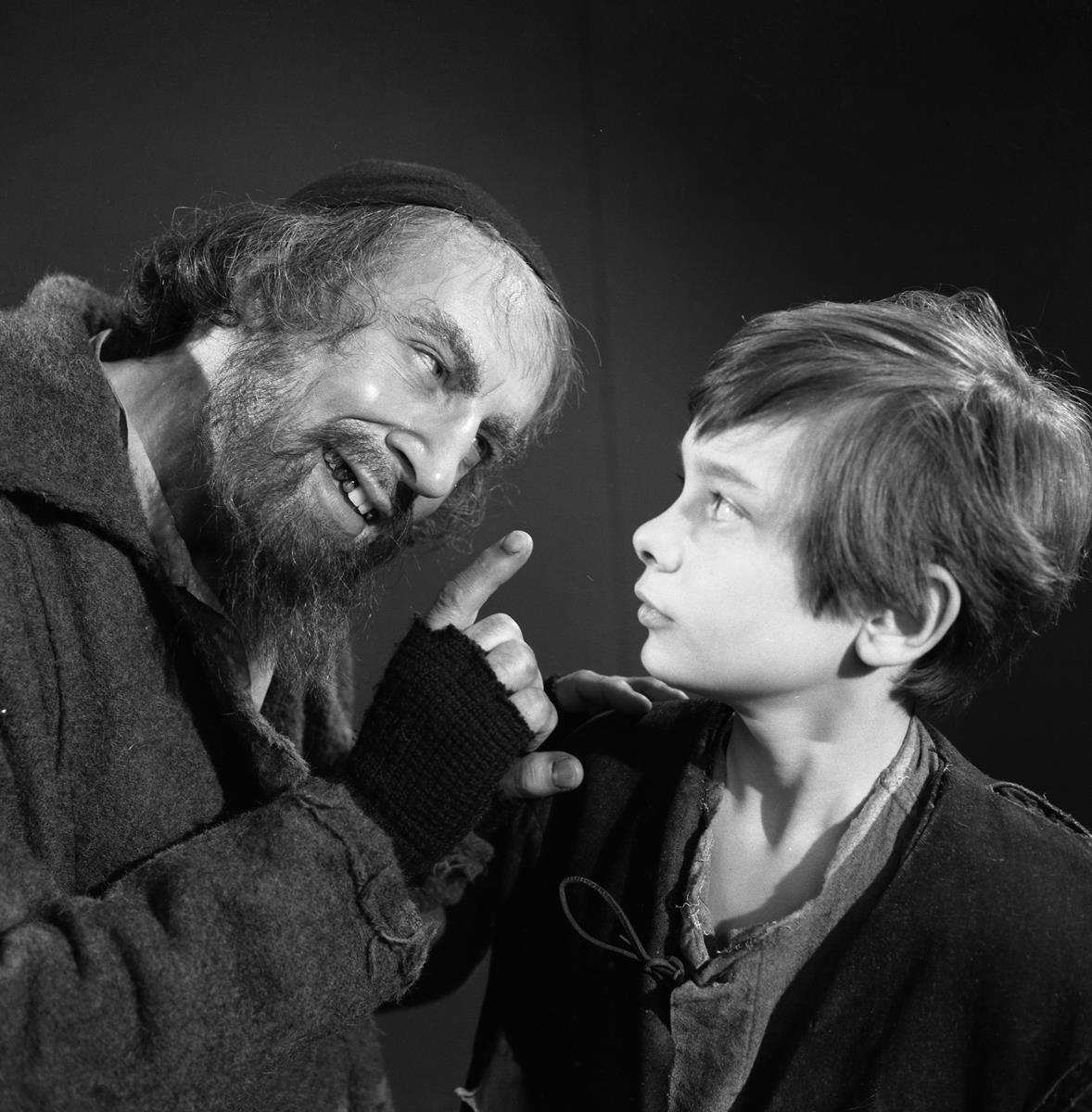
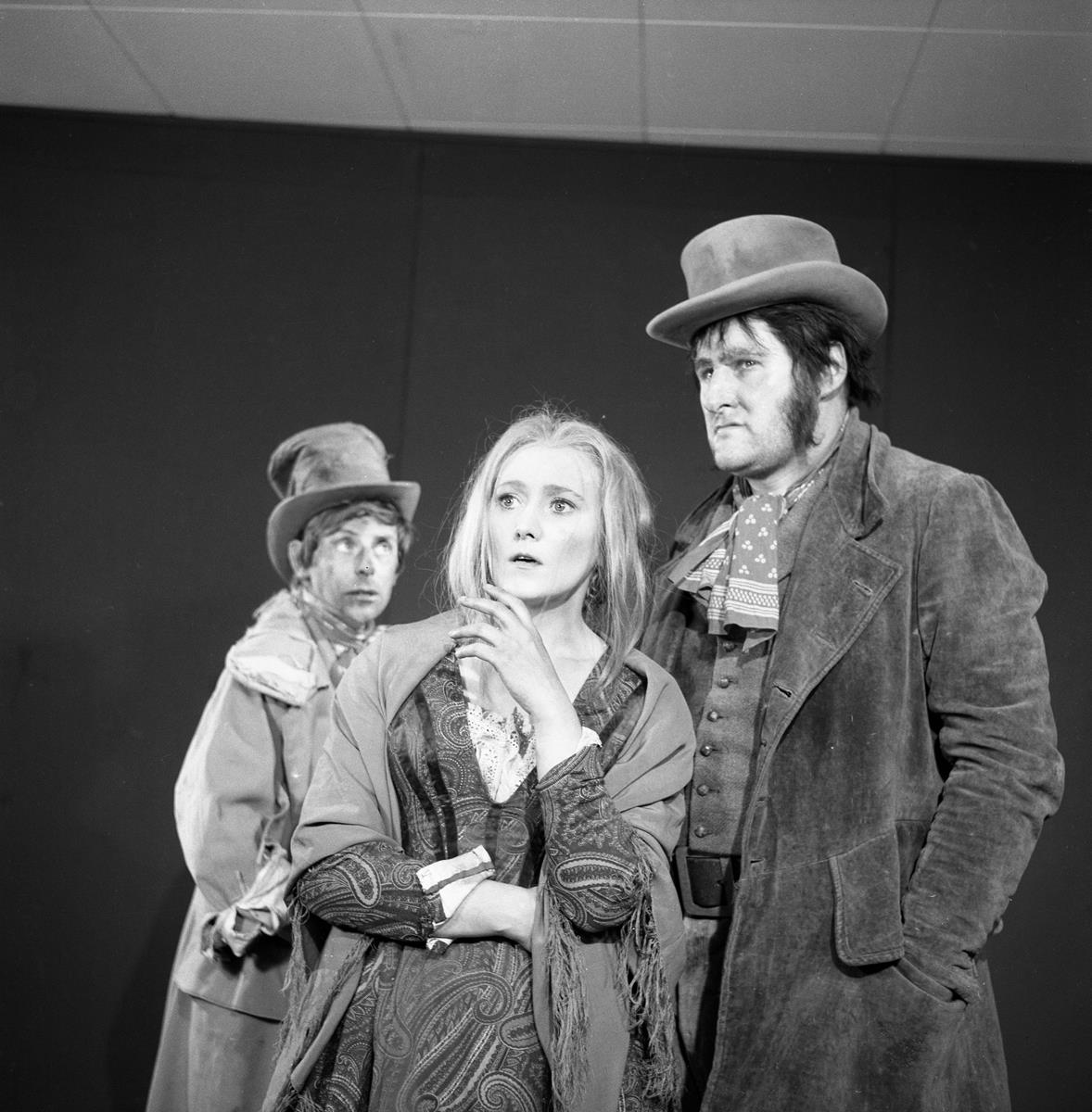


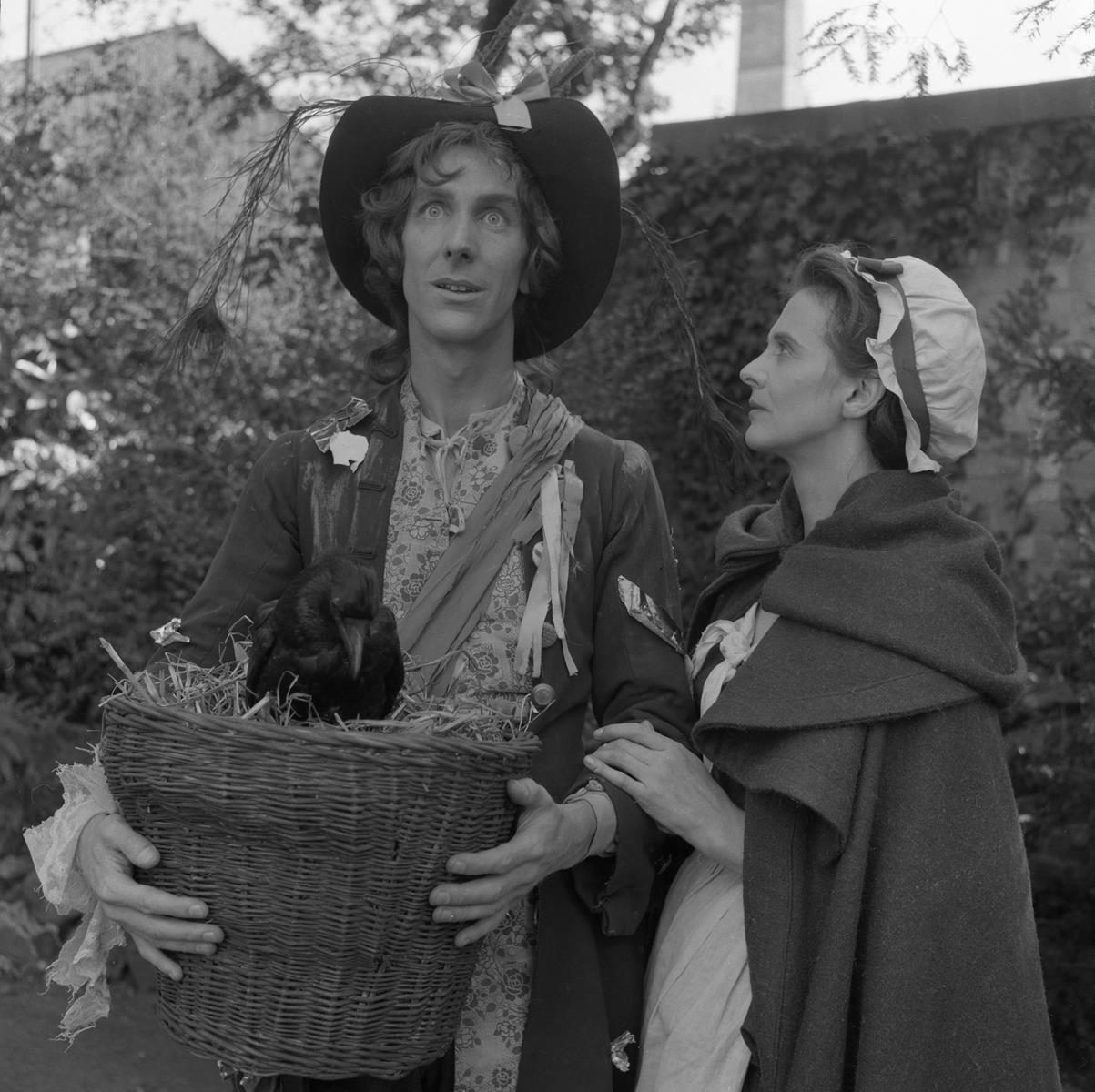
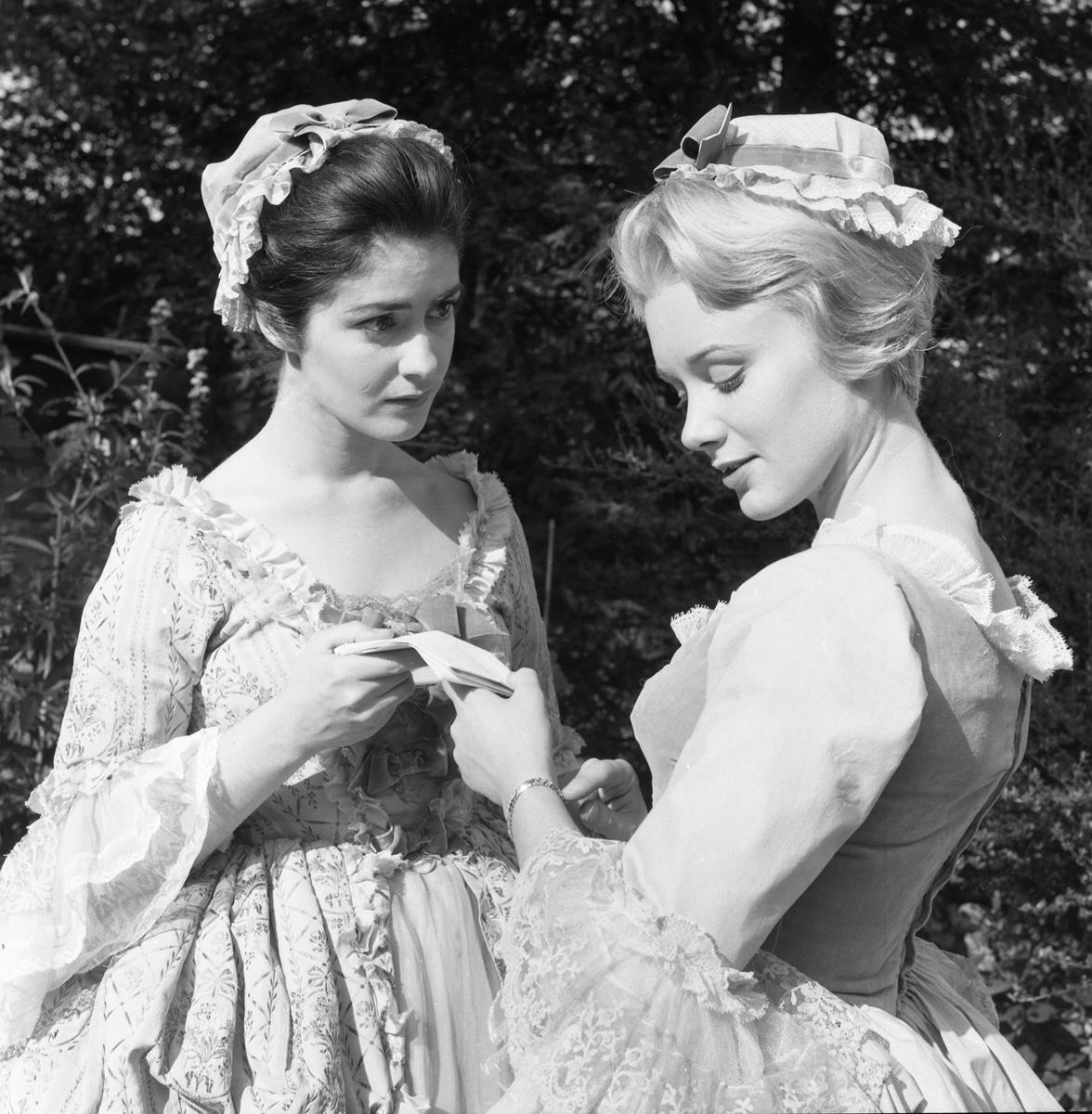
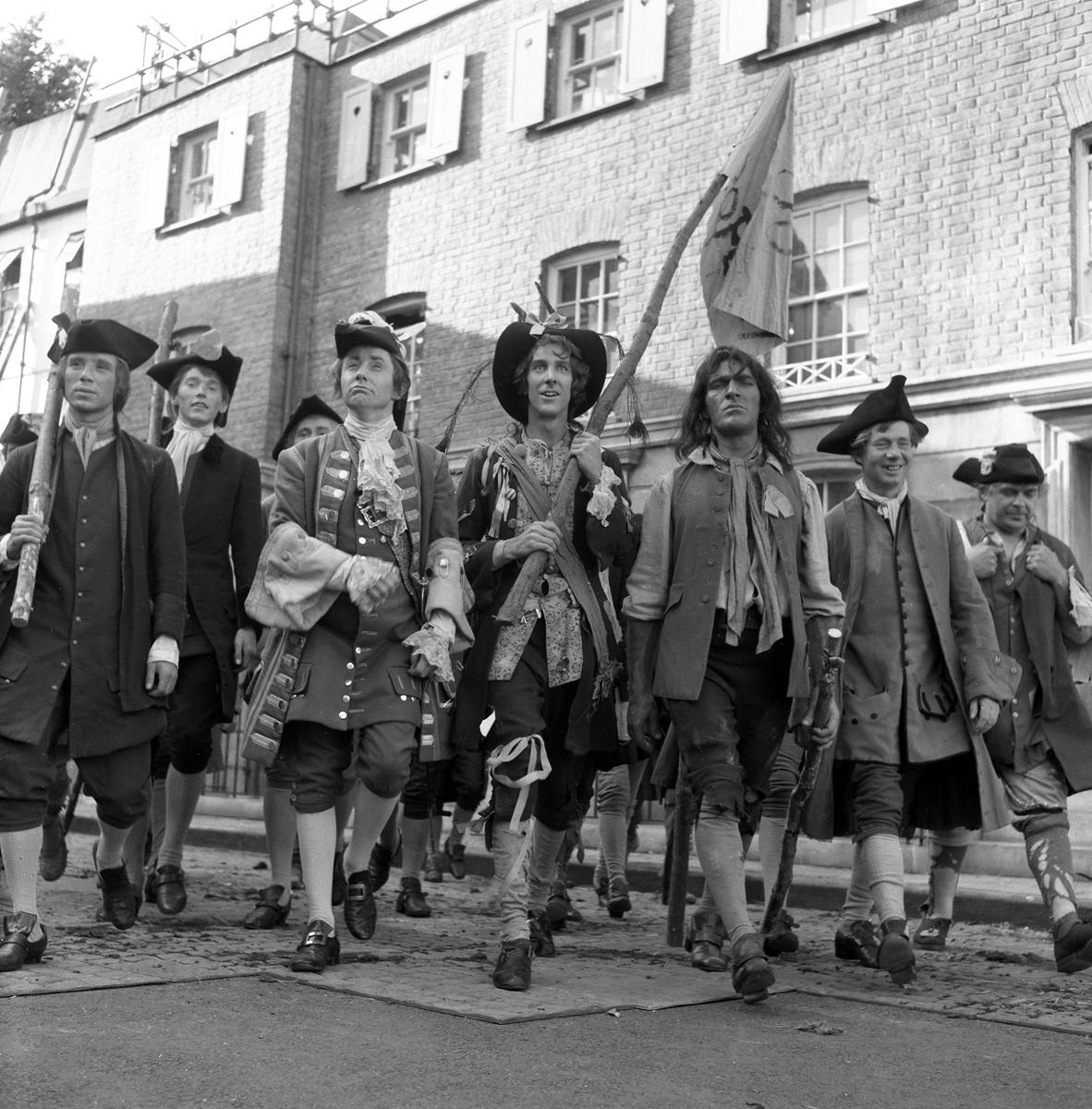


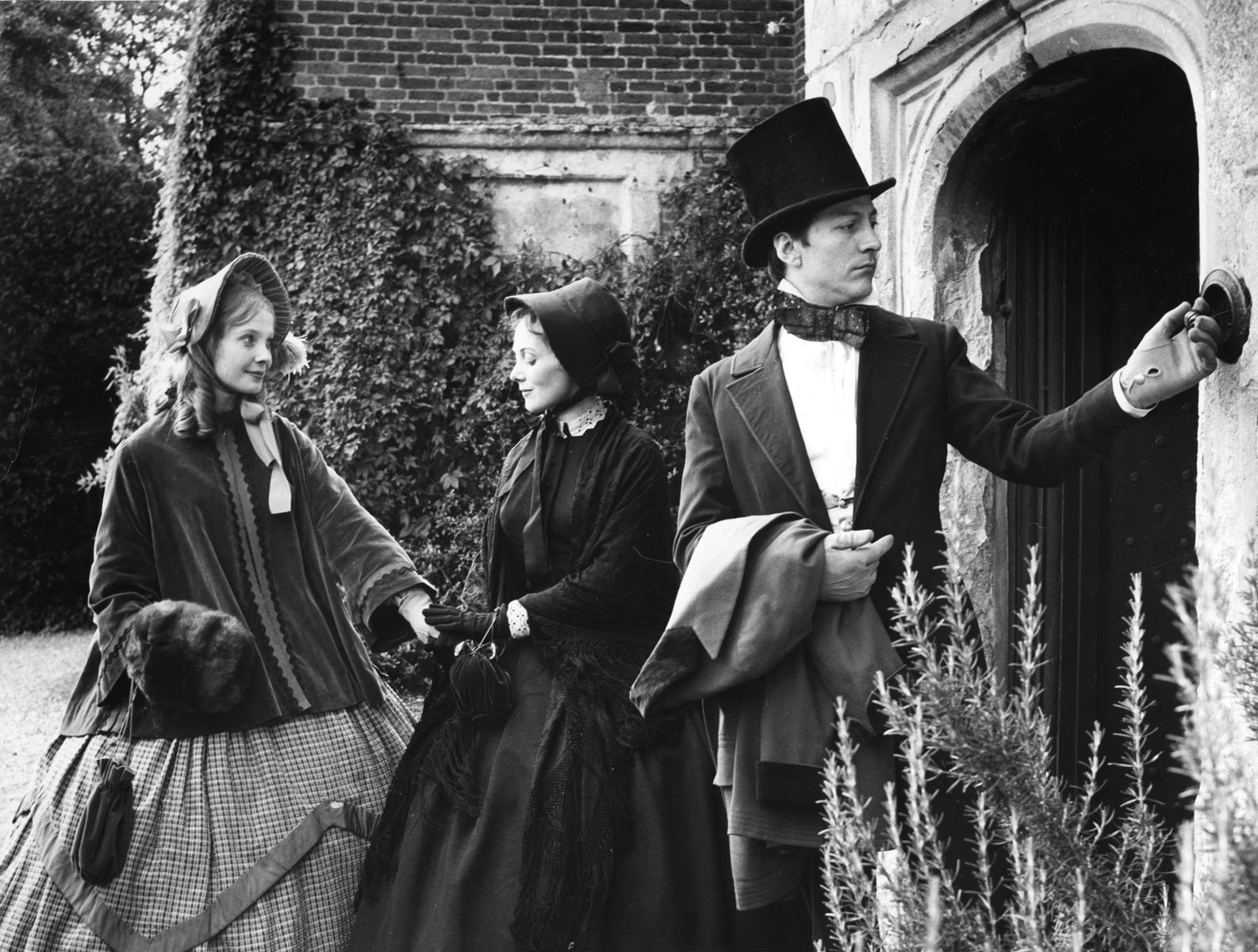
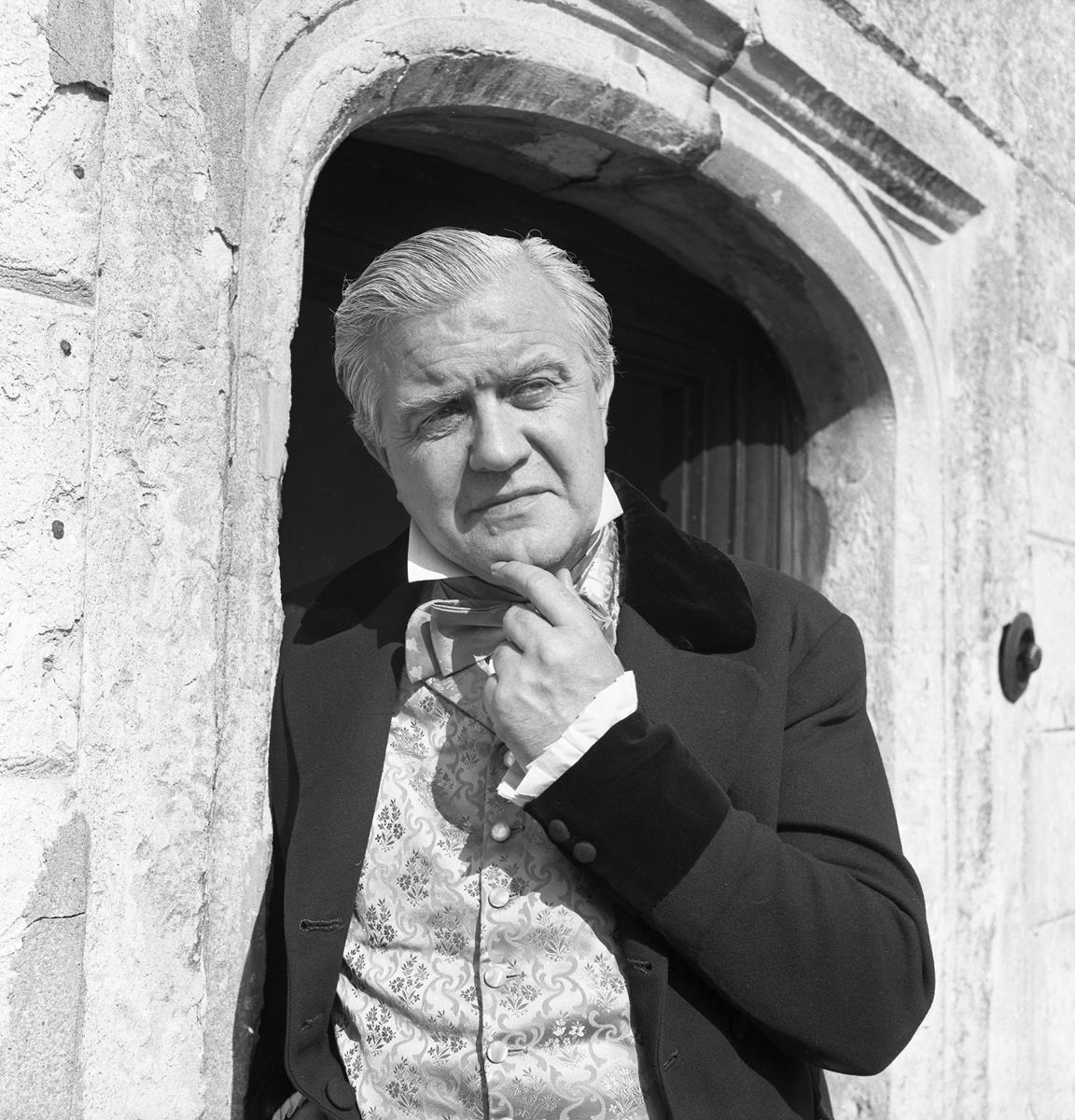
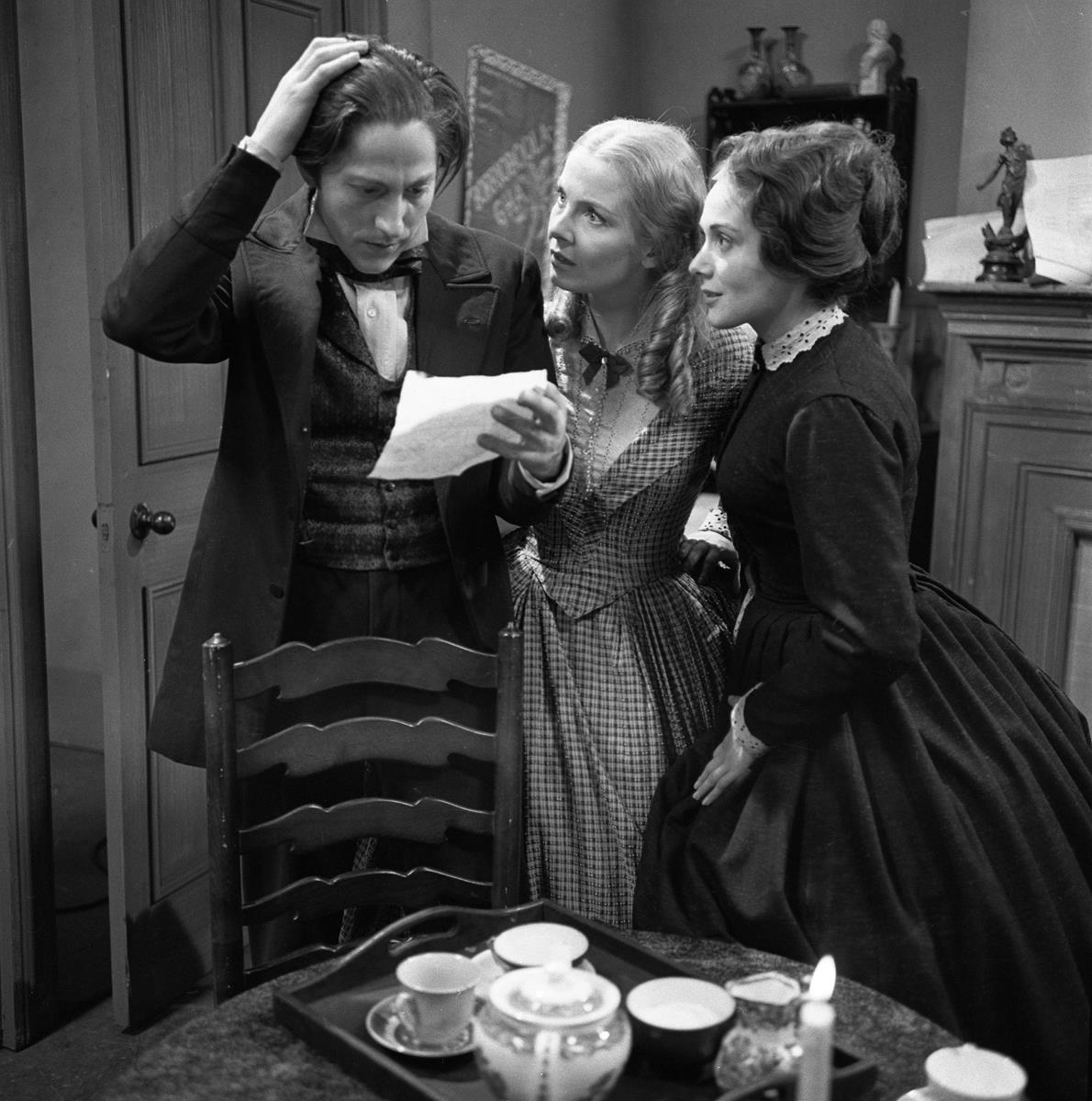


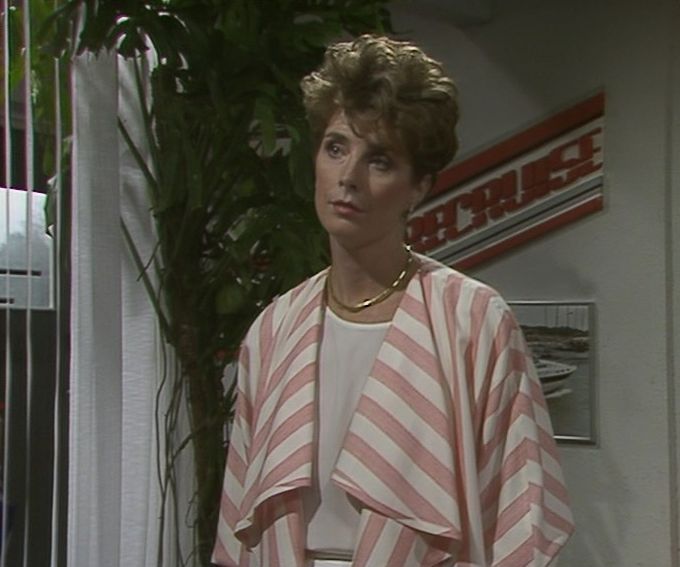
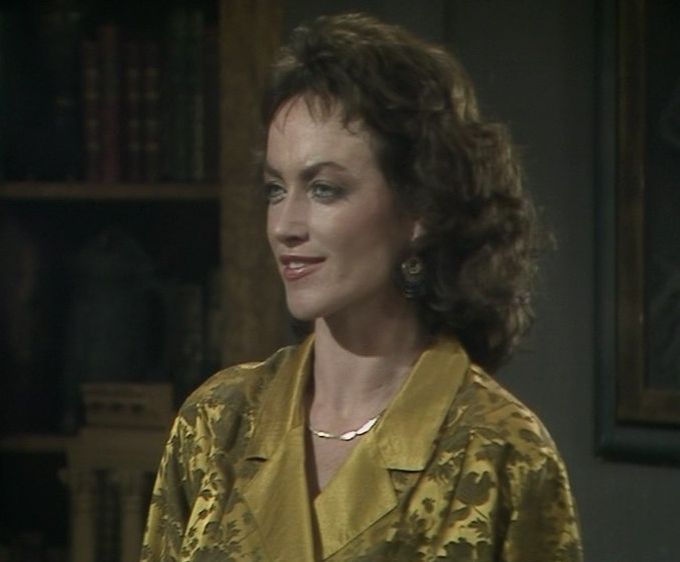



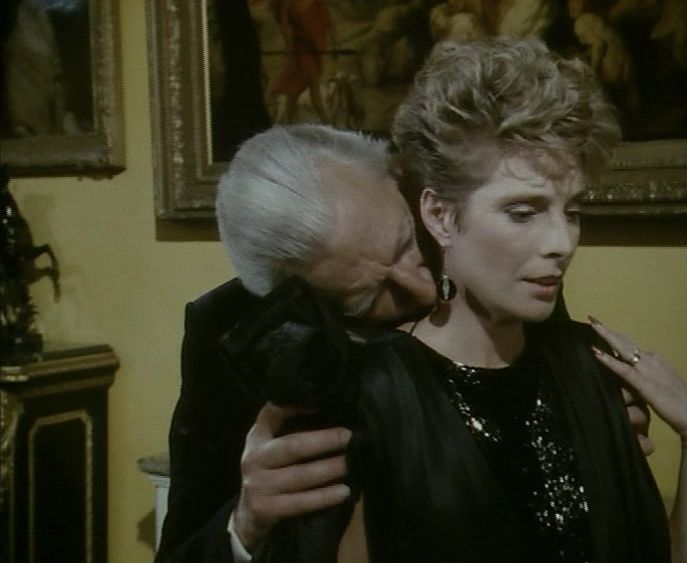
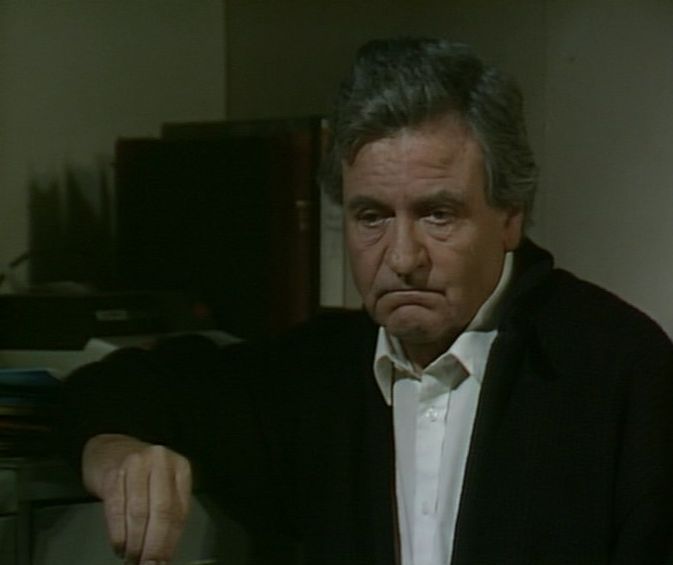

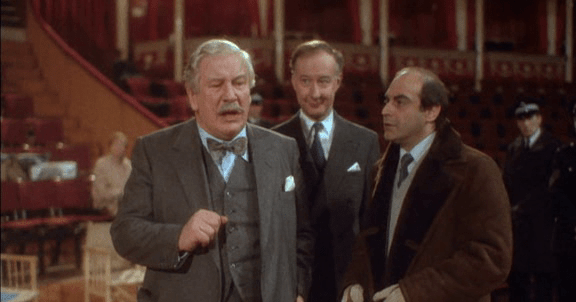
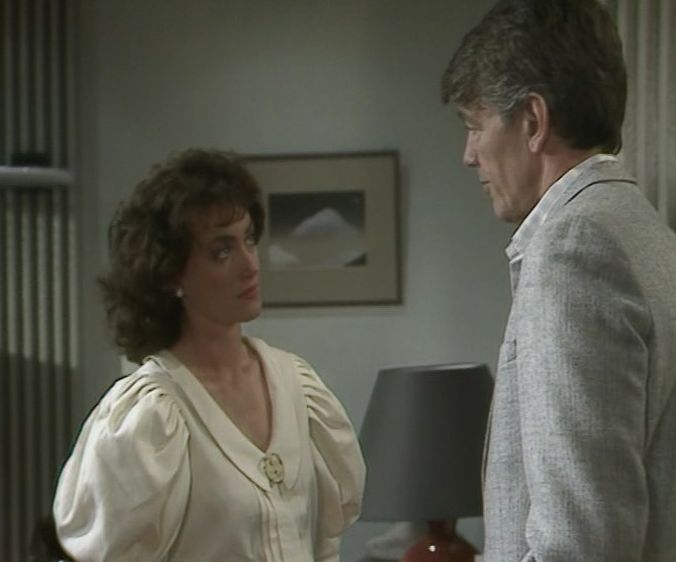
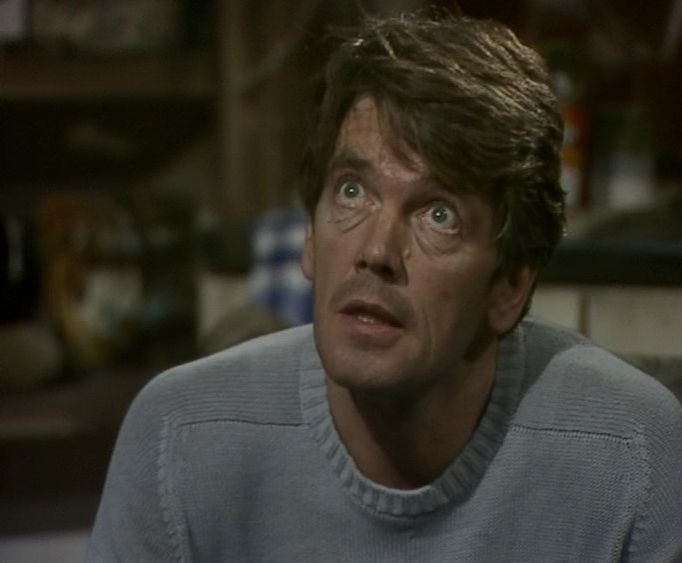
 Archive Television Musings