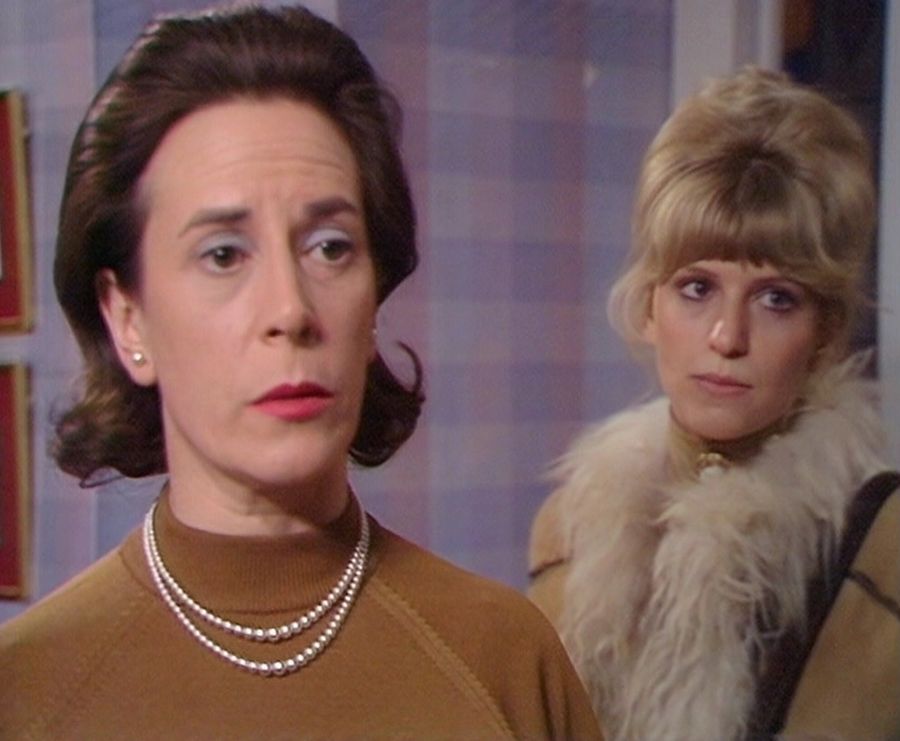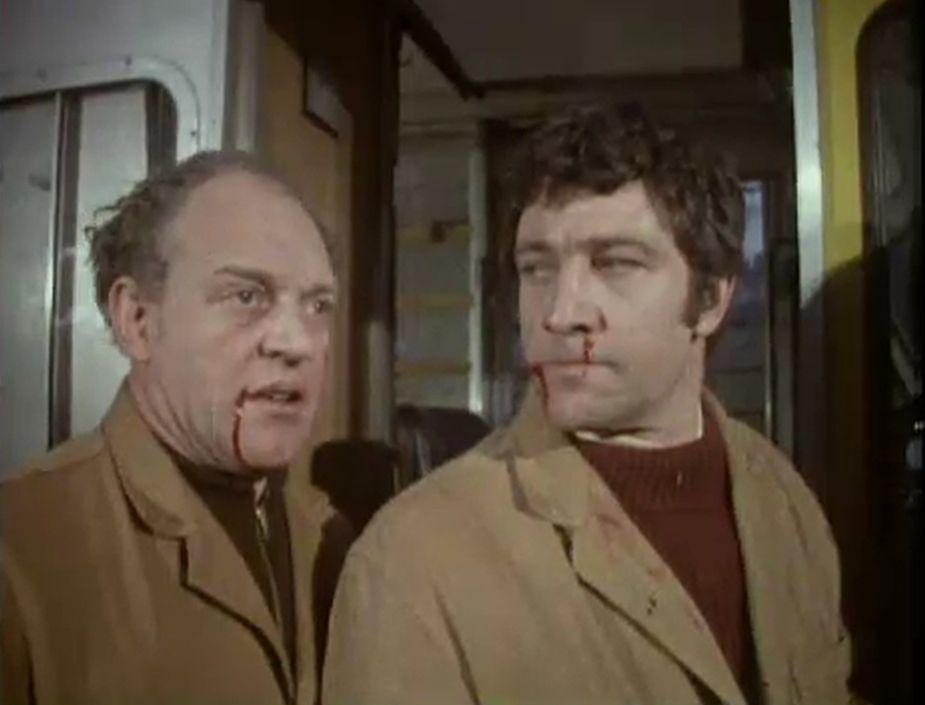
Forthcoming archive treats on BBC Four

As always, sandwiched in-between the umpteenth re-runs, BBC Four always manage to dig a little deeper to unearth some items of interest. Here’s a few that have caught my eye.

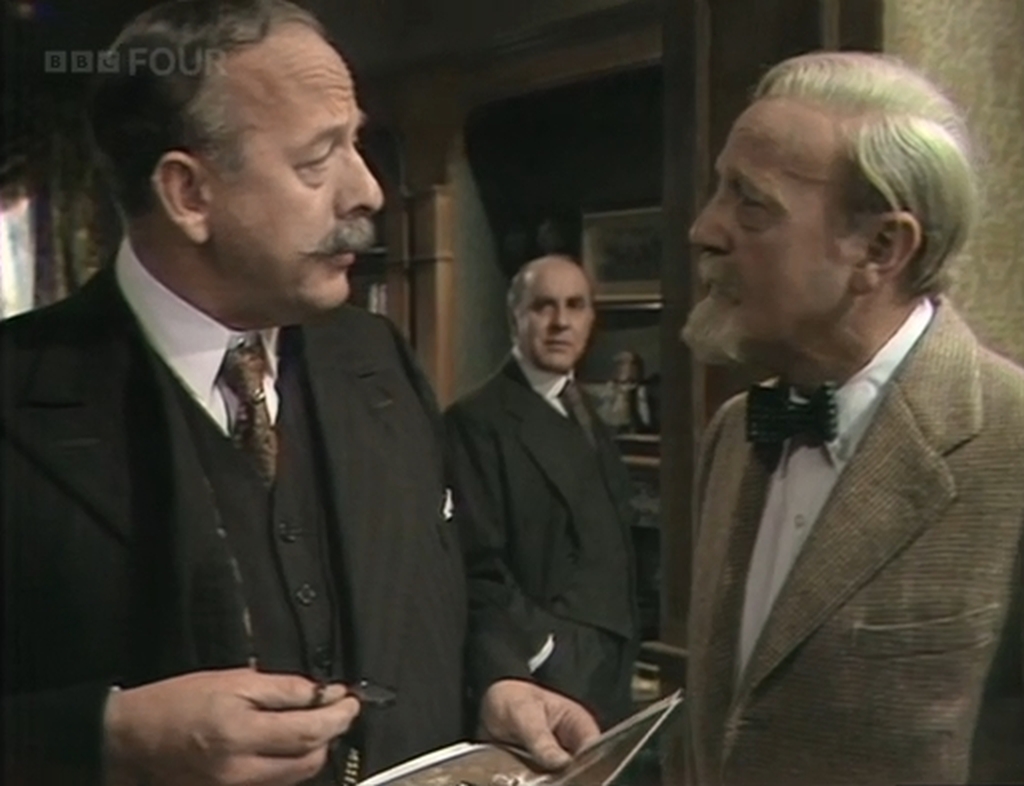
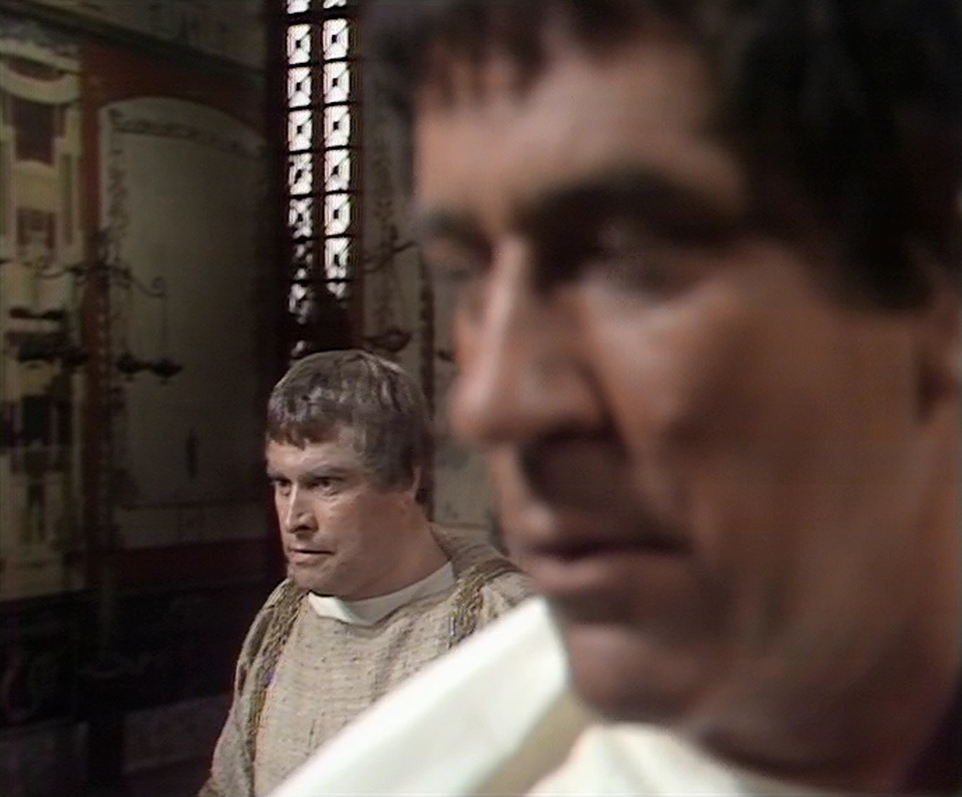
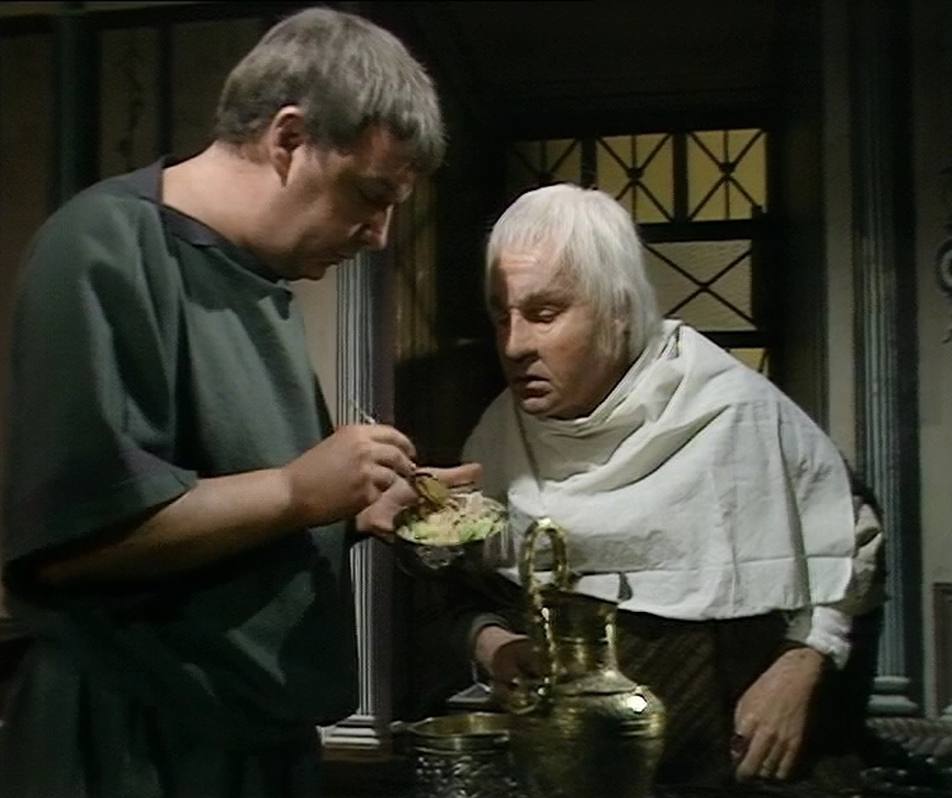
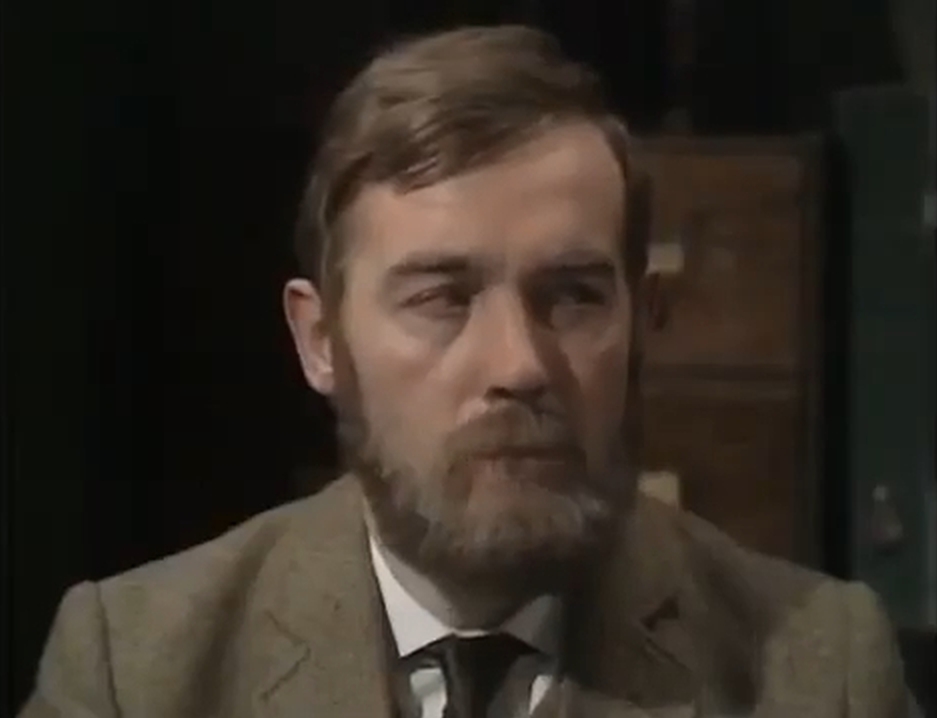
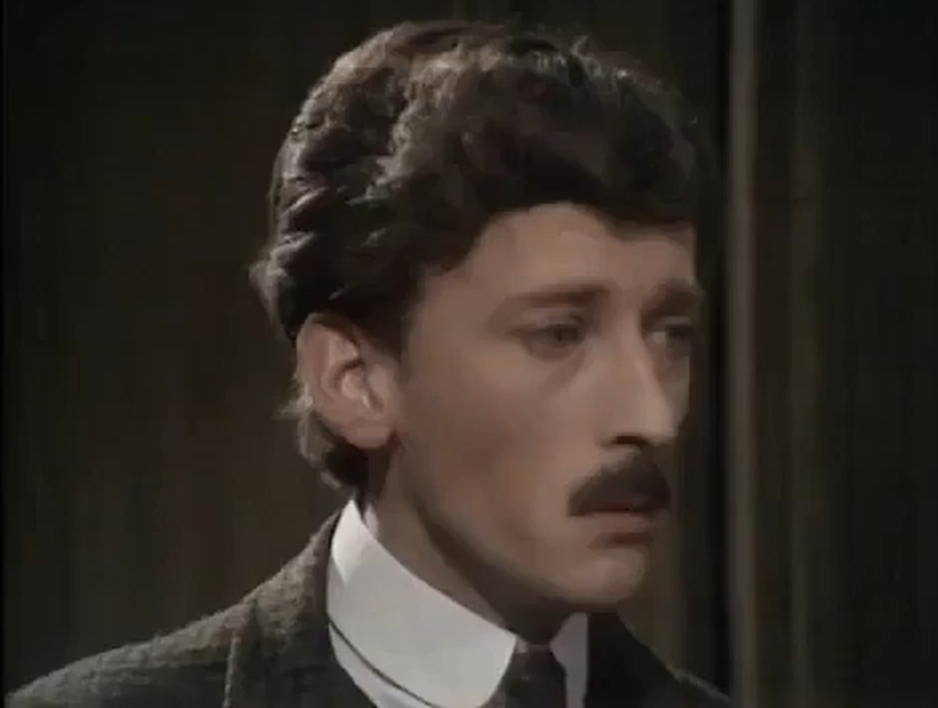
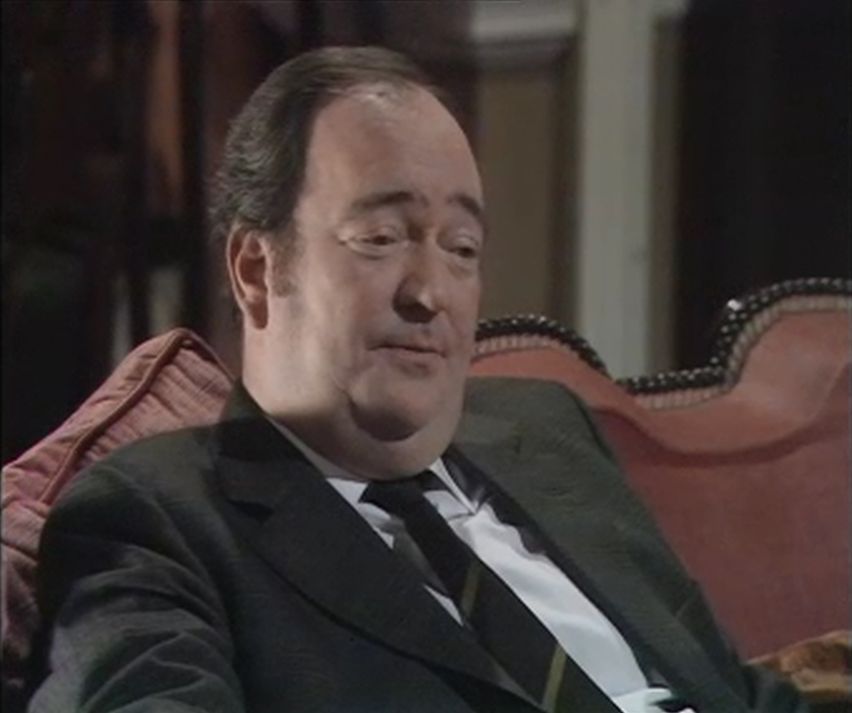
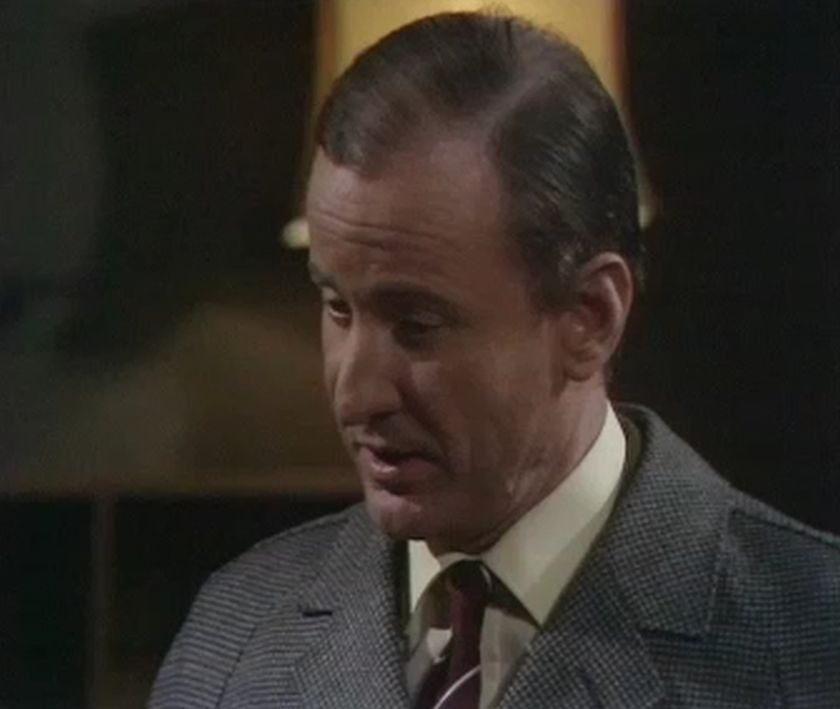
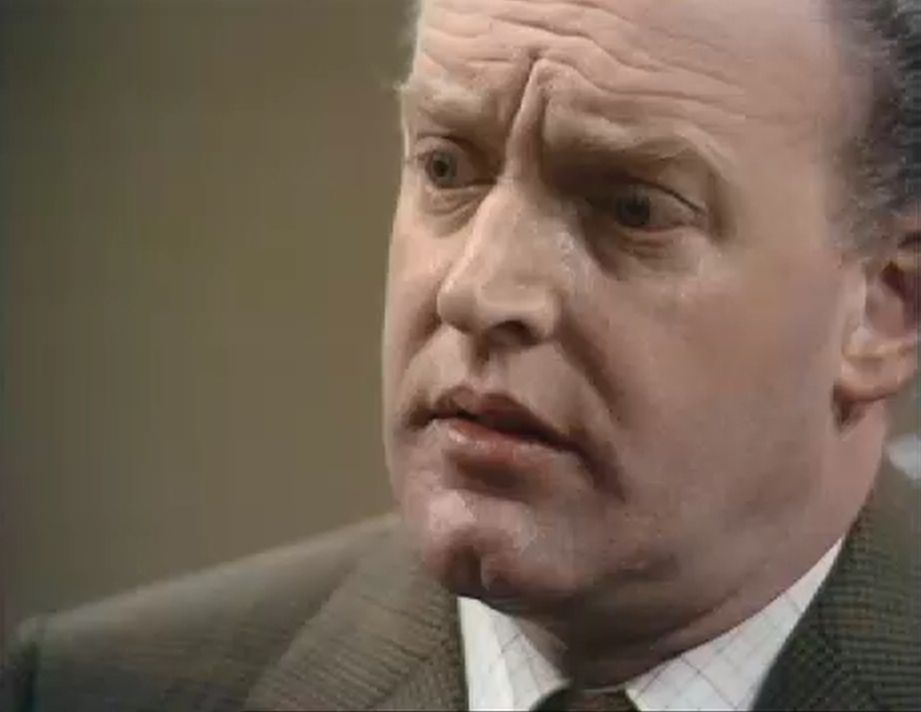
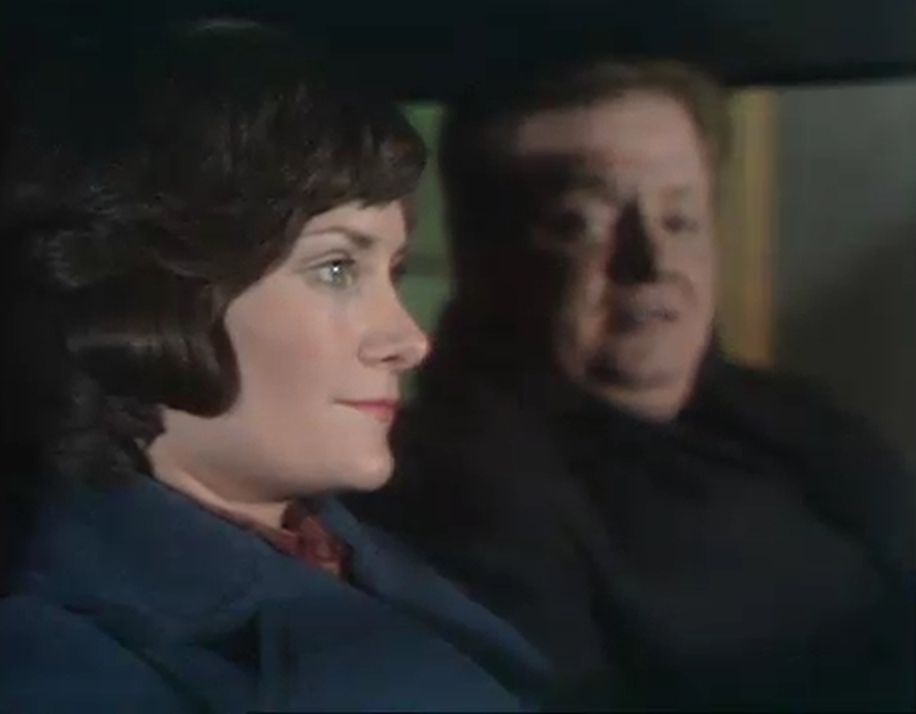
Play of the Week – Fairies (tx 27th September 1982) has already aired earlier in the week (and will be seen again on 9/3/25, at 00:45). The story of Sir Arthur Conan Doyle’s championing of the Cottingley fairies, it’s well worth an hour or so of your time. James Grout plays Conan Doyle with the likes of Hugh Burden and Charles Kay in support. Linda Searle and Helen Fraser play the two young sisters who manage to hoodwink Conan Doyle.

An edition of Arena is broadcast on Monday (10th March, at 21:55). Originally broadcast in September 1980, it profiles the work of two young playwrights – Andrea Dunbar and Victoria Wood.

The first two episodes of The Fall and Rise of Reginald Perrin are on Tuesday the 10th, from 20.00. We’ll have to wait and see whether this marks the beginning of a re-run of all three series.

On Wednesday the 12th (23.00) there’s a chance to see the 1982 BBC Schools production of An Inspector Calls. Given the running time (80 minutes) the text is slightly cut, but otherwise it’s a very faithful adaptation of the source material (which is understandable, since it was designed primarily as a teaching aide – although it’s also a cracking drama in its own right). The always immaculate Bernard Hepton heads the cast as Inspector Goole.

Thursday the 13th (21:45) sees a documentary about Len Deighton (The Truth About Len Deighton) receive its first airing since 2007.

And to round off the week, there’s another rare edition of Parkinson, this one features Dave Allen (as well as Toyah Wilcox and Peter Skellern).

Spy Trap (1972 – 1975)

Created by Robert Barr, Spy Trap ran for three series and 61 episodes between 1972 and 1975. When comparing it to similar programmes in the same genre, it’s fair to say that it’s more like The Sandbaggers than Callan (Spy Trap mostly revolves around men and women talking, rather than gunplay and murder).

One of Barr’s notable earlier series was Spy-Catcher (1959 – 1961). Based on the memoirs of Lieutenant-Colonel Oreste Pinto, a WW2 MI5 interrogator, each episode saw Pinto (Bernard Archard) test the story of refugees and others who may be friends or may be foes.

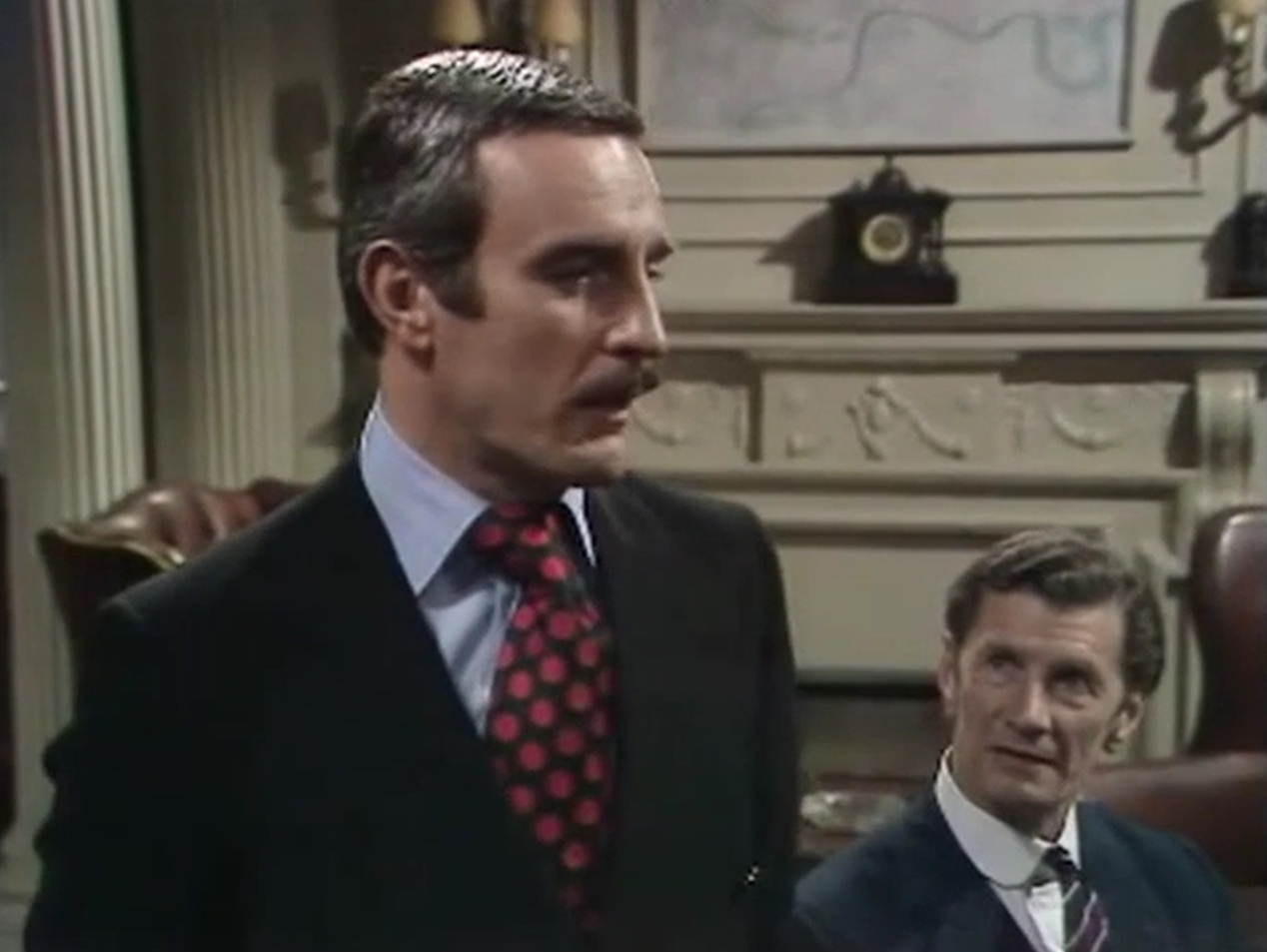
Spy Trap has a similar feel – with Commander Ryan (Paul Daneman) cast in the Pinto role. Ryan’s job in most of the episodes (or at least the ones which still exist) is to relentlessly probe and question. When circumstances dictate, Ryan can be affable and friendly, but he can change at the drop of a hat.

Some episodes operate rather like a whodunnit – with multiple suspects – others such as The Cornet and The Beast, The Melioidosis Report and The Merrin Memoirs are more basic in their setup, with Ryan facing off against a single opponent. This is no criticism though, as these examples (all from the third and final series) show the series at its best.

The first series ran for thirty six 25 minute episodes and was scheduled in an unusual way. The first four stories all ran for four episodes and were stripped across the same week – Monday to Thursday. From then on, two-parters were more common (although there was another four-parter as well as a six episode story) with the remainder of series one airing on Wednesdays and Thursdays.

Spy Trap hasn’t fared too well in terms of surviving episodes, with only 14 left in the archives – the first four from series one and all of the third and final series. Although with my glass half full hat on (if you excuse the image) it could have been worse – at least we have an example of the original format plus a complete run from later on.

The debut story, Checkpoint, was written by Barr and aired between the 13th and the 16th of March 1972. Whilst Ryan would be ever-present in every story, Checkpoint is the only opportunity to see some of the other series one and two regulars – Commander Anderson (Julian Glover), Lieutenant Saunders (Prentis Hancock) and Trent (Kevin Stoney) – in action.

The basic plot of Checkpoint is a simple one – an agent called Brady (Norman Rodway) engineered a daring escape from behind the Iron Curtain, bringing three people with him. The respected scientist Dr. Richter (Gerard Heinz) is seen as a notable prize (if, of course, he can be trusted) but there are question marks over the other two – Peter (Paul Aston) and Magda Rajik (Janet Key). And since Ryan isn’t too happy with Brady’s story he’s quite prepared to carry on digging until he’s satisfied.

The tension between Ryan (always a desk-man) and Brady (a slightly flaky and burnt out field officer) is nicely teased out and Janet Key also impresses (and receives a good chunk of screentime) as Magda.

Ryan eventually finds out the truth of the matter, although that’s not the most important part of the story – Checkpoint is all about the journey, rather than the destination.

Reviewing this first story, Graham Clarke in The Stage and Television Today, confessed that he found himself a little underwhelmed by the denouement but then said that “the play was well-written and directed with an uncluttered economy of effort: it was also very well acted and the quality is likely to be sustained by its excellent and competent leading players.” He closed by commentating on his disappointment that Julian Glover was given little to do (and was hopeful he would have better in the future stories). Fingers crossed that one day further examples of series one turn up to see if this did happen ….

We then jump to the beginning of series three and Look for the Ugly. By this point the core team comprises Ryan, Major Sullivan (Tom Adams) and Carson (Michael Gwynn). With Barr no longer contributing scripts, a varied selection of writers were used – all of whom bring their own stamp to the series. Amongst them were John Kershaw, P.J. Hammond, Ray Jenkins, John Wiles and Bill Craig.

Jenkins and Craig had also worked on Callan, so it’s possibly not surprising that – my earlier comments notwithstanding – it’s possible to see occasional echoes of the ABC/Thames series. For example, Craig’s script (To Kill A Unicorn) finds Ryan and Sullivan operating undercover in East Berlin. This is a far cry from Ryan’s comfort zone and he’s forced at times to play second fiddle to Sullivan – a man with (secret) orders to kill if necessary.

The rotating crop of writers used during this third series, ensures that Spy Trap never got into a rut. Although some episodes are more engaging than others, there’s always something of interest – especially guest performers. Such as Peter Miles in Look for the Ugly, Michael Aldridge in The Cornet and the Beast as well as James Bree (a typically idiosyncratic turn) and Diane Keen in Distant Relations.

Spy Trap may be a forgotten series but it’s one that’s aged well (provided you appreciate dialogue-heavy VT studio drama – and if you don’t, why are you on this blog?!) At present, all the existing episodes can be viewed here.

Dixon of Dock Green

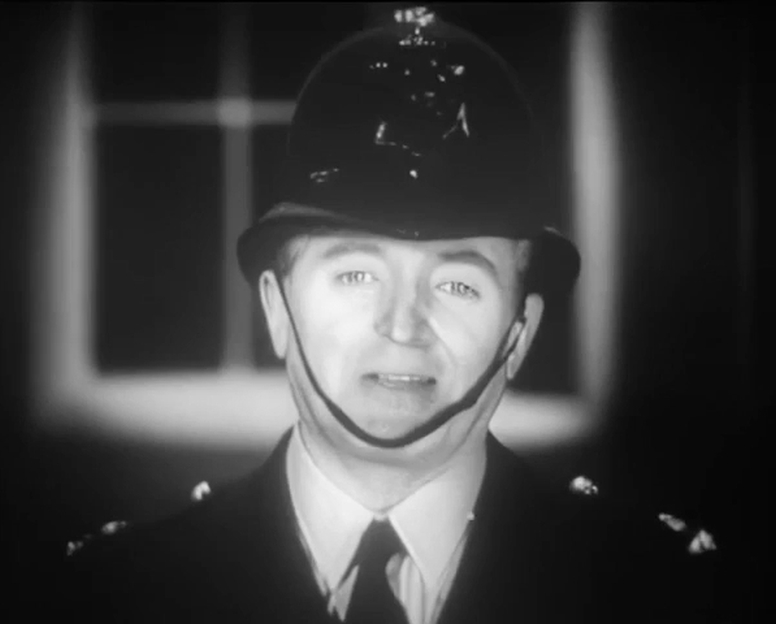
Good evening all.

Talking Pictures TV have recently started a re-run of the surviving episodes of Dixon of Dock Green. Sadly, even at the rate of one a week that won’t take them that long (432 episodes were broadcast during 1955 and 1976, only 32 still exist).

Given that so much is missing, it’s hard to get a feel for how the series developed during the 1950’s, 1960’s and 1970’s. Five consecutive episodes from the second series which aired in 1956 (Postman’s Knock, The Rotten Apple, The Roaring Boy, Pound of Flesh, Father In Law) are the earliest survivors and then we jump to 1960 (The Hot Seat) with another five B&W episodes remaining between 1963 and 1967 before arriving at the first colour episode still in the archives (Wasteland).

Although more colour episodes than black and white ones do survive, the picture is grim for the early 1970’s. Only three episodes from series 17-19 (1970 – 1972) are still around, and it’s clearly no coincidence that they were all-film productions (money could be saved by wiping and reusing videotapes, but that couldn’t happen with film – hence the reason why they fell through the wiping net).

Indeed, it’s not until the final two series (21 and 22, 1975 – 76) that things begin to pick up. A good chunk of series 21 still exists, and all of series 22 has been retained.

So what are the earliest (1956) episodes like? The telerecordings are a little crude (but then you need to remember that this was still a developing art – only three years earlier the process was deemed to be so unsatisfactory that the final four episodes of The Quatermass Experiment weren’t telerecorded at all).

If you can overlook the slightly murky picture quality, there’s still plenty of interest – for example a young Paul Eddington guesting in The Rotten Apple (11th August 1956) with an equally young Kenneth Cope appearing in the next episode –  The Roaring Boy (18th August 1956). Eddington is that rarest of things in the Dixon universe (a rotten copper) while Cope plays a gun-toting tearaway who holds George hostage. Cope has more than a hint of Dirk Bogarde about him, so it’s hard not to be reminded about how things went for PC Dixon in The Blue Lamp. Luckily for Dixon this time, he’s an indispensable part of the television series, so was able to walk away unscathed.

TPTV have said that all surviving episodes will air. I’ll keep an eye out to see if Molenzicht is one of them (it was left off the DVD release for unspecified rights reasons). I only have a rather washed-out colour copy in my collection, so it would be nice to see a better quality version (although if truth be told, it’s a bit of a dull tale that not even Maurice Roëves can lift).

Elsewhere on this blog are reviews of all the other colour episodes, written when the DVDs came out. My feelings at the time (which I’m happy to still stand by) is that they show the series was far stronger than its low reputation would have you believe.

The arrival of The Sweeney was seen by many as the final nail in Dixon’s coffin. And yet the tv schedules were surely big enough for the both of them. Not least because they were serving very different audiences – Dixon was an early evening programme, The Sweeney was firmly post-watershed.

And it’s always struck me as rather ironic that Ian Kennedy Martin (creator of The Sweeney) would later devise Juliet Bravo (a series that, like Dixon of Dock Green, eschewed car chases and shooters – instead concentrating on low key, character-driven drama). Juliet Bravo ran for six series, which suggests that the audience for the type of policing George Dixon served up for over twenty years was still there well into the 1980’s.

I Claudius – Reign of Terror (1st November 1976)

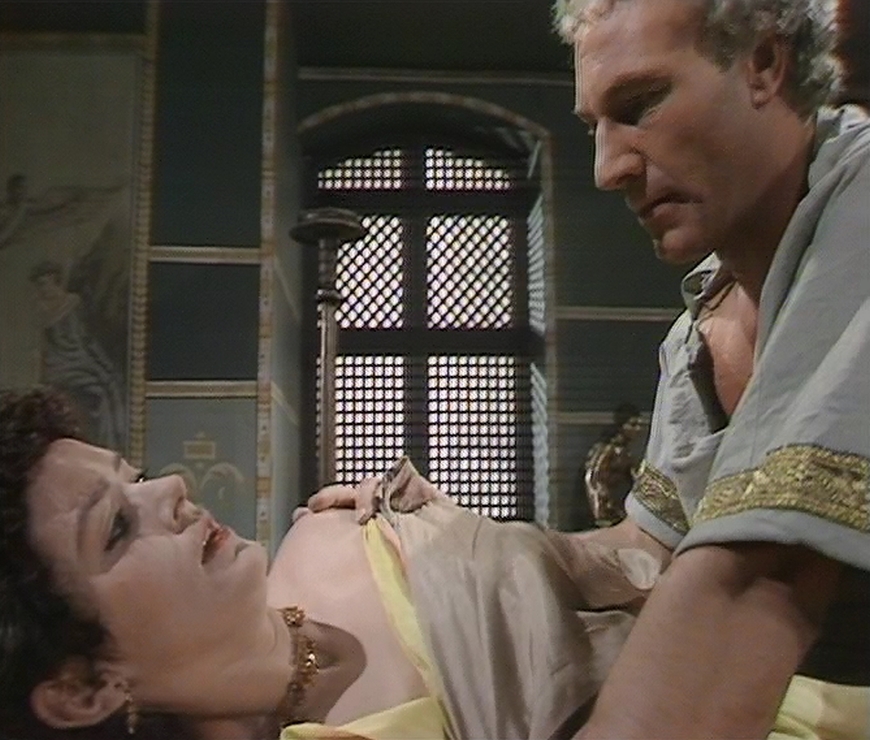
The aged Claudius opens the episode by informing us that following Tiberius’ retirement to Capri, the Empire was effectively now run by Sejanus – who, unfettered by any restraints, instigated a brutal reign of terror. Of course, by the end of the episode we’ve witnessed another reign of terror and in this one Sejanus turned out to be a victim …

As in previous episodes, Tiberius remains an isolated figure with Sejanus solely responsible for deciding who will be lucky enough to be granted an Imperial audience. On the one hand this suits Tiberius very well – he remarks this makes Sejanus the visible figure who attracts the ire of the public (with Tiberius remaining unaffected in the shadows). But there has to be another part of him that realises by abdicating so much power, he’s now little more than an impotent puppet.

Ironically, it’s his hated adversary Agrippina who articulates this very point. Even when she’s brought to him in chains, she manages to exude an aura of lofty disdain. Their final meeting is no more agreeable than any of the others – an apoplectic Tiberius whips her before she’s banished to the same island where her mother (Julia) lived out the remainder of her life.

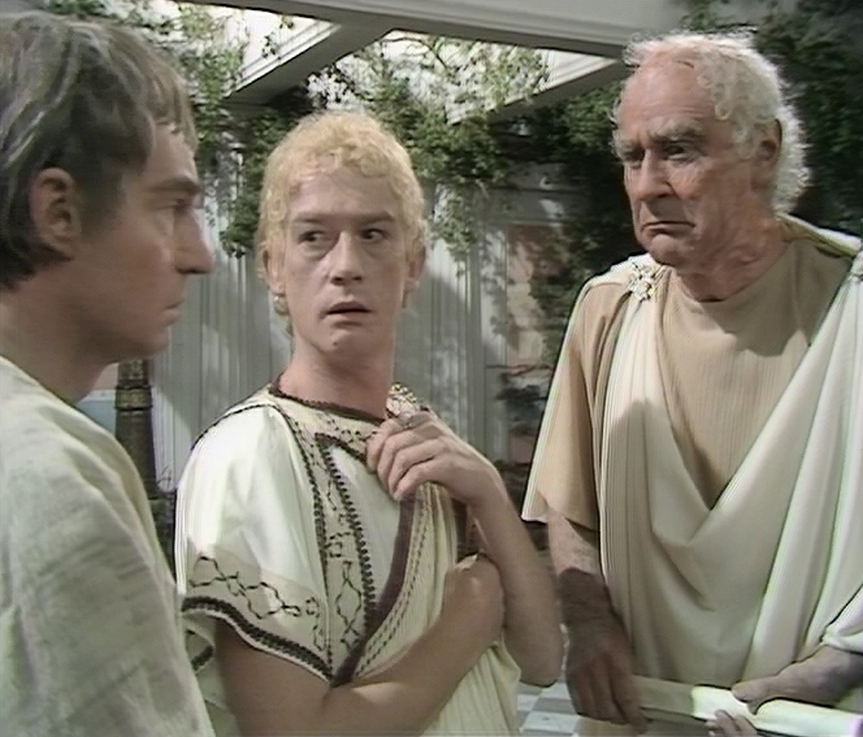
Although he’s not given a great deal of screentime today, every single moment that John Hurt appears is a joy. Caligula’s first scene with Claudius is an instructive one – at this point Caligula may be hedonistic and totally self-obsessed, but he’s not mad (that would come later). He expresses polite disinterest in the fate of his brothers (Drusus and Nero) to Claudius’ disgust – but it’s fair to say that he’s only doing what Claudius has done all his life (keeping his head down, when all about are losing theirs).

Even better than this scene is Hurt’s deadpanning later in the episode, as Claudius brings Tiberius evidence that Sejanus and Livilia planned to murder him. Caligula’s reaction (“I always knew that woman was no good … people really are despicable”) is ordinary enough, but it’s the playful relish of his delivery that entertains so much.

It’s a rare comic highlight (as is Claudius’ irritation that his publisher has illustrated his history of Carthage with endless paintings of elephants!) in the darkest of all the I Claudius episodes.

Livila is desperate to marry Sejanus. He’s keen to do this, but is also agreeable when Tiberius suggests he marries Livila’s teenage daughter Helen (Karen Foley) instead. You can probably guess how Livila reacts to that (just wind Patricia Quinn up and let her go for several minutes).

The corruption of Sejanus’ Rome is represented by the way one man dies – Gallus (Charles Kay). Gallus has three scenes – in the first he makes a principled stand in the Senate (earning Sejanus’ enmity) and in the second he shares a walk back to the Senate with Claudius (the pair have an amiable chat about history – his association with Claudius marking him out as a good guy).

His arrest and brutal torture demonstrates how Sejanus’ reign of terror operates – any opponent can be removed at any time and evidence simply isn’t required. There are so many fine cameo performances across the entire serial – Kay’s is just one among many. “I’ve watched your career with fascination, Sejanus. It’s been a revelation to me. I never fully realized before how a small mind, allied to unlimited ambition, and without scruple can destroy a country full of clever men”.

Antonia moves a little more to the forefront today. Her default expression is still disapproving (even now he’s middle-aged, Claudius can seemingly do nothing right in her eyes) but she does emerge as one of the few members of the Imperial family (along with Claudius, of course) who has a strong sense of morality. It’s remarkable that she’s remained innocent about so many things (the part her daughter Livilia played in the banishment of Postumus, for example) but this does seem to be genuine, rather than a politic avoidance of the truth.

So when she’s presented with evidence that Livila poisoned her husband Castor, she acts without hesitation. Locking her in a room and forcing herself to listen to Livila’s screams is a call-back to a similar scene with Augustus/Julia. But where Julia would eventually emerge (bound for exile) Antonia plans to keep vigil until Livila dies of starvation.

Claudius: How can you leave her to die?
Antonia: That’s her punishment.
Claudius: How can you sit out here and listen to her?
Antonia: And that’s mine.

While this is happening, Rome is in turmoil. Sejanus has been removed from power by his second in command Macro (John Rhys-Davies). Rhys-Davies is excellent value as the previously loyal Macro who now eyes a chance to advance. Caligula recommends him to Tiberius as a sound man (he doesn’t know him personally, but he’s slept with his wife several times!)

There’s a few rare handheld camera shots (the death of Sejanus, the aftermath of the massacre in the streets) that help to give the climax of the episode an unusual feel. The studio-bound nature of I Claudius means that it struggles to express a sense of scale (most of the turmoil has to take place off screen) but the visceral nature of the unfolding events still carries a considerable punch. The rape and murder of Sejanus’ young daughter is a case in point.

Reign of Terror is an exhausting episode. And the fact that Tiberius has named Caligula as his successor suggests that the next one will be no quieter …

I Claudius – Queen of Heaven (25th October 1976)

Queen of Heaven opens with the conclusion of an agreeable evening’s feast at the home of Titus (Edward Jewesbery) and Lollia (Isabel Dean). They appear to be the ideal hosts as their guests – including Claudius and Agrippina – seem to have enjoyed themselves.

But the laughter quickly dissipates after Lollia begins to tell a story, concerning Tiberius’ debauched tastes. “I was there subjected to acts of such abominable filth, to bestial obscenities with him and his slaves of both sexes …”

This scene (running for nearly seven minutes) is a fine showcase for Isabel Dean’s histrionic talents (yes, you can argue that she goes a little over the top, but this theatrical intensity was probably the right choice). A shamed Lollia can see no other way out than to take her own life – which she does with a knife in full view of her shocked husband and guests. Clearly she’s one for the grand gesture …

Although sex is the motor that drives a great deal of I Claudius, it’s remarkable how coy the serial was in depicting it. So although we hear several times about Tiberius’ depravities, they’re never actually shown. This might have been a masterstroke, as the imagination is then left to conjure up the worst of images (more prosaically, the production may also have had one eye on overseas – especially American – sales, where any form of nudity wouldn’t have been appreciated).

Caligula has now grown into the figure of John Hurt. Complete with a yellow wig, the 36 year old Hurt (playing Caligula aged approximately 18) is clearly having a ball right from the start. Whether it’s chuckling with Tiberius over a new mucky book (well, mucky scroll) or subjecting his great-grandmother Livia to a lengthy and highly inappropriate kiss, Hurt always catches the eye.

Sejanus also moves into the forefront today. He’s able to convince a pliant Claudius to divorce his wife and marry Sejanus’ sister. Both Antonia and Agrippina denounce him for this, but Herod is more forgiving (or simply more farsighted). He alone understands that had Claudius refused, his life expectancy would have been on the very short side. So as he’s always done, Claudius simply bends with the wind and lives to fight another day.

As for Sejanus, apart from playing cupid for Claudius and his sister, he’s also deep into an affair with the predatory Livilla. This means it’s curtains for the affable, but weak-willed Castor. Kevin McNally bows out after Livilla and Sejanus decide to poison Castor.

As in the previous episode, Livia is depicted as a powerless and rather forgotten character. Almost literally bumping into Tiberius in the forum (as their two chairs meet) she berates him for his lack of attention and peevishly reminds him about her upcoming birthday!

As her son offers no succor and Caligula only fleeting entertainment, it’s Claudius who turns out to be her confidant in the last months of her life. That’s possibly not surprising – her choice being somewhat limited due to her habit of poisoning almost anything that moves …

She cuts a tragic figure when pleading with Claudius to get Caligula (who she’s convinced will be the next Emperor) to make her a goddess (in order  that she won’t suffer eternal damnation). You feel that she’s partly manipulating him, but her sense of terror also seems genuine.

I love the matter of fact way Livia agrees to tell him about her list of crimes (Claudius, as a historian, is keen to have an accurate record). There’s also a few titbits for the viewer as well (we learn for the first time that she poisoned Marcus Agrippa). As with the death of Augustus in episode four, the approaching demise of Livia will leave a large hole.

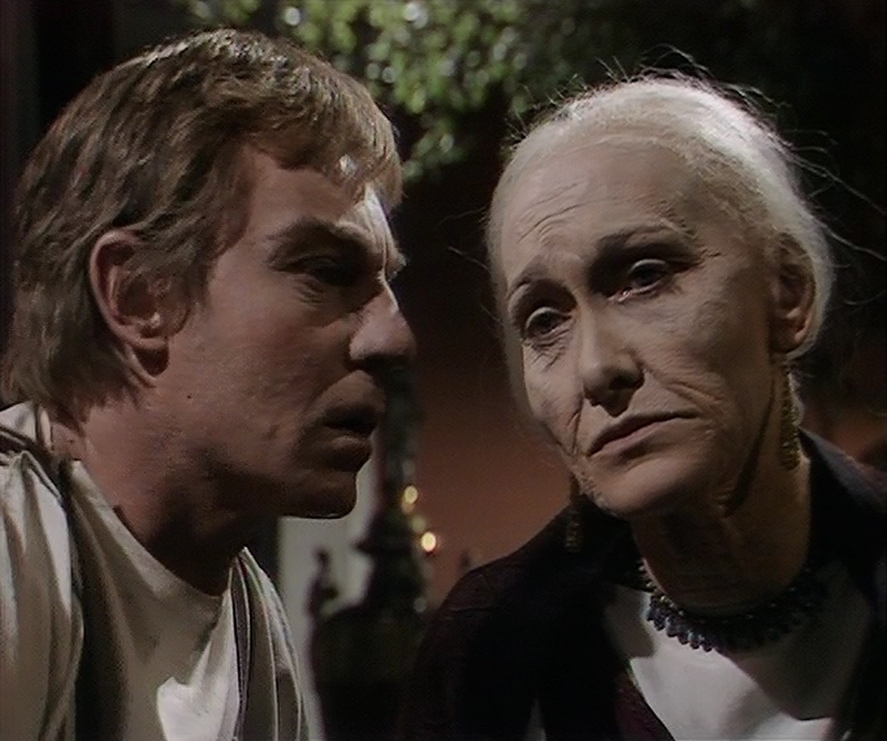
So a doff of the cap to Siân Phillips. It can’t have been easy for her in the last few episodes, thanks to the heavy old-age make-up she had to wear, but like Augustus her exit is a memorable one. Virtually immobile in her sickbed, she’s first visited by Caligula, who shatters any hopes she had of becoming a goddess. “What makes you think that a filthy, smelly old woman like you could become a goddess? I don’t need you anymore, you see, great grandmother. My secret will die with you. You are going to stew in hell forever and ever”.

It’s left to Claudius, alone with her when she dies, to offer whatever comfort he can. The tears in his eyes at her passing sits awkwardly with the remembrance of the aged Claudius at the conclusion of Poison is Queen (where he violently despised her) bur this suggests the way feelings and memories can fluctuate. In this episode Claudius reacts with calm disinterest at Livia’s catalogue of crimes – a far cry from how he recalls them at the end of his life.

I Claudius – Some Justice (18th October 1976)

Germanicus is dead. His widow, Agrippina (Fiona Walker) is convinced that Piso (Stratford Johns) and his wife Plancina (Irene Hamilton) poisoned him ….

So David Robb breathes his last as Germanicus. He has a few brief scenes here – although none are very taxing (in the first he’s already dead, then later there are a few quick flashbacks showing the ailing Germanicus). The fact we never see any interaction between Germanicus and Piso (the recently deposed governor of Syria) means that, like the Senate who are called upon to debate Piso and Plancina’s guilt or innocence, we don’t know what happened for certain (at least not for a while).

Both Stratford Johns and Irene Hamilton add considerable value to this episode. This would be Hamilton’s penultimate television credit whilst Johns still had several decades of work in front of him. As you’d expect, Johns is compelling as the initially affable Piso – convinced that his friendship with Tiberius will be sufficient to get him out of trouble. The more far-seeing Plancina can clearly see that their guilt or innocence doesn’t really matter – the mob (angry at Germanicus’ death) want justice, so it looks like Piso and Plancina will have to be sacrificed.

Agrippina details the way her husband met his end – there’s some lurid (and slightly ludicrous) visual detail to aid the viewer in this. Although Claudius doesn’t have a great deal to do today, he’s still quite key. Meeting with the likes of Agrippina, Castor, Antonia and Herod he makes the suggestion (accepted by Castor) that the trial should take place in the Senate (a move that would favour them). It’s plain that in their company he no longer feels the need to play the fool.

Tiberius and Livia are also somewhat sidelined. As of yet, there’s no great sense about how Tiberius’ reign as Emperor is going (apart from the fact that he peevishly wonders why the public loved Germanicus more than they love him).

Now that Livia has poisoned her way through a vast swathe of the Imperial family, she’s become somewhat surplus to requirements. If Livia assumed that Tiberius would allow her to jointly rule (as Augustus did) then she’s been sorely disappointed. “What a spineless, miserable, mean-spirited creature you are!” she opines in his direction towards the end of the episode. Since he’s not listening to her, who does he take counsel from? It’s Sejanus who’s operating as the power behind the throne (although again, he’s another whose role in the episode is quite brief).

The teeny Caligula (Robert Craig-Morgan) debuts. When even Livia describes him as a “monster” you know he must be bad ….

Indulged by his mother, Agrippina, Caligula is allowed to run riot. Claudius attempts to talk some sense into him (whereas Claudius’ mother Antonia favours locking him in the cellar and giving him a good whipping) but as we’ll see over the next few episodes, his words of caution didn’t really do much good. Even at this young age, Caligula is mad, bad and dangerous to know.

Some Justice was the television debut of Robert Morgan (later Robert Craig-Morgan) who will always be best remembered for playing the satchel-clutching Justin Bennett in the early years of Grange Hill.

Livia’s revulsion occurred after the poisoner Martina (Patsy Byrne) revealed to her the active part that Caligula played in his father’s death. The scene between Livia and Martina serves a dual purpose. On the one hand it’s blackly amusing to see two old hands calmly discussing poisons they have known, but the scene mainly exists so that Martina can info dump some major revelations about the way Germanicus died.

The episode ends – as it began – with the aged Claudius on the Imperial toilet. Which isn’t something you see every day. Some Justice almost feels like a stand-alone story, thanks to the prominence of Stratford Johns and several lengthy court-room scenes. But as he’s an actor I’ve always enjoyed watching this is no hardship for me.

I Claudius – Poison is Queen (11th October 1976)

For most of Poison is Queen, Livia is firmly on the back foot. This is something we haven’t seen before. Up until now, she’s manipulated and poisoned at will without seemingly breaking sweat. But the fact that Augustus now knows about her machinations (even though he can’t quite bring himself to openly confront her) means she’s put on the defensive.

Claudius’ brother Germanicus (David Robb) returns to Rome in triumph from Germany. He’s received with fervor at the Senate (the first time we see this impressive set) and later, quietly ensconced with Claudius, he learns the truth about Postumus (Livia was responsible for his banishment on a trumped-up rape charge).

It’s one thing that Germanicus accepts Claudius’ word on this (after all, he can offer no proof) but credibility is stretched even further when Germanicus offers to go to Augustus and tell him. It’s more than a little frustrating that this happens off-screen and given that Augustus has been married to Livia for fifty years (and has heard rumours about her conduct before) it’s difficult to imagine quite how Germanicus won him round. Let’s suppose that Augustus already had his own suspicions and Germanicus’ visit merely hardened them.

Augustus pays a visit to the exiled Postumus, who’s been living in lonely seclusion on a rock in the middle of nowhere for the last three years. Once again John Castle doesn’t hold back (although you can’t blame Postumus – stuck there for three years with only the guards and some seabirds for company would be enough to drive anyone slightly round the bend).

Augustus tells Postumus that he can’t return to Rome straight away – first he needs to speak to the Senate and get his exile rescinded. Given Augustus’ autocratic dominance of the state this seems like a feeble excuse, but as he’s hardly a man in the first flush of youth (or health) maybe that’s the reason for his hesitancy.

Although the likes of Germanicus, Postumus and Tiberius all have their moments (Tiberius throws a delightful hissy fit when he tells his mother that he’s sick of death of being Augustus’ lapdog and has no interest in becoming Emperor!) most of the episode revolves around the interactions of Augustus/Livia/Claudius.

Claudius speaks to both Livia and Augustus, although his relations with the latter are much more congenial than with the former. Augustus has belatedly realised that Claudius is not quite the fool he appears and (but for Augustus’ death) there’s a sense than an even closer rapprochement might have grown up between them. No such luck with Livia though, who still treats her grandson with undisguised contempt (and unlike Augustus seems not to have realised that Claudius has a sharp brain).

Everything is leading up to that scene. Thanks to Brian Blessed, it’s a technical triumph. The camera focuses solely on Augustus for several minutes as Livia (heard but not seen) delivers a lengthy monologue. As she continues to speak, Augustus dies right before our eyes. Many actors have been called upon to die on stage or screen over the decades, but none have done it as effectively as Blessed here. Under the unforgiving glare of the camera, not even a twitch is detectable. Mind you, some claim there is – and maybe if you analysed it frame by frame you’d find something, but you’d have to be a churlish sort to do so.

Despite Livia’s complicity (“don’t touch the figs” she memorably tells Tiberius) she also sheds tears after closing Augustus’ eyes. Maybe that suggests Livia still possesses a spark of humanity, but only the merest spark ….

Elsewhere, there are effective cameos from James Bree and Jonathan Burn whilst Patrick Stewart (sporting a fine head of hair – albeit not his own) makes his debut as Sejanus, a character who will have a major role to play during the reign of Tiberius.

I Claudius – What Shall We Do About Claudius? (4th October 1976)

Derek Jacobi is finally able to shed his old-age make up and play the young Claudius for the first time. Joining him at the start of the episode are several new actors, which means that a Claudius voice over is required in order to explain to the audience exactly who these runners and riders are.

There’s Postumus (John Castle), Marcus Agrippa’s surviving son and Claudius’ best friend, Claudius’ brother Germanicus (David Robb) as well the scheming Livilla (Patricia Quinn). Livilla is married to Castor (Kevin McNally) but spends her time making googly eyes at Postumus. Their illicit affair turns out to be key to the episode ….

Claudius’ isolation from the Imperial family is made clear in this opening scene. He’s allowed to dine with them, but only on a couch that’s placed a discreet distance away. Despite this unspoken segregation, he’s not totally friendless – Postumus is always prepared to stand up for him and even Augustus regards him with a distracted affection.

Before the serious business begins, there’s the joy of watching Augustus interact with the poet Horace (Norman Shelley). Augustus’ puritanical streak emerges (not for the first time) as he regrets the way that some poets delight in recording only the more sordid aspects of life. “Write poetry, yes, but write about nice things – things that you’d like your children to hear”.

Given that the definitive radio Sherlock Holmes (Carlton Hobbs) appeared in episode one, it’s nice that Shelley (Hobbs’ Doctor Watson) also makes an appearance in I Claudius.  Possibly it was just a coincidence, but it might be that director Herbert Wise remembered their decades long partnership and decided to find Shelley a small role.

Brian Blessed is then given the chance to move into high gear as an unbelieving Augustus receives news that three legions have been massacred in Germany. It’s interesting to see how Tiberius reacts to this – unlike Augustus, he’s totally calm and quite prepared to go out there in order to steady the ship.

Donald Eccles and Denis Carey (as Pollio and Livy) both essay decent cameos. A pair of eminent historians, they’re flattered by Claudius’ interest in their work – although Livy is less flattered when Claudius is unable to tell him which of them he prefers! The scene ends on a serious note though, as Pollio – when he’s alone with Claudius – suggests he carries on playing the fool (that way he might just stay alive). It’s worth bearing this in mind when observing some of Claudius’ later clumsy behavior.

What Shall We Do About Claudius? features several lengthy two handed scenes. The first – between Livia and Livilla – sees Livia (as in the previous episode) casually manipulate a hapless individual in order to remove yet another rival (in this case Postumus) to the throne. Livilla is able to emote in an impressive way, although I get the sense that some of her tears are purely for show (she’s wasting her time though – Livia’s not the one to be moved by sentiment).

The following two-hander (a domestic squabble between Augustus and Livia) is also highly entertaining and leads into the games at the Coliseum, which are being held in honour of Drusus. We meet the adult Herod Agrippa (James Faulkner) for the first time and are also given the opportunity to marvel at the set (which gives the impression of great height – helped by some lower than normal camera angles).

I enjoyed Livia’s pep talk to the gladiators. “These games are being degraded by the increasing use of professional tricks to stay alive! And I won’t have it! So put on a good show and there’ll be plenty of money for the living and a decent burial for the dead. And if not? I’ll break this guild up. And I’ll send the lot of you to the mines in Numidia.”

Later, Postumus is falsely accused of rape by Livilia. The Television Centre roof rattles as John Castle and Brian Blessed wring every last drop out of emotion out of the script. I Claudius is a serial packed with memorable moments, but this one has to be right at the top.

Oh grandfather, open your eyes. Over the years everyone you knew and loved has either died or disappeared. Do you think it was all an accident? My father Agrippa, and before him Marcellus, my brothers Gaius and Lucius, my mother Julia – NOW ME.

After this intensity, the episode winds down with Claudius’ long postponed marriage. His unnamed bride turns out to be much taller than he is, which is the cue for hysterical laughter from all the onlookers (even Livia and Claudius’ mother Antonia – two people who never find anything Claudius does even remotely amusing – have a chuckle).

It’s an oddly discomforting and grotesque scene. Possibly because we then cut back to the elderly, drunken Claudius before the credits roll, we should take it to be nothing more than his fevered remembering, rather than real life.

I Claudius – Waiting in the Wings (27th September 1976)

Time has moved on from the first episode. We can tell this in various ways – firstly, the previously infant Claudius is now a lad of about eight or nine. Young Claudius is played by Ashley Knight. I always like to dig into the credits of child actors to see how far their career progressed – most of Knight’s credits were as a juvenile but he certainly packed a lot in (playing Jim Hawkins in the excellent 1977 BBC Classic Serial adaptation of Treasure Island, for example).

Secondly, Tiberius (currently in exile on a small island) has comfortably settled into middle age. I’m pleased to see this (as commented upon last time, George Baker struggled to convince as a callow youth). Livia is also aging – although some of her old-age make up looks a little false. As the episodes click by you’ll have to cut the serial a little slack when considering this part of the production – fair to say that some of the make-up doesn’t always convince (although I’m sure it was the best that could have been done at the time).

Livia, it won’t surprise you to know, continues to plot. Augustus’ daughter Julia (Frances White) has become a notorious man-eater – and it seems that everyone in Rome knows, apart from her father. This makes Augustus look more than a little foolish – the most powerful man in Rome with such a blind spot? But it’s easy to see that his subordinates would either be terrified to tell him or possibly just assumed he knew and condoned her behavior.

One of Julia’s many, many conquests is the fresh faced Plautius (Darien Angadi), a friend of Julia’s brother Lucius (Simon MacCorkindale). Angadi died tragically young (in 1981, aged 31) but he still managed to notch up a fair few television credits.  Plautius is putty in the hands of Livia, and it’s a joy to watch how she effortlessly turns the young man into her informer.

If their scenes are a definite episode highlight, then – obviously – so is the moment when Augustus lines up a long row of senators accused of sleeping with his daughter and disbelievingly interrogates them. Blessed is at his very best here – Augustus is initially baffled as he encounters old friends, but his anger is quickly stoked. John Scott Martin is the unfortunate who receives the most savage rebuff from Augustus.

With Lucius now discredited (and shortly to die in what appears to be an accident, but you can never be sure) and Julia exiled (Frances White certainly knows to to wail) it looks like Livia has achieved her aim – the recall of Tiberius to Rome.

He seems to have been living a fairly comfortable life, but the lack of company has been a problem. Still at least he has Thrasyllus (Kevin Stoney) on hand to cast endless horoscopes and offer hope for the future. Stoney had previously played Thrasyllus in Philip Mackie’s The Caesars (1968) so you have to assume his casting here was a nod to that production.

If you’ve never seen it, then I can strongly recommend The Caesars. It roughly covers the same period of time as I Claudius but is by no means a retread (Mackie’s Tiberius is a very different character from the one offered by Graves/Pulman, Livia is only a minor character, etc).

Once again, Derek Jacobi has little to do but bookend the episode. The final scene is a memorable one though – it swiftly cuts from the young Claudius with his friends to the aged one now sitting alone in the same spot, with only his memories for company.

I Claudius – A Touch of Murder (20th September 1976)

Jack Pulman’s adaptation of Robert Graves’ two novels (I Claudius and Claudius the God) spanned twelve episodes – with the first (A Touch Of Murder) being a double helping. For the American screening it was split into two 50 minute episodes (various other minor tweaks were also done – such as trimming down shots of the bare-breasted dancers seen in the opening minutes).

The original 100 minute edit is the better one though. Revisiting it once again, I can honestly say that the episode didn’t drag at all – a sure sign that the script and actors are totally engaging. As is well known, I Claudius is a completely studio-bound production – that’s sensible enough, as it would be difficult to find too many UK locations which could have convincingly replicated the grandeur that was Imperial Rome.

Tim Harvey’s production design is one of the serial’s unheralded triumphs. Subtle lighting effects (sun streaming through the palace windows) are used effectively and the outdoor locations (Augustus’ garden complete with fountain) also convinces (thanks to simple effects, such as a wind machine rippling the branches of the trees).

Pulman elected to retain the device of Claudius narrating the history of his strange family. This works on two levels – not only does it display fidelity to Graves’ original work, it’s also very handy for the television viewer (who otherwise – especially in this first episode – might find themselves overwhelmed by the large cast of characters who keep on appearing). So whenever the antecedents of a new arrival need to be explained, Claudius can pop up with a VO to explain all. As the serial progresses, and the regular characters become more familiar, this device is used less often.

Derek Jacobi (Claudius) appears only fleetingly, as at this point in the story Claudius is either not born or only a mewling infant. It’s Augustus (Brian Blessed), Livia (Sian Phillips) and Tiberius (George Baker) who drive the episode along.

There are some who express surprise that Brian Blessed could once upon a time have indulged in a spot of subtle acting (true, Augustus does like to shout a lot, but he tends to be more interesting whenever he’s calm and menacing). Those people probably never saw him in Z Cars then – maybe Blessed only started to go over the top when he grew the beard ….

His Augustus is a multi-layered creation. At times indulgent and child-like, he’s able to change direction in a heartbeat.

If Augustus is ebullient and expressive, then Livia is cold and calculating – prepared to play the long game as she removes all those who might ascend the throne ahead of her son, Tiberius. It’s interesting to see how Pulman greatly expanded the role Livia played in the death of Marcellus (Christopher Guard). To be honest, Marcellus is so irritating that his demise can almost be called a mercy killing. Pulman explicitly states that Livia poisoned him – whereas Graves only mentions in passing that Livia nursed him (possibly anticipating that his readers would join the dots).

Marcellus provides the first half of the episode with some spark, as does John Paul as Marcus Agrippa. Augustus’ strong right arm, the relationship between him and Agrippa is a fascinating one which could have been expanded a little more.

Their final scene together is a treat though. Agrippa is keen to strengthen his ties with the Imperial family and asks to marry Augustus’ daughter – the recently widowed Julia (Frances White). At first a shocked Augustus can barely get any words out, before – after a short period of reflection – he becomes reconciled and heartily agrees. It’s therefore a little jolting to then be told by Claudius that Agrippa, having married Julia, dies some years later (this all happens off-screen).

With Julia back on the market, she’s then married to an unwilling Tiberius – who’s forced to divorce the love of his life, Vipsania (Sheila Ruskin). The increasingly tangled relationships between the members of the Imperial family will only become more tangled over time, so it’s best to keep paying attention …

Out of all those who become Emperor, Tiberius has the fewest character quirks, which means that George Baker has to work hard to bring him to life. He’s served well in A Touch of Murder though – even if Baker doesn’t quite convince as the youthful Tiberius. Tiberius’ awkward and stilted relationship with his mother is nicely done as is the genuine love and affection he has for his younger brother, Drusus (Ian Ogilvy).

Like John Paul and Christopher Guard, Ogilvy is a one episode actor – required to make an impact with only a limited amount of screentime. This he does – firstly as the only man capable of dispelling the black clouds that hang over his elder brother and then later when Drusus, off to campaign in Germany, takes his leave of Augustus.

Drusus, a keen believer in the Republic, is comfortable enough in Augustus’ company not to keep his views secret. Watch out for the moment when their affable chat suddenly turns awkward – for just a brief moment – as Drusus realises that he’s overstepped the mark.

If Pulman makes it explicit that Livia poisoned Marcellus, then her involvement in the death of Drusus is more opaque. The elderly Claudius is convinced that something strange occurred, but doesn’t accuse Livia. True, she did send out to Germany the notable physician Musa (Renu Seta) who had also unsuccessfully treated Marcellus, but was Musa under her control? He seemed genuinely baffled at the death of Marcellus, so if he was later suborned by Livia, we never saw it happen.

To round off, there’s a few minor performances worth noting. First, Carleton Hobbs as the Greek poet Aristarchus . For me, Hobbs was the definitive radio Sherlock Holmes and it’s always a delight to hear that well-remembered voice again. And Tony Haygarth, as Claudius’ slave, also makes a little go a long way – forced to taste his master’s food and wine, he can’t resist passing judgement on the indifferent culinary fare offered by the palace.

I Claudius and the joy of videotaped drama

It has gladdened my heart to see a largely positive response on Twitter/X to the news that I Claudius will shortly be repeated on BBC4 (from the 16th of August). There were also a few slightly negative comments of course – for some, I Claudius is “old fashioned” or “theatrical” (these are supposed to be criticisms, but both seem like plusses to me!)

Videotaped drama is a form of television that (soaps apart) we don’t see anymore. Once, of course, it was the dominant way of programme-making and remained so for decades (notwithstanding filmed series from the likes of ITC and Euston Films).

There was a change in the air by the late seventies though. The BBC (who had tended to reserve film for one-off plays rather than series or serials) began to dip their toe into the brave new world of film series with Target (quickly followed by Shoestring). By the 1980’s film drama had begun to be seen as prestige (Miss Marple, Edge of Darkness) with taped drama now lagging behind as an inferior second best.

The 1985 Bleak House is a good example of this. Critical chatter at the time reacted positively to its glossy, all-film visuals – comparing and contrasting them to the cheap and cheerful videotaped Classic Serial strand which went out at Sunday tea-time. Such a sweeping point of view ignored the many strengths of the Classic Serials – thankfully, a decent sample are available on DVD and I live in hope that BBC4 may exhume some more in the future (the late 1960’s production of Treasure Island, with Peter Vaughan as Long John Silver, would be a good place to start).

Watching videotaped drama requires a certain mindset (not dissimilar to that of a theatre-goer). You have to accept that what you see may be somewhat impressionistic. In I Claudius, for example, at one point there’s a riot through the streets of Rome which is represented by noises off and about a dozen extras. If you can accept this sort of thing (a high tolerance for CSO is also recommended) then a veritable treasure trove of delights awaits you.

There are many excellent examples of videotaped drama on YouTube – I’ll recommend just three. Harold Pinter’s One for the Road (one set, a handful of actors). Arthur Ellis’ The Black and Blue Lamp (which was written around its production limitations – no exterior filming was available thanks to its low budget). Joe Orton’s What the Butler Saw (a vanished form of television drama that was content to faithfully reproduce the theatrical experience rather than seek to open it up).

Gross oversimplification incoming. If film drama is a director’s medium, then tape drama is an actor’s one. Of course, there are many fine performances to be found in filmed dramas (just as videotape offers good directors the chance to push the medium). But it’s a point that has a certain validity. Taking I Claudius as an example – multi-camera vt recording allowed the actors to perform in extended scenes. That’s one of the strengths of tape for me – the feeling that you’re getting close to the characters (film can have a distancing effect).

I can understand why some find archive tape dramas difficult to connect with. But for me, they’ll always be my drama form of choice. If you’ve never seen I Claudius, then I’d recommend tuning in (or if you’re not in the UK, seeking out an alternative way of viewing). You may just be pleasantly surprised ….

The Edwardians – Mr. Rolls and Mr. Royce (21st November 1972)

The Edwardians was an eight part series which aired during late 1972 and early 1973. Each episode shone the spotlight on a different key figure in Edwardian society – some (like today’s subjects) still remain familiar whilst others are now a little more obscure. Like a number of other television series from this era, it survives as a mixture of colour originals and black and white telerecordings (only the first and last episodes are still in colour) but, of course, it’s preferable to have all the episodes existing in some form than not.

Mr. Rolls and Mr. Royce, written by Ian Curteis, is a strong series opener. Michael Jayston has the plum role of Royce, a dour Northern engineer who, after bemoaning the poor standard of the available motor cars, decides with intense single-minded drive to create his own. Despite being saddled with a very false-looking beard, Jayston delightfully deadpans throughout.

That Royce is a tough taskmaster is made plain right at the start, when it’s revealed that his staff are now working a seventy hour week. But although he’s a hard, hard man to please (capable of flying into sudden rages over the most trivial matters) it becomes clear over time that he does have his men’s best interests at heart (if the company fails, then he’s uncomfortably aware that they might all end up destitute – which is one reason why he pushes himself to breaking point).

In contrast, Robert Powell’s Mr Rolls is a dilettante playboy – indulged by his parents, he’s a silver-tongued car salesman with access to the highest in the land (hence the reason why Royce and Rolls team up) but he can never seem to settle at anything too long. Ballooning is one of his passions, and he’s also become a keen aviator.

On the surface Rolls seems to be a more readable character than Royce, but Powell manages to tease out some of his complexities. Although it’s also true that he seems to delight in going over the top – Rolls’ sudden barking laughter at nothing in particular being a case in point.

Although Jayston and Powell dominate the 75 minute play, there’s still time for several other actors to shine. John Franklin-Robbins (Ernest Claremont) and Barrie Cookson (Claude Johnson) are both solid as the devoted factotums of Royce and Rolls. Eve Pearce as Mrs Royce, makes a late impression and Mary Hignett, as Rolls’ autocratic mother, Lady Langattock, has a key final scene with Royce.

The chalk and cheese nature of Rolls and Royce is the motor (sorry) which drives the play along. But although they have several ferocious arguments, there’s also the sense that both respect the other (articulated especially by Royce, who wishes he had Rolls’ charm and poise).

Mr. Rolls and Mr. Royce could easily have been developed into a serial (say 4 x 50 minute episodes) as there seems to have been enough material available, and I would have been happy to see more of Jayston and Powell. Still, I can’t grumble about what we did get and this opener makes me keen to revisit the remainder of the series (although I know not all the future installments are as strong as this one).

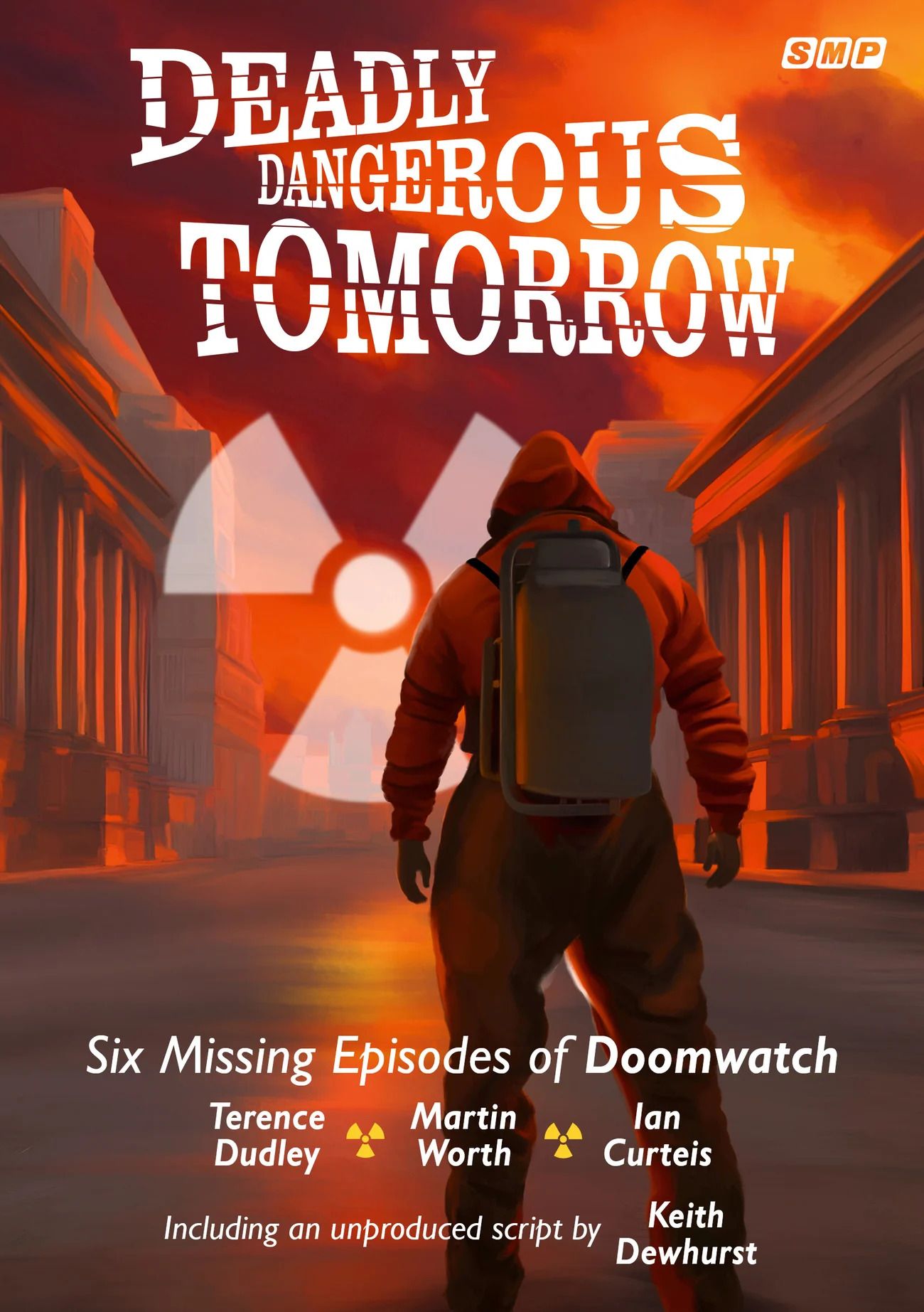
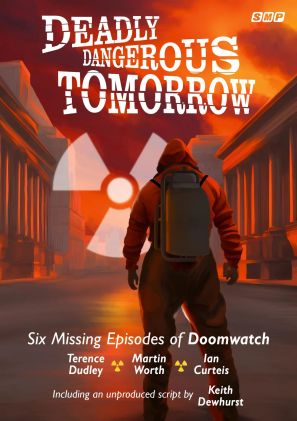
Book review – Deadly Dangerous Tomorrow edited by Michael Seely

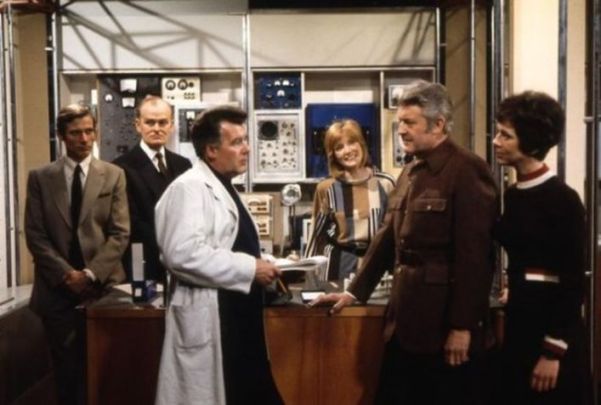
Doomwatch ran for three series between 1970 – 1972. Like many programmes of this era, not all of the episodes now exist (out of 38 made, 14 are currently absent from the archives). Most of the wiped episodes come from the third and final series (five are missing from series one, whilst the second series exists complete).

Since only three episodes remain from the third series (including the untransmitted Sex and Violence) it’s always been hard to get a feel for how the last run developed. So this second edition of Deadly Dangerous Tomorrow (originally published in 2010) is very welcome as it contains five S3 scripts – Fire and Brimstone, High Mountain (both draft and camera scripts), Say Knife Fat Man, Deadly Dangerous Tomorrow and Flood. There’s also a S1 episode (Spectre at the Feast) and – new to this edition – a script by Keith Dewhurst that was submitted for the second series but rejected by series producer Terence Dudley.

The production history of Doomwatch is something of a battleground, due to (in the blue corner) Terence Dudley and (in the red corner) series creators Kit Pedler and Gerry Davis. Pedler and Davis, naturally enough, had very strong opinions about how their creation should develop, but Dudley was equally forthright and by the third series he had wrested complete control and was able to fashion the show entirely in his image.

Dudley’s Spectre at the Feast is the first script in this book. It had a good guest cast (Richard Hurndall, William Lucas, George Pravda) so it’s possible to surmise we would have been on safe ground, acting wise, but how effective the overall production would have been (given some of the hallucinogenic sequences) is another matter.

The story reads well though, with Fielding (played by Lucas) coming across as the sort of strong opponent for Quist typical from this era of the programme. The reason for an outbreak of mass hallucinations (contaminated lobsters) is something you don’t see every day (it’s probably best if you suspend your disbelief when Quist proffers his explanation). John Ridge going undercover to a fancy hotel in order to steal a lobster from their tank is one reason why I really hope this episode turns up one day.

Remarkably (or sadly) so many Doomwatch episodes still seem relevant today – Spectre at the Feast (which pivots around the theme of river pollution) is no exception. Towards the end of the episode, Quist confronts Fielding.

Gentlemen, we have a lot to thank Mr Fielding for. He is pioneering in silicostyrenes. Soon, there will be no more cast-iron car engines – just cheap plastic cylinder blocks – and it won’t be one factory releasing effluent at the permitted level. Today he poisons the rich man’s lobster, tomorrow it’ll be the poor man’s fish and chips. He’s produced a cheaper engine. Do we want it at the price?

We then jump forward to the opening episode of series three – Fire and Brimstone. Another Dudley script, it heavily features John Ridge who, after stealing six deadly anthrax vials, attempts to hold the world’s governments to ransom.

Simon Oates (John Ridge) didn’t want to commit to the whole of series three (he would only appear in four episodes) so it’s understandable that Dudley would give Ridge a memorable lap of honour (he was hardly the sort of character to just meekly hand in his resignation). Doomwatch had already killed off a main character (Toby Wren) so possibly didn’t want to repeat that. Instead, John Ridge goes rogue in the most extreme way ….

By all accounts, this baffled and annoyed contemporary critics and viewers, who couldn’t understand why the previously affable (if highly strung) Ridge had suddenly become a fanatic – intent on wiping out millions of people if his demands aren’t met. An explanation – of sorts – is provided in 3.4 (Waiting for a Knighthood) the only existing John Ridge series three episode. Fire and Brimstone is an uncompromising and unsettling way to kick off S3, not least for the way it ends on the broken Ridge.

Two versions of Martin Worth’s High Mountain (episode 3.2) are included – firstly a draft script and then a re-written camera script. The main thrust of the plot remains the same, but the dangerous item under discussion – originally soap powder, later aerosol paint – changes as do some nips and tucks to the dialogue (which are always fascinating to pick up on).

A few lines swiftly dispose of two S2 regulars (Geoff Hardcastle, Dr Fay Chantry) who were deemed surplus to requirements by Terence Dudley. Neil Stafford (John Bown) now moves into view as Ridge’s replacement – albeit someone forced on Quist by the Minister to act as his eyes and ears (although Stafford quickly becomes a keen Doomwatch man).

Unlike the rather pallidly drawn Hardcastle and Chantry, there’s no doubt that Stafford makes his mark straight away (even more so in the draft script, where he dominates a subdued Quist). The notion of the Drummond Group offering Quist the money to set up a private Doomwatch, free from government interference, is an intriguing one (although inevitably strings are attached).

Next up (3.3) is another Martin Worth script – Say Knife Fat Man – which had quite the guest cast (Peter Halliday, Geoffrey Palmer, Leslie Schofield, Paul Seed, Elisabeth Sladen). The script is preceded by a letter from Worth to Terence Dudley, in which he wearingly describes how he had to undertake a hefty rewrite on the script.

Possibly this might explain why the story doesn’t quite grip. The main thrust of the episode (a group of disgruntled students steal some plutonium in order to make an atom bomb) – is decent enough, but both Quist and Stafford are rather passive throughout. It’s Chief Supt. Mallory (Geoffrey Palmer) who manages to put two and two together (indeed, it turns out to be a story where the Doomwatch team achieve very little). Possibly the most interesting part is the way that Barbara (by displaying sympathy for the alienated students) is allowed, for once, to be something more than just a line feed for the others.

There’s almost a Department S feel to the pre-credits sequence of Deadly Dangerous Tomorrow (3.7, written by Martin Worth). The mystery of how an Indian family – father, mother, children – dying of malaria and malnutrition end up in a tent pitched in Hyde Park is spun out for a little while.

It turns out that John Ridge (no longer a member of Doomwatch, but equally no longer a menace to society) is partly responsible for bringing them to London. The suffering of the third world is his latest cause, although Stafford cynically suggests that Ridge is motivated by self interest. “So that’s why you took up the cause of the innocents and martyrs. Because you think you’re one yourself. That’s what it’s really about – poor, hard done by Ridge, whom nobody loves, getting his own back.”

Whatever the reason, the sudden appearance of Ridge in the new Doomwatch office mid way through the story gives the episode a considerable boost. The main guest character – Senator Connell – seems to be a little bit of a cliché figure but it would have been nice to see what Cec Linder (a familiar face from the television Quatermass and the Pit and the Bond movie Goldfinger) did with the role.

The last series three script included (3.9, written by Ian Curteis) is Flood. It has a tense feel throughout as abnormally high tides threaten to flood London, potentially affecting millions of people. Luckily, at the last minute the wind changes and the panic is over (which was probably just as well, as Doomwatch’s budget wouldn’t have stretched to depicting a flood-ravaged London).

The reason for the tides isn’t environmental – it’s due to secret nuclear tests which occurred on the seabed just a few hundred miles off the coast of Europe. This is the cue for Quist and the Minister to lock horns, although it’s noticeable that since he was first introduced, the Minister has become less of a pantomime villain and more of a three-dimensional character. He now possesses an agenda that isn’t simply designed to provide Quist with an adversary, instead it’s possible to appreciate (if not always sympathise) with the Minister’s point of view.

New to this edition is the snappily titled Home Made Bomb Story by Keith Dewhurst. Surprisingly, it isn’t actually about a home made bomb ….

Doctor David Daviot, an old pupil of Quist’s, is the central character. He’s a scientist with a conscience, but he comes across as rather boorish and unsympathetic (so it’s difficult to feel too invested about his fate). He does share some good scenes with Quist though and Quist is given a remarkably lengthy monologue about the death of his wife that could have been a stand out moment for John Paul (although one that probably would have been a pain to learn).

Home Made Bomb Story is certainly a curio (it’s jarring to hear Daviot refer to Quist as ‘Doc’) but given a few more drafts maybe it would have made the grade, but alas it wasn’t to be.

Deadly Dangerous Tomorrow is edited by Michael Seely, who knows his Doomwatch (you’re well advised to track down Prophets of Doom, an excellent production history of the series written by Seely and Phil Ware) not to mention archive television in general. He provides a concise introduction to set the scene, and supplies informative footnotes throughout. Some of the footnotes are production related (cut dialogue, etc) whilst others provide detail about the various environmental issues tackled in the stories.

This book is an excellent companion to the Doomwatch DVD, as it helps to flesh out the neglected third series. It’s also made me keen to revisit Doomwatch from the start, which is never a bad idea.

Deadly Dangerous Tomorrow comes warmly recommended and can be ordered via this link.
Softly Softly: Task Force – The Easy Job

S03E25 (22nd March 1972). Written by Robert Barr, directed by Keith Williams

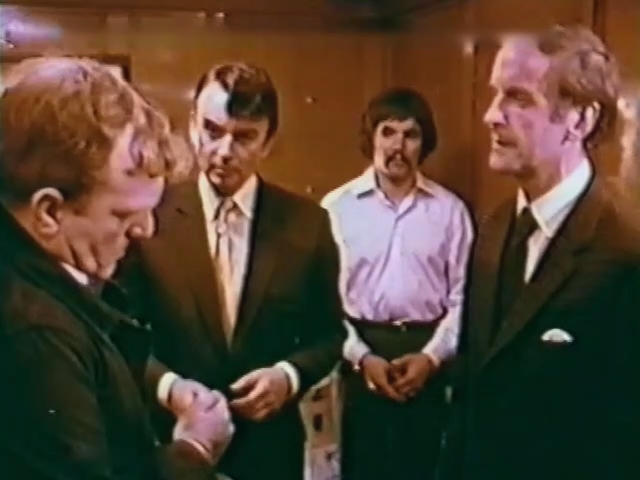
A three man team – Johnny Hicks (Edward Petherbridge), Frank Mason (Barry Jackson) and Eddie Smith (Ron Pember) – carry out a safeblowing. The robbery is successful, but their evening goes sour after Mason is attacked and seriously injured by a security guard …

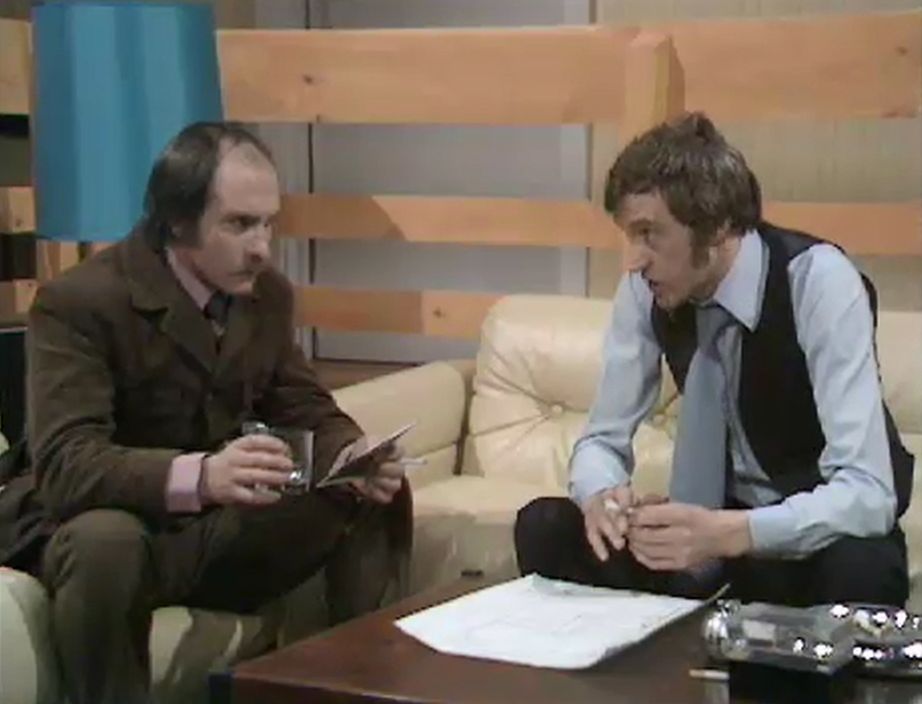
The interlocking relationships between Hicks, Mason and Smith are intriguing (as well as being the glue that binds the episode together). At the top of the tree is Hicks – he lives in a luxurious flat (check out his plush sofa and mini tv) and is clearly used to being obeyed. Mason operates as his loyal number two, although his home surroundings (he lodges in a fairly rundown house) are a non-verbal signifier confirming his lower status (Hicks hands out orders, Mason obeys them).

Smith – a friend of Mason’s – is a specialist. As a safe-breaker, he’s someone that Hicks can’t do without but (fatally) Hicks is somewhat dismissive towards him – not deigning to speak to Smith directly means that their relationship begins awkwardly and only goes downhill from there.

A series of house break-ins are an episode sub plot. Hicks – despite apparently now being on the straight and narrow – is visited by Hawkins who wonders if he has any information about them. The pair indulge in a game of bluff and double bluff which is done nicely enough but when Hicks (virtually as soon as Hawkins leaves) starts planning his next crime it’s difficult not to feel that this part of the episode has been rather clumsily plotted. We have to see Hicks of course, but having Hawkins decide (seemingly on a whim) to visit him and then for Hicks to turn out to be the villain of the episode is a little hard to take.

Last time, I pondered about how the series possibly balanced its budget by offsetting episodes with major location shoots against ones which were mainly studio bound. The Easy Job does have the feel of a cheapie. I felt this most notably after the house-breaking gang – led by Jimmy Davies (John J. Carney) – were arrested. We’re told that the police pursued the gang in a hectic car chase but this isn’t seen, only described. A cost cutting exercise? Maybe. There are a few brief location shots (showing Hicks, Mason and Smith exiting the factory) but most of the episode remains in the studio.

And with only one major set required from scratch – the factory (which contains a staircase for Mason to fall down) – presumably not too much money had to be expended there.

While Hicks and Smith work on the safe, Mason – holding a gun (albeit unloaded) – deals with the security guard, Morris (Maurice O’Connell). But Morris overpowers him and after a couple of blows, Mason tumbles down the stairs. No stuntman is credited, so maybe Barry Jackson took the fall himself (during the early part of his career he worked as a stuntman under the name Jack Barry). It’s an impressive stunt, although right at the end there’s a rather obvious forward roll to get him off the foot of the stairs.

Still in nit-picking mode, it’s rare for an episode to go by without someone coughing off camera. But rather like microphone booms wobbling into shot, you just have to accept that sort of thing.

Morris isn’t hailed by either Hawkins or Watt as a have-a-go-hero. Hawkins is dismissive because the gun wasn’t loaded (although Morris couldn’t have known that) and when Mason later dies of his injuries, Watt is even harsher – telling a shaken Morris that he could face a charge of manslaughter. After frightening him for a few minutes, Watt does unbend a little and tells him that he’ll probably be okay ….

This brutal treatment of Morris seems all the odder since in every respect he’s a model witness – for example, giving a very accurate description of the clothes Mason was wearing. This eye for detail suggests that Morris is either an ex-copper or wishes to be one. It’s never mentioned openly, but the unspoken inference seems plain.

When Hicks and Smith are caught, it’s slightly surprising that we focus on Smith (no hardship though, as Ron Pember was always a very watchable actor). Presumably this is because he’s the easier nut to crack – bitter at the way Hicks promised to get medical help for Morris, but instead left him to die, it doesn’t take much prompting from Watt to get a full statement out of him.

Given that my heart still sinks whenever Robert Barr’s name appears, it’s pleasing to note that this is another strong episode from him. There’s less focus on the regulars for once, but the characters played by Petherbridge, Jackson and Pember are all delineated so well that the 50 minutes click by very agreeably.

Softly Softly: Task Force – Set Us Alight

S03E24 (15th March 1972). Written by Elwyn Jones, directed by Geraint Morris

A house fire quickly becomes complicated after Barlow discovers that it was the headquarters for a political group called F-FOP (Freedom for Oppressed Peoples) …

As I make my way through the series again, I can’t help but continue to marvel at the number of stories which featured night filming. Due to the unsociable hours, it obviously would have been more expensive than filming during the day, so either SS:TF had a very decent budget or an ability to balance the books with cheaper, studio-bound stories.

It’s fair to assume that Set Us Alight – with night filming, a practical fire and several fire engines pressed into service – was one of the more expensive stories of this series. Although maybe the relatively small cast – four regulars and five speaking guest actors – helped to keep the costs down.

The story begins with PC Snow and Radar bumping into a breathless Leslie Wilson (Mark Griffith). Wilson tells Snow that there’s a fire blazing in a nearby street. Snow, with his trademark slowness, meticulously takes down all the details before checking the truth of Wilson’s statement. This is a good episode for Terence Rigby, who’s teamed up with Mark Griffith for most of it. As has happened before, there are some who disregard Snow, because of his stolid exterior, but it doesn’t pay to underestimate him (eventually he’s able to breach Wilson’s defences and discover the whole story).

Evans is more in the background, although he’s given the opportunity to politely bait Barlow several times (this is always good to see) and strikes up some sort of connection with the prickly Johnson. As for Barlow, he’s right in the thick of the action – running into Jake Johnson (Calvin Lockheart). one of F-FOP’s leaders. Johnson is a blazing radical (or so it appears on the surface) who’s always ready with a catchy slogan or a dismissive word for the police (who, of course, are “pigs”). It’s an extravagant performance, to put it mildly, but when Johnson calms down a little it’s possible to see there might be more to the man than meets the eye.

Also in the guest cast is the very familiar Leon Lissek as Aaron Brook. Brook operates – a little unwillingly – as Johnson’s solicitor.
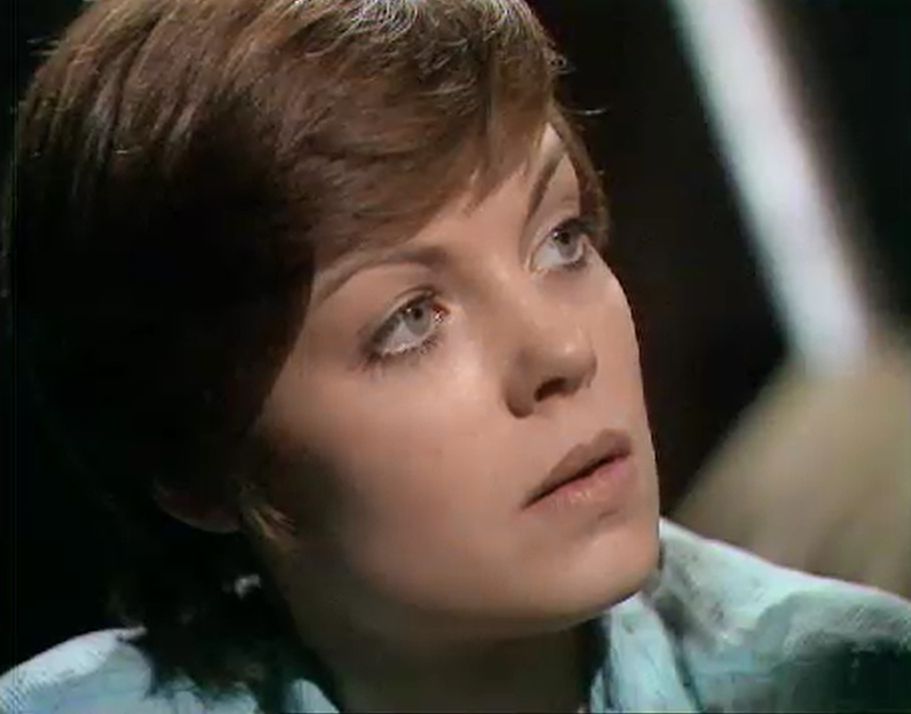
We’re given the rare opportunity to see Cullen at home. It’s a fairly tight shot though (clearly the budget wasn’t there to dress a large room) so we can’t admire many of his fixtures and fittings. He turns up at the station to lecture Barlow, which is fine by me as there hasn’t been a good Cullen/Barlow confrontation for a while.

The identity of the arsonist takes rather a back seat since the story is more concerned with examining the characters of both Johnson and Wilson. Either might be the guilty party, although it turns out that both are innocent.

It’s Johnson’s ex girlfriend – the upper crust Dorothy Anderson (Sally Faulkner) – who’s revealed as the culprit. Given that she only appears right at the end, I was beginning to wonder if the question would go unanswered (or if maybe the perpetrator would remain off screen). Faulkner makes the most of her three minute scene, spitting venom at Barlow (plus we get to see an uncredited Bella Emberg as a most intimidating police woman).

Although Set Us Alight begins with a location shoot, the heart of the story takes place in the studio, with a fairly small group of actors. I never say no to an episode that foregrounds Barlow (especially when he’s riled) so this one held my interest throughout.

Softly Softly: Task Force – A Policeman’s Lot. Story Three – It Depends Where You’re Standing

S03E23 (8th March 1972). Written by Alan Plater, directed by Peter Cregeen

John Watt discreetly investigates the circumstances of Jarman’s suicide whilst Barlow assists a prominent local citizen, Huntley (Peter Howell), after he receives a blackmail note …

At first glance, it seems that the main story thread of this three-parter has virtually concluded. Although John Watt – prompted by a plea from a tearful Mrs Jarman – does agree (in his spare time) to try and find out why her husband committed suicide, it’s a plotline that’s subordinate to the Huntley blackmail case.

Via a not terribly subtle form of info-dumping (Watt tells Snow and Drake – as well as the audience – that Huntley is a member of the police board and a prominent local businessman) the audience quickly understands why Barlow seems so keen to drop everything to help him.

Quaffing a drink together, Barlow and Huntley seem very chummy. Watt cynically wonders later if everyone would receive a similar level of police attention and it’s a fair point – especially as the blackmail note is only asking for £100. In many ways, this is a key part of the episode (and one that’s repeated right at the end). We’d like to assume that the same sort of police manpower would be available for all, but it seems unlikely. This appears to trouble Watt, but Barlow – who’s blithely detached throughout the episode – just accepts that the world’s unfair and seemingly has no interest in trying to change it.

The blackmailer – who’s a somewhat pathetic character – is easily run to ground and just as this plotline is wrapped up, we’re told that it has a vague connection to Jarman (which feels a little contrived and unnecessary).

It’s always nice to see the velvety-voiced Peter Howell and Brendan Price (later on the right side of the law in Target) spars well with Barlow (Price plays Huntley’s son, Paul). The most striking guest performance comes from Frederick Treves as Commander Beevers though. Beevers’ plot function (as a senior police officer) is to warn Watt off any further investigations into Jarman’s death. Jarman was connected to the security services in some way (although on whose side and in what capacity is never made clear).

As I said, that’s Beevers’ plot function but in story terms he’s there to intimidate Watt. Treves underplays throughout his scene, which makes it all the more chilling – when authority doesn’t feel the need to rant or rave, you really have to sit up and pay attention. But Watt remains unfazed. “If you have a complaint to make, write to my Chief Constable about it. Don’t come banging on my back door in the middle of the night, even the dustman don’t do that”.

Elsewhere, Plater still seems to enjoy writing for Snow and Drake, who – sharing a car on an evening obbo – are gifted some amusing lines.

After three episodes, if you’re looking for all the story threads to be neatly wrapped up, then you may come away disappointed.  Only Beevers knows exactly what Jarman was doing and he’s not telling (either to John Watt or us). This isn’t really a problem though and is certainly not a story weakness. Real life is often unfair and messy and Alan Plater’s scripts simply reflect that.

Softly Softly: Task Force – A Policeman’s Lot. Story Two – You Pays Your Money

S03E22 (1st March 1972). Written by Alan Plater, directed by Peter Cregeen

John Watt decides that Jarman (James Grout) should be targeted. He doesn’t have any specific evidence of wrongdoing, just a sense that Jarman is a bad ‘un (as Watt admits, he dislikes anyone who owns a bigger house than he does but isn’t as clever).

Jarman, despite being absent from the previous episode, still managed to cast quite a shadow. And before he finally appears in this one, Watt pops round to his palatial house (decked out in the latest early seventies fashions) to have a friendly chat with his wife (played by Patricia Heneghan).

Heneghan gives Mrs Jarman a brittle and slightly distracted air that’s very effective. She might be surrounded by all the trappings of success (a silver ball that opens out into a cigarette holder, plush furnishings, etc) but there’s plainly something awry.

When Jarman eventually returns and invites Watt over for a drink, the fault lines in the relationship between Mr and Mrs Jarman (not to mention Jarman’s own increasing levels of tension) are laid bare. The sparring between Windsor and Grout is the clear highlight of the episode – Watt’s affable and polite, but nevertheless he manages in getting Jarman riled to the point of fury. The pair exchange punches, but John Watt’s (of course) is the harder one.

Like most dramas of this period, SS:TF wasn’t afraid of lengthy scenes. In this episode though, I had a feeling that there was a little too much cutting away from the Watt/Jarman confrontation (a pity it wasn’t allowed to play out from beginning to end).

Most of the regulars (apart from Barlow and Snow) are present today. Alan Plater gives them all something to do – for example, Cullen is allowed to be his usual sardonic self and Green gets the chance to speak to Mrs Granger, established in the previous episode as the owner of the mucky bookshop. Heather Stoney (as WDS Green) deadpans nicely when the affronted Mrs Granger complains that Jarman attempted to sell her hard-core pornography (far removed from the stuff she peddles).

And given what happens in the final episode of series three, the conversations between Evans and Drake about police corruption are interesting (especially the way that Drake’s eyes nervously flit about when Evans brings the subject up).

As with The Row on the Stairs, the plot is a little opaque. Jarman might be running a protection racket or he could be importing pornography into the country. But it’s never made clear exactly what he’s been up to and his off-screen death (suicide?) at the end of the episode seems to have closed the case. But the fact there’s a next episode caption tells us that isn’t so ….

You Pays Your Money is another typically strong Alan Plater script. As you’d expect, the dialogue is strong throughout (there’s some nice Drake/Green/Evans banter at the start) and the story has good momentum (the interrogation of Nicholson does feel like padding, but that apart the other scenes serve the story well).

Softly Softly: Task Force – A Policeman’s Lot. Story One – The Row on the Stairs

S03E21 (23rd February 1972). Written by Alan Plater, directed by Peter Cregeen

A private detective’s office, belonging to a man called Jarman, is ransacked. It seems that Nicholson (Roy Sone) – a man who freelances for Jarman – is responsible. When the Task Force learn that Nicholson might be armed, they initiate an urgent search for him …

Multi episode stories were unusual for SS:TF (although we’ve seen one previously – a two-parter which aired during the second series). Because Alan Plater’s got three episodes to play with, there’s no need for him to rush through the plot (and indeed, we’ll see that during the next two episodes the story will take some twists and turns).

As you’d expect with Plater, there’s some sharp dialogue throughout and this means that The Row on the Stairs is chiefly memorable for a series of character vignettes. We kick off with Mrs Granger (Marjorie Rhodes) who owns a seedy bookshop immediately below Jarman’s office.

Everything about this episode has a rather grey feel (it always seems to be raining in the location shots, for example) and this is reflected in the rundown locations we visit – such as a billiard hall and Mrs Granger’s mucky bookshop. In another episode no doubt Rhodes could have played a comfortable, elderly shopkeeper – but here she’s called upon to be cynical and secretive (possibly she knows more about Jarman than she’s saying).

Plater elects to team Snow up with Drake as well as partnering Evans with Green. He’s not the first writer to see that the odd couple relationship between Snow and Drake has some mileage and he crafts some good banter for them (Terence Rigby especially). Evans and Green also click nicely – to date WDS Green hasn’t been gifted with a great many light hearted scenes (possibly due to the types of stories she’s been involved in) but here, forced to share a car with the irrepressible Bob Evans, we see her unbend a little.

As we wend our way through the episode, there are several more encounters that may lead the Task Force to Nicholson – beginning with his wife (an early television role for Sharon Duce). Duce’s cameo as the placid, but weary Mrs Nicholson is nicely played as are Stephen Hancock’s scenes as the far more slippery Meadows. Also excellent value is Arthur Cox as a genial publican who – attempting to be helpful – overloads the exasperated Drake with useless information.

That’s one of the plusses of this episode – spotting one familiar face after another. Phil McCall (possibly best known as Scotch Harry in Minder or maybe Jock in Bottle Boys, if you’re an aficionado of 1980’s ITV sitcoms) is another. McCall plays Roper, a contact of Evans who supplies some vital information (but still manages to rub Evans up the wrong way). All this and Barbara New too.

With all these different informers, some useful others not so, it’s not surprising that eventually Nicholson is cornered. Although Barlow is flitting around the perimeters of the episode, it’s Hawkins who takes charge of Nicholson’s interrogation. He’s pretty unyielding, even though in private he turns out to be more understanding (unlike Barlow, who’s content to see Nicholson punished heavily).

The Row on the Stairs is an effective tale in its own right, but it also feels like an extended prologue. When Jarman (James Grout) makes his first appearance next time, I suspect the story will really begin to motor.

Softly Softly: Task Force – Woman’s World

S03E20 (16th February 1972). Written by Allan Prior, directed by Frank Cox

Woman’s World is another bleak episode. It opens with the news that a ten-year old boy called Norman Gordon has been stabbed to death.  We never actually see the body (when his mother is called to identify him, the camera lingers on Sergeant Evans instead) but this doesn’t lessen the impact.

As the episode title suggests, female characters play central roles. Two – both very different – feature. The first is Carol James (Lois Hantz). A cub reporter who gets wind of the murder, she’s desperate for a scoop. Initially treated with indulgence by Evans, his good-natured feeling doesn’t last long ….

Indeed, Carol doesn’t make many friends amongst the rest of the Task Force either. Both Hawkins and Barlow separately wonder if her parents know that she’s out so late (Hawkins calls her a chit of a girl, whilst Barlow’s comment of “jailbait” is even less complimentary).

This was the first of only a handful of credits for Hantz. She’s very impressive, which makes it all the more surprising that her career in television wasn’t longer.

Cherry Morris plays Anthea Gordon, the mother of the murdered boy.  She’s outwardly harsh and domineering (she has to be, she says, because her husband is so weak). As with Hanz, it’s a very well judged performance.  Clifford Rose, playing the weak husband in question, is his usual immaculate self.

Stratford Johns once again mesmerises.  Barlow’s confrontation with Carol and the way he can switch between cold fury and geniality when interacting with his subordinates are two examples as to why there’s never a dull moment when Johns is on screen.

If Barlow’s scene with Carol (she’s sneaked into the police station in the middle of the night, still desperate for a scoop) is an episode highlight, then so is an earlier Barlow scene – this one played opposite Dr Pusey (Sam Dastor). Pusey, the young pathologist who’s carried out the post-mortem on the murdered boy, is reluctant to be too specific about his findings (but eventually Barlow – alternating between hectoring and sympathetic – eventually gets the answers he needs).

After this is done, Barlow displays an air of patient understanding (having identified that the inexperienced Pusey is suffering from shock). Later, when speaking to Carol, his character remains on a similar knife-edge – at one moment he can be insightful, the next he’ll switch to cold, business-like fury.

These two standout scenes suggest that Barlow will have a key role in solving the mystery. But that’s not the case, as it’s John Watt who gently forces the murderer to confess. Given that Watt’s mostly been in the background today, that’s a good wrong-footing move (as if the fact that the episode leads us to believe that a great deal of dogged, procedural work will be required – which doesn’t happen).

The revelations, which come tumbling out during the last ten minutes, are very well played. This is a top-tier episode.

Softly Softly: Task Force – The Big Tip Off

S03E19 (9th February 1972). Written by Allan Prior, directed by Eric Hills

Dot Melling (Clare Kelly), an old contact of Watt’s, proffers an intriguing tip off – a van containing two hundred thousand pounds worth of gold bullion has been targeted. She reveals where and when the robbery will take place, but refuses point blank to say who …

This is a really interesting story. Up until now, pretty much all of the villains we’ve encountered in the series have been male. There have been a few complicit female hangers-on, but that’s been about it.

Dot and Mickey (Jenny Twigge) are the dominant characters in this episode although for very different reasons. The ageing Dot is motivated by bitterness after Tommy (Alex Scott) elects to leave her for the youthful Mickey. That Tommy isn’t exactly the brightest crook we’ve ever met is made clear by the fact he obviously blabbed to Dot about his plans to hit the van.

Towards the end of the story, Dot – suffering from a pang of regret about the way she’d shopped her former lover to the police – pops round to see him. Presumably she planned to tell him all, but the mocking presence of Mickey, not to mention Tommy’s heavy-handed attempt to get rid of her (passing over a clutch of grimy banknotes as a peace offering), sealed their fates. Dot leaves without saying another word, meaning that the final act has to play out to its bitter conclusion.

If Dot’s character is a recognisable one, then Mickey is more unusual. She’s part of the gang and although Tommy (with his well-cut suit) is positioned as the boss, Mickey remains outspoken throughout. Tommy, and his chief lieutenant Chuck (Del Henney), are old school villains –  they hope for the best but have already begun to accept that they might get caught. This sort of defeatist attitude infuriates Mickey, who’s smart enough to know that this sort of caper is a mugs game (but isn’t quite smart enough to walk away).

Jenny Twigge’s performance is a striking one and helps to enliven what otherwise could have been a rather static and talky episode (the attempted raid doesn’t occur until the final few minutes). Her sparky energy contrasts nicely with both Scott and Henney. In this episode, the Australian born Scott is attempting more of a harsh London accent than usual whilst Henney (who I’ve just noticed passed away in 2019, RIP) favours a Scottish burr.

Tommy, Mickey and Chuck are all hapless rather than hardened criminals, so it’s hard not to feel a little sorry for them (although only a little, since both Tommy and Chuck take guns along for the ride).  If there’s one slight disappointment with the story, then it’s the fact that although Mickey’s role as the getaway driver has been talked up, in the end she doesn’t take part in the raid (she’s close by but isn’t directly involved).

Although Allan Prior favours the guest artists, he doesn’t forget the regulars. I like Watt’s waspish irritation when WDC Green fails to get Dot to name names. Funnily enough, when Watt later paid Dot a visit and was equally unsuccessful, he kept quiet about it …

Earlier, Snow went undercover to follow Dot (surely there couldn’t be a more conspicuous character than PC Snow) and towards the end of the story Watt and Hawkins have a disagreement about whether they should be armed on the stake-out. Touching on the events of Marksman, Hawkins (although he admits to not being keen) says yes but Watt (by his own admission, an old-fashioned copper) disagrees.

Given that the baddies were armed, this could have gone badly wrong – but luckily our heroes only sustain minor cuts and bruises. Alas, the make-up used isn’t that convincing – especially the trickles of fake blood on the faces of both Watt and Hawkins. Ah well, you can’t win them all.