Animated Power of the Daleks to be released by BBC Worldwide – November 2016

power.jpg

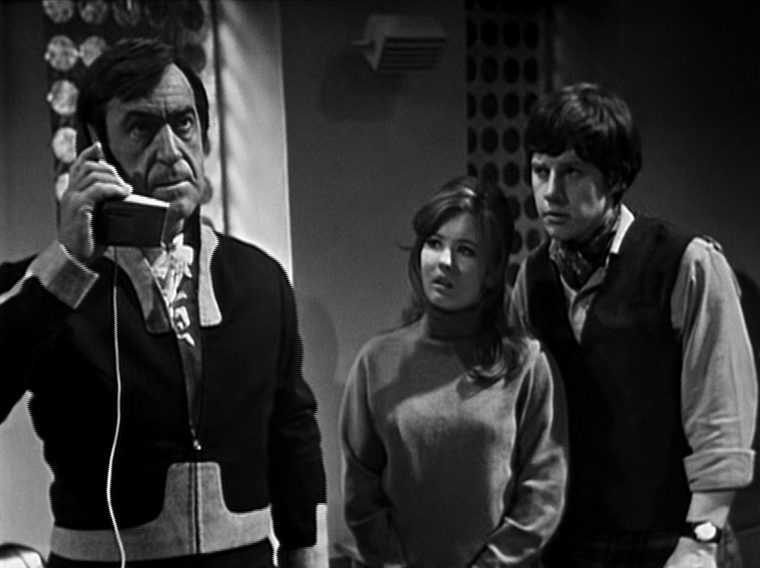
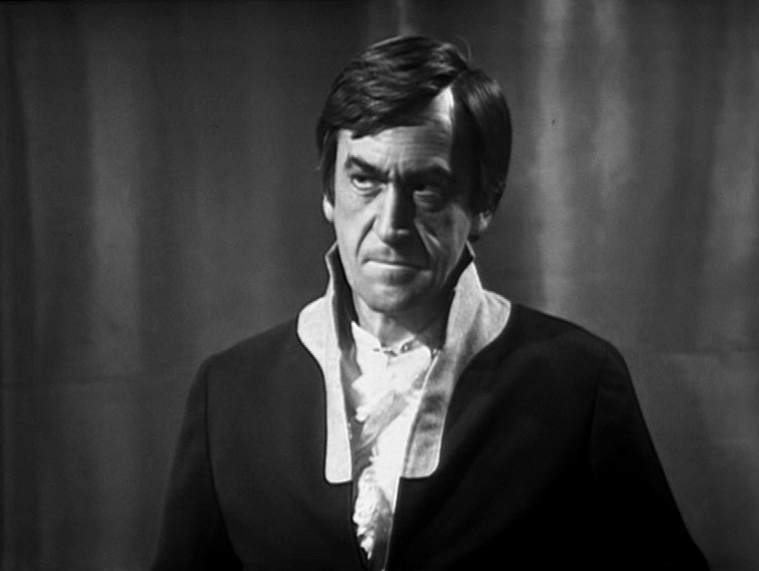
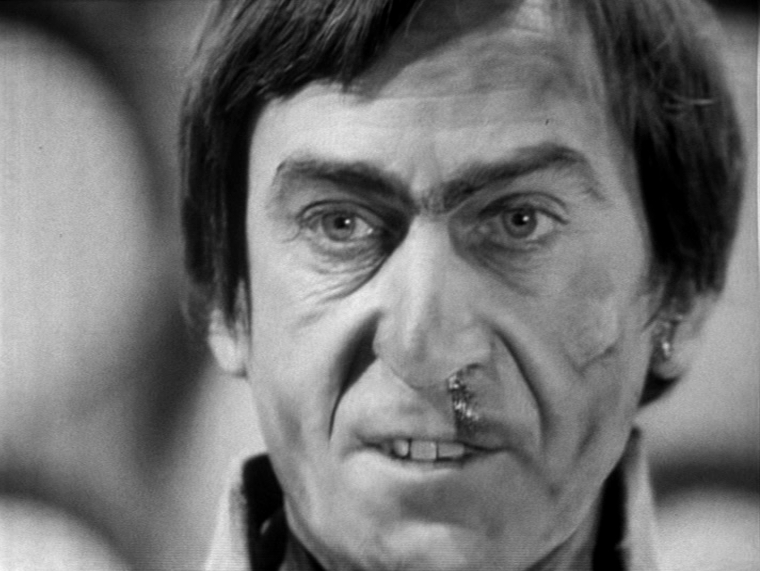
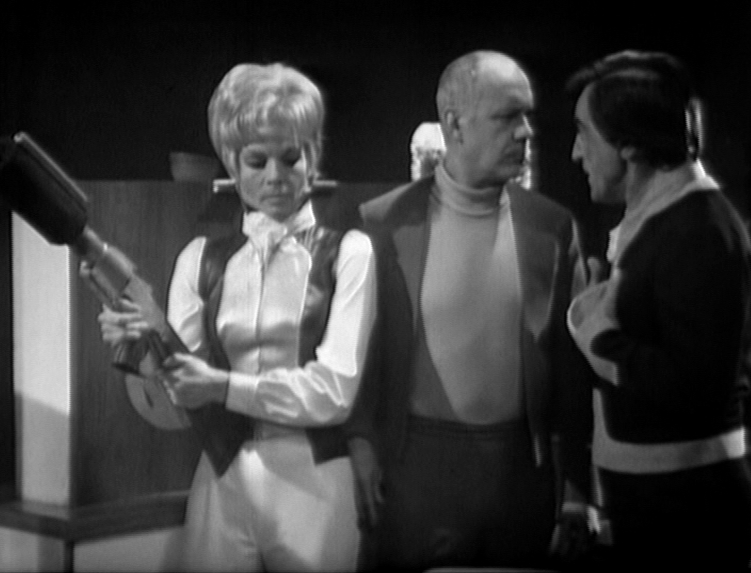
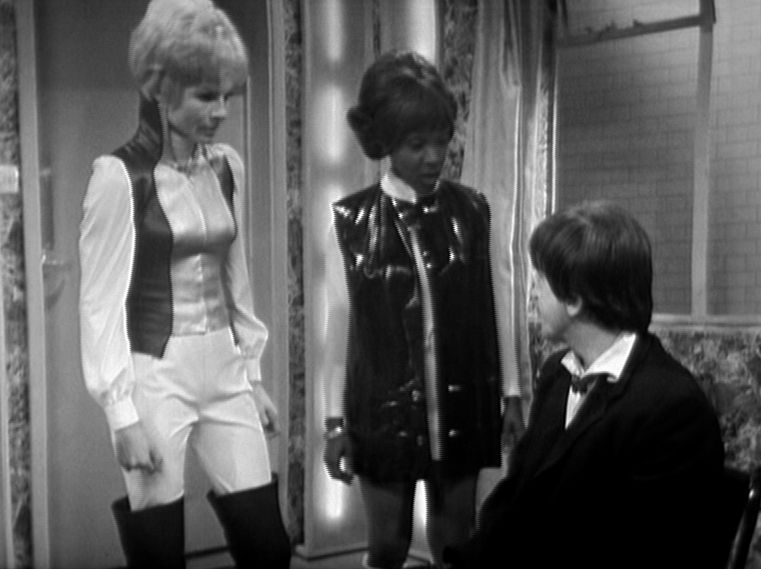
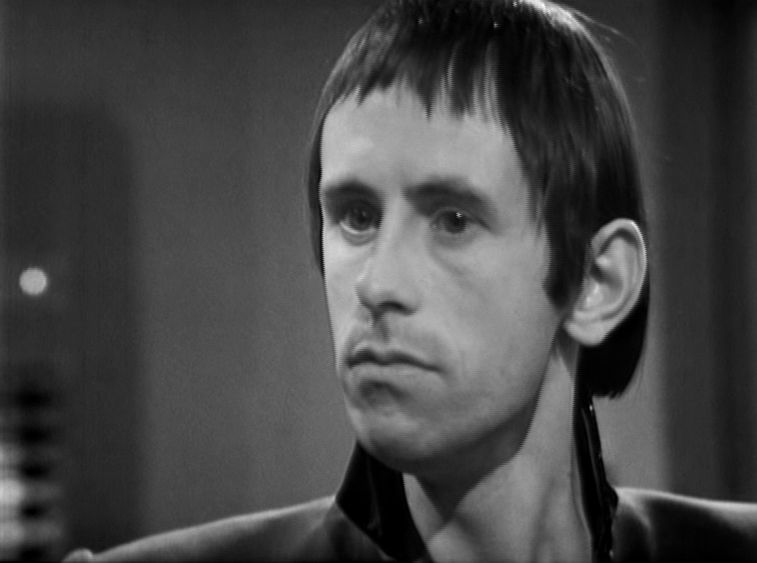
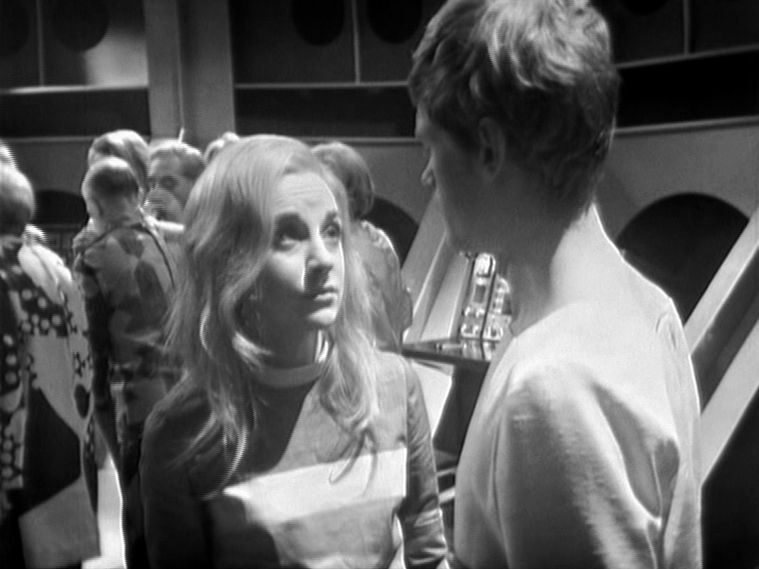
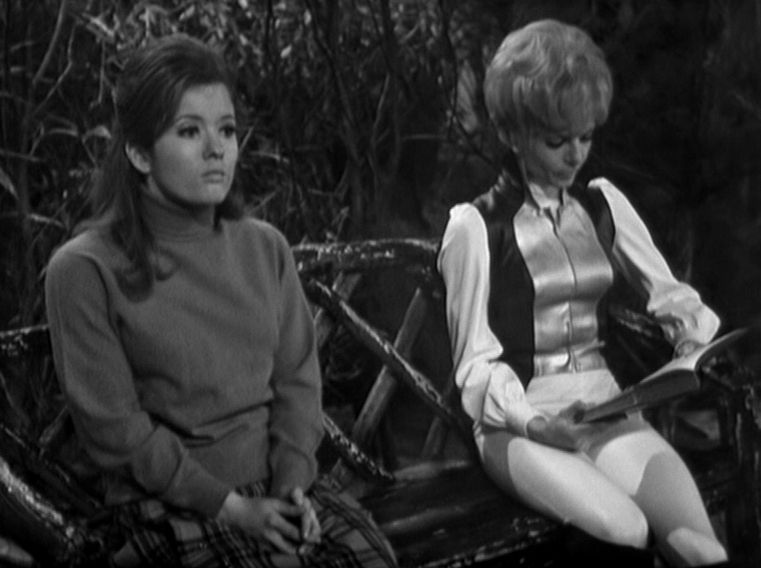
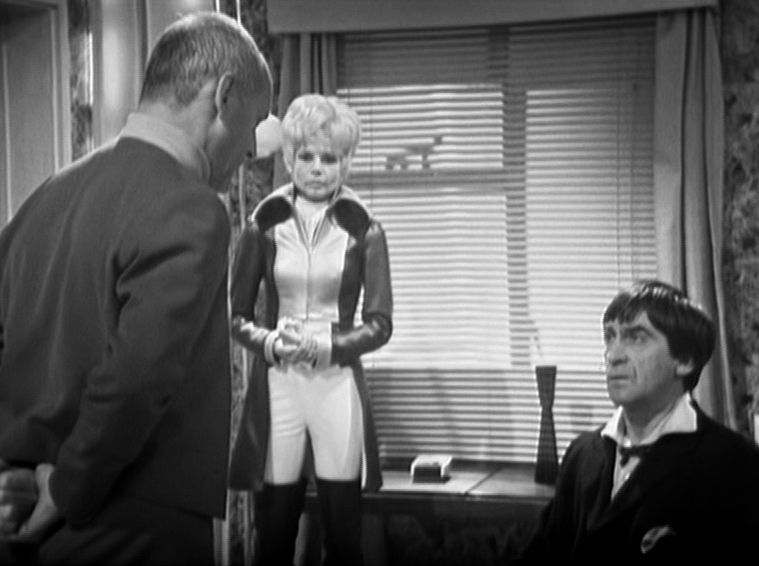
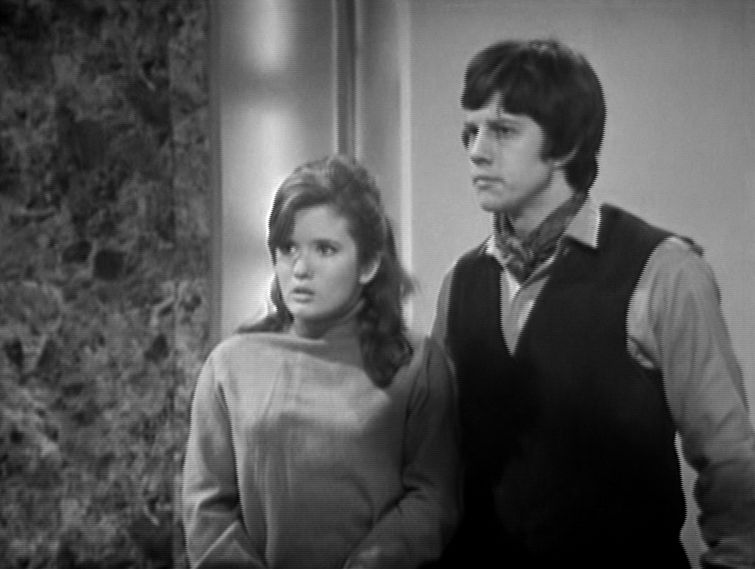
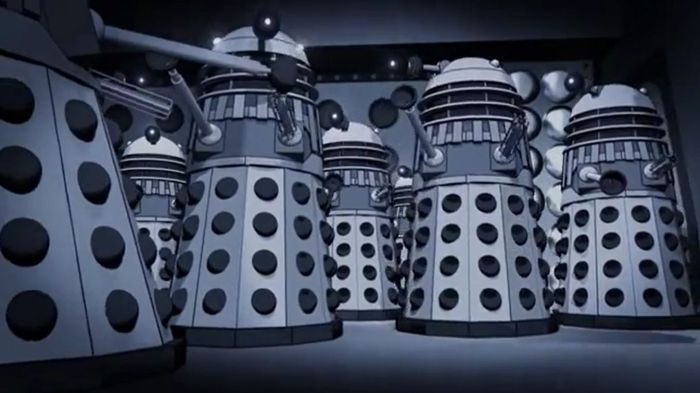
Although there have been rumours for a few weeks (following the posting of a clip on YouTube) it’s now been confirmed that a fully animated Power of the Daleks will be released in November.  It’ll debut initially on the BBC Store with a DVD release following later the same month.

A very unexpected but welcome early Christmas present.  Hopefully sales (both download and physical) will be healthy and further releases will follow in the future.  The press release is below.

BBC Worldwide to release animation of lost Doctor Who story, The Power of the Daleks

Doctor Who: The Power of the Daleks is being produced by the team behind the highly successful animation of lost Dad’s Army episode A Stripe For Frazer, first released on BBC Store in February this year. The producer and director is Charles Norton, with character designs from acclaimed comic book artists Martin Geraghty and Adrian Salmon.

Charles Norton says:
“The Power of the Daleks animation is the most ambitious Doctor Who archive restoration ever attempted and we’re all very honoured to be a part of such a an exciting project. Intelligent, suspenseful and magnificently staged, Power of the Daleks is one of the great lost classics of 1960s television and a superb example of the black and white era at its finest.”

Paul Hembury, Executive Producer, BBC Worldwide says:
“Charles and his team are remarkably talented and passionate about Doctor Who and we are thrilled that fans will soon be able to enjoy this rather sinister but wonderful, classic story.”

Doctor Who: The Power Of The Daleks will be released on BBC Store on Saturday 5th November followed by the DVD on Monday 21st November.

An impressive list of special features has now been announced.  Given the bare-bones releases of The Web of Fear and The Enemy of the World, the effort put in here is surprising, but very welcome.  An Andrew Pixley booklet, PDFs of the camera scripts and a full telesnap reconstruction are just some of things which caught my eye.  The 1966 studio recordings of the Dalek voice recording sessions is a slightly staggering feature – presumably this is a recent find as I can’t recall ever hearing about it before.

Alternate soundtracks [DVD only]
The option to listen to the story with a series of completely new digital re-masters of the original soundtrack – a stereo mix; a 5.1 surround sound mix and version of the original 1966 mono sound mix.

Animation Test Footage
A compilation of animation tests, created during the production of the new animated series.

Audio Commentaries on all 6 episodes [DVD only]
Members of the original cast and crew are joined by members of the new animation unit to discuss the production of the story and its new animated reconstruction. Moderated by Toby Hadoke. Please note: this commentary also includes archive audio.

Booklet with Production Notes [DVD only]
An extensively researched set of production notes, written by the noted television historian Andrew Pixley, covering the behind the scenes story of how the original production was made.

Original Camera Scripts [DVD only]
Selected items of original production paperwork and a complete set of original camera scripts

Original Title Sequence – new restoration
An unedited presentation of the full original ‘Doctor Who’ title sequence, prepared using an all new HD re-master of the original film elements.

The Power of the Daleks Animation and Photo Gallery
An extended gallery of images, featuring production photographs from the original 1966 series and artwork from the latest animated production, accompanied by incidental music from the story, which has been digitally re-mastered from the original music production tapes.

The Power of the Daleks Surviving Footage & Original Trailer
A compilation of short film fragments and clips from the original 1966 BBC television production – the only surviving footage to remain of the show’s original BBC1 run.

Original Dalek Voice Session Recording (1966) [DVD only]
Rare and previously unreleased sections from the studio recordings that were made at Maida Vale Studios in 1966 for the Dalek voices.

Servants and Masters – The Making of The Power of the Daleks
A specially prepared documentary directed by John Kelly and featuring interviews with members of the original 1966 cast and crew.

Telesnap reconstruction
Around 400 individual still frames of film exist from the original 1966 television production of ‘The Power of the Daleks’. These images were kept in the programme’s production files by the BBC Written Archive Centre. These images are here combined with the programme’s soundtrack to present a photographic reconstruction of the original programme.

Today (3rd November 2016) it’s been announced that a colour version will be able to be downloaded from the BBC Store at the end of the year whilst a BD will follow next year. This will include the colour version, although whether the black and white edition and all the DVD special features will also be included isn’t yet known.

So if you want Power on disc in colour then you’ll need the BD. Plenty of buying options then, although I think I’ll stick with the b&w DVD.
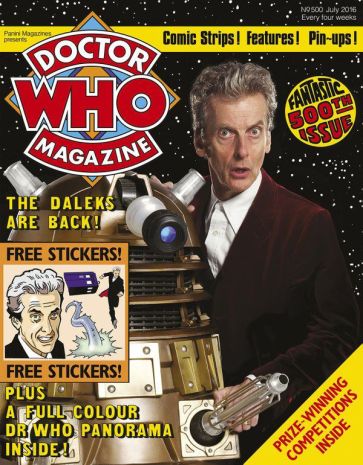
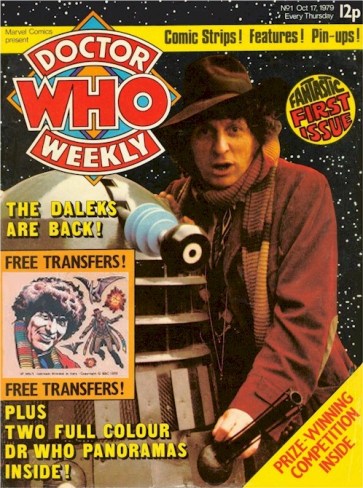
Doctor Who Magazine Issue 500

500

Although I’d love to say that my first copy of Doctor Who Weekly (as it was back then in 1979) was the Fantastic First Issue, I was something of a latecomer – with issue nine (featuring an iconic picture of a Zygon that I spent far too much time staring at!) being my starting point.

Now that Doctor Who Magazine has reached its Fantastic Five Hundredth Issue it seems like the ideal time to stop and reflect exactly what the magazine means to me.  For good or ill it made me into a Doctor Who fan (so I don’t know whether to thank it or blame it!)  Fanzines existed in the late seventies, but for an eight-year old they were pretty much out of reach.  The Internet wasn’t around and the number of Doctor Who reference books was incredibly small.  I had the two Doctor Who monster books and a battered edition of the Piccolo Making of Doctor Who, but that was about all.

From humble beginnings with Doctor Who Weekly, the Marvel title drip-fed a constant stream of behind the scenes detail and photographs.  Today we know just about everything about the classic series and few photographs from the 60’s, 70’s and 80’s are unfamiliar, but back in the eighties all this stuff was certainly new to me and I delighted at slowly being able to piece together the production history of Doctor Who.

Even though the series went off air in 1989, during the nineties the magazine went from strength to strength.  As the readership reduced to a smaller, but very devoted hard-core, the magazine was able to cover the nuts and bolts of the series in even greater depth – and was unafraid to air controversial opinions and comments (the outspoken views of Gary Downie and Trevor Ray, for example).

After the series returned in 2005, there was an undeniable feeling that the magazine had somehow become slightly less “ours” as we now had to share it with a new readership.  Circulation certainly boomed during the David Tennant years, but for me I found less of interest in many of the issues.  There’s only so many set reports you can read (which basically ended up all saying the same thing) before a sense of deja vu sets in.  I have to confess that during 2007/08 I was something of a lapsed reader.

In recent years I’ve been much more impressed with the mix of articles served up by current editor Tom Spilsbury.  Not everything is going to appeal to every reader (since there are so many different types – those who only watch the original series, those who only watch the current series, those who mix and match, etc) but the blend at the moment feels about right.  We’ve had detailed features on the latest episodes but there’s also been room for some fascinating articles on the original run, such as John Williams’ piece on Malcolm Hulke.

In some ways it’s easy to foresee that interesting content may be harder to come by in the future.  For one thing, the number of cast and crew from the original series will continue to diminish but also it’s notable how a number of interviews now are little more than puff-pieces for whatever product the actor, writer, etc is pushing.  DWM is therefore in the same position as a modern chat show – access to quality guests, but the downside is that you have to accept the price you pay for their co-operation is allowing them free publicity for their wares.  Recent interviews with David Tennant, Catherine Tate and Sadie Miller, amongst others, have all fallen into this category.  A far cry from the old days, when people seemed to be happy to be interviewed with no ulterior motives.  But as long as DWM can balance these pieces with analytical (and also fun!) articles then I’ll be happy.

Highlights during the past thirty seven years?  The comic strip is an obvious one, and the nostalgic in me still loves the early strips (The Iron Legion, City of the Dammed) although the mid eighties John Ridgeway strips are also something I return to on a regular basis.

There’s a number of things to thank John Freeman, DWM’s sixth editor, for – and inviting Andrew Pixley to contribute has to be top of the list.  Pixley’s archive features were the backbone of the magazine for many years and he unearthed a fascinating source of production minutia that often made me look at familiar stories in a new light.

It’s difficult to pick a favourite era of the magazine, but Gary Gillatt’s editorship (from 1995 – 2000) has to be close to the top.  Gary Russell, his predecessor, had favoured factual content, whilst Gillatt chose to take the magazine down a slightly more fun and “fanzine” route.  This was certainly the time when DWM was preaching to the converted, with a stream of in-jokes that probably would have been baffling to an outsider.  But for those die-hards who’d stuck with the magazine it was a golden age.

Interview-wise, there’s far too many to pick from – but over the years there’s been some memorable encounters with all the Doctors, bar Hartnell of course.  Tom’s been, well, Tom, Peter’s been (sometimes) less than flattering about the series whilst Colin’s (sometimes) been in a huff about something.

David J. Howe’s series of articles on Target Books (later developed into a rather fine book) was yet another highlight as was Gary Gillatt’s encounter with a class of schoolchildren and a copy of Terror of the Zygons on VHS.  The Watcher, Tim Quinn and Dicky Howett, Jackie Jenkins, the UNIT hotline, the list could go on and on – so many memories.

I’ve written three letters to the magazine (in 1985, 2014 and 2015).  Yes, I know there was a bit of a gap between the first and second letters.  Amazingly all three were published and the most recent one also picked up the letter of the month award.  It’s one of my small claims to fame and I’m now a little weary of writing a fourth letter just in case my run comes to an end!

John Freeman’s excellent Down the Tubes website has a lovely piece on his editorship of the magazine here, Gary Gillatt’s Squabbling Rubber collects some of the best of his DWM reviews whilst you can find out here which cover of DWM was voted as the best ever.

Happy Times and Places, DWM!

001

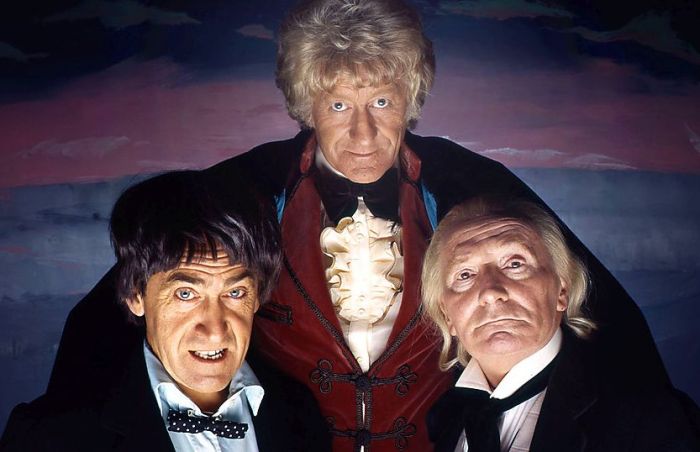
Doctor Who – The Three Doctors

three

Since yesterday marked the twentieth anniversary of Jon Pertwee’s death, it seemed rather fitting to watch one of his Doctor Who stories as a small tribute.  But which one?  After a few moments deliberation I plumped for The Three Doctors.  It may not be the best Third Doctor story, nor is it the strongest showcase for Pertwee’s talents,  but it’s undeniably good fun.  And after a hectic week, it was the ideal way to welcome the arrival of the weekend …..

Pertwee’s Doctor was a curious mix of arrogance and charm.  His arrogance is at its height in his early seasons, where the Doctor is clearly still more than a little miffed that the Time Lords have exiled him to Earth and decides to take it out on just about every human he meets.  Not even poor Jo escapes his snappy nature and thoughtlessness (the sandwiches scene in The Sea Devils is presumably designed to be humorous but it just makes the Doctor appear self-centered and insensitive).

By The Three Doctors he was clearly mellowing, although he can’t resist aiming a few jibes at the Brigadier.  But the most interesting example of the Doctor’s regal nature occurs in episode one, when he and Jo return to UNIT HQ after investigating the mysterious disappearance of Mr Ollis.  As the Doctor enters the lab, he shrugs off his cloak without a backward glance – no doubt fully confident that Jo (as she was) would be there to take it off him and hang it up.  It’s the briefest of non-verbal moments, but it’s something that speaks volumes about the relationship between the Doctor and Jo.  It’s hard to imagine some of the Doctor’s later companions being quite so pliant and biddable!

But somehow Katy Manning manages to make it all work.  Jo could easily have turned out to be nothing more than a doormat, but Katy’s humour (and undeniable sexiness) help to prevent Jo from being the cardboard cipher she otherwise could have been.  However, whilst Jo’s in pretty good form in this one, what’s happened to the Brigadier?  The Time Monster was the first example of the dumbing down of the Brig and it’s a process continued here.

Luckily it’s only a short-term thing and he’s back to his normal self by The Green Death, but the Brig’s sadly at his most pompous and blinkered in this story.  When it works (his sublime double-take as he spots Troughton’s Doctor for the first time or his reaction to the inside of the TARDIS) it’s brilliant, but there are times when the script seems to treating him as little more than a figure of fun, which is a far cry from the efficient soldier of season seven.

There’s something which has always bugged me about the first episode.  When the Doctor and the others find themselves under attack from the jelly organism they take refuge in the TARDIS.  The Doctor attempts to take off, but tells Jo that he can’t because the organism is preventing him.  What?!  He’s been exiled to Earth for three years and during all that time the TARDIS, unless it’s been under the control of the Time Lords or another outside force (such as Axos), has been immobile.  A sloppy piece of scripting, fire the script editor I say!

The Gell Guards are highly amusing but also not in the least threatening and the brief battle between them and the UNIT soldiers (“holy moses”) isn’t exactly one of UNIT’s finest moments.  But the always reliable Pat Gorman is lurking about, so that’s some small consolation.

With the Doctor and the Time Lords facing the same crisis (an energy drain from a mysterious black hole) there’s little the Time Lords can do to help the stricken Doctor.  But wait, there’s just enough energy to lift the second Doctor from his timestream.  Hurrah!  The return of Troughton’s Doctor is a joyful moment and even if his Doctor has deliberately been written down at times to make the Pertwee Doctor the dominant force (“what’s a bridge for?”) then he’s still a highly entertaining force of nature.

He’s possibly at his best in episode two, after the Third Doctor and Jo have crossed over to the black hole.  This leaves the Second Doctor back at UNIT HQ with the Brig and Benton for company.  To be honest, this entire episode is little more than padding for all three of them (the Doctor achieves nothing in his fight against the organism, so they all could have travelled into the black hole at the start, rather than the end, of the episode).  But the run-around nature of this instalment isn’t really an issue, because it’s all such fun.

There’s the Brig’s shock at seeing the old Doctor back, but even better is the working relationship between the Doctor and Benton.  Originally it seems that Jamie was also scripted to appear, so no doubt he would have performed Benton’s role here.  But luckily for John Levene that didn’t happen, enabling Benton to get a decent share of the action.  Mind you, Levene does seem to be on the verge of corpsing several times and has to pull the most extraordinary faces in order to prevent this.

The brief appearances of the First Doctor is the icing on the cake, even if it’s tempered by how frail William Hartnell looked.  Although he wasn’t that old at the time, illness had taken a heavy toll, leaving him unable to learn even the simplest of lines.  His balance wasn’t terribly good either, so several stage-hands had to prop him up into the capsule – to prevent him from toppling out.  But with the aid of cue-cards held off camera he still managed to capture the authoritative spirit of the original Doctor and, ill as he was, there’s a little touch of magic about these scenes.

If you wanted loud, then you booked Stephen Thorne.  He was loud as Azal in The Daemons and he was even louder in his (mercifully brief) appearance as Eldrad in The Hand of Fear.  As Omega, he starts fairly quietly but then works himself up into a frenzy by episode four.  No doubt we’re supposed to feel sorrow for the tragic Omega, but by the end, as I’m reaching for the remote control to turn him down, I just wish he’d tone it down a little.  Thorne can also do subtle (he’s a gifted audiobook reader and doesn’t tend to rant and rave on those) so it’s a pity he wasn’t encouraged to be a little more restrained here.

Once everybody makes the trip to Omega’s domain the story becomes something of a runaround – highlighted by Dr Tyler’s (Rex Robinson) totally pointless attempt to escape.  But Pertwee’s Doctor does have a decent fight scene – battling the demons from Omega’s mind in a slow-motion dreamscape – and the bickering between the Second and Third Doctors never fails to raise a smile.

So it’s not perfect, but there’s no doubt that The Three Doctors is a very pleasant way to while away 100 minutes.

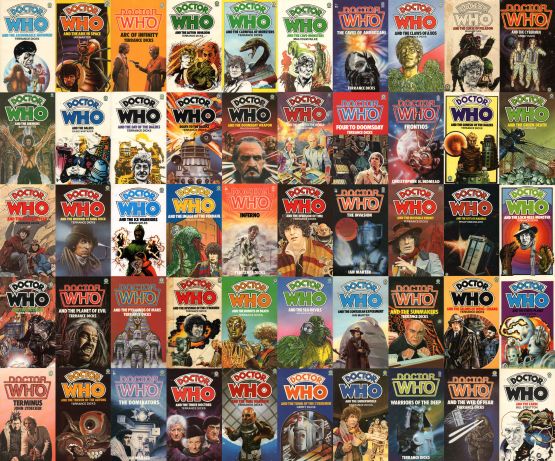
Doctor Who – Target Books. A personal appreciation

target

With a new edition of David J. Howe’s history of the Doctor Who Target books just released, the rather nice feature on Target artwork in the current Doctor Who Magazine (DWM 499) as well as the latest wave of reprints, it seems like the ideal time to take a brief look at Target’s Doctor Who imprint.

In the pre-video age, the tv tie-in novelisation was one of the best ways (along with off-air audio recordings of course) to relive memories of your favourite series.  I’ve plenty of books of this type in my collection, but for sheer volume the Target Doctor Who range is well out in front.

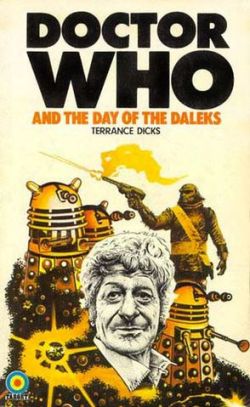
From receiving my first (The Day of the Daleks) as a birthday present in 1979 to finally plugging those remaining gaps in my collection in 1987 (The Monster of Peladon and The Ribos Operation) following a visit to Forbidden Planet in London, part of the pleasure of the Target range was the time and effort it took to track every last book down.

Back in the olden days, you couldn’t simply buy a book online with a few clicks, you had to go out and locate them – one by one.  So every Saturday morning I’d head off to my local WH Smiths and peruse their Who titles.  They tended to have a selection of the more recent books as well as a handful of older reprints – but many remained tantalisingly out of reach.  For example, for some reason I found it very hard to track down The Android Invasion (I was told it was out of print) until suddenly a single copy appeared on the WH Smiths shelves.  Naturally enough I snapped it up!  But many weeks would end in disappointment as the books I required never seemed to make it to my neck of the woods.  This meant I had to venture further afield or try my luck with second-hand bookshops (also handy for tracking down first editions with the original covers).

But although the thrill of the chase was part of the fun, the books themselves were also quite important.  For me, there’s three clear ages of Target – the first is the Golden Age, with Terrance Dicks, Malcolm Hulke, Brian Hayles and Gerry Davis all crafting some of the best novelisations in the range.  The late 70’s and early 80’s is the Bronze Age alas, as Terrance ended up as pretty much the last man standing, churning out some fairly nondescript books month after month.  The Silver Age runs from the mid 80’s onwards and is particularly enjoyable thanks to the contribution of many Hartnell and Troughton era scriptwriters who, some two decades on, returned to pen novelisations of their original scripts.

The cover artwork was often another memorable part of the package. Chris Achelleos’ work remains iconic, but it’s nice to see in the DWM article that other artists, such as Jeff Cummins, are also highlighted.  It’s remarkable to me that Cummins only painted nine covers, as I’d assumed he’d done many more, but every one was a winner.  His personal favourite is The Horror of Fang Rock and it’s hard to disagree with him.

I’m going to finish off with my top ten favourite books (apologies if some of the choices are crushingly obvious).

10. Doctor Who and the War Games by Malcolm Hulke (1979)

war games

I think a little love for Malcolm Hulke’s novelisation of The War Games is in order.  Although Hulke is correctly lauded as one of Target’s key writers, his final book for the range is often rather unfairly dismissed.  This seems to be because he had to compress ten episodes down to a 120 page count, although I confess that I can find little of note omitted.  Whilst I love the tv version of The War Games dearly, it did have a fair amount of running on the spot, so Hulke’s leaner book version is fine by me.  There’s also a pleasingly darker tone at times, noticeably right at the start – when it’s made clear that the 1917 zone is one of the worst places in the universe you could ever hope to find yourself.

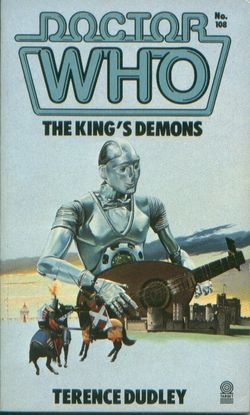
9. Doctor Who – The King’s Demons by Terence Dudley (1986)

king's demons

If the television original is rather insubstantial (although I still rather like it, see here) then Dudley’s book is able to flesh out the story very successfully.  Many loose ends are tied up and it’s very pleasing that the Doctor is given a proper leaving scene (much better than the tx version where he just nips off without a word to anyone).

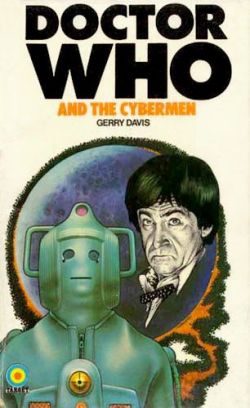
8. Doctor Who and the Cybermen by Gerry Davis (1975)

cybermen

Gerry Davis’ novelisations were always worth reading (well apart from The Celestial Toymaker, but let’s give him the benefit of the doubt and assume his co-writer was chiefly responsible for that one) and it’s the Cyberman’s debut Troughton tale that’s made my top ten.  Although some of the logic of the story has always irked me (the business with the sugar seems rather risible) there’s an eerie claustrophobia to this classic base under siege tale which comes over very well in print.

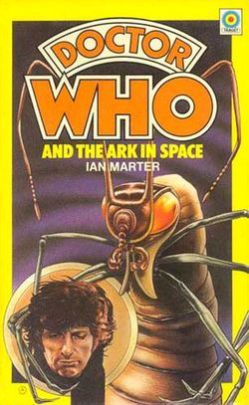
7. Doctor Who and the Ark in Space by Ian Marter (1977)

ark

Ian Marter’s another of those writers who delivered some excellent books and his debut – The Ark in Space – has long been a favourite.  Although it sticks very closely to Robert Holmes’ original, it feels somewhat bleaker (probably because it lacks the bright visuals of the tx version).  The Doctor seems slightly off at times, but it’s no surprise that Marter has an excellent handle on what makes Harry tick.

6. Doctor Who and the Auton Invasion by Terrance Dicks (1974)

auton

Classic early Terrance, adding considerable extra value to Holmes’ original.  Particularly noteworthy is the way that Sam Seeley becomes a three-dimensional character with strong motivations (meaning that the “oo-arr” yokel in the tx version was later something of a disappointment to me).  The Auton attack on Unit HQ is another of those “missing scenes” that also disappointed me when it didn’t show up on the VHS.

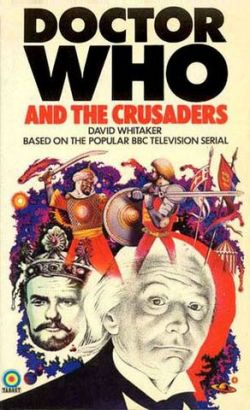
5. Doctor Who and the Crusaders by David Whitaker (1966. Target Edition 1973)

crusaders

Whitaker’s novelisation makes few concessions to his young audience, as it’s wordy, dense and atmospheric.  As a young child this meant I found it somewhat difficult to get to grips with (much preferring Terrance Dicks’ efforts) but when I returned to it a few years later I was amply rewarded with a memorable tale.

4. Doctor Who and the Dinosaur Invasion by Malcolm Hulke (1976)

dino

All of Hulke’s Target books are a joy, but I’ve always had a soft spot for this one.  From the hapless Shughie McPherson to the camp-as-a-row-of-tents Whitaker, Hulke provides plenty of incidental moments not to be found in the original teleplay.  And, of course, on the printed page the dinosaurs are very impressive!

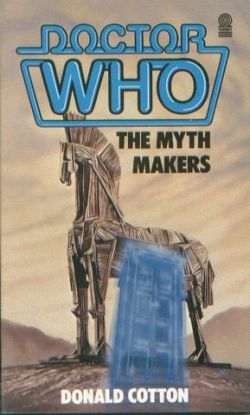
3. Doctor Who – The Myth Makers by Donald Cotton (1985)

myth

Cotton’s novelisation is another book which made few concessions to his target (no pun intended) audience – with plenty of jokes which would have no doubt sailed right over their heads (but this is the reason why The Myth Makers is an excellent book to revisit).  Wonderful stuff and the audiobook (read by Stephen Thorne) is also warmly recommended.

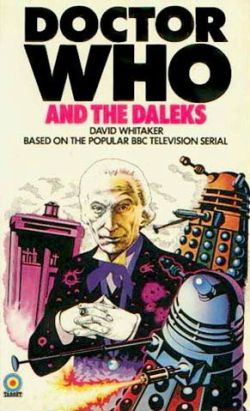
2. Doctor Who and the Daleks by David Whitaker (1964. Target Edition 1973)

daleks

For a generation, Barnes Common was just as much a part of Doctor Who lore as Totters Lane was.  Writing it from Ian’s viewpoint was a masterstoke – it gives the book a very 1950’s John Wyndham-ish feel, which I find terribly appealing.  If you only want a handful of Doctor Who novelisations, then this should certainly be one of them.  And the audiobook, read by William Russell, should also be in your collection.

1. Doctor Who and the Day of the Daleks by Terrance Dicks (1974)

day

Well, it was my first, so it obviously holds a special place in my heart – but it’s undeniably an excellent book.  It made such an impression that when I finally got to see the tv original (in 1986) I found it paled by comparison.  Time is a great healer though and I’m able to love the television version for what it is, but Terrance’s novel is always the way I prefer to picture the story.

CGI Reconstructions of the missing Doctor Who episodes on YouTube

I’ve been rather impressed with a series of CGI recons that have appeared on YouTube during the past couple of months.  At present, all of Marco Polo and the two missing episodes from The Crusade are up and the intention seems to be that all ninety seven episodes will be tackled in time.

There’s some undeniable rough edges which could benefit from additional work, but for now what’s been posted is certainly very watchable.  Below is episode one of Marco PoloThe Roof of the World.

TV50 (BBC 1986) – Quatermass and Doctor Who clips

That’s Television Entertainment was a three hour programme broadcast in 1986 as part of the BBC’s TV50 season (which celebrated fifty years of BBC television).

I’ve just uploaded to YouTube the brief section covering Quatermass and Doctor Who.  Ringo Starr and Cliff Richard discuss their love of Quatermass and whilst there’s no celebs on hand to talk about Doctor Who, there is a generous three minute selection of clips.

Most of the sixties and seventies footage is taken from the 1977 documentary Whose Doctor Who.  I’m not sure how they selected the post 1977 material (since it’s bizarre to see a clip of Mestor from The Twin Dilemma – hardly one of the series’ high-points!).

Today, this is a nice selection of clips, but nothing more.  Back in 1986 though it was a tantaslisng glimpse into mostly unobtainable Doctor Who history.  The VHS range was still in its infancy (only a handful of tapes were available).  Stories from the 1970’s were still airing in certain parts of the world (not in the UK alas) but everything that existed from the 1960’s was pretty much out of circulation.  There were pirate videos of course, but even those were fairly restricted then.

These three minutes of clips seemed to be the closest we’d ever get to accessing a large part of Doctor Who’s history.  The idea that everything that existed would one day be available at the touch of a button was mere science fiction back then.

The Doctor Who DVD Range – An Appreciation

five docs orig

The welcome news that The Underwater Menace (or what remains of it) will finally be getting a DVD release gave me pause to reflect on the decade and a half I spent as a dedicated collector of Classic (i.e. proper) Doctor Who DVDs.

The procedure didn’t vary much.  Firstly, the next title was announced.  This, especially in the early days, tended to generate heated debate online – usually consisting of why x rather than y was being released.  If you were a fan of Jon Pertwee for example, you’d no doubt feel shortchanged as yet another raft of Tom Baker stories would be set for release.  But given the amount of work required on a number of Third Doctor titles it’s maybe not surprising that certain stories didn’t turn up until very late in the day.

Other Doctors did suffer as well though, which was especially noticeable before the range went monthly.  For example there was a three year gap between The Visitation in 2004 and New Beginnings in 2007, which was apparently due to Peter Davison’s lack of availability (it was felt that his presence on each commentary track was essential).

Although by the time the range was coming to an end it probably would have been a blessed relief to have dropped him from some of the comms as his shtick (and also that of Janet Fielding) was wearing more than a little thin.

So once the suitability (or otherwise) of the story and special features had been debated, the next important question was where to pre-order?  Blackstar/Sendit were popular in the early 2000’s, although they became increasingly slower as the decade wore on.  The New Beginnings debacle (where many copies, including mine, were stuck at an airport for more than a week) was probably their lowest point.  Yes I know it’s ancient history now, but I’m a Doctor Who fan so these things are still going to rankle.

Various vanished e-tailers such as Play were also popular, although in more recent years the BBC Shop (and their blessed 10% code) always tended to have the best pre-order price.  And they almost always delivered on the Saturday prior to the Monday release date.  This was another very important consideration as getting the DVD before the official release date was crucial – any delay was painful in the extreme.

Eventually after all this effort and worrying, the DVD would arrive, be watched and then put on the shelf and the whole process could be repeated for the next DVD.  Ah, happy days!

Casting an eye over the several (long) shelves of Doctor Who DVDs complete with their plethora of special features, it’s worth remembering that at the start things were much more modest.  The first DVD, The Five Doctors SE, only had the isolated soundtrack (which wasn’t syncronised to the picture and didn’t run at the correct speed).

The next DVD was The Robots of Death which featured a comm track featuring Chris Boucher and Philip Hinchcliffe.  One day I’m going to attempt to sit through all four episodes of this (although probably not in one go) but it’s going to take some effort, thanks to Boucher (who may be a lovely chap, but isn’t exactly a laugh-a-minute).

Up until mid 2002 the releases continued on an irregular basis and the special features settled down to include a commentary, production subs and whatever additional footage could be sourced from the archive.  This usually meant trailers, out-takes, studio footage, etc.  Tomb of the Cybermen in early 2002 did have a convention panel from a decade earlier – when the story had been rediscovered – but until The Aztecs (in mid 2002) there hadn’t been a specially-shot making of.

The Aztecs documentary might have been a bit basic (and Walter Randall’s belly remains an unforgettable sight) but it proved that it could be done and over the next decade we’d see hundreds more documentaries/featurettes/interviews that, together with the commentaries, form an incredibly impressive audio/visual history of the programme.

A few of my favourite special features –

Origins (The Edge of Destruction).  A comprehensive documentary covering the creation of the series.

Looking for Peter (The Sensorites).  An unexpectedly moving tribute to Peter R. Newman and one of many excellent contributions to the range from Toby Hadoke.

The reconstruction of the original parts three and four of Planet of Giants.  It’s not perfect by any means, but this is a very decent approximation of what Planet of Giants would have looked like before it was cut from four episodes to three.  Had more time and money been available then it obviously could have looked a great deal better, but you still have to applaud the effort.

The Cosgrove Hall animated episodes of The Invasion.

The complete studio tape on The Claws of Axos SE and also Toby Hadoke’s Living with Levene on the same release.  Most studio tapes tend to feature long periods where nothing at all happens (Time-Flight for example) but The Claws of Axos is more interesting than most, especially since it’s only one of two studio tapes that exist from the Pertwee era.  And the John Levene documentary is a treat from beginning to end!

Roger Delgado: The Master (Frontier in Space).  Not only is the documentary full of archive clips from his numerous BBC appearances (most of which are frustratingly not available on DVD) there’s also many fulsome tributes paid from his friends and family.  The closing minutes, especially the comments from his widow Kismet and Barry Letts, are simply heart-breaking.

Cheques, Lies and Videotape (Revenge of the Cybermen).  If you weren’t involved in trading or watching pirate Doctor Who videos in the 1980’s and 1990’s this probably won’t be of interest, but if you were then it’ll strike more than a few chords.

A New Body at Last (Logopolis).

Lots of interest on The Five Doctors 25th Anniversary Edition, especially the studio footage.

Trials and Tribulations (The Ultimate Foe).  One of Doctor Who’s most fraught eras, production-wise, is covered in detail with everybody’s point of view given airtime.

Endgame (Survival).  And the Anthony Ainley footage from Destiny of the Doctors is fab as well, if only he’d played the Master on TV like that.

Whenever I rewatch a story I like to dip in and out of the commentary track.  As with the special features, there’s far too many to mention – but The Gunfighters, The War Games, The Monster of Peladon (possibly because of Nina Thomas’ sultry voice), Robots of Death SE, Horror of Fang Rock, Earthshock, The Twin Dilemma and Remembrance of the Daleks are all favourites.

It does seem a bit remiss that I’ve got this far without mentioning just how good the stories look, courtesy of the incredible work of the Restoration Team.  Yes, there was the odd controversy (remade credits, changing a shot in The Chase from day to night, “spanngergate”, etc) but these pale into insignificance compared to the overall improvements in both PQ and sound.  And to have every Jon Pertwee episode in colour was something that seemed an impossible dream back when the range started.

If The Underwater Menace really is the final Classic Doctor Who DVD then whilst I’ll confess to having a slight twinge of sadness, it’s tempered with a deep appreciation for everyone who worked so hard to ensure that each DVD was as good as it could possibly be.  And in an era where we’re told that physical media is dead or dying, it’s possible that we’ll never see another series treated with such care and attention.

day

Doctor Who – The Enemy of the World – Episode Six

enemy 06

The Doctor’s impersonation of Salamander places him in a rather precarious position as Benik doesn’t seem to be totally convinced.  But he’s able to authorise the release of Jamie and Victoria and he asks Bruce to take them to the gates to ensure they get away safely.  There’s a lovely moment when Bruce asks them to call his deputy Forrester, once they get outside, and tell him that Bruce is at the research station (using the word “redhead”).  Jamie wonders if that’s a reference to his wife, but Bruce tells him no, it’s just a code-word.  Typical Jamie, always thinking of women!

Once Jamie and Victoria leave they don’t reappear until the the final scene, so this, together with their fairly light appearance in episode five and their absence from episode four, means they’ve hardly featured in the second half of the story.  Maybe this is because whilst The Enemy of the World is a good story, it’s not necessarily a good Doctor Who story, so Jamie and Victoria end up rather surplus to requirements.  Indeed, you could remove the Doctor as well and it would have been made a very decent one-off serial with Kent and Astrid facing off against Salamander and Benik.

Astrid is able to do little for Swann, but he’s able to tell her the whole story and Astrid ventures underground to tell the workers that Salamander has duped them. She’s only able to take them up two at a time, so she naturally elects to take Colin and Mary (there’s no point taking any of the others, as they’re non-speaking extras!).

enemy 06-01

For a large part of the story, Kent has insisted that the Doctor should impersonate Salamander in order to find incriminating evidence that will expose him.  In the end, this doesn’t happen (and is rather neatly reversed) when Kent meets Salamander (or so he believes) and betrays himself.  Kent and the faux-Salamander seem to be trapped in the records room, but Kent knows about the secret exit.

DOCTOR: Well, that’s very interesting, Mr Kent. Why didn’t you tell me that before?
KENT: Oh no, it can’t be.
DOCTOR: Oh, I’m afraid it is. Oh, look. Here’s another surprise for you. Look behind you.
KENT: Astrid, you’ve come just in time.
ASTRID: It’s too late, Giles. I know everything.
COLIN: That’s him. That’s the man who took us down there in the first place.
MARY: Giles Kent. We thought you were dead.
KENT: Now look, I’ve never seen these people before in my life.
ASTRID: They’ve told me everything. You and Salamander were in it together.

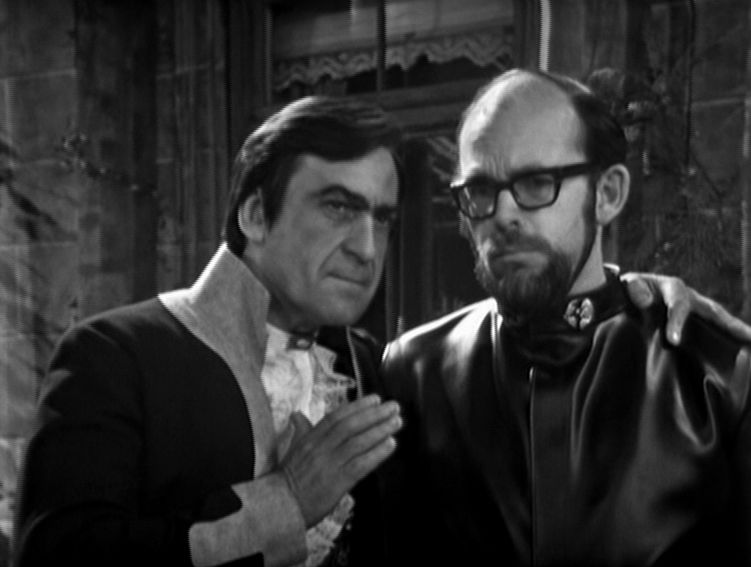
The emergence of Astrid at just the right moment (and with two people who can confirm that Kent was Salamander’s partner) is more than a touch contrived, but it works in story terms as it finally strips away the lingering pretence that Giles Kent was on the side of the angels. The Doctor tells him that he was never convinced by him anyway, as “any man who resorts to murder as eagerly and as rapidly as you must be suspect. You didn’t just want to expose Salamander, you wanted to kill him and take his place.”  Although Kent may have been more convincing had Bill Kerr played him as a more reasonable and sympathetic character, it’s still a very watchable turn.  Best known as Tony Hancock’s idiot friend in the radio version of Hancock’s Half Hour, he also enjoyed a long and successful acting career (some of it spent in the UK) and once of the joys of the recovery of this serial was that we were able once more to enjoy his complete performance.

As previously touched upon, Doctor Who was still a long way away from out-of-order recording, so each episode has to mostly feature Troughton as either the Doctor or Salamander.  Since it was the concluding episode, it’s not a surprise that he’s mainly the Doctor, although this means that after building Salamander up throughout the serial, he rather fades away.  But he does get to confront his old associate Kent, before his first (and last) encounter with the Doctor.

Had there not been at least one meeting between the Doctor and Salamander, the audience would probably have felt a little cheated (although the Doctor and the Abbot never met in The Massacre).  Before that happens though, loose ends are tied up as Bruce and Astrid take charge.  Kent has apparently killed both himself and Salamander (via a huge explosion) and the Doctor leaves Astrid as she attempts to rescue the people trapped in the underground shelter.

The final scene is a bit of a cracker.  Salamander impersonates the Doctor and he asks Jamie to operate the TARDIS controls.  This naturally confuses the Scot, but when the real Doctor makes an appearance, all becomes clear.  The Doctor tells Salamander that “we’re going to put you outside, Salamander. No friends, no safety, nothing. You’ll run, but they’ll catch up with you.”  After a tussle, Salamander is flung out in the Space/Time vortex and (unusually for the Troughton era) the story closes on a cliff-hanger.

Although The Enemy of the World does have a few logistical issues, there’s plenty to enjoy (especially as it’s such a break from the norm).  It was a daring move to tackle a James Bond-type plot with the series’ usual budget (and especially since 95% of the story was shot in the studio) but, apart from the odd wobbly set, it all holds together.  Troughton’s great (no matter who he’s playing) and he’s surrounded by some familiar faces (Colin Douglas, George Pravda, Milton Johns) all of whom would appear in later Doctor Whos.  Hines and Watling have little involvement in the later part of the story, but Whitaker keeps the story bubbling away so nicely that this never becomes an issue.

enemy 06-02

Doctor Who – The Enemy of the World – Episode Five

enemy 05

The mysterious visitor at the end of episode four is revealed to be Donald Bruce.  Although he’s Salamander’s head of security, he also seems to have a policeman’s instinct, as he’s willing to listen to the claims of Kent and the Doctor that Salamander is not the universal benefactor he claims to be (although anybody who’s spent time around him surely would have quickly picked up plenty of negative vibes).

Astrid disarms Bruce’s guard and the Doctor attempts to bring Bruce onto their side by handing the gun back to him.  As Bruce says, “you must be a complete fool or very clever.”  The Doctor responds that Bruce will “have to make up your mind to that right away.”  This fairly basic piece of psychology does the trick and Bruce agrees to accompany the Doctor as he attempts to enter the Research Centre.  But as insurance, Astrid and Kent are left behind – under guard.

Meanwhile, Salamander is still underground.  One of the slight problems with the underground scenes is that there’s only three speaking roles – Swann, Colin and Mary (there’s plenty of other people in the scenes, but they’re all just rhubarbing extras who rush around with clipboards, looking busy).  Adam Verney (as Colin) is still machine-gunning his lines, delivering them with an intensity that borders on the manic.  As the character is supposed to be somewhat stir-crazy, it’s a reasonable performance choice – although a little of him does go a long way.  Especially when delivering lines such as “I don’t think it’s right. Just work, sleep, eat, if there’s enough to go round. Like worms under the earth, sightless worms wriggling about without hope, without purpose.”

Mary (Margaret Hickey) has the thankless task of having little to do except react to Colin’s complaints.  Swann (Christopher Burgess) initially seemed also to be a rather uninteresting character, very much Salamander’s yes-man, but events take an unexpected turn when he discovers a fragment of newspaper which was stuck on their new boxes of supplies.  Salamander has told them all that there’s a global war occurring on the surface, and that their work (engineering natural disasters), is vital to the war effort.

But the scrap of newspaper has a report about the sinking of a holiday liner.  How can there be holiday liners in a world at war?  Swann confronts Salamander and it’s the first time that we’ve seen Salamander even slightly shaken.  He quick back-peddles and tells Swann that the war is over, but the survivors are deformed in mind and body.  “They have a kind of society, but it’s evil, corrupt. You don’t think I could expose you to that sort of thing? Think of Mary and the other women.”  Swann insists on going up to the surface with Salamander.  Salamander readily agrees and it’s not hard to understand why – Swann may go up, but he’s not coming down again.

Jamie and Victoria were absent from the previous episode and in the first half of this one were only in a brief shot (as their unconscious bodies were carried past the camera).  Once they’ve woken up, they have to face the tender devotions of Benik.  Milton Johns excels in this scene.  So much is left unsaid, as it’s left to the viewer’s imagination to wonder exactly what Benik would be prepared to do to them.  Jamie tells him that he must have been a nasty little boy, Benik concedes he was, but that he had a very enjoyable childhood.”

enemy 05-01

But he only gets as far as tugging Victoria’s hair when he’s interrupted by Bruce and (apparently) Salamander.  In order to convince Bruce that Salamander is as corrupt as he believes him to be, the Doctor stays in character for a while – and he’s convincing enough to fool both Jamie and Victoria.  The recovery of this episode allows us to see a few more nice visual touches – as Jamie and Victoria confront the man they believe to be Salamander, the Doctor takes fright and falls off his chair.  He’s then concerned that his friends don’t recognise him, but after miming playing the recorder he’s delighted to find they believe him after all.  Just before this, Letts manages to ramp up the tension as he rapidly cuts between close ups of Hines and Watling as they list some of Salamander’s crimes.

Kent and Astrid manage to distract the guard (thanks to some HP sauce, it appears) and Kent hot-foots it to the Research Station.  He says he’ll have no trouble getting in, since he has a pass (are we supposed to believe that Salamander wouldn’t have had it cancelled by now?!).

At the same time, Astrid is trying to shake off the guard (through a very unconvincing section of forest – alas, it’s too obvious that it’s a studio mock-up) when she hears a cry for help.  She stumbles across a mortally injured Swann, who clearly has come off second best in a tussle with Salamander.  It’s interesting that a few minutes earlier Salamander asked Swann if he was sure he wanted to go right up to the surface – the inference being that if he’d changed his mind, Salamander would have spared his life.   I’m not sure if that was the scripted intention or just how it was played, but it does make the character of Salamander a little more interesting (was he reluctant to kill?  And if so, was it just because he didn’t want to get his own hands dirty?)

As it is, we once again end on a cliff-hanger where neither the Doctor and his friends are in danger.  It’s another atypical ending to an atypical (but far from uninteresting) story.

vlcsnap-2015-05-10-19h00m34s183

Doctor Who – The Enemy of the World – Episode Four

enemy 04

Episode four is where the story takes a unexpected turn after Salamander’s underground base is revealed.  The Enemy of the World has often been likened to a James Bond film and the eventual reveal that Salamander has been engineering natural disasters (with the help of a group of duped underground workers) places him firmly in the Bond villain category.

It also helps to give the story more of a science fiction/fantasy slant, as up until now it’s been pretty much a contemporary thriller (although set in the future, it could have just as easily been set in 1967).  But before this mid-episode about-turn happens, we spend some time with the Doctor, who’s still a master of inactivity.

As a vehicle for Troughton’s Doctor, Enemy isn’t the best, since he’s absent for long stretches to enable him to play Salamander, which makes his limited screen-time when he does play the Doctor even more precious.  There’s a definite feeling that the Doctor is still at something of a disadvantage and he only agrees to the impersonation in order to rescue Jamie and Victoria.  Kent continues to be totally ruthless, telling the Doctor he has to kill Salamander – if he doesn’t then Kent won’t lift a finger to help his friends.  Naturally, the Doctor isn’t happy.  “Private justice, eh? Oh no, no. I’ll expose him, ruin him, have him arrested, but I won’t be his executioner. No one has that right.”

In the power struggle between Kent and the Doctor, at present you’d have to say that Kent has the upper hand.  Troughton’s Doctor may not quite be the fool that he sometimes appears, but the world of early 21st century politics isn’t his natural environment and he continues to be buffeted along by events, rather than shaping or initiating them.

More evidence comes Kent’s way when Fariah (who appears to be wearing a black bin-bag) offers her help to expose Salamander.  The hinted back-story between him and Fariah is teased a little further when she explains that “I have every reason to hate Salamander. He blackmailed me into being his personal servant. I even had to smile when he told me to.”  We never find out what he blackmailed her about, as the Doctor is happy to accept her at face value.

There then follows the main action sequence of the story, as Benik and his guards surround Kent’s office (which means that Kent, Astrid, Fariah and the Doctor are trapped).  The sequence does show the limitations of studio shooting – Astrid has a fight with a guard that looks terribly unconvincing, whilst the guards make something of an effort to break down Kent’s door, when the wobbles we’ve already seen would imply that just leaning on it would be enough to collapse it!

It’s also another opportunity to see the sadistic side of Benik.  He orders the guards to shoot to kill and one does – hitting Fariah.  Even when she’s dying, he continues to question her (much to the disgust of the guard captain).  And after the captain tells him that she can’t tell him any more, because she’s dead, he’s unruffled, simply saying “good”.

enemy 04-01

Bruce (Colin Douglas) has been something of a background figure for a few episodes, but the seeds are sown here for the action he’ll take later in the story. We’ve seen that he’s not a man who’ll blindly follow orders (and he lacks Benik’s pleasure in killing).  Douglas’ performance is rather bluff (and sometimes he seems to be struggling for his next line) but Bruce is a good counterpoint to the more hysterical Benik.

Prior to the episode being recovered, exactly how Salamander travelled underground was a bit of a mystery, the telesnaps didn’t really cover it and the camera script wasn’t very precise.  It’s actually quite an impressive few moments and does sell the illusion that Salamander has journeyed deep underground – where he meets a rather rum bunch of people.

Swann (played by Christopher Burgess, who’ll be cast again several times by Barry Letts in later Who stories) is the leader, whilst Mary (Margaret Hickey) and Colin (Adam Verney) are two of the younger workers.  Verney is incredibly earnest, delivering his lines as if his life depended on it.  “Don’t stop me now. I’ve got to see the surface, Mary, I’ve got to. I want to see the Sun again, walk on top of the Earth, not hide like a rat underground. I’ve got to do it, Mary. I’ve got to ask him.”  True, his dialogue is a bit ripe, but it would have been nice if he’d approached it in a more naturalistic way.

The story teases us as we learn that the underground workers believe the surface to be radioactive and that it’s not safe to leave the safety of the bunker.  They also believe Salamander to be their benefactor, risking his life to bring them supplies.  But the reason why they’re there isn’t revealed until the next episode, although those who’ve been following the story could probably work it out.

We end with the arrival of an unseen visitor paying a visit to Kent and the Doctor …..

enemy 04-02

Doctor Who – The Enemy of the World – Episode Three

enemy 03

Until late 2013, this was the only surviving episode of The Enemy of the World and it may be the reason why the story generally enjoyed a fairly low standing, pre-recovery.  There’s nothing particularly wrong with it, but it’s quite low on incident (which is quite typical for one of the middle episodes of a six-parter).

Salamander orders Denes to be arrested and he later tells Fedorin to kill him (thoughtfully he provides the poison to do so).  Given that Denes would obviously prove to be awkward if he was brought to trial, his removal is understandable – it’s just bizarre that Salamander would chose Fedorin to do it.  From his first scene he’s been presented as a weak link.  True, if he did murder Denes then it would tie him even closer to Salamander, but logically you would have expected that a hand-picked guard would be a better choice.

As has often been stated, it’s a little odd that Denes is kept under guard in a corridor.  This is because, apparently, it’s the easiest place to guard him.  What, easier than a room with a door they can lock?  In story terms, having Denes in the corridor means that he can easily interact with any passing character, but it’s a pity that they couldn’t come up with a better reason why he was there.

enemy 03-01

This episode is immeasurably livened up by Griffin the Chef (Reg Lye).  In plot terms he contributes nothing (and he doesn’t appear later in the story either) but his droll sense of humour is welcome in a story that’s been rather grim up until now.  Griff’s an eternal pessimist and with a long-suffering air agrees to take on Victoria as an assistant.  He asks her to write out the menus.  “First course interrupted by bomb explosion. Second course affected by earthquakes. Third course ruined by interference in the kitchen. I’m going out for a walk. It’ll probably rain.”

Jamie wonders if somehow Salamander managed to cause the earthquakes.  We then cut to scenes of the continuing earthquakes and rather neatly we pull away from this footage to show it was something the Doctor and Kent were watching on a monitor screen.  It seems like a nice directorial flourish, although it may have been scripted since Kent unconsciously continues the conversation that Jamie (many miles away) was having as he tells the Doctor he’s convinced that Salamander, via the Research Station, is somehow responsible for the earthquakes.

This is Troughton’s sole scene in episode three as the Doctor and he’s still not convinced.  “What you’re saying is that Salamander’s found a way of harnessing the natural forces of the earth. It’s a little difficult to accept. I’m not saying it’s impossible, mind you.”  Although the plot’s ticking away nicely and Troughton continues to entertain as Salamander, the necessity of the story means that the Doctor is once again placed in the background.  He gets to witness how unpleasant and ruthless Beink can be, but it’s still not enough proof for him.  “Unpleasant, yes, destructive, but not necessarily evil.”

There’s quite a high body count in this story and in episode three we bid farewell to both Denes and Fedorin.  Denes is shot in the back after Astrid attempted to rescue him and Fedorin is poisoned by Salamander.  I love Fedorin’s death scene, as you can clearly see that David Nettheim was milking it for all it was worth!  Denes’ death is a little more rushed though – it’s possible that time was a factor as there’s a swift cut after he’s shot straight into the next scene.  It’s a shame that Denes won’t take any further part in proceedings as George Pravda, especially in this episode, was rather good, especially the way he managed a wry tolerance of the madness occurring around him.

We end with Salamander becoming increasingly suspicious of Jamie and Victoria (which will conveniently remove them from the story for a week).  He’s also amazed to hear from Bruce that he’s recently met with Giles Kent ……

enemy 03-02

Doctor Who – The Enemy of the World – Episode Two

enemy 02

The Doctor manages to bluff Bruce into believing that he’s Salamander, but afterwards he’s still not convinced that he should help.  “I don’t know where you stand, Mister Kent, but you and this Salamander are obviously on opposite sides. That at least is clear. But which side is good? Which side is bad? And why should I interfere?”

Kent’s proposal is that Jamie and Victoria infiltrate Salamander’s HQ (using a plan he’d already devised for his own operatives) to find proof of his criminal activities.  Given the Doctor’s reluctance to get involved, it’s a little strange that he agrees so freely to this, as it will place both Jamie and Victoria in terrible danger.  We’ve seen the manipulative side of Troughton’s Doctor before, notably with his treatment of Jamie in Whitaker’s The Evil of the Daleks, but it’s still difficult to believe that he would agree to such a risky plan so readily.

As Jamie and Victoria leave for the Central European Zone, Kent suggests that he and the Doctor take a look at the Kanowa Research Station.  They won’t reach there until episode three, but we briefly see inside it this episode, as we meet a character who’ll become more central to the story later on – Benik (Milton Johns).  Before we go inside, there’s an establishing shot of the outside of the building.  Although it’s represented by a still photo, it’s a nice touch that a small piece of foliage is slowly waved very close to the camera, increasing the impression that it’s a live action shot.  It’s a very simple trick, but quite effective.

Like many of the actors in Enemy of the World, Milton Johns would make several appearances in Doctor Who as well notching up hundreds of other credits.  Frankly, he’s something of a national treasure – one of many, many actors of this era who could always be guaranteed to enliven whatever tv show or film he appeared in.  Never the lead, but always solid support.

He’s tended to specialise in playing odd, weak or ineffectual characters and Benik fits into all three categories quite nicely.  We’ll discuss Benik in more depth later on, but even in his single scene here it’s quite possible to get a good grasp of his character.  He occupies a position of some power and he’s no problems with exercising this authority (witness his confrontation with Bruce).  But there’s something slightly repellent about him and he certainly doesn’t give off a very trustworthy vibe.

enemy 02-01

We then move to the Central European Zone, where we get our first proper look at Salamander.  He’s got an interesting accent which at times does slightly rob the character of a little of his menace, but it’s Troughton, so you know that he’s always going to deliver a nuanced performance that will command the screen.

He’s meeting with the Zone controller Denes (George Pravda) and Fedorin (David Nettheim).  Salamander warns that the Zone will shortly suffer a devastating earthquake.  Denes is polite, but noncommittal, although he promises to have his experts check the data (much to Salamander’s irritation).  Denes is another of Kent’s allies, although when he speaks to Astrid later he mentions that the meeting he just had with Salamander was the first time he’d met him.  This would imply that Denes has only just been made controller, as surely he would have had contact with him on a regular basis.  And since he’s never met him, why is he so convinced that Salamander is evil?

Once Denes leaves, Salamander explains to Fedorin exactly what will happen next.  Denes will die and Fedorin will take over.  Salamander has incriminating evidence (faked, if we believe Fedorin) on Fedorin, but doesn’t plan to use it, “this just an insurance, hmm?”  It’s a joy to watch Troughton’s Salamander steamroller the ineffectual Fedorin and it gives us an early indication that he’s utterly ruthless – replace an honest man with one that you have a hold over and your power-base is immeasurably stronger.  David Nettheim’s role isn’t particularly large (he only appears in this and the next episode) but his twitchy, anxious turn is a memorable one.

Barry Letts elects to use back projection for the park scenes, which is an innovative, if not entirely successful, attempt to suggest the action is taking place outdoors and not in the studio.   After the initial location splurge at the start of episode one, the rest of the story is largely studio bound so it was reasonable enough to try and open things out.  When he became producer of Doctor Who, Letts would delight in using CSO in ways that few other directors would ever attempt, so it’s not surprising that he tried something similar here.  It looks just as fake as CSO often did, but we’ll give him points for effort.

The other major character introduced in this episode is Fariah (Carmen Munroe).  She’s one of Salamander’s servants, but Fedorin observes that she doesn’t appear to be an ordinary servant.  Fariah tells him that she’s his food taster, as there have been many attempts to poison him.  As her contempt for Salamander is barely concealed, Fedorin wonders why she decided to work for him.  Fariah tells him that Salamander has a way of persuading people and Salamander’s own comments on her are quite noteworthy.  “She was hungry. Only thing is, now she has all the food she needs, she’s lost her appetite. Both Troughton and Munroe are skillfully able to imply an intriguing back-story with just a few lines.

Meanwhile Jamie and Victoria have managed to win Salamander’s confidence (in a slightly unbelievable way, it must be said).  Salamander’s security must be really poor for Jamie to be able to get within touching distance of him without any of his guards being able to stop him.  Although his ruthless streak is made even clearer when he tells his guards to take the guard that Jamie overpowered away.  “Look after him.  Better still, get rid of him.”

Episode two ends with Salamander’s forecasted volcanic eruptions.  This is achieved, less than satisfactorily, via stock footage which doesn’t at all match with the clean VT studio sequences.  It’s also a little strange that Salamander quite calmly watches the devastation from the veranda in his Presidential Palace, which implies that that the eruptions can’t be too far away.  But at no time does anybody suggest that they should leave and move to a safer place.

Salamander orders Denes to be arrested and we then see a rather odd cliffhanger which ends on the worried face of Fedorin who’s clearly deciding whether to agree to Salamander’s plan or support Denes.  It’s a convenient place to pause the story, but rather atypical (normally we’d expect to see one of the regulars in peril).

enemy 02-02

Doctor Who – The Enemy of the World – Episode One

enemy 01

Even some eighteen months later, there’s a faint air of unreality about the recovery of The Enemy of the World and The Web of Fear.

Maybe this is because the notion of complete (or nearly complete) stories returning to the archives seemed to be such a remote possibility.  Yes, it had happened back in 1992 with Tomb, but as time went on that appeared to be a miraculous one off.  Post-Tomb, we’d become conditioned that the small (but very welcome) trickle of orphaned episodes would be all we could ever expect.

The recovery of these nine episodes changed that though and it allows us to reassess a substantial chunk of season five.  For most people, including myself, viewing these two stories was a very different experience from watching The Tomb of the Cybermen back in 1992.  Tomb might have been a legendary lost story, but in 1992 I didn’t even have a complete collection of the existing episodes (although I was well on the way).  So Tomb was just another story and I approached it with none of the baggage that some older fans would have had.

Enemy and Web were very different.  I’d had the orphaned episodes for twenty five years and the audios for nearly as long.  So the small amount of existing visual material and the audio of the remaining episodes were very familiar – meaning that finally being able to put pictures to the sounds was an exciting, if slightly nerve-wracking experience, first time around.

This was Barry Letts’ first brush with the series and it’s apt that episode one features both a hovercraft and a helicopter, given that the Pertwee era would show a similar love of hardware.  The opening ten minutes or so are mostly shot on film and they help to give the story a glossy, expansive start.  As a first-time director on the show, Letts was clearly keen to push as far as he could and there’s some impressive shots (such as the POV from the helicopter showing Anton and Rod firing as it pulls away) that maybe a more experienced (or jaded) director wouldn’t have bothered with.

The early minutes are peppered with some lovely visual moments – such as the Doctor stripping down to his long-johns to take a dip in the ocean.  This emphases the Troughton Doctor’s child-like nature although he’s also quick to sense that the approaching hovercraft means them harm (although this seems to be via a sixth sense as there’s no visual clue).

The hovercraft is piloted by Anton (Henry Stamper), Rod (Rhys McConnochie) and Curly (Simon Cain).  It’s Anton who gets the lion’s share of their dialogue, although sadly it’s not particularly memorable and Stamper’s unsubtle delivery doesn’t help.  Thankfully, all three are put out of our misery shortly afterwards.

The Doctor, Jamie and Victoria are rescued by Astrid (Mary Peach).  Our first sight of Astrid is from the rear and it’s easy to believe that this was a deliberate shot-choice from Letts as Ms Peach does have a rather attractive derriere.  Certainly something for the dads there!

enemy 01-01

But although it’s impossible to deny that Astrid is an objectified figure right from the start, she’s also a strong, capable woman at a time when that was still something of a rarity in Doctor Who.  There are other examples in the Troughton era – Anne Travers in the next story and Gia Kelly in The Seeds of Death, for example – but they were still the exception rather than the rule.

After the Doctor attended to a flesh-wound she picked up during their escape, she begins to delicately pump him for information.  Once she learns he’s a Doctor, Astrid wonders in what field, possibly law or philosophy.  Troughton’s reply, with a faint smile playing around his lips, of “which law? Whose philosophies, eh?” is another of those lovely moments that only works when you have the visuals to match up to the soundtrack.  And it does make you wonder just how many more examples of Troughton’s magic are lost on the audio-only episodes.

Another nice moment comes shortly afterwards when she tells the Doctor that he’s “the most wonderful and marvellous man that’s ever dropped out of the skies” and asks if he’ll do something for her.  The Doctor’s quite taken with her compliment and dreamily tells her that, yes, he will.  But he’s brought up sharply when Astrid tells him it’ll probably cost him his life!  It’s a gag moment, as it’s impossible to believe that the Doctor would ever be taken in by such a cheap piece of flattery, but it’s still amusing.

What happens next is interesting.  The Doctor seems reluctant to meet with Astrid’s boss, Giles Kent (Bill Kerr) and wishes to leave.  It’s Jamie who for reasons unknown (perhaps he fancies Astrid?) tries to persuade him to stay.  The Doctor’s inaction during the story was mainly for practical reasons – an episode could either largely feature Troughton as the Doctor or as Salamander, but it would be hard to do both.  So the Doctor had to drop out of the narrative for a few episodes in order for Salamander to dominate. Therefore, if the Doctor had agreed to the impersonation straight away, then the story would have been over much sooner.

There could be another reason though – since the story was scripted by David Whitaker, the show’s original script editor, whose view of the series was very different from those who came after (especially Dennis Spooner).  Something very consistent in the Whitaker script-edited stories is that the Doctor never decides to stay and help purely out of a sense of moral duty (instead it’s generally because he’s unable to leave – the TARDIS is taken by Marco Polo, the lock of the TARDIS is stolen in The Sensorites, the TARDIS is trapped by a fallen girder in The Dalek Invasion of Earth, etc).  It’s therefore quite reasonable for Whitaker to script a Doctor who’s reluctant to act.

This is unusual for the series at this time though, where the Doctor is generally quite happy to pitch in straight away. But it’s an interesting move, as whilst Giles Kent is very convincing in painting Salamander as a villain, there’s little actual evidence to back this up.  For anybody familiar with the parameters of the series to date, it would seem clear that Salamander = Bad and Giles = Good.  As we’ll see though, things aren’t quite as clear cut and this is an early example of the series taking a more pessimistic world-view where few, if any people, can be trusted.  Possibly the best example of this is The Caves of Androzani which must be unique in lacking any characters (outside of the regulars) that could be said to be wholly “good”.

But even this early on, we have clear evidence that Kent is a ruthless manipulator.  He wants the Doctor to impersonate Salamander but obviously knows that he’ll take a great deal of persuading.  So he contacts Salamander’s head of security Donald Bruce (Colin Douglas).  Since they’re implacable enemies, quite what he says is something of a mystery, but Bruce turns up shortly afterwards and Kent gives the Doctor an ultimatum.  He has to impersonate Salamander and he has to be good enough to fool Bruce, otherwise the lives of Jamie and Victoria will be forfeit.

enemy 01-02<

Doctor Who – More than Thirty Years in the TARDIS

more than

One thing that the range of Doctor Who DVDs (from An Unearthly Child to the TVM) isn’t short of is documentaries.  Just about every release has a plethora of supplementary information – from story-specific features, interviews with people from both in-front of and behind the camera to more tangential featurettes (such as The Blood Show from the State of Decay DVD.  A twenty minute documentary on the use and meaning of blood in society?  No, me neither).
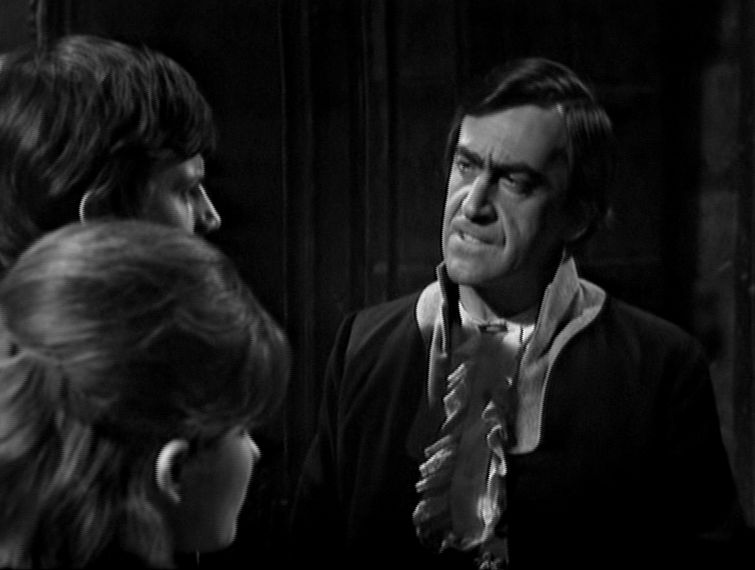
But back at the start of the 1990’s, things were very different.  The only British-made documentary screened during the series’ original twenty-six year run was 1977’s Whose Doctor Who.  Reeltime Pictures catered for the fan market during the 1980’s and 1990’s with the MythMakers series of interview videos, but these (like VHS releases of convention panels) were only preaching to the converted.  A mainstream documentary on BBC1 seemed like a remote possibility.

But 1993 was Doctor Who’s 30th anniversary and even if the show had been off the air since 1989, it still had a certain presence (thanks to healthy VHS sales).  Kevin Davies was keen to make a documentary celebrating the program and he had an impressive calling card – The Making of the Hitch-Hiker’s Guide to the Galaxy – a popular straight to video documentary that mixed archive footage, outtakes and new interviews.

Thirty Years in the TARDIS was to eventually take very much the same shape – although prior to this format being agreed Davies made numerous other pitches which were rejected.  These included Tomb of the Time Lords which would have featured Ace searching the Doctor’s memory in the Matrix – which would have provided the excuse for a series of clips.  Another intriguing possibility was The Legend Begins, a drama-documentary about the creation of the series (Davies suggested Pete Postlewaite as Hartnell).  We would have to wait another twenty years, and Mark Gatiss’ An Adventure in Space and Time, for this idea to eventually hit the screen.

Thirty Years in the TARDIS was produced by The Late Show team and although Davies had been given a free hand, some higher-ups became concerned with the approach used.  Davies wanted to take the nostalgic route to try and pinpoint why Doctor Who had been such as success whilst The Late Show team felt that the documentary should have a more factual basis and so additional interview material was shot.

In the end, this made the transmitted version a rather uneasy comprise between Davies and his producers.  But even though it was a bit of a hodge-podge, there were still plenty of impressive moments (especially the drama recreations).  However, Davies still felt that there was a better documentary that could be made from the material and so in 1994 More Than Thirty Years in the TARDIS was released on VHS.

Davies had free reign to re-edit the program to his wishes as well as adding an additional forty minutes (bringing the running time up to ninety minutes).  From the perspective of 2015 it’s just another documentary, but back in 1994 it was something rather special.

Although the pirate video network (see Cheques, Lies and Videotape on the Revenge of the Cybermen DVD for more info) was still flourishing at the time (which meant that some of the rarer material featured – studio outtakes, for example – were in circulation) not everybody had access to them.  So a major draw of the VHS were the snippets from studio sessions, including The Claws of Axos and Death to the Daleks , as well as ephemera like the Tom Baker/Lalla Ward Prime Computer adverts.  Even the end credits were fascinating, as they were packed with clips of studio off-cuts.

Jon Pertwee, Colin Baker and Sylvester McCoy were interviewed, but Tom Baker and Peter Davison were conspicuous by their absence.  Tom did make an appearance via archive footage though and given that many anecdotes were already calcified by this time (yes, Jon Pertwee does mention Yetis in Tooting-Bec!) this probably wasn’t too much of a drawback.

One notable new section concerned the thorny issue about who exactly created the Daleks (was it Terry Nation, Raymond Cusick or Davros?).  This discussion was intercut with Jon Pertwee’s appearance on the Anne and Nick show where he disagreed that it was Terry Nation (much to the amusement of the studio crew!).

The DVD release of More Than is pretty much a direct port of the VHS master which means that many of the clips look rather grotty.  Along with the staggering number of special features, the amount of restoration work carried out the DVD releases is really highlighted when you see exactly how badly the stories used to look.

If you didn’t live through the 1990’s as a Doctor Who fan, then More Than is probably not going to have the same special appeal today as it did then.  Just about every scrap of interesting material can be found in a more complete form somewhere on the DVD range (you want the whole studio spool from The Claws of Axos? You’ve got it) but More Than does manage to compress twenty six years of history into an entertaining ninety minutes.

This obvious nostalgia apart, it remains a very decent documentary that does its best to explain the magic of the series and I’m glad it ended up on DVD.
Obituary – Bernard Kay (1928 – 2014)

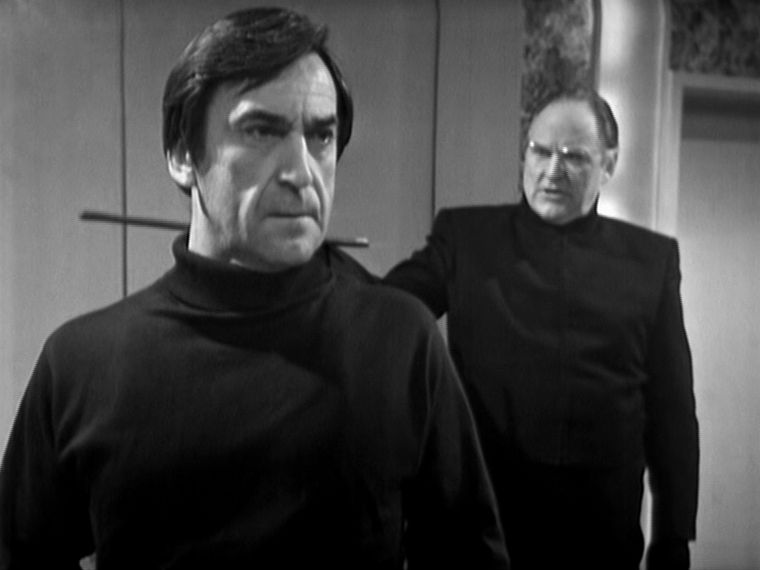
bernard kay - colony in space

I was sorry to hear about the recent death of Bernard Kay.  He had a lengthy career with some notable film appearances (such as Doctor Zhivago & Sinbad and the Eye of the Tiger) but many of his best performances were on television.
And one of his finest small-screen appearances must be the Tweedledum episode of Colditz (transmitted on the 21st of December 1972).  Michael Bryant played Wing Commander George Marsh, who decided to fake madness in order to get released from Colditz and gain repatriation to Britain.  Kay was Hartwig, the German soldier assigned to watch him.  Initially, Hartwig was convinced that Marsh was a fake and sought to prove this by various humiliating means.  Eventually though, he’s convinced and it’s Kay’s compassion that moved the story to another level.

Bernard Kay would become a familiar screen presence for decades, appearing in many popular series such as Out of the Unknown, Redcap, No Hiding Place, The Baron, Adam Adamant Lives!, Softly Softly, The Champions, Budgie, Z Cars, The Sweeney, Space 1999, Survivors, The Professionals, Grange Hill, Dick Turpin, Tales of the Unexpected, The Bill, Juliet Bravo, Remington Steele, London’s Burning, Coronation Street, Jonathan Creek, Foyle’s War and TV Burp amongst many, many others.

He also made four appearances in Doctor Who, between 1964 and 1971.  The first, The Dalek Invasion of Earth was opposite William Hartnell and he played Tyler – a member of the Earth resistance fighting the Daleks.  A few months later he returned to the series, as Saladin in David Whitaker’s The Crusade.

Since Kay (along with several other actors) was browned-up in The Crusade, this might mean that some people would view the story today as politically incorrect, but Whitaker’s script certainly wasn’t.  Kay’s Saladin isn’t a monster – indeed he seems to be just as rational as Julian Glover’s Richard the Lionheart (possibly more so).  As Richard blusters, Saladin is content to remain cold and logical.  It’s Kay’s best Doctor Who performance.

A few years later, he played Inspector Crossland opposite Patrick Troughton’s Doctor in The Faceless Ones and would make his final appearance in the series in 1971.  Jon Pertwee was the Doctor at the time and whilst the story (Colony in Space) is a little dull, Kay was, as usual, very good – this time as Caldwell, a man who finds himself increasingly at odds with his IMC (Interplanetary Mining Company) colleagues.

Kay was born in Bolton in 1928, and following his National Service he trained to become an actor at the Old Vic Theatre School.  Although the majority of his work was either on television or film, he was no stranger to the Theatre.  One notable early performance was as Macbeth in the Nottingham Playhouse’s production of  1952.  When the actor playing Macbeth had to pull out, Kay stepped into the part – with only 24 hours to learn the role.

Bernard Kay was always somebody who spoke his mind – and this is demonstrated in these fascinating interviews, conduced by Toby Hadoke for his Who’s Round Project – Part One and Part Two.  At times painfully frank, they provide a good insight into the personality of a fine character actor.

Doctor Who – The Feast of Steven

merry xmas

Originally transmitted – 25th December 1965

I can’t have been the only person to have the cockles of their heart warmed by the prominent sight and sound of William Hartnell in the new BBC Christmas trailer.  Of course, if they hadn’t wiped the tapes some forty years ago then we wouldn’t have had to have a shot of Hartnell from The War Machines matched up with audio from The Feast of Steven, but as it’s the season of goodwill we’ll let that pass.

That brief clip of Billy wishing everybody the compliments of the season made me think that The Feast of Steven would be an ideal addition to my Christmas television viewing.  I wouldn’t normally watch an individual episode of Doctor Who, but let’s be honest – The Feast of Steven has no connection to the rest of The Daleks’ Master Plan, so why not?

Indeed, as others have noted in the past, The Daleks’ Master Plan is a curiously constructed story.  The beginning and the end of the serial can be said to form one story, whilst the episodes in the middle are essentially The Chase Part Two.  And since it’s debatable whether The Chase was a good idea to begin with, the notion of a sequel is an interesting idea.  Within this second story, sits The Feast of Steven, an odd episode (yes, a very odd episode) all on its own – broadcast on Christmas Day 1965.

The fact it was broadcast on Christmas Day must explain the tone of the episode.  Presumably it was felt that 25 minutes of the Daleks exterminating all and sundry would be out of place – so instead we have something much lighter.  It’s difficult to believe that the original plan was to have the cast of Z Cars appear in the first section, but if they had it would have been a bizarre crossover, more in the nature of a Children in Need skit than a normal episode of Doctor Who.  But it does give us one of Hartnell’s best lines, when the Doctor describes himself as “A citizen of the Universe, and a gentleman to boot”.

After the Doctor, Steven and Sara extract themselves from the clutches of the police, the TARDIS drops them in the middle of Hollywood’s golden age, where they rub shoulders with the likes of Charlie Chaplin and Bing Crosby.  This section of the story is probably not best served by the lack of visuals (you can be sure Douglas Camfield would have had a few tricks up his sleeve).  There are a few memorable lines, though some (like Hartnell’s “Arabs”) are memorable for the wrong reasons.

And it ends with that line from the Doctor, wishing everybody at home a Happy Christmas.  A Hartnell ad-lib or something scripted? I’m not sure, but I do find it bizarre that some recons (although fortunately not the LC one below) have removed it.  This seems to be similar to snipping out the fast-talking Ogron (“no complications”) from the Day of the Daleks SE.  Don’t they know that you can’t re-write history, not one line?

K9 and Company: A Girl’s Best Friend

k9

Originally Transmitted – 28th December 1981

K9 and Company might be something of a guilty pleasure, but it’s a pleasure nonetheless.

When devising a spin-off series for K9, there were already two ready-made possibilities.  K9 Mk 1 was on Gallifrey with Leela, whilst K9 Mk 2 was journeying through E-Space with Romana 2.  Possibly neither Louise Jameson or Lalla Ward were interested in playing second fiddle to a tin dog, so this left the way clear for the return of Sarah-Jane Smith.

Elisabeth Sladen is, of course, the main selling point of K9 and Company.  And although we didn’t know it at the time, this was essentially the first of a two part story (the second, School Reunion, would follow a mere twenty five years later).

A Girl’s Best Friend is an odd story.  It’s full of red-herrings and innocent people acting in the most suspicious way (in order to con us into believing that they’re wrong-‘uns).  Colin Jeavons and Bill Fraser liven up proceedings with some interesting performances that teeter on the edge of credibility (and Jeavons later topples over completely).

Given that a running thread through the story is the mysterious disappeance of Aunt Lavinia, it’s a little anti-climatic to find out that nothing at all has happened to her.  And the reason why Brendan (Ian Sears) should be lined up for sacrifice is a bit vague – unless it was explained and I just drifted off for a moment.

Terence Dudley’s novelisation managed to put some more meat on the bones of the story (just likes his novelisations of Black Orchid and The Kings Demons) which proved that there was a decent tale buried here, but it just didn’t quite come over on television.

Such a simple, brutal power. Just the power of tooth and claw. Doctor Who – Survival

survival

It’s often been commented upon that Survival was a story that pointed towards the style adopted by NuWho.  Like some of  the early NuWho stories, there’s a sense that the story is located in a real, definable modern location.  Other Who stories of the time (such as Silver Nemesis) were also set on contemporary Earth, but Survival takes us onto the streets and into the tower-blocks of contemporary London, a place where the series rarely ventured.

It’s also possible to imagine the story working very well as a 45 minute story (like the majority of NuWho).  Had it done so, then the majority of the first 25 minutes could easily have been jettisoned.  There’s some nice moments, such as Ace’s friend Ange who’s surprised to see her as she thought she was dead (“either you were dead, or you’d gone to Birmingham”) but far too much of the episode drags.

The business with Hale & Pace as well as the Doctor faffing around with the cat food is all pretty throwaway stuff.  But we do get to meet the arrogant Sergeant Paterson (“Have you ever heard of survival of the fittest, son, eh? Have you ever heard of that? Life’s not a game, son. I mean, I’m teaching you the art of survival. I’m teaching you to fight back. What happens when life starts pushing you around, son, eh? What’re you going to do then?”).  The constant repetition of “survival of the fittest” during the first episode is a far from subtle foreshadowing of what was to come.

It’s interesting that Survival is a very episodic story (The Keys of Marinus is another where the location would change from episode to episode, but I can’t think of many other examples from the original series off the top of my head).  Episode one takes place on Earth, episode two on the planet of the Cheetah People whilst episode three returns us to Earth.

Episode two is probably the best of the three.  The Cheetah People’s planet is very well realised, with subtle video effects used to change the colour of the sky, etc.  It’s certainly a good deal more effective that the garish Paintbox effects on Mindwarp.  I also love Dominic Glynn’s music here – so it would be nice if SilvaScreen restarted their release programme of Doctor Who soundtracks with stories like this one.

And the Master’s back! Although his interpretation wasn’t to everybody’s taste, I’ve always had a soft spot for Anthony Ainley (and considering how the New Series has treated the Master, Ainley is a model of restraint).  Survival is probably his best Doctor Who appearance as the Master (although his best appearance overall as the Master can be found on the links of the Destiny of the Doctor CD-ROM game).

For once, he has no grand scheme – like everybody else he’s just fighting for survival.  But once he returns to Perivale, things do fall apart.  The sight of the Master recruiting a gang of teenagers from the local Youth Club is bizarre, to say the least, and his motivations at the end of the story seem confused.  At one point, he tells the Doctor that he has control over the power and that he’ll use it to destroy him.  In the very next scene, the Master and the Doctor are back on the planet of the Cheetah People and the Master’s attitude has completely changed – now he wishes to die, as he doesn’t want to live as an animal.  As happened so often, script editor Andrew Cartmel seems to has overlooked plot-holes like this, which would have been easy to fix.

Although it’s not really visible, the Master’s murder of Karra (Lisa Bowerman) is quite vicious and serves as a reminder that he could be ruthless when the situation demanded it.  Karra is the Cheetah Person who forms a strong link with Ace.  And Ace’s prominent role in the story is another link to NuWho, where the companion is often more important to the story than the Doctor (although Survival is not unique in this respect – and in fact this is the last in a loose trilogy which put Ace to the fore).

Whilst Ghost Light was the last story from the original run to be recorded, Survival was the last to be transmitted and it’s really the end of an era.  Doctor Who would survive – initially as books, then a one-off TVM, then audios and then finally the relaunched series in 2005 which achieved levels of success (in the UK and also worldwide) both commercially and critically that the original series only enjoyed somewhat intermittently.

Dangerous undercurrents. Doctor Who – The Curse of Fenric

curse

The Curse of Fenric is a bleak, cynical story.  So it’s hard to believe that, for many people at the time, Doctor Who was still seen very much as children’s television – although some of the performances, which we’ll come to later, did have a feel of “children’s tv” about them.

One of the interesting things about Fenric is how it portrays the British during their darkest hour.  The government are seen to hatch a plan which will cause mass slaughter in Russia at some unspecified point in the future.  It doesn’t go as far as to say that Churchill knew about it, but the implication is there.

MILLINGTON: Just think what a bomb full could do to a city like Dresden or Moscow.
DOCTOR: It’s inhuman.
MILLINGTON: It could mean the end of the war.
DOCTOR: And Whitehall thinks that Moscow is careless enough to let you detonate one of those things inside the Kremlin?
MILLINGTON: Oh, that’s the beauty of it, Doctor. We won’t detonate it. They’ll do it themselves. They’ll use the machine to decrypt our ciphers, but Doctor Judson has programmed it to self-destruct when it tries to decrypt a particular word. And, once the political climate is appropriate, we will include the word in one of our ciphers.
DOCTOR: And the word is?
MILLINGTON: What else could it be, Doctor? Love.

As the above extract indicates, there’s a little confusion in the scripting.  At one point, Millington (Alfred Lynch) discusses how the chemical weapons could signal the end of the war – but he plans to use them against the Russians, not the Germans, so how is this possible?

Faith is an important part of the story.  The Reverend Wainwright (Nicholas Parsons) doesn’t have faith any more and it proves to be his undoing.  I remember the outcry amongst a certain section of fandom back in 1989 when Parsons’ casting was announced – it seemed that another Ken Dodd comedy turn was expected.  But Parsons was wonderful as the conflicted Wainwright (not that this should be a surprise, since he had plenty of acting experience).  He has some lovely moments in the story, such as this scene with Ace.

ACE: Funny church, this, isn’t it?
WAINWRIGHT: I was just remembering when I was a child. My father was the vicar here then. It seemed such a warm, friendly place in those days.
ACE: Things always look different when you’re a child.
WAINWRIGHT: Now I stand in the church every Sunday, I see all the faces looking up at me, waiting for me to give them something to believe in.
ACE: Don’t you believe in anything?
WAINWRIGHT: I used to believe there was good in the world, hope for the future.

ACE: The future’s not so bad. Have faith in me.

But sadly he didn’t have faith in her or anyone else, so he meets his end at the hands of Jean (Joann Kenny) and Phyllis (Joanne Bell).  They’re two of the weak links in the story – they’re not particularly impressive before they’ve been taken over, but afterwards they’re somewhat diabolical.  Maybe it’s the fingernails or the stilted delivery, but it’s not good.

There’s better acting elsewhere though.  Dinsdale Landen has a nice touch of humour as the wheelchair-bound Judson and is even better when taken over by Fenric in the last episode.  But it’s a pity that episode three didn’t end on a close-up of him, rather than a shot of the Doctor looking mildly worried (but it’s not the first cliff-hanger of the era to end on a limp shot of the Doctor by a long chalk).

Fenric was always a story that didn’t quite work in its original broadcast format and both the VHS and the DVD had different edits which benefit the story by including various scenes that had to be cut out due to time restrictions.  There’s possibly too much plot in the story for the episode count – the Haemovores, the Ancient One, Millington’s agenda, the Russian’s plan to steal the Ultima machine, the return of Fenric, it’s certainly all going on.

Losing a few of these threads (particularly the Haemovores who contribute little to the plot) would have tightened things up a little.  And episode four, whilst it has some great drama (especially when Sorin has been taken over by Fenric) can’t help but feel like something of an anti-climax.  It is a little hard to take Fenric that seriously when he wants to drop everything to pick up the game he was previously playing with the Doctor.  Yes, I can see that chess is a metaphor – but it’s a somewhat clumsy one.

The scene where the Doctor attempts to destroy Ace’s faith in him is nice though – and it’s either a skillful weaving together of plot-threads from various stories during S24 & S25 or an opportune scramble to explain some of the plot-holes from those same stories.  I’ll leave you to decide.

SORIN: The choice is yours, Time Lord. I shall kill you anyway, but if you would like the girl to live, kneel before me.
ACE: I believe in you, Professor.
SORIN: Kneel, if you want the girl to live!
DOCTOR: Kill her.
SORIN: The Time Lord finally understands.
DOCTOR: Do you think I didn’t know? The chess set in Lady Peinforte’s study? I knew.
SORIN: Earlier than that, Time Lord. Before Cybermen, ever since Ice World, where you first met the girl.
DOCTOR: I knew. I knew she carried the evil inside her. Do you think I’d have chosen a social misfit if I hadn’t known? She couldn’t even pass her chemistry exams at school, and yet she manages to create a time storm in her bedroom. I saw your hand in it from the very beginning.
ACE: Doctor, no.
DOCTOR: She’s an emotional cripple. I wouldn’t waste my time on her, unless I had to use her somehow.
ACE: No!

I’ve never quite understood how Ace never twigged that the baby was her mother.  Did she not know her maternal grandparents or did she just think it was a strange coincidence that Kathleen and her husband had exactly the same names as her Nan and Grandad?  And the less said about the “Sometimes I move so fast, I don’t exist any more” scene the better, I think.

Not a perfect story then, but there’s enough going on to make it a worthwhile, if sometimes flawed, watch.

You are endlessly agitating, unceasingly mischievous. Will you never stop? Doctor Who – Ghost Light

ghost light

Ghost Light is definitely a story that’s bursting with ideas, although it could be that there were simply too many ideas and concepts for three episodes – as over the years many people have complained that the script is incomprehensible.

For me, whilst there are holes in the plot (although it’s hardly a unique Doctor Who story in that respect) the main thrust of the story and the performances have always been more than enough to draw me back to it.  And often when re-watching, I’ll pick up on another aspect that I’d previously overlooked.

There are other Doctor Who stories from the original run which can be said to have rich subtexts buried under the visible plot-lines (Warriors’ Gate and Kinda for example) but these were pretty much the exception that proved the rule – generally Doctor Who stories from 1963 – 1989 operated on a very linear level.

Ghost Light doesn’t always adhere to this.  Most of the answers are there (although you sometimes have to read between the lines) but some questions remain unanswered.  For example, if we accept that Josiah was one of Light’s specimens who managed to escape from the stone ship in 1881 and sent the house’s owner, Sir George Pritchard, to Java, how has he managed to evolve so quickly?  The evidence indicates that he was barely humanoid when he emerged (the husks) so it’s difficult to understand how he could evolve into a Victorian gentleman in a matter of a few short years.  And how could Nimrod have evolved from a Neanderthal into the perfect butler during the same short space of time?

Some of these points probably explain why Ghost Light has remained a frustrating experience for some, but for me the first rate cast more than makes up for these unanswered questions.

It’s probably the best-cast McCoy story.  Ian Hogg (a familiar face at the time from Rockliffe’s Babies) is wonderful as Josiah, managing to turn from menacing to pitiful at the drop of a hat.  Sylvia Syms has more of a one-note character for the majority of the story, although she does have a moment of tenderness in episode three (ironically just before Light deals with her).  Katharine Schlesinger has a very fresh-faced appeal as Gwendoline. Although she and her mother were both under the control of Josiah, the Doctor delivers a rather chilling verdict about her, “I could forgive her arranging those little trips to Java, if she didn’t enjoy them so much”.

Gwendoline
Gwendoline

Michael Cochrane, Frank Windsor, Carl Forgoine and John Nettleton all add to the overall quality of the cast and the demise of Windor’s Inspector Mackenize gives us one of the great sick jokes of the series (“The cream of Scotland Yard”).

Sharon Duce is, interesting, as Control.  It’s certainly a performance that’s somewhat at odds with the rest of the cast, but although she’s initially off-putting it does work better after a few re-watches.  John Hallam is surprising fey as Light, but as with Duce it’s an acting choice that, after the initial surprise, does work.

Following Battlefield which didn’t do McCoy and Aldred any favours, they’re both back on top form in this story.  With the Doctor deciding to take Ace back to the place where the ghosts of her past linger, this does put the spotlight on Aldred, which she’s more than able to deal with.

Maybe it was the studio environment or possibly the good actors around him, but McCoy’s at his best here.  The clip below shows just how good McCoy could be.  It’s slightly frustrating that he was rather inconsistent from story to story, but when he was good, he was very good.

If Light is defeated a little easily at the end (an occupational hazard of portraying powerful figures – the more powerful they are, the more of an anti-climax when they’re dealt with.  See Sutekh for another example of this) it’s possibly more important that the Doctor has cured Ace of the lingering trauma she felt about the events of 1983.

From the moment we met her in Dragonfire, it was clear that Ace was something of a damaged character – and this is another example of the Doctor subtly sorting out her psyche.  See also The Greatest Show in the Galaxy where he cured her fear of clowns and more seriously the upcoming Curse of Fenric where he attends to the tricky problem of her mother.

It’s possible to argue that the Doctor shouldn’t really be doing this, and it’s certainly not something he’s done before, but then he’s never really had a companion with quite so many problems as Ace.  And her journey is all the more remarkable when you consider that Aldred only appeared in 31 episodes.  Many companions have enjoyed far greater episode counts but few had the sort of character development enjoyed by Ace.

And her journey, central to this story, is one of the reasons why Ghost Light remains an outstanding example of late 1980’s Doctor Who.

doctor and ace