Christmas is coming

Somehow we’ve nearly got through another year, so that means it’s time to start riffling through my collection of Christmas programmes and begin to decide which ones will get another airing this December.

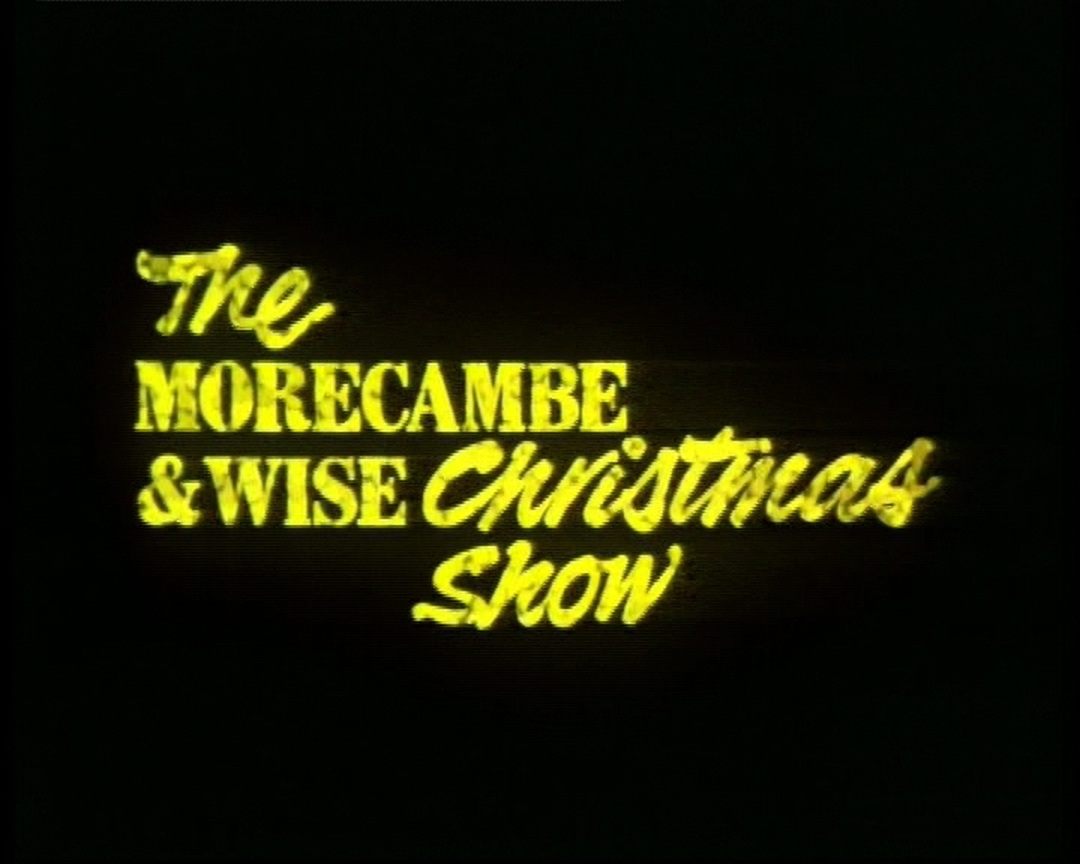
Some old favourites (the Porridge Christmas specials, The Box of Delights) are pretty much shoe-ins, as are the Morecambe & Wise Christmas shows. Indeed, I’ve kicked off this Xmas season with the first of their BBC Christmas shows from 1969 (as their links for the 1968 Christmas Night With The Stars no longer exist).

It’s noticeably not a very festive programme (apart from Eric & Ernie briefly messing about with a very large Christmas tree and Nina – together with a collection of cute children – singing Do You Know How Christmas Trees are Grown?). The reason becomes obvious when you do a little digging – Eric was taken ill (with flu) during the recording on the 21st of December, which meant that most of the show had to be assembled from material taped for their next series.
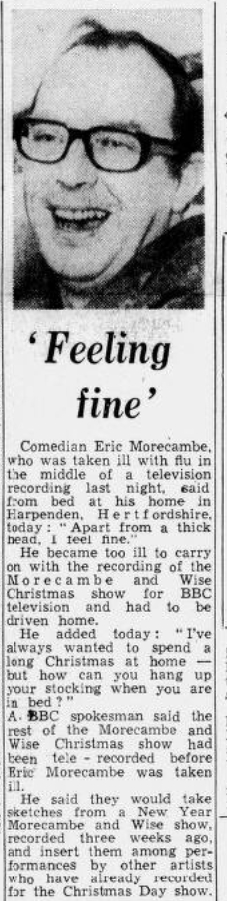
What I find interesting is that the recording was done so close to Christmas. In years to come, you’d often hear about festive programmes being taped in the summer, possibly Eric & Ernie preferred not to do this. Which, of course, was fine provided nothing went wrong.

The Radio Times listing, published before the aborted recording, tells us what we should have enjoyed – with Susan Hampshire and Frank Thornton due to appear (they were replaced in the broadcast programme by Fenella Fielding). There was no problem with the musical guests, so their spots were recorded as planned (although when you know about the cobbled together nature of the programme, the fact there’s no interaction between them and Eric and Ernie does become obvious).
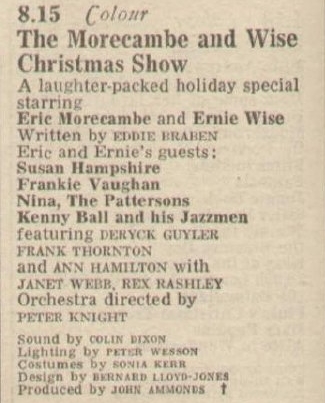
Also appearing, but not billed in the Radio Times, was Sacha Distel. His performance was dropped in from Show 3.3 (broadcast on the 11th of February 1970). Indeed, this edition was plundered for most of the Christmas programme material (such as the opening with a hip-looking Ernie and a be-wigged Diane Keen, Ernie in the bath, the window cleaner sketch and Fenella Fielding).

So it must have been strange for the first time viewer in February 1970, settling down to watch a “new” episode of Morecambe & Wise, to suddenly realise that most of it was very familiar ….
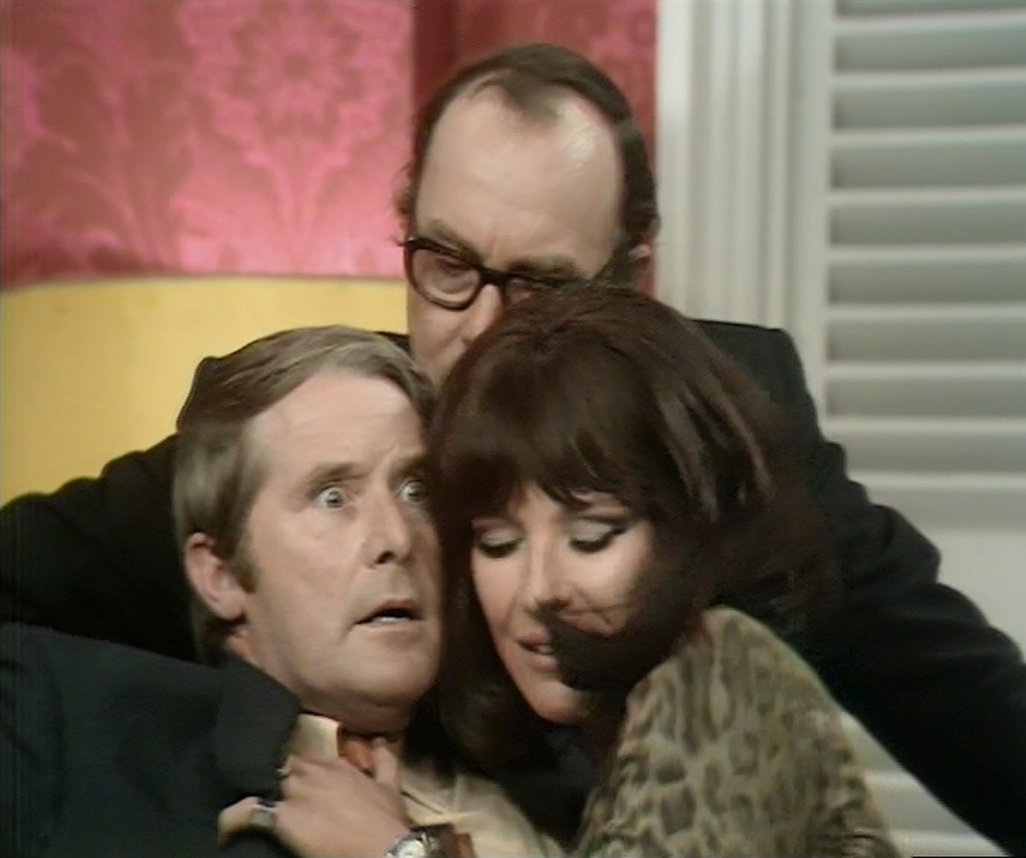
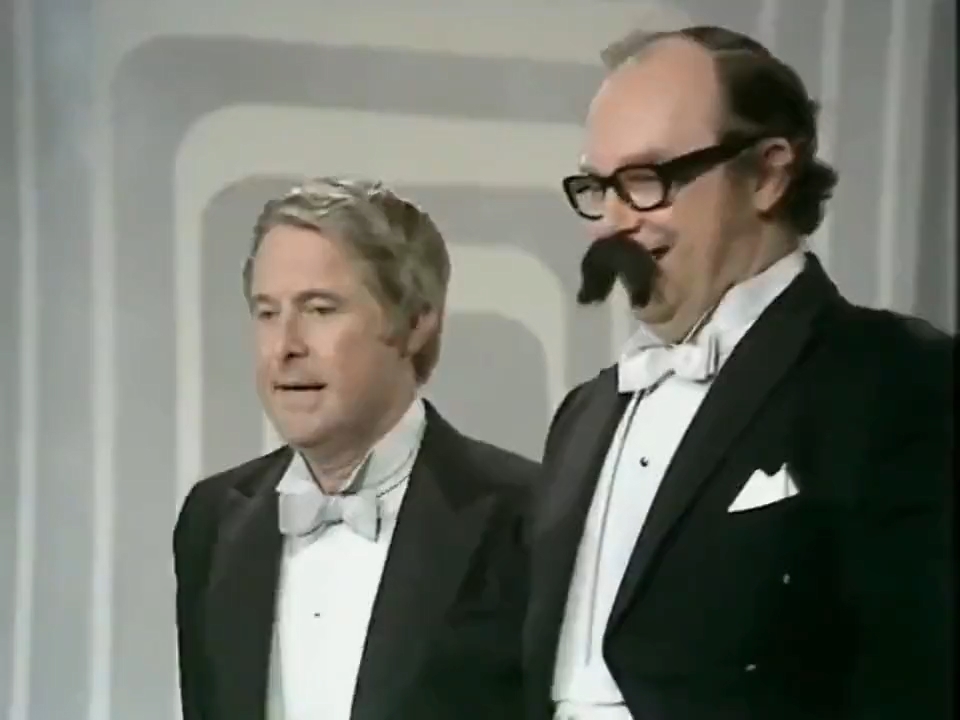
Morecambe & Wise – Scene/Omnibus documentaries (1973)

In early 1973 two documentaries about Morecambe & Wise hit the airwaves within a month of each other. First, the BBC Schools programme Scene aired a 22 minute programme on BBC2 (18th January) and then on BBC1 (18th February) the Omnibus strand broadcast Fools Rush In, which ran for 50 minutes.

Both documentaries were culled from fly on the wall footage shot the previous summer, when episode 7.7 of The Morecambe & Wise Show was being rehearsed and recorded. Show 7.7 was broadcast two days before the Omnibus doco, which meant that the lucky schoolchildren who caught the original Scene screening had an early peak at one of the most enduring M&W moments (“Arsenal!”)

Without knowing the original tx dates, it would be easy to assume that the Scene programme was simply a cut-down version of the adult documentary. But given that Ronald Smedley was the producer of both, it’s plain that Scene was the original one (presumably it was felt that the material gathered was too good to waste – hence it was reassembled and expanded for Omnibus).

Ronald Smedley spent his career working in children’s television. His highest profile job was as the producer of Grange Hill between 1985 and 1989, a period that saw the programme hit highs of controversy and public interest (Just Say No) and lows (Harriet the Donkey).

That apart, I find it fascinating that he worked on a series of impressive drama productions for BBC Schools, some of which were later repeated for an adult audience (including a modern language version of Julius Caesar, renamed Heil Caesar, and An Inspector Calls).

This serves as a reminder that schools programmes of this era could often be of a high quality. Indeed, the Scene documentary about Morecambe & Wise doesn’t talk down to its audience so it’s easy to imagine it receiving a peak time slot on its own merits (although with so much footage recorded it’s maybe understandable that the decision was made to produce a new effort from scratch).

Both have similar structures – although one notable difference is that Scene employs a narrator whilst Omnibus doesn’t. So while the Scene viewer is told that Eddie Braben lives and works in Liverpool, the Omnibus watcher is simply shown a picture of his house and either has to work out his geographical location or just not care.

Although Eric Morecambe can’t resist acting up for the cameras, both Eric and Ernie also talk seriously about Braben’s pivotal role in the series. At one point, Eric wistfully admits that he could never do what Braben did every week (enter his writing room on a Monday with a blank piece of paper and emerge with something). The pair concede that they may be able to improve on Braben’s work, but they’d be lost if they had to attempt to create it from scratch.

Both of these programmes would have made excellent special features on the Morecambe & Wise DVDs. Of course, neither were included ….

Sadly, the original range of releases lacked any extras at all (not even the Parkinson interview) and while the most recent DVD (containing previously lost episodes) did include a few bits and bobs, it was something of a half-hearted attempt. But at least there’s reasonable quality copies currently on YouTube. Links for both are below.

Bob Monkhouse – Behind the Laughter

bob

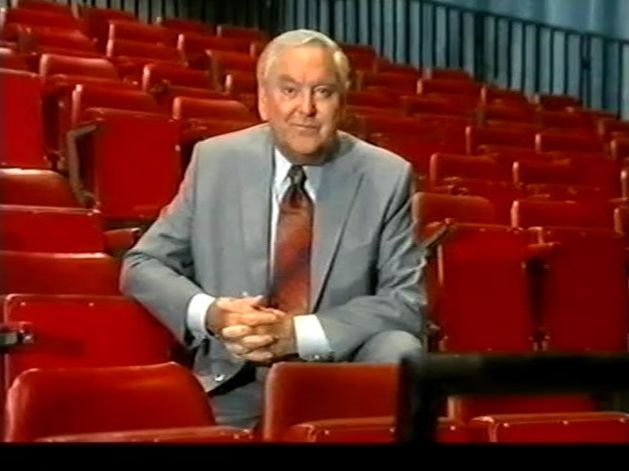
I’ve recently, after a long break, uploaded some archive bits and bobs to my YouTube channel, including this two part documentary from 2003.

Sadly part one cuts out early (presumably there was a late schedule change and the timer let me down) whilst uploading part two is proving to be rather problematic, since BBC Worldwide appear to have a block on even short clips of Tony Hancock’s BBC shows.  Quite why they should be so protective of him is a bit of a mystery.  I’ll have another go at uploading part two – I’ll probably just cut the whole Hancock section out to be on the safe side.

Although it wasn’t known at the time, Monkhouse was reaching the end of his life and this might explain the downbeat tone of the piece.  Heroes of Comedy this certainly isn’t ….

But whilst Monkhouse does dwell on the self destructive nature of some of Britain’s comedy greats, he also acknowledges their undoubted skills  – even if, as with Frankie Howerd, he also admits that he never understood his appeal.

Part one tackles Tommy Cooper, Benny Hill, Frankie Howerd and Ken Dodd.  There are no major revelations, since the frailties of Cooper, Hill and Howerd were already well known (had the recording not cut out I’d assume that the only living subject – Dodd – would have received an easier ride).  The most absorbing sections occur when Monkhouse relates his own personal experiences with his subjects.  Frankie Howerd, painted as an unpleasant sexual predator, certainly comes off worse here.

In part two, Monkhouse turns his attention to Morecambe & Wise, Peter Sellers and Tony Hancock.  The character flaws of Sellers and Hancock were also very familiar, although again the personal touch from Monkhouse is of interest (he claims that Tony Hancock and Morecambe & Wise were rather condescending towards him).

Monkhouse’s comedy partner, Denis Goodwin, who took his own life at an early age, is also discussed, which fits into the general tone that comedy can be bitterly self-destructive.

Not always an easy watch then, but Bob Monkhouse doesn’t seem to have an axe to grind and – unlike some talking heads who have passed judgement on these people in other documentaries – at least he knew and worked with them.