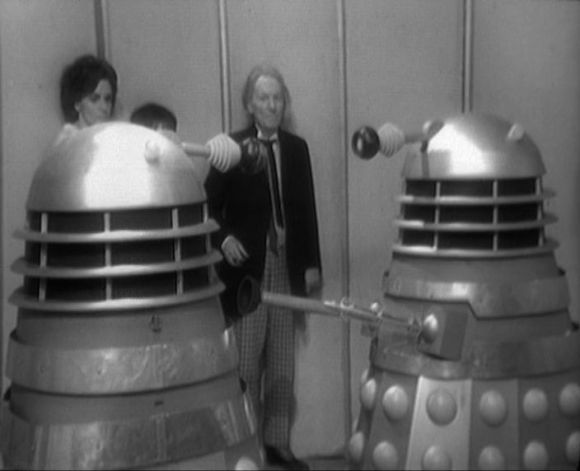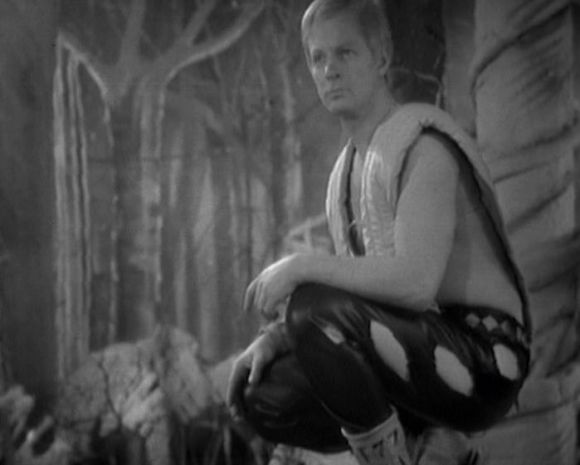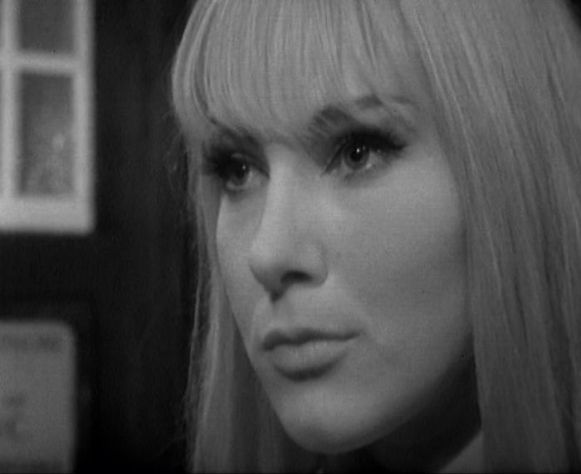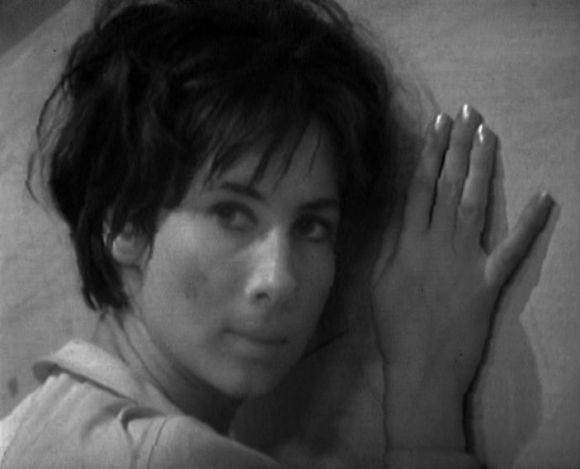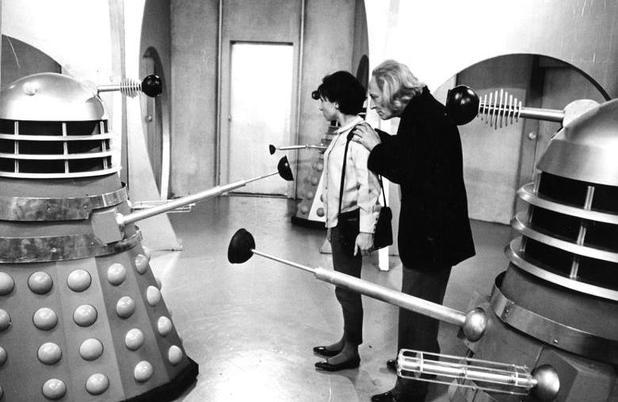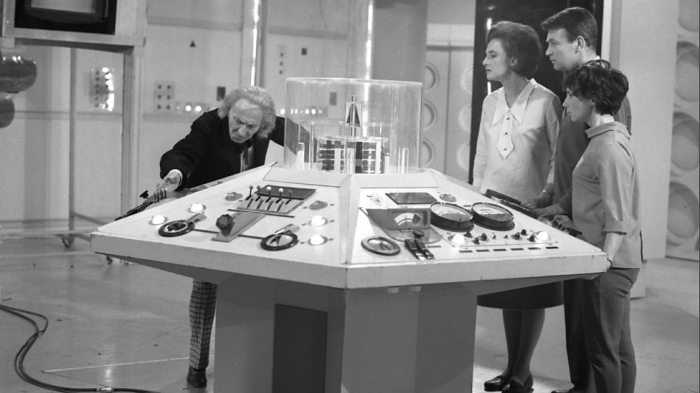
Doctor Who – The Daleks. Episode Six – The Ordeal

ordeal.jpg

An aptly named episode this.  The Ordeal is the point where the wheels start to come off as the story begins to splutter to a conclusion which will continue in the following episode.  The main problem with episode six is that the bulk is taken up with the efforts of Ian, Barbara and the Thals to break into the Dalek City – and this is very, very dull.

It can’t help but feel very padded out – had there not been seven episodes to fill then no doubt it wouldn’t have taken so long to find a way in.  Alas we have to follow them for almost the whole episode as they explore the very small cave sets very slowly.

There’s the odd moment of interest though.   There seems to be something of a romantic spark between Barbara and Ganatus which Ian is oblivious to.  Although Ganatus’ comment that they won’t use one of the customs of her planet – ladies first – is baffling (just how long have they had to discuss the Earth?)  When David Whitaker novelised the story he elected to make Barbara very antongistic and distant to Ian as they attempted to breach the city – it was a surprise to me that this wasn’t a part of the television original.  I mourn for the glass Dalek as well …..

Antodus continues to be the weak link in the group –

ANTODUS: Ganatus. I want to go back.
GANATUS: What for?
ANTODUS: I can’t go on any more.
GANATUS: You must.
ANTODUS: No. We’re going deeper, deeper all the time. We’ll be trapped in the mountain, I know we will. Please, Ganatus, let me go back.
GANATUS: You can’t.
ANTODUS: But you don’t really need me, not really. I could, well, I could go back and signal to the others that we’ve managed to get as far as we have.
GANATUS: Antodus, we go on together.
ANTODUS: Why? Why are you making me do all these things? Even if we do get through, we’ll never defeat the Daleks. Ganatus, we’re all going to be killed.
GANATUS: We can’t turn back now.
ANTODUS: The others can’t, but we could. Listen, they’re going to die anyway. We could just go back and tell the others that the Daleks killed them.

Alas, the next line is fluffed by Philip Bond (Ganatus) when he says that Antodus has to go back, rather than go on. But there’s nothing to do but press on, hope the audience hasn’t noticed and luckily an unconvincing rock-fall causes a distraction.

There’s not much Hartnell in this one, but he does have a lovely scene where he disables a control panel outside the city.  He spends so much time crowing about this (“a superior brain”) rather than taking Susan’s advice that they should leave, that the pair end up getting caught by a group of Daleks!

The first time, but by no means the last, that the plot has to come to a virtual halt to fill the episode count. Often there’s enough decent character interaction to make it more bearable, but The Ordeal (with its sub 1940’s adventure serial atmosphere) doesn’t have a great deal going for it.

Doctor Who – The Daleks. Episode Five – The Expedition

expedition.jpg

The Expedition opens with Ian ranged against the Doctor and Barbara.  The fluid link needs to be retrieved from the Dalek City, but Ian is reluctant to ask the Thals to help them (“What victory are you going to show these people when most of them have been killed? A fluid link? Is this what you’re going to hold up to them and say, ‘Thank you very much. This is what you fought and died for’?”).

The Doctor has no qualms in asking for the Thals’ help – he needs the fluid link back and they’re a ready made fighting-force, so it’s of no concern to him whether they all die in the attempt.  Barbara is equally keen to retrieve the fluid link and escape from Skaro – she’s convinced that the Daleks will find a way to travel out of the city and kill them all (“Oh, they’ll find a way. They’re clever enough. They’ll find us and kill us, you know that as well as I do.”)

There’s no evidence to support this though (is she simply playing on Ian’s fears for their safety?) and he remains resolute.  It’s a key part of the story and it’s a little surprising to find this debate in a Terry Nation story – his yarns tended to be drawn in more clearly defined shades of black white.  In the end Ian does persuade the Thals to help – by making them see that they will also be guaranteeing their own survival.  At one point Barbara complains that Ian is only playing with words and there’s more than a kernel of truth in this.

In the Dalek City there’s some interesting things going on, thanks to Christopher Barry’s direction.  A group of Daleks have elected to take the Thals anti-radiation drugs (inducing death).  We see one of the Daleks die from their POV, in a slightly trippy, drug-induced way.  The moans emanating from the Dalek do sound slightly comic, but it’s another reminder that in this story they’re not portrayed just as mindless killing machines.  These signs of vulnerability, together with their more conversational mode of speech, would later be dropped as the Daleks lose any spark of individuality (except maybe for David Whitaker’s two Troughton stories).

It does feel a little contrived that the Daleks only now realise the anti-radiation drugs don’t  work since they’ve become conditioned to radiation and need more of it to survive.  Therefore they intend to release another bomb which will also have the pleasing side effect of wiping out of Thals.  The war ended five hundred years ago, why have the Daleks only just twigged that radiation is essential to their survival?

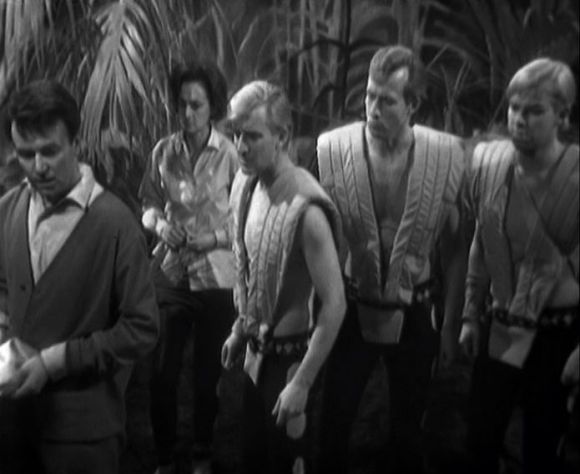
The Doctor elects to mount a two-pronged attack – one group to distract the Daleks on the city wall whilst the others attempt to break into the city from the rear – braving the jungle and the lake of mutations.  This is the first of Terry Nation’s Doctor Who jungles and despite it’s small size is effectively realised.  Partly this is due to Brian Hodgson’s sound design which creates a real sense of unease (Ian beating off a clip of stock footage is less impressive).

The monster that rises out of the swamp is another decent moment, although it does slightly look like a rubber ring with two glowing eyes.  As previously mentioned, on the lower resolution televisions of the time this no doubt would have looked more convincing.  Although I’m quite convinced now – maybe I’m easily pleased?

Ian and Barbara are accompanied by five Thals – although their party is quickly reduced by one when the hapless Elyon is sucked into the lake at the end of the episode (via another decent inlay shot).  Antodus complains to his brother Ganatus that they’re all doomed, doomed (a theme which will continue into the next episode).

Doctor Who – The Daleks. Episode Four – The Ambush

ambush

The range of camera effects at the disposal of the Doctor Who production team in 1963/64 was incredibly limited, but The Ambush has some very effective shots (which were also quite easy to achieve).  Inlay effects are used to show the Dalek lift moving up and down and also a section of wall scorched by a Dalek gun.  Simple stuff, compared to what can be achieved today, but it works very well.

The Doctor’s capacity for self-preservation is still very much to the fore –

DOCTOR: Lets get back to the ship.
SUSAN: No, no, I must warn the Thals.
DOCTOR: Susan.
SUSAN: We can’t let them walk into a trap.
DOCTOR: The Thals are no concern of ours. We cannot jeopardise our lives getting involved in an affair which is none of our business.
BARBARA: Of course it’s our business. The Thals gave us the anti-radiation drug. Without that, we’d be dead!

The ambush scene is a little odd. Before the Thals arrive there’s a creepy scene showing the Daleks slowly backing into the alcoves. If they had stayed there and killed the Thals from the shadows this would have made sense. But instead, as Temmosus makes his impassioned speech about working together, the Daleks move out into the open. Since the Thals would have expected to meet the Daleks, why would they hide themselves?  It makes the moment a dramatic one, but that’s about all.

Also, why does Ian just stand there waiting as the Daleks move into position? He seems certain that the Daleks mean the Thals harm, so it’s baffling that he doesn’t speak until after the Daleks have opened fire.

This is very much Ian’s episode and it goes without saying that William Russell is very solid. And as the Doctor spends his time researching the history of Skaro (seemingly caring little for the modern-day plight of the Thals) it falls to Ian to try and make them understand that they may have to fight to secure their future.

ALYDON: If only I knew why the Daleks hated us. If I knew that, I, I could alter our approach to them, perhaps.
IAN: Your leader, Temmosus.
ALYDON: Yes?
IAN: Well, he appealed very sensibly to them. Any reasonable human beings would have responded to him. The Daleks didn’t. They obviously think and act and feel in an entirely different way. They just aren’t human.
GANATUS: Yes, but why destroy without any apparent thought or reason? That’s what I don’t understand.
IAN: Oh, there’s a reason. Explanation might be better. It’s stupid and ridiculous, but it’s the only one that fits.
ALYDON: What?
IAN: A dislike for the unlike.
ALYDON: I don’t follow you.
IAN: They’re afraid of you because you’re different from them. So whatever you do, it doesn’t matter.
DYONI: What would you have us do? Fight against them?
IAN: I didn’t say that. But you must teach them to respect you. Show them some strength.
DYONI: But you really believe we ought to fight.
IAN: Yes, I think it may have to come to that.
DYONI: You understand as little about us as the Daleks do!

Barbara later comments that “I don’t understand them. They’re not cowards, they don’t seem to be afraid. Can pacifism become a human instinct?” But the Doctor’s not concerned about the fate of the Daleks and the Thals and is keen to leave.  Ian, Barbara and Susan may feel more invested in the Thals’ fate, but they also agree with the Doctor that it’s time to move on.

Indeed, at the end of this fourth episode it does feel that the story has come to a conclusion. We didn’t witness the fate of the Tribe of Gum, so would there have been an expectation of the audience back in 1964 that this story would have been any different?

The Doctor’s missing fluid-link is the only reason that he decides to stay – ensuring that he’s forced to help the Thals (although as we’ll see, he’s ruthless in using them to help himself).

Doctor Who – The Daleks. Episode Three – The Escape

escape-01

The Escape opens with Susan meeting Alydon (John Lee).  Born in Tasmania, Australia, Lee didn’t have a trace of an Australian accent and instead spoke in the RP tones that were so prevalent during this era of British television.  Every line he intones is spoken with deadly seriousness (and note how, in his initial scene with Susan, he stays remarkably still).  It’s the sort of performance that can so easily seem wooden and unnatural, but Lee manages, just about, to give Alydon a spark of life.

Much more naturalistic is Philip Bond as Ganatus.  Bond (father of Samantha) has more to play with in the script, since Ganatus has a mocking sense of humour as well as a questioning nature.  If their leader Temmosus (Alan Wheatley) is inclined to think the best then Ganatus is a more reflective character.

Temmosus might well have had cannon fodder written on his forehead.  He’s no fool, but it seems clear that the Daleks have no intention of helping the Thals – and that he’s ill-suited to lead them in the struggle that will follow.

TEMMOSUS: I believe the Daleks hold the key to our future. Whatever that future may be, we must accept it gracefully and without regret.
ALYDON: I wish I could be as objective as you. We’ve lived for so long a time.
TEMMOSUS: Perhaps we have lived too long. I’ve never struggled against the inevitable. It’s a vain occupation. But I should always advise you to examine very closely what you think to be inevitable. It’s surprising how often apparent defeat can be turned to victory.

Ganatus’ brother Antodus in mentioned, but we don’t see him in this episode (although he’ll play a key part later on in the story). The suggestion that he’s a flawed character is established when Dyoni (Virginia Wetherell) wonders if he’s still afraid of the dark. A small point, but it helps to sow a seed of doubt about his ability to deal with stressful situations.

escape-02

Terry Nation never really excelled when writing for female characters (except, maybe, for Servalan in Blakes 7 – and that was probably only because she was originally written as a man) and Dyoni is no exception.  Wetherell spends most of her time in this episode pouting and reacting jealously to any mention of Susan.  Dyoni’s comment that Alydon should have given the drugs to a man, not Susan, are slightly wince-inducing.  As we’ll see, Dyoni’s only value to the plot seems to be her relationship to Alydon (she’s the lever that Ian later uses to persuade the Thals to fight the Daleks).  Apart from this, she’s very much a cipher.

And what of our four heroes?  They remain prisoners, but they work together to devise a plan to escape.  These scenes are particularly interesting because all four characters contribute to the debate.  In years to come it’ll mainly be the Doctor who has the solution – with everybody else relegated to sitting on the sidelines.  But the Doctor doesn’t have all the answers here, and it’s only after they pool their resources that a workable plan is produced.

DOCTOR: Let’s concentrate on the Daleks. Have you noticed, for example, that when they move about there’s a sort of acrid smell?
SUSAN: Yes, yes, I’ve noticed that.
BARBARA: I know. A fairground.
IAN: That’s it. Dodgems.
DOCTOR: It’s electricity. I think they’re powered that way.
IAN: Yes. But just a minute. They have no pick-up or anything. And only the base of the machine touches the floor. How do they complete the circuit?
SUSAN: Batteries?
DOCTOR: No, no. I believe the Daleks have discovered a way to exploit static electricity. Very ingenious, if I’m right.
BARBARA: What, drawing power from the floor?
DOCTOR: Precisely. If I’m right, of course.

This is a good episode for Carole Ann Ford. She’s typically wide-eyed and appealing in her initial meeting with Alydon and later has an excellent scene with the Daleks when they dictate a letter promising to help the Thals. It’s plain that they don’t intend to keep their promise though, reinforced by the push one of them gives to Susan with their sucker arm once the letter is written. It’s just a throwaway moment (possibly worked out in rehearsal) but it helps to give the Daleks more of a human touch.

The scene where the Doctor and the others disable a Dalek and remove the creature (in fact, nothing more than a joke-shop gorilla hand) is a memorable one and it leads into a strong-cliffhanger as Ian (inside the Dalek) leads the others out into the corridors as they attempt to make their escape.

escape-03.jpg

Doctor Who – The Daleks. Episode Two – The Survivors

survivors.jpg

Once the Doctor eventually realises that the planet is contaminated with a very high level of radioactive fallout it’s chilling to see how keen he is to abandon Barbara to her fate –

IAN: We’re not leaving until we’ve found Barbara.
DOCTOR: Very well. You may stay and search for her if you wish, but Susan and I are going back to the ship. Now, come along, child.
IAN: All right, carry on, fine. How far do you think you’ll get without this? (he shows him the fluid link)
DOCTOR: Give that to me.
IAN: Not until we’ve found Barbara.
DOCTOR: Give it to me, I say.
IAN: No! It’s time you faced up to your responsibilities. You got us here. Now I’m going to make sure that you get us back.

The point’s a moot one anyway as they shortly all end up prisoners of the Daleks. The iconic nature of this episode is pretty much self evident – the first meeting between the Doctor and the Daleks – although it’s understandable that the mythos would only be added in later years. Nobody really expected in 1963 that the Daleks would ever be anything more than a one-shot monster (especially since the series was struggling for survival) so they’re presented here not as a universal menace, but simply as a group of frightened, scarred survivors.

The Daleks are all that remains of a civilisation who fought a deadly war with the Thals.  So Galactic conquest isn’t their aim – that would be difficult anyway, since they can’t move out of their city – they just want to survive. But their survival doesn’t include the Thals and this is how the story will develop.

As in An Unearthly Child, the four time-travellers are prisoners.  Thanks to radiation sickness they’re in a pretty wretched way and Ian (after a tussle with the Daleks) is unable to walk.  A mysterious package of drugs left outside the TARDIS by an unknown hand might be their salvation and suspiciously the Daleks are keen for one of them to bring them back to the city.

But who will get it?  Ian is keen to go – there’s an unspoken sense that he should, since he’s a man (why send a woman or a child out, when he’s there?) – but since he can hardly walk it seems impossible.  Both the Doctor and Barbara have been badly hit by radiation, so that leaves Susan.  She doesn’t want to face the terrors of the forest (we’ve seen how she was affected by a brief encounter with a stranger in the previous episode) but it’s clear that their survival depends on her.

Christopher Barry certainly makes the most of his limited resources and the scenes of Susan’s return to the TARDIS are memorable – thanks to close-ups of her frightened face and the flashes of lightening in the forest.  And the occasional flash of light only serves to make the forest more, not less, intimidating.

So far the story has had an interesting structure – in episode one we concentrated on the four regulars, episode two has introduced the Daleks (with mention of the disgustingly mutated Thals) and episode three will see the arrival of the Thals proper.  With seven episodes to play with, it makes sense to hold back certain elements for a while – but once we get to The Escape there’s the sense that the story can really begin.

Doctor Who – The Daleks. Episode One – The Dead Planet

dead.jpg

The Daleks was the second William Hartnell story I watched, a mere eight years after the Five Faces screening of An Unearthly Child.  The year was 1989 and BBC Video had released a double-pack of The Daleks on VHS.  With every existing episode now accessible at the touch of a button it’s difficult to describe just how exciting it was to own this story – something I could watch again and again (and those early Doctor Who VHS’s did get many, many plays!)

As part of the generation who became fans in the period before the programme was widely available, I’d grown up with a distinct picture of many stories via the Target novels and articles in DWM.  The Daleks had also featured in Jeremy Bentham’s lavish 1986 book Doctor Who – The Early Years.  I’d pore over the numerous photographs and Ray Cusick’s designs for hours, wondering whether I’d ever get the chance to see these episodes.

David Whitaker’s novelisation is a must read and equally recommended is the talking book read by William Russell.  Although it compresses the seven episodes down to about a hundred pages (the first few chapters are basically an alternative version of An Unearthly Child – lots of fog, Barnes Common, lorries, everlasting matches, etc) nothing vital from the teleplay is omitted and for me the book was instrumental in painting a vivid picture of the story.

But before that, my first exposure to this tale was via the Peter Cushing movie Doctor Who and the Daleks.  BBC Genome confirms my memory that it received an airing on my birthday (the 10th of June 1978) and although the film strips away much of the subtlety of the orignal, the vivid comic-strip nature of the film was very much what this seven-year old wanted.

Therefore, watching The Daleks for the first time I was approaching it with a good deal of baggage – the same way I initially viewed every story from the first three Doctors.  I knew how the stories should look (the images were crystal clear from the Target books) and there was sometimes disappointment when things didn’t match up.  No doubt I’ll touch on this again, probably when we get to Day of the Daleks, but over the years I’ve come to love the series for what it was and not what I’d expected it to be.

One thing that’s always slightly irked me about The Dead Planet is the way the Doctor never even considers that the planet might be radioactive.  There are not-so subtle hints (“The heat must have been indescribable. Look at this soil here. Look at it. It’s all turned to sand and ashes.”)  I do love the way that the TARDIS radiation meter only flashes that it’s dangerous once everybody leaves the console room (and presumably stops flashing as soon as they re-enter!).  Is this an early example of the TARDIS’ sentience and had it therefore decided to kill them all?!

Ian and Barbara are still very unwilling adventurers –

BARBARA: Ian, where are we?
IAN: I don’t know.
BARBARA: Well why doesn’t he take us back?
IAN: I’m not sure that he can.
BARBARA: What, ever?
IAN: I hate it as much as you. I’m just as afraid. But what can we do?

This is a far cry from 21st Century Who, especially the RTD incarnation, where the TARDIS at times seemed to be similar to Starfleet – only the brightest and best are allowed.  Contrast this to the original series – the likes of Ian, Barbara and Tegan were abducted against their will, Vicki, Victoria and Nyssa were orphans taken in by the Doctor since they had nowhere else to go, Leela and Adric were stowaways, etc.

At this point in the series there’s a compelling sense of dramatic tension as Ian and Barbara are positioned against the Doctor.  The Doctor is now firmly established as an explorer with an unboundless sense of scientific curiosity.  He wants to explore, but Ian is unhappy (if anything happens to the Doctor, who will operate the ship?)   This is of no concern to the Doctor, he has little interest in Ian and Barbara’s opinions and is determined to get his own way.  This plot-line could only really happen right at the start of the series, very soon we’ll see that everybody will be keen to explore any new location and no thought is ever given to how dangerous it might be.

Terry Nation.  The series owes him a great debt (without this serial the programme might very well have come to an end after just thirteen episodes) although there’s no doubt that he collected this debt – these seven scripts, written in a great rush, were instrumental in making him a very rich man.  Often mocked by fandom (sometimes affectionately, sometimes not so) for his reliance on rehashing his own scripts, The Daleks is where it all began.  If you want to see it again then there’s always Planet of the Daleks in 1973 (was this a homage by Nation, paying tribute to the series’ 10th anniversary, or simply another lazy plundering of past glories?  With Nation, it’s not always easy to tell).

The cliches start here though, especially when the four decide to split up to explore the strange city.  The division is distinctly odd though – Barbara goes one way and the other three head off in the opposite direction.  This doesn’t seem plausible at all – there’s no way that Ian would allow Barbara to go off by herself (but it had to happen, so we could have that cliffhanger).

Mention must be made of Raymond Cusick’s design work and Tristram Cary’s music.  Cusick, along with Barry Newbery, would define the early years of Doctor Who and it’s staggering to see what they achieved with so little money.  In this episode we have the petrified forest, impressive model-shots of the city and our first brief glimpse at the city itself.  Yes, the painted backdrops do look a little obvious (although they would have been less so on the lower resolution televisions in 1963) but it’s the small details that impress – such as the cameras that focus in on the increasingly distraught Barbara.

Cary’s series of cues were impressive enough to be used in three more stories (although it’s also possible to argue that this was a cost-saving measure).  But I’d like to think they were used again because they were so good – they certainly help to create a sense of unease and tension which climaxes as Barbara is menaced by a threatening sink plunger.
Coronation Street – 30th December 1960

corrie 061230.jpg

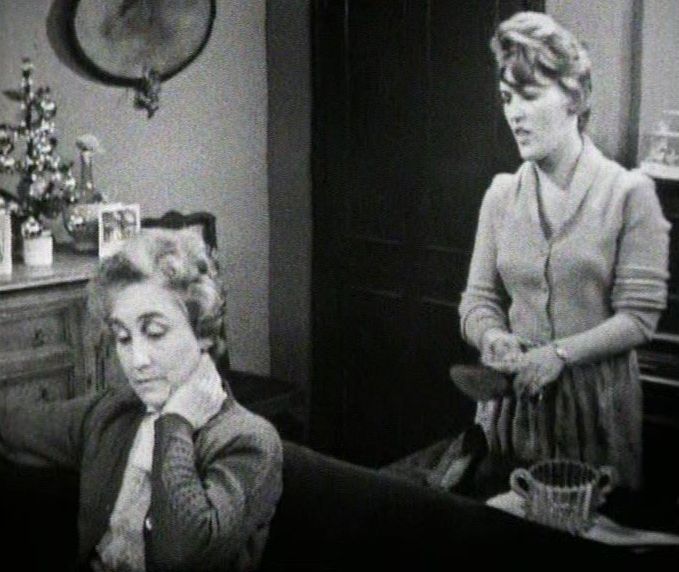
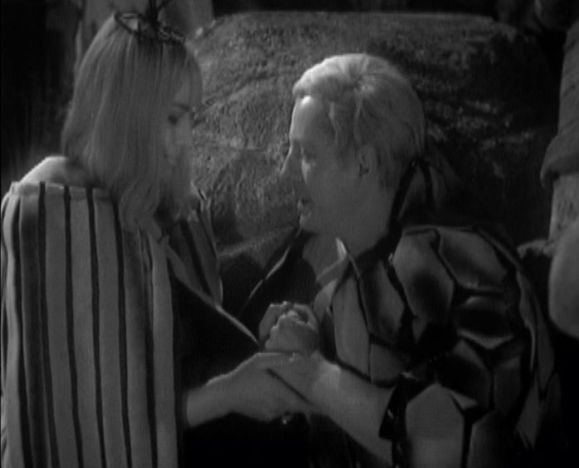
May is still cutting a very forlorn figure. Constantly complaining of headaches, she receives no sympathy from her daughter, Christine, who continues to believe that she’s putting it on.  As we’ve seen before, once May is alone a rudimentary camera trick (zooming in and out of focus) illustrates her current low status.  The grams operator is on their game today as they also help to indicate May’s current distressed frame of mind.  The sound of clocks slowly increases in volume, eventually becoming unbearable, but as the picture cuts to the next scene at the corner shop the sound of the clocks abruptly cuts off to be replaced by the tinkle of the corner shop bell.  A nice cut.

Florrie is bemoaning her appearance in the paper to Harry (she’s been fined one pound for selling goods out of time) but that’s not the main reason for this scene.  They hear banging from next door (clearly the walls are paper-thin), so they – along with Elsie – go along to investigate.  Given the abundance of strong female characters in the series it’s interesting that Florrie and Elsie hang back when they discover May’s body (Harry is the one who checks for a pulse and gently shakes his head to indicate that they’re too late).

So EastEnders wasn’t the first soap to pile the misery on at Christmas.  This is bleak stuff, especially Christine’s tearful reaction.  Luckily for her, the ever-practical Esther is on hand to help her through – but there’s nothing she can do to ease the guilt Christine feels.  It’s a heart-breaking moment.

If the grams operator was on form today, then some of the other cuing was a little off.  The most notable example occurs when a huddle of residents are awaiting Christine’s arrival back from the hospital.  They react to Christine’s reappearance, but sadly they’re a few seconds early (when the camera cuts to the outside of the corner shop, Christine’s yet to walk around the corner).   You win some, you lose some.

Dennis’ transformation into a less threatening and more gormless character starts here.  Sans trousers, he’s stomping about the house looking for his tie.  He won’t say at first why he’s smartening himself up, but even given his non-committal nature Elsie can’t help but be a little indulgent towards him ( by shining his shoes).  He’s got a nice line in sarcastic retorts today, telling Linda that he’s applying for a job in “a place where they make crutches for lame ducks”.  That 1960 was very much another era is demonstrated when Elsie turns her nose up at his aftershave, calling him a big Jessie (“if you go out reeking like that, people’ll be saying things about you”).

Ena looks to have met her match with Dr Tinsley (Cyril Luckham).  This is another of those wonderful Ena scenes – which kicks off with her unable to speak, due to the fact that a thermometer’s been wedged in her mouth!  She’s convinced she’s come home to die, but Dr Tinsley has news for her – there’s nothing life-threatening about her current condition, its simply old age (or as he more brutally puts it, senile decay).  Ena agrees that the best years of her life are behind her (reminiscing about how she was a beauty in her youth – with long hair and a remarkably thin waist) but Dr Tinsley cuts these maudlin thoughts short by curtly telling her to “shut up”!

A pity that Luckham only appeared in two episodes as it would have been lovely for him to have crossed swords with Ena a few more times.  I like the way that Ena reacts to his sharp tongue – with a faint smile, she clearly respects the fact that he’s not cowed by her.  This suggests that Ena’s prepared to steamroller weaker opposition but respects anybody who will take her on.

Ena and Martha continue their face off.  Martha is in possession of Ena’s own personal feather duster – uh oh!  Ena then tells her former friend to sling her hook.  “It’s time for you to abdicate, I’m back!”

Dennis returns from his new job (at a nightclub) and drops a bombshell.  He’s seen his estranged father in the club ….

Coronation Street – 28th December 1960

corrie 601228

Christine and her mother, May, continue to have a fractious relationship.  Today, the boiling point occurs when they disagree over the dress Christine plans to wear to a swanky dinner dance.  Prior to May’s reappearance in the Street, Christine played the dutiful and loving daughter – keen to protect her mother’s reputation by squaring up to the likes of Ena Sharples.

But now May’s back home, it appears that just her presence is causing Christine grief.  May’s constant complaints (her head hurts, she feels faint) are casually dismissed by her daughter as nothing more than attention seeking, but it seems plain that this isn’t the case.  Some four minutes in, the camerawork supports this by suddenly switching in and out of focus as May sits alone in the living room.

May’s looking after Lucille, who proves to be a bit of a handful.  It’s not entirely her fault though, as even innocent questions (such as wondering why May had to go to hospital) are loaded ones.  Cue another moment when May looks pained.  But when May pops out to the shops and Lucille decides to try on Christine’s dinner dance dress, you get the feeling that everybody’s going to be pained ….

I’m also not sure how the frock can not only fit the very diminutive Lucille but also the much larger Christine.

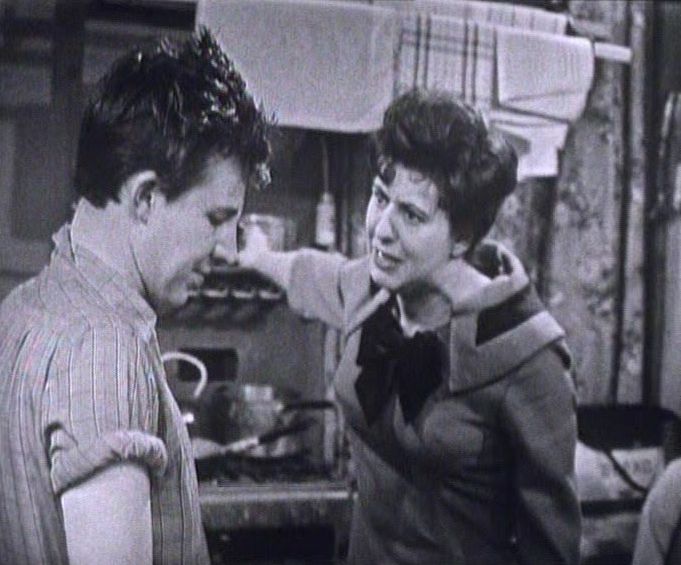
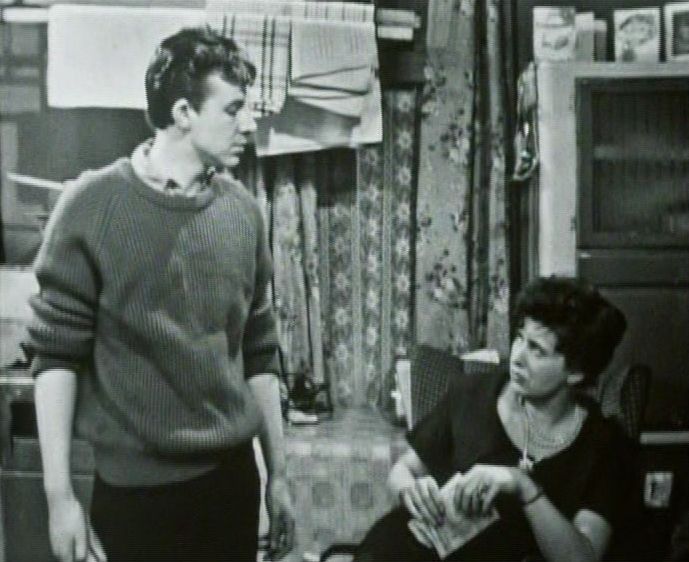
Dennis is accused by the police of breaking and entering.  Since he doesn’t have an alibi, things look bleak for him with Elsie thinking the worst.  This is a re-run of the plotline from the first episode, which also saw Dennis under a cloud (although the crime there – pinching money from his mother’s purse – was rather more trivial).  After yet another confrontation between mother and son, the peacemaker Linda knows what to do (“don’t worry Mam. You sit down over there and I’ll make you a nice cup of tea”).

But as with the purse incident, things work out in the end as Harry witnessed Dennis’ success at the dog track and is therefore able to provide him with an alibi. Yet again, bad-boy Dennis isn’t quite as bad as he first appeared.

Ena’s still in hospital, stuffing her face with a box of chocolates and complaining about her fellow patients.  She seems in rude health, but that doesn’t stop her from believing that she’s not long for this world.  Ena quizzes Vera about what she knows, but the perplexed Vera naturally can’t tell her anything, as she doesn’t know anything.  “How long have they given me?” mutters Ena darkly.

Ena and Martha then have a cracking stand-off, with Ena still fuming over Martha’s underhanded duplicity.  “Ooh, you’re bad minded, that’s what you are” retorts Martha.  Ena then responds that Martha isn’t a woman, she’s a snake!  The scene concludes with another zoom into Ena’s face as she stares down the camera lens.  Brrrr! Frightening stuff.

There’s more direct-to-camera shenanigans, as a group of carol singers (having successfully taken some money off the initially intimidating but ultimately soft Elsie) turn to face the audience to include them in a brief post-Christmas serenade.

Later, Martha confides in Minnie and tells her that she’s considering taking legal action against Ena.  Incidentally, it’s a little strange that Minnie hasn’t been in to visit Ena (unless it’s happened off-screen).  It’s clear at present that Ena and Martha are the dominant characters in this part of the series, with Minnie currently only called upon to comment on what the others are doing.  This scene is chiefly memorable for the ear-wigging extra in the background who pulls some remarkable faces.

Ena’s had enough of the hospital and walks out. Her absence is discovered by one of the nurses who delivers the following memorable piece of dialogue.  “Sister, that Mrs Sharples. You know, the one who calls me ‘speccy four eyes’.  She’s gone”.

Coronation Street – 23rd December 1960

corrie 601223

The episode begins with Elsie and Dennis rowing (which so far seems to be their default setting).  Elsie’s suspicious about the fact he returned home with twenty five pounds but eventually she believes his story about winning it on a dog race.  It’s another good scene between the pair of them although Philip Lowrie does suffer a major dry some two minutes in (luckily Pat Phoenix covers for him and he soon gets back on script).

Martha asks Mr Swindley if he has any news about Ena.  He tells her that she doing quite well at the local hospital, which reassures her and she resolves to make a visit shortly.  There’s a lovely little character moment when Martha tells him that she would have telephoned herself, but she’s “never learnt the phone”.  It’s just about credible in 1960 that some older people might still have a lingering suspicion about telephones.

Mr Swindley bemoans Ena’s absence and wonders if Martha might like to lend a hand in the hall.  He tempts her with the prospect of money, which seems a little odd (previously we’d learnt that Ena doesn’t receive a wage – only lodgings and coal).  Martha is interested, but I wonder what Ena will have to say about it?

This is the first time we see Ena with a hairnet (from this point on it’ll be her headwear of choice).  So what sort of patient do we think she is?  Patient and pliant or endlessly complaining and argumentative?  The latter of course.  Nobody’s safe from her acid tongue – as her daughter Vera (Ruth Holden) finds out.

It’s true that Vera’s something of a drippy sort, but you have to imagine that a childhood spent with Ena as a mother would have sapped the will of even the strongest of types.  Ena’s not pleased with the gift she’s brought (a pot plant) and is even less impressed when Vera decides to nip off almost as soon as she’s arrived.  Vera tells her that she’s desperate for a cigarette, something which cuts no ice with her mother.  “If god had intended women to smoke he’d have put chimneys in their heads”!

There’s a score of great lines from Ena.  Here she waxes lyrical about her doctors and her food.  “You know I had three doctors around me this afternoon and one of them was black as the chimney bag. Oh he was clean, you could tell. His face shone like black leather. Oh the food’s terrible, They’re always trying to make me eat boiled fruit. I said to that nurse, I said ‘it’s all right for folks as like it, but I like something that has looked over a wall'”.

Then Martha turns up and Ena learns that her friend has been helping out in the mission.  Or as Ena sees it, attempting to snatch her job whilst she lies close to death in hospital.  Ena bellows “I know what you’re after, you’re after me vestry” before the camera closes in on her for an extreme close-up.  After this frightening moment, there’s a moment of peace as a group of young choir boys entertain the sick with a carol or two.

The Barlows appear for the first time for a few episodes, but they don’t drive any plot threads themselves in this one – instead they get caught up in the hunt for the missing Lucille.  The absence of Lucille has made Esther frantic with worry, but although she tells Ida that she’s primarily concerned about the girl, Ida makes a face which suggests she believes Esther has set her sights on snaring Harry.  But it looks like Esther has competition, as Concepta Riley (Doreen Keogh) has just returned from Ireland and also seems interested in Mr Hewitt.  Clearly Harry has hidden depths ….

Don’t worry about Lucille, she turns up safe and sound and bearing gifts.  It’s quite noticeable that Esther seemed much more worried about her than Harry.  I’ve still not warmed to him yet – goodness knows what Esther and Concepta see in him.

Concepta is welcomed back by Annie and Jack, who are more than happy to let her take up her old position behind the bar.  The first of several rather jarring moments when characters look straight into the camera occurs when Jack and Annie see Concepta for the first time.  This is slightly unsettling, but as discussed above, it’s nothing to the sight of Ena on the warpath (that’s that stuff of nightmares!)

Ray Mort, a very familiar face, makes the first of a handful of appearances as the chirpy insurance salesman Ron Bailey.  And for trivia fans, this is the first episode to mention Rosamund Street.

Another well-known actor, Anthony Booth, also appears for the first time as Christine’s boyfriend Malcolm Wilkinson.  Unlike Mort, Booth isn’t as recognisable at first – with his dark hair he doesn’t look like the “randy scouse git” he’d later be best remembered for.  Malcolm only appears in three episodes, but Booth would later pop up decades later as a different character (he also married Pat Phoenix shortly before her death in 1986).

Although peace on earth seems to be the order of the day at the Tanners, this fragile entente cordiale is broken when a policeman comes looking for Dennis …..