Blood Money (1981)

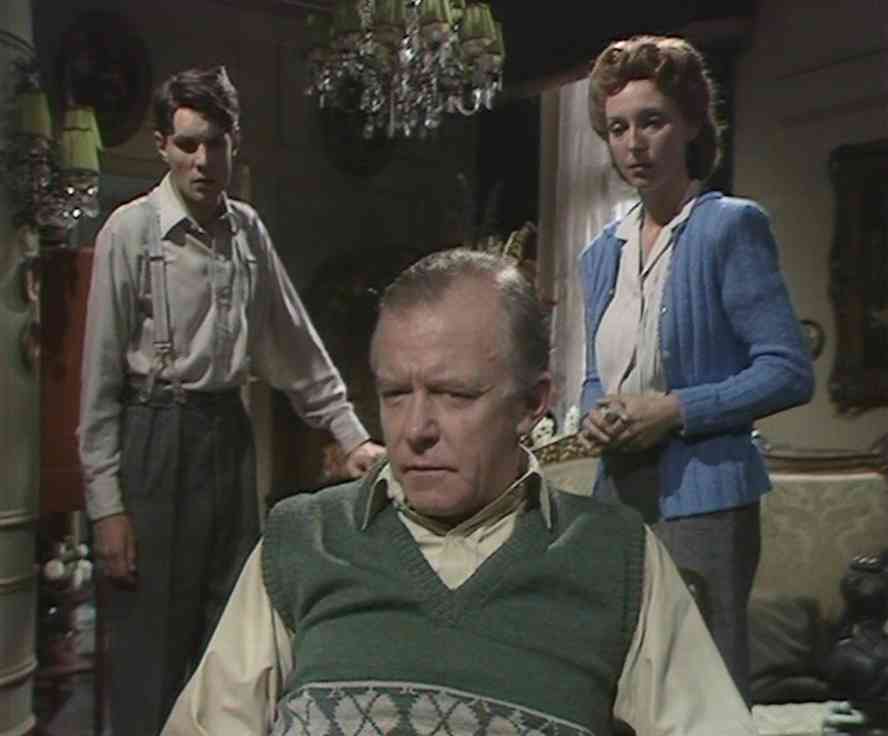
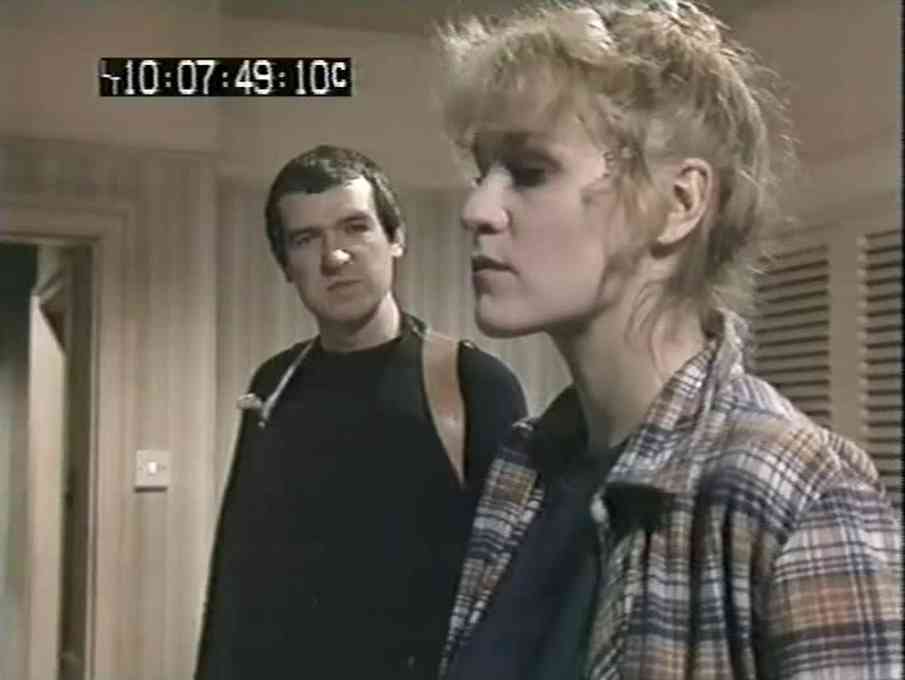
Blood Money was a six-part serial broadcast in late 1981, written by Arden Winch, directed by Michael E. Briant and produced by Gerard Glaister.

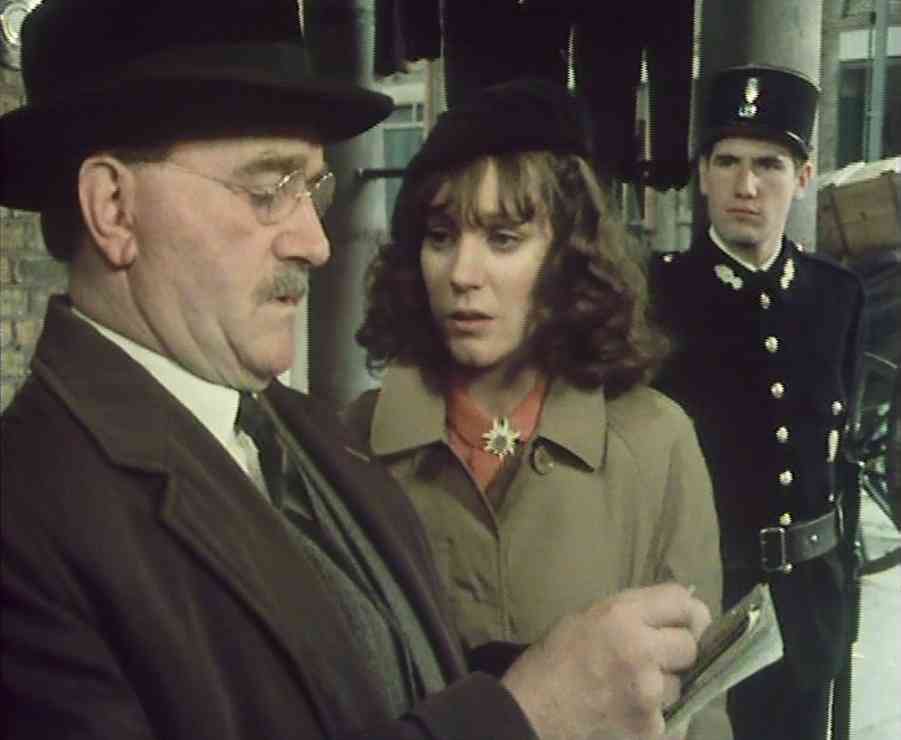
As you’d expect with a Glaister series, most the regulars had either worked with him in the past or would do so in the future.  Blood Money featured a trio of ex-Secret Army actors (Bernard Hepton, Juliet Hammond-Hill, Stephen Yardley) as well as Michael Denison (Howards’ Way). Even a fair number of the supporting actors had strong Glaister connections (such as Dean Harris – The Fourth Arm, Cold Warrior, Howards’ Way).

With Glaister having such a say in casting, presumably Michael E. Briant had to content himself with organising the minor players. Such as Julia Vidler, who makes a fleeting appearance as a newsreader (Briant had previously used her in Angels and Blakes’ 7).

Blood Money is a good example of a programme type that would gradually fade from view as the 1980’s progressed – the 30 minute serial. It had been a staple of British television for decades (notably the BBC Classic Serial strand and Doctor Who) but by the end of the eighties, 50 minutes would be most popular format for drama slots. The success of Inspector Morse in 1987 spawned a series of imitators who also adopted its 100 minute running time, but few seemed interested in working in half hours.

That’s a slight shame, as although it’s easy to argue that it can be a little constricting, it does force the writer to constantly keep the pace up (viewed now, some of those Inspector Morses, especially the later ones, proceed at a snail’s pace).

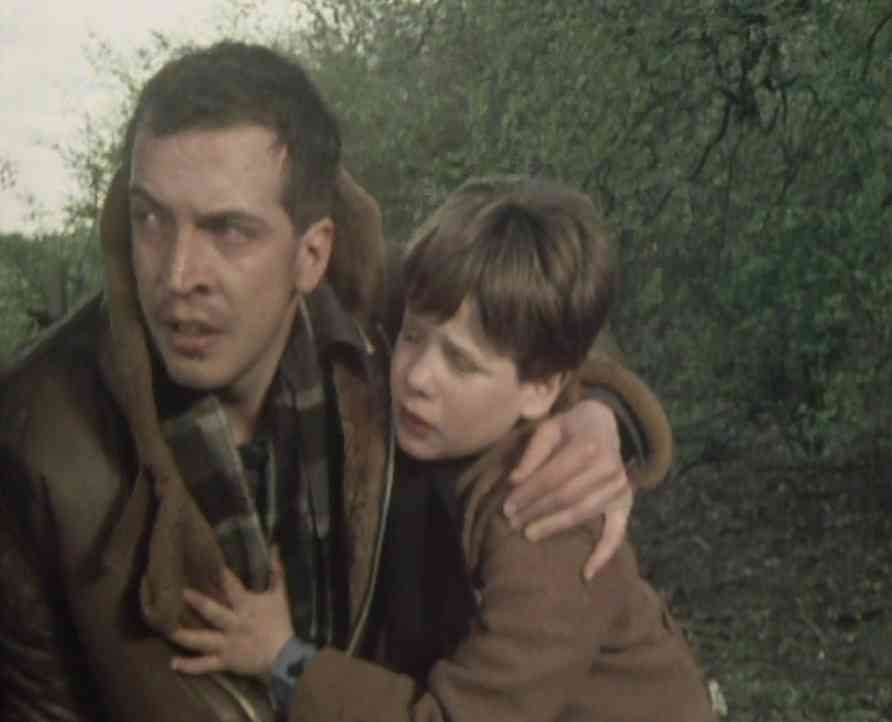
Arden Winch wastes no time in setting up the premise of the serial – a ten year old boy, the Viscount Rupert Fitzcharles (Grant Warnock), is abducted from his public school by a mismatched group of kidnappers – Irene Kohl (Hammond-Hill), Danny Connors (Gary Whelan), James Drew (Yardley) and Charles Vivian (Cavan Kendall).

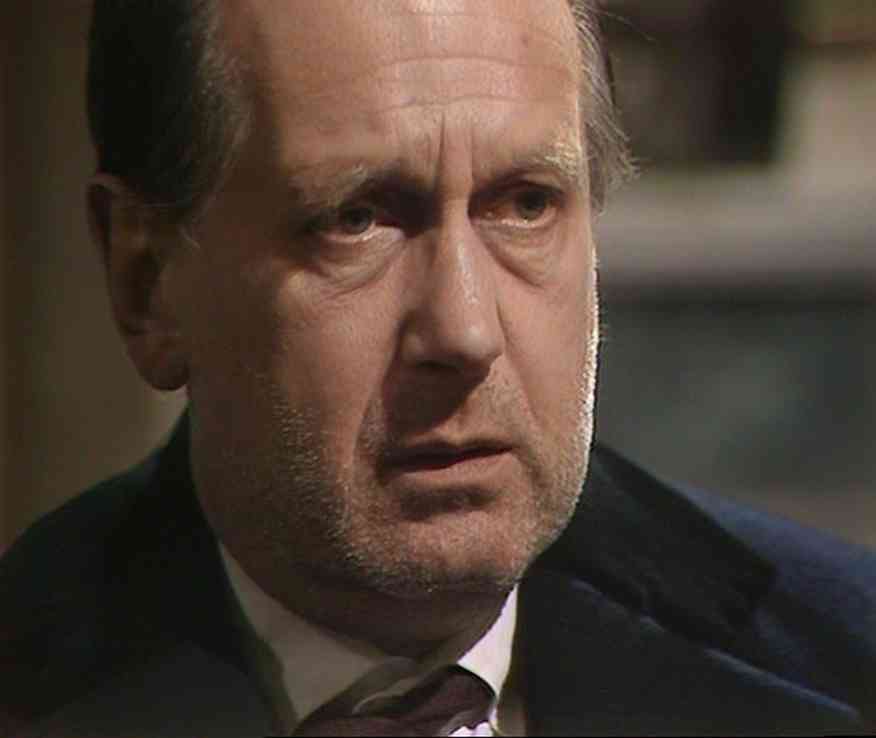
The police, led by Det Chief Supt Meadows (Hepton), are tasked with the job of finding Rupert, but their job is hampered (and occasionally helped) by frequent interjections from Captain Aubrey Percival (Denison), a member of the Security Service whose ultimate aims may run counter to those of the police.

As you’d expect, the disparate natures of the kidnappers (holed up in an anonymous house, waiting for their demands to be met) soon causes friction between them. Hammond-Hill, playing a character not totally dissimilar to her one from Secret Army, is the clear leader – Irene Kohl is a quietly fanatical idealogue to whom the concepts of surrender or comprise are alien ones.

Her lover, the Irish terrorist Danny, is a totally different type. He’s an emotional powder-key, constantly espousing, in the early episodes, bitter disdain towards the English (which is ever so slightly overdone). Rupert – a symbol of the English establishment – is an easy target for him to terrorise, but over the course of their time together he gradually forms a bond with the boy (by the end, when it looks likely that one of them will have to kill Rupert, Danny refuses point blank).

James Drew is more than happy to carry out the job though. An unrepentant killer, he exudes menace throughout – and when he realises that Irene and Danny are both formidable in their different ways, he instead amuses himself by picking away at the weak link (Charles Vivian).

Vivian isn’t quite as well drawn as the others. Although we learn that he’s a wealthy, bored dilettante (presumably indulging in a spot of terrorism just for kicks) his actual function as part of the gang is less defined. Yes, he’s the one who drops off the ransom notes in person at The Times, but surely they could have sent them in the post or aired their demands by phone?

If the kidnappers experience stresses as the episodes tick by, then there’s similar tension on the other side. Hepton is typically solid in the unshowy role of Meadows (and there’s very good support from Jack Mackenzie, Daniel Hill, Reg Woods and Dean Harris) but the character of Meadows really comes alive when he’s placed opposite Percival.  Gerard Glaister clearly saw the potential in Percival as he would return in a second serial (Skorpion) and then a short series (Cold Warrior).

If Percival is unfailingly polite, then some of his underlings (like Davis, played by Brian Croucher) are less so. I liked the interaction between Davis and DS Danny Quick (Dean Harris). Danny Quick might look like he’s been dragged through a hedge backwards but he also has a quick, analytical mind that proves to be more than a match for Davis. Harris would reprise this role in Cold Warrior (which hopefully one day will emerge, blinking into the light, from the archives).

With the kidnappers’ hideout discovered at the end of part five, the final episode proceeds towards its inevitable bloody conclusion. This wasn’t unexpected, but it still has quite the impact.

The middle episodes might tread water a little, but overall, Blood Money is a taut thriller that still stands up well today. Next job is to track down a copy of Arden Winch’s novelisation ….
Secret Army – Too Near Home (2nd November 1977)

There’s a palpable sense of unease in this episode – right from the opening few minutes. Lisa visits Sophie (a key link in the escape line) to see if she will take three new evaders. Sophie – genial as ever – is only too happy to help, but Lisa can’t stay in the sanctuary of Sophie’s comfortable house for long. But when she leaves, the problems really begin ….

I think part of the reason why the stakes feel a little higher than usual (even before anything really bad happens) is that we don’t have a Candide scene until we’re about twenty minutes in. Usually, the sight of the Candide serves as a reassurance – no matter how bad things are outside, the Candide is a place where plans can be made and problems solved.

But with no Candide, the real world feels a little harsher. This is demonstrated by the sight of Natalie and two airmen (played by the very recognisable figures of Daniel Hill and John Alkin) sitting shivering on park benches the rain. During these scenes there’s a curious red herring – a woman pushing a pram (containing not a baby, but a doll) is rather conspicuous. Is she a member of the escape line or could she be a spy? Actually she turns out to have nothing to do with the story at all, so it’s odd the way the camera favours her (possibly this was a directorial flourish added by Viktors Ritelis).

Alkin would spend several years in court (Crown Court, that is) while Hill was only at the start of his career. He’d return to Secret Army with a much larger role in the season two story The Big One (and would also work again for Gerard Glasiter in the serials Blood Money and Skorpion). The Welsh accent he essays today came as a bit of a shock, but luckily he only had a handful of lines (boyo).

The first odd piece of plotting occurs after Lisa is arrested. Earlier, Lisa told Sophie that Natalie was on her way with the evaders. That’s fine, but according to Natalie they were waiting in the park for Lisa to lead them to Sophie’s house. That makes no sense – it’s quite clear that Natalie was familiar with Sophie, so why wait for Lisa? Indeed, having two key members of Lifeline in the same place seems to be a bit risky. 

I can see why, in story terms, it happened (Natalie has to be made aware that Lisa had been taken) but it’s just clumsily done. The fact that we never see the airmen again reinforces the point that they existed only to put Lisa into a part of France where she might get picked up.

Lisa visited Julius (Shaun Curry) – a member of the resistance who mughr have had news about Lifeline’s contacts in Paris. Curry and Jan Francis would go on to work together again in Just Good Friends but it’s fair to say that the taciturn Julius is a world away from the ebullient Les Pinner.

Lisa was unlucky enough to be in the wrong place at the wrong time. Juluis is arrested by the police and Lisa – simply by being there – is guilty by association. She’s interrogated on the spot by Inspector Landre (Gerald James). This was an excellent performance by James – all the more chilling for the fact that Landre remains so calm and matter of fact.

Lisa is sent to a local prison, pending further investigation. It’s the point of the story where you wish that the storyline had been eked out over several episodes as (good though it is) it now has to be concluded in double quick time. And we’ve not yet mentioned the quite substantial secondary plot of today’s episode.

Quickly befriended by her cellmates, Denise (Helen Gill) and Maria (Souad Faress), Lisa is able to prove her identity to the resistance leader, Jan (Damian Thomas), and therefore joins the others in a daring escape attempt. Hmm, okay. As I’ve said, it’s a shame that events now move so fast and it’s also hard to swallow the fact that for about half an hour every evening all the German guards go off for a bite to eat, leaving the prison so deserted that it’s possible just to walk out. Presumably there’s no guards outside, or searchlights, or dogs, or barbed wire. Not much of a prison then.

Still, Gill and Faress do sketch their characters very deftly even though they’re not given that much to work with, and the fact that Denise and Maria don’t escape (and face being shot) helps to rachet up the tension levels even more.

While all this is going on, Gaston finds himself a prisoner of Kessler. There’s excellent work from James Bree, Clifford Rose and Maria Charles during these scenes. If Lisa’s escape never really seems in doubt, then it seems equally clear that poor old Gaston is doomed. Small touches – Gaston’s unshaved face, red-rimmed eyes and askew tie – all help to demonstrate his inner turmoil, even though Bree resists the attempt to go over the top.

Maria Charles does indulge in histrionics, but then Louise (Charles) has just been told that her husband, Gaston, has been shot by the Gestapo, so that’s understandable. Viktors Ritelis throws in a slightly showy, but effective, shot towards the end of the episode. A distressed Maria, wandering the street at night, stops to paint a red V for Victory sign. As she collapses, dragging her hands through the paint, we intercut to Gaston’s death scene again (which eerily mimicked this moment).

If one were being picky (and I can’t help it) you’d have to say that it’s very convenient that Lisa suddenly appears to find her aunt prostate on the floor. It’s also not clear why Kessler – having decided that Gaston is part of the escape line – decides not to question any of his closest relatives (Louise, Lisa).

And finally, it seems slightly strange that nobody interrogates Lisa when she’s in prison or checks out her story. So that when she destroys her file in the prison office, it appears that all records of her arrest are removed and the story is over. That’s obviously not right, as we saw Inspector Landre writing in his notebook, but this is conveniently forgotten.

But minor quibbles apart, this is a top notch episode. Yes, Lisa’s escape can’t help but feel contrived, but it’s contrasted by Gaston’s self-sacrifice (deliberately running towards a guard in the hope he’d be killed before undergoing interrogation).

Secret Army – Guilt (26th October 1977)

Carrying on the story from Lost Sheep, Guilt is an episode of two halves. The first is rather low-key (but not without interest) but it’s the second half where the plot really kicks into gear.

Curtis is smarting that the RAF’s latest technological wonder has been splashed all over the papers (thanks to the loose-lipped Peter Romsey) and becomes desperate to find out who betrayed Romsey and Victor. So he heads out into the French countryside, with the untrusting Lifeline close on his heels ….

Albert is the most suspicious about Curtis’ motives. Director Paul Annett heightens the pressure during these early scenes by ensuring that the camera tightly frames each member of Lifeline as they debate what to do. The decision is made to send Monique after Curtis – to observe what he does and liquidate him if he turns out to be a spy.

This gives Angela Richards a little more to do than usual. Up until this point in the series her main plot function has been to complain at regular intervals about the way Albert pays more attention to his wife than he does to her. Don’t worry though, she still manages to do that today.

For a while it looks like Monique has Curtis closely under tabs, even if she appears to be hideously conspicuous (her dark glasses don’t help). Thankfully, Curtis turns out to be a sharp operator and has been aware of her presence all along. In the episode’s first key scene he confronts her in a two-hander that crackles with energy. “I worry about being shot, getting caught, being tortured. So what’s new apart from that?”

Peter Barkworth and Joanna Van Gyseghem don’t really feature until the last twenty minutes or so. That makes sense since the characters of Hugh Neville and his wife Dorothy were well established in the previous episode . In this one there’s merely the question of establishing their guilt or innocence.

After curfew, Curtis calls on them – begging a bed for the night. For some reason, Curtis is affecting a Leeds accent (or so he says) which is a tad distracting, but once the scene really kicks into gear it proves to be less of a problem. This is the point where the episode really picks up momentum as Barkworth and Neame face off (with Van Gyseghem stuck in the middle as a rather baffled outsider).

It doesn’t take much prompting by Curtis for Neville to reveal his hatred of war. “I should have been playing cricket for my school but I was fighting on the Somme instead. Mud, filth, corpses, so many corpses it was hideous. Your country needs you. I saw screaming men trying to hold in their own intestines”.

There then follows a philosophical debate where the honours are about even. But early next morning, Neville’s admission that he told the police about Romsey seals his fate. Curtis, flick knife in hand, advances menacingly although it’s interesting that we don’t see the blow struck (nor, when Dorothy later returns, his body). Instead, Van Gyseghem is required to sell this key moment purely by her reaction.

The episode’s coda (a battered and weary Curtis travels back on the train to Belgium with Monique) is almost (no pun intended) derailed by some very obvious CSO. But the quality of their conversation – Curtis admitting that Neville was the first man he’d killed face to face (dropping bombs doesn’t count) – saves the day.

This is a slow burner of an episode, but once it gets going it carries a real punch. Curtis reveals that he liked Neville, but he had to be executed anyway. That it’s possible to see why Neville acted the way he did (and even to sympathise with him) is what makes Traitor so powerful. Secret Army rarely produced simplistic stories of good & evil/black & white and that’s one reason why the series stands up so well today.

Upstairs Downstairs – The Wages of Sin

Despite its bleak premise – Sarah, revealed to be pregnant again, faces the prospect of losing her job and being cast out onto the streets – The Wages of Sin is an episode that if it isn’t quite played for laughs, certainly has a streak of mocking humour running throughout it.

This tone is established from the first scene in which Mrs Bridges (suspicious about Sarah’s sudden increase in appetite) leaps to the correct conclusion and brings in Mr Hudson to hear Sarah’s unwilling admission of guilt.

All three actors are given their chances to shine. Angela Baddeley makes the most of lines such as Mrs Bridges’ caustic summation of Sarah’s character (“You know, our Sarah reminds me of the Salvation Army banner. Thousands have been this way before, there is plenty of room for thousands more”).

Hudson, although he’s stern and foreboding after learning the news, can’t help but soften when Sarah apparently breaks down in tears (knowing Sarah’s passion for theatrically though, I have my doubts about how genuine her contrition is).

Pauline Collins gets most of the best lines as Sarah (desperate not to reveal that Thomas is the baby’s father) wildly extemporises under the withering glares of her two superiors and desperately cobbles together a rather unconvincing tale about how she was plied with drink and taken advantage of by a rich gent.

Collins’ performances across the series have been something of a mixed bag and so whilst I can’t confess to being that sorry to see the last of Sarah, at least she exits on a high.

As does John Alderton as Thomas, whose capacity for scheming remains finely tuned (although I do like the end of part two moment when it appears that he’s overplayed his hand and lost everything). If there’s any oddity with the script, then it’s slightly strange to end part one with Thomas refusing to acknowledge or help Sarah and then go straight into part two where he coolly ambles along to Mr Bellamy and asks for permission to marry the girl.

From Richard’s viewpoint this seems like the perfect solution, but later on, Lady Marjorie – returning home from aboard – is appalled when she hears the news. That she immediately counteracts his instructions makes it quite plain who wears the trousers at 165 Eaton Place.

Lady Marjorie’s harsh and ruthless streak bubbles to the surface as she tells Thomas that if he still wants to marry Sarah then both will have to leave their employ and as quickly as possible. This leaves him in a desperate position, but he has one last throw of the dice – a later brief meeting with Richard and Lady Marjorie in which he subtly raises the prospect of blackmail.

It doesn’t say a great deal for Richard (an MP, remember) that Thomas’ politely menacing words appear to have sailed right over his head. Luckily Lady Marjorie understands nuance a lot better than he does and sends the long-suffering Richard off to fix the problem.

Although last week money seemed a little tight, today that doesn’t seem to be a problem – Richard buys Thomas off with a £500 cheque (allowing the Welshman to realise his dream and buy a garage).

The episode then concludes with downstairs jollity as Thomas and Sarah celebrate their engagement – the festivities only slightly pausing when Richard and Lady Marjorie pop down to wish the couple well. There’s a delightful awkwardness in the scene from some of the servants to the arrival of their employers although eventually the party gets going again with a final reprise of ‘Uncle Albert’ – a song which has a very familiar tune ….

Although the episode opens in traditional style (an “oh Ruby” from Mrs Bridges) at the end Ruby actually gets something to do for once – revealing to Joan (Jane Carr) that she knows Thomas is the father of Sarah’s child.

Joan is another of those parlour maids who arrives from nowhere, but at least in her case there was a good reason. Christopher Beeney had been hospitalised after a motorcycle crash which occurred just before the recording of this episode, so all of Edward’s lines were given to this hastily created character.

So farewell Thomas and Sarah. They would later reappear in their own spin-off series, which didn’t last long and by all accounts was a far from happy production. Possibly when my UpDown odyssey has ended, it might be time to dig it out for a reevaluation.

Secret Army – Lost Sheep (26th October 1977)

En route to Paris via the escape route, Flight Lieutenant Peter Romsey (Christopher Guard), is separated from his colleagues. Disembarking from his train in a rural French village, he desperately searches for help – eventually stumbling across an English writer, Hugh Neville (Peter Barkworth), who appears to offer sanctuary ….

Lost Sheep opens in a fairly striking way. During this first scene where Curtis interrogates Romsey, the airman remains seated and passive whilst Curtis strides up and down – almost bumping into the camera. So while Curtis is foregrounded and creating an oppressive figure, Romsey and Lisa (silently smoking) are placed in the background.

Out of the regulars, Curtis probably gets the most to do. Later – when Romsey’s identity has been verified – the pair have a convivial chat, but even this early on it’s clear that Romsey is something of a liability (the navigator of an advanced Mosquito, he carries in his head information that the Germans would dearly love – and he seems distressingly happy to chat about such things at the drop of a hat).

N.J. Crisp’s script (the first of nine Secret Army efforts) is really centered around the guest performers. Guard is perfectly cast as the seemingly naïve and far too trusting Romsey. Although given that he’s a veteran of many hazardous flight missions it may be that, as opined by Curtis, he’s simply burnt out and is no longer thinking clearly.

After all, instead of trying to make his way to Paris, he stumbles around asking perfect strangers for help – seemingly trusting that they won’t turn him in. His first approach (a fisherman) does fetch the local police, but luckily Romsey had made a dash for it by then.

So he ends up at a palatal house owned by Hugh Neville and his wife Dorothy (Joanna Van Gyseghem). Dorothy is instantly welcoming, but Neville himself, whilst convivial, keeps his own counsel. Peter Barkworth was no stranger to WW2, having spent the best part of six months starring in Manhunt (a sometimes engrossing, sometimes infuriating LWT drama) and his casting is a major plus point. Barkworth never gave a bad performance and there’s plenty to enjoy and mull over in this one.

Neville is an English writer firmly ensconced in France. He doesn’t share Romsey’s patriotic leanings (“I was on the Somme in the Great War. Saw a generation slaughtered for nothing”). And later, Neville snorts at the idea that France will one day be liberated – for him, life has gone on under German occupation pretty much as it always has. Thanks to the area’s rich farmland, there’s no such thing as rationing and he claims never to have seen a German soldier in the area.

This statement is undercut by the very next scene, in which Dorothy – out cycling – spies numerous German troops beginning an intensive search for Romsey. At first it’s possible to believe that Neville is a fantasist who up to this point has simply ignored anything unpleasant, but later it does seem that the Germans have only just moved into the area, so his comments – self-centered though they may be – do seem to be accurate.

Dorothy isn’t as well-drawn a character, but there’s still enough there for Van Gyseghem to work with. Given that she and her husband exist in an atmosphere of chilly politeness, it’s possibly not too difficult to work out why Dorothy greets the arrival of a handsome young stranger so warmly (although this is never spelled out explicitly).

Plot-wise, Lost Sheep then stumbles a little. Given that Neville is the only Englishman in the area, his house would be the obvious place to find Romsey – and yet the Germans never search there. Instead, Neville’s friend – Inspector Pierre Dubois (Bruce Montague) – does so but makes sure to give him fair warning. Barkworth and Montague share several nice scenes, ones in which Dubois and Neville carry out two very different conversations at the same time (one implicit, one explicit).

Credibility is also stretched by the fact that not only do Lifeline have a man – Victor (Ivor Roberts) – in the area, but he also manages to locate Romsey with embarrassing ease. If he could do so, why couldn’t Brandt and his merry men?

After an episode of tension, there seems to be a happy ending – Victor leads Romsey away to safety. But there’s an ambush and Victor is shot dead whilst Rosmey is delivered into the welcoming hands of Brandt. And, as feared, it seems likely that the charming Brandt will be able to get the ingenious Romsey to talk ….

Had this been a single episode story, then this ending would have been nicely ambiguous.  It’s hinted that Neville may have betrayed Romsey to save his own skin, but it’s equally likely that Dubious – convinced that Neville was sheltering Romsey but possessing no proof – could have decided to stake the place out.

As it is, Crisp will develop and conclude the story in next week’s episode – Guilt.

Upstairs Downstairs – The Fruits of Love (5th January 1973)

At the start of this episode, Rose and Miss Elizabeth’s relationship (which was somewhat strained, for obvious reasons, at the end of the previous installment) seems to have righted itself. We can maybe credit this to Rose’s remarkable powers of recovery – although the mood becomes a little cloudier when Elizabeth mentions the name Julius Karekin again ….

Elizabeth has always tended to be in a pretty depressive state – spending a large amount of her time railing against her ordained place in society. Today, she looks longingly at Rose and wishes she – like her – had a job of work to do. Although she might think otherwise if she actually had to carry out the duties of a house parlour maid.

But now her relationship with Julius has tipped her over the edge and she’s in a giddy state of ecstasy. After the dark rigors of A Special Mischief, this comes as a dose of light relief. The morning-after bedroom romping between Elizabeth and Julius (she copies the antics from a florid romantical novel, he attempts to escape from her clutches in order to leave for the City) is rather nicely done. Throughout her time in Upstairs Downstairs, Nicola Pagett had few opportunities to indulge in comedy so possibly these scenes offered her a welcome change of pace.

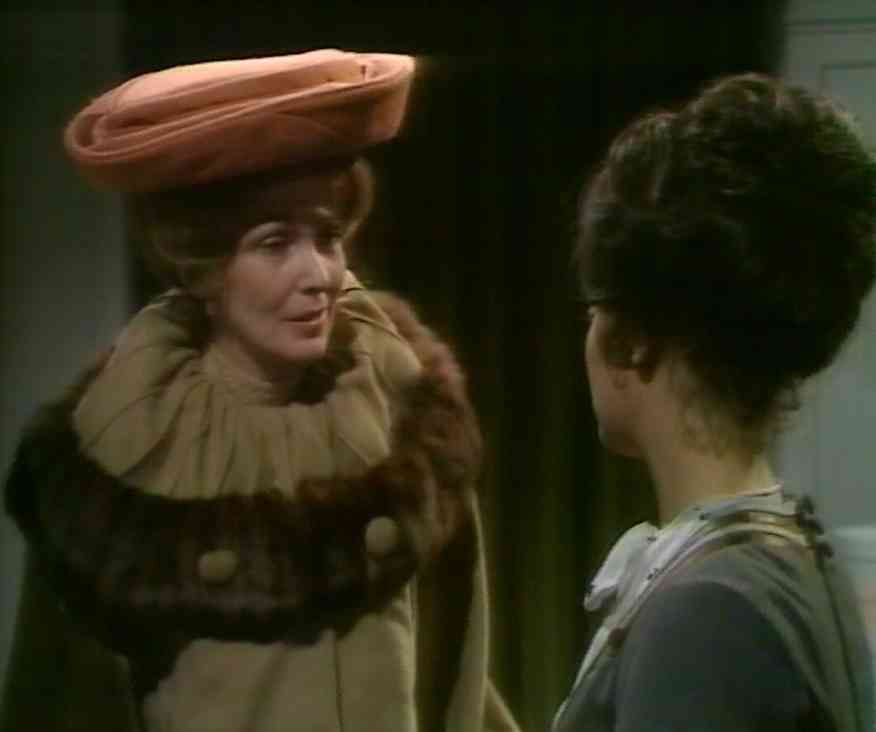
The central part of the episode is also entertaining – Juluis has gifted Elizabeth a hat shop and she throws herself into running it with gusto. When Elizabeth breaks the news to her parents, they react predictably. Lady Marjorie is horrified that her daughter is going into trade whilst Richard (who earlier had bemoaned how much money Elizabeth continues to cost him) can hardly contain his delight that she’ll finally be a wage earner!

There’s also a rare moment of genuine affection between father and daughter as Richard helps her to choose a name for the shop – Madame Yvonne (named, as Lady Marjorie acidly reminds him, after one of his old girlfriends – a dreadfully common woman who dyed her hair).

Madame Yvonne caters for the well-heeled gullible by claiming to stock genuine Paris fashions (which are nothing of the sort). They are smoothly sold by Mademoiselle Jeanette (Mairhi Russell) who is as genuinely French as the hats ….

Margot Boyd essays a lovely little cameo as Lady Spennilove, a wealthy (but, as Lady Marjorie would say, frightfully common) woman who walks away with a hat that looks to my eyes positively awful. But I will confess that ladies’ hats are not my specialty.

All seems to be going swimmingly. until the vengeful Margot Descort (Wendy Gifford), still smarting that Julius has spurned her in favour of Elizabeth, breaks the news about Elizabeth’s new lover to Lady Marjorie.

Julius is wealthy but without any breeding – the most heinous crime in Lady Marjorie’s eyes. This leads into by far the best scene of the episode – a confrontation between Lady Marjorie and Elizabeth in which several home truths are aired. Elizabeth confirms that she’s Julius’ mistress and then gently taunts her mother about her own past indiscretion.

Rachel Gurney is so good here as Lady Marjorie slowly realises that her hidden secret is not as hidden as she’d hoped (even the servants know about it). It’s a pity that Gurney’s time with the series is fast running out (it won’t be long before Lady Marjorie takes a one-way trip on the Titanic) but had she had more scenes like this, possibly she would have been encouraged to stay on.

The major irony of the episode is saved for the last few minutes. Thanks to her father’s crippling death duties, Lady Marjorie has to face the prospect of selling 165 Eaton Place. But just when all seems lost, Julius buys the house and gifts it to Elizabeth, who gifts it to her parents.

Lady Marjorie is then forced to invite Julius round for tea and polite conversation while Richard – well aware by now of Julius’ substantial personal wealth – is keen to show him round the Houses of Parliament and introduce him to some of his friends.

So everybody seems to be a winner – Julius (barely tolerated up to this point by the establishment) has begun to buy his way in whilst the stability of life at 165 Eaton Place is – on the surface at least – maintained.

The Fruits of Love is very much an Upstairs story. Only Rose and Mr Hudson featured from Downstairs – Hudson gets a handful of memorable lines whilst Rose plays her usual role as Miss Elizabeth’s confidant and stern conscience. Although there’s at least one moment of pleasure for Rose, as Elizabeth tells her to choose any hat she’d like from the shop. Initially reluctant, she can’t help herself and soon is overcome as a variety of appealing headwear swims into view ….

Secret Army – Growing Up (12th October 1977)

A downed airman, Sgt. Clifford Howson (Norman Eshley), is injured and hiding out in the countryside. By chance, a young boy called Jean-Paul Dornes (Max Harris) finds him and promises to do all he can to help …

Growing Up is very much a story of two halves. Initially, the tone is quite subdued with only a low level of tension as Cliff befriends Jean-Paul (or is it the other way around?) and the pair quickly bond. Jean-Paul’s wide-eyed admiration not only for the heroes of the RAF but also for his countrymen’s underground struggles against the Germans is plain to see. But as the episode title suggests, the time will come when Jean-Paul will be forced to learn that not everything is quite as black and white as it first appears.

The first discordant note sounds when the boy returns home and discovers a German soldier, Corporal Emil Schnorr (Brian Glover), chatting easily with his mother, Anna (Susan Tracy). Glover did just about everything during his career – seasons with the National Theatre and the Royal Shakespeare Company, a stint as an all-in wrester (Leon Arras, the man from Paris), a number of writing credits (including several Play for Todays), not to mention an impressive list of television credits (both dramas and comedies).

The relationship between Anna and Schnorr quickly develops (one criticism would be that it’s rather too quick).  But on the other hand, Glover and Tracy share a very nice scene in which their characters open their hearts and discuss the things they have in common (both are widowers). And although Schnorr appears intimidating at times towards Jean-Paul it seems that, at heart, the German is a kindly man (he’s no rabid Nazi – instead he comes across as someone keen to learn a trade and better himself).

Max Harris is the glue which holds the story together. This is a big ask for such a young actor (although he already had television experience – most notably The Phoenix and the Carpet a few years earlier). The scenes he shares with Norman Eshley are well played by both of them and it seems that an experienced actor like Eshley brought out the best in him.

Holed up in a remote quarry, eventually Cliff is reached by Lisa and Albert (as happens so often, despite being a secret organisation someone always seems to be able to contact Lifeline as and when required). There then follows a slightly strained part of the episode – due to his leg injury Cliff is unable to walk, so Lisa pretends that he’s fallen from a horse and needs help. That’s just about reasonable, but by a remarkable coincidence they stumble across Anna and Schnorr who are out for a walk. What were the chances of that?

With Cliff now safely in Brussels, the danger seems over. But in fact the story has yet to really kick into gear. Anna discovers the RAF badge gifted to Jean-Paul by a grateful Cliff and flies into a rage. This is another slightly odd sequence. Although everything we’ve seen so far suggests that Anna, if not an active collaborator, is very keen not to get involved with the war anymore, why does she feel compelled to report this to the German authorities?

With Cliff no longer in the area, had she kept quiet then there would have been no way for anyone to connect the airman to her son. Possibly you can argue that she was keen to inveigle herself into Schnorr’s good books (she sets out to lay the whole matter before him) but that’s not quite how it plays. Possibly a little tightening of the script would have helped here.

Events then take a tragic turn when, on her way to the barracks, Anna is run down by a member of the resistance (played by Stanley Lebor) thus silencing her for ever. Luckily, for Jean-Paul’s peace of mind, he seems unaware that he was indirectly responsible (after his mother left, a tearful Jean-Paul went to the resistance man’s house). This part of the script also doesn’t quite play right – not least in terms of the timescale.

But minor niggles apart, the aftermath (an impressively mounted funeral with a distraught Jean-Paul) certainly carries an emotional punch. And the graveside rapprochement between Jean-Paul and Schnorr is another stand-out moment. Although there’s no dialogue, Harris and Glover are both at their best here. Schnorr literally becomes a shoulder to cry on and as the pair leave the cemetery hand in hand (Jean-Paul only slightly pausing to toss away the RAF badge – a symbol of his past life) we’re left with the strong impression of a growing bond between a surrogate father and son.

Willis Hall’s second SA script, Growing Up possibly could have done with some editing and redrafting in places, but the human drama at its heart is still compelling.

Upstairs Downstairs – A Special Mischief (29th December 1972)

For the first time in a little while, the relationship between Miss Elizabeth and Rose forms the centrepoint of an episode. Time hasn’t softened Elizabeth at all – she’s still hopelessly self-centered (refusing to visit her daughter at the seaside) whilst it’s notable that Rose seems more inclined to speak back to her (“my Rose has thorns”, comments Elizabeth early on in the episode).

Possibly this is because virtually all of the household are in Scotland, with only Elizabeth from upstairs and Rose, Edward and Ruby remaining from the downstairs staff. Rose therefore is keen to keep things running smoothly with a reduced staff, although she couldn’t have predicted quite how things would turn out ….

In an episode light on levity, there’s one brief bright spell early on – Ruby makes a cake, all the time carrying on an imaginary conversation with the absent Mrs Bridges (at one point calling her a cow!). This jollity soon dissipates once the main plot kicks into gear though.

Inspired by her friend Ellen Bouverie (Claire Nielson), Elizabeth has become a suffragette – throwing herself into their world with enthusiasm. Although their aims are laudable, others – especially Rose – react with horror. Elizabeth later comments that she finds that her life is now exciting.  But with Rose deciding that the suffragettes are simply her new toy, it’s impossible not to draw the conclusion that Elizabeth is nothing more than a dilettante – looking to fill her aimless life with some purpose (for the moment the suffragettes have filled that hole).

Upstairs Downstairs tended to use videotape for its location film work, but this episode featured night filming. I’m glad they spent the money, as it adds a little extra gloss to the scenes of the suffragettes, led by Ellen and Elizabeth, gleefully trashing the house of Arthur Granville, M.P. (Harold Innocent). Rose, tagging along in a vain attempt to keep Elizabeth out of trouble, is arrested with all the others and that’s where the trouble really begins.

Elizabeth is spared jail-time thanks to the intervention of Julius Karekin (Donald Burton) but Rose is not so fortunate – she faces the unnerving prospect of two months in Holloway Prison. Elizabeth retires to Julius’ palatial house for tea and acid banter (she’s more than a little miffed that he’s prevented her from becoming another suffragette martyr).

At this point in the story, Elizabeth does express concern about Rose’s situation, although she makes no particular move to win her freedom. Had she called her father then no doubt he could have pulled some strings, but Elizabeth is keen to keep this from him (swearing Edward and Ruby to secrecy). And it says a great deal about her character (none of it good) that she couldn’t be bothered to visit Rose in prison.

When the by now wretched Rose hears that she’s got a visitor, she eagerly rushes out (expecting it to be Miss Elizabeth). The sight of Edward and Ruby is small comfort, as is the cake brought by Ruby (Rose has been forced by the others to undertake a hunger strike).

And this is where the story gets even darker, as the women are later force-fed with a tube (either down the throat or up the nose).  Whilst we don’t see it used on screen, Ellen’s later description of it (and the hoarse voices of the women after their “treatment”) more than adequately paints the picture.

These prison sequences – despite the odd wobbling wall – are pretty uncompromising, and since the blameless Rose is one of those suffering there’s even more impact. Luckily, both for Rose and the audience, the suffragettes are released shortly afterwards thanks to the intervention of Julius (spurred on by Elizabeth’s description of their plight).

And although a seemingly chirpy Rose tells Elizabeth that she’ll be “right as a trivet” once she’s had a cup of tea, the fact that the episode ends with Rose – all alone – dissolving into tears, tells its own story.

Elizabeth and Julius disappear upstairs. Elizabeth might have displayed contrition to Rose and agreed that the life of a suffragette wasn’t for her, you don’t really get the feeling that she’s learnt anything from this adventure. Indeed, as has happened previously, she simply blithely sails on – unheeding of the damage left behind her.

It’s not jolly Sunday evening fare, but A Special Mischief lingers long in the memory. With only a small regular cast, there’s room for some nicely judged guest performances (Rosamund Greenwood, Veronica Doran and Deirdre Costello as three of the more prominent suffragettes, for example).