Book review – Opening The Box of Delights by Philip W. Errington (Herne Books)

This is very much the time of year when the wolves begin running again. And in that case, all you can do is reach for The Box of Delights in one of its many iterations. For me, that tends to be either John Masefield’s novel (published in 1935) or the 1984 BBC television adaptation.

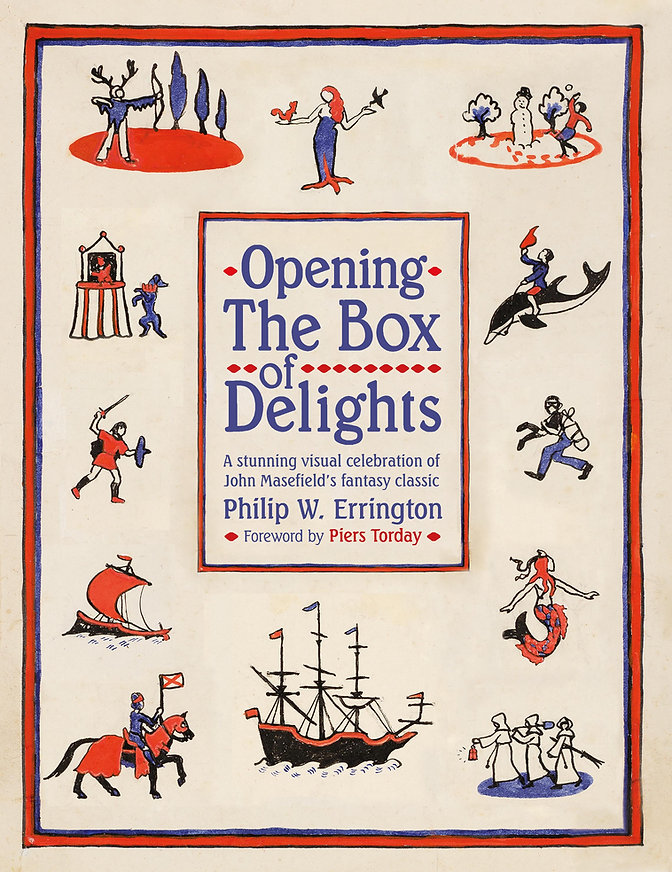
And when revisiting the Box, there can be no finer companion than Opening The Box of Delights by Philip W. Errington. Originally published in 2020 and revised and republished in both 2024 and 2025, it’s a handsome hardback, running to 160 pages, which is packed with all the information you could ever need.

The book is divided into six main sections. Firstly, there’s a brief look at the life and times of John Masefield. His journey from a penniless vagrant and struggling writer in America to his return to England (where he would be made Poet Laurette in 1930) is very effectively sketched out. Certainly, this information has whetted my appetite to explore a full biography of Masefield sometime in the future.

The second section looks at the writing and publication of the story (highlights include a ‘lost’ fragment which never made it to print). The third part details the work of four illustrators (the first being Judith Masefield, John Masefield’s oldest child). Section four examines the story’s main characters while the penultimate part teases out information on a variety of subjects – from card tricks and Seekings House to Possets (a ‘good thing’).

The final part of the book dives into the numerous adaptations of the Box. From radio (I confess I wasn’t aware that so many radio versions had been made) to the stage and onwards to the 1984 television adaptation. And as happened multiple times during the book, I kept stumbling across things I never knew before (from detail about the abandoned feature film production to the Box of Delights podcast, which is something I’ve bookmarked to investigate further).

Errington concludes by summing up John Masefield’s reputation and legacy and this is followed with a reproduction of the rehearsal script of episode one of Alan Seymour’s 1984 television adaptation. I’m always happy to browse through scripts, especially when you can pick out moments in the script that differ from the eventual television version.

Opening The Box of Delights is a very dippable book – each chapter lasts just two pages and deals with a specific topic, so you have the choice to either read from cover to cover or simply dive in at random to find something of interest. Visually it’s a treat with so many items that catch the eye (such as photos, manuscripts and letters) on just about every page. And Philip W. Errington is the perfect companion – both knowledgeable and engaging.

It’s a cliché (but true nonetheless) that Opening The Box of Delights would make an ideal Christmas (or post-Christmas) present. If you love The Box of Delights in any of its numerous versions, then I don’t think you’ll be disappointed at all and so it comes highly recommended.

Opening The Box of Delights is published by Herne Books and retails at £20.00. It can be ordered via this link.

Book review – Reaching A Verdict: Reviewing The Bill 1993-1994

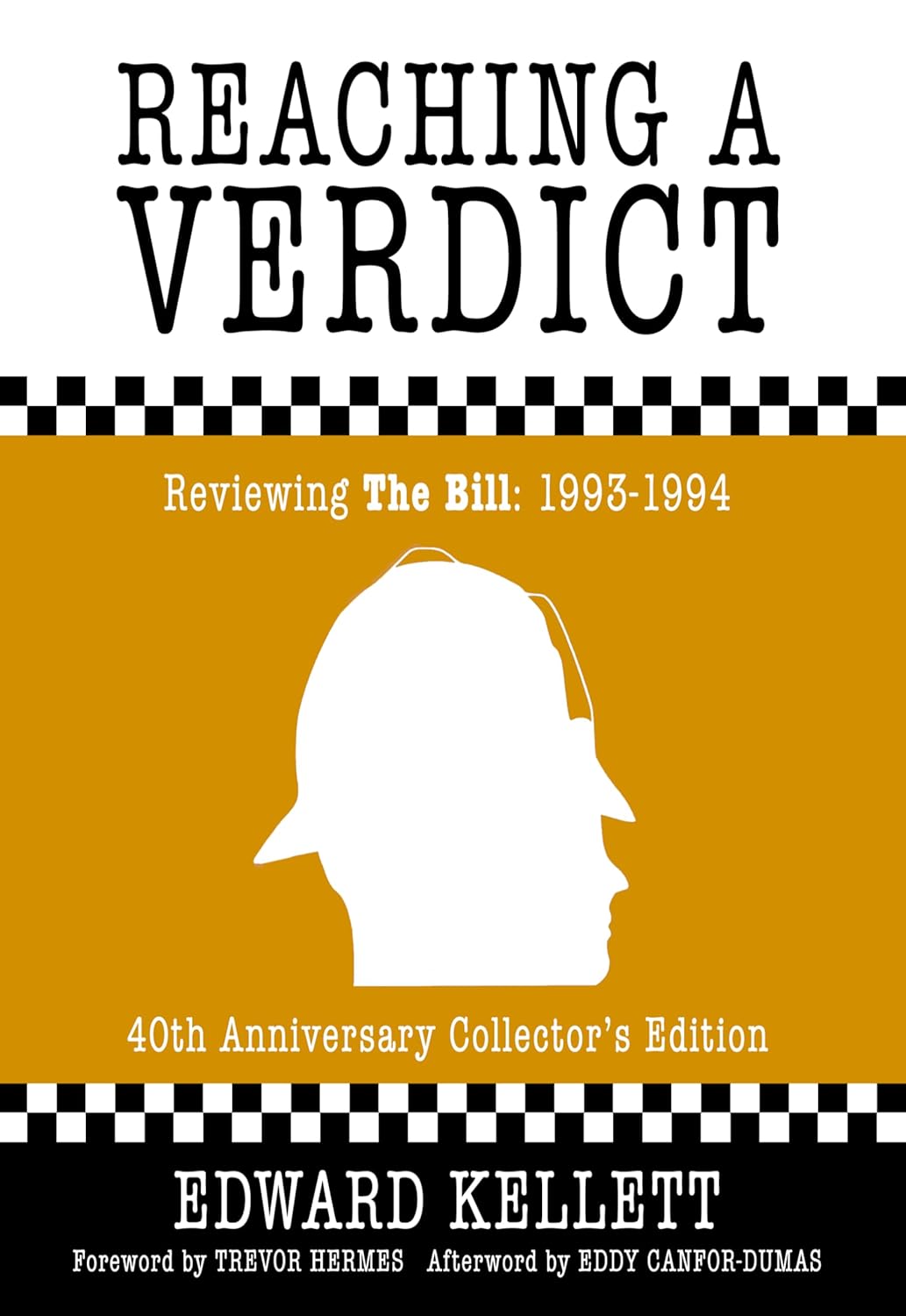
The third book in Edward Kellett’s series, we’ve now reached 1993 and 1994 – a period of change for The Bill as a third weekly episode was added to the schedule. As with the previous volumes, each of the two sections (dedicated to 1993 and 1994) begin by highlighting a number of key episodes (which are ideal picks for anyone keen to sample the programme, but who might balk at watching all 156 episodes from any given year).

Since it would be impractical to review every episode, instead Kellett uses his selected episodes to analyse certain themes and characters – this way he’s able to touch upon many episodes (with the result – as with his previous books – that I found myself breaking off from reading in order to rewatch some of the installments mentioned).

Chief Inspector Cato (the Bald-Headed Bastard from Barton Street) debuted at the beginning of 1993 (New Tune, Old Fiddle by J.C. Wilsher). A character tailor-made to put everybody’s back up, he certainly didn’t disappoint on that score, and some of his greatest hits are faithfully reported. Plenty of dialogue quotes help to give a flavour of the scripts under review, such as Brownlow’s nonplussed “I spoke to Cato this morning… To be quite honest with you I’m not sure there’s anybody at home.”

Although some characters would remain ever present, as ever with a series like The Bill, there would be a regular turnover as old faces departed and newcomers arrived. As described by Kellett, the sudden exit of Ted Roach left a void that was difficult to fill.

Throughout the show’s first decade, Ted’s character arc is its greatest driving force: a remarkable achievement for a series of self-contained stories where no one person is bigger than the ensemble. As noted in Volume 1, on paper he should be a walking cliché, the hard-drinking ladies’ man who doesn’t play by the rules. But The Bill was always adept at showing the messy edges of life, where the image people have of themselves breaks down.

An interesting section of this volume of Reaching A Verdict concerns the decision to go thrice weekly. For some it was a controversial move and marked the end of an era. The programme might have remained a key ITV staple until 2010, but the increase in episodes meant that new writers were needed (with the knock-on effect that the distinct ‘voices’ of the small core group of writers who had guided the series to date would inevitably be diluted).

Kellett’s view (“the amount of quality material is the same – but mingled with more filler, therefore less connected, and less impactful”) is a fair one. By this point in the series’ history, The Bill had tended to eschew running themes (with most episodes existing as as self-contained 25 minute plays). This sort of format has positives and negatives of course – it does mean that today you can dip into individual episodes from this era and not feel that you’re only getting half of the story. And I certainly prefer this style of storytelling to the later, extensive story arcs which seemed to feature rogue and pyscho killer police officers on a regular basis ….

The increased workload seemed to affect a number of actors, most notably Christopher Ellison. Burnside’s abrupt departure is succinctly described by Kellett (“the result is that he is bundled through the exit with indecent, not to say absurd haste”). It’s certainly a destablising time for the programme, with the short-lived DI Harry Haines (Gary Whelan) “parachuted in to fill a Burnside-shaped hole”.

This third book closes with an overview of P.J. Hammond’s contribution to the series during 1993 and 1994. Kellett observes that “it’s not oversight that has kept Hammond’s work out of these pages for so long, but the simple fact that it’s impossible to place in context with anyone else’s”. Indeed, even though the series had become a little bit like a sausage factory, with new episodes appearing one after the other, it was good to see Hammond ever-present with a selection of tales that could frequently be odd, macabre and disturbing, His scripts for The Bill (just like his efforts on the likes of Z Cars and Angels) certainly stands out as the work of a unique talent.

As touched upon before, I can’t think of any higher praise for a book of this type than that it’s frequently made me return to the series under discussion. Reaching A Verdict: Reviewing The Bill 1993-1994 is the third volume in an impressive series that is highly recommended for all fans of The Bill or, indeed, anyone with an interest in British television drama from this era.

Reaching A Verdict: Reviewing The Bill 1993-1994 is available now from Devonfire Books and can be ordered via this link.

Book review – Reaching a Verdict – Reviewing The Bill: 1990 to 1992 by Edward Kellett

In his introduction, Edward Kellett states that this era of The Bill is his favourite era of the show – which is something I can concur with. By this point, the series (reformatted into a twice-weekly half hour show in 1988) was slowly beginning to develop – instead of purely stand-alone stories, there were sprinklings of two-parters and (later in 1990) the six-episode hunt for the Canley Fields serial killer, which was spread over several months.

With over 300 episodes broadcast during 1990 – 1992, there’s a great deal of ground to cover. Kellett divides the book into three sections (for 1990, 1991 and 1992) and then forensically examines that year’s output in a number of ways. He might look at a number of episodes penned by a certain writer (J.C. Wilsher or Christopher Russell, for example) and then discuss how a particular character was served by that year’s scripts.

As with the previous volume, Kellett’s pin-sharp character studies are a delight. Here he waxes lyrical about the odd-couple relationship between Brownlow and Conway.

How best to define the decade-long feud between Sun Hill’s Lemmon and Matthau is tricky. At times it resembles an overlong car journey, harassed father trying to quell the endless whining in the back. But it’s also a masochistic relationship, in which Conway endures any amount of pain in return for the rare moments of pleasure when Brownlow falls on his face.

Also included are liberal dollops of quotes from the scripts, which serve as a reminder about just how good the series was during this era. As a year-round programme, by this point it’s possible that The Bill began to be taken for granted – as a familiar, comfortable presence always in the background. If so, then Kellett’s book should redress the balance somewhat – showing that (even in its pre-watershed form) it could still carry off stories of considerable impact.

Inspired by Reaching a Verdict I’ve already dipped into some of the key episodes covered in this book – which is testament to the quality of Edward Kellett’s writing. For any fans of The Bill, this is an essential purchase.

Reaching A Verdict: Reviewing The Bill can be ordered directly from Devonfire Books via this link.

Book review: Drama in the Lab – The R.3 Story by Michael Seely

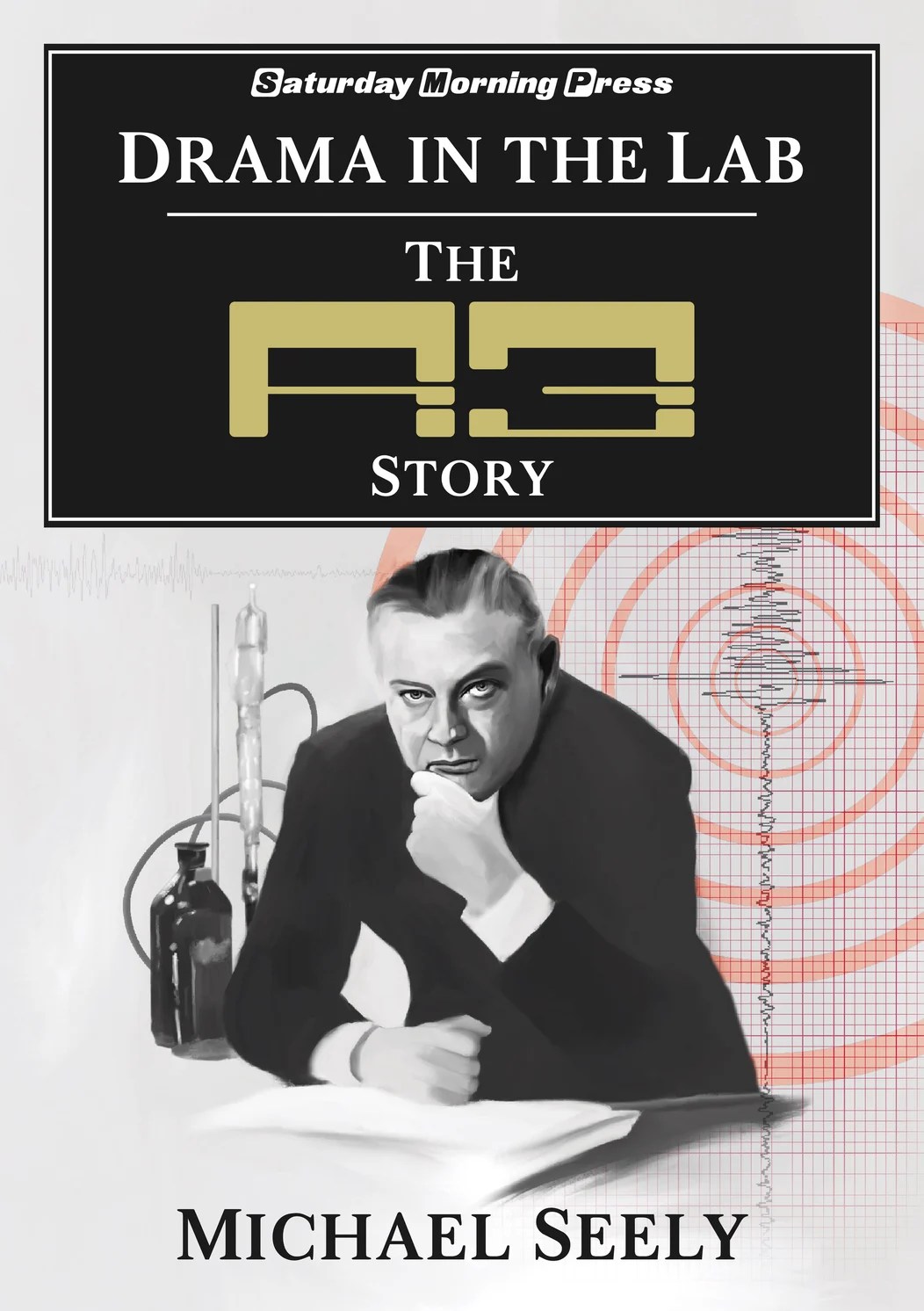
As Michael Seely states in his introduction, R.3 is a series that few people are likely to remember today. This is easily explained by the fact that it’s completely absent from the archives – none of its 26 episodes survive (all that’s left are a handful of telesnaps taken by John Cura, a few brief clips and the camera scripts).

Broadcast during 1964 and 1965, R.3 starred John Robinson as Sir Michael Gerrard, who headed up the Ministry of Research Centre No. 3 (otherwise known as R.3). This was a scientific research facility that attempted to produce results for the greater good, although things didn’t always go to plan ….

R.3’s scientific setting has led some to label it as a forerunner to Doomwatch, but Seely shows how that wasn’t really the case. Indeed, the scientists of R.3 weren’t averse to attempting risky experiments that the Doomwatch team would have had no hesitation in closing down!

Created by N.J. Crisp and Dr Stephen J.L. Black, chapter one of Drama in the Lab concentrates on the development of the programme. Gerard Glaister, later to work closely with Crisp (The Expert, The Brothers, Oil Strike North) was called upon to comment upon the revised series pitch and proffered some incisive opinions. It always interests me to learn how much actors and writers were paid, and there’s a good deal of information of that type provided (Elizabeth Sellars, who played Dr May Howard, was seen as something of a casting coup and therefore received considerably more money than John Robinson).

Robinson, of course, will always be remembered as the second television incarnation of Professor Quatermass. Given that role, possibly there was a little typecasting in play when he was offered the role of Sir Michael Gerrard (who by all accounts, could also be a little curt and abrasive). I’ve always found his Quatermass performance to be rather one note, so it’s interesting to ponder whether he was able to find a little more depth in Gerrard.

Elisabeth Sellars didn’t return for the second series, but there was a notable newcomer – Oliver Reed as Dr Richard Franklin. As with Robinson, we can only imagine what sort of impression the young Reed (who at this point was already beginning to gain a following via his work with Hammer) would have made in the series. But it’s easy to imagine it would have been a positive one.

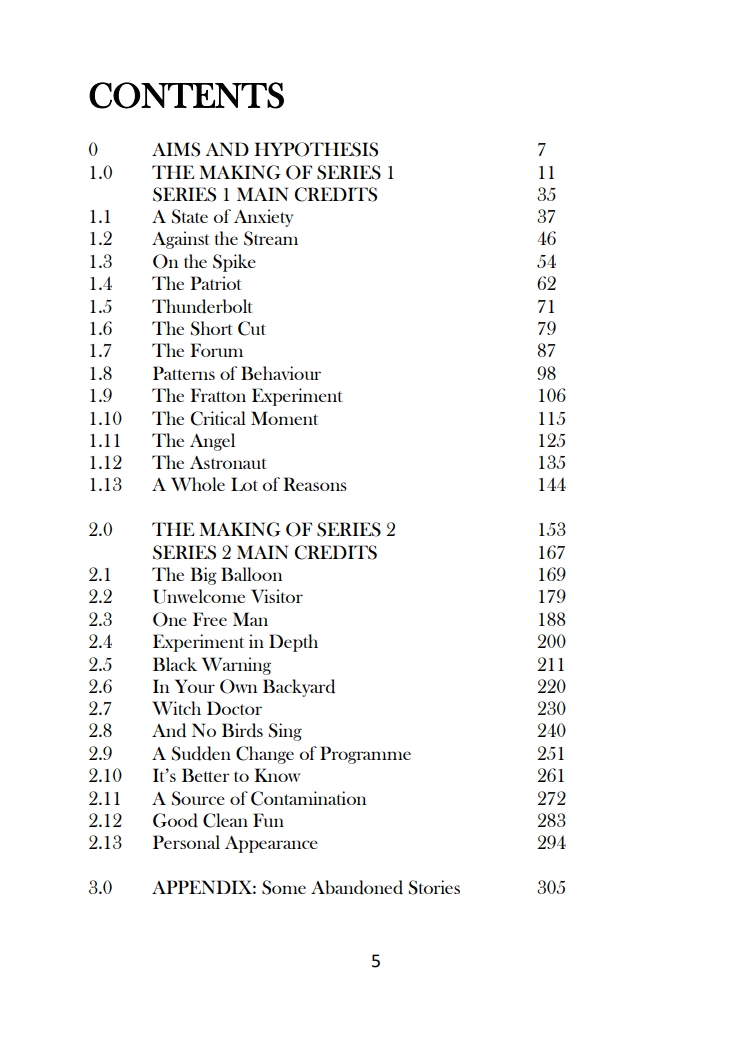
Drama in the Lab is organized in an orderly fashion – it begins with an introduction for the first series (featuring a plethora of excerpts culled from the production paperwork – all of which I find fascinating). This is followed by chapters on each episode (which contain a detailed story synopsis, production notes and an analysis of the story). Series two follows the same format.

As I mentioned when reviewing Taste and Decency – The Swizzlewick Story, it’s such a pleasure to be able to gain an understanding of how a television series of this era was produced, not least to be able to eavesdrop on the various disputes and issues that occurred (William Emms, for example, did not enjoy his time on the series).

We know all about the production of Doctor Who of course, but every other series of the same vintage will have similar stories to tell – it’s just that someone like Michael Seely will have to spend a fair amount of time digging through the paperwork in order to produce a coherent story. That’s only going to happen for a handful of series, of course, but I’m glad that Seely has made the effort with R.3.

Drama in the Lab – The R.3 Story is another very worthwhile publication from Saturday Morning Press which shines a rewarding light on a long-lost and long-forgotten programme. The only disappointment is the knowledge that the series has gone for good (I suppose there’s always the chance a dusty film can or two is out there somewhere, but I’m not going to hold my breath). But even if R.3 is no more, this book offers a comprehensive look behind the scenes and I’m sure it will be appreciated by anyone with an interest in the production of British television during the 1960’s.

Drama in the Lab – The R.3 Story can be ordered from Saturday Morning Press via this link.

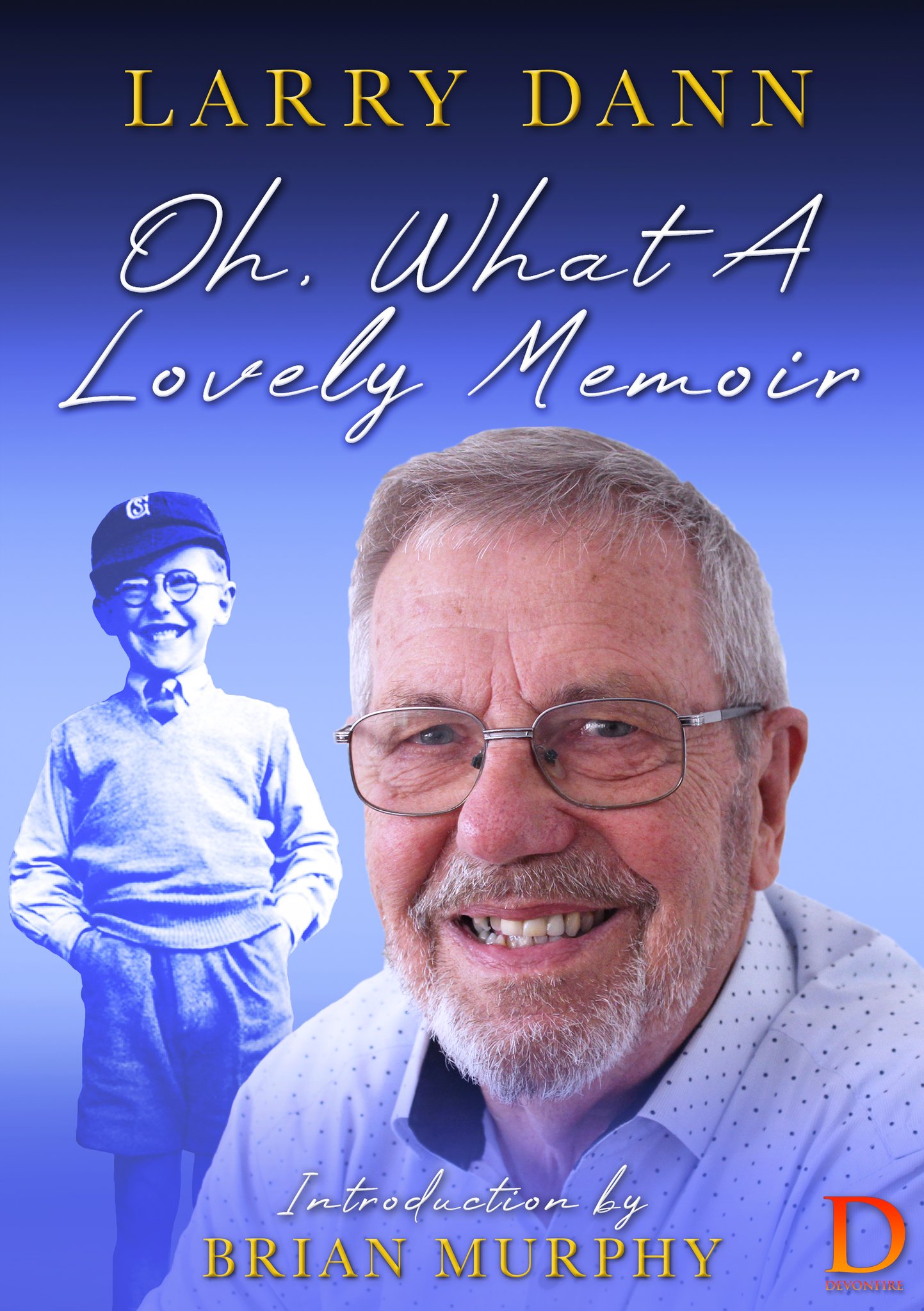
Book Review – Oh What A Lovely Memoir by Larry Dann

Best known for his lengthy stint as Sgt. Alec Peters in The Bill, Larry Dann began acting very early on (aged just five years) when he appeared as an extra in a film starring Jean Simmons and Stewart Granger (titled Adam and Evelyn).

In Oh What a Lovely Memoir, he vividly describes his first stuttering steps into the world of film. Unlike many fellow actors, he could hardly be described as a stagestruck youngster – indeed, Dann confesses that prior to this jaunt to Denham Studios, he had never actually seen a film (his parents deciding he was still too young for even a trip to the Saturday Pictures!).

Given this, it seems remarkable that they were more than happy to let their son loose in the film world at such a tender age (but then his mother had been a keen amateur actress and was no doubt keen to push her initially bewildered son into the theatrical world).

Clearly the bug had quickly bit though, as following a stint at stage school, he began to ply his trade in live television plays during the 1950’s, rubbing shoulders with the likes of David Hemmings and a young chap called Maurice Micklewhite. I wonder what happened to him?

Larry Dann is an engaging storyteller, who leads us through the highs and lows of his professional career. This really began to take off in 1962, when he was invited to audition for Joan Littlewood at Stratford, East London. Despite his apprehension, he must have impressed the daunting Ms Littlewood as he would appear in a number of her productions – most notably Oh What A Lovely War (which, of course, provides the title for this book).

As a jobbing actor, Dann has had a gloriously diverse career. For example he’s appeared in multiple Carry On films (albeit mostly at the fag end of the series’ life – including Carry On Emanuelle). Dann’s reaction when he first read the Emmanuele script (“It was awful and, of course, it got worse”) probably tells you all you need to know.

It’s The Bill, of course, which made him a television regular after decades of guest roles in the likes of Sherlock Holmes, No Hiding Place, Hunter’s Walk, Thirty Minute Theatre and Angels. For me, the most interesting part of his Bill reminisces was the revelation that he’d penned three scripts (in collaboration with Roger Leach – who placed Sgt. Tom Penny) which were on the verge of going into production before they were pulled at the eleventh hour.

Oh What a Lovely Memoir is packed with insights and good-natured name-drops as it charts Larry Dann’s checkered career – from the West End to Broadway and back again (not to mention his childhood during WW2). Warmly recommended.

Oh What a Lovely Memoir can be ordered from Devonfire Books via this link.

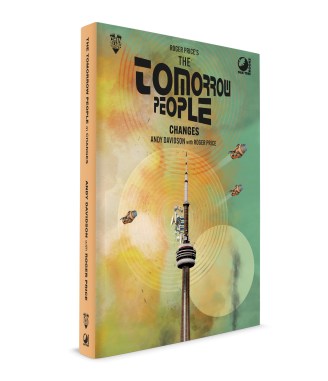
The Tomorrow People – Changes. New book due December 2023

A decade has passed since teen pop sensation Gabriel burst onto the scene.

Rescued from the shattered ruins of a city devastated by alien invaders, the plight of the golden-haired orphan with the face – and voice – of an angel burned brightly for a decade, winning legions of devoted fans across the world, though Gabriel has grown tired.

Not with the wealth or the adulation, but with the constant struggle to undo the terrible consequences his single moment’s hesitation unleashed upon the people of Earth many years ago.

But tonight, the Tomorrow People of every generation are coming to join the struggle for humanity’s future.

Published next month, The Tomorrow People – Changes is a new novel written by Andy Davidson, based on an storyline by Roger Price (the creator of TTP). After reading the book, an impressed Price said “When Andy sent me the manuscript, which he wrote from my detailed treatment, my response was, ‘I’m humbled – I could never have written anything this good!’”

Changes will be published by Chinbeard Books (who have the exclusive literary licence for The Tomorrow People) and Oak Tree Books and will be followed by a series of bi-monthly Tomorrow People novels, set in the continuity of the television series, written by Gary Russell, Rebecca Levene & David Derbyshire, Nigel Fairs, Joseph Lidster, and Iain McLaughlin.

Changes can be pre-ordered via this link.

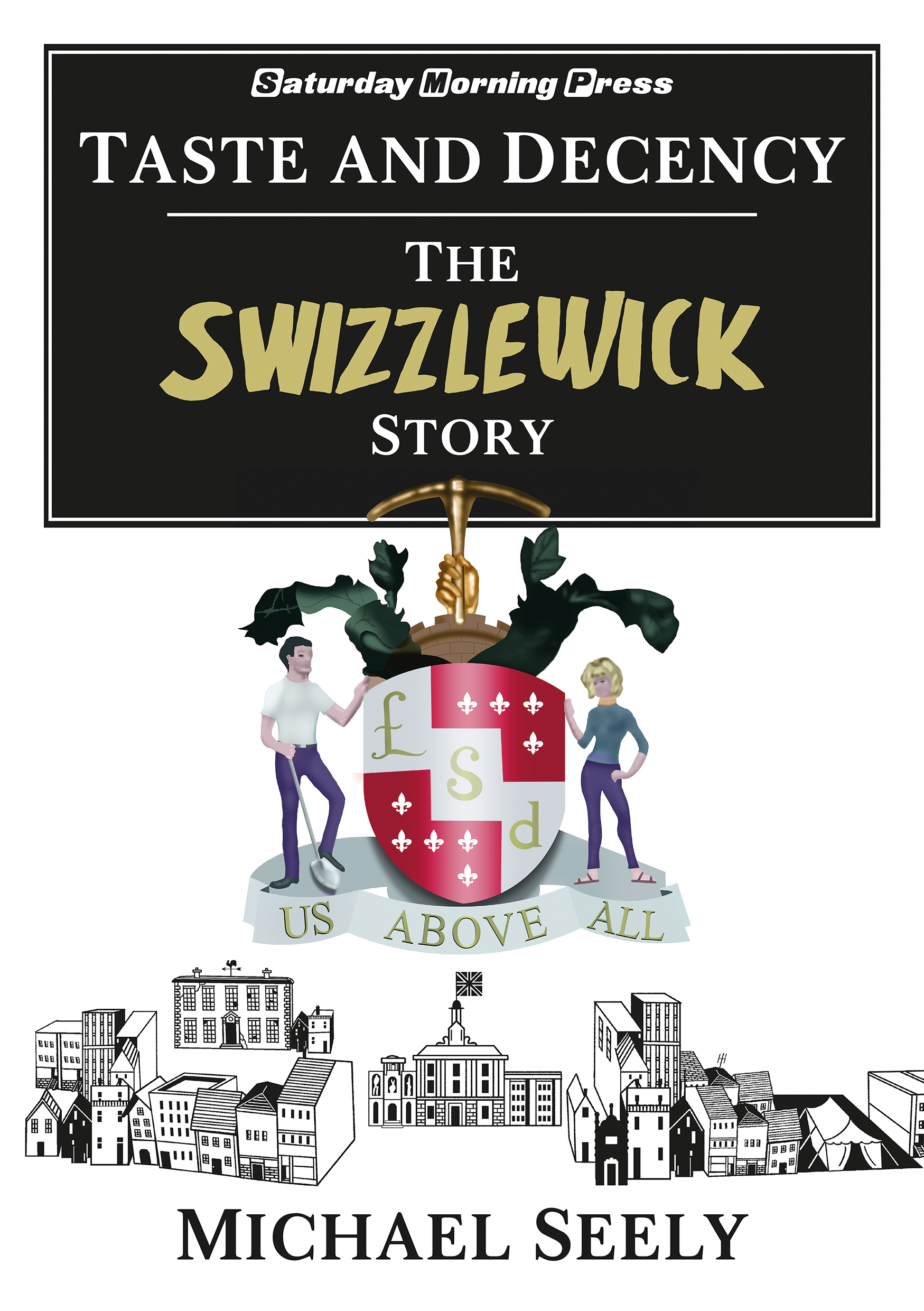
Book review. Taste and Decency – The Swizzlewick Story by Michel Seely

One of the pleasures (or frustrations, depending on your point of view) faced by the devotee of archive television is that there’s just so much of it. No matter how deep you think you’ve dug at times, there’s always yet more forgotten programmes just waiting to be unearthed.

Such a one is Swizzlewick, which – until this book – I’d never examined in any detail. Like Michael Seely, my first thoughts were that it was a children’s series, but that’s far from the case ….

A twice-weekly BBC serial created by David Turner, Swizzlewick was an experimental and satirical drama set in the world of local government. If remembered at all today, it’s because Mary Whitehouse (then just beginning her campaign to clean up tv) was incensed by the series – convinced that Swizzlewick had deliberately lampooned both her and her husband.

As Seely notes early on, Whitehouse’s claims have been taken as fact (notably in her memoirs). But by digging through the surviving production documentation, Seely is able to tell – for the first time – the richer and more accurate story about the series’ genesis, production, clash with Mrs Whitehouse and swift demise (it came to an end after just 26 episodes – of which only one exists today).

In the field of continuing dramas (or “soap operas” as they’re known today) ITV reigned supreme in the 1960’s with both Coronation Street and Crossroads. The BBC wasn’t idle though and, following on from the 1950’s Grove Family, they broadcast a variety of different series (Compact, 199 Park Lane, United!, The Newcomers) during the following decade with varying degrees of success.

Swizzlewick was born out of the success of Compact (an audience favourite, but viewed with disdain by the critics) which had run for several years and was now approaching its natural end. Anybody who has studied the genesis of Doctor Who, will recognise some of the figures floating around the BBC drama department at this time (Donald Wilson, Anthony Coburn) and it was Wilson who spoke to David Turner about the local government series concept that had been developed by Coburn.

I love facts and there’s plenty of facts in this book. For example, we learn how many guineas the scripts cost, as well as the budget for each episode (around about the same as the early episodes of Doctor Who). Sydney Newman offered criticism and encouragement as the series’ format was developed, although Morris Barry struck a more downbeat note (noting in a memo that the series was far removed from the glossy escapist fare of Compact – and so was more suited to a later evening slot).

From this (and of course, knowing the series’ eventual fate) it’s hard not to chug through these earlier chapters with a feeling of unease that Swizzlewick won’t be long for this world. And so it turns out – but the way it got there (and the Whitehouse controversy especially) does make for a fascinating story.

Thanks to a plethora of diligent researchers, we know so much about the genesis of Doctor Who, but the vast majority of its contemporaries have not been so fortunate. That’s one of the reasons why I found the early chapters of Swizzlewick so engrossing – to be able to eavesdrop in detail on the creation and production of a 1960’s BBC drama series that isn’t Doctor Who is quite a treat.

The first half of the book details the production of the series, the second half offers a detailed episode guide (very detailed, in fact) which is followed by an epilogue, entitled Was Swizzlewick any good? Michael Seely thinks so and having finished the book, I’d have to concur.

It goes without saying that this is a very niche book. And yet I’m sure it will find a market, as even if the series won’t be familiar to many, the wealth of production documentation unearthed will ensure it’s bound to catch the eye of anyone with an interest in 1960’s British drama. Warmly recommended.

Swizzlewick can be ordered directly from Saturday Morning Press at this link.

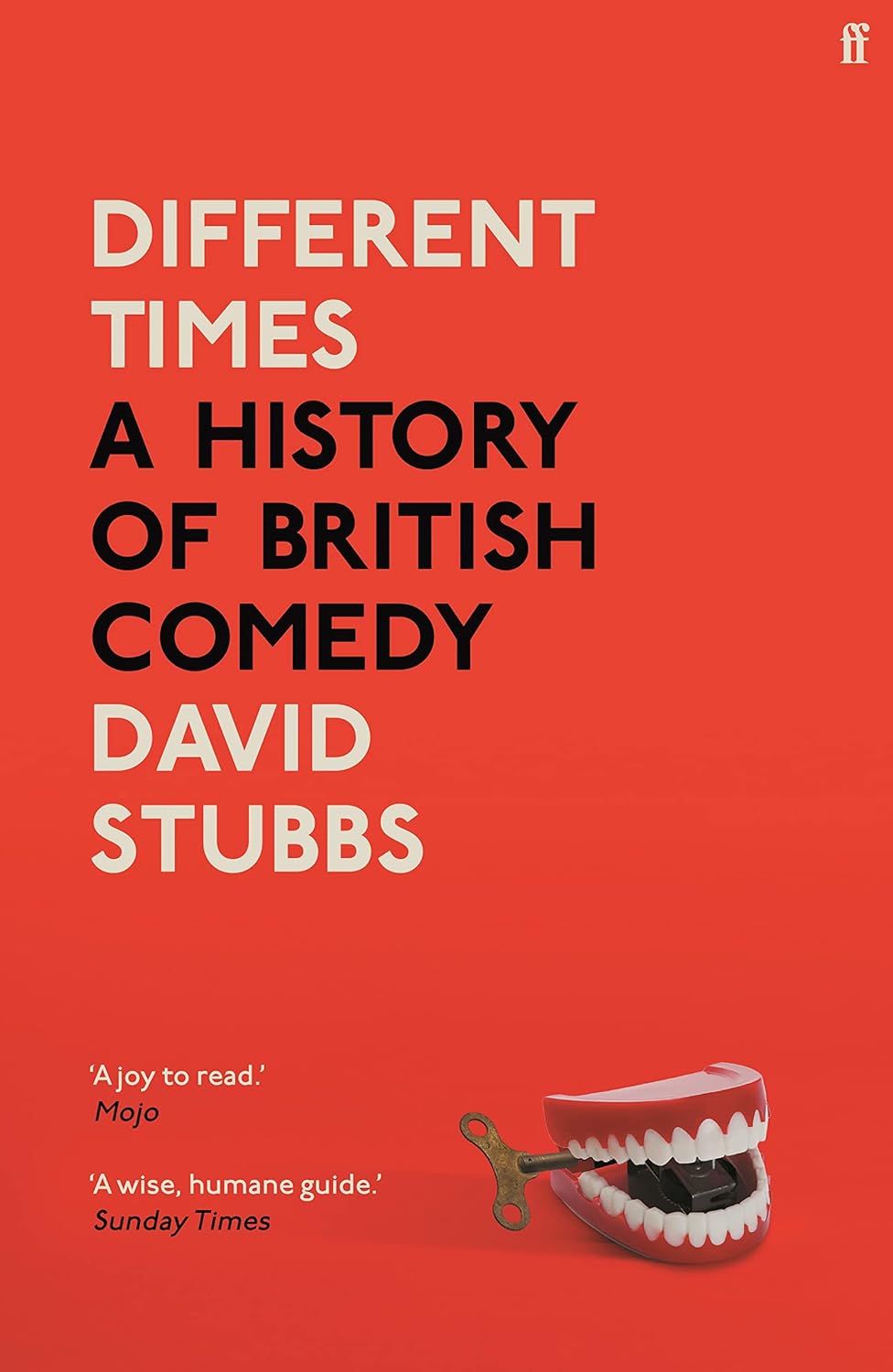
Book review. Different Times – A History of British Comedy by David Stubbs.

Anybody attempting to chronicle the history of British comedy in a single volume will have to be somewhat selective. And this proves to be the case with Different Times – A History of British Comedy by David Stubbs.

Although films (the work of Charlie Chaplin and Stan Laurel, Ealing, the Pythons) are touched upon as is the stand-up circuit, the bulk of the book concerns itself with television comedy (with the 1970’s taking up by far the largest chapter).

David Stubbs sketches affectionate appreciations of the likes of Tony Hancock, Joyce Grenfell and Dad’s Army although his introduction (where he acknowledges his privileged upbringing as a “white, male, cisgender, Oxbridge” type) does give warning that some sacred cows will be slaughtered.

Although, in fact, there’s not too much the devotee of classic comedy to get hot under the collar about. True, he doesn’t have a great deal of time for Spike Milligan (whilst taking pains to acknowledge his importance in the comedy firmament) but I can appreciate his point of view. I’m happy to have the surviving episodes of Q close at hand – but it’s fair to say that it’s not a series I reach for all that often.

Familiar targets like On The Buses and Love Thy Neighbour are given a good kicking. Possibly more surprisingly, he seems to dislike Are You Being Served? although it’s never made clear why (aside from the fact that Grace Brothers was, even by the 1970’s, an anachronism). No doubt David Croft and Jeremy Lloyd were well aware of this – so it seems an odd point to call them out on.

Any discussion of problematic 1970’s sitcoms is bound to include It Ain’t Half Hot Mum (although it’s worth noting that the series has recently been re-run on That’s TV and the world has continued to turn). The casting of Michael Bates as Rangi Ram is a sticking point for some (with Stubbs firmly against) although it’s interesting to hear some different points of view from those who aren’t (in Stubbs’ words) white and cisgender.

For example, Sanjeev Bhaskar has always appreciated Bates’ performance. ‘Michael Bates could speak Urdu fluently. He served in the Army in India and he could speak the language. And secondly, within that programme, the character he was playing wasn’t the butt of the joke… Rangi Ram was the fixer, he was the one who sorted things out.’

Renu Setna, who appeared multiple times in the series, did initially confess that the casting of Bates upset him. That was, until he saw his performance and had to acknowledge that he was perfect in the role.

Sergeant-Major Williams’ homophobic treatment of the concert party might also be a concern – but there’s little doubt that it’s entirely accurate (Jimmy Perry was a member of a similar concert party and directly drew upon his own memories whilst Kenneth Williams’ An Audience With offers a story with a very similar NCO character).

As you work through the book, you can help but notice that Stubbs has some annoying tics (like Ben Elton, he can’t resist a little bit of politics from time to time). But knowing that Morecambe & Wise were apparently life-long Conservative voters adds nothing to his thumbnail sketch of them, since Eddie Braben’s scripts were never political.

Given the limited word-count, certain series are given short shrift (and others ignored completely). Last of the Summer Wine, for example. is dealt with in a rather condescending and inaccurate way. Stubbs opines the familiar statement that the series was created as the misadventures of three OAPs (to begin with, they were all in their fifties and unemployed, rather than retired). Also LOTSW is described as an archetypal Sunday evening series which (during the 1970’s at least) it never was.

It’s a pity that I kept noticing other niggling little errors. You’d have to be a real nit-picker to worry about them. I’m a real nit-picker. Sorry ….

For example, we’re told that Bill Kerr was slowly eased out from the television version of Hancock’s Half Hour (he never appeared in a single episode). Bob didn’t attempt to join the army at the end of series one of The Likely Lads (it was series three). Ronnie Barker never appeared in At Last the 1948 Show or Do Not Adjust Your Set. dinnerladies was broadcast on BBC1, not BBC2 …

These brief quibbles apart, Different Times – A History of British Comedy was a book that I devoured very quickly and, in the main, enjoyed. I can’t say I agreed with all of David Stubbs’ opinions (it’s doubtful that many will) but in-between the occasional bouts of hectoring he offers some very readable and incisive analysis.

Different Times – A History of British Comedy was published by Faber & Faber on the 27th of July 2023

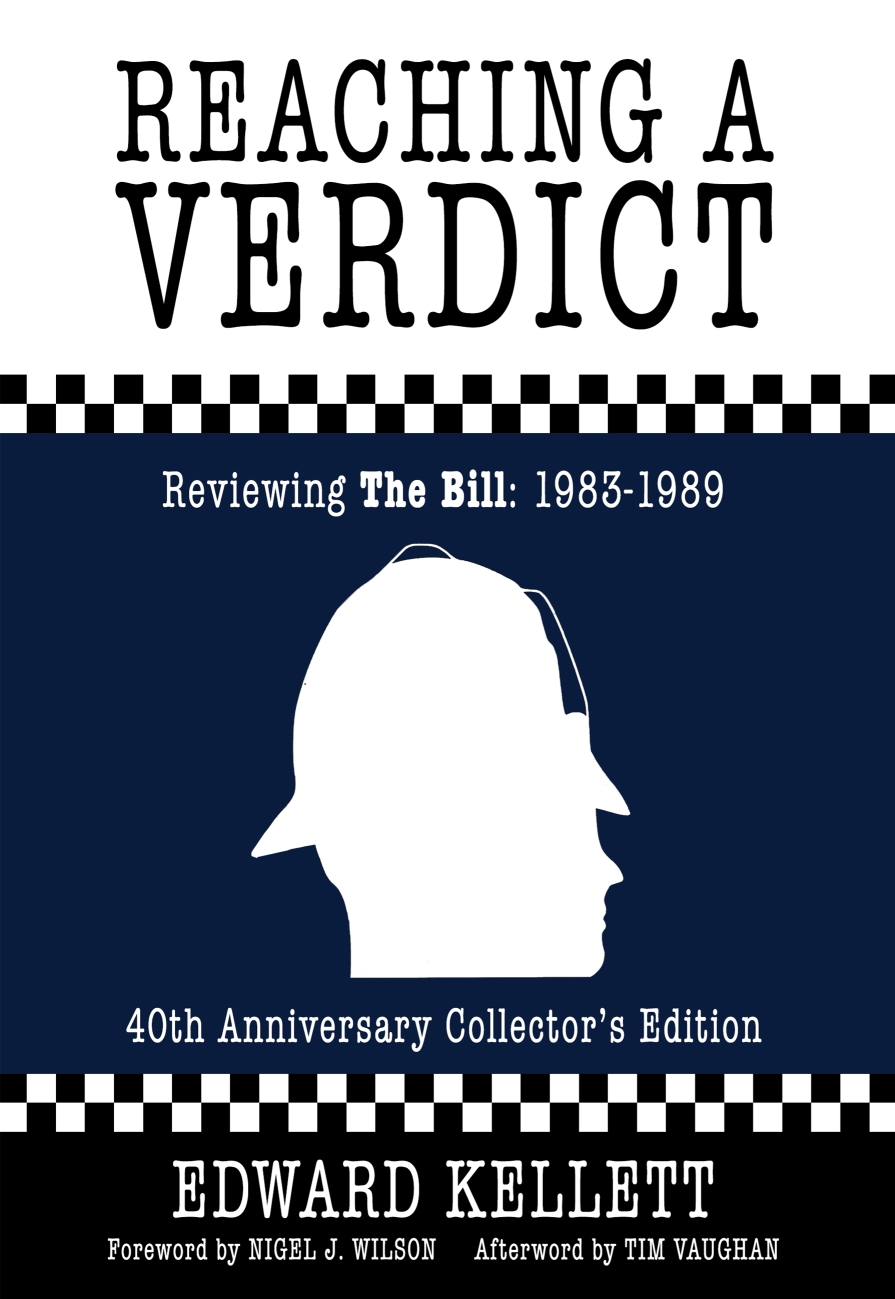
Book review – Reaching a Verdict by Edward Kellett

Reaching a Verdict: Reviewing The Bill 1983 – 1989 takes an in-depth look at the first five series of the UK’s longest-running police series. Based on material originally written for The Billaton, Edward Kellett’s book offers a deep dive into the series’ early years and is an excellent companion for anyone attempting a rewatch.

It’s easy to assume that The Bill arrived fully formed in its first series, but instead Kellett is able to show how the series took some time to develop (characters like Jim Carver slowly shedding their naïve persona, for example). John Salthouse’s towering turn as DI Galloway is also acknowledged. During S1 he was a dominant figure and although he’d become more of an ensemble player during series two and three, his departure prior to the series’ half-hour reboot did leave a big hole to fill (luckily, a more than adequate replacement was found …)

I appreciated the way that Edward Kellett was keen to stress how The Bill didn’t develop in isolation. Sometimes, certain programmes can be lauded as mould-breakers, with no acknowledgment given that they were actually building on what had gone before them. So I enjoyed Kellett’s nod to Strangers – a now almost forgotten series.

The ‘missing link’ with the police series of the past is Strangers, a Granada TV show that bridged the five-year gap separating The Sweeney and The Bill – missing in the sense that it can only be tracked down on DVD, not doing the late afternoon rounds on ITV4 as a washed out, zoomed in, cut down travesty like other crime dramas of the period.

With a large, constantly changing cast of regular actors, not to mention an influx of new writers as the series moved to a twice weekly year round production cycle, there’s an awful lot that needs to be noted and analysed. But all the key contributors are given their moment. For example, here’s a thumbnail sketch of Ted Roach –

On paper Roach is the one figure most easily recognisable from TV copperdom, straight out of the Sweeney mould: the roguish, hard-drinking ladies’ man who sails close to the wind but gets results. Ted finds it hard living up to that last caveat, and thus what could have been an imitation Jack Regan is in fact a more substantial one. He is an odd, shambolic presence, imbued with that other great quality Scannell brought to the role, besides his charisma: unpredictability.

Another part of the book that struck a chord with me was the appreciation of Peter J. Hammond’s scripts. Hammond (best known for Sapphire & Steel) is a unique writer whose distinctive voice almost always comes through, no matter what series (The Bill, Z Cars, Angels, etc) he’s working on at the time. His Bill offerings noted here are classic Hammond efforts – at times unsettling and oblique narratives that linger in the memory.

Reaching a Verdict kicks off with a short chapter about the Storyboard pilot – Woodentop – with the remainder of its 250 or so pages divided into five more chapters (covering series one to three of the 50 minute show as well as the 25 minute episodes broadcast during 1988 and 1989).

Having previous enjoyed the two oral production histories of this era of The Bill by Oliver Crocker (see here and here) it’s very pleasing to now have such a comprehensive analysis of the programme as well. It’s certainly made me keen to dig out my DVDs and revisit the show –  and I can’t think of any higher recommendation of the book than that.

Reaching a Verdict will be published on the 16th of August 2023. Pre-orders can be made now at Devonfire Books.

Letter from Helvetica

Letter from Helvetica is an eight part weekly podcast series which began yesterday (30th April 2023). It stars Andrew Mackintosh (who also wrote the series and composed the music) and Natalie Roles and is produced by Oliver Crocker.

Both Mackintosh and Roles will be familiar to viewers of The Bill (Mackintosh played DS Greig between 1989 and 1998 whilst Roles took the part of DS McAllister during 2000 and 2004).

Letter from Helvetica takes the form of an epistolary novel, in which the crusty John Stotter (Mackintosh) writes a regular series of rambling letters to his favourite (well, only) niece Abigail Wesley (Roles) and she responds in turn with equally chatty and sharply observed missives.

Stotter, a retired Lieutenant Colonel, lives a quiet life in the tiny (fictitious) Cornish village of Helvetica whilst Abigail, a talented botanist, has uprooted her husband and young family to the (equally fictitious) island of Burbango in the South Pacific for a year.

I’ve had the opportunity to listen to the first four episodes (You Say Goodbye and I Say Hello, A Long and Winding Road, Another Girl and Magical Mystery Tour) and I’ve enjoyed the ride so far. Mackintosh’s writing is dense, nicely observed and peopled with a diverse collection of characters. And thanks to the skill of both readers, over time it’s impossible not to get drawn in.

Each episode runs for about 22 minutes which is just about perfect – long enough but not too long that your interest begins to wander.

You can find out more information about the series here and the first episode is available now from wherever you get your podcasts from.

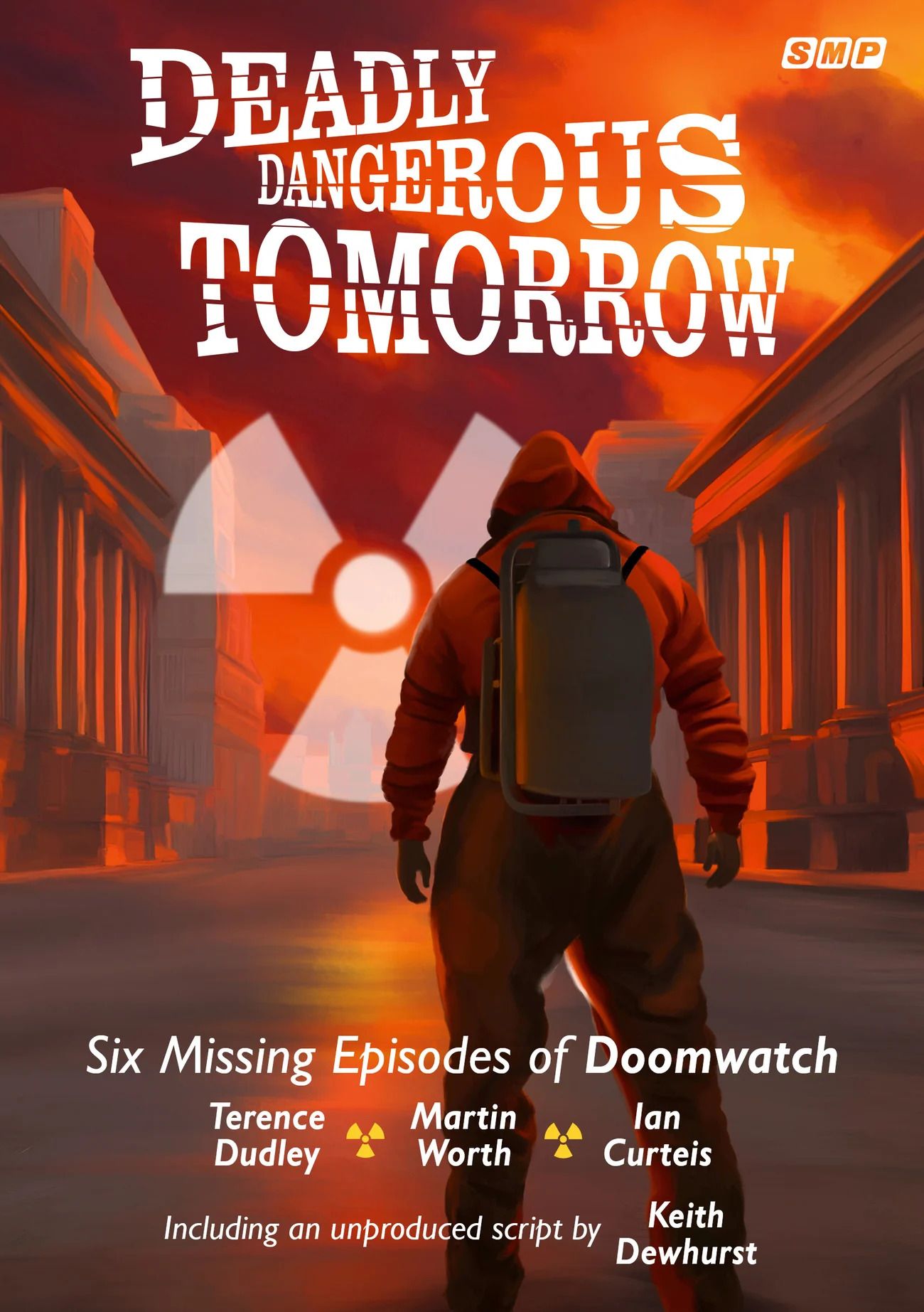
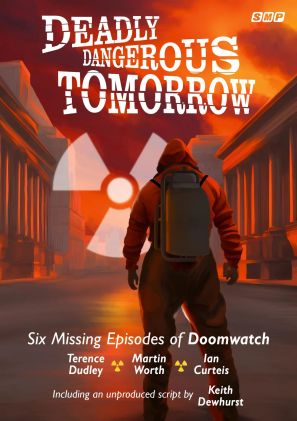
Book review – Deadly Dangerous Tomorrow edited by Michael Seely

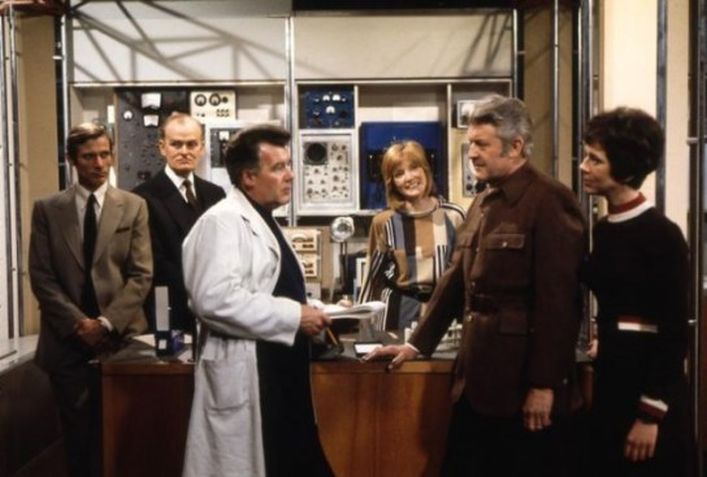
Doomwatch ran for three series between 1970 – 1972. Like many programmes of this era, not all of the episodes now exist (out of 38 made, 14 are currently absent from the archives). Most of the wiped episodes come from the third and final series (five are missing from series one, whilst the second series exists complete).

Since only three episodes remain from the third series (including the untransmitted Sex and Violence) it’s always been hard to get a feel for how the last run developed. So this second edition of Deadly Dangerous Tomorrow (originally published in 2010) is very welcome as it contains five S3 scripts – Fire and Brimstone, High Mountain (both draft and camera scripts), Say Knife Fat Man, Deadly Dangerous Tomorrow and Flood. There’s also a S1 episode (Spectre at the Feast) and – new to this edition – a script by Keith Dewhurst that was submitted for the second series but rejected by series producer Terence Dudley.

The production history of Doomwatch is something of a battleground, due to (in the blue corner) Terence Dudley and (in the red corner) series creators Kit Pedler and Gerry Davis. Pedler and Davis, naturally enough, had very strong opinions about how their creation should develop, but Dudley was equally forthright and by the third series he had wrested complete control and was able to fashion the show entirely in his image.

Dudley’s Spectre at the Feast is the first script in this book. It had a good guest cast (Richard Hurndall, William Lucas, George Pravda) so it’s possible to surmise we would have been on safe ground, acting wise, but how effective the overall production would have been (given some of the hallucinogenic sequences) is another matter.

The story reads well though, with Fielding (played by Lucas) coming across as the sort of strong opponent for Quist typical from this era of the programme. The reason for an outbreak of mass hallucinations (contaminated lobsters) is something you don’t see every day (it’s probably best if you suspend your disbelief when Quist proffers his explanation). John Ridge going undercover to a fancy hotel in order to steal a lobster from their tank is one reason why I really hope this episode turns up one day.

Remarkably (or sadly) so many Doomwatch episodes still seem relevant today – Spectre at the Feast (which pivots around the theme of river pollution) is no exception. Towards the end of the episode, Quist confronts Fielding.

Gentlemen, we have a lot to thank Mr Fielding for. He is pioneering in silicostyrenes. Soon, there will be no more cast-iron car engines – just cheap plastic cylinder blocks – and it won’t be one factory releasing effluent at the permitted level. Today he poisons the rich man’s lobster, tomorrow it’ll be the poor man’s fish and chips. He’s produced a cheaper engine. Do we want it at the price?

We then jump forward to the opening episode of series three – Fire and Brimstone. Another Dudley script, it heavily features John Ridge who, after stealing six deadly anthrax vials, attempts to hold the world’s governments to ransom.

Simon Oates (John Ridge) didn’t want to commit to the whole of series three (he would only appear in four episodes) so it’s understandable that Dudley would give Ridge a memorable lap of honour (he was hardly the sort of character to just meekly hand in his resignation). Doomwatch had already killed off a main character (Toby Wren) so possibly didn’t want to repeat that. Instead, John Ridge goes rogue in the most extreme way ….

By all accounts, this baffled and annoyed contemporary critics and viewers, who couldn’t understand why the previously affable (if highly strung) Ridge had suddenly become a fanatic – intent on wiping out millions of people if his demands aren’t met. An explanation – of sorts – is provided in 3.4 (Waiting for a Knighthood) the only existing John Ridge series three episode. Fire and Brimstone is an uncompromising and unsettling way to kick off S3, not least for the way it ends on the broken Ridge.

Two versions of Martin Worth’s High Mountain (episode 3.2) are included – firstly a draft script and then a re-written camera script. The main thrust of the plot remains the same, but the dangerous item under discussion – originally soap powder, later aerosol paint – changes as do some nips and tucks to the dialogue (which are always fascinating to pick up on).

A few lines swiftly dispose of two S2 regulars (Geoff Hardcastle, Dr Fay Chantry) who were deemed surplus to requirements by Terence Dudley. Neil Stafford (John Bown) now moves into view as Ridge’s replacement – albeit someone forced on Quist by the Minister to act as his eyes and ears (although Stafford quickly becomes a keen Doomwatch man).

Unlike the rather pallidly drawn Hardcastle and Chantry, there’s no doubt that Stafford makes his mark straight away (even more so in the draft script, where he dominates a subdued Quist). The notion of the Drummond Group offering Quist the money to set up a private Doomwatch, free from government interference, is an intriguing one (although inevitably strings are attached).

Next up (3.3) is another Martin Worth script – Say Knife Fat Man – which had quite the guest cast (Peter Halliday, Geoffrey Palmer, Leslie Schofield, Paul Seed, Elisabeth Sladen). The script is preceded by a letter from Worth to Terence Dudley, in which he wearingly describes how he had to undertake a hefty rewrite on the script.

Possibly this might explain why the story doesn’t quite grip. The main thrust of the episode (a group of disgruntled students steal some plutonium in order to make an atom bomb) – is decent enough, but both Quist and Stafford are rather passive throughout. It’s Chief Supt. Mallory (Geoffrey Palmer) who manages to put two and two together (indeed, it turns out to be a story where the Doomwatch team achieve very little). Possibly the most interesting part is the way that Barbara (by displaying sympathy for the alienated students) is allowed, for once, to be something more than just a line feed for the others.

There’s almost a Department S feel to the pre-credits sequence of Deadly Dangerous Tomorrow (3.7, written by Martin Worth). The mystery of how an Indian family – father, mother, children – dying of malaria and malnutrition end up in a tent pitched in Hyde Park is spun out for a little while.

It turns out that John Ridge (no longer a member of Doomwatch, but equally no longer a menace to society) is partly responsible for bringing them to London. The suffering of the third world is his latest cause, although Stafford cynically suggests that Ridge is motivated by self interest. “So that’s why you took up the cause of the innocents and martyrs. Because you think you’re one yourself. That’s what it’s really about – poor, hard done by Ridge, whom nobody loves, getting his own back.”

Whatever the reason, the sudden appearance of Ridge in the new Doomwatch office mid way through the story gives the episode a considerable boost. The main guest character – Senator Connell – seems to be a little bit of a cliché figure but it would have been nice to see what Cec Linder (a familiar face from the television Quatermass and the Pit and the Bond movie Goldfinger) did with the role.

The last series three script included (3.9, written by Ian Curteis) is Flood. It has a tense feel throughout as abnormally high tides threaten to flood London, potentially affecting millions of people. Luckily, at the last minute the wind changes and the panic is over (which was probably just as well, as Doomwatch’s budget wouldn’t have stretched to depicting a flood-ravaged London).

The reason for the tides isn’t environmental – it’s due to secret nuclear tests which occurred on the seabed just a few hundred miles off the coast of Europe. This is the cue for Quist and the Minister to lock horns, although it’s noticeable that since he was first introduced, the Minister has become less of a pantomime villain and more of a three-dimensional character. He now possesses an agenda that isn’t simply designed to provide Quist with an adversary, instead it’s possible to appreciate (if not always sympathise) with the Minister’s point of view.

New to this edition is the snappily titled Home Made Bomb Story by Keith Dewhurst. Surprisingly, it isn’t actually about a home made bomb ….

Doctor David Daviot, an old pupil of Quist’s, is the central character. He’s a scientist with a conscience, but he comes across as rather boorish and unsympathetic (so it’s difficult to feel too invested about his fate). He does share some good scenes with Quist though and Quist is given a remarkably lengthy monologue about the death of his wife that could have been a stand out moment for John Paul (although one that probably would have been a pain to learn).

Home Made Bomb Story is certainly a curio (it’s jarring to hear Daviot refer to Quist as ‘Doc’) but given a few more drafts maybe it would have made the grade, but alas it wasn’t to be.

Deadly Dangerous Tomorrow is edited by Michael Seely, who knows his Doomwatch (you’re well advised to track down Prophets of Doom, an excellent production history of the series written by Seely and Phil Ware) not to mention archive television in general. He provides a concise introduction to set the scene, and supplies informative footnotes throughout. Some of the footnotes are production related (cut dialogue, etc) whilst others provide detail about the various environmental issues tackled in the stories.

This book is an excellent companion to the Doomwatch DVD, as it helps to flesh out the neglected third series. It’s also made me keen to revisit Doomwatch from the start, which is never a bad idea.

Deadly Dangerous Tomorrow comes warmly recommended and can be ordered via this link.
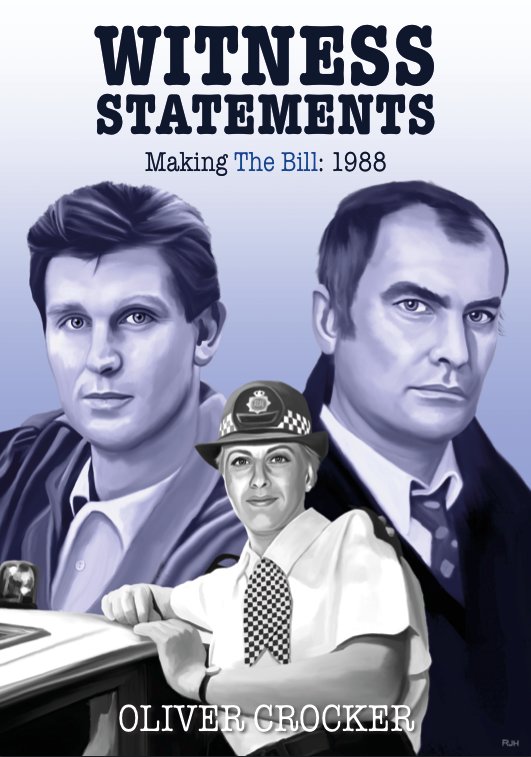
Witness Statements – Making The Bill: 1988 by Oliver Crocker

In July 1988, The Bill underwent a major format change – from a series running thirteen weeks each year (with a single 50 minute episode) to a twice-weekly “soap” format (with episodes now running for just 25 minutes).

The Bill wasn’t the first programme to have undergone such a transformation – something similar had previously happened to both Z Cars and Angels. However, it’s probably fair to say that the best years of both of those series were behind them at the time they were re-formatted.

With The Bill it was a different matter. Although the restricted running time and move to a pre-watershed slot concerned some, the series quickly moved from strength to strength. For many people, myself included, the late eighties and early nineties were a golden age for the show.

Following on from his previous volume, which chronicled the fifty minute episodes that comprised the first three series, Oliver Crocker’s new book takes an in-depth look at the 48 episodes broadcast in 1988 – from Light Duties in July 1988 to Taken Into Consideration at the end of December.

It’s something I’ve touched on before, but it’s very pleasing to have such a dense, oral history of a show like The Bill. Rare series – like Doctor Who – have an embarrassment of production information available for the curious reader. But the vast majority of other programmes are lucky if they have a single book dedicated to them – and even those that do, tend to offer general overviews rather than an immersive episode by episode analysis.

Witness Statements – Making The Bill: 1988 is in the same format as the previous volume. Each episode is given a brief teaser synopsis, cast and production listing, production notes and then ‘witness statements’ from an impressively wide variety of contributors (both actors and technical personnel). There’s so much value to be found in these interviews. Unlike some popular series, where people have been interviewed so many times that they now have little new to say, there’s a real freshness to this book.

To take just one example, whilst P.J, Hammond has been interviewed before, it’s almost always been about Sapphire & Steel. But I’ve always felt that Hammond’s work as a writer for hire (on Z Cars, Angels, The Bill, etc) to be an area of his career that’s worthy of more investigation, so it was very pleasing to hear from him.

Wilf Knight’s technical notes from 1988 (such as uniform protocol) were also fascinating, but to be honest there’s so much of interest in this book that I know I’ll keep on coming back to it.

For those beginning a rewatch of the 1988 series, this will serve as the ideal companion or you can simply open a page at random and find something to catch the eye. Witness Statements – Making The Bill: 1988 is an engrossing read and comes highly recommended. It can be ordered directly via this link.
The Real Coronation Street by Ken Irwin

I’ve recently added this slim, but fascinating, volume to my collection. Published in 1970, Ken Irwin meets the cast and gently dishes the dirt – if it’s gossip you want then you’ve come to the right place.

It’s not really a salacious read though – Irwin (despite his bumpy relationship with the series) clearly had affection for the majority of the cast. Famously, as the Daily Mirror’s television critic, he predicted, after the first episode, that the series was doomed to failure. Like the Decca executive who told Brian Epstein that “guitar groups were on the way out”, Irwin’s comment was something he had to spend the rest of his life living down.

Even in 1970, he wasn’t predicting that the series would run for ever – the final chapter in this book suggests that another ten years might just be possible though ….

With 32 chapters across 173 pages, The Real Coronation Street is a very dippable tome. After briefly detailing the creation of the series, the book then tends to focus on one actor per chapter – with Irwin crafting brief but incisive portraits of his subjects (his experience as a newspaperman was clearly put to good use here).

Virtually all the cast members you would hope to have been interviewed – both past and present – make an appearance. Some familiar stories – the senior actors’ reluctance to interact with guest performers and the way they jealously guarded their rehearsal room chairs – are given an outing.

Frank Pemberton’s chapter (Tragedy on the Way to the Dole) catches the eye. Pemberton (Frank Barlow) was axed from the series in 1964 and the following year suffered a stroke which severely limited his mobility. Talking to Irwin, he still wistfully hoped for an acting job where he could sit down all the time. He did make one final Street appearance (in 1971) but sadly suffered another stroke shortly afterwards and died at the early age of 56.

Sandra Gough (Irma Ogden/Barlow) is another who had a more than interesting relationship with the series as she found herself cold-shouldered by some of her fellow cast members due to her strident Christian views. It’s notable that Irwin doesn’t name names – but, given that he didn’t want to burn his professional boats, you can’t really blame him. Gough would abruptly exit the series (she was fired in 1971).

Illustrated with a selection of photographs that were mostly new to me, if you can find a decently priced copy then I’d strongly recommend adding The Real Coronation Street to your library.

All Memories Great and Small – Expanded Edition by Oliver Crocker (Book Review)

With one notable exception (Doctor Who) the production histories of many British television programmes aren’t terribly well documented. There are exceptions of course (the sterling work carried out by Andrew Pixley for a variety of series, David Brunt’s painstaking Z Cars tomes and recent books about programmes as diverse as Star Cops and The Brothers have all been more than welcome).

Until the original edition of All Memories Great and Small in 2016, the BBC version of All Creatures was one of those neglected series, but Oliver Crocker’s wonderfully exhaustive book certainly rectified that. Now reissued with additional interviews and fascinating production information for 35 of the series’ 90 episodes, it’s better than ever.

Since the original publication, several of the interviewees (such as Bill Sellars and Robert Hardy) have sadly passed away, which makes the book even more of a valuable resource as there’s no substitute for first hand recollections. The roster of those who agreed to be interviewed is impressive – not only key regulars such as Christopher Timothy, Robert Hardy, Carol Drinkwater and Peter Davison, but also a plethora of guest stars and behind the scenes crew who are able to share many stories about the series’ production.

The icing on this particularly succulent cake has to be a slew of wonderful production photographs with the odd studio floor plan thrown in for good measure,

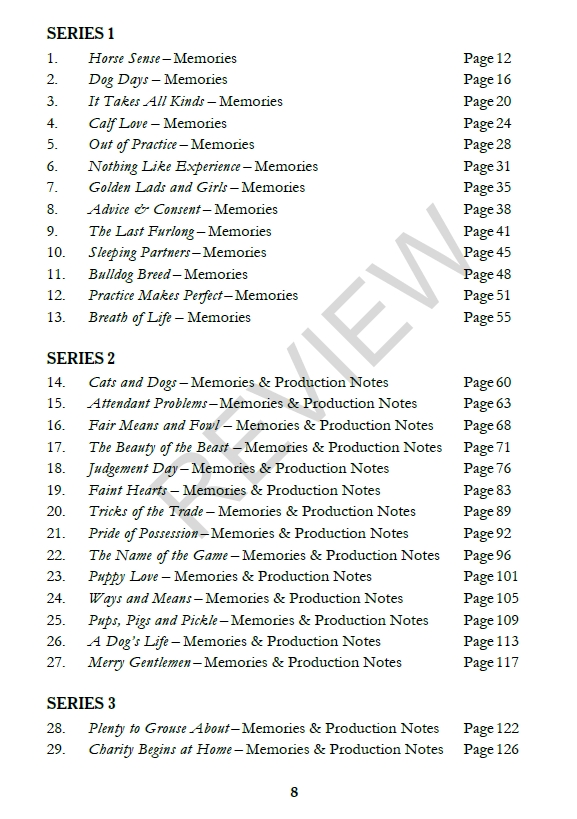
The format of All Memories Great And Small is straightforward and effective. Each episode (from Horse Sense in 1978 to the final Christmas Special in 1990) is given its own chapter. All have reminiscences from a variety of contributors (some specific to that episode, some more general) whilst selected episodes also contain production info (handy if you’re looking to pinpoint specific locations used, for example).

Clocking in at just over 400 pages, it’s plain that this book was a real labour of love. If you’ve got the original edition then it’s still worth an upgrade for the additional material. But if you’ve yet to buy it and have any interest in the BBC series, then All Memories Great and Small is an essential purchase. An absolute treasure trove of a resource, I know that it’ll be something I’ll return to again and again in the future.

All Memories Great and Small can be ordered directly from Devonfire Books via this link or from them via this Amazon link.

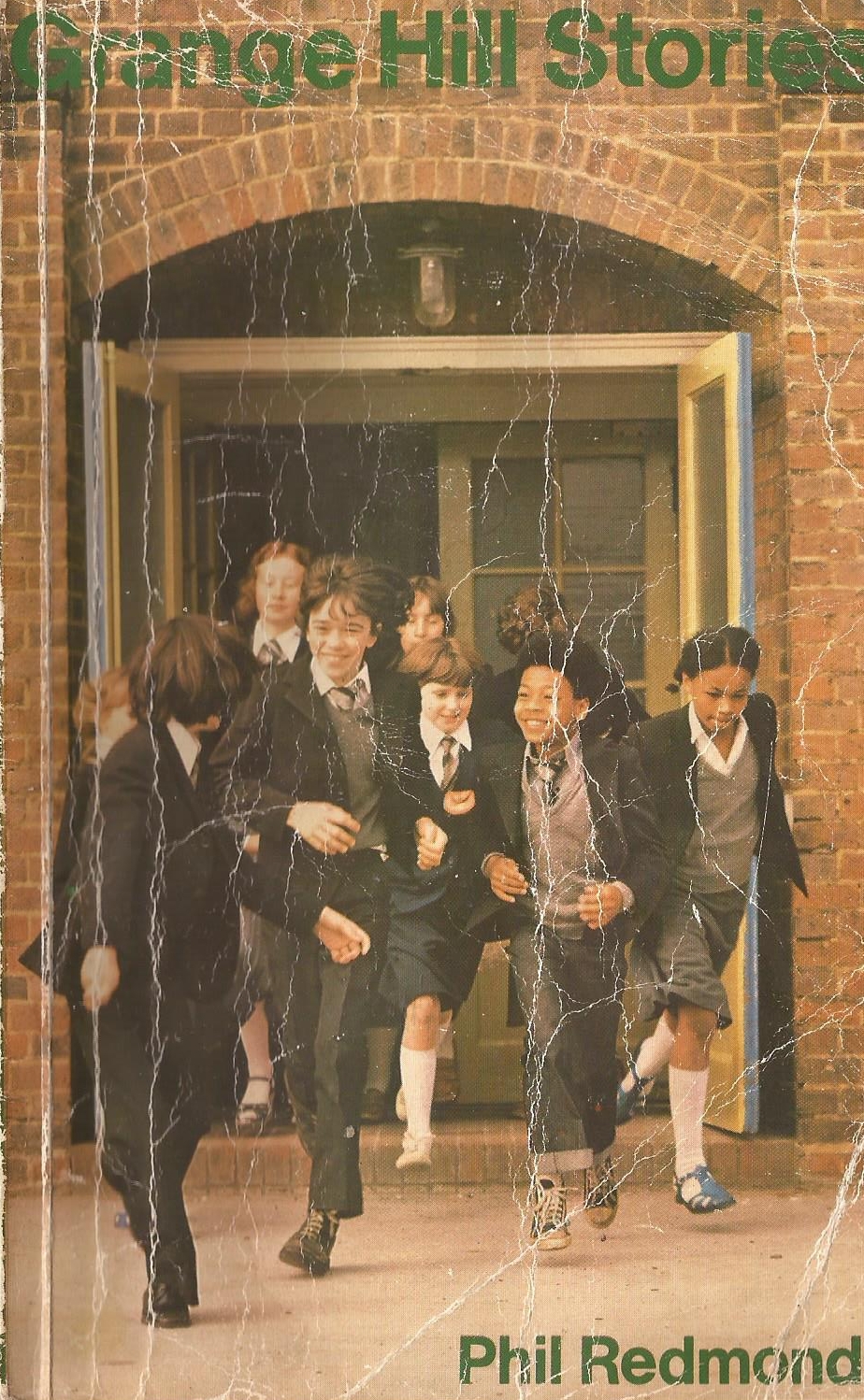
Grange Hill Stories by Phil Redmond (BBC Books, 1979)

Despite running for thirty years between 1978 and 2008, Grange Hill only generated a fairly small number of tie-in novels (and none after 1988). Lion Books produced six during 1980 and 1984 with Magnet Books then taking up the mantle by publishing seven books between 1986 and 1988.

But first off the mark were BBC Books in 1979 with this volume written by Phil Redmond. 95 pages long, it’s split into five chapters with separate storylines for Benny, Trisha, Justin and Penny before a final chapter which features a typical knockabout adventure for Tucker and Benny.

The stories are set at various points during series one and two, developing threads seen on television. For example, A Pair of Boots depicts Benny desperation to buy a pair of football boots which will enable him to take his place in the school team. Benny’s impoverished family life had been touched upon a number of times during various episodes, but it’s hammered home here a little more forcibly.

Although the series, especially in its early years, generated some negative publicity (concerning the antics of its unruly pupils) GH always had a strong moral feel. There might be mischief, but there would always be consequences for the miscreants. This tone is replicated throughout the book as several characters – beginning with Benny – are forced to do the right thing.

After it seems unlikely Benny’s parents will be able to afford to buy him his prized boots, it looks for a short while that providence has provided him with the solution – his newsagent boss drops a five pound note on the floor and doesn’t miss it, at least to begin with. Benny quickly pockets it, but equally quickly is wracked by guilt and fear. Like Trisha and Justin in later chapters, Benny is then prone to an lengthy internal monologue as he debates the rights and wrongs of his situation.

A Question of Uniform reveals that Trisha has a younger sister – Jenny – something which was never developed on television. Like Benny, Trisha quickly finds herself in a difficult situation as she’s forced to tell lie after lie (it’s the sort of story that would have quite easily slotted into the anthology style of the first series).

Odd One Out features Justin in hospital, convalescing after his misadventures with Tucker and Benny in the warehouse. This one offers Justin an excellent spot of character development, which makes me a little sorry something like it wasn’t attempted on television (as it rather bridges the gap between Justin’s early appearances as an easily bullied type and his emergence as a more confident character from the second series onwards).

The Mystery of the Missing Gnomes doesn’t dig into Penny’s character too deeply but it’s still an entertaining enough tale – as she takes on Doyle and his henchmen and wins. The collection of stories is rounded off with Two’s Company, which sees Tucker and Benny decide to absent themselves from their school trip (as the museum is a rather boring one) and pop into an intriguing store nearby.

Although it’s not named, it seems that the store was Harrods, which would have made for an entertaining television spectacle. Although given how unlikely filming permission would have been, we’ll just have to enjoy it in prose.

For the way it builds on various moments already seen on television, Grange Hill Stories is a decent little volume that’s worth tracking down.

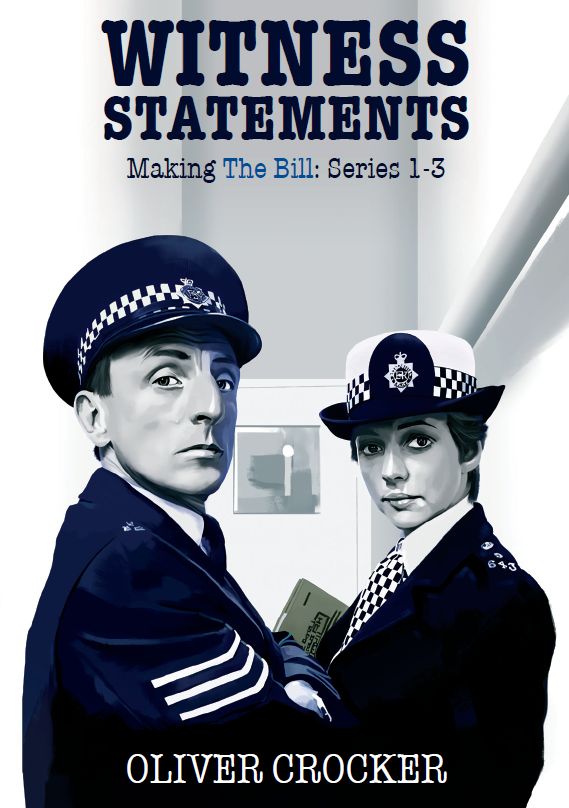
Witness Statements: Making The Bill Series 1-3 by Oliver Crocker (Book Review)

Given The Bill‘s length of service (1983 – 2010) it’s surprising that books about the series are very thin on the ground. Although maybe it’s worth remembering that this is the fate of most television shows – programmes like Doctor Who (which have been examined in painstaking detail) are very much the exception rather than the rule.

During the series’ lifetime, The Bill generated several glossy, large format books (by the likes of Hilary Kingsley and Geoff Tibballs). These are good to have, but Witness Statements: Making The Bill Series 1-3 offers a much more forensic examination of the early years of the show.

Oliver Crocker’s Bill podcast has been running for several years now, clocking up an impressive number of episodes (each one interviewing a different Sun Hill alumni). With all this material to hand, it made sense to distill some of it into book form (plus Crocker has carried out new interviews especially for this book). Witness Statements concentrates on the original incarnation of The Bill – when it was a post-watershed 50 minute series (prior to its re-formatting in 1988).

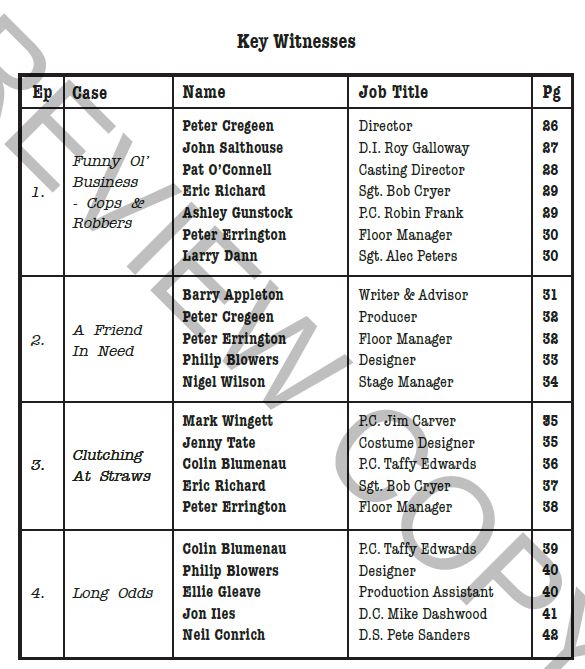
Each episode, from the Woodentop pilot to the final episode of S3 – Not Without Cause – is given its own chapter. A highly impressive roster of personnel – both in front of and behind the screen – provide commentaries on the episodes in turn.

Every contributor offers something of interest, but John Salthouse’s comments were especially fascinating (possibly because he’s rarely spoken about his time as DI Roy Galloway before in any depth).

I’ve recently been revisiting the first series of The Bill and I’ve found Witness Statements to be an excellent companion. If you have any interest in The Bill – or indeed British television of this era in general – then Witness Statements is an invaluable book which comes highly recommended.

Witness Statements: Making The Bill Series 1-3 by Oliver Crocker, published by Devonfire Books, is available from Amazon.

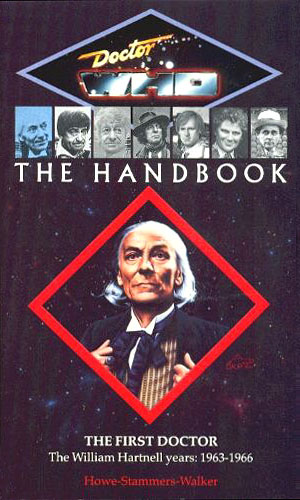
Doctor Who – The Handbook: The First Doctor by David J. Howe, Mark Stammers and Stephen James Walker

It was good fun being a Doctor Who fan in the 1990’s. Maybe this was because there were no new television stories to be ripped to shreds (apart from the quickly forgotten American TV movie). So DW fandom stopped complaining about the present and began to really dig into the past. 

A hefty and lavishly illustrated hardback (The Early Years by Jeremy Betham, 1986)  had already stoked my interest in the series’ first faltering steps, but it was this modestly priced, modestly sized paperback published in 1994 which really took my breath away.

To be a DW fan back then meant that studying the sacred texts (The Making of Doctor Who and DWM especially) was a solemn duty. Slowly the nascent fan would begin to drink in all the lore and history – which stories were classics, which were turkeys, how jabolite was used, the companion who lost their knickers the most, etc, etc.

One of the most important lessons concerned the first few months of the show. We all knew that things looked dicey in the early weeks until the Daleks arrived in the second story – after that, the long term future of the show was assured.

Um, not quite.

The heart of The First Doctor Handbook was the Production Diary. This laid bare just how hand-to-mouth those early years were and how often the series teetered on the edge of cancellation. I seem to recall some info had already appeared in The Frame, but most of it was new to me.

Frankly, it’s an astonishing and eye-opening read (one day, when all the files are available, I’d love to see the production history of the first 26 years of the series tackled in a single volume, or indeed a number of volumes).

The Production Diary might account for a large chunk of the book, but the interview material (both from and about Hartnell) is also of interest. More information about Hartnell has become available since, but this deftly edited selection of quotes still stands up well.

The Handbook also includes an obligatory episode guide which is somewhat of its time (The Gunfighters receives a firm thumbs down for example).

I have far too many DW books (including a fair few I’ve rarely touched in decades) but The First Doctor Handbook is one I do find myself coming back to every so often. For anyone interested in the painful birth of the series it’s a must read. 

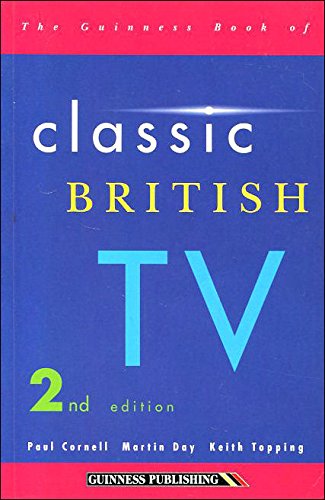
The Guinness Book of Classic TV by Paul Cornell, Martin Day and Keith Topping

classictv

Imagine, if you can, a time before the Internet. Back in those far off days, obtaining information about your favourite television programme (especially if it was slightly obscure) was both difficult and time-consuming.

So The Guinness Book of Classic TV (2nd edition, 1996) was a real godsend. To be able to have episode guides close at hand for series such as Doctor Finlay’s Casebook was very welcome, even if there was no way to actually watch the programmes.  Still, we could dream about a time when all this material would be available at the touch of a button ….

Over 100 programmes were covered, including the likes of The Troubleshooters, The Forsyth Saga, The Army Game, Up Pompeii!!, Citizen Smith, Hancock’s Half Hour, The Young Ones, Absolutely Fabulous, Watch with Mother, Dixon of Dock Green, Callan, Edge of Darkness, Doctor Who, The Avengers, Sapphire & Steel, Upstairs Downstairs, Colditz, Secret Army and I Claudius.

The opening analysis – an absorbing ten-page trot through the history of Coronation Street – begins the book with a bang and this high standard is maintained throughout. Mind you, given this is a Cornell/Day/Topping tome it’s unlikely that you’re going to agree with all their opinions (poor Crossroads is given a bit of a kicking).

It’s also interesting to find the later years of Dixon of Dock Green labelled as a dangerous and embarrassing anacronym. That was certainly a widely held view back in the nineties although the DVD release of most of the existing colour episodes has helped to rehabilitate the show in recent years.

There are a few omissions – Public Eye and Sergeant Cork for example – although in the pre-DVD age that’s not really surprising (Cork especially languished in obscurity prior to its emergence on DVD, so if it wasn’t available twenty five years ago you can’t really blame them for ignoring it).

The Guinness Book of Classic TV has aged well. As I’ve said, a few entries are slightly eyebrow raising but most of the book is packed with pithy and well-constructed capsule reviews. It’s been a well-thumbed favourite on my bookshelf for over twenty years and I’m sure I’ll keep coming back to it for many years to come.

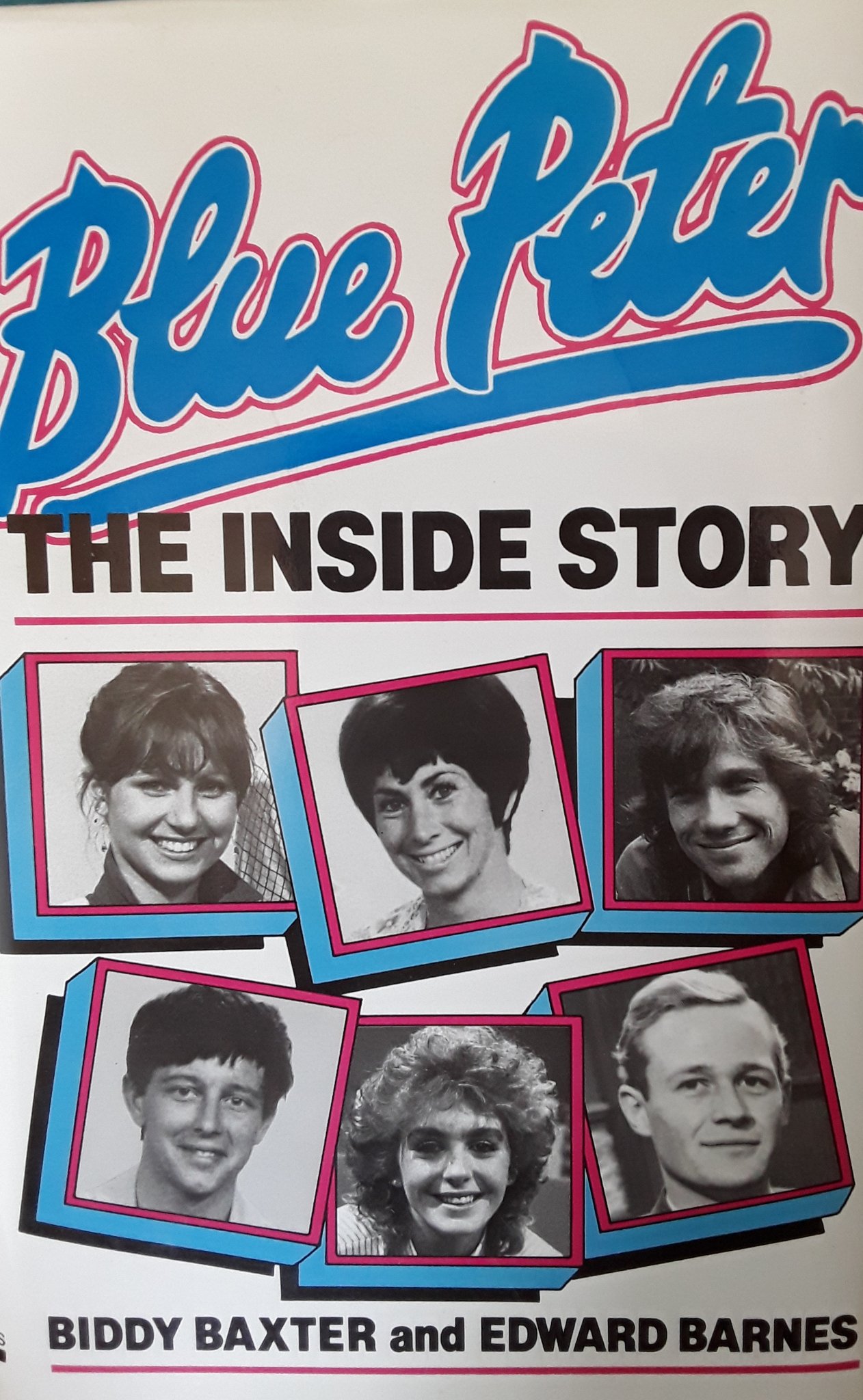
Blue Peter – The Inside Story by Biddy Baxter and Edward Barnes

I’ve been digging through my collection of television books during the past few months (unearthing some which haven’t seen the light of day for a while) and I thought it might be a good idea to highlight a few which I’ve enjoyed revisiting.

Blue Peter – The Inside Story was published by Ringpress Books in 1989, running to 236 pages. Although very much the authorised story, it’s still packed with interesting detail. That 1989 was a very different time is confirmed by the revelation that when the original Petra died after just a few days, they calmly went out and bought a ringer (and no-one was any the wiser).

Later scandals which befell BP (Socks-gate, the phone -in) don’t seem any worse than this but I don’t recall the Petra revelation causing any sort of ripple in the press back in 1989.

Down the years some presenters were more of a handful then others. It’s easy to see that Biddy had her favourites and it’s also noticeable that some long-runners (like Peter Purves) were appreciated rather than loved.

The sticky relationship with John Noakes can’t be avoided and his exit from the programme (which was rather uncomfortable due to concerns he would use Shep for advertising purposes) isn’t swept under the carpet. The travails of Janet Ellis and Michael Sundin are also touched upon (it’s quite obvious there was little love for Sundin in the BP production office).

Second hand copies are plentiful and quite inexpensive, so there shouldn’t be too much trouble in picking up a copy. Blue Peter – The Inside Story is well worth a place on your bookshelf.

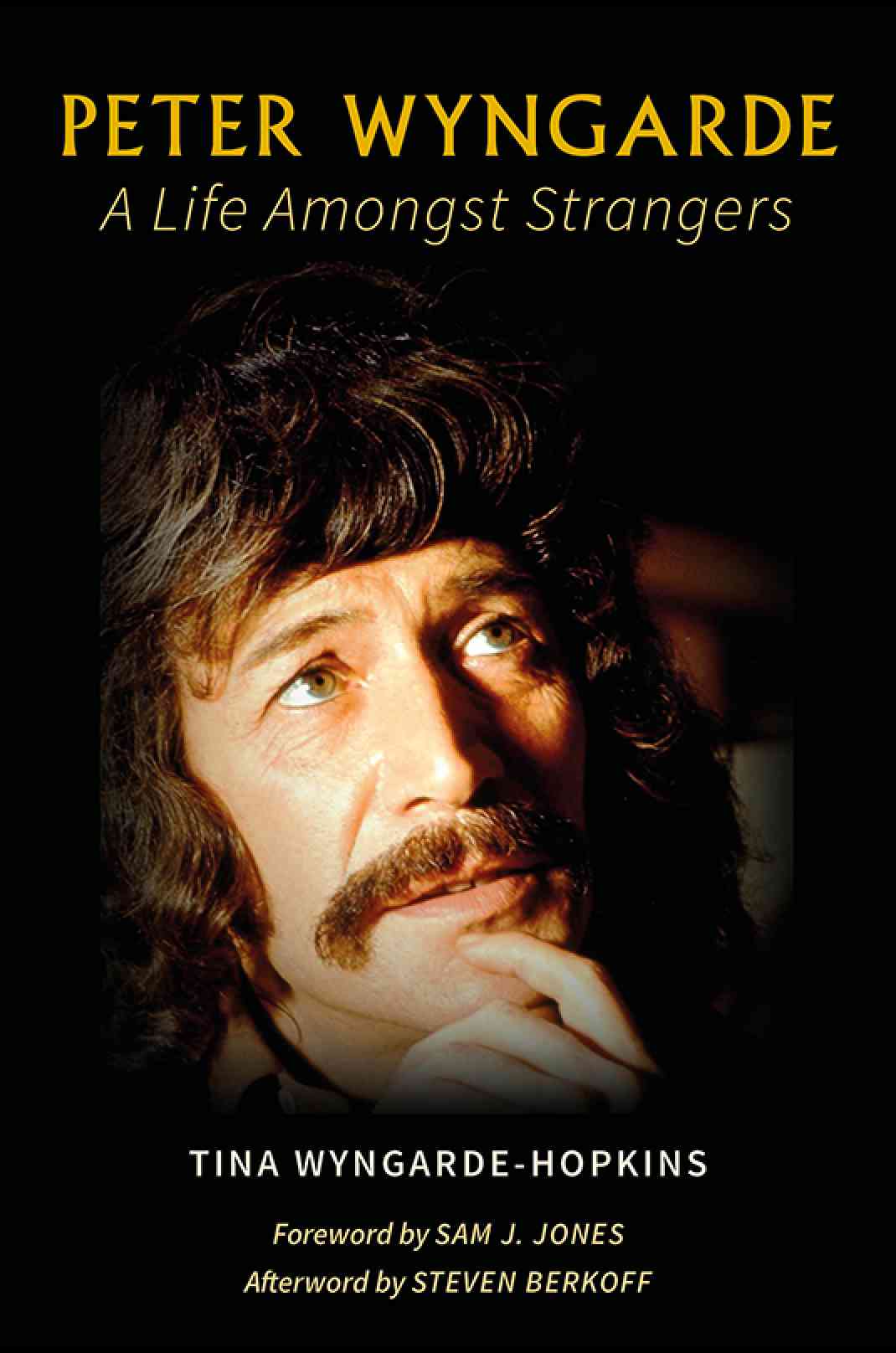
Peter Wyngarde – A Life Amongst Strangers by Tina Wyngarde-Hopkins

wyngarde

I’ve been a fan of Peter Wyngarde’s film and television work for a fair few years, but until now I didn’t really know a great deal about the man himself – apart from a series of oft-repeated tales (which no doubt grow more distorted every time they’re repeated).

Tina Wyngarde-Hopkins’ hefty tome (clocking in at over 500 pages) has been designed to rectiy this and although she’s obviously approached the book intent on righting perceived wrongs from various points in Wyngarde’s life, it still manages to paint a vivid picture of a charismatic, but often difficult, man.

Wyngarde-Hopkins first met Peter in the early nineties when she set up a fanzine dedicated to him. Over the years their bond grew closer as she became his assistant, companion and eventual soul mate. Drawing upon an impressive archive (letters, scripts, diaries, interviews) she’s been able to fashion a substantial biography where the subject is often able to chip in on the subject in hand.

His early years, as a prisoner of the Japanese in an interment camp in Shanghai, are vividly portrayed. There are lighter moments – organising theatrical entertainments – but also darker ones (the guards broke both his feet in order to discourage him from running about).  Wyngarde’s relationship with his parents – his mother looks to have been something of a flighty man-eater whilst he idolised his father (who died at sea in 1947) – is also touched upon.

Rather like his mother, Wyngarde enjoyed a healthy sex life (one of the things he’s – along his with acting – probably best known for). And as he attempted to establish a name for himself as an actor in post-war Britain, there were no shortage of opportunities for liasons.  Plus plenty of invitations which Wyngarde declined (from the likes of Noel Coward, Peggy Ashcroft and Bette Davis). It’s up to the reader to decide how much of this is credible – no doubt Wyngarde wasn’t above spinning a tall tale or two.

His years in provincial rep and his eventual emergence during the 1950’s as a familiar face on both the London stage and as an early television favourite are entertainingly sketched. The likes of Kenneth Williams and Orson Welles feature in some amusing anecdotes.

By the 1960’s Wyngarde was guesting in a number of cult television series which still endure to this day. Most notably The Avengers and the episode A Touch Of Brimstone, in which he played the Honorable John Cleverly Cartney, leader of a modern Hellfire Club. Wyngarde would later recall that Cartney’s whip cracking was very carefully choregraphed – one wrong move could have resulted in a serious injury for Diana Rigg.

His real ascent to cult fame would, of course, come with Department S and Jason King. Paid the princely sum of £336 for the first thirteen episodes (rising to £1,000 if the series continued past that point) Wyngarde seems to have earned the respect of many of the guest actors (Anthony Hopkins speaks warmly of his experience working with him on Department S) although it was a different story with his co-star Rosemary Nichols. More detail on this – or indeed production of both series – would have been welcome, as they’re dealt with rather quickly.

Two very different events during the seventies are still debated today by Wyngarde watchers. The first is his 1970 self-titled spoken word album, which included such memorable offerings as “Rape”. Judging by the eleven tracks not included in the final cut (including “Merry Sexmas”) it could have been a double album ….

A Life Amongst Strangers posits that RCA had hoped the album would be a flop, thereby allowing them to write it off as a tax loss. But unfortunately for them it turned out to be a success. That’s certainly an interesting spin on events.

In 1975 Wyngarde was fined £75 for committing an act of gross indecency in the public toilets at Gloucester Bus Station. Although he kept working, this dealt a devastating blow to both his career and public image from which he never really recovered.  Wyngarde-Hopkins remains convinced he was innocent (and that he was PERSECUTED! not prosecuted).  Throughout the book she’s also at pains to dismiss the numerous rumours concerning his sexuality – presenting Wyngarde as a firmly heterosexual character.

From the eighties onwards the work began to dry up, although there were still some notable credits, such as Flash Gordon (1980) and a guest role in a 1984 Doctor Who serial (Planet of Fire). Peter Davison would remember Wyngarde’s contribution to this story in his autobiography, although this still attracted Wyngarde-Hopkins’ ire (due to the fact he misspelt Wyngarde’s surname and omitted him from the index).

His final years, as his health began to falter, makes for bleak reading – although by the end you’re left in no doubt about just how much Tina Wyngarde-Hopkins loved him.

A Life Amongst Strangers offers a substantial portrait of Peter Wyngarde. As with all autobiographies and biographies the reader will have to decide just how accurate a portrait it is, but it certainly doesn’t skimp on detail.  Published by Austin Macauley, it’s well worth checking out.