The Losers – A Star Is Born (12th November 1978)

Any sitcom starring Leonard Rossiter is going to be worth a look (even Tripper’s Day, although only the strong or foolhardy will probably be able to watch all six episodes of that one).

The Losers has plenty going for it – the series was scripted by Alan Coren and featured Alfred Molina (making his television debut) as Rossiter’s co-star.  It’s pretty tough going though, for several reasons.

Firstly the picture quality isn’t great. The videotape masters were wiped, so we’re left with off airs of the first five episodes (the final episode has presumably disappeared for good) which can be headache inducing. This is particularly noticeable during the series’ debut episode – A Star Is Born – where at certain points the picture keeps going to black every few seconds.

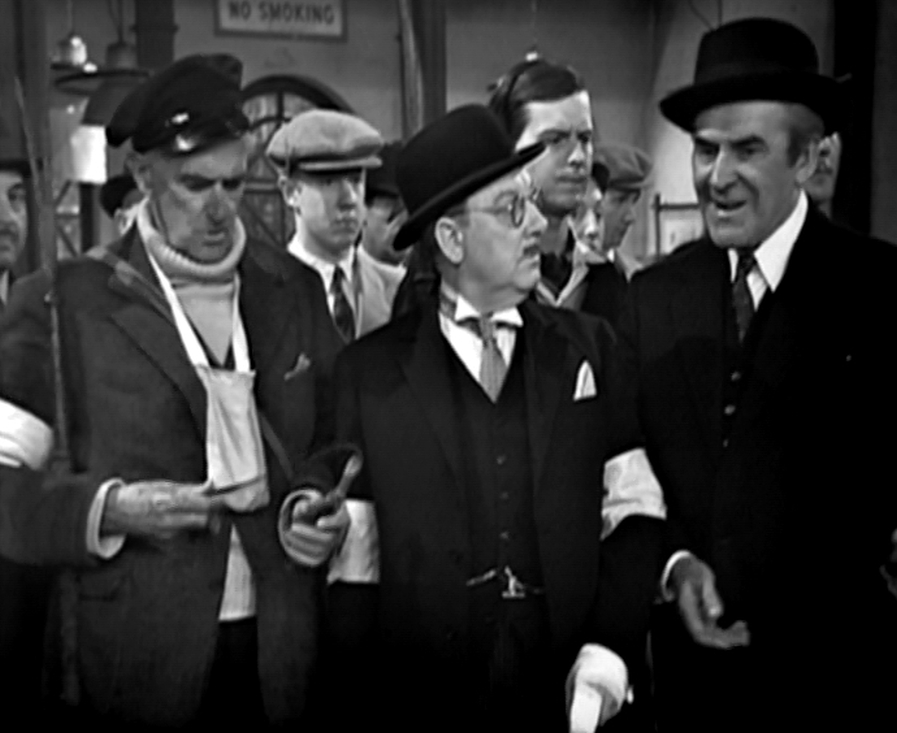
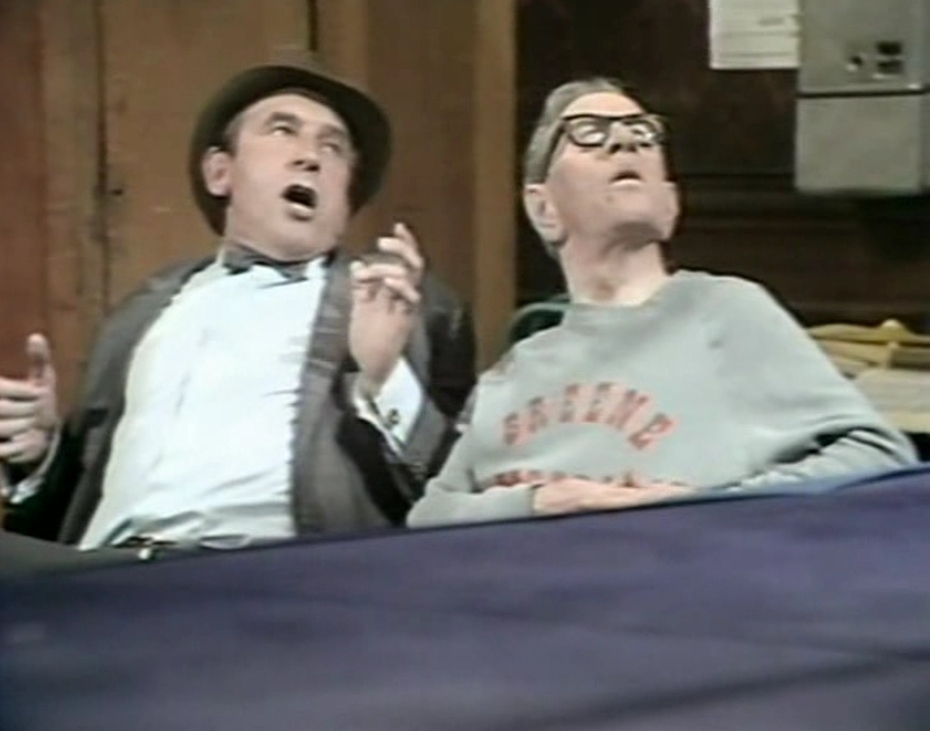
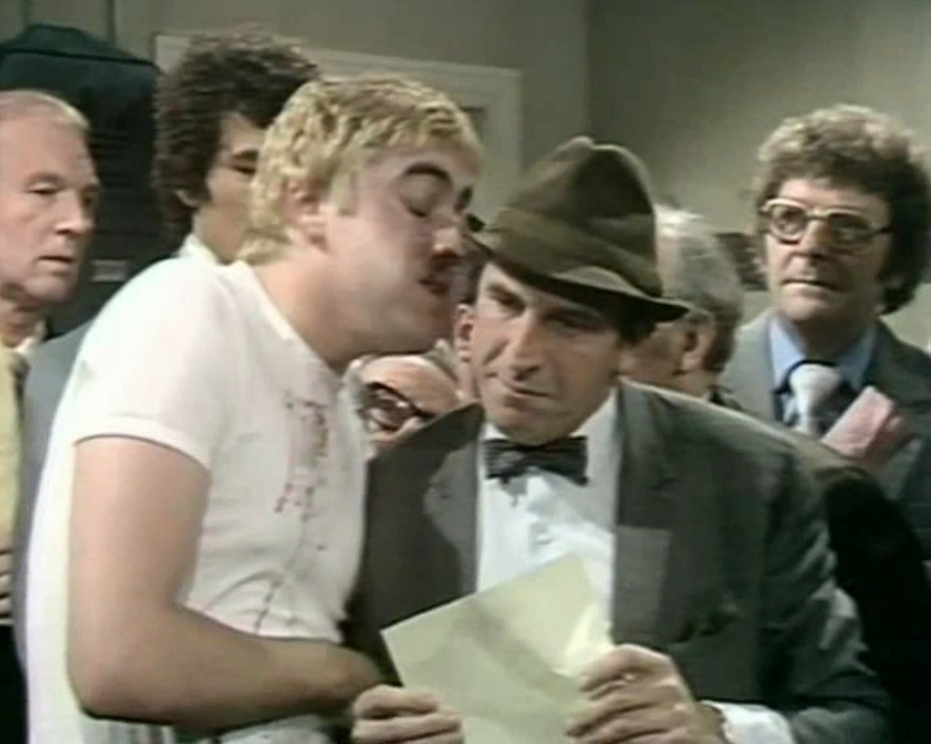
Set in the world of pro-wrestling, The Losers reinforced the widely held belief about the rigged nature of British wrestling (the sport was still a Saturday afternoon staple on ITV but its days were numbered). Sydney Foskitt (Rossiter) is a manager in desperate need of a fighter to lose convincingly in a big match. All seems doomed for Sydney, until he stumbles across the monosyllabic Nigel (Molina).

Good points about this first episode. Rossiter is his usual immaculate self and plays comfortably to type – he’s on decent form when the increasingly hysterical Sydney finds himself backed into a corner by the sport’s Mr Big, Max Snow (Peter Cleal). Joe Gladwin, as a cynical old trainer, is also good value as is Paul Luty, who throws himself around the ring with reckless abandon.

Possibly the best part of the episode takes place at a fairground where Sydney is hiding out (he’s attempting to dodge the wrath of Mr Snow). Sydney, as befits a WW2 veteran, breezily demonstrates his skill at the shooting range – only to miss the target and fill the top prize (a teddy bear) full of holes.

The stallholder and his wife (John Cater and Stella Tanner) are both dismayed about this, as is their son Nigel.  Things are about to turn nasty, when Sydney realises that Nigel (by a wonderful coincidence) is a wrestler. He may be a rubbish one, but that’s exactly what Sydney needs, someone who’ll lose when instructed.

There’s a harshness throughout A Star Is Born. Nigel’s father is more than happy to offload his son onto Sydney (“his mother and me always wanted a dwarf, there’s midgets on her side”) whilst the manipulation by Sydney of the simple and trusting Nigel does leave you with a nasty taste in the mouth.

Critical reaction to the series was muted at best. The Stage and Television Today reported that “there wasn’t much to say – except perhaps to express regret that it was written by Alan Coren” (16th November 1978). Meanwhile the Daily Mirror’s postbag contained this missive from R. Jackson of London. “Oh dear! What has that wonderful actor Leonard Rossiter done, getting mixed up in The Losers?” (25th November 1978).

The fact that the third and final series of The Fall and Rise of Reginald Perrin began airing in late November 1978 did The Losers no favours, as it clearly came off second best when compared to Perrin.  Presumably ATV agreed and decided that the series had little or no repeat value, wiping the tapes sometime after transmission.

Although there were later archive loses (the erasure of BBC children’s programmes like Rentaghost and Animal Magic not to mention the accidental destruction of most of Granada’s Lift Off With Ayshea) The Losers has to be one of the last British dramas or sitcoms to have been deliberately wiped in its entirety.

The fact that most of it has been recovered is a cause for celebration, but the first episode suggests that it’s no lost classic (to put it mildly). No doubt I’ll brave the rest of the series in due course, but I’ll probably take it nice and slowly.

Doctor Who – The Pirate Years

I’ve recently been rewatching the documentary Cheques, Lies and Videotape on the Revenge of the Cybermen DVD, which sparked off a few reminisces about my own dabblings in the Doctor Who pirate VHS era.

For those who weren’t there – until the mid nineties, watching old Doctor Who episodes in the UK was no easy task. There were very few repeats and only a small handful of stories had been commercially released on VHS. But virtually everything still in existence could be obtained on pirate tapes, provided you had a contact (and the patience to sit through nth generation copies which could be a trial on the eyes).

Throughout 1990 I quickly built up a collection of every existing episode from the sixties and seventies. Having been starved of access for so long, this meant I spent twelve months gorging myself silly on everything and anything I could get my hands on (yes, even The Mutants and Underworld).

With The Daleks having only recently come out on official VHS, I was keen for more Hartnell and so the first tape I asked for contained The Aztecs, The Rescue and The Tenth Planet 1-3. That was an exciting day ….

Pretty much all of the sixties episodes were sourced from copies of the telerecordings. These could sometimes be quite watchable (I only retired my pirate copy of the first three episodes of The Tenth Planet when it came out on official VHS many years later) but not always (I did sit all the way through a very muffled and blurry copy of The Gunfighters, but it wasn’t until the story showed up on UK Gold that I actually understood the plot).

Most of the seventies episodes freely swopped were taken from off-air Australian recordings, as our Antipodean cousins were fortunate enough to have the Pertwee and Baker T episodes repeated on a seemingly endless loop. I was pretty lucky here, as a fair number of the stories I received must have been only one or two generations down, as they were very watchable.

They did have their odd quirks though – sometimes two episodes would be edited together and occasionally stories would receive the omnibus treatment so beloved of Margot Eavis. One such omnibus story I had was The Power of Kroll, which I did watch in a single sitting – but even though it was quite short (around 80 minutes) it isn’t something I’d recommend.

Some episodes were edited for content (Leela’s knife-throwing in The Invisible Enemy, for example, was trimmed down).

There were a number of Pertwee stories (such as The Silurians, Terror of the Autons and The Daemons) which I first experienced, via these bootleg tapes, in black and white. And every now and again I like to drop the colour down and view them again in monochrome. Hopefully I’m not the only one mad enough to do that.

The days of tape swapping came to an end with the launch of UK Gold’s in 1992.  With better quality versions of most of the series’ surviving episodes receiving regular television screenings, there was less need to refer back to the old pirate tapes.

For a new generation, these UK Gold repeats were their Doctor Who gateway. But that’s another story ….

Coronation Street in the Seventies

I’ve recently been watching a fair amount of late seventies Coronation Street (currently up to August 1978, which sees Hilda having problems with her muriel).

As mentioned in previous posts, thanks to the Granada Plus repeats it’s not too difficult to locate most episodes from early 1976 onwards. And when you get into the groove of watching consecutive episode after consecutive episode you find there’s something very moreish about this era of the show.

Unlike modern soaps, it’s not because of a constant stream of high octane storylines. 1970’s Corrie is a gentle thing – true, there is drama (the recent strike at Baldwin’s Casuals, say) but it’s usually always leavened with humour.

Deaths of regulars were kept to a minimum during this period, and usually they occurred either because the actor decided to leave (like Anne Reid) or they were let go (such as Stephen Hancock, fired after he complained about the series’ wage structure). The notion of killing off a long-running regular just to get a bump in the ratings wasn’t really a thing.

Affairs were also a rarity. Yes, Ray Langton is shortly due to depart Weatherfield after a short fling, but this storyline only came about because Neville Buswell decided to leave the series.

So given that the stakes were often low, why is the show so enjoyable at this point in time? Maybe that’s the reason why. 1970’s Coronation Street isn’t a matter of life and death – it’s just a slice of gently comic life.

No, it’s not an accurate reflection of life in a big Northern city during the late seventies (although the series can often surprise you with the occasional sharp topical barb) but then there’s no reason why it has to be.

Instead, the Street was content to play to its strengths, particularly when it came to servicing the series’ long running regulars. When they started to depart the stage in the eighties (for a number of reasons) the show began to lose something of its sparkle.

So I think that when my rewatch reaches the mid eighties I’ll just loop back to the first episode in 1960 and begin again ….

New Tricks – Pilot (26th January 2003)

New Tricks clocked up an impressive total of 107 episodes between its pilot in 2003 and the finale in 2015. Like many popular series it went on far too long (each time one of the original cast left, the show lost a certain something) but the first half a dozen or so series remain very watchable.

For the dedicated follower of archive television, the appeal of New Tricks probably has a lot to do with the fact that the original cast (Alun Armstrong, James Bolam, Amanda Redman, Dennis Waterman) were very familiar from numerous sixties/seventies/eighties series. The same can be said of the guest casts – they’re always full of naggingly familiar faces who send you rushing off to IMDb to look them up.

The 2003 pilot is a good example – there’s the likes of Jon Finch as Roddy Wringer (a career criminal with a thin veneer of charm hiding an ugly underneath) and Michael Culver (as Ian Lovett, a retired detective who gets on the wrong side of Jack Halford).

Indeed, the scene where Halford (Bolam) casually whacks Lovett in the chest with a golf club is one of the episode’s most memorable moments. It’s an early sign that the affable Halford has a core of pure steel. Although this moment leaves you wondering how often he did that sort of thing during his police days …

Gerry Standing (Waterman) and Brian Lane (Armstrong) are also given a number of scenes which quickly delineate their characters. Waterman’s playing very much to type – Gerry’s an unreconstructed alpha male who enjoys nothing more than a drink, a smoke and some female company. Out of the three ex-detectives recruited as civilian investigators by Detective Superintendent Sandra Pullman (Redman) Gerry seems to be the one with the fewest hangups.

And then on the other end of the scale you have Brian. An obsessive compulsive, he’s blessed with a photographic memory and cursed with an inability to let go of the past. Convinced that he was kicked out of the force via a shadowy conspiracy, the pilot teases the notion that Brian’s fight for the truth will become a running theme. 

Although this sort of continuing story beat is something that modern series do quite often, it’s worth remembering that the likes of The Chinese Detective also employed it. So there’s nothing really new under the sun …. 

Much of the humour in this first episode comes from the clash between these three old dogs and their attempts to navigate their way through a modern police force that’s unrecognisable in some ways from the one they left behind. Part of Pulman’s job is to act as a buffer between the senior management (who exist on a diet of PR speak and little else) and her new recruits.

And whilst she might display some initial despair at their unconventional ways, it’s easy to guess that before too long she’ll have embraced them all fully (even the cheerfully sexist Gerry). Once they’ve bonded together into a somewhat dysfunctional unit, then the serious business of a tracking down a murderer from twenty years ago can begin. 

Although each case is always at the heart of the episode, during the early series there was also plenty of time to explore how each of the four central characters ticked. It was when New Tricks began to concentrate more on the crime of the week and less on the regulars that the series became a little less interesting.

But for now, I’m looking forward to becoming reacquainted with the early episodes again. “It’s all right, it’s okay ….”

Ladykillers – The Root of All Evil (17th July 1981)

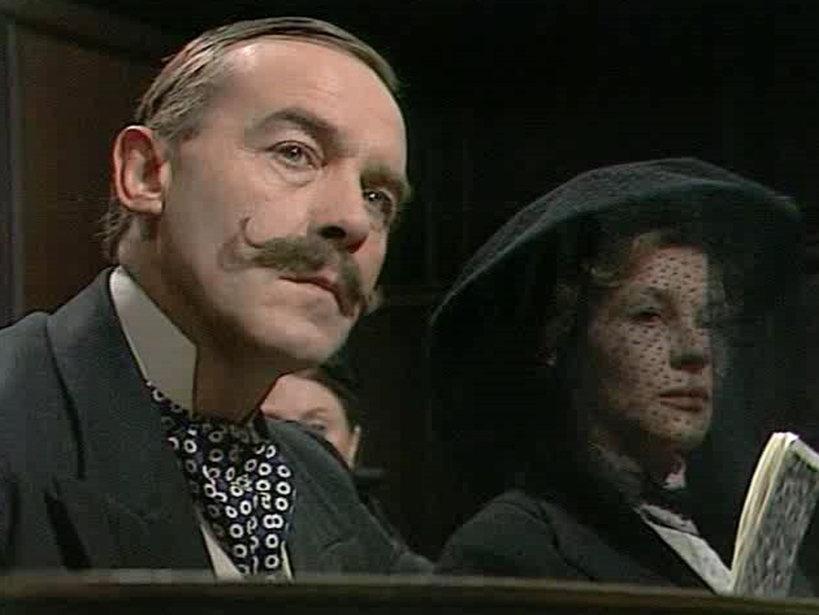
Frederick Seddon (Michael Jayston) and his wife Margaret (Carol Drinkwater) stand accused of the murder of their lodger Eliza Barrow ….

Running for fourteen episodes during 1980 and 1981, Ladykillers dramatised real life murder cases, mostly drawn from the late nineteenth and early twentieth centuries (the trial of Ruth Ellis in 1955 was one notable exception to this rule). Series one concerned itself with female defendants whilst the second series (from which this episode is drawn) was male dominated. Although since The Root of All Evil featured Margaret Seddon as the co-defendant, it does hark back to the format of series one.

The writer was Sue Lake, who has a somewhat limited television cv. In addition to this installment of Ladykillers, she wrote an episode of Supernatural, seven episodes of Triangle and her final work was an episode of Angels in 1983. I’ve not yet been brave enough to tackle her Triangle work, but based on what we see here it’s surprising her credits were so limited as The Root of All Evil drips with menace and dark humour.

The gallows humour comes from Michael Jayston who, sporting an impressive moustache, gives a typically rich performance as the pompous and pernickety Frederick Seddon. He remains blithely convinced right to the end that the jury are bound to find him innocent.

His calmness is contrasted by Carol Drinkwater as Margaret Seddon who, away from the courtroom, seems to be on the verge of collapsing into hysterics (although she always manages to control herself when she’s back in the court).

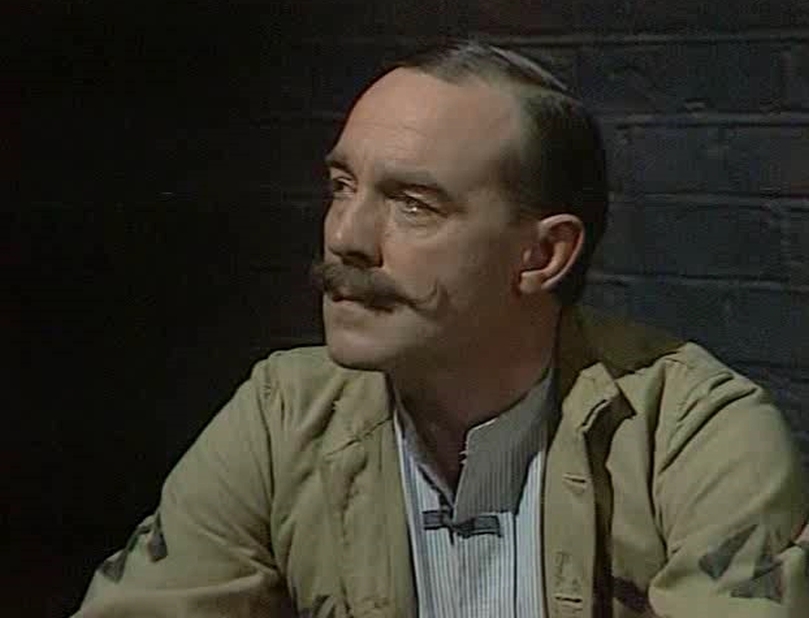
As good as the courtroom scenes are, it’s the intercutting between the Seddons in their respective cells that’s really the heart of the story. Both are provided with prison confidants to talk to – with Trevor Cooper (as Oliver) providing the episode with another dollop of dark humour. Despite the fact that Frederick Seddon stands accused of murdering Eliza Barrow for her money, Oliver is quite happy to approach him for financial advice!

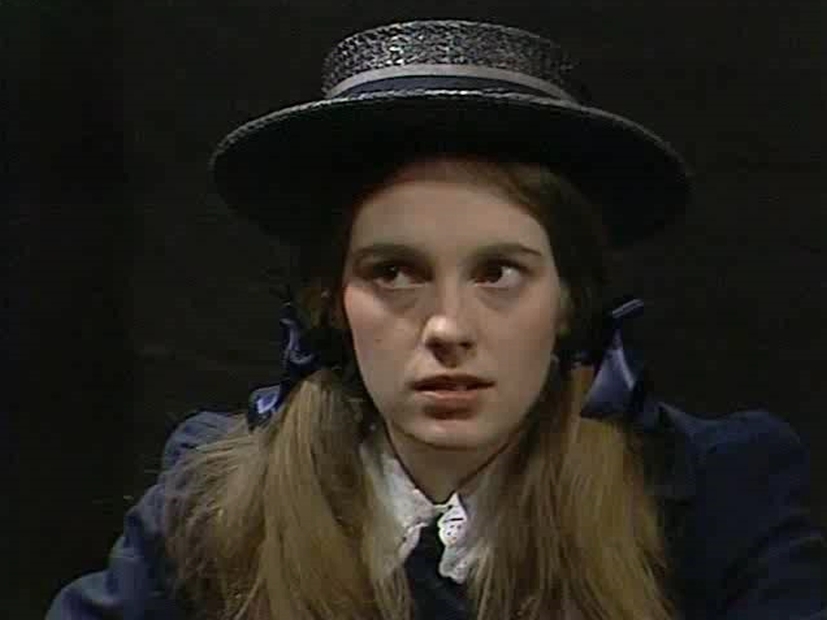
And shuttling between her mother and father is their teenage daughter Maggie (Sarah Berger). This was only Berger’s third television credit, but it’s a very compelling one – Maggie’s relationship with her mother is teased out across several well drawn scenes in which Berger drips with polite malice.

Several familiar faces (Eric Dodson, Pam St Clement) take their turns in the witness box whilst the always dependable Michael Ripper (sporting some memorable face fungus) makes an impression as Seddon Snr.

As with the rest of the series, Robert Morley is your avuncular host – introducing and summing up each case. His presence feels slightly odd (possibly a simple VO or caption would have worked better).

For those who don’t know the verdict, please look away now.

Frederck Seddon was found guilty and Margaret Seddon was acquitted.

The Root of All Evil seems less sure of her innocence though as not only does Morley raise his eyebrows after imparting the news that Margaret remarried only two months after her husband’s execution, there’s also the fact that Drinkwater allows a faint smile to play across Margaret’s lips as she exits the condemned cell. Then there’s also Maggie’s innuendo laden conversations with her mother to consider ….

Having given this one a 40th anniversary rewatch, I’m happy to report it stands up very well – not least for the performances from Jayston, Drinkwater and Berger.

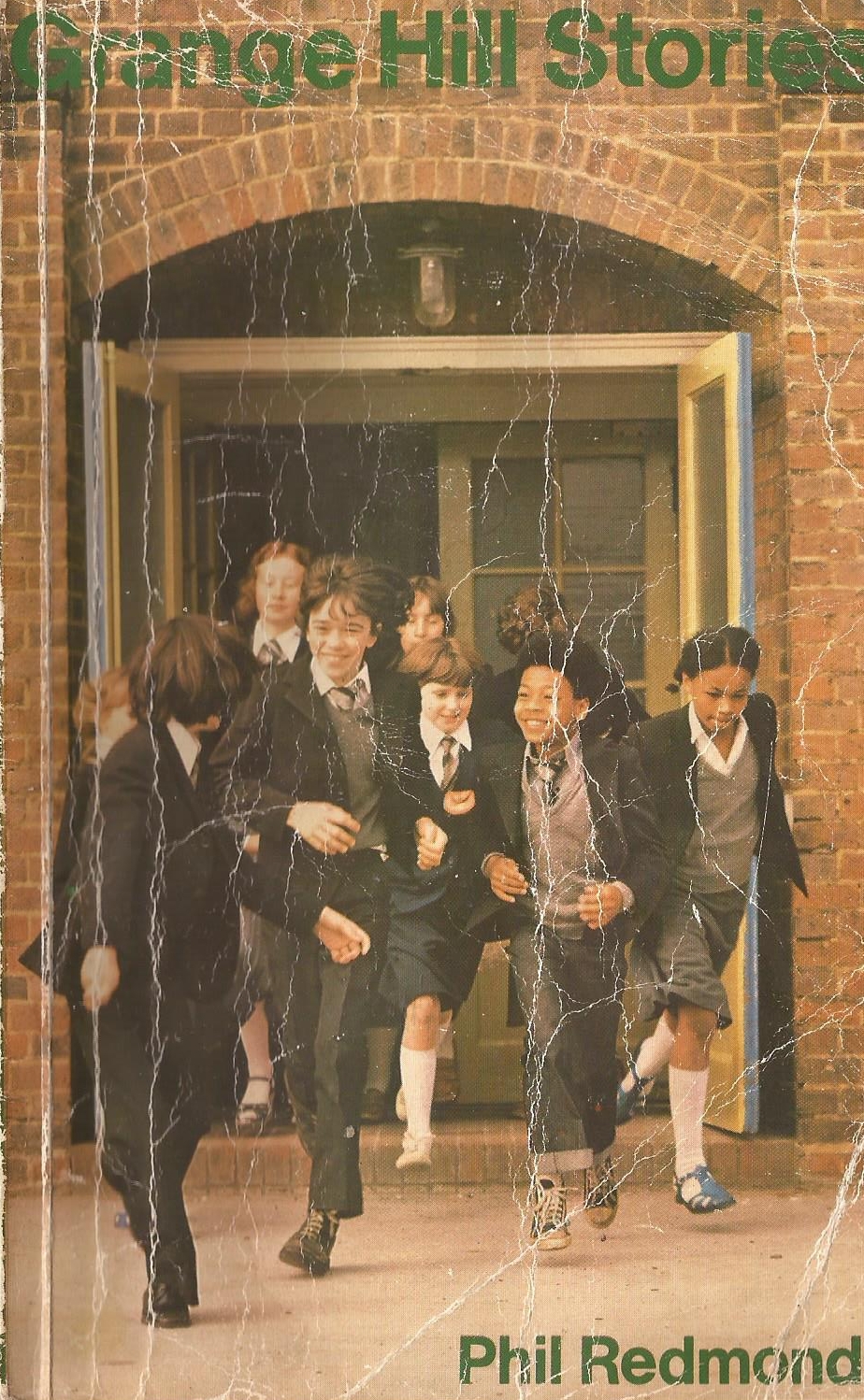
Grange Hill Stories by Phil Redmond (BBC Books, 1979)

Despite running for thirty years between 1978 and 2008, Grange Hill only generated a fairly small number of tie-in novels (and none after 1988). Lion Books produced six during 1980 and 1984 with Magnet Books then taking up the mantle by publishing seven books between 1986 and 1988.

But first off the mark were BBC Books in 1979 with this volume written by Phil Redmond. 95 pages long, it’s split into five chapters with separate storylines for Benny, Trisha, Justin and Penny before a final chapter which features a typical knockabout adventure for Tucker and Benny.

The stories are set at various points during series one and two, developing threads seen on television. For example, A Pair of Boots depicts Benny desperation to buy a pair of football boots which will enable him to take his place in the school team. Benny’s impoverished family life had been touched upon a number of times during various episodes, but it’s hammered home here a little more forcibly.
Although the series, especially in its early years, generated some negative publicity (concerning the antics of its unruly pupils) GH always had a strong moral feel. There might be mischief, but there would always be consequences for the miscreants. This tone is replicated throughout the book as several characters – beginning with Benny – are forced to do the right thing.

After it seems unlikely Benny’s parents will be able to afford to buy him his prized boots, it looks for a short while that providence has provided him with the solution – his newsagent boss drops a five pound note on the floor and doesn’t miss it, at least to begin with. Benny quickly pockets it, but equally quickly is wracked by guilt and fear. Like Trisha and Justin in later chapters, Benny is then prone to an lengthy internal monologue as he debates the rights and wrongs of his situation.

A Question of Uniform reveals that Trisha has a younger sister – Jenny – something which was never developed on television. Like Benny, Trisha quickly finds herself in a difficult situation as she’s forced to tell lie after lie (it’s the sort of story that would have quite easily slotted into the anthology style of the first series).

Odd One Out features Justin in hospital, convalescing after his misadventures with Tucker and Benny in the warehouse. This one offers Justin an excellent spot of character development, which makes me a little sorry something like it wasn’t attempted on television (as it rather bridges the gap between Justin’s early appearances as an easily bullied type and his emergence as a more confident character from the second series onwards).

The Mystery of the Missing Gnomes doesn’t dig into Penny’s character too deeply but it’s still an entertaining enough tale – as she takes on Doyle and his henchmen and wins. The collection of stories is rounded off with Two’s Company, which sees Tucker and Benny decide to absent themselves from their school trip (as the museum is a rather boring one) and pop into an intriguing store nearby.
Although it’s not named, it seems that the store was Harrods, which would have made for an entertaining television spectacle. Although given how unlikely filming permission would have been, we’ll just have to enjoy it in prose.
For the way it builds on various moments already seen on television, Grange Hill Stories is a decent little volume that’s worth tracking down.

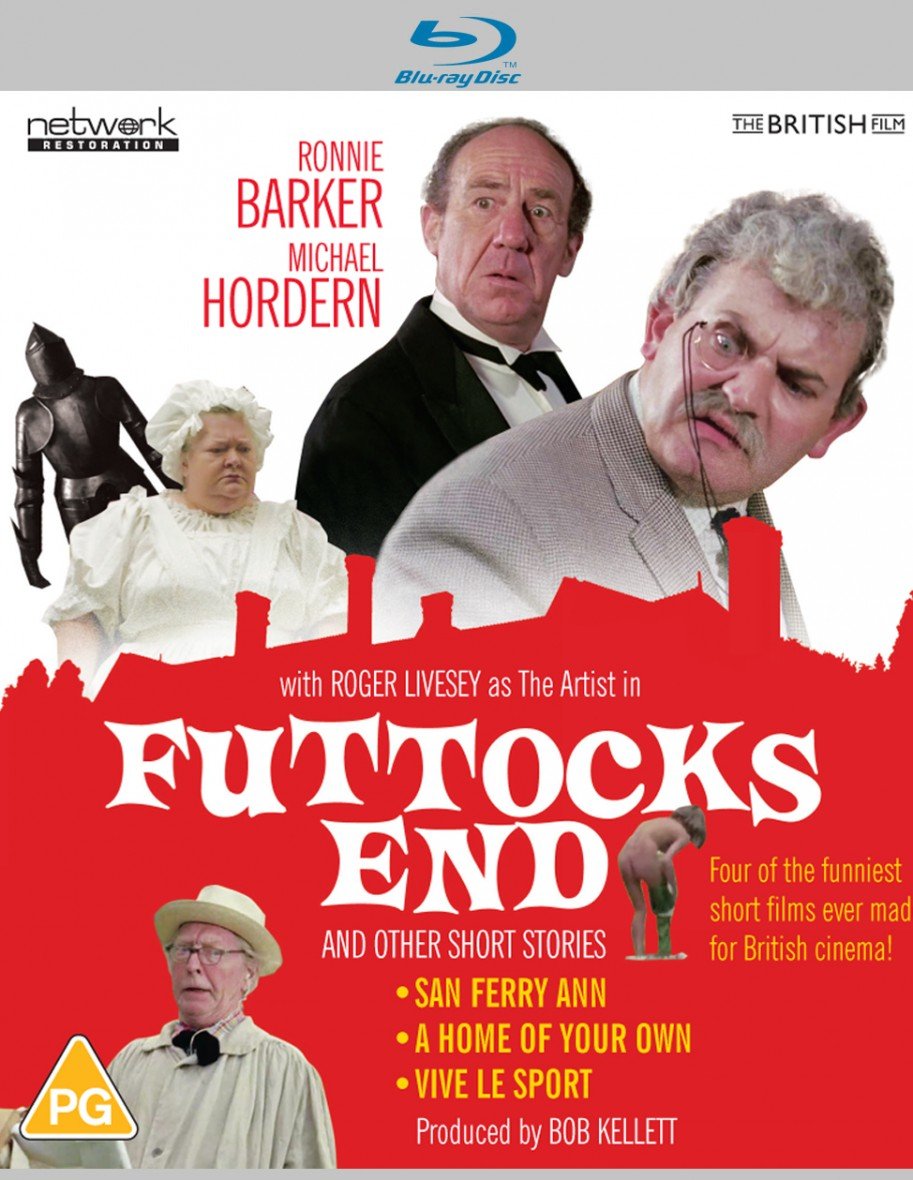
Futtocks End and Other Short Stories – Network BD/DVD review

Bob Kellett (1927 – 2012) was a man of many talents. Particularly active during the sixties and seventies, he plied his trade as a writer, producer and director. As director he helmed big screen adaptations of several small screen favourites such as Up Pompeii and Are You Being Served? whilst his television writing career included both admags (those curious programmes which turned up in the early days of ITV) and Space 1999.

Kellett also produced the four short films included on this BD/DVD (Futtocks End, A Home Of Your Own, San Ferry Ann and Vive Le Sport) in addition to writing the screenplay for San Ferry Ann and directing Futtock’s End.

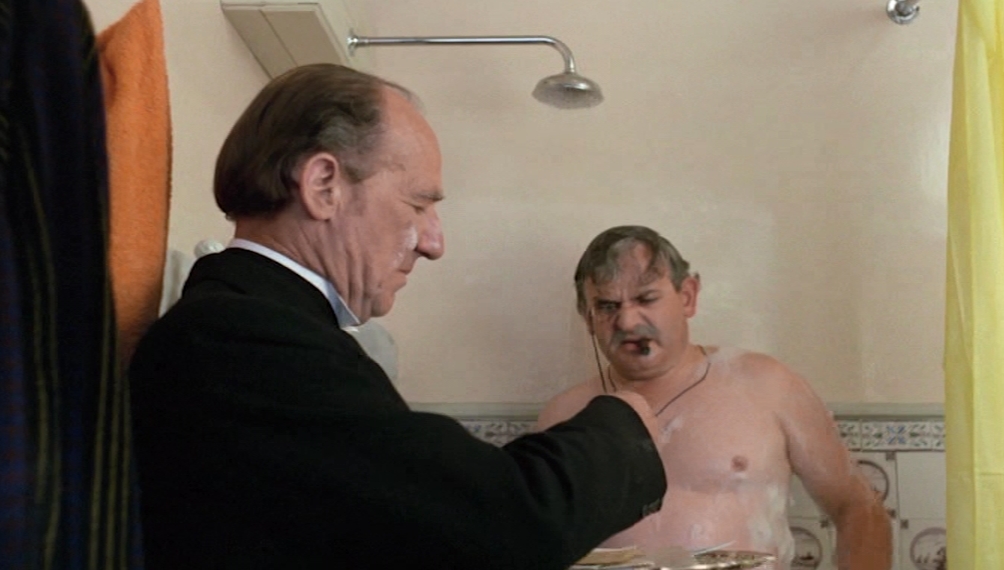
Taking pole position on the disc is Futtock’s End (1970, 47 minutes) which was written by and starred Ronnie Barker. Clearly inspired by Kellett’s earlier works, Barker would return to this style of comedy several times in the future (The Picnic, By The Sea) but Futtock’s End was his best work in the genre.

Set in an English country house, Barker is wonderfully entertaining as the befuddled General Futtock, who has his hands full with a gaggle of weekend guests. Barker is matched every step of the way by Michael Horden as his lecherous butler whilst familiar faces (including Roger Livesey, Peggy Ann Clifford, Julian Orchard and Richard O’Sullivan) also pop up.

Barker’s unquenchable thirst for saucy seaside postcard humour would surface again and again during his career and Futtock’s End is a prime example of this. So it comes as no surprise to discover that various attractive young women (such as Hilary Pritchard, credited as ‘The Bird’) are used throughout as little more than eye candy. Subtle the humour isn’t – the rule seems to be that ladies’ skirts should be as short as possible and fly up at every opportunity …

A ‘silent’ film with sound effects but no dialogue (like the other films on the disc) Barker is deftly able to mine comedy gold from this apparent restriction. For example, the breakfast scene (where a group of very hungover guests recoil in horror as every small movement of the breakfast things generates impossibly loud sounds) is just one highlight amongst many.

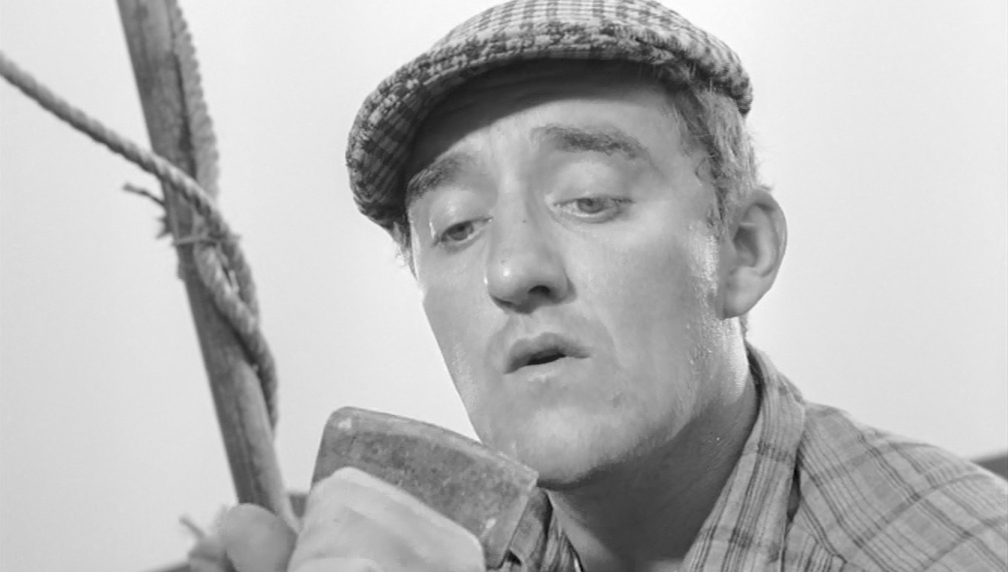
Ronnie Barker also features in A Home of Your Own (1965, 41 minutes).  Written and directed by Jay Lewis (John Whyte was the co-writer), Richard Briers, Peter Butterworth, Janet Brown, Fred Emney, Bernard Cribbins, Bill Fraser, Ronnie Stevens, Thorley Walters and Gerald Campion were some of those who appeared alongside Barker.

Briers and Bridget Armstrong play a newlywed couple who buy a plot of land on which they intend to build their dream house. But thanks to a group of inept workmen progress is far from smooth …

A sly satire, A Home of Your Own plays on the familiar theme of the British workman as lazy and/or incompetent (for them, the tea-break is always the most important time of the day).

By the time of Futtock’s End, Barker was a star but during A Home of Your Own he was only just beginning to build his reputation in the worlds of film and television. But though his role isn’t very large, he does have one very memorable moment – after an unthinking colleague wanders across his wet concrete floor for the umpteenth time, he snaps and performs a frantic pirouette on the ruined floor (it’s a sight to behold).

Bernard Cribbins – as a hapless stonemason – probably has the best comic material to work with, whilst the likes of Butterworth and Fraser always catch the eye, even when they appear to be doing very little.

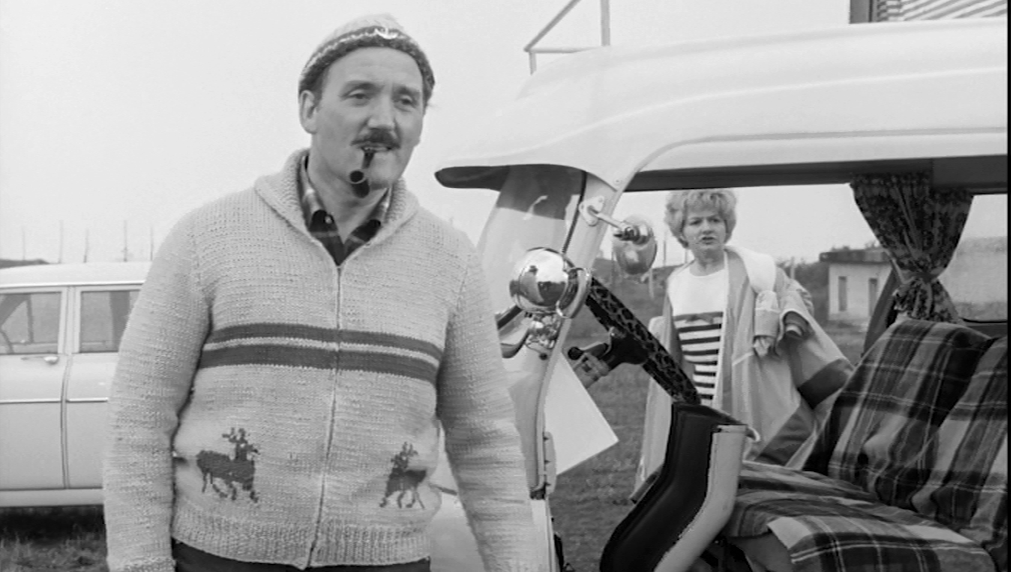
San Ferry Ann (1965, 52 minutes). Bob Kellett once again came up trumps with the cast list for this short film – if performers such as Wilfrid Brambell, David Lodge, Joan Sims, Ron Moody, Barbara Windsor, Warren Mitchell and Hugh Paddick don’t get your pulse racing then you’re probably reading the wrong blog.

A travelogue following a group of British holidaymakers as they take a trip from Dover to Calais, San Ferry Ann certainly benefits from oodles of local colour on both sides of the channel (quite what the ordinary cross channel ferry passengers thought about inadvertently featuring in this film is anybody’s guess).

Several of the actors play very much to type. Brambell begins by using his trademark leer to good effect and it doesn’t take him long before he’s gone topless on the ferry  – attempting, but failing, to catch a bit of sun. As for Barbara Windsor, she isn’t a million miles away from her Carry On persona – a pneumatic blonde who blithely breezes through the frame whilst constantly turning male heads.

No cultural cliché is left unturned once the holidaymakers reach Calais (one of the first Frenchmen we meet is riding a bicycle with a string of onions round his neck) but San Ferry Ann is still a very agreeable watch. And for Coronation Street fans there’s a spot of trivia to share – this was Lynne Carol’s first role after her Street character (Martha Longhurst) was killed off the previous year.

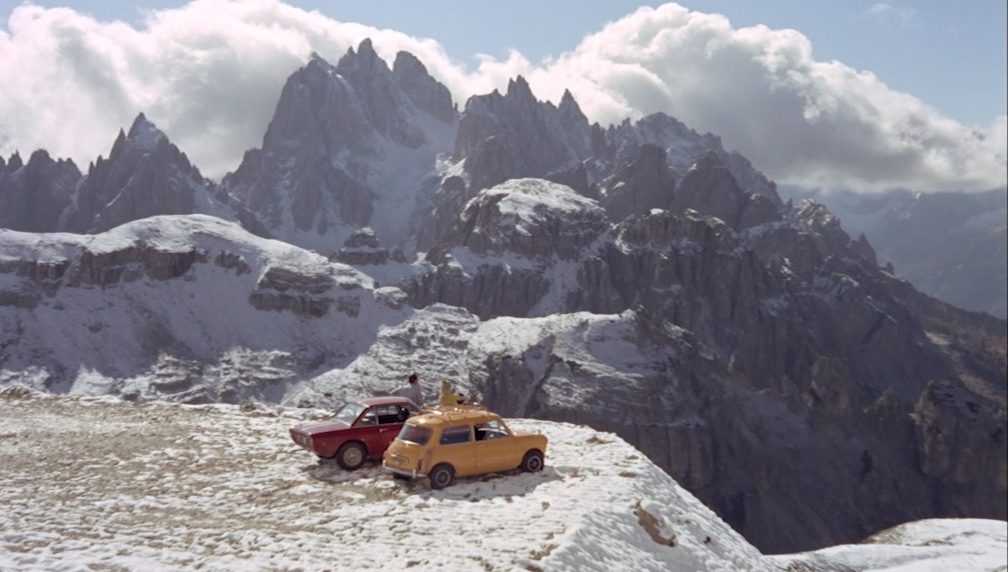
After two black and white shorts, we burst back into colour for Vive Le Sport (1969, 25 minutes). Eschewing the all-star nature of the other features, this one centres around two swinging sixties chicks (played by Liane Engeman and Beth Morris) who set off for a road trip across Europe in their Mini Cooper, unaware that they’re being pursed by Barry Gosney (he’s keen to retrieve a roll of film hidden in the car).

Vive Le Sport was Engeman’s sole credit but Morris would become a familiar television face in the decades to come (possibly her most memorable role was that of Drusilla in I, Claudius). Neither actress is stretched during this film though as it’s plain that the car’s the star (with the scenery running it a close second). Unlike the other features on the disc, this isn’t a gagfest and the subplot of the girls being pursed by the ‘baddies’ isn’t edge of the seat stuff. Instead, you’re well advised just to sit back and enjoy the ride.

Special Features

San Ferry Annie is a five minute interview with Anne Kellett, Bob Kellett’s widow. Even though its running time is very brief, there’s still time for Annie to share a few interesting stories – such as the reason why her husband began to make silent films, as well as some memories concerning the making of San Ferry Ann.

Feature First (7 minutes) interviews director of photography Billy Williams. San Ferry Ann was one of his earliest jobs but he quickly moved into features (he racked up many credits, most notably Gandhi in 1982).  Given his career I obviously could have listened to him talk for a great deal longer, but this featurette is a good overview of his work on San Ferry Ann.

Futtocks End features an archive audio commentary with Bob Kellett which is worth dipping into as he had plenty of good stories to tell. The last special feature on the disc is an 8mm version of Futtocks End, which runs just under nine minutes (this savage abridgment is a curio worth watching at least once).

This very attractive package is rounded off by a booklet written by Melanie Williams.

All four films have been restored and are presented in their original widescreen aspect ratios. To compare, I dug out my old DVD copies of A Home of Your Own and San Ferry Ann (released by Digital Classics). The new Network remasters offer a considerable picture upgrade (the Digital Classics releases were in 4:3 and speckled with dirt and dust).

Futtocks End and Other Short Stories comes warmly recommended. It’s released today and is available from Network both on BD and DVD.

Dad’s Army – The Lion has ‘Phones (25th September 1969)

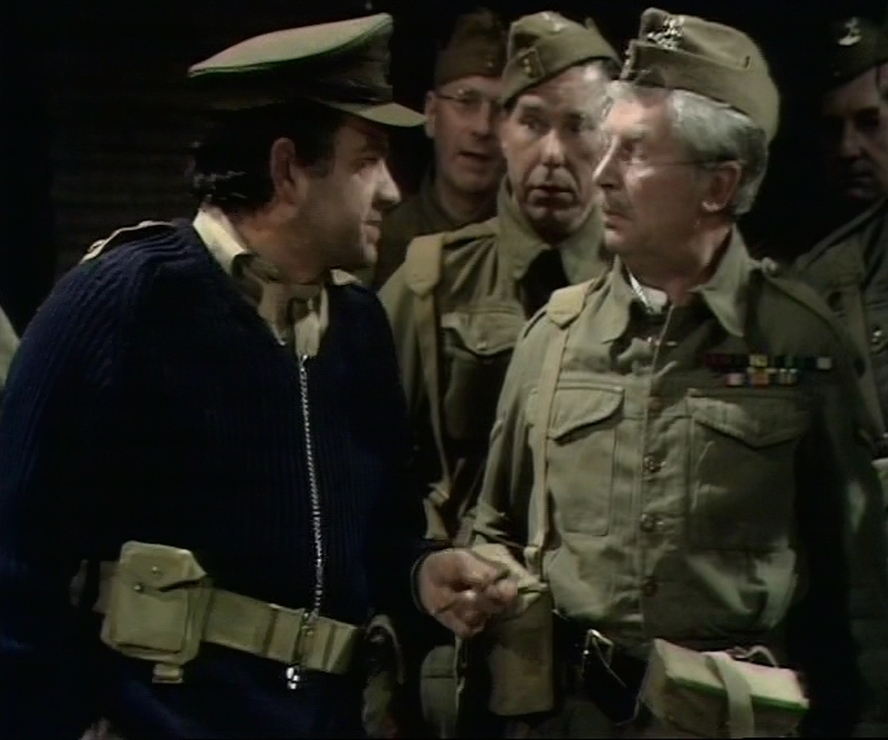
This one opens with a film sequence that somewhat resembles the faux newsreel footage used at the start of each series one episode. Mainwairing observes his troops mastering the art of disguise – variously they appear as haystacks, dustbins and gravestones – although each time he doesn’t seem at all impressed. “Very sloppy indeed” he mutters, only for one of the platoon (Walker, presumably) to hit back with “get knotted”. Wilson attempts to take the offending man’s name, but it’s somewhat difficult since they’re all disguised.

The sense of repetition in the scene is what makes it work (each time the audience is able to guess how the men are disguised) although this is neatly turned on its head at the end, when the expected hiding place (under the milk churns) turns out to be a bluff.

After this preamble (another of those DA moments that works as a self-contained setpiece) we get to the episode proper. It splits into two parts – Mainwairing attempting to instruct the platoon in the art of using a public telephone and their later observation of a crashed enemy plane in the reservoir.

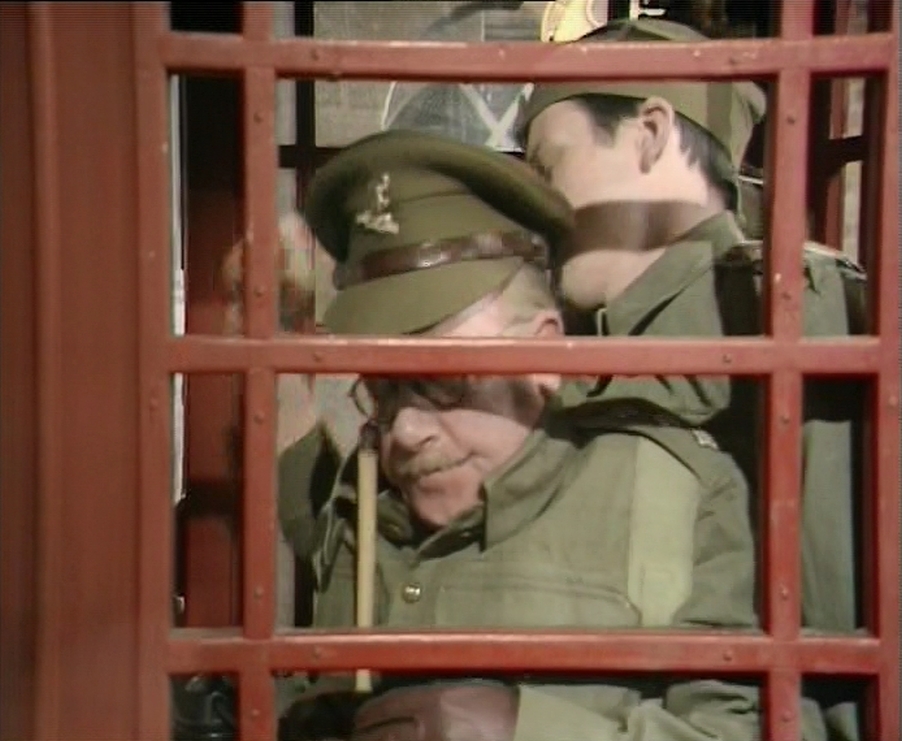
Mainwairing’s misadventures in the phone box with Pike and Godfrey is a gift for Arthur Lowe, who’s able to wring every last comic drop out of Mainwairing’s discomfort (squashed against the side of the box with his hat and glasses askew).

We also get another slice of the Wilson/Mrs Pike soap opera – incensed that Mainwairing has forced her boy to use a nasty, dirty public phone, she turns her ire on Wilson. “You think you’ve only got to knock on my door and I shall come running”. Wilson counters with “I’ve never asked you to run”!

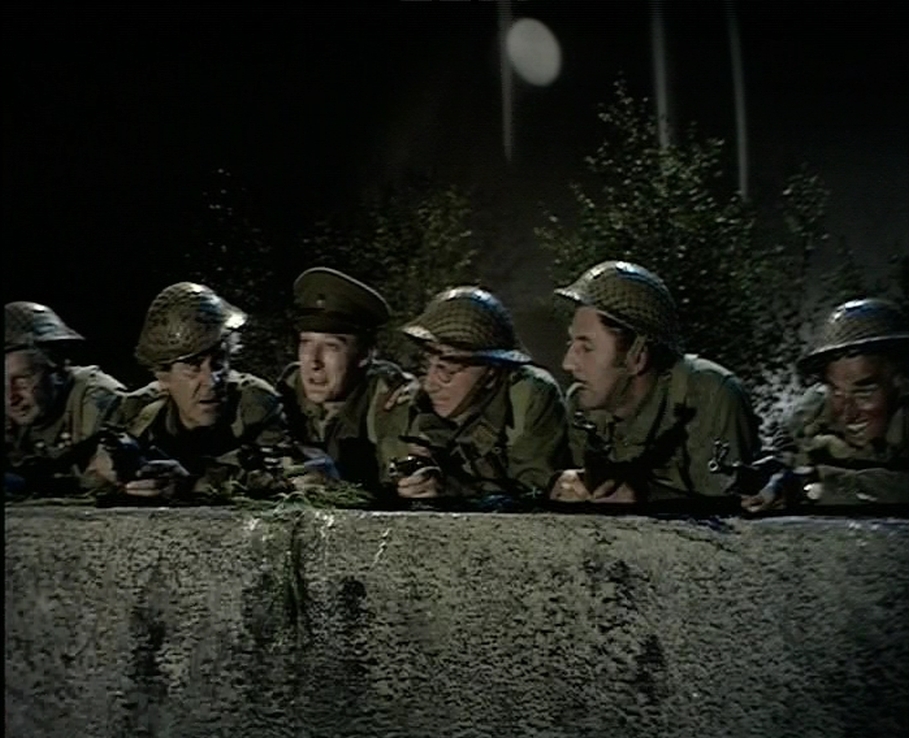
All the phone antics take up a fair chunk of the episode, but there’s still time for a dramatic closer, even though the audience is required to use their imagination. The Lion Has ‘Phones does have a small amount of film work, but the bulk of the episode was recorded in the studio – including all of the climatic reservoir scenes.

We never see the enemy plane, or any of the reservoir apart from a small studio grassy knoll, although I do like the searchlights which can be seen at the back of the frame. This may be a very simple lighting effect but it helps to create a certain atmosphere.

If you had to pick someone to ring GHQ, would you choose Jones? Me neither, but Mainwairing does, so poor Jones heads off to the phone box, where he first has a confusing conversation with the local cinema (when they tell him the name of the film that’s playing – One of Our Aircraft is Missing – he jumps to the wrong conclusion, as you’d expect).

That’s a good piece of comic confusion, but even better is his interaction with a cheerful telephone operator (Avril Angers).  Having told Jones that she can’t put him through to GHQ – only ambulance, the fire service or the police – she decides that since no-one’s hurt or on fire or causing a disturbance (even though there’s a fair bit of gunfire) there’s nothing she can do to help and rings off!

Another familiar face making a brief appearance is Timothy Carlton as Lieutenant Hope Bruce of the Coldstream Guards (Mainwaring’s brave reply that he’s from the Home Guard is nicely delivered by Lowe). Hope Bruce dismisses Mainwairing and his troops very abruptly, but – thanks to Walker – our Home Guard heroes are the ones who will finally save the day.

Like the plane, this has to be done off-screen but it’s still satisfying as are the final words spoken in the episode. Wilson, for once, gets to utter Jones’ catchphrase about how they don’t like it up ’em in his own inimitable fashion.

Boycie in Belgrade – DVD Review

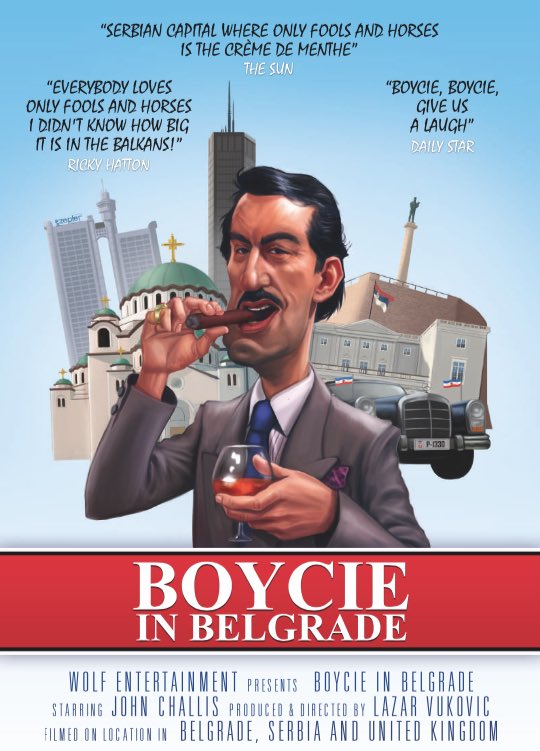
Having discovered that Only Fools and Horses was big in Belgrade (not to mention the rest of Serbia) John Challis was persuaded to take a trip out there – partly to meet some of the city’s OF&H fans in order to try and find out why they’ve taken this British sitcom classic to their hearts but also to soak up some of the city’s sights and sounds.

Running for eighty minutes, Boycie in Belgrade is an engaging documentary. Challis is a genial host, linking the different sections of Belgrade footage from the comfort of his armchair in England. From a reception with the British Ambassador via a visit to the Royal Palace, Challis takes in plenty of high culture (he also samples some local footballing history with a trip to Red Star Belgrade and seems more than happy to test the local plum brandy).

Later, there’s an excursion to a motor museum where he comes face to face with a very familiar yellow three-wheeled van ….

As various locals are interviewed, it becomes clear that they identify very strongly with the characters in OF&H – the series’ tone (forever optimistic even though the prospects look bleak) is something they believe chimes well with the Serbian spirit. This is possibly the most interesting part of the doco as whilst the programme (beloved as it is) is just another sitcom in the UK, it’s fascinating to observe how it resonates much deeper overseas with certain people.

Watching via DVD, there’s something slightly subpar about the picture quality (the image displays jagged edges and there’s a certain jerkiness on occasions when the camera pans quickly). Boycie in Belgrade can also be accessed via various streaming platforms (iTunes, Sky Store, Amazon Prime) so maybe this issue has been rectified there.

For those who enjoy travelogues especially, Boycie in Belgrade is worth a look, although a rental may be the way to go as I’m not sure that it’s one that has a great deal of rewatch value. More info on the different ways it can be accessed is available via this website.

Dad’s Army – Battle School (18th September 1969)

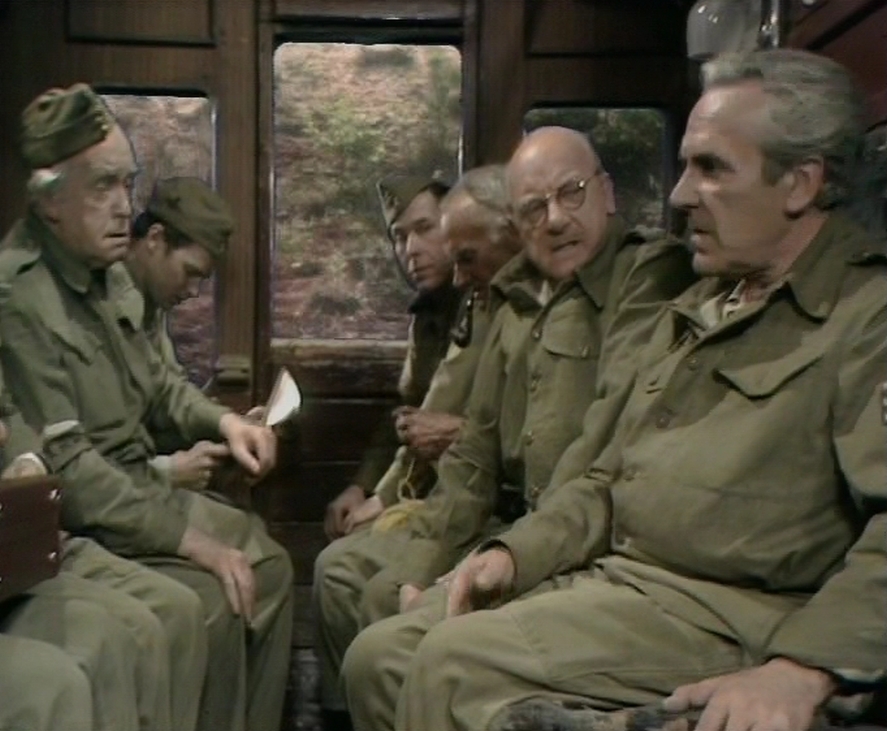
There are few things quite as unconvincing as a train carriage with a CSO background, but during this era of television you did tend to see it a lot – unless you could afford the money to shoot on location, there was no other way round this problem.

In a strange way I find this sort of thing quite comforting though and it’s never bothered me (if you’re quibbling about how things look, rather than the script and the actors, then things aren’t going very well).

Mainwairing and the others are en route to a weekend training course. As it’s a long journey, Godfrey is feeling the strain (Jones helpfully tells him to recite a poem to take his mind off things, but Godfrey’s choice – The Owl and the Pussycat – isn’t a good one). I like the fact that Frazer – on both the inward and outward journeys – is knitting, but no-one comments on this (I wonder what he was making?)

Arriving at the railway station, Mainwairing opens his sealed orders and, after studying the map, is pleased that the camp is only a mile away. He confidentially tells the men that they’ll be there in no time – but by this point in the series’ history,  the audience should be primed to expect that he’ll get them hopelessly lost. Which he does ….

Another interesting titbit is that the platoon whistle the Dad’s Army theme as they march round and round in circles.

Finally they reach their destination, only to find out that they’ve missed supper and even worse, they’re in the hands of Captain Rodrigues (Alan Tilvern), an uncouth foreigner. Alas, Tilvern’s not got a great deal to work with as Rodrigues simply spends all his time barking at the platoon (who he regards with the upmost contempt).

The battle ground will be instantly recognisable since it’s where the colour closing titles were shot. It’s surprising to be reminded that some of the end title footage (the final scene of Mainwairing and co running towards the camera) was used in this episode first and not shot specially.

A generous helping of Battle School was made on film (as we wiitness Mainwairing, leading from the front, suffering one disastrous reversal after another). There’s something really odd about these training scenes though – Walker has nipped off to a nearby farm to steal some food, but although we see Joe unsuccessfully attempting to rustle an animal or two, whenever we cut back to the platoon he’s also there. It’s really hard to understand why this wasn’t spotted during filming (unless the farm scenes were shot later to pad out an underrunning episode?)

Having taken one humiliating knock too many, Mainwairing elects to capture Rodrigues’ HQ and wipe the smile off his face. This he does, although it all happens rather too easily (and we don’t even see Rodrigues’ reaction, which was a missed opportunity).

Not the best episode the series has to offer then, but it still has a number of good moments. For example, I adore Rodrigues ordering Jones to stuff his palliasse with straw – that sort of thing was always a gift for Clive Dunn.

Dad’s Army – The Armoured Might of Lance Corporal Jones (11th September 1969)

My Dad’s Army rewatch continues and I’ve now reached the colourful delights of series three (although most of the watching audience back in 1969, and for a number of years afterwards, would still have been watching in black and white).

The opening few minutes – Captain Mainwairing delivers an incomprehensible lecture in a gasmask which then leads to a tortuous conversation with Jones – works as a sketch in its own right and could easily have been dropped into virtually any episode of DA. This happened a fair deal throughout the series (see also Croft/Lloyd’s Are You Being Served? for similar examples) which suggests that both writers penned a series of vignettes by themselves which they later collaborated on, stitching them together in order to create a whole episode.

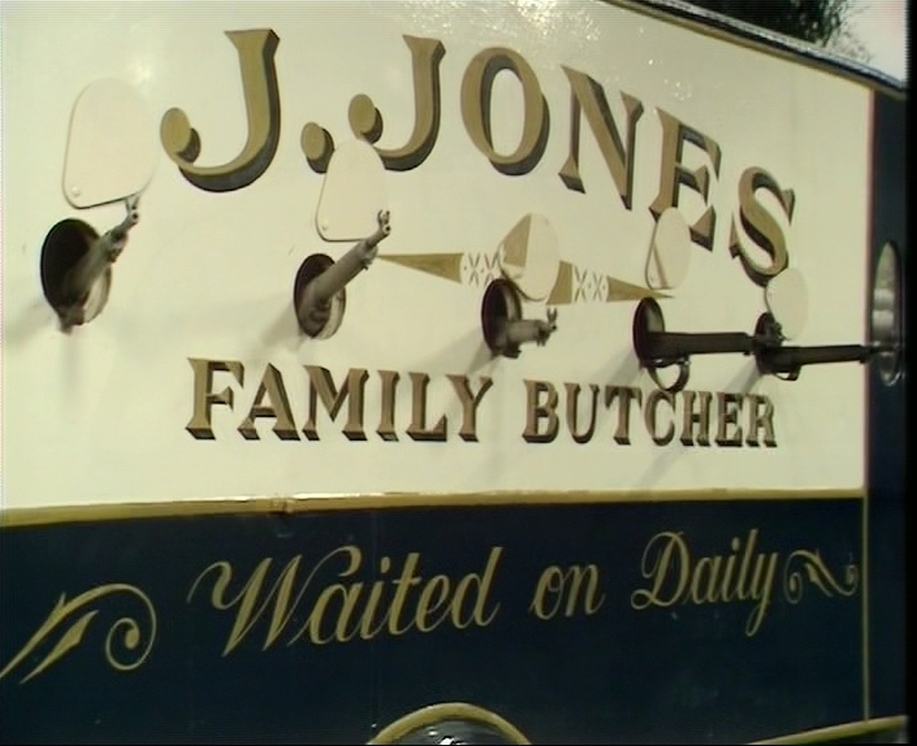
The scene in Jones’ butchers shop outstays its welcome a little, but since it introduces Pamela Cundell as Mrs Fox, I’ll cut it a little slack. At this point she’s not a widow, which means that her flirting with Jones has a little extra edge (although to be fair, most of his customers seem quite happy to flutter their eyelids at him if it means getting something a little extra).

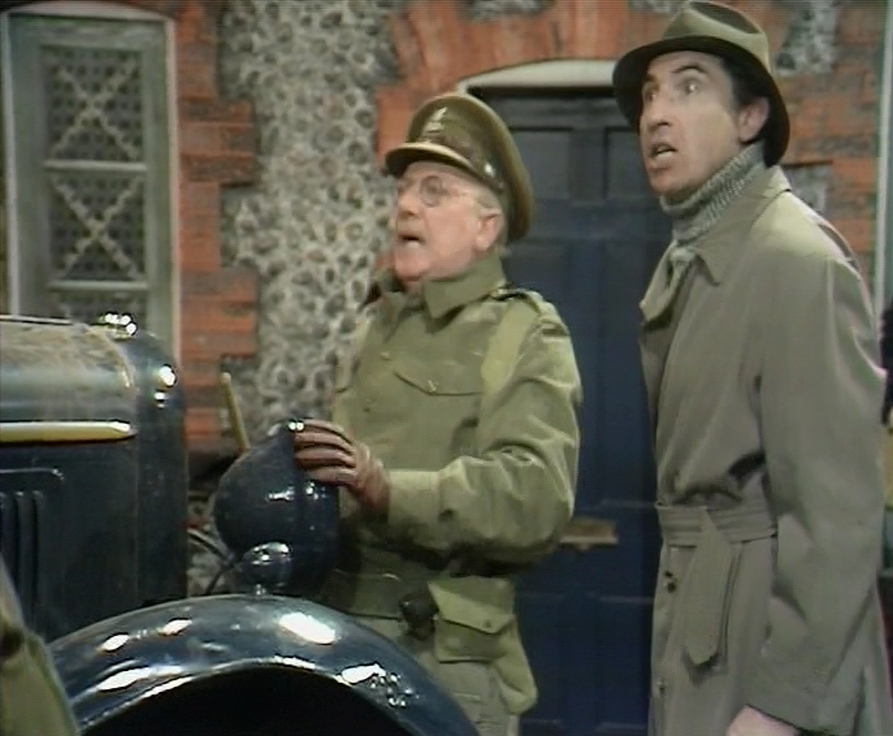
Walker has hatched a plan – if Jones donates his butchers van to the Home Guard then they’ll be able to get petrol coupons (which will be handy for Joe – it’ll allow him to move his contraband around more easily). But his best laid plans are scuppered after the van is converted to gas.

The scene where Walker and Jones find themselves in charge of a van dangerously leaking gas plays out well – although you get the feeling that there was more comic potential to be wrung from it. There’s no quibbles with the episode’s most memorable scene though – Wilson demonstrates how the van has now been converted into an impressive fighting machine (“Open, two, three, out, two, three! Bang, two, three, bang, two, three, bang, two, three, bang, two, three, bang, two, three! In, two, three, shut!”)

Also debuting in this episode is Harold Bennett as Mr Bluett (thirteen appearances between 1969 and 1977). Considering he was in his late sixties at the time this one was made, it’s surprising to see just how roughly Bennett was manhandled by the platoon (at one point they attempt to force Mr Bluett, lying on a stretcher, through the front of the van as the back doors were locked).

The chap playing “the Angry Man” was naggingly familiar, but I couldn’t put a name to him. It turned out to be Nigel Hawthorne …

Dad’s Army – Series One

It may be difficult for the young ‘uns to believe, but there was a time when Dad’s Army repeats were thin on the ground. During most of the eighties the show only received a few limited re-runs – so the more lengthy series of repeats that began in the late eighties were very welcome (by this time I’d also picked up some episodes on VHS – although it was a slight irritation that the three episodes on each tape had some of their opening and closing credits snipped out).

Fast forward thirty years and DA always seems to be with us. Although BBC2 have begun another repeat run from the beginning (albeit sometimes jumping ahead with a later, random, episode for no particular reason) I haven’t really dipped into them. But I’ve been eyeing my DVDs sitting on the shelf and have decided that the time is right for my own sequential rewatch ….

What’s noticeable right from the first episode (The Man and the Hour – tx 31st July 1968) is that the series’ familiar ingredients are already in place, although I could have done without the audience cackling at the animation during the opening titles (this feels very odd).

And the way each episode opens with a few minutes worth of film misadventures, showing the platoon on hapless manoeuvres (with E.V.H. Emmett providing an authoritative voice-over) is also something I’m glad was eventually phased out.

The major casualty of the debut episode is Bracewell (played by John Ringham). He might be mentioned in the second episode, but after The Man and the Hour he never appears again. It’s a slight shame that such a good actor – equally adept at both comedy and drama – as Ringham didn’t become a regular, but it seems obvious that Bracewell was rather too much like Wilson for comfort (at least Ringham returns later for a handful of appearances as Captain Bailey).

This first series chugs along quite nicely, although the reversed film used in Command Decision (14th August 1968) is painfully obvious. They may have got away with it once, but using it again and again (to show that the horses supplied by Colonel Square were more used to circus, than military, action) wasn’t very wise (sir).

It’s fun to look out for the first time some of the series’ familiar motifs were used. For example, Museum Piece (7th August 1968) debuts a piece of Arthur Lowe business that never fails to amuse (even when you can guess what’s coming). Mainwairing, keen to lead from the front, heads for a ladder – only to trip and fall over with the result that his dignity (not to mention his hat and glasses) is askew when he straightens up.

Whilst the series employs plenty of broad gags (as it would always do) it’s the quieter character moments that I prefer. There’s a lovely example in Command Decision – which sees Mainwairing, having rather rashly promised the platoon a supply of rifles, facing the probability that he’ll have to dash their hopes again.

Happily the guns turn up just in the nick of time, and he exits the office with them. We don’t see the reaction of the men in the hall, but then we don’t have to. Their sudden stunned silence (followed by a series of appreciative cheers) tells its own story.

It’s little moments like this that make the series so rewarding to revisit. Mainwaring might be pompous and pernickety, but we know his heart is in the right place. And the fact that the audience – like the platoon – is invited to laugh with him, rather than at him, is an obvious reason why the show continues to endure.

Grange Hill. Series Thirteen – Episode Eleven

Written by Margaret Simpson. Tx 6th February 1990

It’s been discussed for a while, but today we finally see just how wretched Matthew’s home life now is. He’s living in temporary accommodation along with his mother and sister (a single room with no bathroom in a rather squalid building).

And although no violence from the other residents is shown, we do hear it (the episode concludes with Matthew and his sister, Lucy, locked inside their room listening to shouts and screams elsewhere in the building). As ever, GH had to tread a fine line between attempting to display the reality of a situation and knowing that they very were restricted in what could be portrayed at 5.00 pm on a weekday afternoon.  Yes, everything could have been much nastier, but I think the point was still well made.

Throughout the episode Matthew suffers more and more – he’s unable to find the book Miss Monroe lent him (so he’ll have to pay for it), then he’s cornered by Justine and Chrissy who are looking for his t-shirt money (I thought he’d paid for that before) and finally he glumly looks at his bust shoe (which seems to be beyond repair).

Moving onto Tegs, it’s noticeable in the past that the series had often elected not to show certain dramatic moments, instead they simply reported them. This happens again here – the previous episode concluded with Tegs absconding from his mother’s house but today we’re told that he went back shortly afterwards and spent a fairly convivial weekend with her. It’s a very odd move – not only for the way it negates the tension of episode ten’s cliffhanger, but also because it’s a very offhand way to pay off a storyline that’s been developing over several years.

Elsewhere in the episode, Rod continues to turn a fast buck (selling cigarettes to the first years) whilst Mauler is still incensed that he’s not on Mr Hargreaves’ vigilance committee. The saga of the t-shirts also rumbles on, with arguments aplenty (the test shirts have run in the wash). Given how shambolic things have been so far, it’s hard to see how the girls are ever going to turn a profit.

Julie only has a few lines in this episode, but she still catches the eye. At several points she’s framed in the background, silent and alone. These shot choices seem to be intentional, suggesting that her lack of confidence and self esteem will be developed further in future episodes.

Miss Booth and Mr Hargreaves continue to clash, which provides the episode with a few minutes of entertainment. Today, she’s incensed that he’s chosen her to supervise a butcher, who’s come along to give a talk on the best ways to cut up meat.  That’s an odd sort of public speaker it has to be said.

Will this act as a red rag to Ronnie? Well, not really, although she’s clearly not best pleased about it and storms off to speak to Mrs McClusky (Mrs McClusky is unmoved though). Ronnie’s given the chance not to attend, but she does so anyway – although no outbursts are forthcoming from her. But I’ve a feeling she’s keeping her powder dry for future adventures.

Grange Hill. Series Thirteen – Episode Ten

Written by Barry Purchese. Tx 2nd February 1990

Last episode’s cliffhanger is casually negated after we discover that Justine and Chrissy are once again hale and hearty (which feels like a bit of a cheat).

They, along with Natalie, continue to ruminate over their t-shirt business, although it slips somewhat into the background today (only really surfacing when Matthew admits that he’s unable to pay for the shirt he’s ordered).

Matthew has regressed back to his series eleven persona – monosyllabic and with eyes downcast, he cuts a rather forlorn figure. Tegs comes to his rescue by offering to pay for his shirt, but when he hands over a fiver Justine is automatically suspicious.

The reason why he’s flush is quickly established (he’s going to stay with his estranged mother over the weekend). Justine is immediately contrite, but the fact she dithers so long before apologising is a mark of how much their friendship has fractured

Eventually she plucks up enough courage to speak to him, as he’s waiting for his lift. But before she can finish speaking, Andy pops up and acts like a bit of an idiot. In his defence, he didn’t know what was going on (although I doubt he would have cared anyway) but it once again makes you wonder what she sees in him …

The saga of Mr Hargreaves’ missing photo continues apace, although why he’s so intent on recovering a picture of a vintage car remains somewhat baffling. It’s slightly easier to understand why Mr Griffiths is happy to get his missing picture (a shot of a young him in uniform) back – especially if that was his only copy.

The plot then gets a little wooly. Mr Hargreaves, spotting that Mr MacKenzie has a photo (Mr Griffiths’, remember) wonders if it’s his photo (of his car, remember). Rather than asking Mr MacKenzie outright (and seemingly unaware at first that Mr MacKenzie could be found in the CDT room) he ends up rummaging in the bins, believing that his picture may have been thrown away with the other wooden rubbish.

Events are being manipulated by Rod, who has Mauler firmly under his thumb (he’s subcontracted him to get the empty frame). Since Rod also now has Mr Hargreaves’ photo, when he put it together with the frame no doubt he’ll be on a nice little earner. Today’s episode abounds with examples of Rod’s ability to make a profit – getting a bacon sandwich for Mr Hargreaves and then pocketing the change, for example.

Miss Booth’s new hairstyle causes a stir whilst Mr MacKenzie gets a nice scene (rummaging in a junk – sorry, antique – shop for a present for his wife). Even Mrs McClusky is the recipient of a few decent lines today (which is quite a rarity these days) as she ruminates on her early love life.

Aichaa’s dreams of becoming a model are shattered after she’s told she’s not the type. She takes the news quite calmly, deciding that after all it wasn’t the life for her. This seems slightly hard to swallow.

Georgina, who has accompanied her friend, seems much more the type though and may just have a future. Aichaa, after a momentary spasm of annoyance over the way her friend has manipulated her, forgets all about it. This seems slightly hard to swallow.

We meet Tegs’ stepfather for the first time (played by Brian Croucher). Mr Glanville (Croucher) has an uncomfortable discussion with Tegs, due to the boy’s inability to respond. As for Mrs Glanvile (Christina Avery), she has less screentime than her husband, so hardly has the chance to make an impression here.

This should be the conclusion of a long-running storyline (Tegs’ search for his mother) but his attitude all episode long suggests that today’s not the day for happy endings. So it’s no surprise when his mother discovers that he’s left the house via the bedroom window.

The Bill – Requiem by P.J. Hammond (3rd September 1988)

Between 1988 and 2004, P.J. Hammond wrote 39 episodes of The Bill. Given that his unique style is very noticeable on series such as Z Cars and Angels, I’ve decided to review his contribution to The Bill, looking to see how he worked with this format and if he ever attempted to stretch it in unexpected directions.

Requiem was one of the early half hour episodes (number fourteen). Even with the reduced running time, some writers still juggled multiple plotlines, usually with one emerging as the dominant theme. Hammond eschews this – instead the focus stays fixed on the grisly discovery inside a nondescript house.

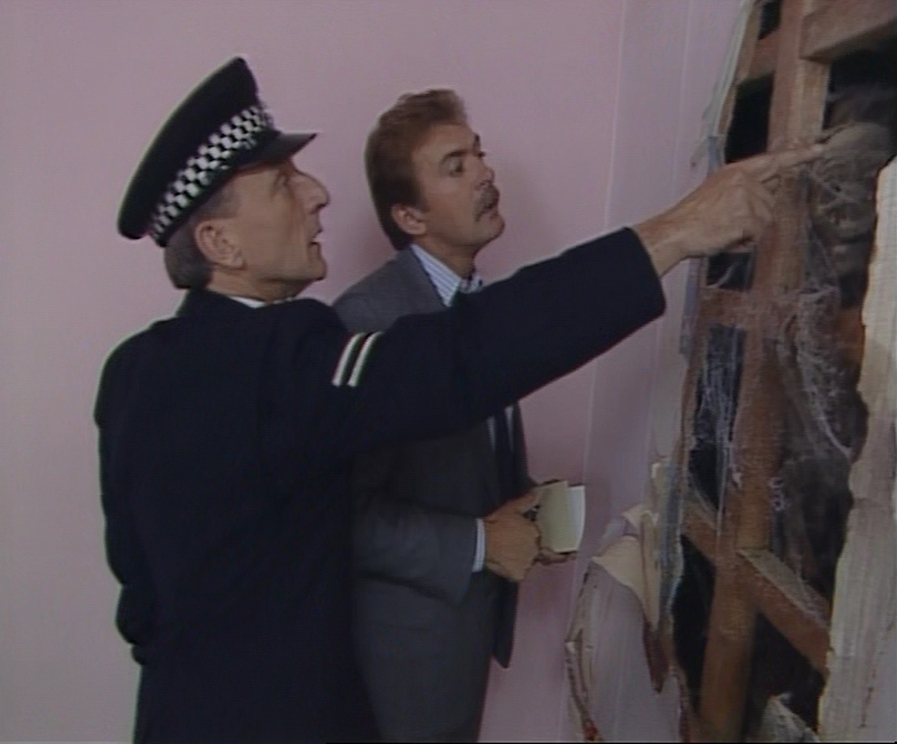
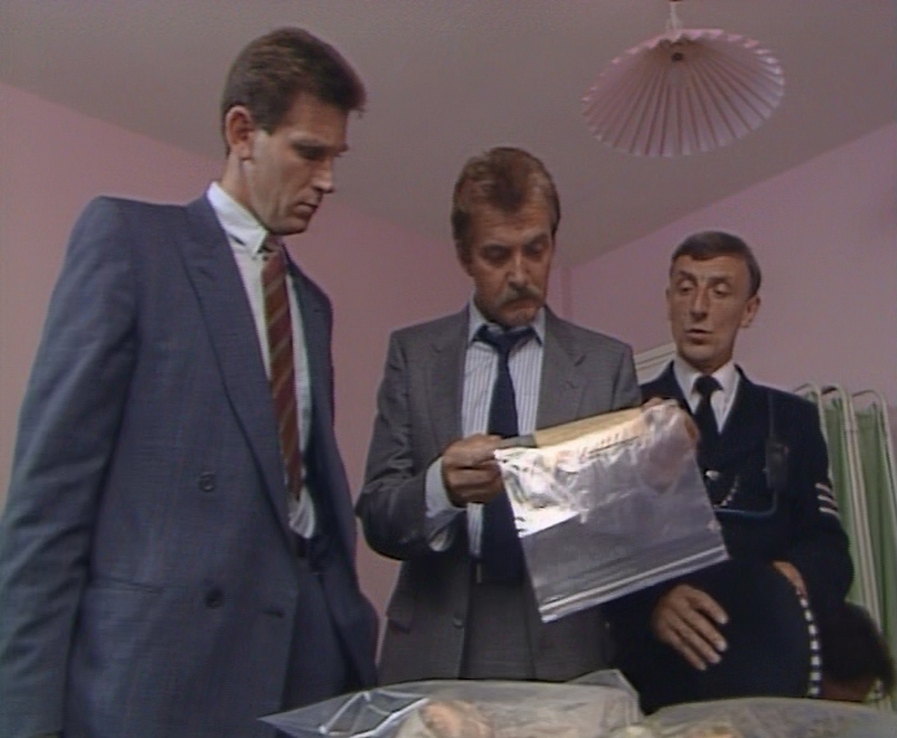
What’s actually been discovered is teased for a few minutes. Haynes emerges from the house slightly shaken and advises Ramsey to go and take a look. The camera stays fixed on Ramsey when he goes inside, so we only see his reaction (the same thing happens when Cryer turns up a few minutes later). Indeed, it’s not until Roach and Dashwood roll up that the reveal finally takes place. Whether this works is debatable, as the object of their interest (a skeleton hidden behind a wall) does look a little fake.

Mr and Mrs Trant and their young daughter have lived in the house for about five years. Doing some DIY (smashing through the living room wall to install a fireplace) Mr Trant came across this unexpected guest. Both Mr and Mrs Trant seem rather disconnected from events – remaining unemotional throughout, they cast a rather odd atmosphere over the episode (the moment when father, mother and daughter all sit down in unison catches the eye).

Requiem features a few familiar faces guest-starring. One of Ronald Leigh-Hunt’s final television roles saw him cast as the pathologist Passmore. Cryer and Roach, discussing Passmore’s imminent arrival, express amazement that he’s still working, which primes the audience to expect someone rather doddery and incompetent.  The reality is quite different though – Passmore is sharp and methodical, although clearly of the old school (scowling at the flippant remarks made by his photographer colleague, for example).

Russell Dixon and Deila Linsday both sketch decent cameos as Mr and Mrs Jenner. Neighbours of the Trants, they have a marriage which is best described as voluble and volatile, although there’s the odd streak of affection visible too. They add little to the plot, but help to briefly lighten and humanise the tone of the story.

Since there’s a body, it seems reasonable to suggest there must be a miscreant somewhere at hand. The Trants can be ruled out, as the events behind the wall took place long before they bought the house. Talk turns to the reclusive Goodhall (Richard Beale), a resident of one of the upper flats, who seems a likely candidate. Another veteran actor, Beale makes the most of his few minutes’ screentime.

Goodhall turns out to be a red herring as the true resolution of the mystery is revealed in the final few minutes. It seems slightly hard to swallow, but I daresay even odder things have happened in real life.

Grange Hill. Series Thirteen – Episode Nine

Written by Barry Purchese. Tx 30th January 1990

The episode begins with Akik in full flight. POV shots and dramatic music are to the fore as he desperately races across the playground and down a flight of steps to the basement. His pursuers? The Timpson brothers of course, intent on creating mayhem.

The interesting twist with this scene is that it doesn’t go any further – no sooner have the Timpson duo started to put the frighteners on, than they’re shooed away by Raju (Carl Pizzie) who’s in the company of Natalie, Justine and Becky.

One of those GH pupils who suddenly appears from nowhere (and will vanish just as abruptly in a handful of episodes’ time) Raju is something of an entrepreneurial wide boy. The spirit of Pogo and Gonch lives on.

Pizzie’s performance is best described as average, although given his acting inexperience no doubt it wasn’t easy for him to have been flung into the deep end like this. Still, slightly annoying as Raju is, he pales into insignificance after we meet his older cousin Rikki (Dhirendra).

Raju sees there’s a profit to be made from the girls’ t-shirt printing process and puts them in contact with Rikki who can supply good quality clothes for a cheap price (no questions asked, naturally). Rikki’s character is deftly defined within a matter of seconds – blaring music from his van and the furry dice that dangle from his front mirror tell their own story.

This t-shirt plot has yet to get the pulse racing, although there are some good dramatic moments elsewhere today.  Highlight of the episode is Tegs’ interview with his social worker. It takes place in the social services office, which has an air of quiet desperation (reinforced when the camera tracks past several other unfortunates before locating the office where Tegs is).

Mr Hargreaves has announced the members of his Vigilance Committee – Ted and Trev are in, but several others aren’t. Some, like Robbie, couldn’t care less whilst Mauler quietly seethes at the way he’s been overlooked (a nicely played moment which helps to make up for some of Mauler’s more irritating “comedy” scenes of years gone by).

Ronnie and Calley are also annoyed at being overlooked, which is slightly more surprising – maybe they were looking forward to exercising a little authority? Mind you, given how many sixth-formers there must be in the school, it would stretch credibility to breaking point if they were all drawn from the eight or so speaking regulars in the series.

At long last there’s an article in the local paper about the pub fight. Since a number of days have gone by, I can only assume that news travels very slowly in that part of the world. Mike’s ever-so-slightly frantic, whilst Robbie doesn’t seem to twig at first what he’s on about. This handily allows Mike to explain to the audience exactly what happened. It’s a slightly clumsy scene, but back in the day when all the episodes of a series weren’t available at the touch of a button you had to sometimes bring latecomers up to speed.

A tired and listless Matthew is given a ticking off by Mrs Monroe. She believes he’s been staying up late at night watching movies. Although he doesn’t deny this, he doesn’t confirm it either – and since we know how wretched his home life currently is, it’s possible to draw a different conclusion from his current demeanor. It’s a slight mark against Mrs Monroe that she didn’t actually ask him what the problem was (even though what we know of him from past experience would suggest he’d lie or keep quiet anyway).

Chrissy and Justine begin spray painting their t-shirts in their workshop (a room in the basement found for them by Rod). If the audience were slow on the uptake that the room (lacking windows) was badly ventilated, then the ominous incidental music is there to provide them with a blatant nudge in the right direction.

And wouldn’t you know it? Just as the girls begin to find the fumes overpowering, the Timpson brothers return and lock them in. The discovery of Chrissy and Justine’s unconscious bodies provides the episode with its cliffhanger.

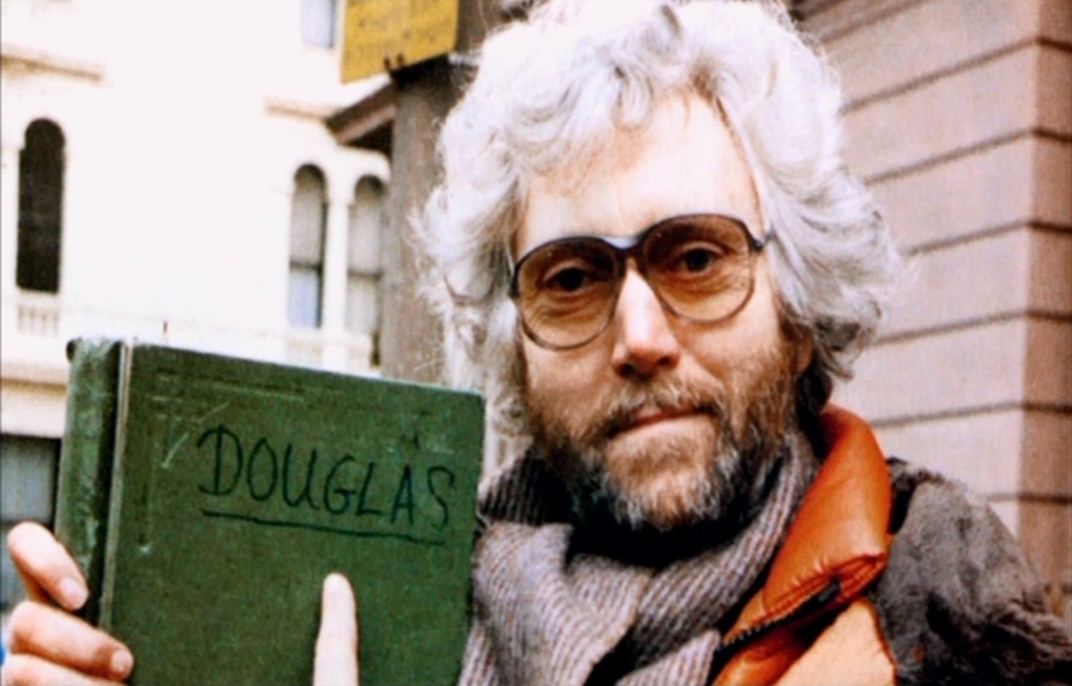
Douglas Camfield’s greatest Doctor Who hits


Although the original incarnation of Doctor Who attracted a number of inventive directors, the work of Douglas Camfield has always stood out. From his earliest contribution (capturing the fight between Za and Kal in The Firemaker) it was clear that he worked exceptionally well with film.

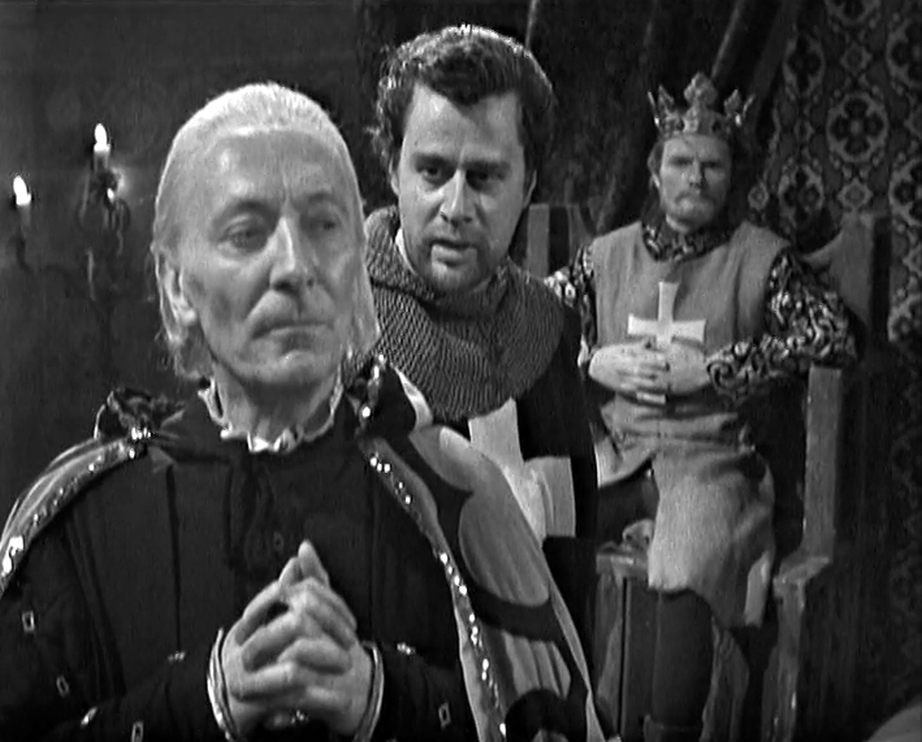
Having said that, he was also at home in the television studio, coordinating multi-camera vt sessions with military precision (both The Crusade and The Time Meddler offer ample evidence of this).

What follows are five of my favourite Camfield Doctor Who moments. No doubt on another day I would have put them in a different order (or indeed selected something totally different – the Yeti attack in Covent Garden and the Zygon woodland hunt were both strong possibilities for a while). Maybe next year I’ll give it another go and see what I come up with then ….

The Wheel of Fortune

The Doctor crosses verbal swords with the Earl of Leicester and comes off second best.

It’s probably true that few directors could have gone wrong with The Crusade, as the starting point (David Whitaker’s script) was such a rich one (although you can grumble that the story simply peters out – central characters disappearing abruptly, for example).

That said, the finished product still zings – thanks to Camfield’s casting and the performances he was able to wring out of his assembled players. There’s some nice film sequences dotted throughout the serial but this selected scene has always impressed me.

You’re a man for talk, I can see that. You like a table and a ring of men. A parley here, arrangements there, but when you men of eloquence have stunned each other with your words, we, we the soldiers, have to face it out. On some half-started morning while you speakers lie abed, armies settle everything, giving sweat, sinewed bodies, aye, and life itself.

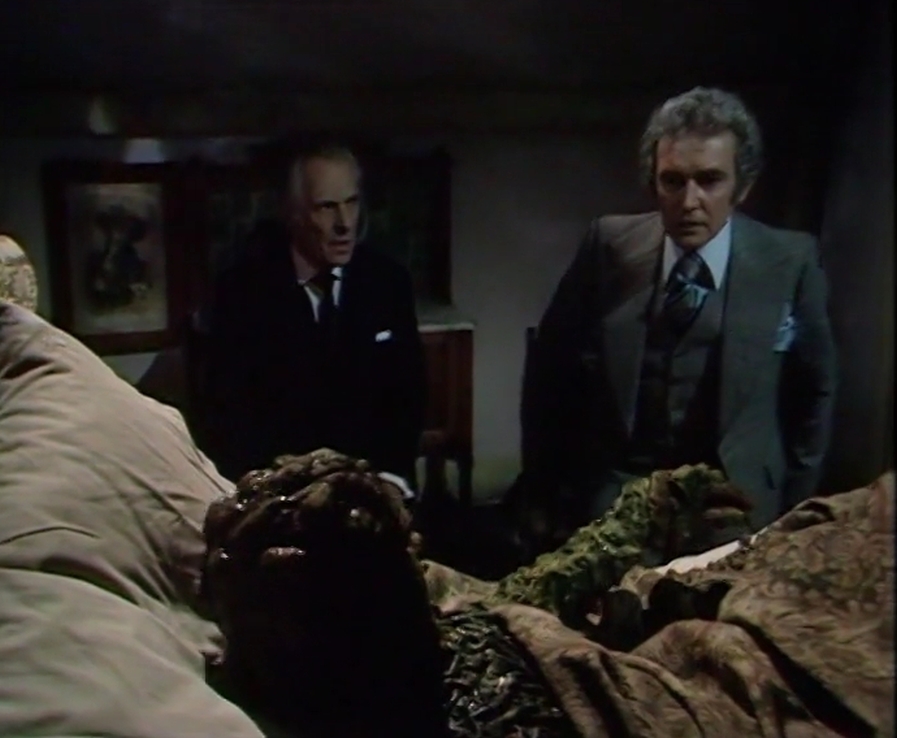
The Seeds of Doom – Part Four

It has to be said that The Seeds of Doom is more than a little bit nasty. Possibly it’s age creeping up on me, but when I look at it now I tend to concede that maybe Mrs Whitehouse had a point ….

On another day I might have plumped for Chase’s death by compost machine, today it’s the pitiful sight of Keeler in his midway state between man and Krynoid. Mark Jones is excellent as the doomed Keeler whilst Tony Beckley excels as Chase (easily in the top five of Who’s humanoid villains).

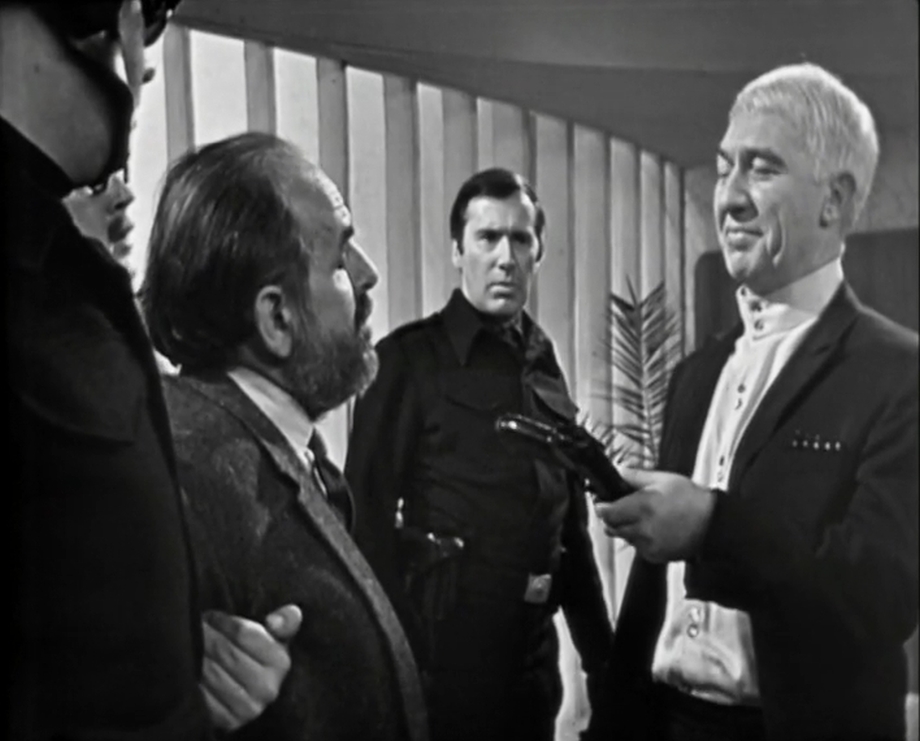
The Invasion – Part Six

Is it just a coincidence that three of the series’ best villains – Mavic Chen, Tobias Vaughan and Harrison Chase – appeared in Camfield directed stories? I think not.

Yes, The Invasion is a bit flabby (there’s a point where the Doctor spends far too much time staring into a microscope and pulling worried faces) but the longueurs are worth enduring as you know another good moment is just around the corner.

In part six that first occurs when Vaughan invites Professor Watkins to shoot him. There’s plenty to enjoy in this short scene – such as when Vaughan’s mask of polite affability slips to reveal something very nasty underneath and also the beat where Watkins (but not the audience) is privy to what happened when he eventually plucked up enough courage to pull the trigger.

Terror of the Zygons – Part Two

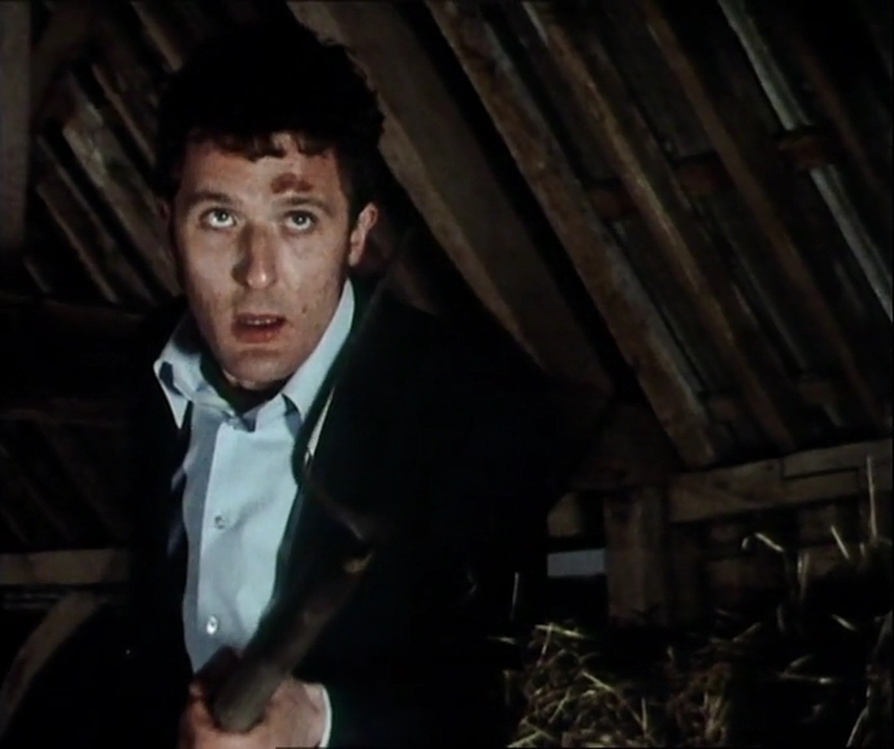
As good as many of the UNIT stories were, everything did become a little cosy at times. This late UNIT effort by Camfield shows that the option was always there to go darker. And there’s no darker moment than when Zygon Harry attacks Sarah with a pitchfork. Throughout the story everything is played dead straight (even the emergence of the Skarasen wasn’t cause for a giggle). That applies to this scene too – the sight of the dying Zygon looks faintly comic but everyone’s resisting the temptation today to wink at the audience.

The Invasion – Part Six

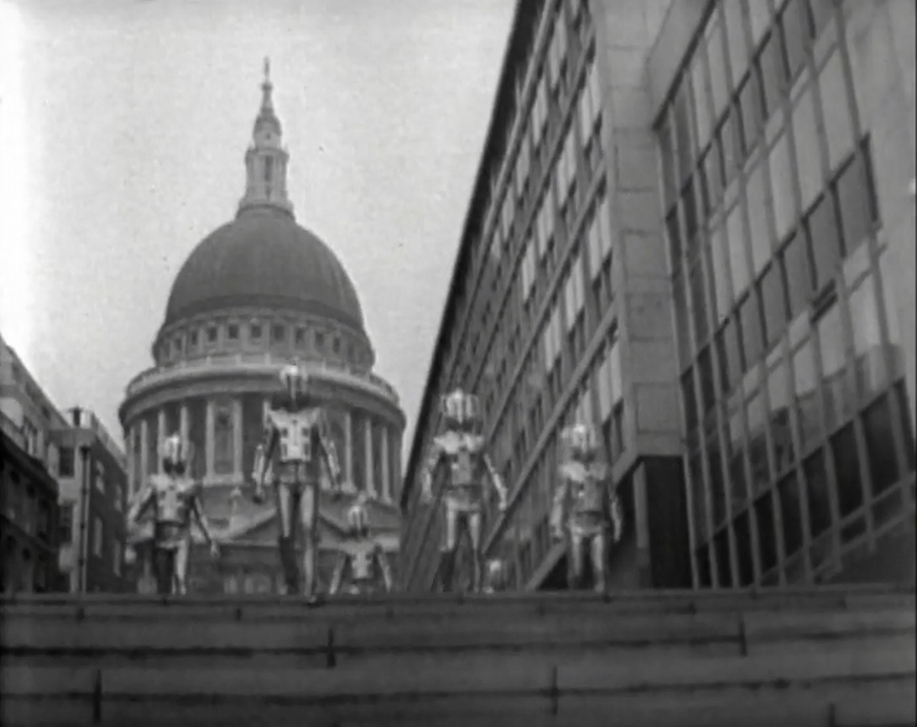
Top of the Camfield Pops is this iconic cliffhanger. Years before I got the chance to see the surviving episodes (via a wobbly pirate VHS) the moment when the Cybermen stroll past St Paul’s Cathedral was already very familiar to me thanks to spending hours staring at a handful of photographs (one in the Doctor Who Monster Book if memory serves). This is archetypical Who – not least for the way it has (with a very limited budget) to convince the audience that London is under attack.

With about half a dozen Cybermen and a handful of human extras, Douglas Camfield was more than up to the task. And that’s why I love this cliffhanger so much. Making something out of virtually nothing has always been the Doctor Who way.

All five clips can be watched below, via these Twitter posts.

Grange Hill. Series Thirteen – Episode Eight

Written by David Angus. Tx 26th January 1990

Although a few other plots bubble along today, this is very much Ronnie’s episode – something that’s reinforced by the way it opens and closes with her (and on both occasions she’s in a tearful mood).

We begin with a camera pan around her bedroom. She’s lying in bed whilst the clock radio burbles out the jolly sounds of Radio 1 (a cover version of Sam Cooke’s Wonderful World). The choice of song is a nicely ironic one, as the viewer processes the fact that every inch of wall space is taken up with posters protesting at animal cruelty.

Coming downstairs to breakfast, she discovers a budgie in a cage. Her mother explains that they’re looking after it for a neighbour who’s had to go into hospital.  Ronnie instinctively goes to release it, but Mrs Birtles tells her not to – as the bird is happy in the cage. This moment of tension passes without Ronnie being able to articulate why she disagrees with this viewpoint, which in some ways is the episode’s theme – she wants to help all animals, but can’t find a way to do so.

Ronnie learns, via a chance meeting on the way to school with a couple of girls from St Mary’s, that they still dissect animals in their biology classes.  This reveal is done in a rather clumsy way – Calley happens to bump into a couple of St Mary’s girls she’s friendly with (although we’ve never seen them before) and the talk instantly turns to their biology lessons.

Grange Hill no longer uses animals in their classes, although they did in the past (series seven, for example). Possibly we’re missing a trick here – had Ronnie suddenly launched a crusade to stamp out this sort of thing in her own school it would have had more of a dramatic punch.

The scene we do have is still effective though. Ronnie storms over to St Mary’s, wanders through the corridors and finally finds the biology class  – whereupon she crashes in and hands out leaflets, to the bemusement of the pupils and the simmering anger of the teacher.

Few of the St Mary’s pupils seem that interested (although a few look slightly bashful). Possibly this because they don’t care or it might be that they don’t want to rock the boat – their grades mattering more to them than a handful of dissected animals.

This failure to connect only deepens Ronnie’s gloom and she goes off to wander up and down the high street, with seemingly every window (a butchers, a shop selling genuine leather handbags) causing her further pain.

In other news, we meet Mr Bentley (David Cann) for the first time.  Given the way he’s been talked about in the past, it’s no surprise that he’s totally single-minded where his son is concerned – treating Mike more like a machine than a human being. The affable Mr Robson (someone who’s never been that keen on ultra-competitive sports) is polite, but his real feelings are expressed by the various faces he pulls as Mr Bentley drones on and on.

There’s a chance to dig a little deeper into Neil Timpson’s character. Caught by Mrs Monroe with a video nasty (the rather tame looking Ninja Demon) she has a friendly chat with him in detention about his home life, which possibly helps to explain his poor attitude at school.

It’s once again noticeable how sidelined a figure Mrs McClusky has become. Once upon a time she would have been the one to argue about budgets and funding with the likes of Miss Booth and Mr MacKenzie, but these days she’s perfectly happy to delegate that sort of job to Mr Hargreaves. This is all well and good, but it does mean she rarely has the opportunity to tackle any dramatic scenes.

Having said that, today’s episode slightly bucks the trend as she provides Ronnie with a shoulder to cry on.

Grange Hill. Series Thirteen – Episode Seven

Written by Kay Trainer. Tx 23rd January 1990

Neil and Barry Timpson continue to provide a service of low-level irritation for their fellow pupils, something which they’ve been doing since the start of the year. Neither have yet to emerge as rounded characters (Neil never really would, as John Pickard jumped ship from GH to 2 point 4 children the following year).

Today they briefly sling a racial epithet Akik’s way, which infuriates Jacko (and to a lesser extent, Brian and Locko). These four are also rather underdeveloped at present, with Jacko (by dint of the fact he owns a troublesome dog and is always ridiculously cheerful) the most memorable at this point in the series.

Quite why Jacko should be so defensive of Akik is a slight mystery – presumably he’s just keen to get one over on the Timpson brothers and Akik has provided him with a good excuse. The selected method of revenge – chucking Mr Robson’s climbing net over them – isn’t one of those scenes to get the pulse racing, but it passes a few minutes fairly agreeably.

The best moment in the episode featuring Jacko, Brian and Locko occurs when Mrs Monroe spies them acting suspiciously. “Freeze like trees” she says – and they do …

Mr Griffiths is getting the hang of his dubiously acquired computer (thanks to Akik’s tutelage). Given the delighted way Mr Griffiths reacts to his new found tech skills, it seems rather sad that, unless he can come up with a plan, he’ll have to hand it over to Mr MacKenzie.

Elsewhere in the episode, already established plot-threads continue to bubble away. Mike and Robbie mention the fight yet again (and yet again they’re scouring the paper for news and coming up with nothing, which reassures them). Tegs and Justine have their latest difference of opinion – she’s convinced he’s spying on her (which he denies). Although later he does go and spy on her anyway. Matthew’s family fortunes continue to decline (it looks like they’ll be forced to sell their house).

Georgina tells the others that she’s seen Calley’s boyfriend (who she estimates to be forty!). Calley tells them that he’s only twenty four and that, yes, they are sleeping together. Ronnie pulls a disapproving face (similar to the one she pulled earlier in the episode when she spied meat being dished out in the canteen). Is Ronnie jealous or is she worried that Calley will end up being hurt by someone who’s simply using her? I’d say it was the latter.

Aichaa’s got some good news – her photo will be printed in the next issue of Just Seventeen, plus they’ve given her a cheque for £20. It’s fair to say that the stare Georgina gives her is decidedly on the icy side.

Grange Hill. Series Thirteen – Episode Six

Written by Kay Trainer. Tx 19th January 1990

Mike kicks off the episode sporting a very silly hat. He hasn’t lost his mind (well not completely) as this is his idea of a disguise. Mike is still fretting that they’ll be some comeback from the pub fight, so he’s keen to keep a low profile.

Of course, Georgina would have to come walking down the street just as he’s leaving the leisure centre with his tremendous tifter. What does he do? As befits a star athlete he runs away ….

Georgina, Calley and Ronnie meet up. Ronnie’s still fuming that Calley used her as an alibi to explain her all-night adventure (Ronnie is certainly a girl who knows how to hold a grudge). Bad feeling between the pair is still bubbling away then, although things calm down a little when the threesome go to look for some new cosmetics.

Although Ronnie’s been interested in animal rights since the start of series 13, it’s only today – when she’s given a leaflet about the testing of cosmetics on animals – that she appears to decide that this sort of thing is a very bad thing indeed. Calley half-heartedly agrees to boycott the offending shop, but Georgina sneakily still buys some of the make-up.

There’s something rather topical about the way Miss Booth despairs over her ever-shrinking art budget. Things are now so tight she’s been forced to re-use scraps of paper, which is hardly ideal.  The fact that Mr Hargreaves is able to fit out a new office with an up to date computer only sticks in her craw even more.  Clearly Mr Hargreaves is one of those people who believes the arts mean very little (presumably because they don’t turn a profit – or at least not one that he can quantify).

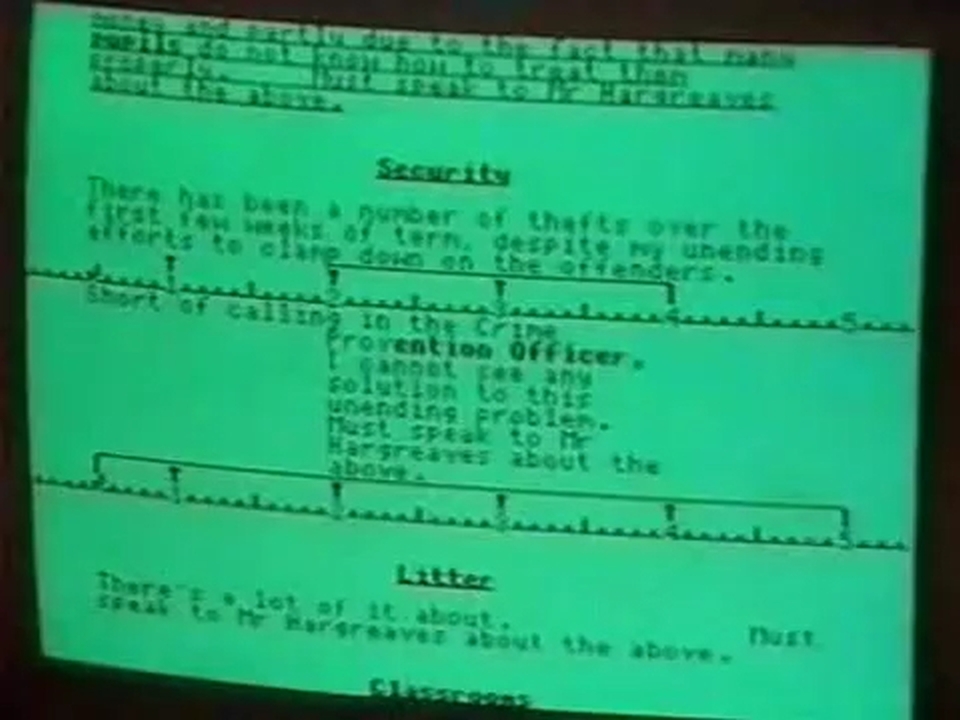
Mr Hargreaves’ old computer (a BBC B by the look of it) is snaffled by Mr Griffiths, who seems entranced with it. Taking it back to his office, he delightedly pushes a few buttons, although as yet he doesn’t seem to realise that it works better with a monitor ….

Mr Hargreaves’ crusade to stamp out unauthorised photo-copying continues. Both Mr Robson and Mrs Monroe are seen to have grabbed a few sneaky personal copies (although Ronnie and Calley are rather pushing things by running off 150 copies of anti-vivisection leaflets). Mr Hargreaves isn’t too pleased when he catches the guilty pair.

Ronnie and Calley join an animal rights demo outside the shop. Things get a little rowdy, especially after Ronnie daubs the shop window with red paint. I think she can count herself lucky that Mrs McClusky happened to be passing and was able to intercede with the police (although annoyingly we aren’t witness to that moment).

Mike and Georgina go on a date to the movies. Mike, a Western fan, is engrossed by the film whilst Georgina (looking round at the other couples getting rather friendly) sighs longingly. So Mike – a boy who’s slow on the uptake – doesn’t take up her blatant offer of a cuddle.

Later, when they head to the café for a coffee, Georgina spies Calley kissing a man. This closing scene confirms that Calley’s interested in men not boys, but it’s mainly interesting for the reactions of Mike and Georgina. He looks a little downcast whilst Georgina (who you might have expected to be shocked) responds with an enigmatic smile. She seems to be wondering why Mike isn’t kissing her in that way (or indeed, any way at all).