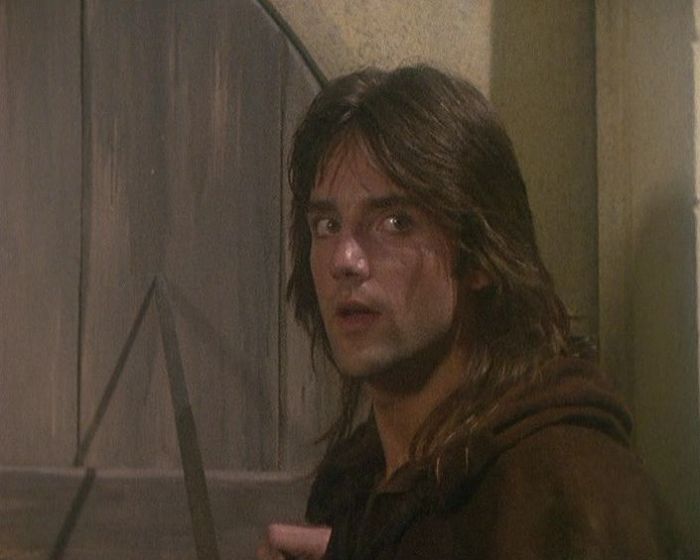
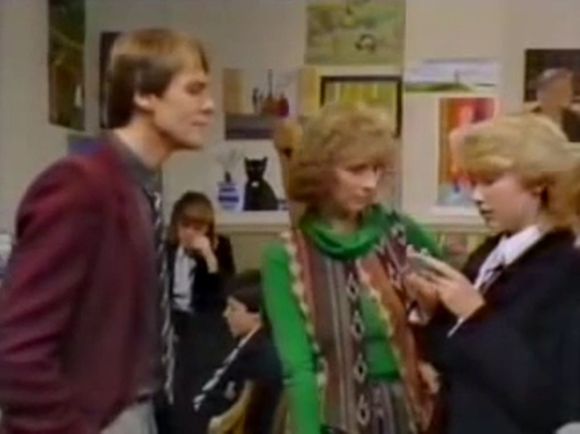
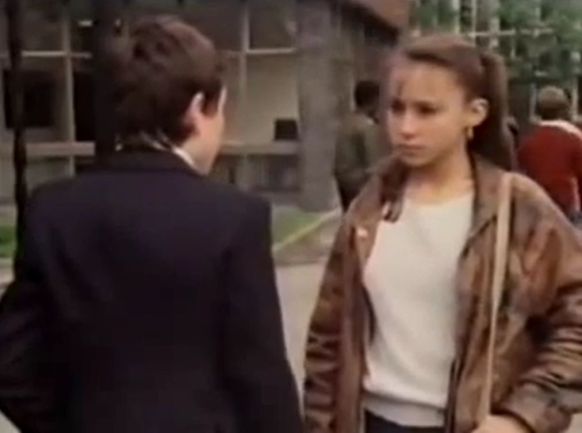
Grange Hill. Series Seven – Episode Two

grange hill s07e02

Written by Margaret Simpson. Tx 10th January 1984

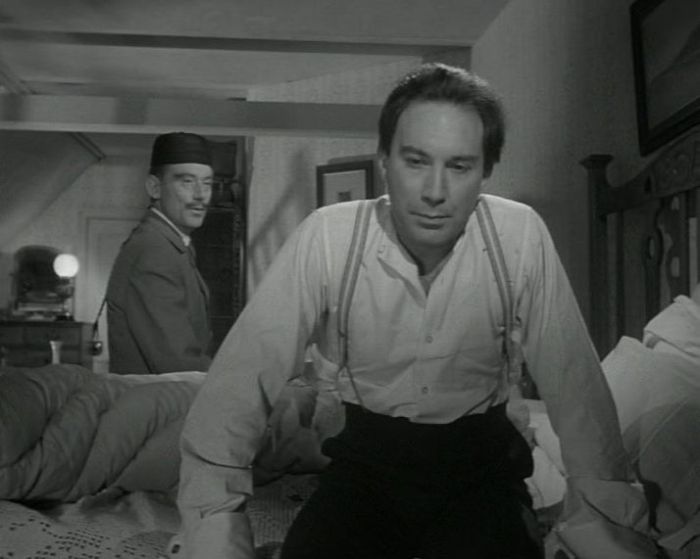
Although Mr Smart is aware that he needs to unbend a little and show a more human side to H5, old habits die hard.  When Claire, clutching a biorhythm calculator, asks him for his date of birth (in order to work out his physical, mental and emotional states) he tells her not to be impertinent.  His date of birth is clearly information that he doesn’t wish to share.

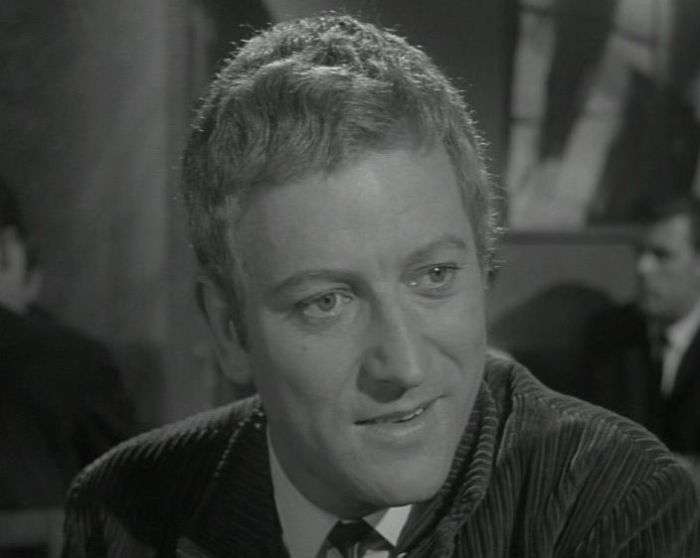
But as if to demonstrate his inflexibility, later Miss Gordon and Mr Howard (Michael Osborne) are both happy to let the girls know their dates of birth.  This scene, whilst demonstrating how friendly and approachable they both are, also signifies the start of Mr Howard’s campaign to woo Miss Gordon.  It’s obvious to Claire and the others that he popped into her class on the merest pretext – he basically just wanted a little quality time with her.

They all approve – in their eyes Miss Gordon and Mr Howard would make an ideal couple and they don’t consider the age difference (some four years) to be a problem!  Prior to this, I can’t think of many instances where the private life of a teacher was considered an acceptable story topic (apart from the trials and tribulations of Mr Sutcliffe and Miss Mooney) so this seems to mark a subtle change in the series’ format as from now on the teachers will tend to become more rounded characters.  Mr Howard is another person who has apparently been at Grange Hill for years, but always out of shot.  Michael Osborne makes Mr Howard relaxed and friendly – clearly a teacher who’s a favourite amongst the pupils.

But he has a rival in love, as Mr Smart is also interested in the fragrant new art teacher.  It must be said that he’s rather forward – placing his arm on her shoulder as he steers her down the corridor.  Mr Smart also approaches her under a flimsy pretext (in his case, advice about sets for the school play) and at present it’s far too early to say which (if either) is going to get the nod from her.  Indeed, this is a story that’s going to run and run …..

After being a key figure during series six, Randir is much more low profile this year (this episode is probably his most substantial contribution).  He offers to sell Pogo one of his chain letters – for a mere five pence.  Pogo spies a money-making opportunity and buys all of them so he can start his own chain (this naturally ticks off Randir).

The nature of chain letters, how they work (or don’t) and exactly how you can apparently make a fortune is discussed in some detail.  With a fair bit of mathematical discussion, this is probably one of Grange Hill‘s most educational episodes.

Although there are warnings that chain letters always fail, for the moment Pogo seems to be in the money.  But Claire warns him that Jimmy McClaren will want his cut – the first mention of the unseen (as yet) successor to Gripper.  Following Gripper was always going to be difficult, so it was probably quite wise that they chose to make Jimmy McClaren a very different character.


Grange Hill. Series Seven – Episode One

grange hill s07e01

Written by Barry Purchese. Tx 3rd January 1984

The opening episode of series seven begins with Zammo rushing to meet someone.  So far, so familiar (it brings to mind a similar scene from the start of series six) but when we learn that he’s not meeting Jonah, it’s the first of several instances which demonstrate that change is in the air.

Jackie Wright (Melissa Wilks) is Zammo’s new (first?) girlfriend and together they set off for her school, Brookdale.  Although they hold hands on the way, Jackie complains that it’s like holding hands with a plank!  Is this because he’s ashamed to be holding hands with a girl or because he has to drop her off at Brookdale?  They part at the school gates and exchange a peck on the cheek, to the intense annoyance of Gluxo Remmington (David Rippey).

Gluxo presumably goes to Brookdale (although it’s more likely that his attendance record is slim to non-existent).   Maybe he spends his time roaming the streets, duffing people up?  He’s certainly keen to hand out a beating to Zammo, but the younger boy manages to escape (following an entertaining chase where joggers and children in the park are just some of obstacles to be overcome).  WW2 reference number one – as Zammo rides to freedom on a handy bus he raises his arm to Gluxo in an ironic Nazi salute.

There are major changes with the teaching staff, as both Mr Hopwood and Miss Mooney have left.  Mr Smart is assigned to be H5’s form tutor and there’s a very revealing scene where he confesses to Mrs McClusky that his performance the previous year was, in many ways, an “act”.  But in order to connect with H5 and function effectively as their form tutor he realises that he needs to show them a little more of his real personality – which isn’t something he finds easy.  This moment is the start of the humanizing of Mr Smart which will develop more fully in series eight where he’s, at times, a totally different character from the abrasive martinet of series six.

Miss Gordon (Kara Wilson) is N3’s new form tutor.  She makes a very strong first impression on both Fay and Annette, albeit for different reasons.  Fay does her best to be friendly and welcoming (with Annette characteristically remarking that she’s a bootlicker!).  No surprise that Annette is neither friendly or welcoming, not only to Miss Gordon but to everyone else as well.  Annette’s first appearance – plastered in make-up – is a startling one and Fay’s comment to Julie that she was rather odd during the holidays is the first hint that something may be wrong with Ms Firman.

Other plot-threads are started (why does Roland have so much money and why is he so scruffy?) but there’s no need for them to be answered in this episode.  It’s simply a mystery that can be tucked away for later.

One of my pet hates is when a new character is introduced and everyone reacts as if he/she has been there for years and we’ve simply never seen them on screen before.  Kevin Baylon (Mmoloki Chrystie) is a classic case in point.  With the absence of Jonah it’s easy to believe that he was created to fill this gap, but that wasn’t the case at all.

Jonah was to have appeared in the first few episodes, before meeting a watery end in the school swimming pool.  Either the actor, his parents or his agent didn’t fancy this, so the character of Jeremy Irvine was drafted in to take his place.  In a way it’s a pity that Jonah didn’t feature, as certain parts of the plot – Zammo and Jackie’s relationship, for example – would have had more resonance if Jonah had been the one on the outside, slightly irritated that his best-friend Zammo was spending all his time with a girl.

Within a short space of time Jeremy manages to annoy virtually all of his new class-mates and he ends the episode proudly displaying the forged bus-pass he made in art class.  I wonder how this will end for him ….

It’s interesting that Jeremy’s parents decide to transfer him to Grange Hill because they’ve heard rumours that Rodney Bennett (Jeremy’s old school) and Brookdale are due to merge. Series eight would see a three-school merger (with GH too, of course) so I wonder if this was an early foreshadowing of that. More likely it was just a throwaway line that someone later realised had plenty of dramatic potential.

WW2 reference number two – as H5 wait for the arrival of Mr Smart, Stewpot does his best impression of him (if he was played by Adolf Hitler that is).  It’s a little hard to imagine a modern children’s serial peppered with references to the Second World War, if only for the fact that many of the audience might not understand the references.

Robin of Sherwood – The King’s Fool

fool.jpg

Robin and the others rescue a knight, who gives his name as Chevalier Deguise, from a band of Sherwood cutthroats.  They treat him to a feast of meat and wine and then later politely request that he pays their bill.  The knight has no money on him, but Robin notices that his horse is a fine beast and decides it would be a fair exchange for all the hospitality he’s received.

The knight challenges the outlaws to a wrestling contest – winner takes all – and Little John steps up to defend the honour of the Merry Men.  But this is no light-hearted bout and the knight’s sheer power and will to win overcomes John.  Shocked by what he’s seen, Robin asks him who he really is.  The knight replies that he’s King Richard …..

With The King’s Fool, Richard Carpenter once again puts a twist on familiar aspects of the Robin Hood legend.  Good King Richard (away fighting in the Holy Land or a prisoner in Germany) is a staple part of virtually every retelling of the tale.  He’s generally presented as England’s one true hope, with his brother John painted as a venal usurper who lacks all of Richard’s fine qualities.

As the opening credits tell us that John Rhys-Davies is playing King Richard, the audience is placed in the position of knowing more than Robin and the Merry Men right from the start (which gives the opening fifteen minutes a little extra frisson).  For example, when Robin passes around the communal bowl with the ritual words “Herne protect us” Richard prefers instead to honour “King Richard”.  The others, after a momentary pause, nod in agreement.

But although they don’t dismiss Richard out of hand, it’s also plain that most of them share no particular love for their King.  Most outspoken is Will, who regards him as just another lord and master (and just as corrupt).  Ray Winstone pulses with anger in this scene as does Rhys-Davies (who, remember, has yet to reveal his true identity).  It look as if Richard and Will might come to blows, but Robin manages to diffuse the situation.  However, the irony that the hot-headed Will is completely right from the beginning is clearly not accidental ….

The wrestling match is brutal, with both Richard and Little John almost reverting to an animalistic state.  After Richard emerges victorious and reveals himself to be their King, he pardons Robin and the others.  They might be outlaws, but they saved his life and that – in his eyes – wipes the slate clean.

Robin is keen to go to Nottingham to attend Richard, as are the others, all except Will. “I trust very few people, and I’m looking at all of ’em. I’d die for each one of you. But there’s no way I’m going to Nottingham”. Perceptively he casts doubt on the permanence of Richard’s patronage.  He’s pardoned them now, but what happens tomorrow or the day after?  That Will’s the only one to realise this is a slight weakness of the story – as the others calmly walk into Nottingham and allow themselves to be apprehended by Gisburne and presented to the King in chains.

The predictable happens – Richard angrily tells Gisburne to release them and Robin and the others are treated as honoured guests – but it would have probably served them right if Richard had decided to have them all executed on the spot.  Presumably Robin’s still dazzled by Richard’s star-power (the moment where the King offers Robin his hand to kiss in the forest is a nicely played scene by Michael Praed – watch how Robin flinches before accepting the honour).  For those brought up on the previous Robin Hood stories which presented Richard as the “hero”, everything seems to be moving in the direction you’d expect.  This Richard might be louder and more boorish than most versions of the King, but he’s pardoned Robin so he must be good, mustn’t he?

The first discordant note is struck when Robin attempts to make an appeal to Richard on behalf of the poor. The King, only half-listening, cuts him off mid-way through and whilst he applauds Robin’s sentiments it’s plain that this is done only for show.  The King is a skilled politician and by co-opting Robin he’s removed a potentially dangerous enemy and turned him into an ally.

Robin remains flattered for a while that his opinions are sought (to the obvious irritation of the Sheriff) but his desire to serve the King only helps to speed up the fractures in the Merry Men.  Will was the first, but now – one by one – they leave him, until only Tuck, Marion and Much are left.  Almost too late Robin realises he’s been well and truly manipulated – Richard has no love for either England or its people. Little John succinctly sums up their feelings. “I loved you, Robin. You were the Hooded Man, Herne’s Son, the people’s hope. Now … now you’re the king’s fool.”  Mantle, his eyes full of tears, plays the scene well.

The King, having tired of Robin, decides that the Hooded Man should die and Gisburne is despatched to do the deed.  The action ramps up after Gisburne takes a shotbow bolt in the back (fired by Marion) and Robin faces stiff opposition from a number of sword-wielding soldiers.

Marion’s been fatally wounded and only the magic of Herne can save her.  Following Robin Hood and the Sorcerer, the mystical elements of the series have rather taken a back seat (although The Witch of Elsdon did have some handy prophecies which moved the plot along nicely).  The miraculous revival of Marion does feel like a little bit of a cheat, since it begs the question why Robin doesn’t call on Herne every time somebody’s close to death

But although it’s a little irksome in story terms, it’s still an impressively shot and acted sequence as Robin and Marion end up at the same stone circle seen at the start of the series (the one where his father was killed by the Sheriff’s men fifteen years previously).  And as if by magic the Merry Men reappear.  Now that Robin has rejected the illusionary power offered by the King they’re all free to take up residence in Sherwood once more.

Thanks to a pulsating performance by John Rhys-Davies, The King’s Fool closes series one on a high.  Apart from maybe a slight dip with The Witch of Elsdon, the quality remained very consistent and series two would maintain – and at times better – this high standard.

Robin of Sherwood – Alan a Dale

alan

Alan a Dale (Peter Hutchinson) is a wandering minstrel who happens to wander through Sherwood Forest.  He’s stopped by Robin and the others, although after they find his pockets are empty (maybe he’s not a very good minstrel?) the Hooded Man tells him he can go on his way.  But then they learn he’s heading to Nottingham to kill the Sheriff ….

Alan, who seems incapable of not speaking in purple prose, is a most unlikely murderer until he reveals the reason for his torment – his heart is broken because the Sheriff plans to marry his true love, Lady Mildred de Bracey (Stephanie Tague).  It doesn’t go unremarked that maybe a humble minstrel is setting his sights rather high, but no matter.  Alan’s blithely confident that love will conquer all.

Alan a Dale was a fairly late addition to the legends of Robin Hood, first appearing in the seventeenth century.  Richard Carpenter sticks fairly close to the original story – a lovesick minstrel – but he adds a little extra spice by changing Alan’s rival from a faceless Baron to the Sheriff of Nottingham.

de Rainault is far from enthusiastic about his impending nuptials, describing poor Mildred as a “pansy-faced sixteen year old virgin”!  This same scene has to be one of my favourite Sheriff/Gisburne two-handers.  Gisburne is still fuming that Little John was spotted in the village of Wickham (more about this in a minute).  In order to teach the villagers a lesson he proposes driving them into the forest and then burning the village to the ground.

The Sheriff’s rage – he’s taking a bath by the way – is wonderful to see.  After overturning his tray of food so that it ends up in the bathwater, he acidly tells Gisburne that the people of Wickham are his property – if they burn the village who will work the land? To say nothing of the fact that Gisburne plans to send them into the forest where they’ll be able to join up with Robin Hood!  Grace and Addie continue to entertain (and it’s easy to spot a possible homoerotic undertone when de Rainault asks Gisburne to rub him dry – “harder!”).  Look out too for the extra who puffs out his cheeks after the Sheriff leaves the room as if to say “he’s in a right mood today.”

John’s been spending his nights in Wickham with the small, but beautifully formed, Meg (Claire Toeman).  As we see John enter Meg’s hut, the camera rather prudishly remains outside.  Instead, we focus on an owl who listens impassively to Meg’s giggling questioning comment about why they call him Little John, when that’s not the case at all …..

These scenes are a nice chance for Clive Mantle to add a little character to the bluff John.  John obviously loves Meg in his own (rather selfish) way, but reacts with barely disguised horror when she talks about joining him in the forest.  That possibility had clearly never even crossed his mind. It’s also escaped his attention that he’s putting Meg and the others in danger, leaving Robin has to spell it out. John can disappear into the forest but they can’t – therefore the villagers will be the ones who’ll suffer at Gisburne’s hands.  Praed’s Robin shows a  pleasing flash of anger at John’s stupidity, which helps to emphasise that he possesses the steel to be a real leader of men.

The Sheriff is at his beastly best when speaking to the unfortunate Mildred (he spends his time wondering why she cries so much).  Mildred is undeniably rather wet, which does suggest she’d be the perfect match for Alan.  It’s certainly impossible to imagine a life of wedded bliss between her and the Sheriff – although it’s stated several times that he’s only interested in her dowry (ten thousand marks).

Robin wants the money to pay the fine levied by Gisburne on the villagers of Wickham, whilst he also sees a way to stop the marriage (waylay the priest and substitute Alan in his place). Not everything goes to plan – the Sheriff keeps the money and doesn’t have to marry the girl – but this means thar Alan and Mildred are able to ride off into the sunset together. They don’t have any money, but they have each other. Aww, bless.

Although Alan a Dale doesn’t have the most gripping story, it’s simply choc-full of wonderful moments.  The Sheriff/Gisburne bathtime spat I’ve already mentioned, but there’s also the extraordinary sequence where Robin and Gisburne battle it out in the mud.  It looks hideously uncomfortable – and doesn’t advance the story one jot – but it’s all good fun.

Robert Addie enjoys a classic comedy moment when he attempts to coach the guards into giving a rousing cheer to celebrate the Sherrif’s forthcoming marriage.  Their first attempt is wonderfully half-hearted, but they get better with a little practice.  Oh, and Much dresses up as a woman and the Sheriff and Gisburne are attacked by bees! It’s all happening.

I’m rather intrigued as to why Peter Hutchinson was dubbed throughout by Simon Shepherd.  Surely it would have made sense to cast an actor who both looked and sounded the part?  The dubbing does add a little distance to Alan’s character, but since it’s done rather well it’s not the disaster it might have been.

Although more than a little predictable – it’s so obvious that Alan and Mildred will end up together – Alan a Dale works well as a light-hearted interlude before the darker themes of the season closer, The King’s Fool.

Robin of Sherwood – Seven Poor Knights from Acre

poor 01.jpg

When a one-eyed thief called Siward (Simon Rouse) steals a sacred emblem from a small band of warrior knights, it spells trouble for Robin and the others.  Their leader, Reynald de Villaret (Yves Beneyton), mistakenly believes that Robin was the thief and he’ll stop at nothing to exact his revenge.  Much is taken hostage whilst Robin is easily defeated by de Villaret in a one-sided swordfight.  Robin then has to endure trial by battle, facing the imposing form of Heinrich von Erlichshausen (Duncan Preston).

Seven Poor Knights from Acre opens sedately enough, with Robin and the Merry Men indulging in a game of skill.  Who can shoot an arrow into a swinging sack which has been placed some distance away?  Nobody it seems, until Marion steps up and does!  Robin then goes one better by piercing the rope which suspended the sack.  He mutters that it was a lucky shot, but he’s probably only being modest.

As the contest continues, there’s an interesting conversation between Robin and Will.  Will wonders why Robin hasn’t killed Gisburne yet (which no doubt had also crossed the audience’s minds).  Robin replies that the people hate Gisburne, so as long as he’s alive his cruelty will drive more people to their side.  It’s reasonable to assume that Robin has also considered the possibility that he might be replaced with someone fairer – which obviously wouldn’t suit their purposes quite so well.

I didn’t mention last time that the Merries have now increased by two, James (Steven Osborne) and Martin (Martin West).  This is probably because they do so little it’s easy to forget that they’re there (think of Private Sponge in Dad’s Army – always in the background but never really one of the “gang”).  And poor James doesn’t go any further than this story, as he’s cut down in the brutal battle between the Knights and the Merries.  Martin continues to the end of the first series and then just disappers sometime before the start of series two.

The initial tussle between the Merry Men and the Knights is another excellently directed sequence by Ian Sharp.  It’s plain that Robin and the others are way out of their depth as the Knights, encased in armour and mounted on horseback, herd them around the forest like sheep.  Sharp also elects to shoot from inside one of the Knights’ helmets, which adds to the sense of claustrophobia and dread.

If one was being picky, then you have to wonder how these incredibly professional warriors allowed a sneak-thief like Siward to steal their most sacred relic.  Was nobody keeping guard?  It’s also something of a coincidence that Siward crossed paths with Robin at exactly the right moment for de Villaret to jump to the wrong conclusion that the Hooded Man was the thief.

Speaking of coincidences, what are the chances that the Sheriff and Gisburne would turn up at the village where de Villaret and the others have set up camp?  No matter, as it allows the Sheriff and de Villaret to face off very entertainly, whilst Gisburne blunders around annoying everybody.

Simon Rouse, later to play DCI Jack Meadows in The Bill has the small, but key, role of the shifty Siward.  Duncan Preston, best known for his work with Victoria Wood, is very butch as the impressively named Heinrich von Erlichshausen.  This warrior knight doesn’t say much, but he scowls impressively and his face (bearing numerous scars) is obviously his own personal battlefield.  The majority of Yves Beneyton’s roles are in French language films and television (although his English credits include Chariots of Fire and The Borgias).  Still, it’s nice that for once a role like this wasn’t played by an English actor putting on a dodgy accent.

de Villaret is a formidable foe, and that’s one of the main reasons why this episode works well.  Even this early in the run, the Sheriff’s soldiers seem to be little more than a never-ending supply of stuntmen whose sole purpose in life was to fall off a horse and/or a castle battlement (after they’ve been filled full of arrows).  But the warrior knights offer a much sterner challenge and although we know that eventually Robin will win through, it’s more satisfying if he has to work for his victory.

poor 02

Robin of Sherwood – The Witch of Elsdon

witch

Thanks to Gisburne’s faked evidence, Jennet of Elsdon (Angharad Rees) is convicted of witchcraft.  She and her husband, Thomas (Cornellius Garrett), are due to be hanged in three days time.  But then the Sheriff offers both of them a pardon, provided Jennet uses her skills with herbs to incapacitate Robin and the rest of the Merry Men …..

The Witch of Elsdon opens with a double prophecy – two for the price of one, you might say.  Robin later correctly interprets the first part (the location of the Sheriff’s taxes) but sadly isn’t able to work out who might be poisoning their drink (although it’s probably obvious to most of the audience).  Bit of a waste of time Herne bothering to tip him the nod then.

The use of prophecies has to be done carefully – it’s a handy storytelling shortcut but can also turn into a magic wand to explain away plotholes.  However it does work quite well here, as it gives Robin foreknowledge which isn’t shared by the others.  He knows that a cart will be passing somewhere through the forest, apparently carrying nothing but sacks of grain, whereas it’s actually brimming over with tax money.

Although the theme isn’t really developed, there then follows a faint air of tension amongst the Merries (especially Tuck) as they can’t understand why Robin seems to be heading off on a totally arbitrary course.  That he decides not to tell them he’s acting on something he learnt about in a dream might be significant.  Does he fear they wouldn’t believe him, or is he simply being aloof – as maybe a good leader should?

This adventure with the tax man marks the start of tension between Robin and Marion.  Robin wants Marion to stay behind – he tells her she may get hurt  – something which Marion doesn’t take at all well.

Later, there’s a nice scene where Judi Trott wordlessly observes the drunken, belching Merries who are crowing about how they abused the unfortunate tax-collector, Gregory (David Goodland).  Marion doesn’t say anything – but then she doesn’t have to as her expression speaks volumes.  She loves Robin, but maybe now seems to be wondering exactly what she’s let herself in for.

Nickolas Grace continues to be a source of great amusement and entertainment.  Sheriff Robert de Rainault is well served by this script, with the following moments being particularly memorable.

  1. His comment when he realises that Gisburne has invented charges of witchcraft against Jennett because she refused to sleep with him is priceless.  “I’m really most impressed.  If she tried to bewitch me, I’d be inclined to let her.”  Delivered with the Sheriff’s trademark sneering insincerity of course.
  2. The hapless tax-collector Gregory finds himself kicked and punched around the castle floor before the Sheriff orders him to be taken to the rack.  Best to say that de Rainault’s not pleased with him then ….
  3. The Sheriff delights in taunting Jennett as he drafts her pardon, which is totally dependent on her delivering Robin to him.  And just to make a point, he throws a cupful of wine in her face.  The rotter!
  4. Robin and the Sheriff have their first sword fight.  Although fairly short it’s still energetically staged and this direct physical content does – as Robin concedes – signify that their feud has reached another level.  Now the Sheriff won’t rest until one of them is dead.

Angharad Rees, a familiar television face in the late seventies thanks to Poldark, is nicely vulnerable as Jennet.  That Jennet’s conflicted about what she has to do is obvious, but her husband’s fate is paramount to her.  It’s just a pity that she catches the eye of Will, who becomes instantly smitten with her.  Will, by far the most emotionally damaged of the Merries, doesn’t take her betrayal at all well – even if the others (especially Marion) find it easier to understand and forgive.  Cue several scenes of Ray Winstone looking especially downcast.

If the basic plot is quite straightforward, then it’s the character building moments (Robin and Marion, Robin and the Sheriff, etc) which make this a rewarding episode to rewatch.  The weather gods obviously smiled on the filming again, as the forest scenes are bathed in sunshine.  There’s plenty of fighting and Robert Addie gets dunked under the water numerous times.  So what’s not to like?

Robin of Sherwood – Robin Hood and the Sorcerer. Part Two

sorcerer 02

It’s rather ironic that Robin “rescued” Marion from Gisburne’s clutches, only to learn that he was actually taking her to where she wanted to go – Kirklees Abbey.  Robin’s visibly shaken about this.  “You don’t look like a nun” he tells her.  Both Praed and Trott are lovely in these scenes – Robin is rather earnest and gauche, whilst Marion sees no future for her in Sherwood.  As she tells him, it’s fine to be his May Queen, but what happens when winter comes?

So he drops her at the Abbey and they exchange long, lingering looks – although this is obviously far from the end of the story.  That’s reinforced when Robin pays another visit to Herne and has a vision of the future (which includes Marion as a sacrificial victim).  Herne then utters cryptic messages which Robin doesn’t fully understand.

The silver arrow, which the Sheriff obtained after murdering Robin’s father, comes back into play.  It’s interesting that Robin never seems to be aware that his father was killed by the Sheriff,(if he knew this it would give him a strong reason to seek revenge).  But possibly that would have been too obvious, instead Carpenter seems content for the audience to know more than the leading man.

The Sheriff explains to Hugo that the arrow is an ancient artefact – a symbol of England (i.e. pre-Norman England).  Whilst de Rainault is aware that others claim it has mystical properties, he personally doesn’t seem to believe this.  For him it’s simply an object that was used to rally a rebellion and – if it falls into the wrong hands – could do so again.

But it’s the perfect bait to draw Robin out of Sherwood, so he offers it as first prize in an Archery contest.  The Archery contest is one of the staples of the Robin Hood legend, but by making the prize a mystical artefact Carpenter is able to add his own stamp on the familiar tale.  And it’s an intriguing story-beat that the Baron is also keen to acquire the arrow.  Although it’s a symbol of good for Herne and Robin, the Baron would no doubt be able to put it to a different use (which brings to mind the oft-repeated phrase that Robin’s sword contains “the powers of light and darkness”.  The arrow, like the sword, can be used for eiher purpose – it’s up to the nature of the user).

Robin’s old-age make up (a white beard, a padded chest) is quite impressive.  Which member of the Merry Men goes in for amateur dramatics then!?  But if he’s going to win the arrow he’ll have to defeat the finest shot in the land, Flambard (Thomas Henty) as well as the Baron’s man, Nasir (Mark Ryan).  As we’ll learn, Nasir is a man of few words (I think he speaks more in the recent audio play The Knights of the Apocalypse than he did in the whole three years of the television series!)  Unlike Little John, Nasir doesn’t seem to be under the Baron’s spell – he’s simply content (at the moment) to work for him.

With Flambard and Nasir such good shots, how can Robin compete?  Very well, as it happens.  This begs the question as to whether he genuinely was that good or if his performance was being subtlety guided by Herne.  The Sheriff smells a rat.  Robin’s dead centre shot would be impossible for most people, “but not for Herne’s son.”  So does the Sheriff believe in magic after all?

This latest debacle infuriates the Sheriff.  How will they be able to entice Robin out of Sherwood now?  The Baron has a solution – if they give him Marion then Robin will attempt to rescue her and the Baron (with a little help from the devil) will destroy him.  Hugo isn’t happy (although he’s mollified when he learns that the Baron doesn’t want her lands, he only wants her).  The Sheriff considers one Saxon virgin a small price to pay for vanquishing a dangerous outlaw, although Friar Tuck (earwigging) isn’t at all happy.

Tuck has been a background figure so far, but it’s Marion’s betrayal by both the Sheriff and the Abbot which forces him to finally take sides.  When Marion is later captured, he tells the Hooded Man, who sets out to face the Baron alone.  As he tells the others, this isn’t a fight with bows and arrows – it’s a fight between the powers of light and darkness.

Marion continues not to play the victim, telling the Baron that he’s a victim of his devil, not a servant.   She’s tied to a pentacle and readied for sacrifice, but first Robin has to face the Baron.  This isn’t a fair fight, as Robin sees his bow burst into flames.  Like the rest of the story it’s a stylishly directed sequence, dripping with atmosphere.  Perhaps the most effective part is when the incidental music suddenly stops and the Baron inflicts a number of long-range cuts on Robin.   Mind you, the Baron’s (apparent) death scene is pretty memorable as well, with Anthony Valentine giving it his all.

It might have been deliberate that after a great deal of build-up, the Baron de Belleme was fairly easily defeated.  He may have had the power of darkness to call on, bur it’s a non-believer like de Rainault who’s able to strike a bigger blow – as his men manage to kill both Dickon and Tom.  Carpenter was aware that once the series was up and running it would have been difficult to kill off one of the main characters (although events conspired to make this happen in The Greatest Enemy) so instead he created a couple of Merries who looked as if they were going to be regulars, only to cut them done in their prime.

This also enables Robin to make a stirring speech which acts as the mission statement for the series. With the sunlight beating down, making the forest seem even more idyllic than usual, he tells the Merries and Marion that “our friends who were killed, they’ll never starve, or be tortured, or chained in the dark. They’re here with us in Sherwood and they always will be, because they’re free”.

Robin Hood and the Sorcerer covers a great deal of ground in 100 minutes. It manages to shine new light on old stories, sharply introduce the large cast of regulars as well as pointing the way ahead to the way the series will develop. With Robin and Marion now married by Herne and Nasir a member of the Merry Men, all the pieces are in place.

Robin of Sherwood – Robin Hood and the Sorcerer. Part One

sorcerer

Robin of Sherwood is for many, myself included, the definitive take on Robin Hood.  There are many reasons why, which include the quality of Richard Carpenter’s scripts, the excellent ensemble cast and the stylish direction.  As we work our way through the series I’m sure there’ll be other reasons that I’ll pick out.

Robin Hood and the Sorcerer has to fulfil the task of introducing all the main characters.  This allows Carpenter to set out his stall – many elements will be familiar, but he also takes the opportunity to subvert some familiar aspects of the legend.

We open with a flashback, some fifteen years previously.  Ailric  (Wayne Michaels) is unable to prevent his village of Loxley from being burnt to the ground by the Sheriff’s men but is able to hide his young son, Robin, with the Miller’s family.  The burning of Loxley is an early indication of the visual sweep that the series will employ – Ian Sharp’s direction favours deep filters on the skyline and plenty of hand-held camerawork during the fight scenes, but there’s also care taken that most of the deaths occur off-screen.

One notable exception is Ailric, who’s run to ground by the Sheriff Robert de Rainault (Nickolas Grace) and his men in the middle of a stone circle.  The location, and the prize (a silver arrow), which the Sheriff plucks from Ailric’s dead body are early indications of the series’ mystical edge.  Ailric’s death – filled full of arrows – is a brutal one and it can hardly be a coincidence that Robin of Loxley would later suffer a similar fate (although that happened off-screen).  Ailric’s dying words (“the hooded man is coming”) is a nice tag into the credits, although the question has to be why it took so long for him to arrive.

We then flash forward fifteen years to the present day, where Much (Peter Llewellyn Williams) has just killed one of the King’s deer, much to Robin’s (Michael Praed) displeasure.  So although it becomes clear later that he’s inherited his father’s rebellious fighting streak, to begin with he seems to want a quiet life.  Of course, the wise thing to do would have been to have left the deer where it was – but Robin decides to carry it out of the forest, running straight into Sir Guy of Gisburne (Robert Addie).  Oh dear.

The shooting of the deer and Sir Guy are familiar parts of the Robin Hood legend, so there’s no surprises to be found in this part of the story.  Sir Guy is every bit as superior as you’d expect and Addie is perfect in the role (essentially he plays him as a public schoolboy with a very mean streak).

The first major diversion from the familiar comes when we’re introduced to Will Scarlet (Ray Winstone).  Robin and Much join him in the castle dungeon, where he emerges from the shadows with a real sense of menace.  He quickly fills them in on his backstory – his wife was raped by soldiers and then trampled to death by their horses – which means he now only lives to kill.  Although as he’s shortly due to be hanged, it doesn’t look like he’s going to live for too much longer. Not that that seems to bother him unduly.  This radical recreation of the character (previously Will tended to be a cheerful chap in tights) is a gift for Winstone who hits the ground running and never lets up.  In retrospect it’s easy to see that his star quality was already in place.

Also lurking in the shadows are Tom the Fletcher (Paul Duggan) and Dickon (Mark Audley).  They’ll also escape along with Robin, Much and Will and will be members of Robin’s outlaw band.  If you’ve watched Blakes 7 (which itself had nods to the Robin Hood legend) then it’s possible to guess that Tom and Dickon won’t be terribly long-lasting characters.

Marion (Judi Trott) and Friar Tuck (Phil Rose) are also introduced.  Marion is the ward of the Sherriff’s brother, Abbot Hugo (Philip Jackson), whilst Tuck spends his time attending to Marion.  When Hugo first appears, he’s upset with his brother because he’s been ordered to drain his fish pond!  He’s also shown to be keen for Marion to enter a nunnery, so that the church can obtain her lands.  The greed and corruption of the church is a familiar theme in the Robin Hood legends and Carpenter maintains that here.  Jackson (although not a very central figure) is always a delight and his scenes with Grace are a joy.

But if Hugo wants Marion to take holy orders, then the Baron de Belleme (Anthony Valentine) wants her for his new bride.  From the opening scene it’s plain that the arts the Baron follows are black ones.  It takes an actor of class and distinction to play a part like the Baron without it tipping over into either melodrama or parody and, of course, Valentine is perfect.  Even when he has little or no dialogue he exudes a real sense of menace.

Robin and Marion meet for the first time – he bursts into her bedchamber as he’s attempting to escape from the castle.  Love at first sight?  Possibly.  Again, the audience will be primed that Robin and Mation will become an item, so their attraction to each other doesn’t need to be overstated, as it’s plain they’ll meet again. Trott is delicately beautiful, although she also manages to show that Marion’s wilful and rebellious nature is already present and correct.

Robin has another meeting. This happens in the forest where he encounters Herne the Hunter (John Abineri).  This was another of Carpenter’s additions – mixing the legend of Herne the Hunter with the legend of Robin Hood.  Having Herne around is handy – since he can pop up at important times with a sage piece of advice (like Yoda, but with antlers).  His initial appearance is fascinating  –  Herne asks Robin if he fears him.  Robin replies no, because he’s only a man.  As we’ll see though, Herne is more than a man and Abineri was exactly the right man for the part.  It’s another fairly small role, so it needed someone powerful who could hook the audience’s attention straight away and Abineri certainly delivers this.

Herne’s first job is to make Robin the saviour of the poor and the oppressed.  In most versions of the Robin Hood legend there comes a point when Robin decides to champion those most in need of help.  In Robin of Sherwood, Herne is shown to be the driving force behind this.  “They are all waiting. The blinded, the maimed, the men locked in the stinking dark all wait for you. Children with swollen bellies, hiding in ditches, wait for you. The poor, the dispossessed, they all wait. You are their hope.”

We’ve yet to be introduced to Little John (Clive Mantle), although he’s been seen several times in the story to date. Little John is under the spell of the Baron and is sent out to Sherwood to kill Robin.  This then sets the scene for one of the most famous elements of the Robin Hood legend – the quarterstaff duel between Robin and Little John on a narrow bridge above a stream.

Because of John’s possession, this is not the jolly, light-hearted trial of arms we’re used to seeing.  It’s a brutal fight (albeit one that takes place in a gorgeous setting – with a cascading waterfall behind them).  Robin comes out on top of course, and breaks the Baron’s spell on John, earning his thanks and loyalty.

A second meeting with Herne is enough to convert Robin.  This is something of a leap, since he was (at best) very undecided just a short time before and Robin’s subsequent stirring speech to his men about freedom is a tad overwrought.  Had this conversion happened after he learnt that Much’s father had been brutally murdered by Gisburne then it would have seemed more natural. Since the Miller had been his stepfather since Ailric’s death, he would have had a very personal reason to fight.

Some of the motifs of the series (“nothing’s forgotten”) and Robin’s sword, Albion (“charged with the powers of light and darkness”) are already present and correct and with Marion extracted by Robin from Gisburne’s clutches the story is nicely poised.
Espionage – The Light of a Friendly Star

star 01

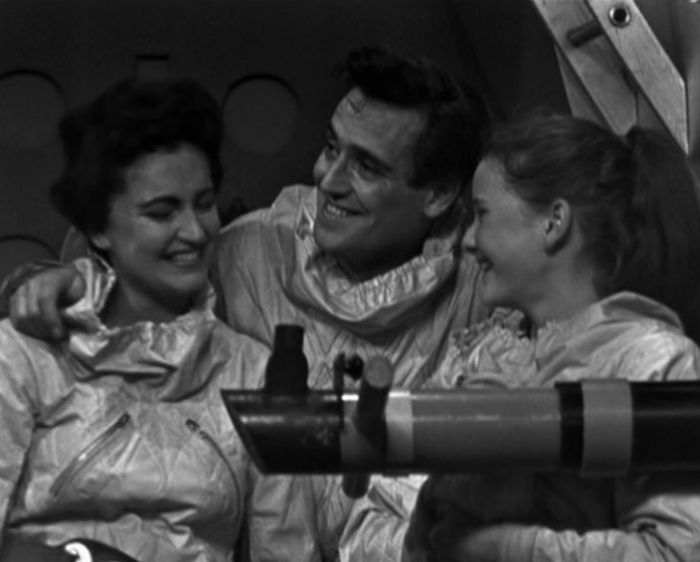
Leo (Carl Schell) attempts to break into the British Embassy. He claims to be a refugee and pleads for political asylum. The ambassador, Arnold Morely (Ronald Howard), listens sympathetically to his tale and agrees he can stay for a while.

But Leo is a spy for “the other side” and after aquiring some secrets he makes his escape. He doesn’t go empty handed though, as he takes a hostage, the ambassador’s ten-year old daughter Kit (Loretta Parry), with him …..

The Light of a Friendly Star has a slightly odd tone. From the first time Kit sets eyes on Leo, she’s very taken with him – telling her father that his (made up) story of persecution is tragic and also that his dark, dark eyes (“darker than Heathcliff, darker than Captain Ahab”) are very compelling. This initial speech demonstrates that Kit is a most precocious child, but her infatuation would have worked better if she had been older, say in her late teens.

Is Stockholm Syndrome at play here? Kit could have escaped from him on several occasions, but didn’t. Instead she uses manipulation (sabotaging his car, mentioning that if she was picked up by the police she’d have to tell them all she knew) to make him realise she’ll be less of a danger if he takes her along.

Her father doesn’t seem terribly surprised to learn that Kit may have been kidnapped and confides to one of his aides, Wilson (Donald Pickering), that Leo may have been forced to take her. He doesn’t elaborate, but we’ve already had numerous examples of how strong-willed the girl is.

Kit later sadly confides to Leo that she’s over educated, the inference being that emotionally she’s a woman trapped in a girl’s body. But she still has childish traits, telling Leo that she knows he won’t hurt her because of his eyes. “I think anyway one’s eyes are really what one is”.

Poor Leo never really stands a chance, as the hapless spy finds Kit running rings around him. And when we later learn that the secrets he obtained were out of date and therefore worthless, it makes his efforts seem all the more futile.  Incidentally, the British Embassy seems to be the sort of place where guests can wander about at night, unchallenged, and go where they wish. Have they never heard of security?

It could be that the story was attempting a Hayley Mills/Tiger Bay vibe, but there’s only one Hayley Mills and Loretta Parry’s performance does begin to grate after a while. This could be intentional though – she’s not supposed to be a victim in Leo’s power, if anything Kit’s the one in control ….

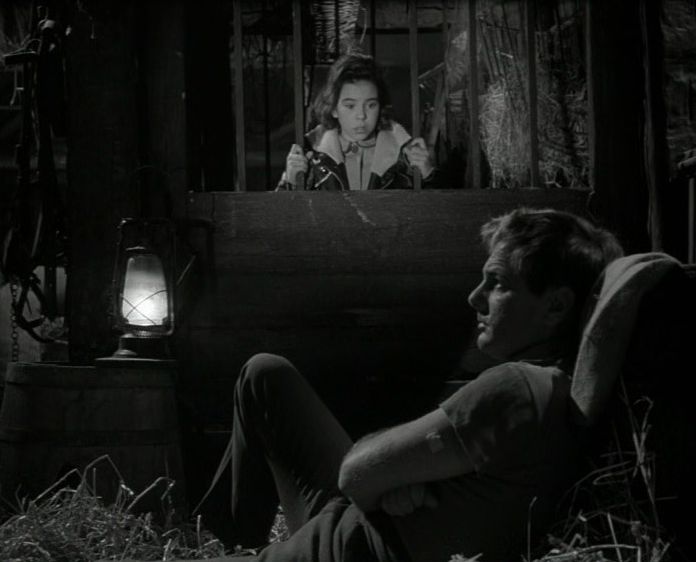
If there’s a point to the story, then it seems to come when the mismatched pair are forced to shelter from the rain in a barn. Kit asks him why he spies and he tells her that it’s an honest profession which appeals to him. He begins to open up a little and mentions that he has no family, they were killed by a bomb years ago. The incidental music swells in sympathy and Kit places her hand on his arm. It’s a nice touch that as soon as he shrugs her off the music stops.

Leo seems to be a totally isolated figure, although Kit senses this is nothing more than a fraud. She tells him that he could love someone if he wanted – even her. Again, this is a strange conversation for a ten-year old girl to be having with a grown man.

Carl Schell gives a self-contained performance as Leo, the man with friendly eyes. The supporting cast is characteristically strong, with Ronald Howard (a former Sherlock Holmes) providing a reassuring presence. The likes of Donald Pickering and George Pravda are always worth watching even if, as here, they only have small roles.

Largely a two-hander, The Light of a Friendly Star does have a few interesting points to make about espionage. Leo sees himself as a professional spy – with no national alligence – which is confirmed when it’s revealed he used to spy for the British, leaving Wilson to dismiss him as someone who’ll work for the highest bidder. Is this a purer, more honourable form of spying than if it’s done in the national interest? Leo seems to think so, but as a professional dissembler can we ever trust anything he says?

star 02

Callan: This Man Alone – Network DVD Review

this man alone

Callan: This Man Alone is a three disc set released in 2015 by Network.  The feature attraction, This Man Alone, is an exhaustive 130 minute documentary which covers every aspect of the character – from the Armchair Theatre pilot, the four series, the spin-off short stories and novels, the 1974 film and the not terribly well received one-off revival in 1981.

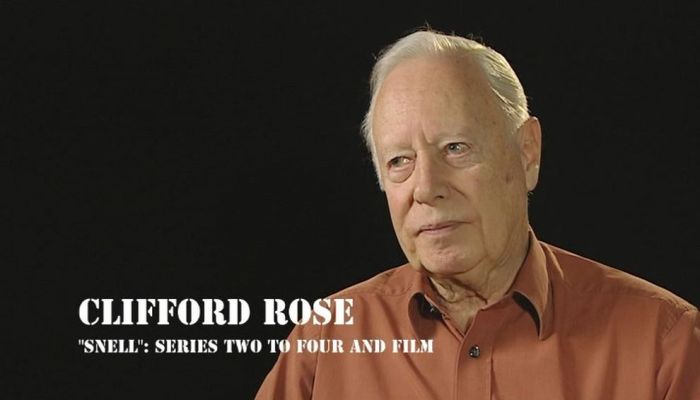
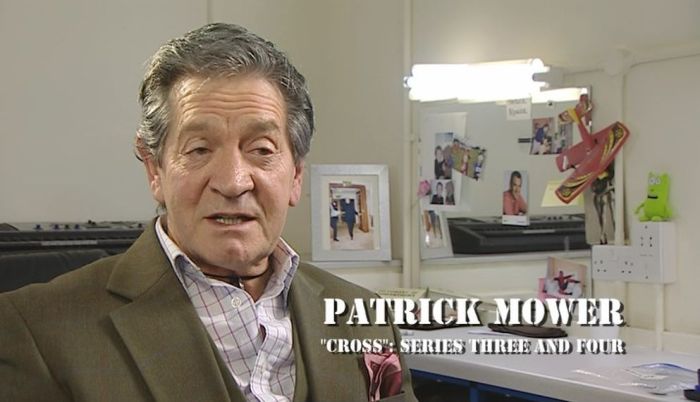
A host of key personnel who worked on the series (both in front of and behind the cameras) – Reginald Collin, Mike Vardy, James Goddard, Piers Haggard, Patrick Mower, Trevor Preston, Clifford Rose, Robert Banks Stewart, Ray Jenkins – were interviewed for the documentary, whilst Dick Fiddy is on hand to set Callan in its cultural and historical context.  Another very enlightening interviewee is Peter Mitchell, the son of Callan‘s creator, James Mitchell.  The pride he feels in his father’s legacy is palpable and, like the others, he has plenty to contribute.

callan 02

Although a number of people, including James Mitchell, Edward Woodward, William Squire and Russell Hunter, are no longer with us, they are represented via archive material.  This is mainly derived from a series of audio interviews conducted in 1987.  Presumably these were intended for transcribing purposes and not for broadcast as they’re a little indistinct in places.  Although Woodward sadly passed away before the documentary came to fruition, there’s still a family connection as This Man Alone is narrated by Peter Woodward, Edward Woodward’s son.

All of the key parts of the production – developing a series from the pilot, casting the regulars (and in the case of Hunter, numerous re-castings), moving from ABC to Thames, from black and white into colour, the public’s reception of the show and the decision to bring it to an end – are all covered.  Possibly the only aspect that I was surprised wasn’t discussed concerns the reasons for writing out Cross, Patrick Mower’s character, in series four (I’ve always assumed it was done in order to facilitate the return of Meres, played by Anthony Valentine).

Although the pair do have a brief cross-over period, it seems that once Valentine was available again (he’d declined to appear in series three) it was decided to write out Mower.  It would have been interesting to hear from Mower as to whether he thought that was the case, or if he was happy to leave on a high (his final story certainly was a dramatic one).

Unlike some series, Callan seems to have been a very harmonious production, so there aren’t too many story of back-stage bust ups.  The second Hunter, Michael Goodliffe, found the role not to his liking and was quickly written out, whilst Woodward wasn’t entirely sure that promoting Callan to Hunter in series four was a good idea, but that’s about it.

With an additional twenty five minutes of interview footage that didn’t fit into the documentary, disc one is as comprehensive as you’d might hope.

callan 01

Disc two has new transfers of two episodes, the Armchair Theatre pilot  A Magnum for Schneider and the first story of series one, The Good Ones Are All Dead.  The previously issued version of A Magnum for Schneider came from the transmission tape, but since the story was transferred to film prior to transmission (a not uncommon practice for VT programmes at the time, as it offered more flexibility for editing) Network were able to locate the original film recording and have produced a new transfer from it.  Both episodes offer a considerable upgrade on the previous versions issued on DVD.

Also on disc two is the complete studio tape for The Worst Soldier I Ever Saw.  Running to 78 minutes, this offers the viewer a unique chance to see how an episode of Callan was recorded, as all the takes and re-takes are included.  To be honest it sounds more interesting than it actually is, but it’s obviously nice to have.

Disc three has a real curio – the only surviving episode of The Edward Woodward Hour.  It’s taken from a domestic recording, so the picture quality isn’t quite broadcast standard, but that’s no problem.  It offers us a chance to see Woodward flex his singing muscles and the unforgettable comedy sketch in which Callan and Lonely meet the cast of Father Dear Father!  This bizarre encounter is touched upon in the documentary, with both Edward Woodward and Russell Hunter (especially Hunter) remembering it with a distinct lack of fondness.  Amusing or toe-curling?  I think that’s up to personal taste.

Semi-mute rushes of James Mitchell from 1969, recorded for A World of My Own, are also featured on disc three, but the main attraction is the extensive PDF archive.  All the scripts for the series are included (many of the early ones have both rehearsal and camera versions) whilst there’s also the original series outline, publicity material, audience research, etc.  There’s certainly a wealth of reading here and most importantly it’s lovely to be able to read the scripts for those episodes which are missing from the archives.

Whilst Callan: This Man Alone might feel like a three disc set of special features, if you have all of Network’s previous Callan releases (the monochrome series, the colour series, Wet Job, Andrew Pixley’s book) then it’s the perfect companion piece.  Quite why all these individual elements haven’t been collected into a boxset is a slight mystery, but no matter – if you love the series then it’s a very worthwhile purchase.

callan 03

Espionage – To The Very End

to the very end

The scene is a Paris cafe.  Paul (James Fox), Jacques (David Buck) and Nicole (Heather Fleming) are three young people who react with scorn and disfavour at the news that France now has atomic capability.  Their vocal disapproval catches the attention of two soldiers and, after a few choice insults are exchanged, a fight ensues.

The three friends manage to make their escape, aided by a young American called Bob (Michael Anderson Jr).  Bob quickly becomes friendly with them and they decide – spurred on by the intense Paul – to try and reason with France’s top nuclear scientist, Professor P.J. Moreau (Clifford Evans).  But Paul has a hidden agenda of his own ….

From the outset it’s plain that Paul is the driving force.  The others, especially the affable Bob, are simply caught in his orbit.  Bob reacts with unease when Paul abducts Moreau from his flat at gunpoint, although Nicole seems quite calm about it.  She tells Bob that whilst she didn’t know Paul had a gun, nothing he does surprises her.  Yet this may not be the strict truth as she later backtracks a little.

Moreau is taken to a deserted house where’s he forced to watch a film documenting the human suffering inflicated by the atomic bombs dropped on Japan in 1945.  This footage, albiet brief, lingers in the memory, although it doesn’t seem to have the desired effect on Moreau.  Possibly Paul was expecting the Professor to be repulsed, but he calmly tells them that “I spent two months in Hiroshima and believe me these pictures only give a second-hand idea of the effects of gamma radiation on the human body.” He begins to explain about the devastating effects of the blast, but is cut short by Paul, no doubt irritated that he’s no longer in control.

Moreau is summed up by Bob as having a mind like a steel trap.  The American sees no point in hanging onto him since his views (France must have the bomb, since others have it) appears to be inflexible.   But Paul, who was his star pupil, professes to know him better.  “He’s full of specious arguments and he doesn’t believe any of them.”

Whilst the British actors playing Chinese characters in The Dragon Slayer seemed to be careful to speak in their own normal tones, there’s no such rule in place in this episode as ripe French accents are the order of the day.  James Fox, under his real name William Fox, had been a child star in the early 1950’s, and his role here was a fairly early one in his adult career.  Paul is a simmering mass of resentment from the off and – as various revelations are made – he becomes more and more frayed around the edges.   It’s a fairly unsubtle turn, but Fox is still very watchable.

Perhaps wisely, Clifford Evans doesn’t attempt a French accent.  Probably best known for playing the wily Caswell Bligh in The Power Game, Evans is characteristically solid as Moreau (even if he’s a very Welsh sounding Frenchman!)

The, forgive the pun, power game between Paul and Moreau is at the centre of the story.  Paul blames Moreau for the fact that his father (also a scientist) died in disgrace, but Moreau is adamant that Paul’s father was a Nazi colloborator.  Paul reacts angrily to this and presses on with his plan to force Moreau to resign.

Essentially a five-hander, To The Very End is a claustrophobic tale.  There’s space for a debate on the rights and wrongs of atomic weapons, but the suspicion that Paul is simply out for revenge also means there’s a conventional crime-story feel.  It’s fair to say that it does lack a little suspense or tension – as the kidnappers (even Paul) seem misguided rather than fanatical and Moreau, puffing away contentedly on his cigarettes, doesn’t spend a great deal being treated as a prisoner.

But is there a twist in the tale? Their plans come to naught, so Paul decides to kill Moreau.  The final scene between Fox and Evans is played at an intense pitch (cross-cutting between close-ups of the two actors).   The resolution probably won’t come as a surprise, but it feels like the right decision. A fairly low-key entry then, but Fox and Evans do their best to raise the stakes.

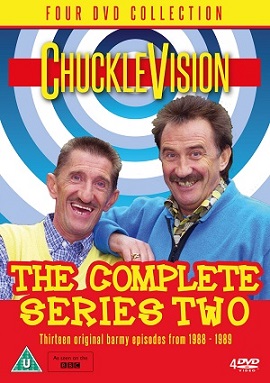
Chucklevision Series One and Two to be released by Simply Media – July/August 2016

164454- Chief Crazy Horse Sleeve.indd

Simply Media will release Chucklevision Series One on the 25th of July 2016 with Series Two following on the 29th of August 2016.  Review here.

‘To me to you to me to you’… a phrase that will bring a chuckle to many generations.

With its catchy theme song Chuckle Vision Chuckle Chuckle Vision and inimitable stars The Chuckle Brothers, Chucklevision was one of the BBC’s longest running children’s series gracing our screens from 1987 – 2009 and now series one and two of the hilarious, madcap, much loved series arrive on DVD courtesy of Simply Media.

The Chuckle Brothers aka Barry and Paul Elliott are a TV phenomenon, with their unique humour that transcends kids TV to entertain all ages, and in 2008 they received the Special Award at the Children’s BAFTAs for their work.

Chucklevision first aired in 1987 and now The Complete Series One arrives on DVD on 25 July 2016 and features 13 original barmy episodes. With laughs and larks aplenty, Paul and Barry Chuckle try to launch their own television series, with a little help from Simon Lovell, the magician extraordinaire, and Billy Butler’s Armchair Theatre. It’s quite a show with dancing, singing, conjuring and even bodybuilding as the brothers try their hand at a bit of everything for our entertainment.

The second series of the wacky and thoroughly entertaining show aired from 1988 – 1989 and now Chucklevision The Complete Series Two, featuring another 13 zany episodes, arrives on DVD on 29 August 2016.

This series sees the boys investigate hobbies, farming and U.F.O.s, celebrate Christmas and the Australian Bicentennial, perform with a symphony orchestra and learn the art of puppetry, invent a robot and observe wildlife… and that’s not all!

The Organization now available from Network

organization

It’s very welcome (and unexpected) news that The Organization is now available to buy direct from Network.  This seven part series, broadcast on ITV in 1971, was originally due to be released last year, but when the release date slipped several times it made me wonder if it would follow the likes of Biggles (another Network title which is missing in action).

Written by Philip Mackie, whose work I’ve previously covered in posts on An Englishman’s Castle and The Cleopatras, The Organization centres around a faceless company where backstabbing is the order of the day.

Starring Peter Egan, Anton Rodgers, Donald Sinden and Bernard Hepton, and with the likes of Gretchen Franklin, Jon Laurimore and Norman Bird in supporting roles, it has the sort of cast to die for.

Not seen in the UK since the C4 repeats back in the 1980’s, I look forward to becoming reacquainted with the series very shortly.

Espionage – The Dragon Slayer

dragon

The Dragon Slayer opens in late 19th Century China.  Sun Yat-Sen (Lee  Montague) is committed to the overthrow of the ruling Manchurian dynasty.  Following heavy fighting he’s forced to flee to England, where he seeks to raise both awareness and money.  But  the Chinese government, fearful of his public profile, decides to imprison him in their London consulate. If he renounces his radical views then he’ll be set free, if not …..

Like He Rises on Sunday and We on MondayThe Dragon Slayer is based on real-life events.  Although Sun Yat-Sen probably isn’t too well known in the West, he did later succeed in bringing an end to the Manchu dynasty and served as China’s first president.  But if you do know his background then it rather saps the tension of the story, as it’s obvious that no harm will have befallen him by the end of the episode.

Although Sun Yat-Sen is just as driven as Roger McBride from the previous story, The Dragon Slayer has a more layered narrative since others challenge and contradict his point of view.  Shortly after arriving in London, Sun finds himself invited to an exclusive reception.  As he fingers his tuxedo, it’s obvious that he feels like a fish out of water, but he’s driven by his mission to find benefactors who can supply money and arms.  Sir Leslie Parrott (Peter Dyneley) seems such a man – he’s a successful businessman, so he’s certainly rich enough.

But Sir Leslie isn’t going to be swayed by Sun’s picture of a free, democratic China or vague promises of trade monopolies.  The bottom line is profit – if there’s no money to be made then he won’t take the risk.  As Sun feels Sir Leslie lose interest, the camera tracks away to settle on a well-dressed woman dripping with diamonds – a visual beat which helps to suggest that his plea is doomed to failure (in such genteel society, talk of war is made to feel very out of place).

Sun puts the blame for all of China’s problems firmly at the feet of their rulers, to which Sir Leslie responds that you can’t blame governments for everything.  And the Englishman concludes by telling Sun that he might be the menace – not the Manchu – if he leads his people into a massacre.  That not all China’s ills are due to the Manchu is a point also later made by Sun’s uncle – helping to reinforce the point that no war can ever be black and white.

I’ve yet to touch upon the area of The Dragon Slayer which will probably be the most problematic for a modern audience, namely that the main Chinese roles are played by British actors.  This was very common during the 1960’s and 1970’s – the pool of ethnic actors was so small there was really no alternative.  But it’s very strange viewing nonetheless, as a selection of familiar faces try and convince us that they’re Chinese.

Lee Montague (born in Bow, London in 1927 and still going strong today, I’m delighted to say) probably comes off best – Sun might be a fanatic, ready to spill the blood of others for his cause, but Montague manages to capture the contradictory compassion of the man as well.  On the other end of the scale there’s Patrick Cargill as Colonel Tung.  Cargill didn’t attempt to modulate his normal cut-glass tones (which to be honest was probably wise – had any of the cast attempted “me velly solly” accents that would have just made things worse) so at first you do come away with the impression that his character is an Englishman dressed up. But whilst Cargill doesn’t remotely convince as Chinese, he still manages to invest Tung with a restrained menace. Tung, acting as Sun’s jailer and interrogator, doesn’t need to rant and rave – he holds such a clear position of power that he can afford to treat his captive with amused, icy contempt.

Alan Tilvern and Cyril Shaps (both first-rate actors, but not known for their Chinese looks) are also drafted into service – playing P’Eng Pat and Lao Han respectively.  Thorley Walters also appears, but fortunately he’s playing an Englishman, Dr Cantile.

Sam Kydd impesses as Crutchley, an English servant working at the Chinese consulate. Tung tells him to take Sun his meals, but also informs him that he should ignore anything he hears. Sun tries to get Crutchley on his side by telling him that he’s a Christian, but this doesn’t cut any ice with the Englishman. “I may be a butler, but I’m a scientific man myself. You see sir, I’m a Darwinist. I believe that man is descended from monkeys. Oh no offence intended sir, but how could the world ever have been made in six days?” When Sun reveals that his captors plan to kill him, Crutchley calmly replies that as a Christian he’d have assumed that’d be something he’d look forward to! As this isn’t a story with a great deal of levity, Kydd’s scenes help to lighten the mood a little.

So there’s an excellent cast at work here, even if some performances are a little compromised.  Three writers were credited for the script, Raymond Bowers, Albert Ruben and Halsted Welles (who previously contributed the first-class story The Incurable One).  Since Ruben and Welles were American and Bowers was British it suggests that some rewriting took place.  And the committee-like nature of the writing might be one of the reasons why the story never quite seems to work as well as it could.
Espionage – He Rises on Sunday and We on Monday

rises

Ireland, 1916.  Roger McBride (Patrick Troughton) and two friends are scanning the coastline, anxiously waiting for the arrival of a German submarine.  The submarine will be carrying Sir Roger Casement (Andrew Kier) who has spent the last few years in Germany, gathering support for an armed Irish rebellion against the English.

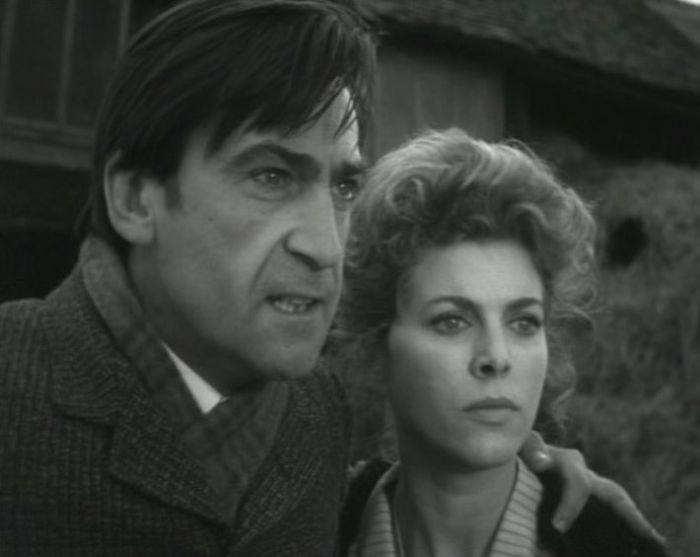
A shipload of guns is due to arrive shortly.  Without it, the planned uprising on Easter Monday is doomed to failure.  But whilst Sir Roger arrives, the guns don’t.  Despite the entreaties of his wife Doreen (Billie Whitelaw), McBride seems content to lead his men into battle anyway, where they’ll face certain slaughter.  But then he seems to have a change of heart ….

Whilst He Rises on Sunday and We on Monday features some fine actors (including Andrew Kier and T.P. McKenna) the bulk of the story revolves around Patrick Troughton and Billie Whitelaw.  Although Troughton’s Irish accent does come and go a little, this is a small price to pay for his intense, fanatical performance.  Make no mistake, McBride is a fanatic – something which is made clear very early on.  When Doreen asks what they’ll do if the guns don’t arrive, McBride retorts that “we’ll make our rebellion with bricks and clubs and hobnail boots and the fearless Irish hearts that are beating inside of us.”

If Troughton is his usual excellent self, then he’s matched every step of the way by Billie Whitelaw.  Whitelaw, who has the only female speaking role, essays a stunning performance as Doreen.  She loves her husband, but he only has thoughts for a free Ireland.  Angrily she tells him that “you’re a man of brave courage, John McBride. Oh, if only you had the courage to take the wife who loves you in your two arms and share your fear with her.”  This is a scene that crackles with intensity, helped by the conflicting emotions that play across Troughton’s face.

Robert Monteith (Maurice Good) was one of the men who has travelled to Ireland with Sir Roger Casement.  With Casement now captured by the British and no guns, he can forsee a massacre if the rising goes ahead.  McBride could stop it – but only he knows the codeword that will stand everybody down.  Despite physical force, Monteith is unable to make him talk.  But Doreen is able to win him round and in a tender scene – again it’s another excellent two-hander for Troughton and Whitelaw – he agrees to pass on the code.

After Monteith delivers the message he discovers that McBride has tricked him.  The codeword he passed on was “go” not “stop”.  Later, McBride explains to Doreen and his friends.  “When this rising’s over they’ll be thousands of us dead in the streets and they’ll be arrests and trials and hangings and we’ll have failed. This time we’ll have failed. But if we make a start this time, one day we’ll succeed. And our children and grandchildren will live in a free Ireland. But by all that’s good and all that’s holy, unless we make that start this time we’ll never succeed.”

Armed with only a pitchfork he walks forward into a hail of bullets from a police machine-gun.  His speech seemed to have inspired the other men, as they too are also cut down – leaving a distraught Doreen alone, surrounded by dead bodies.  It’s a stirring ending, but it does leave a few questions unanswered, most especially why did the police open fire?  Rather than make martyrs of the men, they simply could have arrested them.

He Rises on Sunday and We on Monday doesn’t make any attempt to present both sides of the story.  Whilst it’s laudable in one way that the English aren’t depicted as inhuman monsters, this is because they hardly feature at all.  Alvin Sapinsley’s script (especially McBride’s final speech) makes it quite clear which side he supports.  For most of the story McBride seems to be a man alone – the others follow him, but they don’t seem to share his burning desire.  It’s only when they see him shot down in a futile gesture that they too become totally committed and also perish.  Even with the shocked reaction of Doreen, Sapinsley strongly implies that it’s a glorious thing to die for a cause you believe in.

It may be on the polemical side, but the performances of Troughton and Whitelaw make this an episode worth watching.

Espionage – The Gentle Spies

gentle 01

Gerry Painter (Barry Foster) is assigned to infiltrate a group of peace protestors who have somehow gained access to sensitive government secrets.  The government, in the shape of the Minister (Michael Horden), wants the mole identified and punished.  Gerry begins by attaching himself to Sheila O’Hare (Angela Douglas), a highly idealistic member of the group.  But his increasing feelings for her make it hard for him to concentrate on the matter in hand …..

The Gentle Spies is a fascinating time capsule of the mid sixties and also, after three very intense episodes, is quite a change of pace.  Although the topic it covers (unilateral disarmament) is weighty, it’s done in a fairly light-hearted manner.  This is best seen at the start when Gerry attempts to catch Sheila’s eye.  Foster, later to star in Van Der Valk, shows a deft comic touch whilst attempting to woo a very disinterested Douglas.

Ernest Kinoy’s script is firmly on the side of the protesters.  He takes great pains to depict them as totally non-violent – indeed, the only fracas occurs when Gerry (attempting to impress Sheila) throws a punch at a policeman.  He seems to boyishly assume this will get him into her good books, but it only serves to irritate her.  As for the information they release via leaflets (the location of the government’s secret bomb shelter, an accident involving a plane carrying a nuclear warhead) Kinoy seems to be suggesting that although they’re official secrets it’s in the public’s interest that they be released.  WikiLeaks is an obvious modern parallel.
Horden’s Minister is less forgiving though. “In a way it’s a lot worse than if the information had been leaked to a bona-fide Russian spyring. At least they’re professionals, you expect to lose a certain number of wickets to them.”  The Minister goes on to complain that he’s under pressure from Washington, so it seems that political expediency is driving his desire to find the mole.

The protestors are led by Lord Kemble (Alan Webb).  Kemble is a public figure (a former Nobel prize winner) and therefore a major thorn in the Minister’s side.  Kemble is a staunch believer in unilateral disarmament, although the rights and wrongs of this are only lightly touched upon.  Towards the end, the Minister tells him that this course of action would be suicide – if one side has the bomb, then the other must have it too.

At one point, Gerry runs into Willi Hausknecht (Eric Polhmann). Willi, an East German agent, has also attached himself to the protestors. For a moment it looks as if he’s the one supplying them with the information but it turns out that he’s aiming to find the source of the leak so he can obtain further intelligence for his masters. Nothing comes of this, as Gerry has him arrested, but it shows how idealists can be manipulated by the unscrupulous (Callan has several good examples of this).

Since the political and moral arguments of The Gentle Spies remain rather undeveloped, it’s the performances of Barry Foster and Angela Douglas that keep the story moving along.  If Foster is a strong leading man (albeit with a sense of humour) then Douglas essays a typically winsome performance.  Sheila is so whole-heartedly honest and open that it’s no real surprise that Gerry falls for her in a big way.

The reveal of the mole is practically an afterthought – it was the Minister’s wife, Sara (Joan Hickson).  Hickson, later to gain small-screen immortality as the definitive Miss Marple, holds the viewer’s attention for the last few minutes.  The Minister finds he can do nothing – which once again appears to be a demonstration of political expediency (if his wife was revealed as the mole then his career would be finished) and so the status quo remains in place.

As previously touched upon, The Gentle Spies is chiefly of interest due to the way it captures a snapshot of the mid sixties peace movement.  Sensible jumpers, placards and endless chorusus of “we shall overcome” are the order of the day.  It’s not the most complex episode of Espionage but neither is it without interest or merit.

gentle 02

Espionage – The Weakling

weakling

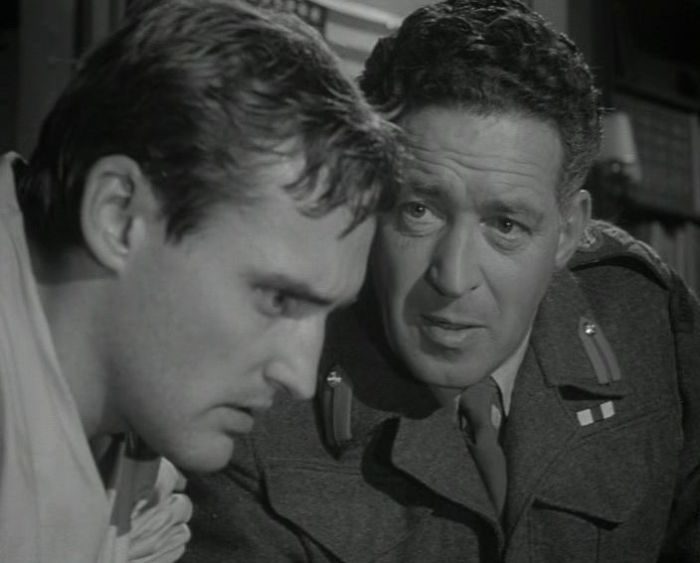
The Weakling opens in North Africa during WW2.  Ferno (Dennis Hopper) is a highly insubordinate American soldier (in his opening scene he shows his disregard for authority by getting tangled up in a barroom brawl) which makes him pretty much the last person you’d entrust with a mission vital to the war effort.

But Colonel Ballin (John Gregson), a British intelligence officer, believes that Ferno is exactly the right man for the job he has in mind.  Ferno is told the time, date and place where the Allied invasion of Europe is due to begin and is parachuted into France to deliver this information to the leader of the Free French underground.

After Ferno is captured by the Germans, he’s subjected to extreme torture in order to make him talk.  But Ferno proves hard to crack.  This should be good news, but it turns out to be exactly the opposite ……

There’s a wonderful clash of styles in the first act of The Weakling.  Not only between Ferno and Ballin but also between Dennis Hopper and John Gregson.  They could hardly have been more different as actors.  Hopper (1936 – 2010) was a devotee of the method school of acting and his off-screen life seemed to mirror Ferno’s.  It’s often been observed that Hopper tended to play himself so the anti-authoritarian, twitchy Ferno shouldn’t have been too much of a stretch for him.

Although his career had began promisingly in the 1950’s (appearing in several films with James Dean, a man he idolised) by the time he recorded this episode of Espionage he’d hit something of a brick wall.  His problems, like Ferno’s, were mostly self-inflicted as he proved to be an uncontrollable loose-cannon (more than one director told him he’d never work in Hollywood again).  But thanks to the intervention of John Wayne, Hopper slowly began to work his way back into favour, culminating in the sleeper hit Easy Rider (1969).

John Gregson (1919 – 1975) could hardly have been more different.  He’d forged a successful career playing supporting roles in many popular British films (Scott of the Antarctic, Whisky Galore!, The Lavender Hill Mob, Genevieve, Above Us The Waves, The Battle of the River plate, etc).  When the British film industry began to contract in the 1960’s he moved seamlessly in television, guest-starring in numerous series as well as starring as the avuncular George Gideon in Gideon’s Way.  Gregson always appeared to be the very model of stolid reliability, a trait which seems to be shared by Ballin.

Indeed, as Ferno rants and raves at Ballin, it’s instructive to watch the two actors at work.  Hopper has the showier material and he certainly goes for it – wringing everything he can from the script.  Gregson is still, silent and barely moves – but he still catches the eye, a clear demonstration that less is more.

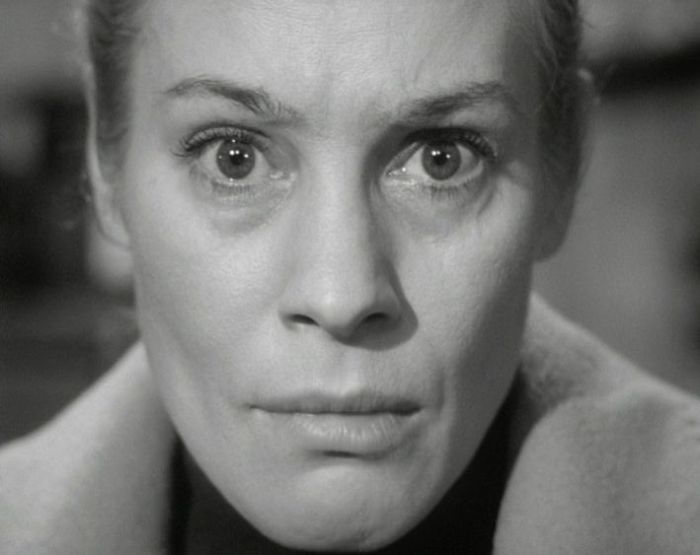
When Ferno reaches France he makes contact with Jeanne (Patricia Neal), a doctor who agrees to set up his meeting with the resistance.  The year after The Weakling was broadcast Neal would win an Oscar for her role in Hud, so she was something of a catch for the series.  The scenes between Jeanne and Ferno are played at an intense emotional pitch – Jeanne tells him that she supplies the Nazis with narcotics and is unrepentant about it.  She appears to be just another victim of the war – a woman forced to sacrifice her principles – but the truth is much darker.  She’s an addict herself and is also revealed to be a collaborator, betraying him to the Nazis.  Ferno manages to make his escape and frantically radios to Ballin for help.  Ballin hears the message but doesn’t reply.  This is another quiet triumph for Gregson as Ballin says nothing – he simply buries his head in his hands.

The truth is revealed shortly afterwards by Ballin.  The information Ferno carries is false and the intention all along was that he would be captured, interrogated and finally be forced to give it up.  But since Ferno is the sort of man who can withstand a great deal of pain he won’t break easily, which means that the Germans should be convinced that what he tells them is genuine.

Jeanne is charged with getting him to speak, but despite all the drugs at her disposal it’s no easy task.  So Handler (Steve Plytas) decides to use more old-fashioned types of persuasion.  When we cut back to the room there’s a blow-torch in the background, which tells us all we need to know.

There’s an unspoken irony about The Weakling.  The very title seems to suggest that Ferno was chosen because he was supposed to crack under pressure reasonably quickly – but this is contradicted during the scene where Ferno, and three others, were put through rigorous tests to see which of them would fare best under interrogation.  Ferno seemed to be least affected, which surely wasn’t what was needed?

Although Ballin knew he was sending Ferno to suffer, he’s not portrayed as a cold-blooded monster.  As Ferno continues to struggle against his interrogators, Ballin (sitting alone in his office) seems to hear his screams and silently urges the man to talk.  Eventually, pushed beyond the limits of human endurance, Ferno does.  But the cost is great – the American ends up as a shell of the man he used to be.

The closing scene, as Ballin visits him and begs for his forgiveness, is another memorable one.  And for one last time we see their two styles at play – Hopper emotes freely, whilst Gregson, leaving the room with a tear trickling down his eye, is much more restrained.

If The Weakling has a flaw then it’s probably some of Dennis Hopper’s dialogue.  At times Ferno talks with 1960’s idioms, which sit uneasily with the wartime setting.  It’s possible that Hopper himself dropped these into the script and, given all we know about his personality, refused to compromise.  His full-throttle approach may not appeal to all, but it’s the difference between him and Gregson (as well as the moral complexities of the story) that make this such a fascinating watch.

Espionage – Covenant with Death

covenant

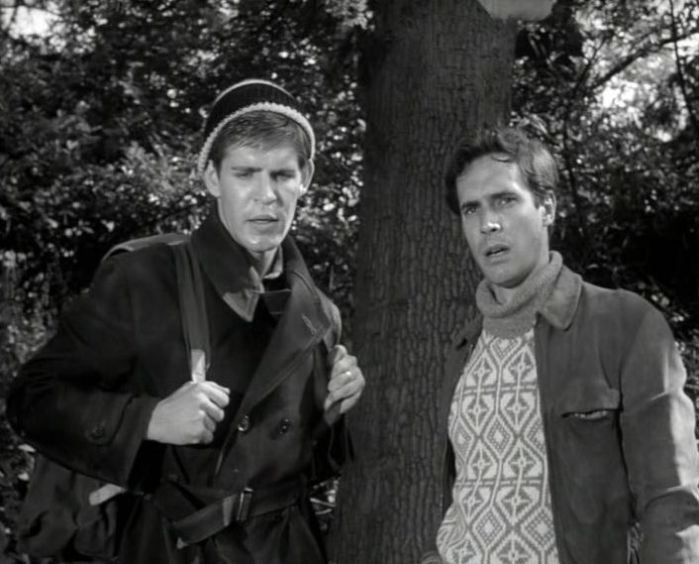
Covenant with Death opens in 1942, with two young men – Magnus Anderssen (Bradford Dillman) and Ivar Kolstrom (Don Borisenko) – leading an elderly couple through the woods.  Joseph and Sarah Blumfield (Arnold Marle and Lily Freud-Marle) show signs of flagging and stop for a rest.  Magnus and Ivar then both pick up rocks and it’s clear that they intend to kill the Blumfields.

The action then moves to a courtroom shortly after the end of WW2.  Magnus and Ivar are in the dock, accused of the Blumfields’ murder.  But why would two war heroes (they had been members of the Norwegian resistance) kill a defenceless couple?  The prosecutor (Allan Cuthbertson) is convinced of their guilt, whilst their defense attorney (David Kossoff) struggles to find a way to prove their innocence.  As might be expected, there’s more to this story that meets the eye …..

After the opening credits, a caption helpfully tells us the exact setting and time – Tonstrand, Norway, October 9th 1947.  You might wonder why so many Norwegian nationals (like Cuthbertson) speak perfect English, but that’s par for the course with a series shot in the UK.  It may be a little incongruous but it’s preferable to everybody attempting dodgy Norwegian accents.  And as touched on previously, the fact this was an American co-production necessitated that the two Norwegians in the dock, Magnus and Ivar, were played by an American and a Canadian respectively.

Allan Cuthbertson is his usual immaculate self as the prosecutor.  He seems to have a very solid case – both Magnus and Ivar confessed their guilt to the police and when Ivar was arrested he had Joseph’s gold pocket watch in his possession (he also admitted to the police that he took the watch from Joseph’s dead body).

A recess provides an opportunity for Ivar and Magnus’ attorney to speak to them.  He urges them to change their plea to guilty, but Magnus refuses – they may have killed the couple, but he tells him it wasn’t murder.  This intriguing statement drives the rest of the narrative as slowly the events of five years earlier are uncovered.

Several lengthy flashbacks help to stop the story from being a static courtroom tale.  The first flashback also helps to bring the character of Joseph Blumfield into sharp focus – his Jewish heritage meant that he was under increasing pressure from the Nazis, one of the reasons why he and his wife decided to flee.

Kossoff, like Cutherbertson, impresses, as he slowly teases out the story from the defendants.  Ivar tells the court what happened immediately after the deaths of Joseph and Sarah.  “After we did it, it was suddenly very quiet. Like we’d killed everything in the forest except ourselves. The old man bled a lot, for some reason the woman didn’t seem to, but we knew they were both dead.”  Don Borisenko is perfect as the twitchy Ivar, a man who lacks the certainty of his friend Magnus that they did the right thing.

Although Joseph and Sarah have been presented as harmless and helpless victims, Peter Stone’s screenplay constantly teases us that there must be more to the story than a simple tale of opportunistic murder and robbery.   It’s strongly hinted on several occasions that during wartime people have to do things which would be unthinkable during a time of peace.  If Magnus and Ivar felt that the security of their organisation was threatened by the old couple it would explain why they had to die.

Apart from Cuthbertson and Kossoff, other familiar faces pop up, most notably Alfred Burke and Aubrey Morris.  In the present day, Burke (as Ivar’s brother, Gustave), sports a natty eye patch, which is absent when the action flashes back to 1942.   Burke’s contribution is small but he was such a good actor that he could make even a handful of lines come alive.  His jousting with Cuthbertson is a special treat – Gustave angrily wonders why the court is attempting to prosecute two war heroes, which incenses the prosecutor.  “Many of the men in this room, and the women too, risked their lives in the struggle against the Nazi occupation. Some of us suffered just as much as you. Torture, imprisonment under death sentence, but we didn’t sink so low as to murder those we had pledged to protect, to save our own skins.”  It’s an electrifying scene.

Covenant with Death shows how moral absolutes are a luxury often denied during a time of war.  The scene of Joseph and Sarah in the moments before their deaths is very powerful – both know they will shortly die, both are afraid, but they’re also reconciled that it’s the only way.  But was it?  It’s is a question that remains right until the end and no doubt each viewer will have their own opinion as to whether Magnus and Ivar were guilty or innocent.

Although espionage doesn’t form any part of the story, this is a deeply thought-provoking tale that, even when the verdict is delivered, doesn’t seem to bring closure for the men in the dock.

Espionage – The Incurable One

incurable

Espionage was an ITC film series which ran for twenty four episodes between 1963 and 1964.  An anthology programme, each edition explored the theme of espionage in various ways and with a mixture of styles (both modern day and historical settings were featured).

Three of the episodes (A Free Agent, The Frantick Rebel, Never Turn Your Back on a Friend) were directed by Michael Powell (director of many notable films including A Matter of Life and Death, The Red Shoes and Black Narcissus).  Powell wasn’t the only film director to turn his hand to television – Charles Crichton became a mainstay of many ITC series – but Powell’s story is quite interesting.  His 1960 film Peeping Tom caused such an outcry that it appears to have killed his film career stone dead.  He barely worked again afterwards, with only a handful of television and film credits during the remainder of the 1960’s and 1970’s – a somewhat sad end to an illustrious career.

Although many ITC series remained in circulation for decades, not only in the UK but also worldwide, Espionage vanished after its original run.  Maybe this was because at times it’s a bleak and uncompromising series (illustrated during the title sequence, designed by Maurice Binder).  The titles are an exercise in creating a sense of unease –  real-life photographs of war and death are briefly glimpsed and help to state the nature of the series.  This isn’t, like most ITC series, a lighthearted thriller or detective series, Espionage tends to go a little deeper.

Because of this, and the typically excellent guest casts, it’s a show to be treasured – although it’s true that the mixture of styles does mean that some scripts are better than others.  However, across the twenty six I feel that the strike-rate is pretty good.

During WW2, Captain Andrew Evans (Steven Hill) trained Celeste (Ingrid Thulin) to be a killer.  He was very successful, but Celeste has carried on fighting, even though the war has been over for several decades …..

When we first see Celeste she’s attending a consultation with Mr Smith (Martin Miller).  Smith is an astrologer (the sign outside his office proudly proclaims that he’s a councillor to the troubled) and it appears at first that Celeste is being positioned as a helpless victim to the predatory Smith.  He offers to spend more time dealing with her problems and suggests that she meets him at his flat – much more comfortable, he says, than the office.  But it quickly becomes clear that she’s the cat and he’s is the mouse.  She asks him if he’s German and – a little surprised – he admits that he is, although he’s clearly uncomfortable about talking about his past.

Miller, who coincidentally had appeared in Powell’s Peeping Tom, impresses in the small but pivotal role of Smith.  He was a familiar face on both the big and small screens (a few months after this broadcast he’d pop up in the Doctor Who story Marco Polo as Kublai Khan, for example)

Scenes of Celeste walking through busy London streets seem to imply that she’s an isolated figure – even amongst the multitude she’s very much alone.  A detour into a Soho strip club sees her indulge in a spot of pick-pocketing – the marks (distracted by the girls on the stage) are easy prey, but this scene poses questions.  Why is the outwardly respectable Celeste doing this?

The threads of the story come together as we see her pursued at a discrete distance by Evans.  Evans, an American, has come to England to see her again and he clearly wants to help her.  But there’s an uncomfortable sense, even early on, that Celeste is a damaged individual who won’t be easily repaired.

When Evans and Celeste meet again, they kiss – which segues neatly into the next scene. They’re still kissing, but now we’ve rewound twenty years or so.  The flashback sequences help to flesh out how Evans came to recruit Celeste – to begin with she was reluctant, but Evans was convinced she would be a first-class agent.  Stock footage of real-life wartime explosions are intercut with studio shots of Evans and Celeste in action (although it’s quite a leap that the story presents Celeste as an effective cold-blooded killer immediately after the scene in which she doubted her abilities).

Evans and Celeste have very different views about the world they’re now living in.  Evans believes that the Londoners may now look dull, but they hanker after the old, exciting days of war.  Celeste disagrees and tells him that “the war didn’t bring them one single thing worthwhile.  Because if it did, they wouldn’t look dull, they’d still be enjoying it.  Because war doesn’t end.  That’s the big myth, that you can end a war by signing a treaty. But you can’t, the war goes on, goes on.  You can see that, can’t you?”

A generous help of location filming on the streets of London helps to make this episode memorable.  Smithfield meat market is an unexpected location, but the sight of Evans and Celeste walking past pig’s heads is certainly an arresting one.  Elsewhere, Michael Gwynn (today probably best known for one of his final roles – as the ersatz Lord Melbury in the first episode of Fawlty Towers) provides strong support as George Case.  Case is the head of British security who faces a dilemma concerning Celeste.  She’s the recipient of the George Medal and a personal letter of commendation from Winston Churchill, but Case finds it impossible to ignore the fact that she’s responsible for several murders.

He plans to hand her over to the police – with regret – but there’s no other option.  The real hammer-blow, in plot terms, comes when Case tells Evans that one of Celeste’s victims might have been German, but he had no Nazi connections.  Her lack of judgement is reinforced after she murders her latest victim – Smith.  He slumps forward on the desk, revealing a number tattooed on his arm (conforming he was a Jewish prisoner of war).  This is never mentioned in dialogue and it’s also never stated whether Celeste is aware of her mistake – an example of the subtle nature of the scripting.

Steven Hill is perfectly acceptable as Evans, although apart from one monologue and the closing scene with Thulin he’s a little colourless (but with American co-production money in the series it’s no surprise that American actors will occasionally pop up in leading roles).  The Incurable One really belongs to Ingrid Thulin, who’s perfect as the damaged Celeste – someone who manages to be both heroine and victim.  And whilst the ending is telegraphed well before the end it still carries an considerable emotional punch.  Shot as the pilot episode, The Incurable One is a quality production.

Pathfinders to Mars – Falling into the Sun

mars 06-01.jpg

Falling into the Sun doesn’t get off to the best of starts as a very obvious camera shadow looms behind our heroes as they make their way to the rocket.  Luckily for them Brown isn’t able to take off, as the rocket is infested with that pesky lichen.

This lichen is a little animated (although the wires holding it up are painfully obvious at times).  Henderson quickly works out a way to kill it off – heat – and within a matter of seconds it’s no longer a menace.  Margaret and Geoffrey are very upset though – Hamlet was in the rocket and didn’t have a spacesuit, so surely he would have been killed.  I have to confess to being slightly less concerned about the guinea pig’s fate than they are, but animal lovers everywhere needn’t fear as Brown shielded it from harm.

As Mary says (a little ironically) this is a point in his favour – he might have been ready to leave them all to perish on the surface, but at least he didn’t let Hamlet die.  It’s interesting that Brown’s anti-hero status is therefore still firmly in place – he didn’t decide to stay because he had a change of heart about those he’d be leaving behind, he was only prevented from leaving because of the lichen.  The Doctor might have been a little untrustworthy in the early Doctor Who stories, but he was never so heartless.

How will they get back to Earth?  Brown has the solution – they have to set the controls for the heart of the Sun.  This possibly isn’t as crazy as it sounds (well not quite) as the Sun’s gravitational pull will generate the extra power they need.  We drop back in on Buchan Island where they’re keeping an eye on things and it’s plain that Ian’s doubtful of their chances.  But watch him when they make it – he starts jigging around like nobody’s business!

So they’re nearly home, but Brown doesn’t fancy going back to Earth (he thinks Venus looks much more interesting).  The others look on with indulgent smiles, although if I was them – remembering how many times Brown’s actions have endangered their lives – I’d probably be less sanguine.

Pathfinders to Mars doesn’t quite have the same impact that Pathfinders in Space did.  Harcourt Brown is the main reason for watching, since the plot is rather thinly spread over the six episodes.  As touched upon before, after being teased about intelligent life on Mars it comes as a disappointment to find that there’s nothing there.  So the later episodes turn into something of a run-around with various not terribly exciting dangers (lichen, crevices, quicksand).

Maybe Malcolm Hulke and Eric Paice were aware of this problem, as the trip to Venus sees them abandon the last vestiges of scientific credibility.  If you want Venusians and Venusian dinosaurs then Pathfinders to Venus has them …..

mars 06-02