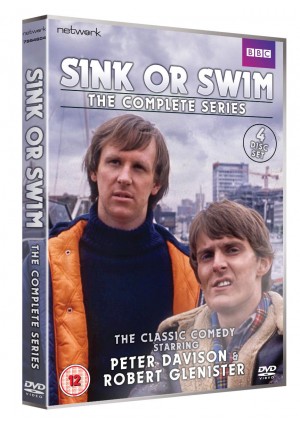
Sink or Swim to be released by Network – 3rd October 2016

sink.jpg

The first fruits of Network’s new deal with the BBC will be arriving this October.

Doctor Who star Peter Davison headlines this well-remembered BBC sitcom, starring alongside BAFTA-winning Hustle stalwart Robert Glenister in his TV debut.

They play brothers Brian and Steve Webber, whose attempt to strike out in business involves a soggy narrowboat and a dubious decision to ply the Thameside tourist trade. Unfortunately, Steve is as loutish and lazy as Brian is charming and ambitious – and the latter finds both his enthusiasm and his relationship with idealistic girlfriend Sonia severely hampered by his brother’s persistent presence!

Scripted by Alex Shearer, creator of The Two of Us, Sink or Swim is a much-sought-after comedy. This set contains all three series.

Grange Hill. Series Seven – Episode Seventeen

grange hill s07e17

Written by Jane Hollowood. Tx 28th February 1984

It’s exam time and Stewpot’s feeling the pressure ….

His mood isn’t helped by Pogo cheerily telling him that he should have sat CSE’s rather than O Levels – as Pogo’s exams are nearly over.  Stewpot also doesn’t seem terribly interested to learn that Pogo’s got the chance of a job (as a double-glazing salesman, a perfect occupation for him!)

The classroom used for the exam is a cheerless place – shabby and joyless – no doubt this doesn’t help to improve the general tension that everybody’s feeling.  Over the next few years GH will undergo something of a transformation, most notably in the style and look of the school (the pending merger with Brookdale and Rodney Bennett has, in part, come about in order to explain why the school will look so different in the years to come).  One side-effect of the changes is the way that the crumbling Victorian nature of the school to date is replaced with a much more modern environment.  This is a shame in some ways, as the inner-city bleakness of the earlier years rather fades away.

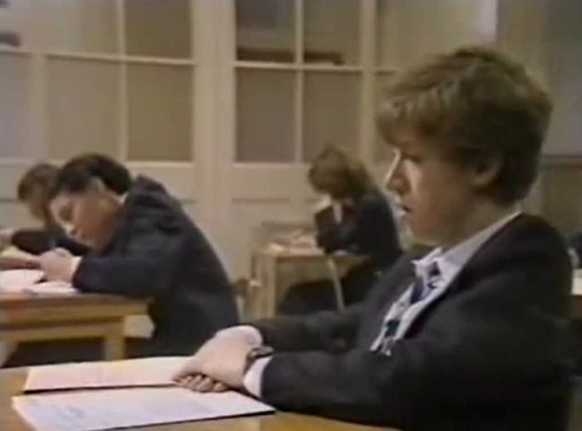
Stewpot snaps out of his catatonic state once the exam starts but not in a positive way.  He has something of a breakdown and has to be lead out.  Prior to this, the silence in the room – as the others start writing – is used effectively to ramp up the tension as he stares at the paper blankly.  Mrs McClusky is on hand to give him a pep talk which sends him back.  She’s not prepared to put up with any nonsense from him.  “Don’t be such a stupid little fool. Stop being weak and pull yourself together.”  Fighting talk!  It’s just what he needs of course, and he’s able to go back and complete the paper.

Mrs McClusky later briefly mentions that exams put the children under a great deal of pressure, but there’s no debate as to whether this pressure is too great or if there’s anything that can be done to help the more vunerable pupils.  The message seems to be that you just have to get on with it the best you can.

Miss Gordon continues her quest to secure a nude model for the art club, whilst Mrs McClusky continues to be far from convinced it’s a good idea.  It would certainly liven up proceedings as we see them sketching a number of twigs, not terribly exciting!

Suzanne returns.  She’s looking very different (seemingly having modelled her appearance on Boy George) and outwardly is happy with her life outside Grange Hill.  But her inability to get a job depresses her (which ties in neatly to the exam theme of the episode).  Mr McGuffy offers to help, but Suzane isn’t convinced that exam passes are the answer.  “O Levels, A Levels, that’s all you teachers think about isn’t it? Look, what is the point? There are no jobs.”  This is an argument that’s been played out several times before, but Suzanne’s eventual grudging acknowledgment that he’s right leads him to suggest she attends sixth form college.

Suzanne meets up with Claire and the others, but this only serves to make her feel more isolated.  The others don’t ignore her deliberately, but their banter highlights that she’s no longer a member of the school community and therefore isn’t able to join in.  She’s got what she’s always wanted – Suzanne has long desired to leave Grange Hill – but now it’s happened the girl is a little lost and scared.

Her final conforontation with Mrs McClusky is an oft-repeated moment.  The headmistress is appaled by the sight of the bizarrely attired girl.  But Suzanne is able to have the final world by telling Mrs McClusky that since she no longer attends Grange Hill she can wear what she likes.  She then proceeds to sashay down the corridor, hips swinging impressively.

Mrs McClusky agrees that the art club can have a nude model.  Pogo, on hearing the news, can barely contain his excitement (he’s practically frothing at the mouth) and immediately signs up to join the club.  The eventual revelation that the model is a wrinkled old man rather than an attractive young woman is a nice (if obvious) gag.

Grange Hill. Series Seven – Episode Sixteen

grange hill s07e16

Written by Jane Hollowood. Tx 24th February 1984

N3, Mr Baxter, Mr Knowles, Claire and Stewpot have headed out into the country for an orienteering weekend.  Jane Hollowood’s script develops a theme first seen in the previous years trip to Wales, namely that Mr Baxter struggles when he’s out of his comfort zone.

That he’s not terribly familiar with orienteering is made clear right from the first scene – the whole class head off in one direction, whilst he goes the opposite way!  He’s called back by Mr Knowles (with the children’s jeers ringing in his ears) who points out that he was holding his compass upside down.

Mr Knowles has organised a competition – teams of two people set off through the forest using their newly found orienteering knowledge to locate a series of checkpoints – and the wheel of fortune means that Mr Baxter and Roland have to pair up.

This is a genius move (again, the abrasive relationship between the pair was touched upon during the Wales trip).  It’s plain that Mr Baxter’s opinion of the desperately unathletic Roland has never been high, but from the moment they set out there’s a subtle change in their personal dynamic.  Mr Baxter, for all his surface bravado, is out of his depth, which means that it’s Roland who’s able work out the correct route they have to take.  For once the boy gets the chance to act in a positive manner.

But when Mandy and Sarah decide to hide one of the checkpoint markers it means that the mismatched pair of Mr Baxter and Roland find themselves hopelessly lost.  The teacher then sprains his ankle, which leaves them stranded in the forest, cold and hungry (and with night fast approaching).  This then leads into one of the key moments of the episode.

ROLAND: Everything I do is a disaster.
MR BAXTER: Rubbish. Listen, this was my fault not yours.
ROLAND: What about my mum walking out though? That wasn’t your fault.

There’s a world of pain from Roland in this short exchange.  Despite his visits to the school psychologist during series five, we’ve never really seen him express his fears, hopes or emotions before.  No doubt this is due to his friendless nature (true, Janet’s always been a more than willing listener, but Roland’s opinion about her has been made crystal clear on many occasions!)

Although Roland’s never been the most popular member of the class, the others (even Annette) are concerned about him.  Annette promises that if he comes back safely she’ll never tease him again (she then glances upwards, which suggests she’s said a quick prayer for his safe return – a very uncharacteristic thing for her to have done).

After the pair are finally rescued, Mr Baxter is packed off to hospital with a suspected broken ankle whilst Roland returns back to base.  He’s treated like a returning hero by the others, which is lovely to see (although I’ve always been a little perplexed as to how they managed to create such an impressive “welcome back Roly” banner in double quick time!)

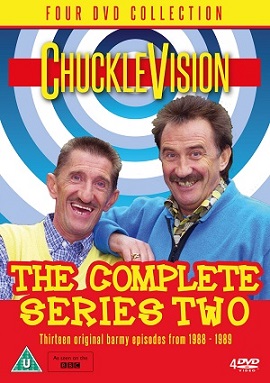
ChuckleVision – Complete Series One and Two. Simply Media DVD Review

164454- Chief Crazy Horse Sleeve.indd164454- Chief Crazy Horse Sleeve.indd

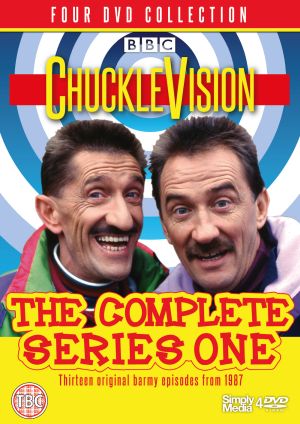
ChuckleVision was a television fixture for over two decades, running from 1987 to 2009 (notching up a staggering 292 episodes along the way).  But before Barry and Paul Elliott endeared themselves to several generations of children they’d had to endure a long, hard showbiz apprenticeship.   Winners of Opportunity Knocks in 1967 and New Faces in 1974 (a unique double) the brothers found further television exposure hard to come by, so had to be content with plying their trade around what passed for the variety circuit during the seventies and early eighties.

Their return to television, The ChuckleHounds (1985/1986), didn’t sound terribly promising – a pre-school programme which saw them dressed as dogs! – but it lead to ChuckleVision, where the boys were able to put their slapstick skills to fine use.  The first two series had a different format to what came later – Barry and Paul are studio-based presenters (although they do venture outside via film inserts) plus there’s magic from Simon Lovell and a regular slot featuring Billy Butler as a storyteller. But even though much was unfamiliar, the basic dynamic of the brother’s relationship was already firmly in place.  Barry (the short one) is stupid, Paul (the tall one) is equally as stupid but considers himself to be a cut above in the intellectual stakes.  It’s the sort of formula that had served Laurel and Hardy well for many years and the Chuckle Brothers, whilst not quite in the same league, still managed to wring plenty of comedy out of this basic premise.

Wordplay and puns also feature.  A sample from the first episode, Breakfast, will suffice.  Paul mentions that Wayne Sleep will be coming on the show later.  Barry looks downcast and tells Paul he’d better call the vet (for the lame sheep!)  It’s a groanworthy pun and it won’t be the last ….

Each episode of series one and two has a theme.  For example, episode three of series one is about Sport.  There’s quite a nice touch of satire as they cut away regularly for live snooker at the Crucible.  Each time they do so, we see a still picture of Steve Davis, clearly not moving an inch, whilst the commentator tries to fill the time as best he can.

The second series still has the brothers in a studio setting, but there seemed to have been a little more money in the budget, which meant that the fairly bare set from series one was replaced with something rather more lavish.  The basic format remains though, as does Billy Butler’s storytelling slot.  Amongst the memorable moments are Barry’s caveman outfit (in Farming) and their attempts to discover whether the truth is really out there in U.F.O.  The robot Barry, perfect in every way says Paul, is also rather chucklesome (“it hasn’t got a brain” says Barry.  You can probably guess the next line).

Originally released on DVD by Delta in 2011, they’ve now been brought back into print by Simply.  For fans of the later oft-repeated runs of ChuckleVision, these two series are certainly very different (opinions are split over whether Billy Butler is an asset or a bore – personally I rather like him). Each series runs for around 250 minutes, which makes the decision to issue them as four disc sets a little odd (they would have easily fitted on two discs per series)

Although nice to see them back in circulation it’s a little hard to fathom exactly who’s going to buy them.  The subset of bloggers, like myself, with an interest in the history of British television must be quite small, so it’s either going to sell to those who grew up with the series or young children yet to be introduced to the joys of the Chuckle Brothers.  The latter may be the most fruitful audience, as whilst these early shows can be a little slow there’s still plenty for youngsters to enjoy.  Those coming back to the show after a gap of twenty five years may be harder to please.  Numerous series, such as Pipkins and The Banana Splits have escaped onto DVD over the years, but after an initial nostalgic rush the adult viewer has probably found they lack a great deal of rewatch value.

ChuckleVision: The Complete Series One was released on the 25th of July 2016.  RRP £19.99.

ChuckleVision: The Complete Series Two will be released on the 29th of Augut 2016.  RRP £19.99.


Grange Hill. Series Seven – Episode Fifteen

grange hill s07e15

Written by John Godber. Tx 21st February 1984

When Annette turns up to school with a new bike, it worries Fay and Julie.  Remembering the tale of the camera, they wonder if this is further evidence of Mrs Firman’s mistreatment of her daughter.  Mind you, Annette doesn’t have the bike for long as Jimmy, Nigel and Roland see it as a nice little earner ….

Although Annette’s fate is the topic of this episode, she’s actually fairly peripheral to proceedings, whilst those concerned about her (Fay and Julie and Miss Gordon and Mrs Wilkins) are much more central.  Whilst Annette’s brand new bike suggests that Mrs Firman has been hitting her daughter again (and this is her way of apologising) there’s no actual evidence that this is so.

That’s not really important though, it simply serves as the catalyst to give Fay and Julie the final push they need to speak out.  It’s quite noteworthy that Julie tells Fay that when her mother hits her she doesn’t have any bruises.  Fay agrees with this, which suggests that she too has received physical chastisement from her parents (providing us with a window into a world where such things are commonplace).

They tell Miss Gordon, who along with Mrs Wilkins (Angela Galbraith) later visits Mrs Firman (Dorothy White).  Mrs Wilkins is introduced as coming from Grange Hill, although her precise role is unclear.  She’s a good listener though, as demonstrated when she patiently allows Mrs Firman to tell her tale.

Although Mrs Firman has lavished presents on her daughter (Nigel believes she lives in a big house) it’s a little hard to see how she manages it, especially after it’s revealed that her husband has left her after sixteen years of marriage.  She actuallyvlives in a modest house with nondescript fixtures and fittings (and is quite shabbily dressed).  At one point she tells them that she doesn’t want any sympathy.  Mrs Wilkins responds that they don’t intend to offer her any, but Annette could do with some.  After Mrs Firman expresses remorse it closes the chapter on this story.  This feels a little pat to be honest, but there’s always the possibility that it isn’t a definite ending.

Jimmy’s more Gripper-like in this episode.  Pinching Annette’s bike is rather out of character (remember, he started series seven as a businessman, keen to provide his customers with services) but it does bring Roland’s story-arc to a close.  Having seen Roland move from victim to bully, he now has to face the consequences of his actions after the police catch up with him and his two partners-in-crime.  Roland will remain a regular until the end of the 1987 series, but he’ll rarely feature as a central character again.

Annette and Fay have a brief, but memorable, fight.  It helps to clear the air and it means they’ll be able to pick up their friendship after this brief hiccup.

Grange Hill. Series Seven – Episode Fourteen

grange hill s07e14

Written by Frances Galleymore. Tx 17th February 1984

Diane’s stories about her imaginary boyfriend become more and more elaborate. But Julie seems to smell a rat ….

This episode gives us our one chance to take a look at Diane’s homelife.  Her mother, Gloria (Linda Marlowe), couldn’t be more different to her daughter.  She’s brassy, confident and seemingly not very interested Diane at all.  No surprise then that Diane prefers the safe haven of her bedroom (which, of course, has a big poster of Duran Duran on the wall) and the romantic certainty of teen magazines.

Mr McGuffy’s drama classes seem to be the inspiration behind her endless tales of Mark (he drives a car, works in a record shop, uses aftershave, looks a little like Shakin’ Stevens, etc, etc).  Do we interpret this as a cry for help, or is she secretly delighting in fooling everyone?  Diane’s usually portrayed as a victim (or at least a fairly passive character) so there’s evidence that she relishes stringing everybody along.

This includes her mother, who finds Diane’s stash of secret love letters.   This faintly echoes the storyline of Claire and her secret diary, but it’s plain that Diane intended her mother to find the letters just so she could create a scene.  Gloria has always complained that her daughter never seems to do anything or go anywhere, so it’s more than a little ironic that when she discovers Diane apparently has a boyfriend she’s dead against it.  Diane is then able to taunt her progressive mother most effectively.

If Diane’s managed to fool Fay and Janet, with Annette not really bothered either way, then Julie is the one who seems not to believe a word of it.  But she never comes out and calls Diane a liar to her face (Julie, unlike Annette, is rarely mean or spiteful) and doesn’t press matters after Diane tearfully brings the affair to a close (imaginary Mark is forced to leave town for somewhere up North).

The merger is steaming ahead, with Mrs McClusky keen to take charge.  I like that she calls Claire and Stewpot to her office and passes over paperwork for them to give to their parents, Mrs Scott and Mr Stewart (both of whom are prominent members of the PTA).  Some might see this as underhand, but there’s no doubt that Mrs McClusky is a skilled political animal ….

Miss Gordon is keen to bring a nude life model to the school.  Mrs McClusky reacts in shock (a lovely moment) as does Mr Keating later on (another fine comic scene).  We’ll have to wait a few episodes for the punchline, but it’ll be worth it.

Grange Hill. Series Seven – Episode Thirteen

grange hill s07e13

Written by John Godber. Tx 14th February 1984

Annette proudly displays her new Polaroid camera to the class.  She seems to have an indulgent mother who spoils her rotten – but this surface happiness hides darker secrets …..

The first of five GH episodes penned by John Godber, it provides answers to questions which were posed earlier in the series.  Annette’s mother suffers from depression and hits her daughter, so we can assume that the lavish presents are her way of saying sorry.  Knowing this explains a great deal about Annette’s behaviour (her willingness to taunt others, for example) but it also poses troubling questions.  She’s been this way since we first met her in the first year – has she really been abused all this time?

Everything comes to light after Julie jealously steals her camera.  She only meant it as a joke (this gives me nasty flashbacks to the sagas of Belinda’s clarinet and Fay’s hockey stick) but Annette doesn’t see the funny side.  They have a brief fight but Annette pulls away, clearly in pain.  This wasn’t Julie’s fault though – Annette has bruises on her arms, caused by her mother.

Earlier, the games mistress Miss Hartley also spotted the bruises and gently questioned her.  Annette insisted she fell and Miss Hartley, somewhat reluctantly, seemed to believe her.  We’ve seen this in the series before, where a teacher is aware that a pupil may be suffering abuse but decides not to act.  It’s no doubt an accurate reflection of real life, but it still feels disturbing.  Fay and Julie attempt to cheer Annette up, but there’s a sense that this story isn’t over yet.

Elsewhere, Roland’s smartened himself up – much to the delight of Janet (Simone Nylander).  She launches one of her trademark monologues as she fires question after question at the uncomprehending and uninterested Row-land.  It’s a nice moment of comic relief.

As is Roland’s transformation into a school bully.  After being bullied himself by Gripper, Roland’s now become a fully fledged member of Jimmy’s gang.  Jimmy, Nigel and Roland form an intimidating trio – Jimmy does most of the talking, Roland chips in with the odd word, whilst Nigel says nothing (although he sneers very effectively!)

Mrs McClusky, Mr Smart and Mr McGuffy discuss the merger, which now seems to be going ahead.  Mr Smart isn’t in favour, he declares it would be better if they went back to smaller schools which would give teachers a chance to spend more time with the pupils.  Mr McGuffy doesn’t see the logic in this, although there seems to be something in Mr Smart’s argument.  It’s interesting that Zammo’s mother, Mrs McGuire (Jenny Twigge) also expresses a desire to see the merger stopped.  Although she leans politically to the left (and no doubt Mr Smart leans very much to the right) they both seem to have come to the same conclusion.  Maybe for different reasons ….

Given that he’d just become Artistic Director of the Hull Truck Theatre in 1984, it’s no surprise that John Godber only penned a handful of scripts for GH.  His other episode for series seven concludes the storyline developed here and is just as dramatically satisfying.  His later work for the series is a little more light-hearted though (it includes the memorable affair of Mr Bronson’s stolen wig!).


Grange Hill. Series Seven – Episode Twelve

grange hill s07e12

Written by Barry Purchese. Tx 10th February 1984

Suzanne walks out of Grange Hill again, but this time it looks like she’s gone for good.  On her way out she encounters Mr McGuffy and Mr Smart.  Both want her to stay – although they speak to her in very different ways, as per their diametrically opposed characters.  Mr McGuffy is patient and understanding whilst Mr Smart is abrupt and hectoring.

Neither tactic works, although it’s Mr Smart who feels the most affronted.  He storms over to Mrs McClusky’s office to demand she does something, but the headmistress doesn’t share his anger.  Gwyneth Powell’s been a little underused this year, but she’s very cutting in this brief scene.

Although Suzanne’s left the school, she’ll return to the series in episodes seventeen and eighteen.  But this episode does see the final appearance of Mark Baxter as Duane Orpington.   Given the length of time he’d spent in the series it’s slightly surprising that he just seems to fade away.  One minute he’s there and the next he’s gone, with nobody appearing to notice (although I seem to recall that illness might have been the reason why Baxter didn’t appear in the rest of series seven).

Zammo eventually hands over Gluxo’s note to Jimmy.  Jimmy’s up for a scrap – provided it’s done with a sense of style – but Zammo’s not keen.  Jackie has forbidden him to get involved in any fighting, which leads to a simmering feeling of tension between him and Kevin.  Zammo doesn’t want to be thought of as a coward, but neither does he want to lose Jackie.  It’s a bit of a dilemma.

There’s the second mention of Diane’s boyfriend – and this time he’s got a name, Mark.  At the moment this doesn’t go any further, but it’s another seed planted which will come to fruition later in the series.

Roland’s chaotic home life is finally explained, as Janet (annoyingly helpful and inquisitive as ever) pops around and is told by Mr Browning that Roland’s mother has left home.  One parent families are such a fact of life now (and would also be in later series of Grange Hill) that it seems rather remarkable that this is one of the first instances in the series when it’s been explicitly stated that someone is missing a parent.

The big fight is an anti-climax, but on the plus side it means that Zammo doesn’t have to break his promise to Jackie.  Gluxo locks the Grange Hill boys into the warehouse where the fight was supposed to take place and calls the police.  That’s a somewhat uncharacteristic thing for Gluxo to have done, but GH couldn’t really have been seen to condone gang fighting, so this ending (even if it feels like a bit of a cop-out) does make sense.

Grange Hill. Series Seven – Episode Eleven

grange hill s07e11

Written by Jane Hollowood. Tx 7th February 1984

It’s the day of the sponsored walk.  Jackie decides to join Zammo, which causes him a little anxiety.  What will his friends say?  Unsurprisingly there’s a number of whistles and assorted comments, but they manage to get through unscathed.

Roland’s still fretting about the amount of money he’s going to lose if Kilvert comes in first.  Jimmy’s no help, telling Roland that he (Jimmy) supplies the brains of the operation whilst Roland supplies the money.  But Jimmy and Nigel do their best to nobble Kilvert with one of the evergreen classics.

It’s the old “move the arrow so it points in the opposite direction” ploy, so beloved of the series, especially at the start of a new school year (when it can be guaranteed to catch a few unsuspecting first years out).  But Kilvert ignores the arrow pointing in the wrong direction and carries on remorselessly the right way.  It seems that nothing can stop him.

Jimmy decides to pinch a bike, since he’s tired of walking.  The one he chooses – a butcher’s bike complete with meat – belongs to Gripper.  It’s nice to see Mark Savage again, even if his screentime is very brief.  After popping up at the start to shout “oi, that’s my bike!” at the absconding Jimmy, you’d have expected him to make a few appearances throughout the episode.  But he doesn’t reappear until just before the end, where he’s less than pleased with Jimmy’s antics.  There’s a nod to Gripper’s long-established lack of learning as he fails to spell meat correctly.   “And what about the meat, eh? M e e t.  Meat”.  It’s ironic that Gripper’s probably lost his job thanks to Jimmy.  If he was attempting to go straight, it looks as if Grange Hill might have indirectly forced him back into a life of crime.

Stewpot’s desperate to get Claire alone so he can talk to her, and he asks Pogo to chat to Christine.  There’s no sign of Suzanne or Precious (or indeed Duane) so it looks as if this all-film episode saved a little money by pairing down some of the regulars.  There would have been no need for the others to be there, as Claire and Stewpot only needed one other person to talk to, and Christine and Pogo serve that function admirably.

The on/off/on/off drama of Stewpot and Claire looks to be off again, although she considers his offer to join him on an orienteering weekend (along with Mr Baxter, Mr Knowles and a bunch of third years).  Does she agree?  You’ll have to wait until episode sixteen to find out ….

What’s quite nice is that Claire tells Stewpot that she can’t talk to him as she’s walking with Fay.  This partly might have been because Claire simply didn’t want to spend any time in his company, but there’s also the sense that she’s concerned about the younger girl.  Although their discussion happens off-screen, it seems to put an end to the rumours and innuendo about Fay’s crush on Miss Gordon.

Pogo drops out of the sponsored walk as he’s spotted an old girlfriend, Lucinda.  Played by Letitia Dean (credited as Titia Dean) it’s a nice little cameo.  Lucinda likes her food that’s for sure, but after Pogo treats her to a snack in the café he’s crestfallen to find out that she’s got a new boyfriend.  Poor Pogo.

Kilvert doesn’t win, Wu (Eliot Wong) does.  Jane Hollowood seems to have chosen this name so that when people ask who won the race, they can use the “Wu” – “Who?” gag (which they do several times).

Grange Hill. Series Seven – Episode Ten

grange hill s07e10

Written by Barry Purchese.  Tx 3rd February 1984

Although Mr Smart started series seven by pledging to be more approachable, he doesn’t seem to have made much progress.  Mr Howard and Miss Gordon look on as Mr Smart frog-marches Zammo and an older boy into the corridor.  He caught them fighting and it was Zammo who threw the first punch.

Mr Smart, with his usual tactic of bellow first and ask questions later (if at all), isn’t prepared to listen to what Zammo has to say.  Lee Macdonald does a good job of showing Zammo’s distress – the boy is visibly panting and unable to articulate clearly.  The reason for the fight – the older boy made a joke about Jeremy – stops the teacher in his tracks and as Miss Gordon takes charge of Zammo, Mr Howard attempts to smooth things over with Mr Smart.

Mr Smart is aware that yet again he’s made something of a hash of things.  But Mr Howard is exactly the wrong person to try and gently point this out – since he’s everything that Mr Smart isn’t.  Mr Howard is calm, friendly and approachable, which is why so many pupils – including members of Mr Smart’s form – prefer to come to him with their problems, which irritates Mr Smart no end.

Off-screen, Roland’s money-lending business has become a part of McClaren Enterprises.  This makes sense – Jimmy and Nigel are just the type of people who delight in collecting debts – and Jimmy sees a further chance to make a little money.  The upcoming sponsored walk might not be a race, but he still intends to run a book on who’s going to win.  Kilvert (Howard Selfe) is the red-hot favourite and Roland collects plenty of bets.  Unfortunately Kilvert isn’t interested in a cut of the proceeds if he promises not to finish first.  Which leaves both Roland and Jimmy with a problem …

Rumblings that Grange Hill might merge with Rodney Bennett and Brookdale are heard, but the key part of the episode concerns the innuendo directed at Fay.  What was implicit in earlier episodes is now very explicit, as Mandy, Sarah and Annette all delight in mocking the girl.  Envy might play a part – Fay is an all-rounder, good at most sports – but plain nastiness seems to be the main reason.  Mandy goes the furthest – suggesting that Fay isn’t interested in boys and likes to hang around the changing rooms in order to watch the other girls (she also mentions that she wouldn’t hang about in the showers with her).  Fay’s infatuation with Miss Howard is mentioned again, but there’s never been any evidence – it just appears that the others have put two and two together to make five.  It’s very disconcerting to see Annette, who’s supposedly Fay’s best friend, take part in this bullying, with only Julie prepared to fight Fay’s corner.

Zammo and Jackie run into Gluxo again.  It’s hard to take Gluxo  seriously because he’s such a cartoon villain, but for once he doesn’t attempt to cause Zammo any harm.  Instead, he gives him a letter for Jimmy McClaren.  An invitation for Grange Hill and Brookdale to meet and settle their differences in the old fashioned way – a big punch-up!

Grange Hill. Series Seven – Episode Nine

grange hill s07e09

Written by Margaret Simpson. Tx 31st January 1984

Two members of the Tasmanian delegation (Claire and Suzanne) are taken out to lunch by two representatives of the Russian delegation.  Claire and Guy (Jamie Wilson) enjoy very cordial relations, which includes a quick snog.  Alas, ever bolshy Suzanne isn’t as easily impressed – the two boys might be sophisticated and know their way around an Indian restaurant menu, but that cuts no ice with her.  They stand for everything she despises – rich and privileged people who’ve never had to fight for anything.

At the same time, Stewpot continues his pursuit of Trudy.  She agrees (a little half-heartedly) to accompany him to evening dance.  Pogo seems to think she’s going with him, but they’re both going to be disappointed.

Trudy and Guy used to be an item and they pick this moment to get back together again.  It’s a remarkable coincidence that Stewpot and Claire were the jilted couple – out of all the people Trudy and Guy could have chosen to hook up with, they pick Stewpot and Claire.  This disappointment throws them back together, so it looks as if their on-off relationship is now back on.  It’ll continue into series eight, where Stewpot two-times her with the most unexpected girl.  Even after all these years I can’t believe it, but we’ll leave that for another time.

If the others are letting their hormones do the talking, then Glenroy remains totally committed to the debates.  Unfortunately, his aggressive manner doesn’t meet with the approval of the debate moderator and he decides to go home.  This seems to be another jab suggesting that UN is a fairly toothless organisation – Glenroy is told to be polite and moderate his tone (just like the real UN) but he counters that people in the poorer parts of the world are suffering now.  Action, not words are required.  Mr McGuffy attempts to pour oil on troubled waters, but to no avail.  However, Glenroy is persuaded to stay.

John Eastlake (Robert Kenley) has been an insufferable presence for the last two episodes.  He’s another rich kid, but unlike most of them – who are portrayed in a reasonable light – Eastlake is prejudiced and narrow-minded.  He receives his come-uppance from the others (which includes his own school-friends) and this ensures that the balance is restored.  If only they could do that at the real UN …..

There possibly wasn’t enough material to stretch across two episodes (a compressed single episode might have been better) but there were several highlights – David Bellamy’s impassioned address last time and Steven Woodcock’s incendiary turn in this one.  And Gina Bellman in both episodes was an unexpected surprise (I’d quite forgotten she’d appeared in GH).

The Ambassador – Simply Media DVD Review

164454- Chief Crazy Horse Sleeve.indd

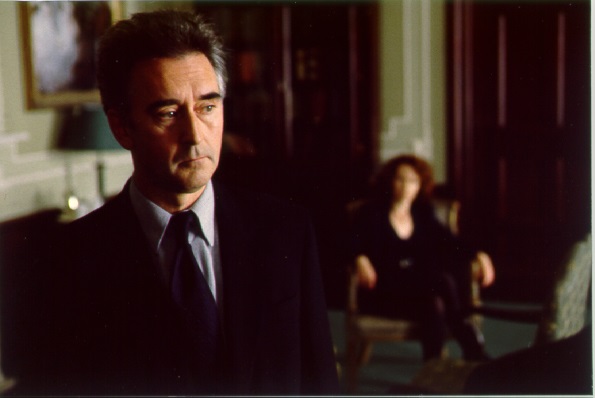
Harriet Smith (Pauline Collins) is the newly appointed British ambassador to Northern Ireland.  Recently widowed, she has to juggle the demands of her family (Harriet has two teenage sons who don’t understand why her job has to take precedence over them) as well as numerous day-to-day diplomatic challenges.

Thrust into a world where truth is often a flexible commodity, Harriet is fortunate to have the staunch support of commercial attaché John Stone (Denis Lawson).  But Stone also serves another master (MI6) which means that he occasionally pursues his own agenda, something which becomes more pronounced in the second series ….

It’s hard to argue that The Ambassador is a terribly realistic series, but it’s entertaining nonetheless.  Harriet seems just a little bit too good to be true – whilst everybody else stumbles around, she’s sometimes able to sort out seemingly insoluble problems in a matter of minutes.  But if the plotting can feel a little contrived at times, there’s also a pleasing sense that the world she now lives in is painted in shades of grey.  So even when she turns out to be right we can’t always expect a “happy” ending.

In the first series she clashes with Steven Tyler (William Chubb) and Kevin Flaherty (Owen Roe). It may not be entirely surprising that although both Tyler and Flaherty start off as implacable rivals they later become staunch allies. More interesting is the relationship she shares with John Stone.  Stone, with his MI6 connections, is invaluable whenever Harriet needs to dip into murky waters, but he seems to undergo something of a change between series.  In series one he tends to act in Harriet’s best interests but that’s not the case during the second series.  This does add a little spice to the stories though, and Lawson is an actor who’s always worth watching.
6646

Since she’s at the centre of most of the action, Pauline Collins is the glue that holds the series together, although it’s possible to argue that she has a little more to work with in the second series.  This is partly because Peter Egan is introduced as Michael Cochrane, who becomes Harriet’s love interest.  Her relationship with Michael helps to humanize her a little, as well as generating a rather unsurprising plot-twist when it turns out that he has a dramatic impact on her professional life ….

Out of the twelve episodes, the following were of particular interest.  A Cluster of Betrayals sees a hostage crisis take place at the embassy, as a distraught father (whose son died from radiation poisoning) brandishes a canister of nuclear waste in an attempt to draw attention to the pollution he claims has been created by leakages from British power plants.  Things aren’t going well until Harriet steps in to handle negotiations.  This is one of those episodes where it seems just a little too pat that Harriet is able to diffuse the situation when everybody else has failed.

Cost Price sees Harriet’s personal and professional lives collide as Michael is kidnapped.  Unable to negotiate directly for his release, she’s forced to watch proceedings from the sidelines.  Although both series were an excellent vehicle for Pauline Collins, the personal angle for Harriet in this episode helped to ramp up the tension a little more.

The final episode of series two, Getting Away From Murder, ensured that The Ambassador ended on a high.  After Tyler’s wife is found dead from an overdose, he’s accused by the Garda of murder.  He pleads diplomatic immunity (in order to not to derail some sensitive negotiations) leaving Harriet to wonder whether one of her key allies could really be a cold-blooded murderer.  With the truth not disclosed until just before the end, this is a very effective mystery story.

Thanks to strong central performances from Pauline Collins and Denis Lawson and quality support from the likes of Owen Roe, William Chubb, Peter Egan and Eve Matheson, The Ambassador is certainly a series that’s worth a look.  Guest appearances from the likes of Michael Angelis, Philip Jackson, T.P. McKenna, Frederick Treves, Geoffrey Whitehead, Michael Cochrane, Jack Dee and Tenniel Evans don’t hurt either.  Although Harriet may be rather too perfect, if you can suspend your disbelief then there’s plenty to hold your attention across both series

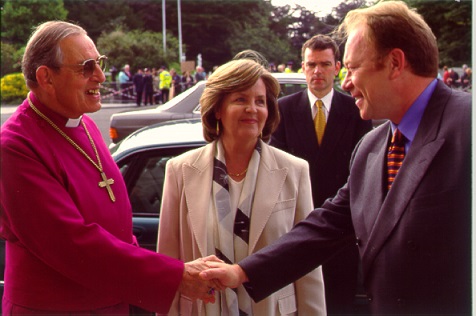
The Ambassador – Complete Collection is released by Simply Media on the 15th of August 2016.  RRP £34.99.
6649

Grange Hill. Series Seven – Episode Eight

grange hill s07e08

Written by Margaret Simpson. Tx 27th January 1984

Suzanne, Claire, Glenroy,  Pogo, Stewpot and Mr McGuffy have headed off into the country for the UN Weekend.  It’s taking place in palatial surroundings – which comes as a little bit of a culture shock for the North London kids.  Claire, who has to speak in the debate, is fretting that she’ll come off second best, as some of the other children come from privileged private schools and probably are used to this sort of thing.  Claire isn’t, which heightens her anxiety.

Glenroy is still smarting from the fact that somebody else nabbed Ethiopia (they had to plump for Tasmania) whilst Suzanne, Pogo and Stewpot don’t seem to have the UN at the top of their personal agendas.  Suzanne, despite her earlier protests, clearly wants to spend time with Glenroy whilst Pogo and Stewpot are happy to hang out with any attractive girl they can find.

Trudy (Gina Bellman) immediately catches their attention and they both make a beeline for her.  There then follows several excruciating scenes as Trudy, polite but clearly not terribly interested, has to suffer their separate charm offensives.  This was only Bellman’s second television credit (an episode of Into the Labrynth two years earlier was her first).

Excruciating also covers the scene where one of the more privileged public school boys makes conversation with two black girls.  He asks them where they come from – Hackney, they say.  After a few more questions he seems stunned to realise that they’re actually British (that his school is representing the UK is a clear irony).  Presumably his part of the country has no black people whatsoever ….

If Stewpot and Pogo seem to be making little progress with Trudy, then Suzanne’s equally frustrated as Glenroy seems happier to spend his time talking politics with others than spending time with her.  But although all this toing and froing takes up most of the episode, towards the end we do start to concentrate on the reason why everybody’s here.

David Bellamy is in the chair for the debate on world hunger and his opening address is a memorable one.  The plight of Ethiopia would be thrust onto British television screens later in the year, so it was obviously a topic that was high on many people’s agendas.

Bellamy tells them that chronic hunger “saps your energy and lowers your resistance to disease. That means you can’t work properly. Because you see the sort of work that the hungry people of the world have to do is physical work. And there are four hundred million people in the world today whose food intake is below that which would be needed for normal bodily maintenance … the money required to provide adequate food, water, education, health, housing and above all family planning has been estimated at seventeen billion dollars a year. That’s an enormous amount of money, about as much as the world spends on armaments every two weeks.”


Grange Hill. Series Seven – Episode Seven

grange hill s07e07

Written by Frances Galleymore. Tx 24th January 1984

Following Jeremy’s death there’s an episode of reflection.  This is more than we had after Antoni Karamanopolis plummeted to his death from the shopping centre roof – his fate was discussed in a very offhand manner in the subsequent episode.

It’s Jeremy’s unpopularity which is uppermost in the minds of N3 as it causes several of them to wonder if they were somehow to blame for his death. Diane, because of the prank he played on her in the science lab whilst Fay is upset because he died after diving into the pool to retrieve her necklace (true, he was the one who had thrown it in in the first place, but grief and logic don’t always go hand in hand).

Zammo, Kevin and Annette have yet to turn up and it’s interesting that Fay declares she’s never going to talk to Annette again. It’s true that if Annette hadn’t caused Miss Hartley to leave the pool then the tragedy might not have happened, but this is just another example of the children’s attempts understand a situation that was outside of their control.

Janet, sensible as ever, declares that talking about it can only help, whilst Miss Gordon – who had been listening outside the classroom – agrees. She tells them it was nobody’s fault, Jeremy had s weak heart and he simply stayed under the water too long.

Wild rumours are sweeping the school though (lurid tales that he committed suicide) whilst Mrs McClusky comments that there are (unseen) reporters outside the school gates. From Grange Hill’s point of view the upcoming enquiry will be a formality – had they known Jeremy had a heart problem then he would never have been in the pool in the first place, but no blame seems to be attached to the teaching staff.

If the lesson had been supervised than at the very least Jeremy would have been extracted from the pool a lot quicker. Would this have saved his life? Impossible to say, but it’s slightly remarkable that Mrs McClusky doesn’t seem to draw this conclusion from the sad events.

Mr Baxter feels responsible and tenders his resignation, which Mrs McClusky refuses. Good playing from Michael Cronin during this episode. It’s also a nice moment when Fay and the others try to raise his spirits. As Julie said earlier, they all have to stick together in times like these.

Zammo wasn’t present to hear Miss Gordon tell the class that no-one was to blame. He’s at home with a stomach-ache and no doubt thoughts and regrets whilst Annette seems to be totally unaffected. She breezes into class as if nothing’s happened, a sharp contrast to the subdued attitudes of the others.

But Annette’s brave face is nothing more than an act and she later breaks down. It’s another nicely played moment in a reflective episode that ranks as one of the strongest of series seven. It often seems to be the way in soaps that whilst the deaths of characters are dramatic high-points, it’s the aftermath that really allows the actors to shine.

And to lighten the mood a little we learn that Precious isn’t very good at cutting hair ….

Grange Hill. Series Seven – Episode Six

grange hill s07e06.jpg

Written by Barry Purchese. Tx 20th January 1984

Annette has received a letter inviting her to take part of the finals of the fashion contest she entered a few weeks back, but neither Miss Gordon or Mr Howard will allow her to take time off school.  This doesn’t bother her as she bunks off anyway.  Jeremy returns from suspension, as mischievous as ever.  The others give him the cold shoulder but he continues to act up during their swimming lesson, where tragedy strikes ….

Ms Firmin is her usual charming self, unable to hide her glee that she’s the only one from the school chosen for the finals.  Mandy sums her up succulently with a single word (“cow”).  It’s a mild form of abuse, but it still a slightly jolting moment.

The third years have a biology lesson where they witness a rat being dissected.  If this had occured a decade later there probably would have been a debate as to whether it should have happened at all.  But here, the teacher just gets on with it and those who want to stay do and those that don’t are free to sit in the other room.  There’s no suggestion that they don’t stay out of a sense of animal rights, simply that they felt a little squeamish.  This scene might be a little jarring for modern viewers, but it’s an accurate picture of school life back in the 1980’s.  Back then, animals were used in lessons and I personally don’t recall any objections being raised.

Jeremy can’t resist hiding Diane’s schoolbag in the same cupboard as the dissected rat, which has inevitable consequences.  It’s yet another idiotic action which further estranges him from the rest of the class and drives Mr Howard to despair.

For those keeping track of Mr Howard’s pursuit of Miss Gordon, this episode he bumps into her (literally) which seems to please him no end.  He’s certainly gained some ground on Mr Smart who hasn’t made a move for a few episodes …..

Annette’s dreams of stardom come to nothing when she realises that there’s hundreds of girls in the queue ahead of her (and they taunt her by pointing out that she’s the only one in school uniform).   She returns to school, downhearted, and refuses to get changed for swimming.  This initially seems to be just another case of her stroppiness, but then we see her roll up her jumper to look at her arm.  Together with the comments from previous episodes it’s another moment that suggests all isn’t well.  It’s also an example of how the series was now much more confident to develop plot-threads over an extended number of episodes, no doubt happy that the audience would be tuning in week after week and also that they’d be paying close attention.  Back in series two or three this would have probably been dealt with much sooner.

When I rewatched series six for this blog, I noticed that Mr Baxter mostly tended to show up on film.  And again the same thing seems to be happening here – this is the first time we’ve seen him during series seven and all his scenes here are on film.  Did Michael Cronin have other commitments which meant his time was limited, meaning many of his scenes had to be pre-filmed?

It’s rather nice to see Dennis Blanch as Mr Devereaux and he helps to serve as a reminder that I really should dig out Strangers to rewatch soon.  He’s in the one swimming pool, teaching the beginners, whilst Miss Hartley (Angela Newmarch) takes the main class in the other pool.  This isn’t the first time that pupils have been left unattended by the pool (series one, episode four) but this has fatal results.  Miss Hartley decides to go back into the changing room to speak to Annette, who’s still refusing to come out of the cubicle, although her visit proves rather fruitless.  As with the series one episode, it beggars belief that a whole class would be left to their own devices so close to water.  And the fact that nobody seems to be to blame is something we’ll discuss a little more next time.

The moment when Zammo surfaces to shout that Jeremy’s in trouble is a chilling one.  And the last few minutes, as Devereaux and Baxter frantically try to resuscitate the boy whilst the rest of the class looks on, is another striking image.  As Devereaux tells Baxter that it’s hopeless – the boy’s lungs must have filled with water immediately – the picture freeze frames.

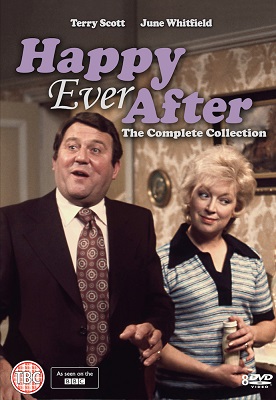
Happy Ever After to be released by Simply Media – 26th September 2016

164454- Chief Crazy Horse Sleeve.indd

Happy Ever After will be released by Simply Media on the 26th of September 2016.  Review here.

Terry and June Fletcher (Terry Scott and June Whitfield – Terry and June) are a middle-aged, middle-class couple in middle England whose children recently left home. However their path to domestic bliss is soon interrupted by the permanent arrival of scatty Aunt Lucy (Beryl Cooke – The Bill) and her chatterbox mynah bird.

Running from 1974 to 1979 across 41 episodes, including the Comedy Playhouse pilot and Christmas specials, essentially the same characters would be transposed to the even longer-running Terry and June (1979-1987). Relive the exploits of TV’s happiest hapless couple from the beginnings of their perennial partnership in this original series, directed and produced by BAFTA winners Ray Butt (Only Fools and Horses) and Peter Whitmore (Yes Minister), which arrives on DVD 26 September 2016.


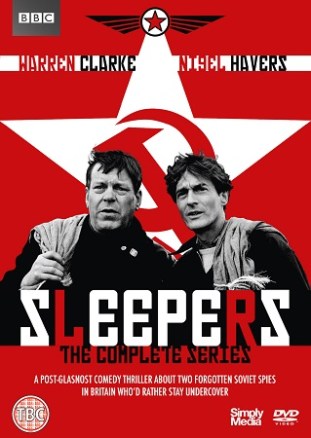
Sleepers to be released by Simply Media – 24th October 2016

164454- Chief Crazy Horse Sleeve.indd

Sleepers will be released by Simply Media on the 24th of October 2016.  Review here.

Amidst the thaw of glasnost, the Kremlin discovers that two Soviet agents, sent to England under deep cover in 1965, have been ‘lost.’ Sultry, unrelenting KGB high-up Nina Grishina (Joanna Kanska – The Tall Guy) flies into London to lead the search and soon becomes embroiled in a tangle of CIA, KGB and MI-5 plots and counter-plots as the two lost agents, now utterly assimilated, try to avoid detection.

A cat-and-mouse chase follows, delivering a hilarious cross-cultural comedy thriller directed by BAFTA winner Geoffrey Sax (Doctor Who), which is released on DVD on 24 October 2016. Nigel Havers (Chariots of Fire) and Warren Clarke (Dalziel and Pascoe) star as the spies who’d rather stay undercover, alongside Michael Gough (Batman).


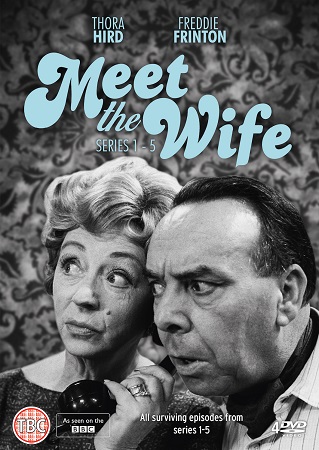
Meet the Wife to be released by Simply Media – 24th October 2016

164454- Chief Crazy Horse Sleeve.indd

Meet the Wife will be released by Simply Media on the 24th of October 2016.  Review here.

One of the BBC’s earliest domestic sitcoms, Meet the Wife affectionately dissects the trials and comforts of mid-life marriage after the kids have flown the nest.

Written by Ronald Chesney and Ronald Wolfe (On the Buses), and running for five series from 1963 to 1966, the series was immortalised in The Beatles’ ‘Good Morning, Good Morning’: ‘It’s time for tea and Meet the Wife’.

BAFTA-winning Dame Thora Hird DBE (Last of the Summer Wine) and Freddie Frinton (Dinner for One) are Thora and Fred Blacklock, a middle-aged couple in the north of England, just about managing to make ends meet. Fred is an amiable, hard-working plumber who likes a pint on the way home, while Thora has ideas of improving the couple’s social standing. Meet the Wife contains all remaining episodes from series 1-5 (including the Comedy Playhouse pilot ‘The Bed’), and is released on 24 October 2016.


Grange Hill. Series Seven – Episode Five

grange hill s07e05

Written by Margaret Simpson. Tx 17th January 1984

Although it’s been a while since we’ve seen Mrs Scott, Claire’s mother, she’s still the same fusspot that she’s always been.  And despite the fact that Claire’s now in the fifth form she still talks to her like she’s in the first year.  Nits are the problem – Claire’s had them and Mrs Scott is convinced she must have caught them from Suzanne.  Another example of the long-standing disdain that Mrs Scott has always held for Claire’s common (in her eyes) friend.

Jimmy’s upset that he hasn’t received the promised six hundred pounds from Pogo’s chain letter and forcibly makes his point.  This shows us Jimmy’s more menacing side, but events later in the episode prove that he’s far removed from the thuggish Gripper.  Mrs McClusky corners Mr Howard on the stairwell (a piece of the set that’s been seen so many time during the last few years that it’s almost become an old friend) and demands he finds out who’s responsible for the letters.

Mr Howard agrees, but is distracted by the passing Miss Gordon.  He walks a few paces to watch her retreating back with a wistful look on his face, whilst Mrs McClusky is still trying to gain his attention!  That’s the only reference to his pursuit of her in this episode, but it’s a nice dialogue-free throwaway moment nonetheless.

Mr McGuffy is attempting to recruit five pupils to go with him on a weekend trip organised by the UN.  Each school will pick a country and they’ll have a mock debate.  There’s a high level of cynicism on display – Suzanne likens the UN to the school council (with the one as effective as the other) whilst Glenroy tells the others that the UN exists to keep the poorer countries in their place.  Suzanne isn’t keen on going, but when she learns that Glenroy is, she perks up ….

Precious can’t go because she’s got a Saturday job at a hairdressers.  We’ll come back to this, with disastrous consequences for Christine’s hair, in a later episode.  There’s also the first mention of Anita’s gran for quite a while.  During series three she could hardly go a couple of sentences without mentioning her, but that hasn’t been the case recently.

This episode sees the last appearance of Allyson Rees as Miss Lexington, which makes me rather sad.  We learn that her first name is Jenny (a fact I don’t believe has been divulged before).  She and Mr Gordon are on hand to collar Pogo as he desperately tries to harness the power of the computer to salvage something from the chain letter fiasco.  Mr Howard suggests they ask their maths teacher why a market can never expand indefinitely.

There’s a lot of disappointed out-of-pocket kids after the chain letter scheme is wound up.  Jimmy extracts all the money held by Pogo and is quite happy to see it redistributed amongst those who lost out.  This makes it obvious that while he can be menacing, he also doesn’t always act in his own self-interest.  He gained nothing out of this (apart from being able to taunt Pogo) but perhaps we can put it down to another example of his canny business sense.  After all, all those people that have gained something might be potential customers in the future ….