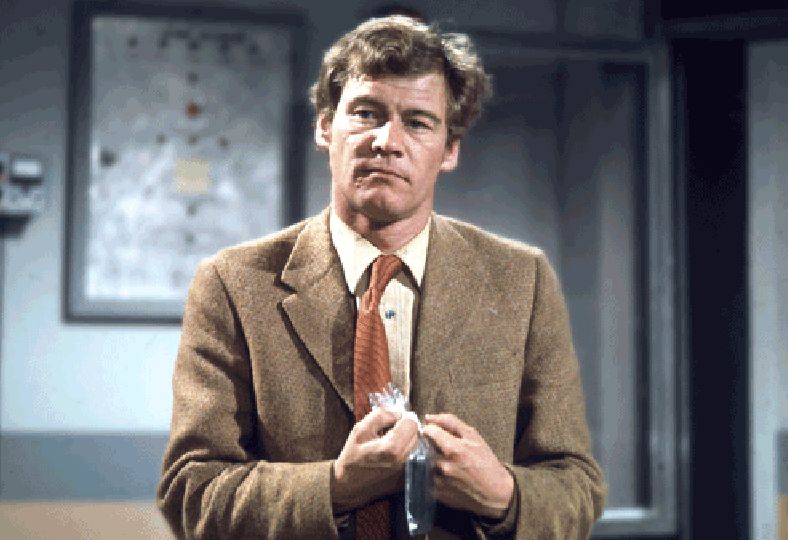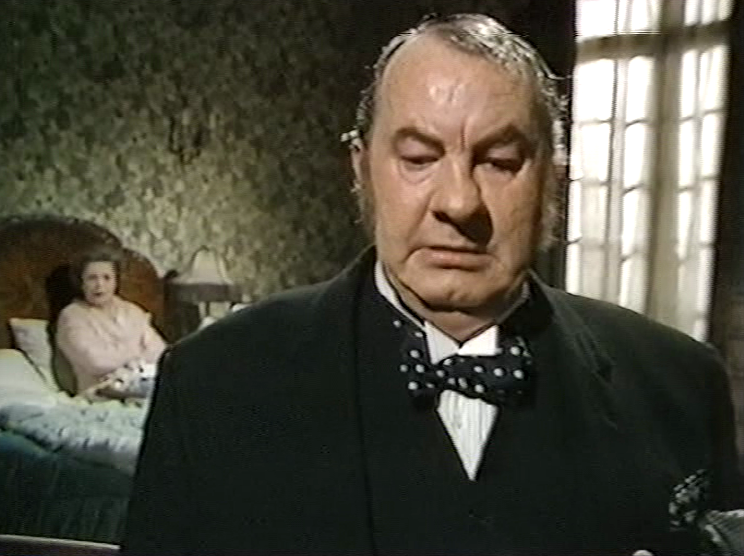
Commentary participants for Out Of The Unknown (BFI DVD) announced

250px-OOTU_Logo

The commentary participants for the forthcoming BFI DVD of Out Of The Unknown (to be released in October 2014) have been announced by Toby Hadoke on his website.

All commentaries are moderated by Toby and they feature a comprehensive collection of guests –

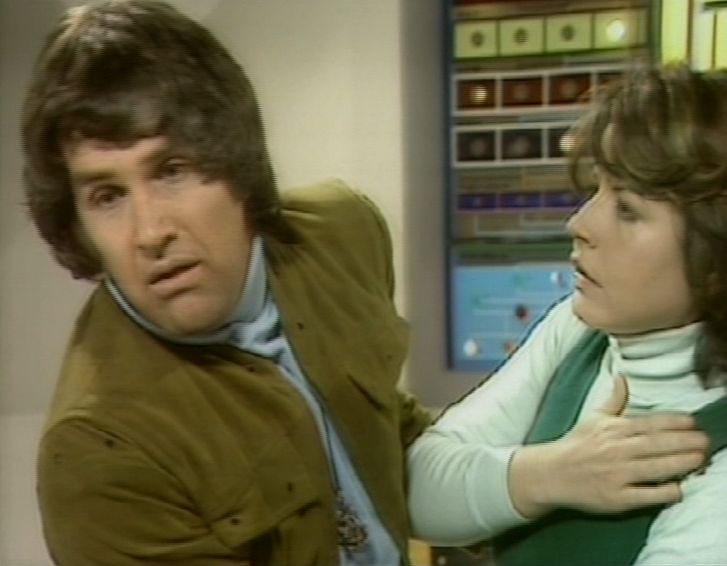
No Place Like Earth with Mark Ward (Out Of The Unknown expert) and Dan Rebellato (playwright, lecturer and John Wyndham expert).

The Dead Past with John Gorrie (director) and Brian Hodgson (Special Sounds).

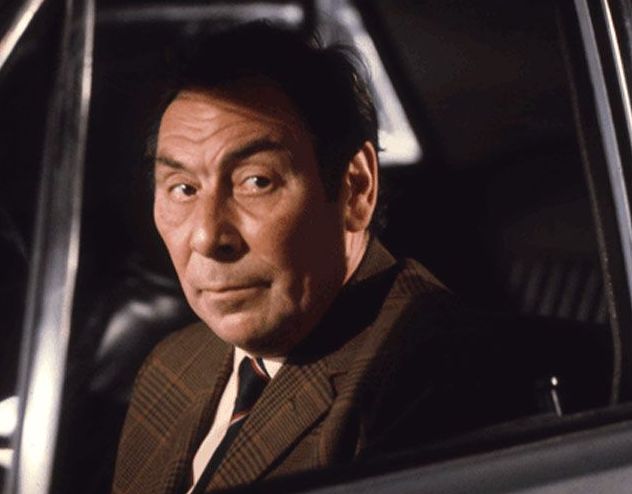
Time In Advance with Peter Sasdy (director), Wendy Gifford (Polly), Philip Voss (Police Officer) and Danvers Walker (Dan).

Sucker Bait with Clive Endersby (Mark), Roger Croucher (Fawkes).

Some Lapse Of Time with Roger Jenkins (director), John Glenister (PA), Jane Downs (Diana Harrow) and Delena Kidd (Dr Laura Denville).

The Midas Plague with Peter Sasdy.

The Machine Stops with Philip Saville (director), Kenneth Cavander (adaptor), Michael Imison (story editor).

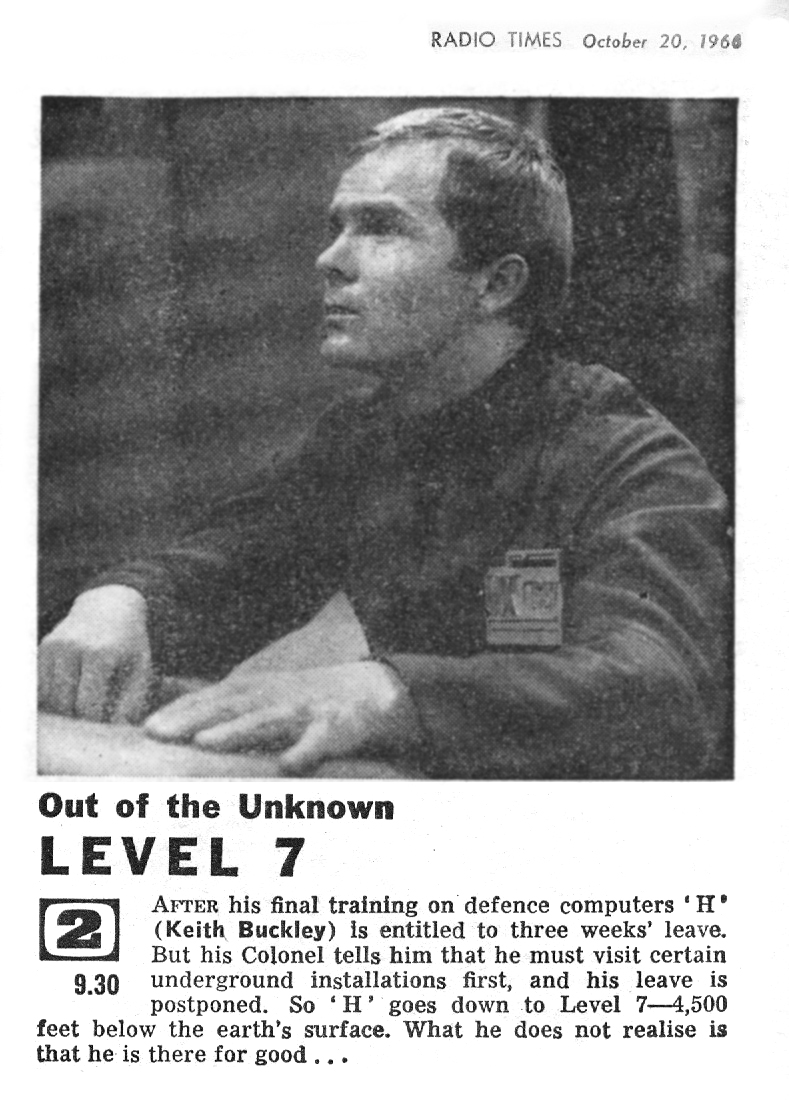
Level 7 with Mordecai Roshwald (author), Michael Imison (story editor).

This Body Is Mine with John Carson (Allen).

Welcome Home with Moris Fahri (writer), Bernard Brown (Bowers Two).

The Man In My Head with Peter Cregeen (director), Tom Chadbon (Brinson), Jeremy Davies (designer).

Given the short time that was available to record these commentaries, the range of participants assembled Is extremely impressive.  The 11 commentary tracks should shine plenty of new light on the making of these stories and they promise to be one of the highlights of an impressive sounding package.

The complete list of extras can be found here.

A brief history of Out Of The Unknown is here.

Hancock (BBC 1961)

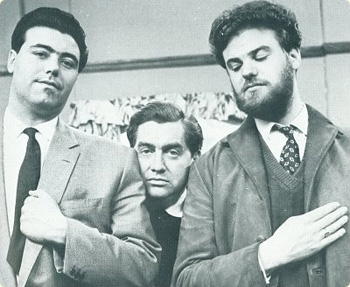
L-R - Alan Simpson, Tony Hancock, Ray Galton
L-R – Alan Simpson, Tony Hancock, Ray Galton

Introduction

Hancock, broadcast on the BBC between May and June 1961, was Tony Hancock’s last series for the BBC and was also the last one written for him by Ray Galton and Alan Simpson.

From 1954 onwards, Hancock had enjoyed great success with Galton & Simpson’s scripts, both on radio and on television.  There had been six series of Hancock’s Half Hour on the radio – between 1954 and 1959 – as well as six television series, which ran from 1956 – 1960.

But by 1961 Hancock was restless and wanted changes.  Sid James had been present in virtually every television and radio episode, but he was dropped from Hancock, at Tony’s request.  And when this series had finished Tony Hancock dispensed with Galton & Simpson as well.  For many people this marked the start of the long downward spiral in Hancock’s personal and professional life which ended with his suicide in Australia in 1968, at the age of 44.

Among those who insisted that the ties Hancock severed led directly to his untimely death was Spike Milligan, who said: “One by one he shut the door on all the people he knew; then he shut the door on himself.”

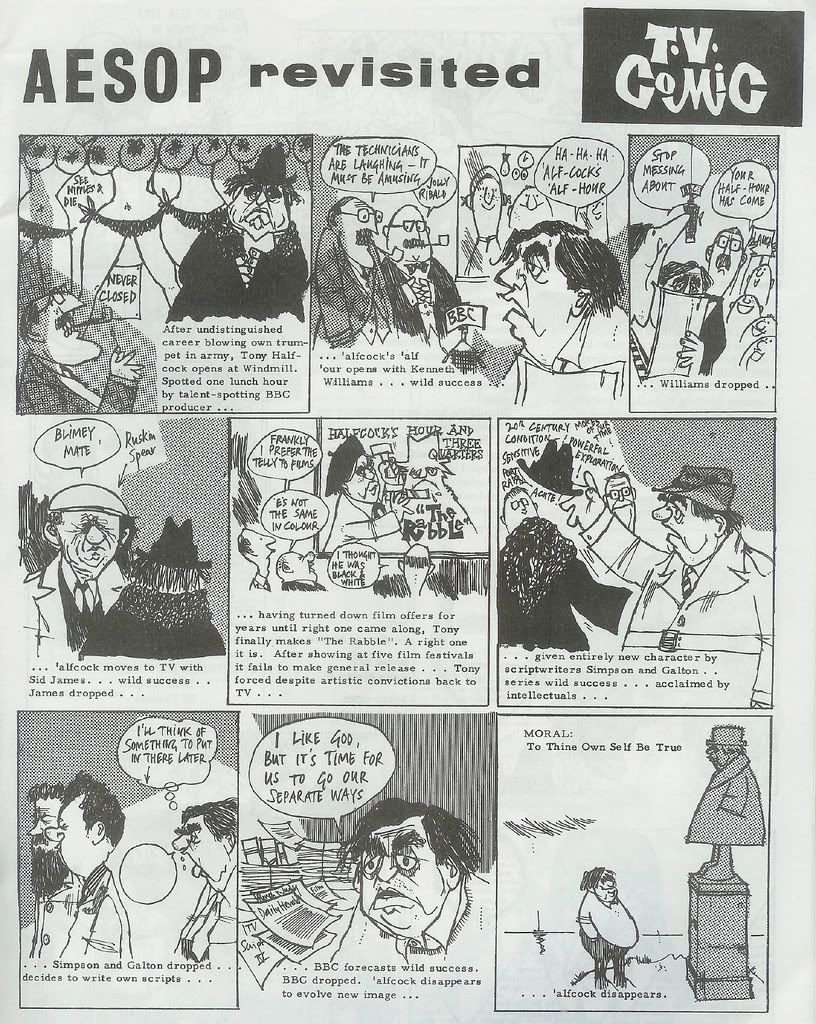
Harsh criticism of Tony Hancock can be found in the following cartoon from Private Eye in June 1962, drawn by Willie Rushton.

private eye june 62

But whatever happened after Tony Hancock left the BBC in 1961, between 1954 and 1961 he, along with Ray Galton and Alan Simpson, created some of the finest episodes of situation comedy ever seen in any country.  And their final series, thanks in part to Tony’s insistence on changing the character slightly, ensured that they ended their creative partnership on a high.

Hancock (Broadcast on BBC Television between 26th May – 30th June 1961)

Galton & Simpson like to tell the story that Hancock asked them to write an episode where he was the only character seen.  They thought it wouldn’t work and decided to write something to prove to Tony that it was impossible.  The result was The Bedsitter and it proved to be an excellent showcase for Hancock and one of the best things that G&S ever wrote.

When G&S started to write for Tony, they tended to craft elaborate plots which usually hinged on Sid trying to con Tony into doing something.  Over the years they pared down the storylines so they became less fantastic and more mundane.

The most mundane episode of the radio series has to be Sunday Afternoon At Home.  This isn’t a criticism – it’s a beautifully judged picture of a typical Sunday afternoon where there’s nothing to do except kill time.  In that episode though, Hancock had Sid James, Bill Kerr, Hattie Jacques and Kenneth Williams to spar with, but in The Bedsitter there’s nobody but himself.

It shouldn’t work, but it does.  Nothing much happens – Tony attempts to read some Bertrand Russell, loses interest and then attempts the more hard-boiled charms of Lady Don’t Fall Backwards.  But even that proves to be a problem, as he concedes:  “It’s a waste of time me reading, I can never remember anything. I’ve got too much on my mind, you see, nuclear warfare, the future of mankind, China, Spurs.”

Later on, a misdirected call offers the chance of a date, but in the end it comes to nothing.  Hancock though maintains a brave face: “That was a lucky escape! I nearly got sucked into a social whirlpool there, diverted from my lofty ideals into a life of debauchery! The flesh-pots of West London have been cheated of another victim! Eve has proffered the apple and Adam has slung it straight back at her!”

One of the strange things about the G&S series is that unlike most sitcoms there was never any attempt to maintain even a basic level of continuity.  Hancock’s status would change week by week – one week he could be penniless and unknown and the next – as we see in The Bowmans – he may be the popular star of a top-rated radio series.

“Hello me old pal, me old beauty.”

A none too subtle swipe at a popular rural radio soap opera,The Bowmans certainly gives Hancock full reign to unleash his country accent, which is great fun.  It’s also a rarity in that we see Hancock finish on top for once.  His character is killed off from the soap, but public opinion forces the producers to bring him back as his own twin brother and then he takes great delight in ensuring the majority of the villagers fall to their deaths down a disused mine shaft!

The Radio Ham is not quite a solo performance likeThe Bedsitter, although Hancock does spend the majority of the episode alone in a room by himself.  He does have company though, via the ham radio he’s built.  Substitute the internet for the radio and it seems right up to date.

Re-recorded for LP release in 1961, The Radio Ham has quite rightly become one of the classics of British sitcom.  Comedy rarely gets better than this, with so many quotable lines.

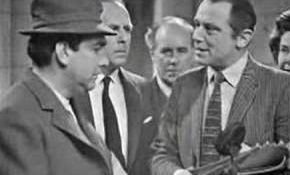
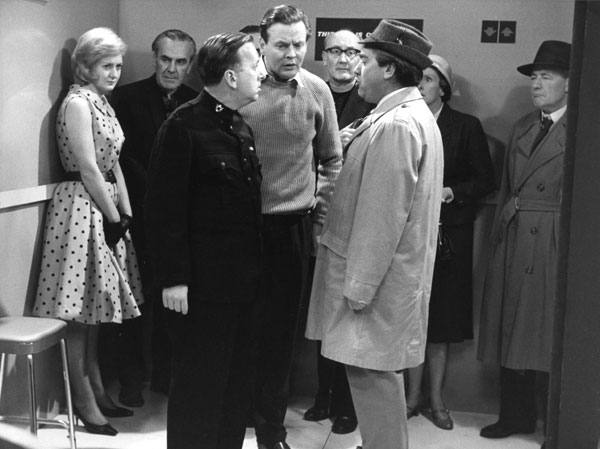
The Lift is an episode that it’s possible to imagine in any series of HHH.  Like The Train Journey from series 5 it has a similar premise – take a group of disparate characters who are trapped together (in a train or a stuck lift) with Hancock at his most annoying and wait to see what happens.

Noel Howlett, Jack Watling, Hugh Lloyd, John Le Mesurier and Colin Gordon are among the unlucky people who have to share a lift with Tony.  It’s not an episode that innovates, like The Bedsitter, but it does what it does very well.  And it’s helped no end by the fine performers stuck in the lift with Hancock.

Doctor: I'm a doctor. Hancock: Yes, we all know you're a doctor. You've been talking about nothing else since we've been here. I don't understand you. I don't go around telling people what I am all the time. Doctor: I think we've all reached an opinion as to what you are.
Doctor: I’m a doctor.
Hancock: Yes, we all know you’re a doctor. You’ve been talking about nothing else since we’ve been here. I don’t understand you. I don’t go around telling people what I am all the time.
Doctor: I think we’ve all reached an opinion as to what you are.

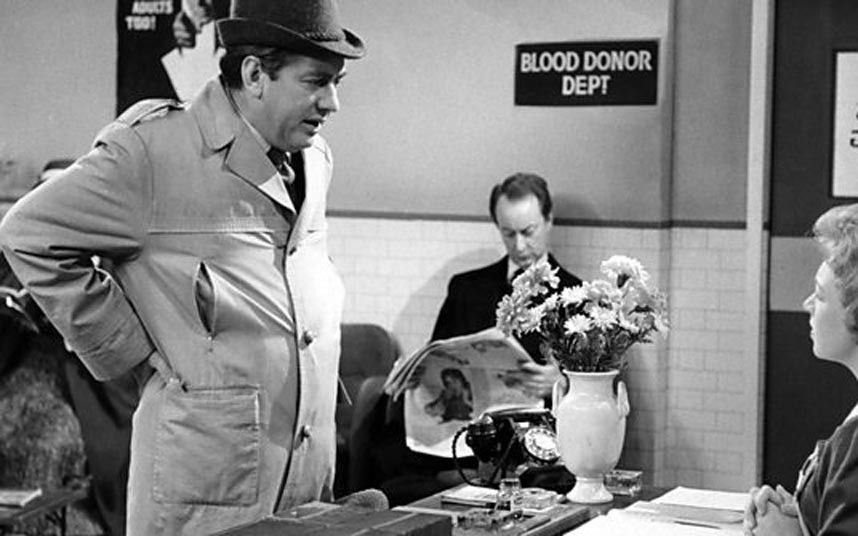
Along with The Radio Ham, The Blood Donor is probably the most famous Hancock episode (helped by the excellent LP re-recording previously mentioned).  With this one though, I do prefer the LP version – due to the circumstances of the television taping.

“To do one unselfish act with no thought of profit or gain is the duty of every human being. Something for the benefit of the country as a whole. What should it be I thought? Become a Blood Donor or join the Young Conservatives? But as I’m not looking for a wife and I can’t play table tennis here I am.”

In the week prior to the tv episode recording, Hancock was involved in a car crash.  He wasn’t badly hurt – although more make-up than usual can be seen on his face to hide the superficial scars – but he didn’t have time to learn his lines, so he read them off boards held above the camera.

Once you know this, then it’s impossible not to be distracted by the fact that he obviously never looks at anyone else in the scene as he’s always looking to the side and his next line.  There is the odd stumble, but overall his performance is brilliant – considering that when he speaks any line he’s just seen it for first time and he has to instantly decide on pacing and inflection.

“A pint? That’s very nearly an armful!”

However you experience it, it’s a classic. So many quotable lines and a collection of first rate performers for Hancock to bounce off (June Whitfield, Patrick Cargill, Frank Thornton, Hugh Lloyd).

If you view Hancock as an album, then the first five episodes are hit singles whilst the last, The Succession – Son and Heir, is resolutely an album track.

It’s not a bad episode, but compared to the other five it’s not quite in the same class.  The premise is bright enough though, Tony decides the time has come to perpetuate the line and produce a heir, so a bride is sought.  But thanks to his luck with the opposite sex in the end he decides to stay single.

There’s still plenty of quotable moments though, particularly when Tony’s thumbing through his little black book for suitable partners: “Elsie Biggs: 42-36- ….. oh no, that’s her phone number. Still, I don’t fancy her pounding about the house all day long. She’s a bit too hefty for me. She had me over a few times.”

Conclusion

Classic comedy that nobody should be without.  There’s a boxset containing all the surviving BBC TV episodes or if you just want to sample this series, then The Best of Hancock is a single DVD with five of the six episodes (excluding The Succession).  Either way, no collection of British television comedy can be complete without something from the Lad Himself.

Out Of The Unknown (BBC2, 1965-1971)


250px-OOTU_Logo

Out Of The Unknown was an anthology programme that ran for four series between 1965 and 1971. Whilst the majority of the episodes were adaptations of already published stories, others (particularly those in the fourth series) were original works.

The first three series concentrated on science fiction stories, whilst the fourth and final series had a broader remit – covering psychological horror and supernatural themes.

Like most programmes of the era, many episodes were wiped following transmission. Of the 49 episodes, only 20 now remain complete in the archive.  In addition to this, a thirty minute section of The Little Black Bag exists, whilst there are shorter clips from The Fox and the Forest, Andover and the Android, Satisfaction Guaranteed, Liar! and The Last Witness.  Complete audio soundtracks also exist for The Naked Sun, Beach Head, The Yellow Pill and The Uninvited.

With a seven disc DVD due to be released shortly by the BFI, this would seem to be a good time to take a brief look at the production history of the series.

Background

Irene Shubik had joined ABC Television in 1960, working as a story editor on Armchair Theatre under producer Sydney Newman.  Both were keen on producing a SF version of Armchair Theatre, so Out Of This World was born.  It was transmitted on ABC in 1962 and was presented by Boris Karloff with Leonard White producing and Shubik acting as story editor.

Like the later Out Of The Unknown, the series was a mixture of adaptations and new stories.  Short stories were adapted from writers including Isaac Asimov, Philip K. Dick and Clifford D. Simak.  The series was also noteworthy for including the first original SF script from a young Welsh writer called Terry Nation.  A year later he would contribute the second story to a new Saturday tea-time series for BBC1 called Doctor Who, and his creations – The Daleks – would remain iconic figures to this day.

Shortly after the transmission of Out Of This World, Sydney Newman moved to the BBC to take up the post as Head of Drama.  He would take many colleagues from ABC with him, including Shubik.  Shubik agreed to move provided she was promoted to producer within a year.  Newman agreed, and Shubik joined the BBC in 1963.

Her first job was as story editor on Story Parade.  This was designed to be the main drama strand on the new channel, BBC2, and was an anthology series that adapted some popular modern novels.  One of the best received episodes was a dramatisation of Isaac Asimov’s The Caves of Steel starring Peter Cushing.  The success of this led to Shubik’s opportunity to create a new SF series, Out Of The Unknown, for which she would be both story editor and producer.  George Spenton-Foster would act as associate producer.

Series One

Shubik was quickly to find that sourcing acceptable material was something of a problem.  She was later to say that in order to select a dozen stories she had to read hundreds more.  And even when Shubik found a story that she considered worthy of adaptation, the problems were far from over.  Sometimes it was impossible to agree terms with the author or the copyright holders or it could be that the concepts would be impossible to realise on the available budget.

John Carnell, founder of the SF magazine New Worlds was a valuable contact.  He suggested many stories and authors for Shubik to investigate.  She also had many thoughts of her own, one tantalising possibility – sadly never realised – was the idea to approach Nigel Kneale to request a new Quatermass story.

After all the sifting of material, Shubik had assembled a series of twelve stories.  Ten were adaptations of existing material with two original scripts.

The first series was broadcast between October and December 1965.  The episodes listed in bold are the ones that exist in the archives.

101 “No Place Like Earth” by John Wyndham, adapted by Stanley Miller
102 “The Counterfeit Man” by Alan Nourse, adapted by Philip Broadley
103 “Stranger in the Family” by David Campton
104 “The Dead Past” by Isaac Asimov, adapted by Jeremy Paul
105 “Time in Advance” by William Tenn, adapted by Paul Erickson
106 “Come Buttercup, Come Daisy, Come…?” by Mike Watts
107 “Sucker Bait” by Isaac Asimov, adapted by Meade Roberts
108 “The Fox and the Forest” by Ray Bradbury, adapted by Terry Nation
109 “Andover and the Android” by Kate Wilhelm, adapted by Bruce Stewart
110 “Some Lapse of Time” by John Brunner, adapted by Leon Griffiths
111 “Thirteen to Centaurus” by J. G. Ballard, adapted by Stanley Mille
112 “The Midas Plague” by Frederik Pohl, adapted by Troy Kennedy Martin

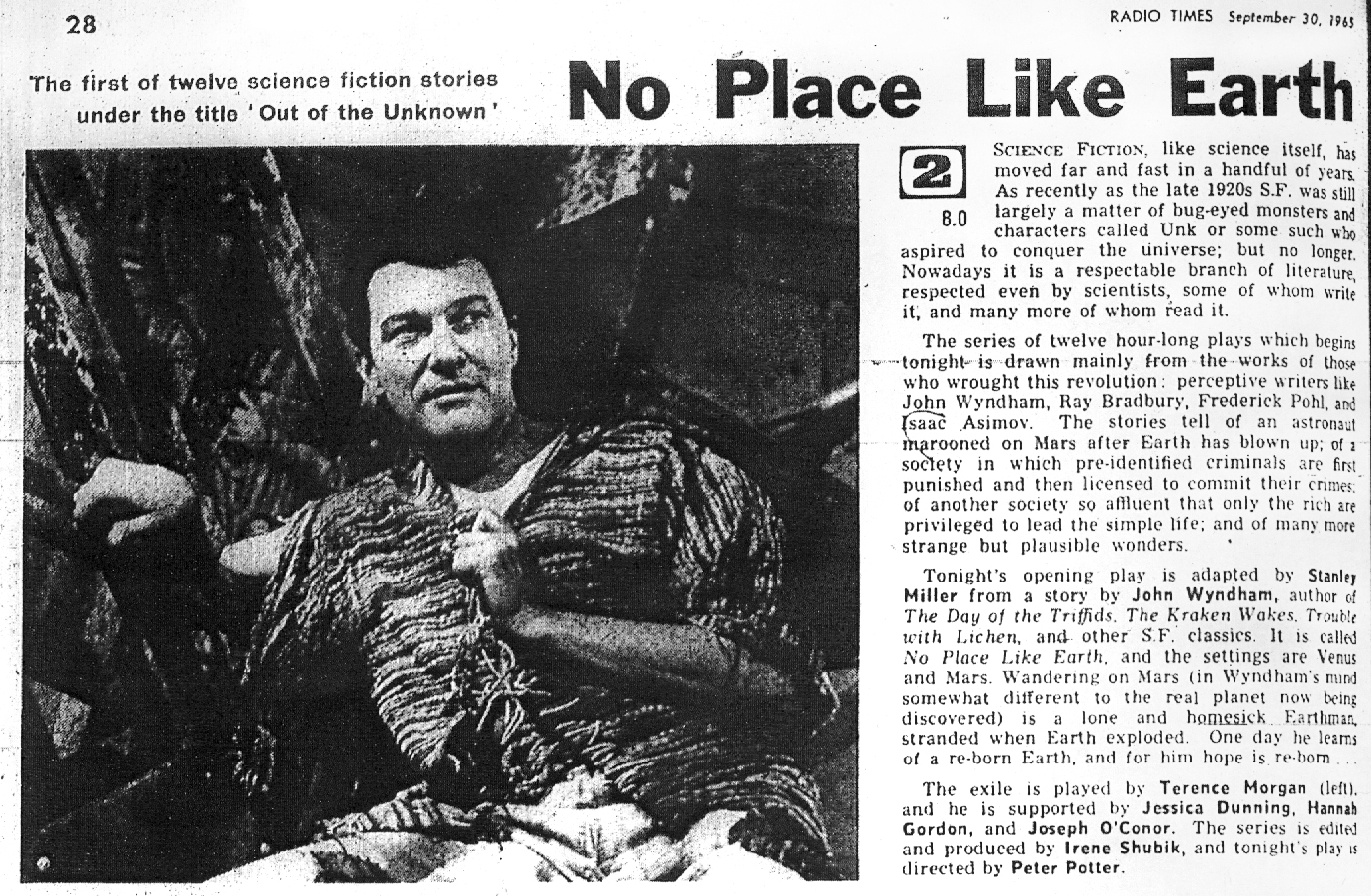
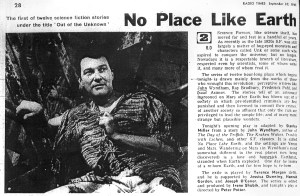
There was some debate as to which was the better story to open the series with.  Whilst The Counterfeit Man by Alan Nourse was considered to be a strong episode, No Place Like Earth was adapted from a tale by the respected writer John Wyndham.  Newman decided to lead with the Wyndham, which was essentially two individual Wyndham stories joined together to produce the final programme.
OOTU+No+Place+like+Earth

The critical response was poor, with The Times writing that although there was a clear social message, the story moved: “so extremely slowly and with heavily sententious dialogue underlining what is perfectly clear without its assistance.”

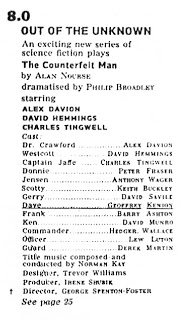
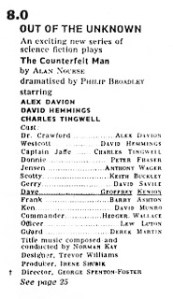
The second episode, The Counterfeit Man, gained more positive reviews, which seemed to confirm that it would have been sensible to debut with this story.  The Guardian wrote that: “this space crew was one of the most original and well-executed ideas I have seen on television.”
OOTU+The+Counterfeit+Listing

After its fairly uncertain start, both the critical response and the ratings had picked up, so that by the time the final episode was transmitted, Out Of The Unknown was BBC2’s second most popular drama programme, after the US import The Virginian.

Series Two

As with the first series, Shubik made extensive research to locate suitable stories.  Whilst in the US, she placed an advertisement in the Science Fiction Writers Association magazine requesting suitable stories.  This yielded a response from Larry Eisenberg, who had two of his stories adapted.  Another two Isaac Asimov stories were tackled and there were three original scripts – by Hugh Leonard, Hugh Whitmore and William Trevor.

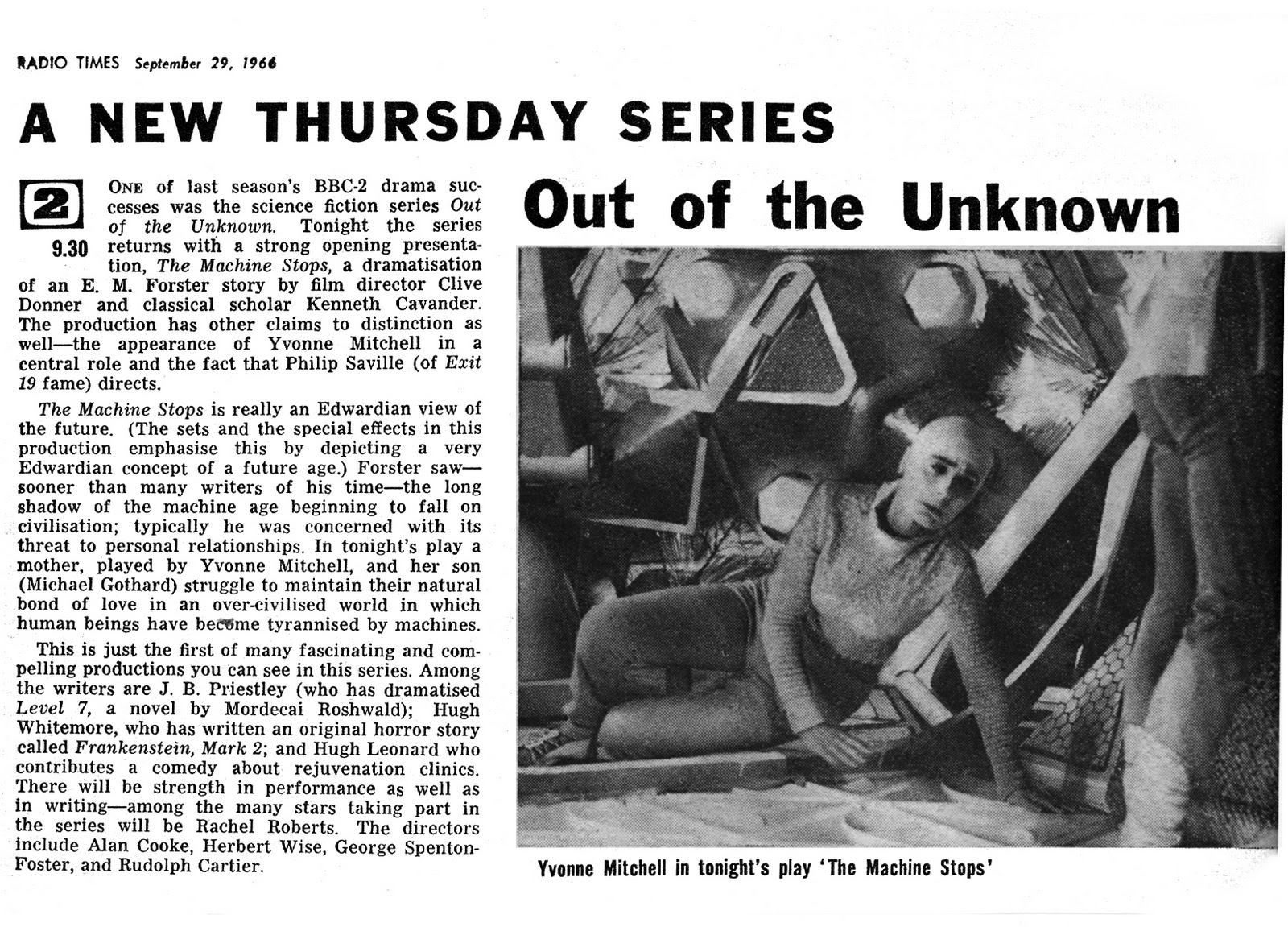
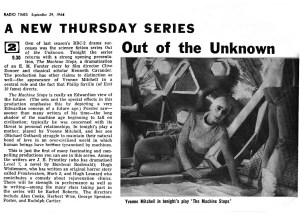
Probably the most critically acclaimed script from series two was The Machine Stops, adapted from the story by E.M. Forster.  Directed by Philip Saville, Shubik later called it “the most complex and technically demanding script I have ever had in my hands”.
OOTU+Machine+stops+original+article+promo

The hard work paid off as the story garnered impressive reviews as well as first prize at the International Science Fiction Film Festival in 1967.

The second series was broadcast between October 1966 and January 1967.  Surviving stories are highlighted in bold.

201 “The Machine Stops” by E. M. Forster, adapted by Kenneth Cavender & Clive Donner
202 “Frankenstein Mark II” by Hugh Whitmore
203 “Lambda 1” by Colin Kapp, adapted by Bruce Stewart
204 “Level Seven” by Mordecai Roshwald, adapted by  J. B. Priestley
205 “Second Childhood” by Hugh Leonard
206 “The World in Silence” by John Rankine, adapted by Robert Gould
207 “The Eye” by Henry Kuttner, adapted by Stanley Miller
208 “Tunnel Under the World” by Frederik Pohl, adapted by David Campton
209 “The Fastest Draw” by Larry Eisenberg, adapted by Hugh Whitmore
210 “Too Many Cooks” by Larry Eisenberg, adapted by Hugh Whitmore
211 “Walk’s End” by William Trevor
212 “Satisfaction Guaranteed” by Isaac Asimov, adapted by Hugh Leonard
213 “The Prophet” by Isaac Asimov, adapted by Robert Muller

Series opener, The Machine Stops, is one of the highlights from across all four series of Out Of The Unknown.  In the far future, all of humankind’s needs are catered for by “the machine”.  Each individual leads a solitary life, although they are connected to each other via the machine.  Some have begun to defy the machine, but would would happen if it stopped working?
OOTU+Level+7

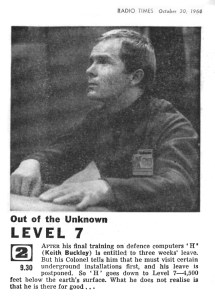
Another surviving episode, Level Seven, has impeccable credentials.  It was adapted by the celebrated playwright, J.B. Priestley, from the novel by Mordecai Roshwald.  It was also the first of two episodes to be directed by Rudolph Cartier and ran for an extra ten minutes.  The Level Seven of the title is the lowest level of an underground nuclear bunker, where following an atomic attack the inhabitants of the bunker have no other option but to wait for the radiation to seep down to them.  The Listener wrote that: “the tension was inescapable, the excitement incontestable.”

It’s a pity that so much of the second series is missing, including the two Asimov adaptations.  The Prophet, starring Beatrix Lehman as Dr Susan Calvin sounds particularly intriguing – but we should be thankful The Machine Stops and Level Seven escaped the archive purges.

Series Three

In 1967 Shubik was offered the co-producership of BBC1’s prestigious Wednesday Play.  Alan Bromley was appointed producer for the third series of Out Of The Unknown, with Roger Parkes as script editor.  The majority of the stories had already been commissioned by Shubik (back in 1966) so that when production began in earnest in early 1968, Bromley and Parkes largely confined themselves to polishing the stories that were already in place.  It wouldn’t be until the fourth and final series that they would make their creative mark.

Notable adaptations from the third series included several more stories from Isaac Asimov.  One of them, The Naked Sun, was the sequel to The Caves of Steel, which had been dramatised for Story Parade back in 1963.  Clifford B. Simak and John Wyndham were two other popular writers who had their stories adapted whilst there were three original scripts – from Donald Bull, Brian Hayles and Michael Ashe.

The third series was broadcast between January and April 1969.  The sole existing story is highlighted in bold, whilst approximately half of The Little Black Bag also exists.

301 “Immortality, Inc.” by Robert Sheckley, adapted by Jack Pulman
302 “Liar!” by Isaac Asimov, adapted by David Campton
303 “The Last Lonely Man” by John Brunner, adapted by Jeremy Paul
304 “Beach Head” by Clifford D. Simak, adapted by Robert Muller
305 “Something in the Cellar” by Donald Bull
306 “Random Quest” by John Wyndham, adapted by Owen Holder
307 “The Naked Sun” by Isaac Asimov, adapted by Robert Muller
308 “The Little Black Bag” by C. M. Kornbluth, adapted by Julian Bond
309 “1+1=1.5” by Brian Hayles
310 “The Fosters” by Michael Ashe
311 “Target Generation” by Clifford D. Simak, adapted by Clive Exton
312 “The Yellow Pill” by Rog Phillips, adapted by Leon Griffiths
313 “Get Off My Cloud” by Peter Phillips, adapted by David Climie

Amongst the wiped stories are some interesting sounding tales, like Beach Head, which featured Ed Bishop and some impressive sets as well as Brian Hayles’ 1 + 1 = 1.5.  This is set in the early 21st century where the population is strictly limited, so there is embarrassment when the wife of a population officer becomes pregnant for the second time, despite being licenced for only one child.

The only story that survives complete from this series is The Last Lonely Man by John Brunner, adapted by Jeremy Paul.  In the future, those close to death can choose to transfer their memories to a relative or a friend.  But Patrick (Peter Halliday) appears to be friendless and unloved, so what can he do?

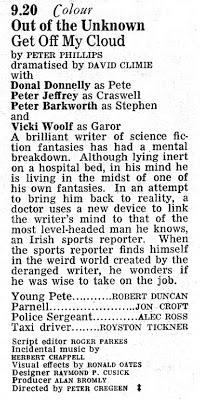
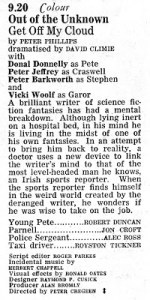
The final story of series three sounds particularly intriguing.  Get Off My Cloud tells the story of SF writer Marsham Craswell (Peter Jeffrey) who has had a nervous breakdown and is lying inert in a hospital bed.  To bring him back to reality, the doctors use a new device that links Craswell’s mind with that of Peter Parnell (Donal Donnelly).  Together they join forces to battle the demons in Craswell’s mind.
OOTU+Get+off+my+cloud

After a two year gap, Out Of The Unknown would return for a final series.

Series Four

In many ways the fourth and final series bore little resemblance to the previous three series.  Alan Bromley was of the opinion that in the aftermath of the early Moon landings: “just setting a story somewhere in space is not the automatic thrill it once was.”

Rather than SF, series four would concentrate on stories of psychological suspense and only one episode, Deathday, was an adaptation of an existing work – the remainder were original stories.

The fourth series was broadcast between April and June 1971.  Existing stories are highlighted in bold.

401 “Taste of Evil” by John Wiles
402 “To Lay A Ghost” by Michael J. Bird
403 “This Body Is Mine” by John Tully
404 “Deathday” by Angus Hall, adapted by Brian Hayles
405 “The Sons and Daughters of Tomorrow” by Edward Boyd
406 “Welcome Home” by Moris Farhi
407 “The Last Witness” by Martin Worth
408 “The Man in My Head” by John Wiles
409 “The Chopper” by Nigel Kneale
410 “The Uninvited” by Michael J. Bird
411 “The Shattered Eye” by David T. Chantler

Some viewers were dismayed by the move away from SF and there’s no denying that the results were pretty mixed.  With 5 of the 11 episodes existing, we have a fairly good cross section of stories in which to judge the series overall.

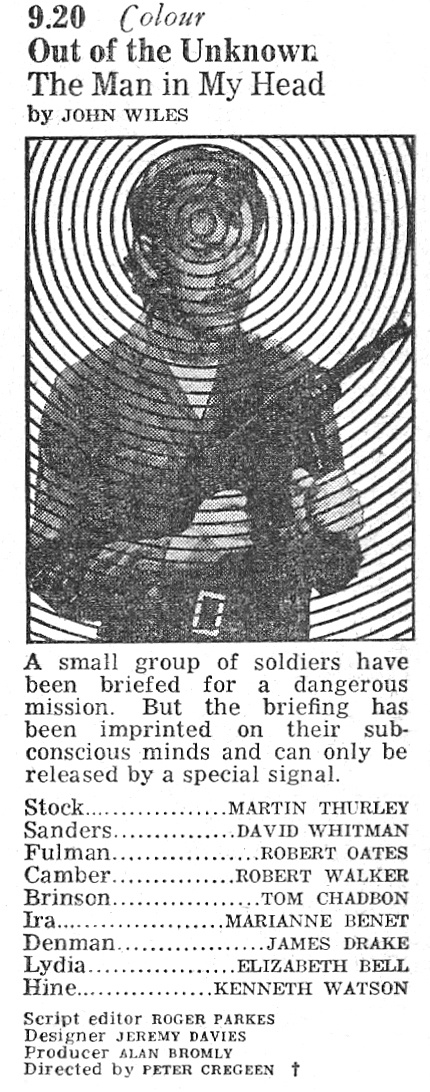
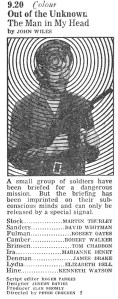
Best of what remains is The Man In My Head by John Wiles.  Set at some point in the future, a group of soldiers are carrying out a mission of sabotage.  They don’t know exactly who they are fighting or why, because their instructions have been subliminally implanted and are triggered by radio impulses.  As the debate of brainwashing soldiers in Vietnam was still very current, this was a story that is certainly in tune with the times.
OOTU+S4E08+THE+MAN+IN+MY+HEAD

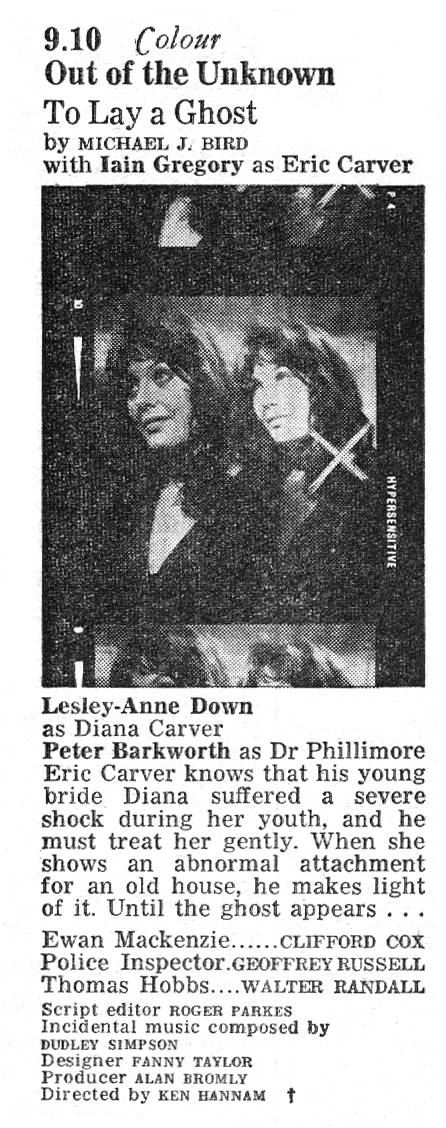
Right at the other end of the scale is To Lay A Ghost by Michael J. Bird.  This story has long been a topic of debate and it will be interesting to see how it is received once it is more widely available via the DVD.  Newly-married Eric Carver (Iain Gregory) and Diana (Lesley-Anne Down) move into their dream-house, but there seems to be something wrong.
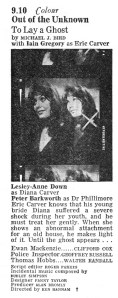
OOTU+To+Lay+a+Ghost

Diana has been traumatised after being raped as a schoolgirl, and whilst their relationship has never been physical, Eric is patient and loving.  When strange things happen in their new house, Eric calls in para-psychologist Dr Phillimore (Peter Barkworth) who concludes that the house is haunted by the ghost of a murderer and rapist and that Diana’s own repressed sexual desires have summoned the ghost. Therefore we are left with the impression that Diana can only gain sexual gratification via rape, which is pretty distasteful.

It’s a shame that this story exists, but that Nigel Kneale’s “The Chopper” – starring Patrick Troughton – doesn’t.  Garage owner Jimmy (Troughton) converts motorbikes into choppers and has just done so with one that was mangled after a nasty accident.  The spirit of the dead owner is reluctant to leave the bike though, and is keen on wreaking as much destruction as possible.

Conclusion

With less than half the episodes from the four series existing, it sometimes can be difficult to assess exactly how good the series was.  From what exists, there are certainly some quality productions as well as some more plodding ones.

The forthcoming DVD should allow a fuller reassessment  of what remains, as the copies which have been in circulation for the last few decades are mostly fairly poor quality, with some of them being timecoded dubs from the original BBC master tapes.

The DVD copies will, of course, offer a substantial increase in picture quality.  So when we can clearly see and hear the story, some editions may be more warmly received!

It is a shame that some of the more intriguing episodes are lost – such as Asimov’s The Naked Sun (along with virtually the rest of the third series) and Nigel Kneale’s original script for series four.

But what we do have is a pretty decent collection of stories, although heavily concentrated on the first series (ten episodes exist from series one with the remaining ten episodes drawn from series two – four).

With so many BBC programmes languishing in the archive, it’s wonderful to see the time and care taken by the BFI to release this and with a good collection of supplementary features to compliment the stories.  Hopefully sales will be healthy which maybe will allow other treasures to be released in the future.
Weakling scum! Doctor Who and the Horns of Nimon

"Unaccustomed as I am to public speaking, I'd like to say one thing and let me make it perfectly clear, I stand before you desperate to find the exit. Can anybody help me?"

With The Horns of Nimon, Graham Williams’ (televised) tenure as producer ended with something of a whimper rather than the bang he intended.

Williams had budgeted two cheaper stories (Nightmare of Eden & Nimon) in order to lavish a generous amount of location filming on the season finale, Shada. But Shada was never completed due to industrial action, which was the final piece of bad luck to befall Williams on Doctor Who.

Even before this though, Williams had more than his fair share of problems to deal with. The late 1970’s was a bad time to be a Doctor Who producer – hyper inflation meant that year on year the show’s budget was shrinking, industrial action was a constant threat and Tom Baker was proving to be more of a handful than ever.

Nimon is rated 223 of out 241 stories in DWM’s 2014 poll. So it’s very much down amongst the also-rans, rubbing shoulders with similarly unloved stories such as Arc of Infinity, Warriors of the Deep and The Time Monster. But whilst nobody in their right mind would call Nimon an overlooked classic, it does have some good points which go some way to balance out the numerous production mis-steps.

On the credit side, Tom Baker is still coming up with the goods. Six years in, there’s no doubt that he’s done all of this stuff hundreds of times before but he still manages to make it seem fresh. Whatever his thoughts about poor scripts and his off-screen spats with Williams, on-screen he’s focused and giving it 100%. And he does have the odd gem, such as –

Nimon: “Later, you will be questioned, tortured and killed”

The Doctor: “Well, I hope you get it in the right order”

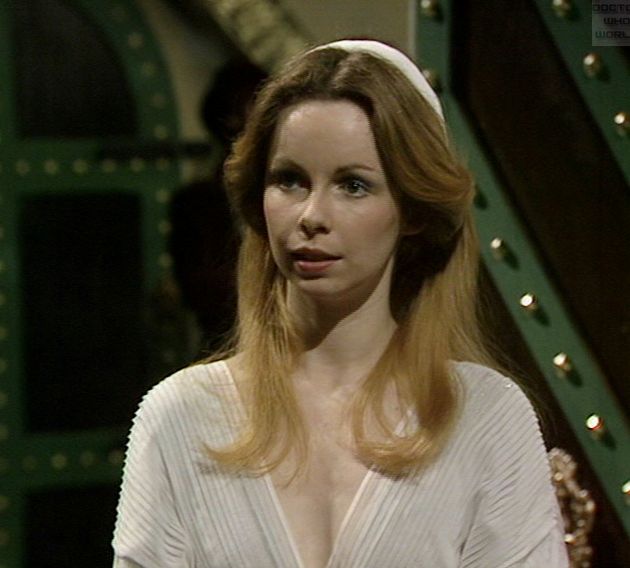
Lalla Ward is equally good value as Romana. Separated from the Doctor for an episode or so she effectively becomes a surrogate Doctor and manages to effortlessly carry the narrative. Forget K9 & Company, a spin-off with Lalla and K9 was a huge missed opportunity.

romana
Lalla Ward as The Doct, sorry I mean Romana.

As for the guest cast, a mixed bag is the kindest way to describe them. Simon Gipps-Kent and Janet Ellis are really just the Babes in the Wood – and their characters are so under-written that they aren’t called on to do much acting.

Malcolm Terris is pretty poor as the Co-Pilot which is summed up by his final scene as he faces the wrath of the Nimon and his trousers fail to take the strain.  Elsewhere on Skonnos, Sorak (Michael Osborne) and Soldeed (Graham Crowden) are an odd couple, to put it mildly.

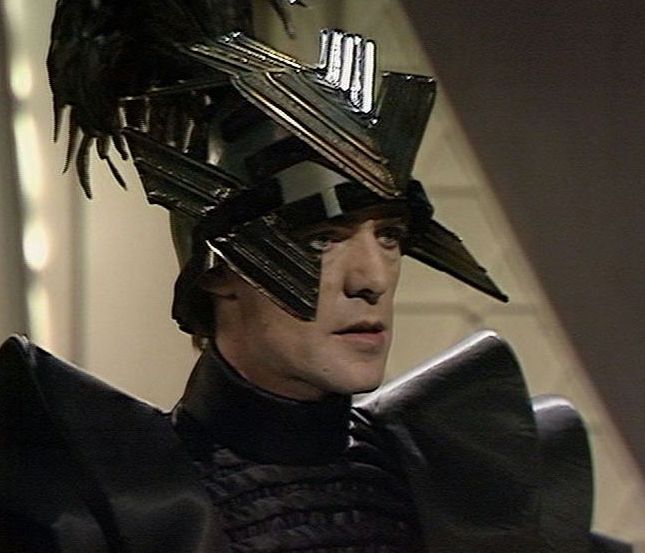
Sorak (Michael Osborne) models a typically understand costume from designer June Hudson.
Sorak (Michael Osborne) models a typically understated costume from designer June Hudson.

Osborne plays it dead straight, which is all the more impressive when you consider his costume. Crowden, on the other hand, gives a performance that is on another planet to everybody else – even managing the impressive feat of making Tom look like an actor of great restraint.

Much has been written about Crowden’s turn as Soldeed and it’s the sort of performance that you either love or hate.  Frankly, I love it as Nimon is the wrong story for too much naturalistic acting. But as some people have never liked Doctor Who to be fun it’s no surprise that many either don’t get the joke or consider it to be out of place.

"My dreams of conquest ....."
“My dreams of conquest …..”

But amongst the under-acting, over-acting and no-acting, there is one perfectly pitched performance – John Bailey as Sezom. Bailey had previously appeared as the doomed Waterfield in The Evil of the Daleks (1967) and there’s a similar vibe to this character. It’s only a small part, but Bailey is excellent and it’s one of the highlights of the story.

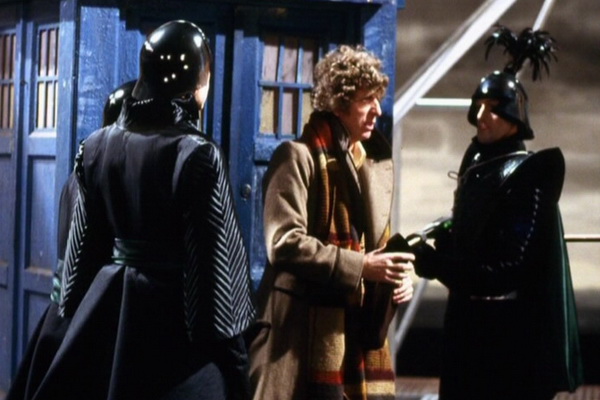
As for the Nimon, oh dear. The Williams era is notable for a run of underwhelming monsters (immediately prior to this viewers would have been reeling from the glowing green bag that was Erato and the less-than-terrifying Mandrels) so the Nimon are pretty much business as usual. And as soon as the first one stumbles onto screen in his platform heels you know it isn’t going to end well.

nimon
“Roaaaarrrrr!!!!”

The Horns of Nimon was the end of an era in many ways. When the series returned it would feel quite different with a much more serious tone to proceedings.  But everything is cyclical and there would eventually be heirs to Crowdens throne (Paul Darrow in Timelash for example).

But for the moment, Nimon is the last gasp for this kind of goofy Doctor Who. Full of faults yes, but anything with Tom Baker, Lalla Ward and Graham Crowden can’t be all bad.

Extras announced for the BFI DVD of Out Of The Unknown (due Oct 2014)

ottu

An impressive list of extras have been announced for the BFI DVD of Out Of The Unknown, due for release in October 2014. In addition to the twenty surviving episodes –

Return of the Unknown (2014, 42 mins). All-new documentary with cast and crew interviews, and clips from lost episodes.

11 audio commentaries with cast, crew and experts. Moderated by actor-comedian Toby Hadoke.

Archival interview with director James Cellan Jones.

Episode reconstructions for Beach Head, The Naked Sun, The Yellow Pill, and The Uninvited.

Film insert from Deathday episode.

Seven extensive stills galleries.

Fully illustrated booklet with essays by Out of the Unknown expert Mark Ward.

Out Of The Unknown was a ground-breaking BBC science fiction anthology series that ran between 1965 and 1971. OOTU adapted stories from the likes of Frederick Pohl, E.M. Forster, Isaac Asimov, Ray Bradbury and John Wyndham with an impressive roll-call of talent both in front of and behind the camera.

Acting-wise, George Cole, Wendy Craig, Graham Stark, Rachel Roberts, David Hemmings, Warren Mitchell, Hannah Gordon and Burt Kwouk were amongst the featured players whilst Ridley Scott was one of a number of designers who brought the series’ future visions to life.

Initially this was going to be a fairly bare-bones release, but the BFI were amenable to consider various proposals regarding extras.  For example, Toby Hadoke (an experienced commentary moderator on the Doctor Who DVDs) approached them on spec and the result is a series of commentaries that should be one of the highlights of the release.

This looks like it should be one of the best Archive TV releases of the year.

A brief history of OOTU is here with a full DVD review to follow in October.

Softly Softly: Task Force – Series 1 (BBC 1969-1970)

packshot

Softly Softly:Task Force was a spin-off from Softly Softly (which in turn was a spin-off from Z Cars) and was launched on BBC1 in late 1969. Although branded as a new series, Task Force was, in production terms, a continuation of Softly Softly.

Stratford Johns (Barlow), Frank Windsor (Watt) and Norman Bowler (Hawkins) were the three characters from Softly Softly who crossed over into the new series. They were joined by a host of new faces, including Walter Gotell as Chief Constable Cullen, Terence Rigby as PC Snow, David Lloyd Meredith as Sgt Bob Evans and Susan Tebbs as DC Donald.

Walter Gotell as Chief Constable Cullen and Stratford Johns as DCS Barlow

The first series ran for sixteen episodes and generally the quality is very high. Quick capsule reviews  –

Arrival sees Charlie Barlow take up his new position as DCS of the newly formed Task Force based in Thamesford. Whilst most of the running time is taken up with Barlow investigating his surroundings there is a secondary story about a missing child with a bleak conclusion.

Next up is Exercise which sees John Watt arrive to lead Task Force 1. Shortly after his arrival the squad are deployed to investigate a stabbing. There’s a nice guest turn from Barry Jackson in this one and some needle between Barlow and Watt.

There’s a good role for Susan Tebbs, as DC Donald, in Diversion.  Brian Croucher guest stars.

The first few episodes are concerned with the Task Force team and the crimes are very much secondary. The Spoilt Ones is a change of pace as the miscreants are the focus (lovely, grimy, performance by John Bennett).

Stratford Johns is outstanding in To Protect the Innocent. Given the large cast, no one character dominates each episode, but each one where Barlow is centre-stage are highlights for me.

Any Other Night. The theft of a number of tyres from the police depot is an embarrassment. The fact it happens on New Years Eve is another irritation. A routine episode, but it has some good character moments.

The spectre of football hooliganism is tackled inThe Aggro Boy. A fascinating look at the run down state of British football in the late 60’s/early 70’s. Interesting time capsule.

Frank Windsor as Det Sup John Watt and Stratford Johns as DCS Barlow

Another hot topic of the time, union unrest, is tackled in the episode Standing Orders. Fairly routine stuff, enlivened by an early appearance from Katy Manning.

Another good turn from Stratford Johns in Private Mischief. A straightforward tale, but not without interest.

Open and Shut. It seems like a simple case, but first appearances can be deceptive. A station-based, procedural episode, this is a good character piece.

An undercover operation at the docks leads to the uncovering of an illegal immigrant ring in Sprats and Mackerels. Plenty of familiar faces in roles of varying sizes (Kenneth Cranham, Sally Geeson, Joe Gladwin, Christopher Benjamin).

Like Any Other Friday is one of the lesser episodes on this release. A blink-and-you’ll-miss-him appearance from Tom Baker is one of the few items of interest here.

Things immediately pick up with Power of the Press though. It’s another Barlow-centric episode with Stratford Johns once again on great form. And here he has an opponent of equal weight – Ronald Radd as the corrupt Councillor Whitaker. The original Hunter, opposite Edward Woodward in Callan, Radd was a quality actor and it’s a pleasure to see him in opposition to Johns. Probably the best episode of the first series.

Susan Tebbs as DC Donald

Trust a Woman. Another good, but not spectacular, episode. A nice guest turn from Imogen Hassall is the highlight here.

The Hermit. A straightforward, but engaging, story about a gang of fraudsters preying on the elderly and vulnerable. Another very watchable episode.

The final episode of series 1 is Escort. Whilst it’s a bit of a runaround, it’s worth it for the last ten minutes or so.

Overall, this is a very good collection of episodes. There are a few lesser ones, but generally the hit rate is very high and the quality of the guest and regular casts make this a very enjoyable watch.

Sadly, the initial release from Simply was somewhat flawed as all the episodes had an unintentional “filmising” effect. There was a repress, but the “filmising” effect was still present on three episodes. There was then a second repress in February 2014 which finally sorted things out.

Whilst I would unreservedly recommend this series, there may still be uncorrected copies out there, so purchasers may wish to be wait until they have gone out of circulation. Simply did have an exchange program and if you do have a faulty release it might be worthwhile to contact them to see if it’s still running.

For the record, the address for returns was – Simply HE, FREEPOST RSYX-ERKC-CJJH, Ringwood, BH24 1HD.

Encoding issues apart, for anybody who enjoys British police drama from this era, SS:TF is well worth a look.

The Hound of the Baskervilles (BBC 1982) now available on DVD from Australia

hound

The 1982 BBC Classic Serial adaptation of Hound, starring Tom Baker as Holmes and Terence Rigby as Watson has been released on DVD in Australia by Madman –

http://www.madman.com.au/catalogue/view/23503/sherlock-holmes-the-hound-of-the-baskervilles-starring-tom-baker-1982

The carrot of this release is a commentary track with Baker on all four episodes, highlights in the clip below.

Whilst this version of the story does have its faults (I’ve never cared for Rigby’s performance, for example, which is a problem since Watson is centre stage for a large part of the story) Baker is a commanding Holmes and it’s a very faithful adaptation of the novel.

Apollo 13 – BBC Coverage (April 1970)

Fascinating BBC coverage of the Apollo 13 splashdown from April 1970, hosted by James Burke, Cliff Michelmore and Patrick Moore.

A fair amount of the BBC’s footage of the Apollo missions fell foul of the archive purges of the 1970’s (the Apollo 11 broadcasts, for example, were particlarly hard hit by wipings) so it’s fortunate that this survives and also has escaped to the wider world via YouTube.

Enroute to the moon, the number 2 oxygen tank in the module exploded. The damage meant that a lunar landing was impossible, so the decision was made to abort the mission. But returning to earth safely was far from straightforward, as the footage below indicates.

Doctor Who – The Mind of Evil. Episode 1 colourisation video

In 2013 the six part Jon Pertwee story, The Mind of Evil, was released on DVD in colour.

Nothing surprising about that you may think, but after the original colour tapes were wiped in the mid 1970’s only black and white film prints remained. A process called chroma dot recovery, developed several years ago, was used to restore the colour embedded in episodes 2 – 6.

Episode 1 didn’t have chroma dots though and the cost of computer colourisation was far too high. Things looked bleak until Stuart Humphryes (otherwise known as Babelcolour) entered the fray.

This short video briefly explains the painstaking work that brought the first episode back to colour as well as presenting the best moments of the episode in a stylish trailer.

The Voyage of Charles Darwin. 1978 BBC serial due on DVD shortly from Simply Media

71fI+fE4g0L._SY500_

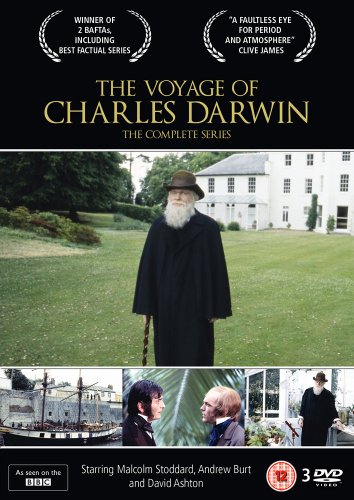
Simply Media continue to raid the BBC archive with this severn part biopic due for release in September 2014.

It featured Malcolm Stoddard as Darwin and Andrew Burt as Captain Fitzroy with a supporting cast that included George Cole and Iain Cuthbertson.

Shot on location in the UK, the Galapagos Islands and South America, the series won two BAFTAs: Best Factual Series and Best Cinematography.

A teaspoon and an open mind. Doctor Who and the Creature from the Pit

“We call it … the pit”

Ranking a lowly 211 out of 241 stories in DWM’s recent poll would imply that The Creature from the Pit isn’t a favourite of many. But apart from one (admittedly large) problem it’s difficult to see why.

The positives far outweigh the negatives – the jungle scenes at Ealing give the episodes a glossy sheen, Myra Frances is a gloriously hissable villainess, Tom’s on great form, Lalla looks lovely and there’s an entertaining guest turn from Geoffrey Bayldon.

The problem? Well you can’t really avoid it. Erato is a vast, shapeless blob that is said to stretch for miles. How do you realise that on Doctor Who’s budget in 1979?

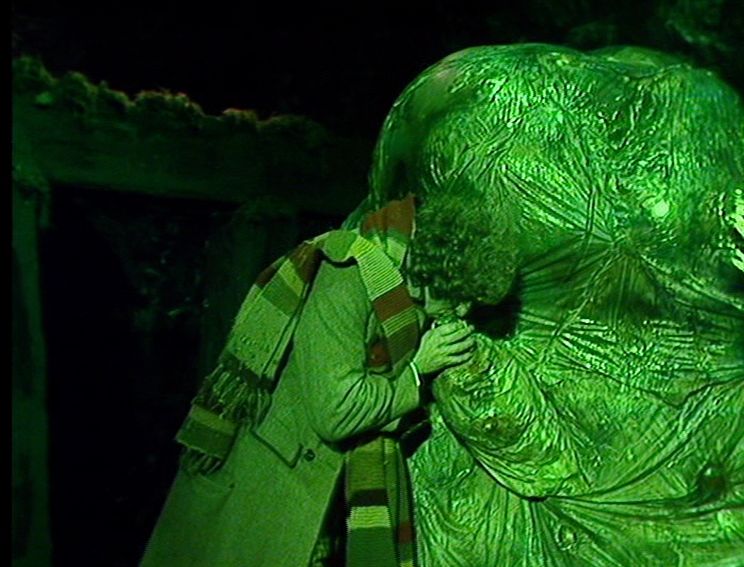
The answer is, of course, that you can’t. So Erato looks like an inflatable green bag with a rude appendage. But the scenes in the pit are nicely lit and Erato’s green glow is quite eerie, so it’s not a total write off.

No, sorry I can't think of any caption.  Please add your own.
No, sorry I can’t think of a caption. Please add your own.

Producer Graham Williams was in no doubt that the special effects department had let the programme down and after transmission made this point in an internal memo. But it’s hard to imagine how this monster could ever have been successfully created, so you do have to wonder why this was never queried at the scripting stage.

New script editor Douglas Adams wasn’t terribly experienced, but Graham Williams had been around for a while and should have twigged that a mile wide green blob was simply asking for trouble. But whatever the merits and demerits of Erato, there’s plenty to enjoy in this story, so let’s take a closer look.

Chloris is a planet rich in vegetation but low on metal. The Lady Adrasta (Myra Frances) owns the only metal mine on the planet and therefore is able to rule with a reign of terror.

But the arrival some years ago of an ambassador from the planet Tythonus has threatened her grip on the planet. Erato proposed a trade – they have plenty of surplus metal but Tythonus is extremely low in vegetation which Erato’s people need in vast quantities.

Adrasta quickly understood that if she no longer had the metal monopoly then her power would dissipate. So she arranged to banish Erato to the pit and would henceforth throw anybody who displeased her down there.

Although transmitted third, this was the first story of Season 17 to be recorded, so it was Lalla Ward’s acting debut as Romana. Her performance here is subtly different as she was still feeling out the part. There’s some nice moments from her though – particularly when she confronts the bandits in their lair.

Sigh.
Sigh.

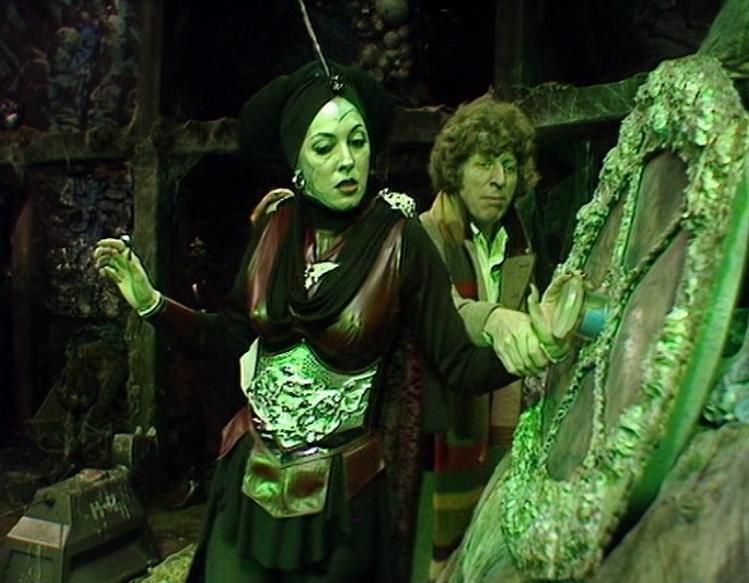
The guest cast is uniformly solid. Myra Francis manages to be gorgeous and deadly at the same time. Eileen Way (Karela) had appeared in Doctor Who’s first story back in 1963 and is good value as Adrasta’s right hand woman.

Organon (Geoffrey Bayldon) is a hapless astronomer who falls foul of Adrasta and found himself flung into the pit. Managing to avoid being crushed by the monster he has lived a lonely existence until the Doctor turned up. Bayldon, best known for Catweazle, sparks off Tom very well and their scenes together are highly entertaining.

Also skulking around the jungle are a group of inept bandits, lead by Torvin (John Bryans). There has been some criticism of this character over the years, so the viewer will have to decide if he’s a riff on a Fagin-like character or simply a broad Jewish stereotype – “My lovely boys”.

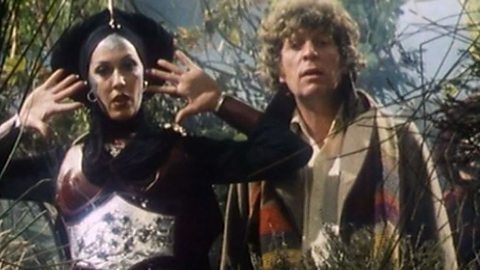
Myra Francis and Tom Baker

So while Creature has its flaws, if you can ignore the glowing green bag there’s plenty of entertainment here. Unloved for decades due to its feeble dinosaurs, in recent years there seems to be more appreciation for Malcolm Hulke’s Invasion of the Dinosaurs (1974). So maybe one day the same thing will happen here and fandom will learn to stop worrying about Erato and love The Creature from the Pit.

Z Cars – Collection 2 (Acorn DVD 2014)

z cars

For those who subscribe to a strictly linear view concerning British police drama it is possible to draw a line something like this –

In the beginning (the 1950’s) there was Dixon of Dock Green. It was fine for its time, but the launch of Z Cars in 1962 made it an obsolete dinosaur. Z Cars was fine for its time, but the launch of The Sweeney in 1975 made it an obsolete dinosaur, etc.

Of course, the true picture isn’t nearly as straightforward. Acorn DVD’s recent releases of the majority of existing Dixon episodes from the early to the mid seventies reveal a series of considerable interest. And whilst the 1970’s Z Cars lack the edge and spirit of the earliest episodes from a decade earlier, they also have merit and in many ways point towards the style and format of later series, such as The Bill.

A brief potted history of Z Cars. It was created in 1962 by Troy Kennedy-Martin, who spent a period of illness confined to bed and listening to police messages on his radio. The range of calls that they answered, from trivialities to more serious matters, convinced Kennedy-Martin that there was considerable scope for drama which had hitherto been untapped.

Assembling a first rate cast, including Stratford Johns as DCI Barlow, Frank Windsor as DS Watt, Brian Blessed as PC Fancy Smith and James Ellis as PC Bert Lynch, the series was an instant success and ran until 1965. Stratford Johns and Frank Windsor went into the spin off Softly Softly and Z Cars itself was revived in 1967 in a twice weekly soap opera format of 25 minute episodes twice a week. In 1972 it returned to a weekly 50 minute format and stayed that way until the final episode was transmitted in 1978.

Like many series of the 1960’s and 1970’s there are some gaps in the archive, although it fares better than Dixon which only has 30 or so episodes in existence from over 400 transmitted.

From around 800 episodes made, Z Cars has just under 400 present in the archives. Certain years are hard hit (patchy selections from 1967, 1969 and 1970, nothing at all from 1968 or 1971) whilst other years are virtually complete.

With so much available, there’s plenty of scope when selecting episodes for DVD. And whilst the logical choice might have been to choose a run of episodes from the first series, Acorn instead have chosen to start at July 1972.

The first DVD, released last year, contained episodes from July – September 1972 and this new DVD contains the next six episodes, which takes us up to the end of October 1972. With the survival rate being rather poor for the next year or so it will be interesting to see what Acorn do next (provided of course there is another release). But one plus point of releasing a run of consecutive episodes is that we can get a handle on the nuances of the regular characters, something that is harder to do with the Dixon DVDs due to the large gaps in the archives.

It’s 1972 and the Z Cars team continue to patrol the fictional Newtown. Back in 1962 the name was well chosen, as it was a new town, with newly built housing estates where the working classes found themselves rehoused. A decade later there’s a general feeling of decay which is quite prevalent in a considerable amount of early 1970’s television, particularly the Dixons of this time. Everything looks grimy and rundown and there’s a feeling that people are just hanging on.

First episode on the set is Witness by David Ellis.  This episode, like many others, juggles several plot lines at once, something which would be a hallmark of later series like The Bill.  The main plot concerns the witness to a forthcoming trial facing intimidation and threats whilst the second plot line sees Det Sgt Stone (John Slater) face an unwelcome visitor from his past.  George Appleton (Campbell Singer), a now retired colleague of Stone’s, decides to pay Stone a visit.

John Slater
John Slater

Stone is a middle-aged copper who seems to have reached his peak, career wise.  This he puts down to the efforts of Appleton in years gone by, whose constant belittling seems to have irrevocably damaged Stone’s confidence.  Slater is one of the stand-out performers of this era of the programme, and whilst this plot thread is fairly minor, thanks to Slater it’s the best part of the episode.

Next up is Takes All Sorts by Leslie Duxbury.  Inspector Pratt (Graham Armitage) is a by-the-book officer who is despised by some of the more maverick coppers, such as PC Yates (Nicholas Smith).  Yates is an old-fashioned bobby who sees nothing wrong in dishing out a bit of summary justice or accepting the odd drink or meal whilst on the beat.  This brings him into direct conflict with Pratt, although there’s plenty of other things happening on this night shift, such as the theft of a yellow dumper truck and the arrival at the station of Jean Knight (Gwyneth Powell) who has evidence that will put her criminal husband away for a long time.

Takes All Sorts, thanks to the interweaving plot threads, is one of the best episodes on this release.  Nicholas Smith (well known for playing Mr Rumbold in Are You Being Served?) is good value here, and also in several other episodes on the DVD.

The last episode on disc 1 is Sins of the Father by Bill Lyons.  There are two main plot threads – a robbery at a local supermarket and the travails of a mother and her wayward son.  Like the majority of the stories of this era, the crimes are fairly low key, but it’s a solid enough episode.

Damage by P.J. Hammond is the first story on the second DVD.  It does stand out from the episodes around it, which is no bad thing, thanks to it’s slightly unusual tone.

Burglar Terry Moon (John Shedden) gets more than he bargained for when he attempts to break into a house in Newtown.  He finds his hand trapped in the door, tied up with string and then burnt with matches.  Stone doesn’t consider that the woman who carried out the attack was responsible for her actions – rather he blames the parents for their treatment of her.  This is a chance for Slater to shine again, particularly at the end of the episode.

Day Trip by Bill Barron sees the return of Det Sgt Haggar (John Collin).  As soon as he’s back in Newtown he spots a familiar face – Dilly Watson (Hilary Tindall).  Dilly’s a known thief, only petty thefts, but a irritant nonetheless.  Haggar thinks he’s run her out of town, but Dilly returns and together with Rose (Elisabeth Sladen) plans a job to embarrass Haggar.

Chiefly notable for the appearance of Sladen, this is a somewhat forgettable episode that has all the elements, but doesn’t ever quite click into life.  Elisabeth Sladen would appear several times in Z Cars (each time playing a different character) and it was this flexability that would later impress Barry Letts and prove to be a major factor in his decision to cast her as Sarah-Jane Smith in Doctor Who.

Final episode on the set is Public Relations by Leslie Duxbury.  Ken Knowles (Gareth Thomas) runs a news agency and is distinctly ambitious.  Upset that Haggar never seems to tip him off when a big case breaks, he decides to go and find his own.

The clash of wills between Knowles and Haggar is the highlight of the episode, and Gareth Thomas (and his coat!) are very impressive.  A good story to end this release on.

cullen
Ian Cullen

Apart from the actors already mentioned, both James Ellis (Sgt Lynch) and Ian Cullen (PC Skinner) are solid presences throughout all the episodes.  Ellis had been with the series from the start and would remain firmly in place until the final episode.  Cullen would leave a few years later, not by choice – as he discusses in a newly shot interview on disc one, which is one of a number of short interviews with cast members produced for this release.

For the hardened archive television fan, if you have the first release and enjoyed it then this is definitely worth purchasing.  If you are more selective, then I would recommend either of the Dixon DVDs or series one of Softly Softly Task Force (provided you can find a re-released copy and not the original release with the major encoding fault) ahead of this.

Apart from Damage, there’s nothing stand-out here, but the humdrum cases were the bread and butter of Z Cars.  If you want squealing tyres and armed robbers then try The Sweeney.  The cases in Z Cars are much more low-key but they’re not without interest for a number of reasons, particularly the quality acting – both from the regulars and the guest casts.

A brave new world. The Computer Programme (BBC 1982)

the-computer-programme

It’s slightly sobering to think that more than thirty years have passed since The Computer Programme was first broadcast on BBC2.

At that point in time the home computer revolution was just beginning and the BBC were keen to produce a series that introduced the concept and abilities of the modern computer to a wide audience.

The BBC obviously didn’t want to use an existing computer – and then be accused of offering free advertising – so they designed their own.

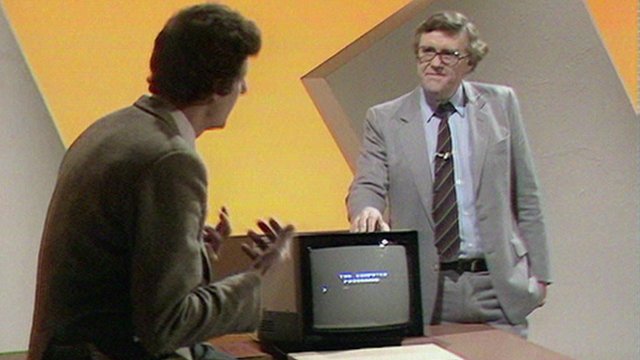
Ian McNaught-Davis was the avuncular expert and Chris Searle stood in for the viewer, asking all the obvious questions.

_73093377_73093376
Chris Searle and Ian McNaught-Davis

There were ten episodes in total –

It’s Happening Now (11 January 1982)

Just One Thing After Another  (18 January 1982)

Talking to a Machine  (25 January 1982)

It’s On the Computer (1 February 1982)

The New Media  (8 February 1982)

Moving Pictures (15 February 1982)

Let’s Pretend  (22 February 1982)

The Thinking Machine  (1 March 1982)

In Control  (8 March 1982)

Things to Come  (15 March 1982)

Looking back at the series, it’s amazing to consider how far we’ve come in just a single generation. All the episodes are available on YouTube (something that would have seemed like science fiction in 1982) and the programmes are fascinating watching, both for those of us who were there at the time and also for younger people who can get a flavour of how computers used to be In the dim and distant past.


Debut of an Old Bailey Hack – Rumpole of the Bailey (Play For Today – BBC 1975)

play
After watching A Foreign Field I wanted a little more Leo McKern, so digging out the Play for Today in which Horace Rumpole made his debut seemed a logical choice.

Rumpole of the Bailey would become a popular and long-running series, although it seems that the BBC didn’t consider that the character or concept had legs, so Play for Today producer Irene Shubik took it to Thames where it ran for seven series between 1978 and 1992.

The development of the series was still several years off when this play was made and it does seem that this was produced purely as a one-off. So although there’s plenty that’s familiar to viewers of the later series, there are also various interesting differences.

An obvious difference is that Hilda is played by Joyce Heron, rather than Peggy Thorpe-Bates or later Marion Mathie. At the end of the story she portrayed as a drunk with a strong hint that this is a regular occurrence. This is something we never see again, as the implication that Hilda drinks to drown the sorrow of her hollow life with Horace is presumably too bleak to bear repetition. Instead, whilst the Thames Hilda may sometimes bemoan her lot and life with Horace, it’s done with considerably more humour.

Horace Rumpole himself, apart from one important character beat which we’ll come to shortly, is quite recognisable as the Rumpole from the Thames series. He indulges in lengthy internal monologues as he makes his way to work and he also laments the fact that it’s impossible now to get a decent lunch anywhere. There’s only sandwiches and other convenience foods – which horrifies the traditionalist Rumpole.

rumpole

“Hack? Not exactly a hack. Been at it for longer than he can remember, Rumpole has. No flies on Rumpole. Cut his teeth on Rex v Magwitch and the Penge Bungalow Murders. I could win most of my cases if it wasn’t for the clients. Clients have no tact, poor old darlings, no bloody sensitivity. They will waltz into the witness box and blurt out things that are far better left unblurted.”

Rumpole is at the Old Bailey to defend Ossie Gladstone (Herbert Norville), accused of stabbing a man outside Lords Cricket ground in a motiveless attack.  And this is where we see the major difference between the Play for Today Rumpole and the Thames Rumpole.  Here, he is very keen for Gladstone to plead guilty and even after Ossie maintains his innocence he is reluctant to consider a not guilty plea.

The Thames Rumpole never liked to plead guilty and was always ready for a fight, but maybe this Rumpole is simply more of a realist.  If the evidence is strong then what’s the point of delaying the inevitable and possibly only increasing the sentence by pleading not guilty?

Or maybe Ossie is right when he taunts Rumpole that his case isn’t sufficiently interesting and too much like hard work to fight.  This certainly seems to strike a chord with Rumpole in a way that it would be impossible to consider happening in the later series where the character was always much more straightforward.

So the decision is made to fight, although as the police have a signed confession it seems like a forlorn hope.  Rumpole spends the morning toiling away at the police evidence before the lunch-break brings a chance to grab a last chat with his son Nick (David Yelland) who is shortly due to fly to America to take a University post.

nick
David Yelland

The pub lunch with Rumpole and Nick is the heart of the play, as Nick confronts his father about their strained relationship.  Nick and Rumpole both have very different views about Nick’s childhood – Rumpole remembers the good times in the holidays – teas, pantos, visits to the Old Bailey – whilst Nick remembers the long time spent at various boarding schools from the age of seven.

This is another relationship that is adjusted when the series debuted in 1978.  During the first series the chronology was rewound, so the first story was set in 1969, some five years before this one.  Therefore we get to see Nick during the time he was at school and also enjoying a much more cordial, though sometimes still distant, relationship with his father.  But even when the series reached the point where Nick departed for America it was done in a subtly different way, with much less angst and Nick never displayed the same anger again that he does here.

With lunch concluded, Rumpole is able to engineer a breakthrough when Detective Inspector Arthur (Edwin Brown) states under oath that Ossie read his statement back to him.  A simple ruse in the cells proves that Ossie can neither read or write and this revelation is enough to dent the police’s case and so the jury issue a not guilty verdict.

But here, as with some of the earliest stories in the Thames series, there’s some ambiguity.  Although Ossie has declared his innocence, Rumpole is forced to admit that he may well be guilty – there’s simply no way to be sure.  He could have admitted his guilt to the police and the confession may be geniune, but Inspector Arthur’s decision to overstate his case was enough to sow a seed of doubt in the jury’s mind.
There are other examples of this in the early Thames series, where we see that Rumpole isn’t always able to depend on the honesty of his clients.  As the series became more mainstream, this, along with the various other points discussed, were gradually smoothed away so that a more family friendly, mainstream character emerged.  The later Rumpole always pleaded not guilty, almost always won and could always rely on the honesty of his clients.  This is not to say that the later series are not well written or well acted, but they lack a little of the bite and intensity of this Play for Today and the first two Thames series.

It goes without saying that Leo McKern is excellent here, as he was throughout the series.  But as this play has more character beats he is able to instill a little more character to the part.

The closing words of the play, as Rumpole and Hilda face each other over the dinner table – “Who am I exactly?” – echo the comments of Nick at lunchtime, who tried to break the public facade of his father. At the end of the day it seems that even Horace Rumpole has his doubts.  He knows what he does, and what he does well, but has his own identity become submerged under the numerous character quirks of an Old Bailey Hack?


The Celts (1987 BBC Documentary) due shortly on DVD from Simply Media

celts

The Celts, a 1987 documentary series presented by Frank Delaney is showing as forthcoming on Amazon.

The series was comprised of six episodes –

“The Man with the Golden Shoes”
“The Birth of Nations”
“A Pagan Trinity”
“The Open-Ended Curve”
“The Final Conflict”
“The Legacy”

The Celts was notable for introducing the public at large to the music of Enya. Formally a member of Clannad, The Celts soundtrack was Enya’s first solo release.

Their name liveth for evermore – A Foreign Field (BBC Screen One – 1993)

Roy Clarke's A Foreign Field
Roy Clarke’s A Foreign Field

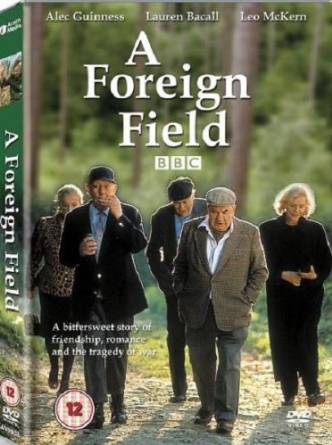
The recent centenary commemorations of the start of WW1 has inspired me to pull this Screen One production from September 1993 down from the shelf for a rewatch as although it’s concerned with the events of WW2, the themes of sacrifice and comradeship are universal and timeless.
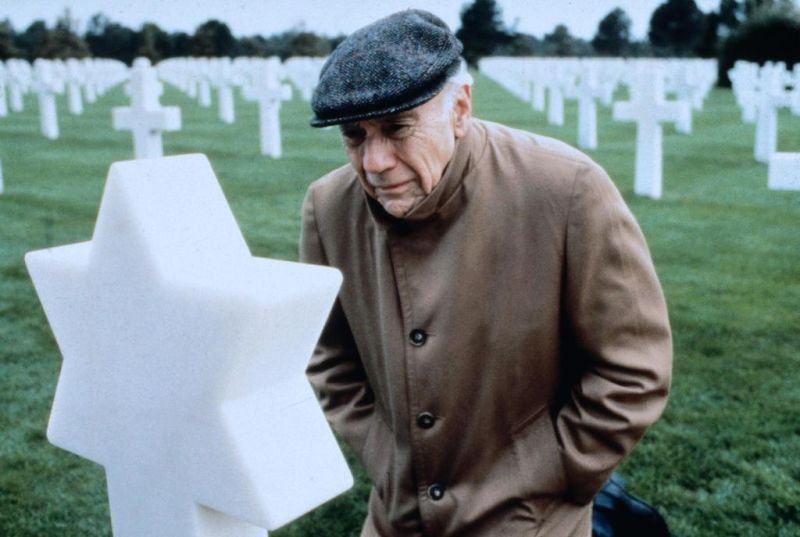
Cyril (Leo McKern) and Amos (Alec Guinness) are two D-Day veterans who have returned to Normandy to visit the graves of their fallen comrades. Both of them have been scarred by those fateful days in 1944 – particularly Amos, who is virtually mute and seems to have the mind of a child.

foreignfield
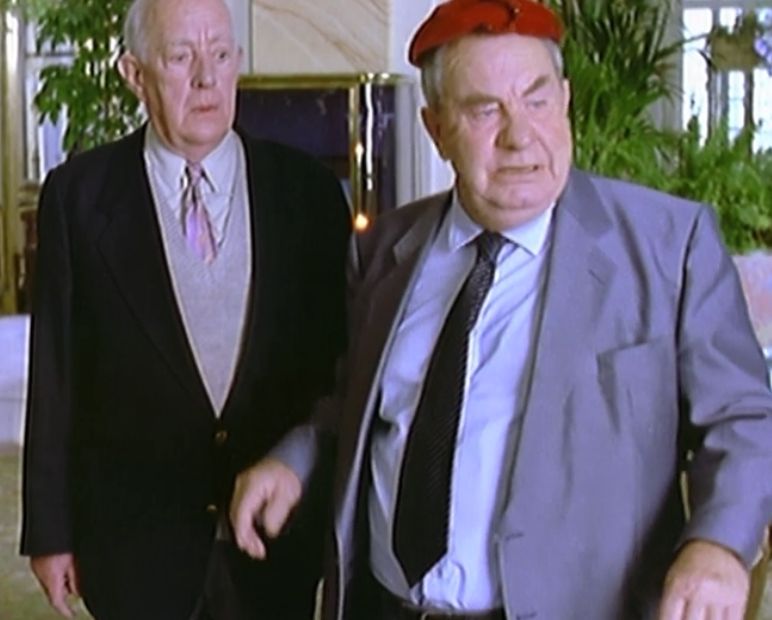
Alec Guinness and Leo McKern

Cyril has another reason for the trip, as he is looking to track down his wartime sweetheart Angelique (Jeanne Moreau). The fact he hasn’t seen her for nearly fifty years doesn’t discourage him, nor does the fact that he has a rival for her affection – Waldo (John Randolph), an American veteran visiting the area with his son (Edward Herrmann) and daughter-in-law Beverly (Geraldine Chaplin).

John Randolph
John Randolph

After fighting for Angelique’s affections, Cyril and Waldo decide to join forces as they both treat her to a day out and then together with the mysterious Lisa (Lauren Bacall) the mismatched party eventually find their way to the graves to remember those they have lost.

A Screen One production from 1993, A Foreign Field was written by Roy Clarke. Although he has a varied CV, the record-breaking Last of the Summer Wine is undoubtedly the series he is best remembered for. That series’ longevity and the critical mauling and polite indifference that the later runs generated have tended to mask that Clarke is a very talented writer with a keen ear for dialogue. This is a hallmark of A Foreign Field, particularly as Cyril and Waldo give full vent to their simmering Anglo-American resentment.

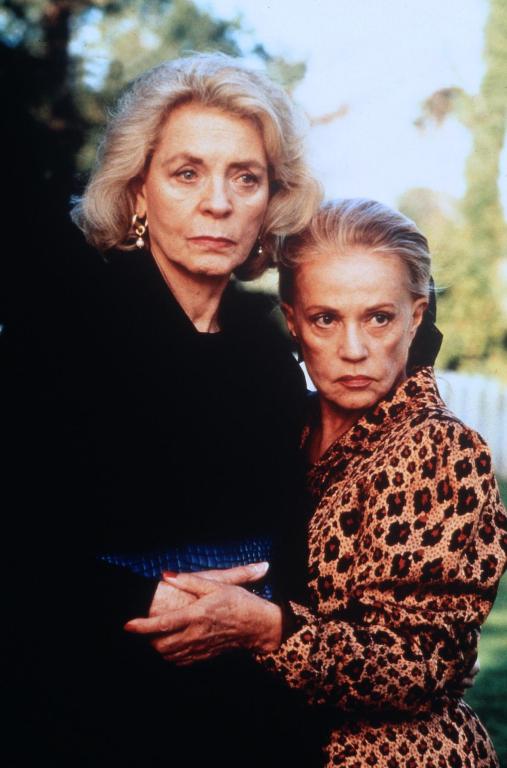
Lauren Bacall and Jeanne Moreau

As good as Clarke’s teleplay is, it clearly doesn’t hurt that the likes of McKern, Guinness, Randolph, Moreau and Bacall are cast members. Frankly, this is a dream lineup, with particularly fine performances from Guinness and McKern. Alec Guinness has probably the showiest part – lacking virtually any dialogue he is able to insert various bits of business in order to steal any scene that takes his fancy. The eye is automatically focused on him because, well, he’s Alec Guinness, but he still manages to instil a sense of dignity into the character of Amos.

Best of all is Leo McKern. Well known for his long run in Rumpole of the Bailey, McKern here is able to produce a moment of subtlety and pathos that is heart stopping. Outwardly bluff, his mask slips when discussing the beachhead landings in a wonderful monologue.

The conclusion, with the mystery of Lisa’s pilgrimage solved, brings the story to a satisfactory conclusion and the point made, whilst subtle, is clearly understood. Available on DVD from Acorn, this is a fine production that could have so easily tipped over into mawkish sentimentally. The fact it doesn’t is a tribute both to the writing and the acting choices of the principal cast. A production that is well worth tracking down and treasuring.

A lack of atmosphere? Moonbase 3 (BBC1 – 1973)

Moonbase3_02

When Barry Letts and Terrance Dicks decided their time on Doctor Who was coming to an end, they chose to originate a new series, which if it proved successful they could then work on full time. Moonbase 3 was the result, broadcast in 1973, although in the end it only ran for six episodes before being wiped and largely forgotten.

It wasn’t until twenty years later, in 1993, that co-producer 20th Century Fox found NTSC copies of the six episodes in their archives – and these prints were returned to the BBC and issued on VHS and then later on DVD.

So is it a lost classic or just better off lost? Letts and Dicks always seemed inclined to the latter opinion, but that doesn’t mean that the series is a total write off. Moonbase 3 has its problems, but for fans of 70’s BBC SciFi there’s plenty of interest.

Letts and Dicks’ episode “Departure and Arrival” opens the series. It sees the arrival of Dr David Caulder (Donald Houston), newly appointed director of Moonbase 3. His predecessor has just died in a shuttle accident and one of Caulder’s first tasks is to examine the reasons for the crash. Harry Saunders (Michael Wisher) suffered a nervous breakdown while piloting the shuttle. But was it an isolated incident or do the problems run deeper?

The introduction of a new character (Caulder) into the Moonbase setup also allows the viewers to be introduced to all the personnel on the base at the same time. It’s an old storytelling trick maybe, but it’s still effective. The senior staff under Caulder’s scrutiny are deputy director Dr Michel Lebrun (Ralph Bates with an interesting French accent), no-nonsense director of operations and maintenance Tom Hill (Barry Lowe) and base psychologist Dr Helen Smith (Fiona Gaunt).

L-R - Ralph Bates, Fiona Gaunt, Donald Houston and Barry Lowe
L-R – Ralph Bates, Fiona Gaunt, Donald Houston and Barry Lowe

After a quick whistle-stop tour, Caulder puts his plan into action in order to demonstrate to Lebrun, Hill and Smith just how dangerous the Moon is. Frankly, Caulder’s actions are reckless in the extreme as he seems happy to risk their lives just to prove a point. But by the end of the story Caulder is able to close his enquiry on the shuttle deaths, so life on the moon can get back to normal.

One of the pleasures of the series is the high quality supporting casts, which includes many familiar faces such as Peter Miles (in “Behemoth”), Edward Brayshaw (in “Achilles Heel”) and John Hallam (in “Outsiders”).

But one major problem the series faced was that in order to generate drama and conflict it meant at least one member of the Moonbase staff had to act in an irrational or dangerous manner per episode. Had the series continued it would have been difficult to see how this problem could have effectively been dealt with. The later series Star Cops (1987) solved this by depicting a Moonbase which had a constant influx of departures and arrivals. The closed nature of Moonbase 3 doesn’t allow such freedom though.

The fifth story, “Castor & Pollux” sees Tom Hill adrift in space and although Caulder is keen to organise a rescue mission, he can’t do it without Russian assistance. The slowest paced episode of the series (and given the zero gravity environment, none of the others exactly race along) there is nevertheless a mounting sense of tension and it’s the best chance for Barry Lowe to shine.

The sixth and final episode of the series is “View from a Dead Planet”, guest starring Michael Gough. When the Arctic Sun Project appears to have destroyed all life on the planet, the Moonbase personnel face the prospect that they are the only human beings left alive – although given the limited supplies they have, this won’t be for long.

And then it was over. Critical and audience response were muted to say the least – a BBC Audience Report found the series “banal, predictable and slow”. And viewing figures were fairly disastrous as it debuted at 6 million whilst later episodes dropped as low as 2 million before recovering slightly at 4 million. But for a mainstream Sunday night BBC1 slot this effectively sealed the programme’s fate.

Why did it fail to capture the public imagination? The team of Letts and Dicks had worked together on Doctor Who since 1970 and had pulled that series around to make it a ratings winner and an important part of the BBC’s Saturday evening schedule. Moonbase 3 was a different beast though. It was hard science fact (with James Burke acting as story consultant) rather than science fiction or fantasy and it didn’t seem to work in the Sunday timeslot.

Donald Houston, whilst never the most subtle of actors, had a certain presence and made Caulder a compelling character. The needle and one-upmanship between Lebrun and Hill added some spice and conflict, which leaves Dr Helen Smith as somewhat of a fourth wheel. As her job was to identify which Moonbase crew-members were operating under stress or were potential risks, it’s embarrassing that so many passed her by. Quite how she managed to keep her job is anyone’s guess.

moonbase
Watch out Dr Smith! Another one’s going round the bend!

Although it has its problems and weaknesses, it’s still a series that I find myself taking down from the shelf and rewatching most years. Maybe it’s the 70’s BBC futuristic setting, which is now somewhat comforting, but for whatever reason it’s a series that, dodgy NTSC picture notwithstanding, does repay multiple rewatches.

The Second Sight DVD has long since been deleted and now goes for silly money, so YouTube is probably the best way to sample this forgotten piece of 1970’s futurism.

The Secret War – 1977 BBC WW2 documentary coming to DVD in September 2014

The Secret War
The Secret War

The Secret War, a six part WW2 documentary made by the BBC in association with the Imperial War Museum, is due for release in September 2014 by Simply HE.

Originally broadcast in 1977, it was presented by William Woollard, with each episode looking at the various different ways that science and intelligence helped the Allies to win the war. Episode titles are as follows –

Episode 1 – The Battle of the Beams
Episode 2 – To See A Hundred Miles
Episode 3 – Terror Weapons
Episode 4 – If
Episode 5 – The Deadly Waves
Episode 6 – Still Secret

Topics covered include the breaking of the Enigma code, Hitler’s terror weapons (the V1 and V2) and the development of Radar. Interviewees include Hitler’s Minister of Armaments, Albert Speer.

A full DVD review can be found here.