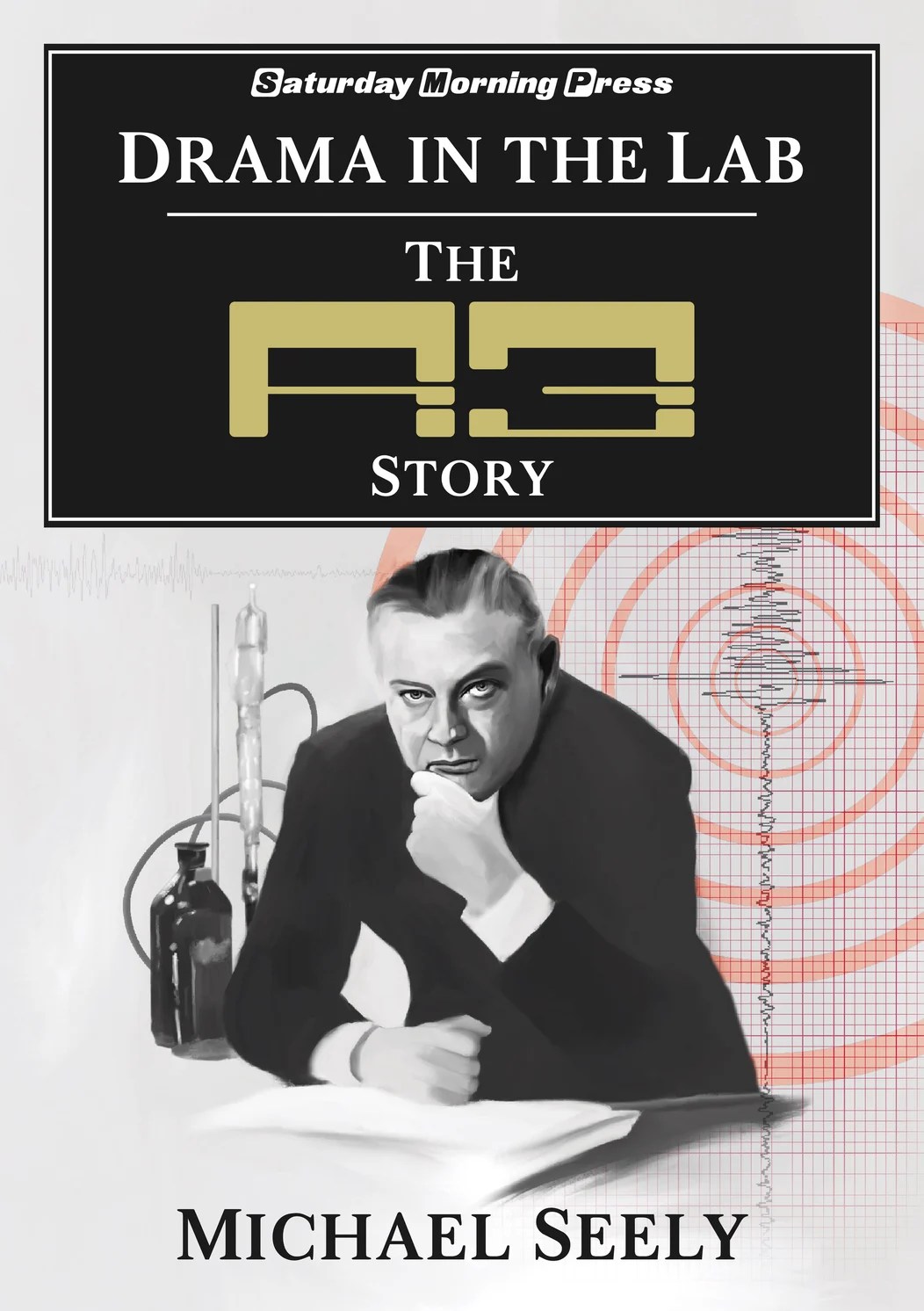
As Michael Seely states in his introduction, R.3 is a series that few people are likely to remember today. This is easily explained by the fact that it’s completely absent from the archives – none of its 26 episodes survive (all that’s left are a handful of telesnaps taken by John Cura, a few brief clips and the camera scripts).
Broadcast during 1964 and 1965, R.3 starred John Robinson as Sir Michael Gerrard, who headed up the Ministry of Research Centre No. 3 (otherwise known as R.3). This was a scientific research facility that attempted to produce results for the greater good, although things didn’t always go to plan ….
R.3’s scientific setting has led some to label it as a forerunner to Doomwatch, but Seely shows how that wasn’t really the case. Indeed, the scientists of R.3 weren’t averse to attempting risky experiments that the Doomwatch team would have had no hesitation in closing down!
Created by N.J. Crisp and Dr Stephen J.L. Black, chapter one of Drama in the Lab concentrates on the development of the programme. Gerard Glaister, later to work closely with Crisp (The Expert, The Brothers, Oil Strike North) was called upon to comment upon the revised series pitch and proffered some incisive opinions. It always interests me to learn how much actors and writers were paid, and there’s a good deal of information of that type provided (Elizabeth Sellars, who played Dr May Howard, was seen as something of a casting coup and therefore received considerably more money than John Robinson).
Robinson, of course, will always be remembered as the second television incarnation of Professor Quatermass. Given that role, possibly there was a little typecasting in play when he was offered the role of Sir Michael Gerrard (who by all accounts, could also be a little curt and abrasive). I’ve always found his Quatermass performance to be rather one note, so it’s interesting to ponder whether he was able to find a little more depth in Gerrard.
Elisabeth Sellars didn’t return for the second series, but there was a notable newcomer – Oliver Reed as Dr Richard Franklin. As with Robinson, we can only imagine what sort of impression the young Reed (who at this point was already beginning to gain a following via his work with Hammer) would have made in the series. But it’s easy to imagine it would have been a positive one.
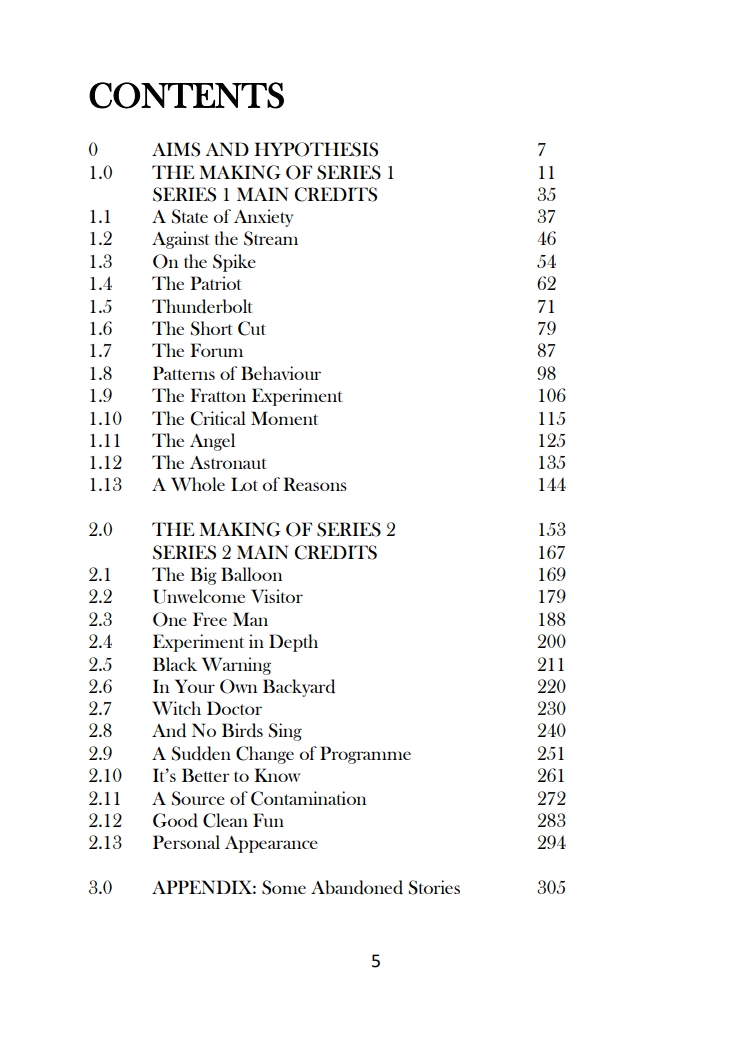
Drama in the Lab is organized in an orderly fashion – it begins with an introduction for the first series (featuring a plethora of excerpts culled from the production paperwork – all of which I find fascinating). This is followed by chapters on each episode (which contain a detailed story synopsis, production notes and an analysis of the story). Series two follows the same format.
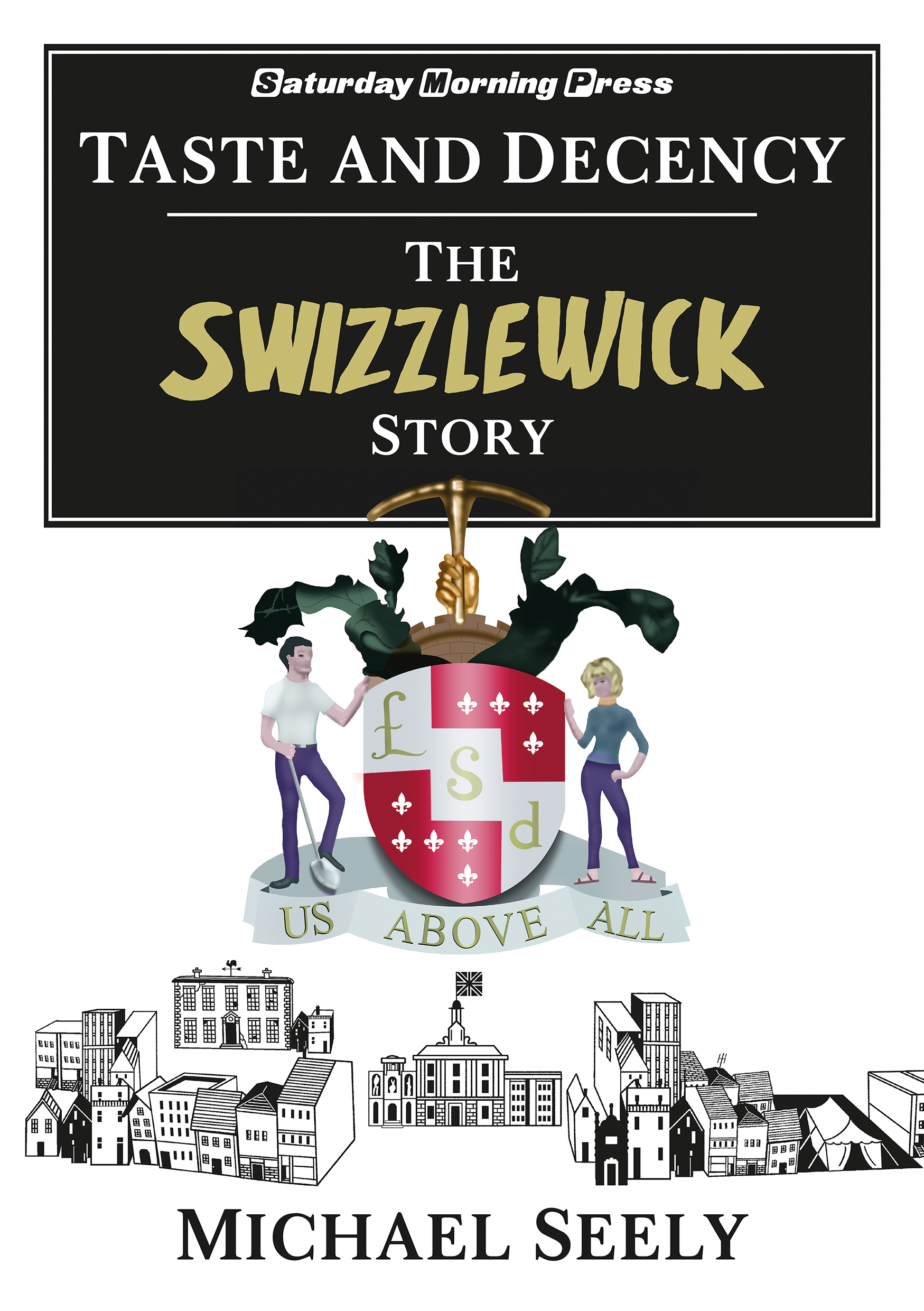
As I mentioned when reviewing Taste and Decency – The Swizzlewick Story, it’s such a pleasure to be able to gain an understanding of how a television series of this era was produced, not least to be able to eavesdrop on the various disputes and issues that occurred (William Emms, for example, did not enjoy his time on the series).
We know all about the production of Doctor Who of course, but every other series of the same vintage will have similar stories to tell – it’s just that someone like Michael Seely will have to spend a fair amount of time digging through the paperwork in order to produce a coherent story. That’s only going to happen for a handful of series, of course, but I’m glad that Seely has made the effort with R.3.
Drama in the Lab – The R.3 Story is another very worthwhile publication from Saturday Morning Press which shines a rewarding light on a long-lost and long-forgotten programme. The only disappointment is the knowledge that the series has gone for good (I suppose there’s always the chance a dusty film can or two is out there somewhere, but I’m not going to hold my breath). But even if R.3 is no more, this book offers a comprehensive look behind the scenes and I’m sure it will be appreciated by anyone with an interest in the production of British television during the 1960’s.
Drama in the Lab – The R.3 Story can be ordered from Saturday Morning Press via this link.
 Archive Television Musings