Callan – The Same Trick Twice

same trick

Written by Bill Craig
Directed by Peter Duguid

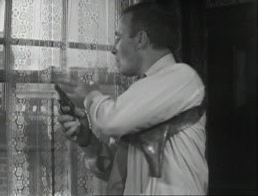
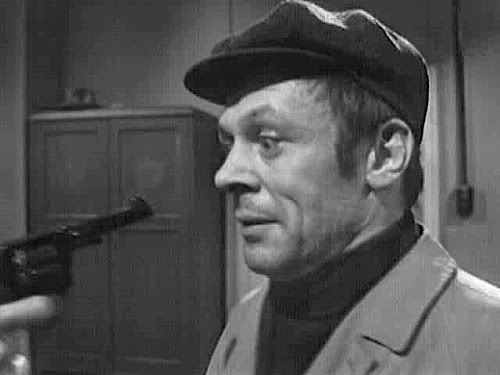
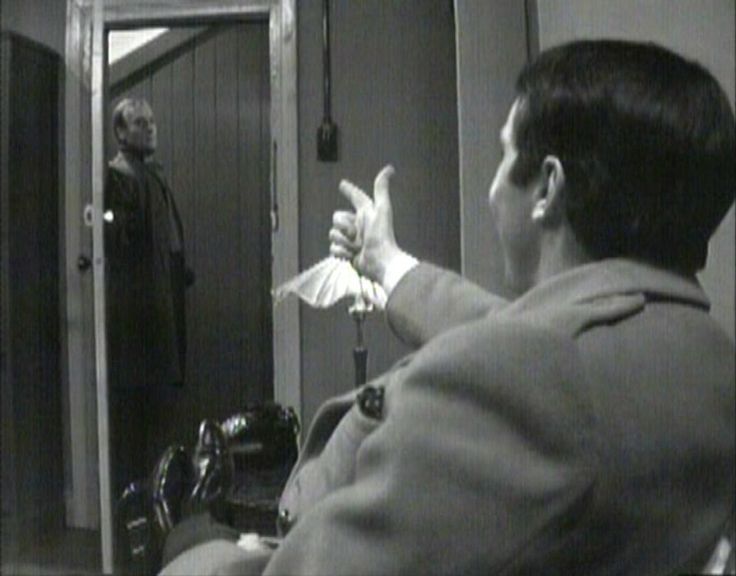
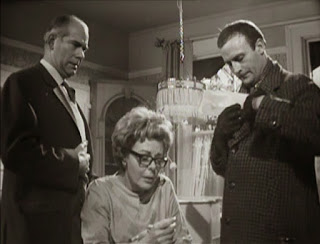
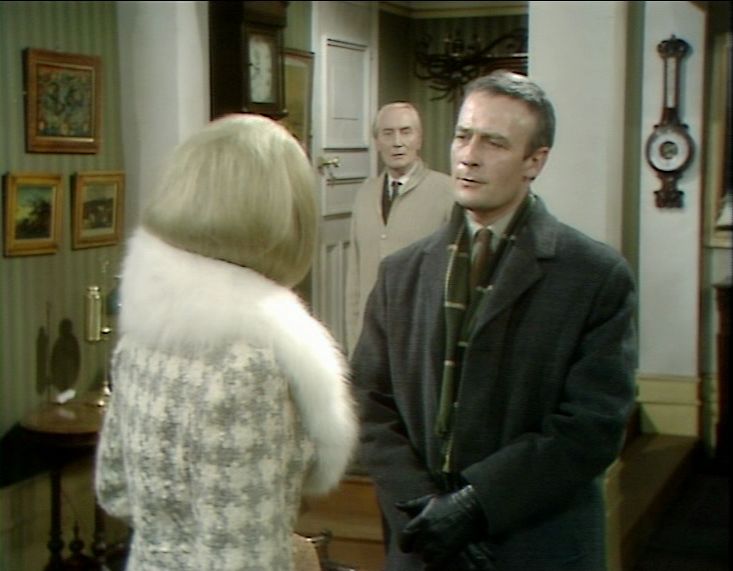
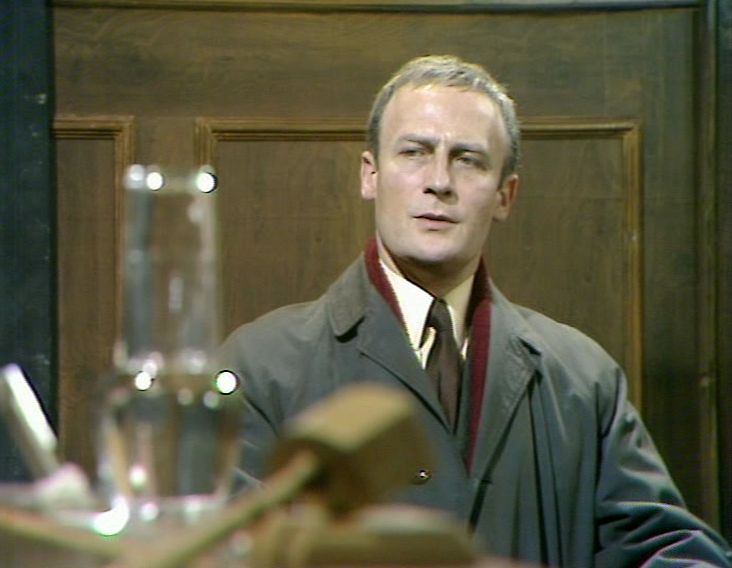
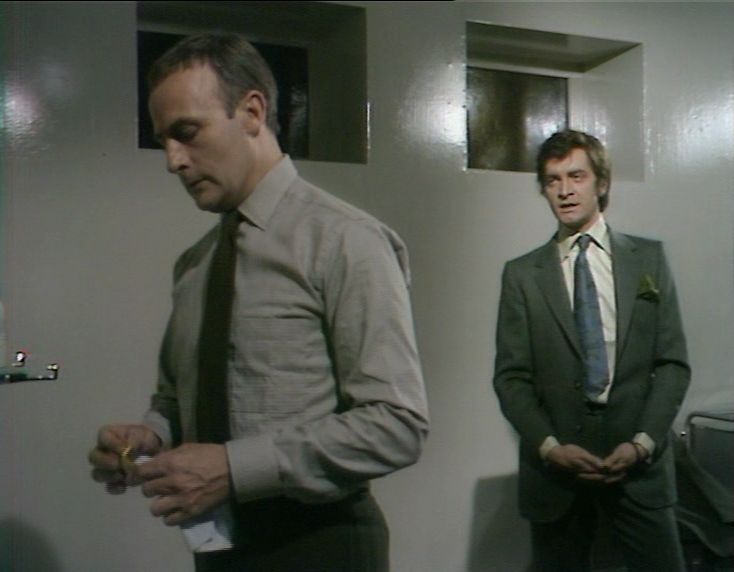
Callan has been sent to oversee the exchange of a Russian prisoner for two British ones.  Also present is Mr Bishop (Geoffrey Chater) who apparently works for the Foreign Office.  The handover goes smoothly and Bishop welcomes both Surtees (Richard Hurndall) and Mallory (Patrick O’Connell) back to the free world.

Later, Mallory expresses his bitterness to Callan.  He’s spent five long years in a Russan jail, thanks to Surtees (who buckled under the initial interrogation and revealed everything).  And Surtees himself plans to go public and disclose how he was blackmailed into working for British Intelligence.

The only problem is that nobody in British Intelligence has ever heard of Surtees …..

The Same Trick Twice is a dense story, where nothing is quite as it seems.  It has some excellent actors and moves at a nice pace, but there are some flaws which are hard to ignore.

The first comes right at the start.  Callan tells Surtees that he’ll be looking after him and has a nice rest laid on at East Grinstead.  The clear inference is that this is a safe house where Surtees can be intensely debriefed.  Surtees seems not to care for this and throws a cup of coffee in Callan’s face.  This allows Bishop to take charge of Surtees and he’s later allowed to go public with his claim of blackmail.  If Callan had orders to keep a tight grip on Surtees, why did he let him walk free?

Shortly after, we find that Bishop doesn’t actually work for the Foreign Office, instead he’s connected with Intelligence – not directly in the Section, but he’s certainly able to come and go there as he pleases.  Geoffrey Chater would pop up during series three and four as a semi-regular and his languid demeanor ensures that Bishop enjoys some entertaining clashes with Callan, who has a much more down-to-earth attitude.  Callan asks several times exactly who Bishop is (and he’s ignored each time by both Hunter and Bishop).  It’s never made clear what his position is, but it’s obvious that he outranks Hunter.

If you’ve got a decent selection of television from the 1960’s, 1970’s and early 1980’s, then the odds are that you’ll have some programmes featuring Richard Hurndall.  Hurndall was an intense, compelling character actor who always gave striking performances.  Off the top of my head, I can pick down from my shelf appearances he made in The Power Game, Manhunt, Public Eye, Blakes Seven, Bergerac and of course The Five Doctors.

He’s very good here as a character whose motivations remain unclear for some time.  There’s several possibilities – he could be a British agent or a double-agent working for the Russians.  Or maybe he’s simply been duped into believing he was working for the British, when actually the Russians were controlling him.

This tangle leads us to our next plot flaw.  It later becomes clear that Surtees is something of an innocent – he believed that British Intelligence had blackmailed him to work as a spy, but instead it was actually the Russians who were feeding him disinformation.  But if this was the case, how was he able to blow Mallory’s network?  Only a genuine British agent would have known specifics about the network – so did the Russians give this information to Surtees?  And if so, why didn’t Surtees mention this when he was released?

Possibly the most problematic part of the story is Mallory’s reassignment to the Section.  Callan is appalled as in his opinion Mallory is far from stable – this is understandable, since he’s spent five years in a Russian prison.  It’s clear that Bishop has ordered Hunter to take Mallory on, but why?  As with Bishop steering Surtees away at the start, he seems to have his own agenda – but it’s not clear what it is.

Time’s running out and Surtees is ready to publish his story.  It’s all lies (disinformation fed to him by the opposition) but it sounds plausible enough and would certainly be damaging if it made the papers.  Hunter visits Callan’s flat (he expresses surprise that this was the best they could do for him) and speaks to him off the record.

He wants Surtees killed, but Callan is far from happy.  “You want a chopping done, you write out a chit.  You want a killing, you give an order direct, straight, in front of witnesses.”  The unofficial nature doesn’t please Callan, but he eventually agrees.

But he doesn’t have to kill him, since he’s able to convince Surtees that he was duped.  But somebody does murder Surtees later (and whilst there’s a moment of misdirection, it’s fairly obvious who did it).  There’s a droll moment when Hunter examines the body and declares that as he was shot in the back of the head it’ll be difficult to call it suicide, unless he was a contortionist!

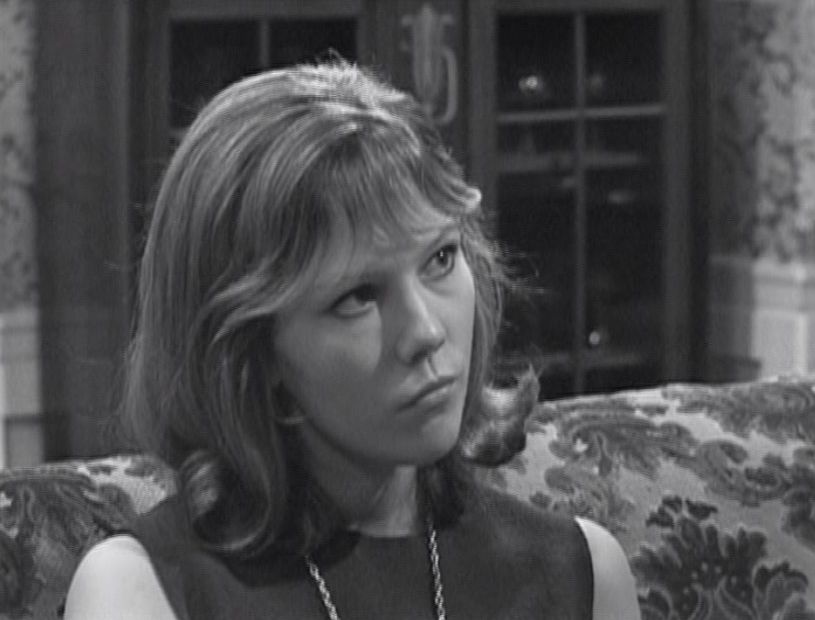
Although the plot doesn’t quite hold together (especially the involvement of Mallory) there’s still a great deal to enjoy here, such as Lonely’s job as the lavatory attendant at Harry’s strip bar.  Or a “hygiene operative” as Lonely defensively tells Callan. Harold Innocent is delightedly camp as Freddie, the photographer who arranged the compromising photos of Surtees and Trisha Noble is gorgeous as Jean Price, who posed in those photos with a drugged Surtees.
Callan – Summoned to Appear

summoned

Written by Trevor Preston
Directed by Voytek

Callan faces a thorny moral dilemma in Summoned to Appear.  Needless to say, the other members of the Section (Cross and Hunter, for example) find it hard to understand why Callan is at all concerned …..

Callan and Cross are tailing a Czech operative called Palanka (Sylvester Morand).  Hunter doesn’t know exactly what Palanka’s up to, but it’s certainly something that needs to be stopped.  They follow him into a railway station, but lose him.  Callan takes one platform and Cross the other.  As a train pulls in, Palanka breaks cover on Cross’ platform.

Cross goes to intercept him, but barges straight into a man walking forward to catch the train.  The unfortunate man is accidentally pushed onto the tracks and is killed instantly.  Cross disappears, but the police are called, so Callan has to remain since he’s an eye-witness.

As he later tells Hunter, he was able to lie beautifully, telling Inspector Kyle (Norman Henry) that in his opinion the man committed suicide by throwing himself under the train.  But matters are complicated by another witness, Mrs Kent (Rhoda Lewis). who maintains that she somebody push the man off the platform.

It probably goes without saying, but Edward Woodward is excellent in this episode.  Callan is an oddity in the Section – a man with a conscience.  Both Hunter and Cross are only concerned with the man’s death insofar as how it affects the Palanka operation.  But Callan is more troubled that a man is dead – someone that would have left a widow and possibly children behind.

The fact that Cross doesn’t understand why Callan is upset provides us with some decent character conflict – and we’ll see this same conflict played out in various ways throughout the third series since Callan and Cross are two very different characters.

Callan is older and highly experienced.  Hunter admits that he’s the best operative in the Section (maybe the best they’ve ever had) although he regards Callan’s conscience as his one major flaw.  Cross is young and inexperienced.  His impulsiveness and rashness are highlighted in this episode and we also see, during the climax, how embarrassingly easily Palanka was able to deal with him.

Hunter elects to use a Czechoslovakian dissident called Karas (George Pravda) to lure Palanka into the open.  Callan and Hunter both know that Palanka won’t be able to resist the chance to kill Karas.  When Cross wonders how Callan can be so sure, he tells him that Palanka is “young and arrogant.  He’s got something to prove, just like you James.”

Lonely doesn’t have a great deal to do in this episode but I love the first flat scene where Callan asks Lonely to tail Palanka.  At once point Callan calls Lonely perceptive and there’s a great reaction from Russell Hunter, who makes it clear that Lonely doesn’t understand the word and is working out whether it’s an insult or a compliment!

Callan is summoned to appear at the Coroner’s inquest, which is a problem – and it’s further complicated when he’s visited beforehand by Mr Leach (Edward Burnham) who is the solicitor acting for the widow of the dead man.  He tells Callan that if a verdict of suicide is recorded then the widow, Mrs Arlen, will only receive a fraction of her husband’s insurance policy.

Callan is under no obligation to do anything.  The Section is in the clear since there’s not sufficient evidence to prove that Cross, or anybody else, pushed the man under the train.  He could simply repeat his original statement that the man committed suicide and that would be an end to it.  But of course he doesn’t – instead he changes his story (much to the annoyance of the Coroner) and a verdict of accidental death is recorded.

Meanwhile, Palanka very easily gains access to Karas’ apartment, knocking out Cross and disarming him.  In the end, it’s Karas who kills Palanka, whilst Cross looks on helplessly.  Since Karas is an invalid, it’s even more embarrassing for Cross.

Summoned to Appear is very much a human drama (both the unfortunate Mr Arlen and the dissident writer Karas).  Callan has several blazing rows with Hunter (and they won’t be the last!) which really highlight just how good an actor Edward Woodward was.  When he was on full-throttle, there was nobody better.

It’s always a pleasure to see George Pravda (as well as his real-life wife, Hana Maria Pravda who played Mrs Karas).  The supporting cast is typically solid, with the likes of Edward Burnham and Norman Henry, whilst a young Warren Clarke makes a brief appearance as a railway guard.

Callan – Where Else Could I Go?

where else

Written by James Mitchell
Directed by Jim Goddard

Where Else Could I Go? is something of a reboot for Callan.  Partly this was unavoidable.  Since a brainwashed Callan had killed his boss in the previous episode, Death of a Hunter, there had to a new Section head and William Squire fills the part perfectly.  And thanks to the fact that the colour Thames episodes were the most assessable during the last thirty years in the UK (repeats on C4 in the 1980’s and on UK Gold during the 1990’s) Squire would have been the first Hunter that many (including myself) would have seen – so he is Hunter.

His Hunter is very much in the Ronald Radd mode.  He has a respect for Callan’s abilities, but he also has no qualms in withholding information from him (especially when he knows that such knowledge would impair Callan’s ability to successfully carry out the mission).  Squire’s Hunter is also completely ruthless, able to compartmentalise his personal life from his professional duties (see God Help Your Friends for a good example of this).

We’re told that Toby Meres is on secondment in America (in reality, Anthony Valentine was filming Codename for the BBC).  Valentine is missed during series three, but it does provide an opportunity to create a new Section operative for Callan to battle with – James Cross (Patrick Mower).

As with the Callan/Meres relationship, Callan and Cross take a little time to form a reasonable working partnership.  Cross (unlike Meres) is younger than Callan, so there’s less of a feeling that the two are equals (Callan would later always call Meres by his first name, whilst Meres would usually refer to the older man as Mr Callan).

But this edge between them (like the earlier one with Meres) is useful for creating tension and drama.  Most series would have gone down the buddy route (like Bodie and Doyle) whereas Callan does something a little more interesting.  Cross is young, keen and desperate to prove himself to be as good, if not better, than Callan.  But his inexperience and rashness will often create problems (as the upcoming episodes Summoned to Appear and A Village Called G demonstrate).

There’s still some familiar faces though.  Liz (Lisa Langdon) remains Hunter’s secretary and she’ll enjoy some decent character development during series three and four (especially in A Village Called G).  Clifford Rose is still the icily amoral Dr Snell and, of course, the peerless Russell Hunter is back as Callan’s smelly friend Lonely.

Lonely is pivotal to this story, since Hunter uses him to see if Callan still has any fight or spirit left.  If he has, there’s still a place for him in the Section.  If not, then he’s finished – certainly in the Section, but also probably outside of it.  No doubt Hunter would have no qualms in ordering his permanent removal.

Where Else Could I Go? opens with Cross visiting Callan in hospital, where he’s still recovering from the events seen at the end of series two.  Although he’s clearly far from well, his ability for self-preservation is something that’s automatic.  Cross announces that he’s come from Hunter, but Callan (who’s never met Cross before) isn’t going to take anything on trust.  Unseen by Cross, he places a razor-blade in a bar of soap and keeps this weapon behind his back until he’s seen Cross’ written authorisation.

He’s then reassured enough to put his weapon down, but not before he silently shows it to Cross.  This ensures that their relationship starts off on a combative footing.  Cross knows of Callan’s reputation but considers him to be past it, nothing but a shadow of his former self.  Callan, whilst his dislike for the Section has been stated many times, still needs it – and he isn’t going to be trampled underfoot by a young upstart like Cross.

Physically, Calllan’s not in bad shape, but it’s his attitude when he meets the new Hunter that’s concerning.  He’s conciliatory and deferential – with little sign of the old, fiery operative.  Therefore Hunter decides to threaten the one person in the world (Lonely) who Callan has affection and friendship for and see what happens.

The first meeting between Callan and Lonely in this episode is very awkward.  With Callan hospitalised for several months, Lonely drifted back into crime and since he’s not the world’s brightest crook (although with Callan to watch his back, he’s a formidable thief) he’s ended up on remand and is looking at a lengthy prison sentence.  Callan offers to help, but a tearful Lonely refuses – since Callan wasn’t around when he was arrested, why should he help now?

It’s a cracking scene for both Edward Woodward and Russell Hunter.  Callan is still hurting, but the signs are there that he’s beginning to recover some of his spirit whilst Hunter manages to make Lonely seem even more pathetic than usual.  But eventually Callan is able to talk him round, thanks to the intervention of a high-powered lawyer called Henshaw (Gary Watson).

Henshaw and Callan know each other from their army days (Henshaw was Callan’s superior officer) and their meeting helps to shine a little light on Callan’s pre-Section career.  Back then he wasn’t called Callan, and was obviously far from a model solider, but he did save Henshaw’s life and now Callan is calling in the debt.  The fact that Callan chooses to use the leverage he has to try and get Lonely released is a good sign that Callan feels responsible for him (although he’s also well aware of how useful, as a thief, he can be).

The showdown between Hunter and Callan is the episode’s key moment.  Callan loses his temper when he realises that Hunter has targeted Lonely – but Hunter isn’t upset.  He’s been waiting for Callan to show some spirit and this convinces him that there’s a still a place for Callan after all.

Hunter agrees to stand bail for Lonely and then asks him if he’s happy to be back in the Section.  Anybody who knows the history of the character will also know the love/hate relationship he has with the Section in general and the various Hunters in particular.  Previously, we’ve seen that Callan was keen to leave and forge a life outside.  But this is an older, damaged Callan who knows that, at present, he needs the security that the Section offers.

So there’s no smile on his face, just bitter resignation as he says “where else could I go?”

Callan – Death of a Hunter

death

Written by Michael Winder
Directed by Reginald Collin

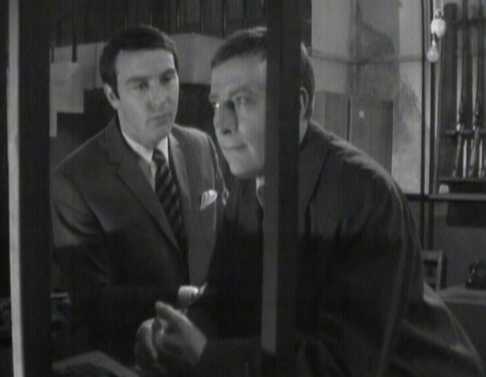
The opposition want Hunter dead – and they decide that Callan is the man for the job.  He’s picked up, taken to a warehouse and pumped full of drugs at regular intervals.  This intensive treatment makes him susceptible to suggestion and over a period of days they manage to convince him that Hunter is a double agent, involved in a plot to assassinate the Russian president.

Callan’s really put through the wringer in this episode and it’s very much a tour-de-force for Edward Woodward.  Whilst there’s a few brief cut-aways to show Meres and Hunter attempting to find him, the majority of the episode is firmly centered on Callan’s brainwashing.

It’s an elaborate plot – maybe too elaborate, you might say (especially since the last Hunter was killed in the street).  One major niggle is that the opposition pick up Lonely and tell Callan that they’re going to kill him.  We hear a shot off-screen and see Callan (already pretty far gone at this point) struggle to reach his friend.  It’s therefore odd, to say the least, that we later learn that they faked Lonely’s death and let him go free.  Logically, Lonely should have been killed (although it would have made a bleak episode even bleaker).

At the time this episode was transmitted, it wasn’t known if Callan would return for a third series, so there were reputably two endings shot – one where Callan died and one where he lived.  We know the answer to that now, but it doesn’t reduce the apocalyptic feeling of the final few minutes as Callan confronts Hunter and Meres is forced to shoot Callan.  The emotion in Meres’ voice clearly shows that he now considers Callan to be a friend – quite a change of events from the early episodes.

Most series wouldn’t have had the nerve to carry this storyline through to its logical conclusion, but then Callan wasn’t most series.  And whilst Callan’s final line is a sign that he’s not totally gone, it’ll be a long road to recovery.

Callan – Nice People Die at Home

nice people

Written by Robert Banks Stewart
Directed by Peter Duguid

Eric Marshall (Harry Towb) and his daughter Nadia (Angela Morant) run a pet shop in Shepherds Bush.  They’re also enemy agents.  The stuff they do is pretty low-grade though, Hunter says that they’re “little more than clerks, transmitting, reducing stuff to microdots and delivering to dead letter boxes around London”.

They have their uses though, as Hunter wants to unwittingly employ them to catch a big fish – Belukov (Frederick Jaeger).  Belukov is a remote figure who never leaves the safety of his Embassy, but when Hunter spreads a story that the Marshalls wish to defect, he hopes it will flush him out.  And Callan will be there to finish him off.  He has a special interest in this mission – six years ago Belukov killed Callan’s girlfriend in Beirut.

As with all the episodes featuring Ronald Radd’s Hunter, it’s the conflict between him and Callan that provides a great deal of the drama.  This is no exception, as once Hunter has told him that his target is Belukov, he’s pleased to see the reaction on Callan’s face.  Callan wants to kill Belukov, of course, but he’s also angry with the way that this Hunter can manipulate him.  “You know, ever since you left, this has just been an ordinary job for me. But no, that’s not good enough for you, mate. You’ve really got to get me going”.  Hunter responds by telling him that “you always work much better that way, Callan”.

Callan replaces an enemy agent called Ross (Roger Bizley) and can’t help but get to like both Marshall and his daughter.  They’re not monsters – just two people working for the interests of their country.  And when Callan realises that Marshall is terminally ill, he tells Hunter that “I wouldn’t have gone within a mile of that place if I’d known. Trust you to use a man who’s only got a few months to live”.

Hunter is unmoved – if the Marshalls have to be sacrificed then they will.  Callan knows what will happen to them if they’re caught.  Eric Marshall will be dead within a few months and his daughter will languish in jail for twenty years.  Later, Callan is able to spirit an injured Belukov away and offers Hunter an ultimatum.  He’ll kill Belukov if Hunter allows the Marshalls’ to leave the country.

Frederick Jaeger is good value as Belukov.  Once he was a top agent, now he’s reduced to pushing paper around the Embassy, although the crisis that Callan and Hunter create does force him into the open.  At the end of the story, Belukov taunts Callan that he’s weak and always has been.  Could Callan kill an injured, unarmed man in cold blood?  The final shot of the episode is interesting, as Callan attempts to wipe the blood (real or imaginary?) from his hands.

There’s also a few decent scenes for Lonely, who’s greeted by Callan with the words “My god Lonely, you smell like rising damp today, you really do”.  We also get to see Meres’ unusual interrogation techniques, which include firing a gun close to the unfortunate individual as well as driving golf balls at him.

Nice People Die at Home is mainly about the relationship between Callan & Hunter and Callan & Belukov.  The three actors are firing on all cylinders, especially Edward Woodward who once again is unforgettable as the complex, conflicted Callan.

Callan – The Worst Soldier I Ever Saw

tessa

Written by James Mitchell
Directed by Robert Tronson

Since Colonel Leslie (Ronald Radd) left the post of Hunter, he’s been working for the British government as an adviser on the Middle East.  One particular Middle Eastern country concerns him – it’s oil-rich, but there are indications that the Sultan is keen to expand his empire (which would mean encroaching on areas protected by the British).

The Sultan needs somebody to head his army though and he’s chosen Brigadier Pringle (Allan Cuthbertson).  This automatically puts Pringle in a red file and Callan is assigned to watch him.  He has a way in – it was Pringle who was responsible for Callan’s dismissal from the army.

Posing as a down-and-out, Callan catches the sympathy of Pringle’s daughter Sarah (Tessa Wyatt).  Pringle offers him a job as his valet, but he clearly could use a man like Callan in his new army.  Whilst Pringle might regard him as the worst solider he ever saw, that was only in peace-time.  In war, Callan would be a valuable asset.

The Worst Soldier I Ever Saw sheds some light on Callan’s life in the army.  Pringle’s description of him back then shows that he’s changed very little over the years.

SARAH: He must have been a very good soldier.
PRINGLE: Depends what you mean by a soldier. He was brave enough, certainly, but far too much of an individualist for the army. He always questioned orders, went his own way, that’s why he stayed a private. I made him up to corporal twice and I broke him twice. Finally I got him chucked out.
SARAH: So why do you bother now?
CALLAN: My dear, an army’s simply a device for killing the enemy. And as a killer, Callan was unequaled.

At the end of the episode, Callan is able to forcibly tell Pringle that “you bloody taught me how to kill, and when I got too rough, mate, you didn’t like it, did you?”.  The skills that Callan learnt in the army have subsequently been put to very good use by the Section.  This reinforces the notion that Callan is a man who’s trapped by his past and is therefore reluctantly forced to carry on fighting and killing (something he’s very good at).

Allan Cuthbertson was a familiar face from television and films and he’s characteristically solid as the autocratic Brigadier Pringle.  Tessa Wyatt is his idealistic daughter, who decides that she doesn’t want to follow him to the Middle East. Instead she’d sooner stay in Britain and help those less fortunate than herself.  They live in totally different worlds, he’s a solider through and through – as he admits, it’s the only thing he knows how to do – whilst she’s non-political and views the prospect of war with horror.  Their relationship helps to humanise Pringle as well as providing some dramatic tension.

The episode has some lighter moments – Edward Woodward is good value as a servile domestic who can’t help but let his more truculent nature shine though from time to time.  Anthony Valentine gets to play lower-class for a change, which is quite amusing.

Plot-wise, given that it’s clear from the outset that Pringle is keen to go to the Middle East, why didn’t the Section simply warn him off or take other, more permanent, measures?  As Meres says “there’s no need to speak to him nicely, he’s in a red file”.

The next episode (Nice People Die At Home) was held over from the first series, which explains why Ronald Radd pops up in this one.  As it would have been a bit odd to have a story where Radd returns as Hunter with no explanation, here he’s asked to take over temporarily whilst the current Hunter makes a trip to Russia.

This gives the episode a lovely final scene as Callan comes into the office and is confronted by his old nemesis. Callan’s relationship with Colonel Leslie was always very combative.  So as soon as he sees him, Callan asks for leave – which is refused.  Instead, he’s offered a choice of assignments – all of them in red files.

Callan – Death of a Friend

death

Written by Ray Jenkins
Directed by Peter Duguid

Jean Coquet (Geoff Cheshire), a French agent and a friend of Callan’s, is killed on the way to London.  Hunter assigns him to guard Coquet’s wife Francine (Ann Lynn) who may also be in danger.  Callan has never had a very high opinion of her (“she’s too dedicated … to everything except her husband”).  And his minding job goes sour when he’s surprised by several intruders who spirit Francine away, whilst at the same time a man calling himself Marcel Latour (David Leland) turns up at Callan’s flat.

Lonely is there, tidying up after a break-in, and Latour pulls a gun on him, telling him he’s “the wife of Jean Coquet”.  Meres disarms Latour, but they are ambushed on the way to the Section.  Who attacked Latour and were they the same people who killed Coquet?  And how is Francine involved?

Death of a Friend offers a slight change of pace – whilst it has the usual intelligence trappings, it’s much more of a mystery story, as Callan attempts to find the reason for his friend’s death.  Given how few friends he seems to have, this does help to humanise him a little.

Russell Hunter has some lovely moments.  After he and Callan view the wreckage of Callan’s flat, Lonely looks around before solemnly intoning that “There’s somebody don’t like you, Mr Callan”.  He also seems to make the worst tea in the world.  “Blimey, it’s pigswill” says Callan, after tasting a mouthful.  Once he’s left, Lonely takes a sip (in the manner of a wine buff) and seems to enjoy it.  Just a little throw-away character beat, but it’s a nice one.

There’s some very decent actors (Rex Robinson, Jerome Willis) in supporting roles and the solution of the mystery is unexpected – although it does leave some questions unanswered, especially the reason why they chose to kill Coquet in England and in such a public way (surely they knew that British Intelligence would take a close interest?).

The relationship between Coquet and Latour is handled sensitively.  For Callan, it makes no difference, as he tells Francine “A man is dead, Francine.  A very good man”.  Francine counters that he was a “lover of boys” and this statement is at the heart of the story.

Callan – Let’s Kill Everybody

let's kill

Written by Ray Jenkins
Directed by Robert Tronson

The Section is under attack from an unknown enemy.  The only lead they had was a man called Bremer (Peter Welch) who committed suicide whilst being interrogated by Meres and another agent called Gould (Henry Knowles).  But before Bremner died he did divulge one important piece of information – a foreign agent tasked with liquidating all the members of the Section is somewhere in London.

Let’s Kill Everybody was the first of five scripts written by Ray Jenkins.  He would also contribute Death of a Friend later on during the second series as well as two excellent stories for the fourth series (Rules of the Game and If He Can, So Could I).  His other script was Amos Green Must Live for series three, which proves that even good writers can have their off days – but we’ll leave the problems with that one for another time.

This episode was the final story to feature Michael Goodliffe as Hunter.  As he only appeared in five stories (You’re Under Starter’s Orders was sadly wiped) he maybe didn’t have quite enough time to establish a distinctive performance (although he was always very solid). Red Knight, White Knight implied that he was more of an administrator, with little practical knowledge of how the Section worked, but this was rarely touched upon subsequently – in later episodes he proved to be just as ruthless as Ronald Radd’s Hunter.

The next Hunter would be very different. so it’s tempting to think that Goodliffe’s more autocratic Hunter (similar to Radd’s performance) was needed as a stop-gap during the early part of series two, whilst Callan was re-integrated into the Section.  This then gives Derek Bond’s approachable Hunter even more of an impact.

At the start of Let’s Kill Everybody, Callan is a happy man.  He’s just started a relationship with the gorgeous Jenny Lauther (Hilary Dwyer).  Jenny was a nurse at the clinic where Callan had recently been sent for treatment (to have a cyst removed).  Callan’s on sick-leave and is planning to spend it in Jenny’s company when Hunter calls him into the office.  Hunter quotes “Emergency D” which brings an instant response from Callan.

Hunter asks Callan if he’s made any new contacts with the last few weeks – Jenny is the main one.  Could she be the assassin?  On the face of it, it seems ludicrous, but Callan has to be sure.  He does it in the only way he knows how – by asking her point blank and searching her bag.  This upsets Jenny as she sees the affable man she loves transformed into a cold, relentless interrogator.  It’s another indication that normal human relationships are always going to be something that Callan will struggle to maintain.

She appears to be completely innocent – as the assassin turns out to be German academic Dr Paula Goodman (Heather Canning).  Dr Goodman is Jenny’s tutor (she resigned from the clinic to re-enter higher education).  One of the flaws of the story is that although we see Hunter with a file on Goodman early on, he doesn’t make any attempt to have her picked up until much later.  And was it just a coincidence that Jenny was placed with her or did Jenny’s relationship with Callan have something to do with it?

Poor Jenny seems to be another innocent caught in the crossfire, as Goodman drugs her so that she later drowns whilst canoeing.  Edward Woodward’s barely controlled fury when he realises that Goodman killed Jenny is a highlight of the story, as is the scene where Goodman sows seeds of doubt about Jenny’s loyalties in Callan’s mind.

Jenny was a toy. A doll. A doll with an ear for private phone calls. No intelligence, no brain, nothing to match that obscene English exterior. Just a reporting doll. Wound up and taught to walk back to … who? That worries you, doesn’t it? Which side was she on? Was she one of us, but expendable or was she … ?

It’s easy to form the impression that the Section is a little short on good men apart from Callan and Meres.  It isn’t the first time we’ve seen other operatives rather easily dealt with – and their security procedures (one man covers another) does seem to be woefully inadequate to deal with the current crisis.  It’s also a little strange that the job of killing all the members of the Section is given to just one person (although late in the story it is revealed that Goodman does have backup).

These quibbles apart, it’s a tense story with Hilary Dywer making a good impression with her limited screen time.

Callan – The Little Bits and Pieces of Love

little bits

Written by James Mitchell
Directed by Peter Sasdy

Hunter is interested in a Polish physicist named Andrei Brezhevski (Andy Devine).  The Russians have developed a hundred megaton bomb, which according to Hunter would destroy every living thing in the UK.  But although they have the rocket they don’t have the fuel – by the end of the year though, thanks to Brezhevski, they will have.

Hunter wants Brezhevski lifted, so that he can give the fuel formula to the West (thus negating the Russian advantage). And even though he’s closely guarded, Hunter has a lever that will force him into the open – his wife.

During WW2, Brezhevski’s wife Sofia (Pauline Jameson) was interned at Dachau. After the war was over, she was in a highly disturbed state and was slowly nursed back to health by Dr Charles Rule (Laurence Hardy). Believing her husband to have died during the war, Sofia married Rule and they’ve lived together contentedly ever since. Callan forces Sofia to write a letter to Brezhevski which will compel him to make the trip to England.

We’ve already seen how the act of killing has scarred Callan, but in this story the tragedy isn’t just a death – it’s the possibility of what will happen to Sofia after Brezhevski has come to England.  The following exchange between Callan and Hunter makes the situation quite clear.

CALLAN: I should think when all this is all over she’ll finish up in a mental home
HUNTER: That bothers you?
CALLAN: That really bothers me
HUNTER: Try thinking about that hundred megaton bomb. That should bother you even more

Hunter views Sofia as little more than a pawn to be sacrificed – he’s thinking about what would happen if the Russians detonated their bomb.  Callan understands this, but he clearly loathes the job he has to do.  Later on, when the two of them are waiting at the airstrip for Brezhevski’s arrival, he does unbend a little.

CALLAN: Did you know what Brezhevski’s doing?
SOFIA: I knew only that he was famous
CALLAN: Well he’s developing a fuel for a rocket that carries a nuclear warhead
SOFIA: And you want it?
CALLAN: Yeah, we want it
SOFIA: So that you can drop nuclear warheads on them? Your argument does not interest me, I’ve seen too many people die. One day I think it will not interest you either

In many ways, Brezhevski and the rocket fuel are only MacGuffins as the story is more about the question of whether it’s right to sacrifice the innocent (in this case Sofia) for the greater good.  Hunter unshakably thinks so and Callan seems to as well – but he doesn’t have to like it.  At the end, Sofia is still alive (although Brezhevski is less fortunate) but the memories of the last few days will remain with her forever and it’s left to the viewer to decide for themselves whether the cost was worth it.

Apart from the odd loophole (if Brezhevski’s been desperate to locate his wife for the last twenty years, can we really believe that the Russians haven’t been able to find her?) this is another tight, well written script by James Mitchell.  Vladek Sheybal gives his usual, idiosyncratic performance as Dicer, a Polish refugee with a burning hatred of the Eastern Bloc.  David Garfield is a little hammy as a Russian agent, but he’s really the only weak link in the story.

Pauline Jameson is outstanding as a woman forced to confront the ghosts of her past and it’s her performance (along with the usual high-quality acting from the regulars) that makes this episode such a memorable one.

Callan – The Most Promising Girl of Her Year

prom

Written by James Mitchell
Directed by Peter Duguid

Joan Mather (Elizabeth Bell) is a research scientist working at the Biological Research Centre.  Although her project is close to a breakthrough, she tells her superior, Dr Bradford (Raymond Young), that she wishes to leave because she has concerns that their work could developed into a deadly weapon.

But as Joan is blessed with a photographic memory she’s a grave security risk.  And when it’s discovered that her boyfriend Carl Donner (David Hargreaves) is an East German agent, the situation becomes critical.  Callan is designated to watch her – much to his dismay as “birds with brains” are not a combination that appeals to him.

The Most Promising Girl of Her Year is a strong episode with a down-beat ending.  Joan is a naive figure who believes implicitly that Carl Donner is the same sort of person that she is – someone who doesn’t care about politics and is only interested in their relationship.  When the Section pick up Horst (one of Donner’s colleagues) they are able to demonstrate to Joan exactly what Donner’s true feelings for her are.  Horst is pumped full of drugs by Snell (Clifford Rose) and repeats in her presence the joke he had shared before.  “You said to me how did Donner feel about the girl?  And I say how does a carpenter feel about wood?”

Even after this, Joan isn’t convinced and Callan has to keep plugging away – providing an example of a previous girl that Donner had deceived, for example.  “He squeezed her dry and then he left her. She killed herself. I wouldn’t want you to kill yourself, Joan”.  When he tells her that Donner is a highly trained agent who is well versed in killing, Joan still can’t believe him.

JOAN: Carl told me he hated killing
CALLAN: I hate killing, I sometimes do it
JOAN: You don’t hate it, you love it
CALLAN: Look, I don’t have to justify myself to you, darling
JOAN: It doesn’t make any difference what you say, I love him and I trust him.

Although this is a pretty bleak episode, there are a few moments of light relief.  For example, Callan asks Lonely to keep an eye on Joan (and also burgle her flat).  This he does, although he seems more interested in the lingerie of Joan’s flatmate.  “Cor, you wanna seem some of the stuff that Sonia’s got. Well you can hardly see some it it, nearly all transparent it is, with bows on”.  To which Callan asks him whether he’s been eating raw meat again.

We get a first look at Snell in this episode.  He would become a semi-regular character, always on hand when Hunter needed answers from people – although the cost would be high for his unfortunate victims.  Clifford Rose was always chilling as Snell – a man who clearly enjoyed his work and seemed to approach it from the angle of scientific research.  The fact that many of his subjects became vegetables seemed not to be something that overly concerned him.  This is highlighted when Joan tells Snell that the drugs given to Horst will destroy his mind.  Snell agrees but then tells her that it was a rush job, arranged primarily for her benefit.

It’s a slightly messy ending (both story-wise and also the direction, which does seem slightly miscued when the big moment comes).  With only a few minutes screen-time at the end, David Hargreaves still manages to make an impression as Donner.  He’s able to demonstrate to Callan (and the audience) exactly how little he cared for the unfortunate Joan.

Callan – Red Knight, White Knight

red knight

Written by James Mitchell
Directed by Peter Duguid

The Section has a new Hunter (Michael Goodliffe).  Meres is present to greet him, although he can’t help grumbling at the early time.  “Why the devil he wants to start at the crack of dawn, god only knows”.  First impressions are that this Hunter will be a stickler for the rules – he berates his secretary (Lisa Langton) for leaving secret files on his desk where anybody can read them and also insists that nobody is let into his office when he isn’t present.

Hunter and Meres review the Section’s personnel files – including Callan’s.  Meres thought that the new Hunter should take a look at him, although not for reasons of friendship, as Meres says, “I detest him. But he knows the job. The only thing is,sir, he likes to know why it has to be done”.

After reading Callan’s file, Hunter sums him up.  “He’s emotionally unstable, a one-time crook, he has a dubious circle of acquaintances and he tends to take the law into his own hands.  We don’t want heroes in the Section, this is a team”.

The new Hunter (Michael Goodliffe)

It doesn’t sound like the beginning of a beautiful friendship and the first meeting between the new Hunter and Callan is as awkward and spiky as you might expect.  It isn’t helped by the fact that Meres didn’t warn him that there had been a change at the top.  But even though Hunter has expressed his doubts over Callan’s character, he still wants him back – he tells him that he’ll be safer in the Section than he would be outside.  And when that doesn’t work, he says it would be quite easy to put him back in prison.

They appear to have reached an uneasy truce for now, although Callan’s interest is piqued when Hunter asks him if the name Bunin (Duncan Lamont) means anything to him.  It certainly does, Callan was sent to kill him in 1963.  Hunter tells him that Bunin wishes to defect – a statement that Callan finds impossible to believe.  When Hunter, Callan and Meres meet Bunin, he has an interesting proposal.  Miersky (a top-ranking Soviet agent) also wishes to defect – but he’ll only do so to the Section’s top man in Russia.

The first story of the second series, Callan was now a Thames production rather than an ABC one.  From the point of view of the quality of the existing prints this is good news (the two surviving ABC stories from series one were both in pretty poor shape, this episode looks much better).

Bunin (Duncan Lamont)

Given how good Ronald Radd had been in the first series, I assume that it was his decision to leave.  In story terms though, it’s a positive plus as a new Hunter allows everything to be shaken up.  Callan may have disliked and distrusted the old Hunter, but at least he knew that he understood the job.  Early impressions are that the new man is more of a civil servant, with no practical knowledge.  “He’s never been out in the field, mate, that’s for sure. He doesn’t know how bloody cold it gets out there”.

When Bunin disappears (after killing a Section operative) Hunter now accepts that Callan’s original idea (Bunin had come to kill him) was probably correct.  And if Miersky had met the Section’s top man in Russia, that would have been two key British operatives neutralised by the Russians.

Hunter decides to act as a tethered goat in order to bring Bunin into the open.  This is something that Callan simply doesn’t understand and his professional sensibilities are also appalled by the risks that Hunter takes (for example, by attempting to open the curtains he provides a clear target for anybody outside).  Hunter is quite calm, though.  “I’m assured you’re the two best men I’ve got. I’ve every confidence. Bunin’s alone, gentlemen. Even if he gets one of you, one of you will get onto him before he can deal with me. I’m quite safe”.

The relationship between Callan and Meres is developing (although it may also have advanced in the four wiped episodes of series one).  Whist Meres still professes to detest him, he does appreciate just how good Callan is, and at the start of the story he’s lobbying hard for him to be reinstated.  They also share a nice moment when Bunin proposes a meeting between Miersky and the Section’s agent in Russia.  It’s just a quick glance – but it’s enough to signify that they both believe that Bunin’s playing them, whilst Hunter still remains convinced he’s telling the truth.

Whilst a good chunk of the story revolves around the relationship between Callan and the new Hunter, there’s also time for some decent two-handed scenes between Callan and Bunin.  They’re very much two of a kind – and Callan is quite clear from the start that he doesn’t believe a word of what Bunin says.  Duncan Lamont is very solid and is a formidable foe.  It’s a pity that he’s killed off at the end of the episode (shot by Callan, of course, as he attempted to assassinate Hunter) as it’s possible to imagine this storyline could have been developed over several episodes.

This is also the first surviving episode where we see Hunter’s secretary (Lisa Langton).  She was a voice on the phone in the two existing series one episodes, and as the series progresses she’ll have her moment in the spotlight (especially the series three episode A Village Called G).

Although Callan has saved Hunter’s life, it’s quite clear that he still doesn’t understand or trust him.  But it seems he’ll have to, as Callan’s now firmly back in the Section.

Callan – You Should Have Got Here Sooner

you should

Written by James Mitchell
Directed by Piers Haggard

Lonely is attacked in his rooms by a mysterious stranger who we later learn is called Loder (Derek Newark).  Loder works for the Section and along with Meres they are minding a man called Pollock (Jon Laurimore).  Lonely broke into the safe house that was being used by Pollock and his description of him (or rather the smell of him) convinced Meres that he knew exactly who the burglar was.

Pollock’s a Russian spy who’s currently front page news – as someone’s just broken him out of prison.  He believes that Meres and Loder are Russians – which is exactly what Hunter wants him to believe.  Before Pollock was captured and sent to prison, Hunter is convinced that he stowed away a nerve gas formula – and Hunter wants that formula.

With Callan still not back in the Section, it’s fair to say that You Should Have Got Here Sooner does require a chain of coincidences in order to bring him into the narrative.  The first is that of all the houses in London to burgle, Lonely should choose one that’s being used by the Section to guard a Russian spy.  The second is that Pollock’s description of Lonely is enough to convince Meres that there’s only one man it can be (presumably Lonely is the only thief in London with a personal hygiene problem).

The initial attack on Lonely does highlight the growing relationship he has with Callan.  In A Magnum for Schneider Callan seems to have barely concealed contempt for him, but by this story there’s certainly more than a spark of affection.  When Lonely thanks him for looking out for him, Callan responds that someone has to.  Although later he does tell Lonely that if anybody’s going to beat him up then it’s going to be him (and it’s said in such a way that it’s impossible to tell if he’s joking or not).

Callan meets with Hunter and Hunter agrees to leave Lonely alone as Callan insists he’ll keep quiet.  However, Meres decides to make sure and attacks Lonely, much more thoroughly than Loder.  When Callan reaches Lonely’s rooms, he’s barely conscious and can only mumble “You should have got here sooner, Mr Callan”.

The following exchange between Callan and Hunter is an interesting one as it highlights the subtleties of the main character dynamics.  What’s the overriding reason for Callan’s anger?  Is it that Lonely was brutally attacked or is it that by attacking Lonely, Meres was making an indirect attack on Callan?

CALLAN: Somebody duffed Lonely and you promised me that wouldn’t happen.
HUNTER: Who?
CALLAN: Somebody called Meres.
HUNTER: You’ve no evidence Callan.
CALLAN: Who else could it have been? Anyway, since when have you needed evidence?
HUNTER: What do you want me to do?
CALLAN: Nothing I’m coming over.
HUNTER: That little man’s so important?
CALLAN: Yeah. Yeah he is to me. Besides, Meres knows I look after Lonely. So when he was beating him up, he wasn’t just attacking him – he was getting at me. Now he’s not going to get that kind of edge on me, Hunter. And neither are you.
HUNTER: What a relief, for a moment you sounded like a knight in armour, it’s only selfishness after all.

The dynamic between Callan, Lonely, Hunter and Meres is the driving force behind this episode, whilst the story of Pollock and the formula is very much secondary.  But although Jon Laurimore doesn’t have a great deal of screen time, he’s such a solid actor that he’s able to make something out of Pollock.  Russian spies (such as George Blake, who had escaped from Wormwood Scrubs in 1966) were familiar news stories at the time, so this story (like many episodes of Callan) was very topical.

Callan – The Good Ones Are All Dead

good

Written by James Mitchell
Directed by Toby Robertson

The Good Ones Are All Dead was the first episode of series one and whilst it follows on directly from A Magnum for Schneider it was obviously also designed to work as an introduction to Callan’s world.

Therefore the first few minutes cover the same ground as the opening of A Magnum for Schneider (and in some parts very similar dialogue) to explain the basics.  Callan used to work for Hunter, but not any more and although Hunter has one more job for Callan – he isn’t interested.  “You sacked me, remember. You said I was too soft. Well I’m still soft, Hunter. I still worry about the people I killed.  I’m done with you mate, I’m finished”.

Hunter is implacable – either Callan does this job or Hunter will destroy him and for once it’s not a wet job (secret service slang for murder).  Instead Callan has to monitor Reinhold Strauss (Powys Thomas).  According to Hunter, Strauss is a Nazi war criminal with three thousand deaths that can be laid at his door.  His current identity is that of a businessman named Nicolas Stavros.

The Israelis are coming to collect Strauss so they can put him on trial – Hunter wants to make sure this happens, a dead Strauss would be no use to anybody.  Callan isn’t convinced that Stavros is Strauss and mentions this to his Israeli contact Avram (Tom Kempinski).  “He doesn’t look like a killer to me. He’s podgy, he’s soft, he’s got a girl.  It’s twenty three years ago”.  Avram counters that “men change, their crimes do not”.

Callan does discover irrefutable proof that Stavros is Strauss – rather foolishly he kept a trunk of Nazi memorabilia – his dress uniform, party card, revolver and a bag containing thousands of gold fillings.  Why does he still have these artifacts?  Is it to gloat over his past crimes or as a reminder of the terrible deeds he committed?

When confronted by Callan, Strauss begs for mercy.  “For twenty-three years I have not harmed a living soul. Right now, Strauss is dead. I am Nicolas Stavros, Callan; and Stavros would not hurt an animal, let alone a human being”.  Strauss then asks Callan “What use is a monster in a cage?”.  Callan allows Stavros to commit suicide with a cyanide capsule, an act that will undoubtedly infuriate both the Israelis and Hunter.

Can a man like Stauss ever be redeemed?  That’s one of the key questions of the episode and Callan seems to ask the same question of himself.  He doesn’t necessarily want to be drawn back into Hunter’s world – although it’s a job that he does supremely well (but at what personal cost?).  There’s a very revealing scene where Lonely asks Callan what it feels like to use a gun.  “What’s it like? It’s like eating your lunch. If you’ve got the stomach for it, it’s easy. Trouble is, you get to like it”.

The relationship between Hunter and Callan is finely balanced, as Hunter confides to Meres, “Callan and I seem to have arrived at a very good working arrangement, what you might call a balance of terror”.

If Powys Thomas is a slight weak link as Strauss, then the regulars (Woodward, Radd, Valentine, Hunter) more than make up for him.  The clip below of the first five minutes is an electrifying tussle between Callan and Hunter that makes me wish that Ronald Radd had stayed with the series for longer.

Armchair Theatre – A Magnum for Schneider

magnum

Written by James Mitchell
Directed by Bill Bain

David Callan (Edward Woodward) used to work for a shadowy section of the British Government, but six months ago he walked away.  Now, his old boss Hunter (Ronald Radd) seems to want him back.

Callan’s currently working in a dead-end job, which he hates.  Hunter professes sympathy, but goes on to tell him that “you chaps don’t have much choice when you leave me.  I do my best of course, but your talents are so specialised.  After all, what can you do?  Use a gun, use your fists, open locks.  Legally, you’re unskilled”.

Does Callan actually want to return? If he does, then it’s plain that he’ll still have strong misgivings about the jobs he’ll be required to do.  This is the driving force behind not only this Armchair Theatre, but the subsequent series.  Callan has undoubted skills, but he also has a conscience and it’s this conflict which provides a great deal of the drama.

Hunter goes on to describe the reason for his department’s existence.  “What’s my section for?  Getting rid of people.  Bribery, frame-ups, deportation and death.  In the last seven years I’ve had ten people killed, you did two of them.  They all had to die Callan.  If they hadn’t they would have killed too many innocent people themselves.  And that’s what security’s for – protecting innocent people”.

There’s a clear distinction between Callan and Hunter’s current right-hand man Meres (Peter Bowles).  Meres, like Cross later on, is a company man – quite happy to obey Hunter’s orders without question.  If Callan doesn’t have all the facts then he’ll always question and then decide on his own course of action.  This makes him something of a loose cannon and a clear liability, but his undoubted skills have kept him alive so far.

Hunter wants Schneider (Joseph Furst) killed but he doesn’t explain why.  Callan has to do it quickly and without any official assistance – not even a gun.  Callan knows Schneider (he works in the office just down the corridor) and he seems a perfectly pleasant man, but for all that Callan dislikes and distrusts Hunter he knows that there has to be a reason why Schneider has been placed in a red file (Hunter’s system for people who demand “special” treatment).

After burgling Schneider’s flat, Callan finally understands why – Schneider is a gun-runner indirectly responsible for the deaths of a number of British soldiers.  Callan therefore accepts that he should die and asks his smelly friend Lonely (Russell Hunter) to get him a special gun – a Magnum, like the ones that Schneider imports.

The relationship between Callan and Lonely would be one of the joys of the series – although here it’s a very hard-edged one.  Callan makes the usual jibes about Lonely’s lack of personal hygiene, but there’s little of the good humour that the pair would share later.

One irony of the story is that Callan is initially reluctant to kill Schneider because he’s got to know and like him.  If Hunter had given him all the information to begin with, he probably would have carried out the mission much earlier.

Callan has told Hunter that he will kill Schneider by 11.00 pm. Hunter then arranges to have the police call shortly after that. Could Callan have shot Schneider in cold blood? The question didn’t arise, because Meres had broken into the flat (ready to kill Schneider, if Callan wasn’t able). When Schneider pulls a gun on Meres, Callan is able to do the deed.

Callan’s well aware that Hunter had double-crossed him.  If he’d killed Schneider by 11.00 pm, then he would have been caught red-handed.  So he exits the flat, leaving an unconscious Meres and the murder weapon behind.  After informing Hunter that he really doesn’t want to work for him, Hunter places Callan’s details into a red file.

Initially a one-off for Armchair Theatre, James Mitchell saw the obvious potential in taking the characters further and Callan would eventually run for four series during the late 1960’s and early 1970’s.  Even here, most of the parts are in place.  Edward Woodward was, of course, perfect as Callan – a man with scruples in a business where that’s a positive liability.  Ronald Radd was the first (and in many ways) the best Hunter – unscrupulous, amoral and totally untrustworthy – although there’s sometimes the odd spark of understanding between him and Callan.

As I’ve said, Lonely is not yet the confidant of Callan that he would become, but Russell Hunter does a great deal with a small role and it may be that the character was developed once Mitchell knew what Russell Hunter could deliver.  Meres would also be a regular in the series, but played by Anthony Valentine and not Peter Bowles.

Here, Callan and Meres barely exchange more than a few words – but their relationship would develop during the first two series.  Initially rivals, they would grow to understand and appreciate each other.  Whilst Peter Bowles is a fine actor, I think that having Anthony Valentine as a regular was something that really benefited the series.  His brand of suave brutality contrasts well with the more down-to-earth nature of Callan.

The plotting does seem a little odd at times. Hunter wants Schneider killed as a warning to others. That’s fine, but why does Hunter insist that Callan operate solely by himself? If Hunter’s plan is to warn off anybody who may be interested in taking Schneider’s place, then surely it has to be clear that this was a state-sponsored execution.

Also, why does Hunter make things more difficult by involving the police? Maybe it was simply to ensnare Callan – but I’m not sure why Hunter would have involved himself in such an elaborate plot to neutralise one of his old employees (Callan’s clearly not regarded as a danger at the start of the story – he’s not in a red file).

The way that Schneider suddenly becomes deeply suspicious of Callan during their second meeting (especially since their first was so affable) also seems a little strange. But these little quibbles notwithstanding, A Magnum For Schneider is still a very solid introduction to the world of David Callan.

It’s a shame that the archive retention of the first two series of Callan isn’t greater (two of the six stories from series one exist, nine of the fifteen from series two) but since other programmes fare even worse, we’ve a decent cross-section of stories from the B&W era, which I’ll be reviewing in the weeks to come.