The opening of The Dalotek Affair is quite interesting. Dr Frank E. Stranges (author of numerous books on UFO’s) plays himself in a brief chat show segment. He cites the widely reported positive views of General MacArthur on UFOs, although it seems that MacArthur was misrepresented, see here.
We then switch to a very groovy restaurant where Foster and Freeman are enjoying a meal. Foster spies a young woman that he knows, Jane Carson (Tracy Reed), but who doesn’t know him. How is this possible? It’s all to do with the Dalotek Affair, some six months back. Cue echoing soundtrack as we travel back to find out what he means.
UFOs are targeting apparently empty sections of the Moon, there’s interference with Moonbase communications and a meteorite has landed near the Dalotek installation (a private research base working on the Moon, much to Straker’s disgust). A more grumpy than usual Straker tells Foster to investigate.
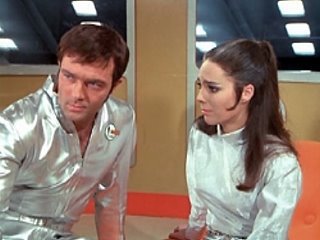
It doesn’t take long for Foster to start making eyes at Carson, although not everyone approves (check out Joan Harrington as Foster and Carson have a little chit-chat, some unrequited love there, possibly?)
Foster gets to the bottom of the mystery eventually but his passion for Jane Carson goes no further as her short-term memory is wiped (as she’s seen SHADO’s operations on Moonbase, something no civilian can do). Another example of SHADO’s frightening amount of power.
A so-so episode, with the Foster/Carson subplot (and the shot of them after the amnesia drug has taken effect has to be seen to be believed) helping to liven up proceedings.
As soon as Peter Davison had been announced as the Doctor there was speculation as to how he would play the part. JNT believed that he had cast a “personality” actor, similar to Jon Pertwee or Tom Baker, so assumed that Davison would effortlessly inject his own persona into his portrayal.
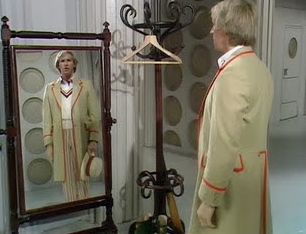
Davison was less sure that he was that sort of actor and so went back to the tapes to study his predecessors. Castrovalva has some obvious nods to past Doctors (particularly in the first episode) but going forward what Davison seemed to mostly draw upon were elements from the Hartnell and Troughton incarnations.
Jon Pertwee and Tom Baker’s Doctors tended to automatically dominate proceedings, whereas Hartnell and Troughton might stay a little more in the background before emerging with the solution. Davison’s Doctor would also, like Troughton’s, be happy to play the fool in order to lull people into a false sense of security.
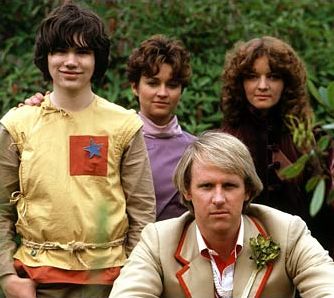
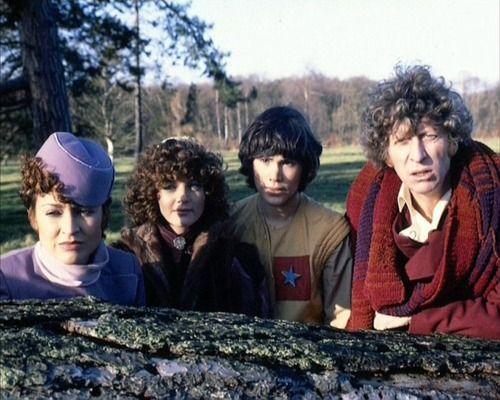
If elements of his portrayal harked back to Hartnell and Troughton, then having three companions was another link back to the 1960’s. However this worked better then than it did in 1982, for several reasons.
Firstly, as the 1960’s series ran virtually all year round, a larger regular cast helped to fill the gaps when one of the lead actors took a holiday. The stories also tended to be longer, therefore there were more opportunities to split the narrative between the Doctor and his companions.
But possibly the most obvious reason why the dynamic of the Doctor/Ian/Barbara/Susan worked so well was down to how each character operated within the structure of the series as it was during S1. To put it somewhat crudely, the Doctor provided the scientific know-how, Ian provided the practical know-how, Barbara was the moral centre and Susan screamed and needed rescuing.
Somewhat of a rough generalisation, but in essence that was how things worked. The S1 Doctor was mostly motivated by a desire to return to the safety of the TARDIS and if he helped anybody along the way it was often incidental. It was Barbara and sometimes Ian who most often tried to help others (or interfere as the Doctor would say, in The Aztecs for example).
Over time the Doctor would take over the characteristics of Ian and Barbara, so that by the early 1970’s the Doctor only needed a single companion – to ask questions, scream and be rescued (again, to put things slightly crudely).
“Well, I suppose I’ll get used to it in time.”
The problem of the overcrowded TARDIS was obviously picked up during the scripting of S19, so in Castrovalva Adric takes a back seat which allows Nyssa and Tegan to take the lions share of the action. Nyssa then sits out Kinda so that Adric and Tegan can enjoy a more substantial role in proceedings.
Christopher H. Bidmead obviously loved the concept of the TARDIS and the first episode and a half are set within the ship. During this time we see flashes of the Doctor-to-be from Davison and Nyssa and Tegan’s friendship starts to develop.
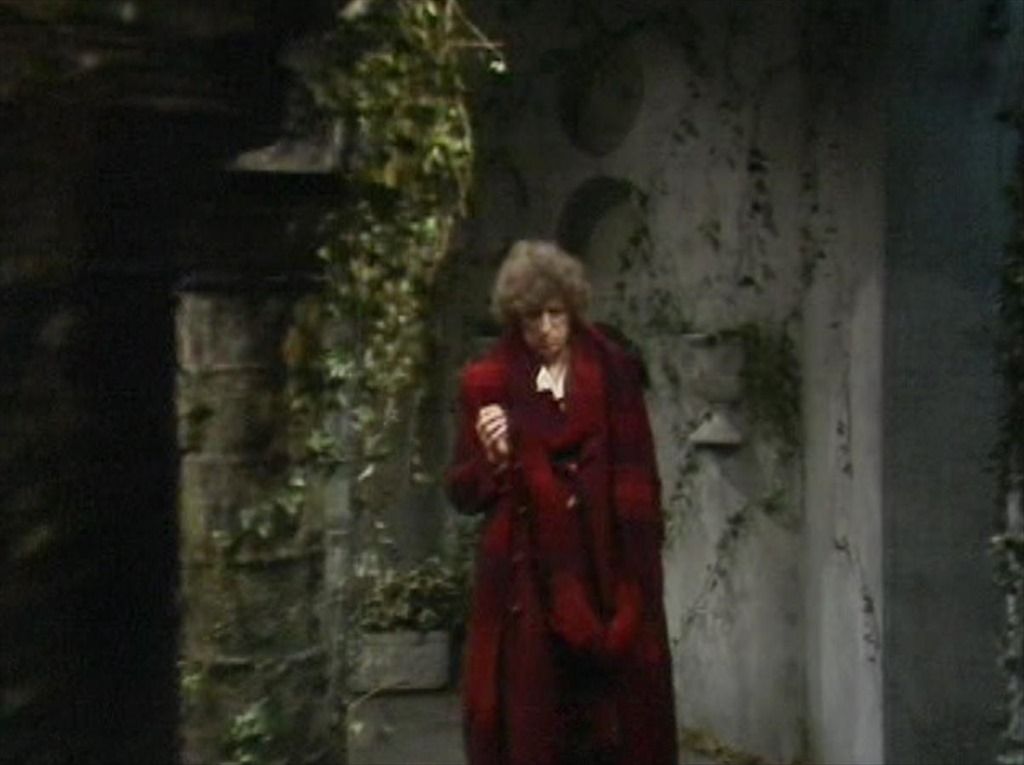
Whilst the Doctor is weak and vulnerable for much of the story, particularly in the opening couple of episodes, there’s enough signs to demonstrate that Davison already has a good grasp on the part (although this story was actually recorded fourth). His character wouldn’t really emerge until the end of episode four, but it’s a confident enough performance.
Unlike Patrick Troughton or Tom Baker, Davison could never take a so-so script and turn in a performance that would help you to ignore the average material. But give him a good script and a well written character (Frontios, Androzani) and he would deliver the goods.
Once the TARDIS crew enter Castrovalva then the story really begins to motor. There are fine performances from Frank Wylie (Ruther), Michael Sheard (Mergrave) and Derek Waring (Shardovan) and the dialogue has a pleasing, lyrical nature. It’s maybe a shame that they didn’t pitch up here an episode earlier.
Michael Sheard was always such a dependable performer, both in Doctor Who and in general, and there’s a typically good performance from him in this story as Mergrave. This is complimented by Frank Wylie and together they make a nice double-act.
“If we could cook your memories, Ruther, we would feast indeed.”
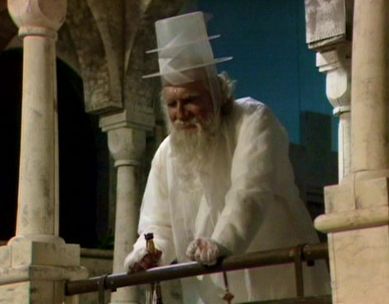
Most interesting of all is Derek Waring as Shardovan. There’s a clear sense of misdirection at play here as everything is directed to make the audience believe that he’s the villain (he’s dressed in black for example whilst the Portreeve is dressed in white) but he turns out to be a man struggling with the concepts of reality and illusion.
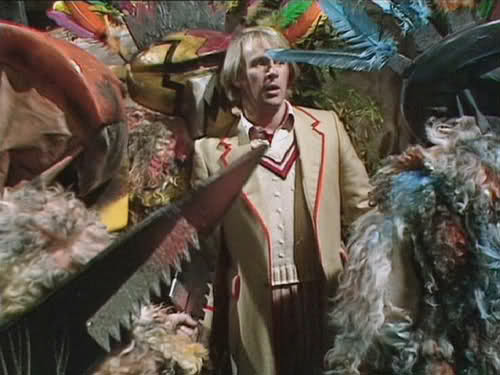
As for the Master, Anthony Ainley has a bit of a sticky wicket. In the first few episodes he’s stuck in a cupboard and forced to share numerous two-handed scenes with Matthew Waterhouse – a difficult task for any actor. He then gets to indulge in a bit of dressing up as the Portreeve. The Master’s love of disguises would reach a peak in The King’s Demons, for which I find it difficult to find adequate words to describe the full majesty of his performance. Once I reach that story I promise to try though!
The mad hatter
He’s more restrained as the Portreeve, but it still begs the question as to whether it was designed to fool the audience or the Doctor and his friends. It’s hard to imagine that the audience wouldn’t have failed to notice it was Ainley dressed up, so let’s be generous and assume that the Doctor didn’t twig because of his post-regenerative state and the atmosphere of Castrovalva affected Nyssa and Tegan’s senses.
Apart from the Master’s dressing up games, it has to be said that this is one of the most bizarre and convoluted schemes he’s ever been responsible for. It’s therefore possible to posit that somewhere between The Deadly Assassin and The Keeper of Traken the Master went completely, totally, mad. This would explain the incredibly over-elaborate plan he’s concocted here.
Somehow he knew that the Doctor would die in Logopolis, knocked up a duplicate Adric with block transfer computation, switched him for the real one, got the faux Adric to programme the TARDIS to fly back to Event-One, and if that failed to destroy the ship then the TARDIS would journey onto the non-existant Castrovalva, as well as inputing information about the planet in the TARDIS data-bank. Faux-Adric only flicks a few buttons on the TARDIS console, but it’s enough to do all this. Clever, that!
Then the Master creates a whole world, down to the smallest details, in order for what exactly? His great plan seems to consist of nothing more than a wish to prise open the zero cabinet so he can take one last look at the Doctor before killing him. Couldn’t he have just killed him on Earth? It would have saved a lot of bother.
Ainley’s performance when the Master is attempting to open the zero cabinet with a poker is a little embarrassing, although maybe that was what they were aiming for, as it clearly shows the Master’s grip on reality has gone completely. But the final shot of the Master, as he’s pulled back in the city by the Castrovalvans, is very well done – it has a suitably nightmarish quality.
Overall then, Castrovalva is a decent opening story for Peter Davison with some good guest performances. It wraps up the plot threads from S18 and allows a fresh start for the further adventures of the new Doctor and his young group of companions.
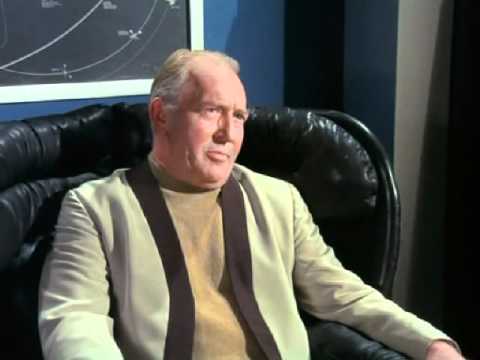
Conflict is a good episode for both Ed Bishop and Michael Billington. Straker gets to lock horns with James Henderson (Grant Taylor), who as President of the International Astrophysical Commission is responsible for approving the funding level for SHADO. And in the interests of good drama, Straker is always pushing for more whilst Henderson is always trying to cut back.
This conflict is at the heart of the episode. Straker believes that the various items of space junk orbiting the Earth are a hazard to SHADO spacecraft and wants them removed. Henderson doesn’t agree and won’t release the funds.
This is one of several key episodes that examines the conflict between Straker and Henderson and both Ed Bishop and Grant Taylor are excellent at portraying two totally single-minded individuals who both believe they are always right.
Shortly after their meeting, a SHADO lunar module is destroyed on reentry. Straker is rightly convinced that the aliens were responsible – they have infiltrated the space junk with limpet mines. But their ultimate aim strikes somewhat more closer to home.
Michael Billington gets another solid episode as Foster disobeys the ban on lunar flights to test a hunch. It nearly gets him killed, but he proves to his satisfaction that there is alien involvement. But Henderson isn’t convinced and after he thinks that Straker has left SHADO HQ undefended and in imminent danger of a UFO attack he attempts to remove him from command.
I’ve said it before, but the modelwork (particularly the lunar shots) are absolutely breathtaking. Derek Meddings would later design the miniatures for the 1979 James Bond film Moonraker and some of the shots here wouldn’t have looked out of place in that film.
This isn’t an action-packed episode but the spat between Straker and Henderson is strong enough to drive the episode and makes it one of the stronger entries in the early part of the series.
A UFO lands on the moon and the alien shoots out a window on Moonbase, killing a SHADO worker. As so often, the aliens’ motives remain unclear – why travel all that way for such a minor attack?
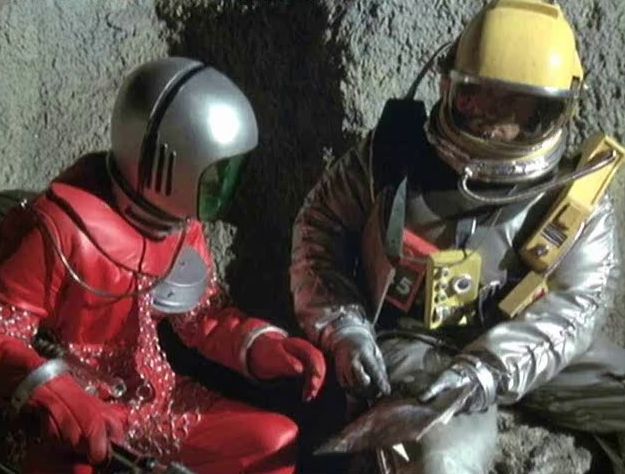
As the UFO is still on the Moon, Straker is keen to capture it. New Moonbase commander Paul Foster is more interested in killing the alien in order to avenge the murder of one of his men, but things don’t quite go as expected.
As ever with UFO, there’s some gorgeous modelwork – the lunar surface is particuarly impressive. The full size lunar landscape looks very good too, although some of the rocks do have a tendency to wobble when somebody is thrown against them!
The main plotline develops in an interesting way, Foster leads a party to capture the UFO but it’s destroyed by the interceptors after the Moonbase party is attacked. Foster is reported as missing, believed dead. The alien is still alive though, saves Foster’s life and together the two of them begin the long trek back to Moonbase.
It’s surprising that everybody gives Foster up for dead so quickly. Even if they were convinced that he couldn’t have survived you would have thought that they would have gone back to retrieve his body. But his apparent death leaves a vacancy which Straker proposes to fill with Mark Bradley.
Bradley is reluctant for several reasons, not least his colour. Straker is unconvinced by this, telling him that racial prejudice burned itself out five years ago. This, of course, must stand as UFO’s least convincing predication of the future! After winning him round with such winning words as “I don’t care if you’re polka dot with red stripes, do you want the job?”, Bradley agrees.
The lunar scenes with Foster and the alien are quite slow paced, understandable in a way because they have to simulate the lack of gravity and also since the alien and Foster can’t communicate. But they could have done with a bit of trimming, as this section does drag a little.
But it’s a key story as it’s the first to portray the aliens in, for want of a better word, a more human light and not as implacable killers. But as the series always had a fairly pessimistic viewpoint it’s probably no surprise that Foster’s new-found friendship is very short lived.
And so after seven long years it all came to an end on a set cobbled together from leftover pieces from The Hitchhiker’s Guide to the Galaxy and Top of the Pops.
Tom Baker still casts a long shadow over Doctor Who – he was voted No 1 in the DWM 2014 poll which is a fair indication that his support amongst older fans remains secure whilst many younger ones have also succumbed to his charms. If there’s one certainly, it’s that in five or ten years time Matt Smith will have slipped from the No 2 position but Tom Baker seems indomitable at No 1, ready to outsit eternity you might say.
Is Logopolis a good story to bow out on? Yes, pretty much. It’s by no means perfect, but it does give Tom some good moments whilst also moving into place the line-up that would accompany Peter Davison through S19.
Introduced in this story is Tegan (Janet Fielding). An unwilling traveler at first, to put it mildly, Tegan would take several stories (probably until Kinda) before she really settled in. In Logopolis, this may be partly be because she’s much more broadly Australian than later on, when her accent is notably toned down, or it could be that from Kinda onwards she was simply a better written character.
Like Adric and Nyssa, Tegan joins the Doctor after a close relative is murdered – coincidence or a definite story plan, I wonder?
Both Nyssa and Tegan have lost loved ones at the hands of the Master who makes a full appearance here, in the guise of Anthony Ainley, following his brief appearance at the end of The Keeper of Traken.
Entropy increases
Christopher H. Bidmead seemed to hold the opinion that the Delgado Master simply wasn’t evil enough, so the Ainley Master has notably less charm than the Delgado incarnation. But this does seem to fundamentally misunderstand the role of the Master during the Pertwee era.
The Doctor’s been cut down to size
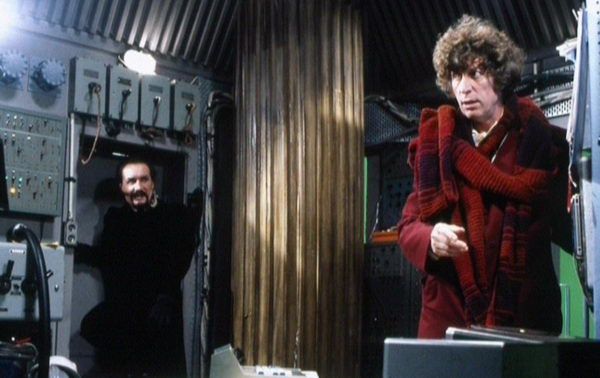
Whether by accident or design, Pertwee’s Doctor largely ended up as a moral, rather humourless figure, so Delgado’s Master was allowed to have all the charm and wit that the Third Doctor rarely showed. Remove this aspect from the Master and there’s little left. But the Doctor and the Master do enjoy a little byplay in Logopolis, such as this scene –
MASTER: The Pharos computer room.
DOCTOR: Yes. I envy you your TARDIS, Master.
MASTER: Excellent, Doctor. Envy is the beginning of all true greatness.
DOCTOR: Shush.
(A technician returns to the room. The Master points a device at him. The Doctor snatches it away.)
DOCTOR: No!
MASTER: It’s the lightspeed overdrive, Doctor. You’ll need that to accelerate the signal from the transmitter.
DOCTOR: I’m so sorry. I thought you meant to shoot him.
MASTER: Oh, Doctor. You can explain.
DOCTOR: Yes.
DOCTOR: Ahem. Good morning. Good evening.
(The Doctor notices the Master now has a weapon in his hand and drags the technician’s chair aside before the Master can fire)
DOCTOR: He’s unconscious.
MASTER: Never mind. I feel we’ve been spared a very difficult conversation.
The return of the Master wasn’t the only link to the Pertwee era. Possibly it was the influence of Barry Letts as executive producer that saw several lifts from Third Doctor stories (the radio telescope as seen in Terror of the Autons and the Master’s TARDIS inside the Doctor’s TARDIS from The Time Monster).
Barry Letts was also on hand to read the scripts and offer his advice, although often it wasn’t taken. He wasn’t happy, for example, with the Master’s line that although Tremas was dead his body remained useful, feeling that the concept of an animated corpse was rather disturbing. He also queried the rather large plot hole concerning the lash-up job that the Doctor and the Master made at the Pharos Project to save the Universe.
The Doctor and his humble assistant
What would happen to the Universe, asked Letts, if the Pharos Project switched it off? This is quietly forgotten at the end of the story and the impact of the imminent death of the Universe is rather swept under the carpet.
Letts also disliked the concept of the Master broadcasting his threats to the entire Universe. How, he reasoned, could they respond? Still, he wasn’t alone in pointing out how idiotic that was!
But whilst the script does feel somewhat bitty in places, there is a definite sense of impending doom as the Doctor finds himself shadowed at every turn by the Watcher. And despite the end taking place in a hastily cobbled together set made from bits and pieces from other programmes, it’s a sequence that still (particularly for those of a certain age) resonates today.
Doctor Who would go on, but Tom Baker would be a very hard act to follow.
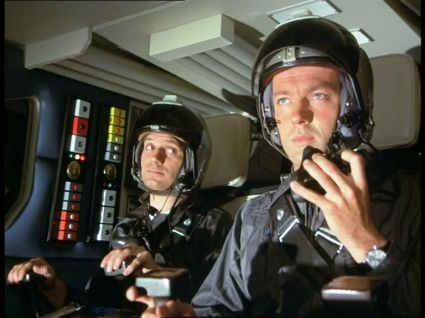
Exposed is the introductory story for Paul Foster (Michael Billington). Foster is a test pilot who gets tangled up in a battle between Sky 1 and a UFO. Foster remains adamant that he saw a UFO but nobody will believe him. He keeps on digging though and eventually the trail leads to Ed Straker.
This episode allows us to see SHADO from an outsiders point of view. Billington is good value as he tangles with various different characters on the way to his meeting with Straker. But what he doesn’t realise is that everything has been coordinated by the SHADO boss in order to test Foster’s reactions and see if he’s a possible recruit.
If he responds in the right way then a job in SHADO will be his but it’s interesting to wonder what would happen otherwise. There must have been other people over the years who stumbled onto the truth about UFOs and it’s hard to imagine that they’d all have been SHADO material. Everything that we’ve seen so far seems to indicate that Straker would have no problem in silencing them for good, but luckily for Foster he makes the grade.
Also debuting is Vladek Sheybal as Dr Doug Jackson. Jackson pops up regularly during the series and is particularly prominent in the forthcoming episode Court Martial. There’s always something slightly unsettling about Sheybal’s performance and he contrasts well with the more straightforward members of SHADO. With Jackson, you never quite know if he’s following a different agenda from everybody else.
Exposed gives us a chance to see the backlot at MGM Borehamwood, where the first production block was shot. The studio is the place where Straker and Foster meet for the first time and Straker has a unique way of determining whether Foster is the man for the job. This seems to consist of pointing a wind machine at him and then pretending to shoot him at point blank range!
It’s hardly a surprise that he does get offered a post with SHADO, particularly since he’s been on the credits since the first episode, but overall this is still a decent episode. Not outstanding, but it’s a good chance for Michael Billington to make a strong first impression.
 Archive Television Musings