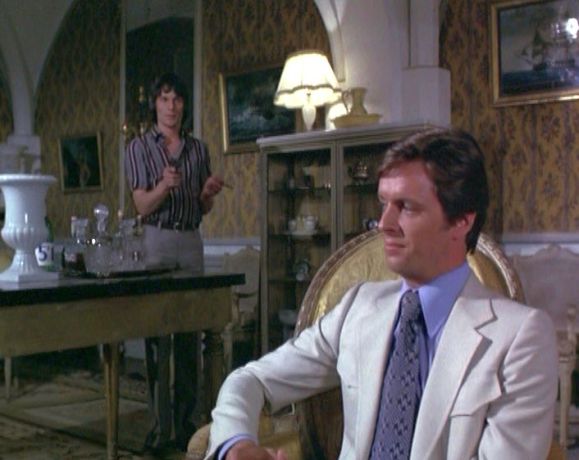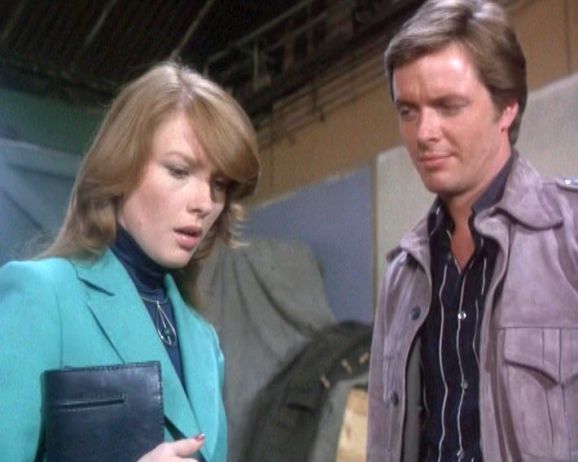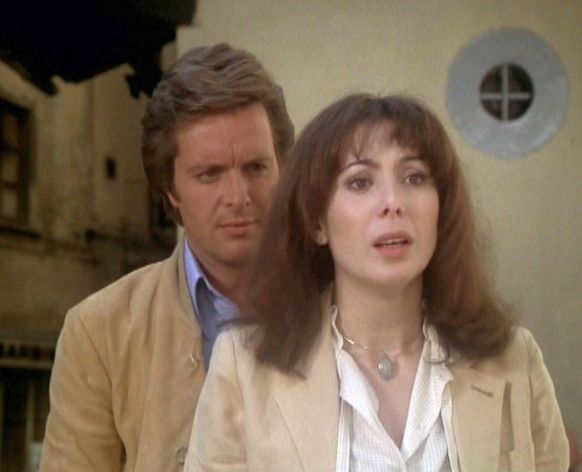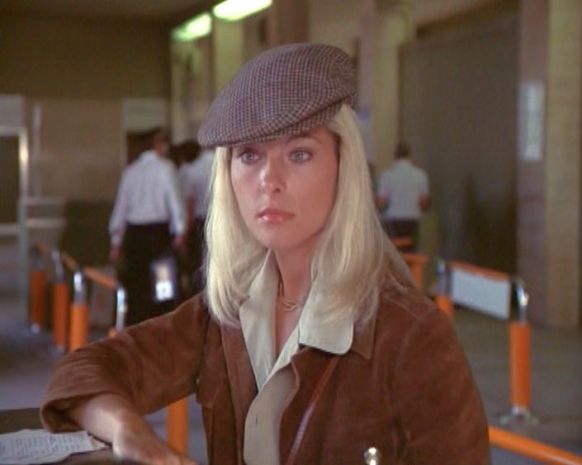
Nightingales – Silent Night

silent 01

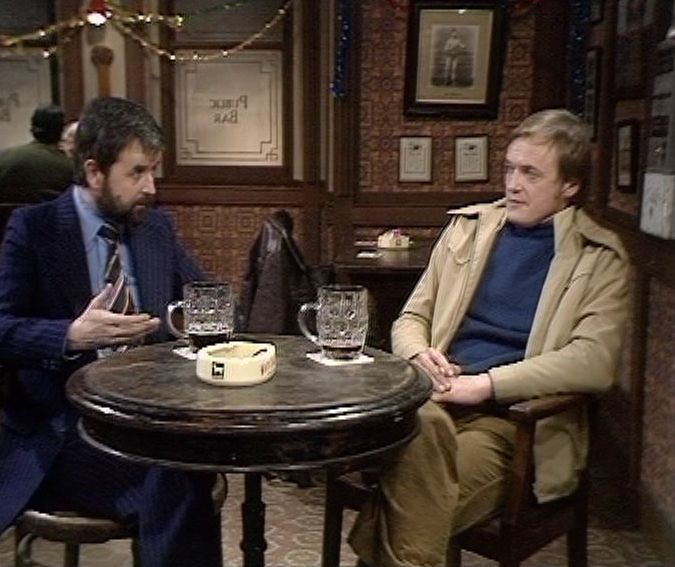
Nightingales is an archetypal cult programme.  It ran for two series, in 1990 and 1992, which were broadcast on Channel 4 late at night and therefore attracted a very small audience.  Apart from a re-run a few years after their first transmission, I don’t think it’s been seen anywhere on British television for the last twenty years or so.  This is a little surprising, since it stars three very familiar faces – Robert Lindsey, David Threlfall and James Ellis.  But it’s available on DVD, so anybody who’s curious can investigate further.

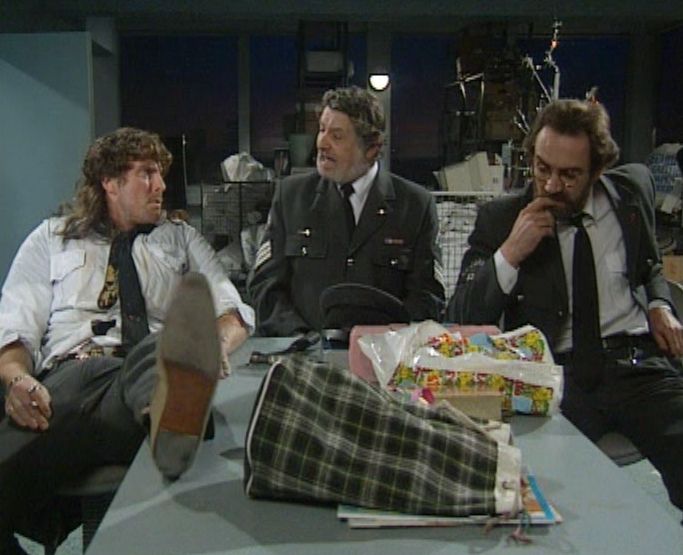
What I love about the series is how it plays with typical sitcom conventions.  The premise seems quite straightforward – Carter (Lindsey), Bell (Threlfall) and Sarge (Ellis) are three night-watchmen in a big office block.  As you’d expect, they’re very different characters – Carter is a would-be intellectual, Bell seems to have a limited level of intelligence whilst the Sarge is a constantly cheery fellow who tries (and fails) to keep the other two in order.  The clash of their three personas would be enough to fuel many sitcoms and the opening minutes of each episode seem normal enough (meaning that if you’d ever tuned in for the first time, you’d be lulled into a false sense of security).

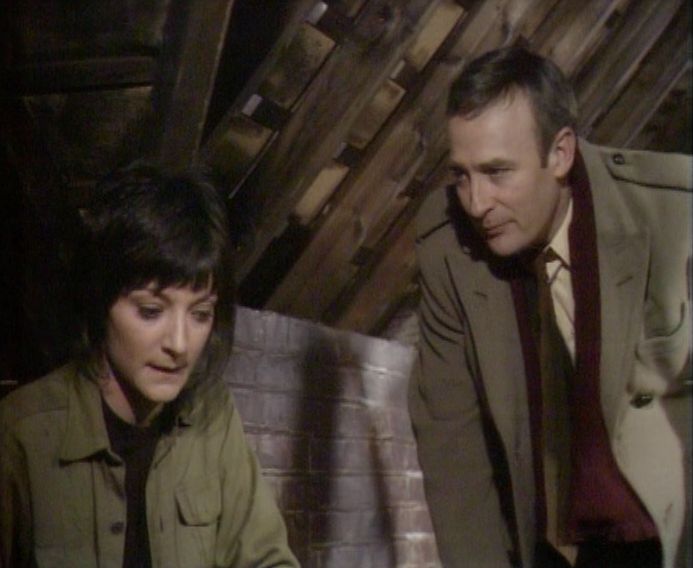
But after the initial scenes, writer Paul Makin spins each episode off into unexpected directions.  In Silent Night (broadcast on the 30th of December 1992) it’s Christmas Eve and the Sarge asks the others to join him in their annual carol service.  Carter moans that nobody ever comes – he’s invited the Pope and Harold Pinter for several years but they never show up.  When there’s a knock at the door, the Sarge wonders if it’s Harold.  Carter is dismissive.  “Harold wouldn’t knock like that. That wasn’t a playwright’s knock. That had the Vatican written all over it.”

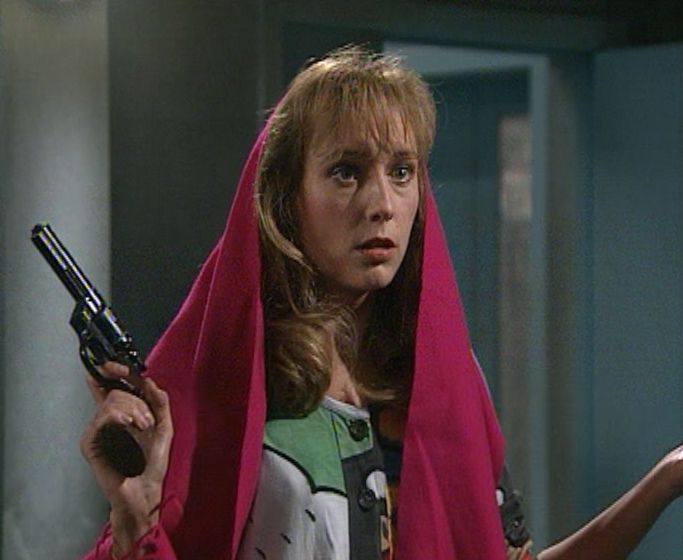
It’s not the Pope or Harold though – it’s a young woman called Mary (Lia Williams) who’s going to have a baby.  Carter’s not happy.  “It’s Christmas Eve, right? We have a pregnant woman, right? Called Mary, right? Ring a bell? What we have here is an allegory.”  Mary insists it isn’t an allegory and offers them fifty gold sovereigns (!)

She gives birth – but not to a child.  She starts by giving birth to a goldfish, then produces an ever-growing collection of consumer products, including a toaster, a toy dog, a set of golf clubs, a collection of VHS tapes, a pool table and a washing machine to name just a few.  The Sarge is appalled by what Mary is going through and decides to pray.  Shortly after, the cry of a baby is heard.

But when they ask her what she’s going to call it, they’re taken aback when she names him Jesus.  So it was an allegory after all!  She explains that her allegory was “all about how we’ve lost sight of the real meaning of Christmas, how every year we drown under an ever-increasing pile of consumer goods.”  This leaves the three of them disheartened, but Harold Pinter and the Pope turn up for the carol service, so not all is lost.

Not your run-of-the-mill sitcom fare then, which may explain why it received something of a nonplussed reception when it was initially broadcast (although as I’ve said, the late-night slot didn’t help).  But it’s something that’s only improved with age and whilst I like to dig out Silent Night each December, the rest of the series is equally as good and something I enjoy revisiting on a regular basis.  If you’ve never seen it then I’d certainly recommend it.
silent 02

Whatever Happened to the Likely Lads? – 1974 Christmas Special

likely

The Likely Lads, broadcast in the mid 1960’s, was the first sitcom success for Dick Clement and Ian La Frenais.  They then revived the series in the 1970’s as Whatever Happened to the Likely Lads?

The revival was even better than the original, thanks to the way the characters of Terry Collier (James Bolam) and Bob Ferris (Rodney Bewes) had developed.  In the original series they were unattached men in their twenties, but by the revival they were a decade older and, in Bob’s case at least, men with commitments (Bob had married his long-time fiance Thelma).

This was unusual for a sitcom, as normally they tend to remain static, unchanging affairs.  Think, for example, of Dad’s Army, Porridge or Fawlty Towers.  In those cases, characters are trapped together (because of the war, prison, the job they do).  The format of Whatever Happened to the Likely Lads? was much looser as it revolved around Bob’s eternal dilemma – he loves his wife, but he doesn’t want to lose contact with his best friend.

Over the years Bob and Terry had changed from the people we met in the sixties.  Then, they were equal – both working in the same factory and sharing a similar outlook on life.  But in WHTTLL?, Bob is married, holds down a responsible job, has a nice house on a new estate and is thoroughly middle-class.  Terry is quite different – after a spell in the army he’s content to drift along, with no particular direction in mind.  What keeps them together is their vague sense that things were better when they were younger (the theme song ponders “is the only thing to look forward to, the past?” which sums things up nicely).

This melancholic longing for a simpler time is one of the reasons why the series was so good.  And had Bolam and Bewes not fallen out dramatically (it’s reputed they’ve not spoken for nearly forty years) then it wouldn’t have been surprising if Clement and La Frenais had chosen to revisit the characters every decade or so (in a sort of 7 Up way it would have been fascinating to see how Bob and Terry fared through the eighties, nineties and into the twenty first century).

Broadcast on the 24th of December 1974, this Christmas Special was the final television episode – although Bolam and Bewes would re-record the series one shows for radio in 1975 and shoot a film version in 1976.

We open with Bob feeling trapped.  Thelma (Brigit Forsyth) is in Christmas planning mode – a sight which remains familiar today.  She’s fretting about the cards she needs to write, the presents she has to buy and their social engagements.  Bob isn’t thrilled to learn that he’ll be spending Christmas with his mother-in-law or that Thelma has committed them to a number of parties (when he’d much rather be relaxing at home, watching The Great Escape).  His lack of success at charades last year still rankles – as he reminds Thelma, she had an easy one – Great Expectations –  whilst he had to struggle with The AA Continental Handbook!  The pay-off to the scene is that it’s only late September, another nod to those people who need to get everything organised for Christmas months in advance.

Terry’s spent the duration of WHTTLL? content to be unemployed.  There’s a change here, as Bob and Thelma spy him taking his driving test (and of course they manage to put him off).  Despite this he still passes and he later tells Bob that he’s planning to become a long-distance lorry driver.  He has to settle for a job driving a fork-lift truck though, and it’s clear that he’s disappointed.  Terry had assumed that once he had his driving licence it would be his passport to better things – he really wanted a job where he could take his vehicle home during the evening and impress the girls.  But the only job he found like that involved an ice-cream van!  As Bob says, his chance of pulling birds in that would have been wafer-thin.

Another sign of the timeless nature of the episode is Terry’s complaint that Christmas is just too commercialised these days.  Bob doesn’t agree, he loves every aspect of Christmas (another way in which he hankers for earlier, simpler times?).  Over a pint in the pub, Terry reminds Bob that he was the last person in school to believe in Santa Claus.

I remember the day vividly. Christmas Eve afternoon it was, sitting in our back kitchen in front of the fire, reading Lord Snooty in that years Beano annual. I’d got it early, because the week before I’d been crying a lot with a boil on me neck. Anyhow, there I was, couldn’t have been happier, not a worry in the world except how Santa was gonna get a fire engine down our chimney. Then you show up with an evil, malicious grin on your face and said, ‘Santa Claus is dead.’

Bob goes on to remember that Terry had told him that Santa had been gored to death by his reindeer!

If the pub scene is the heart of the episode, there’s more traditional sitcom fare afterwards as Bob and Terry make their way home, very drunk.  Bob’s lost his car keys, so Terry elects to drive him home in his fork-lift truck.  And since he doesn’t have his front door key either, he uses the fork-lift to raise him up to the bedroom window.

On Christmas Eve, Bob and Thelma are on their way to a fancy dress party – Bob as Captain Hook and Thelma as Peter Pan (Terry’s got the job of driving their mincab).  Judging by the reaction of the studio audience they hadn’t seen Bewes’ costume before he entered the living room, since it draws an audible ripple of appreciation.  Once they get to the party, Thelma is appalled at the goings on – it seems that all their married friends have paired off with other people.  Bob’s not immune – he has his eye on Sylvia Braithwaite.

There’s more sitcom hi-jinks when a fuming Thelma asks Terry to drive her home, with neither realising that Bob and Sylvia are in the back of the cab.  Thelma invites Terry in for a drink and Sylvia insists that Bob drive her home in Terry’s cab.  This he does, but Terry sees the cab driving off and reports it stolen.

Running for just under forty-five minutes rather than the usual thirty, it’s tempting to wonder if it was originally planned as a half hour episode – if so, it would have ended with the fork-lift truck scene.  Was the fancy-dress party sequence bolted on later?  But however it was written, the final moment (when both Thelma and Terry realise that Bob stole the cab) is a great beat to end the series on.

Stanley Baxter’s Christmas Box

stanley baxter

Although the BBC had the jewels in the light entertainment Christmas crown during the majority of the 1970’s – The Two Ronnies, Mike Yarwood and Morecambe & Wise – ITV weren’t totally bereft, as they had the considerable talents of Stanley Baxter.

Baxter had established himself on the BBC with a number of series between 1963 and 1971, but then jumped ship to LWT in 1972 where he remained for the next decade.  His programmes were quite expensive – big production numbers and his penchant for playing multiple characters were two of the reasons why.  And it was partially cost that saw him fade away from television (as executives decided they could no longer afford him).  But the change of the comedy landscape in the 1980’s, which had seen casualties like Benny Hill, could also have had something to do with it.

When pondering whether Baxter could have continued into the mid to late 1980’s, you have to say that Stanley Baxter’s Picture Box, broadcast on the 26th of December 1976, was of its time.  Stereotypes are certainly in evidence, such as the Jewish BBC newsreader.  “Here is the news at nine, but for you – eight forty five.”  He also blacks up towards the end in a sequence you could never imagine receiving an airing today.

An early highlight is the Philip Marlowe sketch which sees him approached by Cinderella.  Baxter plays all the characters – Marlowe, Cinderella, Prince Charming and the Ugly Sisters.  It’s notable that split-screen photography wasn’t used – instead we either focus on one person or if another’s in shot then they’re only seen from behind (played by a double).  One of the drawbacks with Baxter playing everybody is that he never had anyone else to react against, so he’s reliant on the editing.  But it’s pretty good here and although there’s some painfully obvious lines, there’s some good ones too.  “People from my past flashed before my eyes. Until they got booked for indecent exposure.”

There’s a fair amount of focus on the BBC. Apart from the newsreader we also see The Bruce Fosdyke Show (“tonight at 11:45 if you’ve absolutely nothing else to do”).  The Fosdyke sequence doesn’t outstay its welcome and contains several decent brief gags (such as Baxter dressed as Nana Mouskouri and Sharri Lewis and Lambchop as they’ve never been seen before).

An appeal on behalf of the inhibited from Faith Douche provides a good opportunity to exhume some old favourites.  “I was strongly against sex on television, because whenever I tried it I kept sliding off the top of the set”.  Elsewhere, Baxter’s amusing as Noel Coward and also impresses as Jacques Cousteau who’s decided to explore the murky depths of Margate.

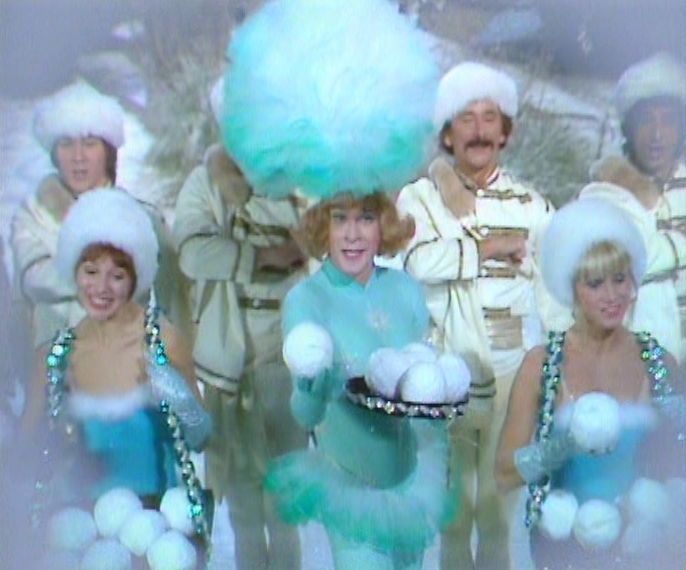
Girl on the Cover tells the story of the obese Lois Latnick who’s turned into a cover beauty for the magazine Harpie’s Bizarre.  Lois’s fatsuit is rather crude compared to what could be achieved decades later, but the heart of the sequence is when she’s transformed into a beauty (or at least as beautiful as Baxter as could ever hope to be!) and we launch into a series of musical numbers which close the show.

Written by Ken Hoare with additional material from Baxter, Barry Cryer, Iain McIntyre and Neil Shand, Stanley Baxter’s Christmas Box is good, bawdy fun.

Two’s Company – A Loving Christmas

two's company

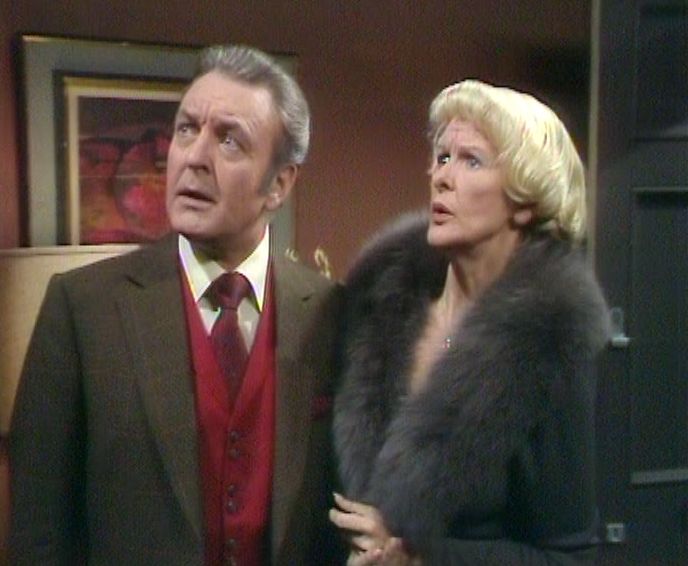
Two’s Company was a culture clash comedy – Dorothy McNab (Elaine Stritch) is a rich American and Robert Hiller (Donald Sinden) is her superior English butler.  Their differing natures are spelt out in the opening credits (which seem to go on forever).

Running for four series between 1975 and 1979, Two’s Company‘s strength is the banter between Stritch and Sinden.  Take that away and there’s not a great deal left – the writing is amusing enough but it’s hardly top-tier sitcom fare.  But the first series had clearly been successful enough for A Kind of Loving (the opening episode of series two) to receive a Christmas Day airing in 1976.

The relationship between Dorothy and Robert is made clear by their choice of presents to each other.  Dorothy is underwhelmed to receive an LP of Elgar’s Enigma Variations whilst Robert is equally unimpressed with an LP by Jelly Roll Morton.  Once they swop, then they’re much happier.  Although both presents were unsuitable, there’s no malice in their choices – possibly they genuinely wanted to widen the others musical horizons (although it was doomed to failure).  This sets the tone for their general interaction – both indulge in a subtle form of one-upmanship, with honours (in this episode) ending up even.

The plot of this one is quite simple.  Both say their goodbyes on Christmas Eve as they head off in different directions (Dorothy to Paris and Robert to the country).  But both were fibbing and had planned to spend a quiet Christmas at home (Robert in the comfortable downstairs portion of the house) with convivial company.  As both of them have now returned that creates something of a problem.  And when Robert’s friend Gillian (Geraldine Newman) takes an interest in Dorothy’s friend Nigel (Derek Waring) that just adds to the tension.   And then Dorothy’s cousin Clarence (John Bay) turns up …..

Clarence is your stereotypical, loud, crass American – constantly referring to Robert as “Jeeves” much to his disgust.  Dorothy’s no more pleased to see him and when Gillian and Nigel leave together that means Dorothy, Robert and Clarence are fated to spend Christmas together.

Bay was married to Elaine Stritch, but he was a decent actor so his appearance here wasn’t just nepotism (it’s not his fault that Clarence was written as such an irritating person). Geraldine Newman and Derek Waring were both very experienced performers and they help to give the episode a bit of impetus.

Donald Sinden’s spot-on comic timing, even with the fairly thin material, is worth watching and he has a decent foe in Elaine Stritch.  Not a classic series, but a passable way of spending twenty five minutes.

A Christmas Carol (BBC 1977)

christmas.jpg

Broadcast on the 24th of December 1977, it’s fair to say that they don’t make them like this anymore.  This production of A Christmas Carol is completely studio-bound and at times places characters, via the wonder of CSO, in front of illustrated backdrops.  For some, this artificiality might be an issue but I feel that the non-naturalistic moments are strengths not weakness.

One of the main pluses of the production is the quality of Elaine Morgan’s adaptation.  Since Dickens’ novella isn’t particularly long, Morgan was able to compress it down quite comfortably to just under an hour.  Everything of note from the original story (including much of the dialogue) has been retained and it’s interesting that the likes of Ignorance and Want (often removed from other adaptations) are present and correct.

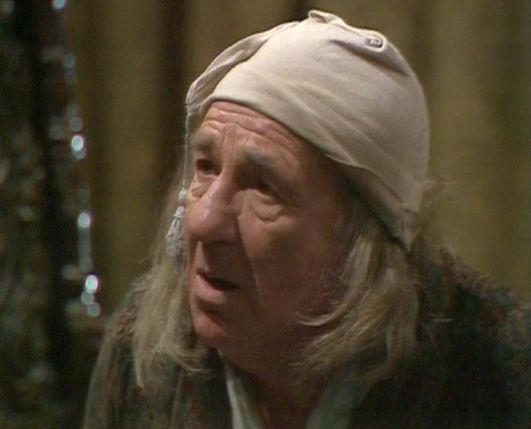
Michael Hordern, an actor who always seemed to play bemused and vague characters, makes for a very decent Scrooge – although since he lacks bite and arrogance, Hordern’s better as the story proceeds (especially when Scrooge is finally presented to us as a humble and chastised man).

John Le Mesurier only has a few minutes to make an impression as Jacob Marley, but he certainly does.  His scenes with Hordern were complicated by the fact that both weren’t on set at the same time (Marley, as befits a ghost, is only ever seen as an insubstantial presence).  This isn’t really a problem though, as both actors had such good timing they were able to make their scenes ‘together’ work.

The arrival of Patricia Quinn as the Ghost of Christmas Past sees Scrooge revisit his own past.  The establishing shots of Scrooge’s schoolhouse are presented via a series of illustrated images, with Horden and Quinn overlaid.  You can either view this as a necessity, due to the production’s low-budget, or as an inspired artistic choice.  One nice moment occurs when we move into the schoolhouse and there’s another illustration – which then morphs into a real-life scene.

Almost unrecognisable, thanks to a heavy beard, is Bernard Lee as the Ghost of Christmas Present (although his voice is unmistakable).  Paul Copley is slightly too jolly and irritating as Fred, but this a rare production mistep.  Clive Merrison, with an impressive wig, is a fine Bob Cratchit whilst Zoe Wanamaker is equally good as Belle.  There’s plenty of other familiar faces, including John Salthouse, John Ringham, June Brown and Christopher Biggins whilst the brief opening narration is provided by (an uncredited) Brian Blessed.

Although there are many versions of A Christmas Carol available, this one is certainly worth your time – partly because of the quality of the cast, but also due to its fidelity to Charles Dickens’ story.  Plenty of other adaptations can’t help but make various ‘improvements’ but Elaine Morgan was content to let the strength of the original tale speak for itself.

Return of the Saint – The Diplomat’s Daughter

diplomat 01

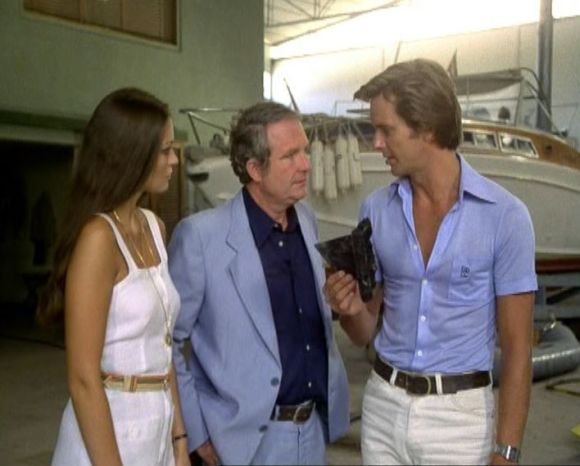
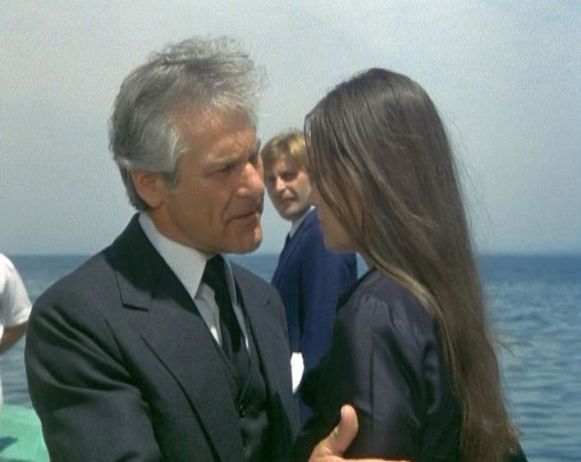
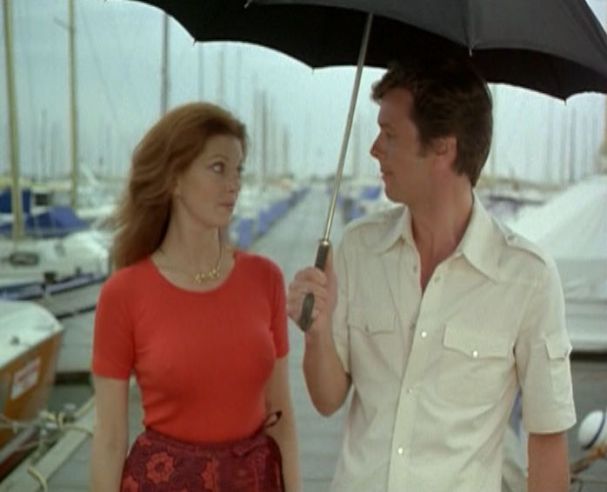
When Simon observes a beautiful young woman, Marie de la Garde (Lynn Dalby), in distress he has to intervene.  She tells him that her brother, Pierre (Murray Head), has fallen into bad company and that they are forcing him to courier drugs to England (his father is the French ambassador and has diplomatic immunity, which is the reason why Pierre is so useful to them).

The opening seems to be a direct crib from Ian Fleming’s James Bond novel On Her Majesty’s Secret Service.  We see Simon driving down a deserted road, minding his own business, when he’s overtaken at high speed by an attractive young woman in a red sports car.

Marie’s been marked for death by the villainous Shriber (Karl Held) because she offered to pay Pierre’s gambling debts (Shriber, of course, knows that Pierre is much more useful to them as a drugs mule).

Unlike many of the foreign episodes, this one features British actors putting on accents of varying credibility (although there’s a later twist with this).  Lynn Dalby, best known as the long-suffering partner of Budgie Bird in Budgie, is appealing as Marie (who is a more complex character than she first appears to be) whilst Murray (One Night In Bangkok) Head has the more thankless role of Pierre.

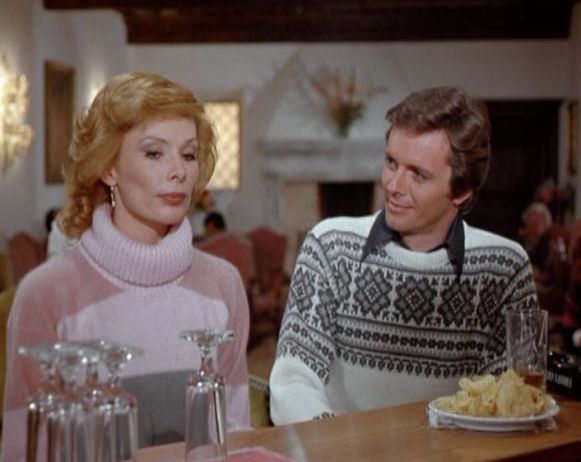
Michael Pertwee’s script is well tailored to Ian Ogilvy’s talents.  Simon seems to have a little more spark and verbal byplay in this one (referring to the villains as the “ungodly” brings to mind the literary Saint).  It would have been nice if all the episodes had featured a similar level of characterisation – rather too often Ogilvy wasn’t called upon to be anything more than a conventional leading man.  His comic timing is used to good effect here though.

The twist in the tail – Marie isn’t Pierre’s brother (they’re boyfriend and girlfriend) and is keen to acquire the drugs herself – poses more questions than it answers.  The whole plan seems to have been organised in order to smuggle the drugs in Simon’s car – but that makes very little sense.  Were the attempts Shriber made on Marie’s life simply mocked up for Simon’s benefit?  If so, it seems an incredibly over-elaborate scheme.  The slightly strange scripting means that The Diplomat’s Daughter rates three halos out of five.

Had ROTS returned for a second series, according to Ian Ogilvy it would have been much more of a British-based series.  That would have been interesting and if the scripting had been a little tighter then it could well have become a classic.  At it was, ROTS was probably made at the wrong time, being the last of the ITC adventure series meant it seemed a little out of place in the late 1970’s (when harder-edged fare such as The Sweeney and The Professionals were on offer).  But overall it’s a very solid series – helmed by experienced hands, both in front of and behind the camera.

It may be predictable at times, but as Ogilvy once said it was simply an adventure series and designed to entertain.  Which it certainly does, making it a pleasure to revisit.

diplomat 02

Return of the Saint – Appointment in Florence

florence 01

When a friend of Simon’s, Christian Van Esser (Bryan Pinero), is kidnapped and later killed by a faction of the Red Brigade, the Saint is quickly on the trail.  One of the terrorists, Ingo (James Aubrey), reacts badly to Christian’s murder and absconds – along with the ransom money.  With both his former associates and the Saint on his trail, he’s certainly a man in demand.  His girlfriend, Lea (Carla Romanelli), is a strong lead – but can Simon convince her that the man she loves is a terrorist?

By now you should be aware of the drill.  If Simon’s spending time in the pre-credits sequence with an old friend, it’s reasonable to assume that his lifespan will be somewhat limited!  A nice touch is that the episode opens with Simon and Christian enjoying a skiing holiday (no doubt these scenes were shot during the making of Hot Run) and we then relocate after the first ten minutes to Florence.  The two very different locations help to give the story an extra gloss.

Before the credits roll, we see Christian abducted, but we don’t know why.  It’s interesting that immediately after, time has clearly elapsed – we learn in very short order that Christian was kidnapped, the ransom was paid, the Saint had promised not to do anything to impede his return but all to no avail (his dead body arrives at the rendezvous in a cable-car).  All of this is dealt with in a minute or so, whereas it would have been more usual to develop the drama of Christian’s kidnap during the first act.

The least impressive piece of dubbing in the episode comes when Christian’s wife spies his lifeless body in the cable-car and screams.  The shape of her mouth in no way corresponds to the heart-wrenching wail which was no doubt added on much later in London!

Terrorism rarely featured in ROTS (One Black September was a notable exception).  It’s not hard to understand why, as the fanaticism of terrorists sits rather uneasily with the series’ escapist tone.   As might be expected they’re painted with rather broad brushstrokes – the terrorists’ beliefs are briefly touched upon, but if they had been ordinary criminals the story wouldn’t have been too different.

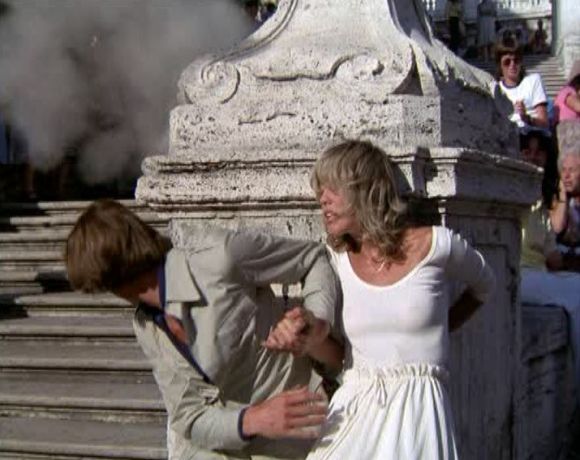
Their leader, Manfred (Stuart Wilson), is slightly more sadistic than the run of the mill ROTS baddy though.  When he corners Lea, he tells her that “I’m going to hang you from your own balcony. And when you are choking, I will come and cut the rope and watch while you fall and break your neck.”  Not surprisingly, he doesn’t get to carry out his threat as Simon arrives in the nick of time.

Carla Romanelli gives a nice performance as Lea – she doesn’t have a great deal to do, but comes over in several key scenes very well.  An eye-catching turn comes from Nicole Stoliaroff as one of the terrorists, Gaby.  Although it’s true that her character is something of a cliche – blond, beautiful and deadly – and is never really  developed.  As I’ve said, it would have been better had the terrorists had more strongly defined characters and motivations, but perhaps that was outside of the series’ parameters.

Despite the feeling of deja vu, this is a solid episode which rates four halos out of five.

florence 02

Return of the Saint – Dragonseed

dragon 01

Leo (Andrea Occhipinti) is a young man with everything to live for.  His father Domenico (Sam Wanamaker) is a millionaire businessman, grooming Leo to take over the reigns one day soon.  Although it’s his birthday, Leo is keen to close a multi-million pound deal by himself.  But after the helicopter he’s travelling in crashes, killing both Leo and the pilot, the question has to be, accident or sabotage?  And since Domenico was originally due to take the trip, was he the intended victim?

Another Italian episode, filmed in the highly picturesque area of Tuscany, Dragonseed is certainly an installment that makes full use of its locations.  Especially impressive are the scenes shot around the dockside – with the sun glinting on the water it looks gorgeous.

This originally aired immediately after Vicious Circle, which was slightly unfortunate – both are Italian shot episodes which feature Simon investigating the death of a friend who initially appeared to have died in an accident.  Another similarity is that they both include beautiful but deadly females …..

It’s hard to understand quite how Simon and Leo became friends, as Leo was in his late teens it’s difficult to imagine they would have moved in the same circles.  Had Simon been a friend of the family that would have made sense – but Domenico’s never heard of him.

Having directed the previous episode, Sam Wanamaker now steps in front of the camera.  He was an actor with presence and range, although he’s not best served by the script.  Domenico is a ruthless businessman who loves his family and vows to avenge his son’s death by whatever means necessary.  If this sounds a bit cliched, then it is, and Wanamaker does struggle at the start to make something out of the fairly unpromising material.  He’s better later on though – as we see Domenico start to crack up a little as his loss really begins to sink in.

However, there are worse performances, such as Barbara Pilavan who plays Domenico’s ex-wife Lucia.  She may be another victim of unsympathetic dubbing, but Pilavan doesn’t impress – especially in the scene where she arrives at the hospital (where Leo is hovering between life and life) and emotes in a very unconvincing way.

More pleasing are Shane Rimmer (a familiar television and film presence, well-known for his work with Gerry Anderson) as Domenico’s shady security man and Annamaria Macchi as Domenico’s daughter Carla.  Macchi is on hand to provide the customary dollop of glamour as well as a few surprises.

Both this episode and Vicious Circle feature friends of Simon who are killed off before the credits roll.  This is another problem as it makes it hard to care about them, since their screen-time has been so limited.  On its own, Dragonseed is entertaining enough, but the sense of familiarity means that it only rates three halos out of five.

dragon 02.jpg

Return of the Saint – Vicious Circle


vicious 01

Roberto Lucci (Massimiliano Baratta) is killed in a car accident en-route to a meeting with Simon. His widow, famous fashion designer Renata (Elsa Martinelli), isn’t surprised – Roberto was a former racing driver with a love of driving far too fast.  The Saint is convinced that his car was forced off the road deliberately – but as there’s no evidence the police aren’t interested. Simon, of course, isn’t discouraged and starts to dig about …..

Shot on location in Italy and directed by Sam Wanamaker, Vicious Circle has a mainly local cast.  This is something of a mixed blessing – it’s better to have native Italians rather than English actors putting on fake accents (as happened in the Collision Course two-parter) but the drawback is that they tend to be less fluent in English, hence their performances can feel slightly broader than normal.  Part of the problem with this one may also be that the dubbing on this episode is more obvious than usual (series like ROTS would tend to redub the majority of the dialogue as a matter of course).

Elsa Martinelli is icily detached as Roberto’s widow.  Following the accident that cut his career short, she was forced to nurse him – and Simon suspects she may know more about his death than she admits.  She’s a character drawn in fairly broad strokes – not helped by the dubbing which does create a little distance.

Tessa Wyatt (as Renata’s assistant Anna) seems to be initially positioned as this episode’s female helper, but the revelation that her ex-husband may have killed Roberto is an unexpected twist (and there’s more revelations to come).  It helps to isolate the Saint even further – most episodes see him paired up with female company and enjoying the tacit assistance of the authorities (something which doesn’t happen here).

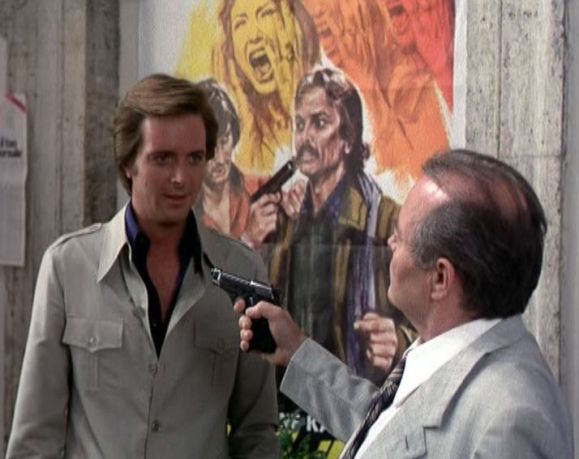
The harder edge of this episode is demonstrated in several ways.  Firstly, Simon finds Anna drugged and hysterical in her room and we also have the unusual sight of Simon brandishing a gun (even if he doesn’t fire it).  And apart from a few quips, he’s in a pretty serious mood throughout.

The mystery of the episode – who killed Roberto and why? – is maintained until the end.  This is another break from the norm as normally the narratives are much more straightforward.  It’s a pity there weren’t a few more episodes like this scattered through the run, but partly because it’s a rarity Vicious Circle rates four halos out of five.

vicious 02

Return of the Saint – The Obono Affair

obono 01.jpg

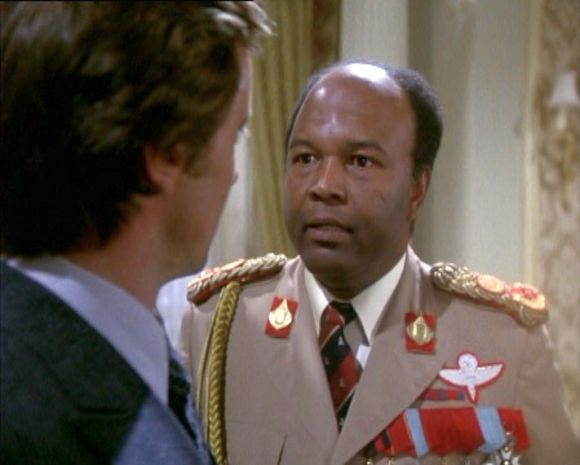
President Obono (Thomas Baptiste) is the universally loathed leader of a minor African nation.  His visit to Britain has generated death threats and Simon is on hand to prevent one such attempted assassination.  Although the Saint receives Obono’s thanks he makes it quite clear that he was simply in the right place at the right time and has no desire to associate with him any further.

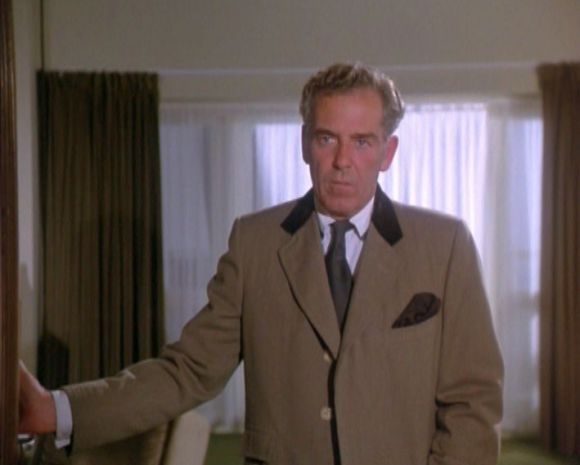
But when Obono’s son Joey (Paul Medford) is kidnapped, the President turns to Simon for help.  The Saint is initially reluctant, but eventually teams up with the President’s right hand man Colonel Dyson (Jack Hedley) to track the kidnappers down …..

President Obono is a pretty thinly-drawn caricature of Idi Amin, who at the time was the President of Uganda.  His fondness for outlandish military uniform (with plenty of medals) and an appalling record of human rights are just two similarities.  No attempt is made to present Obono as a likable or reasonable character and early on we see him berate his double (the man designed to draw the assassins bullet).   He tells Simon that “men like Jopo enjoy brutalisation. They know no other way of life.”

Simon’s distaste for the man is made plain from their initial meeting and his loathing also extends to Colonel Dyson.  Dyson is as much of a cliche as Obono is – a former British soldier who’s accepted blood money to train Obono’s army (we’re told that the army is the one of the main reasons why the country is broke).  Hedley, a veteran character actor probably best known for playing Colonel Preston in Colditz, is suitably solid and is easily one of the best things about the episode.

Thomas Baptiste’s performance is a little odd at times – it’s somewhat non-naturalistic.  I’m assuming this was intentional, an attempt to give Obono a larger-than-life persona.  Baptiste is rather better towards the end, once it’s known that the President is dying of natural causes.

Although there’s some decent actors cast at the kidnappers (including Derek Newark and Robert Gillespie) they act in a rather inept way, which means that there’s no particular threat from them.  Although Rose (Marie Lawrence) who we see looking after Joey does have an interesting backstory.  She was one of Obono’s former mistresses and still mourns the death of her child (presumably killed on Obono’s orders).

The first of two scripts by Michael Pertwee (The Diplomat’s Daughter was the other) there’s nothing subtle about The Obono Affair but it’s agreeable enough.  It has to be said though that the closing scene, where Simon persuades Obono to pardon all political prisoners in his country, feels uncomfortably pat.  One of the reasons why series like ROTS had trouble dealing with complex, real world issues was because there’s no easy solutions to difficult problems – and this scene demonstrates it.  Will everybody live happily ever after?  Probably not and it would have been better to acknowledge that.

Three and a half halos out of five for this one.

obono 02

Return of the Saint – Murder Cartel

murder 01

After witnessing the attempted assassination of Sheikh Kemal (Marne Maitlaind) on television, Simon has a sense that he’s going to be involved, although he doesn’t know how.  He doesn’t have long to wait – shortly afterwards he receives a call from a senior man in American intelligence, Hendricks (Roger Brown).

Hendricks is convinced that Kemal will be targeted again and this time the hit will succeed, as an expert assassin called Brown (Sergio Doria) has been hired.  Hendricks is less concerned with Brown, he wants the organisation financing him – a shady murder cartel responsible for most of the major assassinations over the last five years.

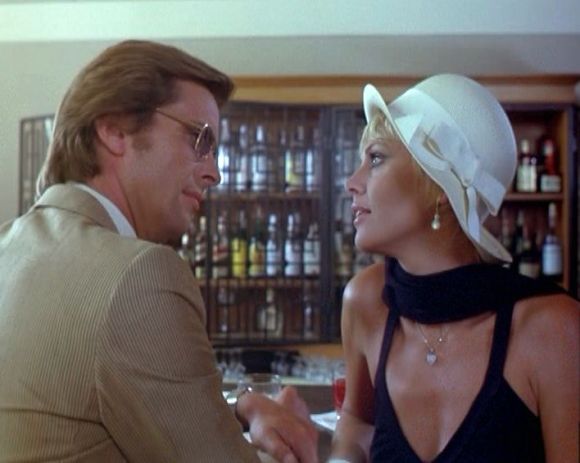
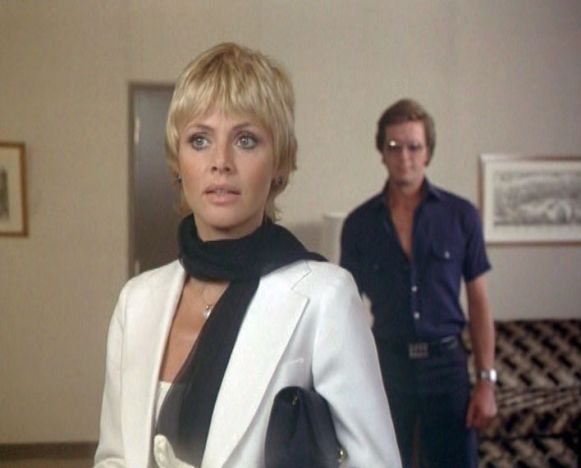
Moments later Hendricks is murdered in front of Simon’s eyes and that makes things very personal for the Saint.  He assumes Brown’s identity and goes undercover to break the cartel.  There he runs into the beautiful but deadly Laura (Britt Ekland) …..

Shot on location in Rome, Murder Cartel, like all the foreign episodes of ROTS, certainly makes full use of the locale.  Back in the 1960’s, whenever Roger Moore’s Saint visited Rome it would be courtesy of back projection and filming at Elstree Studios.  There’s no substitute for the real thing though, as this episode shows.

An impressive moment occurs when an accident is staged with two taxis in one of Rome’s busy streets.  It’s probably not the sort of thing that could easily happen today (red tape and clearances would make it prohibitively difficult).  Although the illusion is slightly shattered just after the crash – we see quite a few people standing about watching from the pavement (clearly they had been there quite a while, enjoying observing the film crew at work!)

Ogilvy gets to don a pair of dark glasses as he pretends to be a ruthless assassin.  It’s the third story in a row where Simon pretends to be on the side of the baddies – pity these episodes couldn’t have been spread out throughout the run, lumped together they don’t work quite as well.

Britt Ekland is statuesque but wooden as the head of the murder cartel.  She’s given a brief speech to justify herself (it’s all to do with her father) although since she’s a fairly sketchily drawn character it doesn’t really help to flesh her out.

The main problem with Murder Cartel is that it’s difficult to get involved with the story.  Simon is upset about the death of Hendricks (an old friend, apparently) but as we’ve never seen him before his death doesn’t have any resonance.  The question of whether Kemal will die or not is another part of the plot which remains undeveloped – his screen-time is so limited (and we only hear him utter a few words throughout the whole episode) that it’s impossible to feel invested in his fate.

Having said that, the story chugs along quite agreeably, the locations look lovely and Ekland, whilst hardly the best actor in the world, is very easy on the eye.

So this rates three halos out of five.

murder 02

Return of the Saint – Hot Run

hot 01

Simon is pretending to be a poor skier, purely so he can enjoy the attentions of the beautiful instructor Maria (Lorraine De Salle).  But just as things are hotting up on the slopes, the arrival of Maria’s brother Andre looks set to dash Simon’s plans.

Events then take a tragic turn – both Maria and Simon watch in horror as Andre is murdered (shot by a sniper in the trees).  He seemed to have lived a blameless life so who would have wanted to kill him?  One possible lead is an American called Diane Lang (Rula Lenska) who runs a ski display team.  As Simon investigates, he uncovers a plan to steal millions in bullion …..

We’re very much in James Bond territory here – indeed, the location of Cortina used in Hot Run would also feature in the 1981 Bond film For Your Eyes Only.  But the picturesque backdrop is very much the star, as it helps to lift what is, sadly, a rather humdrum story.

There are a few points of interest though.  This is another story where Ian Ogilvy has the chance to play the Saint as a morally dubious character.  Because he’s convinced that Diane killed Andre (and is also planning something else) he does his best to persuade her that he’s just as crooked as she is.  When she learns that he’s Simon Templar, she does comment that nobody ever knows which side he’s on.

Rula Lenska is, suitably, hard as ice – but her henchman are much less impressive and it’s their rather obvious villainous dialogue which does drag the story down.  It also doesn’t help that we have to travel quite a way into the episode before we learn Diane’s plan (and by then I have to confess my interest had waned somewhat).

Diane plans to rob a delivery of bullion by causing an avalanche (Simon is recruited to let off the explosion which causes it).  It seems to be an elaborate way to go about things, when they could have just as easily staged a car accident and flagged the lorry down.

Another strange piece of plotting is Andre’s murder.  Yes, it provides us with a very strong pre-credits hook, but it’s just bizarre.  We’re later told that Andre had second thoughts and wanted to pull out of the robbery – it’s understandable that Diane would want to silence him, but to do so in public?  Why not quietly kill him and then drop his body down one of the numerous ravines?  The snow would soon have covered him and he’d never have been found.

Take the picture-postcard images away and there’s not a lot else to recommend in Hot Run, so it only rates two halos out of five.

hot 02.jpg


Return of the Saint – Collision Course: The Sixth Man

sixth 01

It’s only a few minutes into this episode before Simon and Annabel are released by Inspector Lebec.  It’s almost as if their arrest was arranged simply to provide us with a decent cliffhanger …..

Who was the sixth man?  It’s now been established that six men were responsible for the gold robbery.  Oscar West was one, whilst the man who died in the boat accident with him, Bonaparte, was another.  We met three of the others in the previous episode – the baccarat-loving Frenchman Duchamps, the guitar-loving sadist Berndotti and the deaf, mute knifeman Pancho (Leon Lissek).

Because Simon knows so much about the robbery (he admits he was in the area at the time) there’s a lingering suspicion on Annabel’s part that he’s the sixth man.  But since this story aired fairly late in the run it’s hard to believe that the Saint could have been involved.

But it’s interesting that this two-parter was the first to go into production, so had it been transmitted early on then Simon’s guilt or innocence wouldn’t have been so clear cut.  There’s a nice edge to Ogilvy’s performance in this episode – so it’s a pity that for the majority of the episodes Simon is presented as a straightforwardly heroic figure (with little of the reckless zest of the early, literary Saint).

Simon and Annabel have located the Brave Goose and onboard is Captain Finnigan (Joe Lynch).  Finnigan is a drunken Irishman and Lynch’s comic performance is broad, but nonetheless quite amusing.

Also aboard are Duchamps, Berndotti and Pancho and they all head out to sea in search of the treasure.  Needless to say, there’s some tension among this mismatched party – the three crooks elect to throw Simon overboard at the first opportunity, but he manages to convince them that he could be of use (and also that he possibly may be the sixth man).

After the travelogue nature of episode one, this feels more enclosed since a good part of it takes place aboard the Brave Goose.  It still has a glossy feel though, helped by the location filming in France.

There’s a mystery to be solved – Pancho is murdered, but who was responsible?  Was it one of the people we’ve already seen or the mysterious sixth man or even somebody else?  The solution to the mystery is quite neat, although it’s probable that a sizeable part of the audience would have worked it out before Simon does.

Whilst the unconvincing accents sported by the likes of Stratford Johns, John Hallam and Derren Nesbitt are a little amusing (it’s understandable that the production team preferred to cast British actors, but you’d have thought they could have found the odd French-born thesp) it doesn’t detract too much.  A major plus is Gayle Hunnicutt, who is one of the more fleshed-out female leads in the series (helped in part by the length of the story).

The Sixth Man rates four halos out of five.

sixth 02

Return of the Saint – Collision Course: The Brave Goose


brave 01

Simon is indulging in one of his favourite pastimes, powerboat racing.   He has a strong competitor though – the boorish Oscar West (Edward Brayshaw).  Soon, Simon and West are way out in front and it seems inevitable that one of them will win.  But then Simon sees the other boat veer out of control and through his binoculars observes West struggling with his co-pilot.  Moments later, West’s boat explodes and both men die.

West’s widow, Annabel (Gayle Hunnicutt), is staggered to learn that West died apparently penniless.  This isn’t the case though – he was a rich man (thanks to a bullion robbery some eight years ago).  The problem is that his associates have recently been released from prison and are keen to collect their share – but they don’t believe that Annabel doesn’t know where the money is hidden …..

The first episode of a two-parter, The Brave Goose opens with a confrontation between Simon and West.  Edward Brayshaw only has a very limited amount of screen time, but it’s made very clear that he’s a wrong-un – he’s swigging from a bottle of champagne (before he’s won the race!) and is rather curt to the lovely Annabel.

As for the race itself, it’s a mix of real footage, stock footage and painfully obvious studio shots.  But even the James Bond films of the time used back projection of a similar quality, so ROTS is in good company.

When Annabel learns that the only thing she possesses of value, a yacht called the Brave Goose, is moored in the South of France, she heads off to find it.  It’s a remarkable coincidence that along the way she stops for a meal and runs into George Duchamp  (Stratford Johns).  Duchamp was one of West’s former partners.

He’s also a expert backgammon player and when Simon learns from Annabel’s housekeeper that her mistress has left the country and is playing backgammon with a fat Frenchmen he’s clearly worried.  Just as it’s something of a stretch to believe that Annabel would stop for a meal at the same place where Duchamp was eating, it’s equally implausible that Simon is rather perturbed to learn that Annabel was playing backgammon (even if he knew that one of the bullion robbers played the game).  Surely there’s more than one Frenchman who does so?

Johns exudes a sort of menace, but it is hard to shake the impression that it’s just Chief Inspector Barlow with a funny accent.  John Hallam (as one of the other gang members, Bernadotti) does have a certain presence, although he’s much more menacing once he loses his hat and guitar.  Bernadotti punches Annabel – a rare instance where a female character is attacked – and even though it’s edited, the moment is still unusual for ROTS, which had a very low violence count.

Gayle Hunnicutt was very game in this episode – she dodges a bull (although doubled for the most dangerous parts, she still had to do a great deal of running around) and she then becomes thoroughly disheveled after trudging through the swampland to escape Duchamp and Bernadotti.  But when she’s not covered in dirt, Hunnicutt is rather gorgeous and forms a strong partnership with Ogilvy.

The Brave Goose ends on a cliffhanger as Inspector Lebec (the ever-dependable Derren Nesbitt) arrests Simon and Annabel for murder.  We know they didn’t do it – and also that it won’t be long before they’re released – but it’s a strong hook to end on and it helps to give the episode a solid three and a half halos out of five.

brave 02

Callan – The Richmond File: A Man Like Me

a man

Written by James Mitchell. Directed by Reginald Collin

A Man Like Me opens with Hunter under extreme pressure to locate Richmond.  He tells Meres that he’s offered fifty thousand pounds to any freelancer who can find him, but as yet there’s nothing.  Quite why Hunter should be so keen to run him to ground isn’t clear.  Richmond did kill Flo in the previous episode, but since she was a fellow Russian agent that can’t be the reason why they want him so badly.

Snell suggests using a computer to locate Richmond.  Today, of course, that would be the first thing they’d do, but back in the early 1970’s it would have been a much more novel idea.  Hunter is initially reluctant – but he eventually appreciates that a computer could cross-check all the available information they have on Richmond (and suggest likely people who would assist him) much quicker than a team of people could.  Meres tells Hunter that the FBI computer in Washington could produce half a dozen suspects out of million possibilities in six seconds – although the British computer will take a little longer (a day).

Callan keeps fairly quiet during this exchange, although he does close the scene by wondering if human beings are becoming redundant.  Hunter and Snell’s visit to the computer, run by the boffin Routledge (Peter Sallis), is an eye-opener.  It’s located in the sort of area that’s quite typical for computers of this period – a windowless room packed with shelves of magnetic tapes.  Routledge is very proud of Edna (Electronic Distributed Numbers Assessor) although Hunter still remains jaded – his only interaction with computers has been when he receives his bank statements, which is why he’s not confident!

Edna eventually spits out a list of nine possible people that Richmond could contact.  The one that he’s actually visited is Harris (Robin Ellis).  Harris has been a sleeper agent since the mid sixties and this is the first time he’s been called on to do anything.  The arrival of Richmond out of the blue is obviously unwelcome, but he has little choice but to obey.  Ellis (later the star of Poldark) starts by sporting a lovely tanktop, which, perhaps thankfully, he changes shortly afterwards.

Callan’s dislike for computers only increases when Hunter tells him that he’s been named as one of the nine possible contacts.  A running theme during the Richmond trilogy is how alike Callan and Richmond are – which is one of the reasons why the computer has linked them together.  But to be fair to the computer it did also come up with Harris’ name, although Callan also tracked him down the old-fashioned way (by pounding the streets, asking questions).

Callan seems confident that Richmond is holed up in Harris’ house, although the way they attempt to flush him out is odd (to say the least).  Firstly, they lure Harris away, drug him, and then bring him back.  By the time they return it’s not surprising that Richmond has left – so it’s difficult to understand why they didn’t simply stake-out the house and wait for Richmond to leave.

Hunter has a lead – Richmond’s likely to be at a Russian Vodka factory, waiting for a ship to take him out of the country.  Although the majority of Callan‘s location work was shot on videotape, all of the factory scenes (which take up most of part three) are shot on film and this does help to give the sequences an extra sheen.  But it does seem more than a little contrived that Callan has to go to the factory alone (apart from Lonely) since Hunter can’t spare anybody else.  It helps to make the final showdown between Callan and Richmond more tense, but it’s a pity that it was set up in a rather artificial way.

Callan is a man who rarely shows fear – at the end of If He Can, So Could I he told Lonely how he had to constantly maintain an aura of hardness – but here he does show a twinge before he enters the factory.  This scene is notable for Lonely calling Callan by his first name – something he hardly ever did, which demonstrates that Lonely has picked up Callan’s sense of unease.

There’s a nice nod to the iconic title sequence as Callan shoots a light-bulb (although it’s not swinging).  He then proceeds to stalk Richmond through the factory, eventually shooting him just after Richmond looses off a shot at Lonely.  Richmond is still alive, but begs Callan to finish him off – he doesn’t want to end up in Snell’s hands.

Callan may be a killer, but he’s always been a reluctant one.  To murder somebody in cold blood – and who’s asking to die as well – is clearly hard, but he does it (although he closes his eyes as he pulls the trigger).  Woodward and Hunter then share a lovely scene together, in which Lonely decides that after all they’ve been through they’re now pretty much equal – although he still ranks Callan as his friend, indeed the only friend he has.  In some ways, this points towards the restructured relationship that we’d see in the comeback episode The Wet Job (1981).

Hunter promises to break Callan for deliberately killing Richmond but Callan tells him that he’s too late and walks away.  Callan’s future therefore remains uncertain – we’ve seen before how leaving the Section isn’t an option, so it seems inevitable that Hunter will now place him in a Red File.

Although A Man Like Me was the final regular episode, it wasn’t quite the end of the story.  There would be a film two years later (based on the original Armchair Theatre story A Magnum for Schneider). And in some ways the story does work better as a postscript to the series (since it deals with Callan being brought back into the Section after leaving) as it did when it was a prologue.

Alas, the story didn’t end there as in 1981 a one-off television special was broadcast (the aforementioned The Wet Job).  Although it was written by Mitchell and starred Woodward and Hunter, it was in so many ways a massive disappointment.  It’ll be something that I’ll rewatch in due course, but it seems wrong to do so immediately after the end of A Man Like Me.

A Man Like Me offers no happy ending or comfortable closure, just the image of Callan walking out into an uncertain future.  Callan is a series that may be superficially dated in certain aspects, but the core themes of deceit and dubious morality remain just as relevant today.  Thanks to the magnetic central performance by Edward Woodward and the impressive supporting cast headed by Russell Hunter it’s a programme that’s still so compelling – nearly fifty years after the Armchair Theatre pilot first aired.

Callan – The Richmond File: Do You Recognise The Woman?

do you

Written by Bill Craig. Directed by Peter Duguid

Richmond makes contact with two sleeper agents, Dowsett (John Moore) and Norah (Sheila Fay).  Dowsett is a radio operator whose job is to ensure that Richmond’s messages are relayed back to Moscow.

This is one of the most obvious ways that Do You Recognise The Woman? can be dated to the early 1970’s.  Today it would be the matter of a few seconds to send an email to a location anywhere in the world – back then communications were much more limited.  Dowsett’s receiver is deliberately not very powerful (the greater its range, the easier it would be for the British to detect it) and they also have to rely a Russian trawler being close at hand.  When the trawler is in position it can pick up Dowsett’s Morse message and relay it onto Moscow.

This part of the story does have a rather WW2 feel about it, since it appears this type of technology has stayed the same for decades.  It’s a frustrating time for Meres, who’s been cooped up in a television detector van for the past week.  The van has been reconnoitering the area, constantly on the lookout for any suspect transmissions, but Meres ironically mentions that they’ve achieved very little – except panicking people to rush to the post office to renew their television licences!

With it proving difficult to track Richmond down this way, the Section try a different tack.  Flo Mayhew (Sarah Lawson) was a Russian spy arrested in the episode Call Me Sir! and both Callan and Hunter believe she can lead them straight to Richmond.  Flo is currently in prison and is looking at a sentence of some fourteen years.  Callan and Flo had an uneasy relationship in Call Me Sir! (which wasn’t really surprising since Flo was coordinating an attempt on his life) and it continues in this episode.

If the radio transmitter used by Dowsett seems like a relic of a different age, then so does the prison where Flo is currently incarcerated.  Due to Callan‘s regular use of VT for outside broadcast shooting it’s not clear whether the prison was a well-designed studio set or shot on location.  Either way, it has a very bleak and Victorian institutional feel – enhanced by the uniform of the warder (played by Bella Emberg).

Although Callan tells Hunter that he has no qualms about using Flo to serve their purposes, as he spends more time with her he starts to unbend a little.  Later, they take a walk in the park (handcuffed of course – he doesn’t trust her that much) where she muses that “people like us, you and me. Are we really committed to any cause or do we just do what comes naturally and enjoy the game?”

Hunter and Bishop demonstrate their ability as arch manipulators.  They’ve allowed Flo to have a taste of freedom and she’s also been told that she’ll be exchanged for another prisoner (similar to the Callan/Richmond handover in That’ll Be The Day). But after expressing their regret, they inform her that the Americans have asked them not to continue – so she’ll be going back to prison.

To have the prospect of freedom suddenly taken away creates the correct psychological atmosphere to enable them to make their intended play – Richmond’s location.  If Callan had initially approached her with this request it seems obvious she would have refused.  But now, with her hopes raised and dashed, she should be more pliable.  Callan’s expression makes it clear that whilst this might be necessary, he doesn’t have to like it.

But in Callan nothing can ever be taken for granted and Flo isn’t quite the broken woman she appears to be.  She manages to overpower Callan and leaves him handcuffed in the bathroom (much to Meres’ amusement).  Flo’s able to make contact with Richmond, but both he and Norah are suspicious – is she now working for the British?

The last minute twist that Richmond and Flo have a daughter has all the more impact when he executes her shortly after.  Part of him might believe she hadn’t been turned by the Section (as well as the personal regard he felt for her) but his duty to the KGB overrides everything else.

Four characters dominate this episode – Callan/Flo and Richmond/Norah.  Given that we later learn of Flo’s links to Richmond, it’s possibly not surprising (and obviously intentional) that Flo tells Callan they have more in common with each other than they do with their respective employers.  In some ways the Callan/Flo interaction is similar to the sparring between Callan and Richmond.  Both are so steeped in deceit that it’s difficult to know when to believe them – but it’s evident that her death does affect him.

In this episode we see a Richmond effortlessly in command (although his ultimate objective is still nebulous).  His decisions are questioned by his subordinate Norah though and it’s the tension between them which gives T.P. McKenna’s scenes a certain spark.

Do You Recognise The Woman? moves the Callan/Richmond story on, although they don’t actually meet in this one.  But there’s a sense that their story is entering its final chapter as we reach the episode A Man Like Me.

Callan – The Richmond File: Call Me Enemy

call me

Written by George Markstein. Directed by Bill Bain

Call Me Enemy, the first in a trilogy of stories which closed Callan‘s fourth and final series, sees the return of the KGB agent Richmond (played by T.P. McKenna, who had previously appeared in the series four opener That’ll Be The Day).  Richmond is, in some ways, Callan’s opposite and equal and this might be the reason why Hunter has decided to leave him in his care.

We open with Lonely driving the pair of them down to a palatial country house, where Callan and Richmond will stay until their business is concluded.  All the rooms are wired for sound, which means that every word is recorded and relayed to Hunter back in London.  Richmond is well aware of this, hence his ironic toast “to the British taxpayer” as he and Callan tuck into a particularly fine meal (with some decent wine).  For Hunter, listening to their exchanges back in London (and with only a sandwich) it’s rather galling!

Jarrow (Brian Croucher) has been seconded to the Section to maintain the recording equipment.  His long hair appalls the highly traditional Hunter, who’s astonished to discover that Jarrow was formerly a captain in the Royal Signals.

Why is Richmond speaking to the British?  He doesn’t want to defect, but he does want to fade away.  Richmond asks Callan if he’s ever “wanted just to disappear. Have you never got tired of the whole business? Had just one wish, to forget and be forgotten.”  He has something to sell.  Whilst he has no intention of betraying his own people, he’s happy to reveal the identity of a mole within the Section.

George Markstein had story-edited the first thirteen episodes of The Prisoner (he’s the man behind the desk in the title sequence) and following his departure from that series joined Thames as a writer and story editor.  Apart from serving as Callan‘s story editor during the third and fourth series, he worked on several other series, including Special Branch, in the same capacity.  He always had an interest in spy and espionage stories (he would later write several episodes of the mid eighties series Mr Palfrey of Westminster, which had something of a Callan feel) so it’s rather surprising that this was the only episode of Callan that he wrote.

Call Me Enemy is a character piece and it’s very much a two-hander with Woodward and McKenna both excelling.  Richmond is an arch dissembler – he’s made a career out of lying, so how much credence can we place on his claims of there being a traitor in the Section?  Possibly he’s only here in order to sow dissent and confusion.

This seems to be working as he starts to needle Callan.  Richmond claims to do what he does out of strong ideological convictions, whilst Callan does it because “it’s a job.”  Richmond decides that Callan owes the Section everything.  “Your father was on the dole, you never had a decent schooling. The army even took away your medal. You owe them a lot, don’t you?”  This section of the story offers a brief insight into Callan’s earlier life (something that’s rarely been mentioned before) with Richmond asserting that the Section blackmailed him into joining.  It’s notable that Callan doesn’t contradict him.

We also learn something of Mere’s backstory.  He was an officer in the Brigade of Guards, but was kicked out after the death of a private soldier.  However, his father (a Lord no less) was able to pull some strings and ensure that he wasn’t court-martialed.

Richmond names Meres as the mole and makes a compelling case.  Meres’ sudden appearance comes as something of a surprise – has he come to silence Richmond, Callan or both of them?  But it becomes clear that Meres is there with Hunter’s blessing.  So if Richmond is playing an elaborate game it appears the Section is doing so as well, although Callan’s life is very much at risk.  Hunter seems sanguine about this, but it’s telling that Bishop is much more agitated.  He rates Callan as the Section’s best man and doesn’t want to lose him.

In the closing minutes, Richmond asks Callan to defect. “For people like you and me, safety can only be found amongst our enemies. It’s our friends who will kill us.” They seem on the verge of leaving together, when Richmond knocks Callan out and escapes on his own.

Meres congratulates Callan.  He believes that Richmond hadn’t convinced Callan and so decided to cut his losses and leave.   What does Callan believe?  He seemed very keen to leave with Richmond – was this simply part of the plan, or did he genuinely see an exit?  Like so much of the episode, it’s open to interpretation and this is one of the reasons why Call Me Enemy is an episode that only gets better with each rewatch.

Callan – The Contract

contract

Written by Bill Craig. Directed by Reginald Collin

Callan, Meres and Lonely are keeping Major Harcourt (Robert Urquhart) under observation.  Harcourt was an officer and is still a gentlemen, but these days he earns his living as a hit-man.  He’s worked for the Section in the past (which will become important later on) but his current contract is very much against the Section’s interests.

Harcourt has been hired to kill a nameless Field Marshall from a nameless country (we never learn any more details than this, but the actual assassination isn’t the point of the story).  Although he’s slightly over the hill he’s still a professional – and therefore dangerous – so Callan and Meres approach with care.

It’s quite interesting that both Meres and Callan are captured by Harcourt at different points in the episode and that they also exhibit a certain amount of fear as Harcourt threatens them with death.  Early in the episode Meres shadows him but ends up as his prisoner.  Callan’s able to overpower him though, but their victory is short-lived as Harcourt escapes.

This isn’t a particularly good episode from the point of view of demonstrating how efficient the Section is.  Meres is captured and then both Callan and Meres lose Harcourt.  It’s all a bit sloppy really and not quite what we’ve come to expect.

Harcourt being at large does cause a problem, but Hunter presses on with his plan of allowing Callan to impersonate the Major.  To do this Callan asks Meres for his coat (which he gives up with a little reluctance!).  Callan’s not really officer and gentleman material, so it would have been more logical for Meres to undertake the masquerade.  But since Callan’s impersonation of Harcourt is the centre of the episode it’s not surprising that Woodward features (and he’s excellent, of course).

It turns out that Harcourt is one of three assassins, all of whom will take four hour shifts.  They know that the Field Marshall will pass a certain window at the Embassy some time over the next few days, but they don’t know exactly when – which is why they require more than one shooter.

This is where the plot starts to feel a little contrived.  One of the other assassins is Lafarge (Michael Pennington).  Lafarge harbours a grudge against Harcourt, since the Major (acting for the Section as a freelancer) killed his friend and partner some years previously.  It’s something of a coincidence that both Lafarge and Harcourt should be selected for the same job – plus it’s also a little difficult to believe that Lafarge knew the identity of his friend’s killer.  And even this is negated at the end when Meres tells Callan that the Major missed and he did the killing anyway.  So why did Lafarge believe it was Harcourt rather than Meres?

Also present is Kristina (Jane Lapotaire).  Kristina claims to be a member of the country’s resistance and wishes to kill the Field Marshall purely for ideological reasons.  Callan gently baits her about this, whilst Lafarge remains aloof.  Indeed, Callan doesn’t get on with either Lafarge or Kristina (Lafarge is young and arrogant, and Callan delights in rubbing him up the wrong way).

Events get more complicated when Harcourt turns up and we see genuine fear from Callan (quite a rarity) as Harcourt comes close to killing him. It doesn’t happen of course, as Lafarge kills the Major first.  It’s a great pity that as the camera switches to a close-up of what should be Harcourt’s lifeless body, we see Robert Urquhart’s eyes move.  Presumably there was no time for a second take.

It turns out that Kristina isn’t all she appears – she’s working for the same party that the Field Marshall belongs to.  Since he’s become too soft and conciliatory they see a chance to kill two birds with one stone – remove the Field Marshall and tarnish the reputation of the resistance groups operating in the UK.

It’s the interaction between Callan/Lafarge/Kristina as all three are holed up in the attic, waiting for the call to kill the Field Marshall, that’s the stand-out part of the episode.  Edward Woodward has two very good actors to bounce off against – Michael Pennington and Jane Lapotaire.  Both have enjoyed lengthy and successful careers – Pennington is a notable Shakespeare actor (who also has plenty of film credits, including Return of the Jedi, to his name) whilst Lapotaire has an equally impressive cv.  They have to sport foreign accents, which can potentially be a problem, but they do so with aplomb.

Apart from this, there’s the usual banter between Callan and Lonely as well as some nice byplay between Callan and Meres.  The tension that existed between the two of them during the time that Callan was Hunter seems to have now dissipated.

Although The Contract does feel a little insubstantial (probably due to the low-stakes feel of the story) the performances help to carry it along.

Callan – The Carrier

carrier

Written by Peter Hill. Directed by Jonathan Alwyn

The Carrier opens with Callan and Lonely indulging in a spot of breaking and entering.  This was something they did on a regular basis during the first three series, but this episode marks the first time they’ve indulged during series four.

What’s very noticeable about this section of the story (which lasts for the first fifteen minutes) is that neither of them speaks a word.  It’s reasonable enough that they would want to keep noise to a minimum, but the complete lack of dialogue was presumably Peter Hill’s choice.  And it does help to make what would otherwise be a fairly routine sequence slightly more interesting.

Lonely’s cab is parked right outside and this will lead to both of them getting arrested.  As they continue to work inside the house, outside we see a policeman take an interest in the parked cab.  Bizarrely, he’s able to open the door (did neither of them think to lock it?) and he then proceeds to spend the next few minutes walking around it.
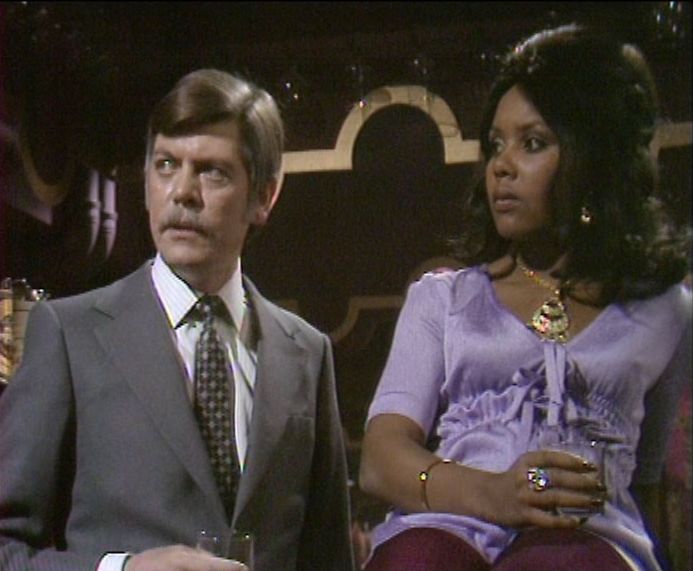
It’s not entirely clear why the cab should be of such interest.  Did no cab driver ever park their vehicle outside their house?  If this was such an usual sight on a London street in the early 1970’s then it probably would have been wiser for Callan to have used an unmarked car, rather than something so distinctive as a black cab.

As Callan and Lonely work on, we cut back to the Section where Hunter explains to Meres (and the viewers) exactly what’s going on.  The house belongs to Professor Rose (Peter Copley), a notable scientist who intends to hand over the plans of a new radar network to the Russians.  The Professor is a familiar character-type from television drama of this era – the misguided scientist.  He’s not selling secrets for personal gain, he simply wants to ensure that all sides have access to the same knowledge.  This doesn’t cut any ice with Callan who later tells him that “you’re not even a real traitor are you? You’re just a woolly headed do-gooder trying to play god.”

Everything seems to go off fine – Callan photographs the documents that the Professor is intending to hand over to his contact (who he believes is a Dutch bookseller called Amstell, but is actually a KGB hitman called Tamaresh) and returns to the Section.  But Lonely takes a fancy to a small trophy in the Professor’s study and steals it.  When the Professor returns home the next day he notices that it’s missing and calls the police.

This is a part of the plot which stretches credibility a little.  It might have been possible to believe that the series one Lonely would have been so foolish, but it’s less credible that the series four Lonely would have done so.  And as the police have a record of the cab parked outside the Professor’s house they put two and two together and pick up Lonely and Callan.

Callan and Lonely aren’t in police custody for long though, as they’re bailed out by Detective Superintendent Brown (Windsor Davies) of Special Branch.  This disgusts Detective Inspector Vanstone (Michael Turner), the officer in charge of investigating the break-in.  Vanstone might accept that people like Callan are necessary to defend the security of the realm, but it’s the sort of person he is (an ex-con) which seems to upset him.

Hunter’s far from pleased that he had to ask Special Branch to release Callan and Lonely.  This then develops into the major theme of the remainder of the episode – the uneasy relationship between the Section and Special Branch.  Both organisations operate in similar areas, which often means that their interests overlap – but neither Hunter or Brown would dream of pooling information with the other.  This, as we’ll see, will have tragic consequences.

Special Branch also have an interest in Tamaresh (Ralph Nossek).  Two officers, Mary (Jean Rogers) and Allan (Roy Herrick) are assigned to tail him, but it’s clear that neither know who he really is.  We see Callan and Meres monitoring their radio transmissions as they follow Tamaresh to Epping Forest and both Section men know that the officers are going to their deaths.  They could have warned them, but since they shouldn’t have been monitoring their radio in the first place it’s not surprising that they didn’t.

Tamaresh quickly kills Allan (who followed him into the wood) and then emerges to find Mary.  Whilst he killed Allan without speaking, he’s slightly more sadistic with Mary – he tells her that her partner’s dead and lets the news of that sink in before he kills her as well.

When Callan realises that Special Branch had no idea who they were trailing, he launches an angry tirade against Hunter.  Hunter’s unmoved though – the Section doesn’t share information with other departments and that’s an end to it.

It’s an attitude which Callan finds hard to take – at least when he goes up against men like Tamaresh he knows what to expect, but the two unarmed police officers (who Callan says were little more than kids) never had a chance.  Hunter orders Callan to kill Tamaresh (which he naturally does) and the Professor is brought in.  Nothing will happen to him, but he’ll have to live the rest of his life knowing that nobody will ever trust him again.

Peter Hill’s only script for Callan is a decent effort, although several parts of the story (Lonely’s cab and his light-fingered pilfering) do detract a little. It’s possibly no surprise that the police feature strongly in this episode since Hill had worked for the Metropolitan Police for thirteen years, ending up as a Detective Inspector in the Murder Squad.  He left the police in 1969 to pursue a writing career and by this time had already contributed to several popular series, such as Public Eye, Armchair Theatre and Special Branch.

Since there was no real need for Callan and Lonely to be arrested, it might have been better to remove those scenes from the script (it wouldn’t have affected the later conflict with Special Branch).  But it does give us another one of those wonderful scenes where Callan browbeats Lonely.  When Lonely calls round to see him, Callan is unblocking the sink (another thing you never see James Bond doing) and he proceeds to berate Lonely whilst waving a sink plunger in his face!

Callan – I Never Wanted The Job

i never

Written by John Kershaw. Directed by Jim Goddard

I Never Wanted The Job is a non-spy story.  There’s a vague mention of a (very minor) job that Callan and Meres have to attend to, but in the end they never get to it – because they’re busy dealing with Lonely’s spot of trouble.

Lonely’s been moonlighting in his cab again, but when his latest fare is shot dead he naturally turns to Callan for help.  The murdered man, Ted Dollar (Val Musetti), was a known criminal and his murder bears all the hallmarks of a gangland execution.  This is a strong hook into the story, especially as director Jim Goddard elected to use a crane to pull back from Dollar’s dead body.  It’s certainly a striking piece of camerawork – we see Dollar’s dead body face down on the road outside his house, with a large pool of blood from the shotgun blast which hit him directly in the chest.

Callan has a stinking cold and so isn’t best pleased when Lonely comes calling.  This is another nice character touch as his cold has no importance in story terms, it just reminds us that Callan isn’t James Bond, he’s simply an ordinary man with extraordinary skills.  When Lonely pours out his story it soon makes him forget his sniffles though, and gives us another of those wonderful two-handed scenes between Woodward and Hunter.

Indeed, this episode is an excellent one for those who enjoy the Callan/Lonely relationship.  There’s plenty of resigned whining on Lonely’s part, whilst Callan responds with his trademark bitter humour and anger.  But although Callan’s highly displeased that Lonely has potentially involved him in a situation that’s attracting the attention of the police, for once Lonely is able to stand up to Callan.

As the title tells us, Lonely never wanted the job of taxi driver for the Section and wants to pack it in.  Callan is quick to remind him that if he hadn’t taken on the job he would most likely have wound up dead.  And it could still happen, since Hunter has become aware that something is going on with Lonely and has asked Meres to keep an eye on things.  He hasn’t ordered Lonely’s death – not yet – but circumstances may yet force his hand.

Dollar was killed on the orders of Abbot (William Marlowe).  Although Marlowe was probably best known for operating on the other side of the law (in The Gentle Touch) he was no stranger to playing villains and he does a good job here.  He’s suitably menacing, but the audience knows that Abbot isn’t going to be a match for Callan.

A key moment is the scene where Callan confronts Abbot in his club.  After easily disabling several of Abbot’s minders, Callan has a simple message – leave him and Lonely alone.  Simple though this is, Abbot has trouble believing it.  Surely nobody would confront him just for someone so insignificant like Lonely?  He’s convinced that Callan is attempting to muscle in on his manor and can’t be convinced to back down.  As expected, this is the last mistake he makes.

Although the story features several deaths (and Dollar’s is particularly bloody –  taking a shotgun blast to the chest at point-blank range) there’s also something of a light-hearted feel about it.  Possibly it’s because for once the stakes are low – the security of the nation isn’t at risk and the only trouble comes from a few members of the underworld.

The closing moments, with Callan and Meres squirming in front of Hunter like two naughty schoolboys, is particularly telling.  Hunter might have been aware that something was going on with Lonely but he asked Callan to fix it – with the implication being that he didn’t want to know the details.  Of course, Hunter knew exactly what had happened and after they leave the office he allows himself an indulgent smile.

It’s possible to feel a little sorry for Abbot, as he was dead the moment he decided to target Callan.  William Marlowe brings a touch of class to proceedings and Paul Angelis and Michael Deacon are effective as Abbot’s henchmen, Steve and Sunshine.  They’re the pair who threaten Lonely (and smash up the cab, much to Callan’s annoyance).

For Doctor Who fans there’s an appearance by John Levene in a minor role and the ever dependable Ron Pember also turns up as a cafe owner.  Although tonally different from the rest of the fourth series, I Never Wanted The Job foregrounds the Callan/Lonely relationship, which is a major plus point in its favour.