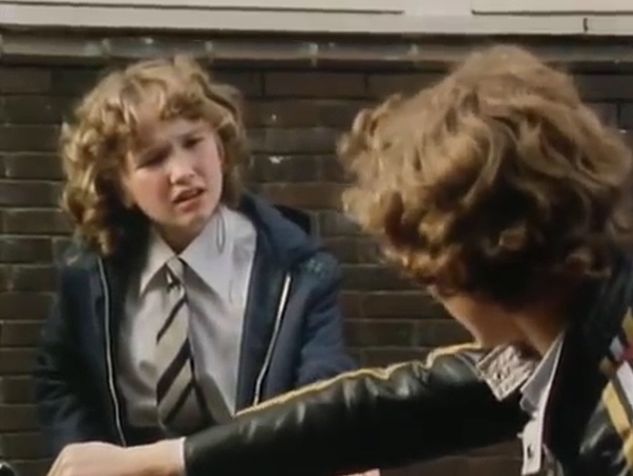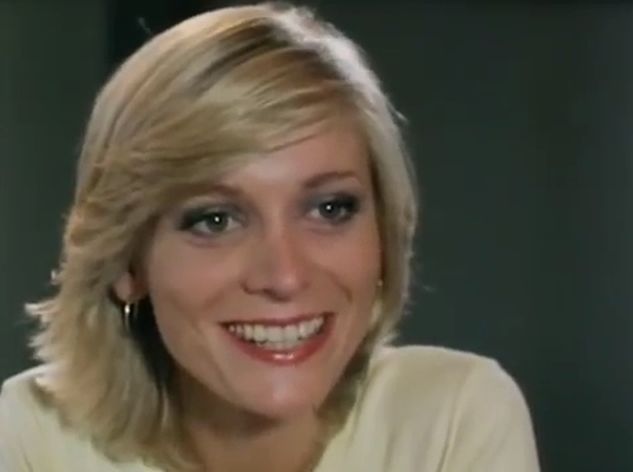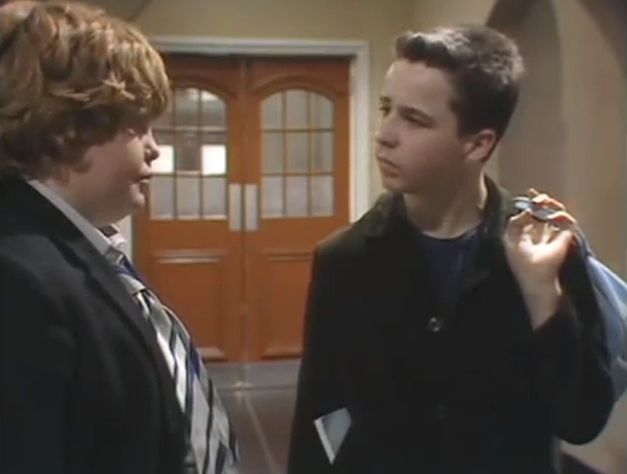
Callan – Charlie Says It’s Goodbye

charlie

Written by James Mitchell. Directed by Peter Duguid

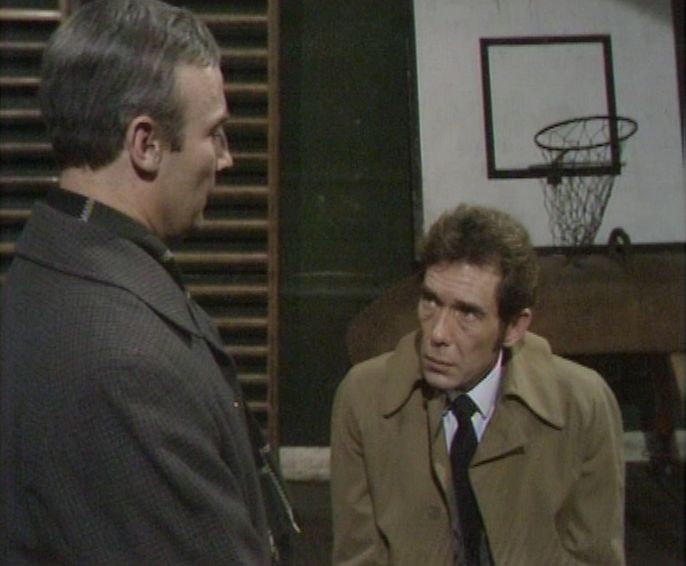
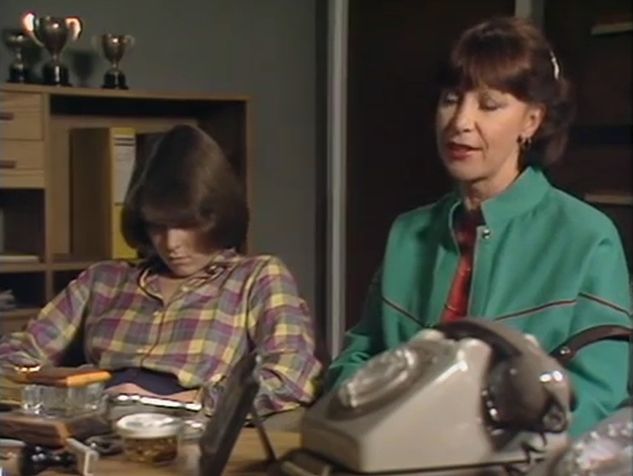
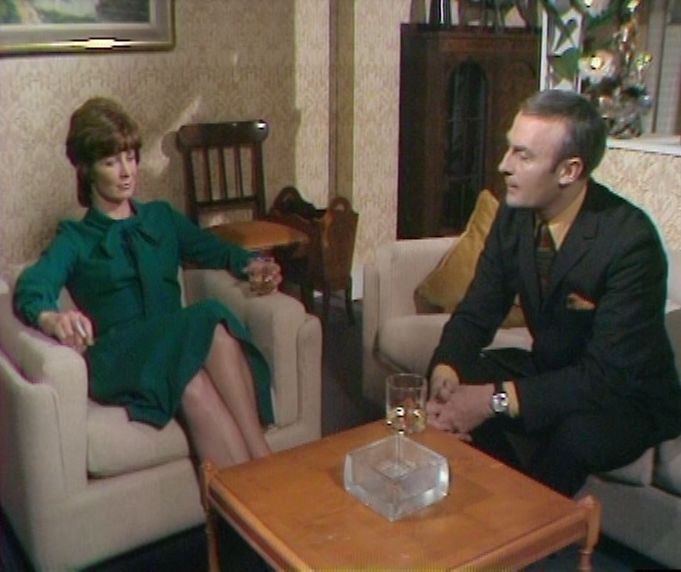
Hunter believes that a top civil servant called James Palliser (Dennis Price) is due to defect to Eastern Europe shortly.  Palliser is under the impression that the man he loves is waiting for him in Poland – Callan, of course, knows this is the oldest trick in the book.  So before we’ve even met him, the character of Palliser has been quite clearly defined – he may be an important man, but he’s also a gullible one (it’s later reveled that Palliser’s lover died under interrogation some time before, but faked messages are being used to lure him out).

Callan is assigned to watch him and it seems to be a quite straightforward brief.  But there’s a distraction as Palliser has a friend called Susan Morris (Beth Harris).  He introduces himself to both Palliser and Susan and makes no secret that he works for security (Hunter’s suggestion – as he thinks it might spook Palliser into running earlier than planned).  Susan reacts sharply when she meets Callan for the first time – her husband was investigated by security and later took his own life.  But a later meeting is more cordial and Callan becomes more and more attracted to her ….

With Charlie Says It’s Goodbye, series creator James Mitchell crafts a story which takes a closer look at Callan the man.  There’s already been plenty of evidence provided during the series to date which makes it clear that Section operatives like Callan can hardly expect to lead a normal life.  All the previous relationships we’ve seen him enjoy have tended to be short (and usually terminated by death of the female  – such as Suddenly – At Home, for example).

He makes a valiant effort here to try and convince Susan that he’s nothing more than a nine to five pen-pusher, but she senses that he’s not being honest with her.  And finding he wears a gun is something of a giveaway of course.  It makes a change to see a more vulnerable Callan.  This is demonstrated when he gives her a present of a box of chocolates and she remarks that it’s a little old-fashioned.  Callan (obviously somewhat out of date when it comes to any form of relationship) is rather discomforted by her gentle chiding.

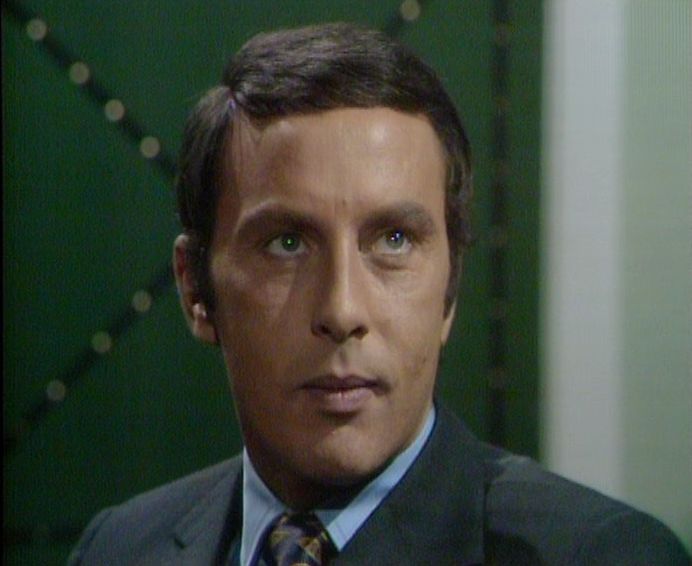
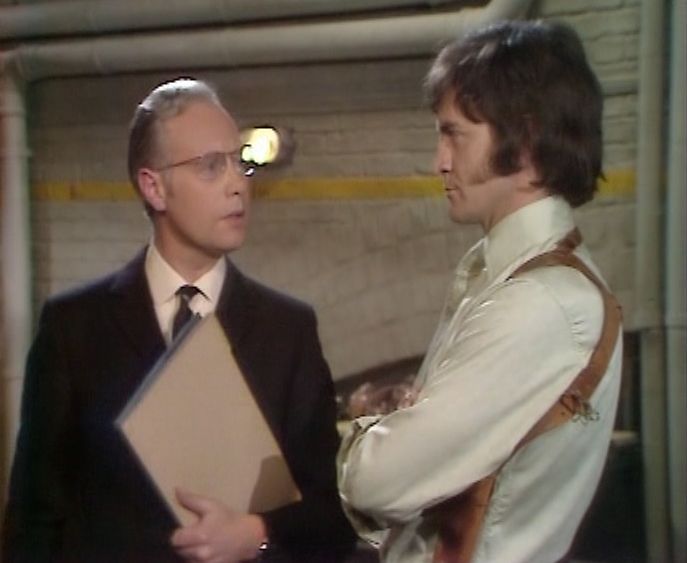
If the Callan/Susan relationship is the emotional heart of the story then Palliser’s attempted defection provides the more conventional spy angle.  Dennis Price, best remembered for the classic Ealing film Kind Hearts and Coronets, is a solid presence as Palliser whilst Richard Morant plays the hip-and-happening Trent, who’s been assigned by Komorowski (John G. Heller) to guard Palliser until he’s cleared to leave for Poland.

Trent does seem to be an unequal opponent for Callan as he’s far too young and casual.  There is a reason for this – Komorowski wishes to defect to Britain and therefore deliberately sabotages Palliser’s defection by entrusting him to someone he knew would be no match for Callan.

Callan is easily able to disable Trent and bring Pallsier in, but there’s a complication.  Hunter’s received an anonymous letter stating that Callan has been spending his free time with Susan.  There’s a telling moment when Hunter questions Liz about it, and she declines to answer his questions.  It’s a sign that her affection for Callan has overridden her duty to the Section.  And for somebody like Liz, who has even less of a life outside the Section than Callan does, this is quite noteworthy.

Is there a happy ending for Callan? He loves Susan and would be happy to leave the Section, but he knows in his heart he wouldn’t be allowed to walk away, whilst Susan loves him in return but detests the job he has to do.  It’ll probably come as no surprise that things don’t end well.  Trent targets both of them and Callan kills him (with a harpoon, no less).  He had no choice, since both their lives were under threat, but Susan’s total shock at seeing violent death close-up brings their relationship to an end.

Nearly everybody loses in this one.  Palliser’s hopes of being with the man he loves are cruelly dashed when Hunter tells him he’s dead, whilst Susan’s revulsion at seeing the sort of violent man Callan is can only serve to harden him a little more and make it unlikely he’ll ever decide to open up again.  The only winner therefore is Komorowski, who will no doubt be able to live a comfortable life as a defector.

Whilst not the absolute best the series can offer, Charlie Says It’s Goodbye is still pretty compelling, thanks to the emotional dramas that are played out over its fifty minutes.
Callan – None of Your Business

none of your business

Written by Trevor Preston. Directed by Voytek

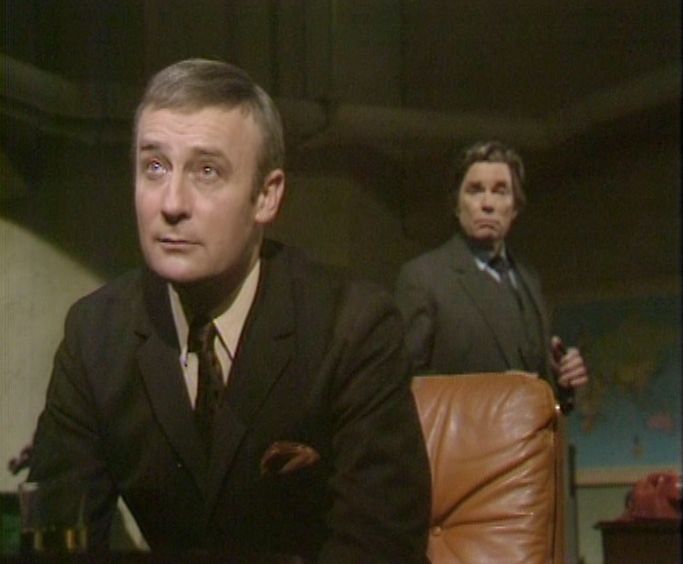
After a brief spell as a (reluctant) member of the establishment, Callan now finds himself on the outside.  He’s been relived of command and placed on “special leave” by Bishop, pending the appointment of a new Hunter.

Callan quickly understands that he’s persona non grata.  Lonely tells him he’s been ordered not to drive him and Liz is unable to hand over his passport.  As an aside, it’s always struck me as odd (and rather unbelievable) that Lonely would have been drafted into the Section, even as just a lowly driver.  But it does mean that at the start of the episode his inability to help serves to increase Callan’s sense of isolation.

There’s rarely been any love lost between Bishop and Callan and this is made evident by their early exchange.  “All you want to do Mr Bishop is keep your paperwork neat. but then you are a very neat man, aren’t you Mr Bishop? You have neat hands, neat clothes, neat manners, neat mind.  Place for everything, everything in its place. Cross/suicide/file closed/what’s for lunch. Neat.”

As Callan’s on “leave” he decides to take a holiday, but Bishop won’t release his passport.  The reason why is never made clear, is Bishop simply being awkward or does he fear that Callan might defect?  Either way, Callan decides to obtain a fake passport and this is where the story really starts.

What stops None of Your Business from being a top-drawer Callan episode is the somewhat unlikely chain of coincidence.  Meres and Stafford are investigating how a Russian agent came to be in possession of fake, but very convincing papers.  They have a lead, West (Peter Eyre), but his sudden suspicious death stops them in their tracks.

Of course, the people that Callan approaches are the same ones that Meres and Stafford are interested in – and it’s this rather clumsy plotting which is the problem.  It’s also rather out of character that Callan would be so driven to try and leave the country – he has to be otherwise the story wouldn’t work, but it just doesn’t feel quite right.

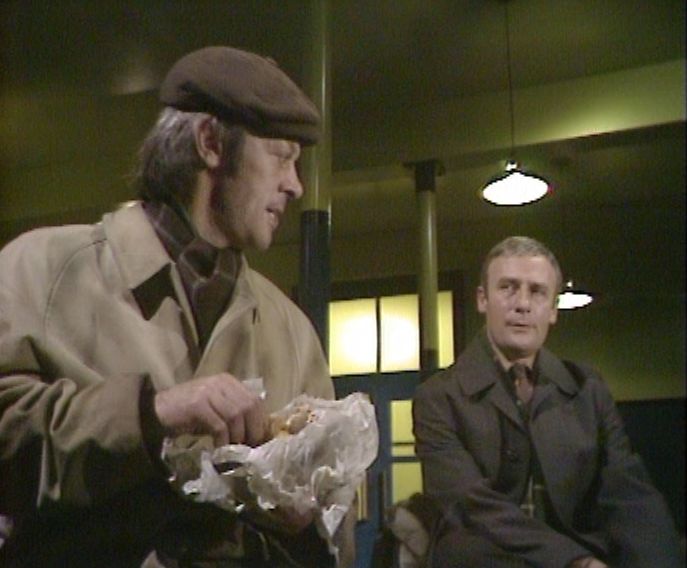
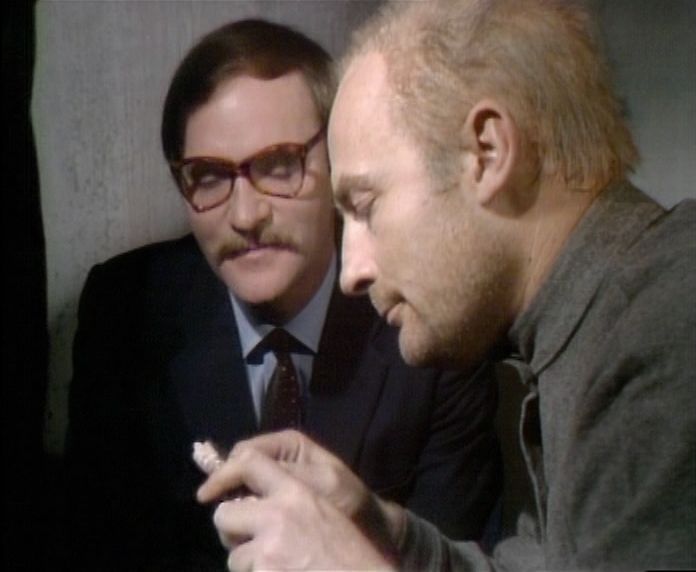
But if some of the plotting is a little suspect then there’s still plenty of incidental pleasures to be found with the guest cast.  Tony Selby plays Lucas, the man who seems to be in charge of the forgery ring.  He starts off as a confident figure, convinced he’s got the measure of Callan, but it’s plain he has no idea what he’s let himself in for.  Brian Murphy, as Reeves, first appears as one of Lucas’ potential customers (presenting a cowed, shambling figure) but it’s later revealed that he’s the brains behind the whole operation.  It’s a nice enough twist, even if Reeves’ motivations (and the precise nature of the forgery ring) remain somewhat nebulous.

There’s several small character touches which enhance the episode.  The first comes after Callan realises that Lonely’s told Lucas where he lives.  A spasm of anger crosses his face and he punches Lonely – hard.  Seconds after you can see that Callan regrets this, especially when Lonely tearfully tells him that he didn’t have any choice – Lucas’ heavy had hurt him.  Woodward and Hunter had shared so many scenes together by this time that they were able to display a world of meaning even in non-verbal ways.

And when Squire’s Hunter returns to the Section late in the episode, both Meres and Stafford automatically stand up but Callan remains seated.  This is a nice unspoken sign of Callan’s disdain for authority – although his relationship with this Hunter was always more cordial than with some of his predecessors.

The new Hunter is revealed – in fact it’s the old one as William Squire returns to the series.  It would have been the ideal time to bring in a new actor but given how good Squire always was I can’t really complain.

Callan – If He Can, So Could I

if he can so could i

Written by Ray Jenkins. Directed by Peter Duguid

The opening of If He Can, So Could I has a deliberate echo of the season three opener, Where Else Could I Go?. Then it was Callan who was deemed to be unfit for duty, but now it’s Cross.  In both cases we see a rigorous physiological evaluation undertaken by Snell (Clifford Rose).

Rose, later to play Kessler in the classic series Secret Army, was always a little underused in Callan, but this episode does give him a little more exposure than normal.  Snell is convinced that Cross should be replaced (he likens him to a tightly wound watch spring – which has to give eventually) but Callan is less sure.

Snell certainly plays all the tricks he can, such as asking Cross to fire at the target of a woman and then revealing that behind the target was a female dummy.  This recalls a similar moment in Where Else Could I Go? – Callan was perfectly fine when asked to shoot circular targets, but missed every time he was presented with a target in the form of a human body.

Interestingly though, Cross has no such qualms and when Snell questions him afterwards he maintains that he feels perfectly fine.  Although his actions in Rules of the Game were responsible for paralyzing a fourteen-year old girl he’s adamant that it’s left no lasting scar.  He tells Snell that he’s trained to not feel remorse – it was an unfortunate accident, but nothing more.

Another fascinating moment occurs when Snell asks him what he feels when he kills.  Cross says that it gives him a sense of security, which makes Callan (watching events from the close-circuit television in his office) shake his head ironically.  Although he may not share Cross’ opinion about killing, Callan is very much on the side on his colleague and reinstates him.

He’s sent right back into the thick of things as he’s assigned to guard a Russian dissident poet called Trofimchuk (Peter Blythe).  Probably best known for playing Soapy Sam Ballard in Rumpole of the Bailey, he’s almost unrecognisable here, thanks to a moustache and a strong Russian accent.  Trofimchuk’s interaction with Cross is key to the episode – especially the part which sees Trofimchuk speak in favour of suicide.

Do his words maybe hit home?  Shortly after, Cross spies an intruder on the roof and leaves to investigate.  A single shot is fired and Cross is dead before he hits the ground.  When Callan later catches up with Cross’ killer (and Trofimchuk’s would-be killer) Burov (played by Morris Perry) his dying words are “he let me kill him”.  And Snell later finds a number of books in Cross’ flat which have passages dealing with suicide highlighted.

It’s all circumstantial evidence, but together it adds up to a compelling case that Cross did have suicide on his mind, although there isn’t any real evidence of this from the film sequence that covers his death.  We see Cross looking for Burov, he’s distracted by a shout from below and a split second later he’s shot.  But we’ve already seen Callan and Snell debate that life and death can be a matter of split seconds, so it could be that this infinitesimal hesitation was key. Or did Cross just forget his training?  This is Callan’s opinion, but it could be just what he wants to believe.

The death of Cross hits both Callan and Liz hard, but for different reasons.  Although he treated her badly during their brief relationship, it’s probable that Liz still had a certain amount of affection for him, whilst Callan’s feelings are much more complex.  Towards the end there’s a spell-binding scene with Callan and Lonely (Russell Hunter’s only appearance in this episode).  A very drunk Callan tells an uncomprehending Lonely how difficult it is to control the darkness that exists inside.  Edward Woodward was always so good, but this scene is something special even by his high standards.

Callan’s decision to leave the office after Cross’ death (something that Hunter is strictly forbidden to do) and his murder of Burov (the first time he’s killed someone he’s not been authorised to) brings his brief stint as Hunter to an end.  Whilst it could have lasted a few more episodes, largely confining Woodward to the office has been a bit of a problem so it’s not surprising that he’ll now be back in the field.

No matter how many times I rewatch these episodes they never lose their impact.  If He Can, So Could I is yet another exceptional installment from one of the true classics of British television.

Callan – Rules of the Game

rules of the game

Written by Ray Jenkins. Directed by Voytek

Bishop orders the Section to harass a Russian cultural attache called Medov (Mike Pratt).  Callan is told that a British diplomat was recently expelled from Moscow, so this is in the nature of a tit-for-tat exercise.  Cross is assigned to wage psychological warfare on him and ultimately engineer a situation that will force him to be recalled.  But Bishop hasn’t been entirely honest with Callan and when Cross decides to involve Medov’s family it has dire consequences …..

Rules of the Game could be seen as the first of a two-parter which concludes the story of James Cross (the repercussions from the events here are a major factor in the following episode).  Ever since Cross was introduced at the start of series three – Where Else Could I Go? – he’s been something of a loose cannon.  But since the Section is such a dehumanising place it’s not surprising that it breeds a certain type of very dysfunctional person.

Rules of the Game offers us a close examination of exactly how he operates.  Medov seems to be a blameless figure, but that’s of little concern to Cross since he’s got his orders and is happy to carry them out.  He therefore stands in complete contrast to Callan – a man who never stops questioning.  As Callan later tells Bishop.  “I was trained never to take anyone or anything on trust. You start off with one simple premise – everything smells. Yourself, the job you’re doing and the man who tells you to do it. You’re told something, you test the opposite.”

Any available resource is fair game for Cross, so Medov’s wife Alevtina (Virginia Stride) and daughter Danera (Verna Harvey) are simply there to be used (Callan tells him at the start that they aren’t his concern, but he reluctantly agrees later they can be used as leverage).  Nuisance phone calls help to ramp up the pressure, but it’s not enough to force Medov’s hand – so more extreme measures have to be taken.

As might be expected, it’s a messy ending.  Medov’s daughter is critically injured by Cross and Medov surprises Callan by asking to defect.  The brief meeting between Callan and Medov is a powerful ending to the story.  Medov’s life has been destroyed – but who was ultimately to blame?  Was it Cross for lashing out at Danera or was Bishop, the man who gave the orders, more culpable?

Patrick Mower is excellent in this episode.  It’s a pity that he didn’t stay on for the remainder of series four as the Callan/Cross/Meres triangle would have been an interesting one.  Presumably it was felt that now Anthony Valentine had returned the character of Cross was somewhat surplus to requirements.

But it’s also just as much Mike Pratt’s episode as it is Patrick Mower’s.  Although Pratt will always be best known for Randall and Hopkirk (Deceased) he packed a great deal into a relatively short career (he died in 1976, aged just 45).  Apart from many other film and television credits, he also was a skilled musician and turned his hand to script-writing, penning episodes for several television series, including Randall and Hopkirk.

With the battle of wills between Medov and Cross taking centre stage, it does mean that Callan is rather pushed to the sidelines.  But on the plus side Woodward shares some nice scenes with James Cossins (who plays the effete spy Neville Dennis).  Cossins was always such a reliable supporting actor (and if you don’t know the name, you’re certain to recognise his face and voice).  His byplay with Woodward provides some light relief in an otherwise dark episode.

One slight script flaw is that Bishop tells Callan this will be his first job as Hunter (which rather ignores the previous episode).  But on the plus side this scene gives us a chance to see Bishop’s office – which is very large and very sparsely furnished (it certainly impresses Callan).

A character-heavy piece with little action, Rules of the Game is another quality installment of a very consistent series.

Callan – First Refusal

first refusal

Written by Bill Craig. Directed by Jim Goddard

Kitzlinger (Martin Wyldeck) is a middle-man with no political or ideological convictions.  He’s been authorised to sell a list and has offered it to the British SIS on first refusal.  Kitzlinger tells Callan and Bishop that it contains the names of ten British agents based in Eastern Europe.  If they aren’t interested in paying his price of one hundred thousand pounds then he’ll offer it to the KGB.

Now that Callan is in charge of the Section he reports to Bishop (Geoffrey Chater).  Bishop and Callan are very different characters which means there’s an entertaining combative nature to their relationship (and both Woodward and Chater seem to relish the numerous two-handed scenes they share).

First Refusal opens with Callan stating his case for a taxi – or as he calls it a MCF (mobile communications facility).  It’s ironic that whilst Bishop couldn’t see the need for buying a taxi, once Callan explains that it’s a mobile communications facility he’s much more sympathetic!

His need for such a vehicle does help to date the programme somewhat – he tells Bishop that too often his agents are out in the street unable to find a phone – but even allowing for the fact this was made some forty years ago it does some strange that walkie-talkies couldn’t have been installed in all Section cars.  There’s just something gloriously amateurish about the Section having only one vehicle with radio facilities.

Now they have a taxi they need a driver – and Callan proposes Lonely.  Bishop reacts with horror, but Callan sees it as the ideal solution, particularly since Lonely knows far too much about Section business (“we either take him in or we take him out. And that means right out. But you’ll have to take me first”).

It’s no surprise that Lonely isn’t too keen about becoming a taxi driver – as he has to pass an incredibly difficult test.  This leads to a couple of classic Woodward/Hunter scenes in which Callan tests Lonely’s very limited knowledge of London streets.  Lovely stuff.

Possibly the most noteworthy part of the episode is the return of Toby Meres, although if his name hadn’t featured in the opening credits his sudden appearance at the end of part one might have come as more of a surprise.  He’s been stationed in Washington since the start of series three (whilst Valentine was engaged on other projects) and there was no hint prior to this episode that he was coming back.

Callan tells him that he’s been recalled because he has room for a good man but Meres counters that he was coming back anyway.  Their first meeting is an excellent reminder of the uneasy relationship they’ve always enjoyed.  Meres wants to be the next Hunter and he’s totally upfront in telling Callan that it won’t be long before he gets a chance.

Meres is convinced that Callan is bound to fail eventually (Callan isn’t made of the “right stuff” for command) and proposes to step in when there’s an opportunity.  Callan tells him he’s welcome to it, but that doesn’t resolve the tension that now exists between them.  Meres spends the episode waiting for Callan to fail and gently mocks him at every turn, although by the end it’s Meres who’s blundered.

The list turns out to be a fake and Kitzlinger is picked up by Callan and Meres.  When Kitzlinger makes a sudden movement, Meres thinks he’s going for a gun and shoots him dead.  Callan bitterly informs him that the dead man was simply reaching for his heartburn pills (“you’re a bloody psychopath.  You haven’t changed have you Toby?”)

Although the list of British agents is the main plot-line, it’s the character dynamics between the various members of the Section that’s the most memorable part of the episode.  Another interesting clash occurs between Meres and Cross.  Although they never shared a great deal of screen-time (Patrick Mower leaves the series shortly) there’s still some needle.  Meres tells him that if things change like he hopes then the junior man might be “a Cross I wouldn’t have to bear”.

Nobody comes out of First Refusal with much credit, especially the British who have paid over the money and received a worthless list.  It’s a sharp reminder to Callan (if he needed one) that the hazards of command are numerous.

Callan – Call Me Sir!

call me sir!

Written by Bill Craig. Directed by Mike Vardy

Callan is tired of being a field operative and wants a desk job – he tells Hunter that he’ll do anything.  But he’s not expecting to be offered Hunter’s own job ….

Call Me Sir! certainly shakes up Callan‘s format and has the potential to move the series into new and interesting areas.  Although it might seem strange that the position of Hunter was offered to the anti-authority, anti-establishment Callan, on the other hand it makes perfect sense – poacher turned gamekeeper, as it were.

The moment when Hunter offers Callan the job is electrifying.  Hunter invites Callan into his office and asks him to sit down.  Callan looks around in confusion as the only free chair is Hunter’s own, but after a few beats he understands.  It takes some coaxing to get him into the chair though, as it’s much more to Callan than just a piece of furniture – it’s an object that (along with its occupants, of course) has dominated his adult life.

But eventually Callan takes the job and it’s instructive to see how he then interacts with the other members of the Section.  In many ways it’s no different from anybody who’s suddenly promoted – the reaction he gets is a mixture of awkwardness and resentment.

The awkwardness is highlighted by his relationship with Liz.  In That’ll Be The Day Liz was tearful at Callan’s mock funeral and later warmly welcomed him back from the dead.  Here, things start promisingly enough as she decorates his office with fresh flowers, but Callan oversteps the mark by asking her to call him David, rather than Hunter, when they’re alone.  It’s plain from the expression on her face that this upsets the ultra-professional Liz and is responsible for a temporary chill in their relationship – highlighted by the fact that when the flowers die they aren’t replaced.

But if there’s faint unease between Callan and Liz, it’s nothing compared to how Cross takes the news of Callan’s elevation.  During the first two series, Callan and Meres were presented as equals – in age and ability (the only difference being that Meres lacked any sort of conscience).  When Anthony Valentine was unavailable for series three, Patrick Mower was introduced as Cross.

As previously touched upon, Cross is younger and much more inexperienced than Callan – so they’ve never been on the same level (this was highlighted by the fact that during the later part of the previous series Callan would regularly use Cross’ first-name whilst Cross still referred to Callan as Mr Callan).  Callan’s sudden and unexpected promotion has simply widened the gulf between them and the older man wastes no time in establishing his authority.

When Cross meets Callan as Hunter for the first time, he immediately sits down only to be told by Callan that he hasn’t been given permission!  There then follows a brief battle of wills which Callan naturally wins – forcing the younger man to accept the situation and show the necessary respect (including calling him Sir, which Cross does through gritted teeth).

With Callan now promoted, he’s in an ideal position to protect his friend Lonely.  But there are various forces moving against the smelly little man and in a rather convoluted part of the story Callan elects to furnish him with a new identity and send him out of the country as a merchant seaman.  Lonely’s far from keen, but Callan tells him it’s for his own safety.  Lonely’s being hunted by the Section because he was put in a Red File during the previous episode (as he didn’t believe that Callan was dead).  Now that Callan’s back (and he’s got the position of Hunter) it would seem logical for Callan to take Lonely out of the Red File.  He could do it – he has the authority – so why didn’t he?  It’s a part of the story that doesn’t make a great deal of sense.

As so often, the interaction between Edward Woodward and Russell Hunter is highly entertaining.  Lonely is now convinced that Callan’s a spy – but he believes he’s working for the Russians!  The scenes between the pair of them at the doss house (where Lonely is hiding out) are first rate.

Earlier, we see that Lonely has made the acquaintance of Flo Mayhew (Sarah Lawson) who tells him that there’s something fascinating about his face and elects to paint him (with his clothes on, thankfully).  Her painting perfectly captures him in all his glory and Callan’s expression when he sees it is priceless.

But it turns out that Flo is a member of the opposition and has ensnared Lonely in order to draw Callan out.  This is another part of the story that feels a little contrived and over-complicated.  Flo is captured and led away and it’s assumed that, like Richmond, we’ll never see her again.  But as with Richmond, she does return much later in the series to haunt Callan …..

Bill Craig’s first script for the series had been The Same Trick Twice back in series three and this clearly impressed since he ended up penning four stories during the fourth series.  He was always a very dependable writer, and although I have a few quibbles with parts of the plot, Call Me Sir! is a very strong episode.

Callan – That’ll Be The Day

that'll be the day

Written by James Mitchell. Directed by Mike Vardy

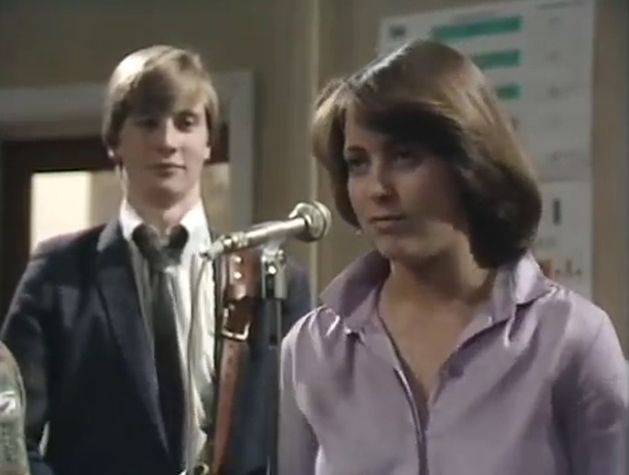
That’ll Be The Day certainly has a strong opening – we begin at David Callan’s funeral.  The mourners include Hunter, Bishop, Colonel Leslie, Cross and a clearly distraught Liz.  A late arrival is Lonely, who comes complete with an impressive floral display (which he’s naturally pinched).

One of the few moments of levity in the episode occurs when a disbelieving Lonely hears the vicar’s fulsome tribute.  He describes Callan as a humble man of peace – a far cry from the person that Lonely knew.  So Lonely comes to the conclusion that they’re burying the wrong man!

Arresting as this is, it’s not very logical.  If Callan had been a public figure (a politician, say, or a civil servant) it would have made sense to stage a mock funeral.  But as he’s not, the only thing the funeral does is to make Lonely convinced that Callan isn’t dead after all.

In Mitchell’s original draft script, Callan and his Russian counterpart (originally called Lonsdale, later renamed Richmond) were apprehended at the same time – both sides then agree on a publicity blackout so they could be exchanged.  This makes the reason for the mock funeral slightly more plausible, but it’s still a problem.

Also present at the funeral in Mitchell’s draft script was Toby Meres.  He didn’t feature in the final program, but he is mentioned (and will return later in the series).  Somebody who does make an appearance is a previous Hunter, Colonel Leslie (Ronald Radd).  Since he doesn’t speak a word, for anybody not familiar with the first two series he could be taken for just another extra.  But for those who’ve seen the black and white episodes it’s a lovely touch.

Callan isn’t dead of course, he’s a prisoner of the Russians and currently undergoing interrogation at the Lubyanka.  The first time I saw this episode I assumed it was the second part of an existing story – mainly because of the cold open.  We’re told that Callan was on assignment in East Germany, that the girl he was with was killed and that he was then taken to the Lubyanka.  It’s very jarring that this is all tell, not show.  A modern series would have no doubt set this plot-line up at the end of the previous series, closing on a cliffhanger of Callan’s abduction.

He’s clearly in a bad way – his head is shaven and he’s been pumped full of drugs.  In many ways he’s in a similar state to how he appeared in Death of a Hunter, although it’s true that here he’s more aware of what’s happening – in Death of a Hunter his moments of lucidity were few and far between.

Karsky (Julian Glover) is given the task of interrogating Callan.  Just as Callan has his counterpoint in Richmond, Karsky has an obvious opposite number in Snell (Clifford Rose).  Whilst Karsky is using drugs to interrogate Callan, Snell is doing the same to Richmond.  And Karsky and Snell are very similar character types – neither are cackling villains, instead they view their subjects with detachment and, especially in Karsky’s case, seeming compassion.

Karsky knows that Callan will eventually tell them everything – the drugs will ensure that.  But if Callan cooperates then the drugs won’t destroy him.  So why fight?  Naturally Callan replies in the negative, but it doesn’t shake Karsky’s composure at all.  As might be expected, Julian Glover is excellent in these scenes, as is Woodward, and these two-handed moments are the highlight of the episode.

T.P, McKenna’s Richmond is an interesting character.  At this point he seems to have been created simply to solve the problem about how to extract Callan from the clutches of the Russians.  But he makes an unexpected return towards the end of the series in several key episodes.  He doesn’t have a great deal of screen-time here, but he still manages to make an impression.

Another indication that Callan and Richmond are two sides of the same coin is demonstrated when it’s decided to exchange them (much to Hunter’s displeasure – he considers swapping Richmond for Callan is a bad bargain).  Both Callan and Richmond are holed up in adjoining hotel rooms in Helskini – and they each offer their handlers a drink (which are refused).

Callan’s miraculous return from the dead comes as a shock to some, especially Cross.  You get the sense that he’s just started to enjoy being the top man in the Section and now that’s cruelly taken away from him.  Patrick Mower would leave the series after episode five, so Cross only has a limited character arc in series four, but it’s still quite effective.

In series three, Cross was several rungs below Callan – the older man was quicker, sharper and always more capable.  He’s maybe slightly closer in ability now, but he also possesses character flaws which will prove to be his undoing.  He’s always had a certain sadistic attitude – witness how he plays Russian Roulette with Lonely (admittedly with blanks) – and over the course of the next few episodes we’ll see how he gradually steps further and further over the mark.

Hunter’s meeting with Callan is a rather frosty affair.  He admits that if it was his choice he wouldn’t have had him back.  But Callan is back and since Richmond was a top man it’s a matter of prestige for the Section that they can’t be seen to have swapped him for a lesser prize.  But how can they prove to the Russians that Callan is Richmond’s equal?

Promotion is the obvious course …..

Grange Hill. Series Four – Episode Eighteen

grange hill s04e18-01

Written by Phil Redmond. Tx 27th February 1981

Claire challenges Duane to a bike race, although it’s quite noticeable she starts before he’s ready!  Despite this, he manages to catch up and they finish in pretty much a dead heat.  But Pogo infuriates her when he tells her that Duane won – he wasn’t watching, but he knows he did because boys are better than girls.

This is just one of a number of incidents which convinces Mr Sutcliffe that the annual end-of-term pupils versus teachers contest would be more interesting if it was organised across male/female lines.  This doesn’t go down well with Mrs McClusky, who tells him they should be discouraging sexual inequality not breeding it.  For once though she doesn’t get her own way as Mr Sutcliffe easily bests her in the argument.  So we can score one to the male sex!

In some ways this episode marks the end of an era.  There would be a Christmas Special later in the year with the class of 1978, but they would feature very intermittently during series five (there’s only a single series five episode where Tucker and co are anything but peripheral characters).

Back for only the second time during series four is Benny.  He doesn’t do much, although he does have an interesting line in politically incorrect jokes.  “What’s the quickest way to get out blackheads? Smash a window in Bradford.”

The males versus females contest is divided into three parts – a quiz, a sporting event and a practical one.  I love the way that Matthew has to whisper the answer to a tough maths question to the teacher!  Thanks to that spot of cheating, the boys win the quiz round.

The girls win the netball match, much to the dismay of Mr Baxter, which leaves the practical contest.  The boys are baking a cake and the girls are making a trowel.  Both of their efforts are disastrous, but they each have a perfect cake/trowel ready – which they swop when Mr Sutcliffe/Miss Mooney aren’t looking.  The reactions of the two teachers at the unveiling (“That isn’t our cake. That isn’t our trowel”) is lovely and there’s a nice sense of irony that the boys and girls really are equal (since both equally cheated!)

With the practical contest a draw, that means also that the whole contrast was a draw as well.  This was clearly the only way that things could have ended, otherwise there would have been ructions!  It’s an amusing way to end a consistently strong run of episodes.  When Grange Hill returned for its fifth series, it would have a new producer, a new intake of first-years and a slighter tougher feel as Gripper began to take control.

grange hill s04e18-02

Softly Softly: Task Force – Selected series three episodes now released on DVD in Germany

task force

The German company Pidax have just released Task Force Police – Volume One.  This contains eight episodes from series three, as below –

1. Bissige Hunde (Once Bitten)
2. Banküberfall (Hostage)
3. Die Flussratte (The Floater)
4. Erpressung (Aberration)
5. Safeschlüssel (An Inside Job)
6. Ein Ehrenmann (Man Of Peace)
7. Die Möbelpacker (The Removal)
8. Irgendein Platz (Anywhere in the Wide World)

  • There’s a little more information (although it’s naturally in German) on Pidax’s website here. Using IMDB as a guide, these episodes were broadcast 1-4, 6, 10, 13 and 17th (in total, twenty-six episodes were made for the third series).

The reason why some episodes have been omitted could be because German language tracks aren’t available.  But the good news is that unlike Pidax’s Maigret DVDs, all the episodes here do feature English language tracks.

I’ve heard that Simply plan to release series two next year, so they may get round to these episodes in due course.  But if you don’t want to wait, then the Pidax release is there.

Thanks to Berthold Deutschmann for bringing this to my attention as well as providing the screencaps below. Copyright in these images remains with the BBC.

Grange Hill. Series Four – Episode Seventeen

grange hill s04e17

Written by Alan Janes. Tx 24th February 1981

This episode is the first time that Gripper moves centre-stage and it gives us a taste of what to expect from him in the years to come.

Pogo’s latest money-making wheeze is a homework service (for which he naturally makes a handy profit).  He shares the work with Duane and also tries to rope in Matthew Cartwright (Nicholas Pandolfi) to help.  Matthew’s having none of it though and I do get the feeling this is because he senses Pogo’s scheme is doomed to failure.  There’s something so incredibly earnest about Pandolfi’s performance which makes it rather entertaining – never a central character, he’ll nevertheless pop up regularly during series five.

Gripper’s keen to avail himself of Pogo’s service and it’ll come as no surprise to learn that he doesn’t expect to pay.  Pogo weighs up the pros and cons of doing Gripper’s homework for free, worrying that if he does then he’ll have to do it for the next five years!  In the end he decides to do it all wrong and adds some ink-blots and scribbling out for extra effect.  You have to wonder if Pogo has a death-wish as it’s obvious what’s going to happen – but although he begins to have second thoughts there’s no time to change it.

Miss Mooney, always one of Grange Hill’s most mild-mannered teachers, is appalled at Gripper’s homework and tells the uncomprehending boy that he’s in a lot of trouble.  After the bell goes we see Pogo hot foot it out of the classroom and although he’s built very much more for comfort than speed, he does manage to cover the ground at an impressive rate.

But Gripper does catch up with him eventually and the pair manage to wreck the common room, breaking several windows before Mr Hopwood separates them.  It’s no surprise that Mrs McClusky is appalled, since she’s been waging a campaign on vandalism and hooliganism all term and this action simply strengthens her resolve to reintroduce school uniform.

It’s interesting that it was made optional back in series two following a school referendum.  The autocratic Mrs McClusky never seems to consider that the pupil’s opinions are important – the governors agree that reintroduction would be a good idea and the PTA are also in favour, so that means that school uniform is back.

Trisha pops up at the end to harangue Pogo.  If he hadn’t had the fight with Gripper then Mrs McClusky wouldn’t have had the pretext to push her proposal past the PTA.  Although as uniform remains optional for the fourth, fifth and sixth years (and Trisha’s coming to the end of the third year) it’s difficult to see exactly why she should be so upset.  Unless she just enjoys a good moan!

But it’s Gripper’s actions that linger.  Although he’s suspended until the end of term, it’s clear that he’ll be back and there’s never a moment in this episode when he exhibits even the slightest tinge of remorse.  And by the time we move to series five (and he’s entered the third year) he’ll be much, much worse …..

Grange Hill. Series Four – Episode Sixteen

grange hill s04e16

Written by Phil Redmond. Tx 20th February 1981

The subject of options is discussed for the first time. There are some (such as Tucker) who complain that they’ll still have to do subjects they dislike, like English and Maths whilst others (Pamela, for instance) have everything mapped out as they’ve already planned their route to University.  We also hear that some pupils consider all options to be a waste of time as they’ll be no jobs for them when they do leave school.

This will be a regular theme that occurs every few years, as options are discussed with each new class in turn, and many of the points that are raised here will occur again and again – although that doesn’t make them any less valid.

An interesting moment occurs when Trisha learns she’s not able to do technical drawing, mainly it’s classed as a boy’s subject.  It hardly needs to be said that if you ever tell Trisha she can’t do something it only makes her more determined to do it anyway.

She has a meeting with Mrs McClusky who tells her that there’s only a limited number of spaces available for technical drawing and it’s already oversubscribed.  She then informs Trisha it’s more likely that a woman will give up her career to bring up a family.  It’s hard to imagine this is a view that Phil Redmond would have endorsed, but it probably would be an accurate picture of the education system at that time – as females could often be classed as subordinate to males.

Although Trisha’s not best pleased, it’s possible to understand Mrs McClusky’s point of view.  The school only has limited resources and whatever way they choose to use them somebody is bound to lose out.

But another of Mrs McClusky’s decisions has drawn more general disfavour – her decision to expel Cathy, Gerry and Ruth.  All three are shocked by this and it does seem a very harsh punishment for skipping class on one afternoon.  It is interesting though that Mrs McClusky tells them that her decision could be overturned if they appeal to the school governors.  I can’t think of many occasions in the future where Mrs McClusky finds herself answerable to others (except when she’s relegated to deputy head in a few years time).

But as it turns out, Cathy’s mother is able to persuade her that it would be better to cane the girl than expel her.  It’s something that Mrs McClusky is reluctant to do, but Mr Keating is more in favour since he considers it will serve to discourage others from breaking the rules.

And poor Tucker’s hopes of a date with Pamela seem to be dashed forever when he overhears her telling Susi that she’d rather go out with Penny Lewis’ pony!

Grange Hill. Series Four – Episode Fifteen

grange hill s04e15

Written by Alan Janes. Tx 17th February 1981

If there’s a theme to this episode it’s how existing friendships are put under strain as new relationships develop.  Alan and Susi are now very much an item – which is an irritation for Tucker who finds himself rather isolated.  It also annoys Alan who becomes tired that Tucker’s hanging around when he wants to spend time with Susi.

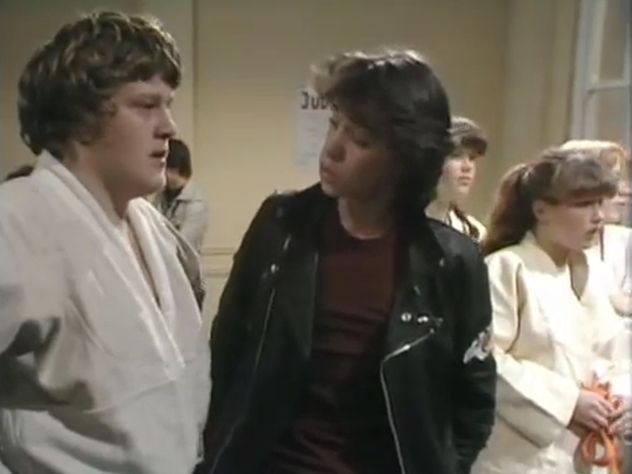
Alan and Susi head off for the lunchtime judo club and are surprised to see two new recruits – Tucker and Doyle.  Doyle’s made an appearance to save himself from a detention whilst Tucker, of course, is only there because Alan is.

Both Tucker and Doyle are teamed up with experienced hands – Alan partners Doyle whilst Susi takes on Tucker.  Both the newcomers are blithely confident – with Tucker stating out loud that it doesn’t seem a fair contest.  Susi agrees, telling him that she’ll go easy!

As might be expected, both Tucker and Doyle find themselves on the floor several times (“come here often?” asks Tucker as the pair are thrown down yet again).  But whilst Tucker isn’t perturbed about being bested by Susi (instead he’s interested in more lessons) Doyle is very keen to exact revenge on Alan.

A scuffle outside finds Doyle and Robbo in possession of Alan’s judo kit, which they sell for a small profit to Junky Meade.  It does somewhat stretch credibility that not only does Alan not realise he’s lost it but that Tucker (completely innocently) later buys it.  Still it does give them a chance to partner up again as they exact their revenge on Doyle.

Another friendship that’s drifting apart is Trisha and Cathy’s.  Trisha remains an active campaigner for better conditions in the school – with her latest mission being to persuade Mr Thompson that if the pupils take food into the common rooms they won’t leave any mess for him to clean up.  Unexpectedly he completely wrongfoots her by being very agreeable to the idea – telling her that since she politely asked his opinion he has no qualms (and that he enjoys a nice sandwich himself!).  It’s a rare moment for Timothy Bateson to show a more human side to Mr Thompson.

As for Cathy, she’s still heavily involved in the pop group – along with Gerry, Ruth and the others.  She’s got them a paying gig, but they’ll need to bunk off school in order to get there in time.  Cathy hits on the bright idea of telling Miss Peterson that her grandmother’s died, which is fine until the teacher talks to Cathy’s brother Gary.  When he tells her that their grandmother died six years ago you know that Cathy is in a heap of trouble.

Rewatching series four, it’s quite noticeable that not many episodes have a film/studio mix – instead there’s a number of all-film episodes (as with episode fourteen) and the rest are studio based (like this one).  It’s quite an interesting production choice which doesn’t occur very often in the future (except for those episodes away from the school which were all location based anyway).

Grange Hill. Series Four – Episode Fourteen

grange hill s04e14

Written by Alan Janes. Tx 13th February 1981

Whilst most of this episode has a light-hearted feel, at the end there’s a much darker and disturbing tone.

The bulk of the running time is concerned with Alan and Susi’s relationship.  Or lack of it.  Tucker’s seized with a burning desire to find out if they really are a couple, so he has one of his brainwaves.  He writes a letter to Susi and signs it from Alan, suggesting a date.  He tells Alan that he and Tommy will meet up with him later at the same place.  Tommy and Tucker then stake-out the meeting place, waiting to see if Susi will make the rendezvous with the oblivious Alan.

The letter from “Alan” is certainly very florid, much to the amusement of Pamela.  “Every-time I see you my heart throbs.”  But Pamela also admits she’s a little jealous, as she’s never been asked out – and wonders if it has anything to do with the fact she spends so much time around horses.  If only she knew that Tucker’s aching to arrange a date with her – although it’s possible she may react with horror to that news!

In the end, Susi didn’t go because her mother found the letter and forbade her.  Maggie Riley (as Mrs McMahon) was one of Grange Hill‘s most formidable and snobbish mothers and her later run-in with Tony Barton (playing Mr Humphries) is a sheer joy.  Mrs McMahon is completely bested by Mr Humphries in a short, but sweet, scene.

Another running thread through the episode is the difficulty the pupils find in catching a bus home.  The lack of buses leads indirectly to a running battle between Tucker and co and some Brookdale kids.  Also making an appearance during this scene is Graham Cole (later to play Tony Stamp in The Bill).  Back in the late 1970’s and early 1980’s he was making a living as an extra/walk-on (he pops up many times in Doctor Who during this period).

If most of the episode has a comic feel then the emphasis shifts dramatically at the end.  The problem with the buses causes two younger pupils, William (Stephen Cobbett) and Benny’s brother Michael (Mark Bishop) to walk home across the common.  They’ve been warned not to do this, and the reason becomes plain when William is attacked by a strange man (played by Jay Neill).

Although Grange Hill was a children’s series and couldn’t be particularly explicit, it’s still a powerful moment.  The man asks both the children to help him search for his lost dog, but this is just a ruse to isolate them.  As the two boys move apart he drags William into the bushes and a brief struggle ensues.  Luckily Tucker was passing by and William didn’t suffer anything worse than a few cuts and bruises.  This is another memorable, almost PIF (public information film) like moment, as it graphically demonstrates why children should never talk to strangers.

And it’s all the more effective because it happens so unexpectedly.  Another all-film episode, this one is efficiently directed by Colin Cant.

Grange Hill. Series Four – Episode Thirteen

grange hill - s04e13

Written by Phil Redmond. Tx 10th February 1981

After being a regular character during series two and three, Mark Edie (who played Andrew Stanton) had a much lower profile during series four with only a handful of appearances.  This might have been his own choice, since for some actors real-life pressures like exams have to take precedence.  But whilst his series four episodes are limited he’s given a central role in this one.

It also neatly links back to events witnessed earlie on the run, when we saw that Andrew’s sister Karen was visibly upset.  The relationship between Andrew and Karen’s parents had been established as a rocky one right from the time Andrew was introduced – and now it’s finally imploded.  His father has left home, taking Karen with him and it’s Mrs Stanton’s inability to tell her son the truth which pushes him over the edge.

Failed marriages are now such a staple of television drama that they tend to be accepted as the norm, but that wouldn’t have quite been the case back in 1980.  Although we don’t often see both parents of many of the pupils (there is, presumably, a Mr Jenkins and a Mrs Humphries but they remain firmly off-screen) it can be assumed that pretty much all the children live in two-parent families. A one-parent family is therefore unusual (although as the series progresses through the eighties and nineties they’ll become much more common).

Andrew’s choice of oblivion is alcohol – which hasn’t really been touched upon in the series.  It’s a shame that he wasn’t a regular during this year as developing his addiction to alcohol over the course of a number of episodes would have been very effective.  As it is, he suddenly becomes a drinker and then just as suddenly stops.

His inebriated state is a problem for Tucker, Alan, Tommy and Justin.  Tommy’s happy to leave him, but Tucker knows the trouble Andrew would be in if he was found, so decides they have to help.  There then follows a series of frantic scenes as the four of them attempt to hide Andrew’s unconscious body in various parts of the school – resorting to such wheezes as placing him on a trolley and wheeling him around!

Eventually Mrs McClusky apprehends Tucker, but when she learns of the reason why they’ve all been skipping classes she’s inclined to be lenient (a rare example of compassion from her).

Two other points of interest.  Firstly, Alan pops along to the smokers room (a store-cupboard) and seems on the point of accepting a cigarette.  So much for his claim that he’d never smoke again in the previous episode.  And Tucker’s growing interest in Pamela Cartwright runs through the episode, but the normally confident Tucker is completely tongue-tied when it comes to asking her out!

Grange Hill. Series Four – Episode Twelve

grange hill - s04e12-01

Written by Alan Janes. Tx 6th February 1981

This is a classic Tucker episode.  Tommy is upset that he’s missed his chance to go with the others on the school trip to France, but Tucker has a brainwave – why doesn’t he stowaway?!

Tommy’s slightly apprehensive but Tucker is blithely confident.  When he’s asked about passports he tells Tommy that since they joined the Common Market they’ve done away with them.  It doesn’t take a mind-reader to work out that Tucker, Alan and Tommy are heading for trouble – and this is all established in the opening minutes.

Mr Baxter and Miss Lexington have the unenviable task of keeping order.  This ramps up the comedy a little more, since Michael Cronin is, as always, excellent as the deadpan authoritarian whilst Allyson Rees provides a strong counterpoint as a more relaxed and easy-going character (Grange Hill’s version of the bad cop/good cop).

The middle part of the episode takes place on the cross-channel ferry and is memorable for two reasons.  The first is Trisha and Cathy’s encounter with two French boys.  The girls don’t appear to know any French (which is odd, since you’d assume a trip to France would have been part of their French education) and the boys don’t know any English – making communication rather difficult.

However, one boy takes a shine to Trisha and attempts to demonstrate his affections in a language that’s universal.  Trisha is having none of it though.  “Here, leave off.  Bit handy int they?”  A notable thing about these scenes is that Lyndy Brill is looking very tanned.  Maybe she’d just come back from a long holiday (unless she was an early adopter of fake tanning).

grange hill - s04e12-02

Secondly, it sees Alan finally decide to kick his smoking habit, after a discussion with the coach driver Mr Ellis (Eric Mason) in the ferry lounge.  He gives the boy several reasons why smoking isn’t a good idea.  “One, it takes your money and two, it gives you lung cancer.”  Shortly afterwards we see Alan leaning over the side of the ferry, being sick.  Was this a mixture of his alcohol and cigarettes or did Mr Ellis’ words strike home?  Either way, he throws his fags overboard and declares that he’s finished with smoking.  It’s another one of Grange Hill‘s obvious moral lessons, but it was allowed to develop over a long period of time so is quite effective.

Once they reach French soil the problems start – the customs officer finds Tommy and since he’s not got a passport they won’t let him through.  This means one of the teachers has to escort him home and that forces the whole trip to be cancelled (it wouldn’t be practical for just one teacher to supervise the whole class).

Tucker is naturally sent to Coventry (or even further!) but something is salvaged when Miss Lexington wonders if the holiday firm they booked with would be able to offer them alternative accommodation in Britain.  Luckily they do, so the bus sets off for a week in Bournemouth.  Not quite France, but it’s better than nothing.

A rare non-school episode from series four, it’s rather a good one and since we didn’t venture very far into France it was probably quite cost-effective as well.

Ghostwatch (BBC 1992)

A good evening for a rewatch of this, I think,

archivetvmusings's avatarArchive Television Musings

ghostwatch

Althogh Ghostwatch was only screened once on British television (exactly twenty two years ago) it’s certainly a programme that remains lodged in the public imagination.  It was a drama, made for the BBC Screen One strand, but was recorded to look like a live, factual piece and this blurring between reality and fiction proved to be highly controversial.

Whilst there was a Screen One caption and a writers credit (for Stephen Volk) at the start, anybody who missed this and tuned in a few minutes later could easily have been forgiven for thinking this was a live broadcast.  It employed the narrative of a typical show of this type – Michael Parkinson is ensconced in the studio with an expert on the paranormal whilst Craig Charles and Sarah Greene are on location and reporting back events as they happen.

There are numerous examples of the television grammar that’s been employed…

View original post 675 more words

Grange Hill. Series Four – Episode Eleven

grange hill - s04e11

Written by Alan Janes. Tx 3rd February 1981

There’s something rather endearing about the low-level villainy of Michael Doyle.  He did issue a few racial taunts to Benny during series one but that was pretty much his worst deed.  Otherwise it’s all pretty low-key stuff – stealing Penny Lewis’ project or, as in this episode, pinching light-bulbs so he can make a small profit by selling them to Junky Meade (Harry Webster).

Doyle doesn’t just take the bulbs though – he leaves a faulty one in its place, which causes no end of confusion for Mr Thompson as he tries to work out exactly why so many light-bulbs are failing.  Timothy Bateson is once again remarkably entertaining as Mr Thompson and what’s even better is that in this episode he has an assistant to vent his frustrations to.  Norman (Leslie Hull) is young and gormless and obviously irritates the older Thompson.  Hull has a nice sense of comic timing and it’s a pity he didn’t return in the future.

There are two other highlights in the episode – the first is Cathy singing Queen Bee.  Originally recorded by Barbra Streisand in 1976, it’s certainly a good showcase for Lyndy Brill’s vocal abilities.  Had this been a few years later then it’s highly likely a tie-in record would have been released (ala the Grange Hill album or, shudder, those EastEnders singles) but there was nothing here, alas.

Perhaps the most eye-opening moment is Mr Hopwood’s confrontation with Alan.  Alan’s smoking habit has been a running theme for a while and when Mr Hopwood catches him, his displeasure is plain to see (he gives Alan a clip on the top of the head, knocking him over).

It’s remarkable that this assault is simply accepted by both parties and not taken any further – particularly since Mr Hicks was dismissed for doing something similar in an earlier episode.  But then Mr Hopwood is positioned as a good and positive character and Alan’s smoking is “wrong” so it’s clear to understand the moral tone that the episode takes.

Even more jaw-dropping is that Alan turns up for school the next day sporting a black eye.  This was given to him by his father after Mr Hopwood told him about his son’s smoking habit.  This isn’t the first time that we’ve seen a pupil physically abused by their parent (Duane was given a black eye in series three after his bike was stolen).

There’s never even a hint that Mr Humphries might have been in the wrong for hitting his child – Alan shouldn’t have been smoking and therefore has been taught a lesson he won’t forget.  It’s a fascinating look at a vanished age.

Grange Hill. Series Four – Episode Ten

grange hill - s04e10

Written by Margaret Simpson. Tx 30th January 1981

What’s notable about this era of Grange Hill is that the pupils always seem to be campaigning about something.  School uniform was an ongoing issue during series two, the outdoor centre was key to series three and already in series four we’ve had campaigns for common rooms, saving the school magazine and also protests about the cost of the new sports kit.

I wonder if this simply was a sign of the times (late seventies and early eighties Britain certainly had a militant atmosphere – there always seemed to be plenty of strikes and industrial disputes) or whether it’s due to the influence of series creator Phil Redmond.  As the eighties wore on and Redmond’s influence lessened it’s notable that pupil militancy does seem to reduce – so maybe its safe to assume he was the driving force behind these plotlines.

Either way, this is yet another episode which is dominated by unhappy pupils – in this one its school dinners that they find it hard to stomach (as it were).  No doubt this would have struck some chords with the viewers at home since school dinners of this era could be a grim affair.

There’s something of a feel of deja vu as Trisha again teams up with Susi and Pamela (both viewed as the enemy by Cathy) to try and harness support for their proposals.  But an increasingly irritated Cathy decides to restart the banned SAG (student’s action group) in order to achieve change by force rather than reason.

Although the series was often criticised for having an anti-establishment atmosphere, there’s a very clear sense that order will prevail here.  Cathy’s abortive attempt to harness support with SAG is quickly snuffed out (indeed, it would have been interesting to develop this thread over a couple of episodes) whilst the efforts of Trisha, Susi and Pamela are given tacit approval by Mrs McClusky.

Although she characteristically isn’t terribly pleased that they went ahead and distributed a questionnaire to staff and pupils without asking her permission!

Grange Hill. Series Four – Episode Nine

grange hill - s04e09

Written by Margaret Simpson. Tx 27th January 1981

The rumour that school uniform might be brought back is naturally not viewed with much enthusiasm by the pupils.  Trisha, as one of the prime-movers in ensuring it was made optional is particularly perturbed.  Amongst the first-years it’s also discussed, but here it’s used more as an excuse for Pogo to bait Richard Marks.

Marks, like Benny Green before him, comes from an impoverished background and would therefore struggle to afford to buy a school uniform.  There’s something rather disquieting about watching Pogo bait Richard, partly due to Pogo’s unflattering nickname for him (“Pongo”) but also for the reactions of the other members of the class – who are all happy to laugh along with Pogo at the unfortunate Richard.

But this is a scene where Miss Mooney shows a little steel.  Up until now she’s been portrayed as rather a scatter-brained and ineffectual teacher, but after Richard leaves the room (she asks him to take the register to Mr Keating) she rounds on the remainder of the class.  “Well I must say I’m appalled at what I’ve just heard.  I can think of nothing more small-minded than getting on to a boy or a girl because they come from a poor home.”  And she reserves most of her ire for Pogo.  “What a spoilt, smug little boy you are Douglas Patterson.  Have you ever stopped to think for a moment what it must be like to come from a home less privileged than your own?”

Cathy’s continual lateness and lack of attentiveness has become something of a talking point among both her friends and the staff.  Lyndy Brill is rather good in these scenes – she manages to give Cathy just the right amount of insolent disdain, even when she’s talking to her favourite teacher Mr Sutcliffe.

But whilst Cathy exhibits little interest in any school affairs, her best friend Trisha is the complete opposite.  She becomes the third year school council rep and persuades Justin to take the vacant boys position (which has remained empty since Michael Doyle’s dismissal at the end of series three).  And as the next school council meeting has a motion tabled by Mrs McClusky to reintroduce school uniform it’s possibly just as well that Trisha was present.  Mrs McClusky’s irritation at not being able to immediately have her own way is quite evident and she’s then further dismayed when everybody votes to use several empty classrooms as common rooms.

The mystery of Cathy’s lateness is explained – along with Gerry, Ruth and a couple of boys they’ve restarted their group and so spend all their available spare time rehearsing.  Miss Peterson offers to see if she can find somewhere for them to rehearse during the lunchtime – and that way Cathy might be able to concentrate on her lessons.