New Tricks – Pilot (26th January 2003)

New Tricks clocked up an impressive total of 107 episodes between its pilot in 2003 and the finale in 2015. Like many popular series it went on far too long (each time one of the original cast left, the show lost a certain something) but the first half a dozen or so series remain very watchable.

For the dedicated follower of archive television, the appeal of New Tricks probably has a lot to do with the fact that the original cast (Alun Armstrong, James Bolam, Amanda Redman, Dennis Waterman) were very familiar from numerous sixties/seventies/eighties series. The same can be said of the guest casts – they’re always full of naggingly familiar faces who send you rushing off to IMDb to look them up.

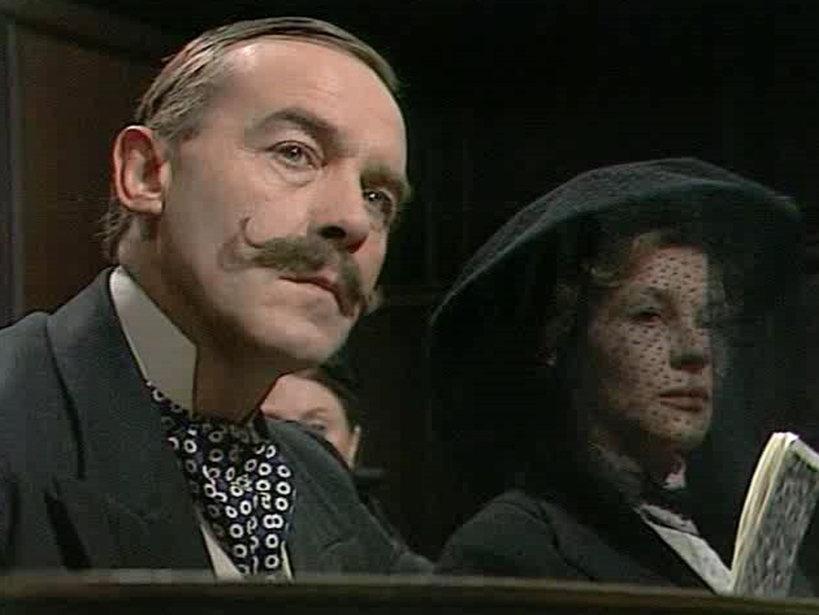
The 2003 pilot is a good example – there’s the likes of Jon Finch as Roddy Wringer (a career criminal with a thin veneer of charm hiding an ugly underneath) and Michael Culver (as Ian Lovett, a retired detective who gets on the wrong side of Jack Halford).

Indeed, the scene where Halford (Bolam) casually whacks Lovett in the chest with a golf club is one of the episode’s most memorable moments. It’s an early sign that the affable Halford has a core of pure steel. Although this moment leaves you wondering how often he did that sort of thing during his police days …

Gerry Standing (Waterman) and Brian Lane (Armstrong) are also given a number of scenes which quickly delineate their characters. Waterman’s playing very much to type – Gerry’s an unreconstructed alpha male who enjoys nothing more than a drink, a smoke and some female company. Out of the three ex-detectives recruited as civilian investigators by Detective Superintendent Sandra Pullman (Redman) Gerry seems to be the one with the fewest hangups.

And then on the other end of the scale you have Brian. An obsessive compulsive, he’s blessed with a photographic memory and cursed with an inability to let go of the past. Convinced that he was kicked out of the force via a shadowy conspiracy, the pilot teases the notion that Brian’s fight for the truth will become a running theme. 

Although this sort of continuing story beat is something that modern series do quite often, it’s worth remembering that the likes of The Chinese Detective also employed it. So there’s nothing really new under the sun …. 

Much of the humour in this first episode comes from the clash between these three old dogs and their attempts to navigate their way through a modern police force that’s unrecognisable in some ways from the one they left behind. Part of Pulman’s job is to act as a buffer between the senior management (who exist on a diet of PR speak and little else) and her new recruits.

And whilst she might display some initial despair at their unconventional ways, it’s easy to guess that before too long she’ll have embraced them all fully (even the cheerfully sexist Gerry). Once they’ve bonded together into a somewhat dysfunctional unit, then the serious business of a tracking down a murderer from twenty years ago can begin. 

Although each case is always at the heart of the episode, during the early series there was also plenty of time to explore how each of the four central characters ticked. It was when New Tricks began to concentrate more on the crime of the week and less on the regulars that the series became a little less interesting.

But for now, I’m looking forward to becoming reacquainted with the early episodes again. “It’s all right, it’s okay ….”

Ladykillers – The Root of All Evil (17th July 1981)

Frederick Seddon (Michael Jayston) and his wife Margaret (Carol Drinkwater) stand accused of the murder of their lodger Eliza Barrow ….

Running for fourteen episodes during 1980 and 1981, Ladykillers dramatised real life murder cases, mostly drawn from the late nineteenth and early twentieth centuries (the trial of Ruth Ellis in 1955 was one notable exception to this rule). Series one concerned itself with female defendants whilst the second series (from which this episode is drawn) was male dominated. Although since The Root of All Evil featured Margaret Seddon as the co-defendant, it does hark back to the format of series one.

The writer was Sue Lake, who has a somewhat limited television cv. In addition to this installment of Ladykillers, she wrote an episode of Supernatural, seven episodes of Triangle and her final work was an episode of Angels in 1983. I’ve not yet been brave enough to tackle her Triangle work, but based on what we see here it’s surprising her credits were so limited as The Root of All Evil drips with menace and dark humour.

The gallows humour comes from Michael Jayston who, sporting an impressive moustache, gives a typically rich performance as the pompous and pernickety Frederick Seddon. He remains blithely convinced right to the end that the jury are bound to find him innocent.

His calmness is contrasted by Carol Drinkwater as Margaret Seddon who, away from the courtroom, seems to be on the verge of collapsing into hysterics (although she always manages to control herself when she’s back in the court).

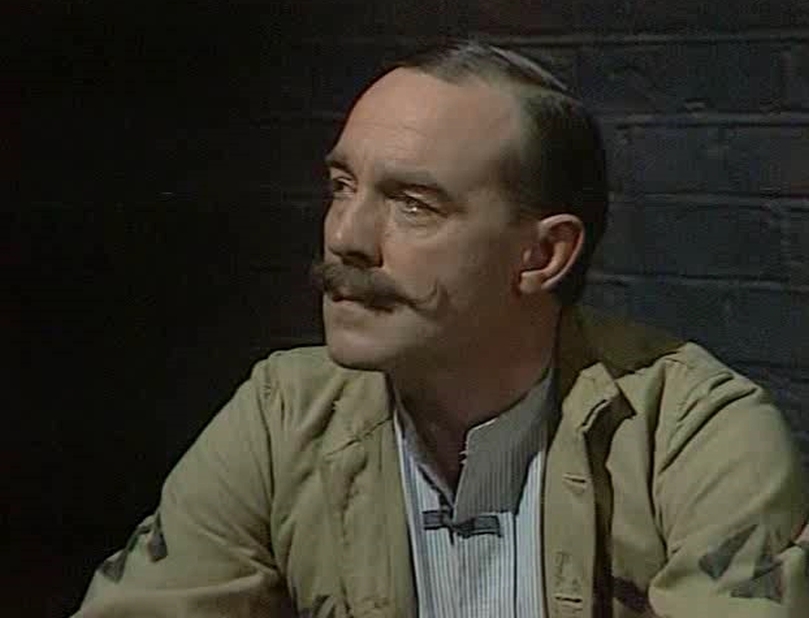
As good as the courtroom scenes are, it’s the intercutting between the Seddons in their respective cells that’s really the heart of the story. Both are provided with prison confidants to talk to – with Trevor Cooper (as Oliver) providing the episode with another dollop of dark humour. Despite the fact that Frederick Seddon stands accused of murdering Eliza Barrow for her money, Oliver is quite happy to approach him for financial advice!

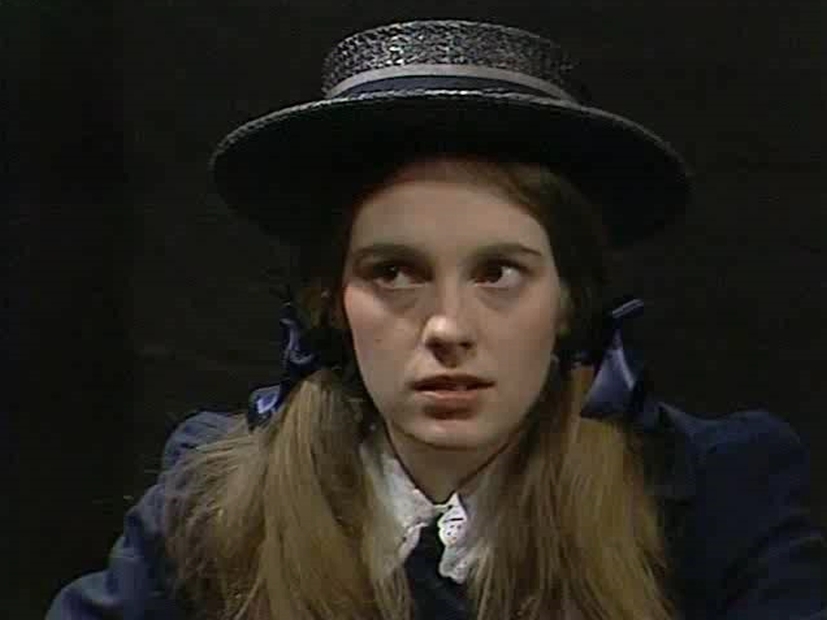
And shuttling between her mother and father is their teenage daughter Maggie (Sarah Berger). This was only Berger’s third television credit, but it’s a very compelling one – Maggie’s relationship with her mother is teased out across several well drawn scenes in which Berger drips with polite malice.

Several familiar faces (Eric Dodson, Pam St Clement) take their turns in the witness box whilst the always dependable Michael Ripper (sporting some memorable face fungus) makes an impression as Seddon Snr.

As with the rest of the series, Robert Morley is your avuncular host – introducing and summing up each case. His presence feels slightly odd (possibly a simple VO or caption would have worked better).

For those who don’t know the verdict, please look away now.

Frederck Seddon was found guilty and Margaret Seddon was acquitted.

The Root of All Evil seems less sure of her innocence though as not only does Morley raise his eyebrows after imparting the news that Margaret remarried only two months after her husband’s execution, there’s also the fact that Drinkwater allows a faint smile to play across Margaret’s lips as she exits the condemned cell. Then there’s also Maggie’s innuendo laden conversations with her mother to consider ….

Having given this one a 40th anniversary rewatch, I’m happy to report it stands up very well – not least for the performances from Jayston, Drinkwater and Berger.

Grange Hill Stories by Phil Redmond (BBC Books, 1979)

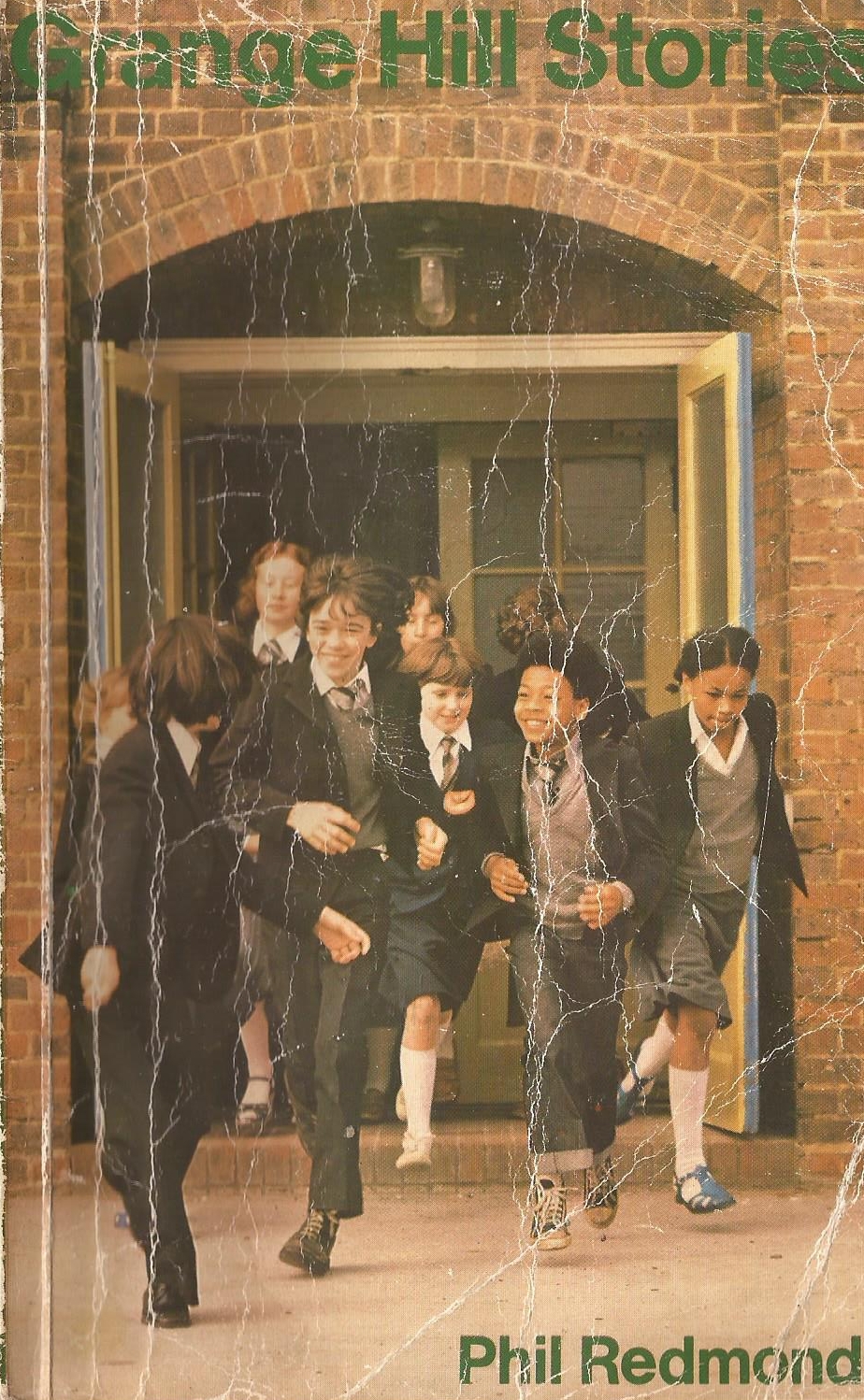
Despite running for thirty years between 1978 and 2008, Grange Hill only generated a fairly small number of tie-in novels (and none after 1988). Lion Books produced six during 1980 and 1984 with Magnet Books then taking up the mantle by publishing seven books between 1986 and 1988.

But first off the mark were BBC Books in 1979 with this volume written by Phil Redmond. 95 pages long, it’s split into five chapters with separate storylines for Benny, Trisha, Justin and Penny before a final chapter which features a typical knockabout adventure for Tucker and Benny.

The stories are set at various points during series one and two, developing threads seen on television. For example, A Pair of Boots depicts Benny desperation to buy a pair of football boots which will enable him to take his place in the school team. Benny’s impoverished family life had been touched upon a number of times during various episodes, but it’s hammered home here a little more forcibly.

Although the series, especially in its early years, generated some negative publicity (concerning the antics of its unruly pupils) GH always had a strong moral feel. There might be mischief, but there would always be consequences for the miscreants. This tone is replicated throughout the book as several characters – beginning with Benny – are forced to do the right thing.

After it seems unlikely Benny’s parents will be able to afford to buy him his prized boots, it looks for a short while that providence has provided him with the solution – his newsagent boss drops a five pound note on the floor and doesn’t miss it, at least to begin with. Benny quickly pockets it, but equally quickly is wracked by guilt and fear. Like Trisha and Justin in later chapters, Benny is then prone to an lengthy internal monologue as he debates the rights and wrongs of his situation.

A Question of Uniform reveals that Trisha has a younger sister – Jenny – something which was never developed on television. Like Benny, Trisha quickly finds herself in a difficult situation as she’s forced to tell lie after lie (it’s the sort of story that would have quite easily slotted into the anthology style of the first series).

Odd One Out features Justin in hospital, convalescing after his misadventures with Tucker and Benny in the warehouse. This one offers Justin an excellent spot of character development, which makes me a little sorry something like it wasn’t attempted on television (as it rather bridges the gap between Justin’s early appearances as an easily bullied type and his emergence as a more confident character from the second series onwards).

The Mystery of the Missing Gnomes doesn’t dig into Penny’s character too deeply but it’s still an entertaining enough tale – as she takes on Doyle and his henchmen and wins. The collection of stories is rounded off with Two’s Company, which sees Tucker and Benny decide to absent themselves from their school trip (as the museum is a rather boring one) and pop into an intriguing store nearby.

Although it’s not named, it seems that the store was Harrods, which would have made for an entertaining television spectacle. Although given how unlikely filming permission would have been, we’ll just have to enjoy it in prose.

For the way it builds on various moments already seen on television, Grange Hill Stories is a decent little volume that’s worth tracking down.

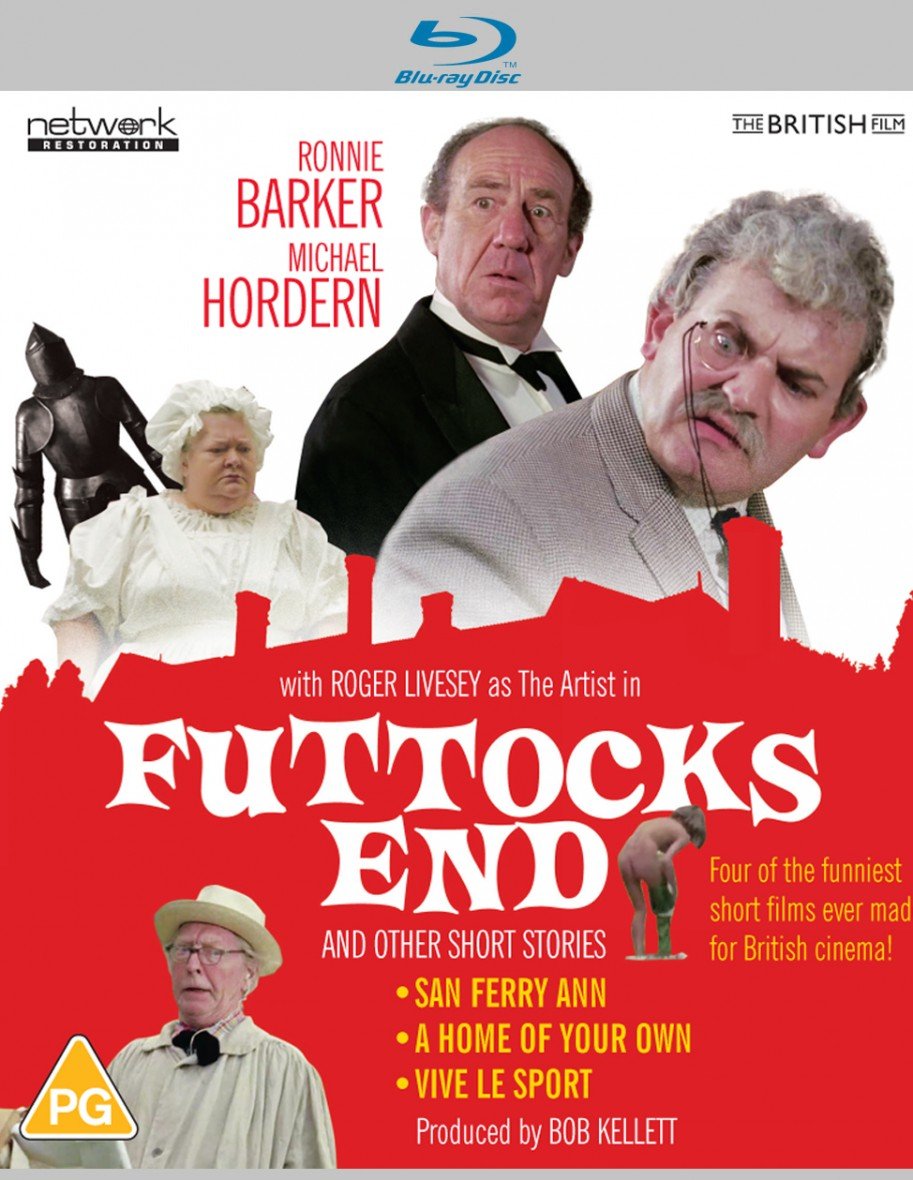
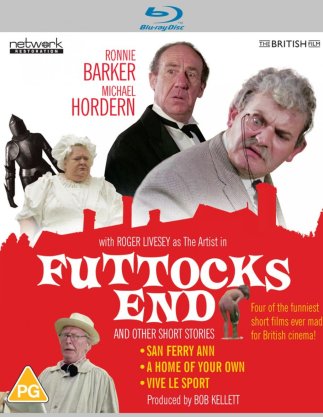
Futtocks End and Other Short Stories – Network BD/DVD review

Bob Kellett (1927 – 2012) was a man of many talents. Particularly active during the sixties and seventies, he plied his trade as a writer, producer and director. As director he helmed big screen adaptations of several small screen favourites such as Up Pompeii and Are You Being Served? whilst his television writing career included both admags (those curious programmes which turned up in the early days of ITV) and Space 1999.

Kellett also produced the four short films included on this BD/DVD (Futtocks End, A Home Of Your Own, San Ferry Ann and Vive Le Sport) in addition to writing the screenplay for San Ferry Ann and directing Futtock’s End.

Taking pole position on the disc is Futtock’s End (1970, 47 minutes) which was written by and starred Ronnie Barker. Clearly inspired by Kellett’s earlier works, Barker would return to this style of comedy several times in the future (The Picnic, By The Sea) but Futtock’s End was his best work in the genre.

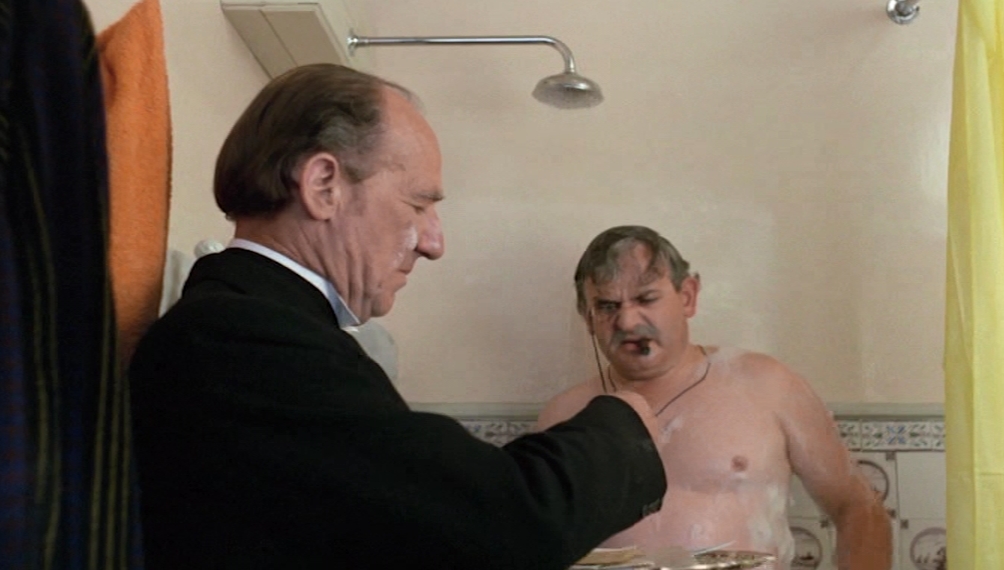
Set in an English country house, Barker is wonderfully entertaining as the befuddled General Futtock, who has his hands full with a gaggle of weekend guests. Barker is matched every step of the way by Michael Horden as his lecherous butler whilst familiar faces (including Roger Livesey, Peggy Ann Clifford, Julian Orchard and Richard O’Sullivan) also pop up.

Barker’s unquenchable thirst for saucy seaside postcard humour would surface again and again during his career and Futtock’s End is a prime example of this. So it comes as no surprise to discover that various attractive young women (such as Hilary Pritchard, credited as ‘The Bird’) are used throughout as little more than eye candy. Subtle the humour isn’t – the rule seems to be that ladies’ skirts should be as short as possible and fly up at every opportunity …
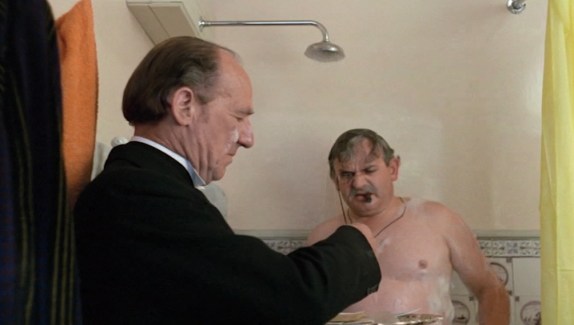
A ‘silent’ film with sound effects but no dialogue (like the other films on the disc) Barker is deftly able to mine comedy gold from this apparent restriction. For example, the breakfast scene (where a group of very hungover guests recoil in horror as every small movement of the breakfast things generates impossibly loud sounds) is just one highlight amongst many.

Ronnie Barker also features in A Home of Your Own (1965, 41 minutes).  Written and directed by Jay Lewis (John Whyte was the co-writer), Richard Briers, Peter Butterworth, Janet Brown, Fred Emney, Bernard Cribbins, Bill Fraser, Ronnie Stevens, Thorley Walters and Gerald Campion were some of those who appeared alongside Barker.

Briers and Bridget Armstrong play a newlywed couple who buy a plot of land on which they intend to build their dream house. But thanks to a group of inept workmen progress is far from smooth …

A sly satire, A Home of Your Own plays on the familiar theme of the British workman as lazy and/or incompetent (for them, the tea-break is always the most important time of the day).
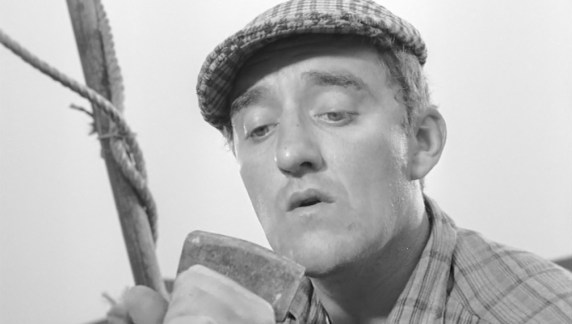
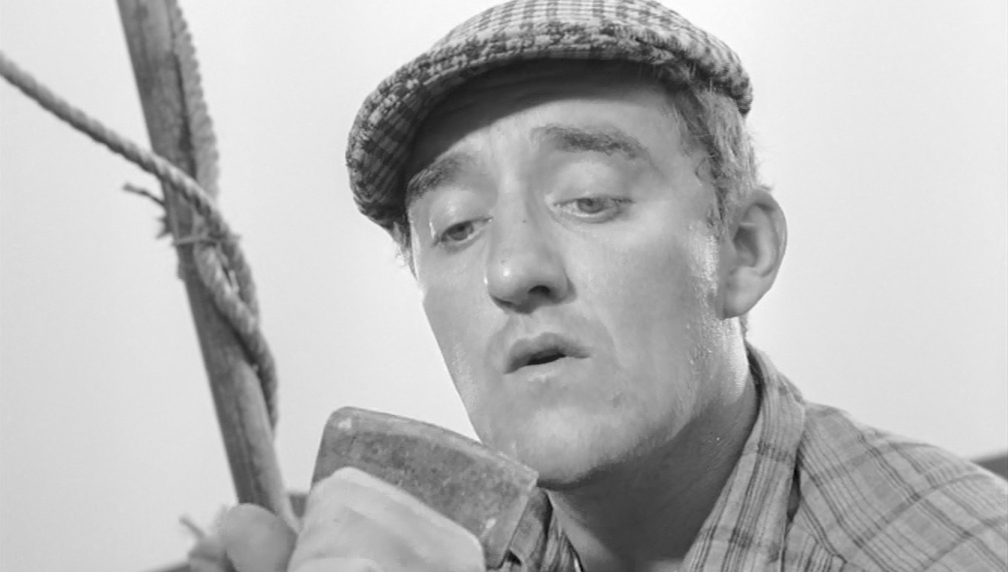
By the time of Futtock’s End, Barker was a star but during A Home of Your Own he was only just beginning to build his reputation in the worlds of film and television. But though his role isn’t very large, he does have one very memorable moment – after an unthinking colleague wanders across his wet concrete floor for the umpteenth time, he snaps and performs a frantic pirouette on the ruined floor (it’s a sight to behold).

Bernard Cribbins – as a hapless stonemason – probably has the best comic material to work with, whilst the likes of Butterworth and Fraser always catch the eye, even when they appear to be doing very little.

San Ferry Ann (1965, 52 minutes). Bob Kellett once again came up trumps with the cast list for this short film – if performers such as Wilfrid Brambell, David Lodge, Joan Sims, Ron Moody, Barbara Windsor, Warren Mitchell and Hugh Paddick don’t get your pulse racing then you’re probably reading the wrong blog.

A travelogue following a group of British holidaymakers as they take a trip from Dover to Calais, San Ferry Ann certainly benefits from oodles of local colour on both sides of the channel (quite what the ordinary cross channel ferry passengers thought about inadvertently featuring in this film is anybody’s guess).
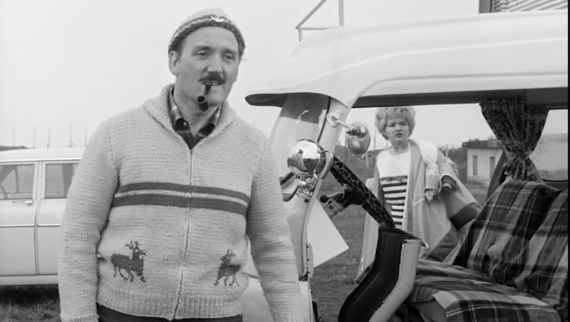
Several of the actors play very much to type. Brambell begins by using his trademark leer to good effect and it doesn’t take him long before he’s gone topless on the ferry  – attempting, but failing, to catch a bit of sun. As for Barbara Windsor, she isn’t a million miles away from her Carry On persona – a pneumatic blonde who blithely breezes through the frame whilst constantly turning male heads.

No cultural cliché is left unturned once the holidaymakers reach Calais (one of the first Frenchmen we meet is riding a bicycle with a string of onions round his neck) but San Ferry Ann is still a very agreeable watch. And for Coronation Street fans there’s a spot of trivia to share – this was Lynne Carol’s first role after her Street character (Martha Longhurst) was killed off the previous year.

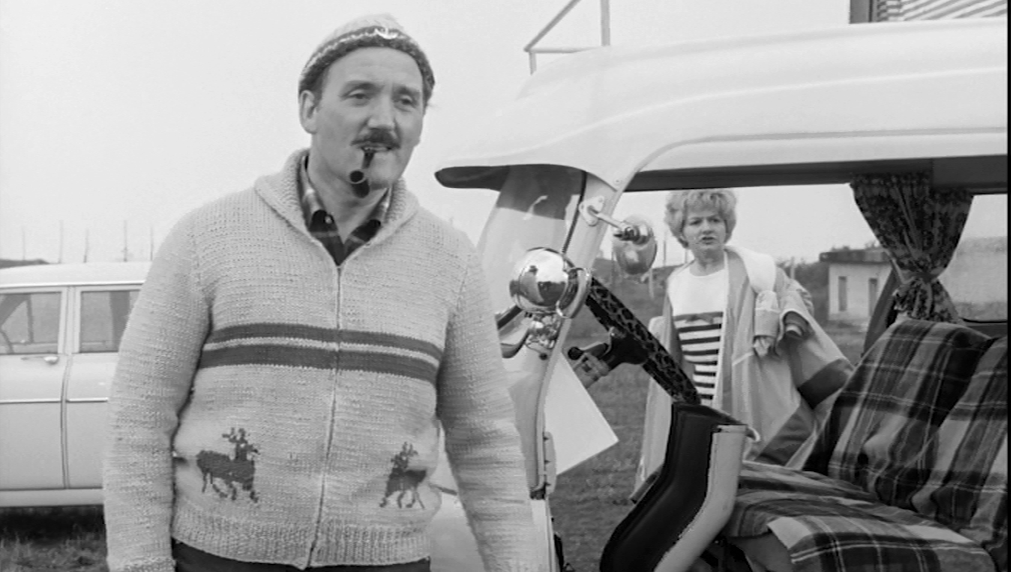
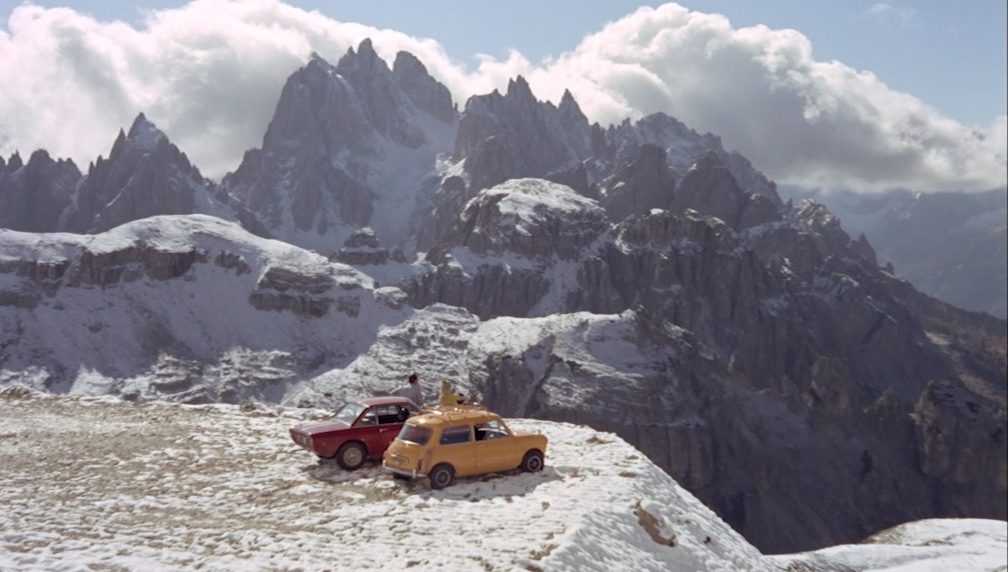
After two black and white shorts, we burst back into colour for Vive Le Sport (1969, 25 minutes). Eschewing the all-star nature of the other features, this one centres around two swinging sixties chicks (played by Liane Engeman and Beth Morris) who set off for a road trip across Europe in their Mini Cooper, unaware that they’re being pursed by Barry Gosney (he’s keen to retrieve a roll of film hidden in the car).

Vive Le Sport was Engeman’s sole credit but Morris would become a familiar television face in the decades to come (possibly her most memorable role was that of Drusilla in I, Claudius). Neither actress is stretched during this film though as it’s plain that the car’s the star (with the scenery running it a close second). Unlike the other features on the disc, this isn’t a gagfest and the subplot of the girls being pursed by the ‘baddies’ isn’t edge of the seat stuff. Instead, you’re well advised just to sit back and enjoy the ride.

Special Features

San Ferry Annie is a five minute interview with Anne Kellett, Bob Kellett’s widow. Even though its running time is very brief, there’s still time for Annie to share a few interesting stories – such as the reason why her husband began to make silent films, as well as some memories concerning the making of San Ferry Ann.

Feature First (7 minutes) interviews director of photography Billy Williams. San Ferry Ann was one of his earliest jobs but he quickly moved into features (he racked up many credits, most notably Gandhi in 1982).  Given his career I obviously could have listened to him talk for a great deal longer, but this featurette is a good overview of his work on San Ferry Ann.

Futtocks End features an archive audio commentary with Bob Kellett which is worth dipping into as he had plenty of good stories to tell. The last special feature on the disc is an 8mm version of Futtocks End, which runs just under nine minutes (this savage abridgment is a curio worth watching at least once).

This very attractive package is rounded off by a booklet written by Melanie Williams.

All four films have been restored and are presented in their original widescreen aspect ratios. To compare, I dug out my old DVD copies of A Home of Your Own and San Ferry Ann (released by Digital Classics). The new Network remasters offer a considerable picture upgrade (the Digital Classics releases were in 4:3 and speckled with dirt and dust).

Futtocks End and Other Short Stories comes warmly recommended. It’s released today and is available from Network both on BD and DVD.