Doomwatch – The Plastic Eaters

plastic

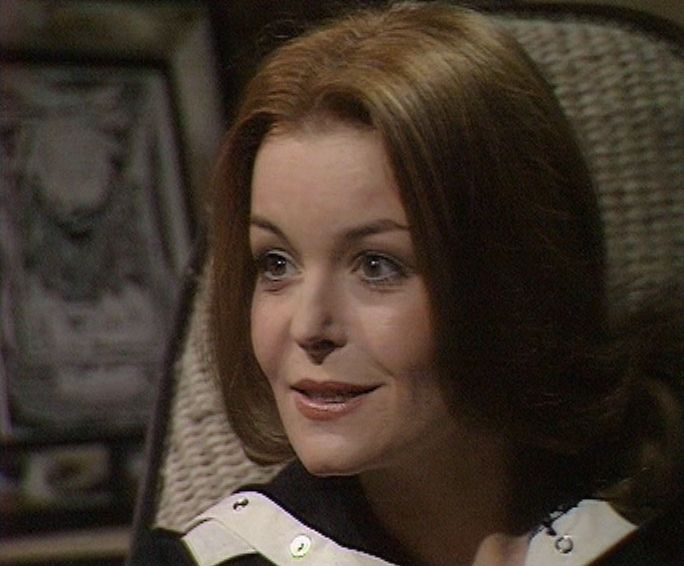
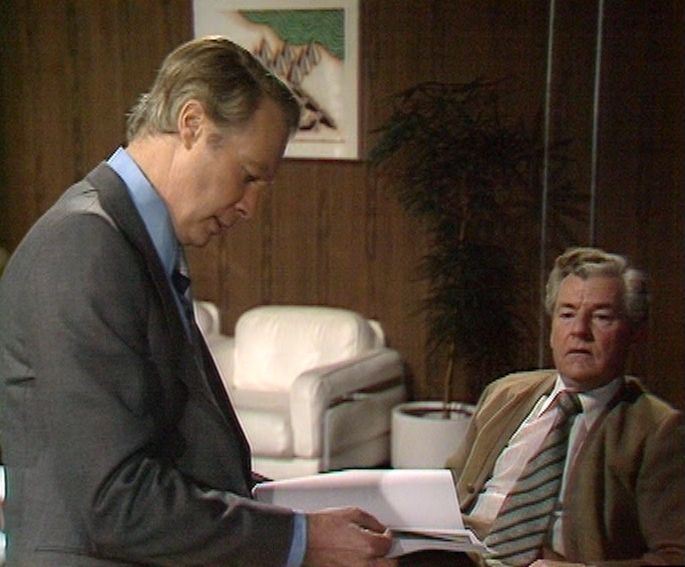
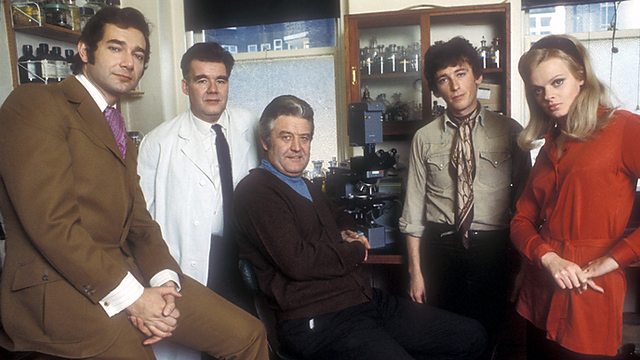
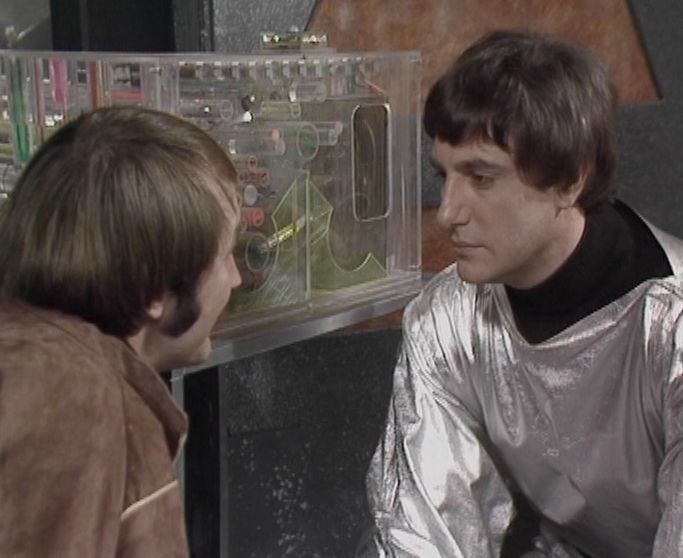
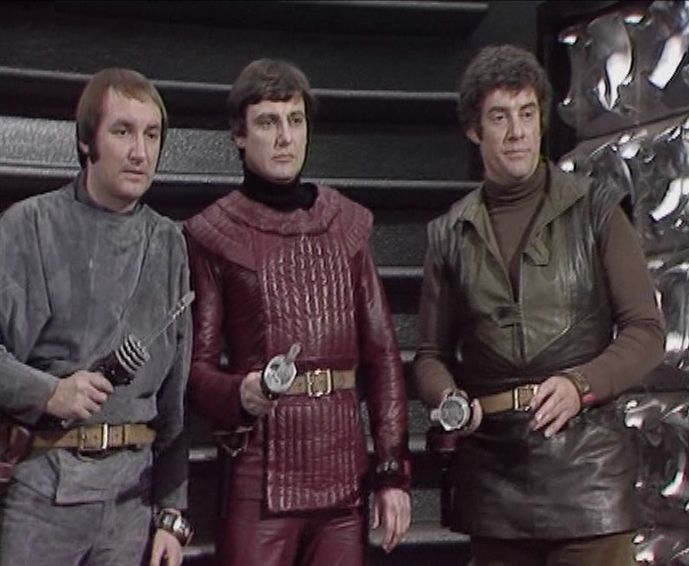
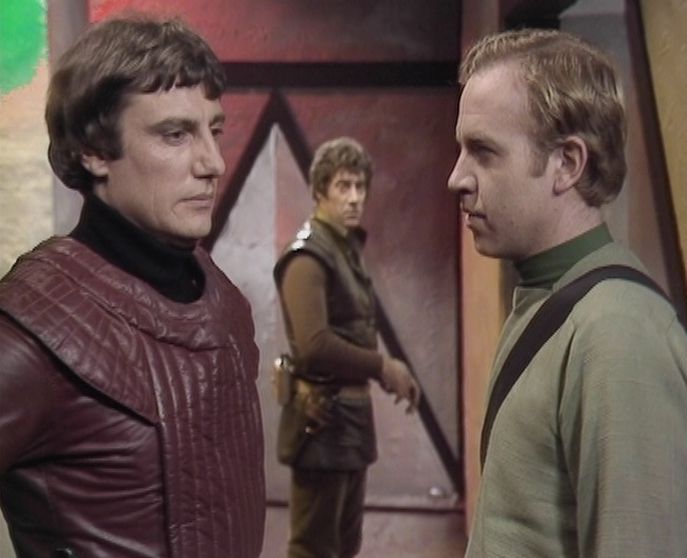
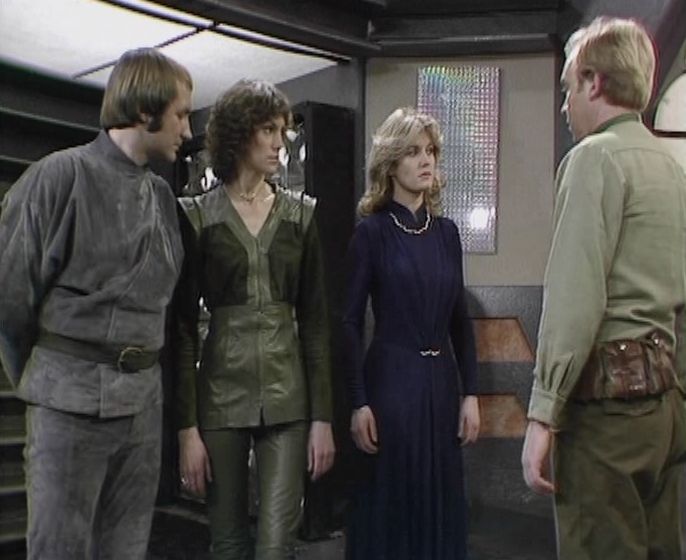
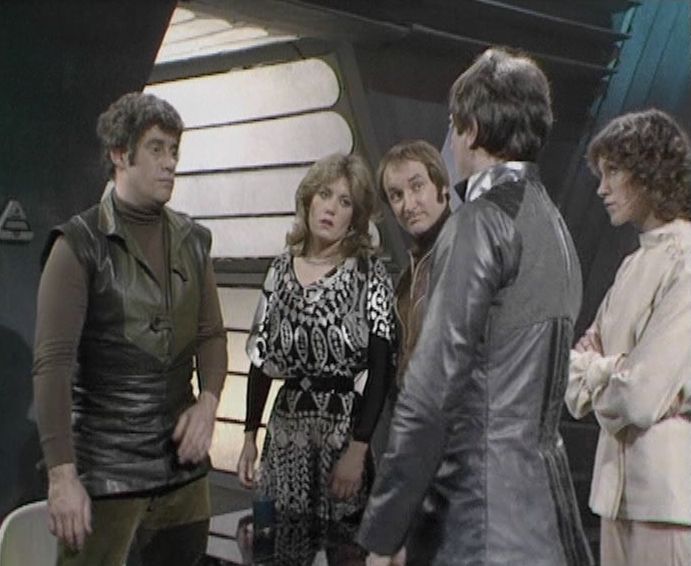
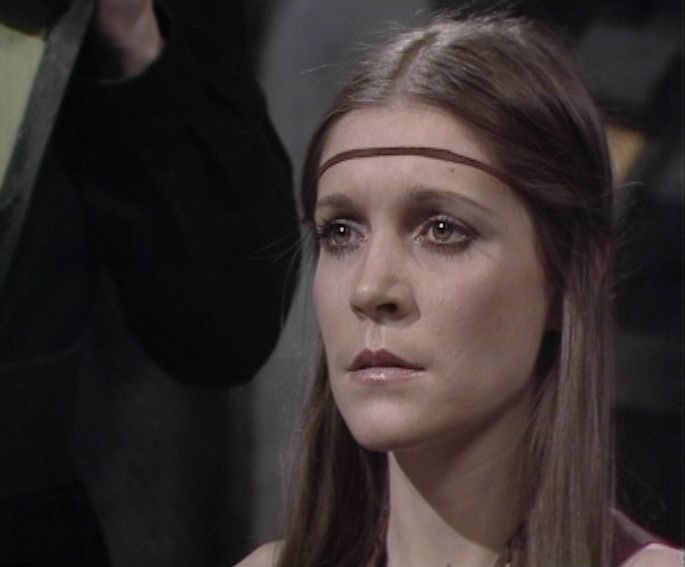
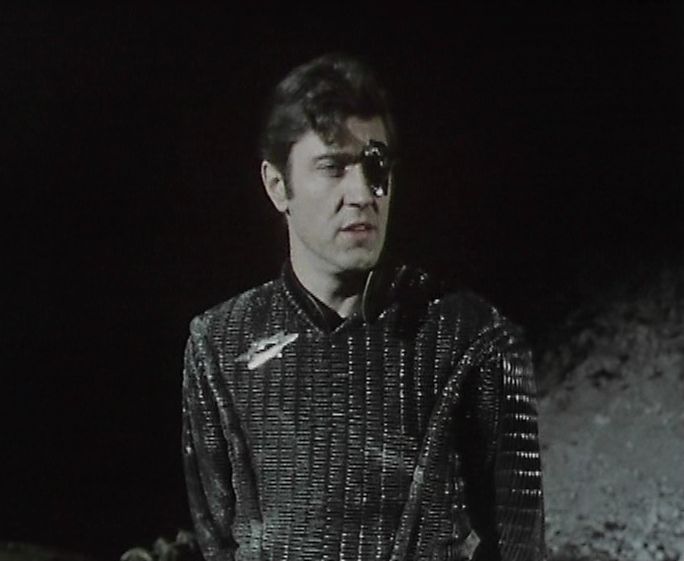
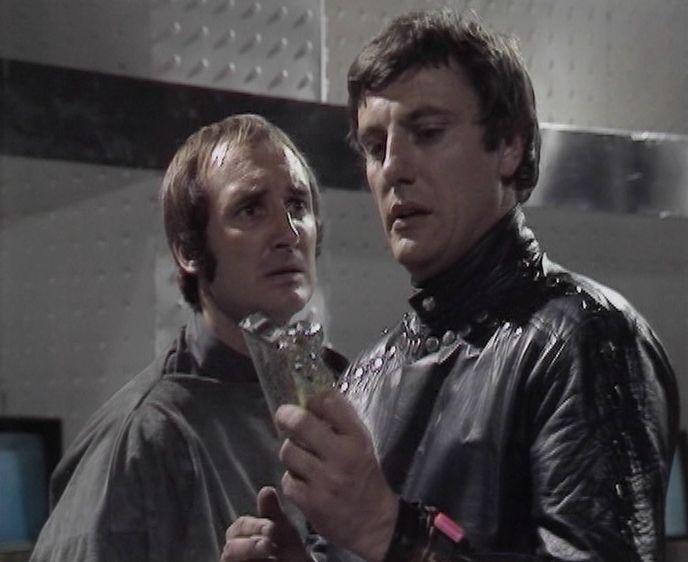
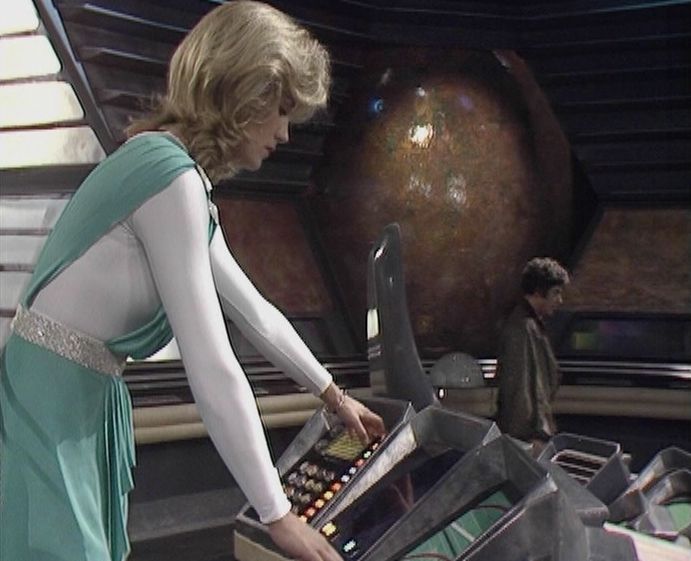
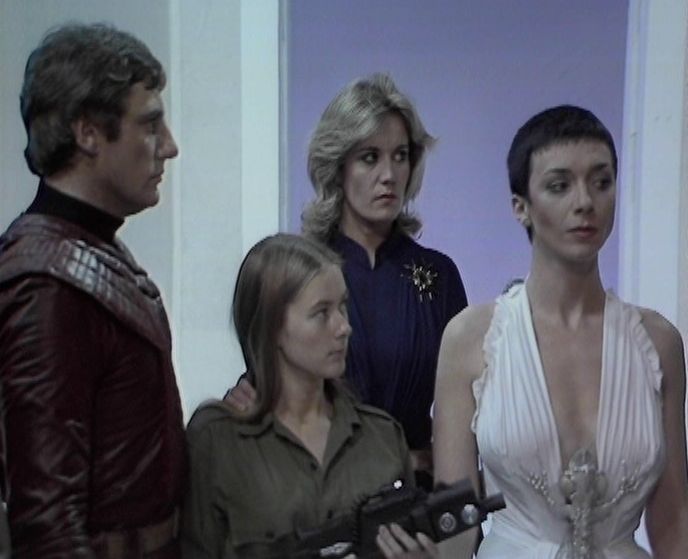
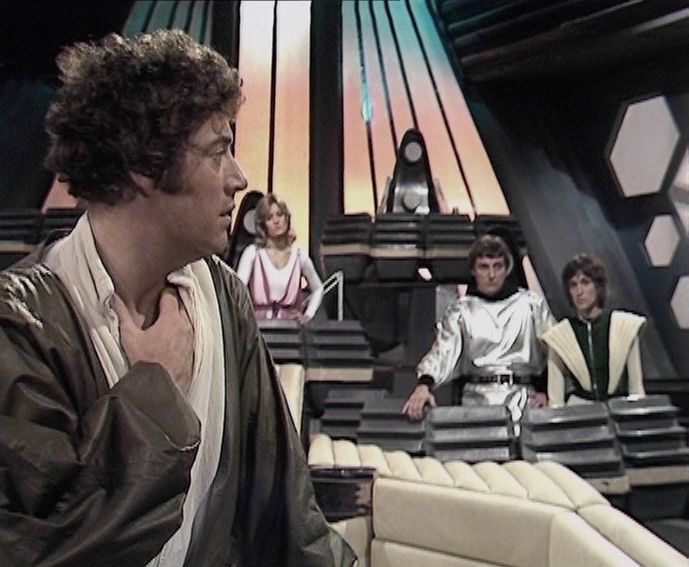
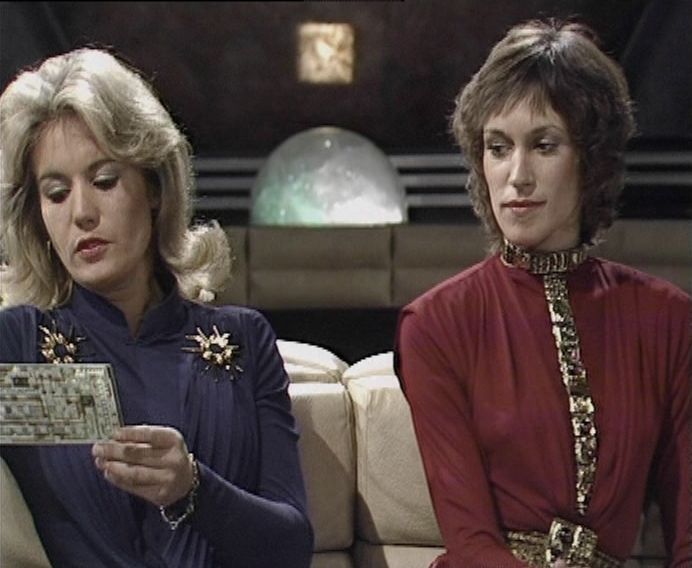
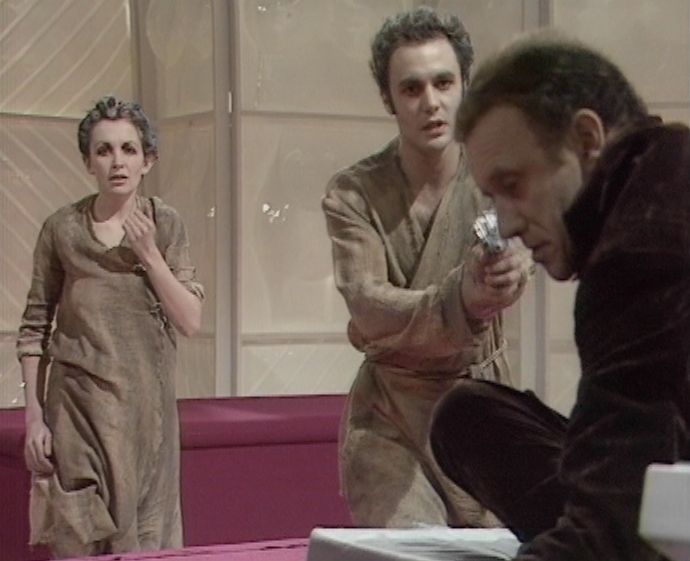
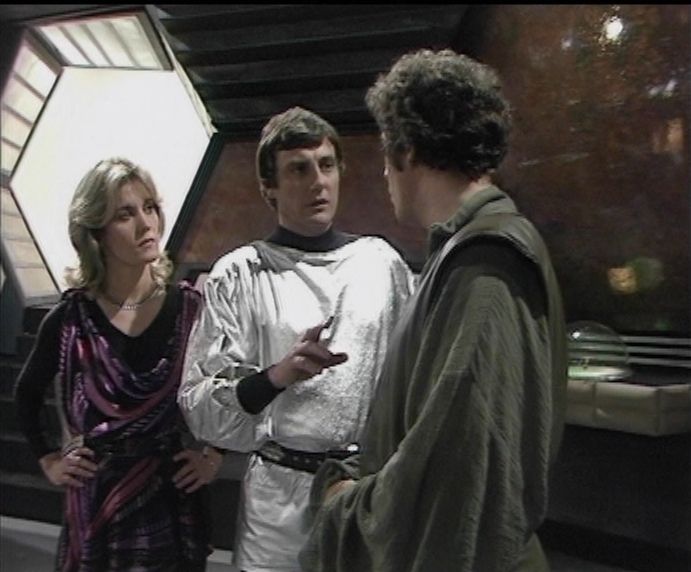
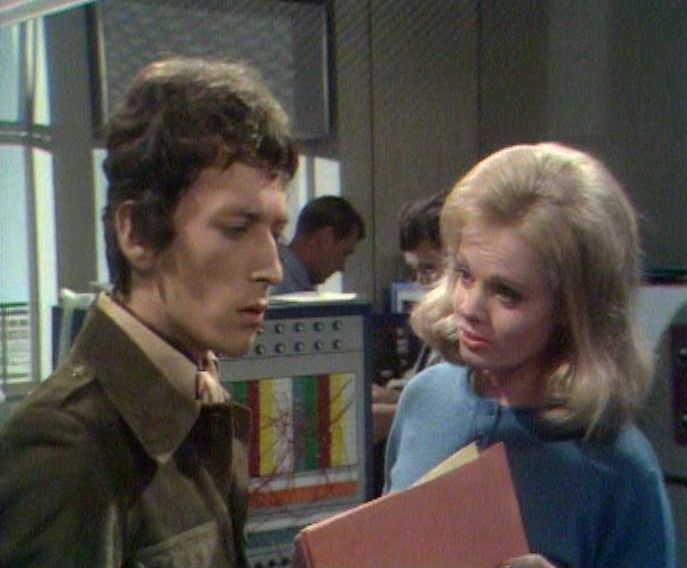
Kit Pedler and Gerry Davis use an old story-telling trick to introduce the audience to the Doomwatch team – we meet them through the eyes of a new recruit, Toby Wren (Robert Powell).  Wren, young, keen and eager, first meets Dr John Ridge (Simon Oates) and Pat Hunnisett (Wendy Hall).  Ridge is a non-conformist and something of a lady-killer, which is confirmed when he confides to Toby that Pat would have introduced them, but she’s still upset as he pinched her bottom earlier on!  The nattily dressed Ridge screams early seventies, and whilst his behaviour can be a little eyebrow raising at times, it’s usually rescued by Simon Oates’ spot-on comic timing.  And as we’ll see as the series progresses, he’s also no slouch when it comes to playing the dramatic scenes.

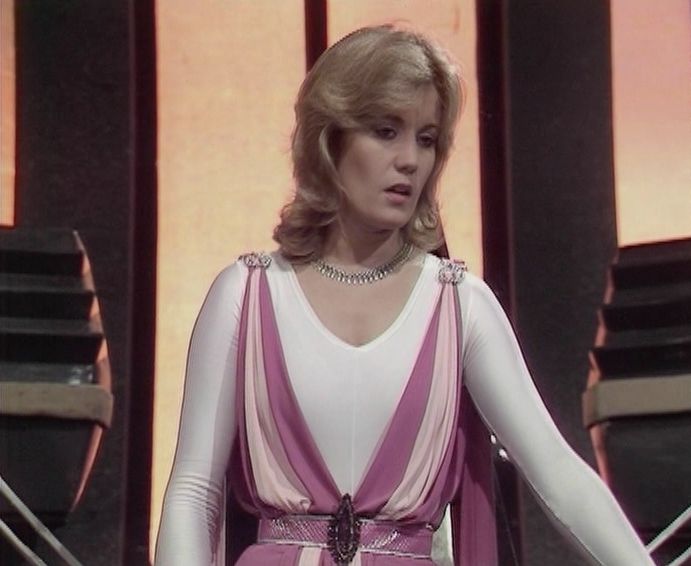
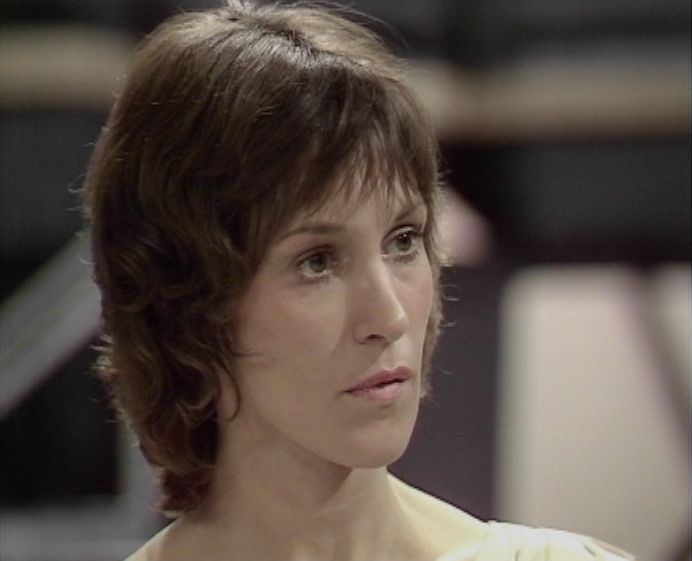
Pat has little to do except stand around and look attractive, which is pretty much par for the course for all the stories she appears in.  Colin Bradley (Joby Blanshard) is the technical expert, and comes across as somewhat blunt and absorbed in his work.  He’s also not very well developed here, mainly existing as a line-feed for Quist.

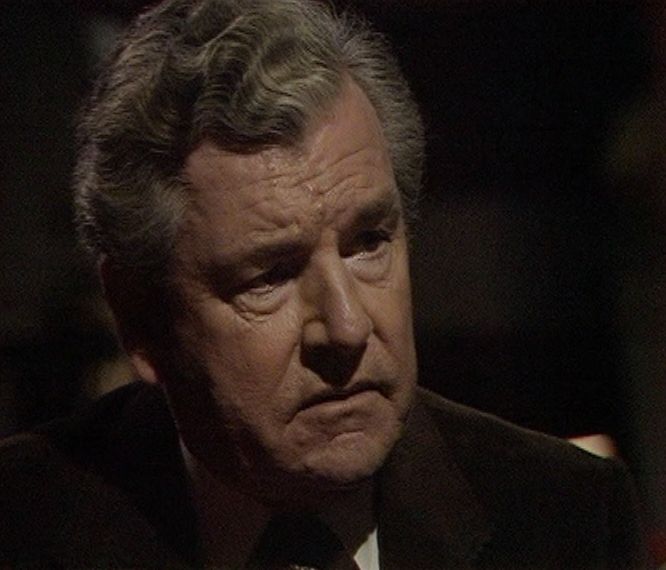
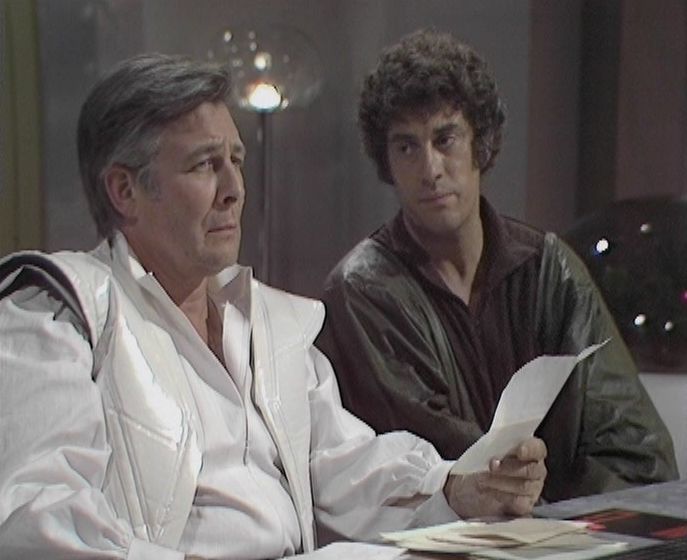
That just leaves the head of Doomwatch, Dr Spencer Quist (John Paul).  It’s made clear early on that he’s a celebrated scientist – a Nobel Prize winner, no less – but it’s also established that he’s battling demons from his past.  It was Quist’s mathematical genius that was, in part, responsible for the creation of the atomic bomb.  This is something that continues to haunt him (and Ridge, knowing this, can’t resist mildly taunting him about it).  The Quist/Ridge dynamic is key to the series.  Both respect the others abilities, but there’s often no love lost between them (and they rarely see eye to eye about how to achieve their goals).  The first law of decent drama is that you have to have conflict and Quist and Ridge will certainly deliver this.

If Quist sometimes has trouble from his subordinates, that’s nothing to the problems he encounters from the Minister (John Barron).  The Minister regards Quist and the Doomwatch organisation as a major irritation and aims to close them down at the first opportunity.

Toby is dispatched to investigate why a plane crashed, whilst the others work on the same problem at the office.  With the Minister so keen to clip Doomwatch’s wings, it’s rather a coincidence that the trail leads to his office, but there you go.  Ridge suggests that they burgle the Minister’s office to find the information they need and Quist, after a brief struggle with his conscience, agrees.  As a former intelligence operative, Ridge is happy to work outside of the law.  Quist prefers to play things by the book, but when he feels that information is being withheld (and lives could be at risk) he’s prepared to put his finer feelings to one side.

A top-secret formula which can break down plastic is found to be responsible for the destruction of the aircraft.  The increasing proliferation of plastic was a major concern at the time and whilst this formula could eventually be of immense use, it should never have been let out into the open.  This only happened due to carelessness at the Minister’s office (something which Quist can later use as a lever to guarantee the Minster’s cooperation).

Additional drama is generated when the plane that Toby’s travelling back on is infected by the same plastic virus – although to be honest the drama level is fairly low.  It would have been unusual (although not impossible) for Toby to be killed off in the first story, so we can be fairly sure that he’ll be safe.  And if he’s safe, then so are the rest of the passengers and crew, which makes the various attempts to generate tension slightly futile.

So although the ending is something of a damp squib (and the pre-credits sequence, showing the original plane crash is also less than effective, thanks to the too-obvious stock footage of crash-test dummies) The Plastic Eaters is still a decent opening episode thanks to the efficient way it introduces the main characters.

Doomwatch – Simply Media DVD Review

doom cover

The Series

Created by Kit Pedler and Gerry Davis, Doomwatch was an unsettling programme which ran for three series during the early 1970’s.  By this time, Pedler and Davis had been collaborators for several years – ever since Davis, working as script-editor on Doctor Who during the mid sixties, brought Pedler on board as a scientific advisor.  Although a scientist himself, Dr Christopher Magnus Howard Pedler had deep concerns about the way certain scientific advances were impacting on the world.  In Doctor Who this was given voice when Pedler and Davis created the Cybermen – today just another monster, but in their debut story – The Tenth Planet – there was room for debate about the morality of spare part surgery and where it might possibly end (would we all become emotionless Cybermen?).

Moving forward a few years, Pedler continued to be appalled by certain scientific and ecological stories which he was reading about in the newspapers and also in various scientific journals.  Like Davis, he was concerned that mankind was slowly destroying their planet and both of them wanted to raise the public’s consciousness – and so Doomwatch was born.

Always keen that they should base their stories on science fact rather than science fiction, the pair quickly drafted a raft of story outlines.  These were then passed over to a team of writers who would flesh out Pedler and Davis’ concepts into complete scripts.  Appointed as producer was Terence Dudley, who also crafted one of the series’ most memorable early episodes – Tomorrow, The Rat.  As is well known, Dudley enjoyed an uneasy working relationship with both Pedler and Davis and eventually the creators of Doomwatch were eased out as Dudley took creative control during the third and final series.  History would repeat itself a few years later, when Dudley ousted series creator Terry Nation from Survivors and recreated that show to his own tastes.

Whilst later behind-the-scenes squabbling might have affected the show, cracks were beginning to appear as early as the second series (when one of the regulars, Simon Oates, announced he wanted to leave).  Since so little of series three remans it’s hard to really pass judgement on Dudley’s sole stewardship (although some light can shed via the book Deadly Dangerous Tomorrow which contains a number of scripts from wiped Doomwatch episodes, most of which are drawn from the final series). It currently seems to be out of print, so it’s worth keeping an eye on the publishers website (Miwk) to see if there’s a reprint in the future.

In the opening story, The Plastic Eaters, it’s explained that the Department for the Observation and Measurement of Scientific Work, nicknamed “Doomwatch”, was created by the government in response to overwhelming public concern about the dangerous side-effects of modern scientific research (such as pollution and other environmental hazards).  We’re told that the Doomwatch organisation was one of the chief reasons why the government was re-elected, but it’ll come as no surprise to learn that the Minster (John Barron) distrusts the small band of scientists and is keen to close them down.  Doomwatch are frequently seen to come into conflict with both the government and private companies, who are keen to ensure that this independent organisation doesn’t reveal inconvenient truths.

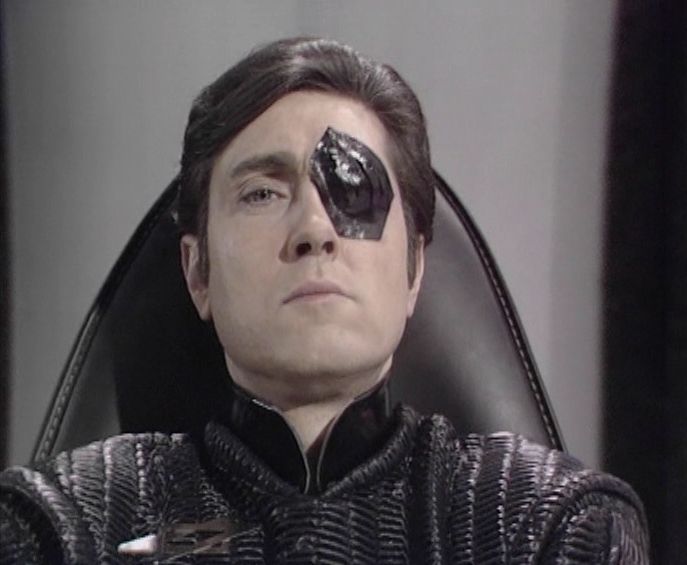
Doowatch is headed by Dr Spencer Quist (John Paul) a nobel-winning scientist who remains haunted that his research work was responsible – in part – for the creation of the atomic bomb.  John Ridge (Simon Oates) is his polar opposite, as whilst Quist is methodical and stern (although with the occasional glimmer of humour) Ridge is younger, much more flippant and very much the ladies man.  Resplendent in a series of impressive cravats, Ridge is used on occasions as Doomwatch’s secret weapon.  If there’s a lady scientist to be seduced, then Quist has no compunction in letting Ridge loose!

Colin Bradley (Joby Blanshard) tended to be stuck in the office during the early episodes, sometimes fretting over his computer (also called Doomwatch).  Doomwatch’s secretary, Pat Hunnisett (Wendy Hall) remained the most undeveloped character during series one.  Presumably created to provide the series with a little bit of glamour, she spends most of her time standing around looking pretty, stating the patently obvious or beating off the unsubtle advances of John Ridge.  She does have at least one episode that allows her to shine a little though – The Devil’s Sweets – where she’s central to the conclusion of the story.

These then are the characters who Tobias “Toby” Wren (Robert Powell) meets when he enters the office early in episode one for a job interview.  Toby is young and idealistic and neatly acts as a buffer between Ridge and Quist – he’s not as playful as Ridge but he’s also not as driven as Quist.

This line-up would remain in place for series one, but there would be several changes before Doomwatch returned for a second series.  Powell had decided to leave, as he didn’t want to get tied down to a long running show, and Hall, no doubt tiring of having little to do, also departed.  Geoff Hardcastle (John Nolan) was introduced as something of a Toby Wren clone, although he didn’t have much of a character and therefore remained a fairly secondary figure.  More interesting was Dr Fay Chantry (Jean Trend) who became a fully fledged member of the Doomwatch team.

I’ll go into more detail about the existing episodes when I start an episode by episode rewatch shortly, but there’s plenty of interest in what remains (with, it’s fair to say, a few undeniable duffers).  From series one, Tomorrow, The RatProject Sahara and The Devil’s Sweets have all long been favourites.  You Killed Toby Wren (a great performance from John Paul) and Invasion are early highlights from series two and whilst series three only exists in very reduced circumstances it’s good to have a decent copy of the untransmitted Sex and Violence.

The DVD

Doomwatch has been a desired release of many for a considerable time, but until Simply announced that they’d licenced it late last year it seemed doomed (as it were) to remain out of reach.  Four episodes were released on VHS in the early 1990’s and two of these were ported over to DVD during the early days of the DVD format.  There was also a single repeat run on UK Gold in the mid 1990’s, but after that everything went quiet.

A total of thirty eight episodes were made (thirteen episodes apiece for the first two series and twelve for the final run).  Eight from series one, all thirteen from series two but only three from the third series remain in the archives.  Ten episodes (six from series one, one from series two and all three from the third series) exist in their original PAL format whilst the remainder are now only available as NTSC conversions (the PAL tapes were converted to the NTSC picture format for sale to Canada and then back again to PAL when they were returned to the UK).

The quality of the NTSC episodes will be the main point of interest for many and it’s fair to say that they’re a mixed bag.  Although it was believed that the BBC had processed all the NTSC tapes they held in their archives with a process called Reverse Standards Conversion (RSC) and then dumped the original tapes – thereby only retaining the raw RSC output – looking at the varying quality of the NTSC episodes on this release I wonder if that was the case.

Some – like Tomorrow, The Rat – look very nice indeed, not too far removed from the original PAL master, whilst others – such as You Killed Toby Wren and Invasion – seem to be very noisy, raw RSC conversions.  But later series two episodes – The Iron Doctor, Flight Into Yesterday – might possibly be the original NTSC tapes which therefore lack the RSC process.  If so, then I find this preferable to the raw RSC look – these episodes may look a little blurry but for me that’s better than the heavy picture noise.

My main fear was that all the NTSC episodes would look like You Killed Toby Wren, luckily that’s not the case.  In an ideal world the episodes would have had extensive restoration, but it seems that little or no work was carried out.  That’s not a criticism of Simply – it’s more than likely that restoration and picture grading would have pushed the RRP to a point where the release wouldn’t have been economic.  So although some episodes do look poor in places it shouldn’t detract from the fact that we now have Doomwatch on DVD – better to have it looking a little rough around the edges than not at all.  It also has to be understood that there’s only a finite amount of work that can be done anyway – several Jon Pertwee Doctor Who DVDs include RSC episodes which have undergone a great deal of restoration work, and even those don’t look perfect.

The extras are the untransmitted episode Sex and Violence and the thirty minute documentary The Cult of Doomwatch.  Narrated by Robert Llewellyn, it’s a decent little programme which is chiefly of interest due to the interviews with Robert Powell and the late Simon Oates.

One puzzling thing about the DVD is why Simply haven’t included the episode titles, either on the packaging or on the DVD menu screens.  So if you want to watch, say, In The Dark, then it might take a little trial and error to select the right disc and then find the correct episode.  Hopefully in future Simply can provide an episode listing somewhere, it’ll make things much easier!

But apart from that minor niggle, this is an excellent release at a very decent price.  Simply’s catalogue of archive BBC releases continues to grow and this is a very worthy addition.  Highly recommended.

Doomwatch is released by Simply Media on the 4th of April 2016.  RRP £39.99.
An Englishman’s Castle – Part Three

castle 03

Henry is dead – he was shot three times and a sign saying “delator” was hung around his neck.  With one of Peter’s sons now dead there’s a sense that his real life is turning into a soap operaOne example of this is when Peter’s wife is told of her son’s death.  She tells her husband that she won’t cry – instead she’ll behave as bravely as Peter’s fictional family.
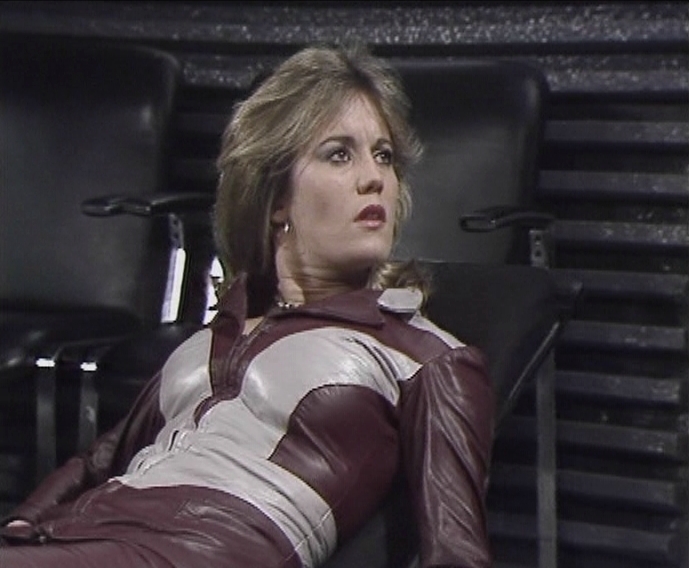
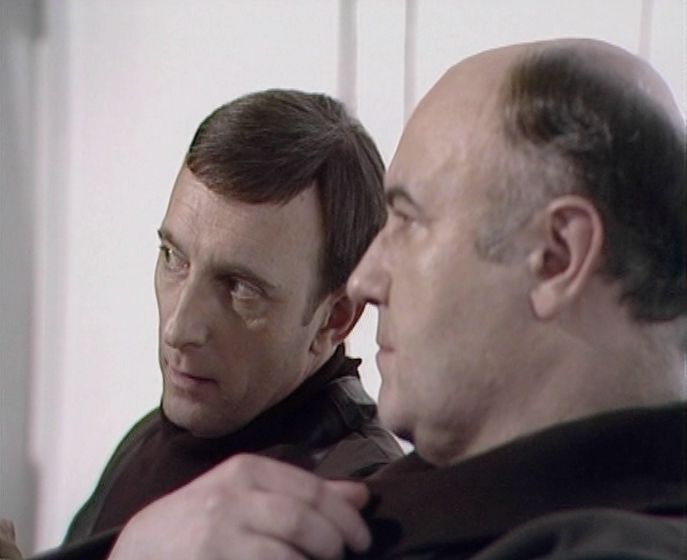
Peter finds himself the prime suspect for Henry’s murder and is taken away by the special police for questioning.  The Inspector (Philip Bond) is initially affable, telling Peter it’s nothing more than an informal chat, but the mood darkens very quickly.  Kenneth More and Philip Bond share an excellent two-handed scene – like the rest of the serial it’s incredibly powerful, but very understated.

The Inspector occupies a room that’s virtually bare, and there’s never even the threat of violence, but he’s still able to inexorably pressurise Peter.  So Peter is forced to reveal that Henry told Harmer he was an informer – which gets Peter off the hook but spells trouble for Harmer.

As events get darker and darker, Kenneth More remains the solid centre of the story.  Now promoted to programme controller, Peter has the ultimate responsibility for initiating the revolution – a code-word inserted into the next episode of his soap opera will be the call to arms.

Philip Mackie’s three scripts are taut, with little or no padding.  It’s easy to imagine that the serial could have been developed into a series, as in one way we’ve only begun to scratch the surface of this world.  It would have been fascinating to see Peter’s soap-opera, which at times offers a meta-textual commentary on real-world events, expanded over more episodes.

Anybody looking for big-budget action scenes will be disappointed.  The revolution does begin in the last few minutes of this episode, but it happens off-screen (via sound effects).  The fates of some characters, including Peter, are clear at the end – but with others it’s left to the viewer’s own imagination to decide what may have happened to them.  It’s also notable that certain people’s motivations are very much open to interpretation – Harmer is a prime example.  In the first two episodes he was portrayed firmly as a man in sympathy with the German establishment, but in the final episode we’re asked to consider him in a different light.  Nothing is ever proven either way, so we’re not spoon-fed “facts” – the viewer is invited to weigh up the evidence and decide.

It’s a downbeat ending, but there’s also a possible glimmer of hope.  We’re left not knowing whether the revolution will succeed or fail, but whatever happens we’ve seen characters who have been personally redeemed, Peter amongst them.

At times this feels like a stage play (not a criticism, by the way).  People die off-screen, for example,  and other events are described but not seen.  Some may find this frustrating, but this style of storytelling ensures that the focus remains inexorably on the characters,  which is a major plus point when the cast is so strong.

This is first-rate drama and comes highly recommended.  Heading a very strong cast are Kenneth More, Isla Blair and Anthony Bate, all of whom dominate the screen.  Simply Media should be applauded for continuing to dip into the BBC archives and for anybody who enjoys classic British television, An Englishman’s Castle should be on your to-watch list.

An Englishman’s Castle – Part Two

castle 02

Part two opens with another excellent two-handed scene between Kenneth More and Anthony Bate.  Peter has come to tell Harmer whether he’s decided to change the name of Rosenthal to something less Jewish-sounding.  Harmer pretends to have completely forgotten about this request, but we’ve seen enough of him to know that he forgets nothing.  To Harmer’s undisguised annoyance, Peter is insistent that the name must remain and when pressed for a reason he states that he wants to send a message of hope and friendship to the Jews watching.

Harmer is incredulous and tells him that there aren’t any Jews watching the programme.  Those that are alive are in places where there aren’t any television sets.  With a series like An Englishman’s Castle, which is completely dialogue driven, it’s throwaway moments like this which help to paint a fuller picture of their alternative world.  In part one it was mentioned that there were still labour camps for some Jews (although most had already perished in the gas chambers) so the number who still exist in Britain must be small.  We know of at least one, Jill, so it could be that there are others.

Although Peter doesn’t back down, Harmer gets many of the most telling lines, especially when Peter tells him that he simply wants to show the public that the Jews are like them.  But, as Harmer responds, they aren’t.  “We are wealthy and comfortable and alive.”

In part one it was mentioned that Peter’s soap opera is drawn directly from his own wartime memories.  This theme is now developed further as one of the two sons – Frank – is set to be killed off.  The actor playing Frank is highly dismayed when he receives the latest script and learns that he perishes at the hands of the Germans.  In a scene that no doubt has echos with many real-life soap operas, when the actor realises that he’s not coming back next week his mood quickly darkens.  He protests that he’s been with the series since the beginning and is one of the most popular characters, but all to no avail.

Peter explains that the two sons in the show – Frank and Bert – are both based on him.  Frank is his romantic side and Bert is his realistic side.  When the Germans invaded in 1940, Peter’s romantic side died, so Frank has to die as well.  Since then Peter’s lived as a realist, as he’s seen no other way, but events are now changing.

Peter has two sons in the real world as well.  Henry (David Meyer) works on the show with Peter whilst Mark (Nigel Havers) despises his father and everything he stands for.  Mark appeared briefly in part one, where he denounced his father’s politics vigorously, and in part two he’s arrested by the police on suspicion of being a terrorist.  Havers performance isn’t particularly subtle (Mark’s manic radicalism seems rather overblown) but there may be a reason for this (he’s a radical, but not a member of the true underground resistance).

When Peter returns home, he finds Mark in the custody of the polite, but clearly ddangerous, Inspector (Philip Bond).  It’s probably the fact that he’s so very reasonable which is the most unsettling thing about Bond’s Inspector.  He’s not brutal or brusque, Bond gives the Inspector a casual air as if he’s just taking Mark away for a few simple questions.  The reality – as even Peter knows – is quite different.  Mark will be tortured and die, unless Peter can pull some strings.

The only man who has the influence to save Peter is Harmer, and this leads us to another absorbing scene with More and Bate.  Harmer is enjoying a candlelit dinner with his social secretary Anja (Suzanne Roquette) but once he learns of Mark’s plight he’s keen to help.  He rushes off to the phone, leaving Peter to talk to Anja – the only problem is that Anja only speaks German and Peter knows only a few words (surprisingly so, you’d have assumed everybody would have learnt the language by now).

Harmer tells the police that he doesn’t care whether Mark’s innocent or guilty, he just wants him released – which he is.  It’s another fascinating part of the story – both for the way that a television executive like Harmer is able to intercede in police matters and also for the casual confirmation that the evidence planted on Mark was faked.

Peter had come to Harmer ready to offer a quid pro quo – if Harmer can get Mark released then he’ll agree to change Rosenthal’s name to something less provocative.  It’s interesting that Harmer only learns of Peter’s decision after he’s made the call, but as ever with Harmer, he wasn’t acting out of friendship (he’s well aware just how important Peter’s programme is to the government and he’ll do anything he can to ensure his star writer is kept happy).

Peter later muses with Jill about whether Harmer orchestrated the whole thing – arranged to have Mark arrested in order to force him to back down over Rosenthal’s name.  It’s an intriguing thought – which turns out not to be true – but somebody is manipulating Peter.

It turns out to be Jill, who’s a member of the underground movement dedicated to the overthrow of the government.  She’s dismissive of the actions of people like Mark, who it’s implied are simply playing at being resistance fighters.  They throw a few bombs around and hit the headlines, but the real struggle is done deep underground – by people like her.

Peter’s realisation that Jill only became his mistress in order to recruit him is nicely played by More.  He agrees to join, but it’s not clear why.  Is it because he agrees with the aims of the organisation or is it just out of his love for her?  One thing that concerns him is her insistence that anyone who is suspected of being a delator (informer) has to be killed.  Peter might have fought in the war, but that was a long time ago.

We end this episode, as we began, with a two-handed scene between More and Bate set in Harmer’s office.  It’s another few moments which zing with tension as Harmer tells Peter that his son Henry has been promoted to director.  This is good news, but the ominous way in which Harmer goes to say just how loyal Henry is to the state indicates trouble ahead.  It was Henry who informed on his brother and this leaves Peter with some impossible decisions to make.


An Englishman’s Castle – Part One

castle 01-01

The 1970’s were a fertile time for British television dramas which portrayed the country toiling under totalitarian dictatorships.  Apart from An Englishman’s Castle, broadcast in 1978, there was also The Guardians (LWT 1971) and 1990 (BBC 1977).  It’s probably not too hard to understand the reason why – strikes, power cuts, the three-day week, inflation running at 30% and a humiliating bail-out by the IMF had all conspired to dent the nation’s pride.

In some ways, the 1970’s was the decade of paranoia.  Rumours of impending right-wing coups and mutterings that MI5 were planning to oust Harold Wilson and his government abounded.  So it’s no surprise to find several television dramas had tapped into this mood to produce nightmarish visions about what might happen.

But whilst The Guardians was set in the aftermath of a coup and 1990 was set a decade or so in the future, An Englishman’s Castle takes a different tack.  In this serial, the Germans won WW2 and Britain has been a subjugated nation ever since.  Coincidentally, Len Deighton’s novel SS-GB had the same basic premise of a Nazi-subjugated Britain and was published a few months after An Englishman’s Castle was broadcast.

Casting Kenneth More in the central role was a conscious statement of intent.  More had built a career playing a certain type of Englishman (exemplified by classic war films such as Reach for the Sky).  Following the gradual decline of the British film industry More moved into television (The Forsythe Saga, Father Brown) but he still tended to play upright, decent characters.  Peter Ingram also seems to be a decent man – but as the serial opens we see that he’s totally reconciled to living under German rule.  Is he simply being rational or has he been living a lie all these years?  That’s one thing that we’ll discover over the following three episodes.

An Englishman’s Castle is the name of Peter Ingram’s popular soap opera.  Set in 1940, just prior to the German invasion, it’s the story of an everyday British family.  Not only is it a success in Britain, it’s also sold all over Europe (or as Ingram says, “all over German Europe”).  Programme controller Harmer (Anthony Bate) is intrigued as to how Ingram will present the invasion.  Ingram tells him that “I can’t rewrite history. I mean, the Germans invaded us, and we got beaten.”  Harmer’s response strikes the first discordant note. “I look back on it now as a victory. A victory for common sense, and decency, and humanity. The triumph of peace-loving people everywhere.”

Jill (Isla Blair) plays Sally in the show.  She’s young, beautiful and Peter desperately wants to take her to bed.  Jill’s also interested in Peter, but has a mocking and questioning nature which indicates that nothing’s going to happen straightaway.  To begin with, she’s more interested in finding out about the young Peter and what happened to him in 1940.

JILL: Were you in the resistance?
PETER: Yes, of course.
JILL: And then?
PETER: And then there was Black Friday, the day that Churchill was killed.
JILL: And then?
PETER: A lot of us were killed.
JILL: One way or another.
PETER: The survivors took to the hills, and lived like ancient Britons. Had a bad time of it. Then they proclaimed a general amnesty. And I suppose we were getting older and more peace loving and we wanted to see our wives again, our girlfriends … so we came down from the hills and handed over our weapons, or at least most of us did.
JILL: You?
PETER: I couldn’t see that we would ever win.
JILL: No .
PETER: What was the point of it all? What was the use?

It’s notable that we never see any Germans and there’s no outward signs that Britain is an occupied country. All the dialogue strongly indicates that following the invasion, the British were left to govern themselves (but with the ultimate decision-making taking place in Germany). Peter has come to accept this as normal – they might be a subjugated race, but when the authorities are British it’s easy to forget this (or at least push it to the back of your mind).

When the restaurant that Peter and Jill are eating in is attacked by resistance terrorists, Jill is convinced that the terrorists will be taken away and tortured.  Peter doesn’t believe that the British police would do such a thing (“they have a long tradition of not doing things like that”).  “Had a long tradition” counters Jill.  This clearly indicates that they think in totally different ways.  It’s partly an age thing (Peter is much older) but there are other reasons why Jill is much more suspicious, as we’ll discover later.

The scenes we see of Peter’s soap opera are particularly instructive.  He hasn’t been told to write propaganda, but that’s what he seems to have done anyway.  Jill later puts this point to him very clearly.  Although it’s set in 1940, it reflects contemporary attitudes and seems to have been designed (either consciously or unconsciously) to keep the masses docile.  “What they’re saying is now. Be sensible, make peace. We don’t want to die. Nobody does. Survival, that’s all that matters. In every programme you have this keynote speech, your message for now, and your viewers think ‘he’s right, you know’, telling us we’re right. We’re right to go on as we are. Not making any fuss, obeying orders. Just content to work hard, fall in love, have children, give them a good start in life, and retire on a pension when we’re old. Eh lad, it’s not a bad life under the Germans, is it?”

It should go without saying that More is excellent here, but he’s matched step-for-step by Blair.  Another top-notch performance comes from Anthony Bate as Harmer, who is insistent that he doesn’t want to censor Peter’s script, just edit it.  Bate is at his most chilling when Harmer tells Peter that it’s impossible for him to introduce a character called Rosenthal.  The Jewish problem (courtesy of the gas chambers) was dealt with a long time ago, but there’s no way that a sympathetic Jewish character could appear on British television.

This is not a request from the Germans – Harmer is simply anticipating their concerns.  He dangles the possibility that by aggravating them over such a trivial matter they run the risk of inviting German interference in every aspect of their broadcasts.  Is this another example of the subjugated British being more rabid than the Germans would be?  In the first sign of stubbornness from Peter, he refuses to change the name straightaway and asks if he can sleep on it.  Harmer doesn’t spell out what will happen if he doesn’t, but then he doesn’t need to – by now it should be pretty clear.

When Jill reveals that she’s Jewish, Peter’s squabble with Harmer pales into insignificance.  If it’s discovered that she’s Jewish and that Peter’s slept with her then under the racial purity laws they’ll both face death.  An excellent hook to end part one with.

castle 01-02

A Christmas Carol (BBC 1977)

christmas.jpg

Broadcast on the 24th of December 1977, it’s fair to say that they don’t make them like this anymore.  This production of A Christmas Carol is completely studio-bound and at times places characters, via the wonder of CSO, in front of illustrated backdrops.  For some, this artificiality might be an issue but I feel that the non-naturalistic moments are strengths not weakness.

One of the main pluses of the production is the quality of Elaine Morgan’s adaptation.  Since Dickens’ novella isn’t particularly long, Morgan was able to compress it down quite comfortably to just under an hour.  Everything of note from the original story (including much of the dialogue) has been retained and it’s interesting that the likes of Ignorance and Want (often removed from other adaptations) are present and correct.

Michael Hordern, an actor who always seemed to play bemused and vague characters, makes for a very decent Scrooge – although since he lacks bite and arrogance, Hordern’s better as the story proceeds (especially when Scrooge is finally presented to us as a humble and chastised man).

John Le Mesurier only has a few minutes to make an impression as Jacob Marley, but he certainly does.  His scenes with Hordern were complicated by the fact that both weren’t on set at the same time (Marley, as befits a ghost, is only ever seen as an insubstantial presence).  This isn’t really a problem though, as both actors had such good timing they were able to make their scenes ‘together’ work.

The arrival of Patricia Quinn as the Ghost of Christmas Past sees Scrooge revisit his own past.  The establishing shots of Scrooge’s schoolhouse are presented via a series of illustrated images, with Horden and Quinn overlaid.  You can either view this as a necessity, due to the production’s low-budget, or as an inspired artistic choice.  One nice moment occurs when we move into the schoolhouse and there’s another illustration – which then morphs into a real-life scene.

Almost unrecognisable, thanks to a heavy beard, is Bernard Lee as the Ghost of Christmas Present (although his voice is unmistakable).  Paul Copley is slightly too jolly and irritating as Fred, but this a rare production mistep.  Clive Merrison, with an impressive wig, is a fine Bob Cratchit whilst Zoe Wanamaker is equally good as Belle.  There’s plenty of other familiar faces, including John Salthouse, John Ringham, June Brown and Christopher Biggins whilst the brief opening narration is provided by (an uncredited) Brian Blessed.

Although there are many versions of A Christmas Carol available, this one is certainly worth your time – partly because of the quality of the cast, but also due to its fidelity to Charles Dickens’ story.  Plenty of other adaptations can’t help but make various ‘improvements’ but Elaine Morgan was content to let the strength of the original tale speak for itself.

Softly Softly: Task Force – Selected series three episodes now released on DVD in Germany

task force

The German company Pidax have just released Task Force Police – Volume One.  This contains eight episodes from series three, as below –

1. Bissige Hunde (Once Bitten)
2. Banküberfall (Hostage)
3. Die Flussratte (The Floater)
4. Erpressung (Aberration)
5. Safeschlüssel (An Inside Job)
6. Ein Ehrenmann (Man Of Peace)
7. Die Möbelpacker (The Removal)
8. Irgendein Platz (Anywhere in the Wide World)

  • There’s a little more information (although it’s naturally in German) on Pidax’s website here. Using IMDB as a guide, these episodes were broadcast 1-4, 6, 10, 13 and 17th (in total, twenty-six episodes were made for the third series).

The reason why some episodes have been omitted could be because German language tracks aren’t available.  But the good news is that unlike Pidax’s Maigret DVDs, all the episodes here do feature English language tracks.

I’ve heard that Simply plan to release series two next year, so they may get round to these episodes in due course.  But if you don’t want to wait, then the Pidax release is there.

Thanks to Berthold Deutschmann for bringing this to my attention as well as providing the screencaps below. Copyright in these images remains with the BBC.

Doomwatch to be released on DVD by Simply Media – April 2016

doom

My article about Doomwatch and its current lack of availability on DVD is one of the most read posts on this blog.  That does seem to confirm that many people are still very interested in this classic early 1970’s series.

So it’s extremely welcome news that a six disc Doomwatch set will be released by Simply in April 2016.  It will contain all the existing episodes (including the untransmitted episode Sex and Violence as well as a documentary – The Cult of Doomwatch).

In all, twenty four episodes remain in the archives.  They are as follows –

Series One

The Plastic Eaters
Tomorrow, the Rat
Project Sahara
Re-Entry Forbidden
The Devil’s Sweets
The Red Sky
Train And De-Train
The Battery People

Series Two

You Killed Toby Wren
Invasion
The Islanders
No Room for Error
By the Pricking of My Thumbs…
The Iron Doctor
Flight into Yesterday
The Web of Fear
In the Dark
The Human Time Bomb
The Inquest
The Logicians
Public Enemy

Series Three

Waiting for a Knighthood
Hair Trigger
Sex and Violence

As can be seen from the above list, the archive status for series one is pretty good (eight out of the thirteen episodes exist), series two is complete whilst series three is by far the patchiest (only three of the twelve episodes remain, although it’s slightly curious that one of the survivors – Sex and Violence – was never transmitted.  You’d have assumed It would have been one of the first to be wiped).

As I discussed here, when it comes to picture quality, what we have left is something of a mixed bag.  Ten episodes exist on their original format – 625 PAL videotape and so should look pretty good (although the film inserts will no doubt have deteriorated over the past four decades).  The remaining fourteen episodes were returned to the BBC from Canada and it’ll be interesting to see what they look like.

The Canada episodes would have been converted from 625 PAL to 525 NTSC before they were sold, then converted back to 625 PAL when they were returned to the UK.  It was these converted copies that were broadcast on UK Gold in the mid 1990’s (and a couple of episodes were also released on VHS a few years prior to that).

The conversions from PAL to NTSC and back again to PAL would have degraded the picture somewhat, although a process developed several years ago called RSC (Reverse Standards Conversion) has been applied (this should restore something of the original PAL look).  Examples of RSC can be seen on various Doctor Who DVDs, although I have to confess that the results haven’t always pleasing to my eyes (especially the three episodes on The Sea Devils release).

As it’s doubtful that Simply will have a particularly large budget for restoration it’s probable that the RSC episodes will look a little rough around the edges, but if it’s a choice between having them in a less than ideal state or not at all then it’s a no-brainer.

Update 25/3/16 – My DVD review can be found here.

Blakes 7 – Star One

star 01

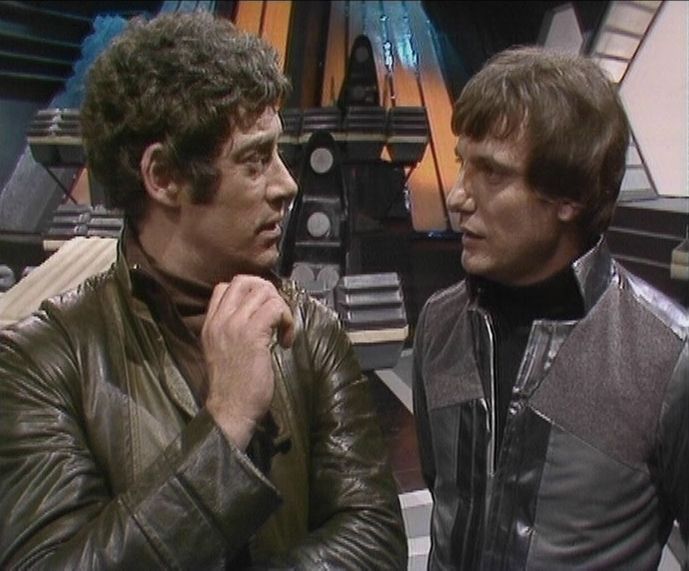
There are two key scenes in Star One – both of which take place on the Liberator during the opening minutes.  The first demonstrates Avon’s wish to end his association with Blake.

AVON: We can take Star One, let’s get on with it.
JENNA: Very stirring. When did you become a believer?
AVON: Are you just going to sit there? You have led them by the nose before.
BLAKE: Excuse me, are you going to answer her question?
AVON: Show me someone who believes in anything and I will show you a fool.
BLAKE: I meant what I said on Goth, Avon. We are not going to use Star One to rule the Federation, we are going to destroy it.
AVON: I never doubted that. I never doubted your fanaticism. As far as I am concerned you can destroy whatever you like. You can stir up a thousand revolutions, you can wade in blood up to your armpits. Oh, and you can lead the rabble to victory, whatever that might mean. Just so long as there is an end to it. When Star One is gone it is finished, Blake. And I want it finished. I want it over and done with. I want to be free.
CALLY: But you are free now, Avon.
AVON: I want to be free of him.
BLAKE: I never realised. You really do hate me, don’t you?

Blake agrees that Avon will take him back to Earth after the destruction of Star One and that the Liberator will then be Avon’s.  This is a pointer towards the general direction that series three will take.  With Blake absent it wouldn’t have been credible for Avon to simply inherit his crusading zeal, so we see a shift towards more SF stories and less battles with the Federation (the balance changes again in series four).  Paul Darrow is excellent in this scene and it easily demonstrates that he’s more than capable of carrying the series.

Even more fascinating is the following exchange between Blake and Cally.

CALLY: Are we fanatics?
BLAKE: Does it matter?
CALLY: Many, many people will die without Star One.
BLAKE: I know.
CALLY: Are you sure that what we’re going to do is justified?
BLAKE: It has to be. Don’t you see, Cally? If we stop now then all we have done is senseless killing and destruction. Without purpose, without reason. We have to win. It’s the only way I can be sure that I was right.

This is such a key moment, as it shines a very cold and clear light on Blake and his convictions.  Earlier in the episode Servalan is shown examples of what happens when Star One fails – droughts, storms, terrible devastation, etc.  If Blake destroys Star One then these disasters will just be the tip of the iceberg.  Can any cause possibly justify this loss of life?  It’s hard to agree with Blake that it does – his sole motive for continuing is because he’s gone too far down the road of freedom fighter/terrorist (delete as applicable) to stop now.  It seems a monumentally poor reason for such wholesale destruction.

As we’ll see, Blake doesn’t destroy Star One.  Aliens have infiltrated the complex and the Liberator finds itself allied with a fleet of Federation ships in a desperate attempt to stop a massive alien invasion.  It’s possible to argue that the unexpected appearance of aliens is something of a cop-out.  The Federation in series three is shown to be in disarray following the battle with the aliens and had Blake destroyed Star One there would have been a similar amount of disruption.

star 02

Star One is manned by a small number of Federation personnel, most of whom have been replaced by the shape-shifting aliens.  This makes no sense – we’re told nobody ever visits, so why didn’t the aliens simply kill everybody and then take over?  It’s also not clear why Star One has been failing recently – were these problems caused by the aliens or was Star One starting to run down of its own accord?

It also seems that quite a few events have been happening off-screen – when did Travis decide to ally himself with the aliens and why should he now wish to destroy all humanity?  He’s always been more than a little unstable, but this sudden desire to kill everybody doesn’t really sit with what we’ve previously seen.

With Gareth Thomas’ departure it was decided that Travis’ main function in the series was over.  And it’s difficult not to raise a cheer as Avon finally kills him off and sends him spinning down a very deep hole (via some very unconvincing CSO).  The problems with Travis during series two weren’t all down to Brian Croucher, but there’s no doubt that Travis’ death is a mercy killing (both for himself and the audience).

We end with a cliffhanger as Avon leads the Liberator in an apparently hopeless battle against the oncoming alien fleet.  There’s one final moment between Blake and Avon (“Avon, for what it is worth, I have always trusted you, from the very beginning.”) and then the credits roll.

After some wobbles in the second half of the season (Hostage, Countdown, Voice from the Past, The Keeper) Star One manages to close the second run on a high.  It’s a very talky episode, with little in the way of impressive visuals or effects (the alien fleet looks to be cobbled together from whatever was lying around the Special Effects workshop for example).  But the dialogue heavy nature of the story isn’t a problem as it allows all the regulars a chance to shine.

star 03

Blakes 7 – The Keeper

keeper 01

The Keeper isn’t a story that has a great deal going for it.  The setting is the planet Goth and its inhabitants, led by Gola (Bruce Purchase), clearly favour a faux-medieval feel (plenty of flickering torches and over-ripe dialogue).

Purchase, who’d played the Captain in the Doctor Who story The Pirate Planet shortly before, approaches this role with a similar lack of subtlety.  But whilst there was slightly more to the Captain than initially was apparent, Gola is just a blustering fool who spends his time shouting – it’s almost as if he’d taken lessons from Brian Blessed.

Blake, Vila and Jenna teleport down to find the brainprint of cyber-surgeon Lurgen.  Once they have that they’ll be able to establish the location of Star One.  Avon asks Blake what they’ll do once they know where Star One is.

BLAKE: Finish what we started.
AVON: Destroy it?
BLAKE: Of course. And the entire Federation with it. Does that bother you suddenly?
AVON: Star One is the automatic computer control centre for the entire Federation.
BLAKE: Get to the point, Avon.
AVON: That is the point. Through Star One we could control everything. The Federation could belong to us.
VILA: I could be president.
AVON: Ah.

Blake and the others are only on the planet’s surface for a few minutes before they’re overpowered – it’s a remarkably inept display by Blake (strategic planning has never been one of his strengths).  Vila and Jenna are carried off whilst they leave Blake behind (why?).  Blake urgently requests teleport, but Avon and Cally have moved out of teleport range in order to destroy Travis’ ship.

How Avon manages to identify the ship as Travis’ is never explained – surely there must be others in the galaxy that are similar?  It probably won’t come as a surprise that Travis wasn’t on board – he and Servalan are both on Goth.  Their on/off working relationship is now back on and Travis is in a remarkably mellow mood as he attempts to forge a more permanent alliance with Servalan.

keeper 02

TRAVIS: Look, Star One is the computer control centre. It controls the climate on more than two hundred worlds, communications, security, food production, it controls them all. It is the key to our very lives. Think of all that power.
SERVALAN: You can see why the Council themselves don’t know where Star One is. In the wrong hands …
TRAVIS: Yes, but in the right hands: yours and mine.
SERVALAN: Be very careful you don’t overreach yourself, Travis.

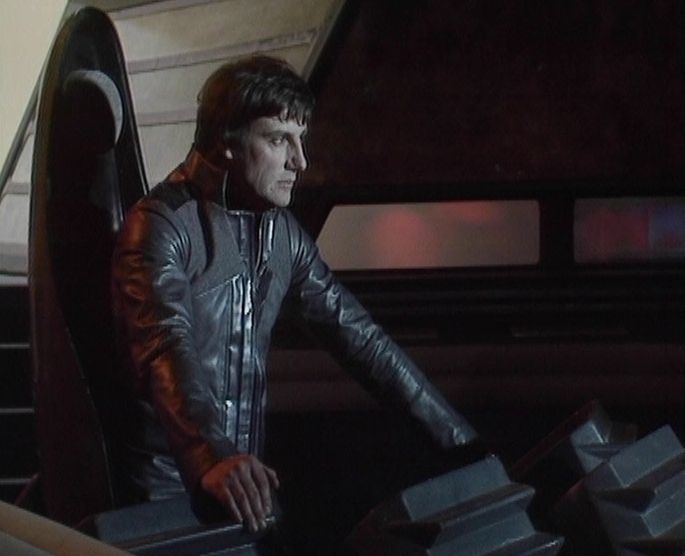
One part of the story that does work very well is Travis’ contribution to it.  It seems obvious that he’ll be around for the duration, tangling with Blake and the others, but about twenty minutes in he disappears and it slowly becomes clear that he’s not coming back.  He’s already found Star One’s location and not only has he betrayed Servalan but as the next episode makes clear he’s betrayed the whole human race …..

A quick mention for his personal communicator, which is the size of several house-bricks (almost like the most primitive mobile phone).  Considering that Kirk and the Enterprise had pocket sized communicators a decade earlier you’d have imagined B7 could have done something similar. It’s hard to imagine him putting that into his pocket!

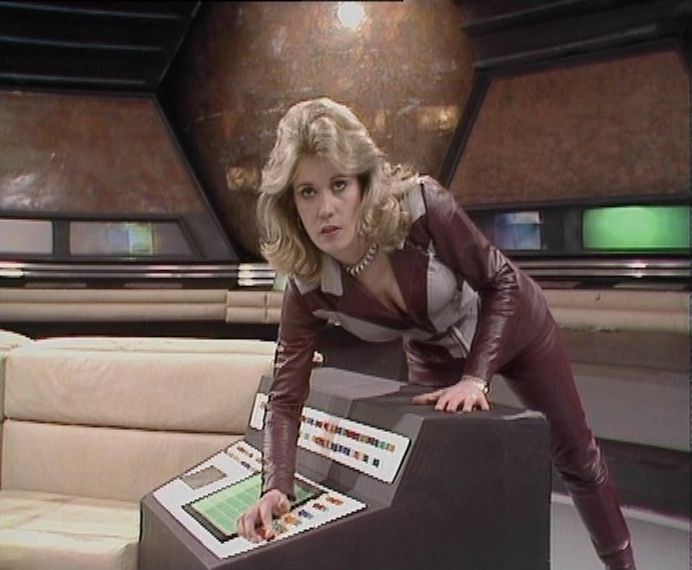
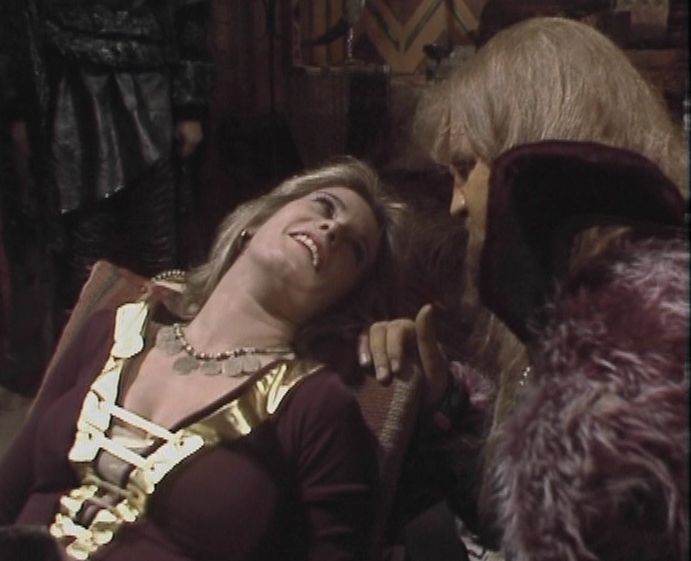
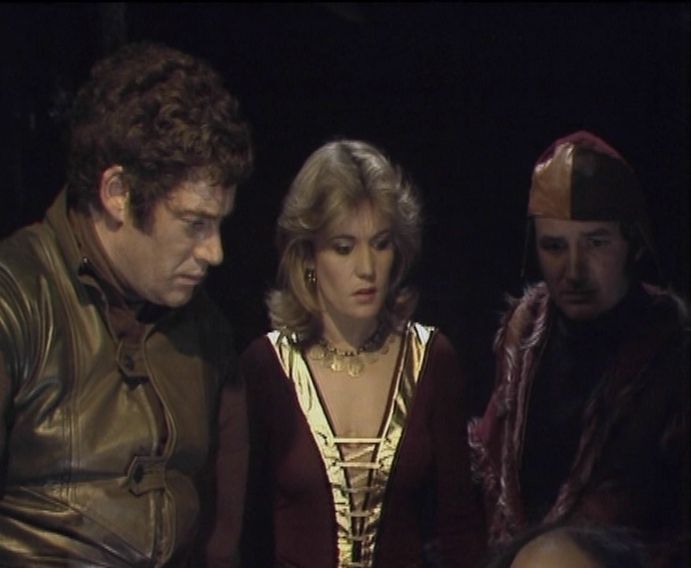
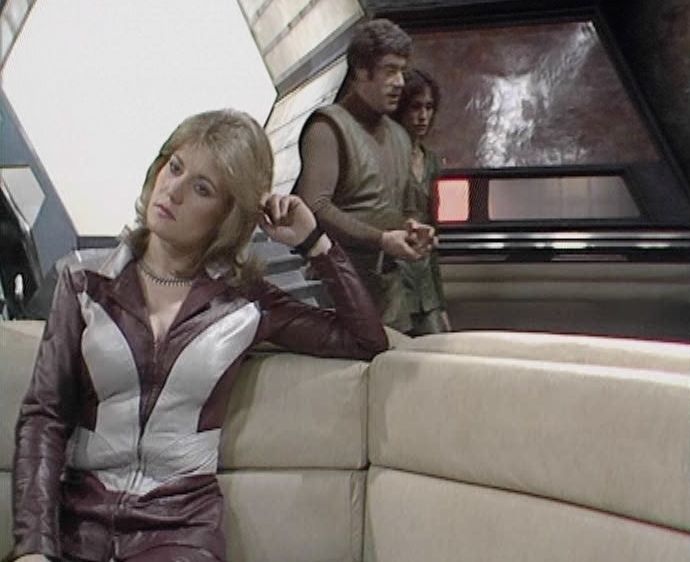
Whilst Blake runs around achieving very little, Jenna and Vila are making the acquaintance of Gola.  Vila becomes the King’s fool, supplanting his existing one (played by Cengiz Saner) whilst Jenna immediately attracts Gola’s attention.  It’s a good thing that The Keeper gives Sally Knyvette something to do, it’s a bad thing that she has to spend her time as the object of Gola’s attentions.  But Knyvette does manage to mine some comic moments from this fairly unpromising material.

Elsewhere, Blake meets Rod (Shaun Curry) who is Gola’s brother and plans to challenge him for the throne.  It won’t come as surprise that Rod is a bluff and hearty fellow (he’s not quite in the Purchase/Blessed camp for loudness, but he comes close).

Blake also runs into an old man locked in the dungeon (played by Arthur Hewlett) who turns out to be Gola and Rod’s father – and so is the old, disposed king.  Hewlett’s performance is notable for his moaning (he may be playing for laughs or he may not, I can’t be sure).  Also eschewing any subtlety is Freda Jackson as Tara, Gola’s sister.  She can cackle with the best of them and when she’s not doing that she maintains a baleful watch over the unfolding events.

Eventually (thank goodness) Blake discovers the location of Star One, which means we can happily leave the planet of Goth far behind and journey onwards to the climax of series two.

keeper 03

Blakes 7 – Gambit

gambit 01

Gambit is an unusual story, certainly for the series to date.  Robert Holmes’ script is laced with his usual love of wordplay and the camp quotient is set to eleven.  Krantor (Aubrey Woods) and Toise (John Leeson) are an unforgettable double-act – both actors seem to delight in upstaging the other (not least with their costumes – Leeson’s headgear is especially memorable).

There’s a throwaway line that it’s Mardi Gras time at Freedom City, which explains why they’re dressed as they are – and presumably all the extras (dressed as clowns, nuns, etc) are entering into the spirit of the occasion as well.  Or their costumes could have just been pulled off the shelves – this is Blakes 7, so it’s always a fair bet that money was tight.

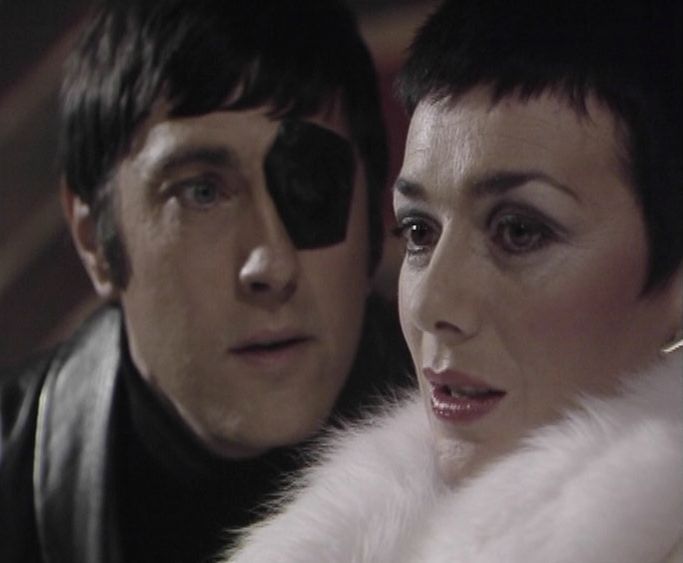
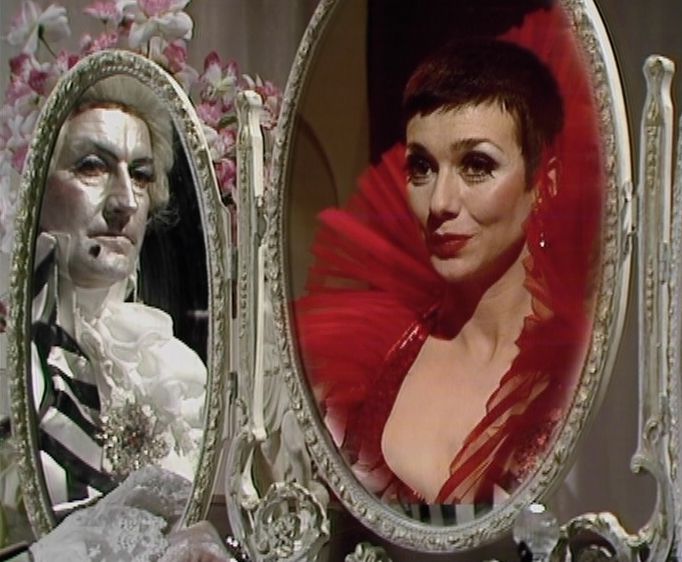
The lack of a decent budget is probably best reflected in the main room of Freedom City’s casino, which is pretty sparsely decorated.  So what funds were available seem to have been spent on a handful of new costumes (especially Servalan’s stunning red number).

Servalan, and her assistant Jarriere (Harry Jones), have travelled to Freedom City to find both Travis and cyber-surgeon Docholli (Denis Carey).  It’s believed that Docholli knows the location of Star One – so Servalan is anxious to locate him before Blake does.  She offers Krantor a substantial sum of money in exchange for his co-operation, but whilst they’re perfectly pleasant to each other on the surface it’s plain that neither trusts or likes the other an inch.

Servalan on Krantor.  “He is a despicable animal. When the Federation finally cleans out this cesspit, I shall have that vulpine degenerate eviscerated with a small and very blunt knife.”

Krantor on Servalan.  “One of these days, Toise, I am going to have Supreme Commander high-and-mighty Servalan ravaged until she does not know what month she’s in. I’ll have her screaming for death.”

This is typical Holmes, although it’s a little surprising that Krantor’s wish to ravage Servalan made it to the screen.  He always delighted in putting lurid dialogue into his scripts and sometimes (especially when Terrance Dicks was script-editing his work on Doctor Who) the more extreme examples were excised.  Here, it seems that Chris Boucher was happy to keep them in (unless of course he removed even worse!)

If Krantor and Toise are a great double-act, then so are Servalan and Jarriere.  Harry Jones couldn’t have looked less like a Federation trooper if he tried, but maybe this is why he was cast.  Jarriere is present mainly to listen admiringly to Servalan’s increasingly convoluted plans about how she intends to deal with both Docholli and Travis.  Delightfully, after she’s explained herself in great detail he then admits he doesn’t understand a word of it!

The third excellent double-act in the story are Avon and Vila.  Homes had already latched onto the comic possibilities of teaming them up in Killer and he wastes no time in doing so here as well.  Their subplot is a little bizarre, but it fits into the odd nature of the story.

gambit 02

Both are aggrieved at having to remain behind on the Liberator with Vila complaining that “if it was a desert down there, so hot your eyeballs frizzled, poisonous snakes under every rock” then Blake would have sent the pair of them.  Avon agrees and then decides they should teleport down and break the bank at the casino.

Why they should want to do this (the Liberator possesses untold wealth) is never made clear, plus the concept of Avon sneaking down is also bizarre – it’s difficult to imagine he cares that Blake would disapprove.  Some of his dialogue (“you dummy”) seems out of character too.

Avon and Vila intend to win a fortune at the roulette table with the aid of Orac.  But since Orac’s rather bulky, after a brief discussion about molecular reduction the computer obligingly reduces himself to one eighth of his normal size.  You can either enjoy the comic moment or fret that the episode once again isn’t taking itself seriously.

Blake, Cally and Jenna’s search for Docholli doesn’t last very long (they find a trace of him in the first bar they come to) so they don’t really have a great deal to do.  Jenna and Cally’s brief staged cat-fight is easily the highlight of their scenes.  Travis skulks about, wearing a silly hat, guarding Docholli as he knows that Blake will turn up to find the surgeon (although how Travis knows about Docholli is never explained).

Thanks to Orac, Vila wins a fortune but then finds himself conned into playing speed chess with the Klute (Deep Roy).  If he wins or draws he’ll earn another fortune, but it he loses it’ll cost him his life.  Naturally with Orac on hand to whisper suggestions, Vila manages to earn a draw and he and Avon return to the Liberator a good deal richer.

Blake, Cally and Jenna have returned too, with information that will send them off to the planet Goth to locate a tribal chief who wears the brain-print of someone who knew the location of Star One around his neck. When Blake asks Avon and Vila if anything’s happened he’s immediately suspicious by the sight of their innocent expressions (Darrow deadpans terribly well).

If you like your Blakes 7 on the gritty side, then Gambit may not appeal but everyone else should find something to enjoy here.

gambit 03

Blakes 7 – Voice from the Past

voice 01

Where to start with Voice from the Past?  There’s some good ideas in Roger Parkes’ script but ultimately the story is incoherent and illogical.  It does have a decent opening hook though – Blake starts acting oddly and changes course from the idyllic sounding Del Ten to a lifeless asteroid called PK One One Eight.  He offers no explanation, beyond “try trusting me.”  Paul Darrow has the best of the early exchanges especially when he decides that Blake is “certainly not normal, not even for Blake.”

This is somewhat ironic, since Blake’s command style has so often kept everyone in the dark whilst he formulated elaborate plans that sometimes (as in Pressure Point) end in disaster.  So his behaviour here isn’t particularly out of character, though Cally picks up a faint tone oscillation which suggests somehow he’s being manipulated.

With the unstable Blake under restraint it falls to Vila to look after him.  Bad move.  It recalls a similar scene in Breakdown, where Gan was restrained and Cally was monitoring him.  Both Gan and Blake appeared quite normal and asked to be freed, but Vila proves much more gullible than Cally was – he not only releases him but also swallows his story that Avon and Cally have been plotting against the rest of them.  This whole part of the story does no favours at all for Vila, since it portrays him as an easily duped simpleton.

With Avon, Cally and Jenna locked up, Vila teleports Blake down to the surface of the asteroid.  The opening shot of Blake on the asteroid’s surface is a stunning example of incredibly poor CSO – not helped by the fact that the background image seems to have been drawn by a child.  Things then get stranger still when he meets the people who have summoned him.

Ven Glynd (Richard Bebb) was the arbiter at Blake’s trial, but he’s now defected from the Federation and has in his possession information which he claims will bring down both the civil administration and the space corps.  Also present is a broken, bandaged figure who we’re told is Shivan, a notable resistance leader.

Sadly Robert James wasn’t able to reprise his role as Ven Glynd, so Richard Bedd stepped into the part.  Whilst he’s not as compelling an actor as James, he still manages to do his best and there are the odd signs of just how wily an operator Ven Glynd is (he wants Blake to rule as a puppet leader whilst he enjoys the real power).  Glynd asks Blake and the others to accompany him to the Governor’s Summit Meeting at Atlay.  There, along with a powerful ally, Governor Le Grand (Freda Knorr), they will present their evidence.

One of the most obvious plot-flaws is why Ven Glynd and Le Grand should attempt to manipulate Blake by beaming messages into his mind.  Why not just contact the Liberator direct?  The most obvious answer is that they’re not telling the truth, but although they have agendas both are honest in what they want Blake to do – so why attempt to brainwash him, when he probably would have agreed to help anyway?

voice 02

Le Grand explains to Blake what will happen and that they want him to be the new ruler of the Terran administration.

LE GRAND: For years now, the Arbiter General and I have prepared for this moment. He gathering evidence of the Administration’s infamies, while I lobbied the support of my fellow governors. However, we could not challenge and discredit the Administration until we had found an alternative leadership, capable of uniting all factions.
BLAKE: Well, you, Governor.
LE GRAND: No. He who leads must be from Earth. Someone of renowned integrity, someone who has become a legend of hope to the great mass of the oppressed. A messiah.

It all comes to nothing though, since Servalan has been pulling the strings all along.  Shivan is really Travis in disguise(!) and Servalan seems to have allowed Ven Glynd and Le Grand to hatch their plot just so she can enjoy crushing their feeble attempt at rebellion in the most dramatic way.  Again, this doesn’t make much sense – why not simply arrest Ven Glynd and Le Grand?  Even if the evidence wasn’t particularly strong we’ve seen how the Federation can easily trump up charges, so the only possible reason for letting them live was so Servalan could enjoy their ultimate humiliation.

As for Shivan really being Travis …. words almost fail me, but it’s an undeniably enjoyable piece of very bad acting.  His initial scene is notable for the appearance of two of the most familiar faces from this era of television – highly experienced walk-ons Harry Fielder and Pat Gorman (who between them racked up hundreds of television and film credits).  They don’t do anything, but their presence is remarkably comforting.

Gareth Thomas struggles somewhat in this one.  Blake’s sudden mood swings would be difficult for any actor to cope with, so I wouldn’t want to be too hard on him.  Paul Darrow gets some great lines and makes the most of them whilst Michael Keating isn’t best served with a script that turns him into a credulous fool.

Jan Chappell and Sally Knyvette both have a little more to do in this episode.  Especially Jenna, who agrees (rather reluctantly) to undergo dual therapy with Blake in order to probe the reason for his erratic behaviour.  But Brian Croucher need not have taken part at all – Travis serves no useful function in the story which means that Shivan might just as well have been the man he claimed he was.  Jacqueline Pearce’s role is quite small, but her scene at the end (as her image is presented in widescreen) is a memorable one.

Not an episode you could say is actually good, but it’s certainly never dull.

voice 03

Blakes 7 – Countdown

countdown 01

The major flaw with Countdown is the countdown itself.  The planet of Albian has a population of around six million but the Federation have been able to keep control with a very small force of troops due to their ultimate deterrent.  Somewhere on the planet is a bomb which will destroy all life at the first attempt at insurrection.  A group of rebels, lead by the mercenary Del Grant (Tom Chadbon) manage to take control but they’re just too late to stop the countdown from being activated.

One of the odd things about the countdown is that the time remaining seems to jump about somewhat.  It starts at 1,000 and as each digit doesn’t seem to last more than two seconds there should be about half an hour left to diffuse the bomb.  However, we’re told that the time in hand is double that – sixty minutes.

But the main problem is that there’s very little tension about this part of the story.   You know that the bomb’s not going to explode (the idea that six million people could be killed – even if most of them exist off-screen – wouldn’t be something that the series would ever contemplate).  So if the bomb part is a bit of a damp squib (as it were) where does the drama come from?

It’s the meeting between Avon and Del Grant which forms the heart of the episode.  It could be that Terry Nation created this sub-plot with no thought of a sequel and it was Chris Boucher who decided that the story of Avon and Del’s sister, Anna Grant, could be further developed (see the series three episode Rumours of Death).  That would make sense, as the later episode does throw up some continuity issues – not least concerning Del himself ……

countdown 02

But here, the story of Avon and Anna seems to have been crafted purely to open up the character of Avon a little.  Although he’s always completely self-contained it’s clear he does possess feelings – he’s just incredibly guarded and has never let any of the Liberator crew close enough to find out exactly what he thinks or feels.

His chance meeting with Del, a man who’s vowed to kill him, therefore provides us with a opportunity to understand a little about what makes him tick.  Del believes that Avon ran out on Anna, leaving her to the mercy of the Federation and is therefore directly responsible for her death.  Avon obviously carries a burden of regret but insists that the true events were somewhat different.

GRANT: There’s one thing I never understood. Why did you leave her alone?
AVON: I had arranged to buy some exit visas, but I had to go right across the city to collect them. It was safer for Anna to stay out of sight.
GRANT: What happened then?
AVON: There were patrols out everywhere looking for us. I was late at the rendezvous. And then the man from whom I was buying the visas increased the price. He wanted ten times what we had agreed. He said he could get even more if he turned me in and collected the Federation reward.
GRANT: You should have killed him.
AVON: I did.
GRANT: So you got the visas. Why didn’t you go back for her?
AVON: Killing the dealer wasn’t quite so straightforward. He was expecting something and fired first. I started back but I was losing a lot of blood. Somewhere along the way I passed out. I was lucky. Some people found me and got me under cover.
GRANT: You could have got a message to her, told her to get out.
AVON: I was unconscious for more than thirty hours.
GRANT: You used the visa and got out of the city. You left her there.
AVON: That’s right. But that was a week later. Anna was already dead.
GRANT: You’re lying. You left the city the same day, before the Federation found Anna. You could have got her out.
AVON: No. She came looking for me, the patrols found her. It was only after we got word that she was dead that I left.

It shouldn’t come as a surprise that Avon and Del Grant are the only two people that can diffuse the bomb and have to forget their differences and work together.  And it also should come as no surprise that by the end Del Grant has accepted Avon’s story and they part on friendly terms.

The other main plot element is Blake’s search for Control.  A number of episodes from now to the end of the second series contain hints and information about Star One (the new name for Control).  These various plot-threads do feel a touch contrived though – we’ve been told that Star One is the most closely guarded secret in the Federation, so why have various clues been scattered about like breadcrumbs?

In Countdown, Blake arrives at Albian to find Major Provine (a boo-hiss turn from Paul Shelley).  Provine served at Control and Blake hopes that he’ll be able to tell him where it’s now located.  He doesn’t do this, but he does give him a lead. “Docholli. Cybersurgeon. Only Docholli knows.”  Quite why Provine should decide to assist Blake with his dying breath is a mystery – and it’s even harder to swallow that he would be allowed to walk about with such a vital piece of information.

It’s very noticeable that this is the third story in a row where Blake, Avon and Vila teleport down and enjoy all the action whilst Jenna and Cally remain marooned on the Liberator.  So it’s easy to believe that around this time Sally Knyvette decided not to return for series three.

Countdown is fairly formulaic stuff then, enlivened only by the insight into Avon’s character.  In many ways it’s a taster for the way the series would develop once he moved centre-stage following Blake’s departure.

countdown 03

Blakes 7 – Hostage

hostage 01

Hostage was something of a troubled production.  Duncan Lamont had been cast as Ushton but he died after completing the location filming, necessitating a remount with John Aberini stepping into the part.

The episode opens brightly enough though, with the Liberator coming under attack from a mass of Federation ships.  The unnamed Federation commander (played by Andrew Robertson) seems close to destroying the Liberator, but Blake and the others just manage to sneak away.

The all-out attack does contradict the likes of Project Avalon, which saw Servalan insistent that the Liberator had to be captured, not destroyed.  But if her objectives have now changed it does beg the question as to why she hasn’t ordered attacks of this magnitude before, as it’s clear they stand a good chance of succeeding.

Servalan is seen to be under some pressure in this episode.  It was hinted in Trial that the enquiry into the continuing inability of the Federation to catch Blake could be damaging for her and the visit of Councillor Joban (Kevin Stoney) restates this.  He’s only onscreen for a few minutes but it’s a pleasure to watch Stoney at work, especially since Hostage tends to be blessed with fairly indifferent performances from the guest stars.  John Aberini was a fine actor, but his part was rather limited.

There’s another lapse in continuity during the following exchange between Servalan and Joban –

JOBAN: Some members of the council are concerned. Many of our citizens now know of Blake’s activities, and those of the renegade Travis.
SERVALAN: But there have been no public spacecasts on either Travis or Blake.
JOBAN: People talk, Servalan. There’s no way of stopping them.
SERVALAN: This is a major breach of security. The punishment is total. Who are these people who have been talking? I want their names, councillor.
JOBAN: All sorts of citizens from Alphas to labour grades know of Blake’s defiance of the Federation. They talk of him as a sort of hero, many of them.
SERVALAN: What rubbish.
JOBAN: His men impede progress and more importantly order. Order, order Servalan. It is all that matters.

It seems strange that Servalan should react with surprise to the news that Blake has become something of a hero, since she’s commented on this fact several times before.  Only a minor point, but it does appear that Chris Boucher’s attention was elsewhere when this script was written.

Following the attack on the Liberator, Blake is surprised to receive a message from Travis.  He’s on the planet Exbar and he is holding Blake’s cousin Inga (Judy Buxton) hostage.  He asks Blake to come to Exbar to talk and maybe join forces – if he doesn’t, the girl will die.

hostage 02

Five of the last six stories of series two feature Travis and that’s at least two too many.  Hostage is one of the episodes when it would have been nice to take a break from Travis’ painfully obvious villainy (and Brian Croucher’s not at his best in this one anyway) but it wasn’t to be.

The notion that Travis might be interested in teaming up with Blake was a fascinating one which I’m sorry wasn’t developed.  With them now both renegades it would have made sense – plus it would have provided the later stories with a great deal of dramatic tension.  But Travis (as might be expected) wasn’t really interested in an alliance – he merely wanted to steal the Liberator.

What happened to his Muto crew from the end of the last episode is never made clear, instead he’s recruited a number of crimos (criminal psychopaths).  They’re hardly the most threatening bunch – despite the odd half-hearted attempt to show how truly evil they are (slapping the unfortunate Inga, for example).

Also present on Exbar is Ushton, Blake’s uncle.  It’s revealed early on that he’s working with Travis (who’s agreed not to hurt Inga if he co-operates).  His betrayal of Blake is rather pointless as Blake was coming to meet Travis anyway.  John Aberini does his best, but Ushton isn’t much of a part and his mild betrayal is later forgotten when he and the others battle with Travis and the crimos.

Forty four minutes into the episode, Blake, Avon and Ushton send a number of the most painfully obvious polystyrene rocks ever seen on film down a slope to frighten away Travis and the crimos.  It’s a moment that never fails to amuse – not least for the crimo who runs away with his hands high in the air.  The scene where they throw a crimo down a cliff (so obviously a dummy) is comedy gold as well.

Yet another odd lack of continuity occurs when Travis asks Ushton which of the three members of the Liberator crew he holds prisoner (Blake, Avon, Vila) is the weakest.  Travis has been pursuing them all for some considerable time, can we really believe he didn’t know the strengths and weaknesses of all of them?

The final scene is nice though, with Jenna very huffy towards Blake.  This always seems to happen whenever he meets or talks to an attractive woman, clearly her unrequited love remains unrequited.

But all in all this is a somewhat forgettable episode.  The brief meeting between Servalan and Travis at the end is possibly the most significant moment.  He asks if they’re still enemies and she replies that “officially, yes. Unofficially, you lead me to Blake whenever you can. If you help me get him I’ll see you officially listed as dead. There’s no one as free as a dead man.”

Although his next appearance (in Voice from the Past) shows him working closely with Servalan, which is a far cry from how matters were left here.  Maybe that’s another case of slightly inconsistent script-editing.

hostage 03

Blakes 7 – Killer

killer 01

Killer was the first of four Blakes 7 scripts written by Robert Holmes.  He’d recently finished a lengthy stint as script-editor on Doctor Who and was looking for some freelance writing jobs.  Chris Boucher, who’d been commissioned by him on Doctor Who, was naturally keen to bring him aboard.

Holmes’ strengths were many, but strong characterisation was always key.  It’s therefore no surprise that he latched on immediately to the possibilities of teaming up Avon and Vila (three of his stories feature them together).  It’s a joy to watch Darrow and Keating sparking off each other and it’s one of the main pleasures of the episode.

Killer is an interesting script for several reasons.  It does feel slightly different to what we’ve previously seen (although it’s not as much of a departure as Holmes’ next story, Gambit).  This difference is mostly due to the way Blake is portrayed.

The Liberator has travelled to the planet Fosforon where Avon and Vila teleport down to meet with Tynus (Ronald Lacey).  Tynus is the commander of a Federation scientific research base and is an old friend of Avon.  Vila’s delighted to hear that Avon has a friend (“I always knew you had a friend. I used to say to people ‘I bet Avon’s got a friend, somewhere in the galaxy'”.) but within minutes we learn their friendship doesn’t run very deep.

Avon and Tynus were involved in a fraud some years back and Avon kept quiet about Tynus’ part.  Now he expects Tynus to do him a favour (otherwise he’ll have no qualms about reporting him to the authorities).  The reason for Avon’s visit (he needs a TP crystal) is little more than a MacGuffin to pad the story out – the main plot concerns a mysterious and deadly virus which is unleashed on the base.

Whilst orbiting the planet, Zen picks up a Wanderer spacecraft apparently drifting.  Blake’s amazed to see it – since it must be over seven hundred years old – and he’s also baffled as to how it reached this part of the galaxy.  There’s some brief debate about whether they should investigate (clearly nobody remembers the problem they had in both Time Squad and Bounty when they were curious about derelict crafts).

Luckily for them it’s salvaged by a colleague of Tynus, Dr Bellfriar (Paul Daneman).  But Blake remains worried that it could be dangerous (thanks to a rare display of Cally’s telepathy) and decides to warn the base.  This is highly unusual – it’s a Federation base so it’s strange that he should be concerned.

killer 02

Whilst it’s possible to argue that this is due to Holmes’ unfamiliarity with the series (although presumably Chris Boucher would have rewritten the script had he felt it didn’t fit with established continuity) maybe it’s actually another stage in humanising the Federation.  Exactly what research they do is never really specified, but Bellfriar is both urbane and welcoming.  Blake does tell him he’s a wanted criminal but Belfriar responds by muttering that he’s an absent-minded scientist who’s forgotten his name already.

But presenting the Federation as rounded characters, rather than mindless killers, does create something of a problem – it makes Blake’s various attempts to disrupt the natural order (especially as seen in Star One) seem much more like acts of terrorism than blows for freedom.

If his interest in the fate of the people on the base is a touch uncharacteristic, so is his explanation about what he thinks is happening.  It’s the first and last time that Blake ever referenced old-Earth history and is pure Holmes.

BLAKE: Have you ever heard of Lord Jeffrey Ashley?
BELLFRIAR: Who?
BLAKE: Mm, pre space age, planet Earth. He was the commander of a British garrison in America, having trouble with hostile natives, redskins. Ashley ordered blankets from smallpox victims to be baled up and sent to the hostile tribes.
BELLFRIAR: Germ warfare.

Killer is an excellent story for Thomas, Darrow and Keating.  Alas, it’s much less satisfying for both Jan Chappell and Sally Knyvette, both of whom remain on the Liberator not doing much.  Ronald Lacey is typically slimy as Avon’s fair-weather friend whilst Paul Daneman is impressive as the acceptable face of the Federation.  His eventual fate (and that of everybody else on the planet) is very grim.

There’s some bizarre looking costumes (Michelin Men in space!) and a rather unconvincing matte painting at the start which looks like it was put together by a child in about five minutes, but apart from these minor niggles it’s a solid production and an impressive debut script from Holmes.

killer 03

Blakes 7 – Trial

trial 01

Travis is facing a court-martial, charged with the murder of one thousand four hundred and seventeen unarmed civilians on the planet Serkasta.  Whilst he remained useful to Servalan she was prepared to ignore his previous misdemeanors but following the events of Pressure Point she has no hesitation in throwing him to the wolves.  She also plans to make sure that the verdict is the one she requires by suborning Travis’ defence counsel Major Thania (Victoria Fairbrother).

It does seem slightly strange that Servalan decided to go to all the trouble of arranging a court-martial when she could have either simply ordered one of her troopers to put a bullet in Travis’ head or (as mentioned in Weapon) sent him to the slave pits on Ursa Prime.  It’s a pity that Blakes 7‘s script editor couldn’t have liaised with the writers of Weapon and Trial.  Oh wait ……

But although the reason for the court-martial does feel a little spurious, Trial is compelling since it asks us to consider the morality of the Federation in general.  There’s no doubt that Travis committed the crime (although he pleads not guilty, for a reason we’ll come to later) but is his action typical of a Federation officer?

In Travis’ debut episode Seek Locate Destroy, Servalan was confronted by a junior officer who registered his disapproval that Travis had been reinstated into the corps.  For him, Travis was a killer and someone who disgraced the uniform of a Federation officer.  In Trial, the court-martial is conduced by Samor (John Savident) a highly respected officer (Thania calls him “a rule book officer of the old school.”)  Are they more typical of the average Federation officer than Travis is?

On hand to observe events are Bercol (John Bryans) and Rontane (Peter Miles).  Like a space-age Waldorf and Statler they exist to provide an ironic commentary on events.

RONTANE:One almost has to admire that woman.
BERCOL: What, Thania?
RONTANE:Servalan.
BERCOL: Oh.
RONTANE: We know that she’s sending Travis to his death in order to keep his mouth shut, but she is doing it with such an impeccably honest and painstaking tribunal that her real motives can’t even be hinted at.
BERCOL: Has a date been set for the Blake inquiry?
RONTANE: Does it matter? Without Travis’ evidence the mishandling of the Blake affair becomes a matter of conjecture. The inquiry becomes a formality.

The idea that the court-martial has been convened to silence Travis before he can implicate Servalan in the inevitable enquiry that will no doubt shortly be held into the continuing inability to capture Blake is a compelling one, but as I’ve said it would have been easier to just quietly dispose of him.

Bryans and Miles are once again a great double-act in this, their second and final appearance.

trial 02

Trooper Par (a slim-looking Kevin Lloyd) served with Travis for five years.  He tells Thania that he could always guarantee that Travis would not “get you killed unnecessarily. He never wasted troopers.” He’s certain of Travis’ guilt though – he heard him give the order – but it’s telling that he doesn’t feel any personal responsibility (“he gave the order. We just did the shooting.”)

Given that the Nazis often featured in Terry Nation’s scripts (most famously disguised as the Daleks) it’s not a particular stretch to assume that Chris Boucher was also drawing parallels between Federation troopers and, say, SS soldiers (who would also no doubt insist they were only obeying orders).

Brian Croucher has said that he wished Trial had been his debut episode as it would have allowed him to get a much better grip on the character of Travis.  He’s certainly very good throughout and is never better than the climatic scene where Travis offers his defence.

A field officer, like myself, is frequently required to make fast, unconsidered decisions. You were all field officers, you know that’s true. Time to think is a luxury battle seldom affords you. You react instinctively. Your actions, your decisions, all instinct, nothing more. But, an officer’s instincts are the product of his training. The more thorough the training, the more predictable the instinct, the better the officer. And I am a good officer. I have been in the service all my adult life. I’m totally dedicated to my duty and highly trained in how to perform it. On Serkasta I reacted as I was trained to react. I was an instrument of the service. So if I’m guilty of murder, of mass murder, then so are all of you!

It’s no surprise that Samor does not accept this.  “Space Commander, we have considered your sentence at some length. Your contention that what happened on Serkasta was a direct result of your training concerned us greatly. We accept that you are trained to kill. As are we all. What we cannot accept is that this training leads inevitably to the murder of innocents. Your behavior was not that of a Federation officer, but rather that of a savage, unthinking, animal.”

Since Samor is never presented as an officer that Servalan could influence, this must be his honest opinion.  If so (and if it’s also held by his brother officers) then it shows the Federation in a very different light from the unthinking murderers that Blake considers them to be.  It’s therefore deeply ironic that Blake decides to attack Servalan’s headquarters (where Travis is being tried) partly to regain some confidence after the death of Gan.

His attack kills the majority of the people present at the trial (including the reasonable Samor) and allows Travis to escape.  And as the credits roll, the question must be which was the greater crime?  Travis’ murder of the unarmed civilians on Serkasta or Blake’s murder of the unarmed Federation personnel on Servalan’s base?  Exactly how many are killed by Blake’s attack isn’t certain (although it’s presumably a lot less than Travis’ massacre) but it’s a uncomfortable possibilty that the scene was designed to show that Blake and Travis aren’t that far apart.

As for Blake himself, he also finds himself on trial in this episode – although in his case it’s a self-imposed one.  He spends most of the time having an odd adventure with a creature called Zil (Clare Lewis).  This would be a strange interlude in any story but it really jars here when it interrupts the drama of Travis’ trial.

Avon, of course, gets some good lines at Blake’s expense – such as this one, after Blake announces his plan to teleport down to the planet alone. “It occurs to me that if you should run into trouble, one of your followers – one of your three remaining followers – might have to risk his neck to rescue you.”

Following Gan’s death there had to be some pause for reflection, but it doesn’t last long and by the end of the episode everyone pretty much carries on as before.  This might seem a bit callous or it could just be that Gan was someone who was tolerated by the others as a work-colleague might be, rather than a close friend.

Minus points for the episode ending on a shot of Avon and Blake laughing after a rather weak joke.  Not only for the sub-Star Trek feeling but also because it feels a tad inappropriate after they’ve just killed so many people.  A similar thing happened at the end of Breakdown though, so maybe it’s a running theme that I’ve not picked up on before.

trial 03

Blakes 7 – Pressure Point

pressure 01

Whilst the initial reason for scripting Pressure Point was borne out of necessity (Gan had to be written out) in the end it proved to be something of a watershed for the show.  Since the start of series one we’ve seen that Blake is a far from infallible character –  he may have positive qualities which mark him out as a natural leader but his decision making can often be deeply flawed.

This is shown most brutally in this episode.  Blake has returned the Liberator to Earth – to howls of protest from everybody except Cally.  She, like Blake, is a fanatic.  They value their own personal safety far less than the cause they’re fighting for – you know that either would be only too willing to sacrifice their life and become a martyr.  But Avon, Jenna and Vila don’t share their burning intensity – they might be happy to ally themselves to Blake, but personal preservation is never far from their minds.

And what of Gan?  We can say for certain that he’s always been (with the odd exception, such as Shadow) one of Blake’s most staunchest allies.  But it’s possible to consider that his frequent shows of support for were designed mainly to allow Avon to score cheap points at their expense.  Blake would announce a risky scheme, Gan would give him his whole-hearted support, Avon would roll his eyes and mutter something disparaging along the lines that only someone as stupid as Gan could ever think it was a good idea.

Blake tells the others the reason for returning to Earth. “Two hundred years ago, when the Federation began expansion and conquest, the Administration established a computer complex to monitor information: political, civil, military – everything. That computer is the nerve center of ALL Federation activity. Smashing that would be the biggest single step toward the destruction of their power. I don’t think they would ever recover from it.”

This seems not dissimilar to the space control complex on Saurian Major as seen in Time Squad.  That was also seen by Blake as a vital part of the Federation’s empire – although after he destroyed it there seemed to be no change at all to the smooth running of the Federation.

Coming fresh to Pressure Point, and especially if you’re aware of Terry Nation’s history as a writer, it would be reasonable to assume that Control on Earth would be similar to the space control complex on Saurian Major – just a MacGuffin which exists for the sole purpose of giving the Liberator crew something to attack.  They teleport down, shoot some guards, lay some explosive charges and teleport back up – job done.

But this doesn’t happen.  Control is an empty shell designed to lure people like Blake into a trap and the moment of revelation is a stunning one.  Blake falls to his knees, speechless, whilst Travis explains.  “You see, it’s the great illusion, Blake. You give substance and credibility to an empty room, and the real thing becomes undetectable, virtually invisible.”

The only thing worse than Blake having risked all their lives for nothing is that Gan dies as they make their escape.  And it’s the complete pointlessness of his death which is striking .  Nation could have scripted a story where Gan dies a heroic death – saving Blake and the others – instead the last shot we see of his lifeless body is deliberately anti-heroic.

It’s a far cry from, say, Planet of the Daleks (a 1973 Nation-scripted Doctor Who adventure).  In that story we see various Thals die during the course of the six episodes and each time the Doctor is on hand to deliver a short moral homily.  The Doctor’s speeches were intended to demonstrate that the Thals didn’t die in vain – they were sacrificing themselves for the greater good.  No such comfort can be drawn from Pressure Point though.  Gan did die in vain – there’s no two ways about it.

Although George Spenton-Foster (something of a bogey-man for Brian Croucher) directed this one, Croucher does seem more settled as Travis.  There’s far less of the histrionics we saw in Shadow and a touch more of the calculating Travis of old.  Possibly this is because he’s convinced that the plan to capture Blake is such a good one.

The focus is slightly more on Servalan though, thanks to her interaction with Kasabi (Jane Sherwin).  Kasabi is the rebel leader who Blake intends to contact – without her help he won’t be able to breach the outer defences.  Servalan and Travis capture her, but she proves uncooperative.  Kasabi’s previous relationship with Servalan helps to shine something of a light on the Supreme Commander.  “Don’t try and browbeat me Servalan. Or have you forgotten that I knew you as a cadet? You were a credit to your background: spoilt, idle, vicious. My confidential assessment listed her as unfit for command.  But I forgot how well-connected she was.”

As Kasabi doesn’t survive the interrogation it’s lucky that Servalan and Travis have an alternative – Kasabi’s daughter Veron (Yolande Palfrey).  This was a fairly early credit for Palfrey (who died far too young in 2011) and she’s not always entirely convincing (although we could be charitable and say this is because she was feeling the pressure of being a traitor to the cause).

pressure 02

It’s notable that when Blake and the others find her it’s Gan who’s the most solicitous.  This may be a decision from Nation to bulk up his part (too little, too late if so) or it could be a nod back to Project Avalon which saw Gan rather taken with the android Avalon.  Poor Gan, never a good judge of females (real or manufactured) it would seem.

I do have to mention Jacqueline Pearce’s dress (as seen in the first picture).  Not very practical, but it’s certainly memorable.

Another point of interest is an exchange between Blake and Avon before they launch the attack.  Avon rather surprises Blake by giving him his full support, but Avon being Avon there’s a reason behind it.  “If we succeed, if we destroy Control, the Federation will be at its weakest. It will be more vulnerable than it has been for centuries. The revolt in the Outer Worlds will grow. The resistance movements on Earth will launch an all-out attack to destroy the Federation. They will need unifying. They will need a leader. YOU will be the natural choice.”

With Blake unifying the resistance, Avon will take over the Liberator.  As we’ll see, this is something that will ultimately come to pass …..

But not for a little while as Blake’s defeat here will only intensify his desire to find the true location of Control.  This will form a loose running thread which will carry on until the the conclusion of series two – Star One.

pressure 03

Blakes 7 – Horizon

horizon 01

Allan Prior contributed five scripts to Blakes 7 (Horizon, Hostage, The Keeper, Volcano and Animals).  It’s fair to say that none of these episodes would feature in most people’s top tens (unless it was a top ten of least favourite stories).

Prior’s work on B7 tended to range from the competent to the mediocre, which is slightly surprising given his very lengthy list of writing credits.  He wrote over a hundred episodes of Z Cars and also contributed to many other popular series during the 1960’s, 1970’s and 1980’s (such as Sergeant Cork, Armchair Theatre, Dr Finlay’s Casebook, Warship, The Sweeney, The Onedin Line, Secret Army, Juliet Bravo, The Charmer, etc etc).  It’s an incredibly impressive CV, but it’s notable that apart from Blakes 7 he never wrote for any other science fiction or fantasy series.

His debut script, Horizon, is possibly his best.  The science fiction in this one is laid on fairly gently – as it’s essentially a colonial story that could easily have been set in any African country (for the Federation just substitute the British Empire).

The regime on the planet code-named Horizon is one with obvious parallels in history.  The Federation needs the minerals it has in abundance (such as Monopasium two-three-nine) but a full occupying force would tie up too many people.  So the Federation “educates” the elite of the planet who remain nominally in charge whilst the Federation rule behind the scenes and siphon off the resources for their own use.

Ro (Darien Angadi) is a textbook example of a native who has been educated to think and act as a member of the Federation.  His former teacher is now the Kommissar ultimately response for the planet (played to perfection by William Squire) and he’s confident that he can continue to bend Ro to his will.

The heart of the episode is the relationship between Ro and the Kommissar.  Partly this is because the only other native speaking role we see is Ro’s finance Selma (Souad Faress).  The remainder of the natives tend to toil in the mines and are hairy, grubby and mute.  It’s slightly surprising that Ro doesn’t have a council of leaders that he has to report to – that would have created some decent dramatic tension, but restricting everything down to just a single man does work as well.

It’s interesting that Ro is aware that the mortality rate in the mines is high, but he’s just not terribly bothered about it.  To him they’re savages, little more than animals.  The fairly heavy irony that he was in exactly this position before he was lifted up by the Federation never seems to occur to him.

Blake and the others turn up to Horizon after they follow a Federation supply ship.  It’s travelling to Zone Nine – far off the beaten track – and Blake is intrigued.  But everybody else is exhausted from a series of close shaves and it’s fair to say they don’t share his curiosity.  The ratty, bad-tempered banter at the start is a nice touch and it gives all of the regulars a few decent character moments before the episode proper begins.

horizon 02

Blake and Jenna teleport down and are captured.  When they don’t return Gan and Vila teleport to look for them and are captured.  Cally then teleports down to look for them all and she is captured as well.  This leaves Avon by himself (“and then there was one”) apart from Orac and Zen.  We then see Avon wrestling with his conscience – can he simply run out and leave the others?

AVON: If I go alone, can I pilot the Liberator indefinitely?
ORAC: With the help of the automatics, of course you can.
AVON: I know that.
ORAC: Then why did you ask the question?
AVON: I didn’t. How long can I maintain myself?
ORAC: Is that a question?
AVON: Yes.
ORAC: We have concentrated food for one person for a thousand years.
AVON: And our power is self-regenerating.
ORAC: Affirmative.
AVON: Can you plot courses to keep out of the range of any known spaceship manned by the Federation?
ORAC: The battle and navigation computers can handle that perfectly adequately.
AVON: I asked if YOU could.
ORAC: Of course, should it be necessary.
AVON: Failing that, we are powerful enough to resist all but an attack by three Federation pursuit ships at once.
ORAC: Is that a question?
AVON: No. If we go now, we can sail the universe for as long as we like in reasonable safety, provided we keep out of everybody’s way and we do not do anything rash.

When he learns that three Federation pursuit ships are en-route to destroy the Liberator he decides to stay and fight.  Was he ever seriously intending to cut and run?  Maybe not, as I’m sure the pleasure he derived from rescuing everyone else was immense!  And once he teleports down Paul Darrow looks like he’s enjoying himself as Avon turns into a Wild West gunslinger, cutting down Federation troopers left, right and centre.  He nearly blows Blake’s head off as well, but luckily(?) the shot goes wild.  There’s a lovely expression on Gareth Thomas’ face as he deadpans the line “missed”.

If there’s a weak part to the story then it’s when Blake is initially captured and interrogated by both Ro and the Kommissar.  Blake’s quickly able to gain Ro’s trust by telling him that he knew an old friend of his, Paura.  Blake and Paura were both convicts on the ship London, bound for Cygnus Alpha.  This just seems a little contrived – had Blake travelled to Horizion, armed with this knowledge, expressly to talk to Ro it might have seemed more reasonable.

This niggle apart, Horizon is a pretty good stuff.  As I’ve said, William Squire (best known as Hunter in the Thames version of Callan) is perfectly cast as the arch-manipulator.  Darien Angadi also has a decent amount of screen-time as the apparently subservient puppet ruler.  Brian Miller and Souad Faress exist to act as sounding-boards for the Kommissar and Ro respectively, so have less chance to impress – but both are capable enough.

And Sally Knyvette looks rather lovely, which is always a plus point for me.

horizon 03

Blakes 7 – Weapon

weapon 01

Weapon gives us our first opportunity to see Travis Mk 2 (Brian Croucher) in action.  And he’s angry, very very angry.

One of the main character flaws with Travis is that he exists for one purpose only – to kill Blake.  And when, week after week, this doesn’t happen he can’t help but become something of a figure of fun (or contempt).  But it’s not only Blake and his friends who hold him in contempt, in this episode it’s clear that Servalan loathes him as well.

As we go through series two there will be the odd highlight (Trial) as well as plenty of lowlights (Voice from the Past is easily the most bonkers use of him).  Given that he became something of a marginalised character almost immediately,  it’s no surprise that Stephen Greif decided to bail after series one.  This leaves Brian Croucher with an almost impossible task.

Croucher has made no secret of the fact that his time on Blakes 7 wasn’t terribly happy – he’s singled out director George Spenton-Foster as someone he had serious problems with.  And since Spenton-Foster directed this episode it looks obvious that the problems start here.

From the first scene Travis is struggling with barely suppressed rage.  It’s a totally different acting choice from Greif, who had much more of an ironic detachment, and it doesn’t really work (it’s easy to imagine Greif saying the same lines, but in a very restrained way).  If Spenton-Foster wasn’t giving Croucher adequate direction then it’s probable that he just went his own way – resulting in a performance where Travis is little more than a thug.  He’ll tone things down as we move through the series, but it’s not an auspicious start.

His first scene is quite arresting though – as he kills Blake!  Or at least, someone who looks remarkably like him (is this a nod to the pre-credits sequence of From Russia with Love?).  Travis has, of course, just killed a clone of Blake – but one that’s identical to his arch-enemy in every physical way.

Clonemaster Fen (Kathleen Byron) is clearly a being of awesome power – we can tell this because Dudley Simpson goes overboard on the organ and there’s a great deal of dry ice floating about.  I do always worry when she’s walking rather gingerly down the stairs though, one false move and she could have had a nasty accident.

weapon 02

In Project Avalon we saw it was possible to create a perfect android replica of someone (something that’s never done again after that episode).  In Weapon we see that it’s possible to create a perfect clone of someone (something that’s never done again after this episode).  I sense a pattern emerging here.  Given how incredibly useful both android duplicates and clones could be, it’s remarkable that once they’ve served their purpose in their respective stories they never crop up again.

Although the Blake clone will be an important figure in a great deal of post Blake fan fiction ……

I like the idea that Servalan commissions two clones of Blake, since she knows that Travis will be unable to resist killing one of them.  Their dialogue after this happens is instructive and it clearly indicates the current stage of their relationship (not good).

SERVALAN: Travis, you are pathetic.
TRAVIS: If you say so.
SERVALAN: Of all the cripple-brained idiots.
TRAVIS: Me – or you?
SERVALAN:What did you say?
TRAVIS: You’re angry, Supreme Commander. Surprised by what I did. You devious – you always have been devious. You knew what would happen.
SERVALAN: Take your hand off me.
TRAVIS: You knew if it was Blake I’d kill him. I’d have to kill him.

The clone of Blake is part of a highly complicated plan by Carnell (Scott Fredericks).  Carnell is a psychostrategist (who are unflatteringly nicknamed “puppeteers”) and Servalan appears to have commissioned him to kill two birds with one stone.  Eliminate Blake and his crew as well as acquire IMIPAK (a deadly new weapon).

If you’re not particularly aware of Blakes 7 fan-fiction and spin-off fiction then it might come as a surprise than Carnell (a one-shot character) has had quite an extensive after-life – appearing in numerous fan-fiction stories as well as novels and audios by Chris Boucher (superior fan-fiction you might say).  Most of his appeal has to be down to Scott Fredericks’ twinkling performance – his sparring with Jacqueline Pearce is a highlight of the episode.

The main guest star is John Bennett.  He plays Coser, the inventor of IMIPAK, who’s been manipulated by Carnell to not only have a nervous breakdown but to escape from the Federation’s weapons development faacility with IMIPAK.  Servalan then plans to use the clone of Blake to retrieve this from Coser.

The most obvious question is why go to all that trouble to create a clone of Blake when it doesn’t actually do anything?  Servalan could have simply turned up herself and taken IMIPAK (which is basically what happens – Coser gives it to clone Blake and he hands it over to her).

I always had a lot of respect for John Bennett, he was an actor who enlivened many a dull programme.  But he’s got his work cut out here as Coser is such an unlikable sort right from the start – he’s a terrible bully to the lovely Rashel (Candace Glendenning).  And once you see what he’s wearing it’s even harder to take him seriously …..

An odd story then and somewhat illogical.  Some of the banter between the Liberator crew does go some way to salvaging things and Jenna and Cally look rather fetching in their blue and red outfits so there is some small recompense.

weapon 03

Blakes 7 – Shadow

shadow 01

Shadow was the first Blakes 7 story to be scripted by Chris Boucher (as well as the first not to be written by Terry Nation).  Because of this it’s pretty clear there’s a difference in tone – although it is believed that Boucher had already contributed fairly considerably to series one.

Legend has it that Nation’s season one scripts became thinner and thinner as time wore on – meaning that Boucher had to add more and more of his own material to flesh them out.  But even if that was so, Shadow was the first chance he had to craft something entirely of his own making and one of the most interesting parts of his debut script is how Blake himself is portrayed.

Blake and the others arrive at Space City.  It operates outside of Federation law and is reputed to be the base of the Terra Nostra.  The Terra Nostra are responsible for virtually all the organised crime on every Federated world – and Blake can only see the positives in allying with them.  “Think what they’ve got – men, material, information. Think what we could do with a fraction of the resources they control.”

For once Avon seems to be in agreement with him, so it’s left to Gan to be the main dissenting voice.  “No, YOU think, Blake. Think what it is they control. Everything dirty, degrading, and cruel on just about every colonized world.”  Moving Gan into a position where he can oppose Blake is welcome for several reasons, especially since it gives David Jackson a more meaty role than usual.  Gan’s time was already ticking though, so it’s sadly too little too late.

Blake’s use of semantics is instructive.  He tells Gan that they’re going to use the Terra Nostra, not do business with them.  But as he later offers them money in exchange for access to their infrastructure on Earth, the distinction is far from clear.  Is Blake simply deluding himself?  He’s obviously quite happy that the ends justify the means – the Terra Nostra can help him in his fight against the Federation so he has no moral qualms in using them.

Space City might be the “satellite of sin”, according to Vila, but it’s very underpopulated.  We only see Largo (Derek Smith) and one of his enforcers (Archie Tew) on the side of the Terra Nostra whilst Hanna (Adrienne Burgess) and Bek (Karl Howman) represent the Terra Nostra’s “customers”.  Hanna is an addict and her drug of choice is Shadow – the Terra Nostra’s most successful product.

shadow 02

It’s a little surprising that director Jonathan Wright Miller didn’t employ a few extras to at least give some impression that Space City was a thriving and bustling place, so you simply have to use your imagination.  As for the actors he did cast, Derek Smith is rather good as Largo – he manages to exude a rather silky menace.  Smith could sometimes go soaring over the top but is fairly restrained here and is all the better for it.  Tew has little to do for most of the episode except wave a gun around and look menacing, but he does later manage to move up the pecking order at the expense of Largo (proving that there had to be more to him than met the eye).

Karl Howman is very much the weak link, delivering his lines rather unconvincingly.  Dialogue such as “killing a Terra Nostra pusher will be the best fun I’ve had all day. You stupid murdering scumball.” is delivered with all the intensity of a first year drama student.  What’s odd is that he was already quite an experienced television actor at this time.  Much better is Adrienne Burgess as Hannah.  She’d been teamed up with Michael Keating a few years earlier in the Doctor Who story The Sunmakers, and is able to give Hannah, a hopeless drug-addict, some sort of character.

If there’s one thing that Shadow tells us, again and again, it’s that Blake’s operating way out of his depth.  Vila sums it up quite succinctly.  ” Look, he was an Alpha grade on Earth. A highly privileged group, the Alphas. Wouldn’t last five minutes among the Delta service grades where I grew up. And it’s the service grades where the Terra Nostra really operate. Without anesthetic, usually.”

This is proved when Blake, Avon, Jenna and Gan are detained by Largo, who dismisses them as “amateurs” and they only manage to escape from Space City by the skin of their teeth, taking Bek and Hannah along for the ride.  Blake’s not finished though – if he can’t buy the Terra Nostra’s co-operation then he’ll force them to help.  His plan?  To locate the planet where they refine Shadow and take control of it.

Again it’s Gan who provides the main voice of dissent.  This, he says, would make them little more than pushers.  Tellingly Blake again brushes off his protests.  Shadow may cause misery and death for millions but if it helps him in his fight against the Federation then he’s content.

The planet Zondar is supposed to be incredibly warm (the rather overcast sky in the quarry gives the lie to this, but at least it wasn’t raining!).  Whilst Blake, Avon and Jenna explore (and to be honest achieve very little) Cally has also teleported down to the surface.

She’s been locked into her own subplot for most the episode, battling with Orac – or an unidentified entity that’s taken over Orac.  This seems to have been bolted on to the main story in order to pad the running time out and doesn’t quite work.  The shots of Cally being isolated (done quite simply with lights and a few simple video effects) is effective but it’s frustrating that the identity of the invader is never established.  It also seems something of a contrivance that Cally is able to force it back into its own dimension with the aid of the telepathic creatures on Zondar.  How fortunate that the Liberator’s next port of call was able to provide her with the allies she needed!

The ultimate revelation that the Terra Nostra is controlled by the Federation (“It’s quite logical. To have total control, you must control totally. Both sides of the law. The Terra Nostra, the Federation – two sides of the same power.”) provides a neat ending to the story and demonstrates that the Federation’s influence is more insidious and far-reaching than was previously thought.

Following on from the gung-ho space adventure of Redemption, Shadow offers a subtle re-tooling of the direction the series would take during series two.  There would be plenty more gung-ho adventures to come, but this is the first time that Blake’s decision-making has come under strong scrutiny.  And in a couple of episodes time, following the events of Pressure Point, it will again.

shadow 03