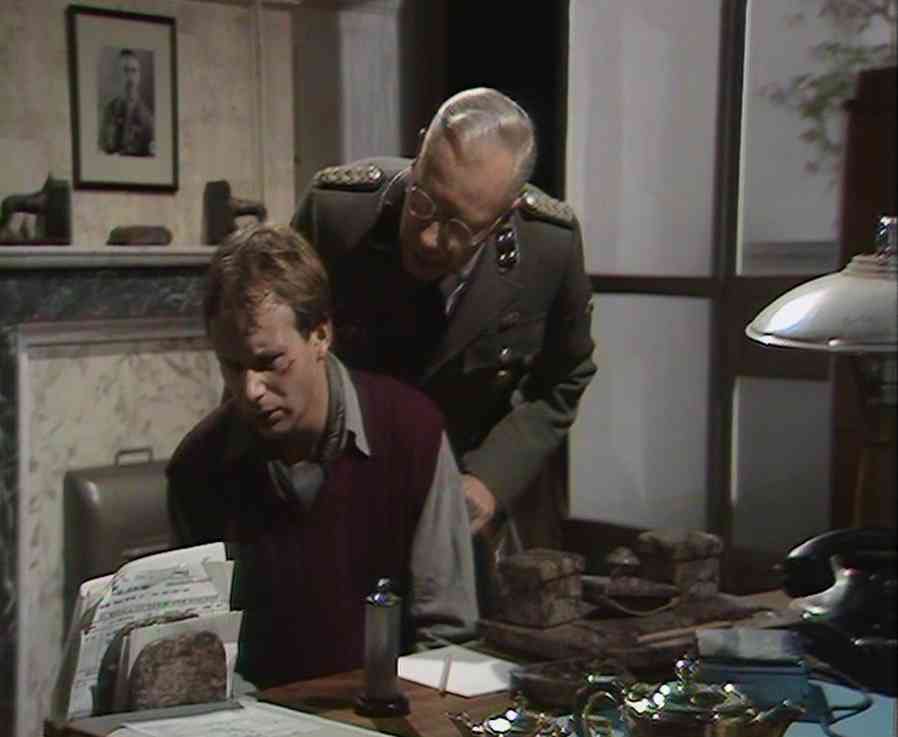
Softly Softly: Task Force – Safe in the Streets?

S02E03 (30th September 1970). Written by Allan Prior, directed by Paul Ciappessoni

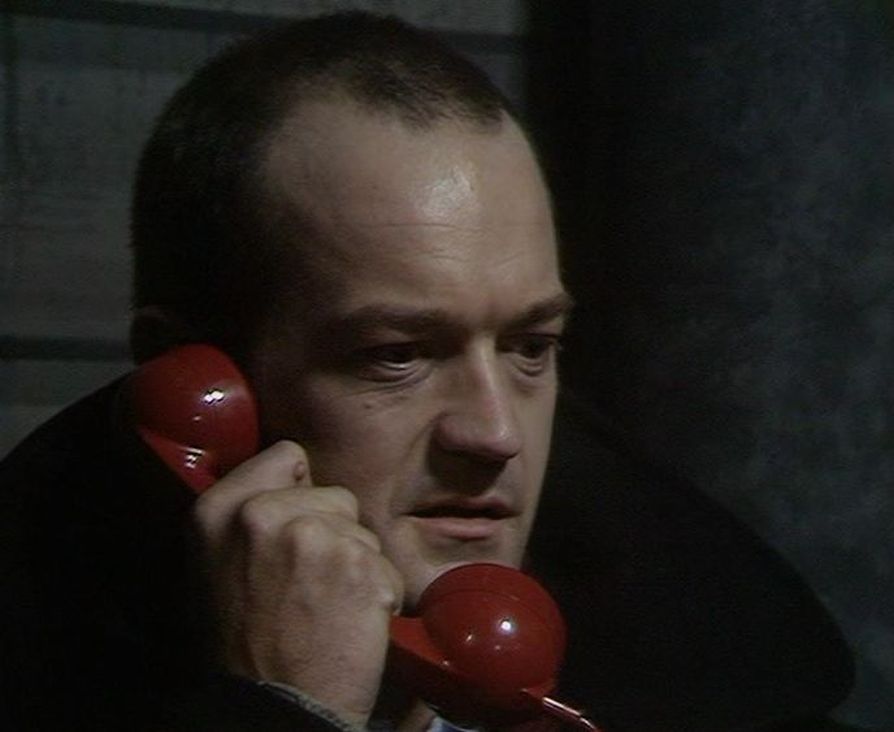
Safe in the Streets? opens with an atmospheric piece of night-time filming.  A smartly-dressed Asian man, Ali Suleiman (Saad Ghazi), is being stalked through the streets by a gang of youths.  They corner him in an alleyway and, after relieving him of his money, give him a kicking.

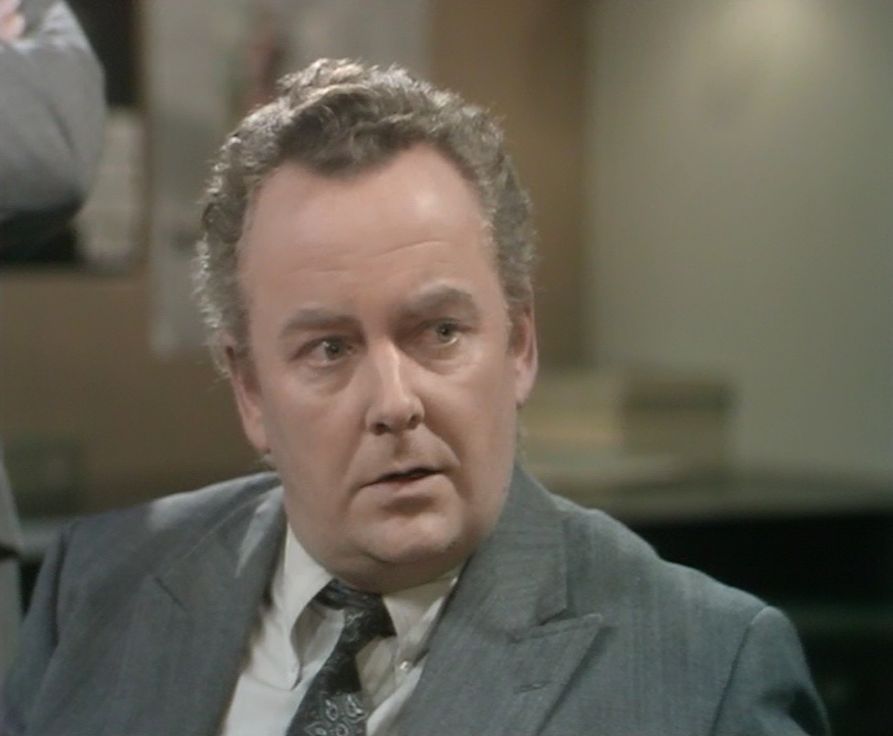
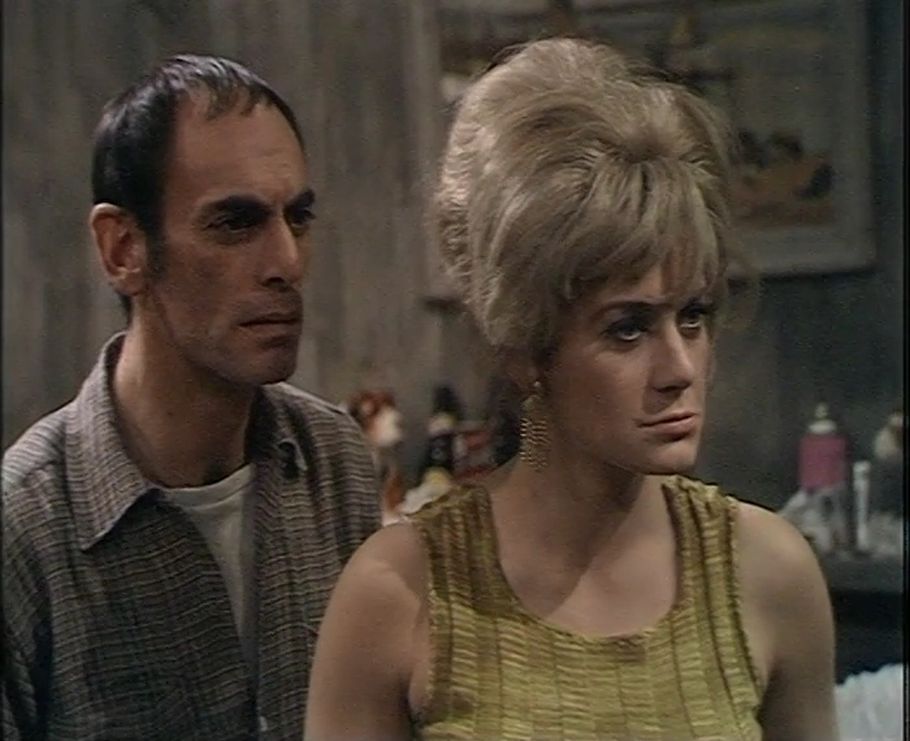
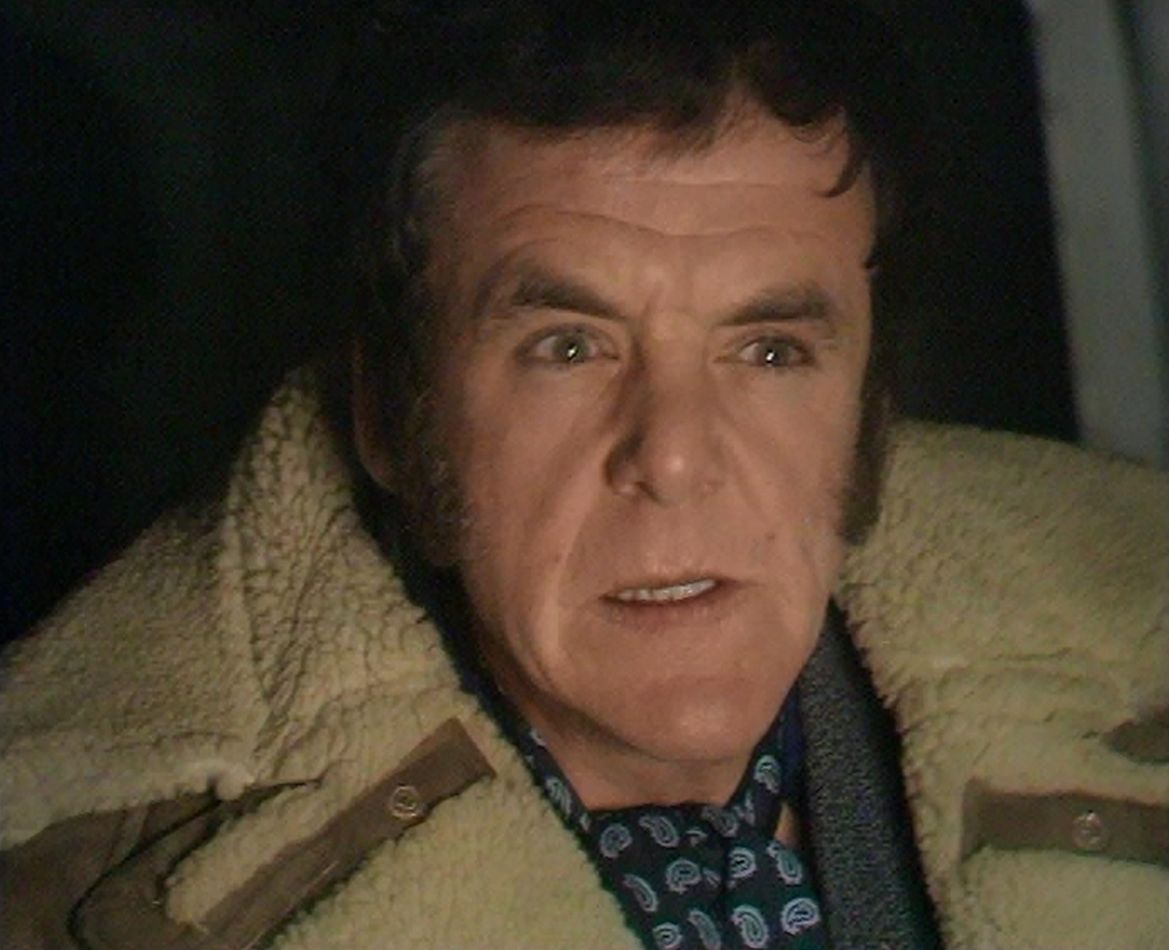
Henry Mardsley (Leon Vitali) is the ringleader of the skinheads, although it’s noticeable that he’s spurred on to put the boot in by his girlfriend Reen (Vicki Michelle).  She seems to take pleasure in Ali’s pain and although the attack is brief it’s still brutal.  This is a well-directed and unsettling opening to the story.

Hawkins later learns that such attacks are fairly common.  The doctor at the local hospital tells him non-whites are targeted in this way in order to force them to go back home.  But as he says, if that’s the case why is their money stolen as well?

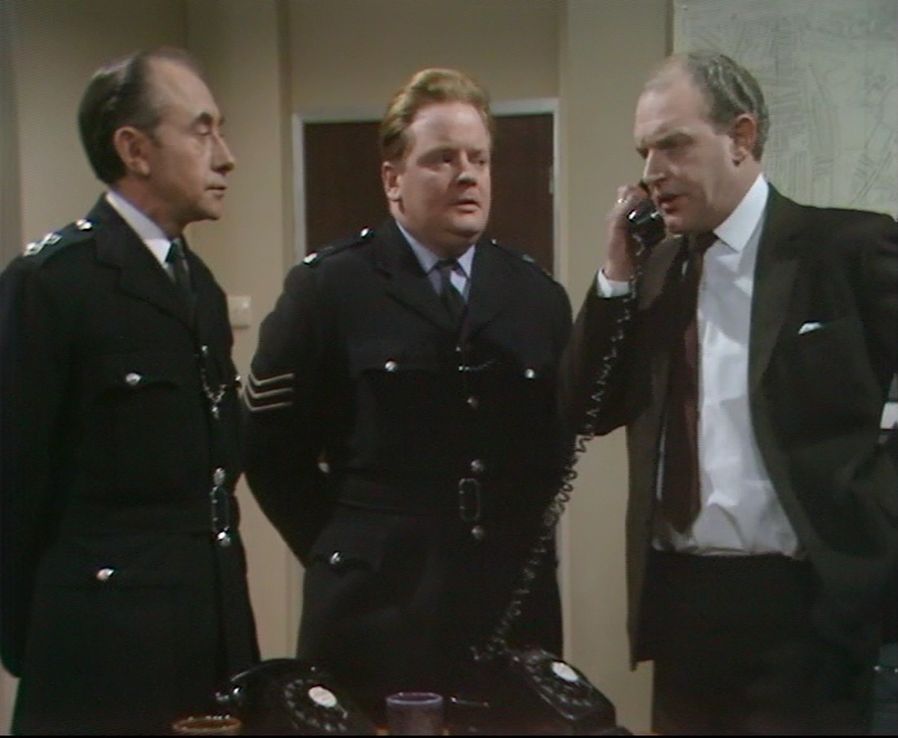
Barlow and Watt are also in the area, taking a drink at a fairly down-at-heel bar.  Delightfully, Watt tells Barlow that “I think you brought me down here tonight because you’re feeling nostalgic. For the old times, you know, out in the streets, the docks, the pubs, like this one. Only then we were ten years younger and you were two stone lighter.” It’s a lovely nod back to their  Z Cars past and although Barlow demurs, there’s a sense that he’s enjoying being out on the streets again, rather than struggling with the pressures of command.

Barlow and Watt have come to talk to Nasim Khan (Marne Maitland).  The script is deliberately opaque for a while about Barlow’s interest in the man, although Watt suggests that if he wasn’t white he might not be so interested.  This raises the possibility that Barlow could be racist, although when Hawkins comes into the pub and tells them about the attack on Ali, Barlow reacts with fury (an innocent man going about his business who’s robbed and attacked clearly sticks in his craw).

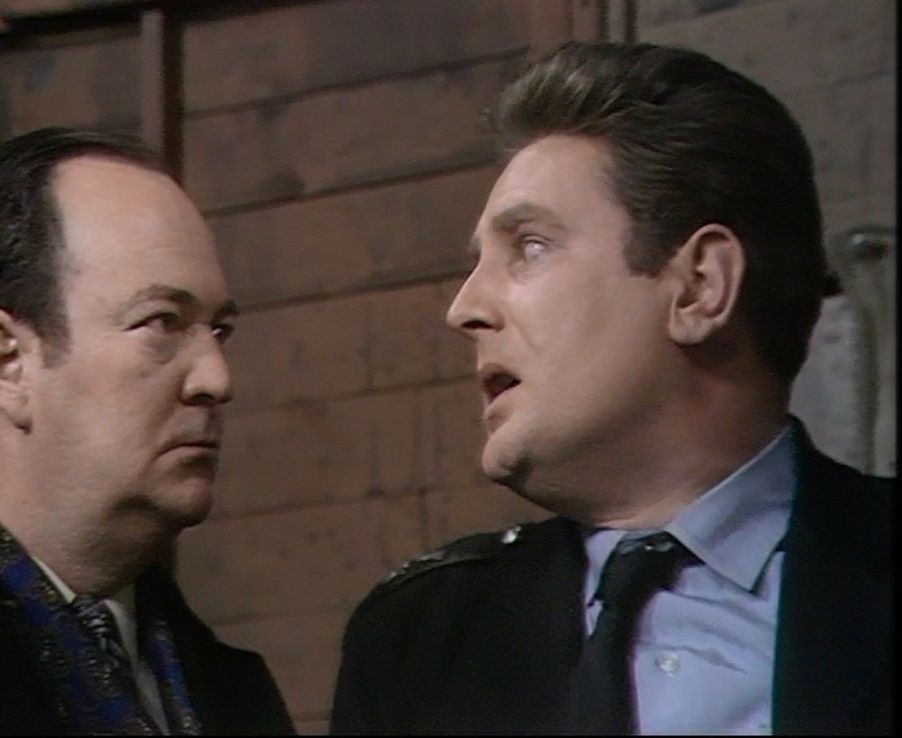
Whilst Watt and Hawkins head off to speak to Nasim, Barlow goes looking for the youths.  His confrontation with Henry is a cracking scene, with both Stratford Johns and Leon Vitali on fine form.  Henry should be the one to dominate – after all, he’s got a coffee shop full of cronies to back him up.  Barlow has no-one on his side, yet the older man is slowly but surely able to dominate the younger.

Barlow gently probes him about his dislike of Pakistanis.  Henry responds that they shouldn’t be over here, taking all the jobs (a viewpoint which, sadly, makes this story just as relevant today – more than 50 years later). But there’s some doubt as to whether Henry actually believes the bigoted comments he comes out with. It’s just as likely that he simply enjoys causing aggro and the colour of his victim’s skin is immaterial. Apart from Reen, the rest of the gang are non-speaking extras, which although slightly limiting does work well in one way (their silence generating a continual air of menace).

When Barlow meets up again with Watt, the pair discuss the youth problem and it becomes clear they have very different opinions.  Watt is all for handing out a dose of swift, brutal retribution whilst Barlow is more resigned and laid-back (he indulgently muses that they’re a lost cause). This harks back to a previous episode (1.6 – The Aggro Boy) which had a similar theme – a teenage underclass, ignored by society, who dish out violence for want of anything better to do.

On a technical point, there’s some rather dodgy CSO at work in these scenes.  Their current base of operations (a laundrette) is on videotape, whilst the streets outside are on film.  Both are fine, but when the two are mixed together it looks rather odd …..

If Henry delights in making money out of the local immigrant community, then so does Khan, albeit in a different way.  Khan is a fixer, smoothing the passage of illegal immigrants and finding them homes and jobs (Ali is one of his many “clients”).  Khan has a veneer of culture – he enjoys taking a glass of sherry every evening – but he’s still profiting from the misery of others.

He turns out to be Henry’s latest victim, which closes the story in a slightly contrived way (Henry, after a brief chase, admits to Barlow and Watt that he was responsible for the attack).  Although this feels slightly unbelievable, it doesn’t detract from the quality of Allan Prior’s script. Seeing Barlow and Watt working the streets is highly entertaining (and it must have been an expensive episode, since most of it was shot on film at night) whilst the nihilism of Henry and Reen is quite disturbing (both Vitali and Michelle are very watchable).  A fascinating time capsule of the period.
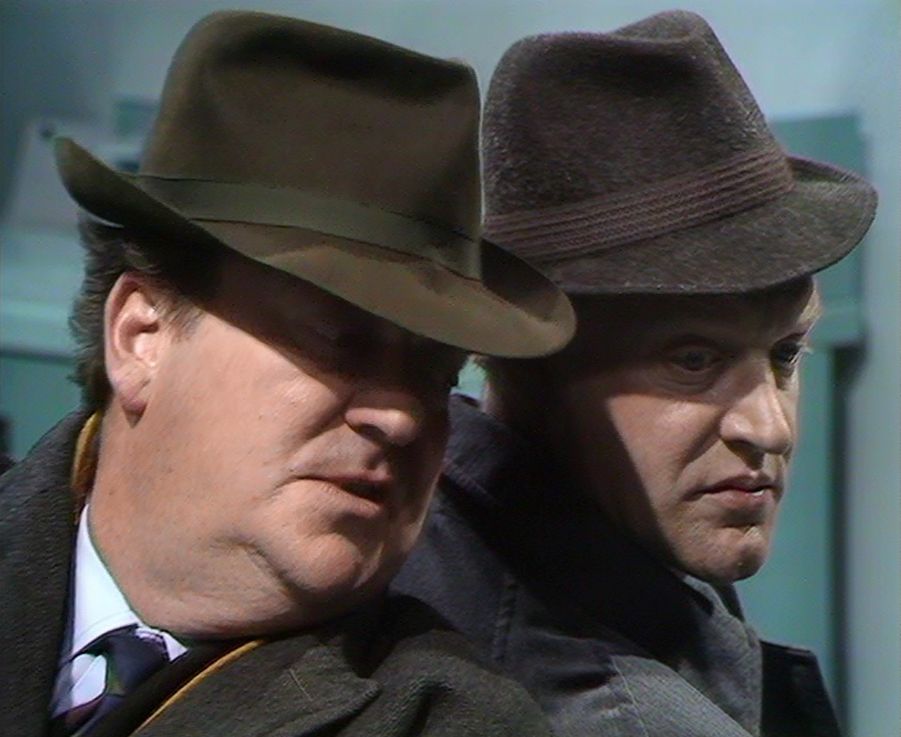
Softly Softly: Task Force – Sunday, Sweet Sunday

S02E02 (20th September 1970). Written by Alan Plater, directed by Simon Langton

John Watt has sent the Task Force to the seaside.  Sunday is the day when the skinheads tend to turn up, creating havoc wherever they go.  But this week – possibly because of the strong police presence – they don’t appear.  So Watt sends his team out onto the streets to sniff out crime wherever they can find it ….

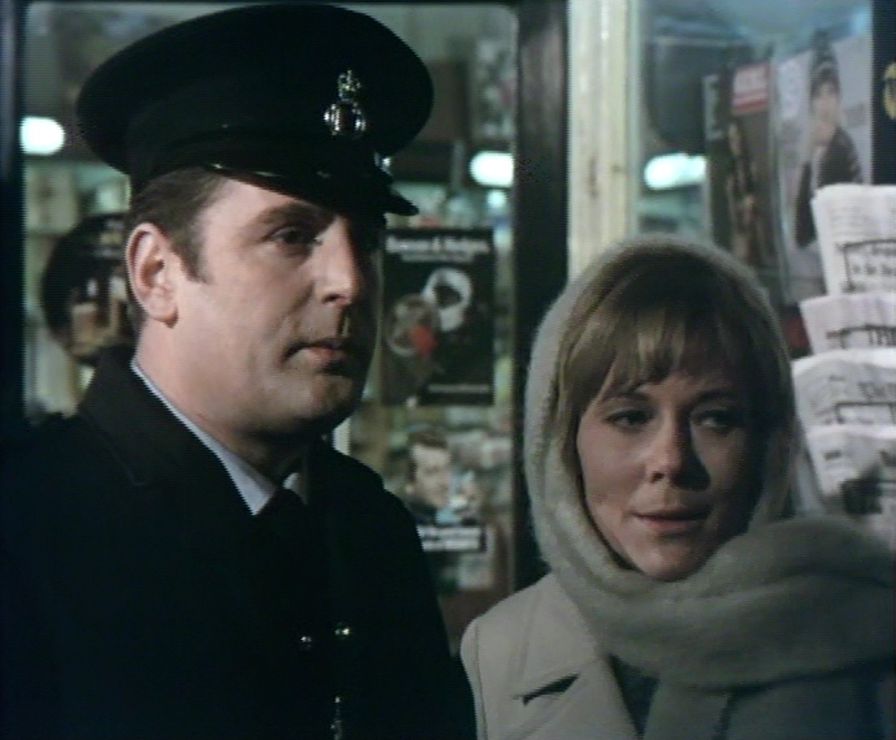
Sunday, Sweet Sunday has a nice, wrong-footing opening.  After Watt explains about the skinhead problem, the audience will have been primed for their arrival.  PC Snow is one of the officers waiting on the train platform for them and several shots of slowly approaching trains serves to ramp up the tension just a little more.

But since they never turn up, the story is able to veer off in unexpected scattershot directions as Plater sketches several different examples of crime (all fairly mild, it must be said).

PC Snow is less than impressed with Stephens (Windsor Davies), a bingo caller at the local amusement arcade.  Snow reminds him that he promised the players a prize if they completed a line – so why did he ask two ladies to play off for the prize when they both completed a line at the same time?  Terence Rigby is as delightfully deadpan as usual.

WDC Donald runs across a cheeky chappie photographer called Daley (Christopher Beeny).  Daley takes photographs of holiday makers and offers to post them several prints for the princely sum of five shillings.  Donald twigs that he hasn’t put any film in his camera all morning, realising that he just pockets the money and moves on.  Earlier, Sgt. Evans confessed to Donald that he finds the seaside to be a somewhat depressing place – it simply exists, he claims, to fleece holidaymakers of their money.

His comments are echoed by Daley who admits that he’s ripping people off, but attempts to justify himself by telling Donald that “people come to the seaside expecting to be taken for a ride. Well, most of them on the seaside are pretending that they’re giving you value. I mean, you’ve got fruit machines, you’ve got bingo, bags of chips. It’s all a big con. Really it is. So I don’t bother pretending.”  Beeny gives a nice comic turn (I especially like his reaction when Watt arrests him. “That’s not fair, you should wear a helmet”!)

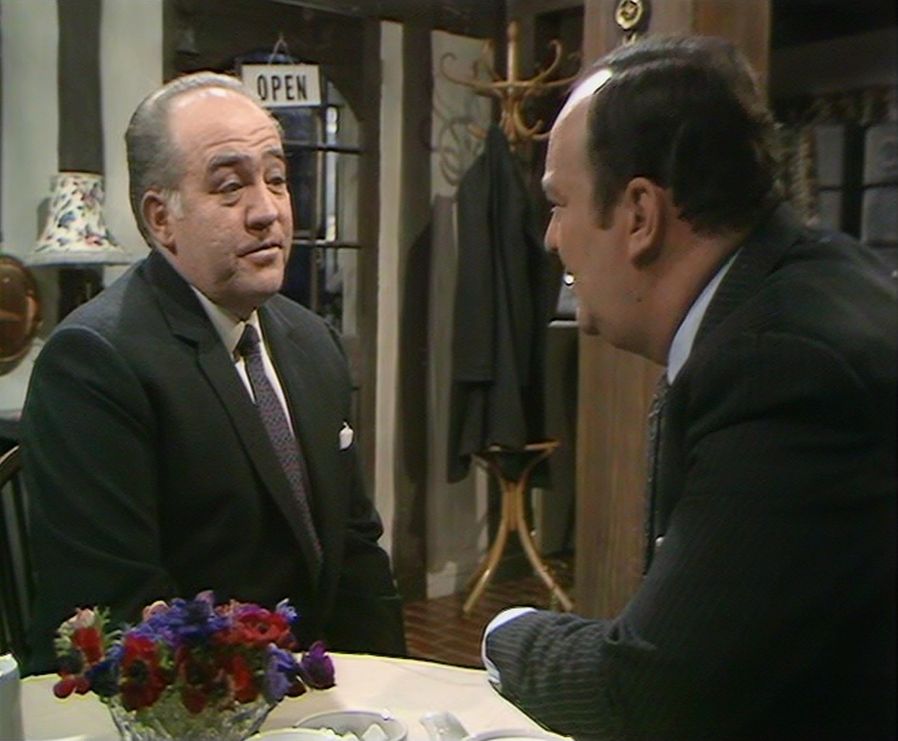
Earlier, Watt agreed to meet Mr Hughes (Donald Morley) for a drink.  He’d never previously heard of him, but it’s noticeable that when Watt speaks to him on the phone he straightens up after learning he’s friendly with the Chief Constable!  Hughes is a local businessman who, along with several others, is concerned about an influx of hippies.  The hippies don’t actually do anything, but Hughes still wants them moved on.  Watt’s a stickler for the law and views Hughes with disfavour – if the hippies haven’t broken any laws then there’s nothing he can do.  Frank Windsor bristles with indignation during this nicely-played scene.

And with Evans chasing a Borstal escapee, Kennedy (Andrew Neil), through the fairground and onto the beach, as well as the conman Miller (Michael Hawkins) lurking about, there’s no shortage of incident in Alan Plater’s script.  Although Chief Constable Cullen isn’t terribly impressed after Watt discusses his haul, deadpanning that the home office is very worried about seaside photographers!

Possibly because of the faded film sequences, the seaside footage has a rather seedy glamour.  These scenes are a lovely time capsule of the period though, especially the rather run-down fairground.  A typically dense story from Plater which is a rather good vehicle for Susan Tebbs (Donald’s encounter with Daley being the pick of the vignettes).

Softly Softly: Task Force – Baptism

S02E01 (16th Septembder 1970). Written by Elwyn Jones, directed by Frank Cox

Tommy Abbott (Ian Hogg) has broken out of prison and returns home to a less than warm welcome from his wife Sal (Diana Bishop).  John Watt is concerned to learn that Abbott’s on the loose.  Reports have reached him that Abbott could be developing schizoid tendencies, which may make him a danger either to himself or others ….

When Abbott first appears he has two fellow escapees, Michaelson (Louis Mahoney) and Jewkes (John Garrie), with him.  Let’s be kind and say that their performances are somewhat on the broad side – especially Mahoney – but things pick up when Abbott is left alone with his wife.

This was a fairly early credit for Hogg, probably best known for the 1980’s police series Rockliffe’s Babies.  Abbott may be the focus of the Task Force’s attention, but until the last fifteen minutes or so he doesn’t have a great deal of screentime.

He winds up at the chemical plant where he used to work.  Sal is convinced that he plans to kill himself and also hints that she was raped by him earlier (which might confirm Watt’s theory about Abbott’s devolving personality).  Barlow, never the most tactful of people, labels Abbott as a nutter and doesn’t seem at all concerned to learn that he might be contemplating suicide.

Other programmes might have discussed whether the penal system had created Abbott’s problems, but SS:TF only lightly skirts around this issue. A psychologist is brought in, but he doesn’t have too much to contribute. Although there’s a grudging comment that if Abbott is captured then he’ll receive treatment (had he stayed locked up, the inference is that he wouldn’t) that’s about as far as the debate goes.

PC Snow and his new police-dog Radar (who replaces Inky, shot down in the line of duty in the final episode of series one) believe they’ve located Abbott, but if he’s inside the chemical plant then they’ll have to tread very carefully (Abbott is carrying a box of matches and one spark could cause an inferno).

All of the series one regulars return for the debut episode of series two. Inconsequential musings – I’m not yet sure about Donald’s new hairdo (but maybe it’ll grow on me) and Cullen (togged up for an evening at the hunt ball) looked very smart …

Baptism is a static, talky episode but things pick up towards the end when Abbott makes his reappearance and we see Barlow entertain himself by browbeating Michaelson.  Mahoney has some decent material to work with here and the battle of wits between Barlow and Michaelson is a good one.

Softly Softly: Task Force – Escort

S01E16 (12th March 1970). Written by Elwyn Jones, directed by Frank Cox

A controversial American senator is due to make a flying visit to Oldcote Parish Church. Since he’s received several death threats, the Task Force are charged with his protection ….

And so we reach the final episode of series one. Spoiler alert – a regular is shot and killed during the course of this episode.

You may think that issuing a spoiler alert for an episode broadcast 53 years ago is a tad extreme, but in the past I’ve been ticked off for revealing plot twists from similarly ancient programmes, so you never know.

Escort is an episode with an awful lot of chat. Senator Alderton (Alan Gifford) doesn’t make an appearance until we’re about thirty minutes in – before that the audience is made privy to the meticulous planning which (it is hoped) will see him arrive and depart in safety. Given how things play out, I think they’ll need to go back to the drawing board next time.

The episode resists several times to go down the obvious route. It wouldn’t have been surprising had the American liaison, O’Hara (Douglas Lambert), been a boorish character, keen to override the suggestions of his British counterparts. But instead O’Hara is softly spoken and conciliatory – impressed with the Task Force’s organisation and happy to let them take charge (although he seems mildly surprised that John Watt isn’t armed).

And although Senator Alderton’s intemperate views have stoked our anticipation – in person he’s wryly humorous and businesslike (possibly Allan Prior was making a point here).

Jack Shepherd offers a lovely character sketch as the Rev. George Rowley. Somewhat unworldly (although since he’s hopeful of a handsome donation from Alderton he’s not totally unworldly) he remains baffled as to why Watt has ringed such a tight security cordon around the church. Interestingly Watt pretends that it’s simply an exercise – I understand the need for discretion, but surely Rowley should have been told that the senator’s life was in peril?

Given how exhaustive (and indeed, exhausting) the preparations have been, Escort then briefly tips into farce. Donald identifies a suspect – Arnold Forrester (Glenn Beck) – and she and Barlow escort him out of the church.  He then manages to overpower both of them (by tapping Donald in the chest and stepping on Barlow’s foot!)

A black mark for the Task Force then and the fact there’s no police stationed outside the church allows Forrester to make a break for it (whilst Barlow hops around in pain). This is all a little eyebrow raising, but the drama ramps up again when two shots ring out and Snow comes into view holding Inky (“the bastard’s shot Inky!”). This sent mild shockwaves through the country – Valerie Singleton on Blue Peter had to ensure concerned younger viewers that Inky hadn’t really died. Like the rest of the cast, he was just a very good actor.

Snow gets his revenge by giving Forrester a good kicking. Despite the fact Forrester was armed, clearly nothing was going to stop Snow. A foolhardy move, but one that Barlow seems to tacitly approve of.

So there we go. One series down, seven to go.

Softly Softly: Task Force – The Hermit

S01E15 (5th March 1970). Written by Elwyn Jones, directed by Michael Simpson

A group of confidence tricksters are preying on the elderly. John Watt dearly wants to catch them, but that seems unlikely – until a golden opportunity falls into their laps …

Two future Rentaghost alumni (Anthony Jackson, Jeffrey Segal) are members of the gang, along with Harry Landis. Parrish (Segal) is the smooth-talking front man – complete with clipboard he’s a very convincing gas board official. Knocker (Landis) is the sneak thief who rifles through the unfortunate victim’s belongings while Parrish keeps them talking with Corry (Jackson) remaining outside in the car, always ready to make a quick getaway at the first sign of any trouble.

There’s something more than a little disturbing at the thought of the vulnerable being tricked in this way. Several elderly extras are used to illustrate just how prolific the gang are, with the story concentrating on two victims – Miss Dobson (Joan Cooper) and Mr Partland (Andreas Malandrinos).

Joan Cooper (the wife of Arthur Lowe) was only 47 at the time of recording. So either she’d had a very hard life or some skillful old-age make up was applied. In material terms, the amount stolen from Miss Dobson isn’t too great but it’s the sentimental value (her mother’s rings, an Ormolu clock that belonged to her father) that makes the crime so hurtful. Cooper only had a handful of film and television credits to her name, which – based on the evidence of her cameo here – is a little surprising as she gives a powerful performance during her key scene.

Watt – present when Miss Dobson dissolves into tears – is incapable of offering any comfort (he leaves that job to Donald) but it’s obvious how much he wants the thieves caught. At first, Barlow seems less interested, but gradually he’s drawn in (and it’s his actions which ensure the episode ends with a nasty sting in the tale).

Although Cooper was acting elderly, Andreas Malandrinos was the real thing (he was 81). Mr Partland is certainly very doddery, although before I knew Malandrinos’ age I was almost convinced he was putting it on (perhaps he wasn’t quite as infirm as Mr Partland though).

Mr Partland is the owner of a great deal of silver, and the crooks plan to return and pinch the lot. When he tells his story to Barlow and Watt, Barlow’s eyes light up – if they allow Parrish and Knocker to carry out the robbery then they can follow them and catch the big fish. Watt’s understandably hesitant to put the old man through such an ordeal but Barlow ruthlessly overrules him (and easily manages to convince the vague and pliant Mr Partland).

Everything seems to go off fine, but the Task Force are only able to round up the minnows after all – plus Mr Partland suffers an attack after Parrish and Knocker leave. The episode therefore closes on Barlow’s unreadable face as he stoops down towards the prone and barely conscious figure of Mr Partland. We never know if he recovers or not – and it’s up to the viewer to decide whether Barlow feels any remorse …

Due to the subject matter, this is a grim story with only intermittent relief. One bright spot occurs when Donald meets Watt in the post office. He tells her not to call him ‘sir’ whilst she’s working undercover – and she takes this advice to heart by kissing him on the cheek and holding out her cheek for a reciprocal kiss! Later, posing as a mother with a pram, she attempts to use the perambulator as a weapon in order to stop one of the fleeing crooks (it runs an impressive way down a hill before crashing to a halt).

Softly Softly: Task Force – Trust a Woman

S01E14 (26th February 1970). Written by Robert Barr, directed by Ben Rea

In the course of another enquiry, WDC Donald learns that Chris Conner (Sean Caffrey) and his associates are planning a serious crime. But can Donald’s informant – Conner’s girlfriend Molly Carson (Imogen Hassall) – be trusted?

It’s always a slightly melancholy experience watching a performance by Imogen Hassall. Whilst it’s true that most of the actors in series of this age will no longer be with us, Hassall’s tragically early death (she took her own life in 1980 at the age of just 38) hits just that little bit harder.

Her film and television credits began to dry up in the early seventies, but at least her role as Molly is a substantial one. And apart from an Irish accent which comes and goes a little, it’s a fine one and held my attention throughout.

Donald, searching for a missing Swedish au pair girl, strikes up a friendship with Molly. John Watt (who despises female informers in general and Molly in particular) seems initially reluctant to accept her word on anything (at one point referring to her as a “bitch”). It’s just as well that he eventually comes round though, as everything she passes onto Donald proves to be true.

As for Donald herself, she literally has to be pushed into Hawkins’ office to share this lead. That she seems so hesitant could be partly due to her inexperience or partly because of her sex (Watt’s unbelieving comment of “and she came to you?” can be taken either way).

Sean Caffrey has the less flashy role of Chris Conner. Although we’ve been told that Conner is a violent criminal, at first (and especially round Molly) there’s little evidence of this. But Caffrey’s performance is a subtle one and prior to his arrest (where he puts up plenty of resistance – courtesy of a Peter Diamond arranged fight sequence) he manages to tease out the darkness that lies underneath Conner’s affable exterior.

Stephen Rea (as Conner’s brother Philip) has a handful of scenes whilst the other main guest performers are a gaggle of young British actresses who attempt to convince (well, they don’t convince that much) as foreign au pair girls. Their sing-song accents are a little too close to parody for my tastes.

It’s easy to tell this is a Robert Barr script (Conner explains how they’ll tackle the safe robbery in extreme detail – complete with maps and little model cars) but at least it’s one of his better ones. If there’s no particular twist in the tale – apart from the fact that Molly may not have been quite the victim she claimed to be – then it’s still competent enough.

Softly Softly: Task Force – Power of the Press

S01E13 (19th February 1970). Written by Elwyn Jones, directed by Brian Parker

Smooth-talking London journalist Derek Watson (Gary Waldhorn) is in the Thamesford area, ostensibly to write a piece about the force. In reality he’s targeting a corrupt local councillor called Whitaker (Ronald Radd). What makes the story especially juicy for Watson is Whitaker’s close ties to Barlow …

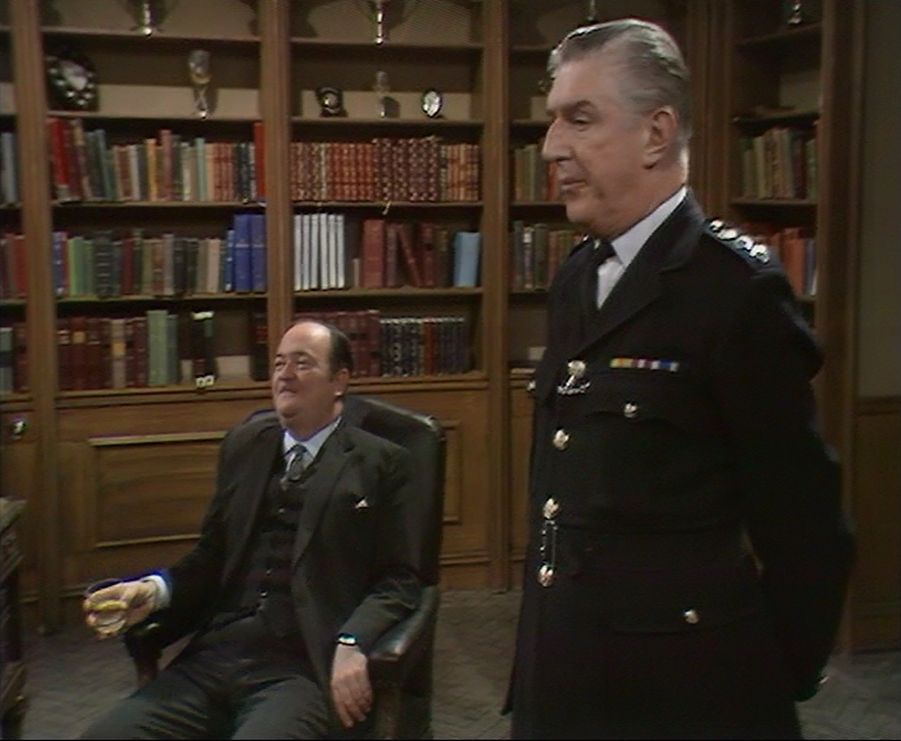
There’s a lot to enjoy in this episode. Firstly, it’s one where Cullen runs the show. From his initial politely combative interview with Watson to his spiky interaction with Barlow, Walter Gotell is very well served today. I like the fact that Cullen decided to secretly tape his interview with Watson – clearly President Nixon later took a leaf out of his book ….

We don’t often see Barlow discomforted or on the back foot, but until the last fifteen minutes or so (when he confronts and dominates both Whitaker and Watson) he’s pretty subdued. Although there’s no suggestion that he took a bribe from Whitaker, it seems that Barlow did partly cultivate their friendship because he’d hoped that Whitaker would be a useful ally (helping with career advancement, etc).

If Watson oozes oily charm, then his local counterpart – James Potter (Kenneth Waller) – just gives the air of being a grubby little man in a raincoat. Waller specalised in roles of this kind and he doesn’t disappoint.

Highlights of the episode include an awkward round of golf between Barlow and Whitaker, which takes place on the most cheerless course you could possibly imagine (maybe it would have looked a little better had the sun been out). I also enjoyed Evans’ remarkable ability to down a pint in a single gulp (god bless those fake pint glasses).

That the denouement of the story takes place in a genteel tea shop seems fitting for the sometimes rural nature of SS:TF. Whitaker is recorded accepting a £50 bribe to wave through planning permission on the shop – a fairly small spot of corruption it must be said, although Whitaker hints that this is only the tip of the iceberg.

Ronald Radd never gave a bad performance and he’s typically polished and quietly menacing today. Due to his lived-in face he sometimes played older than he actually was (Radd was in his early forties at this time, whereas Whitaker was some ten years older). Whitaker faces the wrath of Barlow with equanimity, seemingly confident that he’ll be able to wriggle out of this spot of trouble. It’s only when Barlow begins to bellow alarmingly that he seems slightly taken aback.

A good one, especially once Barlow casts off his shackles and begins to intimidate all and sundry.

Softly Softly: Task Force – Like Any Other Friday …

S01E12 (12th February 1970). Written by Robert Barr, directed by Vere Lorrimer

It’s another Robert Barr script, so you can expect a story rich in procedural detail but possibly low in excitement.

There’s been a robbery at the palatial home of Major Hartley. Hartley is currently out of the country, but his devotedly waspish Scottish housekeeper Miss Mathieson (Dorothy Smith) is on hand to give Evans all the details. I wonder why so many housekeepers are Scottish? Possibly it’s just a dramatic convention.

She tells Evans several times exactly how she maintains the house (when she opens the windows to air the rooms, etc). This stultifying detail is an early reminder that Barr’s hand is on the tiller today.

The story begins to pick up momentum when Watkins (Peter Madden) returns to the house. Watkins is Hartley’s manservant and clearly has something to hide. Madden’s on good form as the shifty Watkins, although it takes him an age to admit that four guns (army souvenirs) were stolen during the break-in.

This revelation leads the Task Force, in the shape of Hawkins and Evans, to an ex-con called Alec Patterson (William Marlowe). Marlowe would later join the police force (as a series regular on The Gentle Touch) but during the early seventies he tended to operate on the wrong side of the law.

He’s excellent value as the cool and cocky Patterson. One observation – Patterson offers Hawkins and Evans a cigar each. Evans accepts, which is fair enough, but it seems slightly odd that he should light up as Hawkins continues his questioning!

Another familiar face – Tom Baker – makes a very brief appearance as a site foreman (possibly the first, but by no means the last, time he’d be on a building site). Although Baker could steal even the smallest of scenes (his earlier appearance on George and the Dragon is a good example of this) sadly the handful of lines he has today gives him nothing to work with. So he appears and disappears in a flash.

The story rather stutters to a conclusion. Given that Patterson and his criminal colleagues seem so well organised, it slightly beggars belief that they would be panicked into retrieving the guns (which is precisely what the Task Force have been waiting for). As they knew the police were watching them, why not wait for a few weeks until the heat had died down?

One another observation – John Watt gets married but it’s handled in an off-hand way (he simply mentions it in passing at the end – which explains his unexplained disappearance earlier in the story). Clearly SS:TF was a series with little interest in the private lives of its regulars …

Softly Softly: Task Force – Sprats and Mackerels

S01E11 (5th February 1970). Written by Elwyn Jones, directed by Peter Cregeen

Illegal immigration was clearly a hot topic during the late sixties/early seventies, as it featured in a number of popular series (apart from this episode, other examples can be found in programmes such as Strange Report and Special Branch).

What marks this one out as unusual is the fact that we never see the immigrants – although I think that’s mainly because, despite the story’s dock-based setting, the series wasn’t able to mount a location shoot there. This meant that filming inside the ship’s tanker (where the illegals were hiding) wasn’t possible.

Rumours have reached John Watt that the docks are a likely place for illegal immigrants to come ashore. He sends a number of coppers down to investigate – including WDC Donald, who masquerades as a fairly mature juvenile delinquent. This is an odd bit of plotting – Donald (in her disguised persona as a stroppy little madam) does manage to tease a lead out of café owner Bateson (Tommy Godfrey) but she’s swiftly chased away by Snow, who then proceeds to question him more closely.

Given this, Donald’s presence was entirely superfluous since Snow could have got the info by himself. Was this an intentional comment on the way Donald is sometimes side lined? It’s very much a man’s force, as the paternalistic Sgt. Evans implies (he appears to regard her like a daughter and so hates to see her getting into potential danger).

For those who like to spot familiar faces, there’s plenty to choose from today – like Joe Gladwin, Kenneth Cranham, Sally Geeson and Christopher Benjamin. Cranham (who’d have a larger role in 3.17 – Anywhere in the Wide World) is entertainingly truculent whilst Geeson also essays a decent cameo as a young girl who’s old before her time. Gladwin’s lugubrious features are always a pleasure to see whilst an avuncular and bearded Benjamin doesn’t have a great deal to do except puff on his pipe and look interested.

Gay Hamilton makes her first SS:TF appearance as Jean Morrow (although the same character had appeared in SS). Jean’s stuttering relationship with John Watt (which progresses slightly in this episode) helps to lighten the tone somewhat.

The lack of dock-based location filming does rob the episode ending of a certain impact (instead of seeing what’s happened, we can only be told about it). But that apart, it’s an above average effort.

Softly Softly: Task Force – Open and Shut

S01E10 (29th January 1970). Written by Allan Prior, directed by Frank Cox

The episode opens with a bang – as Tom Jarrett (Athol Coats) attempts to throttle the life out of Jerry Proctor (Douglas Rain). It’s just a slight pity that (as often happened with live or as live productions) the action cue wasn’t given slightly earlier as there’s a brief pause after the titles have rolled before they start acting …

Jarrett, Proctor and the blowsy Betty Brewer (Gillian Martell) have the first six minutes to themselves. This lengthy scene is somewhat indigestible, due to the overacting of both Coats and Martell (although Gillian Martell, unlike Coats, is given the opportunity to redeem herself later).

After this long scene of histrionics, it’s a blessed relief to switch over to Barlow who receives a report of murder. Jarrett is the victim, with Proctor and Betty insisting that the other did it. Both have clear motives – we’ve already seen the fight between the men and it’s also explained how the leech-like Betty has spent most of Jarrett’s money.

The episode title, as well as Hawkins’ blithe early assumption that Betty is guilty, will suggest to the informed viewer that things are not going to be as straightforward as they first appear. And so it turns out …

Post murder, Betty spends a large part of the episode apparently in a state of shock. We never learn if this is actually the case or if she’s simply shamming. The more affable Proctor begins to sweat when Barlow applies some pressure, but again we don’t know for certain whether he’s guilty or not – so it’s either impressive acting on his part or the squirming of an innocent man.

This open-ended conclusion (a disgusted Barlow stomps off to bed, after ordering that they both be charged with murder) is something in the episode’s favour. It’s good for once not to have everything neatly wrapped up just in time for the credits – after all, real life rarely works like that.

Although Open and Shut begins rather shakily, it gets into its stride with the performance of Douglas Rain a definite plus point.

Softly Softly: Task Force – Series One (Episodes 7 to 9)

S01E07 – The Aggro Boy. Written by Elwyn Jones, directed by Vere Lorrimer

Football hooliganism is the topic of today’s story. It’s viewed largely through the eyes of a teenage tearaway – Dixie Dickson (Barry McCarthy) – who ends up beaten to a bloody pulp after a revenge attack.

McCarthy (still acting today – his latest credit was a 2023 episode of Call The Midwife) gives a fine, brittle performance. We never really delve that deeply into Dixie’s character (he claims to enjoy a good punch up and that’s about it) but then Allan Prior’s script doesn’t demand any more of him.

Elwyn Jones offers an explanation for the explosion of violence on the terraces – young men with no Army or National Service experience, locked into dead end jobs …

Of course that can’t be the full story but it seems to satisfy Barlow who spends a large part of the episode trying to understand why. At one point he questions the truculent Dixie but can’t break him.

Those nostalgic for early 1970’s football will no doubt find the match footage appealing, although to me it all looks rather grim. Still, the amount of authentic location work is a definite plus point in the episode’s favour.

Winsdor Davies and Bernadette Milnes play Dixie’s parents. They’re not large roles but are still quite key. His parents know that he likes to dress up as a bovver boy, but seem to regard it as nothing more than a childish indulgence. Indeed, their indifference (they take it in turns to tease and mock him) might be one of the reasons why he’s turned into something of a yob.

S01E08 – Standing Orders. Written by Alan Plater, directed by Brian Parker

With Alan Plater on scripting duties, my expectations were pretty high for this one – and he didn’t let me down. Industrial unrest is the theme of Standing Orders with the Task Force – Harry Hawkins especially – caught in the middle and attempting to show favour to neither the strikers or the management.

Although there’s a little bit of bother from the strikers (cars are blocked from entering the factory, the odd brick is thrown) that’s not really developed by Plater. Indeed, the script seems at pains (just like Hawkins) to show no bias towards either side. Although Hawkins (and Plater) is less kindly disposed towards Bellamy (Christopher Matthews), a university student who – along with his long-haired friends – is parachuted in to wave some placards in solidarity with the workers.

Most of the regulars are present (with WDC Donald making a welcome return for the first time since 1.4) but it’s Hawkins who’s front and centre today (no mean feat with scene stealers like Barlow and Watt present). Hawkins’ refusal to back down when confronted by the irate Fleming (Stuart Saunders), a man convinced that Hawkins should have provided his lorries with police protection, is central to the latter part of the episode.

This incident allows Hawkins (and Plater) to make their feelings plain, which are applauded by Barlow and Watt. Katy Manning (billed as Katie) makes her television debut in a role that calls for little more than the ability to look cute and make terrible coffee. Robert Hartley (forever Grange Hill’s Mr Keating) is good value as a management type very eager to assist the police whilst Robert Flynn (Elliott) has a faintly pantomimic turn as an off-kilter striker who looks like he could turn nasty at the drop of a hat.

S01E09 – Private Mischief. Written by Elwyn Jones, directed by Ben Rea

This is very much an episode of two halves. It begins rather quietly with the Task Force tracking a group of unscrupulous private detectives who masquerade as police officers in order to get the information they require. My engagement level here was low, although there are a few points of interest such as Jeremy Young’s guest turn as the aggrieved Charleston (he’s one of the unfortunates targeted by the private detectives).

The story only kicks into gear when Scotland (Vincent Ball) and Fowler (Michael Beint) attack Sergeant Jackson in the mistaken belief that he’s working for a rival detective agency. Elwyn Jones’ script offers Jackson some nice character development – up until now he’s been pretty straitlaced (although still capable of the odd deadpan comment).

Taking him away from his desk and involving him in a spot of rough and tumble was unexpected, but it’s the motor that drives the remainder of the story. One interesting point occurs when Scotland and Fowler confront Jackson in the back of his car. The scene begins on location (shot on film at night) but quickly moves into the studio. That’s more than a little disconcerting, and I can only assume that they ran out of time on location (hard to imagine it would have been intentional – but given that so many car scenes in the series are on VT you can never be sure).

Everything’s now bubbling away nicely, but the tension’s ratcheted up further when Scotland (following his release from the police station) receives a vicious beating. Was this a revenge attack by Jackson? We sort of know that’s not the case, but it’s still dramatically satisfying to see him put through the mill a little (as well as noting the reactions of Barlow, Watt and Evans to the possibility that their colleague might be guilty).

It felt odd to me that Jackson was so quick to offer his resignation – purely because he was asked to account for his movements. As a police officer, surely he would have realised that it was just a matter of routine? But perhaps this was designed to show just how rattled the normally cool Jackson was (or maybe, as Barlow and Watt surmise, underneath his calm exterior there might be a vicious streak lurking).

The reveal of the actual attacker shouldn’t come as too much of a shock, but apart from my earlier grumble about the episode’s slow start there’s not too much I can find fault with. Aside from those mentioned, John Rolfe has a good cameo as a forthright lawyer who crumbles under Barlow’s withering attack and there’s also the familiar face of Reginald Barratt who plays an unflappable uniformed inspector.

Softly Softly: Task Force – Series One (Episodes 4-6)

S01 E04 – The Spoilt Ones. Written by Allan Prior, directed by Brian Parker

We’re on the wrong side of town today – where the streets are full of rubbish, the slum buildings are crumbling and everyone (including the children) seem to have fags permanently drooping from their mouths.

Old con Sid Stannnish (John Bennett) and his wife Jennie (Sally Sanders) exist in extreme squalor (you can almost feel the grime seeping out of the television screen). Their scenes of marital disharmony (violent squabbles followed by interludes of detente) carry something of a punch, although it’s true that they also feel a little artificial.

Maybe it’s because Bennett’s such a well known actor, but he doesn’t quite convince as the feckless Sid (a small time crook living off the money his wife makes). The less familiar Sally Sanders (Jennie is a horrific creation – thinking nothing of smacking her children about when they demand food) fares a little better.

Jennie is befriended by an undercover WDC Donald (pop her in a headscarf and she fits right in). It’s another nice role for Susan Tebbs with the episode ringing the changes by  mostly staying away from the police station (the main focus of the previous three episodes).

Neither Karen Williams or Stephen Proctor (as the two Stannish children) had lengthy acting careers but both impress as a pair maybe doomed to repeat the mistakes of their parents. That they hold the key to solving the mystery of the numerous petty thefts which have blighted the neighbourhood is a nice plot twist.

S01E05 – To Protect the Innocent … Written by Elwyn Jones, directed by Frank Cox

Cullen is unable to attend an important civic function, so deputises Barlow to stand in for him. Watt is tickled when he discovers that it’s a carol service down at the local nick. This is the cue for Watt and Sgt. Jackson to break into a spot of impromptu carol singing. Of course, it was pretty obvious that Barlow would then come into the room …

It’s a pretty light-hearted way to open proceedings and this tone continues when Sgt. Evans (maintaining his character of the cliché Welshman) sorrowfully regrets that he hasn’t been asked to attend. After all, everyone knows that singing is in the Welsh blood.

Slowly through, the mood darkens. This begins when an inmate, Jack Gregory (John Normington), spies Barlow in the crowd and asks to speak to him. Rather like John Bennett last time, Normington doesn’t quite convince as a hardened criminal, but overall Gregory is a well drawn character who isn’t easy to read (is he villain or victim?)

I like the way the story ebbs and flows – with the main plot thread (child abuse) only coming into focus fairly late on. Gregory claims that he’s concerned for the welfare of his young son, especially since the boy’s mother – Mary Lester (Nerys Hughes) – has disappeared.

Hughes only has two scenes, but both are key and despite her lack of screentime Mary Is pivotal to the story. Although Barlow and Watt both have plenty to do, it’s Barlow who’s gifted most of the best lines. Concerned for the safety of the child, he confronts Dr Raymond (John Bryans) in a scene that’s the undoubted highlight.

Donald Burton, Edward Jewesbury and David Neal also appear in an episode which poses tough questions – such as the dichotomy between punishment and rehabilitation – but doesn’t offer any pat answers.

S01 E06 – Any Other Night. Written by Robert Barr, directed by Peter Cregeen

It’s New Years Eve, but that doesn’t mean that crime takes a holiday. And since tonight’s crime (the theft of £800 worth of tyres) occurs at police headquarters, it’s both personal and embarrassing …

SS:TF was rarely a fast paced series, but Any Other Night is especially glacial. It’s not totally without interest though – the lengthy opening scene between Cullen and Barlow is all good character stuff (Cullen’s plan to get his senior officers working closer together seems to involve plying them with copious amounts of alcohol!)

Victor Maddern and Douglas Livingstone play the two tyre thieves. Maddern (possessor of a well lived-in face that always seemed to exude an air of defeat) was no stranger to tackling criminal roles of this type. Although his moment of fame in Dixon of Dock Green (“Dick Green Dock. Dock Green Dick”) was still a few years in the future.

Livingstone (who I’m sorry to note passed away in 2021) was coming to the end of his acting career, but his secondary career as a writer would continue for decades to come. He had plenty of fine writing credits to his name, such as the 1981 adaptation of The Day of the Triffids.

Basil Dignam as Chief Supt. Marshall is seemingly on hand to spar with Barlow – but in the end they end up the best of friends. Kenton Moore also makes a brief appearance. It’s hard not to think of The Ark in Space and Noah when he pops up – especially as he seems to pull rather Noah-ish faces at times (although in this episode he’s supposed to be happy and not in agony).

A couple of random observations. There’s a fair chunk of night filming, so clearly the episode had a healthy budget. At one point Evans is sitting in a police car with a colleague who turns out to be a non-speaking extra. This becomes clear when Evans continues to talk and his friend can only nod, raise his eyebrows, shrug his shoulders, etc, in response. Finally, the over-enthusiastic way a bunch of extras see in the New Year during a pub scene is quite the thing.

Secret Army – Guilt (26th October 1977)

Carrying on the story from Lost Sheep, Guilt is an episode of two halves. The first is rather low-key (but not without interest) but it’s the second half where the plot really kicks into gear.

Curtis is smarting that the RAF’s latest technological wonder has been splashed all over the papers (thanks to the loose-lipped Peter Romsey) and becomes desperate to find out who betrayed Romsey and Victor. So he heads out into the French countryside, with the untrusting Lifeline close on his heels ….

Albert is the most suspicious about Curtis’ motives. Director Paul Annett heightens the pressure during these early scenes by ensuring that the camera tightly frames each member of Lifeline as they debate what to do. The decision is made to send Monique after Curtis – to observe what he does and liquidate him if he turns out to be a spy.

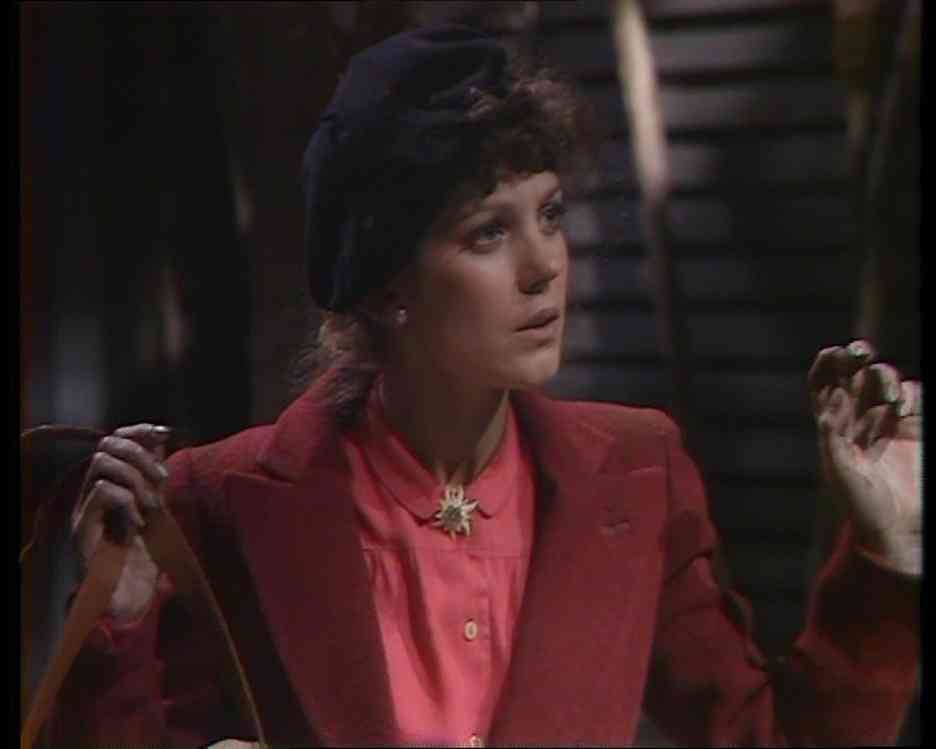
This gives Angela Richards a little more to do than usual. Up until this point in the series her main plot function has been to complain at regular intervals about the way Albert pays more attention to his wife than he does to her. Don’t worry though, she still manages to do that today.

For a while it looks like Monique has Curtis closely under tabs, even if she appears to be hideously conspicuous (her dark glasses don’t help). Thankfully, Curtis turns out to be a sharp operator and has been aware of her presence all along. In the episode’s first key scene he confronts her in a two-hander that crackles with energy. “I worry about being shot, getting caught, being tortured. So what’s new apart from that?”

Peter Barkworth and Joanna Van Gyseghem don’t really feature until the last twenty minutes or so. That makes sense since the characters of Hugh Neville and his wife Dorothy were well established in the previous episode . In this one there’s merely the question of establishing their guilt or innocence.

After curfew, Curtis calls on them – begging a bed for the night. For some reason, Curtis is affecting a Leeds accent (or so he says) which is a tad distracting, but once the scene really kicks into gear it proves to be less of a problem. This is the point where the episode really picks up momentum as Barkworth and Neame face off (with Van Gyseghem stuck in the middle as a rather baffled outsider).

It doesn’t take much prompting by Curtis for Neville to reveal his hatred of war. “I should have been playing cricket for my school but I was fighting on the Somme instead. Mud, filth, corpses, so many corpses it was hideous. Your country needs you. I saw screaming men trying to hold in their own intestines”.

There then follows a philosophical debate where the honours are about even. But early next morning, Neville’s admission that he told the police about Romsey seals his fate. Curtis, flick knife in hand, advances menacingly although it’s interesting that we don’t see the blow struck (nor, when Dorothy later returns, his body). Instead, Van Gyseghem is required to sell this key moment purely by her reaction.

The episode’s coda (a battered and weary Curtis travels back on the train to Belgium with Monique) is almost (no pun intended) derailed by some very obvious CSO. But the quality of their conversation – Curtis admitting that Neville was the first man he’d killed face to face (dropping bombs doesn’t count) – saves the day.

This is a slow burner of an episode, but once it gets going it carries a real punch. Curtis reveals that he liked Neville, but he had to be executed anyway. That it’s possible to see why Neville acted the way he did (and even to sympathise with him) is what makes Traitor so powerful. Secret Army rarely produced simplistic stories of good & evil/black & white and that’s one reason why the series stands up so well today.

Secret Army – Lost Sheep (26th October 1977)

En route to Paris via the escape route, Flight Lieutenant Peter Romsey (Christopher Guard), is separated from his colleagues. Disembarking from his train in a rural French village, he desperately searches for help – eventually stumbling across an English writer, Hugh Neville (Peter Barkworth), who appears to offer sanctuary ….

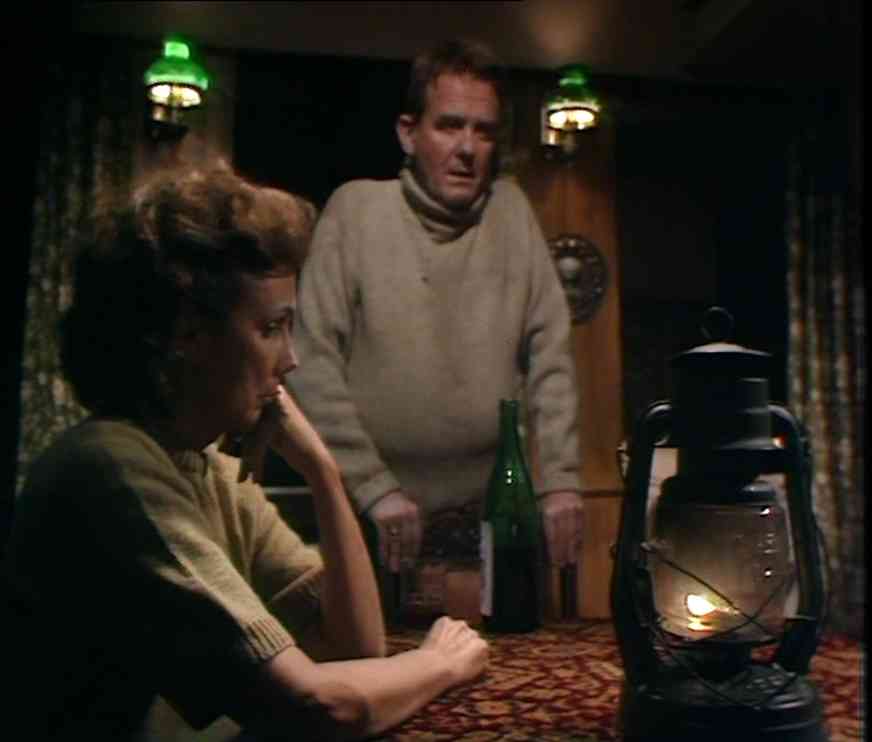
Lost Sheep opens in a fairly striking way. During this first scene where Curtis interrogates Romsey, the airman remains seated and passive whilst Curtis strides up and down – almost bumping into the camera. So while Curtis is foregrounded and creating an oppressive figure, Romsey and Lisa (silently smoking) are placed in the background.

Out of the regulars, Curtis probably gets the most to do. Later – when Romsey’s identity has been verified – the pair have a convivial chat, but even this early on it’s clear that Romsey is something of a liability (the navigator of an advanced Mosquito, he carries in his head information that the Germans would dearly love – and he seems distressingly happy to chat about such things at the drop of a hat).

N.J. Crisp’s script (the first of nine Secret Army efforts) is really centered around the guest performers. Guard is perfectly cast as the seemingly naïve and far too trusting Romsey. Although given that he’s a veteran of many hazardous flight missions it may be that, as opined by Curtis, he’s simply burnt out and is no longer thinking clearly.

After all, instead of trying to make his way to Paris, he stumbles around asking perfect strangers for help – seemingly trusting that they won’t turn him in. His first approach (a fisherman) does fetch the local police, but luckily Romsey had made a dash for it by then.

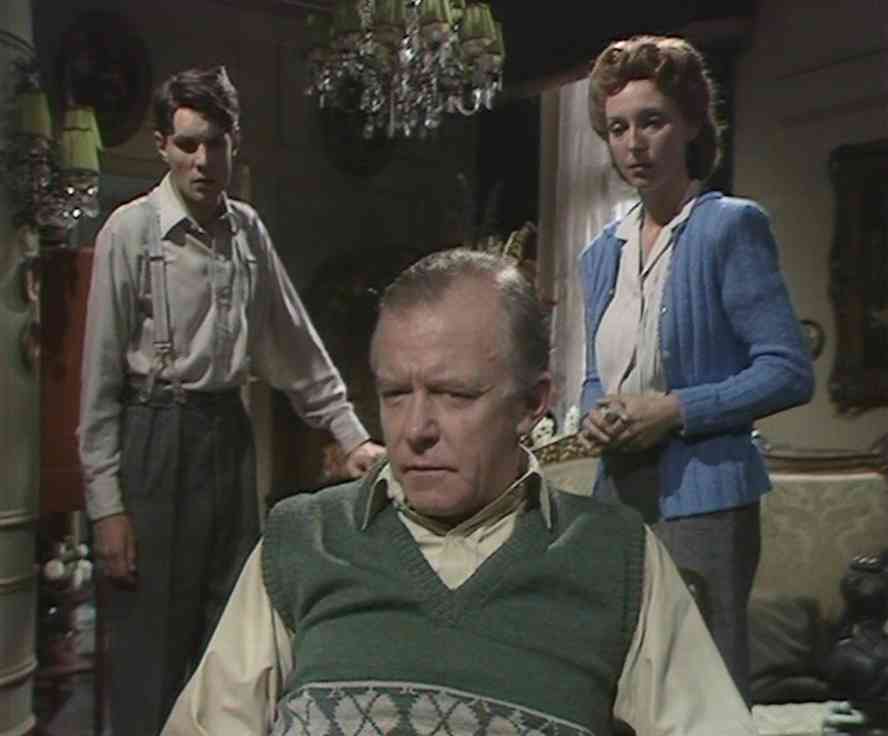
So he ends up at a palatal house owned by Hugh Neville and his wife Dorothy (Joanna Van Gyseghem). Dorothy is instantly welcoming, but Neville himself, whilst convivial, keeps his own counsel. Peter Barkworth was no stranger to WW2, having spent the best part of six months starring in Manhunt (a sometimes engrossing, sometimes infuriating LWT drama) and his casting is a major plus point. Barkworth never gave a bad performance and there’s plenty to enjoy and mull over in this one.

Neville is an English writer firmly ensconced in France. He doesn’t share Romsey’s patriotic leanings (“I was on the Somme in the Great War. Saw a generation slaughtered for nothing”). And later, Neville snorts at the idea that France will one day be liberated – for him, life has gone on under German occupation pretty much as it always has. Thanks to the area’s rich farmland, there’s no such thing as rationing and he claims never to have seen a German soldier in the area.

This statement is undercut by the very next scene, in which Dorothy – out cycling – spies numerous German troops beginning an intensive search for Romsey. At first it’s possible to believe that Neville is a fantasist who up to this point has simply ignored anything unpleasant, but later it does seem that the Germans have only just moved into the area, so his comments – self-centered though they may be – do seem to be accurate.

Dorothy isn’t as well-drawn a character, but there’s still enough there for Van Gyseghem to work with. Given that she and her husband exist in an atmosphere of chilly politeness, it’s possibly not too difficult to work out why Dorothy greets the arrival of a handsome young stranger so warmly (although this is never spelled out explicitly).

Plot-wise, Lost Sheep then stumbles a little. Given that Neville is the only Englishman in the area, his house would be the obvious place to find Romsey – and yet the Germans never search there. Instead, Neville’s friend – Inspector Pierre Dubois (Bruce Montague) – does so but makes sure to give him fair warning. Barkworth and Montague share several nice scenes, ones in which Dubois and Neville carry out two very different conversations at the same time (one implicit, one explicit).

Credibility is also stretched by the fact that not only do Lifeline have a man – Victor (Ivor Roberts) – in the area, but he also manages to locate Romsey with embarrassing ease. If he could do so, why couldn’t Brandt and his merry men?

After an episode of tension, there seems to be a happy ending – Victor leads Romsey away to safety. But there’s an ambush and Victor is shot dead whilst Rosmey is delivered into the welcoming hands of Brandt. And, as feared, it seems likely that the charming Brandt will be able to get the ingenious Romsey to talk ….

Had this been a single episode story, then this ending would have been nicely ambiguous.  It’s hinted that Neville may have betrayed Romsey to save his own skin, but it’s equally likely that Dubious – convinced that Neville was sheltering Romsey but possessing no proof – could have decided to stake the place out.

As it is, Crisp will develop and conclude the story in next week’s episode – Guilt.

Secret Army – Growing Up (12th October 1977)

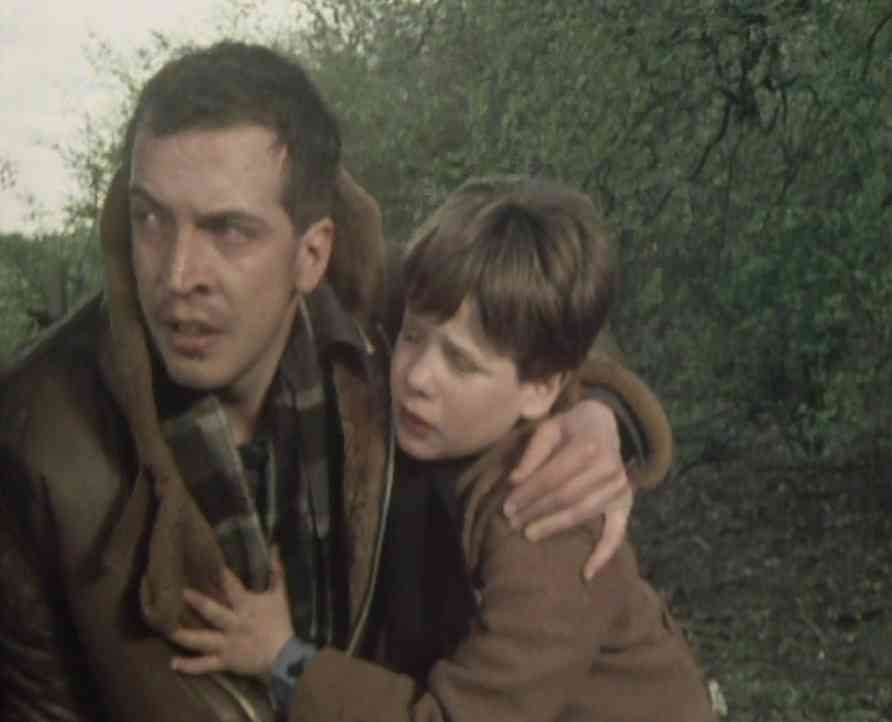
A downed airman, Sgt. Clifford Howson (Norman Eshley), is injured and hiding out in the countryside. By chance, a young boy called Jean-Paul Dornes (Max Harris) finds him and promises to do all he can to help …

Growing Up is very much a story of two halves. Initially, the tone is quite subdued with only a low level of tension as Cliff befriends Jean-Paul (or is it the other way around?) and the pair quickly bond. Jean-Paul’s wide-eyed admiration not only for the heroes of the RAF but also for his countrymen’s underground struggles against the Germans is plain to see. But as the episode title suggests, the time will come when Jean-Paul will be forced to learn that not everything is quite as black and white as it first appears.

The first discordant note sounds when the boy returns home and discovers a German soldier, Corporal Emil Schnorr (Brian Glover), chatting easily with his mother, Anna (Susan Tracy). Glover did just about everything during his career – seasons with the National Theatre and the Royal Shakespeare Company, a stint as an all-in wrester (Leon Arras, the man from Paris), a number of writing credits (including several Play for Todays), not to mention an impressive list of television credits (both dramas and comedies).

The relationship between Anna and Schnorr quickly develops (one criticism would be that it’s rather too quick).  But on the other hand, Glover and Tracy share a very nice scene in which their characters open their hearts and discuss the things they have in common (both are widowers). And although Schnorr appears intimidating at times towards Jean-Paul it seems that, at heart, the German is a kindly man (he’s no rabid Nazi – instead he comes across as someone keen to learn a trade and better himself).

Max Harris is the glue which holds the story together. This is a big ask for such a young actor (although he already had television experience – most notably The Phoenix and the Carpet a few years earlier). The scenes he shares with Norman Eshley are well played by both of them and it seems that an experienced actor like Eshley brought out the best in him.

Holed up in a remote quarry, eventually Cliff is reached by Lisa and Albert (as happens so often, despite being a secret organisation someone always seems to be able to contact Lifeline as and when required). There then follows a slightly strained part of the episode – due to his leg injury Cliff is unable to walk, so Lisa pretends that he’s fallen from a horse and needs help. That’s just about reasonable, but by a remarkable coincidence they stumble across Anna and Schnorr who are out for a walk. What were the chances of that?

With Cliff now safely in Brussels, the danger seems over. But in fact the story has yet to really kick into gear. Anna discovers the RAF badge gifted to Jean-Paul by a grateful Cliff and flies into a rage. This is another slightly odd sequence. Although everything we’ve seen so far suggests that Anna, if not an active collaborator, is very keen not to get involved with the war anymore, why does she feel compelled to report this to the German authorities?

With Cliff no longer in the area, had she kept quiet then there would have been no way for anyone to connect the airman to her son. Possibly you can argue that she was keen to inveigle herself into Schnorr’s good books (she sets out to lay the whole matter before him) but that’s not quite how it plays. Possibly a little tightening of the script would have helped here.

Events then take a tragic turn when, on her way to the barracks, Anna is run down by a member of the resistance (played by Stanley Lebor) thus silencing her for ever. Luckily, for Jean-Paul’s peace of mind, he seems unaware that he was indirectly responsible (after his mother left, a tearful Jean-Paul went to the resistance man’s house). This part of the script also doesn’t quite play right – not least in terms of the timescale.

But minor niggles apart, the aftermath (an impressively mounted funeral with a distraught Jean-Paul) certainly carries an emotional punch. And the graveside rapprochement between Jean-Paul and Schnorr is another stand-out moment. Although there’s no dialogue, Harris and Glover are both at their best here. Schnorr literally becomes a shoulder to cry on and as the pair leave the cemetery hand in hand (Jean-Paul only slightly pausing to toss away the RAF badge – a symbol of his past life) we’re left with the strong impression of a growing bond between a surrogate father and son.

Willis Hall’s second SA script, Growing Up possibly could have done with some editing and redrafting in places, but the human drama at its heart is still compelling.

Upstairs Downstairs – A Special Mischief (29th December 1972)

For the first time in a little while, the relationship between Miss Elizabeth and Rose forms the centrepoint of an episode. Time hasn’t softened Elizabeth at all – she’s still hopelessly self-centered (refusing to visit her daughter at the seaside) whilst it’s notable that Rose seems more inclined to speak back to her (“my Rose has thorns”, comments Elizabeth early on in the episode).

Possibly this is because virtually all of the household are in Scotland, with only Elizabeth from upstairs and Rose, Edward and Ruby remaining from the downstairs staff. Rose therefore is keen to keep things running smoothly with a reduced staff, although she couldn’t have predicted quite how things would turn out ….

In an episode light on levity, there’s one brief bright spell early on – Ruby makes a cake, all the time carrying on an imaginary conversation with the absent Mrs Bridges (at one point calling her a cow!). This jollity soon dissipates once the main plot kicks into gear though.

Inspired by her friend Ellen Bouverie (Claire Nielson), Elizabeth has become a suffragette – throwing herself into their world with enthusiasm. Although their aims are laudable, others – especially Rose – react with horror. Elizabeth later comments that she finds that her life is now exciting.  But with Rose deciding that the suffragettes are simply her new toy, it’s impossible not to draw the conclusion that Elizabeth is nothing more than a dilettante – looking to fill her aimless life with some purpose (for the moment the suffragettes have filled that hole).

Upstairs Downstairs tended to use videotape for its location film work, but this episode featured night filming. I’m glad they spent the money, as it adds a little extra gloss to the scenes of the suffragettes, led by Ellen and Elizabeth, gleefully trashing the house of Arthur Granville, M.P. (Harold Innocent). Rose, tagging along in a vain attempt to keep Elizabeth out of trouble, is arrested with all the others and that’s where the trouble really begins.

Elizabeth is spared jail-time thanks to the intervention of Julius Karekin (Donald Burton) but Rose is not so fortunate – she faces the unnerving prospect of two months in Holloway Prison. Elizabeth retires to Julius’ palatial house for tea and acid banter (she’s more than a little miffed that he’s prevented her from becoming another suffragette martyr).

At this point in the story, Elizabeth does express concern about Rose’s situation, although she makes no particular move to win her freedom. Had she called her father then no doubt he could have pulled some strings, but Elizabeth is keen to keep this from him (swearing Edward and Ruby to secrecy). And it says a great deal about her character (none of it good) that she couldn’t be bothered to visit Rose in prison.

When the by now wretched Rose hears that she’s got a visitor, she eagerly rushes out (expecting it to be Miss Elizabeth). The sight of Edward and Ruby is small comfort, as is the cake brought by Ruby (Rose has been forced by the others to undertake a hunger strike).

And this is where the story gets even darker, as the women are later force-fed with a tube (either down the throat or up the nose).  Whilst we don’t see it used on screen, Ellen’s later description of it (and the hoarse voices of the women after their “treatment”) more than adequately paints the picture.

These prison sequences – despite the odd wobbling wall – are pretty uncompromising, and since the blameless Rose is one of those suffering there’s even more impact. Luckily, both for Rose and the audience, the suffragettes are released shortly afterwards thanks to the intervention of Julius (spurred on by Elizabeth’s description of their plight).

And although a seemingly chirpy Rose tells Elizabeth that she’ll be “right as a trivet” once she’s had a cup of tea, the fact that the episode ends with Rose – all alone – dissolving into tears, tells its own story.

Elizabeth and Julius disappear upstairs. Elizabeth might have displayed contrition to Rose and agreed that the life of a suffragette wasn’t for her, you don’t really get the feeling that she’s learnt anything from this adventure. Indeed, as has happened previously, she simply blithely sails on – unheeding of the damage left behind her.

It’s not jolly Sunday evening fare, but A Special Mischief lingers long in the memory. With only a small regular cast, there’s room for some nicely judged guest performances (Rosamund Greenwood, Veronica Doran and Deirdre Costello as three of the more prominent suffragettes, for example).

Secret Army – Second Chance (5th October 1977)

Rear-gunner Eric Finch (Paul Copley) is seeking refuge in Switzerland (Finch, sickened by the war, is determined not to return to England to fight again). A bargeman called Hans Van Broecken (Gunnar Möller) offers to help, but can he be trusted?

An uncompromising episode, from early on there’s an air of doom that settles around Eric Finch. Injured, weary and frightened, he’s a far cry from most of the airmen we’ve met in the series so far. One or two have been a touch on the nervy side, but in the main they’ve all been rather gung-ho and blithely unconcerned about their fate.

Another British airman, Alan (Richard Austin) who briefly features today, certainly falls into this latter category. Sidelined with a foot injury, he’s anxious to get up and about but still has time to flirt with Lisa (surprisingly, Lisa is quite keen to respond – which is the first time we’ve seen her in quite so playful a mood).

There’s no such jollity with Finch though, who’s deftly brought to life thanks to Paul Copley’s sensitive performance. Late on in the episode he’s given a very decent speech in which he outlines his philosophy – not only to Van Broecken and his wife, Lena (Marianne Stone) but also to Natalie and Curtis who have been brought in to try and help.

Matching Copley’s fine performance, are two equally good turns from Gunnar Möller and Marianne Stone. To begin with, both Finch and the viewer at home might be unsure whether Hans can be trusted – he claims he wants to help, but at times he casts a sinister shadow. This is only heightened when he reveals that he’s not, as he initially claimed, Dutch but is in fact German. But as a German deserter from the First World War, he’s able to sympathise instantly with the slightly crumpled and pathetic figure of Finch.

Lena is more fearful though – not only for herself and her husband should Finch be discovered, but she’s also been worn down by the strain of Hans’ double life over the last twenty years or more.

Hans and Lena will both return later in the series, but Finch is less fortunate – coldly sacrificed by Lifeline in order that they can strengthen their reputation with the German authorities. It’s a chilling moment, although it’s only afterwards that a few questions bubble to the surface – most notably, what would have happened if Finch hadn’t been shot dead? Had the Gestapo questioned him, it’s certain he would have revealed all he knew about the escape line (Curtis, Natalie, etc) so surely Curtis was running an incredible risk by betraying him.

But on the positive side, it means that Gestapo man Dupont (David Trevena) is now be happy that the Candide is a hotbed of collaborators and will no longer keep them under surveillance. The future ghost of Allo! Allo! is strong with Dupont – maybe it’s the hat or the spectacles, but there’s something unintentionally comic about him. Oh, and why choose an undercover man who sticks out a mile as he does? Yes, maybe that has its positives, but surely selecting someone who blends in just a little would have been more sensible.

Other brief items to report – Hetty Baynes makes her first appearance as bitchy Candide waitress Yvonne (Yvonne and Monique entertain themselves by spitting fire at each other), Monique sings for the first time and Curtis and Lisa continue to enjoy an awkward relationship – not least because of the possible feelings each has for the other.

Second Chance is quite an ironic title, as Finch was denied one. The way the Candide regulars react to his death is quite instructive – Monique is shaken whilst Curtis confesses to feeling rather sick. On the other hand, Albert, Lisa and Natalie appear to shrug it off more easily. Natalie is by far the most outspoken, telling the others that they risk their lives to get airmen back to the UK (since Finch didn’t want to fight any more, he now has his wish).

Whether she’s really so ruthless or is simply good at compartmentalising her feelings is something that the viewer will have to decide for themselves. The first of a handful of Secret Army scripts by James Andrew Hall, the quality of this one suggests that the others will be worth looking out for.

Secret Army – Child’s Play (28th September 1977)

Brandt is given an article written by an American airman who escaped over the Pyrenees. Although the writer changed many details in order to safeguard the identities of the people who helped him, Brandt still believes that he can use it to pinpoint the escape line. So he travels into the French countryside, meeting up with a policeman called Malaud (Ian McCulloch) ….

If you watch enough of Gerard Glaister’s series, then you’ll see the same faces cropping up time and time again. That’s evident today, as Child’s Play’s key role is taken by Ian McCulloch, who had previously appeared in the Colditz episode Odd Man In.

Coincidentally (or maybe not) both episodes were written by Arden Winch.  This would be his only Secret Army credit, but he’d work with Glasiter again (in 1981 for example, writing the six-part thriller Blood Money which starred a gaggle of former Secret Army actors – Bernard Hepton, Juliet Hammond-Hill and Stephen Yardley).

Child’s Play is an oddly static tale. Several lengthy two-handed scenes between McCulloch and Michael Culver take up a fair amount of its running time – but whilst on the surface everything seems fairly mundane (Brandt and Malaud slowly debating where the safe house could be) the combative interaction between them is very nicely done.

Unlike Kessler, Brandt is conciliatory – happy to pay for information that leads to the arrest of British airmen. Malaud, a capable officer exiled to a countryside backwater because of his ‘crime’ of speaking his mind, seems initially reluctant to help – but eventually does so. Not for money (to Brandt’s surprise) but simply as a way of proving to his superiors that he’s still a good policeman.

Malaud is outspoken in his loathing of the Gestapo (understandable, since they’d previously pulled out his fingernails). Kesller wouldn’t have stood for this sort of talk, but Brandt (of the Luftwaffe) just lets it go by. It’s an early indication that Brandt is no fanatical Nazi, unlike his Brussels colleague.

We meet Sophie and Madeline Chantal (Mary Barclay and Ruth Gower) for the first time. A pair of elderly sisters, they’re an important link the escape route – Madeline is the suspicious one, whilst Sophie is warm-hearted and welcoming (always keen to greet new airmen and sorry when they have to leave so suddenly).

As for today’s airmen (played by Jonathan Coy, Jonathan Darvill, Nigel Greaves and Richard Reeves) they’re fairly anonymous types – albeit several are rather boisterous and irritating. Maybe this was intentional, although it means that when Brandt and Malaud capture them I can’t confess to being too upset.

Thankfully they’d left Sophie and Madeline by then, so at least the sisters live to fight another day.

Given that earlier in the episode Malaud was very pessimistic about locating the safehouse, it seems a little hard to swallow that he later pinpoints it without too much trouble. But it does mean that the pace dramatically lifts during last fifteen minutes, as Lisa is forced to abandon the airmen to their fate whilst she goes into hiding with Baroja (Ken Stott). Later, they’re discovered by Malaud ….

Back in Brussels there’s not too much to report. An unseen Andree contains to cast long shadows over Albert and Monique. It’s fascinating that she won’t actually reappear in person until episode thirteen, but a few knocks on the ceiling means that her presence is still well and truly felt today.

James Bree and Maria Charles share a nice scene in which, once again, Louise expresses her fears for her husband and her niece. In retrospect, knowing how things turn out, these moments carry a little extra weight.

Thanks to Ian McCulloch in full-on brood mode, Child’s Play isn’t without interest. It’s not the best that the series had to offer, but Arden Winch was one of those writers who, over the course of twenty years or so, contributed to a varied selection of drama series, so any examples of his work will always be of interest.  It’s slightly surprising that he never wrote for SA again, as his work on, say, Manhunt and Colditz suggest it would have suited him very well.

Secret Army – Radishes with Butter (21st September 1977)

Curtis, having played a relatively minor role in the previous episode, now steps to the forefront. His relationship with the escape line – most notably Lisa and Albert – is still (to put it mildly) an uneasy one. The reason for Lisa’s antipathy is teased out across the course of the episode and by the end they appear to reached an uneasy truce. Albert is a different matter though – he’s quite prepared (if Lisa gives to word) to have Curtis killed. Fortunately for Curtis, the word isn’t given ….

Gaston Colbert (played by James Bree) also enjoys his first major chunk of screentime. Bree was an actor who could, at times, tip over into embarrassingly histrionic playing (see Doctor WhoThe War Games) or high camp (see Softly Softly: Task ForceJustice). His SA role is quite different though – it’s subtle, underplayed and very impressive.

Gaston’s links with Curtis – providing him with papers to pass onto a Jewish family and handling British funds which turn out to be forged – helps to keep him in the thick of the action.

Although their total screentime isn’t more than a few minutes, it’s the desperate Jewish family, led by Michael Burrell as Schliemann, who leave an indelible mark in the memory (as well as providing the episode with its title). The Germans are deporting vast numbers of Jews in strict order – by the colour of their identity cards. Gaston hopes to buy the Schliemanns a little extra time by giving them new cards in a “safe” colour.

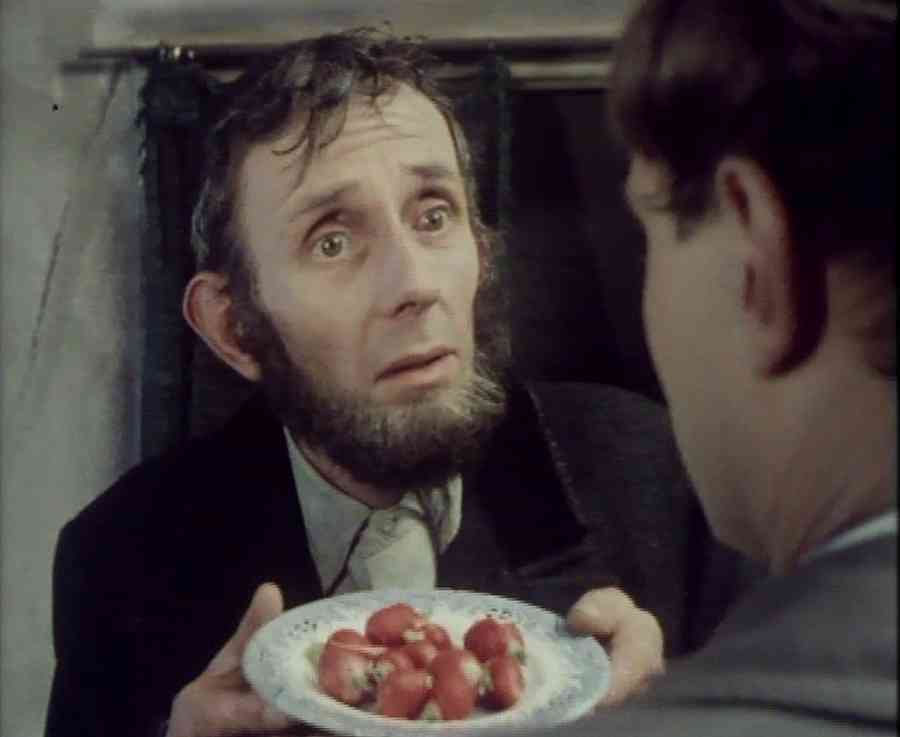
After Curtis and Lisa hand over the cards, a clearly moved Schliemann offers both of them a treat – a small radish on a plate. Lisa politely declines but Curtis accepts with alacrity, wolfing down the radish (despite the fact there’s no butter) with every sign of genuine enjoyment.  As he says later, he knew that it was all they had but he felt compelled not to refuse – had he done so then Schliemann would have been robbed of his last small shred of dignity.

This scene of squalid despair can be contrasted with Kessler and Brandt’s convivial (on  the surface anyway) coffee meeting – with real coffee and English biscuits (not named, but they’re clearly bourbons). The Kessler/Brandt conflict takes a back seat today, but it’s still clearly bubbling away – the fact that Kessler ends the episode by opening a secret Gestapo file on his colleague indicates that things are only going to get worse.

Later, there’s one more scene with the Schliemanns as Curtis returns with some meagre supplies and a small tub of butter for their radishes. Once again Schliemann is pathetically grateful, even more so when Curtis tells them that there might be a chance for them to escape Brussels.

It won’t be via Lifeline as they – for good operational reasons – don’t take Jews but despite this, Curtis can’t help but angrily ask Lisa if she doesn’t care about their fate. This doesn’t help their already bumpy relationship ….

There’s no one plotline which dominates in Radishes with Butter. Curtis inadvertently passing over forged money to Lifeline is another subplot (as is Kesser’s unsuccessful attempt to find the forgers).  The plight of the Jews also bubbles away – with some discussion about their ultimate fate (everyone seems aware that the concentration camps they’re being sent to are just a cover) – whilst there’s also an RAF evader, Vidler (Anthony Smee), to be dealt with.

Vidler isn’t too important a character in his own right – he exists mainly to bring Lisa and Curtis closer together. When the Germans close in on Vidler’s hiding place, all three are forced to flee across the rooftops. This sequence – shot on film and at night – clearly would have cost a fair bit and helps to give the episode a little gloss (although if one were being cynical, you could say that it’s also a good way to pad out the running time).

This scene almost ends in farce when Lisa misses her footing, slides down the roof and ends up hanging by her fingertips (with nothing but a sheer drop beneath her). There’s some not entirely convincing back projection in this scene (showing the Germans on the ground) and it also puzzles me that the Germans fail to notice the dangling Lisa. Were they blind or simply not very efficient?

Curtis, of course, hauls her to safety and you can probably guess what happens next. They lock eyes and then lock lips (thankfully there’s no corny swell of incidental music).  Lisa later regrets this moment of madness and later tells Curtis that there can be nothing between them, recounting her own backstory (just one tragic tale amongst so many).

Another occurs at the end of the story when Curtis learns that the next batch of Jews to be deported includes the Schliemanns. He rushes to try and save them, but he’s too late – the only sign that they were ever in their room is a plate with a couple of discarded radishes and a dab of butter.

Radishes with Butter is a really good character piece for both Curtis and Lisa, with Gaston also benefiting. The silent menace of the Germans – invading the Candide to haul out another unfortunate – is also effective as is the continuing enmity between Kessler and Brandt. Three episodes in and the series is now really up and running.

Secret Army – Sergeant on the Run (14th September 1977)

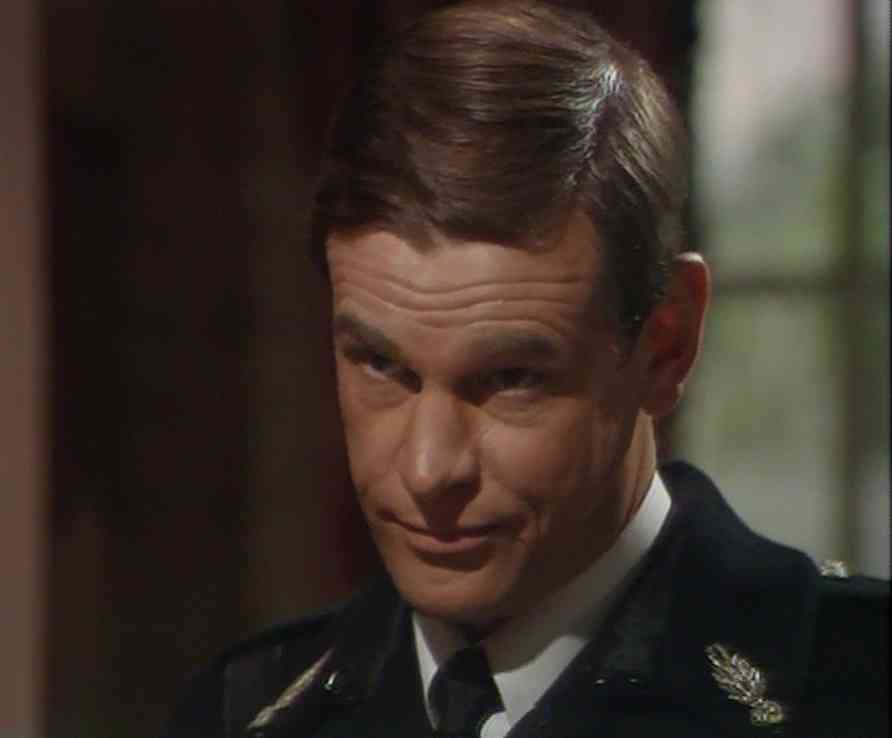
Although they’ve barely had time to become acquainted, already the enmity between Kessler and Brandt is simmering away nicely. On observing Kessler’s departure to personally locate evading British airmen, Brandt is mildly amused. “Isn’t there a saying about having a dog and barking oneself?”

Kessler icily counters that he bites rather than barks and follows this up by stating that “I suspect there is one fundamental difference between us. My work matters to me”. Not the beginning of a beautiful friendship then, but the conflict between them (sometimes open, sometimes concealed) will provide the motor which drives many episodes during Secret Army‘s first two series.

There’s a lot to enjoy in John Brason’s Sergeant on the Run, even if certain parts (which I’ll get to in a minute) are rather baffling. Positives first. There’s a noticeable shift in tone from the series’ opening episode in terms of how the escaping airman are portrayed. In Willis Hall’s script everyone seemed to treat it as a bit of lark, but that’s certainly not the case here.

A fair amount of this episode was shot on film. Director Viktors Ritelis certainly makes his mark during a lengthy film sequence set in a café. Three extremely nervous British airmen are waiting to be collected – all they have to do is act naturally, but even that seems beyond them.

You could argue that Ritelis’ work is a little showy and obvious (a close up on a fly trapped in some flypaper mirroring the desperation of the airmen as they see enemies all around them) but all these visual touches manage to create a sense of tension and unease which – due to the length of the scene – becomes almost unbearable.

When eventually the airmen are spotted by some German soldiers, two make a break for it and are shot dead. The third, Sergeant Walker (Martin Burrows), hides and eventually slips away.

My first query is why the Germans didn’t seem to realise that there were three suspects not two. There were three meals on the table, so why not hunt for the missing third man? Maybe they were just happy with shooting two ….

Given the episode title, we’re now set up to assume that Walker’s evasion from capture will be the focus of the story from now on. Well, not really. After some more disorientating film work he’s rather easily picked up and delivered into Kessler’s hands.

Burrows excels at teasing out Walker’s character – he’s no laconic hero, rather he’s a bewildered and frightened young man desperately searching for a way out.  When he spies that there’s no guard on the door (yes, really – Kessler’s security leaves a lot to be desired) he makes a break for it. Having only got a few hundred yards he chucks himself over the stairwell, plummeting down multiple floors, rather than face recapture.

This is another well executed film sequence – not only Walker’s fall (which looks pretty convincing) but also its sequel, where an incensed Kessler attempts to question the bloody and broken Sergeant while an appalled Brandt looks on. Their brief battle of wills – won by Brandt who orders an ambulance – is another of those moments that’s a gift for both Culver and Rose.

Another plot oddity is that our first glance at Walker in hospital shows him to be in a pretty bad way – a bandaged leg in traction, arm in a sling, neckbrace – and yet shortly afterwards he’s lost all of these things and looks pretty much like his old self. And then a scene or two later he’s beginning to walk with crutches and gets on with them so well that he’s able to hotfoot it away from the doctor (Brandt’s guards – like Kessler’s – seem woefully inadequate).

Whilst all this is going on, the Candide regulars are beginning to enjoy some more character development. Albert and Monique share a nice relaxed scene in which Albert wistfully recalls the first time they met (this brief moment of peace is rudely interrupted by the angry knocking of Albert’s bed-ridden wife). We don’t actually see her in this episode, but then we don’t need to – just the banging and Monique’s anguish at being the mistress of a man still guiltily devoted to his wife tells us all we need to know.

The end of the episode feels like it could have done with a redraft, but since John Brason was also the series’ script editor he had no-one to blame but himself. Walker, having endured a nightmarish travelogue, hasn’t found anyone to help him (his inability to speak the language being a bit of a problem). Having collapsed on the street in despair, he’s immediately collected by two ambulance men.

In the next and final scene Albert tells the others that Walker is dead – shot with a German bullet. Since we’ve already seen Albert preparing a gun, the inference is clear (Walker, a weak man who knows far too much about the escape line, has been silenced for the good of Lifeline). 

What’s slightly jarring is the fact that Albert didn’t seem to be present when Walker was picked up, not to mention that if they’d got him to the ambulance, surely they then could have taken him to a safe house (no German soldiers seemed to be in the area).

Albert as killer is a powerful way to end the episode, demonstrating even this early on that he’s quite prepared to do any dirty work that’s required (it won’t be the last time either). It’s just a pity that the moment seems slightly bungled – and this, not to mention the way the Germans lose Walker twice, slightly drags the episode down.

A pity, because otherwise it’s a taut tale thanks to Martin Burrows’ turn as Walker. Surprising that his film and television credits were so slight (seven other roles between 1977 and 1982) as he more than holds his own here.