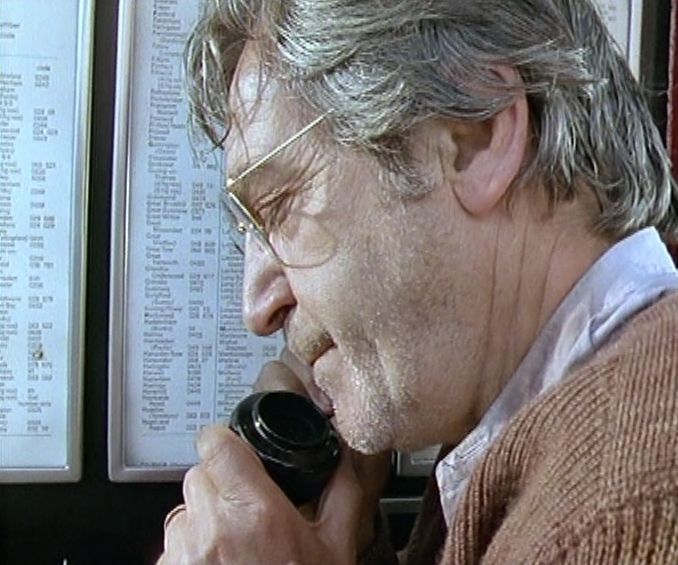
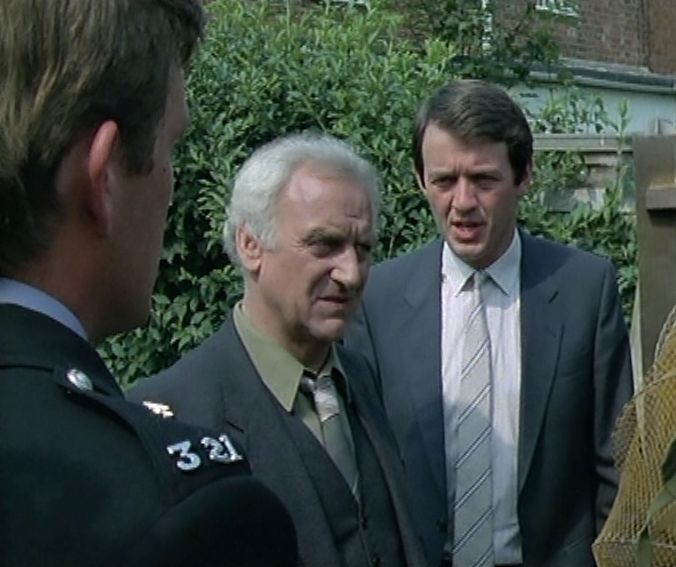
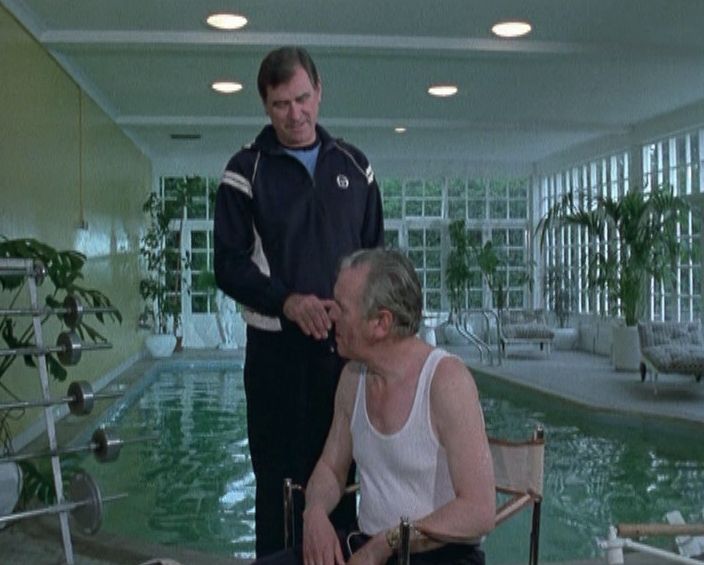
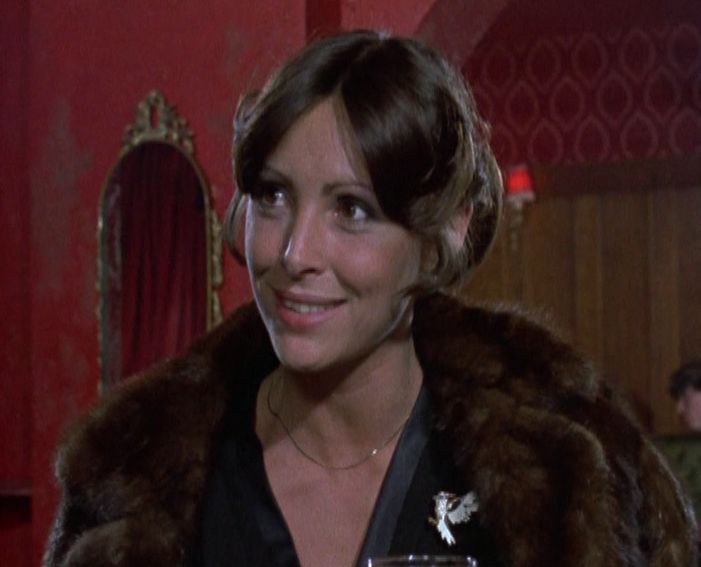
Robin of Sherwood – The King’s Fool

fool.jpg

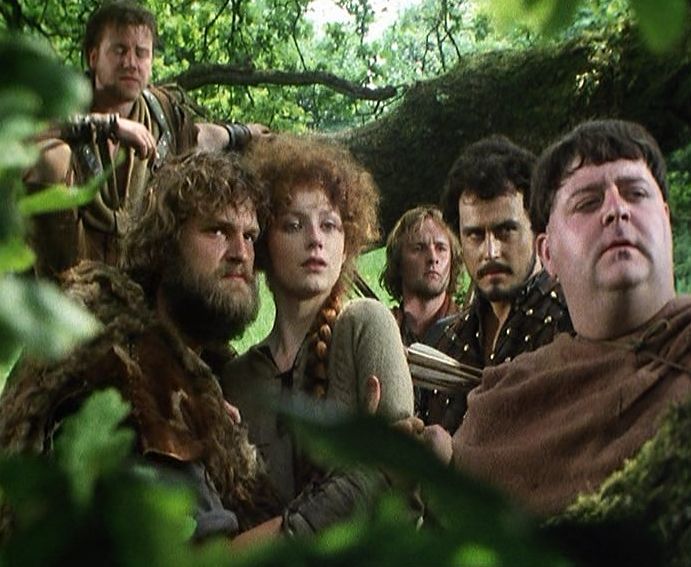
Robin and the others rescue a knight, who gives his name as Chevalier Deguise, from a band of Sherwood cutthroats.  They treat him to a feast of meat and wine and then later politely request that he pays their bill.  The knight has no money on him, but Robin notices that his horse is a fine beast and decides it would be a fair exchange for all the hospitality he’s received.

The knight challenges the outlaws to a wrestling contest – winner takes all – and Little John steps up to defend the honour of the Merry Men.  But this is no light-hearted bout and the knight’s sheer power and will to win overcomes John.  Shocked by what he’s seen, Robin asks him who he really is.  The knight replies that he’s King Richard …..

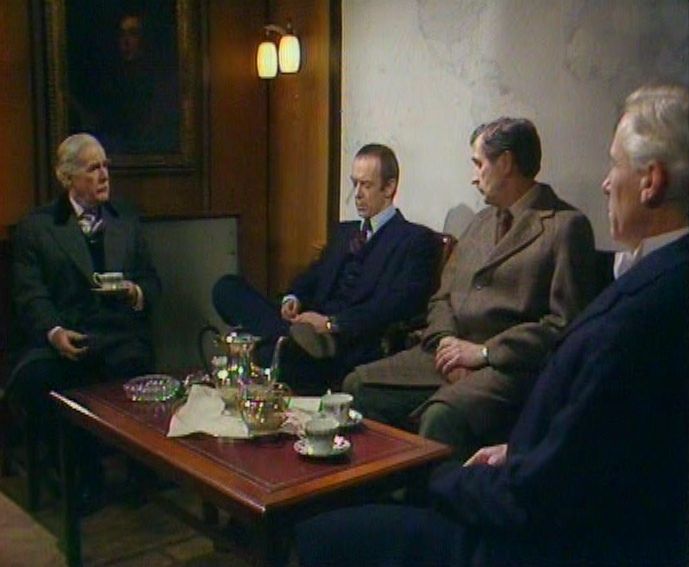
With The King’s Fool, Richard Carpenter once again puts a twist on familiar aspects of the Robin Hood legend.  Good King Richard (away fighting in the Holy Land or a prisoner in Germany) is a staple part of virtually every retelling of the tale.  He’s generally presented as England’s one true hope, with his brother John painted as a venal usurper who lacks all of Richard’s fine qualities.

As the opening credits tell us that John Rhys-Davies is playing King Richard, the audience is placed in the position of knowing more than Robin and the Merry Men right from the start (which gives the opening fifteen minutes a little extra frisson).  For example, when Robin passes around the communal bowl with the ritual words “Herne protect us” Richard prefers instead to honour “King Richard”.  The others, after a momentary pause, nod in agreement.

But although they don’t dismiss Richard out of hand, it’s also plain that most of them share no particular love for their King.  Most outspoken is Will, who regards him as just another lord and master (and just as corrupt).  Ray Winstone pulses with anger in this scene as does Rhys-Davies (who, remember, has yet to reveal his true identity).  It look as if Richard and Will might come to blows, but Robin manages to diffuse the situation.  However, the irony that the hot-headed Will is completely right from the beginning is clearly not accidental ….

The wrestling match is brutal, with both Richard and Little John almost reverting to an animalistic state.  After Richard emerges victorious and reveals himself to be their King, he pardons Robin and the others.  They might be outlaws, but they saved his life and that – in his eyes – wipes the slate clean.

Robin is keen to go to Nottingham to attend Richard, as are the others, all except Will. “I trust very few people, and I’m looking at all of ’em. I’d die for each one of you. But there’s no way I’m going to Nottingham”. Perceptively he casts doubt on the permanence of Richard’s patronage.  He’s pardoned them now, but what happens tomorrow or the day after?  That Will’s the only one to realise this is a slight weakness of the story – as the others calmly walk into Nottingham and allow themselves to be apprehended by Gisburne and presented to the King in chains.

The predictable happens – Richard angrily tells Gisburne to release them and Robin and the others are treated as honoured guests – but it would have probably served them right if Richard had decided to have them all executed on the spot.  Presumably Robin’s still dazzled by Richard’s star-power (the moment where the King offers Robin his hand to kiss in the forest is a nicely played scene by Michael Praed – watch how Robin flinches before accepting the honour).  For those brought up on the previous Robin Hood stories which presented Richard as the “hero”, everything seems to be moving in the direction you’d expect.  This Richard might be louder and more boorish than most versions of the King, but he’s pardoned Robin so he must be good, mustn’t he?

The first discordant note is struck when Robin attempts to make an appeal to Richard on behalf of the poor. The King, only half-listening, cuts him off mid-way through and whilst he applauds Robin’s sentiments it’s plain that this is done only for show.  The King is a skilled politician and by co-opting Robin he’s removed a potentially dangerous enemy and turned him into an ally.

Robin remains flattered for a while that his opinions are sought (to the obvious irritation of the Sheriff) but his desire to serve the King only helps to speed up the fractures in the Merry Men.  Will was the first, but now – one by one – they leave him, until only Tuck, Marion and Much are left.  Almost too late Robin realises he’s been well and truly manipulated – Richard has no love for either England or its people. Little John succinctly sums up their feelings. “I loved you, Robin. You were the Hooded Man, Herne’s Son, the people’s hope. Now … now you’re the king’s fool.”  Mantle, his eyes full of tears, plays the scene well.

The King, having tired of Robin, decides that the Hooded Man should die and Gisburne is despatched to do the deed.  The action ramps up after Gisburne takes a shotbow bolt in the back (fired by Marion) and Robin faces stiff opposition from a number of sword-wielding soldiers.

Marion’s been fatally wounded and only the magic of Herne can save her.  Following Robin Hood and the Sorcerer, the mystical elements of the series have rather taken a back seat (although The Witch of Elsdon did have some handy prophecies which moved the plot along nicely).  The miraculous revival of Marion does feel like a little bit of a cheat, since it begs the question why Robin doesn’t call on Herne every time somebody’s close to death

But although it’s a little irksome in story terms, it’s still an impressively shot and acted sequence as Robin and Marion end up at the same stone circle seen at the start of the series (the one where his father was killed by the Sheriff’s men fifteen years previously).  And as if by magic the Merry Men reappear.  Now that Robin has rejected the illusionary power offered by the King they’re all free to take up residence in Sherwood once more.

Thanks to a pulsating performance by John Rhys-Davies, The King’s Fool closes series one on a high.  Apart from maybe a slight dip with The Witch of Elsdon, the quality remained very consistent and series two would maintain – and at times better – this high standard.

Robin of Sherwood – Alan a Dale

alan

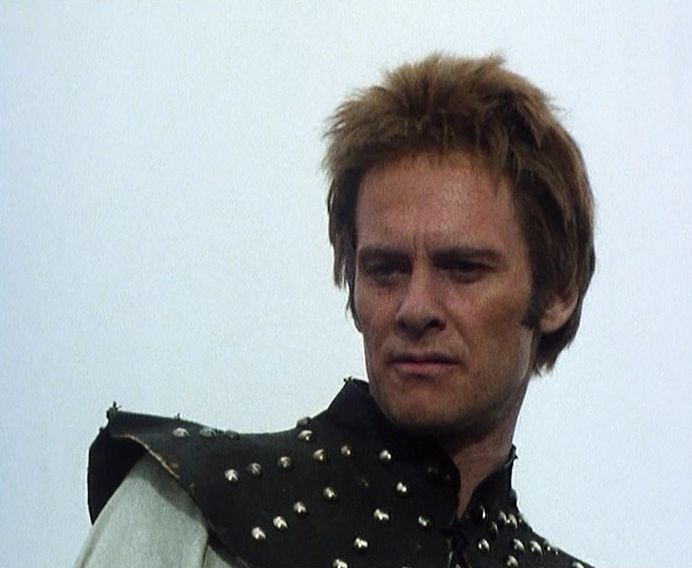
Alan a Dale (Peter Hutchinson) is a wandering minstrel who happens to wander through Sherwood Forest.  He’s stopped by Robin and the others, although after they find his pockets are empty (maybe he’s not a very good minstrel?) the Hooded Man tells him he can go on his way.  But then they learn he’s heading to Nottingham to kill the Sheriff ….

Alan, who seems incapable of not speaking in purple prose, is a most unlikely murderer until he reveals the reason for his torment – his heart is broken because the Sheriff plans to marry his true love, Lady Mildred de Bracey (Stephanie Tague).  It doesn’t go unremarked that maybe a humble minstrel is setting his sights rather high, but no matter.  Alan’s blithely confident that love will conquer all.

Alan a Dale was a fairly late addition to the legends of Robin Hood, first appearing in the seventeenth century.  Richard Carpenter sticks fairly close to the original story – a lovesick minstrel – but he adds a little extra spice by changing Alan’s rival from a faceless Baron to the Sheriff of Nottingham.

de Rainault is far from enthusiastic about his impending nuptials, describing poor Mildred as a “pansy-faced sixteen year old virgin”!  This same scene has to be one of my favourite Sheriff/Gisburne two-handers.  Gisburne is still fuming that Little John was spotted in the village of Wickham (more about this in a minute).  In order to teach the villagers a lesson he proposes driving them into the forest and then burning the village to the ground.

The Sheriff’s rage – he’s taking a bath by the way – is wonderful to see.  After overturning his tray of food so that it ends up in the bathwater, he acidly tells Gisburne that the people of Wickham are his property – if they burn the village who will work the land? To say nothing of the fact that Gisburne plans to send them into the forest where they’ll be able to join up with Robin Hood!  Grace and Addie continue to entertain (and it’s easy to spot a possible homoerotic undertone when de Rainault asks Gisburne to rub him dry – “harder!”).  Look out too for the extra who puffs out his cheeks after the Sheriff leaves the room as if to say “he’s in a right mood today.”

John’s been spending his nights in Wickham with the small, but beautifully formed, Meg (Claire Toeman).  As we see John enter Meg’s hut, the camera rather prudishly remains outside.  Instead, we focus on an owl who listens impassively to Meg’s giggling questioning comment about why they call him Little John, when that’s not the case at all …..

These scenes are a nice chance for Clive Mantle to add a little character to the bluff John.  John obviously loves Meg in his own (rather selfish) way, but reacts with barely disguised horror when she talks about joining him in the forest.  That possibility had clearly never even crossed his mind. It’s also escaped his attention that he’s putting Meg and the others in danger, leaving Robin has to spell it out. John can disappear into the forest but they can’t – therefore the villagers will be the ones who’ll suffer at Gisburne’s hands.  Praed’s Robin shows a  pleasing flash of anger at John’s stupidity, which helps to emphasise that he possesses the steel to be a real leader of men.

The Sheriff is at his beastly best when speaking to the unfortunate Mildred (he spends his time wondering why she cries so much).  Mildred is undeniably rather wet, which does suggest she’d be the perfect match for Alan.  It’s certainly impossible to imagine a life of wedded bliss between her and the Sheriff – although it’s stated several times that he’s only interested in her dowry (ten thousand marks).

Robin wants the money to pay the fine levied by Gisburne on the villagers of Wickham, whilst he also sees a way to stop the marriage (waylay the priest and substitute Alan in his place). Not everything goes to plan – the Sheriff keeps the money and doesn’t have to marry the girl – but this means thar Alan and Mildred are able to ride off into the sunset together. They don’t have any money, but they have each other. Aww, bless.

Although Alan a Dale doesn’t have the most gripping story, it’s simply choc-full of wonderful moments.  The Sheriff/Gisburne bathtime spat I’ve already mentioned, but there’s also the extraordinary sequence where Robin and Gisburne battle it out in the mud.  It looks hideously uncomfortable – and doesn’t advance the story one jot – but it’s all good fun.

Robert Addie enjoys a classic comedy moment when he attempts to coach the guards into giving a rousing cheer to celebrate the Sherrif’s forthcoming marriage.  Their first attempt is wonderfully half-hearted, but they get better with a little practice.  Oh, and Much dresses up as a woman and the Sheriff and Gisburne are attacked by bees! It’s all happening.

I’m rather intrigued as to why Peter Hutchinson was dubbed throughout by Simon Shepherd.  Surely it would have made sense to cast an actor who both looked and sounded the part?  The dubbing does add a little distance to Alan’s character, but since it’s done rather well it’s not the disaster it might have been.

Although more than a little predictable – it’s so obvious that Alan and Mildred will end up together – Alan a Dale works well as a light-hearted interlude before the darker themes of the season closer, The King’s Fool.

Robin of Sherwood – Seven Poor Knights from Acre

poor 01.jpg

When a one-eyed thief called Siward (Simon Rouse) steals a sacred emblem from a small band of warrior knights, it spells trouble for Robin and the others.  Their leader, Reynald de Villaret (Yves Beneyton), mistakenly believes that Robin was the thief and he’ll stop at nothing to exact his revenge.  Much is taken hostage whilst Robin is easily defeated by de Villaret in a one-sided swordfight.  Robin then has to endure trial by battle, facing the imposing form of Heinrich von Erlichshausen (Duncan Preston).

Seven Poor Knights from Acre opens sedately enough, with Robin and the Merry Men indulging in a game of skill.  Who can shoot an arrow into a swinging sack which has been placed some distance away?  Nobody it seems, until Marion steps up and does!  Robin then goes one better by piercing the rope which suspended the sack.  He mutters that it was a lucky shot, but he’s probably only being modest.

As the contest continues, there’s an interesting conversation between Robin and Will.  Will wonders why Robin hasn’t killed Gisburne yet (which no doubt had also crossed the audience’s minds).  Robin replies that the people hate Gisburne, so as long as he’s alive his cruelty will drive more people to their side.  It’s reasonable to assume that Robin has also considered the possibility that he might be replaced with someone fairer – which obviously wouldn’t suit their purposes quite so well.

I didn’t mention last time that the Merries have now increased by two, James (Steven Osborne) and Martin (Martin West).  This is probably because they do so little it’s easy to forget that they’re there (think of Private Sponge in Dad’s Army – always in the background but never really one of the “gang”).  And poor James doesn’t go any further than this story, as he’s cut down in the brutal battle between the Knights and the Merries.  Martin continues to the end of the first series and then just disappers sometime before the start of series two.

The initial tussle between the Merry Men and the Knights is another excellently directed sequence by Ian Sharp.  It’s plain that Robin and the others are way out of their depth as the Knights, encased in armour and mounted on horseback, herd them around the forest like sheep.  Sharp also elects to shoot from inside one of the Knights’ helmets, which adds to the sense of claustrophobia and dread.

If one was being picky, then you have to wonder how these incredibly professional warriors allowed a sneak-thief like Siward to steal their most sacred relic.  Was nobody keeping guard?  It’s also something of a coincidence that Siward crossed paths with Robin at exactly the right moment for de Villaret to jump to the wrong conclusion that the Hooded Man was the thief.

Speaking of coincidences, what are the chances that the Sheriff and Gisburne would turn up at the village where de Villaret and the others have set up camp?  No matter, as it allows the Sheriff and de Villaret to face off very entertainly, whilst Gisburne blunders around annoying everybody.

Simon Rouse, later to play DCI Jack Meadows in The Bill has the small, but key, role of the shifty Siward.  Duncan Preston, best known for his work with Victoria Wood, is very butch as the impressively named Heinrich von Erlichshausen.  This warrior knight doesn’t say much, but he scowls impressively and his face (bearing numerous scars) is obviously his own personal battlefield.  The majority of Yves Beneyton’s roles are in French language films and television (although his English credits include Chariots of Fire and The Borgias).  Still, it’s nice that for once a role like this wasn’t played by an English actor putting on a dodgy accent.

de Villaret is a formidable foe, and that’s one of the main reasons why this episode works well.  Even this early in the run, the Sheriff’s soldiers seem to be little more than a never-ending supply of stuntmen whose sole purpose in life was to fall off a horse and/or a castle battlement (after they’ve been filled full of arrows).  But the warrior knights offer a much sterner challenge and although we know that eventually Robin will win through, it’s more satisfying if he has to work for his victory.

poor 02

Robin of Sherwood – The Witch of Elsdon

witch

Thanks to Gisburne’s faked evidence, Jennet of Elsdon (Angharad Rees) is convicted of witchcraft.  She and her husband, Thomas (Cornellius Garrett), are due to be hanged in three days time.  But then the Sheriff offers both of them a pardon, provided Jennet uses her skills with herbs to incapacitate Robin and the rest of the Merry Men …..

The Witch of Elsdon opens with a double prophecy – two for the price of one, you might say.  Robin later correctly interprets the first part (the location of the Sheriff’s taxes) but sadly isn’t able to work out who might be poisoning their drink (although it’s probably obvious to most of the audience).  Bit of a waste of time Herne bothering to tip him the nod then.

The use of prophecies has to be done carefully – it’s a handy storytelling shortcut but can also turn into a magic wand to explain away plotholes.  However it does work quite well here, as it gives Robin foreknowledge which isn’t shared by the others.  He knows that a cart will be passing somewhere through the forest, apparently carrying nothing but sacks of grain, whereas it’s actually brimming over with tax money.

Although the theme isn’t really developed, there then follows a faint air of tension amongst the Merries (especially Tuck) as they can’t understand why Robin seems to be heading off on a totally arbitrary course.  That he decides not to tell them he’s acting on something he learnt about in a dream might be significant.  Does he fear they wouldn’t believe him, or is he simply being aloof – as maybe a good leader should?

This adventure with the tax man marks the start of tension between Robin and Marion.  Robin wants Marion to stay behind – he tells her she may get hurt  – something which Marion doesn’t take at all well.

Later, there’s a nice scene where Judi Trott wordlessly observes the drunken, belching Merries who are crowing about how they abused the unfortunate tax-collector, Gregory (David Goodland).  Marion doesn’t say anything – but then she doesn’t have to as her expression speaks volumes.  She loves Robin, but maybe now seems to be wondering exactly what she’s let herself in for.

Nickolas Grace continues to be a source of great amusement and entertainment.  Sheriff Robert de Rainault is well served by this script, with the following moments being particularly memorable.

  1. His comment when he realises that Gisburne has invented charges of witchcraft against Jennett because she refused to sleep with him is priceless.  “I’m really most impressed.  If she tried to bewitch me, I’d be inclined to let her.”  Delivered with the Sheriff’s trademark sneering insincerity of course.
  2. The hapless tax-collector Gregory finds himself kicked and punched around the castle floor before the Sheriff orders him to be taken to the rack.  Best to say that de Rainault’s not pleased with him then ….
  3. The Sheriff delights in taunting Jennett as he drafts her pardon, which is totally dependent on her delivering Robin to him.  And just to make a point, he throws a cupful of wine in her face.  The rotter!
  4. Robin and the Sheriff have their first sword fight.  Although fairly short it’s still energetically staged and this direct physical content does – as Robin concedes – signify that their feud has reached another level.  Now the Sheriff won’t rest until one of them is dead.

Angharad Rees, a familiar television face in the late seventies thanks to Poldark, is nicely vulnerable as Jennet.  That Jennet’s conflicted about what she has to do is obvious, but her husband’s fate is paramount to her.  It’s just a pity that she catches the eye of Will, who becomes instantly smitten with her.  Will, by far the most emotionally damaged of the Merries, doesn’t take her betrayal at all well – even if the others (especially Marion) find it easier to understand and forgive.  Cue several scenes of Ray Winstone looking especially downcast.

If the basic plot is quite straightforward, then it’s the character building moments (Robin and Marion, Robin and the Sheriff, etc) which make this a rewarding episode to rewatch.  The weather gods obviously smiled on the filming again, as the forest scenes are bathed in sunshine.  There’s plenty of fighting and Robert Addie gets dunked under the water numerous times.  So what’s not to like?

Robin of Sherwood – Robin Hood and the Sorcerer. Part Two

sorcerer 02

It’s rather ironic that Robin “rescued” Marion from Gisburne’s clutches, only to learn that he was actually taking her to where she wanted to go – Kirklees Abbey.  Robin’s visibly shaken about this.  “You don’t look like a nun” he tells her.  Both Praed and Trott are lovely in these scenes – Robin is rather earnest and gauche, whilst Marion sees no future for her in Sherwood.  As she tells him, it’s fine to be his May Queen, but what happens when winter comes?

So he drops her at the Abbey and they exchange long, lingering looks – although this is obviously far from the end of the story.  That’s reinforced when Robin pays another visit to Herne and has a vision of the future (which includes Marion as a sacrificial victim).  Herne then utters cryptic messages which Robin doesn’t fully understand.

The silver arrow, which the Sheriff obtained after murdering Robin’s father, comes back into play.  It’s interesting that Robin never seems to be aware that his father was killed by the Sheriff,(if he knew this it would give him a strong reason to seek revenge).  But possibly that would have been too obvious, instead Carpenter seems content for the audience to know more than the leading man.

The Sheriff explains to Hugo that the arrow is an ancient artefact – a symbol of England (i.e. pre-Norman England).  Whilst de Rainault is aware that others claim it has mystical properties, he personally doesn’t seem to believe this.  For him it’s simply an object that was used to rally a rebellion and – if it falls into the wrong hands – could do so again.

But it’s the perfect bait to draw Robin out of Sherwood, so he offers it as first prize in an Archery contest.  The Archery contest is one of the staples of the Robin Hood legend, but by making the prize a mystical artefact Carpenter is able to add his own stamp on the familiar tale.  And it’s an intriguing story-beat that the Baron is also keen to acquire the arrow.  Although it’s a symbol of good for Herne and Robin, the Baron would no doubt be able to put it to a different use (which brings to mind the oft-repeated phrase that Robin’s sword contains “the powers of light and darkness”.  The arrow, like the sword, can be used for eiher purpose – it’s up to the nature of the user).

Robin’s old-age make up (a white beard, a padded chest) is quite impressive.  Which member of the Merry Men goes in for amateur dramatics then!?  But if he’s going to win the arrow he’ll have to defeat the finest shot in the land, Flambard (Thomas Henty) as well as the Baron’s man, Nasir (Mark Ryan).  As we’ll learn, Nasir is a man of few words (I think he speaks more in the recent audio play The Knights of the Apocalypse than he did in the whole three years of the television series!)  Unlike Little John, Nasir doesn’t seem to be under the Baron’s spell – he’s simply content (at the moment) to work for him.

With Flambard and Nasir such good shots, how can Robin compete?  Very well, as it happens.  This begs the question as to whether he genuinely was that good or if his performance was being subtlety guided by Herne.  The Sheriff smells a rat.  Robin’s dead centre shot would be impossible for most people, “but not for Herne’s son.”  So does the Sheriff believe in magic after all?

This latest debacle infuriates the Sheriff.  How will they be able to entice Robin out of Sherwood now?  The Baron has a solution – if they give him Marion then Robin will attempt to rescue her and the Baron (with a little help from the devil) will destroy him.  Hugo isn’t happy (although he’s mollified when he learns that the Baron doesn’t want her lands, he only wants her).  The Sheriff considers one Saxon virgin a small price to pay for vanquishing a dangerous outlaw, although Friar Tuck (earwigging) isn’t at all happy.

Tuck has been a background figure so far, but it’s Marion’s betrayal by both the Sheriff and the Abbot which forces him to finally take sides.  When Marion is later captured, he tells the Hooded Man, who sets out to face the Baron alone.  As he tells the others, this isn’t a fight with bows and arrows – it’s a fight between the powers of light and darkness.

Marion continues not to play the victim, telling the Baron that he’s a victim of his devil, not a servant.   She’s tied to a pentacle and readied for sacrifice, but first Robin has to face the Baron.  This isn’t a fair fight, as Robin sees his bow burst into flames.  Like the rest of the story it’s a stylishly directed sequence, dripping with atmosphere.  Perhaps the most effective part is when the incidental music suddenly stops and the Baron inflicts a number of long-range cuts on Robin.   Mind you, the Baron’s (apparent) death scene is pretty memorable as well, with Anthony Valentine giving it his all.

It might have been deliberate that after a great deal of build-up, the Baron de Belleme was fairly easily defeated.  He may have had the power of darkness to call on, bur it’s a non-believer like de Rainault who’s able to strike a bigger blow – as his men manage to kill both Dickon and Tom.  Carpenter was aware that once the series was up and running it would have been difficult to kill off one of the main characters (although events conspired to make this happen in The Greatest Enemy) so instead he created a couple of Merries who looked as if they were going to be regulars, only to cut them done in their prime.

This also enables Robin to make a stirring speech which acts as the mission statement for the series. With the sunlight beating down, making the forest seem even more idyllic than usual, he tells the Merries and Marion that “our friends who were killed, they’ll never starve, or be tortured, or chained in the dark. They’re here with us in Sherwood and they always will be, because they’re free”.

Robin Hood and the Sorcerer covers a great deal of ground in 100 minutes. It manages to shine new light on old stories, sharply introduce the large cast of regulars as well as pointing the way ahead to the way the series will develop. With Robin and Marion now married by Herne and Nasir a member of the Merry Men, all the pieces are in place.

Robin of Sherwood – Robin Hood and the Sorcerer. Part One

sorcerer

Robin of Sherwood is for many, myself included, the definitive take on Robin Hood.  There are many reasons why, which include the quality of Richard Carpenter’s scripts, the excellent ensemble cast and the stylish direction.  As we work our way through the series I’m sure there’ll be other reasons that I’ll pick out.

Robin Hood and the Sorcerer has to fulfil the task of introducing all the main characters.  This allows Carpenter to set out his stall – many elements will be familiar, but he also takes the opportunity to subvert some familiar aspects of the legend.

We open with a flashback, some fifteen years previously.  Ailric  (Wayne Michaels) is unable to prevent his village of Loxley from being burnt to the ground by the Sheriff’s men but is able to hide his young son, Robin, with the Miller’s family.  The burning of Loxley is an early indication of the visual sweep that the series will employ – Ian Sharp’s direction favours deep filters on the skyline and plenty of hand-held camerawork during the fight scenes, but there’s also care taken that most of the deaths occur off-screen.

One notable exception is Ailric, who’s run to ground by the Sheriff Robert de Rainault (Nickolas Grace) and his men in the middle of a stone circle.  The location, and the prize (a silver arrow), which the Sheriff plucks from Ailric’s dead body are early indications of the series’ mystical edge.  Ailric’s death – filled full of arrows – is a brutal one and it can hardly be a coincidence that Robin of Loxley would later suffer a similar fate (although that happened off-screen).  Ailric’s dying words (“the hooded man is coming”) is a nice tag into the credits, although the question has to be why it took so long for him to arrive.

We then flash forward fifteen years to the present day, where Much (Peter Llewellyn Williams) has just killed one of the King’s deer, much to Robin’s (Michael Praed) displeasure.  So although it becomes clear later that he’s inherited his father’s rebellious fighting streak, to begin with he seems to want a quiet life.  Of course, the wise thing to do would have been to have left the deer where it was – but Robin decides to carry it out of the forest, running straight into Sir Guy of Gisburne (Robert Addie).  Oh dear.

The shooting of the deer and Sir Guy are familiar parts of the Robin Hood legend, so there’s no surprises to be found in this part of the story.  Sir Guy is every bit as superior as you’d expect and Addie is perfect in the role (essentially he plays him as a public schoolboy with a very mean streak).

The first major diversion from the familiar comes when we’re introduced to Will Scarlet (Ray Winstone).  Robin and Much join him in the castle dungeon, where he emerges from the shadows with a real sense of menace.  He quickly fills them in on his backstory – his wife was raped by soldiers and then trampled to death by their horses – which means he now only lives to kill.  Although as he’s shortly due to be hanged, it doesn’t look like he’s going to live for too much longer. Not that that seems to bother him unduly.  This radical recreation of the character (previously Will tended to be a cheerful chap in tights) is a gift for Winstone who hits the ground running and never lets up.  In retrospect it’s easy to see that his star quality was already in place.

Also lurking in the shadows are Tom the Fletcher (Paul Duggan) and Dickon (Mark Audley).  They’ll also escape along with Robin, Much and Will and will be members of Robin’s outlaw band.  If you’ve watched Blakes 7 (which itself had nods to the Robin Hood legend) then it’s possible to guess that Tom and Dickon won’t be terribly long-lasting characters.

Marion (Judi Trott) and Friar Tuck (Phil Rose) are also introduced.  Marion is the ward of the Sherriff’s brother, Abbot Hugo (Philip Jackson), whilst Tuck spends his time attending to Marion.  When Hugo first appears, he’s upset with his brother because he’s been ordered to drain his fish pond!  He’s also shown to be keen for Marion to enter a nunnery, so that the church can obtain her lands.  The greed and corruption of the church is a familiar theme in the Robin Hood legends and Carpenter maintains that here.  Jackson (although not a very central figure) is always a delight and his scenes with Grace are a joy.

But if Hugo wants Marion to take holy orders, then the Baron de Belleme (Anthony Valentine) wants her for his new bride.  From the opening scene it’s plain that the arts the Baron follows are black ones.  It takes an actor of class and distinction to play a part like the Baron without it tipping over into either melodrama or parody and, of course, Valentine is perfect.  Even when he has little or no dialogue he exudes a real sense of menace.

Robin and Marion meet for the first time – he bursts into her bedchamber as he’s attempting to escape from the castle.  Love at first sight?  Possibly.  Again, the audience will be primed that Robin and Mation will become an item, so their attraction to each other doesn’t need to be overstated, as it’s plain they’ll meet again. Trott is delicately beautiful, although she also manages to show that Marion’s wilful and rebellious nature is already present and correct.

Robin has another meeting. This happens in the forest where he encounters Herne the Hunter (John Abineri).  This was another of Carpenter’s additions – mixing the legend of Herne the Hunter with the legend of Robin Hood.  Having Herne around is handy – since he can pop up at important times with a sage piece of advice (like Yoda, but with antlers).  His initial appearance is fascinating  –  Herne asks Robin if he fears him.  Robin replies no, because he’s only a man.  As we’ll see though, Herne is more than a man and Abineri was exactly the right man for the part.  It’s another fairly small role, so it needed someone powerful who could hook the audience’s attention straight away and Abineri certainly delivers this.

Herne’s first job is to make Robin the saviour of the poor and the oppressed.  In most versions of the Robin Hood legend there comes a point when Robin decides to champion those most in need of help.  In Robin of Sherwood, Herne is shown to be the driving force behind this.  “They are all waiting. The blinded, the maimed, the men locked in the stinking dark all wait for you. Children with swollen bellies, hiding in ditches, wait for you. The poor, the dispossessed, they all wait. You are their hope.”

We’ve yet to be introduced to Little John (Clive Mantle), although he’s been seen several times in the story to date. Little John is under the spell of the Baron and is sent out to Sherwood to kill Robin.  This then sets the scene for one of the most famous elements of the Robin Hood legend – the quarterstaff duel between Robin and Little John on a narrow bridge above a stream.

Because of John’s possession, this is not the jolly, light-hearted trial of arms we’re used to seeing.  It’s a brutal fight (albeit one that takes place in a gorgeous setting – with a cascading waterfall behind them).  Robin comes out on top of course, and breaks the Baron’s spell on John, earning his thanks and loyalty.

A second meeting with Herne is enough to convert Robin.  This is something of a leap, since he was (at best) very undecided just a short time before and Robin’s subsequent stirring speech to his men about freedom is a tad overwrought.  Had this conversion happened after he learnt that Much’s father had been brutally murdered by Gisburne then it would have seemed more natural. Since the Miller had been his stepfather since Ailric’s death, he would have had a very personal reason to fight.

Some of the motifs of the series (“nothing’s forgotten”) and Robin’s sword, Albion (“charged with the powers of light and darkness”) are already present and correct and with Marion extracted by Robin from Gisburne’s clutches the story is nicely poised.

The Glory Boys – Episode Three

glory 03

Helen reports back to Jones and is scathing about what she’s witnessed, describing it as a shambles.  As for Jimmy, she tells her boss that he’s “a knight in shining bloody armour ” setting off in hot pursuit.

Jimmy’s desire to finish the job is self evident.  Despite the fact he told Sokarev he’d be right beside him every step of the way, once he can scent blood in the air he’s off and running.  Although it’s probable there wasn’t a backup terrorist team in place – designed to take Sokarev out on his way back to the hotel maybe – Jimmy didn’t know this for sure.  But his dereliction of duty is never really remarked upon.

He tracks McCoy and Famy to a quiet cul-de-sac.  And when we see McCoy force his way into Norah’s house it becomes obvious that he wasn’t simply driving at random.  Before that, there’s a brief gun battle with Jimmy and the British agent hits him in the shoulder.  McCoy responds by lobbing a grenade under Jimmy’s car, which causes quite an explosion (although it’s odd that the neighbours are slow to investigate).

That we’re very much in the pre-mobile age is shown via a nice scene with Jimmy and an old man in one of the adjacent houses.  Jimmy’s desperate to use the phone but the man, no doubt spooked by the gunfire and explosion, tries to close the door on him, trapping Jimmy’s foot in the process!

The juxtaposition between a quiet suburban house and the onslaught of loud, ugly violence is striking.  McCoy, dripping with blood and brandishing a rifle, quickly rounds up Norah and her mother and father.  Famy darts out the back door, heading to Heathrow where he’ll have one more chance to complete his mission.  So for McCoy the position is clear – he has to stay holed up as long as possible.  The longer he can last out, the more time he buys Famy.

Because of his injury, he forces Norah to tie up her mother and father.  Although maybe this is also an exercise in control and fear – it’s certainly an effective moment as we see the girl attempting to bind her mother’s legs with a pair of tights.  As Norah is instructed to pull tighter, her mother reacts with distress.

When Jones arrives, Jimmy asks if he can go in with the assault team.  Jones, naturally enough, refuses.  Jimmy’s request reiterates his desire to be in at the kill – it isn’t enough to be close by, he wants to be right in the thick of the action.  He heads off to slump dejectedly in the back of a patrol car, another nicely played scene by Perkins.

Torture is seen several times in The Glory Boys.  The opening scene of episode one features Elkin and Mackiewicz brutally torturing a suspect whilst in this episode Jimmy indulges in a milder form of abuse following McCoy’s extraction from the house.  In some ways this makes Jimmy a proto Jack Bauer – a single-minded agent determined to do whatever it takes to complete his mission.  But Jimmy’s not acting without authority – Jones tacitly gives his approval (in front of McCoy) to do whatever he has to do.

So in the world of The Glory Boys, the ends justifies the means.  If the rights of prisoners are abused then so be it – provided it happens behind closed doors.  As is seen later, Jimmy’s downfall occurs after he decides to demonstrate his methods in public.

A little psychology and pain forces McCoy to admit that Famy’s going to make a last-ditch attempt to kill Sokarev immediately before he boards the plane.  But the security cordon is tight enough to nullify Famy’s attempt.

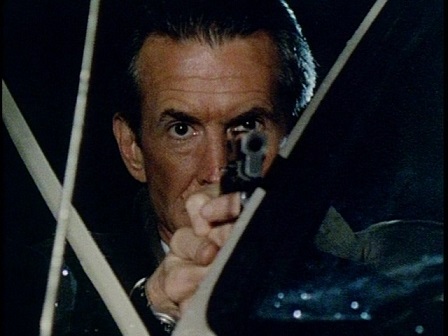
As Famy lies helpless – already downed by several shots from the ring of armed soldiers around the plane – Jimmy comes rushing over.  He couldn’t take part in the mission to extract McCoy and he wasn’t close enough to prevent Famy from launching his attack at the airport, but now he can finish the job.  As Famy struggles to get up, Jimmy aims his gun at his opponent’s head and pulls the trigger.  A quick cut to a roaring jet engine is a clever way of hiding the fact that we don’t see the fatal shot fired, but the power of the moment is still strong as we see Jimmy walk away, with a ring of onlookers behind him.

This most public of executions means that Jimmy is now highly toxic and the Minister (Ian Cuthbertson) tells Jones to fire him.  So Jimmy’s out of a job and Sokarev has safely left the country.  But there’s a final ironic twist, quite in keeping with the bleakness of the tale, which amuses a drunken Jimmy. We leave him as he slowly wends his way through the darkened London streets (with the haunting title music by Philip Japp and Julia Downes playing).

The Glory Boys has an excellent cast, although it’s pity that several familiar faces have very little to do.  The likes of Anthony Steel, Ian Cuthbertson, Alan MacNaughton and Robert Lang were all good enough actors to have taken major parts, but instead they only make the briefest of appearances.  Steiger and Perkins naturally dominate, although Alfred Burke has a quiet assurance as Jones.  Bur Joanna Lumley, despite being fourth billed, has little to do – Helen’s main usefulness seems to be that she can sense the real Jimmy behind the heroic façade.

YTV were no doubt hoping that this serial would repeat the success of their previous Gerald Seymour adaptation (Harry’s Game, 1982).  This didn’t really happen and the critical reaction was muted (with some newspaper reviews, latching onto the gunplay and violence, unimaginatively dubbing the series “The Gory Boys”).  The fact that it’s never been released on R2 DVD is another reason why it maintains a fairly low profile (although it’s available in R1).

As a time capsule of the mid eighties and also as a vehicle for both Rod Steiger and Anthony Perkins it’s well worth seeking out though.  It’s not perfect (and the 105 minute “movie” edit is tighter and more satisfying than the 3 x 50 minute serial) but the themes and characters continue to resonate down the decades.

The Glory Boys – Episode Two

glory 02

Famy’s inexperience is demonstrated at various points throughout the serial. McCoy is appalled to discover that he doesn’t have a plan to kill Sokarev – Famy has to weakly admit that the others (now dead) had the plan – and he further complicates matters by killing a woman who was rifling through his possessions at the flat where he and McCoy were holed up.

This means they’re on the run – which delights Jones, as he believes this leaves them in no shape to make the hit. Jimmy isn’t convinced and Jones quickly picks up on the vibe that Jimmy’s hoping that they’ll attack anyway. “You want to be in work, cheering them on. That makes me sick.” For Jimmy, the thrill of the chase (not to mention the kill) is all.

Although Rod Steiger’s performance can be florid at times, he still manages to throw in some subtle touches. One occurs as he prepares to say goodbye to his wife, prior to flying to London (she’s been forbidden from traveling with him). As they embrace, his eyes dart around in a worried fashion, but he manages to put on a brave face as they pull apart.

We see Norah’stifling home-life, complete with a father (played by Hubert Rees) who reacts to the news of Famy’s murder of the girl by muttering that the killer should be strung up. Of course, neither he or Norah’s mother realise that their daughter’s boyfriend is involved. But although Norah now knows what sort of man McCoy is, her love for him overrides every other consideration. But does he have any feelings for the girl, or is he simply using her?

The difference between Famy and McCoy – the one who’s prepared to give up his life for the struggle he believes in and the other who has no interest in a suicide mission – is restated. Famy tells him that “because my people have suffered, are suffering now, they trust me, for what I will do for them. In my country, the martyrs of our movement are honoured”. McCoy responds by telling him to shut up, proving that the ideological gulf between them is too wide to be breached. But while McCoy doesn’t share Famy’s hope for a glorious martyrdom, he does seem to have some sympathy for him.

Whilat a modern terrorist would probably plant a bomb, Famy’s eventual plan is much more old school – a rifle through the window and, hopefully, a clear shot at the podium where Sokarev is speaking. It’s possible to see the ease with which Famy and McCoy breach the elaborate security procedures set up to protect Sokarev as a weakness of the story or it could be deliberate.

Windows from the lecture room are accessible from the street outside, but although the street is cordoned off no thought seems to have been given to positioning substantial numbers of police or security officers outside these very vulnerable spots. Jones suggests it’s due to lack of resources, but that seems strange given the number of officers deployed elsewhere.

So the pair are able to run across the road and – as McCoy gives him a leg up – Famy breaks the glass in the window and takes aim at Sokarev. His lack of experience is highlighted again as he fires off multiple shots but isn’t able to hit the target. In desperation he throws a grenade in, which is leapt on by Mackiewicz.

Mackiewicz therefore protects both Sokarev and the others, but at the cost of his own life. It’s a chilling moment which brings home the point that often a bodyguard’s job is to take the bullet (or grenade) intended for the person they’ve been charged to protect.

With McCoy now injured from a brief gun battle with one of the security officers outside, he and Famy make their escape. Once more Famy’s inadequacies are displayed when he admits he can’t drive a car – forcing the badly injured McCoy to take the wheel as Jimmy follows close behind.

The Glory Boys – Episode One

glory 01

Palestinian terrorists hatch a plan to assassinate Professor David Sokarev (Rod Steiger), an Israeli nuclear scientist, during his forthcoming visit to Britain.  He has his own people protecting him – Maciewicz (Michael J. Jackson) and Elkin (Ron Berglas) – but the head of SIS, Mr Jones (Alfred Burke) plans to put his own man next to Sokarev every step of the way.

Jimmy (Antony Perkins) was the best, but in many people’s eyes he’s yesterday’s man.  His skill with a gun is still razor sharp, but he’s also inclined to be reckless and insubordinate.

Three terrorists attempted to reach Britain.  Two were killed in France, leaving one survivor – Famy (Gary Brown).  He makes contact with McCoy (Aaron Harris) a member of the Provisional IRA and together the mismatched pair begin to hatch a plan …..

The Glory Boys was a three-part serial, based on the novel by Gerald Seymour, made by Yorkshire television and broadcast over three consecutive evenings during October 1984.  That it was stripped across three nights indicates that it was seen as “event” television, and no doubt the two star names at the top of the credits helped to strengthen this feel.

Both Rod Steiger and Anthony Perkins were bona fide film stars, although it would be fair to say that their stock had fallen a little by the mid eighties, which probably explains how YTV were able to snag them.  But it was still a coup to see Steiger (On The Waterfront and In The Heat of the Night) and Perkins (Psycho) in a British television drama.

Steiger plays Sokarev in a very deliberate, ponderous way.  Sokarev is not a politician or a soldier, he’s a scientist and in his early scenes gives the impression that he’s somewhat unworldly.  He treats the news about the threat on his life with alarm and is keen to cancel his British trip.  But he’s told in no uncertain terms that this is impossible – it would send out a signal to the terrorists that they’ve won and Israel would then become a country under siege.  He eventually sees the logic in this.

Perkins’ British accent has met with mixed opinions down the years.  I think it’s pretty good and Perkins certainly impresses as the alcoholic, chain-smoking, cold-hearted killer.  If Steiger tends to be a bit wooden, then Perkins’ easy charm (although always with the sense that there’s something nasty lurking just below the surface) provides a nice counterpoint.

It’s no surprise, especially for this era of television, that the Palestinian terrorist Famy was played by a British born actor, Gary Brown.  It’s not a problem though as Brown is quickly able to sketch out Famy’s character quite effectively.  He was the youngest of the three terrorists and the most inexperienced.  But like them he has a fanatical desire to carry out his mission, even if it costs him his life.

This desire to die for a cause will be something that’s unfortunately all too familiar from modern acts of terrorism, but for British audiences watching thirty years ago it would have been more unusual.  The point is driven home by McCoy who tells Famy that he’s not prepared to throw his life away – McCoy might be IRA, but that doesn’t mean he has any desire to die.

Famy’s political ideology remains somewhat nebulous.  At one point he does attempt to explain his views to McCoy, but is cut off.  As for McCoy, in this first episode we learn that he has a British girlfriend, Norah (Sallyanne Law).  She seems an odd choice for an IRA terrorist, since she’s in her late teens and very innocent (with her love of cuddly toys she seems little more than a child at times).

The SIS we see is very much in the pre-computer age and for all intents and purposes it could just as easily been a snapshot of the 1950’s.  The offices are large, gloomy and old fashioned, complete with furniture that’s seen better days.  When Jones prepares to sleep in overnight, Helen (Joanna Lumley) makes up his camp-bed, complete with a hot water bottle.  To complete this very British picture, he spoons Ovaltine into a mug.

The first time Jones mentions Jimmy he looks at a picture on his wall, showing a wartime scene.  It’s a cliché moment for sure, and later the story is spelled out.  Jones and Jimmy served in Malaya back in the 1950’s and Jimmy saved Jones’ life.  So Jones feels he owes Jimmy a debt ever since, even up to and including today.  Did Jones chose Jimmy for this job because he’s still haunted by the events of Malaya or did he really think Jimmy was the best man to carry it out?

Alfred Burke, even with a fairly small part, catches the eye – as does Joanna Lumley.  Helen works for Jones and is Jimmy’s girlfriend, so her loyalties are somewhat divided.  Lumley has even less to do than Burke, but like him she’s a notable presence.

Inspector Morse – The Silent World of Nicholas Quinn

quinn 01

The first few minutes of The Silent World of Nicholas Quinn give us something of a guest star overload.  Michael Gough, Barbara Flynn, Clive Swift, Roger Lloyd-Pack, Frederick Treves and Elspet Gray all appear – which bodes well for the remainder of the episode.

But the star of the opening scene is the eponymous Nicholas Quinn (Phil Nice).  Quinn is a relatively new member of the Overseas Examination Board, an Oxford syndicate dedicated to producing quality examinations for overseas students.  He, along with the other members of the Board, are attending a sedate party organised by their boss, Dr Bartlett (Clive Swift).  There’s a disorientating feel about this scene – Quinn is deaf and the audience is allowed to hear only what he can hear.  This is muffled and indistinct (and at times completely inaudible).  What Quinn can (or can’t) hear will become important later on, but for now he’s convinced that Bartlett is selling the Examination Board’s secrets – and tells Philip Ogleby (Michael Gough) so.

Shortly afterwards Quinn is found dead – it looks like suicide, but Morse is convinced it’s murder.  There’s no shortage of suspects as virtually every member of the Board is seen to behave in a suspicious manner.  Donald Martin (Roger Lloyd-Pack) and Monica Height (Barbara Flynn) are conducting an affair and decided to lie about their movements on the day that Quinn was last seen.  Both Ogleby and Roope (Anthony Smee) are interested in the contents of Dr Barlett’s office (whilst Bartlett’s not there, naturally) and we’ve already heard that Dr Bartlett has been accused of corruption.

Barbara Flynn gives a memorable performance as Monica Height.  She’s a character who’s put through the emotional wringer and seems to make something of a connection with Morse.  Michael Gough has a smaller role, but does share a key scene with Thaw.  Morse is delighted to learn that Ogleby sets crossword puzzles and admits that he’s been wrestling with his puzzles for years.  Roger Lloyd-Pack is somewhat off-key as Martin – this might have been as scripted, or simply Lloyd-Pack’s acting choice (he did make something of a habit of playing people who were somewhat disconnected from reality).

The Silent World of Nicholas Quinn offers more opportunity to see Morse’s unique brand of detective work in action.  He admits that he makes intuitive leaps which sometimes prove to be incorrect, or as Morse memorably puts it.  “The trouble with my method Lewis is that its inspirational and as a result I sometimes, sometimes, get things arse about face.”  It’s only a chance remark that puts him on the right track (and by then he’s already arrested the wrong man).  The “fake” ending had long been a popular staple of detective fiction and it’s used effectively here.  Just when you think the story’s over, a last minute revelation forces us to reassess everything we’ve learnt to date.

There’s a few nice moments of humour.  Morse and the murderer have something of a battle towards the end of the episode.  Lewis discovers the pair of them locked in combat and coolly enquires if Morse needs any help!  Dr Bartlett’s interest in visiting the cinema to see Last Tango in Paris becomes something of a plot-point (with the tone of the conversations suggesting that the only reason anybody would see a film like that would be for the sex scenes).  Morse and Lewis are offered free tickets, but Morse declines – declaring that Lewis is too young.  Later Morse changes his mind and is furious to find that the film has now changed – it’s 101 Dalmatians.  Lewis is delighted and sets off home to fetch the wife and kids, leaving Morse to walk off to the pub alone.

A typically convoluted Dexter plot, The Silent World of Nicholas Quinn does suffer from having too many suspects – and the fact they all have similar possible motives doesn’t help.  But the exemplary guest cast is more than adequate compensation for the sometimes confusing plotting.

quinn 02

Inspector Morse – The Dead of Jericho

jericho 01

When Inspector Morse debuted in 1987 it was regarded by some as a risky venture.  The most common format for drama was the hour long slot, but every episode of Morse ran for two hours (or approximately 105 minutes once the adverts were removed).  It was generally believed that holding an audience’s attention for two hours would be a difficult task – especially with a series like Morse, which eschewed action to concentrate on intricate mysteries with, at times, an unashamed elitist air.

But the series’ many strengths – the Thaw/Whately partnership, the Oxford settings, first-rate guest casts, etc – all helped to make Morse an instant success and many other series would later copy the two hour format.  Some, like the revived Van Der Valk, didn’t endure but others (A Touch of Frost, Midsomer Murders) clearly benefited from Morse’s lead.

Inspector Morse made his debut in the novel Last Bus to Woodstock, written by Colin Dexter, which was published in 1975.  Dexter would pen another twelve Morse novels between 1976 and 1999.  When the television series went into production they had seven novels to chose from and elected to launch with Dexter’s fifth, The Dead of Jericho, published in 1981.

It’s easy to understand one of the reasons why Jericho was chosen  – it has a personal angle which helps to flesh out Morse’s character straightaway.

Anne Staveley (Gemma Jones) and Morse belong to the same choir and a friendship between them blossoms.  It becomes clear very quickly that Morse is hopeful this will lead a deeper relationship, but Anne (whilst she doesn’t explain why) gently tells him that it can’t happen.  “It’s complicated” she says.  Shortly after this conversation, Anne is found dead at her house in Jericho (a suburb of Oxford).  It appears to be suicide, but Morse isn’t convinced.

John Thaw had been a television regular since the mid sixties.  His first starring role, Redcap (1964 – 1966) had seen him play a military policeman, Sergeant John Mann, whilst The Sweeney (1975 – 1978) had been his most high profile role prior to Morse.  Detective Inspector Jack Regan was a rough, tough Flying Squad officer and it had taken Thaw a while to dissociate himself from the part.  So the thought of playing another copper might have palled, although it quickly became clear that Morse was no Regan.

This is amusingly demonstrated in the opening scene as we see Morse take part in a raid on a car chopshop.  There’s fisticuffs and the sort of action that wouldn’t have seemed out of place in The Sweeney (although it’s very atypical in Morse).  But director Alastair Reid chooses to intercut this with choir practice scenes – and the bizarre juxtaposition (together with the sweet choral soundtrack) is an odd, but effective, choice.

Thaw was only forty-four when The Dead of Jericho was shot, but he looked at least a decade older.  Thaw’s Morse is instantly a more vulnerable character than the literary Morse – his relationship with Anne is a good example of this (he pursues her with an almost pathetic eagerness).  And when he makes Lewis’ acquaintance later in the story he’s keen at every opportunity to invite him for a beer.  Is this because he wants to discuss the case or is Morse simply a very lonely man?

jericho 02

Reid’s directorial style very much favours close ups – it’s an effective way of establishing a sense of claustrophobia and tension – although he does occasionally pull the camera back.  The most striking example of this comes after Morse and Anne leave the pub, early in the story.  As Morse walks Anne home, Reid takes every opportunity to showcase Oxford’s impressive architecture (in a way that will become a signature mark of the series).

Gemma Jones is appealingly vulnerable as Anne, whilst Spencer Leigh has just the right amount of sneering superiority as Ned Murdoch, a student who’s latched onto Anne as something of a surrogate mother.  Patrick Troughton, in one of his last roles, is delightfully seedy as Anne’s next door neighbour – an odd job man who gets his kicks as a peeping-tom whilst James Laurenson is perfect casting as Tony Richards.

Richards was Anne’s former employer and all the evidence suggests he and Anne had enjoyed a lengthy affair – something confirmed by Richards’ disgruntled wife Adele (Annie Lambert).  Laurenson is one of those actors whose face is instantly recognisable, even if his name is less so, and it’s nice to know that he’s still going strong today.

If the television Morse differed somewhat from his literary counterpart then the same certainly goes for Lewis.  Dexter’s Lewis was a contemporary of Morse and tended to always be several steps behind his boss.  By casting a younger actor, Kevin Whately, the whole dynamic changes (for the better it must be said).

Indeed, The Dead of Jericho doesn’t really start to work until Morse and Lewis are teamed up.  To begin with, Lewis is partnered with the acerbic Chief Inspector Bell (Norman Jones).  Bell, in charge of the case, distrusts Morse because he’s clever(!), but Lewis has a more open mind.  It does appear that Morse and Lewis have never met face to face before – which makes more sense in the book as it’s explained that Bell works at another station.

That Morse sees himself as a free-wheeling maverick is made obvious when he fails to tell Bell that he knew Anne, or that he visited her house on the afternoon she died.  His disregard for the law can also be seen when he decides to clandestinely visit her house in the dead of night to search for clues.

Lewis, lying in wait, nabs a villainous-looking character in a back leather jacket climbing over the wall, only to be shocked when it turns out to be Morse!  It’s a nice comic moment, although it does support the view that Morse shouldn’t be allowed anywhere near the case.  But when Bell is promoted, Chief Superintendent Strange (the always wonderful James Grout) does indeed give Morse the case (and gives him Lewis as well).

Anthony Minghella’s adaptation changes most of the names as well as removing a few characters (or changing them somewhat).  Whether this helps to make the screenplay better or worse than the novel is open to debate, but it’s undeniable that around the seventy minute mark it’s impossible not to find your attention drifting.  This would always be a problem with the two hour format (more so once the series had exhausted Dexter’s novels) but it’s worth sticking with it until the end.

So whilst it’s not the most involving of whodunnits, Thaw and Whately hit the ground running and this ensured that Inspector Morse had a solid future.

jericho 03

Minder – You Gotta Have Friends

gotta

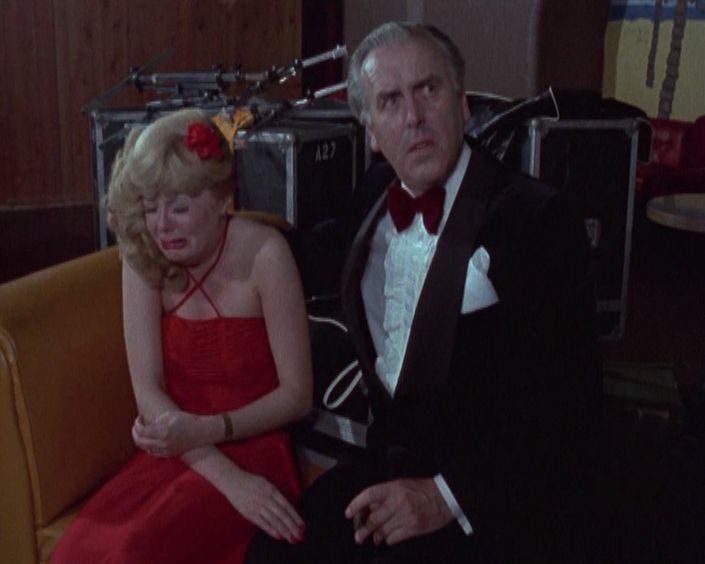
Billy Gilpin (David Buck) is a wanted man.  The police want to question him about the attempted murder of Lord Ingrave, whilst local villain Bobby Altman (George Baker) is also keen to track him down.  Billy worked for Altman and has absconded with seventy thousand pounds worth of bearer bonds.

As Terry gave Billy a lift, that makes him an object of interest for both the police and Altman.  The police are fairly easy to deal with but the barely stable Altman is another matter.  He’s convinced that Billy gave Arthur the bonds and issues a stark ultimatum – if Arthur doesn’t return them, his life expectancy will be very short.

Moments of levity are few and far between in You Gotta Have Friends.  They mostly occur at the start, as we see a very drunken Arthur making his way home after a night spent with his friends at the Lodge.  He’s accosted by Billy who urgently needs a ride out of town.  Arthur’s in no fit state to drive (some lovely drunk acting from Cole in this scene) but he knows just the man – Terry, of course.  It may be the middle of the night, and Terry’s rather preoccupied with the lovely young Valerie, but this doesn’t really register with Arthur.

After this, things take a darker turn when Terry’s picked up by the police for questioning the following day.  In the years to come he probably would have been quizzed by either Chisholm or Rycott and that would pre-condition the viewer to know that nothing particularly serious is going to happen.  But here we have the more imposing form of D.I. Barnett (Allan Surtees).

Although Terry’s never really in serious trouble, it’s the tone of the scenes at the station which feel different from similar moments from later series.  The bleak, whitewashed walls do seem to have a more oppressive feeling here.  Even Terry’s temporary cell-mate, Whaley (a decent cameo from Roy Kinnear), might not be all that he appears.  On the surface, Whaley looks like a friendly chap, genuinely interested in Terry’s plight – but is he one of Barnett’s tame grasses, there to act as a possible prosecution witness?  We never find out for sure, so Terry may just be acting a little paranoid (possibly brought on by his brief confinement).

George Baker is imposing and powerful as Bobby Altman.  His meeting with Terry demonstrates he has trouble keeping his temper under control.  This, together with his group of minders (including Brian Hall and Prentis Hancock), give us an early indication that he won’t be a pushover.  When Altman tells Terry that he’s going to kill Arthur, we believe him.  And whilst Terry could easily take the older Altman, he’s told quite plainly that with the superior numbers on his side, Altman would always emerge victorious.

There’s a fairly heavy use of library music in this episode and since most of the cues tend to be dramatic and suspenseful ones, that simply adds to the tension.

Later, Altman abducts Arthur and gives him one more chance to tell him where the bonds are.  As Arthur doesn’t have them he can’t do this – but Altman has long since passed the point of reason.  A health-fanatic, he forces Arthur to go for a jog with him and pushes him to the point of collapse.  When Terry rescues him, it’s slightly played for laughs, but before this it’s another disturbing scene.

Luckily for Arthur, Terry arrives in the nick of time with the bonds, which had been in the possession of Lady Ingrave (Deborah Grant).  Despite their mis-matched backgrounds, she was in love with Billy and the pair planned to disappear together (although his death – he’s later fished out of the river – puts paid to that).

The Arthur/Terry dynamic is quite obviously what makes Minder work.  Arthur might be self-centered and manipulative, but there has to be some kernel of respect between the two of them – otherwise the series simply wouldn’t work.  This is demonstrated when Terry finds a barely-conscious Arthur, with Altman towering above him.  He hands over the bonds, but has no hesitation is aiming a well-thrown punch in Altman’s direction, knocking him down.

Honour is therefore satisfied.  Altman’s got his bonds back, but Terry’s struck a blow for his friend.  And despite the power (and man-power) Bobby Altman has, he knows that this is one time he should walk away.

You Gotta Have Friends brought the first series of Minder to a conclusion.  It would be Leon Griffiths’ last script for a few years, due to ill-health, but he’d set up a very firm foundation which ensured that the many writers who followed in his footsteps would have plenty to work with.

Minder – The Dessert Song

dessert

Terry and Arthur rescue a Greek-Cypriot called Charlie (Peter Bland) who was being attacked in the street by three men.  They take him back to a restaurant, run by his cousin Christina (Diane Keen), who although initially unwelcoming later seeks Arthur’s help.

She tells him she’s being hounded by Omar (Godfrey James) – the brother of Christina’s late husband, who wants to take over the running of the restaurant.  Arthur’s rather taken with Christina and agrees that Terry will keep an eye on the place.  But things turn out to be slightly more complicated than they first appear …..

One notable thing about The Dessert Song is that all the actors playing Greeks – Diane Keen, Godfrey James, Peter Bland, Daniel Hill (as Johnny) and Michael Angelis (as Nick, the waiter) – are British.  It was common enough during this era of British television, as the pool of ethnic actors was much smaller than today, but it is a little distracting.

Still, it’s always a pleasure to see Diane Keen (one of those actresses who was ever-present during the Seventies and Eighties) and it’s plain that Arthur’s equally taken with Christina.  Just one episode after his misadventure with Sharon, he seems prepared to make a play for Christina’s affections.  Although it’s probable that her restaurant is more appealing to him than she is!

Once Terry is installed as the restaurant’s minder, Arthur’s quick to take advantage – dropping in for a meal (on the house, of course) and delighting in ordering Terry about.  Understandably, Terry doesn’t appreciate this, nor does he really like having to wear a shirt and tie.

Peter Bland is rather endearing as Charlie.  He appears to be harmless, if a little eccentric, but things take a strange turn when he pulls a gun on Terry and Arthur.  Luckily, no harm is done – he’s come to England to right an old family wrong and doesn’t mean them any harm – and Christina resolves to put him on the next plane back to Cyprus.  But the conniving Johnny is easily able to manipulate him into attempting to kill Omar – which means that once again Terry has to wade in and save the day.

Terry and Arthur are slightly less prominent in this episode, although Terry has some decent fight scenes and even Arthur manages to be proactive (trapping Johnny in a telephone box).  The banter between the pair of them (Terry ribbing Arthur about his interest in Christina, Arthur treating Terry like a waiter – clicking his fingers and asking for a menu!) is, as ever, top notch.

The first of twelve episodes written by Andrew Payne (including the feature-length Minder on the Orient Express from 1985) The Dessert Song might feel a little inconsequential (there’s no impressive bad guys – Omar’s quite a reasonable chap after all and Johnny’s obviously no match for Terry) but it’s still an entertaining fifty minutes.

Minder – Monday Night Fever

monday

Arthur is convinced that Sharon Dobbs (Sheila White) is a singing sensation just waiting to be discovered.  He’s so enamoured of her, both personally and professionally, that he hands over six hundred pounds to Chris Lambert (Eric Deacon).  Lambert runs a local nightclub and tells Arthur he’ll use his record business contacts to invite some top people down to hear her sing.

But the evening ends in disaster for Sharon (a combination of the sparse audience’s disinterest and her own flat singing) and Arthur (when he realises that Chris has conned him).  Arthur demands that Terry goes round to give him a spanking and retrieve his money, but Terry refuses.  Those days, he says, are over – since it’s a certain way to ensure he goes back inside.  So Arthur fires Terry and seeks an alternative …..

Whilst Monday Night Fever has some gags, at heart it’s a very bleak tale.  And the bleakness mostly revolves around Arthur as it shows us just how out of touch and insignificant he is.  He blithely assumes he’ll be able to get Sharon engagements at all the top West End nightclubs – only to be told by Terry that they all shut down a decade or so earlier.  His portrayal as yesterday’s man is reinforced when he later tells Terry that he’s still a respected man around the manor.  In a few drinking clubs and car auctions maybe, says Terry, but nowhere else.

Arthur’s relationship with Sharon is the most intriguing part of the story.  He’s clearly attracted to her (although he reacts strongly to Terry’s label of her as the “singing scrubber”).  We see them kiss and after he’s thrown out of his house by ‘Er ‘Indoors, he even floats the possibility of them moving into a flat together.  But this, just like his promise to her that he’ll be able to use his contacts to get her a record deal, is nothing but a pipe dream.

There doesn’t seem to be anything malicious or exploitative in his relationship with her.  He does seem to genuinely believe she’s talented (although he’s in a minority there) and thanks to his deluded belief in his own importance once he’s told her that he’s a connected man in the business, he can’t back down.

This leads him to Chris Lambert, who cons the usually astute Arthur very easily.  Maybe this is because he’s outside of his comfort zone – if it was dodgy jeans or perfume then he’d drive a hard bargain, but Sharon’s clearly impairing his judgement.

Sheila White gives a nice performance as the seemingly innocent and naive Sharon.  She appears to have genuine affection for Arthur, but later we see her shacked up with a keyboard player who’s offered to show her some chromatic scales.  This suggests that like everyone else she’s used Arthur for her own ends.  Her singing had to tread a delicate path between being slightly off-key, but not so bad that Arthur’s interest in her would strain credibility.  And it works, just!

Arthur and Terry’s falling-out is another key part of the story.  It demonstrates that, despite Terry’s protests, he does have genuine affection for Arthur (his girlfriend Penny reminds him that he’s mentioned how he looks upon him as a father figure).  So when Arthur enlists the unstable Vic Piner (Anthony Heaton) to help him get his money back from Lambert, Terry can’t sit on the sidelines.  As Dave says, if things go wrong then Arthur will be in the frame for conspiracy to murder.

As might be expected, all is sorted out in the end and Arthur and Terry are reconciled (once Terry’s felled Vic with a single punch).  He may have lost the girl, some of his money and everything from his lockup but at least he’s got his minder back.

The Sandbaggers – Operation Kingmaker

kingmaker

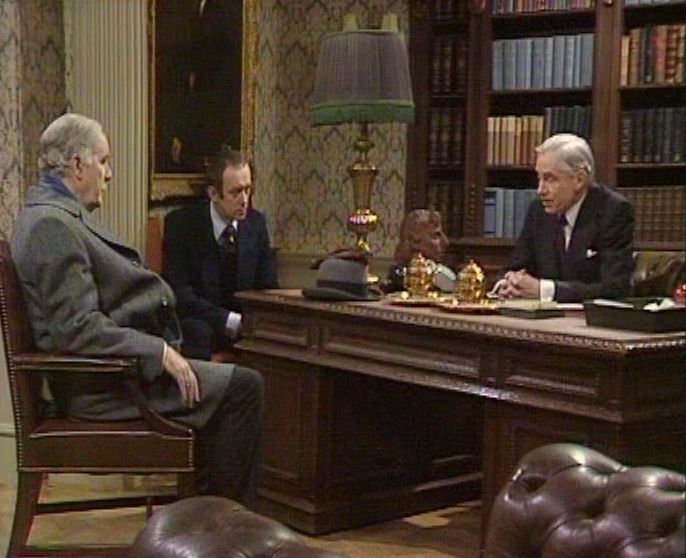
Following Sir James Greenley’s sudden retirement, the position of C is vacant.  Despite all their run-ins, Burnside isn’t averse to Peele taking over, reckoning that the devil you know is always better than the devil you don’t.  He maintains that although Peele would be a minor disaster as C, someone they didn’t know would be a major one.

And when Burnside learns that John Tower Gibbs (Dennis Burgess) is the front runner, Peele becomes more and more attractive.  Gibbs and Burnside have a long and painful history and if he did become C there’s nothing to suggest that future relations would be any more cordial.  So Burnside assigns both Sandbaggers with a new mission – Operation Kingmaker.  Its objective is to find compromising material on Gibbs whilst at the same time promoting Peele as a worthwhile candidate.

With no world shattering events to deal with in Operation Kingmaker, office politics are the order of the day.  It has a lighter tone than most of the previous episodes, especially when depicting the relationship between Peele and Burnside.  To begin with, Peele is at his most genial – as he’s attempting to use Burnside and Wellingham’s close relationship to his advantage (hoping that Burnside will be able to persuade Wellingham that he’s a serious candidate for the job).

Burnside though is already ahead of him, as he’s already pushed Peele’s credentials to a slightly incredulous Wellingham.  Wellingham has no particular liking for Peele and correctly surmises that Burnside is simply keen to ensure that anybody but Gibbs gets the job.

This isn’t the only change afoot though, as Burnside’s secretary, Elizabeth, hands in her resignation.  She’s leaving to get married and Burnside is characteristically far from delighted at the news.  He fails to congratulate her and when he realises she won’t reconsider, insists that she appoints a replacement before she leaves.  A further example of his monumental lack of tact is when he mentions he doesn’t want anybody young – someone about her age would be fine!

Finding a replacement is hard though, as nobody seems to want the job (Burnside’s fearful reputation has preceded him, much to Willie’s amusement).  But eventually she does uncover a potential candidate – Marianne Straker (Sue Holderness).  Although Marianne is younger than Burnside would like, twenty-seven, she does have the sort of outspoken attitude that appeals to him.  She used to work for Peele, but was dismissed because, according to Elizabeth “she wasn’t deferential enough.”

Sue Holderness had been acting since the early 1970’s, although she was still a few years away from her career-defining role as Marlene in Only Fools and Horses.  She only has a limited amount of time in this episode, but her brief appearance suggests that she’ll make a decent foil to Burnside.  The tone is set after he discovers she doesn’t have a regular boyfriend and he asks what’s wrong with her.  She counters that he’s considerably older than her and isn’t married, which is a decent retort.  He offers her the job and as the door closes behind her, we see something quite rare – a smile from Burnside.

Another character making her exit is Jana Shelden as Karen Milner.  She appears to have been positioned as a potential romantic interest for Burnside, though in the end this didn’t amount to anything mainly because the scars of Berlin seemed to be too fresh in his mind.  A pity she didn’t return, as she also made a good working partner for Willie (as seen in Decision by Committee) although regular team-ups between the SIS and the CIA would have probably stretched credibility a little.

Neither Willie or Mike appear to be delighted with Operation Kingmaker.  Willie doesn’t have any moral qualms about sabotaging Gibbs’ chances, he’s more concerned about what would happen to Burnside if it was discovered.  But Mike does seem a little apprehensive about what he’s been asked to do, although this may just be Michael Cashman’s acting choice as it helps to make his contribution stand out (given his fairly small role in the story).

Finding dirt on Gibbs is difficult though.  Willie asks D. Int. if he knows anything and he tells him that Gibbs has “the brain of a computer, the stamina of an ox and a bite that’s considerably worse than his bark.” They do finally uncover something promising and Burnside casually mentions it to Wellingham.  But it later becomes clear that Wellingham knew about Gibbs’ indiscretion anyway and this decades-old scandal doean’t prevent him from being appointed as the new C.

Whilst Operation Kingmaker lacks the dramatic punch of the series one closer, it sets us up nicely for the conflicts that would play out during the third (and as it turned out) final series.

The Sandbaggers – It Couldn’t Happen Here

happen

Jeff Ross is convinced that US Senator Franklin Heron was murdered by the FBI.  Heron was an advocate for the freedom of information and Ross believes he was just the latest in a long line of public figures to have been removed by the Bureau (he also mentions JFK and Martin Luther-King).  Burnside doesn’t dismiss his conjecture out of hand, but he does tell him he’s glad it couldn’t happen in the UK.

But when compelling evidence is discovered that suggests a key member of the Cabinet, Stratford-Baker (Tony Church), is a mole for the KGB, Burnside is forced to reconsider his statement.  The evidence he holds isn’t absolute proof (and was obtained illegally by the CIA) so no further action will be taken.  With the possibility that a KGB mole might one day become Prime Minister, is his removal – by whatever means necessary – justifiable?

It Couldn’t Happen Here is a story that seems to act very much as a mouthpiece for Ian Macintosh’s own opinions.  Jeff Ross spends the first five minutes outlining his theories that the FBI killed both John F. Kennedy and Martin Luther-King – mentioning the clear evidence of conspiracies in both cases which were later suppressed.  Later, Wellingham also expresses his conviction that JFK was the victim of a conspiracy.

The notion that JFK murdered as part of a shady conspiracy (involving either the KGB, CIA, FBI, Mafia, Cubans, etc) was widely held for many decades, although in recent years the possibility that Oswald was really working alone has gained more credence (Gerald Posner’s book, Case Closed, for example).  It Couldn’t Happen Here is therefore a reminder of the more paranoid days of the late 1970’s and early 1980’s.  Although since Watergate had happened just a few years earlier, it’s not surprising there was a more jaundiced view of both American politics and the American agencies that were designed to serve both it and the people.

This debate, none too subtly, sets the tone for the remainder of the episode.  Stratford-Baker is by any definition an untrustworthy man – he fled the scene of a car accident in Germany, leaving a woman (one of Burnside’s employees) for dead.  But is he a Russian agent?  He has microdots and secret papers in his house, but it’s not clear proof.  Burnside later agrees with Wellingham that it would be wrong to assassinate him, but his final words to Willie are quite different.  Is he serious when he suggests they should stage a car accident, or is it just idle talk?

Two plotlines run in this one, so whilst Burnside wonders about Stratford-Baker’s loyalties, Willie travels to America to guard Senator O’Shea (Weston Gavin).  O’Shea has taken over Heron’s responsibilities and will therefore be a key target during the time that Willie is assigned to protect him.

This part of the story does rather stretch credibility to breaking point as it’s hard to believe the American government would assign the protection of O’Shea to a foreign operative.  Willie appears to make a hash of it as well – watch the scene when O’Shea leaves the church, following Heron’s funeral.  Willie moves straight to the car, leaving O’Shea completely unprotected and therefore an easy target for a gunman.

O’Shea is killed (although not by the same people who killed Heron – O’Shea’s killer was just a lone nut) and Willie returns home, although it’s tactful that nobody mentions the acres of space he left between himself and O’Shea.

The American sequences (filmed in the UK of course) also show the limitations of the series’ budget.  The funeral of an influential senator like Heron would be a huge affair, with hundreds of people, but The Sandbaggers could only afford a handful of extras – so tight camera angles had to be employed to try and make it look credible.

Elsewhere, Burnside enjoys another meal with Karen Milner and C announces that he’s leaving, effective immediately.  Whilst C might not have been central to many episodes – the main battles tended to be fought between Burnside and Peele – he was always on hand to deliver a pithy assessment of the current situation.  Richard Vernon was a joy to watch in the role and whilst his presence will be missed, it’s a good move series-wise – as it’ll be intriguing to see how the new C works with both Peele and Burnside.

The Sandbaggers – A Question of Loyalty

question

Mike Wallace is in Warsaw to extract a defector.  When the defector doesn’t make the rendezvous, Wallace realises he’s been spooked by the clumsy efforts of the local station.  Mike is then forthright in expressing his displeasure to the Head of Section Walter Wheatley (Patrick Godfrey).

Wheatley, with his own reputation to protect, sends an immediate signal to London and blames Wallace for the aborted mission, which results in an investigation being launched, headed by Peele (much to Burnside’s disgust).  When a situation later arises in Stockholm (there’s a suggestion that the Stockholm Number Two may be a KGB agent) Burnside elects to send Wallace, which is Burnside’s way of proving to him that he still has his full support.

A Question of Loyalty might not revolve around matters and life and death for once, but it’s still a compelling episode.  We open with Wallace in Warsaw and it’s a good chance to see him work solo for the first time.  His inexperience is made clear after he’s less than diplomatic with the Head of Station (although it’s easy to imagine Burnside having a similar attitude, so maybe he’s just taking after his boss).

Michael Cashman had been appearing on television since the mid 1960’s, but The Sandbaggers was his first regular television role – although given how the series has run through a number of Sandbaggers, it’s far from clear he’ll be a permanent fixture.

The fallout from the Warsaw mission sees the relationship between Burnside and Peele drop to a new low.  There’s a real bite to their early scene, as Burnside bitterly tells him that he’s sure to side with the Head of Section (since Peele was a former Head of Section).  Peele retorts that Burnside’s bound to side with the Sandbagger (as an ex-Sandbagger).  As ever, it’s riveting stuff.

Neither the Warsaw or Stockholm missions are important in themselves – they just provide the backdrop, whilst the character conflicts and interactions play out.  This is made clear when Burnside attempts to obtain assistance for Wallace in Stockholm.  He doesn’t want to send his other Sandbagger, so he asks Jeff Ross if Karen Milner is free.  This does give us a rather parochial view of both the British and American intelligence services – the British only have two special operations agents and the Americans seem to be just as short-staffed (although it’s possible they have hundreds more in the office next door).

Jeff says he’s happy to send her, if Langley agrees, but suggests that Burnside briefs her over dinner.  It’s his way of trying to play cupid, but Burnside’s legendary spikiness makes it a far from convivial meal (at one point she asks him if he’s drinking coke or vinegar).

When Langley refuses to authorise the mission, she still attempts to assist by dropping a broad hint the next day that eventually allows Burnside to realise that the Stockholm Number Two isn’t a KGB agent, he’s a CIA one.  It’s an interesting development which shows that even so-called friendly powers are capable of deceit and deception.

But is Burnside grateful for Karen’s assistance?  Hardly, as he calls her a bitch, leading Willie to wonder exactly how much of Burnside died in Berlin last year.  This is the starkest picture of Burnside we’ve yet seen – a compulsive/obsessional, with no interests apart from his career and a man who displays a complete unwillingness to let anybody make emotional contact.  The reason’s clear – he let Laura get close and she was killed, so he’s not prepared to let it happen again.  When Willie asks him why he hates Karen, he says it’s “because she’s alive.”

And a further twist is that Peele agrees that Warsaw Station were at fault and Wallace is cleared.  Given that Burnside was convinced Peele would come down against the Sandbaggers, it provides us with another example that Peele isn’t the fool that Burnside often believes him to be – and also that Burnside’s tunnel-vision can sometimes be a handicap.

The Sandbaggers – Decision by Committee

decision

A Malaysian Aircraft travelling from Sri Lanka to the UK is hijacked by Iraqi terrorists.  A number of British and American nationals are on board, including two British VIPs – the Chief of the Defence Staff and the Chief of the General Staff.  Burnside’s chief concern isn’t about them though – Willie Caine and CIA agent Karen Milner (Jana Shelden) are both on board as well.

It’s an unwritten rule that if ever a Sandbagger is in trouble, then D. Ops would leave no stone unturned to try and rescue them – but things look far from promising.  The terrorists have issued an ultimatum – they want Iraqi prisoners freed or the two VIPs will be killed (one at 1800 hours and the other at 2000 hours) before they blow up the plane at midnight.

It’s long been supposed that series creator Ian Macintosh had been involved with the security services before he became a writer and there’s several touches in this episode that do seem quite accurate.  The first occurs early on, when Willie and Karen are comparing airline tickets.  Karen’s travelling back first class, whilst Willie’s stuck in economy.  He tells her that they always travel out first class (in order to be fresh for the mission) but nobody’s really bothered about their comfort on the way back.  A small detail, but it does sound convincing.

Incidentally, once again we see the ingenuity of YTV’s set dressing as they try to convince us that we’re actually in Sri Lanka at the start of the episode (plenty of plants are scattered about to create the impression of warmer climes).  Luckily it’s only a brief scene, but you have to give them ten out of ten for cheek!

Peele tell Burnside that he’s recommended he should be considered for promotion in ordinary course.  Although this sounds fine, it’s actually the kiss of death – as there’s several other people on an equal footing with Burnside who will have been recommended for early promotion.  So Burnside’s chances of becoming Deputy Chief are now very slim.  It’s obviously Peele’s way of attempting to clip his subordinate’s wings after his repeated flouting of the accepted chain of command.  As the episode title indicates, Peele favours decisions taken by committee whilst Burnside prefers to operate unilaterally.

Another moment that rings true is Peele’s attitude – if Burnside mends his ways then he’s every chance of being recommended for early promotion.  In this scene, he resembles nothing so much as a Headmaster, ticking off an unruly pupil.  Was this the way that the SIS was run in the late 1970’s/early 1980’s?  I don’t know, but it seems horribly possible.

A noteworthy part of Decision by Committee is that we don’t see the terrorists take control of the plane (instead, we’re told, along with Burnside, via a phone call).  Few series would have taken this route – as it’s clearly much more dramatically satisfying to show, not tell.  But as ever with The Sandbaggers, most of the action takes place in London, specifically in the Ops Room and in Whitehall.

As soon as the news breaks, the Ops Room becomes a hive of activity (and it’s also so wreathed in cigarette smoke that it’s almost like a fog’s descended!).  But although there’s plenty of talk, what actually can be done?  The Cabinet is in session, but there’s no clear course of action and Wellingham later admits to Burnside that it’s better to do nothing than do the wrong thing.

They could send the SAS in (as happened in Entebbe and Mogadishu) but if it goes wrong it’ll be a disaster that would dog the government for the rest of their time in power.  But if they prevaricate and things turn out badly they can always blame the incompetence of the local government (the plane has been piloted to Istanbul).  This is another moment that rings very true.

Burnside’s itching to do something though.  He’s not concerned about either the CDS or the CGS, all he wants to do is to extract Willie Caine.  And it’s not because of any feelings of friendship – Burnside knows that Caine will expect something to be done and if he feels let down it could affect his confidence just enough to make him a liability in the field.

It’s ironic that for all Burnside’s planning (he considers sending some of his own men in – to do an SAS style raid – despite everybody telling him that it’s an incredibly bad idea) in the end the resolution is out of his hands.  Willie and Karen are able to overpower the terrorists in a brief, but bloody gun battle.  It’s messy, violent and has unforeseen consequences (several passengers – including a child – are killed).  The Sandbaggers is as far from an action series as you could possibly expect, which makes this scene even more of a stand-out than it already is.  Top marks to Jana Shelden as Karen Milner for remaining cool under fire as well.

Given the ways things could have ended, it’s not a bad outcome – although the deaths of the passengers are likely to remain on Willie’s conscience.  The final scene (Burnside lies to him that he planned to send in the SAS) is intriguing.  Does Willie believe him or does he simply want to believe?  In the world of intelligence, the line between truth and lies remains forever blurred.

The Sandbaggers – Enough of Ghosts

enough

The disappearance of Sir Geoffrey Wellingham in Brussels (whilst on his way to NATO Headquarters) puts MI6 on red alert.  If he’s been kidnapped, there’s no shortage of terrorist groups who might be responsible – so where do they start?

Burnside decides to send both Sandbaggers to Brussels (despite Peele’s order that only one should go).  Whilst it might be seen as an indication of the respect he still holds for his ex-father in law, as so often with Burnside there’s also another reason.  A top secret file (which shouldn’t have left the building) is currently residing in Wellingham’s safe in the Foreign Office.  If Sir Geoffrey doesn’t return, and the file is discovered, then the consequences will be deeply serious for Burnside …..

Enough of Ghosts opens with Willie Caine visiting Tom Elliot’s parents.  Caine’s awkwardness is apparent right from the start and the torture of his visit is probably made worse by the sheer middle-class stolidity of the Elliots.  There’s a seemingly indeterminable pause, whilst Mrs Eliot makes the tea, before Caine can launch into his spiel.  He tells them that Tom didn’t suffer at all and that he died in a plane crash.

It’s a gross distortion of the truth, but as Burnside later says, what use would it have been if he’d told them Tom died in agony?  Possibly the worst part for Caine is that the Elliots aren’t angry or full of questions.  They realise that Tom was involved in security and understand there won’t be any publicity.  Mr Elliot is a retired Royal Marine, so the service instinct and loyalty remains strong in him.  For Caine it’s pretty much the last straw – he’s been a Sandbagger for six years, but now he wants out.

One of the most interesting moments in the story comes later on, when Bunside’s secretary, Diane Lawler (Elizabeth Bennett), mentions to him that Willie would probably be better off out of the Special Section.  Burnside is far from impressed (rather insultingly reminding her that one of her functions is to make the coffee!) but Diane isn’t cowed and makes sure she has her say.  As she’s been a character who’s remained in the background until now, her unexpected passion carries some weight.

ELIZABETH: Mission planning might suit him better anyway.
BURNSIDE: He’s been a Sandbagger for six years.
ELIZABETH: Yes, but he’s never really been the type.
BURNSIDE: Type?
ELIZABETH: Well, I’ve seen the psychiatric reports on Sandbaggers. That’s what no-one understands about them.
BURNSIDE: What?
ELIZABETH: People think a Sandbagger is some sort of superman, they don’t realise he has to have a basic character defect to quality.
BURNSIDE: Go on, Dr Lawler.
ELIZABETH: You know it’s true, every one of you has had it. None of you has been able to cope with affection, so you’ve all opted for respect instead.
BURNSIDE: Is that so?
ELIZABETH: You feel you can’t be loved or wanted for the person you are, so you have to create a false person – one who is more committed, more dedicated than anybody else. That’s your definition of a Sandbagger.
BURNSIDE: Interesting, but wrong.
ELIZABETH: Is it? I’ve been in the Ops Directorate for twelve years, longer than you. And I’ve seen Sandbaggers come and go.
BURNSIDE: You think Caine’s different?
ELIZABETH: He could have been. Why do you think he has such a loathing for violence? Because this isn’t his scene at all.  He’s a nice, uncomplicated human being who should have had a home and wife and kids.
BURNSIDE: You volunteering?
ELIZABETH: I might have done, before you got to him and turned him inside out.

It’s unusual to see Burnside very much on the back foot – the above extract demonstrates that for most of the exchange he was listening and offering short rejoinders, rather than dominating as he usually does.  He’s on firmer ground with Peele though, especially when he expressly ignores the order not to dispatch both Sandbaggers.

Peele argues, quite logically, that there’s little they can do – and if another mission comes up, it would be foolish to have both of them stranded in Brussels.  Burnside agrees, but then decides to take the opposite course anyway.  Why?  Because it’s what he feels is right or just because he knows it’ll aggravate Peele?

As for Wellingham, he appears to be held by a group of German terrorists and the Sandbaggers are later joined by a group of elite German counter-intelligence officers who have located the group’s hideout.  Nothing is quite what it seems though – although Wellingham is later released unharmed.

The plot-twist is quite neat and it’s telling that Burnside doesn’t seem to be particularly angry or affronted.  Possibly this is because it’s something that he might have done himself in the past (or if not, he may try it in the future).

The successful outcome of the mission seems to have done the trick with Caine, who decides to stay – at least until Sandbagger Two (Michael Cashman) is promoted to Sandbagger One.  By Caine’s reckoning, that’ll be another six years at least.

The Sandbaggers – At All Costs

at all costs

The head of the Bulgarian Secret Service makes contact with MI6 and offers them a list of his agents.  If genuine, this would be an incredible intelligence coup – but why would he betray his own people?  Burnside’s initial thoughts are that it’s a setup (this is strengthened when one of the Sandbaggers is requested to make the rendezvous).  Do the Bulgarians plan to lift the Sandbagger and exchange him for a prisoner held by the British?

It’s not surprising that Peele, C and the Director of Intelligence, Edward Tyler (Peter Laird), are all keen.  Burnside remains cautious though, as the last thing he wants to do is to lose another Sandbagger – especially as it’s exactly a year since he ordered the death of the previous Sandbagger Two, Laura Dickens.

At All Costs is a seriously impressive series opener which continues the excellent run of episodes from the first series.  The anniversary of Laura’s death is touched upon briefly by Willie Caine and Jeff Ross – we see both of them ask Burnside how he’s feeling.  Characteristically, he tells them he’s not brooding on the past, but the prospect of another Sandbagger’s life hanging in the balance is the ultimate cruel irony on this particular day.

Series one of The Sandbaggers should have provided ample evidence that this was never a series that took the easy way out or felt obliged to offer happy endings.  A more conventional show would have seen the unfortunate Sandbagger Two, Tom Elliot (David Bearnes), rescued from Sofia (after the hand-over is blown) but the experienced viewer would by now expect a darker outcome.

After killing several Sandbaggers in series one, would they really have the nerve to kill another right at the start of the second series?  For Burnside, a man already haunted by the ghosts of the past, it would be one more crushing blow, especially when he was so dubious about the mission to begin with.

D. Int and Peele didn’t share his qualms about sending Elliot though – if the material is genuine, then the risk would be worth it.  Peele even mentions to Burnside that whilst he understands that Sandbagger Two is taking a risk, surely that’s what the Special Section is for?  C takes a similar view, but he also adds another complication by revealing to Burnside that Whitehall plan to reduce the Special Section from three officers to two.  Burnside is incensed and demands to know if C will fight on their behalf – he says he will, but the best way to maintain the current number of Sandbaggers is by demonstrating that they provide a worthwhile service.  As C says, if Burnside continues to wrap them up in cotton wool it makes Whitehall’s plans all the easier to carry out.

Confrontations between Burnside and Peele are always worth watching.  Early in the episode, Burnside tells him that if he’s not happy then he’ll abort the mission.  Peele counters that he doesn’t have the authority.  No, Burnside agrees, but he does have the means.  The contrast between the two – Burnside (a man totally obsessed by his work, with seemingly no other life) and Peele (a fussy, by-the-book character, grumbling because he wants to leave for a game of bridge) – is never more apparent than here.

But just when you think you’ve got a handle on the characters, they can still surprise you.  After the meeting is blown, Tom Elliot is shot (although he manages to get away).  Burnside wants to go to Bulgaria, along with Willie Caine and Jeff Ross, to get him out.  Wellingham and C are dubious – Burnside is a desk man, not operations (and the intelligence he holds in his head is substantial.  If he’s captured and interrogated, it would be a disaster).  Everything we’ve seen so far suggests that Peele would support Wellingham and C – but instead he agrees with Burnside’s request to go.

Once again, we see the Yorkshire environs doubling for a foreign country (in this case, Bulgaria).  It’s suitably bleak and the grimy 16mm film makes it seem even more so.  The scenes of a badly injured Tom Elliot, hiding in a very grotty room, simply adds to this bleakness.

Willie tracks Tom down and finds him in a bad way – a bullet has grazed his spine and left him paralyzed.  Burnside knows there’s nothing else to be done – Tom has to be put down and Burnside elects to do the job himself.  He’s spared that task at least, since Tom’s already dead when he gets there (plus he manages to extract the intelligence from his lifeless body), but that’s a very small consolation.

After ending the first series on such a dramatic note, you could be forgiven for thinking there would be some respite at the start of series two.  At All Costs offers us no such pause for breath though and it’s hard to imagine a more uncompromising series opener.