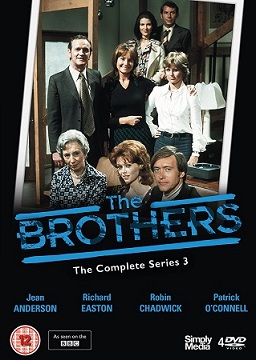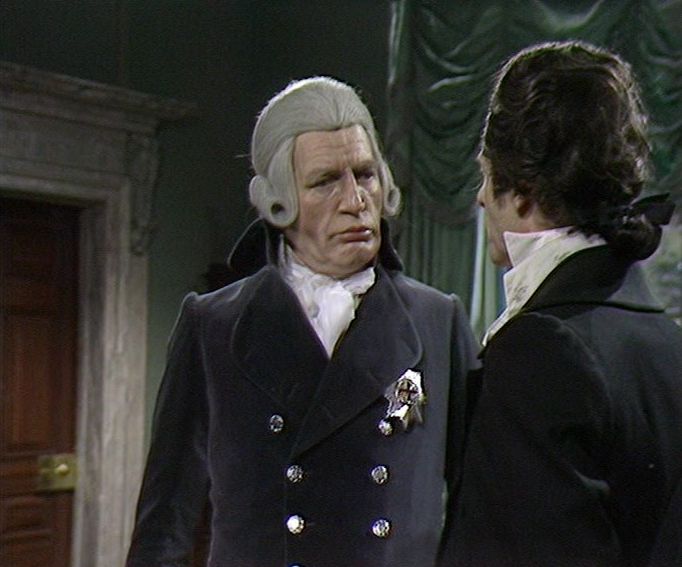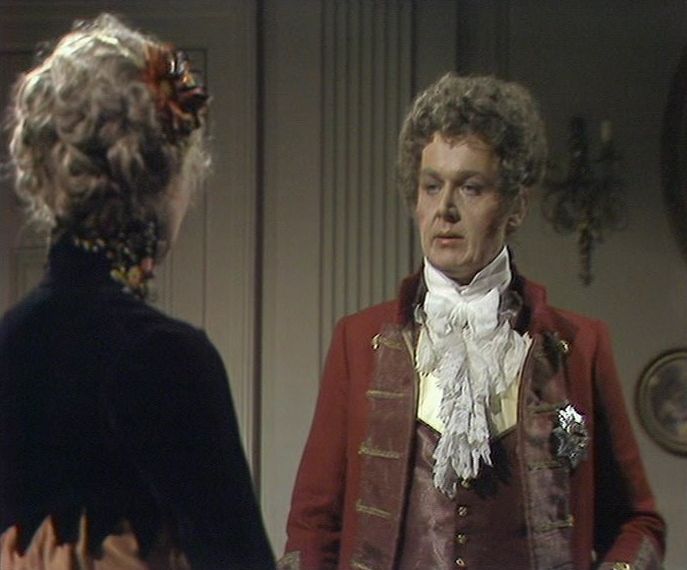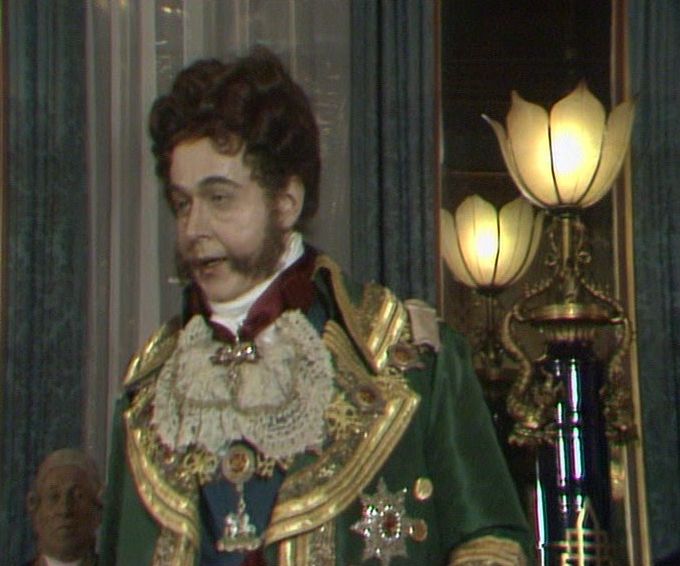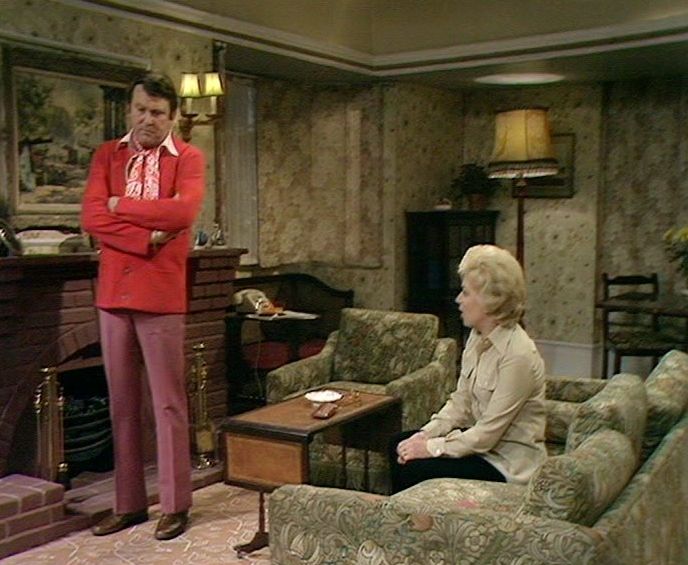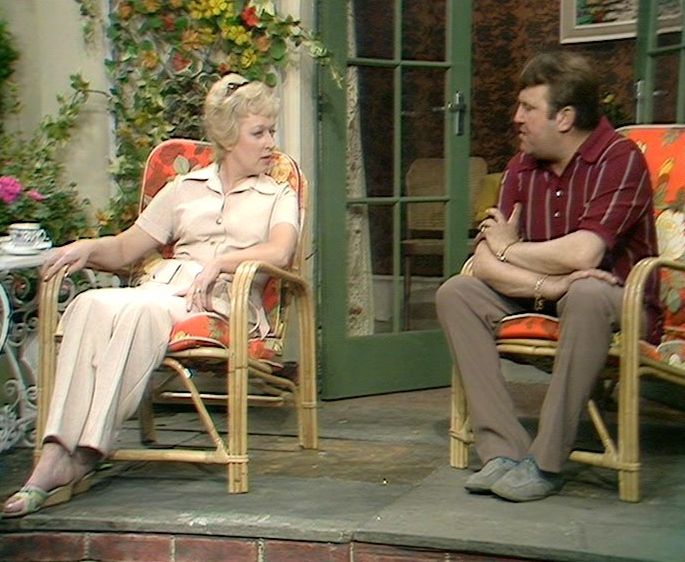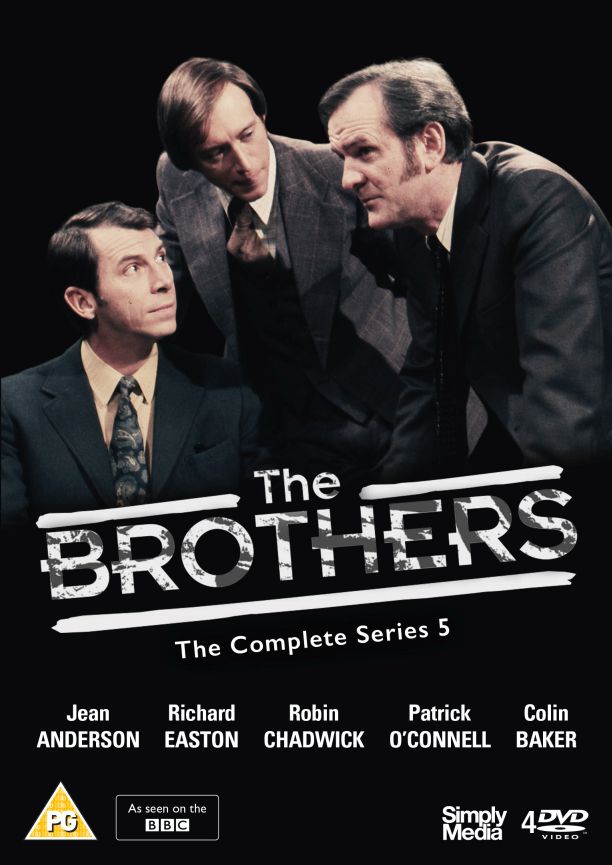
The Brothers – Series Five. Simply Media DVD Review

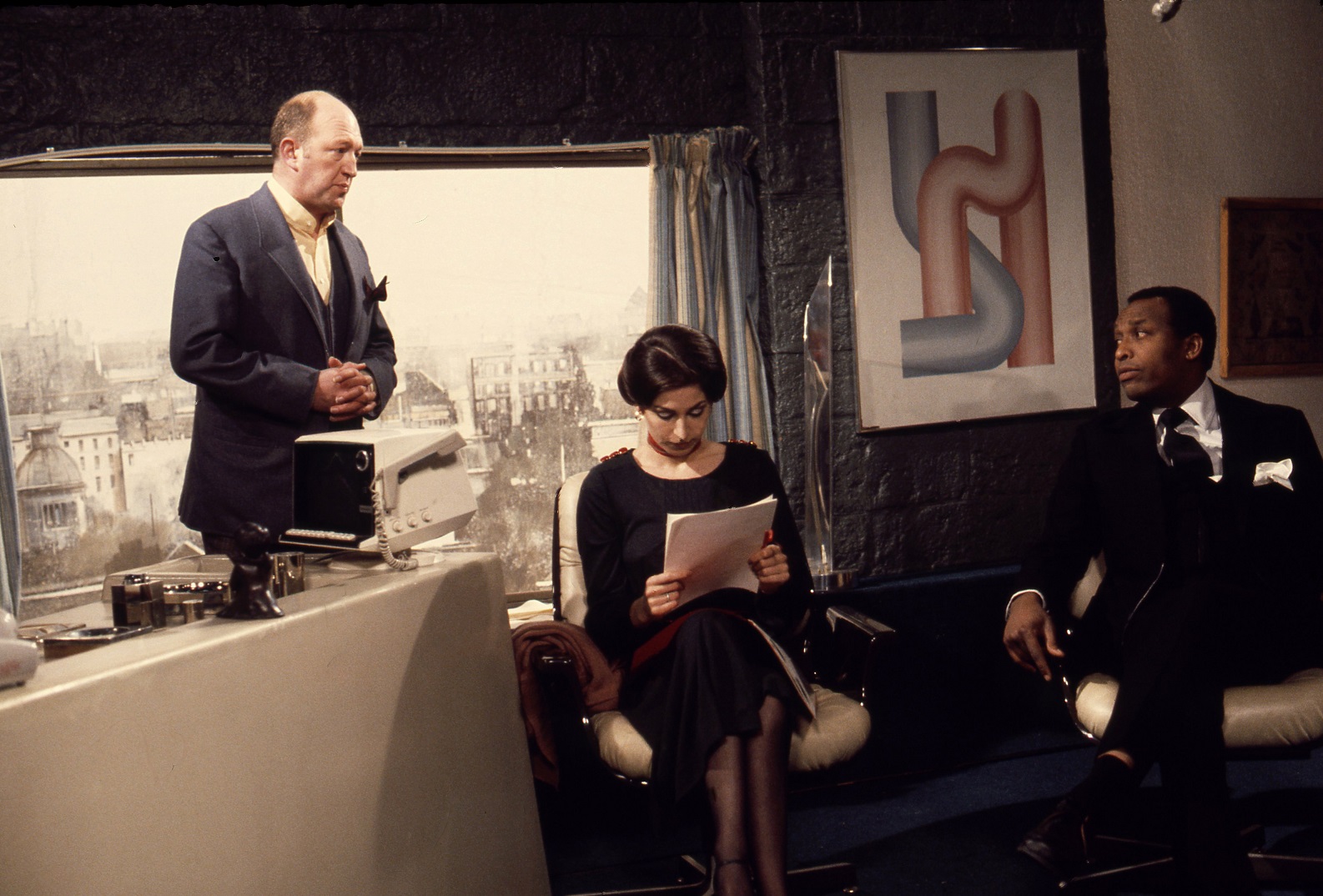
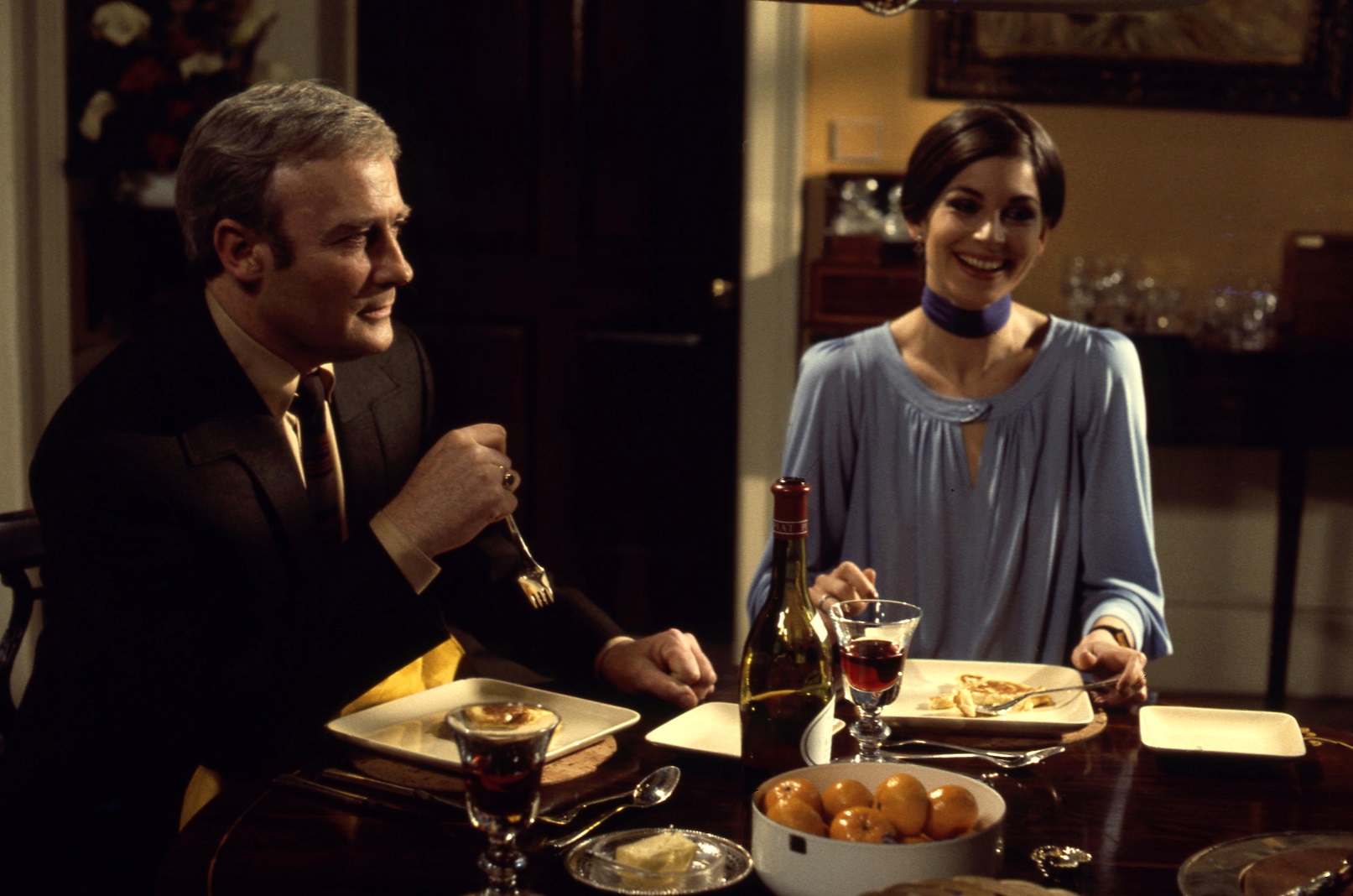
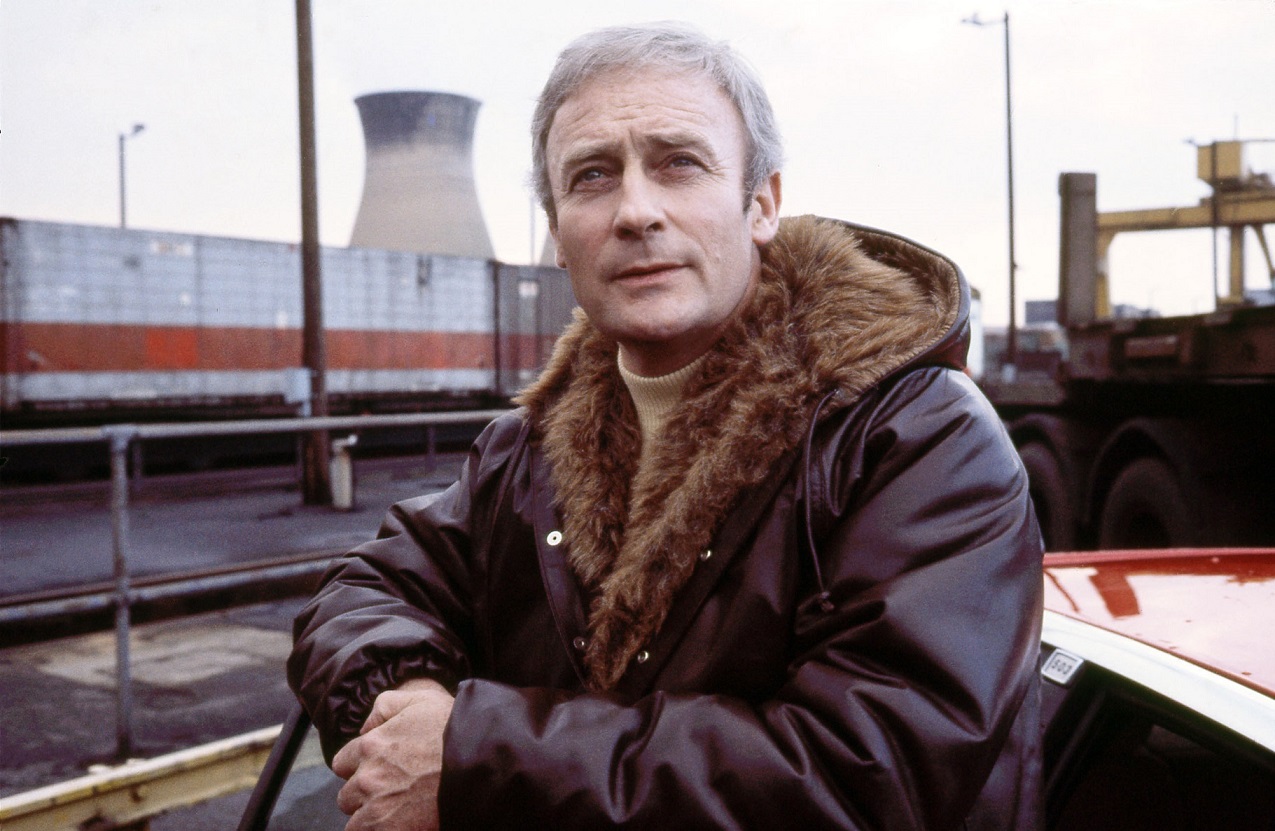
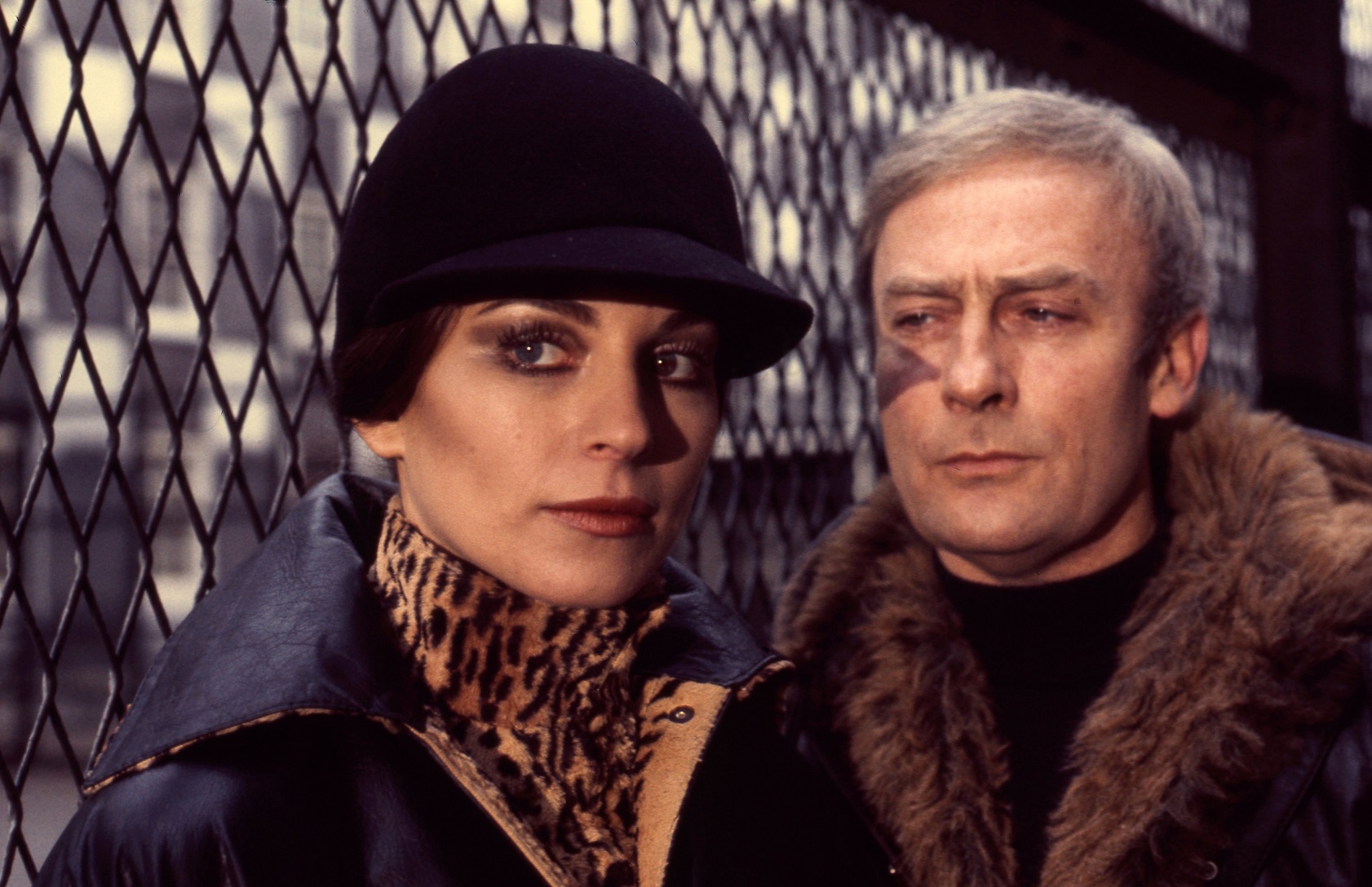
The beginning of series five finds The Brothers in something of a transitional phase.  Two key cast members (Gabrielle Drake and Hilary Tindall) had left the show at the end of the previous run, although fresh blood (most notably in the shape of Kate O’Mara as Jane Maxwell) would shortly arrive to shake things up.

The departures of both Drake (Jill Hammond) and Tindall (Ann Hammond) were used to good dramatic effect though.  Ann and Brian had gone through the relationship mill during the previous series and even though their union was now at an end, Brian continues to suffer.  But his broken marriage is just one reason why he goes severely off the rails in the early episodes.

Although Tindall was gone, her character was still alive and therefore a return was always possible (and  indeed Ann did make a fleeting reappearance in a handful of episodes at the start of the seventh and final series).  But Drake wasn’t so fortunate, as Jill is dispatched in the time-honoured way of dealing with soap actors who either can’t or won’t carry on (an off-screen accident).  Talking about this decades later in The Cult of The Brothers documentary, it seems that Drake was a little taken aback at just how ruthlessly Jill was dealt with.

Another character, Martin Farrell, had also left, which results in both personal and professional consequences.  Professionally, it means that the position of chairman is vacant – which seems tailor-made for the ambitious Paul Merroney.

And on a more personal note, it was plain that Ted Hammond’s nose was put out of joint last series by the interest Farrell had been taking in Jenny Kingsley (Jennifer Wilson).  So with Farrell out of the picture, Ted (Patrick O’Connell) rekindles his own relationship with her.  Lest we forget, Jenny carried on a lengthy and clandestine affair with Ted’s late father.  Unsurprisingly this meant she has always been viewed with great disfavour by Ted’s mother – the indomitable matriarch Mary Hammond – but it seems that Ted has eventually summoned up the courage to defy his mother and make an honest woman out of Jenny.  Although I’m sure there’s still going to be a few bumps ahead before they can enjoy a lifetime of wedded bliss.
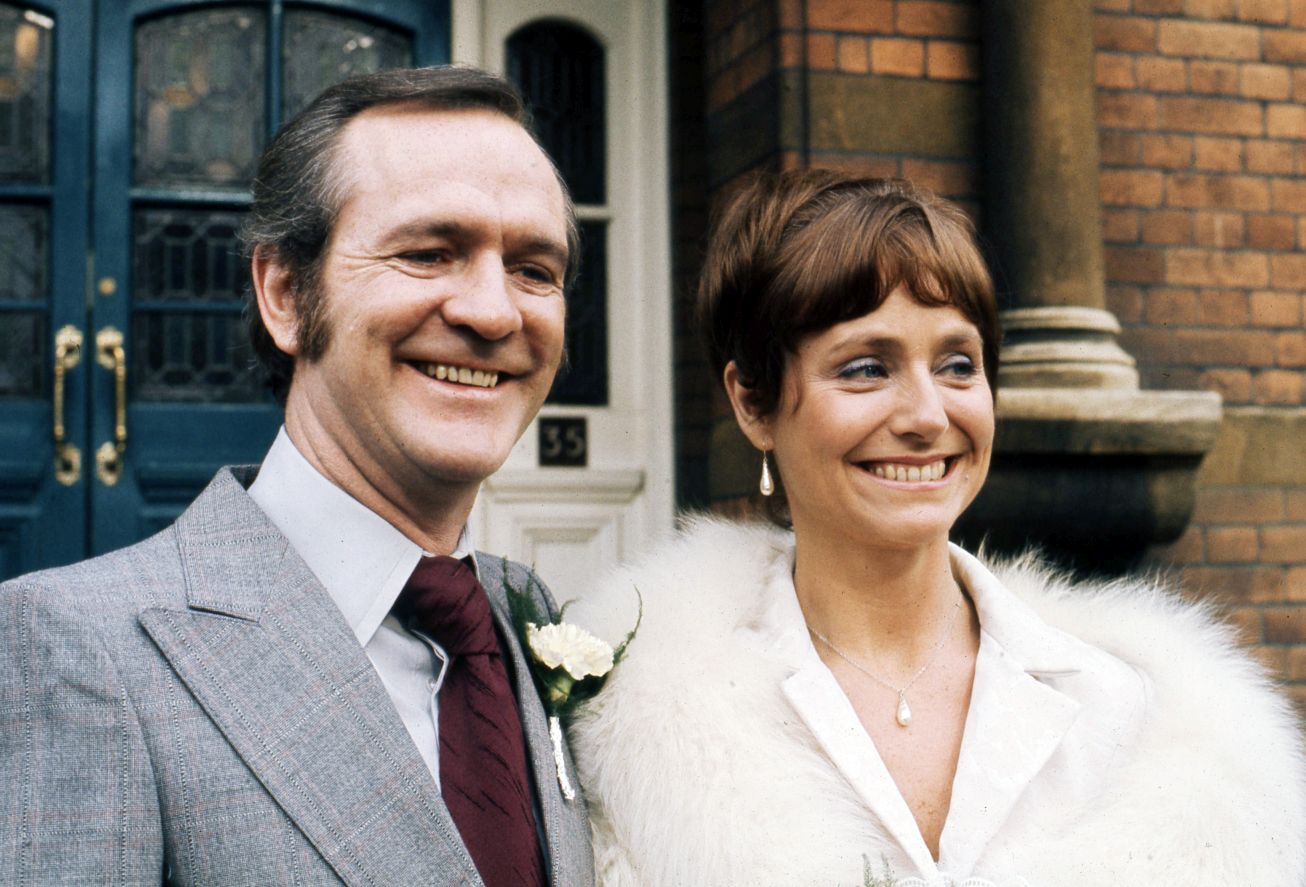
Patrick O’Connell & Jennifer Wilson

The series opener, the aptly titled Life Goes On, finds Brian in a pretty poor state. This concerns the bank – they don’t want to see their investment in Hammonds put at risk because the new managing director is feeling flaky – but Paul Merroney has put plans in motion to protect their money ….

Although Merroney was a rather peripheral character during the last series, here he really starts to make his mark. For one thing, he’s gained an assistant – Clare Miller (Carole Mowlam). Apart from signifying Merroney’s increasing significance, Clare also emerges as a character in her own right – becoming close to David, for example.

Baker’s good value in these early episodes as Merroney begins his manoeuvres. Surprisingly, only the bluff Bill Riley realises that Merroney has his eye on the chairman’s job – which doesn’t say much for the business acumen of the others! There’s a delicious sense of duplicity on show from Merroney as he puts the blame for the recent ousting of Ted as managing director firmly on the shoulders of the departed (and innocent) Farrell.

The way the audience learns about Jill’s death is done in a very interesting way which makes a positive out of the fact that Gabrielle Drake was no longer a member of the cast.  Jill isn’t mentioned during most of the first episode, although that wasn’t unusual (she was absent from the first few episodes of series four).  It’s only right at the end of Life Goes On, when David runs into a friend who’s been out of town for several months that we find out Jill is dead.  This is an incredibly jolting moment which provides us with a strong hook into the next episode where her fate is discussed in detail.

The dynamic between the three brothers – Ted, Brian and David – has been the motor which has powered the series to date.  Whilst series five continues to play on their conflicts, the emergence of Paul Merroney as a major player refreshes this somewhat – as an outsider he has quite a different set of loyalties.
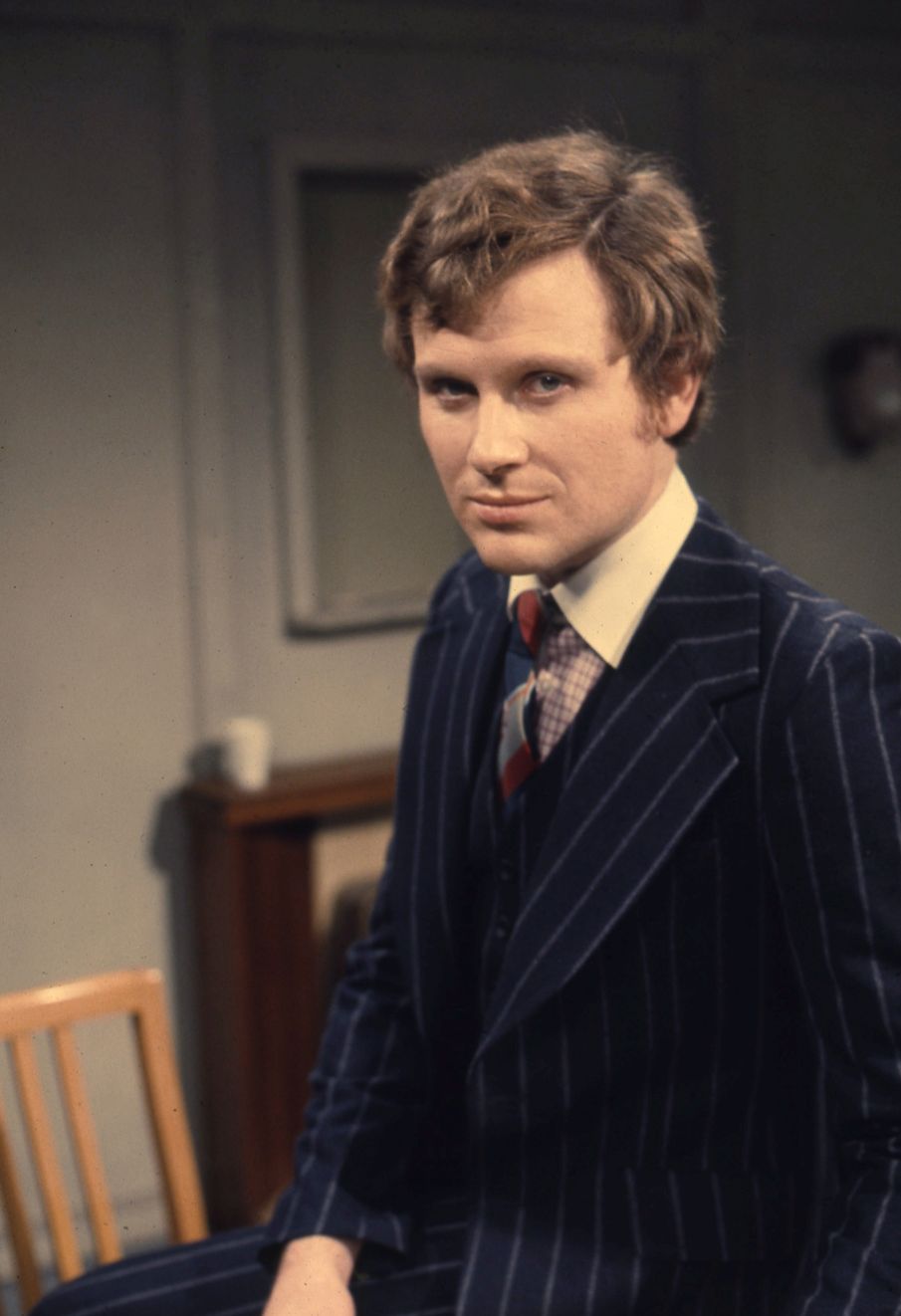
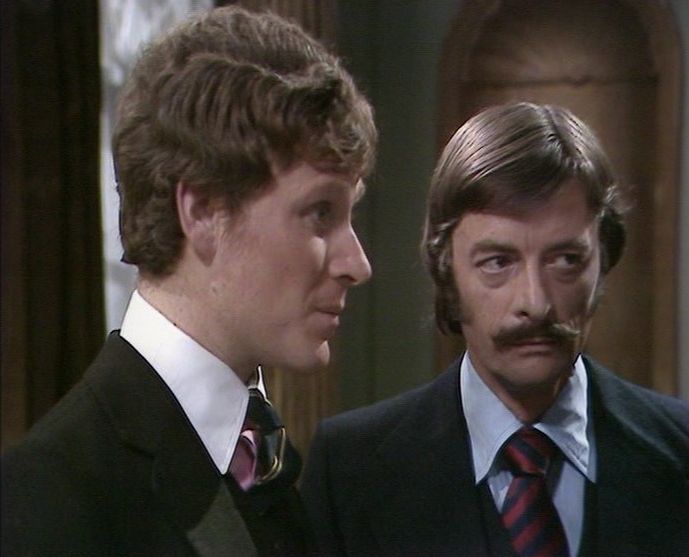
Colin Baker

But the brothers still dominate the storylines especially, in the early episodes, Brian.  In many ways he’s now got everything he wished for – he’s become managing director of Hammonds, ousting Ted.  Or has he?  We’d seen in previous series that it was Ann who was the ambitious one, constantly pushing him forward.  So the fact that he’s gained in business but lost out in his personal life must come as a bitter irony to him.

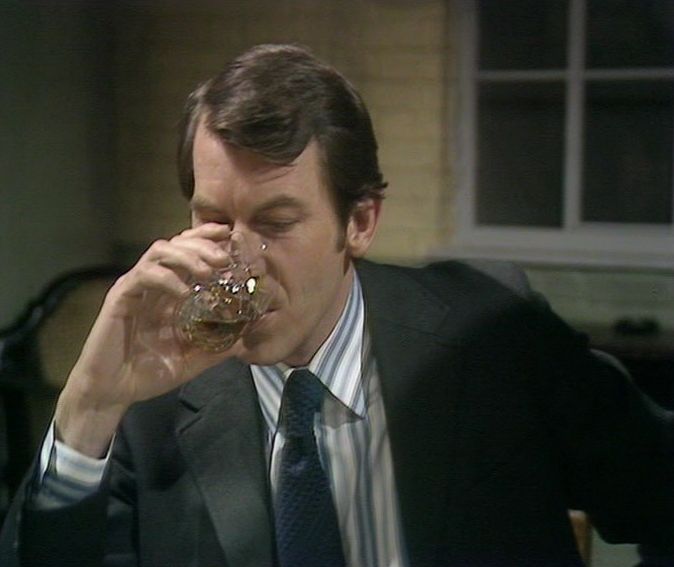
Richard Easton continues to impress as Brian, especially when he starts to lose the plot (the episode title Breakdown makes it fairly obvious what’s going to happen).  As his drinking increases, Brian is encouraged to seek psychiatric help.  And always around is Merroney, plotting to oust Brian at one point and then (so the others fear) attempting to buy Brian’s shares so he can gain overall control of the company. But as we’ll see, Merroney is no cardboard villain – he may be mainly motivated by self interest but he’s also not without compassion for the stricken Brian.

As Brian, ensconced in a nursing home, retreats into the background, so other plotlines begin to develop.  The long-running will they/won’t they relationship between Ted and Jenny is now very much back in “they will” territory and moves forward at a rate of knots.  The problem with Mary (Jean Alexander, as good as always) still has to be overcome though, as the icy disdain she feels towards the woman who conducted a long-term affair with her late husband continues to be a fruitful source of drama.  Even when Mary and Jenny appear to be on civil terms there’s always the sense that at any moment things could change ….

Although the departure of both Hilary Tindall and Gabrielle Drake left something of a hole, two new female characters filled the gap nicely.  Clare’s divided loyalties (between David and Merroney) generate a good source of drama which plays out as the series progresses whilst Kate O’Mara makes an immediate impression as Jane Maxwell.  Debuting in episode six, Flight of Fancy, Jane is the hard-headed director of an air-freight business which Hammonds have an interest in.  As a proactive business woman she’s something of a rarity in the world of The Brothers (Jenny might be a board member of Hammonds, but she’s a much more passive character).
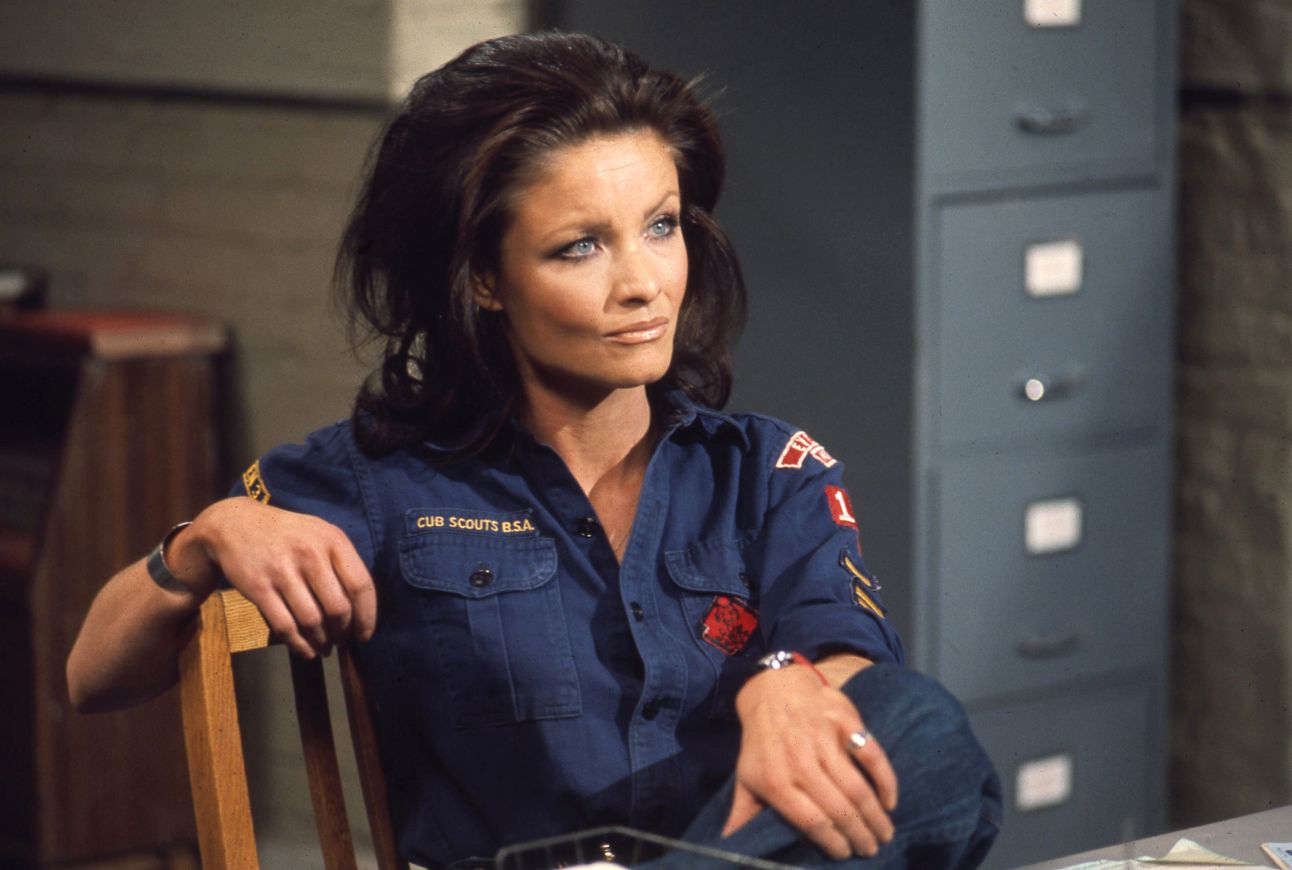
Kate O’Mara

Also appearing for the first time in this episode is Mike Pratt as Don Stacey, a hard-drinking pilot.  This would be Pratt’s final television role before his death in 1976 at the age of just 45.  Don would appear throughout the remainder of series five and the first half of series six. Whilst it’s always a pleasure to see Pratt, it’s rather tempered by how ill and haggard he looks.

Yet again, things conclude in the boardroom (episode thirteen, Warpath) as Merroney continues to scheme although it’s possible that in Jane he’s finally met his match (a decade or so later Baker and O’Mara would once again lock horns, this time in Doctor Who).  With Ted under pressure and Brian’s fate still uncertain, things are left nicely poised for the following series to pick up where this one left off.

By now, The Brothers had become a well-oiled machine and series five not only manages to develop the existing characters in a variety of ways but it also develops intriguing new ones as well.  It continues to be highly addictive stuff, especially as the Hammonds, Merroney and Jane jostle for power and superiority.  But there’s time for more personal stories as well (Jenny’s longing for another child) which ensures that the series isn’t completely boardroom and business based.

The Brothers – Series Five is released by Simply Media on the 27th of March 2017.  RRP £29.99.
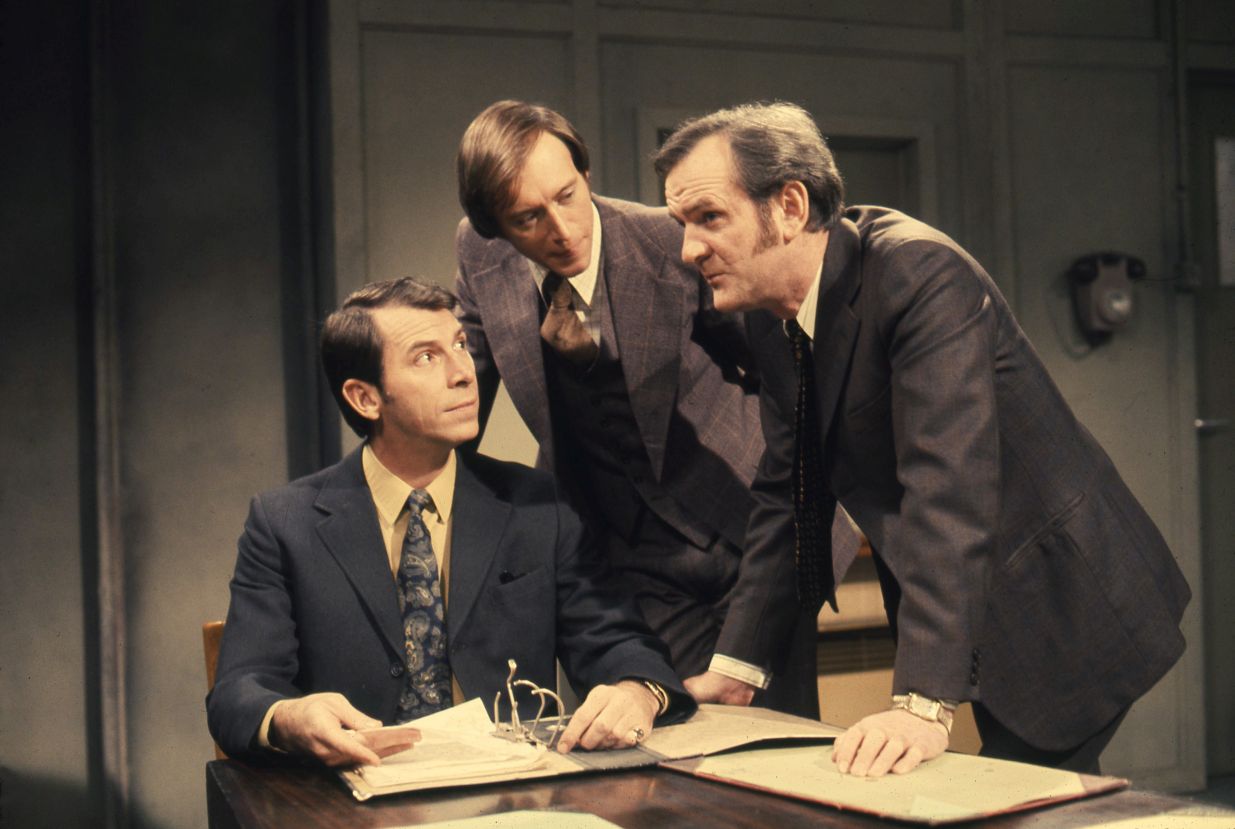
Richard Easton, Robin Chadwick & Patrick O’Connell

1990 – Series One. Simply Media DVD Review

1990, which ran for two seasons during 1977 and 1978, was set in a Britain tyrannised by the Public Control Department (PCD), a Home Office organisation dedicated to crushing free speech and any other signs of dissent.  Given the parlous state of Britain during the 1970’s, it wasn’t surprising to find a series which posited what might happen if the economy finally and irrevocably disintegrated.  And given the way things are today, many of 1990‘s themes seem eerily topical  ….

Some background to the collapse is teased out as the series progresses.  We learn that the country went bankrupt in 1983, which led to a series of swingeing restrictions from the newly-formed PCD.  These included strict rationing – not only of food, but also of housing and other essential services.  Virtually everything has been nationalised, meaning that the government has almost complete control.  Dissidents are harshly dealt with – via Adult Rehabilitation Centres – where they are treated with electro-convulsive therapy.

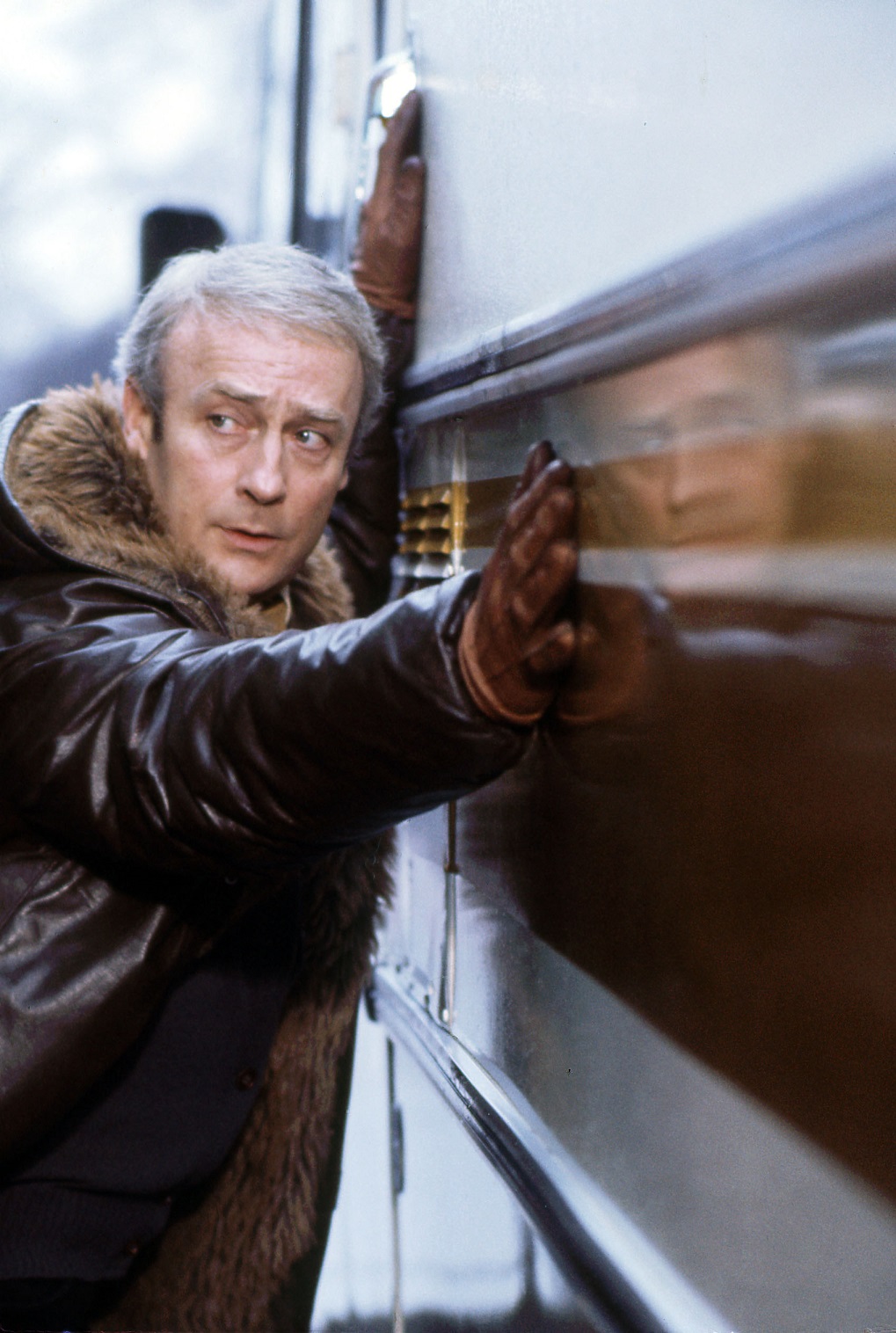
1990 is a grim place then, but there are still a few people attempting to resist the state.  One is Jim Kyle (Edward Woodward), a journalist on The Star, one of the last independent newspapers. The PCD, in the form of Controller Herbert Skardon (Robert Lang) and his two deputies, Delly Lomas (Barbara Kellerman) and Henry Tasker (Clifton Jones), keep him under close surveillance, which leads to a tense battle of nerves.

Robert Lang, Barbara Kellerman and Clifton Jones

Series creator Wilfred Greatorex (1922–2002) started his career writing for Probation Officer (1962) and quickly moved onto The Plane Makers (1963 – 1965) and its sequel The Power Game (1966 – 1969) where he acted as the script-editor.  Character conflict was key to both The Plane Makers and The Power Game and it’s plain to see that a similar format was carried over to 1990.  The heart of the series is concerned with the way the main characters (especially Kyle, Skardon and Lomas) interact.

Edward Woodward (1930 – 2009) had been acting since the mid 1950’s but it was Callan (1967 – 1972) which really established him as a household name.  His success as the world-weary state-sponsored killer allowed him to diversify (pursing his love of singing in The Edward Woodward Hour, for example) whilst cult films like The Wicker Man (1973) enhanced his profile even more.  Woodward was a quality actor and his central performance is one of the reasons why 1990 works as well as it does.

The series opened with Greatorex’s Creed of Slaves (“Necessity is the plea for every infringement of human freedom. It is the argument of tyrants; it is the creed of slaves” – William Pitt the Younger).  Kyle is penning a piece for his newspaper on the Adult Rehabilitation Centres (ARCs) which causes Skardon considerable irritation.  But that’s merely the tip of the iceberg as Kyle is also part of an organisation dedicated to smuggling people out of the country ….

There’s more than a little touch of 1984 about the series of course (Greatorex referred to it as 1984 plus six).   This is particularly evident in the opening few minutes as we observe how the PCD are able to monitor everybody, both visually and aurally, although wise old hands like Kyle are able to give them the slip with embarrassing ease.  The relationship between Kyle and the members of the PCD is already well established before the episode begins and it’s his interaction with Delly Lomas which particularly intrigues.  Since Skardon mentions that Kyle likes her cooking, it’s plain that, despite the fact they’re on different sides, there appears to be some sort of spark between them.  Or are both simply playing games? At one point Kyle directs this comment to her. “How do you look like you do and do the job that you do?”

Edward Woodward & Barbara Kellerman

The next episode, When Did You Last See Your Father?, continues one of the plotlines from episode one, concerning Dr Vickers (Donald Gee), a man who is keen to take his wife and family out of the UK. This proves to be impossible via official means, as exit visas are severely restricted.

The banality of evil runs throughout the series. On the one hand, Skardon, Lomas and Tasker are simply bureaucrats doing a job (in their minds they no doubt see themselves on the side of law and order). It’s this blurring between “good” and “evil” which is so compelling – the PCD may be oppressive, but their public face can appear to be reasonable. This is key – if you can keep the nastiness buried then maybe you stand a chance of fooling most of the people.

The first non-Greateorex script, Health Farm, stars the imposing Welsh actor Ray Smith as union leader Charles Wainwright.  Following a disastrous trip to America in which he gave a speech littered with criticisms of the British government, Wainwright is sent to an ARC for “correction”.  The shocking change in him (from the firebrand we first meet to an adjusted patient keen to toe the party line) brings home the true horror of the ARCs.

Strong guest stars continue to appear throughout the remainder of series one, such as Graham Crowden as Sondeberg in Decoy and Richard Hurndall as Avery in Voice from the Past.

The last two episodes – Witness and Non-Citizen ramp up the conflict between Kyle and the PCD. Dr Vickers, who escaped from the UK in episode two with Kyle’s help, is persuaded to return in order to testify in a show-trial against Kyle – if he does then his family will be granted exit visas.  Prior to the trial (featuring John Bennett as the prosecutor) Kyle’s office and home are targeted by PCD thugs, which causes distress to his wife Maggie (Patricia Garwood) and children.  Woodward gives a typically powerful performance, especially when Kyle finds his family are under threat.

Edward Woodward

Series one concluded with Non-Citizen. Considering how much of a thorn Kyle has been in the PCD’s side, it’s odd they’ve taken so long to decisively deal with him. But here at last they finally seem to have broken him. With his family missing, no money, no job, no home and no status, Kyle is pushed to the limit by a sadistic Skardon. It’s not surprising that Woodward once again excels here.

Although the themes of the first series of 1990 tapped into contemporary fears and neuroses, it’s fascinating how most of it still remains topical some forty years on.  The official face presented in 1990 appears to be fair and reasonable – tribunals are held which claim to offer the public an unbiased hearing and the ARC we visit is located in a palatial country home with well-manicured lawns – but scratch a little beneath the surface and it’s plain there’s something very rotten in this state.  You don’t need jackbooted guards on every street corner to create a true sense of fear, there are far more subtle ways than that ….

The way that language, spin and bureaucracy are all utilised in order to obfuscate the truth is especially instructive.  When you hear a politician complaining that the press, in the shape of Kyle, is spreading disinformation and therefore creating disharmony about the state of the economy (i.e. disseminating fake news) then the parallels to the modern world are perfectly clear.  In many ways 1990 is something of a chess game with all the major players – especially Kyle and Lomas – engaged in a game of manoeuvre and counter-manoeuvre.

Barbara Kellerman & Edward Woodward

As I’ve said, Edward Woodward is a fine leading man whilst Barbara Kellerman and Robert Lang (who receive second and third billing) offer strong support.  The gravelly-voiced Lang graced many a film and television programme with his presence and is perfect as the harassed mandarin Tasker whilst Kellerman (possibly best known for playing the White Witch in the 1980’s BBC production of The Lion, The Witch and The Wardrobe) is intriguing as Della, the apparently acceptable face of the PCD.  Kellerman didn’t return for series two, which was a shame, although this did allow the format to be shaken up a little.

Interviewed by the Radio Times prior to the broadcast of the first episode, Woodward said that the series was “either going to create a furore or pass without comment” (Radio Times, 17th September 1977).  Although it didn’t quite go unnoticed, the fact it was tucked away on BBC2 was probably part of the reason why it never became a mainstream hit. But it clearly impressed enough to be renewed for a second series.

Although largely forgotten today, 1990 is a series which deserves to be much better known, especially since its power to disturb and unsettle remains undimmed after forty years.  It’s pleasing to have the first series available on DVD, with the second to follow in May, and for those who appreciate well-crafted British character drama of the seventies it’s certain to appeal.

1990 – Series One is released by Simply Media on the 20th of March 2017.  RRP £19.99.

Shackleton – Simply Media DVD Review

Sir Ernest Henry Shackleton was a polar explorer who made three eventful expeditions to the Antarctic between 1902 and 1917.  His story has been tackled several times (for example, the 2002 mini-series starring Kenneth Branagh) but this 1983 BBC2 drama-documentary has long been regarded as one of the most authentic retellings of his exploits.

There are several reasons why this production is noteworthy.  Shackleton covered all of his Antarctic expeditions, not just the most well-known one (aboard the ship Endurance).  And since events are allowed to unfold over a number of years, this gives time for his relationships with other characters, such as Scott (Neil Stacey), to be explored in detail.  Also, it doesn’t shy away from the harsher aspects of life in the polar region (the toe amputation scene is authentically grisly).

Screenwriter Christopher Railing (who won an Emmy in 1971 for The Search for the Nile) worked from Shackleton’s journals to craft as accurate a picture as possible.  With location filming in Greenland, shot by BAFTA-award winner David Whitson, no expense was spared.

Although this ensured a visual treat for the audience, some at the BBC were less than impressed.  Will Wyatt, at the time the head of Documentary Features, recalls that “most years there was some sort of crisis. The worst was a four-part drama documentary about the Antarctic explorer Shackleton, shot on location in Greenland, around London, and at the BBC’s Ealing studios. The producer, an experienced drama production manager [John Harris], was unable to say ‘no’ to the director [Martyn Friend]. Shackleton went a disastrous record-breaking 50 per cent over budget. I told the producer he was finished with us and should return to drama, and I abandoned plans for all further drama docs.”

Whilst it’s a pity that this overspend seemed to have put paid to future productions (the same team had previously mounted the well-received Voyages of Charles Darwin) at least the money spent was put up on the screen for the viewers to enjoy.

David Schofield played Shackleton.  He made his television debut in a 1972 episode of Z Cars and worked steadily in television during the remainder of the seventies and early eighties.  After appearing in Shackleton his career continued to grow (later he chalked up appearances in Hollywood films such as Gladiator and Pirates of the Caribbean).

DAVID SCHOFIELD as Sir Ernest Shackleton.

Schofield is given strong support from an impressive supporting cast, which includes Michael Hayward, David Rodigan, Geoffrey Chater, Robert James, Robert Lang, Victoria Fairbrother, Stephen Tate, Michael Sheard, Kevin Whately and Anthony Bate.

Episode one, A Merchant Navy Man, opens with Scott’s Antarctic expedition of 1902.  Shackleton was a member of his party but due to ill health found himself sent home early.  These opening scenes sets up the tension that always existed between the pair.  Shackleton later discloses to his fiancé Emily (Victoria Fairbrother) that he found Scott to be a “button-up sort of fellow. Never manages to let his hair down.”  Shackleton, on the other hand, was approachable and friendly and seemed to be popular with the other members of Scott’s crew (there are some who contended that this was the real reason why Scott sent him home).

When Shackleton returns to London he’s invited to give several talks on their achievements and it’s here that Schofield really starts to make his mark, as Shackleton paints a vivid picture of life on the ice.  “I cannot leave you tonight without trying to convey to you something of the vast magnificence of the south polar regions. The immense forces of those contending elements – rock. wind, ice and water. The stillness of the Antarctic night. And the comradeship. The intensified feeling of life, of being alive, which men feel in those frozen wastes and which draws them back as if their souls belong there.”

With Shackleton now married to Emily and ensconced in Edinburgh, life for both of them is settled, but he regards the Antarctic as unfinished business.  With the backing of William Beardmore, a wealthy Clydeside industrialist, Shackleton mounts his own expedition, but finds that various obstacles – most notably Scott – have to be overcome first.  Scott insists he has a prior claim on the McMurdo Sound area and Shackleton agrees not to use it as his base of operations.  But when the heavy pack ice forces him into McMurdo, Scott – back in England – regards it as a personal betrayal.

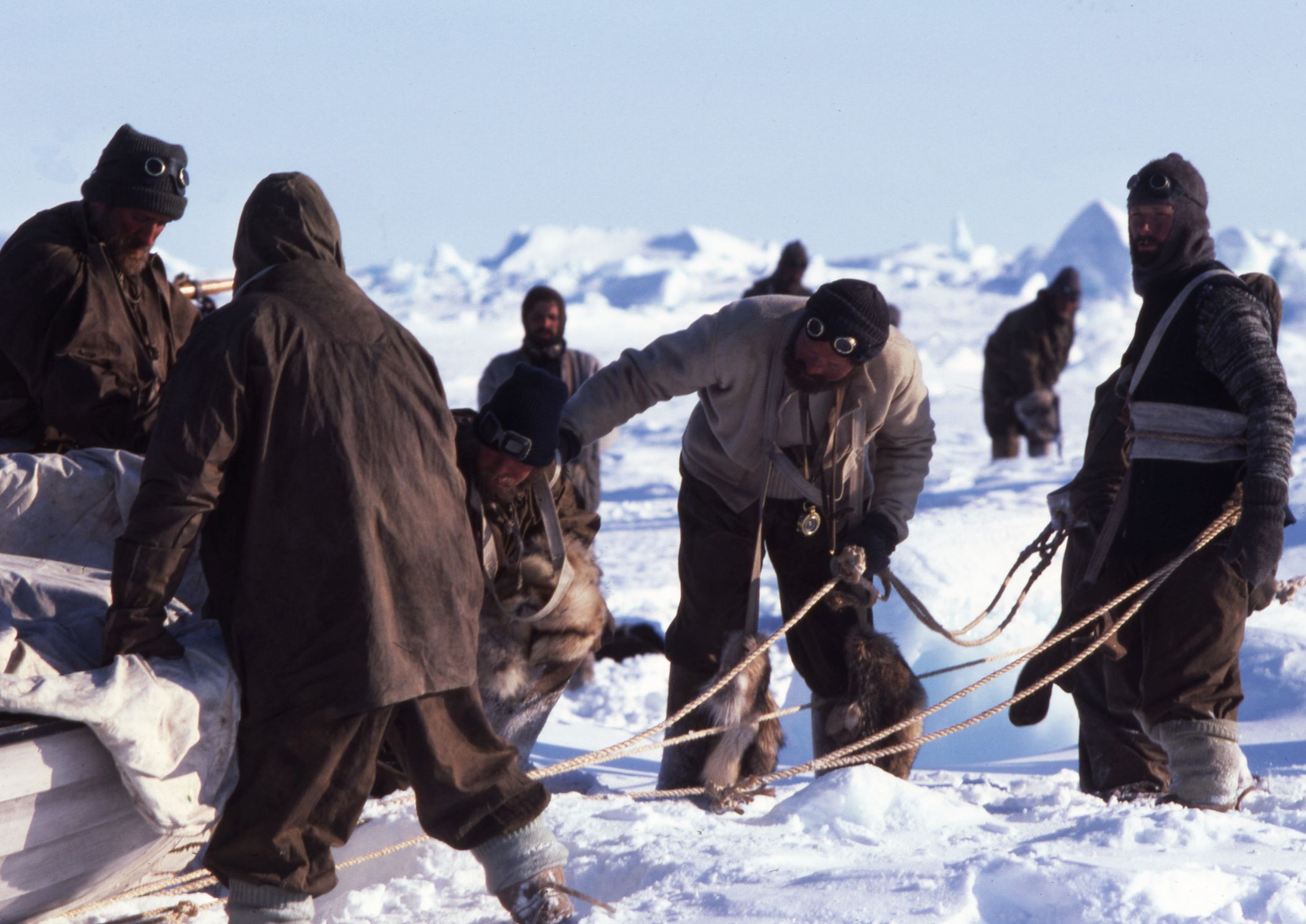
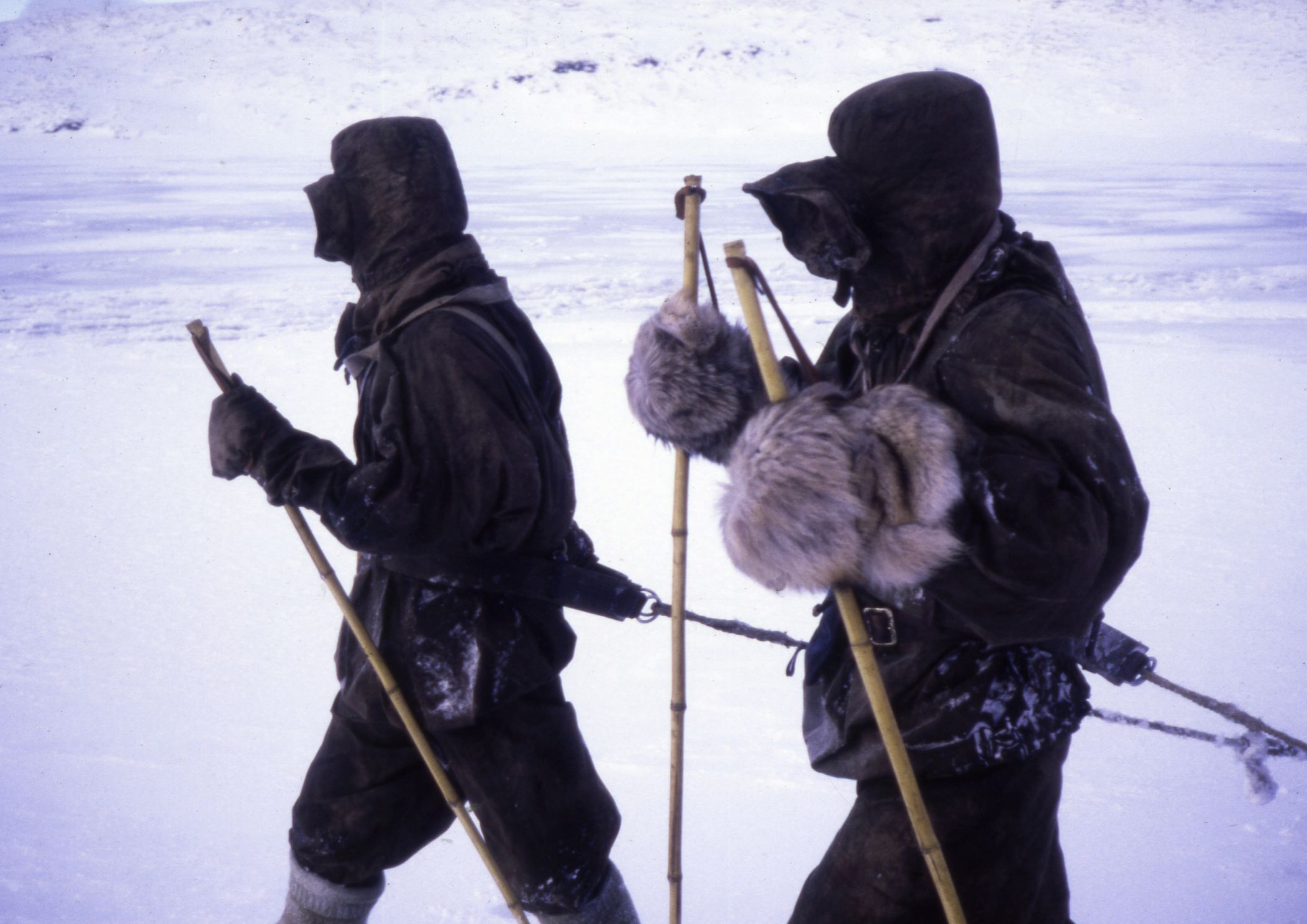
The ominously titled Our Dead Bodies Must Tell The Tale sees Shackleton and his three companions, Frank Wild (David Rodigan), Jameson Adams (Kevin Whately) and Eric Marshall (Andrew Seear) set out for the South Pole.  Between late 1908 and early 1909 they made a trip of sixteen hundred miles, ending up just ninety seven miles away from the pole.  This feat turned Shackleton into a national hero and earned him a knighthood.

Rodigan is excellent throughout the series as Wild, one of Shackleton’s firmest friends and supporters whilst Seear adds a discordant note here as Marshall, a man who dislikes Shackleton intensely (he refers to him as “a moody vacillating boaster”).  A young Kevin Whately has a decent role as Adams.  There’s a nicely observed sense of desperation as the months tick by – they may have started sprightly enough (with plenty of supplies and horses to pull the sledges) but all four would have been well aware that the return trip would be the real test.

By then the horses have passed their usefulness, leaving the men to pull the sledges.  With dwindling supplies there’s a sense of anxiety that the others may have already left.  Will they return to base just to find an empty hut?  The stark beauty of the barren wastes, with Shackleton’s words in voice-over provided by Schofield, make the first half of this episode a memorable one.

Although not directly connected to Shackleton, Scott’s ultimately doomed attempt to reach the South Pole first was a key moment from this era of exploration and closes the second episode on something of a sombre note.

With the South Pole conquered by Amundsen, Shackleton needs a new challenge. He announces that he will mount a Trans-Antarctic Expedition to cover the entire continent – from a landing in the Weddell Sea, via the South Pole to McMurdo Sound.

This journey, which begins in the boat Endurance, is by far the most compelling part of Shackleton’s exploits.  Episode three, Men Wanted for Hazardous Journey, starts with Shackleton’s recruiting drive and shortly afterwards his hand-picked crew (and the odd stowaway) are making good progress after departing from South Georgia.

But it doesn’t take long before the ice pack traps Endurance solid.  It’s an awe-inspiring sight and if Shackleton did go as far over budget as Will Wyatt claims, then it was worth every penny.  Trapped fast in the ice, the crew have to find ways to while away the time (and this they certainly do – with a variety of light-hearted jinks, including dog racing and a spot of cross-dressing).

When the Endurance is lost, Shackleton and the others are left stranded on a large ice floe which they hope might drift towards civilisation.  Even in such a desperate situation, Shackleton continues to be an inspired leader and David Schofield continues to impress in the title role.

The desperate plight of Shackleton and his men continues during the fourth and final episode, Cape Horn – Or South Georgia?  It covers an especially memorable part of the Shackleton story – which begins with a hellish 800 mile journey made by himself and five others in the open-lifeboat James Caird.  But when they reach their destination – South Georgia – that’s not the end of the story as Shackleton and several others have to make a land crossing over the island (through previously unchartered territory) in order to reach the Norwegian whaling stations and safety.

With the stakes so high – if Shackleton doesn’t succeed then the rest of his crew – (stranded on Elephant Island) – are sure to die, Cape Horn – Or South Georgia? engages the attention right from the start.  It’s a suitably dramatic conclusion to the series, leaving the fate of the men stranded on Elephant Island unresolved until right before the end.

The series is split between Shackleton’s Antarctic explorations and his life back in the UK. The first instalment has the least Antarctic footage (it tops and tails the episode) but the scenes in Britain are integral to understanding Shackleton the man, so they shouldn’t be regarded as mere filler.

Not only do they document his relationship with his wife (with hints that his restless spirit has placed a burden on their marriage) but his clashes with the establishment are also key to understanding his character. And it doesn’t hurt that the establishment is represented by character actors as good as Geoffrey Chater, Robert James and Anthony Bate – all of whom excelled at playing precisely these types of stuffy, patrician mandarins.

The contrast between Shackleton’s comfortable life in Britain and the hardships endured by himself and the others in the Antarctic is teased out in several unspoken ways. Firstly, the members of the Royal Geographical Society are shown to be frequently dismissive of Shackleton – even going so far as to suggest (not to his face, at least) – that his claims of nearly reaching the South Pole were exaggerated.  How can they, stuck in their comfortable existence, even begin to understand the hazards and joys of Antarctic exploration?  And when we see Shackleton on his lecture tours, it again highlights how his audience (smartly dressed, affluent) live in a totally different world from the one he’s describing so vividly.

One of the ways you know if a real-life drama or documentary has engaged your attention is if it inspires you to seek out more information about the subject. That’s certainly the case for me here, as I get the feeling that – even with four hours to play with – the surface of Ernest Shackleton had only been scratched.  David Schofield deftly brings to life all of his key characteristics though – his anti-authoritarian streak, the way he inspired trust and loyalty amongst his crew, etc – and the fact that Shackleton’s words, via Schofield’s voice-overs, are heard throughout the four episodes also helps to bring us closer to the man.

Shot on 16mm film, it’s a pity that the print looks rather tired-looking and faded in places. Restoration or a new print struck from the negative would have been welcome, but – as so often with niche archive releases – had this been done then it’s doubtful the title would have been economically viable.  What we have is certainly watchable though – and no worse than other material of the same vintage – so once the story begins to grip, it shouldn’t be much of an issue.

Classed as a drama-documentary, Shackleton is much more drama than documentary. Although we hear a voice-over at key points, since they’re Shackleton’s words (delivered by Schofield) it doesn’t break the drama feel of the programme.

Shackleton is an engrossing tale of old-fashioned heroism and friendship. David Schofield excels as Shackleton, but in many ways the real star is the unforgiving, forbidding Antarctic (there’s no doubt that without the Greenland material it would  be much the poorer).  A quality production, it grips from beginning to end.  Warmly recommended.

Shackleton consists of four 60 minute episodes across two discs.  It’s released by Simply Media on the 13th of March 2017.  RRP £19.99.

Q – Volume 2 (Q8/Q9). Simply Media DVD Review

164454- Chief Crazy Horse Sleeve.indd

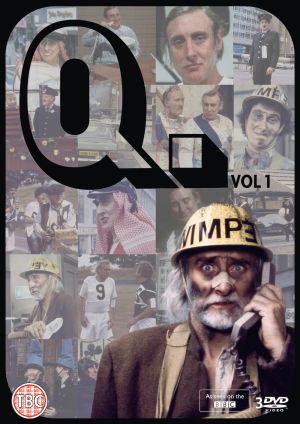
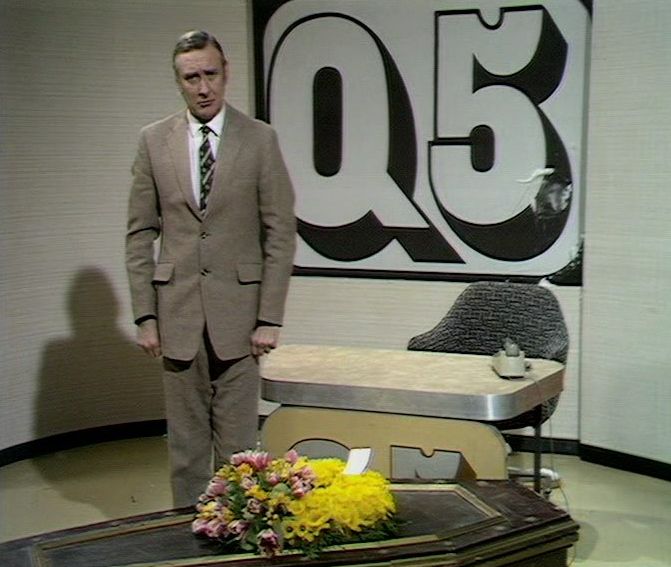
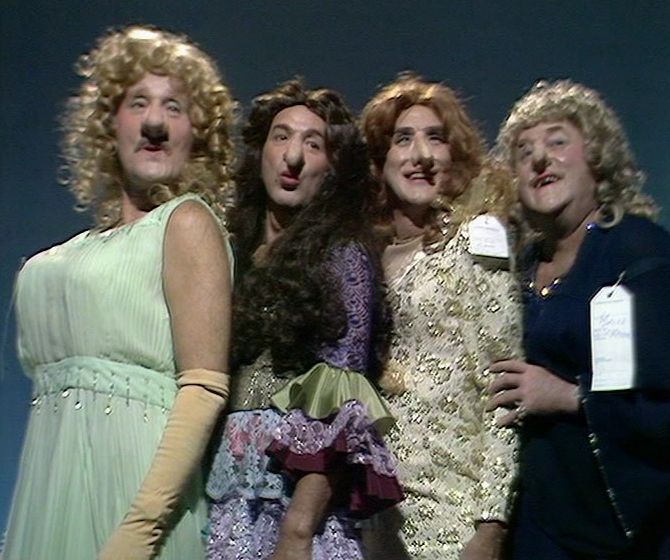
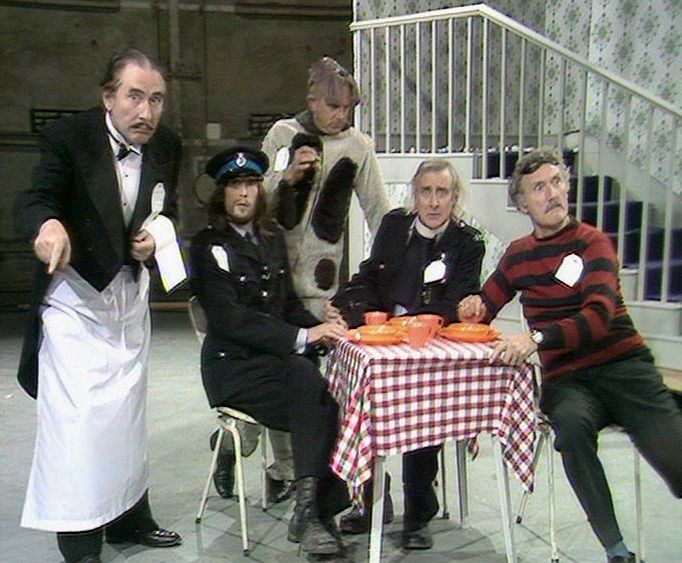
Q  – Volume 2 contains the final two series of Spike Milligan’s highly distinctive (and that’s putting it mildly) comedy series – Q8 and Q9, broadcast in 1979 and 1980.  For those new to Q, I’ve discussed the first three series here.

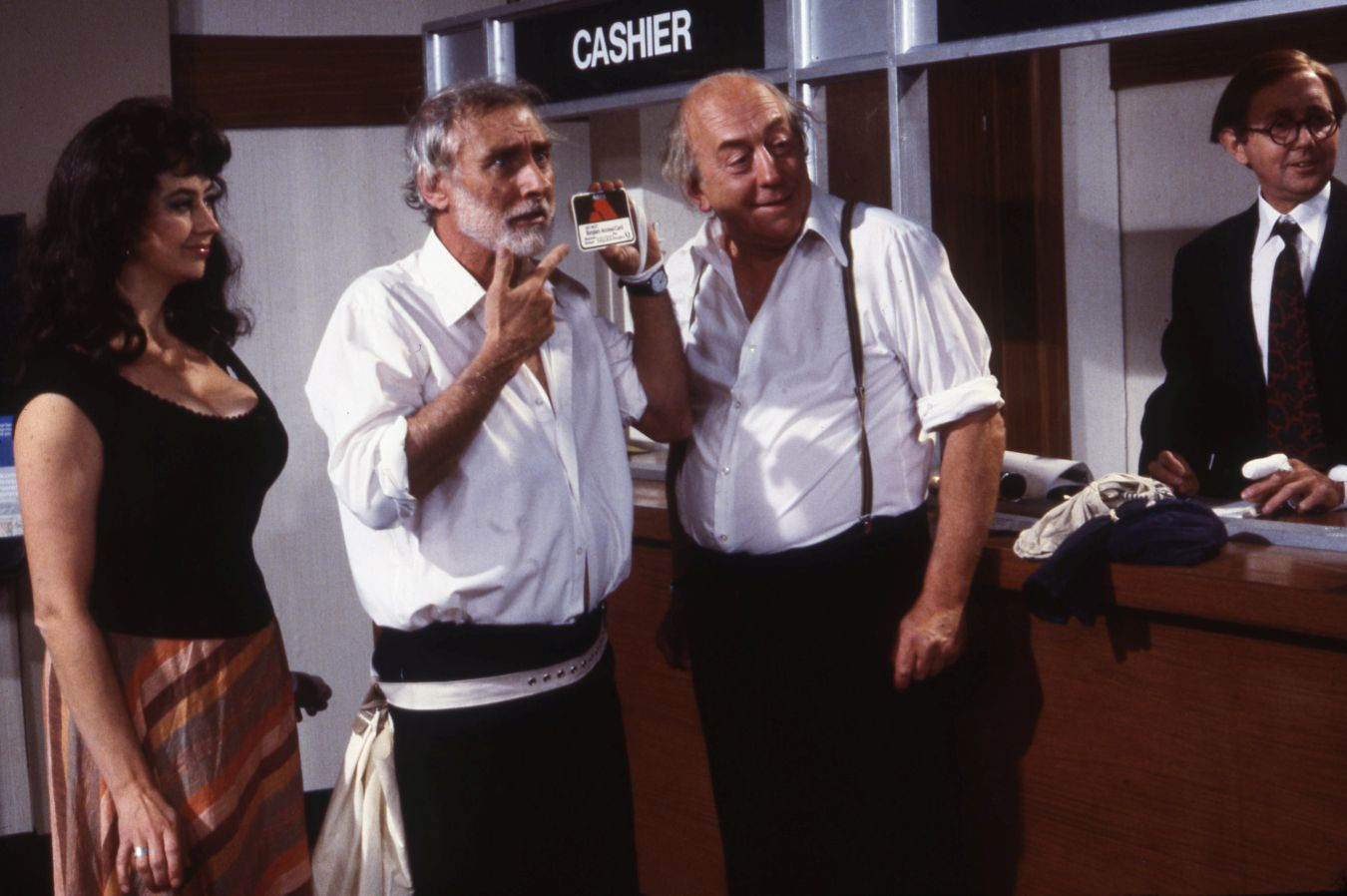
The formula remains the same – scripted by Milligan and Neil Shand, Q8/Q9 offers up another twelve episodes of unique comedy.  Familiar faces from previous series – John Bluthal, David Lodge, Alan Clare, Stella Tanner, the remarkably curvaceous Julia Breck and Keith Smith – return for Q8, whilst Bob Todd makes his Q debut.  A familiar face from his years with Benny Hill, be slips seamlessly into the fold.

Todd was an excellent utility player and quickly became a key figure in many of the sketches (similar to Peter Jones in Q6), Bluthal’s gift for mimicking Hughie Greene and others is put to good use again, Keith Smith has some nice moments (most notably dangling upside down on a rope), David Lodge (he starred in Cockleshell Heroes you know) is always a joy, Stella Tanner handles all the non-glamorous female roles with aplomb, Alan Clare is still (deliberately) a terrible actor whilst Julia Breck unashamedly provides more than a touch of glamour.

hi026748651

Q8, like the three previous series, is almost impossible to characterise.  It delights and baffles – sometimes in equal measure, although sometimes the balance decisively tips one way or the other.

Q often seems to be teetering on the brink, with all the cast, especially Spike, frequently having to fight the giggles (often not very successfully). Most sketch shows tend to break the fourth wall occasionally, but few ever played about with the artifice and conventions of television like Q did.

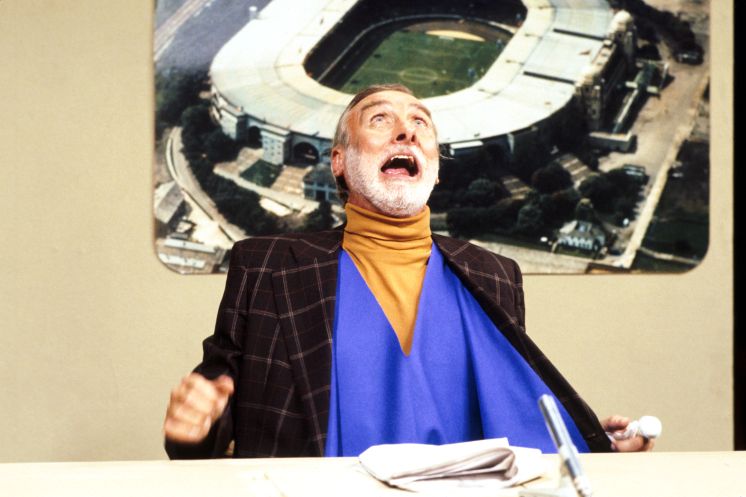
Having said all that, some elements are quite trad. Proceedings tend to kick off with Spike behind the desk, reading a series of news items which depend on wordplay. Not too dissimilar from The Two Ronnies …..

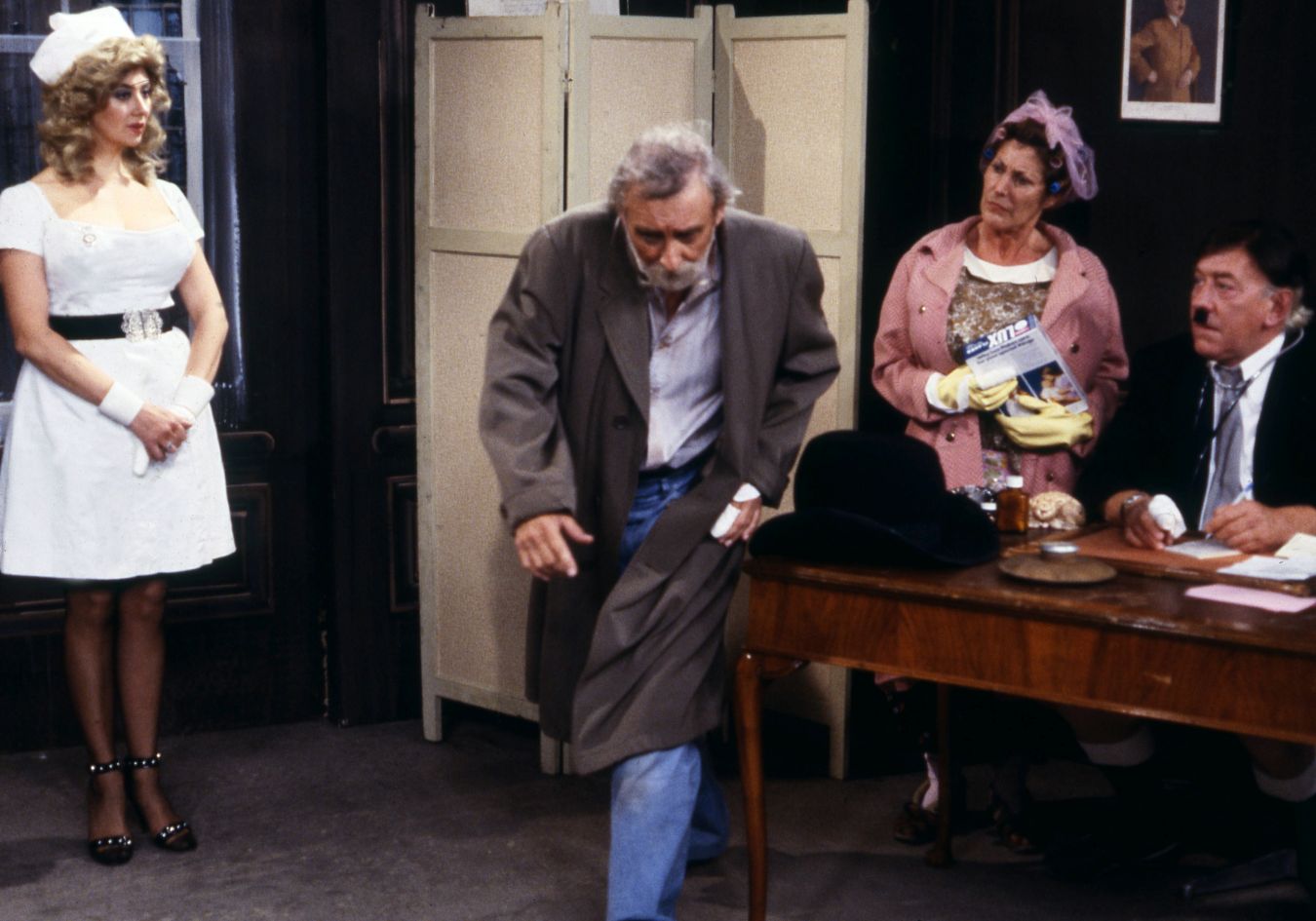
But after the relative sanity of the news we rush headlong into the first sketch of Q8. Stella Tanner is a housewife, Spike is her husband. Out of nowhere a pantomime horse, wearing pyjama bottoms, comes clopping across the screen to the sound of The Onedin Line theme.

This gets a polite reception from the audience, but Spike clearly wanted more. “Well, that didn’t get much of a laugh, ladies and gentlemen. I don’t think you understood the full nuance of that joke.” This is typical Spike – toying with the audience (both in the studio and at home) by producing moments which aren’t particularly funny, but then forcing the laughs to come by various methods. Bringing an elephant on seems to do the trick here.

The sketch then moves to a doctor’s office, where the doctor (Todd) is, naturally enough, dressed as Adolf Hitler. Spike drops his trousers to reveal he’s wearing stockings and suspenders whilst a football theme (Tony Gubba on commentary duties) continues. And when there’s nowhere else to go, all the cast edge towards the camera, repeating the mantra “what are we going to do now?”

hi026746728

And that sketch, in a nutshell, sums up Q. You have to be prepared to buy into Spike’s world and go with the flow – if you’re looking for well constructed comedy with neat punchlines you’re very much in the wrong place. Staples of the previous series (such as blackface and Irish jokes) remain very much in evidence, meaning that those who are easily offended are definitely in the wrong place.

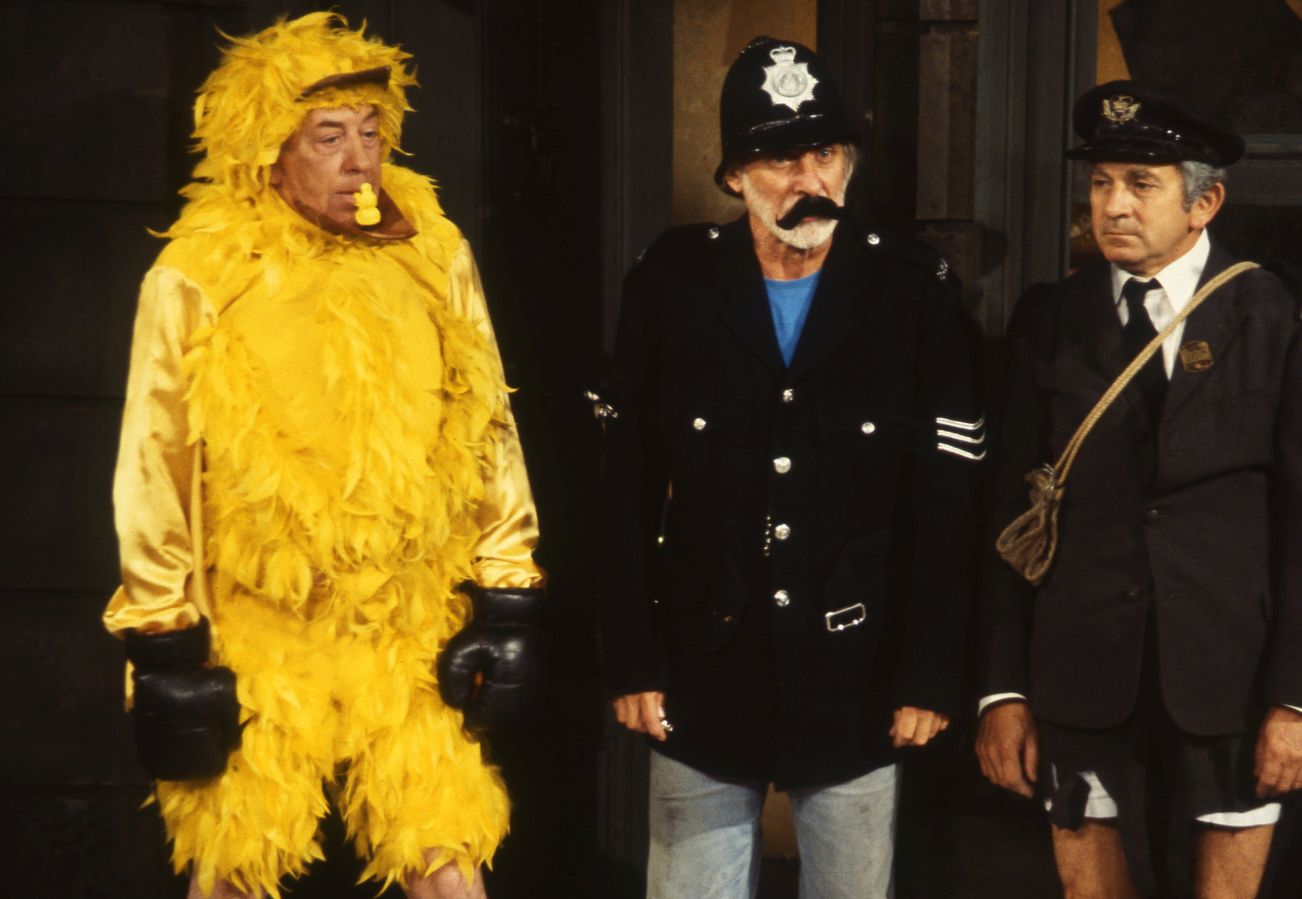
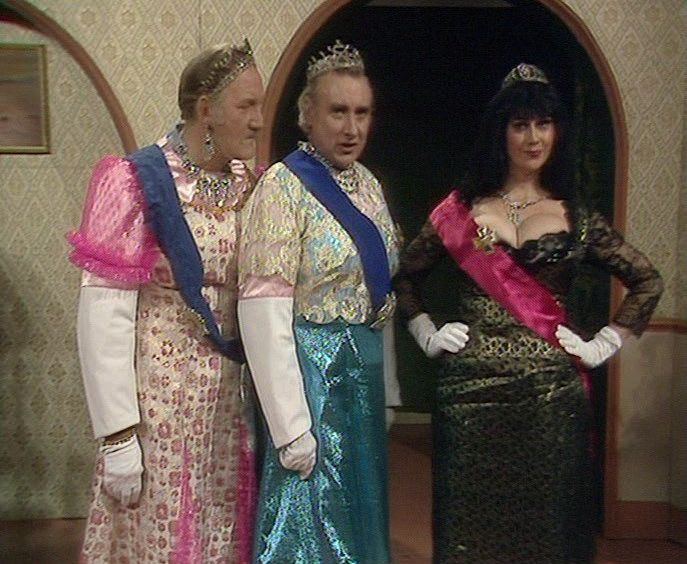
Spike’s obession with Adolf Hitler remains as constant as ever. Hitler highlights include his song and dance act as a contestant on Opportunity Knocks. The Royal Family are also regular targets (the sight of the Royals all wearing tubas on their heads is an unforgettable image).

The musical spots throughout Q8 and Q9 are provided by Spike and Ed Welch, who perform a selection of their own songs. Spike’s skills as a comic songwriter are well known, but here we have an opportunity to hear some of his non-comic material (as well as providing him with a chance to occasionally play the trumpet). These spots offer the audience a few moments of calm each week.

Later highlights of Q8 include a typically surreal sketch which mashes up traffic wardens and WW2 (and also features stripteases from both Julia Breck and Bob Todd – something for everyone then). Johnny Vyvyan, a highly distinctive stooge probably best known for his appearances with Tony Hancock, makes a few brief appearances. Spike’s tribute to the late Sir Edward Elgar, utilising the B-flat garden hose, is yet another typically unique Q moment.

After being absent for a few shows, David Lodge makes a welcome return for a sketch where he and Spike demonstrate how different nationalities would deliver that old chestnut, “there’s a fly in my soup.” With Katie Boyle on hand to provide scores, ala the Eurovision Contest, it’s a typically ramshackle few minutes with both Spike and Lodge (but especially Spike of course) barely able to control their giggles. Michael Parkinson pops up in the last episode of Q8 to take part in another ramshackle skit.

hi026746732

It’s business as usual for Q9. Spike and most of his regular band of contributors (apart from Stella Tanner) return.

The first Q9 sketch has a WW1 theme, featuring Alan Clare as an umpire (with ridiculously large shoes) overseeing a battle between the Germans (Spike) and the English (Todd). It gets much stranger from there on in, although since Julia Breck makes an appearance in a remarkably tight top it’s inevitable there will be a reference to knockers ….

Spike dresses as Max Miller for an undertakers sketch, whilst Breck is dressed in very little (there’s clearly something of a theme here). Lounging on the other side of the set is Raymond Baxter, yet another familiar BBC face making an unexpected appearance. Baxter, a long-time presenter on Tomorrow’s World, is the ideal host for a feature which promises to “defeat the cemetery shortage” by “firing your loved one into outer space”. Baxter’s authoritive persona and his scripted disdain at the lines he’s been given helps to make the sketch even funnier.

Later in the series there’s a sketch set in a British Rail lost property office. Spike is the attendant, dressed as the Lord Chief Justice of England, and proceedings kick off with Spike and Bob Todd conversing in morse code. Say what you like about Q, but it’s never predictable. Todd can barely control his giggles, whilst David Rappaport passes by purely so that Spike can make a groanworthy pun. Throw in a spot of blackface, Keith Smith as a ghost and David Lodge dressed as a woman and you’ve got everything that made Q the series it was in highly concentrated form.

hi026746720

One of the notable things about Q9 is the way in which the audience is involved. The news items feature regular cutaways to the audience and on other occassions Spike will stop a sketch if he senses things aren’t going well in order to seek feedback from the audience. It’s always interesting to see exactly who turned up to watch these shows (something of a cross-section it must be said, with both young and old represented).

Bracing and baffling, but never boring, Q8 and Q9 are further examples of the skewered genius of Spike Milligan.  Whatever era of British comedy you love, you’re bound to get something out of this set so, like Q Volume 1, it’s an essential purchase.

Hopefully There’s A Lot of It About (Q10 in all but name) will follow shortly, maybe with some of the Milligan miscellanea from his time at the BBC, but if even it doesn’t, at least all that exists of Q (bar a few small trims for rights reasons) is now available on shiny discs, something which just a year ago would have seemed highly unlikely.

Q – Volume Two is released by Simply Media on the 27th of February 2017.  RRP £19.99.

hi001918810

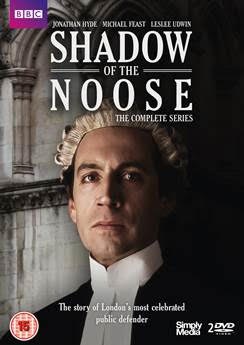
Shadow of the Noose – Simply Media DVD Review

shadow

Sir Edward Marshall Hall (1858 – 1927) was a barrister in the late Victorian and Edwardian eras who, thanks to the media, became a well-known public figure.  The most notorious court cases of the time – especially high profile murders – were reported in great detail by the newspapers, which meant that the exploits of Marshall Hall were keenly followed by millions of armchair criminologists.

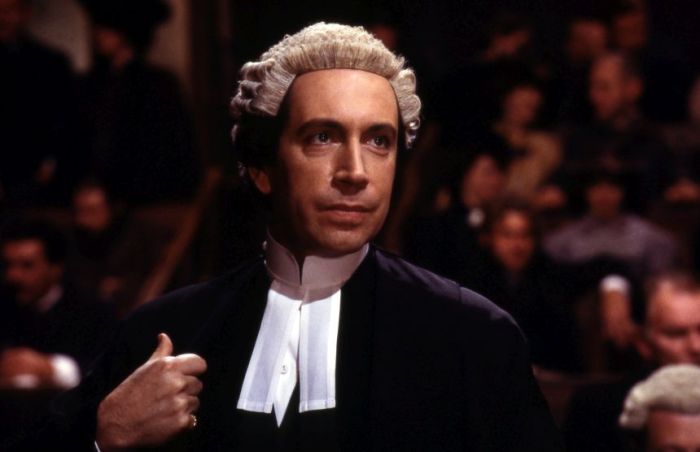
Marshall Hall’s cases have been adapted for both radio and television.  In 1996, John Mortimer presented a six-part BBC Radio 4 series starring Tom Baker.  Prior to this, in 1989, came Shadow of the Noose, with Jonathan Hyde as Edward Marshall Hall, which ran for a single season on BBC2.  All of its eight episodes are contained within this double DVD release.

Jonathan Hyde (b. 1948 in Brisbane, Australia) moved to Britain in the late 1960’s and graduated from RADA in 1972, winning the Bancroft Gold Medal.  His television career began in the late 1970’s with appearances in programmes like The Professionals, Thomas and Sarah and Agony.  Post Shadow of the Noose he continued to ply his trade in British television, in diverse series such as Lovejoy, Jackanory, The Memoirs of Sherlock Holmes, Peak Practice and Cadfael, before his profile was raised thanks to a string of Hollywood movies – Richie Rich, Jumanji, Titanic and The Mummy.

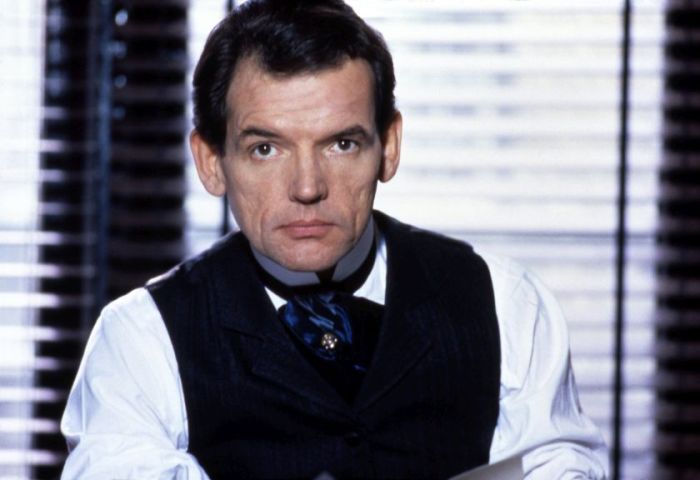
Appearing alongside Hyde in all eight episodes was Michael Feast as Edgar Bowker, Marshall Hall’s faithful assistant, whilst a host of quality actors made one-off appearances.  These include Peter Capaldi, David Bradley, Caroline Quentin, Gawn Grainger, Robert James, Sian Phillips, John Bird, David Schofield, Tony Doyle, David Rintoul, Alan MacNaughton, Michael Melia, Phil Rose, Philip Franks, Morris Perry, Derek Newark, David Graham, Tim McInnerny and Kevin Stoney.  An impressive roll call.

The series debuted with An Alien Shore (tx 1st March 1989).  Defending a prostitute discovered with one of her client’s bodies in a trunk seems like a hopeless case.  Everybody has already decided that she’s guilty, which explains why no barrister in London will take the case.  No-one, except Edward Marshall Hall.

Shadow of the Noose
Jonathan Hyde

We have to wait some eighteen minutes before sighting Hyde, but as soon as Marshall Hall is introduced the series wastes no time in deftly defining his character.  Newton (Terry Taplin), the solicitor representing the accused, Marie Hermann (Victoria Fairbrother), admits that it’s likely she’s going to hang, but tries to tempt Marshall Hall with the promise of fame (the trial is bound to be widely reported, so the defending barrister – even if he’s unsuccessful – will become a household name). He’s uninterested in fame, but is pained that Marie has no-one to defend her, and that’s why he takes the case.

When the focus switches to the courtroom then An Alien Shore, like the remainder of the series, really comes alive.  Marshall Hall thrives in this combative environment, becoming remorseless and implacable. An excellent example of this is the grilling he gives the murdered man’s son, Henry Stephens (Michael Melia).  Hyde excels whenever Marshall Hall is in cross-examining mode.

Despite the series title, not every case was a battle to save unfortunates from the gallows – for example, Noblesse Oblige finds Marshall Hall involved in a libel case. Lady Scott (Siân Phillips) alleged that her son-in-law’s marriage to her daughter foundered due to his homosexual tendencies. After a period of illness, Marshall Hall is desperate for any case to restore his fortunes, although this one is something of a comedown (and he’s not even the leading barrister).

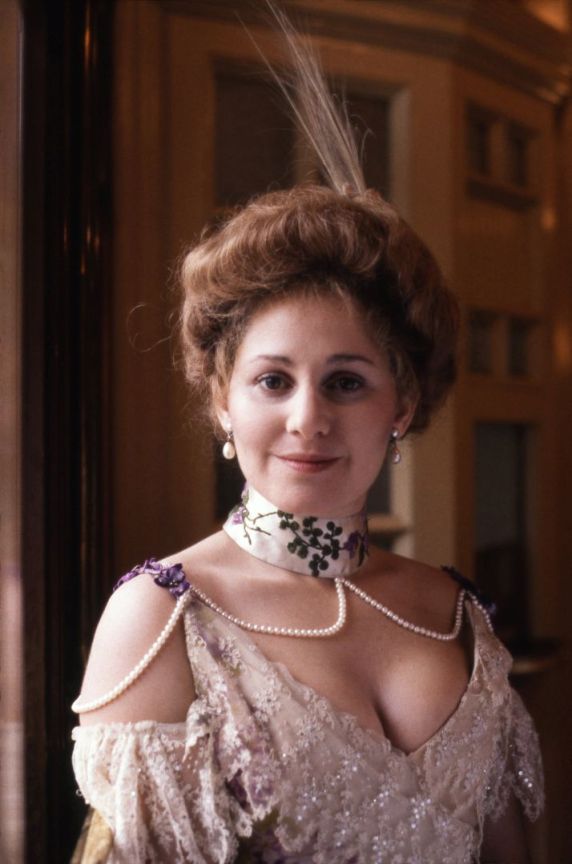
Phillips is as good as you’d expect and the appearance of John Bird as Mr Justice Hawkins is another treat.  This episode also introduces Leslee Udwin as Henriette Kroeger, who will shortly become Mrs Marshall Hall. John Leeson, sporting an impressive false beard, pops up as a private detective.

Shadow of the Noose
Leslee Udwin

Gone for a Soldier opens with Marshall Hall’s marriage to Henriette. This was either a whirlwind romance or a great deal of their courtship took place off screen (the latter I assume). David Rintoul guests as Captain James Fairbrother, a rich and privileged military man who had a brief but disastrous relationship with his wife’s maid, Annie Dyer (Natalie Forbes). Annie’s child, born out of wedlock, is found smothered, with Annie apparently confessing to the crime. Marshall Hall springs to her defence.

It’s a strong episode in which Forbes is compelling as an unmarried mother struggling to survive in a harsh world.  Particularly affecting is the short scene down in the cells mid-trial, where Annie cradles a bundle of rags, pretending that it’s her dead child.  The case also shines a light on Marshall Hall’s character, especially his tragic first marriage.

Another first rate guest cast – Caroline Quentin, Gawn Grainger, Tony Doyle, Morris Perry, Derek Newark – are assembled for Beside the Seaside.  This week, Marshall Hall is called upon to defend Herbert Bennett (Vincent Riotta) who is accused of killing his wife Mary (Quentin).  He’s a womanizer, a conman and a spy, but is he guilty of murder?

The opening few minutes of Gun in Hand are played at an extreme pitch of melodrama, not previously seen in the series.  Edward Lawrence (David Bradley) and his mistress, Ruth Hadley (Nicola Duffett), are engaged in a violent argument.  As Ruth taunts and attacks him (a wonderfully blowsy performance by Duffett), Lawrence rushes off to find a gun, whilst the poor downtrodden maid cowers in the corridor.  A few minutes later several shots are fired and we see Lawrence cradling the dying woman in his arms.

Lawrence, a big wheel in Wolverhampton, has many influential friends – including the Mayor – so he can call upon the best, such as Marshall Hall.  Bradley has several stand-out scenes, especially before the trial where Lawrence is briefly reunited with his wife (devotees of Survivors will  be pleased to see Julie Neubert as Mrs Lawrence).  This episode has a generous amount of courtroom action, featuring Marshall Hall in full theatrical flight.  It’s easy to see why John Mortimer admired him so, and it’s clear that he borrowed certain character traits for his most famous creation, Horace Rumpole.  Both loved to bait judges and Marshall Hall’s final speech to the jury here is pure Rumpole ….

Turn Again offers a change of pace, as Marshall Hall becomes the centre of the story.  After winning a libel case for an actress against the Daily Mail, he finds himself targeted by the paper.  He declared that his client’s reputation deserved the same degree of consideration as any lady in the land, including that of Mrs Alfred Harmsworth (the wife of the Daily Mail’s proprietor).

Shadow of the Noose
David Schofield

Alfred Harmsworth (David Schofield) doesn’t take kindly to this and vows to break Marshall Hall.  Another excellent cast (Alan McNaughton, Kevin Stoney, Philip Franks, David Neal, amongst others) enhance an absorbing episode which raises some interesting points about the power of the press (which are as relevant today as they were then).  Because Marshall Hall refuses to apologise to Harmsworth he has to sit and watch the entire press pack wage an intensive vendetta against him. Hyde really hits a peak here as an embattled Marshall Hall finds himself under extreme pressure.

Next up is one of his most famous cases, The Camden Town Murder.  Peter Capaldi plays Robert Wood, tried for the murder of a prostitute called Emily Dimmock.

The opening drags a little, probably because Wood is not a terribly likeable or sympathetic character, but once Marshall Hall gets involved the pace picks up. The trial – with a typically barnstorming performance from Marshall Hall – is a memorable one (the noise from the public gallery helps to ramp up the tension) whilst the legendary David Graham, as Mr Justice Grantham, is the latest familiar face to sit in judgement.

The series concluded with Sentence of Death.  Marshall Hall’s latest client is one of the most infamous murderers of the early twentieth century – Dr Hawley Harvey Crippen (David Hatton).

Hatton makes an impression, with limited screentime, as the diffident Crippen, whilst Marshall Hall’s recreation of the night of Mrs Crippen’s death is easily the standout moment.  But there are a few problems with the episode – firstly, most people will be well aware of Crippen’s fate and secondly, Marshall Hall’s involvement with Crippen turns out to be fairly negligible (uniquely, this is the only episode which doesn’t feature a setpiece courtroom scene).   Having said that, it still poses some interesting questions – had Crippen accepted Marshall Hall’s instructions, would he have hung?  It’s more than likely that Crippen may have ended up guilty of manslaughter only and therefore would have served a relatively short prison term.

By the late eighties, although an increasing amount of drama was being shot on film, videotape was still also widely in use.  Shadow of the Noose was shot entirely on VT, although the production was far from straightforward. An asbestos scare at BBC Television Centre meant that the studios were put out of action and the series was forced to relocate to a warehouse in Bristol. But not shooting in a dedicated studio certainly gave Shadow of the Noose a different feel – for example, the lighting feels more natural. The move may have been bourne out of necessity, but it ended up working in the series’ favour.

It’s a pity that the timeline between each episode is rather vague.  In real terms, the cases we see in the series took place over a period of a decade or more, but there’s never any feeling that time has passed.  And although we see his first marriage in flashback and are present for his second, Marshall Hall’s off-duty life isn’t really touched upon.

These small niggles apart, there’s little to fault across all the eight episodes.  Shadow of the Noose is a consistently strong series, powered by Jonathan Hyde’s electric performance.  His Marshall Hall is a pure showman – delighting in taunting judges and wooing juries – whilst the uniformly excellent guest casts help to bring the stories to life.  A wonderful series which I’m delighted to finally see released on DVD.

Shadow of the Noose is released by Simply Media on the 20th of February 2017.  RRP £24.99.

Shadow of the Noose
Terry Taplin, Jonathan Hyde and Michael Feast

Connections – Simply Media DVD Review

connections2

James Burke (b. 1936) first came to prominence on Tomorrow’s World during the mid sixties, where his relaxed and conversational tone provided a sharp counterpoint to his co-presenter, the more precise and patrician Raymond Baxter.  His profile on TW meant that he was an obvious pick for the BBC’s Apollo coverage – he would go on to helm numerous hours of live television alongside Patrick Moore and Cliff Michelmore.

After leaving TW in 1971, Burke moved onto his own series, The Burke Special (1972 – 76), in which he examined various aspects of modern life and conjectured how they might develop in the future.  Already in place was Burke’s trademark style of swiftly jumping from one subject to another and some of the topics covered – such as test tube babies and gun control – ensured that the series generated a certain level of controversy.

Burke then moved out of the studio and onto film for Connections (1978).  Subtitled An Alternative View of Change, it sought to challenge the accepted linear view of technological progress.  Burke would argue that no part of the modern world can be regarded in isolation – instead you need to track back through history to find apparently unconnected events which can be linked together in order to show a continuity of change.

This interdisciplinary approach wasn’t to all tastes and neither was Burke’s presenting style – contradicting himself or walking out of shot during mid-sentence, for example.  But it’s fair to say that Connections was a programme which made a deep impression on a section of its audience and – whether you disagree or agree with all his theories – still provides substantial food for thought.

This three disc set contains the following –

The Trigger Effect – Original broadcast 17th October 1978

Death in the Morning – Original broadcast 24th October 1978

Distant Voices – Original broadcast 31st October 1978

Faith in Numbers – Original broadcast 7th November 1978

The Wheel of Fortune – Original broadcast 14th November 1978

Thunder in the Skies – Original broadcast 21st November 1978

The Long Chain – Original broadcast 28th November 1978

Eat, Drink and Be Merry – Original broadcast 5th December 1978

Countdown – Original broadcast 12th December 1978

Yesterday, Tomorrow and You  – Original broadcast 19th December 1978

connections-01

Burke’s idiosyncratic style is clear right from the opening moments of The Trigger Effect. He asks the audience (“would you do me a favour?”) to consider all the man-made objects in the room where they’re sitting (television, lights, etc) and the impact they have on their lives. He then moves out of shot, leaving an empty frame for a few seconds, an obvious visual cue which gives the audience some “thinking time”. It’s a good example of the way Burke challenges the viewers not to be passive observers, but instead to interact with the arguments and theories he’s generating.

In addition to Burke’s sometimes provocative statements, Connections boasts impressive visuals, thanks to the skills of director Mick Jackson. Jackson’s later and very varied CV includes the Whitney Houston/Kevin Costner movie The Bodyguard, the devastating nuclear drama Threads and the Ray McAnally political serial A Very British Coup.

Connections allowed Jackson a wide palette in which to craft some striking images.  And he was granted a very healthy budget – the series took fourteen months to shoot, travelled to nineteen countries and took in a hundred and fifty individual locations along the way.

Jackson’s eye for the unusual can be seen in the first episode as even the simple act of Burke travelling in a lift is presented in a memorable way. But this isn’t simply gloss for the sake of it – Burke makes the point that just as we have become increasingly dependent on technology, so our understanding of how it works has decreased sharply. Does he know how a lift works? No, he just accepts that it does.

I take going up in the world like that for granted. We all do. And as the years of the 20th century have gone by, the things we take for granted have multiplied way beyond the ability of any individual to understand in a lifetime. The things around us, the man-made inventions we provide ourselves with, are like a vast network, each part of which is interdependent with all the others.

This increasing dependency on technology is examined during The Trigger Effect as Burke looks back to a massive power-cut which engulfed New York in 1965. With discordant music (courtesy of Richard Yeoman-Clarke from the BBC Radiophonic Workshop) and the help of those who were present, re-enacting their roles, it’s presented in highly a dramatic fashion.

connections-02

“What does survival without technology look like?”. Burke effectively paints a nightmarish picture of the stuggles inherent in existing in a world without electricity (tapping into many of the themes developed in numerous post-apocalyptic dramas, such as Survivors) and then links this back to show how previous civilizations, such as the Ancient Egyptians, could be said to have been the first technological nations. He therorises that once an invention – such as the plough – is created, it must inevitably lead to further inventions through the ages (even if the connection between them isn’t immediately apparent).

The series’ aims are restated at the start of Death in the Morning.  Burke reflects that because knowledge of the future is impossible, tracing a modern man-made object back thousands of years is somewhat akin to a historical detective story, with twists and wrong turns along the way. He sets things up nicely by teasing us that the modern intention of this edition “affects the life of every man, woman and child on Earth” but doesn’t say what it is. Instead, his story begins two and a half thousand years earlier in the Eastern Mediterranean and is concerned with money, but will have become something totally different when we reach the present day. How we get from there to here, the intuitive leaps Burke makes and the visual imagery along the way, all help to make this a typically captivating instalment.

Highlights of later episodes include Burke’s imaginative arguments which connect the Little Ice Age of 1250 – 1300 AD to a whole host of later inventions, including the chimney and diverse objects as buttons and knitting (episode six, Thunder In The Skies).  Also of interest is Eat, Drink and Be Merry, which discusses how modern credit – the plastic credit card – can be traced back to the Dukes of Burgandy, the first state to use credit.  This then springboards into the problems of keeping food fresh (a particular issue for large armies in the nineteenth century) and Burke then presses on to show how these innovations led to the Saturn V rocket which took men to the moon.

The final edition, Yesterday, Tomorrow and You, neatly summaries everything that we’ve learnt in the series to date and returns to a theme posed by Burke posed at the start of the series, concerning the way that the world is developing increasingly advanced technology at a rate faster than our ability to understand it.  Should we be concerned about this, or just accept that change is inevitable?

With its globe-trotting camerawork, Connections engages on several levels.  Not only is it a visual treat, but it’s an intellectual one as well.  It may flit from subject to subject, but James Burke remains the series’ solid centre and his quirky approach helps to ensure that the series is much more than a series of dry lectures.  Picture quality is what you’d expect from material of this era – had fresh prints been struck from the negatives it could have looked much better, but as always it’s a question of cost.  What we have is perfectly watchable though.

Nearly four decades on, the series still engages, entertains and stimulates – a testament to the work of James Burke, Mick Jackson and the whole production team.  Warmly recommended.

Connections is released by Simply Media on the 7th of February 2017.  RRP £24.99.

connections 03.jpg

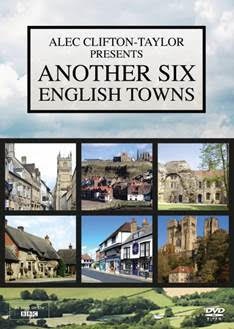
Another Six English Towns – Simply Media DVD Review

another

Another Six English Towns, originally broadcast in 1984, was the third and final series in which Alec Clifton-Taylor cast his expert eye over the architectural merits of a variety of English towns.  My review of the first two series can be found here.

The format remains unchanged.  Architectural historian Clifton-Taylor inspects the streets and notable buildings of each town, dispensing approbation or disfavour as he sees fit and quietly applauding those towns which have managed to preserve their status without recourse to the horrors of modern life (high rise buildings and pebbledash being two particular bête noires of his!).

We open in Cirencester, the capital of the Cotswolds, which finds Clifton-Taylor in an approving mood.  He’s particularly taken with the pleasing mixture of styles on display, commenting that “in the market place, the buildings burst forth into a chorus of painted stucco”.  The town’s mansion, Cirencester House, complete with a ten thousand acre park, also catches his eye.

Up next is the fishing town of Whitby, which nestles on the North East coast.  The ruins of Whitby Abbey are striking and whilst St Mary’s Church may look somewhat unprepossessing from the outside, inside it’s quite a different matter.  Clifton-Taylor regards it as “a thrill. Absolutely unforgettable. Not a work of art, but a most illuminating social document.”

Bury St Edmonds has an impressive collection of Georgian buildings, created with different varieties of coloured clay, although Clifton-Taylor is a little miffed that “they are so smothered with Virginia creeper that one can hardly see what colour they are!”  This town has rich pickings elsewhere though – the town hall (reconstructed by the notable eighteenth century architect Robert Adam) appeals, as does the Theatre Royal, designed by William Wilkins, architect of the National Gallery.

Clifton-Taylor travels to Wiltshire for the fourth episode, his destination being Devizes.  He’s saddened that the twelfth century castle no longer remains (on the site is something he dubs as a pantomime recreation from the Victorian period) and reacts in horror when he sees that some of the eighteenth century timber houses have recently “been smothered with that most repellent material – pebbledash!”

He remains in a slightly caustic mood when he reaches Sandwich, sorrowfully reflecting that the original character of some of the 16th century brickwork has been submerged under fresh coats of paint.  But the Salutation, a house and garden designed by Sir Edwin Lutyens (1869 – 1944), is much more to his taste.  Clifton-Taylor has little hesitation in regarding him as “the greatest English architect of the last 100 years”

The series concludes with Durham.  He’s impressed with the Cathedral, especially the vaults, which have remained unchanged for eight and a half centuries.  Clifton-Taylor is also taken with a public convenience, built in 1841, concluding that “few loos, surely, can hold their heads so high!”.  An idiosyncratic, but delightful, moment.

A lovely snapshot of six English towns frozen in time some thirty years ago, Another Six English Towns will certainly appeal both to those who have already collected the first two series, as well as anyone who is familiar with the featured locations and wishes to compare then to now.

Shot on 16mm film, the picture quality is on a par with the earlier releases.  The prints are rather faded and dirty in places, but still perfectly watchable.

Alec Clifton-Taylor maintains the persona of a kindly headmaster, eager to give credit where it’s due, but also quite capable of expressing irritation and exasperation (albeit with his impeccable manners always intact).  An impressive series of travelogues, Another Six English Towns also educates and informs, as Clifton-Taylor is effortlessly able to show how different periods of architecture can live side by side in harmony (or not, as the case may be!)

Another Six English Towns is released by Simply Media on the 23rd of January 2017.  RRP £19.99.

towns

The Brothers – Series Four. Simply Media DVD Review

brothers-s4

The story so far.  Following the death of Robert Hammond, control of his thriving haulage firm was split four ways – equal shares were distributed to his three sons – Ted, Brian and David – whilst the fourth equal share went to his mistress Jenny Kingsley.

With no-one in overall control, there’s a constant power-struggle as elder son Ted (currently managing director) finds himself under attack from his two brothers, both convinced they could run the company better than him.  And the trauma in the boardroom is matched by equal strife in their respective bedrooms.

We’ve previously seen that David’s (Robin Chadwick) recent marriage to the lovely, if rather doormat-like Jill (Gabrielle Drake), has had a few wobbles, mainly because his roving eye was elsewhere.  He hadn’t actually been unfaithful, but Jill’s suspicions created a definite rift which they attempt to heal during this run of episodes.

Middle son Brian (Richard Easton) suffered even more spectacular marriage problems during the third series, although he remained blissfully unaware.  His bored wife Ann (a wonderful performance by Hilary Tindall) found solace in the arms of smooth advertising type Nicholas Fox whilst chugging down far too many sleeping pills and drinking heavily.  Her unhappiness at feeling trapped in a loveless marriage culminated in an overdose, although she appears to be quite her old self again now, even to the extent of restablishing contact with Nicholas.

Elder son Ted (Patrick O’Connell) doesn’t have any complaints on the marriage front, but that’s only because he’s single.  He has his eye on someone though – Jenny Kingsley (Jennifer Wilson).  His desire to wed his father’s mistress has been a running thread for a while, although Ted’s mother, the powerful matriarch Mary (Jean Anderson), strongly disapproves.  This might have been one of the reasons why Mary keeled over at the end of series three with a heart attack.

So as series four begins, all three brothers face challenges in their personal lives whilst the business of running Hammonds also continues to cause them tremendous strife.  And waiting in the wings is ambitious merchant banker Paul Merroney (Colin Baker), a man who always has his own agenda …..

brothers-01
Colin Baker and Murray Hayne

The series four opener, Emergency sees Mary seriously ill in hosptal. She was discovered (off-screen) by Ted and Jenny who had returned from a brief holiday with life-changing news – Ted had proposed and Jenny accepted. But their happiness quickly evaporates as he blames himself for leaving his mother on her own.

We then see a nice visual signifier of the bond between mother and son. Whilst Ted goes to the hospital to await further news, Jenny stays behind to contact Brian and David as the camera lingers on a framed portrait of Mary and Ted. It’s a clever, unspoken touch which forshadows the dominance Mary will exert over her elder son.

When Mary gets better she has no compunction in telling Ted that he can’t marry Jenny. He might be a hard-headed businessman but he always seems to come off second best with his mother. And this is enough to convince Jenny that marriage to Ted would be impossible.

Business matters take centre-stage again with episode two, Secret Meetings, as Brian and David plan to offer merchant banker Martin Farrell (Murray Hayne) a seat on the board – the first step in their plan to make Hammonds a public company. Of course they’ve yet to mention this to Ted, so sparks inevitably fly when they do. Having said this, it’s surprising that Ted accepts their plan meekly, but he’s got an idea up his sleeve – if Bill Riley also joined the board then (provided he always votes Ted’s way) the status quo would remain. This is classic Brothers, featuring plot and counterplot.

If David has always irritated me somewhat, then Brian is a much more sympathetic character, even if it’s impossible not to feel a little frustrated by the way he remained oblivious to Ann’s lengthy relationship with Nicholas Fox (Jonathan Newth). But even Brian’s blindness could only continue for so long without it seeming totally unbelievable, and when he finally twigs it’s the cue for high drama. His first reaction, of course, is to reach for a drink (heavy alcohol consumption, along with an equally herculean nicotine intake, is something of a feature of the series).

brothers-02
Richard Easton

Brian doesn’t confront Ann straight away, which enables him to calmly twist the knife and make her feel even more guilty than she already is. This is a good move – since you know the showdown will happen eventually, making us wait a little simply heightens the expectation. But Brian’s not backward in letting Ann know exactly what he thinks of her when the truth does emerge. “Your whole world begins and ends with yourself. You’re shallow, you’re superficial and utterly self-centered. Nothing matters to you but self, self, self!”

Ann doesn’t take this lying down. “You are a predictable bore, Brian. You don’t want a wife, you want a second mother. Somebody to cook and clean for you, and tuck you in and say, ‘there, there’ whenever you’re not feeling very well.” Both Richard Easton and Hilary Tindall are firing on all cylinders throughout (the end of episode five – Partings – as Brian knocks a shocked Ann to the floor is one of a number of stand-out moments). If Brian, following his separation from Ann, becomes something of a tortured figure then so does Ann herself. It slowly dawns on her that Nicholas Fox (a serial seducer) has no interest in a long-term relationship ….

David decides to become a racing driver (!) which means that Jill has to wait anxiously on the sidelines, hoping that he won’t be hurt. Frankly, this isn’t much of a role for Gabrielle Drake (compare and contrast to the plotlines dished out to Hilary Tindall) so it’s no surprise that she decided not to return for the fifth series.

Drake might also have been a little miffed that Jill didn’t turn up until the fourth episode and when she does finally make her first appearance it’s only to be once again verbally smacked down by David (he’s less than impressed with her anniversary gift to him – a penthouse flat – complaining that he doesn’t want to be a kept man). He eventually accepts it, but does so with his usual brand of charmless ill-grace.

brothers-03
Robin Chadwick and Gabrielle Drake

The on/off relationship between Ted and Jenny allows Martin Farrell to step in (much to Ted’s extreme annoyance) whilst Bill struggles with the responsibilities of having a seat on the board. He’s always been proud to have the respect of the men, will this change now he’s one of the executives?

Brian’s run of bad luck continues in Saturday, but the later part of series four focuses on company traumas. The decision to make Hammonds a public company offers up a new range of storytelling possibilities. Until now, boardroom squabbles have largely been confined between the three brothers, but now that anyone is free to buy shares everything changes.

And this is partly where Paul Merroney comes in. He’s introduced in the fifth episode as a colleague of Farrell’s, brought in to advise how Hammonds should go public and although his screentime throughout series four is quite limited, he’ll become more central in the years to come. But Colin Baker, in his first regular television role, certainly makes the most of the material he’s given.

The wonderful Richard Hurndall guests in Bad Mistake as Clifton, an influential investment manager crucial to Hammonds’ future. Ted’s blunt style leaves Clifton less than impressed, giving Hurndall a chance to demonstrate his familiar icy, amused detachment. This episode also marks the point where Merroney starts to have an influence on company policy, much to Ted’s disgust.

The series finale, the aptly named The Crucial Vote, sees Ted struggling to keep the board united as the infighting intensifies. There’s no doubt that there will be many more twists and turns to come in the battle for Hammonds, which bodes well for future series.

Interweaving numerous plot-threads across its fourteen episodes, series four of The Brothers continues to be highly addictive entertainment. Brian and Ann’s disintegrating marriage is the definite highlight although the unstable powder-keg that is Edward ‘Ted’ Hammond also entertains. Patrick O’Connell plays Ted as a man constantly struggling to keep his anger in check – which can be seen most clearly any time that Jenny and Martin Farrell exchange glances. David’s fleeting desire to be a racing driver is less easy to swallow, but at least the one racing-centric episode – The Race – is not without interest, especially for the authentic track footage.

If you’ve yet to sample the world of the Hammond brothers, then now – with the first four series available and the remaining three due out by the end of the year – would appear to be the ideal time to do so.

The Brothers – Series Four is released by Simply Media on the 9th of January 2017.  RRP £29.99.
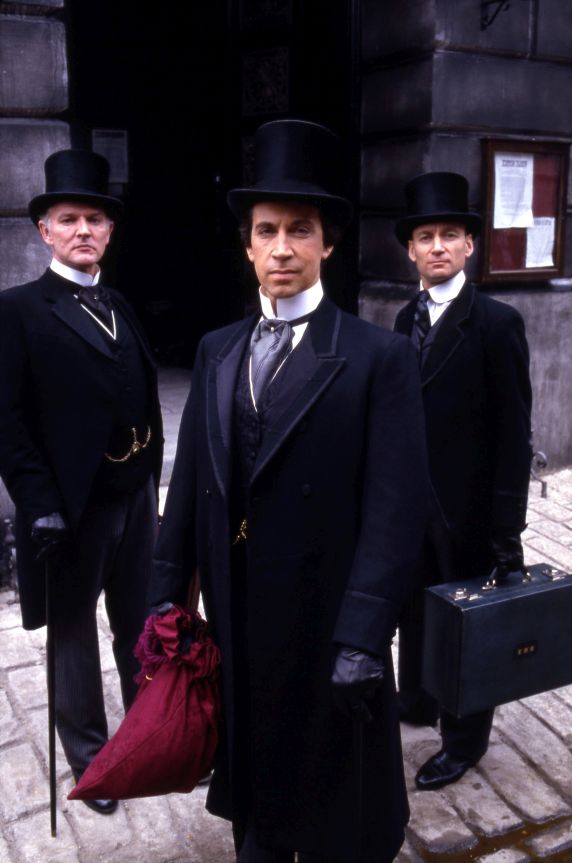
brothers-04
Richard Easton, Robin Chadwick and Patrick O’Connell

The Brothers – Series Three. Simply Media DVD Review

brothers-3

Broadcast in early 1974, series three of The Brothers continues to chronicle the travails of the Hammonds, a family who are often at loggerheads as they squabble over the best way to run their business – Hammond Transport Services.

As seen in series one, the death of Robert Hammond initiated considerable strife and internecine bickering.  Hammond’s eldest son Edward (initially played by Glyn Owen, but from series two by Patrick O’Connell) assumed he’d have sole responsibility of the company, so was more than a little taken aback when the terms of his father’s will were divulged.  Equal shares were also left to his two brothers – Brian (Richard Easton) and David (Robin Chadwick) – as well as to his father’s secretary and mistress, Jenny Kingsley (Jennifer Wilson).

Mix in Robert Hammond’s widow Mary (Jean Anderson), an imposing matriarch keen to interfere at any given moment, as well as Brian’s rather forceful wife Ann (Hilary Tindall) and David’s more pliant wife Jill (Gabrielle Drake) and you have a combustible mixture with plenty of dramatic possibilities.

This helps to explain why The Brothers was a popular success, running for seven series between 1972 and 1976 (and indeed could have carried on a little longer still – there’s no sense by series seven that the concept had run out of steam). But although it clicked with the public it doesn’t seem to have been highly regarded by the BBC themselves. They appeared to have forgotten about it when preparing the drama budgets for 1977, meaning that there wasn’t any money left to commission an eighth series. It sounds barely credible, but it seems to be the case that one of the BBC’s top-rated dramas of the mid seventies ended because of an accounting quirk.

And it wasn’t just a success in the UK.  Colin Baker delights in telling the following story.  “A phone call came in from the foreign minister of Israel. He said that not only was he devastated not to be able to come and meet us as he was such a fan, but he suggested that had the Six Day War been launched on the Arab nations on the day that The Brothers was being shown instead of Yom Kippur, they would have had more of a chance of taking the nation by surprise because everybody watched The Brothers!”  This seems so ridiculously unlikely that it must be true ….

The series also generated a rather bizarre spin off – an LP entitled Christmas with the Hammonds.  Offering such delights as Edward ‘Ted’ Hammond and Paul Merroney warbling their way through Good King Wenceslas and a full-cast assault on The Twelve Days of Christmas it’s a wonky treat from beginning to end.  Alas, it’s unavailable on CD, but the dedicated treasure hunter should be able to track down the original vinyl.

Created by Gerard Glaister and N. J. Crisp, it’s always interested me how Glaister could create and produce series such as Colditz and Secret Army on the one hand, but also dabble successfully in soap-like drama like as The Brothers and Howard’s Way as well (Trainer was something of a misfire though).

By the third run of The Brothers everything’s clicked nicely into place, although the introduction of Colin Baker as Paul Merroney (a character dubbed by some as a proto JR Ewing) is still a series away.  Others yet to appear include Kate O’Mara (a regular from series five onwards) and Liza Goddard (who debuts in the sixth series).  Hopefully if Simply keep up a healthy release rate then we’ll soon have the chance to enjoy all of their performances (Colin Baker fans won’t have too long to wait though, as series four is due for release in January 2017).

brothers-07
Richard Easton, Gabrielle Drake and Hilary Tindall

The third series opens with N.J. Crisp’s The Hammond Account.  Brian has never been the most dynamic of characters, which means he tends to be manipulated by his much more ambitious wife Ann. Here, she’s keen that Brian should be managing director, rather than Ted.  Several key threads are also introduced – such as the brothers debating how advertising could help to grow the company’s fortunes whilst Jill and David’s marriage starts to fray at the seams.  Meanwhile on the shop floor, the trusty Bill Riley (Derek Benfield) is concerned that a new boardroom initiative will have a detrimental effect on driver recruitment ….

The first few moments of The Hammond Account also serves as a good introduction for new viewers, as we see David and Ted show a potential client, Mr Rogers (Robert MacLeod) around their site, explaining to him exactly how Hammonds operates. Shot on 16mm film, it’s a lovely slice of grimy seventies working life. Bill’s reluctance to countenance management employing non-union drivers is another reflection of that era.

Temptation is in the air in these early episodes. The smooth-as-butter advertising man Nicholas Fox (Jonathan Newth) is interested in Ann whilst David continues to find himself pursued by Julie Lane (Gillan McCutcheon). Hilary Tindall gives a wonderfully layered performance throughout the series as Ann. Given that Brian is a bit of a wet lettuce, you might expect that she’d be keen to seek solace elsewhere, but Ann does genuinely seem to love him. This is touched upon when she wonders why he doesn’t kiss her more often – he replies that he never knows whether she wants him to or not. Just a couple of lines of dialogue, but it illuminates both their characters very well.

brothers-02
Gabrielle Drake

Sadly, Jill is a much more pallidly drawn character than Ann. Gabrielle Drake is lovely of course, but she doesn’t have a great deal to work with (and since Jill rather devolves as time goes on, fading more and more into the background, it’s no surprise that Drake decided to leave after the next series). By contrast, Julie is a much more vivid presence, who also sports some rather fetching clothes. David’s tank top, which appears in episode two, is memorable too, albeit for a different reason.

The quartet of company directors – the three brothers plus Jenny – provides the series with plenty of decent character conflict. One such flashpoint occurs when Brian’s desire to move into Europe is temporarily blocked by David. Thanks to some dense plotting from the previous series, Hammond’s financial future has been secured by Jill (who has provided a substantial amount of capital to guarantee their loans). This becomes a source of considerable tension between the brothers. Both Richard Easton and Robin Chadwick raise the roof during these scenes.

Moving onwards, it’s pretty obvious from the title of the first non-Crisp story, Hijack, what direction Eric Paice’s story will take (we see a Hammond lorry, driven by Bill, hijacked and the goods stolen). There’s a decent amount of location filming as we follow Ted and Bill from Dover to Boulogne as Hammonds start to push into Europe.

Derek Benfield excels during the next episode, Riley, as Bill’s criminal conviction (even though it was all the way back in 1948) is raked up by the police, who decide he’s implicated in the hijack. Hugh Sullivan and Brian Grellis play the two coppers who delight in making Bill sweat. Grellis (DS Pritchard) is the good cop whilst Sullivan (DI Parsons) is most definitely the bad cop.  Temporarily moving the focus away from the boardroom and bedroom squabbles and onto Bill Riley is a good move – since it helps to shake up the narrative a little.

The later part of series three sees the tensions in David and Jill’s marriage continue to simmer away (David’s always been more than a little smackable, so Jill has all my sympathy) whilst Ann finds herself increasingly drawn to the cravat-wearing Nicholas. And there’s a marvellously awkward dinner party as Mary entertains Jenny for the first time. Given that Jenny had a long-term affair with Mary’s late husband it’s not a surprise that their relationship has rarely ventured above glacial. But this brief moment of rapprochement quickly fades after Mary lends Jenny’s daughter, Barbara (Julia Goodman), a substantial sum of money to settle her new husband’s debts. It’s fair to say that Jenny’s not pleased about this ….

Because Jenny has no desire to be in debt to Mary, she decides to sell her Hammond shares – this sparks off an entertaining round of infighting which boils over in Conspirators. It’s a wonderfully entertaining 45 minutes from Eric Paice, packed with incident as David and Brian join forces to bid for Jenny’s shares (they also hope this will force Ted to leave the company). Ted reacts in fury when he learns what his brothers are planning, storming home and knocking back the scotches like they were water. In the end he persuades Jenny not to sell and clearly enjoys passing the news onto David and Brian.

Series three concludes in a suitably dramatic fashion with Return to Nowhere, which opens with the focus on Ann and ends with a cliffhanger centered around Mary.

With the writing credits shared pretty evenly between N.J. Crisp and Eric Paice, there’s a cohesive and coherent feel to the series. All of the regular cast get a good crack of the whip, but Hilary Tindall as Ann particularly impresses.

Picture quality across the thirteen episodes is generally very good. There’s the occasional spot of tape damage on a few episodes, but any such issues are quite brief.

Thanks to a first-rate cast and strong scripting, The Brothers – Series Three is consistently entertaining. It’s good news that the fourth series will follow shortly and also that the remaining three series are slated for release later in 2017.

The Brothers – Series Three is available now from Simply Media.  RRP £29.99.
All Good Things – Simply Media DVD Review

good

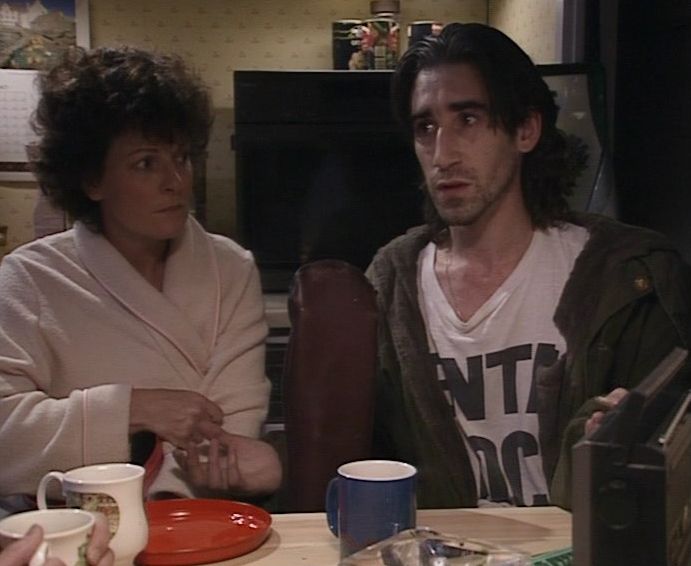
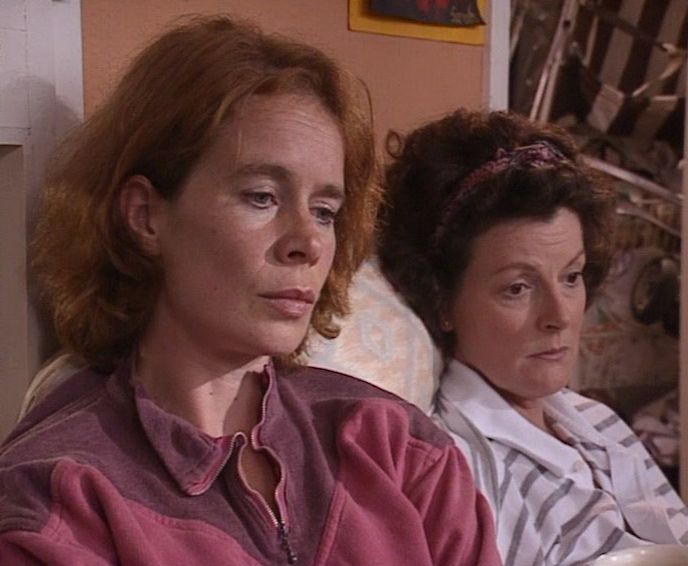
Broadcast in six episodes during May and June 1991, All Good Things by Lesley Bruce is a rather obscure piece of archive television, which given its cast-list – Brenda Blethyn, Warren Clarke, Ceila Imrie, Ron Pember, Jemma Redgrave, Ken Stott and Barbara Young amongst others – is a little surprising.

Lesley Bruce’s television credits aren’t too extensive (although she did contribute to popular drama strands such as Play for Today, Screenplay, Screen Two and Theatre Night).  We open with a married couple, Shirley Frame (Blethyn) and Phil (Clarke), who are seen arguing as they drive towards an unknown destination.  The reason for this isn’t made clear until Shirley opens the car door and we observe that she’s heavily pregnant.

Phil’s not keen about the baby’s impending arrival (their other children are now in their teens and he was looking forward to a little bit of peace and quiet – and possibly taking up a hobby, like the saxophone).  Shirley, en-route to the ante-natal class, admits – presumably for the first time – that she also doesn’t want the child (although they’ve left it far too late to do anything about this).

A sharp gear-change from comedy (Shirley’s rant is observed by all the other attendees of the ante-natal class who stare silently at her) to potential tragedy occurs when she suddenly collapses.  Is she going to lose the baby?  Well no, everything turns out fine – meaning that the scene feels a little forced and manipulative.  In drama there’s a sense that you have to “earn” moments like this, by developing your characters and the way they interact with each other.  If you just drop events casually into the narrative with no preparation it just doesn’t feel right.

But after this slightly shaky start, the opening episode – The Blessing – develops well.  Both Blethyn (b. 1946) and Clarke (1947 – 2014) were well established actors at the time and this is possibly why they’re able to quickly make Shirley and Phil seem like a real couple.  Although possibly the method of recording (All Good Things was an all-videotape production) also helped.  This was a style of television drama that (soaps apart) would vanish a few years later (from then on, drama tended to be shot either on film or tape processed to look like film) but it’s not a handicap here – videotape has an immediacy which film lacks, thereby giving the series something of a documentary “real” feel.

good-01

With a gorgeous new baby, Shirley should be the happiest woman in the world, but she’s not.  “Sometimes I feel so lonely, and bored, and bad-tempered, I could scream and yell and tear my hair out in great huge hulking handfuls!”  So Shirley needs a new direction in her life, but what?

After a little consideration she decides to go and help people – there must be plenty who need help she reasons, they just have to be found.  Naturally she begins close to home, but things don’t go well after she makes a start with her mother, Hetty Snr (Barbara Young).  Hetty, still smarting from a painful divorce, is brought to tears after Shirley loses her temper and shouts at her.  Shirley’s attempts to help her sister-in-law Elaine (Jemma Redgrave) ends in much the same way, with Elaine left a sobbing mess.

Some people might possibly decide after this that being a Good Samaritan isn’t the wisest career move but Phil – always one to attempt to put a helpful spin on matters – suggests that maybe they didn’t respond because they were family.  He’s clearly only saying this to make her feel better, but she takes it to heart and it sets up the premise for the remaining episodes – Shirley will venture out into the world, meeting total strangers and attempting to fix their lives.  But given her lack of success so far (and the fact that her own life is far from perfect) what are her chances of success?

In The Suicide, Shirley prevents a young man, Vincent Gibney (John Lynch), from committing suicide. She wants to prove to Vincent that there’s still good in the world (something he doubts) and to this end she gives him her phone number, telling him that he can call on her anytime. The inevitable happens of course, Vincent arrives and makes himself at home (much to Phil’s growing exasperation). Once again there’s a sharp disconnect between Shirley’s hopes and the reality of the situation. Lynch is entertaining as Vincent, but once again it’s Blethyn who receives all the best lines. Here, she’s finally reached the end of her tether. “My God, I can see now why everyone else gave up on you! You’ve got to be the blindest, most self-regarding, insensitive wimp anyone’s ever dragged back from the edge of the parapet.”

good-02

It might be expected that Vincent would vanish after this episode, to be replaced by a new poor soul for Shirley to look after next time. But that’s not the case as he’s present for the remainder of the series, as is Karen (Liza Hayden), who features in the next episode, Reading Lessons. This interconnectivity is a definite strength as it allows the narrative to become denser as the episodes tick by.  Karen’s another lost sheep who Shirley scoops up, but once again her good intentions seem to bring nothing but discord and discontent.

If Warren Clarke has been a little overshadowed so far, then that’s redressed somewhat in The Flat. Phil’s irritation that, thanks to Vincent and Karen, he can no longer call his house his own finally bubbles over. Clarke and Blethyn excel towards the end as they both consider the state of their marriage. Earlier, Jemma Redgrave and Ken Stott impress again as Elaine and Lawrence’s marriage continues to buckle under the strain.

In The Trip North, Shirley heads off for a bonding weekend with one of her sons (which, unsurprisingly has some rocky moments) leaving Phil at home holding the baby, literally.  I love the scene where Phil’s shaving, crooning Teddy Bear whilst holding baby Hetty at the same time. The baby clearly finds this fascinating! This leads onto a more dramatic scene where baby Hett’s facial expressions ensure that she remains the centre of attention. Never work with children or animals ….

The series concluded with Marriage Guidance. Whilst Shirley has expended all her energies into helping others, her own life has fractured (a bitter, if obvious, irony – something which is also spelled out visually in the opening credits). Phil’s relationship with Doll (Deborah Findlay) offers him peace and security – two things which are now in short supply at home. Doll and Phil are work colleagues and their affair has slowly developed over the course of the series as Shirley’s drive to help others has also increased.  Finally he elects to tell Shirley that he’s leaving her, but when it comes to the crunch will he have the guts to come right out and say it?

It’s a disquieting and bleak conclusion, which leaves the viewer free to decide what happened next. There was certainly scope for a second series to pick up where this one left off, but despite the excellent cast and generally strong writing, this was the end of the line for All Good Things.

Headed by Blethyn and Clarke, this is a series that certainly doesn’t lack on the acting front. The layered developing narrative is another plus and although it’s not always an easy watch, it is a rewarding one. With the emphasis more on drama than comedy, All Good Things is an interesting archive curio which I’m glad Simply have brought blinking out into the light.

All Good Things is released by Simply Media on the 28th of November 2016.

good-03

Q5/Q6/Q7 – Simply Media DVD Review

164454- Chief Crazy Horse Sleeve.indd

Terence Alan “Spike” Milligan, one of the key figures of British comedy, rose to prominence thanks to his work on The Goon Show.  He starred alongside Peter Sellers, Harry Secombe and (for the first two series only) Michael Bentine, with Milligan penning the majority of the scripts as well.  The Goon Show ran during the 1950’s, at a time when radio was still king, enabling Milligan’s absurd flights of fancy to reach an impressively large audience.  Informed by the traumas of his time spent in the army during WW2, The Goon Show introduced various riffs which would occur again and again in Milligan’s work (Adolf Hitler, for example, became an oft-used comedy figure).

Milligan’s earliest forays into television were on ITV during the 1950’s – The Idiot Weekly – Price 2d, A Show Called Fred and Son of Fred.  But it would be the Q series (made between 1969 and 1982) that would prove to be his enduring television legacy.  The shows were written by Milligan and Neil Shand, with occasional contributions from writers such as John Antrobus and David Renwick.  Just as Shand was an important partner on the scripting front, so Spike also seemed to draw strength from appearing alongside performers who plainly operated on his wavelength.  Some would drop in and out whilst one – John Bluthal – remained an everpresent fixture.

After something of a gap between the first and second series, Q became a more regular television fixture during the mid seventies and early eighties.  Milligan didn’t want the sixth and final series in 1982 (renamed by the BBC as There’s a Lot of it About) to be the last, but it seems that the BBC weren’t interested in commissioning any more.  That Milligan was still keen to continue is interesting – sketch comedy is often seen as a young man’s (and woman’s) game – so the fact that Milligan, at this point in his early sixties, was still energised by the thought of working in the sketch format was quite unusual.

Broadcast in early 1969, Q5 remains a landmark comedy programme.  It’s often been cited as a key influence on the nascent Monty Python team, who at the time were preparing their debut series (it would air at the end of the year).  As is probably well known, the Pythons were rather crestfallen after watching Q5, since Milligan had gleefully broken just about every rule in the comedy book they were left wondering what was left for them to do …

There’s an obvious connection between Q5 and Monty Python (Q5 director Ian McNaughton was especially requested by the Pythons since they’d admired his work with Spike) but the similarities run deeper than that, as it’s very easy to see several Q5 sketches (such as the Grandmother Hurling Contest at Beachy Head) fitting perfectly within the Python format.

But there are differences too – Q5 has a much looser, improvised feel than most of Python.  Milligan was more than happy to play with the artifice and conventions of television – he and the others would step in and out of character, wander off set, arbitrarily stop a sketch mid-way through or seem to be on the verge of corpsing.  Some sections are almost impossible to describe (a comedy riff is built up and developed almost to breaking point).

q5.jpg

This scattergun approach obviously means that not everything works – but sometimes it’s the nonsense that’s the most appealing thing. Often an idea is established but then dropped almost immediately as the show veers off in a completely different direction, meaning that whatever else Q5 is, it’s certainly not boring. Those who believe that The Fast Show pioneered the form of rapid-fire sketch comedy will have to think again ….

Given Q5’s importance in the history of British comedy, it’s a great shame that only three of the seven episodes now exist (and two of those are black and white telerecordings).  Out of the existing material, the absurdist theme is established early on (“pim-pom po-po-pom”) which you simply have to see, describing it just doesn’t do it justice.  It’s ramshackle and nonsensical, but probably the best thing in the episode.

The next surviving Q5 episode develops a theme that Milligan had first used in his Goon Show days.  Any phrase, if repeated often enough, could be guaranteed to get a laugh.  Back then it was “he’s fallen in the water” here it’s “a tree fell on him.”  The link to the Goons is strengthened thanks to several references to Harry Secombe – although he doesn’t appear in this one (but in the next episode we do hear Secombe’s unmistakable tones, as he plays a man trapped inside an elephant).   Milligan’s turn as Ned Teeth,  a mystic guru from Neasden, is another unforgettable Q sketch.

q6-01.jpg

Spike Milligan’s relationship with the BBC was always a rather tense one.  The Corporation may have broadcast many of his finest comedy moments (The Goon Show, Q) but Milligan always felt that they tolerated, rather than respected, him.  This partly helps to explain why a follow up to Q5 didn’t appear for six years.

By the time that Q6 was broadcast in 1975, the comedy landscape was very different.  Monty Python had been and gone, but the legacy of their four series remained.  Although Milligan had pioneered stream of consciousness comedy, Q6 would face a challenging time as it attempted to escape the imposing shadow cast by Python.

The likes of Peter Jones, David Lodge and Robert Dorning are regulars throughout Q6. Along with the ever-present John Bluthal, they all excel at providing solid support for Spike’s surreal flights of fancy. Jones, always a favourite performer of mine, is especially good value at whatever he’s asked to turn his hand to.  On the female front, Julia Breck is there to provide a touch of glamour whilst Stella Tanner handles the character roles.

The opening moments of the first episode sees an attractive topless woman appear for no obvious reason, presumably except that it entertained Milligan. A touch of gratuitous titillation would be a hallmark of the 70’s and 80’s Q. This first edition also has a nice guest appearance by Jack Watling and plenty of digs directed at the BBC. The remainder of Q6 has plenty of stand-out moments as well as numerous ones which can’t be adequately explained. Spike as Adolf Hitler meeting Bluthal’s Quasimodo is one such sketch. If it sounds odd on paper then it’s even odder when seen on the screen.  The economy police sketch is another strange, albeit entertaining, few minutes.

q06-02

John Bluthal’s skill at mimicking Hughie Green is put to good use several times, notably in the game show, Where Does It Hurt? The rules are simple, people with afflications or with a willingness to injure themselves can win cash prizes if the audience – via the painometer – register laughter and applause at their discomfort. With oddles of fake sincerity from “Green” and obviously fake studio applause it’s one of the more straightforward sketches.

Less conventional is Spike’s love song directed at a cardboard cutout Princess Anne. With the noted jazz pianist Alan Clare (who’d later become something of a semi-regular) providing accompaniment, it appears that as Milligan’s ardor increases, so does the size of his nose. It’s just one of many unforgettable Milligan moments.

The final Q6 show has one of its most famous sketches – the Pakistani Dalek. Dalek creator Terry Nation (or more likely his agent Roger Hancock, brother of Tony) was always reluctant to see the Daleks used as figures of fun, but it’s not too surprising that Spike got his way. Nation had been a member of Associated London Scripts (ALS) back in the sixties – a writers cooperative formed by Milligan, Eric Sykes and Galton & Simpson – so Nation’s links to, and respect for, Milligan clearly ran deep.

Also featured throughout Q6 are musical interludes, although they’re sometimes as leftfield as the rest of the series. Highlights include Ed Welch performing The Silly Old Baboon, a song written by himself and Milligan.

It might have been a long time coming, but Q6 is a strong series – all six episodes are packed with Milligan’s trademark oddness and the pace rarely flags.

Most of the regulars from Q6, although sadly not Peter Jones, returned for Q7, along with a few new faces – John D. Collins (later to be a regular in Allo Allo) and Keith Smith (probably best known for playing the irate headmaster Mr Wheeler in Alan Plater’s Biederbecke trilogy).

The first edition has a couple of lengthy sketches (Bermuda triangle/Arabs) and it’s possibly the first example of the series standing on the spot. In the Bermuda Triangle sketch Spike asks “what other TV show gives you a smile, a song and a load of crappy jokes?” and he’s maybe not too far off the mark.

Things pick up in the second show, David Lodge in drag and John Bluthal doing his best W.C. Fields voice are always entertaining, but the best moment – live from Covent Garden – comes towards the end. Milligan dragged up and blowing raspberries, what more could you want?  Overall, Q7 is more hit-and-miss than Q6 and what remains of Q5, but there’s still plenty of gems – you just have to dig a little deeper to find them.

If you have the remotest interest in British television sketch comedy then Q5/Q6/Q7 is an essential purchase.  Whilst all three series are very much of their time, paradoxically in many ways they’re also timeless.  Good comedy never gets old and this is very good comedy.

Q5/Q6/Q7 is released by Simply Media on the 21st of November 2016.  RRP £24.99.

q7.jpg

Six English Towns/Six More English Towns – Simply Media DVD Review

164454- Chief Crazy Horse Sleeve.indd

Originally broadcast on BBC2 during August and September 1978, Six English Towns saw Alec Clifton-Taylor cast his experienced eye over the following towns – Chichester, Richmond, Tewkesbury, Stamford, Totnes and Ludlow.

Clifton-Taylor (1907 – 1985) had been a respected, if fairly obscure, architectural historian, so it may have come as something of a surprise to him that fairly late in life he became a recognisable television figure.  It’s easy to see why this happened though – he had a pleasingly direct style and his ease in front of the camera meant that he was able to deliver both brickbats and bouquets in an authoritative, but accessible, way.  Put simply, Alec Clifton-Taylor had the air of a faintly distracted schoolmaster who dispensed learning lightly but with passion.

At the start of the first edition he sets out exactly what he’s aiming to do.  “These are not guidebook programmes. Our main concern will be with buildings and especially with houses. I’d like every programme to be an exercise in looking.  Looking at the changing styles and fashions.  And at the traditional building materials of England.”

One of Clifton-Taylor’s abiding interests was the way that towns prior to the industrial age used materials which were readily at hand.  He therefore had some criticism of the Victorian era, since the age of steam meant that materials could be transported around the country with an ease that simply hadn’t been possible before – therefore the characteristic look of towns began to fade a little.

When visiting Chichester he says that “the cathedral apart, brick and flint are what give Chichester its essential character, the right materials in the right place.” He’s therefore delighted to find examples of good brickwork – and this moment is one that gives pause for thought.  We may pass similar buildings each day without giving them a second glance, but one of Clifton-Taylor’s skills was to find interest in what may appear to be commonplace.  And after watching the series it’s made me appreciate the buildings in my area a little more – how different styles and eras may exist side by side, for example.

When watching the series now it’s impossible not to wonder how the towns look today.  Clifton-Taylor had forthright opinions on how modern buildings (especially high-rise ones) shouldn’t encroach on the old.  Sadly, I’m sure that some of the places he visited over the course of three series have lost some of the features which so pleased him.  When visiting Richmond, he was taken with the way that the old railway station had been sympathetically turned into a garden centre.  He comments that it’s “a shining example of what enterprise and imagination can do to save an excellent building no longer required for its original purpose.” It’s therefore pleasing to note that the building still exists today and – following the closure of the garden centre in 2001 – now serves the community as a heritage centre.

The remainder of the first series has plenty of interest. The House of the Nodding Gables in Tewkesbury, the impressive churches of Stamford and Totnes’ slate decorated houses are just a few examples. The final edition of the series, Ludlow, saw Clifton-Taylor visit his favourite town and there was plenty which appealed to him there.  Ludlow exemplifies his concept of a pattern of building – stone for the church, the bridges and the castle, wood for the medieval houses and brick for the houses of the Georgian period.  He’s less impressed with some of the Victorian additions though.

Six More English Towns followed three years later in 1981.  This time Clifton-Taylor visited Warwick, Berwick-upon-Tweed, Saffron Walden, Lewes, Bradford on Avon and Beverley.

The opening episode has some predictable highlights, such as Warwick Castle, but less well-known buildings – such as Lord Leycester Hospital – are of just as much interest.  He wasn’t at all enamoured with the modern council building though – a monstrosity in concrete which obscures views of the impressive-looking church.

Berwick-upon-Tweed finds Clifton-Taylor appreciating the character of the town even if there’s nothing of outstanding importance or interest, although some of the architectural flourishes don’t really meet with his approval.  “Even the carved lions on the gate piers seem perplexed”.  Elsewhere, he’s not impressed with the amount of traffic which flows through Saffron-Walden, declaring that most of it should be “firmly re-routed.”  The series closes with Clifton-Taylor’s visit to Beverley, North Humberside, of which the medieval Minster church is of special interest to him.

A third and final series, Another Six English Towns, would follow in 1984 and this will be issued on DVD in early 2017.

Six English Towns/Six More English Towns won’t be everybody’s cup of tea – a man wanders about looking at buildings – but if you’re interested in history, architecture or English towns then there’s plenty which should catch your attention.

Six English Towns was released on the 12th of September 2016 and Six More English Towns will be released on the 7th of November 2016.  Both have a RRP of £19.99.

towns

Meet the Wife – Simply Media DVD Review

164454- Chief Crazy Horse Sleeve.indd

Meet the Wife made its debut in the third series of Comedy Playhouse, broadcast in December 1963. Comedy Playhouse had been created in 1961 as an outlet for the writing talents of Ray Galton and Alan Simpson (following the abrupt termination of their partnership with Tony Hancock) but it quickly expanded to embrace other writers.  The beauty of the format was easy to understand – if something showed promise then it could be developed into a full series, if not then only half an hour had been wasted.

Created by Ronald Chesney and Ronald Wolfe, Meet the Wife is concerned with the domestic trials and tribulations of Thora Blacklock (Thora Hird) and her much put-upon husband Fred (Freddie Frinton).  The Blacklocks are an ordinary working class couple.  Fred, a plumber, yearns for a quiet life but he never has the chance – thanks to his hectoring and snobbish wife Thora.

Chesney and Wolfe started their writing career on the radio, penning episodes of Life with the Lyons and Educating Archie.  By the time Meet with Wife started airing they’d already enjoyed great success with another BBC television series, The Rag Trade, and would continue to enjoy popular (if not critical) acclaim when they later moved over to ITV, with the likes of On the Buses, Romany Jones and Yus My Dear.  These other credits should give you an idea of what to expect with Meet the Wife.  It’s by no means subtle, but it is goodhearted (the Blacklocks might have a fractious relationship but there’s no doubt that deep-down they love each other).

Thora Hird (1911 – 2003) was already by this time a very experienced actress, although her status as a national treasure would lie in the decades ahead, especially during the eighties and nineties.  Born in Morecambe, Lancashire, she started her theatrical career early, making her stage debut when just eight weeks old.  A Rank contract player during the 1950’s, she racked up numerous credits during this period (albeit in mostly fairly undistinguished films).  But greater public recognition would come in the early 1960’s with two film roles – appearing alongside Laurence Olivier in The Entertainer (1960) and Alan Bates in A Kind of Loving (1962).  Her experience in the business had proved that she could hold her own with just about anybody and these film performances demonstrated that her talent for sketching vivid, memorable characters was already firmly in place.

Freddie Frinton (1909 – 1968) began his working career entertaining his colleagues at a Grimsby fish processing plant.  But, as the legend goes, he didn’t impress the management – who sacked him.  Frinton’s first legitimate success on the stage came with Dinner For One.  Although forgotten in Britain, this eighteen minute skit remains a New Year’s Eve staple in many European countries, such as Germany, thanks to a 1963 telerecording starring Frinton and May Warden.

Meet the Wife’s status in the public’s consciousness has no doubt been maintained by the fact that it was namechecked in the Beatles’ song Good Morning, Good Morning (“it’s time for tea and Meet the Wife”) but save for a handful of episodes on YouTube, the series itself has rather faded from view.  So Simply Media’s release is very welcome and whilst it’s hard to argue that it’s a neglected comedy classic, it certainly has its moments.

meet

The Comedy Playhouse pilot The Bed is essentially a two-hander between Thora and Fred (apart from Brian Oulton’s enthusiastic bed salesman). The Blacklocks are shortly due to celebrate their silver wedding anniversary and Thora decides that what they really need is a new bed. She gets her way (of course) by streamrollering poor Fred but their troubles aren’t over when they take delivery. Uncooperative lamps, quibbles about which side is the soft one, it’s all enough to drive Fred off to the spare room and the old bed. Chesney and Wolfe undercut these squabbles with a neat revelation which shows us (and Thora) just how much Fred loves his wife.

Fred’s desire to please Thora carries over into the first episode proper, Going Away. It’s a real time capsule of the period, taking us back to when a foreign holiday was pretty much a once in a lifetime experience. Thora desperately wants to go on a posh foreign holiday, mainly because of the bragging rights. Fred glumly tells her that they could probably afford a week in Blackpool but then shortly afterwards returns home with two tickets for an all-expenses paid trip to Majorca. He tells her that he’s had a win on the dogs, but it’s quickly revealed that he’s paying for it on the HP. Thora has a horror of being in debt, so Fred wisely keeps quiet about what he’s done. She finds out, of course, but isn’t angry, instead she’s touched that he would make such a sacrifice for her.

Night Out sees Thora and Fred getting ready for a swanky night out (at the Plumber’s Ball, or somesuch similar event). It’s interesting that as with Going Away, the durtation of the episode is concerned with their preparations, meaning that we never actually see them on holiday/at the dinner. This is a little surprising, as both scenarios offered numerous comic possibilities, but Meet the Wife is quite an enclosed series – whole episodes, like this one, can go by without any other actors appearing.

The first two discs contain the Comedy Playhouse pilot and all seven episodes from the first series. Since the survival rate for series two to five is very patchy, all those episodes (bar the two already discussed) can be found on disc three. The first existing episode from the second series, The Teenage Niece, sees Fred’s seventeen-year-old niece Doreen (Tracy Rogers) come to stay for a while. The generation gap has always been a fruitful generator of comedy and Doreen – with her modern ways – certainly shakes up Thora and Fred’s world. But everybody remains very tolerant – Doreen might regard her aunt and uncle as ancient, but she still loves them, whilst they seem quite calm when she turns up with her boyfriend in tow at 5 o’clock in the morning.

Of the remaining episodes, The Hotel is probably the strongest, since it has a simple, but effective, plotline (Thora and Fred take a trip to a posh hotel). Thora’s in her element – putting on her most genteel and refined voice – but there’s always a worry in the back of her mind that Fred’s common ways are going to embarrass her.

Picture-wise, it’s pretty much what you’d expect from a series of this age. The episodes are derived from unrestored telerecordings, although they are all quite watchable with no major problems.

Like many programmes of this era it didn’t escape the archive purges of the 1960’s and 1970’s.  It’s long been assumed that seventeen episodes out of the thirty nine made now exist (as confirmed by Lost Shows), but  only fifteen were included on the DVD when it was released in October 2016 (Shopping and Brother Tom were the two omitted).  Shopping isn’t listed on the BBC’s archive database, so it’s possible that it only exists in private hands and therefore wasn’t accessible for this release.

Brother Tom should have been included, but was missed off in error.  Simply issued the following statement on the 23rd of November 2016 –

“Unfortunately due to an authoring error an episode was missed off the release of MEET THE WIFE.

 For your replacement, which has the error corrected, please contact us either by private message on Facebook, or by emailing hannah.page@simplymedia.tv with your order number and where your DVD was purchased from, along with an address to send the replacement to.

 Many thanks, and Simply Media apologise for any inconvenience caused.”

It’s no Hancock or Steptoe, but Meet the Wife is unpretentious and entertaining, thanks to the efforts of Thora Hird and Freddie Frinton.  It’s certainly pleasing to see it on DVD and also that the issue with the original pressing was attended to.

Meet the Wife was released by Simply Media on the 24th of October 2016.  RRP £29.99.
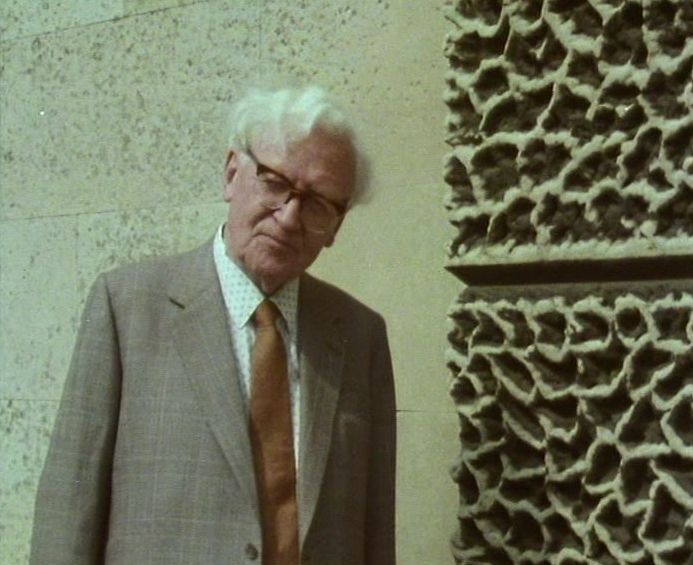
meet_the_wife

Tandoori Nights – Simply Media DVD Review

tandoori

Jimmy Sharma (Saeed Jaffrey) is the owner of an Indian restaurant called The Jewel in the Crown. He’s more than a little irritated when one of his former waiters opens up a rival establishment just two doors away, but that’s not his only problem.  Jimmy has two headstrong daughters – Bubbly (Shelley King) and Asha (Rita Wolf) – and an equally headstrong mother (played by Zohra Seghal). Add in the colourful bunch of eccentrics who make up his restaurant staff and it’s clear that life at The Jewel in the Crown will rarely be straightforward.

Running for two series in the mid eighties, Tandoori Nights is an entertaining series which works on several levels. On the one hand it’s simply a funny sitcom with a wonderful central performance by Jaffrey as the slightly pompous Jimmy . But it’s also able to tackle quite heavyweight topics such as mixed-race relationships, religion and the role of Asian women in Western society in a deft and non-tokenistic way.

Tandoori Nights was created by Farrukh Dhondy, who penned all the scripts for the first series. He didn’t return for series two, which meant that a number of different writers took over the scripting duties. Two names from the roster of series two writers stand out – Meera Syal and Philip Martin.   Not long after her Tandoori Nights episodes aired, Syal would appear in Goodness Gracious Me, a programme which has long been hailed as innovative in the way that it dealt with the Asian experience in modern Britain (although it could be argued that Tandoori Nights got there first).  Philip Martin might have seemed a slightly odd choice, but he had previously penned Gangsters (1976 – 1978), a cult series with a multi-racial cast.

Rewinding back to the opening episode, it revolves around Jimmy’s attempt to treat Delia (Angela Browne) to a meal at his restaurant. He met her at the golf club, which immediately informs us that Jimmy is well integrated into British society. This is also confirmed by his mode of dress and his speech patterns, which have a certain Anglophile twang (Jaffrey did tend to make a habit of playing characters who were more British than the British themselves).

tandoori 01.jpg

Bubbly and Asha react very differently to the news that their father plans to share a meal with a white woman. Bubbly, his older daughter and someone who works tirelessly for immigrants rights, is unconcerned, whilst Asha – still a student – is somewhat horrified.

At the same time that he’s arranging his dinner plans, Jimmy’s also trying to recruit some new staff. He’s less than impressed with his new bar hand (he’s the elderly relative of one of his other staff members). But he’s finally convinced that the man’s right for the job thanks to this following killer line. “He was a lion tamer in the circus, very good with chairs.” Wonderful stuff.

Asha and Bubbly have been invited to join their father and Delia for the meal. It’s an exercise in awkwardness as Deila is just a little too keen to embrace their culture, leading to the moment where she elects to eat her food with her fingers and they – out of a sense of politeness – reluctantly do the same. The reapparance of the rather upset Mr Gupta (Rashid Karrapiet) – previously turned down for a waiters job – doesn’t help matters, especially as Delia decides that he was treated unfairly by Jimmy.

A familar, but still amusing, storyline is played out in White Lies. Allaudin (Tariq Yunus) is a first-class chef but recently he’s not been himself. The arrival of a relative from abroad is troubling him, since back in his home village they all believe he’s a man of substance. So Jimmy, anxious not to lose him, agrees that for one night Allaudin can pretend to be the owner of The Jewel in the Crown and treat his relative to a slap up meal. It’s a delightful role-reversal played excellently by both Yunus (now the man of means) and Jaffrey (toiling away in the kitchen).

The rest of series one maintains the high standard of the opening episodes, especially Far from the Ganges. This offers a sharp chance of pace, as we move away from the restaurant to focus on Jimmy’s mother, who’s in low spirts following a tumble down the stairs. Zohra Seghal is excellent here, seemingly enjoying having a larger share of the script than usual.

The tone of series two is a little different, which isn’t surprising since it was the work of a number of different writers. The change of style is obvious right from the first episode, Bring on the Dancing Girls (w. Meera Syal) which sees more character conflict than usual in a slightly messy plot.

Syal’s second and final script, Welcome Home Sweetie, is the more satisying of her two. Jimmy’s niece Sweetie (Sneh Gupta) is making her first visit to Britain. Before we meet her, time is taken to build her up to be a demure and innocent girl – and someone who the more modern Bubbly and Asha might slightly look down upon. The reversal is obvious, but satisfying – Sweetie is even more Westernised than her British relatives and delights in the sort of behaviour that shocks the rather straight-laced Jimmy.

Both of these scripts offer Zohra Seghal some good material and it’s interesting to see echoes of this character later on in Syal’s work, most notably in The Kumars at No 42.

Overall, both series of Tandoori Nights contain sharply written scripts which still strike a chord today, some thirty years or so after their original transmission.  Saaed Jaffrey heads an impressive cast of regulars, all of whom have an opportunity to take centre-stage at least once during the twelve episodes.  And the restaurant setting allows for a regular influx of guest stars, many of whom will be familiar to those who know this era of British television well.  A spicy hidden gem, this is certainly worth checking out.

Tandoori Nights is released by Simply Media on the 24th of October 2016.  RRP £19.99.
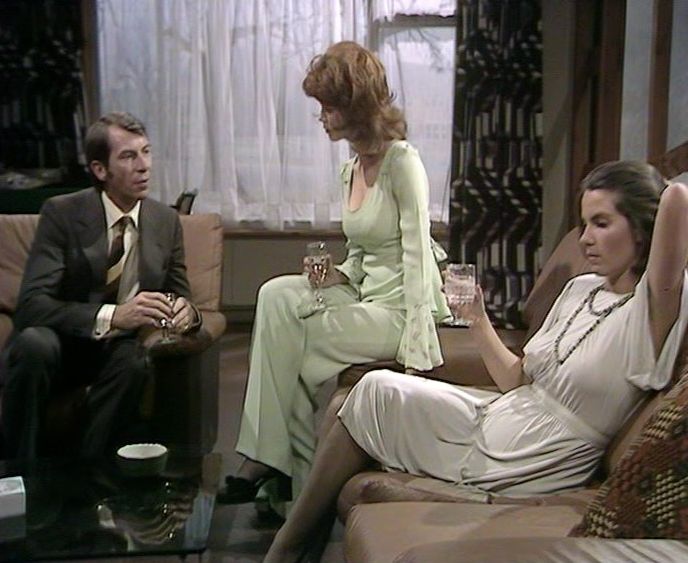
tandoori 02.jpg

Sleepers – Simply Media DVD Review

164454- Chief Crazy Horse Sleeve.indd

Back in the mid 1960’s, Russian spymaster Andrei Zorin (Michael Gough) sent two Soviet moles to Britain.  As “sleeper” agents, their mission was to assimilate themselves into British society and await further orders.  But those orders never came ….

Fast-forward twenty five years and the two agents, Sergei Rublev (Nigel Havers) and Vladimir Zelenski (Warren Clarke), have gone native so successfully that they’re now indistinguishable from the real thing.  Both have flourished in the capitalist West  – Rublev, today known as Jeremy Coward, is a successful investment banker whilst Zelenski, now going under the name of Albert Robinson, is a happily married man with three children, holding down a job in a Manchester brewery.

The last thing they want to be reminded of is their murky Soviet past, but when Albert’s secret Soviet radio suddenly starts transmitting it seems to spell the end of their British adventure.  Albert contacts Jeremy (the pair hadn’t met since parting shortly after their arrival in the UK) and together they ponder their next move.  But the arrival of the hardline Major Nina Grishina (Joanna Kanska) spells further trouble for our two hapless heroes …

Broadcast across four episodes during April and May 1991, Sleepers is a fondly remembered comedy drama by John Flanagan and Andrew McCullough.  Flanagan and McCullough continue today to hold down dual jobs as actors and writers (both took the opportunity to act in Sleepers).  Their first joint writing credit was the 1980 Doctor Who story Meglos and they would go on to contribute to a number of popular series such as Robin of Sherwood, Boon, Pie in the Sky and Peak Practice..

Much of the appeal of Sleepers rests upon the performances of Nigel Havers and Warren Clarke.  Havers (b. 1949) had built up a solid list of credits throughout the 1970’s, but it would be during the 1980’s – with films such as Chariots of Fire and diverse television series like Don’t Wait Up and The Charmer – that he’d really become established as a leading actor.

Clarke (1947 – 2014) was incredibly busy during the 1970’s and 1980’s, racking up an impressive list of appearances in both films and television series (A Clockwork Orange,  The Sweeney, The Onedin Line, Minder, Tinker Tailor Solider Spy, Reilly: Ace of Spies, The Jewel in the Crown, etc etc) without ever really becoming a leading man – that would come later with Dalziel and Pascoe (1996 – 2007).

sleepers 01.jpg

It’s the contrast between Rublev/Coward and Zelenski/Robinson which really appeals.  One was sent up North and the other established himself in the South.  There’s the lovely possibility that if Jeremy had gone to Manchester then he’d be speaking like Albert now and vice-versa.  That might have been interesting to hear, but it was probably safer that both actors played to type!

Back in 1991, the Cold War was definitely thawing, which meant that many spy stories began to look backwards to the good old days of the 1960’s and 1970’s.  This sense of past glories is touched upon in the opening episode, The Awakening, after a secret room beneath the Kremlin is found to contain a replica of an English town. Covered in cobwebs, it’s a perfect time capsule of the mid sixties. As the power is restored, a record player springs back into life with She Loves You by The Beatles playing, whilst Adam Adamant Lives! flickers into life on a tiny black and white television.

Such a construction may seem far-fetched, but there’s evidence to suggest that such places existed and were invaluable in training agents (plenty of examples can be found in fiction, from the Danger Man episode Colony Three to the Jack Higgins novel Confessional).

Quite how this ghost town was suddenly discovered or why Nina and Oleg PetrovskI (Christopher Rozycki) are so interested in it is a bit of a mystery. If it was a training ground for an operation decades ago, why should it be important now? Nina visits Zorin, but he’s nothing more than the shell of a man – babbling about 1960’s popular culture (quoting from A Hard Day’s Night and the Billy Cotton Band Show).

The gorgeous Joanna Kanska is suitably intimidating as the ice-cold KGB Major Nina Grishina . Arriving in Britain, she heads off to speak to Victor Chekhov (David Calder), their man in London. Calder essays a fairly broad performance as possibly not the most convincing Russian ever. For some reason he seems to have more of an American accent than a Russian one.

sleepers 02a.jpg

Nina and Victor couldn’t be more different. Victor considers that the Cold War is well and truly over and so asks both the CIA and MI5 for their assistance. Nina is horrified (to her, both are still the enemy) but involving both the Americans and British helps to ramp up the comedy. This is particularly evident with the cash-strapped MI5, where even fairly low-key expenses (a meal at Burger King) are examined very closely. In future the agent is advised to “stick to coffee. I want a bit less of these flame-grilled Whoppers.”

Once Albert and Jeremy meet up, the story can really start. Albert doesn’t want to return to Russia since he can’t bear the thought of being parted from his wife and children. Jeremy might not be married but he’s got plenty of good reasons to want to stay as well. “I’m on 300 grand a year. I’ve got a flat in town, a cottage in the country, a string of girlfriends and half a bloody racehorse. Think I’m going to give it all up for a bowl of red cabbage and a bedsit in Vladivostok?”

It’s undeniable that the plot is a little contrived in places, this is never more evident than when Albert and Jeremy decide to chuck the radio transmitter in the river and then do a Cossack dance to celebrate. After they’re arrested by the police, Jeremy tells the constable that they’re the Moscow State Circus (!). It’s difficult to believe that two trained (albiet very rusty) agents would behave so rashly, especially by mentioning Russia.

Sleepers sets up various mysteries, such as why Albert and Jeremy were in the crowd at the 1966 World Cup final. It’s amusing that the Russian archive film shows the disputed England goal at quite a different angle, something which Chekhov decides he can turn to his advantage. But British Intelligence, who are monitoring him, get quite the wrong end of the stick and decide that it’s all part of a Moscow plan to destabilise British society with the help of football hooligans!

As might be expected with a spy story, not everything in Sleepers is quite as it first appears, something which becomes very apparent in the closing episodes, whilst various running gags – such as Boris, a toy monkey owned by Albert’s daughter – also help to enliven proceedings. And whilst the serial may have a comic feel, there’s also various dramatic beats scattered throughout the four episodes – these are used to break down the facades that Albert and Jeremy have built around themselves.

Ironically, Albert’s not good at keeping secrets. His wife instantly senses that something is wrong, although she jumps to the conclusion that he’s having an affair. Clarke is excellent as the conflicted Albert, as is Havers as the apparently more confident Jeremy. But Jeremy too is racked by doubts as his past returns to haunt him.

Sleepers is a confident comedy thriller which features British, American and Russian intelligence agents all chasing different agendas, some of which are completly illusionary. With the luxury of four episodes it has the time to develop character and incident at a leisurely pace, although it never feels drawn out.

Sleepers is released by Simply Media on the 24th of October 2016. RRP £19.99.

sleepers 03.jpg

Prince Regent – Simply Media DVD Review

164454- Chief Crazy Horse Sleeve.indd

Prince Regent was an eight-part serial broadcast between September and October 1979.  Peter Egan played George, Prince of Wales, a man destined to ascend the throne of England.  But the madness of his father, George III (Nigel Davenport), and the strained relationship enjoyed with his wife Caroline (Diana Stabb) ensure that his succession is far from straightforward.

Unusually, multiple writers worked on the serial.  Robert Muller penned five episodes with the remainder provided by Reg Gadney, Nemone Lethbridge and Ian Curteis.  Carl Davis scored the music whilst Michael Simpson and Michael Hayes shared directing duties.

As might be expected, Peter Egan is supported by a highly impressive cast.  Nigel Davenport, Francis White, Keith Barron, Clive Merrison, Susannah York, Diana Stabb, David Horovitch, Barbara Shelley, Caroline Blakiston, Murray Head, David Collings, Cheri Lunghi and Patsy Kensit all appear in multiple episodes whilst the likes of Geoffrey Chater, Jane Freeman, Jo Kendall and Trevor Martin make one-off appearances.

Below is a brief episode by episode review.

Episode One – Mad For Love – 4th September 1979

In his own estimate talented, passionate, sensitive, a lover of art, of sport, of freedom, of women. In his father’s opinion scandalous and irresponsible, a drunkard, a ne’er-do-well, a lecher. 1782, and George Augustus Frederick, Prince of Wales, heir to the throne of England, approaches his coming-of-age (Radio Times Listing)

Mad for Love opens with a montage of the Prince of Wales enjoying various pursuts (fencing, shooting, carriage racing) which quickly establishes his less than serious nature. That he’s easily distracted by a pretty face is also in evidence after Maria Fitzherbert (Susannah York) catches his eye. The Prince finds (much to his amazement) that he’s violently in love with her, something which Maria – after listing George’s numerous previous conquests – finds impossible to believe.

The testy relationship enjoyed between the King and the Prince of Wales is explored for the first time. The King (wonderfully portrayed by Nigel Davenport) has a low opinion of his son, but it’s puzzling that he denies the Prince the opportunity to serve in the army. By doing so he condems his son to sort of aimless life he claims to despise.

regent 01.jpg

Episode Two – Put Not Your Trust in Princes – 11th September 1979

The Prince has married his beloved Maria. The ceremony is illegal and secret, hidden not only from the King but also from Fox. And the rumours and whispers of scandal, soon begin … (Radio Times listing)

Nigel Davenport continues to entertain as George III. Whether he’s at the dining table and lecturing his children about why they can’t afford certain fruit (Egan’s in full eye-rolling mode here) or displaying a lack of interest in the Bard (“oh dear god, not Shakespeare. Detest the fellow, sad stuff”) he’s great fun. But the early signs of the King’s madness casts a shadow, especially as we know what’s to come. It also has to be said that whenever George III goes “what, what, what” (which he does rather often) I can’t help but be reminded of Neddy Seagoon ….

Keith Barron, another quality player, gives a strong performance as Fox, although his heavy 5 o’clock shadow makes him look rather odd. Malcolm Terris, as a yokel politician bitterely opposed to George’s marriage, has a couple of nice scenes.

Episode Three – The Bride from Brunswick – 18th September 1979

The illegal marriage to Maria turning cold, his debts steadily increasing, the Prince begins to think the unthinkable. Why not a second, official, marriage? But who will be the bride this time? (Radio Times listing)

The Prince decides to show his gratitude to his father for settling his substantial debts by agreeing to marry whoever the King chooses. George III plumps for Princess Caroline, who is, to put it mildly, a woman of character.

James Harris, the Earl of Malmsbury (Julian Curry), is given the task of travelling to Brunswick, Germany, to arrange the match. The court at Brunswick is a delight, with Ralph Michael offering a fine comic turn as the Earl of Brunswick. The Earl likes to have endless fanfares whenever he eats, even if it means that the unfortunate players pass out after straining to maintain the notes!

Caroline is a real handful and it’s plain that she’ll shake up the Prince’s life. The meeting between Caroline and George’s most prominent mistress Lady Frances Jersey (Caroline Blakinston) is a treat but this is topped when George and Caroline first set eyes on each other. He recoils at her heavily made-up face whilst she bitterly comments that “he’s terrible fat and by no means as handsome as his portrait”. This is not going to be a marriage made in heaven ….

Episode Four – The Trouble with Women – 25th September 1979

An official wife, an unofficial wife, and a powerful and determined mistress – is it any surprise that the Prince feels besieged by women? (Radio Times listing)

Caroline bears the Prince a daughter, Charlotte, but if he’s to finally extricate himself from his debts then he’ll need to produce many more (each new child would see an increase in his allowance). George doesn’t take kindly to this thought, the fact he refers to Caroline as “that unnatural hell-hag from Brunswick” makes his postion abundantly clear.

David Collings (as Pitt) is yet another fine actor who enriches the production no end. Pitt has been opposed to George’s antics in the past, but now supports the suggestion that the Prince and Caroline should live separate lives. The Princess of Wales’ man-eating tendances (which occur off-screen) are touched upon after George tells his wife that he’s found her a nice house in Blackheath, which will be convenient, since the Royal Naval College and a home for distressed seamen are both nearby!

regent-02

Episode Five – Father and Son – 9th October 1979

The King’s health has been good for several years but now there are ominous signs of a relapse into madness – convulsions, delusions, incessant talking. Is it at last time for a Regency? (Radio Times listing)

This one opens with the unusual sight of George indulging in amateur dramatics, performing an intense monologue before a select, but appreciative, audience. Although I’m sure there’s more than a touch of sychophancy in their fulsome appreciation.

George III cuts a tragic figure. He knows that his intermittent madness has returned, but the prospect of the “cure” (beatings, leeches, isolation in a darkened room) is more than he can bear. Davenport once again commands the screen.

George’s wish that his father either dies or goes properly mad is chilling.

Episode Six – God Save the King – 16th October 1979

A delicate investigation has been ordered into the alleged adultery of Princess Caroline. The Prince sees a chance for divorce from his hated wife. (Radio Times listing)

Peter Egan’s appearance at the start of this episode comes as a bit of a shock. He was slighly made up in the previous episode in order to portray an ageing and portlier George, but here it’s even more pronounced. Oddly, George III looks no different …

The investigation isn’t able to prove that Caroline has commited adultery, a verdict which rather upsets George. But even with his rather unforgiving make-up, Egan impresses as an older, wiser George. His conversation with the dying Fox is a touching one.

With George III’s madness even more of a problem, his son is finally confirmed as Regent. But now this long-cherished day has arrived, what will be the outcome?

Episode Seven – Milk and Honey – 23rd October 1979

The Regent decides that it is time for his beautiful and high-spirited daughter, Princess Charlotte, to marry. He has a candidate – but the strong-willed Princess has her own opinions on the subject. (Radio Times listing)

Princess Charlotte (Cheri Lungi) brings her new man, Captain Charles Hesse (Paul Herzberg) to meet her mother. Princess Caroline is much taken with him (they end up in bed a short while later!)

Lungi’s appearance might be fairly brief, but she’s yet another strong addition to the cast. Charlotte tells her father that she takes after him (a double-edged compliment that’s for sure). The Queen is concerned about her – Charlotte has a stutter and delights in showing people her underwear, whether they ask to see it or not. Jane Freeman, as Charlotte’s governess Lady de Clifford, has a brief but amusing cameo.

James Garbutt, as Lord Elson, has some acid lines which demonstrate that he’s not Princess Caroline’s greatest admirer. “She’s a foul-mouth, a slut and I don’t care who hears me say it.” As he says himself, there’s plenty more where that came from ….

The episode ends with the bleakest of news. It’s another blow for George, who has cast an increasingly melancholy figure as the years have progressed (a far cry from his carefree younger self).

Episode Eight – Defeat and Victory – 30th October 1979

The Prince prepares for the greatest battle of his life. His adversary is his hated wife Caroline, and he is determined to rid himself of her once and for all. (Radio Times listing)

Defeat and Victory opens with the deaths of the King and Queen.  Both Nigel Davenport and Francis White have been exemplary throughout the serial and this continues right up until their final moments.  With George now due to become King he is gripped by a single obsession – to ensure that Caroline is not crowned Queen and to that end she’s put on trial by the House of Lords.  Leading the prosecution is Sir Robert Gifford (James Cossins).  Cossins, the latest in a long line of wonderful character actors to grace the serial, seems to be enjoying himself enormously.

The episode title is an apt one, as although the Lords find Caroline not guilty, George is still able to ensure that his wife never becomes Queen.

Peter Egan, skilled at playing charming rogues, was perfect as George.  But whilst he was easily able to exude George’s affable nature, Egan didn’t shy away from showing us the other side of the coin – the irresponsible man who sometimes rode roughshod over others. Capricious, charming, selfish, generous, George was all these things and more. It’s his ever-changing moods, as well the increasing melancholy which desended on him in his later years, which makes him such a fascinating character.

A co-production with Time Life Television and Polytel International , it’s plain that the budget was pretty generous since the studio sets are detailed and impressive.  The serial also benefits from location recording at the Brighton Pavilion, this really helps to add an extra gloss to proceedings.  A typically impressive BBC costume drama of the era, Prince Regent is a sharply scripted and well-acted serial that just oozes class.  It may be something of a forgotten treasure, but it’s a treasure nonetheless and comes highly recommended.  Prince Regent is released by Simply Media on the 17th of October 2016.  RRP £24.99.

regent 03.jpg

The Justice Game – Simply Media DVD Review

7019

Dominic Rossi (Denis Lawson) is a Glasgow-based criminal lawyer with a thriving practice.  At present his attention is scattered in several different directions – the stabbing of an elderly man at a bus stop, an ex-soldier accused of multiple murders and the death of a private investigator whom he’d recently employed.  But he finds that all of these disparate crimes lead to Tim Forsythe (Michael Kitchen), a merchant banker who’s keen that Rossi should cease his investigations.  And since Forsythe has the intimidating Glen (James Cosmo) on his books, it seems that his silence will be rather permanent.

Airing on BBC1 during April 1989, The Justice Game is an efficient four-part thriller from the pen of John Brown (1944 – 2006).  The previous year Brown had written the well-remembered ITV serial The One Game, which featured Patrick Malahide as a manipulative games player.  Brown would go on to contribute scripts to a number of popular series such as Bergerac, The Ruth Rendell Mysteries, Inspector Morse and Taggart.

Denis Lawson (b. 1947) made his television debut in a 1969 episode of Dr Finlay’s Casebook and during the 1970’s was busy working across film, television and theatre.  One of his early film roles, in the original Star Wars (and then its two sequels), would ensure he would always maintain a certain cult status but it would be two very different 1980’s television roles that would establish him more firmly with the British public.  Dead Head (1986) was a BBC serial which attracted a huge amount of newspaper notoriety at the time, although thirty years on it seems rather tame.  The Kit Curran Radio Show featured Lawson as the eponymous radio presenter and whilst not a huge ratings-winner, ran for two well-received seasons.

In addition to Lawson, Kitchen and Cosmo, there’s a host of other quality actors who appear across the four episodes (Diana Quick, Iain Cuthbertson, Russell Hunter, Joss Ackland, Michael Culver and Ceila Imrie).

The first episode quickly establishes Rossi’s character.  He’s a man of contradictions – after a session working out on a treadmill his first thought is to reach for a pack of cigarettes.  We also observe his skills as a lawyer (he manages to get two prominent footballers off an assault charge).  The Amnesty poster on his office wall and his desire to take low-profile cases connected to social justice issues are clear pointers to his values and mindset.  Rossi is in a relationship with Kate Fielding (Diana Quick).  Like him she’s a professional (Kate’s a doctor).

It’s a pity that an actor as good as Russell Hunter exits the story relatively quickly.  He played Sandy Sadowski, a man who had information for Rossi but was brutally stabbed multiple times before he could pass it over.  John Brown is in no hurry to connect all the pieces of the puzzles he sets up, as with four episodes to play with there’s plenty of time to establish these various plotlines.  The well-dressed Tim Forsythe is a man of few words, but several are directed in the direction of Glen who organised the gang that killed Sadowski.

justice-01

Throughout the serial Denis Lawson impresses.  Dominic Rossi’s clearly something of a renaissance man, he’s not only a hot-shot, fast-talking lawyer but he can also belt out a mean rock ‘n’ roll tune (as witnessed at his parents wedding anniversary party).  The choice of Glasgow as the battleground was a good one.  Although the Glasgow-based Taggart had been running for a number of years, the location still offers a less familiar milieu than London. The last episode also makes a quick trip to New York as Rossi trails the money men behind Forsythe. Lurking in New York is Sir James Crichton (Joss Ackland). Ackland is characteristically still and sinister as the spider in the middle of the web.

The late eighties setting, deep in the dying days of Thatcherism, helps to inform the tone of the serial.  At the time Glasgow, like many other cities, was undergoing considerable redevelopment and renovation.  The first episode opens with Rossi taking Kate on a tour of his old house, located in one of the most run-down areas of the city.  But since the house has been demolished, Rossi contents himself with pointing at the bare ground where the various rooms had been.  Displaying a tinge of romanticism shared by many self-made men and women, he regrets the loss.

It’s hoped that something better will take the place of these levelled slums, but the likes of Tim Forsythe seem more interested in generating the maximum amount of profit for the company he works for.  Despite the fact that Forsythe remains a fairly nebulous figure (henchmen such as Glen do all the strong-arm stuff, leaving him distanced from the action) there’s a clear delineation between Rossi and Forsythe.  Rossi is concerned with people and justice whilst Forsythe is concerned only with profit.  Certain reminders of the era – mobile phones as big as housebricks, Forsythe’s cocaine habit – help to make it the perfect story for the consumerist eighties.

Roger Limb’s score sometimes eschews the familiar radiophonic soundscape he was well-known for. But it’s still atmospheric and the more sinister cues help to create a vague sense of unease which compliments the sometimes bleak and violent world presented across the four episodes.

The Justice Game is probably an episode too long and rather wastes good actors such as Iain Cuthbertson in small roles, but it still chugs along nicely to its inevitably bloody conclusion. As might be expected from the cynical worldview it presents, we find that “justice” is in very short supply.

The following year, the three-part Justice Game 2 was broadcast on BBC1 during March 1990.  The serial opens with Rossi in Italy, enjoying a holiday romance with the lovely Francesca (Anita Zagaria).  Rossi’s considering a career change – from lawyer to advocate – and this holiday was supposed to help him make up his mind, although he remains noncommittal by the end of it. I like the way the first scene has a number of quick cuts, showing Rossi and Francesca enjoying themselves in various different ways (driving an open-top car, him rubbing suncream into her back, riding a pedalo, riding bikes, eating icecream). It’s slightly corny, but it works.

Rossi returns to Glasgow and Francesca quickly becomes a fading memory, so he’s surprised (but pleased) when she unexpedically turns up. She’s a woman with a secret though. Back in Italy several of her friends have met violent deaths and the killings don’t stop when she travels to Scotland – meaning that Rossi’s right in the firing line.

There have been a few changes since the first story. Rossi’s moved into an impressive, if crumbling house (complete with a leaky roof) and has gained a new colleague, Eleanor Goodchild (Barbara Flynn). Flynn, as ever, is wonderfully watchable as the powerful Eleanor. She may only be Rossi’s junior partner but is she part of the reason why he’s considering a career change? Some have dubbed her “a female Dominic Rossi” which amuses him. He certainly seems to be going through something of a mid-life crisis (he picks up a prostitute in a bar, although it appears he wasn’t charged for her services).

Even though this serial is an episode shorter than the first, it still takes its time to get started. There’s action in the first episode – several bloody deaths – but these take place in Italy whilst Rossi’s back in Glasgow and yet to connect to this main plot. But the death of a young man (a potential client for Rossi) in a suspicious hit-and-run accident adds another layer to the narrative and also reconnects Rossi to the seamier side of life (something rather alien to the upwardly mobile lifestyle he’s been recently enjoying).

Justice Game 2 is slightly less satisfying than the first serial. Barbara Flynn and Denis Lawson have a good combative relationship, but this could have been developed a little more. Anita Zagaria works well as the lady with a dark secret, it’s just a shame this part of the story is rather stretched out.

But although it’s slightly inferior when compared to The Justice Game, it’s still a stylish thriller, held together by Lawson’s central performance. Both serials have a nice period feel (late eighties, early nineties) and if there’s the odd lull from time to time, you can be sure that another shock or twist is just round the corner to spice things up.

The Justice Game (containing both series) is released by Simply Media on the 10th of October 2016.  The picture quality is a little grainy, which isn’t too surprising considering that the source materials are unrestored 16mm film prints which are nearly thirty years old, but there’s no particular issues.  RRP is £19.99.

justice-02

The Legend of King Arthur – Simply Media DVD Review

164454- Chief Crazy Horse Sleeve.indd

Broadcast in eight 30 minute episodes during October and November 1979, The Legend of King Arthur contains all the familiar story-beats you’d expect, but Andrew Davies’ adaptation still manages to throw in a few twists along the way.

Merlin (Robert Eddison) and Arthur (Andrew Burt) have established a new enlightened age, thanks in part to the mighty sword Excalibur which is used by Arthur to subdue his rivals.  But this hard-won peace is short-lived as his vengeful half-sister Morgan le Fay (Maureen O’Brien) has vowed to avenge her father’s death and only Arthur’s demise will satisfy her.  Well versed in the dark arts of witchcraft, she uses her powers to convince Arthur that his bravest knight Lancelot (David Robb) and Queen Guinevere (Felicity Dean) are enjoying a passionate affair.  But Morgan isn’t the only danger that Arthur faces and the treacherous Mordred (Steve Hodson) proves to be the one who fatally halts Arthur’s reign.

Long regarded as one of the best adaptations of the Arthurian legend, once you can get past the rather low-key production values (the VT nature of the studio scenes gives everything a rather stagey feel) there’s much to enjoy.

The central performances of Andrew Burt, Maureen O’Brien, David Robb, Felicity Dean and Steve Hodson are all first-rate.  Burt (the original Jack Sugden in Emmerdale Farm) might not be the sort of actor that would instantly spring to mind when considering the perfect Arthur, but his rather stolid persona is just what the production needed.  Maureen O’Brien is compelling as Morgan, eschewing cackling villainy for something much more low-key.  David Robb and Felicity Dean are both strong players whilst Steve Hodson gives Mordred the sort of slowly increasing intensity which serves the character well.

And if the main cast are pretty faultless, there’s also strength in depth to be found with the supporting players.  Denis Carey, Kevin Stoney, Richard Beale, Geoffrey Beevers, Peter Guinness, Hilary Minster, Ivor Roberts and Margot van der Burgh are amongst those who help to enrich the production.  A young Patsy Kensit, playing Morgan le Fay as a child, is another actor worth looking out for.

The story opens with the King, Uther Pendragon (Brian Coburn), deciding that he wants a Queen to bear him a son. He declares that the wife of his trusted ally, Goloris (Morgan Sheppard), will fit the bill nicely. Both Goloris and his wife, the lady Igrayne (Anne Kidd), are horrified, but Uther is not a man for compromise and tells Goloris that if he doesn’t comply, “however strong you may make this castle, I will have you out of it and roast you like a badger!”

Goloris and Igrayne have a daughter, Morgan (Patsy Kensit), who calls on divine help to strike down Uther, but Merlin appears instead. He tells her that “you have the gift, but not the knowledge of the gift. You see a glimpse of the forbidden things, but only a glimpse.” Merlin may stand by Uther’s side, but he doesn’t serve him, not fully. Goloris’ death at the hands of Uther sets in motion Morgan’s life-long hate of her half-brother Arthur (born of the forced union between her mother and Uther).

arthur-01

Kensit might have only been eleven at the time, but she was already something of a television and film veteran (her first credit came when she was just four years old). She’s appealing as the innocent who finds herself consumed with loathing for the boorish Uther (a broad, but effective turn from Coburn) and Arthur. Morgan’s transformation from good to evil is sealed when she fails to aid the choking Uther. That he dies after a glutinous feast rather sums up his character.

Episode one then moves ahead some fifteen years, as we see the young Arthur (Richard Austin) pull the sword from the stone, the act which confirms he is the true King. Sadly it’s a rather flatly staged moment, lacking any sense of magic or wonder. Much better is the following scene where Arthur makes a decent impression with some of the nobles. Others are less convinced, so there will be war. But first there’s another key moment – Excalibur needs to be retrieved from the Lady in the Lake.

It’s a pity that we don’t spend more time in the company of young Arthur, as by the start of episode two Andrew Burt has assumed the mantle. It’s not too surprising that the long battles he had to fight in order to prove his legitimacy happened off-screen (budget considerations I’m sure played a part in this). Maureen O’Brien now takes over the role of Morgan. She claims to Merlin that now she serves only God ….

arthur 02.jpg

It quickly becomes clear that Arthur is not the man his father was. Arthur is fair and conciliatory, but events prove this to be a weakness rather than a strength. After he pardons a bitter rival called Accolon (Anthony Dutton), it’s obvious that he’s simply delayed an inevitable confrontation. Arthur and Guinevere are married and Lancelot offers to be her champion, to stay constantly by her side and do whatever she bids.

Merlin disappears after the second episode, which is a shame as Robert Eddison had a teasing, impish presence. Merlin’s absence forces Arthur to take control of his own destiny, which you sense is not going to end well. And Morgan’s arrival at Arthur’s court, with Mordred in tow, sets in motion the long endgame that results in Arthur’s death.

The middle episodes develop the relationship between Guinevere and Lancelot. Whilst the arrival of the elderly King Pelles (Denis Carey) dispossed of his lands and with a daughter laying stricken under the curse of a powerful witch (who has to be, unknown to any at court, Morgan) adds another layer to the narrative. Carey, an actor of dignity and subtlety, always enhanced any programme he appeared in and this one is no exception. Pellas tells the court that only one man can save his daughter and that man is Lancelot.

As the serial progresses, both Morgan and Mordred continue to manipulate Arthur.  Amongst some of the riper turns, Steve Hodson offers something more nuanced. When we first meet him he appears to be Arthur’s man, but his alliance with his aunt Morgan and his own ambitions slowly rise to the surface to reveal his true nature.

Morgan suggests to Arthur that the love between Guinevere and Lancelot is the sort of love shared between a husband and wife, whilst Mordred spies an excellent opportunity to blacken Guinevere’s name even further.  Mordred and Morgan had intended to poison Guinevere with a piece of fruit, but the Queen innocently decided to offer this treat to someone else.  When Guido de la Porte (Tim Wylton) drops dead after a single bite, the Queen is suspected of murder.

arthur-03

Lancelot would be the man to defend her honour, but he lies injured and isolated from the court.  And Lancelot’s standing amongst his fellow Knights (already shaky due to the innuendo about his possible affair with the Queen) diminishes even further when the dead body of Eleanor (Amanda Wissler) comes drifting towards them.  Eleanor loved Lancelot, but he couldn’t return her love.  When Lancelot and the others realise that the spurned Eleanor has taken her own life, it’s amongst the most powerful moments in the serial.   By the time we reach the final episodes, Galahad (James Simmons) arrives, as does the Quest for the Holy Grail, Lancelot and Arthur become bitter rivals whilst Mordred, in Arthur’s absence, usurps his kingdom.

Even with eight episodes, given the amount of ground covered in The Legend of King Arthur there’s the sense that an even longer running time would have allowed some of the secondary characters to be fleshed out a little better, as well as allowing more time to linger on certain themes.  For example, when Lancelot heads off to avenge King Pellas, he’s able to do so with almost indecent haste.  He may be the bravest Knight in the land, but this still seems a little perfunctory!

Produced by Ken Riddington, directed by Rodney Bennett and with incidental music by Dudley Simpson, The Legend of King Arthur is a treat from start to finish.  Those used to the glossier production values of modern television may find it to be lacking in places, but Andrew Davies’ layered adaptation, an attention to detail and the quality cast all help to compensate for the fairly low budget.

There are some production missteps (for example, as the characters age unconvincing wigs and beards are pressed into service) but there are many positives as well.  Andrew Burt is entertaining as the thoroughly decent but doomed King, whilst Felicity Dean is terribly appealing as the winsome Guinevere.  Add in the smiling manipulative villainy of Maureen O’Brien’s Morgan and it all combines to produce a heady brew.

The Legend of King Arthur is released by Simply Media on the 10th of October 2016.  RRP £19.99.

arthur-04

Softly Softly: Task Force – Series Two. Simply Media DVD Review

164454- Chief Crazy Horse Sleeve.indd

Series two of Softly Softly: Task Force was broadcast between September 1970 and March 1971.  Whereas series one (discussed here) had sixteen episodes, series two ran for twenty six episodes (an obvious sign that series one had been a success).

Below is a brief episode guide –

Baptism – 16th September 1970
Written by Elwyn Jones. Featuring Ian Hogg

Sunday, Sweet Sunday – 23rd September 1970
Written by Alan Plater. Featuring Christopher Beeney, Windsor Davies and Michael Hawkins

Safe in the Streets? – 30th September 1970
Written by Allan Prior. Featuring Leon Vitali, Vicki Michelle and George Tovey

Good Listener – 7th October 1970
Written by Elwyn Jones. Featuring Jonathan Newth

Time Expired – 14th October 1970
Written by Robert Barr

Lessons – 21st October 1970
Written by Arnold Yarrow. Featuring John Ringham, Glynn Edwards and Sally Thomsett

Without Favour – 28th October 1970
Written by Alan Plater. Featuring Collette O’Neil

Never Hit a Lady – 4th November 1970
Written by Allan Prior.  Featuring Neil McCallum and Richard Beale

Its Ugly Head – 11th November 1970
Written by Elwyn Jones.  Featuring Michael Goodliffe

Who Wants Pride…? – 18th November 1970
Written by Robert Barr. Featuring Jess Conrad and Ray Lonnen

Collation – 25th November 1970
Written by Elwyn Jones

Do Me a Favour – 2nd December 1970
Written by Robert Barr. Featuring Chloe Ashcroft, Victor Maddern and Jon Rollason

Sweet Are the Uses of Adversity – 9th December 1970
Written by Elwyn Jones. Featuring Del Henney

Bearings – 16th December 1970
Written by James Doran

A World Full of Rooms – 23rd December 1970
Written by Allan Prior. Featuring Milton Johns

The Lie Direct – 30th December 1970
Written by Elwyn Jones. Featuring Tony Calvin and Geoffrey Palmer

Ground Level – 6th January 1971
Written by Alan Plater. Featuring Glyn Owen

Company Business – 13th January 1971
Written by John Elliot. Featuring Wendy Gifford

Kick Off – 20th January 1971
Written by Elwyn Jones. Featuring Roddy McMillan and George Pravda

Final Score – 27th January 1971
Written by Elwyn Jones. Featuring Roddy McMillan and George Pravda

Something Big – 3rd February 1971
Written by Robert Barr. Featuring Desmond Llewellyn, John Woodvine and Jeremy Wilkin

Games – 10th February 1971
Written by Arnold Yarrow. Featuring Jean Boht

In the Public Gaze – 17 February 1971
Written by Elwyn Jones. Featuring Gawn Grainger and Reginald Marsh

Held for Questioning – 24th February 1971
Written by Robert Barr. Featuring Denis Quilly and Norman Jones

Black Equals White – 3rd March 1971
Written by Allan Prior. Featuring Angus MacKay

Cash and Carry – 10th March 1971
Written by Elwyn Jones. Featuring Gertan Klauber and Peter Sallis

The regular cast is pretty much unchanged since series one. Stratford Johns continues to dominate as Chief Supt. Barlow, whilst Frank Windsor returns as the straight-talking Det. Sup. Watt.  Norman Bowler (Det. Insp. Hawkins) doesn’t have such a sharply-defined character as either Barlow or Watt, but he’s still a very solid presence.  Walter Gotell, probably best known playing Gogol in the James Bond films, makes the occasional appearance as Chief Constable Arthur Cullen.

David Lloyd Meredith provides a dash of humour as the rather Welsh Sgt. Evans whilst Terence Rigby (always a rather idiosyncratic actor) is, as PC Snow, another actor who’s always worth watching.  PC Snow was distraught at the end of series one after his police-dog Inky was shot and killed, so series two sees him develop his working relationship with Inky’s replacement.  Susan Tebbs, as Det. Con. Donald, remains the show’s sole female regular.  Terrence Hardiman is a new recruit, turning up towards the end of the season as Inspector Armstrong.

As listed in the episode guide above, a host of familiar faces pop up during the course of the twenty six episodes and there’s also some very sharply written scripts, especially those provided by Alan Plater (a Z Cars veteran).  Elwyn Jones (who had created the Softly Softly: Task Force format) was another writer who had racked up numerous credits on Z Cars and Softly Softly and would be just as prolific on Softly Softly: Task Force and the later spin-off, Barlow.  Like Plater, he really understood how the series worked and his episodes, including the series opener and closer, are some of the strongest.

It’s interesting that both SS:TF and Dixon of Dock Green started to produce several all-film episodes at the same. It’s just a pity that these ones – Lessons and Do Me A Favour – look pretty poor (very faded colours on both throughout). Given the age of the material that’s not a surprise, but generally what we have across the seven discs is quite watchable. There’s no particular issues with the VT sequences (apart from the occassional bit of tape damage) but the film inserts on certain stories are rather grubby.

With so many episodes, it’s inevitable that the quality dips from time to time, but generally the level remains pretty consistent throughout the run.  During the next month or so I’ll be posting reviews of every episode, which will enable me to examine them in a little more detail.

Softly: Softly Series Two is released by Simply Media on the 26th of September 2016.  RRP £44.99.

Happy Ever After – Simply Media DVD Review

164454- Chief Crazy Horse Sleeve.indd

Happy Ever After first surfaced as a one-off Comedy Playhouse episode in May 1974. Like many other series launched via Comedy Playhouse, including Meet the Wife, it would quickly develop into a fully fledged series.

Since series one of Happy Ever After followed just two months later, in July 1974, it’s clear that audience reaction wasn’t a factor – the BBC must have sensed that this was a format that had legs.  And so it proved, Happy Ever After ran for forty one episodes between 1974 and 1979 and then Terry & June (essentially the same series but with a few differences, which we’ll discuss later) chalked up sixty five episodes from 1979 to 1987.

Out of the two series, Terry & June – thanks to repeats and DVD releases – has by far the greatest profile.  But it’s a profile that’s not always been terribly positive.  Regarded by some as old-hat and embarrassing, T&J has often been cited as an example of all that’s bad and lazy about traditional sitcoms.  An over-reliance on unlikely occurrences and remarkable coincidences (later wonderfully parodied in Chance in a Million) and Terry Scott’s mugging to camera are some of the suggested reasons.  But whilst T&J did run out of steam, it also had more than its fair share of great comedy moments – as did Happy Ever After.

Created by John Chapman and Eric Merriman, Happy Ever After’s format is a simple one. Terry and June Fletcher are a middle-aged, happily married couple who have recently seen their grown-up children, Frank, Susan and Debbie, leave home.  But their hopes for a quiet life spent in each other’s company are rudely shattered when cranky Aunt Lucy (Beryl Cooke) and her mynah bird come to stay.

The format of the series would remain fairly constant.  Terry would hit upon a brilliant idea or become embroiled in events which would spiral out of his control, June would remain on the side-lines – ever patient – whilst Aunt Lucy would chip in with the odd comment.  When the series became Terry & June it carried on pretty much as before (except that Aunt Lucy had been written out).

The other change was that Terry and June’s surname was Fletcher in Happy Ever After but had become Medford in Terry & June.  This was because series creator John Chapman felt that the show had run its course by 1979.  The BBC disagreed, so a change of surname was enough to ensure that Chapman couldn’t claim the new series featured his characters, even if things carried on pretty much as before.

Although it’s difficult not to see both series as one entity, there’s a slightly different tone to Happy Ever After, especially to begin with.  It just feels a little bit more sharper (possibly not surprising since any format will eventually begin to lose its sparkle over the years) and the plots are tighter.  The presence of Aunt Lucy is also a major plus (the absence of a similar character in T&J was a shame).

happy-01

But whilst the writing is important, Happy Ever After stands or falls on the performances of the two leads. Terry Scott (1927 – 1994) had been a television star since the 1950’s, starting with Scott Free in 1957.  More success on the small screen would follow in the 1960’s – teaming up with Hugh Lloyd in Hugh and I and the bizarre-sounding (and sadly wiped) Gnomes of Dulwich.  Another series – Scott On … – would air between 1964 and 1974 (running to twenty four episodes).  He also turned up in a number of films, including several Carry Ons.

June Whitfield (b. 1925) is, like Scott, a British comedy legend, and her longevity has only helped to increase her stature.  She began as a supporting player, appearing opposite Peter Sellers in The Idiot Weekly, Price 2d, Jimmy Edwards in The Many Faces of Jim and More Faces of Jim as well as Tony Hancock (most notably in The Blood Donor).  She first appeared with Terry Scott in Scott On … and like Scott would make a few appearances in the Carry On series (although they didn’t appear in the same films).  During the last few decades she’s become familiar to several new generations thanks to Absolutely Fabulous.

The pilot shows Terry and June adjusting to home life now that their children have gone.  Terry is remarkably boorish, pouring June a gin and reminding her that it always used to get her going in the old days. June comments on how coarse he is and on this early evidence they seem a very mismatched pair.

Terry is a bundle of nervous energy (incapable of remaining quiet for a minute) whilst June is content to just relax, buried in a good book.  There’s an unspoken feeling that now the house is theirs again they might struggle to restablish their relationship.  That they’ve not been paying each other a great deal of attention is made plain after Terry is amazed to discover that June’s had a pair of glasses for the last two years – he admits he hasn’t really looked at her for a long time.

This moment, along with June’s tearful regret that the chicks have flown the nest, gives the pilot a slightly wistful air, although Terry’s hyperactive personality – a hamsfisted attempt to do some DIY for example – ensures that the mood doesn’t stay reflective for long.  When the demanding Aunt Lucy turns up with bundles of possessions, poor Terry sees his newly-won freedom fast disappearing …

The first episode of Happy Ever After proper sees Terry shocked to learn that June hasn’t been a Conservative like him during their married life (instead she’s always voted Liberal).  This is a perfect opportunity for Terry Scott to deliver some of his trademark overreacting, but when June tells him she’s considering a short break by herself, it ties back to the suggestion in the pilot that the two of them may be fundamentally incompatible.  Terry then suggests she writes a list of his faults, which she does with great glee!  Later they decide to go on a second honeymoon, which (as might be expected) doesn’t go to plan.  It’s good to see some well-known actors lurking in the hotel, such as Hammer Films stalwart Michael Ripper and radio’s original Dick Barton, Noel Johnson.

Containing the Comedy Playhouse pilot, five series and three specials (two Christmas specials and the final one-off from April 1979) this seven disc set offers a generous helping of 1970’s sitcom goodness.  Classic episodes include the series two effort Terry in Court. Returning home after a business trip, Terry’s more than a little upset to learn that their car has had an altercation with the local dustcart. June insists it wasn’t her fault and after learning that the Council refuse to admit liability, Terry decides to sue them. The trouble really starts when Terry learns that he can represent himself and so appears in court complete with a wig and gown! Scott is firing on all his comic cylinders, helped no end by a very dead-pan performance by Basil Dingham as the judge.

Another favourite is Mistaken Identikit. An identikit picture of a bag snatcher who preys on elderly ladies (giving him the nickname of the “granny grabber”) is broadcast on televison and featured in all the newspapers. And wouldn’t you know it, he looks just like Terry! Robert Gillespie pops up as a phelgmatic desk sergeant and the always-watchable Josephine Tewson also makes a brief appearance.

The Music Went Around & Around is a notable episode, as it was John Kane’s first script for the series.  Kane would only pen a couple of episodes for Happy Ever After, but he’d go on to write the bulk of Terry & June (notching up more than forty episodes). In this one, John Quayle and Janine Duvitski are both wonderful as Ralph and Cynthia, the dinner guests from hell. Terry later attempts to replace one of his classic records from the 1940’s – The Hut Sut Song. Julian Orchard, as the harrased record shop proprietor, is another first-rate guest performer, as is Damaris Hayman (who plays Miss Sneed, an assistant at the record shop). Amazingly, she’s heard of this obscure song and it’s a comic treat when she and Terry launch into a spirited performance of The Hut Sut Song.

Unashamedly middle-of-the-road fare, Happy Ever After has aged very well.  This is partly because of the contrasting comic talents of Terry Scott and June Whitfield, but the scripts are also pretty strong and it’s always nice to see familiar faces popping up in guest roles.

Happy Ever After is released by Simply Media on the 26th of September 2016.  RRP £44.99.

happy-02