Redcap – Epitaph for a Sweat

img_20181112_115056.jpg

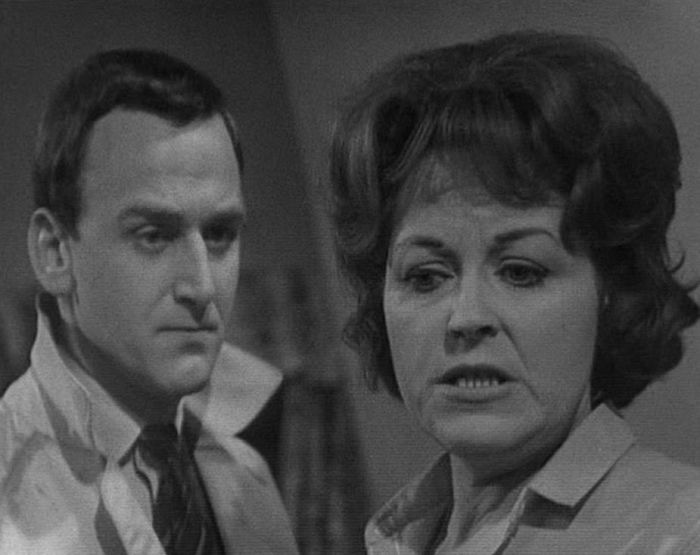
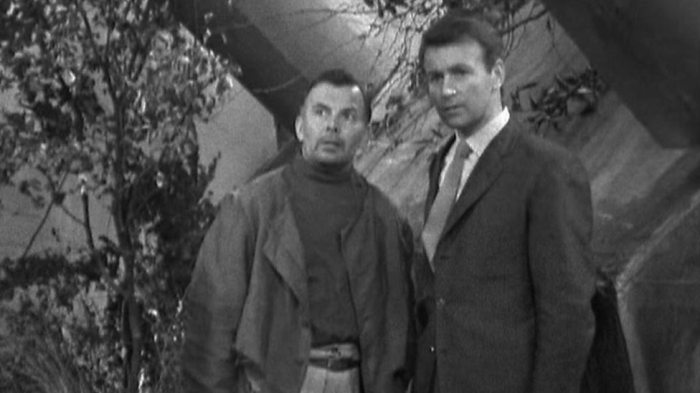
Sergeant Mann has travelled to Aden in order to question Sergeant Rolfe (Leonard Rossiter).  Rolfe, an unbending soldier of the old school, is admired for his fighting qualities but has few friends amongst the men. Accused of beating up a local, he denies the charge – but the matter becomes much more complex after Rolfe dies on manoeuvres.

I’ve said it before and I’ll probably say it again, but Redcap featured some excellent guest casts. In today’s episode we have Rossiter, Kenneth Farringdon, John Horsley, Ian McShane, John Noakes and Mike Pratt. That’s not too shabby a line-up.

Rossiter catches the eye early on. Rolfe and Mann, as you might expect, clash quite strongly.  It’s restated in this episode that Mann is young and inexperienced and this naturally irritates an old sweat like Rolfe.  Although Rolfe denies any wrongdoing, there seems little doubt that he did viciously beat up the local – purely because he felt the “wog”  (a term which is used several times) needed to be taught a lesson.

Sergeant Rolfe may, we’re told, sometimes overstep the mark but the British army needs soldiers like that. That’s certainly the opinion of Major Coulter (John Horsley) who attempts to guide Mann into accepting this point of view. Mann doesn’t acquiesce immediately, which is another source of friction.

The Aden setting (achieved with a spot of stock footage and liberal application of fake sweat) is an interesting one. By the mid sixties it was one of the few remaining outposts of the British Empire and the pros and cons of occupation are discussed here.  Each side is allowed their viewpoint – chiefly Coulter and Asst. Sup. Yacoub (Norman Florrence) – but Richard Harris’ script isn’t a polemical one. The viewer is left to make their own mind up, although the historical distance of fifty years or more has no doubt changed the perspective somewhat.

Whilst Mann is investigating Rolfe, there’s a secondary plot bubbling away. Two young sappers, Russell (Ian McShane) and Baker (Kenneth Farringdon), are clashing time and time again. Baker is cocky and aggressive whilst Russell is passive and disinclined to respond to Baker’s taunts and jibes.  Whilst – at first – this doesn’t seem to connect to the main plot, it’s still very intriguing. Why is Russell so self-contained?

Both have little love for Rolfe, so when the pair of them – along with Morse (Roger Heathcott) and Evans (John Noakes) – head out into the desert with him, there’s an obvious question to be answered – was Rolfe’s death an accident or murder?  Having earlier questioned Rolfe, Mann now has four fresh subjects to quiz – indeed, this episode is an excellent one for showcasing Mann’s methodical approach.

Morse seems like a bit of a non-entity (he’s easily the one allocated the least lines) so can probably be discounted. And since Evans has been painted throughout as the comic relief, that leaves us with Russell and Baker as the more likely suspects.

Unlike the opening episode, there’s a satisfying conclusion to this investigation – Mann is able to extract a confession which isn’t under duress this time (even if he does play a slight trick).  The final few scenes with both McShane and Farringdon crackle very nicely – three episodes in and no duds so far.  And if this one hadn’t been an episode of Redcap then it could have slotted quite comfortably into an anthology series like Armchair Theatre.

Apart from those already mentioned, Mike Pratt has a couple of key scenes as Sergeant Bailey – possibly Rolfe’s only friend.  As you’d expect from Pratt, it’s a self-contained performance with just the odd flash of panic (at the point when Mann’s questioning becomes too probing). Much more exuberant is John Noakes’ turn as Evans. Evans is Welsh. Very, very Welsh.

During this era of television, it’s never a surprise to see British actors browning up to play ethnic roles (it upsets some today, but due to the small pool of actors available there wasn’t any alternative).  However, it’s slightly more surprising to see a Yorkshireman cast in this role.  Noakes isn’t bad (and it’s nice to see one of his handful of acting performances) but goodness, he ladles the accent on rather thickly ….

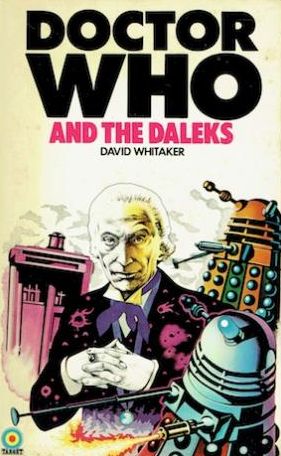
Hitting the Target – Doctor Who and the Daleks by David Whitaker

doctor who and the daleks

Given that most potential purchasers of this book back in 1964 would have been well aware about how the television series began, it’s a little odd that David Whitaker spent the first fifth of Doctor Who in an Exciting Adventure with the Daleks crafting an alternative origin story for the Doctor and co.

But I’m awfully glad that he did, because it’s absolutely gripping – a tale of fog, Barnes Common, everlasting matches, a strange telephone box, dead soldiers hanging out of lorries and a malevolent old man searching for a lost key ….

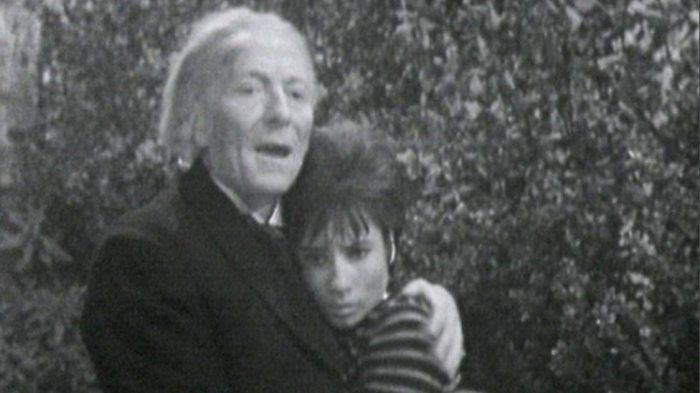
I love the way that Whitaker returns from time to time to the events of An Unearthly Child.  In both the book and television versions there’s the disturbing notion that the old man has (for reasons unknown) secreted a young girl inside a telephone box.  Plus Barbara remains the one who’s questing for answers to the mystery of Susan – with Ian a helpless passenger buffeted along by events.

Subtle touches to other television stories – when we first see Susan she’s wearing the same sort of bandage memorably sported by the Doctor in The Edge of Destruction – are woven in whilst Whitaker also takes the opportunity to expand upon the wonders of TARDIS.  He was clearly very taken with the food machine scene (repeating it here virtually verbatim from Nation’s script).  Indeed, he loved it so much that he later popped a food machine scene into the first draft of The Power of the Daleks (which was then snipped out by Dennis Spooner).

Whitaker’s additions include the metal skull cap which gives Ian an excellent haircut (“as good a barbering as I would have received at Simpson’s in Piccadilly”) and the oil and water shower. Clearly TARDIS had plenty of mod cons, although we never learn who cleaned and pressed Ian’s suit (was it Susan or was it all done by machines?)

Given the limited page count, the story has to be streamlined somewhat from the transmitted version, but little of substance is actually missing even if certain key scenes where Ian wasn’t present (Susan’s meeting with Alydon, for example) have to be re-told in the slightly clumsy way that was always a problem with first-person narratives.

There are scores of memorable descriptive passages, such as Ian’s shocked discovery about the horror which lurks inside the Dalek casing.

It was an evil monstrous shape. There was one eye in the centre of a head without ears and with a nose so flattened and shapeless it was merely a bump on the face. The mouth was a short slit above the chin, more of a flap really, and on either side of the temples there were two more little bumps with slits in them and I heard the Doctor mutter that they must be the hearing parts. The skin was dark green and covered in a particularly repellent slime. I felt my stomach heaving and I bit the inside of my mouth until I tasted blood.

In both of Whitaker’s novels, Ian and Barbara seem to be more than just good friends (this is made explicit in Doctor Who and the Crusaders where their future life plans have already been settled). Things are less certain in Doctor Who and the Daleks (after all, they’ve only just met) but a notable Whitaker addition to the second half of the story is Barbara’s cold fury towards him (“I suppose you imagine I like you hanging around me all the time. Well you’re wrong! We’re forced together, I can see that, but it doesn’t mean I have to like it!”). Does the lady protest too much? At the end of the story this question is answered.

Another interesting wrinkle by Whitaker is the way he reverses the viewpoints of Ian and Barbara concerning the question as to whether the Thals should be formed into a fighting army to help recover the Doctor’s fluid link from the Daleks. In the novel, Ian is gung-ho whilst Barbara is keen for them to make their own minds up. The boxing match – organised by Ian – is an entertaining addition.

The slow descent into the Dalek city via the caves by Ian, Barbara and a small group of plucky Thals is probably the lowpoint of the television version. These scenes work better in print, although it’s a pity that Antodus’ ever-growing fear has been deleted. On the plus side, Kristas is greatly expanded and becomes wise and sage-like. It’s therefore something of a shock to realise that the television original is a much more anonymous character.

Doctor Who and the Daleks never fails to engage. Certainly one of my top ten Targets.

Redcap – A Town Called Love

After assaulting a German girl called Gerda, Private Pendlebury (Michael Robbins) crosses over into East Germany. He may not be prime defector material, but he’s still made welcome. Back in the West, Mann is confronted by Pendlebury’s distraught wife.  She pleads with Mann to retrieve her husband ….

There’s one really clever thing about A Town Called Love, although I have to confess that until the credits rolled I’d completely forgotten about it. Gwendolyn Watts plays two roles – Gerda (Pendlebury’s German girlfriend) and Vera (Pendlebury’s wife).

Gerda is blonde whilst Vera is a brunette. This simple act of changing hairstyles obviously helped to create the illusion that they were two different people. Or maybe I was just distracted by Gerda’s transparent negligee …..

There’s no particular reason why the two parts should have been played by the same actress, but it offered Watts a more than decent showcase for her talents. Gerda – who possibly is seeking to entrap the unwary Pendlebury into criminal activity – is the less well defined of the two, but Vera is gifted several strong scenes.  Alternating between vulnerability and calculation, she’s able to appeal to the kind-hearted Mann, who then risks his own safety by crossing over the wall in an attempt to bring Pendlebury back.

Once again, there’s so much quality in the cast.  Michael Robbins, best known for playing the long-suffering Arthur in On The Buses, is equally long-suffering here. Pendlebury is a straightforward sort of chap – after his altercation with Gerda (he says she slipped and hit her head) he hot-foots it over to the East. But he finds life to be no better there than it was in the West, so he’s easily persuaded by Mann to return and take his punishment. But there’s a nasty sting in the tale for him when he does come back.

Magda (Yootha Joyce) and Bob McGregor (Garfield Morgan) are both very welcoming to all new defectors, but only because it’s their job. Morgan’s plummy good-cheer and Joyce’s sultry seductiveness both have a very hollow feel, but then I doubt that either Pendlebury or Mann were taken in by them.

There’s a cold opening to this episode, as Mann’s now changed location and seems to have a permanent base, operating with Sergeant Coulter (Glynn Edwards) and Colonel Matherson (Peter Copley). Neither appear again though, so this posting presumably was only temporary. That’s a pity, as both characters had scope for future development – Coulter’s friendly opposition with Mann (they have very different opinions about Pendlebury) and Matherson’s avuncular but steely command style could easily have been examined in more depth across a series of episodes.

Not quite as gripping as the first episode, possibly because there’s the sense that Mann isn’t going to remain in the East for very long (it would have been a short series had he done so) there’s still enough character conflict to keep things ticking along nicely.


Redcap – It’s What Comes After

Sergeant Mann’s investigation into a soldier who went AWOL is an open and shut case. But it indirectly leads onto a more puzzling affair – why has a previously upstanding officer, Captain Lynne (Keith Barron), suddenly started to act in a very erratic manner? Maybe it’s connected to his wife’s recent breakdown ….

Airing between 1964 and 1966, Redcap offered John Thaw his first starring role. Sergeant Mann, a member of the army investigative unit, has free reign to travel the globe, unearthing crime, corruption and disorderly conduct wherever British soldiers might be stationed. This gives Mann the air of a permanent outsider who’s always faced with an uphill battle to bring any perpetrators to justice. In retrospect, this sort of character fits Thaw like a glove – it’s easy to see echoes of Jack Regan in Mann (both, at times, are no respecter of authority).

Although Mann visited a fair few countries, the series never left the UK (and indeed rarely ventured outside of the studio). Some might view this as a weakness but if you love 1960’s studio-based VT drama, then Redcap will be just your cup of tea.

There was plenty of quality on the technical side – it was produced by John Bryce (who helmed The Avengers during 1963/64) and script-edited by Ian Kennedy-Martin (later to write Reganthe Armchair Cinema pilot which spawned The Sweeney). Plenty of familiar names pop up on the writing front such as William Emms on this opening episode.

The mystery as to why Lynne has gone to pieces is eventually revealed – his wife (played by Miranda Connell) was raped after leaving a mess party. With the crime having taken place inside the army compound, this makes it more than likely that a soldier was responsible. But even after this revelation there’s still an air of mystery – why is Lynne so reluctant to admit what happened?

Barron plays Lynne as an upper-crust type and manages to nicely suggest the conflict and turmoil that lies behind his apparent passivity.  He eventually does come clean, and to Lynne’s credit he wasn’t acting purely out of self-interest (although he does admit that public knowledge about his wife’s rape would damage both his career and reputation).

Emms’ script briefly attempts to tease out the puzzle concerning the guilty party by offering us several possibilities. But since we only focus on one – Private Bolt (Kenneth Colley) – this mystery soon dissipates.  There are still several different ways the story might play out though – Bolt is guilty and confesses, Bolt is guilty but doesn’t confess, Bolt is innocent.

In the end, everything is wrapped up slightly too neatly. Mann has very little evidence, but contrives a situation where Bolt and Lynne are left alone. Lynne, having already been told by Mann that Bolt is the most likely suspect, snaps and viciously beats Bolt up. And having been pulped by Lynne, Bolt then helpfully confesses his crime to Mann.

Hmm, given this confession was extracted under duress it’s possible that it might not stand up in court. Mind you, it’s the kind of stroke you could imagine Jack Regan pulling.  Indeed, Thaw does glower throughout with the same sort of barely supressed fury that he’d later display in The Sweeney, so maybe even this early on Kennedy-Martin was taking notes ….

As with each episode, It’s What Comes After is immaculately cast. Keith Barron is good value as Lynne, whilst Colley slips in enough off-kilter gestures to suggest that Bolt is indeed the man we’re looking for.  Derek Newark, as the long-suffering Mess Sergeant (who has to deal with the insubordinate Bolt on a daily basis) also catches the eye.

It may not impress as a great example of detective work, but It’s What Comes After is certainly a strong opening episode.

Doctor Who – The Dalek Invasion of Earth. Episode Six – Flashpoint

flash.jpg

Flashpoint is an episode of two halves – the Daleks are defeated and the Doctor bids farewell to Susan.

After five episodes (and countless unseen years prior to the events of World’s End) it’s undeniable that the Daleks are dealt with rather quickly.  But the major niggle I have is how the destruction of the mine is assumed to signify the end of the Daleks’ rule.  This was an invasion of Earth, remember, nor just Britain.  So are there no Daleks in any other country?

It’s hard to be too critical of Nation though, since this would be a problem the series would encounter again and again over the years.  Subsequent invaders, be they Cybermen, Autons, etc would (for all their meticulous planning and strength in numbers) always have to be vanquished totally just before the end of the final episode.

When done badly it can feel like the Doctor’s simply flicked a switch to turn the story off.  Perhaps DIOE would have felt more satisfying had the Doctor left Earth with the humans holding the upper hand but still facing a long struggle to completely irradiate the Dalek menace.  But due to the way that stories tended to be neatly wrapped up by the concluding episode it’s not a surprise this option wasn’t taken.

There are a few bright spots during the first half though.  I love Barbara’s attempt to bamboozle the Black Dalek with news of a non-existent rebellion led by numerous famous figures from history!  She’s been rather sidelined during the last few episodes, so this was a nice moment.

A realistic touch is how shabby Ian’s clothes have become.  We’ve seen this before, An Unearthly Child for example, but it’s not something that would happen very often – later Doctors and companions would tend to look spotless, irrespective of the traumas they’d been through.

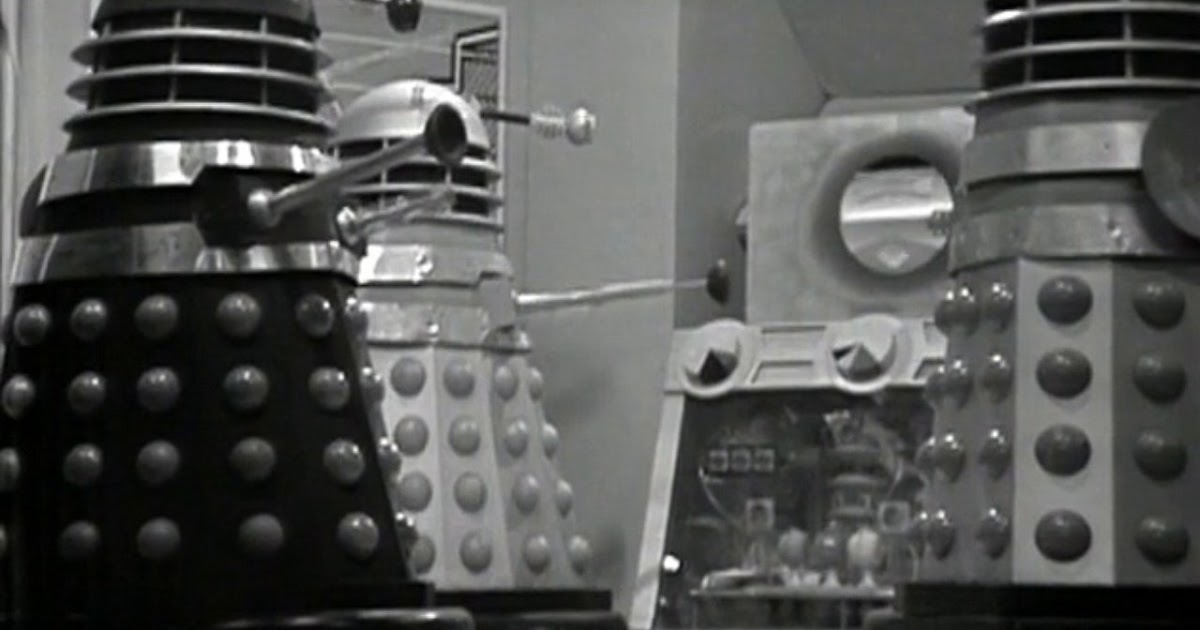
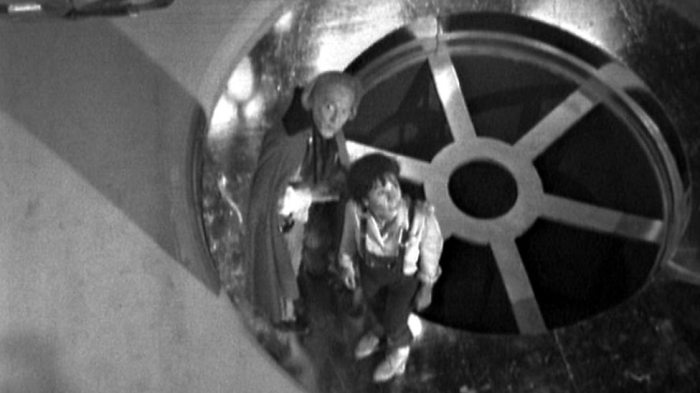
The Doctor’s in a proactive mood which is best demonstrated when he penetrates Dalek control.  His stand-off with a Dalek – seen from the eye-stalk of the metal meanie – is an impressive directorial flourish.  Hartnell, clutching his lapels, strikes a typically iconic pose.

The Dalek voices are rather inconsistent throughout the serial – at times it sounds like there’s little ring modulation used at all.  Most bizarrely, several times in this episode we hear Dalek voices over the tannoy and they sound for all the world like Peter Hawkins and David Graham have simply clamped a hand over their mouths!

The destruction of the mine is shown via stock footage, which is as convincing as stock footage usually is.  But the shot of Jenny, Tyler and the Doctor looking down on the devastation does almost makes up for this.  Both Ann Davies and Bernard Kay are immobile and expressionless as Jenny and Tyler begin to process the news that the war is over.  The joy of victory can come later, for now there’s just a weariness as they reflect how many lives have been lost over the years.

This still leaves ten minutes, which is a generous chunk of time to devote to Susan’s departure.  It’s interesting that neither Susan or David featured in the attack on the Dalek mine (was this an intentional sidelining of Susan?).  Given Ford’s unhappiness with the way Susan had been underused since the start of the series it’s ironic she wasn’t given a chance to shine against the Daleks in her last episode.

But at least she’s given a decent send-off (something that several future companions will be denied).  Grubby and tear-stained, we come to see that Susan loves David but can’t bear the thought of leaving her grandfather.  So the Doctor makes the decision for her and locks her out of the TARDIS.  Hartnell’s close relationship with Ford was well known (he’d come to look on her almost as his real granddaughter) and it’s plain that Hartnell, just as much as the Doctor, feels the pain of their separation.  Fifty plus years later it’s still touching stuff.

One day I shall come back. Yes I shall come back. Until then there must be no regrets, no tears, no anxieties.  Just go forward in all your beliefs and prove to me that I’m not mistaken in mine.

Doctor Who – The Dalek Invasion of Earth. Episode Five – The Waking Ally


We see a little more of the Slyther at the start of The Waking Ally, but not for long as Ian bashes it with a rock and sends it plummeting to its death down the mineshaft.  As it falls, it makes a rather pitiful cry.  Am I the only one to have a tinge of regret at the Slyther’s passing?

After spending the early episodes as exterminating baddies, the Daleks we see at the mines are slightly less exciting.  They come across as a group of middle-managers, worrying about work parties and the like.  It’s interesting that eight years later, in Day of the Daleks, they’re very similar.  Had Day been written by Nation it would have been an obvious retread, but that one was scripted by Louis Marks.  Possibly Marks had been influenced by these episodes or maybe he was just drawing on a similar theme.  After all, you can only exterminate so many people – if you kill them all then you’ll have no labour force left to carry out your nefarious plans.

Hartnell’s back and he’s in fine form – we see the Doctor give one of the Robomen a damn good thrashing.  For those who believe the Doctor is a pacifist it might be somewhat unexpected, but in reality he’s never been averse to using force.  It’s rarer that he actually gets physical (unless he’s being played by Jon Pertwee) but there’s countless occasions when the Doctor is shown to be quite happy to wipe out large numbers of whoever he considers to be the enemy that week.

Barbara and Jenny, whilst looking for shelter, find a tumbledown house in the middle of the woods.  The original plan had been for the house to contain three old women who would have resembled the witches from Macbeth (was it budget problems that ensured only two made it to screen?!)

One of the women reacts with polite pity to the news that London is no more.  “Destroyed? Well I never. Oh, when I went it was beautiful. There was the moving pavements and the shops and the astronaut fair.”  This sort of world-building via dialogue would later be a hallmark of Robert Holmes and although Nation’s brief effort is somewhat cruder it does give us a brief glimpse of 22nd Century life.  The women betray Barbara and Jenny to the Daleks.  In Nation’s first draft, one of them tells Barbara that “we’re old, child. Times are difficult. There’s only one law now – survive.”

Larry injures himself after he and Ian reach the bottom of the mine.  This is a sure sign that he won’t be around much longer, which is a shame as I’ve enjoyed Graham Rigby’s performance.  He manages to deliver lines like “who knows what the Daleks are up to? I told you what my brother Phil said – all they want is the magnetic core of Earth” with aplomb.  I like the contradiction inherent in this statement – who knows what they want? Oh, it’s the magnetic core of Earth that they want …

His death is so bleak.  He finds his brother, but discovers that he’s been turned into a Roboman.  Larry’s efforts to find some spark of humanity still remaining in his sibling (“Phil…it’s Larry, your brother Larry. Think Phil! Remember me! Angela…Your wife, Angela! I’ll take you to her”) comes to nothing and Robo Phil kills him.  As Larry dies, so does Robo Phil and the final (unscripted) recognition of Larry by Robo Phil just before he draws his final breath simply adds another level of tragedy to this scene.

How does the Doctor work out that the Daleks’ mine-works in Bedfordshire are the centre of their operations?  For all we know there could be similar Dalek mines dotted all around the globe.  The others ask the Doctor what the Daleks’ intention could be. He’s not sure, but the cat’s already been let out of the bag by Larry – his assertion that the Daleks are keen to extract the Earth’s core turns out to be 100% accurate. Perhaps it would have been better to snip this earlier line out, that way the mystery would have lasted a little longer.

Later on, the Black Dalek helpfully explains exactly what their ultimate plan is via the intercom. “This is the Supreme Controller. Our mission to Earth is nearly completed. We were sent here to remove the core of this planet. Once the core is removed, we can replace it with a power system that will enable us to pilot the planet anywhere in the universe.”  This is breathtakingly bonkers.

The scene with the Black Dalek is a good example of the chaos that can occur when you choose to pre-record Dalek dialogue. This didn’t happen that often – probably for the reasons you see here.  Mid-way through the scene, the cues begin to go hopelessly out of sync which gives us a bizarre moment when three Daleks are all taking at once and making very little sense!

Doctor Who – The Dalek Invasion of Earth. Episode Four – The End Of Tomorrow

end.jpg

As previously discussed, Hartnell wasn’t able to take part in the recording of this episode, so his handful of lines had to be farmed out.  This occurs when David steps up to dismantle the Daleks’ firebomb (this would have been the Doctor’s only contribution to the episode).  It’s presumably a sign of the times that no thought was given to the possibility of Susan becoming the bomb expert.  It would have been a good reminder that whilst she looked like a fifteen-year old girl she possessed experience which belied her appearance.  But no, it has to be the man who takes charge, while Susan hovers anxiously in the background.

There’s a first in The End of Tomorrow – it’s the first time that Doctor Who filmed in a quarry (and this was one of those rare times when the location was actually shown to be a quarry and not an alien planet!)  John’s Hole at Stone, Kent has this singular honour.  And how well do the Daleks work in the quarry?  Answer, not very well.  We see one trundle a short distance rather slowly, but otherwise they wisely stay immobile.

The unmistakable Nicholas Smith, sporting an unexpected Mummerset accent, pops up as Wells.  He racked up numerous credits during the 1960’s but he’ll always be best remembered as Mr Rumbold from Are You Being Served?

Terry Nation has often been accused of being little more than a hack writer, churning out formulaic scripts at great speed.  His very brief original description of the Daleks is used as an example of this, but it’s fair to say that there were other times when he took more of an interest in detailing how his creations should be visualised.  His description of the Robomen is a good case in point.

“They are dressed in black from head to foot, high-necked, very utilitarian garb made from rough cloth. There is no expression on the face. The eyes stare unblinking. Their movements are a a little stiff, but not over-emphasized. They seem to have a slight mechanical quality about them.  Their voices are very mechanical and slow, like a child deaf from birth learning to make sounds.”

Maybe one of the reasons why Nation didn’t spend too long on descriptive passages is that he knew his ideas might not be adopted.  With the Robomen, some of his concepts were taken on board, but it’s notable that Nation didn’t specify that they should wear what appears to be wastepaper baskets on their heads.  The movie managed something more sleeker, but the concept of miniaturisation doesn’t seem to have been considered here.

With the Doctor unconscious, Susan and David are exploring the sewers.  In Nation’s original draft, David mentions that people moved underground to avoid the plague.  Their descendants are still there, but they’re no longer quite human.  Having adapted to living in total darkness, their “hair is matted and shoulder length and, like the face, it is totally white. Only the eyes make black circles. They are larger than human eyes, bulging and dark like those of a night creature. Canine teeth project over the lower lip.”  Instead we see Susan tangle with a friendly alligator.  Oh well, it was cheaper I guess.

We catch a brief glimpse of the Slyther.  It’s the sort of thing that defies description and you have to be impressed at how seriously William Russell reacts to it.  Later on there would have been the temptation to send it up (goodness knows what would have happened had Tom Baker met it – something along the lines of The Creature from the Pit no doubt) but Russell is rock solid.  The bizarre sounds it makes are also memorable.

There can be few odder cliffhangers than the sight of the Slyther advancing on Ian and Larry whilst it slowly waves a portion of itself.  Richard Martin might not be Doctor Who’s most highly-rated director, but at least he wisely chose to keep this shot as a close-up.

Missing Believed Wiped – 25th Birthday Bonanza at the BFI Southbank – 15th December 2018

the_morecambe_wise_show_0105.jpg

Below is the press release for the forthcoming Missing Believed Wiped event at the BFI Southbank on the 15th of December.

The BFI celebrates Missing Believed Wiped (MBW)’s 25th birthday on 15 December at BFI Southbank with a treasure of television riches. Reflecting on the initiative’s successes from the last 25 years in tracking down and screening rediscovered ‘lost’ television classics. The 15 December event will present newly discovered material including top-quality music, comedy and variety titles as well as welcome repeats for much-requested items taking place across two sessions.

We’re thrilled to announce the premiere of the much anticipated Doctor Who animated mini-episode based on the now lost first part of the 1968 Doctor Who story, ‘The Wheel in Space’, starring Patrick Troughton. We are delighted to be joined by a number of special guests including the Indiana Jones of lost archival television Philip Morris, who will be presenting some of the rare television gems he’s recently unearthed, including missing episodes of Morecambe and Wise, Sid James’s sitcom Citizen James and children’s television favourite Basil Brush including the only surviving live performance of The Kinks performing their hit Days. Pop star and songwriter Vince Hill looks back over his distinguished 60+ year career in music plus we also feature a rare performances by Aretha Franklin on British television.

The BFI National Archive has grown to become one of the largest and most important collections of British television in the world. This special anniversary edition of Missing Believed Wiped offers a chance for reflection, looking back at some of the success stories and achievements from the last 25 years, which have deepened our understanding of British TV heritage.

Missing Believed Wiped has been spearheaded by Dick Fiddy, BFI Archive Television Programmer, commenting on this milestone he says, “Over the last 25 years our events have showcased some of the most important finds to have been located and returned to official archives. Tracking down these ‘lost’ treasures has been a joint effort between the BFI, many individuals and organisations. One of our most impressive discoveries in recent years consisted of 100 hours of very important missing single UK plays, including the 1965 version of Orwell’s 1984, and now held by the BFI National Archive. Such finds energise the quest and inspire us to continue the search to plug more gaps in the British television archives”

Session 1:

‘Music and More’ 15:15, NFT1, BFI Southbank

Celebrating his 60th year in showbiz, Vince Hill, the multi-million selling recording artist and star of BBC TV and radio, best known for his 1960s mega-hit ‘Edelweiss’, will introduce Vince Hill at The Talk of the Town (BBC 1969), the prime time BBC TV special filmed at the popular ‘Talk of the Town’ nightclub at London’s Hippodrome. Unseen for nearly 50 years since its original transmission, the 16mm film came from Vince’s personal collection. He made the discovery when searching through metal canisters in his lock up. This special affords a snapshot of Vince Hill’s live show of the time, when he was performing sell out shows up and down the UK, as well as starring in his own BBC Radio series, and appearing as a regular star at London’s Palladium. Vince had already made his name with several big UK chart hits and Vince Hill at The Talk of the Town features the only surviving performance of ‘Edelweiss’ on BBC TV. Vince Hill kindly donated the 16mm film to the BFI National Archive.

On rediscovering the film and presenting it at BFI Southbank Vince Hill said, “I’m thrilled that my 1969 BBC TV special at the legendary Talk of the Town is to be screened at the BFI’s Missing Believed Wiped, performing at such an iconic venue was a career highlight. I was surprised to rediscover the original film earlier this year in my lock up. I feel immensely proud that a new audience will have a chance to see the film after all this time and that the BFI have taken the film into their prestigious archive for safe keeping.”

Alongside this we are thrilled to announce the premiere of a brand new 10 minute animated Doctor Who mini-episode based on the now lost first part of the 1968 Doctor Who story, ‘The Wheel in Space’, starring Patrick Troughton as the Doctor and Frazer Hines as Jamie. This newly announced mini-episode, produced by Charles Norton and directed by Anne Marie Walsh who will introduce the BFI Southbank screening, will be included on a future BBC DVD release next year.

Back by popular demand, the infamous Stars and Garters segment that proved such a huge hit at our 2016 event. We also sneak in a very special – once missing – clip from It’s Lulu (BBC 1970), having previously screened the full episode at MBW in 2007, it is included here as a tribute to The Queen of Soul, Aretha Franklin singing ‘Spirit in the Dark’.

Session 2:

‘Philip Morris Presents’ 17:45, NFT1, BFI Southbank

Helping the BFI celebrate the Missing Believed Wiped’s special anniversary we’re delighted that the legendary CEO of Television International Enterprises Archives (TIEA), Philip Morris, is able to join us at BFI Southbank to introduce a specially selection of rediscovered classics drawn exclusively from the TIEA Archive holdings. An archive television archaeologist who has traveled the world to track down missing episodes, Philip’s never say die attitude has helped him over the years recover a wealth of ‘lost’ British Television, many found in small television stations in far flung places and return them to television archives in the UK. TIEA also assists television stations around the world to preserve their archives and digitise their back catalogue for future generations.

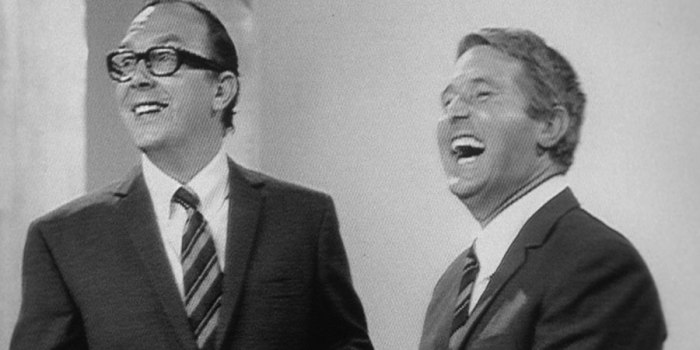
Among the clips and shows featured in this session are appearances from MBW favourites, Morecambe and Wise. In 2011 Morris discovered a badly deteriorated early missing episode from the first BBC series of The Morecambe and Wise show (1968) in Nigeria. Sadly unplayable, the BBC and researchers at Queen Mary University of London were able to recover some images through cutting edge lasers and X-Ray microtomography. There was existing evidence that two other shows from the first series had been sent to Sierra Leone as audition prints from London, however research found that all Sierra Leone Broadcasting Corporation (SLBC) holdings had been destroyed during the civil war in the 1980s and they were long thought lost. The ‘lost’ episode from the first BBC series of The Morecambe and Wise Show (Series 1, Episode 5, BBC TX 30/09/1968) which MBW are screening was recovered by Philip Morris, who found the two episodes in a derelict cinema in Sierra Leone.

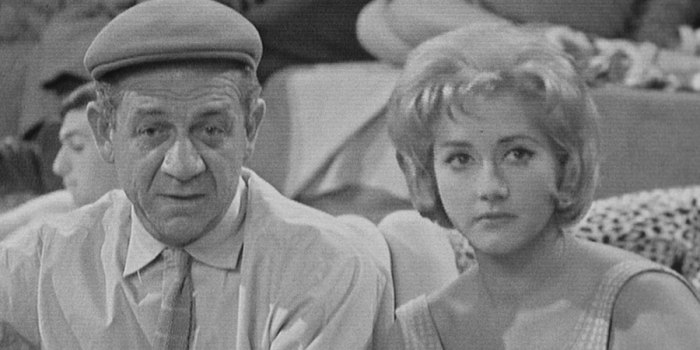
The programme also features Basil Brush in the earliest surviving episode from the first series of The Basil Brush Show (Series 1, Episode 3, BBC TX28/06/ 1968). Located in Nigeria a few years ago, the last five minutes, featuring a barnstorming performance from The Kinks, was missing until recently. Now restored and complete, this episode contains the only surviving live performance of ‘Days’, as The Kinks Top of The Pops performance had been wiped by the BBC. Missing Believed Wiped are also excited to screen a rare episode, ‘The Day Out’, from the third and final series of Citizen James (Series 3, Episode 6, BBC TX 05/10/1962). Sid James’s hilarious BBC sitcom ran from 1960-1962, following the exploits of Sid’s scheming charmer, guest starring Liz Fraser, the late Carry On actor who recently died in September, as the object of Sid’s wandering eye. This ‘lost’ episode was recovered from Monaco Television, in an old store room during a clear out of their premises.

On the news of this recent discovery of Citizen James, Reina James, Sid James’s daughter said, “It’s wonderful that Missing Believed Wiped is giving audiences a chance to see Sid as Citizen James again in this ‘lost’ episode. And Liz Frazer too – they’re fantastic together. It’s a real treasure”

Tickets for both Missing Believed Wiped sessions on 15 December go on sale to BFI members on 6 November and the general public from 13 November, with joint ticket option available for both sessions.
citizen_james_0306

Tom’s Midnight Garden (1989) – Second Sight DVD Review

cover.jpg

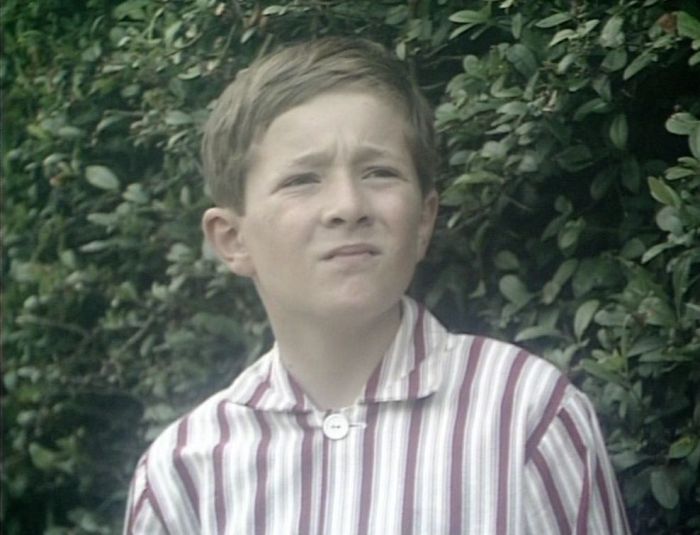
After Tom Long’s brother, Peter, comes down with a bad case of measles, Tom (Jeremy Rampling), is forced to spend several weeks with his Uncle Alan and Aunt Gwen (Shaughan Seymour and Isabelle Amyes). Although they’re friendly enough, they live in a small flat where there’s nothing to do (and what’s worse, no garden to play in).

Tom becomes intrigued with a grandfather clock which sits in the downstairs lobby. It belongs to Mrs Bartholomew (Renee Asherson), their reclusive and elderly landlady. Unable to go out, due to fears that he may be infectious, Tom becomes more and more frustrated – until one midnight he hears the grandfather clock striking thirthoigh

Creeping downstairs, he discovers that the back yard (which previously only housed an old bike and a few dustbins) has now been transformed into a gorgeous sunlit garden ….

Originally published in 1958, Phillipa Pearce’s novel has been adapted for television three times (this was the most recent) and was also turned into a film in 1999 as well as a stage production in 2001. Long regarded as a classic of children’s literature, Julia Jones’ adaptation manages to capture a good deal of the magic of the original.

Broadcast in six episodes during January 1989, it’s an all-videotape production, as was pretty common at the time. Film would have given the story a little extra gloss, but this is only a small quibble.

The first episode contents itself with setting up the story, meaning that we only briefly glimpse the garden right at the end of this opening instalment. This gives us plenty of opportunity to get to know Tom (he’s a remarkably whiny child to begin with and also very fond of burping). He may be hard to love in these early scenes, but this unsympathetic portrayal is necessary, otherwise the redemptive nature of the garden would carry less weight.

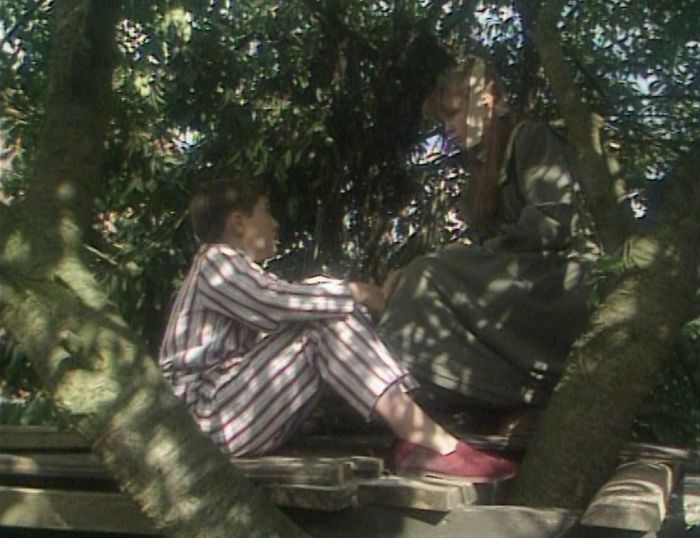
Once he ventures out into the garden in earnest he makes a new friend – Hatty (Caroline Waldron). She, like the garden and the transformed house during these midnight trips, is rooted in the Victorian era (which results in a pleasing combination of two different eras). But the question is, is she a ghost in the present or is Tom a ghost in the past?

With six episodes to play with, there’s a leisurely feel to proceedings – this isn’t a bad thing though, as it helps to create a relaxing atmosphere. Puzzling though the garden may be, it’s also a haven of peace and security (at most times, anyway). We do observe the occasional discordant moment though – such as when a tree is felled by a lightning bolt. This is achieved via an impressive piece of modelwork which, unlike the rest of the serial, is shot on film.

If Tom feels somewhat invisible in the real wor!d, then he’s really invisible whenever he enters the garden. It seems nobody, apart from Hatty, can see him (although we later learn that Tom is visible to one other person). Hatty is in some ways a kindred spirit (she’s equally as lonely as Tom, although unlike him she indulges in games of make believe). Their first face to face meeting – in episode three – is where the story really begins to engage.

m2

Jeremy Rampling and Caroline Waldron pitch their scenes together very well, the developing relationship  between Tom and Hatty is teased out in a touching way (no mean feat for two young and inexperienced performers).  Like many juvenile leads from serials such as this one, Rampling didn’t subsequently pursue an acting career (apart from one later appearance in an episode of Casualty). Waldron racked up a few more credits, most notably the prestigious Summer’s Lease, also in 1989.

Producer Paul Stone’s cv reads like a list of some of the best children’s series and serials of the 1980’s – The Story of the Treasure Seekers  (a DVD release of this would be very welcome), The Machine Gunners, The Baker Street Boys, The Box of Delights, Moonfleet, The Children of Greene Knowe, Seaview, Running Scared, Jossy’s Giants, Moondial and the Narnia stories, to name a few.

Director Christine Secombe also had experience in this field (she directed all 28 episodes of Johnny Briggs and would later direct and produce Grange Hill). Not as effects intensive as the likes of The Box of Delights, Tom’s Midnight Garden has to rely instead on the drama of character interactions, mainly that of Tom and Hatty (this are handled with aplomb by Secombe).

The late twist is a pleasing one and concludes a quietly confident adaptation. Apart from a limited release via the Reader’s Digest some years back, this version of Tom’s Midnight Garden hasn’t been widely available on DVD, so it’s nice to see it out at last. If you’ve enjoyed some of the other BBC classic children’s adaptations from the 1980’s then this one should also hit the mark. Recommended.

Tom’s Midnight Garden is released by Second Sight on the 12th of November 2018. It has a running time of 151 minutes and an RRP of £19.99.

m1

Doctor Who – The Dalek Invasion of Earth. Episode Three – Day Of Reckoning

dalekinvasion3.jpg

The relationship between Susan and David begins to deepen. In part this is due to their shared experiences – in this episode, the pair (in hiding) hear the Daleks exterminate a poor unfortunate.  “You killed my wife and my brothers, now you want to kill me, argh, get away from me! No, no, no…argh!”  Ford’s reaction sells the horror of the moment more powerfully than if we’d actually seen the man killed.  Following this disturbing moment, Susan wishes that they could simply leave.

SUSAN: If only we could go to the ship and get away from here.
DAVID CAMPBELL: Well, I couldn’t go anyway.
SUSAN: Oh, David, David! Perhaps you could! I…I..could ask Grandfather and I’m sure he’d let you come. Oh, we could go to place where they’d never even heard of Daleks.
DAVID CAMPBELL: And what happens if there’s something unpleasant in the new place?
SUSAN: We move on somewhere.
DAVID CAMPBELL: No Susan, that’s not for me.
SUSAN: Why not?
DAVID CAMPBELL: Look, things aren’t made better by running away.
SUSAN: Well its suicide to stay here.
DAVID CAMPBELL: This is my planet! I just can’t run off and see what it’s like i
SUSAN: I never felt that there was any time or place that I belonged to. I’ve never had any real identity.

The Doctor of S1 would have agreed with her and no doubt would have been just as keen to hot-foot it out of there, but Susan should know by now that the new, improved S2 Doctor is not going to leave until the Daleks are defeated.  It’s also notable that in the last few episodes Susan has begun to express a little dissatisfaction with life aboard the TARDIS.  This is something we’ll see repeated over the years and it usually happens just before a companion is due to leave.  Anytime a companion starts to complain more than they normally do (another obvious example is Victoria in Fury from the Deep) you know they’re heading for the exit door.

The various team-ups that will endure over the next few episodes are now falling into place.  Barbara and the balaclava-loving Jenny begin to head for the mines in Bedfordshire.  Coincidentally, Ian is trapped on the Daleks’ saucer which is also heading for the mines in Bedfordshire.  Also hiding on the saucer is Larry (Graham Rigby) who wants to get to the mines in order to find his brother.  Larry is one of those characters who appear again and again in Doctor Who – they exist partly to line feed other characters (in this case Ian) and once their usefulness comes to an end they tend to be killed off.  The Doctor is reunited with Susan and together with David they decide to head … north (I’ve got a feeling they’ll end up at the mines at Bedfordshire, don’t you?)

Day of Reckoning is notable for a major location sequence in which Barbara, Jenny and the doomed Dortmunn flee from the Daleks whilst passing as many well-known London locations as they can fit in.  Accompanied by Francis Chagrin’s unusual percussion-based incidental music it’s an iconic few minutes – not least for the Daleks waving their suckers in a Nazi-salute style.

Hartnell doesn’t have a great deal to do in this episode, which is just as well as he was injured during rehearsals (as he was being carried down the Dalek saucer’s ramp he was dropped on the floor).  This could have been a lot more serious – Hartnell was temporarily paralyzed – but he recovered well enough to record the episode in the evening.  But it was recommended that he spend a few subsequent days recovering in bed, so he was hastily written out of the following episode (although luckily he wasn’t a major figure in that one either).

Doctor Who – The Dalek Invasion of Earth. Episode Two – The Daleks

dalek.jpg

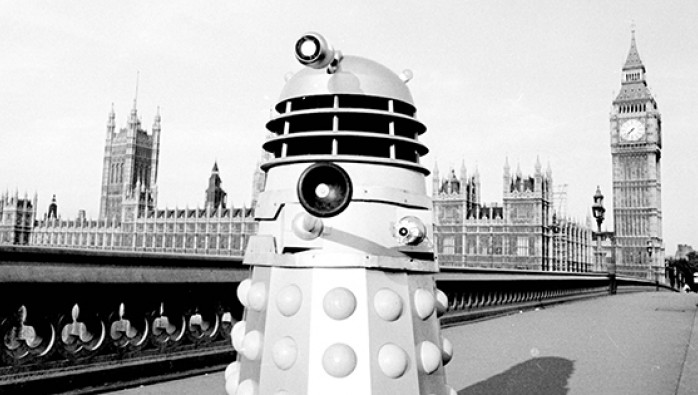
After the Doctor and Ian (and no doubt the audience) were surprised by the Dalek emerging from the Thames, they’re taken to the Dalek saucer at Chelsea.  Another prisoner, Craddock (Michael Goldie) explains how the Daleks invaded.

CRADDOCK: Well, the meteorites came first. The Earth was bombarded with them about…ten years ago. ‘Cosmic storm’ the scientists called it! Well, the meteorites stopped, everything settled down, and then … people began to die of this new kind of plague.
DOCTOR: Yes, that explains your poster, dear boy. Germ bombs, hmm?
CRADDOCK: Yeah, the Daleks were up in the sky just waiting for Earth to get weaker. Whole continents of people were wiped out. Asia, Africa, South America. They used to say the Earth had a smell of death about it.
IAN: Why Craddock? What were the doctor’s and the scientists doing about it?
CRADDOCK: Ah, well, they came up with some new kind of drug, but it was too late then.

This scene intercuts with David Campbell (Peter Fraser) telling Susan and Barbara the same story.

SUSAN: What happened next?
DAVID CAMPBELL: Well, the plague had split the world into tiny little communities. Too far apart to combine and fight and too small individually to stand any chance against invasion.
BARBARA: Divide and conquer?
DAVID CAMPBELL: Mmm. About six months after the meteorite fall, that’s when the saucers landed.

Nation’s draft scripts gave a different version of events. In the late twentieth century, the world was at war – China, Russia and America were at loggerheads whilst Britain was in conflict with Europe. But the arrival of the Daleks meant that the world united to face this common threat and a world government was formed in Japan.  The main problem with this scenario is that it would have begged the question as to exactly what the Daleks had been up to on Earth for the past two hundred years!

When Nation started crafting a sequel to The Daleks, his first thought was about how he could raise the stakes.  Showing the Daleks as the masters of Earth was an obvious choice – Jon Pertwee’s oft repeated comment about finding a Yeti using a public convenience in Tooting Bec demonstrates how mixing the everyday with the unknown can be a powerful one.  The Dalek/Thal conflict on Skaro worked well, but juxtaposing the Daleks with the familiar Earth landscape offered many more dramatic possibilities.  Of course you have to find a good reason as to why the Daleks would travel across the universe to invade the Earth.  Did Nation succeed? Mmmm.

Over the decades Earth would find itself under attack from a whole host of marauding aliens – but it’s rather fitting that the Daleks, given their status in the series, were the first.  They’re also by far the most successful, since subsequent invasions almost always happen when the Doctor is around, meaning that he’s able to save the day before things get too far out of hand.  Here, the invasion’s over and the Daleks have achieved a complete victory.  Humanity has been decimated and the survivors have been reduced to living underground or on the run, waging a seemingly hopeless struggle against an all-powerful enemy.

Nation’s memories of WW2 come to the fore in this episode, especially with the Daleks’ radio broadcast. “Rebels of London. This is our last offer. Our final warning. Leave your hiding places. Show yourselves in the open streets. You will be fed and watered. Work is needed from you but the Daleks offer you life.”

Susan and Barbara have made contact with the rebels. They’re all fairly broad character types, but luckily Richard Martin found good actors who were able to put a little meat on their bones.  Dortmunn (Alan Judd) is the wheelchair bound inventor who’s convinced he’s developed a bomb to destroy the Daleks – we’ll shortly see how terribly wrong he is.  Jenny (Ann Davies) is a hard as nails survivor who, no surprise, becomes more human as the serial develops.  Tyler (Bernard Kay) doesn’t have a great deal to do in this episode, except argue with Dortmunn, but Kay (who would return to the several several times in the future) is always watchable.  And David Campbell will serve a very definite purpose in the story, although there’s no sign of that yet.

A late revision to the script concerned the intelligence test that the Daleks use to decide which humans are fit to be converted into Robomen.  In the first draft, the Daleks simply turned up and took their prisoners to be Robotised one by one.  This obviously wasn’t deemed to be satisfactory, so something more elaborate was created.  But it does beg the question as to why the Daleks bother with all this palaver – since the Robomen are seen to have no free will of their own, why do the Daleks need to select those of a certain intelligence?  This also means that a Dalek has to be present outside every cell, waiting for the prisoners to work out how to escape.  Surely this would tie up a lot of Daleks?  The Peter Cushing movie streamlined things considerably by showing Cushing’s Doctor using a comb to escape!

Technically, this episode is a little messy.  A member of the production team wanders in shot at one point and David Graham’s pre-recorded Dalek lines are cued in too early in one scene.  The rebels’ attack on the saucer doesn’t really convince either – had it been shot on film rather than VT then it could have been cut together more convincingly.

Travel Man: 48 Hours in … – Series One and Series Two. Simply Media DVD Review

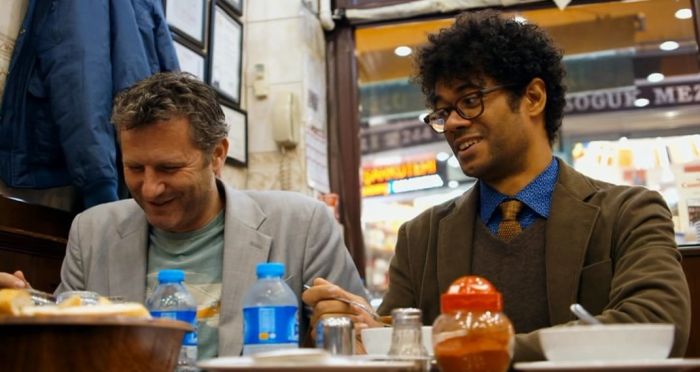
Now on its eighth series (an impressive feat for a programme which only launched in 2015) the format of Travel Man is a simple one. Take a highly acerbic host with a penchant for laconic flights of fancy (Richard Ayoade) and mix with a familiar comedian or LE face (Kathy Burke, Adam Hills, Jessica Hynes and Stephen Mangan in the first series alone). Drop the pair of them into a popular tourist destination for forty eight hours and mix well ….

Although each edition is short (filling a thirty minute slot, this leaves a running time of around twenty two minutes after the adverts are excised) this actually works in the series’ favour.  The way that Ayoade and his guest zip from attraction to attraction does replicate the feel of a hectic weekend break (and it also helps to keep the pace up).

Although primarily a vehicle for the comic observations of Richard Ayoade and his guests, Travel Man also functions as a travel series. Information concerning the costs of flights, accommodation, food, etc is briefly displayed, which allows the viewer to gauge the sort of budget required for each trip.

But although the series briefly touches upon the budget end of the market, it usually breaks these rules – Ayoade and his guest tend to stay in the best accommodation or might charter an expensive mode of transport (a hot air balloon or a luxury yacht). The best editions are those where Ayoade clicks with his fellow traveller and there’s the sense of a shared journey of discovery. Given the highly edited nature of the programme this isn’t always possible, but there’s certainly more hits than misses.

tm3.jpg
“Too Turkish”

The first series, despite being only four editions long, worked well. It set up some running themes (the local cuisine will always be sampled – but often with fairly disastrous results).  Kathy Burke resorted to spitting it out whilst Adam Hills glumly decided that his soup was “too Turkish”. Meanwhile, Stephen Mangan bravely attempted the Marrakech delicacy of steamed sheep’s head, although most of it remained uneaten …

Food remains on the agenda during the second series, but there are plenty of other bizarre diversions (Greg Davies’ reaction to the Moscow cat circus, for example). Noel Fielding’s delight in sampling all the beers Copenhagen has to offer and Rob Delaney’s walking tour of Seville are just a few of the highlights.

Travel Man does what it does very well. It’s not an exhaustive or probing travel show, it’s there to entertain and thanks to Richard Ayoade’s delightfully deadpan persona it always delivers.

Series one and series two of Travel Man are released on the 29th of October 2018 by Simply Media. They can be ordered directly from Simply here and here (quoting ARCHIVE10 will apply a 10% discount).

Doctor Who – The Dalek Invasion of Earth. Episode One – World’s End

The Dalek Invasion of Earth was where everything changed.  It’s the first time that an element from a previous story returned, so it can be said to be the beginning of Doctor Who continuity.  Whether you call it “continuity” or “kisses to the past” or something else, it’s a dirty word for some people.  Many considered 1980’s Doctor Who to be far too obsessed with its own past (and just to show that nothing changes, the modern series is the same for some people).

Maybe one of the reasons why I love 1960’s Doctor Who is because it’s fairly light on continuity.  There are returning monsters (Daleks, Cybermen, Yeti, Ice Warriors) but they’re the exceptions rather than the norm – a returning baddy was more of an event then, as it didn’t happen all the time.  The Doctor’s place in the universe is another reason why I like 1960’s Who.  He’s able to travel around in almost complete anonymity – compare this to the series from the 1970’s onwards, where he increasingly became someone that everyone in the universe seemed to know (and if they didn’t know him personally, they’d probably have heard of the Time Lords at least).  The trend continues to this very day, and modern Who feels even more constricted than the original series ever did.

True, we see a few examples of the Doctor’s fame during the Hartnell and Troughton eras (for example, there’s the frankly bizarre notion that the Doctor’s travels have been monitored in The Savages, making Jano and his friends the very first Doctor Who fansbut they’re rather an exception.  Hartnell’s Doctor never arrives somewhere and announces that he’s a Time Lord, or the most powerful being in the universe, or the thing that monsters are afraid of, etc, etc.  He has to gain people’s trust by his actions rather than simply relying on his reputation.

Turning back to DIOE,  Terry Nation had to do some frantic re-tooling in order to present the Daleks as a galactic force.  In The Daleks they seemed to have no ambition for conquest – they merely wanted to survive.  Later in this story we see the Doctor blithly tell Ian that the Daleks they encounter on Earth come from an earlier period, which suggests that Skaro’s Daleks had devolved (the Skaro Daleks couldn’t move outside of their city, whilst the Earth Daleks have no such trouble).  This might lead us into the murky world of Dalek continuity, so I think it’s best to leave it there.

As will be traditional with most Dalek stories, they only pop up right at the end of episode one.  It’s an obvious trick – hook the viewer in and then reward them with just a taste, thereby forcing the audience to return next week.  So if we don’t have the Daleks here, what do we have?

For starters, it’s the series’ first major location shoot and also the first time that the regulars were seen on location.  Having spent nine stories confined in the studio it’s a considerable novelty to see Billy and co. out in the open.  As with most stories to this point, Nation elects to block the entry to the TARDIS – this time via a collapsing girder – which forces the Doctor and his friends to venture further afield.  Given that the raison-d’etre of the series had subtly changed (the Doctor was now becoming more proactive in his desire to combat evil) it probably wasn’t required, but it’s always nice to see old plot favourites (Susan’s sprained ankle is another).

It slowly becomes clear that they haven’t returned to Ian and Barbara’s time (notices which state “It is forbidden to dump bodies in the river” are something of a giveaway).  The mystery is settled when Ian finds a calendar for 2164 (Doctor Who often liked to set stories exactly a few hundred years in the future).  Quite why 2164 looks a lot like 1964 is a mystery that’s never explained on screen (although in Terry Nation’s original drafts it was revealed that the Daleks had invaded in the 1970’s – so any technological or architectural progress would have been drastically curtailed from that point onwards).

The paper plate Dalek spaceship is priceless!  The CGI replacement on the DVD is very nice, but as with all the replacement effects I rarely use them – and if you’re the sort of person to be worried by the original effect you probably shouldn’t be watching the series anyway.  It’s not a case of being blind to the series’ numerous production faults and missteps, rather you just have to accept the production for what it was (true, sometimes you have to be very accepting!)

As we get further into the story, I’m sure we’ll find time to discuss the Daleks’ bizarre reasons for invading Earth, but for now let’s restrict ourselves to the underwater Dalek.  Why was it underwater?  Apart from providing a decent cliffhanger I can’t think of any other credible reason.  But that’s been a good enough reason for many Doctor Who cliffhangers down the ages, so let’s not carp too much.

Doctor Who – Planet of Giants. Episode Three – Crisis

crisis.jpg

As is well known, Planet of Giants was originally a four part story before producer Verity Lambert, apparently on the orders of the head of serials Donald Wilson, opted to combine the last two episodes (Crisis, The Urge To Live) into one. It’s always slightly amazed me that this happened – for financial reasons, if nothing else. Merging two episodes together effectively meant that the budget for the transmitted Crisis doubled (in today’s terms it’s not a great deal of money, but Doctor Who, like every other BBC series of the time, was closely monitored to ensure that their budgets were adhered to).

The reason for the editing was twofold – it was believed that the four-parter was too slow and also that it wasn’t a sufficiently impressive season opener. Whether it’s slower than, say, The Sensorites is open to debate (and just consider if every Doctor Who producer who followed Lambert had been as ruthless – just how many more episodes would we have lost over the years?).

The notion that it would make a poor debut serial for Doctor Who‘s second season is a little odd – episode one was transmitted on the 31st of October 1964, whilst the last episode of season one was aired on the 12th of September 1964, a mere six weeks earlier. Since very little time had elapsed between Reign and Planet, most viewers probably wouldn’t have considered Planet to be the start of a new season anyway (back then, it was common for long-running series to take occasional breaks of a few weeks or months – it didn’t always signify that a new production block had started).

Douglas Camfield (who had directed the original Crisis, Mervyn Pinfield directed The Urge To Live) was given the task of editing the two episodes together. Overall he does pretty well, although there are a few signs that it’s something of a bodge-job (a handful of sudden fade to blacks, plus the odd scene ends fairly abruptly). Nothing too vital was lost (unless you’re a fan of Hilda and Bert) and there’s no doubt that the transmitted Crisis zips along nicely.

But even the more streamlined transmitted episode can’t hide the basic weakness of the story – the Doctor and his friends remain impotent characters, unable to prevent Forester and Smithers from carrying out their plans to introduce DN6 to an unsuspecting world. All their attempts to warn the authorities – using the phone, starting a fire – achieve nothing and it falls to the nosy telephone exchange operator Hilda (Rosemary Johnson) and her police-officer husband Bert (Fred Ferris) to save the day.

You have feel a little sorry for Forester – a master criminal he was not. After ringing up Whitehall and pretending to be Farrow by using the classic trick of placing a handkerchief over the receiver (he would have been better off attempting to imitate Farrow’s whistling speech impediment!) he immediately catches the interest of Hilda, who realises that the man on the phone wasn’t Farrow. Clearly, Hilda must spend all her time listening in on calls! It’s also a little bizarre that Forester made no attempt to change his voice when he pretended to be Farrow, obviously he felt that the handkerchief was doing all the work for him.

Hugh Greene, director general of the BBC, reported at the BBC’s regular programme review board that he felt Planet of Giants didn’t really work and also that he was looking forward to the return of the Daleks. No doubt his anticipation concerning the the Daleks was shared by most of the viewers at home, so it’s tempting to view Planet of Giants as little more than “filler” – just something to kill time before the next story. That’s a little unfair, as whilst Giants has some narrative problems it’s also a visual treat.

Just A Minute (2012)

j1.jpg

Just A Minute – the evergreen radio panel game – has made the transition to television on several occasions.  Following two unscreened pilots in 1969 and 1981, the next attempt (in the mid nineties) was rather more substantial. Two series both of fourteen episodes aired on Carlton, although the purist in me slightly recoiled from the various changes made to the format. In 1999 the BBC got in on the act with a run of twenty episodes (this was better, although it did have the gimmick of displaying an on-screen clock).
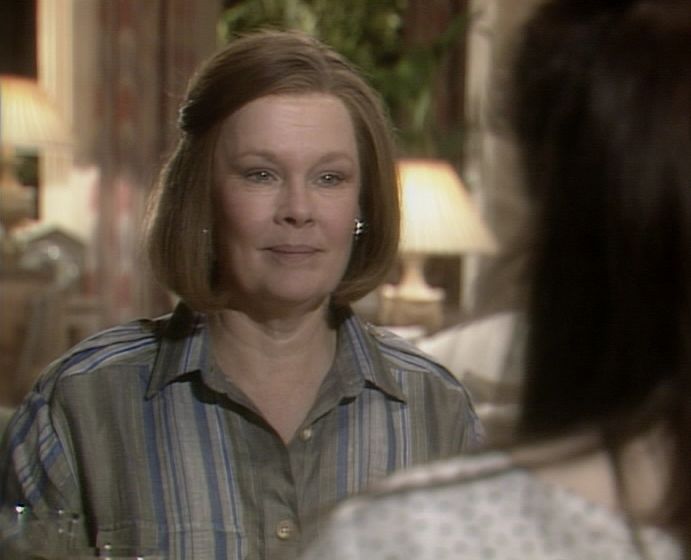
The last television incarnation to date was also broadcast on the BBC. Ten episodes, aired in 2012, were made to celebrate the programme’s 45th anniversary (a slightly strange birthday to mark).  There were, thankfully, no format changes – this was pure unadulterated JAM.

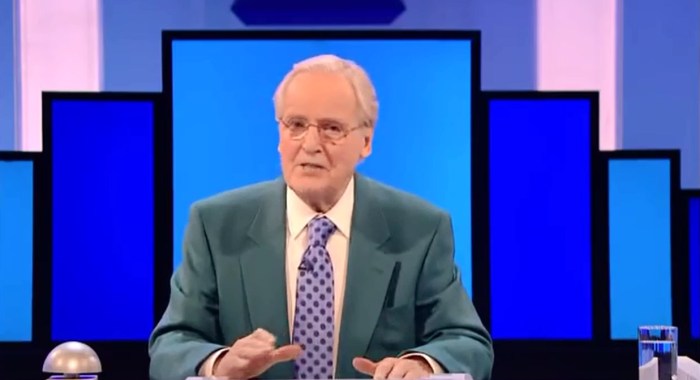
What do we gain with the visuals? Not a great deal – although the set (which changes colour when the clock starts) looks very nice and Nicholas Parsons’ range of jackets and blazers are also highly noteworthy. Possibly the most interesting part of the television version is that we have the ability to study the four players of the game. Some – like Julian Clary – listen very intently when somebody else is speaking.

Pretty much all of the regulars and semi-regulars from the radio incarnation at the time made the transition. Paul Merton – always entertaining, especially when he’s on Parsons-baiting form – is great value, as are many others including Stephen Fry, Josie Lawrence and Gyles Brandreth. A few newcomers – such as Russell Tovey – were also thrown into the fray.  Most newbies tend to struggle and Tovey was no exception (delightfully, Nicholas Parsons attempts to offer him some sage advice as the episode wears on – such as sitting up straight!).

Given how good these episodes are, it’s surprising that more weren’t made, although it is fair to say that television isn’t exactly short of panel games at the moment. All ten episodes from the 2012 incarnation are knocking about on YouTube and they – along with the radio original – are well worth checking out.

Doctor Who – Planet of Giants. Episode Two – Dangerous Journey
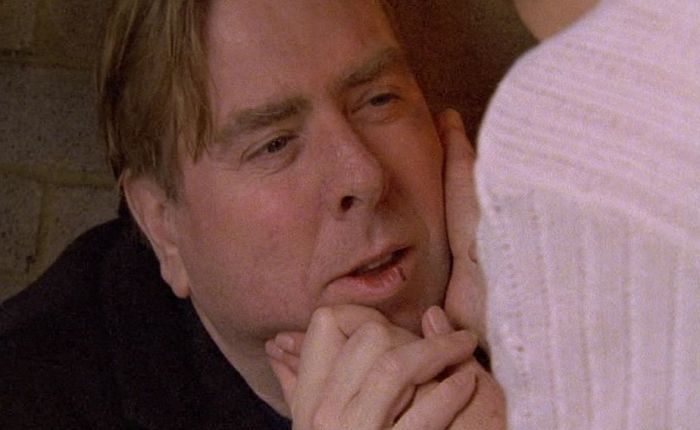
 

p011pc15.jpg

At the start of Dangerous Journey there’s no real reason why the Doctor and his friends don’t return to the TARDIS and leave. Although they were concerned about Farrow’s dead body in the previous episode, the Doctor accepted that given their current size there’s nothing they can do to help. But the arrival of Forester and Smithers panics them and Ian and Barbara run straight into Farrow’s briefcase (another nicely designed prop). They could have hardly picked a worse place to hide in as it’s then taken into the house.

Smithers might be a blinkered scientist, but he’s not a a complete fool. He quickly ridicules Forester’s claim that Farrow was killed in self defence, pointing out that the unfortunate man was shot through the heart at point blank range. Smithers, unlike Forester, isn’t interested in profit – he’s motivated purely from a desire to save lives. “I’ve seen more death than you could imagine. People dying of starvation all over the world. What do you think I started on research for?”

But whilst he may have the best of intentions, he’s blinded to the issues with his formula. The misguided scientist would be a character who would feature numerous times in subsequent Doctor Who stories. Normally the Doctor would have a scene where he could explain to him or her the error of their ways. But due to the Doctor’s small stature this can’t be done here, so Smithers remains unenlightened until he reads Farrow’s notes in the next episode and finally understands just how flawed his work is.

One thing that’s always slightly irritated me about the story is the moment when Barbara touches some seeds which are coated with DN6. She mentions this in passing to Ian (who ignores her) but when she realises that she’s been infected, why doesn’t she tell Ian? Ian doesn’t come out of this very well either as he’s shown to be, once again, rather slow on the uptake.

But although the story isn’t quite gelling you can always just sit back and enjoy the visuals. The sink, complete with plug and plughole, is yet another wonderfully designed Raymond Cusick set and the animated fly is also stunning. Doctor Who had its fair share of design disasters (the paper-plate Dalek flying saucers in the very next story, say) but when things work they really work.

There’s a faint touch of the series’ original educational remit as the Doctor tells Susan that since they’re in the sink their voices will be magnified. Ian also explains why communication with the people in the house would be impossible. “Imagine a record played at the wrong speed. We’d sound like a little squeak to them and they’d sound like a low growl to us”.

The cliffhanger is a decent one – the Doctor and Susan shelter in the sink’s pipe as Smithers washes his hands. That such a mundane action could be fatal – they risk being swept away by the deluge of water – is one of the main strengths of the story.

Doctor Who – Planet of Giants. Episode One – Planet of Giants

planet

Planet of Giants opens with the Doctor fretting over the fact that the TARDIS doors opened just before the ship materalised.  He’s clearly extremely worried about this and it’s possible that the scripted anxiety seeped into Hartnell’s performance as he’s rather incoherent during the scene.  But once the Doctor calms down, Hartnell also seems to recover somewhat.

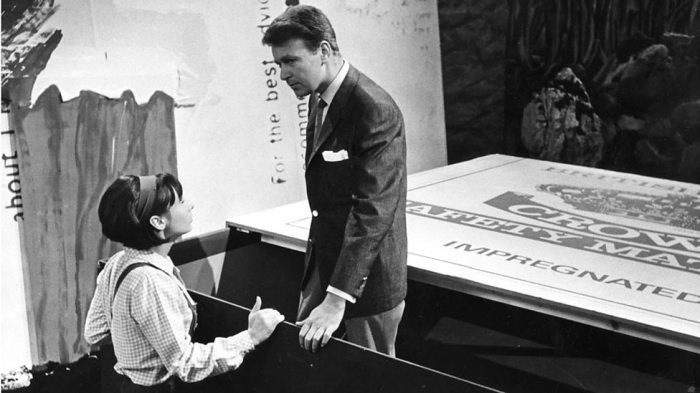
When they venture outside, the four split up (bad move, you’d think they’d have learned by now!) to explore and begin to puzzle over the strange things they see (such as giant earthworms and ants).  The audience, thanks to the episode title, is slightly ahead of the TARDIS crew but it takes the reveal of items like a huge matchbox to provide the final clues.  The Doctor has finally managed to steer the TARDIS back to Earth in the 1960’s but they’ve all been reduced to the size of an inch.

Ian’s slow to accept this, preferring to believe that what they’ve found are nothing more than advertising props, built for an exhibition.  Given all that he’s seen over the course of the first season it’s a little jarring that the rational Ian fails to grasp the truth.  However this does, for once, enable Susan to be shown to be the sensible one (although she still has her fair share of hysterical outbursts).

A minuscules story had been planned right from the beginning (originally it would have followed on directly from the first episode).  It’s a clear technical/design triumph – Raymond Cusick, on the show’s usual tight budget, works wonders (the glass-shot of the house is a stand-out shot).  The various dead insects are also impressive.

But the story tends to fall down with the sub-plot of the giants.  The trials and tribulations concerning the TARDIS crew’s attempts to return to the ship are fine, but they wouldn’t have been substantial enough to carry a four-parter by themselves.  So in this first episode we meet the single-minded businessman Forester (Alan Tilvern).  Forester has invested a great deal of money in a new insecticide called DN6 and he’s perturbed to learn that the man from the ministry, Arnold Farrow (Frank Crawshaw), is recommending that it doesn’t go into production.  The reason is quite simple – DN6 is an indiscriminate killer and wherever it’s applied nothing (not even insects) will survive.

Because the Doctor and his friends never directly interact with Forester and later on the deluded creator of DN6 (Smithers), there’s a disconnection between the two main plot-threads which is one reason why the story never quite satisfies.  But on a positive point, Tilvern is a suave villain who thinks nothing of shooting the unfortunate Farrow dead (which could be said to be a mercy killing, thanks to Crawshaw’s distracting speech impediment).

Behaving Badly – Simply Media DVD Review

164454- Chief Crazy Horse Sleeve.indd

When Bridget’s husband (Mark) leaves her for a younger woman after twenty years of marriage, her life initially seems to be all but over. For a while she falls into a defensive pattern – attending church, taking pottery lessons and generally behaving as a respectable middle-aged woman – but eventually she decides that enough is enough. For the first time in her life she’s going to put her own needs first and have some fun, even if it means disrupting the lives of everybody around her ….

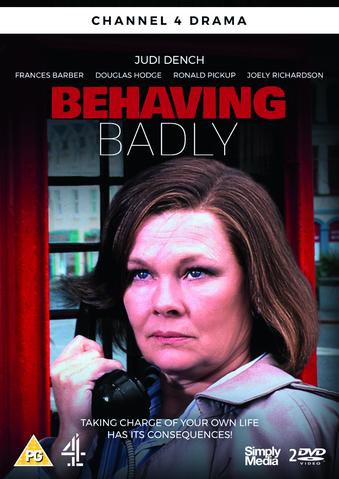
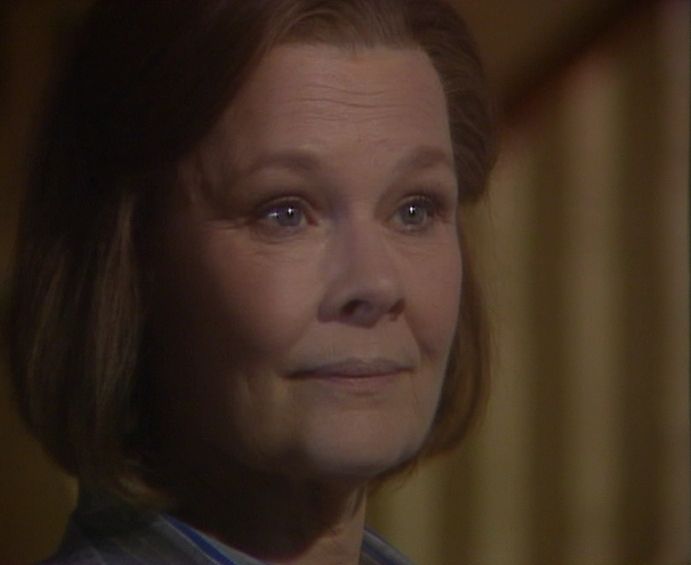
Originally broadcast in 1989, Behaving Badly is a quiet gem which boasts an impressive cast, headed by Judi Dench as Bridget. Adapted by Catherine Heath and Moria Williams from Heath’s novel, there’s certainly plenty of material for Dench to get her teeth into. To begin with, Bridget’s conventional programming is so ingrained that when Mark (Ronald Pickup) breaks the news that he’s leaving her, all she can think about is when they last had turbot (hence the title of the first episode – The Tale of the Turbot).

There are strong supporting performances – Gwen Watford as Mark’s smothering mother Frieda – but it’s Dench who holds most of the interest across the four episodes.  As we proceed through the serial, Bridget shakes up the settled lives of her ex-husband Mark and his new wife Rebecca (Frances Barber) before moving on to her grown-up daughter Phyllida (Francesca Folan).

b1.jpg

What makes the serial especially interesting is the fact that in part it was something of an autobiographical study. Catherine Heath did admit that she felt a twinge of disquiet when Dench came onto set as the dowdy Bridget (she was dressed in an almost identical raincoat to her!) Although Heath at the time stated that she’d be interested in writing more for television, this remained her sole credit.

If Catherine Heath was something of a newcomer to the world of television, she was bolstered by some experienced production hands. Producer Humphrey Barclay started his career in the 1960’s working on several pre-Python shows (Do Not Adjust Your Set, Complete and Utter History of Britain) whilst his most recent production is the John Cleese sitcom Hold The Sunset. Director David Tucker had previously helmed A Very Peculiar Practice amongst others.

Behaving Badly mixes humour and pathos (many of the funniest lines come from Frieda)  and whilst it’s fairly low-key, the cast are a pleasure to watch. In addition to those already mentioned, the likes of Douglas Hodge, Joley Richardson, Hugh Quarshie and Maurice Denham are all excellent value. An entertaining character piece, it’s certainly worth your time.

Behaving Badly is available now from Simply Media, RRP £14.99. It can be ordered directly from Simply here (quoting ARCHIVE10 will apply a 10% discount).

b2.jpg

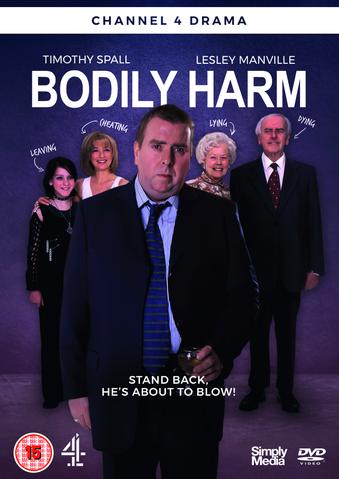
Bodily Harm – Simply Media DVD Review

bod.jpg

Mitchel Greenfield’s mid-life crisis is a bit more extreme than most. After being fired from his job, learning that his father is dying and that his wife has been carrying on with a loathsome neighbour, Mitchel snaps in a major fashion – causing havoc to those closest to him ….

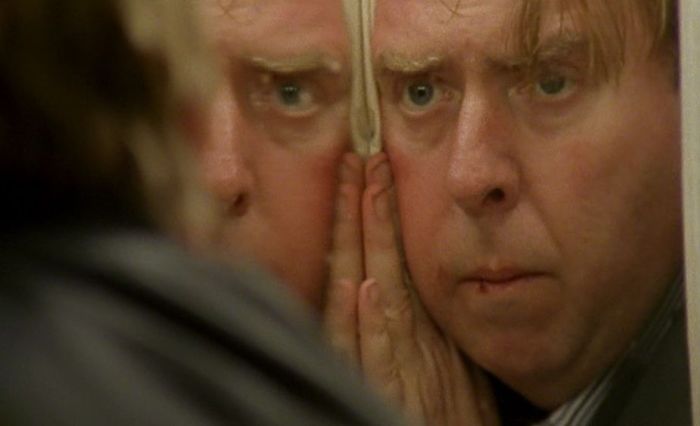
Like The Fragile Heart, this is another Channel 4 drama that’s slipped into obscurity, which is surprising given the cast.  Timothy Spall is perfect as the initially affable Mitchel who, following crushing blow after crushing blow, begins to devolve into an irrational and at times violent individual. Spall, due to his lengthy film and television career, already carried a residual groundswell of public affection, which helps to explain why we’re on Mitchel’s side right from the start.

Mitchel’s a middle-aged stockbroker with a fairly affluent lifestyle, although he seems curiously out of place amongst the younger and more thrusting wheeler-dealers.  So quite how he’s managed to hang onto his position for so long is something of a mystery.

Lesley Manville, as Mitchel’s wife Mandy, offers a contrasting but complimentary performance. Poles apart in temperament (Mitchel, at least to begin with, is self-contained whilst Mandy is outgoing to an extreme level) they seem to have little in common.  Mandy’s desire to throw a massive birthday party for him and their daughter Nic (Sadie Thompson) is a good example of their non-communication. Both Mitchel and Nic view the prospect of a party with little enthusiasm, but as ever Mandy gets her way.

It’s fascinating that Mitchel and Nic seem to enjoy a stronger bond than Mitchel and Mandy. When the teenage Nic expresses her desire to move away from home (to a place where, she says, she won’t be viewed as a misfit) Mitchel is bereft at the prospect.

b1.jpg

Bodily Harm is very dark indeed. There are a few moments of twisted humour though, and one which works well is the sequence when a drunken Mandy succumbs to the dubious charms of Tintin (Jay Simpson) in one of the upstairs rooms at the party. Dressed as an angel, as Mandy’s enthusiastic blow-job reaches its, um, climax, her wings flap with an ever increasing fury.

The quality casting continues with Mitchel’s parents Sidney and Sheila (George Cole and Annette Crosbie). Their story occupies the darker end of the narrative – an ailing Sidney locking himself into a suicide pact with a compliant Sheila. As with Spall, the familiarity of these two veteran actors ensures that we’re invested in their fates just that little bit more.

Tony Grounds’ script is sharp and punchy and features a few unexpected diversions along the way.  Originally broadcast in June 2002 across two episodes (the first running for fifty minutes, the second for eighty five minutes) it’s another Channel 4 drama that I’m glad has been brought back into circulation by Simply. Not something to watch if you’re feeling a bit down, Bodily Harm nevertheless crackles with an angry and uncomfortable intensity.

Bodily Harm is available now from Simply Media, RRP £14.99. It can be ordered directly from Simply here (quoting ARCHIVE10 will apply a 10% discount).

b2

The Fragile Heart – Simply Media DVD Review

164454- Chief Crazy Horse Sleeve.indd

Edgar Pascoe (Nigel Hawthorne) is a leading Cardiac surgeon who finds himself embroiled in difficulties inside and out of the operating theatre. His wife Lileth (Dearbhla Molloy) is a GP who becomes increasingly distanced both professionally and personally from him whilst their daughter Nicola (Helen McCrory) causes friction due to her single-minded desire to follow in her father’s footsteps.

The death of a patient during a routine operation sows the first seed of doubt in Edgar’s mind. Later, during a trip to China as the head of a medical delegation, he finds himself confronted not only by an ethical dilemma but also by his own failing health.  Could traditional Chinese methods of healing possibly hold the key? The rational Edgar has always viewed such things with disdain, and yet ….

Written by Paula Milne and broadcast over three episodes during November 1996, The Fragile Heart has somewhat slipped into obscurity despite Nigel Hawthorne’s BAFTA-winning performance (this would be Hawthorne’s sixth and final BAFTA award).

Paula Milne’s writing career stretches back to the early seventies (beginning with an episode of Crossroads). Shortly afterwards she would develop the medical drama Angels before contributing to a number of established series including Z Cars, Coronation Street and Juliet Bravo.  Her first single drama – A Sudden Wrench – was aired in 1982 as part of the Play For Today strand, whilst later career highlights include Driving Ambition (1984), Chandler and Co. (1994-95) and The Politician’s Wife (1995).

The opening of episode one sees Edgar give a speech to a roomful of fellow professionals. This is a handy device, as it allows him to state his medical ethos quickly and succinctly. He believes whole-heartedly in the advancement of medical science – especially when connected to the development of new technology. The Fragile Heart is something of a time capsule of the period – it was a period when computer technology was becoming increasingly sophisticated (even if some of the examples look a little low-tech today).

This early monologue is a fine showcase for Hawthorne, who – as you might expect – doesn’t disappoint. And as we proceed, further layers are added to Edgar’s character.   Existing in the rarefied upper echelons of the medical profession, he conducts his professional business with efficiency but little personal empathy.

This is exemplified when an anxious patient, Peter Sedgley (Sebastian Abineri), expresses doubt about the operation Edgar has arranged for him. Politely but firmly disagreeing with Sedgley that herbal alternatives may be beneficial, the routine operation goes ahead but tragedy strikes as Sedgley dies on the operating table.  Hawthorne again impresses during these scenes, especially during the moment when Edgar is confronted by Sedgley’s grieving widow, Margaret (Marian McLoughlin).  That he chose to delegate a junior to break the bad news to her is a telling character moment.

h3.jpg

Whilst Edgar maintains a dispassionate profile, Lileth is quite different. The contrast between their working environments is immediately obvious – his patients are wealthy and private whilst hers are poor and public.  Lileth’s tactile interaction with her patients makes the point that technology is only part of the medical solution – personal contact is also important.  Further to this, witness her reaction when confronted with a demonstration of a long-distance diagnosis (with a doctor at the end of a computer screen). This theme of science versus nature is one which occurs multiple times across the serial.

As for the rest of the family, Nicola’s naked ambition quickly comes to the surface.  Happily plagiarising the work of others, she’s unrepentant when confronted by her colleague, Dilip Satsu (Ian Aspinall). This was an early role for Helen McCrory who immediately catches the eye.  Nicola’s twin, Daniel (Dominic Mafham), is the one non-medical member of the family and there’s the sense that this is something of a disappointment to Edgar.

The return of a vengeful Dilip – threatening to expose Nicola as a fraud – is a key part of the second episode. They don’t confront each other directly (she, along with Daniel, are both in China with Edgar) but the fall-out is very interesting anyway.  Nicola’s casual admission of guilt to her father, followed by a suggestion that he should fake the records to support her story, is a dramatic moment which triggers another of Edgar’s attacks (which have been increasing in frequency).

The aftermath – Edgar is treated in his hotel-room by a Chinese doctor – begins the process of chipping away at Edgar’s belief that science is always right. This is developed across the third and final episode, which sees Edgar continue his journey of self-discovery.

Running for three episodes each of approximately sixty six minutes duration (an unusual format) The Fragile Heart is a somewhat leisurely watch, but it’s held together by Nigel Hawthorne’s magnetic central performance. There’s something undeniably poignant about watching him act the part of a man whose powers were waning (just five years later he would die of a heart attack). Easy to see why he won a BAFTA for this role and two decades on his playing has lost none of its power. This one is well worth checking out.

The Fragile Heart is available now from Simply Media, RRP £11.99, and can be ordered directly from Simply here (quoting ARCHIVE10 will apply a 10% discount).

h4.jpg