It’s not Terry’s day. First of all Des cons him into delivering a car which is later used in an armed robbery. But that pales into insignificance thanks to Arthur’s latest minding job. It should be straightforward – accompanying Lady Margaret Thompson (Angela Browne) on a few odd jobs, such as a shopping trip to Harrods. But after Terry is arrested for shoplifting he faces a court appearance. Luckily Arthur offers his services as a character witness ….
Caught in the Act, Fact is an episode which sees Terry used as a fall-guy on multiple occasions. Firstly, it’s Des who incurs his displeasure after the trusting Terry delivers a hot motor for him. Terry’s about to inflict some serious damage on Des when Arthur appears. After Terry explains why he’s about to dish out his own brand of summary justice, Arthur sorrowfully tells Des that what he did wasn’t very nice. “I don’t want to be nice Arthur, I just want to be rich” replies Des, which doesn’t improve Terry’s temper! Des later backtracks and claims this was a joke, but although he’s always been an affable and amusing character, Des is also a crook and it’s easy to believe he knew exactly what he was doing.
Arthur’s latest scheme is a beauty – goldfish for old clothes. Arthur subcontracts Stevie (Colin Proctor) to go round the estate, collecting clothes from children in exchange for goldfish (“Old Clothes for Fish”). This is ridiculous, even for Arthur, although you have to love the way he proudly shows off his goldfish to Terry. Terry agrees that, yes, they’re goldfish but Arthur’s ripsote is “goldmine, Terry. Goldmine”.
Arthur’s explanation as to why a goldfish would make the perfect pet is another priceless moment. “There is nothing wrong with a goldfish. It would be a good friend. Loyal, trusting, quiet. And the nice thing about them is if they start to give you any hump you can always flush them down the toilet”.
But Terry’s not interested in being a goldfish handler. Eventually he admits to a chortling Arthur that he doesn’t like the thought of touching them. Of course, had Terry taken the fishy job then he wouldn’t have got tangled up with Des. So for once sticking with Arthur would have been the safer option.
As Terry’s prints were found on the car, Chisholm is more than interested in him. Maybe Arthur hopes that minding Lady Margaret will take his mind off his problems. Although Arthur can’t resist instructing his associate about exactly how he should behave when attending the gentry. Terry tells him that he’ll be sure to tug his forelock every so often.
Lady Margaret’s story has some parallels to the real-life Lady Isobel Barnett, although this must have been a coincidence (albeit an eerie one, as Lady Isobel committed suicide in October 1980, a few days after being found guilty of shoplifting goods to the value of eighty seven pence. This episode of Minder was recorded in August 1980 and broadcast in November 1980).
Although Arthur is told, off-screen, by Lady Margaret’s husband Harry (Glyn Houston) about her little “problem”, he doesn’t let Terry know. This is rather odd – when the pair meet up with Harry he assumes that Terry’s been fully briefed. Otherwise, how would he be able to spot the warning signs when Lady Margaret decides to pick up something without paying? He can’t, of course, meaning that Terry is forced to carry the can after Harry and Lady Margaret disown him.
When Terry finds himself in court, he needs all the friends he can get – and this is where Arthur comes in. There are few more glorious sights than Arthur Daley in full flow and the tone is set from the moment he steps into the witness box. “I swear by almighty god the evidence I give will be the truth, the whole truth and nothing but the truth, stand on me”.
When Des later tells Terry that Arthur did him a right turn in the courtroom, Dave counters with “gave him a right turn you mean”. Tony Hoare’s script is typically sharp, with exchanges like this occurring throughout.
The sight of Arthur playing golf with Harry is another scenario that’s ripe with comic potential. And Arthur doesn’t disappoint, chuckling that there’s nothing wrong with him when Harry wonders what his handicap is. These scenes don’t advance the plot at all but they’re worth it for the sight of Arthur in his tartan bobble hat alone ….
On the trivia front, this episode sees the first appearance of DC Jones, although he’s played here by Ken Sharrock rather than Michael Povey. It’s also worth listening out for the phone call that Harry receives from Chisholm some thirty five minutes in. I don’t know who was on the phone, but it certainly wasn’t Patrick Malahide ….
Juggling three plotlines – the stolen car, fish for clothes and Lady Margaret – there’s certainly plenty going on. It’s a shame that Angela Browne doesn’t have more screentime, but that’s about the only drawback I can find in another strong script.
Anglican priest Sidney Chambers (James Norton) continues his unlikely sleuthing partnership with Detective Inspector Geordie Keating (Robson Greene). You might have assumed that the small village of Grantchester would be a fairly quiet place – but not so. Barely a week seems to go by without a mysterious murder occurring which requires both Sidney’s intuitive abilities and the harder-edged skills of Geordie.
Based on the novels by James Runcie (whose father, Robert Runcie, was a former Archbishop of Canterbury) Grantchester started airing in 2014. All the ingredients required for a popular success are present and correct – a period (mid fifties) setting, personable lead actors and decent mysteries. This release contains the Christmas Special from 2016 and the six episodes from series three which have just finished airing on ITV.
The Christmas Special wasn’t quite feature-length, but it was a little longer than a normal episode (running for sixty five minutes). The murder of a bridegroom on his wedding day throws up numerous suspects. Could his bride-to-be Linda Morgan (Maimie McCoy) be responsible? If not, then possibly the murdered man’s son Felix Davies (Enzo Cilenti) might know more than he’s letting on. But Geordie sees parallels in this case to an old, unsolved, murder and is convinced that Albert Tannen (Julian Glover) is the man they want.
It’s a shame that some of the episode doesn’t look very Christmassy (there’s no hiding the bright sunshine which is a dead giveaway it wasn’t filmed during the depths of winter) although later snowy scenes do slightly make up for this. The wonderful Julian Glover never fails to impress and he’s on typically fine form here. At first glance Albert Tannen seems to be a bitter old man, but there’s maybe more to him than meets the eye.
Sidney’s relationship with Amanda (Morven Christie) will have a major impact throughout series three. Amanda has now left her husband Tom and faces an uncertain future. Sidney is still infatuated with her (he was heartbroken when she married) but what would the village say if it became known that he had designs on a woman who was both pregnant and married? When Amanda finds herself homeless it’s maybe no surprise that she ends up at the Vicarage (and on Christmas Eve too, very apt). Amanda and her newly-born daughter Grace will provide Sidney with a dilemma that has no easy answers.
Robson Greene & James Norton
As ever, the byplay between Norton and Greene and the incidental pleasures along the way are often just as important as the whodunnit. In this one they visit a strip club (in the course of duty, naturally) something which Sidney takes in his stride. A chaotic nativity play (featuring enthusiastic, but unruly, children) is a treat whilst the birth of Amanda’s child – with Sidney’s dour housekeeper Mrs Maguire (Tessa Peake-Jones) and curate Leonard Finch (Al Weaver) in attendance – is another stand-out moment. Whilst Amanda’s upstairs and swearing like a trooper, Sidney’s outside and chugging down a bottle of whisky ….
The first episode of series three finds Sidney still conflicted over his feelings for Amanda. Things begin in a light-hearted way – with them tripping the light fantastic to the latest rock ‘n’ roll sounds and enjoying a moonlight bike ride – but it looks like their idyll will be short lived. He’s given a stern reminder by the new Archdeacon (Gary Beadle) about the importance of duty, which makes it plain that his role in the church and his relationship with Amanda simply aren’t compatible. Luckily he’s then targeted by a homicidal murderer, which rather takes his mind off his own problems ….
This week’s murder victim, Dr Atwell (Gregory Flow), had previously worked at a grim psychiatric hospital, now run by the foreboding Veronica Stone (Susannah Harker). Sidney might be blameless of any wrongdoing but that doesn’t stop him from almost becoming another murder statistic (early on it’s clear something odd’s happening to him – he’s the recipient of dead crows and heavy-breathing phone calls). As so often with the series, there’s a bleakness to the story which sharply contrasts with the peaceful and bucolic nature of the village.
Robson Greene & James Norton
What could be more pleasant and relaxing than a game of village cricket? Mmm, but this is Grantchester where death is a constant companion, so you shouldn’t be shocked to learn that one of the players, Zafar Ali (Dinesh Sundran), is later found dead. Like the rest of the team he appeared to have been affected by the beer (which had been laced with something unpleasant) but whilst everyone else recovered, he didn’t.
Casual racism isn’t far from the surface in this second episode, best exemplified by Geoff Towler (Peter Davison). It’s always a pleasure to see Davison and although he doesn’t get to wield a cricket bat in anger on the pitch, at least he does wave one around after Zafar’s brother accuses Towler’s daughter of being the murderer. Other running themes, such as Geordie’s affair with Margaret Ward (Seline Hezli), continue to simmer away and although Towler’s Masonic handshake with a disgusted Geordie seems to be a throwaway moment, we’ll see the Masonic theme again later in the series.
Episode three sees Leonard and his new ladyfriend Hillary (Emily Franklin) caught up in an armed robbery at the post office. As already touched upon, for many the appeal of Grantchester is as much to do with the soap-like elements as it is with the mysteries. And in addition to the ongoing saga of Sidney and Amanda as well as Geordie’s cheating ways, there’s also Leonard’s dilemma to consider.
A closet homosexual, it seems advisable that he has a wife as cover (and the vulnerable Hillary looks to be the ideal candidate). This sounds horrible and calculating, but Leonard’s a nice chap – just trapped by the moral confines of the era he lives in. The mystery part of the episode is strong as well (although the gun-toting antics of Geordie and the others seems slightly anachronistic).
The fourth episode begins with Sidney lecturing his congregation about the dangers of giving into temptation – which given that he’d finally tumbled into bed with Amanda at the end of the previous instalment seems a tad rich. Of course, he’s no happier now than he was before (“how do I reconcile what I’ve done with what I believe?”). And things look no better for both Geordie and Leonard.
When the pressure of living a lie becomes too much, Leonard attempts suicide whilst Geordie’s wife, Cathy (Casey Ainsworth), finally learns about her husband’s affair. And if that wasn’t enough then Mrs Maguire’s long-lost husband, Ronnie (Charlie Higson), turns up out of the blue to tell her that he’s dying. It’s all going on this week ….
James Norton & Tessa Peake-Jones
This being Grantchester, there’s a crime to solve too (even though the tangled emotional lives of the regulars dominates). Christopher Fulford appears as Ezra Garson, the owner of a local factory where a badly injured girl was discovered. Corruption and the creeping influence of the Masons both have their part to play as Geordie finds that some of his colleagues, especially the oily Phil Wilkinson (Lorne McFadyen), can’t be trusted. Norton and Greene sparkle in the scenes where Sidney and Geordie find the complacent hypocrisy of those who should know better to be unbearable.
Episode five opens with Sidney on the road. He’s hunting down Ronnie, who last time absconded with Mrs Maguire’s life-savings (Sidney’s also, in part, running away from his own troubles). He finds Ronnie ensconced in a Romany camp and is staggered to learn that he has another wife and several daughters.
Then Ronnie is murdered and Sidney is accused of the crime. But before long Sidney’s turned sleuth again whilst Mrs Maguire has to come to terms with the fact that her newly-murdered husband had been a bigamist. Tessa Peake-Jones is on good form here. Upon reaching the camp, Mrs Maguire eyes her rival with disdain. “I wouldn’t have said Ronnie would chose a woman with long and wayward hair”.
If the gypsies seem a little too clean and not terribly interesting, then the episode still engages thanks to the continuing subplots concerning the regulars. Geordie’s been thrown out of the house (although Cathy thoughtfully packed him two pairs of pyjamas before she did so) whilst Sidney’s crisis of confidence shows no signs of abating as Amanda issues him with a stark ultimatum – the church or her.
In the final episode he makes his choice – her. Amanda’s pleased to learn that Sidney’s prepared to turn his back on the church, but others – such as Mrs Maguire and Leonard – aren’t quite so happy. Geordie is supportive, although given that his carnal indulgences didn’t end well (he’s now sleeping in the office with only a bottle of whisky for company) possibly he wasn’t the best person to be handing out advice.
Robson Greene
And it’s Geordie’s drinking and dark mood which has an adverse effect on his ability as a police officer. When a young boy, Jacob Riley (Darius Greenlaw), goes missing, Sidney has to step in as the cool voice of reason after Geordie loses his grip.
As the series draws to a close, there’s a sense of happy endings all round (with one notable exception). Mrs Maguire and Jack Chapman (Nick Brimble) tie the knot, Leonard finally admits his feelings for Daniel Marlowe (Oliver Dimsdale) whilst Geordie and Cathy make the first steps towards a possible reconciliation. That just leaves our lovestruck vicar, but when Amanda learns that he hasn’t been able to hand in his letter of resignation then it’s plain that there’s nothing left for her in Grantchester.
Grantchester – Series Three is split across two DVDs. The first contains the Christmas Special and the first three episodes of series three whilst disc two contains episodes four, five and six as well as several special features. Two making-of featurettes – Inside the Christmas Special (dur. 13:57) and The Making of Series Three (dur. 10:02) – offer entertaining interviews with the cast and crew. Also included is a deleted scenes package (dur. 19:39).
With a strong cast of regulars put through the emotional mill each week, well-crafted “murders of the week” and a roster of familiar faces guesting, Grantchester remains both addictive and entertaining. Recommended.
Grantchester – Series Three is released by Acorn Media on the 12th of June 2017. RRP £24.99.
When Arthur crosses paths with celebrity footballer Danny Varrow (Karl Howman) he spies a nice little earner. Danny has a story to sell and if Arthur can locate Fleet Street’s finest – Ronnie Raikes (Antony Douse) – then he hopes he’ll be quids in.
Terry’s assigned to mind Danny, but he’s a wanted man. Not only is he being pursued by Leo Rafferty (Sean Caffrey), a bookmaker who’s rather miffed that Danny’s been sleeping with his mistress Jenny (Adrienne Posta), but the shotgun-wielding Arklow (Forbes Collins) also wants a word …..
All About Scoring, Innit opens in the countryside, where the bucolic peace and quiet is shattered by Danny’s efforts to escape Arklow and his shotgun. Subtle is not a word you could use to describe Forbes Collins’ performance here.
If the viewers were wondering exactly who Danny was, then the next scene neatly fills in the gaps. Arthur holds up a paper in which Danny’s latest disappearing act is featured prominently. Danny might be a talented footballer, but he’s equally as talented at drinking, gambling and chasing birds. George Best is an obvious real-life parallel. Unsurprisingly, Terry respects him (“one of the chosen, he is”) whilst Arthur is much less impressed (“he’s a muddied oaf”). But once Arthur realises just how much money Danny makes – and how he may be able to cream a little off himself – his opinion changes ….
Although the story may be a little thin, the interaction between Arthur and Terry is so good that this really isn’t a problem. There’s plenty of wonderful little moments spread throughout the fifty minutes, such as Terry’s desire to clock off so he can head over to Stamford Bridge to watch Chelsea. Arthur is affronted by this – who will unload his sporting goods? Terry’s answer is brief and to the point. “Balls”.
He elaborates. “Ping pong, for the playing of”. After leaving Arthur holding a box of ping pong balls, it’s inevitable that the box is going to break and the balls will go everywhere. Out of nowhere Arthur finds himself besieged by a gang of kids (“go on, go and play in the river”).
Next we see Arthur – preparing to enter the Winchester – observe a gang of football fans walking down the street. Since they’re somewhat boisterous, he pops back into his car, pulls his hat over his eyes and waits for them to walk on by. After they’re out of earshot he feels brave enough to call after them. “Thickheads. Louts. Come back and try that again and I’ll push you through the wall”. After he’s made his heroic gesture he spies an old woman standing in the street. “The highway’s quite safe now madam, I’ve seen them on their way”.
Arthur walks into the Winchester, bemoaning that you can never find a copper when you want one. He then wonders who originally said that. “G.H. Chesterton, wasn’t it? Or was it the Bard himself, George Bernard?” Simply glorious.
There’s a chance to see the grimy reality of early eighties football since Minder was able to shoot at Stamford Bridge during an actual match. This gives the story a little extra reality as we spy Terry standing on the heaving terraces. It leads into another classic comedy moment as Terry incredulously spies his name on the scoreboard, requesting him to contact the office urgently.
A police sergeant (Bill Dean) has some bad news for him – his mother’s been run down by a green-line bus. Terry takes the news rather calmly, indeed he’s so laid-back that when he notices Chelsea have scored he bemoans the fact that they couldn’t do so when he was watching them. But he’s not really hard-hearted, as Terry’s mum has been resident at Kilburn Cemetery since 1967. The sergeant (a wonderfully world-weary performance by Dean) is less than impressed by this hoax call and flings Terry out of the ground, which is exactly what Arthur wanted.
With all this going on, what should be the main plot – Danny’s troubles – somewhat pales into insignificance. But although he somewhat plays second-fiddle, it’s still a decent portrait of the footballer-as-celebrity, something which was already fairly well established then (although nothing like nowadays of course). He and Terry enjoy themselves in a luxury penthouse whilst they debate the ethics of professional sport.
Danny has no loyalty to anybody but himself. This irritates Terry, who believes he should show some respect to his team-mates, his manager and the fans. Danny is unrepentant though and the message seems to be that Danny can behave like he does because he has talent – if he didn’t then it wouldn’t be acceptable. That’s questionable logic it has to be said. It’s also interesting that Danny mentions he owes a considerable sum – five thousand pounds – to Rafferty. For a modern footballer, that sort of money would be little more than loose change ….
Terry’s minding skills aren’t at their sharpest in this one – he nips off to the toilet, Danny opens the hotel-room door and is snatched by Rafferty’s goons. Terry manages to track Danny down before he’s given a beating, but the imposing figure of Clifton Fields (George Sweeney) bars his way. But once Clifton recognises Terry (they both boxed against each other in the old days) they suddenly become less interested in fighting and take a stroll down memory lane instead.
With Rafferty nullified, everything seems settled. But then Arklow re-appears and Terry gets in the way of his shotgun blast. But luckily (and somewhat unbelievably) he escapes with only a scratch. This gives us yet another glorious Arthur/Terry moment as Arthur visits him in hospital. Firstly, Arthur has a present for Terry (a pot-plant) which he declines. No matter, Arthur will take it back home to Er Indoors. Even better is when Terry fishes into Arthur’s bag for a grape. No, he’s told – they’re for Er Indoors too. The sight of Arthur calmly removing the single grape from Terry’s hand and replacing it in the bag is yet another classic comic moment from an episode that’s overflowing with them.
Despite only having a few months left to serve on his five-year sentence, an old schoolfriend of Terry’s, George Palmer (Paul Copley), escapes from prison in order to prove his innocence. Naturally enough, Terry offers to help him, but this decision puts those nearest to him in danger ….
The Old School Tie opens with yet another split in the Arthur/Terry relationship. Terry’s been out of contact for a few days, doing a friend a favour, and Arthur’s incensed at his lack of consideration. Terry’s equally irritated at Arthur’s controlling nature and tells him from now on he’ll find this own jobs. Arthur has the last word. “Modern bloody generation, you’re all the same. Give ’em a leg to stand on and they use it to kick you up the arse”.
The dynamic between Arthur, Terry and Dave is at the heart of this episode. It’s revealed that Dave was the friend Terry did the favour for and because of this Terry asks him to shelter George. Dave is reluctant – if the police find him then there’ll be trouble all round – although eventually he agrees.
But what’s really interesting is Arthur’s reaction. When he learns that Terry was doing a job for Dave he seems to regret his earlier harsh words. Other writers might have had Arthur demand payment from Dave for Terry’s services (Terry declined any money) but Jeremy Burnham didn’t go down this obvious route. Arthur may often be painted as mercenary and self-seeking, but it does seem that friendship overrides all other concerns.
Yorkshire-born Paul Copley seemed to be struggling a little to master a London accent but he’s still effective as the mild and honourable criminal. The early scenes between George and Terry waste no time in telling us that George is a career criminal (and was actually out on another job when he was arrested in error for the diamond blagging).
Terry therefore doesn’t see what George has to complain about – he might have been innocent of the crime he was sentenced for, but since he was guilty of many others then natural justice has been served. Ironically this was no doubt the attitude held by many bent coppers and would have served as their justification for fitting up suspects.
George has a wife, Olive (Sherrie Hewson) who’s concerned about George, although she pretends not to be. Olive’s brother, Harry (Derek Thompson), is also concerned, although for different reasons. From the moment we first see Harry he’s operating in a very shifty fashion, making it plain that he knows more than he’s telling. The later revelation that he was involved in the diamond blagging is not a very surprising revelation.
This is a much grittier and harder-edged episode of Minder than usual. The two heavies, Billy (Ziggy Byfield) and Tommy (Nick Stringer), don’t look too different from similar characters who pop up most weeks, but the difference is that Billy and Tommy actually do some damage.
First they pay a visit to Debbie (Diana Malin), a stripper who’s staying at Terry’s flat for a few days. She’s plainly terrified of them and would have no doubt told them everything she knew with only a little persuading, which makes the fact that we later see her with a badly bruised face somewhat disturbing. Presumably they gave her a going over off-screen just for the fun of it. Dave is also the recipient of an off-screen beating from them, although in his case it’s easier to imagine that he would have kept quiet until they started inflicting real pain.
Prior to visiting Dave, they’d called on Arthur. It’s Arthur who gave George’s location away and later he admits this to Terry. They didn’t physically attack Arthur – only damaged some of his stock in the lockup. Arthur’s cowardice initially irritates Terry, but again the scene’s played straight as Arthur tells Terry that he couldn’t have stood up to physical violence. Terry instantly agrees and understands.
When Terry and George are captured by the baddies they too receive some punishment, although this happens on-screen for once. Everything’s set up for the final reel as the cavalry – in the unlikely form of Rycott and Arthur – come riding to the rescue. This was Peter Childs’ only S2 appearance, but he’s great value in each and every scene – especially the brief fight at the end. As Arthur cowers in the doorway, Rycott steams in and smashes one unfortunate against the wall. Ouch!
As ever, Arthur and Terry are reconciled. I like the tag scene in which Arthur, blind drunk, asks Terry to drive him home. When quizzed about how long he’s been in the pub, Arthur replies half an hour! He’s clearly a fast drinker.
A refreshingly tougher story which ranks as one of the strongest from the second series.
Terry rates his latest minding job (a dog with a thirst for beer) as an all-time low. So when Arthur dangles what appears to be a cushy number – driving a chap called Mr Lily around for a few weeks – he’s interested, although he’s also waiting for the inevitable catch.
When Mr Lily turns out to be Rose Mellors (Ann Lynn) certain alarm bells should have started to ring for him. But it’s only when Rose’s car is stolen from under Terry’s nose that things really start to go awry. Rose explains that she uses the car to courier stolen diamonds and that a consignment (worth £100,000) was in the car at the time. The owner of the diamonds, Mr Tajvir (Zia Mohyeddin), gives Arthur, Terry and Rose a choice – the diamonds returned or they can expect their health to start deteriorating very quickly ….
Following her S1 appearance in Bury my Half At Waltham Green, Rose Mellors makes a welcome reappearance here. As previously seen, Rose is the wife of a major criminal (currently enjoying a long stretch inside) and has clearly picked up some tips from him over the years. For example, when Rose becomes the object of unwelcome attention from a hairy type at the local pool club, she’s quite prepared to give him a quick slap with his own cue to quieten him down.
For once, both Arthur and Terry are innocents – neither were aware that “Mr Lily” was actually Rose. But given that their previous encounter with her was slightly bruising, it’s possibly not too surprising that she used an alias to begin with. Arthur remains in the dark a little longer than Terry, which allows Terry to wind him up (telling him that Mr Lily enjoys dressing up in women’s clothes and also likes to give him a peck on the cheek).
The ever dependable John Ringham plays Harrison, an exasperated police officer who has to contend with Arthur (he’s come to the station to report Rose’s car as stolen and is insistent that the police do their duty). This was a point in the series where the comedy would have been ramped up a little had there been a regular police face for Arthur to interact with (Harrison never appears again).
George Cole still entertains in these scenes though, as Arthur’s clearly not impressed with the efficiency of the modern police force. “You’re not like the way you’re shown on the telly, I’ll tell you that. There it’s one phone call after another, grab your hat and off. Diving in and out of cars, bells ringing in all directions. Book him Dano, Murder One. Here, it’s like rest time at the old folks home”.
Ringham is equally as good. Harrison wonders why Arthur is so keen to assist Rose. “In all my years I’ve never known you so much as help an old lady across the street unless you were paid for it”. Lovely stuff, as is Arthur’s affronted reaction. And whilst Arthur’s at the police station, Terry’s in bed with Rose. He clearly believes in fiddling (as it were) whilst Rome burns ….
Tony Selby, as Rose’s hapless gofer Jack, also reappears from Bury My Half At Waltham Green, and his presence helps to inform the audience that Rose knows much more about this business than she’s letting on.
Not the most complex story that the series ever produced, but there’s plenty of entertaining dialogue along the way. Although not all of it is connected to the matter in hand – for example, the banter between Arthur and Dave at the start of the episode. Arthur is attempting to tell Dave a very funny story about a chimpanzee who goes into a pub, but finds his storytelling flow constantly interrupted by pointless questions from Dave (“was the chimp over eighteen?”). Arthur manfully presses on, but since Dave beats him to the punchline it was hardly worth the effort!
Series six kicks off in a typically confrontational way as Ted (Patrick O’Connell) clashes with Merroney over Brian’s future. Will Brian be welcomed back onto the board? Ted wants a fair deal for his brother and – possibly surprisingly – Merroney concurs. But the reason he gives is sure to put Ted’s back up. “Because of the three of you, he’s the only true professional”.
Colin Baker still looks as if he’s enjoying himself enormously as Merroney continues to call the tune, forcing the others to dance to it. His relationship with Brian (Richard Easton) has always been complex. He values Brian’s business acumen and knows that Brian likes him personally (which has helped create a bond between them) but it’s also plain that Merroney would drop him like a stone if he proved to be unreliable.
Somewhat Godot like, Brian has an influence over events even when he’s not on screen. The series opener, Red Sky At Night, begins with the others awaiting his return. But when he’s not on Don Stacey’s charter-flight there’s concern all round. Where is he? Is his absence further evidence of his unreliability?
When Brian (still sporting the impressive moustache he grew last year) does reappear, it’s telling that it’s Merroney he goes to see. Although both David (Robin Chadwick) and Ted have fought for their brother’s interests in their own ways, Brian clearly feels more comfortable with somebody outside of the family.
Colin Baker, Robin Chadwick and Derek Benfield
Brian’s gradual reintegration back into the business is a running theme during these early episodes as is the question of Jenny (Jennifer Wilson) and Ted’s adopted baby, William. When the baby’s real mother decides she wants him back, Jenny starts to feel the strain. One has to wonder why Jenny and Ted didn’t legally adopt the child (William was abandoned by her mother six months earlier but she now feels more confident that she can look after him).
Our sympathy should be with Jenny, but there’s something more than a little off-putting about her manic determination to hang onto William whatever it takes. Jennifer Wilson plays these scenes well and since her character’s usually so level-headed and sensible it’s an interesting change to see her put under pressure for once.
Jenny is happy to cast William’s natural mother, Pat Hawkins (Elaine Donnelly), in a poor light, but that’s not the impression most will get when they hear her story. “Look, I’m just a girl from the local estate, okay? And I got a baby. And I couldn’t explain to my mum and dad why I wanted to keep him. So I did the only thing I could do and I gave him away”.
One might raise an eyebrow at the revelation that Pat’s husband, Alan (Ian Marter), works for Hammonds. Something of a remarkable coincidence it must be said, but this does allow Ted to be pushed over the edge a little further (like Jennifer Wilson, Patrick O’Connell seems to relish these dramatic scenes). Plus it’s always a pleasure to see the late Ian Marter, even in a small role like this.
Jennifer Wilson & Patrick O’Connell
Carleton Hobbs makes a welcome reappearance as Sir Neville Henniswode (Hobbs had appeared in series four but was presumably unavailable for series five, which led to Llewellyn Rees taking over the role). Hobbs had a decent film and television career but for me – and I’m sure for many others – he’ll forever be the definitive radio Sherlock Holmes. Just to hear the timbre of his voice is enough to conjure up images of foggy streets and Hansom Cabs ….
One of the more unlikely developing plotlines concerns the relationship between Sir Neville and Mary Hammond (Jean Anderson), the imposing matriarch of the family. At least this enables Mary to get out of the house every so often and therefore makes a nice change from her usual scenes (which tend to consist of her chivvying one or more of her sons). Since both David and Brian are currently living with her at the family home, she’s got ample opportunity to fuss around them.
The first half of series six sees the Hammonds struggling to balance their work/private lives. Brian is still finding his way back to fitness slowly, David has never been terribly business minded anyway, whilst Ted and Jenny are more concerned with the fallout from William’s departure than they are with Hammond Transport.
This leaves Merroney in a strong position, although Bill Riley (Derek Benfield) for one isn’t prepared to roll over for him. Bill’s rise through the ranks has been an entertaining running thread over the last few series. Initially he was a little diffident at board meetings – due to his elevation from the shop floor – but by this point he’s more then happy to speak his mind.
Derek Benfield
He’s matched in the common-sense stakes by his wife Gwen (Margaret Ashcroft). Whilst the majority of the characters in The Brothers are middle-class or higher, the Rileys are resolutely working-class and proud of it. It would be easy for them to be portrayed in a patronising light, but this doesn’t happen – meaning that there’s something charming in the way they enjoy the simple pleasures of life (an evening game of Scrabble, for instance). But they’ve not immune to pressure and Bill’s increasing workload will be seen to have a negative effect on their marriage.
Merroney’s private secretary Clare Miller (Carole Mowlam) still finds that her loyalty is divided between Merroney and David. With neither man in a regular relationship, both are content to use her as a dinner companion and confidant. Although Clare is a character designed to react to others rather than instigate her own plotlines, Mowlam still manages to give Clare a spiky sense of humour, ensuring she’s more than the cardboard character she otherwise could have been.
During S5, Merroney seemed mainly to exist in order to thwart the Hammonds at every turn. But throughout this run of episodes he’s more nuanced – whereas previously he was totally dedicated to Sir Neville and the bank, now he confesses that he’s beginning to side with the Hammonds over certain matters. Although on other occasions he’s quite prepared to steam-roller right through them, if he can ….
Brian also shows some unexpected facets to his personality (since his breakdown he’s become a more relaxed and far-thinking person). At one point he expresses his new personal philosophy. “You’ve got to feel that what you’re doing is really worth doing. Nobody makes money except the Mint. All the rest of us do is push it around a bit, trying to make sure that we get a little more than the next man. But it’s not wealth. Wealth is enriching. Making money is just debilitating. In the end it leads to a sense of personal isolation”.
When David finds himself rejected by Clare in episode eight – The Chosen Victim – it serves as something of a wake-up call for him. All his life he’s been able to get whatever he wanted (until Clare). Will this make him a more rounded and less arrogant character? It’ll be interesting to see if his growth continues next series.
Paul Merroney and Jane Maxwell (Kate O’Mara) fractious relationship shows no sign of abating. At one point she tells him he’s “one of the lowest forms of life I’ve ever come across”. But when you learn that Merroney was castigating Jane’s ex-husband, the hard-drinking pilot Don Stacey (Mike Pratt) at the time, it’s easy to understand the reason for her anger.
Kate O’Mara
Don bows out of the series in the sixth episode, Tender (broadcast just a few months before Pratt’s death at the age of 45). Pratt’s gaunt appearance gave the running plotline of Don’s impending medical exam a bitter irony. “Sooner or later they’ll find something that creaks or groans or doesn’t react fast enough and that’s it. You can keep as fit as you like, but Anno Domini gets you in the end”. Don didn’t do a great deal (although his leaving scene was a powerful one) but he was always an amusing character and Pratt, even though he was clearly ailing, always played him with an agreeable twinkle in his eye.
As series six moves towards its conclusion, several familiar faces pop up. Clive Swift plays the shifty Trevelyan whilst Joby Blanshard (best known as the plain-speaking Colin Bradley from Doomwatch) appears as Van der Merwe.
After being somewhat subdued in the early episodes, Ted roars back into life (few sights are more impressive than that of Patrick O’Connell in full flight) whilst Brian and Jane seem to be forming something of an alliance, both personally and professionally. But Brian’s wounded psyche (he has a fear of being touched) might be a problem. Richard Easton, as so often throughout all six series, impresses here.
The sight of April Winter (Liza Goddard) who briefly appears in the penultimate installment – The Bonus – signifies that change is on the way for Merroney. His offhand comment that she’s his fiancee is a real leftfield jolt – although April’s been mentioned on several occassions (which has prepared the ground for her arrival) it’s hard to imagine the coldly efficient Merroney ever being in love. Clare is crushed by the news. Bill later tells Gwen that “the torch that girl carries for him makes the Statue of Liberty look like a candle”.
Hammond Transport has undergone substantial changes over the last few years, morphing from a wholly-owned family concern into a company with strong ties to the bank (where Sir Neville and Merroney reign). But it’s the proposed takeover bid from Kirkmans which threatens to split the Hammond family down the middle. Some, like David, would be happy to sell their shares for a handsome profit whilst Ted (and especially Mary) are resolutely opposed to the deal.
When Merroney goes AWOL (he’s in Amsterdam, meeting with Van der Merwe) the others (especially Ted) are concerned that he’s plotting behind their back. His adventures in Amsterdam are great fun, adding a touch of out-of-season glamour to the series. The sight of his discomforted face as Van der Merwe’s daughter whisks him round Amsterdam at great speed in an open-top jeep is worth the price of admission alone.
The series finale – Birthday – might be partly concerned with Mary’s birthday celebrations but business matters are also on her mind. The takeover from Kirkmans may have foundered but a merger with Van der Merwe’s company is still very much on. But Mary, frustrated at being out of the loop, begins to flex her muscles. As with previous years, the final episode finishes on a strong hook which will lead in nicely to the start of the next series.
The Brothers remains a very moreish and ridiculously entertaining series. Richard Easton and Colin Baker especially impress, but there’s no weak links here. Four decades on it’s still easy to see why the show built up such a large and devoted fanbase (not only in the UK but in many other countries as well). Sharply defined and well-acted characters, placed in perpetual conflict with each other was a key part to its success and the passing of time has done nothing to dull this winning format.
The Brothers – Series Six is released on the 12th of June 2017 by Simply Media and contains thirteen 50 minute episodes across four discs. RRP £29.99.
Patrick O’Connell, Jennifer Wilson, Richard Easton, Jean Anderson & Robin Chadwick
Terry and Arthur’s relationship is put under strain after Arthur attempts to sell Terry’s flat without his knowledge. Further complications in the property game occur after Vickery (James Ottway) and his granddaughter Kate (Toyah Wilcox) ask Terry to evict several squatters from one of their properties. But things aren’t as straightforward as they first appear ….
It takes a little while before the plot(s) of All Mod Cons kicks into gear. First, we have the unusual sight of Arthur playing Space Invaders. He doesn’t appear to be very good but things change a few minutes later after a couple of passing punters challenge him and Terry to a Space Invaders contest, with a hefty side-bet to make it interesting.
Were there really Space Invaders Sharks, like Pool Sharks? It’s hard to believe, but once there’s money on offer Arthur suddenly becomes an expert, shooting aliens left, right and centre! This doesn’t really ring true, but it’s amusing nonetheless.
Arthur’s ruthless side is on show after he offers Terry’s flat to McQueen (Michael Robbins). True, if Terry does clear Vickery’s property of squatters then there’s a flat in it for him, but Arthur’s still motivated by pure self interest here. And if Arthur is thinking of himself as usual, the more gullible Terry still shows Arthur a degree of loyalty he probably doesn’t deserve.
Terry’s girlfriend Helen (Annette Lynton) works at a swanky nightclub and after Terry, popping by to see her, easily deals with a couple of intoxicated toffs, the manager, Simon (Simon Cadell), has no hesitation in offering Terry a job. It would mean good money and decent hours, but Terry declines, feeling obligated to Arthur.
It seems that Helen’s been on the scene for a while – plainly long enough for her to have formed a low opinion of Arthur and also to have expressed a wish for Terry to better himself. When Helen asks Terry what he’s going to be doing some ten or fifteen years down the line, it’s interesting that she’s echoing an enquiry made by Penny a few stories back. “You’ll be older, slower and some young bloke will come along and cripple you for life”.
It has to be said that the well-spoken Helen seems to be somewhat out of Terry’s league and we can assume that Terry’s reluctance to break with Arthur severed their relationship.
Terry sums himself up. “I’m as thick as two short planks, I’m generous when it suits and as for ambition … a three figure break at snooker would make me a happy man”. He’s obviously being hard on himself, but there’s a kernel of truth here – Terry seems to have a fear of commitment, meaning that a steady job and a settled relationship with Helen isn’t something he desires, even if many others would.
Michael Robbins (best known for On The Buses of course) is good fun as McQueen, a plumbers merchant with a thriving business. He’s interested in Terry’s flat for his niece (hmmm) and he’s also able to do Arthur a good turn (“Kevin, can you put Mr Daley’s bidet in his car. Midnight purple”). McQueen later turns up at the Winchester with his shirt open to the navel, displaying both a generous amount of chest hair and a gold medallion. Glorious!
When McQueen introduces his niece Shirley (Frances Low) to Arthur and Dave, it’s obvious that Dave knows Shirley. But the way Dave mutters that he didn’t know McQueen and Shirley were related (and McQueen’s shifty expression) shows the bond they share isn’t a familial one. Further evidence can be heard later at Terry’s flat ….
The other part of the plot – Kate turns out to be collecting rent from the people she’s tagged as squatters without her grandfather’s knowledge – doesn’t quite hold water. Since Kate turns out not to be the innocent girl she first appears (we later see she has no trouble in recruiting heavies) why didn’t she simply organise her own muscle to evict them? This does lead to a pulsating fight between Terry and Kate’s heavies though – one of the best from the second series.
When Terry learns that his flat has been sold under his nose it sparks what appears to be an irrevocable split between him and Arthur. Of course, we know this isn’t going to happen (Minder is a programme that has to hit the reset button at the end of every episode). The way that Arthur frantically attempts to buy the flat from McQueen is clear evidence of his desperation to win Terry back, but this is another part of the story which doesn’t really work. Even if Vickery’s property had been renovated and turned into flats, it would have been some time before any were ready for use. So what would Terry have done until then?
Although Terry accepts a job at the nightclub, Simon’s corrupt ways disgust him and so he resigns. Therefore after finding that the grass isn’t greener elsewhere he ends up back with Arthur and life goes on just as before.
A few gaps in logic aside, All Mod Cons is entertaining, if not stellar, fare. But the number of familiar faces present – Michael Robbins, Toyah Wilcox, Simon Cadell, Mike Savage, Tony Osoba and Harry Towb – help to make up for this.
When Clive Stannard (Peter Jeffrey), a business associate of Arthur’s, is robbed by a prostitute in his hotel room, he’s convinced that Arthur’s set him up. So Arthur and Terry have three days to find Stannard’s stolen money, otherwise Arthur will receive a beating from Billy Gresham ….
Arthur’s social climbing is always a wonderful source of comic material. Stannard is a wine dealer and his erudite knowledge of the trade clearly impresses Arthur. The sight of Dave acting like a wine waiter at the Winchester is something of a treat as is the scene where Arthur and Stannard pop round to Terry’s flat to drop off Arthur’s purchase.
Arthur can’t bring himself to admit that his business associate could possibly live in such a run down part of the city, so he tells Stannard that it’s simply Terry’s London address, where he stays for the odd day (he has a much more palatial property in the country). Of course the sight of Terry in his dressing-gown, wondering why his living room is filling up with boxes of booze, rather punctures this picture, but to be fair to Terry he plays along.
The wine part of the story doesn’t really continue after the first ten minutes or so (apart from one later section and the tag scene). Instead, the action switches to a reasonably palatial hotel where Stannard plans to spend a relaxing evening. But when a note pushed under his door offers a discrete massage service, his plans change. Bettina (Rachel Davies) is an alluring young lady, but she doesn’t stay for long – once she’s drugged and robbed Stannard there’s no reason to.
After setting up the reason for the plot, Stannard then drops out of the picture until the final few minutes. And it’s interesting that although he tells Arthur that he’s got friends in low places (Billy Gresham) who are capable of handing out considerable punishment, we never actually see Gresham or any of his associates. This means that although there’s a sense that the clock is ticking for Arthur, it’s never reinforced by anybody popping up to ram the point home.
If Bettina is a tart without a heart then Sandra (Lois Baxter) is a tart with one. With Terry posing as a punter looking for a massage, she’s able to provide him with a link to Bettina. Coincidentally, both Peter Jeffrey and Lois Baxter appeared in the same Doctor Who story (The Androids of Tara) although they don’t share a scene here. Sandra is a prostitute purely out of necessity and, unlike Bettina, never robs her clients.
Terry tracks Sandra down to her house, where he meets her mother (played by Pam St. Clement) and one of her sons. Everyone is clearly unaware of her double-life and Baxter exudes a touching vulnerability as Sandra asks Terry if he’d like to come out for a drink sometime. He does ring her later on, but when her mother tells him that she’s out working he takes it no further. A nice, bittersweet moment.
When Terry poses as a guest in the same hotel where Stannard was robbed, the porter George (Ron Pember) decides he must be part of the wine conference and points Terry in the direction of the tasting. This part of the story feels a little contrived – Terry hardly looks like a wine buff, plus it’s rather a coincidence that, given the theme of the episode, a tasting is taking place right under Terry’s nose. No matter, as it leads into another strong comedy scene where Terry holds his own amongst the erudite connoisseurs.
But possibly the funniest moment of A Nice Little Wine occurs when Terry and Arthur’s investigation leads them to a dodgy shop in Soho. Terry goes inside to”persuade” the staff to tell him where Bettina is whilst Arthur remains in the car. So far, so good, but he’s parked on a double-yellow line which irritates a passing policeman (played by Davyd Harries). Arthur claims that a migraine has made him unable to move the car and every time he witnesses a spot of violence coming from the shop it gives him an authentic twinge. George Cole is as good here as you’d expect, and whilst it seems more than a little unlikely that the copper wouldn’t twig something odd was going on, they just about manage to get away with it.
A Nice Little Wine is packed with familiar faces. We’ve already seen the likes of Ron Pember and Pam St. Clement, whilst Burt Kwouk also pops up as another of Bettina’s victims. Cyd Child might be less of a household name (she plays Bettina’s flatmate) but the reason for her presence – she was an experienced stuntwoman, doubling for Diana Rigg and Linda Thorson on The Avengers – becomes clear after Terry and Arthur attempt to retrieve the money from Bettina. This they do, but only after the girls put up something of a fight.
Patrick Malahide appears for the third time (and the first during S2) as Chisholm. At this point in the series the character clearly wasn’t viewed as a potential regular, as his part is limited to turning up and carting off the unfortunate Stannard, who therefore turns out to be just as big a crook as Arthur.
Stanley Price’s sole script for the series (during the 1970’s he was a writer in demand – penning a number of film screenplays, including Gold, Shout at the Devil and Golden Rendezvous)is a most agreeable episode. Not the finest vintage that the series produced, but not unpalatable either.
Arthur’s reunion with Yorkie (Brian Glover), an old pal from his army days, doesn’t go to plan after Yorkie disappears following a night of drunken revels. This means that Arthur and Terry have a race to find him before his wife, Dora (Pat Ashton), arrives from Rotherham …
The sight of Cole and Glover, drunkenly singing off-key, is an early episode highlight. Arthur and Yorkie have clearly been having a good evening, Terry less so. He’s been dozing in Arthur’s car, waiting to pick them up and drive them home.
The sight of Terry in an expensive motor catches the eye of a passing policeman but although there’s a brief moment of tension when Terry admits he doesn’t know the registration, the officer accepts his story and walks on by.
Yorkie’s presence helps to shade in a little of Arthur’s backstory.
We learn that Arthur’s military career was far from distinguished, but possibly Yorkie was the key to his survival anyway. Arthur tells Terry that Yorkie was “my best mate in the Army. I would go to hell and back again on my hands and knees for Yorkie”.
Did he operate pretty much as Terry does now, as a minder, keeping Arthur safe from his fellow soldiers? It’s easy to imagine Arthur back then running various dodgy schemes and if Yorkie did have his back it makes sense why Arthur now feels indebted to him. It would also explain Terry’s presence today- a Yorkie substitute, if you will.
Naturally, it doesn’t take long before Willis Hall’s script undercuts Arthur’s drunken reminisces of heroic endeavour (lovely playing, as usual, by Cole). Terry reminds him that he wasn’t called up until 1949! It quickly becomes clear that Arthur spent most of his service time propping up the bar, but it’s entirely characteristic that over the decades he’s rewritten this humdrum chapter of his life into something much more impressive.
We get a close encounter with ‘Er ‘Indoors – possibly about the nearest she ever came to making an onscreen appearance. As Arthur, propped up in bed, makes an early morning phone call to Terry, we see and hear the curtains being quickly drawn back (causing Arthur a momentary spasm of pain) followed by the slam of the bedroom door. Two off-screen moments which suggest his better half is not amused.
Carlos Douglas plays the imaginatively named Carlos, one of the hotel staff at Yorkie’s seedy hotel (Janine Duvitski is another) . He’s probably best known for playing the equally imaginatively-named Carlos in Duty Free. An uncredited Phil Rose (Friar Tuck from Robin of Sherwood) makes a brief appearance whilst Harry “Aitch” Fielder pops up as one of the patrons in the Winchester – if his face is instantly recognisable then, like me, you’ve clearly watched far too much old television …
The mystery of Yorkie’s disappearance isn’t a mystery for long. He’s ended up in the bed of a prostitute called Renee (Georgina Hale). Hale had previously appeared in Budgie (scripted by Willis Hall and Keith Waterhouse) which might explain her presence here. Hale’s acting style has always been unique – thanks to her drawling delivery – and she’s typically entertaining here, as poor Yorkie wakes up to find he’s lost his trousers and Renee does her best to help him.
A later highlight has to be when Arthur interferes with a school rugby match – he picks up the ball and runs off, pursued by the pack of kids! Arthur subsequently compares himself to Gareth Edwards, although Terry thinks Jimmy Edwards is nearer the mark. And Arthur’s earlier comment, as he runs onto the rugby pitch (“don’t you speak to me like that! I used to play for the All Browns!”) is another wonderful line from an episode packed with first-class comic moments.
Yorkie’s hero-worship of Arthur is also developed as the episode progresses – he tells the disinterested Renee that Arthur’s got more cars than British Leyland. This sort of dog-like devotion might also explain why Arthur enjoyed having him around during their service days.
There’s some other lovely performances scattered throughout – Alan David as a chef who’s obsessed with hats that don’t stand proud, for example – and although The Beer Hunter does feel at times like a series of vignettes, there’s plenty to enjoy in this densely-packed script, not least the wonderful performance by Brian Glover. The sight of Glover hiding in a Wendy House is just one treat amongst many.
Terry’s latest minding job is an unusual one – a nine-year old boy called Peter (Warren O’Neill) who might possibly be his son ….
Given that Terry’s something of a bird magnet, it would be surprising if he didn’t have a few children dotted around that he knows nothing about. Could Peter be one of them? When his mother, Beryl (Sharon Duce), leaves him in Terry’s care, he’s certainly left with that impression.
Even this early in the story, the viewer might have a few questions – firstly why has Sharon come back into Terry’s life after so many years? It’s also very strange that she dumps her son on Terry’s doorstep and then disappears (although she does keep a watching brief, hidden around the corner).
Arthur’s not happy. Peter’s a distraction who could blunt Terry’s effectiveness and this concerns Arthur greatly. As the series progressed over the years, the rough edges of the characters were gradually smoothed down, but this is very much the early, selfish Arthur – a man who only thinks of himself and is quite happy to manipulate others to achieve his ends, no matter what the consequences might be.
Early on, he tells Terry that it’s unnatural for him to imagine he could be a father. “I’m referring to your erratic lifestyle, your total lack of ambition, your cavalier attitude to matters domestic. It don’t exactly make you odds on favourite for the fatherhood stakes”. Arthur’s advice about Peter is stark (“dump him”). Not in the river, he qualifies, but down at the social.
Tony Hoare’s script offers a change of pace for the series as we see Terry slowly adjusting to the possibility of being a father (although Peter’s under the impression that Terry’s his uncle). As the episode progresses it’s plain that he’s doing all he can to entertain the boy – games of football and trips on the river – but the negative aspects of Terry’s personality surface from time to time.
Peter’s a lad with attitude, best demonstrated when he gets into a mild fracas with a couple of older youths (Terry’s been forced to take him along to his bouncer’s job at the local pub). Terry attempts to draw a line under events with his usual diplomatic skill. “Shut your mouth, sonny or I’ll squeeze all your pimples. Now on your bike, both of you!” The lads don’t take the hint though and when one of them wonders if Peter will grow up to be as big a pillock as his uncle, Terry responds in the only way he knows how – violence.
We’ve seen Terry hand out similar punishments on numerous previous occasions, but due to Peter’s presence this feels somewhat different. The way that Peter looks at him afterwards is a telling moment – suggesting that Terry’s world of violence disturbs him. It’s an interesting touch that as Terry and Peter look at each other, the ambient sound fades away. This helps to make the moment seem a little more claustrophobic (the fact that Terry is unable to hold Peter’s gaze is notable too).
Giving Terry a son (even if he didn’t appear in every episode) would certainly have changed the dynamic of the series. If they’d been thinking ahead, making him a teenager would have meant he could eventually have taken over from Terry (as it was, the family tradition was maintained from the Daley side, with young Ray). But since Minder was never a series with continuing threads, it’s no real surprise when Beryl’s husband, Ronnie (Dicken Ashworth), turns up, with Beryl not too far behind, both intent on reclaiming their boy.
If Ashworth’s size wasn’t enough to create a sinister impression, there’s also a sprinkling of stock music which helps to hammer this point home. Whenever Ronnie appears he’s accompanied by ominous-sounding music which tells us he’s a man who’s no stranger to violence. We’re never in any doubt that Terry will be able to deal with him (they have a cracking fight though) but Beryl and Peter’s fate is less certain.
The ending didn’t please everybody (one correspondent to the TV Times complained that it was “a poor man’s Kramer vs Kramer with slow motion and sentimental music”). I’ve never minded it too much, although it’s easy to see why it wasn’t to everyone’s taste.
Beryl’s manipulation of Terry (raising his hopes for a while that Peter was his child) does seem somewhat cruel, although since Ronnie is a man who’s been violent to both his wife and son on numerous occassions, it’s not surprising that she’s acting a little erratically. But if Peter’s speaking the truth when he tells Terry this is the first time he’s left Warrington, how has Beryl coped on all the previous occassions when Ronnie became agressive?
Apart from a few quibbles about the script and the oversentimental ending, Not A Bad Lad, Dad engages, thanks to the partnership of Dennis Waterman and Warren O’Neill.
Boxer Willie Reynolds (Paul Barber) has returned to the UK for a comeback fight. Terry is assigned to be his minder and, after a few early disagreements, also agrees to coach him back to winning ways …
Paul Wheeler’s script may be rather predictable, but the journey is pleasant enough. It’s fairly obvious that although Willie starts off as deeply antagonistic towards Terry (viewing him as little more than a hired help) they’ll form a bond over time. No doubt Terry (who could have been a contender) sees more than a little of himself in Willie – a man at the mercy of others, especially his manager Barney Mather (Alfred Marks, on fine form as usual).
The opening – a chat show with Willie and Jackie Collins (playing herself) – is an unusual touch for Minder. Although it doesn’t quite work, it’s a useful dramatic device as it helps to quickly show us that Willie is something of a loudmouth and braggart (dubbed “The Mersey Mouth” – no doubt a tribute to Muhammed Ali’s nickname of “The Louisville Lip”). Jackie Collins isn’t called upon to do a great deal except gaze adoringly at Willie and ask him if he’d be interested in a part in her new film, Black Stud. A sequel to The Stud no doubt.
Undoubtedly best known for playing the hapless Denzil in Only Fools and Horses, Paul Barber’s credits stretch back to the mid seventies. One of his first regular television roles was as Malleson in Gangsters, in which Tania Rogers (who here plays Willie’s wife, Ruth) also appeared. Barber’s good value as the arrogant Willie, managing to put a little meat on the bones of what is a rather two-dimensional character (an over-the-hill fighter who’s concerned he now lacks the killer instinct).
This is a Terry-centric episode, although Arthur does get a few moments to shine. Arthur’s surprisingly hard-edged at times – tipping a pint over a young man (played by Jesse Birdsall) at the Winchester for example. It’s also one of the rare episodes where Arthur ends up on top (having made a nice little bundle after betting on Willie to win).
I love Arthur’s monologue to Terry, where he bemoans the state of the country. “It’s dog eat cat in this world today. I mean I often wonder to myself what has happened to all the smiling bus-conductors or the service you used to get? Whatever happened to flying boats?” Out of all the things from the past to hanker for, flying boats was a very leftfield choice.
Barney’s first meeting with Arthur is a treat. Arthur’s offered a cigar (“made in Japan? What will they think of next?”). The sight of him spluttering on his Japanese cigar after taking a few puffs is a lovely one (George Cole milks the scene for all its worth).
Arthur may consider himself to be a shrewd businessman, but he’s an amateur compared to Barney, whose sense of PR is firmly on show when he organises a couple of attractive girls (one played by future Allo Allo! star Vicki Michelle) to pose with Willie. “Teeth and tits” is what Barney requires from them (their t-shirts, emblazoned with “I like Willie” is a classy touch). Within a few minutes we’ve had plenty of evidence that Barney is a monster and Alfred Marks, a vision in his check suit, seems to be having a ball playing him.
Another familiar face can be spotted when Willie and Terry head out to the disco. Imogen Bickford-Smith (Fawlty Towers/Doctor Who) plays the object of Willie’s unwelcome attention. The music chosen for the disco scene is very odd – it’s supposed to be 1980, so you’d have assumed the young people would have been grooving to the latest New Wave hits. Instead, they’re jiving to a piece of library music dating from 1971 – Atomic Butterfly by Barry Stoller – which sounds incredibly out of place ….
After Willie’s sparring partner twists his ankle, you just know that Terry’s going to volunteer to take his place. And so he does. It’s also less than surprising that Terry easily manages to get the best of an out-of-condition Willie. Dennis Waterman’s in his element here, with no doubles being required.
The fact that Willie eventuality triumphs against all the odds does seem a little unrealistic, but it does ensure a suitably feel-good ending. But before we get to that point we have the obligatory training scenes – the Rocky theme would have been the perfect accompaniment, but we have to make do with the Minder theme instead!
Barney, concerned about Terry’s influence over Willie, fires him. Terry leaves Willie with something to think about. “We never did sort out your punching problem, did we champ? But I’ll tell you what to do. You have a look around you. ‘cos these nice gentlemen here are using your skin to make a packet. Go on, you have a good look. And when Jack Straw starts hurting you, you remember their faces”.
Don’t Tell Them Willie Boy Was Here might be slightly corny, but the two leads (as well as the strong guest cast) aren’t pulling their punches, leaving us with a convincing win.
Professional gambler Maurice Michaelson (Anthony Valentine) has organised a group of ordinary punters who, under his instructions, intend to make a killing at the roulette table. Unfortunately for Maurice, casino boss Parsons (Leslie Schofield) is keeping tabs on him, which makes it essential he protects his team from Parsons’ intimidating ways.
Ever the good Samaritan, Arthur suggests that Terry’s flat would be the ideal place to keep them safe, although Terry – who had planned to spend some quality time alone with Penny (Ginnie Nevinson) – needs a little convincing ….
Following on from his S1 appearance in Aces High and Sometimes Very Low, Anthony Valentine makes a welcome return as Maurice (although sadly this would be the last we’d see of him).
Maurice has assembled together a mixed group of individuals who include the lovely Beth Morris as Jackie, the imposing Peggy Thorpe-Bates (probably best known as the long-suffering “She” – wife to Leo McKern’s Horace Rumpole) as Mrs Beecham and Ronald Leigh-Hunt (a very familiar television face) as Major Lampson. And after appearing, uncredited, in Gunfight at the O.K. Laundrette, Lynda Baron has a more substantial role – here she plays Sadie, a friend of Maurice’s long-suffering wife Maureen (Lesley Joseph).
Penny’s disdain for Arthur, and his manipulation of Terry, is made plain. She tells Terry that “you never make any plans, you just drift around letting that Arthur con you out of your hard-earned wages”. And when Arthur calls round to Terry’s flat, her antipathy is even more pronounced. After she angrily tells Arthur that he needs Terry more than Terry needs him, Arthur responds derisively (George Cole on great form here).
Terry is adamant that he’s not interested in Arthur’s latest minding job, but it would be a rather short episode if that was the case. So when Arthur mentions that there’s six hundred pounds in it for him, Terry starts to waver. Arthur then explains the mathematics to him. “Look, my agreement with Maurice is 10% of his 50%. He reckons they can clear five grand a night, work it out for yourself. No maybe not”. For once it appears that Arthur’s not diddling him, Arthur’s 10% would work out as £1,500.00 – 60% for him and 40% for Terry. Although you might want to wait until the end to see if Arthur keeps his word.
Once Terry’s togged out in a nice suit provided by Arthur (at a price of course) he’s able to start protecting his charges, although the odds seem to be against him. How can he look after six people when they all go their separate ways at the end of the night? This leads them to bunk up at Terry’s (luckily Arthur’s got a consignment of sleeping bags from the last Everest expedition!). Poor Terry, he’s no match for Arthur.
There’s some nice comic moments during this section – from the Major’s bitter comment that he was more comfortable out in Kenya, fighting the Mau Mau, to Penny’s forced politeness as she takes the drinks order (tea, coffee and either a cocoa or hot chocolate, if possible). Penny’s quiet week with Terry has suddenly become very crowded ….
When Terry sets out to find Maurice’s wife, Maureen (who’s disappeared) it’s Arthur who’s left in the flat, minding the punters. He later bitterly remarks that even ‘Er ‘Indoors would be preferable to this. There’s another lovely scene when Arthur attempts to wake Penny, who is occupying the sleeping bag next to him. In her sleepy state she mistakes him for Terry and prepares to give him a fond embrace. He mutters “geroff” whilst she reacts in horror once she wakes up!
Anthony Valentine’s on fine form as usual (since there was clearly more mileage in Maurice, it’s odd that he never appeared again). Stock music makes an unwelcome comeback (it’s rather strident and electronic) as Terry and Maurice attempt to find Maureen. And when Maurice finds himself getting a beating from Parsons’ goons there’s a touch more stock music (this time it all goes a bit funky).
Although the casino stuff is entertaining (especially when Terry tangles with – and bests – Parsons) the hunt for Maureen is a little less involving. Not quite top tier then, but with a cast of familiar faces and Terry’s relationship with Penny placed under extreme pressure, the episode zips along nicely.
It’s very pleasing to see that a number of 1950’s/1960’s BBC Classic Serial adaptations of Charles Dickens’ novels are due shortly from Simply Media. Three have been confirmed for release on the 3rd of July 2007 – Our Mutual Friend, Great Expectations and Dombey & Son.
Below is a little more detail about them.
Our Mutual Friend. Adapted by Freda Lingstrom and broadcast in twelve episodes during 1958/59. Paul Daneman, Zena Walker, David McCallum, Richard Pearson, Rachel Roberts and Robert Leach head the cast, whilst many other familiar faces – Rachel Gurney, Peggy Thorpe-Bates, Wilfred Brambell, Melvyn Hayes and Barbara Lott – also appear.
Great Expectations. Adapted by Hugh Leonard and broadcast in ten episodes during 1967. Gary Bond, Francesca Annis, Neil McCarthy, Richard O’Sullivan, Peter Vaughan and Bernard Hepton are the major players in this one whilst there’s also plenty of quality to be found lower down the cast-list (Ronald Lacey, Jon Laurimore and Kevin Stoney amongst others).
Dombey & Son. Adapted by Hugh Leonard and broadcast in thirteen episodes during 1969. A typically strong cast is headed by John Carson as Mr Dombey with Clive Swift, Pat Coombs, Ronald Pickering and Davyd Harries amongst the other familiar faces appearing.
And with three further releases to come in late August – Barnaby Rudge (1960), Oliver Twist (1962) and Bleak House (1959) – the next few months look to be good for those who enjoy classic BBC B&W drama.
Charles Pooter lives a perfectly ordinary, totally uninteresting life in late Victorian London. However he doesn’t see why this humdrum existence should prevent him from sharing his thoughts with the world. “Why should I not publish my diary? I have often seen reminiscences of people I’ve never heard of and I fail to see, just because I don’t happen to be a ‘somebody’, why my diary should not be just as interesting in its way”.
Written by George and Weedon Grossmith, The Diary of a Nobody was originally published in Punch magazine between 1888–89 with an expanded book edition appearing in 1892. Although it received only cursory attention at the time, it slowly began to be appreciated as a comic masterpiece as the decades rolled by (Evelyn Waugh once called it “the funniest book in the world”).
There had been several television productions prior to this 2007 adaptation by Andrew Davies. In 1964, Ken Russell directed a forty minute film version for the BBC, shot in the style of a silent movie with the text delivered as a voice-over. A more traditional production was mounted in 1979, with Terrence Hardiman as Pooter.
Given that the novel is written in the form of a diary, the obvious difficulty for any adapter is how you keep Pooter’s distinctive voice (which, after all, is the motor which drives the book). Back in 1979 they went down the traditional full-cast route, but Davies elected to restrict Pooter’s world to just the man himself.
So this is a one-man show, with Hugh Bonneville our sole focus for the duration (four 30 minute episodes). There is an inherent danger with this approach – if Bonneville doesn’t engage then we’re in trouble – but he’s on sparking form right from the beginning. Within the first few minutes Pooter’s character has been laid bare – he’s somewhat pompous and self-important, meaning that most of the minor traumas which constitute his daily life are caused by his own character defects (although he never seems to realise this).
Pooter sets the scene by giving the audience a tour of his house (although the diary is mentioned, he delivers his monologues direct to camera, thereby helping to draw the audience in). “We have a nice little back garden which runs down to the railway. We were rather afraid of the noise of the trains at first, but the landlord said we should not notice them after a bit, and took £2 off the rent. He was certainly right; after a week we scarcely noticed them at all. And apart from the cracking of the garden wall at the bottom, we have suffered no inconvenience”.
In the first episode Pooter sketches the cast of characters who make up his world – friends such as Cummings and Gowing and his wife Carrie. She’s clearly a long suffering women, something which is made plain after Pooter begins to paint various items in the house red. “Got some more red enamel paint (red, to my mind, is the best colour), and I painted the coal-scuttle and the backs of our edition of Shakespeare, the binding of which had almost worn out. I then painted the bath red and was delighted with the result. Carrie, unfortunately, was not. In fact we had a few words about it. She said I ought to have consulted her, and she had never heard of such a thing as a bath being painted red. I replied: ‘That’s merely a matter of taste.’ Unaccountably this seemed to annoy Carrie even more”.
There are further delights to come as the episodes progress. His son Lupin is a problem, as is his wife-to-be Daisy. “Coming home from church Carrie and I met Lupin, Daisy Mutlar, and her brother. Daisy was introduced to us, and we walked home together. We asked them in for a few minutes, and I had a good look at my future daughter-in-law. My heart sank. She is a very big young woman, and I should think at least eight years older than Lupin. I did not even think her good-looking”.
Susannah White’s direction is naturally limited by the confines of the house, but thanks to numerous changes of costume from Bonneville we’re given the illusion that time is passing – otherwise the fragmentary nature of some of the diary entries would seem somewhat jarring. Edmund Butt’s music (a solo piano) also helps to underscore the scene changes and like the best incidental music manages to compliment the on-screen action rather than dominate it.
Entirely dependant on a strong performance from the actor playing Pooter, Hugh Bonneville certainly doesn’t disappoint on this score. Although the production has a restricted, theatrical, air, after a while his storytelling skill is such that it’s easy to visualise the people he’s talking about and they start to become real, breathing characters.
Originally released as a R2 DVD by 2Entertain in 2010, The Diary of a Nobody has now been brought back into print by Second Sight. All four episodes are contained on a single disc and English subtitles are featured. There are no issues with the sound or picture that I could see.
An evergreen comic classic, the world of Charles Pooter continues to entertain and this adaptation by Andrew Davies manages to capture the best elements from the original book. Recommended.
The Diary of a Nobody is released by Second Sight on the 12th of June 2017. RRP £19.99.
When Arthur’s friend Alex Brompton (David Daker) is hospitalised after a hit-and-run accident, Arthur asks Terry to mind Alex’s antique shop. It’s fair to say that Terry doesn’t hit it off with Jim (Alun Lewis), the shop’s co-owner and Alex’s partner ….
Tony Hoare’s script is very much of its time. After meeting Jim, Terry’s convinced that he’s an iron (iron hoof = poof).
Terry: Listen, if you think I’m spending time in the same pad as that, you’ve got another think coming.
Arthur: What are you talking about, what’s wrong with him?
Terry: Leave it out, can’t you see?
Arthur: See? What is there to see? A perfectly charming young man. I mean he may not be one of the chaps …
Terry: Arthur, the geezer is a raving iron.
Arthur: Don’t be ridiculous, an iron?
Terry: Do I have to scream it?
Arthur: How’d you know he’s a poofter? How can you tell?
Terry: I can tell, believe me! Go on have another look. Don’t make it too obvious, eh?
Terry’s a thoughtful lad in other ways though, best demonstrated when he visits his gran (Molly Veness) to wish her a happy birthday. Arthur pops by later with chocolates and flowers with the result that his presents end up overshadowing Terry’s own efforts! Terry’s suitably narked although Arthur is defensive (“I didn’t know you bought her flowers as well”). It’s a nice comic moment, even if it seems a little unlikely – after all Arthur only came by to pick up Terry, surely he’s too much of a tightwad to splash out on gifts for Terry’s gran for no good reason?
Back at the antiques shop, Terry tells Arthur that he’s “got nothing against irons, I just don’t want to live with one”. Arthur tells him not to worry and if Jim does try any funny business “tell him you’re sorry but you’re normal. Say it’ll upset your mum or something like that”. Given that Jim’s somewhat effete, Terry hardly needs to worry about having to fight him off – it’s more that Terry is worried about his reputation. What happens when it becomes known on the manor that he’s living with an iron?
Arthur finds it difficult to believe that his friend Alex (who he calls a real “man’s man”) could be involved with Jim. But it quickly becomes plain that he is, which makes sense of his earlier comment that Jim’s his partner (not just in the business sense then) and that he’s no longer living with his wife.
Ironically, although Terry is uncomfortable around Jim whilst Arthur’s there, when Terry and Jim are by themselves (and especially after Terry’s enjoyed Jim’s cooking) he appears to be much more relaxed – although this may just be his professional instinct kicking in (possibly Alex’s injuries weren’t accidental and they may be connected to the apparent threats made against the shop).
Although the comedy and attitudes are politically incorrect (to say the least) there’s some undeniably funny moments. When Jim and Terry visit a gay bar (although Terry seems to be totally oblivious about this) Terry runs into an acquaintance, Chas (David Auker), who congratulates him on his new choice of partner. Terry’s not impressed ….
Even better is the moment when Jim comes into Terry’s room and wakes him up to apologises for his off-hand attitude. He promises that things will be different from now on and lays a friendly hand on Terry’s knee. This, of course, is the moment when Arthur chooses to walks in (George Cole’s expression is priceless!).
Tony Hoare wrote some of Minder‘s best episodes, but Whose Wife Is It Anyway? doesn’t fall into this category. If the story been made today then probably Arthur and Terry would have been called upon to confront their prejudices. This doesn’t happen here, meaning that their opinions (that gays are unnatural as well as predatory – always on the lookout to convert straight men) remain unchallenged.
Alun Lewis chose to play Jim in a low-key manner, rather than as a raving queen, which given some of the material was probably the right move – although this does mean that he ends up as a somewhat pallid character who never really engages. The mystery part of the story feels rather tagged on as well.
But there’s a decent roof-top punch-up towards the end, featuring a heavy who’s concerned about the way that Terry’s grabbing his hair (“Please, I’ve only recently had a transplant. Would you mind not pulling it so hard?”). An interesting time-capsule of the period then, but not one of the series’ best efforts.
Terry is far from impressed with his latest minding job – a racehorse called Pelmet – but the sight of its attractive jockey, Jocelyn Maxwell-Saunders (Liza Goddard), softens the blow somewhat ….
National Pelmet, scripted by Willis Hall, was the first episode of Minder‘s second season and was originally broadcast on the 11th of September 1980. It opens at a racecourse and after a couple of minutes of horsey colour we see Arthur and Terry emerging from a marquee. Naturally, Arthur has entered into the spirit of things – he’s an absolute vision. decked out in wellingtons, binoculars, walking stick and a bow-tie.
Early on, the Arthur/Terry dynamic seems firmly slanted in the older man’s favour. Arthur rubbishes Terry’s choice of a horse (“Lily Law?”) and advises him to stick his money on Spring Return. Terry does so and it’s utterly predictable that Spring Return refuses the first fence whilst Lily Law (with Jocelyn onboard) romps home to an easy victory.
Arthur being Arthur, of course, is completely unabashed after leading Terry astray. “If you have a fancy, a feeling in your water, stick to it. You shouldn’t listen to me, you should be strong-willed in this world, Terry. Implacable, like me”.
Arthur has two gross of 100% genuine reproduction statuettes of Milton (“Paradise Lost, Paradise Got Back”) and believes that his well-healed contact Jeremy Burnham-Jones (Robert Swann) will be able to help him shift them (Jeremy has an antiques shop in Brighton). And since Jeremy has a racehorse called Pelmet which he wants protected before the big race, Arthur sees a way to kill two birds with one stone.
En-route to Brighton on the train, there’s a telling non-verbal moment which suggests that Terry’s not always going to be a pushover. Arthur and Terry visit the buffet car and Arthur asks for a couple of light-ales and sandwiches. After Arthur’s been told the price, he looks encouragingly at Terry who ignores him, forcing Arthur to find the money himself. This is very underplayed – there’s no outward change in either of their expressions – but it’s a good character moment nonetheless.
As they settle back into their seats, Arthur – always a nostalgic – bemoans the fact that luxury rail travel is now a thing of the past. At one point, he tells Terry, all the famous theatrical knights would be on the London to Brighton train – but not any more. “Can you see Johnny Gielgud, Sir Johnny Gielgud no less, with his light ale slopping around in his plastic beaker while he stuffs an individual fruit pie into his north and south?” Simply glorious.
There’s plenty of comedy to be mined from Terry’s reluctant guarding of Pelmet – from the fact that the horse is rather flatulent, to the way that Terry accidentally eats food prepared for one of the other horses (which has a dose of laxatives included!) It’s not subtle but it passes the time nicely enough. Indeed, National Pelmet is a story that’s low on incident and action – we’re more than thirty minutes in before the mysterious stranger who’s been keeping tabs on the stables – Brickett (Ken Hutchinson) – makes a move and attacks Terry.
The ensuing fight is brief but thanks to the combination of straw from the stable and an overturned lamp, it creates a fire which wakes everybody up and moves the story up a gear. But it later becomes clear that this is something of a cheat – Brickett isn’t interested in Pelmet, he’s the ex-husband of stable-girl Rita (Jane Carr) and although they’re now divorced he’s still following her around the country, attacking anybody who even speaks to her.
From the first time we meet her, Rita is clearly shown to be interested in Terry, but he’s utterly dismissive of her. Given Terry’s insatiable interest in the opposite sex this is a little difficult to fathom – possibly Rita was written as a more dowdy character but as Jane Carr isn’t unattractive and plays Rita as a perfectly pleasant young woman it makes Terry’s indifference and cutting remarks seem rather cruel.
When Terry and Rita confront Brickett, it gives her the chance to explain exactly what the situation is – which she does most forcibly. Carr delivers this impassioned monologue very well (Rita’s ex-husband turned overnight from a normal chap into a religious maniac) although this sudden lurch into drama seems a little out of place with the light-hearted tone of the rest of the episode.
You might have expected that Jocelyn, especially given the casting of Liza Goddard, would have played a larger role in the story but she’s somewhat of a peripheral figure.
It doesn’t take a mind-reader to guess what will happen when, towards the end of the story, Arthur confidentially predicts that Pelmet is a dead-cert. This time Terry is wiser (especially after having witnessed Jeremy placing all his money on the second favourite) and puts his bet elsewhere. Jocelyn falls off (a blatant dive) which means that Arthur’s lost a bundle whilst Terry’s emerged ahead for once.
When we learn that Jeremy and Jocelyn are an item, all becomes clear. This surprises Terry who’d tagged Jeremy as gay (Terry’s hostility towards anybody he considers to be “queer” is one of his less attractive traits in these early stories). It’s slightly unexpected that Jocelyn turned out to be a wrong ‘un, but since she wasn’t too developed a character it’s not the jolt it could have been.
Arthurs’ incurable optimism can be seen at the end, in my favourite scene from the story. Arthur’s still lumbered with his Milton statuettes but he has a plan – paint them blue and white and they can be sold as Chelsea footballers! When Terry points out that Milton’s a famous poet with a book in his hand, Arthur has a ready answer. “FA handbook, innit?”
Possibly not the tightest script that Minder ever had, but Willis Hall’s first contribution managed to easily nail the Arthur/Terry relationship and if that’s right then it’s possible to forgive a slightly humdrum story.
The Doctor’s meeting with Dojjen is this episode’s key scene. Dojjen explains exactly how the Mara can be vanquished – the Doctor needs to find the still point. “The still point is within yourself, nowhere else. To destroy the Mara you must find the still point”.
Earlier we were told that Dojjen had set off for the hills some ten years earlier to prepare for the day that the Mara would return. Given this, why didn’t he go back with the Doctor? Presumably he was confident that the Doctor was the right man for the job (and it also saved having to pay Preston Lockwood to appear in the studio scenes).
Although this episode was subject to some considerable editing, particularly at the end, the ceremonial section drags somewhat (even though it was originally much longer too). This is not necessarily a criticism though – the ceremony should be somewhat tedious and formal and the longer it’s dragged out, the more tension is created.
Eventually we get some acknowledgement from the Doctor that he’s concerned about Tegan. When mentally conversing with Dojjen, his priorities are saving Tegan first and destroying the Mara second.
Janet Fielding sits out a portion of this episode, as she did in the previous one. With Lon acting as the main conduit for the Mara’s plotting since the start of episode three, Tegan was left with little to do except pop up occasionally to menace the unfortunate showman Dugdale (Brian Miller). But she does get a nice scene at the end of this episode, pleading with the Doctor to help her. “Help me, Doctor. What’s happening to me? Please, look at me, Doctor. I need your help”.
But the Doctor know this isn’t Tegan – it’s still the Mara speaking through her – so continues to press until (apparently) the Mara is destroyed once and for all. The story ends with a distraught Tegan being comforted by the Doctor (a rare example of Davison’s Doctor having a brief moment of physical contact with one of his companions). Sadly, this moment is rather curtailed due to the overrunning issues – which is why it was decided to carry the discussion about the demise of the Mara into the first few minutes of the following story, Mawdryn Undead.
Snakedance is a slightly more conventional and a little less compelling story than Kinda, but it’s still full of interest. It has a stagey and unreal feel at times – for example, both the cave interior and exterior don’t look at all convincing – but it’s the story concepts (the notion that evil is contained within us all) and the performances which matter the most. Unlike the Great Crystal, Snakedance has a somewhat flawed beauty, but a beauty nonetheless.
After Lon is taken over by the Mara, it’s notable that his general attitude and appearance doesn’t change at all. Compare this to Tegan, whose voice drops several octaves whilst her character also undergoes a radical adjustment (showing amusement at the distress of others).
In plain story terms it’s not hard to understand why. Since Lon still has to interact with both his mother and Ambril, it would rather give the game away if he was cackling evilly in the corner. But possibly Bailey missed a trick by not submerging Tegan’s possession – in a different version of the script she could have appeared to be her normal self until a suitably dramatic point of the story (a cliffhanger, no doubt).
Since Snakedance has a fairly similar story structure to Kinda – the Mara doesn’t attempt to make a full, physical manifestation until the end of episode four – this means a certain amount of running on the spot has to be done until we reach that point. This is far from unusual in Doctor Who (unless you have a very episodic story like The Keys of Marinus) but Snakedance is still powering along with character development, so what we see here never feels like padding.
John Carson continues to impress and Martin Clunes also seems to feed off Carson’s quality playing (their two-handed scenes are something of a treat). The Mara needs the Great Crystal in order to make a dramatic reappearance and Ambril is the one who can facilitate this. It doesn’t take long for the Mara (presumably through the thoughts of Lon) to work out a way to tempt Ambril – a previously undiscovered cache of previous artefacts.
For Ambril, who has dedicated his life to cataloguing the treasures of the past, the prospect is a mesmerising one. This is seen most clearly at the moment when Lon causally teases him about their value and importance. Ambril’s face takes on a wistful expression as he wonders how many there are (“lots?”) which then switches to anger as Lon doesn’t give him a straight answer. For the normally servile Ambril to lose his temper, it’s plain that something extraordinary has happened.
Christopher Bailey’s lyrical powers can be seen in this evocative excerpt from Dojjen’s diary. “Where the winds of restlessness blow, where the fires of greed burn, where hatred chills the blood, here in the Great Mind’s Eye, here in the depths of the human heart, here is the Mara”. Although it’s not just a piece of fancy dialogue, as it also serves as a pointer to the way the story will develop.
And where’s the Doctor been all this time? Locked up and slightly frustrated. Here, he explains to Nyssa precisely what the problem is. “The lock is extremely primitive. It’s practically a museum piece. There’s no electronic impulse matrix to decode, no sonic microcircuit to disrupt. Crude mechanical six barrel movement, key operated. Primitive but adequate. Well, it’s more than adequate, actually, because the key is what we don’t have”.
But although the Doctor is restrained, he’s still able to begin to understand how the Mara will return thanks to some vital information supplied by Chela. It’s possibly not unintentional that the Doctor is shown to be just as active behind bars as he would have been if he’d been at liberty. At this point in the story he’s operating as a Victorian/Edwardian “thinking detective” – someone who could find a solution to a seemingly imponderable mystery without having to leave the comfort of their armchair.
It appears that the locals enjoy Punch & Judy just as much as we do – albeit with a twist (their version has a snake instead of a crocodile). The sight of the puppet snake menacing Mr Punch is no doubt a sly nod back to the less than perfect snake which made an appearance at the end of Kinda (a larger puppet, on sticks, makes an equally amusing later appearance).
Nyssa continues to be pro-active, but her attempts to help only lead her to the same cell occupied by the Doctor. Once that happens the Doctor seems to lose his impatience to escape (which is transferred over to Nyssa). Possibly the most telling moment occurs when Nyssa frets that the longer they’re incarcerated, the greater the possibility that the Mara will destroy Tegan. The Doctor looks a little guilty, but doesn’t answer.
If this episode’s cliffhanger proves one thing, it’s that Sarah Sutton wasn’t one of the series’ natural born screamers …..
In Kinda, it seemed like the Mara could only possess one person at a time – moving from Tegan to Aris, for example. Snakedance is able to improve on that, as Tegan/Mara is able to corrupt Lon.
This makes sense – since Tegan spends the story possessed by the Mara she requires a confederate to talk to (she could spend it soliloquising but that would probably get somewhat tiresome rather quickly). The fact that Lon is a man of status doesn’t hurt though – this means he would be able to open doors that are closed to others.
Martin Clunes’ performance is often seen as something of an embarrassment, but there’s no reason why it should be regarded as so. Lon isn’t as deep a character as, say, Hindle, but Clunes doesn’t disgrace himself.
But it’s John Carson who really impresses. This episode has one of my favourite Snakedance moments – the six faces of delusion – in which the Doctor manages to demolish Ambril’s superiority with almost indifferent ease. True, it’s hard to believe that Ambril would never have considered the possibility that the ceremonial headdress which features five carved faces would only display six when worn, but given Ambril’s intractability, maybe it’s not too unreasonable after all.
The Doctor continues to be a thorn in Ambril’s side, but since the Doctor is babbling on about death and destruction it’s possibly not surprising that nobody (except young Chela) takes him seriously. But it is rather refreshing that we’re halfway through the story and still the Doctor is positioned as an outsider. This isn’t unique (it’s very late in the day during Frontier in Space before anybody listens to him) but usually by now he’s managed to convince someone of his bona-fides. The early run of the new series, with its psychic paper, made this even less of a problem, but Snakdance takes us back to a time when the Doctor couldn’t simply stroll into any situation and simply take control.
Christopher Bailey didn’t find Kinda to be a very satisfying experience. Mainly this was because his theatre background had made him accustomed to working in a collaborative environment – whereas television (particularly series like Doctor Who) were much more compartmentalised. So once his scripts were finished the production pretty much carried on without him (something which he regretted).
But the fact that Kinda passed through the hands of three script-editors – Christopher H. Bidmead, Anthony Root and Eric Saward – probably didn’t help either. In contrast, Bailey only had to deal with one script-editor during the creation of Snakedance – Saward – although it’s hard to imagine it was a great meeting of minds.
Saward favoured accessible and straightforward action adventure tales and Bailey …. didn’t. Snakdance is therefore something of a hybrid – with the voices of both Bailey and Saward on show. This wasn’t unusual for Doctor Who (the script-editor often had a considerable input into the stories commissioned) but it’s possibly more marked in Snakedance, given Bailey’s unusual style.
Saward’s influence can be seen right from the start. He disliked the fact that Bailey had written lengthy scenes and so elected to cut them up – chopping and changing from one to another. This didn’t work at all, since it spoilt the dramatic flow from scene to scene. Too often we leave one location at an inopportune time in order to witness an equally brief and unsatisfying moment elsewhere before returning to our original point.
This is Snakedance‘s main drawback, but as the story progresses it becomes less of a problem. This is either because the story becomes more engrossing, and therefore the narrative jumps are more tolerable, or simply because they decreased.
After a brief shot of a man we later learn is called Dojjen (Preston Lockwood) the action switches to the TARDIS. When Nyssa enters the console room, wearing a new dress which the Doctor totally fails to notice, there’s a definite sense of change and development. This was rare for Doctor Who companions during the 1960’s – 1980’s. They tended to arrive fully-formed (or at least as formed as they’d ever be) and would remain largely in a state of stasis until they left.
There are exceptions. Jo becomes slightly less dizzy and more capable during the later part of season ten (although this may simply have been a case of Letts and Dicks laying the ground for her imminent departure) whilst Ace would have even more of a pronounced story arc as she travelled from girl to woman.
Nyssa’s development is less substantial, but it’s there all the same. With longer hair and new clothes (even if they’re not very flattering) she seems to be more confident and able to confront the Doctor head-on. It’s only annoying that after spending most of S19 not doing much at all, Nyssa becomes a more interesting character just at the point in which she’s almost on her way out.
The TARDIS is usually a place of sanctuary. Occasionally (The Mind Robber, for instance) this is reversed, but more often than not it’s the place where the monsters can’t reach. So this makes Tegan’s trauma – menaced by the Mara in her dreams – all the more unsettling. Also slightly perturbing is the way that the Doctor roughly questions her (or at least as rough as Davison’s Doctor tended to be). As with his inability to praise Nyssa’s new look, this could just be a cause that he’s preoccupied, or you may wish to believe that he’s still a little upset at the way Tegan barged back into the TARDIS at the end of Arc of Infinity!
When watching the first episode of Kinda, it was possible to guess which of the characters would support the Doctor and which would oppose him. In Snakedance it’s not so clear cut. Tanha (Colette O’Neil) and Lon (Martin Clunes) are both powerful people – the wife and the son of the Federator respectively – but the reason for their presence isn’t obvious to begin with. Tanha operates like a senior member of the Royal Family – she has ceremonial duties to perform and will always carry them out to the best of her ability (even if she sometimes has trouble in maintaining interest) whilst Lon is a junior Royal. He doesn’t appreciate his privileged position, finding it to be restrictive, and therefore amuses himself by being less than diplomatic.
Flitting between the two is Ambril (John Carson). As a noted archaeologist and a learned researcher into ancient Mannusan history, he should be the Doctor’s ally. With the Doctor concerned that the Mara plans to make a return to this universe via Tegan, Ambril could supply vital information. But Ambril is close-minded, pompous and disinclined to listen to anybody else.
So as episode one ends, the Doctor and Nyssa are separated from Tegan and somewhat lacking in allies. Meanwhile, there are definite signs that the Mara has returned ….
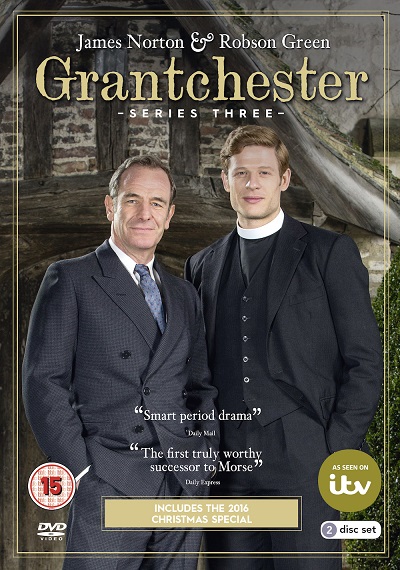
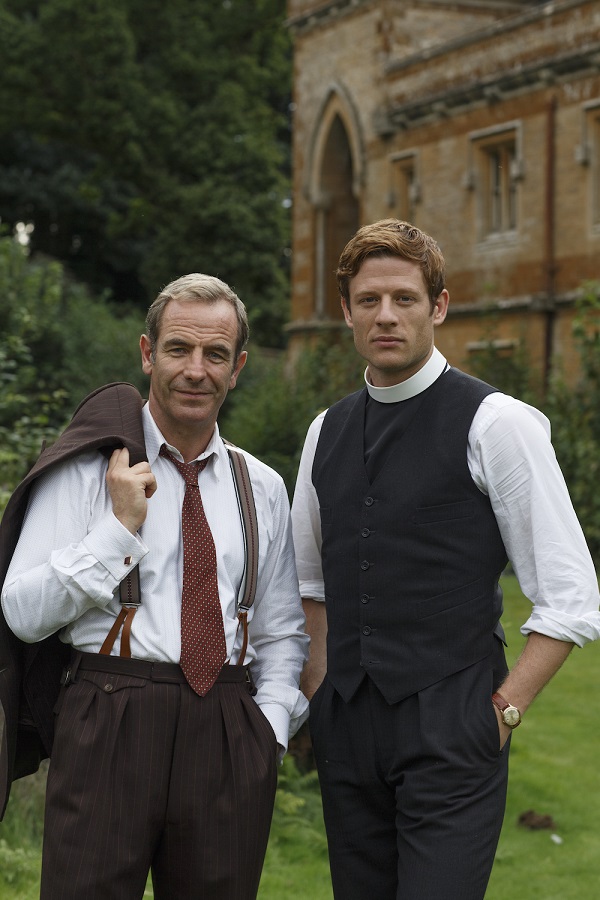
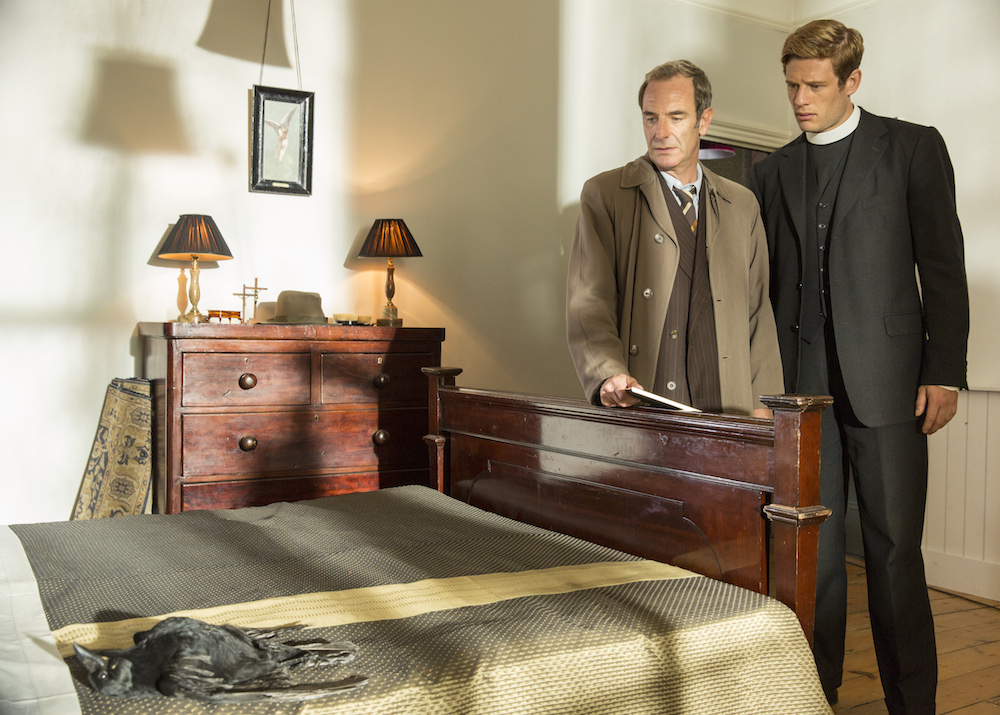
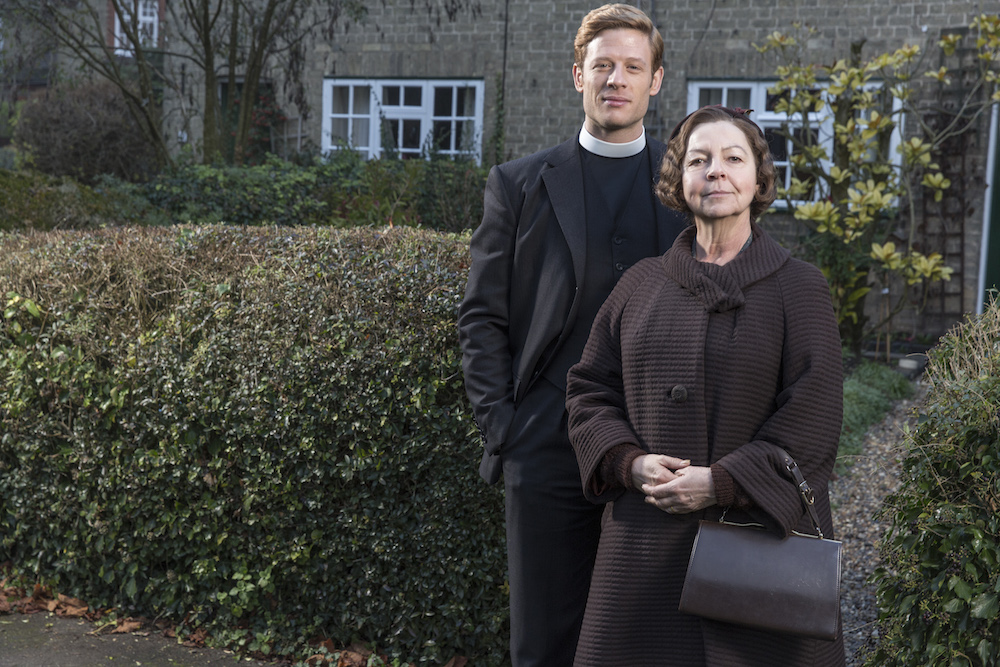
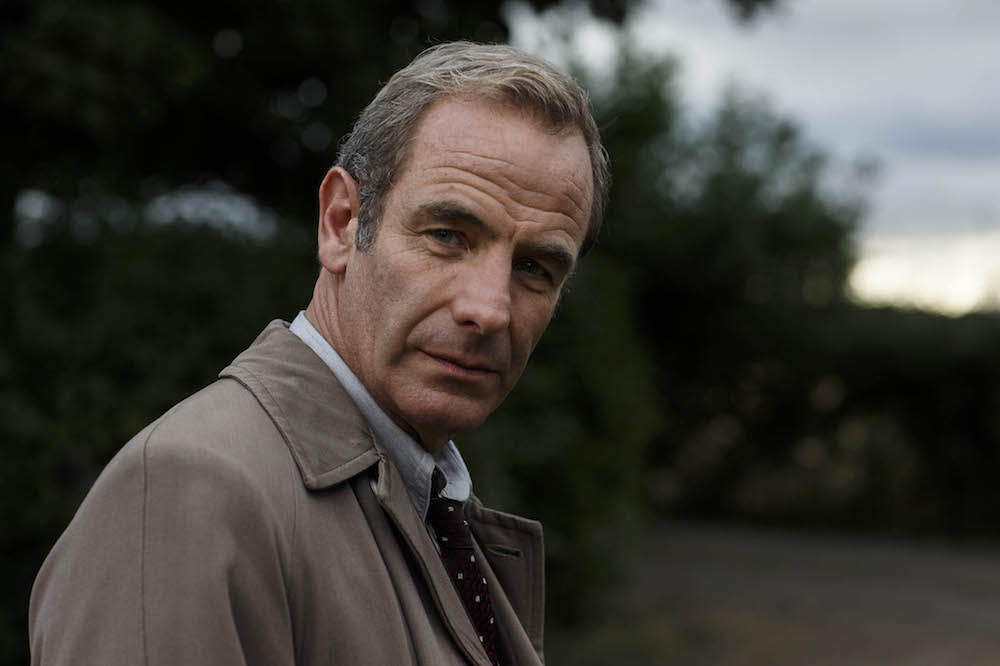
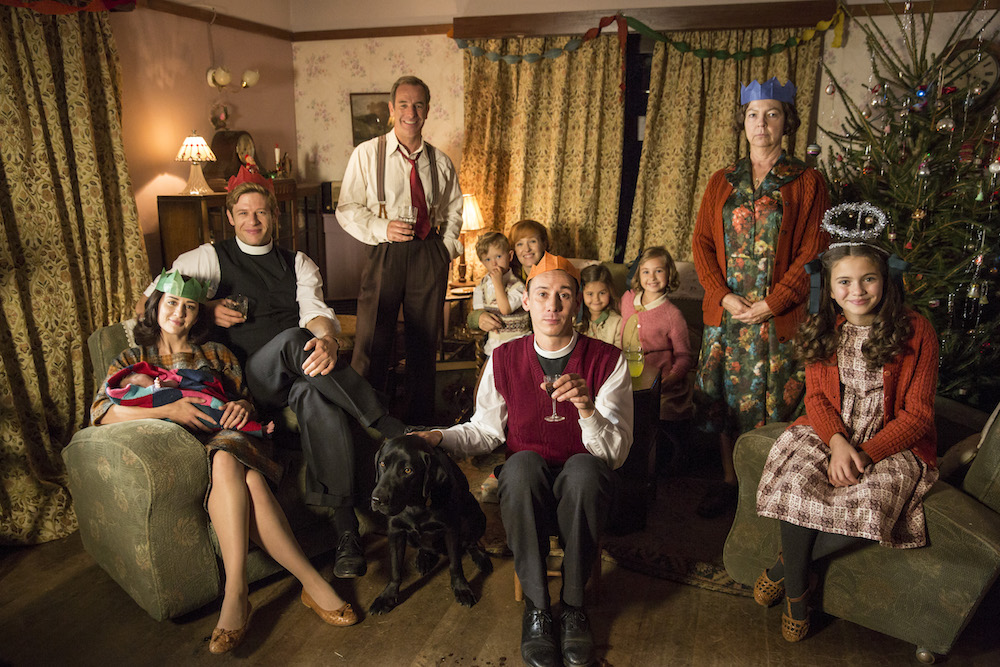
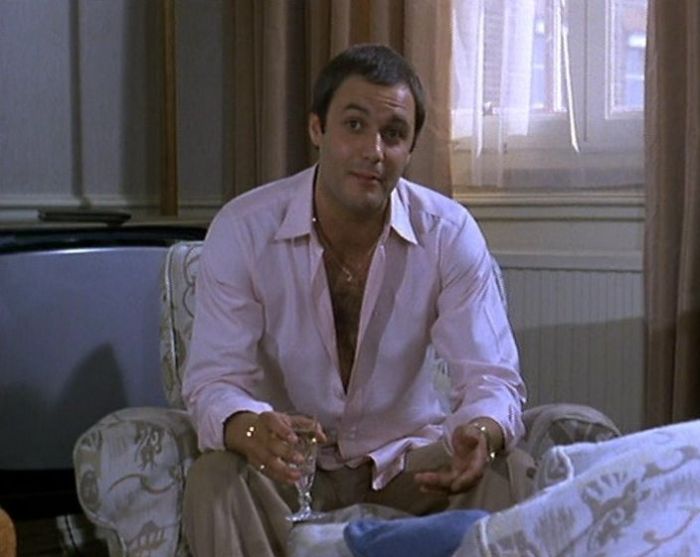

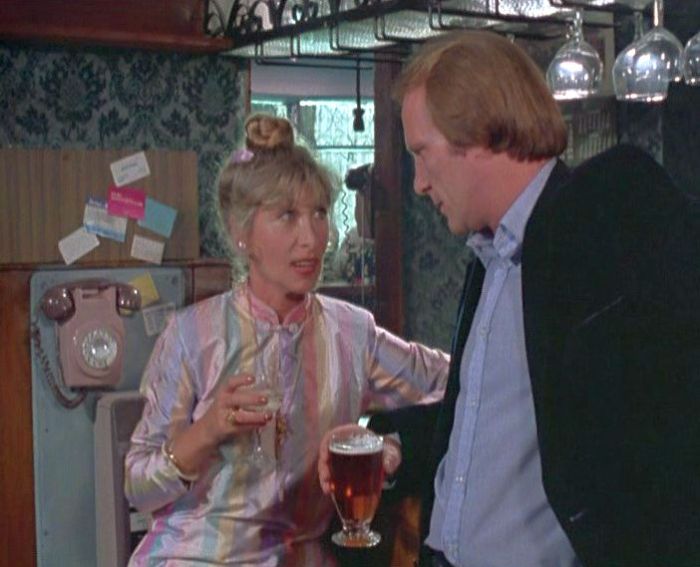
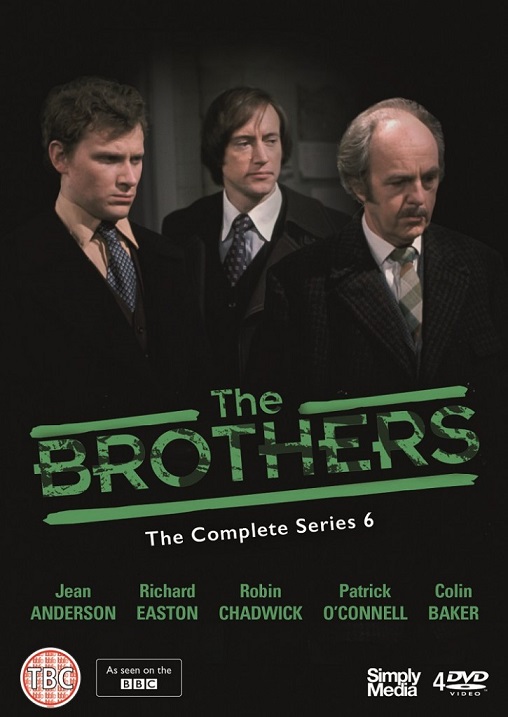
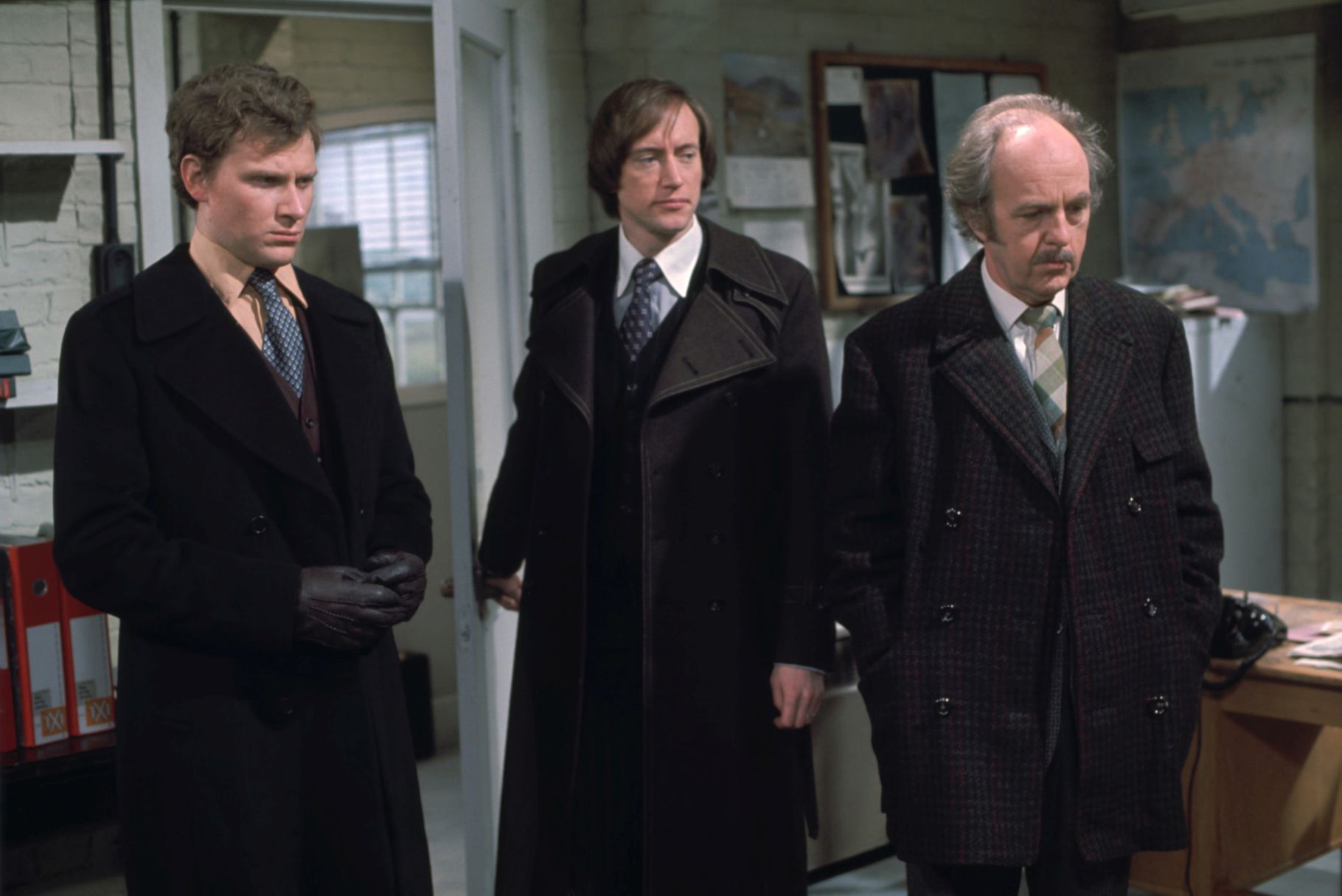
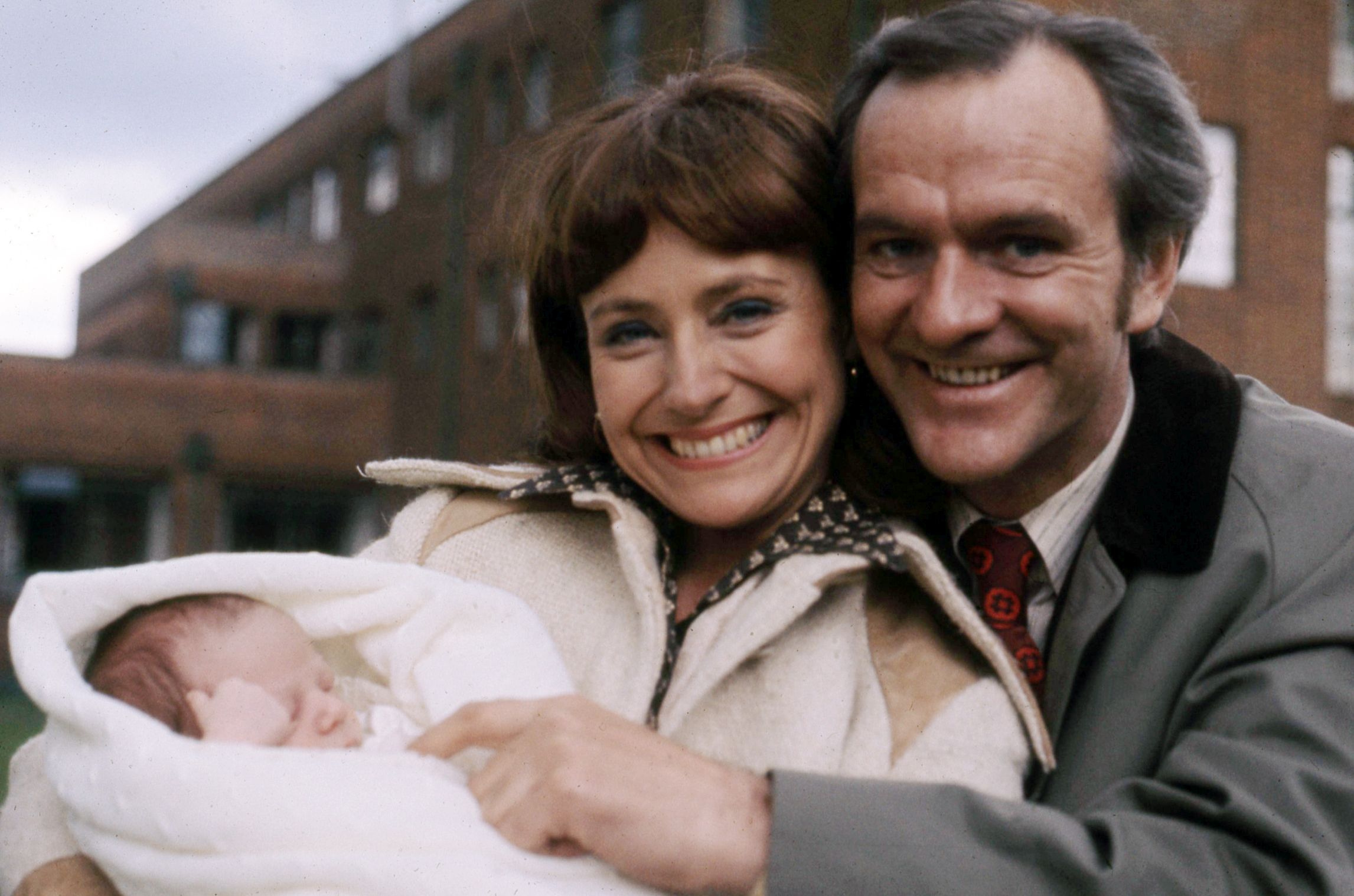
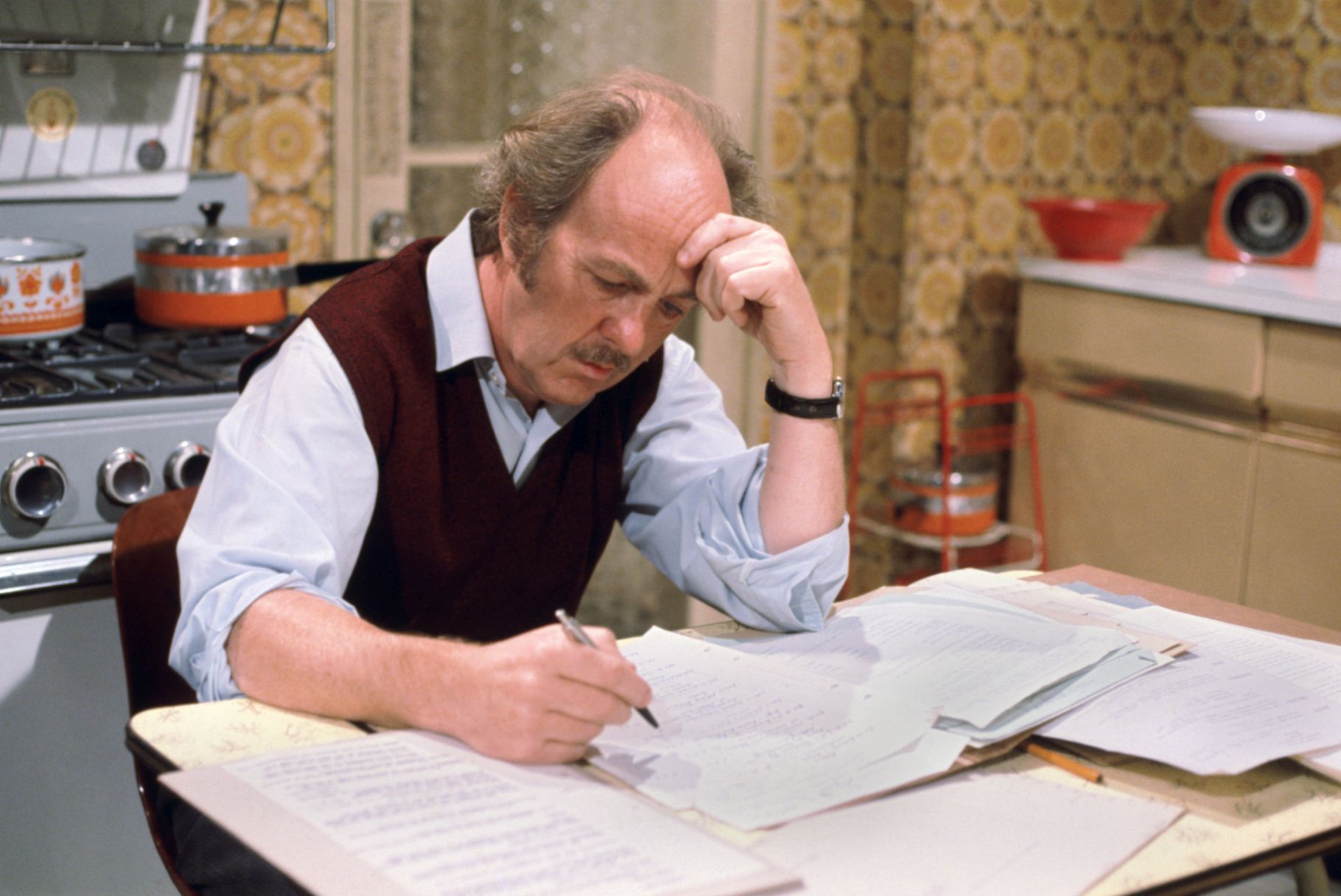
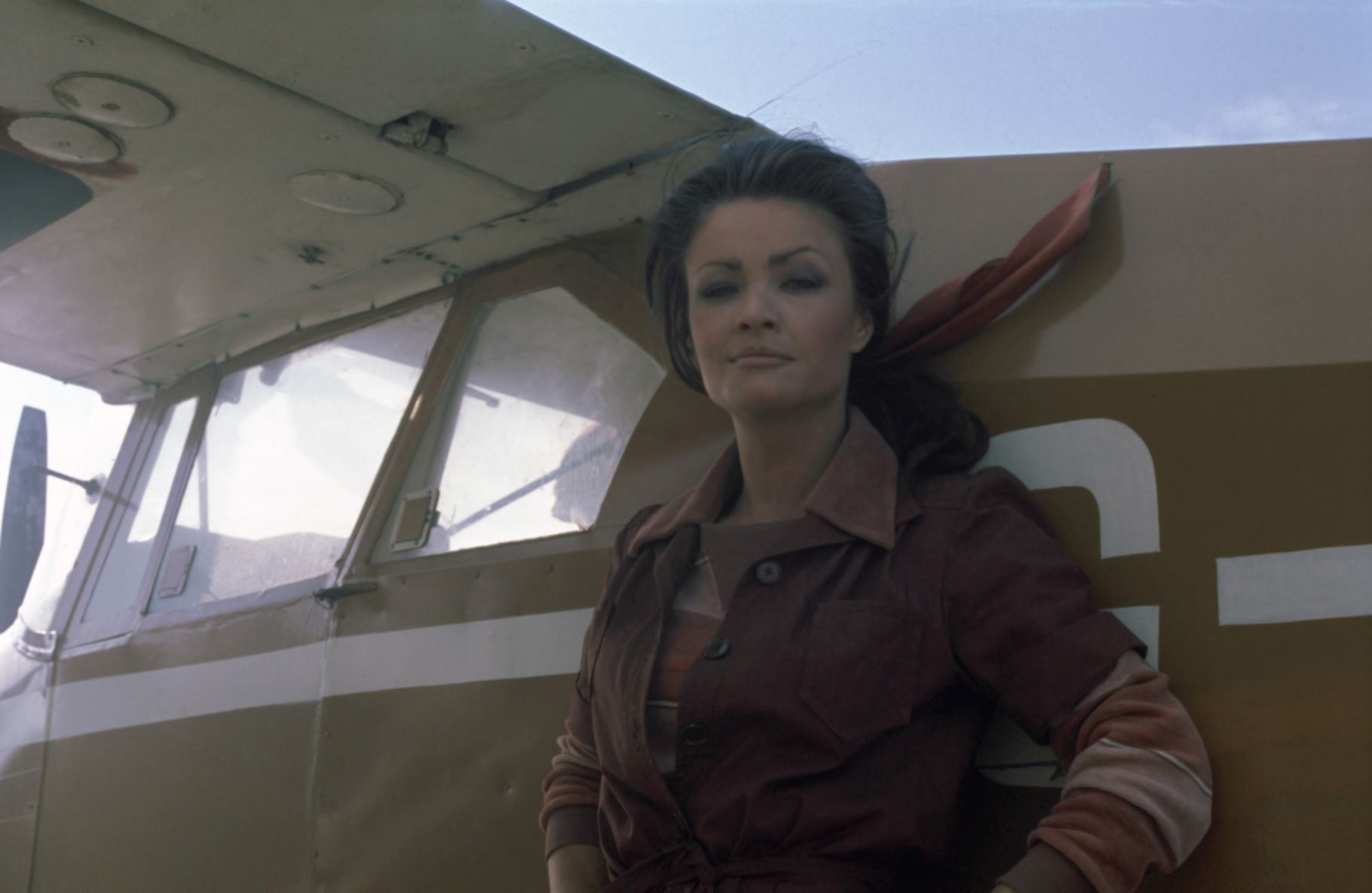
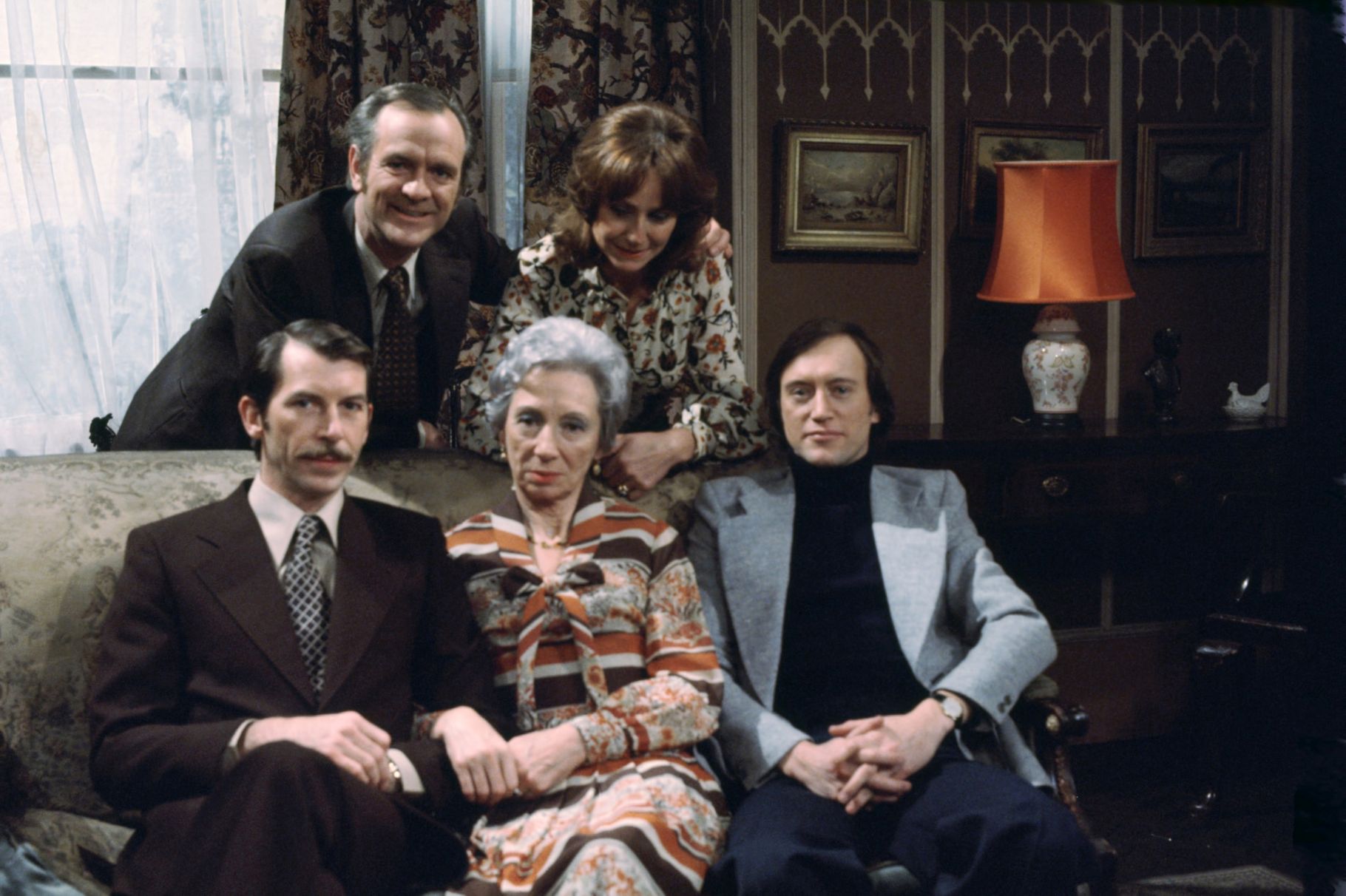


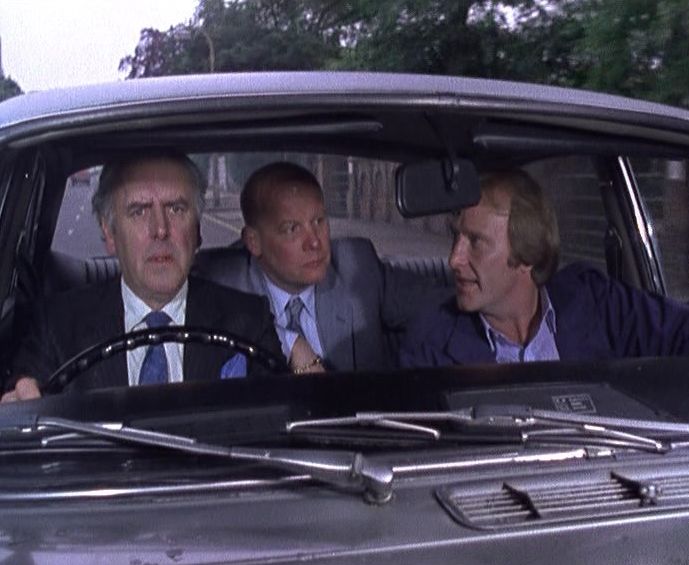
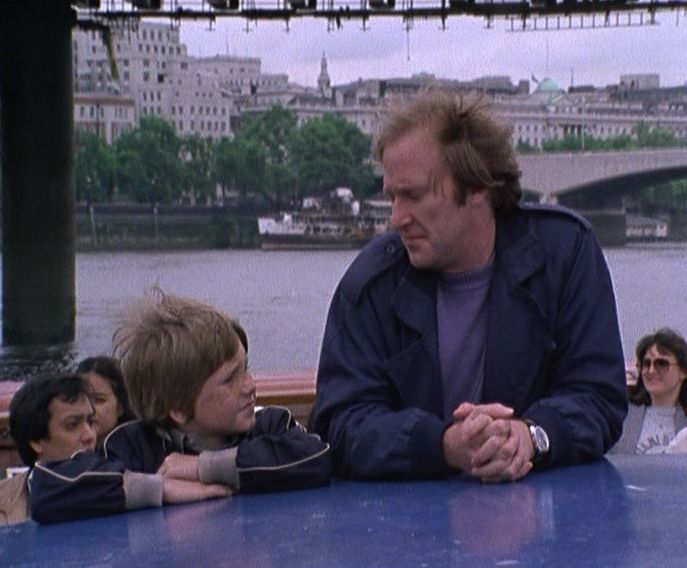

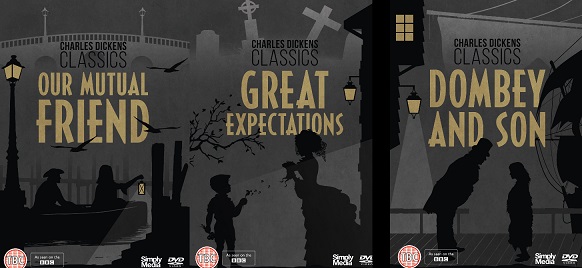
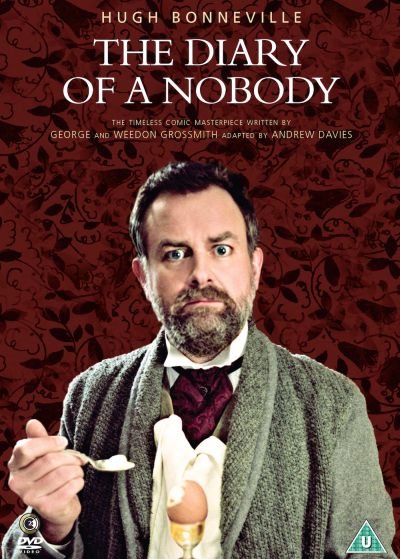


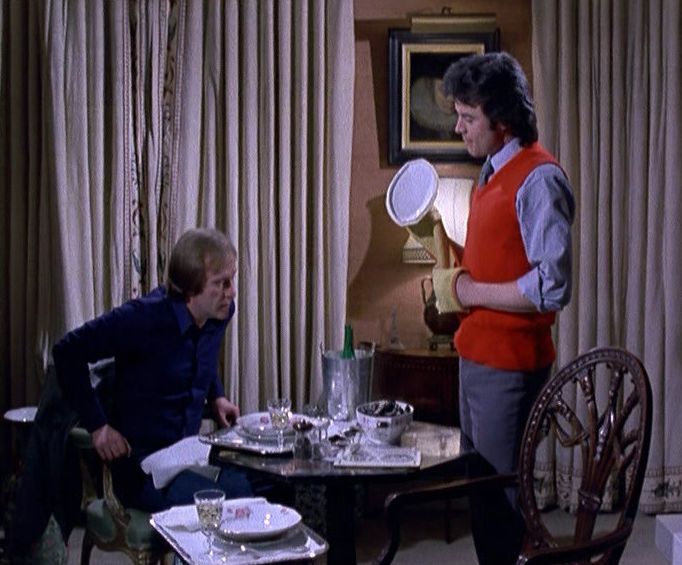
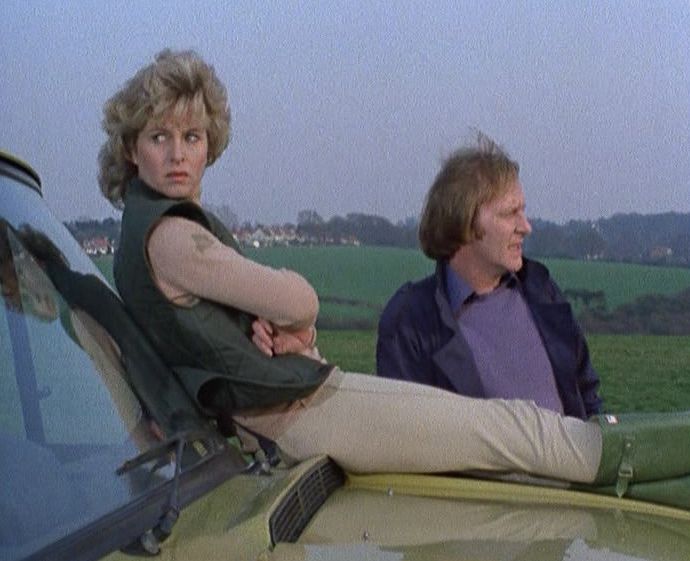
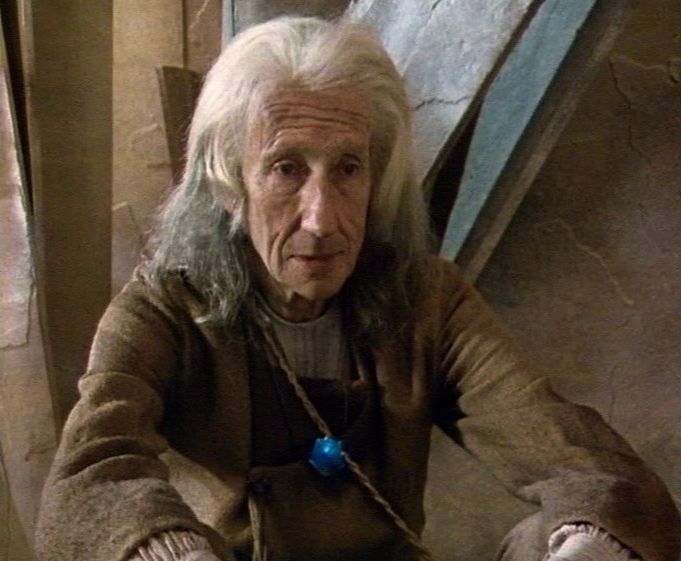
 Archive Television Musings