Shellet comes calling on the Urqhuarts. Polly doesn’t exactly take to him, telling Gerald that “there’s a sort of person” to see him. Shellet needs money for expenses and he also seems deprived in other areas (mentioning to Polly that it gets very lonely when he’s all alone in his hotel room). Polly might have an eye for just about anything in trousers, but I’ve a feeling that Shellet is a bridge too far, even for her.
Lynne’s glammed up for her evening meal with Charles whilst Ken calls on Jan. He plainly feels threatened by Claude (or “that froggy dressmaker” as he calls him) and seems to be fretting about the business trip to Cannes that Jan and Claude will shortly be taking. Far away from home, he no doubt envisages that Claude will take advantage of her in just the sort of way he’s not been able to do so far!
It’s a sunny day in Tarrant, something of a rarity. This makes Charles and Lynne’s champagne and caviar seem even more intoxicating. He learns that Lynne’s father is conducting an affair with Avril (uh oh) and then outlines his philosophy of living, which revolves around power and freedom. “Power to act and freedom to choose.” They’ve hardly finished the meal when he casually mentions that he’d like to sleep with her – which is as good an example of power and freedom as you can get.
Abby decides she wants to keep the baby. This seems to have cheered her up – for pretty much the first time ever she seems almost happy.
And then we go to Cannes, well sort of. In later years the budget would actually stretch to foreign filming, but that wasn’t the case here. So we have a brief montage of stock footage (people lounging on the beach, etc) before cutting to a pool obviously somewhere in England. But they made a bit of an effort to suggest exotic climes by having two topless women walk past Claude and Jan’s table in a casual manner. That was a tad unexpected I have to say, especially considering that the episode originally went out just before 8.00 pm on a Sunday evening.
Ken might be right to be wary of Claude, but at present it’s her business acumen he wants (Claude’s attempting to woo her away from Ken – suggesting instead that they set up business together). I’m afraid his silly French accent is beginning to get on my nerves ….
And then Ken pops up in Cannes, casually offering to take Jan out to dinner. And of course being Ken he appears at her hotel door with a rose in his teeth and a bottle of champagne in his hand. After a decent meal (off-screen, which saved a bit more money) they return to Jan’s hotel room and you can probably guess what happened next.
When they meet up for breakfast the next morning, Ken demonstrates that he’s an unreconstructed Englishman abroad since he’s not willing to try any funny food (bacon and eggs is what he wants). The arrival of Claude sets Ken’s antenna twitching, but he acts casually in only the way that Ken Masters can.
The highly recognisable Hubert Rees pops up as racehorse trainer Stephen Bettins. Kate’s part of a racehorse syndicate (each owning a leg) but it seems clear that she’s going to struggle to pay her share. It might have been these scenes which inspired Glaister to later develop Trainer, which unfortunately wasn’t the same sort of success that both The Brothers and Howards’ Way had been.
Polly’s made it quite plain to Abby (before she ran away from home of course) that she viewed her daughter as an extreme disappointment. But not any more. After opening her mail(!), Polly’s delighted to read a letter from an American student called Orin Hudson. He and Abby were obviously close for a while (as Polly so charmingly puts it – “God knows what this boy sees in Abby but it all sounds very lovey-dovey”). And since he’s a member of an incredibly wealthy American family, Polly sees it as her duty to reunite the two lovebirds. This is mercenary Polly at her best.
Jack’s solicitor lays on the line exactly how serious things are. If Shellet’s claim is successful then not only will Jack lose the yard, he’ll also forfeit his house. Tom will lose everything too, as all the yard’s assets (including the new boat) will be Shellet’s. That’s a suitably dramatic way to bring the episode to an end.
Tom and Avril have spent the night together aboard the Flying Fish. For all that Jan’s been shrill and accusatory this year, it’s Tom who turns out to be the one who irreparably destroys their marriage. Pledging all their money (including using the house as collateral) for his dreams of boat building started the cracks but when it’s revealed that he’s been conducting an affair with Avril there’s no way back.
As Tom and Avril lie in each others arms in dawn’s early light, a young chap is making his way over to another boat. Presumably he must be a little hard of hearing as he doesn’t seem to notice the red beeping danger signal on the dashboard. He attempts to turn the ignition switch and whoosh, there’s a rather large explosion.
Tom plays the hero and rescues the boy but it means that neither Tom or Avril have time to return home before Leo’s up and about. And Leo can’t help but notice that neither his father or Avril seem to have spent the night in their respective beds (he’s still doing a spot of paining and decorating at Avril’s). Quite how he worked out that Avril wasn’t in her bed isn’t explained ….
There’s also a journalist sniffing about and he speaks to both Leo and Ken. You can just imagine Ken’s delight when he learns that Tom and Avril spent the night together, whilst Leo is understandably perplexed and troubled. With immaculate timing, matters come to a head just as Lynne returns home in triumph (her boat won their class in the FastNet).
Ken, of course, is on hand to stoke up the fire. Meeting Jan off the train from London, he can’t wait to tell her the news whilst elsewhere Leo confronts Avril. “You may have all the looks, Avril, but that’s all you’ve got. Any woman who goes after a man knowing he’s got a wife and family is damn well nothing.” Edward Highmore doesn’t quite spark into life, but maybe he’s a little less wooden than usual.
Jan confronts Tom who tells her that it could have easily have been her with Ken. This is an astonishing statement as there’s been no evidence – the odd tango apart – to suggest that Jan’s even considered breaking her vows.
Perhaps it would have worked a little better had this storyline dripped out over a few episodes, with the rumours about Tom and Avril slowly gaining momentum. As it is, it feels rather rushed.
If you need a little light relief from the strife at the Howards, then Jack’s still ensconced at the clinic, playing gin rummy with Kate and reluctant to join in any group therapy. Fair to say he’s not the easiest patient. Jack finally makes an appearance at group therapy, although he doesn’t take it terribly seriously (“I don’t drink a lot, I spill most of it”) leaving the therapist – Louise Silverton (Christine Kavanagh) – mildly irritated.
Elsewhere, Ken and Charles have a business lunch at the yacht club. Lynne waits upon them and is introduced to Charles for the first time. Once again there’s the wonderful contrast between Ken – anxious to appear cultured and intelligent – and Charles – who breezes through any social or business occasion with ease. The business of the wine is a good example. Ken suggests a bottle of Mouton Cadet but Charles wonders if the Chateau Montrose might not be preferable. It’s a subtle example of one-upmanship which sees Charles emerge victorious yet again.
But Ken’s convinced that he’s won the war, telling Jan later that he’s got Charles “just where I want him. If he doesn’t go along with me, there’s nowhere else to go.”. I’ve got a feeling that Ken’s counting his chickens rather too early.
After spying Lynne for the first time, Charles clearly likes what he sees, so he sends her hand-picked flowers and arranges a dinner-date with her aboard his yacht at 8:30. He’s a smooth operator, that’s for sure.
We finally learn that Shellet is Jack’s brother-in-law. When Jack receives a letter from him, he’s perplexed. Kate can’t understand why, after all it seems perfectly natural that he should want to get in touch. Jack has the perfect riposte. “He’s been dead twenty five years, that’s what’s wrong.”
And now he’s made a claim for ownership of the Mermaid Yard. But the end of episode twist (Charles is the one who’s put him up to it) is a great moment which adds yet another layer to the plot. Ten episodes in and everything’s ticking along nicely.
There’s a further example that Charles is a thrusting (and wealthy) businessman at the start of this episode – he arrives by helicopter. I wonder if his comment that the weather in Geneva was even worse than back in the UK was an adlib to take account of the fact that yet again location filming took place on a gloomy day. If the exteriors for series one were shot during the summer, then the sun rarely seemed to come out.
Charles meets Gerald outside a palatial country house – one of a number which Gerald has earmarked as potentials for Charles to purchase. Since they make no effort to inspect the interior, landing here doesn’t make a great deal of sense – apart from the fact that (like the helicopter) it reiterates to the audience that Charles Frere is a man of substance. This is also subtly acknowledged via the incidentals, as a plaintive string melody plays over shots of Charles’ chauffeur-driven car moving away from the house.
Lynne has arrived at the Isle of Wight, keyed up for the FastNet race. A barrage of stock footage is employed in order to create the illusion of a massed phalanx of boats, which isn’t entirely successful due to some of the clips being on film and others being on videotape. Phil pops up to taunt Lynne and the others – since they’re just a bunch of girls, surely they’ll have trouble even getting to the start?
In the most unsurprising twist ever, the two boats find themselves head to head (curiously there’s no other boats around at this point) and the girls easily pull ahead, leaving Phil floundering. Hurrah!
One oddity is that Tom, Jan, Kate and Leo never express any interest about how the race is going. You’d have thought they’d at least have mentioned it.
Jack’s in the Jolly Sailor, bending the ear of the unfortunate barman, Arthur (Patrick Carter). This seems to be a common occurrence – no doubt whenever Jack gets plastered he reminisces about boats he has known (in this case, the first one he ever built – back in 1948). Arthur is plainly desperate to get away, but with the politeness of a trained barman can’t bring himself to tell a valued customer to stop chuntering away. Perusing the delights on offer in the bar, I wonder what Badger Export Bitter tastes like?
Kate’s still acting as his conscience, ringing up the pub to berate him for hitting the bottle again. Jack’s eloquent comeback (“you old teabag”) is priceless. Things take a darker turn later when Kate finds him collapsed at his home – she takes control straight away and calls an ambulance. Luckily, there’s nothing seriously wrong with him, so she checks him into a clinic in order for them to dry him out. This is going to be fun ….
Abby discusses with Dr Malik (Renu Setna), the possibility of terminating her unborn child. Setna, still working I’m happy to see, has played an awful lot of doctors during his career (episode one of the Doctor Who story The Hand of Fear is one such which springs to mind).
Several characters make their debut here. A mystery man, who we later discover is called Richard Shellet (Oscar Quitak), is seen lurking about. He’s clearly a wrong ‘un – the way that the incidentals suddenly turn sinister and Shellet’s peremptory way of dealing with the hotel staff are two obvious signifiers of this. Although he doesn’t speak, he later fingers a picture of the Mermaid Yard, so it may not be too hard to work out where this plotline will go. It’s going to rumble on for a while (into the second series) and will provide considerable entertainment, not least because of Quitak’s performance – Shellet always appears to be a man teetering on the edge of insanity.
Ah, Claude Dupont (Malcolm Jamieson). The devilishly handsome, smooth-as-silk, would-be fashion designer crosses paths with Jan. She’s looking for a designer, he’s looking for work, it seems a marriage made in heaven. It’s hard to take Claude that seriously, since this is another example of plot contrivance (a potentially world-class fashion designer who just happens to fall – as it were – into Jan’s lap) but Howards’ Way never really bothered too much about realism. And why should it? Mind you, his silly French accent is a little irritating.
Ken, invited to a swanky party organised by Charles, runs into merchant banker Sir John Stevens (Willoughby Gray). Sir John will be a regular throughout the six series and for all that time always refers to Ken as Kenneth (the only person to do so). A subtle put down, possibly? Sir John is always politeness personified, but the clash of different worlds that occurs whenever he runs into Ken is not only obvious but also an endless source of class-based comedy. Ken, dazzling in a white dinner jacket with a rose in his button-hole, is clearly overawed by Sir John.
The episode ends with Tom and Avril enjoying an idyllic time aboard the Flying Fish. But I’ve got a feeling that their joy is going to be short-lived.
1990, which ran for two seasons during 1977 and 1978, was set in a Britain tyrannised by the Public Control Department (PCD), a Home Office organisation dedicated to crushing free speech and any other signs of dissent. Given the parlous state of Britain during the 1970’s, it wasn’t surprising to find a series which posited what might happen if the economy finally and irrevocably disintegrated. And given the way things are today, many of 1990‘s themes seem eerily topical ….
Some background to the collapse is teased out as the series progresses. We learn that the country went bankrupt in 1983, which led to a series of swingeing restrictions from the newly-formed PCD. These included strict rationing – not only of food, but also of housing and other essential services. Virtually everything has been nationalised, meaning that the government has almost complete control. Dissidents are harshly dealt with – via Adult Rehabilitation Centres – where they are treated with electro-convulsive therapy.
1990 is a grim place then, but there are still a few people attempting to resist the state. One is Jim Kyle (Edward Woodward), a journalist on The Star, one of the last independent newspapers. The PCD, in the form of Controller Herbert Skardon (Robert Lang) and his two deputies, Delly Lomas (Barbara Kellerman) and Henry Tasker (Clifton Jones), keep him under close surveillance, which leads to a tense battle of nerves.
Robert Lang, Barbara Kellerman and Clifton Jones
Series creator Wilfred Greatorex (1922–2002) started his career writing for Probation Officer (1962) and quickly moved onto The Plane Makers (1963 – 1965) and its sequel The Power Game (1966 – 1969) where he acted as the script-editor. Character conflict was key to both The Plane Makers and The Power Game and it’s plain to see that a similar format was carried over to 1990. The heart of the series is concerned with the way the main characters (especially Kyle, Skardon and Lomas) interact.
Edward Woodward (1930 – 2009) had been acting since the mid 1950’s but it was Callan (1967 – 1972) which really established him as a household name. His success as the world-weary state-sponsored killer allowed him to diversify (pursing his love of singing in The Edward Woodward Hour, for example) whilst cult films like The Wicker Man (1973) enhanced his profile even more. Woodward was a quality actor and his central performance is one of the reasons why 1990 works as well as it does.
The series opened with Greatorex’s Creed of Slaves (“Necessity is the plea for every infringement of human freedom. It is the argument of tyrants; it is the creed of slaves” – William Pitt the Younger). Kyle is penning a piece for his newspaper on the Adult Rehabilitation Centres (ARCs) which causes Skardon considerable irritation. But that’s merely the tip of the iceberg as Kyle is also part of an organisation dedicated to smuggling people out of the country ….
There’s more than a little touch of 1984 about the series of course (Greatorex referred to it as 1984 plus six). This is particularly evident in the opening few minutes as we observe how the PCD are able to monitor everybody, both visually and aurally, although wise old hands like Kyle are able to give them the slip with embarrassing ease. The relationship between Kyle and the members of the PCD is already well established before the episode begins and it’s his interaction with Delly Lomas which particularly intrigues. Since Skardon mentions that Kyle likes her cooking, it’s plain that, despite the fact they’re on different sides, there appears to be some sort of spark between them. Or are both simply playing games? At one point Kyle directs this comment to her. “How do you look like you do and do the job that you do?”
Edward Woodward & Barbara Kellerman
The next episode, When Did You Last See Your Father?, continues one of the plotlines from episode one, concerning Dr Vickers (Donald Gee), a man who is keen to take his wife and family out of the UK. This proves to be impossible via official means, as exit visas are severely restricted.
The banality of evil runs throughout the series. On the one hand, Skardon, Lomas and Tasker are simply bureaucrats doing a job (in their minds they no doubt see themselves on the side of law and order). It’s this blurring between “good” and “evil” which is so compelling – the PCD may be oppressive, but their public face can appear to be reasonable. This is key – if you can keep the nastiness buried then maybe you stand a chance of fooling most of the people.
The first non-Greateorex script, Health Farm, stars the imposing Welsh actor Ray Smith as union leader Charles Wainwright. Following a disastrous trip to America in which he gave a speech littered with criticisms of the British government, Wainwright is sent to an ARC for “correction”. The shocking change in him (from the firebrand we first meet to an adjusted patient keen to toe the party line) brings home the true horror of the ARCs.
Strong guest stars continue to appear throughout the remainder of series one, such as Graham Crowden as Sondeberg in Decoy and Richard Hurndall as Avery in Voice from the Past.
The last two episodes – Witness and Non-Citizen ramp up the conflict between Kyle and the PCD. Dr Vickers, who escaped from the UK in episode two with Kyle’s help, is persuaded to return in order to testify in a show-trial against Kyle – if he does then his family will be granted exit visas. Prior to the trial (featuring John Bennett as the prosecutor) Kyle’s office and home are targeted by PCD thugs, which causes distress to his wife Maggie (Patricia Garwood) and children. Woodward gives a typically powerful performance, especially when Kyle finds his family are under threat.
Edward Woodward
Series one concluded with Non-Citizen. Considering how much of a thorn Kyle has been in the PCD’s side, it’s odd they’ve taken so long to decisively deal with him. But here at last they finally seem to have broken him. With his family missing, no money, no job, no home and no status, Kyle is pushed to the limit by a sadistic Skardon. It’s not surprising that Woodward once again excels here.
Although the themes of the first series of 1990 tapped into contemporary fears and neuroses, it’s fascinating how most of it still remains topical some forty years on. The official face presented in 1990 appears to be fair and reasonable – tribunals are held which claim to offer the public an unbiased hearing and the ARC we visit is located in a palatial country home with well-manicured lawns – but scratch a little beneath the surface and it’s plain there’s something very rotten in this state. You don’t need jackbooted guards on every street corner to create a true sense of fear, there are far more subtle ways than that ….
The way that language, spin and bureaucracy are all utilised in order to obfuscate the truth is especially instructive. When you hear a politician complaining that the press, in the shape of Kyle, is spreading disinformation and therefore creating disharmony about the state of the economy (i.e. disseminating fake news) then the parallels to the modern world are perfectly clear. In many ways 1990 is something of a chess game with all the major players – especially Kyle and Lomas – engaged in a game of manoeuvre and counter-manoeuvre.
Barbara Kellerman & Edward Woodward
As I’ve said, Edward Woodward is a fine leading man whilst Barbara Kellerman and Robert Lang (who receive second and third billing) offer strong support. The gravelly-voiced Lang graced many a film and television programme with his presence and is perfect as the harassed mandarin Tasker whilst Kellerman (possibly best known for playing the White Witch in the 1980’s BBC production of The Lion, The Witch and The Wardrobe) is intriguing as Della, the apparently acceptable face of the PCD. Kellerman didn’t return for series two, which was a shame, although this did allow the format to be shaken up a little.
Interviewed by the Radio Times prior to the broadcast of the first episode, Woodward said that the series was “either going to create a furore or pass without comment” (Radio Times, 17th September 1977). Although it didn’t quite go unnoticed, the fact it was tucked away on BBC2 was probably part of the reason why it never became a mainstream hit. But it clearly impressed enough to be renewed for a second series.
Although largely forgotten today, 1990 is a series which deserves to be much better known, especially since its power to disturb and unsettle remains undimmed after forty years. It’s pleasing to have the first series available on DVD, with the second to follow in May, and for those who appreciate well-crafted British character drama of the seventies it’s certain to appeal.
1990 – Series One is released by Simply Media on the 20th of March 2017. RRP £19.99.
This one opens with Charles steering his yacht en route to a business meeting with Ken. Size, of course, isn’t everything, but it’s fair to say that Charles’ craft dwarfs most of the others in the marina. His yacht serves several purposes – not only does it tell us that he’s a man of substance but it’s also a handy device to impress others.
And Ken is very impressed. Dressed in a gleaming all-white outfit, he’s obviously a little overawed. A breakfast meeting with champagne? It’s a small taste of the high life that he’s incredibly anxious to sample more regularly (and no doubt Charles would have been well aware of this, so the location would have been no accident). Charles suggests a joint venture – Ken builds the new marina, Charles runs it. Ken asks for time to consider, but still seems confident that if he refuses then Charles will be stuck – since Ken owns a prime piece of property bang in the middle of the proposed location.
Charles isn’t bothered though, in true Thatcherite spirit he declares that “we live in a commercial world, Ken. Everything’s for sale.”
Time has clearly passed off-screen, as Jan and Ken are practically ready to open the boutique, whilst Tom’s prototype boat has passed its tests with flying colours. We saw a brief moment of testing in the previous episode, but Tom’s boat has still sailed off the drawing board with unseemly haste.
As for Jan, she’s suddenly turned into a hard-headed businesswoman, easily able to gain very favourable terms from tailor Bernie Rosen (Harry Landis). Bernie’s Jewish of course (this scores a full ten on the cliché ratometer).
Tom’s delighted to hear that his prototype is developing well and, in a moment of sheer joy, embraces Avril in the office. Alas, Leo walks in at precisely that moment and if looks could kill no doubt both his father and Avril would have disintegrated on the spot. I’m not sure whether Leo’s more annoyed that his father’s in the arms of anther woman of if he’s simply miffed not to be the one enjoying the embrace! Edward Highmore continues to essay a performance which is low on subtlety, but perhaps that suits Leo’s character. Whereas most of the other characters are capable of hiding their true feelings from time to time, Leo is very much a WYSIWYG type.
Leo tracks Abby down in Southampton, which is the cue for another burst of Abby’s theme (the plaintive guitar melody which, along with the theme, must be the most familiar part of the incidentals) and a somewhat surprising revelation – she’s pregnant. Charles formally meets Jan for the first time, Lynne is offered a place in an all-women crew in the FastNet, whilst the other main point of interest concerns the continuing travails at the yard.
With the loss of the German contract, the bank are ready to foreclose but Tom is able to persuade them that his prototype will turn their fortunes around (but he needs Jan to agree to use their house as collateral). Jack is still insistent that plastic toy boats have no place in his yard, but is shocked and stunned to realise that he no longer owns fifty percent of the company (and therefore is unable exercise a casting vote). Tom has 25%, Avril had 25% but then bought an additional 5%, so she and Tom are able to outvote Jack. The look on Glyn Owen’s face is priceless. Presumably Jack must have been pretty drink-addled in recent months not to realise that Avril’s increased her shareholding.
Jack later articulates his feelings to Kate. “I’ve fought for that yard, Kate. Lost sleep, sweated blood for it. And what’s it all been in aid of? Nothing. Everything I’ve specialised in over the years is gone.” In her own way, Kate is as much of a traditionalist as Jack is – but she can see that everything has to change, nothing can stay the same forever.
Later Charles plays Avril another visit. She’s still not interest in his proposals, this time he tells her he’s interested in buying the yard. Whilst he claims he’s prepared to do it in order to help her father, she’s far from convinced. “The only person you’re willing to help is yourself”. This helps to ramp up the tension surrounding the Mermaid (plus Charles’ recent arrival also continues to shake things up nicely).
Polly tells Jan the truth about her sham marriage to Gerald – Abby isn’t his child and his numerous affairs aren’t conducted with women. It’s something of a storytelling weakness that best-friends Polly and Jan have never discussed this before, but it does make dramatic sense for the viewers to learn about it at the same time that Jan does. These revelations help to chip away at Polly’s self confidence, giving us a glimpse of a lonely person lurking underneath her bravura exterior.
As regards character interactions, something similar happens when Lynne finally realises that Phil is a male chauvinist pig who only wants her for her body and would never have considered her as crew for his FastNet team because, well, she’s just a woman. Both have lived in Tarrant for some time, so it stretches credibility that she wouldn’t have realised exactly how he operates by now (and lets be honest, the viewers probably twigged some ten seconds after he first appeared). Leo sums him up perfectly. “Self satisfied berk.”
One of my favourite comedy moments occurs with Jack and Kate. Jack’s two days into his month long pledge of sobriety (he’s got a fifty pound bet with her) but is clearly weakening. A his hand slowly stretches towards a bottle, the phone rings. He picks up the receiver – it’s Kate. Shamefacedly he then hides the bottle behind his back! It’s a lovely bit of business, which is developed further when Kate tells him that even over the phone she’ll be able to tell if he was lying about his drinking.
One technical observation is that the difference between the film exteriors and videotape interiors is glaringly obvious, mainly because of the weather. For example, Tom calls on Avril (on film) and it’s a gloomy day but once they enter her living room (on videotape) the sun is streaming through the windows. Normally, the film element of the episode would have been done first – if this was the case, I wonder why they didn’t attempt to replicate the weather a little more accurately? If they’d shot the studio scenes first, then fair enough – nothing could be done – but if it was the other way around then it’s something of a missed opportunity.
The main interest in this episode though is the introduction of Charles Frere. When we first meet him he’s nattily dressed in a tuxedo, like a cut-price James Bond. He bumps into Polly and views Jan, from a distance, with interest – but he’s really in Tarrant to speak to Avril. Yes, Charles is the mystery man who broke Avril’s heart and now he’s back.
He’s only interested in business, or so he says, but the mere sight of him is enough to send Avril into mild hysterics. So when Tom later calls at her cottage and finds her in a distressed state, the inevitable happens ….
They both comfort each other and as the credits roll it’s fairly obvious what’s going to happen next. Indeed, the only surprise is that it’s taken them seven episodes to make a move on each other.
Jan and Ken have yet to advance beyond their professional relationship (despite what a poison-pen letter delivered to Tom might say). Although Ken doesn’t have a great deal to do in this episode, his character is nicely developed – although it happens when he’s off-screen. Jan and Lynne discuss him, with Jan nailing him as something of a social climber – he may have money, but he really wants to be accepted amongst the upper classes. But his barrow-boy persona seems doomed to ensure he’ll always be an outsider.
Ken’s had enough of Dawn. “This is my pad and I want it to myself”. I didn’t know that anyone in the eighties still called their flat a “pad”, or maybe it’s just more evidence that Ken is trapped in the seventies. He’s no new man that’s for sure – handling Dawn roughly and making it certain she knows that after six weeks of cohabiting he’s had enough of her.
He treats Jan differently of course, but then she’s still of more use to him (certainly professionally and maybe personally). His relationship with Dawn shows how beneath his affable exterior something nastier lurks, although he doesn’t feel he has anything to reproach himself for. “Well I play ball with them. Show them a good time, plenty of laughs, treat them like royalty, and bingo, after a couple of weeks they think they’re home and dry and running the show.” I love Ken, he’s so delightfully horrible.
Jack’s all-day drinking binge concerns Avril. “The whole day, the whole night’s just one long drink to you”. Can he change? Does he even want to change? Kate’s certainly keen to see him dry out but it’ll be no easy task.
Gerald Urquhart makes his first appearance, meeting with Ken to discuss a possible business venture. The fact that Ken’s never met him before ties into Abby’s earlier comment that she hardly spent any time with her father as a child. Of course from now on things change somewhat as both Gerald (and shortly Charles) take up permanent residence. This early fencing between Ken and Gerald is just a taste of what’s to come. Ken has some real estate which Gerald and Charles would like to acquire, but Ken knows that if he hangs onto it then he might be able to make himself a player.
Abby’s run away to become a social worker. And that’s not a sentence you type every day. It seems a little far-fetched that she could just roll up to the office and start work shortly afterwards, surely a few checks would have been sensible? Or possibly the fact that Abby had been to a posh Swiss finishing school was deemed to be good enough.
Phil Norton continues to lust after Lynne. Since Phil made his first appearance it’s been plain that he has only one thing on his mind and it’s not how good Lynne is as a sailor. Antony Head’s performance can’t really be described as subtle – cartoon wolf sort of sums it up. Luckily Lynne is more than capable of resisting his oily charms.
Leo continues to follow Avril around like a puppy dog, devotion shining in his eyes (I love Edward Highmore’s goofy grin after he pops into to see her at the yard).
Tom and Jan seem a little closer, although you can always rely on Ken to put a spoke in the works. He’s discovered that Avril, via an intermediary, bought the Flying Fish and delights in sharing this news with Jan. Jan, already feeling a little threatened by Tom’s close working relationship with Avril isn’t impressed …. cue dramatic cliffhanger as Jan confronts a puzzled Tom.
Jack’s still stomping about the yard in a right strop. Avril attempts to talk some sense into him but has no more joy than Tom did (both Susan Gilmore and Glyn Owen play this short scene at full throttle). And then Jack disappears ….
Avril knows what will happen next, whenever her father is upset he goes on a drinking spree (last time he ended up in a police cell). This time he doesn’t fall into the hands of the police, instead Kate’s the (un)lucky one who runs into him.
Not literally though, although it’s a close run thing. Jack’s staggering down the middle of the road whilst Kate is driving home. After avoiding crashing into him, she forthrightly berates his stupidity (blind drunk, he earlier dumped his car into a ditch) and his lack of manners. Glyn Owen and Dulcie Gray are wonderful here with Owen giving us some magnificent drunk acting (telling Kate slowly and deliberately that he had to swerve to avoid a hedgehog in the road, Kate acidly wonders if it was actually a pink elephant!).
She takes pity on him and gives him a bed for the night. He pours out his troubles to her (he’s unable to pour himself any more drinks though, Kate puts a stop to that) although Kate is unaware that the hated partner he describes in such loving detail is actually her son-in-law. Tarrant’s a small place ….
If you want more evidence of this, then earlier we saw Jack nearly collide with Leo’s bike. Later, Leo tells Avril about his close encounter and he volunteers to help her try and find him. Just seconds before, Leo confides to his chum Nick (Tim Faulkner) that he tends to obsess over unobtainable women. And then Avril turns up.
We’ve seen Leo make googly eyes at Avril in an earlier episode, so his continuing unrequited passion is pretty obvious. Poor Avril remains oblivious though, simply treating young Leo with kindness (he listens to her troubles and she gives him a peck on the cheek for being a good listener). But it’s plain that if Leo expects anything more he’s going to be disappointed.
More sexual frustration is on show later after Nick walks Lynne home and forces himself on her (unlike Leo he’s not content with a goodnight kiss). Poor Lynne, she does have to fend off more than her fair share of lusty admirers although some, like Nick, bitterly know that they’ve little chance of making any headway with her since they don’t own a boat.
This leads into one of the series’ most famous lines (or infamous, depending on your point of view). Lynne tells her father about Nick and she agrees about being boat-obsessed. “I don’t think I could ever love a man as much as I love the Flying Fish”. Well done to Tracy Childs for keeping a straight face.
Our next port of call for sexual frustration sees us over at Ken’s place, where Dawn is more than a little miffed to learn that Ken’s taking Jan out to dinner (Tom’s none too pleased about it either). Both Ken and Jan are togged up to the nines, Ken in a white dinner jacket and Jan in a backless dress. Dawn wonders what she’s going to do all evening by herself, Ken tells her that he’s bought her some new videos. Dawn responds that she doesn’t fancy watching blue movies on her own, but Ken counters that it might get her in the mood for later. The dirty dog!
Ken and Jan’s meal goes swimmingly. Jan tells him that rather than expanding into general marine goods they should specialise – designer yachting clothes for the well-off. Ken is a little dismissive (muttering that Jan might read Vogue, but she’s no fashion expert) but the seeds have been sown. And later they dance a tango for good measure.
Finally there’s a release of sexual frustration as Jan returns home, changes into a most becoming negligée and manages rapprochement with Tom. Although the fact she later tells him that it wasn’t the meal with Ken which put her in the mood somewhat puts a damper on things. Any mention of Ken grates on Tom since he’s no lover of medallion men.
Away from this thriving hotbed of repressed and not-so repressed feelings, Abby continues to feel isolated. She does manage a fairly decent conversation with her mother, but it doesn’t seem to be enough and the episode ends with Abby slipping out the house, bag in hand ….
Episode four opens where the previous one left off, with Abby floundering in the sea. Luckily Leo is at hand and fishes her out. When he mutters to the coughing and spluttering girl that her misadventure “was a bit stupid, wasn’t it?” you have to admire his powers of understatement.
Although Abby is grateful to Leo, she still won’t tell him what’s troubling her – which is reasonable enough as it’s the sort of plotline that should (and will) run across multiple episodes. But we do learn a little more about her wretched homelife and how she feels totally unloved by both her parents (as well as the fact that given Polly’s generosity in spreading her favours, Abby isn’t even sure whether her father is actually her father).
Abby tells Leo that when she was young she kept a diary and logged all the time she spent with her father. When she added it up it came to seventeen hours over the course of two years. She’s spent much more time in her mother’s company, but that’s probably more of a curse than a blessing. Abby is convinced that her mother doesn’t love her (something which Polly is happy to admit to others later). Abby tells her mother that “you don’t even like me. You can’t show me off, you can’t wear me, so I’m useless to you.”
Tensions continue to simmer away in the Howard household. Tom demonstrates quite clearly that he’s an unreconstructed male after he’s more than a little put out to find out that Jan’s been too busy working to get the evening meal ready. Luckily Kate comes to the rescue, but no-one ever stops to ask if possibly Tom could have lent a hand. Given this stifling pressure, it’s a wonder Jan hasn’t reacted against being a housewife and mother before.
Whilst I love Maurice Colbourne, he sometimes feels a little out of place in the series. Possibly it’s got something to do with the fact that his voice had considerable power and gravitas, so when he’s arguing about relatively trivial matters (such as who should cook dinner) it feels a little jarring. As Tom and Jan launch into yet another argument, Leo pops his head round the kitchen door. Leo’s supposed to register dismay and disgust, but Edward Highmore doesn’t quite manage this (although he does pull a strange face and exits). Perhaps another take would have been advisable.
Lynn’s looking for another boat to crew on, now that the Flying Fish has been sold. The ultra smooth Phil Norton (Anthony Head) could be the answer to all her problems, but by the way he’s eyeing her up and down it’s plain that it’s not her sailing ability he’s interested in. Elsewhere, you have to admire Tracey Childs’ hardy nature – wearing a bikini in a scene that was doubtless scripted as the height of summer, but instead looks rather chilly.
It’s always fun when Jack’s on the warpath. He and Bill continue to grouse about Tom poking his nose into every aspect of the yard’s business but that’s merely a prelude – Tom, backed by Avril, explains that he wants to design a fast cruising, ultra light displacement boat. Jack’s baffled – how can you build a boat like that out of timber? Tom agrees and tells him that it’ll be a high-tech cord-structured hull.
The blue touchpaper is ignited and you can stand back and watch the fireworks. Build a boat that’s not made out of wood in the Mermaid yard? Over Jack’s dead body. “I’ll see this yard in hell and me with it before I have anything at all to do with them”. Colbourne and Owen are on fine form here and whilst it seems inevitable that Jack will have to bow to common sense eventually, there’s the promise of more fun and games to come.
Sir Ernest Henry Shackleton was a polar explorer who made three eventful expeditions to the Antarctic between 1902 and 1917. His story has been tackled several times (for example, the 2002 mini-series starring Kenneth Branagh) but this 1983 BBC2 drama-documentary has long been regarded as one of the most authentic retellings of his exploits.
There are several reasons why this production is noteworthy. Shackleton covered all of his Antarctic expeditions, not just the most well-known one (aboard the ship Endurance). And since events are allowed to unfold over a number of years, this gives time for his relationships with other characters, such as Scott (Neil Stacey), to be explored in detail. Also, it doesn’t shy away from the harsher aspects of life in the polar region (the toe amputation scene is authentically grisly).
Screenwriter Christopher Railing (who won an Emmy in 1971 for The Search for the Nile) worked from Shackleton’s journals to craft as accurate a picture as possible. With location filming in Greenland, shot by BAFTA-award winner David Whitson, no expense was spared.
Although this ensured a visual treat for the audience, some at the BBC were less than impressed. Will Wyatt, at the time the head of Documentary Features, recalls that “most years there was some sort of crisis. The worst was a four-part drama documentary about the Antarctic explorer Shackleton, shot on location in Greenland, around London, and at the BBC’s Ealing studios. The producer, an experienced drama production manager [John Harris], was unable to say ‘no’ to the director [Martyn Friend]. Shackleton went a disastrous record-breaking 50 per cent over budget. I told the producer he was finished with us and should return to drama, and I abandoned plans for all further drama docs.”
Whilst it’s a pity that this overspend seemed to have put paid to future productions (the same team had previously mounted the well-received Voyages of Charles Darwin) at least the money spent was put up on the screen for the viewers to enjoy.
David Schofield played Shackleton. He made his television debut in a 1972 episode of Z Cars and worked steadily in television during the remainder of the seventies and early eighties. After appearing in Shackleton his career continued to grow (later he chalked up appearances in Hollywood films such as Gladiator and Pirates of the Caribbean).
DAVID SCHOFIELD as Sir Ernest Shackleton.
Schofield is given strong support from an impressive supporting cast, which includes Michael Hayward, David Rodigan, Geoffrey Chater, Robert James, Robert Lang, Victoria Fairbrother, Stephen Tate, Michael Sheard, Kevin Whately and Anthony Bate.
Episode one, A Merchant Navy Man, opens with Scott’s Antarctic expedition of 1902. Shackleton was a member of his party but due to ill health found himself sent home early. These opening scenes sets up the tension that always existed between the pair. Shackleton later discloses to his fiancé Emily (Victoria Fairbrother) that he found Scott to be a “button-up sort of fellow. Never manages to let his hair down.” Shackleton, on the other hand, was approachable and friendly and seemed to be popular with the other members of Scott’s crew (there are some who contended that this was the real reason why Scott sent him home).
When Shackleton returns to London he’s invited to give several talks on their achievements and it’s here that Schofield really starts to make his mark, as Shackleton paints a vivid picture of life on the ice. “I cannot leave you tonight without trying to convey to you something of the vast magnificence of the south polar regions. The immense forces of those contending elements – rock. wind, ice and water. The stillness of the Antarctic night. And the comradeship. The intensified feeling of life, of being alive, which men feel in those frozen wastes and which draws them back as if their souls belong there.”
With Shackleton now married to Emily and ensconced in Edinburgh, life for both of them is settled, but he regards the Antarctic as unfinished business. With the backing of William Beardmore, a wealthy Clydeside industrialist, Shackleton mounts his own expedition, but finds that various obstacles – most notably Scott – have to be overcome first. Scott insists he has a prior claim on the McMurdo Sound area and Shackleton agrees not to use it as his base of operations. But when the heavy pack ice forces him into McMurdo, Scott – back in England – regards it as a personal betrayal.
The ominously titled Our Dead Bodies Must Tell The Tale sees Shackleton and his three companions, Frank Wild (David Rodigan), Jameson Adams (Kevin Whately) and Eric Marshall (Andrew Seear) set out for the South Pole. Between late 1908 and early 1909 they made a trip of sixteen hundred miles, ending up just ninety seven miles away from the pole. This feat turned Shackleton into a national hero and earned him a knighthood.
Rodigan is excellent throughout the series as Wild, one of Shackleton’s firmest friends and supporters whilst Seear adds a discordant note here as Marshall, a man who dislikes Shackleton intensely (he refers to him as “a moody vacillating boaster”). A young Kevin Whately has a decent role as Adams. There’s a nicely observed sense of desperation as the months tick by – they may have started sprightly enough (with plenty of supplies and horses to pull the sledges) but all four would have been well aware that the return trip would be the real test.
By then the horses have passed their usefulness, leaving the men to pull the sledges. With dwindling supplies there’s a sense of anxiety that the others may have already left. Will they return to base just to find an empty hut? The stark beauty of the barren wastes, with Shackleton’s words in voice-over provided by Schofield, make the first half of this episode a memorable one.
Although not directly connected to Shackleton, Scott’s ultimately doomed attempt to reach the South Pole first was a key moment from this era of exploration and closes the second episode on something of a sombre note.
With the South Pole conquered by Amundsen, Shackleton needs a new challenge. He announces that he will mount a Trans-Antarctic Expedition to cover the entire continent – from a landing in the Weddell Sea, via the South Pole to McMurdo Sound.
This journey, which begins in the boat Endurance, is by far the most compelling part of Shackleton’s exploits. Episode three, Men Wanted for Hazardous Journey, starts with Shackleton’s recruiting drive and shortly afterwards his hand-picked crew (and the odd stowaway) are making good progress after departing from South Georgia.
But it doesn’t take long before the ice pack traps Endurance solid. It’s an awe-inspiring sight and if Shackleton did go as far over budget as Will Wyatt claims, then it was worth every penny. Trapped fast in the ice, the crew have to find ways to while away the time (and this they certainly do – with a variety of light-hearted jinks, including dog racing and a spot of cross-dressing).
When the Endurance is lost, Shackleton and the others are left stranded on a large ice floe which they hope might drift towards civilisation. Even in such a desperate situation, Shackleton continues to be an inspired leader and David Schofield continues to impress in the title role.
The desperate plight of Shackleton and his men continues during the fourth and final episode, Cape Horn – Or South Georgia? It covers an especially memorable part of the Shackleton story – which begins with a hellish 800 mile journey made by himself and five others in the open-lifeboat James Caird. But when they reach their destination – South Georgia – that’s not the end of the story as Shackleton and several others have to make a land crossing over the island (through previously unchartered territory) in order to reach the Norwegian whaling stations and safety.
With the stakes so high – if Shackleton doesn’t succeed then the rest of his crew – (stranded on Elephant Island) – are sure to die, Cape Horn – Or South Georgia? engages the attention right from the start. It’s a suitably dramatic conclusion to the series, leaving the fate of the men stranded on Elephant Island unresolved until right before the end.
The series is split between Shackleton’s Antarctic explorations and his life back in the UK. The first instalment has the least Antarctic footage (it tops and tails the episode) but the scenes in Britain are integral to understanding Shackleton the man, so they shouldn’t be regarded as mere filler.
Not only do they document his relationship with his wife (with hints that his restless spirit has placed a burden on their marriage) but his clashes with the establishment are also key to understanding his character. And it doesn’t hurt that the establishment is represented by character actors as good as Geoffrey Chater, Robert James and Anthony Bate – all of whom excelled at playing precisely these types of stuffy, patrician mandarins.
The contrast between Shackleton’s comfortable life in Britain and the hardships endured by himself and the others in the Antarctic is teased out in several unspoken ways. Firstly, the members of the Royal Geographical Society are shown to be frequently dismissive of Shackleton – even going so far as to suggest (not to his face, at least) – that his claims of nearly reaching the South Pole were exaggerated. How can they, stuck in their comfortable existence, even begin to understand the hazards and joys of Antarctic exploration? And when we see Shackleton on his lecture tours, it again highlights how his audience (smartly dressed, affluent) live in a totally different world from the one he’s describing so vividly.
One of the ways you know if a real-life drama or documentary has engaged your attention is if it inspires you to seek out more information about the subject. That’s certainly the case for me here, as I get the feeling that – even with four hours to play with – the surface of Ernest Shackleton had only been scratched. David Schofield deftly brings to life all of his key characteristics though – his anti-authoritarian streak, the way he inspired trust and loyalty amongst his crew, etc – and the fact that Shackleton’s words, via Schofield’s voice-overs, are heard throughout the four episodes also helps to bring us closer to the man.
Shot on 16mm film, it’s a pity that the print looks rather tired-looking and faded in places. Restoration or a new print struck from the negative would have been welcome, but – as so often with niche archive releases – had this been done then it’s doubtful the title would have been economically viable. What we have is certainly watchable though – and no worse than other material of the same vintage – so once the story begins to grip, it shouldn’t be much of an issue.
Classed as a drama-documentary, Shackleton is much more drama than documentary. Although we hear a voice-over at key points, since they’re Shackleton’s words (delivered by Schofield) it doesn’t break the drama feel of the programme.
Shackleton is an engrossing tale of old-fashioned heroism and friendship. David Schofield excels as Shackleton, but in many ways the real star is the unforgiving, forbidding Antarctic (there’s no doubt that without the Greenland material it would be much the poorer). A quality production, it grips from beginning to end. Warmly recommended.
Shackleton consists of four 60 minute episodes across two discs. It’s released by Simply Media on the 13th of March 2017. RRP £19.99.
After storming out of the house, Tom comes back and briefly – for a matter of seconds – there seems to be some possibility of rapprochement between him and Jan. But when he tells her that he’s gone ahead and sunk all his savings into the Mermaid Yard they sail back into choppy waters …..
If Jan’s upset, then Lynne’s devastated to hear that the Flying Fish will have to be sold. Cue tears and smudged mascara – for Lynne it seems that the world has ended. She continues to pout away later after Tom learns that she’s got herself a job at the yacht club bar (he’s not pleased).
Leo is persuaded by Polly to escort an unwilling Abby to a glittering (for Tarrant anyway) society party. I like the way that Polly is pathetically grateful to Leo for taking on this difficult task. It’s also notable that despite the fact it only appears to be late afternoon, Polly has a drink in her hand. Howards’ Way, like The Brothers, runs on alcohol.
Jack Rolfe practically lives in the pub, although most of the other characters also tend to have a drink close by most of the time. For example, when Jan and Tom are going at each other hammer and tongs, Leo attempts to diffuse the situation by asking his mother if she’d like another drink.
Abby doesn’t want to go the party, so she and Leo have a quiet drink instead (see what I mean?!). Leo is the first person we’ve seen so far who takes the time to listen to her, even though she remains withdrawn and guarded.
Tom arrives at the Mermaid Yard but isn’t exactly welcomed with open arms. Apart from Jack’s ever-loyal factotum Bill Sayers (Robert Vahey), the workers at the yard tended to be fairly anonymous, although occasionally – beginning here – there was an effort made to turn some of them into characters.
Most notable amongst them is Davy Malik (Kulvinder Ghir), who has to face an inevitable trickle of racial abuse from his fellow workers. Ghir was right at the start of his career (only a couple of appearances in Tucker’s Luck pre-dated his turn as Davy). Later he’d be a regular in Goodness Gracious Me and would rack up a score of other credits, most recently appearing as Cyril in Still Open All Hours.
You have to love Jack’s optimism (expressed later to Bill) that it’s going to be easy to manipulate and sideline Tom. Surely he’s realised by now that Tom’s not going to be a pushover? Bill’s worried that he’ll want to change everything, bringing in new fangled computers and the like.
Jack and Bill are traditionalists – but we’re not invited to view this as necessarily a good thing. Jack mutters that it doesn’t matter how long it takes to do a job (quality is all important) but it’s plain that Bill is shiftily aware that there’s long been a culture of inefficiency at the yard. So in some ways Tom, with his crusading zeal, is a Thatcherite new-man, keen to start operating more effectively and efficiently. But he’s not being totally unreasonable, since his plans are obviously in the interests of Jack, Bill and all the rest (otherwise the yard will go under and everyone will be out of a job).
It’s been touched upon before that Jack married his wife in order to gain control of the yard, but it’s restated here by Avril – and with the bleak caveat that she died possibly because Jack was such a terrible husband or possibly because of cancer. It follows that Avril should despise him, but that’s not the case. If Jack loathed his wife then he loves his daughter and when he loves something, he commits totally.
We meet Jan’s mother, the always sensible Kate Harvey (Dulcie Gray), for the first time. Unlike Mary Hammond, the matriarch of The Brothers, Kate is much more down to earth and approachable. From now until the end of series six she can often be guaranteed to pop up in order to dispense a dose of good old-fashioned common sense (her close encounter with Jack in a few episodes time is a treat).
There might have been a hint in the previous episode that Abby was contemplating suicide. When she steps off the train with Polly, there’s a second or two where she lingers – just staring at the railway tracks. Was this intended to signify an unconscious (or otherwise) urge to throw herself underneath an oncoming train? It’s a subtle touch if so, but even if it wasn’t intentional, her hesitancy still suggests that she’s a deeply troubled young woman.
The end of episode cliffhanger, as she plunges into the sea, amply demonstrates this.
Tom is keen to go into partnership with Jack, but needs more capital – he has fifty thousand pounds, but needs another fifty thousand. Avril suggests he sells the Flying Fish. Lynne’s not going to be pleased ….
Ken’s girlfriend, Dawn (Sally Farmiloe), feels a little threatened by Jan. It’s always a little jarring to check out the status of less well-known actors who you don’t consider to be that old and find, like Sally, that they’ve passed away (back in 2014, aged sixty).
Ken’s sniffing around the Mermaid Yard, keen to snap it up if Jack goes bankrupt. This is the cue for another scene featuring a topless Ken lounging in bed, this time as he merrily plots away. At least Tom wears a pyjama top, much more restrained.
In many ways Jack is a horrible, selfish person but Glyn Owen’s ebullient performance means that you can’t help but side with him more often than not. He’s not keen to show Tom the company accounts, but Avril overrides him (“female Judas” he mutters).
So Tom is well aware how bad things are, but believes that his design skills and contacts will help to turn things round. As Jack is used to doing things his way, it’s plain that he’s not going to react well when someone else starts to tell him what to do. Since Avril is also a shareholder, her casting vote could prove be crucial in the future ….
The return of Abby from a posh Swiss finishing school is an episode highlight. If I was Polly and Gerald I’d ask for my money back, as poor Abby isn’t really the finished article. Possibly it’s not surprising, since Polly is as far from a nurturing mother as you could possibly expect whilst Gerald (when he finally makes an appearance) is clearly fond of Abby, but treats her with an air of absent-minded kindness, rather like one would deal with a family pet. So Abby’s down in the dumps and will remain so for some considerable time.
Mother and daughter exist in self-contained vacuums. Polly wants Abby to make an effort and fit in with the glittering Tarrant social set, whilst Abby can’t think of anything she’d like less.
Lynne learns that her father and Avril have been taking quiet walks together. She displays her disapproval by having a good pout (Lynne is a champion pouter, it must be said).
The first episode had seeded the notion that Avril’s heart had been broken by a relationship which ended badly. No more information was supplied at that time, but a further piece of the puzzle is put into place here, as she contacts “someone” to see if they can help to sell the Flying Fish. Keep an eye on this plotline.
Leo’s something of a contradiction. He wants to save the environment, but has no qualms in taking a job at a petrol station. If Tom (and later on Jan) are positioned as ideals of the Thatcherite Eighties – thrusting entrepreneurs – then maybe we can take Leo to be a warning about what might happen to those who leave school with poor qualifications (they end up in a dead-end job). Or I may be seeing patterns that don’t exist, which is probably more likely.
Tom breaks the news that he wants to buy into the Mermaid yard. Jan’s not pleased but Tom, as always, goes his own way (cue an overdose of honking saxphones on the soundtrack, an odd musical choice).
Tom’s boat – the Flying Fish – wins the Commodores Cup. The whole family are delighted but their joy is pretty short-lived as Tom drops a bombshell. He’s been made redundant ….
The extent of the Howard’s victory feast (including lashings of champagne) is an obvious pointer that they’re well off – but for how much longer? It’s hard to feel too sorry for them though (Boys from the Blackstuff this isn’t). Perhaps they could sell a few paintings (unless they’re all reproductions) or even the house and then downsize.
It’s interesting to see how the others process this news. Jan feels betrayed that Tom didn’t tell her earlier and then reacts with horror when he raises the possibility of a job overseas. How could she leave Tarrant and her friends and family? Jan doesn’t come over very well here I’m afraid, as she appears to be completely self-centered.
Maybe it runs in the family as Lynne is quite similar. Although she finds the news upsetting, as long as she can sail the Flying Fish she’ll be quite happy. Uh oh …
Meanwhile Leo decides that he doesn’t want to go to university and would much sooner get a job instead. Edward Highmore’s performance is often as wooden as Jack Rolfe’s beloved boats, but since Leo was initally written as somewhat gauche, it’s not entirely his fault.
We also meet Jack and Avril. Jack’s aware that the Mermaid Yard is in deep financial trouble, but Miwcawber-like simply assumes that something will turn up. Avril, desperately trying to dig her father out of his financial mess, finds it hard to be so calm.
Jack needs a hundred thousand pounds to keep the yard afloat, Tom has his redundancy money. It’s a perfect solution, at least to Jack. Avril’s appalled – how can they ask him to risk all his money in a business that still may go bust?
Our first sight of Ken Masters is a hoot. Jan rings him up to arrange a meeting (she already works for him two days a week and hopes he’ll agree to her going full time). He’s in bed (bare-chested, medallion on display) with a shapely blonde by his side. He tells his blonde companion not to worry, Jan Howard’s no competion – she’s just a housewife. How wrong can one man be.
We learn that Avril has a broken heart (she cuts a folorn figure, lying all alone in her bed in a rather attractive pair of pyjamas) but perks up when she runs into Tom for the first time in years. Meanwhile, Ken is clearly interested in Jan. It’s not hard to guess the direction the series will go in, but there’s still some unexpected twists and turns ahead ….
Having recently been watching The Brothers (my posts about series three and four can be found here and here) I’ve had a hankering to rewatch the other soapy series co-created by Gerald Glaister, Howards’ Way.
Given how popular The Brothers had been, it wasn’t surprising that Glaister would eventually try his hand again at something similar (this time with Allan Prior as his co-creator). There are clear parallels between the shows – the way that personal and business matters continually clash, for example – but there are also some notable differences.
Since Howards’ Way was a creature of the mid eighties, it’s not surprising that it has a strong air of conspicuous consumption – after all we’re deep in the heart of the Thatcher era, where a self-made entrepreneur was a most desirable thing to be. And that’s one of the major differences between Howards’ Way and The Brothers – both Tom and Jan Howard start their business adventures pretty much from scratch, meaning that we’re with them as they try to make something happen (in Jan’s case she has a remarkable transformation from housewife to successful fashion designer, which is more a little hard to swallow. This is something I’m sure to come back to …)
Contrast this to the Hammonds in The Brothers, who are the complete opposite of self-made. They inherited the business from their late father, so all of the initial groundwork has been done for them – the drama comes from the conflicting dynamic between the three brothers as they squabble for supremacy.
Howard’s Way also has a glossier feel. As it arrived in the wake of both Dallas and Dynasty, it’s easy to imagine this was the BBC’s attempt to mount something similar – so power-dressing, complete with shoulder pads and (worst of all) jackets with rolled up sleeves are to the fore. The yachts and marinas of Tarrant provide the series with a visually pleasing gloss, a far cry from the grimy lorry depot where much of The Brothers was set.
Mmm. Co-creator Allan Prior had worked on Blakes 7, I wonder if that could have provided the inspiration for naming the town Tarrant?
Before we get into the series posts, let’s take a look at the main characters.
Tom Howard (Maurice Colbourne). He starts the series at a crossroads in his life – recently redundant, he’s pondering what to do with the rest of his life. When he makes his decision it’s not one that pleases …
Jan Howard (Jan Harvey), Tom’s wife. Tom’s decision to put all his redundancy money into a venture which Jan regards as risky in the extreme increases the pressure on their already rocky marriage. Jan decides that she needs to find a job for herself, which moves her into the welcoming arms of ….
Ken Masters (Stephen Yardley). You’ve got to love Ken. As we’ll see, he gets kicked around by everyone else, but still manages to cling on, just.
Tom’s redundancy money is burning a hole in his pocket. He decides to invest it in the Mermaid Yard, run by the bluff alcoholic Jack Rolfe (Glyn Owen). Jack, like Ken, provides a great deal of the entertainment throughout the series. The parameters of Jack’s character are set up right from the start – he’s a traditionalist at heart, to him boats should be made of wood (anything else just isn’t right). Tom’s injection of funds comes at just the right time, as the Mermaid Yard is in dire financial straits, something which is apparent to Jack’s daughter ….
Avril Rolfe (Susan Gilmore). It doesn’t take long before she and Tom are making eyes at each other. This causes concern for his children ….
Leo (Edward Highmore) and Lynne (Tracey Childs). Bless them, neither are particularly well-written parts (although Highmore stuck it out for all seventy eight episodes, Childs for about half that). Leo is keen on the environment and Lynne is keen on the Flying Fish (all will become clear as the series progresses).
Charles Frere (Tony Anholt) doesn’t make an appearance until a few episodes in, but once he does the series shifts up a gear. He’s Howards’ Way’s JR, a ruthless and successful businessman who thinks nothing of crushing the less fortunate under his feet. Essentially, Charles is everything that Ken Masters wishes he was but so obviously isn’t – which means that any time Charles and Ken attempt to do business it’s a treat.
Charles’s right-hand man is Gerald Urquhart (Ivor Danvers), locked into a loveless marriage with the self-obsessed Polly (Patricia Shakesby). Polly and Jan are best friends, whilst Leo would clearly like to be more than best friends with Gerald and Polly’s daughter ….
Abby (Cindy Shelly). By the end of the final series her character had totally changed, but here she’s in her initial setting – sullen, withdrawn and deeply unhappy.
So join me next time as we take a look at episode one, which sees Tom drops a bombshell ….
Bad Faith opens with Carver and Dashwood on the hunt for a suspect called Warren Michaels (Anthony Lennon). Michaels lives on a typical inner-city estate – complete with burnt out cars, barking dogs and a general air of oppression. Dashwood spots his prey and both he and Carver give chase down numerous flights of stairs.
Michaels trips and gashes his head, which obviously creates a bad impression once other people start to take notice of the melee. The sight of an injured young black man being roughly handled by two white police officers generates a brief moment of tension. This is clear when Carver tells the gathering crowd that they’re the police, only to realise a second later that this statement might not necessarily diffuse the situation. And the onlookers aren’t troublemakers, they’re a small crowd of solid citizens (both black and white) faced with a scene which will probably reinforce their low opinions of the police force.
There’s a disorientating sense to the early part of this episode, reinforced when Michaels is brought to the station, as Frank Smith’s direction favours unusual low shots. Dashwood tells Michaels that he’s a suspect in a murder case, although that doesn’t prove to be the case – it’s simply a ruse designed to unsettle him.
When Burnside joins the fun then the tension ramps up another few notches. Michaels is nervous and twitchy, but Burnside ruthlessly overrides his request for a solicitor. The interview, conducted in something of an ad hoc manner, also doesn’t seem to be recorded. Dashwood later explains to Carver that “boys like this want us to give them a good hiding, gives them status, martyrdom.” Cryer, overhearing the conversation, mutters that Dashwood is beginning to sound more and more like Burnside.
Dashwood and Cryer are plainly placed in opposition here. Dashwood is keen to nail Michaels for a series of burglaries but admits that without clear evidence they’re dependent on an incriminating statement from him – so he sees nothing wrong in pushing as far as he possibly can. And with a rising crime rate (allied to pressure for convictions) it’s a point of view that’s no doubt shared by many of his colleagues.
Cryer operates in a different field. If the plain clothes branch deal with detection, then the uniform police are more concerned with prevention and maintaining law and order in general. Cryer’s comment that Dashwood was a good PC indicates that he’s changed after switching “sides” although this could be taken as an inevitable consequence.
Carver, younger and more idealistic, attempts to see both sides. Unlike Dashwood he views most of the residents on the estate as ordinary people trying to do the best they can. If they demonize them or make the estate a no-go area then it’s only going to inflame the situation. Will Jim manage to retain his optimism or will the system crush him? Only time will tell.
After someone nicks the tyres from Dashwood’s car (and then drops a fridge on it for good measure!) the episode ends in confusion. We never find out whether Michaels was guilty or innocent, although the inference seems to be that Dashwood’s been wasting his time and energy in the wrong place. What’s certain is that police/community relations have suffered something of a knock.
Hold Fire opens with a bang – literally – as Melvin and Smith tangle with an exploding car. Melvin – or rather his stunt double – is set on fire whilst Smith is caught up in the aftershock of an impressive pyrotechnics display.
Both Melvin and Smith are hospitalised, although neither are badly hurt (Melvin’s hands require attention whilst Smith has a dislocated shoulder). This could have been the end of this particular plot, but events then move in an unexpected direction as we learn that the car isn’t all it appears to be.
It’s Frazer’s call as to whether she brings in CID, but for the moment she decides not to – which later displeases Burnside. We’ve already seen him sniffing around the CAD room and when he runs into Frazer at the accident scene he’s typically forthright. “You’ve got one burnt-out bent motor, a geezer dead, another one in hospital suspected of carrying explosives, and you don’t know what you’ve got?”
Apart from this, Jim and Viv are engaged in a stake-out at a pub. This isn’t the worst job in the world, as it allows them the chance to have a few drinks and play all the video machines. We learn that Viv is much better at Out Run than Jim is ….
Ted also has a decent subplot, as he deliberately flunks his firearms retraining. Dashwood reacts caustically to the news when Conway tells him (wondering if Ted shot the instructor!) but doesn’t feel able disclose the reason why. Thar’s left to Ted later in the pub, when he obliquely discusses his day with the barmaid Sadie (Cheryl Hall). This would be Hall’s last appearance as Sadie (a semi-regular since 1984) although Hall would rack up six later credits on the show, each time as a different character.
Ted tells Sadie that it’s easy to shoot someone, and for Ted it’s obviously too easy. You wouldn’t expect such a seemingly self-confident man to be wracked with such doubts, but it’s a nice beat that serves to strengthen and deepen his character a little more.
Apart from Cheryl Hall, Hold Fire also features several other familiar faces. Walter Sparrow, someone who may not have had a very recognisable name but had a very familiar countenance, plays an elderly, garrulous patient at the hospital whilst Peter Wight, an incredibly busy actor, is the firearms instructor who gives Ted a hard time.
As so often, there’s an open-ended feeling to proceedings as the “A” case (the exploding car and the suspect at the hospital) doesn’t end the way that Burnside and the others would have hoped. It remains rather nebulous anyway, since we never learn exactly who they were and what the job, if any, was. But elsewhere there’s better news, as Jim and Viv get their man. You win some, you lose some ….
Yorkie befriends a young lad, Jimmy Nelson (Martino Lazzeri). Jimmy and his mates have little going for them, which means they are almost guaranteed to drift into a life of crime. Yorkie is keen to help but others, such as Haynes, are much more cynical and convinced it’s bound to end badly ….
Yorkie’s first meeting with Jimmy isn’t terribly auspicious. Jimmy, sitting in a van, is attempting to start the engine. When Yorkie asks if he’s trying to steal it, the boy replies that he is. The owner of the van – from the local youth centre, St Marks – quickly diffuses the situation, but Jimmy isn’t impressed with Yorkie’s warning not to do it again (“go lick your bottom”).
When Jimmy’s with his friends then they’re all something of a handful – stealing Yorkie’s helmet when he enters the youth centre, for example – but later he encounters Yorkie on his own and they start a conversation. For Yorkie this is something of a breakthrough, Jimmy may appear to be something of a bad lad (there’s a suggesting he’s into glue sniffing) but Yorkie’s convinced there’s good underneath.
He can’t find anyone else to share his opinions though. Haynes tells him that the boys are worthless – they don’t respect their homes, families or anyone else. It would be interesting to get to know their future customers, but apart from that what’s the point? Eamonn Walker and Robert Hudson go at each other hammer and tongs in an entertaining scene. Since arriving at Sun Hill, Haynes hasn’t done anything controversial, so this is the first time he’s really emerged as a character.
Indeed, Haynes’ outspoken views might have been better suited to Nick Ramsey, but he’s got troubles of his own – a stray dog has attached himself to him and won’t let go. Exactly how the dog managed to sneak into the station without anyone noticing is anyone’s guess, but it sets up a nice comedy reaction when Ramsey twigs that the pooch is still dogging (sorry) his footsteps.
Luckily the dog is wearing a collar, so Ramsey is able to off-load him back to his owner. Except that the man (Tom Cotcher) tells him that it isn’t his dog (he died) but it is his collar! So he takes the collar and leaves Ramsey still holding the dog. Cotcher would return a few years later as DC Alan Woods.
Martino Lazzeri might have been fifteen at the time, but he was rather diminutive for his age, meaning that Jimmy appears to be a much younger character (barely into his teens). With the other subplots being quite minor, Julian Jones is able to concentrate on the relationship between Yorkie and Jimmy. Yorkie sees plenty of good in the boy, but is it enough to keep him on the right side of the law?
After being introduced with a bang a few weeks earlier, Ramsey’s not really featured terribly heavily since, nor has his shady past been referenced. This was something of a feature of this era of the programme, with each episode tending to be very self-contained. But Ramsey has his hands full here – not only does he have a new canine best friend, but he also has to reassure an anxious old woman that the Martians haven’t landed next door (it’s a satellite dish) and then deal with a mugging victim. At least with the mugging there’s a nod back to the fact that he’s not really a people person – Ramsey often struggles to keep a civil tongue in his head when dealing with members of the public.
But then he does something unexpected – giving the UFO woman the dog. Yes in a way he’s simply offloading a problem, but the old woman reacts with such pleasure that it’s hard not to imagine that he was partially motived by the thought of doing a good deed.
There’s a glimmer of hope for Jimmy and the others as the episode ends on an optimistic note. It would have been nice to revisit Jimmy a few years later to see whether he did manage to stay out of trouble, but although Lazzeri made a few more Bill appearances, none were as Jimmy. Lazzeri had a particularly active career during the 1990’s (he’ll be recognizable to Grange Hill viewers as Joe Williams) and it’s Jimmy’s amusing interaction with Yorkie which forms the heart of a strong episode.
Before the start of the episode proper there’s a nice moment of character comedy.
Tom Penny mentions he’s thinking of going to Corfu, bad move says Hollis. He tells him that the place is crawling with sea urchins which although not deadly are still rather unpleasant. To prove his point he takes off his sock and shows Tom some grim evidence – even after two years the spikes from a sea urchin are still embedded in the sole of his foot. But there is a solution – urine. Tom wonders exactly how you’re supposed to pee on the sole of your own foot, but Hollis sets him straight – you get someone else to do it for you. Tom suggests that for Hollis that wouldn’t be a problem.
Alarms and Embarrassments features some familiar faces. After six years playing Fay Lucas on Grange Hill, Alison Bettles made the first of a handful of post-GH appearances. Here she plays Mandy Peake, a bag-snatcher who preys on the elderly and vulnerable.
You get the sense right from the start that the police are on something of a hiding to nothing. An identification parade has been organised – with Mandy present in the lineup – but the eye-witness is somewhat doddery. We’ve previously seen that Frazer and Roach are very different officers and it’s restated here – Frazer is keen to not to put any pressure on the eye-witness, Miss Everleigh (Margot Boht), but there’s the sense that Ted rails against this softly softly approach. No doubt if he had his way he’d tip her the nod as to which one to pick out.
Another well-known actor, Jeff Rawle, also guests. He appears as a mugging victim called Derek Pardoe, whose ability to give evidence is hampered by the fact that he’s severely physically disabled. It’s not an easy part to play – as Pardoe has issues both walking and talking – but Rawle certainly throws himself into the role. Possibly it’s a case of changing attitudes, but nowadays you’d expect a role like this to be played by a disabled actor, which means there’s something a little unsettling about watching an able-bodied actor pretend to be disabled. I don’t quite know why this would be, since all acting is pretending, but there’s a nagging sense that, as good as Rawle is, there’s something not quite right.
Carver befriends Pardoe, although it’s clear that the line between friendship and patronisation is very fine. Jim may have the best of intentions but Ted’s not best pleased to find that he’s been neglecting his assigned duty (the theft of fifty thousands pounds worth of tyres) in order to hold the hand of a robbery victim. Had Pardoe not been disabled, Jim wouldn’t have given him a second glance – harsh, but true. Another sign of the times is that both Jim and a passer-by at the scene refer to Pardoe as a spastic.
There’s also a robbery at an off-licence whilst Frazer, rushing back to the station for a meeting with Conway, encounters a bag-lady slap bang in the middle of the road. The juxtaposition between the normally cool Frazer and the squealing, filthy bag lady is acute. Just another normal day at Sun Hill then ….
Barry Appleton’s Country Cousin wastes no time in setting up three storylines within the space of the first few minutes. Burnside is at the train station, waiting impatiently for the arrival of DS Jarvis (John Labanowski), Edwards and Haynes deal with the fallout from a bus crash whilst Tom Penny hopes to learn whether he’ll be allowed back onto active service.
The bus crash is rather nasty – this might have been pre-watershed, but there’s still plenty of blood and pain on show. The bus-driver is shown to be in a very bad way, whilst several elderly passengers are in a pretty distressed state. Edwards and Haynes, first on the scene, are therefore placed in the thick of the action – and by the time the ambulances arrive they’re caked in blood.
Once the ambulances do turn up, the work of Edwards and Haynes is over, but it’s not surprising that both – especially Edwards – find it hard to disengage. The later revelation that the driver was an epileptic pushes the narrative into a different direction.
Burnside’s encounter with Jarvis is highly entertaining. Jarvis is an almost stereotypical country bumpkin (albeit one with a hard centre). The fact he’s not come to London to apprehend a major criminal (his quarry is only responsible for burning some hay) serves to reinforce this point. And when he catches his man, he gives him a backhander – which offends Burnside. We’ve already seen that Burnside isn’t averse to giving criminals a slap himself, so it’s not an objection to force per se – I think it’s more to do with the fact that Jarvis is on Burnside’s manor and therefore it’s not the done thing to dispense a little rough justice without asking permission first!
Despite the fact that Burnside clearly has little time for him, a sense of duty still means that he’s honour-bound to show him the sights for a few hours. These sights, somewhat inevitably, involve a seedy bar full of prostitutes. Burnside is called away, leaving Jarvis in the safe hands of Mike Dashwood – who inevitably loses him ….
I’m not sure whether the music we hear in the bar – instrumental versions of various Human League hits – is meant to serve as a signifier of the downbeat nature of the place (they couldn’t even afford a tape of the real thing, so have to make do with ersatz copies) or has more to do with the issue of licencing music for television (since it’s presumably cheaper to use sound-alikes).
Tom Penny, driven to and from his assessment by Viv, fluctuates between confidence and despair. One minute he’s feeling fine, the next he’s convinced that his days as a copper are over. And if he’s no longer a policeman then he’s nothing – an admission that for him, like many others, the job has become all-consuming. It’s very much the “c” plot (we eventually learn that Tom will be reassessed in a month’s time) but Roger Leach is always worth watching as the pained Penny.
Jarvis gets involved in an all-mighty punch-up, but still comes up smelling of roses, much to Burnside’s irritation. Alongside the more downbeat narrative of the bus crash, the way that Burnside finds himself comprehensively bested by a mere carrot-cruncher acts as a welcome dose of light relief. Country Cousin feels a little insubstantial, but still manages to juggle three mainly non-station storylines with ease.
Yorkie Smith and Taffy Edwards arrest Mickey Cozens (Stephen Lee) after he causes a disturbance on the high street. Yorkie quickly assesses that “he’s not the full shilling” and it later transpires that he has the mind of a seven-year old, albeit with the sort of powerful frame that could easily cause someone damage.
And he’s been in trouble before – cracking a bouncers head open a few years back – although his main problem is that he’s easily led (surrounded by so-called friends who manipulate him to create havoc).
Sun Hill is no place for him, as the cells are full of remand prisoners. Penny suggests that Yorkie either lets him go or sections him – a stark choice. Whilst Yorkie is uneasy with the thought of Mickey being restrained in hospital, Hollis takes the opposite view. He believes it’s the best place for him, as sooner or later Mickey’s going to step way over the mark. No surprises that it happens later in this episode.
Mickey’s father George Cozens (Brian Peck) arrives at the station and Yorkie drives them both home. Although George maintains that Mickey is normally placid, we see how quickly that can change after he’s told he can no longer see his friends (or “yobbos” as George calls them). Mickey lashes out in anger, accidentally knocking Yorkie out. George panics, bundles Yorkie and Mickey into the police car and drives off …
Homes and Gardens has some nice character moments. We see Alec Peters taking pride in his tomato plants, although he’s unsuccessful in interesting either Viv or Ken Melvin in taking one off his hands (Ken tells him that he has no room – his cannabis plants take up too much space!). But Frazer is impressed with Alec’s plants and later nips out to buy some of her own. Taffy is less than overjoyed when he hears that Yorkie’s been kidnapped, complaining that he did it on purpose as he knew Taffy wanted to finish a little early. Meanwhile Hollis wafts around the building darkly muttering that he knew all along this was going to happen. Tom Penny is in an uncompromising mood, running the charge room with an iron hand – a far cry from the previous episode when he was very flaky (possibly this was due to the episodes being recorded out of sequence?)
There’s a subplot centering around Jack and Edie Fairweather (Anthony Collin and Pamela Pitchford) return home from holiday to find that their garden’s been stolen. Poor Jim is lumbered with this one.
Rather like Home Sweet Home, there’s something of a sense that the most vulnerable in society are being neglected. Although few would agree with Reg Hollis’ opinion that it would be best to lock Mickey up in an institution for the rest of his life, he doesn’t seem to have received anything like the appropriate level of support. It’s plain that his father is the rock in his life, but following the incident with Yorkie both father and son face an uncertain future. We don’t know what will happen to them and never will, meaning we end on a troubling note.

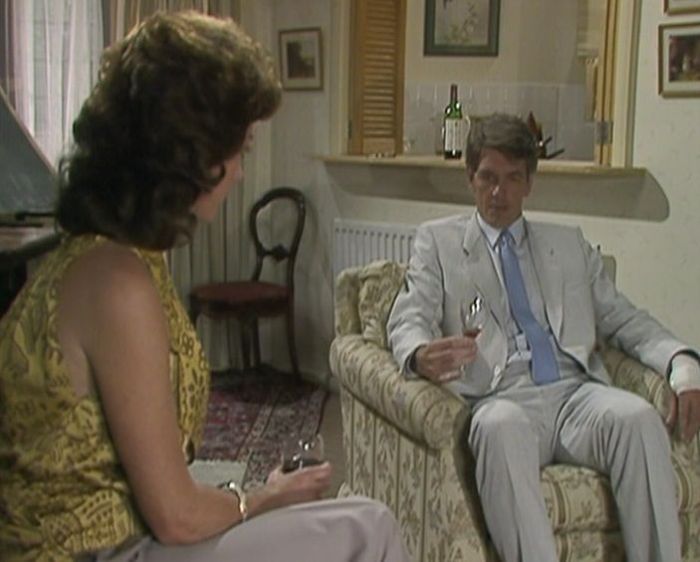


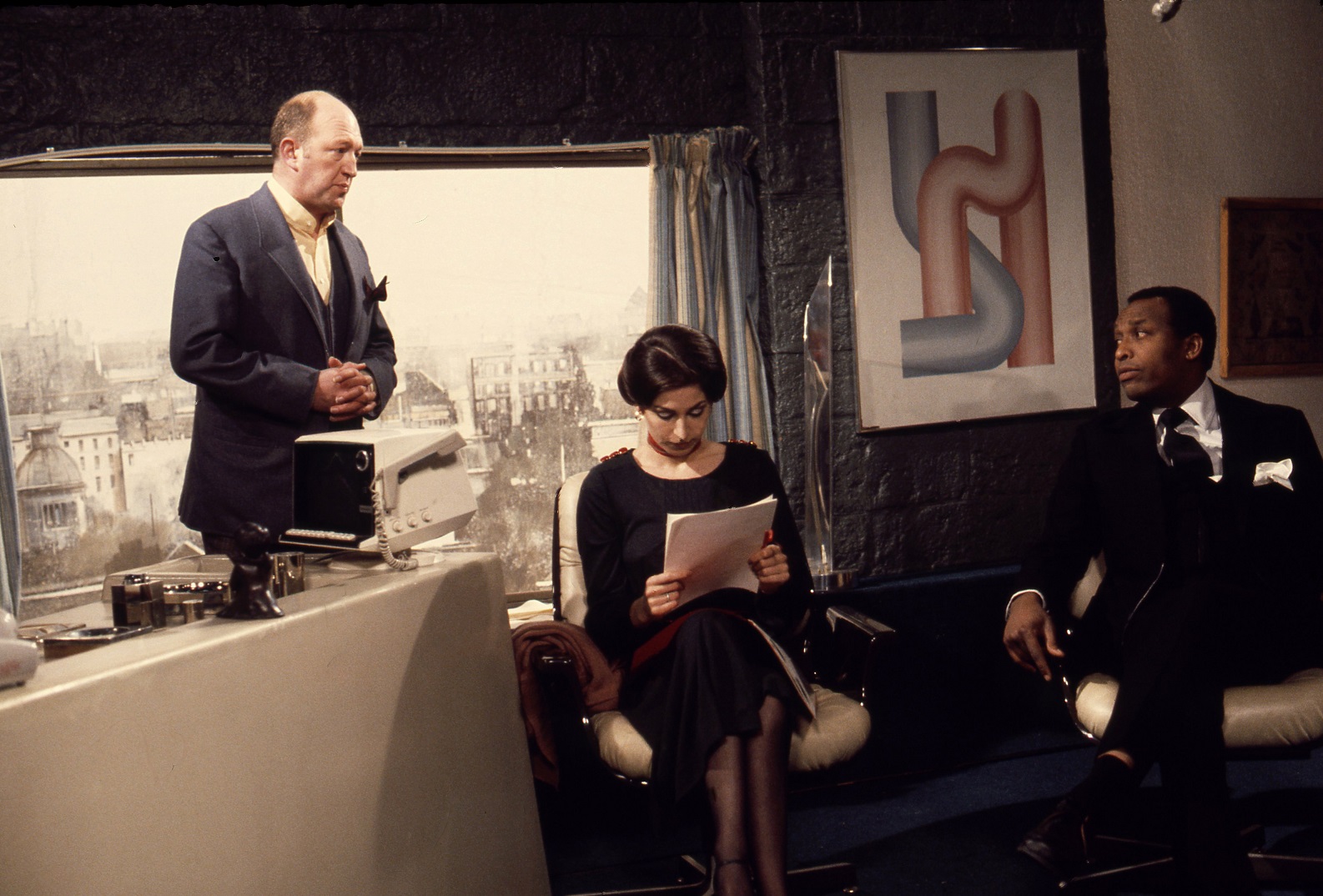
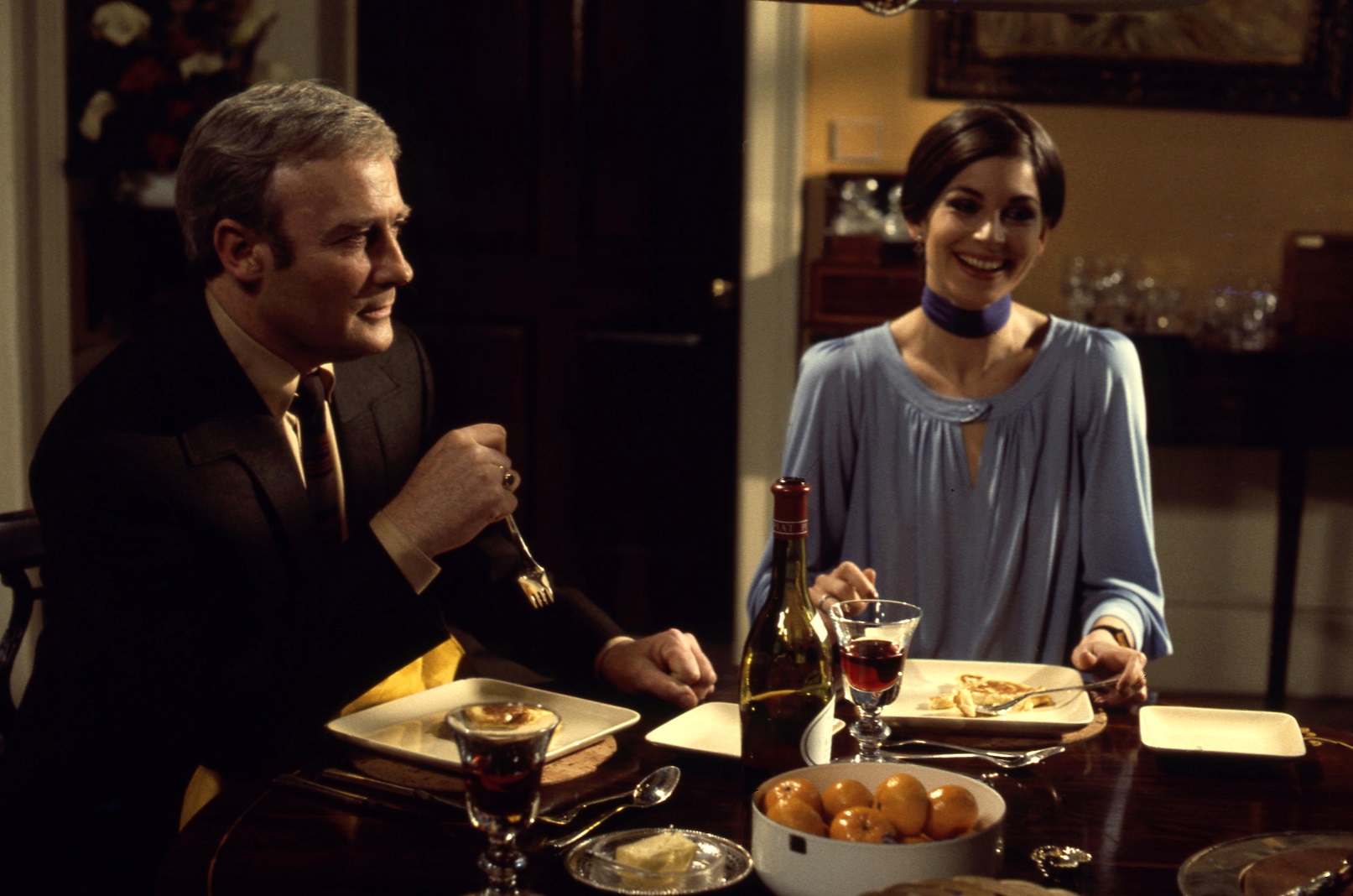
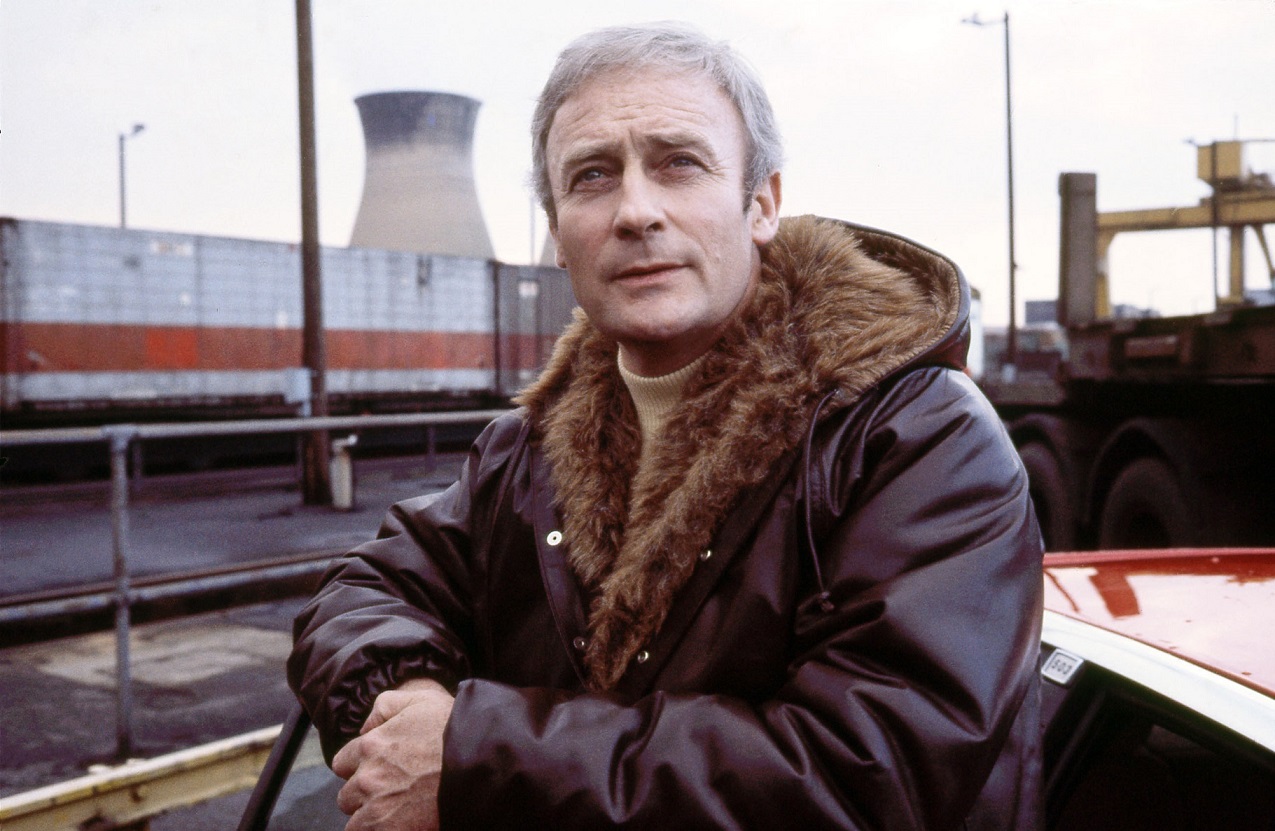
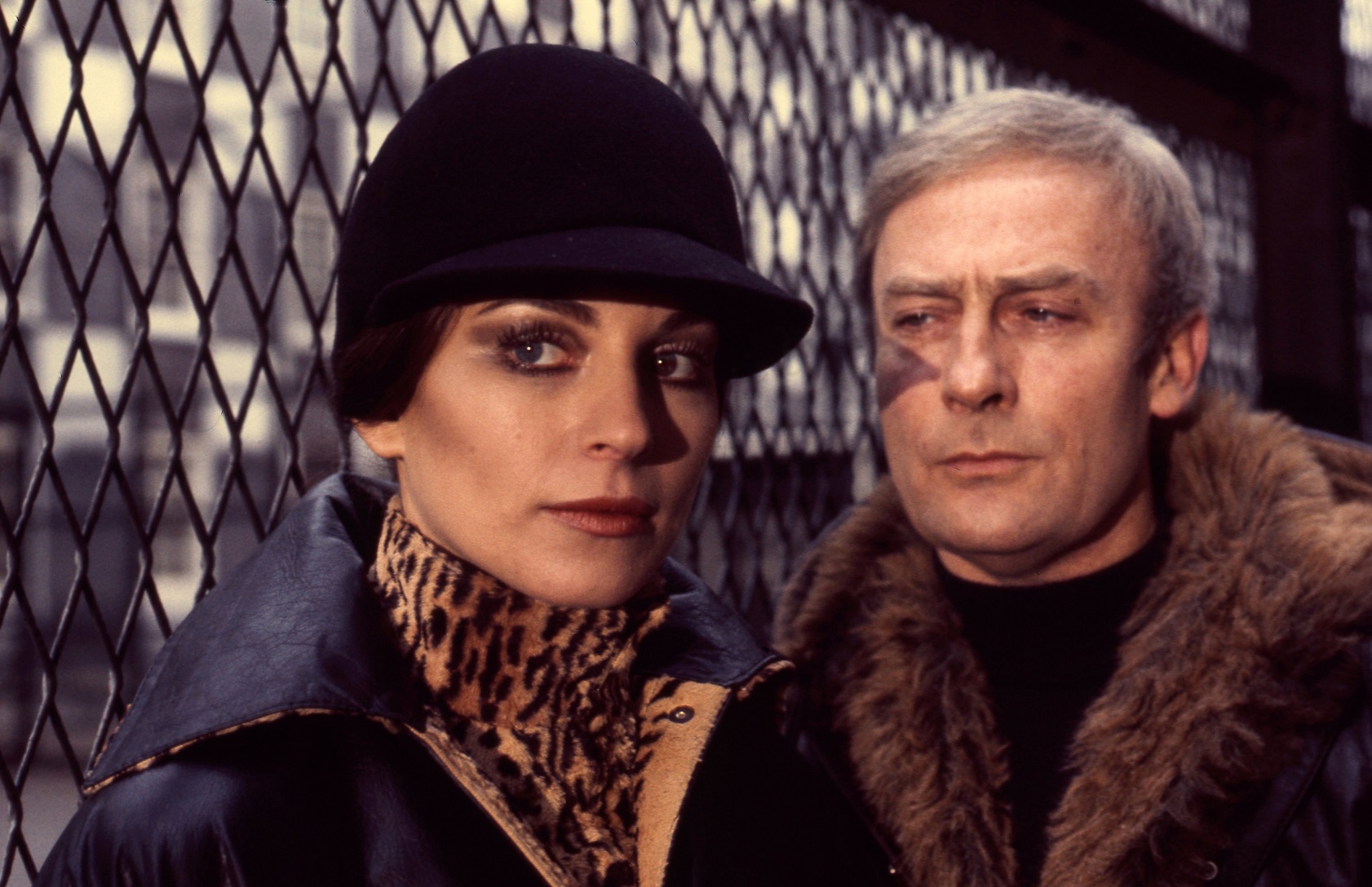
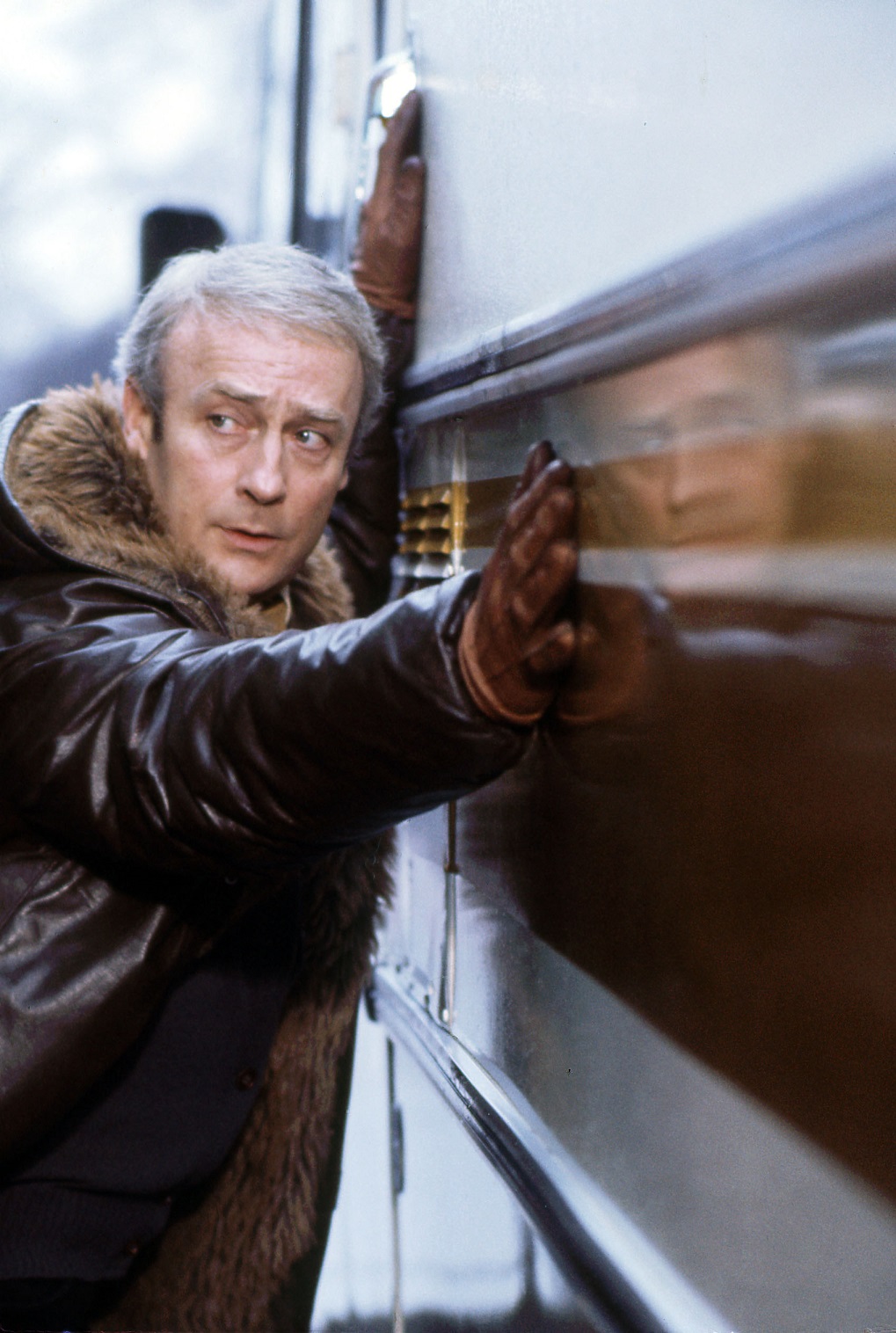
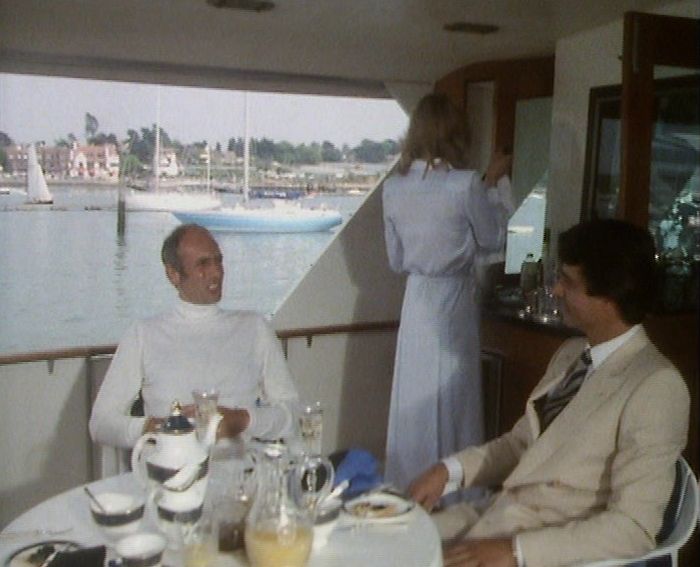



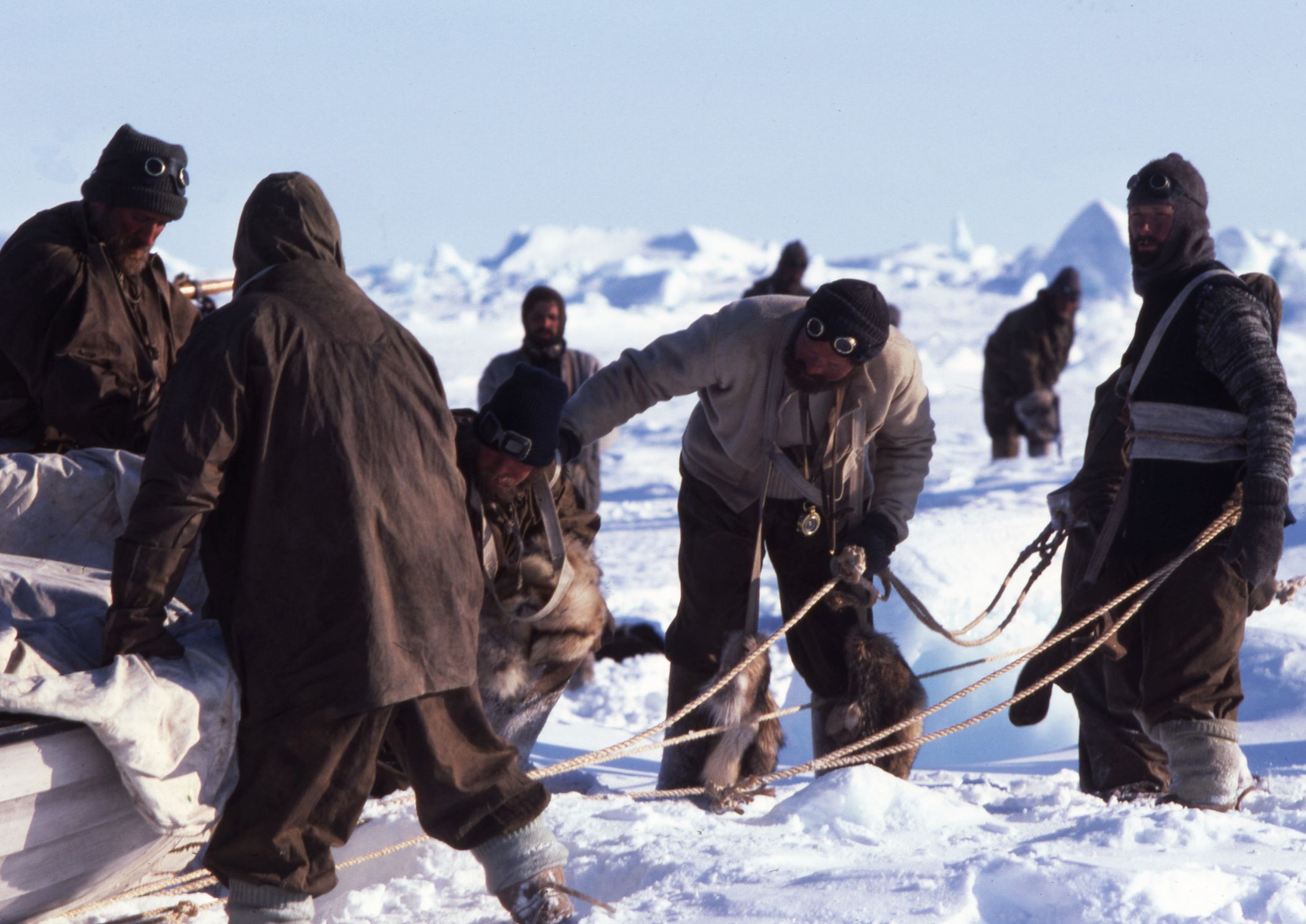
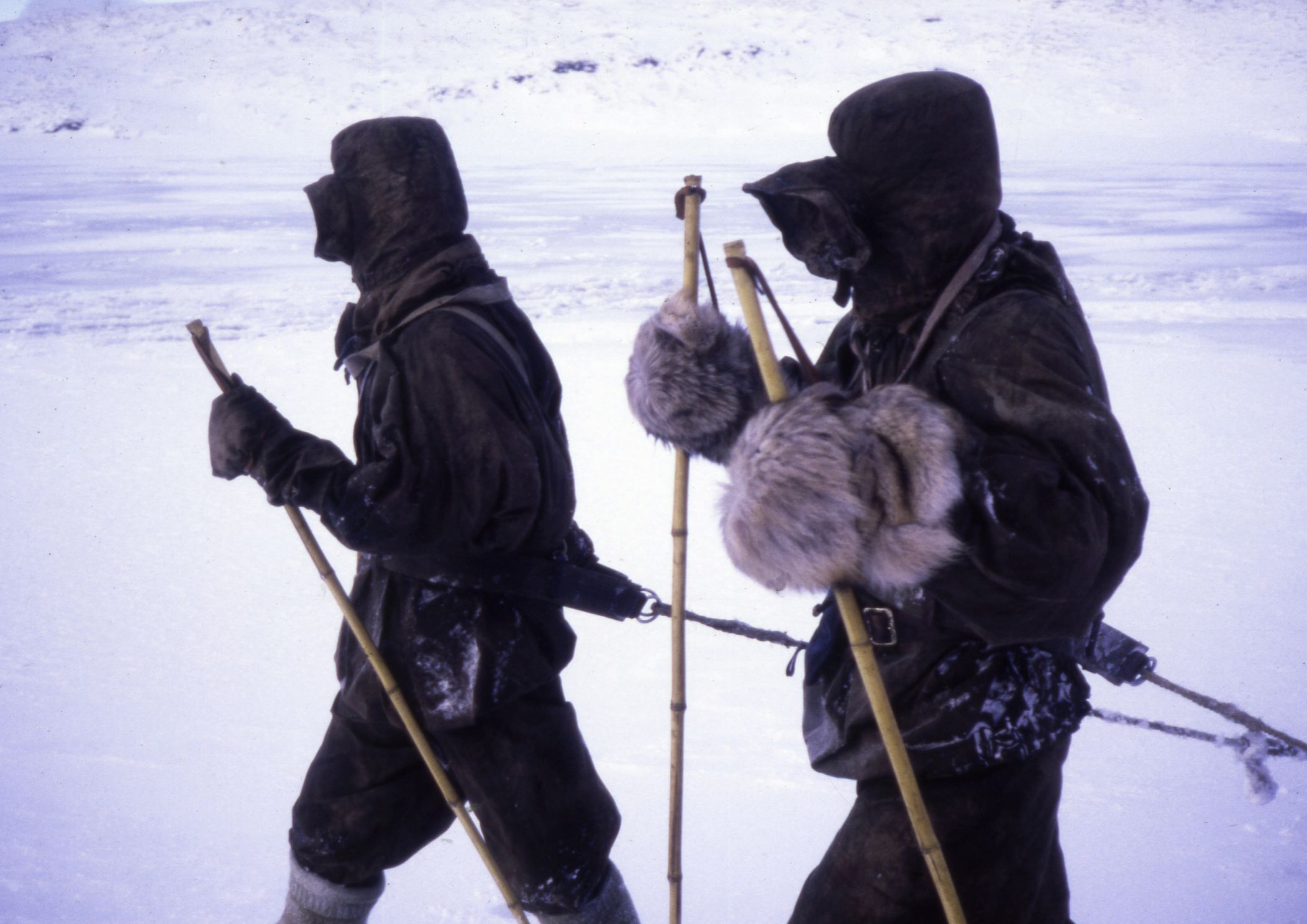
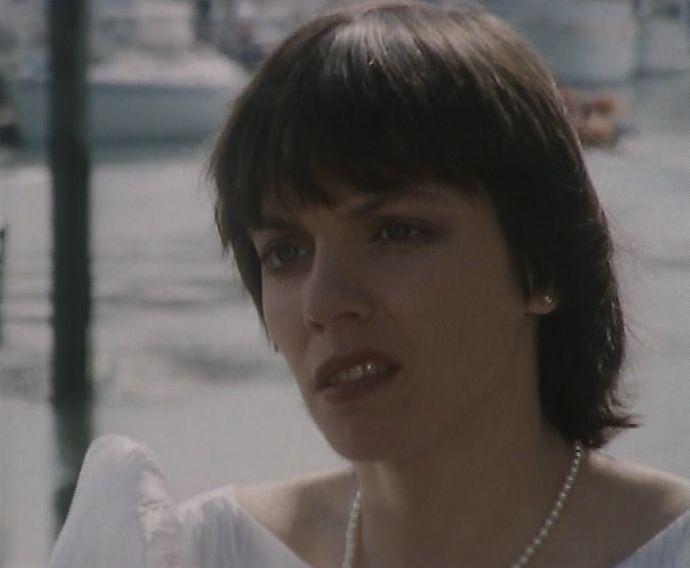
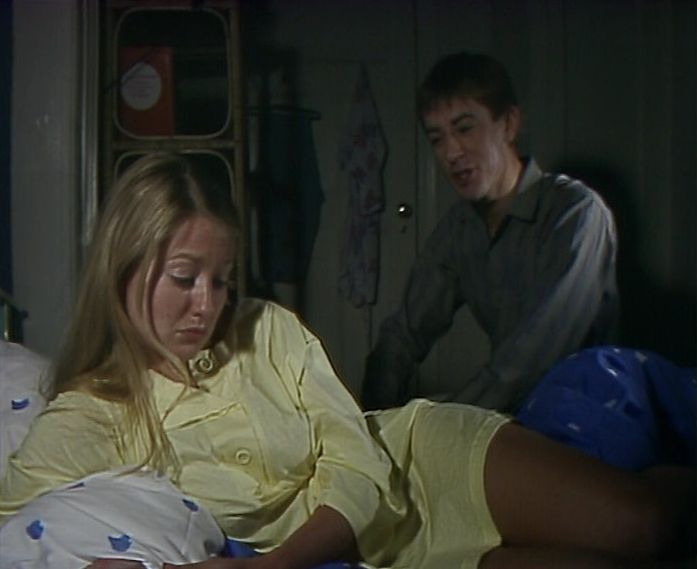


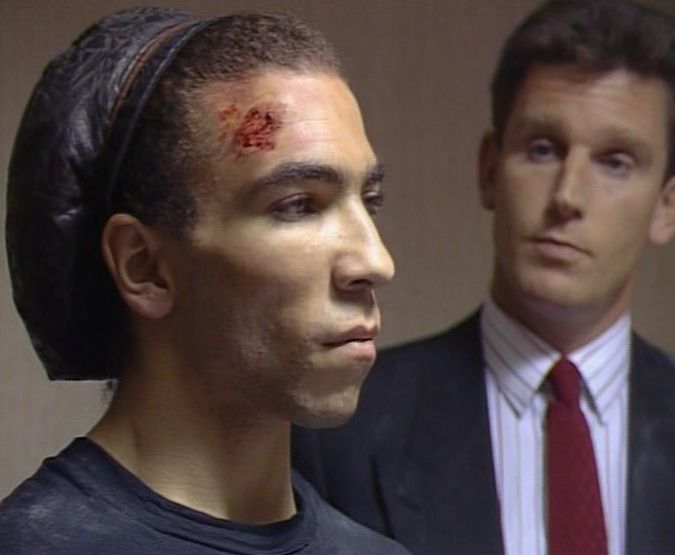
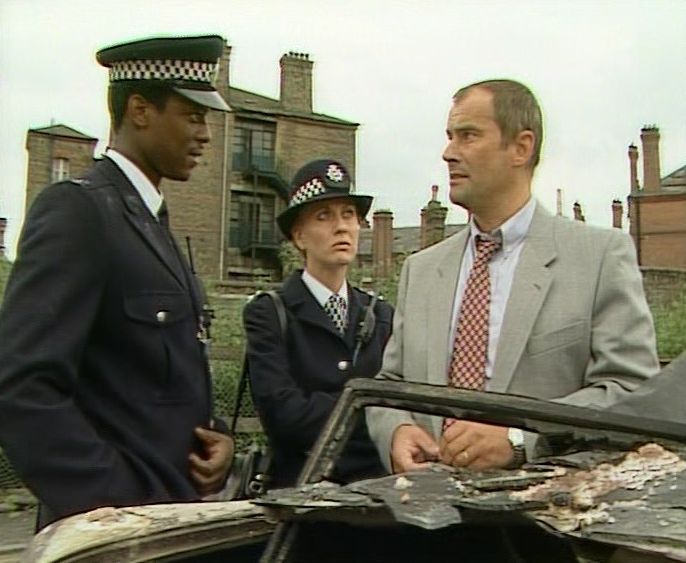
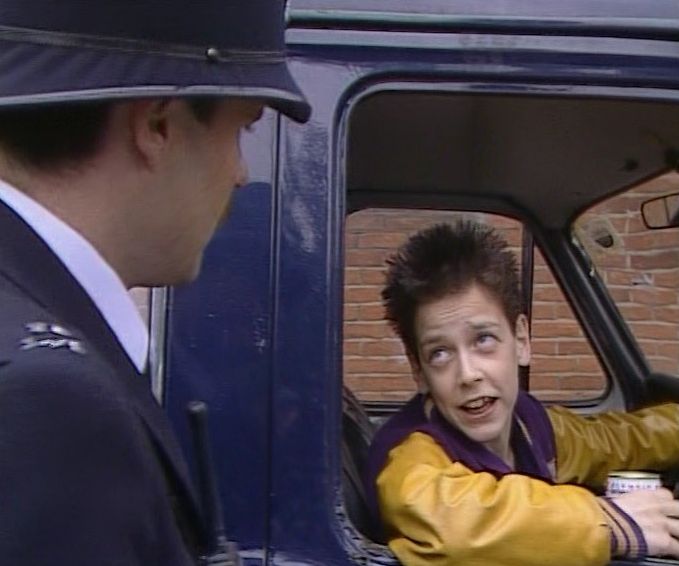
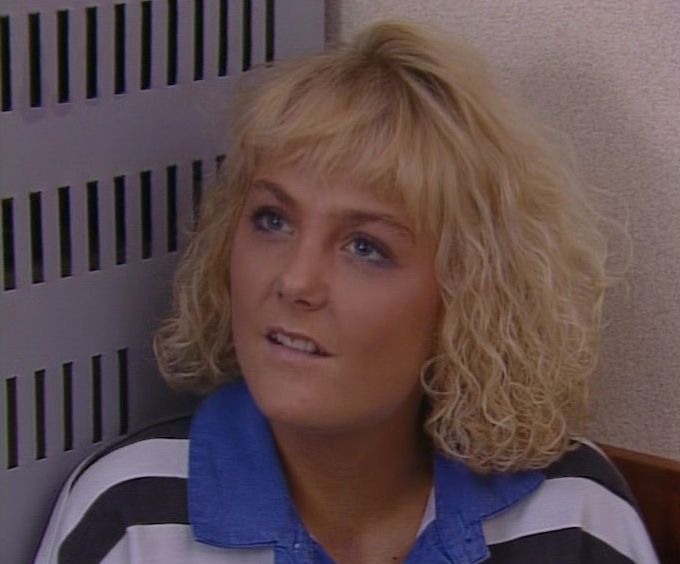
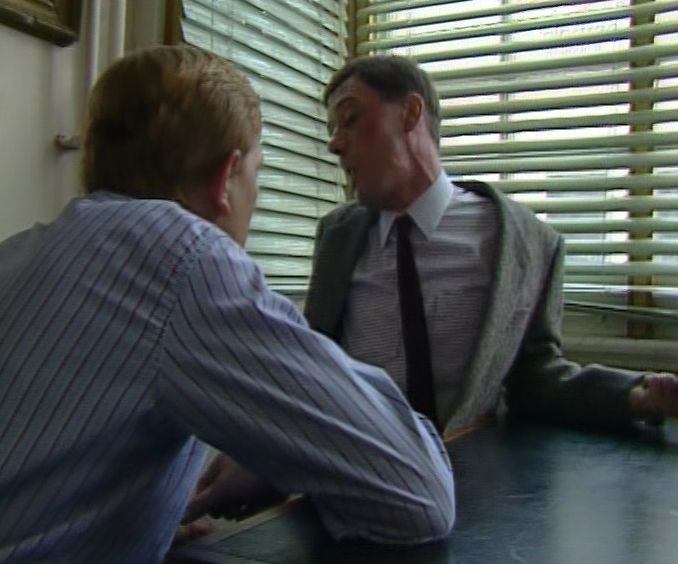
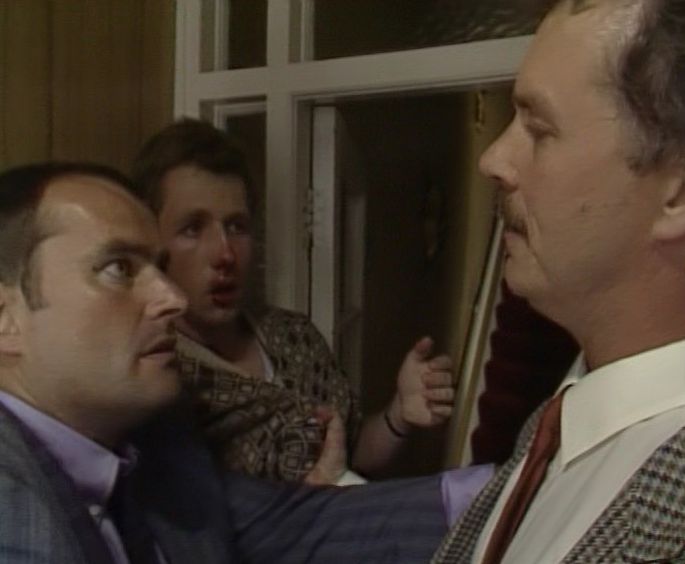
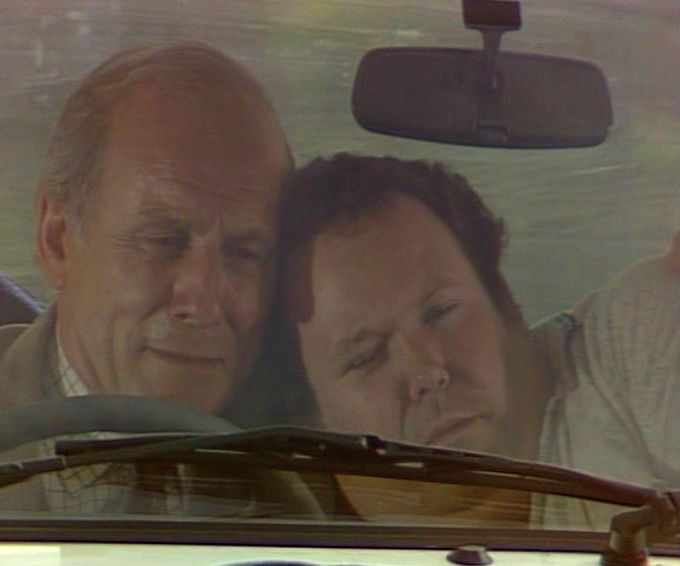
 Archive Television Musings