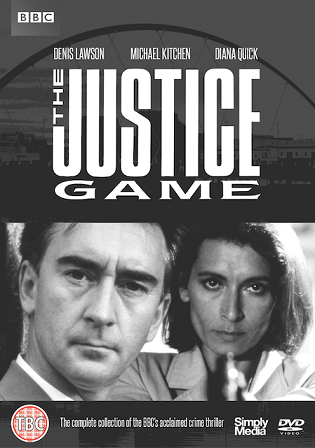
The Justice Game to be released by Simply Media – 10th October 2016

7019

The Justice Game – Series One and Two will be released on the 10th of October by Simply Media.  Review here.

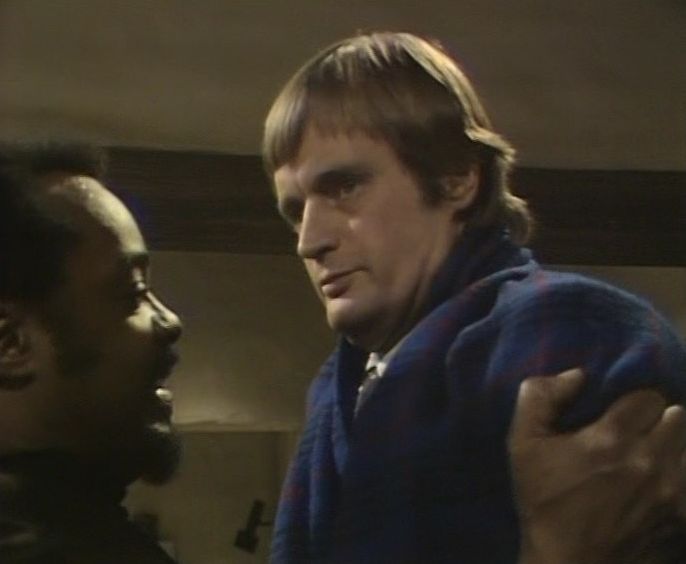
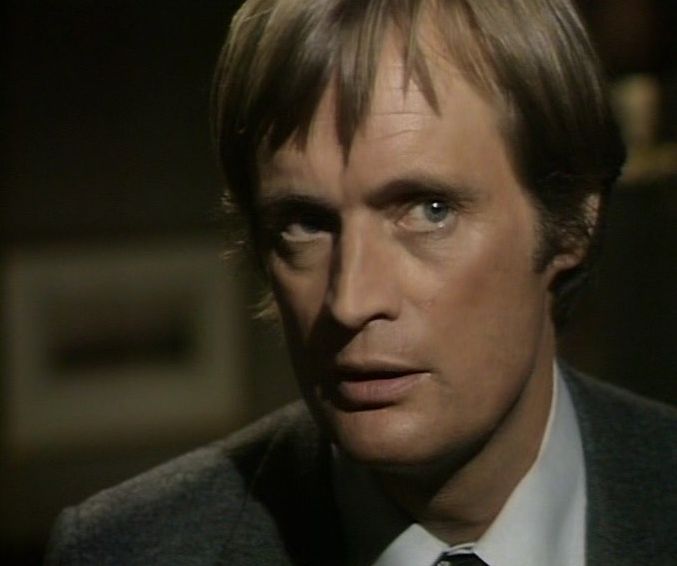
New Tricks star Denis Lawson stars as suave criminal lawyer Dominic Rossi, who exposes corruption in Glasgow and loses his heart in Italy in this gripping miniseries from 1989. After a successful career break in America, Rossi returns to his Glasgow roots. As he investigates the fatal stabbing of an elderly man at a bus stop, and defends a tough ex-soldier accused of a vigilante killing, he untangles a shady web of big business. Digging deeper, all trails lead to a Mr Big called Tim Forsythe (Michael Kitchen – Foyle’s War) – who will stop at nothing to make sure Rossi doesn’t reveal too much.

In series two, Rossi falls in love with the beautiful Francesca (Anita Zagaria – Under the Tuscan Sun) while on holiday in Sorrento, then discovers that many of her friends have been murdered. As he investigates another killing back in Glasgow Francesca shows up, apparently with the Italian murderer in tow. But it turns out she’s hiding a shattering truth from her past.

Lawson sparkles as a smooth operator with a steely sense of justice in this thrilling series alongside an all-star supporting cast including BAFTA winner James Cosmo (Braveheart), Ron Donachie (Game of Thrones), Celia Imrie (Bridget Jones’s Diary), Joss Ackland (The Hunt for Red October) and Diana Quick (Saving Grace).

Directed by BAFTA winner Norman Stone (Shadowlands) and written by John Brown (The Flying Scotsman), The Justice Game: Series 1 and 2 arrives on DVD on 10 October 2016.

Prince Regent to be released by Simply Media – 17th October 2016

164454- Chief Crazy Horse Sleeve.indd

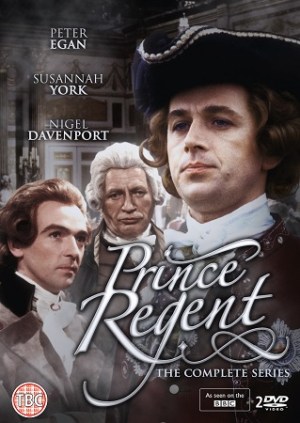
Starring Peter Egan and Susannah York, Prince Regent will be released by Simply Media on the 17th of October 2016.  Review here.

BAFTA winner Peter Egan (Chariots of Fire), Oscar and Primetime Emmy nominee Susannah York (Superman) and Nigel Davenport (Chariots of Fire) star in the BAFTA winning eight-part historical drama, Prince Regent: The Complete Series.

Transmitted by the BBC in 1979, the series depicts the life and times of George IV (1762-1830) from his early days of debauchery, his ascent to the throne as Prince Regent and his reign as King. Covering his famously dissolute lifestyle including his two marriages (one legal, one not), his mistresses, the famous men of his day and the over-indulgence and frustration of waiting for his father George III to die or remain mad; this sumptuous series will be available on DVD from 17 October 2016.

Directed by BAFTA winner Michael Simpson (The Bill) and also featuring Patsy Kensit (Holby City) and Cherie Lunghi (Mary Shelly’s Frankenstein).


The Legend of King Arthur to be released by Simply Media – 10th October 2016

164454- Chief Crazy Horse Sleeve.indd

The Legend of King Arthur will be released by Simply Media on the 10th of October 2016.  Review here.

Andrew Davies’ (House of Cards) sumptuous adaptation of the timeless saga, The Legend of King Arthur, makes its home entertainment debut on 10 October 2016 with the complete 1979 series.

Dark Ages wizard Merlin (Robert Eddison – Indiana Jones), weary of the barbarism around him, creates a new order of enlightenment and justice with a youthful Arthur (Andrew Burt – Emmerdale) at its head. Merlin presents Arthur with the magic sword Excalibur to help him defeat the nobles who oppose his rule. But Arthur must also beware his half-sister Morgan (Maureen O’Brien – Doctor Who), a sorceress who has sworn to kill him to avenge her father’s death.

As Morgan intensifies her campaign, she uses magic to draw Lancelot (David Robb – Downton Abbey) and Guinevere (Felicity Dean – The Whistle Blower) into a passionate affair. But it is the still more traitorous Mordred (Steve Hodson – Break in the Sun) who will fatally halt Arthur’s rule.

Bringing high romance, low treachery and magical adventure via a host of legendary characters and featuring an early appearance by Patsy Kensit (Holby City), this is a fabulous retelling of the gloriously twisting tale.


Little Sir Nicholas to be released by Simply Media – 10th October 2016

6952

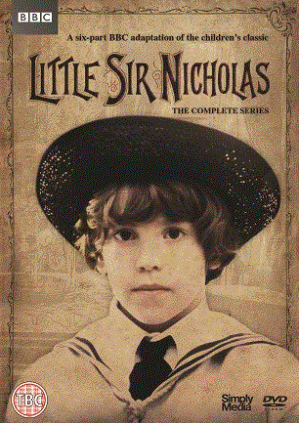
Little Sir Nicholas will be released by Simply Media on the 10th of October 2016.  Review here.

Based on the classic children’s novel by Cecilia Anne Jones, Little Sir Nicholas is a gripping Victorian saga about blood rights, identity and family rivalries. This six-part BBC adaptation co-written by and featuring Oscar winner Julian Fellowes (Downton Abbey), arrives on DVD on 10 October 2016.

It has long been the destiny of the sons of the Tremaine family to serve as officers in the Royal Navy, but this tradition seems doomed when Sir Walter Tremaine, his wife and their four-year-old son Nicholas (Max Beazley – Maigret) are lost at sea in a wild storm. Five years on, Lady Tremaine (Rachel Gurney – Upstairs, Downstairs), still stricken by the loss of her son and grandson, advertises across the country for a distant heir to come forward.

Penniless Londoner Joanna Tremaine (Bernice Stegers – Undercover) is thrilled when her son Gerald (Jonathan Norris) is chosen to inherit the family title and fortune. But just as they settle into a life of luxury, Little Sir Nicholas is found alive and well in a small coastal French village.


Softly Softly: Task Force – Series Two. Simply Media DVD Review

164454- Chief Crazy Horse Sleeve.indd

Series two of Softly Softly: Task Force was broadcast between September 1970 and March 1971.  Whereas series one (discussed here) had sixteen episodes, series two ran for twenty six episodes (an obvious sign that series one had been a success).

Below is a brief episode guide –

Baptism – 16th September 1970
Written by Elwyn Jones. Featuring Ian Hogg

Sunday, Sweet Sunday – 23rd September 1970
Written by Alan Plater. Featuring Christopher Beeney, Windsor Davies and Michael Hawkins

Safe in the Streets? – 30th September 1970
Written by Allan Prior. Featuring Leon Vitali, Vicki Michelle and George Tovey

Good Listener – 7th October 1970
Written by Elwyn Jones. Featuring Jonathan Newth

Time Expired – 14th October 1970
Written by Robert Barr

Lessons – 21st October 1970
Written by Arnold Yarrow. Featuring John Ringham, Glynn Edwards and Sally Thomsett

Without Favour – 28th October 1970
Written by Alan Plater. Featuring Collette O’Neil

Never Hit a Lady – 4th November 1970
Written by Allan Prior.  Featuring Neil McCallum and Richard Beale

Its Ugly Head – 11th November 1970
Written by Elwyn Jones.  Featuring Michael Goodliffe

Who Wants Pride…? – 18th November 1970
Written by Robert Barr. Featuring Jess Conrad and Ray Lonnen

Collation – 25th November 1970
Written by Elwyn Jones

Do Me a Favour – 2nd December 1970
Written by Robert Barr. Featuring Chloe Ashcroft, Victor Maddern and Jon Rollason

Sweet Are the Uses of Adversity – 9th December 1970
Written by Elwyn Jones. Featuring Del Henney

Bearings – 16th December 1970
Written by James Doran

A World Full of Rooms – 23rd December 1970
Written by Allan Prior. Featuring Milton Johns

The Lie Direct – 30th December 1970
Written by Elwyn Jones. Featuring Tony Calvin and Geoffrey Palmer

Ground Level – 6th January 1971
Written by Alan Plater. Featuring Glyn Owen

Company Business – 13th January 1971
Written by John Elliot. Featuring Wendy Gifford

Kick Off – 20th January 1971
Written by Elwyn Jones. Featuring Roddy McMillan and George Pravda

Final Score – 27th January 1971
Written by Elwyn Jones. Featuring Roddy McMillan and George Pravda

Something Big – 3rd February 1971
Written by Robert Barr. Featuring Desmond Llewellyn, John Woodvine and Jeremy Wilkin

Games – 10th February 1971
Written by Arnold Yarrow. Featuring Jean Boht

In the Public Gaze – 17 February 1971
Written by Elwyn Jones. Featuring Gawn Grainger and Reginald Marsh

Held for Questioning – 24th February 1971
Written by Robert Barr. Featuring Denis Quilly and Norman Jones

Black Equals White – 3rd March 1971
Written by Allan Prior. Featuring Angus MacKay

Cash and Carry – 10th March 1971
Written by Elwyn Jones. Featuring Gertan Klauber and Peter Sallis

The regular cast is pretty much unchanged since series one. Stratford Johns continues to dominate as Chief Supt. Barlow, whilst Frank Windsor returns as the straight-talking Det. Sup. Watt.  Norman Bowler (Det. Insp. Hawkins) doesn’t have such a sharply-defined character as either Barlow or Watt, but he’s still a very solid presence.  Walter Gotell, probably best known playing Gogol in the James Bond films, makes the occasional appearance as Chief Constable Arthur Cullen.

David Lloyd Meredith provides a dash of humour as the rather Welsh Sgt. Evans whilst Terence Rigby (always a rather idiosyncratic actor) is, as PC Snow, another actor who’s always worth watching.  PC Snow was distraught at the end of series one after his police-dog Inky was shot and killed, so series two sees him develop his working relationship with Inky’s replacement.  Susan Tebbs, as Det. Con. Donald, remains the show’s sole female regular.  Terrence Hardiman is a new recruit, turning up towards the end of the season as Inspector Armstrong.

As listed in the episode guide above, a host of familiar faces pop up during the course of the twenty six episodes and there’s also some very sharply written scripts, especially those provided by Alan Plater (a Z Cars veteran).  Elwyn Jones (who had created the Softly Softly: Task Force format) was another writer who had racked up numerous credits on Z Cars and Softly Softly and would be just as prolific on Softly Softly: Task Force and the later spin-off, Barlow.  Like Plater, he really understood how the series worked and his episodes, including the series opener and closer, are some of the strongest.

It’s interesting that both SS:TF and Dixon of Dock Green started to produce several all-film episodes at the same. It’s just a pity that these ones – Lessons and Do Me A Favour – look pretty poor (very faded colours on both throughout). Given the age of the material that’s not a surprise, but generally what we have across the seven discs is quite watchable. There’s no particular issues with the VT sequences (apart from the occassional bit of tape damage) but the film inserts on certain stories are rather grubby.

With so many episodes, it’s inevitable that the quality dips from time to time, but generally the level remains pretty consistent throughout the run.  During the next month or so I’ll be posting reviews of every episode, which will enable me to examine them in a little more detail.

Softly: Softly Series Two is released by Simply Media on the 26th of September 2016.  RRP £44.99.

Happy Ever After – Simply Media DVD Review

164454- Chief Crazy Horse Sleeve.indd

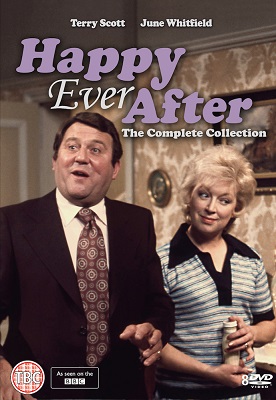
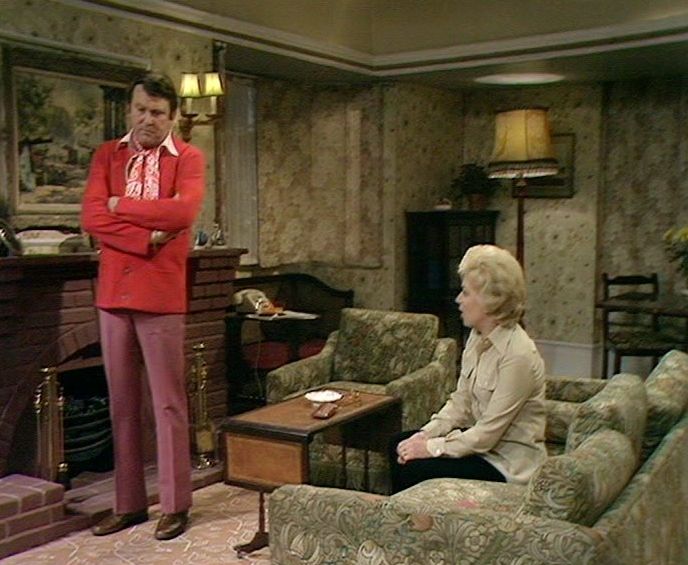
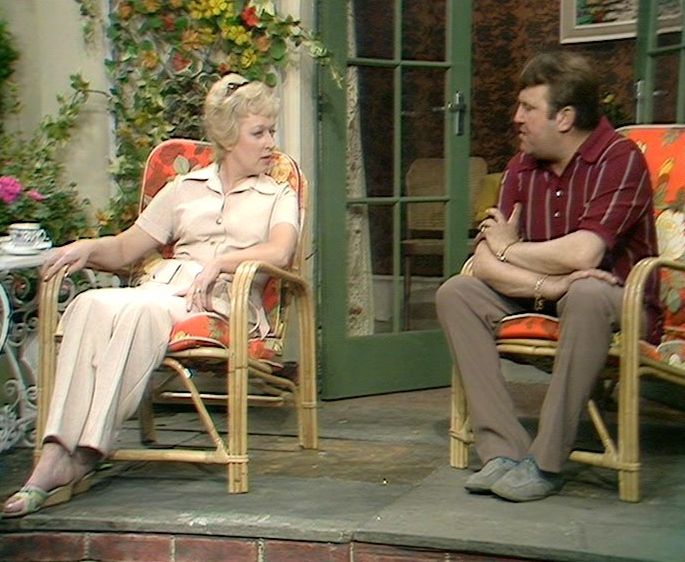
Happy Ever After first surfaced as a one-off Comedy Playhouse episode in May 1974. Like many other series launched via Comedy Playhouse, including Meet the Wife, it would quickly develop into a fully fledged series.

Since series one of Happy Ever After followed just two months later, in July 1974, it’s clear that audience reaction wasn’t a factor – the BBC must have sensed that this was a format that had legs.  And so it proved, Happy Ever After ran for forty one episodes between 1974 and 1979 and then Terry & June (essentially the same series but with a few differences, which we’ll discuss later) chalked up sixty five episodes from 1979 to 1987.

Out of the two series, Terry & June – thanks to repeats and DVD releases – has by far the greatest profile.  But it’s a profile that’s not always been terribly positive.  Regarded by some as old-hat and embarrassing, T&J has often been cited as an example of all that’s bad and lazy about traditional sitcoms.  An over-reliance on unlikely occurrences and remarkable coincidences (later wonderfully parodied in Chance in a Million) and Terry Scott’s mugging to camera are some of the suggested reasons.  But whilst T&J did run out of steam, it also had more than its fair share of great comedy moments – as did Happy Ever After.

Created by John Chapman and Eric Merriman, Happy Ever After’s format is a simple one. Terry and June Fletcher are a middle-aged, happily married couple who have recently seen their grown-up children, Frank, Susan and Debbie, leave home.  But their hopes for a quiet life spent in each other’s company are rudely shattered when cranky Aunt Lucy (Beryl Cooke) and her mynah bird come to stay.

The format of the series would remain fairly constant.  Terry would hit upon a brilliant idea or become embroiled in events which would spiral out of his control, June would remain on the side-lines – ever patient – whilst Aunt Lucy would chip in with the odd comment.  When the series became Terry & June it carried on pretty much as before (except that Aunt Lucy had been written out).

The other change was that Terry and June’s surname was Fletcher in Happy Ever After but had become Medford in Terry & June.  This was because series creator John Chapman felt that the show had run its course by 1979.  The BBC disagreed, so a change of surname was enough to ensure that Chapman couldn’t claim the new series featured his characters, even if things carried on pretty much as before.

Although it’s difficult not to see both series as one entity, there’s a slightly different tone to Happy Ever After, especially to begin with.  It just feels a little bit more sharper (possibly not surprising since any format will eventually begin to lose its sparkle over the years) and the plots are tighter.  The presence of Aunt Lucy is also a major plus (the absence of a similar character in T&J was a shame).

happy-01

But whilst the writing is important, Happy Ever After stands or falls on the performances of the two leads. Terry Scott (1927 – 1994) had been a television star since the 1950’s, starting with Scott Free in 1957.  More success on the small screen would follow in the 1960’s – teaming up with Hugh Lloyd in Hugh and I and the bizarre-sounding (and sadly wiped) Gnomes of Dulwich.  Another series – Scott On … – would air between 1964 and 1974 (running to twenty four episodes).  He also turned up in a number of films, including several Carry Ons.

June Whitfield (b. 1925) is, like Scott, a British comedy legend, and her longevity has only helped to increase her stature.  She began as a supporting player, appearing opposite Peter Sellers in The Idiot Weekly, Price 2d, Jimmy Edwards in The Many Faces of Jim and More Faces of Jim as well as Tony Hancock (most notably in The Blood Donor).  She first appeared with Terry Scott in Scott On … and like Scott would make a few appearances in the Carry On series (although they didn’t appear in the same films).  During the last few decades she’s become familiar to several new generations thanks to Absolutely Fabulous.

The pilot shows Terry and June adjusting to home life now that their children have gone.  Terry is remarkably boorish, pouring June a gin and reminding her that it always used to get her going in the old days. June comments on how coarse he is and on this early evidence they seem a very mismatched pair.

Terry is a bundle of nervous energy (incapable of remaining quiet for a minute) whilst June is content to just relax, buried in a good book.  There’s an unspoken feeling that now the house is theirs again they might struggle to restablish their relationship.  That they’ve not been paying each other a great deal of attention is made plain after Terry is amazed to discover that June’s had a pair of glasses for the last two years – he admits he hasn’t really looked at her for a long time.

This moment, along with June’s tearful regret that the chicks have flown the nest, gives the pilot a slightly wistful air, although Terry’s hyperactive personality – a hamsfisted attempt to do some DIY for example – ensures that the mood doesn’t stay reflective for long.  When the demanding Aunt Lucy turns up with bundles of possessions, poor Terry sees his newly-won freedom fast disappearing …

The first episode of Happy Ever After proper sees Terry shocked to learn that June hasn’t been a Conservative like him during their married life (instead she’s always voted Liberal).  This is a perfect opportunity for Terry Scott to deliver some of his trademark overreacting, but when June tells him she’s considering a short break by herself, it ties back to the suggestion in the pilot that the two of them may be fundamentally incompatible.  Terry then suggests she writes a list of his faults, which she does with great glee!  Later they decide to go on a second honeymoon, which (as might be expected) doesn’t go to plan.  It’s good to see some well-known actors lurking in the hotel, such as Hammer Films stalwart Michael Ripper and radio’s original Dick Barton, Noel Johnson.

Containing the Comedy Playhouse pilot, five series and three specials (two Christmas specials and the final one-off from April 1979) this seven disc set offers a generous helping of 1970’s sitcom goodness.  Classic episodes include the series two effort Terry in Court. Returning home after a business trip, Terry’s more than a little upset to learn that their car has had an altercation with the local dustcart. June insists it wasn’t her fault and after learning that the Council refuse to admit liability, Terry decides to sue them. The trouble really starts when Terry learns that he can represent himself and so appears in court complete with a wig and gown! Scott is firing on all his comic cylinders, helped no end by a very dead-pan performance by Basil Dingham as the judge.

Another favourite is Mistaken Identikit. An identikit picture of a bag snatcher who preys on elderly ladies (giving him the nickname of the “granny grabber”) is broadcast on televison and featured in all the newspapers. And wouldn’t you know it, he looks just like Terry! Robert Gillespie pops up as a phelgmatic desk sergeant and the always-watchable Josephine Tewson also makes a brief appearance.

The Music Went Around & Around is a notable episode, as it was John Kane’s first script for the series.  Kane would only pen a couple of episodes for Happy Ever After, but he’d go on to write the bulk of Terry & June (notching up more than forty episodes). In this one, John Quayle and Janine Duvitski are both wonderful as Ralph and Cynthia, the dinner guests from hell. Terry later attempts to replace one of his classic records from the 1940’s – The Hut Sut Song. Julian Orchard, as the harrased record shop proprietor, is another first-rate guest performer, as is Damaris Hayman (who plays Miss Sneed, an assistant at the record shop). Amazingly, she’s heard of this obscure song and it’s a comic treat when she and Terry launch into a spirited performance of The Hut Sut Song.

Unashamedly middle-of-the-road fare, Happy Ever After has aged very well.  This is partly because of the contrasting comic talents of Terry Scott and June Whitfield, but the scripts are also pretty strong and it’s always nice to see familiar faces popping up in guest roles.

Happy Ever After is released by Simply Media on the 26th of September 2016.  RRP £44.99.

happy-02

Somewhere at Sea/Back at Sea/All at Sea – Simply Media DVD Review

164454- Chief Crazy Horse Sleeve.indd

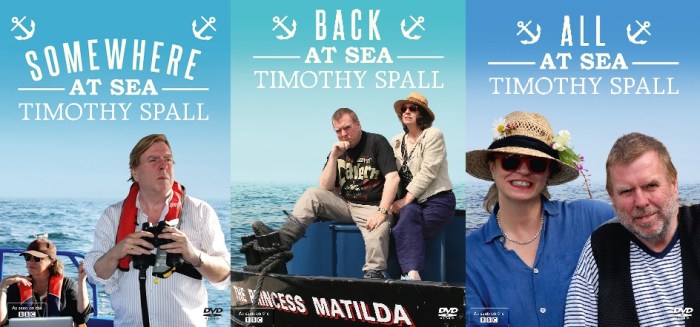
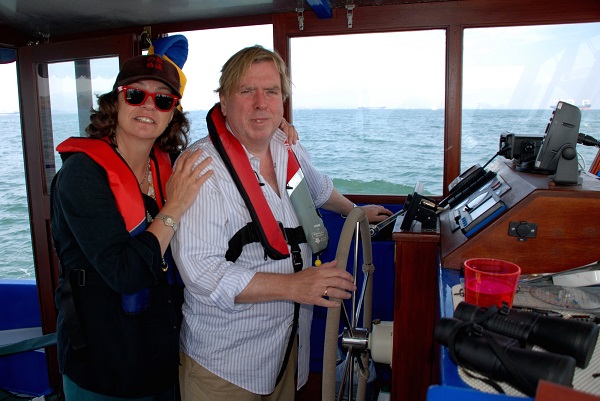
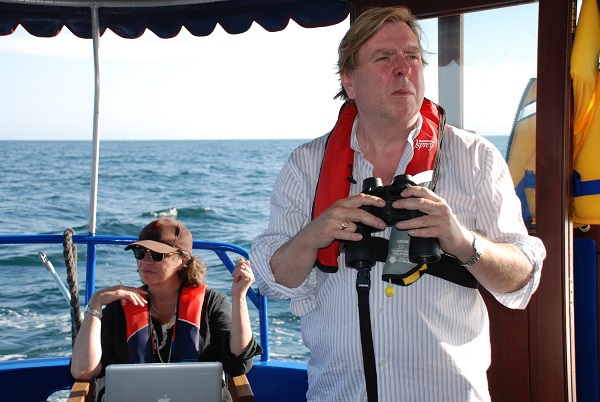
This trilogy of programmes – Somewhere at Sea/Back at Sea/All at Sea – charts the leisurely journey of Timothy Spall and his wife Shane as they take their 50 foot Dutch barge, the Princess Matilda, on a trip around the British coast.

Broadcast between 2010 and 2012, it’s a treat from start to finish.  The gorgeous camerawork is a major plus point, but a large part of the series’ appeal is down to Spall and Shane.  Gleefully admitting right at the start that he’s never had a sailing lesson in his life (everything he’s learnt has come from books) he’s a genial enthusiast who effortlessly draws the viewer in.

The shows are the antithesis of travel programmes such as Around the World in 80 Days.  There we saw Michael Palin racing against the clock, whereas here there are no time restraints at all.  And if you think that three years is a long time to travel around the British isles, they’d actually started out on this journey some four years before the cameras started rolling!

Despite the fact that they have a camera crew in tow, the programmes have the feeling of being completely unplanned.  They know their destination, but it’s the unexpected obstacles they encounter along the way which makes for entertaining television.

This is evident from the opening episode of Somewhere at Sea, as the Princess Matilda makes its way to Falmouth.  Spall is looking for a berth for six weeks, as he needs to pop off to make a film, but after deciding not to book ahead he’s disappointed to find there’s no room at the inn.  They eventually find somewhere to haul anchor, but there are further problems to come.

After completing his film, Spall is keen to set off and navigate around the Lizard (a dangerous stretch of water which isn’t for the faint-hearted).  But poor weather scuppers his plans and if things don’t improve he and Shane face the prospect of having to sit out the winter in Cornwall.

As the weather’s no good for sailing they decide to explore the local landscape.  An impressive country church catches his eye and he takes the opportunity to quietly meditate.  Shane explains that following his illness (Spall was diagnosed with leukaemia in 1996 but has since been in remission) he’s always had an affinity with churches.  It’s a moment that could easily come over as sentimental and mawkish, but Spall’s directness and honesty shines through.

6889

The second episode sees them finally make their way around the Lizard.  It was clear that the thought of navigating such a challenging stretch of water was a concern for Spall, but a pep talk from the local lifeboat crew buoyed him up (if you’ll forgive the pun).  His boyish enthusiasm as he takes the wheel of their lifeboat (which cost two million pounds, funded entirely from donations) is rather delightful.

Things take a slight downward turn in the final episode of the first series as a number of problems take their toll.  First their anchor breaks and then Spall, making his way into Padstow harbour, sinks a marker buoy. Shane is far from impressed and makes this plain to her husband, although the pair soon make up.

Back at Sea opens with the Princess Matilda docked at Penarth, Wales. It’s been there for the winter, but now that spring’s arrived the Princess Matilda is able to set sail once more. Spall’s rather anxious though – the barge has been in dock for six months and the prospect of tackling the tricky Irish Sea fills him with a certain amount of dread. Once again this provides the viewer with a good example of Spall’s character. Many actors would find it impossible not to continue acting when the cameras were on them (playing the part of the stoic captain) but Spall’s fears and vulnerabilities are always on view.

The second episode of series two sees them visit Liverpool and then move onto Lancashire. But things again don’t quite go to plan. Spall drifts off course, which means he misses the high tide and is therefore unable to reach the safety of Glasson port. So they’re forced to drop anchor out at sea overnight, which Spall says was “a mixture of fun and horror”. But a trip the next day to buy some kippers cheers him up!

The remainder of the second series sees the Princess Matilda visit the Isle of Man (where they meet up with their son Rafe), Belfast and then deep into Scotland. By the time Back at Sea draws to a close, Spall and Shane are slightly more than halfway through their round-Britain trip, which sets things up the third series, All at Sea, nicely.

All at Sea opens with the Princess Matilda battling the North Sea around the coast of Scotland. It’s by far the roughest weather they’ve encountered so far, but they eventually reach their destination, Stonehaven harbour. They move on almost straightaway though and Spall confesses that the ever-changing weather is “doing my head in”. The stresses of the North Sea are clearly taking their toll.

But their greatest problems are not to be found in the bitter weather off the coast of Scotland, but rather closer to home. Heading to Chatham Marina in Kent, Spall had to call the Coastguard for assistance after losing his way. An RNLI lifeboat was dispatched and they were able to guide the Princess Matilda to her destination. Prior to their arrival we see Spall getting more and more frayed around the edges, which certainly provides a dramatic end to the series.

Also during All at Sea, Spall visits Newcastle-upon-Tyne, a city that effectively treated him like one of their own after the success of Auf Wiedersehen Pet. Melanie Hill, who played Hazel in the show, pops aboard for a tour around the docks.

With oodles of breathtaking scenary, Spall’s self deprecating humour and a soundtrack of classic 1930’s and 1940’s tunes, all three series are perfect viewing for the armchair mariner.

Somewhere at Sea was released on the 29th of August 2016.  Back at Sea will be released on the 3rd of October 2016.  All at Sea will be released on the 7th of November.  All three titles cost £12.99 each.

6892

Sapphire & Steel. Assignment One – Episode Six

sapphire 06.jpg

The slightly confusing nature of Rob’s fate remains unresolved at the start of the final episode.  He can hear Sapphire calling out to him, but it appears that he still remains hidden from view.  The entity pretending to be his father lures him down to the cellar, promising that he’ll be reunited with his mother.

Mrs Jardine (Felicity Harrison) appears to be there, but she’s facing the wall.  Her immobility and the time it takes her to turn around are both strong signifiers that something is very wrong.  And so it turns out to be – and the sight of her face (glowing eyes and waxy teeth) probably would have been responsible for causing nightmares amongst some of the younger viewers.

Rob is now stranded in the past – back in the 1700’s when the house was first being constructed.  He’s linked to the others in the present, and Lead attempts to keep his spirits up (as well as ensuring that he doesn’t fall foul of the dangers of time) with a rousing version of What Shall We Do With A Drunken Sailor?  There’s a lovely juxtaposition between the full-blooded singing of Lead and the cool, calm deliberations of Sapphire and Steel as they ponder their next move.

Back in the 1700’s, Rob observes two soldiers carrying an open coffin – inside it is Helen.  Since she’s alive and well with the others in the present day this is a slightly inexplicable moment, albeit a chilling one.

Steel has come up with a solution, but they need to lure time down to the cellar.  A nursery rhyme read by a child will do the trick, and since Rob isn’t here there’s only one choice.  Sapphire puts up rather half-hearted resistance, but Steel easily gets his way.  Using Helen will clearly put her into danger, but it’s the only way – and this is a moment which serves as an early indicator that Steel will use anyone or anything in order to achieve his aims.

Helen’s mother – viewed as a shadow on the wall – attempt to call her back upstairs (another simple, but nicely produced, effect).  Helen pays no attention to it and slowly time is led into Steel’s trap.  Although it’s a pity that the final act – Lead crushing a stone which is obviously polystyrene – isn’t terribly convincing, but that’s only a minor niggle.

This first story ends in complete success as Rob and Helen’s parents are returned safe and well.  But not all of Sapphire and Steel’s adventures end so happily …..

McCallum: The Complete Collection – Simply Media DVD Review

164454- Chief Crazy Horse Sleeve.indd

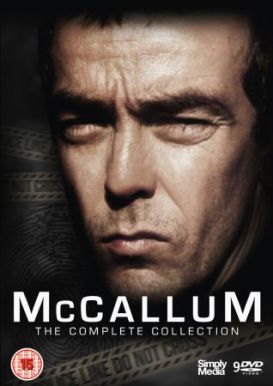
Running between 1995 and 1998, McCallum was a series that seemed to tap into various television drama trends of the period. Like Cracker it had an unorthodox lead, who (similar to Tony Clark in Between the Lines) was something of a hit with the ladies.  And like both those series, McCallum had an uncompromising, naturalistic feel.

Iain McCallum (John Hannah) is a brilliant forensic pathologist, albeit one with an independent streak.  It probably won’t come as a great shock to learn that he tends to butt heads with some of his colleagues on the police-force, especially the brusque DI Bracken (Gerard Murphy).  McCallum goes his own way and more often than not solves the crime all by himself (with the police trailing in his wake).

If this is something of a cliché, then so is the fact that McCallum often gets personally involved.  The pilot episode The Key to My Heart provides us with an excellent example of this.  After enjoying a night of wild passion with Claire Best (Cathryn Harrison), a police officer working with him on his latest case, McCallum is shocked the next day to be called to the scene of her murder.

With this sort of plot-twist you can either throw your hands up and decide that it’s all too unbelievable, or just decide to go with the flow.  As McCallum continues to keep quiet about his intimate link to the victim, Bracken starts to sniff around. There’s a nice feeling of tension as McCallum becomes more and more frantic as Bracken starts to apply the pressure.

Despite having a long-term girlfriend, Joanna Sparks (Suzanne Hamilton), McCallum seems to be a man who finds it impossible to resist any female that crosses his path.  When he meets up with Joanna the day after his liaison with Claire, he’s not able to bring himself to admit that he’s slept with her (whilst anxious to learn if Joanna has been with anyone during his absence).  Hamilton, who’d starred alongside John Hurt in 1984 and had been a regular in the 1993/94 series of Casualty, does her best, but unfortunately it’s rather a nothing role.

The morgue is packed with a number of characters, like Bobby Sykes (Richard O’Callaghan), Fuzzy Brightons (the always watchable James Saxon), head pathologist Sir Paddy Penfold (Richard Moore) and Dr. Angela Maloney (Zara Turner).  Angela, as an obvious romantic interest for our lead, quickly becomes the second most important character in the series.  City of the Dead, the first episode of series two sees her cause the death of an elderly man after she knocks him over in her car.  But as might be expected, nothing’s ever quite as straightforward as it seems …..

The first episode of series one, Sacrifice, sees Sir Paddy start to feel the strain (he’s turning up late for autopsies and when he does arrive he tends to make a hash of things). Given there was no hint of this in The Key to My Heart, it feels like a rather sudden plot-twist that comes out of nowhere.

Sir Paddy’s unreliability does allow for some decent character development for the other members of the team though. It had been established in the pilot that Angela had only recently moved to London and was feeling somewhat swamped by her responsibilities. She’s not an inexperienced pathologist, but Bobby is on hand to dish out some nuggets of wisdom (he tells her to hold her scalpel like a tulip).

These pleasantries are put on hold when McCallum and Angela are called to investigate the death of a local baker. No prizes for guessing that he and his family are known to McCallum. Jane Lapotaire adds a touch of class as the baker’s widow whilst Angela begins a relationship with a philandering Doctor (you just know this is going to end badly).

As the series wears on, McCallum begins to get a little frayed around the edges – this isn’t too surprising as he’s often placed right in the thick of the action.  In Dead but Still Breathing, he finds himself the target of a deranged killer whilst in Dead Man’s Fingers, McCallum is shocked to discover that a murdered woman claimed her unborn baby was his.

The final episode, Beyond Good and Evil, was rather unexpected.  Both McCallum and Angela had left, leaving a new man, Dan Gallagher (Nathaniel Parker), in charge.  Gallagher, just like McCallum before him, doesn’t have a quiet life (he’s being stalked by a deranged serial-killer).  Again, suspension of disbelief is required, but it proved to be a gripping finale to the series.  I’m not sure whether there was any intention to carry on with Parker, but maybe it was felt that the series had run its course.  I think it was the right decision.

McCallum is a nine disc set (original transmission dates in brackets) –

Disc One – The Key To My Heart (pilot, 28th December 1995)
Disc Two – Sacrifice (13th January 1997)
Disc Three – Touch (27th January 1997)
Disc Four – Dead but Still Breathing (10th February 1997)
Disc Five – City of the Dead (6th January 1998)
Disc Six – Harvest (13th January 1998)
Disc Seven – Dead Man’s Fingers (3rd February 1998)
Disc Eight – Running on Empty (17th February 1998)
Disc Nine – Beyond Good and Evil (7th December 1998)

The pilot runs for 75 minutes whilst the remainder are all 100 minutes approx.  Notwithstanding some gripes about the plotting, McCallum is an excellent series which still holds up well, some twenty years on.  With a strong cast of regulars and a number of twisty, atmospheric tales, it’s well worth a look.

McCallum was released by Simply Media on the 5th of September 2016.  RRP £49.99.

Sapphire & Steel. Assignment One – Episode Five

sapphire-05

The danger is over – for now – but this news doesn’t please Steel.  He’s brusque and abrupt with everyone, especially Sapphire and Helen.  It takes a few patient words from Sapphire before he realises that he needs to unbend a little, and as he exits the kitchen he has a smile on his face.

Given how tightly wound Steel normally is, it’s very rare to see him smile.  It hints that there is a more (for want of a better word) human presence lurking underneath his cold, business-like exterior.  It would appear that he rarely feels comfortable in showing his emotions, possibly because he feels they are a weakness.  Sapphire is the complete opposite and therefore finds it easy to connect with Rob and Helen.  It’s an old storytelling cliché, but they are the two sides of the same coin.

With a six-part serial like this, there’s always the danger that the middle episodes will sag a little.  This probably would have been a particular concern here, because of the single location and limited cast.  So the introduction of Lead in episode four helped to refresh the narrative and another character appears in episode five to serve a similar function.

Rob’s father, Mr Jardine (John Golightly), suddenly appears out of nowhere.  The observant viewer will quickly deduce that this is simply time playing more tricks (like the voice that appeared to be Rob’s mother earlier in the serial, but wasn’t).  This once again poses questions – we’ve seen that time was able to manifest itself after both Helen and Rob were forced to recite nursery rhymes against their will, but what was the trigger here?  Was it simply due to Rob having a subconscious desire to see his father again, which time was somehow able to use?

The ersatz Mr Jardine is able to convince Rob that Sapphire and Steel are his enemies and that he and his mother have been hiding from them in the house all this time.  After all he’s seen, it’s a little hard to accept that Rob would so quickly change sides, but it makes for a dramatic twist.  Golightly, an experienced film and television actor, is smooth and convincing as Mr Jardine.

Once Rob agrees to go with his father, he disappears from the view of Sapphire, Steel, Lead and Helen.  But Rob and Mr Jardine are still in the house, although they’re unable to see the others.  Like many parts of the serial, this isn’t immediately explained, leaving the viewer to make up their own minds about what has and what might happen.

Sapphire & Steel. Assignment One – Episode Four

04

The previous episode concluded with Sapphire returning to the house pursued by the soldiers and ended on a close-up of Helen screaming.  A more effective, although possibly disturbing, cliff-hanger could have been created by allowing the action to run on just a little longer – this would have showed us a tense shot of Sapphire about to be beheaded.

Luckily Steel’s on hand to save her – by freezing the soldiers – although having to reduce his body temperature so dramatically means that his energy is temporarily spent.  That the soldiers were now full physical manifestations, whereas previously they had been insubstantial “ghosts”, poses more questions and seems to run counter to the events seen at the start of the serial, where time was depicted a subtle, non-corporeal manipulator.

A little more background is established after Rob asks Sapphire if there are any more like her and Steel.  She replies that there are 127, although Steel counters that there are only 115 (“you must never rely on the transuranics”).  This ties into the opening credits voice-over but it’s something that’s never developed – it serves as simply another tantalising hint about the nature and origins of the mysterious Sapphire and Steel.

It’s slightly coincidental that immediately after it’s revealed that Sapphire and Steel have colleagues, one turns up.  Lead (Val Pringle) is an imposing figure (at first sight Rob calls him a giant) but he’s a lot less frightening than he first appears.  He likes a laugh, that’s for sure, and his first question on seeing Sapphire is to wonder what food is in the house.  Like Silver, Lead is a good deal more frivolous than Steel, and the clash of their personalities is entertaining.  Lead provides insulation and chides Steel that he shouldn’t have attempted to lower his body temperature without him around.

Lead also brings news from home.  Jet sends her love to Steel, which amuses Sapphire no end whilst he tells them that Copper’s having problems with Silver again.  These throwaway lines hint at possibilities for future team-ups, but ultimately Silver is the only one we meet.

The ending of this episode is rather busy – Steel, Lead and Rob are upstairs attempting to prevent time from breaking through again, whilst Sapphire and Helen are in the kitchen.  They intend to burn all the nursery rhyme books in the house, although this plan goes a little awry when pages start to fly about.  Although it’s rather obvious they’re attached to wires, this isn’t too much of a problem since so much else is going on to ensure that a suitably apocalyptic atmosphere is created.

Sapphire & Steel. Assignment One – Episode Three

03-01

Steven O’Shea, as Rob, has a rather unenviable job.  Up until now Sapphire and Steel have been cool and unemotional, leaving Rob as the character who has to express a wide range of emotions from bewilderment to fear.  It would be a tough task for any actor, not made easier by O’Shea’s relative inexperience (he only had a handful of screen credits prior to this).  But after a rather histrionic turn during the opening few minutes of this episode he settles down nicely and interacts well with the much more experienced McCallum and Lumley.

Something has escaped from the locked room.  Its manifestation is very basic – a pool of light – but why bother to create anything more visually impressive when such a simple effect works just as well?   As the light moves secretly around the house, Sapphire and Steel ponder their next move.  Steel’s never heard of Olivier Cromwell, a fact which shocks Rob.  When the boy asks Steel if he knows his history, Steel replies that yes, he does.  It’s easy to draw the implication from this that Steel is an alien, although this isn’t explicitly stated (he could just be implying that he’s not British).

As the Cromwellian soldiers make another appearance, Rob buries his face in Sapphire’s shoulder.  It’s a non-verbal moment which shows her caring side – watch how she silently smoothes his hair afterwards – and possibly it was something worked in rehearsal.  The next line of the script has Steel asking Rob if this latest manifestation was the same as the previous one – a rather redundant question since Rob wasn’t looking that way at the time.

If Sapphire and Steel have seemed rather cocky up until now, then the plot-twist mid way through the episode wipes the smiles from both their faces.  Sapphire has been transported by the mysterious pool of light into a picture of a cottage hanging on the wall.  This poses numerous questions, most notably about how time could do such a thing.

We’re told that Sapphire is still in the house – time is simply creating the illusion that she’s somewhere else.  This illusion is a powerful one though, meaning that Steel and the others have to attempt to keep her grounded in reality – once she really believes that she’s in the cottage then she’ll be lost to them.

This is another effective part of the serial.  The camera focusing on a close-up of McCallum with Lumley heard only as a voice-over and then switching to the vaguely dream-like cottage bedroom, with an increasingly frantic Sapphire just about hanging on.

The cottage was the scene of a terrible atrocity during the English Civil War (which raises another question – how could time discern this from a painting?) and Sapphire looks set to re-enact this event.  Steel manages to bring Sapphire back, but the danger isn’t over ….

03-02

Sapphire & Steel. Assignment One – Episode Two

ss02

A certain nursery rhyme – ring a ring of roses – was the trigger that allowed time to break through and steal Rob and Helen’s parents.  After Steel ripped the page out of the book he seemed to have assumed the danger was over, but hadn’t reckoned on Helen reciting the rhyme from memory.

This is a good indicator that Steel lacks any understanding of basic human behaviour.  As he later says to Sapphire, that’s why she’s here – he doesn’t see himself as a diplomat or as someone who needs to have any more interaction with people than is strictly necessary, it’s Sapphire’s job to reassure people like Rob.

She’s not doing very well though, as Rob now doesn’t entirely trust either of them.  He decides to tell the whole story to the police, who in the form of the local constable (played by Charles Pemberton) is due to arrive shortly.  As Rob unlocks the door to wait for his arrival, Sapphire and Steel appear at the top of the stairs.

They cast a sinister air, immobile and silent.  They make no direct attempt to stop him, but it’s plain that they hold the upper hand.  This feeling is strengthened when Sapphire innocently asks him if he speaks for both himself and Helen.  He says he does, but Sapphire is easily able to induce the girl to join her, which fractures their unity.  And when Sapphire puts the policeman into a time loop, Rob has to admit defeat.

Sapphire asks him to “please stop fighting us, and try to believe in us for once. We’re all you’ve got on your side! First a wall, then a room. What then? The house? A road… a village… a town. What next?” This seems to do the trick and even Steel – a flicker of a smile crosses his face when he enters the room – seems to be impressed by her powers of oratory.

We’ve already learnt that time can be destructive and capricious, but now we learn that it can also be intelligent and cunning.  It speaks to Rob, using the voice of his mother, pleading with him to open the barricaded door at the top of the house.  He’s persuaded by his “mother” to recite another nursery rhyme – goosey goosey gander.  This rhyme has long been linked to the English Civil War and the sight of Cromwellian-era soldiers, who suddenly appear on the stairs from nowhere, confirms that S&S is using this familiar interpretation.

Sapphire & Steel. Assignment One – Episode One

ss01

All irregularities will be handled by the forces controlling each dimension. Transuranic heavy elements may not be used where there is life. Medium atomic weights are available: Gold, Lead, Copper, Jet, Diamond, Radium, Sapphire, Silver and Steel. Sapphire and Steel have been assigned.

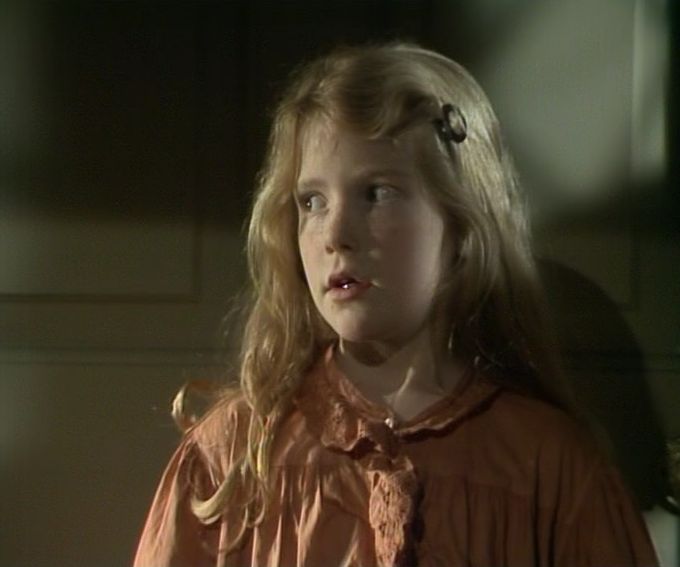
Sapphire & Steel was originally created as a children’s series, something which is most evident in the opening story, as two children, Rob (Steven O’Shea) and Helen (Tamasin Bridge), are the people in need of help from the mysterious “time detectives”.

Production limitations (an incredibly low budget) helped to shape the tone of all S&S‘s serials.  Small casts (with usually only a handful of main speaking roles), a handful of sets (only one of the six serials featured any location filming) and very limited special effects tended to be the order of the day.

The unsettling feel of this opening story is quickly established.  The location is a large, comfortable and old-fashioned house.  Whilst Rob is downstairs doing his homework, his mother and father are upstairs, reading nursery rhymes to their young daughter Helen.

The snatches of nursery rhymes used as incidental music is an indicator that the rhymes are designed to have a sinister, rather than comforting, air.  The feeling of unease can also be seen on Rob’s face downstairs – he doesn’t know why he feels his way, he just does.

The fact that we don’t see the faces of Rob and Helen’s parents is a deliberate move, it helps to make their brief appearance another discordant element.  When they vanish – after reading a nursery rhyme – Robert attempts to take charge (phoning for the police) although his constant reassurances to Helen that everything will be all right seems to be as much for his benefit as hers.

Shaun O’Riordan’s direction has a few notable moments, especially a long tracking shot – which moves from Helen, alone and frightened in the kitchen, down the corridor and to the front door.

The events so far have primed us for the arrival of Sapphire (Joanna Lumley) and Steel (David McCallum) and their first appearance is a memorable one.  They adopt patterns of behaviour which will become familiar – Steel is brusque and business-like, whilst Sapphire is friendly and amusing.

The mystery of their arrival, as well as the fact that Steel knows Rob’s full name, is never answered – rightly so, since part of the tone of S&S depends on the fact that the title characters are inscrutable and unknowable.  But although Steel regards the presence of Rob and Helen as little more than an irritation, Sapphire attempts to explain what’s happened and why they’re here.

There is a corridor and the corridor is time. It surrounds all things and it passes through all things. Oh you can’t see it. Only sometimes, and it’s dangerous. You cannot enter into time, but sometimes … time can try to enter into the present. Break in. Burst through and take things. Take people. The corridor is very strong; it has to be. But sometimes, in some places, it becomes weakened. Like fabric, worn fabric. And when there is pressure put upon the fabric….

Sapphire is rather more playful and frivolous in this episode than she’d later become. She changes dresses and hairstyles in the wink of an eye several times, something which impresses Rob no end (who’s already a little in love with her).  But Steel’s on hand to bring the conversation down, telling Rob about the dangers in the house. “There are things – creatures, if you like – from the very beginnings of time, and the very end of time. And these creatures have access to the corridor. They’re forever… moving along it. Searching… looking… trying to find a way in. They’re always searching, always looking …”

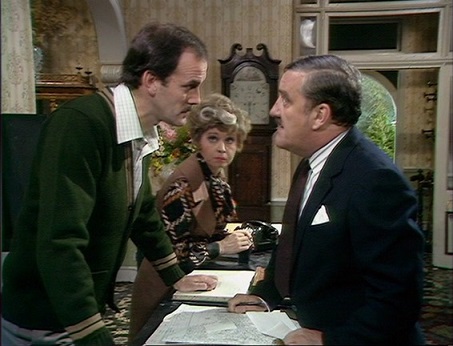
Fawlty Towers – The Hotel Inspectors

hotel

Fawlty Towers is as close to sitcom perfection as you can get.  If one were being picky then you could say that the second series does have one sub-par effort (The Anniversary) but this is only because the other eleven were so good.

There are several obvious reasons as to why the series clicked from the start (even if the public and critical feedback for series one was a little muted to begin with).  These include the scripts by John Cleese and Connie Booth and the four regulars (Cleese, Booth, Scales, Sachs).

But equally important were the guest casts.  Basil Fawlty has to have strong characters to interact with, otherwise his manic personality ends up unbalancing the show.  Strong characters require good actors though, but Fawlty Towers never had a problem in acquiring the best comic actors around.

Joan Sanderson, Geoffrey Palmer and Bruce Boa were amongst those who were able to stand toe-to-toe with Cleese.  Some sitcom stars (especially if they were the co-writer as well) may have found themselves threatened by having to share the screen with experienced old pros (there’s plenty of evidence down the years to suggest that certain actors hated to have the limelight shone on anyone but themselves).  Cleese had a refreshing lack of ego on this score though and never seemed worried that others may get bigger laughs than him.

The Hotel Inspectors has one of the series’ most recognisable guest stars.   Bernard Cribbins (b. 1928) remains a national treasure.  He first came to prominence in the 1960’s with a number of film appearances (several Carry Ons, The Wrong Arm of the Law with Peter Sellers, etc).  In the 1970’s he became a children’s favourite, narrating The Wombles and making regular appearances on Jackanory.  He continues to act, probably his most high-profile recent credit was as Wilfred Mott in Doctor Who.

Mr Hutchinson (Cribbins) has arrived for a stay at Fawlty Towers.  His profession is a bit of a mystery but Basil, getting the wrong end of the stick, mistakenly believes that he’s a hotel inspector.

If Basil was rude to every guest who walked through the door then it would be amusing, but the joke would wear thin pretty quickly.  The genius of Cleese and Booth’s scripting is that Basil is a man of many and varied prejudices, which then informs us about which guests he favours or disfavours.  If you’re a member of the promiscuous society, for example, you’ll attract Basil’s ire, but a titled or professional person is guaranteed a much easier ride.

To begin with, Mr Hutchinson irritates Basil, mainly because of the way he talks.

Mr. Hutchinson: There is a documentary on BBC2 this evening about Squawking Bird, the leader of the Blackfoot Indians in the late 1860s. Now this starts at 8.45 and goes on for approximately three-quarters of an hour.
Basil: I’m sorry, are you talking to me?
Mr. Hutchinson: Indeed I am, yes. Now is it possible for me to reserve the BBC2 channel for the duration of this televisual feast?
Basil: Why don’t you talk properly?
Mr. Hutchinson: I beg your pardon?
Basil: No it isn’t.
Mr. Hutchinson: What?
Basil: It is not possible to reserve the BBC2 channel from the commencement of this televisual feast until the moment of the termination of its ending thereof, thank you so much.

The sudden gear-change which occurs when Basil believes Hutchinson to be a hotel inspector is a lovely moment.  From indifference and contempt, Basil quickly becomes the perfect host.  But even when Basil’s trying his best, things never quite work out (witness the saga of the omelette) and like every other week his house of cards slowly collapses until he’s left humiliated and isolated.  This sounds a little bleak, but luckily for us Basil always seems to recover from whatever crushing reversal he’s received in order to do battle the following week.

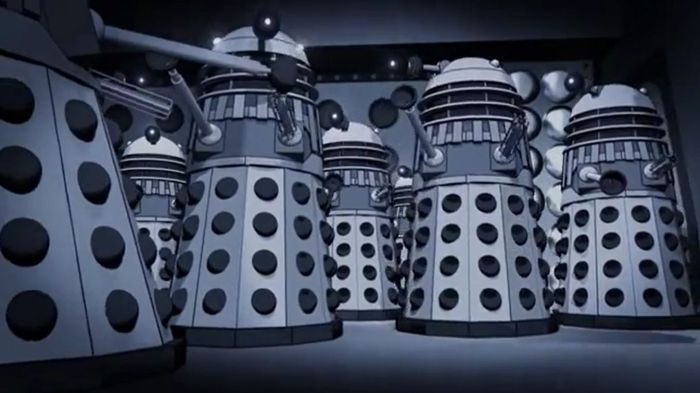
Animated Power of the Daleks to be released by BBC Worldwide – November 2016

power.jpg

Although there have been rumours for a few weeks (following the posting of a clip on YouTube) it’s now been confirmed that a fully animated Power of the Daleks will be released in November.  It’ll debut initially on the BBC Store with a DVD release following later the same month.

A very unexpected but welcome early Christmas present.  Hopefully sales (both download and physical) will be healthy and further releases will follow in the future.  The press release is below.

BBC Worldwide to release animation of lost Doctor Who story, The Power of the Daleks

Doctor Who: The Power of the Daleks is being produced by the team behind the highly successful animation of lost Dad’s Army episode A Stripe For Frazer, first released on BBC Store in February this year. The producer and director is Charles Norton, with character designs from acclaimed comic book artists Martin Geraghty and Adrian Salmon.

Charles Norton says:
“The Power of the Daleks animation is the most ambitious Doctor Who archive restoration ever attempted and we’re all very honoured to be a part of such a an exciting project. Intelligent, suspenseful and magnificently staged, Power of the Daleks is one of the great lost classics of 1960s television and a superb example of the black and white era at its finest.”

Paul Hembury, Executive Producer, BBC Worldwide says:
“Charles and his team are remarkably talented and passionate about Doctor Who and we are thrilled that fans will soon be able to enjoy this rather sinister but wonderful, classic story.”

Doctor Who: The Power Of The Daleks will be released on BBC Store on Saturday 5th November followed by the DVD on Monday 21st November.

An impressive list of special features has now been announced.  Given the bare-bones releases of The Web of Fear and The Enemy of the World, the effort put in here is surprising, but very welcome.  An Andrew Pixley booklet, PDFs of the camera scripts and a full telesnap reconstruction are just some of things which caught my eye.  The 1966 studio recordings of the Dalek voice recording sessions is a slightly staggering feature – presumably this is a recent find as I can’t recall ever hearing about it before.

Alternate soundtracks [DVD only]
The option to listen to the story with a series of completely new digital re-masters of the original soundtrack – a stereo mix; a 5.1 surround sound mix and version of the original 1966 mono sound mix.

Animation Test Footage
A compilation of animation tests, created during the production of the new animated series.

Audio Commentaries on all 6 episodes [DVD only]
Members of the original cast and crew are joined by members of the new animation unit to discuss the production of the story and its new animated reconstruction. Moderated by Toby Hadoke. Please note: this commentary also includes archive audio.

Booklet with Production Notes [DVD only]
An extensively researched set of production notes, written by the noted television historian Andrew Pixley, covering the behind the scenes story of how the original production was made.

Original Camera Scripts [DVD only]
Selected items of original production paperwork and a complete set of original camera scripts

Original Title Sequence – new restoration
An unedited presentation of the full original ‘Doctor Who’ title sequence, prepared using an all new HD re-master of the original film elements.

The Power of the Daleks Animation and Photo Gallery
An extended gallery of images, featuring production photographs from the original 1966 series and artwork from the latest animated production, accompanied by incidental music from the story, which has been digitally re-mastered from the original music production tapes.

The Power of the Daleks Surviving Footage & Original Trailer
A compilation of short film fragments and clips from the original 1966 BBC television production – the only surviving footage to remain of the show’s original BBC1 run.

Original Dalek Voice Session Recording (1966) [DVD only]
Rare and previously unreleased sections from the studio recordings that were made at Maida Vale Studios in 1966 for the Dalek voices.

Servants and Masters – The Making of The Power of the Daleks
A specially prepared documentary directed by John Kelly and featuring interviews with members of the original 1966 cast and crew.

Telesnap reconstruction
Around 400 individual still frames of film exist from the original 1966 television production of ‘The Power of the Daleks’. These images were kept in the programme’s production files by the BBC Written Archive Centre. These images are here combined with the programme’s soundtrack to present a photographic reconstruction of the original programme.

Today (3rd November 2016) it’s been announced that a colour version will be able to be downloaded from the BBC Store at the end of the year whilst a BD will follow next year. This will include the colour version, although whether the black and white edition and all the DVD special features will also be included isn’t yet known.

So if you want Power on disc in colour then you’ll need the BD. Plenty of buying options then, although I think I’ll stick with the b&w DVD.

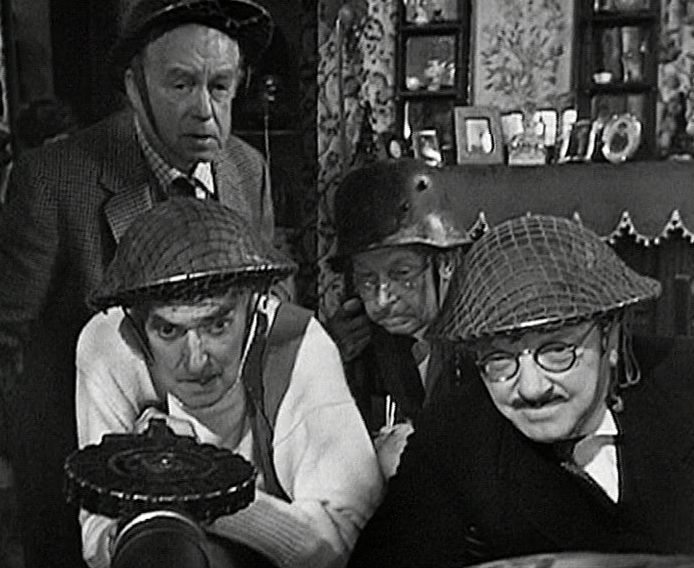
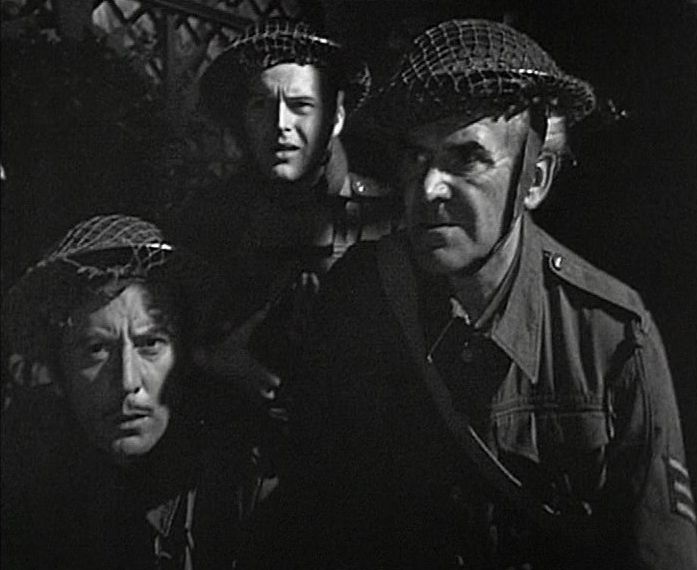
Dad’s Army – The Battle of Godfrey’s Cottage

battle 01

No doubt helped by endless re-runs, Dad’s Army remains one of the most familiar British archive sitcoms.  For some, this familiarity has bred contempt, but whilst parts of it have worn thin over the years (Corporal Jones really needs a good slap) the sheer number of episodes means that you can still stumble over a less well-known instalment which will have a few surprises.

This is particularly true of the surviving episodes from the first two series, as their black and white nature has meant that they don’t get repeated as often as their colour counterparts.  And two episodes from the second series (Operation Kilt and The Battle of Godfrey’s Cottage) were only rediscovered in 2001 (in film cans which had spent twenty five years rusting in a garden shed) which gave even hardened Dad’s Army watchers at the time the chance to experience something “new”.

As a child, it was the large-scale visual episodes which appealed, such as The Day the Balloon Went Up, which saw the platoon set off in hot pursuit after Captain Mainwaring, who’d been carried away by a barrage balloon!  As I’ve got older, I find the character-based episodes to be more to my taste.  Ones such as Branded (which saw Godfrey’s courage called into question) and A. Wilson, Manager? (Wilson’s promotion infuriates Mainwaring) now entertain me more.

Although the comedy in Dad’s Army is often broad, it’s also based on historical fact.  The Home Guard was poorly equipped to begin with, which was a worry for many – especially as a German invasion was believed to be imminent.  With guns and ammunition in short supply, other methods of defence and attack had to be found – this webpage has some interesting information, such as the fact that one Home Guard unit carried pepper with them, which they intended to throw into the enemy’s faces!

In The Battle of Godfrey’s Cottage, Mainwaring calls his men to the Novelty Rock Emporium, which will be their command post in the event of a German invasion.  The viewer, armed with the knowledge that no invasion was ever attempted, is immediately placed at an advantage over the platoon.  Therefore when the church bells ring and everybody jumps to the wrong conclusion (the Germans have arrived) we can be secure in the knowledge that everything will be all right.

This might been the cue for some slapstick comedy, but instead Perry & Croft go a little darker to begin with.  Mainwaring, Jones and Frazer believe that they’re the only members of the platoon left in the town who can deal with the Germans, so they head off to Godfrey’s cottage (an ideal place to mount a defence, due to its strategic location) in order to make a last ditch attempt to repel the attackers.  All three accept that they’re going to their deaths, but deal with this stoically.  It’s only a brief moment, but it’s a lovely character touch that says so much.

There’s a certain amount of contrivance which has to employed in order to get the plot to work.  Mainwaring, Jones and Frazer have now reached Godfrey’s cottage and Jones puts on an old German helmet (from Godfrey’s adventures in WW1) to defend himself with.  The other members of the platoon, approaching the cottage, see a figure with a German helmet and naturally jump to the wrong conclusion.

Godfrey’s genteel home life – he lives with his two sisters, Dolly (Amy Dalby) and Cissy (Nan Braunton) – is rudely shattered by the arrival of Mainwaring and his machine gun.  If Godfrey seems to be a little disconnected from the realties of life, then that’s even more the case with his sisters.  Dolly’s reaction when she hears that the Germans are coming is just to fret that she’ll have to go and make a great deal more tea for all of their new visitors.

Possibly the most interesting part of the story is how the various members of the platoon deal with the pressure of apparently being under attack from the Germans.  Pike is naturally terrified, Mainwaring is resolute and determined to fight on to the bitter end, whilst Wilson is somewhat hesitant and indecisive (no real change from his normal character then).  But when Wilson believes that the “Germans” in the cottage have surrendered, he initially wants to send Walker out to negotiate with them, whilst he remains behind in safety.  It’s small character moments like this which make The Battle of Godfrey’s Cottage a very rewarding episode to rewatch.

battle 02

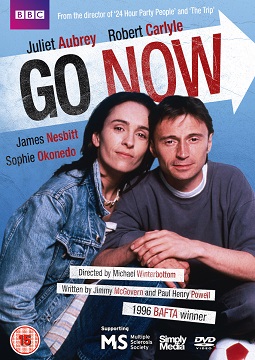
Go Now – Simply Media DVD review

164454- Chief Crazy Horse Sleeve.indd

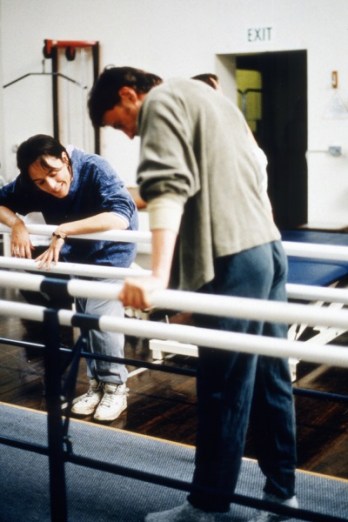
Everything seems to be going Nick Cameron’s (Robert Carlyle) way, especially when his relationship with Karen Walker (Juliet Aubrey) begins to blossom.  But there are dark, dark clouds on the horizon.  He begins to experience feelings of numbness and double vision, and shortly afterwards he receives the bombshell that he has multiple sclerosis.

In a flash his whole world changes.  As his physical energy diminishes, Kevin angrily lashes out of those around him – especially Karen, who also has to make a dramatic adjustment (from girlfriend to carer).  She becomes unable to reach the man she fell in love with and so faces a dilemma – should she walk out and start a new life, or stand by this shell of a man?

Go Now eschews the sentimentality often to be found in dramas which tackle illness, instead it offers something much more direct and honest.  This may be partly due to the input of co-writer Jimmy McGovern (a man who has in the past contemptuously labelled other dramas dealing with similar topics ‘wheelchair plays’).  But the influence of the other writer, Paul Henry Powell, shouldn’t be underestimated.

Powell, a MS sufferer, had started writing the script based directly on his own experiences.  McGovern, who was running a writer’s workshop that Powell was attending, agreed to work with him to develop the story.

Although the basic synopsis makes it sound very depressing, the play is shot through with streaks of humour.  But what really impresses throughout the piece are the emotional ups and downs that both Nick and Karen go through.   Both Robert Carlyle and Juliet Aubrey offer outstanding performances.

Carlyle, who had already starred as the unstable killer Albie in McGovern’s Cracker serial To Be A Somebody, commands the screen.  And it’s when Nick’s physical abilities decline that his performance really comes into his own, as it requires him to express a host of emotions with am increasingly limited set of visual signals.

Aubrey is no less impressive.  That she turned down a big movie role (First Knight, opposite Richard Gere and Sean Connery) in order to appear in Go Now is an interesting revelation (no doubt a move that wouldn’t have pleased her agent).  Her commitment to the piece is obvious to see – especially in the scene towards the end when Karen, refusing to heed Nick’s pleas to leave him, waits patiently outside in the pouring rain for him to change his mind.

Whilst Carlyle and Aubrey are central, there are also impressive contributions from James Nesbitt (Tony) and Sophie Okenedo (Paula) and Michael Winterbottom’s direction is pretty much faultless.

A co-production between the BBC and PolyGram, it received a limited theatrical distribution and would go on to pick up a number of awards (it won the Prix Europa Television Programme of the Year 1995 whilst Powell and McGovern collected the Royal Television Society’s Best Writer award in 1996).

At times bleak and uncompromising, Go Now is best summed up by this comment from Juliet Aubrey.  “It’s a big love story with a huge heart, a lot of humour, a lot of passion and a lot of pain”.  Twenty years on it remains a powerful work which lingers in the memory long after the credits have rolled.

Go Now is released by Simply Media on the 12th of September 2016 with an RRP of £19.99.  £1.00 from the sale of each DVD will donated to the MS Society.
Go Now

The Likely Lads – The Other Side of the Fence

likely

The Likely Lads (1964 – 1966) was something of a ground-breaking series.  Fifty years on, its impact may have dulled, but back then a sitcom that revolved around two men who were not only young and working-class but also came from the North was decidedly unusual.

Dick Clement (born in Westcliff-on-Sea, Essex) and Ian La Frenais (born in Newcastle-upon-Tyne, Tyne and Wear) were two writers with different outlooks and temperaments.  But something about their partnership simply clicked (it’s still going strong today).

Despite the fact that the show was recorded in London, the scripts seemed to catch the authentic feel of working-class life and the show ran for three years.  That it was later rather overshadowed by the sequel series, Whatever Happened to the Likely Lads?, is easy to understand. The Likely Lads was made in black and white, so repeats have been more infrequent (plus quite a few of the episodes were wiped and no longer exist).  And to be honest, Whatever Happened to the Likely Lads? is just a better show – the scripting and performances are sharper and the fact that Bob and Terry are a little older is also important.  They’re far from middle-aged, but they’re also no longer the “lads” from the original series.

The Likely Lads seems to take its cue from films such as Saturday Night and Sunday Morning (1960).  Like the central character in that film, Bob (Rodney Bewes) and Terry (James Bolam) work in a factory and live for the weekends, where they can spend their weekly wages on beer, football and girls.

Even in the early episodes, Bob and Terry are very different characters.  Terry never really changes (not even when we meet him again in the 1970’s) but Bob is always keen to “get on”.  This is made plain in Whatever Happened to the Likely Lads? – Bob has a fiancé, a nice new council house and enjoys foreign holidays (a rarity at this time).

But even as early as The Other Side of the Fence (series one, episode four, original tx 6th January 1965) Bob’s desire to better himself comes to the surface.  He has a chance to leave the factory for a job in the office.  It offers better pay and prospects, plus the females are rather nice as well ….

The class/social divide between the factory and office workers is sharply defined.  Terry, waiting for Bob to leave the office for the day, spies the departing office ladies.  They’re a clear class apart from the sort of women he’s used to, but that doesn’t stop him chancing his arm.  Sally Anne (Didi Sullivan), who works in personnel, seems quite responsive whilst Bob has already fallen for Judith (Anneke Wills) who’s the secretary to Bob’s new boss.  The problem is that Judith is in a relationship with the oily rep Nesbit (Michael Sheard).

Despite being born in Aberdeen, Sheard manages a credible Northern accent and is suitably nasty as Bob’s rival in love.  Judith is friendly and helpful to Bob and as played by the lovely Anneke Wills certainly catches the eye.  Is this the reason why Bob attempts to make a go of his office job?

Although you might have expected Terry to be more cynical about Bob’s social climbing, that’s not really the case.  Although it is true that after Bob invites Terry to be his guest at the plush office social he can’t help but stifle a grin at the sight of Bob dressed in a dinner jacket and bow tie.  The fact that most of the other men are similarly attired cuts no ice with Terry, it’s just not the sort of thing that they do.

The evening turns sour when Nesbit gleefully tells Terry that he won’t be able to attend the dance – the function is for office staff only, so Terry (as factory fodder) doesn’t qualify.  Terry doesn’t seem terribly put out, but this slight upsets Bob so much that he jacks in the office job there and then and decides to go back to the factory.

In a way this is rather depressing, the class barrier seems to be still firmly in place as we see the working-class interloper (Bob) returned to where he came from.  But this blow is softened when Bob says he never wanted the job in the drawing office anyway because he’s no good at drawing (the truth or a lie to make Terry feel better?)  The real result occurs just after this, when Sally Anne and Judith decide to go for a drink with Bob and Terry.

Helped by the appearances by Michael Sheard and Anneke Wills, The Other Side of the Fence is entertaining enough.  Bob’s misadventures in the office could be seen as a warning that it’s a good idea to know your place, suggesting that his attempts to better himself were always doomed to failure.  This may be too critical a reading though and since they end up with the girls, everything in the Likely Lads’ world comes right in the end.