Gideon’s Way – The White Rat

white rat

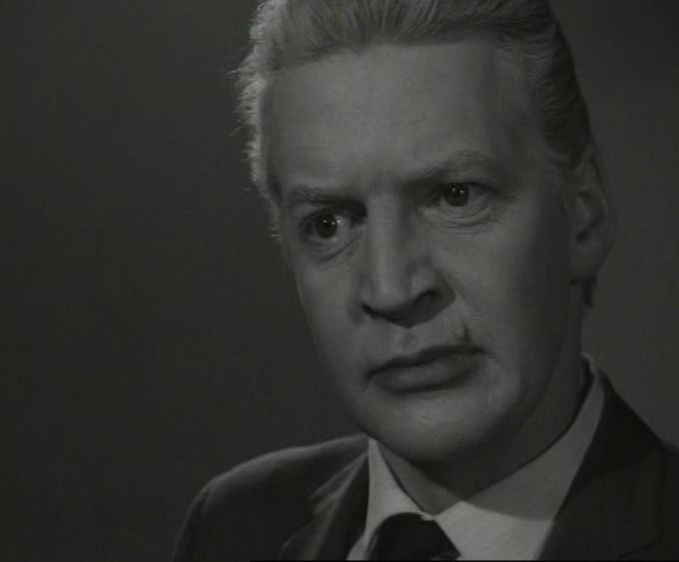
The White Rat is one of a number of episodes which uses the American opening titles rather than the more familiar British ones.  The major difference is that there’s a lengthy voice-over by John Gregson, which spells out very clearly what the programme is about.

This is my city, London. Eight hundred square miles. Vast, sprawling, restless. Over eight million people live and work, love and play, hate and die. On the fringe, hidden in the shadows, those who prey on the innocent. Steal, destroy, attack and kill. When they do, it’s a job for me and the Criminal Investigation Department.

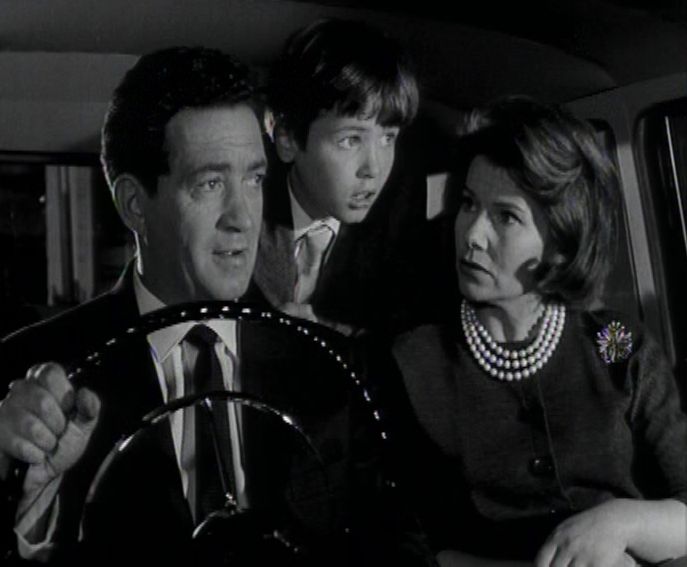
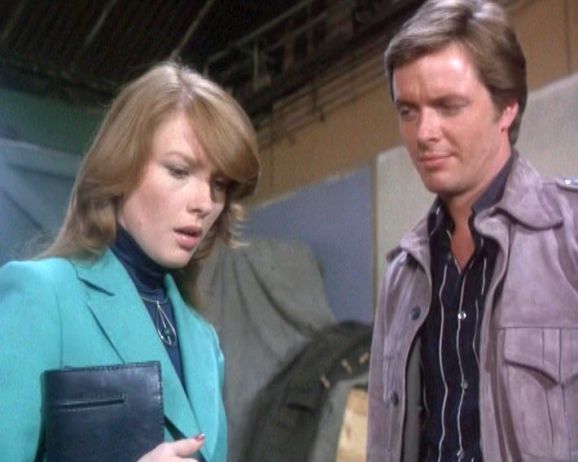
Once we get past the credits we open with a robbery taking place at a fur warehouse, which is led by Mickey Keston (Ray McAnally).  It’s not long before we have several examples of Mickey’s violent and unpredictable streak.  Firstly, when he notices the night-watchman attempting to reach the phone he viciously clubs him down (the man later dies in hospital).

He then reacts sharply when one of his underlings casually mentions a conversation he had with Mickey’s girlfriend Rose (Virginia Maskell).  Mickey’s jealousy at even the most innocuous comment is plain, but this isn’t the only character flaw he has.  Mickey is an albino and it’s given him a massive inferiority complex.  Maybe this isn’t surprising when you hear how Sergeant Syd Taylor (David Davies) describes his appearance.  “Makes him look almost like a cretin, but he’s not.  He’s tough, hard and ruthless.”

There’s several occasions when Mickey mentions how he loathes himself.  “Nobody could be in love with a freak and that’s what I am. Ever since I was five years old people have pointed at me.”

A visit to Mickey’s house by Taylor, Keen and Keen’s girlfriend Mary Henderson (Sue Lloyd) only serves to stoke up Mickey’s paranoia even more and it seems clear that he’s simply a powder-keg waiting to explode.

One possible flaw with The White Rat is that Mickey doesn’t really look too unusual.  Yes he has white hair, but that’s not very uncommon.  But a possible interpretation is that (Sergeant Taylor’s comment notwithstanding) very few people have ever looked twice at Mickey and his belief that the whole world is laughing at him is simply a delusion on his part.

As might be expected, Ray McAnally gives a nuanced performance.  This was pretty earlier on in his career – he’d appeared in a number of small-scale films but Gideon’s Way was his first major television part.  In the late 1960’s he’d appear in the memorable series Spindoe and towards the end of his life he’d play several roles for which he’ll probably be best remembered.  These include Rick Pym in John LeCarre’s A Perfect Spy (1987), Harry Perkins in A Very British Coup (1988) and Mr Brown in My Left Foot (1989).  Ray McAnally died in 1989, aged 63.

There’s a nice sense of tension between the veteran officer Syd Taylor and Gideon.  When Gideon joined the force it was Taylor who showed him the ropes, but now Gideon’s a commander and Taylor’s still a lowly sergeant.  Gideon is keen to re-establish their friendship, but there’s a reluctance on Taylor’s part (it seems the gulf in their rank is a major concern for him).  After Taylor is shot by Mickey, it gives Gideon a personal stake in the outcome of the manhunt and allows Gregson a few decent scenes, especially at the end when Gideon confronts Mickey (who’s armed with several sticks of dynamite).

Thanks to McAnally’s magnetic performance, The White Rat is another very decent episode.
Gideon’s Way – The Rhyme and the Reason

rhyme 01

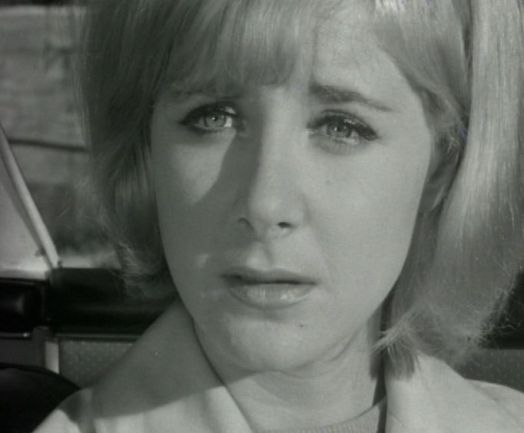
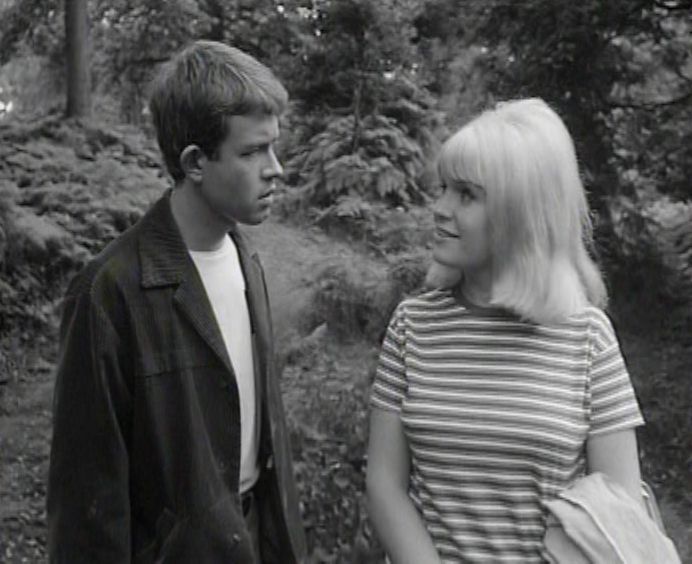
The Rhyme and the Reason opens with Bill Rose (Alan Rothwell) and Winifred Norton (Carol White) enjoying the peace and quiet of a woodland glade.  But this serene scene is soon shattered by the arrival of a motorbike gang led by Rod (Clive Colin Bowler).

Gideon’s Way would sometimes reflect contemporary youth culture, although usually in an unintentionally amusing way.  The bike gang (sneeringly dismissed as Rockers by Bill) are a good case in point.  They don’t really exude an air of menace, although this may be due to viewing the episode in 2015 rather than 1964.  Possibly back then, when motorbike gangs were a hot topic of debate, simply the sight of them would have been sufficient to discomfort a section of the audience.

It quickly becomes clear that Bill, since he’s a Mod, isn’t fond of the bikers, but Winifred feels quite different.  The air of menace and danger she senses about Rod clearly excites her (as does the sound of his engine).  There’s a look of orgasmic pleasure on her face as she drinks in the powerful sound of the bikes – and Bill’s own inadequacy is clearly demonstrated when he fires up his much more modest moped.  Not only does it take several attempts to get going – as Winifred looks on with slight contempt – it also makes a much quieter noise, which obviously isn’t to her taste.

After fifteen minutes it’s still not clear what the crime is going to be – but shortly afterwards the camera tracks over Winifred’s lifeless body and the police investigation can begin.  Bill is the chief suspect – he’d argued with her shortly before her death and his knife is discovered at the scene of the crime.  But he maintains his innocence, and Gideon is inclined to believe him.

There’s no doubt that Carol White will always be best remembered for the role of Cathy Ward in Ken Loach’s groundbreaking Wednesday Play, Cathy Come Home.  The role of Winfield was less demanding but she still gives a vivid performance.  Although she only has a short amount of screen-time, White was able to imbibe the girl with a clear zest for life as well as a definite streak of burgeoning sexuality.  It’s unremarkable now, but as touched upon before, England 1964 was not really swinging – so overt displays of sexual desire were uncommon on mainstream British television.  White later pursued an acting career in America and would die aged just 48 in 1991.

Alan Rothwell has had a lengthy career with spells in several popular soap operas.  He was one of the original cast-members of Coronation Street, playing Ken Barlow’s brother David.  Several decades later he would enjoy a memorable stint on Brookside, although for a generation of children he’s probably best remembered as the host of the ITV Schools programme Picture Box.  And it’s good to know that he’s still going strong today – with recent appearances in The Musketeers, Casualty and Alan Partridge.

He’s perfect as the petulant Bill, who had both the motive and opportunity to kill his girlfriend.  But did he do it?  He maintains that he’s bound to be found guilty because of the way he looks and dresses.  “I’m a Mod, so automatically that makes me into a shiftless, no-good layabout killer.”  It’s interesting that this view is shared by some of Gideon’s team (“his type burns me up” says Keen) and the only policeman who seems convinced of the boy’s innocence is Gideon himself.

As ever, there’s an incredibly strong supporting cast.  Jo Rowbottom plays Bill’s sister Mary whilst the always dependable Duncan Lamont is Divisional Supt. Smedd, the man leading the investigation.  It does seem a little strange that an officer of Smedd’s seniority would be in charge, but then the series often showed the even more senior Gideon meddling in investigations (as he does here) so that’s fair enough.  Edward Evans (who’d previously played Bob Grove in the first British television soap, The Grove Family) has the key role of Winifred’s step-father Fred.

When Keen ventures into a club to talk to Rod, it’s a lovely time capsule of the period – complete with a happening beat-group on the stage and everybody gently twisting in time to the music.  Keen’s later confrontation with Rod outside is another delightful moment – the Rocker finds he’s no match for the wily police officer.

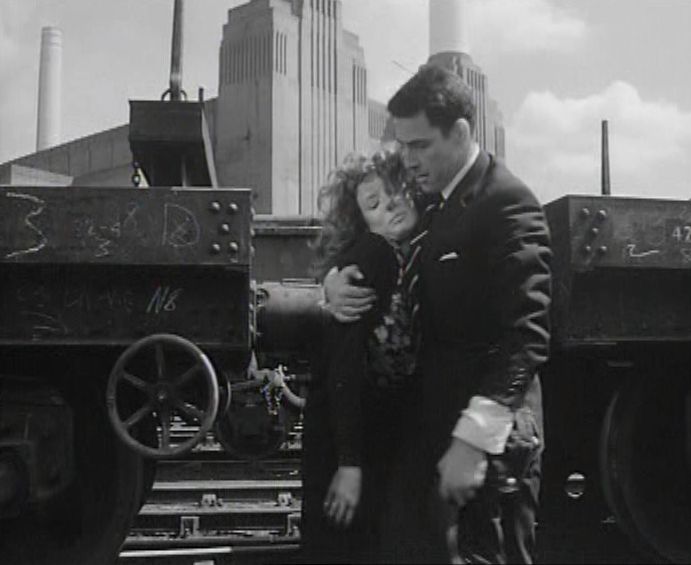
The episode concludes with a lengthy scene featuring Mary being pursued through the streets by the murderer.  It’s a typically well-shot sequence that uses the available locations to their best advantage – the final shot (with Battersea Power Station in the background) is especially striking.

Maybe not the most puzzling whodunnit ever, but The Rhyme and the Reason is a high-quality episode.

rhyme 02

Gideon’s Way – To Catch A Tiger

catch

When Gideon hears the name John Borgman (Walter Brown), he reacts instantly.  He always had a lingering suspicion that Borgman murdered his first wife, but nothing could be proved.  Now he has a confession from a dying woman (one of the nurses who attended Mrs Borgman) who alleges her patient was poisoned with an overdose of morphine.

As the nurse subsequently dies, Gideon doesn’t have a witness who will stand up to cross-examination, nor does he have any real evidence.  But his suspicion is more than enough for him to reopen the case.

Our first sight of John Borgman demonstrates that he’s a hard and ruthless man.  He’s discovered that one of his employees, Samuels (Meredith Edwards), has been stealing small amounts of money.  When he asks why, Samuels tells him that his wife is an invalid and he needed the money for her.

This is an interesting scene for several reasons.  Although Samuels has worked for the company for twenty years, and his crime does has extenuating circumstances, Borgman has no compunction in firing him on the spot and insisting that the police have to be called.  During this brief and unpleasant meeting, Borgman is attended by  his secretary, Clare Selby (Erica Rogers).  She was responsible for bringing Samuels’ falsifications to Borgman’s attention and takes a barely disguised pleasure in his downfall.

We meet the latest Mrs Borgman (Vanda Godsell) shortly afterwards and she succinctly sums Clare Selby up.  “That cool, cute Selby. She’s got eyes like a cat. They’re hard, like ice, and acquisitive.”  Mrs Borgman is convinced that Clare Selby is Borgman’s latest lover and by her general tone (and the drink in her hand) it’s clear that their marriage is in terminal decline.

Samuels poisons his wife before shooting himself.  With Borgman’s threat of the police hanging over his head he clearly couldn’t see any other way out.  It’s a tragic scene – nicely acted by both Meredith Edwards and Patsy Smart (as Mrs Samuels).

But it does give Gideon a way into Borgman’s office – as he suggests that Samuels’ fraud might be more widespread than it first appears.  He doesn’t care about the fraud of course, but any excuse to root about is welcome.

Supt Fred Lee (Norman Bird) and Sgt Carmichael (Glyn Houston) are the officers assigned by Gideon to investigate Borgman’s books.  After being left alone in Borgman’s office late at night, they discover a secret draw with a hypodermic and a bottle of morphine tablets.  Gideon’s delighted and arranges a search-warrant for the following day, so it can be “found” in Borgman’s presence.  To Catch A Tiger shows us that Gideon isn’t above breaking the law when he believes it’s justified.

Raymond Huntley gives a typically strong performance as Borgman’s defending council Sir Percy Richmond, who rips the poor Supt Lee to shreds.  It’s interesting that the programme seems to be asking us to side with Lee as he withers under Sir Percy’s cross-examination, but most of Sir Percy’s objections are perfectly correct.  Lee did enter Borgman’s office and search his desk without a warrant (and with no witnesses present, any evidence found should be worthless and inadmissible in court).  That Gideon then decided to issue a search-warrant the next day to try and make it official doesn’t really make up for the laxity in procedure.

What’s even more confusing is that earlier in the episode they’d exhumed the first Mrs Borgman and found she was full of morphine but hadn’t bothered to mention this fact in court!

Somewhat lacking in logic, To Catch A Tiger isn’t a particularly enthralling episode.  As ever, there’s some decent guest stars (Norman Bird, Raymond Huntley) but sadly that’s about all.

Gideon’s Way – The “V” Men

'v' men

Sir Arthur Vane (Ronald Culver) is the leader of the Victory Party, an extreme fascist political movement which creates controversy wherever it goes.  After Vane receives death threats, Gideon assigns (slightly against his better judgement) Chief Supt Bill Parsons (Allan Cuthbertson) to take charge of the case.  Shortly after, a bomb explodes outside Vane’s flat.  There’s a witness – but she disappears and Gideon finds it hard to track her down.

The “V” Men is a reminder that some things never seem to change.  Although this was made some fifty years ago it could just as easily been set in 2015.  The Victory Party has several aims (which appear to have been designed to alienate as many people as possible) – keep Britain white, kick out the financiers (especially the Jews) and also deal harshly with the pacifists.

Gideon’s superior, Commissioner Scott-Marle (Basil Dingham), recommends that Parsons takes charge of Vane’s security.  Gideon’s momentary hesitation, as well as Keen’s obvious dislike of the man, is a rarity in Gideon’s Way as generally we see the police work together in complete harmony.  Allan Cuthbertson made a career out of playing tightly-wound martinets, so his casting here is an obvious piece of shorthand.  Parsons doesn’t seem to be anything more than a humourless, unimaginative copper.

After Gideon overhears some of his aggressive questioning, he calls a halt to the interview and proceeds to gently try and set him on the right track.  He tells him there’s no law against being a fanatic, to which Parsons responds that there should be.  “I’m sick and tired of these people trying to push everyone around. Why don’t we shove the lot of them into jail?” This is the sort of statement that you know Gideon would object to, although it’s typical that Gregson plays the scene with a mild air of humour – helping to diffuse the tension.

Two plot-threads seem to be developing – the other concerns a young woman, Cathy Miller (Angela Douglas) who bumps into Vane as she’s making her way to a meeting with one of his neighbours, Peter Bennett (Dyson Lovell).  Bennett is shocked to be told by Cathy that she’s pregnant (Bennett is a married man).  Cathy was the woman seen running away from the flats following the explosion and is now being sought by the police.

Angela Douglas is winsomely attractive as Cathy and it’s the human drama of her personal situation that’s the most memorable part of the episode.  Parsons is convinced that Cathy is involved in the bombing, but Gideon isn’t.  Her questioning by both of them demonstrates the difference in approach they take.  Parsons attempts to browbeat and intimidate her, whilst Gideon favours a friendly and conversational approach (John Gregson is typically charming in these scenes).

The mystery of who planted the bomb isn’t solved until the last few minutes, as once Cathy is introduced it takes second place to her problems.  But when Gideon is able to reassure her that her pregnancy isn’t the end of the world, we can once again refocus on Vane.

The conclusion – as Vane comes face to face with his attacker – is certainly dramatic (although it does lurch over the top somewhat).  The identity of the bomber is unexpected, to say the least, and any remaining loopholes in the plot have to be explained away with the catch-all explanation that the man was quite mad.  So whilst the script doesn’t quite fulfill the potential it might have done, once again the guest cast (Culver, Douglas, Cuthbertson) help to cover most of the cracks.


Gideon’s Way – The Tin God

tin

Commander George Gideon was created by John Creasey (writing as J.J. Marric) and he featured in a series of novels published between the mid fifties and mid seventies.  Gideon appeared on the big screen in 1959 (Gideon’s Day, starring Jack Hawkins, directed by John Ford) and a few years later the character would transfer to the small screen – in this twenty-six episode ITC series starring John Gregson.

Although Gideon’s Way was filmed in the mid sixties and made use of extensive location filming in and around London, it’s notable that this is very much a pre “swinging” London.  The stark black and white camerawork helps with this, plus there’s also an occasional sense of decay and desolation – especially when locations still devastated from the war some twenty years earlier are used.  Location filming also gives the series something of a documentary feel and there’s an undoubted interest in seeing a very different London to the one that exists today.

John Gregson played Commander George Gideon.  A familiar face from both films and television, Gregson was perfect casting as the reassuring, dependable Gideon.  Gideon’s Way was very much a series like Dixon of Dock Green that took it for granted that the police were incorruptible and incapable of making mistakes.  Later programmes, such as The Sweeney, would cynically chip away at this reputation, which does mean that Gideon’s Way can seem rather old-fashioned.  But this is undoubtedly part of the series’ continuing appeal, as there’s something very comforting in watching a show where there’s clearly defined moral absolutes and crime is always shown not to pay.

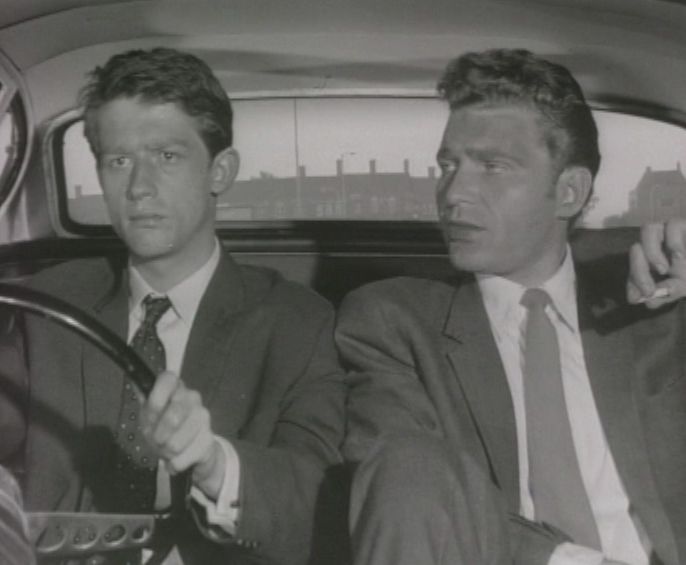
Another joy of Gideon’s Way is the sheer quality of the guest casts.  The Tin God is a good example, as it features Derren Nesbitt (a familiar face from many an ITC series) as John “Benny” Benson and a young John Hurt as Freddy Tisdale,  They play escaped convicts and their first appearance provides us with some evocative location work – a high shot zooming into them as they run into a train yard.  Nesbitt specialised in playing unstable characters and Benny is no different – and within a matter of minutes it’s also clear he’s the dominant personality out of the two (even before he’s pulled out a knife).

The news that Benny was one of the two escapees instantly piques Gideon’s interest.  It’s slightly incredible that Gideon knows exactly how long Benny’s been inside, the name of his wife and how many children he has (but such feats of memory are par for the course in police fiction).

We’ve already had a demonstration of how ruthless Benny can be (he casually murders a car-park attendant called Taffy Jones) and because his wife Ruby (Jennifer Wilson) informed on him, revenge is now the only thing on his mind.  The news that he’s escaped fills her with dread, although her young son Syd (Michael Cashman) is ecstatic.  Syd doesn’t believe that his father is a vicious criminal and instead directs his anger towards his mother and Gideon (as he was the copper who put him inside).

Cashman would later become a familiar television face in series like The Sandbaggers and most famously Eastenders.   Syd becomes the lynchpin in Benny’s plan to exact his revenge on Ruby, although it’s only when he finally meets his father again that he realises his mother was right all along.

The type of story (escaped convict) means that Gideon and his number two, DCI David Kean (Alexander Davion), don’t have a great deal of interaction with many characters – there’s no suspects to interrogate, for example.  But this is only a minor quibble and there’s plenty of incidental pleasures – location filming around the London docks and the sight of a policeman using a Police Box (a reminder that personal radios weren’t common at the time) are just two.

Benny’s plan to revenge himself on his wife is more subtle than might have been expected from what we’ve seen of his character so far.  He plans to take his son abroad and leave Ruby in a constant state of anxiety about Syd’s whereabouts – even if he’s alive or dead.

Benny, Freddy and Syd are hiding out in a warehouse, but it’s not long before the police surround them.  This allows John Hurt a great final scene as he realises too late just how mad Benny has become (and therefore dies in a dramatic fashion).  It also gives Derren Nesbitt an opportunity to ramp up his own performance as Benny loses the last few shreds of his sanity.

Thanks to a cracking performance by Nesbitt, The Tin God is a memorable episode.

The Vital Spark – A Drop O’ The Real Stuff

vital spark

An archive rarity has recently received an unexpected screening on BBC2 and is available, for those who can access it, on the IPlayer.

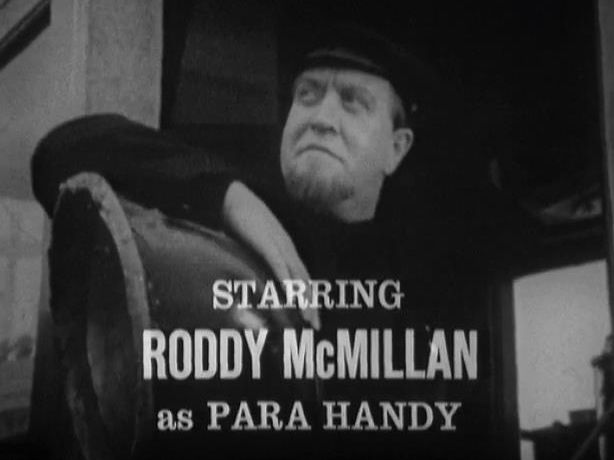
The tales of Para Handy, written by Neil Munro, first appeared in the Glasgow Evening News between 1905 and 1923.  Para Handy is the skipper of the steamboat The Vital Spark, which is his pride and joy.  Together with his mismatched colleagues – Dan MacPhail, Dougie and Sunny Jim – they wend their way around the coast of Scotland, enjoying various misadventures.

Para Handy first came to BBC television in 1959 with the show Para Handy – Master Mariner, starring Duncan Macrae as Handy.  A few years later came a fresh series of adaptations – entitled The Vital Spark.  Roddy McMillan played Handy (he’d appeared as Dougie in 1959) and there were three series – which aired in 1965, 1967 and 1973/74 (the 1970’s episodes were essentially remakes of selected scripts from the two 1960s runs).

As might be expected, the archive status (like so many other programmes of the era) isn’t particularly good.  Several episodes from the 1970’s series exist (and are available on DVD) whilst only a single episode from the 1960’s run remains in the archive – and this is what has been given a welcome airing.  A Drop ‘O The Real Stuff was the second episode of series one (first aired on the 28th of January 1966).

Para Handy would return to BBC television in the 1990’s, with Gregor Fisher taking the lead role (it’s one of those shows which has inexplicably never been released on DVD).  And whilst this incarnation is quite different to the 1990’s series (it’s a half-hour sitcom with a studio audience, for a start) it’s just as enjoyable.

A Drop ‘O The Real Stuff is worth tracking down.

Mike Yarwood’s Christmas Show (1982)

mike

Although Mike Yarwood was one of the kings of 1970’s light entertainment television, his profile has remained fairly low during the last few decades – mainly because few of his shows are commercially available or receive television airings.  Selected Morecambe & Wise and Two Ronnies Christmas Specials pop up in the schedules each year, but Yarwood (whose 1977 Christmas Special achieved a record rating of twenty eight million – just narrowly beating that year’s Morecambe & Wise show) has tended to remain trapped in the archives.

Maybe this is due to concerns that some of his impersonations are too obscure for modern audiences or possibly his brand of humour just seems too bland and middle of the road.  I’d love to see a run of his work for the BBC in the 1970’s – as that’s generally held to be his strongest – but as it’s not available the next best thing is the DVD It’s Mike Yarwood.

Released by Fremantle in 2007, it contains four shows that he made for Thames between 1982 and 1984 as well as a documentary from 1984 – Mike Yarwood: This Is Him.  The documentary is by far the best thing on the DVD, as it offers a well-observed insight into both the man and the mechanics of how his television programmes were put together.

It’s possible to sense from the 1984 interview material that he knew his time was nearly up.  Like Morecambe & Wise, Yarwood’s move from the BBC to Thames wasn’t the happiest of periods in his professional life.  Thames had the practical resources to match the BBC, but for both M&W and Yarwood the spark seems to have gone.  In M&W’s case it was age – Eric Morecambe’s health became a major limiting factor – whilst Yarwood struggled with the brave new world of the 1980’s.

Many of Yarwood’s favourite subjects (especially Harold Wilson) were no longer central figures in British culture – although that didn’t prevent him from continuing to mimic them.  As he struggled to find new people to add to his act, there was also the question of material.  In the This Is Him documentary, Yarwood comments that he could never impersonate anybody he didn’t like – and his gentle mockery would seem increasingly out of place as the alternative comedy boom of the 1980’s wore on.  The next generation of impressionists, such as Rory Bremner, offered more caustic political commentary which was a world away from Yarwood’s style.  Struggles with stage-fright and alcohol were other reasons why Yarwood gradually faded from the public view.

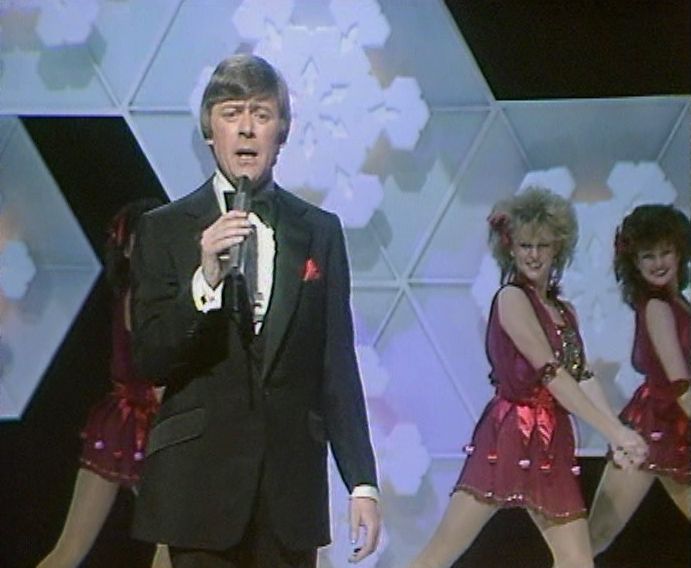
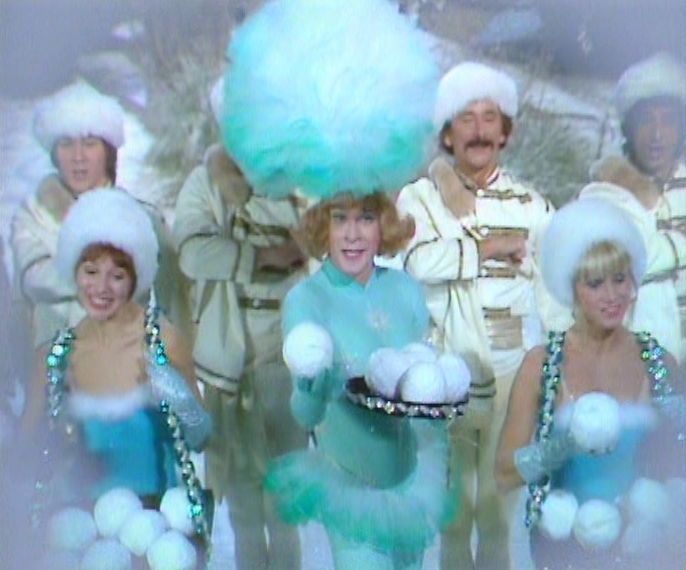
Like Stanley Baxter, Yarwood was a king of makeup and sometimes this was necessary to sell the illusion of his impression.  Mike Yarwood’s Christmas Show, broadcast in 1982, opens with him dressed as Matthew Kelly on the set of Game for a Laugh.  Without this, it would be impossible to guess from the voice alone who he was impersonating.  Yarwood was quite happy to mock this, as later in the show he hands over to himself dressed as Bob Monkhouse, who offers this tribute to the star of the show.  “The man with a million voices – every one exactly the same.”

He seemed to have been a generous performer though – witness the sketch where he plays Prince Charles.  Suzanne Danielle is Princess Diana and the pair are interviewed by Selina Scott.  Danielle gets several of the best lines and the biggest laughs (it’s easy to imagine some of his contemporaries wouldn’t have been happy with this and would have insisted on some rewrites to redress the balance).

Christmas at the White House sees Yarwood play Ronald Reagan, Sammy Davies Jnr, George Burns and Frank Sinatra.  This sequence offers more proof that his style remained rooted in previous decades (he could have impersonated Davies Jnr, Burns and Sinatra in the 1960’s or 1970’s just as effectively).

During the last ten minutes he does some stand-up impersonations in front of the studio audience.  There’s few props (just the odd hat and chair) but it’s easily the best part of the show.  His subjects remain established figures – Bob Hope, Ken Dodd, Max Bygraves, Frankie Vaughan, Dave Allen – but there’s something about his direct connection with the audience that works really well.

Had there been more of that (and less of the elaborate make-up) then the show would undoubtedly have been better, but Mike Yarwood’s Christmas Show is still a diverting way to spend fifty minutes.

Yes Minister – Party Games

party

Broadcast on the 17th of December 1984, Party Games was the final episode of Yes Minster (it lead directly into the sequel series Yes Prime Minster).  It has a slight Chrismassy feel, but it’s not really a surprise that politics (rather than Christmas) dominates proceedings.

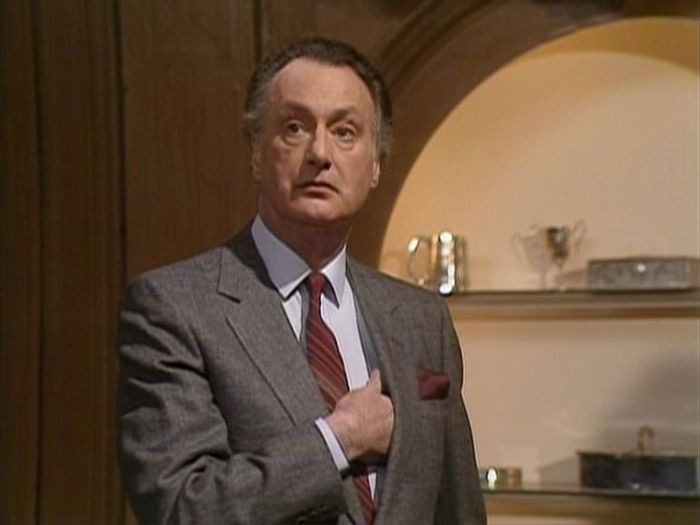
We open with Bernard (Derek Fowlds) telling Jim Hacker (Paul Eddington) that there’s something much more urgent than the defence papers he’s working on.  Jim pulls a face when he realises that Bernard’s talking about his Christmas cards, but obediently goes over to the desk where a mountain of cards awaits him.  As might be expected, the neat civil servant in Bernard has organised everything down to the finest detail. “These you sign Jim, these Jim Hacker, these Jim and Annie, these Annie and Jim Hacker, these love from Annie and Jim.”

Sir Humphrey (Nigel Hawthorne) has gone for a meeting with Sir Arnold (John Nettleton). Sir Arnold is the cabinet secretary, and Jim helpfully reminds Bernard (and the audience) exactly how important Sir Arnold is. “In some ways, Sir Arnold is the most powerful chap in the country. Permanent access to the PM, controls Cabinet agenda, controls access to everything.”

He’s due to retire early and is keen to appoint a successor. But the right man for the job has to be able to ask the key question – when Sir Humphrey asks how Sir Arnold plans to spend his retirement, it’s obvious he’s on the right track. “There might be jobs you could pick up, ways you could serve the country, which your successor, whoever he might be, could put your way – er, persuade you to undertake!”

One of the joys of Yes Minister and Yes Prime Minster was the way in which it felt horribly credible.  This wasn’t surprising, since the writers (Anthony Jay and Jonathan Lynn) had access to several different high level sources who would feed them valuable material.  But what is surprising about Party Games is how it seems to predict future events (a sheer fluke but it’s fascinating nonetheless).

When the Home Secretary, shortly after launching his Don’t Drink and Drive Campaign, is picked up for drunk driving, he’s forced to retire.  Shortly after, the Prime Minister also announces his retirement – which sparks an intense leadership contest.  It soon becomes clear that the Prime Minister hated the Home Secretary and only stayed in power long enough to ensure that he’d never get the chance to become PM.

Two clear candidates for the top job emerge.  Eric Jefferies (Peter Jeffrey) and Duncan Short (Philip Short).  Both are viewed with disfavour by the Chief Whip Jeffrey Pearson (James Grout).  “If Eric gets it we’ll have a party split in three months. If it’s Duncan, it’ll take three weeks.”

What they need is a comprise candidate – somebody with no firm opinions and lacking the personality to upset anybody.  Jim Hacker, of course, is the perfect man.  When Party Games was repeated in 1990, shortly after Margaret Thatcher’s fall from power, the parallels between Jim Hacker and John Major were simply irresistible.  Both seemed only to have got the job because they were seen as a safe (and bland) pair of hands – as well as preventing other, more divisive, figures from occupying the top job.

As ever with Yes Minister, the script sparkles with killer one-liners.  A favourite of mine comes from Sir Humphrey after Jim wonders what will happen to the Foreign Secretary following his enforced retirement.  “Well, I gather he was as drunk as a lord. So, after a discreet interval, they’ll probably make him one.”

Nigel Hawthorne also has the opportunity to recite a typical tongue-twisting monologue.  This is how Sir Humphrey breaks the news to Jim that he’s been promoted to Cabinet Secretary. “The relationship which I might tentatively venture to aver has been not without some degree of reciprocal utility and perhaps even occasional gratification, is emerging a point of irreversible bifurcation and, to be brief, is in the propinquity of its ultimate regrettable termination.”

Jim is able to persuade both Duncan and Eric to stand down from the leadership contest after he reads their MI5 files. As Sir Arnold says, “you should always send for Cabinet Ministers’ MI5 files, if you enjoy a good laugh.”

Party Games may feel a little bit stretched out at sixty minutes, but there’s still more than enough good material to make it an episode that repays multiple viewings.

Coronation Street – 24th December 1975

corrie 75

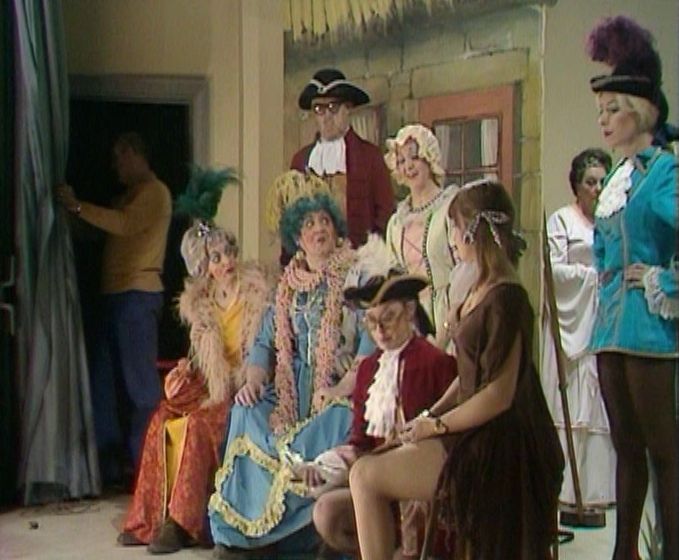
Broadcast on the 24th of December 1975, this episode sees the residents of Coronation Street putting on a pantomime to entertain the children.  The chief pleasure is in seeing familiar faces playing dress-up.  Bet Lynch (Julie Goodyear) is the Prince, Len Fairclough (Peter Adamson) is Buttons, Alf Roberts (Bryan Mosley) and Hilda are the Ugly Sisters whilst Deirdre Langton (Anne Kirkbride) is Dandini.  Tricia Hopkins (Kathy Jones) is Cinderella, although she’s fretting about the black eye which was given to her by Deirdre.

The panto takes up the bulk of the episode but it lacks much of an atmosphere, mainly because the child audience are very quiet – only coming to life on a few occasions.  It doesn’t seem to be because they’re bored (at the end they give the cast a rousing reception) so maybe they weren’t efficiently directed.  There was also plenty of comic potential to be gained from on-stage disasters, so it’s a little surprising they didn’t go down this route.

The closest we come to this is when Bet mimes to Rita’s (Barbara Knox) off-stage singing.  Rita, with a glass of wine and a cigarette in hand, is effortlessly able to belt the tune out and amuses herself by changing the tempo of the song mid way through, much to Bet’s obvious annoyance.   Afterwards, through gritted, smiling teeth, Bet tells Rita that “if you ever do anything like that to me again, darling, I will walk straight off and extract your vocal chords with a blunt knife, darling.”

A few random observations – Len’s wearing rather a lot of makeup as Buttons, Deidre has a fine pair of legs and why was Hilda playing one of the Ugly Sisters?  Couldn’t they find two men in the street prepared to drag up?

The inexorable passage of time is highlighted by Ena’s brief appearance.  She seems to be a shadow of her previous self – there’s no sharp retorts or acid observations, instead she’s restricted to looking after a child from the audience and wishing another of the characters well.  Although Violet Carson would remain with the series until 1980, a stroke in 1974 had kept her off the screen for a while and her later appearances would be fairly sporadic.

Away from the panto, the return of Trevor Ogden (Don Hawkins) is the main news.  It’s sometimes easy to forget that the Ogdens first came to the street with several children (mainly because they seemed to fade away quite quickly).  When the Ogdens moved to Coronation Street in 1964, Trevor was fifteen.  He spent the rest of the year getting into various scrapes before running away to London.  Trevor resurfaced for a couple of episode in 1973 before returning again in 1975 for two episodes (this one and the previous one).

Trevor is married, with a young son, and his wife is expecting again.  Although he’s rarely been in contact with Hilda over the last ten years, the news of another child pleases her, as does the fact he’s come all the way down to Weatherfield to see her.  He does have an ulterior motive though – his wife isn’t well and has to go into hospital for a while, so he wonders if Hilda could come down and look after her grandson.  This request is like a blow to the heart for Hilda, and despite the fact that she’s still dressed as an Ugly Sister you can see the pain on Jean Alexander’s face.

The realisation that Trevor wants her to act as a skivvy rankles, as does the fact that he’s never asked her to visit before – only now, when he needs something from her.  It’s a downbeat moment to end the episode on and the strains of the music from the hall (“happy days are here again”) strikes a a very ironic note.

Coronation Street – 24th December 1969

corrie 69

Broadcast on the 24th of December 1969, this edition of Coronation Street opens with Annie Walker (Doris Speed) dolefully eyeing two Christmas turkeys.  One of them was ordered by her from the butcher, so the other, bought by her long-suffering husband Jack (Arthur Leslie), is surplus to requirements and Mrs Walker minces no words when telling him that he needs to dispose of it.  The relationship between Annie and Jack was a continual source of comedy throughout the first decade of the series – only coming to an end after Leslie’s sudden death in 1970.

Doris Speed paid tribute to him by saying that “the qualities of sweetness and kindness in Jack Walker came in fact from Arthur Leslie himself.” That certainly seems to come across over the screen – Jack Walker is a thoroughly decent man who loves his wife (no matter how much of a trial she can be at times).  There’s a good example of his desire to act as peacemaker later in the episode.

Hilda (Jean Alexander) and Betty (Betty Turpin) are far from happy.  Both have been accused by Mrs Walker of pinching a necklace lent to her by her friend, Mrs Hepplewhite (Betty England).  Betty pops round to see Hilda and they discuss whether they should work to rule.  It’s interesting that there’s no ducks on Hilda’s wall yet – clearly they didn’t appear until the 1970’s.

The confrontation between Mrs Walker, Hilda and Betty is another classic moment.  Mrs Walker has a face like a granite statue as Betty declares they should have a moratorium until after Christmas (“yes” agrees Hilda, before realising she has no idea what a moratorium is!).  Mrs Walker tells them that she stands by what she said – she has reasonable suspicions.  “Reasonable suspicions, my bunion!” explodes Hilda.  Lovely stuff.

Ena Sharples (Violet Carson) casts a critical eye on the decorations in the Rovers Return.  “Now what have reindeers got to do with Christmas? There were no reindeer in the holy land. Nor Robin Redbreasts I wouldn’t wonder.”  As the decorations go up, they discuss the concert, organised by Emily Nugent (Eileen Derbyshire) and Ernest Bishop (Stephen Hancock), due to be held later on in the select.  The pressures of planning has made Emily even more nervous than usual, as she snaps at Ernest and tells him to shut up!

The concert is another of those moments which engenders a sense of community – one of Coronation Street‘s strengths during the 1960’s and 1970’s.  Highlights included Minnie Caldwell’s (Margot Bryant) recitation of The Owl and the Pussycat, Ken Barlow (William Roche) playing Edelweiss on the trumpet and Irma’s (Sandra Gough) impersonation of Hylda Baker – complete with Bernard (Gordon Kaye) dragged up as Hylda’s sidekick Cynthia.

There’s also the memorable sight of Albert Tatlock (Jack Howarth) dressed as Father Christmas and his reappearance later in the Rovers still wearing his beard (the glue he used was too strong and he can’t remove it).  Stan (Bernard Youens) solves the problem by ripping it off, much to his discomfort,

But sans beard he’s able to close the show, reciting The Girl I Kissed on the Stairs, and with the revelation that Mrs Hepplewhite had already taken her necklace back (without Mrs Walker’s knowledge) order is restored.  Jack attempts to pour oil on troubled waters by giving Hilda and Betty a present of a pair of nylons each.  He knows that Annie could never bring herself to apologise to them direct (“being the way she is, a spoken apology would go very hard.  So for my sake, as well as hers, accept them please.”).  This they do, although they can’t help but complain that they’re very poor quality!

This episode is just a joy from start to finish.

The Glories of Christmas

glories

Broadcast on the 25th of December 1973, The Glories of Christmas boasts a host of familiar faces. John Bluthal, Dora Bryan, Patrick Cargill, Diana Coupland, Les Dawson, Arthur English, Gerald Harper, Kathleen Harrison, Melvyn Hayes, James Hayter, Gordon Honeycombe, John Laurie, Alfred Marks, Bob Monkhouse, Pat Phoenix and Patrick Troughton were amongst those making an appearance (although some were very brief).  But the undoubted star of the show was Princess Grace of Monaco and it was a considerable coup that Yorkshire Television were able to recruit her.

We open with the Beverley Sisters and the Batchelors taking it in turns to sing excerpts from Christmas favourites.  If you can keep a straight face as the Batchelors sway their way through Rudolph the Red Nosed Reindeer then you have more self control than I do.  This sets the tone for the show – a selection of middle-brow entertainment that in some ways seems a lot further back than 1973.

The music hall setting of part one reinforces this – in quick succession we see the Scottish tenor Kenneth McKellar, Francis Van Dyke and his violin, Janet Baker singing Cherubino’s Aria from Mozart’s The Marriage of Figaro and Rostal & Schaefer tickling the ivories.  Let’s stop for a moment and consider that ITV decided this was just the sort of thing audiences wanted to watch on Christmas Day afternoon.  You certainly wouldn’t see anything like it today (especially the young boy blacked up as a golliwog) which makes it a window into a vanished television age.

Much more worthwhile is part two – The Glories of Literature – in which the cream of the British acting and entertainment profession make fleeting appearances as some of Charles Dickens’ immortal characters.  John Laurie is a perfect Scrooge, Gerald Harper is a fine Mr Jingle whilst Les Dawson is an interesting Mr Micawber (for some reason he chose to play it as W.C. Fields).  Dora Bryan has an amusing few lines as Sarah Gamp and Patrick Troughton reprised his role as Mr Quilp (albeit for twenty seconds or so).  It’s a great pity that his original turn as Quilp (from the 1962 BBC adaptation) is wiped – maybe one day it’ll return from a dusty overseas archive.  We can but hope.

Part three sees Princess Grace read the story of the nativity, which serves a reminder that The Glories of Christmas was produced by ITV’s religious department.  The visual representation of the story is either charming or shoddy (depending on how forgiving you are).  Everything is studio-bound and very false-looking, but maybe they were aiming for the slightly unreal feeling of a school nativity play.  Or it could just be that they lacked the budget to shoot on location.

The Glories of Christmas is a real curio that’s certainly worth a look (if you want to track it down it’s on the Les Dawson at ITV – The Specials DVD).


Christmas with Eric and Ernie (1979)

eric & ernie

In March 1979 Eric Morecambe suffered his second heart attack.  Told at one point that he only had three months to live, it was a slow road to recovery.  His illness meant that a traditional Christmas Special was out of the question, so instead Thames gave us Christmas With Eric and Ernie.  This was essentially an extended interview conducted by David Frost which also saw a few special guests (Des O’Connor, Glenda Jackson) popping by to indulge in some banter.

It’s always a pleasure to see a relaxed Morecambe and Wise just sitting around chatting.  Eric is quite notably “on” for the early part of the interview, constantly looking to crack gags, but there are a few moments when he’s in a slightly more reflective mood.

“All comedy is based on fear” he says at one point.  Ernie then comments about tough houses – playing the Glasgow Empire and going off to the sound of your own footsteps.  Both of them delight in reminding Des about his disastrous time at the same theatre (he was so intimated by the audience that he fainted).  Morecambe and Wise went on the next week and offered the audience their impression of Des.  “Good evening, ladies and gentlemen <thud>”.

It’s not a detailed career-spanning retrospective, although Frost does ask about the early days, enabling Ernie to give us a rendition of Let’s Have a Tiddly At the Milk Bar, which is a nice moment.  There’s a clip from the ATV years, which sparks some interesting comments from Eric about how his comedy persona had changed over the years.

Des O’Connor is on hand to receive some good-natured abuse from Eric and Glenda Jackson provides a link to the classic BBC years (not surprisingly there’s no clips).

They end with Bring Me Sunshine and the appearance of Janet Webb to take all the applause is a nod back to former glories.  The Parkinson interview from the 1970’s probably has the edge on this one (a pity it wasn’t included on the BBC Christmas Specials DVD) but this is still a joy.

Eric & Ernie’s Christmas Show (1978)

m&amp;w 78

Having jumped ship from the BBC to Thames in early 1978, this was their second special for ITV (the first was broadcast in October 1978).  Somebody who didn’t travel with them, at least to begin with, was Eddie Braben – so the show was written by Barry Cryer and John Junkin with additional material by Morecambe and Wise themselves.

The lack of Braben, and possibly having to work with producer/director Keith Beckett (who had produced the October special but still must have been an unknown quantity), might explain why everything feels a little laboured.

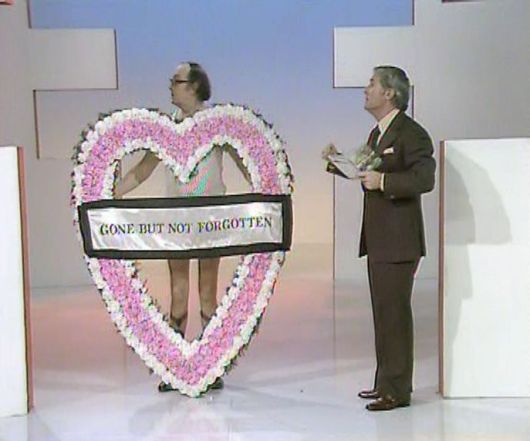
There’s the occasional ironic nod back to their BBC shows – most notably when they introduce Anna Ford and proceed to indulge in a trademark top hat and tails dance.  The joke, such as it is, is that this isn’t Ford but a lookalike – as becomes obvious when every opportunity is taken to shield her face from the camera.  Given that they were never short of real celebs, it’s an odd sequence – possibly a topical gag that hasn’t travelled down the decades too well?

The biggest waste of talent revolves around Leonard Rossiter’s appearance.  Things start promisingly with some decent cross-talk in front of the curtain – Rossiter tells them he’s not working here, just passing through on his way to the BBC.  Eric then mutters they might not be far behind!  All three then drag up as the Andrews Sisters and mime to Boogie Woogie Bugle Boy.  And that’s it – the mere fact that they’re dressed as the Andrews Sisters is presumably supposed to be hilarious (but alas, no).

It’s not all bad though.  There’s a nice flat scene with Frank Finley and the sequence with Eric, Ernie and the Syd Lawrence Orchestra is good fun.  The big moment is reserved for the end, as Harold Wilson pops round to the flat.  Irrespective of whether he’s funny or not, the novelty of seeing an ex-prime minister interact with the boys is worth the price of admission alone.  The look on Eric and Ernie’s face as Wilson receives a tumultuous round of applause from the audience is lovely to see and Wilson’s a good sport – receiving Eric’s jibe that he’s actually Mike Yarwood (and doing an impression of Tommy Cooper!) with equanimity.

Overall it’s pretty patchy stuff.  M&W still obviously had the audience’s affection, but they weren’t always well served by Cryer and Junkin’s material.

Nightingales – Silent Night

silent 01

Nightingales is an archetypal cult programme.  It ran for two series, in 1990 and 1992, which were broadcast on Channel 4 late at night and therefore attracted a very small audience.  Apart from a re-run a few years after their first transmission, I don’t think it’s been seen anywhere on British television for the last twenty years or so.  This is a little surprising, since it stars three very familiar faces – Robert Lindsey, David Threlfall and James Ellis.  But it’s available on DVD, so anybody who’s curious can investigate further.

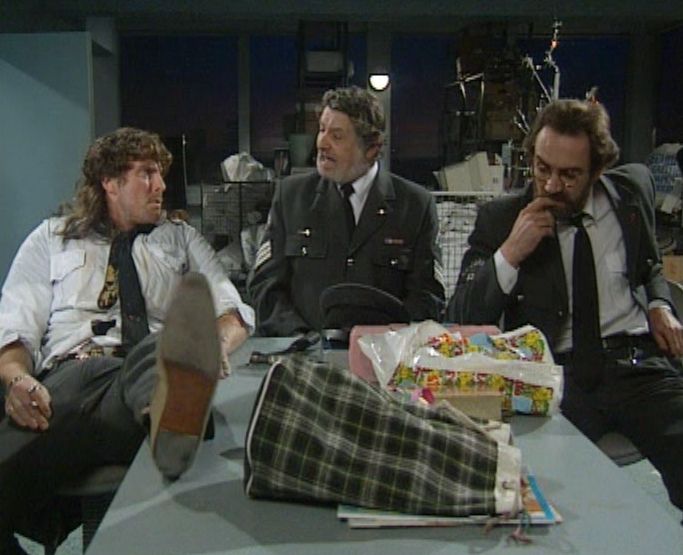
What I love about the series is how it plays with typical sitcom conventions.  The premise seems quite straightforward – Carter (Lindsey), Bell (Threlfall) and Sarge (Ellis) are three night-watchmen in a big office block.  As you’d expect, they’re very different characters – Carter is a would-be intellectual, Bell seems to have a limited level of intelligence whilst the Sarge is a constantly cheery fellow who tries (and fails) to keep the other two in order.  The clash of their three personas would be enough to fuel many sitcoms and the opening minutes of each episode seem normal enough (meaning that if you’d ever tuned in for the first time, you’d be lulled into a false sense of security).

But after the initial scenes, writer Paul Makin spins each episode off into unexpected directions.  In Silent Night (broadcast on the 30th of December 1992) it’s Christmas Eve and the Sarge asks the others to join him in their annual carol service.  Carter moans that nobody ever comes – he’s invited the Pope and Harold Pinter for several years but they never show up.  When there’s a knock at the door, the Sarge wonders if it’s Harold.  Carter is dismissive.  “Harold wouldn’t knock like that. That wasn’t a playwright’s knock. That had the Vatican written all over it.”

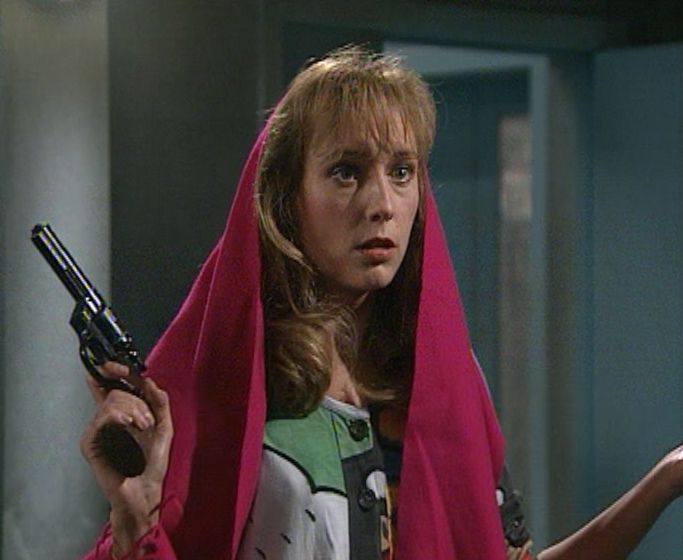
It’s not the Pope or Harold though – it’s a young woman called Mary (Lia Williams) who’s going to have a baby.  Carter’s not happy.  “It’s Christmas Eve, right? We have a pregnant woman, right? Called Mary, right? Ring a bell? What we have here is an allegory.”  Mary insists it isn’t an allegory and offers them fifty gold sovereigns (!)

She gives birth – but not to a child.  She starts by giving birth to a goldfish, then produces an ever-growing collection of consumer products, including a toaster, a toy dog, a set of golf clubs, a collection of VHS tapes, a pool table and a washing machine to name just a few.  The Sarge is appalled by what Mary is going through and decides to pray.  Shortly after, the cry of a baby is heard.

But when they ask her what she’s going to call it, they’re taken aback when she names him Jesus.  So it was an allegory after all!  She explains that her allegory was “all about how we’ve lost sight of the real meaning of Christmas, how every year we drown under an ever-increasing pile of consumer goods.”  This leaves the three of them disheartened, but Harold Pinter and the Pope turn up for the carol service, so not all is lost.

Not your run-of-the-mill sitcom fare then, which may explain why it received something of a nonplussed reception when it was initially broadcast (although as I’ve said, the late-night slot didn’t help).  But it’s something that’s only improved with age and whilst I like to dig out Silent Night each December, the rest of the series is equally as good and something I enjoy revisiting on a regular basis.  If you’ve never seen it then I’d certainly recommend it.

silent 02

Whatever Happened to the Likely Lads? – 1974 Christmas Special

likely

The Likely Lads, broadcast in the mid 1960’s, was the first sitcom success for Dick Clement and Ian La Frenais.  They then revived the series in the 1970’s as Whatever Happened to the Likely Lads?

The revival was even better than the original, thanks to the way the characters of Terry Collier (James Bolam) and Bob Ferris (Rodney Bewes) had developed.  In the original series they were unattached men in their twenties, but by the revival they were a decade older and, in Bob’s case at least, men with commitments (Bob had married his long-time fiance Thelma).

This was unusual for a sitcom, as normally they tend to remain static, unchanging affairs.  Think, for example, of Dad’s Army, Porridge or Fawlty Towers.  In those cases, characters are trapped together (because of the war, prison, the job they do).  The format of Whatever Happened to the Likely Lads? was much looser as it revolved around Bob’s eternal dilemma – he loves his wife, but he doesn’t want to lose contact with his best friend.

Over the years Bob and Terry had changed from the people we met in the sixties.  Then, they were equal – both working in the same factory and sharing a similar outlook on life.  But in WHTTLL?, Bob is married, holds down a responsible job, has a nice house on a new estate and is thoroughly middle-class.  Terry is quite different – after a spell in the army he’s content to drift along, with no particular direction in mind.  What keeps them together is their vague sense that things were better when they were younger (the theme song ponders “is the only thing to look forward to, the past?” which sums things up nicely).

This melancholic longing for a simpler time is one of the reasons why the series was so good.  And had Bolam and Bewes not fallen out dramatically (it’s reputed they’ve not spoken for nearly forty years) then it wouldn’t have been surprising if Clement and La Frenais had chosen to revisit the characters every decade or so (in a sort of 7 Up way it would have been fascinating to see how Bob and Terry fared through the eighties, nineties and into the twenty first century).

Broadcast on the 24th of December 1974, this Christmas Special was the final television episode – although Bolam and Bewes would re-record the series one shows for radio in 1975 and shoot a film version in 1976.

We open with Bob feeling trapped.  Thelma (Brigit Forsyth) is in Christmas planning mode – a sight which remains familiar today.  She’s fretting about the cards she needs to write, the presents she has to buy and their social engagements.  Bob isn’t thrilled to learn that he’ll be spending Christmas with his mother-in-law or that Thelma has committed them to a number of parties (when he’d much rather be relaxing at home, watching The Great Escape).  His lack of success at charades last year still rankles – as he reminds Thelma, she had an easy one – Great Expectations –  whilst he had to struggle with The AA Continental Handbook!  The pay-off to the scene is that it’s only late September, another nod to those people who need to get everything organised for Christmas months in advance.

Terry’s spent the duration of WHTTLL? content to be unemployed.  There’s a change here, as Bob and Thelma spy him taking his driving test (and of course they manage to put him off).  Despite this he still passes and he later tells Bob that he’s planning to become a long-distance lorry driver.  He has to settle for a job driving a fork-lift truck though, and it’s clear that he’s disappointed.  Terry had assumed that once he had his driving licence it would be his passport to better things – he really wanted a job where he could take his vehicle home during the evening and impress the girls.  But the only job he found like that involved an ice-cream van!  As Bob says, his chance of pulling birds in that would have been wafer-thin.

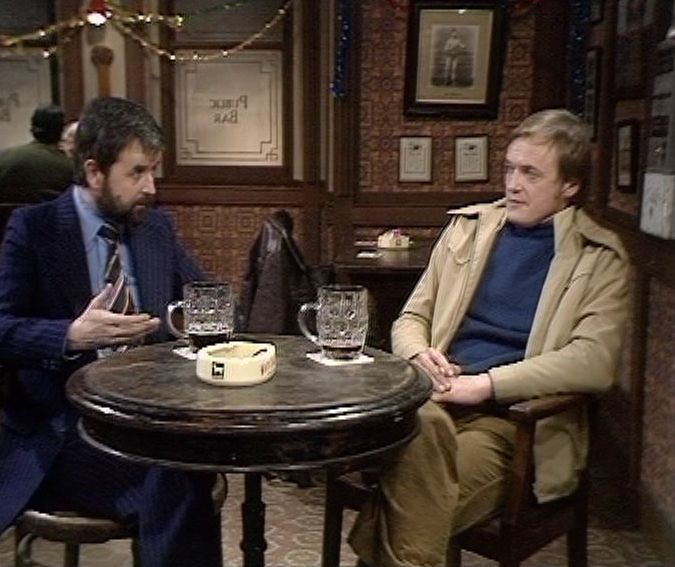
Another sign of the timeless nature of the episode is Terry’s complaint that Christmas is just too commercialised these days.  Bob doesn’t agree, he loves every aspect of Christmas (another way in which he hankers for earlier, simpler times?).  Over a pint in the pub, Terry reminds Bob that he was the last person in school to believe in Santa Claus.

I remember the day vividly. Christmas Eve afternoon it was, sitting in our back kitchen in front of the fire, reading Lord Snooty in that years Beano annual. I’d got it early, because the week before I’d been crying a lot with a boil on me neck. Anyhow, there I was, couldn’t have been happier, not a worry in the world except how Santa was gonna get a fire engine down our chimney. Then you show up with an evil, malicious grin on your face and said, ‘Santa Claus is dead.’

Bob goes on to remember that Terry had told him that Santa had been gored to death by his reindeer!

If the pub scene is the heart of the episode, there’s more traditional sitcom fare afterwards as Bob and Terry make their way home, very drunk.  Bob’s lost his car keys, so Terry elects to drive him home in his fork-lift truck.  And since he doesn’t have his front door key either, he uses the fork-lift to raise him up to the bedroom window.

On Christmas Eve, Bob and Thelma are on their way to a fancy dress party – Bob as Captain Hook and Thelma as Peter Pan (Terry’s got the job of driving their mincab).  Judging by the reaction of the studio audience they hadn’t seen Bewes’ costume before he entered the living room, since it draws an audible ripple of appreciation.  Once they get to the party, Thelma is appalled at the goings on – it seems that all their married friends have paired off with other people.  Bob’s not immune – he has his eye on Sylvia Braithwaite.

There’s more sitcom hi-jinks when a fuming Thelma asks Terry to drive her home, with neither realising that Bob and Sylvia are in the back of the cab.  Thelma invites Terry in for a drink and Sylvia insists that Bob drive her home in Terry’s cab.  This he does, but Terry sees the cab driving off and reports it stolen.

Running for just under forty-five minutes rather than the usual thirty, it’s tempting to wonder if it was originally planned as a half hour episode – if so, it would have ended with the fork-lift truck scene.  Was the fancy-dress party sequence bolted on later?  But however it was written, the final moment (when both Thelma and Terry realise that Bob stole the cab) is a great beat to end the series on.

Stanley Baxter’s Christmas Box

stanley baxter

Although the BBC had the jewels in the light entertainment Christmas crown during the majority of the 1970’s – The Two Ronnies, Mike Yarwood and Morecambe & Wise – ITV weren’t totally bereft, as they had the considerable talents of Stanley Baxter.

Baxter had established himself on the BBC with a number of series between 1963 and 1971, but then jumped ship to LWT in 1972 where he remained for the next decade.  His programmes were quite expensive – big production numbers and his penchant for playing multiple characters were two of the reasons why.  And it was partially cost that saw him fade away from television (as executives decided they could no longer afford him).  But the change of the comedy landscape in the 1980’s, which had seen casualties like Benny Hill, could also have had something to do with it.

When pondering whether Baxter could have continued into the mid to late 1980’s, you have to say that Stanley Baxter’s Picture Box, broadcast on the 26th of December 1976, was of its time.  Stereotypes are certainly in evidence, such as the Jewish BBC newsreader.  “Here is the news at nine, but for you – eight forty five.”  He also blacks up towards the end in a sequence you could never imagine receiving an airing today.

An early highlight is the Philip Marlowe sketch which sees him approached by Cinderella.  Baxter plays all the characters – Marlowe, Cinderella, Prince Charming and the Ugly Sisters.  It’s notable that split-screen photography wasn’t used – instead we either focus on one person or if another’s in shot then they’re only seen from behind (played by a double).  One of the drawbacks with Baxter playing everybody is that he never had anyone else to react against, so he’s reliant on the editing.  But it’s pretty good here and although there’s some painfully obvious lines, there’s some good ones too.  “People from my past flashed before my eyes. Until they got booked for indecent exposure.”

There’s a fair amount of focus on the BBC. Apart from the newsreader we also see The Bruce Fosdyke Show (“tonight at 11:45 if you’ve absolutely nothing else to do”).  The Fosdyke sequence doesn’t outstay its welcome and contains several decent brief gags (such as Baxter dressed as Nana Mouskouri and Sharri Lewis and Lambchop as they’ve never been seen before).

An appeal on behalf of the inhibited from Faith Douche provides a good opportunity to exhume some old favourites.  “I was strongly against sex on television, because whenever I tried it I kept sliding off the top of the set”.  Elsewhere, Baxter’s amusing as Noel Coward and also impresses as Jacques Cousteau who’s decided to explore the murky depths of Margate.

Girl on the Cover tells the story of the obese Lois Latnick who’s turned into a cover beauty for the magazine Harpie’s Bizarre.  Lois’s fatsuit is rather crude compared to what could be achieved decades later, but the heart of the sequence is when she’s transformed into a beauty (or at least as beautiful as Baxter as could ever hope to be!) and we launch into a series of musical numbers which close the show.

Written by Ken Hoare with additional material from Baxter, Barry Cryer, Iain McIntyre and Neil Shand, Stanley Baxter’s Christmas Box is good, bawdy fun.

Two’s Company – A Loving Christmas

two's company

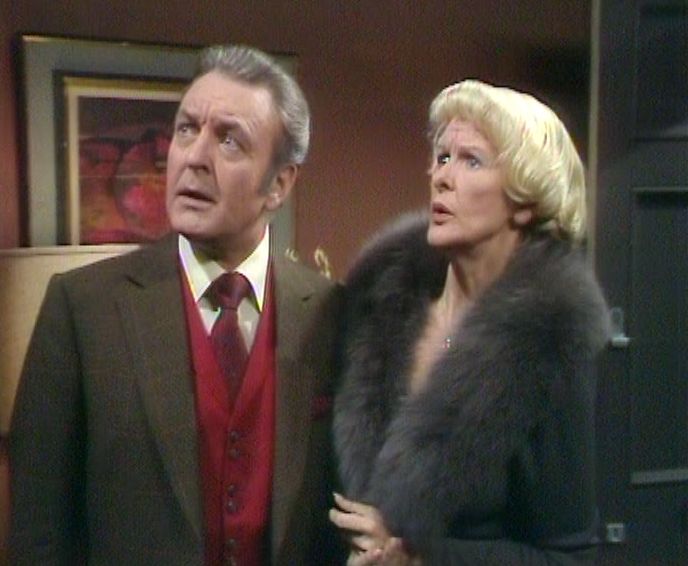
Two’s Company was a culture clash comedy – Dorothy McNab (Elaine Stritch) is a rich American and Robert Hiller (Donald Sinden) is her superior English butler.  Their differing natures are spelt out in the opening credits (which seem to go on forever).

Running for four series between 1975 and 1979, Two’s Company‘s strength is the banter between Stritch and Sinden.  Take that away and there’s not a great deal left – the writing is amusing enough but it’s hardly top-tier sitcom fare.  But the first series had clearly been successful enough for A Kind of Loving (the opening episode of series two) to receive a Christmas Day airing in 1976.

The relationship between Dorothy and Robert is made clear by their choice of presents to each other.  Dorothy is underwhelmed to receive an LP of Elgar’s Enigma Variations whilst Robert is equally unimpressed with an LP by Jelly Roll Morton.  Once they swop, then they’re much happier.  Although both presents were unsuitable, there’s no malice in their choices – possibly they genuinely wanted to widen the others musical horizons (although it was doomed to failure).  This sets the tone for their general interaction – both indulge in a subtle form of one-upmanship, with honours (in this episode) ending up even.

The plot of this one is quite simple.  Both say their goodbyes on Christmas Eve as they head off in different directions (Dorothy to Paris and Robert to the country).  But both were fibbing and had planned to spend a quiet Christmas at home (Robert in the comfortable downstairs portion of the house) with convivial company.  As both of them have now returned that creates something of a problem.  And when Robert’s friend Gillian (Geraldine Newman) takes an interest in Dorothy’s friend Nigel (Derek Waring) that just adds to the tension.   And then Dorothy’s cousin Clarence (John Bay) turns up …..

Clarence is your stereotypical, loud, crass American – constantly referring to Robert as “Jeeves” much to his disgust.  Dorothy’s no more pleased to see him and when Gillian and Nigel leave together that means Dorothy, Robert and Clarence are fated to spend Christmas together.

Bay was married to Elaine Stritch, but he was a decent actor so his appearance here wasn’t just nepotism (it’s not his fault that Clarence was written as such an irritating person). Geraldine Newman and Derek Waring were both very experienced performers and they help to give the episode a bit of impetus.

Donald Sinden’s spot-on comic timing, even with the fairly thin material, is worth watching and he has a decent foe in Elaine Stritch.  Not a classic series, but a passable way of spending twenty five minutes.

A Christmas Carol (BBC 1977)

christmas.jpg

Broadcast on the 24th of December 1977, it’s fair to say that they don’t make them like this anymore.  This production of A Christmas Carol is completely studio-bound and at times places characters, via the wonder of CSO, in front of illustrated backdrops.  For some, this artificiality might be an issue but I feel that the non-naturalistic moments are strengths not weakness.

One of the main pluses of the production is the quality of Elaine Morgan’s adaptation.  Since Dickens’ novella isn’t particularly long, Morgan was able to compress it down quite comfortably to just under an hour.  Everything of note from the original story (including much of the dialogue) has been retained and it’s interesting that the likes of Ignorance and Want (often removed from other adaptations) are present and correct.

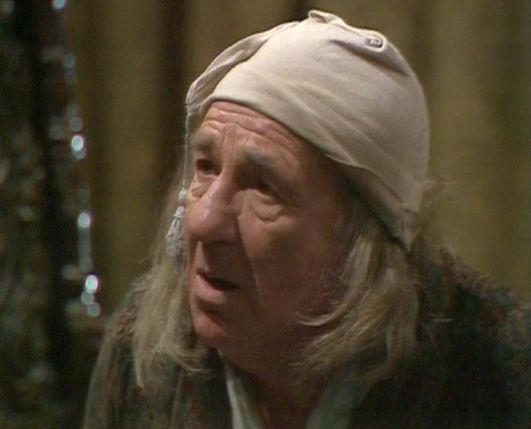
Michael Hordern, an actor who always seemed to play bemused and vague characters, makes for a very decent Scrooge – although since he lacks bite and arrogance, Hordern’s better as the story proceeds (especially when Scrooge is finally presented to us as a humble and chastised man).

John Le Mesurier only has a few minutes to make an impression as Jacob Marley, but he certainly does.  His scenes with Hordern were complicated by the fact that both weren’t on set at the same time (Marley, as befits a ghost, is only ever seen as an insubstantial presence).  This isn’t really a problem though, as both actors had such good timing they were able to make their scenes ‘together’ work.

The arrival of Patricia Quinn as the Ghost of Christmas Past sees Scrooge revisit his own past.  The establishing shots of Scrooge’s schoolhouse are presented via a series of illustrated images, with Horden and Quinn overlaid.  You can either view this as a necessity, due to the production’s low-budget, or as an inspired artistic choice.  One nice moment occurs when we move into the schoolhouse and there’s another illustration – which then morphs into a real-life scene.

Almost unrecognisable, thanks to a heavy beard, is Bernard Lee as the Ghost of Christmas Present (although his voice is unmistakable).  Paul Copley is slightly too jolly and irritating as Fred, but this a rare production mistep.  Clive Merrison, with an impressive wig, is a fine Bob Cratchit whilst Zoe Wanamaker is equally good as Belle.  There’s plenty of other familiar faces, including John Salthouse, John Ringham, June Brown and Christopher Biggins whilst the brief opening narration is provided by (an uncredited) Brian Blessed.

Although there are many versions of A Christmas Carol available, this one is certainly worth your time – partly because of the quality of the cast, but also due to its fidelity to Charles Dickens’ story.  Plenty of other adaptations can’t help but make various ‘improvements’ but Elaine Morgan was content to let the strength of the original tale speak for itself.

Return of the Saint – The Diplomat’s Daughter

diplomat 01

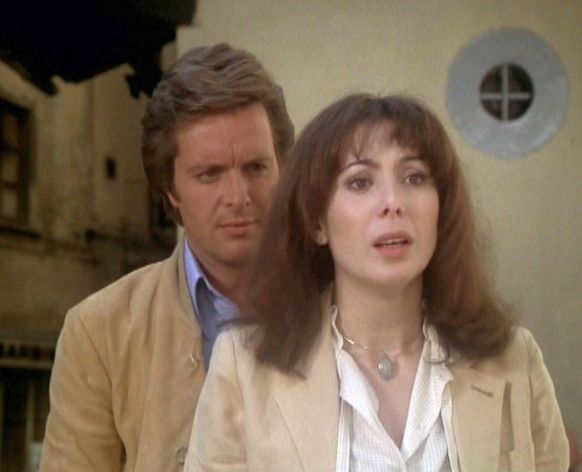
When Simon observes a beautiful young woman, Marie de la Garde (Lynn Dalby), in distress he has to intervene.  She tells him that her brother, Pierre (Murray Head), has fallen into bad company and that they are forcing him to courier drugs to England (his father is the French ambassador and has diplomatic immunity, which is the reason why Pierre is so useful to them).

The opening seems to be a direct crib from Ian Fleming’s James Bond novel On Her Majesty’s Secret Service.  We see Simon driving down a deserted road, minding his own business, when he’s overtaken at high speed by an attractive young woman in a red sports car.

Marie’s been marked for death by the villainous Shriber (Karl Held) because she offered to pay Pierre’s gambling debts (Shriber, of course, knows that Pierre is much more useful to them as a drugs mule).

Unlike many of the foreign episodes, this one features British actors putting on accents of varying credibility (although there’s a later twist with this).  Lynn Dalby, best known as the long-suffering partner of Budgie Bird in Budgie, is appealing as Marie (who is a more complex character than she first appears to be) whilst Murray (One Night In Bangkok) Head has the more thankless role of Pierre.

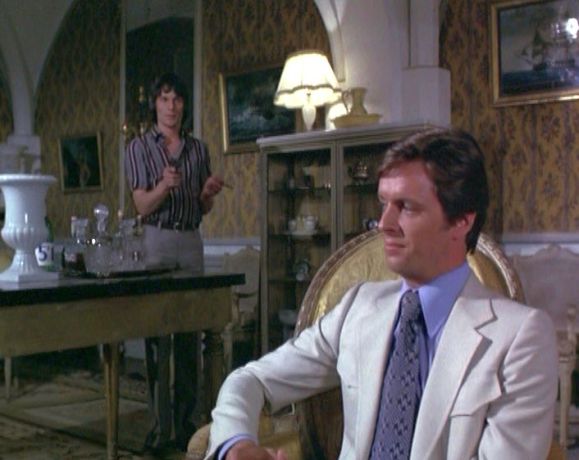
Michael Pertwee’s script is well tailored to Ian Ogilvy’s talents.  Simon seems to have a little more spark and verbal byplay in this one (referring to the villains as the “ungodly” brings to mind the literary Saint).  It would have been nice if all the episodes had featured a similar level of characterisation – rather too often Ogilvy wasn’t called upon to be anything more than a conventional leading man.  His comic timing is used to good effect here though.

The twist in the tail – Marie isn’t Pierre’s brother (they’re boyfriend and girlfriend) and is keen to acquire the drugs herself – poses more questions than it answers.  The whole plan seems to have been organised in order to smuggle the drugs in Simon’s car – but that makes very little sense.  Were the attempts Shriber made on Marie’s life simply mocked up for Simon’s benefit?  If so, it seems an incredibly over-elaborate scheme.  The slightly strange scripting means that The Diplomat’s Daughter rates three halos out of five.

Had ROTS returned for a second series, according to Ian Ogilvy it would have been much more of a British-based series.  That would have been interesting and if the scripting had been a little tighter then it could well have become a classic.  At it was, ROTS was probably made at the wrong time, being the last of the ITC adventure series meant it seemed a little out of place in the late 1970’s (when harder-edged fare such as The Sweeney and The Professionals were on offer).  But overall it’s a very solid series – helmed by experienced hands, both in front of and behind the camera.

It may be predictable at times, but as Ogilvy once said it was simply an adventure series and designed to entertain.  Which it certainly does, making it a pleasure to revisit.

diplomat 02

Return of the Saint – Appointment in Florence

florence 01

When a friend of Simon’s, Christian Van Esser (Bryan Pinero), is kidnapped and later killed by a faction of the Red Brigade, the Saint is quickly on the trail.  One of the terrorists, Ingo (James Aubrey), reacts badly to Christian’s murder and absconds – along with the ransom money.  With both his former associates and the Saint on his trail, he’s certainly a man in demand.  His girlfriend, Lea (Carla Romanelli), is a strong lead – but can Simon convince her that the man she loves is a terrorist?

By now you should be aware of the drill.  If Simon’s spending time in the pre-credits sequence with an old friend, it’s reasonable to assume that his lifespan will be somewhat limited!  A nice touch is that the episode opens with Simon and Christian enjoying a skiing holiday (no doubt these scenes were shot during the making of Hot Run) and we then relocate after the first ten minutes to Florence.  The two very different locations help to give the story an extra gloss.

Before the credits roll, we see Christian abducted, but we don’t know why.  It’s interesting that immediately after, time has clearly elapsed – we learn in very short order that Christian was kidnapped, the ransom was paid, the Saint had promised not to do anything to impede his return but all to no avail (his dead body arrives at the rendezvous in a cable-car).  All of this is dealt with in a minute or so, whereas it would have been more usual to develop the drama of Christian’s kidnap during the first act.

The least impressive piece of dubbing in the episode comes when Christian’s wife spies his lifeless body in the cable-car and screams.  The shape of her mouth in no way corresponds to the heart-wrenching wail which was no doubt added on much later in London!

Terrorism rarely featured in ROTS (One Black September was a notable exception).  It’s not hard to understand why, as the fanaticism of terrorists sits rather uneasily with the series’ escapist tone.   As might be expected they’re painted with rather broad brushstrokes – the terrorists’ beliefs are briefly touched upon, but if they had been ordinary criminals the story wouldn’t have been too different.

Their leader, Manfred (Stuart Wilson), is slightly more sadistic than the run of the mill ROTS baddy though.  When he corners Lea, he tells her that “I’m going to hang you from your own balcony. And when you are choking, I will come and cut the rope and watch while you fall and break your neck.”  Not surprisingly, he doesn’t get to carry out his threat as Simon arrives in the nick of time.

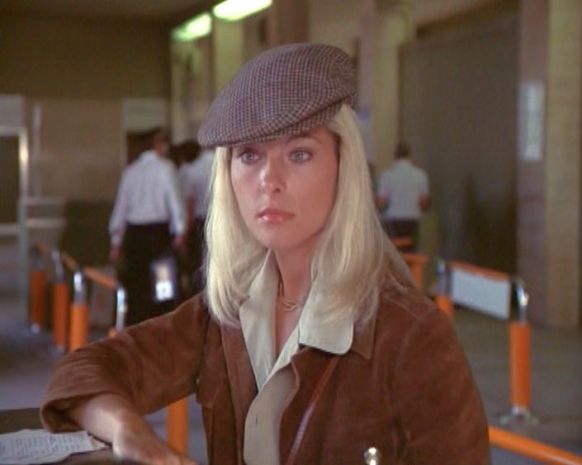
Carla Romanelli gives a nice performance as Lea – she doesn’t have a great deal to do, but comes over in several key scenes very well.  An eye-catching turn comes from Nicole Stoliaroff as one of the terrorists, Gaby.  Although it’s true that her character is something of a cliche – blond, beautiful and deadly – and is never really  developed.  As I’ve said, it would have been better had the terrorists had more strongly defined characters and motivations, but perhaps that was outside of the series’ parameters.

Despite the feeling of deja vu, this is a solid episode which rates four halos out of five.

florence 02