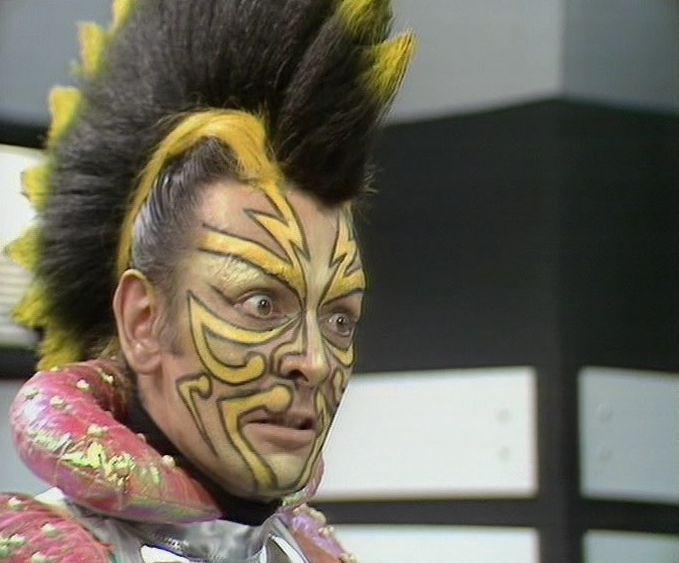
Blakes 7 – Sand

sand 01.jpg

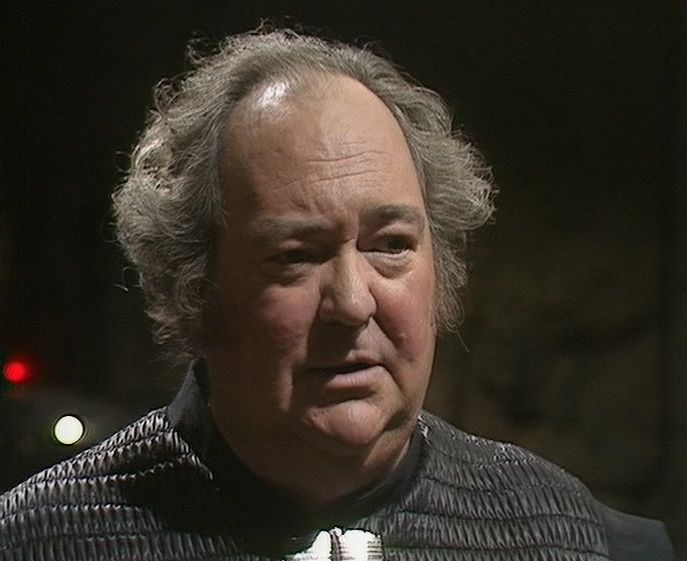
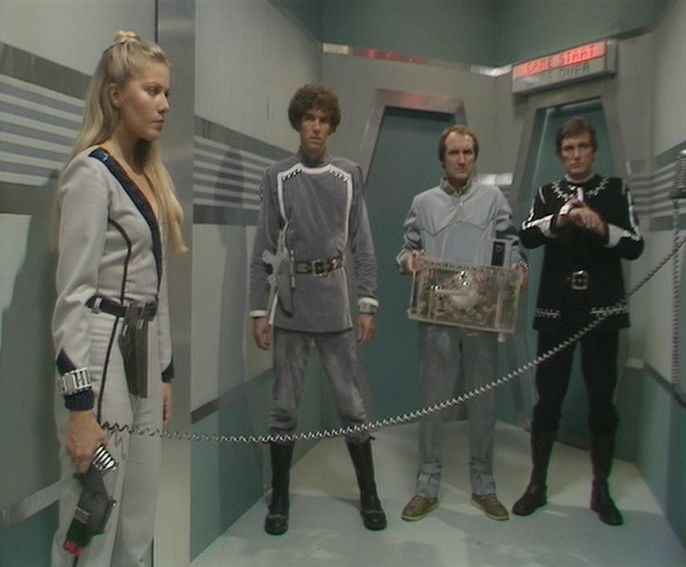
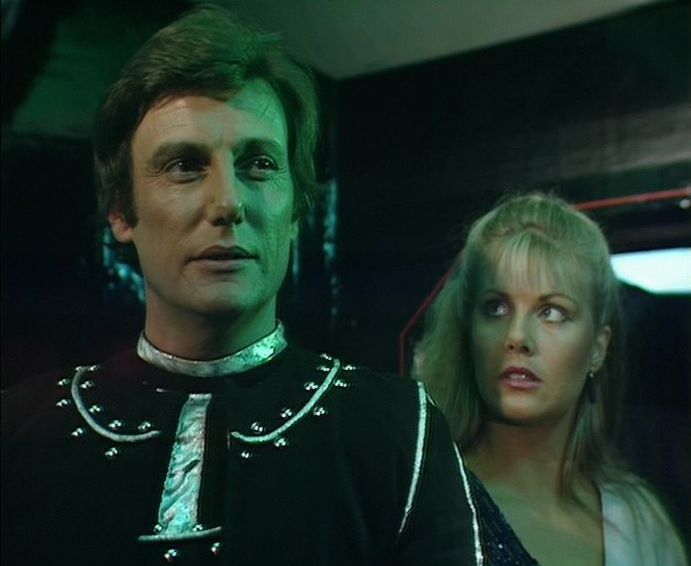
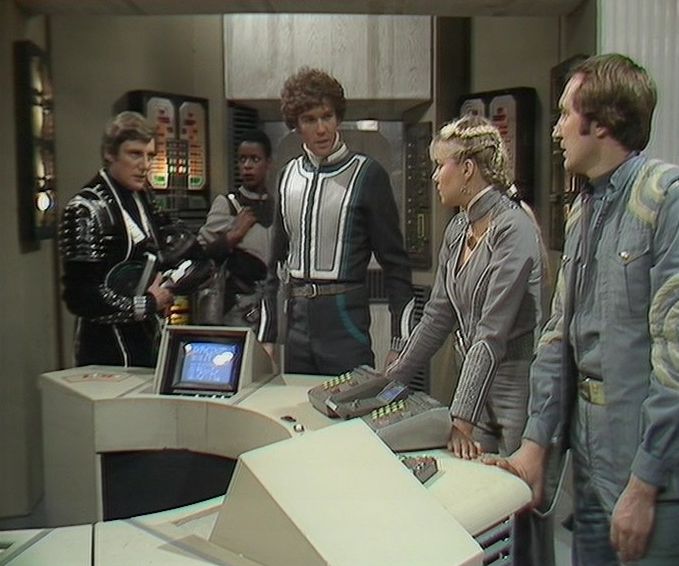
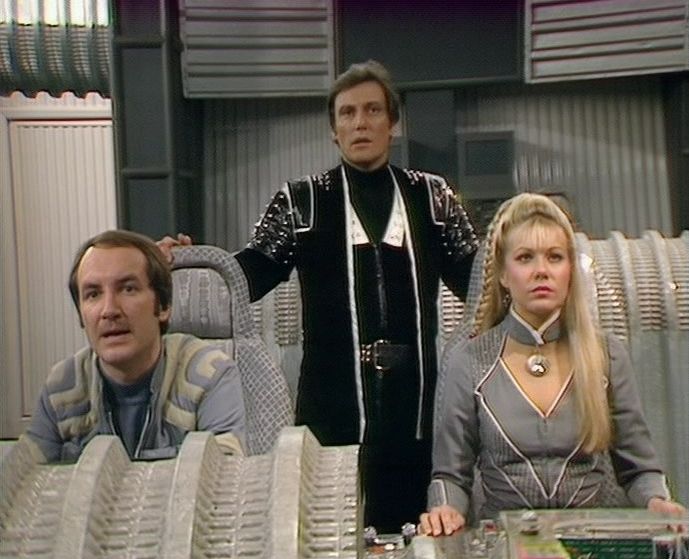
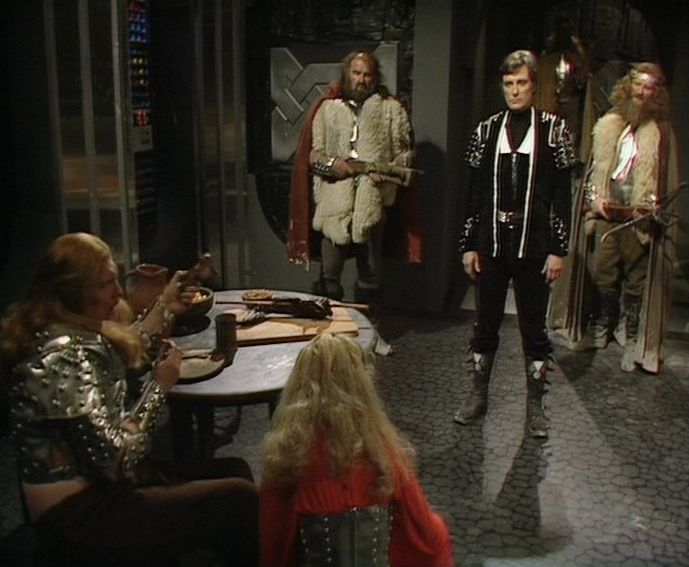
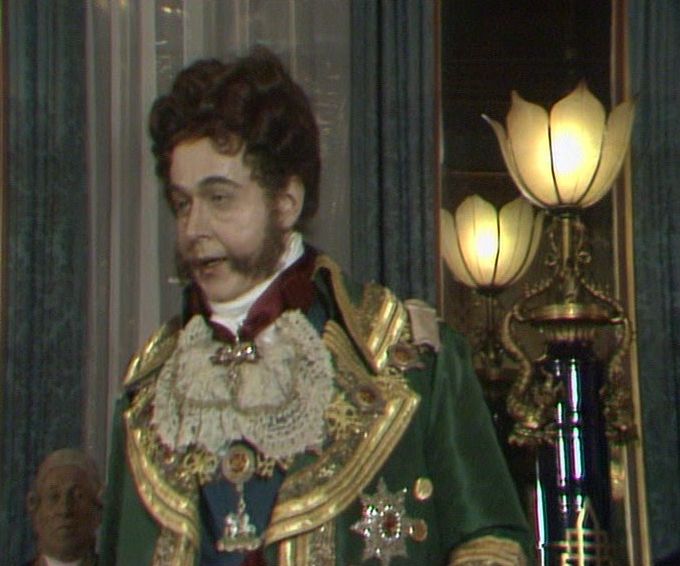
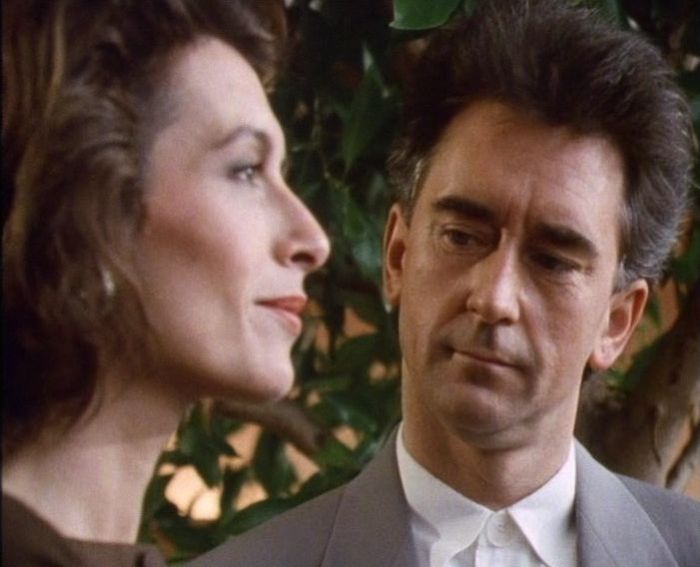
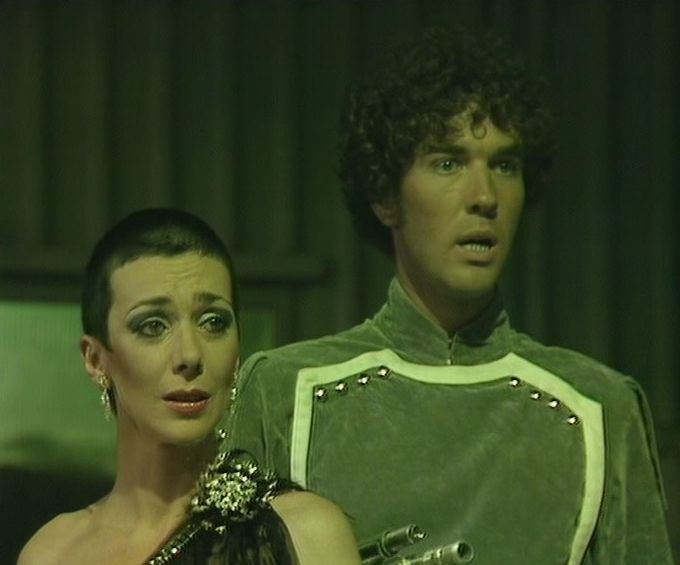
Servalan has elected to join a Federation mission dispatched to the sandy planet Virn. Together with Reeve (Stephen Yardley), Chasgo (Daniel Hill) and an unnamed assistant (played by Peter Craze), she intends to find out what happened to a research party last heard from some five years ago. They find the going treacherous after their ship crash-lands a fair distance away from the research base.  Avon is intrigued to learn that the Federation, after all this time, has decided to send a ship to investigate this most inhospitable of planets.  He decides that if there’s anything of value on Virn, they should have it rather than the Federation. It quickly becomes clear that the sand has a form of sentience as strange things start to happen ….

Like Tanith Lee’s previous script, Sarcophagus, Sand is something of a bottle show which delights in putting the regulars under the microscope.  Most interestingly, we see a much more human Servalan than usual.  The reason for her emotional state becomes clear after it’s revealed she’s come to the planet in order to find out what happened to Don Keller (Jonathan Gaunt).  Keller, via a recording, is the first voice we hear.

I know a land beyond the heart of time. The sun never comes there. No moon ever shines. And man, a grain of sand, nameless and lost, blows with the dust. I apologise, HQ, but that’s what this place makes me think of. The sun never comes here. Just sand and mist. Virn, the green planet. Never rains here either. There’s something strange. Not just the way the ship was affected when we came down. Not just the way all the machinery plays up. Not just the way we’re dying. You still listening, HQ? This is Don Keller, remember me? On Virn, where we have a plague on our hands. On my hands. So when do I get something from you?

Unlike Sarcophagus, this story boasts a guest cast – although not all of them make it to the final reel.  Unsurprisingly, Peter Craze’s unnamed assistant is the first to bite the dust (or sand) with Reeve following shortly after.  Yardley has the most substantial guest-star role, although Investigator Reeve isn’t a terribly interesting character – he’s an alpha male who takes a shine to Servalan (her disinterest is total and cutting).  It’s hard to command authority when you’re dressed in a shiny silver spacesuit, but Yardley does have some good lines and makes the most of the role.

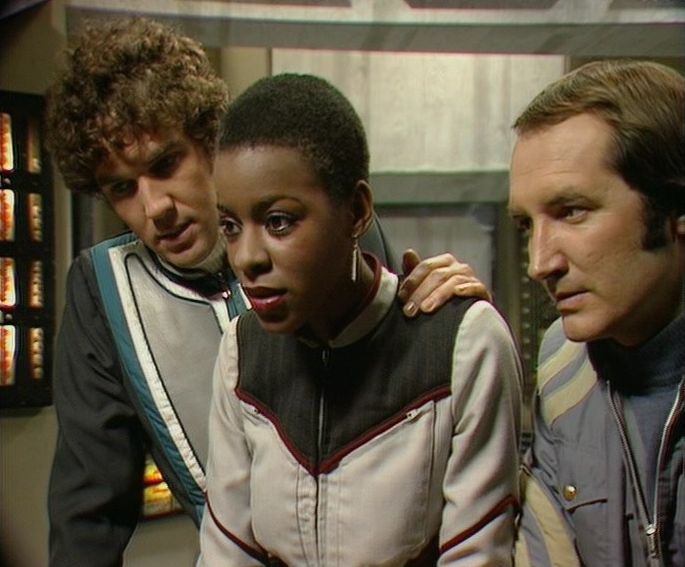
The deaths of the ship’s crew enables the narrative to be split in two – Servalan and Tarrant remain isolated on Virn whilst Avon and the others are also trapped, but on Scorpio.

If Servalan was going to be locked up with anyone then Avon would have been the obvious choice.  But I’m glad that Lee avoided the obvious, since Sand gives Stephen Pacey a long overdue chance to do a spot of acting.  Throughout series three Tarrant was incredibly smackable, but this hasn’t been a problem during series four (mainly because Tarrant has been underwritten so badly that he’s hardly contributed at all).  Sand enables Tarrant to step out of Avon’s shadow and Pacey doesn’t disappoint.

Here, for example, he posits a reasonable explanation for the current state of affairs.  This is a rare occurrence – normally Avon would be the one with all the answers.  “The trace of life on Virn was the sand. Some emanation from it affects the atmosphere, even the magnetic fields of the planet, and causes the rest of the trouble: ships crash, instruments fail, nobody can protect himself. And when the sand comes into contact with a human body it sucks out the cellular energy, sometimes fast, sometimes slowly. I imagine that depends on how much sand is in the vicinity. But that’s what Keller’s plague was.”

Tanith Lee serves both Tarrant and Servalan well, delivering up some very quotable dialogue.  This is how Tarrant describes his room-mate.  “I’d say you’re possibly the most unscrupulously venomous woman in the galaxy. Being shut in here with you is rather like being locked in a cage with a panther: a black cat with large golden eyes and long silver talons.”  Servalan’s rejoinder is that she’s just the girl next door! Tarrant’s next line is a good one too.

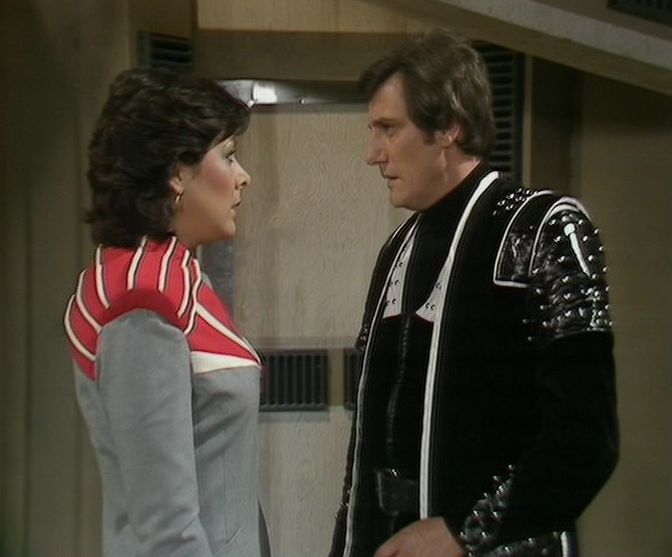
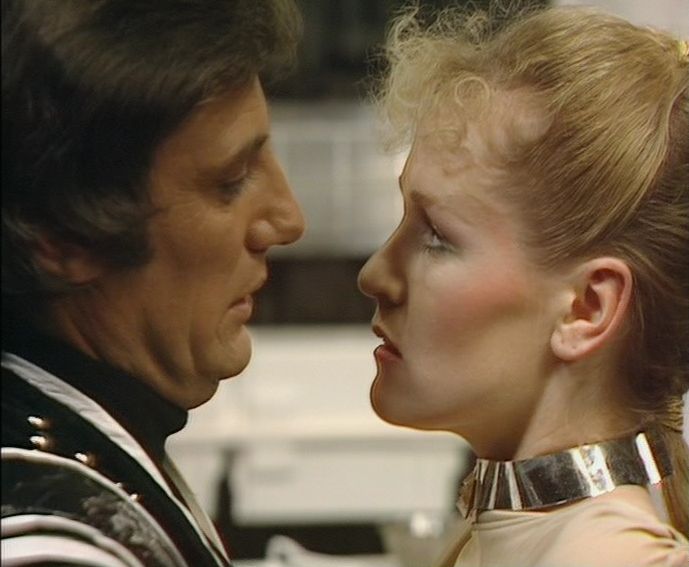
Lee also takes the opportunity to fill in a few blanks, such as how Servalan escaped from the Liberator at the end of Terminal, but Servalan’s revelation that Don Keller was the only man she ever loved is the stand-out moment from this part of the story.

SERVALAN: Don Keller, he was my lover. I was eighteen.
TARRANT: He’s the reason you’re here.
SERVALAN: He left me. I grew up. Power became my lover. Power is like a drug. It is beautiful. Shining. I could destroy a planet by pressing a button. I loved him.

Do we believe her? She seems genuine, but we’ve seen before how Servalan is able to manipulate others with ease, so it’s possible that self preservation made her adopt the pose of a victim. That’s what Tarrant claims to believe at the end (although is he only saying this to appease Avon?)  Whatever the truth, Jacqueline Pearce impresses here – which proves that given good material, the character can still be as compelling as she once was.

If Tarrant and Servalan are having an interesting time down on the planet, then so are Avon and co up on Scorpio.  Vila is reduced to a drunken state (not the first time this has happened).  Michael Keating does drunk acting very well, but it’s rather an obvious choice – although the mention of Cally strikes a nerve.  “If I died it’d be a real joke. Who’d care? Who cared about Cally?” Orac’s acting very oddly too, telling everyone that he loves them!

Avon’s enjoying himself and so is Paul Darrow.  Avon has a theory that the sand eliminates the weak and keeps the strong alive in order to maintain a healthy breeding stock.  “Presumably the sand up here has compared Vila’s wits and stamina with mine and concluded that I am the dominant male. On the herd principle therefore, it decided that Vila was superfluous and it could kill him. You two, of course, would have been allowed to live”.  Vila’s not dead of course, but Avon doesn’t seem terribly unhappy at the thought of a ménage à trois with Dayna and Soolin ….

A solution is eventually found and Tarrant returns to face a less than warm welcome.  He’d allowed Servalan to escape, which is bad enough, but his intimacy with her disgusts Dayna (understandable since Servalan killed her father).  This is the sort of theme that would have been an interesting one to develop, but unfortunately B7 wasn’t the sort of series for complex character arcs, so as the credits roll a big reset button is hit and the matter is never mentioned again.

Haunting and well-realised, Sand is a memorable story.  Not quite as compelling as Sarcophagus maybe, but it’s still several cuts above the norm.
sand-02

People Just Do Nothing – Dazzler Media DVD Review

6928

The contents of this blog are a good indication that I prefer my television programmes to be old (and preferably in black and white!) but occasionally I do like to haul myself into the 21st Century.  One such trip to the modern world revolves around People Just Do Nothing, a BBC comedy series about a pirate radio station called Kurupt FM which launched in 2012.

The story of how People Just Do Nothing was created is not an uncommon one in the internet age.  It first surfaced in 2010 as a YouTube series called Wasteman TV, this caught the attention of the BBC who commissioned a pilot in 2012.  The pilot, along with the first series, aired on the IPlayer before receiving a terrestrial screening.  This is an increasingly common practice (Car Share, Class) and subsequent series of People Just Do Nothing followed the same route, debuting via the IPlayer first.

What’s really interesting is that none of the cast had ever acted or written anything before the YouTube series.  They carried over their improvised and collaborative working practices to the BBC series, although they also began to script the show beforehand (Steve Stamp, who is the drug-addled Steves, may play a relatively minor character but is a driving force behind the writing).  The mockumentary aspect of the show has led to inevitable comparisons with The Office, but I can also see parallels (although probably not intentional) with the forgotten Operation Good Guys (1997 – 2000), a mock fly-on-the-wall series which predated The Office, but is now all but forgotten (if Ricky Gervais and co hadn’t drawn some inspiration from it though, I’d be amazed).

When the mockumentary format is done well (as in Operation Good Guys and, of course, People Just Do Nothing) it’s a wonderful way of exposing the weaknesses and contradictions of the characters.  This is evident right from the start (in episode one, series one – Secret Location) as Grindah’s (Allan Mustafa) impressive façade is slowly whittled away piece by piece.  He’s the ultimate no-hoper, trapped in a world of delusion where he believes himself to be the main man of an influential pirate radio station.  But in reality the station’s reach is pitifully small and he’s also got problems with the neighbours – who don’t appreciate the noise.  He enlists the help of Chabuddy G (Asim Chaudhry) who agrees to soundproof their studio, that is if he can find enough egg-boxes.  Unsurprisingly, it’s a botched-job.

6931

The relationship between Grindah and DJ Beats (Hugo Chegwin), his loyal (albeit rather put-upon) right hand man is a key one. In the second episode, Angel’s Birthday, Beats has the chance of a job – at Tie One – and enlists Chabuddy’s help. Chabuddy tells him to grab the goat by the horns and then to penetrate the goat ….

Each episode is packed with killer lines and this one’s no different as Chabuddy admits that his homemade Polish Vodka has a few teething problems – literally, as people lose their teeth after drinking his corrosive brew.  Apart from Beats’ big chance at the tie shop, Grindah’s daughter Angel is celebrating her fifth birthday. Alas, he gives Chabuddy the job of organising the party and is shocked that all the chocolates have a rather phallic air. “Everything’s cock-related. It’s my little girl’s birthday birthday party and there’s cocks everywhere.”

Series two opens with Grindah and Beats on the up – listening figures are well into double figures. Grindah and his girlfriend Miche (Lily Brazier) are preparing for their daughter’s christening, but who is Grindah going to pick to be Angel’s godfather?  It’ll either be Beats or Decoy (Daniel Sylvester Woodford). Chegwin’s downcast face when he isn’t automatically chosen is a lovely comic moment as is the way he cheers up after Grindah tells him he’s reached the final.

Lily Brazier is so good as the self-obsessed Miche. She’s the recipient of many wonderful lines, one of my favourites comes from the first episode of series one where she claims that she’d be totally lost without Grindah – the last time he was away the television was stuck on Dave and she couldn’t change it. That sounds grim ….

By series three, Miche’s proposed marriage to Grindah causes ructions,  Chabuddy’s money-making schemes continue to misfire in spectacular fashion whilst Beats’ girlfriend Roche (Ruth Bratt) gives birth.

People Just Do Nothing‘s profile has slowly built over the last few years.  That they were nominated for a 2016 BAFTA (for best scripted comedy) is a good indication of how the series is moving into the mainstream (it lost to Peter Kay’s Car Share).  As the show has developed during the last few years it’s been able to develop and deepen the core characters – the excellent ensemble cast has responded by delivering nuanced performances of increasing subtlety.

People Just Do Nothing is fast becoming a classic sitcom.  Like all the best examples of this genre, it presents us with a group of characters forced together by circumstances (work, family, etc) and then chips away at their relationships bit by bit.  With a fourth series due to air next year there still seems to be plenty of scope left in the lives of the Kurupt FM crew.
Dazzler’s three disc set, like their Brian Pern release, has a generous selection of bonus features.  Nine episodes feature commentaries (all the episodes from the first two series) and there’s a package of deleted scenes and new features.  On average each of these mini-features lasts around five minutes or less, favourites include Chabuddy’s guided tour of Hounslow and the terrible moment when Steves gets lost in Wickes.  The full list is as follows –

Chabuddy Guide to Hounslow
Miche’s Miracles
Grindah’s Prison Stories
DJ Steves’ Alien Encounters
Lost In Wickes
Inspiration (Grindah & Beats)
Training
Parent Classes
Mural
Valentine’s Day Set
Eight Hour Set
‘Upcycling’
Baby Shower
Dad Advice
Sat Nav
Hartford House

People Just Do Nothing is released by Dazzler Media on the 7th of November 2016.  RRP £29.99.

6933

Blakes 7 – Games

games 01.jpg

Avon’s hot on the trail of Feldon crystals, one of the most precious minerals in the galaxy, but it’ll come as no surprise to learn that so is Servalan.  Both the Scorpio crew and Servalan end up on the mining planet Mercol 2, which is run by the duplicitous Belkov (Stratford Johns).  Suspiciously low production yields and a tendency for members of the survey team to die in strange and unexplained ways are two reasons why Servalan is interested in Belkov, but he attempts to broker a deal – promising to deliver up the Scorpio crew in exchange for his life.

Games is another B7 tale which boasts a heavyweight guest star – in this case Stratford Johns.  Elsewhere on this blog I’ve waxed lyrical about how good Johns always is in Softly Softly: Task Force and indeed he’s such a fine actor that he even convinces as a frog with a funny hairdo in the Doctor Who story Four To Doomsday.  But he’s got his work cut out here as Belkov isn’t a character of great depth.

The basic concept of the story is sound enough though.  Belkov enjoys a good double or triple cross and he’s also an expert games player, so with the aid of his computer Gambit (voiced by Rosalind Bailey) he’s able to set multiple traps for the unwary.  There’s a similar vibe with Belkov/Gambit as there was between Ensor/Orac, only not as well defined.  Gambit seems to lack Orac’s free will and argumentative nature, but the ending suggests that Gambit was more than the logical machine she appeared to be, although this isn’t something that’s really developed.

Servalan once again does little of note.  Had Jacqueline Pearce been held back for three or four significant appearances per year then I think it would have benefited the character enormously.   There’s still the odd writer – such as Tanith Lee in the upcoming Sand – who are able to do something interesting with her, but that one’s pretty much the exception now rather than the rule. Having said that, Servalan’s first appearance is memorable – striking a pose whilst masked Federation troopers (who we haven’t seen very often recently) mass behind her.  But it’s odd that she never meets Avon or the others, meaning that her role could have been played by any Federation officer.

Vivienne Cozens’ direction is very sure-footed – there’s some nice film work and the odd gruesome death (one of the Federation troopers is reduced to pink dust after falling down a mine-shaft).

Vila gets to be a little more proactive than usual – rescuing Tarrant, Dayna and Gerren (David Neal).  Gerren’s been brought along for the ride by Avon, who’s blackmailing him into helping them (nice chap, Avon). It’s characteristic of Avon that he secretly made contact with Gerren, meaning that the others were none the wiser until he deigned to tell them what was going on. Neal’s a good actor, although he’s hamstrung with a painfully obvious fake beard. But it’s a nothing role, since Gerren doesn’t really bring any knowledge to the table that Avon didn’t already possess.

Games is a bit of a runaround but things pick up towards the end when Avon, Vila, Tarrant and Soolin play Belkov’s endgame.  The prize – should they live – will be the Feldon crystals, but first they all have to win their various challenges.  Conveniently, each game is suited to one of them (Soolin excels at the sharp-shooting challenge whilst Tarrant tackles a flight simulator with ease).  This section of the story reveals that the episode title has something of a double-meaning as eventually Avon realises that there won’t be any crystals at the end of their quest.  “There aren’t any damned crystals. There never were any damned crystals. They’re like everything else on this ship: a game.”

With no crystals and Belkov dead after Gambit initiates a self-destruct sequence, Games is a typically downbeat S4 yarn where everybody loses.  It should be a better story than it actually is, but some parts feel a little perfunctory (especially the games section at the end) which is a problem. And even Stratford Johns’ freewheeling performance can’t hide the fact that the plot is fairly pedestrian (the Scorpio crew get captured, escape, get captured again, etc).

But there are compensations – the location may be a quarry, but it’s a very nice one. And there’s a number of rather impressive explosions which are certainly more substantial than the standard BBC bangs of the time. It’s this sort of visual sheen which helps to make Games an above average S4 entry.

games 02.jpg


Blakes 7 – Assassin

ass-02

Assassin opens with Vila crowing to the others about the following message he’s intercepted from Servalan.  “Utilizer to Cancer, Utilizer to Cancer. Domo the ninth, five subjects.”  This allows Avon to glower and mutter “Servalan!” in a way that only Paul Darrow can, leaving the others wonder what on earth the message can mean.

Luckily it doesn’t take them long to work it out.  Domo is a planet, Cancer is an assassin who kills people for a great deal of money and the 9th must be a date.  And there’s five of them … so it looks like Servalan has hired Cancer to bump them all off.  Why she would want to go to all this trouble is a slight mystery, since Avon and the others haven’t exactly been striking many blows for freedom recently, but no matter.

Domo is a planet colonised by a gang of space pirates who capture unwary space travellers and sell them into slavery.  Avon elects to pose as one such unfortunate, which gives us an opportunity to marvel at Paul Darrow’s ability to wring pathos and emotion out of even the most innocuous lines.  Churlish folk might call this over-acting or simply bad acting, but I’ve always found there’s something compelling in Darrow’s S4 interpretation of Avon – a man constantly on the verge of a nervous breakdown.

Avon might start off by acting weak and feeble, but the goading he receives from Benos (Peter Atard) means that he can’t resist showing his true colours and so knocks a few of the pirates about for fun (I think it was the taunt about being skinny which pushed him over the edge).  Vila, watching from a safe distance, is asked by Soolin if all had gone well.  “Oh yes, wonderful. First they beat him to a pulp, then they dragged him off”. The unconvincing facial hair sported by the pirates is an early episode treat.

ass-01

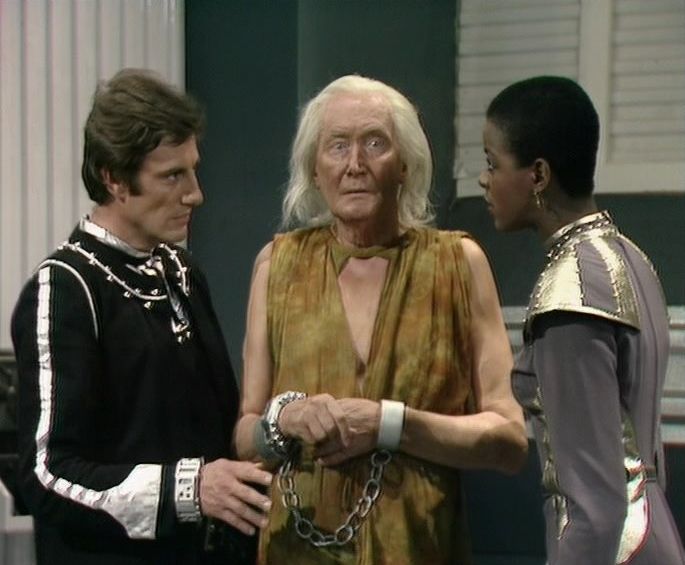
Avon’s thrown in a cell with an old prisoner called Neebrox (Richard Hurndall).  He tells Avon that Servalan is here and that she purchased a member of an entertainment troupe (a plot-point which will become important later on).  As probably everybody knows, this appearance led to Hurndall being cast as the First Doctor in The Five Doctors.  It’s easy to see why, with his long hair he does have more than a touch of Hartnell’s Doctor about him. Hurndall was always an actor of depth and dignity and his presence helps to lift the story no end.  Alas, the same can’t really be said for Verlis (Betty Marsden), the slightly tipsy slavetrader in charge of the slave auction.

The auction part of the story is rather … well, it’s just rather.  The notion of Avon being paraded in chains before Servalan no doubt pleased a section of the audience (and I’m sure led to numerous fan-fiction sequels) but the actuality is a little embarrassing. The various bidders look ridiculous, all clothed in fancy dress it seems (plus fake beards of course). Servalan wins the bid for Avon, telling him that he now needs to refer to her as mistress. That was a late-night spin-off show just waiting to happen.

We can now bid the slavers a fond farewell as Neebrox comes up trumps and he and Avon hot-foot it back to Scorpio. This leads us into the second (and better) part of the story as Cancer’s ship is tracked down and they get to grips with the galaxy’s finest assassin.  Everything seems rather straightforward at first- they find a ship which contains Cancer (John Wyman) and a young woman called Piri (Caroline Holdaway).  Piri might be a rather limp lettuce but she’s invaluable in helping Avon and Tarrant overpower Cancer. Tarrant’s fight with Cancer is a hoot.

After being rather anonymous during her first few stories, Soolin has more recently developed a sharp and cynical sense of humour, which Glynis Barber plays very well.  Soolin quickly becomes irritated with the weepy Piri and gives her a well-deserved slap.  Well done that woman! Tarrant is rather upset with this, but Soolin’s comeback line is rather good. “There are two classic ways of dealing with an hysterical woman. You didn’t really expect me to kiss her, did you?”

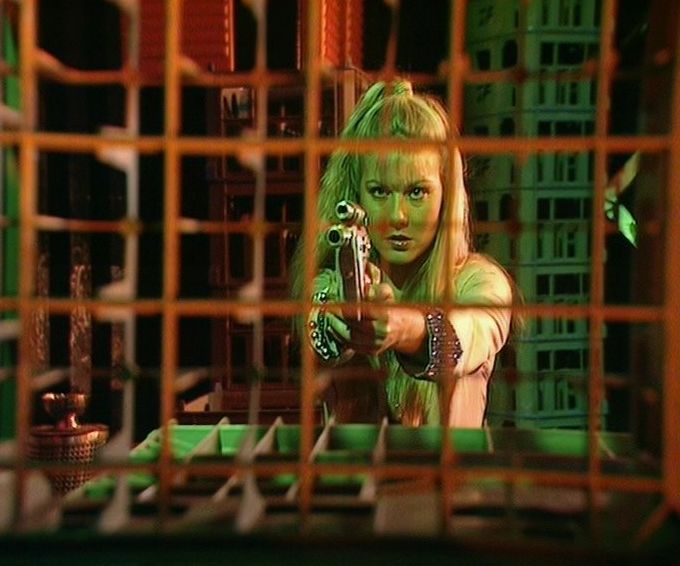
Tarrant isn’t well served by the script, turning into a rather gauche schoolboy whenever Piri’s around.  And since Piri is really Cancer, that makes him look more than a little foolish.  Yes, the mysterious assassin Cancer is a woman, who decided to masquerade as Piri whilst Servalan bought a slave (remember the earlier plot point) to pose as Cancer.  It’s fair to say that Caroline Holdaway’s performance has come in for a little bit of stick over the years and it’s easy to see why.  True, the hysterical Piri isn’t the easiest role to play, but Holdaway never really convinces as the ice-cold killer either.

But although her casting is a bit of a problem, the concluding half of the story, set aboard Cancer’s ship, is still strong – David Sullivan Proudfoot elects to keep the lighting low, thereby creating a nice sense of tension.  Generally the direction is solid (this was his third and final B7 story following Traitor and Stardrive) although he’s a little too fond of Star Wars style screenwipes ….

Rod Beacham’s sole script for the series, Assassin is another story which signifies that after a shaky start series four was finding its feet.  This was Beacham’s debut as a television script-writer (he’d previously been an actor) and he would go on to contribute to a number of series, most notably Bergerac, before his death in 2014.  For a television debut, it’s a very solid effort.

On the negative side, Assassin would have worked better without Servalan, who doesn’t do a great deal (mind you, there are quite a few stories we can say that about) but thanks to a nice guest turn from Hurndall and some sharply scripted lines for Glynis Barber it’s still a good ‘un.

ass 03.jpg

Blakes 7 – Headhunter

head 01.jpg

The previous episode, Animals, established the concept that Avon is keen to recruit a whole group of experts to join him in his fight against the Federation.  Alas, Justin didn’t make it the end of that episode, I wonder if top cybernetics expert Muller (John Westbrook) will fare any better here?  Gosh, that’s a tough one …..

Tarrant and Vila have drawn the short straw of escorting Muller back to base.  Tarrant teleports down to the rendezvous, but it seems obvious that Muller’s colleagues don’t want him to leave (there’s a dead body under the table, although Muller himself seems unharmed).  Tarrant takes a cursory look at the body but seems to miss the obvious point, mentioned later, that the corpse is missing its head.  You’d have thought a small thing like that would be easy to spot, but clearly not.

Muller is a man of peace, something confirmed by Vena (Lynda Bellingham) who’s back at base with Avon, Dayna and Soolin.  But when they teleport back to Scorpio, Muller goes crazy and attempts to bear-hug Tarrant to death.  Vila gives Muller a tap on the shoulder with a monkey-wrench which apparently kills him.  Muller’s brief homicidal interlude is one of several (I assume unintentional) comic highlights.

Muller went mad after Tarrant brought back a box from Muller’s workshop.  After we learn of the headless corpse it seems obvious that the box contains Muller’s head, but not so, the truth is even stranger.  Muller’s android killed his creator, cut off his head and put it on his own, android, body.  Quite why the apparently peace-loving Muller would have created a homicidal android (who incidentally wants to enslave all human life) is anyone’s guess.  But it explains the faux-Muller’s strange dress sense and robotic delivery.

head-02

Poor Lynda Bellingham isn’t very well served by the script.  Vena spends most of her time moping that her loved one is dead, only to briefly spring back into life when it appears that he isn’t.  But her joy is short-lived as the android with Muller’s head then bear-hugs her to death.  It’s not a very dignified way to go I’m afraid.

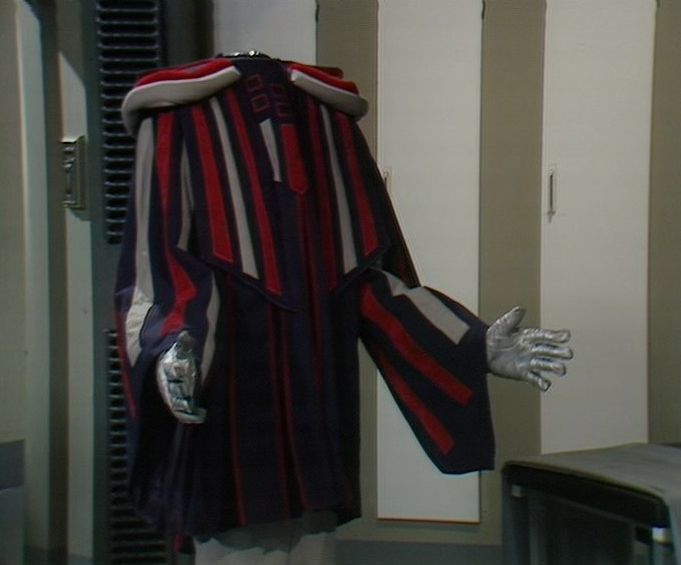
So far, so strange, but the best is yet to come.  During the last fifteen minutes or so, Muller’s head drops off – meaning that we’re able to enjoy the vision of a headless android stomping around Xenon base, threatening to kill everyone.  There can be few funnier sights in all of B7‘s 52 episodes.

I also have to mention the wonderfully expressive hand acting from Nick Joseph who plays the headless android.  When you don’t have a head it’s hard to get your point across, so Joseph elects to waggle his hands and arms in a very emphatic fashion.  Another great comedy moment.

Muller was a protégé of Ensor, which means that Muller’s android is keen to join up with Orac in order to fulfil his dream of universal domination.  Quite how one android hopes to dominate all life is another of those small plot points which never gets adequately explained, but it does give Peter Tuddenham the chance to do a little more with Orac for once.  And indeed also with Slave, who subtly changes from servile to surly as the mysterious effect of Muller’s android takes hold.

Since Headhunter only features the regulars plus Muller and Vena, everyone – even the rather underwritten-to-date Soolin – gets a chance for a decent share of the action.  Paul Darrow elects to intone his lines with the sort of distracted, far-away delivery which would be his trademark style during S4.  He has the odd killer line (“Tarrant, what have you got up there apart from yourself, a half-wit and a corpse?”) but the best exchange is saved until the end.  After a big bang organised by Tarrant, Avon asks him what’s happened to the android.

TARRANT: Gone to the great cyberneticist in the sky.
AVON: You fool! It’s superstitious half-wits like you who hold back every advance we make.
ORAC: And arrogance, Avon, like yours and Muller’s which threaten to destroy …
AVON: Shut up!
ORAC: Yes, master!

After a less-than-serious romp, this small moment once again highlights how detached Avon has become from reality. The android, if controllable, would have been an asset, but everyone except Avon is clearly able to see that it would have been suicidal to keep it operational. Yet another example of Avon’s lack of judgement.

Whatever else Headhunter is, it certainly isn’t dull. The third and final of Roger Parkes’ scripts for the series, it falls somewhere between his other two.  It’s not as good as Children of Auron, nor is it as crazy as Voice from the Past (although it’s close).  But whatever its faults, the loopy concept never fails to raise a smile.

head-03

Six English Towns/Six More English Towns – Simply Media DVD Review

164454- Chief Crazy Horse Sleeve.indd

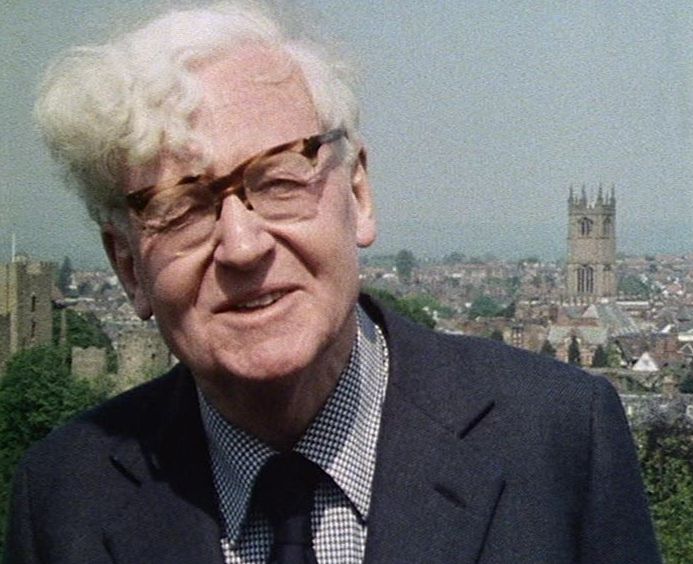
Originally broadcast on BBC2 during August and September 1978, Six English Towns saw Alec Clifton-Taylor cast his experienced eye over the following towns – Chichester, Richmond, Tewkesbury, Stamford, Totnes and Ludlow.

Clifton-Taylor (1907 – 1985) had been a respected, if fairly obscure, architectural historian, so it may have come as something of a surprise to him that fairly late in life he became a recognisable television figure.  It’s easy to see why this happened though – he had a pleasingly direct style and his ease in front of the camera meant that he was able to deliver both brickbats and bouquets in an authoritative, but accessible, way.  Put simply, Alec Clifton-Taylor had the air of a faintly distracted schoolmaster who dispensed learning lightly but with passion.

At the start of the first edition he sets out exactly what he’s aiming to do.  “These are not guidebook programmes. Our main concern will be with buildings and especially with houses. I’d like every programme to be an exercise in looking.  Looking at the changing styles and fashions.  And at the traditional building materials of England.”

One of Clifton-Taylor’s abiding interests was the way that towns prior to the industrial age used materials which were readily at hand.  He therefore had some criticism of the Victorian era, since the age of steam meant that materials could be transported around the country with an ease that simply hadn’t been possible before – therefore the characteristic look of towns began to fade a little.

When visiting Chichester he says that “the cathedral apart, brick and flint are what give Chichester its essential character, the right materials in the right place.” He’s therefore delighted to find examples of good brickwork – and this moment is one that gives pause for thought.  We may pass similar buildings each day without giving them a second glance, but one of Clifton-Taylor’s skills was to find interest in what may appear to be commonplace.  And after watching the series it’s made me appreciate the buildings in my area a little more – how different styles and eras may exist side by side, for example.

When watching the series now it’s impossible not to wonder how the towns look today.  Clifton-Taylor had forthright opinions on how modern buildings (especially high-rise ones) shouldn’t encroach on the old.  Sadly, I’m sure that some of the places he visited over the course of three series have lost some of the features which so pleased him.  When visiting Richmond, he was taken with the way that the old railway station had been sympathetically turned into a garden centre.  He comments that it’s “a shining example of what enterprise and imagination can do to save an excellent building no longer required for its original purpose.” It’s therefore pleasing to note that the building still exists today and – following the closure of the garden centre in 2001 – now serves the community as a heritage centre.

The remainder of the first series has plenty of interest. The House of the Nodding Gables in Tewkesbury, the impressive churches of Stamford and Totnes’ slate decorated houses are just a few examples. The final edition of the series, Ludlow, saw Clifton-Taylor visit his favourite town and there was plenty which appealed to him there.  Ludlow exemplifies his concept of a pattern of building – stone for the church, the bridges and the castle, wood for the medieval houses and brick for the houses of the Georgian period.  He’s less impressed with some of the Victorian additions though.

Six More English Towns followed three years later in 1981.  This time Clifton-Taylor visited Warwick, Berwick-upon-Tweed, Saffron Walden, Lewes, Bradford on Avon and Beverley.

The opening episode has some predictable highlights, such as Warwick Castle, but less well-known buildings – such as Lord Leycester Hospital – are of just as much interest.  He wasn’t at all enamoured with the modern council building though – a monstrosity in concrete which obscures views of the impressive-looking church.

Berwick-upon-Tweed finds Clifton-Taylor appreciating the character of the town even if there’s nothing of outstanding importance or interest, although some of the architectural flourishes don’t really meet with his approval.  “Even the carved lions on the gate piers seem perplexed”.  Elsewhere, he’s not impressed with the amount of traffic which flows through Saffron-Walden, declaring that most of it should be “firmly re-routed.”  The series closes with Clifton-Taylor’s visit to Beverley, North Humberside, of which the medieval Minster church is of special interest to him.

A third and final series, Another Six English Towns, would follow in 1984 and this will be issued on DVD in early 2017.

Six English Towns/Six More English Towns won’t be everybody’s cup of tea – a man wanders about looking at buildings – but if you’re interested in history, architecture or English towns then there’s plenty which should catch your attention.

Six English Towns was released on the 12th of September 2016 and Six More English Towns will be released on the 7th of November 2016.  Both have a RRP of £19.99.

towns

Blakes 7 – Animals

animals-01

Long regarded as one of the worst episodes of Blakes 7, I have to confess that my latest rewatch of Animals has found me in a generous mood.  But when you start with low expectations (it’s an Allan Prior script for goodness sake) the only way is up …

Now that Avon’s gang has a base there’s no need for all of them to venture out on each adventure, which explains why only Tarrant and Dayna are aboard Scorpio as the episode opens.  The downside to this is that we don’t see Avon, Vila and Soolin until we’re about twenty minutes in, but the opening part of the story is undeniably a good opportunity for Josette Simon, who gets a series of lengthy two-handed scenes opposite Peter Byrne (playing Justin).

We’re told that Justin was one of a number of specialist tutors who helped to educate the younger Dayna.  Given that Dayna’s father was a rabid isolationist, this is rather hard to understand – the later revelation that Justin was working for the Federation at the same time is another slight head scratcher.

If Animals is remembered for anything then it’s for the animals.  Mary Ridge makes no effort to hold them back for a shock reveal (we first see them head-on when the episode is only two minutes old).  I guess that when you’ve got a group of actors standing around in such ridiculous costumes you might as well just bite the bullet and show them in all their, well, glory.

Rather like the Space Rats in the previous story, the animals are a major problem.  If their design had been a little less comic then I’ve no doubt the story would have a slightly higher reputation.  It’s also interesting that there’s another obvious parallel with Stardrive – both stories feature an ex-Federation scientist working in secret on an obscure planet.  A pity Chris Boucher couldn’t have jumbled the running order up a little ….

With Tarrant limping back to base in the damaged Scorpio and the others yet to make an appearance, it’s Dayna who has to carry the narrative onwards.  Her relationship with Justin is an odd one which has attracted a certain amount of debate over the years.  There’s off-hand comments on both sides to suggest that they previously had a bond which went beyond teacher/pupil boundaries, which given Dayna’s age at the time strays into slightly uncomfortable territory.  Or was it unrequited love back then, which is now suddenly flourishing?  Either possibility is valid.

Before teleporting Dayna down, Tarrant offhandedly refers to Justin as a mad scientist.  Dayna shrugs this off, but his genetic experimentations on the animals certainly seems to cross the bounds of acceptable behaviour. She asks him why.

DAYNA: Look, what was the object of the work? It must have had some object, some war object if the Federation backed it and built this place.
JUSTIN: The war object was to create a species, not necessarily human, that could go into areas heavy with radioactivity and act as shock troops. The federation had suffered losses of up to sixty percent front line troops. Now just think what a few squads of radiation proof space commandos could do.
DAYNA: Oh, I’m glad you never succeeded. It was a horrible idea.
JUSTIN: No, it was justified by the times.

It’s all slightly heavy-handed, but it taps into similar debates regarding animal experimentations which have raged for decades. Dayna’s reaction is interesting – she starts off appalled but slowly changes her mind.  Is this because of her lingering respect and love for Justin or does she see a way that his research could be used by Avon and the others in their fight against the Federation?

Compared to Doctor Plaxton in Stardrive, who barely had a handful of lines to outline her worldview and motivations, Justin is generously given several lengthy speeches in order to present his case. He says that his experiments on both humans and animals (which included painful brain grafts) now distress him, but he has to carry on. “I’m trying in a way to make sense of it all, trying to get something good out of it all. Don’t you see that? If this discovery simply goes for war purposes, to kill, then it’s all been in vain.”  His desire to continue the work so that eventually he can achieve something good out of the pain, misery and suffering he’s caused is logical, even if we don’t necessarily have to agree with it.

Rather unexpectedly, Servalan’s lurking about and becomes interested in Justin’s research. She interrogates the only man left alive who knows about it – Ardus (Kevin Stoney). You have to feel a little sorry for Stoney, he appeared in two different episodes of B7 playing rather small and nondescript parts. And both were scripted by Allan Prior too, which seems a tad unfair!  Although it should come as no surprise to learn that Stoney’s cameo here is played very well – his character may exist simply as an infodumper, but Stoney was too good an actor not to impress even with a very minor role.

Servalan’s (or Sleer’s I should say) ship is piloted by a female crew who apper to be Mutoids – although if so they’ve undergone something of a glam makeover. She also has several male subornates on hand – who are very much the type we’ve seen so often in the series before. But there’s no point in taking too much interest in them as I’m sure they’ll have been replaced next time with almost identical characters.

Servalan’s manipulation of Dayna – first torture and then brainwashing to hate Justin – is ruthless even by her standards.  Josette Simon does seems a little stiff when she’s playing brainwashed Dayna, but luckily these scenes don’t go on to long.  The ending is a typically bleak late period B7 one – everybody loses, but Dayna loses the most.  Possibly Josette Simon might look back on her hysterical sobbing with a tinge of regret (that is if she ever rewatches her B7 episodes – which I guess is rather unlikely) but apart from her over emoting and the silly looking animals, this one stands up pretty well.

Peter Byrne, who’d played Andy Crawford on Dixon of Dock Green for twenty years, makes the most of a very substantial guest role, whilst the peerless Kevin Stoney livens up proceedings for a few minutes.  All in all this was pleasantly entertaining.

animals 02.jpg

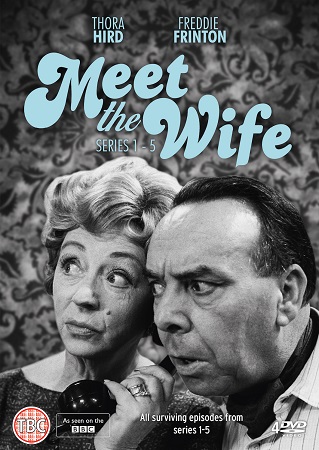
Meet the Wife – Simply Media DVD Review

164454- Chief Crazy Horse Sleeve.indd

Meet the Wife made its debut in the third series of Comedy Playhouse, broadcast in December 1963. Comedy Playhouse had been created in 1961 as an outlet for the writing talents of Ray Galton and Alan Simpson (following the abrupt termination of their partnership with Tony Hancock) but it quickly expanded to embrace other writers.  The beauty of the format was easy to understand – if something showed promise then it could be developed into a full series, if not then only half an hour had been wasted.

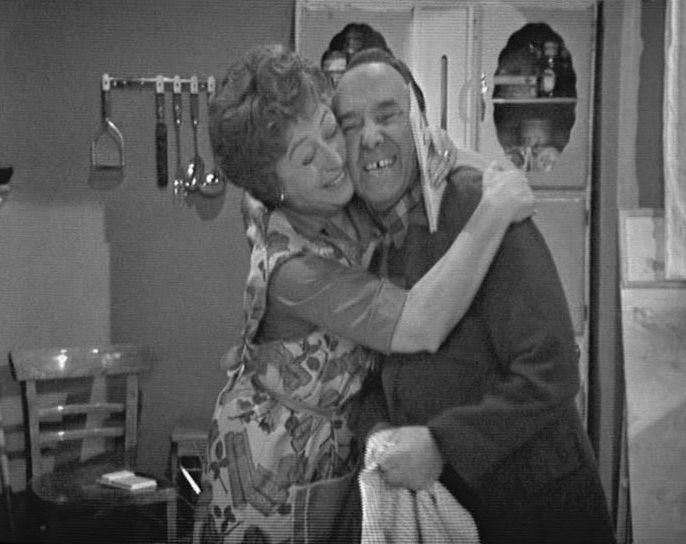
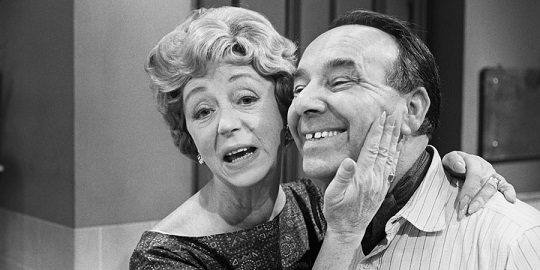
Created by Ronald Chesney and Ronald Wolfe, Meet the Wife is concerned with the domestic trials and tribulations of Thora Blacklock (Thora Hird) and her much put-upon husband Fred (Freddie Frinton).  The Blacklocks are an ordinary working class couple.  Fred, a plumber, yearns for a quiet life but he never has the chance – thanks to his hectoring and snobbish wife Thora.

Chesney and Wolfe started their writing career on the radio, penning episodes of Life with the Lyons and Educating Archie.  By the time Meet with Wife started airing they’d already enjoyed great success with another BBC television series, The Rag Trade, and would continue to enjoy popular (if not critical) acclaim when they later moved over to ITV, with the likes of On the Buses, Romany Jones and Yus My Dear.  These other credits should give you an idea of what to expect with Meet the Wife.  It’s by no means subtle, but it is goodhearted (the Blacklocks might have a fractious relationship but there’s no doubt that deep-down they love each other).

Thora Hird (1911 – 2003) was already by this time a very experienced actress, although her status as a national treasure would lie in the decades ahead, especially during the eighties and nineties.  Born in Morecambe, Lancashire, she started her theatrical career early, making her stage debut when just eight weeks old.  A Rank contract player during the 1950’s, she racked up numerous credits during this period (albeit in mostly fairly undistinguished films).  But greater public recognition would come in the early 1960’s with two film roles – appearing alongside Laurence Olivier in The Entertainer (1960) and Alan Bates in A Kind of Loving (1962).  Her experience in the business had proved that she could hold her own with just about anybody and these film performances demonstrated that her talent for sketching vivid, memorable characters was already firmly in place.

Freddie Frinton (1909 – 1968) began his working career entertaining his colleagues at a Grimsby fish processing plant.  But, as the legend goes, he didn’t impress the management – who sacked him.  Frinton’s first legitimate success on the stage came with Dinner For One.  Although forgotten in Britain, this eighteen minute skit remains a New Year’s Eve staple in many European countries, such as Germany, thanks to a 1963 telerecording starring Frinton and May Warden.

Meet the Wife’s status in the public’s consciousness has no doubt been maintained by the fact that it was namechecked in the Beatles’ song Good Morning, Good Morning (“it’s time for tea and Meet the Wife”) but save for a handful of episodes on YouTube, the series itself has rather faded from view.  So Simply Media’s release is very welcome and whilst it’s hard to argue that it’s a neglected comedy classic, it certainly has its moments.

meet

The Comedy Playhouse pilot The Bed is essentially a two-hander between Thora and Fred (apart from Brian Oulton’s enthusiastic bed salesman). The Blacklocks are shortly due to celebrate their silver wedding anniversary and Thora decides that what they really need is a new bed. She gets her way (of course) by streamrollering poor Fred but their troubles aren’t over when they take delivery. Uncooperative lamps, quibbles about which side is the soft one, it’s all enough to drive Fred off to the spare room and the old bed. Chesney and Wolfe undercut these squabbles with a neat revelation which shows us (and Thora) just how much Fred loves his wife.

Fred’s desire to please Thora carries over into the first episode proper, Going Away. It’s a real time capsule of the period, taking us back to when a foreign holiday was pretty much a once in a lifetime experience. Thora desperately wants to go on a posh foreign holiday, mainly because of the bragging rights. Fred glumly tells her that they could probably afford a week in Blackpool but then shortly afterwards returns home with two tickets for an all-expenses paid trip to Majorca. He tells her that he’s had a win on the dogs, but it’s quickly revealed that he’s paying for it on the HP. Thora has a horror of being in debt, so Fred wisely keeps quiet about what he’s done. She finds out, of course, but isn’t angry, instead she’s touched that he would make such a sacrifice for her.

Night Out sees Thora and Fred getting ready for a swanky night out (at the Plumber’s Ball, or somesuch similar event). It’s interesting that as with Going Away, the durtation of the episode is concerned with their preparations, meaning that we never actually see them on holiday/at the dinner. This is a little surprising, as both scenarios offered numerous comic possibilities, but Meet the Wife is quite an enclosed series – whole episodes, like this one, can go by without any other actors appearing.

The first two discs contain the Comedy Playhouse pilot and all seven episodes from the first series. Since the survival rate for series two to five is very patchy, all those episodes (bar the two already discussed) can be found on disc three. The first existing episode from the second series, The Teenage Niece, sees Fred’s seventeen-year-old niece Doreen (Tracy Rogers) come to stay for a while. The generation gap has always been a fruitful generator of comedy and Doreen – with her modern ways – certainly shakes up Thora and Fred’s world. But everybody remains very tolerant – Doreen might regard her aunt and uncle as ancient, but she still loves them, whilst they seem quite calm when she turns up with her boyfriend in tow at 5 o’clock in the morning.

Of the remaining episodes, The Hotel is probably the strongest, since it has a simple, but effective, plotline (Thora and Fred take a trip to a posh hotel). Thora’s in her element – putting on her most genteel and refined voice – but there’s always a worry in the back of her mind that Fred’s common ways are going to embarrass her.

Picture-wise, it’s pretty much what you’d expect from a series of this age. The episodes are derived from unrestored telerecordings, although they are all quite watchable with no major problems.

Like many programmes of this era it didn’t escape the archive purges of the 1960’s and 1970’s.  It’s long been assumed that seventeen episodes out of the thirty nine made now exist (as confirmed by Lost Shows), but  only fifteen were included on the DVD when it was released in October 2016 (Shopping and Brother Tom were the two omitted).  Shopping isn’t listed on the BBC’s archive database, so it’s possible that it only exists in private hands and therefore wasn’t accessible for this release.

Brother Tom should have been included, but was missed off in error.  Simply issued the following statement on the 23rd of November 2016 –

“Unfortunately due to an authoring error an episode was missed off the release of MEET THE WIFE.

 For your replacement, which has the error corrected, please contact us either by private message on Facebook, or by emailing hannah.page@simplymedia.tv with your order number and where your DVD was purchased from, along with an address to send the replacement to.

 Many thanks, and Simply Media apologise for any inconvenience caused.”

It’s no Hancock or Steptoe, but Meet the Wife is unpretentious and entertaining, thanks to the efforts of Thora Hird and Freddie Frinton.  It’s certainly pleasing to see it on DVD and also that the issue with the original pressing was attended to.

Meet the Wife was released by Simply Media on the 24th of October 2016.  RRP £29.99.

meet_the_wife

Blakes 7 – Stardrive

star 01.jpg

Stardrive opens with Avon deciding to tangle with an asteroid.  He tells the others that if they want to keep Scorpio operational “we have to visit Altern Five in order to recover selsium ore to make fuel crystals. Hitching a ride into the Altern system on that asteroid is the only way we’re going to get past any Federation patrols and within teleport distance of Altern Five.”

Everybody else considers this to be a very bad idea indeed, but as usual Avon gets his way.  It’s a sign of things to come that Avon’s proven to be badly wrong, since all that happens (via some fairly shaky modelwork) is that Scorpio gets badly holed and so ends up in an even worse state than before.  The first ten minutes or so are somewhat superfluous to the rest of the story, partly existing to demonstrate two interesting character points.  The first, as we’ve seen, is that Avon is liable to shocking lapses in judgement and the second concerns Vila’s skills at manipulation.

After the ship is holed and all looks bleak, it’s not surprising to see Vila staggering about with a flask of alcohol, clearly more than a little merry.  In his drunken state he blurts out a possible solution, which makes perfect sense to Avon, who rushes off with Tarrant to apply the fix.  But Vila wasn’t drunk at all, he was simply pretending, the crafty devil!

The most important reason for this section of this story is that it allows a stranded Scorpio to observe three Federation pursuit ships apparently blowing up.  But they didn’t blow up, they were destroyed by a small craft travelling at standard by twelve – which is impossible.

Very quickly Avon realises that Doctor Plaxton (Barbara Shelley), formally head of the Federation Space Drive Research Centre, must have developed a new Stardrive.  Oh and she’s teamed up with the Space Rats who, according to Vila, “live for is sex and violence, booze and speed. And the fellows are just as bad.”

It’s impossible to ignore, the Space Rats look absolutely ridiculous even by Blakes 7 standards.  Goodness knows who thought their look was a good one, but it rather negates the little menace they possessed.  Apart from their dress sense their characters aren’t terribly well drawn either.  This possibly isn’t surprising since they’re supposed to be hedonistic speed-freaks who love to live life on the edge, but at least their leader, Atlan (Damian Thomas), is a little different.

He’s not a Space Rat, but he dresses like one and the others accept him as their leader because he’s able to give them what they want (the opportunity to pilot fast spacecraft and kill people I guess).  There was potential for Atlan to have a more interesting character motivation than the others but this opportunity is rather frittered away.  Thomas’ rather mannered performance doesn’t help either.

Doctor Plaxton is a rather pallidly drawn character too.  We learn that she’s no longer a member of the Federation, hence the reason why she’s teamed up with the Space Rats (they scour the galaxy providing her with the raw materials she needs in order to continue her work).  But it’s never made clear why she wants to complete the Stardrive.  The scientific challenge or because she plans to sell it and make a fortune?  Your guess is as good as mine.

Avon sends Dayna and Vila down to investigate, but it quickly becomes obvious that they’re simply diversions – the others land Scorpio and launch a second front.  Avon’s callous disregard for the others couldn’t be clearer – he’s hoping and expecting that Dayna and Vila will get captured, which will make his job of pinching the Stardrive a little easier.  And if they get killed, well that’s just tough luck.

Part of the problem with this part of the story is that whilst Dayna and Vila are already inside the base, tangling with the Space Rats, the others – Avon, Tarrant and Soolin – are some distance away.  And the three of them seem to move so very slowly, giving proceedings a rather lethargic air.  The scenery – a typical quarry in winter – isn’t terribly appealing either.

Vila’s done his best to big up the Space Rats but frankly they’re rubbish and Avon’s easily able to nab the Stardrive and make his escape.  Indeed, if they hadn’t been there at all then the story wouldn’t really have suffered (and maybe might be a little better regarded).

Doctor Plaxton’s returned to Scorpio with the others, although it’ll come as no shock to learn that she doesn’t last very long.  Just as there was no need for Ensor to stick around once Blake and the others had Orac, so we can wave goodbye to Doctor Plaxton now that the Stardrive is fitted.  But the manner of her death is another shocking example of Avon’s single-mindedness.

Doctor Plaxton volunteers to fix the Stardrive into place and Avon elects to fire the motors as soon as the final connection is in place, meaning that the unfortunate Doctor Plaxton ends up rather dead.  Avon does say that she’s dead either way, although it isn’t quite clear what he means by this.  After it’s over, Avon’s already put her out of his mind, saying “who?” when Dayna mentions her name.

A lack of characterisation (the Space Rats and Doctor Plaxton) means that Stardrive is rather disposable.  Better motivations might have made this a more compelling story, but as it is it’s just another episode where the regulars mooch about in a quarry.

star-02

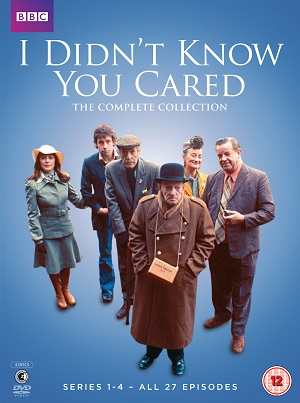
I Didn’t Know You Cared to be released by Second Sight – 28th November 2016

7067

Second Sight will be releasing all four series of Peter Tinniswood’s classic sitcom I Didn’t Know You Cared in late November.  Review here.

Classic BBC sitcom I Didn’t Know You Cared arrives as a fantastic DVD Box Set featuring all four series courtesy of Second Sight.

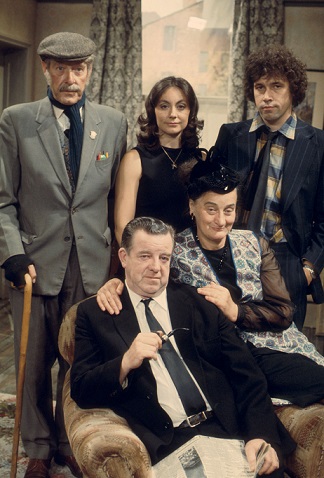
Based on Peter Tinniswood’s renowned books comes one of television’s greatest comedy families, The Brandons, in this hilarious 1970s series. There’s miserable pessimist Uncle Mort (Robin Bailey – Charters & Caldicott), his sharp-tongued sister Annie played by the inimitable Liz Smith (The Royle Family), who is forever rowing with her husband Les (John Comer – Last Of The Summer Wine), there’s their laid-back son Carter and his not so laid-back fiancee Pat and finally old Uncle Staveley who carries his friend’s ashes around his neck in a box and only enters the constant bickering with his cry of ‘I ‘eard that! Pardon’.

This brilliant slice of great British comedy arrives as a bumper four-disc DVD box set on 28 November 2016.

In series one we meet the feuding Brandon family, the only thing that unites them is their determination to turn their lazy son Carter (Stephen Rea – Dickensian) into a go-getting executive before he marries his fiancee Pat (Anita Carey – Whatever Happened to The Likely Lads?). Uncle Staveley (Bert Palmer – Z Cars), contributes to the family rows with his familiar catchphrase. There are seven episodes: ‘Cause For Celebration’; ‘A Knitter in the Family’; ‘The Old Tin Trunk’; ‘After the Ball Was Over’; ‘Aye…Well…Mm…’; ‘Large or Small, Big or Tall’ and ‘The Axe and the Cleaver’.

The second series sees Carter return from his honeymoon but he hasn’t quite adjusted to married life. There are six episodes: ‘The Way My Wife Looks At Me’; ‘Chez Us’; ‘A Woman’s Work’; ‘A Signal Disaster’; ‘You Should See Me Now’; and ‘Good Wood, God’.

Series three sees Uncle Mort worrying about dying and Carter, this time played by Keith Drinkel (Gandhi), worrying about his future at work, this series see his wife Pat played by Liz Goulding (Within These Walls). It features six episodes: ‘Men At Work’; ‘Grave Decision’; ‘Party Games’; ‘A Bleak Day’; ‘Stout Deeds’; ‘Paradise Lost’; and ‘The Last Tram’.

The fourth and final series sees the Brandons get a lodger, Pat (Liz Goulding), goes on a work trip to Europe and Uncle Mort’s pending nuptials. This series sees Leslie Sarony (Monty Python’s The Meaning of Life) star as Uncle Staveley. There are seven episodes: ‘The Love Match’; ‘Love is a Many-Splendoured Thing’; ‘A Tip Top Day’; ‘Don’t Answer That’; ‘The Great Escape’; ‘What’s In a Name?’; and ‘The Great Day’.

7094

Blakes 7 – Traitor

traitor

The Federation is beginning to expand agaim and Avon has decided that the planet Helotrix holds the key.  The native species, the Helots, are once again Federation members after a long period of resistance and Avon is keen to find out why their resolve crumbled so quickly.  Dayna and Tarrant teleport down to the surface but quickly lose contact with Scorpio.  The arrival of Federation Commissioner Sleer further complicates matters ….

Traitor is the most anonymous of Robert Holmes’ four Blakes 7 scripts.  Lacking the flamboyant characterisation of Gambit and Orbit or the rock-solid narrative of Killer, it’s simply there – solid enough, but a little uninspiring and never likely to be anybody’s favourite.  There’s some nice dialogue, but maybe Holmes felt straightjacketed by the various story elements he was required to include (the pacification drug Pylene-50 which becomes a running theme and Commissioner Sleer, who turns out to be, shock horror, Servalan).  It’s also a pity that his original title – A Land Fit For Helots – was rejected in favour of the descriptive, but dull, Traitor.

Avon’s transformation into Blake pretty much starts here – he suddenly decides to take the fight to the Federation.  After spending the first two series sniping at Blake from the sidelines for exactly this sort of gung-ho approach, it’s an unexpected move, although there are several possible reasons.  The boring real-life possibility is that since series three had been rather aimless, reintroducing the Federation as a tangible enemy helps to give the show a more cohesive feel.

There’s a more interesting fictional possibility though – Avon’s character is slowly being subsumed by Blake’s, meaning that he’s turning into a carbon-copy of his former colleague.  To support this theory, the final episode – Blake – provides us with plenty of evidence that Avon’s obsession with Blake is colouring his actions.  Can’t live with him, can’t live without him ….

There’s intrigue aplenty on Helotrix, although the downside of this is that the regulars, especially Avon and Vila, are rather sidelined.  Dayna and Tarrant have more to do, but Traitor is really concerned with the various squabbling factions who are jockeying for position on the planet’s surface.

Colonel Quute (Christopher Neame) and the General (Nick Brimble) are in charge of Federation operations.  They’re an odd couple, to put it mildly.  It’s easy to tell that Quute is a baddy – he’s got a scar down his face and an eyepatch (two dead giveaways).  The General doesn’t have any such facial embellishments, but he is caked in make-up.  Both also have uniforms which sport the most amazing shoulder pads.

This may all sound fairly unpromising, but Neame and Brimble are good enough actors to be able to transcend the fact they look faintly ridiculous.  They’re also aided by Holmes’ script, which isn’t content to paint them as simply another couple of faceless Federation killers.  The General (he doesn’t seem to have a name) is a military bore, forever droning on about battles from the past, meaning that Quute is forced to feign politeness on a regular basis.

GENERAL: Do you remember the Fletch expedition of twenty-nine?
QUUTE: No, I don’t think I do, sir.
GENERAL: Fletch used gas, against the Wazis. Hmm. Complete massacre, bodies everywhere. Took dinner with his officers that night, suddenly the Wazis came over the wall, butchered the whole expedition. Seems the Wazis are gill breathers – they can lie dormant for days.
QUUTE: Ahh, that’s very interesting sir.

Just before this, the General mentions that the best way to deal with these rebel types is with a dose of the cold steel. It’s very hard not to think of Corporal Jones ….

Star Major Hunda (Robert Morris) leads the rebels, but frankly he’s rather dull (as are his grimy cohorts). By a staggering coincidence, Tarrant and Dayna teleport down right beside him – which means that he’s able to fill them both in on the plot. Handy that.

Forbus is a cut-price Davros.  He looks a little like Peter Sellers (or possibly Lewis Fiander in the Doctor Who story Nightmare of Eden) and he’s there to explain to Dayna and Tarrant all about Pylene-50. His appearance suggests that the budget was running rather low, although there are also signs of penny pinching elsewhere. The Federation HQ features some very familiar-looking panels (if you watch far more Doctor Who and Blakes 7 than is healthy that is) as well as flashing disco lights which I assume are supposed to represent power lines. The unconvincing studio grassy knoll is at least lit quite low and covered in mist.

The return of Servalan (or Sleer as she’s now calling herself) is odd.

A few lines of dialogue confirm that the Federation is now under new management and those loyal to Servalan have been executed. This makes the idea that she’d have assumed another identity just about feasible, but it’s strange that she’s made no effort to disguise herself, meaning that everywhere she goes there’s the risk she’ll bump into someone who’ll recognise her. She was the President for goodness sake, it’s a safe bet that most people would have a fair idea what she looked like.

This happens here, as the new puppet leader Practor knew Servalan of old, which means he has to die. For some reason the story attempts to keep her presence a secret until the end, but earlier on her voice (albeit distorted) was heard, so I doubt many were shocked when she did turn up in the flesh.

Although the return of Servalan is a non-surprise and the rebels aren’t terribly interesting, thanks to Holmes’ dialogue for Quute and the General plus the location filming (I’m a sucker for a nice quarry) this isn’t too bad at all.

traitor 02.jpg

Blakes 7 – Power

power 01.jpg

Power opens with Avon being chased by some hairy tribesmen.  I don’t know about you, but whenever I see hairy tribesman in Blakes 7 my heart sinks a little – it suggests that the story is going to be a little disappointing.  And since this one was written by Ben Stead it’ll be no surprise to learn that we’re in for fifty minutes of dodgy sexual politics.  But it’s by no means all bad as Stead, for once, doesn’t always go down the most obvious routes.

Gunn-Sar (Dicken Ashworth) is the leader of the Hommicks and he wastes no time in introducing himself to Avon.  “I am Gunn-Sar, chief of the Hommiks. I rule by right of challenge, which means I’m the biggest, toughest, meanest son of a Seska on this planet.”  It doesn’t take long before you realise that there’s an air of mockery about Gunn-Sar.  He knows it and the others know it too.  Ashworth is clearly having fun with a role that’s a little bit more interesting than the male chauvinist leader of a hairy tribe that it first appeared to be.

Apart from Nina (Jenny Oulton), the Hommicks appear to be a totally male enclave whilst the Seskas are entirely female.  We therefore see a battle of the sexes play out which initially paints the Hommicks as oppressors and the Seskas as victims, although the truth is a little more complicated.  The revelation that the Seskas are captured and operated on in order to make them compliant breeding stock is somewhat horrific (as is the fact that any girls born are left out in the wilderness to die).

This is odd though.  If most of the girls are killed immediately after they’re born it stands to reason that eventually the Hommicks will die out.  We later learn that Nina is Gunn-Sar’s woman, as it were.  So what about the rest of the Hommicks, don’t they want a little female company as well?  There’s more than one answer to this, but I don’t think we’ll go any further down that road ….

We seen an operation being carried out – by Nina – which poses another question.  The Hommicks appear to be primitive, but they’re surrounded by advanced technology.  This becomes a little clearer after Avon runs one of Gunn-Sar’s men, Cato (Paul Ridley), to ground in a computerised observation room.  Avon realises that Gunn-Sar is ignorant about many things, including this room.

CATO: He thinks we have scouts posted everywhere and runners.
AVON :Impractical. So why do you keep up the illusion?
CATO: For the Hommicks, the people. If they see this they’ll want more. Hydroponic food, machines, neutron blasters.
AVON: And you don’t have them to give. Because your civilization died a long time ago.
CATO: Yes.
AVON: What killed it?
CATO: A war. Everything was lost. Industry, people. Afterwards, the Council of Survivors decreed that we should start again, from the very beginning. Wooden tools, flint arrowheads, the wheel. Ten thousand years advancement destroyed in a day.

There’s something quite pleasing about this. An apparently primitive society being subtly guided with the help of advanced technology.

power-02

Pella (Juliet Hammond-Hill) is the foregrounded Seska.  All the Seskas have mental and physical powers well in advance of the average woman, but of course she’s no match for Avon.  In a scene that I’m sure had Paul Darrow’s many female admirers swooning, Avon subdues Pella and then explains why he’s better than her.  “You see, Pella, it’s your strength, and however you use it, a man’s will always be greater. Unfair, perhaps, but biologically unavoidable.”  Score one for the male sex then.  But Pella later knocks him out by levitating a computer keyboard (this is probably the funniest thing in the episode, mainly for Darrow’s expression and the way he seems to plummet to the floor in slow-motion) so I think we’ll have to call it a draw.

Dayna later challenges Gunn-Sar to a duel (Avon also did this earlier but was unsuccessful).  Dayna fares better, although she did have the help of the Seskas , even if she didn’t realise it.   By the laws of the Hommicks, Dayna is now leader, although unsurprisingly she doesn’t stay for the coronation.  This raises another question – Dayna has effectively plunged the Hommicks into chaos (the revelation that only a handful of Seskas are still alive is another problem) so what will happen to them now?  Nina suggests they should leave, but do they have a ship?  Avon and the others certainly don’t stick around to see if they need a helping hand, which is a little unfriendly.

Pella turns out to be a wrong ‘un, which I’m sure proves something, although I’m not entirely sure what.  Avon sums up what we’ve learnt.  “You can have war between races, war between cultures, war between planets. But once you have war between the sexes, you eventually run out of people.”  A battle of the sexes script from Ben Stead could have turned out a lot worse, so I guess we have to be thankful for what we got.  Power isn’t perfect but it clips along at a good pace, even if it doesn’t make a great deal of sense.

Right at the end Soolin pops up from nowhere, offering to join the crew.  This is the sort of scene that really should have come at the end of Rescue as it does make you wonder what she’s been doing for the duration of this episode.  No matter, we’ve got a new crewmember and we’ve got teleport facilities (which was sort of what the story was about) so things are looking up.

power-03

Sleepers – Simply Media DVD Review

164454- Chief Crazy Horse Sleeve.indd

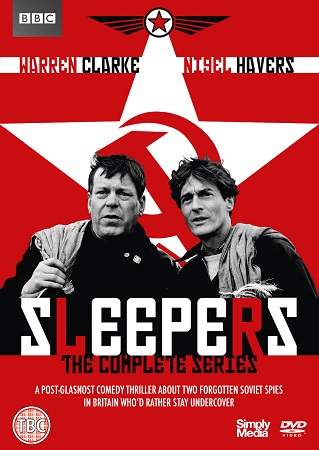
Back in the mid 1960’s, Russian spymaster Andrei Zorin (Michael Gough) sent two Soviet moles to Britain.  As “sleeper” agents, their mission was to assimilate themselves into British society and await further orders.  But those orders never came ….

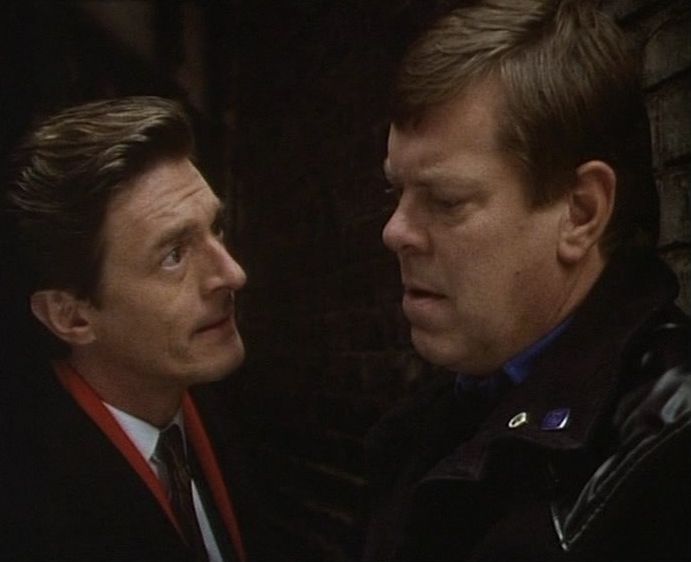
Fast-forward twenty five years and the two agents, Sergei Rublev (Nigel Havers) and Vladimir Zelenski (Warren Clarke), have gone native so successfully that they’re now indistinguishable from the real thing.  Both have flourished in the capitalist West  – Rublev, today known as Jeremy Coward, is a successful investment banker whilst Zelenski, now going under the name of Albert Robinson, is a happily married man with three children, holding down a job in a Manchester brewery.

The last thing they want to be reminded of is their murky Soviet past, but when Albert’s secret Soviet radio suddenly starts transmitting it seems to spell the end of their British adventure.  Albert contacts Jeremy (the pair hadn’t met since parting shortly after their arrival in the UK) and together they ponder their next move.  But the arrival of the hardline Major Nina Grishina (Joanna Kanska) spells further trouble for our two hapless heroes …

Broadcast across four episodes during April and May 1991, Sleepers is a fondly remembered comedy drama by John Flanagan and Andrew McCullough.  Flanagan and McCullough continue today to hold down dual jobs as actors and writers (both took the opportunity to act in Sleepers).  Their first joint writing credit was the 1980 Doctor Who story Meglos and they would go on to contribute to a number of popular series such as Robin of Sherwood, Boon, Pie in the Sky and Peak Practice..

Much of the appeal of Sleepers rests upon the performances of Nigel Havers and Warren Clarke.  Havers (b. 1949) had built up a solid list of credits throughout the 1970’s, but it would be during the 1980’s – with films such as Chariots of Fire and diverse television series like Don’t Wait Up and The Charmer – that he’d really become established as a leading actor.

Clarke (1947 – 2014) was incredibly busy during the 1970’s and 1980’s, racking up an impressive list of appearances in both films and television series (A Clockwork Orange,  The Sweeney, The Onedin Line, Minder, Tinker Tailor Solider Spy, Reilly: Ace of Spies, The Jewel in the Crown, etc etc) without ever really becoming a leading man – that would come later with Dalziel and Pascoe (1996 – 2007).

sleepers 01.jpg

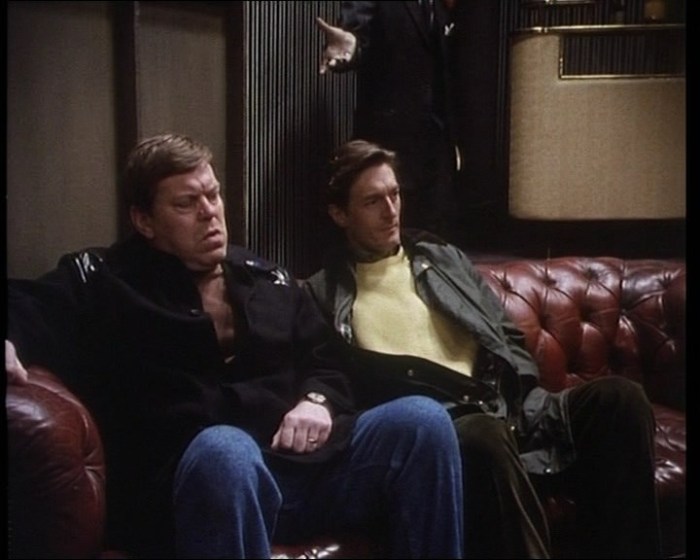
It’s the contrast between Rublev/Coward and Zelenski/Robinson which really appeals.  One was sent up North and the other established himself in the South.  There’s the lovely possibility that if Jeremy had gone to Manchester then he’d be speaking like Albert now and vice-versa.  That might have been interesting to hear, but it was probably safer that both actors played to type!

Back in 1991, the Cold War was definitely thawing, which meant that many spy stories began to look backwards to the good old days of the 1960’s and 1970’s.  This sense of past glories is touched upon in the opening episode, The Awakening, after a secret room beneath the Kremlin is found to contain a replica of an English town. Covered in cobwebs, it’s a perfect time capsule of the mid sixties. As the power is restored, a record player springs back into life with She Loves You by The Beatles playing, whilst Adam Adamant Lives! flickers into life on a tiny black and white television.

Such a construction may seem far-fetched, but there’s evidence to suggest that such places existed and were invaluable in training agents (plenty of examples can be found in fiction, from the Danger Man episode Colony Three to the Jack Higgins novel Confessional).

Quite how this ghost town was suddenly discovered or why Nina and Oleg PetrovskI (Christopher Rozycki) are so interested in it is a bit of a mystery. If it was a training ground for an operation decades ago, why should it be important now? Nina visits Zorin, but he’s nothing more than the shell of a man – babbling about 1960’s popular culture (quoting from A Hard Day’s Night and the Billy Cotton Band Show).

The gorgeous Joanna Kanska is suitably intimidating as the ice-cold KGB Major Nina Grishina . Arriving in Britain, she heads off to speak to Victor Chekhov (David Calder), their man in London. Calder essays a fairly broad performance as possibly not the most convincing Russian ever. For some reason he seems to have more of an American accent than a Russian one.

sleepers 02a.jpg

Nina and Victor couldn’t be more different. Victor considers that the Cold War is well and truly over and so asks both the CIA and MI5 for their assistance. Nina is horrified (to her, both are still the enemy) but involving both the Americans and British helps to ramp up the comedy. This is particularly evident with the cash-strapped MI5, where even fairly low-key expenses (a meal at Burger King) are examined very closely. In future the agent is advised to “stick to coffee. I want a bit less of these flame-grilled Whoppers.”

Once Albert and Jeremy meet up, the story can really start. Albert doesn’t want to return to Russia since he can’t bear the thought of being parted from his wife and children. Jeremy might not be married but he’s got plenty of good reasons to want to stay as well. “I’m on 300 grand a year. I’ve got a flat in town, a cottage in the country, a string of girlfriends and half a bloody racehorse. Think I’m going to give it all up for a bowl of red cabbage and a bedsit in Vladivostok?”

It’s undeniable that the plot is a little contrived in places, this is never more evident than when Albert and Jeremy decide to chuck the radio transmitter in the river and then do a Cossack dance to celebrate. After they’re arrested by the police, Jeremy tells the constable that they’re the Moscow State Circus (!). It’s difficult to believe that two trained (albiet very rusty) agents would behave so rashly, especially by mentioning Russia.

Sleepers sets up various mysteries, such as why Albert and Jeremy were in the crowd at the 1966 World Cup final. It’s amusing that the Russian archive film shows the disputed England goal at quite a different angle, something which Chekhov decides he can turn to his advantage. But British Intelligence, who are monitoring him, get quite the wrong end of the stick and decide that it’s all part of a Moscow plan to destabilise British society with the help of football hooligans!

As might be expected with a spy story, not everything in Sleepers is quite as it first appears, something which becomes very apparent in the closing episodes, whilst various running gags – such as Boris, a toy monkey owned by Albert’s daughter – also help to enliven proceedings. And whilst the serial may have a comic feel, there’s also various dramatic beats scattered throughout the four episodes – these are used to break down the facades that Albert and Jeremy have built around themselves.

Ironically, Albert’s not good at keeping secrets. His wife instantly senses that something is wrong, although she jumps to the conclusion that he’s having an affair. Clarke is excellent as the conflicted Albert, as is Havers as the apparently more confident Jeremy. But Jeremy too is racked by doubts as his past returns to haunt him.

Sleepers is a confident comedy thriller which features British, American and Russian intelligence agents all chasing different agendas, some of which are completly illusionary. With the luxury of four episodes it has the time to develop character and incident at a leisurely pace, although it never feels drawn out.

Sleepers is released by Simply Media on the 24th of October 2016. RRP £19.99.

sleepers 03.jpg

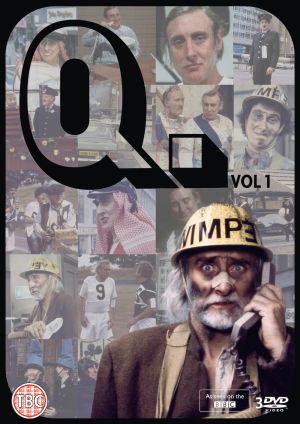
Spike Milligan’s Q Series – Volume One to be released by Simply Media – 21st November 2016

164454- Chief Crazy Horse Sleeve.indd

A pleasant surprise to see this on the release schedule as it’s the type of series which seemed increasingly unlikely to ever materialise on DVD.  And apart from a few minor trims (to excise unclearable music tracks) it will be as complete as it can possibility be.  Review here.

Spike Milligan’s Q was one of the most surreal sketch shows ever made and a huge influence on Monty Python’s Flying Circus, which launched six months after Q first aired in 1969. Now this highly sought-after BAFTA-nominated series gets its first ever home entertainment release courtesy of Simply Media, with Q Volume 1: Series 1-3 released on DVD on 21 November 2016.

Considered one of the best examples of the British Comedy Award winner’s eccentricity and ‘stream-of-consciousness’ humour, Spike Milligan’s sketches in Q make outrageous leaps from one subject matter or location to another, stopping with no apparent conclusion, and not shying away from controversial matters. Filled with invention and taking huge risks, Q provides the perfect showcase for Milligan’s surreal wit.

It is clear to see Monty Python in Spike’s work, and the Pythons were quick to nab director Ian MacNaughton for their own show. The series features regular appearances from John Bluthal (The Vicar of Dibley), John D. Collins (‘Allo ‘Allo), Peter Jones (The Rag Trade), and Margaret Nolan (Goldfinger), with seasoned satirists Richard Ingrams and John Wells prominent in the rarely seen early episodes.

Enjoy the madness and mayhem of Spike Milligan’s Q5, Q6, and Q7 again in this landmark DVD release which contains all surviving episodes from series one, and the complete series two and three.

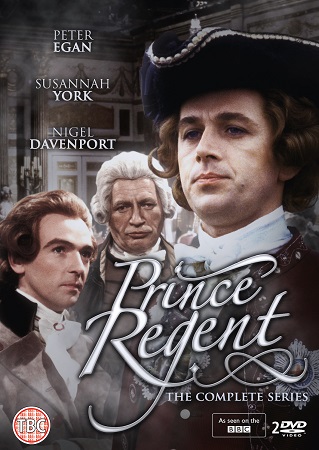
Prince Regent – Simply Media DVD Review

164454- Chief Crazy Horse Sleeve.indd

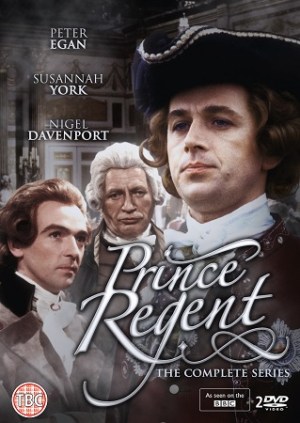
Prince Regent was an eight-part serial broadcast between September and October 1979.  Peter Egan played George, Prince of Wales, a man destined to ascend the throne of England.  But the madness of his father, George III (Nigel Davenport), and the strained relationship enjoyed with his wife Caroline (Diana Stabb) ensure that his succession is far from straightforward.

Unusually, multiple writers worked on the serial.  Robert Muller penned five episodes with the remainder provided by Reg Gadney, Nemone Lethbridge and Ian Curteis.  Carl Davis scored the music whilst Michael Simpson and Michael Hayes shared directing duties.

As might be expected, Peter Egan is supported by a highly impressive cast.  Nigel Davenport, Francis White, Keith Barron, Clive Merrison, Susannah York, Diana Stabb, David Horovitch, Barbara Shelley, Caroline Blakiston, Murray Head, David Collings, Cheri Lunghi and Patsy Kensit all appear in multiple episodes whilst the likes of Geoffrey Chater, Jane Freeman, Jo Kendall and Trevor Martin make one-off appearances.

Below is a brief episode by episode review.

Episode One – Mad For Love – 4th September 1979

In his own estimate talented, passionate, sensitive, a lover of art, of sport, of freedom, of women. In his father’s opinion scandalous and irresponsible, a drunkard, a ne’er-do-well, a lecher. 1782, and George Augustus Frederick, Prince of Wales, heir to the throne of England, approaches his coming-of-age (Radio Times Listing)

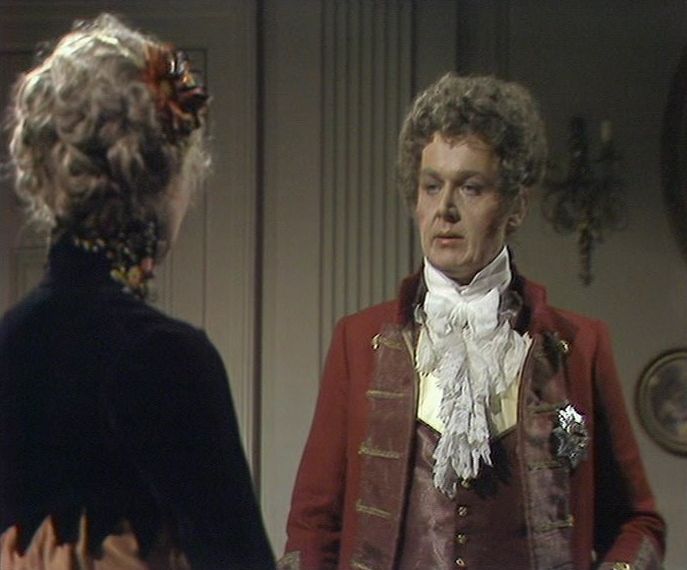
Mad for Love opens with a montage of the Prince of Wales enjoying various pursuts (fencing, shooting, carriage racing) which quickly establishes his less than serious nature. That he’s easily distracted by a pretty face is also in evidence after Maria Fitzherbert (Susannah York) catches his eye. The Prince finds (much to his amazement) that he’s violently in love with her, something which Maria – after listing George’s numerous previous conquests – finds impossible to believe.

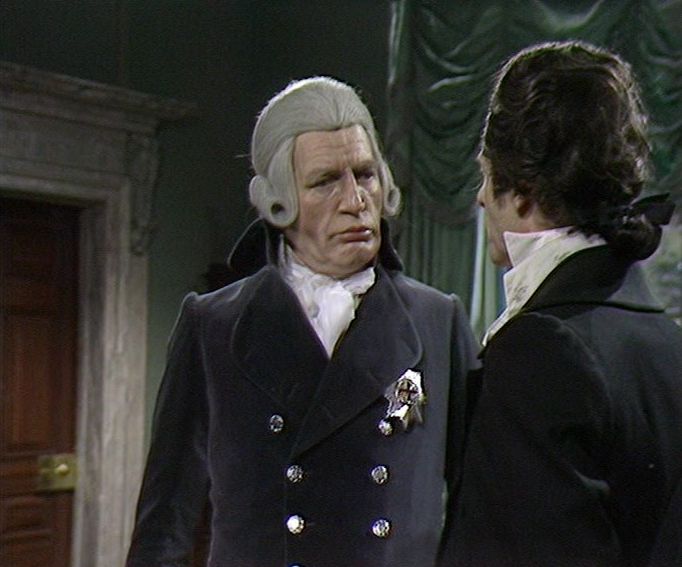
The testy relationship enjoyed between the King and the Prince of Wales is explored for the first time. The King (wonderfully portrayed by Nigel Davenport) has a low opinion of his son, but it’s puzzling that he denies the Prince the opportunity to serve in the army. By doing so he condems his son to sort of aimless life he claims to despise.

regent 01.jpg

Episode Two – Put Not Your Trust in Princes – 11th September 1979

The Prince has married his beloved Maria. The ceremony is illegal and secret, hidden not only from the King but also from Fox. And the rumours and whispers of scandal, soon begin … (Radio Times listing)

Nigel Davenport continues to entertain as George III. Whether he’s at the dining table and lecturing his children about why they can’t afford certain fruit (Egan’s in full eye-rolling mode here) or displaying a lack of interest in the Bard (“oh dear god, not Shakespeare. Detest the fellow, sad stuff”) he’s great fun. But the early signs of the King’s madness casts a shadow, especially as we know what’s to come. It also has to be said that whenever George III goes “what, what, what” (which he does rather often) I can’t help but be reminded of Neddy Seagoon ….

Keith Barron, another quality player, gives a strong performance as Fox, although his heavy 5 o’clock shadow makes him look rather odd. Malcolm Terris, as a yokel politician bitterely opposed to George’s marriage, has a couple of nice scenes.

Episode Three – The Bride from Brunswick – 18th September 1979

The illegal marriage to Maria turning cold, his debts steadily increasing, the Prince begins to think the unthinkable. Why not a second, official, marriage? But who will be the bride this time? (Radio Times listing)

The Prince decides to show his gratitude to his father for settling his substantial debts by agreeing to marry whoever the King chooses. George III plumps for Princess Caroline, who is, to put it mildly, a woman of character.

James Harris, the Earl of Malmsbury (Julian Curry), is given the task of travelling to Brunswick, Germany, to arrange the match. The court at Brunswick is a delight, with Ralph Michael offering a fine comic turn as the Earl of Brunswick. The Earl likes to have endless fanfares whenever he eats, even if it means that the unfortunate players pass out after straining to maintain the notes!

Caroline is a real handful and it’s plain that she’ll shake up the Prince’s life. The meeting between Caroline and George’s most prominent mistress Lady Frances Jersey (Caroline Blakinston) is a treat but this is topped when George and Caroline first set eyes on each other. He recoils at her heavily made-up face whilst she bitterly comments that “he’s terrible fat and by no means as handsome as his portrait”. This is not going to be a marriage made in heaven ….

Episode Four – The Trouble with Women – 25th September 1979

An official wife, an unofficial wife, and a powerful and determined mistress – is it any surprise that the Prince feels besieged by women? (Radio Times listing)

Caroline bears the Prince a daughter, Charlotte, but if he’s to finally extricate himself from his debts then he’ll need to produce many more (each new child would see an increase in his allowance). George doesn’t take kindly to this thought, the fact he refers to Caroline as “that unnatural hell-hag from Brunswick” makes his postion abundantly clear.

David Collings (as Pitt) is yet another fine actor who enriches the production no end. Pitt has been opposed to George’s antics in the past, but now supports the suggestion that the Prince and Caroline should live separate lives. The Princess of Wales’ man-eating tendances (which occur off-screen) are touched upon after George tells his wife that he’s found her a nice house in Blackheath, which will be convenient, since the Royal Naval College and a home for distressed seamen are both nearby!

regent-02

Episode Five – Father and Son – 9th October 1979

The King’s health has been good for several years but now there are ominous signs of a relapse into madness – convulsions, delusions, incessant talking. Is it at last time for a Regency? (Radio Times listing)

This one opens with the unusual sight of George indulging in amateur dramatics, performing an intense monologue before a select, but appreciative, audience. Although I’m sure there’s more than a touch of sychophancy in their fulsome appreciation.

George III cuts a tragic figure. He knows that his intermittent madness has returned, but the prospect of the “cure” (beatings, leeches, isolation in a darkened room) is more than he can bear. Davenport once again commands the screen.

George’s wish that his father either dies or goes properly mad is chilling.

Episode Six – God Save the King – 16th October 1979

A delicate investigation has been ordered into the alleged adultery of Princess Caroline. The Prince sees a chance for divorce from his hated wife. (Radio Times listing)

Peter Egan’s appearance at the start of this episode comes as a bit of a shock. He was slighly made up in the previous episode in order to portray an ageing and portlier George, but here it’s even more pronounced. Oddly, George III looks no different …

The investigation isn’t able to prove that Caroline has commited adultery, a verdict which rather upsets George. But even with his rather unforgiving make-up, Egan impresses as an older, wiser George. His conversation with the dying Fox is a touching one.

With George III’s madness even more of a problem, his son is finally confirmed as Regent. But now this long-cherished day has arrived, what will be the outcome?

Episode Seven – Milk and Honey – 23rd October 1979

The Regent decides that it is time for his beautiful and high-spirited daughter, Princess Charlotte, to marry. He has a candidate – but the strong-willed Princess has her own opinions on the subject. (Radio Times listing)

Princess Charlotte (Cheri Lungi) brings her new man, Captain Charles Hesse (Paul Herzberg) to meet her mother. Princess Caroline is much taken with him (they end up in bed a short while later!)

Lungi’s appearance might be fairly brief, but she’s yet another strong addition to the cast. Charlotte tells her father that she takes after him (a double-edged compliment that’s for sure). The Queen is concerned about her – Charlotte has a stutter and delights in showing people her underwear, whether they ask to see it or not. Jane Freeman, as Charlotte’s governess Lady de Clifford, has a brief but amusing cameo.

James Garbutt, as Lord Elson, has some acid lines which demonstrate that he’s not Princess Caroline’s greatest admirer. “She’s a foul-mouth, a slut and I don’t care who hears me say it.” As he says himself, there’s plenty more where that came from ….

The episode ends with the bleakest of news. It’s another blow for George, who has cast an increasingly melancholy figure as the years have progressed (a far cry from his carefree younger self).

Episode Eight – Defeat and Victory – 30th October 1979

The Prince prepares for the greatest battle of his life. His adversary is his hated wife Caroline, and he is determined to rid himself of her once and for all. (Radio Times listing)

Defeat and Victory opens with the deaths of the King and Queen.  Both Nigel Davenport and Francis White have been exemplary throughout the serial and this continues right up until their final moments.  With George now due to become King he is gripped by a single obsession – to ensure that Caroline is not crowned Queen and to that end she’s put on trial by the House of Lords.  Leading the prosecution is Sir Robert Gifford (James Cossins).  Cossins, the latest in a long line of wonderful character actors to grace the serial, seems to be enjoying himself enormously.

The episode title is an apt one, as although the Lords find Caroline not guilty, George is still able to ensure that his wife never becomes Queen.

Peter Egan, skilled at playing charming rogues, was perfect as George.  But whilst he was easily able to exude George’s affable nature, Egan didn’t shy away from showing us the other side of the coin – the irresponsible man who sometimes rode roughshod over others. Capricious, charming, selfish, generous, George was all these things and more. It’s his ever-changing moods, as well the increasing melancholy which desended on him in his later years, which makes him such a fascinating character.

A co-production with Time Life Television and Polytel International , it’s plain that the budget was pretty generous since the studio sets are detailed and impressive.  The serial also benefits from location recording at the Brighton Pavilion, this really helps to add an extra gloss to proceedings.  A typically impressive BBC costume drama of the era, Prince Regent is a sharply scripted and well-acted serial that just oozes class.  It may be something of a forgotten treasure, but it’s a treasure nonetheless and comes highly recommended.  Prince Regent is released by Simply Media on the 17th of October 2016.  RRP £24.99.

regent 03.jpg

The Justice Game – Simply Media DVD Review

7019

Dominic Rossi (Denis Lawson) is a Glasgow-based criminal lawyer with a thriving practice.  At present his attention is scattered in several different directions – the stabbing of an elderly man at a bus stop, an ex-soldier accused of multiple murders and the death of a private investigator whom he’d recently employed.  But he finds that all of these disparate crimes lead to Tim Forsythe (Michael Kitchen), a merchant banker who’s keen that Rossi should cease his investigations.  And since Forsythe has the intimidating Glen (James Cosmo) on his books, it seems that his silence will be rather permanent.

Airing on BBC1 during April 1989, The Justice Game is an efficient four-part thriller from the pen of John Brown (1944 – 2006).  The previous year Brown had written the well-remembered ITV serial The One Game, which featured Patrick Malahide as a manipulative games player.  Brown would go on to contribute scripts to a number of popular series such as Bergerac, The Ruth Rendell Mysteries, Inspector Morse and Taggart.

Denis Lawson (b. 1947) made his television debut in a 1969 episode of Dr Finlay’s Casebook and during the 1970’s was busy working across film, television and theatre.  One of his early film roles, in the original Star Wars (and then its two sequels), would ensure he would always maintain a certain cult status but it would be two very different 1980’s television roles that would establish him more firmly with the British public.  Dead Head (1986) was a BBC serial which attracted a huge amount of newspaper notoriety at the time, although thirty years on it seems rather tame.  The Kit Curran Radio Show featured Lawson as the eponymous radio presenter and whilst not a huge ratings-winner, ran for two well-received seasons.

In addition to Lawson, Kitchen and Cosmo, there’s a host of other quality actors who appear across the four episodes (Diana Quick, Iain Cuthbertson, Russell Hunter, Joss Ackland, Michael Culver and Ceila Imrie).

The first episode quickly establishes Rossi’s character.  He’s a man of contradictions – after a session working out on a treadmill his first thought is to reach for a pack of cigarettes.  We also observe his skills as a lawyer (he manages to get two prominent footballers off an assault charge).  The Amnesty poster on his office wall and his desire to take low-profile cases connected to social justice issues are clear pointers to his values and mindset.  Rossi is in a relationship with Kate Fielding (Diana Quick).  Like him she’s a professional (Kate’s a doctor).

It’s a pity that an actor as good as Russell Hunter exits the story relatively quickly.  He played Sandy Sadowski, a man who had information for Rossi but was brutally stabbed multiple times before he could pass it over.  John Brown is in no hurry to connect all the pieces of the puzzles he sets up, as with four episodes to play with there’s plenty of time to establish these various plotlines.  The well-dressed Tim Forsythe is a man of few words, but several are directed in the direction of Glen who organised the gang that killed Sadowski.

justice-01

Throughout the serial Denis Lawson impresses.  Dominic Rossi’s clearly something of a renaissance man, he’s not only a hot-shot, fast-talking lawyer but he can also belt out a mean rock ‘n’ roll tune (as witnessed at his parents wedding anniversary party).  The choice of Glasgow as the battleground was a good one.  Although the Glasgow-based Taggart had been running for a number of years, the location still offers a less familiar milieu than London. The last episode also makes a quick trip to New York as Rossi trails the money men behind Forsythe. Lurking in New York is Sir James Crichton (Joss Ackland). Ackland is characteristically still and sinister as the spider in the middle of the web.

The late eighties setting, deep in the dying days of Thatcherism, helps to inform the tone of the serial.  At the time Glasgow, like many other cities, was undergoing considerable redevelopment and renovation.  The first episode opens with Rossi taking Kate on a tour of his old house, located in one of the most run-down areas of the city.  But since the house has been demolished, Rossi contents himself with pointing at the bare ground where the various rooms had been.  Displaying a tinge of romanticism shared by many self-made men and women, he regrets the loss.

It’s hoped that something better will take the place of these levelled slums, but the likes of Tim Forsythe seem more interested in generating the maximum amount of profit for the company he works for.  Despite the fact that Forsythe remains a fairly nebulous figure (henchmen such as Glen do all the strong-arm stuff, leaving him distanced from the action) there’s a clear delineation between Rossi and Forsythe.  Rossi is concerned with people and justice whilst Forsythe is concerned only with profit.  Certain reminders of the era – mobile phones as big as housebricks, Forsythe’s cocaine habit – help to make it the perfect story for the consumerist eighties.

Roger Limb’s score sometimes eschews the familiar radiophonic soundscape he was well-known for. But it’s still atmospheric and the more sinister cues help to create a vague sense of unease which compliments the sometimes bleak and violent world presented across the four episodes.

The Justice Game is probably an episode too long and rather wastes good actors such as Iain Cuthbertson in small roles, but it still chugs along nicely to its inevitably bloody conclusion. As might be expected from the cynical worldview it presents, we find that “justice” is in very short supply.

The following year, the three-part Justice Game 2 was broadcast on BBC1 during March 1990.  The serial opens with Rossi in Italy, enjoying a holiday romance with the lovely Francesca (Anita Zagaria).  Rossi’s considering a career change – from lawyer to advocate – and this holiday was supposed to help him make up his mind, although he remains noncommittal by the end of it. I like the way the first scene has a number of quick cuts, showing Rossi and Francesca enjoying themselves in various different ways (driving an open-top car, him rubbing suncream into her back, riding a pedalo, riding bikes, eating icecream). It’s slightly corny, but it works.

Rossi returns to Glasgow and Francesca quickly becomes a fading memory, so he’s surprised (but pleased) when she unexpedically turns up. She’s a woman with a secret though. Back in Italy several of her friends have met violent deaths and the killings don’t stop when she travels to Scotland – meaning that Rossi’s right in the firing line.

There have been a few changes since the first story. Rossi’s moved into an impressive, if crumbling house (complete with a leaky roof) and has gained a new colleague, Eleanor Goodchild (Barbara Flynn). Flynn, as ever, is wonderfully watchable as the powerful Eleanor. She may only be Rossi’s junior partner but is she part of the reason why he’s considering a career change? Some have dubbed her “a female Dominic Rossi” which amuses him. He certainly seems to be going through something of a mid-life crisis (he picks up a prostitute in a bar, although it appears he wasn’t charged for her services).

Even though this serial is an episode shorter than the first, it still takes its time to get started. There’s action in the first episode – several bloody deaths – but these take place in Italy whilst Rossi’s back in Glasgow and yet to connect to this main plot. But the death of a young man (a potential client for Rossi) in a suspicious hit-and-run accident adds another layer to the narrative and also reconnects Rossi to the seamier side of life (something rather alien to the upwardly mobile lifestyle he’s been recently enjoying).

Justice Game 2 is slightly less satisfying than the first serial. Barbara Flynn and Denis Lawson have a good combative relationship, but this could have been developed a little more. Anita Zagaria works well as the lady with a dark secret, it’s just a shame this part of the story is rather stretched out.

But although it’s slightly inferior when compared to The Justice Game, it’s still a stylish thriller, held together by Lawson’s central performance. Both serials have a nice period feel (late eighties, early nineties) and if there’s the odd lull from time to time, you can be sure that another shock or twist is just round the corner to spice things up.

The Justice Game (containing both series) is released by Simply Media on the 10th of October 2016.  The picture quality is a little grainy, which isn’t too surprising considering that the source materials are unrestored 16mm film prints which are nearly thirty years old, but there’s no particular issues.  RRP is £19.99.

justice-02

The Legend of King Arthur – Simply Media DVD Review

164454- Chief Crazy Horse Sleeve.indd

Broadcast in eight 30 minute episodes during October and November 1979, The Legend of King Arthur contains all the familiar story-beats you’d expect, but Andrew Davies’ adaptation still manages to throw in a few twists along the way.

Merlin (Robert Eddison) and Arthur (Andrew Burt) have established a new enlightened age, thanks in part to the mighty sword Excalibur which is used by Arthur to subdue his rivals.  But this hard-won peace is short-lived as his vengeful half-sister Morgan le Fay (Maureen O’Brien) has vowed to avenge her father’s death and only Arthur’s demise will satisfy her.  Well versed in the dark arts of witchcraft, she uses her powers to convince Arthur that his bravest knight Lancelot (David Robb) and Queen Guinevere (Felicity Dean) are enjoying a passionate affair.  But Morgan isn’t the only danger that Arthur faces and the treacherous Mordred (Steve Hodson) proves to be the one who fatally halts Arthur’s reign.

Long regarded as one of the best adaptations of the Arthurian legend, once you can get past the rather low-key production values (the VT nature of the studio scenes gives everything a rather stagey feel) there’s much to enjoy.

The central performances of Andrew Burt, Maureen O’Brien, David Robb, Felicity Dean and Steve Hodson are all first-rate.  Burt (the original Jack Sugden in Emmerdale Farm) might not be the sort of actor that would instantly spring to mind when considering the perfect Arthur, but his rather stolid persona is just what the production needed.  Maureen O’Brien is compelling as Morgan, eschewing cackling villainy for something much more low-key.  David Robb and Felicity Dean are both strong players whilst Steve Hodson gives Mordred the sort of slowly increasing intensity which serves the character well.

And if the main cast are pretty faultless, there’s also strength in depth to be found with the supporting players.  Denis Carey, Kevin Stoney, Richard Beale, Geoffrey Beevers, Peter Guinness, Hilary Minster, Ivor Roberts and Margot van der Burgh are amongst those who help to enrich the production.  A young Patsy Kensit, playing Morgan le Fay as a child, is another actor worth looking out for.

The story opens with the King, Uther Pendragon (Brian Coburn), deciding that he wants a Queen to bear him a son. He declares that the wife of his trusted ally, Goloris (Morgan Sheppard), will fit the bill nicely. Both Goloris and his wife, the lady Igrayne (Anne Kidd), are horrified, but Uther is not a man for compromise and tells Goloris that if he doesn’t comply, “however strong you may make this castle, I will have you out of it and roast you like a badger!”

Goloris and Igrayne have a daughter, Morgan (Patsy Kensit), who calls on divine help to strike down Uther, but Merlin appears instead. He tells her that “you have the gift, but not the knowledge of the gift. You see a glimpse of the forbidden things, but only a glimpse.” Merlin may stand by Uther’s side, but he doesn’t serve him, not fully. Goloris’ death at the hands of Uther sets in motion Morgan’s life-long hate of her half-brother Arthur (born of the forced union between her mother and Uther).

arthur-01

Kensit might have only been eleven at the time, but she was already something of a television and film veteran (her first credit came when she was just four years old). She’s appealing as the innocent who finds herself consumed with loathing for the boorish Uther (a broad, but effective turn from Coburn) and Arthur. Morgan’s transformation from good to evil is sealed when she fails to aid the choking Uther. That he dies after a glutinous feast rather sums up his character.

Episode one then moves ahead some fifteen years, as we see the young Arthur (Richard Austin) pull the sword from the stone, the act which confirms he is the true King. Sadly it’s a rather flatly staged moment, lacking any sense of magic or wonder. Much better is the following scene where Arthur makes a decent impression with some of the nobles. Others are less convinced, so there will be war. But first there’s another key moment – Excalibur needs to be retrieved from the Lady in the Lake.

It’s a pity that we don’t spend more time in the company of young Arthur, as by the start of episode two Andrew Burt has assumed the mantle. It’s not too surprising that the long battles he had to fight in order to prove his legitimacy happened off-screen (budget considerations I’m sure played a part in this). Maureen O’Brien now takes over the role of Morgan. She claims to Merlin that now she serves only God ….

arthur 02.jpg

It quickly becomes clear that Arthur is not the man his father was. Arthur is fair and conciliatory, but events prove this to be a weakness rather than a strength. After he pardons a bitter rival called Accolon (Anthony Dutton), it’s obvious that he’s simply delayed an inevitable confrontation. Arthur and Guinevere are married and Lancelot offers to be her champion, to stay constantly by her side and do whatever she bids.

Merlin disappears after the second episode, which is a shame as Robert Eddison had a teasing, impish presence. Merlin’s absence forces Arthur to take control of his own destiny, which you sense is not going to end well. And Morgan’s arrival at Arthur’s court, with Mordred in tow, sets in motion the long endgame that results in Arthur’s death.

The middle episodes develop the relationship between Guinevere and Lancelot. Whilst the arrival of the elderly King Pelles (Denis Carey) dispossed of his lands and with a daughter laying stricken under the curse of a powerful witch (who has to be, unknown to any at court, Morgan) adds another layer to the narrative. Carey, an actor of dignity and subtlety, always enhanced any programme he appeared in and this one is no exception. Pellas tells the court that only one man can save his daughter and that man is Lancelot.

As the serial progresses, both Morgan and Mordred continue to manipulate Arthur.  Amongst some of the riper turns, Steve Hodson offers something more nuanced. When we first meet him he appears to be Arthur’s man, but his alliance with his aunt Morgan and his own ambitions slowly rise to the surface to reveal his true nature.

Morgan suggests to Arthur that the love between Guinevere and Lancelot is the sort of love shared between a husband and wife, whilst Mordred spies an excellent opportunity to blacken Guinevere’s name even further.  Mordred and Morgan had intended to poison Guinevere with a piece of fruit, but the Queen innocently decided to offer this treat to someone else.  When Guido de la Porte (Tim Wylton) drops dead after a single bite, the Queen is suspected of murder.

arthur-03

Lancelot would be the man to defend her honour, but he lies injured and isolated from the court.  And Lancelot’s standing amongst his fellow Knights (already shaky due to the innuendo about his possible affair with the Queen) diminishes even further when the dead body of Eleanor (Amanda Wissler) comes drifting towards them.  Eleanor loved Lancelot, but he couldn’t return her love.  When Lancelot and the others realise that the spurned Eleanor has taken her own life, it’s amongst the most powerful moments in the serial.   By the time we reach the final episodes, Galahad (James Simmons) arrives, as does the Quest for the Holy Grail, Lancelot and Arthur become bitter rivals whilst Mordred, in Arthur’s absence, usurps his kingdom.

Even with eight episodes, given the amount of ground covered in The Legend of King Arthur there’s the sense that an even longer running time would have allowed some of the secondary characters to be fleshed out a little better, as well as allowing more time to linger on certain themes.  For example, when Lancelot heads off to avenge King Pellas, he’s able to do so with almost indecent haste.  He may be the bravest Knight in the land, but this still seems a little perfunctory!

Produced by Ken Riddington, directed by Rodney Bennett and with incidental music by Dudley Simpson, The Legend of King Arthur is a treat from start to finish.  Those used to the glossier production values of modern television may find it to be lacking in places, but Andrew Davies’ layered adaptation, an attention to detail and the quality cast all help to compensate for the fairly low budget.

There are some production missteps (for example, as the characters age unconvincing wigs and beards are pressed into service) but there are many positives as well.  Andrew Burt is entertaining as the thoroughly decent but doomed King, whilst Felicity Dean is terribly appealing as the winsome Guinevere.  Add in the smiling manipulative villainy of Maureen O’Brien’s Morgan and it all combines to produce a heady brew.

The Legend of King Arthur is released by Simply Media on the 10th of October 2016.  RRP £19.99.

arthur-04

Little Sir Nicholas – Simply Media DVD Review

6952

Following a terrible tragedy at sea, Sir Walter Tremaine, his wife and their four-year old son Nicholas are all feared lost. Six years later, Lady Tremaine (Rachel Gurney), still mourning the loss of her son and grandson, is now considering the question of inheritance (the Tremaine family are one of the wealthiest in the land).  To this end, she advertises for any relations of Edward John Tremaine to come forward.  The ambitious and grasping Joanna Tremaine (Bernice Stegers) is delighted when her young son Gerald (Jonathan Norris) is declared the nearest blood relative and is therefore chosen to inherit the family title, estates and fortune.

But no sooner have Gerald, his sister and his mother become accustomed to their new and privileged surroundings than the rug is pulled from under their feet as Little Sir Nicholas (Max Beazley) is discovered alive and well, living in obscurity in a French fishing village …..

Broadcast in six episodes on CBBC1 during January and February 1990, Little Sir Nicholas is an efficient adaptation of the novel by C.A. Jones, originally published in 1892.  It’s an all-film production, which is slightly surprising (it was still common for the cheaper alternative of videotape to be used at the time). But the filming adds a welcome extra gloss, so I’ve no complaints.

In the pre-credits sequence for episode one we witness the shipwreck which drowns Sir Walter and his wife. It’s impressively mounted, mixing model shots and a full-sized ship, which was presumably shot in the water tank at Ealing studios. An elaborate scene like this wouldn’t have come cheap, so it’s an early indication that Little Sir Nicholas has a very healthy budget.

A caption then tells us that events have moved on six years – we see Lady Tremaine speaking to Mr Apted about the possibilities of finding an heir. Rachel Gurney will, of course, always be best remembered for playing the refined Lady Marjorie Bellamy in Upstairs Downstairs.  Her television credits were rather scarce after leaving UpDown in 1973, and Little Sir Nicholas (her penultimate screen role prior to her death in 2001) was one of her most substantial roles post 1973.

Barry Jackson has a nice cameo as the kind-hearted shoemaker Mr Nolan, who points out the newspaper advertisement which leads to Gerald’s new-found fortune. It’s telling how both Gerald and his mother immediately dismiss him from their life as soon as they move upwards (neither seem inclined to settle their debt with him either). It’s left to Gerald’s kind-hearted sister, Margaret (Louisa Milwood-Haigh), to thank Mr Nolan for all he’s done for them and ensure he isn’t out of pocket. Margaret is the conscience of the family and stands as a sharp counterpoint to her more selfish mother and brother.

The second episode concerns itself with the twelve-year-old Sir Gerald adapting to his new life as a baronet in Cornwall. Gerald and his mother continue to act in a thoughtless manner (we can maybe excuse Gerald because of his age, but it takes a lot longer before we understand what motivates his mother). Mrs Tremaine is rude to Lady Tremaine and dismissive to the dignified family retainer Robinson (the always immaculate Jack Watson). Gerald and Margaret meet William Randall (Christopher Villiers), a friend of the family and a portrait painter (his painting of the four-year old Sir Nicholas hangs in the Tremaine’s hall). It’s rather hard to swallow that shortly after this meeting, Randall, on a painting trip to Britanny, identifies a young French lad as the missing Sir Nicholas.  But such a stunning coincidence has to be accepted in order to bring Nicholas back into the story.

In the third episode, Sir Nicholas returns to Cornwall to claim his inheritance, but finds the environment to be extremely unwelcoming. Although Randall has the best intentions in returning Nicholas to England, it’s a heart-breaking moment when he has to leave his adopted mother and sister behind. There’s a nice bit of banter between the maid Dulcie (Cathy Shipton) and Bootle (Philip Whitchurch) who’s come hot-foot with a telegram for Lady Tremaine with the news that Nicholas is alive. Since he decides to wait for a reply, he’s clearly read the telegram beforehand!  After she’s received the amazing news, Lady Tremaine doesn’t throw Gerald, Margaret and their mother onto the streets – instead she’s more than generous, settling substantial sums of money on all of them and insisting they continue to live in the big house with Nicholas. Needless to say, Mrs Tremaine isn’t satisfied with this ….

Episode four features the wonderful James Ellis as the old sea-dog Mr Penfold. He’s made an impressive toy boat which he intends to give to Nicholas. This irritates Gerald who wants the boat himself. It’s true that Gerald loves the sea whilst Nicholas fears it, but given that he watched his parents drown that’s quite understandable. Gerald calls him a coward, but luckily Margaret is on hand to show Nicholas unconditional love and understanding. The Christmas celebrations see Robinson entertain the household with stirring tales of exploits on the sea (another fine scene for Jack Watson).

Nicholas’ wretched life continues in the fifth episode as his pet pony Peterkin, one of his few friends, vanishes. Gerald, still smarting at the way Nicholas is always first in line, rides Peterkin away and hides him. And when Margaret leaves for boarding school, poor Nicholas feels even more isolated.

The sixth and final episode sees Mrs Tremaine’s hatred of Nicholas boil over. Nicholas and the now-reunited Peterkin have run away, although rather conventially Mrs Tremaine is able to easily track him down. But instead of taking him home, her scornful taunts drive him away again. Lady Tremaine is forced to accept that due to her mild disappointment with Nicholas, she was happy to leave him in the care of a woman who clearly despised him. Lady Tremaine and Mrs Tremaine face each other in a dramatic scene. Mrs Tremaine admits that she’s ill-treated Nicholas, but it was out of a fear that she’d have to return to London, penniless. “I am what poverty made me. I couldn’t be poor again.”

The story concludes in a dramatic fashion as Gerald and a local boy called Joe are stranded on a rock in the middle of the sea. Nicholas is forced to confront his fear of the sea as (rather unbelievably) he’s the only one who can row a boat out to save them. Mr Penfold rather succinctly sums it all up. “Well I’ll be jiggered.”

This may have been a children’s serial, but there’s no shortage of quality acting talent on display.  Any devotee of archive television will have no trouble in recognising the likes of Rachel Gurney, Christopher Villiers, Jack Watson, James Ellis, Barry Jackson and Noel Johnson.  Julian Fellowes doubles as an actor and co-adaptor, turning up as Mr Apted in three episodes. It’s true that some of the child actors – not just Jonathan Norris and Max Beazley but the minor players as well – are a little stilted at times, but that’s not uncommon with period dramas of this type. But the oldest of the juvenile actors, Louisa Milwood-Haigh, is very assured as the compassionate Margaret.

Little Sir Nicholas is an impressively mounted, well-acted serial which deals with universal themes such as greed, loneliness and childhood jealousies.  Unseen since a repeat run in 1992, this may be an obscure production, but it’s also an engaging, heart-warming and thoroughly rewarding one.

Little Sir Nicholas is released by Simply Media on the 10th of October 2016.  RRP £19.99.

The Justice Game to be released by Simply Media – 10th October 2016

7019

The Justice Game – Series One and Two will be released on the 10th of October by Simply Media.  Review here.

New Tricks star Denis Lawson stars as suave criminal lawyer Dominic Rossi, who exposes corruption in Glasgow and loses his heart in Italy in this gripping miniseries from 1989. After a successful career break in America, Rossi returns to his Glasgow roots. As he investigates the fatal stabbing of an elderly man at a bus stop, and defends a tough ex-soldier accused of a vigilante killing, he untangles a shady web of big business. Digging deeper, all trails lead to a Mr Big called Tim Forsythe (Michael Kitchen – Foyle’s War) – who will stop at nothing to make sure Rossi doesn’t reveal too much.

In series two, Rossi falls in love with the beautiful Francesca (Anita Zagaria – Under the Tuscan Sun) while on holiday in Sorrento, then discovers that many of her friends have been murdered. As he investigates another killing back in Glasgow Francesca shows up, apparently with the Italian murderer in tow. But it turns out she’s hiding a shattering truth from her past.

Lawson sparkles as a smooth operator with a steely sense of justice in this thrilling series alongside an all-star supporting cast including BAFTA winner James Cosmo (Braveheart), Ron Donachie (Game of Thrones), Celia Imrie (Bridget Jones’s Diary), Joss Ackland (The Hunt for Red October) and Diana Quick (Saving Grace).

Directed by BAFTA winner Norman Stone (Shadowlands) and written by John Brown (The Flying Scotsman), The Justice Game: Series 1 and 2 arrives on DVD on 10 October 2016.

Prince Regent to be released by Simply Media – 17th October 2016

164454- Chief Crazy Horse Sleeve.indd

Starring Peter Egan and Susannah York, Prince Regent will be released by Simply Media on the 17th of October 2016.  Review here.

BAFTA winner Peter Egan (Chariots of Fire), Oscar and Primetime Emmy nominee Susannah York (Superman) and Nigel Davenport (Chariots of Fire) star in the BAFTA winning eight-part historical drama, Prince Regent: The Complete Series.

Transmitted by the BBC in 1979, the series depicts the life and times of George IV (1762-1830) from his early days of debauchery, his ascent to the throne as Prince Regent and his reign as King. Covering his famously dissolute lifestyle including his two marriages (one legal, one not), his mistresses, the famous men of his day and the over-indulgence and frustration of waiting for his father George III to die or remain mad; this sumptuous series will be available on DVD from 17 October 2016.

Directed by BAFTA winner Michael Simpson (The Bill) and also featuring Patsy Kensit (Holby City) and Cherie Lunghi (Mary Shelly’s Frankenstein).