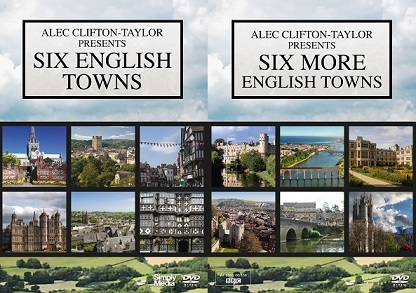
Six English Towns/Six More English Towns – Simply Media DVD Review

164454- Chief Crazy Horse Sleeve.indd

Originally broadcast on BBC2 during August and September 1978, Six English Towns saw Alec Clifton-Taylor cast his experienced eye over the following towns – Chichester, Richmond, Tewkesbury, Stamford, Totnes and Ludlow.

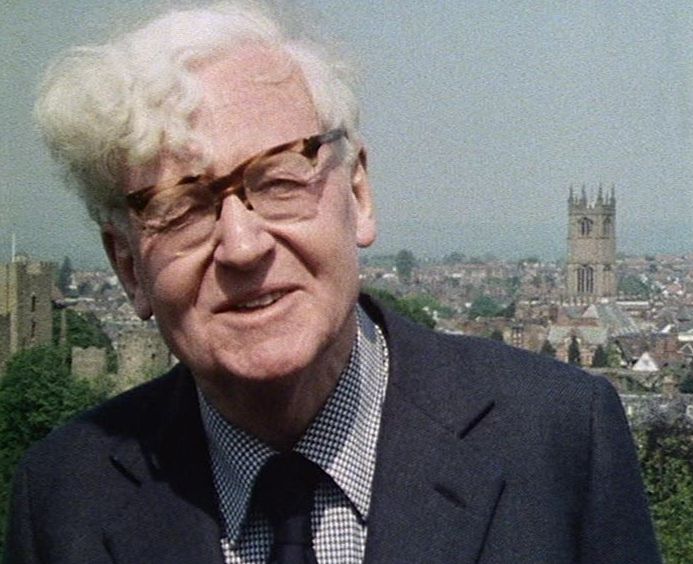
Clifton-Taylor (1907 – 1985) had been a respected, if fairly obscure, architectural historian, so it may have come as something of a surprise to him that fairly late in life he became a recognisable television figure.  It’s easy to see why this happened though – he had a pleasingly direct style and his ease in front of the camera meant that he was able to deliver both brickbats and bouquets in an authoritative, but accessible, way.  Put simply, Alec Clifton-Taylor had the air of a faintly distracted schoolmaster who dispensed learning lightly but with passion.

At the start of the first edition he sets out exactly what he’s aiming to do.  “These are not guidebook programmes. Our main concern will be with buildings and especially with houses. I’d like every programme to be an exercise in looking.  Looking at the changing styles and fashions.  And at the traditional building materials of England.”

One of Clifton-Taylor’s abiding interests was the way that towns prior to the industrial age used materials which were readily at hand.  He therefore had some criticism of the Victorian era, since the age of steam meant that materials could be transported around the country with an ease that simply hadn’t been possible before – therefore the characteristic look of towns began to fade a little.

When visiting Chichester he says that “the cathedral apart, brick and flint are what give Chichester its essential character, the right materials in the right place.” He’s therefore delighted to find examples of good brickwork – and this moment is one that gives pause for thought.  We may pass similar buildings each day without giving them a second glance, but one of Clifton-Taylor’s skills was to find interest in what may appear to be commonplace.  And after watching the series it’s made me appreciate the buildings in my area a little more – how different styles and eras may exist side by side, for example.

When watching the series now it’s impossible not to wonder how the towns look today.  Clifton-Taylor had forthright opinions on how modern buildings (especially high-rise ones) shouldn’t encroach on the old.  Sadly, I’m sure that some of the places he visited over the course of three series have lost some of the features which so pleased him.  When visiting Richmond, he was taken with the way that the old railway station had been sympathetically turned into a garden centre.  He comments that it’s “a shining example of what enterprise and imagination can do to save an excellent building no longer required for its original purpose.” It’s therefore pleasing to note that the building still exists today and – following the closure of the garden centre in 2001 – now serves the community as a heritage centre.

The remainder of the first series has plenty of interest. The House of the Nodding Gables in Tewkesbury, the impressive churches of Stamford and Totnes’ slate decorated houses are just a few examples. The final edition of the series, Ludlow, saw Clifton-Taylor visit his favourite town and there was plenty which appealed to him there.  Ludlow exemplifies his concept of a pattern of building – stone for the church, the bridges and the castle, wood for the medieval houses and brick for the houses of the Georgian period.  He’s less impressed with some of the Victorian additions though.

Six More English Towns followed three years later in 1981.  This time Clifton-Taylor visited Warwick, Berwick-upon-Tweed, Saffron Walden, Lewes, Bradford on Avon and Beverley.

The opening episode has some predictable highlights, such as Warwick Castle, but less well-known buildings – such as Lord Leycester Hospital – are of just as much interest.  He wasn’t at all enamoured with the modern council building though – a monstrosity in concrete which obscures views of the impressive-looking church.

Berwick-upon-Tweed finds Clifton-Taylor appreciating the character of the town even if there’s nothing of outstanding importance or interest, although some of the architectural flourishes don’t really meet with his approval.  “Even the carved lions on the gate piers seem perplexed”.  Elsewhere, he’s not impressed with the amount of traffic which flows through Saffron-Walden, declaring that most of it should be “firmly re-routed.”  The series closes with Clifton-Taylor’s visit to Beverley, North Humberside, of which the medieval Minster church is of special interest to him.

A third and final series, Another Six English Towns, would follow in 1984 and this will be issued on DVD in early 2017.

Six English Towns/Six More English Towns won’t be everybody’s cup of tea – a man wanders about looking at buildings – but if you’re interested in history, architecture or English towns then there’s plenty which should catch your attention.

Six English Towns was released on the 12th of September 2016 and Six More English Towns will be released on the 7th of November 2016.  Both have a RRP of £19.99.
towns

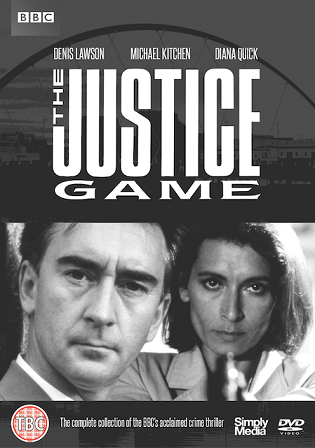
The Justice Game to be released by Simply Media – 10th October 2016

7019

The Justice Game – Series One and Two will be released on the 10th of October by Simply Media.  Review here.

New Tricks star Denis Lawson stars as suave criminal lawyer Dominic Rossi, who exposes corruption in Glasgow and loses his heart in Italy in this gripping miniseries from 1989. After a successful career break in America, Rossi returns to his Glasgow roots. As he investigates the fatal stabbing of an elderly man at a bus stop, and defends a tough ex-soldier accused of a vigilante killing, he untangles a shady web of big business. Digging deeper, all trails lead to a Mr Big called Tim Forsythe (Michael Kitchen – Foyle’s War) – who will stop at nothing to make sure Rossi doesn’t reveal too much.

In series two, Rossi falls in love with the beautiful Francesca (Anita Zagaria – Under the Tuscan Sun) while on holiday in Sorrento, then discovers that many of her friends have been murdered. As he investigates another killing back in Glasgow Francesca shows up, apparently with the Italian murderer in tow. But it turns out she’s hiding a shattering truth from her past.

Lawson sparkles as a smooth operator with a steely sense of justice in this thrilling series alongside an all-star supporting cast including BAFTA winner James Cosmo (Braveheart), Ron Donachie (Game of Thrones), Celia Imrie (Bridget Jones’s Diary), Joss Ackland (The Hunt for Red October) and Diana Quick (Saving Grace).

Directed by BAFTA winner Norman Stone (Shadowlands) and written by John Brown (The Flying Scotsman), The Justice Game: Series 1 and 2 arrives on DVD on 10 October 2016.

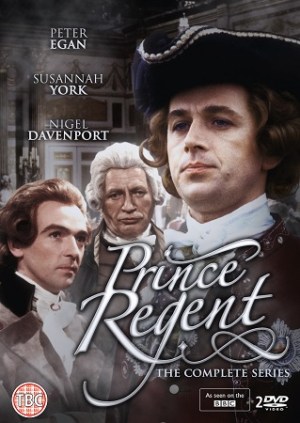
Prince Regent to be released by Simply Media – 17th October 2016

164454- Chief Crazy Horse Sleeve.indd

Starring Peter Egan and Susannah York, Prince Regent will be released by Simply Media on the 17th of October 2016.  Review here.

BAFTA winner Peter Egan (Chariots of Fire), Oscar and Primetime Emmy nominee Susannah York (Superman) and Nigel Davenport (Chariots of Fire) star in the BAFTA winning eight-part historical drama, Prince Regent: The Complete Series.

Transmitted by the BBC in 1979, the series depicts the life and times of George IV (1762-1830) from his early days of debauchery, his ascent to the throne as Prince Regent and his reign as King. Covering his famously dissolute lifestyle including his two marriages (one legal, one not), his mistresses, the famous men of his day and the over-indulgence and frustration of waiting for his father George III to die or remain mad; this sumptuous series will be available on DVD from 17 October 2016.

Directed by BAFTA winner Michael Simpson (The Bill) and also featuring Patsy Kensit (Holby City) and Cherie Lunghi (Mary Shelly’s Frankenstein).


The Legend of King Arthur to be released by Simply Media – 10th October 2016

164454- Chief Crazy Horse Sleeve.indd

The Legend of King Arthur will be released by Simply Media on the 10th of October 2016.  Review here.

Andrew Davies’ (House of Cards) sumptuous adaptation of the timeless saga, The Legend of King Arthur, makes its home entertainment debut on 10 October 2016 with the complete 1979 series.

Dark Ages wizard Merlin (Robert Eddison – Indiana Jones), weary of the barbarism around him, creates a new order of enlightenment and justice with a youthful Arthur (Andrew Burt – Emmerdale) at its head. Merlin presents Arthur with the magic sword Excalibur to help him defeat the nobles who oppose his rule. But Arthur must also beware his half-sister Morgan (Maureen O’Brien – Doctor Who), a sorceress who has sworn to kill him to avenge her father’s death.

As Morgan intensifies her campaign, she uses magic to draw Lancelot (David Robb – Downton Abbey) and Guinevere (Felicity Dean – The Whistle Blower) into a passionate affair. But it is the still more traitorous Mordred (Steve Hodson – Break in the Sun) who will fatally halt Arthur’s rule.

Bringing high romance, low treachery and magical adventure via a host of legendary characters and featuring an early appearance by Patsy Kensit (Holby City), this is a fabulous retelling of the gloriously twisting tale.


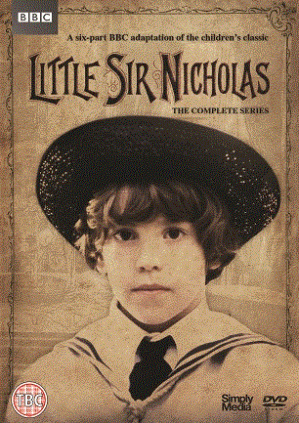
Little Sir Nicholas to be released by Simply Media – 10th October 2016

6952

Little Sir Nicholas will be released by Simply Media on the 10th of October 2016.  Review here.

Based on the classic children’s novel by Cecilia Anne Jones, Little Sir Nicholas is a gripping Victorian saga about blood rights, identity and family rivalries. This six-part BBC adaptation co-written by and featuring Oscar winner Julian Fellowes (Downton Abbey), arrives on DVD on 10 October 2016.

It has long been the destiny of the sons of the Tremaine family to serve as officers in the Royal Navy, but this tradition seems doomed when Sir Walter Tremaine, his wife and their four-year-old son Nicholas (Max Beazley – Maigret) are lost at sea in a wild storm. Five years on, Lady Tremaine (Rachel Gurney – Upstairs, Downstairs), still stricken by the loss of her son and grandson, advertises across the country for a distant heir to come forward.

Penniless Londoner Joanna Tremaine (Bernice Stegers – Undercover) is thrilled when her son Gerald (Jonathan Norris) is chosen to inherit the family title and fortune. But just as they settle into a life of luxury, Little Sir Nicholas is found alive and well in a small coastal French village.


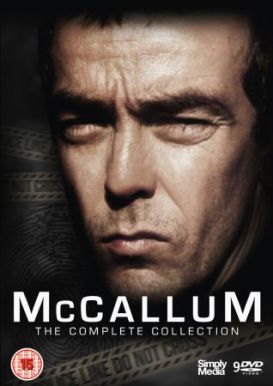
McCallum: The Complete Collection – Simply Media DVD Review

164454- Chief Crazy Horse Sleeve.indd

Running between 1995 and 1998, McCallum was a series that seemed to tap into various television drama trends of the period. Like Cracker it had an unorthodox lead, who (similar to Tony Clark in Between the Lines) was something of a hit with the ladies.  And like both those series, McCallum had an uncompromising, naturalistic feel.

Iain McCallum (John Hannah) is a brilliant forensic pathologist, albeit one with an independent streak.  It probably won’t come as a great shock to learn that he tends to butt heads with some of his colleagues on the police-force, especially the brusque DI Bracken (Gerard Murphy).  McCallum goes his own way and more often than not solves the crime all by himself (with the police trailing in his wake).

If this is something of a cliché, then so is the fact that McCallum often gets personally involved.  The pilot episode The Key to My Heart provides us with an excellent example of this.  After enjoying a night of wild passion with Claire Best (Cathryn Harrison), a police officer working with him on his latest case, McCallum is shocked the next day to be called to the scene of her murder.

With this sort of plot-twist you can either throw your hands up and decide that it’s all too unbelievable, or just decide to go with the flow.  As McCallum continues to keep quiet about his intimate link to the victim, Bracken starts to sniff around. There’s a nice feeling of tension as McCallum becomes more and more frantic as Bracken starts to apply the pressure.

Despite having a long-term girlfriend, Joanna Sparks (Suzanne Hamilton), McCallum seems to be a man who finds it impossible to resist any female that crosses his path.  When he meets up with Joanna the day after his liaison with Claire, he’s not able to bring himself to admit that he’s slept with her (whilst anxious to learn if Joanna has been with anyone during his absence).  Hamilton, who’d starred alongside John Hurt in 1984 and had been a regular in the 1993/94 series of Casualty, does her best, but unfortunately it’s rather a nothing role.

The morgue is packed with a number of characters, like Bobby Sykes (Richard O’Callaghan), Fuzzy Brightons (the always watchable James Saxon), head pathologist Sir Paddy Penfold (Richard Moore) and Dr. Angela Maloney (Zara Turner).  Angela, as an obvious romantic interest for our lead, quickly becomes the second most important character in the series.  City of the Dead, the first episode of series two sees her cause the death of an elderly man after she knocks him over in her car.  But as might be expected, nothing’s ever quite as straightforward as it seems …..

The first episode of series one, Sacrifice, sees Sir Paddy start to feel the strain (he’s turning up late for autopsies and when he does arrive he tends to make a hash of things). Given there was no hint of this in The Key to My Heart, it feels like a rather sudden plot-twist that comes out of nowhere.

Sir Paddy’s unreliability does allow for some decent character development for the other members of the team though. It had been established in the pilot that Angela had only recently moved to London and was feeling somewhat swamped by her responsibilities. She’s not an inexperienced pathologist, but Bobby is on hand to dish out some nuggets of wisdom (he tells her to hold her scalpel like a tulip).

These pleasantries are put on hold when McCallum and Angela are called to investigate the death of a local baker. No prizes for guessing that he and his family are known to McCallum. Jane Lapotaire adds a touch of class as the baker’s widow whilst Angela begins a relationship with a philandering Doctor (you just know this is going to end badly).

As the series wears on, McCallum begins to get a little frayed around the edges – this isn’t too surprising as he’s often placed right in the thick of the action.  In Dead but Still Breathing, he finds himself the target of a deranged killer whilst in Dead Man’s Fingers, McCallum is shocked to discover that a murdered woman claimed her unborn baby was his.

The final episode, Beyond Good and Evil, was rather unexpected.  Both McCallum and Angela had left, leaving a new man, Dan Gallagher (Nathaniel Parker), in charge.  Gallagher, just like McCallum before him, doesn’t have a quiet life (he’s being stalked by a deranged serial-killer).  Again, suspension of disbelief is required, but it proved to be a gripping finale to the series.  I’m not sure whether there was any intention to carry on with Parker, but maybe it was felt that the series had run its course.  I think it was the right decision.

McCallum is a nine disc set (original transmission dates in brackets) –

Disc One – The Key To My Heart (pilot, 28th December 1995)
Disc Two – Sacrifice (13th January 1997)
Disc Three – Touch (27th January 1997)
Disc Four – Dead but Still Breathing (10th February 1997)
Disc Five – City of the Dead (6th January 1998)
Disc Six – Harvest (13th January 1998)
Disc Seven – Dead Man’s Fingers (3rd February 1998)
Disc Eight – Running on Empty (17th February 1998)
Disc Nine – Beyond Good and Evil (7th December 1998)

The pilot runs for 75 minutes whilst the remainder are all 100 minutes approx.  Notwithstanding some gripes about the plotting, McCallum is an excellent series which still holds up well, some twenty years on.  With a strong cast of regulars and a number of twisty, atmospheric tales, it’s well worth a look.

McCallum was released by Simply Media on the 5th of September 2016.  RRP £49.99.

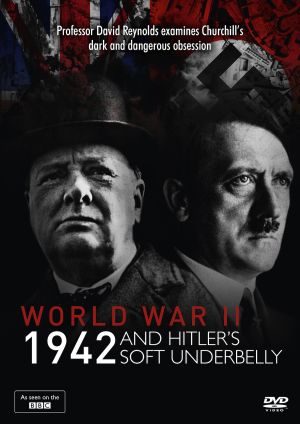
World War Two: 1942 and Hitler’s Soft Underbelly – Simply Media DVD Review

164454- Chief Crazy Horse Sleeve.indd

In 1942 and Hitler’s Soft Underbelly, Professor David Reynolds re-examines the North African and Italian campaigns of WW2.  He starts by posing a question.  “Why did we and the Americans spend a lot of the Second World War in the Mediterranean, rather than crossing the Channel?”

If the main battleground was Russia, they surely the next key area was to be found in occupied Europe – so why was Churchill obsessed with campaigns in North Africa and Italy?  Reynolds is able to produce a number of convincing arguments.  As a man of Empire, Churchill understood the importance of Egypt – if the Suez Canal was lost, then Britain faced ruin.  But there were also more pragmatic reasons – neither the British or the Americans had the capability to launch a full-scale assault across the English Channel and into France in 1942.  But Churchill needed a victory, any victory, in order to shore up morale.

Given that defeat had already followed defeat for the British since 1939, another failure (he envisaged a bloodbath of the scale of the Somme if they attempted a landing in France) might have spelled the end.  Possibly not for the British war effort but certainly for him as leader, as the likes of Sir Stafford Cripps and Anthony Eden were circling.  The perilous state of Churchill’s own personal standing during this period is a matter of historical fact, but since it often gets overlooked it’s an interesting area to explore.

So once Monty scored a victory at El Alamein, Tunisia and Italy began to look like tempting prospects – offfering the British and Americans chances to score what should have been easy victories.  Surely Hitler would be too occupied with Russia to be able to adequately defend these theatres of war?

6756

It wasn’t to be and Reynolds declares that Churchill’s bright idea would become a dark obsession.  Partly this was because Churchill underestimated Hitler, but the British prime minister also received faulty intelligence.  The work of the codebreakers at Bletchley Park has become well known during the last few decades, but Reynolds shows that they weren’t infallible.  Often this was because they didn’t have access to the top level of German high command and given the chaotic nature of the German command structure (thanks to Hitler’s knack of micro-managing) the information they received, whilst not deliberately inaccurate, wasn’t correct either.

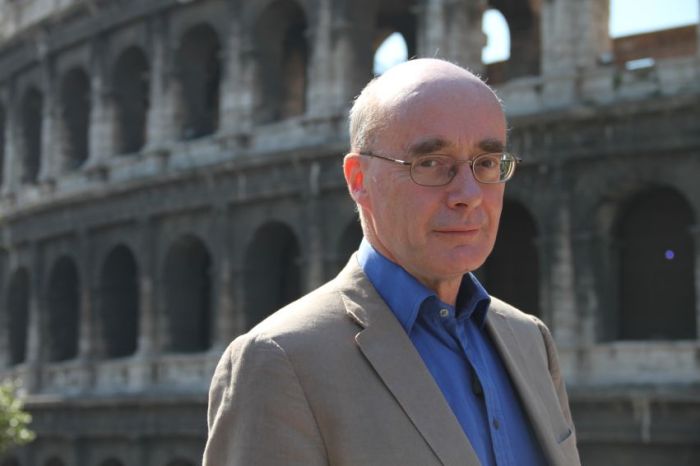
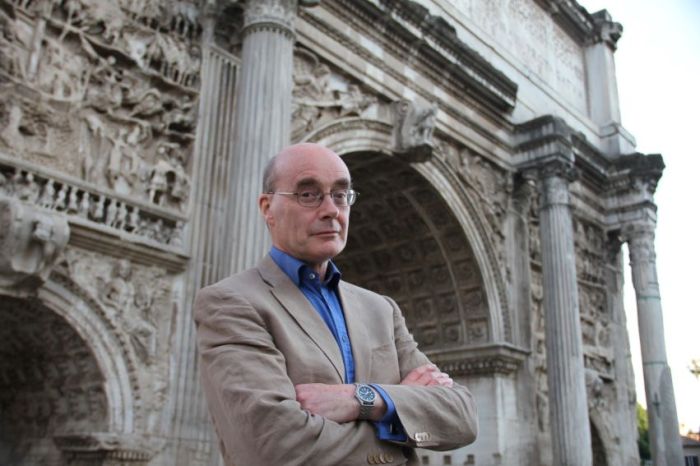
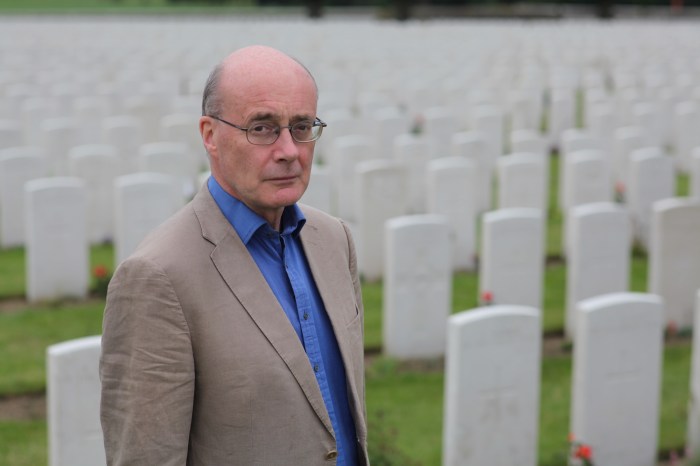
David Reynolds is an engaging guide.  You get the sense that he relishes being away from his day job (as a professor of International History at Cambridge) and that he also enjoys throwing some quirky scenes into what otherwise might be a fairly dry viewing experience.

He opens the first episode with a fairly conventional piece to camera, except that he’s walking along a beach, his trousers rolled up and the waves lapping at his feet!  He also can’t resist doing the voices of the various players (his conversation between Monty and Churchill is one such amusing moment) and another comic touch occurs when he describes an interesting meeting between Churchill and Roosevelt.

Churchill was a guest in the White House and, returning to his bedroom after a visit to the bathroom, was slightly surprised to find the president in his room.  Dressed in only a towel, Churchill told Roosevelt that “the Prime Minister of Great Britain has nothing to conceal from the President of the United States” and promptly dropped the towel.  Reynolds re-enacts this scene although thankfully he was fully clothed.

The occasional moments of levity don’t detract from the fact that Reynolds is an authoritative historian who seems to delight in reaching out to a wide audience.  Across the two 45 minute episodes he’s able to succinctly sketch out all of the key points from this period of the war, sometimes offering a fresh outlook on familiar topics (but always giving well argued reasons for his statements).

A ninety minute television documentary can never hope to have the same scope as a reasonably detailed book (and Reynolds’ own writings are recommended for those who want to dig a little deeper) but 1942 and Hitler’s Soft Underbelly (like his other documentaries available on DVD – 1941 and the Man of Steel and Long Shadow) are all fine examples of popular history documentaries.

1942 and Hitler’s Soft Underbelly is released by Simply Media on the 5th of September 2016.  RRP £19.99.
6755

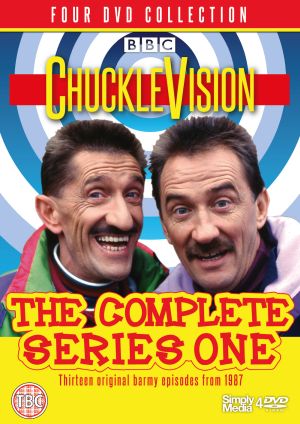
ChuckleVision – Complete Series One and Two. Simply Media DVD Review

164454- Chief Crazy Horse Sleeve.indd164454- Chief Crazy Horse Sleeve.indd

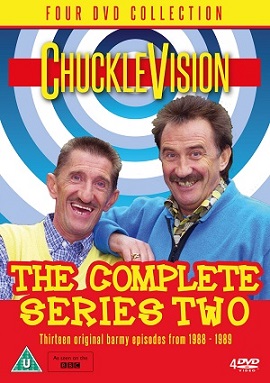
ChuckleVision was a television fixture for over two decades, running from 1987 to 2009 (notching up a staggering 292 episodes along the way).  But before Barry and Paul Elliott endeared themselves to several generations of children they’d had to endure a long, hard showbiz apprenticeship.   Winners of Opportunity Knocks in 1967 and New Faces in 1974 (a unique double) the brothers found further television exposure hard to come by, so had to be content with plying their trade around what passed for the variety circuit during the seventies and early eighties.

Their return to television, The ChuckleHounds (1985/1986), didn’t sound terribly promising – a pre-school programme which saw them dressed as dogs! – but it lead to ChuckleVision, where the boys were able to put their slapstick skills to fine use.  The first two series had a different format to what came later – Barry and Paul are studio-based presenters (although they do venture outside via film inserts) plus there’s magic from Simon Lovell and a regular slot featuring Billy Butler as a storyteller. But even though much was unfamiliar, the basic dynamic of the brother’s relationship was already firmly in place.  Barry (the short one) is stupid, Paul (the tall one) is equally as stupid but considers himself to be a cut above in the intellectual stakes.  It’s the sort of formula that had served Laurel and Hardy well for many years and the Chuckle Brothers, whilst not quite in the same league, still managed to wring plenty of comedy out of this basic premise.

Wordplay and puns also feature.  A sample from the first episode, Breakfast, will suffice.  Paul mentions that Wayne Sleep will be coming on the show later.  Barry looks downcast and tells Paul he’d better call the vet (for the lame sheep!)  It’s a groanworthy pun and it won’t be the last ….

Each episode of series one and two has a theme.  For example, episode three of series one is about Sport.  There’s quite a nice touch of satire as they cut away regularly for live snooker at the Crucible.  Each time they do so, we see a still picture of Steve Davis, clearly not moving an inch, whilst the commentator tries to fill the time as best he can.

The second series still has the brothers in a studio setting, but there seemed to have been a little more money in the budget, which meant that the fairly bare set from series one was replaced with something rather more lavish.  The basic format remains though, as does Billy Butler’s storytelling slot.  Amongst the memorable moments are Barry’s caveman outfit (in Farming) and their attempts to discover whether the truth is really out there in U.F.O.  The robot Barry, perfect in every way says Paul, is also rather chucklesome (“it hasn’t got a brain” says Barry.  You can probably guess the next line).

Originally released on DVD by Delta in 2011, they’ve now been brought back into print by Simply.  For fans of the later oft-repeated runs of ChuckleVision, these two series are certainly very different (opinions are split over whether Billy Butler is an asset or a bore – personally I rather like him). Each series runs for around 250 minutes, which makes the decision to issue them as four disc sets a little odd (they would have easily fitted on two discs per series)

Although nice to see them back in circulation it’s a little hard to fathom exactly who’s going to buy them.  The subset of bloggers, like myself, with an interest in the history of British television must be quite small, so it’s either going to sell to those who grew up with the series or young children yet to be introduced to the joys of the Chuckle Brothers.  The latter may be the most fruitful audience, as whilst these early shows can be a little slow there’s still plenty for youngsters to enjoy.  Those coming back to the show after a gap of twenty five years may be harder to please.  Numerous series, such as Pipkins and The Banana Splits have escaped onto DVD over the years, but after an initial nostalgic rush the adult viewer has probably found they lack a great deal of rewatch value.

ChuckleVision: The Complete Series One was released on the 25th of July 2016.  RRP £19.99.
ChuckleVision: The Complete Series Two will be released on the 29th of Augut 2016.  RRP £19.99.


Liverpool 1 – Simply Media DVD Review

164454- Chief Crazy Horse Sleeve.indd

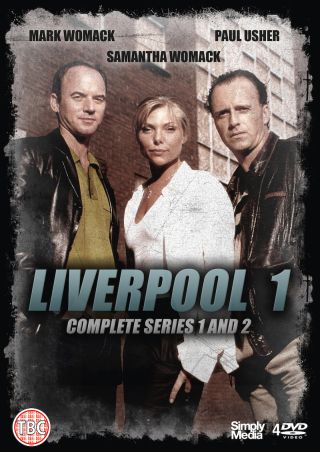
Running for two series and a total of twelve episodes between 1998 and 1999, Liverpool 1 was a decent attempt to produce an edgy, non-London based police series.  Although The Bill (1983 – 2010) was still very popular at the time, its long decline had definitely begun (an over-reliance on the tangled love-lives of the boys and girls at Sun Hill was one reason why).

But whilst it was past its best, since The Bill was such a dominant presence during the 1980’s and 1990’s it meant that rival series often struggled to generate a distinctive feel and tone.  Some that succeeded, such as Between the Lines (1992 – 1994), did so by focusing on a specific area which hadn’t been examined in depth before (in Between the Lines‘ case it was the work of the Met’s internal Complaints Investigation Bureau).

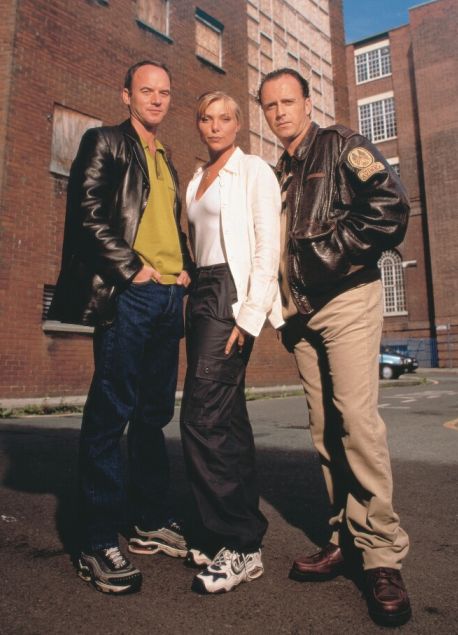
Although Liverpool 1 has the feel of a traditional police series, from the opening scene it’s also clear that we’re operating in unfamiliar territory.  Our first glimpse of DC Mark Callaghan (Mark Womack) is highly instructive – we see him break into a flat and start an argument with its male occupant.   Callaghan then begins to throw the man’s belongings (including the television set) out of the window, before also throwing out the man himself.  There can be no clearer way of demonstrating that DC Callaghan is a loose cannon.  He’s a far cry from George Dixon (or even Jack Regan).

DC Isobel de Pauli (Samantha Janus) has recently transferred to Liverpool from the Met and is teamed up with Callaghan.  Their partnership begins as an inverse of the traditional “buddy” pairings of police shows.  Pauli is an experienced and capable officer, but initially she’s a little out of her depth – Liverpool has its own codes, traditions and criminal network which are a mystery to her.  It would normally be the job of her partner to instruct and guide her, but Callaghan is remote and unapproachable.

6643

The nature of Callaghan’s motives and loyalties are a major factor which help to drive the series.  As in Between the Lines, the division between the police and the criminals they’re pledged to catch is sometimes blurred.  Liverpool’s crime boss John Sullivan (Paul Usher) always seems to be present. He claims to be a legitimate businessman, but is that the truth?

Callaghan’s extended family comes into play. One of his brothers, Ian, is a priest whilst another, Patrick (Scott Williams), is not only a junkie but also acts as an informant.  Patrick’s evidence was supposed to put away Sullivan’s younger brother Mikey, but a procedural cockup meant that the case was dismissed.  With John Sullivan now threatening vengeance (a memorable low-key performance from Usher) this helps to increase the pressure on Callaghan, which is exacerbated after Patrick is shot and Mikey dies in Callaghan’s custody.  The revelation that Callaghan and Sullivan are “sort of” cousins just raises the stakes even higher and sets up one of the series’ running themes.

The developing relationship between Pauli and Callaghan is an intriguing one. Pauli is open and friendly whilst Callaghan is internalised and closed-off.  The “will they, won’t they?” question is inevitably aired.  Both are in relationships to begin with, but it wouldn’t be a complete shock if they did get together.  But there’s also a spark between Pauli and Sullivan, which doesn’t please Callaghan.  He bluntly points out to her just how vicious his cousin can be, although his own relations with him are sometimes cordial. Families can be complex ….

Although Callaghan and Pauli sometimes enjoyed a frosty relationship, it was a different story for Mark Womack and Samantha Janus.  They married in 1999 and are still together today (which is the reason why she’s credited on the packaging under her married name of Samantha Womack).

6636

In addition to Womack and Janus, Liverpool 1 has a strong supporting cast.  Tom Georgeson (a regular in Between the Lines) plays DI Howard Jones whilst Eamon Boland was another face familiar from previous police series (he’d appeared in The Chief).  Boland appears as Chief Inspector Graham Hill.  Andrew Lancel, who would later put in over a decade’s service in The Bill, has a non-police role as Ian Callaghan.  Paul Broughton and Katy Carmichael play the other two police regulars, DS Frank White and DC Joanna McMullan.  DS White is lovable but hopelessly disorganised (his inability to concentrate sometimes put the others, such as Pauli, in danger) whilst DC McMullan spends a large part of series one sniping at Pauli (although by series two this enmity seems to have disappeared).  The likes of Leslie Phillips, Ian McNeice, Del Henney and Victor McGuire make guest appearances although many of the one-off roles are played by less familiar television faces.

Apart from the continuing story of Callaghan’s clashes with Sullivan, one of the highlights of series one concerns the hunt for a missing boy.  George (Ian McNeice) is a convicted paedophile who comes under suspicion and is subjected to an intensive grilling by DI Jones. Both McNeice and Georgeson give stand-out performances.  The case sees Jones pushed to breaking point and Georgeson excels, especially towards the end.  The same episode sees Pauli attempt to forge a closer relationship with Callaghan by inviting him for supper with her and her partner. Neither are particularly keen, which infuriates her!

The second series has several intriguing plot-threads which develop over the course of the six episodes. Pauli is now single, her feelings for Callaghan are still mixed (to say the least) and John Sullivan wants to turn informer (or does he just want Pauli?).  The stand-alone plots are, like series one, concerned with the seamier side of life.  A good example is episode two, which sees piano teacher Peter Kitchen (Adrian Rawlins) accused of indecent assault by one of his teenage pupils, Simone Kelly (Rachel Townsend).  Pauli instantly believes her and disbelieves him, whilst Callaghan is more non-committal.  This once again shows a clear division between their characters – Pauli is instinctive and quick to react, whilst Callaghan prefers to be inscrutable and unreadable.  It’s another dramatic and powerful episode which serves as a fine vehicle for Janus.

Liverpool 1 never really seemed to catch the public’s attention and so it came to an end after only two series.  This was a pity, as Womack and Janus bounce off each other very effectively and they also interact well with the other regulars.

Liverpool 1 is released by Simply Media on the 15th of August 2016.  RRP £34.99.

6642

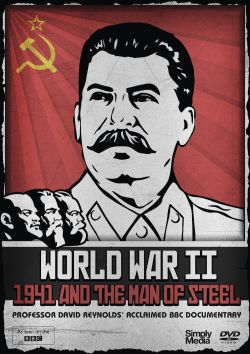
World War Two: 1941 and the Man of Steel – Simply Media DVD Review

164454- Chief Crazy Horse Sleeve.indd

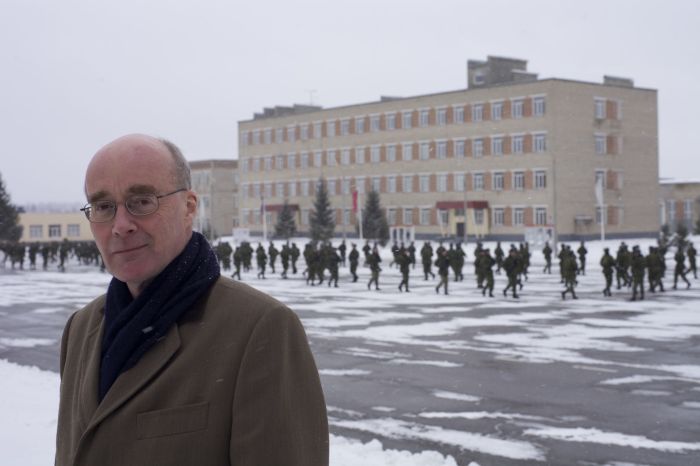
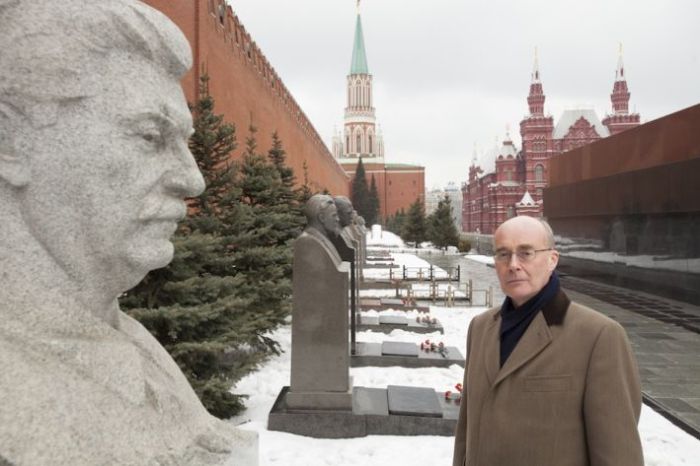
Originally broadcast in 2011 (the 70th anniversary of the German invasion of Russia) 1941 and the Man of Steel is a two-part documentary written and presented by David Reynolds.

It’s fair to say that the battles on the Eastern Front have never attracted the same level of interest (especially in the UK) as the conflicts in the West have.  But Reynolds convincingly argues that the Battle for Russia was just as critical – possibly even more so – than the Battle for Britain in deciding the future not only of the United Kingdom, but the rest of Europe as well.

Reynolds, a pleasingly idiosyncratic academic, makes this point with an amusing introductory speech, clearly designed to wrong-foot the viewer.  “He was a little man, about five foot five. In his sixties. Rather tubby. Enjoyed his drinks and his smokes. An unlikely hero perhaps. But in the dark days of the twentieth century he helped save Britain. And he was one of the biggest mass-murderers in history. Stalin was his party name”.

He then deftly paints a striking picture of Stalin, from his young days as a bank robber (albeit in a good cause – or at least the cause, Bolshevism, which he believed in) through to his years of terror in the 1920’s and 1930’s, where he brutally suppressed any opposition via show trials, torture and mass executions.

But Reynolds is able to argue that it was his dominant personality which helped to bring Russia to the brink of defeat in 1941.  If you create a society that functions only if the man at the top performs effectively, what happens when he begins to make mistakes?  Stalin’s first major miscalculation saw him fail to believe that an attack from Germany was imminent.  He had accurate intelligence from Britain, but his mistrust of the West caused him to disregard it – a fatal mistake.

6749

The first few days of the German offensive saw them make substantial gains whilst Stalin seemed powerless to act.  The news was no better during the next couple of months and Reynolds suggests that this pressure brought the Man of Steel to the point of a nervous breakdown – in a rare moment of candour he bitterly admitted to his colleagues that “Lenin founded our state and we’ve screwed it up”.  This picture of Stalin – a broken man, alone in his dacha and unwilling to answer the phone – is a compelling one.  When the politburo trekked out to see him, Stalin feared the worst (a coup) but in fact they wanted him back.  And it was their faith (a bitter irony when you consider how ruthless he’d been with anyone who dared oppose him) which seemed to spark him back into life.

How he then managed to turn things around is the crux of the documentary and Reynolds, using official documents and telegrams, illuminates the key moments.  Stalin began by falling back on his old methods of terror, but he also had to learn the gentle art of diplomacy – which wasn’t easy for someone who’d risen to the top by not listening to anybody.  But listen he did – and to a most unexpected source, Winston Churchill.  The British Prime Minister had been a savage opponent of Stalin’s Russia in the past, but political expediency now meant that the Man of Steel was a vital ally for the beleaguered British.

Churchill’s trip to Moscow in 1942 is a fascinating part of the story. Stalin attempted to push Churchill into launching an early invasion of France and then angrily called the British people cowards after he failed to get his own way.  Churchill took great umbrage at this slight and considered returning to Britain there and then, but the next day Stalin suggested they retire to his apartment for the evening – where they consumed a great deal of alcohol, leaving Churchill with a severe hangover the next day!  This moment helps to paint both leaders in a very human light and is also a good example of the strange dichotomy of Stalin’s character.  On the one hand he was a brutal and utterly ruthless tyrant, but, as here, he could be approachable and amenable (and remember, it was Churchill who nicknamed him “Uncle Joe”).

Twenty eight million Soviet citizens lost their lives during WW2 – a picture of death and devastation that’s almost unimaginable.  Had Stalin not been so reckless during the first year of the war, says Reynolds, then the death toll would have been considerably less, but he did ultimately achieve a crushing victory over Germany and this victory would help to shape world politics for the next four decades.

Running for ninety minutes (two 45 minute episodes) 1941 and the Man of Steel provides the viewer with a compact overview that still manages to feel quite comprehensive.  Reynolds, who has helmed a number of documentaries (including Long Shadow), certainly knows his stuff, although he may be something of an acquired taste.  He likes the odd dramatic flourish and his quirky sense of humour bubbles to the surface occasionally.  But his arguments are cogent and well thought out and he’s a very affable guide through this complex theatre of war.

1941 and the Man of Steel is released by Simply Media on the 8th of August 2016. RRP £19.99.

6744

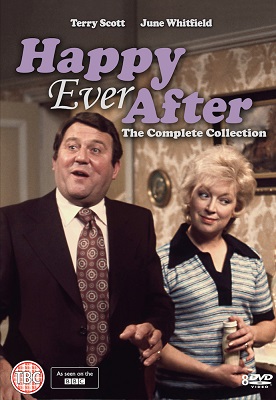
Happy Ever After to be released by Simply Media – 26th September 2016

164454- Chief Crazy Horse Sleeve.indd

Happy Ever After will be released by Simply Media on the 26th of September 2016.  Review here.

Terry and June Fletcher (Terry Scott and June Whitfield – Terry and June) are a middle-aged, middle-class couple in middle England whose children recently left home. However their path to domestic bliss is soon interrupted by the permanent arrival of scatty Aunt Lucy (Beryl Cooke – The Bill) and her chatterbox mynah bird.

Running from 1974 to 1979 across 41 episodes, including the Comedy Playhouse pilot and Christmas specials, essentially the same characters would be transposed to the even longer-running Terry and June (1979-1987). Relive the exploits of TV’s happiest hapless couple from the beginnings of their perennial partnership in this original series, directed and produced by BAFTA winners Ray Butt (Only Fools and Horses) and Peter Whitmore (Yes Minister), which arrives on DVD 26 September 2016.


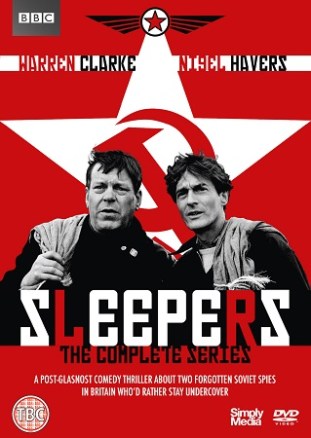
Sleepers to be released by Simply Media – 24th October 2016

164454- Chief Crazy Horse Sleeve.indd

Sleepers will be released by Simply Media on the 24th of October 2016.  Review here.

Amidst the thaw of glasnost, the Kremlin discovers that two Soviet agents, sent to England under deep cover in 1965, have been ‘lost.’ Sultry, unrelenting KGB high-up Nina Grishina (Joanna Kanska – The Tall Guy) flies into London to lead the search and soon becomes embroiled in a tangle of CIA, KGB and MI-5 plots and counter-plots as the two lost agents, now utterly assimilated, try to avoid detection.

A cat-and-mouse chase follows, delivering a hilarious cross-cultural comedy thriller directed by BAFTA winner Geoffrey Sax (Doctor Who), which is released on DVD on 24 October 2016. Nigel Havers (Chariots of Fire) and Warren Clarke (Dalziel and Pascoe) star as the spies who’d rather stay undercover, alongside Michael Gough (Batman).


World War Two: 1942 and Hitler’s Soft Underbelly – to be released by Simply Media on the 5th of September 2016

164454- Chief Crazy Horse Sleeve.indd

Due in early September from Simply Media is another documentary written and presented by David Reynolds, 1942 and Hitler’s Soft Underbelly.  Review here.

The British fought the Second World War to defeat Hitler. World War Two 1942 and Hitler’s Soft Underbelly asks why, then, did they spend so much of the conflict battling through North Africa and Italy?

Reynolds reassesses Winston Churchill’s conviction that the Mediterranean was the ‘soft underbelly’ of Hitler’s Europe. Travelling to Egypt and Italian battlefields like Cassino, scene of some of the worst carnage in western Europe, he shows how, in reality, the ‘soft underbelly’ became a dark and dangerous obsession for Churchill.

Reynolds reveals a prime minister very different from the jaw-jutting bulldog of Britain’s ‘finest hour’ in 1940 – a leader who was politically vulnerable at home, desperate to shore up a crumbling British empire abroad, losing faith in his army and even ready to deceive his American allies if it might delay fighting head to head against the Germans in northern France. It arrives on DVD on 5 September 2016.


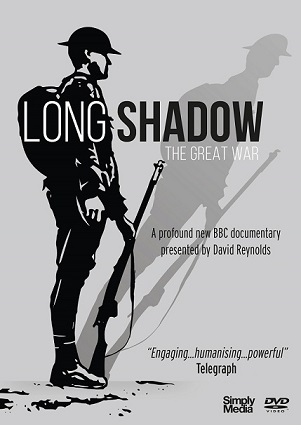
Long Shadow: The Great War – Simply Media DVD Review

164454- Chief Crazy Horse Sleeve.indd

With the centenary commemorations of the Battle of the Somme still fresh in the memory, it feels like the ideal time for Long Shadow: The Great War to be released on DVD in the UK for the first time.  Although as we’ll discover, David Reynolds (the writer and presenter) has concerns about how certain events – most notably the Somme – have come to dominate our understanding of the war.

Long Shadow was one of a raft of BBC Great War programmes announced in late 2013.  It’s an ambitious (and still ongoing) project – more than 2,500 hours of programming across television, radio and online to appear between 2014 and 2018.

This breadth of programming, covering both drama and factual, allows for a range of approaches to be taken when discussing the events of 1914 – 1918.  Long Shadow, broadcast in September 2014, asks us to both remember and reassess what we know (or what we think we know) about the Great War and how the conflict shaped the rest of the twentieth century.

Speaking to History Extra, Reynolds makes the point that the Somme, terrible though it was, has clouded our understanding of both the war and its legacy.  “Our view of the war has become focused almost on one day. We need to get out of the trenches and take a broader view of the conflict.  That’s what I mean by becoming a caricature – it’s become simplified down. A caricature is not necessarily untrue, it’s just a sharp oversimplification of what is going on.”

Reynolds, a Cambridge academic, follows in the footsteps of many illustrious predecessors.  Needless to say, presenter-led documentaries stand or fall on the quality of the man or woman in front of the camera.  Thankfully for Long Shadow, Reynolds is an engaging presence – he’s capable of deftly describing the bigger picture, but can also change gears to illuminate smaller-scale, individual stories. Reynolds rarely seems to stand still – he’s often seen walking to his next location – but this hyperactivity (and his sometimes highly dramatic intonations) doesn’t detract from the story he has to tell.

Over the decades, a certain perspective of WW1 has become solidified (“lions led by donkeys”) and this has been reflected in popular satire (Oh! What a Lovely War, Blackadder Goes Forth).  Long Shadow attempts to peel away this familiar (and, he argues, inaccurate) viewpoint in order to make sense not only of the war, but of the very different world that both the victors and vanquished returned home to.

Post 1918, the British were keen to honour their dead (Reynolds has some interesting points to make about Edwin Lutweyn’s Cenotaph) but since the public at large found it hard to visualise exactly what had happened on the battlefields between 1914 and 1918, the war slowly faded from the public’s consciousness. But a play, Journey’s End by R.C. Sheriff (which debuted in 1928), would help to reignite interest in the conflict. Reynolds argues that for many, Journey’s End helped to illustrate the futility of war – “never again”.

In Germany there was a very different sentiment in the air. If the British were saying “never again”, then some Germans were of the opinion that the war had never ended. It was simply that they had been betrayed by a spineless ruling elite who had forced the country into signing a humiliating armistice. So the seeds for Adolf Hitler’s rise to power were already in place.

But if, as Reynolds argues, WW2 came to be seen as a just war – fought against an evil and corrupt regime – this would have consequences for the Great War. Post WW2, the Great War would be known instead as WW1. It was no longer “The War To End All Wars”, instead it was seen as a failed attempt to end global war (if it had been successful there would have been no need for a Second World War). Reynolds admits this renaming could seem to be a trivial matter, but it was a factor that helped to shape the modern viewpoint that the Great War achieved nothing, except mass slaughter.

Reynolds also examines the unfamiliar British landscape that emerged following the 1918 armistice.  Democracy had come to Britain for the first time with both the working classes and women eligible to vote.  Also discussed is the way that the Great War strengthened a section of the United Kingdom – as both Wales and Scotland took pride in joining with their English counterparts to defeat a common foe.  Had this not happened it’s tempting to wonder whether the union between the three nations would have fractured.  But if the war was a unifying force for England, Scotland and Wales then it was a very different picture in Ireland.  The Easter Rising in 1916 was a watershed moment for Catholics, just as the Battle of the Somme in 1918 was for their Protestant counterparts.

In conclusion, if you’re looking for a documentary solely focused on the military conflict between 1914 and 1918 then this possibly isn’t the programme for you.  Long Shadow concerns itself with documenting the aftershock WW1 inflicted on the world at large, with Reynolds demonstrating how this brutal conflict helped to shape the modern world.

The series uses very little archive footage, which is a good move.  Iconic and stirring though these pictures are, the scratchy black and white images also tend to automatically distance the viewer from the events portrayed.  Running for three 50 minute episodes (Remembering and Understanding, Ballots and Bullets, Us and Them), Long Shadow is an accessible and thought-provoking documentary.

Long Shadow: The Great War is released by Simply Media on the 4th of July 2016.  RRP £19.99.

6568

Long Shadow: The Great War to be released by Simply Media on 4/7/16

164454- Chief Crazy Horse Sleeve.indd

Long Shadow: The Great War will be released on DVD by Simply Media on 4/7/16.  Review here.

Based on the prize-winning book, powerful BBC WWI documentary series Long Shadow: The Great War makes its UK DVD debut courtesy of Simply Media.

Renowned British historian David Reynolds explores the enduring impact of The Great War on our world and the shadow it has cast over Europe since the last shots were finally fired. This powerful, eye-opening three part series comes to DVD for the first time on 4 July 2016.

In the series Reynolds aims to change the perceptions of the First World War from the mud, blood, Tommies and trenches to give a sense of the broader consequences of war and its effect over the whole of the twentieth century.

Travelling to locations across Europe-from Slovenia to the Sudetenland, Belfast to Berlin- he examines everything that World War I left in its wake, illuminating how the conflict unleashed forces we still grapple with today.

This remarkable series also chronicles how the experience of war haunted the generation who lived through it, and the soldiers who survived it- dynamic characters such as Benito Mussolini, Eamon de Valera, Philippe Petain, James Ramsay MacDonald and Thomas Masaryk.

Drawing on years of research and a wealth of historical footage, Long Shadow provides a fresh, captivating and-at times-terrifying look at The Great War and its lasting legacy.


Roobarb and Custard – The Complete Collection. Simply Media DVD Review.

roobarb

Roobarb, which first aired in 1974, was one of a number of children’s series (The Magic Roundabout was another) which aired on BBC1 just before the six o’clock news, thus ensuring that it attracted a large adult viewership in addition to its intended target audience.  This is probably the one of the reasons why it’s maintained a certain cult status ever since, although there are several others.

Firstly, Grange Calveley’s scripts are funny.  Although they lack the layered humour that Eric Thompson brought to the Magic Roundabout, there’s still plenty of decent puns and weird flights of fancy to enjoy.  For example, in When Roobarb Found Sauce, Roobarb is concerned to find that the pond has dried up and sets out to find its source.  This leads him to the centre of the Earth where a strange creature provides him with the pond’s sauce, which turned out to be chocolate (his favourite!)

Richard Briers’ narration is a major plus point as well.  Briers was a master storyteller, and each five minute episode benefits enormously from his spot on comic timing.  As good as the scripts are, Briers makes them just that little bit better.

And lastly, Bob Godfrey’s unmistakable animation gave the series a look and feel unlike any other on television at that time.  Although Godfrey wasn’t the only animator to work on the original (he tended to lead a core group of around four or five animators) every episode has the same hand-drawn feel which makes it seem as if it was the work of an individual.  The animation style chosen, known as “boiling”, gave Roobarb a deliberately rough feel – as colour was crudely added with marker pens and varied from frame to frame.

The minimalist style (despite the fact that most of the action took place in the garden, there was little attempt made to colour in the backgrounds – instead they remained a plain white) also helped to create a certain atmosphere.  Of course this was no doubt borne out of necessity – the cruder the animation, the quicker it could be done – but thanks to the quality of Calveley’s scripting and Briers’ narration you can forgive the rough-and-ready nature of the visuals.

As for the main character, Roobarb is terribly appealing.  He’s an eternal optimist, always ready with an invention or a plan to make everyone’s life a little better.  Things don’t always work out quite the way he intends though, and when disaster strikes he finds Custard the cat and the birds forming up to mock his efforts.  But no matter, Roobarb always bounces back to hatch another scheme next time.

Roobarb ran for thirty episodes which were repeated on numerous occasions.  As with several other classic children’s shows it received a twenty-first century makeover and returned for another series, this time entitled Roobarb and Custard Too.

Roobarb and Custard Too ran for thirty nine episodes, which were broadcast on C5 during 2005.  As with the original, Grange Calveley provided the scripts and Richard Briers the narration, although this time the visuals were generated via computer animation (the “boiling” look of the original was kept).  The opening episode, When There Was a Surprise, provides us with a clear example that this is a 21st Century Roobarb as it concerns Roobarb’s efforts to build his own computer (out of wood and other scraps) and how he’s able to get it working, courtesy of Mouse.

Although the increased cast of characters in Roobarb and Custard Too slightly diluted the enclosed charm of the original, it was still a witty and entertaining series and whilst it’ll probably never surpass the original in many peoples affections it certainly has its moments.

Roobarb and Custard – The Complete Collection contains, as its title implies, all thirty episodes of Roobarb  (on the first DVD) and all thirty nine episodes of Roobarb and Custard Too (on DVDs two and three).  Given that Roobarb and Custard Too was made in 2005, it’s slightly surprising that the picture format for all these episodes is 4:3.  I don’t have a copy of the original broadcasts to hand, but I strongly suspect they would have been made in widescreen.  It’s also a little disappointing that none of the discs are subtitled.

Roobarb and Custard – The Complete Collection is released by Simply Media on the 16th of May 2016.  RRP £34.99.

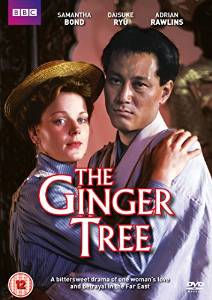
The Ginger Tree – Simply Media DVD Review

ginger

Apart from its inherent qualities, The Ginger Tree is of interest because it was the first drama anywhere in the world to be recorded in HD.  The BBC had been running HD trials since the mid 1980’s, but this four-part 1989 serial was the first production designed for broadcast.

Because of the prohibitive cost of working with the new technology, a co-production deal with other broadcasters had to be arranged.  The choice of NHK Japan as one of the production partners no doubt influenced the novel chosen for adaptation, but that turned out to be one the strengths of the serial.  Back in the 1960’s and 1970’s, if you needed a Japanese-looking actor then you’d get Burt Kwouk if you were lucky and if you were unlucky you’d have a British actor doing his best to look Oriental.  The Ginger Tree, despite being shot on (albeit HD) VT has a filmic sweep and the lavish period setting, location filming and authentic Japanese actors all help to give the serial a rich, immersive feel that the BBC by itself would never have been able to afford.

One irony is that back in 1989 there was no way for British viewers to enjoy the high definition picture.  Compatible televisions didn’t exist and the HDVS recorder used to make the program was essentially an NTSC system  – so the programme had to be converted back into the PAL format for screening on the BBC, meaning that it looked somewhat washed out.  This DVD release is therefore able to present the programme in better quality, although it’s a pity that a BD release isn’t available as that should have been better still (although to be honest, it doesn’t look any sharper or better in SD than a typical VT production of the era).

The Ginger Tree was a novel by Oswald Wynd, originally published in 1977.  Wynd was born in Japan in 1913 to Scottish parents who had come to the country to run a mission. Wynn spent his formative years immersed in what must have been a very alien culture (which obviously helped to inform the writing of The Ginger Tree).  After WW2, where he spent several years as a Japanese prisoner of war, he returned to his native Scotland and pursued a writing career, penning thrillers under the pseudonym of Gavin Black as well as several books under his own name.  The Ginger Tree, helped in part by this adaptation, remains his most popular work.

The book was written as a series of diary entries and letters penned by Mary Mackenzie.  This literary device naturally presents some problems for the adaptor, but Christopher Hampton (who had won an Oscar in 1989 for Dangerous Liaisons) was able to capture the essence of Wynd’s novel.

The year is 1903.  Mary MacKenzie (Samantha Bond) has travelled to Manchuria to marry her fiance, Captain Richard Collingsworth (Adrian Rawlings).  Because they barely know each other it’s clear that their marriage is doomed from the start.  But Mary’s affair with Count Kentaro Kurihama (Daisuke Ryû), a Japanese soldier, plunges her into a scandal from which there seems no escape.  After bearing his child, she finds herself facing an uphill battle as she attempts to find herself a place in the extremely rigid and formal Japanese society.

It’s possible to believe that Mary is something of an innocent. She’s never journeyed out of Britain before and now finds herself setting out on the long trek to Manchuria to marry Richard. Is she in love with him? He seems personable enough and she certainly seems keen to reach him as quickly as possible, so maybe. But they’ve only met a handful of times before their marriage was arranged, which casts obvious doubt that their union will endure.

Their wedding night is a key moment. He doesn’t turn instantly cruel, instead he becomes indifferent, which is possibly worse. He shows Mary her bedroom and then mentions he’ll be sleeping elsewhere. But he is prepared to do his duty as a dutiful husband and make love to her – although in the most perfunctory way. There’s no passion or tenderness and Bond’s silent, frozen face speaks volumes.

Samantha Bond had racked up some decent credits prior to this (Agatha Christie’s A Murder is Announced, Mansfield Park, Rumpole of the Bailey) but The Ginger Tree was her first major starring role and it required a subtle and nuanced performance, which she delivers.

Bond plays Mary in a very internalised way. This isn’t a surprise, given that ladies of her class and era weren’t encouraged to express their feelings. But given how inarticulate (emotionally) she is, it seems initially unlikely that she’ll ever form a relationship with the sensative Kentaro. Which makes the chain of events towards the end of the first episode – they take tea, they become lovers, she finds herself bearing his child – something of a whirlwind. Due to the languid pace of the episode up to this point it all seems to happen very suddenly.

Daisuke Ryû has tended to work mainly in Japanese language films, which could be the reason why Kurihama seems slightly stilted at times. But it could also be a performance choice and either way it helps to differentiate Kurihama from Collingsworth (Kurihama’s slight vulnerability constants sharply with the indifference of Collingsworth).

The sight of a heavily pregnant Mary quickly wipes the smile off the face of her returning husband. He immediately decides to pack her off back to Scotland, although he doesn’t intend to give her a divorce – for purely monetary reasons. It’s a remarkable revelation that Mary’s mother has pledged half her yearly income (some three hundred pounds) to Collingsworth for as long as the pair stay married.

Ar the station she’s faced with another option, a train ticket to Tokyo, provided by Kurihama. She accepts it and is accompanied by Baroness Aiko Onnodera (Fumi Dan). Dan gives a sparkling performance, which contrasts well with Bond’s more withdrawn persona. Aiko is an ardent campaigner for women’s rights, which has recently earned her a spell in prison, but she remains unrepentant. She’s able to explain exactly what Mary’s life in Tokyo will be like.

Kurihama has provided her with a house and servants, but as a women, a foreigner and essentially a concubine, her movements will be very restricted. Mary’s fleeting hopes that Kurihama will marry her are dashed when she learns he’s a married man with four children.

Although the general theme of The Ginger Tree is quite downbeat, there’s also a feeling of optimism. Mary might be portrayed initially as something of a naive, downtrodden figure but over time she gains strength and becomes less of a victim. Samantha Bond is very watchable, although her soft Scottish accent seems to come and go a little. Daisuke Ryû is equally impressive, as are the rest of the Japanese cast. The co-production budget allowed for a generous number of extras and set dressings, plus filming in Japan was obviously another major plus. The story unfolds over some forty years, ending during WW2, necessitating ageing makeup to be applied to the main cast, which is done very effectively.

Oswald Wynd’s tale of love and loss is effectively brought to life in Christopher Hampton’s adaptation and it’s sure to strike a chord with many.

The Ginger Tree is released by Simply Media on the 25th of April 2016. RRP £19.99.

Fred (Fred Dibnah) to be released by Simply Media on 23/5/16

fred

Simply Media will release Fred on the 23rd of May 2016.  Review here.

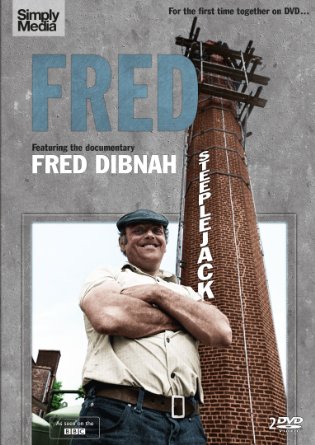
With his specs, cloth cap and infectious toothy grin, Bolton born steeplejack Fred Dibnah was instantly recognisable. He burst onto TV screens in 1978 blithely repairing Bolton’s town hall clock at the dizzying height of some 250 feet and quickly found a place in the nation’s heart, becoming a familiar face on TV for many years. Now some of Fred’s most famous programmes can be enjoyed again thanks to the forthcoming DVD release from Simply Media.

Following that first local news report, the BBC commissioned the BAFTA winning 1980 documentary ‘Fred Dibnah: Steeplejack’, which showed him demolishing giant factory chimneys with ease and casually hopping across the chimney tops with death-defying agility.

After that, seven 30-minute programmes were made, exploring Fred’s eccentric life as a steeplejack and steam tractor fanatic, and now for the first time together on DVD, the seven episode 1982 BBC television series ‘Fred’ arrives alongside ‘Fred Dibnah: Steeplejack’.

In Fred, director by Don Haworth (A Year with Fred) caught Dibnah at great heights doing what he does best – and filmed him far below. Driving his favourite steamroller Betsy, soon the man with two very Victorian tastes became a television star just for being himself, long before the days of reality TV.

With the world literally at his feet, Fred was much in demand as a television presenter and after-dinner speaker on industrial history and all things mechanical – and especially anything related to his overriding passion: steamrollers – he even arrived on one to collect his MBE from Buckingham Palace.

Step into the fascinating life of national treasure, Fred Dibnah in this fantastic collection of his first ever appearances on TV in Fred, available on DVD for the very first time on 23 May 2016.

The Further Adventures of the Musketeers to be released by Simply Media on 23/5/16

further

Simply Media will release The Further Adventures of the Musketeers on the 23rd of May 2016.  Review here.

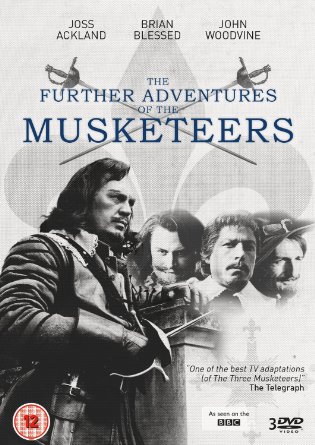
Simply Media is also pleased to announce the release of another BBC classic family favourite The Further Adventures of the Musketeers (1967) on DVD for the very first time on 23 May 2016. Starring Brian Blessed (Z Cars), Joss Ackland (The Hunt for Red October) and Michael Gothard (The Three Musketeers), this classic adventure series is set twenty years on from the original and is based on Alexander Dumas’ sequel of The Three Musketeers, Twenty Years After.