Simply Media will be releasing Roobarb & Custard – The Complete Collection on the 16th of May 2016. Review here.
More than 40 years after making their debut on British TV screens, and over a decade since their return, green dog and pink cat Roobarb and Custard are bounding back into view again, accompanied by their ubiquitous theme tune (acclaimed as one of finest children’s TV title songs ever).
The groundbreaking animated series and its sequel are being paired together for the first time ever on a DVD due to be released as Roobarb and Custard: The Complete Collection on 16 May 2016 courtesy of Simply Media.
Famed for both entertaining kids at the end of children’s TV programming, and, ahead of the teatime BBC news, wooing a cult audience of grown-ups, Roobarb and Custard is instantly recognisable, from its distinctive theme tune, penned by library legend Johnny Hawksworth (Man About the House), to its crazy lead characters. That theme tune was even sampled for a rave friendly chart version in the early 1990s.
Simply Media’s splendid new DVD release pairs the original 30 episodes from the 1974 series – the first fully animated television series to be made in the UK – as well as the 2005 Roobarb And Custard Too series, comprising of 39 episodes.
Both come from the mind of original creator Bob Godfrey(Henry’s Cat) and each feature the distinctive narration of British comedy legend Richard Briers (The Good Life). Each of the two series features the antics of the green dog Roobarb and his outlandish schemes and hapless plans, seemingly forever foiled by his next-door nemesis, pink cat Custard.
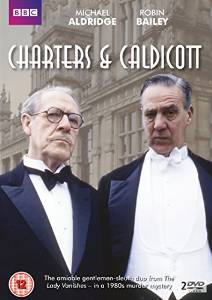
Written by Keith Waterhouse, Charters & Caldicott was a six part serial which aired on BBC1 during January and February 1985. Waterhouse had by this point enjoyed a lengthy writing career (often collaborating with his friend Willis Hall). Some of their early film screenplays – Whistle Down The Wind (1961), A Kind of Loving (1962) and Billy Liar (1963 – adapted from Waterhouse’s original novel) – were key entries in the early sixties new wave British cinema movement. The pair would go on to enjoy further success on the small screen, not least when they created Budgie (1971-1972) – a memorable vehicle for Adam Faith and Iain Cuthbertson.
The characters of Charters and Caldicott first appeared in the 1938 film The Lady Vanishes, scripted by Frank Launder and Sidney Gillatt and directed by Alfred Hitchcock. Played by Naunton Wayne and Basil Radford, the characters instantly caught the public’s imagination. Charters and Caldicott were two cricket-obsessed men whose only interest was to return to England to catch the final day of a vital test match. Unfortunately they find themselves tangled up in a mysterious case of international intrigue on their train journey home ….
The pair proved so popular that they returned in several more films – Night Train to Munich (1940), Crook’s Tour (1941) and Millions Like Us (1943). Wayne and Radford would also play very similar characters in a number of other films and radio plays (but for copyright reasons weren’t named as Charters and Caldicott).
Given the 1930’s setting of the original film you might have expected Keith Waterhouse to have scripted Charters & Caldicott as a period piece, but instead he elected to set it in the modern day. Whilst it’s possible to imagine this was done for budgetary reasons (thereby avoiding the necessity to redress locations in a period style) I’m more inclined to think it was a deliberate choice.
It may be the 1980’s, but Charters and Caldicott still dress and act like it’s fifty years earlier and this culture clash generates a number of memorable comic moments. One lovely one occurs in the first episode, when the pair set off to meet Jenny Beevers (Tessa Peake-Jones), the daughter of a recently deceased schoolchum. They rendezvous in the sort of fast-food restaurant that you know will be anathema to both of them. This is made plain when Charters strides up to the counter and requests a pot of tea for two – only to be handed two cardboard cups with milk sachets on top (which he then proceeds to spray over himself!) In a later episode they both attend a country house party and descend the imposing staircase for dinner immaculately dressed – only to find themselves in their version of hell, surrounded by 1980’s yuppies.
Although there’s a puzzling mystery at the heart of Charters & Caldicott – complete with dead bodies, people who may not be who they claim to be, coded messages and several gun-toting heavies – this isn’t the strength of the serial. The mystery is simply an excuse for Waterhouse to spend six episodes scripting wonderful dialogue for both Robin Bailey (Charters) and Michael Aldridge (Caldicott).
Bailey and Aldridge are both a joy as they blithely navigate their way through the story. Their contrasting characters help to generate a great deal of the humour – Charters is severe, precise and suspicious whilst Caldicott is warm, vague and trusting. The pair exist in a never-never land of comfortable gentleman’s clubs, complete with a library where it’s considered bad form to speak and a sauna where they can complete the crossword in peace – sometimes!
But the recent death of their old friend Jock Beevers, forces them out of their comfort zone. Jock left a trunk of papers in Caldicott’s possession which he passed over to Charters for safekeeping. Several unsavoury types seem very interested in the content of the trunk and this seems to be the reason why Caldicott discovers a dead girl in his flat. Initially both Charters and Caldicott believe it to be Jenny (who they haven’t seen since she was a child) but Jenny later appears to tell them that she thinks her life is in danger. The long-suffering Inspector Snow (Gerard Murphy) is assigned to investigate the murder and drops another bombshell – could Jock have been a Russian spy? If not, what do his cryptic messages sent to Charters and Caldicott actually mean?
Apart from the spot-on performances by Bailey and Aldridge, Gerard Murphy is wonderfully dead-pan as Snow, whilst Tessa Peake-Jones is suitably beguiling as an apparent damsel in distress. Caroline Blakiston as Margaret Mottram also gives a fine performance – she’s an old flame of Caldicott and finds herself mixed up with the mystery after she agrees to give the homeless Jenny a place to stay. Blakiston is gifted with some tart dialogue and she bounces off both Bailey and Aldridge very agreeably.
I was slightly surprised that this was an all-VT production. By the mid eighties the BBC was beginning to move towards film as the medium for many series and serials and you would have assumed that Charters & Caldicott would have been just the sort of programme to benefit from the extra gloss that film would have provided. But no matter, the serial works just as well on videotape as it would have done on film.
As I’ve said, the mystery part of the story does play second fiddle to the character interactions and there’s no doubt that over the six episodes the plot does meander somewhat. But even if the storyline does drag in places, the pleasure of watching Robin Bailey and Michael Aldridge at work more than makes up for this.
Released as a two DVD set, each disc contains three 50 minute episodes. There’s no issues with either picture or sound and as usual subtitles are provided.
Charters & Caldicott is released by Simply Media on the 25th of April 2016. RRP £19.99
Released next week from Simply Media are three more classic BBC dramas.
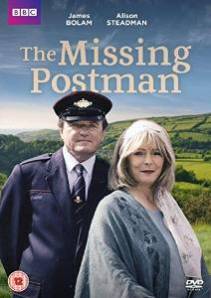
The Missing Postman, which won Best Comedy Drama at the British Comedy Awards in 1997, stars James Bolam as postman Clive Peacock. Forced to take early retirement, he decides to deliver his last batch of letters by hand, which sets him off on an adventure up and down the country. Apart from the ever solid Bolam, there’s a quality supporting cast which includes Alison Steadman, Larry Lamb and Barbara Dixon.
The Missing Postman has a running time of 150 minutes and an RRP of £19.99. DVD Review.
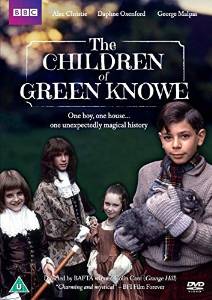
Toseland (Alec Christie) seems doomed to spend the holidays at his boarding school, but an invitation from his mysterious great-grandmother Mrs Oldknow (Daphne Oxenford) provides him with a welcome diversion. Her estate, Green Knowe, is impressive, but things take an unexpected turn when he sees the spirits of children who lived in the house during the reign of Charles II. Transmitted in 1986, The Children of Green Knowe is a fondly remembered series which some rate as highly as The Box of Delights. Soon we’ll be able to see if they’re right.
The Children of Green Knowe has a running time of 100 minutes and an RRP of £19.99. DVD Review.
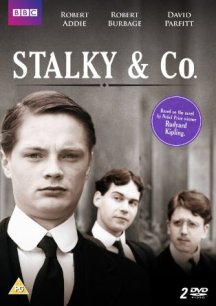
Stalky (Robert Addie), M’Turk (Robert Burbage) and Beetle (David Parfitt) are three schoolboys resident in a Victorian public school. They entertain themselves by playing practical jokes on their schoolmasters and they currently rule the roost – but will they remain on top? Produced by Barry Letts and based on the novel by Rudyard Kipling, I’m looking forward to rewatching this 1982 adaptation, not least for the performance of the late Robert Addie (probably best known as the much put-upon Guy of Gisburne from Robin of Sherwood).
Stalky & Co has a running time of 180 minutes and an RRP of £24.99. DVD Review.
All three titles are released on the 28th of March.
Simply Media continues to be one of the few companies to mine the BBC archives and they’ll be adding another four releases to their increasing range of BBC DVDs next month.
The Ginger Tree, Charters and Caldicott, Next of Kin and Nature Boy are four very different series which should offer something for most tastes. I have to confess that I’m most looking forward to Charters and Caldicott, thanks to the wonderful combination of Robin Bailey and Michael Aldridge (although the supporting cast, including Tessa Peake-Jones and Caroline Blakiston, is very decent as well).
All four DVDs are due to be released on the 25th of April 2016 and below are some more details on each of them.
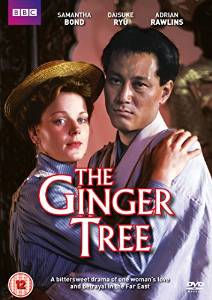
The Ginger Tree, broadcast in 1989, is a historical drama set in 1903. It stars Samantha Bond as a young Scottish woman, Mary MacKenzie, who travels to Manchuria to marry a British army officer. But she grows disenchanted and begins an affair with a married Japanese nobleman, Count Kentaro Kurihama (Daisuke Ryu). After bearing his child, she finds herself ostracised by Japanese society. DVD Review.
Title: The Ginger Tree. Certificate: 12 Release Date: 25 April 2016. Cat No: 166312 Running Time: 240 mins approx. RRP: £19.99
Robin Bailey and Michael Aldridge star as Charters and Caldicott. The characters first appeared in Alfred Hitchcock’s film adaptation of The Lady Vanishes, although this serial finds them living in the modern (1985) world. After a young girl is found murdered in Caldicott’s flat, the pair turn detective to solve what turns out to be a complex mystery. DVD Review.
Title: Charters and Caldicott. Certificate: 12 Release Date: 25 April 2016. Cat No: 166313 Running Time: 300 mins approx. RRP: £24.99
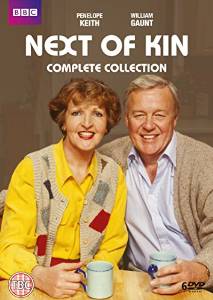
Sitcom stalwarts Penelope Keith and William Gaunt take the lead roles in Next of Kin which ran for three series during 1995 and 1997 (all the episodes are included on this DVD). Maggie and Andrew Prentice are forced to put their plans for an early retirement on hold when they reluctantly find themselves – following the death of their son – the guardians of their grandchildren. Gaunt was no stranger to the family sitcom (having starred in No Place Like Home) but the unusual theme of this series makes it worth a look. Although it managed three series (not unusual for even middling sitcoms back then) it seems to have disappeared without trace since, so it’ll be interesting to see how it stands up today. DVD Review.
Title: Next of Kin: The Complete Collection Series 1-3). Certificate: 12 Release Date: 25 April 2016. Cat No: 166314 Running Time: 660 mins approx. RRP: £39.99
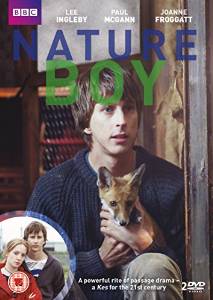
David (Lee Ingleby) only has vague memories of his father (played by Paul McGann) who left home when he was a young child. Now seventeen, David (endowed with a love of nature thanks to his father’s influence) vows to track him down. Along the way he finds love, pain and a new life as an environmental campaigner. Nature Boy, broadcast in 2000, won the Royal Television Society Award for Best Drama in 2001. DVD Review.
Title: Nature Boy. Certificate: 15 Release Date: 25 April 2016. Cat No: 166412 Running Time: 240 mins approx. RRP: £24.99
Simply HE have announced that they will release a DVD of Hugh and I on the 7th of September 2015.
Hugh and I was a popular, if not first division, sitcom that ran on the BBC for six series, between 1962 and 1967, and starred Hugh Lloyd (a familiar face from Hancock’s Half Hour) and Terry Scott (later to enjoy sitcom fame, or infamy depending on your point of view, in Terry and June).
According to Lost Shows twenty four episodes exist, although the running time of the DVD suggests that it will contain eighteen. Either the Lost Shows listing is incorrect or the running time is, as it doesn’t seem likely that Simply would only leave a handful of episodes for a second release.
Time will tell and if more information comes to light I’ll update this post.
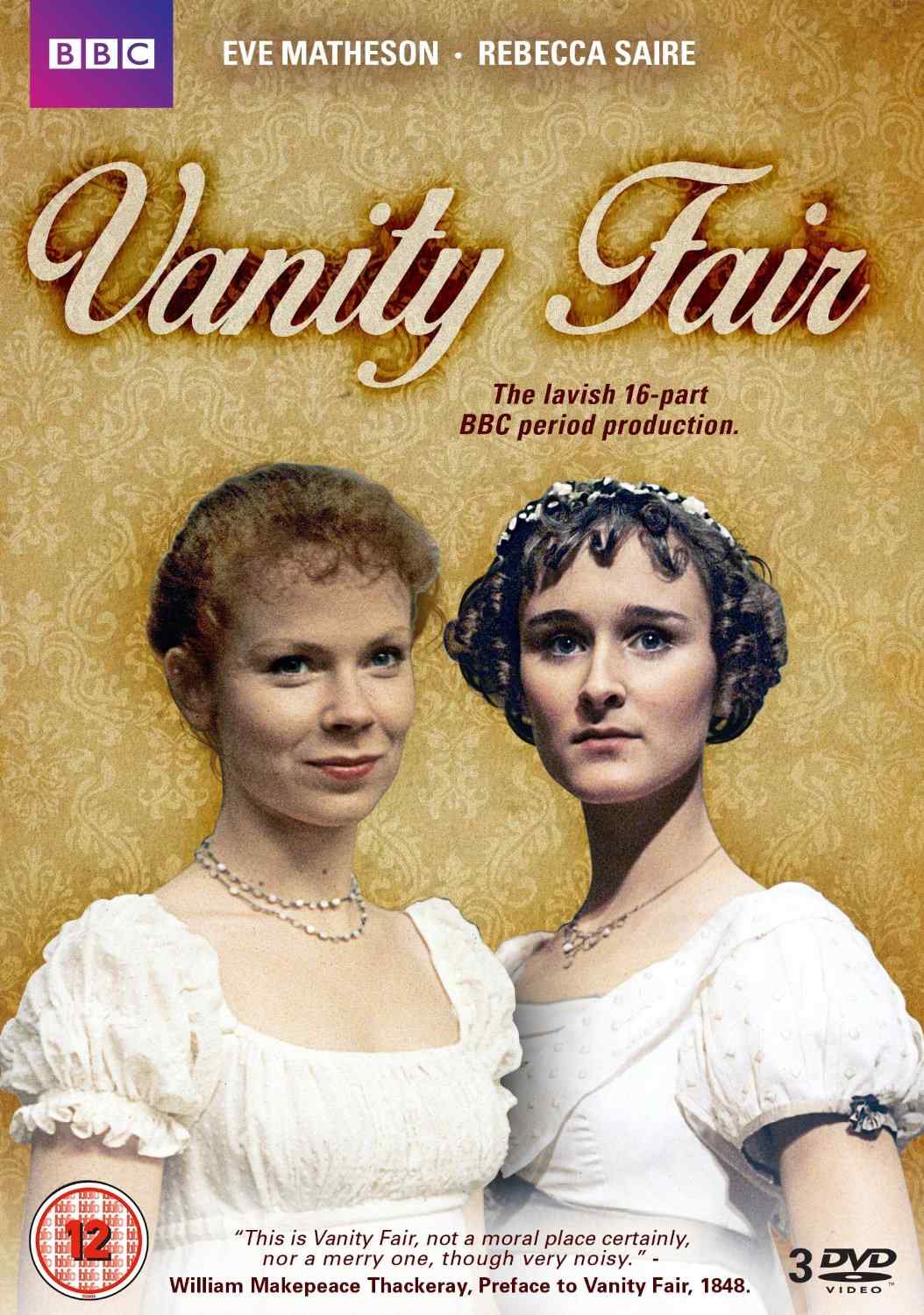
The 1987 BBC Classic tation of Vanity Fair will be released by Simply HE at the end of November 2014. Promotional blurb –
Eve Matheson and Rebecca Saire lead the cast in this 16-part adaptation of William Makepeace Thackeray s classic, filmed entirely at the Pebble Mill Studios. Set in the Napoleonic Wars, Vanity Fair is a rich and resplendent satire of English society in which according to Thackeray, there is great quantity of eating and drinking, making love and jilting, laughing and the contrary, smoking, cheating, fighting, dancing and fiddling. Becky (Eve Matheson), the penniless, orphaned daughter of an artist and a French opera dancer, and Amelia Sedley (Rebecca Saire), the sheltered child of a rich City Merchant are unlikely, but firm friends. From the drawing rooms of Regency London to the fields of Waterloo, Vanity Fair tells their story. Becky, an irrepressible schemer one of the most seductive social climbers of all time who will stop at nothing to get what she wants. While her friend, the meek and mild Amelia, pursues the opposite course. In the end both girls get what they want but not quite in the way they planned.
Whilst it’s pleasing to see Simply continue to release television programmes from the BBC archive, their quality control over the past year or so has been rather poor. Various titles (Softly Softly: Taskforce, Spyship, Angels series 2, The Aphrodite Inheritence) have been afflicted by poor encoding which inadvertently “filmized” the VT sequences.
Thankfully, it appears that Vanity Fair doesn’t have these problems – so hopefully Simply have turned a corner with their QC procedures.
In retrospect, the 1970’s was an ideal time to be making documentaries about the Second World War. Some thirty years or so had passed since the war had come to an end, which was long enough for people to be more candid about some events and particularly (in the case of this series) for certain facts, hitherto not in the public domain, to be discussed.
Several years before, Thames Television’s The World At War had covered many areas of the conflict in detail, but one omission was the role played by the code-breakers at Bletchley Park. At the time The World At War was in production this information wasn’t public knowledge, which meant that The Secret War was one of the first programmes to describe this vital part of the war.
The Secret War was narrated and presented by William Woollard, a familiar face from Tomorrow’s World. It was comprised of six episodes.
Episode 1 – The Battle of the Beams. Early in the war, British Intelligence became aware that the Luftwaffe were using a series of radio navigational aids to accurately pinpoint targets, even in the dark. This first episode describes these developments as well as the jamming countermeasures developed by British scientists.
This episode, like several others, relies heavily on the input of R.V. Jones. Jones played a major part in the development of the jamming beams and his book Most Secret War is not only a fascinating read in its own right, it was also a useful guide for the programme-makers in the early stages of The Secret War’s production.
R.V. Jones
Episode 2 – To See A Hundred Miles. This episode discusses the development of Radar as well as British Intelligence’s efforts to discover German developments in the same field.
R.V. Jones appears again, as does Albert Speer – Hitler’s Minister of Armaments. Another key interviewee is Arnold Wilkins, co-creator of Radar. The presence of pioneers such as Wilkins is certainly one of The Secret War’s main strengths.
Episode 3 – Terror Weapons. The creation of Hitler’s vengeance weapons – the V1 and V2 – and the countermeasures taken to combat them.
Interviewees here include Duncan Sandys (Chairman of the War Cabinet Committee responsible for defence against flying bombs and rockets) and Raymond Baxter, Woolard’s Tomorrow’s World colleague, who describes his exploits as a spitfire pilot and his unsuccessful attempt to shoot down a V2 rocket.
Episode 4 – If. This episode describes numerous inventions that never came to pass. These include the Messerschmitt Me 321, a large cargo and troop aircraft which was intended for use in the German invasion of Britain – codenamed Operation Sealion. Also discussed are German bouncing bombs.
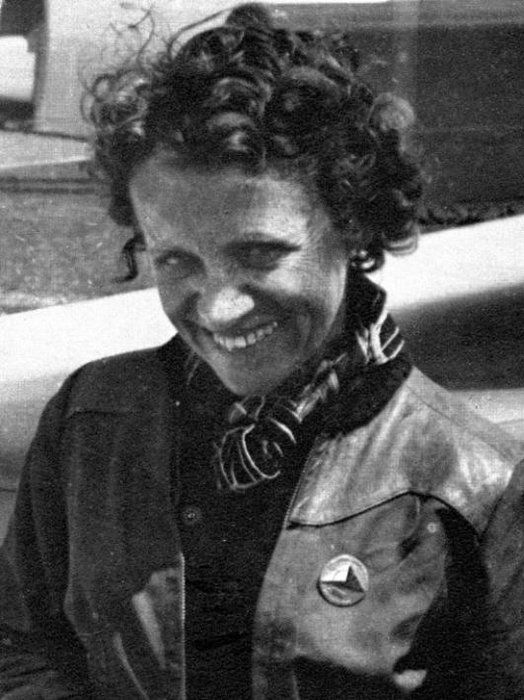
As well as further input from R.V. Jones and Albert Speer, also interviewed were Frank Whittle (creator of the turbojet engine) and Hanna Reitsch. Reitsch was a German test pilot and the only woman to be award the Iron Cross First Class. As might be expected, her unique status makes her a fascinating interviewee.
Hanna Reitstch
Episode 5 – The Deadly Waves. Episode 5 looks at the hazards of magnetic mines and the methods used to counteract them, including degaussing.
Lt Cdr John Ouvry, who defused a German mine on the shoreline at Shoeburyness is interviewed and this actual mine is used in the programme to re-enact the event.
Episode 6 – Still Secret. As previously mentioned, when The Secret War was in production the first information about the code-breakers at Bletchley Park began to emerge. So whilst this programme is far from complete (as much more information would emerge in the decades to come) it’s still a very interesting watch.
Discussed are the efforts to break the Enigma Code and the role played by the Colossus computer, designed by T.H. Flowers. In 1977 the Colossus was still on the secret list, so details are fairly sparse, but the programme benefits enormously from an interview with Flowers. And there are also valuable contributions from others present at Bletchley Park during WW2 such as Gordon Welchman, Harry Golombek and Peter Calvocoressi.
T.H. Flowers
Whilst there are numerous WW2 documentaries available, The Secret War is noteworthy for several reasons. The interviews with key pioneers on both sides is a major plus as is the wartime footage, some of which had not been widely seen until this programme. The series was produced in association with The Imperial War Museum, so the programme-makers were able to make full use of their archives to locate interesting material.
And finally, the series helps to tell some of the less familiar stories of the Second World War. Whilst the key battles and individual acts of heroism were already well known, The Secret War was able to explain that some of the real breakthrough moments of the war came not at the front, but in laboratories, far away from the fighting.
This is a first class documentary series and hopefully Simply will delve in to the archives again to unearth similar treasures.
The Secret War, a six part WW2 documentary made by the BBC in association with the Imperial War Museum, is due for release in September 2014 by Simply HE.
Originally broadcast in 1977, it was presented by William Woollard, with each episode looking at the various different ways that science and intelligence helped the Allies to win the war. Episode titles are as follows –
Episode 1 – The Battle of the Beams
Episode 2 – To See A Hundred Miles
Episode 3 – Terror Weapons
Episode 4 – If
Episode 5 – The Deadly Waves
Episode 6 – Still Secret
Topics covered include the breaking of the Enigma code, Hitler’s terror weapons (the V1 and V2) and the development of Radar. Interviewees include Hitler’s Minister of Armaments, Albert Speer.






 Archive Television Musings