Six Dates with Barker – 2274: All the World’s a Stooge

stooge-01

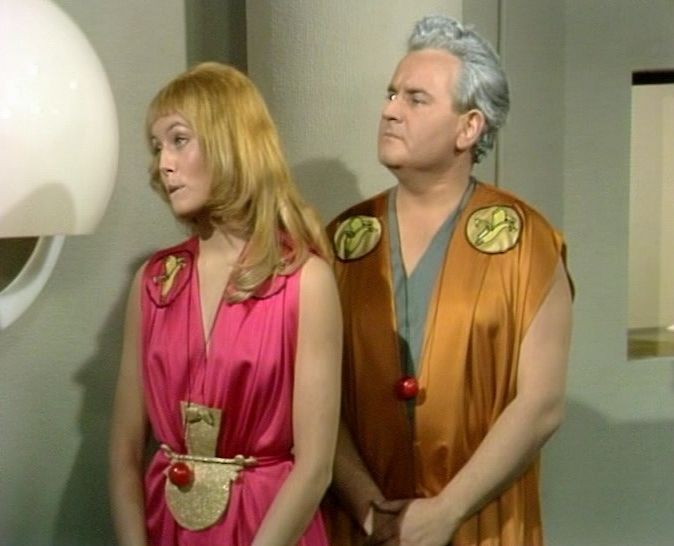
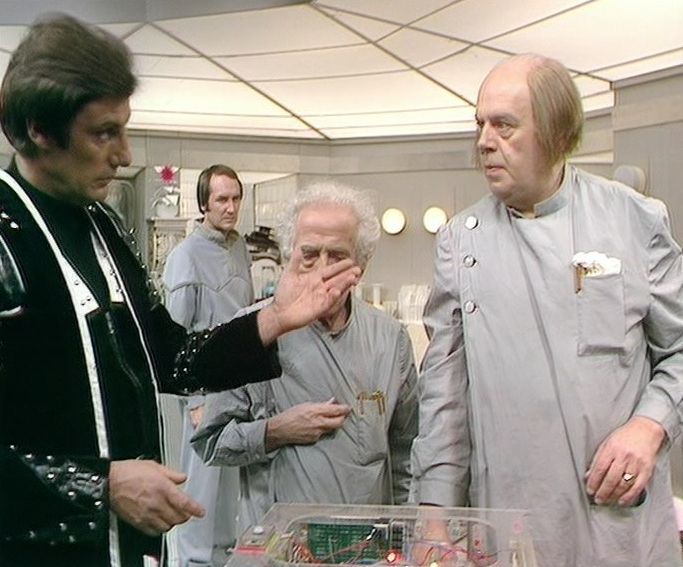
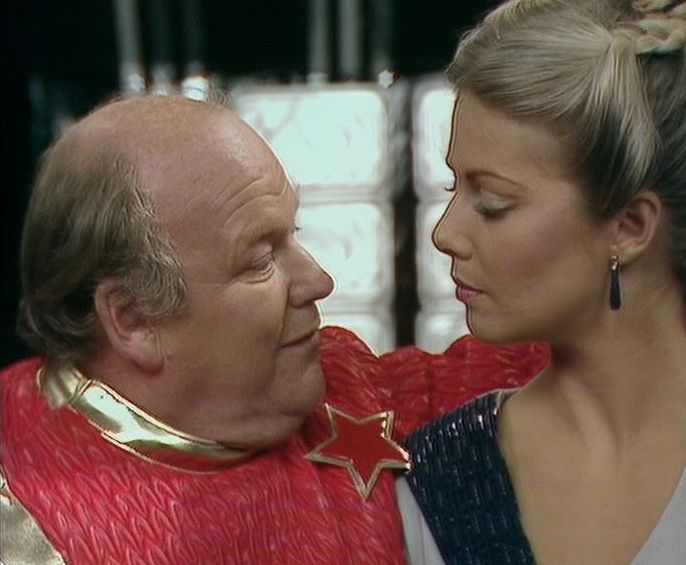
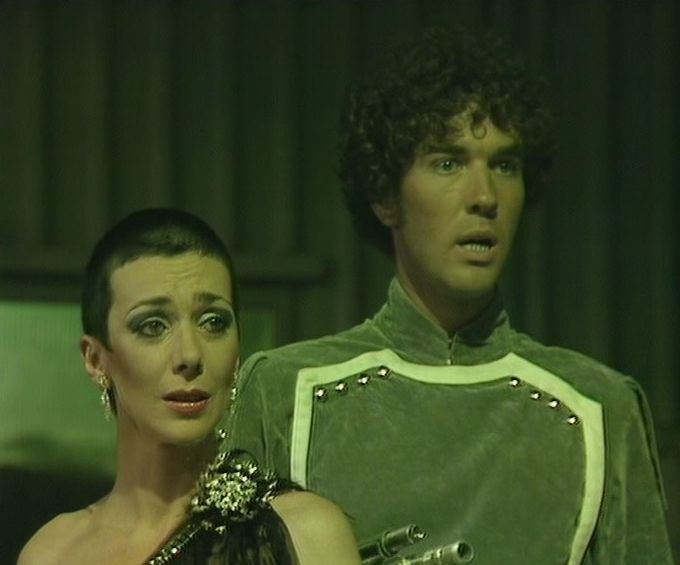
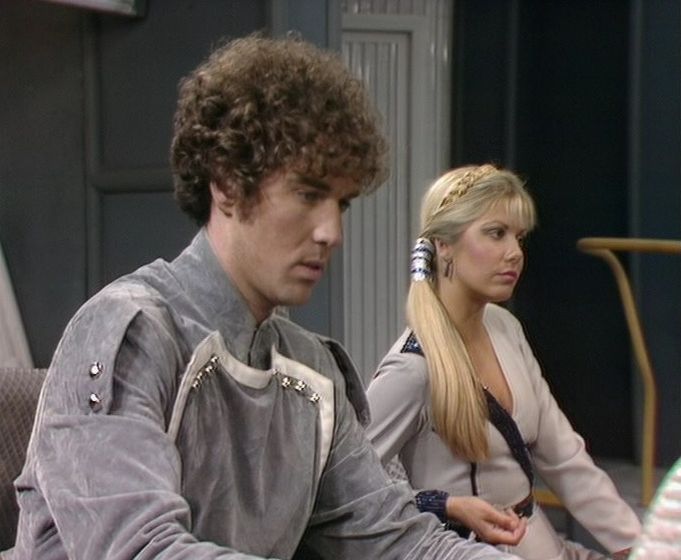
The year is 2274 and comedy is now a religion with Chaplin, Keaton and W.C. Fields revered as gods.  Life is an endless stream of corny jokes, but Prince Boffo (Barker), shortly to ascend to the throne, is increasingly dissatisfied with this.  His wife, Princess Hysteria (Joyce Grant), is baffled to learn that Boffo’s lost his sense of humour, but his daughter, Cheeky (Lesley Anne-Down) is more sympathetic.  Is Boffo fit to be King?  That’s for the Arch Funster (Michael Horden) to find out ….

Written by Barker (under his regular pseudonym of Gerald Wiley), All the World’s a Stooge is an intriguing and vaguely experimental sci-fi story.  No expense was spent to bring 2274 AD to life, although it’s possible this was an intentional nod to series such as Out of the Unknown, which also tended to depict future times on a shoestring budget.  And even if it wasn’t, it works anyway – flimsy looking sets and lashings of CSO just seem to be right for this type of story.

Did this obscure little playlet influence future writers?  It’s easy to see parallels in several later Doctor Who stories.  Vengeance on Varos also featured a couple who provide a running commentary on events, watching via their television screen (here it’s Joy Stewart and Victor Maddern as Tarty and Atlas).  And The Happiness Patrol could easily be depicting a sister world to this one.

Ronnie Barker loved corny gags and would later recycle many of them in the Two Ronnies Yokels sketches.  I’ve no doubt he enjoyed giving the old jokes featured here another airing, but there was also room to air a serious point.  This sort of humour becomes mechanical over time, with no joy to be gained from the responses and punchlines.  Boffo wants a world where humour is natural and unforced and it appears by the end of the episode that he’s got his wish, even if most of the planet (including his wife) don’t understand this and are simply glad he appears to be his old, funny self again.

A strong guest cast helps to enhance Wiley’s script.  Horden looks to be enjoying himself as the Arch Funster, especially when doing the Groucho walk.  Lesley-Anne Down is very appealing as Boffo’s idealistic daughter whilst Jack Tripp also impresses as the doctor who tells Boffo that his father is dead (“do you know what’s good for water on the brain? A tap on the head”).

Although it features a couple of indifferent instalments, overall Six Dates with Barker is a pretty strong series.  A few years later, after Barker moved back to the BBC, they did something similar with Seven of One, although that would produce both of Barker’s biggest sitcom successes …

stooge 02.jpg

Six Dates with Barker – 1971: Come In and Lie Down

come-in

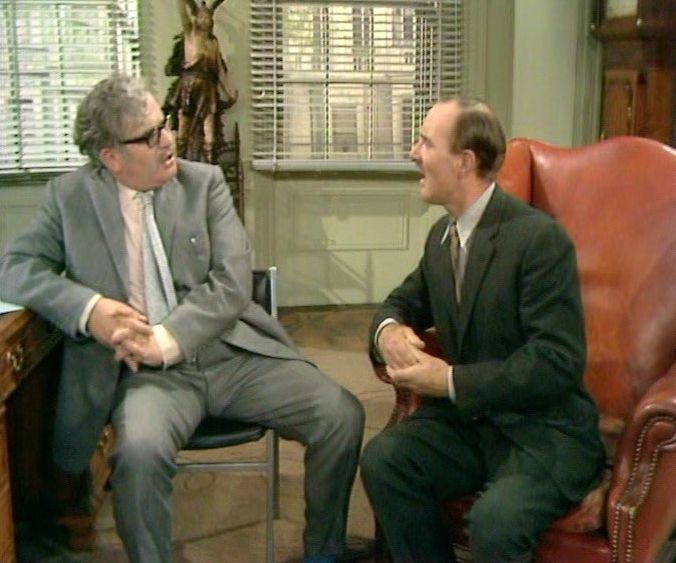
After the disappointment of Lola, things take an upward turn again with Come In and Lie Down.  Doctor Swanton (Barker) is a brusque, seen-it-all psychiatrist who’s possibly met his match with Mr Matting (Michael Bates).  Matting’s tale of being observed all the time by a small man in a Robin Hood hat with binoculars seems like a typical sort of delusion, but then Swanton sees the man as well ….

Since it’s scripted by John Cleese, it’s possibly no surprise that it has a definite Python feel (for example, Reginald Maulding is namechecked).  Bates gives an energised performance as a man who has an intense fear of being labelled a looney.  To this end, when he first enters Swanton’s consulting room he pretends to be the gas man, sympathising about the difficulties Swanton must face.  “Blimey, what a job eh? Talking to loonies all day. Wouldn’t catch me being a psychiatrist, not me. I’ll stick to gas. A load of nutters aren’t they? In here, hopping around on one leg, squawking, think they’re Napoleon.”

Bates, best known for Last of the Summer Wine and It ‘Aint Half Hot Mum, freewheels in a most impressive fashion.  To begin with, it appears that he has the more showy role (Barker comes off as rather pallid in comparison).  But once Swanton believes he can also see Matting’s imaginary man, the power dynamic between the pair subtly shifts and Swanton begins to act in a hysterical fashion.  Matting is rather irritated when Swanton declares Matting isn’t a looney.  “Oh that’s nice isn’t it? If I can see him he’s imaginary but if you can see him he’s real. I get it. You think you’re Lord God Almighty don’t you? If a patent can see something you can’t see, he’s a looney, he should be down on the funny farm, but if Doctor Smartypants can see him, he’s there mate.”

The reveal of the imaginary man (Ian Trigger) is done subtly, as for a few minutes the audience is aware of him, but neither Swanton or Matting react.  As Matting’s used to him being there all the time that’s understandable, but are we viewing the scene through his eyes only?  It’s only when Swanton double-takes that the fun really starts.

Swanton’s mounting hysteria is a gift for Barker, who doesn’t disappoint.  The conclusion, as all three debate the nature of existence, is also nicely handed.  After Swanton proves that the imaginary man is real, Matting is able to leave a happy man – safe in the knowledge that he isn’t a looney.  You can see the final story-beat coming a mile off, but it’s really the only obvious punchline.

Given how the early series of The Two Ronnies recycled material from their time at LWT, it’s easy to see  a cut-down version of this working as a sketch, with Ronnie C taking the role of Michael Bates (despite the twenty five minute length, it’s played very much in the tempo of a typical Two Ronnies sketch).  It’s certainly one that still stands up well today.

Six Dates with Barker – 1915: Lola

lola

Fritz Braun (Barker) is a rather incompetent shorthand typist in the employ of Kaiser Wilhelm (Dennis Ramsden).  The Kasier dismisses him and then decides that since he knows too many secrets he can’t be allowed to live.  But the man he choses for the task, Captain Otto Von Diesel ( Graham Armitage), finds himself unable shoot his brother-in-law in cold blood.  This presents a problem, Fritz needs to be dead whilst a sultry female spy called Lola is reportedly dead but it would be better if she was alive.  This presents an obvious solution, why doesn’t Fritz drag up as Lola ….

After a couple of good episodes, Lola is a broad and fairly comedy-free farce.  Although Barker would put on women’s clothing on numerous occasions during The Two Ronnies, it was never something he felt terribly comfortable with.  His Lola is therefore a fairly broad creation (although the script by Ken Hoare and Mike Sharland didn’t really give him many opportunities for subtlety).

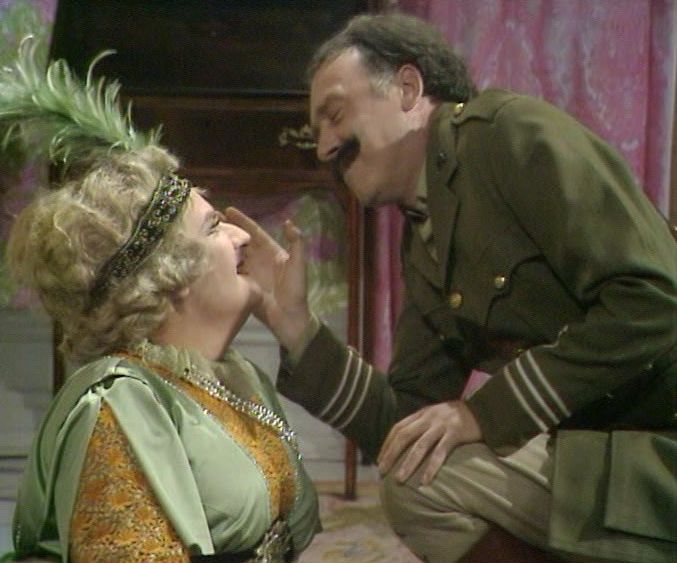
This studio-bound story flits between Germany and Paris and if the script is rather indifferent, then it’s possible to derive some enjoyment from the guest cast.  Hugh Walters has a few nice moments as a German corporal, Graham Armitage impresses as Von Diesel whilst Freddie Jones plays it very broad (but there’s no other way with this script) as an English officer bewitched by Lola’s charms.  The peerless Valentine Dyall has a small role as Lord Kitchener, posing for his famous portrait, complaining that his arm is going to sleep and taking more than a shine to Lola.

This one is best filed under indifferent.

Six Dates with Barker – 1970: The Odd Job

odd

David Jason’s early career was very much intertwined with Barker’s.  Jason’s respect and admiration for Barker has never been in doubt (to him, Barker was always “the guvnor”) and it’s plain that Jason considered his work with Barker, especially during the 1970’s, as something of a comedy apprenticeship – a chance for him to watch the master at work and learn from him.

Jason aged-up to play Dithers the gardener in Hark At Barker (1969 – 1970) and His Lordship Entertains (1972).  His old-age make-up would also come in useful when he appeared as Blanco in Porridge (1975 – 1977).  So it wouldn’t be until Open All Hours (1976 – 1985) that he was finally able to play a regular role of his own age opposite Barker.

The Odd Job also sees him act without aged make-up, as he appears as Clive, a man desperate for any odd jobs (“engines you want de-clogged or television sets, I mend typewriters and washing machines you know”).  Arthur Harriman (Barker) does have a job for him – removing the scabbard from a samurai sword.  Arthur can’t take the nagging from his wife Kitty (Joan Sims) any more, so has decided to take his own life.  But when faced with the sword (plus Clive’s graphic description of hari-kari) he finds it impossible to do it himself, so wonders if Clive would do this odd job for him ….

Arthur is a meek, mild and fairly monotonous character whilst Clive (thanks to Jason’s comic tics and Northern accent) rather commands the screen.  Given that Clive is by far the showier part, it’s interesting that Barker chose to play Arthur instead.  This may be because, coming from an acting background, he didn’t have the ego that some comedians possessed and so wouldn’t have minded that Jason was earning more of the laughs.

Written by Bernard McKenna, who’d earlier penned several instalments of Hark at Barker and would later write several of Jason’s early sitcom efforts, A Sharp Intake of Breath and The Secret Life of Edgar Briggs, it’s a simple, but effective concept which is given a twist when Arthur and Kitty are reconciled.  This means that he no longer needs Clive’s services, but convincing the enthusiastic Clive to halt his murderous plans proves to be a little tricky.

Part two is where we see Clive really begin to treat this odd job with gusto.  He’s a man of limitless invention – for example, putting hydrochloric acid in Arthur’s milk so that his cereal disintegrates, setting up a tripwire which catches an unfortunate milkman instead, and almost managing to shoot Arthur in the park (instead some garden gnomes are dispatched).

It’s always nice to see Joan Sims, even if she has little to do, and the appearance of Derek Ware (playing the milkman) is a sure sign that something nasty is going to happen.  Ware was one of those select band of stuntmen (along with the likes of Terry Walsh and Stuart Fell) who would become so ubiquitous that their arrival on screen was a clear indication that mayhem wouldn’t be far behind.

It’s a pity that The Odd Job only exists as a black and white film recording (due to the ITV colour strike) as I’ve no doubt that the location work in the second half would look rather better in colour.  But no matter, it’s always a pleasure to see Barker and Jason together and whilst the final twist may be obvious it’s also satisfying.  This tale would later be revived as a 1978 film with Jason reprising his role and Graham Chapman replacing Barker.  Chapman’s involvement makes it an interesting Python curio, but I think that The Odd Job works best in this twenty five minute format.

All Star Comedy Carnival to be released by Network – 5th December 2016

all-star

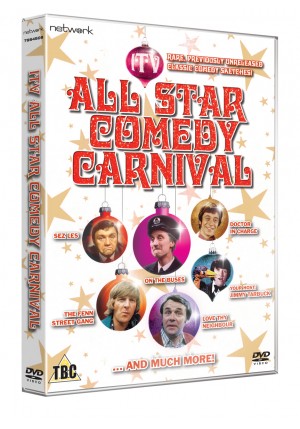
Network will release the 1972 & 1973 editions of All Star Comedy Carnival in December.

An annual television event for five years from 1969, All Star Comedy Carnival was ITV’s annual ‘Christmas bonus’ – presenting viewers with brand-new sketches from the network’s most popular sitcoms of any given year. A highlight of the festive viewing period, only two editions still exist: those for 1972 and 1973.

This set presents both complete shows, comprising specially written festive sketches for thirteen classic series:

• LOVE THY NEIGHBOUR
• ON THE BUSES
• CHRISTMAS WITH WOGAN
• NEAREST AND DEAREST
• THIRTY MINUTES WORTH
• SEZ LES
• THE FENN STREET GANG
• FATHER DEAR FATHER
• MAN ABOUT THE HOUSE
• MY GOOD WOMAN
• BILLY LIAR
• SPRING AND AUTUMN
• DOCTOR IN CHARGE

SPECIAL FEATURE: The Dustbinmen: All Star Comedy Carnival sketch from 1969.

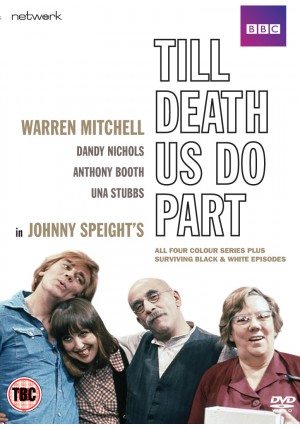
Till Death us do Part to be released by Network – 5th December 2016

till death.jpg

Till Death us do Part will be released by Network in December.

Highly popular – and more than a little controversial – Johnny Speight’s classic sitcom satirised the less acceptable aspects of conservative working-class culture and the yawning generation gap, creating a sea change in television comedy that influenced just about every sitcom that followed.  As relevant today as when first transmitted, Speight’s liberal attitude to comedy shone a light on some of the more unsavoury aspects of the national character to great effect.

Starring Warren Mitchell as highly opinionated, true-blue bigot Alf Garnett, Till Death Us Do Part sees him mouthing off on race, immigration, party politics and any other issues that take his fancy. His rantings meet fierce opposition in the form of his left-wing, Liverpudlian layabout son-in-law Mike, while liberal daughter Rita despairs and long-suffering wife Else occasionally wields a sharp put-down of her own.

Though all colour episodes exist, many early black and white episodes were wiped decades ago. The recent recovery of the episode Intolerance, however, alongside off-air audio recordings made on original transmission allow us to present a near-complete run of the series from beginning to end.

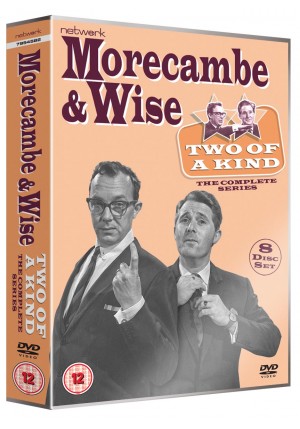
Morecambe & Wise: Two of a Kind to be released by Network – 5th December 2016

two.jpg

Morecambe & Wise: Two of a Kind  will be released by Network in December.

Morecambe and Wise, undoubtedly the best-loved double act that Britain has ever produced, first achieved their phenomenal television success in the early 1960s with this long-running hit series for ATV. Showcasing their mildly anarchic humour, impeccable sense of timing and keen eye for the absurd in a feast of uproarious sketches, onstage antics and musical entertainment, Two of a Kind propelled Morecambe and Wise towards superstardom in no uncertain terms.

Each show features fast-moving skits and musical parodies, with Eric and Ernie giving us their inimitable versions of television favourites Supercar, Face to Face and Candid Camera – in addition to memorable interpretations of key scenes from Macbeth and Hamlet, Eric’s ongoing battle to get his lines right in Samson and Delilah, and undoubtedly the most ambitious attempt ever seen to recreate the ‘fight sequence’ in Seven Brides for Seven Brothers! Among the many guest stars are Roy Castle, Joe Brown, Kathy Kirby, Susan Maughan, The Bachelors and Acker Bilk.

This eight disc set contains all 48 editions of Two of a Kind (aka The Morecambe and Wise Show) alongside a wealth of special features – including an exceptionally rare early performance from 1957, several appearances on Val Parnell’s Saturday Spectacular and the two surviving editions of Piccadilly Palace.

Six Dates with Barker – 1899: The Phantom Raspberry Blower of Old London Town

phantom-01

The Phantom Raspberry Blower of Old London Town, thanks in part to the later Two Ronnies remake, is one of the more interesting segments of Six Dates With Barker.  The Six Dates version was written by Spike Milligan whilst the Two Ronnies remake was credited to Milligan and A Gentleman (an indication that Barker had a hand in reshaping the original concept in order to fill out the expanded running time of the Two Ronnies serial format).

Unsurprisingly there’s more than a touch of Goon Show humour about this one.  If the rumours are to believed, then Milligan originally planned it as a film which would have featured himself, Harry Secombe and Peter Sellers – but these plans were abandoned due to Sellers’ film commitments.

After the somewhat laboured comedy of The Removals Man, Phantom is a joy right from the start.  Milligan’s eye for the absurd is given free range with numerous sight and dialogue gags.  One of my favourites revolves around Sergeant Bowles, who’s played by different actors of various builds.  One Bowles might enter a room directly behind Inspector Alexander (Barker) only for another to be seen in the next shot.  It’s stupid, but it works.

Barker plays several other roles (including dragging up as Lady Penelope Barclay-Hunt).  Lady Penelope ends up so shocked by the Phantom that her face turns black and her hair white (not something you’d see today of course).  The identity parade is another exercise in total ridiculousness – as we see a topless Scotsman, a Chinaman, a black Chelsea pensioner, a vicar and an upper class toff (played by the lovely Moira Foot, who’d earlier been equally unconvincing – in a comic way – as a newspaper urchin).

With concerns that Queen Victoria may be targeted, a number of male officers with no resemblance at all to her Majesty are drafted in to impersonate her (Pat Gorman is amongst their number).  Another favourite moment is the meeting of the heads of the Commonwealth, who feature a number of dummies amongst their number, including one who has a pumpkin for a head and another who sports a balloon instead!  Moira Foot, who’d also appeared alongside Barker as Effie the maid in Hark at Barker, once again provides a touch of glamour, this time as the pneumatically enhanced Maureen Body.

The later Two Ronnies remake might have seen the addition of many more gags (as well as enjoying the comic talents of Ronnie C) but the compact Six Dates with Barker version is highly entertaining in its own right.  A pity they didn’t spin this one off into its own series, had Milligan been able to keep up this stream of comic invention it might have worked very well.

phantom 02.jpg

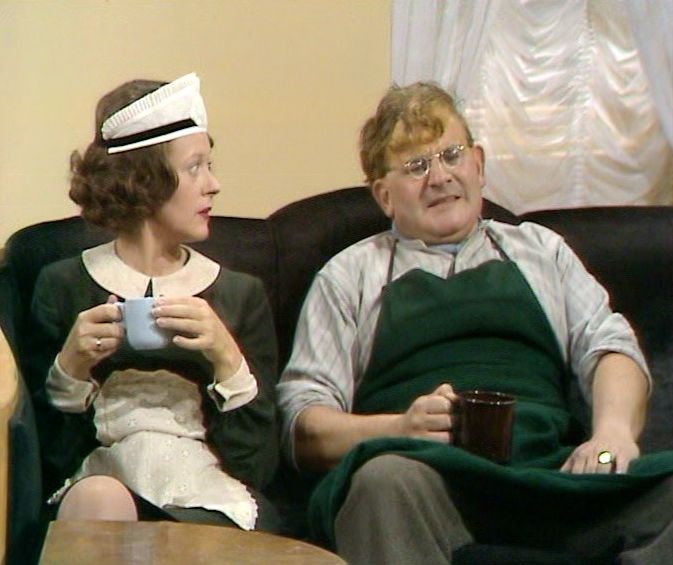
Six Dates with Barker – 1937: The Removals Person

removals

Having transferred over to LWT from the BBC, along with Ronnie Corbett and David Frost, it wasn’t surprising that Ronnie Barker’s talent for playing numerous different characters quickly earned him a series of one-off playlets, Six Dates with Barker, which aired during 1971.

The premise of the series is straightforward – each twenty five minute episode is set in a different year (mostly the 20th century, although the final one – All The World’s A Stooge – ventures into the year 2774AD) and sees Barker tackle a set of diverse characters.  Possibly it was hoped that one or more of them would prove popular enough to spin off into a series – it did happen with this one, although it took seventeen years until Clarence reached the screen (and then on the BBC).

The Removals Person is such a one-joke premise that it’s highly doubtful Clarence would have ever gone ahead had Barker not been so keen to make it.  At that late point in his career, Barker was a comedy heavyweight who was pretty much able to do as he pleased.  Barker clearly saw untapped potential in Hugh Leonard’s The Removals Person and wrote all six scripts of Clarence himself (under the pseudonym of Bob Ferris).  He wasn’t averse to recycling Leonard’s jokes though ….

Here, Barker plays Fred, although visually he’s pretty much identical to the later Clarence.  Josephine Tewson, as in Clarence, is Travers, a maid who attempts to limit the damage caused by the myopic removals man and then slowly falls in love with him.  The year is 1937 and whilst the rest of London is busy celebrating the Coronation, Fred and Albert (Christopher Timothy) have a job to do – pack up all the belongings from a swanky flat and transport them over to Southampton.

Albert (Timothy essays possibly not the most convincing Cockney accent ever heard) has other ideas as he wants to pop off for an hour or so to watch the procession, which leaves Fred in sole charge.  We’ve already had a quick look at the world through Fred’s eyes (blurry to the point of blindness) so nothing that happens subsequently should be a surprise.  For example, he mistakes a post box for a Chelsea pensioner, believes that Travers is a coat stand and decides that the unhappy Miss Angela (Gillian Fairchild) is a standard lamp.

How much this appeals will probably depend on how well disposed you are towards the numerous (lack of) sight gags.  Fred is rather crude and not terribly sympathetic, conversely Tewson is rather appealing as Travers, a woman so obviously lonely that she responds to Fred’s charmless overtures.  Gillian Fairchild soars over the top as Miss Angela, but this is mainly a two-hander between Fred and Travers.

The Removals Person is diverting enough, but it’s chiefly of interest because of the eighties revival – taken on its own this is pretty average fair.  The shocking amount of tape damage on the VT master is quite notable, it’s quite unusual to see something in such poor shape.

Blakes 7 – Blake

blake 01.jpg

The opening of Blake, following on from the events of Warlord, finds Avon and the others at a low ebb.  They’ve been forced to destroy their base at Xenon, due to fears that either Zukan or one of the other members of their recent meeting might have betrayed its location to the Federation.

This rather begs the question as to why Avon decided to hold the meeting there, but by now it should be fairly clear that he’s not operating in the most rational manner.  He explains that the death of Zukan leaves them with a problem – they need to find another figurehead to lead their attack against the Federation.  This doesn’t quite tie back to the events seen in Warlord though as whilst Avon was keen to use Zukan, it wasn’t as a unifying leader.

No matter, it’s only a slight continuity error and it does neatly explain why Avon’s suddenly decided to track down Blake after all this time.  He explains to the others that Blake “is strongly identified with rebels, you see, and very popular with rabbles. They will follow him, and he will fight to the last drop of their blood.”

Blake’s apparently on Gauda Prime, a totally lawless planet which has recently made an application to restore its former legal status.  In order to do this they need to ensure that all criminals are caught as quickly as possible.  And this is Blake’s job.  As improbable as it sounds, Blake’s working as a bounty hunter.

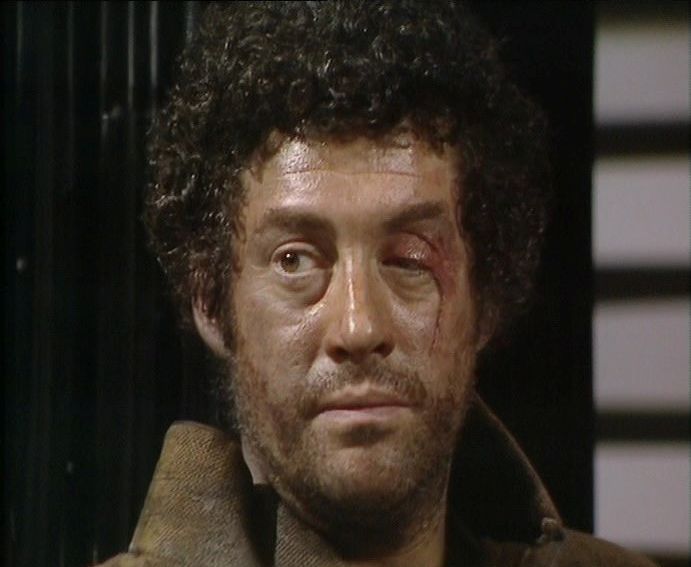
Our first sight of Blake is an arresting one.  Viewed from the side he appears to be the same man that we’d seen at the end of series two, but it’s only when he turns to face the camera that the wicked scar running down the right hand side of his face is visible.  It’s never explained how he came by this, but it’s clear that the last few years haven’t been easy for him.  Gareth Thomas instantly commands the screen as an older, wearier, bitterer Blake, seemingly reduced to catching criminals for money.

Humour is in short supply in this story, but I like the squabble between Orac and Slave, which sees Orac exasperated that Slave would have the temerity to interrupt him.  After a few minutes, Slave sounds the alarm and after everyone’s rushed about for a few seconds he admits that there’s no danger, he simply wanted to get their attention!  This moment of amusement doesn’t last long as Scorpio then really does come under attack and the painful descent to Gauda Prime begins.
blake-02

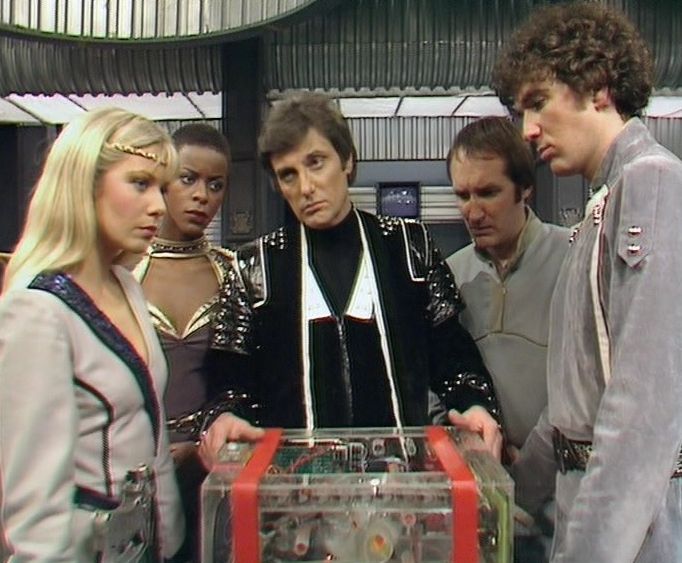
They all throw themselves around the set with abandon whilst fairly feeble explosions go off.  It all looks a little half-hearted, but once everybody except Tarrant has teleported to the surface the fun can really begin.  That’s when the ship is comprehensively destroyed and Slave speaks his final words.  If the model shot of Scorpio crashing through the trees looks a little underwhelming, then the full size destruction of the ship is impressively done.

If Blake has a problem then it’s the fact that nothing much really happens for the first forty five minutes.  Everything’s geared up for the meeting between Blake and Avon, meaning that everything else is just preamble – apart for one important revelation.  Blake captures Tarrant and manages to convince him that he’s a fearsome bounty hunter, but it’s all a sham, revealed in this conversation between Blake and Deva (David Collings).

DEVA: These stupid games you insist on playing, Blake, will get someone killed eventually.
BLAKE: I have to test each one myself.
DEVA: No, you don’t have to! I set up systems for that. I broke the security codes on their central computer. I got us access to official channels, information, everything we could possibly need! You don’t need to be involved at all.
BLAKE: All right, I find it difficult to trust. It’s a failing, I admit!
DEVA: And any one of our people could select the people you’ve collected. You don’t need to do the bounty hunter routine, either!
BLAKE: Indulge me.
DEVA: Do I have a choice?
BLAKE: Oh, there’s always a choice, Deva.

If some of Avon’s recent behaviour has been bizarre, then so is this. Blake couldn’t foresee that Avon wouldn’t listen to reason when they met up, but Deva was quite right when he told Blake that he was playing a dangerous game. This part of the story doesn’t quite hold water anyway – we assume that Blake is recruiting an army from the criminals on Gauda Prime to fight the Federation. But is picking the scum of the earth (a group of lawless murderers) really the wisest choice? Why isn’t he going from planet to planet, inciting rebellion?  This begs another question (sadly unanswered), namely is Blake’s scar as fake as his bounty hunter story?

The fact that he doesn’t even have to be there at all – he’s simply playing games – is bizarre.  And pretending to Tarrant that he’s prepared to turn them all over to the Federation proves to be a fatal mistake. Tarrant rushes over to tell Avon (who has coincidentally just stepped through the door) which means that the reunion between Blake and Avon doesn’t quite end the way either of them hoped for.

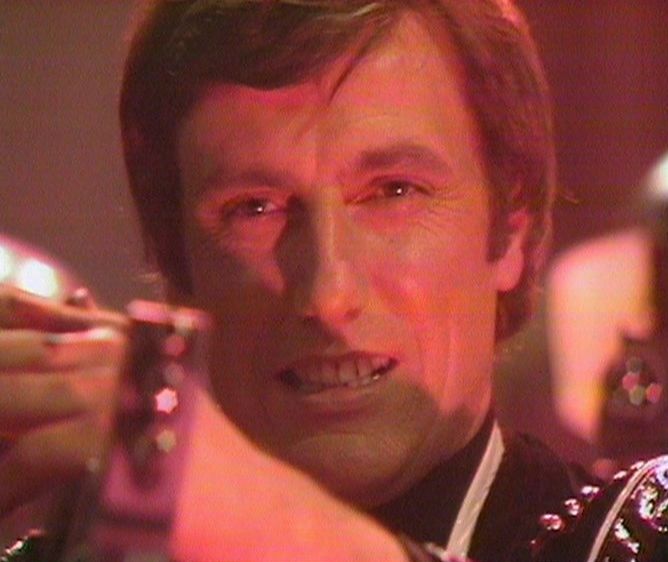
Darrow’s delivery of the line “have you betrayed us? Have you betrayed me?” has come in for a little criticism over the years. True, he’s more than a little arch here, but in context it works if you accept this is now an Avon at total breaking point.  As Avon repeatedly shoots Blake you can see a range of expressions play across Darrow’s face which indicate that Avon realises, almost as soon as he’s pulled the trigger, that he’s made a horrendous mistake. It’s a little too late though ….

Then all the others die (possibly) in slow motion. With the destruction of Scorpio and the entire crew seemingly dead, that would appear to have been a fairly final ending. But it’s always intrigued me that Gareth Thomas agreed to return only if Blake was shown to be 100% dead at the end – that way, he argued, he’d no longer have to worry that he’d lose parts due to people assuming he was still the star of Blakes 7.  But if the series was coming to an end this makes no sense.

Was a fifth series on the cards?  There’s always a way out – demonstrated by the oodles of fan fiction which states that the others weren’t really dead, they were merely stunned (even though we’ve never seen Federation guns set to stun in the series).  True, we don’t see Avon die, but unless the guards were really poor shots it’s pretty much a certainty.  And even though Blake appears to be very dead that can easily be explained away – it wasn’t Blake, it was his clone from Weapon.  Of course ….

Whether you like to believe that they all lived to fight another day or that this really was the final end, Blake offers as uncompromising a conclusion to the series as you could possibly ever expect to see.  It’s certainly worth sitting through the first forty five minutes for the final five.
blake-03

Blakes 7 – Warlord

warlord-01

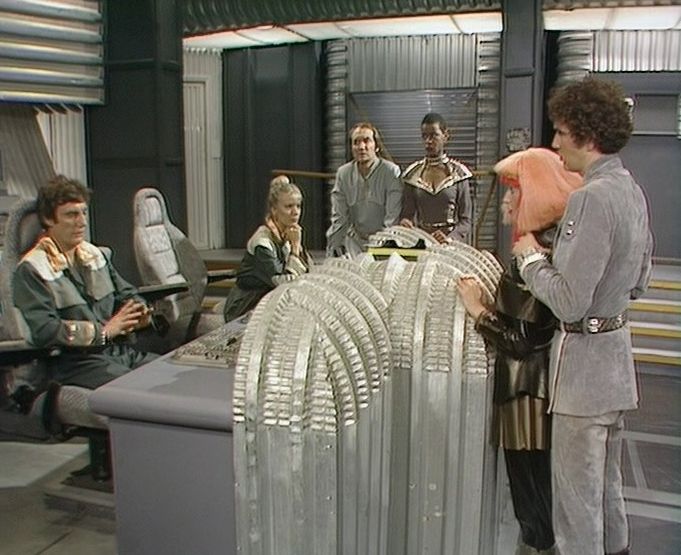
The Federation’s pacification drug, Pylene 50, continues to spread through the galaxy – affecting more and more planets.  Avon calls together a number of interested parties in the hope that together they’ll be able to form an alliance.  Success seems to hinge on the cooperation of the notorious warlord Zukan (Roy Boyd).

Although Zukan’s thirst for war and conquest is well known, he tells the others that he’s here in good faith and has the means to produce a toxin to combat the pacification drug.  But matters are complicated after Zukan’s daughter, Zeeona (Bobbie Brown), is found to have stowed away on her father’s ship – especially since she and Tarrant have something of a history ….

Warlord has never been a terribly well regarded B7 story, possibly because of the interesting clothes and hairstyles.  There’s no getting away from it, the delegates look if they’d be more at home at a fancy-dress party rather than a summit meeting which will decide the fate of the galaxy.  Zukan and Zeeona also sport the most amazing haircuts, especially Zeeona who looks like a cut-price Toyah.

There’s also the Rick James problem.  If you’re a Doctor Who fan then you’ll probably be aware of his idiosyncratic performance in the 1972 story The Mutants.  Nearly a decade might have passed since that unforgettable turn, but James pretty much picks up where he left off – wooden doesn’t even begin to describe him.  Mind you, given what he’s wearing it’s no surprise that it’s hard to take him seriously.

But if you can put all that to one side, there’s plenty here to catch your attention.  After being touched upon earlier in the season, Pylene 50 makes a comeback – and in a very striking way.  The opening sequence, set on the latest planet to fall to the pacification process, is an eerie and disturbing one.  The population of Zondar, heavily drugged, are mown down by Federation troops, whilst all the time encouraging words (“You are cared for. You are loved”) can be heard over the tannoy.  This has elements of the harder-edged vision of a drugged future seen in The Way Back (although rarely glimpsed afterwards).

After enduring defeat after defeat, it looks as if Avon’s luck has finally turned.  But it shouldn’t come as any surprise to learn that Zukan’s a dirty double-crosser, secretly in cahoots with Servalan.  This is where we must bid farewell to Servalan and it has to be said that she exits with a whimper rather than a bang.  It’s long been debated as to why Jacqueline Pearce didn’t appear in Blake – you’d have assumed it would have been an obvious move, especially if it was known that the series definitely wasn’t coming back.  We’ll touch upon this again next time, but maybe Chris Boucher and Vere Lorrimer were eyeing a possible fifth series – that would certainly explain why Servalan’s final appearance is little more than a not-terribly-interesting cameo.

Simon Masters’ script (his only effort for the series) is well tailored for most of the other regulars.  Avon and Soolin carry the action, although Soolin’s proactive presence does mean that Dayna rather fades into the background.  Vila spends his time drinking and seemingly avoiding Avon.  A nod back to the events of Orbit maybe, as he tries to come to terms with Avon’s actions?

Tarrant spends his time making eyes at Zeeona, although just as Zukan is obviously a wrong-‘un, so it’s clear that Tarrant and Zeeona’s love is going to be somewhat on the short-lived side.  Her death is an interesting moment.  After learning of her father’s treachery she attempts to undo some of the damage he’s caused, but a flesh-eating virus puts paid to her.  Dayna tells Tarrant that she died because she took her glove off – was this an accident or did she, wracked with guilt about her father’s actions, decide to commit suicide?  Either possibility is valid.  Bobbie Brown may be saddled with a silly haircut but is still rather good as the doomed Zukan.

After a run of disasters, it seems that only one man can unify them, so next time Avon sets out to find Blake.  I wonder if this will be where his luck finally changes?  Hmmmm …….

warlord-02

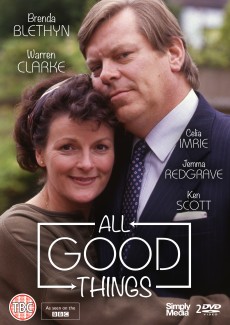
All Good Things to be released by Simply Media – 28th November 2016

good

All Good Things, originally broadcast in 1991, will be released by Simply Media on the 28th of November 2016.  Review here.

A marriage and home can be made complete with the arrival of a new baby, but Shirley Frame (Brenda Blethyn) feels a need to share her good fortune by going out into the world and helping others – driving husband Phil (Warren Clarke) up the wall.

Shirley Frame (39) gives birth to her third child and is over the moon. Intent on sharing her delight with the world she embarks on a plan to make life a better place for as many people as possible. Husband Phil and their two teenagers aren’t easily convinced.

Very quickly Shirley learns that it’s not easy being a Good Samaritan, especially in a world of tower blocks, drug abuse and homelessness, even if your own life is rosy. Shirley identifies a string of potential good causes, leaving Phil holding the baby as she tries and fails to fix the lives of others.

Whether coaxing a potential suicide from a watery grave, giving reading lessons to an illiterate young mum with an abusive husband, or trying her hand at marriage guidance, Shirley puts her foot in it at every good turn – and invariably brings other people’s problems too close to home for comfort.

Joining double Oscar nominee, BAFTA and Golden Globe winner Blethyn (Secrets & Lies, Little Voice) and the ever-dependable Clarke (Dalziel & Pascoe, Nice Work) in this 1991 BBC six-parter are Celia Imrie, Jemma Redgrave and Ken Stott, who were all on track to become equally well-loved household names.

Screenwriter Lesley Bruce’s TV credits also include Doctor Finlay, Lizzie’s Pictures, The Practice and Home Video.

Now on DVD for the first time, this is a wry comedy of errors about losing the plot while attempting to mend the ways of life’s ne’er-do-wells and no-hopers.

Blakes 7 – Orbit

orbit-01

A renegade scientist called Egrorian (John Savident) has an offer that Avon can’t refuse – a weapon of incredible power (the Tachyon Funnel) in exchange for Orac.  You possibly won’t be shocked to hear that there’s a catch though ….

After his previous story, Traitor, failed to hit the mark, Robert Holmes certainly bounced back with Orbit.  Maybe one of the reasons why Traitor didn’t work that well was because it was the only one of Holmes’ four B7 scripts that didn’t team Avon and Vila up.  It’s plain that Holmes saw plenty of possibilities in the Avon/Vila relationship – it’s certainly of the reasons why this one works as well as it does.

Holmes’ Doctor Who scripts tended to feature double-acts, a tradition he carries on here – apart from Avon and Vila there’s also Egrorian and Pinder (Larry Noble).  Egrorian is the sort of role that’s a gift for an actor of a certain type – i.e. one who’s not afraid to go soaring over the top.  John Savident was clearly that sort of actor.  It’s a grotesque (in a good way) turn, totally lacking in subtlety but with the occasional hint of menace to counter the fairly flippant dialogue.

This must have been a fairly cheap show to make, with just a couple of new sets and only two guest stars.  But it never feels like a bottle show or something cobbled together on the cheap because the end of season was fast approaching and the money had run out.  Holmes concentrates on just four characters – Avon, Vila, Egrorian and Servalan (yes, of course she’s lurking about) – and gives them some sparkling dialogue, such as here when Egrorian lays eyes on Avon and Vila for the first time.

EGRORIAN: Surprisingly, you don’t look like the ruthless desperados of legend. But you have, of course, killed a great many people.
AVON: Only in the pursuit of liberty.
EGRORIAN: “O Liberty! O Liberty! What crimes are committed in your name!” Do you know the source?
AVON: No.
EGRORIAN: No, why should you? Natural leaders are rarely encumbered with intelligence. Greed, egotism, animal cunning, and viciousness are the important attributes. Qualities I detect in you in admirably full measure.

Larry Noble, as Egrorian’s assistant Pinder, has very little dialogue, but he still manages to catch the eye.  Noble manages to suffer incredibly well and his hangdog expression immediately engenders sympathy from the audience, something which is increased after we see how badly Egrorian treats him.  There’s a certain cruelty and sadism that runs through Holmes’ Doctor Who scripts which is also present here – best demonstrated after Pinder beats Egrorian at chess.  Egrorian doesn’t like this and proceeds to twist Pinder’s arm.  “Can you feel your extensor muscle tearing? Can you feel your humerus grating against your radius? Hmm.? Just a little more… a little more… now you’re feeling it, aren’t you?”

It’s more than a little unpleasant, but it helps to shine a light on their dysfunctional relationship.  Quite how they’ve entertained themselves during the last ten years (they’ve been in exile together) is probably best left to the imagination, although Egrorian’s comment that “naughty boys must be punished” offers a world of possibilities.

Hey, here’s a surprise – Egrorian plans to double-cross Avon and the others because he’s secretly working for Servalan.  Bet you didn’t see that coming.  So far, so familiar, but Holmes continues to give Savident some choice dialogue and he doesn’t disappoint.  Here, Egrorian outlines to Servalan his vision of a shared future.  “A connubial partnership, Servalan. Why not? Alone you are formidable enough, but together we would stand like mountains.”  Jacqueline Pearce also seems to relish the chance to play something a little different, as we see Servalan ever-so-slightly discomforted by the effusive and fulsome Egrorian.

The key part of the story takes place during the last few minutes.  Avon and Vila are heading back to Scorpio in Egrorian’s shuttle, but there’s a problem – they’ll never make the escape velocity as the shuttle’s carrying too much weight.  Frantically they jettison everything they can think of, but they still need to find another seventy kilos.  Avon wonders what weighs seventy kilos, to which Orac replies that “Vila weighs seventy-three kilos, Avon.”

Paul Darrow’s facial expression after Orac delivers this bombshell is a treat.  He shakes his head ever so slightly, but then seems to pull himself together and goes hunting for Vila.  Darrow’s S4 Avon was not known for its subtlety, and so it proves here, as he goes into “I’m not going to kill you, I’m your friend, honest” mode.  It’s not terribly convincing, so you can’t blame Vila for staying hidden.

All turns out well in the end, Avon stumbles (literally) against the problem – a microscopic fragment of a neutron star, planted by Egrorian to kill them – and is able to get rid of it.  But the damage has been done.  Vila might not have mentioned it to the others, but he now knows exactly how far Avon will go to protect his interests.  It’s a nice dramatic moment for Michael Keating, something of a rarity this late in the series.

This may be a talky, studio-based story, but it doesn’t really get any better than Orbit, thanks to John Savident’s exuberant performance and the way that Holmes skewers the Avon/Vila relationship.

orbit-02

Blakes 7 – Gold

gold-01

Avon is contacted by an old acquaintance called Keiller (Roy Kinnear), the purser of a pleasure liner called the Space Princess.  The Space Princess has a secret cargo – gold, mined from the planet Zerok.  Because it’s travelling incognito there’s very little security, so stealing it should be a doddle – except for one snag.

Before the gold is put aboard the ship it’s processed in such a way that it turns black and is therefore worthless unless you have the computer code which will change it back.  Keiller suggests they tamper with the processing machine on Zerok so that unprocessed gold is loaded aboard the ship instead.  It seems like a foolproof plan, what could possibly go wrong?

Roy Kinnear is great fun throughout as Keiller.  One of those actors who just seemed to generate goodwill from the audience, he plays rather to type as the cowardly Keiller.  Kinnear gives him such a shifty and untrustworthy air right from the start that it seems obvious he’s going to double-cross Avon and the others.  Or is that too obvious?  Since this is a heist tale there’s a number of twists and turns, so when it’s revealed that Keiller used to work for the Federation it’s possible to wonder if this is actually the truth or just more disinformation.

Keiller’s relationship with both Avon and Soolin has some nice comic moments.  He continually refers to Avon as his old friend and Soolin as my pretty one.  No surprises that Avon regards him as no friend or that Soolin is unimpressed with Keiller’s attempts at flattery.

We’re told that Vila doesn’t trust Keiller and wants no part of the scheme.  Michael Keating only has a handful of lines throughout the story, which is slightly strange – although the next episode is more tailored to his talents.  This leaves Avon and Soolin paired together whilst the familiar combination of Tarrant and Dayna also team up yet again.  All four teleport down to Zerok, Avon and Soolin travel down to the bowels of the planet with Keiller, whilst Tarrant and Dayna remain up top, keeping an eye on the guards.

The Zerok processing plant (actually a refuse disposal centre in Poole) is one of those typically industrialised Blakes 7 locations that featured regularly during the first few years of the show.  It gives Soolin a chance to demonstrate just how sharp a shooter she is as she merrily mows down multiple hapless guards.  The combination of Avon and Soolin is a good one – a slight pity it wasn’t seen on more occasions – his brain and her brawn (as well as the fact they both have a sardonic sense of humour) appeals.

It’s later revealed that the Space Princess is a fake cruise liner – it travels straight from Zerok to Earth whilst the passengers (all drugged up) are shown pictures of various sights which, in their chemically altered state, they believe to be real.  Whilst Avon busies himself with the gold, the others pose as passengers.  Stephen Pacey seems to be enjoying himself as a doped-out passenger.

Although Roy Kinnear provides the story with a veneer of comedy, underneath it’s quite a dark little tale.  The bodycount is quite high (at least a dozen or so guards are killed before the gold is stolen).  It’s also fair to say that the ending doesn’t really come as a great surprise – Servalan turned out to be behind the plan right from the start and turns up to taunt Avon.

SERVALAN: Congratulations, Avon. I see you worked it out.
AVON: Keiller was once on the personal security staff of the president of the Federation. That just had to be you. It wasn’t hard to work out. But it wasn’t meant to be, was it?
SERVALAN: I don’t know what you mean.
AVON: You wouldn’t leave me a clue like that. Not unless you really wanted to. You knew I wouldn’t be able to resist it. You planned everything, every move, you even knew that Keiller would disobey you, and you hoped that I would trust him because of that.
SERVALAN: Very good.
AVON: I almost did trust Keiller. When I found out it was you, I knew I was safe from him, at least. After all, he has nothing to gain from obeying you. Only in the end, it occurred to me that he might possibly imagine that you would keep your side of the bargain and pay him his reward instead of just killing him. He doesn’t know you as well as I do.

It’s the only time that Avon and Servalan have a meaningful face to face conversation during series four. Avon’s final reaction to their dismal failure is characteristic – he laughs hysterically whilst the others look on stony-faced. Another sign that Avon’s losing it? It could have been worse I guess, they all could have had a giggle, which thankfully only happened on a few closing scenes (Breakdown is probably my least favourite example of this).

Not quite the best that series four has to offer, but Kinnear is entertaining and the story is solid enough.

gold-02

Blakes 7 – Sand

sand 01.jpg

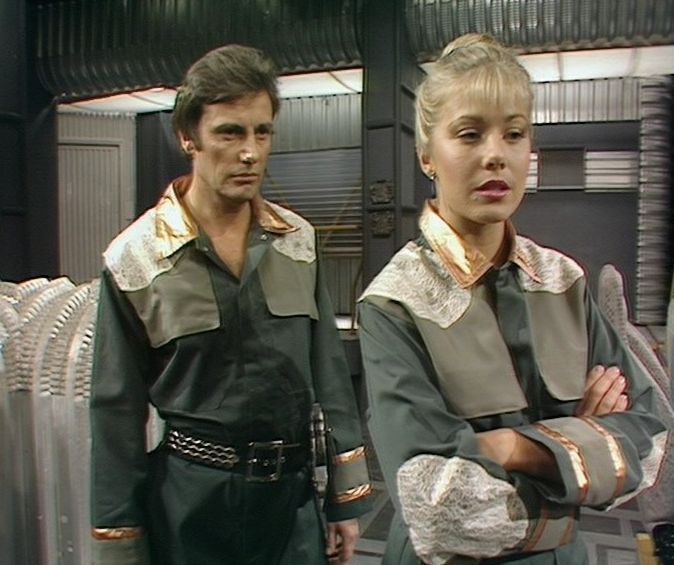
Servalan has elected to join a Federation mission dispatched to the sandy planet Virn. Together with Reeve (Stephen Yardley), Chasgo (Daniel Hill) and an unnamed assistant (played by Peter Craze), she intends to find out what happened to a research party last heard from some five years ago. They find the going treacherous after their ship crash-lands a fair distance away from the research base.  Avon is intrigued to learn that the Federation, after all this time, has decided to send a ship to investigate this most inhospitable of planets.  He decides that if there’s anything of value on Virn, they should have it rather than the Federation. It quickly becomes clear that the sand has a form of sentience as strange things start to happen ….

Like Tanith Lee’s previous script, Sarcophagus, Sand is something of a bottle show which delights in putting the regulars under the microscope.  Most interestingly, we see a much more human Servalan than usual.  The reason for her emotional state becomes clear after it’s revealed she’s come to the planet in order to find out what happened to Don Keller (Jonathan Gaunt).  Keller, via a recording, is the first voice we hear.

I know a land beyond the heart of time. The sun never comes there. No moon ever shines. And man, a grain of sand, nameless and lost, blows with the dust. I apologise, HQ, but that’s what this place makes me think of. The sun never comes here. Just sand and mist. Virn, the green planet. Never rains here either. There’s something strange. Not just the way the ship was affected when we came down. Not just the way all the machinery plays up. Not just the way we’re dying. You still listening, HQ? This is Don Keller, remember me? On Virn, where we have a plague on our hands. On my hands. So when do I get something from you?

Unlike Sarcophagus, this story boasts a guest cast – although not all of them make it to the final reel.  Unsurprisingly, Peter Craze’s unnamed assistant is the first to bite the dust (or sand) with Reeve following shortly after.  Yardley has the most substantial guest-star role, although Investigator Reeve isn’t a terribly interesting character – he’s an alpha male who takes a shine to Servalan (her disinterest is total and cutting).  It’s hard to command authority when you’re dressed in a shiny silver spacesuit, but Yardley does have some good lines and makes the most of the role.

The deaths of the ship’s crew enables the narrative to be split in two – Servalan and Tarrant remain isolated on Virn whilst Avon and the others are also trapped, but on Scorpio.

If Servalan was going to be locked up with anyone then Avon would have been the obvious choice.  But I’m glad that Lee avoided the obvious, since Sand gives Stephen Pacey a long overdue chance to do a spot of acting.  Throughout series three Tarrant was incredibly smackable, but this hasn’t been a problem during series four (mainly because Tarrant has been underwritten so badly that he’s hardly contributed at all).  Sand enables Tarrant to step out of Avon’s shadow and Pacey doesn’t disappoint.

Here, for example, he posits a reasonable explanation for the current state of affairs.  This is a rare occurrence – normally Avon would be the one with all the answers.  “The trace of life on Virn was the sand. Some emanation from it affects the atmosphere, even the magnetic fields of the planet, and causes the rest of the trouble: ships crash, instruments fail, nobody can protect himself. And when the sand comes into contact with a human body it sucks out the cellular energy, sometimes fast, sometimes slowly. I imagine that depends on how much sand is in the vicinity. But that’s what Keller’s plague was.”

Tanith Lee serves both Tarrant and Servalan well, delivering up some very quotable dialogue.  This is how Tarrant describes his room-mate.  “I’d say you’re possibly the most unscrupulously venomous woman in the galaxy. Being shut in here with you is rather like being locked in a cage with a panther: a black cat with large golden eyes and long silver talons.”  Servalan’s rejoinder is that she’s just the girl next door! Tarrant’s next line is a good one too.

Lee also takes the opportunity to fill in a few blanks, such as how Servalan escaped from the Liberator at the end of Terminal, but Servalan’s revelation that Don Keller was the only man she ever loved is the stand-out moment from this part of the story.

SERVALAN: Don Keller, he was my lover. I was eighteen.
TARRANT: He’s the reason you’re here.
SERVALAN: He left me. I grew up. Power became my lover. Power is like a drug. It is beautiful. Shining. I could destroy a planet by pressing a button. I loved him.

Do we believe her? She seems genuine, but we’ve seen before how Servalan is able to manipulate others with ease, so it’s possible that self preservation made her adopt the pose of a victim. That’s what Tarrant claims to believe at the end (although is he only saying this to appease Avon?)  Whatever the truth, Jacqueline Pearce impresses here – which proves that given good material, the character can still be as compelling as she once was.

If Tarrant and Servalan are having an interesting time down on the planet, then so are Avon and co up on Scorpio.  Vila is reduced to a drunken state (not the first time this has happened).  Michael Keating does drunk acting very well, but it’s rather an obvious choice – although the mention of Cally strikes a nerve.  “If I died it’d be a real joke. Who’d care? Who cared about Cally?” Orac’s acting very oddly too, telling everyone that he loves them!

Avon’s enjoying himself and so is Paul Darrow.  Avon has a theory that the sand eliminates the weak and keeps the strong alive in order to maintain a healthy breeding stock.  “Presumably the sand up here has compared Vila’s wits and stamina with mine and concluded that I am the dominant male. On the herd principle therefore, it decided that Vila was superfluous and it could kill him. You two, of course, would have been allowed to live”.  Vila’s not dead of course, but Avon doesn’t seem terribly unhappy at the thought of a ménage à trois with Dayna and Soolin ….

A solution is eventually found and Tarrant returns to face a less than warm welcome.  He’d allowed Servalan to escape, which is bad enough, but his intimacy with her disgusts Dayna (understandable since Servalan killed her father).  This is the sort of theme that would have been an interesting one to develop, but unfortunately B7 wasn’t the sort of series for complex character arcs, so as the credits roll a big reset button is hit and the matter is never mentioned again.

Haunting and well-realised, Sand is a memorable story.  Not quite as compelling as Sarcophagus maybe, but it’s still several cuts above the norm.

sand-02