Sergeant Cork – The Case of the Persistent Assassin

persistent

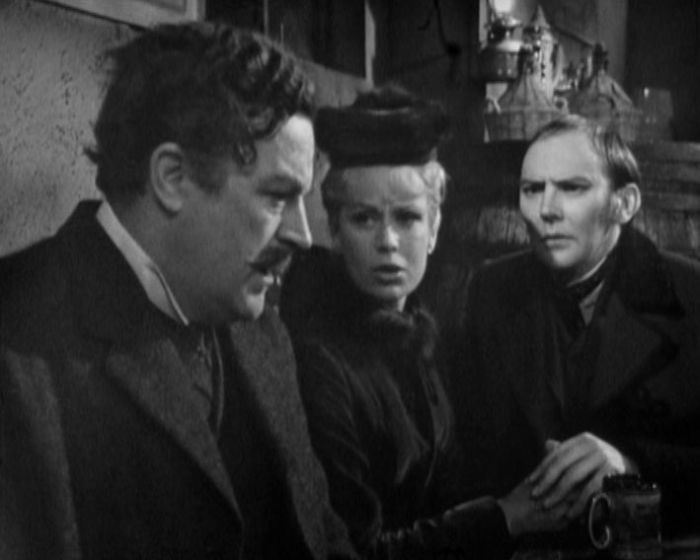
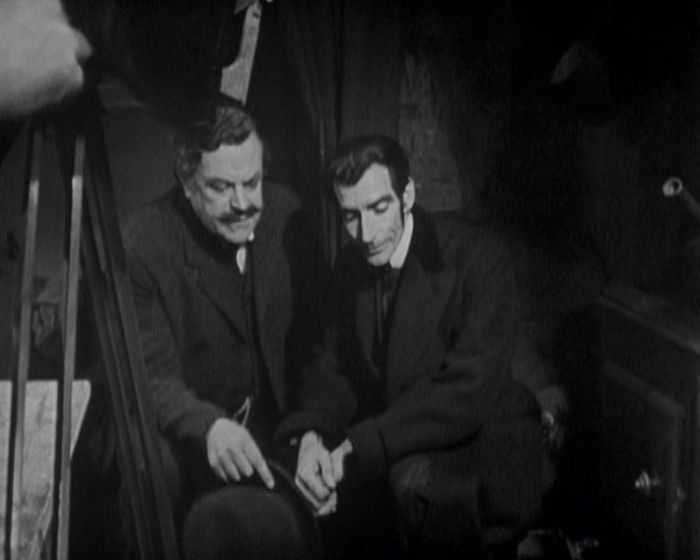
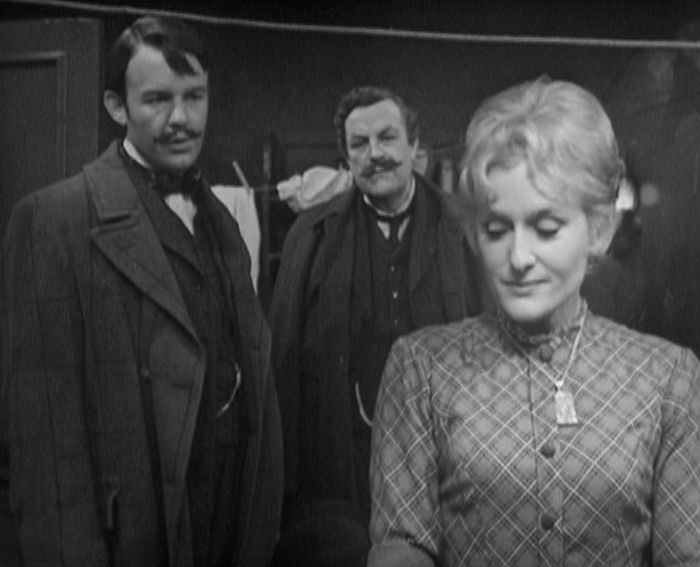
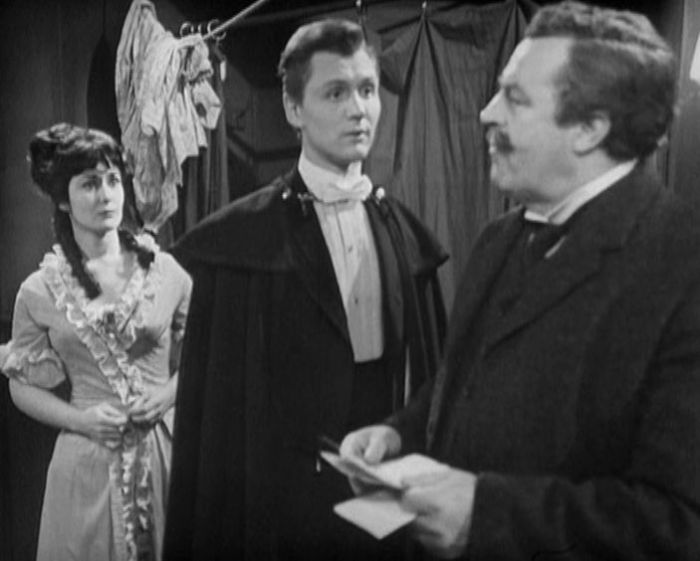
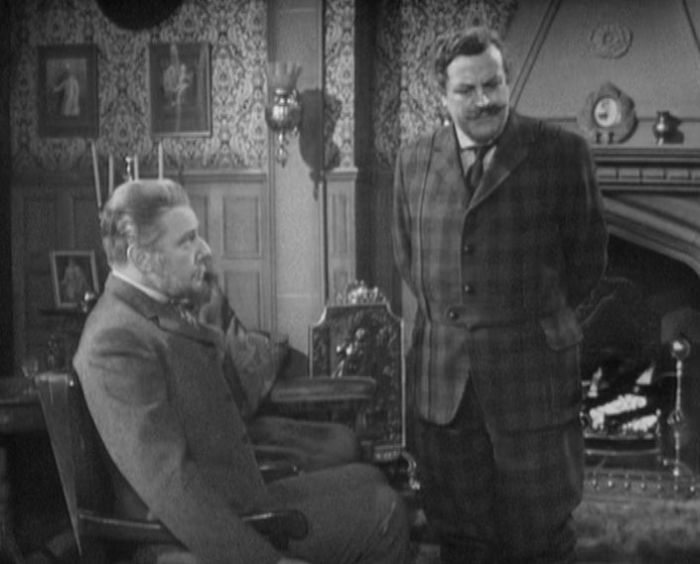
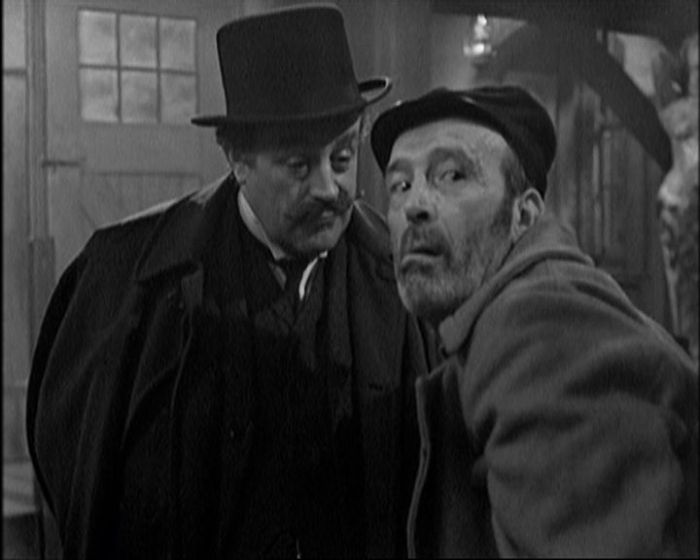
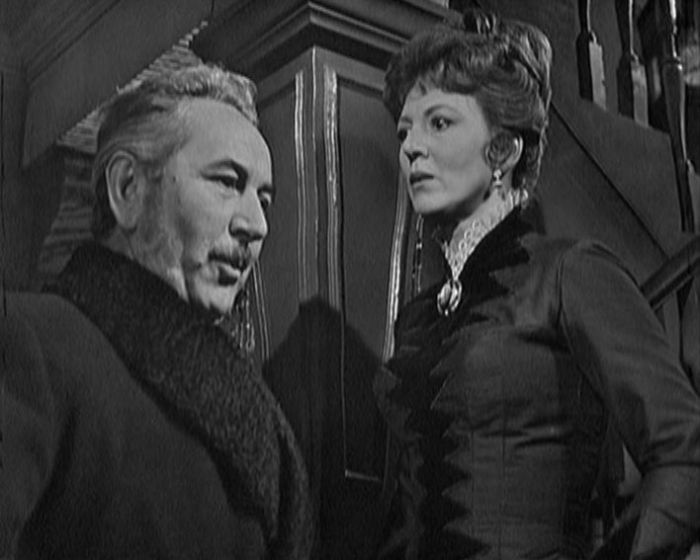
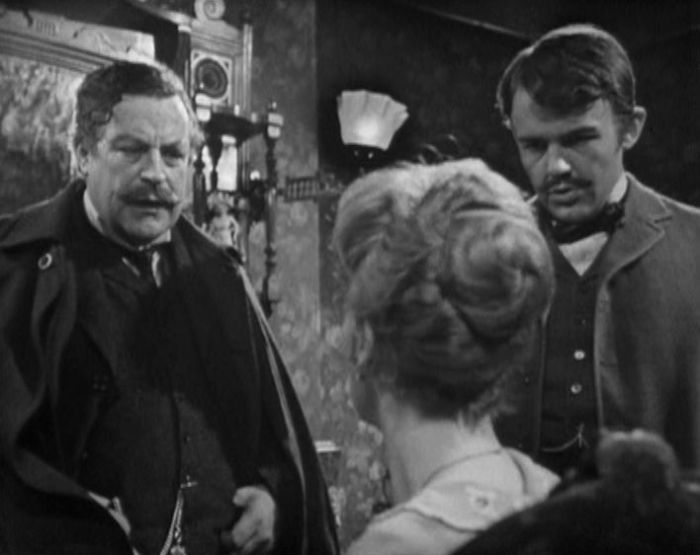
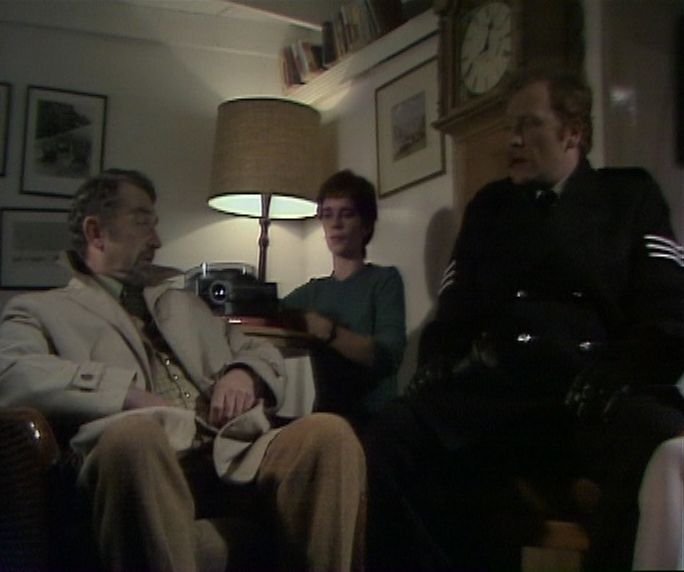
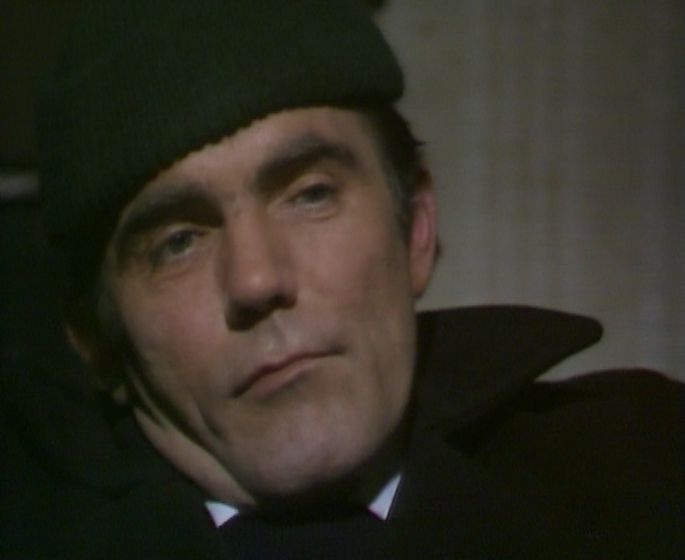
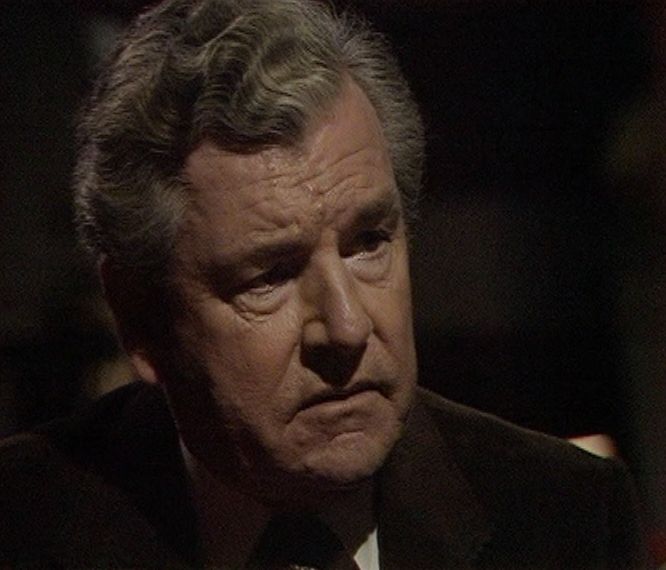
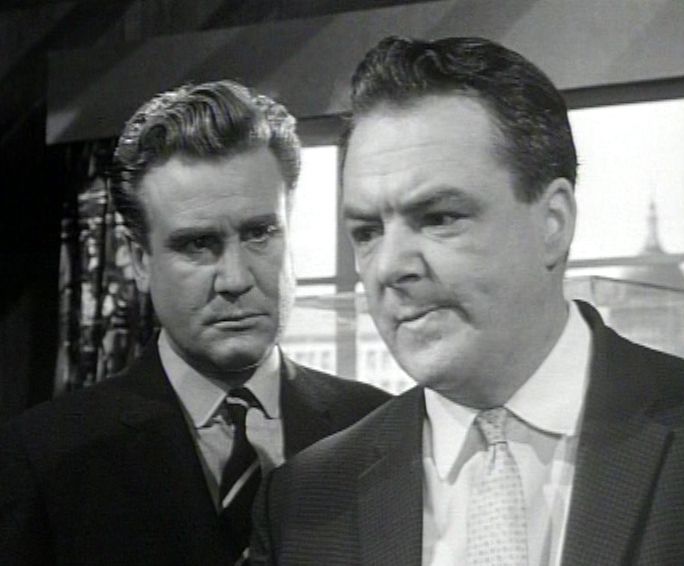
Prince Frederick of Sileasia (Garfield Morgan) has arrived in London for a three day visit.  Sileasia, a small country bordering Russia, is a potential political hotspot which would be ignited by Frederick’s assassination.  Cork is assigned the task of keeping him alive.

Prince Frederick is strong-willed and initially disdainful that he’s in any danger.  This is a dramatically obvious choice, as an unpredictable subject is much more interesting than a compliant one.  Morgan, a familiar television face (well known for playing Haskins in The Sweeney) gives an icy turn as the Prince.  It’s not the most nuanced of performances but as the episode progresses we do start to peel away the layers of Frederick, the man.

The studio-bound limitations of Cork are more evident in this story than some of the others – the first assassination attempt is a good example of this.  Frederick walks to the window and is lucky to avoid a rifle bullet.  After the shot is fired the camera focuses on nothing for a few seconds before we cut back to the action.  This was always a hazard of multi-camera studio recording – since editing had to be in done in real-time it was easy to miss something.  The small amount of recording time meant that retakes only tended to occur when something went dramatically wrong, so whilst this looks a little clunky it clearly wouldn’t have been judged important enough to merit recording the scene all over again.

At one point Cork mentions that he plans to consult the dynamite section.  Terrorist attacks with dynamite and other explosives weren’t uncommon during this period (see here for some real life examples) and The Case of the Persistent Assassin serves as a painless history lesson.

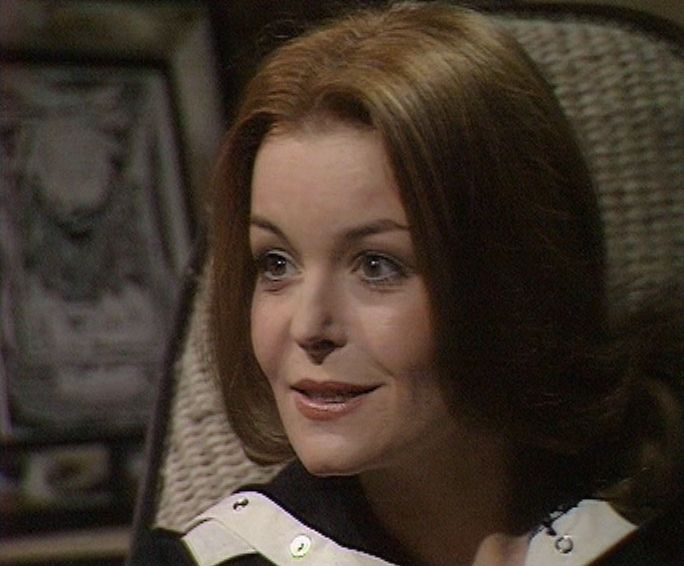
Frederick tells Cork that he wishes to return to his country and end the division and bloodshed.  Irene Stone (Liane Aukin) who attempted to blow him up with a bomb sees him in quite a different light.  “You butcher! You murdered my three brothers because they tried to speak against you. You put my mother and father in jail. You’ve turned Sileasia into a prison house!”  It’s quite telling that Frederick doesn’t attempt to contradict her – although it’s unlikely he would have recalled Irene’s family, he acknowledges that many innocent people have suffered in the past.  It does pose the question as to whether he’s quite the benefactor he claims to be – this is firmly answered at the conclusion of the story.

With Cork and Bob somewhat pushed into the background, this is one of the lesser episodes of the first series.  The telerecording is notable for a black blob that’s present during most of the episode.  It’s not quite as distracting as the fly that wanders across one of the telerecordings of The Avengers but it comes close.

Sergeant Cork – The Case of the Slithy Tove

tove.jpg

The death of an ex-villain called Trumble provides Cork with a puzzling mystery to unravel.

Trumble was well known to Cork and the news of his murder is greeted with sadness by the Sergeant.  His attitude is in sharp contrast to Inspector Bird, who views Trumble’s modest house with distaste and asks Dr Stuart (Robert James) “what is a case like this to do with people like us?”  Trumble’s death has caused unrest in the East End and the police are struggling to maintain order.  This also irks Bird.

The arrival of Cork changes things.  Unlike Bird, he’s happy to talk to the unruly crowd and he tells them that Trumble was just as much his friend as he was theirs.  His bluff way does the trick and the crowd disperse – although it’s noticeable that Bird doesn’t acknowledge this.

Cork brings the police photographer Perryman (John Junkin) to the crime scene.  This is something else that irritates Bird – why waste resources on such a squalid case?  Cork reminds him that photography is now becoming standard (a sign that the police are slowly beginning to embrace modern technology).  Fingerprints, one of Cork’s hobby-horses, are also mentioned, although Bob reminds him that they can’t be used in evidence.

Rex Firkin spent most of his career working as either a producer (Emergency Ward 10, The Planemakers, The Power Game) or an executive producer (Budgie, Upstairs Downstairs) but he did direct from time to time.  His sole Cork credit is unusual, as he didn’t have a production role on the series (unlike most of the other programmes he directed).  Based on the evidence of this episode it’s a pity he didn’t direct more.  The opening scene is especially interesting – the camera moves from the street (studio-bound, naturally) into Trumble’s house and then back out again.  Following Trumble’s death the camera follows a young urchin (John Barnham) as he ducks out of sight (Firkin is able to make full use of Anthony Waller’s well designed street set).   Sound effects (horses’ hooves, barrel organs) also help to create the illusion of a busy thoroughfare.

The Case of the Slithy Tove has a very strong guest cast.  Ann Lynn is vulnerable as Trumble’s daughter Nora and the always dependable Robert James has a decent role as Dr Stuart.  It’s a pity that James never returned as the doctor as he would have been a good semi-regular,  but James does have two further Cork credits (playing different characters).  Peter Fraser (probably best known for playing David Campbell in the Doctor Who story The Dalek Invasion of Earth) is slightly wooden as Nora’s fiance, Sam Manners and whilst it’s always nice to see  John Junkin, he has little to do as Perryman.  Bruce Beeby, who amongst various roles played Mitch in the radio serial Journey into Space, is the enigmatic Lake.

The identity of Trumble’s murderer is a mystery until the end.  Cork, who’s fond of quoting poetry during the episode, declares that he’s a slithy tove. Earlier, for the benefit of the audience, he’d explained that “a slithy tove is a slippery customer, it’s only when you turn your back you’re sure he’s behind you. Face him and he’s faceless.”

Cork does eventually run him to ground, but the story he has to tell is unexpected.  This leaves something of an open ending – Bob asks Cork what he plans to tell Inspector Bird, but Cork doesn’t answer.  It was common for Sherlock Holmes to decide at the end of a case that no further action would be taken, but he was a private individual and not bound by the law.  Would Cork feel it was his duty to report everything he knew to Bird or would he decide that things were best left as they are?

The first of eight Cork scripts by Bruce Stewart (who would later pen three of the four Timeslip serials) The Case of the Slithy Tove is another very enjoyable series one episode.

Sergeant Cork – The Case of the Respectable Suicide

respectale

By all accounts Mr Bertram was a pious, god-fearing man – so why did he commit suicide?  Cork is asked to investigate and discovers that even the most respectable-looking people can have secrets …..

The Case of the Respectable Suicide allows us to take a peek behind the veneer of Victorian respectability.  Although our first sight of Bertram is his lifeless body, the reading of his will allows the audience to grasp his character very quickly.  To his servants he leaves an engraved bible and five shillings to be donated to the charity of their choice.  To his estranged wife Sarah (Joy Stewart) he bequeaths his “bible and instruments of self discipline in the earnest hope that inspired by the one and spurred on by the other she may yet turn away from the life she has led and stand before the throne of judgement a repentant sinner.”

The main beneficiary of Bertram’s will is his housekeeper Mrs Holland (Diana King) who is left the house and the residue of his estate.  This is a powerful motive for murder, although Sarah must also be considered since Bertram refused her a divorce and she’s been “living in sin” for the past five years.  But his death means that she’s now free to remarry.

Bertram wasn’t quite the man he seemed to be though.  Just before he died he’d read the front page of a scandal magazine called The Pillory which had a headline alleging he’d assaulted a child twenty years ago.  The facts beyond this are never elaborated upon, although several characters read on and express various emotions.  The owner of The Pillory, the Reverend Septimus Barrow (Norman Scace), is an interesting chap.  He maintains that he prints such stories in order to smite the Lord’s enemies whilst the cynical Cork is of the opinion that he runs nothing more than a crude blackmail operation.  This front page never made it to press, so Cork wonders if it had been given to Bertram to encourage him pay hush money in order to suppress it.

It’s possible to view Bertram as a hypocrite – keeping a public face of piety whilst hiding this skeleton in his cupboard.  But his estranged wife Sarah shows true Christian compassion towards him.  She’s suffered more than most from his actions, but has come to see that he’d spent the last twenty years attempting to make amends for his one lapse.  Unfortunately he chose to do this in such a harsh and uncompromising way that he’d poisoned their marriage almost as soon as it had begun.

Diana King was an incredibly experienced actress with numerous television and film credits.  She’s very watchable as Mrs Holland, someone who appears to have much in common with the respectable Mr Bertram.  Although it’ll probably come as no surprise to learn that she has secrets as well ….

Stand-out performance in the episode though comes from June Watts as Betram’s maid Polly Read.  Watts only had a handful of credits between 1961 and 1966 and it’s a mystery why she never enjoyed a much longer career.  It’s clear that Polly knows more about matters than she’s letting on and from the time Cork enters the house he plays with her, rather like a cat plays with a mouse.  This is first seen after he observes her listening at the keyhole during the will reading – he proceeds to question her in the hallway and every time he asks a question he moves towards her, forcing the girl to retreat.  It’s an effective way of making what would otherwise be a fairly static scene into something more visually interesting.  Later, Bob catches her trying to burn the scandal paper and she’s marched off to the station for questioning.  Once she’s told them all she knows we see Cork’s softer side as he throws her a coin for her bus fare home.  Although Polly is a fairly conventionally written character, Watts makes something of the role and certainly lifts the story up a level.

At the start of the episode we meet Inspector Bird (Arnold Diamond).  Bird has nothing to do with the main story, but it’s the first time we’ve seen any of Cork’s superiors and it’ll come as no surprise to learn that he enjoys an uneasy relationship with the testy Sergeant.  Bird is presented as a bean-counter – always fretting that too much money is being spent – whilst Cork bemoans the fact that lack of resources are hampering his investigations.  That Bird has no confidence in Cork’s progressive attitude is made clear when the Inspector tells him that microscopes don’t catch villains, policemen do.

This was the first of Julian Bond’s eight scripts for the series.  Bond would contribute to many popular series of the era (The Saint, Ghost Squad, Redcap, Public Eye, Armchair Theatre, Out of the Unknown, Upstairs Downstairs) and this story is up to his usual high standard.  Possibly not the most taxing mystery ever, but it’s a joy to watch for several reasons – not least for the continuing relationship between Cork and his willing young disciple Marriott.

Sergeant Cork – The Case of the Stage Door Johnnie

stage

Kate Seymour (Eira Heath) is a music-hall performer who’s caught the attention of the Hon. James Stratton (Michael Meacham).  Stratton is infatuated with the girl and plans to marry her, much to the dismay of his well-heeled friends (one of whom warns him that “you can’t make a napkin out of a dishcloth”).  And those closest to Kate, such as her mother Bessy (played by Cicely Courtneidge), are just as keen to put a spike in their union.  Bessy has a low opinion of the male of the species anyway, bluntly telling her daughter that “if you look hard enough you’ll find something rotten in all of them.”  The delivery of anonymous letters to Kate, alleging a string of infidelities on Stratton’s part, is clearly designed to break up their intended marriage and the infuriated Stratton sets off to request the cooperation of the police.

The Good Old Days (BBC, 1953- 1983) painted an unforgettable (if rather idealised) picture of the Victorian/Edwardian musical hall and The Case of the Stage-Door Johnnie taps into a similar nostalgic atmosphere.  Presumably it was lack of budget that prevented Cork from filming in a real theatre (and even if they had, no doubt they would have struggled to hire enough extras to make it look full) so they had to recreate it in the studio.  It’s a decent effort, although a little suspension of disbelief is required.

Part one is set in and around the theatre and is notable for the absence of Cork and Marriott.  But it does enable Stratton and Kate to be brought into sharp focus as well as giving Cicely Courtneidge some pithily delivered lines.  We also see a young David Burke, who plays Arthur Stephens – one of Kate’s old flames.  Some twenty years later Burke would return to the Victorian era to play Dr Watson to Jeremy Brett’s Sherlock Holmes.

When we eventually get to see Cork, he begins by ranting at the hapless Chalky.  “Do you know the crime figures are rising? Do you realise we’re hampered, harassed and neglected? Do you realise we fight on so that you and your family can sleep safe in your bed at night? And you tell me that you’re too busy to make the tea?”  But there’s a sense that his treatment of the unfortunate Chalky is done with his tongue in his cheek (although whether Chalky sees it the same way is another matter!)

If his bad mood was genuine then it seems to have dissipated by the time he meets Kate.  He apologies that he’s got a piece of stickjaw toffee stuck in his teeth and offers her some for later.  They both rhapsodise about favourite sweets, with Cork telling her that “a lady in Chapel Street I know makes them, all home made. Humbugs, winter warmers, acid drops …”  Their chit-chat is only brought to an end when Stratton gently reminds Cork that they’ve come to the theatre on business.  It’s yet another nice character moment for Barrie.

Cork’s continuing disdain for the niceties of the social hierarchy is demonstrated during his interview with Stratton’s friend Lord George Creighton (Jeremy Longhurst).  Creighton, not happy with the tone of the interview, asks Cork to remember who he’s talking to.  “Personally I don’t care a damn who you are” responds the Sergeant.  Remarkably Creighton isn’t too upset at this sharp retort and goes on to say that Stratton shouldn’t marry outside of his own social strata – he believes that to do so would help to weaken the aristocracy’s bloodline.  Creighton is something of a hypocrite, he’s happy to sample the joys of working class girls but wouldn’t ever consider marrying one of them.

The Case of the Stage-Door Johnnie is a fairly low-key story, but Sergeant Cork wasn’t a series that always had to have a serious crime at its heart.  Cork deduces who wrote the letters and after he confronts them is happy to consider the matter closed.  Richard Harris (later to co-create Shoestring amongst many other notable credits) provided his one and only script for Cork and it’s a well-observed character piece.  Courtneidge tends to steal the show as the indomitable Bessy, keen to live her own dreams through the success of her daughter, but Eira Heath also impresses as Kate.  We’re later told that Kate is never going to be the next Marie Lloyd (despite what her mother thinks) and Heath has to tread a fine line to show that Kate is a competent, but not outstanding, performer.  Michael Mecham has less of a sharply-defined role, but does the best that he can whilst David Burke is far from subtle, but entertaining, as Arthur Stephens.  Another good episode.


Sergeant Cork – The Case of the Knotted Scarf

knotted

Cork and Marriott venture into the countryside to investigate the murder of Lady Langford.  Her husband, General Sir Gerald Langford (Brewster Mason), is a distinguished old solider, whilst his late wife was much younger (and had previously been an actress).  After viewing where the body had been found the pair venture to Langford’s palatial house and begin to peel away the layers of this intriguing mystery.

Cork’s check suit (presumably it’s his country wear) is a sight to behold.  But whilst his appearance is a little distracting, Cork’s analytical skills remain just as sharp in the country as they are on the streets of London.  Sir Gerald is convinced that his wife was killed by a mysterious madman, but Cork is quick to contradict him – he believes that the murderer will be found much closer to home.  A little later Cork outlines his detective’s philosophy to Marriott. “You have to cultivate a mind that traps details like a spider’s web snares flies. And always work on the assumption that things are never quite what you think they’re going to be.”  Rather delightfully he breaks off from his monologue to wonder if he’s becoming pompous in his old age, telling Marriott that if so then Bob has his permission to boot him up the backside!

The General is wheelchair bound, so that seems to eliminate him, but he has a house-guest (the mysterious Jean-Pierre Ducane) who seems a likely suspect.  British-born Robert Arnold, playing Ducane, sports a very broad French accent.  British actors playing every nationality under the sun were very common during this era of television, but if you think he’s going rather over the top there’s a clever twist later on which explains why.

Brewster Mason is rather odd casting as Langford.  The General is presumably supposed to be in his sixties, but Mason was only in his early forties when this was made.  A fake beard and wig aren’t really enough to sell the illusion that this is an elderly man, especially when the camera favours him with close-ups that show his unlined face.

Director Anthony Kearey adds a few flourishes to the production.  A particularly memorable shot is that of Ducane, as seen though the barrel of Langford’s rifle.  Apart from a few brief scenes elsewhere, the bulk of the story takes place in Langford’s house (which is attractively decorated with mementos from the General’s time in India).

So this is effectively a country house murder mystery – and in time honoured fashion it concludes with Cork gathering all the members of the household together before revealing the murderer’s identity.  This was Jon Manchip White’s sole writing credit for Cork, which is a pity as The Case of the Knotted Scarf is a very decent murder-mystery with an unexpected ending.  Since there aren’t that many suspects it’s possible to have a stab at working out who the murderer is (although I have to confess that I didn’t get it right!).


Sergeant Cork – The Case of the Two Drowned Men

drowned.jpg

Cork and Marriott are hunting two men who killed a bank messenger and made away with a thousand sovereigns.  A tip off leads them to the docks, where Sergeant Dempsey (Victor Brooks) has some news – he says that one of their suspects, Jack Simons, has been fished out of the river.  The ever-suspicious Cork isn’t too sure, since the man’s face was so disfigured as to make a physical identification impossible.  Dempsey responds that they found several papers in the dead man’s pockets which positively identified him as Simons.  The next day, the other man they were looking for, Steve Gurling, is also found dead in the river.  But Cork’s still not happy – why weren’t both men killed at the same time?

The mystery of whether Simons and Gurling are alive or dead isn’t one that’s played out for very long.  Within the opening ten minutes or so we see a boat tie up at the docks and two men get out.  They call each other Steve and Jack which makes it obvious that these are the two men Cork and Marriott are searching for.  It’s a pity this is so explicitly (and rather clumsily) explained straightaway, as it dissipates the mystery somewhat.

Steve Gurling was played by Tony Beckley.  Beckley tended to play rather fey characters, such as Freddie in The Italian Job, Rene Joinville in the Callan episode Suddenly – At Home and most memorably of all, the monomaniacal plant lover Harrison Chase in the Doctor Who serial The Seeds of Doom.  Since Gurling is a rough, tough, East End type it’s not really a part that plays to Beckley’s strengths, but he still makes a decent fist of it (even if his performance isn’t terribly subtle).  He’s not alone in this though, as some of the other inhabitants of the waterfront offer equally broad turns (the cackling crone especially).  But although there’s more than a touch of “gor blimey guvnor” about this episode, it still offers a decent portrait of the underbelly of Victorian London.

Cork views the area with extreme disfavour.  “Do you know what this place could do with, lad? A terrible thing to say, but it could do with another fire. Another Great Fire of London, burn out all these slums. They breed vice and they breed vermin.”  Marriott replies that it’s no use getting rid of the slums if you don’t get rid of the poverty that causes them – a point which the Sergeant agrees with.

Production design is impressive.  Without ever leaving the studio, designer Anthony Waller was able to create a convincing outdoors environment.  The Adam and Eve is a nicely designed waterfront dive (complete with parrot!) and there’s enough water to create the illusion that the docks are close by.  The use of sound effects (such as the constant hooting of tugboats) and a touch of smoke (to simulate the London fog) are also simple, but effective, ways of enhancing the atmosphere.

William Gaunt shows a flair for comedy as Marriott goes undercover at the Adam and Eve.  He’s disguised as a sailor with a fake beard and an even faker Irish accent, but only gets a black eye for his trouble.  Later he’s bashed about the head after he follows a suspect, to the despair of Cork who expresses his exasperation quite forcibly!

As I’ve said, this is pretty ripe stuff, but John Barrie continues to impress.

Sergeant Cork – The Case of the Girl Upstairs

girl upstairs.jpg

Returning to his rooms following a long train journey, Cork is looking forward to a quiet evening and a bite of steak and kidney pudding.  So he’s less than impressed to find Marriott waiting with a Miss Beesley (Margaret Diamond) who has a matter she wishes to discuss urgently.

She’s convinced that her niece Jane (Meg Ritchie) is being poisoned by her stepmother Charity (Mary Kenton).  Following her brother’s death Miss Beesley has been barred from the house, but she recently caught a brief glimpse of Jane and was shocked by her appearance.  Jane is attended by a doctor, Ernst Lukas (Joseph Fürst), but Miss Beesley has a very low opinion of him.

After an opening scene of Jane suffering under Charity’s ministrations (she’s forced to sleep in a room with the windows open and a single blanket) we get a brief glimpse of Cork’s home-life.  Cork has comfortable rooms and an indulgent landlady who ensures that he has hot meals. It’s clearly a pleasant enough existence but it’s an early indication that there’s no significant other in his life.

Cork seems initially unimpressed by Miss Beesley’s suspicions, which she counters by asking if he is “always governed by fact in everything you do? Are you never swayed by instincts, by feelings?” He responds that he often acts on his instinct and agrees to investigate.

It’s clear from the start that Charity Beesley is waging psychological warfare on her step-daughter, but it’s not clear why.  Mary Kenton is chilling as Charity, whilst Meg Ritchie is convincingly overwrought as the unfortunate Jane.  Joseph Fürst (complete with monocle) gives an understated performance as Dr Lukas.  For me, it’s impossible not to associate Fürst with his gloriously over the top performance as Zaroff in the Doctor Who story The Underwater Menace, but that seems to have been something of an aberration.  Apart from Zaroff, he tended to play sinister characters who were much more grounded in reality (for example, his two Callan appearances).

Lukas is revealed to be brilliant, but also unorthodox and unbalanced.  For him, Jane is nothing more than an experimental subject.  He has no desire to kill her – that would invalidate the experiment – but also has no compunction in pushing her to the edge of madness.

It’s a bleak ending – Cork, Marriott and Arthur Lowman (Philip Latham sporting a rather obvious false beard – not the last time we’ll see fake face fungus in this series) rescue the girl, but Lowman is pessimistic about whether she’ll ever come to her senses.  So whilst the guilty will be punished it seems that the innocent are fated to suffer as well.

The Case of the Girl Upstairs is quite slowly paced but it’s still a satisfying story, thanks to a brief, but memorable, guest turn by Joseph Fürst.

Sergeant Cork – The Case of the Reluctant Widow

widow

Sergeant Cork is an excellent example of just how good a mid sixties studio-bound VT series can be.  Running for a total of sixty six episodes, it was made on something of a production treadmill – the first production block of forty episodes ran from April 1963 to September 1964.  Following a break, there was a second production block of twenty six episodes which were recorded between March 1965 and March 1966.

This meant that an episode would have to have been designed, rehearsed and recorded every two weeks.  Given the relentless nature of the production process it’s remarkable that the quality of the series remained as high as it did.  There are, naturally enough, some lesser episodes over the run, but the general quality remained very high.

A major part of its success has to be down to the two main regulars, Cork (John Barrie) and Bob Marriott (William Gaunt).  Barrie is always incredibly watchable and manages to highlight many facets of Cork’s character over the duration of the series.  Cork is a crusader and an innovator, with a highly developed sense of justice.  Bob is initially a bewildered intruder into Cork’s world, but quickly develops an a wry sense of humour and becomes a perfect foil for the unpredictable sergeant.

Sergeant Cork is set in the late Victorian era, at the time when science was beginning to make a breakthrough in the detection of crime.  In some ways Cork isn’t too dissimilar from Sherlock Holmes – since he also was keen to find scientific ways to fight crime.  And they also both live for their work (there’s no Mrs Cork, for example)

Bob has decided on a career in the police force.  It’s interesting that he can just turn up for an interview with Superintendent Nelson (John Richmond) and find himself working as a detective the same day.  But Nelson does explain that recruiting people into the detective branch has been difficult.  “Some people, you see, regard the CID as an experiment, some regard it as a failure and very few regard it as important.”  He decides to assign Bob to Sergeant Cork.

Our first sight of Cork sees him using his long-suffering general factotum Chalky White (Freddie Fowler) as a guinea pig (Cork is testing various methods of taking fingerprints).  He mentions to Bob that the Americans have been using fingerprint identification for several years and the possibilities of introducing such a system in Britain clearly both intrigues and stimulates him.

With an air of absent-minded enthusiasm, Cork’s character is quickly defined – he’s somebody who is quick to embrace any scientific advance in the fight against crime. But since Superintendent Nelson has already told Bob that the CID is not highly regarded, it’s plain that Cork (due to his unorthodox methods) will face a struggle to convince others that he’s not simply a crank.

In these early scenes, Bob finds himself bewildered by Cork’s tangential enthusiasm and it takes a little while before he’s able to find his bearings and settle in.  To begin with he’s not even sure what case they’re supposed to be investigating – until Cork eventually explains.

After Mr Oxley dies in his bed, the question has to be, was it suicide or murder?  Suspicion falls on his beautiful young widow Julie Oxley (Jean Trend).  But Dr Cato (Peter Halliday) reports to the inquest that he found traces of chloroform in Oxley’s stomach and from this declares that the man took his own life.  For the local police this seems to close the case, but Cork is far from convinced and he’s quite forthright (in a manner that will be become very familiar) in making this clear to Superintendent Bradnock (Gerald Case).  Cork is no respecter of seniority and isn’t at all cowed by Bradnock’s initial hostility.

John Barrie hits the ground running.  His questioning of Mr Oxley’s mother Kate (Hilda Barry) is a classic scene.  Although Cork gives the impression of being an affable sort, his cross-examination shows that he can also be ruthless.  Whilst Mrs Oxley professes a deep love for her son (and also makes it clear that she believes he was murdered by his wife) Cork is relentless in exposing the fact that she held her son in contempt.

Suspicion falls on Clive Graham (Christopher Guinee) after he’s spotted throwing a bottle of chloroform away.  Graham runs the cafe owned by Mr and Mrs Oxley and certainly seems to be on intimate terms with Mrs Oxley.  But Mrs Oxley appears to be heavily implicated as well – despite her tearful protestations of innocence to Cork.

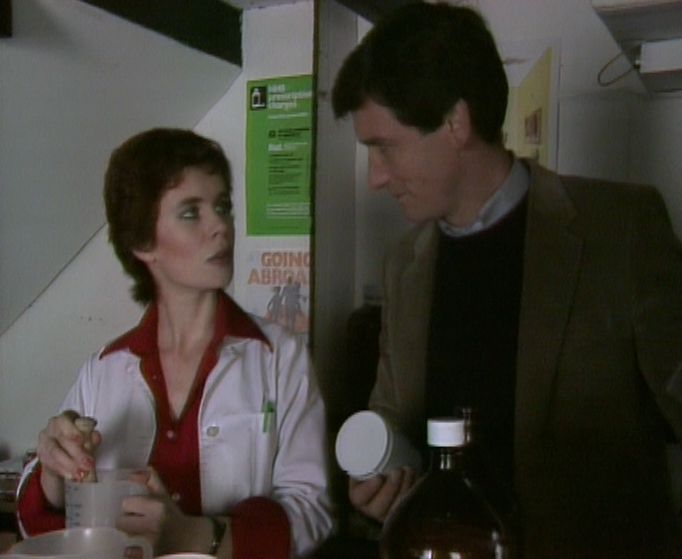
Jean Trend (a familiar face from the likes of Emergency Ward 10 and Doomwatch) gives a good performance as Julie Oxley.  Mrs Oxley’s histrionics are impressive, but they cut no ice with the suspicious Cork.  Another actor who’s instantly recognisable is Peter Halliday as Dr Cato.  Halliday didn’t often use a Welsh accent (despite being Welsh-born) so The Case of the Reluctant Widow is something of a rarity.

With a final surprising revelation, this is a very decent opening episode.  It’s a pity that the existing telerecording (like most of the series one episodes) is rather hacked about (the adcaps have been very clumsily edited out) but that’s only a minor niggle.

The Nightmare Man – Episode Four

nightmare 04

The military arrive in force as Colonel Howard prepares to lead them in a expedition to recover a valuable piece of hardware.  Howard is remarkably blase as he informs Inskip that he’s invoked martial law and is therefore now in complete control of the island.

As the soldiers make their landing, Michael is still musing over the identity of the killer and the reason why he’s being hunted by the army.  “They lost contact with that craft and it ran aground here. Probably a power failure. Because what got out of it was no longer a man. Radioactive. Its mind in splinters.”

Douglas Camfield had been a Lieutenant in the West Yorkshire regiment, but due to health issues he was forced to leave in 1956.  His love of the military never left him though and can clearly be seen in some of his best directorial efforts.

The Web of Fear, The Invasion and Terror of the Zygons were three classic Camfield-directed Doctor Who‘s which all had a strong military angle.  And in some ways the last episode of The Nightmare Man resembles Zygons – the incongruous juxtaposition of the army and a small Scottish village, for example.

The revelation of the killer’s identity seems to be one of the main reasons why The Nightmare Man is viewed as a disappointment.  After three episodes of teasing the audience with various possibilities, the somewhat prosaic reality can’t help but feel like a letdown.  Especially as when we see him in the cold light of day he’s not a terrifying sight – although that may have been intentional (let’s be generous and give the production the benefit of the doubt).

Another slight disappointment is the way that Inskip fades away once Howard takes control.  But the fact that Howard isn’t all he appears to be is a decent twist, although the audience should have twigged this early on (after he tells Michael and Fiona that he has a great admiration for their police).

Positives. Maurice Roëves as Inskip and James Cosmo as his laconic sidekick Sergeant Carch. The slowly increasing sense of dread and fear as the attacks continue.

Negatives. Not every question is answered – for example we’re never told why the killer became cannibalistic or how he had super-human strength.  And if the killer looks rather unimpressive in the cold light of day, then that goes double for his craft. We’re expected to believe that it could travel thousands of miles in the water?  Sadly it looks like the filmiest, most unconvincing prop ever.

There’s no doubt that the dream-team combination of Holmes and Camfield would have been enough to interest many Doctor Who fans, but The Nightmare Man doesn’t really show either at their best.  The script is workmanlike (not having read the original novel I can’t say whether Holmes added many of his own touches).  His trademark humour isn’t really in evidence, although Carch gets some decent lines.  Camfield seems to perk up when the army arrive, but otherwise there’s few of the flourishes and innovative camera-angles for which he was known.

But whilst The Nightmare Man ends with a whimper rather than a bang, it still has its moments.   Not a classic, but there are worse ways to spend a few hours.

The Nightmare Man – Episode Three

nightmare 03

The Nightmare Man was Jeff Stewart’s first television role.  A few years later he was cast as Reg Hollis in The Bill and would remain with the series for an impressive twenty four years.  It’s strange to hear him speak with a Scottish accent, although since he was born in Aberdeen I assume it’s his natural one (he’s not tended to play many Scots during his career).

Stewart plays Drummond, one of three coastguards who all work in a very isolated spot.  There’s a clear vibe that they’re going to be the next victims, although it’s surprising how it takes before the unseen attacker strikes again.

This isn’t a bad thing though, as it means that Camfield’s able to gently rack up the tension as the episode progresses.  The policeman guarding the mysterious craft hears a noise (but it only turns out to be Dr Goudry), the coastguards detect something outside which triggers their radiation meter (but it slips away quickly), etc.  These little moments help to create a faint sense of unease – we know that there will be another murder, we don’t know when.  Although if you’d said just before the end of the episode, in order to create a nice cliffhanger, you wouldn’t be far off the mark!

Colonel Howard continues to move about the island, offering his help to the police (which is declined) and generally acting in a somewhat smug manner.  So it comes as no surprise when he receives a coded phone-call which confirms he’s deeply implicated in this mysterious business .

CALLER: Mother asked me to call.
HOWARD: Mother knows best. How is her chicken?
CALLER: Still free-range, I’m afraid.
HOWARD: Then forget the chicken. I’ve arranged for the egg collection. Can you close the coop?

Top marks to Jonathan Newth for keeping a straight face during that exchange of dialogue.

It seems probable that they’re both part of a military operation (who else would use so many convoluted code-words?) but we’ll have to wait until episode four to find out.

Fiona has developed the film from Dr Symond’s camera.  It was running at the time he was attacked and offers several snapshots of the killer.  Luckily, he was also recording his thoughts onto tape at the same time – so Fiona and Michael are able to organise a macabre film show for Inspector Inskip, Sgt Carch and Dr Goudry.  It’s a disturbing scene, as though we see very little (the pictures are quite blurred) the sounds the killer makes are enough to create a whole host of disturbing mental images.  There’s only one more episode to go before we find out if the reality will measure up.

With just a couple of minutes left, it must be time for another murder.  We cross back to the coastguard station, where one of Drummond’s colleagues elects to go outside by himself.  Has the man never watched any horror moves?!  It’s clear that he’s going to meet a very nasty end – which he does – and Drummond’s other colleague quickly succumbs to the implacable killer as well.

This leaves Drummond as the last man standing and so the episode ends on a close-up of Jeff Stewart’s face.  It’s quite a responsibility to carry a cliffhanger, therefore let’s be generous and remember that this was his first television job.  He does his best to pull a shocked face, but it doesn’t really convince.  Although his colleagues have both been killed he doesn’t really project a sense of dread or terror – more a sort of mild perplexity.  It’s slightly surprising that Douglas Camfield didn’t elect to try another take, but even allowing for Stewart’s lack of emotion it’s a jolting ending.

The Nightmare Man – Episode Two

nightmare 02

James Warwick was pretty ubiquitous on British television during the early 1980’s. By the time The Nightmare Man was broadcast he’d already appeared in several one-off Agatha Christie adaptations (Why Didn’t They Ask Evans?/The Seven Dials Mystery) and a few years later would star alongside Francesca Annis in Partners In Crime, also adapted from Christie’s books.  His earnest, square-jawed persona fitted the works of Agatha Christie like a glove and he plays Michael Gaffikin in a similar way.  His performance isn’t quite as good a match here though – at times it feels rather artificial (although it’s not as bad as his very wooden turn the following year in the Doctor Who story Earthshock).

The mysterious creature spends the early part of the episode lurking about (and killing the odd sheep).  Michael surmises that it could be the result of genetic experimentation whilst Inskip wonders why the woman killed in episode one (identified as Mrs Anderson) was dismembered and then taken miles away from spot where she was murdered.

Picture quality for the exteriors is pretty poor – due to the heavy mist (it does help to give the location work an unearthly atmosphere though).  But it’s difficult not to wonder just how more impressive it would have looked on film.

Because the police-force on the island is so small (limited to four of five officers) it’s reasonable that Inskip would ask for Michael and Fiona’s help.  Michael, having originally wondered if the creature came from the sea, now has another theory – that it’s extraterrestrial in origin.  Roëves continues to have many of the best lines as Inskip counters that “a straightforward homicidal maniac with bad teeth running amok is good enough for me.”

But when they find Dr Symonds’ body, Inskip is forced to admit that nothing human could have been responsible. Although it’s hard to see why, as Symonds’ body is intact (unlike the mutilated Mrs Anderson) with only a minimal amount of blood.  No doubt this is due to what was deemed permissible in a pre-watershed programme (a violently attacked body clearly wouldn’t have been). Camfield could have elected to play the scene just on the reactions of Inskip and the others, but since we’ve previously met Symonds, his death has more of an impact if we can see his face.

If the cliffhanger is a little of a damp squib, it does at least up the ante a little more.  Another death and still the mysteries deepen.  There’s a mysterious craft on the shoreline, traces of radiation and the possibility that somebody parachuted onto the island the previous night.  And it seems that the charming Colonel Howard is more than just an innocent visitor ….

The Nightmare Man – Episode One

nightmare 01

The Nightmare Man was adapted by Robert Holmes (from the novel by David Wiltshire) and directed by Douglas Camfield.  Since Holmes and Camfield were both experienced Doctor Who hands it’s tempting to view this as almost a Doctor Who story by proxy.  Holmes had a love of classic horror tales, so there’s no doubt that Wiltshire’s story of a series of mysterious deaths on a remote Scottish island would have right up his street.  Whilst there’s little blood or gore it does feel a touch more adult than his Doctor Who‘s, something which probably would have appealed to Holmes (he was always a writer who pushed against the boundaries – as Mary Whitehouse would attest to).

It’s slightly surprising that it’s shot on VT rather than film, especially since Camfield was a master with a film camera.  Presumably this was budget-related, as there’s only a handful of video effects.

Within the first few minutes we’ve met the main players.  Fiona Patterson (Ceila Imrie, sporting an impressive Scottish accent) runs the local shop whilst Michael Gaffikin (James Warwick) is an English dentist, in love with both the island and Fiona. Both run into a visitor, Colonel Howard (Jonathan Newth), who tells them that he’s planning to spend a few days exploring, whilst we also bump into Inspector Inskipp (Maurice Roëves).

But whilst all this seems normal enough, there’s something on the island which is far from normal.  This strange entity is shot from their POV and instantly creates an unsettling atmosphere.  When Michael finds a body on the golf course it appears the mysterious creature has claimed its first victim.  Inskipp is matter of fact about this grisly discovery.  “Aye, I do mean a body. We haven’t found all the pieces yet.”  During the episode we’re drip-fed more facts about the murder and nothing we hear sounds very comforting.  The body wasn’t dismembered with a knife – it was literally torn apart.

Camfield always cast his shows incredibly well and The Nightmare Man is no exception.  Maurice Roëves makes an immediate impression as Inskipp and does something with what could be a cliche role – the tough copper.  Although Camfield had a reputation for using a “rep” of actors it’s not really in evidence here, although Tony Sibbald (playing Dr Symonds) had appeared in his 1975 Doctor Who story Terror of the Zygons.

This does everything that an opening episode should.  It sets up the mystery efficiently and finishes on a strong cliff-hanger (Dr Symonds attacked by the mysterious creature).  Will the serial keep this quality up or will it end in an anti-climax?  Time will tell.

An Englishman’s Castle – Part Three

castle 03

Henry is dead – he was shot three times and a sign saying “delator” was hung around his neck.  With one of Peter’s sons now dead there’s a sense that his real life is turning into a soap operaOne example of this is when Peter’s wife is told of her son’s death.  She tells her husband that she won’t cry – instead she’ll behave as bravely as Peter’s fictional family.

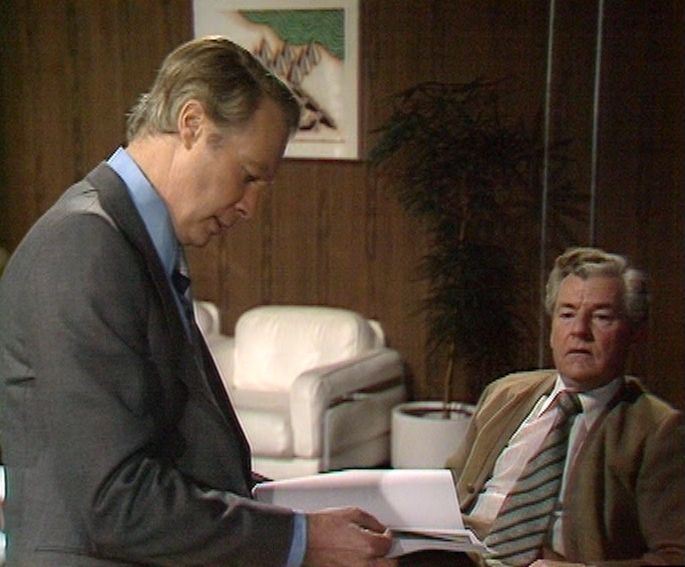
Peter finds himself the prime suspect for Henry’s murder and is taken away by the special police for questioning.  The Inspector (Philip Bond) is initially affable, telling Peter it’s nothing more than an informal chat, but the mood darkens very quickly.  Kenneth More and Philip Bond share an excellent two-handed scene – like the rest of the serial it’s incredibly powerful, but very understated.

The Inspector occupies a room that’s virtually bare, and there’s never even the threat of violence, but he’s still able to inexorably pressurise Peter.  So Peter is forced to reveal that Henry told Harmer he was an informer – which gets Peter off the hook but spells trouble for Harmer.

As events get darker and darker, Kenneth More remains the solid centre of the story.  Now promoted to programme controller, Peter has the ultimate responsibility for initiating the revolution – a code-word inserted into the next episode of his soap opera will be the call to arms.

Philip Mackie’s three scripts are taut, with little or no padding.  It’s easy to imagine that the serial could have been developed into a series, as in one way we’ve only begun to scratch the surface of this world.  It would have been fascinating to see Peter’s soap-opera, which at times offers a meta-textual commentary on real-world events, expanded over more episodes.

Anybody looking for big-budget action scenes will be disappointed.  The revolution does begin in the last few minutes of this episode, but it happens off-screen (via sound effects).  The fates of some characters, including Peter, are clear at the end – but with others it’s left to the viewer’s own imagination to decide what may have happened to them.  It’s also notable that certain people’s motivations are very much open to interpretation – Harmer is a prime example.  In the first two episodes he was portrayed firmly as a man in sympathy with the German establishment, but in the final episode we’re asked to consider him in a different light.  Nothing is ever proven either way, so we’re not spoon-fed “facts” – the viewer is invited to weigh up the evidence and decide.

It’s a downbeat ending, but there’s also a possible glimmer of hope.  We’re left not knowing whether the revolution will succeed or fail, but whatever happens we’ve seen characters who have been personally redeemed, Peter amongst them.

At times this feels like a stage play (not a criticism, by the way).  People die off-screen, for example,  and other events are described but not seen.  Some may find this frustrating, but this style of storytelling ensures that the focus remains inexorably on the characters,  which is a major plus point when the cast is so strong.

This is first-rate drama and comes highly recommended.  Heading a very strong cast are Kenneth More, Isla Blair and Anthony Bate, all of whom dominate the screen.  Simply Media should be applauded for continuing to dip into the BBC archives and for anybody who enjoys classic British television, An Englishman’s Castle should be on your to-watch list.

An Englishman’s Castle – Part Two

castle 02

Part two opens with another excellent two-handed scene between Kenneth More and Anthony Bate.  Peter has come to tell Harmer whether he’s decided to change the name of Rosenthal to something less Jewish-sounding.  Harmer pretends to have completely forgotten about this request, but we’ve seen enough of him to know that he forgets nothing.  To Harmer’s undisguised annoyance, Peter is insistent that the name must remain and when pressed for a reason he states that he wants to send a message of hope and friendship to the Jews watching.

Harmer is incredulous and tells him that there aren’t any Jews watching the programme.  Those that are alive are in places where there aren’t any television sets.  With a series like An Englishman’s Castle, which is completely dialogue driven, it’s throwaway moments like this which help to paint a fuller picture of their alternative world.  In part one it was mentioned that there were still labour camps for some Jews (although most had already perished in the gas chambers) so the number who still exist in Britain must be small.  We know of at least one, Jill, so it could be that there are others.

Although Peter doesn’t back down, Harmer gets many of the most telling lines, especially when Peter tells him that he simply wants to show the public that the Jews are like them.  But, as Harmer responds, they aren’t.  “We are wealthy and comfortable and alive.”

In part one it was mentioned that Peter’s soap opera is drawn directly from his own wartime memories.  This theme is now developed further as one of the two sons – Frank – is set to be killed off.  The actor playing Frank is highly dismayed when he receives the latest script and learns that he perishes at the hands of the Germans.  In a scene that no doubt has echos with many real-life soap operas, when the actor realises that he’s not coming back next week his mood quickly darkens.  He protests that he’s been with the series since the beginning and is one of the most popular characters, but all to no avail.

Peter explains that the two sons in the show – Frank and Bert – are both based on him.  Frank is his romantic side and Bert is his realistic side.  When the Germans invaded in 1940, Peter’s romantic side died, so Frank has to die as well.  Since then Peter’s lived as a realist, as he’s seen no other way, but events are now changing.

Peter has two sons in the real world as well.  Henry (David Meyer) works on the show with Peter whilst Mark (Nigel Havers) despises his father and everything he stands for.  Mark appeared briefly in part one, where he denounced his father’s politics vigorously, and in part two he’s arrested by the police on suspicion of being a terrorist.  Havers performance isn’t particularly subtle (Mark’s manic radicalism seems rather overblown) but there may be a reason for this (he’s a radical, but not a member of the true underground resistance).

When Peter returns home, he finds Mark in the custody of the polite, but clearly ddangerous, Inspector (Philip Bond).  It’s probably the fact that he’s so very reasonable which is the most unsettling thing about Bond’s Inspector.  He’s not brutal or brusque, Bond gives the Inspector a casual air as if he’s just taking Mark away for a few simple questions.  The reality – as even Peter knows – is quite different.  Mark will be tortured and die, unless Peter can pull some strings.

The only man who has the influence to save Peter is Harmer, and this leads us to another absorbing scene with More and Bate.  Harmer is enjoying a candlelit dinner with his social secretary Anja (Suzanne Roquette) but once he learns of Mark’s plight he’s keen to help.  He rushes off to the phone, leaving Peter to talk to Anja – the only problem is that Anja only speaks German and Peter knows only a few words (surprisingly so, you’d have assumed everybody would have learnt the language by now).

Harmer tells the police that he doesn’t care whether Mark’s innocent or guilty, he just wants him released – which he is.  It’s another fascinating part of the story – both for the way that a television executive like Harmer is able to intercede in police matters and also for the casual confirmation that the evidence planted on Mark was faked.

Peter had come to Harmer ready to offer a quid pro quo – if Harmer can get Mark released then he’ll agree to change Rosenthal’s name to something less provocative.  It’s interesting that Harmer only learns of Peter’s decision after he’s made the call, but as ever with Harmer, he wasn’t acting out of friendship (he’s well aware just how important Peter’s programme is to the government and he’ll do anything he can to ensure his star writer is kept happy).

Peter later muses with Jill about whether Harmer orchestrated the whole thing – arranged to have Mark arrested in order to force him to back down over Rosenthal’s name.  It’s an intriguing thought – which turns out not to be true – but somebody is manipulating Peter.

It turns out to be Jill, who’s a member of the underground movement dedicated to the overthrow of the government.  She’s dismissive of the actions of people like Mark, who it’s implied are simply playing at being resistance fighters.  They throw a few bombs around and hit the headlines, but the real struggle is done deep underground – by people like her.

Peter’s realisation that Jill only became his mistress in order to recruit him is nicely played by More.  He agrees to join, but it’s not clear why.  Is it because he agrees with the aims of the organisation or is it just out of his love for her?  One thing that concerns him is her insistence that anyone who is suspected of being a delator (informer) has to be killed.  Peter might have fought in the war, but that was a long time ago.

We end this episode, as we began, with a two-handed scene between More and Bate set in Harmer’s office.  It’s another few moments which zing with tension as Harmer tells Peter that his son Henry has been promoted to director.  This is good news, but the ominous way in which Harmer goes to say just how loyal Henry is to the state indicates trouble ahead.  It was Henry who informed on his brother and this leaves Peter with some impossible decisions to make.


An Englishman’s Castle – Part One

castle 01-01

The 1970’s were a fertile time for British television dramas which portrayed the country toiling under totalitarian dictatorships.  Apart from An Englishman’s Castle, broadcast in 1978, there was also The Guardians (LWT 1971) and 1990 (BBC 1977).  It’s probably not too hard to understand the reason why – strikes, power cuts, the three-day week, inflation running at 30% and a humiliating bail-out by the IMF had all conspired to dent the nation’s pride.

In some ways, the 1970’s was the decade of paranoia.  Rumours of impending right-wing coups and mutterings that MI5 were planning to oust Harold Wilson and his government abounded.  So it’s no surprise to find several television dramas had tapped into this mood to produce nightmarish visions about what might happen.

But whilst The Guardians was set in the aftermath of a coup and 1990 was set a decade or so in the future, An Englishman’s Castle takes a different tack.  In this serial, the Germans won WW2 and Britain has been a subjugated nation ever since.  Coincidentally, Len Deighton’s novel SS-GB had the same basic premise of a Nazi-subjugated Britain and was published a few months after An Englishman’s Castle was broadcast.

Casting Kenneth More in the central role was a conscious statement of intent.  More had built a career playing a certain type of Englishman (exemplified by classic war films such as Reach for the Sky).  Following the gradual decline of the British film industry More moved into television (The Forsythe Saga, Father Brown) but he still tended to play upright, decent characters.  Peter Ingram also seems to be a decent man – but as the serial opens we see that he’s totally reconciled to living under German rule.  Is he simply being rational or has he been living a lie all these years?  That’s one thing that we’ll discover over the following three episodes.

An Englishman’s Castle is the name of Peter Ingram’s popular soap opera.  Set in 1940, just prior to the German invasion, it’s the story of an everyday British family.  Not only is it a success in Britain, it’s also sold all over Europe (or as Ingram says, “all over German Europe”).  Programme controller Harmer (Anthony Bate) is intrigued as to how Ingram will present the invasion.  Ingram tells him that “I can’t rewrite history. I mean, the Germans invaded us, and we got beaten.”  Harmer’s response strikes the first discordant note. “I look back on it now as a victory. A victory for common sense, and decency, and humanity. The triumph of peace-loving people everywhere.”

Jill (Isla Blair) plays Sally in the show.  She’s young, beautiful and Peter desperately wants to take her to bed.  Jill’s also interested in Peter, but has a mocking and questioning nature which indicates that nothing’s going to happen straightaway.  To begin with, she’s more interested in finding out about the young Peter and what happened to him in 1940.

JILL: Were you in the resistance?
PETER: Yes, of course.
JILL: And then?
PETER: And then there was Black Friday, the day that Churchill was killed.
JILL: And then?
PETER: A lot of us were killed.
JILL: One way or another.
PETER: The survivors took to the hills, and lived like ancient Britons. Had a bad time of it. Then they proclaimed a general amnesty. And I suppose we were getting older and more peace loving and we wanted to see our wives again, our girlfriends … so we came down from the hills and handed over our weapons, or at least most of us did.
JILL: You?
PETER: I couldn’t see that we would ever win.
JILL: No .
PETER: What was the point of it all? What was the use?

It’s notable that we never see any Germans and there’s no outward signs that Britain is an occupied country. All the dialogue strongly indicates that following the invasion, the British were left to govern themselves (but with the ultimate decision-making taking place in Germany). Peter has come to accept this as normal – they might be a subjugated race, but when the authorities are British it’s easy to forget this (or at least push it to the back of your mind).

When the restaurant that Peter and Jill are eating in is attacked by resistance terrorists, Jill is convinced that the terrorists will be taken away and tortured.  Peter doesn’t believe that the British police would do such a thing (“they have a long tradition of not doing things like that”).  “Had a long tradition” counters Jill.  This clearly indicates that they think in totally different ways.  It’s partly an age thing (Peter is much older) but there are other reasons why Jill is much more suspicious, as we’ll discover later.

The scenes we see of Peter’s soap opera are particularly instructive.  He hasn’t been told to write propaganda, but that’s what he seems to have done anyway.  Jill later puts this point to him very clearly.  Although it’s set in 1940, it reflects contemporary attitudes and seems to have been designed (either consciously or unconsciously) to keep the masses docile.  “What they’re saying is now. Be sensible, make peace. We don’t want to die. Nobody does. Survival, that’s all that matters. In every programme you have this keynote speech, your message for now, and your viewers think ‘he’s right, you know’, telling us we’re right. We’re right to go on as we are. Not making any fuss, obeying orders. Just content to work hard, fall in love, have children, give them a good start in life, and retire on a pension when we’re old. Eh lad, it’s not a bad life under the Germans, is it?”

It should go without saying that More is excellent here, but he’s matched step-for-step by Blair.  Another top-notch performance comes from Anthony Bate as Harmer, who is insistent that he doesn’t want to censor Peter’s script, just edit it.  Bate is at his most chilling when Harmer tells Peter that it’s impossible for him to introduce a character called Rosenthal.  The Jewish problem (courtesy of the gas chambers) was dealt with a long time ago, but there’s no way that a sympathetic Jewish character could appear on British television.

This is not a request from the Germans – Harmer is simply anticipating their concerns.  He dangles the possibility that by aggravating them over such a trivial matter they run the risk of inviting German interference in every aspect of their broadcasts.  Is this another example of the subjugated British being more rabid than the Germans would be?  In the first sign of stubbornness from Peter, he refuses to change the name straightaway and asks if he can sleep on it.  Harmer doesn’t spell out what will happen if he doesn’t, but then he doesn’t need to – by now it should be pretty clear.

When Jill reveals that she’s Jewish, Peter’s squabble with Harmer pales into insignificance.  If it’s discovered that she’s Jewish and that Peter’s slept with her then under the racial purity laws they’ll both face death.  An excellent hook to end part one with.
castle 01-02

Gideon’s Way – Fall High, Fall Hard

fall

Tony Erickson (Donald Houston) and Charles Randle (Victor Maddern) are co-owners of a building company who are facing a potentially damaging court case.  Randle has fought his way up from nothing and has no qualms about using every underhand trick in the book to achieve his ends.  His street-fighting ways are confirmed by Thompson (Gordon Gostelow), one of Randle’s more unsavoury contacts.  “You’re very thin-skinned these days, Charlie boy. A proper little social climber. Underneath that fancy suit you’re still an East End slum kid, like me.”

On Randle’s instructions, Thompson bribes Smith (Michael Robbins) to perjure himself on oath and thanks to his testimony the case is decided in Erickson/Randle’s favour.  When Erickson learns of Randle’s corrupt practices he’s appalled, but what can he do?

Donald Houston was never the most subtle of actors and this is demonstrated very clearly in Fall High, Fall Hard.  When he learns that Smith (and others) have been paid off, he reacts like a bull in a china shop.  He rushes into Randle’s office and proceeds to give him a good battering and then storms out to get very drunk.  His drunk acting is hardly a model of restraint either – although the moment when he returns to his palatial home and crashes into his teenage son’s birthday party (to the boy’s disgust and his friends’ amusement) is a memorable one.

Whilst Houston’s unrestrained hysterics are a little distracting there’s plenty of compensation elsewhere.  Victor Maddern is, thankfully, much calmer as Randle – he’s someone who views corruption as nothing more than normal business practice.  Gordon Gostelow (along with a young Mike Pratt as Jenson) are a menacing double-act who successfully bribe Smith with both money and threats (water from a boiling kettle is poured over his hand to reinforce the point that he’d be well advised to take the money and keep quiet).  And Michael Robbins, as Smith, is perfectly cast as a little man easily manipulated.

Making his second appearance as Det. Sgt. Carmichael is Donald Houston’s younger brother Glyn.  Unlike Donald, Glyn never felt the need to soar way over the top and gives a characterically subtle performance.

This was Malcolm Hulke’s sole contribution to the series.  Hulke’s later Doctor Who scripts were notable for their political messages, so it’s interesting to ponder whether he added any subtexts to his Gideon script.  Although he was adapting an existing Creasy story, it seems likely that the concept of corrupt big-businesses would have been something that the left-leaning Hulke would have been very much in sympathy with.

Donald Houston’s overplaying does detract from the effectiveness of the story a little, but it’s still a decent tale of corruption and murder.