Designated Survivor – The Complete Second Season (eOne DVD Review)

des dvd.jpg

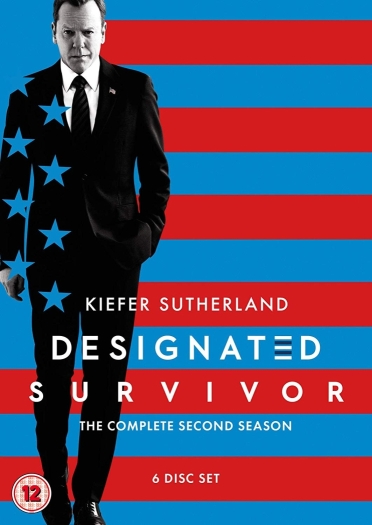
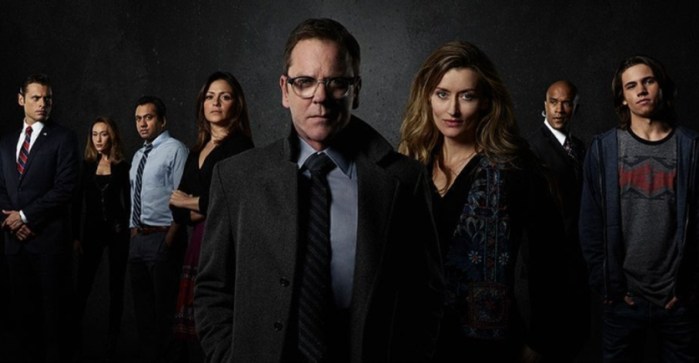
I loved 24 and I loved The West Wing, so what could be better than a series which mashes up the two? ABC seemed to agree, as they ordered an initial run of thirteen episodes (later expanded to twenty one) for the first season of Designated Survivor without going down the pilot route.

Partly this was due to the draw of Kiefer Sutherland.  As Thomas Kirkman, a lowly American politician suddenly thrust into the role of President after everyone else in the line of succession is murdered in a brutal terrorist attack, he’s a suitably solid anchor around which the rest of the characters revolve. As the second season opens, Kirkman is celebrating one year in the White House, but as might be expected things are far from plain sailing.  The hunt for Patrick Lloyd (Terry Serpico), the man responsible for the attack, continues whilst Kirkman finds himself juggling a host of other problems, both domestic and foreign.

As the role of Tom Kirkman is somewhat removed from that of Jack Bauer, other (younger) faces are to be found in the field.  Rather improbably, Hannah Wells (Maggie Q) appears to be the sole FBI agent on Lloyd’s tail. You’d have assumed that the FBI might have been able to run to supplying a few more bodies on the ground ….

No matter, as in the debut episode of season two (One Year In) Hannah teams up with  Damian Rennett (Ben Lawson), an MI6 agent who also has an interest in Lloyd. Exactly how Rennett is able to operate so freely on American soil is a mystery which remains unanswered (it’s also slightly mysterious that they cast an Australian actor in the role).  You may not be surprised to learn that the initial wariness which exists between the pair gradually softens as they find themselves thrust together in one hair-raising escapade after another.

Coming back to the point of fake accents, since the British actress Natascha McElhone adopted an American accent to play Kirkman’s wife, Alex, I daresay everything balanced out over time.  A regular during season one,  McElhone elected to jump ship during season two to join The First, which was the perfect excuse to create a dramatic exit for her.

Most of the cast from season one carried over to this run, but there were a few new additions such as Paulo Costanzo, who plays Lyor Boone, the White House’s Political Director. A deeply skilled political operative, albeit one with few interpersonal skills, he adds a touch of colour and humour to the occasionally dour West Wing scenes.

Designated Survivor has something of a problem hanging onto showrunners. Amy Harris was replaced by Jon Harmon Feldman before production began on the first season whilst Jeff Melvoin took over from Feldman about halfway through the debut season. There was more stability during this second run, as Keith Eisner remained in place throughout, but his decision to not to remain for the proposed third year was one of the reasons why ABC pulled the plug following the season two cliffhanger. A drop off in ratings also didn’t help, but healthy foreign sales helps to explain why Netflix decided to pick it up for a ten episode S3.

There are certainly many things to love about the series, even if at times it rather falls uneasily between two stools. It lacks the highly crafted political nuances of Sorkin-era West Wing and it doesn’t fully convince as a high-octane thriller like 24.  But across the 22 episodes of this second season there are enough strong episodes to suggest that – with some tweaks – the formula could be perfected.  Time will tell whether the Netflix pick up will be the start of a new lease of life for the series.

Designated Survivor – The Complete Second Season is released on DVD by eOne on the 1st of October 2018.
des surv

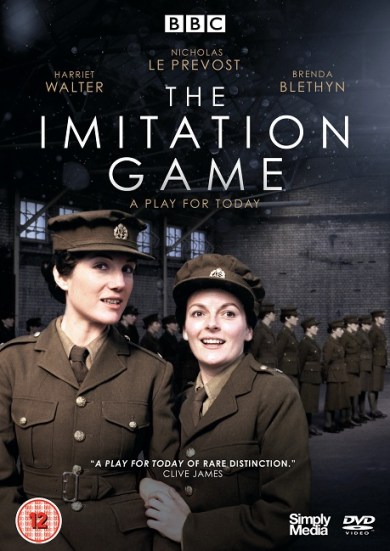
Play For Today – The Imitation Game. Simply Media DVD Review

imitation

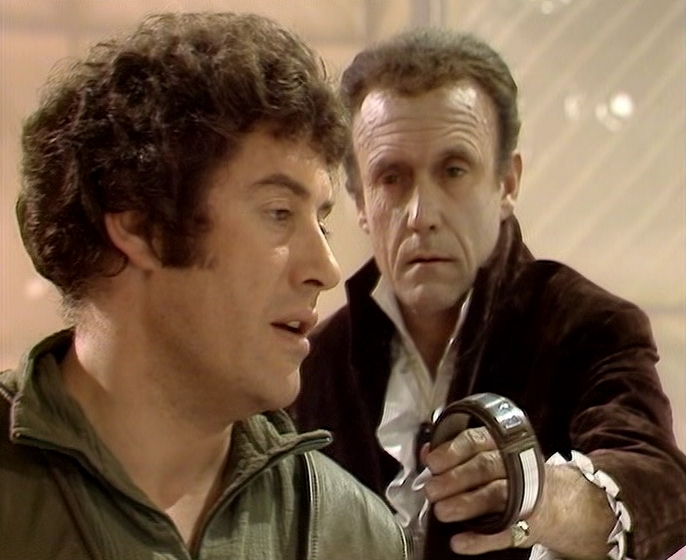
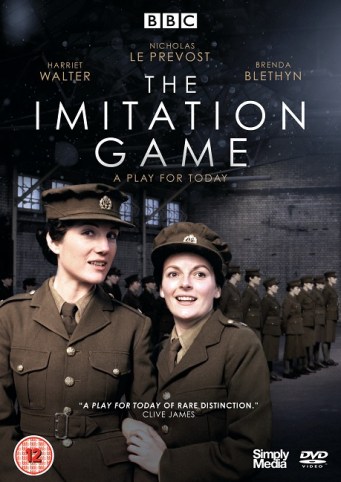
The year is 1940. Having previously worked at a wireless listening station dealing with coded Enigma transmissions, Cathy Raine (Harriet Walter) arrives at Bletchley Park – the home of the Enigma machine and the nerve centre of Britain’s code-breaking efforts.

Disappointingly, she finds her duties are very mundane – making coffee and cleaning – but there are compensations. She becomes friendly with a Cambridge mathematics don called John Turner (Nicholas Le Prevost) and the pair go to bed.  But their love-making ends badly with Turner blaming Cathy for the debacle.  Shortly afterwards, Cathy is discovered in Turner’s room reading top secret documents and this act leads to her imprisonment ….

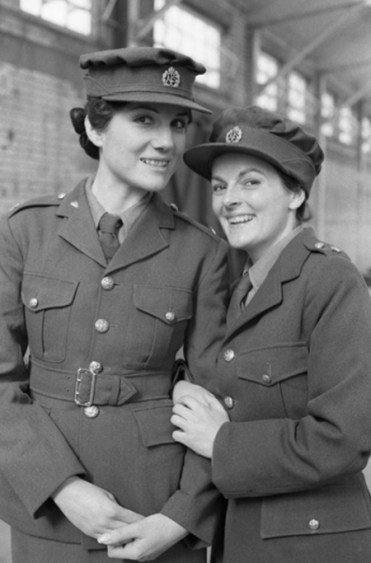
Originally broadcast on the 24th of April 1980, there’s a very modern feel to this Play for Today. Cathy is determined to break free from her stifling home life and domineering father (Bernard Gallagher).  Most girls have “done their bit” by going to work in the local munitions factory, but Cathy has set her sights a little higher and so joins the ATS.

During her initial training she befriends Mary (Brenda Blethyn – making her television debut) and the pair become close.  That they and the other ATS girls are encroaching into male territory is demonstrated after the pair dare to pop down to the local pub by themselves for a drink. This invasion of a male dominated province doesn’t go down well and the landlord’s attempt to move them on ends in an ugly scuffle.  Following a severe reprimand she’s moved to Bletchley Park – an ignominious reason for her transfer.

IM.jpg

If Cathy was – apart from Mary – isolated before, then this feeling only increases when she takes up her duties at Bletchley.  So it’s possibly not surprising that she responds so eagerly to the handful of kind words flung her way by Turner.  Based loosely on Alan Turning, Turner is unable to perform when the pair go to bed and he quickly decides that she’s the guilty party.  “You wanted to humiliate me and you’ve succeeded. You hated your own job and you’re jealous of me for mine”.

Ian McEwan had originally wanted to write a play about Alan Turing and the Enigma machine but found information on both was rather scarce, so instead he turned his attention to life at Bletchley Park. Despite the fact that women formed around 75% of the workforce, he learnt that they were very underrepresented in key positions (although research undertaken during the last few decades has somewhat revised this viewpoint).

Cathy’s downfall begins at the listening station after she becomes frustrated that she doesn’t understand why the coded messages she’s working on are important. “All of the women know nothing, some of the men know everything”.  Although it’s easy in one way to understand her point of view, does she “need to know” in order to do her job? She doesn’t, but it’s her desire to see the bigger picture which eventually leads her to Turner’s Enigma notes.

The Imitation Game was only Harriet Walter’s second television credit, but she belied this lack of screen experience with a beautifully judged performance (Cathy’s closing monologue is a particular highlight).  A fair few familiar faces make appearances, some more fleeting than others. Patricia Routledge is perfectly cast as a hearty ATS officer whilst Geoffrey Chater, always at home when tackling authority figures, plays to type as the interrogating Colonel.

Bernard Gallagher is terrifically unbending as a martinet father who clearly wouldn’t be averse to a German invasion (at one point Cathy ironically suggests he should put on his black shirt). Simon Chandler is also very good value as the supremely irritating Tony, Cathy’s long-term boyfriend, who’s more than a little put out to learn that she’s decided to join the army (regarding the ATS as something of a den of iniquity).

Running for 92 minutes, The Imitation Game was one of a number of interesting Play For Today‘s directed by Richard Eyre during the late seventies and early eighties (hopefully over time they might all make it onto DVD). Thanks to Harriet Walter’s vulnerable but steely performance as Cathy (along with the strong supporting cast) this is an absorbing play.

The Imitation Game is released by Simply Media on the 1st of October 2018, RRP £9.99. It can be ordered directly from Simply here.

Play of the Week – Our Day Out. Simply Media DVD Review.

day out

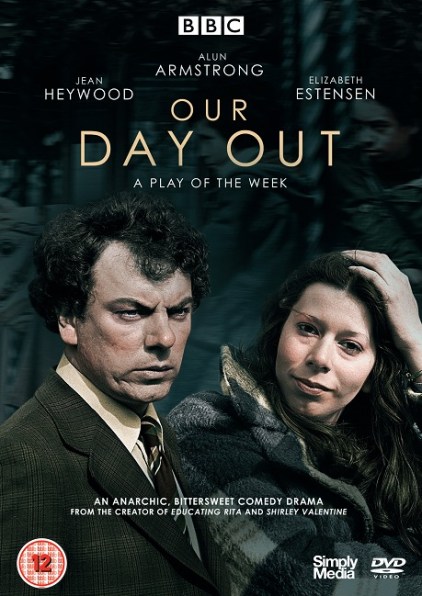
Mrs Kay (Jean Haywood) runs a remedial class for illiterate children.  Along with the long-suffering Mr Briggs (Alun Armstrong) and two younger teachers – Susan (Elizabeth Estensen) and Colin (Lennox Greaves) – she escorts her unruly mob on a day trip from Liverpool to Conwy Castle in North Wales.  For Mr Briggs, it’s a day of considerable stress ….

Drawing on his own experiences of school trips (both as a teacher and a child) Our Day Out is a typically perceptive slice of drama from Willy Russell. Originally broadcast in December 1977 as part of the Play of the Week strand, it obviously struck an immediate chord with the audience as it was swiftly repeated just a few months later (this time as a Play For Today).

Although he wrote the play in just four days, it was a subject he’d been mulling over for some considerable time. Later turned into a musical, the original BBC play is one which Russell still regards with fondness today.  “The performances are exquisite. Shot on 16mm in just three weeks by a first time director working with a largely untrained cast it just seemed to be one of those charmed ventures in which everything just fell into place”.

Mrs Kay and Mr Briggs are two very different types of teacher – she’s the free and easy type whilst he’s stern and controlling. Which method works best? Mr Briggs maintains that you need discipline in order to make any headway in teaching these types of children but Mrs Kay – in a late set-piece monologue – is totally dismissive of this attitude.  Society at large, she maintains, doesn’t want them schooled – after all, if they were then where would the next generation of factory fodder come from?

o4.jpg

This is the most overtly political point in a play where the thorny topic of inner-city deprivation is never far from the surface. The difference between the streets of Liverpool (shown here in all their grimy 1970’s glory) and the countryside of Wales is marked, especially since it’s made plain than most of the children have never gone further than Birkenhead before. There’s a yearning melancholy on display from some of them which is heartbreaking – they want a better life, but there’s a sense that the system just won’t allow it.

The gulf in acting experience between the adult cast and the children is one of the most intriguing things about Our Day Out.  None of the children had acted before (and most wouldn’t again) which gives their performances a very natural and unaffected air.  To balance this, you have experienced actors such as Jean Haywood and Alun Armstrong in the central roles as well as decent cameos from the likes of George Malpas, Robert Gillespie and Peter Tilbury.

En route to the castle, they stop off twice – first at a motorway cafe and then at a zoo.  It does beggar belief that both times Mr Briggs would let them roam unsupervised – with the result that they pilfer all the sweets from the cafe and later attempt to steal half the zoo! This latter moment is high on comic value but low on credibility.  However it allows Armstrong (who is excellent throughout) a moment of high intensity as he roundly berates the children.

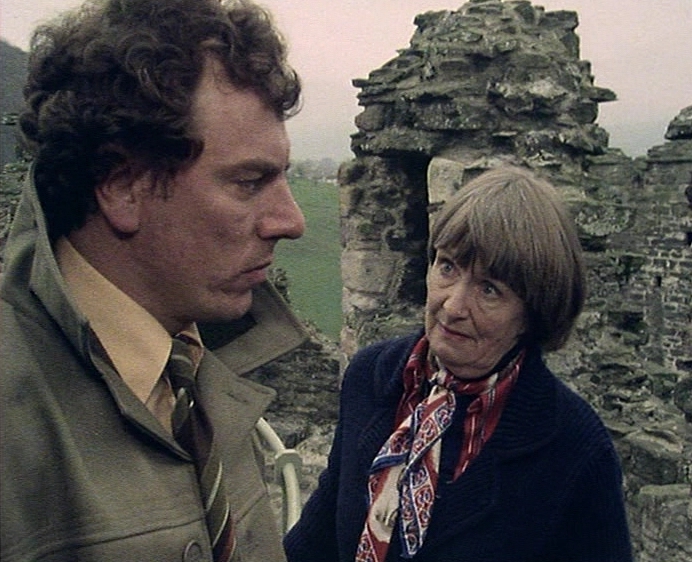
As you might expect, he eventually begins to relent and it’s his clifftop encounter with young Carol (Julie Jones) which is key. Jones tackles the substantial role of Carol with such gusto that it’s a real shame she didn’t continue acting.  Desperate to stay in Wales rather than return to her miserable existence in Liverpool, there follows a tense scene where Mr Briggs attempts to talk her back from the cliff edge.  This he does and the emotional connection he makes with her helps him to finally unbend.

A late visit to the funfair – his idea – ends the day on a happier note, but as the coach returns to Liverpool it’s easy to see Mr Briggs’ relaxed spirit slowly dissipating.  Will he modify his approach in future or simply revert to his stern ways once they’re back at school? This is left unresolved, but there’s one key moment which suggests that the latter course is the most likely.

Deftly juggling comedy with more serious themes, Our Day Out is a gem of a play which at 67 minutes doesn’t outstay its welcome.  Alun Armstrong is outstanding, but none of the cast disappoint and it’s the sort of play which should have considerable replay value.

Our Day Out is released by Simply Media on the 1st of October 2018, RRP £9.99. It can be ordered directly from Simply here (quoting ARCHIVE10 will apply a 10% discount).

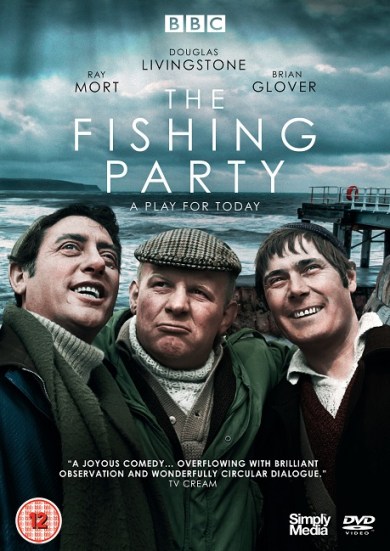
Play For Today – The Fishing Party. Simply Media DVD Review

fishing party

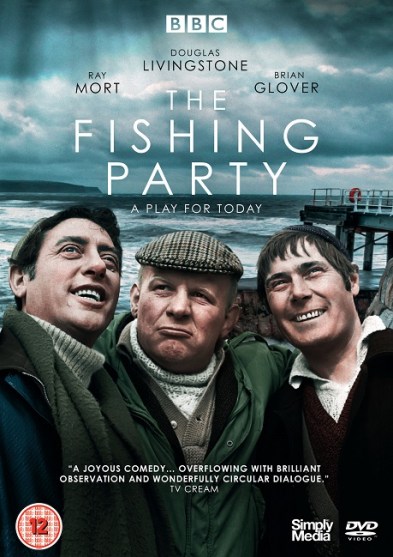
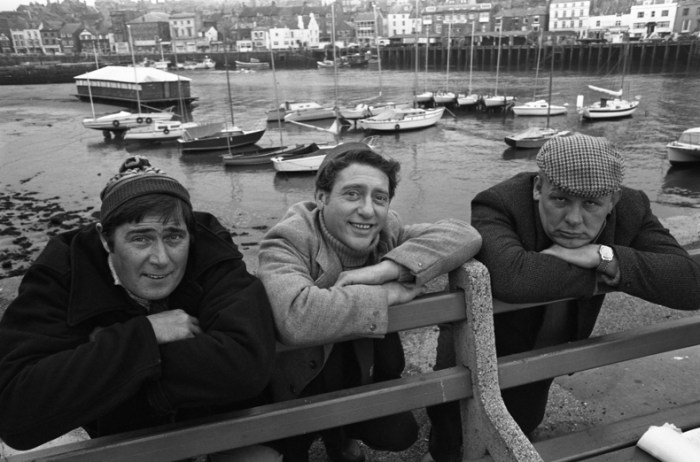
Three Derbyshire miners – Art (Brian Glover), Ern (Ray Mort) and Abe (Douglas Livingstone) – set out for a weekend’s fishing. It may be out of season but they’re determined to have a good time, although Art (the self-appointed leader) is keen to ensure that they don’t disgrace themselves.  “We ain’t pigs. No brown aleing, no being sick over the wall – we’ll show our wives we can be civilised without them.”

But after being fortified with a greasy chip supper and a bountiful supply of brown ale, their good intentions start to dissipate once they take to the choppy waters ….

Originally broadcast on the 1st of June 1972, Peter Terson’s play is an entertaining comedy that’s rich in character detail. The first in a trilogy by Terson featuring Art, Ern and Abe (slightly surprising that all three haven’t been collected together in one DVD set) The Fishing Party has a wonderful sense of place and time.

There’s just something so very evocative about this small Northern fishing port.  This is best observed when our hapless trio roll up to the boarding house that they’ve taken a shine to. It’s run by the domineering Audrey (Jane Freeman) and her thoroughly hen-pecked husband Brian (Frank Mooney).

Shortly afterwards, Freeman would begin thirty seven years of service in Last of the Summer Wine (as Ivy, a not totally dissimilar character to Audrey). And there’s another Summer Wine connection, as John Comer (who would be cast as Ivy’s long-suffering husband, Sid) also makes an appearance – here playing the owner of a quay-side tea van.

Brian Glover started out as a professional wrestler (billed as Leon Arris, the Man from Paris) before switching to acting in the late sixties and building up an impressive list of roles. Comedy was his speciality (shortly after this PFT he’d make several memorable appearances in sitcoms scripted by Clement and La Frenais – first as Flint in Whatever Happened to the Likely Lads? and then as Heslop in Porridge).

fish.jpg

Glover’s Art is a wonderful creation. Overawed by the fairly modest boarding house that they’re all staying in (which he likens to a small hotel) he paints a totally unrealistic picture of the sort of culinary delights they’ll be treated to later. He’s convinced that entrées will feature, along with a selection of wines.

Alas, we never learn exactly what Audrey would have served up for their evening meal as she’s unwilling to change her serving up time from 6:45 (which is when they’ve booked their boat for) meaning that they have to head out for a bite to eat instead.  But there’s no sense of disappointment from Art and the others, indeed they never lose their sense of innocence and optimism throughout the play.

There’s a lovely moment when the three – all safely deposited into single rooms – communicate with each other by shouting through the walls. Art is initially reluctant to join them in one of the other rooms (considering that consorting together is simply not quite the thing). He’s not at all convinced when told that James Bond does it all the time (delightfully, his argument with the solid wall is accompanied by a great deal of gesticulating).

The fishing trip – a nightmare journey of sea-sickness – is another obvious highlight, as is the aftermath when our shivering heroes find themselves back on solid ground. At least they have an impressive haul of cod to take back home – even if the fishy glances from the cod are all rather reproachful.

Like Glover, Ray Mort would become an instantly recognisable television face. Active from the mid fifties, he was equally at home both in drama and comedy.  Douglas Livingstone’s acting career had virtually come to an end by the time The Fishing Party aired, but he’d already established a parallel writing career which would continue well into the 21st century.  He would contribute to both Armchair Theatre and Play For Today in addition to a number of other series and serials. One notable later credit was his well-remembered 1981 adaptation of John Wyndham’s The Day of The Triffids.

Running for 57 minutes, The Fishing Party is an earthy comic treat.  Featuring three strong performances from Glover, Mort and Livingstone and a number of sharply-defined supporting turns, the hour just flies by.

The Fishing Party is released by Simply Media on the 1st of October 2018, RRP £9.99. It can be ordered directly from Simply here (quoting ARCHIVE10 will apply a 10% discount).

Doctor Who – The Reign of Terror. Episode Two – Guests of Madame Guillotine

p0114ldy.jpg

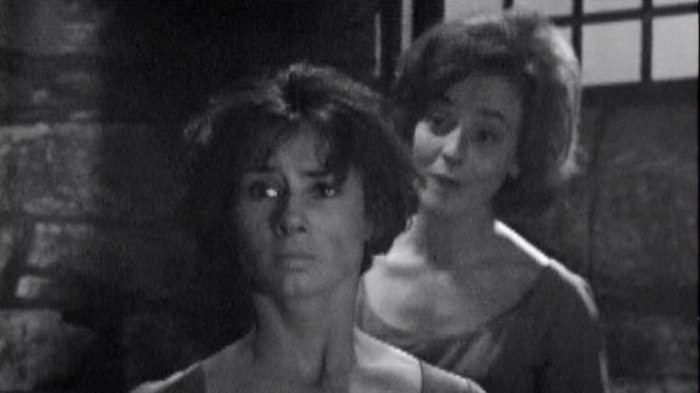
Guests of Madame Guillotine neatly splits the narrative into three parts. Ian, Barbara and Susan have been taken to the Conciergerie Prison in Paris – Ian is put into one cell and Barbara and Susan are deposited in another. William Russell was the last of the four regulars to take his two-week holiday, so Ian only appears briefly on film for the next two episodes. Although his mission (entrusted to him by a dying prisoner) to find an English spy called James Stirling will prove to be significant later on.

Barbara and Susan are placed in the dingiest, most rat-infested cell, all because Barbara refused the lecherous attentions of the Jailer (Jack Cunningham). The Jailer is generally regarded as a humourous character (he’s later comprehensively bamboozled by the Doctor) but he’s a little more sinister and threatening to begin with. These early scenes at the Conceirgerie are a little grim anyway, since there seems to be no way that Barbara and Susan can avoid losing their heads.

SUSAN: Oh, what’s the use? We’ll never get out of this dreadful place.
BARBARA: Oh, you mustn’t lose heart, Susan.
SUSAN: I’m not going to fool myself.
BARBARA: Well, think of the times we’ve been in trouble before. We’ve always managed to get out of it in the end.
SUSAN: Oh, we’ve been lucky. We can’t go on being lucky. Things catch up with you.
BARBARA: I’ve never heard you talk like this before. You’re usually so optimistic.

Given that Susan is the much more experienced traveller it seems strange that she’s presented as the defeated one. Later on she reacts with terror at the sight of some rats – which stops Barbara from attempting to dig her way out of the cell. Although given the tools they had, it would have probably taken her years! These are further moments which probably wouldn’t have been viewed favourably by Carole Ann Ford, as they reinforce the notion that Susan is easily the least resourceful of the TARDIS crew.

Whilst the others face an anxious time in prison, the Doctor attempts to make his way to Paris. He’s rescued from the farmhouse by a young boy called Jean-Pierre (this is a touching scene with Hartnell and Peter Walker. As they part, the Doctor asks the boy his name. “I shall remember. Yes. Jean-Pierre. Au revoir, Monsieur Captain”).

We then see the first bit of location filming used in the series. It’s only a few scenes of Hartnell’s double strolling down some country lanes but it really helps to open things out. This then leads into one of the comic highlights of the story. Although Hartnell often referred to himself as a straight actor, he had a great flair for comedy (not really surprising since he started his career playing in stage farces). Spooner had obviously been quick to recognise this and gives him some first-rate material here.

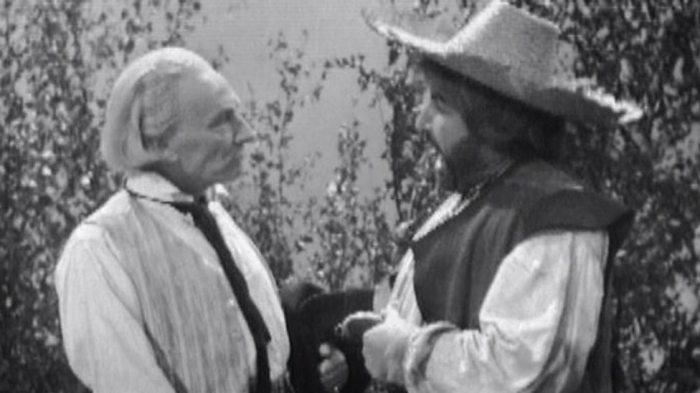
The Doctor runs into a party of men toiling on the road, supervised by a brutal Overseer (Dallas Cavell). No surprise that the Doctor can’t resist sticking his oar in. “If you were to expend your energy helping with the road, instead of bawling and shouting at them every few seconds, you might be able to get somewhere. Good day to you, sir!” But when the Doctor is unable to produce any papers to prove his identity, he finds himself press-ganged into the working party.

The Doctor manages to effect his escape by convincing the Overseer that there’s buried treasure close at hand. When the Overseer bends down to take a closer look, the Doctor bashes him over the head with a shovel! The rest of the men are shocked (“sacre blue” they naturally say) and run off. As does the Doctor, once he’s mischievously put two gold pieces on the unconscious Overseer’s eyes. It’s highly entertaining stuff and was obviously a stepping-stone to the even broader comedy of Spooner’s next script, The Romans.

The time-scale for this episode is a little odd though. The others appear to arrive in Paris at the same time that the Doctor is extracted from the burning house. This clearly makes no sense, so it appears that Guests of Madame Guillotine is hopping backwards and forwards through time. Well, this is a time-travel series I guess ….

p0114lfq.jpg

Grange Hill – The Rise of Gripper

gh gripper roland denny.jpg

With Eureka due to release series five and six of Grange Hill on DVD later in the year, it seems like the ideal time for an irregular series of quick posts looking at some of the key themes developed across these two years. To kick off – the rise and rise of Gripper Stebson (Mark Savage).

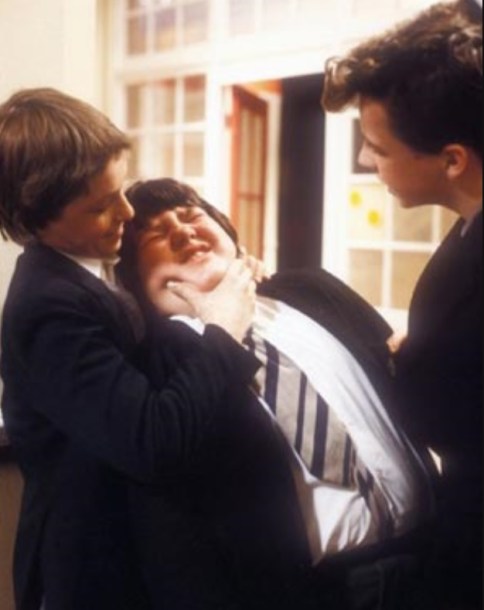
GH had tackled bullying before (as early as the third episode of series one) but there was something very different about Gripper. Since the first series was episodic in nature, there wasn’t any room to develop the plot-thread of first-former Judy being targeted by the mean fifth-former Jackie Heron in any great depth.  One intervention later, everybody lived happily ever after ….

Gripper would prove to have much more staying power. Indeed, although he had appeared in a handful of series four episodes and would go on to cameo in a few post series six ones (“oy! that’s my bike!”) the story of Master Stebson is also, in part, the story of series five and six.

Previous victims of bullying – such as Judy and Benny (who had been targeted by Doyle) – found they had others (Trisha/Tucker) who were prepared to stand with them. Poor Roland Browning (Erkan Mustafa) had nobody and this made all of his wretched misfortunes throughout 1982 even more disturbing. If the message from series one (delivered by Trisha’s older sister to Judy) seemed just a little too pat (report a bully and all will be well) then Roland’s silent suffering had more of the ring of truth.

It’s tempting to wonder if the change in tone was initiated by Susi Hush, the new producer for series five.  It’s telling that the previous producer, Colin Cant, had – back in 1980 – cast severe doubts about whether GH could ever show the reality of bullying.

And yet that’s what was achieved throughout 1982 and 1983.  Possibly this was simply an indication of the series’ increasing confidence – although GH had had long-running plot-threads before, this was the period when they started to elongate even further. With an established audience base, it seems likely that Grange Hill had no qualms in pacing certain storylines quite slowly.

In later years this could sometimes turn out to be more of a curse than a blessing (Gonch’s interminable money-making schemes became tiresome very quickly) but Roland’s apparent suicide attempt at the end of S05E16 has a special resonance due to the fact that it was placed towards the end of a run of episodes which had featured him under attack from Gripper on so many occasions.

Doctor Who – The Reign of Terror. Episode One – A Land of Fear

p0115y1d.jpg

The Doctor’s in a right old strop at the start of this episode (his bad mood carries over from the previous cliffhanger).  This feels a touch artificial and seems to have been done for two reasons – not only does it create a good hook into A Land of Fear (otherwise the last episode might have ended with the Doctor saying “oh look, a forest”) it also gives the regulars, especially Hartnell, some nice character moments in the opening few minutes of the story.

William Russell has spoken in the past about how the arrival of Dennis Spooner was greeted with enthusiasm by the main cast.  Spooner had a good ear for naturalistic dialogue and also liked to pepper his stories with humour.  And following the earnest and rather stilted dialogue which sometimes cropped up in The SensoritesThe Reign of Terror does come as a breath of fresh air.  However, it’s notable that Spooner’s scripts do feature various Americanisms, which feel strange coming from the mouths of the TARDIS crew, simply because they’ve never spoken like this before (Hartnell, for example, says “you don’t say” later this episode.  This feels jarring after watching the series in order).

The Doctor is convinced that he’s landed Ian and Barbara back in England 1963 and is keen drop them off and move on.  Not surprisingly, Ian and Barbara aren’t prepared just to take the Doctor’s word for it.  This infuriates the Doctor.  “I’m rather tired of your insinuations that I am not master of this craft. Oh, I admit, it did develop a fault, a minor fault on one occasion, perhaps twice, but nothing I couldn’t control.”

This is lovely stuff and Hartnell plays it to the hilt.  As we’ll see time and time again over the years, the joke’s on the Doctor since his confidence does turn out to be entirely misplaced.  They’re in France, not England, and a couple of hundred years back in time.  The TARDIS has set them down during the French Revolution (“the reign of terror”) which according to Susan is the Doctor’s favourite period in Earth history.  I wonder why. Does he enjoy the sight of all those French aristocrats being sent to the guillotine?  The Doctor never explains why he enjoys this time so much, so we’re left guessing.

The TARDIS crew meet Rouvray (Laidlaw Dalling) and D’Argenson (Neville Smith) at an abandoned farmhouse.  Both Frenchmen are on the run from the authorities and it seems  probable that they’ll be significant figures in the story.  Whilst D’Argenson is nervous and apprehensive, Rouvray is calm and still in total command.  He may be a hunted man but possesses an unbelieving belief in his own authority.  He bluntly tells Ian and Barbara that “in France now there are only two sides. You’re either with us or against us. Our sympathies are obvious. We want to know yours.”

The arrival of a group of soldiers immediately darkens the tone.  They’re depicted as a barely controllable rabble, with the common soldiers openly contemptuous of the Sergeant’s authority. The Sergeant (Robert Hunter) cleverly doesn’t attempt to browbeat his men into obeying his orders, instead he suggests that if they watch the back of the house they might have a chance to kill some royalists.  This meets with their approval and they move into position.

Whilst Robespierre might later claim this is a glorious and just revolution, the behavour of the soldiers is clearly designed to indicate otherwise.   And when Rouvray and D’Argenson are both brutally murdered it helps to reinforce the concept that life is now very cheap.  Since both characters seemed to have been set up to play a major part in the narrative, their sudden deaths are quite shocking.  It also serves as an early demonstration that the Doctor and his friends could also face death at any time.

Rouvray’s death is a noteworthy moment. He disarms one of the soldiers just by asking for his rifle and then comments that “you can give them uniforms, Lieutenant, but they remain peasants underneath.”  This is another example of Rouvray’s unshakable belief in his own authority, but it’s also a demonstration of the ruling elite’s unspoken arrogance.  Did this exchange led directly to his death?  It seems more than likely.

With the Doctor unconscious in the upstairs part of the house, the soldiers decide to take Ian, Barbara and Susan to Paris. Their motivation is not out of a sense of duty though – they believe there might be a reward and are keen to collect.  They torch the house before they depart, which means we conclude with a strong cliffhanger – the Doctor awakes to find himself trapped in a raging inferno ….

p0115yjg.jpg

Three films from the Play For Today series to be released by Simply Media on the 1st of October 2018

Simply Media will be releasing Our Day Out, The Imitation Game and The Fishing Party on the 1st of October 2018. Below are details on all three, taken from Simply’s press release.
Our Day Out

day out.jpg

An anarchic, bittersweet comedy drama from Oscar-nominee Willy Russell, creator of Educating Rita and Shirley Valentine. Rated 8.2 on IMDB. Directed by BAFTA-winner Pedr James (Our Friends in the North) and produced by David Rose (Z Cars).

A hilarious and chaotic romp about a group of inner-city Liverpool schoolchildren let off the leash for a day’s outing. Different teaching approaches clash when the compassionate Mrs Kay (Jean Heywood – Billy Elliot) and disciplinarian Mr Briggs (Alun Armstrong – Krull) attempt to supervise.

Stopping at a cafe, a zoo, the beach and a funfair, the children take every opportunity to cause havoc. This tender comedy draws on Willy Russell’s own experiences of school trips as both pupil and teacher.

Originally broadcast in 1977, it was later adapted as a stage musical and still features today as a popular school text.

What the Press Said:

“I laughed out loud a great deal, and secretly wept a little.” The Sunday Times

“A gloriously funny and touching play.” Guardian

The Imitation Game

imitation.jpg

Bestselling writer Ian McEwan (The Children Act) wrote this impassioned drama, inspired by stories of women who helped to crack the Enigma Code during WWII.

Rated 7.8 on IMDB and first shown in 1980. Directed and produced by BAFTA-nominee Richard Eyre (Notes on a Scandal).

Starring Harriet Walter (Sense and Sensibility / The Sense of an Ending) in her first major screen role alongside Oscar-nominee Brenda Blethyn (Vera) and BAFTA-nominee Patricia Routledge (Keeping Up Appearances).

19-year-old Cathy Raine (Harriet Walter) lives in 1940’s Frinton on Sea, expected to spend the war working at the local munitions factory. Against the wishes of her family she signs up for the Auxiliary Territorial Service.

There she befriends working-class Mary (Brenda Blethyn) and moves to the code-breaking centre at Bletchley Park where Cathy meets Turing-like mathematics don John Turner (Nicholas Le Provost). But Cathy is being kept in the dark by the secretive male hierarchy – until she stumbles upon a secret intelligence file that may jeopardise her safety.

What the Press Said:

“A Play for Today of rare distinction” Clive James

The Fishing Party

fishing party.jpg

Crown Court creator Peter Terson’s comedy of class and manners. Rated 8.9 on IMDB, and first shown in 1972. Directed by BAFTA-winner Michael Simpson (Prince Regent).

Derbyshire miners Art (Brian Glover), Ern (Ray Mort) and Abe (Douglas Livingstone) head north to Whitby for a boys-only fishing escape.

Checking into a shabby B&B run by haughty landlady Audrey (Jane Freeman – Last of the Summer Wine) and her henpecked hubby, the trio are bamboozled into paying a high price for their rooms.

Their boat is piloted by a stern ex-fisherman, who warns them about mixing chips and brown ale on choppy waters. The boys are half-cut before they leave the harbour, and as they head out to sea they’re decidedly off-colour.

What the Press Said:

“A joyous comedy… overflowing with brilliant observation and wonderfully circular dialogue.” TV Cream

All three DVDs have a RRP of £12.99, Our Day Out runs for seventy minutes, The Imitation Game for ninety two minutes and The Fishing Party for fifty seven minutes.

TV Comic – The First Doctor. The Hijackers of Thrax

hij1

A cargo ship, en route to Venus from Earth, mysteriously vanishes. It’s not the first time one of these ships has gone missing, which spells trouble for those anxiously watching back on Earth. “Another supply ship lost! If we don’t get to the bottom of this mystery soon our colony on Venus will be starved out!”

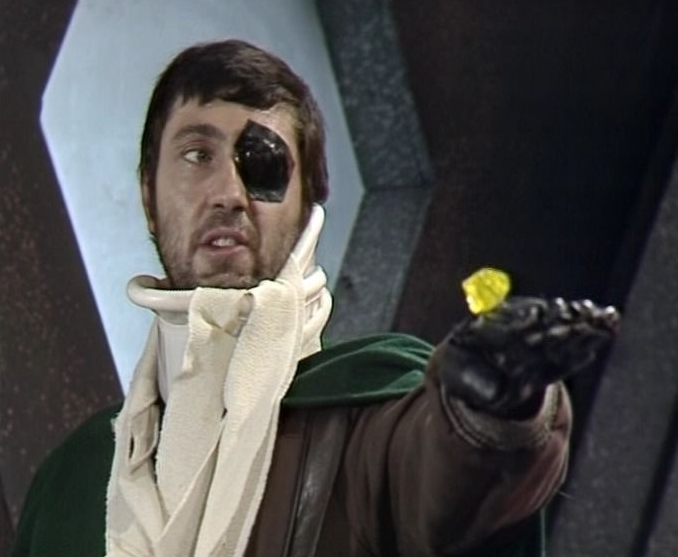
Who can be responsible? It’s a space pirate called Captain Thrax, that’s who. And make no mistake he really is a pirate – complete with a striped jumper, eye patch and a nice line in pirate talk. Frankly all he’s missing is a parrot and a peg leg.

You could never say that scientific accuracy was one of TV Comic‘s priorities, something which is clearly demonstrated by the cunning way that Thrax remains undetected from Earth observation. His space station is covered by a cloud. A cloud in space, how exactly does that work? Never mind, let’s press on.

The Doctor, John and Gillian, having landed on the space station, find themselves prisoners – locked up along with the crews from the captured spaceships. Luckily the ever-resourceful John has an escape plan – he takes a bar of soap (don’t ask) and puts it on the floor. When the guard comes in, the inevitable happens.

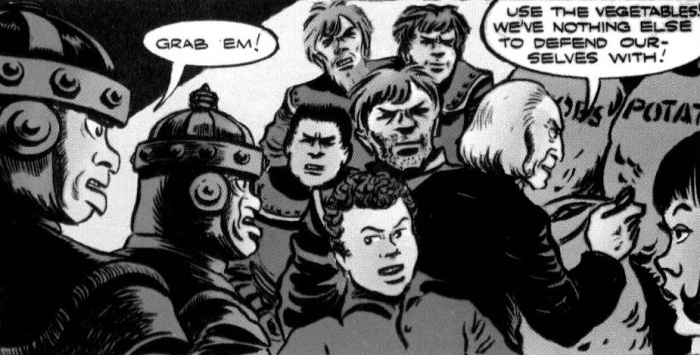
If you get the sense that this adventure has been a little strange up until now, the best is saved for the final instalment. Cornered by Thrax’s guards, the only weapon that the Doctor and the others have to hand is the stolen food. This leads the Doctor to utter one of my favourite TV Comic lines. “Use the vegetables! We’ve nothing else to defend ourselves with!” Sheer brilliance.

And the vegetables come in very handy, as not only are they used to beat off the guards but Doctor Who (as ever, very keen to incite others to violence) tells John and Gillian to throw the spuds at Thrax’s mist-making machinery. Once that’s put out of action, Thrax’s goose is really cooked.

The Hijackers of Thrax is a fairly short story, which is something that works in its favour (ten weeks of potato-based action might have been too much, even for me). It’s another tale that bears only scant resemblance to TV Who, but no fear as the next strip promises something closer to canonical action (“DR WHO meets the ZARBI on the Web Planet”).

hij2.jpg

TV Comic – The First Doctor. The Therovian Quest

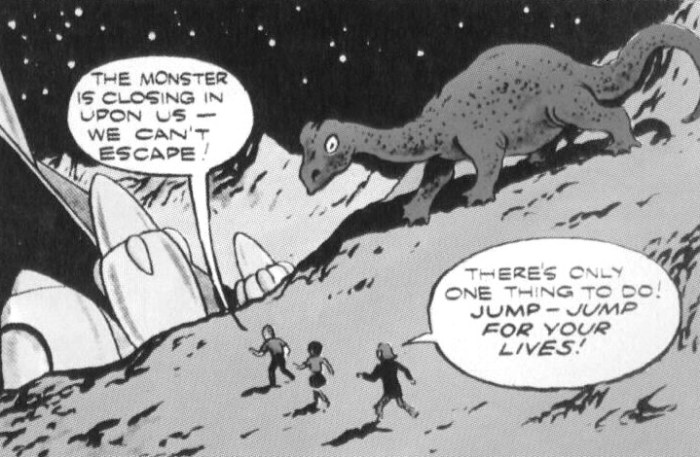
We can file the first few instalments of this strip under “blatant padding”. Doctor Who, Gillian and John crash-land on a rather inhospitable, moon-like planet. Like the moon it has hardly any gravity, although it must have oxygen otherwise the time-travellers (who aren’t wearing spacesuits) would have expired the minute they set foot outside.

I don’t think we need to get too worked up about scientific accuracy though, as shortly afterwards they are all menaced by a large dinosaur-like creature. Given how bleak the planet looks I’m not entirely sure what it feeds on (passing space-travellers maybe?). There’s a temporary respite from this silliness when the Doctor and the others take shelter in a nearby space-ship. The alien inhabitant doesn’t seem friendly though. “Don’t move or I’ll blast you to atoms!”

But things take an unexpected turn after the alien, called Grig, is revealed to be a good chap after all. After the single-minded villainy of The Klepton Parasites, it’s nice to have a story where an apparently threatening alien turns out to be benign. Grig tells them his story and it’s a very strange one.

All the people on his planet, Theros, have been gripped by a strange weakness, meaning that they loll about all day long with no desire to do anything. For some reason he’s the only one not affected so he’s set off in his rocket ship to look for help. Yes, this is a little odd but after several panels of the Doctor being menaced by a whacking great dinosaur it seems less so. Touched by Grig’s story, they all return to Theros to see if they can help.

If this was the television show then you know what would happen next – the Doctor would fiddle with some test tubes and find a cure. Alas, the comic strip Doctor lacks the skills of his television counterpart and is stumped. But don’t panic! The Doctor may be no use but the oldest living Therosian, Wodan, suddenly pipes up to let them know that there is a cure – a rare moss from Ixon, the planet of ice. Now if only he’d thought to let Grig know this before he set out the first time (and the Doctor had travelled straight to Theros) we’d have been spared all that nonsense with the dinosaur …

After being introduced to Grig, a menacing alien who turns out not to be menacing after all, there’s another reversal after the Ixons are revealed as baddies (they’d initially seemed reasonable enough). But no matter, after Doctor Who, John, Gillian and Grig have braved the ice caves they’re not going to let a few Ixons stand in their way. Doctor Who has a handy box of matches (maybe he didn’t kick the smoking habit like his tv counterpart?) which enables him to create a heavy smokescreen to aid their escape.

Barking mad best sums this story up. The interlude with the dinosaur, a planet of lethargic aliens, the hunt for the magic moss, it just keeps on springing surprises. But compared to some later TV Comic strips I guess this is quite sensible fare.

TV Comic – The First Doctor. The Klepton Parasites

klepton 1.jpg

Just under a year after An Unearthly Child aired on British television, the Doctor made his debut as a comic strip character in the pages of TV Comic. These early strips are fascinating for a number of reasons.  They may be simplistic but they also have a certain charm, although there’s no denying that they bear only a passing resemblance to TV Who.

Yes, there’s a white-haired man called the Doctor who flies a spaceship disguised as a police-box through time and space,  but that’s pretty much where the similarity ends, at least in this story.  The strip Doctor is a gung-ho fellow, happy to shoot first (or more accurately get others to do the shooting for him) and ask questions later.

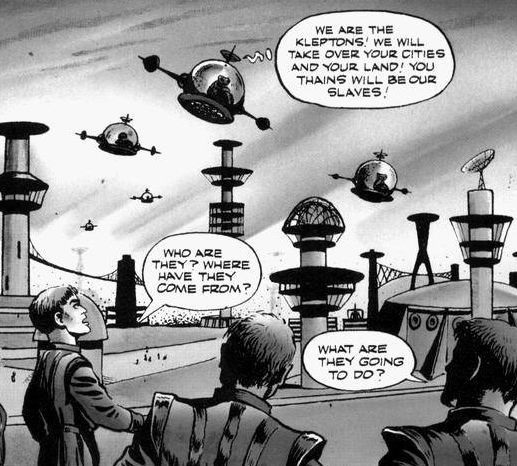
Although this first story runs over twenty pages there’s an economy to the storytelling that’s evident right from the first panel.  A number of flying machines, piloted by the evil Kleptons, are swooping over the city of the hapless, humanoid Thains.  The Kleptons make their intentions plain straight away.  “We are the Kleptons! We will take over your cities and your land! You Thains will be our slaves!”  Clearly the Kleptons believe in getting to the heart of the matter with the minimum amount of waffle.  After such a comprehensive mission statement it does render the Thains’ cries of “Who are they? Where have they come from? What are they going to do?” rather redundant.

It’s a black and white strip and we’re in a black and white world.  The Kleptons are evil and the Thains are good – it’s as simple as that.  So there’s no point in attempting to reason with the Kleptons, the only thing that will stop them is a force of arms.  To be fair, the television Doctor has often followed a similar route, so we can’t be too critical about this.

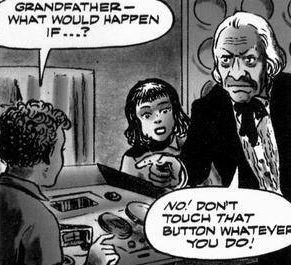
As for the Doctor, when the story begins he’s on Earth and inside the TARDIS.  He’s surprised to be visited by his grandchildren John and Gillian, whom he’s obviously never met before.  And he’s even more surprised when John pushes precisely the wrong button which sends them off into time and space.  It’s like the first twenty five minutes of the television serial compressed into seven panels of art.

klepton 2.jpg

The fun really starts when the TARDIS drops them right in the middle of the fight between the Kleptons and the Thains.  The Doctor is quick to decide that force is the only answer and to this end the peaceful Thains take the only weapons they have (stored in a museum) and ready them for the upcoming struggle.  When writing The Dominators did “Norman Ashby” use this strip as an inspiration?

Although the Doctor’s a strong advocate of force, the strip is still careful not to show him actually firing a gun, so he gives that job to his young grandson.  Hmmm.  But the Doctor is on hand to offer these sage words of support.  “Open fire! Blast those Kleptons out of the sky!”

Neville Main’s art may be rather functional, but at times (such as when the Doctor, John and Gillian travel to the city of the Kleptons in one of their stolen machines) it’s really rather good.  Things don’t go well for the Doctor and his two young grandchildren though as they’re captured by the evil Kleptons and the Doctor passes on more wise words of advice.  “Don’t try anything. These ugly customers are just itching to let fly with their guns!”

klepton 3

They manage to escape from the cell they’ve been locked in, thanks to John suddenly realising he’s carrying a heat gun provided by the Thains (lucky that).  Once out of the cell, John chucks it over to the Doctor, telling him to open fire, but once again the Doctor isn’t seen to fire a weapon, he simply knocks the Klepton out with it!  John punches another Klepton (“sweet dreams”) whilst Gillian no doubt cowers somewhere off-panel.

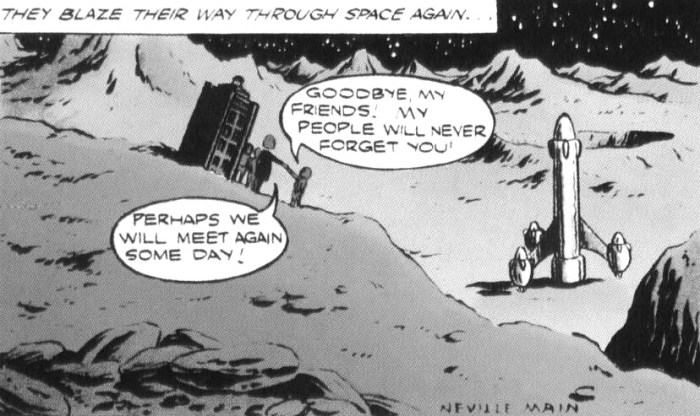
Events then take an inevitable turn as a really large explosion puts paid to the Kleptons and the time-travellers prepare to bid farewell to the Thains.  As with the television series, the Doctor makes an attempt to return his companions to the twentieth century but I’ve a feeling he’s going to have a similar lack of success.  John seems happy enough though.  “I don’t care what century we arrive in. I’m sure we’ll have loads of adventures anyway!”

It’s a crude and simplistic story, but I can’t find it in my heart to dislike The Klepton Parasites.  But I hope that some of the upcoming stories will have a little more depth to them.  We shall see ….

klepton 4.jpg

Blakes 40 – Blakes 7 40th Anniversary Rewatch: Series Two, Episodes Eleven to Thirteen

Gambit

b9.jpg

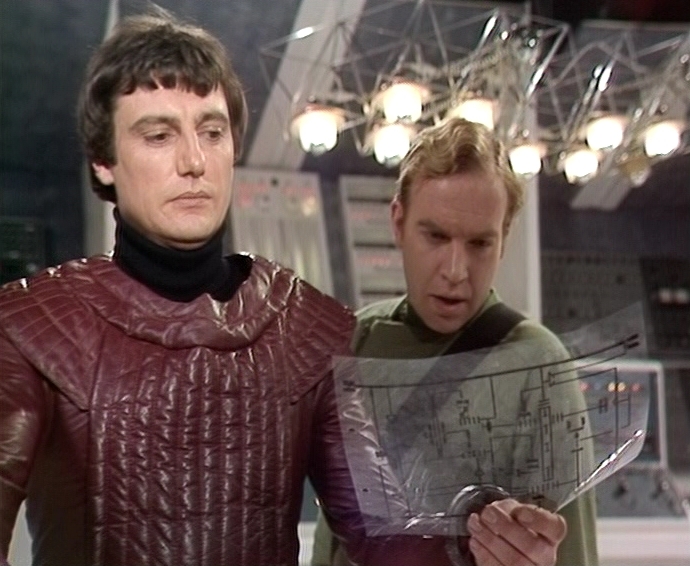
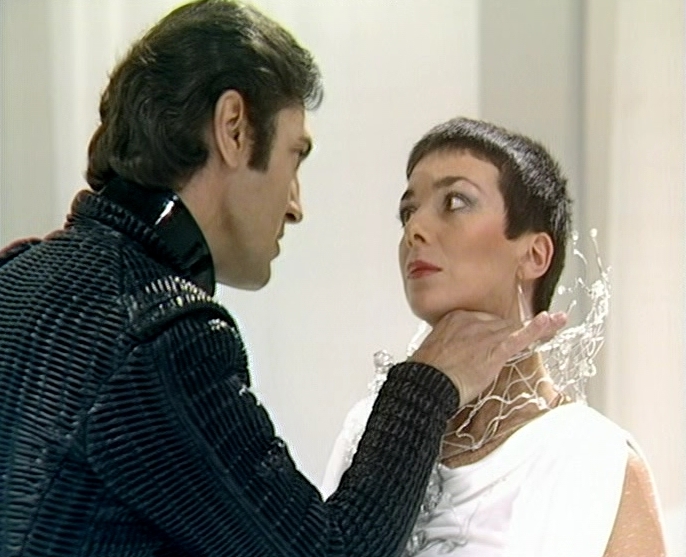
Gambit‘s an odd one. The main plot – the hunt for Docholli – moves very slowly whilst the production design is somewhat on the tacky side. But since Robert Holmes’ script is packed with entertaining one-liners this isn’t really a problem.

If you like your B7 stories on the gritty side, then you’re out of luck. Aubrey Woods’ overpowering Krantor sets the tone. Woods is clearly having a great deal of fun – the banter between Krantor and Servalan being one of the episode highlights.

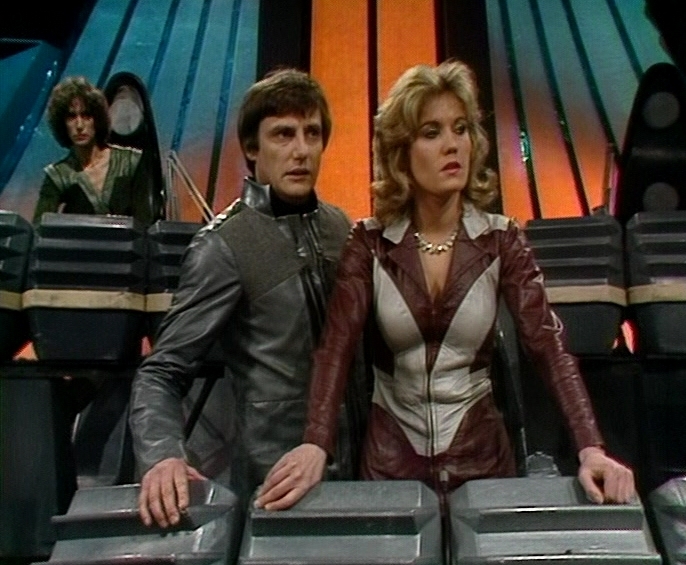
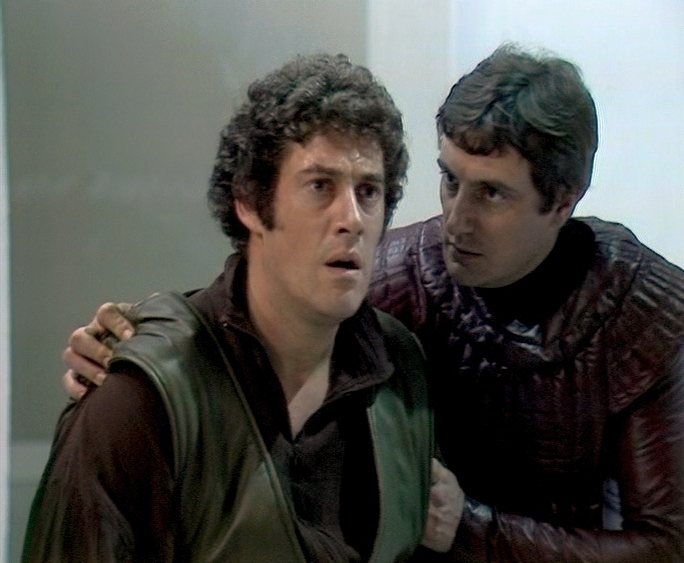
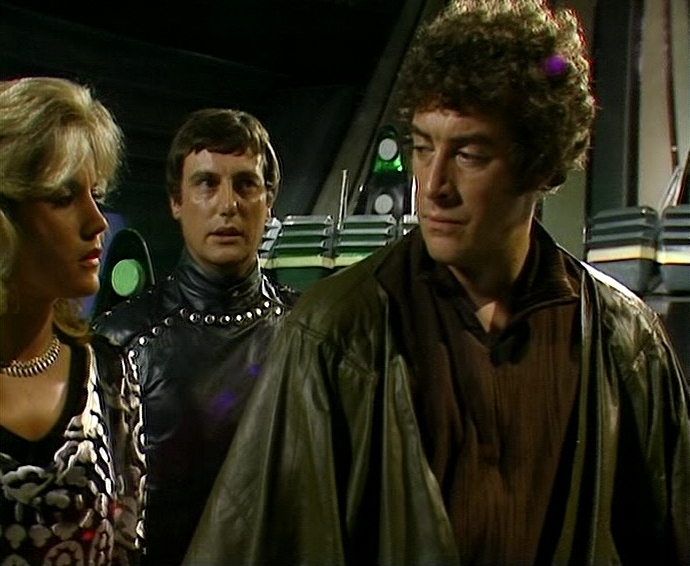
Blake, Jenna and Cally (the two girls glammed up to the nines) are involved in the main plot, but it’s Avon and Vila (attempting to break the bank at the casino) who get all the best scenes. The Avon/Vila subplot is so played for laughs that it feels more like a parody than proper B7 – the notion of Avon sneaking down to Freedom City (is he afraid of getting a ticking off from Blake?) and the way he persuades Orac to shrink himself (how handy and how odd it was never done again) are just two examples of this.

Oh, and the moment when he spits out his food after learning that Vila’s been tricked into playing the Klute at speed chess ….

With Holmes scripting, it’s possibly not surprising that the dialogue is a little different from the norm (Avon’s comment of “you dummy” doesn’t feel like something he would ever say).

There are also some prime examples of Holmes’ colourful command of the English language. Servalan’s thoughts on Krantor for one. “He is a despicable animal. When the Federation finally cleans out this cesspit, I shall have that vulpine degenerate eviscerated with a small and very blunt knife”.

Krantor’s counter-comments are equally as eye-opening (“one of these days, Toise, I am going to have Supreme Commander high-and-mighty Servalan ravaged until she does not know what month she’s in. I’ll have her screaming for death …”).

With an unforgettable turn from Sylvia Coleridge, an appearance from Bill Filer and Travis in a silly hat, Gambit is top class entertainment.

The Keeper

b12.jpg

If you’ve seen The Pirate Planet then you’ll know what to expect from Bruce Purchase’s Gola – except that the Captain had hidden depths, whilst there’s no such luck with Gola (who’s just all bluster). The Keeper is another example of Blake’s shaky leadership qualities – no sooner has he, Vila and Jenna teleported down to the surface of Goth than they’re overpowered with embarrassing ease.

Vila (obviously) becomes the King’s new fool whilst Jenna becomes the King’s new … well, you can probably guess. Sally Knyvette manages to mine a few comic moments from this fairly unpromising scenario. Meanwhile, Blake mooches about doing nothing much whilst Avon, aboard the Liberator, leaves the others on Goth to fend for themselves as he sets off to destroy Travis’ ship. One point, how did he know that the ship belonged to Travis?

If you like ripe overacting then you’ve come to the right place. In addition to Purchase there’s also Freda Jackson as Tara (she has a nice line in cackles). Servalan’s on/off relationship with Travis is now back on, since he’s once again at her side (Travis changing from being Servalan’s enemy to her ally multiple times since Trial has been decidedly odd). The way he cuts and runs some twenty minutes in does generate the episode’s only surprising moment though.

Fifty minutes of running on the spot, The Keeper ends up as something of an also-ran although with Derek Martinus onboard as director there’s some decent camerawork in evidence.

Star One

b13.jpg

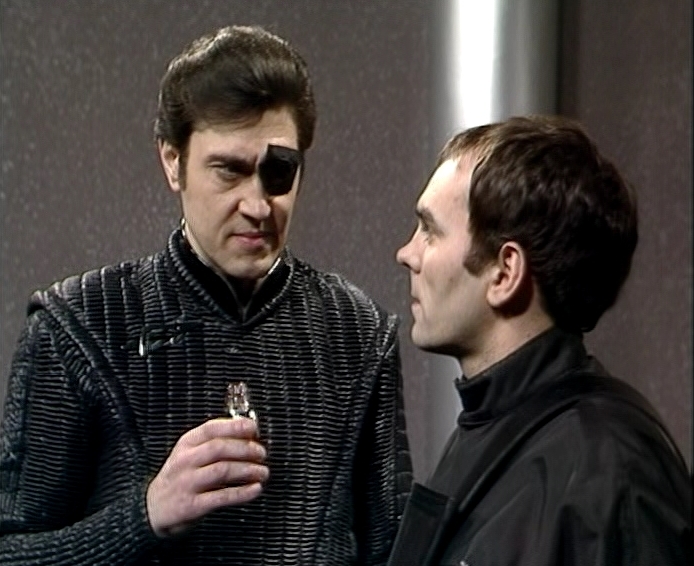
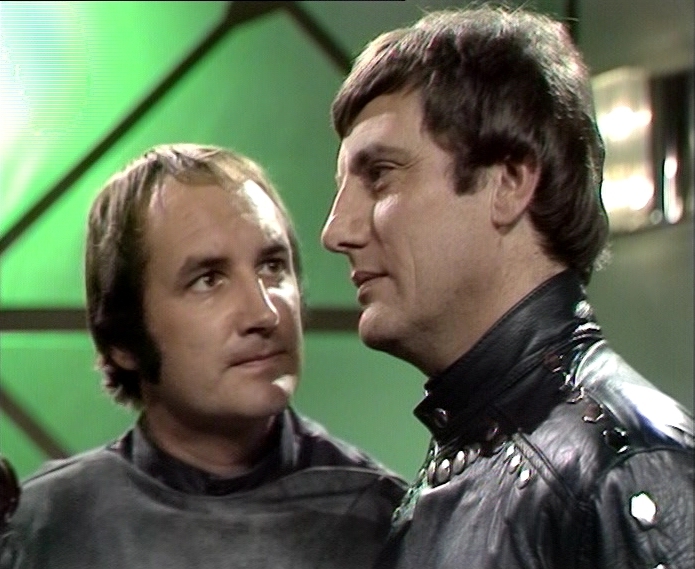
Star One (rather like Terminal and Blake in fact) does indulge in a fair amount of running on the spot. Some of the scenes set on Star One (especially the hunt for Lurena) aren’t that interesting, but since the episode also features several of B7‘s most memorable moments the good outweighs the bad. Despite the fact that this is Blake’s last hurrah as a regular, Avon is still the one who gets all of the best lines. “As far as I am concerned you can destroy whatever you like. You can stir up a thousand revolutions, you can wade in blood up to your armpits. Oh, and you can lead the rabble to victory, whatever that might mean”.

His face-off with Travis (“Now talk or scream, Travis, the choice is yours”) is also rather good.

But at least Blake does have that brief chat with Cally, where the pair discuss the ethics of destroying Star One. It’s a fascinating scene – not least for the fact that Cally (next to Blake the most fanatical) was the only one to voice a tentative concern that killing millions of people might possibly be a bad thing.

Some of Star One’s functions are discussed in the opening few minutes. They seem rather benign (climate control) rather than oppressive and domineering. And the way the episode begins with Servalan effectively cast in the role of the goodie (discussing how to bring Star One under control in order to prevent further deaths) before crossing over to the Liberator (where Blake and the others are plotting to destroy it in order to generate chaos) shows how far the lines between good and evil have become blurred.

Servalan’s surprisingly a fairly minor character in this one, but the moment when she instigates a palace revolution is chillingly played by Jaqueline Pearce. “The President and those members of the Council who are unable to accept the realities of the situation are even now being arrested, as are those of our own people whose loyalties may be divided. At a time like this complete unity is an absolute essential”. The inference is that under military rule the Federation will become an even more oppressive force, although the aftermath of Star One rather negates this.

Travis’ death is a mercy killing (both for the character and the audience). A shame the effects shot of him tumbling to his doom isn’t terribly effective though.

And that cliffhanger ….

Blakes 40 – Blakes 7 40th Anniversary Rewatch: Series Two, Episodes Eight to Ten

Hostage

b8.jpg

Oh dear, this isn’t very good is it? Plus points, we get a brief smidgen of Kevin Stoney whilst Servalan placed under a little pressure is always good to see.

Continuity isn’t a strong point of this story. Servalan reacts with amazement when Joban tells her that Blake’s become a hero amongst the rank and file of the Federation, which flatly contracts previous stories where Blake’s growing reputation was becoming a problem.

I don’t know if it was ever seriously considered, but the possibility of Travis teaming up with Blake would have been very interesting. Having Travis as a new crewmember aboard the Liberator opens up all sorts of possibilities (which would have been more satisfying than the increasingly odd way his character was used – Voice From The Past, anyone?).

The crimos are pretty rubbish, as are the polystyrene rocks, whilst Travis seems stupider than usual (does he really not know who is weakest out of Blake, Avon and Vila?).

So not good, but there’s a few good one-liners scattered about and – as ever – great interaction between the regulars, so it’s not completely unwatchable.

Countdown

b9.jpg

The main drawback with a story which has a ticking countdown throughout is that things only really get exciting during the last few seconds. And so it proves here – even though we know that Avon and Del will save the day just in the nick of time, there’s still some decent tension wrung out as the clock ticks down to zero.

As for the rest of the episode, the development of Avon’s character (especially the revelation about his love for Anna and his uneasy relationship with her brother) is clearly the main point of interest. Darrow and Chadbon spar very effectively and it’s a pity that Del was never seen again (although given what we learn about Anna in Rumours of Death that’s possibly not too surprising).

Elsewhere, the characterisation of the remainder of the guest cast is pretty sketchy. Provine is a nasty piece of work and that’s about it – his only function in the plot being to give Blake another clue to the location to Star One (which is done in a highly unconvincing way). The locals are all pretty forgettable as well but I’ll give a bonus point out for the fact that there’s a female amongst their number (I’ll then deduct a point for the fact she’s such a wet lettuce).

Once again the girls are stuck by the teleport whilst the boys go down to play. This is becoming rather monotonous. Since it was already known that Sally Knyvette wouldn’t be returning for S3 (indeed she wouldn’t have done S2 had her contract not forced her to) it almost looks like all the writers had given up any interest in developing her character.

I do like the way that the Federation troops (supposed to be the best of the best) spend the opening few minutes doing nothing except running away as fast as they can from the advancing rebels!

Decent enough, but never a favourite.

Voice From The Past

b10.jpg

It may be mad as a box of frogs, but it’s impossible not to love Voice From The Past. I like the notion that Cally has badgered the others into doing exercises although it doesn’t seem to be agreeing with Blake, who is having the funniest of all funny turns.

Gareth Thomas goes right over the top and then back up again during the first fifteen minutes or so. It’s great stuff, as are Paul Darrow’s karate chops when Avon attempts to subdue a hysterical Blake!

Given Blake’s often arbitrary command style, it’s surprising that the others twig quite quickly that he’s not himself. Avon, as so often, is gifted most of the best lines (“Well, he’s certainly not normal, not even for Blake”).

Jenna, looking especially lovely today, is persuaded to share Blake’s nightmares (so she too gets the chance to register high on the hysteria scale). But once that moment of fun is over, the plot starts to fall apart somewhat.

It’s barely credible that Avon would leave Vila in sole charge of Blake. Equally hard to believe is the fact that a gullible Vila swallows Blake’s story that Avon and Cally are the guilty ones. Also, why are Avon, Cally and Jenna all sitting in a room with a door that Blake can lock? A touch careless of them ….

All of this messing with Blake’s mind ultimately does feel like filler, since when the main plot kicks in – Blake is invited to join a cabal of notable Federation types who plan to bring down the current administration – it seems clear that Blake would have been happy to join them without any manipulation.

What can you say about Shivan? Words fail me ….

Servalan’s tussle with Governor Le Grand tops the episode off in style. Servalan on the big screen is some sight.

Something of a messy episode, but it’s also great fun.

Soupy Twists by Jem Roberts – Book Review

DmaaMfNWsAA-eGy.jpg

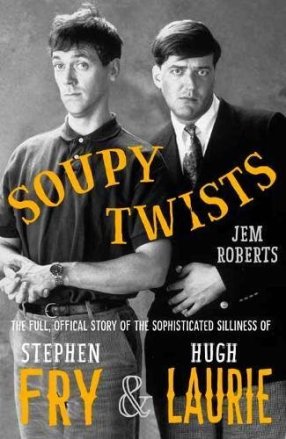
If you’ve more than a passing interest in British comedy, then the name of Jem Roberts should be a familiar one. His three previous books – The Clue Bible, The True History of the Black Adder and The Frood: The Authorised and Very Official History of Douglas Adams – are all proudly lined up on my shelves, and they’re now joined by his latest – Soupy Twists: The Full, Official Story of the Sophisticated Silliness of Stephen Fry and Hugh Laurie.

As the lengthy title indicates, this is no hastily knocked together unauthorised history. Although it draws upon previously published interviews (selected quotes from Stephen Fry’s volumes of autobiography are also effectively dropped in) there’s plenty of fresh insights as well. Although if you’re looking for scandal then you’ve come to the wrong place – the partnership between F&L has always been a very harmonious one (although the handful of cross words they’ve shared are discussed along the way).

Beginning their comedy marriage, along with a group of significant others such as Emma Thompson, during their undergraduate days at Cambridge, F&L seemed to effortlessly move into television during the eighties via Alfresco, Black Adder, Saturday Live and A Bit of Fry & Laurie. It wasn’t quite as smooth as that of course, so the odd misstep (The Crystal Cube) is also touched upon.

Alfresco (and its predecessor There’s Nothing To Worry About!) might be largely unloved today (indeed, they were largely unloved back then as well) but I’ve always had something of a soft spot for them, so there were some nice new nuggets of information in this section for me. For example, I never knew that Rik Mayall was nearly part of the troupe.

It’s no surprise that A Bit of Fry & Laurie takes up a fair chunk of the book. And quite right too. There’s some fascinating material here – sketch extracts which never made it to screen as well as tantalising titbits about more cut sketches, such as further Tony and Control meetings ….

Another notable cut from S2 of ABOF&L featured Rowan Atkinson (this was deemed not to be worthy of transmission – which makes me even more intrigued to see it). Whilst Fist of Fun was the gold standard of DVD releases (virtually everything which still existed from the studio tapes – save a few moments snipped for legal reasons – made it onto the bumper releases) sadly A Bit of Fry & Laurie was a depressingly bare-bones DVD release (no extra footage at all). It would be nice to think that a deluxe ABOF&L DVD set might appear one day (well we all have to have dreams).

Apart from Fry and Laurie themselves, a host of friends and collaborators pop up to offer their own insights. Some of these are quite sharp – such as Deborah Norton, who found working with Stephen during the first series of ABOF&L to be rather difficult (although when they met years later everything was much more harmonious).

Their post-partnership careers (following the broadcast of the fourth series of ABOF&L in 1995) are neatly summed up in the final chapter before we reach the rather appetising dessert – nearly one hundred pages of unseen extracts from the Fry & Laurie archive. There’s plenty of good stuff here, most of which could easily have turned up on television.

Covering all the bases, this is a detailed and entertaining read which I devoured in several sittings. Highly recommended.

Blakes 40 – Blakes 7 40th Anniversary Rewatch: Series Two, Episodes Four to Seven

Horizon

b4.jpg

I love the opening ten minutes or so, which shows that tempers aboard the Liberator are getting rather frayed, with the result that everybody – especially Jenna – has become rather snippy. Well, everybody except poor Gan, who’s been exiled to the teleport bay for no good reason.

Horizon might be a fairly unsubtle colonial satire, but both Darien Angadi and William Squire are very watchable. Angadi’s Ro is a fascinating character – when he displays disinterest in the continuing deaths of his people at the mine (whom he refers to as primitives) is this an example of his Federation indoctrination or is he genuinely unfeeling about their fate?

Squire’s Kommissar oozes seductive villiany (a much better role than the Shadow in The Armageddon Factor – especially since this time he’s not hidden behind a mask).

The one part of the plot which doesn’t quite hang together is the revelation that Blake was intimately acquainted with one of Ro’s best friends. It’s far too much of a coincidence to be credible (unless Blake knew about Ro and Horizon all along and simply pretended to the others that he didn’t).

The scenes of Avon alone on the Liberator, debating whether to cut and run, are a highlight as is his explosive appearance on the planet, where he mows down a number of Federation troopers in his best Clint Eastwood style.

Not as bad as its reputation suggests, this is pretty decent fare.

Pressure Point

b5

Brian Croucher’s performance is considerably dialled down compared to Weapon. He still doesn’t quite convince, but a calmer Travis is a better Travis for me. It seems barely credible that Servalan would have hung about for eighteen days, waiting for Kasabi to turn up. She’s the Supreme Commander for goodness sake, who’s doing all the paperwork?

Jacqueline Pearce’s crocodile smile is on overdrive today – and she’s the recipient of some dramatic scenes with Jane Sherwin’s Kasabi. It’s always good to see Servalan slightly discomforted.

The main plot’s a bit of a run-around which doesn’t make a great deal of sense. If Central Control is only a shell, why does Servalan have so much trouble in getting the barriers deactivated? And since Travis has already snaffled the teleport bracelets from Blake and the others, he doesn’t actually need to follow them down – all he has to do is wait at the entrance, as eventually they’ll all have to come back up that way.

Blake’s cry (“We’ve done it! We’ve done it! We’ve done it! I’ve done it!”) and his subsequent collapse to the ground is a S2 highlight. That one of Blake’s merry gang dies in a totally pointless way seems apt – from start to finish this was a doomed exercise. For all of Blake’s optimism (his year of secret planning) his lack of foresight and tactical planning has been cruelly exposed.

Trial

b6.jpg

It’s hard to get too invested in the travails of Blake and Zil, so it’s lucky that the other plotline is rather stronger.

Travis gets his moment in the sun (explaining that his misdeeds are a direct result of his Federation training). Croucher starts to go way over the top here, whereas earlier in the episode – possibly because he didn’t have too many lines – he was somewhat more restrained.

Surprising that Servalan doesn’t feature more, but presumably there were political considerations precluding her appearance at court. Kevin Lloyd gives a nice performance as Trooper Parr – it’s always good when the Federation rank and file are given a voice.

Pretty watchable, but not a favourite.

Killer

b7.jpg

No surprise that Holmes quickly latched onto Avon and Vila as a team. Both are given plenty of good lines (such as Vila’s “When Avon holds out the hand of friendship, watch his other hand. That’s the one with the hammer”). This does mean that the others (especially Jenna and Cally) are somewhat sidelined though.

Ronald Lacey and Paul Daneman are both decent guest stars, Lacey as the untrustworthy “friend” of Avon and Daneman as a “good” Federation man. Given the way that Blake in the past has tended to regard the Federation as a single evil entity, it seems a little out of character for him to be so keen to warn the base about any possible danger from the mysterious vessel.

Some of the costumes are rather silly, but this is an occupational hazard with B7, especially during the second series.

Killer feels pretty trad – it’s almost as if Holmes was feeling his way at this point (crafting a story that wasn’t too dissimilar to what had gone before, but with a little extra twist). It’s his next one where he really starts to cut loose …

Blakes 40 – Blakes 7 40th Anniversary Rewatch: Series Two, Episodes One to Three

Redemption

b1

Redemption is a slightly odd way to kick off series two. Mainly because the first thirty minutes are Liberator bound, which gives it the feel of one of S1’s cheaper bottle stories (like Breakdown). Still, this does give us plenty of time to goggle at everybody’s new togs whilst the Liberator moves very slowly to a mysterious destination.

Avon – as usual – gets most of the best lines. His needling of Blake (“well now, you only had to ask”) is a delight. Sadly, the amount of time spent aboard the Liberator means that by the time we get to Space World there’s no time to explore it in any detail. Harriet Philpin and Sheila Ruskin look very nice but since the Altas are slaves to the machine they aren’t gifted distinct characters (so the creators of the Liberator remain just as much of a mystery at the end of the story as they were at the beginning).

There’s a nice bit of location filming, but Redemption doesn’t really amount to anything more than an amiable run-around.

Shadow

There’s a harder and more cynical edge to this story, which after a few fairly generic Terry Nation romps is more than welcome.

Blake’s desire to deal with the Terra Nostra, despite knowing exactly what they stand for, is a highly revealing character moment – clearly the ends justify the means for him. That Gan is the one who expresses the most vehement disapproval is a nice touch (this allows him to emerge as a character in his own right for once, but alas it’s too little and too late).

Blake is proved to be completely wrong, which demonstrates just what a flawed “hero” he is. Vila may be acting early on from self interest (he’s desperate to get to Space City) but his assessment of Blake – a pampered Alpha grade who wouldn’t last a minute amongst the underclass that Vila used to hang out with – seems spot on.

Avon delights in later telling Blake “I told you so”. And his ironic comment (“law makers, law breakers, let us fight them all. Why not?”) when learning of Blake’s next crazy scheme is a typically good Darrow moment.

Space City might be rather underpopulated (we have to rely on Vila’s vivid imagination to fill the gaps) and the subplot with Cally and Orac does seem rather bolted on to fill up an underunning script, but overall Shadow is a good-‘un and a favourite from S2.

Weapon

b3.jpg

Travis, after getting out of rehab, looks strangely different …

Brian Croucher doesn’t have a particularly auspicious debut (Travis here has all the subtlety of a bull in a china shop). Luckily, he would settle down a bit in later episodes.

The plot doesn’t make a lick of sense. If a perfect facsimile of Blake (or indeed two) can be whipped up, you’d think they’d be put to better use than what we see here. Clone Blake’s sole function is to inspect Coser’s wonderful weapon, IMIPAK, for a few minutes before Servalan arrives and takes it off him. Eh?

The earlier scenes with the Clone Master are fun though – all moody lighting, dry ice and Dudley going overboard on the organ ….

John Bennett does his best as Coser, despite the character’s funny clothes and the fact he’s only got one mood – very, very angry. Candace Glendenning also doesn’t have much of a part but is really rather lovely, so I’ll cut her some slack.

Scott Fredericks, despite his limited screentime, makes easily the best impression as the supremely confident puppeteer Carnell.

And what of our heroes? Well, they spend most of the episode on the Liberator, having a chat. Which sort of sums this one up, it’s mostly talk with little action.

Easily Chris Boucher’s least engaging story.

Howards’ Way – Series Six, Episode Thirteen

h3.jpg

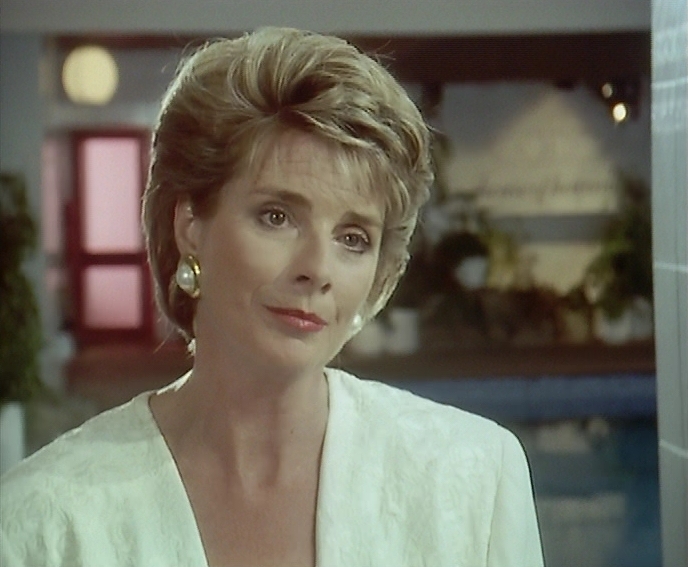
It’s something I’ve touched on before, but Howards’ Way – despite the fact it was sometimes labelled as a show which embraced Thatcherite ideals – often took pains to spell out that business success counted for nothing without personal happiness. And that’s very much a theme of this final episode as three characters – Jan, Abby and Charles – discover.

Jan’s not had the most interesting things to do this year, but finally things pick up. For the first time in ages there’s a fashion show, which means there’s plenty of attractive models flouncing about whilst Jan (armed with a walkie talkie) prowls around looking stressed. Her single-minded focus on ensuring that the show goes off without a hitch means that she has no time to speak to Lynne, which is spelled out by the way she shuts her down on more than one occasion.

The fact that Lynne had important news – her pregnancy – to impart is a weapon later used by Kate. She tells Jan that it’s no use being a successful businesswoman if you neglect your family. With Leo suffering traumas over the custody of Thomas and Lynne sobbing in her room it’s fair to say that Jan’s not been offering a great deal of support to either of them. But in previous years her business focus (and the way it was detrimental to her family) was more explicitly stated – in series six it’s remained undiscussed until this final episode. That’s slightly disappointing, had it been raised earlier it would have given Jan something dramatically satisfying to play with – certainly more than the endless scenes of her looking stressed in the office (which has been her main contribution to the series this year).

Has Jan learnt her lesson? Things seem to end optimistically when she touches base with Leo, but only the unmade seventh series would have revealed whether she could reconnect with those she’d neglected.

Abby’s story is by far the most intriguing and certainly the one with the darkest ending. Again, a seventh series might have reversed this episode’s conclusion, but at this point it’s hard to see how a reconciliation between her and Leo could have been on the cards.

A rare meeting between Ken and Gerald enables Ken to air some unpalatable home truths – he believes that Abby, as the child of Polly and Charles, is now showing her true colours. Gerald reacts angrily to this, but since he later repeats it to Abby’s face it does seem that, on reflection, he’s come to the same conclusion. Abby’s manoeuvring – albeit with Orrin’s assistance – has removed Charles from the chairmanship of Frere Holdings, with Gerald neatly slotted in as his replacement.

For a successful businessman, Gerald does have some scruples – he reacts strongly when Abby tells him the news – but he’s plainly also a realist as he does later accept the position. The father/child relationship (with both her natural and adopted fathers) has reversed totally, with Abby now in a very dominant position. That would have set up a number of possibilities had the series continued.

Abby’s exit – taking Thomas to America (ignoring the joint custody agreement arranged with Leo) – leaves us with an unresolved cliffhanger. Would she have returned or made a new life for herself in America with Orrin, William and Thomas? I’d favour the latter, but others may disagree.

How does Charles take the news that Frere Holdings is no longer his? Not very well. Drinking heavily and raising his glass to the portrait of his father that for some reason he’s not taken down, it’s the darkest we’ve ever see him. Bitterly applauding his father for triumphing from beyond the grave, Charles seems set on a downward spiral (angrily telling Lynne to leave him alone). But as with Jan, there’s hope for the future since we later see Charles negotiating a reconciliation with Lynne. Easy to see how his story would have continued – plotting to regain control of Frere Holdings, whilst juggling a possible wife and child – but would he have been able to maintain the correct balance in his life which had (up until now) proved impossible? Another of those imponderables.

I have to confess that keeping track of the various businesses and their share holdings has become a little confusing over time. It seems unlikely that Charles could have been levered out of the chairman’s seat so easily, especially when all previous attempts had failed. True, Abby and Orrin now have access to Sir Edward’s shares in Frere Holdings (plus Pierre Challon’s minor holding also played a part) but it’s hard to imagine that would have been enough. Just how did Sir Edward manage to gain control of such a large block of shares, and if he did have them why didn’t he attempt to force Charles out in the past?

Equally perplexing is the way that Ken regains control of Leisurecruise. Orrin’s shares were enough to tip the balance, but again this seems a little too convenient to be true. Ah well, it least it gives us one final Ken/Laura confrontation, this time with Ken gloatingly telling Laura to clear her desk. Ken might be the only one who seems content with business success alone, but even he’s given a small personal beat of regret (at the end of the episode he looks longingly at Jan – strengthening my suspicion that they might have got back together sometime in the future).

Even by HW‘s own standards, the resolution of Brigette Dupont’s claim on Lynne’s perfume was dealt with in a very half-hearted way (Admiral Redfern dropped by to casually let Jan know that Ms Dupont didn’t have a leg to stand on). Goodness knows why they raised this plot-thread in the first place if they were going to dismiss it pretty much straightaway.

Jack’s decision to leave the Mermaid for another yard where he can work in wood (he likes wood you know) is also rushed through at breakneck speed. But this does allow the series a sense of closure as well as an air of new beginnings – Jack exits the yard for the final time and Leo takes over. Leo’s story is also at a crossroads – following in his father’s footsteps at the yard, he sees his design for the America’s Cup accepted by Admiral Redfern’s consortium. That’s a remarkable (if not to say totally improbable) development for a novice designer. And when Jenny came home from her round the world trip, would it be into Leo’s arms or would Abby have returned to stake a claim on him? Alas, we’ll never know.

And that’s that. Seventy eight episodes which were sometimes confusing, sometimes infuriating but almost always highly entertaining and never dull. If Howards’ Way lacked the tight scripting of Glaister’s previous soapy drama – The Brothers – then the performances of the regulars always helped to paper over most of the cracks. It’s certainly a series I’ve revisited a number of times and I know I’ll come back to it again in the future. The world of Tarrant is always an enjoyable place to visit.

h17.jpg