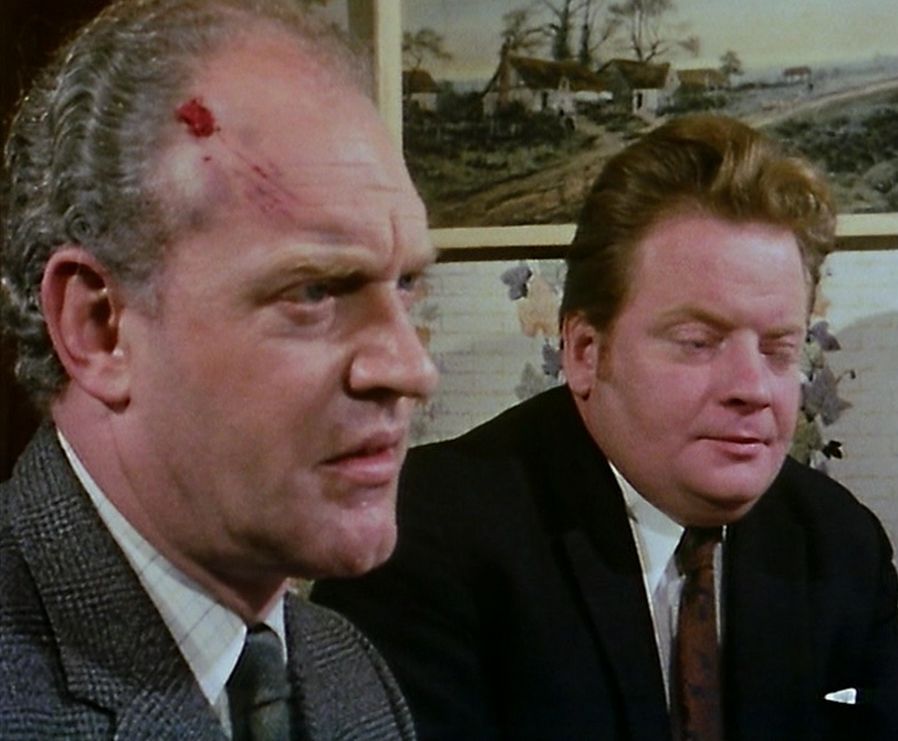
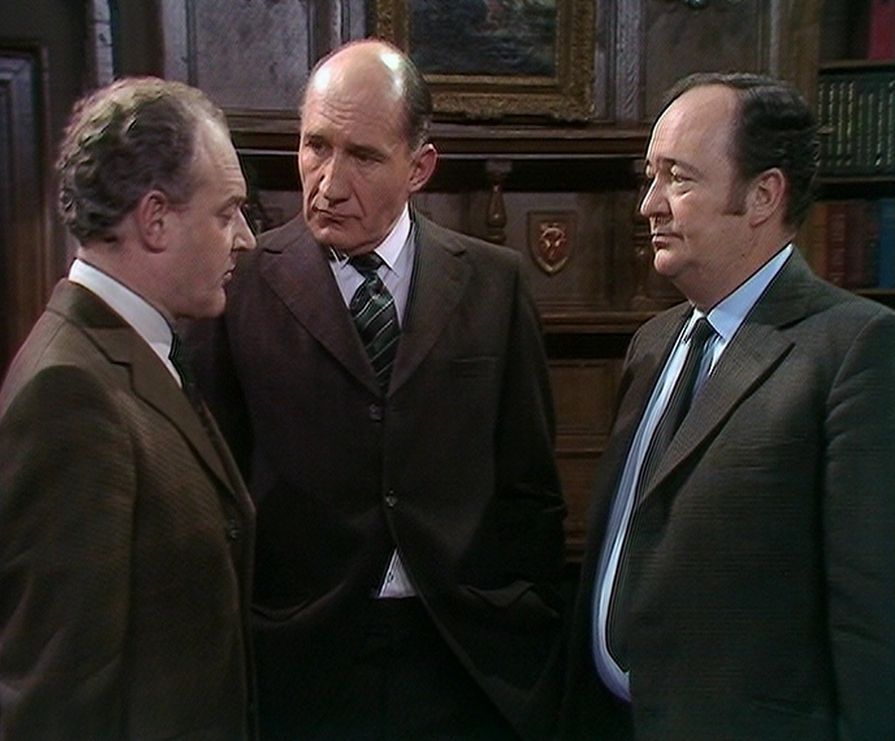
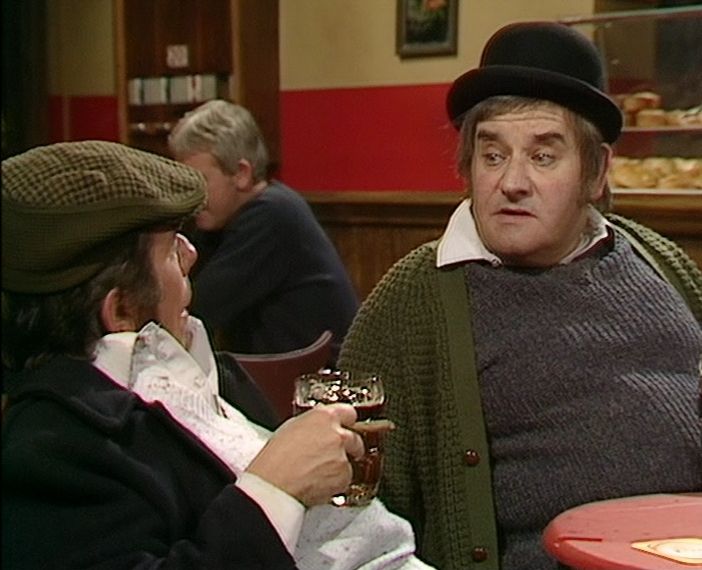
Pinter at the BBC – Monologue (13th April 1973)

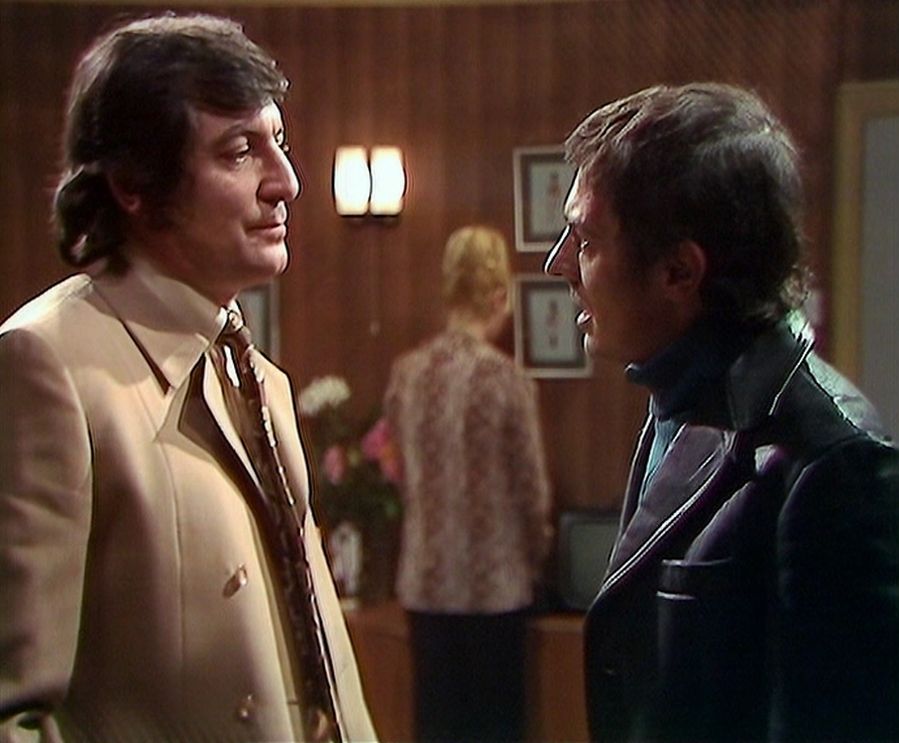
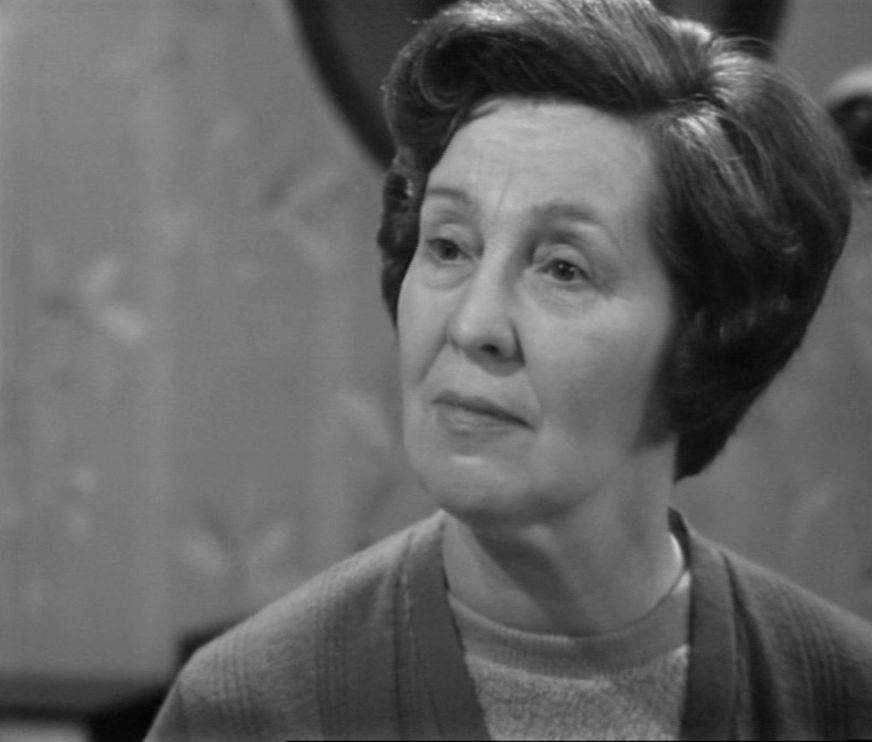
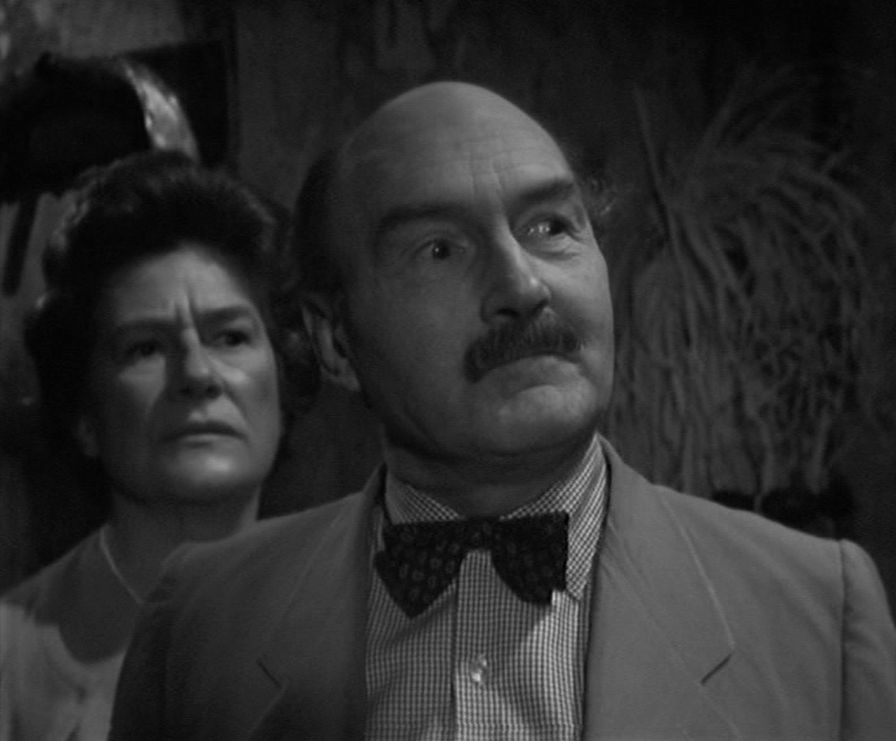
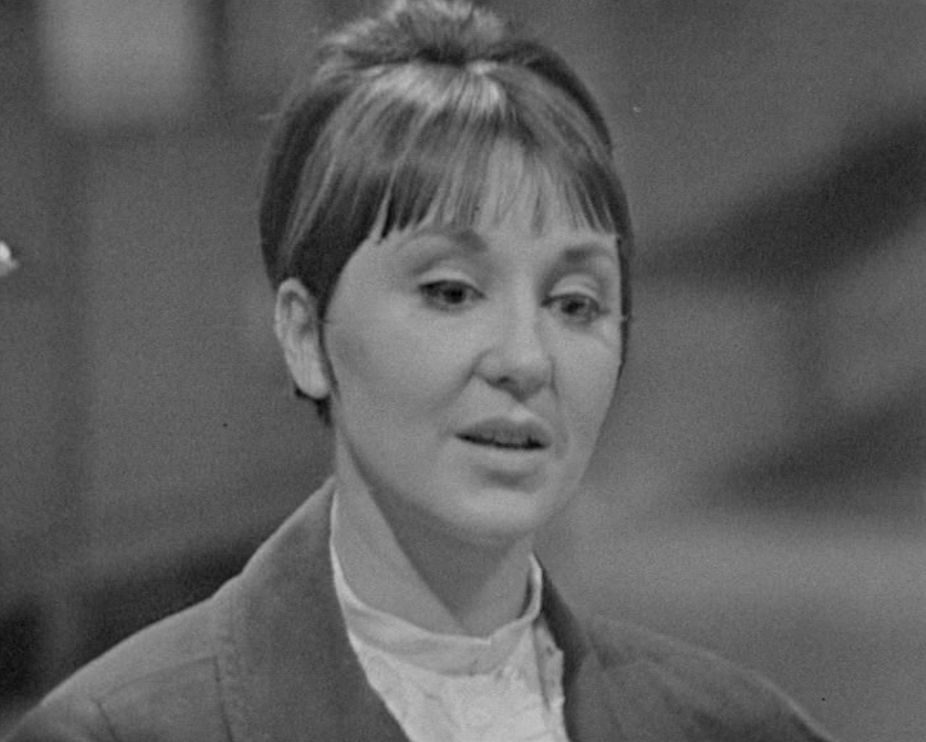
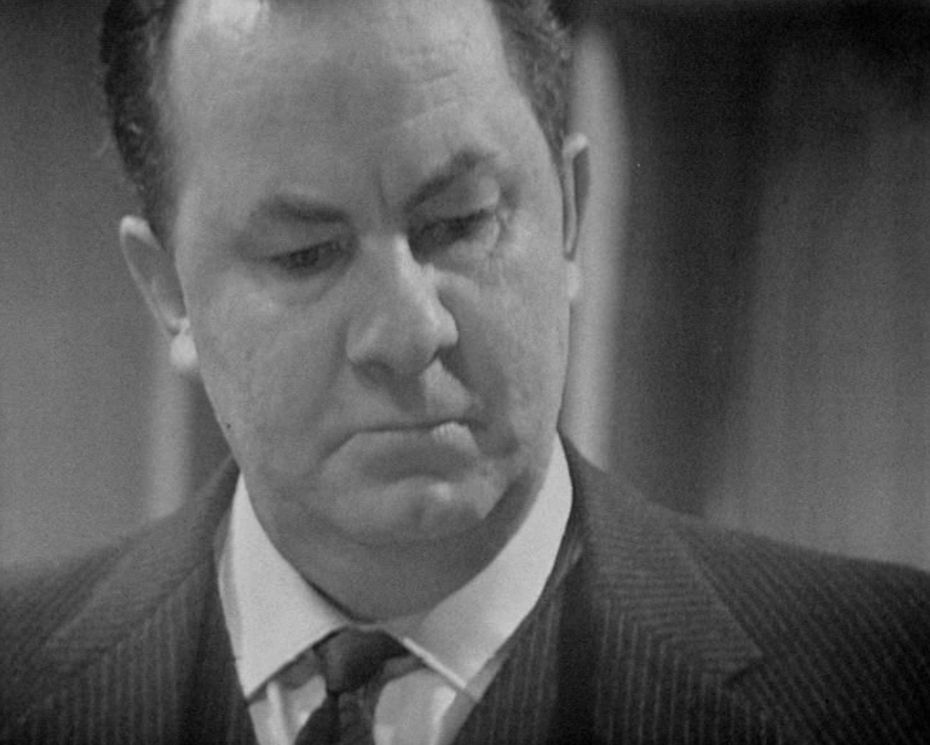
Clocking in at just twenty minutes, Monologue is the shortest main feature on the Pinter at the BBC set, but even with this brief running time it’s still unmistakably Pinter.

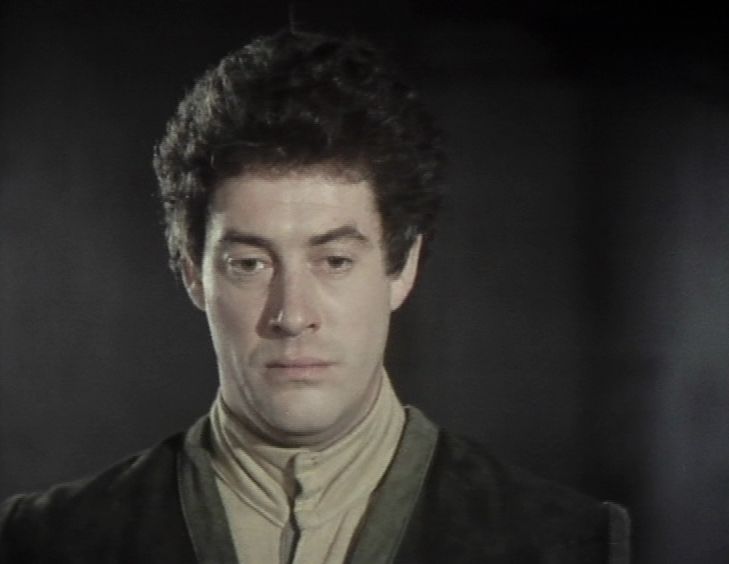
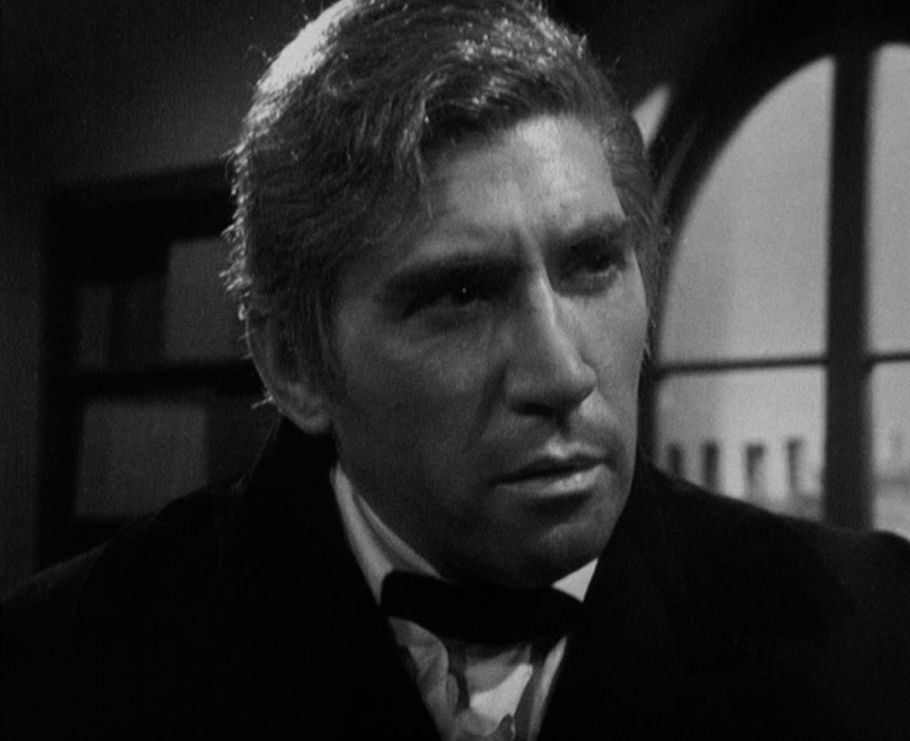
The staging is simple – a single room with one occupant. The unnamed man (Henry Woolf) addresses an absent friend represented by an empty chair. As the monologue progresses, several questions begin to form. Is his friend dead? Or did he ever exist? And what about the black girl, who drove a wedge between their friendship?

Watching the plays on the set in transmission order, the parallels between this and The Basement helps to highlight the way that Pinter always returned to certain themes (for example, how male friendship can be disrupted by the arrival of a female.

Christopher Morahan, who had directed two of Pinter’s Theatre 625 plays a few years earlier, treats the empty chair as a character in its own right. Therefore just as the camera occasionally zooms into Woolf, it also does the same with the chair. A simple camera operation, but it’s still very effective.

With Woolf addressing the empty chair rather than the camera, the viewer is therefore placed in the position of an outsider, taking a voyeuristic interest in the unfolding drama.

This is reinforced by the way that the camera begins proceedings outside the door before entering the room (and then at the conclusion of the talk discreetly exits).

Henry Woolf’s friendship with Harold Pinter dated back to the 1940’s (as detailed in this Guardian article). His relationship with this piece would also be lengthy (he performed it again at the National Theatre in 2002).

A fairly neglected piece, Monologue doesn’t offer any startling revelations, but it remains a memorable Pinter miniature.

Softly Softly: Task Force – Bank Rate (11th October 1972)

ss3.jpg

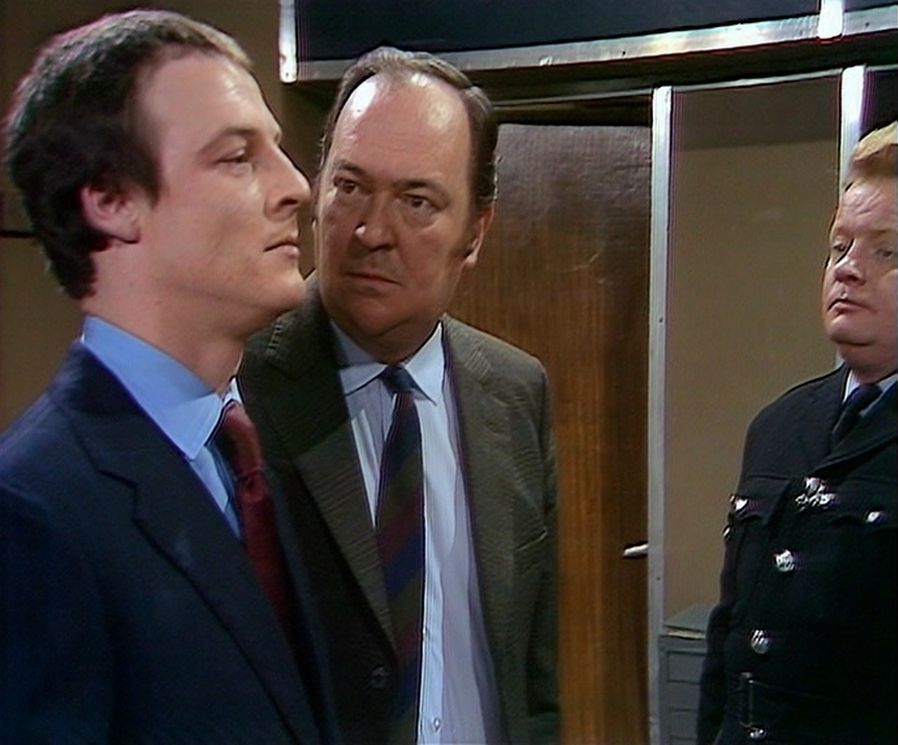
There’s an incredibly high level of coincidence to be found in Bank Rate, but since it’s a pretty decent episode I’m prepared to cut it some slack.

Harry Hawkins’ relationship with Sara (Jenny Hanley) continues. They’ve bonded over a mutual love of horses, something which Sara’s cousin, Peter Warner (Jonathan Newth), also shares.  Warner is a bank manager whose establishment is due to be targeted by Tom Rattery (Carl Rigg), a robber who both Hawkins and Warner have met in passing. Oh, and Sara’s stable-hand, Danny Fitch (Angus Lennie), knows more than he’s telling about these bank raids ….

Newth’s an instantly recognisable actor, someone with a score of interesting credits to his name. He’s perfect casting as the superior Warner, a man keen to cultivate Hawkins for his own profitable ends. Hawkins is having none of it though – he reports the approach to Watt with horror (according to Hawkins, Warner’s offer of sharing his prize horse is akin to loaning out a woman!)

Angus Lennie could always be called upon to play the downtrodden type very well, as he does here. Mind you, it’s a slight pity that Danny’s shifty nature is so obviously signposted right from the start – the first time Danny spies Hawkins he reacts with a very guilty look (which rather gives the game away). And anyway, why would any decent criminal confide their plans to the garrulous Danny? That’s a part of the plot which doesn’t make sense.

I’m used to Havoc providing the action in early seventies drama, but today it was Action Unique (who mustered a very athletic bunch of criminals it has to be said). The final scene, which sees the robbers confronted in Warner’s bank by Hawkins and co, is priceless – especially the part where a dapper John Watt grabs a Bobby Ball look-a-like and slams his head against the desk several times!

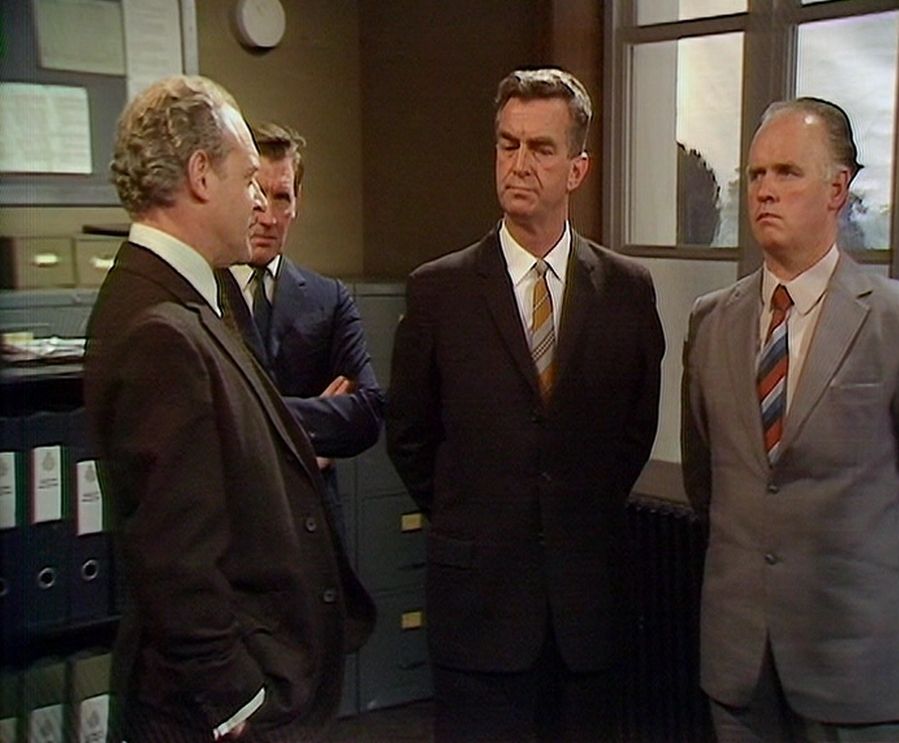
The other moment which caught my eye was an earlier meeting between Watt, Snow, Knowles and three CID officers. It became clear very quickly that the CID men were unspeaking extras, so whilst Watt expounded at great length, they were forced to remain mute. Nodding their heads vigorously and checking their notebooks with a faint air of embarrassment were the only options left open to them ….

ss

Softly Softly: Task Force – Dog Eat Dog (4th October 1972)

ss3.jpg

Dog Eat Dog is that rarest of SS:TF beasts – a Snow-centric episode. PC Snow stumbles across Colin Talbot (Greg Smith) a troubled teenager who – like Snow – has recently lost his dog.  This would seem to be the cue for the two to bond, but it’s not quite as straightforward as that.

Snow later returns with a present for him (a puppy) but Colin angrily refuses it.  Given that Rigby and Smith share several strong scenes at the start of the episode, we seem to be heading towards a story in which Colin will feature heavily. It’s therefore slightly surprising that he then disappears from view until the final ten minutes or so.

But even though he’s offscreen, the problem of Colin still dominates. His father, Harry Talbot (Windsor Davies), is a right piece of work – a workshy layabout, he despises the boy (demonstrated by the fact he strangled his dog).  Needless to say Snow doesn’t react to this news terribly well – the scene where Snow and Talbot face off is an episode highlight.  The way that Snow casually calls Talbot a “bastard” before threatening violence is all the more chilling due to Rigby’s typically measured delivery.

Another highlight is Watt’s confrontation with Snow. With Barlow absent, Watt is the episode’s authority figure – although he’s largely used here for comic effect.  After sustaining a nasty injury to his nose (Evans was forced to break heavily when Snow’s puppy ran out in front of their car) Watt’s patience with the do-gooder Snow is stretched to breaking point ….

PC Knowles (Martin C. Thurley) also gets a spot of character development. The latest of the desk-bound coordinators, he has a few mild clashes with the practical Snow (Knowles – somewhat physically underdeveloped – also admires Snow’s impressive shoulders!). This is another nice comic touch which helps to balance out the drama of Colin’s storyline.

If we trust IMDb, then this was Ewart Alexander’s sole SS:TF script, which might explain why the tone feels slightly different.  No complaints though, as it’s good to have some episodes which push the series in an unusual direction.

ss4

Softly Softly: Task Force – Surveillance (27th September 1972)

ss.jpg

Surveillance begins slowly (which is hardly unusual for SS:TF) although things hot up when Frank Martin (Frank Wylie), one of three safecrackers, is pursued from the scene of the crime by Snow.

Since Martin’s already loosed off one shot whilst making his escape, it seems a little unwise for Snow to slowly step towards him, especially since he’s still brandishing the gun. This moment seems to be a homage to that scene from The Blue Lamp, but Snow proves to be much more agile than poor old George Dixon (he dodges the bullet).

Martin gets away and later holes up with William Chalmers (Jon Laurimore).  Martin might be physically slighter than Chalmers, but he finds himself in a position of authority (mainly because Martin’s arrest would also implicate Chalmers). Laurimore could play this sort of dodgy role in his sleep, but he’s still more than watchable – especially later on when Chalmers and Barlow come face to face.

Wylie has the best defined guest role though. Martin’s unpredictability and simmering violence is teased out during the episode, even if it’s hard to ever believe in him as a real threat. Possibly this has something to do with the fact that SS:TF generally had a very sedate pace – violence rarely reared its head.

If Barlow loses his rag when briefly questioning another of the gang, Terry Condon (Nigel Humphreys) then he’s sweetness and light when Chalmers is wheeled in later. I’m not sure which is the most dangerous – impulsive Barlow or cold and calculating Barlow ….

Surveillance has a nice spot of night-time location filming at the beginning and the end of the episode. This helps to open up what would otherwise be a fairly static story. Overall it’s not a top-tier instalment, but Wylie and Laurimore help to keep the interest levels up.

ss1

Softly Softly: Task Force – Spit and Polish (13th September 1972)

ss7.jpg

There’s a lot to process during the opening few minutes of Spit and Polish. A new theme tune, Hawkins in uniform, Evans in plain clothes and PC Snow’s faithful canine friend, Radar, seems to have died ….

Entirely shot on film, it’s certainly in much better nick than the last available all-film episode (Lessons from series two).  The Task Force are on the hunt for an attacker of women. At present he hasn’t done anything worse than tear their clothes, which Barlow – to Evans’ disgust – is disappointed about. A rape or serious assault would provide them with some decent forensic evidence.

Early on the women are just passive victims (mentioned, but not seen). The next target – Sara Jamieson (Jenny Hanley) – is quite different. An upwardly-mobile horsey type, she’s able to beat her assailant off with a riding crop and seems undisturbed by the attack. Later she wonders why the man didn’t target one of the many women who are begging to be raped (a moment which helps to date the story firmly in another era).

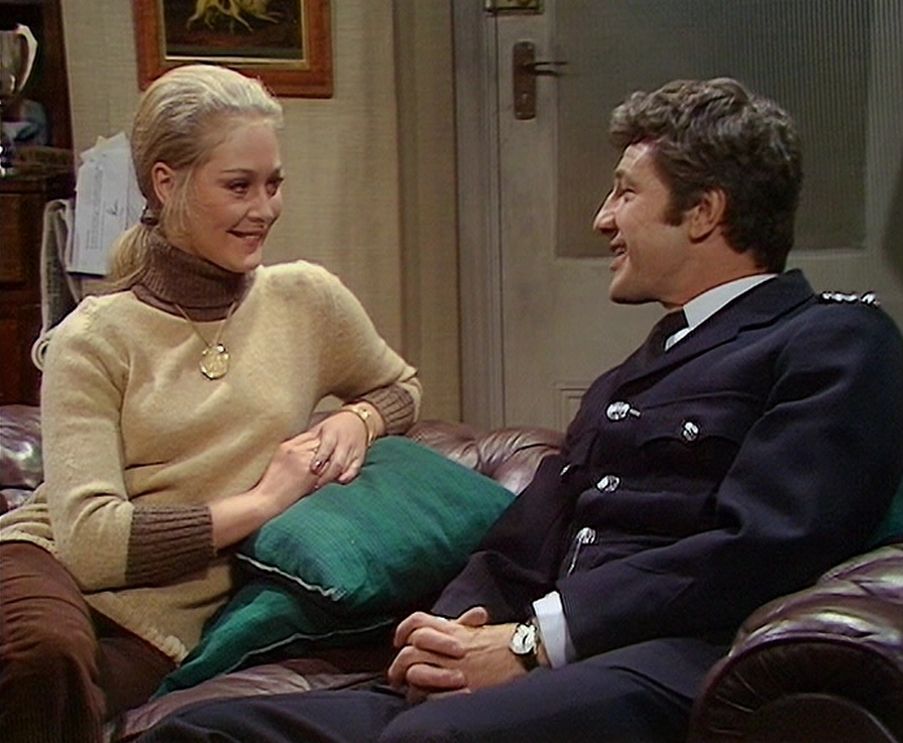
Sara is certainly something of a hit with the Task Force. She and Watt have a brief moment of banter (Watt’s a bit of a flirt on the sly) and later Sara has a lengthy chat with Snow (a good character moment for Rigby).  But it’s Harry Hawkins whom she’s got the hots for – they pop out for a spot of dinner and dancing.

Hanley’s excellent value as the pampered (but not unlikeable) rich girl. The always dependable Peter Copley pops up as Brigadier Jamieson, Sara’s father and a local big-wig (hence Barlow’s desire to keep him sweet).

Spit and Polish certainly has an expansive feel, quite different from some of the more enclosed, studio-bound episodes (it concludes with an impressive stunt featuring the attacker jumping off a ship). Whilst the rape comment (especially coming from Sara’s mouth) is very jolting, at least the episode doesn’t present her as a victim (indeed, she’s the key to running the assailant to ground) which is certainly something in its favour.

ss4

Pinter at the BBC: Theatre 625 – The Basement (20th February 1967)

Law (Derek Godfrey) finds his cosy basement flat invaded by an old friend, Stott (Pinter) and Stott’s young and mainly silent girlfriend Jane (Kika Markham). Whilst initially pleased to see Stott, Law is less enthused when the pair begin to take ruthless charge of his surroundings ….

Although the third and final Pinter play from his Theatre 625 trilogy may initially seems to be on familiar ground (a mysterious individual indulging in oblique power games) The Basement quickly evolves into something much more interesting than might have been expected from the opening ten minutes.

Based on the first few scenes, the television viewer of 1967 would no doubt have expected a linear development of the opening theme. We have three central protagonists – the ebullient Law, the monosyllabic and slightly threatening Stott and the unfathomable Jane – and a well designed basement flat for them to co-exist in. With a running time of just under an hour, there seems ample scope for the three of them to clash.

And so they do, just not in the way that was probably expected. Whilst Tea Party featured some jarring cuts and fantasy sequences, these are much more pronounced in The Basement. Indeed, it’s possible to have some debate as to where reality ends and fantasy takes over (the final scene – delightfully circular in nature – floats the possibility that everything we’ve witnessed has been untrue).

The first jarring reality shift comes ten minutes in, as the action abruptly switches to a beach. Whilst Jane makes an elaborate sandcastle, the ever-voluble Law does his best to stake his claim as Stott’s true friend and soul-mate. Stott meanwhile, is somewhat distanced from this action. And then we quickly cut back to the flat – and in such a way which suggests that the whole beach scene was just Law’s fantasy.

Is it a good rule of thumb that any scene set outside the environs of the flat is fake? That could be so, but then some inside also have the same dreamlike quality. Time certainly seems to pass in a non-linear fashion (one minute there’s snow on the ground, the next moment it’s summer) whilst the décor of the flat also changes from scene to scene.

The final few scenes, although flat based, are clearly fantasy (Law and Stott, each stripped to the waist, attack each other with broken bottles) although whilst the men are scrapping, Jane is shown to be working in the kitchen, which appears to anchor her – if not them – in reality. This switch between the unreal and real is fascinating.

Although The Basement was staged several times (the London production of 1970 with Donald Pleasence as Law, Barry Foster as Stott and Stephanie Beacham as Jane sounds particularly intriguing) the strength of the piece is definitely its ability to rapidly change from one reality to another. Something that was simple to achieve on television (provided you had the time and the budget) but much more difficult to achieve on stage. I’d certainly be intrigued to see a staged production of the play, but I think it probably works best as a television entity.

Critical reception was mixed, but most writers had positive things to say, even if some had to confess that they didn’t understand it all. Kenneth Eastaugh, writing in the Daily Mirror, decided that it was “a unique master course for everybody who ever aspired to write” although this was qualified by some criticism of Pinter’s performance whilst he felt that Markham was merely “adequate” in her role.

J.D.S. Halworth in The Stage and Television Today also found some fault with Pinter’s Stott, although he/she was much more positive about Markham (both critics agreed that Derek Godfrey indulged in some skilful playing).

Max Wilkinson in the Coventry Herald declared that although “I am not certain what the play was about or what it was saying … I will confidently assert it was masterly”.

The Basement might be on familiar Pinter ground (unsettling and oblique) but it’s enlivened by some humorous moments. His final original work for television, it’s yet another which has aged rather well.


Softly Softly: Task Force – Conclusion (29th March 1972)

ss2.jpg

Having skirted around the periphery of several stories (although it’s possible that he featured more heavily in some of the episodes not currently available on DVD) Conclusion sees PC Drake (Brian Hall) move centre stage.

SS:TF was often content not to rush, but the opening five minutes of this one – Sergeant Evans considers Drake’s solid gold pencil from all angles – takes some beating. This expensive trinket is enough to set alarm bells ringing with Evans (as is the revelation that Drake lends his colleagues money).

One such recipient is PC Snow. It’s hard to imagine two more different characters – the confident and fly Drake lined up against the methodical and painfully honest Snow. Given this, it’s slightly difficult to see them forming much of a friendship.

Drake’s convivial relationship with his local publican (compared to Snow’s refusal to accept a drink from the same landlord) helps to differentiate their characters even more. It suggests that Drake is taking bribes, although it all seems a bit too obvious. As does the fact he flashes a gold pencil about. Surely a corrupt policeman would be a little more subtle?

The crime of the week – local churches are being robbed of their valuables – takes second place to proving Drake’s guilt or innocence, but it does provide an excellent character moment for Terence Rigby. PC Snow returns to the church where his previous police dog was shot and killed.  Rarely placed in the forefront of the action, Rigby is nevertheless always excellent value – there’s something very reassuring about the implacable Snow.

The denouement probably won’t come as too much of a surprise. Brian Hall was often cast on the wrong side of the law, as he was again here when Drake’s true nature is finally brought into the light by Barlow. Once again, Stratford Johns doesn’t disappoint.

ss8

Pinter at the BBC: Theatre 625 – A Night Out (13th February 1967)

Albert Stokes (Tony Selby), a shy young man, lives with his emotionally suffocating widowed mother (Anna Wing). His big night out – a works party – turns sour after he’s falsely accused of groping one of his female colleagues. After this bad start, his night just get worse and worse ….

A Night Out was Harold Pinter’s first substantial success. It debuted on the BBC Third Programme in March 1960 before transferring to television a month later as part of ABC’s Armchair Theatre strand. This version, starring Tom Bell, Madge Ryan and Pinter himself, can be seen on volume three of Network’s Armchair Theatre releases.

The opening scene establishes the strained relationship between Albert and Mrs Stokes. She reacts with surprise to the news that he’s planning on going out, despite the fact that he’s already told her several times. Her cheerful manner doesn’t waver – even when she’s bemoaning the fact that he’ll miss their regular Friday night game of Rummy – but it’s plain that in her non-confrontational way she’s keen to prevent his departure (not revealing the location of his precious tie, for example).

Anna Wing offers a well judged performance, pitched just right. When Mrs Stokes enquires whether her son isn’t “leading an unclean life, are you? … You’re not messing about with girls tonight, are you?” it lays bare her central concern (with her husband dead, Albert is all she has left and clearly can’t bear the thought of losing him). Is it just a coincidence that these themes would be deeply mined just a few years later by Galton and Simpson in Steptoe & Son? Even down to the name Albert?

Meanwhile, Tony Selby – as the softly-spoken, down-trodden Albert – is equally impressive. Although he’s treated with contempt by some of his colleagues – such as the arrogant Gidney (Patrick Cato) – Albert also has his supporters, notably Seeley (John Castle). Seeley and Kedge (Richard Moore) form an entertaining duo, enlivening the early part of the play with their inconsequential chatter. And once both reach the party they prove to be an instant hit with the ladies – indeed, they’re everything that the awkward Albert isn’t.

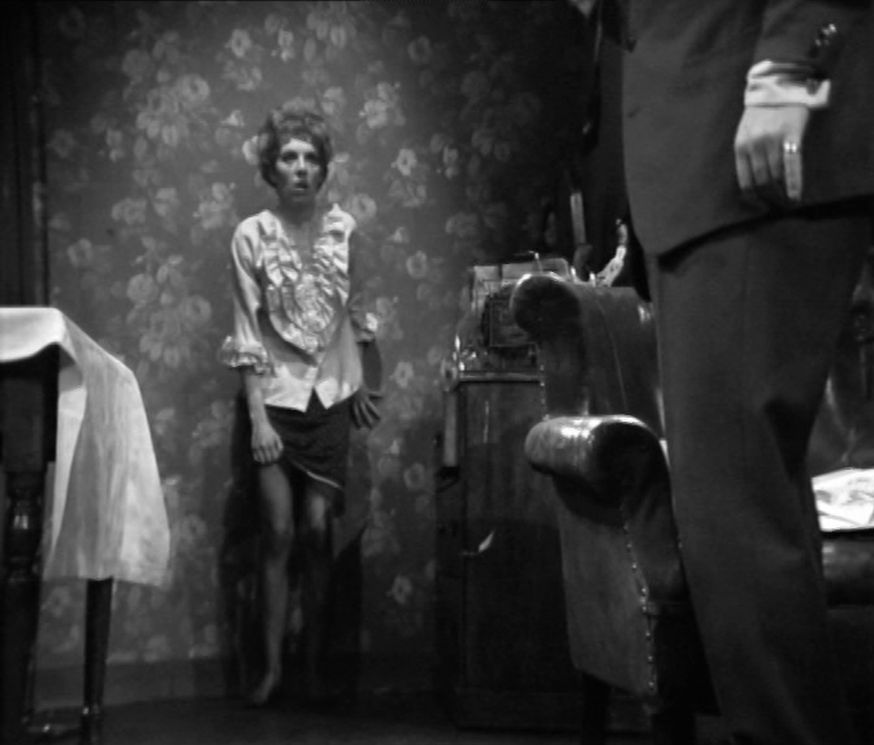
Albert’s humiliation at the party sends him back home, but as he finds no succour there he heads out again, only to be picked up by a prostitute (Avril Elgar). Her lengthy, rambling monologue is deliberately wearying (it’s Albert’s misfortune to have stumbled into the company of somebody who, in their own way, is as controlling as his mother). Given this, it’s plain that their encounter won’t end well.

Although Albert has found himself unable to express his true feelings to his mother (when he finally returns home again their uneasy status quo is maintained) he can at least vent his frustrations on the unfortunate chattering prostitute. If Selby has been cast in a submissive role for most of the play, then this climatic scene allows Albert’s tightly-wound persona free reign to explode. It’s nicely played by both Selby and Elgar.

A Night Out, given the fact it was the most straightforward of the Pinter Theatre 625 trilogy, attracted the most critical acclaim. But whilst it has the most linear and comprehensible storyline of the three, like the other two it’s replete with disturbing and memorable dialogue.

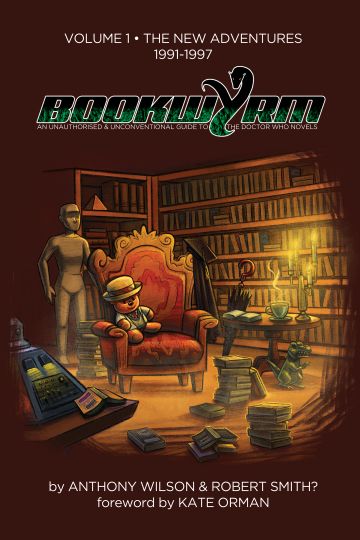
Bookwyrm: Volume 1 – The New Adventures by Anthony Wilson and Robert Smith? ATB Publishing Book Review

book

By the early nineties, with Doctor Who either dead or simply in limbo (depending on how optimistic you were) The New Adventures filled an aching gap. New Doctor Who stories available on a regular basis!

How times change. Fast forward thirty years and we’re now drowning under a surfeit of supplementary Who. The notion of attempting to read every DW novel and listen to every DW Big Finish audio currently available is surely a task beyond all but the most foolhardy or devoted.

But back in 1991 we were in virgin (sorry) territory. The New Adventures offered fans a continuation of their favourite series, but it was also much more than that. Generally the books weren’t content to simply replicate the tone and feel of television Who – the NA’s were keen to take DW to strange and new places.

I was there, right from the beginning (Timewyrm: Genesis) all the way through to the bitter end (The Dying Days) and certainly had my ups and downs with the series. For example, Original Sin really irritated me (the reveal of the baddy was the sort of fan-pleasing nonsense that I never enjoyed) but another book usually came along (Head Games or Just War, say) which made me keep the faith.

Although I was picking up the later books more out of a feeling of habit than love, the NA’s were still a very important part of my nineties fandom experience. In recent years I’ve occasionally thought about digging them out for a re-read and there’s no doubt that Bookwyrm: Volume 1 has fired my enthusiasm and made that prospect much more likely ….

The format of Bookwyrm: Volume 1 is straightforward. Each NA has its own chapter which is broken down into categories, ala The Discontinuity Guide (The Big Idea briefly summarises the plot, What You Need To Know explains how the book fits/doesn’t fit into established continuity, Timey-Wimey pinpoints any influences the book had on NuWho, plus there are sections for dialogue triumphs, disasters, etc).

Wilson and Smith? then sum up their feelings about each story. Often they’re in agreement, but sometimes not (and it’s always more interesting when opinions diverge). Indeed their trenchant viewpoints are the main reason why Bookwyrm: Volume 1 is such an entertaining read.  It might be a densely detailed book, but it’s also chatty and highly opinionated.

Sometimes these opinions chimed with my own and sometimes they didn’t.  It was slightly surprising to see Transit praised and The Highest Science mildly slated.  Back in the day, Transit was the one which generated all the brickbats whilst The Highest Science was warmly received.

But this may well have had something to do with the fact that The Highest Science was the sort of “traditional” story that the more conservative wing of fandom would have embraced. Whereas Transit was definitely “new” and therefore something to be approached with caution.  I’m keen now to go back and revisit both of them. Is Transit a lost classic? I’ll let you know in due course.

But there’s no disagreement from them or me about the quality of the first NA, meaning that John Peel receives a well deserved kicking for Timewyrm: Genesis.

Like a child in a sweet shop, Peel has discovered that writing a book means there are no limitations regarding actors who, on television, have to be paid (or, indeed, alive) to appear, so cameos and continuity references abound. Like nausea, it comes in waves, calming down for a time then springing itself upon you when you least expect. Pages 140–141, for example, mention K’Anpo, Sontarans, Vardans, the Matrix, K9, Leela, Andred, Katarina, Sara Kingdom, Daleks, Adric and Cybermen, all in the space of about 25 lines.

In many ways, it’s quite fun, and there’s a certain amount of giddy enjoyment to be had. Unfortunately, like the child in the sweet shop, too much and you get sick. We hit this point when the seventh Doctor has to call up the ghost of Christmas Past himself, Jon Pertwee, because, apparently, the seventh Doctor can’t manage some rewiring by himself (p205).

The rant about No Future‘s cover is also highly amusing, but to be honest there’s something equally pithy about every single book and this is why Bookwyrm: Volume 1 is such a rewarding and amusing read.

No Future’s cover may well be the worst cover in the entire NA line — and, hence, the worst cover in the entirety of literature. Everybody’s hair somehow contrives to be both fluffy and spiky at the same time, except for Benny, who appears to be wearing some sort of Liza Minnelli–inspired helmet. The drummer is apparently a midget with one enormous leg. The guy behind Ace is choking on an almond, for some reason. And you’ll swear blind that Mawdryn, the fifth Doctor’s nemesis with an exposed brain, has made an appearance in the book… until you realise that said exposed brain is actually supposed to be some sort of flat cap, hovering on top of his head. Either that or a pizza. They say you shouldn’t judge a book by its cover. But in this case, you probably can.

No Future the book doesn’t get a great deal more love than the cover did, which was another surprise as my 25-year old memory doesn’t record that it was that bad.  Another one to add to the re-read pile I think.

Any NA old-timers or indeed anybody who has stumbled across these books more recently will find plenty to enjoy here.  An immensely enjoyable, highly dippable tome, Bookwrym: Volume 1 comes warmly recommended.

Bookwyrm: Volume 1 is released by ATB Publishing on the 18th of March 2019. Ordering information can be found on their website.

Pinter at the BBC: Theatre 625 – A Slight Ache (6th February 1967)

Edward (Maurice Denham) and Flora’s (Hazel Hughes) idyllic countryside life is disrupted by the arrival of an elderly matchseller (Gordon Richardson). Despite never speaking a word, the old man strikes fear into the heart of Edward and awakens in Flora long-buried sexual desires ….

The first of three consecutive Theatre 625 plays by Pinter, which aired during February 1967, A Slight Ache was originally broadcast by BBC Radio in 1959 (Denham reprising his original radio role).

The oppressive nature of silence, very much a Pinter trait, is a key theme of the play. Remaining mute and pretty much insensible throughout (although there are occasional indications that he can understand at least some of what Edward and Flora are telling him) the matchseller becomes a blank canvas – enabling Edward and Flora to project their own fears, hopes and insecurities onto him.

Both direct several lengthy monologues towards him – for Edward they’re corrosive meetings, culminating in his total collapse. Denham excels throughout (and despite having to handle some very intricate dialogue rattled off at a high pace never falters). He’s matched by Hughes though, although Flora’s meetings are very different from Edward’s.

Edward rambles around a stream of disconnected topics, finding difficulty in asking any straight questions, whereas Flora is much more forthright. For example, she begins by wondering if he could previously have been a poacher (she confides in him that she was raped by a poacher as a girl). This remembrance awakens a sexual thrill in her, which is designed to be a disconcerting revelation in someone previously presented as a loyal and dutiful wife.

Prior to the arrival of the matchseller, the pair have several lengthy scenes – beginning at the breakfast table – which help to establish their relationship. A running battle with a wasp (eventually trapped by the forceful Edward in the marmalade jar) takes up a good few minutes and manages to be both amusing and oddly disturbing. At this point Edward is the dominant force, but once the matchseller appears, their roles become increasingly reversed.

Apart from the actors, Barry Newbery’s sets are an obvious star of the production (the lush garden is particularly impressive). Christopher Morahan’s direction has some nice flourishes, but with an enclosed location and only three actors it has to be fairly static at times.

Amanda Wrigley’s notes in the BFI booklet reports that contemporary critical reaction to A Slight Ache was poor. That may be, but there was the odd positive notice. Kenneth Eastaugh in the Daily Mirror commented that the play “like all Pinter’s works is for all times and for all mediums. Because it’s all about what goes on inside people – and we never change”.

W.D.A. in the Liverpool Echo was less forgiving though, finding it doubtful that anybody would have given the old matchseller such free reign (“it seemed highly questionable”).

Whilst it’s easy to sympathise with W.D.A.’s point of view, it doesn’t prevent A Slight Ache from being a tightly performed psychological drama. True it does sag a little in the middle, but it may be that future rewatches will prove to be rewarding.

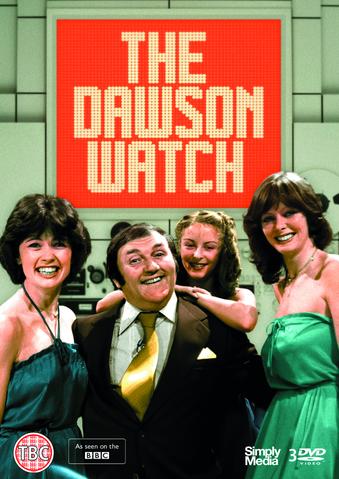
The Dawson Watch – Simply Media DVD Review

164454- Chief Crazy Horse Sleeve.indd

Les Dawson’s road to television stardom was a long and rocky one. Born in Collyhurst, Manchester in 1934, Dawson pursued numerous dead-end jobs whilst attempting to break into the comedy world.  After many false starts, thanks to a spot on Opportunity Knocks his luck slowly began to change.

His own show – Sez Lez – which ran on Yorkshire Televison from 1969 to 1976 was key in establishing his brand of entertaining miserablism.  Whilst some of the early editions were a bit thin comedy-wise, the arrival of a crop of experienced writers such as Barry Cryer and David Nobbs gave the show a considerable boost.  Having John Cleese as a regular co-star for a while didn’t hurt either.

Whilst with Yorkshire, Dawson also appeared in The Loner (scripted by Alan Plater) and Dawson’s Weekly (penned by Galton and Simpson) so he didn’t lack for heavyweight writers. Throw in a number of one-off specials, guest spots on other people’s programmes and appearances on panel shows such as Joker’s Wild and Celebrity Squares and it’s fair to say that by the mid seventies Dawson had well and truly arrived.

His defection to the BBC in 1977 wasn’t a shock on the same level as the departure of Morecambe and Wise to Thames, but it still raised a few eyebrows.  Lacking his familiar group of writers (even though they would have been happy to continue working with him) Dawson’s first BBC starring venture – imaginatively titled The Les Dawson Show – turned out to be something of a damp squib.

The writers – including Eddie Braben and a young David Renwick – were strong, but in some respects it seemed to be little more than a Sez Lez rehash (Les interacting with guest stars – such as Lulu – plus regular spots for singers and dancers).  The time was clearly right for Les to do something a little different next time and so The Dawson Watch (1979 – 1980) was born.

Dawson’s monologues (which he wrote himself, the sketches tended to be penned by other writers) often railed at life’s follies, so a series in which Les examined a different hot topic each week (Housing, Transport, Money, etc) was something which played to his strengths.

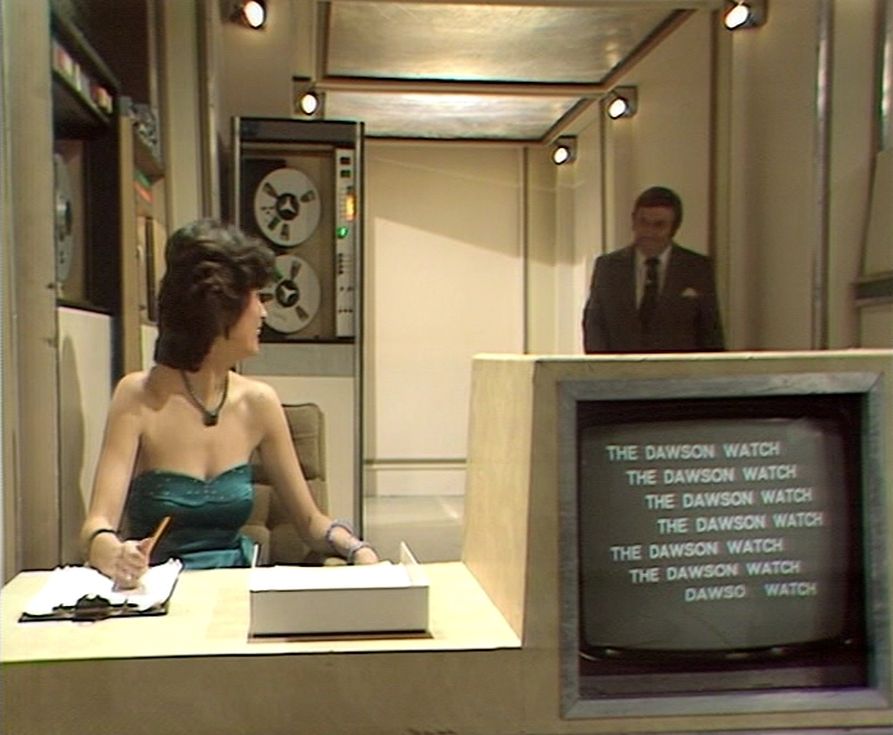
Along with a new writing team – Ian Davidson as script editor, Terry Ravenscroft and Andy Hamilton providing the sketches – the show began to take shape.  The Dawson Watch has the air of a consumer programme in which Les introduces sketches illustrating the topic of the week whilst moving around a studio packed with high-tech equipment (well, high-tech for the late seventies) and attractive young ladies pushing buttons.

daw20.jpg

It’s fair to say that the first series was a learning experience for all concerned.  Dawson seemed a little ill-at-ease in the first programme, only coming to life when he began to banter with the audience about where they live.  Once he does that – and presumably starts to go off-script – he visibly perks up.  Although there’s plenty of new material in his monologues, several old favourites (“until I was fifteen, I thought that knives and forks were jewellery”) also receive airings.

There are so many gems which can be mined from Dawson’s routines, such as this bleak portrait of Christmas.  Les confided that he could “only remember being given one Christmas present by my father. It was a do-it-yourself electric train set. Turned out to be a roll of fuse wire and a platform ticket”.

Possibly the major failing of the first series is the fact that Dawson doesn’t appear in many of the sketches.  Familiar faces such as Cosmo Smallpiece and Cissie and Ada do pop up, but most of the sketches are handled by others.  There’s certainly some very talented performers on view during these early shows – Sam Kelly, Johnny Ball, Michael Knowles, John Junkin, Patrick Newell, Terence Alexander, David Lodge, Andrew Sachs – but it would have been much more enjoyable had we seen Dawson playing off against them.

However, one of Les’ early sketch appearances (with Roy Barraclough as Cissie) is a Dawson classic.

CISSIE: Leonard and I went to Greece last year.
ADA: Oh, Bert and I have been to Greece, with Wallace Arnold’s Sunkissed Package Holiday and Inter-Continental Tours.
CISSIE: Oh, really? Did you have the shish kebabs?
ADA: From the moment we arrived. All down that side.
CISSIE: Did you see the Acropolis?
ADA: See it? We were never off it.

Clearly lessons had been learned for series two as Dawson takes a much more central role in the sketches whilst Vicki Michelle (as one of the computer girls) proved to be a welcome additon to the line-up. The girls in the first series were rarely called upon to be anything more than mute and attractive – acting simply as fodder for Dawson’s remarks – but Michelle possessed the comic chops to be able to engage in banter with him (which made Les’ lecherous advances seem a little less uncomfortable).

The astonishing roster of familiar faces making guest appearances during series one was reduced for the second and third series.  As was more common with series of this type, a “rep” of performers was used instead – Roy Barraclough headed the list, with Daphne Oxenford and Gordon Peters amongst the other regulars.

The formula remained the same for the third and final series (broadcast in 1980 and culminating with a Christmas Special discussing the obvious topic of Christmas). Vicki Michelle wasn’t featured so prominently, although one of her future Allo, Allo! co-stars, Kirsten Cooke, made a few appearances whilst it was also nice to see the likes of George Sweeney and Michael Keating.

Compared to some of his contemporaries, such as Mike Yarwood and Dick Emery, Les Dawson is very well represented on DVD. Virtually all of his surviving ITV material can be purchased from Network whilst this release from Simply constitutes a welcome chunk of his later BBC work. Hopefully more will surface in the future.

Whilst some aspects of Dawson’s humour haven’t aged well, there’s still so much of interest here – his wonderfully crafted monologues, the impressive parade of supporting actors – to make it easy for me to wholeheartedly recommend this release.

The Dawson Watch consists of nineteen 30 minute episodes spread across three discs (six, six, seven) and is subtitled. It’s released tomorrow (4th March 2019) by Simply Media and can be ordered directly here (quoting ARCHIVE10 will apply a 10% discount).


Blakes 7 – In Praise of Series A

Last year I treated myself to a fortieth anniversary Blakes 7 rewatch (one episode per week). It was jolly good fun (well, apart from Hostage and a few others) and by the time everybody had bitten the dust on Gauda Prime, I did feel a more than a twinge of regret.

I also came away from the rewatch with a new appreciation for series A, which (if I was the sort of person to bother about rankings) I’d have to claim as my favourite run of B7 episodes.

Partly this is borne out of nostalgia as I acquired ex-rental VHS tapes of The Beginning and Duel back in 1987. With the unedited, episodic releases not beginning until 1991, for a number of years these were the only B7 episodes I had. So I watched them again and again and again ….

Trimmed as they are (The Way Back was reduced to a mere 15 minutes, the others clocked in at around 40 minutes each) there’s still something magical to me about these video presentations. A pity that nobody’s uploaded good quality versions to YouTube. Oh well.

Trevor Hoyle’s first novelisation also helped to stoke my interest in these early episodes (I’ve no idea why I didn’t buy the others at the tine). Roj Blake’s struggles after leaving the security of Dome City (from the publishers of Star Wars no less) certainly fired my imagination.

This slideshow requires JavaScript.

Occassionly this question is posed from a B7 newbie – where to start? The Way Back would seem to be the obvious choice, but some say no. That’s baffling to me (I suspect they’re rabid Avon fans, pining for their hero) as whilst The Way Back is totally atypical, you really need to watch it in order to understand just what makes Blake tick.

Playground dispute question, who’s best – Blake or Avon? I’m a confirmed Blake fan (although series C and D weren’t without their moments of interest).  Both characters have plenty of layers which can be unpeeled, but Blake has always fascinated me more.

Series A also boasts strong roles for Jenna and Cally (well, strong-ish). I always got the feeling that Sally Knyvette’s decision not to re-sign for series C was the reason why Jenna was written out of large parts of series B (on more than one occassion the girls were relegated to the job of teleport operators whilst the boys went out to play). Both are certainly better served by Series A, even if they’re not driving any of the plots.

Series A also benefits from the best Travis and only a handful of appearances by Servalan. Of course I love Jacqueline Pearce, but Servalan was hopelessly overused during the next three years. Ideally she should have had strong roles in three or four stories each year. Alas, they couldn’t resist the temptation of shoe-horning her into any old plot, whether she fitted or not ….

Terry Nation may have run out of steam towards the end (Deliverance/Orac and also had to rely heavily on Chris Boucher at times (Nation’s first draft of Bounty was very weedy) but the fact that Series A featured a single authorial voice is something else which appeals. The series had to broaden its writers pool in order to survive, but there’s an undeniable unity to these stories and this helps to compensate for some of the more clunkier or familiar plot devices (radiation sickness! anti-radiation drugs!)

The fairly drab costumes also anchors the series into some sort of reality. Clearly at this point they hadn’t discovered the Liberator wardrobe with the more outlandish clothing creations. We’d have to wait for series B for that.

So there you have it. Series A is really rather good. In fact I think I’m going to go and watch it again.

Impossible Peace – Simply Media DVD Review

164454- Chief Crazy Horse Sleeve.indd

By the end of 1919 – when our story starts – it was all done and dusted. The terms had been hammered out at Versailles, the great and powerful had signed the papers, the echoes of war were fading and the new age, the age of a hard-won peace, was beginning.

It would last just twenty years. The twenty years that occupy our series. Twenty years is not a long time. This is the story of what went wrong.

WW1 might have been dubbed ‘the war to end all wars’ but a little over twenty years later the world fell headlong into a second world war, and one which was even more devastating than the first.

Numerous previous documentaries have examined the various causes of WW2, but most tend to begin with the rise of Hitler in 1933.  Impossible Peace winds the clock right back in order to suggest that WW2 was the inevitable result of the uneasy and unstable 1918 peace.

Impossible Peace is an eight part series (each edition approx. 50 minutes) developed by WildBear Entertainment and directed by Michael Cove. An Australian production company, WildBear have nevertheless ensured that Impossible Peace has a strong British flavour.  The narrator – Rod Mullinar – is a British born, Australian based actor who possesses the sort of deep and authoritative tones which fit perfectly with the style of this documentary.  True, he sometimes sounds a little overwrought but that’s no doubt due to the occasional patches of purple prose contained within the script.

Interspersed between the substantial archive footage are contributions (often brief, but always insightful) from a crop of British based academics.  And although political and military matters are heavily favoured, popular culture (including fashion, music and movies) are also featured – in this way, a more rounded picture of these two tumultuous decades can be formed.

The eight episodes are as follows:

1. The Lap of the Gods 1919-1921

After four years of vicious fighting, the survivors of WW1 expected that peace and prosperity would follow. But with so many economies and societies shattered (some maybe beyond repair) this would be far from straightforward.

2. Just Like the Arabian Nights 1922-1925

The victors of World War 1 believed that keeping their vanquished foes under-armed would guarantee peace.  And so as the US and Great Britain began to increase their military holdings, it was at the expense of a humiliated Germany.

3. Mussolini Is Always Right 1925-1929

Technological advances were embraced by some – but not all – whilst Mussolini began his autocratic rule in Italy.

4. Dancing On A Volcano 1929-1931

By the late twenties, Europe – France especially – appeared to have put the bad old days of economic strife behind them.  A few voices warned that this boom time would have inevitable consequences, but the majority weren’t listening ….

5. I’m Alright 1932-1933

With Europe now in the grip of a deep depression, where were the strong, charismatic leaders able to negotiate their way through this crisis period?

6. Everyone Trusts Him 1933-1936

With the United States also suffering, Japan took the opportunity to increase their empire.  Turning their attention to East Asia, they plotted the invasion of Manchuria.

7. History Stopped 1936-1938

By the mid thirties, Adolf Hitler’s ambitions seemed clear to all. If the great powers had acted earlier, would their intervention have prevented WW2?

8. Peace For Our Time 1938-1939

For some, appeasement was the only way (repeating the disaster of WW1 had to be avoided at all costs). But with Adolf Hitler at the other end of the negotiating table, this was a strategy doomed to failure.

Concise and absorbing, Impossible Peace rattles along at an impressive rate.  With such a wide-ranging scope, it’s true that some topics can only be lightly touched upon, but I’ve always tended to find that documentaries like this are useful for sparking an interest in certain topics which can then be researched in more detail by acquiring specific books, documentaries, etc.

If I have one quibble, then it’s the constant musical soundtrack.  There were times when I would have preferred the visuals and the narration to have spoken for itself as the ever-present musical underscore (especially when it’s in full-on dramatic mode) can be somewhat counter-productive.

This apart, there’s a great deal to appreciate in Impossible Peace (a three-disc set with no subtitles) and it comes warmly recommended.

Impossible Peace is available now from Simply Media, RRP £19.99.  It can be ordered directly from Simply here (quoting ARCHIVE10 will apply a 10% discount).

Pinter at the BBC – Tea Party (25th March 1966)


Disson (Leo McKern) seems to have a perfect life. A self-made millionaire, he has a beautiful new wife, Diana (Jennifer Wright), has welcomed his brother-in-law, Willy (Charles Gray), into the business and has engaged a bright and efficient new secretary, Wendy (Vivien Merchant). And yet ….

Broadcast in March 1965, Tea Party was a prestigious commission for Pinter. Part of a Eurovision project, entitled The Largest Theatre In The World, it saw the play performed in thirteen separate counties over the course of a single week (with each county either tackling their own translated version or broadcasting a subtitled copy of the UK transmission).

Disson is a ruthlessly efficient man, beginning the play by proudly informing Wendy about the various products his company produces. That they’re all bathroom related strikes a humorous tone (reinforcing this point, on the way to his office she passes several prominent displays of toilets and baths). As you might expect, this light tone simply softens us up for the darkness to follow.

Disson might react in shock to the revelation that Wendy was forced to leave her last job because her previous employer wouldn’t stop touching her, but the way that director Charles Jarrett has already begun to focus on Wendy as a sexual object (foregrounding her legs whilst relegating Disson to the background) provides us with a clear pointer about one of the play’s key themes.

Considering the period (this was a time when television cameras were bulky and difficult to handle) Jarrett’s direction has a surprising fluidity. Interesting shot compositions abound – from this first scene (with POV shots from Wendy’s perspective) to later in the play (several sweeping tracking shots catch the eye).

Pinter remarked on the way that Disson was a marked man right from his first appearance. This is very much the case, which means it doesn’t take long before he starts to unravel before our eyes. And as the play progresses there’s a definite blurring of reality – some of what we see is the truth, whilst the remainder is no more than Disson’s fevered imaginings. How to differentiate between the two? As so often with Pinter the individual viewer is left to draw their own conclusions.

This means that we’re left with some intriguing mysteries. Diana and Willy have a very close bond – is this simply a natural connection between brother and sister, the hint of something incestuous or are we being invited to consider the possibility that Willy is no relation at all? Also, Disson’s two children, Tom and John (Peter and Robert Barlett) possess an uncomfortable stillness at times. Again, the reason for this is opaque – a sign of malevolence or are they simply ordinary children viewed through a confusing prism by the increasingly befuddled Disson?

Pinter seemed quite confident that the audience wouldn’t have any problems following the play. Talking to the Daily Mirror (who dubbed him one of Britain’s most controversial playwrights) on the day of transmisson, he stated it was simply a story about the relationship between a man and his new secretary, albeit one “with a strong sex theme”. The same article offered up a few more nuggets of interest, chiefly that it took Pinter a month to write and that it was extensively edited by Jarrett (understandable, given the scope of the production).

Performances, as you’d expect, are very strong. McKern – always a favourite actor of mine – doesn’t disappoint as Disson. His final collapse (by the end of the play he’s reduced to a catatonic state) is deeply disturbing, but then so are numerous smaller moments along the way which suggests a crisis is looming.

McKern’s scenes with Vivien Merchant crackle with an uneasy sexual tension. Given Merchant’s familiarity both with Pinter and his work (she was his first wife) it’s possibly not surprising that she seems so connected to the material. Although they didn’t divorce until the late seventies, their marriage (due to Pinter’s extra-marital affairs) had already begun to flounder by the time of Tea Party, which only serves to give her scenes a little extra frisson.

Jennifer Wright has the less rewarding female role, although it’s not totally without merit. Like all the people closest to Disson, it’s possible to take Diana’s actions at face value (she appears to be a totally supportive wife) or conversely to consider the possibility that some of Disson’s suspicions may be grounded in reality.

Charles Gray offers a typically rich performance as Willy. Gray’s penchant for playing sinister types ensures that he invests Willy with a pleasing duality. He’s perfectly charming on the surface, but there’s also the sense of hidden manipulative depths (although this could simply be a reading based on his wider career).

Disson has been complaining of eye trouble for some time. Wendy has attempted to ease his discomfort on several occasions by blindfolding him with a piece of chiffon. However it’s notable that he seems most emboldened to grope her when his eyes are covered. Are we to assume that Disson’s “illness” has been induced by his feelings for Wendy and that his jealousy of the close relationship shared by Diana and Willy is simply his way of covering his own conflicted feelings?

The final scene is an extraordinary one. Disson, now with his eyes firmly bandaged by Disley (a somewhat underused John Le Mesurier), has his clearest hallucinations yet. Ending the play in a vegative state, Disson’s unhappy journey therefore seems complete.

Contemporary critical reaction was generally very positive. Clifford Davis, writing in the Daily Mirror on the 26th of March, said that the story was “skilfully told, in a succession of short, penetrating scenes” and “provided a masterly study of one man’s obsession and final disintegration” concluding that “it was a play which was just right for its players and just right for television too”.

But if Davis found everything was explained to his satisfaction, then W.D.A. from the Liverpool Echo began his review by stating that since Pinter “conventialy declines to explain his plays, it is up to the poor critics to do the interpreting”.

The Stage declared that Tea Party was a work which enables you to “go on thinking and surmising, discovering further depths and weights of thought”. That’s certainly true. More than fifty years after its original broadcast, the play has lost none of its power to intrigue and discomfort.

30 Years of Rock – 1980 – 1984

lennon.jpg

In 1985 Radio 1 broadcast 30 Years of Rock, which comprised a repeat run of 25 Years of Rock plus five new programmes looking at the music and events from 1980 to 1984.

The introduction in the first edition was extended to include some of the main events and records of the early eighties, but the records don’t really represent the era. Bill Haley, Elvis Presley, Chuck Berry and the Everley Brothers represent the fifties, Bob Dylan, the Beatles, the Rolling Stones, the Who and Scott McKenzie represent the sixties, David Bowie, Queen and the Sex Pistols represent the seventies. But Irene Cara, Dire Straits, and John Lennon who died in 1980, don’t really represent the eighties.

The new programmes did feel a bit tacked on, and the pop scene in the mid-eighties was less interesting than in the early seventies, it was a period when the pop scene went from post-punk to “like punk never happened”, although the new events are no less interesting. But the series couldn’t have had a better note to end on.

1980

Don’t Stand So Close To Me – the Police

Speech by Jimmy Carter

Atomic – Blondie

Mount St Helens volcano in Washington erupts

Ashes to Ashes – David Bowie

Robert Mugabe elected president of Rhodesia. Speech by Robert Mugabe.

Redemption Song – Bob Marley and the Wailers

Interviews with white Rhodesians

Could You Be Loved – Bob Marley and the Wailers

Rhodesia becomes Zimbabwe. Speeches by Robert Mugabe and Prince Charles.

Master Blaster (Jammin’) – Stevie Wonder

Gdansk Agreement signed in Poland

Food For Thought – UB40

Unemployment figures in UK rise to over two million. Ian MacGregor appointed chairman of British Steel Corporation. Interview with Ian MacGregor.

Going Underground – the Jam

Interview with new Labour Party leader Michael Foot

Baggy Trousers – Madness

Mods, rockers, punks, skinheads and teddy boys cause trouble on beaches over Easter weekend

Geno – Dexy’s Midnight Runners

Britain’s first nudist beach opens in Brighton

Echo Beach – Martha and the Muffins

Iranian hostage crisis continues. Jimmy Carter cancels rescue operation.

Mirror in the Bathroom – the Beat

Iranian Embassy siege in London

Another One Bites the Dust – Queen

Alan Minter becomes world middleweight boxing champion. Bjorn Borg beats John McEnroe in Wimbledon men’s singles final

Use It Up and Wear It Out – Odyssey

Margaret Thatcher calls for British boycott of Moscow Olympics. Interview with Sebastian Coe.

Games Without Frontiers – Peter Gabriel

Steve Ovett and Sebastian Coe win gold medals

Coming Up – Paul McCartney

Interview with Jeremy Lloyd on Captain Beaky

Captain Beaky and His Band – Keith Michell

Prince Charles seen out with Lady Diana Spencer

The Tide Is High – Blondie

Peter Sellers dies. Riots at funeral of Oscar Romero, Archbishop of San Salvador

The Winner Takes It All – Abba

Jimmy Carter runs for re-election. Ronald Reagan runs for election. Ronald Reagan elected president.

One Day I’ll Fly Away – Randy Crawford

Andy Peebles interviews John Lennon and Yoko Ono

Just Like Starting Over – John Lennon

John Lennon shot dead

Woman – John Lennon

Campaign for Nuclear Disarmament revival

Stop the Cavalry – Jona Lewie

This was the first of the new programmes. On its first broadcast this was where 30 Years of Rock reached the current decade. Some of the music and events in this programme happened while 25 Years of Rock was being broadcast for the first time. The first three programmes begin with the best selling single of the year, and the last two programmes end with the best selling single of the year.

In 1980 people were still listening to the Police, Blondie and the Jam. There’s a lot of reggae in this programme (and surprisingly little reggae in the sixties and seventies programmes). There was a mod revival in the early eighties.

One of the news stories in the last edition of 25 Years of Rock was the election of Abel Muzorewa of prime minister of Rhodesia. In 1980 Rhodesia formally became Zimbabwe. The new decade saw the start of another new era in American politics. One of the most memorable news stories in Britain was the Iranian Embassy siege. The assassinated Archbishop Romero was in the news again in 2018 when he was made a saint.

The biggest new story in pop music in 1980 was the murder of John Lennon, and the programme includes some extracts from an interview he did for Radio 1 with Andy Peebles just days before he died. But the programme doesn’t end with the death of John Lennon, instead it plays out with Stop the Cavalry by Jona Lewie.

1981

Tainted Love – Soft Cell

Ronald Reagan inaugurated. Iranian hostage crisis ends. Jimmy Carter welcomes hostages home.

Planet Earth – Duran Duran

Space Shuttle Columbia launched

Once in a Lifetime – Talking Heads

Assassination attempt on Ronald Reagan by John Hinckley Jnr

In the Air Tonight – Phil Collins

People’s March For Jobs. Speech by Ken Livingstone. Interview with marcher.

Chant No 1 (I Don’t Need This Pressure On) – Spandau Ballet

New Cross Road fire. Interview with Darcus Howe of the New Cross Massacre Action Committee.

Under Pressure – Queen and David Bowie

Riots in Brixton

Ghost Town – the Specials

Race riots in Southall. Interview with witness. Riots in Toxteth, Liverpool. Rolling Stones have successful tour of USA. Interview with Keith Richard and Mick Jagger.

Start Me Up – the Rolling Stones

England win the Ashes. Ian Botham named man of the match.

O Superman – Laurie Anderson

John McEnroe argues with umpire

John McEnroe sketch – Not the Nine O’Clock News

Shaddap You Face – Joe Dolce Music Theatre

Interview with Adam Ant

Prince Charming – Adam and the Ants

Prince Charles gets engaged to Lady Diana Spencer. Interview with Prince Charles and Lady Diana.

Being With You – Smokey Robinson

Prince Charles marries Princess Diana

Romeo and Juliet – Dire Straits

Anwar Sadat assassinated

Invisible Sun – the Police

IRA prisoner Bobby Sands dies after hunger strike. IRA bomb British army barracks. Ian Paisley calls for Loyalists to fight IRA.

Can You Feel It? – the Jacksons

First London Marathon

Physical – Olivia Newton-John

Body Talk – Imagination

Bob Marley dies. New Romantics craze. Interview with Steve Strange.

Vienna – Ultravox

Margaret Thatcher celebrates birthday at Conservative Party conference

Happy Birthday – Altered Images

Roy Jenkins announces the formation of the SDP. Shirley Williams wins Crosby by-election. Interview with David Owen.

Endless Love – Lionel Richie and Diana Ross

Bill Haley dies

This Old House – Shakin’ Stevens

Bucks Fizz win Eurovision Song Contest. Commentary by Terry Wogan.

Making Your Mind Up – Bucks Fizz

Wojciech Jaruzelski declares martial law in Poland. Ronald Reagan supports Solidarity.

Don’t You Want Me – the Human League

Needless to say this programme begins with the inauguration of the new American president. The Iranian hostage crisis ended the same day. And the programme ends with Ronald Reagan wishing everyone a happy Christmas.

It was a new era for British politics with the foundation of the SDP. (Without the SDP there probably wouldn’t have been the Coalition government in the 2010s.) There’s no mention of the Rubik’s Cube.

And as with That Was the Week That Was in the early sixties, and Monty Python in the early seventies, so Not the Nine O’Clock News was the top satire show of the early eighties.

The early eighties were the tail end of the punk/new wave era. In 1981 there was the new romantics movement, which was a self-conscious attempt to be the next thing after punk. Electronic music was becoming more popular with Soft Cell and the Human League, and two-tone was still popular. The programme includes some of the artier records from Talking Heads and Laurie Anderson.

30 Years of Rock didn’t do Adam and the Ants justice considering how big they were in 1980-81. Prince Charming neatly segues into the Royal Wedding, the most remembered event of the year, and Ghost Town by the Specials is played over news of the riots that took place in Britain during the summer of 1981, and they include the wind blowing at the end of the record.

1982

Come On Eileen – Dexys Midnight Runners

Mary Rose raised

Abracadabra – Steve Miller Band

Laker Airways goes bankrupt. Interviews with passengers and Freddie Laker.

Pass the Dutchie – Musical Youth

John DeLorean arrested for drug trafficking. The Jam split up. Interview with Paul Weller.

A Town Called Malice – the Jam

Argentina invades the Falkland Islands

Mad World – Tears For Fears

Britain sends armed forces to the Falklands. Interview with Margaret Thatcher.

Private Investigations – Dire Straits

General Belgrano sunk by British submarine. HMS Sheffield sunk. Argentina surrenders.

Shipbuilding – Robert Wyatt

Pope John Paul II visits Great Britain

Love Plus One – Haircut One Hundred

Michael Fagan breaks into Buckingham Palace and enters the Queen’s bedroom. Queen opens London’s Barbican Centre

House of Fun – Madness

Prince Andrew goes on holiday in Mustique with Koo Stark

The Look of Love – ABC

Women stage anti-nuclear demonstration at Greenham Common Airbase

Happy Talk – Captain Sensible

Interview with Captain Sensible. National Union of Mineworkers vote against strike action. Interview with Arthur Scargill.

Da Da Da – Trio

Chariots of Fire wins Oscar for best picture

Chariots of Fire – Vangelis

England knocked out of World Cup. Interviews with Michael Foot and Norman Tebbit on new Employment Act

Fame – Irene Cara

Musicians Union call for ban on synthesisers. Interview with Midge Ure.

Living on the Ceiling – Blancmange

Lebanon War

Save a Prayer – Duran Duran

IRA bombings in Hyde Park and Regents Park

Theme from Harry’s Game – Clannad

Princess Grace of Monaco dies after car accident. Solidarity demand release of Lech Walesa

Eye of the Tiger – Survivor

Prince William born

It Started With a Kiss – Hot Chocolate

Defence Secretary John Nott walks out of interview with Robin Day

Do You Really Want to Hurt Me? – Culture Club

Interview with Boy George. Yuri Andropov becomes head of state of Soviet Union following death of Leonid Brezhnev

Young Guns Go For It – Wham!

In Britain 1982 is remembered as the year of the Falklands War, Pope John Paul II’s visit to Britain, and the birth of Prince William (the only royal birth in the series). In fact most of the news stories are British stories. The 1955 and 1964 programmes included the start of ITV and BBC2, so it’s surprising that the 1982 programme didn’t include the launch of Channel 4.

1982-83 was when what most people think of eighties style really came in. The pop music scene was once again moving from rock to pop with the arrival of groups such as Culture Clubs and Wham. Blancmange were a forerunner of the indie groups of the later eighties, and Dexys Midnight Runners provided the summer’s biggest hit.

Incidentally the version of the theme from Fame which got to number one in 1982, and the version featured in this programme, is Irene Cara’s recording from the original 1980 film, and not the one used in the 1982 tv series. Although Irene Cara’s version was released as a result of the hit tv series.

1983

New Year’s Day – U2

Speech by Ronald Reagan. Cruise missiles housed at Greenham Common Airbase. Speech by Margaret Thatcher.

War Baby – Tom Robinson

Ronald Reagan announces. Strategic Defence Initiative. Space Shuttle Challenger begins six day mission. Interview with America’s first space woman, Sally Ride.

Every Breath You Take – the Police

Stephen Warldorf shot and injured by police after being mistaken for criminal David Martin

Is There Something I Should Know – Duran Duran

Margaret Thatcher calls general election. Interview with Michael Foot. David Owen and Francis Pym on Any Questions. Conservatives win election by a landslide. Robin Day interviews Margaret Thatcher.

I’m Still Standing – Elton John

Michael Foot resigns as Labour leader. Interview with Neil Kinnock. Owen Edwards declares Neil Kinnock elected as new Labour leader.

All Night Long – Lionel Richie

Jonathan King reviews Michael Jackson’s performance at Tamla Motown concert

Bille Jean – Michael Jackson

Stern magazine publishes Hitler Diaries, which later turn out to be a hoax

True – Spandau Ballet

American troops invade Grenada following military coup

Undercover of the Night – the Rolling Stones

Korean Air Lines plane shot down over Soviet Union

Blue Monday – New Order

Cecil Parkinson resigns from cabinet when his secretary, Sarah Keays, reveals she is pregnant with his child

Wherever I Lay My Hat – Paul Young

Britain has hottest July of the century

Red Red Wine – UB40

BBC launches Breakfast Time. Diana Moran “the Green Goddess” presents exercises.

Let’s Dance – David Bowie

Interview with David Bowie

China Girl – David Bowie

Prince and Princess of Wales take Prince William on tour of New Zealand

Down Under – Men at Work

Ian MacGregor appointed chairman of National Coal Board. Interviews with Ian MacGregor and Arthur Scargill.

Only You – the Flying Pickets

IRA bomb explodes outside Harrods

Total Eclipse of the Heart – Bonnie Tyler

First compact discs go on sale

Sweet Dreams Are Made of This – the Eurythmics

Lech Walesa wins Nobel Peace Prize. Jane Torville and Christopher Dean win World Figure Skating Championships

Uptown Girl – Billy Joel

Tracey Ullman as Roz on Three of a Kind

They Don’t Know About Love – Tracey Ullman

British pop acts dominate American chart

Karma Chameleon – Culture Club

What better way to start off a look at the year 1983 than U2’s New Year’s Day? There’s a lengthy couple of minutes with no music when they look at the 1983 general election. In 1983 it was predicted that compact discs would make vinyl obsolete, but vinyl made a comeback in the twenty-first century.

The Hitler Diaries hoax was still remembered in 1985, but is largely forgotten now, so these last five editions of 30 Years of Rock are more useful now than they were when they were originally broadcast.

Since these programmes were broadcast the music has become nostalgia fodder. The last new story is about the boom in British pop music. (This was the year that saw the start of the Now That’s What I Call Music albums.) We don’t hear the Thompson Twins, Thomas Dolby or Billy Idol, but we do hear Culture Club and Duran Duran. Duran Duran and Spandau Ballet were associated with the new romantics craze, but by 1983 had gone for a more mainstream sound.

As well as the new groups acts who’d been big since the sixties and seventies, such as the Rolling Stones, Elton John and David Bowie, were still having hits, and Jonathan King’s review of Michael Jackson’s performance of Billie Jean is what 30 Years of Rock is about.

Oddly enough this is the only edition of the series in Radio 6’s repeat run to include the preview of the next programme.

1984

Radio Ga Ga – Queen

Relax banned by the BBC. Interview with Trevor Horn.

Relax – Frankie Goes to Hollywood

Frankie Goes to Hollywood release different mixes of their records and “Frankie Says” tee-shirts. Interview with Paul Morley. Ronald Reagan inadvertently makes joke announcement

Two Tribes – Frankie Goes to Hollywood

Arthur Scargill calls miners’ strike.

When Doves Cry – Prince

Elton John marries Renate Blauel. Richard Branson launches Virgin Airlines

Like a Virgin – Madonna

Soviet Union boycotts Los Angeles Olympics. Daley Thompson wins second gold medal for decathlon. Sebastian Coe and Steve Cram win silver and gold medals. Mary Decker knocked out of 3000 metres by Zola Budd.

Hole in My Shoe – Neil (Nigel Planer)

Prince Charles reads The Old Man of Lochnagar on Jackanory. Interview with viewers.

I Fell For You – Chaka Khan

Breakdancing craze. Pete Townsend joins anti-drugs campaign

White Lines – Grandmaster and Melle Mel

John DeLorean found not guilty of drug offences. Sarah Tisdall jailed for leaking government documents to the Guardian

Careless Whisper – George Michael

WPC Yvonne Fletcher shot dead outside Libyan embassy in London. Interview with General Gadaffi.

What’s Love Got to Do With It? – Tina Turner

Marvin Gaye shot dead by his father

Free Nelson Mandela – Special AKA

Nelson Mandela has spent twenty years in prison. Desmond Tutu awarded Nobel Peace Prize. Interview with Desmond Tutu.

Your Love Is King – Sade

British Telecom becomes privatised

I Just Called To Say I Love You – Stevie Wonder

Unsuccessful attempt to get Umaru Dikko back to Nigeria

Wouldn’t It Be Good? – Nik Kershaw

Indian army invades Golden Temple in Amritsar. Indira Ghandi assassinated. Clashes between Sikhs and Hindus. Rajiv Ghandi succeeds his mother as prime minister of India.

Love Resurrection – Alison Moyet

Gas leak at pesticide factory in Bhopal.

Hello – Lionel Richie

Ronald Reagan re-elected as president

Theme from Ghostbusters – Ray Parker Junior

Striking miners clash with police. Arthur Scargill speaks out against non-striking miners. Taxi driver killed by striking miners. Margaret Thatcher condemns their action.

Everything Must Change – Paul Young

IRA bomb Brighton hotel during Conservative Party conference. Norman Tebbit injured. Interview with Margaret Thatcher.

Drive – the Cars

Michael Buerk reports of famine in Ethiopia. Bob Geldof and Midge Ure announce plans to make record in aid of famine. Interview with Bob Geldof.

Do They Know It’s Christmas? – Band Aid

Do They Know It’s Christmas? becomes all time best selling single. Various quotes from the past thirty years

One of the main stories in the last programme was the miners’ strike which was still going on in 1985. One of the main stories throughout the whole series was the Cold War, and in 1984 the Soviet Union led a boycott of the Los Angeles Olympics following the United States’ boycott of the Moscow Olympics. As well as major stories such as the assassination of Indira Ghandi and the Brighton bombing, they managed to find room for Prince Charles reading his own book on Jackanory.

The programme makers managed to pick out two new acts who would still be big many years later, Madonna and Prince. Just as the 1969 and 1977 programmes included the previously banned Je t’Amie and God Save the Queen, so the 1984 programme included the previously banned Relax. (Record label founder Paul Morley is now a well known tv presenter.) And Pete Townsend remembers some of the rock stars who died during the last thirty years.

Criminally the Smiths were ignored.

There is one more record which deserves a special mention. As with the original twenty-five part series, 30 Years of Rock ended with the last number one record of the previous year. (It’s tempting to think that Radio 1 decided to do the updated series because of this record.) The last news story in 25 Years of Rock was the Ayatollah banning western pop music, but the thirty part series ends on a more positive note, with pop music being used for some good.

The last news story is Michael Buerk’s report of the Ethiopian famine which prompted Bob Geldof and Midge Ure to write Do They Know It’s Christmas? and form Band Aid. Band Aid led onto Live Aid, and in fact 30 Years of Rock had to come off the air for one week to make way for Live Aid. (The inclusion of Drive by the Cars suggests that the programme was completed after Live Aid.)

30 Years of Rock ends with the best selling British single with everyone on it, and they couldn’t have had a better place to end on.

band aid

Edward Woodward Double Whammy – Callan and The Equalizer repeats to air shortly on TPTV and Forces TV

Edward Woodward as Callan

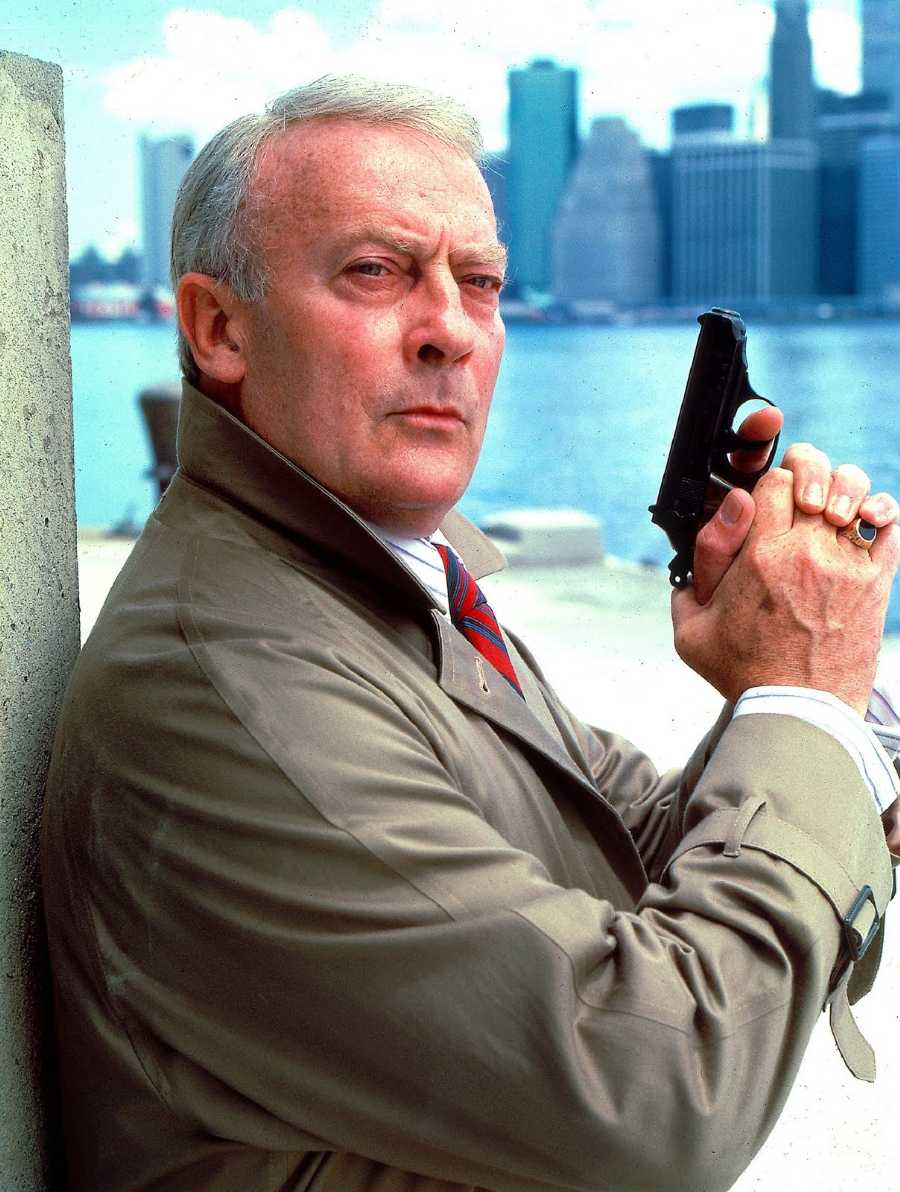
Fans of Edward Woodward (or indeed anybody who enjoys good archive drama) have two reasons to celebrate – as Callan is set to air on Talking Pictures TV (Sky 328, Virgin 445, Freesat 306, Freeview 81)  from early next month and The Equalizer will be coming soon to Forces TV (Sky 181, Virgin 277, Freesat 165, Freeview 96).

Both channels have stealthily been increasing their rota of archive television over the last year or two.  TPTV has given the likes of Gideon’s Way and Public Eye their first rebroadcasts for decades, whilst Armchair Theatre is another item of interest newly added to their schedule.

Over at Forces TV, UFO, the Thames era Special Branch and Never The Twain have all caught my eye (the latter especially, as the DVDs are long OOP).  Indeed, my one wish for the future is that we see some deeper digging into the archives from all channels, so that series which are unavailable on DVD are given another airing ….

I’ve written extensively elsewhere on the blog about each surviving episode of Callan.  Short summary? It’s unmissable.  Woodward is perfect as the world-weary state-sponsored assassin with a conscience.  Friendless, apart from a social outcast called Lonely (Russell Hunter – who, like Woodward, essayed a career defining role) each week Callan has to negotiate his way through a series of moral dilemmas, which are punctuated with flashes of violence.

During the first two series (made in black and white and sadly incomplete in the archives) Callan reported to a rotating group of superiors all called Hunter (beginning with Ronald Radd). By series three, with the show now in colour, William Squire had assumed the role of Hunter (apart from a brief hiatus during the fourth and final series, when Callan found himself in the hotseat …)

There are very few disappointing stories from the four series run, although Amos Green Must Live is one which hasn’t aged well (its attempt to tackle racial politics looks rather crude today).  As for excellent episodes there’s an embarrassment of riches  – Let’s Kill Everybody, Death of a Hunter, Suddenly – At Home, Breakout, That’ll Be The Day, Call Me Enemy, etc, etc.

Although initially reported in some quarters as a remake of CallanThe Equalizer was a very different series – although it did have certain callbacks (given Woodward’s involvement, that possibly wasn’t surprising). Mind you, if David Callan found leaving the Section to be tricky, then Robert McCall strolled out of the Company in the first episode with nonchalant ease.

There’s something very appealing about watching the middle-aged Woodward (impeccably dressed and accented) walking through the mean and dirty New York streets dispensing summary justice as and when required.  Whilst a less tortured and questioning individual than David Callan, Robert McCall did have his spasms of self-doubt and it’s on those occasions that Woodward really stepped up to the mark.

It’s an obvious comment, but neither series would have had the same impact if Edward Woodward hadn’t been front and centre.  And whenever he was given a particularly meaty script, the sparks would fly.

Star-spotting is a good game to play when watching The Equalizer.  Already established names such as Jim Dale, Linda Thorson, Telly Savalas, Robert Mitchum and Adam Ant pop up (as does Meat Loaf in a brief cameo) whilst there’s early appearances from John Goodman, Christian Slater and Bradley Whitford amongst many others. There was also a strong family feel with Michele and Roy Dotrice appearing in different episodes (Roy Dotrice had a memorable turn in Trial by Ordeal – my personal favourite).

Kudos to Talking Pictures TV and Forces TV for taking the decision to air these, as they’ve been off British television screens for far too long.  It’d be lovely to think that both series could develop a new audience – this would also hopefully spark some people into investigating what other archive treats might also exist.  And there’s quite a few ….

eq

25 Years of Rock – 1975 – 1979

bay

1975

Bohemian Rhapsody – Queen

John Ehrlichman and Bob Halderman jailed. Interview with John Stonehouse

Idiot Wind – Bob Dylan

John Stonehouse and Sheila Buckley returned to Britain to face trial. Vietnamese war orphans arrive in Britain.

Born to Run – Bruce Springsteen

Industry Secretary Eric Varley puts government funds into British Chrysler. Vietnam War ends. People airlifted out of Vietnam.

SOS – Abba

South Vietnam formally surrenders to the Viet Cong. Arthur Ashe wins men’s singles title at Wimbledon. Ilie Nastase gets disqualified
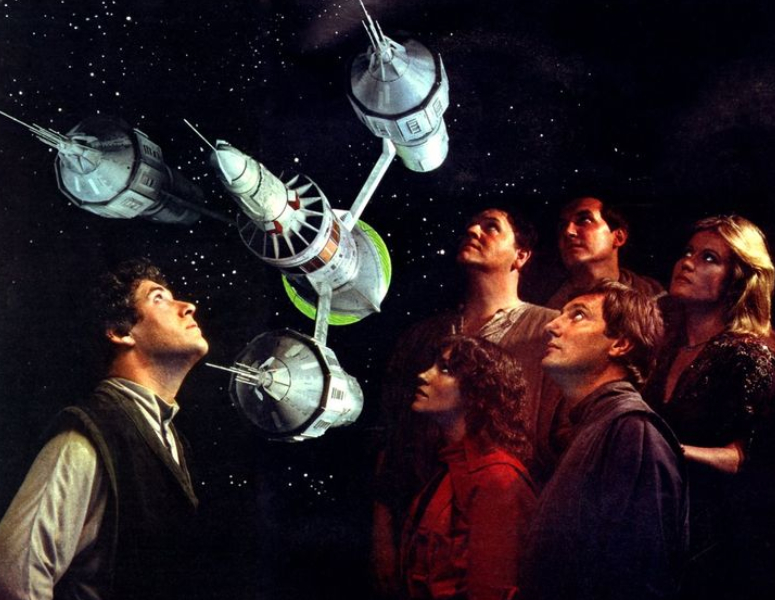
Come Up and See Me Make Me Smile – Cockney Rebel

Cricket pitch vandalised by “Free George Davis” campaigners

Young Americans – David Bowie

Patty Hearst’s kidnappers arrested. Symbionese Liberation Army take hostages in Greenwich Village. John Lennon allowed to reside in the USA

Pick Up the Pieces – the Average White Band

Evel Knievel injured while attempting to jump over fifteen buses

Autobahn – Kraftwerk

IRA bomb pub near Caterham Army Barracks. Interview with barmaid Kitty Stone. Ross McWhirter shot dead by IRA

One of These Nights – the Eagles

Balcombe Street Siege. Edward Heath sacked by Conservative Party. Margaret Thatcher becomes new leader.

Lady Marmalade – LaBelle

Sex Discrimination Act passed. Interview with feminist campaigner Ruth Lister.

Stand By Your Man – Tammy Wynette

Fleet Street wine bar challenges Sex Discrimination Act

Remember – the Bay City Rollers

Bay City Rollers concerts disrupted by hysterical fans. Interviews with fans.

Bay City Rollers Are the Best – Bay City Rollers fans

No Woman No Cry – Bob Marley and the Wailers

Harold Wilson calls referendum on Britain’s membership of the Common Market. Interview with Anthony Wedgewood Benn. BBC News theme. Majority of British vote to remain in Common Market.
I’m Not in Love – 10cc

Assassination attempt on President Ford. Foreign Secretary Jim Callaghan flies to Uganda to prevent execution of British lecturer Denis Hills.

Dreamer – Supertramp

Apollo-Soyuz link-up. Laker Airways launch Skytrain

Rhiannon – Fleetwood Mac

Newsbeat interview with Alex Hughes, aka Judge Dread

Big Six – Judge Dread

Magic Roundabout – Jasper Carrott

Funky Gibbon – the Goodies

Jive Talkin’ – the Bee Gees

Third Cod War begins

Sailing – Rod Stewart

Chris Drake reports from Lebanese Civil War

Bohemian Rhapsody – Queen

Inflation in Britain

It was very clever the way that they used Bohemian Rhapsody to bookend this programme. Bohemian Rhapsody was really the climax of mid-seventies pop music.
This is the only programme in the series to feature the BBC New theme, when it was used for the referendum results. The biggest news story was the end of the Vietnam War. Other big news stories were the Apollo-Soyuz link-up, and Margaret Thatcher becoming Conservative Party leader.

There’s a good selection of records in this programme (although the Tammy Wynette song was recorded long before 1975, but it did get rereleased and got to number one that year). There are some innovative records, the Bee Gees brought disco music into the mainstream, Kraftwerk were pioneers of electronic music. David Bowie had a change of image and musical style. And of course it was the year of the Bay City Rollers. By the time this programme was repeated in 1981 No Woman No Cry had been in the charts again as a tribute to Bob Marley.

There was a trio of comedy records by Judge Dread, Jasper Carrot and the Goodies. Richard Skinner said it was going to be Radio 1’s only broadcast of Judge Dread’s Big Six, but it wasn’t because they repeated it on 25 Years of Rock.

1976

So It Goes – Nick Lowe

Jimmy Carter runs for US president. Harold Wilson resigns as prime minister

If You Leave Me Now – Chicago

Jim Callaghan becomes prime minister. Denis Healey cancels visit to Hong Kong following country’s financial problems

Don’t Go Breaking My Heart – Elton John and Kiki Dee

Princess Margaret and Lord Snowden separate

Let’s Stick Together – Bryan Ferry

Jeremy Thorpe resigns as Liberal Party leader following scandal. Interview with Norman Scott. David Steele becomes new Liberal leader.

Livin’ Thing – Electric Light Orchestra

John Curry wins gold medal for ice skating at Winter Olympics. Southampton win FA Cup James Hunt wins World Drivers’ Championship

Convoy – CW McCall

Palestinian terrorists hijack plane in Uganda. Chaim Herzog addresses United Nations. Interview with Idi Amin.

Blinded By the Light – Manfred Mann’s Earth Band

Margaret Thatcher responds to journalists who described her as “The Iron Lady”.

Tonight’s the Night – Rod Stewart

New Rose – the Damned

Government job creation scheme. Interview with unemployed young man.

You Should Be Dancing – the Bee Gees

Ian Smith says there will be no black majority rule in Rhodesia. Black protesters shot by police in Soweto, South Africa. Nigeria boycotts Olympics. Nadia Comaneci wins three gold medals for gymnastics

Dancing Queen – Abba

Bjorn Borg wins Wimbledon men’s singles. Government passes drought bill as Britain has driest summer since records began

Sir Duke – Stevie Wonder

Viking 2 lands on Mars. USA celebrates its bicentenary. Queen visits the USA.

Bicentennial – Loudon Wainwright III

Jimmy Carter on peanut farming

Why Not the Best? – Oscar Brand

Gerald Ford runs for re-election

Show Me the Way – Peter Frampton

Jimmy Carter elected US president. Chairman Mao Zedong dies

More Than a Feeling – Boston

Women in Belfast start Peace Movement

Night Moves – Bob Seger and the Silver Bullet Band

Thirteen mercenaries tried in Luanda, Angola. Four of the mercenaries executed.

Love and Affection – Joan Armatrading

Howard Hughes dies. Interview with Ron Kessler.

Take It to the Limit – the Eagles

Richard Skinner interviews the Sex Pistols

Anarchy in the UK – the Sex Pistols

Sex Pistols swear on live television. Bill Grundy suspended. Bill Haley says punks are carrying things too far.

When this programme was first broadcast 1976 was the start of the current era. Margaret Thatcher was already Conservative Party leader, Jim Callaghan became Labour leader and prime minister, David Steele became the Liberal Party leader, and Jimmy Carter was elected President of the United States. And it was the start of the punk explosion, the last truly original youth cult and the most outrageous, which paved the way for the then current rock scene.

So It Goes wasn’t a big hit at the time, but it was the first record on Nick Lowe’s own Stiff Records label which would play an important part in the punk/new wave scene.
Convoy was almost a forgotten record by 1980, and I don’t think Loudon Wainwright’s response to the American bicentenary celebrations had been heard much in the UK. But much of the music in this programme consists of ‘safe’ acts such as Abba, Chicago, the Eagles, Elton John and Kiki Dee.

Rather incongruously New Rose by the Damned appears somewhere in the middle of the programme, but it should have been the second to last record. The programme ends with Radio 1’s interview with the Sex Pistols and the third record that changed everything forever.

1977

Go Your Own Way – Fleetwood Mac

Jimmy Carter’s inauguration. Jimmy Carter visits Britain for G7 summit meeting

Rocking All Over the World – Status Quo

Delegates arrive at G7 summit meeting. Great Lakes blizzard

Hotel California – the Eagles

Gary Gilmore executed

Gary Gilmore’s Eyes – the Adverts

Interview with Johnny Rotten. Sex Pistols fired by EMI. Interviews with Sir John Reid and Malcolm McLaren.

EMI – the Sex Pistols

Sex Pistols fired by A&M

God Save the Queen – the Sex Pistols

John Peel defends God Save the Queen. Queen celebrates Silver Jubilee

Fanfare For the Common Man – Emerson, Lake and Palmer

Queen’s Jubilee walkabout

Heroes – David Bowie

Manchester United beat Liverpool in FA Cup Final. Liverpool win European Cup.

Night Fever – the Bee Gees

IRA bomb goes off in London disco. Black Muslim extremists take hostages as protest against film The Message

Short People – Randy Newman

Skateboarding craze

Road Runner – Jonathan Richman and the Modern Lovers

Jimmy Carter urges Americans to cut down on fuel

2-4-6-8 Motorway – Tom Robinson Band

National Front march in London causes riot

White Riot – the Clash

Black people complain about police racism. Two senior police officers found guilty of accepting bribes from pornography dealers

Watching the Detectives – Elvis Costello

South African students arrested at protest over the death of Steve Biko. Interview with Alex Haley, author of Roots

Float On – the Floaters

I Feel Love – Donna Summer

Virginia Wade wins ladies’ singles title at Wimbledon

Lido Shuffle – Boz Scaggs

Victor the giraffe dies

Don’t Cry For Me Argentina – Julie Covington

Marc Bolan dies in car crash. Members of Lynard Skynard killed in plane crash. Elvis Presley dies

Way Down – Elvis Presley

Funeral of Elvis Presley

Sex and Drugs and Rock n Roll – Ian Dury and the Blockheads

EEC butter mountains. British Leyland workers calls for Day of Action

Get a Grip on Yourself – the Stranglers

Jim Callaghan and David Steele form Lib-Lab Pact. Firemen’s strike

I Can’t Get No Satisfaction – Devo

President Anwar Sadat of Egypt visits Israel. Tony Greig stripped of captaincy of England Cricket team. Interview with Tony Greig. Geoff Boycott scores one-hundredth century. Interview with Geoff Boycott.

Pretty Vacant – the Sex Pistols

Scotland win British Home Championship. Football hooligans invade pitch.

Mull of Kintyre – Wings

The programme begins with Fleetwood Mac and ends with Wings, so punk didn’t change everything. There is punk from the Clash, the Stranglers and the Adverts. (Surprisingly there are no interviews with punks, as they did with teddy boys, mods and rockers in the fifties and sixties programmes.) There was already new wave music coming out of the punk scene, with Ian Dury and Elvis Costello, and there are some rarities like Jonathan Richman’s Road Runner and Devo’s version of I Can’t Get No Satisfaction. Disco music was also popular.

But once again the highpoint of the programme is the Sex Pistols. God Save the Queen was banned by the BBC in 1977, but three years later it was included on 25 Years of Rock.
God Save the Queen leads neatly into the Queen’s Silver Jubilee, when everyone looked back at the fifties, sixties and seventies. When Jimmy Carter became president of the USA it was as much a breath of fresh air as President Kennedy’s presidency sixteen years earlier. 1977 was also the year of the skateboarding craze.

The news stories in these programmes aren’t played in chronological order. For example Elvis Presley (who I don’t think had even been mentioned since the 1961 programme) died in August 1977, Marc Bolan died in September, and the Lynard Skynard plane crash was in October, but in the radio programme they left Elvis Presley’s death until last because it was the biggest news story.

1978

Rat Trap – the Boomtown Rats

Clip from Star Wars

Theme from Star Wars – John Williams

Star Wars premieres in Britain

War of the Worlds – Jeff Wayne (narrated by Richard Burton)

The neutron bomb

I Love the Sound of Breaking Glass – Nick Lowe

Leon Spinks beats Muhammed Ali in world heavyweight championship. Interview with Muhammed Ali.

Sultans of Swing – Dire Straits

Religious cult led by Rev Jim Jones commits mass suicide. California holds referendum on Proposition 13. Speech by Howard Jarvis.

Le Freak – Chic

California makes tax cuts after Proposition 13 goes through. Vox pops on quangos

Baker Street – Gerry Rafferty

Princess Margaret and Lord Snowden get divorced. Roddy Llewellyn makes a record.

Jilted John – Jilted John

If the Kids Are United – Sham 69

Nottingham Forrest win Football League. Argentina win World Cup. Willie Johnston sent home from World Cup, and banned from playing for Scotland after failing drug test. Michael Parkinson interviews Geoff Boycott. Steve Ovett wins gold medal at European Championships

You’re the One That I Want – John Travolta and Olivia Newton-John

Interview with Olivia Newton-John

Roxanne – the Police

Oil tanker Amoco Cadiz runs aground in France. Vietnamese boat people arrive in Britain

I Don’t Want to Go to Chelsea – Elvis Costello

Jimmy Carter arranges for Anwar Sadat and Menachem Begin to sign Camp David Accords

Mr Blue Sky – Electric Light Orchestra

Ambassador Andrew Young tells French newspaper that American jails have political prisoners.

Follow You Follow Me – Genesis

Muhammed Ali regains heavyweight title. Times newspaper strike

Miss You – the Rolling Stones

Pope Paul VI dies. Pope John Paul I elected.

By the Rivers of Babylon – Boney M

Pope John Paul I dies. Pope John Paul II elected.

Forever Young – Bob Dylan

Bob Dylan plays in London. Interviews with Bob Dylan and fans. Eric Idle in The Rutles: All You Need Is Cash

I Must Be In Love – the Rutles

Jim Callaghan announces he will not be calling an early election. Interviews with Margaret Thatcher and Denis Healey.

Denis – Blondie

Debbie Harry announces Radio 1’s new wavelength

Radio Radio – Elvis Costello

Elvis Costello announces Radio 1’s new wavelength. Newsbeat review of the year

Wuthering Heights – Kate Bush

Interview with Kate Bush. Interview with Sid Vicious. Sid Vicious charged with the murder of Nancy Spungen. Newsbeat interviews Father Abraham

The Smurf Song – Father Abraham and the Smurfs

Do You Think I’m Sexy? – Rod Stewart

Jeremy Thorpe charged with conspiracy to murder Norman Scott

YMCA – the Village People

Ian Smith makes Internal Settlement with African nationalist leaders Demonstrations against the Shah of Iran

Bat Out of Hell – Meat Loaf

It’s 1978 and punk’s not dead. Some punk groups, such as Sham 69, made their breakthrough after the main punk explosion. The programme begins with Rat Trap by the Boomtown Rats, but it should have been the last record as the first new wave record to get to number one actually topped the charts towards the end of the year. Other new wave acts who made their breakthrough in 1978 included Blondie and the Police.

As well as obvious classic pops songs like Wuthering Heights (which should have been the first record played) and Baker Street, there are some ephemeral records by Jilted John, the Rutles and the Smurfs.

One of the most memorable events of 1978 was the murder of the Italian prime minister Aldo Moro, but surprisingly that wasn’t included in the programme. Neither was the death of Keith Moon.

1978 is remembered as the year that we had three popes. We hear the news report about the election of Pope John Paul I, and then after the next record we hear the news of his death. This was also the year of the Camp David Agreement. And three years after the end of the Vietnam War the repercussions were still being felt.

1979

Hit Me With Your Rhythm Stick – Ian Dury and the Blockheads

Winter of Discontent: Britain hit by industrial action

Brass in Pocket – the Pretenders

Jim Callaghan calls general election after vote of no confidence. Margaret Thatcher becomes prime minister

Oliver’s Army – Elvis Costello and the Attractions

Shah of Iran deposed. Ayatollah Khomeini takes over Iran.

Dance Away – Roxy Music

Dancin’ Fool – Frank Zappa

Interview with Frank Zappa

Don’t Stop ‘Til You Get Enough – Michael Jackson

Radiation leak at Three Mile Island nuclear generating station. Interviews with residents.

The Logical Song – Supertramp

Lord Mountbatten murdered by IRA. Airey Neave murdered by INLA. Sid Vicious dies. Interview with Steve Jones and Paul Cook.

My Way – Sid Vicious

Anthony Blunt exposed as member of spy ring. Interview with Anthony Blunt. Jimmy Carter signs Strategic Arms Limitations Treaty

Pop Muzik – M

Pope John Paul II visits Poland, Ireland and USA.

Rapper’s Delight – the Sugarhill Gang

Ambassador Andrew Young resigns after meeting with PLO

We Don’t Talk Anymore – Cliff Richard

Interview with Cliff Richard

Video Killed the Radio Star – Buggles

Skylab returns to Earth

I Don’t Like Mondays – the Boomtown Rats

DC-10 crashes at O’Hare International Airport, Chicago. Federal Aviation Authority cancels all DC-10 flights.

Message in a Bottle – the Police

Interview with the Police

Walking on the Moon – the Police

Interview with Trevor Francis. Nottingham Forrest win European Cup. Interview with Brian Clough.

Lucky Number – Lene Lovich

Chas Smash Introduces… One Step Beyond – Madness

Teacher Blair Peach dies after National Front clash with Anti-Nazi League in Southall.

Eton Rifles – the Jam

Abel Muzorewa elected prime minister of Rhodesia. Jimmy Carter intend to stand for re-election

Gangsters – the Specials

Eleven fans killed at Who concert in Cincinnati, Ohio

Are Friends Electric? – Tubeway Army

Jeremy Thorpe found not guilty

Heart of Glass – Blondie

Interview with Debbie Harry. Police receive message from man claiming to be the Yorkshire Ripper

My Sharona – the Knack

Iranian students hold staff at American Embassy as hostages Soviet Union Invade Afghanistan

Ayatollah – Steve Dahl

Ayatollah Khomeini bans western pop music

Another Brick in the Wall – Pink Floyd

Various quotes from the past twenty-five years

Rock Around the Clock – Bill Haley and the Comets

(The selection of quotes and the reprise of Rock Around the Clock were omitted from the 1985 repeat.)

When this programme was first broadcast this was the music and events from last year.

It was the year that the new wave finally got into the mainstream, and most of the records featured are records which got into the upper reaches of the charts and are still well remembered.

Somewhat incongruously the second record played, Brass in Pocket by the Pretenders, was a number one hit early in 1980. (If the series had been made later Brass in Pocket would probably have been included in the 1980 programme.) Two-tone music was big in 1980, and this programme includes early hits by Madness and the Specials. So the last episode of 25 Years of Rock really was up to date with the current pop scene.

This the last programme in the series to feature cinema newsreel clips, British Movietone News stopped making them in 1979.

There are two stories that stand out. Firstly there’s the tape from a man claiming to be the Yorkshire Ripper. When Peter Sutcliffe was caught it turned out that the message was a hoax. And the other story is Anthony Blunt being exposed as a spy. In the first programme there was a clip of Kim Philby denying that he was part of the same spy ring, so the first programme had a news story from twenty-five years ago and the last programme had a related story from last year.

In 1955 American and Russian scientists were planning the first space satellite, in 1979 Skylab returned to Earth. In 1955 there were nuclear tests in Nevada, in 1979 there was a nuclear accident at Three Mile Island. In 1955 Eisenhower met Krushchev at a summit in Geneva, in 1979 Carter and Brezhnev signed a treaty in Vienna. In 1955 Juan Peron was ousted, in 1979 the Shah of Iran was ousted. In 1955 Winston Churchill resigned, in 1979 Margaret Thatcher became prime minister.

Two of the last stories in the programme were the Iranian hostage crisis and the Soviet invasion of Afghanistan. The latter led to the United States boycotting the 1980 Olympics which took place while 25 Years of Rock was being broadcast, and both event played against Jimmy Carter in the 1980 presidential election.

The programme plays out with Another Brick in the Wall (album version) and a creaky recording of Rock Around the Clock.

25 Years of Rock still stands up very well. My only criticism is the various records and events which were omitted, but then they did only have an hour to include what they did.

The series proved popular enough for Radio 1 to give it a repeat run in 1981, but then the programme was dated in as much as it now only went up to two years ago. However there was an updated version of the series a few years later ….
winter of discontent.jpg

25 Years of Rock – 1970 – 1974

BN-DY626_CAPJOU_GR_20140804102944.jpg

1970

After the Gold Rush – Neil Young

Apollo 13 expedition abandoned

All Right Now – Free

Chicago Seven tried for inciting riots

Ball of Confusion – the Temptations

President Nixon send troops into Cambodia. Four students at Kent State
University, Ohio shot dead by national guard

Ohio – Neil Young

Interview with father of dead student

Fire and Rain – James Taylor

Nigerian Civil War ends

Dead Parrot Sketch – Monty Python’s Flying Circus

Black Night – Deep Purple

Storms and flooding in Belfast. Bernadette Devlin on trouble in Northern
Ireland.

Let It Be – the Beatles

Apple deny reports that Paul McCartney has left the Beatles. Beatles film Let It Be released. Paul McCartney releases solo album.

Maybe I’m Amazed – Paul McCartney

Germany beat England in World Cup quarter final Tony Jacklin wins US Open golf
tournament

I Want You Back – the Jackson Five

Harold Wilson calls general election. Voting age lowered to eighteen. Interview with first time voter. Edward Heath becomes prime minister, and forms new cabinet.

Big Yellow Taxi – Joni Mitchell

Isle of Wight Pop Festival. Interviews with attendees, and Caroline Coon from
Release. Anti-drug message from Mark Farner of Grand Railroad Funk.

In the Summertime – Mungo Jerry Rag

Mama Rag – the Band

Government introduces industrial relations bill. Interviews with Robert Carr and Vic Feather.

Question – the Moody Blues

Jimi Hendrix dies

Voodoo Chile – Jimi Hendrix

Janis Joplin dies. Palestinian guerrillas hijack aeroplanes

Ride a White Swan – T Rex

President Nasser of Egypt dies

Bridge Over Troubled Water – Simon and Garfunkel

Aleksandr Soltzenitsyn wins Nobel Prize for Literature

The beginning of the first half of the thirty part series.

It’s interesting to hear the 1970s editions of Twenty-five Years of Rock now. At the time the music of the early to mid seventies was too old to be up to date, but not old enough to be nostalgia, and with the later seventies
editions some records and events included in the programmes would be now long forgotten, while other records and events would be conspicuous by their absence.

1970 was the tail end of hippy era. A lot of the music is folk rockby people like Neil Young, Jon Mitchell, James Taylor and the Band, or heavy rock by Free and Deep Purple. It was the year that the Beatles split, and Jimi Hendrix and Janis Joplin died (although they didn’t play any of her music in the series).

It was also the start of the seventies. If the 1960 programme gave little indication of the type of music that was coming in the next decade, the 1970 programme features two influential new acts. T Rex had one of the first
glam rock hits, and there’s the Jackson Five, featuring Michael Jackson who was still a big star long after the seventies.

Britain got a new Conservative government, and the programme includes a newsreel clip of Edward Heath’s new cabinet, which included Margaret Thatcher.

But Monty Python’s Parrot Sketch was definitely first broadcast in 1969. Surprisingly there’s no mention of the death of General De Gaulle, or the skinhead craze.

1971

Layla – Derek and the Dominoes

Edward Heath applies for Britain to join the Common Market.

Imagine – John Lennon

Beatles’ split official. Interview with John Lennon.

My Sweet Lord – George Harrison

Earthquake in California

Your Song – Elton John

Postal workers strike. Britain changes to decimal currency Mick Jagger marries Bianca de Macias

Brown Sugar – the Rolling Stones

England win the Ashes. D B Cooper robs plane over Seattle. Arsenal win FA Cup and
Champions League Cup

Hot Love – T Rex

Rolls Royce gets into financial difficulty

Get It On – T Rex

Princess Anne presents Society of Film and Television Arts Awards. Clip from Dad’s Army. Anti-Vietnam War demonstration in Washington erupts into violence

Theme from Shaft – Isaac Hayes

Jim Morrison dies in Paris

Riders on the Storm – the Doors

Edward Heath on trouble in Northern Ireland. Pub bombed in Belfast. Minister of Home Affairs announces internment order.

It’s Too Late – Carole King

Homes bombed in Derry. Civilians attack British troops.

Won’t Get Fooled Again – the Who

Black Panther George Jackson shot dead while escaping from prison

Yours Is No Disgrace – Yes

Attica State Prison riot

Black Magic Woman – Santana

Oz editors charged with obscenity and jailed. Richard Neville, Felix Denis and Jim Anderson interviewed.

Hors D’Oeuvres – Sid Phillips Band

Women’s Liberation Movement in Hyde Park’s Speakers’ Corner.

Resurrection Shuffle – Ashton, Gardner and Dyke

Hot pants. Clockwork Orange released. Festival of Light rally in Trafalgar Square

Get Down and Get With It – Slade

Voting age in the USA lowered to 18. School leaving age to be raised to 16. Interview with education secretary Margaret Thatcher

Maggie May – Rod Stewart

East Pakistan becomes Bangladesh following civil war

Bangla Desh – George Harrison

Milton Obote of Uganda ousted in military coup led by General Idi Amin. President Nixon announces he will visit China in 1972

Stairway to Heaven – Led Zeppelin

The Beatles’ solo careers started. The Oz magazine trial was another sign that the sixties were over. The Rolling Stones started their own label, and Rod Stewart and Elton John made their breakthrough. The glam rock movement was taking off with Marc Bolan having more hits, and Slade joining the glam scene. The American
rock scene was getting more mellow.

Britain was entering another new era with the changeover to decimal currency, parliament voting for Britain to join the Common Market, and the rise of the feminist. But the troubles in Northern Ireland, and the anti-war protests and racial tensions in America got worse.

1972

All the Young Dudes – Mott the Hoople

Students’ Union protest in London

School’s Out– Alice Cooper

Andreas Baader and Ulrike Meinhoff arrested. Miners’ strike leading to energy crisis in
Britain

Heart of Gold –Neil Young

Miners return to work

Vital Transformation – John McLaughlin and the Mahavishnu Orchestra

Trident crashes in Staines, Middlesex. Japanese terrorists, recruited by PLO, shoot passengers at Lod Airport in Tel Aviv

Without You – Harry Nilsson

British soldiers shoot 28 unarmed civilians in Derry. Interview with Father Edward Daly, and other witnesses.

Lady Eleanor –Lindisfarne

IRA bomb parachute regiment headquarters. Edward Heath announces plans to solve troubles in Northern Ireland.

Big Eyed Beans From Venus – Captain Beefheart and his Magic Band

Silver Machine – Hawkwind

Racial tension in Alabama. Governor George Wallace shot.

Do It Again – Steely Dan

Gravelly Interchange, aka Spaghetti Junction, opens

Spam – Monty Python

Thick as a Brick – Jethro Tull

Karin Janz, Olga Korbut, Mark Spitz win medals at Munich Olympics

Goodbye to Love – the Carpenters

Palestinian terrorists murder Israeli athletes at Olympic village

American Pie – Don McLean

One million people unemployed in Britain. Interview with Anthony Barber over “floating the pound”.

Money Programme sketch – Monty Python

I Saw the Light – Todd Rundgren

George Best suspended by Manchester United

Mama Weer All Crazee Now – Slade

Bobby Fischer interviewed after beating Boris Spassky in World Chess Championship

Ziggy Stardust – DavidBowie

The Jean Genie – David Bowie

George McGovern runs for president. Break-in at Democrat Party’s Watergate office. President Nixon re-elected.

Merry Xmas War Is Over – John Lennon

Vietnam War statistics. Last American infantry unit leaves Vietnam. Henry Kissinger negotiates end for Vietnam War.

Virginia Plain – Roxy Music (The original broadcast also included Rock n Roll by Gary Glitter.)

The 1971 programme ended with President Nixon announcing he would visit China in 1972, but we don’t hear about his visit in the 1972 programme. He did manage to get re-elected that year, but news came out about the Watergate break-in that would lead to his downfall.

1972 also saw the start of the industrial unrest in Britain that would lead to Edward Heath’s downfall. Bloody Sunday should have been included in the introduction in the first programme as the troubles in Northern Ireland was one of the main news stories of the seventies. The 1972 Olympics are remembered for the wrong
reason.
Three years after his Space Oddity David Bowie re-emerged as one of the leading lights of the glam rock era. As well as his own hits he wrote a song for Mott the Hoople. Roxy Music followed to Bowie style, while glam rockers like Gary Glitter and Slade drew on old style rock n roll. The biggest glam rock star from America was Alice Cooper.

1973

Reelin’ in the Years – Steely Dan

Nixon states that he is not a crook. Britain joins Common Market. Interview with Edward Heath. President Nixon’s inauguration. Six men charged over Watergate break-
in.

You’re So Vain – Carly Simon

USA ends its involvement in Vietnam War. Train drivers’ strike

Part of the Union – the Strawbs

Edward Heath announces wages squeeze

Money – Pink Floyd

Red Rum wins Grand National

Superstition – Stevie Wonder

Bob Halderman and John Ehrlichman resign over Watergate. Sam Ervin presides over Watergate hearing. Interview with John Dean.

Stuck in the Middle With You – Stealers Wheel

Nixon denies involvement in Watergate break-in. Watkins Glen Rock Festival

Jessica – the Allman Brothers Band

Interview with organiser Jim Koplik, and festival attendees

Ramblin’ Man – the Allman Brothers Band

Northern Ireland referendum. IRA bombings in London. Tu-144 crashes at Paris Air Show

Whiskey in the Jar – Thin Lizzy

Clashes between Protestant extremists and British army in Northern Ireland. Uri Geller demonstrates fork bending

Papa Was a Rolling Stone – the Temptations

Sioux Indians take hostages and demand rights for Red Indians. Academy Awards.
Marlon Brando refuses Oscar for The Godfather.

Long Train Runnin’ – the Doobie Brothers

Vice President Spiro Agnew resigns

Knockin’ on Heaven’s Door – Bob Dylan

Gerald Ford becomes Vice President

Hocus Pocus –Focus

Blockbuster – the Sweet

Princess Anne marries Captain Mark Phillips

Get Down – Gilbert O’Sullivan

Nixon interviewed over Watergate scandal

Desperado – the Eagles

Cod War between UK and Iceland. Marjorie Wallace, Miss USA, is crowned Miss World. Fashions news, including coloured hair

Walk on the Wild Side – Lou Reed

Yom Kippur War

Tubular Bells – Mike Oldfield

Fuel shortages in USAand Europe. Edward Heath meets Arab oil ministers. Nixon asks Americans to cut down on fuel for heating.

Angie – the Rolling Stones

Edward Heath announces three day week

Merry Xmas Everybody – Slade

Radio 1 review of the year. Interviews with Emperor Rosko and David Hamilton.

Let Me In – the Osmonds

Eclipse – Pink Floyd

“It’s 1973, and a very happy New Year to everyone.”

Britain joined the Common Market on New Year’s Day, but the story that dominates this programme is the Watergate scandal. America finally got out of the Vietnam War, but more wars started in the Middle East, leading to a fule crisis in the USA and Europe, and more industrial unrest in Britain.

In Britain 1973 is also remembered for the royal wedding. There are some memorable records from Stevie Wonder, Thin Lizzy, and Lou Reed, but You’re So Vain was
definitely a hit in 1972. There’s not as much glam rock in this programme as you might expect. Glam rock group reached its peak in 1973, but then glam was overshadowed by punk for a long time.

Country rock was big. The Watkins Glen Rock Festival was, at the time, the biggest rock festival ever held, but it’s less well remembered than Woodstock. The programme ends with an extract from Radio 1’s review of the year. It mentions that 1973 was the year that
Radio 1’s Newsbeat started, and Newsbeat was still going strong in the early eighties.

Since this programme was made Jessica became the theme tune to Top Gear, and Stuck in the Middle With You has become synonymous with Reservoir Dogs.

1974

You Ain’t Seen Nothin’ Yet – Bachman-Turner Overdrive

Britain suffers from fuel crisis and industrial disputes. South Eastern Gas Board recommends couples share baths. Interview with Joseph Kinsey.

Rebel Rebel – David Bowie

Edward Heath calls general election. Speeches by Edward Heath, Harold Wilson and Jeremy Thorpe.

Election Night Special – Monty Python

Waterloo – Abba

Richard Skinner presents election edition of Newsbeat. Harold Wilson becomes
prime minister

I Can Help – Billy Swan

Three day week ends. IRA bomb in Tower of London. Martial arts craze

Kung Fu Fighting – Carl Douglas

Rugby match disrupted by streaker. Marcus Lipton MP urges Home Secretary to deal firmly with streakers.

The Streak – Ray Stevens

President Nixon visits Leonid Brezhnev for peace talks Aleksandr Soltzenitsyn
expelled from Soviet Union

This Town Ain’t Big Enough For the Both of Us – Sparks

Patty Hearst kidnapped by Symbionese Liberation Army.

Killer Queen – Queen

Message from Patty Hearst. Interview with Randolph Apperson Hearst. The Exorcist banned by several councils after boy dies after watching the film.

Remember You’re a Womble – the Wombles

Sugar shortage ends

I Shot the Sheriff – Eric Clapton

Mulberry Bush pub in Birmingham bombed by IRA. DC-10 crashes in Paris

Cajun Moon – J J Cale

President Nixon on Watergate investigations. Impeachment process against President Nixon

How Long – Ace

President Nixon resigns

The Show Must Go On – Leo Sayer

Gerald Ford becomes president and pardons Richard Nixon

Gonna Make You a Star – David Essex

Muhammad Ali regains world heavyweight title. Court Line goes bankrupt, leaving British holidaymakers stranded

Y Viva Espana –Sylvia

Package Holiday sketch – Monty Python

The Joker – the Steve Miller Band

Lord Lucan disappears. Harold Wilson calls second election. Labour wins again.

The Wall Street Shuffle – 10cc

Pound falls to its lowest ever level. Vox pops on what people want to see in 1975

Down Down – Status Quo

Can’t Get Enough – Bad Company

John Stonehouse disappears, and later is found and arrested in Australia

Band on the Run – Wings

1974 is remembered as the year the President Nixon resigned. In Britain it was the year that we had two general elections. But the Monty Python sketches were definitely earlier than 1974.

Another news story here is the IRA pub bombing in Birmingham. As with the pub bombing in Guildford the same year, it transpired over a decade later that the people who went to prison for this crime were innocent.

This is the first programme in the series to feature a song from the Eurovision Song Contest. Queen also had their first hit. There are several records in this programme based on the crazes of the year such as kung fu, streaking and the Wombles, the last of these being one of the most successful novelty acts. The programme plays out with Wings’ Band on the Run, one of the first concept singles.

ob_48a968_band-on-the-run1

Les Misérables (BBC, 1967) – Simply Media DVD Review

There have been countless film, stage and televison adaptations of Victor Hugo’s epic 1862 novel (indeed, a lavish BBC1 adaption has just finished its run on Sunday nights). This 1967 BBC Classic Serial might have been mounted on a fairly modest scale, but where it scores – as these serials so often did – is in the quality of the actors, their performances and the fidelity of the adaption to its source material.

Frank Finlay is mesmerising as Jean Valjean. A former convict, Valjean has forged a successful new existence as a pillar of society – a mayor and magistrate – but remains haunted by his past experiences.

It’s such a shame that the original film inserts are long gone, as the opening episode has some remarkable film work (courtesy of director Alan Bridges).  The somewhat grubby telerecordings are obviously preferable to nothing (a fate which has sadly befallen so many 1960’s television programmes) but to have seen these impressionistic sequences in a pristine state would have been fascinating.

Frank Finlay

At first, Finlay is barely recognisable (the haunted Valjean when released from fifteen years hard labour is a bedraggled and violent soul)  but by the second episode he’s undergone a remarkable transformation into a cultured man who dispenses charity and understanding to all.

Anthony Bate, as Inspector Javert, is a fine match for Finlay. Javert is the direct opposite of Valjean (Valjean dispenses compassion, Javert cold justice). This sort of role – icy, detached – was one that Bate played time and again, so as you might expect he’s incredibly good value. The clashes between the two are a key part of the story (initially uneasy allies, in the fourth episode Valjean admits his true identity in open court and flees, with Javert dogging his footsteps thereafter).

Excellent performances abound. Michele Dotrice, for example, as the increasingly wretched Fantine. A rapid downward spiral sees her forced to sell everything she has – hair, teeth – in order to provide for her daughter.  Dotrice throws herself wholeheartedly into the role and makes an indelible impression across these early episodes.

Michele Dotrice

Clifford Rose’s monologue in episode four – Buried Treasure – is another early highlight (he plays Champmathieu, a man accused of being the notorious Jean Valjean). It’s a role far removed from the later ones for which he’s best remembered for (Callan, Secret Army).

Coincidence tends to play a part in many novels from the nineteenth century and Les Mis is no exception. Having been unable to save Fantine, Valjean (now an outcast once more) just happens to run into Cosette (Lesley Roach), Fantine’s young daughter.

Left in the cruel care of an innkeeper called Thenardier and his wife (splendidly evil turns from Alan Rowe and Judy Parfitt), Cosette becomes the latest waif to be taken under Valjean’s wing. Finlay’s cool self-control as Valjean faces down the grasping Thenardier is expertly played. Yet another coincidence sees them run into each other years later, when it appears that Thenardier has gained the upper hand.

At the start of episode seven, Cosette has suddenly grown up into a beautiful young woman (like Fantine, played by Michele Dotrice). It seems odd that Valjean seems not to have aged compared to his adopted daughter, but this isn’t uncommon in serials of this type.

The last batch of episodes relocates the action to Paris and introduces some key new characters – like Marius (Vivian MacKerral) – as various plots and counter-plots come to fruition. Revolutionary Paris might only be glimpsed in snatches, but this isn’t a disappointment. On the contrary, the serial’s low budget ensures that character drama remains at the forefront right until the conclusion.

As previously discussed, the picture quality is somewhat variable. It looks pretty much like you’d expect an unrestored telerecording from the late 1960’s to look – there’s intermittent film damage, dirt and tramlining. But anybody familiar with archive television of this era should know what to expect and the occasional picture issues didn’t impair my enjoyment.

Running for ten 25 minute episodes (five each across two discs), this version of Les Misérables boasts a series of excellent performances and comes warmly recommended.

Les Misérables is available now from Simply Media. It has a RRP of £24.99 and can be ordered directly here (quoting ARCHIVE10 will apply a 10% discount).

The Two Ronnies – Sid & Lily, George and Edie

r1

Trawling through the British Newspaper Archive on a separate research project, I stumbled across this interesting article from the Daily Mirror, dated the 29th of October 1979.

It reported how the death of Freddie Usher (who wrote the Lily & Edie segments of these joint sketches) might mean the characters wouldn’t be seen again  (John Sullivan was responsible for writing the Sid & George parts).

Whenever I watch these sketches I’m always conscious of the fact that I enjoy the segments with Sid & George much more than Lily & Edie’s contribution.  I’d previously thought that this was down to the fact that the Rons in drag never quite convinced (at least outside of their barnstorming musical numbers).

Certainly compared to the masters of the genre during the seventies – Les Dawson and Roy Barraclough – the Rons never seemed totally at ease during the Lily & Edie sketches, with the laughs (such as they were) being somewhat muted.

But this new nugget of information about the different writers could explain the disparity between the two halves.

I’d love to have a complete breakdown of the writing credits for The Two Ronnies but (unless anybody knows differently) there’s not one in circulation. A fair few sketches can be credited (most of Ronnie Barker’s contributions for example and various others, such as David Renwick’s Mastermind) but a fair few are less certain.  Even identifying which sketches were penned by the Pythons isn’t clear cut.

Moving back to Sid & Lily, George and Edie, it’s interesting that their slot in series seven (broadcast between December 1978 and February 1979) is right in the middle of the programme, exactly where – in previous series – the film serial would have been.  Since inflation was biting and budgets were being cut, I can only assume that this year the Rons weren’t able to afford the type of lavish serial they’d previously enjoyed.

So this cheap studio sketch had to suffice (the running time of each episode tended to be about five minutes shorter than previous years as well).

A last point – if there’s one thing that’s always irked me, it’s the fact that the doubles of Barker and Corbett (seen in the opening titles) look nothing like them.  The double of Barker is somewhat on the thin side whilst the faux Corbett seems a little tall.  Never mind, one day I’m sure I’ll get over it ….