Secret Army – A Matter of Life and Death (6th December 1978)

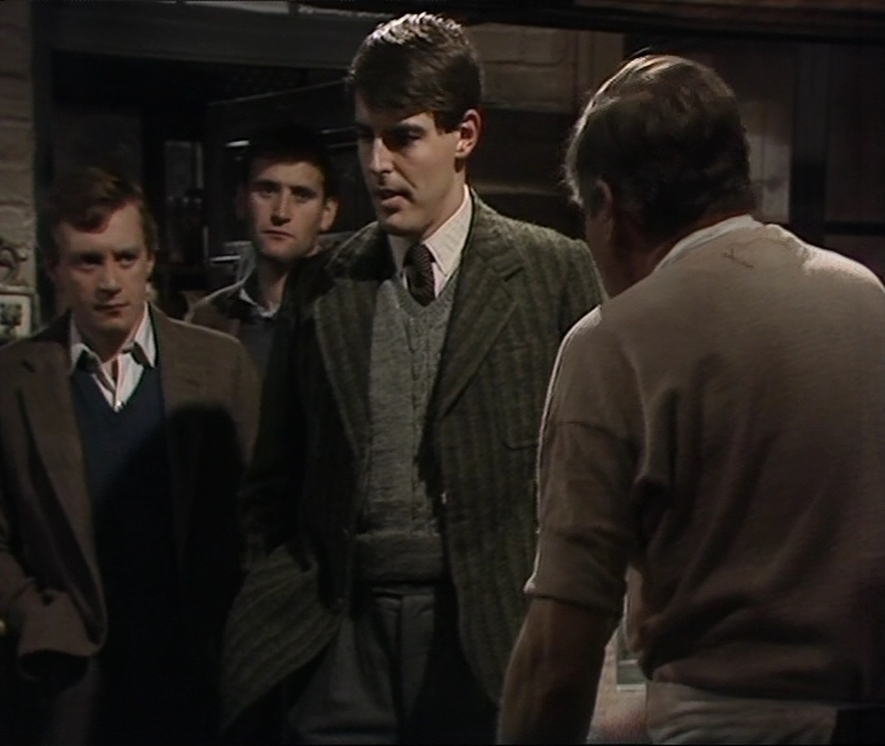
Poor hapless Francois (Nigel Williams) bites the dust ….

Hardly the most rounded or interesting character, at least he’s given a starring role in his final episode.

The fact he and Natalie are especially lovey-dovey today is an early hint that something rather nasty will happen to him. This bad feeling is then compounded by his refusal to seek the advice of Albert – he’s keen to go it alone and speak to the Communists, who have located two British airmen (even though Francois is warned that they play by their own barsh rules and don’t work well with outsiders).

Max and the Communist leader, Phillipe (Michael Graham Cox), have been planning the takeover of Lifeline, with Albert and Monique to be liquidated. So the cheery Francois turning up on their doorstep is the last thing they need.

Max’s next move (anonymously informing on Francois to Kessler) carries a certain punch, especially since earlier in the episode they had seemed to be on friendly terms (Francois giving Max some materials which would prove more than useful in his forging activities). Although by now it’s plain that Max is more than capable of appearing affable on the surface whilst remaining cold and calculating underneath.

The two airmen holed up with the Communists remain shadowy characters. Much more time is spent with another pair – Tommy Miller (John Flanagan) and Joseph Walden (Leonard Preston) – who have been wandering the countryside looking for help.

Having been turned away from a church by a frightened priest, they land on their feet when an affable baker called Victor Herve (Duncan Lamont) takes them under his wing. Lamont gives, as you’d expect, an excellent guest turn in what would turn out to be one of his final television credits.

Anyone who has worked their through the series up to this point has to marvel at the way so many British airmen manage to latch onto someone who has direct contact to Lifeline. I know it’s a bit of a stretch, but you just have to accept it.

With Miller and Walden being straightforward, affable chaps there’s not a great deal of drama to be found in their part of the story (although we’re left hanging for a short while before it’s finally confirmed whether Victor is a friend or foe – the casting of Lamont was a canny move in this respect, as he was equally adept at playing both).

As has been his lot for most of series two, Bernard Hepton doesn’t have a great deal to do as Albert remains firmly stuck inside the Candide and somewhat buffeted along by events outside. This works in story terms though – Albert’s complacency and inactivity convinces Max that takIng control of Lifeline will be easy.

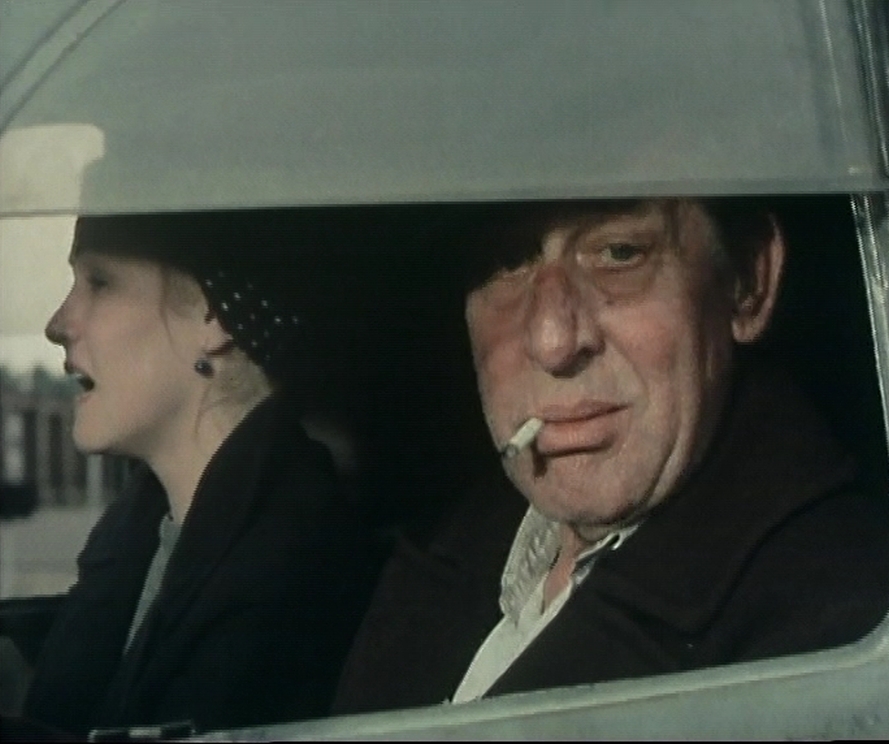
Francois gets a dramatic death – shot on a railway platform whilst a helpless Natalie looks on in distress (it’s a peach of a reaction moment for Juliet Hammond-Hill). The third of four SA scripts by Robert Barr, A Matter of Life and Death never drags, even if the outcome of events seems inevitable from early on.

But it’s what’s going to happen now with Max and Lifeline that’s the more intriguing question.
Blakes 7 coming to Forces TV – September 2021

Blakes 7 will be teleporting to Forces TV (Sky 181, Freeview 96, Freesat 165, Virgin 274) from next month.

For us old sweats who have the series on DVD (and before that VHS) this won’t be news to get the pulse racing, but it’s always worth bearing in mind that most people have never really assembled DVD archives of any size, so this will be their first opportunity to see the series for a few decades (and it might even pick up a few new fans along the way).

Forces TV have made some interesting digs into the BBC archives recently (such as No Place Like Home, which was only ever partly commercially available) and hopefully they will continue in this vein.

My Life Is Murder – Series One. Acorn DVD review

Alexa Crowe (Lucy Lawless), happily retired from the police force, is looking forward to filling her days with nothing more stressful than baking bread. But when a former colleague, Detective Inspector Kieran Hussey (Bernard Curry), asks her to investigate a previously unsolved crime everything changes ….

With series two of My Life Is Murder due to air shortly, it’s the ideal time to become reacquainted with series one (which was broadcast in 2019, running for ten episodes). An Australian series which takes full advantage of its Melbourne locations, it’s a bright and breezy watch which slips by very easily.

It’s true that there’s nothing particularly original here, which especially struck home for me as I’ve recently been rewatching New Tricks (ex-detectives investigating cold cases) but there’s no need for every new series to reinvent the wheel – sometimes you just want to be entertained.

Lawless dominates proceedings as Alexa Crowe, a fifty something who lives a contented single life. The first episode teases out the probability that she had a partner at one point, but the series doesn’t spell out the details for a few episodes (and Lawless was insistent that Alexa shouldn’t be one of those tortured former detectives haunted by ghosts from her past).

An unashamedly formula show, My Life Is Murder quickly ticks all the expected boxes. Alexa has an affable police contact in Hussey, who can always be guaranteed to drop another interesting case in her lap just when she needs it (as well as being handily round the corner whenever backup is needed) whilst info-dumping is provided by a young whip-smart computer genius called Madison Feliciano (Ebony Vagulans).

Madison acts as Alexa’s confidant and sidekick and it’s their evolving relationship which helps to keep the stories moving along. Madison is eager to become a cop, deciding that Alexa would be an ideal mentor. Alexa, fiercely independent, tries (but usually fails) to keep her at arms length ….

My Life Is Murder keeps itself fresh by employing a variety of locales for its mysteries (such as the plush apartment of a male escort, an ultra competitive cooking school or the exclusive girls school where Alexa spent her formative years) whilst it also tackles a crime story staple – the locked room mystery. Alexa also entertains herself by slipping into some lycra and joining the members of an exclusive cycling club (which she does very easily – by just asking nicely).

There’s a fair few series of this type out there, but My Life is Murder is still worth your time with Lawless’ turn as the wisecracking but also vulnerable Alexa being the show’s main strength. The mysteries don’t tend to be baffling whodunnits (the question is rarely who, but rather how and why) but the overall package is still an appealing one. Recommended.

My Life Is Murder – Series One is released on the 16th of August 2021 by Acorn Media. It has a running time of approx 430 minutes across two discs (five episodes per disc). Disc two also contains a 16 minute making of featurette and a photo gallery. All episodes are subtitled.

The Losers – A Star Is Born (12th November 1978)

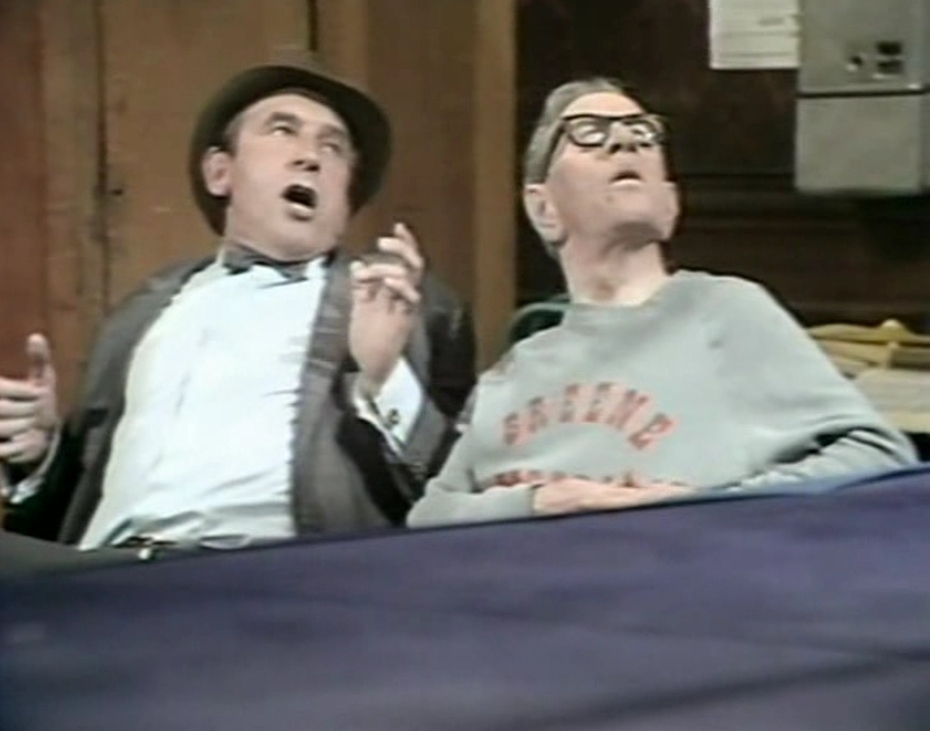
Any sitcom starring Leonard Rossiter is going to be worth a look (even Tripper’s Day, although only the strong or foolhardy will probably be able to watch all six episodes of that one).

The Losers has plenty going for it – the series was scripted by Alan Coren and featured Alfred Molina (making his television debut) as Rossiter’s co-star.  It’s pretty tough going though, for several reasons.

Firstly the picture quality isn’t great. The videotape masters were wiped, so we’re left with off airs of the first five episodes (the final episode has presumably disappeared for good) which can be headache inducing. This is particularly noticeable during the series’ debut episode – A Star Is Born – where at certain points the picture keeps going to black every few seconds.

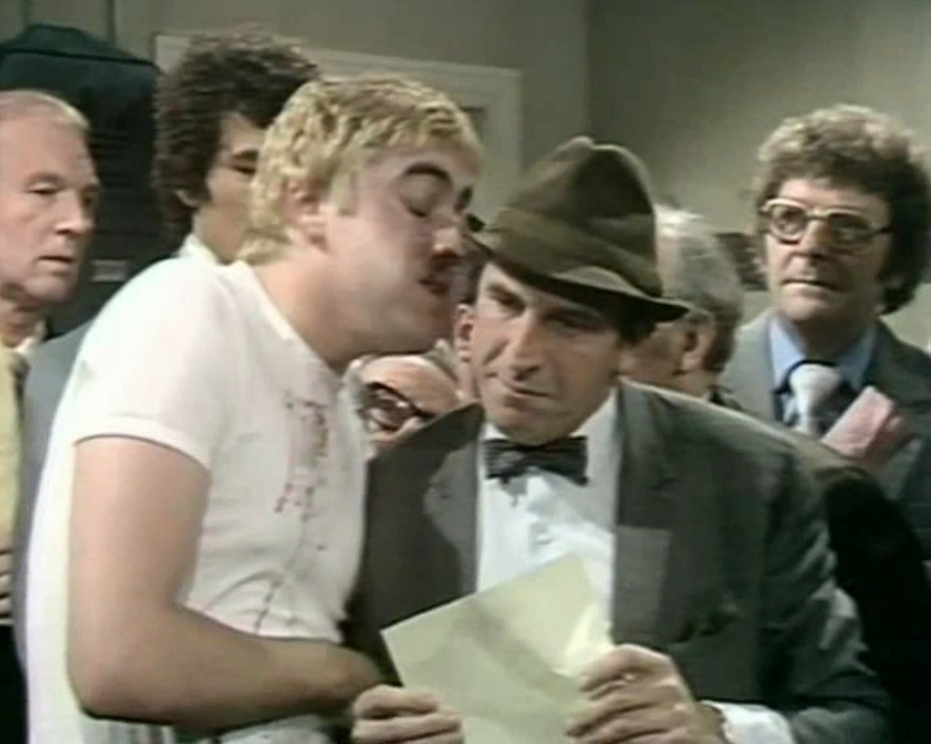
Set in the world of pro-wrestling, The Losers reinforced the widely held belief about the rigged nature of British wrestling (the sport was still a Saturday afternoon staple on ITV but its days were numbered). Sydney Foskitt (Rossiter) is a manager in desperate need of a fighter to lose convincingly in a big match. All seems doomed for Sydney, until he stumbles across the monosyllabic Nigel (Molina).

Good points about this first episode. Rossiter is his usual immaculate self and plays comfortably to type – he’s on decent form when the increasingly hysterical Sydney finds himself backed into a corner by the sport’s Mr Big, Max Snow (Peter Cleal). Joe Gladwin, as a cynical old trainer, is also good value as is Paul Luty, who throws himself around the ring with reckless abandon.

Possibly the best part of the episode takes place at a fairground where Sydney is hiding out (he’s attempting to dodge the wrath of Mr Snow). Sydney, as befits a WW2 veteran, breezily demonstrates his skill at the shooting range – only to miss the target and fill the top prize (a teddy bear) full of holes.

The stallholder and his wife (John Cater and Stella Tanner) are both dismayed about this, as is their son Nigel.  Things are about to turn nasty, when Sydney realises that Nigel (by a wonderful coincidence) is a wrestler. He may be a rubbish one, but that’s exactly what Sydney needs, someone who’ll lose when instructed.

There’s a harshness throughout A Star Is Born. Nigel’s father is more than happy to offload his son onto Sydney (“his mother and me always wanted a dwarf, there’s midgets on her side”) whilst the manipulation by Sydney of the simple and trusting Nigel does leave you with a nasty taste in the mouth.

Critical reaction to the series was muted at best. The Stage and Television Today reported that “there wasn’t much to say – except perhaps to express regret that it was written by Alan Coren” (16th November 1978). Meanwhile the Daily Mirror’s postbag contained this missive from R. Jackson of London. “Oh dear! What has that wonderful actor Leonard Rossiter done, getting mixed up in The Losers?” (25th November 1978).

The fact that the third and final series of The Fall and Rise of Reginald Perrin began airing in late November 1978 did The Losers no favours, as it clearly came off second best when compared to Perrin.  Presumably ATV agreed and decided that the series had little or no repeat value, wiping the tapes sometime after transmission.

Although there were later archive loses (the erasure of BBC children’s programmes like Rentaghost and Animal Magic not to mention the accidental destruction of most of Granada’s Lift Off With Ayshea) The Losers has to be one of the last British dramas or sitcoms to have been deliberately wiped in its entirety.

The fact that most of it has been recovered is a cause for celebration, but the first episode suggests that it’s no lost classic (to put it mildly). No doubt I’ll brave the rest of the series in due course, but I’ll probably take it nice and slowly.

Doctor Who – The Pirate Years

I’ve recently been rewatching the documentary Cheques, Lies and Videotape on the Revenge of the Cybermen DVD, which sparked off a few reminisces about my own dabblings in the Doctor Who pirate VHS era.

For those who weren’t there – until the mid nineties, watching old Doctor Who episodes in the UK was no easy task. There were very few repeats and only a small handful of stories had been commercially released on VHS. But virtually everything still in existence could be obtained on pirate tapes, provided you had a contact (and the patience to sit through nth generation copies which could be a trial on the eyes).

Throughout 1990 I quickly built up a collection of every existing episode from the sixties and seventies. Having been starved of access for so long, this meant I spent twelve months gorging myself silly on everything and anything I could get my hands on (yes, even The Mutants and Underworld).

With The Daleks having only recently come out on official VHS, I was keen for more Hartnell and so the first tape I asked for contained The Aztecs, The Rescue and The Tenth Planet 1-3. That was an exciting day ….

Pretty much all of the sixties episodes were sourced from copies of the telerecordings. These could sometimes be quite watchable (I only retired my pirate copy of the first three episodes of The Tenth Planet when it came out on official VHS many years later) but not always (I did sit all the way through a very muffled and blurry copy of The Gunfighters, but it wasn’t until the story showed up on UK Gold that I actually understood the plot).

Most of the seventies episodes freely swopped were taken from off-air Australian recordings, as our Antipodean cousins were fortunate enough to have the Pertwee and Baker T episodes repeated on a seemingly endless loop. I was pretty lucky here, as a fair number of the stories I received must have been only one or two generations down, as they were very watchable.

They did have their odd quirks though – sometimes two episodes would be edited together and occasionally stories would receive the omnibus treatment so beloved of Margot Eavis. One such omnibus story I had was The Power of Kroll, which I did watch in a single sitting – but even though it was quite short (around 80 minutes) it isn’t something I’d recommend.

Some episodes were edited for content (Leela’s knife-throwing in The Invisible Enemy, for example, was trimmed down).

There were a number of Pertwee stories (such as The Silurians, Terror of the Autons and The Daemons) which I first experienced, via these bootleg tapes, in black and white. And every now and again I like to drop the colour down and view them again in monochrome. Hopefully I’m not the only one mad enough to do that.

The days of tape swapping came to an end with the launch of UK Gold’s in 1992.  With better quality versions of most of the series’ surviving episodes receiving regular television screenings, there was less need to refer back to the old pirate tapes.

For a new generation, these UK Gold repeats were their Doctor Who gateway. But that’s another story ….

Coronation Street in the Seventies

I’ve recently been watching a fair amount of late seventies Coronation Street (currently up to August 1978, which sees Hilda having problems with her muriel).

As mentioned in previous posts, thanks to the Granada Plus repeats it’s not too difficult to locate most episodes from early 1976 onwards. And when you get into the groove of watching consecutive episode after consecutive episode you find there’s something very moreish about this era of the show.

Unlike modern soaps, it’s not because of a constant stream of high octane storylines. 1970’s Corrie is a gentle thing – true, there is drama (the recent strike at Baldwin’s Casuals, say) but it’s usually always leavened with humour.

Deaths of regulars were kept to a minimum during this period, and usually they occurred either because the actor decided to leave (like Anne Reid) or they were let go (such as Stephen Hancock, fired after he complained about the series’ wage structure). The notion of killing off a long-running regular just to get a bump in the ratings wasn’t really a thing.

Affairs were also a rarity. Yes, Ray Langton is shortly due to depart Weatherfield after a short fling, but this storyline only came about because Neville Buswell decided to leave the series.

So given that the stakes were often low, why is the show so enjoyable at this point in time? Maybe that’s the reason why. 1970’s Coronation Street isn’t a matter of life and death – it’s just a slice of gently comic life.

No, it’s not an accurate reflection of life in a big Northern city during the late seventies (although the series can often surprise you with the occasional sharp topical barb) but then there’s no reason why it has to be.

Instead, the Street was content to play to its strengths, particularly when it came to servicing the series’ long running regulars. When they started to depart the stage in the eighties (for a number of reasons) the show began to lose something of its sparkle.

So I think that when my rewatch reaches the mid eighties I’ll just loop back to the first episode in 1960 and begin again ….