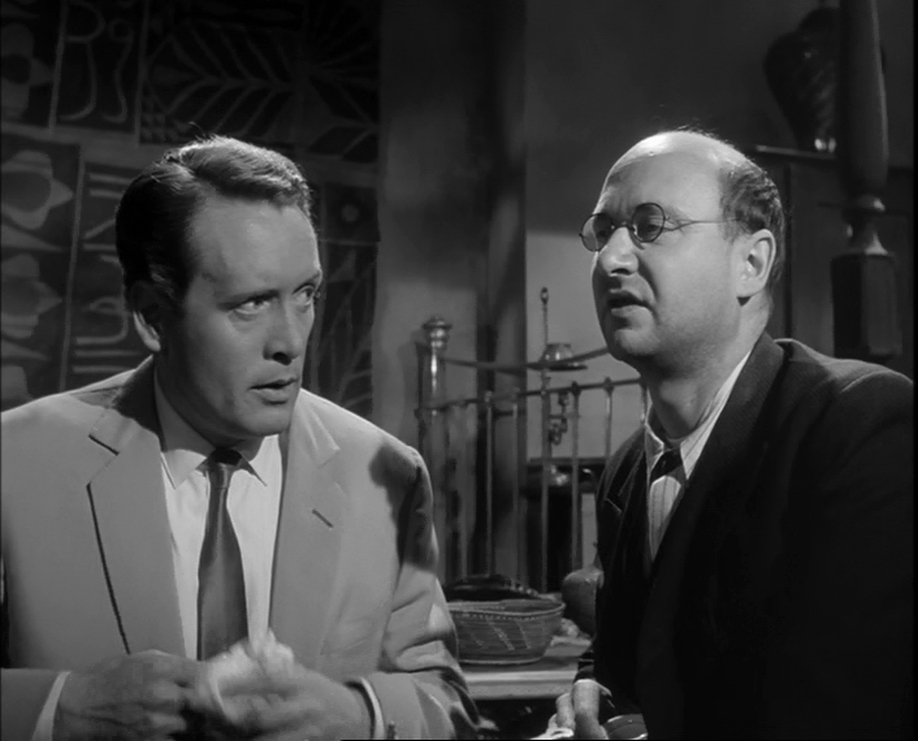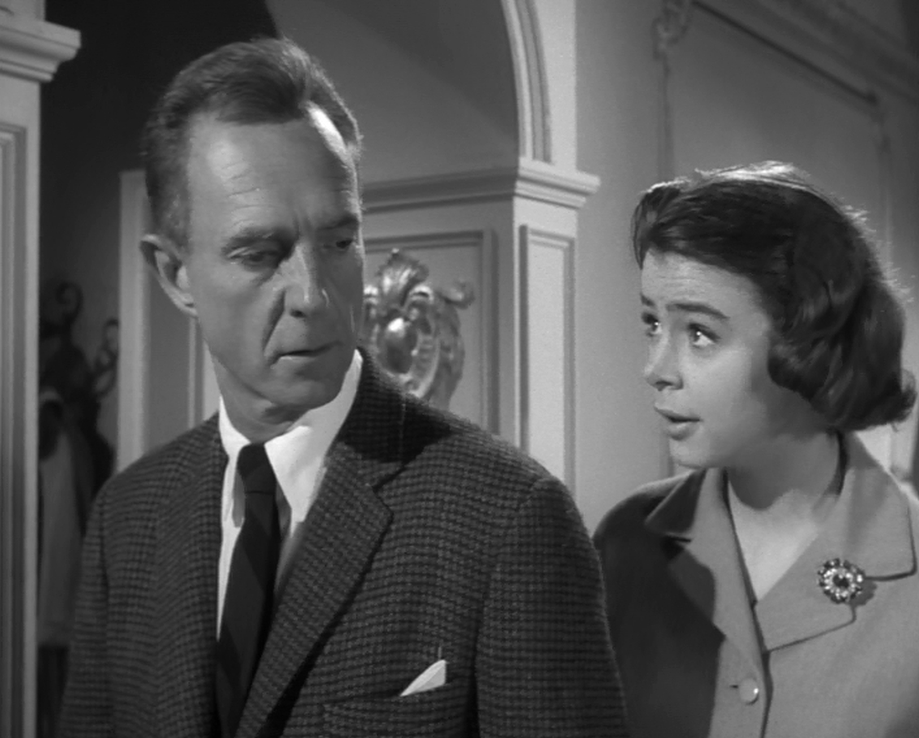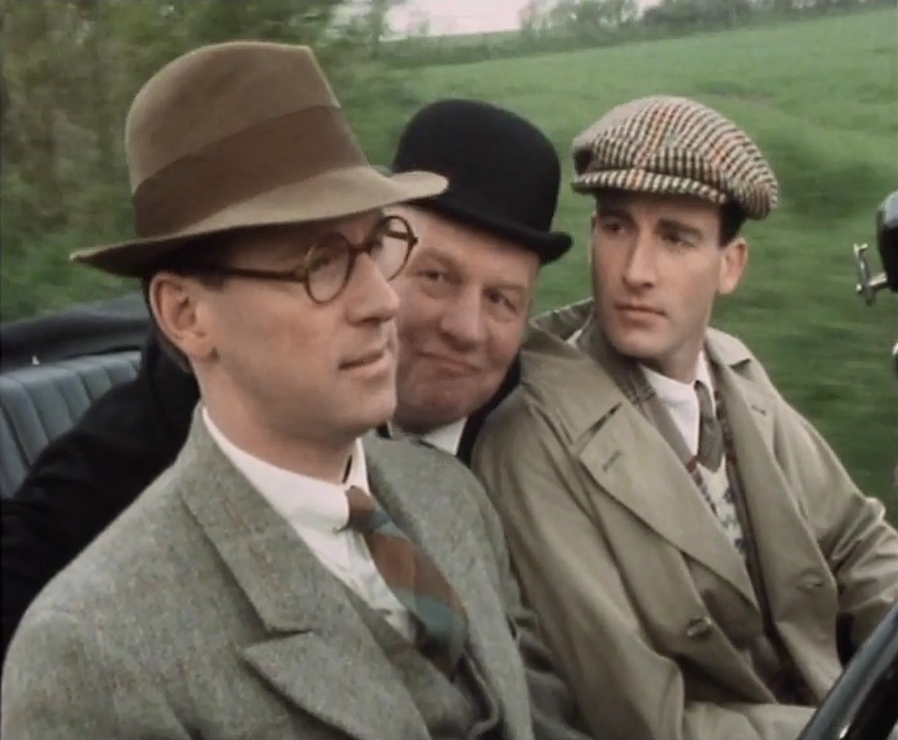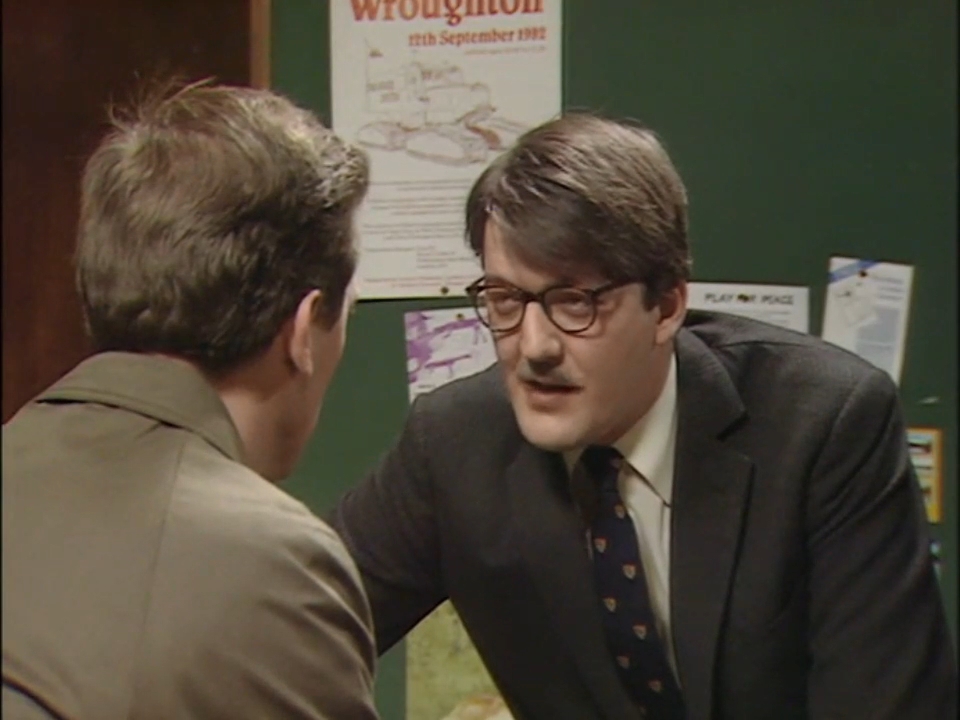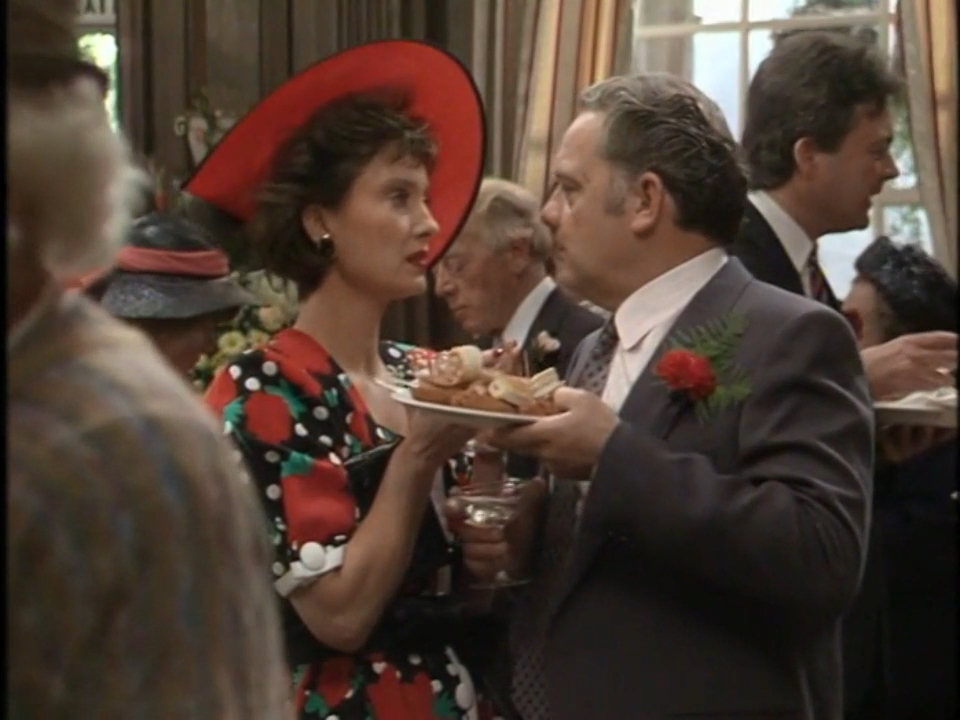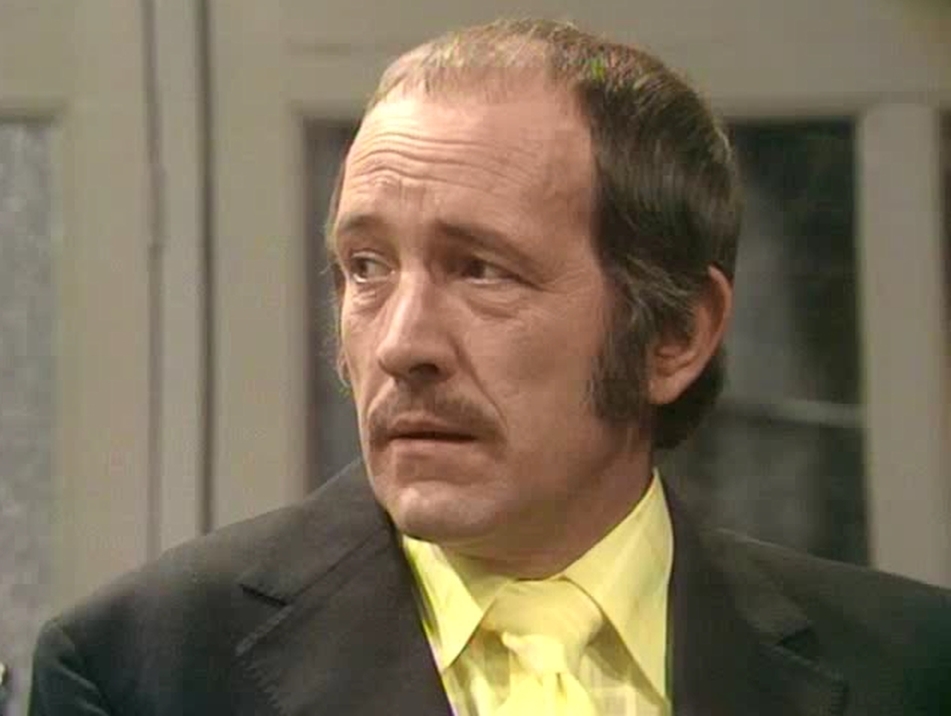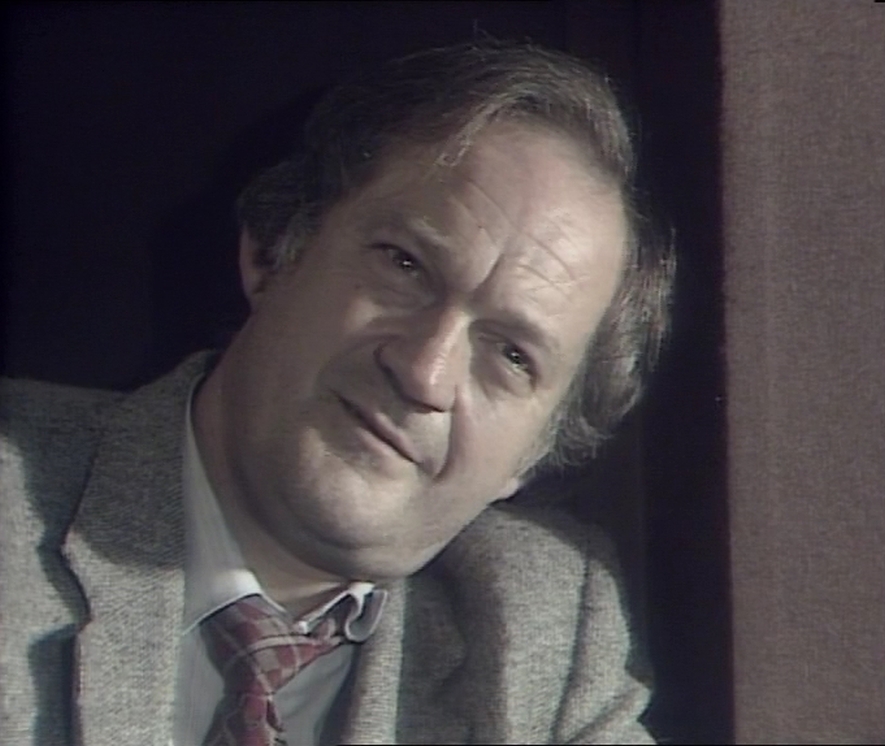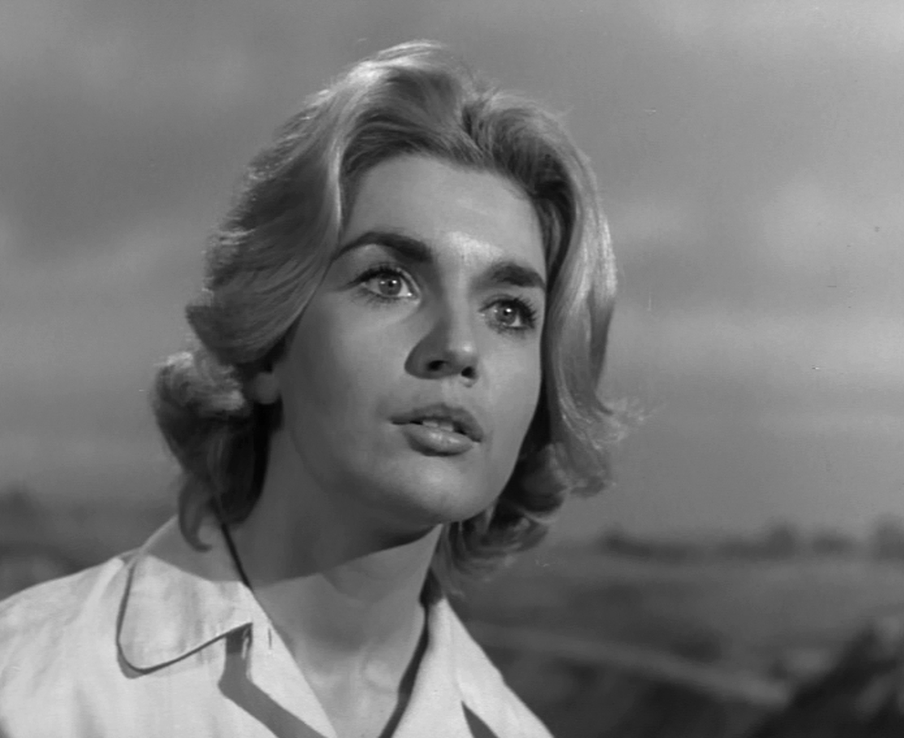
Danger Man – The Girl in Pink Pajamas

Having survived an assassination attempt, President Varnold (Robert Cawdron), lies unconscious and seriously ill in the local hospital. In order to protect him from further harm he’s been isolated under an assumed name, but an amnesic American woman – found wandering in the countryside – seems to know something about another attack which is due very soon ….

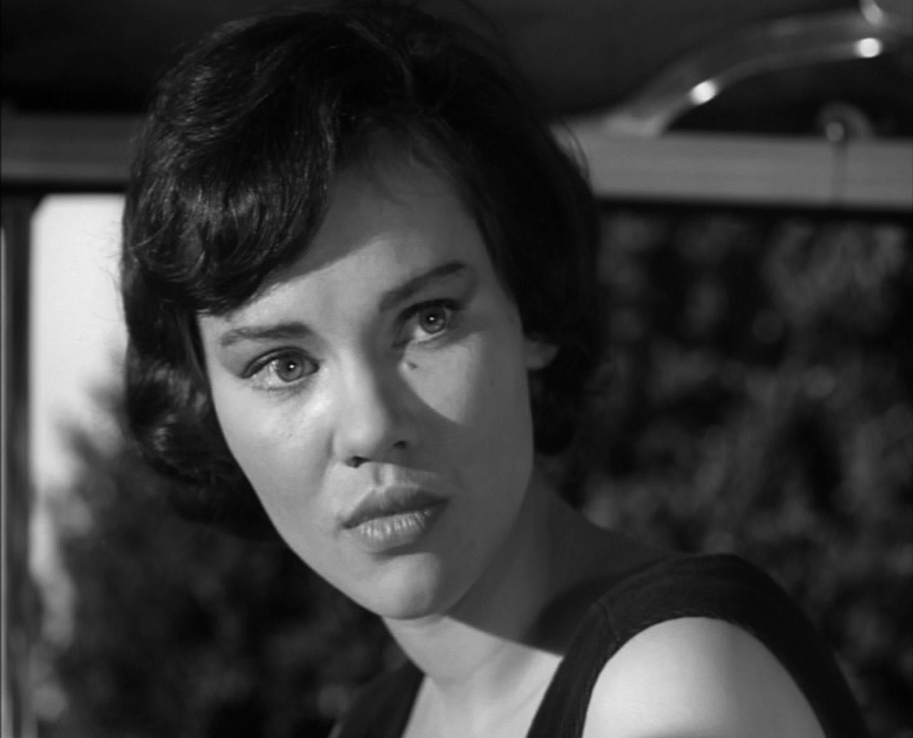
The Girl in Pink Pajamas easily wins the award for the most intriguing episode title from DM‘s initial run and the pre-credits sequence is pretty arresting as well. The unnamed girl (played by Angela Browne) is seen wandering barefoot through the sort of quarry usually favoured by Dr Who, dressed only in pink pajamas (well, given we’re watching in black and white we have to assume they’re pink).

This part of the story is put on the back burner for a while as Drake arrives at the hospital to check that all security procedures are in place. The man in charge, Major Minos (Alan Tilvern), seems very efficient but since Tilvern was one of those actors blessed with a remarkably shifty face, it won’t come as too much of a shock to learn that Minos later turns out to be a wrong ‘un.

The mystery of the girl (who we learn is called Anna Wilson) has the feel of a proto Department S storyline, although given that a fair few of those episodes tended to have weak resolutions to puzzling set-ups, I wonder how well this one is resolved? Well …..

It’s revealed that Anna jumped (or maybe was pushed) from a train. My immediate reaction is to wonder why she didn’t have a scratch on her (had the train been moving at any speed then it’s impossible to see how this could have been avoided). And you have to raise an eyebrow at the chatty villain who clearly couldn’t just kill her (first he had to mention that bad things were due to happen at the hospital)

Anna, a nurse, was travelling with Dr Keller. Keller’s a specialist surgeon due to operate on President Varnold, who has a bullet lodged in his brain. The plan was to kill Anna and Dr Keller and substitute them with black hats who could finish Varnold off for good. Keller was duly killed, but somehow (the story isn’t too clear on this) Anna managed to get away.

You have to say it’s a reasonably good plan, although it seems rather overcomplicated once you realise that, for security reasons, Varnold isn’t guarded at all (since that would only draw attention to him). The most puzzling part of the story occurs midway through when (due to the dramatic music) we can infer that a mystery person was up to no good when he/she turned up Varnold’s oxygen. Since he was unprotected at this point, why not kill him there and then?

Okay, that’s enough quibbling. What works well in the story? Angela Browne does for one thing. Drake’s questioning of Anna zigzags between gentle and harsh (McGoohan could always do you a nice line in brutal). The camera certainly seems to like Anna as she gets some good close ups (these close ups come into their own during the scene where Drake is at his most hectoring).

The key showdown – Drake confronts the faux Keller (John Crawford) who’s about to operate – also gets the thumbs up. Everyone in the operating theatre, apart from Drake, are masked, which makes the scene especially interesting.  Crawford, limited in his acting choices due to the mask, can only use his eyes as Drake attempts to convince the others that the man they think is Keller poses a danger to the President. Drake bluffs his way through by pretending to speak to Keller’s superiors on the phone – an excellent example of Drake thinking on his feet.

There’s also a satisfyingly punch up at the end after Drake takes on three baddies and wins. Plus Colette Wilde adds a dash to humour to the episode as a somewhat grumpy farmer’s wife who’s very keen for Drake to take Anna off her hands.

Plot-wise, this one’s a bit patchy then but I’ve still got a lot of time for The Girl in Pink Pajamas. Ralph Smart and Brian Clemens always knew what they were doing.

Danger Man – Bury the Dead

Tony Costello, an agent colleague of Drake’s, dies in a motor crash. Accident or murder? Drake heads out to Sicily to investigate ….

Drake’s first port of call is the police, where the Captain (Paul Stassino) acts in such a shifty fashion that he might as well have just confessed on the spot. Stassino is also saddled with a fake-looking moustache which is more than a little distracting.
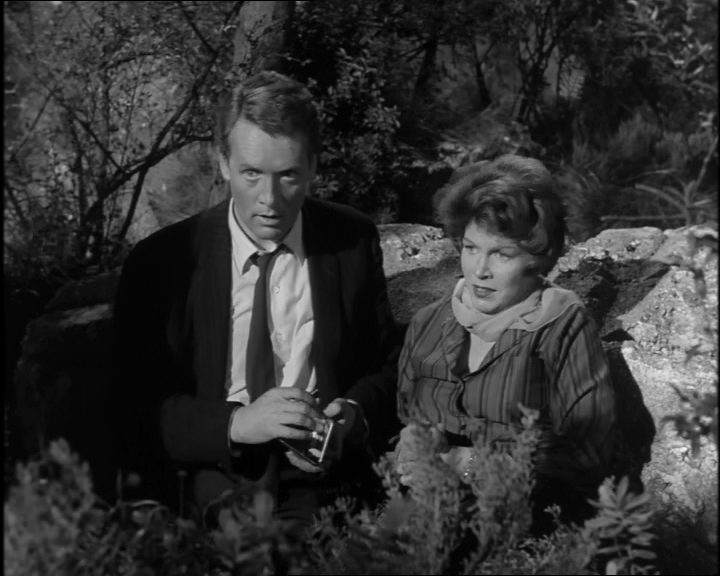
Jo Harris (Beverley Garland) claims to be a friend of Tony’s (his fiancée in fact). It’s left dangling for a short while as to whether she’s on the side of the angels or not (it turns out that she is). That seemed a little unlikely early on though, after Drake takes her to investigate the site of the crash. No sooner has he begun searching through the undergrowth than a shotgun pokes out through the bushes and nearly causes him a mischief.

Since Jo was the only one who knew of Drake’s intentions, it’s a remarkable stroke of luck that the shooter was in the right place at the right time. That appears to be Hugo Delano (Dermot Walsh), who pops out of the bushes with a shotgun, although oddly Drake investigates his weapon and seems happy that it wasn’t fired. So was there a second person also waiting in the undergrowth with a loaded gun on the off chance Drake would come calling? Maybe, although that makes even less sense.

This is only a small niggle though and the rest of the story proceeds smoothly. We don’t know why Tony was killed or exactly what the Captain and Delano are up to until the closing few minutes and this sense of mystery is a definite plus.

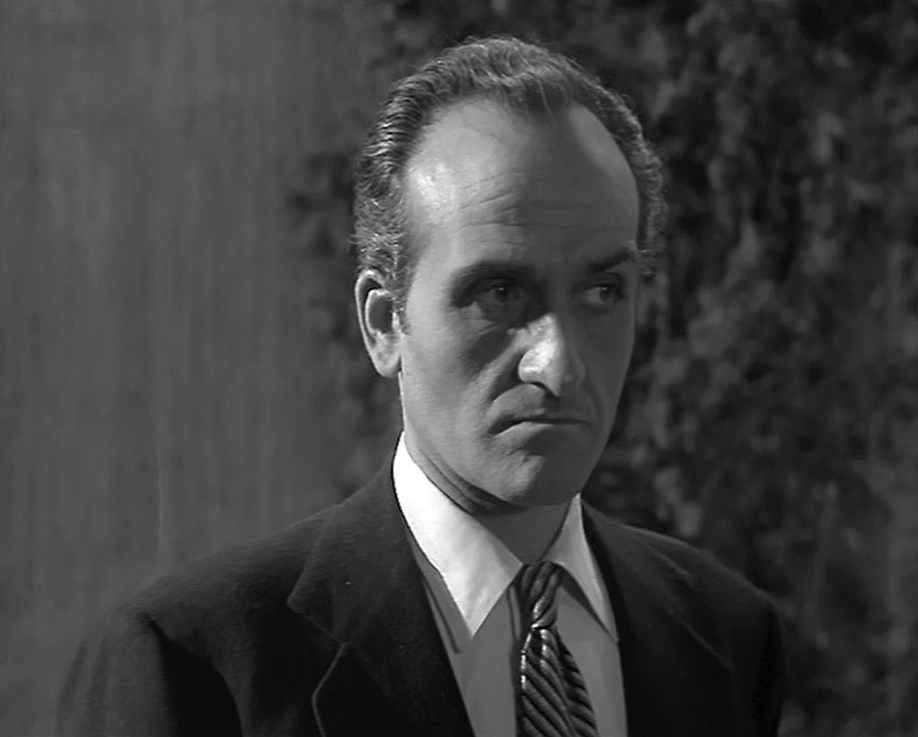
As are the arrival of Patrick Troughton and George Murcell as Bart and Bruno, two street toughs with orders to get Drake into trouble so that the Captain will have an excuse to lock him up for a few days. Troughton, using his one size fits all foreign accent, is maybe a little out of his comfort zone but Murcell has an imposing persona which works well in one of the episode’s key scenes.

Bruno, increasingly frustrated that all his attempts to provoke Drake into a bar-room brawl have failed, smacks him hard around the face several times (Drake simply soaks up the punishment). McGoohan doesn’t have to do much here, but it’s the way he doesn’t do it that’s so impressive. Of course Drake could have simply walked away to, but maybe he was enjoying playing a game of psychological warfare with his opponents.

Previously, I’ve drawn attention to a few episodes which have been somewhat on the predictable side. So credit where credit’s due, I have to admit that the key twist of Bury the Dead (Costello faked his death) wasn’t something I saw coming. The gun-running scheme that Costello, Delano and the Captain are involved in isn’t terribly interesting, but the final five minutes of the story still pulsates.
First you have Robert Shaw’s performance as Tony Costello. His screentime might be limited, but his star quality is evident. The confrontation between Drake and Costello (McGoohan getting the chance to show a rare spasm of rage, as Drake’s controlled persona slips for a few seconds) and the unhappy reunion of Costello and Jo are both memorable moments.

The downbeat ending – a shellshocked Drake and Jo drive away – is also something that’s appreciated.

Written by Ralph Smart from a story by Brian Clemens, Bury the Dead is a top-tier effort.

Danger Man – Deadline

The independent African nation of Bassaland is in turmoil. Pulling the strings and orchestrating acts of violence is the exiled former leader Saul Khano (William Marshall). Drake has just three days to prove Khano’s complicity in a high level assassination and so prevent a bloody uprising ….

Deadline is notable for featuring an all-black guest cast. Given that the pool of available actors in the UK was fairly limited during the early 1960’s, this is slightly surprising but most welcome. The performances all down the line are strong as well – even minor players like Earl Cameron and John Harrison.

Dominating the episode is William Marshall. The episode takes pains to build up an unflattering picture of Khano – his violence and lust for power – which means that when Drake and the audience meet the elegant, Oxford-educated man we’re forced to quickly adjust our perspective. True, the University educated African is something of a cliché but the immaculately dressed Khano (his eyepatch, like his dinner suit, is white) does spar entertainingly with Drake.

Plot-wise, this one works pretty well (Jo Eisinger was always a safe pair of hands) although I could quibble about the way Drake gains access to Khano. Drake claims to be a gun-runner, which immediately piques Khano’s interest since he desperately needs more arms and ammunition to continue his revolution.  But nobody seems to check Drake’s credentials (indeed, you could be forgiven for thinking Drake makes up the gun-running story on the spot). And why hasn’t Khano secured arms from another source anyway?

Khano’s wife, Mai (Barbara Chilcott), holds the key to her husband’s destruction. She knows that he ordered the death of her uncle (a respected advocate of non-violence) and blamed the murder on the government. Drake is convinced that if she tells the people this they will immediately cool down (and so it proves, although in real life things might not have gone so smoothly).

Chilcott plays her scenes of conflicted loyalties well and Mai turns out to be a key character (saving Drake’s life for one thing) which given there were only two female speaking roles in the episode is a nice touch.

As with some of the other 25 minute episodes, it’s easy to find everything a little simplistic and contrived, but overall there’s still plenty of interest in Deadline.

Danger Man – An Affair of State

The tiny nation of San Pablo has requested substantial financial aid from the United States of America, claiming that its substantial gold reserves will provide more than adequate security for the loan. American economist Arthur Winfield has spent some time investigating the state of the San Pablo economy, but his apparent suicide sets alarm bells ringing in Washington. Hence Drake’s arrival ….

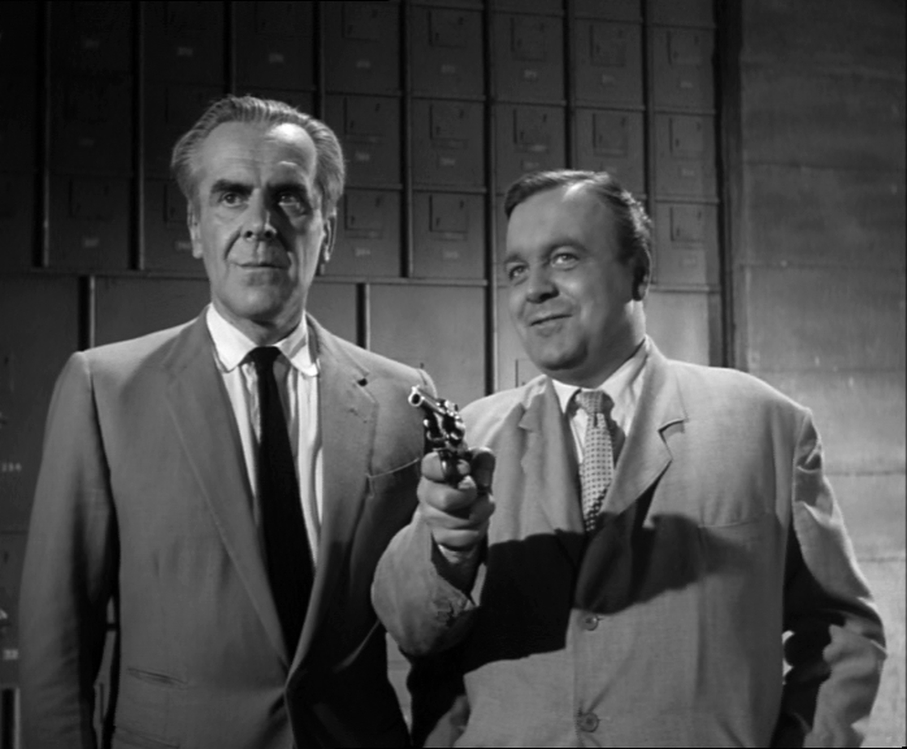
The pre-credits sequence is short but very sweet. A car draws up by a cliff edge. The boot is sprung to reveal … a dead body! A man extracts the body and flings it over the edge of the cliff (let’s ignore the fact that it’s obviously a stuffed dummy who takes the dive). The man turns round and we see … it’s Patrick Wymark! Then a policeman turns up (let’s ignore the fact that given it’s a very deserted spot, the chances of anyone else suddenly arriving are quite remote). The policeman is shot dead by … John Le Mesurier! If all that hasn’t piqued your interest, then this probably isn’t the series for you.

San Pablo is an archetypical banana republic (or more accurately, a banana and pineapple republic). The Commissioner of Police. Ortiz, is completely corrupt. We, the audience, already know this as he’s played by Patrick Wymark. Wymark is one of a number of British actors forced to adopt “Arriba, arriba! Ándale, ándale!” accents during the episode. But he’s good enough to get away with it (just).

Plenty of false evidence is produced to prove that Winfield had been leading a hectic social life of drinking and gambling, which provides a compelling reason for his suicide (strengthened by a signed suicide note).  Indeed, it seems that Drake has been pretty much convinced – although if so, the arrival of Raquel Vargas (Dorothy White) gives him pause for thought.

This is the point of the story where the ever mounting plot oddities can’t be ignored. I can just about accept that Ortiz likes to do his own dirty work (although surely he could have bribed one of his underlings to dispose of Winfield’s body). But an extra level of suspension of disbelief is required when you learn that Alvarado (John Le Mesurier) is the Minister of Finance. He likes to tag along for body disposal jaunts with a handy rifle? Hmm, okay.

Then we discover that Raquel and Winfield had secretly married, but not in San Pablo as her parents wouldn’t have approved (this is negated at the end of the episode after Raquel tells Drake that her parents have decided they didn’t mind after all). Given that Winfield doesn’t seem to have been in the country for long, theirs was obviously a whirlwind romance. Maybe I’m nitpicking, but this part of the story doesn’t feel right to me.

Dorothy White looked naggingly familiar – one quick trip to IMDb later and I think it’s her final screen credit (as Mrs Firman in Grange Hill) which I particularly remember her for.

Although the story is a little clumsy (surprising, since Oscar Brodney had quite a career, scripting films like The Glenn Miller Story) I did like the moment where Ortiz confronts Raquel. He tells her that she needs to spend a short time in the cells, say a year or so. Although the episode is painted with fairly broad brushstrokes, this short scene is very chilling (and well played by Wymark).

Having appeared in the pre-credits sequence, Le Mesurier doesn’t reappear until the last few minutes. Alvarado and Ortiz take Drake down to the vaults where he rapidly learns that some (if not all) of their gold supplies are nothing more than worthless lead.

This is obviously what Winfield learnt and the reason why he was killed (and since it’s been obvious right from the start, any tension or mystery has long since dissipated). Plus it’s another plot problem. Given that the US isn’t going to lend San Pablo any money without making the necessary checks, killing Winfield only means that someone else – Drake – would be sent in his place. And if they had disposed of Drake, would they go on killing each new replacement? That might add up to a lot of bodies ….

It’s a fairly low mark for the storyline then, but the guest cast (apart from those already named there’s the always reliable Warren Mitchell as a twitchy whistleblower and Fenella Fielding as a vampy hostess) help to paper over the obvious story cracks.

Danger Man – The Sisters

Nadia Sandor (Mai Zetterling), an East European scientist, has defected to the British. The authorities are having trouble establishing her identity though and ask Drake to travel to Slavosk in order to free Nadia’s sister, Gerda (Barbara Murray), from prison and bring her back to England. But after he does, the problems aren’t over ….

Once again Drake is summoned to the presence of Hardy (Richard Wattis). Nattily attired in a three-piece suit (Drake’s English-wear?) our Secret Agent is still a little frazzled after his plane trip from America and (as is his wont) begins to rile the straight-laced Hardy. At one point Drake reveals that his friends call him “the man with the built in crystal ball”, which is something of a conversation stopper.

Drake’s voice over makes a comeback in this episode. It’s easy to see why, as it papers over the cracks when the narrative is forced to take a sudden jump forward. As touched upon before, that’s a curse of the 25 minute format – time is always of the essence.

With the assistance of Mikhail Radek (Sydney Tafler), Drake breaks Gerda out of prison. Radek is quickly established (via Drake’s voice over) as an amusing, if cold-hearted, mercenary – someone whose only loyalty is to money. To be honest, Drake lays this character profile on so thick that when Radek disappears from the story after a few minutes it’s hard not to imagine he’ll reappear towards the end. Guess what ….

The prison break could have easily lasted a whole act, but instead it’s done and dusted in a matter of minutes. Drake and Radek waylay the guards sent to escort Gerda to another prison and steal their authorisation documents. The hapless guards are dealt with in an amusing way though – lured by the prospect of girls and all-night jiving (the party they stumble into looks endearingly innocent) they instead find Drake and Radek waiting for them behind the bedroom door.

Given that the episode is now whipping along at a rate of knots, we never see the scene where Gerda realises that Drake is her saviour rather than another jailor. Instead, we have to be content with a single scene (on a studio-bound grassy knoll) which shows the pair leaving the country (thanks to Drake clipping through a barbed wire fence and having an energetic punch up with a guard).

This scene is notable for the way that Gerda, inching along the ground to the fence, stops to have a cup of tea from a flask whilst Drake is attempting to break through. Now I like a cup of tea as much as the next man or woman, but surely there’s a time and a place to take your beverages.

Is Nadia an imposter? The arrival of Gerda should hopefully answer this question, but since the sisters haven’t seen each other since childhood that won’t be so easy. Plus there’s the very real possibility Gerda could be a spy sent to discredit Nadia and force the British to deport her.

This is a decent puzzler and both Zetterling and Murray play the scenes they share together well – the sister’s reactions abruptly changing from delight as they’re reunited after many years apart to suspicion as each apparently begins to mistrust the other.

If one were in nit-picking mode, then it’s slightly hard to believe that no-one has been able to vouch for Nadia Sandor. No doubt she’s rarely travelled abroad, but given that she’s fairly eminent in her field, would she never have been photographed in the newspapers or met any Western scientists?

As it turns out, Gerda is revealed to be a spy which secures Nadia’s place in Britain. But maybe a more devious writer would have ensured they were both imposters, with the exposure of one as a spy helping to strengthen the identity of the other.

The ‘shock’ late return of Radek, working with Gerda, helps to wrap things up. Gerda pleads with Drake not to send her back home, but Drake is implacable. We never learn her fate (or that of Radek) but Drake tells her that “when you play this sort of game, you must expect to pay the consequences”. Ouch.

In addition to Zetterling, Murray and Tafler, the always reliable Anthony Dawson makes a brief appearance, meaning that The Sisters doesn’t skimp on acting talent. It might be another of those episodes that really could have breathed had it had double the running time, but it’s still an above average effort.

Danger Man – Position of Trust

Drake is in El Dura, a Middle Eastern country whose government has grown rich from the sale of heroin. Determined to stop the flood of these narcotics into the US, Drake enlists the reluctant assistance of Captain Aldrich (Donald Pleasence), a minor official in the El Dura government, who has the information Drake needs ….

Once again there’s no voice over during this episode and there’s another sign that the series is becoming more confident that the audience will get quickly up to speed (the episode opens with a brief establishing shot of New York but there’s no onscreen caption to hammer this point home).

Drake’s clearly knows New York well (several people call him Johnny, which is a tad disconcerting) although his stay today is brief. Calling on an old friend, Paul (John Phililps), he’s horrified to learn that Paul’s daughter is now a junkie. This is revealed in a striking – if rather melodramatic – way. Paul, in his luxurious apartment, lingers over a photo of his daughter on the sideboard (youthful, smiling) before showing Drake another photo (a police mugshot of his now hopeless looking daughter).

After deciding that rounding up the pushers will do no good, Drake heads off to El Dura, intent on extracting a list of the organsations the government sells the heroin to. The drug aspect of the story then becomes a Macguffin (the list could be about anything) as from now on the episode centres around the manipulation of the hapless Aldrich.

Pleasence’s second Danger Man appearance is a memorable one and he’s responsible for making the episode so watchable. Aldrich is a British ex-pat, ex-public schoolboy who pretends that he holds a position of trust (as per the episode’s title) but is nothing more than a minor clerk, barely tolerated by his superiors.

Drake decides to gain his trust by posing as an old boy from the same public school (so McGoohan gets to drop the American accent for a while and try out an English one). Aldrich is pathetically grateful to meet anyone from the old country and immediately latches onto Drake. The question is then posed as to why Aldrich has never returned home – we’re not given a definite answer but the arrival of Mrs Aldrich (Irene Prador) strongly hints that since his wife is a local, he might be concerned about the welcome she’d receive in the UK.

Austrian born Prador (possibly best known for playing Mrs Lemenski in Dear John) provides subtle support to Pleasance. Both Mr and Mrs Aldrich seem to be decent people, which makes Drake’s ruthless manipulation of Captain Aldrich all the more cruel (Drake no doubt believes that the ends justify the means).

Having plied Aldrich with drink and encouraged him to lose heavily at the roulette table, he’s now forced by Drake (back with the American accent) to steal the document he needs. That Aldrich is no sneak thief is confirmed by the fact that he walks out of the office with the secret file in full view – immediately alerting Fawzi (Martin Benson).

A comedy then plays out in which Drake manages to manipulate Fawzi, the end result being that Drake and Mr and Mrs Aldrich are unable to be charged but will be deported by an irritated government immediately. Drake promises to use his contacts to find Aldrich a new job (who, after realising the horror of the heroin trade, has now regained his self respect).

Everything’s wrapped up neatly then, although you could argue that it’s just too neat. Maybe later in the series’ run the innocent Aldrich might have been sacrificed, giving us a downbeat ending, but here everything concludes happily.

With Lois Maxwell also featuring strongly as Drake’s local contact Sandi Lewis, Position of Trust is a compact and satisfying script by Jo Eisinger (one of six he wrote for the first series).

Danger Man – The Journey Ends Halfway

Drake is in an unspecified Asian country, attempting to discover why refugees fleeing to freedom disappear somewhere along the escape route. The easiest way to find out the truth is to pose as a refugee, but that’s also the most dangerous ….

Given that we’re in Chinese territory, I have to confess to suffering a twinge of anxiety. Which Caucasian actors would be adopting the “me velly solly” roles today? But actually we get off fairly lightly with only Willoughby Goddard forced to look faintly ridiculous.

Elsewhere, there’s the usual crop of British based actors (Anthony Chinn, Ric Young and of course the sainted Burt Kwouk) who could always be guaranteed to pop up in a story of this kind and add a touch of authenticity. Kwouk, as the easily bribed hotel receptionist, gives an entertaining turn as does Anna May Wong as Miss Lee, today’s damsel in distress.

Miss Lee is one of many seeking to escape the oppressive regime of the unnamed government. She doesn’t feature greatly, but at least her presence gives Drake something to fight for.

One interesting thing to note about the episode is that Drake isn’t called upon to move the plot along via voice overs. This device has been used fairly regularly in the previous episodes and can sometimes be a little irritating, although it wasn’t uncommon during half hour series of this era, where movement from scene to scene had to be rapid (see also Dial 999, which regularly used the VO method).

There’s not a great deal of mystery in the story as the pre-credits sequence reveals what happens to the unfortunate refugees – half way across the river they’re murdered and robbed of their valuables.

This is where the finer aspects of the plot start to niggle away at me. McFadden (Willoughby Goddard) tells Drake that he believes there’s a traitor in the organisation, but it becomes plain that there’s problems at both ends of the escape route.

Dr. Bakalter (Paul Daneman) looks to be one of the white hats – arranging Drake’s escape but asking for no payment – but it’s not terribly shocking to learn later that he’s one of the baddies. This revelation causes me to ponder over more plot niggles. If the refugees don’t pay Bakalter, then how does he know whether they’re carrying anything of value? Given that we’re clearly in a Communist state, surely most of those wishing to flee wouldn’t have a great deal of money anyway (plus if you murder all of your clients it can’t be long before someone starts to notice).

Let’s be generous and assume that only certain wealthy refugees were given the machine gun treatment and the poorer ones reached the other side of the lake.

When not worrying about the plot, there’s always Patrick McGoohan’s performance to enjoy. Posing as an engineer, he adopts a very interesting accent although he doesn’t keep it going for long. I also enjoyed Drake’s interlude in the steam baths, where he luckily came up with the right answers (had he not, he might have been fried to a crisp!). His bamboozling of the local police also entertains, allowing McGoohan a chance to play broad (something which so far in the series he hasn’t been able to do very often)
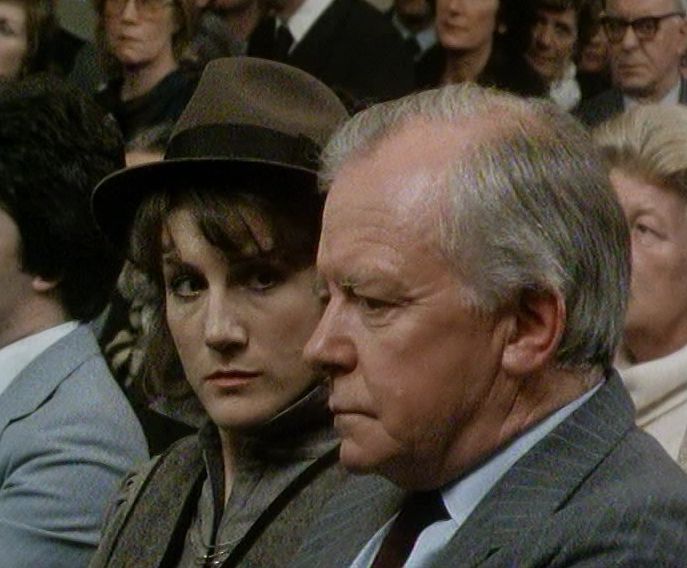
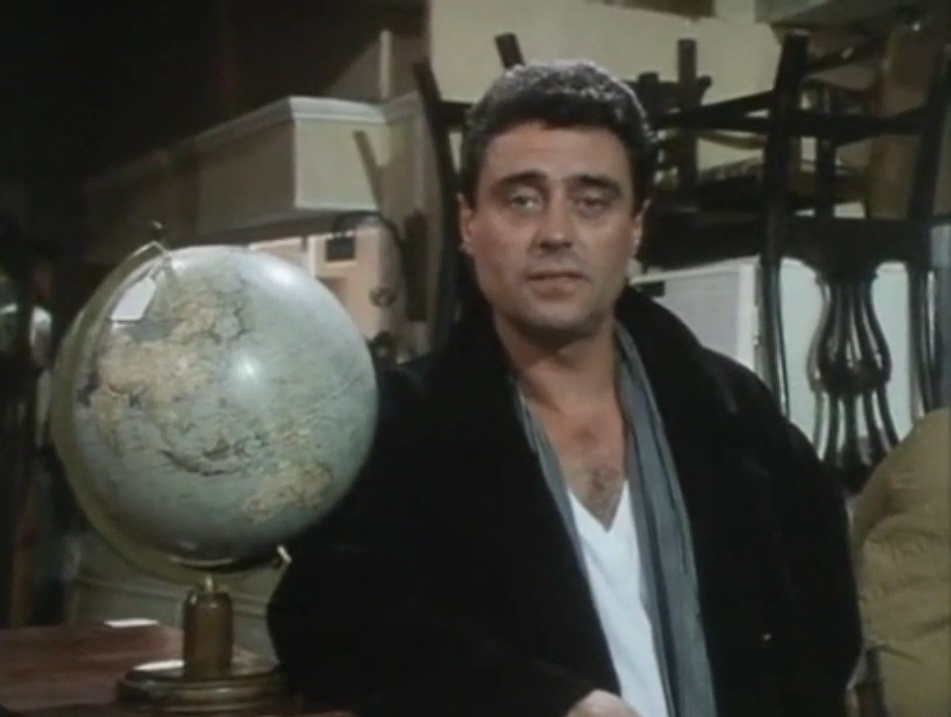
Ian Stuart Black’s script is competent enough and it’s always a pleasure to see Paul Daneman, but I have to confess that The Journey Ends Halfway doesn’t really catch fire for me.

Danger Man – Under the Lake

Large sums of counterfeit currency have begun to flood the world’s markets. Drake shadows the chief suspect, General Gunther von Klaus (Christopher Rhodes), and finds that his attractive daughter, Mitzi (Moira Redmond), provides him with some cover. But not for long ….

My interest was piqued right from the pre-credits teaser. It begins with POV shots of someone searching for something – after they find a suitcase stuffed with banknotes the door opens and a typically icy-looking Roger Delgado guns the unfortunate searcher down before he can utter a word. That’s a decent opening, especially since the promise of more Delgado to come is always an appealing one.

Drake gets several chances to exercise his charm on Mitzi, although theirs is a very chaste relationship. Other series might have gone further and featured more manipulation, but things are quite innocent here. As for von Klaus, Drake’s charm hits a brick wall as the General remains impervious to his polite social entreaties.

This means that von Klaus is a rather colourless character for the first half of the story, speaking only infrequently and then quite abruptly. But things begin to evolve once the action moves to the Sea Hotel, located on the shores of Lake Geneva.

This is where Delgado (playing hotel owner Von Golling) reappears and it quickly becomes clear that all Von Golling’s staff are equally as villainous as he is (Walter Gotell as the receptionist, for example). But there’s something of a dichotomy here – on the one hand the hotel caters for the rich and seems to have a good reputation, but on the other we see that Von Golling isn’t adverse to killing off his guests if they discover too much. Surely that will affect bookings ….

Drake and von Klaus take a cable car to the top of the mountain in a key scene which swiftly reverses the dynamic between the pair. Initially von Klaus has the upper hand, taunting Drake with the possibility that he could fall or be pushed from a great height before Drake drops his cowed act and establishes control.

This scene confirms that although von Klaus is the frontman of the money scam he isn’t in charge. Drake senses that he’s been coerced somewhere along the line and offers him a way out (although he’s never given a chance to repent as Von Golling murders him as soon as he returns to the hotel). I’d like to have had a little more detail about von Klaus’ motivations, but as ever with the 25 minute format, the clock is ticking.

The episode climaxes with a tense standoff as Drake and Mitzi are hunted through the deserted hotel by Von Golling and his henchman. I know it’s been established that many of the guests have set off on a boat trip, but it slightly stretches credibility that absolutely everyone has gone.

Never mind, the police turn up in the nick of time and all’s well, except that Drake has to (off-screen) break the news of her father’s death to Mitzi. As for the mystery of the money, the clue’s in the episode title (a secret stash of Nazi banknotes which I’m surprised haven’t turned into a sodden mess after being underwater for twenty five years).

This is another strong Jack Whittingham script that clips along at a fair rate. As I’ve said, it would have been nice to have dug into the character of von Klaus a little more, but that’s about the only niggle I have.

The cast is a strong one and in addition to those already mentioned, there’s a nice comic turn from Hermione Baddeley as a garrulous American tourist. With a brief bit of location filming at Portmeirion, this has to rate as one of the strongest from the first series.

Danger Man – Time to Kill

Drake is assigned to eliminate Hans Vogeler (Derren Nesbitt), an assassin responsible for a number of recent kills. He’s reluctant to murder him in cold blood (electing instead to bring Vogeler to justice) but an unexpected chain of events looks like it will force his hand ….

Carl Jaffe (as the unfortunate Professor Barkoff) is today’s actor killed off before the opening credits roll. His death is dramatic, although it’s also slightly comic (see the expression on Barkoff’s face as he slowly sinks to the floor). It’s plain from first sight that Vogeler is an expert – cigarette in mouth, he lines up his target with an almost contemptuous ease.

Drake’s refusal to kill Vogeler chimed with McGoohan’s own feelings on the subject, but it’s also fair to say that the television climate of 1960 probably wouldn’t have countenanced the thought of Drake acting as an assassin. David Callan did so later during the 1960’s, but ITC shows (always with one eye on foreign sales) tended to be more conservative.

It’s learnt that Vogeler has gone bear hunting in Austria, so Drake is dispatched to track him down. Oswestry in Wales stands in for Austria and does so rather well. This is an episode with a hefty amount of film work, although it’s a pity that we have to keep returning to the studio for the dialogue scenes as the transition between film and studio is always going to be noticeable.

Austria is a police state where travel is strictly regulated (the eagle eyed will spot a young Edward Hardwicke playing one of the frontier guards). En route to his destination Drake is waylaid by Lisa Orin (Sarah Lawson), who appears to be a friendly sort of person.

This is the point of the story where you start to wonder about Lisa’s motivations. Drake’s been told that travel along a particular strip of road is forbidden after 4 pm and yet Lisa managed to follow him after this cut-off point. How had she done this and why does she speak the local language so fluently? Everything seems to suggest that she’s an enemy agent, assigned to keep tabs on Drake. And yet …

I like the scene where Drake, having pulled off the road, assembles his rifle. Parts of it are hidden inside several loaves of bread and the rest are scattered about in various different places (in the torch, inside the boot of the car). It’s another little James Bond touch (the episode in general has a feel of the short story For Your Eyes Only).

More homages seem to be in order after Lisa innocently discovers part of Drake’s rifle and a passing patrolman handcuffs them together. Drake knocks out the patrolman and drags the unwilling Lisa cross-country in order to complete his mission (take your pick from The Defiant Ones or The 39 Steps).

Given that Drake is now handicapped with Lisa, it looks like he’ll have to kill Vogeler. But if she wasn’t present, just what was his plan to get him out of the country? And how would the rifle had helped? These are questions to which there’s no particular answer.

After some toing and froing, Drake and Vogeler struggle over possession of another rifle. It goes off and Vogeler dies (killed accidentally by his own hand). You can either view this as poetic justice or a bit of a cop out (the baddy is dead but Drake hasn’t had to soil his own hands).

Even as we get to the end of the story, Lisa’s involvement seems a little hard to credit. Presumably the programme-makers also felt this, as the episode ends with a brief voice-over from Drake confirming that she really was nothing more than an innocent schoolteacher.

Sarah Lawson (who later made several memorable appearances in Callan as Flo Mayhew) provides a good counterpoint to Patrick McGoohan’s dour Drake. And although Derren Nesbitt’s screentime is limited, he’s still able to radiate sneering menace with ease. And I’ll award bonus points for Vogeler’s Austrian hat.

A decent script by Brian Clemens and Ian Stuart Black then, but it’s one where the 25 minute format feels a tad constrictive. A little more time spent with the handcuffed Drake and Lisa, developing their differing views on the rights and wrongs of killing, would have strengthened the episode considerably.

Danger Man – Find and Return

The British Government are keen to extradite Vanessa Stewart (Moira Lister), who they accuse of treason. She’s fled to the Middle Eastern state of Beth Ja Brin and Drake is tasked with the job of bringing her back home, by any means necessary ….

It’s plain that Drake and the British Government’s representative, Hardy (Richard Wattis), don’t get on. Drake’s insouciant body language during their meeting is evidence of this, as is the way he occasionally stops bantering to reveal his colder personality. This scene (and a few others in the episode) could almost be McGoohan’s rehearsal for the role of James Bond, although given his distaste for the character that was never a possibility.

Drake’s contact in Beth Ja Brin is Nikolides. He’s played by Donald Pleasence, which is a major plus point in this episode’s favour. Nikolides initially gives off a faintly comic air – grumbling about his unpaid expenses – but, as we’ll see later, he has a ruthlessness which belies his placid demeanour.

In addition to Pleasence’s excellent turn, there’s a brief appearance by Warren Mitchell as Stashig. He’s a member of the opposition who’s also been given orders to locate and extract Vanessa. Mitchell lights up the screen for the few minutes he appears, deftly establishing Stashig’s friendly rivalry with Drake. Stashig is murdered off-screen by Nikolides, who reports the news to Drake in a calm, matter-of-fact way – allowing a good moment for McGoohan to register, briefly, shock and rage.

Drake dons a white dinner jacket for a trip to the casino, once again playing the James Bond role well, especially when he indulges in a spot of baccarat with Vanessa. Mind you, I’m surprised that the casino not only allowed his bet without any apparent security but didn’t seem bothered about making him pay up after he lost!

Paul Stassino and Zena Marshall also feature, as Mr and Mrs Ramfi. Ramfi is a wealthy industrialist who is hiding Vanessa in his well-guarded mansion whilst Mrs Ramfi glowers at the way her husband has been captivated by this outsider. Neither character is particularly fleshed out, Ramfi’s longing for the trappings of British high society being his defining trait.

Given that Moira Lister was the episode’s main guest star, it’s slightly surprising that Vanessa remains off-screen for a large part of the episode, only really making an impression during the last few minutes. But even though McGoohan and Lister don’t have a great deal to do together, there’s still an appealing spark between Drake and Vanessa.

Returning Vanessa to England with embarrassing ease, Drake then demonstrates his independent spirit by burning her passport (if he’d handed it over to Hardy it would have put another eight years on her jail sentence).

We never learn exactly what Vanessa did, but her defence (that she isn’t a British subject, despite owning a British passport) is one that Drake accepts instantly. Without knowing more about her case, it’s hard to know whether he’s been wise or foolhardy. But it’s a sign that he’s always prepared to trust his instinct.

Danger Man – View from the Villa

Drake’s holiday in Rome is cut short after he’s asked to investigate the murder of a banker called Frank Delroy (Philip Latham). It appears that Delroy, a man of previously unimpeachable character, has somehow managed to steal five million dollars worth of gold bullion. The location of the gold is currently unknown and the only lead for Drake is Delroy’s mistress, a witness to the murder whose identity is a mystery ….

Philip Latham is the latest quality actor who doesn’t make it past the opening credits. He’s given one slap too many by Mego (Colin Douglas), which is unfortunate since he hasn’t yet told Mego’s employer – Tony Mayne (John Lee) – where the gold is hidden. Douglas, not gifted any dialogue throughout the episode, is suitably imposing although there’s something faintly comic about Mego (maybe it’s the hat – see the Doctor Who story City of Death for further evidence that it’s hard to be a convincing heavy when you wear a hat).

Plot-wise, this script by Ralph Smart and Brian Clemens is a little lacking. We never learn why the whiter-than-white Delroy decides to suddenly risk everything by stealing the gold (nor how he did it). Also, Mayne’s connection with Delroy isn’t made clear. We do later discover that Mayne is in cahoots with Delroy’s estranged wife Stella (a wonderfully acid performance from Delphi Lawrence) although as she clearly loathes her husband with a passion, it’s unlikely he would have confided his nefarious plans to her.

The flat where Delroy was murdered contains several items of women’s clothing. Drake takes them to the shop where they came from and speaks to the proprietor, Gina Scarlotti (Barbara Shelley). She seems to do her best to help him, but every clue Drake is given turns out to be a frustrating dead end. Shelley’s performance has an appealing touch of vulnerability (it shouldn’t come as a shock to learn that Gina was Delroy’s mistress) although the fact Shelley is dubbed throughout is a bit of a problem.

In addition to the usual stock footage shots, there’s some nice work with a backcloth during a restaurant scene which helps to sell the illusion that we’re in Rome. That’s strengthened thanks to several minutes of location filming at Portmeirion. Clearly this location was filed away for later use ….

The episode climaxes with an entertaining punch up – Drake takes on Mayne and Mego and wins (although he has a helping hand from Gina, who shoots Mayne before he can do Drake any serious harm). The mystery of the missing gold is also resolved, although it’s best not to dwell on this part of the story too much.

Gina is insistent that she knows nothing about the gold, but it’s found remarkably easily in her holiday home. Delroy hid it in a packing case under a pile of books. Hmm. Given that this amount of bullion would be rather heavy (to put it mildly) just how did he get it all the way from Rome and inside her villa without anyone noticing?

Danger Man – The Key

John Drake is in Vienna, working with the American Ambassador (Charles Carson) in order to discover who’s been leaking US secrets. All the evidence points to newspaperman Harry Logan (Robert Flemyng) but Drake isn’t convinced …

Having recently completed a brisk rewatch of The Prisoner, it makes sense to rewind a little and tackle Danger Man as well, although given that this series has far more episodes it’ll be a slightly lengthier undertaking.

Still, we’re on familiar ground as the first actor we see is Peter Swanwick (“orange alert”, that was his catchphrase). But Swanwick doesn’t have much to do as his character (Joe) is snuffed out by Alexis Buller (Charles Gray) before the opening credits roll.

The 25 minute format obviously doesn’t give you a great deal of time to develop plot or characters, but I’ve few complaints with Jack Whittingham’s The Key. Keeping the cast small helps in this respect – although the downside is that it’s not too hard to work out whodunnit.

But there are a few misdirects along the way. Since the unfortunate Joe knew all about the secrets leaked, I wondered if his death was significant. But unless I’ve missed something it seems not (indeed, I’m not quite sure why Joe was killed or why Drake, upon learning that Joe had access to the secrets, didn’t consider that his murder was worth investigating). Drake then briefly wonders if the Ambassador might be guilty (the British born Carson appears to be dubbed throughout – maybe American accents weren’t his forte).

Both Logan and his wife Maria (Monique Ahrens) are charming, so they too seem to be out of the running. But since we’ve dismissed all the possibilities, something isn’t right – and eventually Maria is revealed to be the spy.

After Drake, apparently simply making idle conversation earlier in the episode, discovers that her family still lives in Budapest it seems obvious that she’s been blackmailed by the authorities (with the continued well-being of her family used as a lever). A tearful Maria later tells her husband this, and the episode looks to be almost wrapped up.

The additional twist – Maria is in love with Buller and has been playing Logan for a fool – is well done (I admit that I didn’t see it coming). Both Robert Flemyng and Monique Ahrens are excellent throughout and it’s surprising to learn that Ahrens only clocked up a handful of  film and television credits, as she’s very effective here.

The ending – Logan and Drake eavesdrop on an intimate conversation between Maria and Buller – is a memorable one. Neither Logan or Drake are called upon to say anything but the range of emotions that flit across Flemyng’s face as he learns the truth speaks volumes. With just a brief, downbeat spot of narration from Drake, that wraps things up.

The James Bond movies might have kickstarted the insatiable appetite for spy films and tv series during the 1960’s, but it’s worth remembering that Danger Man got there first (this episode aired in late 1960).

Annie Walker’s Greatest Hits

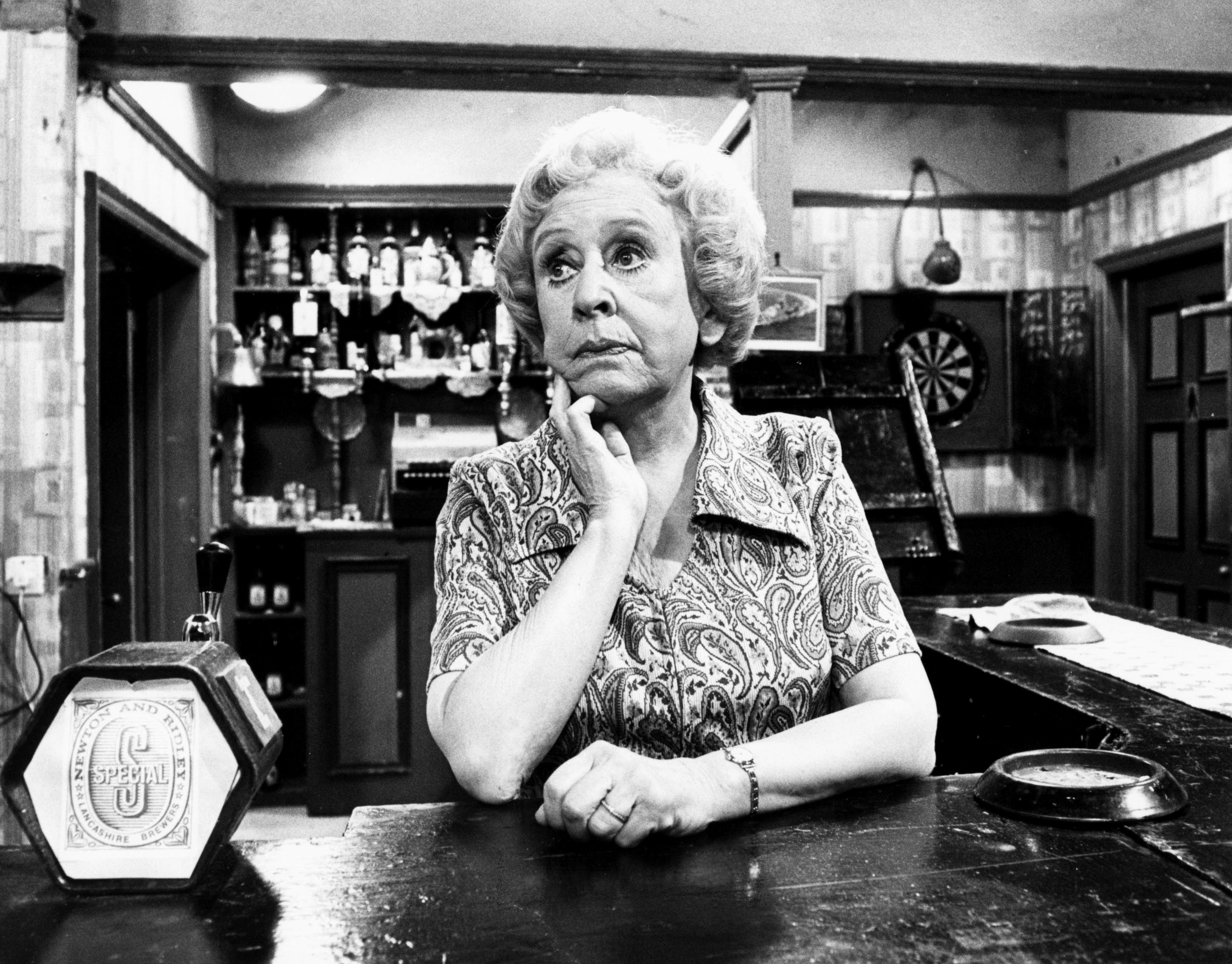
As it’s the anniversary of Doris Speed’s birth, I’ve been mulling over some of my favourite Mrs Walker moments (everyone needs a hobby). This isn’t an exhaustive countdown but hopefully it’ll be of interest. Please feel free to add any I’ve missed on the comments section.

10. 14th July 1976 – Hilda unveils her muriel.

09. 8th May 1978. Mrs Walker, returning from holiday, is appalled to learn that someone’s pinched her car. And as for Fred’s choice of alternative transport …

08. 19th October 1977. The regulars throw a party to mark Mrs Walker’s forty years at the Rovers.

07. 11th October 1978. Mr Garfield from the Weatherfield General is revealed to be a lowly hospital porter rather than a consultant. Mrs Walker, who has benefited from his healing touch on her bad back, isn’t best pleased to learn the truth …

06. 1st November 1976. Mrs Walker broaches the wages issue with Betty and Bet. It’s not good news.

05. 6th June 1977. It’s the day of the Jubilee parade and Mrs Walker assumes the role she was born to play.

04. 4th August 1976. Mrs Walker crosses polite swords with her arch enemy Nellie Harvey (Mollie Sugden) for the final time.

03. 10th January 1979. Setting Mrs Walker up for a comic fall was something that happened again and again over the years. This one – Mrs Walker discovers that the artwork hanging on her wall was painted by Hilda – is an excellent example.

02. 7th November 1977. A lovely dramatic moment for a change, in which Mrs Walker confronts her feckless brother (played by Derek Francis). Although she had been a widow since 1970, Jack’s presence – thanks to his prominent photograph in the sitting room – tended to be felt on many occasions.

01. 21st September 1977. Another classic moment where Bet takes sadistic delight in puncturing Mrs Walker’s pretensions. The slowly sinking realisation that her monogrammed carpet hails from a bingo hall clearly cuts like a knife …

On this day (22nd January)

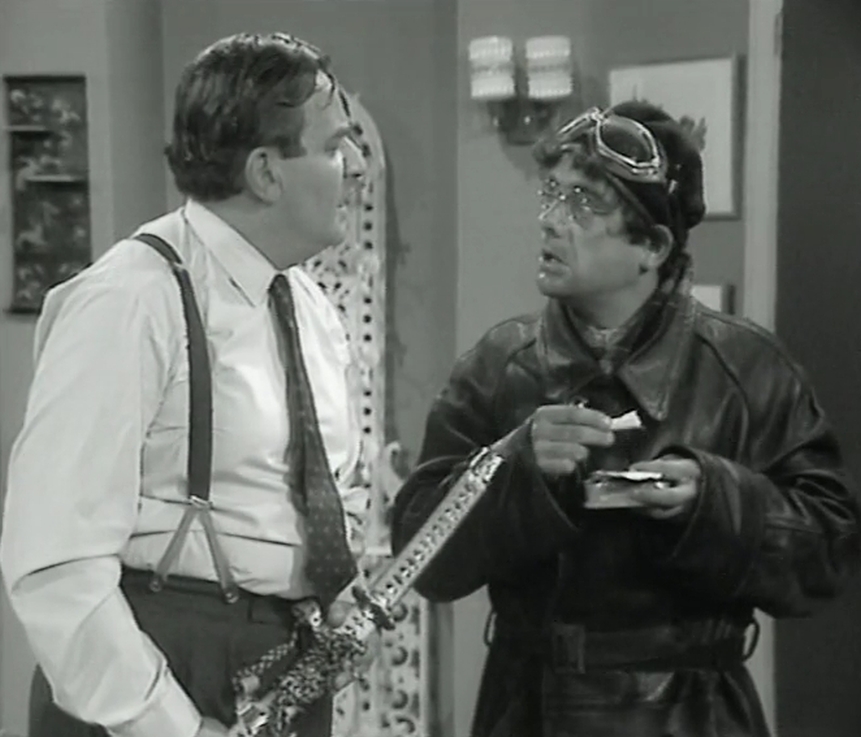
The Odd Job, the third episode of Six Dates with Barker, was broadcast on ITV in 1971.

My Six Dates rewatch has reached this episode. It’s always good to see Ronnie Barker and David Jason teamed up (and for this era it’s a rarity for Jason to be playing his own age).  I’ve previously written about the episode here.

Look to the Lady – Part One, the first episode of Campion, was broadcast on BBC1 in 1989.

Both BBC and ITV had already scored successes earlier in the decade with heritage detectives (Miss Marple, Sherlock Holmes) so it wasn’t a surprise to find the BBC scouring the bookshops for another Golden Age detective writer ripe for adaptation.

Margery Allingham had been a contemporary of Agatha Christie and Dorothy L.  Sayers, but it’s fair to say that over the decades her profile had dipped somewhat – making her stories ideal for rediscovery. Her later Campion novels became rather ponderous, but the early ones, like Look to the Lady, had an appealing light-hearted tone (it’s not surprising that the series tended to favour her earlier efforts).

Adapted by Alan Plater, Look to the Lady was the ideal way to kick off the series. Peter Davison and Brian Glover both hit the ground running and there’s strong support from the guest cast (such as Gordon Jackson in one of his final television appearances).

Hopes for Campion were obviously high as a second series was commissioned before the first was transmitted. But it never reached a third – possibly scheduling (the early episodes of series one were put against David Suchet’s Poirot whilst series two was placed opposite The Charmer) had a part to play in this.

Even now though, I still hold out hopes that Peter Davison might reprise the role in adaptations of some of the later novels (like The Tiger In The Smoke). Maybe one day ….

On this day (21 January)

Spyder Secures a Main Strand, the first episode of Spyder’s Web, was broadcast on ITV in 1972.

Spyder’s Web is a rum old thing. Running for just 13 episodes, it’s a spy series which owes a certain debt to the likes of The Avengers and James Bond. It possesses a tone that can vary from bizarre and light-hearted to grim.

Starring Patricia Cutts, Anthony Ainley and Veronica Carlson, there’s some familiar names on the writing front (Roy Clarke, Robert Holmes, Alfred Shaughnessy with Malcolm Hulke as script editor). Not everything works although Clarke, who wrote five scripts, tended to deliver.

A pity that most of the series now only exists as black and white telerecordings (altough of course that’s preferable to them not existing at all). Having not seen it for a while, I feel in the mood to give it another spin.

By Order of the Fuhrer, the first episode of Enemy at the Door, was broadcast on ITV in 1978.

Enemy at the Door is an interesting series. At first glance it looked like it was ITV’s attempt to copy the BBC’s Secret Army, but the differences between the two become quickly apparent.

Secret Army saw a regular stream of Allied airmen sent back home to Britain. This was the motor that drove the series – the constant underground struggle by a group of Belgian patriots against their numerically superior German overlords.

Enemy at the Door, by virtue of the fact it was set on an island (Guernsey), could never duplicate this – instead it concentrated on the uneasy alliance forged between the islanders and their new German masters. For example, as time goes on the audience is invited to ponder whether Dr. Philip Martel (Bernard Horsfall) is just doing his best for his fellow islanders or if he’s an active collaborator.

An extra layer of drama is generated by the fact that the likes of Major Richter (Alfred Burke), Major Freidel (Simon Lack) and Oberleutnant Kluge (John Malcolm) are portrayed as reasonable men rather than monsters. Of course you also need the balance of an icy and implacable German – Hauptsturmfuhrer Reinicke (Simon Cadell) is on hand to deliver this.

As a pre-watershed series, Enemy at the Door shies away from anything too graphic but the stories still manage to be nuanced and downbeat. With scripts from the likes of N.J. Crisp (no stranger to this type of drama) it’s a series that still packs a punch today. If you’ve not seen it, then it’s worth tracking down the DVDs or keeping an eye out to see if Talking Pictures TV re-run it.

On this day (16th January)

Hazell plays Soloman, the first episode of Hazell, was broadcast on ITV in 1978.

Based on the novels by Gordon Williams and Terry Venables (writing under the pseudonym P B Yuill) Hazell was a series that I’m always surprised didn’t run longer (it clocked up 22 episodes between 1978 and 1979).

Although Williams and Venables thought Nicholas Ball was a little too young to play the title character, he’s always a strong presence at the centre of each episode, more than holding his own against a diverse group of decent guest actors (not to mention Roddy McMillian as Hazell’s nemesis, ‘Choc’ Minty).

Employing the sensibilities of 1940’s American private eye thrillers (such as laconic narration) transported to a late 1970’s London setting was one of those nice touches which signaled that the series was attempting to do something a little different. It’s just a shame that it wasn’t a Euston Films production – instead it uses the more traditional VT for studio, film for location mix which makes it look a little old-fashioned compared to The Sweeney, The Professionals or Minder.

Maybe it was the emergence of Minder in 1979 which curtailed Hazell‘s run. If you have one series dealing with London’s criminal lowlife, do you really need two? Also, there were some suggestions that Nicholas Ball refused to make a third series if it wasn’t shot on film.

This opening episode was based on the first novel and boasts an impressive guest cast (Jane Asher, Fiona Mollison, George Innes, Patsy Smart).

The Infinite Variety, the first episode of Life on Earth, was broadcast on BBC2 in 1979.

Although David Attenborough had been making wildlife documentaries since the 1950’s, Life on Earth was a groundbreaking production – utlising a variety of innovative filming techniques to present breathtaking images of the natural world never before seen on screen.

Having said that, possibly the series’ most enduring moment was Attenborough’s encounter with a group of mountain gorillas (which was certainly easier to film than sequences which necessitated hundreds of hours of patience to capture just a few seconds of screentime).

For those in the UK, or who are able to access it, the complete series is available on the iPlayer whilst there’s a radio documentary reuniting key members of the production team available here.

On this day (13th January)

Series one of A Bit of Fry and Laurie began airing on BBC2 in 1989.

Following a pilot episode in 1987, ABoFaL began in earnest today. Whilst you could argue that series four was a little below par, the rest (and this first series especially) continues to hit the mark for me.

The pair’s love of Python has always been plain (breaking the fourth wall as a matter of course) and there’s very little chaff in this opening edition. ‘Bitchmother, Come Light My Bottom’ indeed.

The White Wedding, the first episode of A Bit of a Do, was broadcast on ITV.

What are the chances that two new A Bit Of series should have both begun on the same evening?

Adapted by David Nobbs from his novels, A Bit of a Do is a series that I’ve always enjoyed coming back to, although there’s a definite iciness about it. All of the main characters are flawed and none are particularly likeable – although over time most are allowed to display their vulnerable sides.

Given the repetition inherent in the format (most episodes end with a shattering revelation and either a drunken Betty or Rodney saying something that they shouldn’t) it’s not the sort of programme that you want to binge-watch, but if you take an episode each week then it slips by very nicely.

Having concentrated on playing Del Boy for most of the 1980’s, A Bit of a Do was a reminder that Jason could do more. Although it’s true that he’s not stretched too far here as the vain Ted Simcock (a man frequently forced to endure humiliations) is the sort of role well within his comfort zone. Having said that, Jason never disappoints though and his comic timing is always spot on.

You can’t grumble about the rest of the main cast either – Gwen Taylor, Nicola Pagett, Paul Chapman, Michael Jayston, Stephanie Cole, Tim Wylton – and there are some lovely cameos and smaller roles across the series (Keith Marsh as Percy Spragg in this episode, for example).

Today’s the anniversaries of the births of Ian Hendry and Jack Watling. For Mr Watling I think another viewing of HancockThe Lift is in order, whilst Mr Hendry will be represented by Battleground, the final episode of Village Hall. If you don’t own either series of Village Hall, then this is a reminder that you really should – both are excellent.


On this day (11th January)

Sleeping Partners, the first episode of Robin’s Nest, was broadcast on ITV in 1977.

Having already played Robin Tripp in six series of Man About The House, Richard O’Sullivan clearly hadn’t tired of the character as he pretty swiftly moved onto this spin-off (which also ran for six series).

Joined by Tessa Wyatt, Tony Britton and David Kelly (as the unforgettable Albert Riddle – the one-armed washer-upper) this is typical Mortimer/Cooke fare – although they didn’t write all the episodes. Adele Rose, Terence Feeley and Willis Hall were some of the more unexpected names who pitched in with scripts.

Armed and Extremely Dangerous, the first episode of Dempsey and Makepeace, was broadcast on ITV in 1985.

It’s easy to imagine that D&M was an attempt to replicate the success of The Professionals (which in turn owed something of a debt to The Sweeney). The problem is that a copy of a copy might turn out to be a little faint ….

Given that The Professionals never played that well in America, maybe the casting of Michael Brandon was an attempt to crack that market, just like those old ITC shows. Will they/won’t they was part of the D&M formula (we know what happened in real life of course) although never a large part – catching villains, shooting guns and crashing cars were always the first orders of business.

The excellent Ray Smith was cast as Spikings (this series’ Cowley or Haskins). It’s probably the role for which he’s best remembered today, which is a shame since his relatively short career was full of excellent character performances that stretched him much further (Callan, Colditz, How Green Was My Valley and 1990, to name just four).

With the likes of Roger Marshall and Murray Smith later contributing scripts, D&M is always going to be worth a watch but it can be rather hit or miss.

The first edition of Victoria Wood – As Seen on TV was broadcast on BBC2 in 1985.

If Dempsey and Makepeace doesn’t appeal, then maybe the first show in Victoria Wood’s new series might be more entertaining.

Many of the building blocks of As Seen On TV were already evident in Wood & Walters (C4, 1981 – 1982), although Wood was later to disown it. Mainly this seems to be because the audience were comprised of pensioners who’d never heard of her and proved to be a pretty tough crowd to crack.

But by the time of As Seen on TV, Wood had built up a head of steam through touring and the BBC2 audiences were much more appreciative right from the off. And there’s plenty to appreciate in this opening show, not least the first installment of Acorn Antiques.

On this day (10th January)

The first episode of Children of the Stones was broadcast on ITV in 1977.

ITV in general (and HTV in particular) were on something of roll when it came to spooky children’s television dramas during the 1970’s. Children of the Stones was a strong entry on that roll call, and is still remembered by many with a shudder of unease.

Written by Jeremy Burnham and Trevor Ray and with a cast including Gareth Thomas, Iain Cuthbertson and Freddie Jones, it stands up today very well. For a relatively obscure programme, it’s enjoyed something of a rebirth in recent years – there was a 2012 Radio 4 documentary, a reprint of the original novelisation as well as a new sequel book (also written by Burnham and Ray), audiobook readings by Gareth Thomas and a new audio adaptation in 2020, which is still available as a podcast.

The first episode of The Price was broadcast on Channel 4 in 1985.

A six part serial, featuring fine lead performances from Peter Barkworth and Harriet Walter, I’ve previously reviewed it here. For a short while a few years back, Simply Media dug into the Channel 4 archives and came up with a fair few items of interest – this being one.

The Firefly Cage, the first episode of Lovejoy, was broadcast on BBC1 in 1986.

Developed for television by Ian La Frenais from the novels by Jonathan Gash, the tv Lovejoy lacked the rough corners of the literary original – in the hands of Ian McShane, Lovejoy was simply a loveable rogue rather than being an underhand and unscrupulous one. I haven’t dipped into the series for a while, but when I do I tend to go for this first run (which although successful, wasn’t followed up for another five years).

The Firefly Cage is a decent set up episode, with all the regulars introduced effectively as well as an alluring performance from Kim Thomson as Nicola Paige, the first of many femme fatales to cross Lovejoy’s path.

Also debuting today – Nanny, The District Nurse, Charters and Caldicott (reviewed here) and Constant Hot Water. If Constant Hot Water is remembered at all, it’s only because it was Pat Phoenix’s last series (although her final transmitted television performance was in an episode Unnatural Causes). Maybe one day Constant Hot Water will resurface, hopefully so as I’d be curious to see how she worked with a studio audience.

On this day (9th January)

Strangers on a Train, the first episode of Whatever Happened to the Likely Lads?, was broadcast on BBC1 in 1973.

There might be previous examples which have slipped my mind, but WHTTLL has to be one of the first sitcoms which allowed its characters to grow and develop. Most sitcoms prior to this (Steptoe & Son or Dad’s Army, say) existed in a kind of stasis, but the Bob and Terry of 1973 were certainly different from the young lads we first met in the early sixties.

Given Bolam and Bewes’ later estrangement, it’s hard not to rewatch the series without pondering how far real life mirrored fiction. Graham McCann’s summation of their relationship (click here) might be a little waspish towards Bewes, but it does help to redress the balance previously painted (largely by Bewes as a victim, it must be said).

Throughout WHTTLL it becomes obvious that Bob and Terry have little now in common and it’s mainly the ties of childhood friendship which still keep them together. For Bolam and Bewes during the 1970’s, it was only the work that kept them together – like Bob and Terry they were totally different people with few shared interests.

Mind you, I don’t have a problem with discovering this and am always surprised when someone states that they find it difficult to now watch the series after learning that the stars weren’t the best of friends. For me, they’re simply giving an acting performance – and if they convince, then they’re very good actors.

The Grand Design, the first episode of Yes Prime Minister, was broadcast on BBC2 in 1986.

I think that the first series of YPM has to be my favourite run of episodes (Yes Minister was always consistent, but these eight episodes just have the edge). By now the formula was well established, the three regulars were totally comfortable with their characters and the elevation of Jim Hacker to the PM’s chair gave the series a little extra spice.

Sitcom fans were well catered for this evening, as you could then switch over to BBC1 to catch the first episode of Blackadder IIBells.

Sirens, the first episode of Rockliffe’s Babies, was broadcast on BBC1 in 1987.

For the best part of thirty years the BBC pumped out a series of top-rated police series – Dixon of Dock Green, Z Cars and its various sequels and Juliet Bravo. After Juliet Bravo came to an end in 1985, they struggled to find a long-running replacement.

Rockliffe’s Babies briefly looked like it might have the legs, but in the end it only ran for two series. Oh, plus there was the faintly bizarre spin-off in which Rockliffe became a country copper (which was almost as jarring as seeing DI Maggie Forbes in the C.A.T.S. Eyes environment).

Reviewing it now, Rockliffe’s Babies is patchier than I remember, but there are some strong episodes and it has the same urban feel of The Bill from this period (like its Thames counterpart, the show was shot entirely on VT).

Ian Hogg’s always good to watch (although in this one he’s only called upon to utter a few words) and maybe casting seven relatively unknown young actors was done in the hope that one or two stars might emerge who could then be given their own series (as had happened with the likes of Auf Wiedersehen Pet). Most are still acting today, although Susanna Shelling’s post Rockliffe career was fairly brief (her last television credit was in 2007).