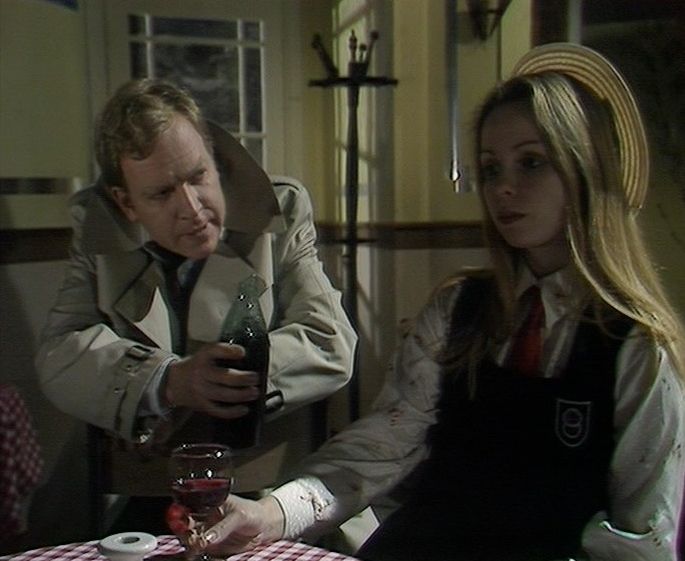
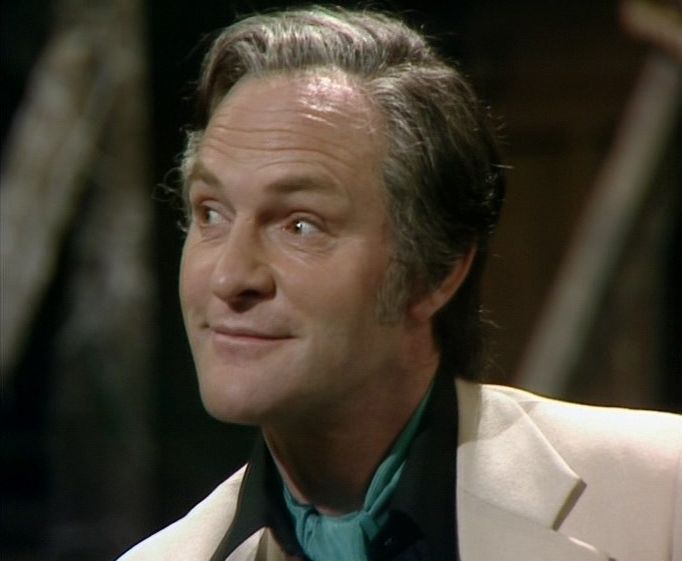
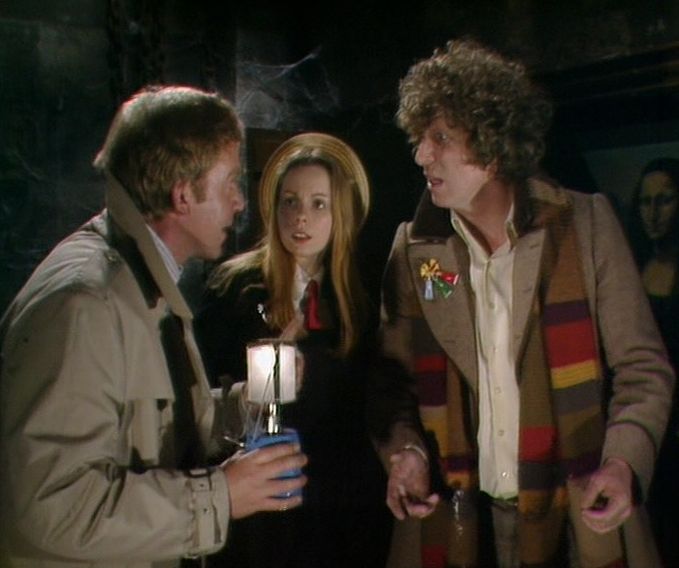
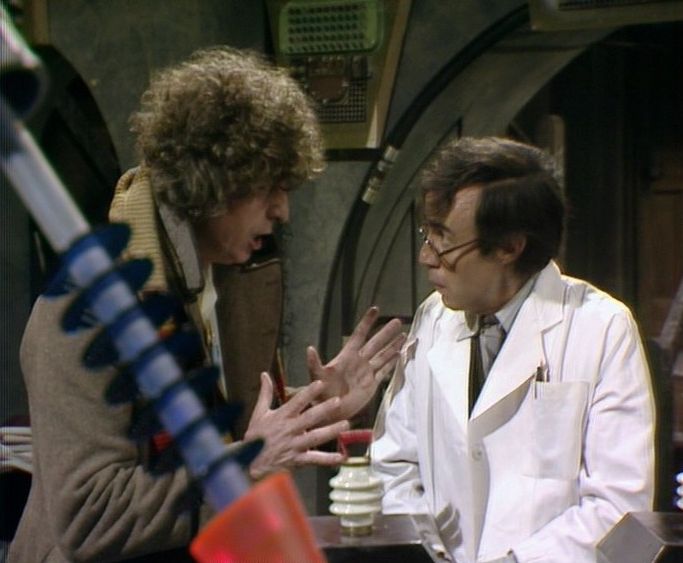
Doctor Who – The Horns of Nimon. Episode Three

nimon 03

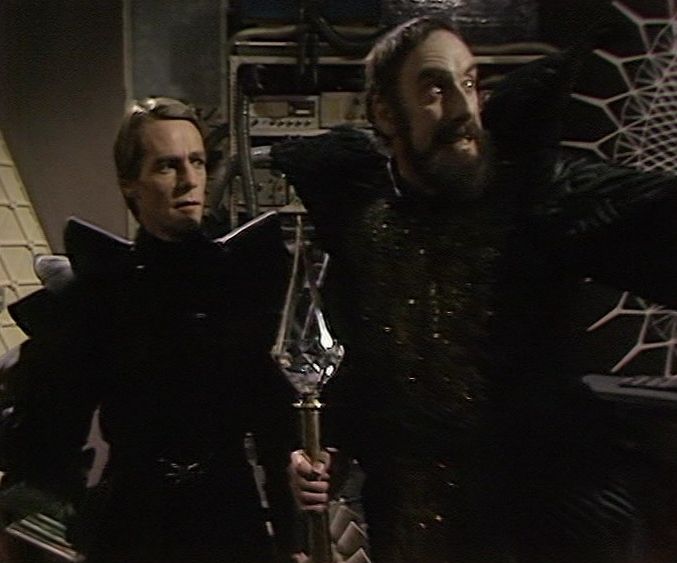
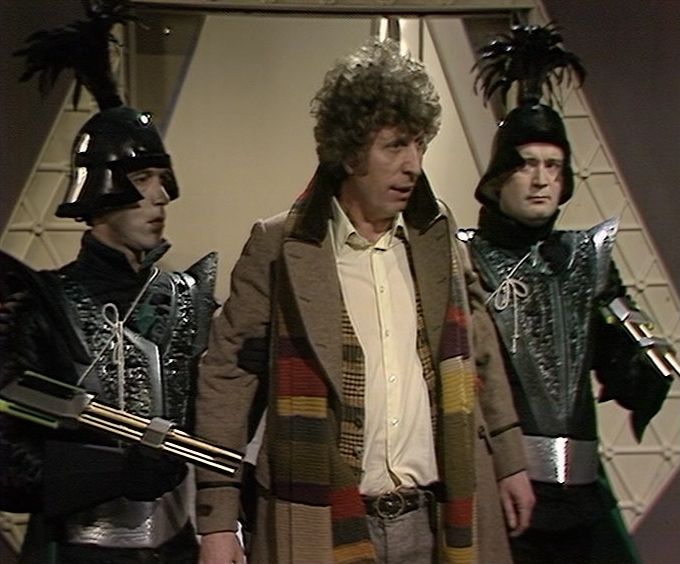
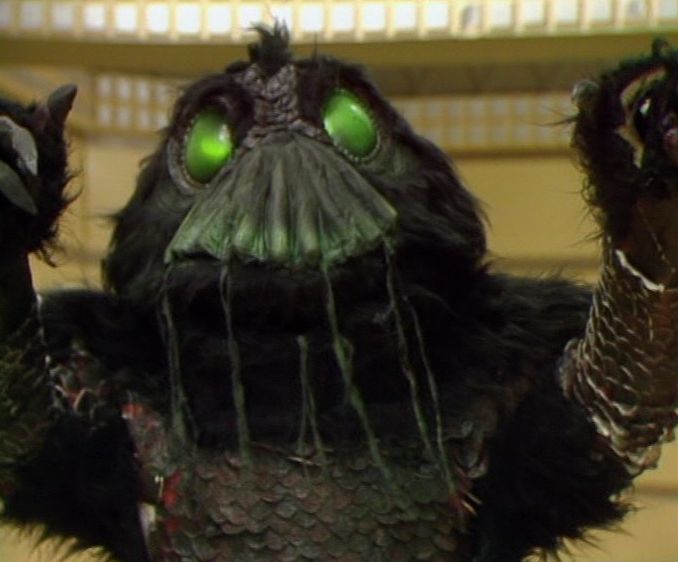
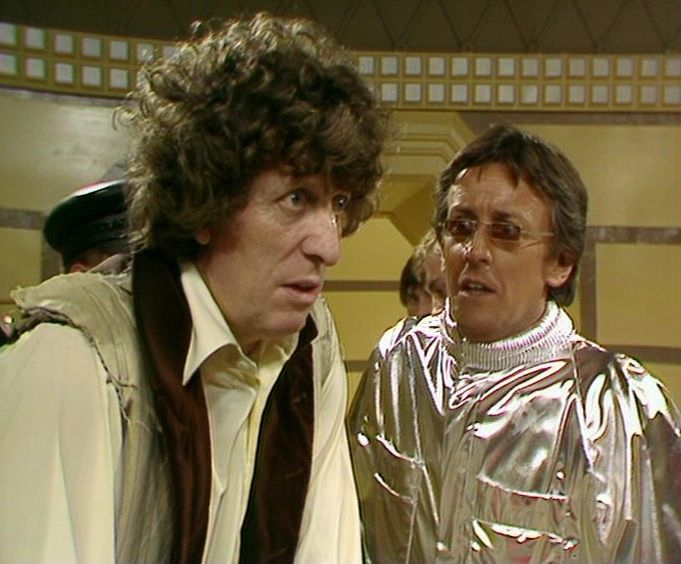
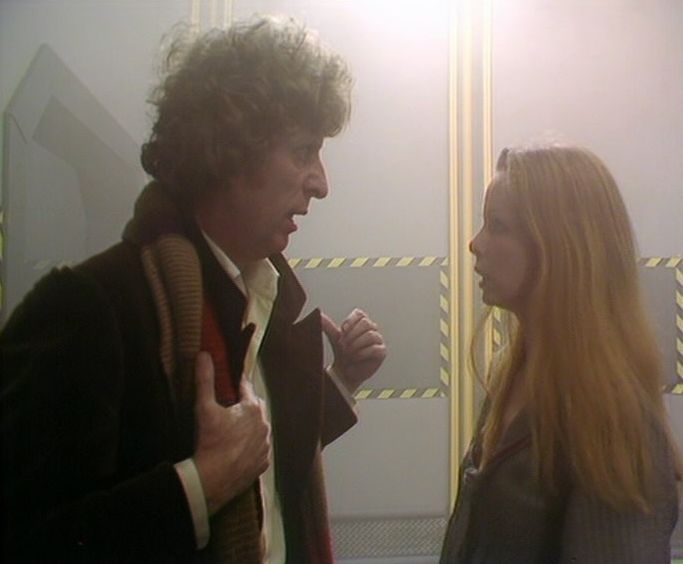
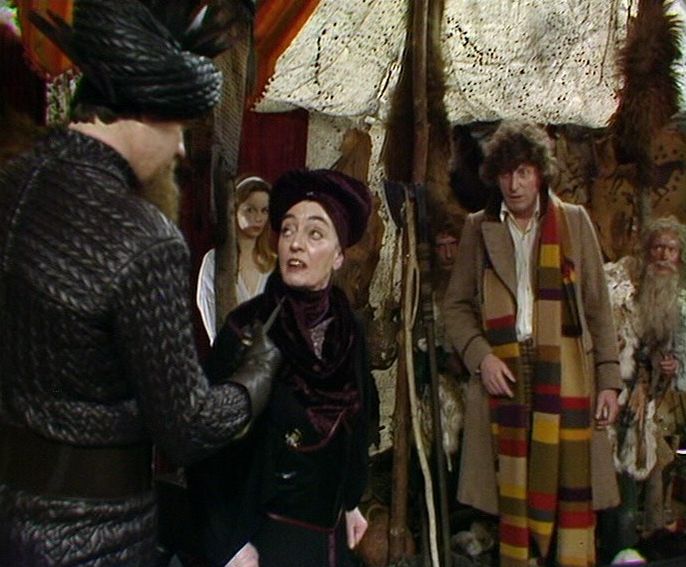
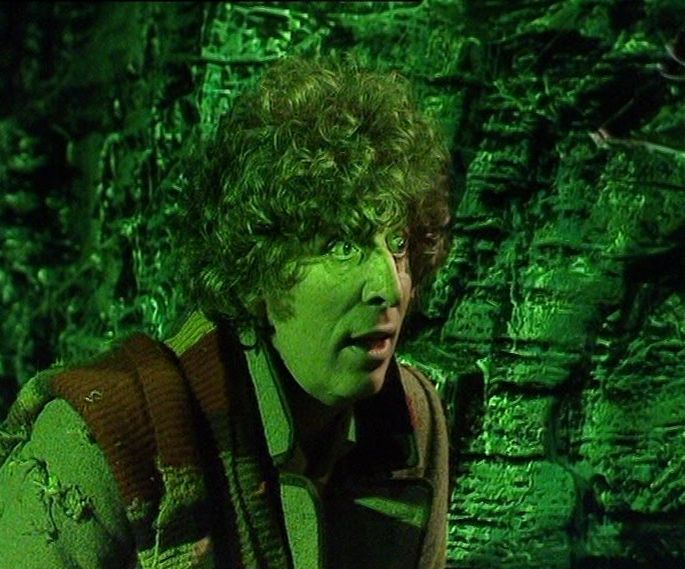
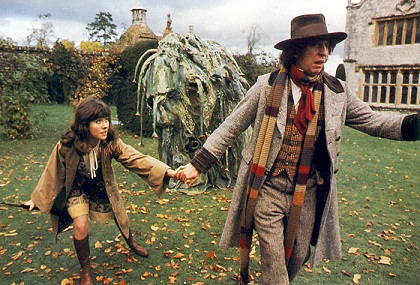
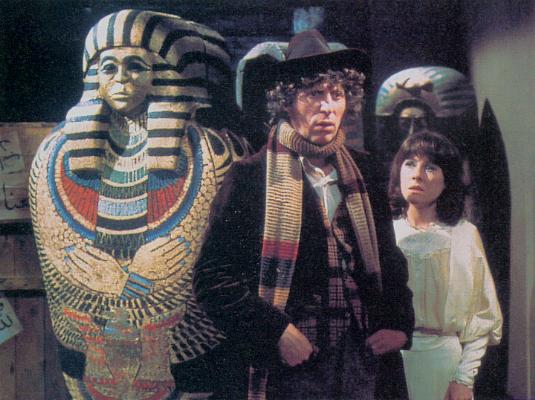
Anthony Read once admitted that The Horns of Nimon was written as a somewhat tongue in cheek story, but he’d hoped it would have been played in a slightly more serious manner.  Although if you script scenes like the opening one of this episode – the Doctor uses a red handkerchief to indulge in a spot of impromptu bull-fighting with the Nimon – then you can’t really be surprised if things turn out the way they did.

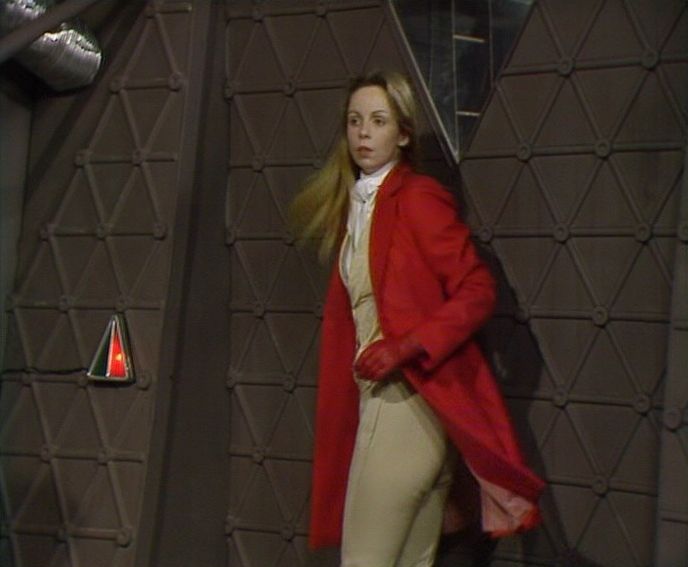
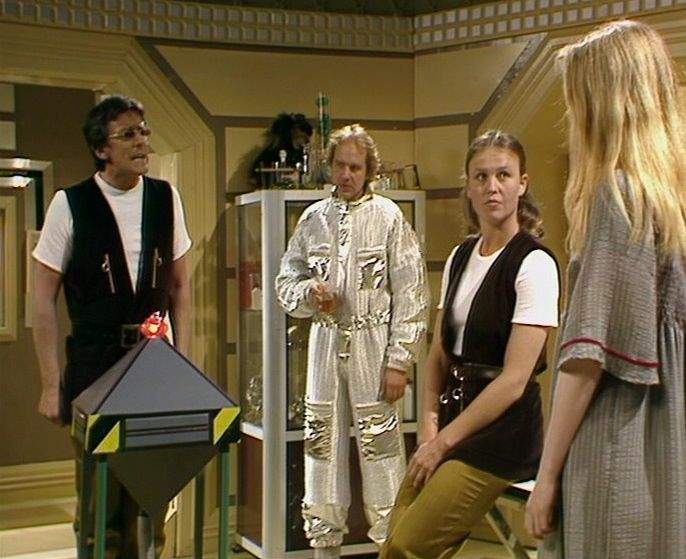
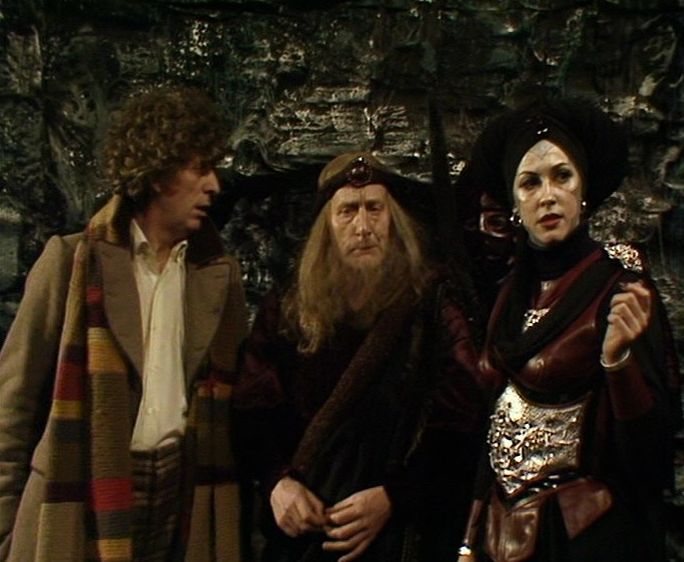
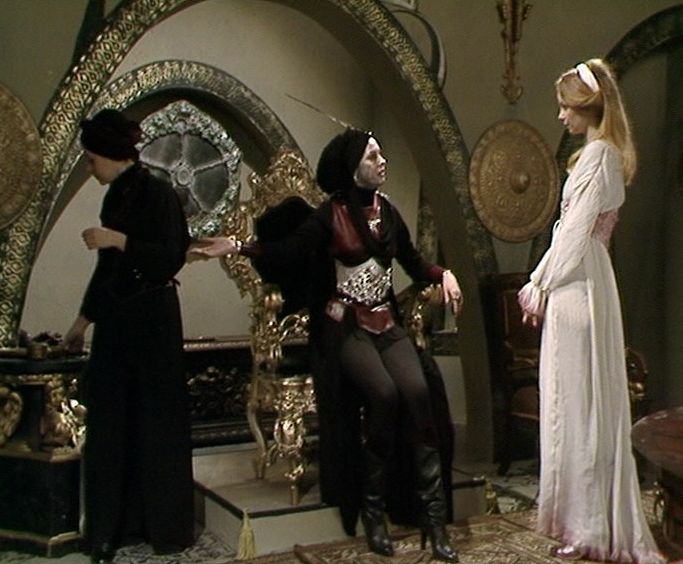
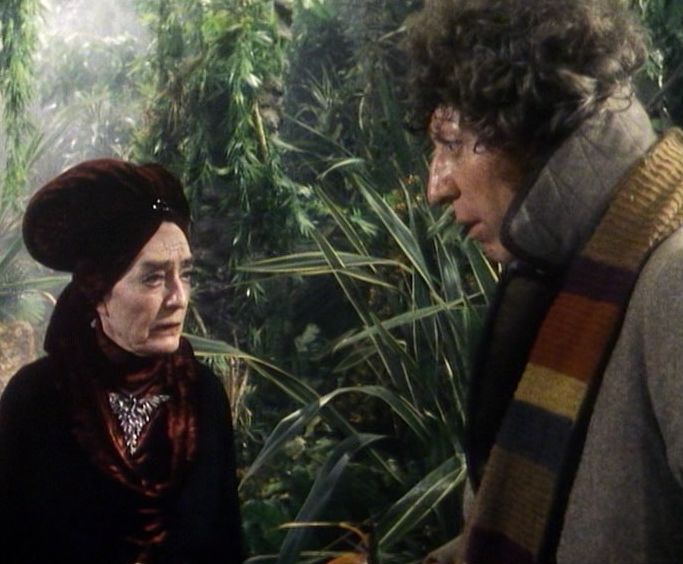
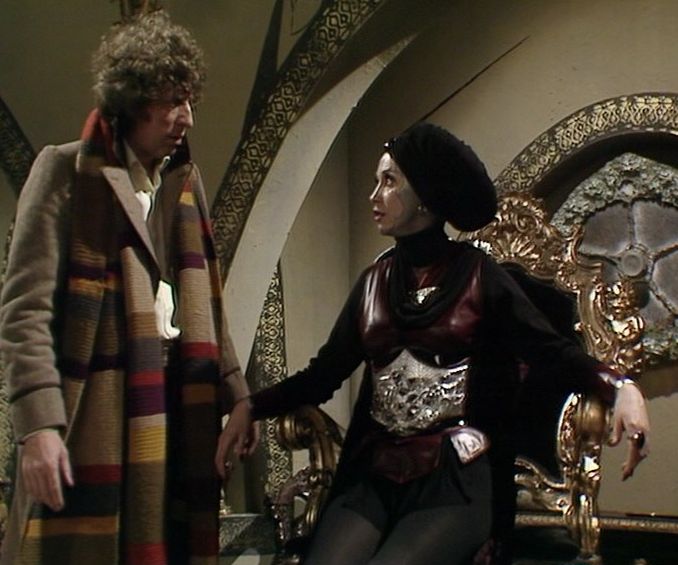
After being absent from the main action for the last episode or so, the Doctor is back in the thick of things after meeting up with Romana, Seth, Teka and the remainder of the Anethans (who remain – as befits non-speaking extras – mute).  He starts to wonder exactly what the Nimon are up to, whilst also highlighting Soldeed’s clueless nature (whatever the Nimon are planning, Soldeed seems to be kept in total ignorance).

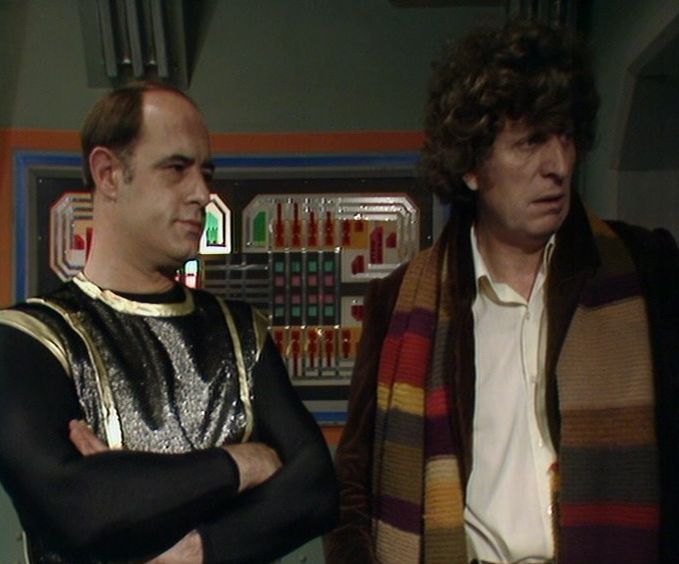
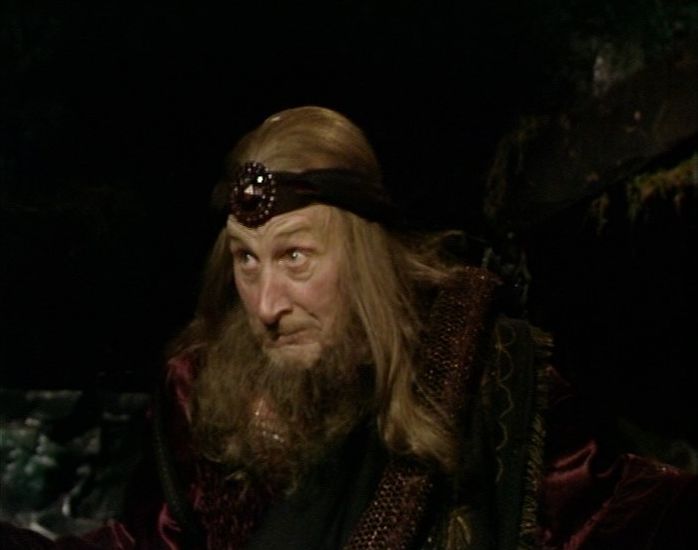
Sorak has begun to question why the Nimon has decided to aid them in their quest to once again become the dominant force in the galaxy.  “Soldeed, it sometimes occurs to me to wonder exactly why the Nimon is doing this for us. I mean, to be blunt, what’s in it for him?”  It’s a reasonable question, which you’d have assumed someone would have asked before.  Possibly Skonnos is a totalitarian state which brooks no free will from any of its subjects or maybe Read’s script was just rather ill-defined on this point.  Skonnos is pretty much represented by two individuals only – Soldeed and Sorak – which means that it never comes alive as a real, functioning society.

This isn’t a problem isolated to just this one story, since Doctor Who often struggled to create well-rounded civilisations.  Some writers – such as Robert Holmes – were skilled at using dialogue to put meat onto the bones (think of The Ribos Operation which builds up a fairly vivid portrait of its planet – complete with changing seasons and a strong air of religious dogma) but this isn’t something that Read attempts here.

The major revelation in this instalment is that the Nimon isn’t a single creature as Soldeed thinks.  There are many, many others and they all plan to use their newly built hyperspace tunnel to travel to Skonnos and take over the planet.  As far as invasion plans go it’s rather long-winded – couldn’t they have found a planet closer to home to colonise?

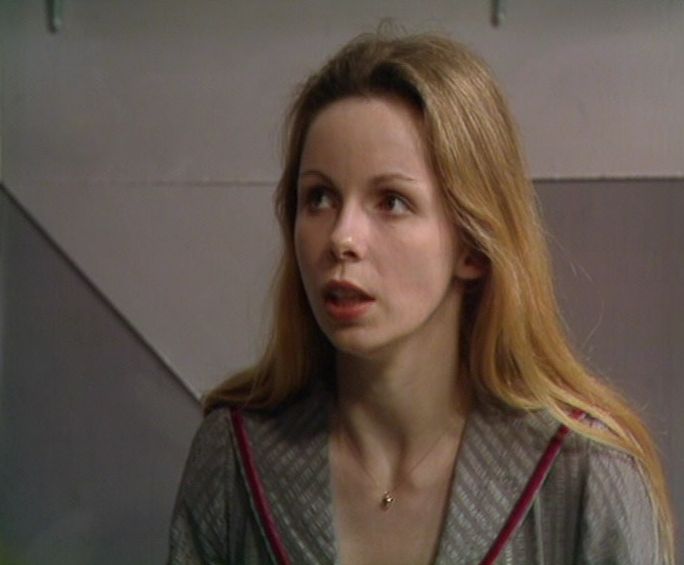
This leads into a rather nice piece of dialogue, with Teka declaring that the Nimon’s invasion is going to take quite a while, considering they’ve only got the one transmat machine.

DOCTOR: Yes, it happens all the time. When a race runs out of space or destroys its home, it has to find somewhere else to live.
SETH: Skonnos?
DOCTOR: Yes.
SETH: But it’s already inhabited.
DOCTOR: Yes.
TEKA: Then how many more are coming?
DOCTOR: Well
ROMANA: To make all this worthwhile, there must be thousands.
DOCTOR: Millions.
TEKA: What, two at a time?

As Romana is accidentally transported in the hyperspace capsule to who knows where, Soldeed once again pops up to menace the Doctor ….

Doctor Who – The Horns of Nimon. Episode Two

nimon 02.jpg

Episode Two opens with an ambitious effects sequence, which sees the TARDIS deliberately placed in the path of a spinning asteroid.  The Doctor succinctly sums this up.  “Oh, you know, K9, sometimes I think I’m wasted just rushing around the universe saving planets from destruction. With a talent like mine, I might have been a great slow bowler.”

With the Doctor and K9 stuck in the TARDIS, this leaves Romana, still onboard the ship, free to quiz Seth and Teka.  She learns that the Nimon lives in the Power Complex (“that fits”) one of a number of witty lines which possibly may have gone a little unnoticed due to the broad performances elsewhere.

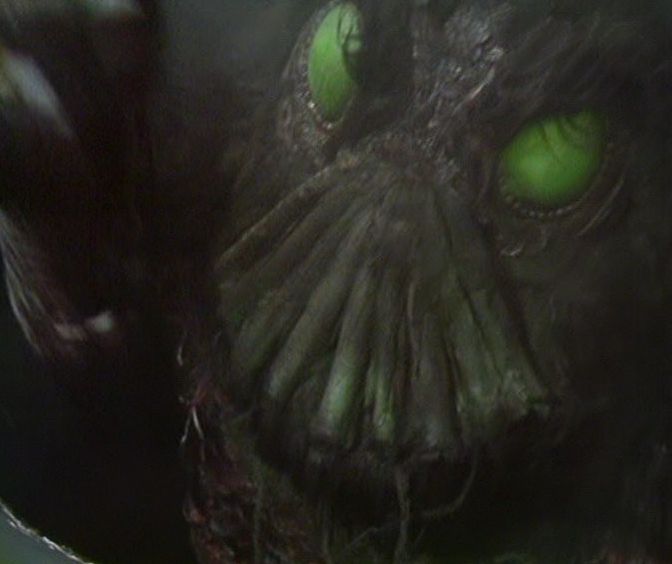
We meet the Nimon.  Season 17 really wasn’t a vintage year for monsters, was it?  Following Erato and the Mandrels, the Nimon are another disappointment. With a combination of stack heels, an obviously stuck-on head and weird movement, it’s hard to see the Nimon striking fear into anybody.  It’s interesting to learn that the Nimon heads were supposed to look artificial (with their real faces being visible beneath) but this isn’t something that ever comes across during the story – they just look like cheap, ill-fitting masks.

Whilst Romana, Seth, Teka and the others are delivered up to the Nimon, the Doctor eventually arrives on Skonnos and has a chat with Soldeed.

DOCTOR: Having a little trouble with the neutrino converter?
SOLDEED: Neutrino converter?
DOCTOR: Neutrino converter.
SOLDEED: What do you know about such matters?
DOCTOR: Oh, I’ve seen similar things here and there.
SOLDEED: Oh, come now, Doctor. This is my invention.
DOCTOR: How very odd, how very extraordinary, then, you don’t know what a neutrino conversion is. Did you know that someone’s building a black hole on your doorstep?

It’s remarkable for Tom Baker to come up against a fellow actor who makes him look fairly normal, but Crowden’s idiosyncratic performance left Baker with two options – either attempt to match him or play it straight.  Tom decides to play it straight, which was a wise move (leaving the field open for Crowden to indulge himself).  Soldeed’s manic cackling as the Doctor enters the Power Complex is a joy to behold, a weird joy, but a joy nonetheless.

What’s interesting about this scene is the way it shines a light on Soldeed’s self delusion.  He later claims to Sorak that making the Doctor venture into the Power Complex was all part of his great plan, when it was plainly nothing of the sort.  Soldeed might nominally be the power on Skonnos, but he’s continually buffeted by events outside of his control (with the result that every time something unexpected happens, he desperately attempts to reconcile it into his worldview).  This character trait makes Soldeed a much more interesting character than if he’d simply been just another single-minded maniac, utterly convinced of his own omnipotence. Soldeed’s increasing self-doubt is a nice touch.

Before the Doctor enters the Power Complex, he dashes about desperately looking for an alternative.  This gives rise to one of my favourite moments in the story, as he spies a group of councillors standing about.  “Unaccustomed as I am to public speaking, I’d like to say one thing and let me make it perfectly clear, I stand before you desperate to find the exit. Can anybody help me?” A wonderful Tom moment.

Meanwhile Romana and others come face to face with the terrifying Nimon. Roarrrrrr!!!!!

Doctor Who – The Horns of Nimon. Episode One

nimon 01

I have an affection for many of Doctor Who‘s also-rans, those stories which sit unloved and unappreciated at the bottom of every favourite story poll.  You could argue that this is because I have absolutely no taste at all, but I prefer to believe that it’s more about appreciating what does work, rather than criticising what doesn’t.

There’s certainly plenty wrong with Horns of Nimon, but it also entertains (and sometimes intentionally).  The first scene offers an impressive info dump, as we learn that Skonnos was once a mighty planet of warriors which has now fallen on hard times.  No matter though, as the mysterious Nimon will make them great again (provided they deliver the final cargo – which turns out to be a collection of young people dressed in yellow jumpsuits).

The co-pilot (played by Malcolm Terris) has a limited line in insults (“weakling scum”) which he freely uses on several occassions to taunt the cargo.  Terris possibly wasn’t best served by the two Doctor Who stories he appeared in (The Dominators being the other) but still manages to make something out of this unpromising material.  The co-pilot, like most of his fellow Skonnons, is a weak man, full of bluster and desperately clinging onto the hope that Skonnos will rise once more to become feared throughout the galaxy.  Is there a faint touch of satire here?  For Skonnos, read Britain, which back in the late 1970’s had also fallen on hard times.  I wonder.

Two of the cargo have speaking parts – Seth (Simon Gipps-Kent) and Teka (Janet Ellis).  Seth and Teka are young and earnest (especially Teka, who hangs on Seth’s every word).  Like most of the other roles across these four episodes, their characters are only lightly sketched, so both Ellis and Gipps-Kent have to work hard to make Seth and Teka come to life.

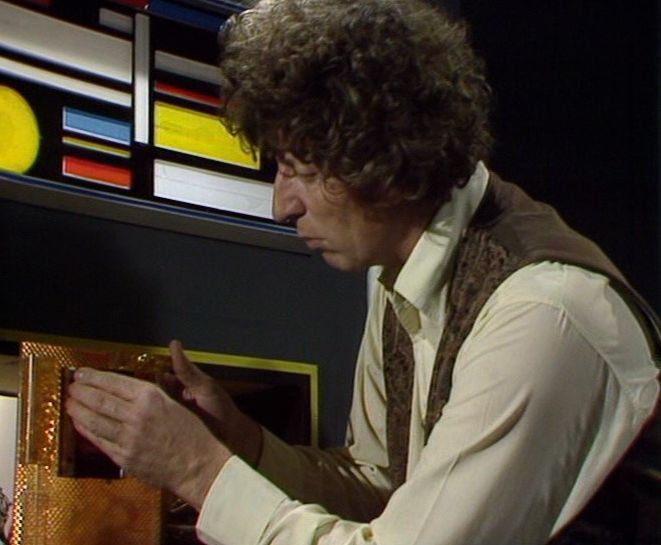
Meanwhile, the Doctor’s tinkering with the TARDIS.  This is a scene which allows Tom Baker to freewheel as we see the Doctor carry out some slapdash repairs.  If you view Tom’s performance during this era as somewhat self-indulgent then this probably isn’t the story for you – since the tone for Nimon is firmly set right from the start (it should come as no surprise to learn that the Doctor’s mouth to mouth resuscitation with K9 was unscripted).

But what we do have is a nice contrast between the increasingly erratic Doctor and the long-suffering Romana (as has often been observed, throughout the story Romana – complete with her own sonic screwdriver – acts more like the Doctor than the Doctor does).

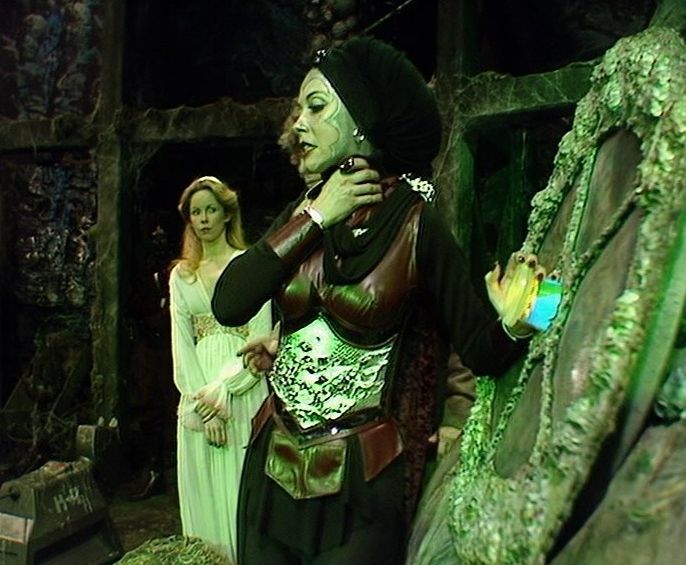
We then jaunt to Skonnos to meet Soldeed (Graham Crowden) and Sorak (Michael Osborne).  Plenty has been written about Crowden’s performance over the years and I can’t add much to what’s gone before, except to wonder what would have happened had Crowden been cast as the fourth Doctor in 1975.  Given how exuberant he is as Soldeed, one can only imagine how his Doctor would have ended up by 1979.  In contrast, Osborne looks faintly embarrassed, but then he is encased inside a somewhat bizarre costume, courtesy of June Hudson.

The Doctor, noticing the Skonnos ship in distress, naturally can’t resist popping over to help.  He doesn’t take to the gun waving co-pilot, but is more concerned about the shivering cargo, which he learns are “sacrifices”.  The Doctor agrees to help, but the co-pilot, more concerned about his cargo and his reputation, leaves the Doctor and K9 stranded in the TARDIS once the ship is operational again …

Doctor Who – Nightmare of Eden. Episode Four

nightmare 04-01

Stott seems a little surprised when the Doctor tells him that Tryst is behind the drug smuggling.  Eh? Considering that Stott is a Major in the Intelligence section of the Space Corps and joined Tryst’s expedition in order to find out who was responsible for the smuggling, surely he must have considered the possibility? And anyway, how did the Space Corps know that Tryst’s expedition was involved in the first place?

Tryst’s personality tends to change from scene to scene. When he’s alone with Dymond (Geoffrey Bateman), the pilot of the other ship and his co-conspirator, he’s cold and ruthless. But when Della confronts him, he’s somewhat apologetic about his involvement.

DELLA: You! You’re smuggling the Vrax.
TRYST: Della, I, er …
DELLA: Yes is the word you’re looking for.
TRYST: No, it started just as a little thing, just to help me over a slight financial difficulty. The cost of the expedition, that was bankrupting me!
DELLA: But Vrax is destroying people by the millions!
TRYST: I had to continue my research! Without me, many of those creatures would have become extinct!
DELLA: I think a few million people becoming extinct is rather more serious.
TRYST: Ah, but they had a choice. It was their own fault that they became addicted.

Did Tryst really smuggle the Vraxoin because he wanted to continue to fund his expeditions or is he simply a cold-hearted criminal? It’s an intriguing question, but one which I doubt many audience members were too concerned about – by now I’ve a feeling that Fiander’s interesting performance choices had rather alienated them.

The Mandrels continue to wave their arms about in a windmilling fashion which makes me wonder why nobody in the gallery or on the floor told them it might be slightly better if they didn’t do that.  Anyway, the Doctor leads them into the Eden projection and (off-screen) utters this immortal line.  “Oh, my fingers, my arms, my legs! Ah! My everything! Argh!”

Tom does get a chance for a moment of more restrained acting a few minutes later, after Tryst attempts to justify his actions to the Doctor. “Doctor! Doctor, I didn’t want to be involved in all this. Tell them. Tell them that I only did it for the sake of funding my research. You understand all this. You’re a scientist.” The Doctor’s cold, whispered “go away” is very effective.

Nightmare of Eden is something of a mess then, but it tries hard and with a different roll of the dice (a more sympathetic director, a bigger budget) things might have been quite different. But there’s still plenty of things that work, albeit balanced out by those that don’t.

nightmare 04-02.jpg


Doctor Who – Nightmare of Eden. Episode Three

nightmare 03-01

There’s a lengthy reprise at the start of this episode, which allows us to once again marvel at the ineptitude of Fisk and Costa.  The moment when Fisk angrily hits the door locked by the Doctor is also noteworthy – mainly because of how wobbly it looks.  One good punch would no doubt have caused it to collapse.

The jungle landscape of Eden is very dimly lit.  This not only helps to create a forbidding atmosphere but was probably also done in order to disguise the limitations of the set dressing.  As mentioned earlier, the Mandrels look very impressive in this environment – the sight of one such creature, eyes glowing green, looming in the shadows is a striking image.

Back on the ship they don’t look quite so good.  Although it’s interesting that the lighting levels on the Empress seem to be a little lower than in the first two episodes (was this the point that Graham Williams had taken over directing duties from Alan Bromley?) even this can’t disguise how silly the Mandrels look in the cold studio light of day.  Another infamous moment occurs when they kill a hapless passenger.  What’s particularly silly about this scene is the fact that all the Mandrels were in a lift – are we to assume they piled in and then pressed the appropriate button?  Well, maybe they did – perhaps they’re cleverer than we give them credit for.

The shots of rampaging Mandrels no doubt amused the audience at home and this seems to be acknowledged within the fiction of the programme and we then cut to a hysterically laughing Rigg, who’s watching similar events on a monitor.  A nice post-modern touch, although pointing out the limitations of your production is a dangerous game.

Whilst in the Eden projection, the Doctor gets to tangle with a nasty plant and is forced to bite into it. “You know, that didn’t taste at all bad” he deadpans. All in a day’s work …

The identity of the Doctor’s mysterious assailant from the previous episode is established – it was Stott (Barry Lonsdale), a member of Tryst’s crew who apparently died on Eden.  But now we learn he didn’t die, instead he’s been trapped inside the Eden projection ever since.  This’ll bring the colour back to Della’s cheeks as she and Stott were something of an item.  There’s another surprisingly adult moment in the script when Stott tells the Doctor and Romana of his despair about being trapped inside the CET.  “There were a few times when I felt like blowing my brains out.”

In possibly one of the least surprising plot-twists ever, it’s revealed that Tryst is one of the people behind the Vraxoin smuggling.  Well fancy that.

nightmare 03-02

Doctor Who – Nightmare of Eden. Episode Two

nightmare 02-01.jpg

If the end of episode one was funny, then the start of the second episode is even funnier – mainly because the Mandrel gets to wave his arms about in a terribly expressive way.  When seen in the shadows of their home planet, Eden (as stored on Tryst’s CET machine) they’re quite impressive – but in the harsh unforgiving light of the Empress’ corridors it’s a different matter entirely.

We don’t see too much of them in this episode thankfully, as the sight of the Mandrels stomping about tends to dissipate any tension which has been generated.  And that’s a shame since there’s an interesting story unfolding.  The problem with the two ships somewhat moves into the background once the Doctor realises that someone on board is smuggling a drug called Vraxion.

The Doctor tells us just how deadly it is.  “I’ve seen whole communities, whole planets destroyed by this. It induces a kind of warm complacency and a total apathy. Until it wears off, that is, and soon you’re dead.” It’s more than a little unusual for the series to tackle drug abuse, even if it’s done in a fairly mild way. Whether the comedic aspect of the script worked against the drug message or actually helped to cushion the reality about the debilitating nature of Vraxoin is a rather moot point.

We get several opportunities to observe how deadly Vraxoin is, firstly after it affects Secker, Rigg’s co-pilot, and later when Rigg unwittingly takes a drink laced with the drug.  This is a slightly perplexing moment – the drink was intended for Romana, but why would anybody wish to drug her?  And just how long had this mystery person been waiting to drop the drug into the drink and how could they know that Romana would want a drink anyway?

The effect it has on Rigg is drastic as he goes from being a sober, responsible authority figure to a hysterical, twitchy mess.  This is well-played by Daker, but unfortunately his role in the serial is coming to an end, something which is suggested as several new characters – Waterguard Fisk (Geoffrey Hinsliff) and Landing Officer Costa (Peter Craze) of the Azurian Excise – are introduced.

With their sparkly uniforms, Fisk and Costa are comedy authority figures who attempt to restrain the Doctor but fail hopelessly. The moment when the Doctor tells them to look over there whilst he hot-foots it in the opposite direction sums them up.  Like Fiander, Hinsliff and Craze are playing it strictly for laughs and whilst they entertain, a little more genuine threat from them would have raised the stakes somewhat.

The Doctor’s spent part of the episode pursuing a mysterious man who clobbered him and took the Vraxoin he found in Secker’s locker. We’re no closer to solving that mystery, but the episode ends in an arresting way as the Doctor and Romana leap into the projected image of Eden ….

nightmare 02-02.jpg

Doctor Who – Nightmare of Eden. Episode One

nightmare 01-01

It’s possible to tell from the opening few minutes that this one is going to give us a something of a bumpy ride.  The modelwork is shot on videotape, rather than film, which would become a more regular occurrence as the series moved into the eighties.  Compared to the model shots from City of Death it looks much less impressive (something which Colin Mapson, the visual effects designer admitted to) but he had no choice in the matter.  Money was tight and since it would take several hours to record these scenes on videotape compared to about four days on film, it was an obvious cost saving.

Our first sight of the interior of the Empress, a space cruise-liner, doesn’t offer many surprises.  Like many spaceships down the years it appears to have been cobbled together with whatever was at hand (I’m sure many of the instrument panels had played sterling service in other Doctor Who’s and Blakes’ 7’s).

If the visual aspect is a little lacking, then there’s still a nice hard-SF concept at the heart of Bob Baker’s only solo script for the series.  After emerging from hyperspace, two spaceships collide with each other, which is just the sort of problem the Doctor relishes ….

With a wobbly production, what you really need is a strong guest cast.  Hmm.  David Daker is his usual solid self as Rigg, the captain of the Empress, whilst Lewis Fiander’s turn as Tryst is somewhat hampered by his decision to employ a comedy Germanic accent.  This means that he mangles various words in a way that is supposed to be amusing, but really isn’t.  There are two points of view with Fiander – either he sabotaged the story by overacting or he breathed life into a fairly routine script.  I tend to favour the former over the latter, but there’s some undeniable pleasure to be gained from his wonky performance.

Tryst is a zoologist who has gone from planet to planet with his invention, the CET machine (the Continuous Event Transmuter). It doesn’t just record what it sees though, it scoops up whole sections of planets and stores them as electromagnetic signals on an event crystal inside the machine. The Doctor’s less than impressed with this electronic zoo.

Tryst’s assistant is Della, played by Jennifer Lonsdale. It’s not really her fault, as Della’s rather underwritten, but Lonsdale doesn’t really put a great deal of life into her performance. But I guess anybody standing next to Tryst would tend to be overshadowed.

What we’re really waiting for is the reveal of the monster and it doesn’t disappoint. The episode one cliffhanger must be one of the funniest in the show’s history as a Mandrel pops his head through a hole in the wall (although I’m not sure that laughter was the intended effect). As seen below, in still shots they can look rather menacing, but when they’re called upon to move it’s more problematic ….

nightmare 01-02.jpg

Doctor Who – The Creature from the Pit. Episode Four

creature 04-01

Now that the creature’s got his communicator back, the truth is finally revealed.  His name is Erato and he responds sharply to the Doctor’s questions.  “To skulk about in pits, as you so crudely put it, is not my normal habit. I most emphatically do not eat people. I live by ingesting chlorophyll and mineral salts. I would have you know that I am the Tythonian High Ambassador.”

Although Adrasta can see her authority draining away, she attempts to rally and tells the Doctor that she’ll kill Organon if K9 doesn’t destroy the creature. The Doctor’s response (and also Organon’s) is priceless – the Doctor looks a little downcast at the thought of Organon’s death, whilst the astrologer is more than a little shocked!

Is this just another gag moment or would the Doctor really have sacrificed Organon? It’s something we’ll never know as events take a different turn, but maybe it’s a brief glimpse of the earlier, more alien, Doctor seen during seasons twelve to fourteen.  There he could blank out the deaths of people he’d been friendly with, such as Lawrence Scarman, by concentrating on the bigger picture. And he does mention that if the creature (Erato) dies then two planets could also perish …

It’s something I’ve touched on before, but even during the most comedic of stories during this era there’s still occasions when the Doctor drops the clowning and shows his true mettle. This exchange with Adrasta is one such moment and it’s all the more effective because his anger comes out of the blue.

ADRASTA: Huntsman, set the wolfweeds on the Doctor.
DOCTOR: No, wait. That’s all you’ve got on this planet, isn’t it? Weeds, weeds, forest and weeds. You scratch about for food wherever you can, but you can’t plough the land, can you? You can’t do anything until you’ve mastered the forests and the weeds. And you can’t do that without metal.
ADRASTA: Don’t listen to him. It’s just the ravings of a demented space tramp. Set the wolfweeds on him!
DOCTOR: Do that, and you will hurl this planet back into the dark ages. And for what? To satisfy the petty power cravings of that pathetic woman.
ADRASTA: Have a care, Doctor.
DOCTOR: Have a care yourself. Care for your people for a change.

Erato takes his revenge and kills Adrasta, but there’s still some way to go before the episode ends. This is where things slightly fall apart – namely the fact that there’s a neutron star on the way, requested by Erato, which will destroy all life on the planet. Firstly, how convenient that it’s due to arrive at this precise moment, just after Erato’s been released and can tell them all about and secondly, why did Erato decide to effectively commit suicide?

This means that the story finishes with something of a whimper as the sight of the Doctor in the TARDIS flicking switches doesn’t generate any tension. We’re told that the fate of the entire planet is at stake, but we never feel it.

However, before that happens there’s a few scenes of interest as Adrasta’s right hand woman, Karela (Eileen Way), forms an unlikely alliance with the bandits, once she’s killed the unfortunate Torvin.  Torvin’s death is played for laughs – after Karela knifes him, his dying words are “tempered steel. Is that really tempered steel?” – proving to the end that he’s obsessed with metal (the scarcity of metal on the planet being a major plot point).  It might be a humorous moment, but it’s somewhat black humour.  It’s always a pleasure to see Way (Old Mother from An Unearthly Child) or as Gary Gillatt so memory dubbed her, Truth, Justice and the Eileen Way.

Erato’s a problem and the plot rather meanders, but Creature is still a story that entertains.  And once you’ve watched the DVD, then the brief clip from Animal Magic with a manic Tom telling the audience tall tales about some of the monsters he’s met during the years is a must watch.

creature 04-02


Doctor Who – The Creature from the Pit. Episode Three

creature 03-01

Although I’ve a lot of time for Creature, it has to be said that the plot’s fairly linear.  The first three episodes revolve around identifying exactly who or what the creature is, before episode four goes off on a different tangent completely.  I guess that David Fisher didn’t believe he could eke out the mystery of the creature for all four episodes, which is fair enough.

This episode has the unforgettable sight of the Doctor attempting to communicate with the creature via various ways, some of which look rather rude.  Why Christopher Barry let this through is anybody’s guess, although I sometimes picture him up in the gallery, rather punch-drunk from the way things have gone so far ….

Torvin and the others lead a raiding party on Adrasta’s palace.  Whilst they continue to be positioned as comedy characters, especially Torvin, this sits rather uneasily with the way they casually kill Adrasta’s guards.  There’s something of an edit in the final programme – which makes their knifing less explicit – but it’s still a surprise to see a recognisable weapon used to kill (remember that whilst Leela carried a knife, over time she wasn’t allowed to use it on humanoids).

Geoffrey Bayldon continues to mine (sorry) his role for maximum comic effect.  Organon’s meeting with Adrasta isn’t terribly pleasant (she’s more than disappointed to find out that the creature hasn’t eaten him) whilst he’s less than impressed after she orders him to find out what’s happening with the creature.  Adrasta has a convincing manner about her though.  “If you don’t go, my friend, that guard standing behind you will cut your throat from ear to ear.”

It becomes clear that the raiding party existed for one reason only – to enable the bandits to pinch what turns out to be the creature’s communication device and then, via a mysterious compulsion, be forced to deliver it up to him.  This leads into an unusual cliffhanger, which sees Adrasta react in terror to the creature.

ADRASTA: Don’t let it get me. You mustn’t let that thing get me! It’ll kill me!
DOCTOR: What? An evil thing, killing. Why should it want to kill you? It didn’t want to kill me, did you, old fellow? Do you know something? I believe he wants to kill you.
ADRASTA: Keep it away from me. It’s, it’s going to eat me.
DOCTOR: Oh, come on. You know it really doesn’t eat people, don’t you? But you know what it does eat and you haven’t been letting it get any, have you. No, you just stuck it in a pit and threw people at it.

If the episode had concluded seconds earlier, then it would have ended with Adrasta holding a knife to the Doctor’s throat. That would have been a more obvious cliffhanger, as showing the villain under threat is much more uncommon although not totally unheard of (for example, episode for of The Daemons finds the Master menaced by Azal).

creature 03-02

Doctor Who – The Creature from the Pit. Episode Two

creature 02-01

At the end of episode one the Doctor decided to join Doran in the pit.  This was rather unexpected, although it appears that he merely planned to hang about until everyone had left and then climb out.  Quite why no-one could spot him from the pit entrance is a slight mystery, but no matter.

There then follows the (in)famous scene where the Doctor attempts to climb his way out of the pit with the aid of a book, Everest in Easy Stages.  Unfortunately it’s in Tibetan so he then pulls out another handy book – Teach Yourself Tibetan.  If you’re not a fan of the humour present in the series at this time then I don’t think this gag is going to impress.

With the Doctor apparently dead, Adrasta is keen to utilise Romana’s knowledge to destroy the creature.   There’s a nice hard edge to Adrasta, which is demonstrated after she gives the wise-cracking Romana a swift slap.  Ouch!

The Doctor, having fallen into the pit, then makes the acquaintance of Organon (Geoffrey Bayldon).   Bayldon is simply delightful as the cowardly astrologer and is obviously one of the serial’s trump cards.   He gets plenty of good lines (“Seer to princes and emperors. The future foretold, the past explained, the present apologised for”) and works excellently with Tom Baker.  Tom always seemed to thrive when he had strong actors to bounce off against and Bayldon is a fine example of this.

And then the creature turns up.  It’s not good (although the model shots don’t look too bad).  What’s fairly astonishing is that none of the production team appear to have seen it before it was unveiled on the first studio day.  You’d have assumed someone would have kept an eye on how things were going, but no.  In the post-mortem that followed, Graham Williams put the blame firmly on the shoulders of the visual effects department, but this seems more than a little unfair.  With a very limited budget, just how do you create a monster of almost unimaginable size?

That neither Williams or Douglas Adams ever stopped to ask whether such a creature could be effectively realised on Doctor Who’s budget is very perplexing.  But whilst the monster doesn’t impress, the byplay between the Doctor and Organon does.

ORGANON: Ahem. What do we do when we find the monster? Have you thought of that?
DOCTOR: Shush. I don’t know.
ORGANON: You don’t know? What do you mean, you don’t know?
DOCTOR: I haven’t made up my mind yet.
ORGANON: Well, haven’t you got a plan?
DOCTOR: A plan? Oh yes, I’ve got a plan.
ORGANON: Well then?
DOCTOR: I just don’t know how to apply it, that’s all.

creature 02-02

Doctor Who – The Creature from the Pit. Episode One

creature 01-01.jpg

Watching episode one with no knowledge of the (very large) problematic monster to come, this is more than decent fare. The jungle filming at Ealing is glossy and well mounted (that Tom is made to look a little sweaty heightens the illusion that we’re in a lush, tropical environment).

Adrasta might be a rather one-note villain, but Myra Frances does her best with the material and the fact she’s rather easy on the eye doesn’t hurt.   There’s also a gang of comedy bandits lurking about, led by Torvin (John Bryans).  Torvin is the least subtle Jewish stereotype (“my lovely boys”) you’re ever likely to see, for all the world he seems to be playing Fagin from Oliver Twist.

I have to confess it was only recently that I connected him to his Blakes 7 roles (Bercol and Shrinker) which just goes to show what a beard and a broad accent can do.  Romana is captured by Torvin and his associates, although she’s not terribly impressed by them.  “I’m a traveller. I’m a Time Lord. And I am not used to being assaulted by a collection of hairy, grubby little men”.  Few actresses could do haughty like Lalla Ward, it just seems to come naturally ….

As an actor, Terry Walsh was a great stuntman.  Bless him.  But it makes sense to give him a speaking part, since his character, Doran, would be the next victim to be thrown into the pit to be consumed by the mysterious creature.  And the sight of Walsh’s terror stricken face as he spies something off-camera, glowing green, is another well-mounted moment.  At present, with the creature still unseen, the imagination can work overtime to create an impression of what it could possibly look like.

I wonder if the reality will match our imaginations?  Next time we’ll find out.

creature 01-02.jpg

Doctor Who – City of Death. Episode Four

city 04-01

Both the Doctor and Scarlioni have one last encounter with the Countess, although Scarlioni’s is rather more deadly. The Doctor once again switches from playful joshing to a more serious persona in a (double) heartbeat.  Tom’s in full pop-eyed form here.  Whereas the Count once again gets to show his true features, which comes as something of a surprise to his wife ….

This is another of those odd moments. The Egyptian scroll depicting a splinter of Scaroth had white skin with a green blobby face – was this a touch of artistic licence, or are all Scaroth’s splinters like that?  It would make undressing a little easier, as surely otherwise the Countess would have noticed that her husband was not as other men.  There’s the possibility that they shared separate bedrooms, but the way that the Countess went on the hunt for the Count at the end of the first episode implies otherwise.

I also have another burning question – how did Scaroth manage to make face masks throughout time and why did he always use the same face?  I’d have assumed he’d have wanted a touch of variety.

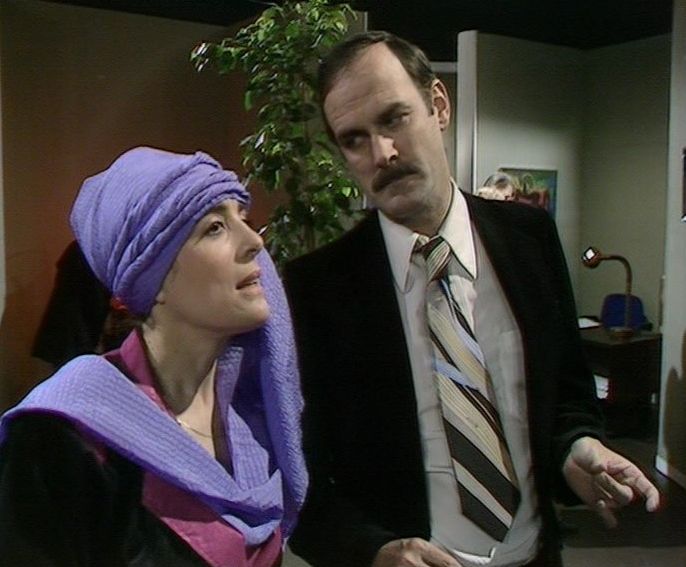
John Cleese and Eleanor Bron pop up briefly and are excellent. But everybody knows that.

There’s a chance to luxuriate with Ian Scoones’ modelwork again as the story reaches its conclusion. Unlike the cut-price effects on, say, Nightmare of Eden, there’s no scrimping here – film, instead of videotape, was used and the difference is quality is startlingly obvious.

For once, Duggan’s propensity for hitting everything that moves turns out to be a good thing. It’s another gag moment, but it works – although the following brief scene (as Scarlioni returns to 1979) has always seemed to be something of a bodge.  Possibly the clock was ticking ever closer to ten o’clock, which meant that something had to be cobbled together.  What we have – a brief shot of Scaroth and Hermann, an even briefer explosion and then an abrupt jump cut to the Doctor and Romana saying farewell to Duggan – is a little disorientating.

DUGGAN: Where do you two come from?
DOCTOR: From? Well, I suppose the best way to find out where you’ve come from is to find out where you’re going and then work backwards.
DUGGAN: Where are you going?
DOCTOR: I don’t know.

They don’t make them like this anymore. Indeed, they didn’t really make them like this back then, which is all the more reason why City of Death should be savoured.  Because it’s like a fine wine, with an attractive bouquet, etc, etc …

city 04-02

Doctor Who – City of Death. Episode Three

city 03-01

The Doctor jaunts back to 1505 in order to ask Leonardo Da Vinci why he painted so many copies of the Mona Lisa and runs into another mystery. A man – Captain Tancredi – who not only looks exactly like Scarlioni, but also has all of his memories ….

Peter Halliday is good fun as the harassed guard captain. Barely recognisable as the sadistic Packer from a decade earlier (maybe it was the hat) this is a character who’s no match for the wily Doctor.  Even if Tom delivers one of the least convincing punches ever seen to knock him out.  He should have taken lessons from Tom Chadbon.

Luckily for us, Tancredi is a very garrulous sort of chap who’s happy to stop and explain the plot (“the knowledge will be of little use to you, since you will shortly die”). This is something of a cop-out, but also a dramatic convention – how often does the villain not kill the hero, but instead chats to him about his wicked plans?  Possibly Douglas Adams intended this to be an obviously groanworthy moment or it might just have been that the clock was ticking and he had to make an info-dump and quick.

Back in 1979, Romana and Duggan are too late to stop the Mona Lisa from being stolen. I haven’t mentioned how wonderful Lalla Ward’s Romana is yet, which is a terrible oversight.  She’s wonderful.  Whilst the debate about a female Doctor continues to rumble on, it’s plain that we pretty much had one right here – Romana as the Doctor with Duggan as her dim companion?  Yep, I’d go for that.

The dialogue continues to sparkle as Romana propounds a theory.  “Perhaps Scarlioni has discovered a way to travel in time. Yes, perhaps he went back in time, had a chat to Leonardo, got him to rustle up another six, came forward in time, stole the one in the Louvre, and now sells all seven at enormous profit. Sound reasonable?”  To which poor Duggan can only respond that when he used to do divorce cases they were never like this!

Isolating the Doctor from pretty much all of the 1979 action during this episode obviously allowed Romana to take his place. She’s a more than adequate substitute, as seen when she dices with Scarlioni, but there’s still a hint of her inexperience (touched upon during the Key to Time season, where it was stated on more than one occasion that her knowledge lacked the Doctor’s practical edge).  It’s hard to imagine the Doctor agreeing to build Scarlioni a time-field interface so readily, but since it needed to be done to advance the plot and also because Duggan was threatened it doesn’t make her seem too dim or easily duped.

One of my favourite moments of the entire story occurs right at the end of the episode. After Kerensky ages and dies before the horrified gaze of Romana and Duggan, the Count flashes them an amused stare.  There’s something about Julian Glover’s coolness which appeals immensely.

city 03-02

Doctor Who – City of Death. Episode Two

city 02-01

The opening of this episode features some classic Tom Baker clowning (“what a wonderful butler, he’s so violent”) but back in 1979 many fans weren’t impressed. Browsing through the various fanzines which circulated during that era, it’s fascinating to take the pulse of Doctor Who fandom – for some it was pretty much a case of Tom Baker Must Go!  The levels of humour during the Graham Williams era continues to be an issue which divides opinion – although this period of the programme has picked up in popularity somewhat in recent decades (this first occurred during the early nineties when JNT was firmly out of favour).  That’s the nature of fandom, if someone’s out of fashion, like JNT, then that allows someone else (Williams) to be back in.  Personally, I don’t have an issue with enjoying both Williams and JNT, but that’s a whole other debate ….

Let’s take a look at some of this Tom-foolery –

Doctor: Hello, I’m called the Doctor. That’s Romana, that’s Duggan. You must be the Countess Scarlioni and this is clearly a delightful Louis Quinze chair. May I sit in it? I say, haven’t they worn well? Thank you, Hermann, that’ll be all.
COUNTESS: Doctor, you’re being very pleasant with me.
DOCTOR: Well, I’m a very pleasant fellow.
COUNTESS: But I didn’t invite you here for social reasons.
DOCTOR: Yes, I could see that the moment you didn’t invite me to have a drink. Well, I will have a drink now you come to mention it. Yes, do come in, everybody.
DOCTOR: Romana, sit down over there. Duggan. Now, Duggan, you sit there. Do sit down if you want to, Count… Oh, all right. Now, isn’t this nice?
COUNTESS: The only reason you were brought here was to explain exactly why you stole my bracelet.
DOCTOR: Ah, well, it’s my job, you see. I’m a thief. And this is Romana, she’s my accomplice. And this is Duggan. He’s the detective who’s been kind enough to catch me. That’s his job. You see, our two lines of work dovetail beautifully.

The Doctor continues clowning as he, Romana and Duggan are escorted downstairs and locked into a small cell. It’s only then that his expression and manner changes and he becomes completely serious.  This, for me, is key – I don’t have an issue with the Doctor mucking about if it’s made obvious (as here) that it’s just an act, designed to make his opponents underestimate him.  So once Scarlioni’s gone, the Doctor reverts back to being business-like and focused.

I can’t see a great deal of difference between this style of performance and the clowning of Troughton’s Doctor (who could equally turn serious when it was required). In every Williams-era story that I can think of, the Doctor “earns” his right to clown, by demonstrating at various points that there’s much more to him than meets the eye.

The Doctor’s interaction with Kerensky is also interesting. Keresnsky tells him that although Scarlioni is a true philanthropist he doesn’t ask too many questions, to which the Doctor tells him that “a scientist’s job is to ask questions.”  This harks back to similar exchanges in the past, such as with Sorenson in Planet of Evil, where the Doctor makes it quite plain that a scientist has definite obligations – not just to himself, but to the wider community.

city 02-02

Doctor Who – City of Death. Episode One

city 01-01.jpg

Given the fact that the script was written at great speed (or re-written, depending on how many of David Fisher’s original concepts actually made the final cut) City of Death sparkles throughout. It would be easy enough to quote huge chunks of the script, but I’ll restrain myself to the odd choice selection, such as –

DOCTOR: What Paris has, it has an ethos, a life. It has …
ROMANA: A bouquet?
DOCTOR: A spirit all of its own. Like a wine, It has …
ROMANA: A bouquet.
DOCTOR: It has a bouquet. Yes. Like a good wine. You have to choose one of the vintage years, of course.
ROMANA: What year is this?
DOCTOR: Ah well, yes. It’s 1979 actually. More of a table wine, shall we say. Ha!

For the first time, the series had actually travelled abroad – which gave the production a considerable extra gloss. It was obviously something of a guerrilla operation though, as seen by the way that some members of the public appear to be a little dazed and confused as they pass through the various scenes (presumably Michael Hayes and the others just pitched up and started filming).  This episode, as well as part four, certainly makes the most of the locations and – allied with Dudley’s music (the change of scenery seemed to have done him the world of good as well) – there’s a pleasing travelogue feel to these sections.

Yes, there’s nothing much going on during the first few minutes, but we’re in Paris! In the Springtime! The same trick would be repeated later, for example when Peter Davison’s Doctor spent the last episode of Arc of Infinity running around Amsterdam in a similar way to Tom’s Paris sprinting here.  But it was very much a case of diminishing returns.  Once you’ve seen the Doctor rushing through the streets of one town, you’ve rather exhausted that avenue ….

If one were being picky, I’ve never understood why the artist who sketches Romana was sitting directly behind her. Since that meant he couldn’t see her face, it seems a little odd.  It’s mentioned in the script (“I wonder what he thought I looked like?”) but it’s still a slightly strange piece of staging.  And his sketch (“a crack in time”) makes for a nice visual moment but goes unexplained otherwise.

City of Death has two prime guest performances – Julian Glover as Scarlioni and Tom Chadbon as Duggan. Catherine Schell is also more than solid as the Countess, although her character does lie in the shadow of her husband throughout.  David Graham’s Kerensky is amusing, although his comedy accent means that it’s impossible to take the character that seriously.

Glover just oozes class, charm and hard-edged villainy and without him the story would be much poorer. It’s possible to argue that he gives more of a James Bond style villain performance here than he did when he appeared in For Your Eyes Only.

city 01-02

Doctor Who – Destiny of the Daleks

destiny 01.jpg

There may be a few production missteps (tatty looking Daleks, David Gooderson squeezed into Michael Wisher’s old mask) and scenes which should have gone to a second take (“spack off!”)  but the positives far outweigh the negatives.

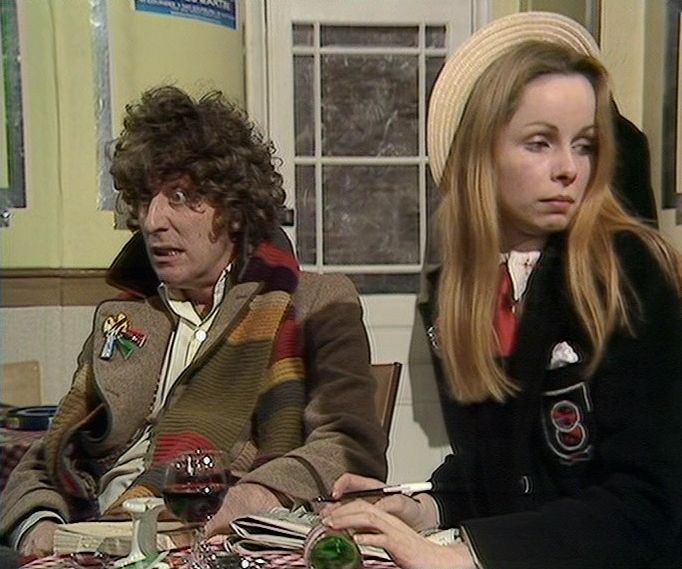
Tom’s on fine form, switching from playful to serious in a heartbeat (for example, the moment when the Doctor learns he’s on Skaro).  The Doctor might have plenty of gags, courtesy of Douglas Adams, but there’s also a pleasing somberness about him, especially in episode one as he and Romana explore the mysterious planet (the lack of incidental music increases this sense of unease).

Ken Grieve’s low-angled shooting favours the Daleks but it’s also used to good effect elsewhere.  And these low angles make it clear that several sets, including the TARDIS, have ceilings – which is very unusual, especially during a period when the series was rather cash-strapped (you’d have assumed it was an extravagance the show could ill afford).

Lalla Ward is Romana.  Within a few minutes any thoughts of Mary Tamm have been banished and although Romana II might be somewhat hysterical at times (especially when confronted by the Daleks) possibly we can put this down to post-regenerative trauma.

But her fear and panic during the Dalek interrogation scene does help to sell the notion that the Daleks are powerful and dangerous opponents, something which is rather negated as the story progresses.  The nadir of this comes with the unforgettable sight of the sad suicide Daleks shuffling awkwardly across the Skaro plains.

Terry Nation ends as he began, with a trip to Skaro.  Familiar Nation tropes are given a final outing – such as an obsession with radiation and the sight of the TARDIS made inaccessible.  Although it’s a little bizarre that the radiation subplot goes nowhere (the Doctor warns Romana that they have to take radiation pills regularly, she’s then separated from the Doctor and the pills, but no matter since they’re never mentioned again). Also, it’s a little irritating that Nation seems to regard the Daleks as purely robotic, a far cry from David Whitaker’s devious schemers.

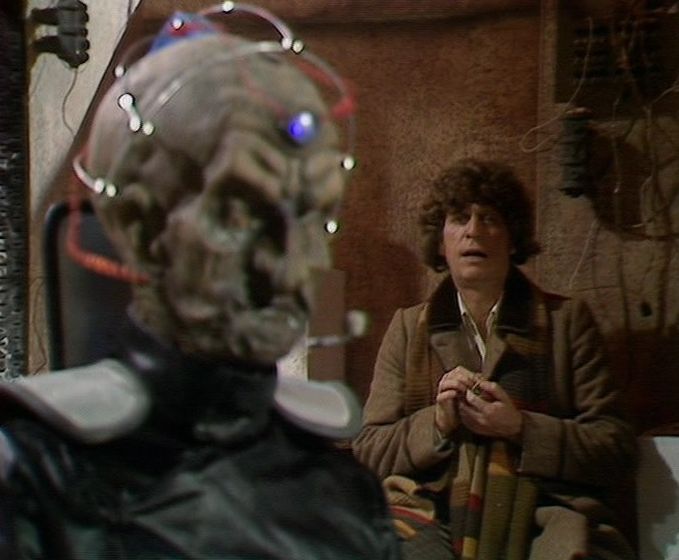
Holding back Davros until the end of episode two was a good move, since it gave the second half of the story fresh impetus.  Although it does mean we have to consider the Davros problem.

It seems that poor David Gooderson has never been regarded with a great deal of affection by the majority of Doctor Who fandom, although in his defence he was dealt a pretty rough hand.  His Davros doesn’t have any of the signature moments that Wisher enjoyed and this – together with the reused mask – ensured he was always going to come off second best.  But he’s by no means bad and is certainly closer to the original than Terry Molloy’s frustrated Ena Sharples from Resurrection was.

It may be comfortable and rather predictable, as only a Terry Nation story could be, but there’s plenty to love across these four episodes.  So long Terry and thanks for all the scripts.

destiny 02

“I could play all day in my Green Cathedral.” Doctor Who and the Seeds of Doom

seeds

My irregular Doctor Who rewatch has reached Robert Banks Stewart’s second and last script for the series.  First things first, a few plot-holes that have always slightly irritated me.

In episode three, Dunbar tells Chase that he’s attended to the Doctor and Sarah (via a decoy chauffeur who’s rather handy with a gun).  We later learn that the chauffeur was on Chase’s payroll.  Eh?  Surely it would have made more sense for Chase to send the homicidal chauffeur to intercept our heroes, especially considering the way that Dunbar reacts in horror to the deaths in Antarctica.  So it doesn’t scan that Dunbar is happy to dispose of the Doctor and Sarah in cold blood.

Still, it’s some recompense that the chauffeur was played by Alan “Chuntzy” Chuntz, a familiar Doctor Who stuntman who rarely had the luxury of dialogue.  When you hear his rather stilted delivery, the reason becomes clear …..

The link between Chase and the stolen pod is done in an incredibly clumsy way – via Amelia Ducat’s painting, left in the car boot.  Surely Banks Stewart or Holmes could have found a slightly more nuanced way to bring Chase to the Doctor’s attention.

Another slightly baffling moment occurs when Amelia turns up at Chase’s palatial country house to demand payment for the painting.  That’s fine, but the revelation that she was sent there by Sir Colin makes little sense.  How did he know that the Doctor and Sarah had spoken to her?

But a few carps about the plotting aside (like Pyramids of Mars this had to be put together in extreme haste after other scripts collapsed) Seeds is gripping stuff.  Tony Beckley’s super-camp performance is an obvious highlight and from his first scene he’s an absolute joy (there’s no doubt that without him the story would sag a little).

Mark Jones’ role as Keeler is less showy, but equally impressive.  He’s clearly marked as doomed from the moment we first meet him and Jones is perfect as the twitchy, conscience-stricken scientist.

Possession has always been a theme in Doctor Who and it’s especially prevalent during the Hinchcliffe/Holmes era, where it’s usually tied in with a body horror theme (Noah in The Ark in Space, Sorenson in Planet of Evil).  It’s bad enough to be taken over, but even worse when it results in a grotesque physical change ….

Tom Baker’s Doctor dabbles in fisticuffs in a few other stories (such as knocking out Salamar in Planet of Evil) but this is certainly the serial in which he’s in full-on Duggan mode.  Had this happened more regularly it would have ended up as a touch monotonous, but there’s something undeniably appealing about the way that he becomes the man of action – springing through the skylight to duff up Scorby at the start of episode four is a definite highlight.  “What do you do for an encore Doctor?” indeed.

So although the tone of the story is odd and off-kilter (it rather feels like an ultra-violent TV Comic strip) it’s hard not to love The Seeds of Doom.  A little pruning (sorry) would have tightened things up – as a four-parter it would have been unbeatable – but I’m not unhappy with what we ended up with.

Pondering about Pyramids of Mars

pyramids

Rewatching Pyramids of Mars for the umpteenth time, a couple of things worried me in episode three.  Of course, given that Robert Holmes had to cobble the story together at very short notice (and had clearly run out of steam by episode four) it isn’t too surprising that the odd plothole remained ….

After Sarah and the Doctor discover Lawrence Scarman’s body, Sarah is perturbed that the Doctor seems unmoved by Lawrece’s violent death.  He responds that Lawrence isn’t Sutekh’s only victim, counting out the others. “Four men, Sarah. Five, if you include Professor Scarman himself.”

Hmm, okay.  Lawrence, Doctor Warlock, Ernie Clements (“murdering swine!”), Namin and Collins make five, six if you include Professor Scarman.  My first thought was that the Doctor was unaware of one of their deaths, or maybe he didn’t count Namin since he was a baddy?

And why did Marcus Scarman, after murdering his brother, gently prop him up into the rocking chair with such obvious care and attention?  It creates a shock moment but doesn’t make much sense.

Just how many service robots were there? In actuality there were three, so if that was also the true figure why didn’t Professor Scarman immediately twig that that the faux-Mummy (containing a grumpy Tom Baker) was an imposter? Two robots had been guarding the pyramid and Scarman had seen a disassembled third just before killing Marcus.

And I’m not even going to ponder exactly when Sarah became so efficient with a rifle.

Not that any of this matters as Pyramids of Mars is still great (if rather nasty) fun. Can it really be nearly thirty years since I bought it on sell-through VHS? And a mere twenty three years since I taped the episodic repeat from BBC2, enabling me to see the scenes snipped from the official release for the first time. Time passages ….

Based on the Popular Television Serial – Free Doctor Who ebook available for download

basedoncover300

Based on the Popular Television Serial, a Doctor Who novelisations guide, is a free ebook from Paul Smith of Wonderful Books, available to download from this link –

http://www.wonderfulbook.co.uk/basedon/

It’s an incredibly impressive resource, with a wealth of facts and trivia for all the titles (such as the reprint history of each book, print runs, foreign editions, audiobook adaptations, etc).  Well worth a look.

The Five Faces of Doctor Who

five-faces

It’s a little staggering to realise that The Five Faces of Doctor Who repeat season began airing in early November 1981.  Thirty five years, where has the time gone?

Back then, the eighteen year old An Unearthly Child and even The Krotons (a mere thirteen years old) seemed like relics from a different age.  The flickery black and white telerecordings had a lot to do with that of course, the lack of colour made them appear much older than they actually were.  But it’s still more than a little strange that Survival seems like a much more current story today than An Unearthly Child did then, despite the fact that Survival is a whopping twenty seven years old.  Funny thing time …..

If you weren’t there, it’s difficult to describe just how important The Five Faces of Doctor Who was.  Old Doctor Who didn’t get repeated and the first commercially available story wouldn’t hit the shelves until 1983.  So if you wanted to get a feel for pre-Baker Doctor Who then your options were rather limited – Target novelisations were your best bet, although there were also the World Distributors annuals (even if their vision of the Doctor Who universe was idiosyncratic, to put it kindly).

Factual information could be gleaned from Doctor Who Weekly and Doctor Who Monthly, whilst a small handful of books – The Making of Doctor Who, The Doctor Who Monster Book – also offered tantalising glimpses of these “lost” stories.  After all, back then we weren’t concerned about the stories which were actually missing from the archives, everything from the past was as good as lost to us.

And then in early November 1981 we had the chance to see how it all started.  I’ve written here about how I view An Unearthly Child today, rewinding thirty five years I’m pretty sure I was just as taken with it then.  Three episodes of caveman antics might not be to everyone’s tastes, but the grime and despair of those episodes fitted perfectly with the dark winter evenings in 1981 (just as they would have done in 1963).  I loved it then and I love it now and I know I always will.

The Krotons had a bit of a bumpier ride.  My ten-year-old self found the story a little thin, but Troughton (like Hartnell) impressed right from the start.  It’s a story I’ve grown to appreciate a little more over the years, as it’s perfect undemanding fare.  And the lovely Wendy Padbury wears a very short skirt, which is nice.

If the internet had existed in 1981 then no doubt it would have gone into meltdown after Carnival of Monsters and The Three Doctors were broadcast the wrong way round.  Carnival, thanks to Vorg and Shirna, looked a little odd back then, and it would take a few more watches before the cleverness of Robert Holmes’ script became clear to me.  The Three Doctors is good fun, nothing more, nothing less.  It was nice to see the Brig in action for the first time though, even if I’d later realise we weren’t really seeing him at his best here.

Logopolis was an obvious choice, as Castrovalva was less than a month away from broadcast (and since it featured Davison’s sole appearance to date, if they hadn’t shown this one then the Five Faces tag wouldn’t have worked).  Since it was a current story it rather lacked the “wow” feeling of the others, but in the pre-VHS age, “another chance to see” was always welcome and following this broadcast I wouldn’t see it again for nearly a decade (a pirate copy came my way in the late eighties).

I’m off to recreate those winter evenings from 1981 with a rewatch over the next few weeks of those five serials – splendid stories, all of them.