Doctor Who – Planet of Giants. Episode One – Planet of Giants

planet

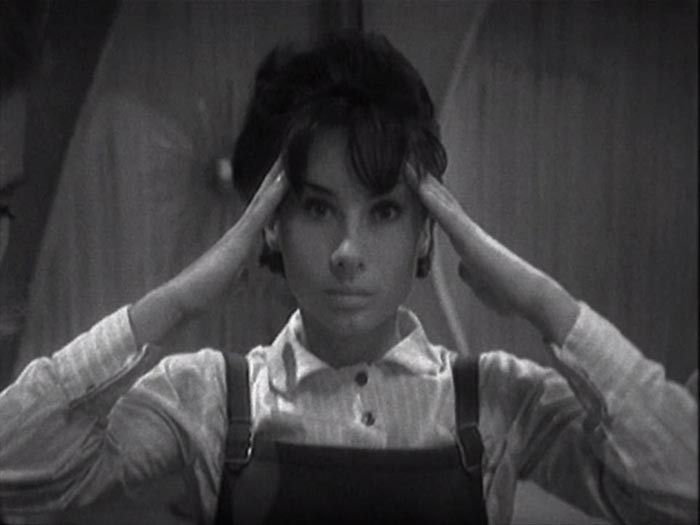
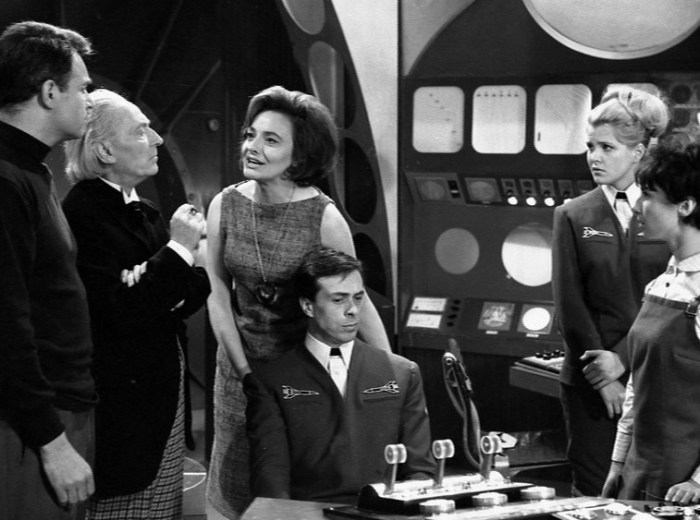
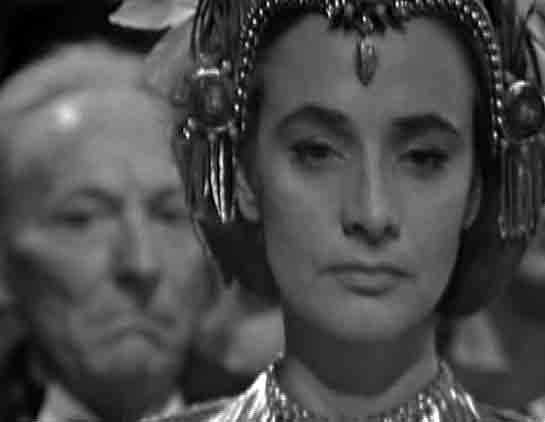
Planet of Giants opens with the Doctor fretting over the fact that the TARDIS doors opened just before the ship materalised.  He’s clearly extremely worried about this and it’s possible that the scripted anxiety seeped into Hartnell’s performance as he’s rather incoherent during the scene.  But once the Doctor calms down, Hartnell also seems to recover somewhat.

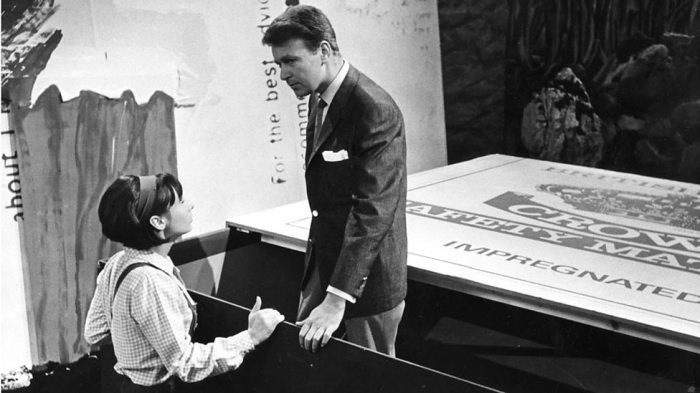
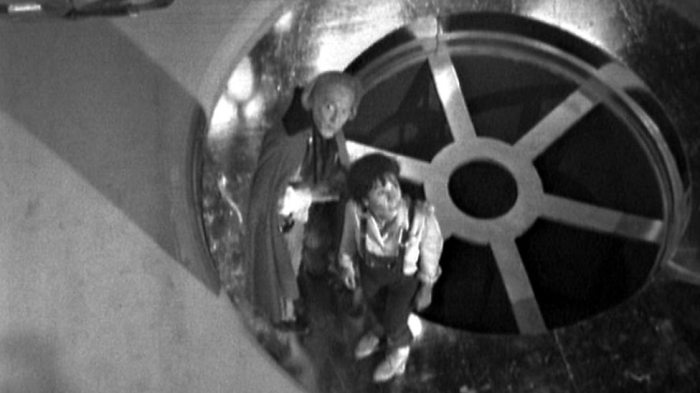
When they venture outside, the four split up (bad move, you’d think they’d have learned by now!) to explore and begin to puzzle over the strange things they see (such as giant earthworms and ants).  The audience, thanks to the episode title, is slightly ahead of the TARDIS crew but it takes the reveal of items like a huge matchbox to provide the final clues.  The Doctor has finally managed to steer the TARDIS back to Earth in the 1960’s but they’ve all been reduced to the size of an inch.

Ian’s slow to accept this, preferring to believe that what they’ve found are nothing more than advertising props, built for an exhibition.  Given all that he’s seen over the course of the first season it’s a little jarring that the rational Ian fails to grasp the truth.  However this does, for once, enable Susan to be shown to be the sensible one (although she still has her fair share of hysterical outbursts).

A minuscules story had been planned right from the beginning (originally it would have followed on directly from the first episode).  It’s a clear technical/design triumph – Raymond Cusick, on the show’s usual tight budget, works wonders (the glass-shot of the house is a stand-out shot).  The various dead insects are also impressive.

But the story tends to fall down with the sub-plot of the giants.  The trials and tribulations concerning the TARDIS crew’s attempts to return to the ship are fine, but they wouldn’t have been substantial enough to carry a four-parter by themselves.  So in this first episode we meet the single-minded businessman Forester (Alan Tilvern).  Forester has invested a great deal of money in a new insecticide called DN6 and he’s perturbed to learn that the man from the ministry, Arnold Farrow (Frank Crawshaw), is recommending that it doesn’t go into production.  The reason is quite simple – DN6 is an indiscriminate killer and wherever it’s applied nothing (not even insects) will survive.

Because the Doctor and his friends never directly interact with Forester and later on the deluded creator of DN6 (Smithers), there’s a disconnection between the two main plot-threads which is one reason why the story never quite satisfies.  But on a positive point, Tilvern is a suave villain who thinks nothing of shooting the unfortunate Farrow dead (which could be said to be a mercy killing, thanks to Crawshaw’s distracting speech impediment).

Doctor Who – The Reign of Terror. Episode Six – Prisoners of Conciergerie


prisoners

The final episode of The Reign of Terror is somewhat disconnected from the rest of the serial. There’s a couple of possibilities to consider – either Dennis Spooner ran out of plot and had to bolt this epilogue on or maybe it was felt that after five episodes of capture/escape/capture there should be an ending that looked ahead to France’s future.

Lemaitre reveals that he’s the English spy, James Stirling. Or at least he says he is – it’s rather remarkable that everybody takes this statement at face value without asking for any sort of proof. After the moral complexities of the previous episode it’s a little unimpressive – what better way could there be for an agent of the Revolution to infiltrate the rebels than by claiming he’s one of them? But thankfully Stirling is who he claims to be and quickly ropes Ian and Barbara into assisting him with a dangerous mission.

This is another strange development – out of all the people that he could have been chosen, why pick Ian and Barbara? But these scenes – the pair go undercover at a tavern to spy on a meeting between Paul Barrass and Napoleon Bonaparte – do help to give the story a wider scope (even if they’re historically very dubious). Still, we get to see Barbara as a serving wench, so it’s not all bad.

Robespierre’s final appearance is brief. He’s shot in the jaw (off-screen) and later finds himself incarcerated at the Conciergerie, where the jailer gleefully receives him. The turncoat nature of the jailer – he’s now happy to share in the derision heaped on Robespierre, whereas an hour earlier he had been his most loyal servant – stands in sharp contrast to the unswerving viewpoints held by the likes of Jules and Leon.

Even if this episode closes the story with something of a whimper rather than a bang, the final scene, set in the TARDIS, is interesting as it offers another restatement of the belief that Earth’s history is unalterable.

IAN: Supposing we had written Napoleon a letter, telling him, you know, some of the things that were going to happen to him.
SUSAN: It wouldn’t have made any difference, Ian. He’d have forgotten it, or lost it, or thought it was written by a maniac.
BARBARA: I suppose if we’d tried to kill him with a gun, the bullet would have missed him.
DOCTOR: Well, it’s hardly fair to speculate, is it? No, I’m afraid you belittle things. Our lives are important, at least to us. But as we see, so we learn.

It’s easy to believe that this scene was the handiwork of David Whitaker, as Dennis Spooner would soon gleefully prove that history could very easily be changed. In retrospect it’s clear to see why this was untenable – the concept that history (or at least, Earth history) was fixed whilst the future (or at least, the future as seen from a 1960’s Earth perspective) could be altered at will was a rather bizarre one.

Doctor Who – The Reign of Terror. Episode Five – A Bargain of Necessity

bargain.jpg

At the end of the previous episode Ian was captured by Leon, who reveals that he’s an agent of the Revolution. “I’ve been loyal to the Revolution from the beginning. If you’d known what France was like six years ago, before the Bastille, you’d understand. France will never be anything until we’re rid of these high-born leeches who’ve been sucking the life-blood of France for so long.”

Although Leon could viewed as a villain, like Robespierre he’s convinced of the right of his actions. And whilst he chains and threatens Ian, there’s the sense that he does so reluctantly. This scene is open to various interpretations though – maybe Leon is a skilled manipulator and tells Ian exactly what he thinks he wants to hear. Or is his desire to spare his life genuine?

It’s no surprise that although Ian is restrained and several menacing guards are present, there’s no attempt to torture him for the information which Leon is convinced he has (Jules appears and kills Leon before this happens). Saturday tea-time back in 1964 wouldn’t have been the place for explicit scenes of suffering (which makes the subject matter of this serial an odd one to have chosen).

The dramatic highlight of the episode, indeed the entire serial, occurs when Barbara is told of Leon’s death.

IAN: It was the only way, Barbara.
JULES: He deserved to die. He was a traitor.
BARBARA: What do you mean, he was a traitor?
IAN: When I got to the church, he turned on me. He was going to kill me.
JULES: He betrayed us, Barbara.
BARBARA: He was a traitor to you. To his side he was a patriot.
IAN: Barbara, we’ve taken sides just by being here. Jules actually shot him. It could just as easily have been me.
JULES: And what about Robespierre? I suppose you think ….
BARBARA: Well just because an extremist like Robespierre
IAN: Oh, Barbara, Jules is our friend. He saved our lives!
BARBARA: I know all that! The revolution isn’t all bad, and neither are the people who support it. It changed things for the whole world, and good, honest people gave their lives for that change.
IAN: Well, he got what he deserved.
BARBARA: You check your history books, Ian, before you decide what people deserve.

It’s a sparkling scene for both William Russell and Jacqueline Hill and offers a rare opportunity to see Ian and Barbara at loggerheads. Although Barbara’s view of Leon is no doubt coloured by her appreciation of him as a man, the point she makes (Leon would have been viewed as a patriot by his own people) is a valid one. But Ian’s retort that they’ve chosen sides and Leon had to be viewed as an enemy is equally valid. By showing Leon to be a cultured, well-educated man who also happened to believe that the overthrow of the ruling elite was morally justified, Spooner’s script has a level of complexity which wasn’t always present in Doctor Who. Generally, during this era of the series goodies and baddies tended to be painted in broader brushstrokes (although the historical stories did seem to offer more scope for nuanced character studies).

The Doctor spends the episode manipulating the hapless jailer in order to obtain Barbara and Susan’s release from prison. It provides a spot of comic relief which counterpoints the darker theme of Leon’s death. But it looks as if the Doctor hasn’t quite been as clever as he thinks – as we see that Lemaitre is still the one pulling the strings ……

Doctor Who – The Reign of Terror. Episode Four – The Tyrant of France

tyrant.jpg

In 1990 I acquired pirate copies of the four existing episodes of The Reign of Terror on VHS and happily watched them for many years. Back then I didn’t have a great deal of interest in the  audios of the missing episodes. This was understandable in one way as I was keener to track down copies of all the episodes that did still exist (meaning that the audios were a much lower priority).

It wasn’t until the remastered soundtracks started to appear on CD that I began to plug the gaps (later on these missing episodes would be enhanced by various recons – both official and unofficial). With some stories, like The Invasion, I never felt that I’d missed too much by not having audios of the missing episodes back in the 1990’s, but it wasn’t until I had the chance to listen to the audios of episodes four and five of The Reign of Terror that I finally realised what I’d been missing all those years.

These two episodes contain the dramatic heart of the story. The first three episodes contain a great deal of interest, but in many ways they’re simply designed to get us to this point (episode six is a coda which has very little connection to the rest of the story).

The Doctor’s meeting with Robespierre (Keith Anderson) is a fascinating one. Robespierre isn’t presented as a cackling villain, but rather as a weary administrator who – whilst authorising carnage on a grand scale – is convinced that he’s doing it for the greater good. This is a much more interesting portrait than had he simply been shown as a stock, “evil”, character. Beware the man who knows he’s right.

ROBESPIERRE: I could, and I shall, do great things for France. For too long the Nobility have kept our people to heel. And now finally, my world is at power, what happens? My colleagues, my trusted friends, plot for power.
THE DOCTOR: Do they? Or is it just their wish to keep their heads, hmm?
ROBESPIERRE: Danton planned to restore the monarchy. I had the proof, I knew! I had to dispose of him. And the Girondins. Even now, convention members are at work, plotting my downfall. But I will triumph, even if I have to execute every last one of them! Death, always death. Do you think I want this carnage? Three hundred and forty two executions in nine days in Paris alone. What a memory I shall leave behind if this thing lasts.

Elsewhere, the spark that seems to exist between Barbara and Leon deepens a little (this pays off in spectacular fashion next time) and Ian finds himself reunited with Barbara and Susan, although in the capture/escape/capture nature of this serial it’s not for long as the girls once again find themselves back in the prison (and once again under the unforgiving eye of the jailer). Ian continues his hunt for the English spy called James Webster whilst Lemaitre has definite proof that the Doctor is an impostor. But still he doesn’t act on this information.

There’s at least three different ways to enjoy episodes four and five – the audios, the DVD animations or the Loose Cannon recons. I tend to favour the Loose Cannon recons, as the animations are rather too hyperactive for my tastes. It seems that the animation company, Planet 55, learnt a great deal from this commission as their later efforts (The Tenth Planet and The Moonbase) were much, much better.

Doctor Who – The Reign of Terror. Episode Three – A Change of Identity

pris

Given the cramped studios they had to record in, it’s remarkable just how much was achieved in the early years of Doctor Who.  A good example of the quality of Roderick Lang’s design work can be seen in the opening minutes of this episode – as Barbara and Susan are transported in a horse-drawn cart through the streets of Paris (all of which was created in the studio).  The fact they have a real horse – as well as small touches like the cackling women at their windows – helps to sell the illusion.

Barbara and Susan are rescued from the guillotine by Jules Renan (Donald Morley) and his friend Jean (Roy Herrick).  Many of the historical stories from this point on would freely plunder popular fiction and it’s easy to make a link between Jules and Jean and the adventures of the Scarlet Pimpernel.   Their arrival helps to move the story in a slightly different direction – we leave behind the squalor of the Conciergerie and the uncouth antics of the soldiers.

Meanwhile the Doctor has reached Paris and has gone shopping for some new clothes.  This is another scene that seems tailored (if you’ll excuse the pun!) to Hartnell’s comic strengths.  He sets his eye on a very impressive uniform and is informed by the shopkeeper that it signifies the position of regional officer of the provinces.

DOCTOR: Yes, I’m quite aware of that. Yes, quite aware. Yes. In fact, it’s a post that I myself personally occupy.
SHOPKEEPER: I see. I’m sorry, citizen.
DOCTOR: Don’t apologise. I want to try that on.
SHOPKEEPER: Certainly, citizen. The quality is unmatched, and in comparison, the price
DOCTOR: The price is of no matter. I haven’t any money.
SHOPKEEPER: No money?
DOCTOR: No. No, I though possibly we could arrange an exchange.
SHOPKEEPER: For this?
DOCTOR: What’s wrong with it?
SHOPKEEPER: Nay, it’s little better than a fancy dress outfit.
DOCTOR: A fancy dress? My dear sir, I doubt that you’ve seen a coat like it.
SHOPKEEPER: I agree.
DOCTOR: Am I correct to assume that you’re not interested?
SHOPKEEPER: You realise there is not much call for a
DOCTOR: Have you had a similar coat like this in your shop?
SHOPKEEPER: Never.
DOCTOR: Then I can understand why there has been no call.

You have to love the Doctor’s cheek, although we’ll later learn that he didn’t quite convince the shopkeeper of his bona fides. Which if you think about it isn’t that surprising – had the Doctor really had been a regional officer then surely his uniform would have been provided by the state.  And why was one hanging up in the tailor’s shop anyway?

The dashing Leon Colbert (Edward Brayshaw), a friend of Jules, is introduced to Barbara and makes an immediate impression.  If you’re a fan of 1970’s and 1980’s BBC children’s television it’s impossible to see Brayshaw as anybody other than the harassed Mr Meaker from Rentaghost.  But if you can push that to the back of your mind then you can enjoy Brayshaw’s fine performance.  It’s just a pity that all of his key scenes were in the forthcoming wiped episodes.

The Doctor (complete with the sort of hat that would have turned Troughton’s Doctor green with envy) makes his way to the prison and has his first meeting with the jailer.  It’s yet another dialogue-heavy scene that Hartnell and Cunningham play to perfection.   This is a good example of the first Doctor at his imposing best.

As I’ve touched on before, Hartnell was excellent at reacting to other actors. He never needed to overplay – he was able to express a world of emotions with just a few expressions.  This is notable at the point when the jailer tells him that Barbara and Susan have been taken for execution.  A spasm of pain crosses his face – which is quickly gone – and the news that they were rescued (and that Ian has also escaped) is quickly processed and digested before he moves on to the next topic.

But although Ian, Barbara and Susan are free, the Doctor now finds himself a prisoner of sorts.  Lemaitre (James Cairncross) is a key figure in the Revolution and after he meets the Doctor suggests that he joins him in a meeting with Robespierre.  This is the start of some cat-and-mouse games which play out over the following episodes. Is Lemaitre aware that the Doctor is an impostor, and if so what is his gameplan?

That the Doctor appears to be on shaky ground is strengthened when the shopkeeper comes to the prison to denounce him.  Quite why he would decide to come to the prison isn’t clear (except in story terms of course) but it sets us up nicely for the next episode.

Doctor Who – The Reign of Terror. Episode Two – Guests of Madame Guillotine

p0114ldy.jpg

Guests of Madame Guillotine neatly splits the narrative into three parts. Ian, Barbara and Susan have been taken to the Conciergerie Prison in Paris – Ian is put into one cell and Barbara and Susan are deposited in another. William Russell was the last of the four regulars to take his two-week holiday, so Ian only appears briefly on film for the next two episodes. Although his mission (entrusted to him by a dying prisoner) to find an English spy called James Stirling will prove to be significant later on.

Barbara and Susan are placed in the dingiest, most rat-infested cell, all because Barbara refused the lecherous attentions of the Jailer (Jack Cunningham). The Jailer is generally regarded as a humourous character (he’s later comprehensively bamboozled by the Doctor) but he’s a little more sinister and threatening to begin with. These early scenes at the Conceirgerie are a little grim anyway, since there seems to be no way that Barbara and Susan can avoid losing their heads.

SUSAN: Oh, what’s the use? We’ll never get out of this dreadful place.
BARBARA: Oh, you mustn’t lose heart, Susan.
SUSAN: I’m not going to fool myself.
BARBARA: Well, think of the times we’ve been in trouble before. We’ve always managed to get out of it in the end.
SUSAN: Oh, we’ve been lucky. We can’t go on being lucky. Things catch up with you.
BARBARA: I’ve never heard you talk like this before. You’re usually so optimistic.

Given that Susan is the much more experienced traveller it seems strange that she’s presented as the defeated one. Later on she reacts with terror at the sight of some rats – which stops Barbara from attempting to dig her way out of the cell. Although given the tools they had, it would have probably taken her years! These are further moments which probably wouldn’t have been viewed favourably by Carole Ann Ford, as they reinforce the notion that Susan is easily the least resourceful of the TARDIS crew.

Whilst the others face an anxious time in prison, the Doctor attempts to make his way to Paris. He’s rescued from the farmhouse by a young boy called Jean-Pierre (this is a touching scene with Hartnell and Peter Walker. As they part, the Doctor asks the boy his name. “I shall remember. Yes. Jean-Pierre. Au revoir, Monsieur Captain”).

We then see the first bit of location filming used in the series. It’s only a few scenes of Hartnell’s double strolling down some country lanes but it really helps to open things out. This then leads into one of the comic highlights of the story. Although Hartnell often referred to himself as a straight actor, he had a great flair for comedy (not really surprising since he started his career playing in stage farces). Spooner had obviously been quick to recognise this and gives him some first-rate material here.

The Doctor runs into a party of men toiling on the road, supervised by a brutal Overseer (Dallas Cavell). No surprise that the Doctor can’t resist sticking his oar in. “If you were to expend your energy helping with the road, instead of bawling and shouting at them every few seconds, you might be able to get somewhere. Good day to you, sir!” But when the Doctor is unable to produce any papers to prove his identity, he finds himself press-ganged into the working party.

The Doctor manages to effect his escape by convincing the Overseer that there’s buried treasure close at hand. When the Overseer bends down to take a closer look, the Doctor bashes him over the head with a shovel! The rest of the men are shocked (“sacre blue” they naturally say) and run off. As does the Doctor, once he’s mischievously put two gold pieces on the unconscious Overseer’s eyes. It’s highly entertaining stuff and was obviously a stepping-stone to the even broader comedy of Spooner’s next script, The Romans.

The time-scale for this episode is a little odd though. The others appear to arrive in Paris at the same time that the Doctor is extracted from the burning house. This clearly makes no sense, so it appears that Guests of Madame Guillotine is hopping backwards and forwards through time. Well, this is a time-travel series I guess ….

p0114lfq.jpg

Doctor Who – The Reign of Terror. Episode One – A Land of Fear

p0115y1d.jpg

The Doctor’s in a right old strop at the start of this episode (his bad mood carries over from the previous cliffhanger).  This feels a touch artificial and seems to have been done for two reasons – not only does it create a good hook into A Land of Fear (otherwise the last episode might have ended with the Doctor saying “oh look, a forest”) it also gives the regulars, especially Hartnell, some nice character moments in the opening few minutes of the story.
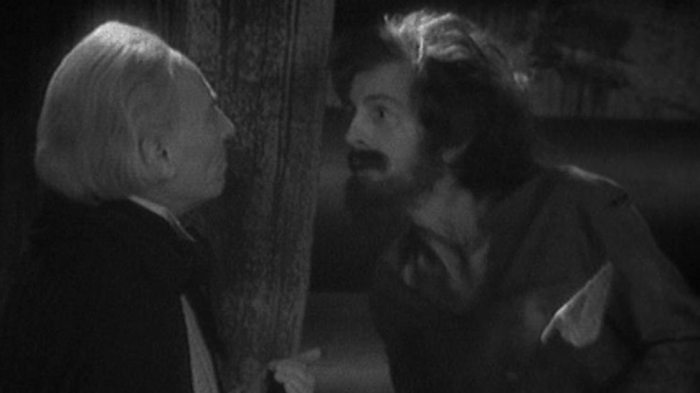
William Russell has spoken in the past about how the arrival of Dennis Spooner was greeted with enthusiasm by the main cast.  Spooner had a good ear for naturalistic dialogue and also liked to pepper his stories with humour.  And following the earnest and rather stilted dialogue which sometimes cropped up in The SensoritesThe Reign of Terror does come as a breath of fresh air.  However, it’s notable that Spooner’s scripts do feature various Americanisms, which feel strange coming from the mouths of the TARDIS crew, simply because they’ve never spoken like this before (Hartnell, for example, says “you don’t say” later this episode.  This feels jarring after watching the series in order).

The Doctor is convinced that he’s landed Ian and Barbara back in England 1963 and is keen drop them off and move on.  Not surprisingly, Ian and Barbara aren’t prepared just to take the Doctor’s word for it.  This infuriates the Doctor.  “I’m rather tired of your insinuations that I am not master of this craft. Oh, I admit, it did develop a fault, a minor fault on one occasion, perhaps twice, but nothing I couldn’t control.”

This is lovely stuff and Hartnell plays it to the hilt.  As we’ll see time and time again over the years, the joke’s on the Doctor since his confidence does turn out to be entirely misplaced.  They’re in France, not England, and a couple of hundred years back in time.  The TARDIS has set them down during the French Revolution (“the reign of terror”) which according to Susan is the Doctor’s favourite period in Earth history.  I wonder why. Does he enjoy the sight of all those French aristocrats being sent to the guillotine?  The Doctor never explains why he enjoys this time so much, so we’re left guessing.

The TARDIS crew meet Rouvray (Laidlaw Dalling) and D’Argenson (Neville Smith) at an abandoned farmhouse.  Both Frenchmen are on the run from the authorities and it seems  probable that they’ll be significant figures in the story.  Whilst D’Argenson is nervous and apprehensive, Rouvray is calm and still in total command.  He may be a hunted man but possesses an unbelieving belief in his own authority.  He bluntly tells Ian and Barbara that “in France now there are only two sides. You’re either with us or against us. Our sympathies are obvious. We want to know yours.”

The arrival of a group of soldiers immediately darkens the tone.  They’re depicted as a barely controllable rabble, with the common soldiers openly contemptuous of the Sergeant’s authority. The Sergeant (Robert Hunter) cleverly doesn’t attempt to browbeat his men into obeying his orders, instead he suggests that if they watch the back of the house they might have a chance to kill some royalists.  This meets with their approval and they move into position.

Whilst Robespierre might later claim this is a glorious and just revolution, the behavour of the soldiers is clearly designed to indicate otherwise.   And when Rouvray and D’Argenson are both brutally murdered it helps to reinforce the concept that life is now very cheap.  Since both characters seemed to have been set up to play a major part in the narrative, their sudden deaths are quite shocking.  It also serves as an early demonstration that the Doctor and his friends could also face death at any time.

Rouvray’s death is a noteworthy moment. He disarms one of the soldiers just by asking for his rifle and then comments that “you can give them uniforms, Lieutenant, but they remain peasants underneath.”  This is another example of Rouvray’s unshakable belief in his own authority, but it’s also a demonstration of the ruling elite’s unspoken arrogance.  Did this exchange led directly to his death?  It seems more than likely.

With the Doctor unconscious in the upstairs part of the house, the soldiers decide to take Ian, Barbara and Susan to Paris. Their motivation is not out of a sense of duty though – they believe there might be a reward and are keen to collect.  They torch the house before they depart, which means we conclude with a strong cliffhanger – the Doctor awakes to find himself trapped in a raging inferno ….

p0115yjg.jpg

TV Comic – The First Doctor. The Hijackers of Thrax

hij1

A cargo ship, en route to Venus from Earth, mysteriously vanishes. It’s not the first time one of these ships has gone missing, which spells trouble for those anxiously watching back on Earth. “Another supply ship lost! If we don’t get to the bottom of this mystery soon our colony on Venus will be starved out!”

Who can be responsible? It’s a space pirate called Captain Thrax, that’s who. And make no mistake he really is a pirate – complete with a striped jumper, eye patch and a nice line in pirate talk. Frankly all he’s missing is a parrot and a peg leg.

You could never say that scientific accuracy was one of TV Comic‘s priorities, something which is clearly demonstrated by the cunning way that Thrax remains undetected from Earth observation. His space station is covered by a cloud. A cloud in space, how exactly does that work? Never mind, let’s press on.

The Doctor, John and Gillian, having landed on the space station, find themselves prisoners – locked up along with the crews from the captured spaceships. Luckily the ever-resourceful John has an escape plan – he takes a bar of soap (don’t ask) and puts it on the floor. When the guard comes in, the inevitable happens.

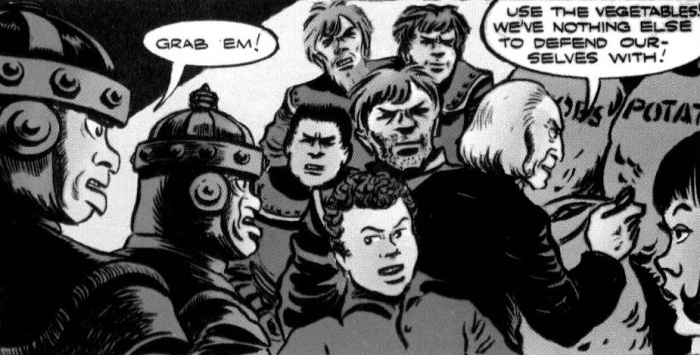
If you get the sense that this adventure has been a little strange up until now, the best is saved for the final instalment. Cornered by Thrax’s guards, the only weapon that the Doctor and the others have to hand is the stolen food. This leads the Doctor to utter one of my favourite TV Comic lines. “Use the vegetables! We’ve nothing else to defend ourselves with!” Sheer brilliance.

And the vegetables come in very handy, as not only are they used to beat off the guards but Doctor Who (as ever, very keen to incite others to violence) tells John and Gillian to throw the spuds at Thrax’s mist-making machinery. Once that’s put out of action, Thrax’s goose is really cooked.

The Hijackers of Thrax is a fairly short story, which is something that works in its favour (ten weeks of potato-based action might have been too much, even for me). It’s another tale that bears only scant resemblance to TV Who, but no fear as the next strip promises something closer to canonical action (“DR WHO meets the ZARBI on the Web Planet”).

hij2.jpg

TV Comic – The First Doctor. The Therovian Quest

We can file the first few instalments of this strip under “blatant padding”. Doctor Who, Gillian and John crash-land on a rather inhospitable, moon-like planet. Like the moon it has hardly any gravity, although it must have oxygen otherwise the time-travellers (who aren’t wearing spacesuits) would have expired the minute they set foot outside.

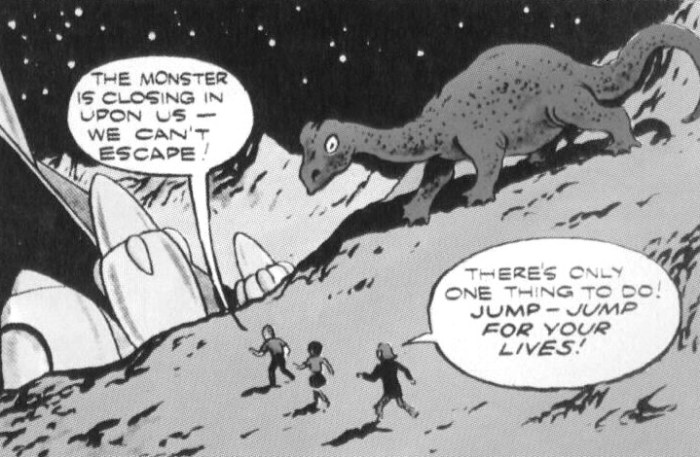
I don’t think we need to get too worked up about scientific accuracy though, as shortly afterwards they are all menaced by a large dinosaur-like creature. Given how bleak the planet looks I’m not entirely sure what it feeds on (passing space-travellers maybe?). There’s a temporary respite from this silliness when the Doctor and the others take shelter in a nearby space-ship. The alien inhabitant doesn’t seem friendly though. “Don’t move or I’ll blast you to atoms!”

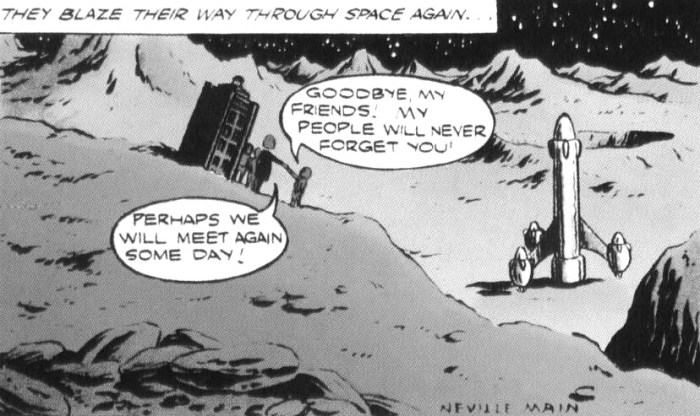
But things take an unexpected turn after the alien, called Grig, is revealed to be a good chap after all. After the single-minded villainy of The Klepton Parasites, it’s nice to have a story where an apparently threatening alien turns out to be benign. Grig tells them his story and it’s a very strange one.

All the people on his planet, Theros, have been gripped by a strange weakness, meaning that they loll about all day long with no desire to do anything. For some reason he’s the only one not affected so he’s set off in his rocket ship to look for help. Yes, this is a little odd but after several panels of the Doctor being menaced by a whacking great dinosaur it seems less so. Touched by Grig’s story, they all return to Theros to see if they can help.

If this was the television show then you know what would happen next – the Doctor would fiddle with some test tubes and find a cure. Alas, the comic strip Doctor lacks the skills of his television counterpart and is stumped. But don’t panic! The Doctor may be no use but the oldest living Therosian, Wodan, suddenly pipes up to let them know that there is a cure – a rare moss from Ixon, the planet of ice. Now if only he’d thought to let Grig know this before he set out the first time (and the Doctor had travelled straight to Theros) we’d have been spared all that nonsense with the dinosaur …

After being introduced to Grig, a menacing alien who turns out not to be menacing after all, there’s another reversal after the Ixons are revealed as baddies (they’d initially seemed reasonable enough). But no matter, after Doctor Who, John, Gillian and Grig have braved the ice caves they’re not going to let a few Ixons stand in their way. Doctor Who has a handy box of matches (maybe he didn’t kick the smoking habit like his tv counterpart?) which enables him to create a heavy smokescreen to aid their escape.

Barking mad best sums this story up. The interlude with the dinosaur, a planet of lethargic aliens, the hunt for the magic moss, it just keeps on springing surprises. But compared to some later TV Comic strips I guess this is quite sensible fare.

TV Comic – The First Doctor. The Klepton Parasites

klepton 1.jpg

Just under a year after An Unearthly Child aired on British television, the Doctor made his debut as a comic strip character in the pages of TV Comic. These early strips are fascinating for a number of reasons.  They may be simplistic but they also have a certain charm, although there’s no denying that they bear only a passing resemblance to TV Who.

Yes, there’s a white-haired man called the Doctor who flies a spaceship disguised as a police-box through time and space,  but that’s pretty much where the similarity ends, at least in this story.  The strip Doctor is a gung-ho fellow, happy to shoot first (or more accurately get others to do the shooting for him) and ask questions later.

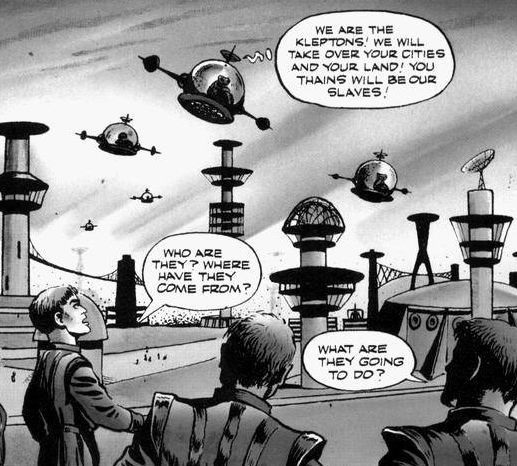
Although this first story runs over twenty pages there’s an economy to the storytelling that’s evident right from the first panel.  A number of flying machines, piloted by the evil Kleptons, are swooping over the city of the hapless, humanoid Thains.  The Kleptons make their intentions plain straight away.  “We are the Kleptons! We will take over your cities and your land! You Thains will be our slaves!”  Clearly the Kleptons believe in getting to the heart of the matter with the minimum amount of waffle.  After such a comprehensive mission statement it does render the Thains’ cries of “Who are they? Where have they come from? What are they going to do?” rather redundant.

It’s a black and white strip and we’re in a black and white world.  The Kleptons are evil and the Thains are good – it’s as simple as that.  So there’s no point in attempting to reason with the Kleptons, the only thing that will stop them is a force of arms.  To be fair, the television Doctor has often followed a similar route, so we can’t be too critical about this.

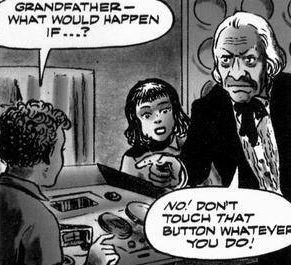
As for the Doctor, when the story begins he’s on Earth and inside the TARDIS.  He’s surprised to be visited by his grandchildren John and Gillian, whom he’s obviously never met before.  And he’s even more surprised when John pushes precisely the wrong button which sends them off into time and space.  It’s like the first twenty five minutes of the television serial compressed into seven panels of art.

klepton 2.jpg

The fun really starts when the TARDIS drops them right in the middle of the fight between the Kleptons and the Thains.  The Doctor is quick to decide that force is the only answer and to this end the peaceful Thains take the only weapons they have (stored in a museum) and ready them for the upcoming struggle.  When writing The Dominators did “Norman Ashby” use this strip as an inspiration?

Although the Doctor’s a strong advocate of force, the strip is still careful not to show him actually firing a gun, so he gives that job to his young grandson.  Hmmm.  But the Doctor is on hand to offer these sage words of support.  “Open fire! Blast those Kleptons out of the sky!”

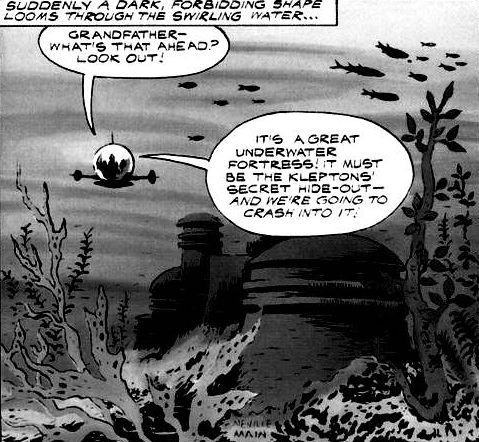
Neville Main’s art may be rather functional, but at times (such as when the Doctor, John and Gillian travel to the city of the Kleptons in one of their stolen machines) it’s really rather good.  Things don’t go well for the Doctor and his two young grandchildren though as they’re captured by the evil Kleptons and the Doctor passes on more wise words of advice.  “Don’t try anything. These ugly customers are just itching to let fly with their guns!”

klepton 3

They manage to escape from the cell they’ve been locked in, thanks to John suddenly realising he’s carrying a heat gun provided by the Thains (lucky that).  Once out of the cell, John chucks it over to the Doctor, telling him to open fire, but once again the Doctor isn’t seen to fire a weapon, he simply knocks the Klepton out with it!  John punches another Klepton (“sweet dreams”) whilst Gillian no doubt cowers somewhere off-panel.

Events then take an inevitable turn as a really large explosion puts paid to the Kleptons and the time-travellers prepare to bid farewell to the Thains.  As with the television series, the Doctor makes an attempt to return his companions to the twentieth century but I’ve a feeling he’s going to have a similar lack of success.  John seems happy enough though.  “I don’t care what century we arrive in. I’m sure we’ll have loads of adventures anyway!”

It’s a crude and simplistic story, but I can’t find it in my heart to dislike The Klepton Parasites.  But I hope that some of the upcoming stories will have a little more depth to them.  We shall see ….

klepton 4.jpg

Doctor Who Fanzine Musings

Inspired by the efforts of a new Facebook group (The Doctor Who Fanzine Database) I’ve recently been digging back through parts of my own collection for the first time in a number of years. Pre-internet, these zines – sometimes glossy A4, sometimes photocopied A5 – were the beating heart of fandom. It was just as easy to start a heated debate within the pages of a fanzine back then as it is today on Twitter. The only difference is that the responses would appear over a number of months, rather than minutes ….

The first DW fanzines I can remember buying were issues six, seven and eight of Private Who from London’s Forbidden Planet in 1987. At this stage it hadn’t quite transformed itself into the prozine it would become (later it would attract bitter criticism from certain quarters thanks to its enthusiastic cheerleading of the McCoy era). This incarnation of Private Who was willing and able to lob a few brickbats in the series’ direction (issue six featured a thumbs down review of The Trial of a Time Lord).

Since at that point DWM (my only resource for DW news and reviews) was a very non-controversial publication (the arrival of John Freeman, who began the process of beefing up the tone of the magazine, was still a year away) this review was slightly eye-opening. Although as I was shortly to learn, Private Who‘s negative viewpoint was mild compared to the vitriol that the current series attracted from other quarters ….

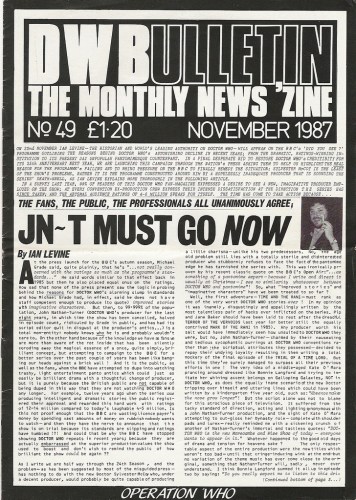
I had and have a love/hate relationship with DWB.  I loved the in-depth articles and interviews which documented the series’ past but hated the editorial tone which delighted in trashing the series’ present at every opportunity.  Gary Levy/Leigh was hardly alone in disliking the way DW was heading, but the endless personal attacks directed at JN-T were very wearying. And yet, since the good stuff outweighed the bad I  simply tutted at the more hysterical ravings and passed over to the next interesting article.

167088807_1008862761_b.jpg

The lowpoint of the magazine has to be the extensive Eric Saward/Ian Levine interview from the early nineties which, even by the magazine’s own standards, was a breath-taking hatchet job aimed at (who else?) JN-T.  Especially disturbing was the way that certain people who had passed on (Robert Holmes, Douglas Camfield) were cited by Levine as hating the direction JN-T had taken the series in. Other zines (like Skaro) were quick to find the use of the dead to bulk up their arguments more than a little distasteful.

Mind you, even pre-eighties Who could sometimes find itself under attack. Paul Cornell’s DWB review of Terror of the Autons (he didn’t like it, not one little bit) chimed with the then current trend of early nineties fandom, which tended to give the Pertwee era a good kicking at regular intervals.

One major attraction for taking out a regular subscription to DWB (the only magazine I can remember which used to send out a strip of blank address labels and requested that you filled them out!) was the fact that it ran adverts for many, many fanzines.  So DWB was incredibly important to me as it opened up a conduit into the wider world of DW fandom (and beyond, as it became increasingly common for zines to cover a variety of different programmes).

Purple Haze and Perigosto Stick were two which really struck a chord. Often these zines (almost always A5) only lasted a few issues, but that didn’t seem to matter as more titles always seemed to pop up to replace them. This era of DW fanzines had a very definite identity and style – irreverent and with a keen desire to slay some sacred cows (which more often than not meant poor old Jon Pertwee).  The recent new Time Team squabbles (some people aghast at the fact that a bunch of twentysomethings have the temerity to offer their opinions about old Who) rather overlooks the fact that back in the early nineties that particular generation of twentysomethings were even more outspoken about eras of the programme they were too young to have watched the first time round.

2

The battle between the A5 photocopied zine and the A4 glossy seemed to concern some people (but then Doctor Who fandom loves nothing more than a good fight).  Some – like the relaunched Skaro – were able to mix the feel of an A5 with the production quality of an A4, thereby creating the best of both worlds. Second Dimension also ended up as a glossy (a far cry from its early days as a bunch of loose sheets stapled together) without sacrificing too much of its tone.

Even though I loved the slapdash nature of many of the A5 zines, it’s possibly In Vision which remains my favourite of the 1990’s era (and certainly the one I come back to the most).  Although new research has invalidated some of the facts presented (even more so with its predecessor, Space and Time) I-V is still a treasure trove, which became even more detailed as it began to cover the 1980’s stories.  Tip of the hat to The Frame as well – although sometimes criticised for being bland, if you dig through a complete collection there’s more variety than you might expect.

One interesting thing about skimming through the FB group is realising that so many of these zines had very limited print runs (a fair few in the tens, rather than hundreds).  Given this, it’s a pity that more material hasn’t been collected in book form or otherwise made available.  There are some publications out there (Keith Miller’s, for example) but this only scratches the surface.  It would be nice if more classic DW fanzines were made available, otherwise this fascinating era of creativity is in danger of being lost forever.

Doctor Who – Day of the Daleks (a question of time and distance)

Dbz-_P4XUAACphz

This isn’t – you’ll probably be grateful to hear – an attempt to unpick the temporal paradox at the heart of the story. I’ll leave that for another time ….
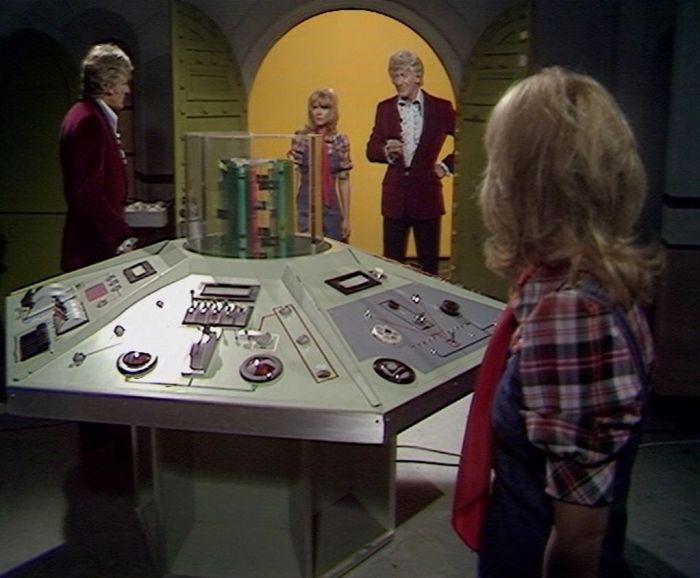
Rather, it’s simply a quick post about a few elements from episode one which caught my attention during my latest rewatch (and following on from my series of tweets about the story).

UNIT HQ always seemed to be on the move during the Pertwee era. In story terms you could argue that it made sense for a top secret organisation (despite what the The Three Doctors might suggest!) to be somewhat mobile. On a practical production level it’s a little harder to understand.

Especially given that the Pertwee era (following on from the somewhat shambolic production and scripting travails of the later Troughton years) had a much more efficient production base. You’d have assumed that by keeping certain sets – like the Doctor’s lab – in storage they’d have saved themselves a little bit of money. But no, in every new story it seems that the Doctor has moved his base of operations to a new room.

The Day lab is especially interesting. Although it’s never directly stated on-screen, it would appear that the Doctor has (for the first time since Inferno) removed the console from the TARDIS. Otherwise it would be perfectly possible to accept that what we see here is just a very strange console room. Two things count against that – one is that there’s a working telephone and the other is that the Brigadier doesn’t seem in the least put out when he ambles in to chat to the Doctor. Whereas in The Three Doctors he had a nervous breakdown when entering the TARDIS.

I still like to think that what we see here is a secondary control room though, even though the facts doesn’t really bear this out ….

The main oddity of the first episode is the very strange timeline. We’re told that Auderly House is a Government owned country house about fifty miles north of London. Given this, the current UNIT HQ can only be – at best – a few minutes away.

Otherwise, there’s no way to explain how the Doctor, Jo and the Brig (having travelled to Auderly in order to give Sir Reginald a hard time) can, once they’ve returned to the lab, discuss the strange apparitions the Doctor and Jo witnessed prior to their visit to Auderly (which only occurred a few “moments ago”).

So they travelled to Auderly, chatted to Sir Reginald and combed the grounds for any stray guerrillas, but all this only took a few moments. You’d swear the Doctor had a working time machine.

Following on from this point, Benton escorts the wounded guerrilla to the hospital. As the ambulance sets off, there’s still time for the Doctor to return from Auderly to the lab, run a metallurgical analysis on the guerrilla’s gun and then start footling around with his portable time machine. When he does this, the guerrilla vanishes from the ambulance, with an amazed Benton watching on. Again, how does this timescale work? If the hospital’s not several hours drive away, it makes no sense.

Maybe the original intention was to record the scene with the Doctor and the time machine on location? If so, that would have fitted nicely, since at that point only a few minutes would have elapsed between the guerrilla being bundled into the ambulance and the time machine springing into life.

If not, it appears that Terrance’s script editing was a little hit and miss that week ….

Doctor Who – The Sensorites. Episode Six – A Desperate Venture

The Doctor and Ian are in trouble. They’ve gone down to explore the aqueduct, but aren’t aware that their map has been doctored (plus their guns are useless). I like the way that when they hear a noise they roll up the map to use as a weapon. Quite how effective a few pieces of paper would have been as a club is something of a moot point.

There’s a characteristic moment when the Doctor burbles on, not heeding Ian’s warnings that they’ve been surrounded! The Doctor and Ian are captured by the survivors of the spaceship which landed ten years ago. They’re a rum lot, to say the least. They’ve spent all this time down in the aqueduct, poisoning the water and patiently waiting for every last Sensorite to die. This single-minded course of destruction has driven them all quite mad, but even though they’ve regressed to a somewhat primitive state (they wield pointed sticks as weapons) it’s interesting that they still retain a rigid hierarchy with a clear chain of command that’s run along military lines.

John Bailey, as the Commander, is able to invest his character with a rather pathetic sense of honour and duty, and he makes quite an impression during the brief time he’s on screen. But Bailey was always a class actor (he returned twice to the series – first as Edward Waterfield in The Evil of the Daleks and then later as Sezom in The Horns of Nimon, where his dignified turn was in sharp contrast to the panto antics from most of the other cast members).

Susan gets a final chance to demonstrate her telepathy and also shares a scene with the First Elder where she reveals a sliver more about her home planet.

1ST ELDER: When I listen to you, you who are so young among your own kind, I realise that we Sensorites have a lot to learn from the people of Earth.
SUSAN: Grandfather and I don’t come from Earth. Oh, it’s ages since we’ve seen our planet. It’s quite like Earth, but at night the sky is a burned orange, and the leaves on the trees are bright silver.
1ST ELDER: My mind tells me that you wish to see your home again, and yet there is a part of you which calls for adventure. A wanderlust.
SUSAN: Yes. Well, we’ll all go home some day. That’s if you’ll let us.

The oddest thing about the conclusion of the story is that we don’t see the City Administrator receive his comeuppance. He just fades away as we’re told that he’ll be banished to the outer wastes. It’s one of those moments, and there are several others during the story, where it’s surprising that David Whitaker didn’t tweak the script a little in order to produce something a tad more dramatically satisfying.

But whilst there are various niggles, overall this is a pretty solid serial. It’s not the most sophisticated or layered tale, but anything with the original TARDIS crew (and indeed, anything with Hartnell) is always going to appeal to me.

Doctor Who – The Sensorites. Episode Five – Kidnap

Ian and Susan rescue the Doctor from the mysterious creature in the aqueduct. The Doctor implies that there’s something strange about the monster (otherwise how could it have ripped his coat to shreds but not touched his skin?). You have to assume that the monster, like the poisoned water, has been arranged by the (as yet) unseen survivors from the human spaceship which landed ten years ago. Quite how they were able to create the illusion of this monster is a mystery though (and if they are responsible, don’t the Sensorites think it’s strange that mysterious creatures suddenly appeared in the aqueduct some years ago? Where had they been before that?)

The Sensorites continue to maintain that they have a perfect society. “Our society is based upon trust. Treason or secret plotting is impossible.” But the continuing plots of the City Administrator (and the fact that he is able to recruit willing helpers) sharply contradicts this. It’s possible to argue that it’s only the arrival of the humans which has caused the Administrator to go off the rails, but this doesn’t quite hold up to scrutiny. Because he reacts so strongly (and with very little provocation) it does seem probable that he would have snapped soon anyway. And if the Sensorite nation is so peaceful and well-ordered, why do they need a Warrior class?

I like the way that that Sensorites are able to run the Doctor up a lovely cloak to replace his ruined coat. It’s hard to imagine that Sensorites themselves wearing cloaks, but maybe they do – otherwise surely they’d get a little chilly in the winter time?!

There’s a few line fluffs in this episode, but Hartnell’s not to blame for once. This is my favourite, courtesy of one of the Sensorites. “I heard them over, over, talking”.

Carol gets a decent share of the action in this episode. She shares some key scenes with the Sensorites, is overjoyed when John is returned to normality (which is a well-acted scene by Stephen Dartnell) and finds herself kidnapped at the end of the episode.

It’s unusual for a non-regular to be the focus of the cliff-hanger, especially as Susan could easily have been substituted for Carol. Maybe it was felt that since Susan was kidnapped at the end of episode five of The Keys of Marinus it would have felt too much like deja-vu had it happened again so quickly.

Doctor Who – The Sensorites. Episode Four – A Race Against Death

Hartnell’s in fine form in this episode. He’s gloriously tetchy when railing against the Sensorites (who refuse to give him the lock of the TARDIS back, which he wants so he can access his equipment to find a cure for Ian). They offer him their own laboratory facilities, which he accepts with very ill grace, but he can’t help himself and raises his voice on several occasions – even though he knows it causes the Sensorites pain.

Therefore it falls to Susan to act as the peacemaker between the Doctor and the Sensorites. It’s a nice, albeit brief, character moment for Carole Ann Ford who is clearly attempting to make the most of the thin material she has (after a strong start to the story, Susan is fading into the background again).

The Doctor’s in his element as he attempts to find a cure (surrounded by test-tubes you feel he’s very much in his natural environment). But the ease at which he does so is another weakness of the story. With six episodes to fill you’d have assumed they could have stretched it out a little longer and even when the City Administrator intercepts the antidote it doesn’t really matter, since Susan simply obtains another dose. Doctor Who and the Silurians has a better example of this type of plot-thread – after the Doctor is kidnapped by the Silurians his formula to stop the plague goes with him, so Liz has to frantically attempt to reassemble it from his notes.
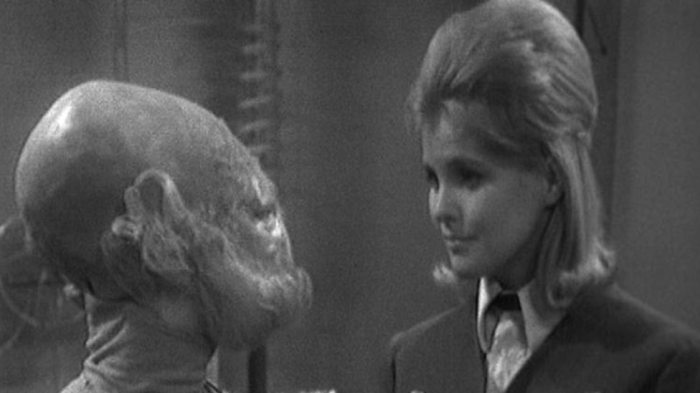
The Doctor’s very pro-active in this episode and therefore quite different from the more self-centered character we saw earlier in the season. He travels down to the aqueduct in order to examine the source of the poison and, leaving his Sensorite guide at the entrance, ventures inside. When the First Elder and the others learn of this, there is general consternation.

1ST ELDER: Other expeditions have tried and failed. Most of our men do not return, and those that do speak of terrible things.
IAN: Well, I’ll have to go myself.
SUSAN: No you won’t.
IAN: We can’t stay here, Susan.
SUSAN: You’re too ill, Ian.
IAN: I’m not that ill.
SUSAN: All right. We’ll need someone to show us the way.
1ST ELDER: I beg you to change your minds. You cannot save your friend.
IAN: We’ll never know till we try, will we?
1ST ELDER: These people have fine qualities. The Second Elder and I have misjudged them, and I will tell him so.

The closing moment of the episode, as the Doctor hears the roar of a mysterious creature is an iconic one and also serves as a good example of Hartnell’s acting abilities. Later Doctors might have used the opportunity of an end-of-episode closeup as a chance to play to the camera, but Hartnell is very restrained. He keeps his face immobile whilst his eyes dash from right to left. It’s a very good indication that less is more and a small example of Hartnell’s class.

Doctor Who – The Sensorites. Episode Three – Hidden Danger

Whilst Barbara remains on the spaceship, the Doctor, Ian and Susan travel down with with John and Carol to the Sense-Sphere. John receives treatment from the Sensorites (helping to undo the damage they’ve created) whilst the Doctor agrees to investigate a mysterious plague which is killing an increasing number of Sensorites.

One of the main problems with The Sensorites is how simplistic some of the plotting is. We’re asked to accept that the Sensorites are a technically advanced race, but they’ve spent the last ten years dying from a mysterious disease for which they’ve been unable to either identify or find a cure for. The First Elder (Eric Francis) mentions that the Elders enjoy special spring water, but Ian, who’s very thirsty, doesn’t want to wait for it to arrive and drinks some of the normal water. He then keels over, which leads the Doctor to deduce that the water supply is poisoned.

If one wanted to be generous then we could assume that, due to the Sensorites different physiognomy, the symptoms of the poisoned water don’t manifest themselves so quickly. Otherwise, if a Sensorite toppled over immediately after drinking the water you’d have thought they would have twigged by now! Even so, testing the air, water, food, etc should have been amongst the first things to have been checked.

Again, if you wish to take a more sympathetic reading of the text, it could be that Newman was attempting to show how an isolationist nation like the Sensorites had partly brought this problem on themselves. Although they are technologically advanced, it’s only the input of an outsider which provides them with a solution – therefore their fear of aliens had prolonged their suffering.

But if this section of the story doesn’t quite convince, we also have some interesting exchanges between the Sensorites themselves. Although rudimentary, this dialogue serves to remind us that whilst they are nominally the “monster” of the story, in their own eyes they regard themselves as the heroes and it’s the humans who are the potentially threatening force.

2ND ELDER: In one degree I confess I am anxious. These creatures, these Earth people, are loud and ugly things. Why could we not have met them in the desert or in the mountains?
1ST ELDER: It is a failure of all beings that they judge through their own eyes. To them, we may appear to be ugly. What we must create between us is trust. That is why I have invited them to my palace.
2ND ELDER: But are we sure these Earth creatures are beings as you say? There are animals in the deserts and mountains, but we do not invite them in to our palaces. Perhaps these Earth creatures are animals too?

There’s also a brief insight into how their nation is ordered. “The Elders think and rule, the Warriors fight, the Sensorites work and play.” The Sensorite goes on to tell the Doctor, Ian and Susan that all are happy, but Ian’s ironic misquoting of Orwell (“some are happier than others, eh?”) helps to suggest that there may be chinks in their well-ordered society.

And although the Sensorites may look alike, they don’t possess a hive mind. This is made clear by the bitter words of the City Administrator (Peter Glaze) who regards the outsiders with resentment and fear. And it’s his low-level villainy that will provide the jeopardy over the final three episodes.

Doctor Who – The Sensorites. Episode Two – The Unwilling Warriors

It sometimes feels as if Carole Ann Ford has spent the last fifty years complaining how underdeveloped Susan was. According to Ford, Susan was to be an active, Avengers-type girl with psychic powers, so she was later perturbed to receive scripts where she was called upon to play a character who appeared to be little more than a frightened fifteen year old girl.

Quite how much truth there is in the concept of a super-Susan is hard to establish. I’m not aware of any draft scripts that present the character in this way (and Sydney Newman, who more than anyone can be called Doctor Who‘s creator, was always clear that Susan was to be the audience identification figure – a normal teenage girl).

When the first story was being written, there was some talk about making her an alien princess, but it does seem that very quickly it was decided to keep her pretty much as an ordinary girl (even though it’s established that’s not the case). It was a constant source of frustration for Ford and led to her desire to leave the series at the earliest opportunity – although she was possibly unaware that the production team were equally keen to dispense with her services.

One remnant of super-Susan is touched upon in this episode – a skill with telepathy. Her ability to connect with the Sensorites causes her to act as their intermediary – which concerns the Doctor. It gives Ford a little more than normal to work with, which is welcome, and it allows us another brief look at the unearthly child from the opening episode.

Ian spends part of the episode being stalked, rather slowly, around the ship by the Sensorites. Frightening though they appear, the Sensorites aren’t aggressive – although they do insist that everybody has to come down to the Sense-Sphere to live with them, which doesn’t sound like the best proposition ever. The Doctor, as might be expected, isn’t happy. “I don’t make threats. But I do keep promises. And I promise you I shall cause you more trouble than you bargained for if you don’t return my property!”

Another remnant of the early aim of the series to educate as well as entertain is touched upon when the Doctor discusses how they might gain the upper hand with the Sensorites.

DOCTOR: It’s a fallacy, of course, that cats can see in the dark. They can’t. But they can see better than we humans, because the iris of their eyes dilates at night. Yes.
IAN: What are you driving at, Doctor?
DOCTOR: Oh, it’s all perfectly simple, Chesterton. You see, the Sensorites eyes are the exact opposite to that of a cat. The Sensorites eyes were completely dilated, that is, enormous, in light.
IAN: The conclusion being that they would contract in darkness.
DOCTOR: Exactly. And that is our best weapon. The Sensorites will be frightened of the dark.

There’s not a great deal going on this episode, apart from giving us our first proper look at the Sensorites. But it ends with a jolt – as Susan prepares to journey down to the Sense-Sphere alone (even if, as so often, the cliff-hanger is negated in the opening moments of the next episode).

Doctor Who – The Sensorites. Episode One – Strangers in Space

It’s fair to say that The Sensorites is something of an unloved story amongst Doctor Who fans (often regarded as nothing more than an excellent cure for insomnia). I think this is a tad unfair (it’s never been a story I’ve struggled with too much). Yes, some of the plotting is a little simplistic, but then the series was still feeling its way during this point, so a little slack needs to be cut.

Probably the most notable part of the serial is that the Sensorites aren’t mindless monsters – they have an ordered society and their decision to imprison Maitland’s ship in an endless orbit is revealed to be an exercise in defence, not attack.

This possibly shouldn’t come as a surprise for anybody re-watching season one in order. We’ve yet to get to the point where non-humanoids are regarded as evil by default. So far only the Voord (underdeveloped as they are) match the template of a monster who desires to dominate others (later to become a familiar Doctor Who trope). Even the Daleks in their first appearance aren’t interested in conquest – survival is the only thing on their minds.

Quite a few six-parters employed a 4-2 or 2-4 format (good examples are The Seeds of Doom and The Talons of Weng Chiang). The Sensorites does something similar – episode one and two take place on Maitland’s spaceship whilst the remainder relocates to the Sense-Sphere. Although here it’s done for more practical reasons, as the studio was too small to house all the sets.

We open with a mystery – the TARDIS materalises inside a spaceship and the Doctor and his friends find two people – a man and a woman – who are both apparently dead. They’re just about to leave when the man stirs and shortly after he explains that they’ve been put into a deep sleep by the Sensorites, who live on the nearby planet.

Lorne Cossette (as Maitland) gives a strange and unconvincing performance, so it’s a blessed relief that he doesn’t travel down to the Sense-Sphere with the others later on. But there is a line of dialogue which suggests he’s been deeply affected by the Sensorites, so that might explain that Cosette isn’t just indulging in a spot of bad acting (although I’m not convinced). Ilona Rodgers (as Carol) has equally earnest dialogue but manages to make a slightly better job of things.

The Doctor’s still in full run-away mode – after a brief chat with Maitland and Carol, he decides there’s nothing he can do to help. So if the Sensorites hadn’t stolen the lock of his TARDIS he’d have been quite happy to nip off and leave them to their fate ….

But once circumstances force him to take action, he does so with gusto – elbowing Maitland aside as he takes control of the ship. Newman gives Hartnell some lovely lines, such as “it all started out as a mild curiosity in a junkyard, and now it’s turned out to be quite a great spirit of adventure.” My favourite comes a little later in the episode. “I learned not to meddle in other people’s affairs years ago. Now, now, now, don’t be absurd. There’s not an ounce of curiosity in me.”

Barbara and Susan meet the third member of the crew, John (Stephen Dartnell). Dartnell, who had played Yartek, leader of the Alien Voord in The Keys of Marinus, gives easily the best performance of the three crew-members. John was the most deeply affected by the Sensorites’ mental attacks and it’s left him in a very fragile state. Maitland believes that he’s potentially dangerous, although the reason for this is never explained. We later learn that the Sensorites have control of John’s mind – had they ordered him to do something violent prior to the Doctor’s arrival? If so, it seems rather out of character for the Sensorites, since it’s stressed that they haven’t actually hurt the Earth people.

The scenes of the zombie-like John stalking Susan and Barbara are effective, although it’s all done very slowly. But when he eventually does run them down it’s clear he poses them no threat – Barbara cradles him as a mother would a child.

The reveal of the monster at the end of episode one would become a familiar Doctor Who staple. We’ve already seen it happen in The Daleks and it happens again here. After an episode of discussing them, things would have fallen rather flat if they hadn’t convinced. So it’s lucky that our first glimpse of a Sensorite is eerie and unsettling.

Doctor Who – The Aztecs. Episode Four – Day of Darkness

After Ian successfully manages to re-enter the tomb (via a hazardous journey from a tunnel which starts in the garden) it seems that escape should now be a formality. But as this happens right at the beginning of the episode it’s obvious there will be complications.

Pulling the tomb door open from the outside doesn’t work, so Ian elects to go back through the tunnel and open it from inside again. But when Ian and Susan find Autloc senseless in the garden, attacked with Ian’s club, he finds himself once again the victim of a frame-up (this happened to him in the previous story, so he should be getting used to it by now).

It was Ixta, on Tlotoxl’s instructions, who attacked Autloc. This benefits Tlotoxl in several ways – it drives a wedge between Autloc and Barbara and also discredits Ian. With Susan due to be punished for her refusal to agree to an arranged marriage (her tongue and ears will be pierced with thorns) this final episode has skillfully drawn several different jeopardy threads together.

After Cameca frees Susan, it’s not clear why Ian doesn’t follow them. Instead, he disguises himself as a guard – presumably in order that he can fight Ixta to the death. Thankfully, this climatic fight was shot on film at Ealing and therefore is much more convincing than the others seen earlier in the story. Although it’s hard not to distracted by the wrinkly backdrop (a pity it couldn’t have been smoothed out a little better).
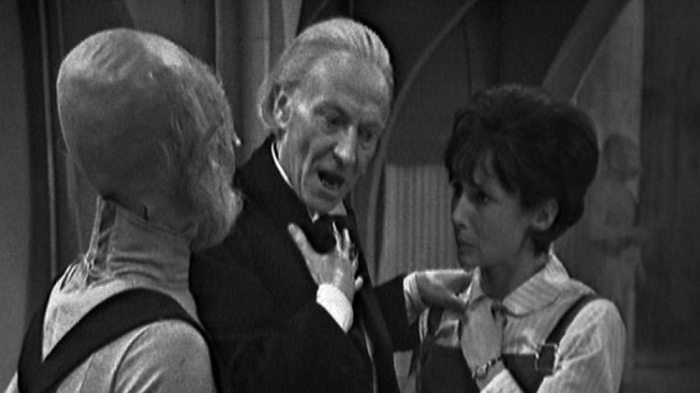
With Autloc having renounced his position and possessions in order to wander the wilderness it appears that all Barbara has achieved is to destroy one man. The Doctor offers a more encouraging spin on events, but it’s left to the viewers to decide whether he’s correct or simply trying to comfort her.

BARBARA: What’s the point of travelling through time and space if we can’t change anything? Nothing. Tlotoxl had to win.
DOCTOR: Yes.
BARBARA: And the one man I had respect for, I deceived. Poor Autloc. I gave him false hope and in the end he lost his faith.
DOCTOR: He found another faith, a better, and that’s the good you’ve done. You failed to save a civilisation, but at least you helped one man.

The Aztecs is undeniably a quality production – it’s well acted, well written and impressively directed by John Crockett (even allowing for the limitations of the studio).

Although I have to put my hand on my heart and admit that I do find it somewhat uninvolving (the comic-strip antics of The Keys of Marinus are much more entertaining). But it’s an excellent vehicle for Jacqueline Hill and William Hartnell, with William Russell also enjoying some decent material (Carole Ann-Ford is less involved, mainly because she was largely absent from the middle episodes).

Doctor Who – The Aztecs. Episode Three – The Bride of Sacrifice

bride

Whilst it would be unfair to regard The Aztecs as worthy but dull, it’s undeniable that it’s always been a story that I’ve found it easier to admire than love. It’s certainly a less engaging experience than Marco Polo – possibly because Polo had three extra episodes to play with (allowing for more character development) but maybe it also has something to do with the fact that it’s harder to get involved with the sympathetic characters we meet in The Aztecs.

Polo and Ping-Cho both had interesting motivations which explained their actions (Polo wished to go home, Ping-Cho became increasingly anxious about being trapped in an arranged marriage). But neither Autloc’s crisis of faith or Cameca’s love for the Doctor has quite the same impact.

Both Autloc and Cameca find themselves manipulated (by Barbara and the Doctor). In Barbara’s case, it happens because of her desire to fundamentally change the course of Aztec society. Even when Autloc spells out to her that he will be ruined if she proves to be a false goddess, she appears to be unmoved.

BARBARA: Am I not a god? Support me. Tlotoxl won’t dare defy us both.
AUTLOC: If I take that course, there is no way back for me. In all humility, I beg you, do not deceive me or prove false to me.

Although the Doctor strikes up a friendship with Cameca in order to find out more about the tomb, it’s his misunderstanding of Aztec customs (especially what is signified when a man offers to make cocoa for a woman) which proves to be his downfall. It’s a lovely comic scene which Hartnell plays to perfection – his expression when he realises he’s become engaged is priceless, as is Ian’s reaction when the Doctor calmly tells him his happy news!

DOCTOR: Happy days, my dear.
CAMECA: The happiest of my life, dear heart. Was ever such a potion brewed? In bliss is quenched my thirsty heart.
DOCTOR: Very prettily put, my dear.
CAMECA: Oh, sweet-favoured man, you have declared your love for me, and I acknowledge and accept your gentle proposal.

It’s a light moment in an otherwise dark and dramatic episode.

The Doctor has attempted to persuade Barbara that interfering with Aztec society is doomed to failure (although he doesn’t specify why). She doesn’t accept this and it takes Ian to finally make her see the impossibility of her actions.

BARBARA: Tlotoxl’s evil and he’ll make everyone else the same.
IAN: They are the same, Barbara. That’s the whole point. You keep on insisting that Tlotoxl’s the odd man out, but he isn’t.
BARBARA: I don’t believe it.
IAN: Well, you must. If only you could stand away from this thing, you’d see it clearly. Autloc’s the extraordinary man here. He’s the reasonable one, the civilised one, the one that’s prepared to listen to advice. But he’s one man, Barbara. One man.

This is maybe a little unfair on Ian’s part. We don’t meet that many members of Aztec society throughout the story, but it’s probable that Cameca wouldn’t be opposed to the abolition of human sacrifice. Or maybe she would. One way that Ian’s point could have been proved beyond beyond all doubt would have been for the humane and gentle Cameca to mention her support for sacrifice – thereby showing us that the Aztecs’ beliefs were simply too far ingrained in every member of their society for Barbara to ever hope they could be changed.