The 3rd of September 1939 may be a momentous day in the history of the British nation (with Neville Chamberlain shortly due to announce that the country is now at war with Germany) but not everybody has Hitler on their minds. For example, in a terraced house in Newcastle, young Joyce (Pippa Hinchley) is debating whether to marry Eric (Stephen Tompkinson), who is shortly due to depart with his army colleagues to France. As for the rest of Joyce’s dysfunctional family, they all have concerns of their own ….
And A Nightingale Sang was adapted by Jack Rosenthal from C.P. Taylor’s 1978 play. Rosenthal (1931 – 2004) was one of British television’s greatest dramatists, equally adept at adapting other people’s material as he was at crafting his own. He also slipped easily between genres – penning over a hundred episodes of Coronation Street during the 1960’s whilst also working on sitcoms and original one-off plays.
In many respects, the 1989 production of And A Nightingale Sang was a perfect fit for him – since it deftly mixed humour with drama in a way that was highly characteristic of his own output. It’s very much a home-front drama (we may see soldiers, but only when they return home on leave). But despite this, the war-time feel is very strong, partly due to the soundtrack.
Many of the familiar songs are delivered by John Woodvine’s character, George, on the piano. George and his wife, known only as Mam (Joan Plowright), head an incredibly impressive core cast. Woodvine has long been a favourite actor of mine, and George is a plumb of a part – there’s plenty of scope for humour (when at home George spends all his time in the front room, banging out tunes on the piano whilst the rest of the household ignores him) but he’s also afforded moments of drama and pathos. George, who works at the shipyards, later breaks down in tears after he confesses to a workmate that he’s spent hours cleaning a ship which has recently arrived back from Dunkirk.
When his friend tells him that the bowels of the ship smell like a compost heap, George replies that it’s “human bloody compost. Stuck to the bulkheads like shit to a blanket. I’ve been trying to wash them off, scrape them off. Somebody’s lads, somebody’s flesh and blood”.
John Woodvine
For Woodvine, born in South Shields, And A Nightingale Sang provided him with an opportunity to use his natural accent. Some of the others, such as Joan Plowright, might not have been as local, but everybody manages credible accents. Plowright, as the religious matriarch of the family, doesn’t get quite as much to do as Woodvine, but she makes every scene count. The moment when she reacts in horror to the foibles of her family (such as George’s decision to become a communist) is very nicely done.
This was an early screen credit for Stephen Tompkinson, who had previously made several brief sitcom appearances in series such as After Henry, The Return of Shelley and Never The Twain. It’s a substantial role, calling on him to experience a roller-coaster of emotions, but he handles it well. Eric’s main problem is Joyce, who initially can’t decide whether she wants to marry him or not. The cons (“he smells of bacon”) seem somewhat trivial, but the physical side of their potential union also seems to be troubling her.
Pippa Hinchley & Stephen Tompkinson
But eventually she puts her worries behind her and they wed. After all, with him shortly to leave for France it’s not as if they actually have to live together. It’s only when he returns home on leave that the cracks really begin to show. “When are you going back?” is one of her first questions (she’s also unimpressed with the French knickers he’s bought her). Mind you, she quickly shrugs off her sexual anxieties – the only problem is that she seems to be spreading her favours very widely, with just about every American serviceman she can get her hands on ….
Pippa Hinchley and Stephen Tompkinson share some wonderful scenes together, as do Phyllis Logan (Helen) and Tom Watt (Norman). Helen, Joyce’s elder sister, is the sensible one of the family, seemingly destined for a life where her own wishes and desires are secondary to the demands of others. But when she meets Norman, one of Eric’s army buddies, everything changes. In contrast to the bickering between Eric and Joyce, Norman and Helen instantly bond. But, as you’d expect, things don’t turn out to be straightforward. Watt, who’d recently left his signature role (as Lofty in EastEnders) and Logan are possibly at the dramatic heart of the play. Like the rest of the main cast, they offer first-rate performances.
Produced by Philip Hinchcliffe and directed by Robert Knights, And a Nightingale Sang is a glossy production with a filmic sweep. The Newcastle locations (cobbled streets, shipyards) help enormously with this, plus it’s an ironic bonus that certain areas of the North West in the late 1980’s were so run-down and desolate that they could easily stand in for the parts of the city devastated by German bombs.
Also included on the disc are three wartime public information films – They Keep The Wheels Turning (8″15′), Britannia is a Woman (9″17′) and The New Britain (10″16′). These are fascinating extras which help to place the main feature into its correct historical context. Britannia is a Woman as you might expect, looks at the role played by women during the conflict (which is obliquely touched upon during the play – both Joyce and Helen work at a munitions factory) whilst The New Britain considers the future of the country and They Keep The Wheels Turning looks at how everybody has their part to play in ensuring that the wartime effort is maintained.
A sharply observed human drama, And a Nightingale Sang is a treat, featuring an excellent cast who never put a foot wrong. It’s available from the 6th of November 2017, RRP £12.99, and can be ordered directly from Simply here.
Written by Ronald Chesney and Roland Wolfe, The Rag Trade ran for three series on the BBC during 1961 and 1963 (it was later revived for two runs during the 1970s on LWT, which featured remakes of some of the original BBC scripts).
Set in a clothing workshop called Fenners Fashions, the nominal head of the business, Harold Fenner (Peter Jones), forever finds himself at the mercy of his bolshy workforce – most notably shop steward Paddy Fleming (Miriam Karlin) who’s apt to shout “everybody out!” at the drop of a hat.
Stuck in the middle between management and the workforce is the long-suffering foreman Reg Turner (Reg Varney) whilst the likes of Carole (Sheila Hancock), Shirley (Barbara Windsor), Lily (Esma Cannon) and Gloria (Wanda Ventham) are some of the more prominent members of the motley workforce.
It’s fair to say that the works of Chesney and Wolfe are an acquired taste. I’m rather fond of Meet the Wife but rather less so of On The Buses and their later 1970s ITV sitcoms. True, the likes of Don’t Drink The Water and Yus My Dear have a certain grisly interest but you’d be hard pushed to claim they were forgotten classics (or any good).
The original Rag Trade is sharper though, possibly because it occurred earlier in their career, although the high quality cast helps too. Peter Jones, the original and best Voice of the Book from The Hitchhikers Guide to the Galaxy, splutters with splendid comic timing throughout.
He’s matched by Miriam Karlin all the way whilst Barbara Windsor (who missed out series two but returned for series three, which sadly no longer exists), Wanda Ventham (who appeared in the second series only) and Sheila Hancock (who appears in both of the series here) all offer strong support. Hancock, as the perpetually vague Carole, is the recipient of some killer lines.
Sheila Hancock & Reg Varney
Here’s what’s contained across the four discs.
Series 1, Disc 1
1: The French Fashions
2: Christmas Box
3: The Baby
4: Getting Married
Series 1, Disc 2
5: Early Start
6: Unhappy Customer
7: Doctor’s Orders
8: The Sample
Series 2, Disc 1
1: The Thief
2: The Dog
3: Locked In
4: The Flat
5: The Client
6: Stay-In Strike
Series 2, Disc 2
7: Safety Precaution
8: Stainproofer
9: Doctor
10: Barber’s Shop
11: The Bank Manager
The series does pretty well for guest stars, with the likes of Frank Thornton, Terry Scott, Colin Douglas, Patrick Cargill, June Whitfield, Lynda Baron, Fabia Drake, Ronnie Barker and Hugh Paddick all making appearances.
Another familiar face – Peter Gilmore (The Onedin Line) – pops up in The French Fashions. Sporting an interesting American accent, he appears in the middle of a frenetic episode which sees Carole model a rock-hard pair of slacks for Gilmore’s character (it would take too to explain why) whilst the workforce later masquerades as French workers in order to snag a lucrative sales contract. None of this is terribly subtle, but there’s some typically deft comedic performances on display (Esma Cannon, as ever, effortlessly manages to steal every scene she appears in).
Another series one show – Unhappy Customer – sees “everybody out” as the girls go on strike (Mr Fenner’s more than a little unhappy that they’re eating in the workshop, but won’t agree to build a canteen). But then he has a change of heart ….
Reg Varney & Peter Jones
Considering that he’s supposed to be a penny-pincher, his solution – an automatic food dispenser (“anything you like. Tea, coffee, snacks”) – is a handsome gesture but Paddy’s not happy. This sort of automation might mean that their ten minute tea-break would actually only last ten minutes, rather than the ninety minutes it currently does. So their minds turn to sabotage ….
Highlights from series two include the second episode, The Dog. The pet in question belongs to Lily who brings him to work (she’s concerned about his health, so smuggles him in under Mr Fenner’s nose). This is classic Rag Trade – the workers conspiring against the hapless Fenner – enlivened by the always entertaining Esma Cannon and a lovely guest turn from the elegant Patrick Cargill.
The Rag Trade – Series One and Two is a straight repress of the previously released editions by DD, which means that series one is still missing two episodes (series two is as complete as it can be – two of the thirteen episodes no longer exist).
Picture quality is variable (the opening episode of series two is probably the worst, a pretty low quality telerecording). Things are much better elsewhere, although some episodes do feature occasional brief jumps when the picture and soundtrack slips out of sync for a second (a common issue with telerecordings).
The Rag Trade stands up very well. It’s certainly one of the strongest sitcoms from the Chesney/Wolfe partnership, thanks not only to the first-rate cast but also due to the way that it comedically shines a light on British labour relations during the early sixties. Whilst it’s exaggerated for comic effect, there’s more than a kernel of truth in the way that management were often at the mercy of their workers (today, the pendulum has firmly swung the other way).
A cracking little sitcom, it’s well worth your time.
The Rag Trade – Series One and Two is available now from Simply Media, RRP £19.99. It can be ordered direct from Simply here.
Sir John Betjeman (1906 – 1984) described himself with characteristic understatement in Who’s Who as a “poet and hack”. There was rather more to him than that though – he was a writer, broadcaster and from 1972 until his death also served as the Poet Laureate.
Betjeman’s love of architecture (especially from the Victorian era) and landscape is explored in detail across the three series which make up this boxset – A Passion for Churches, Bird’s Eye View and Four with Betjeman: Victorian Architects and Architecture.
Four With Betjeman finds him indulging one of his most strongly held passions – that of the Victorian architects and the buildings they left behind. “I have known for years and so have most of you that there were great Victorian architects, but they have never been given their due. Today, thank goodness, we can see Victorian architecture in perspective”.
This excerpt from a contemporary Daily Telegraph review articulates just why this short series was so entertaining and absorbing. “There is a precision about his informed enthusiasm which enables one to see the most familiar buildings, such as the Houses of Parliament, in a new light … Sir John, who succeeds in making his conducted tours seem addressed to a personal friend, can move without pause from an appreciation of shape and proportion to an anecdote about an Irish peer rolling the full length of a Barry staircase”.
Four With Betjeman contains four half-hour programmes – (Charles Barry & Augustus Pugin, William Butterfield & Gilbert Scott, Alfred Waterhouse & Norman Shaw, Sir Ninian Comper, William Robinson& Sir Edwin Lutyens).
In Bird’s Eye View we, unsurprisingly, observe Britain from a different angle as we take to the air for an unusual take on the familiar. The first programme, An Englishman’s Home, sees Betjeman waxing lyrical (with the occasional sharp barb) as the camera swoops over a diverse selection of dwellings. From stately castle, Georgian terrace, suburban semi to looming concrete tower blocks, Betjeman has words for all. His comments on tower blocks (“but where can be the heart that sends a family to the twentieth floor in such a slab as this?”) carries a particular resonance today, following the disaster at Grenfell Tower.
From the same series, Beside the Seaside is a treat as we tour past some of England’s most popular seaside destinations. The somewhat faded colour print helps to give the visuals a faint air of melancholy.
A swooping seagull takes its flight
From Weymouth to the Isle of Wight
From Cornish cliff tops wild and bare
To crowds at Weston-super-Mare
The seaside seen as history
Bournemouth, Butlin’s and Torquay
Whatever paddles, surfs or sails
Braves the waves or rides the gales
A scrapbook made at Christmastime
Of summer joys in film and rhyme
The title music for Bird’s Eye View is a typically jazzy piece from John Dankworth (the incidentals are more classically inclined, all the better to compliment Betjeman’s words).
Also included on the same disc is One Man’s Country – Cornwall (1964). This isn’t part of the Bird’s Eye View series, but since it has a similar style it fits well with the two later programmes. The stark black and footage of Cornwall is very striking and helps to make it especially memorable.
Although he’s not on camera, these three programmes (a perfect marriage of visuals and Bejeman’s poetic prose) are probably my favourite from the set. Both of the Bird’s Eye View programmes run for fifty minutes whilst Cornwall is shorter, at twenty five.
A Passion for Churches (1974) sees Betjeman explore his long-held fascination with church architecture. “What would you be, you wide East Anglian sky, without church towers to recognise you by?” His love of churches began exactly sixty years prior to this, as the eight-year old Betjeman went rowing on the River Bure in Norfolk with his father. Delightfully, this film opens with Betjeman re-enacting this. He then moves on to take a whistle-stop tour around the area.
From Medieval stained glass and brass rubbings, to weddings and the Edwardian parish church on the Queen’s estate of Sandringham, A Passion for Churches is another leisurely treat. As with all the programmes, the visuals are anchored by Betjeman’s measured, poetic narration.
Also included on the same disc are ABC of Churches (two episodes of approx. 23 minutes, 1961), Journey to Bethlehem (30 minutes, 1966) and a ten-minute fragment from a later edition of the ABC of Churches series (since the two complete editions only go from A – F, presumably the others were wiped). All of these, unlike A Passion for Churches, are in black and white.
I’m sure that Doctor Who fans will appreciate the tour of Aldbourne’s church (memorably later depicted in 1971’s The Daemons) in the first edition of ABC of Churches whilst Journey to Bethlehem still captures the attention some fifty years on.
Given the age of the source materials, the picture quality is naturally a little variable. The colour film prints are rather faded in places, although the black and white prints aren’t in too bad a condition at all. But everything’s perfectly watchable with no major picture glitches to report.
A wonderful collection of programmes, Betjeman – The Collection should appeal to anybody interested in archive documentaries. Recommended.
Betjeman – The Collection is released by Simply Media on the 23rd of October 2017. It can be ordered direct from Simply here.
The year is 1194. Sir William of Ivanhoe (Eric Flynn) has returned home to England following the disastrous Third Crusade in Palestine. Ivanhoe’s father, Cedric (Peter Dyneley), one of the few remaining Saxon nobles in an England now dominated by the Normans, has broken off relations with his son due to Ivanhoe’s support for King Richard.
The young Ivanhoe doesn’t seem too disheartened by this familial disapproval though, as he has scores to settle – most notably with Sir Brian de Bois Guilbert (Anthony Bate), a member of the Knights Templar. They will not only clash on the tournament field but also off it and two desirable young women – the Lady Rowena (Clare Jenkins) and Rebecca (Vivian Brooks) – will both have parts to play in their bitter feud.
Meanwhile, King Richard and Prince John find themselves locked in a grim battle for control of the English throne ….
Published in 1820 across three volumes, Ivanhoe – A Romance has proven to be one of Sir Walter Scott’s most enduring works. Its mixture of Medieval derring-do and romance is an intoxicating one, with numerous film and television adaptations serving as a testament to the timelessness of the story.
Possibly one of the most notable things about Ivanhoe is how Scott’s novel helped to solidify the modern myth of Robin Hood. Robin (referred to as Locksley for most of the serial) appears throughout and his characterisation here – a freedom fighter first, an outlaw second – chimes with how we view Robin today (the Robin Hood of the earlier ballads was a much less likeable and noble chap).
Scott wasn’t the first writer to set the struggles of Robin Hood during the reign of Richard I, but this story undeniably helped to create the template which many in the future would emulate. Certain aspects of the Robin Hood myth are established here – most notably the way that Robin splits the arrow of his challenger during a test of skill. It’s also interesting how subsequent writers took aspects of Ivanhoe’s character – his return to England from the Crusades, for example – and grafted them onto Robin.
The opening episode wastes no time in creating a sense of place and time. With the rightful King of England, Richard, believed to be languishing in a foreign jail, his brother John sees an opportunity to sieze power. The downtrodden Saxons find themselves suffering under the rule of the Normans, whilst Sir Brian casts a baleful shadow over proceedings.
Anthony Bate
Right from his first appearance, Anthony Bate impresses as Sir Brian. Although Bate tended to play establishment types and professional men, he throws himself into this role – a black-hearted villain, albeit one with his own code of honour – with gusto. Eric Flynn, as Ivanhoe, is perfectly cast as the square-jawed hero. Whilst it’s true that Bate, as befits a baddy, has the more interesting role to play, Flynn has a boyish charm which suits the character.
Ivanhoe’s first acknowledged appearance is held back until the end of the opening instalment (although it’s rather obvious that the mysterious hooded pilgrim who makes several enigmatic comments throughout the episode is Ivanhoe). That he and Sir Brian (bitter rivals from the Holy Land) happen to run into each other at the castle of Ivanhoe’s estranged father is something of a coincidence ….
Clare Jenkins, as Rowena, makes for a very appealing herione (coincidentally she and Flynn had appeared together a few years earlier in the Doctor Who story The Wheel In Space). Rowena and Ivanhoe are in love but he has a challenger for Rowena’s affections, the arrogant de Bracy (David Brizley), a Norman lord.
Rebecca (Vivian Brooks), daughter of the despised Jewish moneylender Isaac of York (John Franklyn-Robbins), is somewhat taken with Ivanhoe (she nurses him back to health after Sir Brian gains the upper hand during Prince John’s tourney) but she’s doomed to be unsuccessful as Ivanhoe only has eyes for Rowena. Sir Brian later attempts to woo Rebecca, but she shuns his advances.
Ivanhoe was Vivian Brooks’ third and final television job (following appearances in Thirty Minute Theatre and Z Cars). It’s a slight mystery why she didn’t go on to have a longer career as she’s really rather good here, especially when she and Bate cross verbal swords. Brooks may have been very inexperienced compared to Bate, but she more than holds her own during the scenes where Sir Brian and Rebecca warily circle each other. Vivian Brooks certainly has the meatier of the two main female roles (Clare Jenkins’ Rowena doesn’t have a great deal to do except pine for Ivanhoe).
Vivian Brooks
Although Vivian Brooks only racked up a handful of credits, most of the other main roles were filled by very familiar faces. That Ivanhoe was directed by David Maloney should be fairly obvious by taking a quick glance at the cast list. The likes of Graham Weston, John Franklyn-Robbins, Tim Preece, Michael Napier Brown, Bernard Horsfall, Noel Coleman and Hugh Walters had already appeared or would later appear in other productions directed by Maloney. David Maloney, like many other directors, tended to use a “rep” of actors – dependable people he knew would deliver the performances required.
The strength in depth of the cast is one of the reasons why this serial works as well as it does. Tim Preece entertains as the capacious and vain Prince John, Hugh Walters is pleasingly off-kilter as Cedric’s fool Wamba, Bernard Horsfall is suitably imposing as the Black Knight, John Franklyn-Robbins impresses as the persecuted Isaac and Noel Coleman is characterically strong as Fitzsurse, one of John’s advisors. Clive Graham, as Locksley, also offers a vivid performance and it’s always a pleasure to see Michael Craze, here as one of Lockley’s men (Thomas).
Graham Weston, clearly one of David Maloney’s favourite actors (apart from Ivanhoe, Maloney cast him in two Doctor Who stories – The War Games and Planet of Evil), gets a chance to display his skills with a quarterstaff when his character – Ivanhoe’s loyal servant, Gurth – tangles with the outlaws. It’s not a badly directed sequence, although like all fight scenes taped in the studio it pretty much had to be done in a single take (had it been shot on film then it could have been edited much more tightly).
Graham Weston
With Ivanhoe injured and insensible during the middle part of the serial, other characters move to the forefront of the action. Bernard Horsfall’s mysterious Black Knight (a vision in blond wig and beard) has an entertaining tustle with Barry Linehan’s disolute Friar. The Friar, living the life of a hermit deep within the forest, may claim to exist on a diet of peas and water but the truth is rather different!
When Ivanhoe, Cedric, Isaac, Rebecca and Rowena are captured by a group of Norman knights led by Sir Brian, they find themselves the prisoners of Godfrey Front de Boeuf (Francis de Wolff). Godfrey has usurped Ivanhoe’s lands and now seeks his death in order to secure his position. de Wolff cackles with evil intent (like Peter Dyneley he’s somewhat of a stranger to subtlety).
Rebecca is later denounced as a witch by the leader of the Templars – angered by Sir Brian’s infatuation with her – and is sentenced to death. She claims the right of trial by combat and nominates Ivanhoe to be her champion. And with Sir Brian in the opposite corner it seems that the final reckoning between them is now at hand ….
Although the Classic Serials had just moved into colour, this ten part adaptation (broadcast during January, February and March 1970) maintained the same production model from the black and white days. Therefore the bulk of each episode was recorded on videotape in the studio, with film inserts used to open out the narrative. Whilst this means that it isn’t as glossy or filmic as some of the later television versions, the quality of the performances are more than adequate compensation for the occasional production shortcomings (such as the unconvincing beards and the way some battles largely take place off screen).
Although some of the turns are rather on the ripe side (there are times when it’s impossible not to be reminded of Monty Python and the Holy Grail) there are subtler pleasures to be found elsewhere – Anthony Bate, for example, is excellent throughout. Overall, this is a strong and faithful adaptation of a sprawling epic and certainly deserves a place in your collection.
Ivanhoe is released by Simply Media on the 18th of September 2017. The RRP is £19.99 and it can be ordered directly from Simply here.
Although largely forgotten today, Harry Worth was a major television star of the sixties and seventies. His rise to the top was neither straightforward or quick though – born Harry Bourlan Illingsworth in 1917, he left school at 14 and went straight to work down the local mine (he stuck it out for eight years, despite hating every minute of it).
As with so many entertainers of his generation, World War II was to prove defining. Even when he’d been a miner, Worth had continued to hone his showbiz skills (practising his ventriloquism act whilst hewing coal for example). Prior to WW2 he’d begun to ply his trade by working as a ventriloquist in the numerous working men’s clubs dotted around Yorkshire, but appearing in RAF shows gave the young Worth further valuable experience.
Following his demob, and still attempting to make it big with his wooden friends (at this point he was dubbed ‘The Versatile Vent’), Worth began his slow ascent to the top. Like many of his contemporaries he played the notorious Windmill Theatre (“we never clothed”) as well as just about every variety theatre in the country. During the forties and fifties the variety circuit was still thriving (although the rise of television would eventually kill it off) and Worth was able to make a living, just.
Frequently bottom of the bill, Worth’s career seemed to be heading nowhere, although a tour with Laurel and Hardy in 1952 would prove to be crucial. After watching him from the wings, Oliver Hardy persuaded Worth that he should abandon his vent act and concentrate on becoming a comedian instead. This was valuable advice and within a few years Worth would make his television debut, which in time would lead to his own series.
John Ammonds, forever associated with the classic BBC Morecambe & Wise shows, would produce Worth’s debut series The Trouble With Harry (1960) and the bulk of the follow-up, Here’s Harry (1960 – 1965). His next series, simply titled Harry Worth, would enjoy four successful runs between 1966 and 1970, at which point he decided to jump ship and join Thames (Morecambe & Wise and Mike Yarwood would later do exactly the same thing).
Like many other series of this era, Here’s Harry has a rather patchy survival rate. Out of sixty episodes made, only eleven now exist (although it’s pleasing to note The Musician, recently recovered by Kaleidoscope, is included in this release). Here’s what’s contained on the two DVDs –
Series Two
The Bicycle – 4th May 1961. Featuring Wensley Pithy, Sam Kyd, Ivor Salter and Anthony Sharp.
The Holiday – 11th May 1961. Featuring Ballard Berkeley, Ronnie Stevens, Meg Johnson and Reginald Marsh.
The Request – 18th May 1961. Featuring Jack Woolgar and John Snagge.
The Medals – 1st June 1961. Featuring Anthony Sharp and Totti Truman Taylor.
The Voice – 8th June 1961. Featuring Jack Woolgar, George Tovey, Sydney Tafler, Joe Gladwin and Meg Johnson.
Series Three
The Dance – 14th November 1961. Featuring Ronnie Stevens, Reginald Marsh, Colin Douglas, Vi Stevens and Harold Goodwin.
The Plant – 21st November 1961. Featuring Vi Stevens and Patrick Newell.
The Birthday – 5th December 1961. Featuring Jack Woolgar, Vi Stevens and Ivor Salter.
The Overdraft – 12th December 1961. Featuring Gwendolyn Watts, Joe Gladwyn and Jack Woolgar.
The Last Train – 26th December 1961. Featuring Harold Goodwin, Tony Melody, Jack Woolgar and Reginald Marsh.
Series Five
The Musician – 22nd November 1963. Featuring Geoffrey Hibbert, Jack Woolgar and Max Jaffa.
What’s interesting about the surviving episodes is that – apart from the recently recovered The Musician – everything we have either comes from the second or third series. Series two is virtually complete (only one episode missing) whilst the survival rate for the third series is also pretty good (five out of eight).
The various opening titles help to set the tone for the show. The iconic shop window sequence doesn’t debut until later (it’s only featured in this set on The Musician) so in series two and three we observe Harry strolling down the street, politely raising his hat to unseen passers by and almost colliding with a lampost. That he raises his hat to the lampost is a characteristic touch.
Worth, who lives in the fictional town of Woodbridge (at 52 Acacia Avenue with his cat, Tiddles, and his never seen aunt, Mrs Amelia Prendergast) is a familiar comic creation. Buffeted by events, he rarely seems to be in control of his own destiny – instead he’s at the mercy of officialdom which is sometimes friendly and sometimes not. But this never concerns Harry as he treats everybody with kindness and always remains totally oblivious to the fact that his presence serves as the catalyst for terrible disasters.
Other similar character types – Tony Hancock, Frank Spencer, Victor Meldrew – can easily be brought to mind but Worth’s style is quite different as there’s a warmth about his befuddled comic persona that’s very appealing.
Vince Powell and Harry Driver were the most prolific writers across the seven series, which should allow you to gauge the general level of scripting (both were competent scribes, although hardly in the same league as Galton & Simpson or Clement & Le Frenais). Not that this really matters as the scripts are simply the starting point – Here’s Harry stands or falls on Worth’s ability to make his shtick work (and when he’s placed in opposition to a decent performer then things chug along very merrily).
The Bicycle serves as a perfect example of the way the show operates. Harry is more than upset when a total stranger regularly decides to leave his bicycle outside his house and decides to seek legal advice, although the solicitor (played by Anthony Sharp) is naturally nonplussed about exactly how he can help. Over the course of about ten minutes Harry’s amiable idiocy is enough to reduce Sharp’s solicitor to a gibbering wreck. But when Harry learns that the bike belongs to Ivor Salter’s police constable, Harry (who’s hidden the bike in his shed) becomes frantic with worry ….
Later tangles with Sam Kyd’s postman and Wensley Pithy’s chief constable are further examples of the way Harry so often leaves a trail of devastation in his wake. The “sit” part of this comedy is remarkably slight (a missing bicycle) but it’s plain that each situation is simply the excuse for Worth to move from one authority figure to the next, each time causing mayhem.
Harry’s child-like nature and undeveloped view of the world is further evidenced in The Holiday (he believes that it’s perfectly possible to catch a bus straight from London to Monte Carlo). A long-suffering travel agent is the latest person to suffer from Harry’s presence, although he gets off relatively lightly (Ronnie Stevens’ remarkably camp photographer – tasked with the job of taking Harry’s passport photos – doesn’t fare so well). Ballard Berkeley and Reginald Marsh – both wonderful performers – are also lined up to take their dose of punishment from Mr Worth.
There’s a touch of gentle satire at play in The Request as Harry turns up at the BBC, keen to ensure that a request for his Auntie gets played on Housewives Choice. Due to a barely credible misunderstanding he gets mistaken for a singer (Worth does croon a little bit of Are You Lonesome Tonight quite well though) and then decides to roam the corridors of the BBC, causing chaos wherever he goes (such as interrupting the iconic newsreader John Snagge mid broadcast). His face may not be familiar, but Snagge’s voice is unmistakable and it’s lovely to see him end up as Harry’s latest victim.
The remaining surviving episodes of series one – The Medals and The Choice – maintain the high standard, with Anthony Sharp, this time as a Brigadier, returning in The Medals to once again cross swords with Harry.
Amongst the surviving shows from series three, both The Overdraft and The Last Train are highlights. A visit by Harry to the bank in The Overdraft has plenty of obvious comic potential. He informs the long-suffering assistant that he wishes to deposit three pounds ten shillings (to enable him to draw out precisely the same amount!) This is so he can extract his money in a bewildering and precise series of coins, all the better for then depositing them in a plethora of tins (for the gas bill, newspapers, etc, etc).
The Last Train finds a festive Harry patiently waiting for his train home. It seems a bit odd for trains to be running on Christmas Day but it helps to explain why some of the staff are rather downcast. Harry’s not of course, he’s a regular ray of Christmas sunshine – although his well-meaning efforts to entertain and help don’t always have the results he’d hoped for. Not that this concerns Harry who – as always – breezes through each and every situation, totally oblivious to the havoc he’s causing.
The final existing show – the recently returned The Musician – features a guest appearance from Max Jaffa. Like John Snagge, Jaffa’s a good sport (the typically dense Harry knows that Jaffa is someone famous, he just can’t remember who). The moment when Jaffa tells him who he is and Harry removes his hat in respect is a delight as is the way that Harry initially mistakes him for the music hall comedian Jimmy Wheeler (for good measure Harry throws in Wheeler’s famous catchphrase – “Aye, aye, that’s your lot!” – to increasingly befuddle his famous companion).
Whilst it’s undeniably formulaic, the surviving episodes of Here’s Harry are also undeniably entertaining. The combustible combination of the well-meaning but inadvertent loose cannon that is Harry and the range of authority figures he finds himself encountering (some pleasant, some not) is the reason why the show works as well as it does. The situations may often be slight, but the way that Harry and his co-stars interact is always a joy. Something of a neglected comic treat it’s a pleasure to see it available on DVD and comes warmly recommended.
Here’s Harry is released by Simply Media on the 11th of September. The RRP is £19.99 and it can be ordered directly from Simply here.
Following the death of his mother in childbirth, the young Oliver Twist (Bruce Prochnik) is placed in the indifferent care of the state. His childhood is a miserable one and eventually he runs away to London to seek his fortune. There he encounters the devious Fagin (Max Adrian) who has no compunction in manipulating the trusting and naïve Oliver to serve his own ends ….
Published between February 1837 and April 1839, Oliver Twist was Charles Dickens’ second novel and remains one of his evergreen tales, evidenced by the numerous film, television and stage adaptations it has inspired. David Lean’s 1948 film and the stage/film musical by Lionel Bart (Oliver!) are possibly the most memorable, although there have also been multiple television adaptations as well.
This one, broadcast between January and April 1962, was the first BBC version and as might be expected remained very faithful to the original novel. Constance Cox had already adapted Bleak House and would go on to tackle several other classic Dickens novels during the 1960’s (The Old Curiosity Shop, Martin Chuzzlewitt, A Tale of Two Cities) although sadly out of those three only a few episodes from A Tale of Two Cities currently exist.
Bruce Prochnik, playing the eponymous Olivier, had a pretty short television career (1961 – 1965) with Olivier Twist by far his most substantial role (he had a handful of later credits in series such as Taxi! and Emergency Ward-10). It’s interesting to note that post-Olivier he popped up a couple of times on Juke Box Jury. Clearly this serial had been successful enough to turn him into a household name for a short time.
An early signature moment occurs when Olivier, by this point a starving inmate of the workhouse, timorously asks for another bowl of gruel. There’s a grimy hopelessness about these early episodes. Workhouse life is shown to be hard and unrelenting (with a piece of bread, once a week on Sundays, about the only thing the boys have to look forward to).
Bruce Prochnik
Mr Bumble (Willoughby Goddard), the Parish Beadle, is shocked by Oliver’s behaviour. It’s hard to imagine anybody could have been better cast as Bumble than the corpulant Goddard, who’s always a pleasure to watch.
Olivier’s insurrectionist behaviour makes him an embarrasment to the workhouse board, so they decide to remove the problem. He’s apprenticed to the undertaker Sowerberry (Donald Eccles), although it’s debatable whether he’s better off here than he was in the workhouse. Mrs Sowerberry (Barbara Hicks) certainly has little time for the boy (Oliver’s first meal are the cold scraps which had been left out for the dog). Hicks, who had gone way over the top in Barnaby Rudge, is thankfully more restrained in her brief appearance here.
Once this section of the story is completed, the action moves to London where the innocent Olivier falls in with the worst crowd possible. Two very familiar actors (Melvyn Hayes and Alan Rothwell) appear as the Artful Dodger and his wise-cracking sidekick Charley Bates. Both Hayes and Rothwell make for appealing rogues, although their roles in the story are fairly slight.
It’s the grotesque Fagin (Max Adrian) and the intimidating Bill Sikes (Peter Vaughan) who will come to dominate the narrative. Adrian was a noted classical stage actor who also managed to carve out an impressive film and television career. Across the decades Peter Vaughan would rack up some memorable appearances in Charles Dickens serials and his portrayal of Bill Sikes is a typically impressive one – from the moment we first meet him there’s an air of menace and simmering violence in the air.
The corruption of the green Oliver (Prochnik continues to radiate a sense of wide-eyed innocence) by Fagin, Dodger and Charley is another horrifying and distubing scene. Far removed from the chirpy cockney sing-alongs of Oliver!, this adaptation accurately reflects the bleakness of Dickens’ original novel.
Max Adrian & Bruce Prochnik
As the serial progreases, the plot-threads deepen. Why does a gentleman like Monks (John Carson) consort with the likes of Fagin and why is Monks so insistent that Fagin keeps a tight grip on Oliver? Carson, later to take the lead in Dombey & Son, was one of those actors who enhanced any production he appeared in (his tortured, conflicted Monks is no exception to this rule).
Everybody we’ve met so far has either mistreated Oliver or desired to use him for their own ends, so it’s therefore jolting when he finally runs into somebody who treats him with kindness. Mr Brownlow (George Curzon) initially accused the blameless Oliver of picking his pocket (Dodger and Charley were responsible). The contrite Brownlow takes him home and nurses the emaciated boy back to health.
Now that Oliver has a benevolent benefactor, his luck finally seems to have changed. But Fagin and Sikes, convinced that Oliver intends to inform on them, are determined to snatch him back ….
Bill Sikes’ relationship with the prostitute Nancy (Carmel McSharry) runs through the middle part of the serial with Nancy’s most famous scene – her murder at the hands of a vicious Sikes – proving to be a shocking moment. Although it’s not graphically violent, Vaughan and McSharry manage to give the scene considerable resonance by their performances alone. Sikes’ clubbing to death of the unfortunate Nancy was deemed to be so disturbing that it was later edited down before the serial was offered for sale (the prints we have here were recovered from overseas, hence the reason why they’re slightly edited at this point).
Poor Olivier is again ensnared in Fagin’s web of crime although it’s not too long before he finds himself free once more. It slightly stretches credibility that Olivier would stumble across another well-to-do family who elect to take him in, although this sort of plotting (and remarkable coincidences regarding Olivier’s parentage) are par for the course with early Dickens.
The production – as with the other Dickens serials recently released by Simply – is very studio-based. Photographic blow-ups of buildings are used to give a sense of depth (these work pretty well, although there’s no doubt that on the lower-definition television sets of the 1960’s the illusion would have been even more convincing). Sound-effects are utilized to generate a sense of hustle and bustle whilst Ron Grainer’s incidental music is used sparingly at key moments.
If Bruce Prochnik begins to irritate after a while (his Olivier is rather squeaky and a little too clean-cut) then there’s substantial acting compensations to be found elsewhere. Apart from those already mentioned, Peggy Thorpe-Bates and the always entertaining William Mervyn help to enliven proceedings.
The telerecordings were restored by Peter Crocker at SVS (Crocker, well known in archive television circles for his work on the Doctor Who DVDs, is the very definition of a safe pair of hands). VidFIRE seemed to be out of the question (presumably because the telerecordings weren’t of a sufficient standard) but the restoration helps to make the serial a more pleasant viewing experience than it would have been before.
Whilst there’s numerous adaptations of Olivier Twist to choose from, this one – thanks to the fidelity it displays to Dickens’ original novel and the performances (especially Peter Vaughan’s rampaging Bill Sikes) – is certainly worth checking out. Recommended.
Olivier Twist is available now from Simply Media, RRP £19.99. It can be ordered directly from Simply here.
Barnaby Rudge was the first of Charles Dickens’ two historical novels (the other being The Tale of Two Cities). Set during the late eighteenth century, it climaxed at the Gordon Riots of 1780. Largely forgotten today, the Gordon Riots were an anti-Catholic protest which quickly spiralled out of control. A group of between 40,000 and 60,000 protestors nursing various grievances – including the increasing Catholic influence sweeping the country, high taxes, overcrowded cities and repressive laws – ran amok on the streets of London. The riots raged on for several days until the army were eventually able to brutally restore order. But by this point some 285 people had been shot dead with several hundred more wounded.
If the Gordon Riots are forgotten today, then a similar fate has befallen Barnaby Rudge. Easily Dickens’ most obscure novel, this is evidenced by the fact that this 1960 serial remains the only television adaptation. Published between February and November 1841, it came quite early in his career – which explains why it feels a little episodic and unfocused at times.
Barnaby Rudge himself (played by John Wood) is a simple-minded chap, buffeted along by events rather than directly influencing them. It’s a difficult part to play – there’s no malice in Barnaby – but Wood is generally pretty effective as the easily-manipulated innocent. But whilst he may be the title character he’s not the central one – Barnaby drifts in and out of the narrative, appearing and disappearing as required.
John Wood & Isabel Dean
Episode one opens with a stranger (played by Nigel Arkwright) asking the local innkeeper about the nearby grand house owned by Geoffrey Haredale (Peter Williams). It’s a dark and stormy night outside – achieved via sound effects and camera trickery (simple but effective).
Arthur Brough, later best known as Mr Grainger in Are You Being Served?, here plays John Willet, the innkeeper. Puffing on a long pipe he helps to tease out a strange story which much will later become significant. The mysterious murders twenty two years ago of Geoffrey’s brother, Reuben, and Reuben’s loyal servant Rudge (Barnaby’s father) are mysteries which are still debated by the locals to this day.
Arkwright doesn’t offer a subtle performance, but it’s a menacing one as he brings out the simmering violence which powers his character. Joan Hickson, as Mrs Varden, also isn’t holding back, but this broad playing suits the shrewish character she plays.
The remainder of the Varden household are also deftly sketched out. Head of the household, Gabriel (Newton Blick), is an affable sort who’s often to be found allied with his attractive young daughter Dolly (Jennifer Daniel) against their wife and mother.
Rellgious dogma will later become the central theme of the story, although to begin with it’s teased out in a casual manner – Mrs Varden’s constant quoting from the bible or the way that John Chester (Raymond Huntley) regards Emma Haredale (Eira Heath) as an unsuitable wife for his son due to her religion – but as the serial progresses the conflict between Catholics and Protestants will become more marked. Huntley, playing to type as the austere and flinty Chester, offers a standout performance. Some others may essay broad, comic performances during the serial, but Huntley is agreeably more naturalistic.
Gabriel Varden, a locksmith by trade, has an apprentice, Simon Tappertit (Timothy Bateson), who has set his cap at Dolly (although she regards him with casual indifference). As in Bleak House, Bateson delivers a lovely comic performance, although there’s a harder edge to this character. Like many others, he possesses a simmering discontent (although with him it’s not relgious concerns, instead his ire is directed towards those he regards as his wealthy oppressors).
As the first half of the serial progresses, various plotlines are developed. Simon’s links with a group of dissident apprentices who meet in secret and dream of violent disobedience against their oppressive masters, the curious link between Barnaby’s mother and the mysterious stranger, Joe Willit’s (Alan Haywood) longing for the flitish Dolly and the forbidden love between Edward Chester (Bernard Brown) and Emma Haredale are all teased out.
Eira Heath & Jennifer Daniel
Mid way through the serial, several major new characters – such as anti-Catholic agitator Lord George Gordon (Anthony Sharp) – are introduced as we proceed on the path to the Gordon Riots. Gordon is a fanatic, whose cry of “No Popery” quickly becomes a popular sentiment amongst the masses.
Geoffrey Haredale, a staunch Catholic, spells out what precisely what these two simple words could mean. “I have, tonight, seen an ignorant and unhappy people roused. They know nothing of what the repeal of the act means, but ‘No Popery’ is the cry that is going to right all their wrongs. ‘No Popery’ is the cry that is going to give them food, shelter, clothes, work and drink”.
Those who cannot remember the past are condemned to repeat it …..
The production design is very sound. Real horses (never easy to control in a studio) occasionally appear and the outside of Geoffrey Haredale’s house is depicted via a painted backdrop. This is a very theatrical way of generating a sense of depth and scale, but it works. More backdrops are in evidence when the action moves to the streets of London, whilst the later episodes are also opened out thanks to a judicious use of filmed inserts. Unsurprisingly, the scale of the riots was far beyond the means of the production, but director Morris Barry marshalled his resources well. Even with the limited number of extras at his disposal, Barry was effectively able to show the ugliness of mob violence.
It’s fair to say that some parts of the story work better than others. Edward and Emma’s romance never really sparks into life – not really the fault of the actors though, it’s simply that the two characters are never sharply defined. Barbara Hicks, as the Varden’s maid Miggs, gives a performance that can best be described as “broad”. It’s a typically comic Dickens character, but Hicks’ shrieking does become wearying after a while.
But on the credit side there are many fine performances, most notably that of Raymond Huntley. His timing is spot-on (plus his brief interactions with Timothy Bateson and Joan Hickson are rather delightful).
The introduction of Lord George Gordon is the point at which the story rapidly changes direction. This is a little jarring, but the influx of new characters does help to give the serial a fresh impetus. One notable new arrival is Esmond Knight (previously he had memorably played Silas Wegg in Our Mutual Friend) . Here he appears as Dennis the Hangman, one of a number of individuals who encapsulate the baser end of society.
Like other surviving drama of this era, the source materials are telerecordings taken from the original 405 line broadcasts. The recordings may exhibit the occasional spot of damage or dirt, but overall the picture quality is more than watchable (although the concluding episode is notably poorer than the others).
Although a handful of performances are less than effective and the story feels somewhat disjointed (it’s essentially two seperate tales bolted together) Barnaby Rudge is still a serial of considerable interest. The theme of the later episodes feels eerily topical, offering a sharp change of pace from the countryside intrigues of the first half. It’s another well-crafted Classic Serial which, despite its length, never outstays its welcome. Well worth adding to your collection.
Barnaby Rudge is available now from Simply Media, RRP £19.99. It can be ordered directly from Simply here.
Richard Carstone and Ada Clare (Colin Jeavons and Elizabeth Shepherd) are two young wards of court, enmeshed in a seemingly unending court case – that of Jarndyce and Jarndyce. John Jarndyce (Andrew Cruickshank) also has an interest in it and despite being on the opposing side to Richard and Ada is happy to take custody of them both.
So Richard and Ada, along with Ada’s companion Esther Summerson (Diana Fairfax), take up their residence at Jarndyce’s country home, Bleak House. Others, such as the nearby Lady Dedlock (Iris Russell), are also connected to Jarndyce and Jarndyce, but that isn’t the reason why the arrival of Richard, Ada and Esther impacts so dramatically on her hitherto quiet life ….
Originally published between March 1852 and September 1853, Bleak House is a typically sprawling work by Dickens, notable for the way it switches between first and third person narration.
It has been tackled three times for television, with two further adaptations (in 1985 and 2005) following this one. Both of the later adaptations are, in their different ways, of interest. The 1985 Bleak House was one of the earliest BBC Dickens productions to be made entirely on film – this glossy production style would quickly become a standard production model, signalling the death knell for the old-style videotaped Classic Serial productions which until then had been a staple of the schedules for decades.
When Bleak House next hit the screens, via Andrew Davies’ adaptation in 2005, it was hailed as innovative – due to its half-hour twice-weekly scheduling which, according to the critics, gave it a soap-like feel as well as simulating the partwork feel of Dickens’ originals. Presumably these critics must have been unaware that the running time for the Classic Serials, broadcast between the 1950’s and the 1980’s, also tended to be half an hour …
Elizabeth Shepherd, Diana Fairfax and Colin Jeavons
It’s unfortunate that, despite a lengthy career, Elizabeth Shepherd seems fated to be remembered for the part that got away – that of Emma Peel in The Avengers. Despite having already filmed some material for her first episode, for whatever reason it was quickly decided to dispense with her services and Diana Rigg was hastily drafted in. Although Ada is the least developed of the main roles, Shepherd still acquits herself well. Ada’s a sweet, uncomplicated girl, with none of the subconscious dark secrets that trouble Esther.
At this point in his career, aged thirty, Colin Jeavons was no stranger to either television or Charles Dickens. He’d played Herbert Pocket in Great Expectations (also 1959) and the same year had also appeared as Henry V in The Life and Death of Sir John Falstaff. Jeavons made a career out of playing slightly off-key characters and although Richard seems at first to be quite level-headed, there’s still a faint air of instability about him – something which Jeavons is well able to tease out as the serial progresses. Richard is a young man with a bright future, but it’s precisely what that future will be which proves to be the problem.
Diana Fairfax was also no stranger to classic serials. Prior to Bleak House she’d appeared in The Diary of Samuel Pepys whilst the next year, 1960, would see her perform in both Emma and Kipps. Esther is the moral centre of the story, although it takes some time for her importance to become obvious (to begin with, she appears to be little more than Ada’s loyal companion).
Andrew Cruickshank might have been a few years away from his defining role – that of the curmudgeonly, but kindly Dr Cameron in Dr Finlay’s Casebook – but he’d been a familiar face on both the big and small screen since the late 1930’s. Cruickshank is excellent as John Jarndyce – a lonely man who delights that his house has been brought back to life by the influx of three young people.
Andrew Cruickshank
As is usual, Dickens created a rogues gallery of supporting players – all of whom are gifts for any decent actor. Timothy Bateson appeals as Mr Guppy, a young solicitor with an unrequited love for Esther. This is obvious from their first meeting when he appreciates her fresh-faced country look (“no offence”). Bateson’s comic timing is given full reign here.
It’s always a pleasure to see Michael Aldridge (playing Mr George) whilst another very dependable character actor, Jerome Willis, also enlivens proceedings as Allan Woodcourt. Nora Nicholson offers us a vivid portrait as Miss Flyte – an elderly woman now more than a little deranged from her own endless court case (if Richard and Ada pursue the case of Jarndyce and Jarndyce, will they end up like her?)
He may not be on screen for too long, but Wilfred Brambell sketches an appealing cameo as the grasping Krook. Brambell had also made a memorable appearance in the previous BBC Dickens, Our Mutual Friend, and wasn’t the only actor to have appeared in both serials. Richard Pearson and William Mervyn also have that honour, with Pearson – here playing the dogged Inspector Bucket – also catching the eye.
Tulkinghorn, the oppressive lawyer who digs into Lady Deadlock’s long-buried secret is another key character. John Phillips doesn’t have Peter Vaughan’s menacing screen presence (Vaughan played Tulkinghorn in the 1985 adaptation) instead he essays a sense of remorseless blankness, which works just as well.
As might be expected, the serial is pretty much studio bound with the occasional brief film insert. The telerecordings are slightly muddy, but no worse than other examples from the same period. And while the prints may exhibit occasional damage there’s nothing too dramatic – meaning that the serial is more than watchable.
Lacking the visual sweep of the later adaptations, this version of Bleak House has to stand or fall on the quality of its actors. Luckily, there’s very little to complain about here. There are some fine central performances – Fairfax, Cruickshank and Jeavons especially – whilst, as touched upon earlier, there’s strength in depth from the supporting players with Timothy Bateson standing out.
Another strong early BBC Dickens serial, Bleak House comes warmly recommended.
Bleak House is released by Simply Media today. RRP £19.99. It can be ordered directly from Simply here.
Although largely forgotten today, Barry Cryer and Graham Chapman had a lengthy sitcom partnership with Ronnie Corbett (they ended up penning three different comedy shows for him). First, along with Eric Idle, they created No – That’s Me Over Here, which ran for three series between 1967 and 1970 on ITV. The first two series no longer exist, although one episode is possibly held in private hands. Series three is available from Network.
After Corbett and Barker moved from ITV to the BBC in the early seventies, Corbett’s sitcom career continued with Now Look Here (1971 – 1973). Rosemary Leach, who had also appeared in No – That’s Me Over Here, returned, although since she was now playing Laura, rather than Rosemary, the series clearly wasn’t a direct continuation. Mind you, Ronnie was still playing Ronnie and to all intents and purposes was pretty much the same character (unlike his long-time comedy colleague, Ronnie Barker, Corbett tended to stick with a very similar comic persona).
Something of a precursor to Sorry!, Corbett’s most popular sitcom success, Now Look Here saw Ronnie attempting to break free from the stifling influence of his mother. The difference was that in Now Look Here he does (albeit his new house is just a few doors away) and by the second and final series he was married to Laura. Although a release from Simply was announced, it was then pulled due to unspecified rights issues. Hopefully these problems can be ironed out and it’ll reappear on the schedule at a later date.
The Prince of Denmark (1974) followed on directly from Now Look Here. This series saw Ronnie and Laura running a pub (hence the series’ title) which Laura had inherited. Ronnie, despite knowing nothing about the pub game, blithely assumes he knows best and frequently overrides the good advice offered by those around him, with inevitably disastrous comic results.
Ronnie Corbett & Rosemary Leach
The pub setting is a fruitful one, since it allows new comic characters to keep popping up in each show. Making appearances were a host of familiar faces, including Derek Deadman, Richard Davies, Harold Goodwin, Mary Hignett, Claire Neilson (also a regular on The Two Ronnies) and Geoffrey Palmer. Penny Irving adds a touch of glamour as the pneumatic barmaid Polly.
The dependable David Warwick appeared in all six episodes as the long-suffering barman Steve whilst the pub also boasted several semi-regulars. These included Mr Blackburn (Tim Barrett) who never manages to catch his train due to the fact he always stays for one more drink and a crossword addict (played by Michael Nightingale) who only talks in riddles. The unmistakable Declan Mulholland, playing the abusive Danny, also helps to enliven a couple of episodes.
The first episode opens with Ronnie and Laura visiting their new pub incognito. Ronnie’s pedantic, uppity and pompous (complaining about the service and the fellow customers whilst also muttering darkly that there’s going to be changes) whilst Laura is much more patient and understanding. These traits will be repeated across the series time and time again.
And the price of Ronnie’s half a bitter and Laura’s small sherry? Twenty five pence, which is a bargain!
The start-up screen displays the following disclaimer. “Due to the archive nature of this material, modern audiences may find some of it editorially challenging. In order to present the content as transmitted, no edits have been made. We ask that viewers remain mindful of the period in which it was commissioned and transmitted”.
This seems to be due to the moment in the opening episode where we see a black customer, Reg (Lee Davis), tell the departing licensee, Mrs Bowman (Maggie Hanley) that her pies are disgusting (she suggests he eats a missionary instead). That’s the only slightly off-key joke I can find, which makes the disclaimer seem a little anti-climactic.
Since the first episode went out at 7:40 pm, it’s surprising to hear Declan Mulholland’s truculent troublemaker call Ronnie a bastard several times. Another interesting point is the later scene where Ronnie mistakes an ordinary customer for a Brewery bigwig and fawns over him whilst roundly abusing the real Brewery man. Given Graham Chapman’s involvement, it’s highly likely that his old comedy partner John Cleese would have tuned in. Could this have inspired Cleese to pen the later Fawlty Towers episode The Hotel Inspectors?
By the third episode things are ticking along nicely. This one boasts a strong guest cast – Richard Davies, Claire Nielson, Geoffrey Palmer – and sees Ronnie cast as a confidant and sage to his customers. The only problem is his total lack of understanding. For example, when Davies’ character mentions that he believes in a benign oligarchy, all Ronnie can do is nod sagely. Ronnie’s increasing desperation as he’s quizzed about his views on democracy is nicely done.
Ronnie Corbett & Geoffrey Palmer
Ronnie’s exuberant cheeky-chappy persona is precisely what Martin (Geoffrey Palmer) doesn’t need as he’s suffering from marriage problems. And when Martin’s wife, Alison (Claire Nielson), turns up, Ronnie once again puts his foot in it. Corbett and Palmer play off each other very well (is it just another coincidence that both Palmer and Nielson would later check into Fawlty Towers?). Although Corbett overplays somewhat, Palmer is a model of restraint and it’s probably their differing styles which helps to make this one flow nicely.
Show four opens with Ronnie in the kitchen, attempting (but failing disastrously) to make Laura a snack whilst she enjoys a quiet bath. Whilst it offers a change of pace from the bar scenes, the visual comedy on offer is somewhat laboured (and subject to some hard edits – one moment the pan is on fire, the next it isn’t).
Elsewhere, Ronnie’s prejudices are on display. He declares that all football supporters are hooligans unlike followers of rugby, who are gentlemen. Given this set-up, no prizes for guessing what happens when a large crowd of rugger fans turn up. The highly-recognisable Michael Sharvell-Martin pops up as Gerry, captain of the rugby team, whilst the equally-recognisable Harry Fielder and Pat Gorman (familiar background faces from this era of television) are also present.
Ronnie’s jukebox jiving in show five is a highlight and seems to briefly amuse what is otherwise a very muted audience. When Ronnie treats a couple of customers to his regular joke about the Irishman in the restaurant, the punchline doesn’t raise a titter either from them or the studio audience. This episode also seems to have the strongest Graham Chapman feel, as what begins as a quiet night quickly spins out of control. The comic escalation we see is a touch Pythonesque.
Although Ronnie’s character remains highly smackable throughout, Corbett’s timing ensures that he makes the most of the material he’s given. It’s just a slight pity that Rosemary Leach didn’t have more to work with.
This was an era where female members of comedy couples were often dominant (Terry & June, George & Mildred) and although Laura is clearly much more sensible and level-headed than her husband, she’s less well drawn than either June or Mildred. More often than not Laura isn’t called on to do much more than show exasperation at Ronnie’s latest flight of fancy.
No lost classic then, but The Prince of Denmark should be of interest to both Ronnie Corbett fans and devotees of seventies British sitcoms. Although the scripts can be a little weak in places (surprising given Cryer and Chapman’s track record) it’s still enjoyable fare, thanks to the familar faces guesting and Corbett’s energetic performance. Recommended.
The Prince of Denmark is released by Simply Media on the 17th of July 2017. RRP £19.99. It can be ordered directly from Simply here
Running for two series and twelve episodes between 1995 and 1996, Out of the Blue is a somewhat overlooked police series. Filmed in Sheffield, it’s a bleak and unsettling show which doesn’t attempt to wrap each episode up with a happy ending (or at times a definite conclusion). The frenetic hand-held camerawork gives the series a fly-on-the-wall atmosphere at times (seemingly inspired by the likes of Hill Street Blues and Homicide: Life on the Street).
If Out of the Blue has a flaw then it’s probably that there’s few surprises – many of the regulars are character types we’ve seen so often before (the unorthodox maverick, the woman making her way in a man’s world, etc).
But the fact that Out of the Blue didn’t attempt to reinvent the wheel shouldn’t count too strongly against it. One plus point is the fact that all twelve episodes were scripted by Peter Bowker and Bill Gallagher (often together, sometimes apart). This gives the series a feeling of unity whilst the strong cast (a mixture of experienced hands and younger talent) is also something to be counted in its favour.
With a large cast of regulars and only six episodes to play with, the first episode of series one has to hit the ground running. Several cases (the murder of a man already dying of cancer, the rape of a middle-aged woman) help to bring the motely group of detectives into sharp focus.
(L-R, Back Row) DC Bruce Hannaford (LENNIE JAMES), DC Tony Bromley (ANDY RASHLEIGH), DC Ron Ludlow (PETER WIGHT) and DC Marty Brazil (NEIL DUDGEON) (L-R, Front Row) DS Frank ‘Franky’ Drinkall (JOHN HANNAH) DI Eric Temple (JOHN DUTTINE) DC Warren Allen (DARRELL D’SILVA) and DS Becky Bennett (ORLA BRADY)
DI Eric Temple (John Duttine) has the job of keeping them in order. He generally isn’t called on to do a great deal except bark some gruff orders, but having a familiar television face (and a good actor, of course) like Duttine helps to bring Temple to life.
DS Becky Bennett (Orla Brady) is the lone female detective, meaning that she’s a source of fascination for her unreconstructed male colleagues. Her decision during series one to conduct a clandestine affair with PC Alex Holder (Stephen Billington) will no doubt set tongues wagging …
DC Warren Allen (Darrell D’Silva) carries something of a torch for Becky, but his general persona – the nice guy who never gets the girl – suggests that he’s going to end up disappointed.
DC Marty Brazil (Neil Dudgeon) and DC Ron Ludlow (Peter Wight) make for a classic team. Marty is a wisecracking, unpredictable loose cannon (Dudgeon making the strongest impression during these early episodes) whilst Ron is the more dependable, solid type. Ron’s a devoted family man, although the fact that he’s still involved with his divorced ex-wife suggests he’s been taking his family duties rather too far (especially since his current wife has been kept totally in the dark).
Neil Dudgeon & Peter Wight
DS Franky Drinkall (John Hannah) is a high-flier, tipped for the top – although his epilepsy looks set to put paid to that. His long-suffering partner, DC Bruce Hannaford (Lennie James), has to take the brunt of his moody outbursts.
Although Hannah had been acting since the late eighties, Out of the Blue was his first regular television role. Almost immediately afterwards he would star as the unorthodox McCallum, which was just a slight change from playing the unorthodox Franky. Since Franky is such a monumentally unlikeable character it’s to Hannah’s credit that he never attempts to soften his playing, instead he allows us to plainly see just what a monster DS Drinkall is.
Franky’s epilepsy and the fall-out from it, would be a running thread throughout the first series. It’s just a pity that, due to the fact there were only six episodes, it isn’t a plotline that has much room to breathe (we learn about it in episode one, everyone else does in episode two, etc). A longer episode count would have enabled it to be spread out a little more, which would have worked to the series’ benefit.
Rounding off the team is DC Tony Bromley (Andy Rashleigh). Newly transferred, he spends much of the first episode as a silent observer, but he later makes his presence felt. A former teacher (and a devout believer in God) he makes for an unlikely copper, but his character – a patient, non-judgemental listener – will prove to be useful on occasions.
Most of the episodes tend to juggle several storylines, with many of the crimes having clear consequences for both the victims and perpetrators. One of the most striking things about the series is how the lines are blurred between the law-breakers and the law-makers. We also see that a number of serious crimes weren’t triggered by evil intent, instead the criminals were motivated by fear or boredom.
This is more disturbing than plain malice and although Peter Bowker and Bill Gallagher don’t hammer the point home, it’s plainly suggested that both the system and the environment has its part to play in shaping the actions of those who operate on the wrong side of the law.
Following a dramatic conclusion to the first series, Out of the Blue returned for a second and final run of six episodes in late 1996. The cast pretty much remained the same, although Becky’s love interest had departed. The major change saw David Morrissey fill the gap left by the departed John Hannah. Morrissey played DS Jim “Lew” Lewyn, a maverick copper with secrets. Mmm, not at all like Franky then ….
David Morrissey
Although Lew’s not a terribly original character, he helps to shake up the established team. Temple might have been aware of some of Franky’s less admirable traits, but there was no doubt that he respected him. But Lew arrives with considerable baggage and Temple isn’t prepared to cut him the same sort of slack.
Whilst Lew is treating suspects to his own unique brand of policing, the others have various personal problems to overcome. Warren’s run of bad luck on the emotional front seems to be over after he snags a new girlfriend – Lucy Shaw (Nicola Stephenson). But she turns out to be somewhat unstable, so Warren’s soon back to square one and not even the solicitous Becky can cheer him up (he decides he doesn’t want her pity).
Bruce is also feeling the pressure. He’s always been tightly wound, but there are times when even an innocent remark can set him off – on one notable occasion he and Warren come to blows at the pub.
The storylines continue to be as uncompromising as ever. Episode three, which concerns a male rape, attracted a certain amount of attention at the time whilst the fourth – featuring Neil Stuke as Tommy Defty, a seemingly untouchable drug-dealer – is a particular highlight. The final episode (revolving around the death of a fourteen-year old prostitute) is yet another strongly-scripted and well-played story.
Out of the Blue failed to be renewed for a third series. Possibly this was because, as previously touched upon, it wasn’t doing anything we hadn’t seen before. This was a pity because there was potential there – maybe an increased episode count would have helped to strengthen and broaden both the format and the characters.
Shot on 16mm film, Out of the Blue looks somewhat gritty and grainy. This no doubt chimes with the series’ aesthetic – bright colours and sunshine wouldn’t have been the correct tone – but the picture quality probably also reflects the age of the masters (although what we have is perfectly watchable).
Although it never made a great deal of impact at the time, Out of the Blue is still of considerable interest. Not only for the strong cast, but also for the way that it generates a snapshot of the seedier end of mid nineties Britain. Warmly recommended.
Out of the Blue is released by Simply Media on the 10th of July 2017. RRP £34.99. It can be ordered directly from Simply here.
Within the first few minutes of the series seven opener – To Honour and Obey – it’s plain that change is in the air. First we have a new title sequence which acknowledges that Hammond Transport is now about more than lorries (shots of swooping aircraft makes that plain).
But even more startling is the fact that we’re presented with the sight of Paul Merroney (Colin Baker) having a shave. All of the main characters (with the exception of Paul) have previously had their private lives investigated in exhaustive (and some might say exhausting) detail. Up until now Paul’s has been exempt from this – indeed the others have unkindly referred to him as a robot on more than one occasion, suggesting that he doesn’t have a private life at all.
Seeing Paul Merroney in any other setting than a purely business one is something of a jolt, but since this episode is concerned with his wedding I guess we’re going to have to get used to it. Brian (Richard Easton) is his best man, which rather implies that poor Paul is somewhat lacking in friends. Although his bride-to-be April (Liza Goddard) might make up for that. Or maybe not, let’s wait to see how their marriage plays out ….
Liza Goddard & Colin Baker
Given Brian’s previous problems with the bottle, it’s a little strange that he got drunk at Paul’s stag party (a pity we didn’t see it, I’m sure it would have been a hoot – no doubt Paul was stuck in the corner, sipping a tomato juice). Paul then discusses his father (in the first five minutes we learn more about Paul the man than we had in the last two and a bit series).
We’re quickly introduced to members of April’s family. Her father, Lord Winter (Anthony Nicholls), has little time for his son-in-law-to-be and April’s brother, Simon (Terence Frisby), shares his disdain – although since Simon and Paul are involved in a power-struggle at the bank, at least their conflict is professional rather than personal (Lord Winter just considers him to be a dull fellow).
Brian’s children have been conspicuous by their absence for most of the series to date. Even when he and his former wife, Ann, were together we never saw much of them. So when Brian’s daughter Carol (Debbie Farrington) suddenly turns up, it’s a bit of a jolt. Mind you, that’s nothing compared to the shock when Ann (Hilary Tindall) also reappears ….
I’ve missed Ann, so it’s lovely to see her again – even if it’s only a fleeting visit. With Brian now entering a tentative relationship with Jane Maxwell (Kate O’Mara), Ann’s presence certainly helps to shake up the status quo, although Carol is the key figure here – seemingly undecided about whether to live with her mother or father.
Carol’s now a new-age hippy chick but Ann’s still the same old Ann. They both bow out in episode four, The Female of the Species, with Carol rather bamboozling Brian before she goes. And before Ann leaves she has the chance to confront Jane (Hilary Tindall and Kate O’Mara – an implacable force meeting an immovable object).
Happy marriages are something of a rarity in The Brothers. This series Ted (Patrick O’Connell) and Jenny (Jennifer Wilson) are the first to suffer a few bumps in the matrimonial road. Although they’ve always seemed well-suited, it should be remembered that as soon as they tied the knot Jenny became incredibly bossy (her ill-fated desire for a child was just one of the times when Ted – a hard-case in business but a teddy-bear at home – gave way).
Patrick O’Connell & Jennifer Wilson
This year Ted’s showing signs of mellowing on the business front. Spending time away on a business course helped him to finally release that Paul Merroney wasn’t quite the villain he always believed him to be (something the viewers twigged some time back). When he returns home, Jenny’s off to visit her daughter, Barbara, in Canada (and more than a little irritated that Ted’s changed his mind about joining her). Barbara (Julia Goodman) is another familiar face from the past to make a return this year (her marriage – surprise, surprise – has hit something of a rough patch).
A little extra spice is added to Ted and Jenny’s relationship after April, at a loose end during one of Paul’s numerous foreign trips, offers to cook Ted dinner. There’s no strings attached – it’s just a friendly offer from April who’s concerned that Ted will waste away if he has to fend for himself – but the reactions of their respective spouses are quite instructive. Paul’s coolly amused (his long-standing disdain of Ted still stands) whilst Jenny doesn’t say a great deal (although it clearly rankles, as we’ll see during the next few episodes).
Of course it was Paul who mischievously told Jenny that her husband and his wife had enjoyed a meal together rather than the hapless Ted, who no doubt would have much preferred to have kept quiet. This leads April to liken Paul to one of the Borgias – which he takes as a rich compliment!
Regular viewers will probably be expecting several long-running plot-threads to rear their heads one last time. And you won’t be disappointed as yet again Mary’s (Jean Anderson) health takes a turn for the worse, leaving the brothers to play nursemaid, although neither Brian or David (Robin Chadwick) are falling over themselves to volunteer. The sight of Brian and David tossing a coin (Brian lost, so he had to stay at home with her) is a nice comedy moment.
The saga of Gwen Riley’s (Margaret Ashcroft) new house also continues to rumble away – every time she seems to be on the verge of moving, something happens to prevent her (this time she’s been gazumped). Once again, Ashcroft (and Derek Benfield as Bill Riley) impress as the one couple who somehow manage to juggle their work and private lives without resorting to taking lumps out of each other. Ashcroft gets to flex her acting muscles a little more towards the end of the series after Bill and Gwen’s son is involved in a motorbike accident.
Margaret Ashcroft
Later series of The Brothers tended to be shared out amongst a pool of writers who would then pen a block of consecutive episodes. For the seventh and final series this was split as follows – Ray Jenkins (episodes one to three), Brian Finch (episodes four, five and nine to twelve), Elaine Morgan (episodes six to eight) and N.J. Crisp (episodes thirteen to sixteen).
Elaine Morgan’s three scripts – Arrivals and Departures, The Distaff Side and Cross Currents – are of particular interest. Although this was her only contribution to The Brothers, her extensive career spanned the mid fifties to the late eighties with many notable credits. The Life and Times of David Lloyd George is an obvious career highlight, with top-quality literary adaptations (including The Diary of Anne Frank, Testament of Youth and How Green Was My Valley, amongst others) also featuring heavily on her CV.
Christine Absalom appears in Morgan’s three episodes as temporary secretary Judy Vickery. It’s fair to say that she and Paul don’t hit it off – possibly it’s her toy Snoopy (a good-luck mascot, she tells him) or maybe it’s because she appears to be slightly flustered (although she assures him that once she settles down she’ll be fine). As an outsider, Judy allows us to see the regulars through a fresh pair of eyes – especially the martinet Paul Merroney (the way she mispronounces his name to begin with is a lovely comedy touch).
Paul, enroute to Istanbul, calls April from the airport. She has bad news for a him (a family bereavement) and is appalled when he doesn’t cancel his flight and return home This is a key moment, as although Paul shows a spasm of pain at the news, business comes first. It’s an attitude which April finds incomprehensible and serves to sow the first seed of disharmony between them.
The unexpected arrival of Paul’s mother in The Distaff Side throws the Hammonds into a tizzy. With Paul still away and April uncontactable, Ted and Brian attempt to play pass the parcel with her. Luckily, Mrs Merroney (Norah Fulton), a plain-speaking Geordie, takes up Gwen’s offer of a bed for the night (much to Brian’s obvious relief!)
Mrs Merroney’s conversations, first with Gwen and Bill and then later with April, help to shed considerable light on Paul’s character. A sickly, bookish child, he found himself teased by the local children – therefore his drive to succeed in business was partly borne out of a desire to prove his parochial home-town rivals wrong. These are further strong scenes from Elaine Morgan.
Liza Goddard & Colin Baker
Elsewhere, there’s a nice spark of jealously directed towards Jane by Jenny. Jane’s arrival in series five generated a certain amount of friction amongst all the members of the Hammonds board, although it was rather downplayed the following year. Quite why Jenny should be so set against the possibility of Jane becoming a Hammond (after all, that’s precisely what she did by marrying Ted) is a bit of a mystery but it helps to give Jenny a little more to work with on the character front.
Jenny’s paranoia keeps on bubbling away (she’s convinced that everybody is plotting against her). The best moment comes when she confides to Mary that Brian and David are locked in a bizarre love triange with Jane! That’s somewhat far from the truth – since Brian’s long-relationship with Jane has been platonic, David sees nothing wrong in inviting her out for a couple of meals.
The result of Jenny’s rash comment puts Mary on the warpath. She attempts to rope Ted in, but he’s less than keen to get involved – although their conversation sets up a pulsating later scene which sees Ted accuses Jenny of spewing posion. With their marriage already a little rocky, this simply adds to the pressure. Jenny has the last word as she cruelly, but maybe accurately, labels the Hammond brothers as “a lush, a failure and a has-been!” Wonderful stuff.
Everything then kicks off in typical Brothers style as Mary confronts Jane, Brian confronts David and David, in a huff, packs his bags and leaves home.
Kate O’Mara, Richard Easton & Colin Baker
Episode ten – Celebration – is ironically titled, as Jane receives the bad news that one of her new C41s has disappeared somewhere in the Atlantic, Jenny receives a summons for dangerous driving whilst Paul and April’s marriage seems to have hit a brick wall.
Possibly this was art imitating life, as Colin Baker and Liza Goddard had married for real shortly after Paul and April tied the knot in the series. Baker would later acknowledge that their union was probably a mistake as it sadly didn’t last very long.
April is a rather passive character to begin with – content to wait at home for her husband to return from the office (although capable of becoming annoyed when he’s late). April bemoans the fact that their luxury flat has become a gilded cage for her, but she seems unable or unwilling to do anything to rectify the situation, such as finding a job. Given that the role isn’t terribly interesting for large stretches, it’s lucky that Liza Goddard was on hand to breathe a little life into her. Goddard does icy detachment better than anybody and some of her later scenes suggest that April could have developed into quite the bitch had the show gone to an eighth series.
Paul Merroney’s latest scheme is to expand into the Middle East. From a modern perspective, setting up bases in places such as Baghdad and Kuwait seems to be asking for trouble, but it’s true that it was a different time back then. Only Brian opposes the plan, whilst the others see a chance to make a handsome profit (although the risk factor is great).
Whilst the cast were confidently expecting an eighth series, I wonder if the return of co-creator N.J. Crisp to write the last four episodes was something of a sign? Crisp had only penned a handful of episodes during the previous couple of runs, so it could be that he had an inkling the series was reaching the end and wanted to be the one to conclude it.
Whilst a continuing drama can never come to a compete stop, there’s a sense that The Brothers was reaching a natural conclusion. We’ve seen over the years how Hammond Transport had changed from a privately owned company to a publicly owned one, but the Middle East scheme serves as the catalyst to finally wrest control away from the Hammond family (via a new share option which will raise much needed capital but will also serve to dilute their majority share-holdings).
But various questions remain unanswered as the credits rolled for the final time. How would Paul and April’s wobbly marriage have resolved itself? Most intriguingly, would Paul’s Middle Eastern escapade have been a disaster? If so, then he might have been eased out and maybe the Hammonds would have attempted to regain control of the company.
Although there were plenty of options for future storylines it wasn’t to be, so The Brothers came to an end on the 19th of December 1976 with The Christmas Party. Final treats include Brian’s quite astonishing moves on the dance floor and Ted’s firm rejoinder after Paul suggests that Hammond Transport Services Ltd is a rather old-fashioned name. Surely something like Worldwide Transport Services would be better?
Another strong collection of episodes, this seventh and final series of The Brothers is just as addictive as the previous runs. It’s easy to why it captivated a generation back in the 1970’s and forty years on it’s still as entertaining. If you’ve been collecting the DVDs then you’ll know how good the show is, if not then I’d strongly recommend picking up series one and making your way through a classic slice of seventies drama from there.
The Brothers – Series Seven is released by Simply Media on the 10th of July 2017. RRP £29.99. It can be ordered directly from Simply here.
Paul Dombey’s (John Carson) fondest wish is for a son to carry on his thriving business. As the story opens, his wife duly delivers a baby boy who is swiftly named Paul after his doting father. Although Mrs Dombey dies shortly afterwards, this seems to have a negligible impact on Dombey as his son quickly becomes the centre of his life (with the result that his daughter Florence is pushed even more into the background).
When young Paul dies at the age of six, Dombey Snr is devastated. Florence attempts to comfort him but he continues to rebuff her, which eventually leads to a seemingly irrevocable split between father and daughter ….
Originally published in nineteen monthly instalments between October 1846 and April 1848, Dombey & Son, despite being regarded by many as one of Dickens’ best works, has generated surprisingly few film or television adaptations. In the cinema, a 1917 British silent film and a very loose 1931 adaptation (which was renamed Rich Man’s Folly and saw the action transferred to the United States) are the only examples. On television there have been just two English-language versions – this one and a later BBC Classic Serial adaptation in 1983.
The first episode quickly defines Dombey’s character. He’s a proud, dignified and extremely humourless man who treats his young daughter, Florence (played to begin with by Vicky Williams and later by Kara Wilson), with at best indifference and at worst contempt. John Carson, an actor who was seemingly incapable of giving a bad performance, impresses right from the start. Unbending as Dombey might be, Carson doesn’t play him as simply a monster, instead he offers a much more nuanced performance.
John Carson
Although Dombey is something of a dull fellow, as compensation there’s a number of sparkling comic performances sprinkled throughout the thirteen episodes. Two sitcom favourites – Hilda Braid and Pat Coombs – form a wonderful double-act as Louisa Chick and Lucretia Tox. Louisa (Braid) is Dombey’s sister, a woman who shares her brother’s low opinion of Florence whilst Lucretia (Coombs) is her friend, a somewhat simpleminded person who simpers delightfully over Dombey and harbours a hopeless secret desire to become the next Mrs Dombey.
William Moore, another actor probably best known for his sitcom work (for example, the long-suffering Mr Lumsden in Sorry!) is padded up as the hearty seadog Captain Cuttle. Complete with a hook for a hand, Moore gives an unsubtle, but highly entertaining performance.
The first meeting between Dombey and Cuttle is an absolute gem. Dombey, taking afternoon refreshment with Paul and Florence in a Brighton tearoom (young Paul has been sent to the coast in the hope that the sea air will restore his failing health), is appalled when the colourful Captain Cuttle sidles over to his table. Cuttle is introduced to Domby by Walter Gay (Derek Seaton), one of Dombey’s clerks. The best moment of all is when Walter first mentions Cuttle’s name and the Captain raises his arm (the one with the hook, naturally) in response. Lovely!
William Moore
Vicky Williams, as young Florence, doesn’t have a great deal of screentime (Kara Wilson would take over the role by the middle of the second episode) but she still makes an impression. The scenes where she’s lost in the city after being robbed of her clothes by an old crone, Mrs Brown (Fay Compton), are heartbreaking. Equally affecting is Ronald Pickering as young Paul. When Paul asks Dombey (in response to being told that money can buy anything) whether it can buy good health, his father is temporarily speechless.
When Dombey decides to send his young clerk, Walter, to the West Indies, it’s a story-beat which intrigues on several levels. Firstly, it’s another example of the way that Dombey cares little for other people (apart, of course, from his son) since it never seems to cross his mind to canvas Walter’s opinion first. Secondly, since Walter has shown interest in Florence, dispatching him abroad serves to sever their tentative relationship. Considering that he seems to care little for his daughters happiness, this appears to be an act of deliberate cruelty.
The fourth episode tugs at the heartstrings as young Paul begins to fade. His death is an understated moment – the camera moves away from his bed to focus on the window as the sound level reduces. The next scene, as Dombey stands by his son’s grave, is a sharp and jolting cut, but it works well.
Christopher Sandford as Mr Toots helps to lighten the mood following Paul’s funeral. Mr Toots, a former schoolfriend of Paul, is a kind-hearted, vague and twitchy young man who loves Florence dearly (but although she always treats him kindly it’s plain that she doesn’t feel the same way). But the ever-optimistic Mr Toots is never downhearted and can always be guaranteed to come bouncing back. Sandford provides a delightful comic performance in a serial which has an abundance of them.
Towards the end of this episode there’s the first hint that Dombey isn’t quite as unbending as he might appear. He decides not to send Walter to the West Indies after all, but it’s too late – his ship has already sailed, much to Florence’s anguish (which only increases when the vessel is feared to have been lost at sea). Kara Wilson, as befits the character she plays, may be somewhat placed in the background but she still essays a subtle performance as a young woman constantly rebuffed by a father who finds it impossible to communicate with her on anything but the most rudimentary level.
Kara Wilson
Clive Swift is yet another quality addition to the cast. He plays the bluff and hearty Major Bagstock, who seems to be Dombey’s only friend. The restrained Dombey and the ebullient Bagstock would seem to have little in common, but it’s their very differences which help to generate an entertaining spark between them.
The middle part of the serial sees Dombey remarry. He selects Edith Granger (Sally Home) who seems in every way to be an ideal choice – as she’s a skilled artist and musician as well as being a refined conversationalist. Nestling amongst some deliciously broad comic performances, Home offers a sharp contrast as the second Mrs Dombey.
Although she accepts Dombey’s proposal, it’s plain that – on her side at least – it’s not a love match. Manipulated by her mother from an early age (in order to ensnare a rich husband) Edith is a weary and embittered figure. But the one bright spark in her new life is her relationship with Florence.
Whilst some children might regard a new step-mother with mistrust, Florence is plainly overjoyed – partly because she hopes it will enable her father to find new happiness but also because there’s no doubt that her lonely existence would be enriched by a mothers love. The way that Florence instantly refers to Edith as Mama is touching (Kara Wilson is excellent again here).
Sally Home
But any happiness that Dombey might have hoped for is short-lived, as Edith runs away with the slimy and manipulative Caker (Gary Raymond). Dombey, with the assistance of Alice Brown (also played by Sally Home) and her mother (who coincidently robbed the young Florence earlier in the serial) vows to track them down.
Gary Raymond seems to delight in playing the boo-hiss villain who, as tradition demands, meets a sticky end. And although Home plays both roles well, it probably would have been better had another actress played Alice (a woman who had a special cause to dislike Caker). This is mainly because it’s more than a little odd that no-one who ever meets Alice comments on her remarkably strong resemblance to Edith ….
Edith’s departure finally severs the already fraying relationship between Dombey and Florence. Whilst a distraught Florence is taken under Captain Cuttle’s wing (William Moore once again marvellous value at this point in the serial) Dombey faces severe business traumas due to Caker’s rash profiteering. And as Dombey’s own health takes a turn for the worse, a now happily-married Florence attempts one final reconciliation. Will the patrician Dombey deign to acknowledge his daughter and her children?
Runnng for thirteen 25 minute episodes, Hugh Leonard’s adaptation manages to skillfully fillet Dickens’ novel and thereby retain everything of interest. A fine rogues gallery of comic performers – headed by the peerless William Moore as Captain Cuttle – helps to keep things ticking along nicely although the family drama between Dombey and Florence is never overshadowed. In general, performances across the serial are very strong although Douglas Mann as young Rob Toodle does overact somewhat (luckily his part isn’t a particularly large one).
Director Joan Craft had already helmed a number of Charles Dickens adaptations, although the survival rate of her serials is sadly quite low. Both The Old Curiosity Shop (featuring Patrick Troughton as Quilp – his favourite role) and Martin Chuzzlewit are completely missing although odd episodes from A Tale of Two Cities and David Copperfield do exist. More encouragingly, her 1968 version of Nicholas Nickleby remains in the archives, so hopefully a release from Simply might occur in the future.
Her directorial style isn’t dramatic or showy (there’s few of the flourishes that can be seen in Alan Bridges’ Great Expectations) but she still manages to ensure that the story unfolds at a decent pace. The production style is as you’d expect from a programme of this era – mostly studio sequences recorded on videotape, with occassional brief film inserts.
The episodes are a mixture of telerecordings and original videotape masters. The episodes which still exist on videotape are obviously the best quality ones. although since the telerecordings are also of a very high standard the jump between the different formats isn’t as great as it could have been. Overall, the picture quality (considering the unrestored nature of the source materials) is very good. The sound is generally clear although some of the telerecorded episodes (episode eleven especially) are somewhat crackly in places.
Thanks to the first-class cast who rarely put a foot wrong, Dombey & Son is another impressive Dickens adaptation. Highly recommended.
Dombey & Son is released by Simply Media on the 3rd of July 2017. RRP £19.99. It can be ordered directly from Simply here.
When young Phillip Pirrip, nicknamed Pip, meets a strange, reclusive lady called Miss Haversham (Maxine Audley) it opens up a new world of possibilities. Miss Haversham’s ward, the beautiful Estella (Francesca Annis), bewitches him from the first time they meet, although she is unable to return his love.
As the years pass by and the boy grows into a man, Pip learns that he has “great expectations” and will shortly come into the possession of a handsome property. Since his most heartfelt desire is to become a gentleman (only then, he believes, will he be able to win Estella’s heart) it seems like a dream come true.
So he moves to London and at first all seems well. But later he receives a shock – his anonymous benefactor turns out not to be Miss Haversham after all, but a convict named Magwitch (John Tate) ….
Originally published across 1860/61, Great Expectations was Charles Dickens’ penultimate completed novel (Our Mutual Friend and the incomplete The Mystery of Edwin Drood would follow). A popular success at the time of its original publication (unlike Our Mutual Friend, which received a much more muted reception) Great Expectations has proved to be one of Dickens’ most enduring works.
Its popularity can be judged by the number of film and television adaptations it has inspired. Great Expectations made its debut in the cinema all the way back in 1917, whilst on television the 1959 BBC adaptation, with Dinsdale Landen as Pip, was the earliest. Sadly, the 1959 Expectations is missing one of its thirteen episodes (episode eight) so it looks unlikely to be released on DVD. Some eight years after the BBC first tackled the novel they did so again – with this 1967 ten-part adaption by Hugh Leonard.
Since so much of the impact of Great Expectations comes from the travails of Pip, strong casting of the character is essential. Luckily this production managed the feat twice – Christopher Guard played the young Pip, whilst Gary Bond took over when he reached adulthood. Guard had already appeared as David Copperfield the previous year, so was clearly well versed in the world of Dickens. Bond had racked up a varied list of credits since his screen debut in 1962 (including a notable film appearance in Zulu as Private Cole).
The first episode opens with Pip’s graveyard encounter with Magwitch. It’s a sequence that required a certain amount of skill on the part of the vision mixer, due to the way it frequently cuts from film (establishing shots of Pip) to videotape (the studio dialogue between Pip and Magwitch) and then back to film again. It’s a pity that the entire scene wasn’t shot on film, but presumably this was a matter of cost. There’s more filmwork across the serial than there was in Our Mutual Friend, but the studio scenes still dominate.
John Tate & Christopher Guard
John Tate makes for a menacing Magwitch, although even in this intial scene there’s a feeling of conflict in his character. He might issue bloodcurdling threats against Pip, but he also holds him close in a way that almost seems to be tender. And when he’s later recaptured (Tate excellent again here, mudcaked and weary) he chooses not to mention that he forced Pip to fetch food for him.
Young Pip’s homelife is pretty grim. He’s abused by his sister (played by Shirley Cain) although her husband, Joe Gargery (Neil McCarthy), is a much more genial – if simple-minded – chap. McCarthy, like so many of the cast, impresses with a deftly sketched performance.
Sound effects and music are prominent right from the start. The music is dramatic (possibly over-dramatic at times) although the sound effects are more successful in creating mood and atmosphere. The constant wailing of the wind throughout the early episodes helps to create the impression that Pip lives in a cold, desolate and foreboding area. Visual signifiers – a rotting corpse hanging on a roadside gallows – reinforces this.
If Pip’s first meeting with Magwitch is a signature moment, then so too is his initial encounter with Miss Haversham. As Pip approaches her intimidating house the music swells and then abruptly cuts off as Pumblechook (Norman Scase) lays a hand on him. This could be intentional, although it seems more likely that it was a grams error.
Whilst Maxine Audley’s Miss Haversham is muted to begin with, the meeting between her and Pip still has a uncomfortable, off-kilter feeling. Not least because of Francesca Annis’ cold and abusive Estella who treats Pip with the utmost contempt.
Francesca Annis, Maxine Audley & Christopher Guard
Christopher Guard gives a very internal performance as Pip. Since he’s only a young boy (and one you can imagine has beaten into obedience from a very early age) Pip is unable to talk back to his elders and betters. So Guard has to either suffer in silence or express his true feelings somewhat obliquely.
The third episode – Apprenticeship – sees the mantle of Pip pass from Christopher Guard to Gary Bond. It’s done in a visually striking way as we see Pip, apprenticed as a blacksmith to Joe, toiling in the forge. Overlaid smoke effects and mournful music create a weary mood as the camera moves down to focus on the metal he’s hammering. And when it moves back up, the boy has become a man (thereby not only solving the problem of how to move from one actor to another, but also neatly suggesting that Pip has spent years in a form of stasis – doing the same thing, day-in and day-out).
Great Expectations boasts many fine performances across its ten episodes. Ronald Lacey casts a menacing shadow as the drunken and violent Orlick (who, like Pip, starts off as an apprentice to Joe) whilst Hannah Gordon radiates honest goodness as Biddy, a maid who helps to keep Joe’s household together after Mrs Gargery is left insensible after a violent attack from an unknown assailant.
The always dependable Peter Vaughan has a nine line in icy disdain as Mr Jaggers, the solicitor who informs Pip of his great expectations. Bernard Hepton, another fine actor, plays Jaggers’ clerk, Wemmick, a much more approachable and amusing fellow. After they’ve become better acquainted, Wemmick takes Pip on a tour of his house – a wonderfully eccentric creation which features a drawbridge, waterwheel and a gun on the roof (which he fires every day at 9.00 pm). And all this in the heart of London!
Richard O’Sullivan is a pleasingly jaunty Herbert Pocket and sharply contrasts with a brooding Jon Laurimore as Bentley Dummle
Pip remains a curiously unlikable character for most of the serial. His desire to better himself and become a gentleman is generated purely by the hope it will win Estella’s approval (although given her utter indifference for him, he seems doomed to failure). Her mocking laughter at the end of the fifth episode – The Betrayal – shows that while Pip may have changed, she hasn’t. Unlike some of Dickens’ other novels, where you sensed that the author approved of and supported his hero, there’s a much icier feeling here as well as a deep sense of melancholy.
Maxine Audley, Francesca Annis & Gary Bond
The seventh episode – Pip’s Benefactor – helps to pivot the story into new and unexpected directions. The return of Magwitch is heralded by a brief burst of icy wind on the soundtrack (a nice, understated nod back to their initial graveyard meeting).
Pip’s horror that Magwitch is his benefactor is plain to see. Is it because Magwitch, although wealthy thanks to his efforts as a convict in Australia, is still somewhat uncouth? Or does it have more to do with the fact that transportation is a life sentence and so by returning to England, Magwitch faces certain death if he’s caught? Initially there’s no doubt that he’s somewhat repulsed by Magwitch but eventually he acknowledges the sacrifices the older man had made for him, which is a key moment (from this point on Pip becomes much less self-centered).
Alan Bridges peppers the ten episodes with some interesting directorial flourishes. Miss Haversham’s mausoleum of a house offers plenty of unusual camera angles whilst elsewhere (Mr Jaggers’ office, for example) the use of projected light helps to create striking shadows on the wall. Miss Haversham’s death in episode eight is another standout moment, although like Pip and Magwitch’s first meeting it’s puzzling that the scene (mostly shot on film) still has a few brief videotape inserts.
This adaptation of Great Expectations has no weak links on the performance front – Peter Vaughan, John Tate, Bernard Hepton, Richard O’Sullivan, Neil McCarthy, Francesca Annis and Maxine Audley are especially noteworthy – whilst both Pips, Christopher Guard and Gary Bond, acquit themselves well. Bond is especially impressive in the closing episodes as Pip faces one reversal of fortune after another, although they do help to deepen and strengthen his character.
The prints are of a pretty consistent quality throughout – there’s the occasional sign of dirt and damage, but given that the materials are some fifty years old that’s not too surprising. In general the picture is clear and watchable although there’s always a slight drop in quality during the film sequences (not surprising, due to the way that the film inserts would have been telecined in during the recording session).
Even with so many different adaptations of Great Expectations jostling for position, this 1967 serial – although it may lack the budget and scale of some of the others – is still worthy of attention. Tightly scripted and well acted, it’s a very solid production which still stands up well today. Warmly recommended.
Great Expectations is released by Simply Media on the 3rd of July 2017. RRP £19.99. It can be ordered directly from Simply here.
Following the death of a rich miser, his substantial fortune is willed to his estranged son, John Harmon (Paul Daneman), on one condition – that he marries, sight unseen, Miss Bella Wilfer (Zena Walker). But when Harmon is believed drowned on his journey home to England, the inheritance passes to Mr and Mrs Boffin (Richard Pearson & Marda Vanne), the loyal and faithful former employees of Harmon Snr.
The Boffins are good-hearted people, happy to share their new-found wealth with others. To this end they adopt Bella as their daughter and employ the one-legged pedler Silas Wegg (Esmond Knight) to read to them in the evenings. They also engage a mysterious young man now going under the name of John Rokesmith (who in reality is John Harmon) as their secretary.
Our Mutual Friend was Charles Dickens’ final completed novel and was originally published in nineteen monthly instalments between May 1864 and November 1865. The thorny topic of inheritance, a familiar Dickens theme, is a major feature of the story as is the notion that wealth can have a corrosive effect on those it touches.
Film or television adaptations of Our Mutual Friend have been fairly thin on the ground with this 1958/59 BBC adaptation by Freda Lingstrom marking the first time the novel was tackled (two further television adaptations, in 1976 and 1998, would follow).
Things begin a rather arch way, as the Wilfer family consider their lack of money. George Howe as Reginald Wifer, the nominal head of the family, has a nice henpecked comic touch but Daphne Newton, as Reginald’s domineering wife, does declaim in a somewhat stagey fashion.
The Wilfer Family
The first episode also allows us an early insight into Bella’s character. She tells her father that she’s “nether reasonable nor honest. One of the consequences of being poor and of thoroughly hating and detesting it”. She then goes on to describe herself as a horrid, mercenary little wretch.
Compare and contrast her attitude with that of John Harmon. On his way back home to England via a sea journey (the onboard sequences are effectively mounted, despite the confines of the studio) he explains to a fellow traveller that his inheritance is dependent on his marrying Bella. The fact he’s returning to England suggests that he’s considering acceding to his late father’s request, but he then explains this is dependent on Bella’s character. If she turns out to be an objectionable person then he’d be happy for his old friends, the Boffins, to receive the money instead.
This might suggest that John is a wiser and more noble person than Bella, but since he has the choice of returning to his vineyard in South Africa it’s plain that he has options, whilst she doesn’t.
Both Paul Daneman and Zena Walker make strong early impressions whilst Bruce Gordon, as George Sampson, gives a nice turn as Bella’s devoted suitor. When Bella breaks the bad news that she’s planning to marry for money, he’s a picture of angst (sucking his walking stick as a child might suck his thumb!). George contributes little to the story, but can be guaranteed to pop up from time to time in order to provide a spot of comic relief.
Richard Leech casts a menacing shadow as ‘Rogue’ Riderhood, a waterman who was part of a conspiracy to murder John (another of the conspirators – Radfoot – planned to take John’s place, marry Bella and claim the inheritance). Leech gives a performance that’s somewhat on the ripe side but after a few episodes either he settles down a little or I just became more accustomed to it.
But if there’s ripeness from some, there’s subtler playing from others. Peggy Thorpe-Bates makes an immediate impression as Miss Abbey, the innkeeper of a raucous riverside tavern. Miss Abbey may be physically slight but she’s more than capable of dealing with her customers, even the intimidating Riderhood.
The first meeting between Bella and John isn’t auspicious. She later confesses that there were few people she disliked more at first sight. It might not be a surprise to learn that her feelings change as the serial wears on ….
As the episodes progress we’re introduced to all of the main characters. Richard Pearson is very agreeable as the generous and good-natured Nicodemus Boffin whilst Esmond Knight has delightful comic timing as Silas Wegg, an untrustworthy wooden-legged vagrant with a veneer of literary education. Malcom Keen (whose career began in silent movies, Hitchcock’s The Lodger amongst them) also impresses as the sympathetic Jewish moneylender Riah.
Esmond Knight
David McCallum (whom the credits inform us was appearing courtesy of the Rank Organisation) plays Eugene Wrayburn, a well-educated barrister who falls in love with Lizzie Hexam (Rachel Roberts). Eugene is a somewhat arrogant person to begin with but, as with Bella, over time he grows and develops. It can’t be a coincidence that, like John, he is nearly drowned in the river (his near-death experience seems to trigger something of a rebirth in him, just as it did with John).
Eugene’s pursuit of Lizzie is complicated by Bradley Headstone (Alex Scott), who is also besotted with her (although she has little time for him). This love triangle, along with John’s continuing close observation of Bella, are major main plot-threads whilst other subplots (the machinations of ‘Rogue’ Riderhood and Silas Wegg amongst others) also simmer away nicely.
Although John Harmon might be the nominal central character, the conflict between Eugene Wrayburn and Bradley Headstone for Lizzie’s hand in marriage is another highlight of the serial (both McCallum – even though he’s sporting a silly beard – and Scott provide standout performances).
Considering the limitations of this era of television, Our Mutual Friend is a polished production. If it wasn’t broadcast live, then it would have been recorded as-live (with only limited opportunities for retakes and editing). But across the twelve episodes there’s few obvious production stumbles (fluffled lines, miscued shots, etc) which is impressive.
Paul Daneman
That studio space was at a premium can be surmised by the fact that each episode restricts itself to a handful of locations. A sprinkling of filmed material helps to open the production up a little, although a number of backdrops, used in the studio to create the illusion of scale and depth, aren’t always terribly convincing. But that’s hardly a problem unique to this serial and after a while it ceases to be an issue.
There are many fine performances scattered throughout the twelve episodes. Paul Daneman had a fairly thankless task, since John Harmon/Rokesmith is a very colourless sort of fellow (often a fate suffered by Dickens’ heroes) but he still manages to make something out of the role. David McCallum has more to work with, as Eugene is a complex, dissolute character who eventually finds redemption and love. Esmond Knight is simply a treat, meaning that whenever Silas Wegg shuffles onto the screen you know that something entertaining is going to happen.
Many strong character actors – Rachel Gurney, Basil Henson and William Mervyn, amongst others – pop up from time to time. Another brief but vivid performance comes from Wilfred Brambell as Mr “Dolls”, the alcoholic father of Jenny Wren (Helena Hughes). Hughes herself is also noteworthy as the young, crippled dolls-clothes maker who has reversed roles with her father (she calls him a “bad child” and bosses him about without mercy).
The picture quality is pretty good throughout. The telerecording might show the limitations of the original 405 line transmission, but it’s still perfectly clear (some blurring on the bottom of the frame in the penultimate episode is probably the most visible fault). The soundtrack, apart from the odd crackle, is quite audible.
Freda Lingstrom’s adaptation manages to retain the flavour of Dickens’ dense novel and the generous running time (twelve half-hour episodes) is more than sufficient to ensure that all the characters are dealt with sympathetically. The serial-like nature of the original novel is kept intact, meaning that some characters may feature heavily in one episode but then not appear in the next as others take their place. It’s true that everything gets wrapped up rather too neatly at the end, but that’s a criticism that needs to be laid at Dickens’ door rather than Lingstrom’s.
Lingstrom was a fascinating character. She created the BBC Radio strand Listen with Mother in 1950 and shortly afterwards became Head of BBC Children’s Television. Watch with Mother was a logical development for television and Lingstrom, in partnership with Maria Bird, would devise two of the most enduring of all pre-school children’s programmes – Andy Pandy and The Flower Pot Men. This adaptation was therefore an unusual entry on her CV (and also her final television writing credit).
It’s fascinating to observe how the production battled to transcend its limited production values (most notably the lack of studio space) and whilst it may feature a few broad performances from the minor players there’s little else to find fault with here. With so little 1950’s BBC drama available, it’s very pleasing to see Our Mutual Friend released and despite the six-hours running time the story rarely seems to flag. Highly recommended.
Our Mutual Friend is released by Simply Media on the 3rd of July 2017. RRP £19.99. It can be ordered directly from Simply here.
Created by Patrick Dowling and Ian Oliver, The Adventure Game pitched celebrities and members of the public into the strange, science-fiction world of Arg, where they were forced to solve fiendish puzzles in order to win their freedom back to Earth ….
By 1980, both Dowling and Oliver were old BBC hands (Dowling had joined the Corporation in 1955, Oliver in 1962). Oliver had cut his teeth on Late Night Line Up before working as a director on both Blue Peter and Multi Coloured Swap Shop. Dowling, a veteran of Vision On, had been impressed by Douglas Adams’ radio serial The Hitch-Hikers Guide to the Galaxy and decided to create a sci-fi based game show for children with the same humorous streak.
Intriguingly, he approached Adams to see if he would be able to contribute to the series but Adams (at the time working on the television version of Hitch-Hikers) had to decline. So Dowling worked out the format of the show himself, with Oliver also contributing ideas as well as directing the studio sessions.
Although the actors – in the first series these included Ian Messiter as the Rangdo of Arg and newsreader Moira Stuart as Darong – would have received scripts and therefore had a rough idea about what could happen, the contestants were totally in the dark and had the freedom to do as they wished. This tended to make for long studio days and lengthy editing sessions in order to bring the episodes down the required duration.
Messiter and Stuart didn’t return for S2, but Lesley Judd was a new addition to the regulars. Judd had appeared as a contestant at the end of the first series, but her failure to solve the puzzles meant that she’d been turned into the Mole (whose mission was now to confuse and sabotage the efforts of the others).
Christopher Leaver, as Gandor, appeared in every episode (the only person to do so) whilst the very appealing Charmian Gradwell, playing Gnoard, featured in the first three series. Star Wars legend Kenny Baker popped up a number of times, although as so often throughout his career he was hidden from sight (he played an aspidistra). The astute will have probably have twigged by now that all the names of the Arg regulars were anagrams of Dragon ….
One of the most entertaining things about the series is observing how well (or badly) the contestants do. Some do flounder about more than others, although if things get really desperate then the Argonds might pop up and attempt to push them in the right direction with a friendly hint.
Given the vague educational nature of the series, it wasn’t surprising that a number of science/technology figures (James Burke, Ian McNaught-Davis, Heinz Wolff and Johnny Ball amongst others) appeared whilst the likes of Janet Fielding and Paul Darrow would no doubt have felt right at home amongst the low-budget sci-fi high jinks of Arg.
Twenty two episodes, as well as an unscreened pilot, were made between 1980 and 1986. Sadly, four of the transmitted episodes no longer exist as broadcast quality masters (two from the first series and two from the second). Off-air recordings of two of these (21/6/80 and 09/11/81) are included on this DVD release, with disclaimers about the picture quality. Whilst they don’t look perfect it’s certainly better to have them in this condition than not at all, so kudos to Simply for making the effort. Another off-air recording (31/5/80) apparently exists in private hands but presumably it wasn’t possible to acquire it for this release. The pilot also isn’t included, maybe this was down to clearance issues.
The format remained the same throughout all four series (although Arg would receive several between-series makeovers). Each week three space-travellers (many of whom looked suspiciously like well-known Earth celebrities) turned up on the planet Arg. The dragon-like Argonds may appear to be fierce (although considerably less so when they’ve morphed into human form) but by nature they’re a friendly – if mischievous – race. Having stolen the crystal time-lock from the humans’ spaceship, the Argonds will only return it if the travellers can solve the puzzles they’ve been set.
For those of a certain age, Rongad’s (Bill Homewood) catchphrase of “doogy rev” might bring back some memories. The only way Rongad (although really he should have been called Nogard) could communicate was by talking backwards.
The most memorable part of the show, although it didn’t debut until the second series, was the Vortex. Brought to life thanks to the wonders of CSO, this was the final task our brave space-travellers had to face. Failure here would mean a very long walk home ….
Below is a brief guide listing the episodes included on this release –
Disc One – Series One
24/05/80 – Elizabeth Estensen, Fred Harris & Mark Dugdale
14/06/80 – Denise Coffey, Toby Freeman & Gary Hunt
07/06/80 – James Burke, Maggie Philbin & Pat Cater
21/06/80 – Paul Darrow, Lesley Judd & Robert Malos
Disc Two – Series Two
02/11/81 – Carol Chell, Graeme Garden & Nicholas Hammond
09/11/81 – Madeline Smith, David Yip & Derek Gale
16/11/81 – Sue Cook, David Singmaster & Phillip Shepherd
30/11/81 – John Craven, Kirsty Miller & Bill Green
Disc Three – Series Three
02/02/84 – Sarah Greene, Richard Stilgoe & Anne Miller
09/02/84 – Sue Nicholls, Duncan Goodhew & Emma Disley
16/02/84 – Sandra Dickinson, Chris Serle & Adam Tandy
Disc Four – Series Three
23/02/84 – Bonnie Langford, Paul McDowell & Christopher Hughes
01/03/84 – Neil Adams, Janet Fielding & Nigel Crocket
08/03/84 – Fern Britton, Noel Edmonds & Ray Virr
Disc Five – Series Four
07/01/86 – Sheelah Gilbey, Ian McNaught-Davis & Roy Kane
14/01/86 – Johnny Ball, Barbara Lott & Liz Hobbs
21/01/86 – Fiona Kennedy, Ian McCaskill & David Sanderman
Disc Six – Series Four
04/02/86 – George Layton, Joanna Monro & Val Prince
11/02/86 – Ruth Madoc, Heinz Wolff & Deborah Leigh Hall
18/02/86 – Keith Chegwin, Heather Couper & Adam Gilby
The tasks faced by the contestants varied – from computer-based conundrums to more logical and science-based challenges. During the first series, several teams – including James Burke, Maggie Philbin and Pat Cater – tangled with a computer which was running a text adventure. Those of a certain age will remember how frustrating these could be – frequently after typing what seemed like a brilliant suggestion, the computer would respond with the bald statement “nothing happens”.
It’s interesting that it didn’t feature in every S1 edition. I wonder if that was because they wanted to vary the games or maybe it was more to do with the fact that certain teams weren’t very good at it? The variable running times for the four S1 episodes included (26:38, 29:55, 37:08 and 45:00) does seem to suggest that some contestants struggled with certain challenges more than others. This is pretty evident in the series one episode with Denise Coffey, which features several fades to black – indicating that some serious editing had gone on in order to remove sections where nothing much happened.
Very often our hapless contestants would be presented with a selection of random items which they would have to utilize and combine in a certain way in order to produce the desired effect. Sometimes the solution to the puzzles does seem somewhat obscure, so you shouldn’t be too surprised that blank faces can often be seen. Since the non-celebs sometimes tended to take charge here, I presume many were selected due to their technical or science backgrounds (which is probably just as well, otherwise a great many celebrities would probably still be languishing on the planet Arg to this very day). What’s interesting is that they sometimes do reach a workable solution, just not one that the Argonds were expecting!
The Adventure Game is an enjoyable watch for several reasons. The regulars – especially the likes of Christopher Leaver, Charmian Gradwell and Bill Homewood – keep things bubbling along nicely whilst the variety of celebrities and the sometimes strange team-ups (Ruth Madoc and Heinz Wolff, together at last) is also noteworthy.
Amusing and charming (with the odd spot of learning thrown in) The Adventure Game still stands up today. This is partly because it’s always entertaining to see boffins like James Burke out of their comfort zone, but also because it’s a nostalgic time-trip back to a period when computers were pretty basic (and also ran BASIC of course). Just to observe the contestants operating a BBC B Microcomputer is sure to bring a rush of nostalgia for many. And on that theme, a tip of the hat for the DVD menu design, which has a very 1980’s home-computer style font (although it’s a pity that the menus don’t list the celebs who appear in each episode).
My verdict? What else can it be but doogy rev. Warmly recommended.
The Adventure Game is available now from Simply Media. RRP £29.99.
Series six kicks off in a typically confrontational way as Ted (Patrick O’Connell) clashes with Merroney over Brian’s future. Will Brian be welcomed back onto the board? Ted wants a fair deal for his brother and – possibly surprisingly – Merroney concurs. But the reason he gives is sure to put Ted’s back up. “Because of the three of you, he’s the only true professional”.
Colin Baker still looks as if he’s enjoying himself enormously as Merroney continues to call the tune, forcing the others to dance to it. His relationship with Brian (Richard Easton) has always been complex. He values Brian’s business acumen and knows that Brian likes him personally (which has helped create a bond between them) but it’s also plain that Merroney would drop him like a stone if he proved to be unreliable.
Somewhat Godot like, Brian has an influence over events even when he’s not on screen. The series opener, Red Sky At Night, begins with the others awaiting his return. But when he’s not on Don Stacey’s charter-flight there’s concern all round. Where is he? Is his absence further evidence of his unreliability?
When Brian (still sporting the impressive moustache he grew last year) does reappear, it’s telling that it’s Merroney he goes to see. Although both David (Robin Chadwick) and Ted have fought for their brother’s interests in their own ways, Brian clearly feels more comfortable with somebody outside of the family.
Colin Baker, Robin Chadwick and Derek Benfield
Brian’s gradual reintegration back into the business is a running theme during these early episodes as is the question of Jenny (Jennifer Wilson) and Ted’s adopted baby, William. When the baby’s real mother decides she wants him back, Jenny starts to feel the strain. One has to wonder why Jenny and Ted didn’t legally adopt the child (William was abandoned by her mother six months earlier but she now feels more confident that she can look after him).
Our sympathy should be with Jenny, but there’s something more than a little off-putting about her manic determination to hang onto William whatever it takes. Jennifer Wilson plays these scenes well and since her character’s usually so level-headed and sensible it’s an interesting change to see her put under pressure for once.
Jenny is happy to cast William’s natural mother, Pat Hawkins (Elaine Donnelly), in a poor light, but that’s not the impression most will get when they hear her story. “Look, I’m just a girl from the local estate, okay? And I got a baby. And I couldn’t explain to my mum and dad why I wanted to keep him. So I did the only thing I could do and I gave him away”.
One might raise an eyebrow at the revelation that Pat’s husband, Alan (Ian Marter), works for Hammonds. Something of a remarkable coincidence it must be said, but this does allow Ted to be pushed over the edge a little further (like Jennifer Wilson, Patrick O’Connell seems to relish these dramatic scenes). Plus it’s always a pleasure to see the late Ian Marter, even in a small role like this.
Jennifer Wilson & Patrick O’Connell
Carleton Hobbs makes a welcome reappearance as Sir Neville Henniswode (Hobbs had appeared in series four but was presumably unavailable for series five, which led to Llewellyn Rees taking over the role). Hobbs had a decent film and television career but for me – and I’m sure for many others – he’ll forever be the definitive radio Sherlock Holmes. Just to hear the timbre of his voice is enough to conjure up images of foggy streets and Hansom Cabs ….
One of the more unlikely developing plotlines concerns the relationship between Sir Neville and Mary Hammond (Jean Anderson), the imposing matriarch of the family. At least this enables Mary to get out of the house every so often and therefore makes a nice change from her usual scenes (which tend to consist of her chivvying one or more of her sons). Since both David and Brian are currently living with her at the family home, she’s got ample opportunity to fuss around them.
The first half of series six sees the Hammonds struggling to balance their work/private lives. Brian is still finding his way back to fitness slowly, David has never been terribly business minded anyway, whilst Ted and Jenny are more concerned with the fallout from William’s departure than they are with Hammond Transport.
This leaves Merroney in a strong position, although Bill Riley (Derek Benfield) for one isn’t prepared to roll over for him. Bill’s rise through the ranks has been an entertaining running thread over the last few series. Initially he was a little diffident at board meetings – due to his elevation from the shop floor – but by this point he’s more then happy to speak his mind.
Derek Benfield
He’s matched in the common-sense stakes by his wife Gwen (Margaret Ashcroft). Whilst the majority of the characters in The Brothers are middle-class or higher, the Rileys are resolutely working-class and proud of it. It would be easy for them to be portrayed in a patronising light, but this doesn’t happen – meaning that there’s something charming in the way they enjoy the simple pleasures of life (an evening game of Scrabble, for instance). But they’ve not immune to pressure and Bill’s increasing workload will be seen to have a negative effect on their marriage.
Merroney’s private secretary Clare Miller (Carole Mowlam) still finds that her loyalty is divided between Merroney and David. With neither man in a regular relationship, both are content to use her as a dinner companion and confidant. Although Clare is a character designed to react to others rather than instigate her own plotlines, Mowlam still manages to give Clare a spiky sense of humour, ensuring she’s more than the cardboard character she otherwise could have been.
During S5, Merroney seemed mainly to exist in order to thwart the Hammonds at every turn. But throughout this run of episodes he’s more nuanced – whereas previously he was totally dedicated to Sir Neville and the bank, now he confesses that he’s beginning to side with the Hammonds over certain matters. Although on other occasions he’s quite prepared to steam-roller right through them, if he can ….
Brian also shows some unexpected facets to his personality (since his breakdown he’s become a more relaxed and far-thinking person). At one point he expresses his new personal philosophy. “You’ve got to feel that what you’re doing is really worth doing. Nobody makes money except the Mint. All the rest of us do is push it around a bit, trying to make sure that we get a little more than the next man. But it’s not wealth. Wealth is enriching. Making money is just debilitating. In the end it leads to a sense of personal isolation”.
When David finds himself rejected by Clare in episode eight – The Chosen Victim – it serves as something of a wake-up call for him. All his life he’s been able to get whatever he wanted (until Clare). Will this make him a more rounded and less arrogant character? It’ll be interesting to see if his growth continues next series.
Paul Merroney and Jane Maxwell (Kate O’Mara) fractious relationship shows no sign of abating. At one point she tells him he’s “one of the lowest forms of life I’ve ever come across”. But when you learn that Merroney was castigating Jane’s ex-husband, the hard-drinking pilot Don Stacey (Mike Pratt) at the time, it’s easy to understand the reason for her anger.
Kate O’Mara
Don bows out of the series in the sixth episode, Tender (broadcast just a few months before Pratt’s death at the age of 45). Pratt’s gaunt appearance gave the running plotline of Don’s impending medical exam a bitter irony. “Sooner or later they’ll find something that creaks or groans or doesn’t react fast enough and that’s it. You can keep as fit as you like, but Anno Domini gets you in the end”. Don didn’t do a great deal (although his leaving scene was a powerful one) but he was always an amusing character and Pratt, even though he was clearly ailing, always played him with an agreeable twinkle in his eye.
As series six moves towards its conclusion, several familiar faces pop up. Clive Swift plays the shifty Trevelyan whilst Joby Blanshard (best known as the plain-speaking Colin Bradley from Doomwatch) appears as Van der Merwe.
After being somewhat subdued in the early episodes, Ted roars back into life (few sights are more impressive than that of Patrick O’Connell in full flight) whilst Brian and Jane seem to be forming something of an alliance, both personally and professionally. But Brian’s wounded psyche (he has a fear of being touched) might be a problem. Richard Easton, as so often throughout all six series, impresses here.
The sight of April Winter (Liza Goddard) who briefly appears in the penultimate installment – The Bonus – signifies that change is on the way for Merroney. His offhand comment that she’s his fiancee is a real leftfield jolt – although April’s been mentioned on several occassions (which has prepared the ground for her arrival) it’s hard to imagine the coldly efficient Merroney ever being in love. Clare is crushed by the news. Bill later tells Gwen that “the torch that girl carries for him makes the Statue of Liberty look like a candle”.
Hammond Transport has undergone substantial changes over the last few years, morphing from a wholly-owned family concern into a company with strong ties to the bank (where Sir Neville and Merroney reign). But it’s the proposed takeover bid from Kirkmans which threatens to split the Hammond family down the middle. Some, like David, would be happy to sell their shares for a handsome profit whilst Ted (and especially Mary) are resolutely opposed to the deal.
When Merroney goes AWOL (he’s in Amsterdam, meeting with Van der Merwe) the others (especially Ted) are concerned that he’s plotting behind their back. His adventures in Amsterdam are great fun, adding a touch of out-of-season glamour to the series. The sight of his discomforted face as Van der Merwe’s daughter whisks him round Amsterdam at great speed in an open-top jeep is worth the price of admission alone.
The series finale – Birthday – might be partly concerned with Mary’s birthday celebrations but business matters are also on her mind. The takeover from Kirkmans may have foundered but a merger with Van der Merwe’s company is still very much on. But Mary, frustrated at being out of the loop, begins to flex her muscles. As with previous years, the final episode finishes on a strong hook which will lead in nicely to the start of the next series.
The Brothers remains a very moreish and ridiculously entertaining series. Richard Easton and Colin Baker especially impress, but there’s no weak links here. Four decades on it’s still easy to see why the show built up such a large and devoted fanbase (not only in the UK but in many other countries as well). Sharply defined and well-acted characters, placed in perpetual conflict with each other was a key part to its success and the passing of time has done nothing to dull this winning format.
The Brothers – Series Six is released on the 12th of June 2017 by Simply Media and contains thirteen 50 minute episodes across four discs. RRP £29.99.
Patrick O’Connell, Jennifer Wilson, Richard Easton, Jean Anderson & Robin Chadwick
Welcome to the island of Jinsy (population 791). From their vantage point in the Great Tower, the vain and incompetent Arbiter Maven (Justin Chubb) and his long-suffering assistant Sporrall (Chris Bran) attempt to keep island life running as smoothly as possible. This is made easier by a handy gadget – the tessellator. It’s a multi-function device which not only monitors the residents at all times, but also has a handy nozzle to download products, a slot to pay fines and a screen which displays adverts, entertainment and propaganda.
Although the pilot was broadcast on BBC3 in 2010, when This Is Jinsy was picked up as a series (two runs were broadcast in 2011 and 2014) it went to Sky Atlantic. The fact it was hidden away on a pay television channel could explain why the show never became mainstream, although even if it had appeared on a terrestrial channel it might just as easily have remained a cult curiosity.
Given its surreal nature, there were inevitable comparisons made to Monty Python, although The Prisoner seems a much closer fit (an isolated community under observation at all times, with a mysterious never-seen overlord – here it’s the Great He). It also has a touch of The League of Gentlemen, although This Is Jinsy’s world is warmer and far less cruel.
Justin Chubb & Chris Bran
What impresses about the series is the list of top-drawer names who guest star across the run of episodes (continuing the trend set in series one). Particular highlights include Stephen Fry as Dr. Bevelspepp, who has to tangle with Maven’s wig when it develops a mind of its own, and Derek Jacobi as Robunce Barnatty, the oldest resident on the island. Elsewhere, Eileen Atkins, Rob Brydon, Olivia Coleman, Phil Davis and KT Tunstall are amongst the other familiar faces who pop up whilst Jennifer Saunders can be heard, but not seen, as the Voice of Miss Reason – dispensing words of wisdom from the depths of the tessellator.
Although each episode tells a self-contained story, the tessellator is a handy device which allows the narrative to be interrupted for public service messages or songs. And it’s the songs which are This Is Jinsy’s trump card – annoyingly catchy, once they’ve embedded themselves into your brain it’s almost impossible to remove them. Below is one such example, Vegetable Tricks.
The songs and other skits allow Chubb and Bran to dress up (often as women) but occasionally they’ll step aside to let someone else take centre-stage. Rob Brydon, crooning Female Badger, is a definite highlight, as is the appearance of KT Tunstall (who also appeared in series one). In series two she entertains with the song Mittens.
Let’s take a quick trot through the eight episodes which make up series two.
Intelligent Hair finds Stephen Fry on fine form as Dr. Bevelspepp. The central theme – a historic wig used in an arcane Arbiter’s ceremony takes on a life of its own and grows to enormous size – should give you a clue about precisely what sort of series this is.
Stephen Fry
Maven is anxious to get his accounts sorted in Acco! The problem is that all the island’s accountants have gone feral – little better than animals – and this tricky situation isn’t helped when he refers to them as Accos, a slang word which is also a terrible insult. Luckily Maven is able to strike a deal with the Chief Accountant (Ben Miller) but unluckily it involves the Chief Accountant’s daughter Berpetta (also played by Ben Miller).
Katy Brand guests in Double Duck as Madame Astrasline, a psychic who obtains her readings from a basketful of rats. When she foretells Maven’s assassination, he needs to find a dead-ringer to take his place (fortunately there’s one close at hand). Elsewhere, the tessellator keeps us up to date about a nasty outbreak of femininity in the lower parishes. But luckily for the male residents this can be rectified with a dose of Rob’s Burly Water (“now available in beefcake and butch”).
In Penny’s Pendant, Maven and Sporrall tangle with Miss Penny (Eileen Atkins), the island’s imposing etiquette teacher. Atkins is splendid as the sinister Miss Penny (her chat with Cecil, a giant mute rabbit, is another of those unique Jinsy moments).
Nightly Bye. The island celebrates the forbidden festival of Nacken – but Maven is kept in the dark about it. This episode is simply an excuse to have many more silly songs than usual, but that’s fine by me. Amongst the delights is Rob Brydon as Rex Camalbeeter, a man who likes nothing better than dressing up as a female badger and then singing about it.
In The Speckled Pom-Pom, Maven is convinced that a group of islanders are sending covert messages to each other, via ‘textile messaging’. He has a ready-made suspect, Mr Lovely (Stephen Mangan), and encourages a reluctant Sporrall to assist him in his crusade. There’s another edition of Sandy’s choice (“a talent competition judged by a dog”). KT Tunstall joins in with a touching song all about mittens, but what will Sandy think of it? Will it be a “Woof” or an “Enoof”?
The population on Jinsy is strictly controlled, so when – in Population 791 – it exceeds the required number, Maven is ordered by The Great He to dispose of the island’s oldest resident, Robunce Barnatty (Derek Jacobi).
In the final episode, The Golden Woggle, Maven, after taking tea with a former Arbiter, Jenkins (Phil Davis) and his wife Joan (Olivia Coleman), is dismayed to learn that Jenkins never handed back the official woggle after his reign came to an end, meaning that all this time Maven has been making do with a make-shift one. He vows to retrieve his rightful woggle from Jenkins, but he’ll have to brave Joan and an awkward parrot first.
Alice Lowe and Chris Bran
Although This Is Jinsy doesn’t lack for star quality, series creators and writers Justin Chubb and Chris Bran more than hold their own. The relationship between the pompous Maven and weary second-in-command Sporrall is a familiar sitcom one (think Mainwairing and Wilson in Dad’s Army) which works to good effect here.
Maven and Sporrall have two other regular characters – Trince (Geoffrey McGivern) and Soosan Noop (Alice Lowe) – to bounce off. Trince is a dry academic, played to perfection by McGivern (the original Ford Prefect) whilst Soosan is the third member of a curious love triangle (she’s besotted with Maven, he ignores her, whilst Sporrall pines for her). The likes of Greg Davies and Janine Duvitski in small but regular roles are further plusses, as is the strong cast of Jinsy Players who tackle different parts from show to show.
Originally released on DVD by Delta in 2014, This Is Jinsy – Series Two has been brought back into print by Simply Media. It’s essentially the same as the previous edition (four episodes of around 23 minutes duration per disc, no subtitles, two of the briefest special features you’re ever likely to see and a short photo gallery) so if you have the Delta DVD there’s no particular reason to upgrade. But if you don’t want to buy a second-hand copy of Delta’s OOP version, then this new pressing should be most welcome.
Possibly we’ve seen the last of the residents of Jinsy. I hope not though and maybe this re-release might spark a little more interest in this unforgettable, idiosyncratic and very, very silly comedy gem. Nightly Bye.
This Is Jinsy – Series 2 is released by Simply Media on the 15th of May 2017. RRP £19.99.
Broadcast between February and April 1978, series two of 1990 continued to chronicle Jim Kyle’s (Edward Woodward) fight against the all-powerful Public Control Department (PCD). My thoughts on series one can be found here.
Several key cast changes had been made since the conclusion of the first series. Although Robert Lang returned as PCD supremo Herbert Skardon, Clifton Jones and Barbara Kellerman (who played deputy PCD controllers Henry Tasker and Delly Lomas during S1) didn’t. It’s fairly easy to understand why Jones might have been dropped (Tasker was by far the least developed of the three and therefore often seemed to be surplus to requirements) but Kellerman’s absence was more perplexing.
The relationship between Kyle and Delly provided the first series with dramatic impetus (especially the “will they, won’t they” conundrum) and the introduction of the new deputy PCD controller, Lynn Blake (Lisa Harrow), could be seen as an attempt to replicate a similar relationship. Kyle and Lynn have a history – they used to be lovers – which instantly creates a source of tension, since her new job will inevitably bring her into direct conflict with Kyle.
Lisa Harrow & Edward Woodward
It’s possible that Lynn’s character was a hastily written replacement for Delly Lomas (maybe because Kellerman was unavailable for S2) otherwise it rather stretches credibility that Delly’s replacement was also someone whose relationship with Kyle had the same uneasy mix of business and pleasure.
Home Secretary Dan Mellor (John Savident) is another absentee, with Kate Smith (Yvonne Mitchell) taking his place. 1990 was Mitchell’s final television role (she died in 1979, aged 63). Although primarily a stage actress, she had notched up some notable film and television credits during her career – for example, Nigel Kneale’s 1954 adaptation of Nineteen Eighty Four in which she played Julia opposite Peter Cushing’s Winston Smith.
Series two kicked off with Wilfred Greatorex’s Pentagons. Kyle is now a member of Pentagon, one of a growing number of dissident groups. But whilst he favours non-violent action (“words have won more batttles than bullets”) others, such as Thomson (John Nolan), are more keen to fight fire with fire ….
Nolan (probably best known for his semi-regular role in Doomwatch) is one of a number of familar faces who pop up in this one – Barry Lowe, Oscar James and Edward de Souza also feature. Lisa Harrow, debuting as Lynn, makes an immediate impression. Harrow and Woodward share a series of strong two-handed scenes which form the core of the episode (Lynn has been tasked to discover the identity of the PCD mole who has been passing sensitive material to Kyle). Juggling several plotlines – including the complex relationship between Kyle and Lynn – Pentagons is a solid season opener.
Lisa Harrow & Robert Lang
As with the first series, the second run of 1990 used a small pool of writers. Creator Wilfred Greatorex penned four episodes, Edmund Ward contributed three whilst the remaining episode was provided by Jim Hawkins (his sole contribution to the series).
Edmund Ward’s three episodes – Trapline, Ordeal by Small Brown Envelope and Hire and Fire – were broadcast third, fourth and fifth and therefore form the heart of the second series.
In Trapline, Commissioner Hallam (John Paul) seeks Kyle’s assistance. Hallam may be a senior officer in the civil police, but he bitterly tells Kyle that it’s “the second-class police force. The street sweepers that clear up after the politicals”. Private security firms such as Careguard, run by William Grainger (John Carson), are where the real power lies, thanks to their links to the PCD.
It’s always a pleasure to see John Paul (Doomwatch‘s Spencer Quist) as well as John Carson (one of the most dependable and watchable character actors of his generation). The episode explores how the authorities (both Hallam and the new Home Secretary, Kate Smith) have grown increasingly concerned about the unregulated power wielded by the PCD and Careguard. The fact they want Kyle to help them is an irony which amuses him greatly.
Edward Woodward & John Paul
The verbal fencing between Skardon and Smith, as both jostle for supremacy, is highly entertaining as is the interaction between Kyle and Smith, who become unlikely allies. When Kyle calls her “love” (a rather Callan-like touch) watch how Yvonne Mitchell moves from mild disapproval to amusement in a heartbeat.
Robert Lang is well served by this one. Not only has Skardon gained a girlfriend, the very attractive Barbara Fairlie (Sandra Payne), but he’s also given some killer lines. When informed that the Home Secretary is beating a path to his door, he replies on the intercom that he’s preparing to genuflect. Smith overhears this, leading Skardon to respond that on reflection he can’t. “Injury sustained in youth. Choirboy’s knee”!
In the intriguingly-tiled Ordeal by Small Brown Envelope, Skardon puts his latest plan into action – Authorised Systematic Harassment (ASH). Described as “an authorised version of the Chinese water torture” it uses the most deadly weapon of all – bureaucracy.
The unfortunate targets – Kyle’s editor Tom Doran (Clive Swift) and his family – find themselves under close surveillance, but that’s only the beginning. When the state bailiff moves to evict them from their home and into a slum area then the pressure really begins to tell. As a way of breaking somebody’s spirit, mindless officialdom can be more effective than kicks and blows.
Skardon succinctly sums it up. “The slow and noiseless steamroller of the state, the daily brown envelope dropping on the mat”. Doran used to be a fighter like Kyle, but now he’s older and more frightened of making waves, which makes this persecution even crueller. It’s all been arranged in order to put pressure on Kyle, but Lynn argues that by targeting Kyle’s friends they’ll simply turn him into an even more implacable enemy …
Because it’s so horribly plausable and shockingly bleak, Ordeal by Small Brown Envelope is one of the most memorable S2 episodes. Woodward, as usual, is electrifying.
A vicious protection racket, centered around a state factory, is the theme of Hire and Fire. Another first-rate cast – Colin Douglas, Joseph Brady, Simon Cadell – power a story which sees Kyle and the PCD (in the shape of Lynn) form an uneasy alliance for the common good. Skardon is less than impressed when he learns that Kyle has been brought in – which leads to an entertaining confrontation between them (Woodward once again in sparkling form). Also amusing is Kyle’s luncheon with Lynn and the Home Secretary, where he likens himself to “a rose between two thorns”.
Robert Lang & Yvonne Mitchell
Skardon’s pursuit of Kyle continues across the remaining episodes, with matters coming to a head in the series finale, What Pleasess The Prince. Will Kyle and his friends emerge victorious or can the beleaguered PCD fight back?
As with the first series, Edward Woodward shines. Kyle may be more of a thinker than a man of action like Callan, but their core characteristics (a disdain for authority and a highly developed conscience) aren’t too dissimilar. Robert Lang, Lisa Harrow and Yvonne Mitchell are all strong enough actors to hold their own against Woodward in full flight whilst Tony Doyle impresses again as Dave Brett, one of Kyle’s staunchest allies.
Even after all these years, it’s interesting to see how 1990 can be fashioned into a political weapon. This article from Conservative Woman makes great play of the fact that the government in 1990 was left-wing, although it has to be said that series rarely made party political points (if 1990‘s government had been of the opposite persuasion there would have been little need for any serious redrafting of the scripts – it’s easy to see a fascistic right-wing police state operating in pretty much the same way).
But whatever your political leanings, 1990‘s dystopian future continues to resonate. At the time of its original broadcast the show was tapping into contemporary concerns about the state of the country (numerous other examples can be found across many different series – Reggie Perrin’s brother-in-law Jimmy, feverishly planning for the day when “the balloon goes up”, is just one example). Forty years on, 1990 still raises talking points and stimulates the imagination – the year 1990 may be behind us, but many of the issues encountered by Jim Kyle and the others remain.
Tightly scripted and well cast, the second series of 1990 offers another eight episodes of thought-provoking, character-based drama. Both this and series one come highly recommended.
1990 Series Two is released by Simply Media on the 1st of May 2017. RRP £19.99.
Vera Canova (Carmen Du Sautoy) has hatched a cold-blooded plan to dispose of her husband, Professor Paul Canova (Pinkas Braun). The Professor’s assistant, Christian Magny (Jonathan Pryce), is an integral part of her plot, as is Christian’s new wife, Beatrice (Cheri Lunghi), who has just been engaged as the Professor’s secretary.
Vera intends that Professor Canova and Beatrice should be placed in a compromising position, which would give Christian (Vera’s besotted accomplice) an excuse to shoot them both. And since crime passionnels are viewed by the courts more leniently than cold blooded murder, there’s a good chance he would be aquitted. But when Beatrice (known as Bea) discovers their plans, events take an unexpected turn ….
Praying Mantis was based on the award-winning novel by French author Hubert Monteilhet, originally published in 1960. Philip Mackie’s 1983 adaptation managed to keep the feel of the original, although this wasn’t straightforward since Monteilhet’s novel was constructed in the epistolary form (with the story unfolding through a series of letters, newspaper reports and diary entries).
Cheri Lunghi & Pinkaus Braun
It’s always surprised me that Mackie (1918 – 1985) isn’t better known or appreciated, considering the body of work he assembled between the mid fifties and the mid eighties (Praying Mantis was his final screenplay). He was skilled as an adapter of other people’s work – apart from Praying Mantis he also worked on Raffles, The Rivals of Sherlock Holmes and adapted The Naked Civil Servant from Quentin Crisp’s memoirs – but he also authored some notable television series. The Caesars (1969), The Organization (1972), An Englishman’s Castle (1978) and The Cleopatras (1983) have to rate amongst his career highlights. Three of these four are currently available on DVD, so hopefully someone will take up the challenge and release The Cleopatras in the near future.
Praying Mantis opens with a voice-over which sets the scene. “The praying mantis is a creature who devours her mate during the act of love.”
The first episode is a slow-burn which sets up the principal characters and their intertwined relationships. Vera is seen to be cold and manipulative and once we discover the Professor is a wealthy man it seems fairly obvious that she wishes to remove him. But the revelation that Christian is her partner in crime comes out of the blue – previously it was stated that he had little interest in women, although the fact we later hear his vigorous love-making to Vera (via a tape-recording secretly made by Bea) suggests otherwise.
Bea herself also seems to be somewhat manipulative – before Christian’s marriage proposal she’s quite content to conduct an affair with the Professor under Vera’s nose (although this is something which would have fitted in nicely with Vera’s plans). And after she discovers that her new husband plans to murder her, there’s no hysterics – instead she begins to wage a war of nerves against him (replaying the taped conversations between Vera and Christian whilst pretending not to hear them). And her plans don’t end there ….
As might be expected from the title, it’s the two female characters – Vera and Bea – who dominate the action, leaving Christian and Professor Canova as somewhat hapless pawns totally at their mercy. But there’s several twists and turns along the way which serve to alter the balance of fortune.
Jonathan Pyrce & Carmen Du Sautoy
It’s an interesting – and obviously intentional – touch that the title was changed from Monteilhet’s The Praying Mantises, to just the singular version for this adaptation. This ensures that we’re left in some doubt as to who will turn out to be the deadliest (the uneasy detente between Bea and Vera during the concluding episode is absorbing).
Lunghi and Du Sautoy both sparkle with deadly intent throughout. Bea starts off as the audience identification figure – we see the early action unfold from her viewpoint, which ensures that the audience is automatically placed on her side (although later events reveal a quite different side to her character). Du Sautoy instantly exudes more of an air of obvious menace whilst Pryce is characteristically good at capturing Christian’s sense of creeping, conflicted panic. Braun has the least developed role out of the four, but he’s still skilled at generating gravitas and weight as Professor Canova.
Although Praying Mantis retains the French locations of the original novel, given the British nature of most of the cast this either seems to suggest there’s a great many ex-pats in the area or they’re simply playing French, but without the accents. If it’s the latter then it was probably a wise move, since adopting foreign accents can be a little distracting.
If the French locations populated with British actors is a little quirky, then so is Carl Davis’ score. Davis’ credits are many and impressive, but I’m afraid that Praying Mantis can’t really be classed as one of his best. The piano is the dominant instrument, with a slightly discordant melody recurring regularly throughout the two episodes – frequently popping up between scenes or when there’s no dialogue. This does become slightly tiresome, even more so since Simply have opted to use it on the DVD menu screen. This is one time when hitting play as quickly as possible is most desirable!
Praying Mantis boasts strong, multi-layered performances from all four main cast-members with a host of familiar faces (Sarah Berger, Kevin McNally, David Schofield, Derek Smith, Douglas Wilmer, Joby Blanshard, Clive Swift and Peter Blake) making welcome appearances in supporting roles. Apparently shot on 35mm (a rarity for this era of television – most film productions tended to be made on 16mm) it looks in reasonable shape, considering that the materials are nearly thirty five years old.
Featuring a clever, twisting plot which moves in several unexpected directions, Praying Mantis never flags during the course of its 152 minutes (divided into two episodes of 76 minutes each). Apart from the slightly intrusive music there’s little else to fault here, with Cheri Lunghi especially impressive.
Praying Mantis is released by Simply Media on the 17th of April 2017. RRP £19.99.
The planet Medusa is a world run by women where men are very much second-class citizens, only fit for menial domestic tasks (as well as pleasuring their mistresses of course). But after Medusa is blown out of its solar system (don’t ask) and drifts close to Earth, two worms, Adam (Pierre Brice) and Shem (Gareth Thomas), decide to turn. They steal a space-yacht and head for our world – a paradise where men are free to be men.
Star Maidens is a bizarre British/German co-production from the mid seventies. It’s been suggested that the series’ odd tone was a consequence of cultural differences – the Germans wanted to create a sex comedy whilst the British were more interested in crafting serious(ish) science fiction. These two different styles meet head on, with varying degrees of success …..
The fact that Star Maidens wasn’t networked indicates that ITV had little love for it. The show limped out at different days and times from region to region (a Sunday afternoon slot on Granada, a 5:15 pm weekday slot on both HTV and Anglia, etc) whilst some areas don’t appear to have shown it at all.
It certainly didn’t lack for talent though, both in-front of and behind the camera. It was created by Eric Paice, co-writer of the Pathfinders series with Malcolm Hulke (which had been a clear influence on the creation of Doctor Who). Several Doctor Who writers – Ian Stuart Black and John Lucarotti – contributed scripts whilst Freddie Francis, a respected director and cinematographer, directed five episodes. Another notable behind-the-scenes name lending his expertise to the series was Alan Hume, who worked as the director of photography on a score of major films (including multiple James Bonds and Return of the Jedi).
Gareth Thomas
Three years before playing Roj Blake, Gareth Thomas had his first taste of the weird world of television science-fiction when he played Shem. Shem’s a rather subservient character, as not only is he in thrall to his female mistresses but he also plays second fiddle to Adam, who’s clearly marked as the alpha-male right from the start. In the first episode Shem is given several lines (“it’s a woman’s world”, “men’s liberation”) which hammers the point home that Medusa is a planet totally dominated by women. Subtlety is not a hallmark of this series.
French-born Pierre Brice might have been an unknown quantity for British audiences, but since he was a big star in Germany at the time it explains why he was drafted in to take one of the leading male roles. Adam’s decision to flee to Earth annoys his mistress Fulvia (Judy Geeson) whilst security chief Octavia (Christine Kruger) vows to get them back by any means necessary.
The Medusans kidnap two Earth scientists, Rudi (Christian Quadfleig) and Liz (Lisa Harrow), and as might be expected there’s a certain amount of irony and comedy to be mined out of their situation. Both are taken back to Medusa and suffer different fates – Rudi is assigned to a work-party whilst Liz is treated like a princess.
The guest casts feature familiar players such as Graham Crowden, Terence Alexander, Anna Carteret, Ronald Fraser and Alfie Bass. Those who enjoy picking out background faces might spot David Ellison playing a policeman (a few years later, along with Anna Carteret, he’d be a regular in Juliet Bravo) whilst any fans of Delta and the Bannermen may want to look out for Belinda Mayne in episode seven, Test for Love.
The first episode – Escape to Paradise – sets up the premise of the series with a very hard info-dump during the opening few minutes. This explains that Medusa (Space 1999 like) has somehow gained the ability to drift around the universe, eventually ending up not too far from Earth. There’s some nice modelwork on show, although unfortunately the models do rather look like models. That’s something of a hallmark of the series.
The next episode, Nemesis, sees Adam and Shem, newly arrived on Earth, forced to go on the run (it features the immortal line “there are two funny men stealing our apples”!). Following that, we have another Earth-based instalment, The Nightmare Cannon, notable for the eponymous device which causes the faces of Octavia and Fulvia to be seen by Adam and Shem everywhere. The moment when two suits of armour come lumbering towards Shem and raise their visors to display the features of Octavia and Fulvia (a not terribly convincing optical effect) is just one of many classic moments scattered thoughtout the series. Gareth Thomas certainly gives his all during this scene.
Terence Alexander has a good guest role in the fifth episode, Kidnap – he plays a smoothie with designs on Fulvia. Gregori (Alexander) plies Fulvia with champagne as a prelude to strapping her into a human thought transference machine. Alexander plays drunk amusingly, whilst decent actors like Philip Stone and Stanley Lebor lurk in a menacing manner.
One of the interesting things about the series is the fact that it features stories set both on Earth (featuring the misadventures of Adam, Shem and Fulvia) as well as Medusa (where Rudi and Liz find themselves to be fishes out of water). By centering the action around newcomers to both civilizations, there’s scope for drama and humour as they all come to terms with a new world which differs dramatically from their own. Although it’s something of a weakness that the first half of the series is dominated by Earth stories (a bit more variety at this point would have been welcome).
Test for Love finds us back on Medusa with Liz facing a terrible ordeal – she has to undergo a computer test in order to establish whether her claims that she doesn’t find Medusan men attractive is true (this mainly involves watching bare-chested men on a viewing screen). Lisa Harrow, who during her career has tackled many major roles at the RSC, admirably manages to keep a straight face. Quite what the lunchtime and early evening audiences made of this back in the seventies is anyone’s guess ….
Dawn Addams & Lisa Harrow
The Perfect Couple is a series highlight. Adam and Fulvia, still stranded on Earth, decide to set up home together. But things don’t go smoothly as Fulvia becomes annoyed that househusband Adam’s coffee mornings are spent entertaining attractive housewives! Meanwhile, Fulvia’s story of life on Medusa has inspired the local women to rise up and take control. Today suburbia, tomorrow the world. Although it’s as unsubtle as the rest of the series, this one is genuinely funny (as well as featuring a nice guest-turn from Ronald Fraser).
Gareth Thomas gets a chance to shine in Hideout. Shem, like Adam, is still on the Earth and remains a hunted fugitive. He’s befriended by Rose (Conny Collins) but with the police closing in there’s danger all around. Thomas and Collins both work well and even though they don’t spend a great deal of time together, their relationship still feels real.
The second half of the series concentrates more on Medusan stories, with both The End of Time and Creatures of the Mind being of particular interest. In The End of Time, Earth scientist Professor Evans (Derek Farr – a strong presence throughout the series) is brought to Medusa by Octavia, but they arrive to find a city in crisis with the President (Dawn Addams) apparently dead. There’s an eerie tone to this one, which contrasts well with some of the broad comedy seen elsewhere.
Creatures of the Mind finds Liz under attack from a group of whispering robots. Scripted by Ian Stuart Black, it puts Lisa Harrow centre-stage and gives her some good material to work with. It’s just a pity that the twenty five minute format results in everything feeling a little rushed (although since the thought of some of the slighter episodes bulked out to fifty minutes is a terrifying one, maybe the shorter running time was the best option overall).
The series finale, The Enemy, sees Adam eventually make his way back to Medusa, which means he’s on hand to save the day as the planet comes under attack from a mysterious alien craft. This feat even impresses the hard-bitten Octavia (although how long she stayed impressed we’ll never know, as it was decided not to renew the show for a second series).
Pierre Brice, Gareth Thomas & Judy Geeson
Originally released by Delta in 2005 but OOP for several years, Star Maidens has now been brought back into print by Simply. Simply’s release looks to be pretty much the same as Delta’s, with identical menu screens and picture quality. The PQ is reasonable, athough had new prints been struck from the negatives then things could have looked a good deal better. But apart from the expense, that supposes the original negatives still exist – which due to the age of the series isn’t certain.
There’s a bonus feature on disc two – an interview with Gareth Thomas. Running for 35 minutes, it offers a highly entertaining trot through the series, as well as briefly touching on other parts of his career. Thomas was always an affable and unpretentious interviewee, which becomes clear over the course of this feature. It’s easy to imagine that many actors would be reluctant to revisit such an undistinguished and faintly embarrassing part of their career, but Thomas had no such qualms and was happy to speak at length about the production.
There isn’t another series like Star Maidens. It’s fusion of gender politics, mild titillation (the eye-catching female guards, decked out in hotpants and crop tops) and sci-fi themes all combine to produce a heady brew. And although it’s no classic, it possesses a certain wonky charm (even if there are times when it’s impossible not to react with slack-jawed incredulity at the events unfolding on the screen).
Hand on heart, some of the acting isn’t great, the music is of its time (that’s the kindest thing I can say about it) and the extensive redubbing tends to increase the unreal air of the stories. But I still find it a fascinating and entertaining time capsule of the period and whilst it won’t be to everybody’s tastes, I’m glad that it’s available once again.
Star Maidens is released by Simply Media on the 17th of April 2017. The series is comprised of thirteen 25 minute episodes and has an RRP of £19.99.
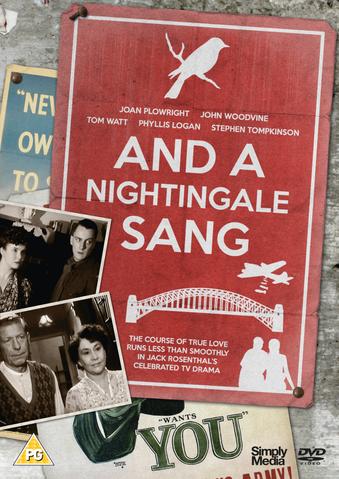

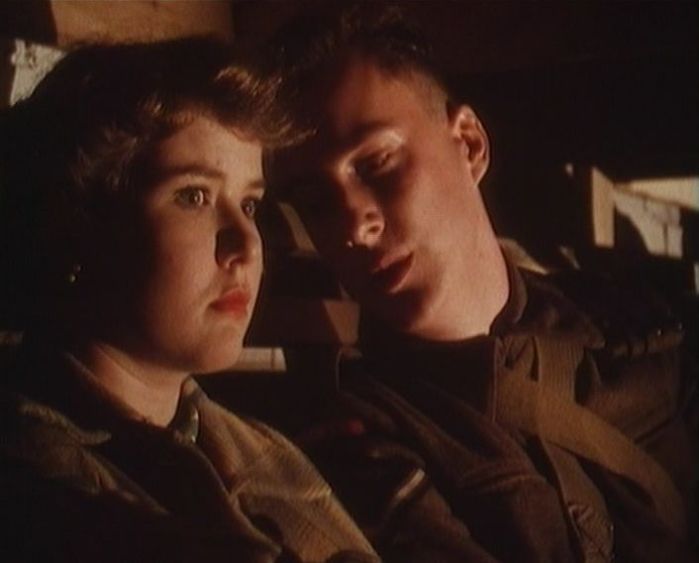
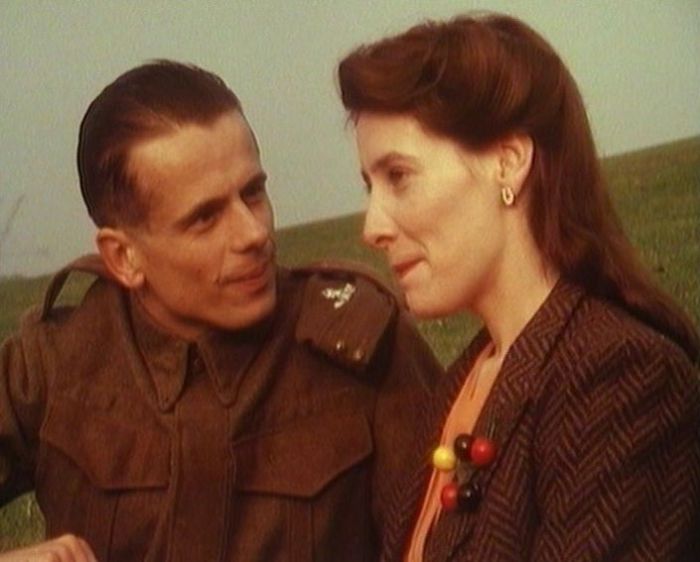
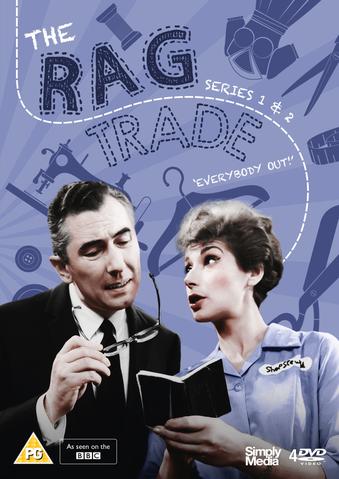
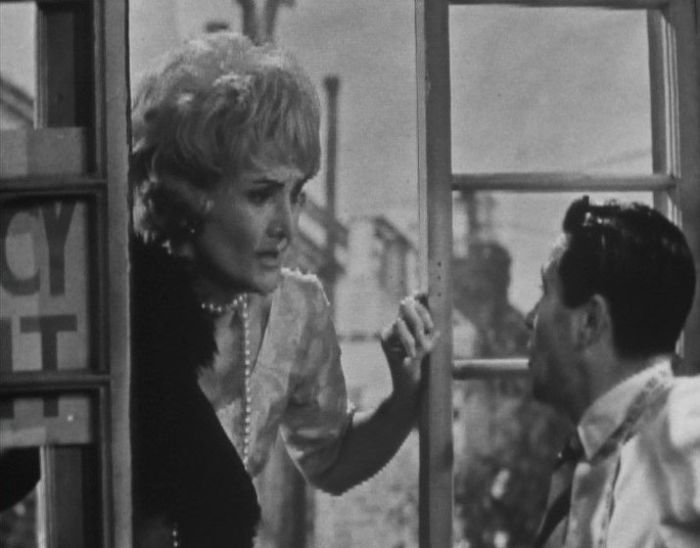
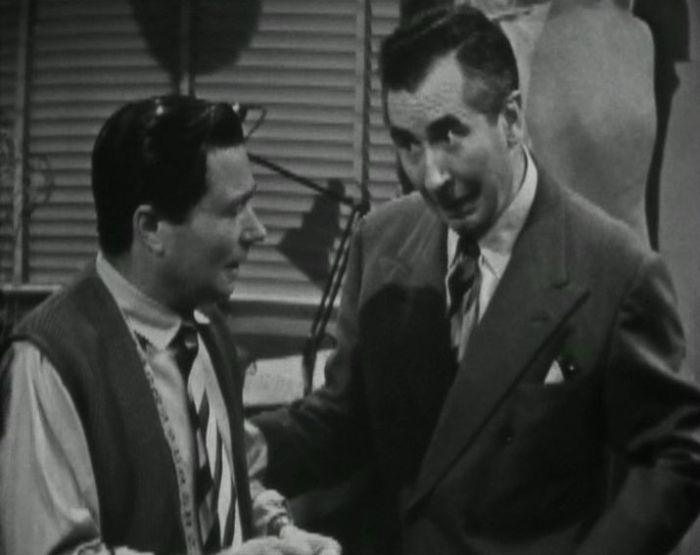
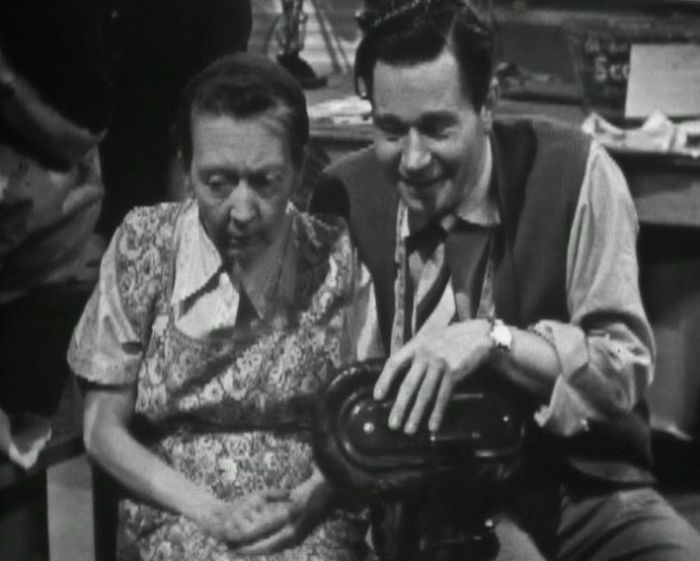


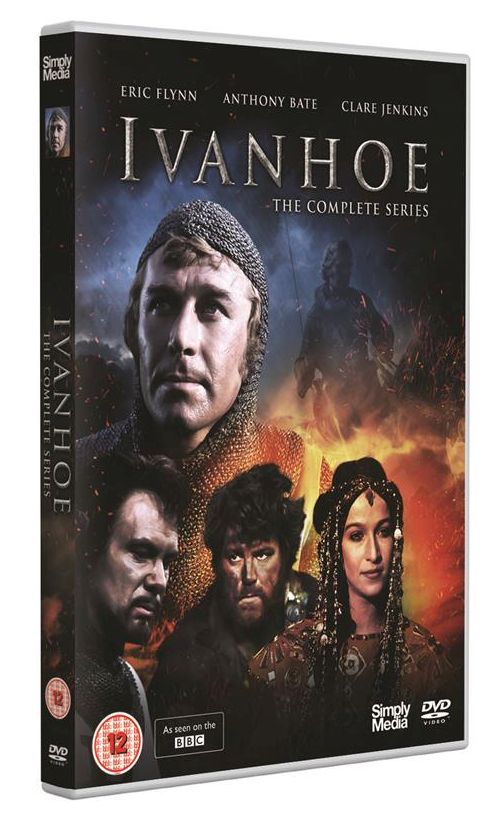
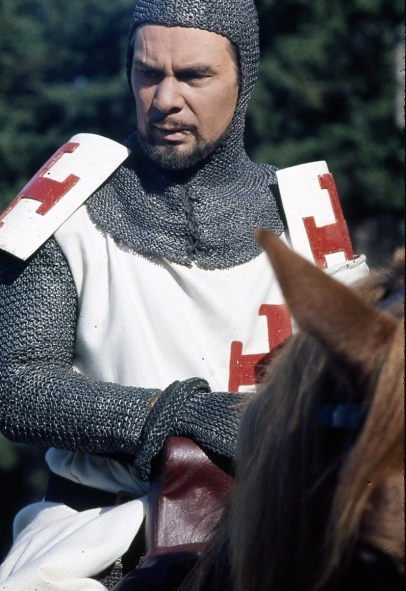
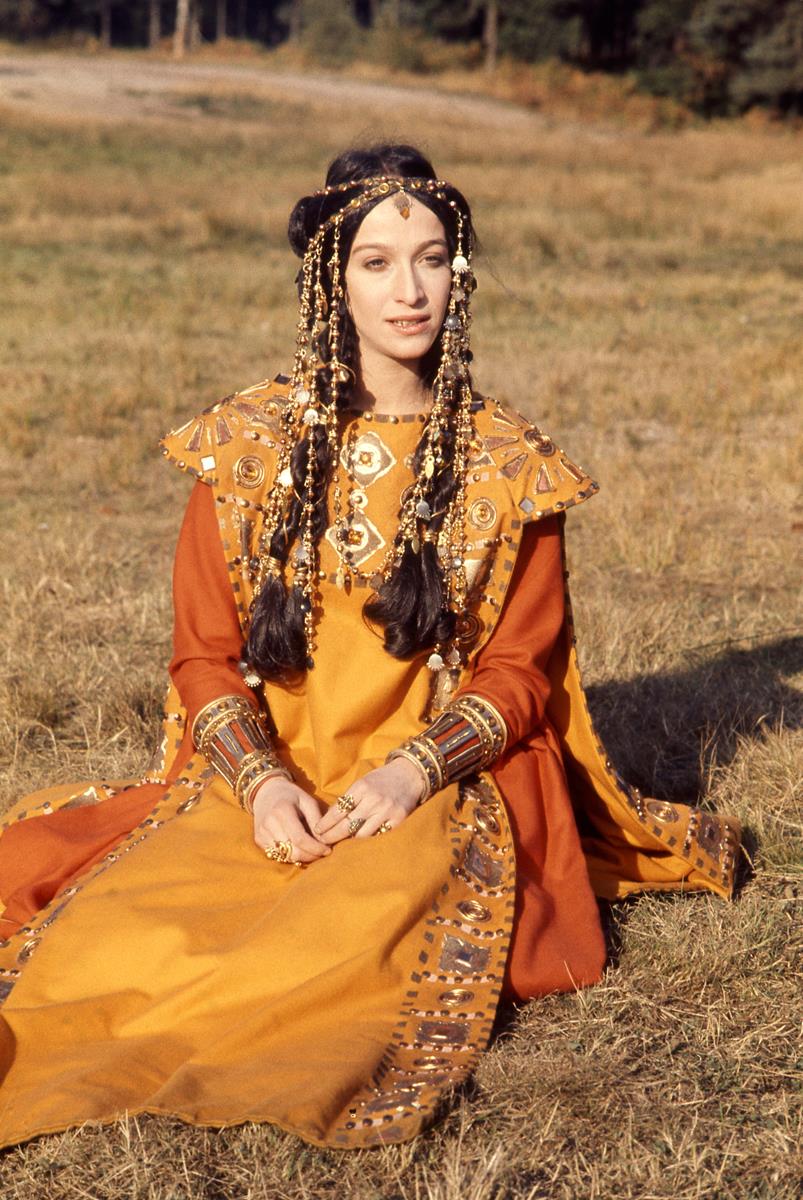
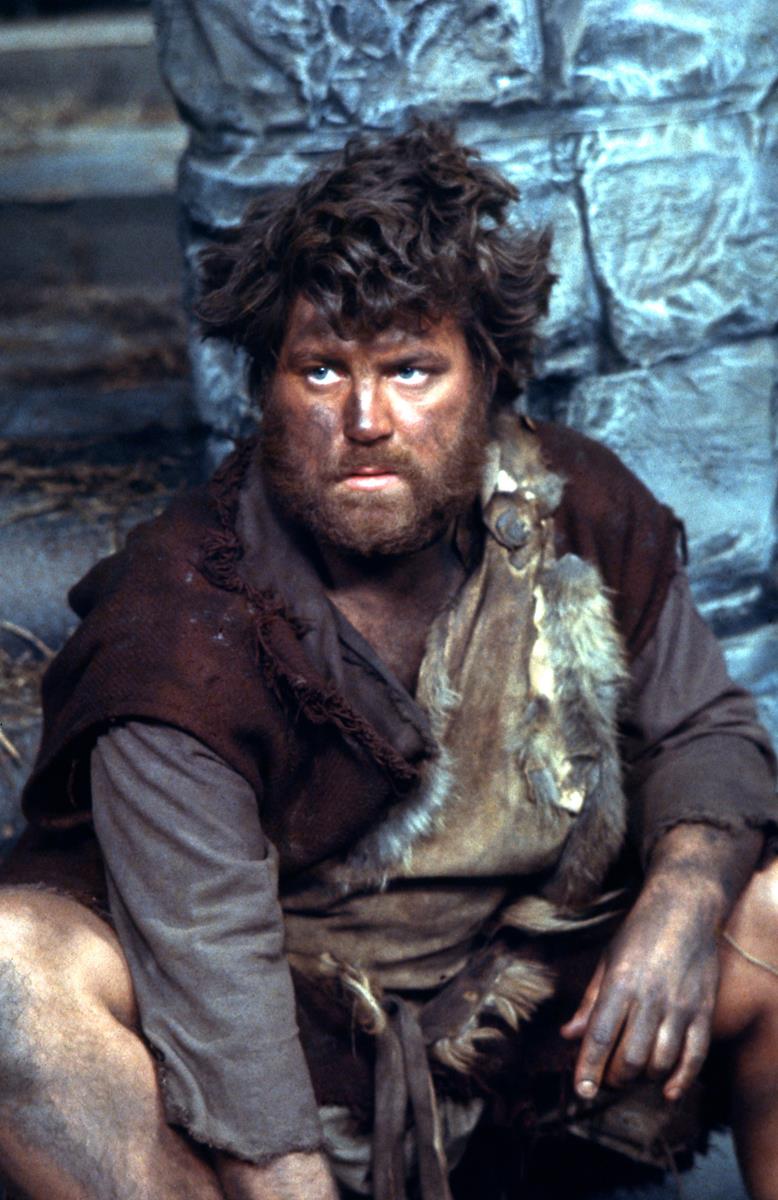
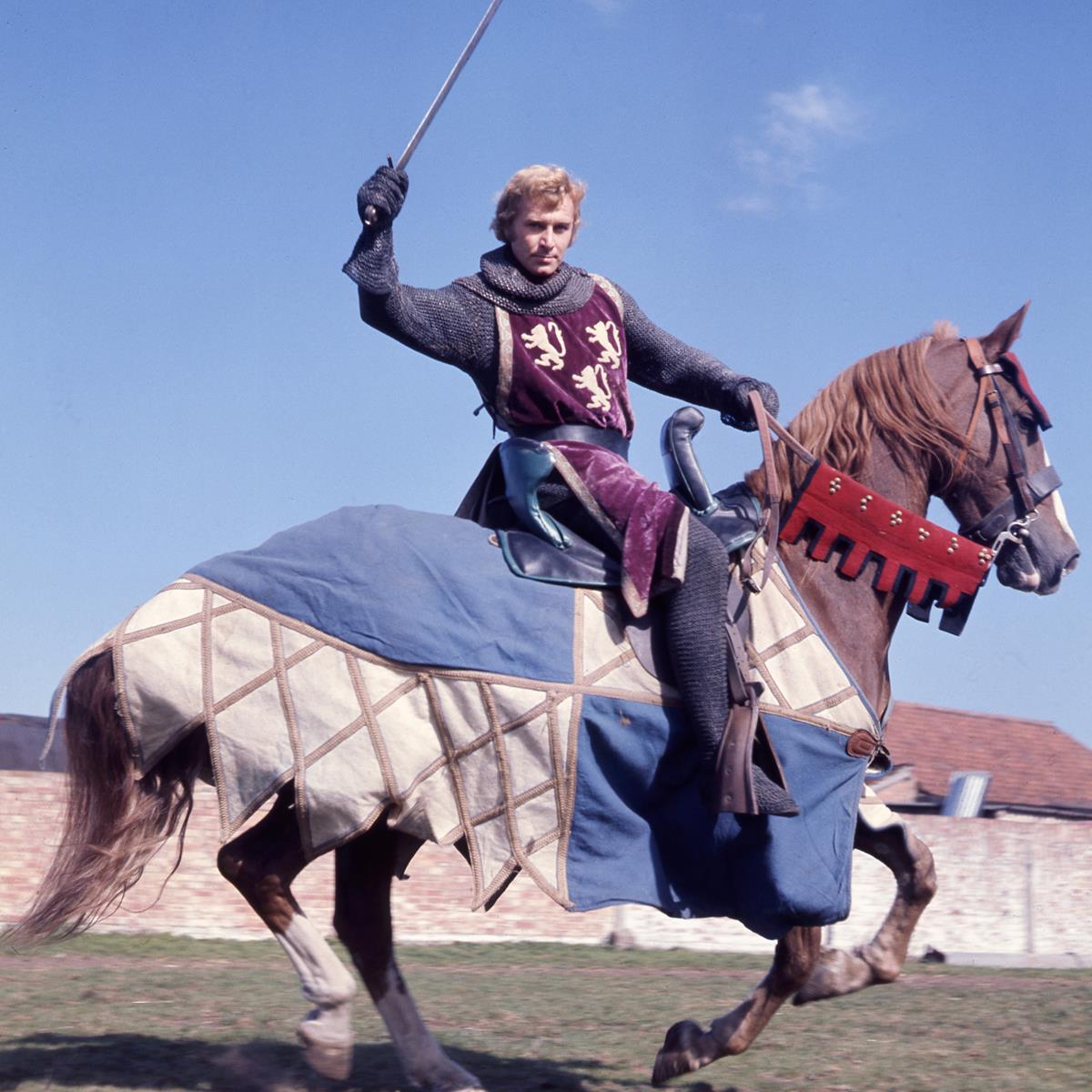
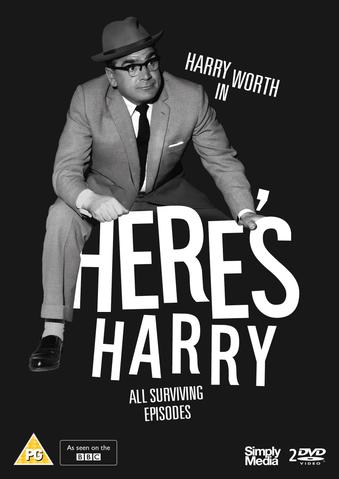
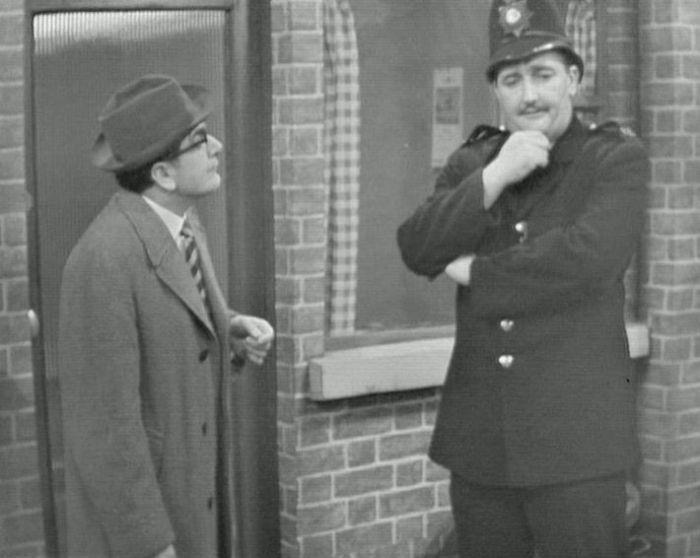
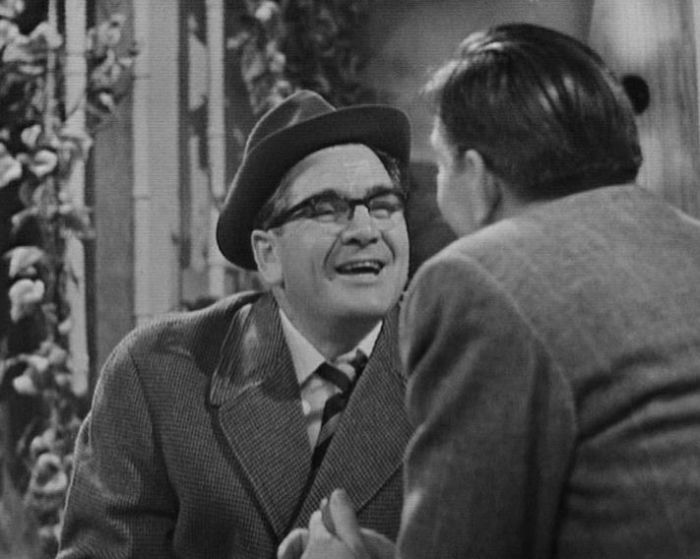
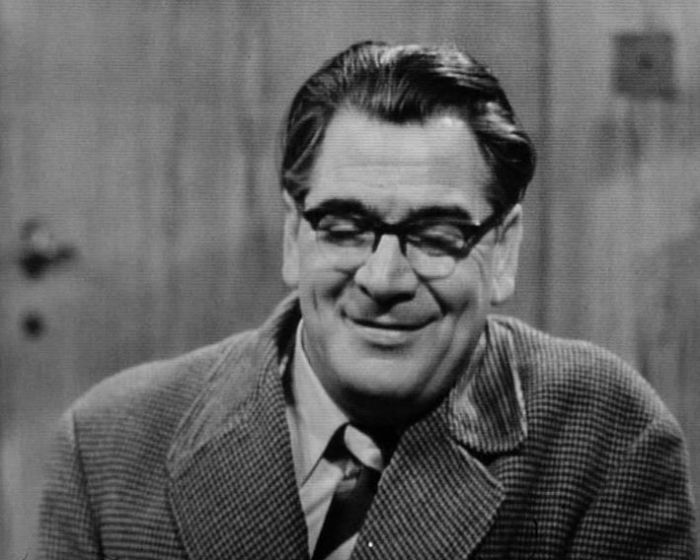
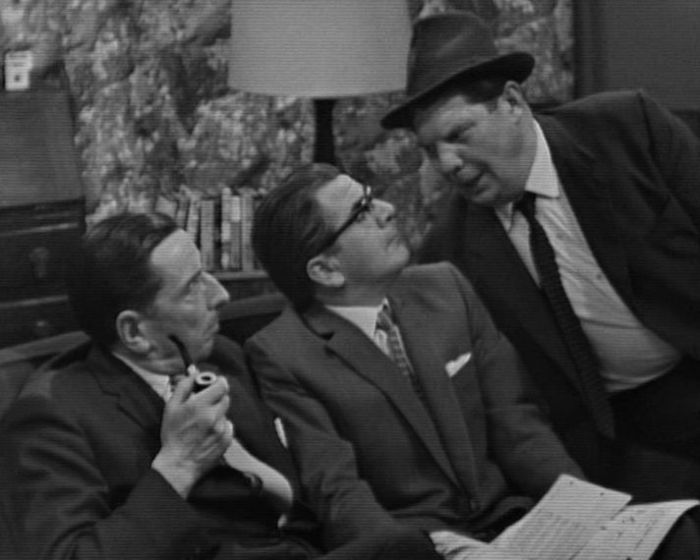
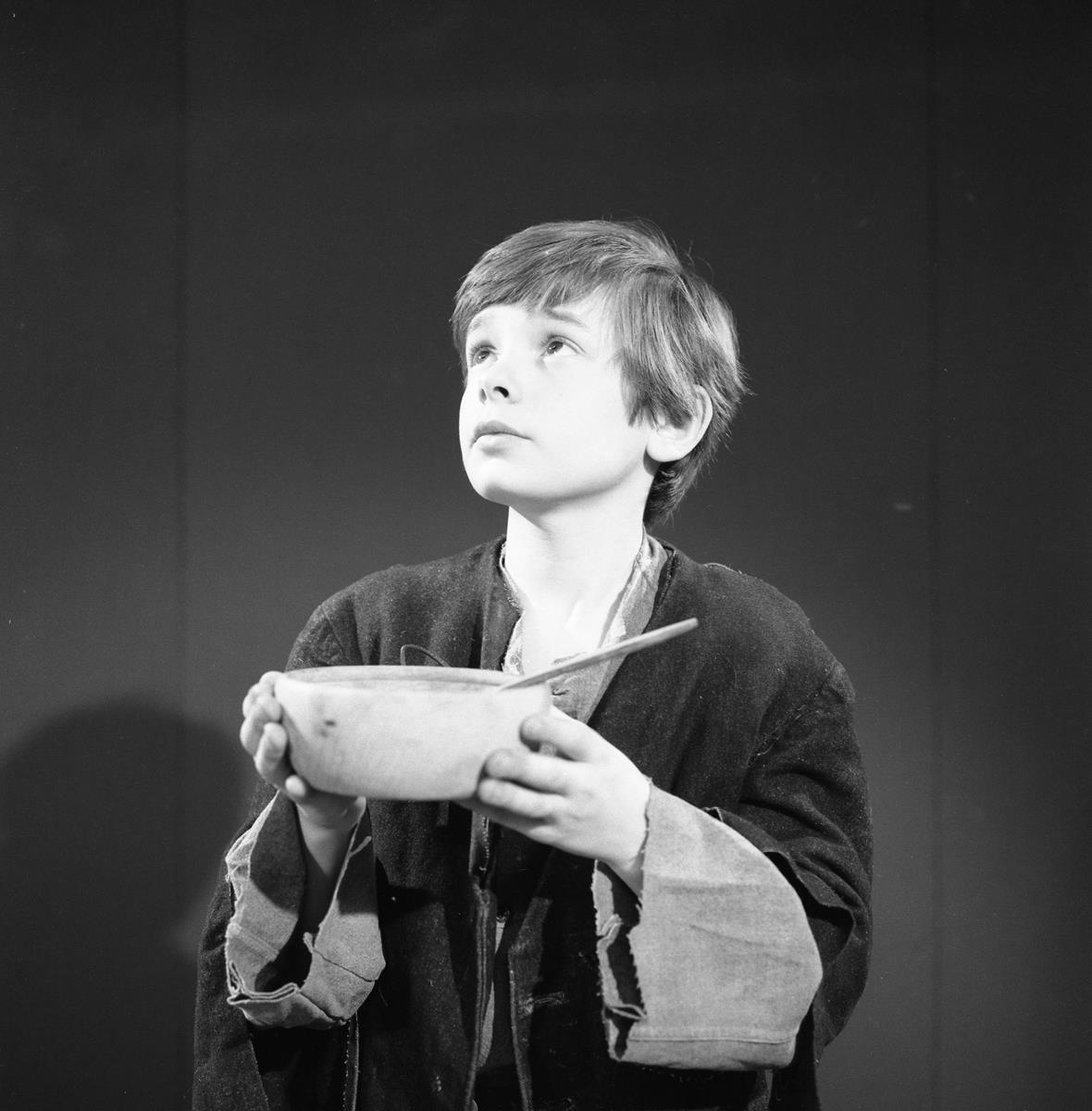
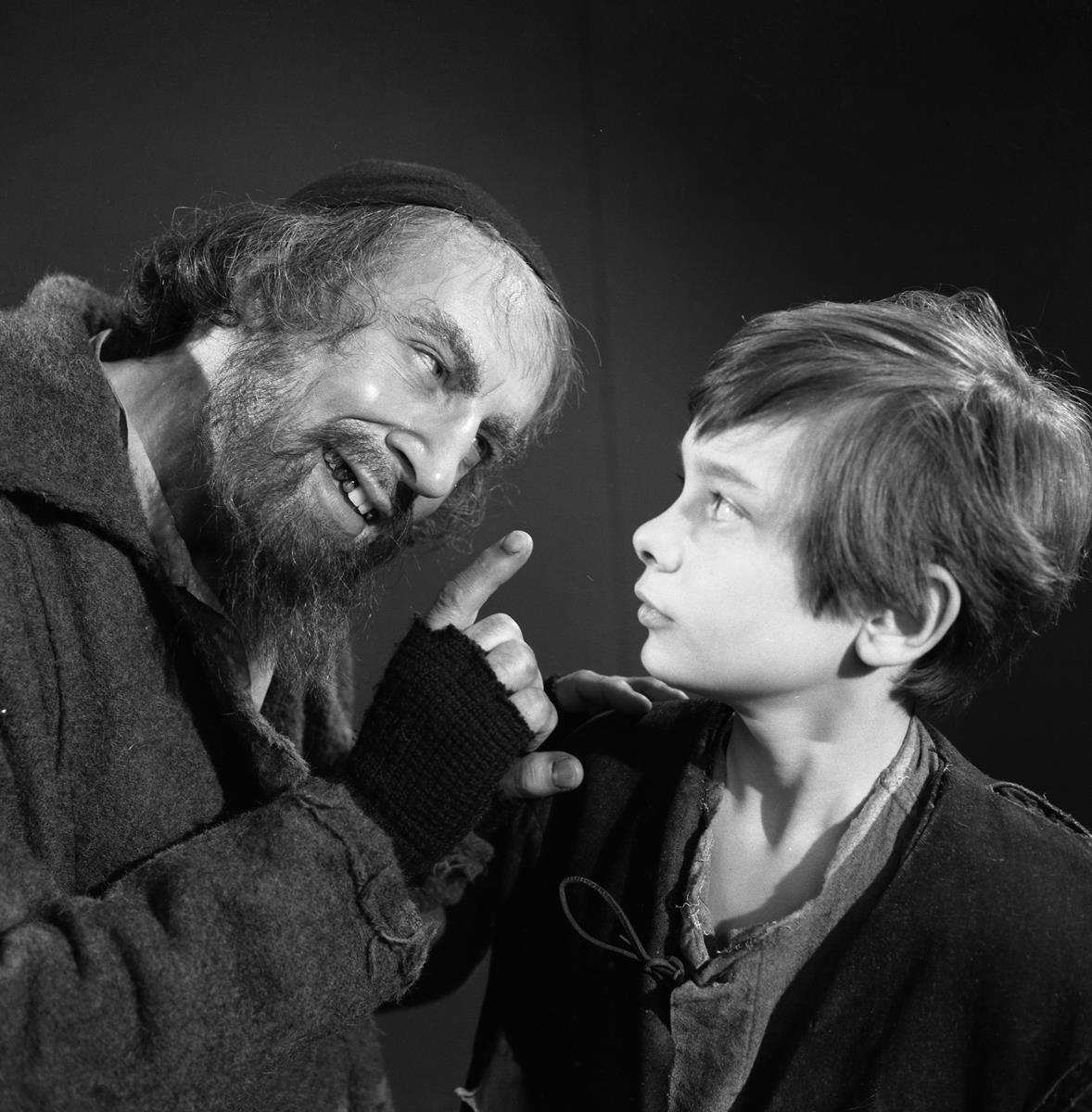
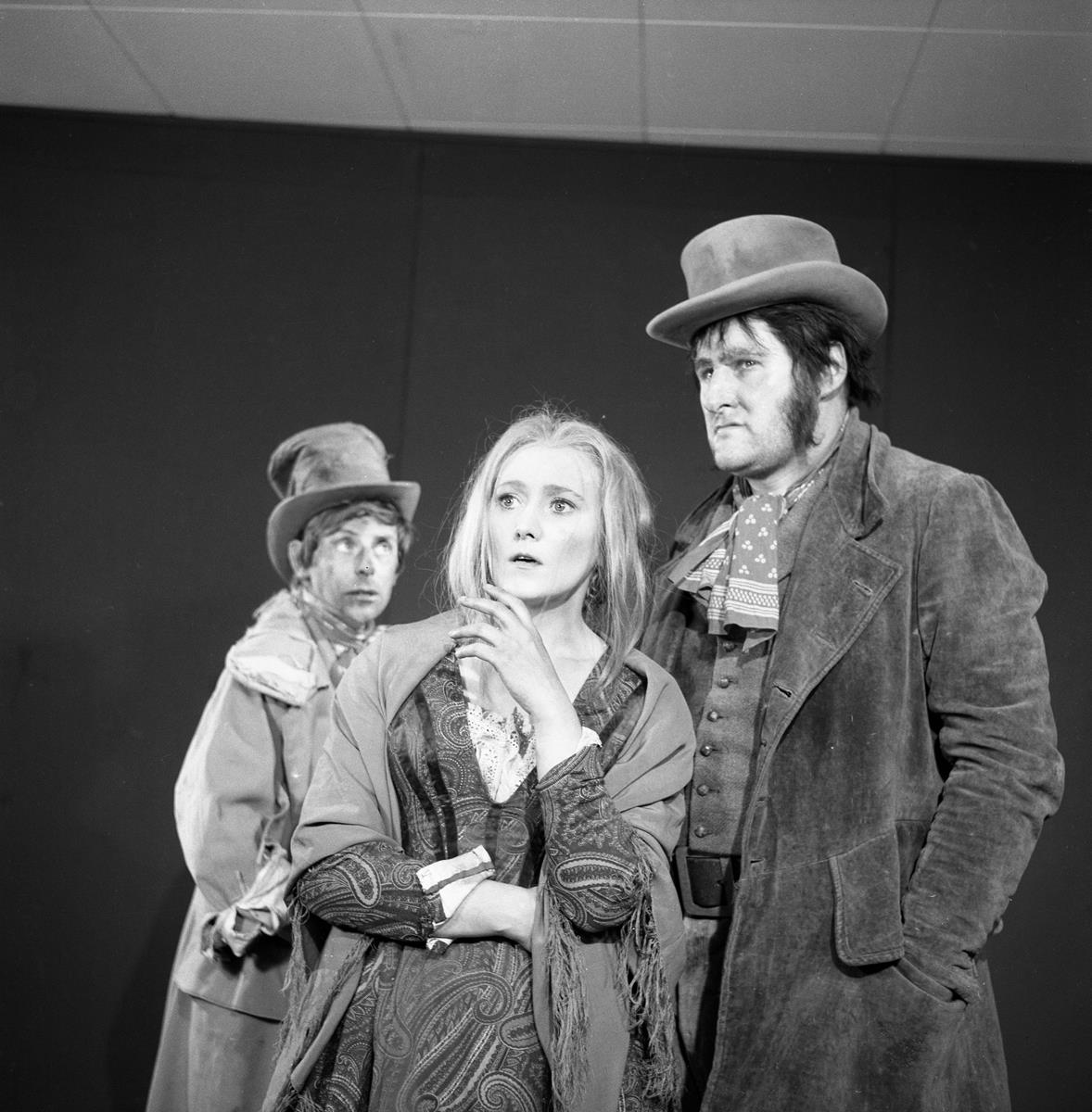
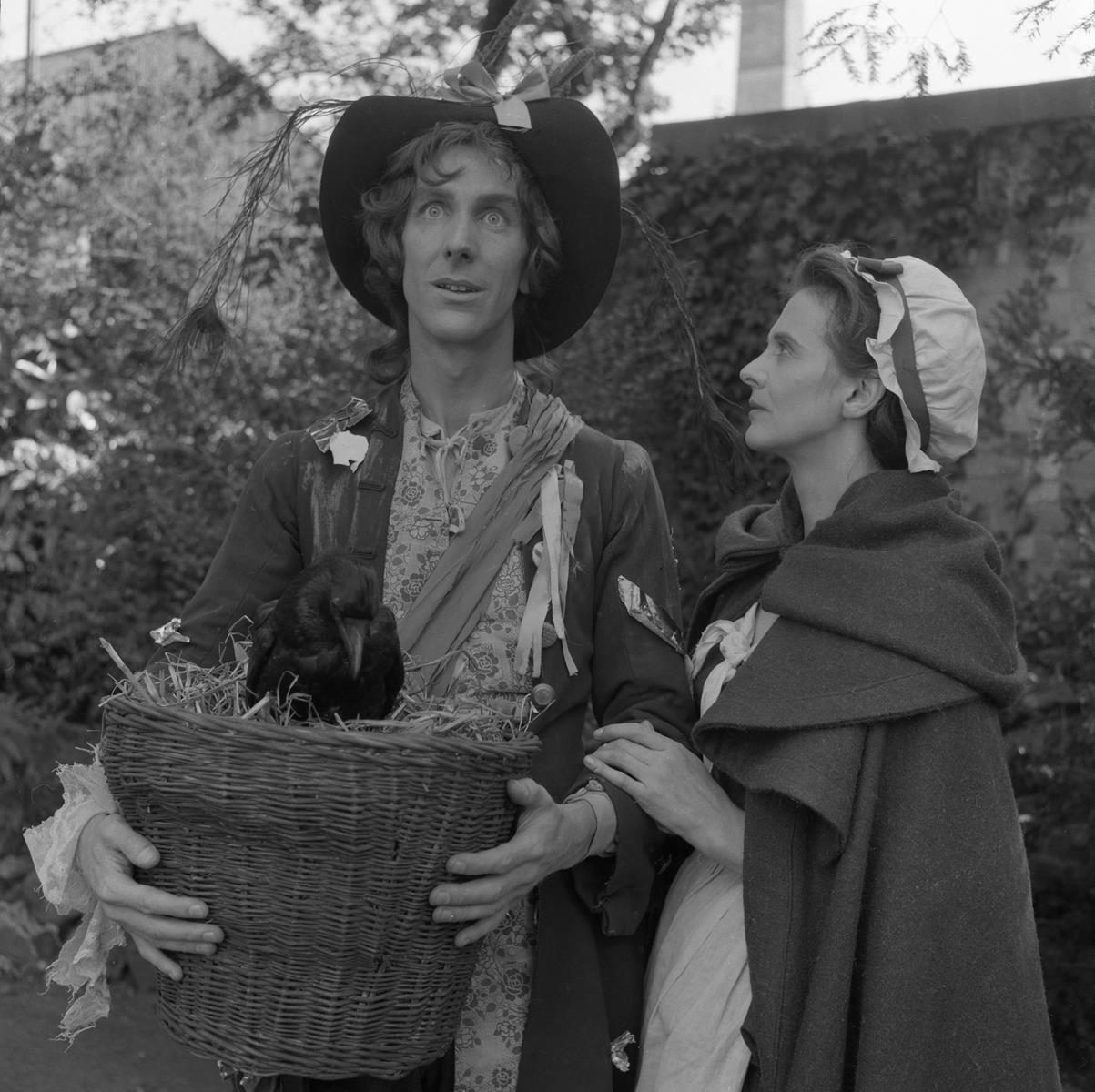
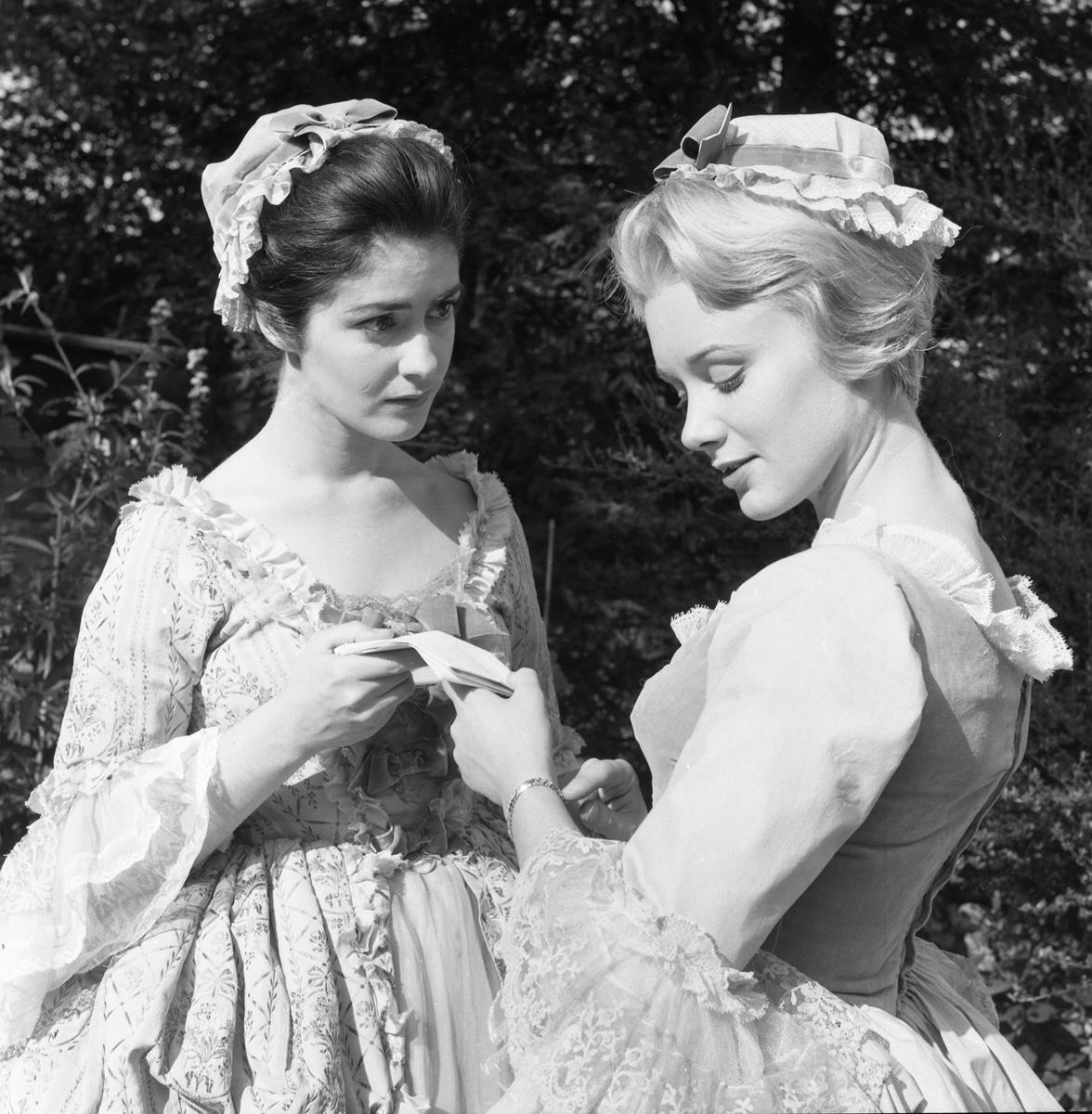
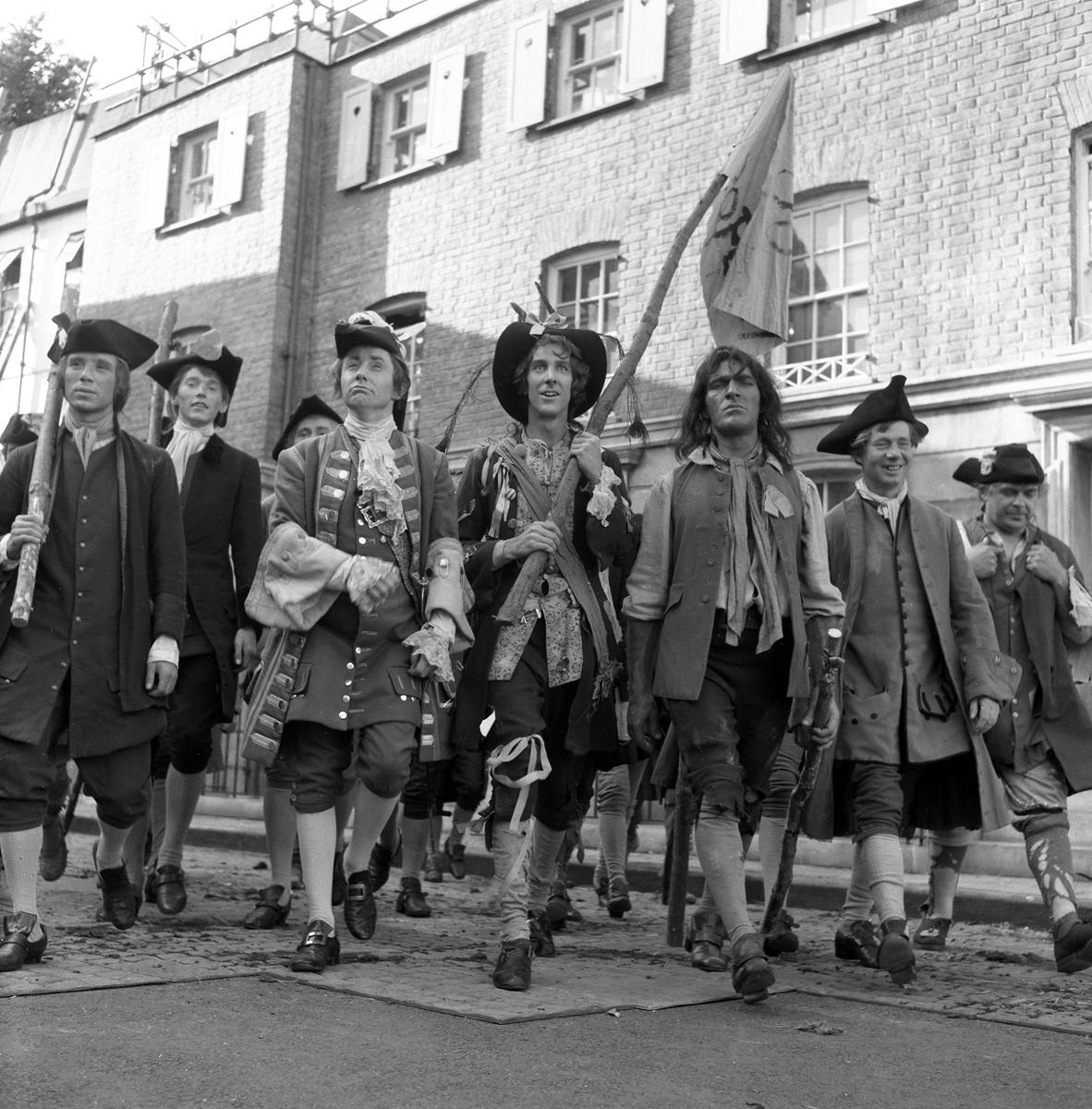

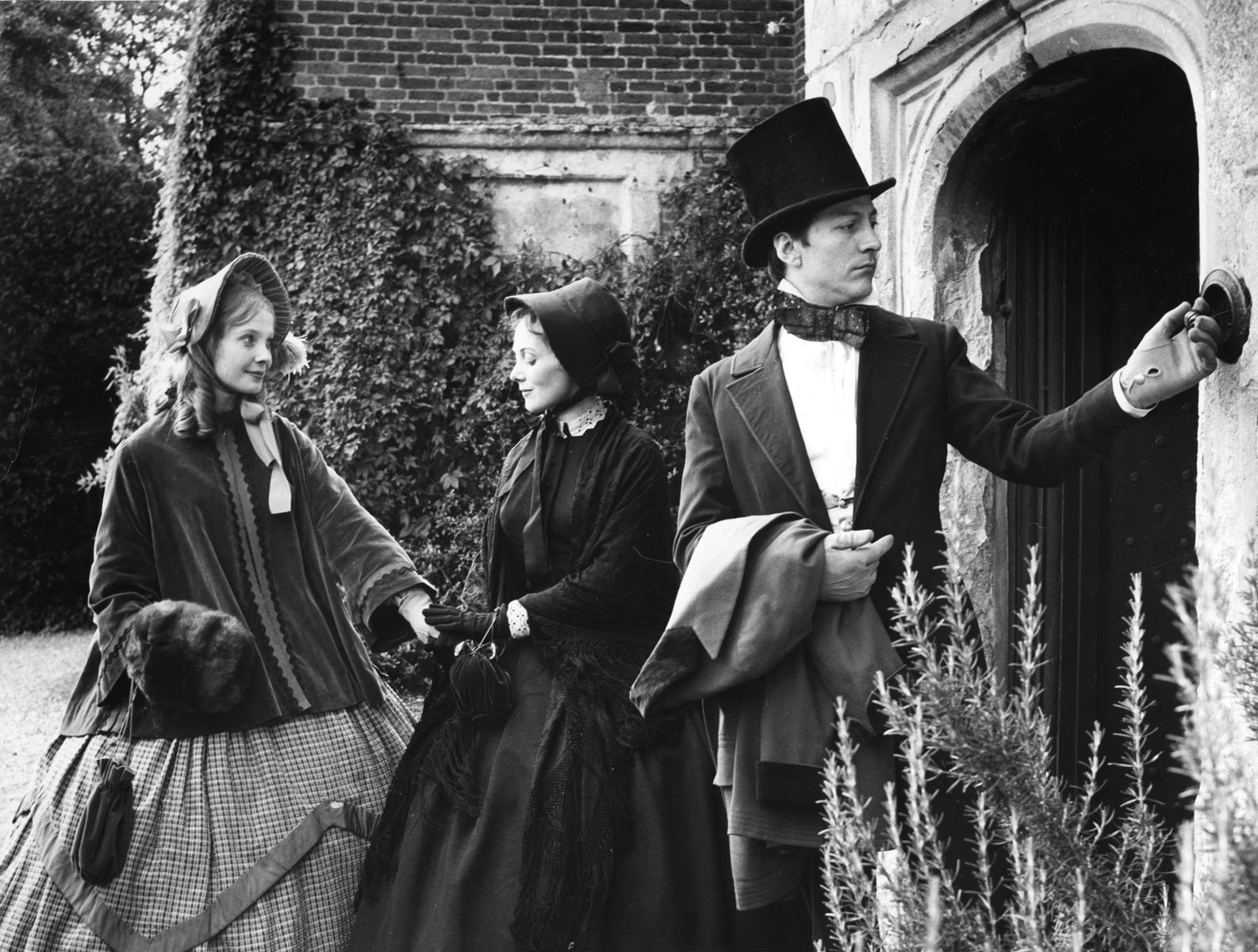
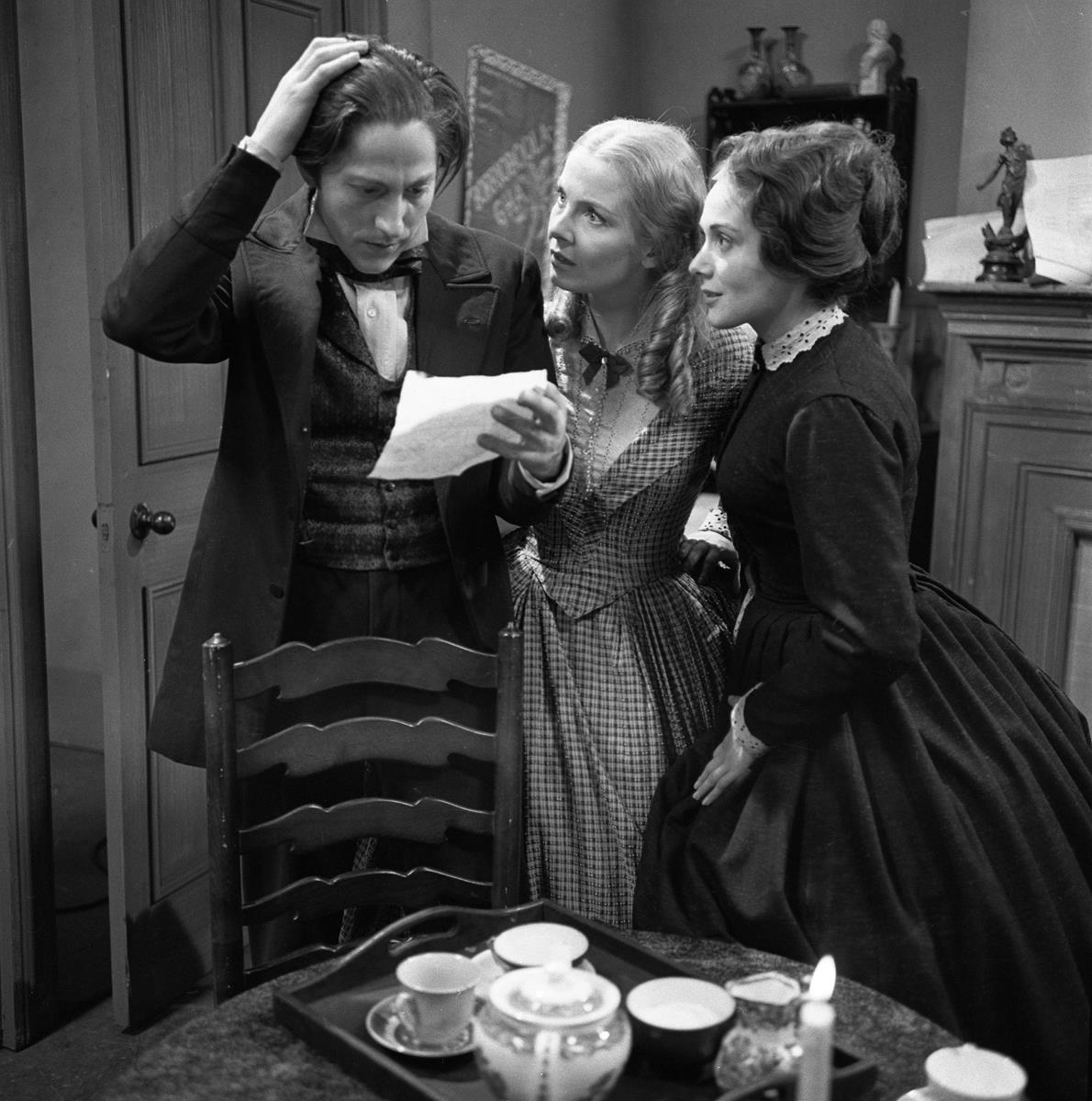
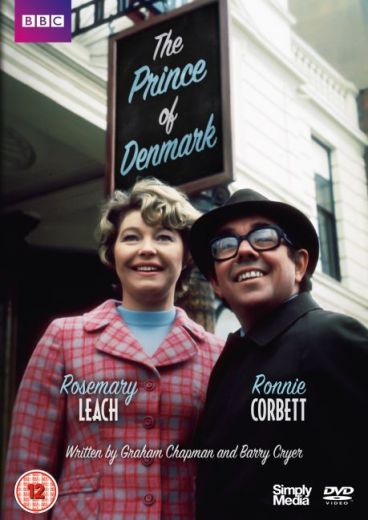
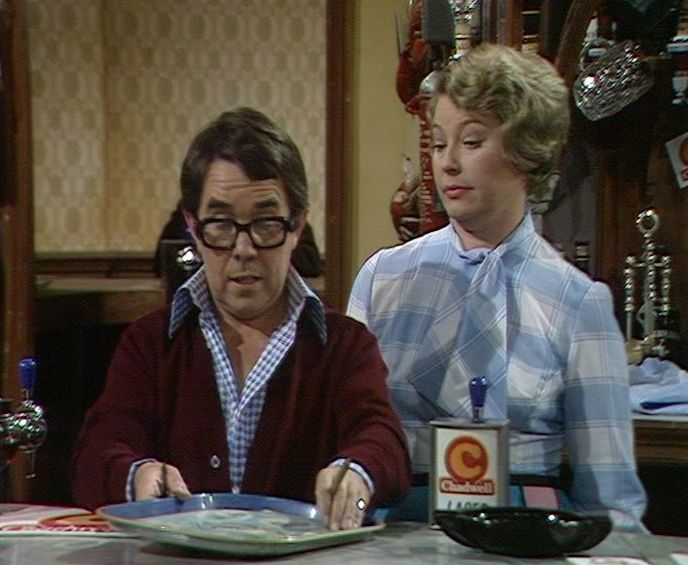
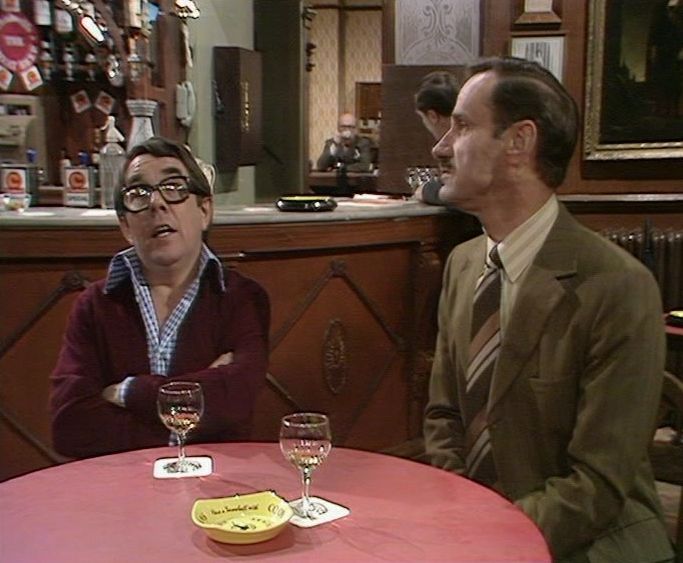
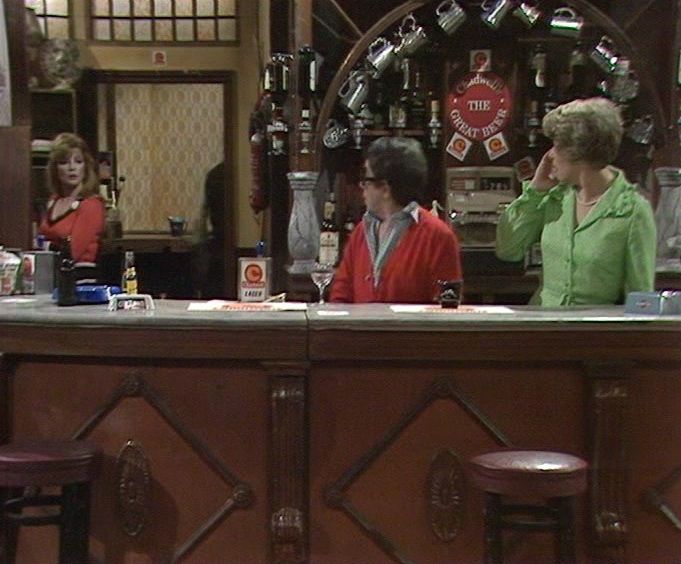
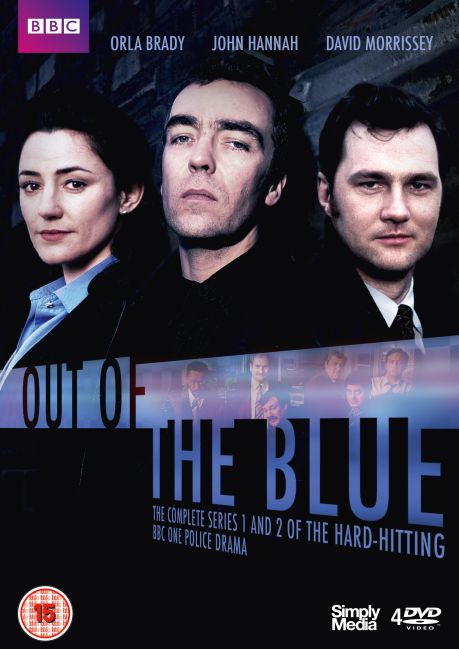


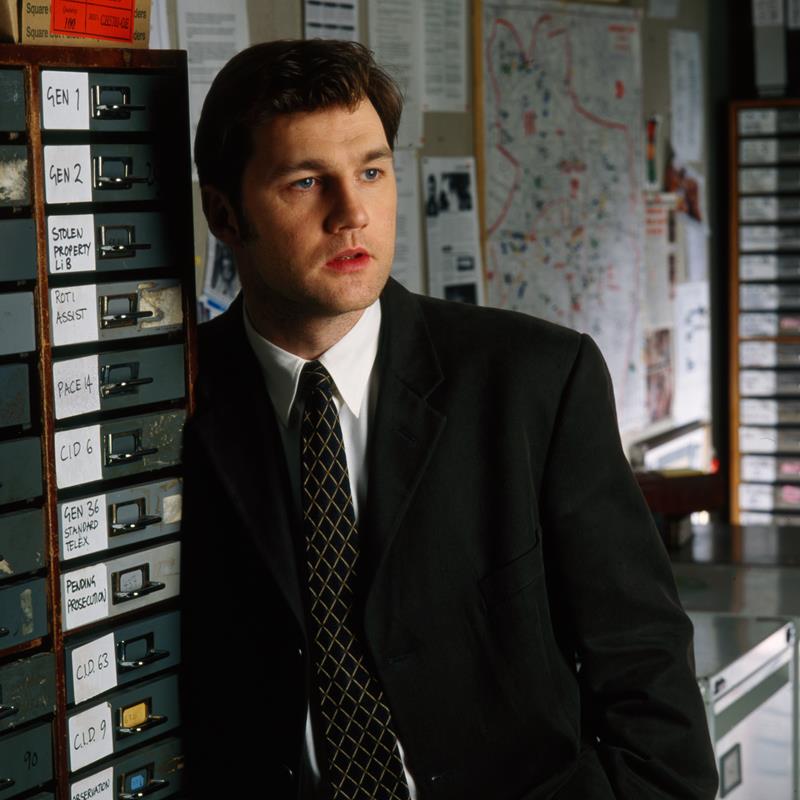
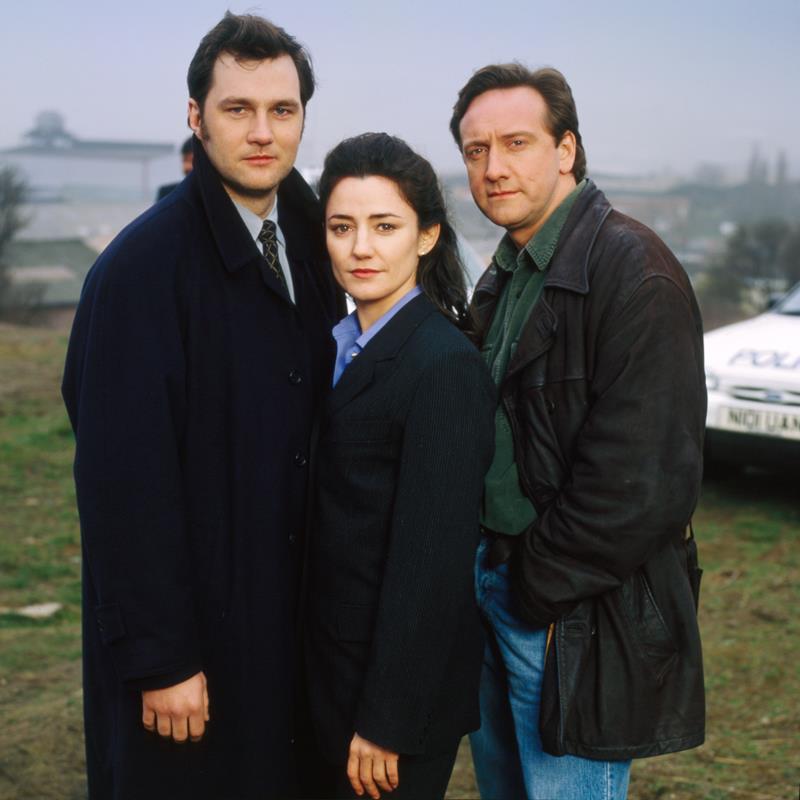
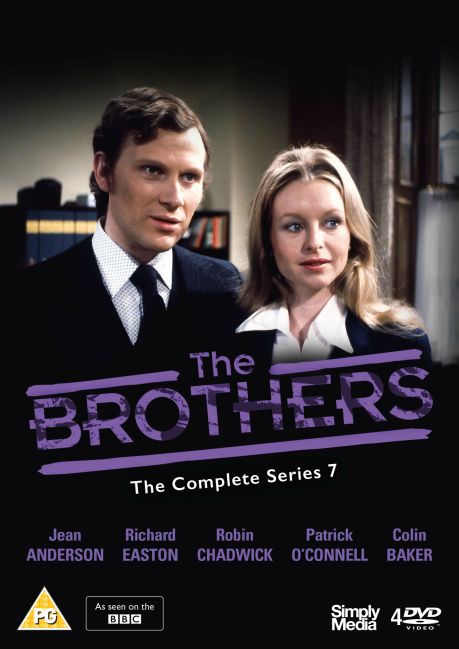
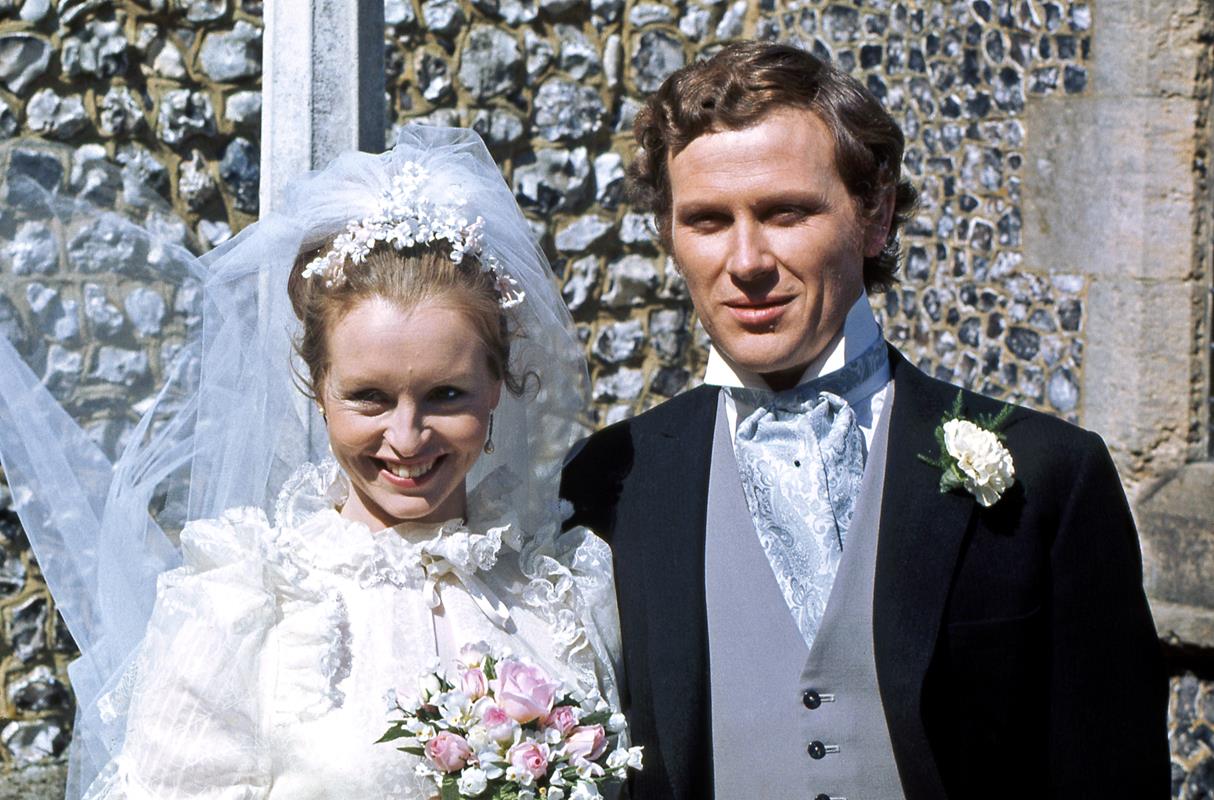
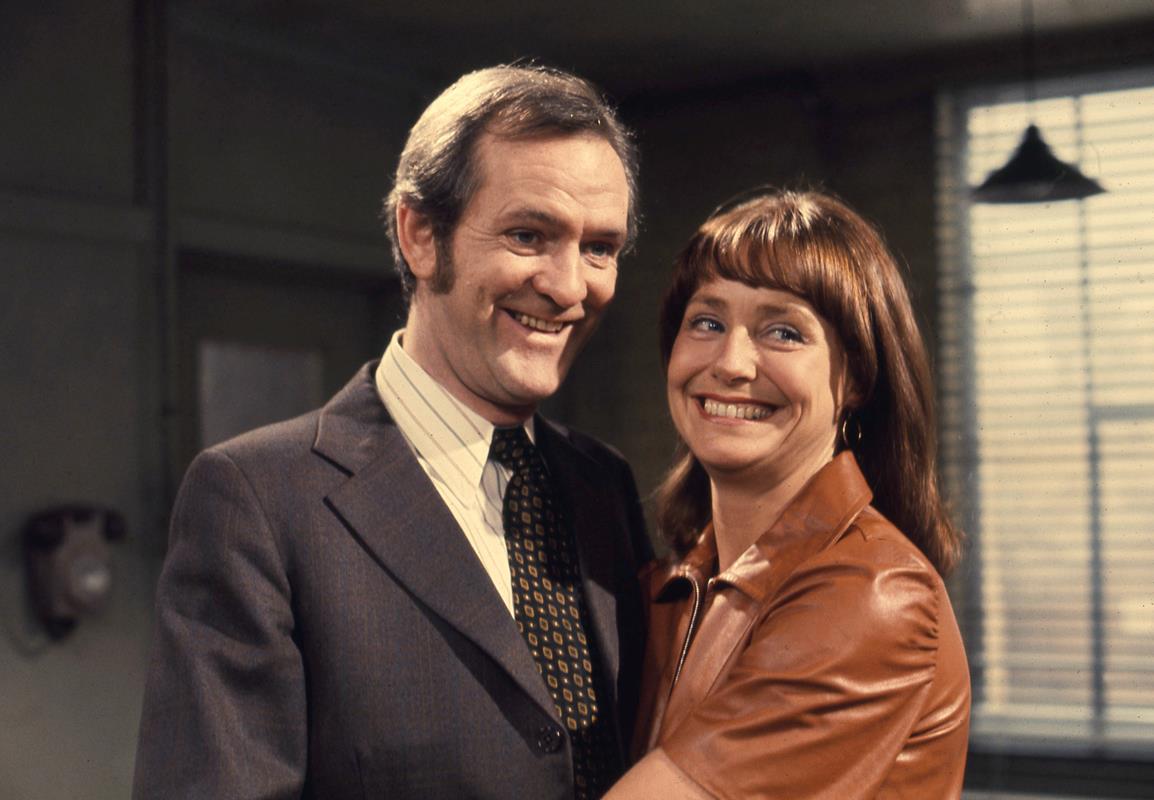
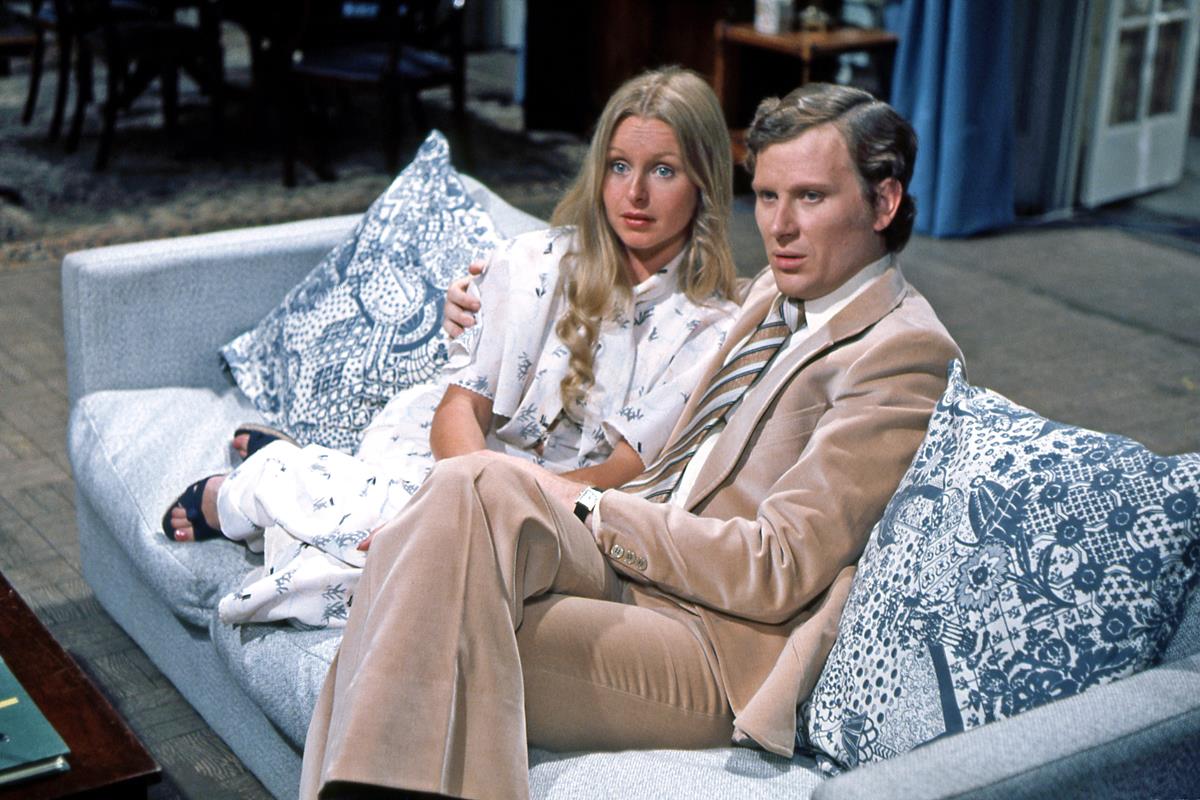
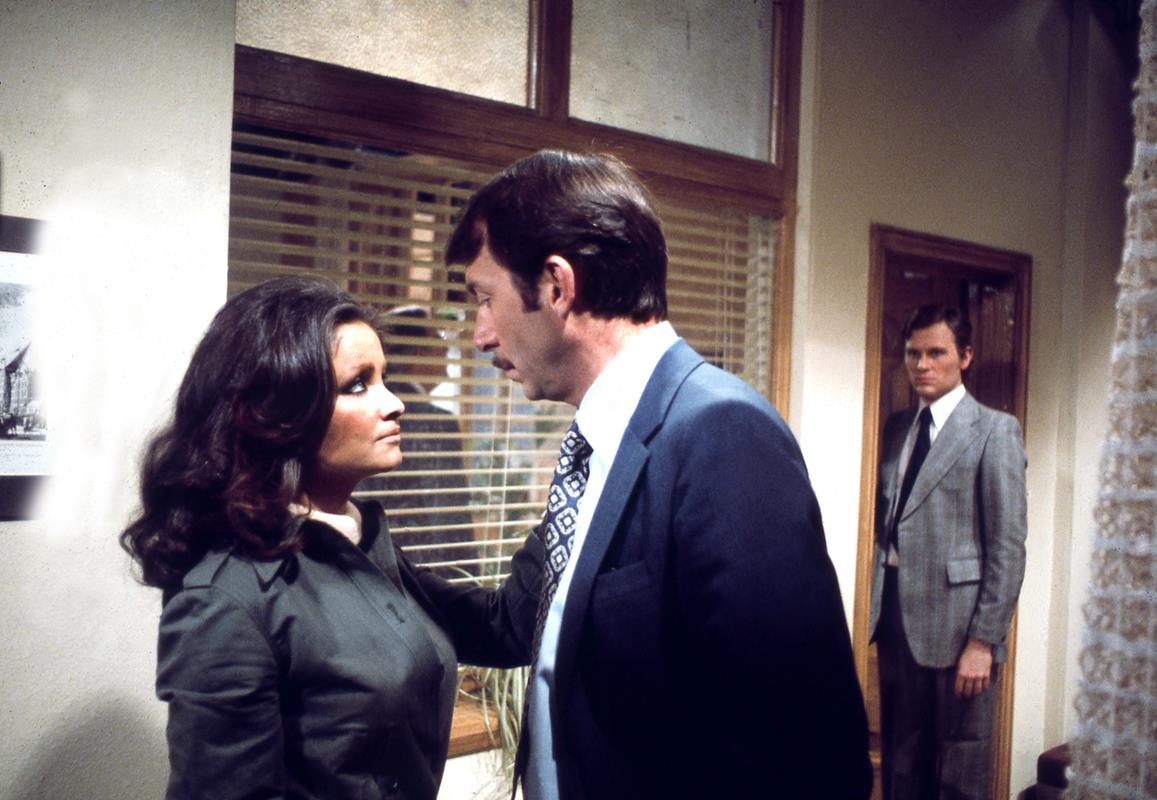
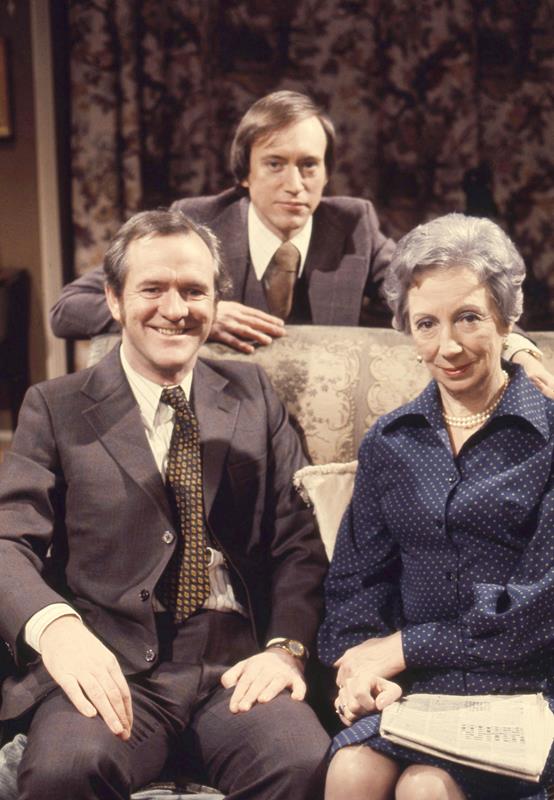
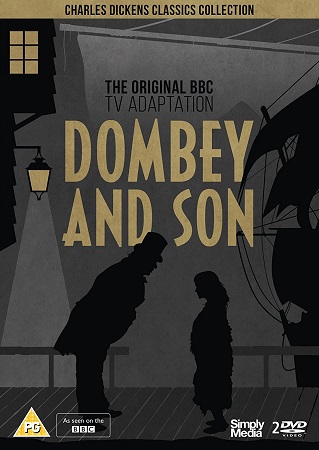

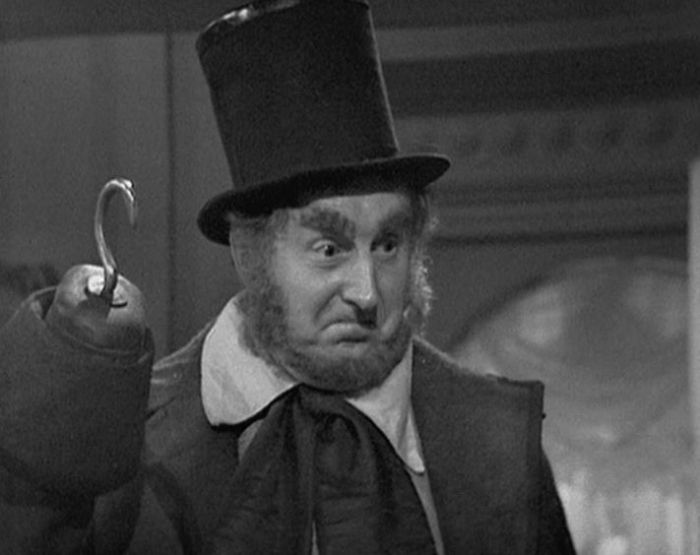
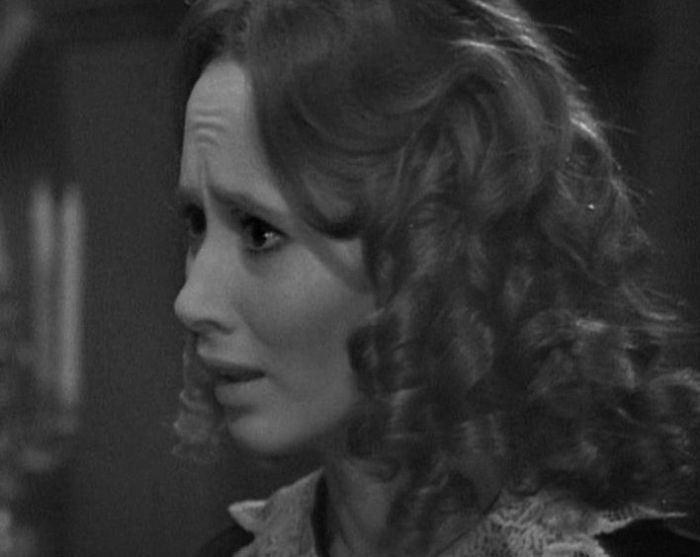
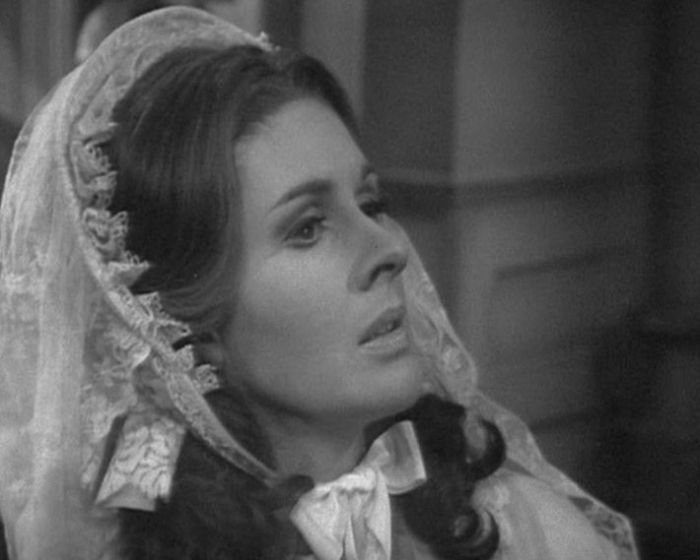
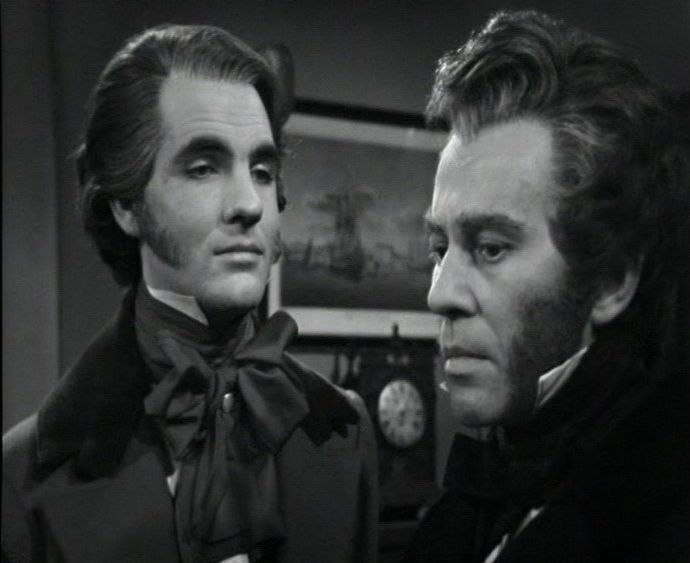

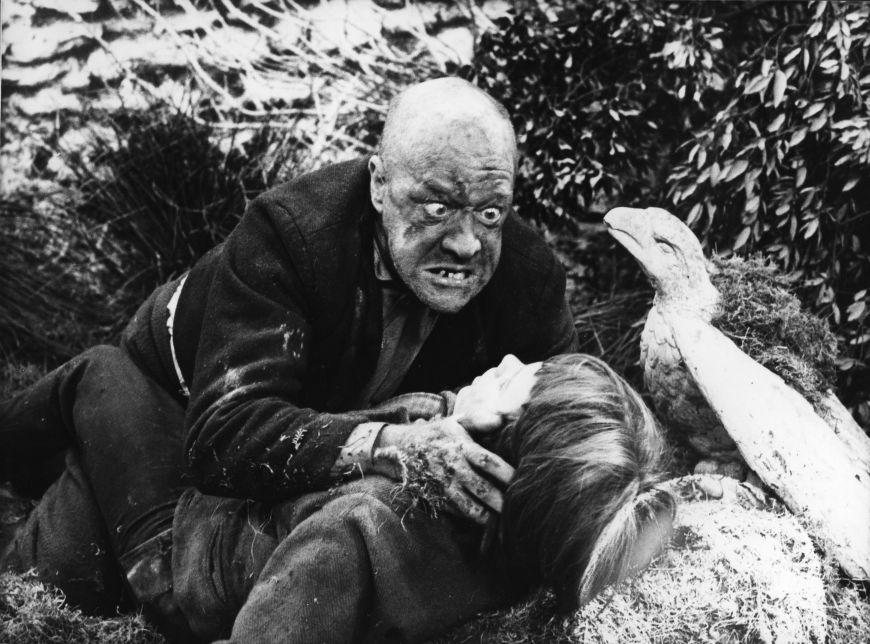
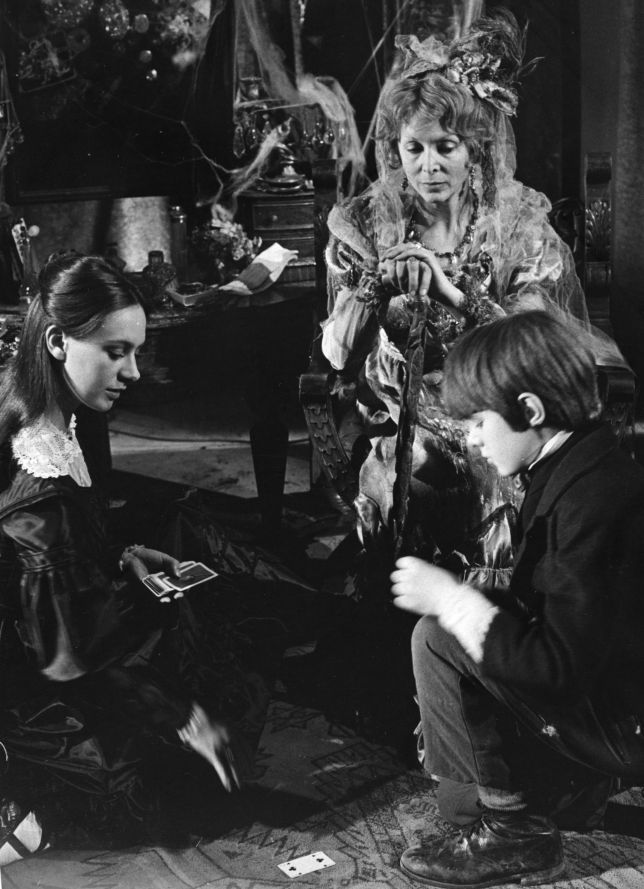
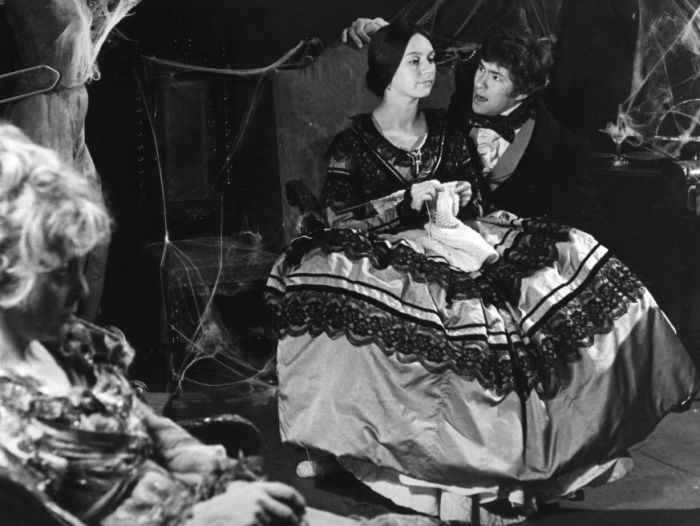

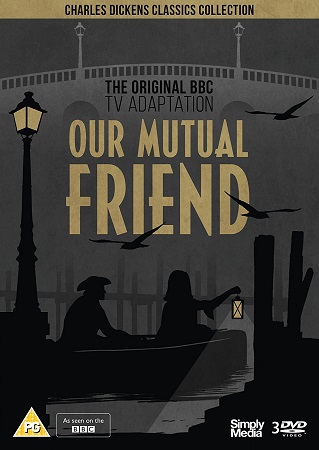
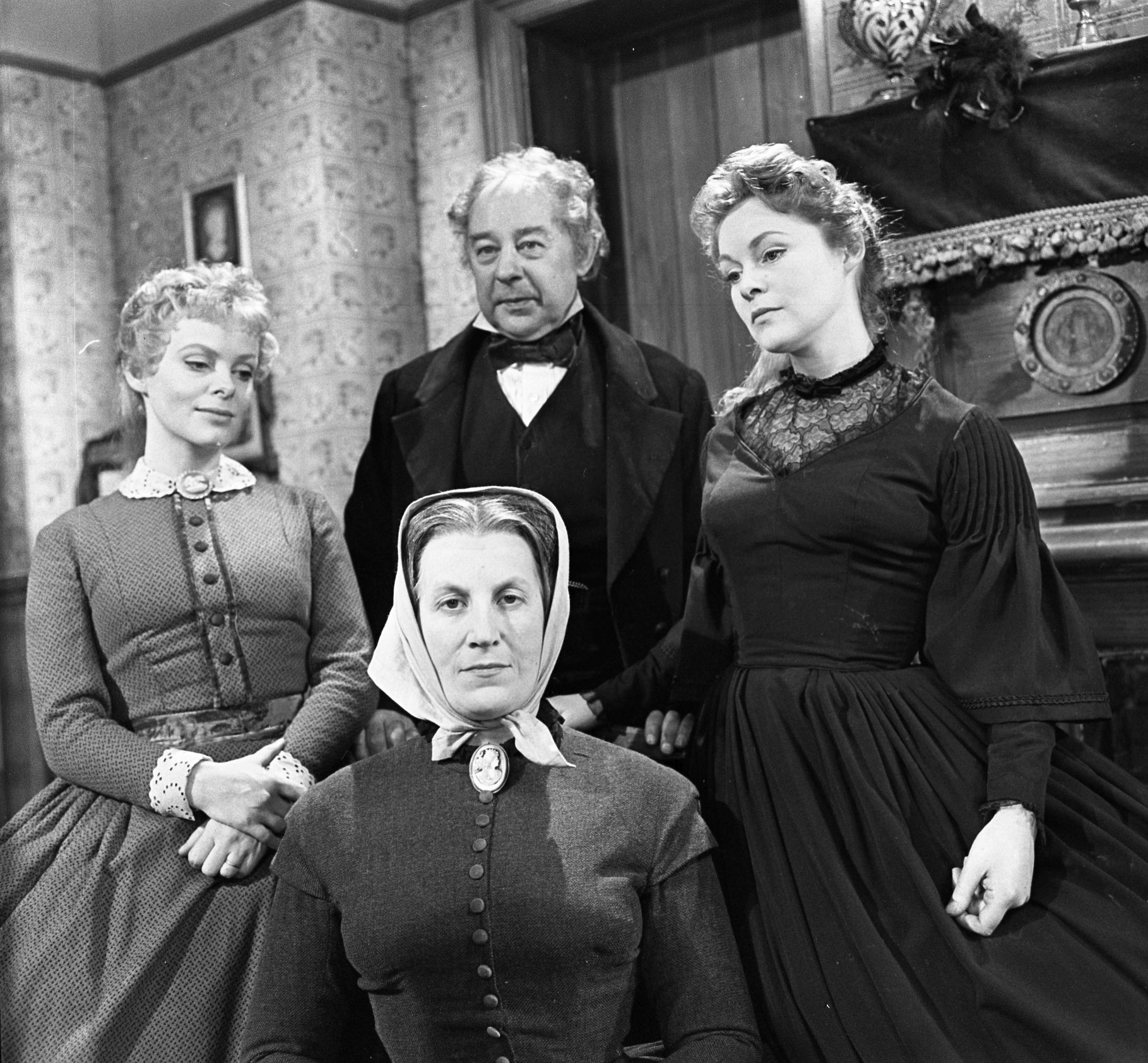
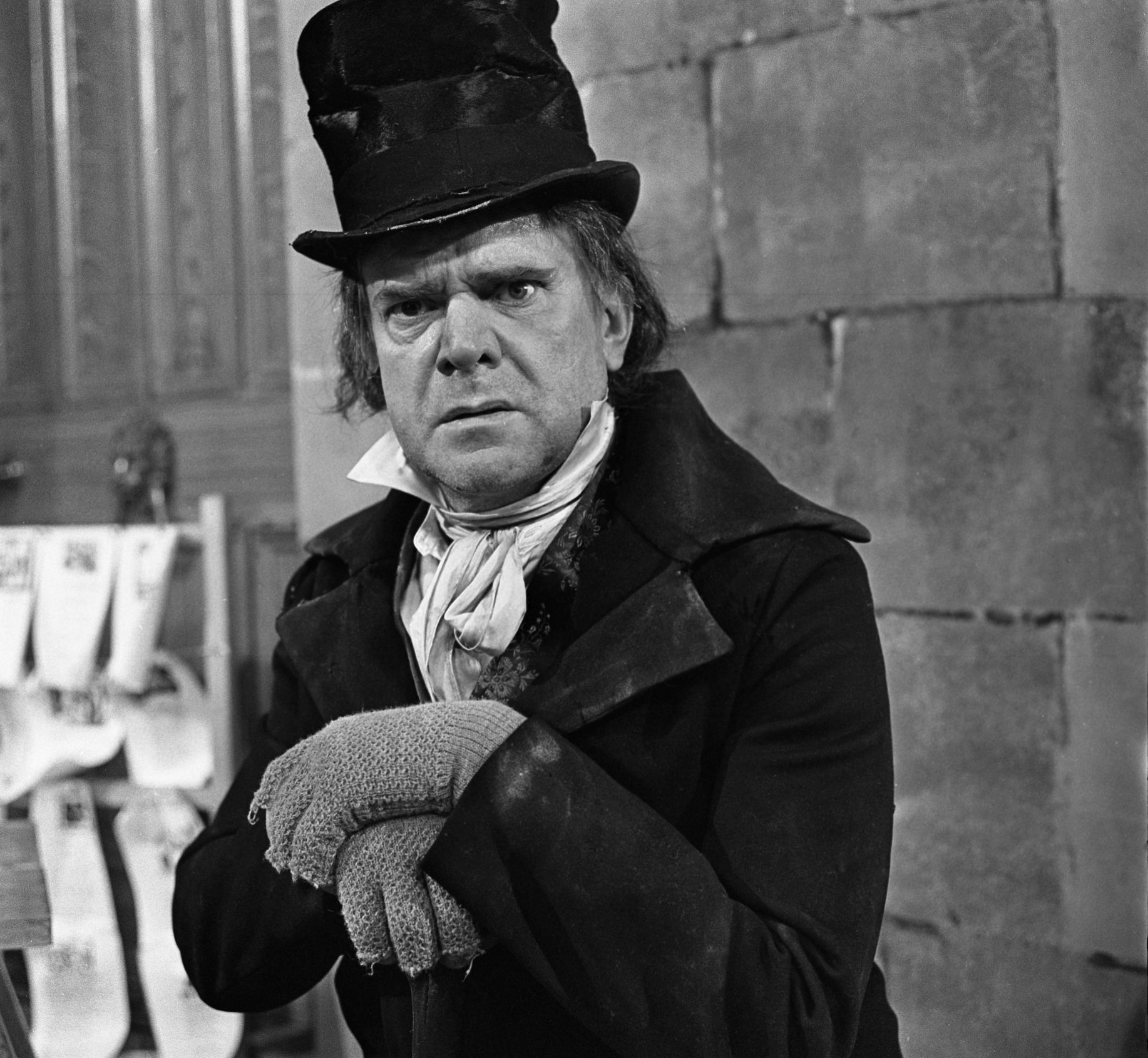
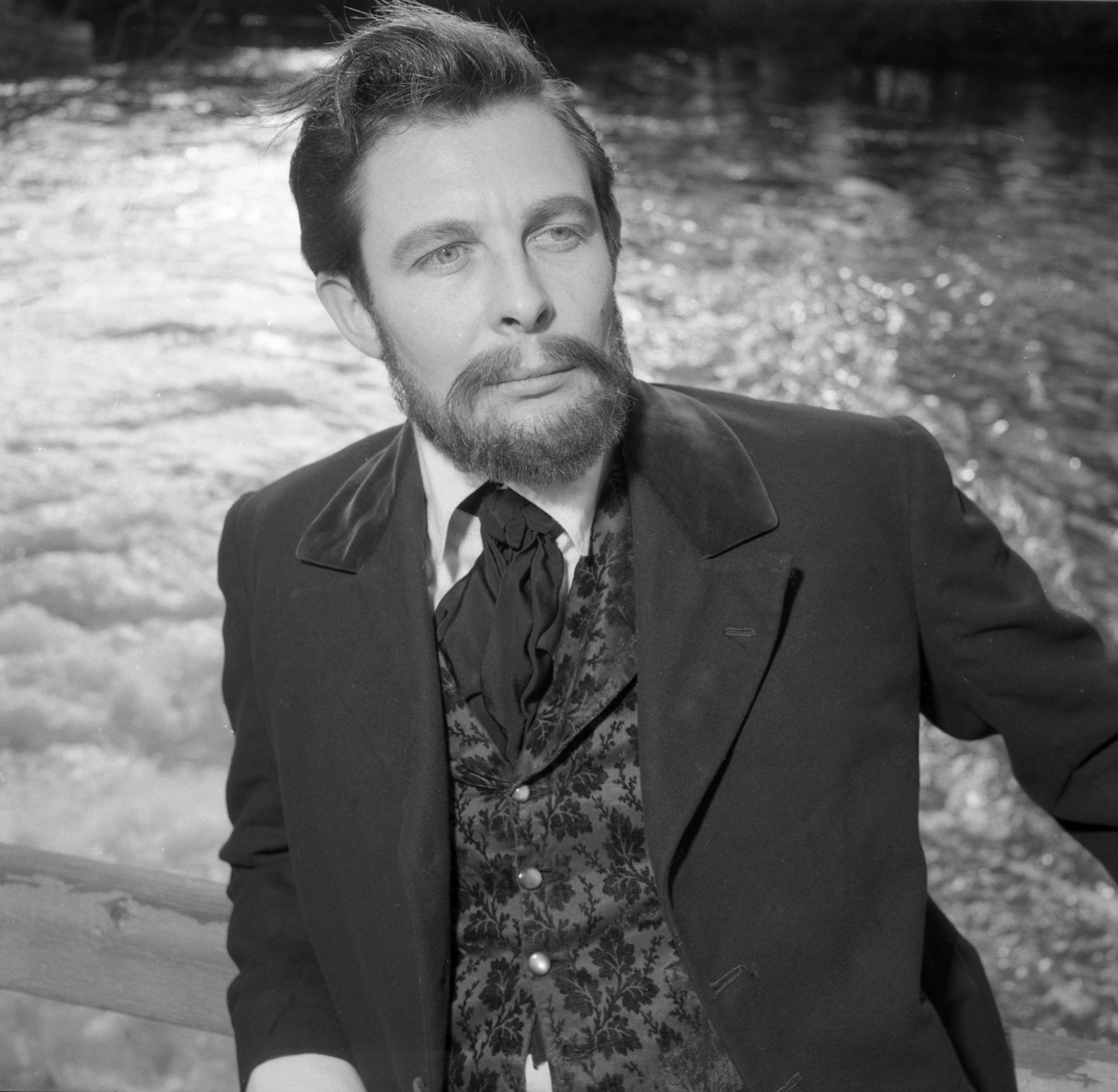
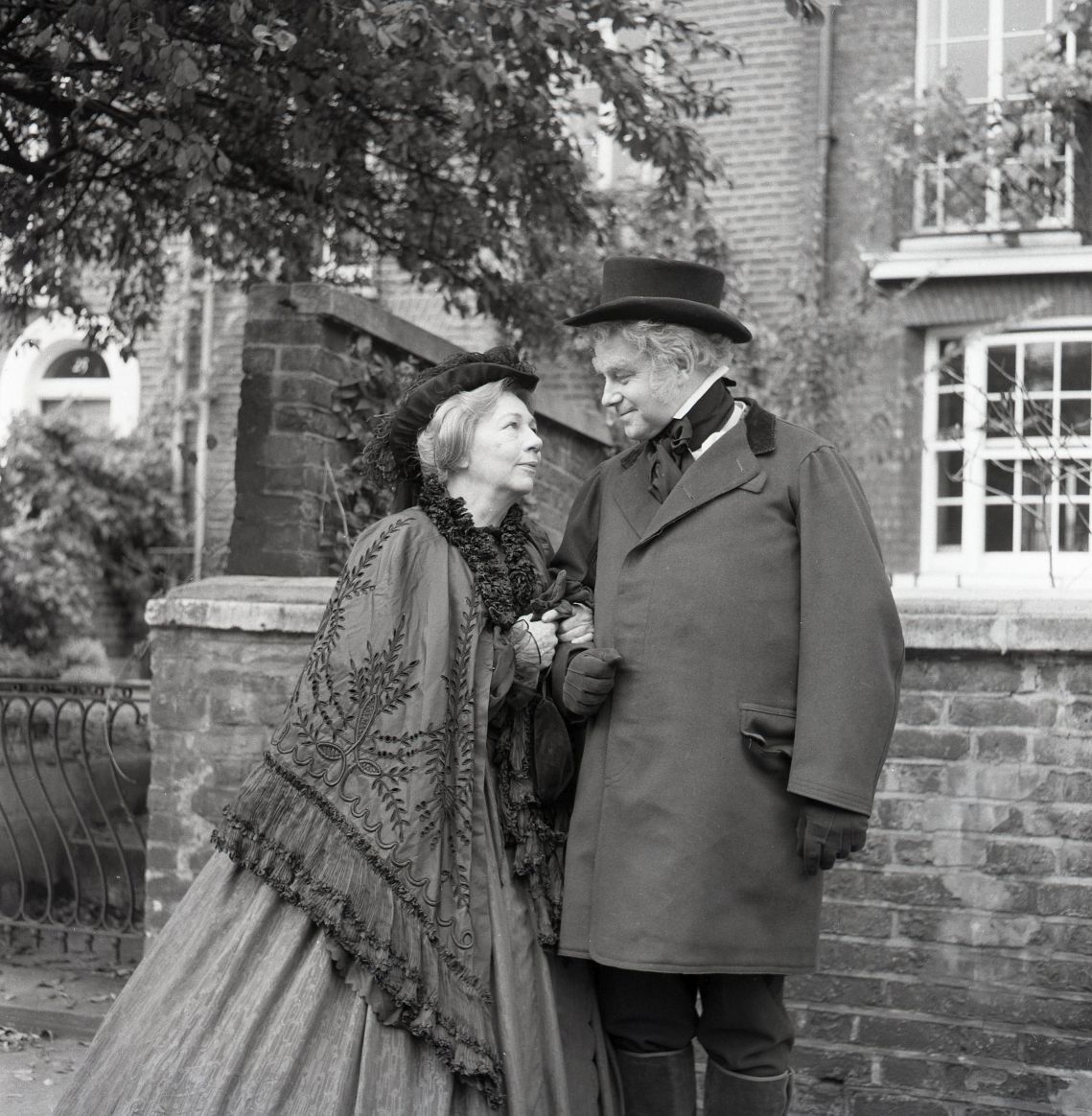


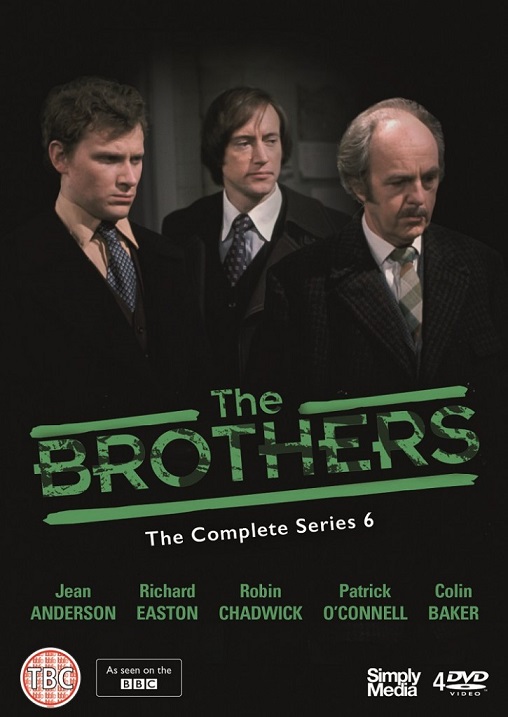
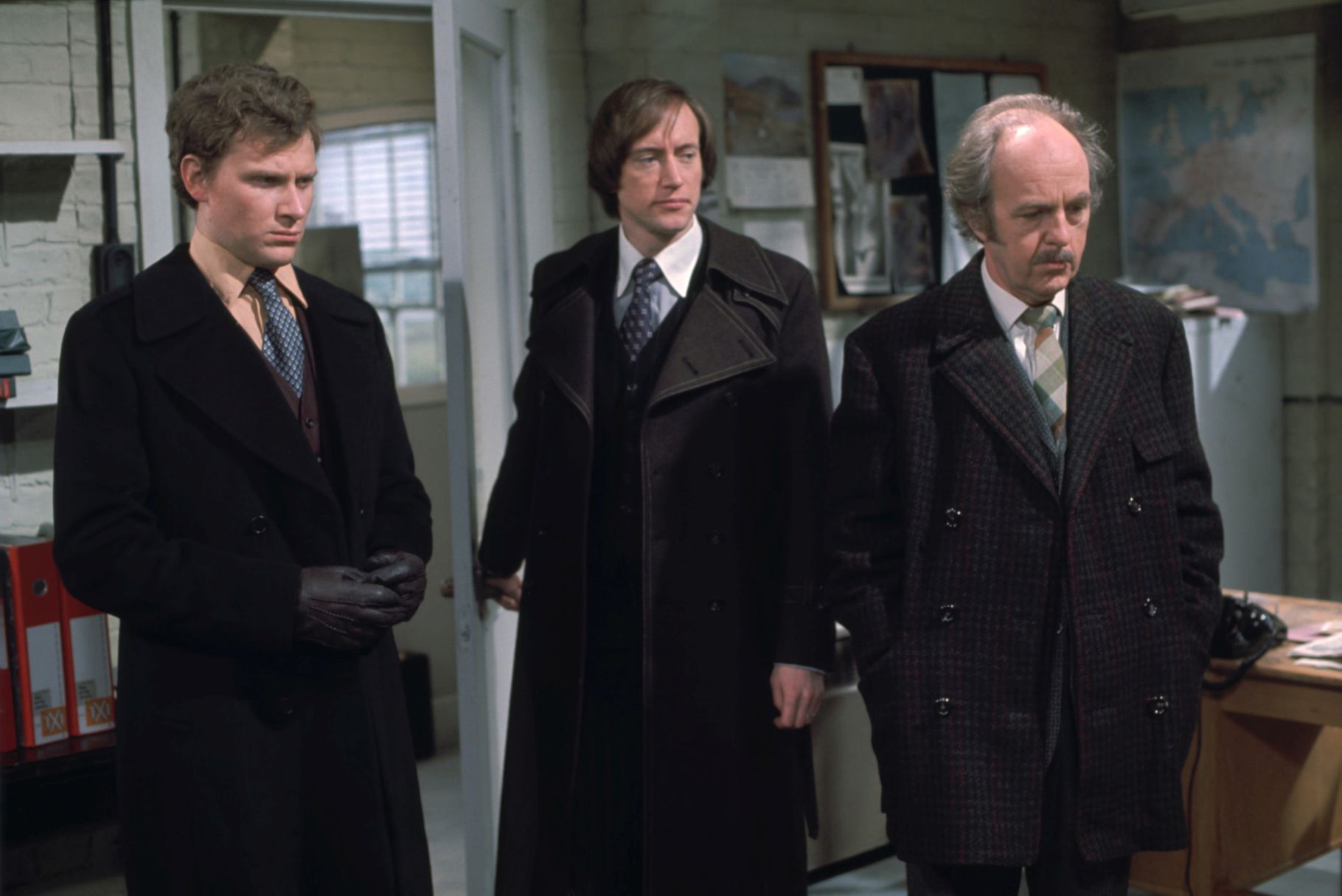
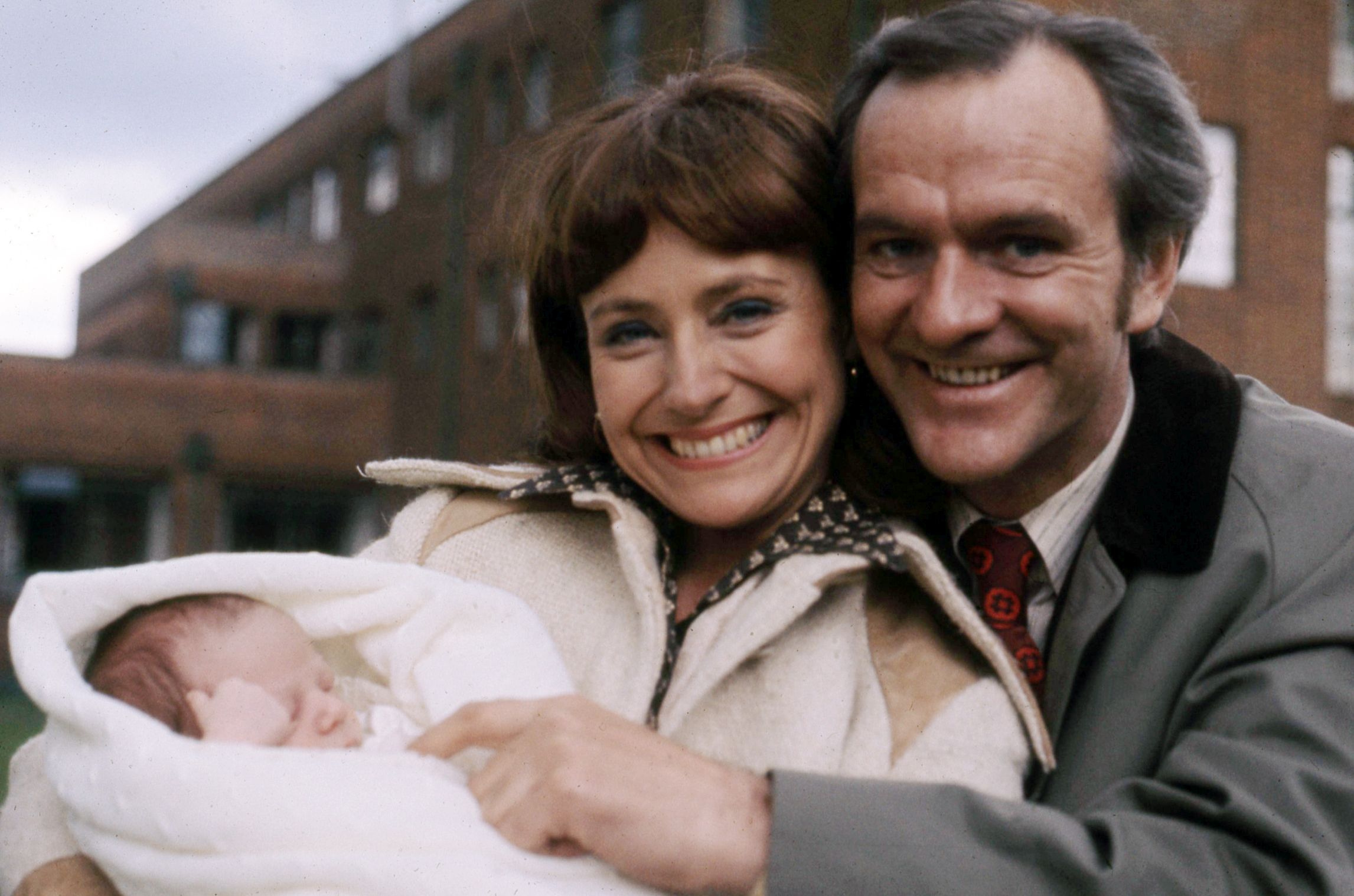
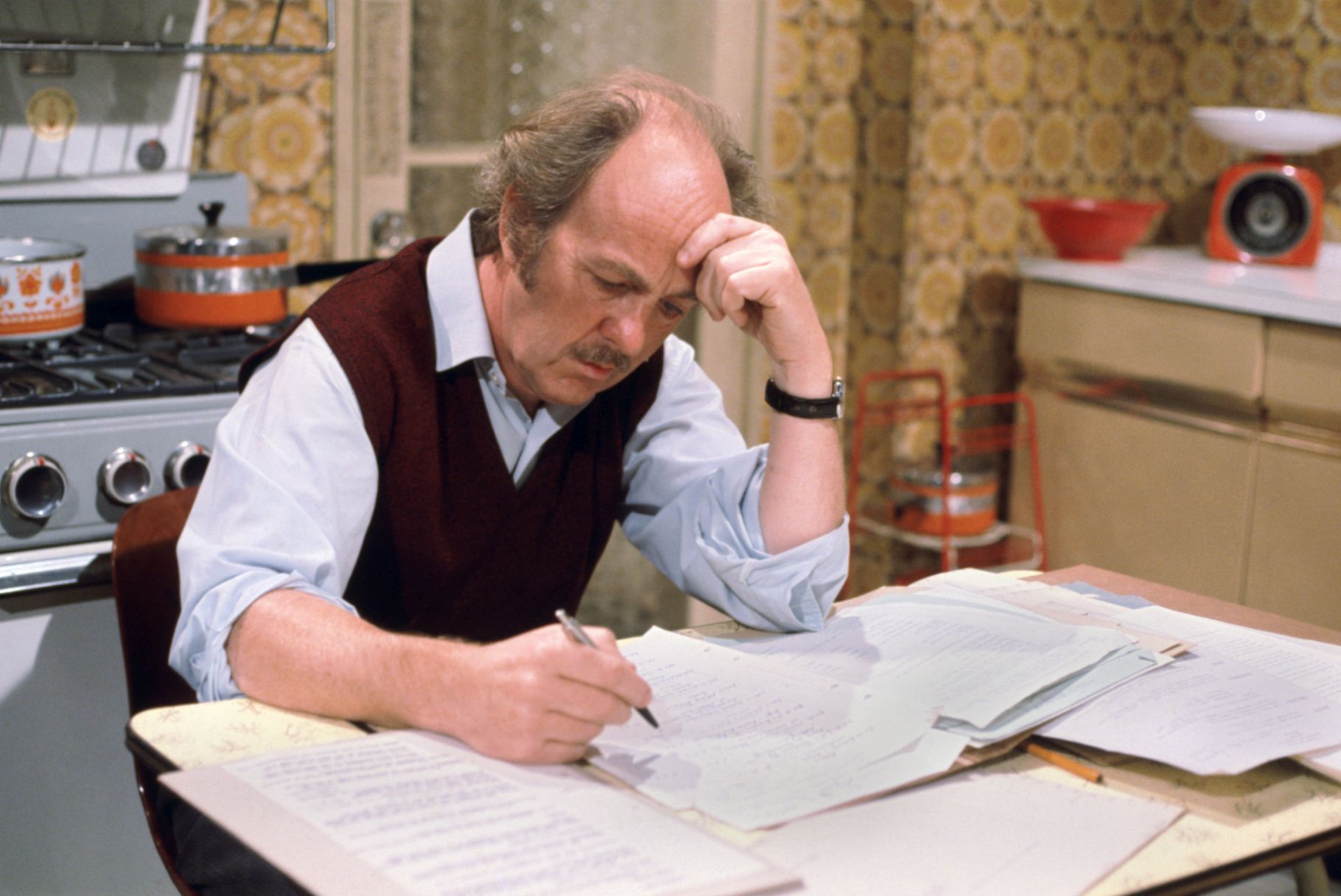
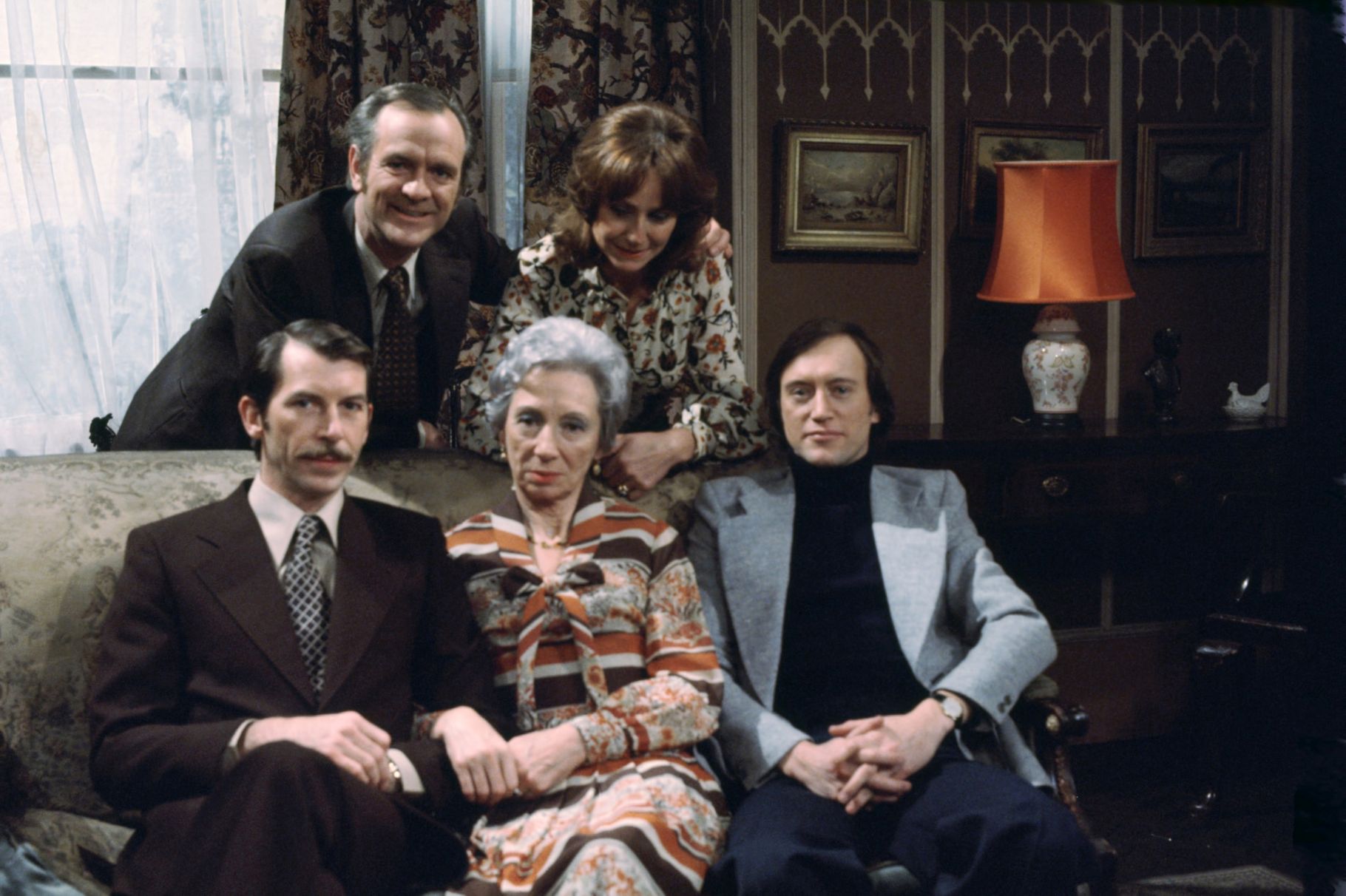


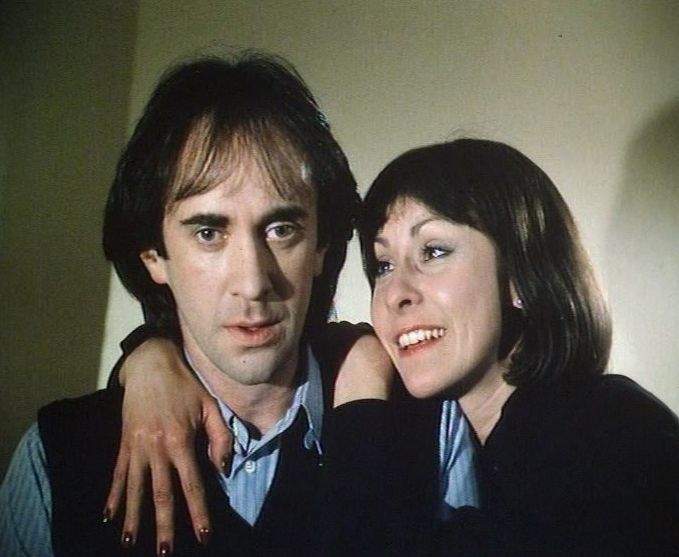
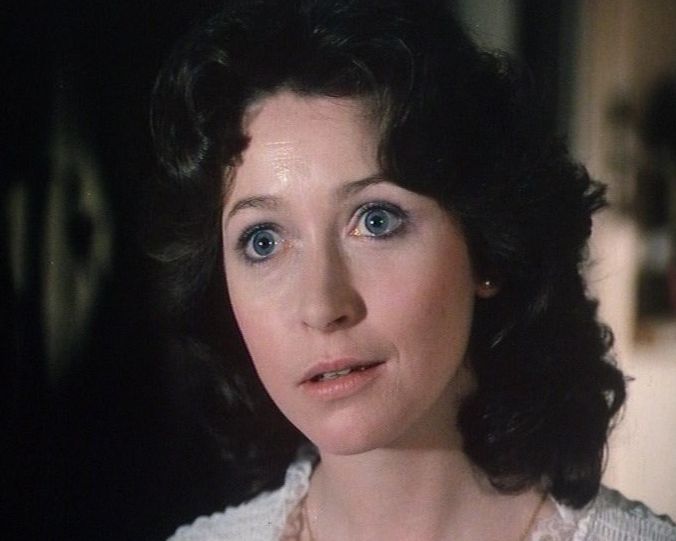
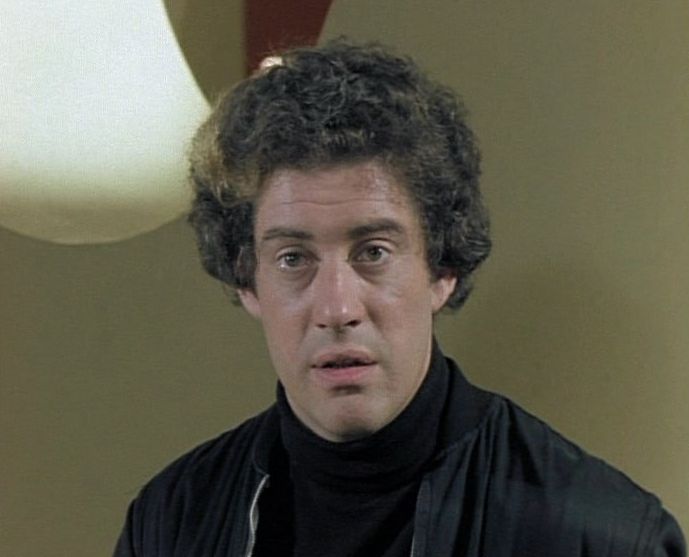

 Archive Television Musings