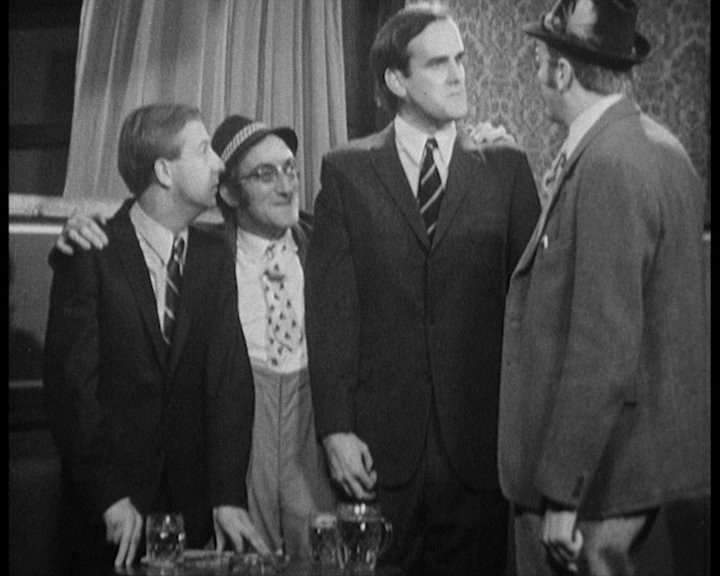
Star Trek – Charlie X

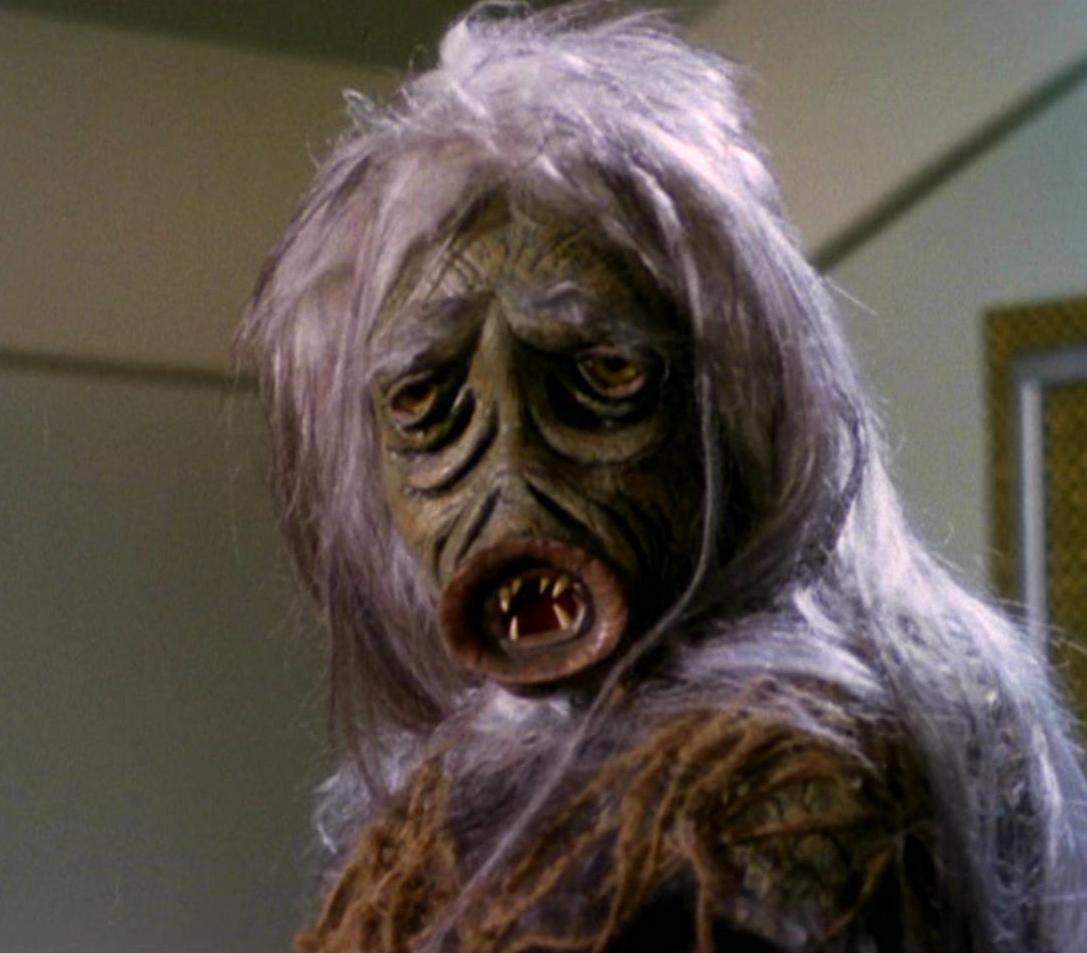
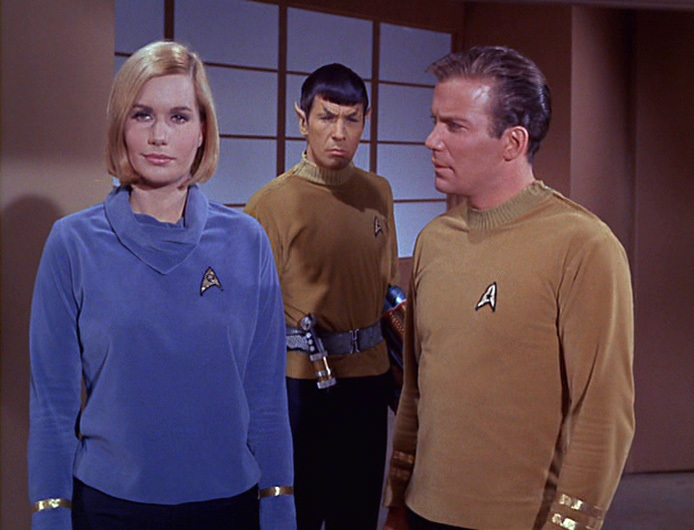
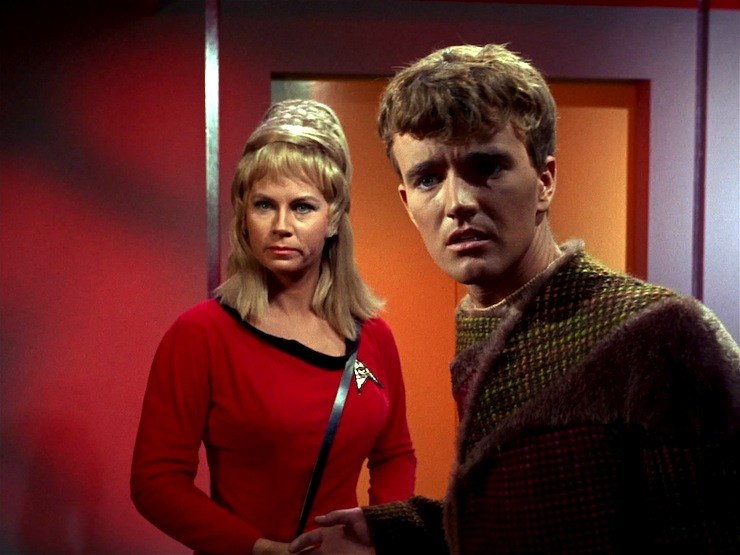
Charlie Evans (Robert Walker) is a highly unusal teenager. The only survivor from a transport ship which crashed on the planet Thasus, it’s a mystery how he was able to survive all by himself for so long ….

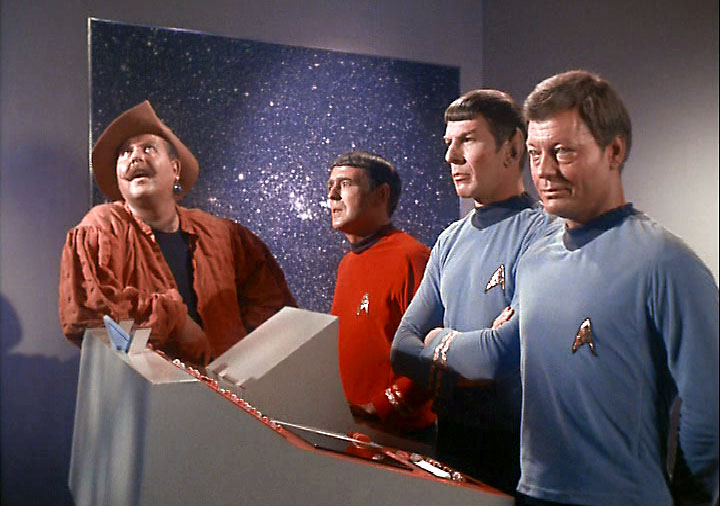
The series might have already tackled the “human becomes god” storyline with Where No Man Has Gone Before, but it was clearly a storyline that had legs, as Charlie X refined and improved the concept (and ended up airing first as a consequence).

If Gary Mitchell was a seasoned man of the world then Charlie Evans is his exact opposite – a stumbling teenager. All of Charlie’s early scenes feel somewhat awkward (as we witness the misfit boy attempting to fit into the culture of the Enterprise)

But there’s an added wrinkle – it’s already been revealed to the audience that he has unusual powers of suggestion (although Kirk and co remain ignorant about this for the moment).

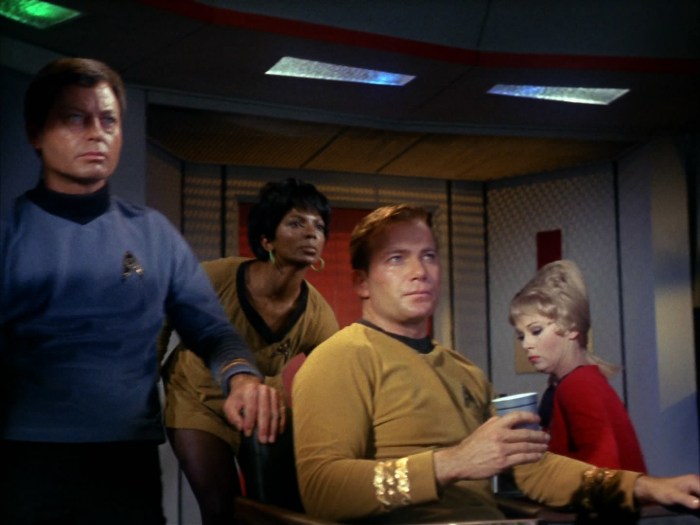
Kirk, Spock and McCoy spark off each other wonderfully in a scene where both Kirk and McCoy try to dodge the responsibility of becoming Charlie’s mentor (primarily to broach the difficult subject of the birds and the bees). Kirk, due to his rank, is able to dump this responsibility onto the less than ecstatic McCoy. Although things don’t quite work out the way Kirk hoped ….

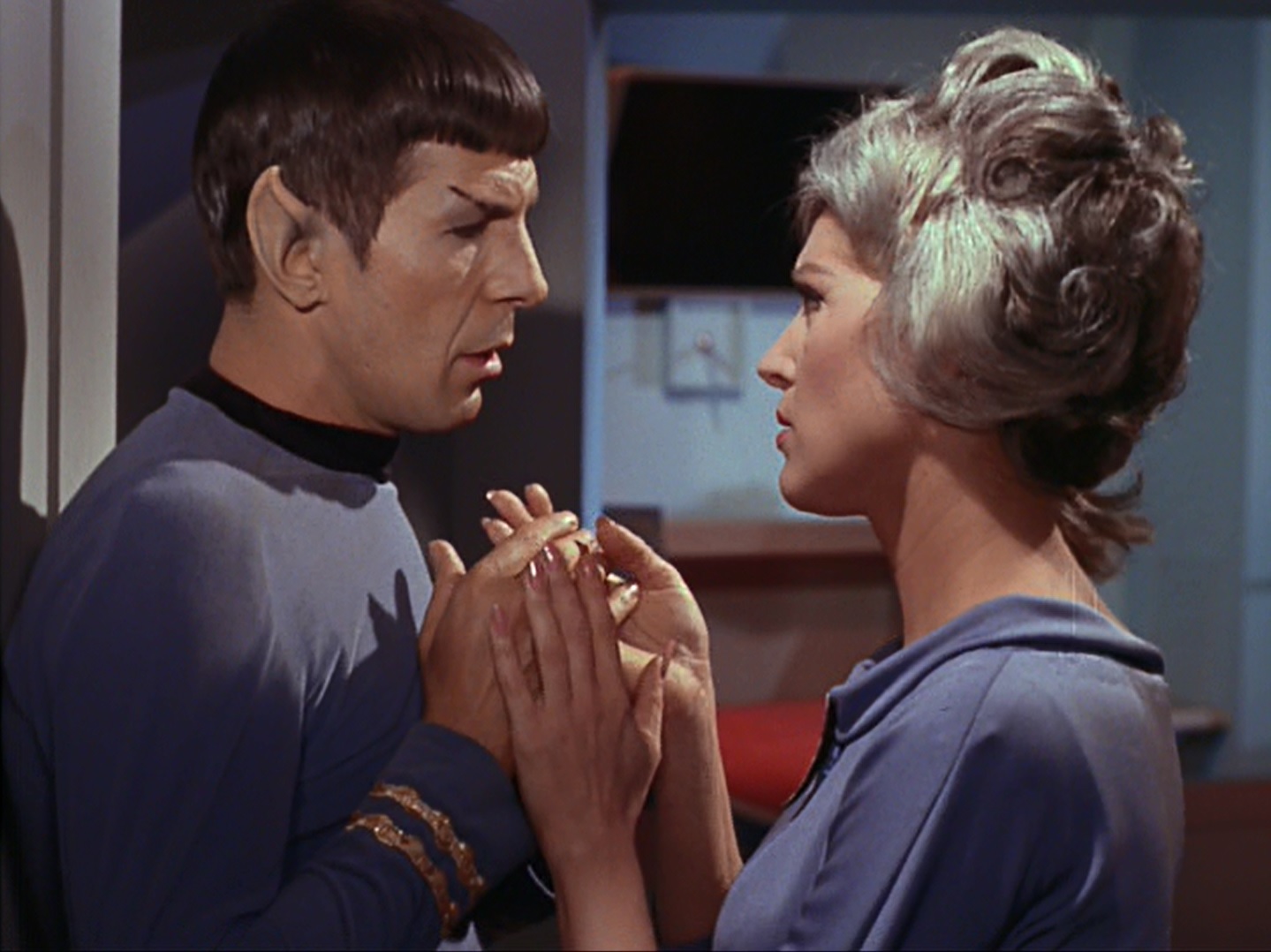
But Charlie’s already learning, thanks to the presence of Janice Rand. From their first meeting (“are you a girl?”) he is plainly transfixed by her, although giving her backside a friendly slap doesn’t go down well!

D.C. Fontana (contributing her first script for the series) seems to have great fun with the concept of Jim Kirk as a substitute father. His stumbling explanation to Charlie as to why Yeoman Rand didn’t appreciate a slap on the behind is nicely done.

Well, um, er, there are things you can do with a lady, er, Charlie, that you, er… There’s no right way to hit a woman… I mean… man to man is one thing, but, er, man and woman, er, it’s, er… it’s, er…. well it’s, er, another thing. Do you understand?

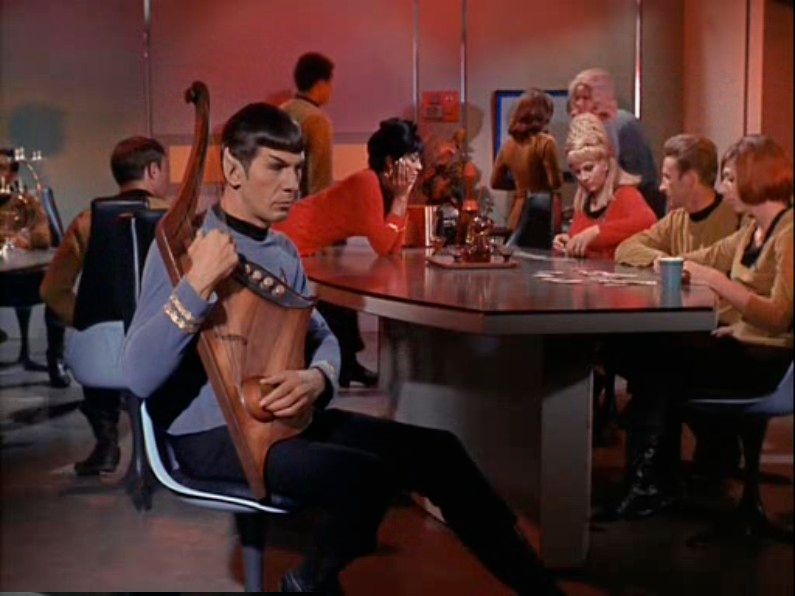
Another highlight is the musical number shared by Uhura and Spock. It’s a lovely piece of character development – enabling us to believe that the people we see episode in and episode out are actually real people who have a life outside of tackling whatever the crisis of the week is. I also like the way that Spock’s initial irritation at Uhura’s warbling quickly gives way to amused resignation.

It’s not just a filler scene though, since it moves the plot forward (Charlie wants to chat to Janice so he casually silences Uhura with a glance). His prowess with card tricks then enchants Janice and the others, giving Charlie the adulation he craves ….

Kirk does his best to mentor the boy. At one point they tackle a gym session ( a bare-chested Shatner in red tights is quite a sight).

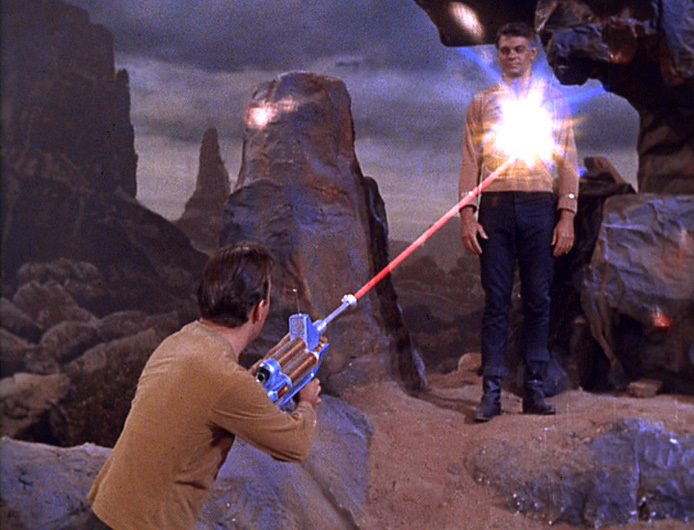
But things take a nasty turn shortly afterwards as Kirk finally realises just how powerful and increasingly uncontrollable Charlie is. Lawrence Dobkin’s direction is noteworthy here – focusing in on both Kirk and Charlie’s eyes whilst the rest of the frame is plunged into relative darkness.

It’s a shame that Rand is reduced, yet again, to the status of a sexual object. Sadly that seemed to be her prime function during the brief time she spent on the Enterprise.

Charlie X takes a fairly routine storyline and manages to craft a memorable episode out of it. Robert Walker is excellent as the misfit Charlie. Despite his various crimes (which include murder) it’s hard not to feel sympathy for him – at one level he’s simply a mixed up teenager, albeit one with unbelievable powers. 

The way that Charlie’s tricks and pranks become darker as the episode progresses (ageing harmless crew members or simply wiping their faces) helps to give the story a real punch. It’s not difficult to see why it was one of the first stories to air – even this early on Star Trek was really beginning to pick up strong momentum.

Star Trek – The Naked Time

Every time I watch the pre-credits sequence of The Naked Time, I have an uncontrollable urge to shout out and tell Lt. Joe Tormolen (Stewart Moss) not to take off his glove ….

Surely when beaming down to a strange planet, especially when you’re wearing protective suits, it’s maybe just a little unwise. Oh well, it’s not as if the suits sported by Tormolen and Mr Spock were especially air-tight anyway.

Tormolen has picked up a nasty infection, although it only manifests itself in earnest once he’s back on the Enterprise. Moss doesn’t have a great deal of screentime, but Tormolen’s breakdown is very effective and fairly dark. At one point, after threatening Sulu with a knife, he attempts to turn it upon himself. 

Sulu and Lt. Riley (Bruce Hyde) manage to wrestle it off him, but it’s still a tense little scene. Albeit slightly negated by the fact that several other crew members just sit around doing nothing to help!

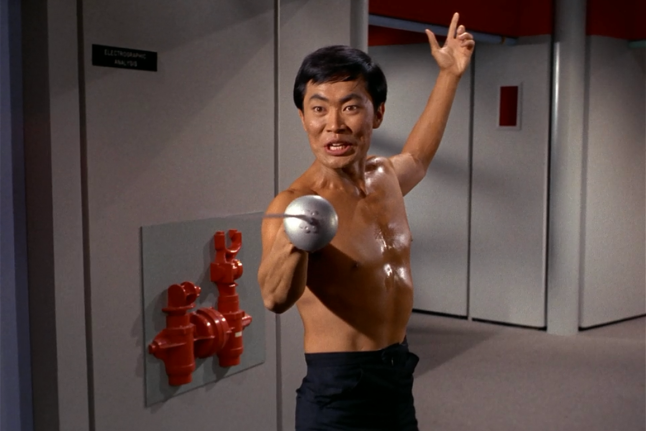
What’s interesting about the episode is that after this flashpoint (and Tormolen’s subsequent death) we see a sudden gear change as the comedy begins to ramp up. The virus makes people lose their inhibitions – in Sulu’s case this means that he strips to the waist, oils himself up and runs around the decks with a rapier, causing havoc …

When he reaches the bridge, there’s a nice bit of comic business from William Shatner (Kirk attempts to block the sword and gets a nasty nip for his pains). Even Leonard Nimoy gets in on the act – after disabling Sulu, he instructs that “d’Artagnan” be taken away.

As for Riley, the virus turns him very Irish. Luckily for us all, Hyde doesn’t attempt an Oirish accent (although Riley’s singing is painful enough).

It’s rather unfortunate that Riley decides to take over the Enterprise (which he does so with embarrassing ease) at exactly the same time that the ship is dangerously close to a planet about to explode. This is a slightly clunky plot mechanism, but without it Riley would simply be a low-level irritant.

All the interest in the second half of the episode revolves around some well-crafted character interactions. Nurse Chapel’s passion for Mr Spock, for example (which comes a little out of the blue, since we’ve never seen her before). 

Both of them are now under the influence of the virus. For Chapel this makes her painfully honest, for Spock it’s all about having a nice cry. Nimoy takes these scenes and manages to wring every possible drop of emotion from them. Subtle they’re not, but they are strangely compelling.

The Naked Time gives us one of Star Trek‘s classic lines (Scotty’s plaintive “I can’t change the laws of physics”) so that alone makes it worth the price of admission. Kirk attempting to bring Spock back to normality by giving him several good hard slaps is also noteworthy.

Indeed, there’s so much going on that in the end the episode feels a little bitty. Dropping Riley from the story and maybe concentrating on Kirk and Spock’s breakdowns might have been one way to go. But no matter, The Naked Time is another strong early story in which all the regulars benefit from some decent character moments.

Star Trek – The Man Trap

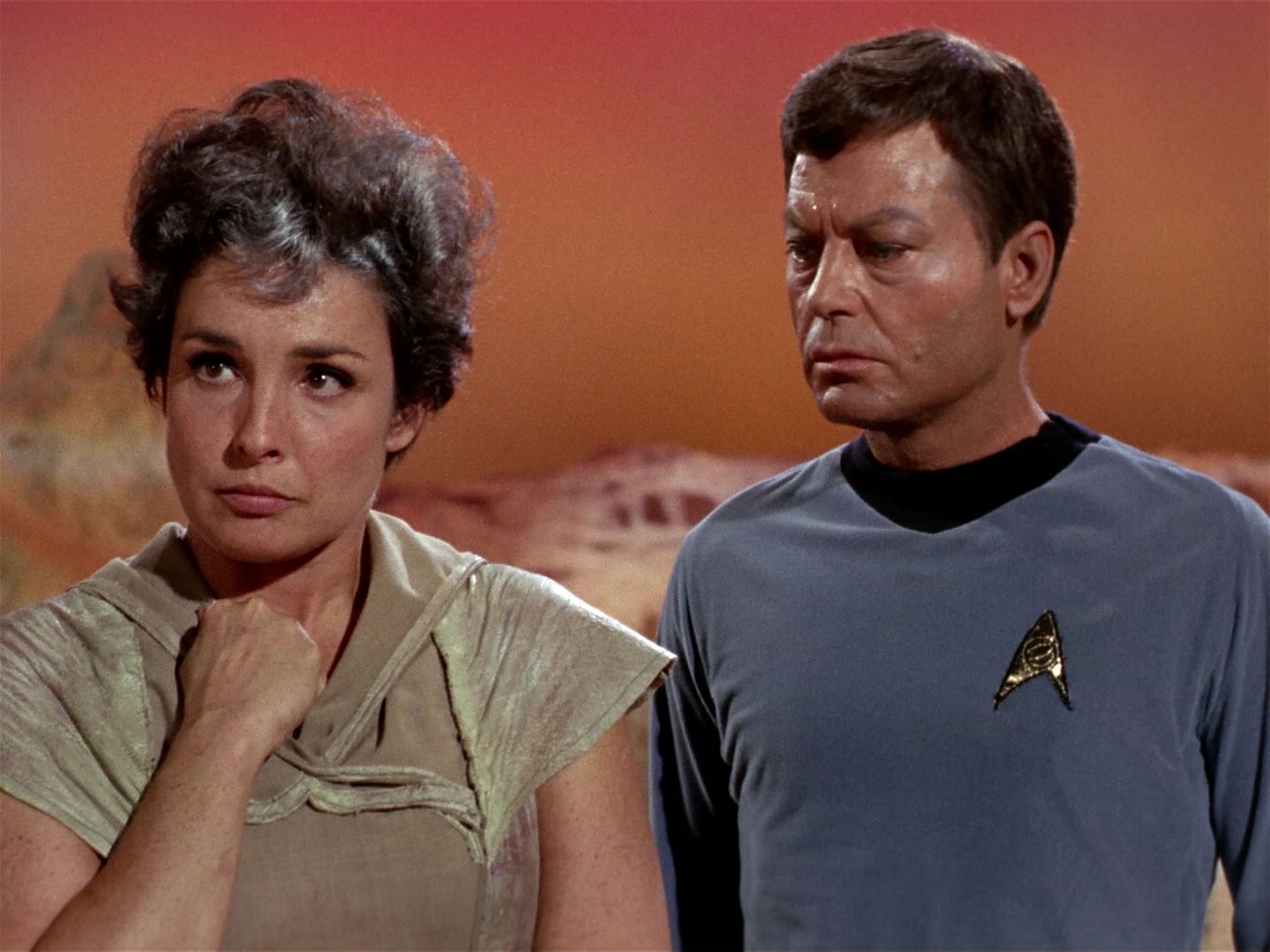
M-113 is your average sort of Star Trek planet – it has plenty of false-looking boulders and a rather red sky. McCoy, Kirk and the short-lived Crewman Darnell have transported down to the surface in order to carry out a routine medical check on Professor Robert Crater (Alfred Ryder) and his wife Nancy (Jeanne Bal).

You may well wonder why Kirk has tagged along to this routine assignment ….

Is it because Nancy is an old sweetheart of McCoy? It’s about the most credible reason I can think of (certainly Jim delights in ribbing Bones about his lost love – witness how amused he is when he learns Nancy’s pet name for him!)

Straight away we establish that something is badly wrong. McCoy appears to see Nancy as she was a decade ago, Kirk sees the same woman (but older) whilst Darnell claps eyes on a totally different character – a young, hip-swiveling minx.

There’s a slight lack of logic here – why does Nancy appear to Kirk as Nancy and not someone from his past as happened with Darnell? It also seems that later on McCoy views Nancy as the same middle-aged woman initially observed by Kirk. The actual reason for this is fairly obvious (chopping and changing make-up would have been time consuming) although it’s another slight story niggle.

McCoy is delightfully bashful when he first encounters Nancy (and Kirk makes full capital  of “Plum’s” discomfort). However there’s a good gear-change when crewmen start to drop like ninepins – Kirk suddenly becomes rather snappy towards the lovesick Bones (although he has the good grace to apologise shortly after).

Alfred Ryder’s first scene is a memorable one. His line delivery is somewhat bizarre (especially since shortly afterwards he settles down and starts to act fairly normally). Jeanne Bal (a salt-sucking monster able to take any form – like Nancy – it desires) doesn’t have a great deal to do except look wistful as she lures men to their doom.

In one respect it’s easy to see why this was chosen as the series’ debut episode. Not only are the three main cast members well served, but the second tier (Uhura, Rand, Sulu) are also catered for.

Uhura’s doomed attempt to make small talk with a polite but baffled Mr Spock is an entertaining scene (at present, he charmingly refers to her as Miss Uhura) whilst Janice and Sulu (today he’s an obsessive botanist) also get a good crack of the character whip. Although it’s a little irritating that Janice continues to be rather objectified (two leering crewmen hammer this point home).

Once the creature beams aboard the Enterprise then the fun really starts. It’s able to shapeshift at will (even reproducing clothes – which is a neat trick) and causes a certain amount of mayhem in the second half of the episode. Especially when it assumes the form of McCoy.

It’s maybe a good thing that we don’t see the true form of the creature until late on as it’s not the most memorable creation the series ever attempted. Still, it does provide the episode with a late moment of goofy shock.

The moral of the story seems to be that if you’re an alien life form who dares to tangle with the Enterprise then you’re going to to die. Kirk is at his harshest and most implacable when sentencing the creature to death although Bones is the one who actually has to pull the trigger. 

The alien might be the last of its species, but that cuts no ice with Kirk (or indeed Spock and McCoy).  The Next Gen no doubt would have gone for a more conciliatory ending, but here it seems that only death will do.

Which seems slightly at odds with the show’s philosophy (or at least the version often embraced by fans). “To explore strange new worlds. To seek out new life and new civilizations” and then calmly kill it since it doesn’t behave in a human enough way ….

The Man Trap isn’t subtle but it is a rattling good yarn with decent roles for all the participating regulars, so it gets a thumbs up from me.

Star Trek – The Enemy Within

A transporter malfunction splits Kirk into two. One half is rather like his old self (albeit increasingly indecisive and vague) whilst the other is a rampaging monster ….

Everybody loves a doppelganger story and on that score The Enemy Within works pretty well, although it’s surprising that (as we’ll call him) evil Kirk was rumbled so soon. Nobody seems to believe, even for a moment, that the Captain’s simply gone loopy, which is a shame – surely there would have been decent dramatic mileage in eeking out this part of the story a little more.

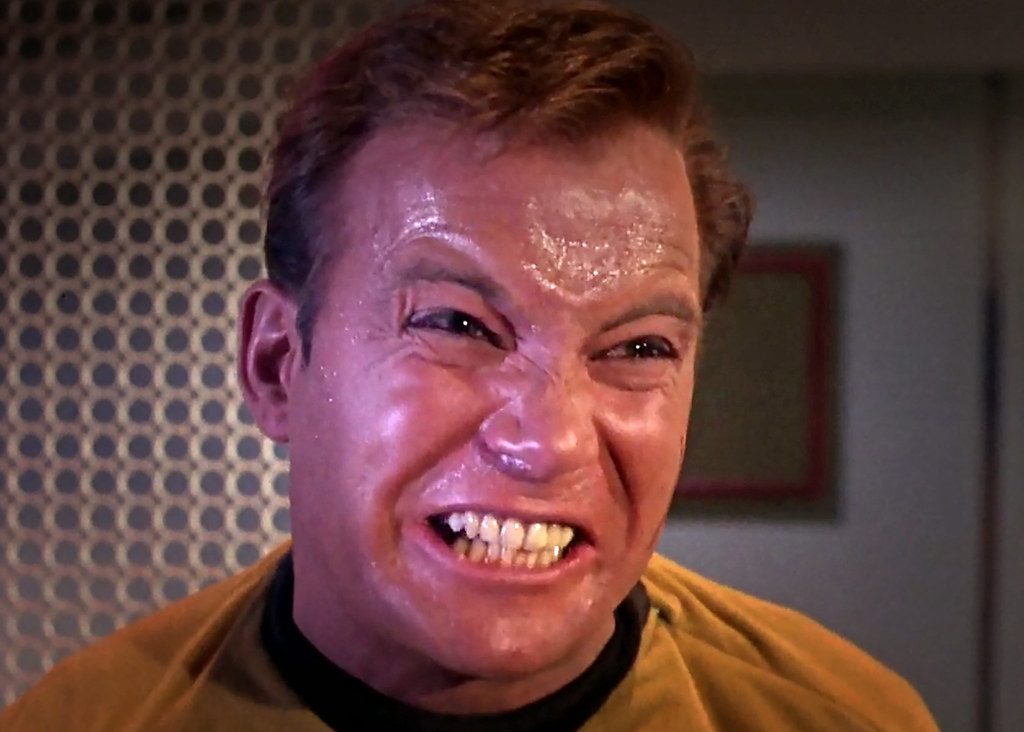
Shatner looks like he’s having fun as sweaty evil Kirk. It’s certainly a story which places the Captain front and centre.

Although at one point Kirk calls his double an imposter, that’s really not the case. As the episode title suggests, evil Kirk is an integral part of him (it’s just now all of his negative impulses have been distilled into a single entity). 

Our Jim can normally keep the beast within him under control, but now he’s been split into two it’s the worst of both worlds – his evil side rampages through the Enterprise, drinking and mauling pretty Yeomen at will, whilst the “normal” Kirk descends into a period of extreme indecision.

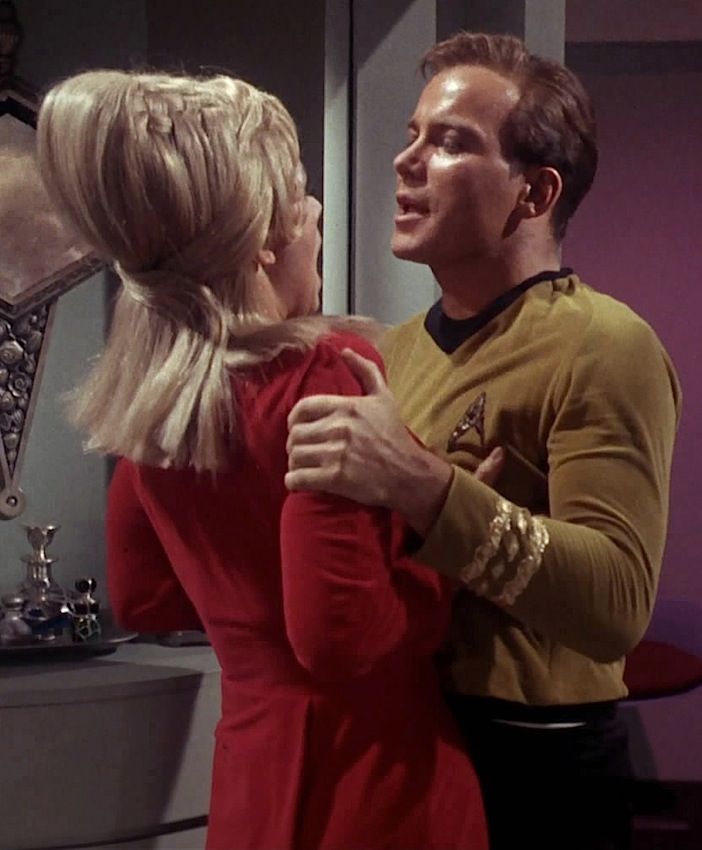
The only female in the story – Janice Rand – is nothing more than a helpless victim, ravished by the “evil” Kirk. It’s not much of a part, but then the original series does have issues in this area (which we’ve discussed before, and I’m sure we will again).

Indeed, Janice’s only other major role (in Charlie X) also saw her objectified by a lustful male. Do you sense a pattern emerging here? Given the reason for Grace Lee Witney’s hasty departure from the series, this is bitterly ironic.

The B plot (Sulu and a handful of others trapped on the planet’s surface) never really amounts to much, although some entertainment can be derived from George Takei’s heroic attempts to convince us that it’s very, very cold down there.

The Kirk versus Kirk face off on the bridge is nicely done and concludes an episode which has a few little niggles but always tends to hit the spot for me.

Star Trek – Mudd’s Women

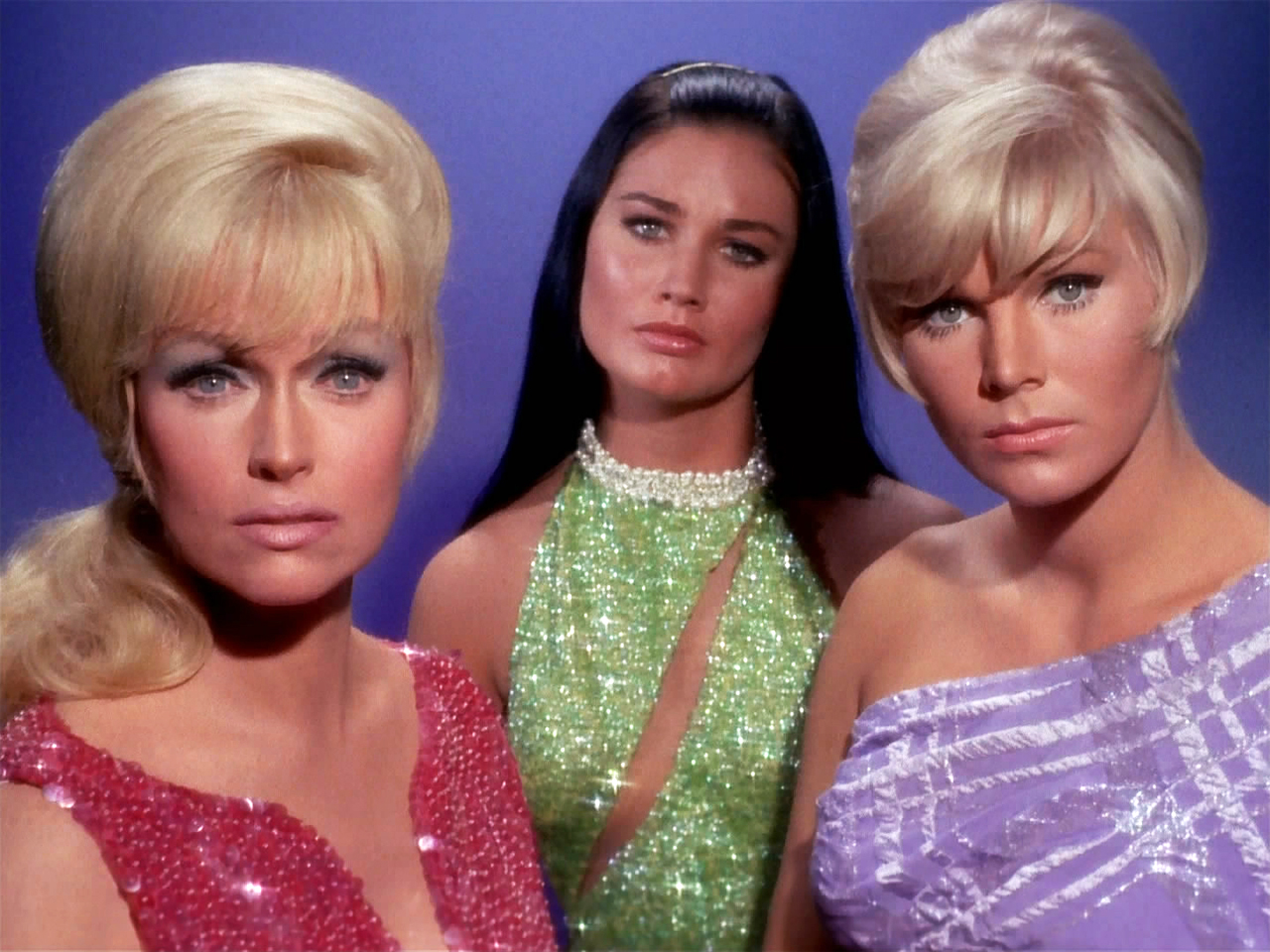
Ah yes, the one about the Space Hookers.

1960’s Star Trek often struggled with its depiction of female characters – one good thing you can say about Mudd’s Women is that although it’s an early low point, from here on in surely the only way is up …

This was clearly a story close to Gene Roddenberry’s heart. It was his original idea and he was also keen for it to be the second pilot. Luckily wiser counsel prevailed on that score.  

Harry Mudd (Roger C. Carmel) is presented to us as a loveable Oirish rogue, but the script never really acknowledges his darker side. The women may seemingly be content to be bought and sold like cattle (he pointedly refers to them as his “cargo”) but given that he has power over them (via a drug which has addictive properties) just how much free will do they actually have?

Following McCoy’s excellent characterisation in the previous episode, he isn’t called on to do much here except make googly eyes at the three lovely girls (the same goes for Scotty). Even Spock seems to be smirking at times, which since it’s still very early days doesn’t seem quite as strange as it would be later in S1.

The moral of the story? True beauty comes from within (and not from drugs) or some such flim-flam. To be honest it’s not really convincing and the (sort of) happy ending – Eve (Karen Steele) catches the eye of a bluff miner – also feels a little uncomfortable.

There are some interesting nuggets of drama in the episode (Kirk is desperate to get more Lithium for the Enterprise, but the miners don’t want to sell). This results in Kirk uttering some not very veiled threats – an early sign that the Federation can’t always afford to take the moral high ground.  

Mudd’s Women is entertaining enough but fairly dispensible.

Star Trek – The Corbomite Manoeuvre

corb1.jpg

This is a bit more like it. Now that Dr McCoy’s in place, Star Trek feels much more like Star Trek. Although it’s slightly jarring to hear Kirk call him “McCoy” rather than “Bones” everything else about their relationship feels right. This means that this episode – the first DeForrest Kelley recorded – could be broadcast later in the series one run without it seeming too out of place (which is what happened).

I do like the sight of sweaty Kirk (following a punishing medical from McCoy) casually strolling through the corridors. Clearly he doesn’t mind showing his pecs off to the lower orders.

Although Kirk later makes it quite clear to the increasingly hysterical helmsman, Bailey (Anthony Call), that the command structure of the Enterprise isn’t a co-operative, he does actually listen to the advice of both Spock and McCoy.

But as Spock says, Kirk ultimately tends to goes his own way (“Has it occurred to you that there’s a certain inefficiency in constantly questioning me on things you’ve already made up your mind about?”). That’s a nice building-block moment which helps to define the Kirk/Spock relationship.

Kirk’s interaction with McCoy is much more sparky – at one point we observe raised voices after McCoy questions whether Bailey is fit for duty.  Indeed he threatens to make it official. “I intend to challenge your actions in my records. I’ll state that I warned you about Bailey’s condition”.

But everything works out in the end as Bailey redeems himself.  True, Anthony Call is required to go soaringly over the top several times but this doesn’t feel too unrealistic (compare and contrast to The Next Generation, where everybody tends to exhibit a Zen-like calm whatever the situation).

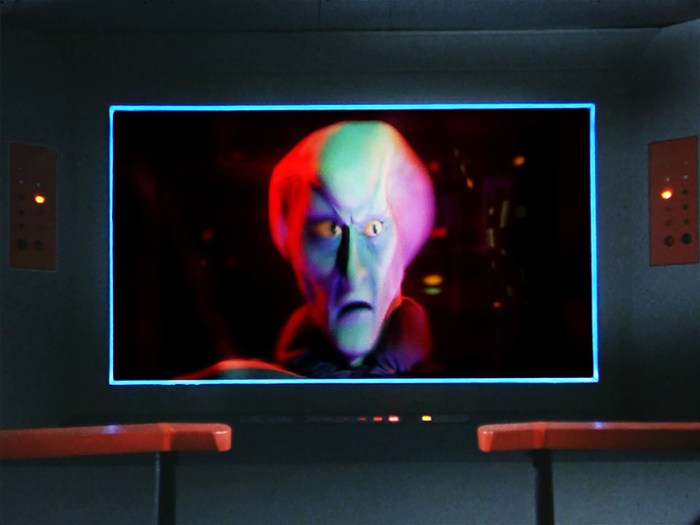
The Corbomite Manoeuvre is the one with Balok, the alien who sports a permanently shocked expression and spends most of the episode threatening deadly vengeance.  That Kirk manages to outwit him with nothing more than a nice spot of bluffing feels satisfying.  This episode might be a bottle show which – on the surface – appears to move very slowly, but there’s plenty of character interest throughout (Scotty pipes up with a few witty comments, for example).

The modelwork and special effects stand up very well (good as the replacement CGI often is, I always prefer to watch the originals).

The Corbomite Manoeuvre would have made an excellent opening episode, so it’s a slight pity that it was shunted down the order somewhat.  Never mind, since the episodes can now be watched in any order, going down the production order route is one that I’d recommend.

corb.jpg


Star Trek – Where No Man Has Gone Before

where 1

Where No Man Goes Before is a bit of a mixed bag. From a historical point of view it’s fascinating (shouty Spock) but I do find it drags a little midway through.  One niggle I have is that since this episode (in production order) gave us our first sight of James T. Kirk, it’s slightly too much that we’re also introduced to Jim’s best friend, Gary Mitchell (Gary Lockwood) at the same time.

As we don’t really know Kirk yet, it’s hard to feel that invested about his lengthy off-screen friendship with Mitchell.  So when Mitchell suddenly acquires god-like powers it doesn’t have a great deal of impact.  Kirk’s moral dilemma – will he have to kill his old pal? – is a meaty one, but would have played better had this been a mid-series story and Mitchell was a semi-regular.

Sulu and Scotty are present, although they don’t do much except stand around awkwardly.  The Kirk/Spock relationship is tentatively established, although the info dumping about Spock’s Earth heritage feels a bit crude.

Kirk:Have I ever mentioned you play a very irritating game of chess, Mister Spock?
Spock: Irritating? Ah, yes. One of your Earth emotions.
Kirk: Certain you don’t know what irritation is?
Spock: The fact one of my ancestors married a human female.
Kirk: Terrible having bad blood like that.

Although William Shatner gets the chance for a nice spot of fisticuffs, the episode really belongs to Gary Lockwood and Sally Kellerman (as Dr Elizabeth Denyer). The 1960’s series would often have an issue with strong female professionals, and it’s something which begins here – Dr Denyer is dubbed a walking freezer unit by Mitchell.

Decent enough overall then, but there’s a real sense that something’s missing.  Dr Piper (Paul Fix) didn’t really have much of an opportunity to shine but his replacement would fare somewhat better ….

where 2

Doctor Who – The Crusade. Part Four – The Warlords

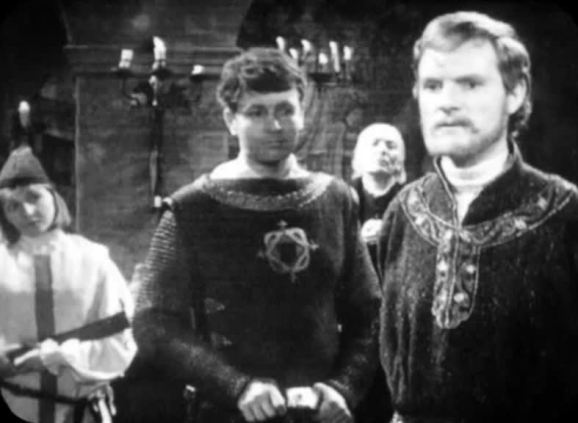
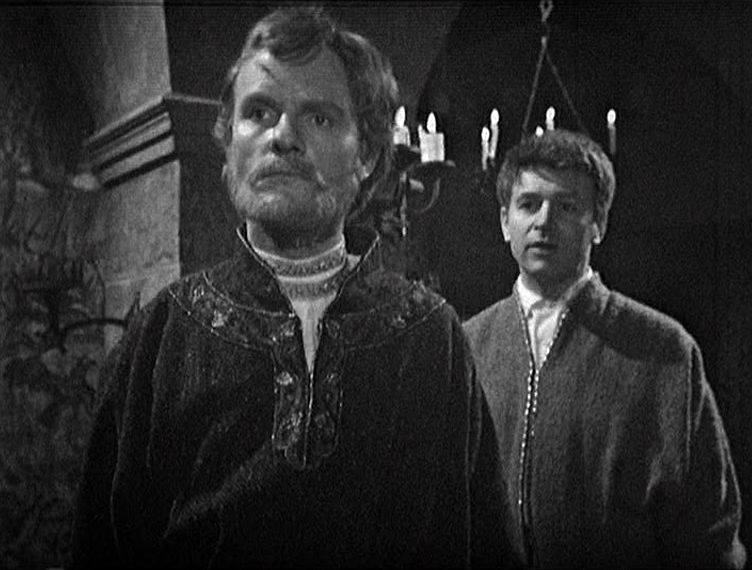
If the previous three episodes of The Crusade tended to concentrate on the court intrigue at both Richard and Saladin’s camps, then The Warlords offers a sharp change of pace.

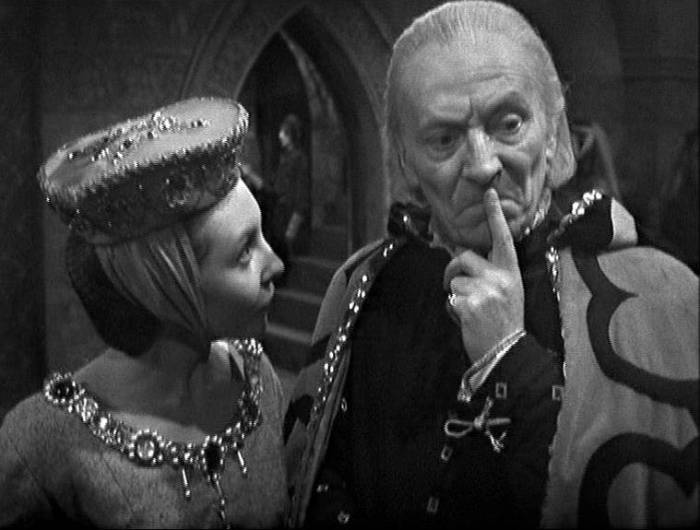
Saladin, Saphadin and Joanna are all absent and Richard himself only features in a single scene.  His brief appearance is partly to reassure the Doctor and Vicki that he knew they didn’t reveal his plan to Joanna (he was aware it was the Earl of Leicester, but confesses it was politically expedient not to confront him directly).

The scene also allows the Doctor to inform Vicki and the viewers at home that Richard would, ultimately, be unsuccessful in his aims.  He may only have a short amount of screen-time in The Warlords, but once again Julian Glover is unforgettable.

DOCTOR: There is something important, sire. If you are able to defeat Saladin in this battle, can you hold the city?
RICHARD: Win the battle, lose the war. The greatest fear we have. We’ve come so close. I must see Jerusalem. I must.
DOCTOR: You will, sire.
RICHARD: You think so?
DOCTOR: I am certain, sire. And when you look upon the city itself, you will be able to find the answer to the problem of this war. May we now take our leave, sire?
VICKI: Are we going back to the ship?
DOCTOR: As fast as our legs can carry us, my dear.
VICKI: Doctor, will he really see Jerusalem?
DOCTOR: Only from afar. He won’t be able to capture it. Even now his armies are marching on a campaign that he can never win.
VICKI: That’s terrible. Can’t we tell him?
DOCTOR: I’m afraid not, my dear. No, history must take its course.
(The Doctor and Vicki leave.)
RICHARD: Help me, Holy Sepulchre. Help me.

Ian (still on his mission to find Barbara) has unfortunately run into the villainous Ibrahim (Tutte Lemkow) who has devised a novel way to discover where Ian’s money is stashed.

A little pot of honey, made from pounded dates and very, very sweet. There, my lord, a little bit on your wrists and a little bit on your chest. Now, over there is a hungry home, full of ants that go wild for date honey. We must be generous to them. Lay a little trail across the sand, like this. And I will sit in the shade of the trees and dream of all the treasures I will get when the ants discover you. If you crane your neck around, my lord, you will soon see what you take to be a black line along the honey. Why, you will be able to see it getting closer and closer. My little ones! Such ecstasy!

Lemkow is good value, especially when Ian turns the tables on Ibrahim and forces the little thief to take him to El Akir’s palace.  From then on, Ibrahim becomes servile and keen to assist Ian (although there’s no doubt that he would be happy to change sides again at the first opportunity).

At the start of the episode Barbara is once more in El Akir’s clutches – although yet again she’s able to escape from him fairly easily.  This unfortunately doesn’t do the character of El Akir any favours – and his limited screen time during all four episodes does ultimately means that he’s not one of Doctor Who’s most tangible or memorable villains.

El Akir is more of a plot-device (initiating the story by attacking Richard and his friends, kidnapping Barbara to ensure that the Doctor can’t leave) than a fully-rounded character.

If you compare him to the likes of Tegana or Tlotoxl then he seems even more underwritten, although had this story been a six-parter there might have been more scope to develop him. As it is, he seems to be denied even a particlarly impressive death scene as the soundtrack suggests that Haroun quickly dispatches him quite abruptly. 

Since Haroun rescues both his elder daughter Maimuna and Barbara it unfortunately rather negates Ian’s mission (he turns up shortly afterwards).  It’s a little surprising that Ian doesn’t get the heroic fight with El Akir – particularly since William Russell was well able to handle a sword (he had previously starred in The Adventures of Sir Lancelot).

Ian and Barbara then head for the forest at exactly the same time as the Doctor and Vicki.  This is slightly sloppy plotting, as it would have been more logical for Ian and Barbara to return to Richard’s court (they had no way of knowing that the Doctor and Vicki had made an enemy of Leicester).

But clumsy though this moment is, it does give us a nice final scene as Ian is able to spirit the Doctor and Vicki away from under Leicester’s gaze.  Leicester watches in horror as the four time-travellers disappear in the TARDIS and resolves to “not speak of this. Let this story die here in this wood or we’ll be branded idiots, or liars. Poor Sir Ian, brave fellow. Spirited away by fiends. What dreadful anguish and despair he must be suffering now?”

If The Warlords doesn’t quite match the scale and sweep of the previous three episodes (and who are the titular Warlords anyway?) overall The Crusades is still a first class story which thanks to the cast and Douglas Camfield manages to transcend the limited budget and studio-space and produce something quite magical.

If the two missing episodes are never recovered, maybe one day animated versions can be produced – as it’s a story that certainly deserves to sit on the shelf alongside the rest of the second season.

Doctor Who – The Crusade. Part Three – The Wheel of Fortune

crusade-08

For me, The Wheel of Fortune is the best episode of The Crusade. It has three moments of special interest – Haroun’s life story as told to Barbara, the clash between Leicester and the Doctor and the confrontation between Richard and Joanna.

Haroun (George Little) lives for one reason only – to kill El Akir. He tells Barbara the reason why.

HAROUN: Last year my house was a fine and happy place. A gentle wife, a son who honoured and obeyed me, and two daughters who adorned whatever place they visited. Then El Akir came to Lydda and imposed his will. He desired my eldest daughter Maimuna, but I refused him.
BARBARA: So he took her?
HAROUN: Yes. When Safiya and I were away, he came and burned my house. My wife and son were put to the sword.

It’s a perfectly pitched and dignified performance by George Little. Whilst the character invites our sympathy, Little never overplays – instead he allows the script to do the work.

Equally good is Petra Markham as Safiya. Her father has never explained what happened to the rest of their family, but she has faith that all will be well. “It is a strange mystery. They’ve gone away and we must simply wait for their return. It is the will of Allah”.

Jacqueline Hill is also excellent these scenes – for example, the way Barbara listens in horror to Haroun’s story and later when nearly revealing the truth to Safiya about her missing family. Another key moment is when Haroun leaves Safiya in Barbara’s care. He leaves his knife behind and insists that she use it to kill Safiya and then herself if they’re discovered by El Akir’s men. Barbara is appalled (“No. Life is better than this.”) but Haroun is insistent. Again, Hill plays the scene very well, her performance helping to reinforce how cruel El Akir must be.

The spat between the Doctor and the Earl of Leicester (John Bay) is a very interesting one. It’s another of Whitaker’s lovely Shakespearian pastiches that Hartnell and Bay both deliver with aplomb.

Although the Doctor usually takes the moral high ground, he doesn’t really have it here. His dismissal of Leicester as having no brain doesn’t seem at all fair. Leicester is a soldier, trained to fight, and it’s difficult to argue with his statement that “armies settle everything”.

LEICESTER: Sire, with all the strength at my command I urge you, sire, to abandon this pretence of peace.
DOCTOR: Pretence, sir? Here’s an opportunity to save the lives of many men and you do naught but turn it down without any kind of thought. What do you think you are doing?
LEICESTER: I speak as a soldier. Why are we here in this foreign land if not to fight? The Devil’s horde, Saracen and Turk, posses Jerusalem and we will not wrest it from them with honeyed words.
DOCTOR: With swords, I suppose?
LEICESTER: Aye, with swords and lances, or the axe.
DOCTOR: You stupid butcher! Can you think of nothing else but killing, hmm?
LEICESTER: You’re a man for talk, I can see that. You like a table and a ring of men. A parley here, arrangements there, but when you men of eloquence have stunned each other with your words, we, we the soldiers, have to face it out. On some half-started morning while you speakers lie abed, armies settle everything, giving sweat, sinewed bodies, aye, and life itself.
DOCTOR: I admire bravery and loyalty, sir. You have both of these. But, unfortunately you haven’t any brain at all. I hate fools.

Saladin and Saphadin discuss the marriage proposal. Saladin is extremely cautious.

Have England, France and all the rest come here to cheer a man and woman and a love match? No, this is a last appeal for peace from a weary man. So you write your letter and I’ll alert the armies. Then on either day, the day of blissful union or the day of awful battle, we will be prepared.

And sadly that’s the last we see of Saladin and Saphadin as they, along with Joanna, don’t feature in the final episode. This does give The Warlords something of an anti-climatic feel, but we’ll discuss that in more detail next time.

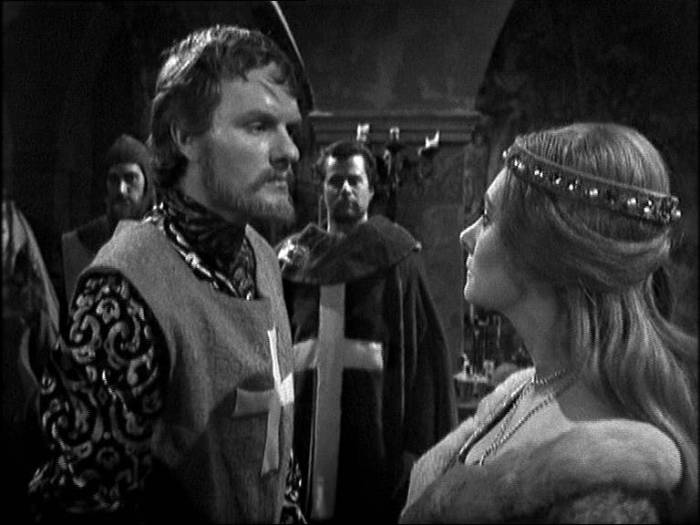
When Joanna learns that Richard plans to marry her off to Saphadin, it’s fair to say that she’s not best pleased. The scene is a thrilling moment, as both Julian Glover and Jean Marsh attack it at full-throttle. It’s hard to find many examples of Doctor Who scenes pitched at such a level – which makes this one all the more special.

JOANNA: What’s this I hear? I can’t believe it’s true. Marriage to that heathenish man, that infidel?
RICHARD: We will give you reasons for it.
JOANNA: This unconsulted partner has no wish to marry. I am no sack of flour to be given in exchange.
RICHARD: It is expedient, the decision has been made.
JOANNA: Not by me, and never would be.
RICHARD: Joanna, please consider. The war is full of weary, wounded men. This marriage wants a little thought by you, that’s all, then you’ll see the right of it.
JOANNA: And how would you have me go to Saphadin? Bathed in oriental perfume, I suppose? Suppliant, tender and affectionate? Soft-eyed and trembling, eager with a thousand words of compliment and love? Well, I like a different way to meet the man I am to wed!
RICHARD: Well, if it’s a meeting you want.
JOANNA: I do not want! I will not have it!
RICHARD: Joanna!

As this is the last surviving episode of the story, it’s worth taking a moment to praise Douglas Camfield’s direction. He always had an eye for unusual camera angles, plus he isn’t afraid to place the actors in unusual configurations. This helps to make the frame more interesting than just having them stand in a line (something many other directors would have been content to do).

Barbara is back in El Akir’s clutches at the end of the episode (the second that’s ended with Barbara in peril). El Akir’s final words here are truly chilling, thanks to Walter Randall’s matter-of-fact delivery. If El Akir had been an eye-rolling villain then it would have been easier to discount his threats. It’s his calmness that’s somewhat disquieting.

The only pleasure left for you is death. And death is very far away.

crusade-09

Doctor Who – The Crusade. Part Two – The Knight of Jaffa

knight.jpg

Richard’s in something of a better temper at the start of this episode – in part due to the Doctor’s wily manoeuvrings. It’s interesting to note how the Doctor has easily lapsed into the speech patterns at Richard’s court, he’s started throwing “methinks” around quite casually!

RICHARD: There is a jest here, albeit a grim one with our friends dead. But Saladin must be just as much out of temper over this affair as we are.
DOCTOR: Your messenger might offer to exchange a hundred prisoners for the knight he holds.
RICHARD: We think we value Sir William highly. We do, but it would not be good to let Saladin know.
DOCTOR: He might think you undervalue his men. One hundred men to one of yours. Methinks a fair bargain, sire.
RICHARD: By my father’s name, you have wit, old man. Guard, call the Chamberlain. We recognise the service you have rendered us and will be pleased to see you in our court.

With the Doctor and his friends in Richard’s debt, this allows Ian (once he’s been knighted as Sir Ian, Knight of Jaffa) to begin his quest to find Barbara. This also handily removes William Russell from the main storyline (and he’s on holiday next week, so only appears briefly on film). When a story rich in plot-threads like The Crusade only lasts four episodes, it can be a problem finding things for everybody to do, so this simplifies matters – the Doctor and Vicki remain at court and Barbara finds herself in the clutches of El Akir.

As with first episode, David Whitaker’s dialogue (especially when spoken by actors as good as Julian Glover) is something to savour. Richard ponders the strange relationship he has with Saladin –

Saladin sends me presents of fruit and snow when I am sick, and now his brother decorates you with his jewels. Yet with our armies do we both lock in deadly combat, watering the land with a rain of blood, and the noise of thunder is drowned in the shouts of dying men.

The notion that Saladin’s brother, Saphadin, is captivated by Joanna (Jean Marsh), Richard’s sister, sets the King thinking. Could this be a way to bring the war to an end? He sets about drafting a proposal, although crucially he doesn’t think to speak to Joanna first.

And not only this kingdom, its towns and fortresses, shall be yours, but also the Frankish kingdom. Our sister, the Princess Joanna, whose beauty is already spoken of wherever men of judgement and discernment are, is a fit match for one who not only enjoys so grand. No, not grand, eminent. So eminent a brother as the Sultan Saladin but who also possesses an element of his own. Prince Saphadin, we beg you to prefer this match and thus make us your brother.

Richard is pleased with this and takes the Doctor and his friends into his confidence (which helps to bring them back into the main narrative). A story like this, focusing on the machinations of Kings, will inevitably tend to sideline the Doctor – although this isn’t something that David Whitaker necessarily had a problem with. He was of the opinion that when the Doctor travelled back in time he should be content to be merely an observer and not interfere.

Dennis Spooner (as can be seen in The Romans and The Time Meddler) had the opposite view, so this story (written by Whitaker, script-edited by Spooner) is something of an uneasy compromise between them.

But even if the Doctor is rather a passive figure at times, he does have some fun by bamboozling his adversaries. There’s another fine example in this episode, when we see the Doctor running rings around the unfortunate Chamberlain.

CHAMBERLAIN: This and this, stolen from me.
DAHEER: And stolen from me.
DOCTOR: Yes, now there really is a point there, isn’t there? If I stole from you, my lord Chamberlain, how could I steal from him?
DAHEER: You did. You did steal from me.
DOCTOR: Then how could I steal from him, eh, you blockhead?
CHAMBERLAIN: Please, please. Now, I had the clothes first.
DOCTOR: Oh, how nice for you.
DAHEER: And I had them second.
VICKI: Did you buy them?
DAHEER: Yes.
VICKI: From us?
DAHEER: No.
DOCTOR: Then whoever it was stole them from you must have sold them to you. Now, don’t you agree?
CHAMBERLAIN: Er, yes.

The episode ends with Barbara escaping from El Akir’s guards. She runs through the streets of Lydda, desperate for a hiding place. But will she find friend or foe?

Doctor Who – The Crusade. Part One – The Lion


The Crusade brings the TARDIS to the Holy Land at the time of the Crusades.  Whilst the Doctor, Ian and Vicki eventually join the court of King Richard (Julian Glover), Barbara finds herself in the enemy camp, captured by the evil El Akir (Walter Randall) and brought face to face with Saladin (Bernard Kay).

Given that this story was made in 1965, it does have a rather surprising revisionist feel about it.  Since Richard the Lionheart had for so long been portrayed as one of England’s greatest heroes (the Robin Hood saga often hinges on the hope that one day Richard will return to right the wrongs of his brother) it’s a jolt to find him painted as a somewhat unheroic and uncertain character.

The episode opens with Richard and his friends relaxing in the forest.  Sir William des Preaux (John Flint) fears an attack – but Richard is arrogantly dismissive.  It quickly transpires that des Preaux was correct and shortly after many of Richard’s friends are slain.

Barbara and William des Preaux are captured by the Saracens, whilst the only other survivor (apart from Richard himself) is Sir William de Tornebu (Bruce Wightman).  de Tornebu owes his life to the intervention of the TARDIS crew – thanks mostly to Ian, although the Doctor plays his part (it’s always a treat to see William Hartnell in fighting mode!).

William des Preaux claims to be the King in order to draw attention away from Richard. At this point in the story the cramped nature of the studios is quite noticeable – as good a director as Douglas Camfield was, it’s impossible not to notice that Richard was lying very close to where des Preaux was captured.  It’s therefore difficult to believe that El Akir and the other Saracens couldn’t see him.

After the Doctor finds some suitable clothes for himself, Ian and Vicki (via the sort of comedy business moment that Hartnell always excelled at) there are two main scenes left in the episode – Barbara’s meeting with Saladin and the Doctor, Ian and Vicki’s first encounter with Richard.

Despite being caked in brown make-up, Bernard Kay is mesmerising as Saladin.  He has the power of life and death over Barbara – and many others as well – but he has no need to be demonstrative.  He remains thoughtful, restrained and articulate as he probes the reason for Barbara’s presence.

SALADIN: Please talk. It helps me to consider what I have to do with you.
BARBARA: Well, I could say that I’m from another world, a world ruled by insects. And before that we were in Rome at the time of Nero. Before that we were in England, far, far into the future.
SALADIN: Now I understand, you and your friends, you are players, entertainers.
SAPHADIN: With little value in an exchange of prisoners with the English King, brother. This is a trivial affair. I do not know why you waste your time.
SALADIN: I cannot dispense life and death lightly. If Sir William is to be returned, he must make good report of our mercy. Perhaps that is the factor in your favour.
BARBARA: I don’t believe you’re as calculating as that.
SALADIN: Then learn more of me. You must serve my purpose or you have no purpose. Grace my table tonight in more suitable clothes. If your tales beguile me, you shall stay and entertain.
BARBARA: Like Scheherazade.
SALADIN: Over whose head hung sentence of death.

By contrast, Julian Glover’s Richard is highly emotional (no doubt the difference between Saladin and Richard was an intentional touch from Whitaker).  Richard berates the loss of his friends, although it’s difficult not to concede that his own reckless actions were, in part, responsible for the calamity.

The Crusade is one of those stories where, as we’ll discuss later, the Doctor and his friends are largely superfluous. Julian Glover is so good (and he’s provided with some lovely Shakespearean-type speeches by David Whitaker) that it’s very easy to imagine this story as a straight play without the TARDIS crew being present.

Once again, I am in your debt. But I’d give this for de Marun and the others. My friends cut down about my ears or stolen. My armies roust about the streets and clutter up the streets of Jaffa with the garbage of their vices. And now I learn my brother John thirsts after power, drinking great draughts of it though it’s not his to take. He’s planning to usurp my crown, and trade with my enemy, Philip of France. Trade! A tragedy of fortunes and I am too much beset by them. A curse on this! A thousand curses!

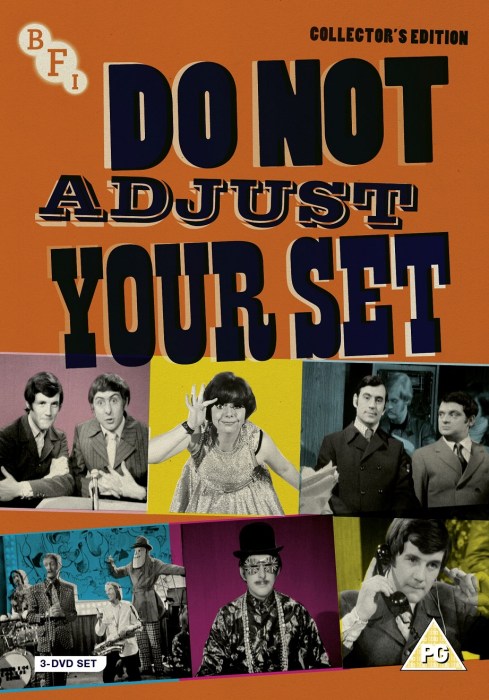
Do Not Adjust Your Set – BFI DVD Review

image003 (1)

Background

Like its Rediffusion stablemate At Last The 1948 Show, Do Not Adjust Your Set was an important building block which paved the way for Monty Python’s Flying Circus. And despite its status as a children’s show, DNAYS quickly gathered an appreciative adult audience as well  (John Cleese, for one, was especially captivated).

Running for two series – the first on Rediffusion, the second on Thames – DNAYS was the brainchild of Humphrey Barclay. Barclay was a Cambridge Footlights contemporary of John Cleese, Graham Chapman and Tim Brooke-Taylor and would continue to work with Cleese and Brooke-Taylor on the radio series I’m Sorry I’ll Read That Again.

Michael Palin and Terry Jones had first met as students in Oxford and continued their writing partnership following their graduation (joining a roster of very familiar names penning material for The Frost Report).  They also worked as BBC writers for hire, with Billy Cotton and Roy Hudd amongst their clients. Although the pair had appeared on television prior to DNAYS, it was this series which allowed them to blossom as performers (something which Palin remains grateful for to this day).

Eric Idle, a Cambridge Footlights old boy, was (like seemingly everybody else in the comedy world during the mid sixties) a writer on The Frost Report and also co-wrote (along with Barry Cryer and Graham Chapman) the first series of the Ronnie Corbett sitcom No, That’s Me Over Here! (the series which replaced At Last The 1948 Show in the schedules).

Another future Python connection was put into place with the arrival of Terry Gilliam. His animations, similar in style to his Python work, would appear in some of the later episodes.

The roster of regulars was completed with Denise Coffey and David Jason. Both were hired as performers rather than performer/writers (as Palin, Jones and Idle were) but Coffey and Jason did eventually contribute material to the show. Captain Fantastic (a regular filmed insert featuring Jason as a bowler-hatted superhero and Coffey as his evil nemesis) was originally written by Palin, but he found it increasingly tough going (as he wasn’t performing the material) so Coffey and Jason took up the challenge. It proved to have a brief life outside of the series – the shorts continued for a short while as an insert in the magazine programme Magpie.

dnays.jpg

Regular musical interludes (and occasional sketch walk-on roles) came courtesty of The Bonzo Dog Doo-Dah Band, who are always nothing less than a total delight. Their antics are especially noteworthy when you consider that they had to fit these spots in-between their busy gigging schedule which regularly took them up and down the country. So that helps to explain why sometimes everything looks rather thrown together ….

Archive Status

Out of the 27 episodes made and broadcast, today 14 exist. The Thames series is especially hard hit – with only two (the 1968 Christmas special and episode two) now remaining from the thirteen broadcast.

There has been some positive news in recent years though. Episode four of series one was recovered back in 2015 (which does give one hope that more material might still be out there somewhere) whilst there’s nearly an hours worth of audio clips from selected missing Thames episodes on this DVD, which helps to fill in some of the gaps.

The Series

The first show should have been the Boxing Day special. Alas, due to a mix-up this wasn’t transmitted until January.

The Boxing Day theme might have been out of date by the time it was finally broadcast but there’s plenty of interest – Eric Idle as a slick quizmaster catches the eye as does the very lithe David Jason (in the boxing sketch). The Bonzo’s first contribution to the series is Jolitty Farm. It’s odd stuff, but when compared to some of their later offerings you have to say that it’s positively restrained ….

As with At Last The 1948 Show, it’s fascinating to see proto-Python moments pop up in DNAYS. The first show proper has an early outing for Michael Palin’s recalcitrant shop-keeper (today he’s annoying the unfortunate David Jason). Interesting to see the sketch play out to virtual silence – another early Python trait.

As the series progresses, a more adult and unconventional tone creeps in. This helps to explain why some sketches don’t get much of a reaction – at times the juvenile audience seems to be more comfortable with visual slapstick rather than intricate wordplay.

Travelling Kettle, How To Eat, Insurance Salesman and Art Gallery are all series one sketch highlights. The unexpected appearance of the keen-as-mustard Tim Brooke-Taylor (deputising for the ill Michael Palin) in episode nine is something else to look out for. And the increasingly demented Bonzos (blacked up when performing Look Out There’s A Monster Coming,  playing football during  Equestrian Statue) continue to be excellent value for money.

It’s a shame that so little material from the Thames era exists as what we do have is top notch (Palin and Jones continue to work excellently together). The audience sounds different in episode two (the laughter is deeper than the high-pitched chuckles from the first series, suggesting that the young audience has been supplanted by older types) and it would be interesting to know if this was a regular occurrence or just a one-off.

Picture Quality

Generally the episodes are in good shape – certainly overall the picture quality is more consistent and better than At Last The 1948 Show. Even episode four of series one, sourced from a Phillips 1500 cassette rather than a telerecording, is very watchable.

Special Features

Michael Palin (33 minutes) and Humphrey Barclay (34 minutes)  both contribute new  in-depth interviews whilst there are shorter contributions from Tim Brooke-Taylor and John Cleese. Three Terry Gilliam animations, remastered from his original 35mm elements, are another treat.

Pride of place on the extras disc has to go to the The Bonzo Dog Doo-Dah Band documentary.  Running for sixty minutes and featuring contributions from Neil Innes, Rodney Slater, Roger Ruskin-Spear and ‘Legs’ Larry Smith it’s an absorbing watch.

Conclusion

Do Not Adjust Your Set obviously showcases Palin, Jones and Idle but this time round I’ve been especially impressed with David Jason, who throws himself into every sketch with gusto.  Denise Coffey might have slightly less to do than the others (Palin, Jones and Idle have acknowledged that writing for women – unless they were actually playing them – was not their forte at this time) but having a regular female performer does add an extra dimension to the series.

As with At Last The 1948 ShowDo Not Adjust Your Set is an excellent package – the episodes bolstered by a plentiful helping of extras which help to set the programme firmly in context.  The series’ hit rate was higher than I’d remembered from previous viewings and I’m sure that this is a DVD that I’ll come back to again and again in the future. Highly recommended.

dnays

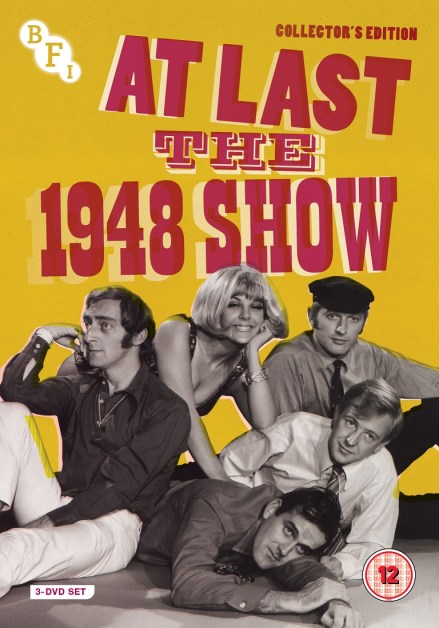
At Last The 1948 Show – BFI DVD Review

image003

Background

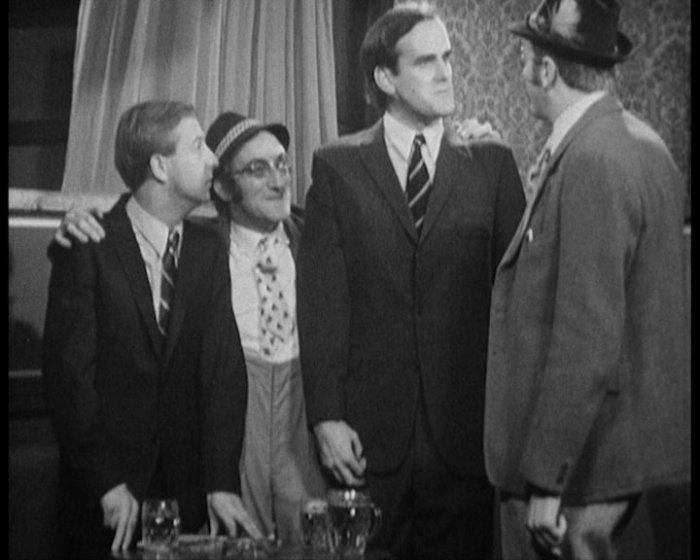
Broadcast in 1967 on ITV (Rediffusion London) At Last The 1948 Show is one of a handful of shows which laid the groundwork for Monty Python’s Flying Circus (Do Not Adjust Your Set is another key pre-Python programme which I’ll be taking a look at next week).

Earlier in the sixties, John Cleese, Graham Chapman and Tim Brooke-Taylor had been part of the Cambridge Footlights team who took the revue A Clump of Plinths/Cambridge Circus first to the Edinburgh Festival and then onto the West End, Broadway and a tour of New Zealand.  Some of the best of their revue material would later be pressed into service in At Last The 1948 Show.

Cleese and Brooke-Taylor were also integral members of the radio series I’m Sorry I’ll Read That Again from 1964 whilst Cleese and Chapman also kept busy writing for The Frost Report.  Feldman was another key Frost Report contributor (he co-wrote the Class sketch which featured Cleese, Ronnie Barker and Ronnie Corbett). And like the others, Feldman was also enjoying considerable radio success (co-writing Round The Horne with Barry Took).

David Frost was something of a television powerhouse during this period. Although he would be the subject of harsh (but loving?) ridicule in both At Last The 1948 Show and Python, there’s no denying that he pushed the careers of many of his contemporaries forward (something which both Cleese and Brooke-Taylor are happy to acknowledge today).

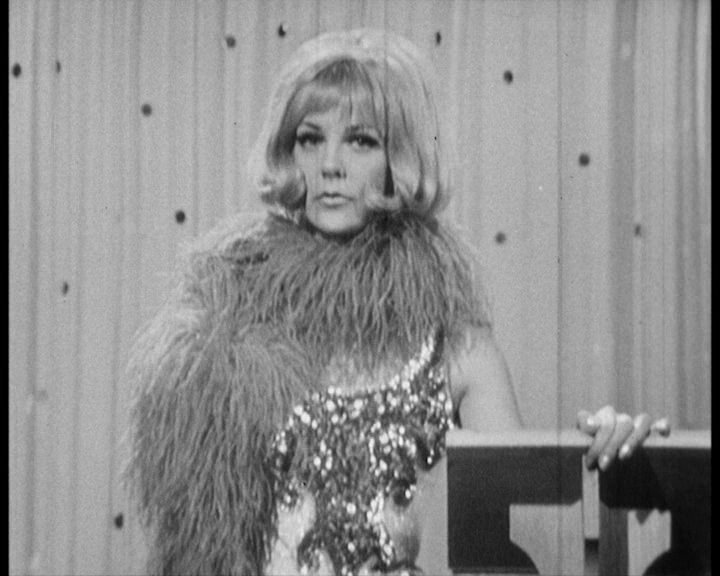
Produced by Frost’s company Paradine Productions, At Last The 1948 Show ran for two series in 1967 (six episodes during February and March with a further seven following between September and November). Joining the four writers and performers was the lovely Aimi MacDonald who managed to wring the absolute maximum out of the small amount of material she was given.
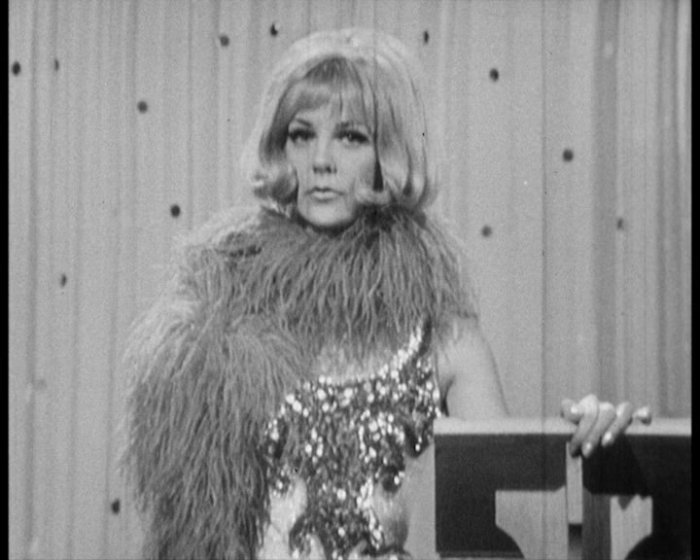
Although At Last The 1948 Show had a more convential format than Python (sketches with punch-lines for instance) MacDonald’s fractured linking material does echo the way that Terry Gilliam’s animations would later be used in Python to provide a brief interlude between the sketches.

The likes of Bill Oddie, Barry Cryer and Eric Idle also pop up from time to time (Cryer having the smallest of small parts in probably the most famous sketch the series produced – Four Yorkshiremen).

Archive Status

Like a great many shows made during the sixties and early seventies, most of At Last The 1948 Show was wiped during periodic archive purges.  By the time that the remaining Rediffusion archive was donated to the BFI, it was found that only two episodes (four and six from series one) remained.  That most of the series now exists is testament to the tenacity of several key people (notably Steve Bryant and Dick Fiddy).

The first breakthrough was the return in 1990 of five compilation programmes broadcast in Sweden (these were issued on DVD in 2007).  Over time, several other shows were also located whilst fragments of footage have been obtained from disparate sources which include the Australian censor and Marty Feldman’s widow, Lauretta.

Most recently, two virtually complete editions (including series one, show one) were donated from Sir David Frost’s archive. For this release, where no video footage exists (the second episode of series one is the most incomplete) off-air audio has been synchronised to the camera script in order to fill the gaps.

The Series

Right from the off, the comic personas of the four main players are deftly established. John Cleese displays the type of manic intensity which would be his signature performance style for the next decade or more. Graham Chapman has a nice line in authority figures (albeit ones who have some fatal flaw – such as the Minister who literally falls to pieces). It also has to be said that he gives good yokel.

Tim Brooke-Taylor is always perfect as the hapless sufferer but also, like Cleese, does manic intensity very well. His clockwork hospital visitor (attempting to comfort a bed-bound Bill Oddie) is a wonderfully energetic spot of nonsense.

And although Marty Feldman had far less performing experience than the others, he impresses right from the off.  His boggle-eyed stare (something which David Frost thought would be offputing for the viewers) means that he’s perfect casting as the more eccentric characters, although he’s equally able to play the straight man when required.

Series one is stuffed with memorable sketches, a number of which were later recycled by the Pythons. For example, in the first show we see Graham Chapman’s solo wrestler in addition to the Secret Service sketch (which later appeared on the Python’s Live at Drury Lane album).

The Undercover Policeman sketch in show four is a delightfully ramshackle piece which saw all four struggle (and fail) to keep a straight face. In his interview on the third disc, Brooke-Taylor fills in some of the background – what was transmitted appears to be a second take and the others, for whatever reason, decided to devitaite from the script the second time around. This initially leaves Tim a little at sea ….

Several of the Cleese/Feldman two-handers, especially the bookshop sketch (Feldman as a customer requesting more and more unlikely books, Cleese as the increasingly ticked off proprtieter) are top notch. This one was recycled several times, both by Feldman and the Pythons, but the original is hard to beat.  The Wonderful World of the Ant is another which gets the thumbs up from me.

I also like the way that the hostesses increase by one each week, meaning that by the sixth and final show there are half a dozen glamourous girls all vying for attention. The lovely Aimi always comes out on top though.

She has a slightly increased role in the second series, which continued very much in the vein of the first.   Highlights include the period drama The Willets of Littlehampton and Tim Brooke-Taylor’s fairly savage parody of David Frost (The Marvin Bint Programme). The Four Yorkshiremen sketch is the undoubted jewel of show six, but Tim Brooke-Taylor’s chartered accountant dance is also worthy of a mention.

The seventh and final show has another classic Cleese/Feldman sketch and whilst it’s a shame that this edition isn’t quite complete (the final skit – a performance of The Rhubarb Tart Song – is missing) at least the end credits (which feature Ronnie Corbett gatecrashing proceedings to trail his new show) do still exist.

Special Features

The three disc set contains a generous amount of supplementary content.  Copies of the two scripts which feature the most missing material are included on the first two discs, along with a handful of other brief features.(such as photo galleries and John Cleese’s 2003 introduction from the BFI Missing Believed Wiped event).

The bulk of the special features are on the third disc.  Two newly shot interviews with John Cleese (31 minutes) and Tim Brooke-Taylor (38 minutes) are both of interest.

Cleese’s comments on his increasingly distant relationship with Feldman and his fondness for performing with Brooke-Taylor (who he likens, in performance style, to Michael Palin) were a few highlights from his interview whilst it’s hard not to love the all-round good egg that is Tim Brooke-Taylor. Indeed, rather like Michael Palin it’s difficult to imagine anyone ever having a bad word to say about him.

Also included is a 2006 interview with Cleese at the BFI (36 minutes) and 25 minutes of rushes from a 1969 interview with Marty Feldman which was never broadcast. Several audio features – Reconstructing At Last The 1948 Show (44 minutes) and a chaotic Dee Time interview (12 minutes) are also worthy of investigation.

Picture Quality

The previous DVD release (of the Swedish compilations) was incredibly grotty so any upgrade would have been welcome. The picture quality is certainly much improved, although given that several episodes were patched together from various sources it’s not surprising that some sections look better than others.

Given the age and condition of the telerecordngs, there may have only been a finite amount of restoration work which could have been carried out. So you can expect to see tramlining and other picture defects from time to time. But these are only intermittent issues, so in general the picture quality is quite acceptable.

Conclusion

Whilst At Last The 1948 Show will probably always be viewed as a son of Monty Python, it’s a series that really deserves to be appreciated on its own merits. Like every sketch show it doesn’t have a 100% strike rate, but when it clicks (as it so often does) the results are simply glorious.

It’s also very pleasing that after a great deal of hard work by the BFI, we have the series reconstructed in as complete a form as possible. Together with a raft of impressive contextual extras, it results in a very impressive package which comes highly recommended.
I have been watching ….

Taking a quick look at some of the programmes I’ve been watching over the last week or so.

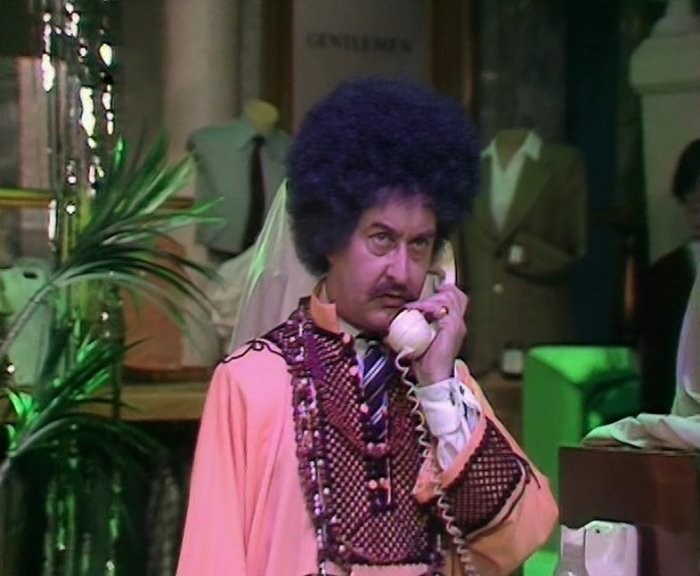
Are You Being Served? – The Old Order Changes (17th March 1977)

EDojFDoXkAAXHai.jpg

As you might have gathered from the above screencap, this is one of the (many) episodes where the staff of Grace Brothers are required – for a very flimsy reason – to indulge in a spot of dress up.  But by the start of the next episode all of the changes we see have been completely forgotten ….

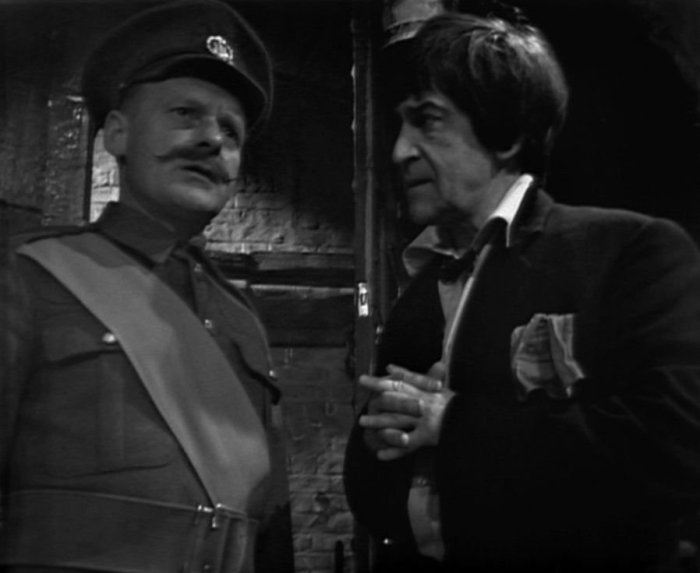
Doctor Who – The War Games (April – June 1969)

EDo7DxqWwAAx2NS.jpg

Continuing my rewatch tribute to Terrance Dicks (following Horror of Fang Rock) with this large slab of 1960’s Who. I’m taking it nice and easy (I’m sure some people have watched all four hours in one go, but that would several steps too far for me). I’m still finding that the story is as good as ever.  Yes it’s pretty leisurely, but every episode or so there’s a notable new arrival (some of whom only stick around for a short time) who ensure that the interest levels are kept up.

As always, I do slightly boggle at the performance James Bree. Possibly both he and Edward Brayshaw (who also delights in chewing the psychedelic scenery) deliberately decided to play things very broad.  Their performances certainly contrast sharply with the more naturalistic playing of most of the human soldiers (such as Graham Weston).

Blankety Blank (1st February 1985)

blankety blank.png

Some more Dawson-era Blankety Blank. This edition sees the above lucky contestant walking away with a toolkit (she puts a brave face on it).  What’s notable about the Dawson episodes I’ve seen recently is the fact that the female contestants are all young and personable (in contrast to Wogan times, when you’d also see a few oldsters).  Les doesn’t seem too disappointed though, as it’s fair to say he’s rather tactile with all the lady contestants.

Whatever Happened To The Likely Lads? – Strangers On A Train (9th January 1973)

lads

Okay, it’s slightly contrived that the lights go out just as Bob happens to stumble into Terry’s compartment (and also that they come back on at exactly at right dramatic time) but I think we can cut Clement and La Frenais some slack on this. Especially since the dialogue and interplay between the pair is so sharp right from the off.

I love poor Terry’s lament (he’s still in his thirties at this point remember) about everything that’s passed him by during the last five years (due to his army service). “I missed it all. Swinging Britain was just heresay to me. The death of censorship, the new morality, Oh Calcutta!, topless waitresses and see-through knickers …”

Callan: The Richmond File – Call Me Enemy (10th May 1972)

callan.jpg

Dug this one out for another watch on the anniversary of T.P. McKenna’s birth. Every scene between Woodward and McKenna is excellent (George Markstein’s script gives them so much to work with). A pity Markstein didn’t write any other Callan episodes but some of his other work (especially Mr Palfrey of Westminster) has a very similar feel and is well worth seeking out.

You can read my previous thoughts on Call Me Enemy here.

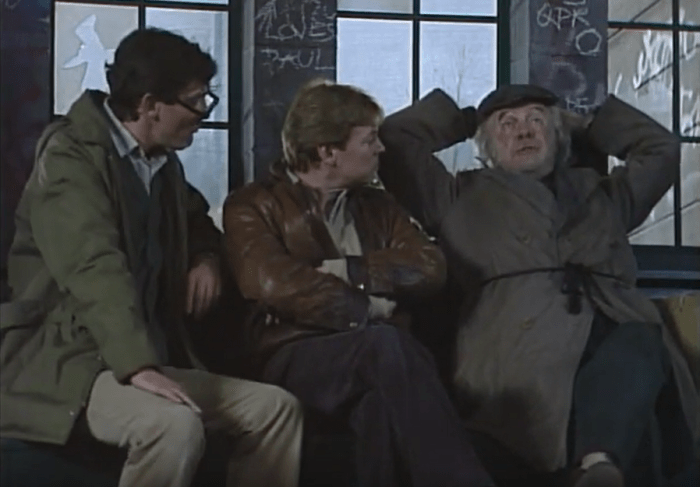
Shelley – Of Cabbages and Kings (15th December 1983)

shelley

Thanks to Forces TV, I’ve seen a few episodes of Shelley over the last week or so. Odd that they cut out the musical stings on the adcaps (and the picture quality is pretty mushy) so it does make me rather keen to dig out my DVDs for a more concerted rewatch.

Of Cabbages and Kings is an episode that’s always stuck in my memory – possibly this is down to the second half appearance of Fulton Mackay. He plays a friendly down-and-out who obviously sees two fellow souls in Shelley and Malcolm (Bruce Bould).  Shelley tends to work best when the plot is minimal – like this one. Cabbages is simply 25 minutes of three people chatting – a mini-play which works nicely as a snapshot of the depressed eighties (and sadly still seems relevant in today’s depressed times).

European Superstars – 1975

superstars

I’m continuing to chug my way merrily through the available Superstars shows on YouTube. In this one, David Hemery and Malcolm Macdonald are the plucky Brits, hoping to uphold the honour of the nation.

It may not be as well known as Kevin Keegan’s bike incident, but Hemery’s nasty tumble in the steeplechase is an edge of the seat moment (well slightly).  Having watched a fair few of these now, because Hemery often pops up it’s easy to be invested in his fate.  As ever, the dips and squat thrusts make for compelling viewing.

Mr Palfrey of Westminster – The Honeypot and the Bees (25th April 1984)

p05

Michael Chapman’s The Honeypot and the Bees feels quite different from what’s come before – this is mainly due to the way that Mr Palfrey is sidelined until the last twenty minutes or so. Therefore whilst Blair is following this week’s person of interest, Air Vice-Marshal Conyers (Richard Johnson), Mr Palfrey is spending his time critiquing the singing talents of choirboys ….

It has to be said that part one is a bit slow.  But then it does need to set up the mechanics of the story – namely the fact that Conyers is conducting an affair with Anna Capek (Catherine Neilsen), the stepdaughter of a known foreign agent, Stefan Horvath (Denis Lill).

But there are some areas of interest – chiefly the scenes where Conyers is seen interacting with (for the time) some cutting edge computer technology.  Floppy discs are very much the order of the day here. In a pre-internet world, crucial defence information is stored on a single floppy disc and this could spell disaster for the NATO alliance if it fell into the wrong hands.

This seems a little hard to believe (network computers were around at this point and would have negated the need for Conyers to carry the disc on his person at all times) but for the sake of the story we’ll have to let it go.

The relationship between the Co-Ordinator and Mr Palfrey has undergone something of a gear change since last time. They don’t interact a great deal, but when they do they appear to be on the same side.  However it may be that Mr Palfrey is simply keeping a quiet counsel – for example, when the Co-Ordinator speaks to Admiral Frobisher (Frederick Treves) Mr Palfrey maintains a watching brief for a while. What he’s thinking about we can only guess.

Alec McCowen had an excellent gift of stillness – Mr Palfrey often appears to be immobile and slow to respond, but the fact that McCowen is so frequently dialled down only serves to heighten the focus on Palfrey’s character. Palfrey’s pleasant (on the surface anyway) interrogation of Conyers’ daughter, Melissa (Leonie Mellinger), is the point where he really starts to go to work.

It doesn’t quite hit the heights of Markstein’s efforts, but The Honeypot and the Bees, once it gets going, is very worthwhile. And whilst he may not be a household name today, Richard Johnson’s casting would have been something of a coup at the time (the fact his name comes up last on the credits seems to be acknowledging this).  At first Conyers – by falling for such an obvious trap – appears to be extremely foolish, but by now the viewer should be wary about taking everything they see at face value.

p06

Grange Hill Series Seven and Eight coming to DVD from Eureka DVD in November 2019

817beC0BnmL._SL1500_

It’s good to see that, a year following the release of series five and six, the next two series of Grange Hill are slated for release this November.  And if the front cover is to be believed then this DVD will also include the 1981 Christmas Special (which was left off the previous DVD).

Given its school disco setting, it was assumed that music clearances had scuppered its release – so possibly the clearances have now been sorted or there may be trims/music substitutions. Time will tell.

As for series seven and eight, it’ll be good to retire my old off-airs and revisit these two years.  For me, series seven has always felt like it was treading water somewhat – by this point GH would have benefited from the introduction of some fresh blood (although we’d have to wait until the following year for a new crop of first years).

Gripper (apart from a brief cameo) is missed.  At least they didn’t attempt to replicate his character and Jimmy McClaren (Gary Love) is fitfully amusing from time to time (although his villainy does seem quite restrained compared to Gripper’s rampaging).  Possibly the most interesting thing about Jimmy’s inclusion in the series is that it enables Roland to make the switch from victim to bully.
Jeremy Irvine’s swimming pool demise (Grange Hill‘s second pupil fatality) is the clear dramatic highpoint whilst there’s a generous (three episodes) amount of time set outside the school. Two episodes focus on the mock UN summit hosted by David Bellamy (they also feature a young Gina Bellman) whilst the third centres around the odd couple of Mr Baxter and Roland, who find themselves in trouble during an orientating weekend.
If series seven felt at times like an inferior companion to series six, then series eight initiated a major shake-up.  Most of the fifth-formers failed to make it to the sixth form – only Stewpot, Claire and Precious survived.  Indeed, had it not been for the plotline of Stewpot’s infatuation with Annette (a bizarre twist – Claire might have been a bit of a moaner, but surely she was preferable to Annette) then they would have nothing at all to do ….

The new crop of first-years – Gonch, Hollo, Trevor, Calley, Ronnie – fell into familiar patterns. Gonch was simply another Pogo (always with his eye on the next money-making scheme) whilst Calley and Ronnie are this years Trisha/Cathy or Annette/Fay.

There’s conflict amongst the fourth-years, as the remnants of Rodney Bennett and Brookdale found themselves rubbing shoulders with the old GH hands (although I’ve never quite understood how three schools worth of pupils could fit into two school buildings).

By far the most significant new arrival is, of course, Mr Bronson (“You boy!”). For many he defines Grange Hill, although his era (series eight – twelve, 1985 to 1989) saw some peaks and troughs for the show (series ten in 1987 was a bit of a nadir for 1980’s GH as the running thread of Harriet the Donkey was stretched to breaking point).

For those who want more episode by episode information, posts on series seven can be found here whilst my thoughts on series eight are here.

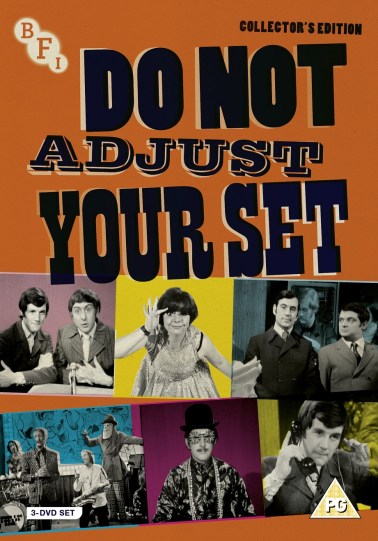
Do Not Adjust Your Set to be released by the BFI (16th September 2019)

image003 (1).jpg

Also released by the BFI on the same day as At Last The 1948 Show is Do Not Adjust Your Set, which looks to be equally as essential. The press release is below –

Do Not Adjust Your Set
Collector’s Edition

3-DVD set released on 16 September 2019

Do Not Adjust Your Set, a madcap sketch show with a cult following, was a huge influence on television comedy. Written by and starring Michael Palin, Terry Jones and Eric Idle, with performances and additional material by David Jason and Denise Coffey, it also provided a showcase for Terry Gilliam’s animations and the musical antics of art-school jazz-anarchists The Bonzo Dog Doo-Dah Band.

This collection brings together all the existing shows from the Rediffusion and Thames series for the first time. Among the five episodes entirely new to DVD, two were previously thought lost entirely. The research, reconstruction and restoration involved in creating this 3-DVD set and its companion, At Last The 1948 Show, both released on 16 September 2019, is the biggest TV project ever undertaken by the BFI National Archive. Both represent huge cross BFI projects with extensive work done by the Video Publishing and Technical departments, to ensure the best releases possible.

Do Not Adjust Your Set will be launched during a month-long season at BFI Southbank, It’s… Monty Python at 50, running 1 September – 1 October 2019, celebrating Monty Python – their roots, influences and subsequent work both as a group, and as individuals. The season forms part of the 50th anniversary celebrations of the beloved comedy group, whose seminal series Monty Python’s Flying Circus first aired on 5 October 1969. It will include all the Monty Python feature films; oddities and unseen curios from the depths of the BFI National Archive and from Michael Palin’s personal collection of super 8mm films; back-to-back screenings of the entire series of Monty Python’s Flying Circus in a unique big-screen outing; and screenings of post-Python TV (Fawlty Towers, Out of the Trees, Ripping Yarns) and films (Jabberwocky, A Fish Called Wanda, Time Bandits, Wind in the Willows and more). There will be a free exhibition of Python-related material from the BFI National Archive and The Monty Python Archive, and a Python takeover in the BFI Shop.

On Sunday 8 September at 17:40 in NFT1, there will be a special screening of two episodes of Do Not Adjust Your Set (one newly recovered). After the screening, a fully illustrated panel discussion will look back at the series and assess its importance within the Monty Python canon.

Special features
• Putting Strange Things Together (2019, 33 mins); Michael Palin recalls his early TV days, including Do Not Adjust Your Set;
• We Just Want You to Invent the Show (2019, 34 mins): Humphrey Barclay on his comedy career from Footlights to Rediffusion;
• The Uninvited Guest Star (2019, 5 mins): Tim Brooke-Taylor on his Do Not Adjust Your Set appearance;
• The Funniest Thing on English Television (2019, 7 mins): John Cleese reflects on the show’s impact;
• Bonzos on the Box (2019, 60 mins): new feature-length documentary on The Bonzo Dog Doo-Dah Band featuring Neil Innes, Rodney Slater, Roger Ruskin-Spear and ‘Legs’ Larry Smith;
• The Doo-Dah Discotheque (2019): a Bonzo video jukebox;
• The Intro and the Outro (2018, 2 mins): a newly filmed introduction by Neil Innes;
• The Christmas Card (1968, 3 mins); Beware of the Elephants (1968, 3 mins); Learning to Live With an Elephant (1968, 4 mins): animations by Terry Gilliam, newly scanned from his own 35mm film masters;
• Lost Listens (1969, audio): rare sound-only excerpts from missing Thames episodes;
• Do Not Adjust Your Scripts: reproductions of scripts from missing Rediffusion episodes;
• The Humphrey Barclay Scrapbook: photos, cuttings and drawings from the legendary producer’s personal archive;
• Illustrated booklet with an introduction by Michael Palin, an exclusive interview with David Jason, new contributions from Humphrey Barclay, Neil Innes, ‘Legs’ Larry Smith and Kaleidoscope’s Chris Perry, plus essay and episode guide by the BFI’s Vic Pratt, comedy context by the BFI’s Dick Fiddy and musical notes by The Doo-Dah Diaries’ David Christie.

Product details
RRP: £29.99/ Cat. no. BFIV2120/ Cert PG
UK / 1967-1969 / black and white / 361 mins / English language, with optional hard-of-hearing subtitles / original aspect ratio 4:3 / DVD9 x 3: PAL, 25fps, Dolby Digital 1.0 mono audio (192kbps)

At Last The 1948 Show to be released by the BFI (16th September 2019)

image003

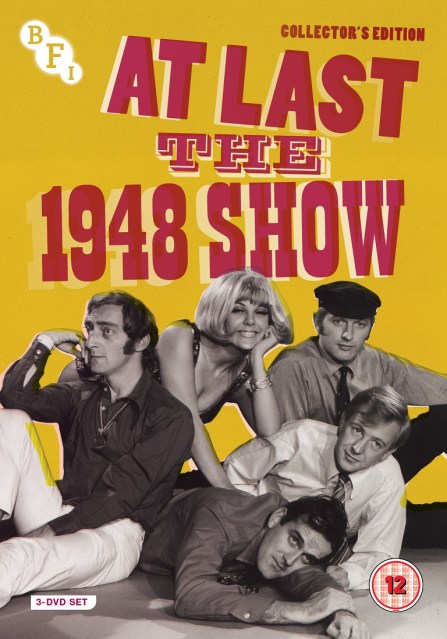
A three-DVD deluxe set of At Last The 1948 Show is due to be released by the BFI on 16/9/18. The press release, detailing the mouth-watering collection of extras, is reproduced below.

At Last The 1948 Show
Collector’s Edition

3-DVD set released on 16 September 2019

At Last The 1948 Show debuted in 1967: the silly, cerebral team effort of future Pythons John Cleese and Graham Chapman, Goodie-to-be Tim Brooke-Taylor and the marvellously fizzogged Marty Feldman. With laconic links by The Lovely Aimi MacDonald and set-pieces including the debut of the landmark ‘Four Yorkshiremen’ sketch, this pioneering comedy series is now ready to be enjoyed by a new generation of fans (or by old ones all over again). The research, reconstruction and restoration involved in creating this 3-DVD set and its companion, Do Not Adjust Your Set, both released on 16 September 2019, is the biggest TV project ever undertaken by the BFI National Archive.

Initially beginning work six years ago, a team of the BFI’s specialist TV curators gathered every episode known to exist. Further down the line, the Video Publishing and Technical Delivery teams work tirelessly to reconstruct missing episodes, using audio recordings and shooting scripts, to create the most complete collection ever assembled of this series.

This Collector’s Edition includes all 10 surviving shows, plus two near-complete reconstructions and a partially complete episode with full-length audio: all presented with an array of archive gems and newly filmed extras. The accompanying booklet includes an essay by curator Steve Bryant detailing the research and technical work that was carried out.

At Last The 1948 Show will be launched during a month-long season at BFI Southbank, It’s… Monty Python at 50, running 1 September – 1 October 2019, celebrating Monty Python – their roots, influences and subsequent work both as a group, and as individuals. The season forms part of the 50th anniversary celebrations of the beloved comedy group, whose seminal series Monty Python’s Flying Circus first aired on 5 October 1969. It will include all the Monty Python feature films; oddities and unseen curios from the depths of the BFI National Archive and from Michael Palin’s personal collection of super 8mm films; back-to-back screenings of the entire series of Monty Python’s Flying Circus in a unique big-screen outing; and screenings of post-Python TV (Fawlty Towers, Out of the Trees, Ripping Yarns) and films (Jabberwocky, A Fish Called Wanda, Time Bandits, Wind in the Willows and more). There will be a free exhibition of Python-related material from the BFI National Archive and The Monty Python Archive, and a Python takeover in the BFI Shop.

On Sunday 8 September at 15:00 in NFT1, there will be a special screening of At Last The 1948 Show (two recovered editions from the series plus an exclusive preview of some of the extra material from this DVD release) followed by a Q&A with Tim Brooke-Taylor.

Special features
• Something About the Year 1948 (2019, 31 mins): John Cleese on working with Humphrey Barclay, David Frost and Graham Chapman, At Last The 1948 Show and the path to Python;
• We Just Wanted to Be Silly (2019, 38 mins): Tim Brooke-Taylor recalls his comedy influences and the making of At Last The 1948 Show;
• John Cleese in Conversation (2006, 36 mins): John Cleese joins comedy historian Dick Fiddy at BFI Southbank to reflect on At Last The 1948 Show;
• Reconstructing At Last The 1948 Show (2000, 44 mins, audio): the BFI’s Steve Bryant in discussion with Aimi MacDonald, Tim Brooke-Taylor and audiophile Ray Frensham;
• John Cleese Introduces At Last The 1948 Show (2003, 2 mins): an introduction recorded for the BFI’s Missing Believed Wiped event;
• At Last It’s Dee Time (1967, 12 mins audio): the At Last The 1948 Show team’s unruly guest appearance on the BBC chat show;
• Now and Then: Marty Feldman (1968, 25 mins): Feldman discusses the nature of comedy in this unedited interview, shot for a never-broadcast Bernard Braden documentary series;
• The Humphrey Barclay Scrapbook: rare photos and drawings from the legendary TV producer’s personal archive;
• At Last Some Pictures: image gallery of promotional material;
• Reproductions of two scripts for the incomplete episodes;
• Illustrated booklet with Not Quite 500 Words by Tim Brooke-Taylor, Steve Bryant’s account of recovering and restoring the programmes and a look at the show’s place in comedy history by the BFI’s Dick Fiddy, plus episode notes with transmission dates and credits.

Product details
RRP: £29.99/ Cat. no. BFIV2121/ Cert 12
UK / 1967-1968 / black and white / 320 mins / English language, with optional hard-of-hearing subtitles / original aspect ratio 4:3 / DVD9 x 3: PAL, 25fps, Dolby Digital 1.0 mono audio (192kbps)

Terrance Dicks (1935 – 2019)

td

Growing up, Terrance Dicks’ Doctor Who novelisations were my staple reading diet. The Target range had other writers of course, but some of their books (like the two by David Whitaker) seemed a bit intimidating (especially the dense Crusaders).

Terrance may sometimes have been criticised for being a plain, straight-ahead sort of writer, but it’s undeniable that his books were perfectly pitched for his young readership. When I was slightly older I had the confidence to tackle The Crusaders, but had Terrance not been there first then maybe I wouldn’t have made the leap.

It’s a common refrain to hear people say that Terrance Dicks taught them to read, but it’s also true in so many cases ….

His contribution to Doctor Who in general was immense.  He wrote and co-wrote some excellent stories, but his work as possibly the series’ most efficient script editor really stands out. Having witnessed the script chaos which bedevilled the series during the late Troughton era, Dicks (with Barry Letts as a strong and supportive producer) brought stability back to the production office.

Dicks’ formula was simple – find a small group of writers you could depend on (Robert Holmes, Brian Hayles, Terry Nation, Malcolm Hulke, Robert Sloman, Bob Baker & Dave Martin) and then keep on recommissioning them. Sounds simple, doesn’t it?

Outside of Doctor Who, his work as first script editor and then later producer on the Classic Serials is worthy of further investigation. Like Doctor Who they had to get by on fairly small budgets and this might be one of the reasons why eventually they fell out of favour. By the mid eighties, glossy all-film productions of classic novels were the way forward and the humbler Classic Serial began to look second best by comparison. But many have stood the test of time well and still entertain today (such as the 1984 Invisible Man).

I’m also prepared to fight the corner of Moonbase 3, a series which I have a great deal of love for. It’s far from perfect (indeed Letts and Dicks’ series opener is especially stodgy) but it’s something I find myself drawn back to again and again. Although I’m not quite sure why ….

This evening I’ll be spinning Horror of Fang Rock in tribute. Not only is it a great story, it’s also a perfect example of Dicks’ no-nonsense style. Forced at the eleventh hour to cobble together a new story (after his previous submission was vetoed) Dicks didn’t panic – he simply rolled up his sleeves and got on with it.

Fang Rock is archetypical Doctor Who – take a group of bickering characters, trap them in an enclosed space with no hope of escape and then kill them off one by one.  It’s hard to go wrong with such a formula and Dicks didn’t disappoint.

He was inadvertently helped by Tom Baker who was in an even more stroppier mood than usual – but his disdain for the script, his co-star, Pebble Mill studios, director Paddy Russell and just about everybody and everything else actually seemed to work in Fang Rock‘s favour. Tom’s Doctor was never more alien and foreboding than he was in this story – and even if this was something to do with the fact that Tom was missing his regular Soho drinking haunts, no matter.

The Fang Rock DVD also boasts a lovely Terrance Dicks documentary and a lively commentary track where Dicks, Louise Jameson and John Abbott swop stories (often about Tom of course).

Judging by the way Terrance is trending on Twitter at the moment I’m sure I won’t be alone in paying tribute tonight. RIP sir and thank you.

terrance

Superteams (1979)

Having spent some time recently watching Superstars, I’ve now moved onto Superteams. The formula remains the same, except – of course – this time around the sporting greats compete in teams rather than as individuals.

Superstars could often get quite competitive, but the 1979 Superteams was in a whole different league.  Today it’s Athletes against Footballers, with David Vine, Ron Pickering and Barry Davies on mic duty.

A large dollop of the intensity came from Geoff Capes, the captain of the Athletes. The highlight (or flashpoint) has to be the basketball match – which turns into a grudge match very, very quickly.  The Footballers delight in running rings around the Athletes for most of this one, much to the displeasure of Capes, who struggles to keep his anger in check ….

Sadly there’s no dips or squat thrusts, but the obstacle course is good fun.  It’s fascinating to see just how much it means to everybody – this is no light-hearted stroll in the park.

It’s in sharp contrast to Superstars, where more often than not there was a strong sense of camaraderie mixed in with the desire to win.  Or maybe this one was just especially tetchy (the 1980 Superteams is also on YT so I think I’ll be checking that out next).

The final challenge – tug of war – did seem to favour Capes’ side (he’s a formidable anchor man) but the result was in the balance right until the end. With everybody, especially the trio of commentators, taking it very seriously (plus the interaction of the locals who – at times – literally find the events occurring on their doorsteps) this is good fun and, at times, quite gripping.