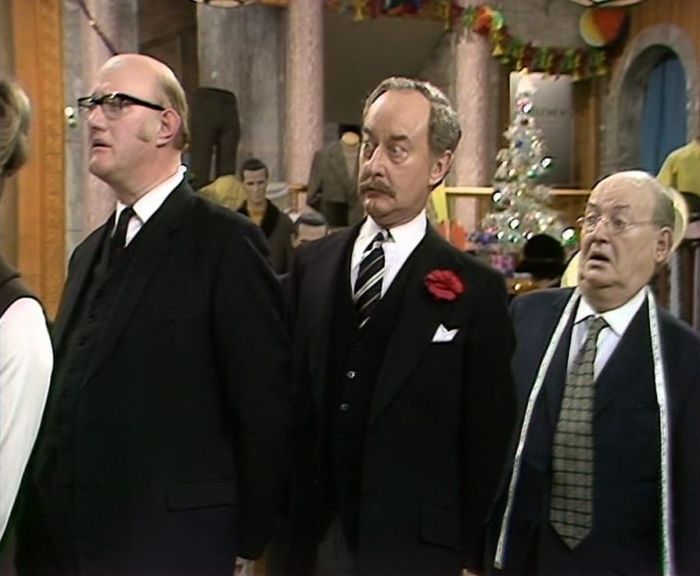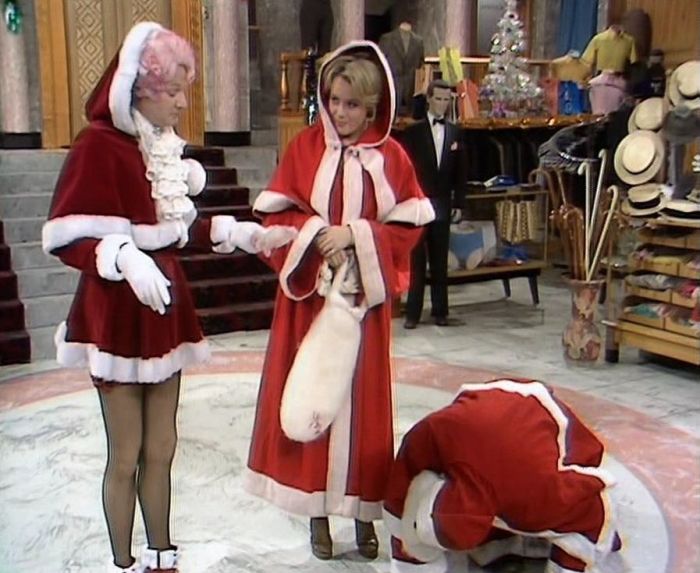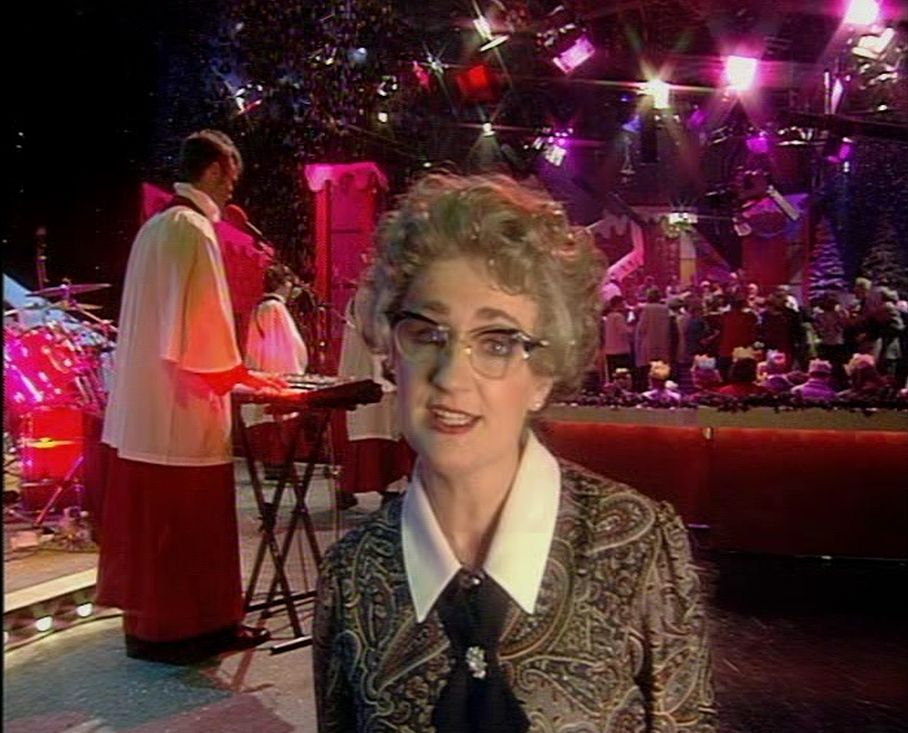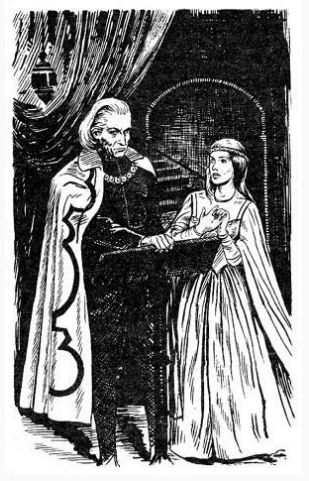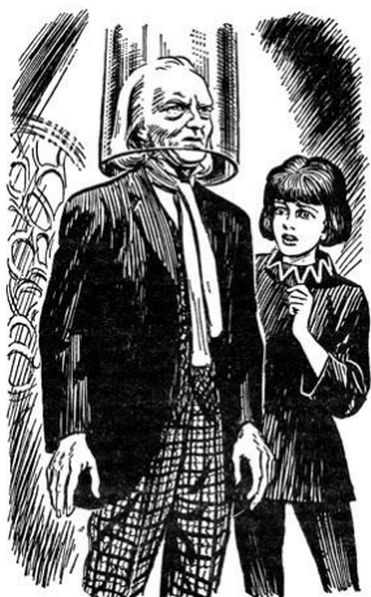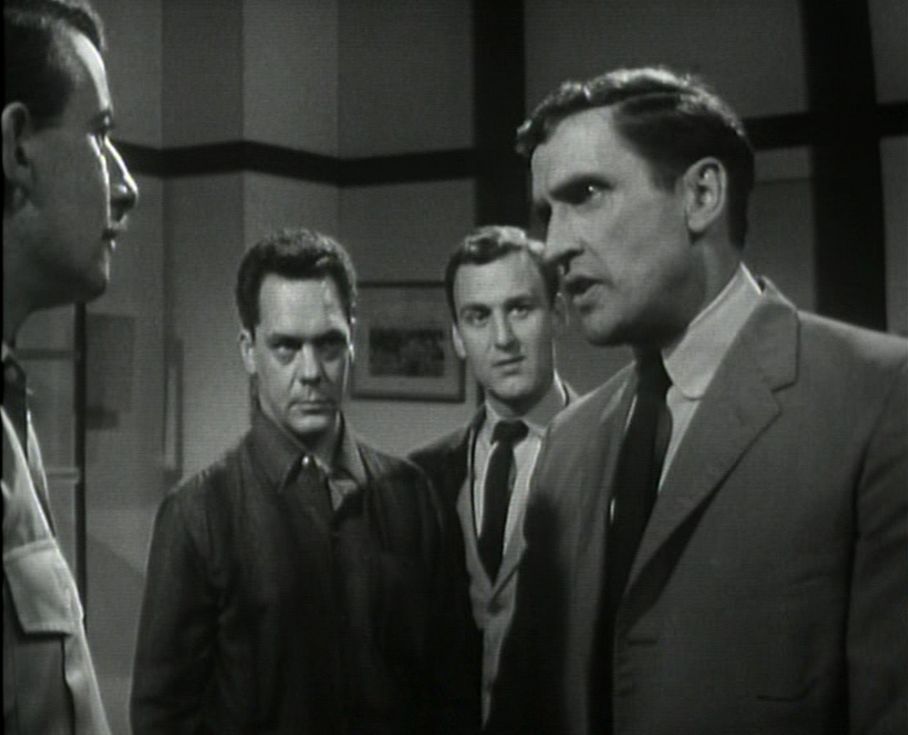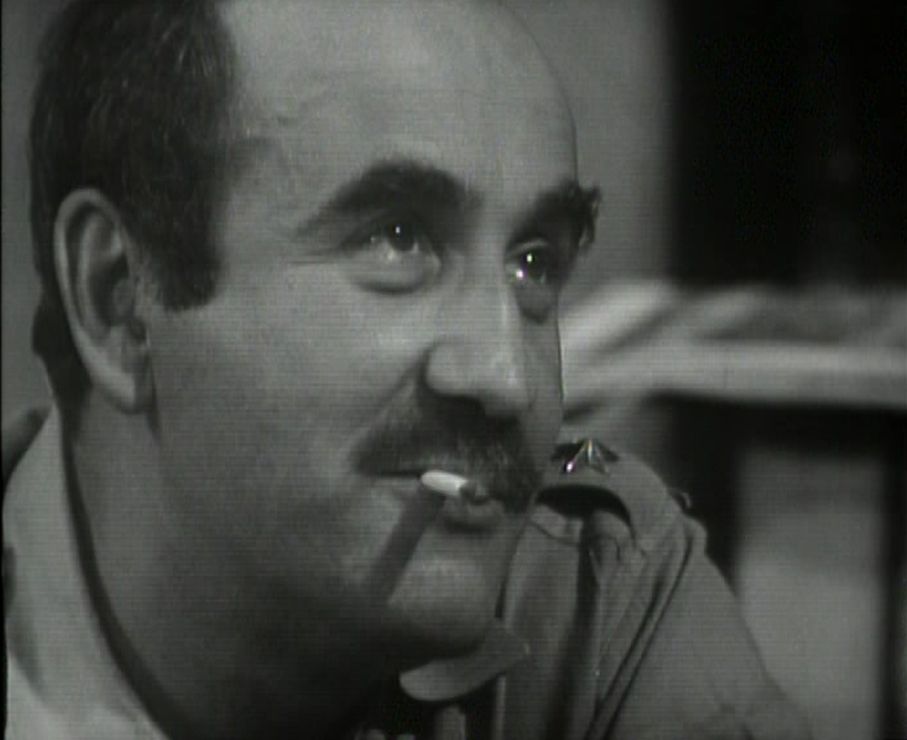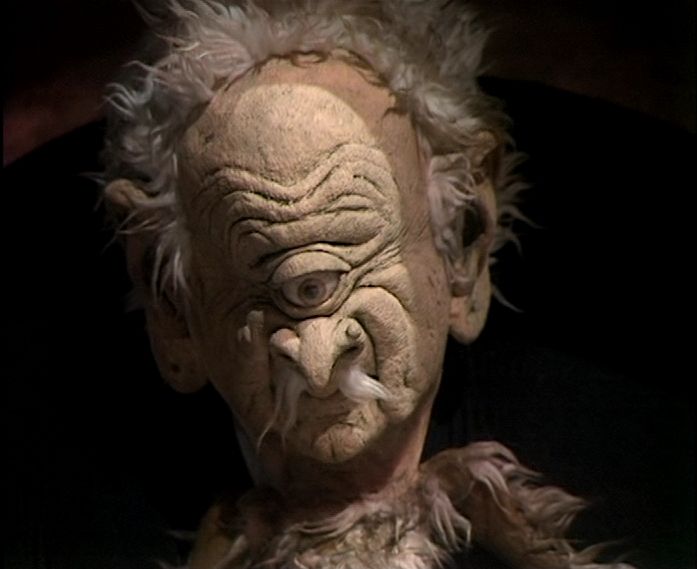
Blakes 40. Blakes 7 40th Anniversary Rewatch – Series Three, Episodes Eight to Ten

Rumours of Death

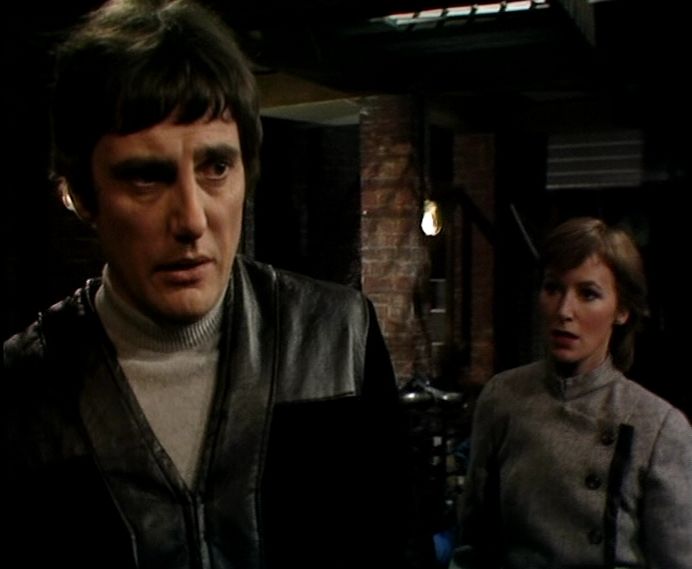
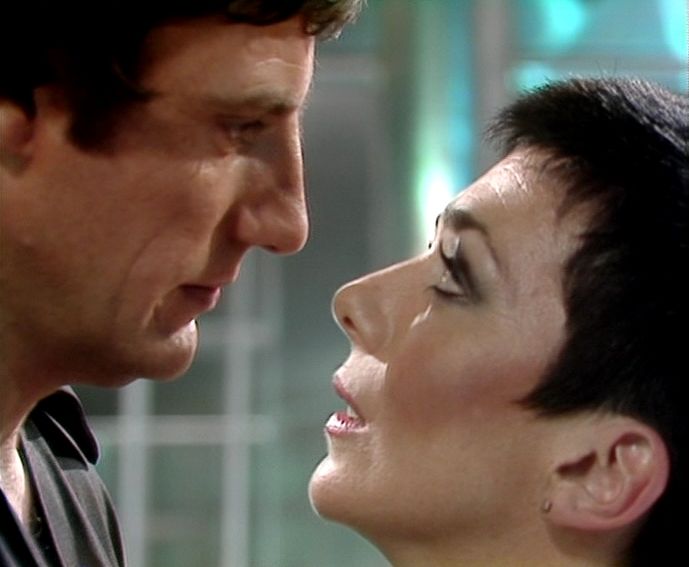
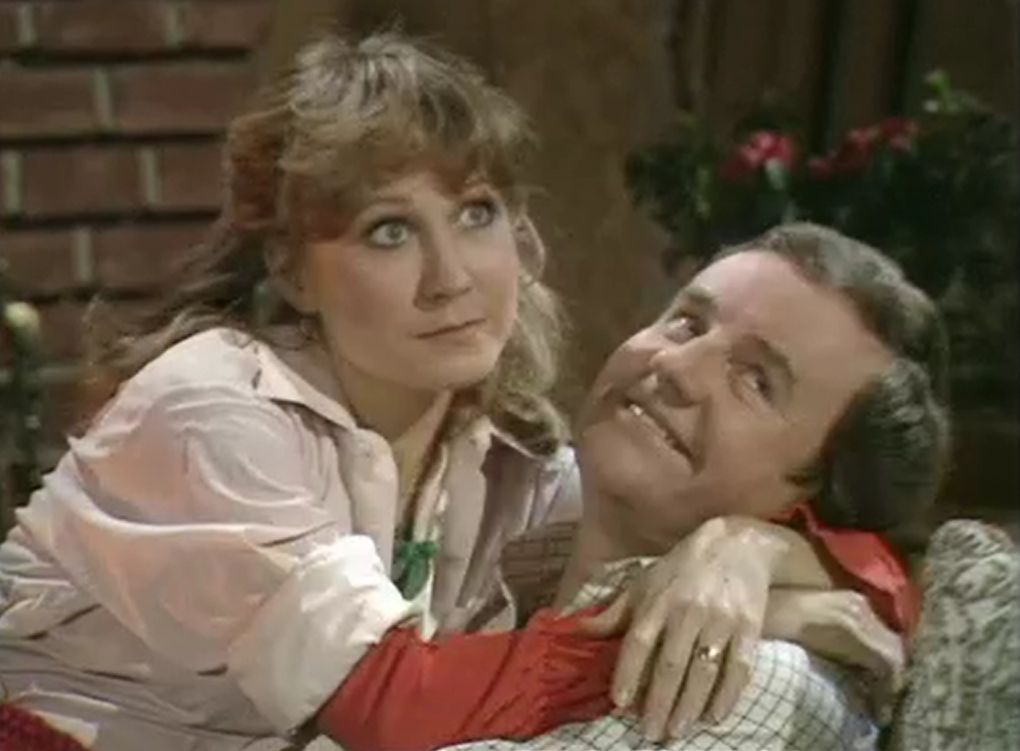
I love the cold opening – a pity that the show didn’t do more of this. Unshaven and in pain, we share Avon’s disorientation as he’s visited in his cell by Shrinker (John Bryans). The prison cell is a simple set, but off-camera screams from other, less fortunate, inmates helps to create a sense both of scale and oppression. Fiona Cumming’s direction here, and throughout the episode, has some nice choices – with Shrinker standing and Avon sitting, the low camera angle reinforces the Federation man’s dominance (at least initially).

Avon’s ruthlessness is perfectly demonstrated in this episode (as well as his single-minded desire to withstand anything – even days of torture – to achieve his ultimate goal). Whether this is a good or bad thing is debatable – it’s easy to argue that the seeds of his eventual downfall were sown here. After killing the most important woman in his life (who betrayed him) it surely would make killing the most important man in his life (whom he believed had betrayed him) much easier.

After some of the more pulpy sci-fi stories of series three, Rumours of Death is a pleasingly straightforward thriller/spy yarn. And whilst the palace revolution – and Servalan’s temporary dethroning – was achieved rather easily, this could be taken as an illustration of just how tenuous her grip on power was at this point.

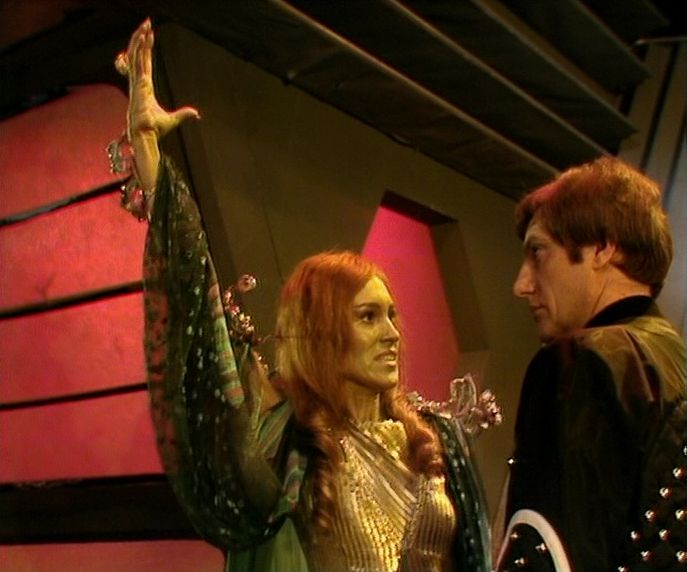
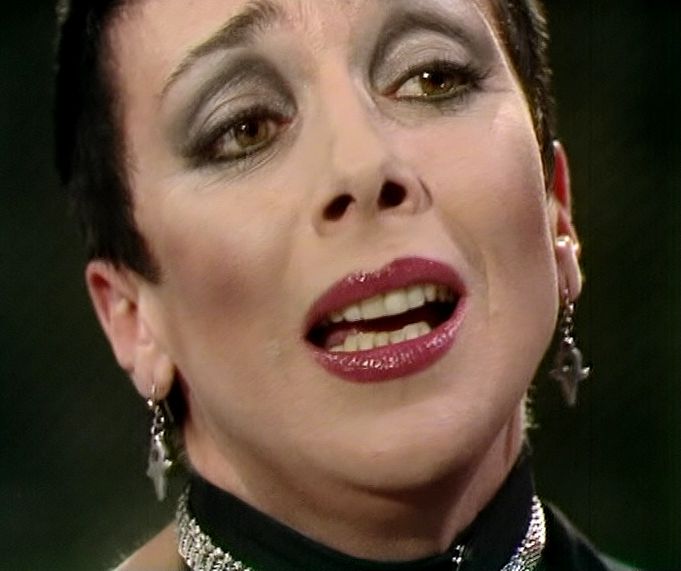
Jacqueline Pearce doesn’t have a great of screentime, but her scenes with Avon are pulsating (especially “It’s an old wall, Avon, it waits. I hope you don’t die before you reach it.”). Although once again it’s remarkable that Avon and Servalan keep on running into each other when they’ve the whole galaxy to play with.

Greenlee (Donald Douglas) and Forres (David Haig) are a couple of interesting characters – Federation types who also seem like fairly ordinary people. The fact they’re a likeable double-act helps to blur the lines between the “good” and “bad” sides. Sula (Lorna Helibron) is another example of this – is she a pure rebel, keen to restore democracy with a People’s Council, or does she just have her eye on replacing Servalan?

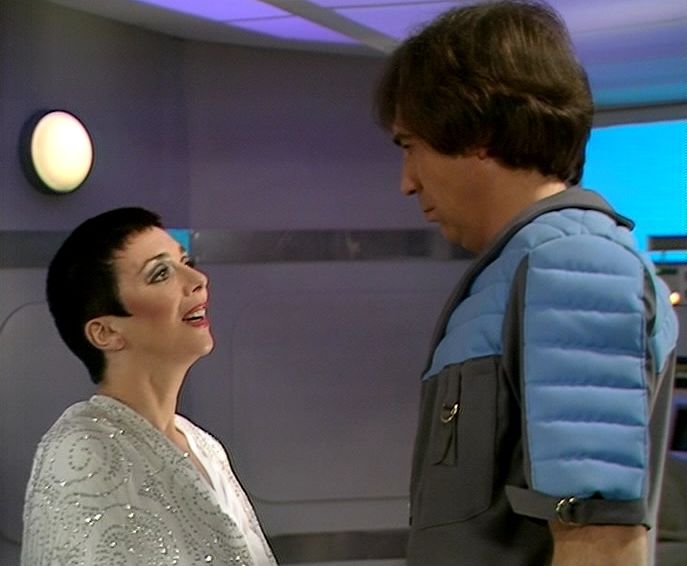
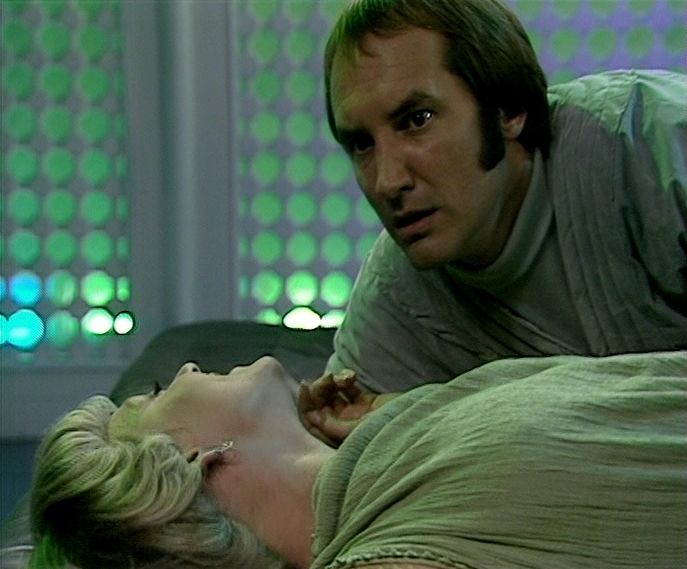
The revelation that Sula was Anna (and therefore everything Avon thought he knew was wrong) means that he has – in his own mind – no choice but to kill her. Whether she did really love him (as her dying words suggest) is another of those moments that’s open to interpretation. And that’s one of the reasons why Rumours of Death is such a good episode – few B7’s have this level of nuance. Who do you trust and who do you disbelieve?

Although the episode Blake wasn’t even a gleam in Chris Boucher’s eye when he scripted this one, in retrospect it’s easy to see how even at this point Avon was firmly set on the road to Gauda Prime.

Sarcophagus

You can’t help but love and respect a story which begins in such an oblique and bewildering fashion. Sarcophagus‘ first five minutes pass by with no explanation, although the roles of the masked servitors will become clearer later on (when we see the Liberator crew occupying the same positions).

As with most of S3, there’s a definite feeling of ennui hanging over the crew. With no particular goal in sight, they spend their time doing relatively little (you know things are desperate when Vila and Avon are indulging in a game of space draughts). Tarrant’s asteroid (“something else to chase” as Cally says) is the latest example of a mission which seems to be designed more to keep them busy, than for any other pressing reason.

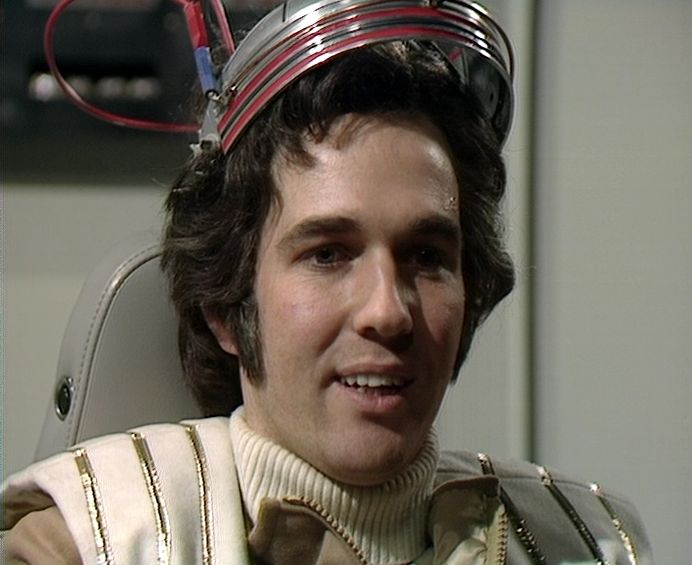
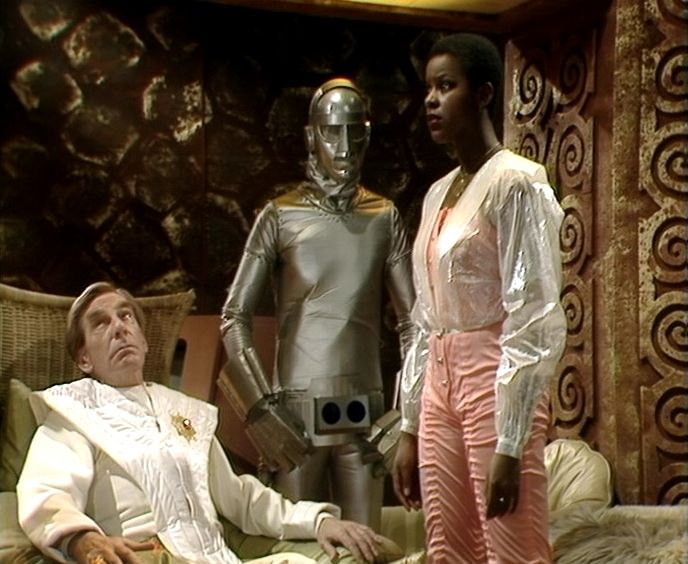
Largely set aboard the Liberator and (apart from some non-speaking extras) solely centered around the regulars, Sarcophagus may have been designed as a cheap show, but Tanith Lee was able to work with these limitations and unlike, say Breakdown (another Liberator heavy story), ensure that everybody was well served by the script. Avon and Cally top and tail the story (with other intriguing scenes scattered throughout), Tarrant might be his usual annoying self when interrogating Cally early on, but he gets a decent scene with the alien later (although largely it feels like he’s just softening her up for Avon’s killer blow). Dayna gets to warble a tune(!) whilst Vila’s conjuring tricks (with a dose of non-diegetic sound) ends up as a decidedly creepy moment.

Easy to see why this is a slightly marmite story, since it’s almost totally a tale of dialogue and concepts with little or no action. But I’m glad that Boucher took a chance on a television novice like Tanith Lee, as both of her B7 stories are ones which repay multiple viewings.

Ultraworld

Vila seems to have had a nervous breakdown, that’s the only possible explanation I can find for his behaviour in this episode (chuckling with Orac at a series of lame riddles and gags). One sample will suffice – “Where do space pilots leave their ships? At parking meteors”. True, in the end this becomes an important plot point, but it’s still incredibly lame (you can’t blame Michael Keating, he could only work with the material he had, but the script gives him little scope to portray Vila as anything over than a childish buffoon).

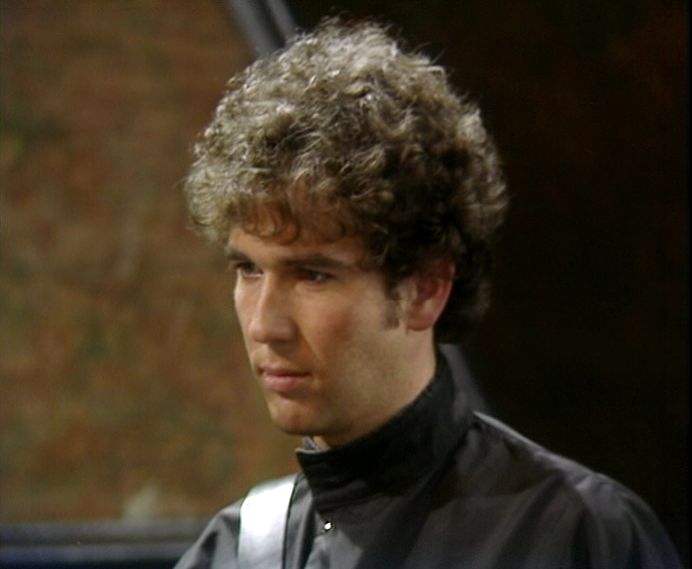
Jan Chappell, who spends most of the episode unconscious, also has limited room to shine. So with Vila out to lunch and Cally asleep, that leaves the trio of Avon, Tarrant and Dayna. This does have its compensations – especially as we’re treated to some typical Avon jibes (when Tarrant declares that he takes calculated risks, Avon counters “calculated on what? Your fingers?”). And with Avon sitting most of the second part of the episode out, this leaves Tarrant and Dayna at the forefront – it’s notable how Tarrant takes control (even if you sense he really doesn’t know what he’s doing).

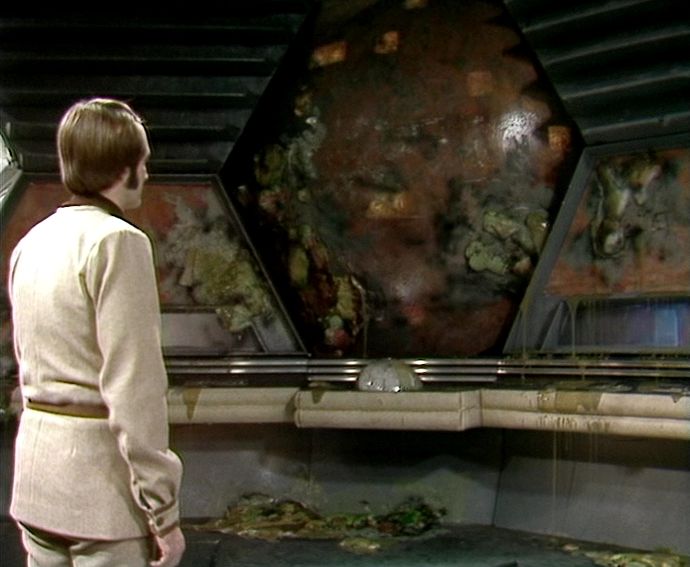
Although Ultraworld had a fairly small guest cast, it doesn’t seem to have been a particularly cheap show. The modelwork is impressive (the huge pulsating brain is gloriously icky whilst the capture of the Liberator is another nice sequence – albeit a bit wobbly). Location filming at the Camden Town shelter also helped to create a sense of space.

Of course the story is a very silly run-around (Trevor Hoyle, like Tanith Lee, was a science-fiction novelist and a television novice, but their two S3 stories couldn’t be further apart – one was lyrical and layered, and the other was called Ultraworld). This is a story that you sense Hoyle wasn’t taking terribly seriously.

Especially played for laughs is the scene where the Ultras decide that Tarrant and Dayna should demonstrate the human bonding ceremony. Dayna seems up for it (“kiss me. Come on. I can’t be all that repulsive”) as she, ahem, sets to work on Tarrant. The way the Ultras are looking in (“has the bonding ceremony begun?”) sets the tone of this sequence.

Everything’s sorted out with embarrassing ease – Cally and Avon might have had their memories stolen but luckily Tarrant was able to find their data stores just lying about. A pity they weren’t swopped around, as an episode with Avon stuck in Cally’s body (and vice-versa) would have been very interesting.

It’s silly, but it’s fun.

Blakes 40. Blakes 7 40th Anniversary Rewatch – Series Three, Episodes Five to Seven

Harvest of Kairos

This one is odd, very, very odd. For just this episode, Tarrant has become the unopposed leader of the group (Servalan keeps chuntering on about his command skills, and when she boards the Liberator once again reminds everybody that Tarrant’s the boss). Wat’s Avon doing whilst Tarrant’s running the show? He’s staring at a rock he’s found (Darrow plays this episode like the Avon of S4 – whether that’s a good or bad thing depends on how much you enjoy S4).

Andrew Burt’s not a bad actor, but he’s woefully miscast as Jarvik (mind you, any actor would struggle with this role). From his first words (“Woman, you’re beautiful” as he grasps Servalan for a quick snog) it’s hard to keep a straight face whenever Jarvik has any dialogue.

How he temporarily humanises Servalan is interesting, but it’s a pity that it’s done in such a ham-fisted way. “When was the last time you felt the warmth of the Earth’s sun on your naked back? Or lifted your face to the heavens, and laughed with the joy of being alive? How long since you wept at the death of a friend?” Another actor might have delivered this with a little more subtlety, I’m afraid that Burt’s line reading only generated tears of laughter from me ….
Jarvik is a man. Tarrant is a man. Therefore they have to do what men do – face each other in combat. It’s possible that there’s an element of satire in Ben Steed’s script, but I don’t really think so – it seems we’re required to take everything at face value. The climax of the story (Jarvik is accidentally shot dead) is incredibly unconvincing (I assume the clock was ticking round to ten pm). But it does allow Tarrant to remind everybody that Jarvik was a special kind of man. A man’s man, you might say.

The creature is monumentally silly as well, but that’s the least of this episode’s problems. And yet, like Voice from the Past this is an episode that I still derive some pleasure from. It’s illogical and made on the cheap (Servalan seems to be flying around in a space station) but whatever else it is, it’s not dull.

City at the Edge of the World

Whether by accident or design, all the regulars get at least one starring episode during series three (Cally is especially lucky as she gets two – Children of Auron and Sarcophagus). City is Vila’s chance to shine and it’s nice to see Michael Keating given more to do for once than just act as the comic foil. The episode’s a bit of a run-around, but Colin Baker’s performance as Bayban helps to keep things ticking along nicely. Subtle his turn isn’t, entertaining it is.

Always nice to see Valentine Dyall, although he isn’t called upon to do much more than stand around looking noble. Carol Hawkins looks lovely, although Kerril’s sudden mood swing (from hating Vila to loving him) is a little hard to swallow. Maybe this was all just one of Vila’s soma induced dreams?

The relationship between Vila and Kerril is delightfully chaste (their ‘sex’ scene seems to mainly consist of them lying on adjoining couches). An agreeable romp then – not a story with great depth or impact but thanks to the performances it breezes along nicely.

Children of Auron

Oh no, not another story where Servalan attempts to steal the Liberator ….
On the plus side, Liberator pinching does very much play second fiddle to her other (frankly bonkers) plan – feeling a little broody, she intends to wipe out vast swathes of Cally’s people just so she can use their cloning facilities to create a race of mini-Servalans. But compared to Roger Parkes’ previous script (Voice from the Past) this seems quite sensible.

Auron never really comes alive as a planet. Their isolationist nature is touched upon (but if this is the case, why was a pilot tootling around in space?) and Ronald Leigh-Hunt does his usual gruff act, but it’s hard to really connect to the tragedy that befalls them.

Cally has a twin! I love Chris Boucher dearly, but sometimes his script-editing was odd. Cally has a twin? Fair enough, but pulling the same trick with Tarrant a few episodes later makes this harder to swallow (you can’t help but expect the same thing to happen with Avon, Vila and Dayna too).

Odd that Zelda wasn’t given more to do, although her final scene with Cally was touching.

All the regulars get some decent lines (plus Paul Darrow has some serious brooding time) but it’s really Jacqueline Pearce who gets the best of the script. Even though Servalan once again displays an astonishing lack of judgement, it’s impossible not to feel something after she’s tricked into destroying her embryos. “They were mine, I felt them die”.

Rio Fanning and Ric Young (as Deral and Ginka) offer some light relief (although I’ve a feeling this wasn’t intended). Poor Servalan, good men must be hard to find if these two are the best she can come up with.

Serious points off for the chucklesome ending (almost as bad as Breakdown – we’ve just witnessed a catastrophe, so let’s have a bit of a laugh). Children of Auron is a bit static and wordy (and the plot isn’t exactly watertight) but it’s a solid character piece.

Blakes 40. Blakes 7 40th Anniversary Rewatch – Series Three, Episodes One to Four

Aftermath

The great galactic battle is a bit of a damp squib – with various bits of reused footage being pressed into service. Interesting that Cally and Vila only play a small role in this one – partly this enables new arrival Dayna a decent slice of the action, but it also means that Avon can move centre-stage unchallenged. What are the odds that Servalan would have ended up on the same planet as Avon? Hmm. If that’s hard to swallow, then so is the fact that Avon and Servalan immediately lock themselves into a hate/hate (with maybe a dash of love) relationship.

How many words had they previously exchanged? Judging from what we see here, they seem like the best of enemies with a lengthy history, which isn’t the case at all. Avon’s roughhousing (“Imagination my only limit? I’d be dead in a week”) is played nicely.

My interest always flags when hairy primitives pop up, although since they only feature in a fairly minor subplot it’s not too much of an issue (the Avon/Dayna/Servalan triangle is the main point of interest during this story). Josette Simon makes an instant impression whilst Paul Darrow easily steps up to the mark as a leading man. And another good cliffhanger!

Powerplay

I’m not the greatest S3 Tarrant fan, but he does have a decent introductory episode. Not quite sure though weren’t more explicit about making him a rogue Federation officer rather than just another freedom fighter. Although maybe Tarrant was fibbing about his freedom fighter status – this would have been an interesting angle to develop at a later date.

Michael Sheard is entertainingly gruff and Darrow and Simon continue to work well together. On original transmission, I was sure that Blake was the secret killer. Alas, that was a bit wide of the mark.

Cally doesn’t do a great deal but Vila’s subplot – especially his “we’ve got you surrounded” shtick – is good fun. Mind you, his effusive appreciation of the lovely young ladies is so overdone that you just know a sting in the tail is coming.

Following Servalan’s encounter with Avon last week (straining credibility) this time she runs into Vila and Cally. It’s clearly a small galaxy.

I’ve always been fond of this one. The fairly small guest ensures that pretty much all the regulars get a good crack of the whip. Mind you, given the number of times I watched the VHS omnibus back in the day, it does seem odd not to be carrying on with Sarcophagus ….
Volcano

Some of the volcano stock footage looks familiar. Was it also used for the Doctor Who Inferno title sequence?
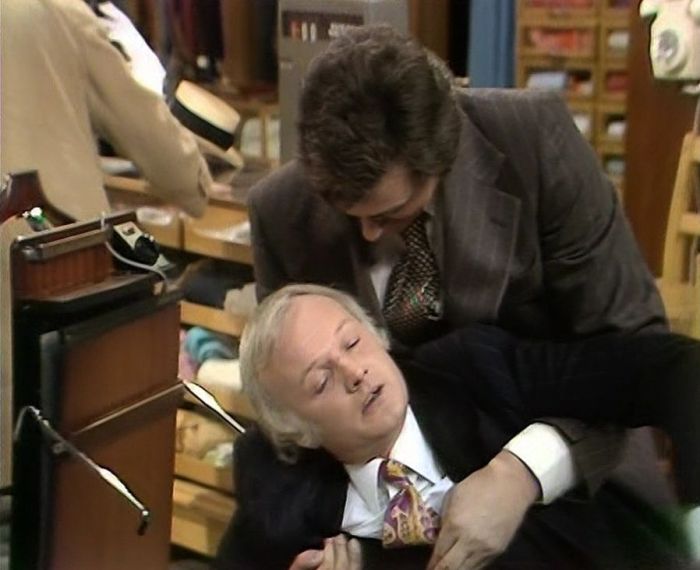
As it’s an Allan Prior script it’s probably best to ratchet down your expectations. The planet Obsidian does at least boast one decent actor – Michael Gough as Hower – but even he struggles with most of the dialogue. Malcolm Bullivant, as Hower’s son Bershar, is pretty wooden throughout though.

Things aren’t much more promising on the Federation front – Ben Howard (as Mori) is operating in Travis (Brian Croucher) territory. The fact that he, and a small group of Federation troops, manage to take over the Liberator should be a standout moment, but it turns out to be something of a damp squib.

The battle fleet commander (Alan Bowerman) maintains the generally low standard of the guest cast.

Why did they gag Cally but not Vila? Anyway, it’s pretty pointless to gag a telepath ….

There are a few bright spots though. With only Avon and Vila left aboard, Vila has to step up to the mark after Avon is injured. He taunts Servalan very nicely. Vila doesn’t do much in the story, but STILL gets many of the best lines.

Servalan’s plan (she wants the Liberator, then at the last minute decides she doesn’t) sums up the incoherent nature of the story.

Dayna and Tarrant get a nice slice of the narrative down on the planet, even if Hower and Bershar aren’t great conversationalists. They do possess the most wonderful robot though. It’s hard not to take your eyes off him.

The most intriguing part of the story occurs when Tarrant tells Hower that they’re mercenaries and in exchange for the use of his planet he’d be in line for a percentage of the spoils. Was Tarrant fibbing or did he seriously think they’d be setting off for a life of crime as intergalactic pirates? I suppose this does anticipate later stories such as Gold though.

Not a very good story, but it’s fitfully entertaining.

Dawn of the Gods

I love the fact that everybody – except killjoy Tarrant – begins the episode by enjoying a nice game of Space Monopoly.

This is one of those stories which features a great many Liberator scenes. On the positive side this means there’s ample time to develop and explore the characters of the regulars, the negative is the sense that the story is proceeding at a snail’s pace.

The needle between Avon and Tarrant is entertaining though.

TARRANT: One day, Avon, I may have to kill you.
AVON: It has been tried.

I love Vila’s dazed comment as well (“I’m in hell — and it’s full of Avons”).

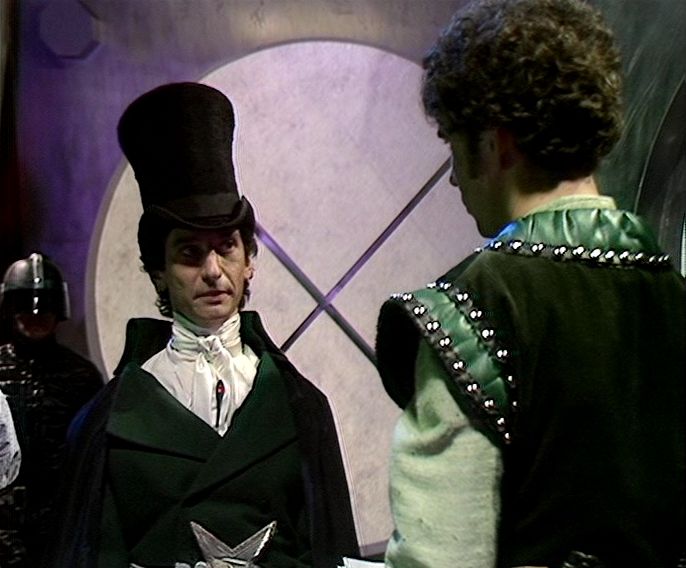
Actually, the Liberator part of the story is easily the best thing about Dawn of the Gods – when we reach the artificial satellite of Krandor things get very odd. The sight of the top-hatted Caliph for starters.

Groff, with his eye shade, also looks out of place, but at least he’s played by a decent actor (Terry Scully) who’s able to take the paper thin character and flesh it out a little, thereby ensuring that we care just a little about Groff’s fate.

Yet another mystical legend from Cally’s home planet, at least the Thaarn looks impressive, even if it’s difficult to work up much interest about his politely spoken desire to rule the universe.

The way the story stumbles to a conclusion is a bit of a problem, but this time round I didn’t find Dawn to be that painful (whereas in the past I recall it being much more of a slog). Perhaps I was just in a good mood today.

The Good Life – Silly, but it’s fun (26th December 1977)

Unsurprisingly, the message of Silly, but it’s fun is that you don’t have to spend a fortune in order to have an enjoyable Christmas – all you need is the company of good (no pun intended) friends.

The Goods, of course, have no other choice than to economise (Tom scavenging a Christmas tree – or at least part of it – from the greengrocers, Barbara using her craft skills to make a yule log with a rather substantial Robin). But on the plus side, it does mean that this year’s Christmas has only cost them fifteen pence!

But next door, commercialism is rampant – with Margo railing against tradesmen. David Battley is the tradesman in question, offering a wonderfully phlegmatic performance which was something of a trademark of his (a similar turn in The Beiderbecke Tapes immediately springs to mind).

Margo’s unhappy that her tree – part of her Christmas delivery – is slightly under the required height, so she decides that everything will have to go back (it’s all or nothing for her). Given that it’s Christmas Eve this seems a little reckless. I know that the seventies was another era, but surely nobody would have been expecting another delivery on Christmas Day? And yet, this is the crux of the story.

Suspension of disbelief also has to come into play when pondering the question as to why Margo’s left it so late to take delivery of all her Christmas provisions – not only the tree, but the food, drink and decorations. A severe lack of forward planning? Or maybe back in the seventies, Christmas really did begin on Christmas Eve and not – as it seems today – in late November ….

The upshot is that when no fresh delivery is forthcoming, she’s forced to ring up all her friends and fob them off from coming around (claiming that Jerry has chickenpox and therefore is out of bounds for the duration). Jerry’s “political” chickenpox cheers him up, as he wasn’t looking forward to spending yet another Christmas with all their friends, mouthing the same pointless trivialities at the same round of endless parties.

I daresay his wish (which came true) to simply have a quiet Christmas at home would have struck a chord with many ….

So Margo and Jerry spend Christmas Day with Tom and Barbara. It may just have been the especially potent peapod burgundy, but Jerry does get rather frisky with Barbara (although you can’t really blame him). The same sort of sexual tension doesn’t crackle with Tom and Margo (the mind boggles at the thought of that) but they do share a rather intimate scene in the privacy of the kitchen – although this is more about Tom forcing Margo to unbend a little, and embrace their silly Christmas revels.

It’s rather touching that Margo confesses that she’d like to, but simply doesn’t know how. But it doesn’t take long before she’s completely warmed up and throwing herself into all the party games with gusto.

Some sitcom Christmas specials, especially from the eighties onwards, tended to offer something more expansive than their usual fare. Silly, but it’s fun revels in the fact that nothing much happens except that the Goods and the Leadbetters have a jolly enjoyable Christmas day. The way it’s content to embrace the joy of simple pleasures may be one of the reasons why this episode always seems to strike a pleasing chord whenever it makes a Christmas appearance.


Top of the Pops – 1973 Christmas Special


For obvious reasons, many Christmas editions of TOTP are unlikely to ever surface again on British television (instead they’ll live out the twilight of their lives on YouTube and other streaming services). But it’s lucky that one which is mostly still available for rescreening – 1973 – is something of a corker …

Presented by Tony Blackburn (nice tanktop, sir) and Noel Edmonds, it’s a glamtastic forty minute treat. Well, maybe that’s overselling it – let’s say that the glam quotient accounts for a good half of the running time whilst the other half is more of a mixed bag.

Many people (including one positioned right behind Tony and Noel) are wearing impressive hats. That can only mean that Slade are in the building. They kick off proceedings with Cum On Feel the Noize, a piledriver of a song which gave them their fourth UK Number One single. Forty five years on it’s still ridiculously entertaining – as is Dave Hill’s remarkable clothing (I’m sure someone else has already observed that he appears to have come dressed as a Kraag, so I won’t crack that gag).

Donny Osmond (on film) brings the mood down with Young Love (not my cup of tea) but no matter, things soon get back on track with Suzi Quatro and Can The Can. Suzi, a vision in black leather, is very compelling (I believe there were other people on the stage with her, but I can’t remember what they looked like).

Her first UK number one (surprisingly it only stayed at the top spot for a week) Can The Can was another gem from the Chinn/Chapman writing team. 1973 was a pretty decent year for them, as they also penned several classic Mud tracks (including Dyna-Mite) as well as the Sweet standards Blockbuster and The Ballroom Blitz. Indeed, it’s a pity that The Sweet’s performance has been snipped from recent repeats (as has Gary Glitter, but I can live with that) .

Another change of mood as Tony introduces one of the surprise hits of 1973 – the Simon Park Orchestra and Eye Level. The theme to Van Der Valk, it’s always been a favourite of mine. It was composed by Jan Stoeckart. who worked under various pseudonyms – one of the better known being Jack Trombey. As Trombey, he composed a fair few library tracks, several of which were used as the themes for series such as Callan and Never The Twain.

Oh god, it’s little Jimmy Osmond and Long Haired Lover From Liverpool. Press the fast forward button quick ….

Up next is Tony Orlando and Dawn – Tie A Yellow Ribbon. Singing live, Tony certainly puts his all into this tale of a convict, his sweetheart, a tree, a bus-driver and a yellow ribbon. It’s cheesy stuff, but I love it.

Pan’s People interpret Gilbert O’Sullivan’s Get Down in their typically literal way (they spend their time wagging their fingers at some dogs and flouncing about – the girls that is, not the dogs). Indeed, the dogs fascinate me as they’re so incredibly well behaved, none of them move a muscle (well, apart from one who made an early exit).

After a spot of film (David Cassidy – Daydreamer) we’re back in glam mode with 10cc and Rubber Bullets. Well, it’s a glamish sound (albeit riffing classic-era Beach Boys) but the boys haven’t really come dressed for the occasion. Another favourite, it’s slightly amazing that the lyrical content didn’t earn the song a ban in the UK (maybe the jaunty music helped to divert people’s attention).

Peters and Lee perform their debut single, and by far their biggest hit, Welcome Home. There’s something very warm and very seventies about it. A track that’s aged well I think.

If the boys in 10cc didn’t make much of an effort clothes-wise, then you can always rely on Roy Wood and Wizzard. Teddy boys, an angel on roller skates, gorillas and Roy himself all make for an intoxicating mix. Oh, and the song’s pretty good too (See My Baby Jive).

Slade play us out with Merry Christmas Everybody. Sadly we miss the moment where Noddy Holder gets a pie in the face (but then some of the camerawork does seem a little off during this song) but no matter, it’s the perfect way to conclude a show that always brightens up my Christmas.

Coronation Street – 25th December 1963

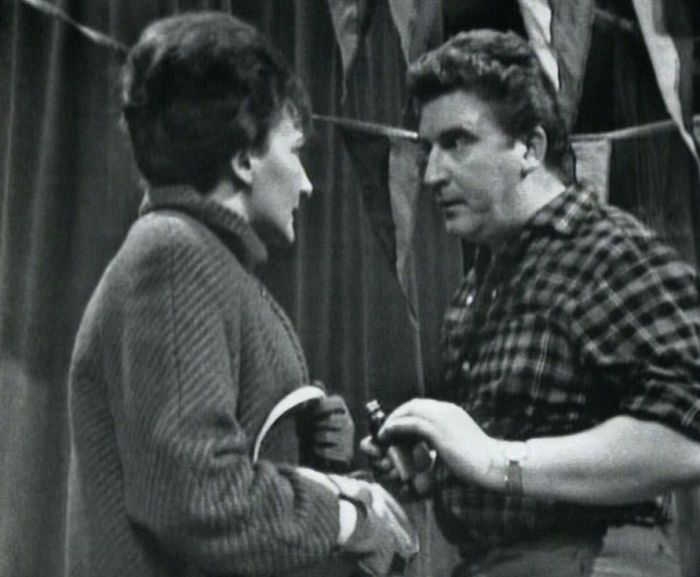
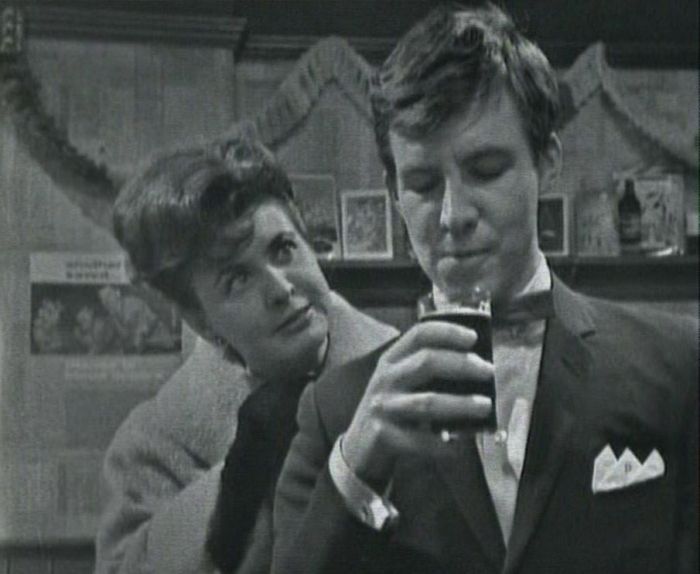
Episode 317, written by H.V. Kershaw, is a game of two halves. Part one has a slew of small pleasures, beginning with Miss Nugent timidly asking Len if the rumour she’s heard (that the evening’s entertainment at the Mission Hall will be the Street’s version of This Is Your Life) is correct. Len confirms this is so and offers Miss Nugent a swig from his bottle. She declines (“I know it’s the season, but I don’t much like drink”).  Nobody could squirm quite like the young Emily Nugent.

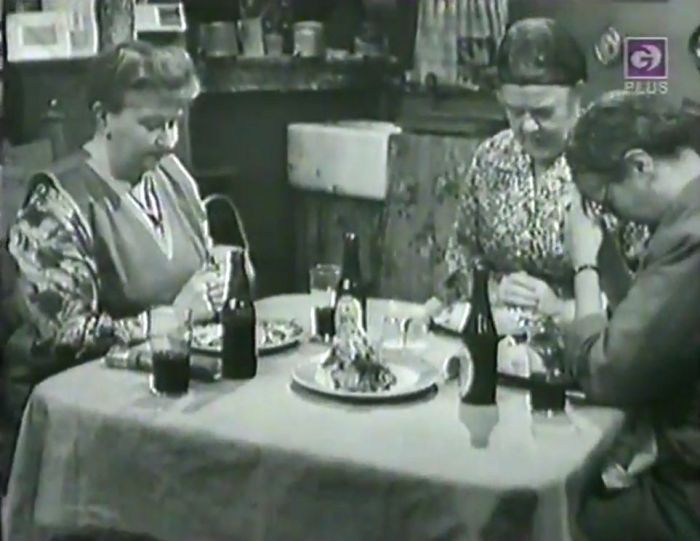
Christmas dinner with Ena, Minnie and Martha is a sedate and trouble-free occasion. Whilst Minnie and Martha do the washing up (their way of thanking Ena for the unseen fare) Ena muses. “If every family in England bought a leg of pork this Christmas and said ‘blow your turkeys’ they’d be three bob a pound next year”.

Who will be the This Is Your Life subject? Ena seems to relish the possibility that it might be her (seeing it as an opportunity to air some home truths in public) whilst Elsie has a simple request for Dennis (who has cast himself in the Eamon Andrews role) if she turns out to be the chosen one. “No Americans”.

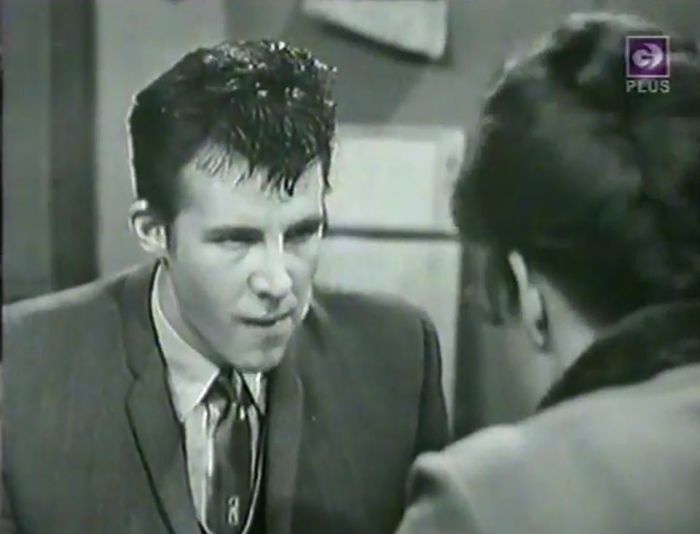
Len and Elsie find themselves flung together in a deserted Rovers. His sweet talking (well, sweet for Len anyway) charms her and she accepts a gin and tonic from him (he elects for a pint of mild). This costs him the princely sum of four and two.  Those were the days ….

Just before the end of part one it’s revealed that Annie Walker is the recipient of the big red book. This should be fun.

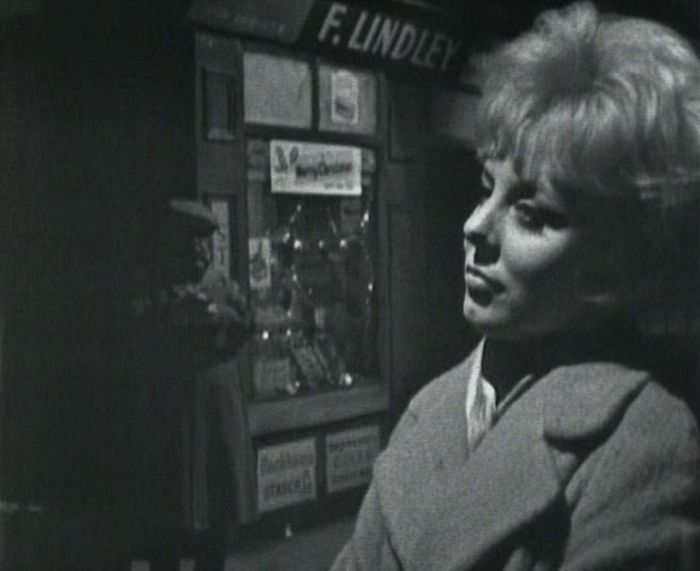
It does seem a little mean to leave an old man like Albert outside in the cold, waiting for the arrival of Annie and Jack’s children – Billy and Joan. The wind (a sound effect of course) helps to sell the illusion that it’s rather a nippy night. This was long before the outside street had been built, but the studio street – dimly lit – does look very effective, although the sound is rather dead (making it obvious at times that we’re inside rather than out).

The Street’s version of This Is Your Life mimics the television original, right down to having guests who are unable appear in person relay a pre-recorded message.  Arthur Forstythe-Jones (Ian Collin), who earlier in the year had seemed a little smitten with Annie, is cast in the role of her long-distance admirer.

The date of Annie and Jack’s arrival at the Rovers is a subject of mild debate. Dennis maintains it was January 1939 whilst Annie is convinced it was the 4th of February 1939. Ena, brought on with Minnie and Martha, elects to stick her oar in, also supporting the January date. That’s a nice moment, as is Minnie’s air of desperation when Dennis asks her what happened on that never-to-be-forgotten day when she met Annie in the Rovers for the first time.  Of course, Minnie’s forgotten. She eventually does remember, only for Ena to flatly contradict her story!

Doris Speed is called upon to switch between happiness (as Billy and Joan are wheeled out) and disgust (as her performance as Lady Godiva is dragged back into the light).  Nobody could do disdain quite like Doris Speed, so we’re in safe hands.

These embarrassing moments help to give the episode a comic spark, but it’s essentially a warm-hearted tribute (nice to see some old pictures of Doris Speed too). Most soap stars would have to wait until they were due to leave the series before receiving such acclaim, but not Mrs Walker.  An enjoyable twenty five minutes.

Coronation Street – 24th December 1962

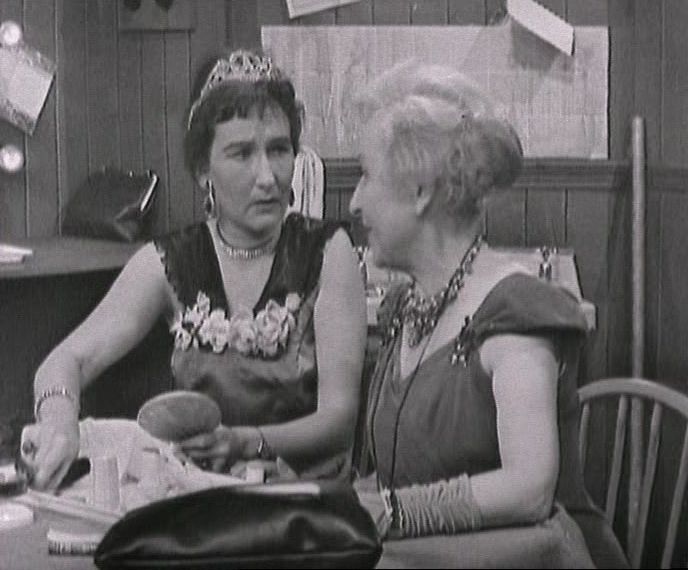
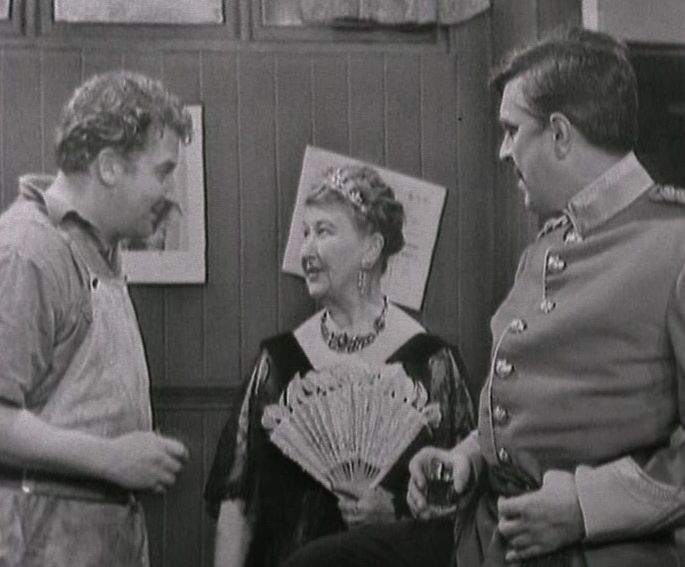
This year’s Christmas entertainment is an all-star performance of Lady Lawson Loses at the Mission Hall.  Miss Nugent has the plumb role of Mrs Gilda Montefiore (aka Lady Lawson), a notorious jewel thief who has eyes for young Gerald, Duke of Bannock (Ken Barlow) much to the dismay of his mother, the Duchess of Bannock (Annie Walker).

You won’t be surprised to hear that before the curtain goes up Miss Nugent is all of a fluster and works herself into a pitch of maximum anxiety. Mrs Walker is perfectly serene though – and offers Miss Nugent a little something to soothe her nerves.

The play is a somewhat impenetrable drawing room drama, but it draws some big laughs from the audience (unintentional ones, of course).  All of the pitfalls of am-dram are present and correct, from a curtain which refuses to open, doors which are similarly problematic and numerous forgotten lines and stumbles.

At one point, Minnie (cast in the role of Lady Rhona Philbeach) observes backstage that the audience really seems to be enjoying themselves. A beat later she concedes that they shouldn’t be laughing, but no matter – at least they’re having a good time.

Minnie looks very regal, it’s just a pity that we don’t actually see her perform on stage (we do hear second-hand that she delivered her big line without a stumble though).  It would have been nice to see Ena on stage as well, but she’s relegated to providing the pre-curtain entertainment with some tunes on the piano.  Once this duty’s over she’s able to take her place in the audience, where she and Martha offer a waspish commentary (plus they rustle a mean sweet paper).

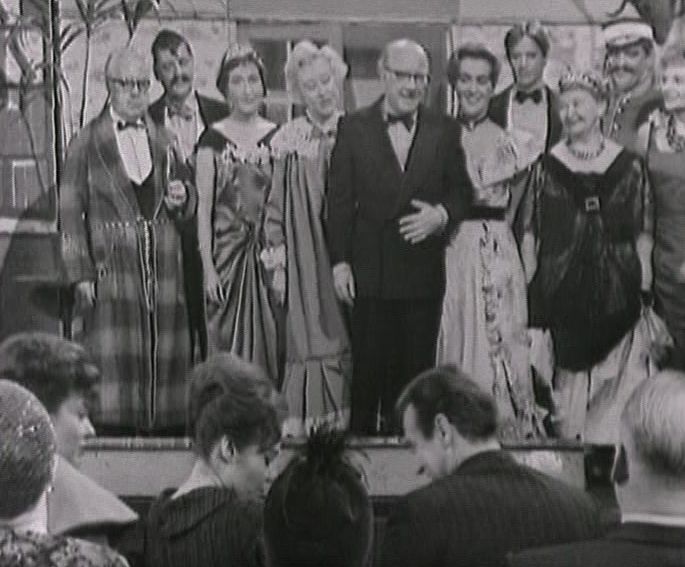
The most interesting thing about Pauline Shaw’s direction is that until the final scene all of the on-stage performances are viewed from the point of view of the audience at the Mission. This denies us any close-ups of the sweating actors, but it helps to sell the illusion to the viewers at home that we’re in the thick of the action.

Lady Lawson Loses is deliberately long-winded and not terribly interesting, which is a slight problem since it does take up a fair portion of the episode.  The mishaps are amusing enough (plus it’s always nice to see the regulars dressed up) but this is one of the less essential Christmastime episodes. I do like Mr Swindley’s closing speech at the curtain call though, which is rudely curtailed by Jed who closes the curtain with alacrity (like the audience, he’s clearly keen to hot-foot it to the pub!)

The final moment with a swooning Miss Nugent (buoyed through the second half thanks to a mixture of pills and alcohol) is another good touch. 

Coronation Street – 25th December 1961

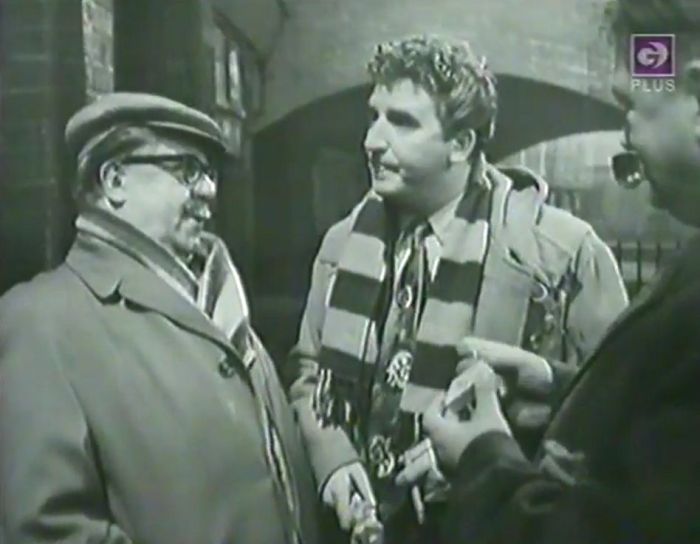
To begin with, there seems to be a clear division of the sexes. Whilst the men – in the shape of Albert, Frank, Ken, Harry and Len – are heading off to a football match, the women (such as Concepta and Elsie) are fretting about their Christmas lunches.

The episode opens with some boisterous children running down the street, but their antics are mild compared to Len – who’s waving his football rattle, bellowing at the top of his voice and dancing in the street with Annie Walker. Goodness, he’s irritating – not the sort of person you’d want to run into first thing on Christmas morning.

As for the match, it’s between two teams of ladies (which might be the reason why all the lads are up and about so early – if not, then they really, really, love football).

The notion that the menfolk have all the pleasure whilst the women are confined to the kitchen is challenged after we see Jack slaving away. Clearly that’s one household where the roles are reversed.  Jack, as always, has to be a man of many talents – not only doing a spot of cooking but also serving behind the bar. Annie must be taking it easy.

This year it’s Minnie’s turn to cook Christmas dinner for the others.  There’s a vague air of melancholy at work here (Martha decides that it’s “a funny Christmas isn’t it? More like a very long Sunday”).  Martha’s still grumbling as she tucks into her meal, but Ena – for once – is in a good mood. “Martha, goodwill to all men, including Minnie Caldwell. She may be wilful but she is human and she is our friend”.

The fragile peace doesn’t last long though (Ena swallows one of Minnie’s sixpences and chokes). Classic, classic comedy then ensues (Martha wonders if they should pat her on the back but Minnie decides not, as Ena might hit them back!). Poor Ena, all four sixpences (wrapped up in tissue paper and cotton) found their way into her portion of pudding. “Have you never heard of windpipes?” mutters a despairing Ena. Lovely stuff.

Prior to this, there’s another touch of sadness after Martha and Ena grumble that their families steer clear of them on Christmas day. It’s worse for Minnie of course, who has no family. But at least she has friends around her.

Ena/Minnie/Martha might be the Christmas highlight, but there are some nice character moments elsewhere as well. Ken and Frank share a moment of reflection as they celebrate their first Christmas without Ida. Lucky that Esther was on hand to cook them something, otherwise no doubt they would have gone hungry …

Hapless Harry continues to get an ear-bashing from the very shrill Concepta. You can see her point though.  Mind you, his present to her – a gold watch – does cheer her up somewhat.  At least for a short while.

Interesting that the Queen’s speech is still seen as the centrepoint of the day, at least for some (Annie, Concepta).  Annie’s total devotion to Her Majesty even extends to exhorting poor old Jack (who lest we forget has been on his feet all day) to stand up when the National Anthem is playing.

Christmas at the Tanners is rather fraught. Dennis, having seen that the cupboard was bare, went out for his meal, not knowing that Elsie had rustled up something as a surprise. So when he does return she’s determined to force-feed him, whether he likes it or not. Pat Phoenix and Philip Lowrie raise the roof for a few minutes, but things then settle down. Elsie and Dennis may scrap on a regular basis, but since neither has anybody else the spats don’t last for long.

The episode had a slightly fraught production, as Derek Grainger disliked elements of Tony Warren’s first draft. Warren allowed Grainger to rewrite it, but insisted that his name didn’t appear on the credits (so the fictitious Carol Nicholas was used instead).


Are You Being Served? – The Father Christmas Affair (26th December 1976)

AYBS? is a curious beast. No other series in the Croft/Lloyd and Croft/Perry canon has quite the same feel – this was a show that often resembled Frankenstein’s monster (in the way that numerous disconnected pieces were jammed together in order to form a whole).

I’m not entirely sure how the writing process worked – presumably Croft and Lloyd worked separately and then cherrypicked the best moments from each of their scripts. If so, that would explain how in today’s episode we jump from Mr Grainger performing the hits of Al Jolson to the whole department dressing up as Santa Claus ….

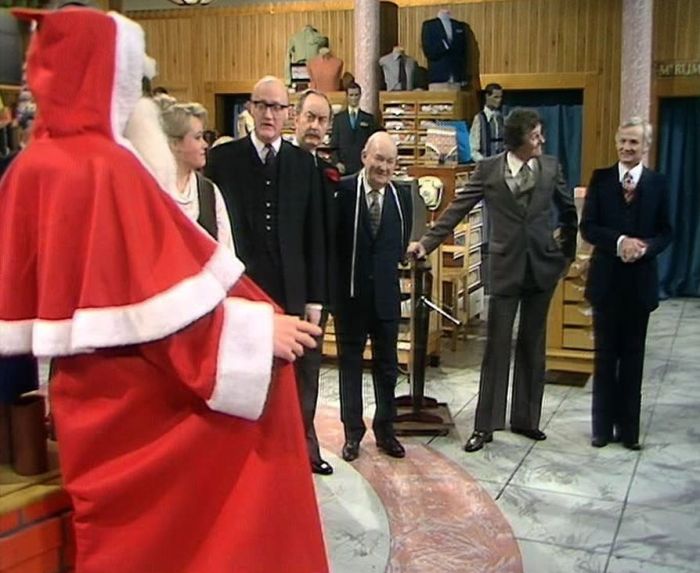
If there’s one moment from The Father Christmas Affair which has endured then it’s the flashing Father Christmas.  BBC Visual Effects seemed to relish working on AYBS? almost as much as they did on Doctor Who and this very silly Santa is well up to their usual standard.  It’s Mr Humphries’ reaction which really sells the moment though – but since we’ve already had the reveal (Santa – like Action Man – is bereft of working parts) this doesn’t quite satisfy.  Surely it would have been better not to have shown exactly what Santa was hiding under his robe, that way we would have been left guessing about why Mr Humphries suffered such a dramatic swoon.

If I was the sort of person to worry about these things, then I’d worry about who was looking after the customers whilst all the staff were crowded around this work of technological art. Luckily I don’t.

I always enjoy the canteen scenes. In the first phase of the series they provided Mr Lucas with the opportunity to grievously insult Mrs Slocombe on a regular basis (he doesn’t disappoint on this score). They also provided ample scope for some ramblings from Mr Grainger (again, we’re well served today).  Possibly the most notable thing about the scene is the way that Wendy Richard very visibly corpses on more than one occasion. Something was clearly tickling her fancy.

The middle part of the episode is where things get a little odd, although as I touched upon at the start, complaining about structure in an average episode of AYBS? seems to be a pretty futile pastime.

Mr Grainger has, once again, elected to entertain the old folks at Christmas. And since his impression of Winston Churchill has been deemed to be old hat, he’s decided to come right up to date – by impersonating Sir Stafford Cripps. There’s something rather delightful about this reference, which would have been dated in 1976 (after all, Cripps passed away in the early 1950’s) never mind forty or more years later.

This idea is quickly knocked on the head and it’s suggested that miming to an Al Jolson record would be a safer bet (although maybe not if you want to earn any repeat fees in the twenty first century …)

There’s no reason why Mr Humphries and Mr Lucas should have learnt such an intricate series of dance moves, but it provides us with a few minutes of entertainment, so let’s be generous (it is Christmas after all).

Since the automated Santas wern’t a great success, a human replacement has to be found. With a handy cash bonus on offer from young Mr Grace it’s no surprise that everybody rushes into their suits with alacrity. Mrs Slocombe has some lovely lines, reminding a nonplussed Mr Rumbold that since “Parliament has passed a Sexual Relations act” there’s no reason why a woman shouldn’t take on the role.

Mr Humphries once again steals the show with his Santa ensemble. I wonder what the rest of the cast felt, every time that Inman was handed a prime bit of comedy business? With a few exceptions they remained together for a long time, so presumably they accepted that there was a definite pecking order.

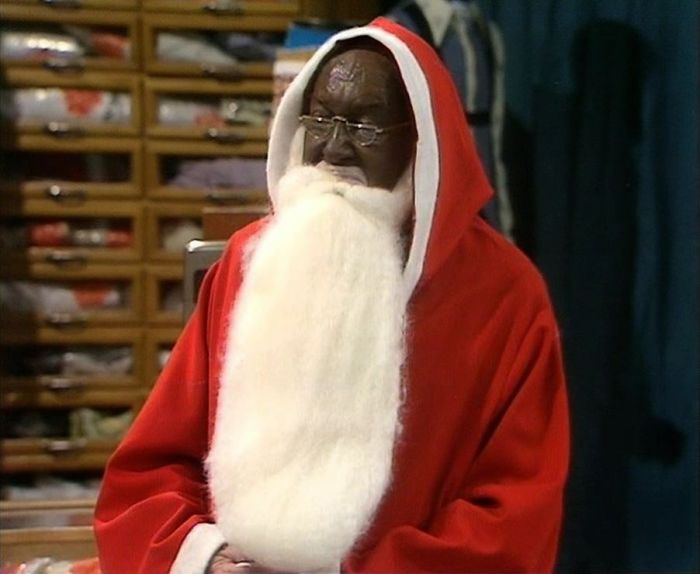
When Mr Grainger arrives he’s still blacked up as a Minstrel (he was unable to get the make-up off). This provides us with the episode’s punchline – a young child (Donald Waugh) is brought in to pick out the best Father Christmas from the line-up and naturally picks the one who – like him – is black.

This moment hasn’t aged well, but since AYBS? never comes across as unpleasantly dated as the likes of On The Buses, it seems more like an innocent gag rather than anything inherently racist. Certainly it’s of its time, but since this a strong – if bitty – Christmas special, it’s a slight shame to think that it’s probably not now going to be the first to get a repeat airing. Mind you, it last surfaced on BBC2 as recently as 2009, so you never know.

Are You Being Served? – Christmas Crackers (22nd December 1975)

cracker 01

It’s Christmas, so we can forgive the employees of Grace Brothers for indulging in a spot of dress up. Mind you, as the series progressed they tended to do it virtually every week ….

Christmas Crackers is a game of four halves.  It begins with a brain-storming meeting called by Mr Rumbold – although in his absence Captain Peacock moves into his seat with alacrity. He also quickly acquires Mr Rumbold’s cup of tea (the only one in a real cup – the others have to make do with plastic ones). It’s a reminder of the rigid herichary which exists at Grace Brothers.

Elsewhere the chat is, as you’d expect, very dependent on double entendres. Mrs Slocombe frets about her pussy whilst Mr Grainger – late once again – tells the others that Mrs Grainger failed to rouse him this morning. Mr Lucas supplies the obvious punchline.

The strangest moment occurs just after Mr Humphries suggests that they should organise a glee club.  This seems reasonable enough, but it tickles the fancy of one member of the audience who hoots in a very distracting fashion.  John Inman, pro that he was, carried on regardless which meant they didn’t have to go for a retake.

When Mr Rumbold eventually does turn up, he reveals that young Mr Grace has already decided exactly how the department should get into the Christmas spirit, thereby negating the previous ten minutes of chat.  This is either a clever touch or it reveals that the plotting of AYBS? was never that solid.

The second section of the episode revolves around a shop-floor spat between Mrs Slocombe and Captain Peacock.  Mrs Slocombe doesn’t like the high-kicking automated display model which has been wheeled onto the floor by the ever-annoying Mr Mash. She wants it removed, but Captain Peacock stands firm and tells her to return to her counter.  So she turns it on when his back is turned and the inevitable happens (it kicks him up the backside).  Mr Humphries then notes that it’s playing the Nutcracker Suite ….

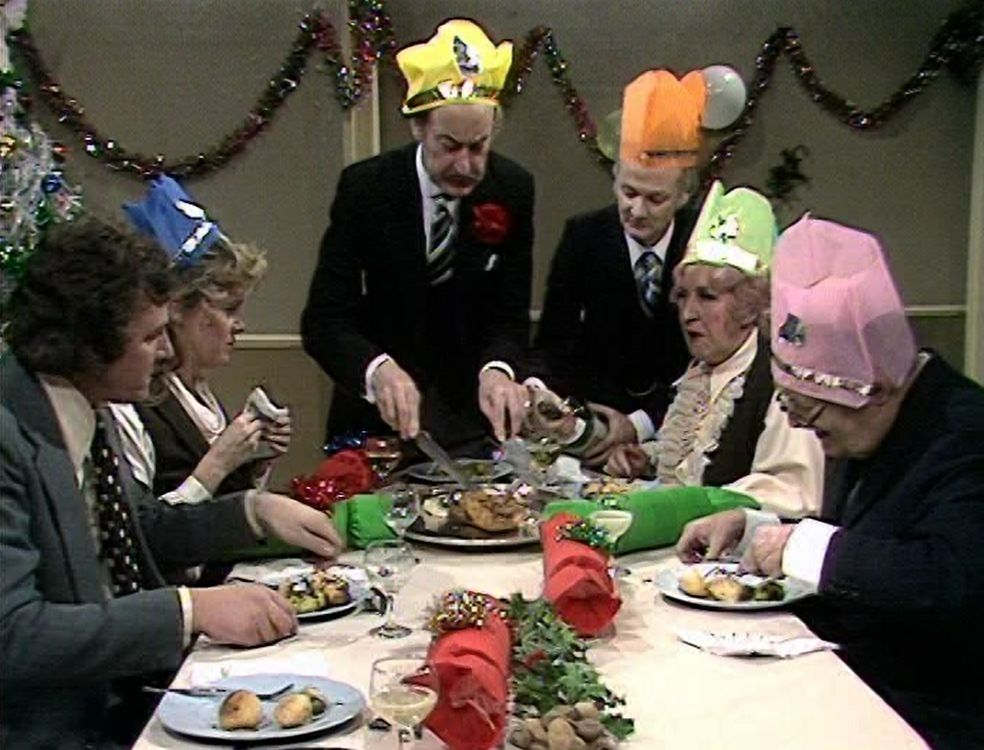
Christmas dinner is next on the agenda, which is a good example of the fact that Grace Brothers remains the most parsimonious of employers.  A microscopic chicken has to be shared amongst them all, whilst their Christmas pudding deflates after Mr Mash liberally sprinkles it with a dose of powerful wood alcohol.  Mind you, their crackers were very large and did include decent novelties, so it wasn’t all bad. Chief amongst these were Captain Peacock’s googly eyes and Mr Grainger’s sticky-out ears, which allows him to cosplay as Mr Rumbold.

This just leaves the reveal of the shop floor, now transformed into a very credible Christmas grotto (clearly all the money went on this, rather than the staff Christmas dinner) and the emergence of the regulars, all decked out in their costumes (this was young Mr Grace’s brainwave).  Whenever dress up was on the cards it seemed there was a strict pecking order (with Mr Humphries always being the last to show his face). This suggests that the writers had quickly latched onto the fact that Inman had clicked with the audience (he certainly gets the loudest whoop of appreciation – although it’s debatable whether his costume is the funniest).

Captain Peacock’s snowman is wonderful (I think it’s the addition of the pipe which really sells it) whilst Miss Brahams and Mr Lucas, as a fairy and Long John Silver, don’t let the side down. Mrs Slocombe’s Robin Hood isn’t too way out but it’s counterbalanced by Mr Grainger’s egg costume (my favourite). As always, Arthur Brough helps to sell the moment – Mr Grainger’s long-suffering miserablism is pitched at just the right level.  Like all Croft/Lloyd and Croft/Perry series, AYBS? was never the same once the original cast began to break up and Brough’s death (following the conclusion of series five) undeniably affected the balance of the show.

Once all the staff have assembled, out of nowhere music begins to play and also out of nowhere everybody starts to sing a song based on the way their day has gone.  This isn’t quite as jolting as raising a glass and wishing everyone at home a very Merry Christmas, but it’s not far short.

The Mrs Merton Show (27th December 1997)

m4.jpg

After 1996’s half-hearted Christmas titles, I’m pleased to report that things were much better this year – not only was there a snow effect, we also had sleigh-bells added to the opening theme (always a quick and easy way of Chrismassing something up). Well done!

1997 was a busy year for Mrs Merton. Following the transmission of series three during February and March, she and the gang then decamped to Las Vegas for several more shows. Fair to say that her humour didn’t always translate – with one show (featuring Tammy Wynette and La Toya Jackson) deemed unsuitable for transmission. Hopefully it still exists in the archives, as it would be fascinating to see it. Unlikely it’ll ever resurface, but you never know.

Mrs Merton’s final Christmas special opens with the audience in a very jolly mood. But she’s got just the answer to deal with these hi-jinks.  “There’s only one way to dampen down this party atmosphere, and that’s with my first guest – yes it’s very scary spice, Edwina Currie!”

The Merton/Currie encounter is as awkward as you’d expect although, at least to begin with, Currie is fairly game (allowing Mrs Merton to check the back of her neck to see if ‘666’ is tattooed there). However it doesn’t take long before the initial lukewarm temperature drops well below freezing.   The first flashpoint occurs when they have a difference of opinion about exactly when Currie’s husband left her – Mrs Merton maintains it was on the day her book was published, Currie says it was a week later.

It’s when Currie mentions that she’s currently suing somebody for making the same claim (and Mrs Merton should therefore proceed with caution) that you sense they’re not going to be the best of friends. There’s a fairly obvious edit immediately after this, which suggests that some contentious material was snipped out.

Currie’s ordeal isn’t over yet though, as Horace is plucked out of the audience and settles down on the sofa beside her. A heated political debate then breaks out for a few minutes, with Horace managing to hold his own whilst Mrs Merton sits back and has a chat to the audience.

Mrs Merton’s first words to Max Bygraves – “he’s not dead at all” – sets the tone for an enjoyable ramble in which Bygraves gives as good as he gets. Maybe he dwells a little too much on his double hernia operation (you do get the sense that once Max launches into an anecdote nothing’s going to divert him) but there are some nice nuggets uncovered along the way.

Every so often, a question from the audience actually paid dividends. And so it was here, after Max was asked about playing the Wigan Hippodrome in 1947 (where he had to face some tough audiences mainly made up of coal-miners).  The acrobat on before him broke both his arms, leaving Max to muse that he never got laughs like that ….

Max is corralled into a duet with Mrs Merton (whose singing voice hasn’t improved since last year) before the big closing number – Perfect Day. In the style of the BBC promo, each line of the song is taken by a different person. Mrs Merton couldn’t quite run to a full celebrity line-up, so her loyal audience filled the gaps with performances of variable tunefulness.

The Mrs Merton Show (24th December 1996)

m1

Alas, there’s no festive border slapped round the opening titles this year. Humbug!

Having enjoyed two series in 1995, Mrs Merton sat out most of 1996 with only this Christmas Eve special airing (series three would begin in early 1997).  It was the last show to feature three guests and whilst some of the caveats previously expressed still stand, this one is stronger than the 1995 Christmas special, mainly because the guests are a little more engaging.

It’s somewhat jolting to remember that we’ve gone far back in time – to a period when the likes of Rolf Harris and Gary Glitter could be mentioned in casual conversation without a sharp intake of breath. Since the first guest, Clive James, is an Australian he’s clearly the perfect person to discuss the enigma that is Rolf – especially his wobble board and digeridoo. Innocent times.

Later, Noddy Holder is quizzed about Gary Glitter, although it’s mostly innocent fun. Mind you, Mrs M doesn’t miss the opportunity to crack the gag about her son Malcolm taking his friend to a new nightclub named after the seventies glam rocker (that’s right, they were going up the Gary Glitter). Judging by the very muted reception this comment received I think we can assume it was a reference which flew over the heads of most of her audience.

Both Clive and Noddy are good fun, with Clive musing about whether people up t’North say t’North (they don’t apparently) and Noddy reminiscing about his younger days as a window cleaner (although Mrs Merton was concerned that climbing up ladders in those big platform boots would have been tricky).  There’s also time for a quick audience burst of Merry Christmas Everybody – although it seems a bit remiss to have Noddy on and not get him to perform his party piece.  But there was clearly only room for one musical guest and it’s pretty obvious who has stolen the hearts of both Mrs Merton and the audience ….

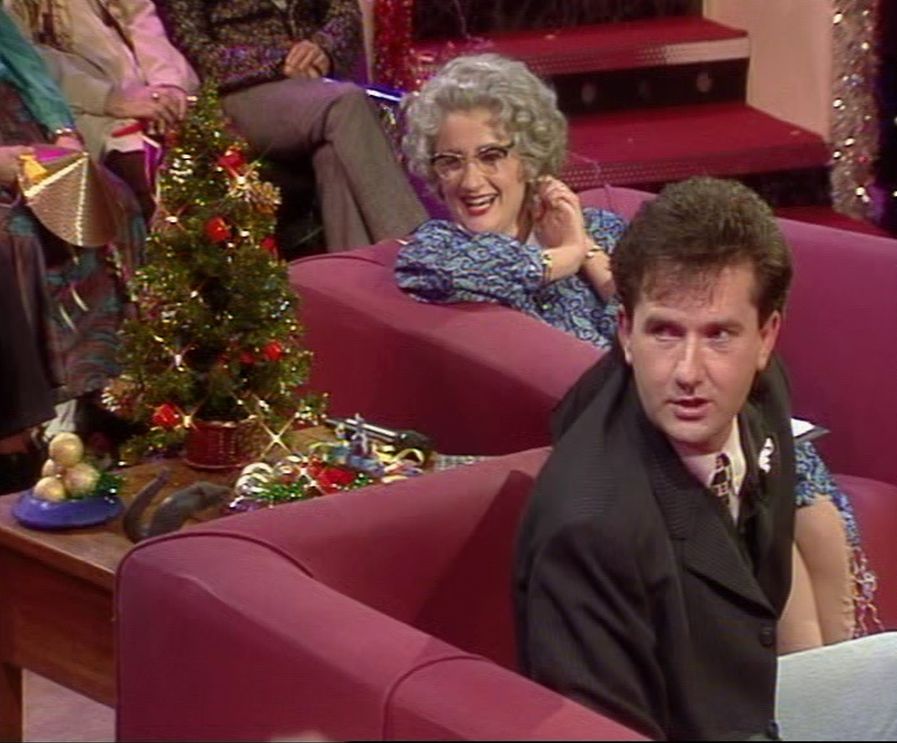
Clive and Noddy are unceremoniously bundled out of the studio in favour of Mrs Merton’s star guest – lovely Daniel O’Donnell. Daniel has the second half of the show to himself, which means there’s plenty of time to answer such burning questions as to whether he likes to scratch himself and trump when he’s lying in bed (although this took a while to settle as Daniel didn’t understand what ‘trump’ meant at first – the penny did drop eventually).

The highlight of the interview must be when Horace wades in.  One of Mrs Merton’s rogues gallery of elderly questioners, Horace could always be guaranteed to launch into a rambling monologue with seemingly no end.  And so it proves here – after issuing a backhanded compliment (he hadn’t heard of Daniel O’Donnell until several weeks prior to the recording of this special) he then redeems himself by revealing that he’s booked tickets for one of Daniel’s shows in the new year. But due to a prior commitment he’s found that he can’t now attend it (I’ve given you the edited highlights – the actual explanation is a good deal more tortuous than that).

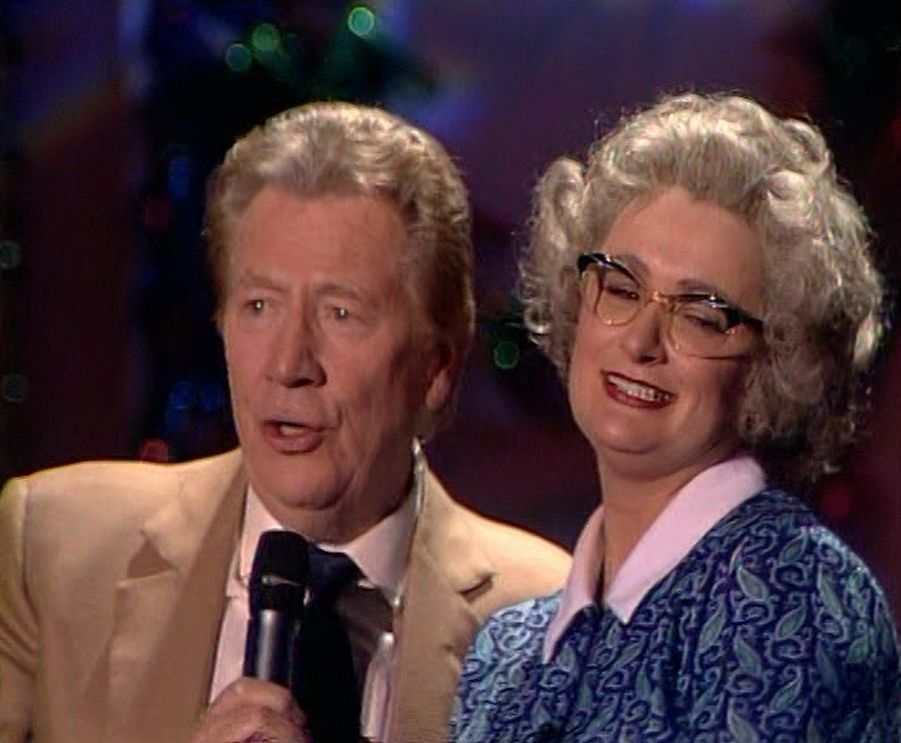
Ending with Daniel and Mrs Merton duetting on One Day At A Time, Sweet Jesus, this was very decent fare. I wonder what the third and final Christmas special (featuring the unlikely combination of Max Bygraves and Edwina Currie) will be like? Time will tell.

The Mrs Merton Show (24th December 1995)

m1

Following a couple of pilots (the first on ITV and the second on the BBC) the series proper of The Mrs Merton Show began airing in early 1995. Clearly it did well, as the second run started later that same year and culminated in this Christmas Eve special.

Top marks for the Christmassy border around the opening titles – a cheap way of creating a spot of festive cheer without having to go to the expense of shelling out for new titles.  Mrs Merton is in full holiday mode – handing out mince pies and greetings – prior to her first guests, Alma and Mike from the Street ….

It was an unexpected treat (I think that’s the right word) to witness Amanda Barrie and Johnny Briggs duetting on the evergreen Something Stupid.  You have to give them top marks for being game (the largely octogenarian audience lapped it up of course).

We’re still in the early days of the series, which meant three guests jostling for position in each half hour show.  Later, TMMS would drop down to just two guests – this was a wise move as it meant that there was the possibility a half-decent interview might develop.  Amanda and Johnny are amiable enough but they’re really never given any questions that they can actually answer (a pity, but not surprising, that they didn’t confess which of their co-stars they hated ….)

There’s slightly more substance when Mrs M meets Glenys Kinnock. It’s always fun to see a combative guest who isn’t content to simply take the blows, but instead elects to gently go on the offensive.  When Glenys started to deal with the questions by asking her own, you got the sense that Aherne was forced to do a bit of speedy adjustment. As entertaining as the show often was, this was its main weakness (especially to begin with). Aherne often appeared to be more interested in delivering her scripted barbs than dealing with the answers she might receive.

Up next is by far the oddest part of the show. Seven year-old orphan little Tommy Regan is subjected to a special treat – a song from Mrs Merton. As she begins to blub her way through The Little Boy That Santa Claus Forgot, some of the audience are clearly getting a little misty-eyed too.  The punchline to this spot of mawkish sentimentalism? There isn’t one, which I guess was the point.

Gary Rhodes closes proceedings with some entertaining back and forth banter and a spot of food, tested by some of Mrs Merton’s most trusted lieutenants. That leaves just enough time for Hooky and the boys to play us out with that Slade song.

An entertaining enough half-hour, but many of  the series’ most entertaining moments (the unforgettable Bernard Manning/Richard Wilson face-off, for example) were still in the future at this point.

Hitting the Target – Doctor Who and the Auton Invasion by Terrance Dicks

auton.jpg

I started collecting the Targets back in the late seventies and although the identity of the first book I bought has been lost in the mists of time, I do know that The Auton Invasion was one of the earliest ones I picked up.  I had no recollection of its original broadcast, so possibly it was the cover – featuring the Doctor, Brig and a nasty squid – that drew me towards it.  Whatever the reason, I’m glad that I did get it because it’s a bit of a corker ….

Possibly since it was his first book, Terrance Dicks seemed quite keen to add a considerable amount of extra value to Robert Holmes’ original script (although it’s true that back in 1974 he wasn’t on the same one-title-a-month treadmill that saw him churning out a crop of fairly routine titles later that same decade).

Adding a prologue featuring the Second Doctor’s trial was a good move as it helped to explain exactly why the Doctor turns up insensible in Oxley Woods (back then, this sort of information wasn’t available at the drop of hat). But what really stands out from the first few chapters is the way that Dicks very deftly manages to transform Sam Seeley from the television comic bumpkin into more of a rounded character.

Having him witness the Doctor’s arrival in the woods was a nice touch and there’s some economical examples of character building scattered throughout (such as the moment when a worried Seeley, lying in bed, is disturbed by the sound of rumbling lorries and grim-faced soldiers passing by his window).  This helps to reinforce the notion that the meteorite he’s found could be dangerous (unlike the television Seeley, he never refers to it as a ‘thunderball’).

Seeley’s daydreaming is another effective touch. ‘Sam let his imagination wander, dreaming of a huge cash reward from a grateful government. He’d have his picture in the local paper. Maybe they’d even want him to go on telly’.

The first meeting between the Brigadier and Liz is good fun, I particularly enjoyed Liz’s internal reaction to the Brigadier’s assertion that he had been involved in foiling two alien attempts to invade the Earth (‘He’s cracking up, she thought wildly. Over-work probably. Been reading too much science-fiction’).

Many of the changes made by Dicks to the text are small, but they nevertheless help to strengthen the story. For example, the television Brigadier can only offer the weak excuse of a training exercise to explain his presence when confronted by a gaggle of pressmen eager to find out if the Ashbridge Cottage Hospital really does contain a man from space.  The book Brigadier has a much smoother and more convincing cover story – a vital part of the British space programme has come crashing down in the woods nearby, necessitating a search and recovery programme.

Dicks mentions several times in quick succession that the Doctor’s kidnappers are rather like waxworks (which tends to hammer this point home – one would have been enough). Rather more effective is Doctor Henderson’s shocked realisation that the kidnappers hand was totally smooth and white, lacking any fingernails. This would have been hard to realise on television, but was simplicity itself in print.

Another small touch which entertained me was the revelation that the frilly shirt the Doctor ‘acquires’ from the hospital had once been the property of an aspiring pop star. The past tense does suggest he never made it out alive though ….

The book Beavis is simply itching to open the Doctor up and have a poke inside, which helps to explain why the Doctor feels perfectly justified in stealing both his clothes and his car (‘Serve the old butcher right’).  The idea of the Doctor having to masquerade as Beavis in order to pass the guards is an appealing one, as is the fact that the Doctor gives the unfortunate Beavis a cheery wave goodbye when he’s in the process of stealing his car!

a1.jpg

The Auton attack on the UNIT jeep is somewhat remodelled. On television, the solider dies as soon as the Auton forces the jeep off the road – in print, he emerges unscathed and manages to pump the Auton full of bullets – all to no avail though (this helps to pre-empt the later confrontation between the Auton and Meg Seeley).

One fascinating addition to the Auton stand-off with Meg is the way that Sam braves his fire in order to rescue his wife.  Seems a little out of character, although maybe we’ve just been misjudging him.

The Doctor and Liz head off to the waxworks, much to the Brigadier’s disgust.

“Hey, wait! Just a moment,” the Brigadier called after them. Then he shrugged his shoulders. Let them go to the waxworks. Let them go to the Tower of London, Buckingham Palace and the London Zoo while they were at it! And much good might it do them. As usual all the real work was left to him. Like children, these scientists!

Lovely stuff. Also very appealing is the Doctor’s explanation as to why he and Liz have to hide in the waxworks after closing time (which isn’t made clear on screen).  Since he’s been unable to contact the Brigadier, the Doctor decides to impound the waxworks himself. When Liz reacts with amazement at the suggestion they simply walk out with the things, the Doctor counters thus. “But we should be able to manage one or two little ones, surely?”

Terrance Dicks faithfully reproduces the emergence of the shop window Autons, then with just a few paragraphs he’s able to sketch out what happened next – something which, of course, was impossible for budget reasons to realise on screen.

The police received thousands upon thousands of calls. But there was little they could do. Arms were issued, but the few rifles and revolvers available were powerless against the Autons. BBC and ITV issued urgent warnings. ‘Don’t go to work. Don’t go out shopping. Stay indoors and barricade yourselves in your homes. Admit no one you do not know.’

Many people were saved by warnings like these, but many others, already out on the streets, were unable to escape. The Autons seemed to be everywhere.

The Government declared martial law and called out the Army. But most of the available troops were mysteriously absent on manoeuvres far away from the big towns. They were recalled at once, but things seemed to go wrong continually. Orders failed to arrive, or were misinterpreted. Troops were told to stay put, or sent to the wrong place. In the other services the story was the same. The Navy and the Air Force armed what men they could, but the men never seemed to get clear orders, or to arrive where they were wanted. It was as though in every position of authority traitors were working against the Government, deliberately confusing the situation.

When I bought the VHS in 1988, I was a little disappointed that the scene featuring an Auton attacking UNIT HQ didn’t feature. But as one of the generation who encountered many Doctor Who stories via Target books first and VHS second, this was a common occurrence.  I’m sure other examples will follow in later posts.

The emergence of the Nestene consciousness is obviously much more effective in print than it was on television (no rubber tentacles here). Chris Achilleos’ illustration helped – he may not have enjoyed doing the internal illustrations but they’re all part and parcel of the story-telling process (even if the supporting characters look nothing like their television counterparts).

Yet another favourite, The Auton Invasion has to be one of the Targets I’ve read the most. Revisiting it yet again in 2018, nearly forty years on from my first time, I’m delighted to report that it’s still an enjoyable, breezy yarn.

a2.jpg

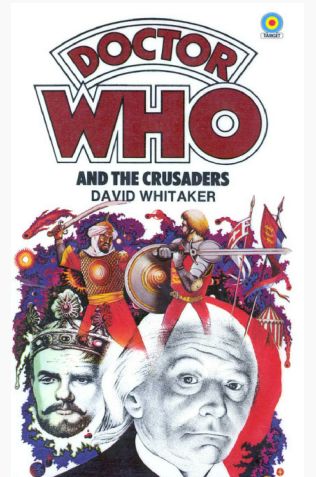
Hitting The Target – Doctor Who and the Crusaders by David Whitaker

cover.jpg

As with The Daleks, David Whitaker’s second Doctor Who novelisation opens with a non-televised section.  It’s a truly fascinating prologue which sees Whitaker articulating his philosophy about the series in general as well as explaining why the Doctor never interferes in Earth’s history.

The latter argument is a rum old one. When Barbara asks what would have happened had Adolf Hitler been assassinated in 1930, the Doctor blithely replies that it’s a moot point since Hitler wasn’t assassinated back then! The Whitaker Doctor is content to only observe Earth’s history and – rather than not wishing to change it – seems to believe that the laws of time strictly forbid his interference. But this doesn’t answer the puzzle about why he’s perfectly happy to meddle on Skaro, Marinus, the Sense-Sphere, etc, etc.

This was quite a stifling premise, so it wasn’t surprising that Dennis Spooner held a different view – his scripts (The RomansThe Time Meddler) seemed to take great delight in breaking Whitaker’s rules ….

Whitaker’s Doctor Who philosophy is set out in the opening paragraph of the book.

As swiftly and as silently as a shadow, Doctor Who’s Space and Time ship, Tardis, appeared on a succession of planets each as different as the pebbles on a beach, stayed awhile and then vanished, as mysteriously as it had come. And whatever alien world it was that received him and his fellow travellers, and however well or badly they were treated, the Doctor always set things to rights, put down injustice, encouraged dignity, fair treatment and respect.

It’s a lovely bit of writing, although it has to be said that it doesn’t really reflect many of the Doctor’s televised adventures up to this point.  They mainly consisted of the Doctor desperately attempting to return to Tardis (which was usually, for one reason or another, inaccessible) with the result that any assistance he dished out to the locals tended to be an afterthought.

Whitaker’s shaky memory is no doubt the reason why we’re told that Susan married David Cameron (poor girl) as well as the assertion that the Dalek invasion of Earth took place in the twenty first century. Today, all these facts are just a click away, but that wasn’t the case in 1966 – which explains this garbled slice of history.

Whitaker took a little time to reflect upon the changes undergone by Ian and Barbara during their time with the Doctor. “Ian was now a deeply tanned bronze, his body trained to the last minute, no single trace remaining of the ordinary Londoner he had once been”.

As for Barbara, there’s a faint whiff of Mills and Boon about this following section of purple prose. “Where her face and form had conjured up beauty in the eye of any beholder, now beauty radiated from within and trebled her physical attractions, making her the admiration and desire of all who met her”.

That Ian and Barbara are a couple is also made abundantly clear. Oh, and we’ve not seen the last Mills and Boonish touch. More on that later.

c2.jpg

When the four time-travellers reach the forest glade and tangle with a group of unruly Saracens, it’s amusing to see how proactive the Doctor is. Given a handy stone by Vicki, he orders Ian to hold down a struggling soldier before knocking him out with said stone. He’s a dirty wee fighter.

Given how good the dialogue in Whitaker’s original scripts was, it’s understandable that he chose to retain most of it for the novelisation. For example, Richard’s early petulant outburst is reproduced virtually intact.

Friends cut down about my ears, or stolen! My armies roust about and clutter up the streets of Jaffa with the garbage of their vices. And an hour ago I learn that John, my brother, finds a thirst for power in England; drinking great draughts of it, although it is not his to take. He’s planning to usurp my throne, and so trades with my enemy, Philip of France! A tragedy of fortunes and I’m too much beset by them. A curse on this day! A thousand curses!

The one major change he makes is to re-order the action somewhat. Unlike the television version, which alternated between various locations, the book is content to be more static (for example, Chapter Four – The Wheel of Fortune – concerns itself with Saladin whilst Chapter Five – The Doctor In Disgrace – relocates back to Richard).

Joanna makes an instant impression on Ian. “Ian could scarcely take his eyes off such a vision of perfection, who earned for herself no more than a few lines in the history books he had read. Her finely sculptured face, with its high cheek-bones and wide generous mouth, the delicate ivory of her skin, just faintly tinged with colour at the cheeks, the classically simple gown that emphasized the perfect proportions of her figure, all made an impact on him he knew he would never forget”.

Steady on man, what about Barbara?!

If Richard and Saladin are presented on the page in a similar fashion to their television counterparts, then El Akir is the one character who really benefits from the printed word. Not that any attempt is made to humanise him (far from it). Whitaker takes every opportunity to paint him as a totally merciless individual without a single redeeming feature. For instance, we discover how he received his disfiguring scar – after murdering his brother (in order to gain possession of his brother’s wife) his sister-in-law was able to gain a modicum of satisfaction by striking him with a heavy ornament. Although this satisfaction was short-lived as she was then murdered by El Akir’s men.

Although it’s long been rumoured that Whitaker’s draft scripts implied that the relationship between Richard and Joanna had an incestuous tinge (which was removed, so they say, on the request of William Hartnell) he chose not to introduce this theme into the novelisation. But what he did do was slightly ramp up the sexual nature of Barbara’s predicament.

It’s slightly eye-opening to be told that back in the 1960’s she was often to be found in a bikini, sunning herself on some beach. But this is then compounded by the brief costume she’s forced to wear in Saladin’s court. It’s easy to imagine some of the other companions in this garb, but not our Barbara ….

c1.jpg

This slightly squiffy picture of Barbara-as-sex-object is reinforced whenever she falls into El Akir’s clutches. It’s spelled out several times exactly what lays in store for her, although the torments won’t only be inflicted on her body. “El Akir is one whose pleasures are inhuman. He will not spare his victims any humiliation his agile brain can well devise. He is a past master in the arts of torture, not simply of the flesh, but of the mind and soul as well. He does not kill lightly, because he prefers to prolong suffering, pain and mental anguish. Search into the darkest corners of your imagination, invent the worst misdeeds you can, and still El Akir will surpass them by a hundred-fold”.

Although the Doctor and Vicki hardly appeared in the fourth television episode (until the final scene) for this book Whitaker made the decision to remove their other episode four scene.  This means that the Doctor and Richard part on the unhappiest of terms, with Richard believing that the Doctor has betrayed his trust. In book form, the Doctor and Vicki leave the action at the end of chapter five and don’t reappear until the end of the story (in chapter eight).

A slight shame that we’re denied the reconciliation scene between the Doctor and Richard, although it does help to reinforce the notion that the Doctor is just an observer of events rather than an active participant.  The downside is that Richard joins Joanna and Saladin in simply disappearing from the story.

On television, Saladin exits after he receives Richard’s offer of Joanna’s hand in marriage to Saphadin.  In the novelisation he’s given an additional scene – an intriguing meeting with Ian,  which sees the schoolmaster articulating the Doctor’s concept of religious tolerance.

I have a friend, a very wise, well-travelled man who spoke to me on the subject of religions once. In the West, three main streams dominate: Mohammedanism, Judaism and Christianity. In the East, the Hindu, the Buddhist and the Moslem rival Janism, Sikhism, Parsee and Shinto. But what is the sum total? That all people, everywhere, believe there is something mightier than themselves. Only the name changes. The little Negro child will say his prayers and imagine his God to be in his colour. The French child hopes his prayers will be answered – in French. We are all children in this matter still, and will always be – until colours, languages, custom, rule and fashion find a meeting ground.

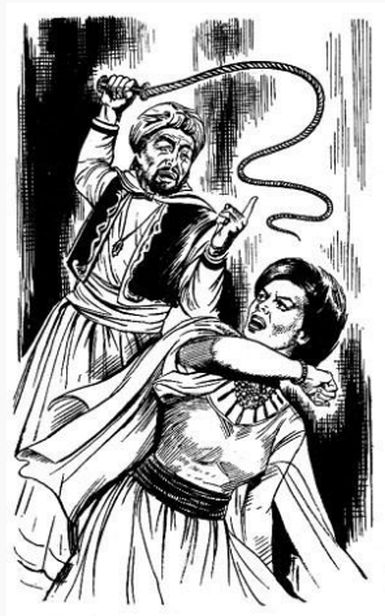
If El Akir is despatched with indecent haste on television, then his print death is much longer and much more satisfying. First he goes several rounds with Ian, who proves himself very handy with a sword, before Haroun steps up to choke the life out of him.  It’s a nasty way to go, but then he had been viciously whipping Barbara just before Ian burst in to confront him (another of those sadistic scenes which would never have been permittable on television) so I think he deserved everything that he got.

One last burst of Ian and Barbara in a Mills and Boon world? Go on then.

Barbara looked across at Ian, stretched out a hand and held his. A dozen unsaid words hung between them in the understanding of that moment. Modern people though they were, they had stepped into a world of chivalry and barbarism and Ian had not failed her. She had needed him and he had come for her. She knew, whatever the age, whatever the place, whatever the circumstances, he would measure up to her every expectation.

She leant across from her horse, put her arm around his neck and kissed him softly on the lips. She sat back again, her heart beating a little faster, a slight tinge of pink at her cheeks, holding his eyes with hers.

Althouh largely faithful to the original source material, there’s more than enough additions – a spot of sadism, some good character development, an epic sweep to proceedings which simply wasn’t possible in the cramped studio – to ensure that Doctor Who and the Crusaders stands up as a decent read in its own right. It’s a great shame that David Whitaker wasn’t asked by Target in the mid seventies to adapt any more of his stories. He was approached later on and had begun to rough out plans to novelise The Enemy of the World, but his untimely death in 1980 meant that these plans went no further.

Whitaker’s importance in the development of television Who is clear enough, but he can also lay claim to be the founding father of written Who.  Apart from his two novelisations, there’s also his work on the annuals, various sundry publications such as Invasion from Space, as well as the scripts for the Dalek TV21 comic strip.

Doctor Who and the Crusaders, like Doctor Who and the Daleks, is an essential Doctor Who novelisation.

c3.jpg

Redcap – Nightwatch

night.jpg

Mann returns an AWOL soldier to a regiment who are back in the UK following a stint of active service. When Mann’s prisoner is struck in his absence, he’s determined to find the culprit. This leads onto a strange tale of ghosts and the regiment’s final, disastrous mission in Borneo ….

Making his television debut as Brown (the AWOL soldier) was Hywel Bennett. It’s a very eye-catching turn, although it couldn’t have been that easy to play (Brown’s handful of scenes see him in a highly hysterical state, still heavily traumatised by their Borneo mission).

Brian Wilde was cast against type as Graham, a sergeant busted down to private due to his drinking and insubordinate nature. It seems odd that Graham is imprisoned in a cell inside the barracks room – this means not only can he see his former charges, but he’s also able to chivvy them along when they start to fall into slack habits.  And that’s certainly the case – the platoon is in complete disarray, lacking any clear direction or authority.  Corporal Scowler (nice performance by Tim Preece) is completely ineffectual on this score.

Mann wonders why the platoon is still intact – given the Borneo misadventure and the aftermath it would have been logical for them to have been split up. But the CO (Joseph O’Conor) has a different view – he can see there’s poison amongst the men, but has decided that keeping them together will bring matters to a head.  For once, Mann comes across a CO who isn’t totally obstructive, although he certainly knows his own mind.  Allan Cuthbertson was born to play the role of Major Stokely – he a!ways looked perfect in a uniform and Stokely’s character – dogmatic and not too imaginative – was the sort of part that played to Cuthbertson’s strengths.

The platoon are all deftly sketched in, especially Molt (Griffith Davies) and Metcalfe (Graham Rouse). Somebody seems to be spreading stories that the ghosts of their dead comrades are haunting the barracks (good of the spooks to have hopped back on the plane from Borneo with them) and bizarre as this may seem, more and more of the soldiers are beginning to believe it.

Given the lingering PTSD some must be suffering that’s understandable, although this doesn’t explain why several new recruits, only recently signed on, are also spooked (refusing to patrol the parts of the camp which appear to be favoured by the ghost).  Nightwatch has, unsurprisingly, a night-time setting, which allows for plenty of shadows and the possibility that something might be out there.  Bill Bain’s direction is pretty workmanlike, although there’s the odd interesting flourish along the way.

John Thaw continues to smoulder away to good effect.  After Brown is struck, you know that Mann will be implacable in his mission to find the culprit.  He – unlike Scowler – has no fear in facing down a barrack room of insubordinate soldiers.  Mann’s brief shouting match with Graham is another highlight.

Not the best episode of the run so far, but it does have an unsettling air, especially the final scene which sees Mann confronting the cackling, unrepentant trouble-maker.

night 01.jpg

Redcap – The Orderly Officer

red06-01.jpg

It looks like an open and shut case. 2nd Lt. Harry Barr (Giles Block) confesses to Mann that in a drunken New Years Eve misadventure he knocked down a concrete bollard outside his barracks.  Although it’s a relatively trivial matter, it will still mean a court martial for Barr.  But things don’t quite go the way that Sergeant Mann planned ….

This is an interesting one. It’s a good ten minutes before the crime of the episode is revealed. Which means there’s plenty of time to get to know Barr – who’s young, inexperienced and totally out of his depth. The sergeants – notably Sgt. Greatorex (Barry Keegan) – delight in running rings around him. This is demonstrated by the contemptuous grin given by Greatorex during Barr’s inspection of the men.

But maybe Greatorex isn’t totally a bad sort, as he invites Barr to a New Years Eve drink in the Sergeant’s mess. A friendly gesture or is he simply seeking to embarrass the officer further? The real trouble begins when Greatorex suggests that he and Barr pop down the road for a quick drink with a nearby Highland regiment. It may be nearly the new year but they’re both on duty, so it would be something of a dereliction. But Barr, keen to prove that he’s one of the lads, agrees and he later pulls rank by insisting that he drives them back to barracks, despite being somewhat insensible.

So the blame is shared. Barr was responsible for the accident but had Greatorex not goaded him into making the trip in the first place then nothing would have happened.  But as the officer, Barr will be the one to shoulder most of the responsibility – unless the regiment closes ranks.

A little more meat is put onto the bones of Mann’s character in this episode. He’s still working late into New Year’s Eve and is very resistant to popping down the pub for a quick drink, despite the entreaties of the Staff Sergeant (the ever-solid Bernard Kay in an all too brief role). Eventually he does agree, which proves that he’s human – but the dour, workaholic John Mann is certainly a world away from Jack Regan.

We’ve previously seen how Mann has faced hostility from certain quarters during his investigations, but not the complete obstruction that he runs into here.  On the surface they’re pleasant enough – Captain The Hon. Ian Loder (Mark Burns) is courtesy itself – but everybody has their stories and they’re sticking to them.

Can Mann force someone to confess? Greatorex is unlikely to crack and neither is the mess Sergeant (Jack Smethurst). Smethurst sketches a nice performance with his limited screentime – it appears that the Sergeant spends most of his time sampling the stock or worrying about a visit from the weights and measures man!

Mann eventually manages to break through the wall of silence when Barr admits all.  All well and good, but he then makes a fatal mistake when he allows Barr to confess his crime to the Colonel (Ronald Leigh-Hunt).  The upshot is that Mann is appalled to later find a new suspect – Trooper Kelly (Harry Littlewood) – has been put into the frame whilst Barr is nowhere to be found.  Mann attempts to interrogate Kelly, but he gets nowhere – the Trooper is a mixture of Irish charm and sorrowful remorse.

It’s previously been mentioned that Mann is somewhat inexperienced and this episode was possibly designed to reinforce that fact.  For all his implacable questioning earlier on, he’s been undone thanks to one simple request which now means that there’s no way back – this time the ranks have firmly closed and he’s forced to admit defeat.

For an ex-copper like Mann, it chafes to see a guilty man go free but the Colonel holds a different view.  In time, Barr might become a more than decent officer, so why squander that potential over such a trivial matter? Neither of them are wholly wrong but neither are wholly right either and this is what makes The Orderly Officer such a fascinating watch – for once it’s not a matter of life or death, but that makes the drama no less compelling.

This was Giles Block’s first television appearance. He’s probably best known for playing Teel in the Doctor Who story The Dominators, although his list of credits isn’t particularly lengthy.  His television inexperience probably helped here, as Barr is supposed to be something of a greenhorn. As I’ve said, it’s a shame that Bernard Kay’s part wasn’t larger, but the rest of the cast is peopled with the usual roster of strong supporting players.

Although there’s a spot of location filming, Redcap‘s studio-bound nature is still in evidence. This is most notable during a scene which attempts to suggest a country road (a few sad twigs in the background do their best, but it’s painfully obvious that we’re still in the studio).  This apart, there’s little to quibble about in this episode since it’s another strong instalment.

red06-03.jpg

Hitting The Target – Doctor Who and The Zarbi by Bill Strutton

zarbi

When I were a lad it irritated me that the Doctor was referred to as Doctor Who throughout Doctor Who and the Zarbi. Fortunately, when I grew up I found that it didn’t matter at all – now I’m more irritated that they corrected this “mistake” for the audiobook and renamed him The Doctor ….

We open aboard TARDIS. Barbara’s clearly some way down the pecking order as the Doctor suggests she makes herself useful by rustling up a quick cup of coffee whilst Ian orders some bacon and eggs from her. It’s possible that the Doctor’s suggestion was simply a ruse to save her from worrying about their current predicament.  Ian, on the other hand, just seems to be hungry and disinclined to lift a finger to help himself.

Bill Strutton sticks quite closely to the dialogue from his original script, even reproducing Barbara’s comment that the fancy bracelet she’s now sporting was a gift from the Emperor Nero (and not, as suggested by Vicki, from Ian).  It’s a shame that their conversation about space-age schooling was cut though.

If ever a Doctor Who story benefitted from being transferred to the printed page then it’s this one. The planet Vortis, and its numerous inhabitants, struggled to be effectively realised on screen (to put it mildly). There’s no such problems here, so the notion of a gun-wielding Zarbi seems perfectly reasonable.

Strutton took the opportunity to change the structure encountered by the Doctor and Ian on the planet’s surface from a pyramid to a vaguely humanoid figure. The text suggests that it’s a Menoptera, although this is somewhat lost in John Wood’s illustration. The illustrations, carried over to the Target edition from the 1965 hardback, are very decent – although Vicki only bears a very passing resemblance to Maureen O’Brien.

zarbi1

If the Zarbi are a good deal more menacing on the printed page than they are on screen, then so – to begin with – are the Menoptera.  Barbara’s first encounter with them (“there was a tall sinister dignity about them – a beauty even, but with the sudden shock of their strange appearance and their glaring hostility, she felt the sickness of a real terror welling up inside her”) has a punch that’s absent from the television realisation. There, they only had to open their mouths or wave their arms about for any sense of danger or tension to be lost.

In book form, Barbara’s interrogation by the initially hostile Menoptera is much lengthier, with the belligerent Challis a prime mover in wishing to bump her off.

When you no longer have to see or hear the Menoptera it’s easy to believe in them as a race of proud souls who are locked into a bitter struggle for the control of Vortis. The wise but aged Prapillus is a good example – leading the attack to escape from the Crater of Needles, at times he has a very Doctorish turn of phrase (“I may be a little short of breath, but not of brains”).

Elsewhere, Ian is a good deal more hysterical in print than he is on screen. Whilst Doctor Who maintains his lively scientific interest, Ian’s not having such a good time – often snarling or grimacing at the latest scrape he finds himself in. For example, after Doctor Who absently declares that he didn’t expect the Zarbi to be behaving like they are, Ian snaps back with the following. “Were they supposed to scuttle away at the sight of us – or greet us with speeches of welcome and garlands of flowers?”

Whilst Terrance Dicks often made use of the chapter title Escape to Danger, it made its DW debut here. David Whitaker was close in The Daleks (Escape into Danger) but not quite close enough.

If the book has a fault then it’s one shared by the television original – midway through it does tend to sag a little (too many scenes of the Doctor being interrogated very, very, slowly).  Bill Strutton’s prose style is workmanlike enough but lacks the visceral impact of Whitaker’s Dalek novelisation.

Still, if I’ve come to love The Web Planet a little more over the past decade or so then my appreciation for The Zarbi has also increased. If you’ve not read it for a while, then it’s worth pulling it from the shelf, giving it a dust down and diving in.

zarbi2

Redcap – Corporal McCann’s Private War

mccann 01.jpg

Mann is in Cyprus – his mission is to track down an AWOL soldier called Corporal McCann (Ian McNaughton). Given that Cyprus is a political powder keg, the news that McCann has disappeared with three sterling machine guns and a plentiful supply of ammo only complicates matters ….

One of the interesting things about Redcap is the way that it reflected real world events. As depicted here, Cyprus in the mid sixties was a highly unstable place – following independence in 1960, bitter in-fighting had led the UN to establish a peace-keeping force. As you might expect, this means that Mann has to tread very carefully – although he’s not averse to indulging in a spot of fisticuffs with a local soldier who has the termitary to steal his identification papers!

Mann, called in by Colonel Morris (John Ringham), is concerned for McCann’s safety – a soldier with a previously spotless record. This makes the suggestion that he could be involved in black-market gun-running all the harder to swallow.  Off-screen for most of the episode (and when he does appear he doesn’t have a great deal of dialogue) McCann is something of a plot MacGuffin – meaning that it’s difficult to feel that invested in his fate.

Ringham quickly sketches in the key points of Morris’s character – a friendly, relaxed type who genuinely seems to care for the men under his charge.  He’s a fairly minor character though as two other very familiar faces – Jerome Willis and Warren Mitchell – take the lion’s share of the screen-time.

Willis is Lovelock, a political liaison officer who views Mann with extreme disfavour to begin with. He’s not in the least concerned with McCann’s fate, he only cares about the political fall-out McCann’s disappearance could generate (especially how it might be twisted and spun by their opponents).

Since Mann operates most of the time as a solitary figure, there’s something novel about the way that he and Lovelock eventually join forces. Both strong and single-minded characters, they eventually form a bond which drives the action in the second part of the episode.  Willis, as you’d probably expect, is top notch.  Warren Mitchell, as a world-weary local inspector, is equally as watchable. Rarely without a cigarette dangling from his lip, he flits in and out of the narrative – both helping and hindering.

Although there’s a brief spot of location filming, once again the bulk of the episode is studio bound.  The use of a car on the studio street (and plentiful sound effects) helps to sell the illusion of space though. Mid-way through the episode, John Thaw stumbles over his lines, although he plows on regardless and eventually gets back on track. This wasn’t unusual for this era of television (where retakes tended only to happen if there had been a catastrophic technical issue) but since Thaw was usually so secure, it does stand out.

A notable aspect of Corporal McCann’s Private War is the fact that Mann spends very little time questioning McCann’s fellow soldiers – indeed, he only quizzes the quartermaster (Windsor Davies). This is a lovely scene from both Davies and Thaw. The quartermaster is able to shed a little light on McCann’s character (he’s a keen photographer, or as the quartermaster puts it, he’s “nutty about women’s chests”).

One of these women – Ariane (Maria Andipa) – has her part to play in untangling the mystery. It’s pleasing to see that some key roles were filled by non-UK actors. Given the paucity of available players in the 1960’s this wasn’t always possible – but it always added a touch of authenticity to proceedings whenever it did happen.

Corporal McCann’s Private War starts – intentionally – in a rather disconcerting, jerky way. This feeling of being buffeted along by events, rather than controlling them, continues throughout and although Troy Kennedy Martin’s script gets a little bogged down, the performances of Thaw, Willis and Mitchell does help to keep the interest level up.

mccann 03.jpg

Redcap – Misfire

r1.jpg

Private Brian Staples (Gary Bond) has confessed to an act of robbery with violence. Mann is convinced he didn’t commit the crime, but when the man who was attacked dies, the charge beomes murder ….

It’s clear from the opening few minutes, as a hesitant Staples calls the police, that there’s something off-kilter here. The presence of Iris Pearson (Diana Coupland) reinforces this.  It takes a little time before we learn that she and Staples are an item, but when this news is revealed it becomes the focus of Roger Marshall’s script.  She’s an older woman (although not that old – Coupland was in her mid thirties at the time) and everybody seems convinced that she’s nothing more than a gold-digger, preying on a young and inexperienced man.

Barrack-room gossip paints her as either a prostitute or simply somebody who’s more than generous with her favours.  And yet …. it emerges that there’s a genuine bond of love between the pair and this was the reason why Staples confessed to a crime he didn’t commit (in order that he wouldn’t have to transfer out with the rest of the regiment – thereby saving him from being away from Britain for several years).

Coupland pitches things just right, making Iris seem – at different times – to both be vulnerable and implacable. It’s one of a number of very decent performances in the episode – the next comes from Arthur Lovegrove as RSM Staples, the boy’s father.

Now retired, he still dotes on the regiment as a father would on his son (indeed, it’s made painfully obviously that he loves the regiment much more than he does his own flesh and blood). Right from the opening few seconds of his first scene we know exactly what sort of character he is. We see Staples holding court in the mess bar where he’s surrounded by a group of dutiful, but obviously bored, officers.  You can well imagine that Staples’ rambling anecdote is one that he’s told countless times before.

The revelation that his son is in trouble pains him, but mainly because it’s something that will bring disgrace on the regiment. Lovegrove especially shines in two key scenes – firstly when Staples attempts to buy Iris off and secondly when he has a short, but not very sweet, interview with Mann.  What’s notable about this second scene is the way that Raymond Menmuir frames it – every time we cut to Staples the camera is uncomfortably close to him, but Mann is framed a little further back. A simple move, but it does tell a story. The use of rain (the studio rain machine was working overtime in this episode) is another directorial touch which creates a little atmosphere.

John Collin, as the weary and irritable Inspector Paish, offers another strong performance. His cross-examination of Staples Jnr is a highlight as is the way he tangles with Mann. We learn a little more about Mann during these scenes (for example, he used to be a member of the police force).

Lt Colonel Hilden seemed very familiar, but it wasn’t until the credits rolled that I was able to make the connection. Arthur Pentelow, alias Mr Wilks from Emmerdale Farm.

Roger Marshall rarely disappointed and Misfire is a typically well-crafted effort.

r3.jpg