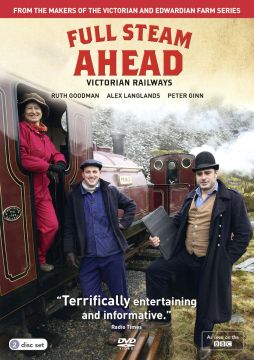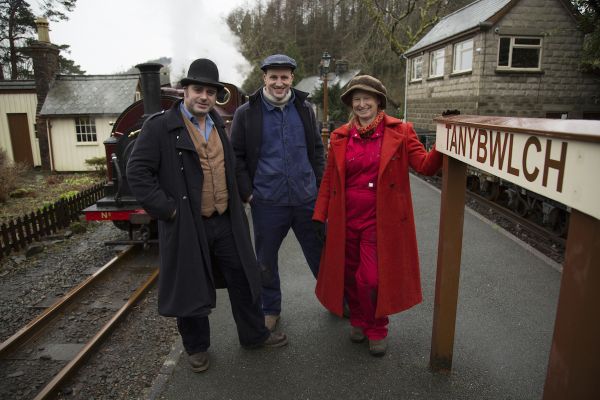
Full Steam Ahead -RLJ/Acorn DVD Review

6828

Many people, including myself, have a certain fascination with steam engines.  When the Flying Scotsman made a recent trip through my neck of the woods I did make the effort to see it (although since I have a railway line at the bottom of my garden I didn’t have to venture very far!)

Today it’s easy to view the age of steam through nostalgic eyes – it seems to transport us back to a simpler, slower and less cluttered age.  The reality is very different however.  The steam age heralded an intense period of change in British life – as virtually every aspect (from trade and transportation to health and recreation) was reshaped.

So whilst part of the attraction of Full Steam Ahead is the chance to see an impressive selection of engines chugging their way through the picturesque British landscape, there’s also many painless history lessons to be learnt along the way.

Ruth Goodman, Alex Langlands and Peter Ginn are old hands at this sort of thing (thanks to series such as Victorian Farm and Edwardian Farm).  As with all popular historians they are enthusiastic and engaged, although they also manage to impart a great deal of factual knowledge.  In addition, they delight in attempting many tasks both directly and indirectly connected with the railways.  Driving steam engines is clearly great fun, whilst some of the other jobs are harder and much more labour intensive (a reminder that the railways only came into being thanks to the sweat and toil of tens of thousands of workers).

It’s sobering to stop and think just how disconnected Britain was before the railways.  Since there was no easy way to transport bulky goods and materials around the country, it was perfectly normal that everything a person owned would have been made within, say, a ten mile radius of their home.

The age of steam (and mass production) brought an end to this way of life and created the consumer society.  Now people were able to buy the same goods anywhere in the country and many local trades (thatchers, wheelwrights) began to die out.  When Ruth Goodman says that the steam age had a far greater impact on British society in Victorian times than the internet has in recent decades, it’s easy to see what she means.

Produced in association with the Open University, Full Steam Ahead runs for six episodes, each of sixty minutes duration. The narrator is Philip Glenister.

Episode One – Ruth, Alex and Peter begin their exploration of the steam age by learning how it shaped domestic life, from slate roofing tiles to coal fires.

Episode Two – Alex and Peter become navvys in order to understand precisely how the railways were built.  This episode also discusses how the first passenger trains came into being. I love the notion that it all happened after the railway owners spotted workers hitching a ride on the coal trucks. This created a lightbulb moment as they realised there might be money to be made from ferrying passengers about!

Episode Three – Another way in which the railways transformed British life is detailed here, namely diet.  Before the railways, the country was struggling to feed itself – the age of steam saw a culinary revolution.

Episode Four – Ruth, Alex and Peter take a trip on the most famous locomotive of them all, the Flying Scotsman, to understand how the railways facilitated the transportation and delivery of mail.

Episode Five – Life on the railways before Dr Beeching is looked at, whilst Ruth examines the work of the GWR prosthetic limb department.

Episode Six – The series concludes with an examination of how cheap rail travel opened up freedom of movement for working-class Victorians.  No longer tied to the city or towns where they lived and worked, they could now venture further afield.

Apart from being a visual treat, Full Steam Ahead can also be used as a stepping stone for further learning.  The Open University’s webpage has further reading materials, as well as the chance to obtain a free double-sided poster detailing many of the aspects from the programme.

The DVD includes two special features – a ten minute behind the scenes documentary and a photo gallery.  All episodes are subtitled.

Full Steam Ahead is a fascinating series and comes warmly recommended.  It’s released by RLJ/Acorn on the 5th of September 2016.  RRP £19.99.

6819

The Mrs Merton Show – Series One

merton.jpg

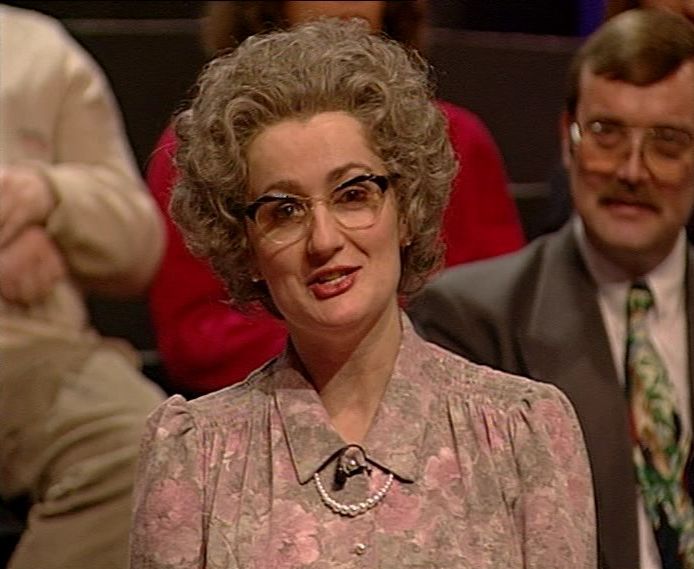
Mrs Merton made her first television appearance on Anthony H. Wilson’s gameshow Remote Control back in 1991.  Caroline Aherne clearly felt that the character had potential, although it took several pilot programmes before Mrs M landed herself a full series.

The first pilot from early 1991 wasn’t broadcast (since there was no studio audience it seems to have been produced simply as a test production).  The second pilot was broadcast on the 5th of December 1993 and was followed by a series in 1995.

From the original pilot, the format was firmly in place.  Mrs Merton was a sweet-looking elderly lady (albeit played by thirtysomething Aherne) who took advantage of her unprepossessing appearance to ask the questions that no other chat show host (apart from maybe Dame Edna) would dare to.

Mrs Merton set out her stall in the first very episode of series one, by asking Debbie McGee “what first attracted you to the millionaire Paul Daniels?”.  Voted the second best TV one-liner of all time, it gave her guests an early idea about what to expect if they ventured onto her sofa.  This didn’t deter them though, as across five series (including a trip to America) she netted a wide cross-section of stars.

Today, some are still very much in the public eye, some (like Aherne herself) are sadly no longer with us, some are forgotten, whilst a few (Dave Lee Travis and Fred Talbot from the first series, for example) are very much persona non grata.  Indeed, Travis’ Mrs Merton appearance continues to haunt him.

Another feature of the series is the audience of regular faces, all arranged behind Mrs Merton and the sofa.  Many of them would feature regularly (“let’s have a heated debate”) and the guest-list was cut from three to two from the third series onwards partly to accommodate more chat between Mrs Merton and the (genuine) octogenarians in the audience.

Dave Gorman was one of the series writers and on his website he briefly described how the show worked.

From 1994 to 1997 I was one of the four writers on The Mrs Merton Show. What a ridiculously giddy time that was. The show moved from a late night BBC2 slot to being a big award winning BBC1 show. The gold-standard lines that people still quote were almost always written by Caroline Aherne herself. Looking back on the situation I reckon I was a very lucky 23 year old. A brilliant way to learn a lot about writing. It’s sometimes described as a “spoof chat show” but it was no such thing. It was a real chat show with a spoof host. The team won BAFTAs two years running. Best Entertainment Series in 1996 and Best Chat Show in 1997.

The best encounters are those where there’s some give and take between Mrs Merton and the guest.  If her baiting is simply too merciless then it becomes monotonous.  And although all of Mrs Merton’s barbed questions were firmly scripted beforehand, her victim’s replies weren’t – so Aherne had to be adept at ad-libbing.

There’s some very entertaining encounters during the first series.  Kriss Akabusi hardly lets her get a word in edgeways, but his steam-rolling approach makes for wonderful television.  She does have the odd incisive question though, such as “do you have to plan your tactics before the race or do you just try and run faster than the other blokes?”

Mrs Merton’s encounter with Steve Coogan is great fun.  Pressed to deliver some impressions, such as Frank Spencer, he gamely agrees and also has time to discuss how a series with a fictional chat-show host is a good idea (Knowing Me, Knowing You had just finished airing).

Equally as good value is Cynthia Payne, whilst others (such as Mandy Smith) are less satisfying, mainly because Smith is never really able to give as good as she gets, so it ends up as something of a one-sided affair.  Mrs Merton’s encounter with Mary Whitehouse is also a disappointment.  On paper it sounds like a great idea, but Whitehouse (clearly not in the best of health, since the interview was recorded at her home) seems rather disconnected from proceedings.  The whole interview seems to have been set-up so that Aherne can deliver this final one-liner.  “When you retire, do you think they’ll put up a statue of you? If they do, it would be the first erection you’ve not complained about, wouldn’t it, Mary?”  There’s little reaction from Whitehouse, except that she seems to regard the comment as a flattering one.  So either Mary still had the driest of dry wit or we’ve just witnessed a rather cruel taunting of an elderly lady.

This was very much the exception though as most of the other interviews are much jollier.  As I’ve said, they’re not all hits, but there’s still a very decent strike rate.  It was certainly good enough for a second series to be swiftly commissioned, which would see Mrs Merton have some of her most memorable encounters (Jo Brand, Chris Eubank, George Best, Germaine Greer and Des Lynham, amongst others).

Steptoe & Son – The Bird

bird

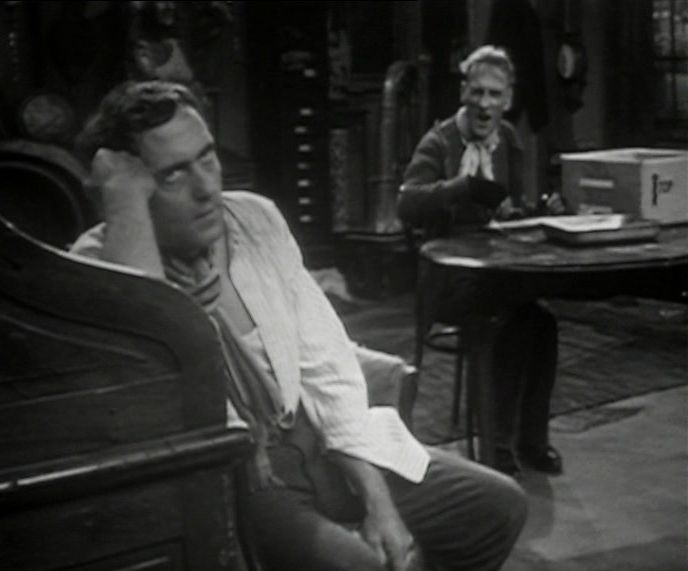
Following the Comedy Playhouse pilot broadcast in January 1962, The Bird (original tx 14th July 1962) was the first episode of Steptoe & Son proper.  As in the pilot, Harold wishes to break free of the stifling life he leads with his father (here it’s because he’s got a “bird”) whilst Albert (borne out of a fear of being left alone) subtly manipulates his son so that their status quo isn’t disturbed.

The Bird has a very stage-like feel (the opening scene between Harold and Albert lasts for eighteen minutes).  Thanks to the excellent scripting by Galton & Simpson (there’s plenty of funny lines, but many dark ones as well) and the performances of Wilfred Brambell and Harry H. Corbett this isn’t really noticeable.  The eponymous bird (played by Valerie Bell) makes a very brief appearance at the end, but The Bird is pretty much a two-hander between Steptoe & Son.

The needle that exists between father and son is re-established right from the start.  After an argument about whether Harold’s done everything for the night (put the horse to bed, closed the gate, etc) their conversation turns to WW1 and WW2.  Harold fought in WW2 whilst Albert tells an incredulous Harold that he was mortally wounded in WW1.  “How could you have been mortally wounded? If you’re mortally wounded, you snuffs it!”

Harold attempts to take Albert’s trousers down to have a look at his war wound, but Albert resists.  The old man threatens that he’ll hit his son if he doesn’t stop larking about, which gives Harold pause for thought.  “Used to wallop me about a lot, didn’t ya? A big fella weren’t ya? When I was seven!”

Harold then recounts his bleak life.  On the cart when he was twelve, in the army for four years and then back on the cart.  He’s now thirty seven and that’s all he’s ever done.  When Albert attempts to stem this bitter tide by appealing to their father/son bond, Harold remains downbeat.  “When was I ever a son to you? Cheap labour that’s all I was”.

After Harold tells his father that’s he’s going out again, Albert is curious and worried.  Any change to their settled domestic life concerns him, and although he threatens to put himself into an old people’s home the next day (since he feels that Harold is neglecting him) it’s plain this is an empty threat.  If he was expecting Harold to react, then he’s sorely disappointed.

Albert’s astounded that his son is having two shaves in one week, although when he learns that Harold’s meeting a bird it all becomes clear.  One of the bleakest exchanges (albeit one that still generates a good laugh from the audience) occurs when Harold, sensing how his father disapproves of his plans, offers him his razor for a quick way out.  “Oh, you poor old man. You ‘aint got nothing to live for, have you? Here, cut your throat. Put yourself out of your misery! No, go on take it, have a go. It don’t take long. It don’t hurt!”  Who said edgy comedy was a relatively new concept?

That Albert is dependent on Harold is once again made clear when his son gleefully mentions some of his father’s less than stellar purchases (an Elizabethan Cocktail Cabinet and a Georgian Record Player for example).  His lack of judgement, together with his failing health (although we’re never sure whether this is genuine or not) are both strong hints that he regards Harold’s bird as a threat.  What would happen to him if Harold and his bird decided to set up home somewhere else?

So this means that Albert’s next suggestion (“bring her ‘ome to dinner”) is a surprising one.   Albert’s clearly been thinking about this for a while – get the good chairs in from the yard, fish and chips from the chip shop, knives and forks and a jar of gherkins.  How could any bird not fail to be impressed?

Shortly after, Harold gives his bird a name for the first time – Roxanne.  The audience reaction to this is quite telling, clearly nice girls weren’t called Roxanne in 1962.  Albert’s re-appearance – all smartened up – delights the audience, although Harold, after making a closer inspection, is disgusted.  “Ugh! You dirty old man! You ‘aint washed yourself, have you. You done yourself up and you ‘aint washed yourself”.  He deals with Albert’s filthy neck by rubbing a bar of soap on it and dunking him into the sink.  Brutal, but effective!

Roxanne’s an hour late, and Albert skilfully plays on Harold’s increasing anger and disappointment.  When she finally turns up, Harold’s in such a state that he turns her away and tells her to never come back.  Albert approves.  “We don’t want no women here, we’re better off by ourselves”.  This just leaves the punchline – Albert moves the hands of the clock back an hour (so Roxanne wasn’t really late at all).

For me, the 1960’s black and white Steptoe & Son is king.  When it returned in the 1970’s in colour there were some great episodes (Divided We Stand, Porn Yesterday, The Desperate Hours) but it never felt quite the same series. The bleakness and bite had somewhat gone and it was rather less subtle.  There are plenty of gags in The Bird, but it’s also brutal in many respects.  Bearing in mind that this was made in the early 1960’s, it’s plain that Steptoe & Son is absolutely key to understanding the development of British situation comedy.  Steptoe & Son demonstrated that you could mix light and dark (a lesson that many other sit-coms down the decades would take to heart).

But The Bird, and the other episodes from the early series of Steptoe & Son, aren’t just curios from another age – they still amuse, entertain and sometimes shock.  It’d be lovely if BBC4 repeated them – but due to their black and white nature that’s sadly not terribly likely.  If you haven’t got the boxset then you should add it to your collection.  True, the quality dips a little later on, but it’s still an essential series.

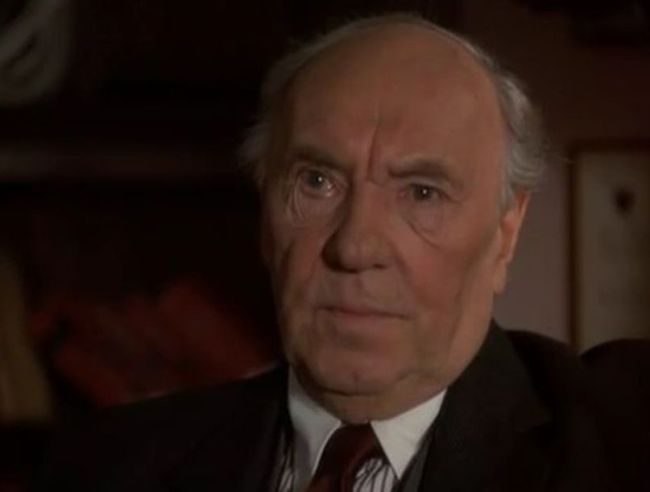
Ralph Richardson in Agatha Christie’s Witness for the Prosecution (1982)

witness 01.jpg

You wait decades for a new adaptation of Witness for the Prosecution and then two turn up at the same time …..

Both the BBC and Hollywood are mounting their own versions, although the BBC’s is an adaptation of Christie’s original short story (hence the reason why it’s referred to as The Witness for the Prosecution) whilst the American film looks set to be a remake of Billy Wilder’s 1957 film.

The Witness for the Prosecution was originally published in 1925.  Although it was a brief story, the dénouement clearly pleased Christie as she developed the concept into a full stage-play (dropping the The from the title) in 1953.  Four years later it was filmed by Billy Wilder, featuring an impressive cast (Tyrone Power, Marlene Dietrich and Charles Laughton).  The film added the sub-plot of Sir Wilfred’s delicate health, but otherwise it was a fairly faithful adaptation of Christie’s play (including the ending, which she’d tweaked a little from the original short story).

Since the BBC are adapting the original short story, presumably they will reinstate that ending, which would be a good move as it carries much more of a punch than the later play/film conclusion.  Or will they decide to tinker with it?  Time will tell …..

The 1980’s saw a rash of American TV movie adaptations of Agatha Christie stories.  Peter Ustinov reprised his big-screen role as Hercule Poirot, Helen Hayes made several appearances as Miss Marple (although she was always on a hiding to nothing, as Joan Hickson’s definitive portrayal at around the same time wiped the floor with her).   There were also a few one-offs (in addition to Witness, Bill Bixby stumbled his way through Murder is Easy whilst Anthony Andrews headed the cast of Sparkling Cyanide).

The 1982 version of Witness is a slight oddity – as it’s very much a period piece (set in the 1950’s).  Most of the other 1980’s American Christie’s were firmly rooted in the present day, which gave us some incongruous moments, such as Poirot appearing on David Frost’s chat show!

Witness clearly had a very decent budget, as they were able to close down a few London streets (or maybe they simply ventured out very early in the morning) and sprinkle the roads with a number of vintage cars, which helps to sell the period illusion.  Although to be honest, since the main location of the story is a courtroom it wouldn’t have made a great deal of difference if the story had been updated to 1982.

John Gay’s adaptation of the original film screenplay by Billy Wilder and Harry Kurnitz doesn’t deviate a great deal.  Sir Wilfred Robarts (Ralph Richardson) is still tetchy with everyone, but especially with the formidable Nurse Plimsoll (Deborah Kerr) who insists that, following his recent heart attack, he shouldn’t overexcite himself.

A juicy murder case, defending the personable Leonard Vole (Beau Bridges), is just the sort of thing she means, but Sir Wilfred ignores her and takes the case anyway, although he seems to be backing a loser.  There’s only circumstantial evidence which connects Vole to the murder of Emily French, but it’s still very damaging.  Vole’s wife Christie (Diana Rigg) provides her husband with a solid alibi, but then she changes her mind and becomes a witness for the prosecution ….

The casting of Beau Bridges as Leonard Vole is an interesting one.  Director Alan Gibson was clearly following the path taken by Wilder’s film which had also cast an American actor, Tyrone Power, as Vole.  It’s easy to see why the original film (and indeed the 1982 tv remake) did so – an American lead would help to sell it in the US – but Bridges seems a little incongruous as the sole American amongst the British cast.

Ralph Richardson might lack the bite of Charles Laughton (Richardson gives his usual vague performance) but he’s still very watchable.  The rest of the cast are comprised of fine British players – Deborah Kerr, Donald Pleasance, Wendy Hillier, Diana Rigg, Richard Vernon, David Langton, Michael Gough, Peter Sallis, Peter Copley, Frank Mills – who help to enliven proceedings no end.

Sallis has the small role of Sir Wilfred’s loyal clerk Carter, but still manages to make something of it whilst Hillier is fine as Emily French’s loyal housemaid Janet Mackenize (whose testimony Sir Wilfred is able to ruthlessly disassemble).  Donald Pleasance and Richard Vernon are rather wasted, but it’s always a pleasure to see them anyway.  Diana Rigg had the imposing shoes of Marlene Dietrich to fill, but she was more than capable.  Given the theatrical origins of the play, it’s no surprise that Christine is a role that requires an actress to demonstrate their full histrionic range – although Rigg has enough self-control to avoid soaring too far over the top.

If you’ve never seen Wilder’s film, then this production should be an entertaining 100 minutes.  If you have, then it’s hard not to compare the two and decide that the 1982 remake comes up a little short (despite the best efforts of the experienced cast).  But having said that, it’s still really rather good and is well worth your time.

witness 02

Hancock’s Half Hour – The Missing Page

missing

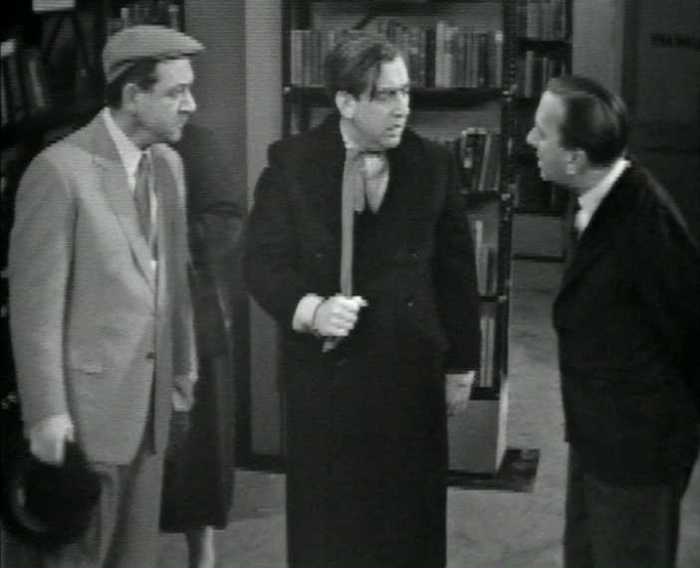
If I had to choose a single episode of Hancock’s Half Hour which embodied the spirit of the series, then The Missing Page would be at the top of the list.  Tony was often portrayed as a frustrated intellectual – and this self-delusion is touched upon here.  He claims that he only reads trashy pulp novels in-between tackling heavyweight fare such as Bertrand Russell.  It’s possible to doubt this statement, although Galton & Simpson later develop the theme in The Bedsitter, where we do see him tackle a bit of Bert (albeit not terribly successfully).

Tony’s frustrated with the books on offer at the local library.  He tells the librarian (played with long-suffering irritation by a HHH regular, Hugh Lloyd) that he’s checked out everything they have (“I’ve read Biggles Flies East twenty seven times!”).  This isn’t quite the case though, as there’s one book – Lady Don’t Fall Backwards by Darcy Sartothat’s passed him by.

G&S preface his retrieval of the book (it’s out of reach on the top shelf) with a nice literary joke.  Tony asks the librarian for a number of heavyweight intellectual books and the librarian – clearly impressed – hurries off to find them.  It’s a little contrived that all these obscure books are on the same shelf, but let’s not quibble about that.  Tony’s delighted and uses them as a footstool to retrieve Lady Don’t Fall Backwards!

The sudden arrival of Sid stuns Tony (“you’ve never read a book in your life. You’ve run one, but you’ve never read one”).  This leads into my favourite scene in the episode, indeed one of my all-time favourite Hancock moments.  We’re in the era where it was considered bad form to speak in the library, so more HHH regulars (Alec Bregonzi, Johnny Vyvyan) take turns to shush him.  This is a bit of a problem, as Tony’s keen to tell Sid about another exciting book he’s recently read, so he decides to act it out as a mime.

By the end, both Sid and Peggy Ann Clifford (yet another HHH regular) can’t hide the smiles on their faces.  Was this as scripted or simply a spontaneous reaction?  I’d assume the latter, as it’s such a joyous couple of minutes.

Although G&S have never been regarded as intellectual writers, they continue to slip in some sly literary gags,  one such concerns the formulaic nature of crime fiction.  Tony’s entranced by the book (“good? This is red hot, this is, mate. Hate to think of a book like this getting in the wrong hands. Soon as I’ve finished this I shall recommend they ban it”) and can’t wait to find out who the murderer is, although he reacts with scorn when Sid suggests he simply turns to the final page.

This exchange roots the book firmly in the golden age of detective fiction, a period when crime novels were an intellectual puzzle with everything neatly wrapped up in the final few sentences.  Tony’s also very taken with the book’s hero, Johnny Oxford, telling Sid that from now on he’s switching his allegiance from the Saint to Johnny.  Despite his name, Johnny’s not an English detective, he’s a hard-bitten American PI.  The later revelation that the author, Darcy Sarto, was a British writer seems to be another gag – inferring that the ridiculous and artificial nature of the story (with suspects dropping dead at regular intervals) can be taken even less seriously when it’s learnt that the author had possibly never even been to America.  Was he maybe modelled on James Hadley Chase, a British-born writer who adopted American themes very sucessfully?

Tony shares several nuggets of information about the twisty plot with us.  One of the funniest is the revelation that a trail of footprints in the snow from two left shoes was an error on the part of the murderer (he’d put on a pair of shoes to lay a false trail, but hadn’t realised they were both left ones).  This disappoints Tony. “I was waiting for a pair of one-legged twins to turn up.”

As the title suggests, the final page in the book is missing.  Tony’s distraught – he really, really needs to know the identity of the murderer.  He decides to turn detective himself and re-examines all the suspects (as does Sid).  Neither are successful, so they attempt to find the man who had the book out before them.  They finally track him down (a nice turn by George Coulouris) but he’s no help.  The page was missing when he had the book and he’s spent the last six years in agony, not knowing either!

The mystery is solved in the British Museum, but it doesn’t cheer Tony up.  It’s a nice punchline though and brings to an end another excellent episode of HHH.


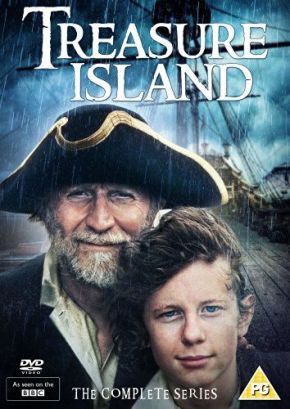
Treasure Island (BBC, 1977) to be released by Spirit Entertainment – 21st November 2016

treasure

I’m delighted to hear that the 1977 BBC adaptation of Treasure Island, starring Alfred Burke as Long John Silver, will shortly be available on DVD from Spirit Entertainment.

Adapted by John Lucarotti, directed by Michael E. Briant and produced by Barry Letts, this has a cast to die for.  The likes of Talfryn Thomas, Patrick Troughton, David Collings, Jack Watson, Anthony Bate, Terry Scully, Stephen Greif, Thorley Walters, Richard Beale, Edward Peel and Brian Croucher all feature.

It’s due to be released on the 21st of November 2016 (pushed back from the original release date of early October).

World War Two: 1942 and Hitler’s Soft Underbelly – Simply Media DVD Review

164454- Chief Crazy Horse Sleeve.indd

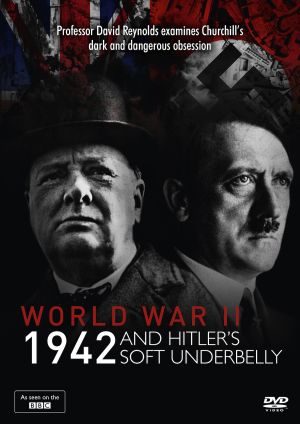
In 1942 and Hitler’s Soft Underbelly, Professor David Reynolds re-examines the North African and Italian campaigns of WW2.  He starts by posing a question.  “Why did we and the Americans spend a lot of the Second World War in the Mediterranean, rather than crossing the Channel?”

If the main battleground was Russia, they surely the next key area was to be found in occupied Europe – so why was Churchill obsessed with campaigns in North Africa and Italy?  Reynolds is able to produce a number of convincing arguments.  As a man of Empire, Churchill understood the importance of Egypt – if the Suez Canal was lost, then Britain faced ruin.  But there were also more pragmatic reasons – neither the British or the Americans had the capability to launch a full-scale assault across the English Channel and into France in 1942.  But Churchill needed a victory, any victory, in order to shore up morale.

Given that defeat had already followed defeat for the British since 1939, another failure (he envisaged a bloodbath of the scale of the Somme if they attempted a landing in France) might have spelled the end.  Possibly not for the British war effort but certainly for him as leader, as the likes of Sir Stafford Cripps and Anthony Eden were circling.  The perilous state of Churchill’s own personal standing during this period is a matter of historical fact, but since it often gets overlooked it’s an interesting area to explore.

So once Monty scored a victory at El Alamein, Tunisia and Italy began to look like tempting prospects – offfering the British and Americans chances to score what should have been easy victories.  Surely Hitler would be too occupied with Russia to be able to adequately defend these theatres of war?

6756

It wasn’t to be and Reynolds declares that Churchill’s bright idea would become a dark obsession.  Partly this was because Churchill underestimated Hitler, but the British prime minister also received faulty intelligence.  The work of the codebreakers at Bletchley Park has become well known during the last few decades, but Reynolds shows that they weren’t infallible.  Often this was because they didn’t have access to the top level of German high command and given the chaotic nature of the German command structure (thanks to Hitler’s knack of micro-managing) the information they received, whilst not deliberately inaccurate, wasn’t correct either.

David Reynolds is an engaging guide.  You get the sense that he relishes being away from his day job (as a professor of International History at Cambridge) and that he also enjoys throwing some quirky scenes into what otherwise might be a fairly dry viewing experience.

He opens the first episode with a fairly conventional piece to camera, except that he’s walking along a beach, his trousers rolled up and the waves lapping at his feet!  He also can’t resist doing the voices of the various players (his conversation between Monty and Churchill is one such amusing moment) and another comic touch occurs when he describes an interesting meeting between Churchill and Roosevelt.

Churchill was a guest in the White House and, returning to his bedroom after a visit to the bathroom, was slightly surprised to find the president in his room.  Dressed in only a towel, Churchill told Roosevelt that “the Prime Minister of Great Britain has nothing to conceal from the President of the United States” and promptly dropped the towel.  Reynolds re-enacts this scene although thankfully he was fully clothed.

The occasional moments of levity don’t detract from the fact that Reynolds is an authoritative historian who seems to delight in reaching out to a wide audience.  Across the two 45 minute episodes he’s able to succinctly sketch out all of the key points from this period of the war, sometimes offering a fresh outlook on familiar topics (but always giving well argued reasons for his statements).

A ninety minute television documentary can never hope to have the same scope as a reasonably detailed book (and Reynolds’ own writings are recommended for those who want to dig a little deeper) but 1942 and Hitler’s Soft Underbelly (like his other documentaries available on DVD – 1941 and the Man of Steel and Long Shadow) are all fine examples of popular history documentaries.

1942 and Hitler’s Soft Underbelly is released by Simply Media on the 5th of September 2016.  RRP £19.99.

6755

Big Finish on Spotify

big.png

A generous section of Big Finish’s back catalogue is now available to listen for free on Spotify.

This includes various releases from Doctor Who, and associated titles like Dalek Empire, Jago & Litefoot, Counter Measures, UNIT, Iris Wildthyme and Charlotte Pollard.  There’s also plenty of Non-Who audios to enjoy, such as Blakes 7, Survivors, The Avengers, Sherlock Holmes and Dark Shadows.

Casualty

casualty 1987.jpg

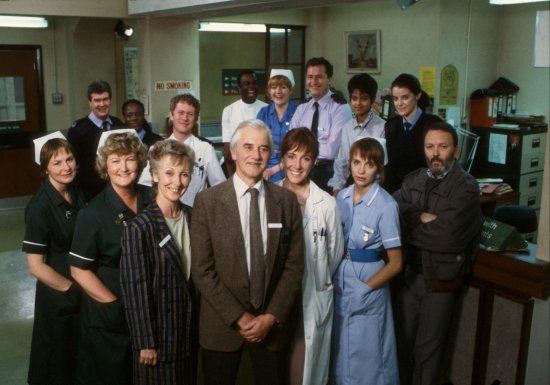
It’s slightly staggering to realise that Casualty has been running for thirty years (just exactly where have the last three decades gone?).  It’s longevity is quite an achievement, as is the fact that it still pulls in a regular audience of around five million, but it’s fair to say that whilst it’s become a British television institution, the series has ended up as television wallpaper (myself, I bailed out as a regular viewer some twenty years ago).

This wasn’t always the case though – when it started in 1986, Casualty was a show that burned with crusading zeal.  Jeremy Brock and Paul Unwin were inspired to create the series after they’d both been hospitalized.  Brock and Unwin were dismayed with what they found – doctors and nurses crushed under an unforgiving system, battling too much bureaucracy and having to work miracles with too little money.

This came over clearly in their series pitch and helped to reinforce just how polarised the 1980’s were.  For many people it was a simple choice, you were either for Margaret Thatcher and her policies or against.  Casualty was firmly against and politics would feature heavily in the first few series, thanks in part to the young firebrand Charlie Fairhead (Derek Thompson).

Just as Casualty’s rough edges have been smoothed off over the years, so have Charlie’s (which makes revisiting the first series something of an eye-opener).  Medical dramas had been a staple of television for decades (Emergency Ward 10, General Hospital, Angels) but the early Casualty episodes offered the audience a glimpse into a more visceral and politicised medical world.

This biting agenda couldn’t last and by the early 1990’s the show had already begun its transformation into a more conventional soap opera.  A sign of how comfortable Casualty had become by the time it celebrated it’s tenth anniversary is demonstrated by comparing its mid 1990’s output against Cardiac Arrest (1994 – 1996).  Written by Jed Mercurio, Cardiac Arrest is the blackest of black comedies – it has something of the feel of early Casualty, but Mercurio pushed further to create a nightmarish vision that uncomfortably might very well be true.  Mercurio’s status as a former doctor suggests that he knew exactly where the bodies were buried.

This weekend’s thirtieth anniversary episode, Too Old for This Shift, had a stunning set-piece stunt although for impact it didn’t rival Boiling Point (original tx 27th February 1993).   Maybe it was a different era, but when a gang of disaffected youths decided to firebomb the A&E department for no good reason it touched a nerve amongst sections of the viewing public (the debate seemed to resonate for a while).

It might not be the series it once was, but the fact it remains as one of the fixed points in an ever-changing television age is reason enough to celebrate.  Happy Birthday Casualty.

too old

Grange Hill. Series Seven – Episode Eighteen

grange hill s07e18

Written by Barry Purchese.  Tx 2nd March 2016

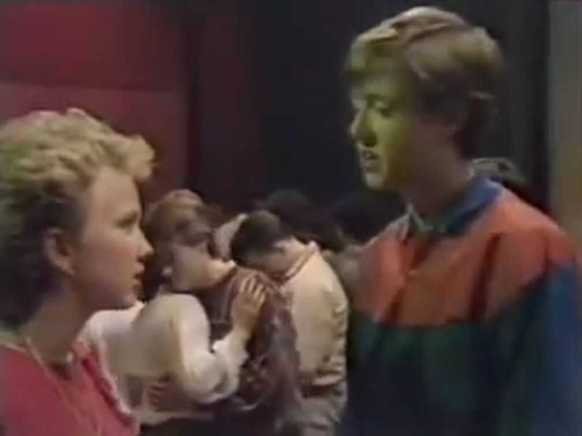
It’s the end of term and a disco has been organised, but the news that the music’s going to be provided by Glenroy strikes fear into the hearts of many.  Glenroy likes very heavy reggae – so with his impressive sound system (Sir Lord Glenroy indeed!) the evening promises to be loud if nothing else.

Pogo’s also on hand with a selection of discs, but will Glenroy allow him the use of his equipment?  Poor Mr McGuffy draws the short straw and scuttles off to speak to him.  Unsurprisingly he doesn’t pluck up the courage but Suzanne turns up later and is more successful.

Elsewhere, Claire’s in a very stroppy mood and the hapless Stewpot is in the firing line.  He can’t seem to do anything right – not even buttering a piece of bread – which seems to be another hint that their on/off/on relationship might be heading for more stormy waters.  Check back next series for some surprising revelations …..

Jimmy McClaren, resplendent in a white suit, seems to be back on the side of the angels again – he’s concerned that Gluxo’s planning something.  A fight maybe?  Or simply absconding with the door money?  Jimmy’s not sure but he elects to stay on watch, much to Nigel’s chagrin.  What’ll happen to all the talent?  Jimmy replies that there’s never any shortage of talent when Jimmy McClaren’s about.  There’s a chance to see his lady-killing skills in action later when he asks Precious if she’d like quick spin around the dancefloor.  She says “no” which rather deflates him (but he’s later reinflated when she changes her mind!)

This is the final episode for quite a few of the regulars.  Most of the class of 80/81 depart (only Claire, Stewpot and Precious return for the next series).  On the teaching side, Mr Keating, Mr McGuffy, Miss Gordon and Mr Howard all make their final appearances.  I’ll miss Mr Keating and Mr McGuffy, although Miss Gordon and Mr Howard haven’t really been around long enough to make too much of an impression.  It’s not impossible to believe that Miss Gordon was intended to return though, as Miss Booth (introduced in the first episode of series eight) isn’t a terribly dissimilar character.

Incidentally, the series-long gag of Mr Howard’s (and to a lesser extent, Mr Smart’s) pursuit of the fragrant art teacher concludes as she declines both of their kind offers to dance and chooses Mr Knowles as a partner instead!  So both Mr Smart and Mr Howard decide to head off for a drink.  Mr Knowles is another teacher who disappears (Chris Jury would be heading off to become Lovejoy’s sidekick).

If Mr Howard’s unlucky in love, then Zammo’s a little more fortunate and is relived to find that Jackie still loves him.  She’s also on hand to break the news that the boys helping behind the bar come from Brookdale and not (as they claimed) Rodney Bennett.  Ah ha, this obviously means they’re up to no good.  Gluxo pops up to taunt Zammo about Jeremy’s death and Jimmy’s on hand to express his displeasure at such a low remark and is also able to exact a suitable revenge (which reveals where the missing bar money ended up).

With Pogo on the decks we get a snapshot of mid eighties pop (Duran Duran, New Order, Thompson Twins) ending up with Spandau Ballet’s True –  a chance for everybody to get just a little closer.  The most delightfully awkward moment comes when Mr McGuffy (no doubt out of a sense of politeness) asks Mrs McClusky if she’d like to dance, just as the record changes to True.  The look on both their faces makes it clear that they’d sooner be anywhere else but dancing together, but the pair bite the bullet and hold each other close (but not too close).

The Life and Times of David Lloyd George to be released by Network – 3rd October 2016

lloyd george.jpg

This is another very welcome BBC Network title – due for release in early October.

Philip Madoc gives a career-best performance as one of Britain’s most revered, inspiring – and controversial – leaders in this celebrated BBC series. Scripted by BAFTA-winning Elaine Morgan with input from leading historian A.J.P. Taylor – and with famously haunting theme music by Ennio Morricone – The Life and Times of David Lloyd George paints a multifaceted portrait of a political icon who steered Britain through the First World War and its aftermath, and whose pioneering reforms laid the foundations of the welfare state.

Brought up in a remote Welsh village, on his way to the top Lloyd George inspires both hysterical adoration and an enmity bordering on bloodlust. A passionate social reformer, his struggle to lift the spectres of poverty and the workhouse provokes the ire of the political establishment, while his indefatigable womanising fills many a gossip column; his political dexterity as the Liberal prime minister of a wartime coalition government, however, raised him to a new level of power and influence.

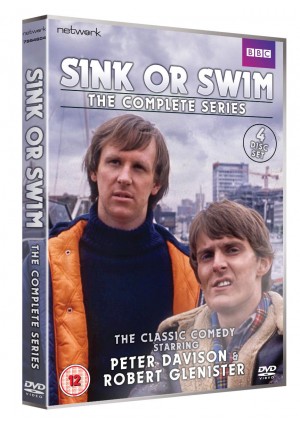
Sink or Swim to be released by Network – 3rd October 2016

sink.jpg

The first fruits of Network’s new deal with the BBC will be arriving this October.

Doctor Who star Peter Davison headlines this well-remembered BBC sitcom, starring alongside BAFTA-winning Hustle stalwart Robert Glenister in his TV debut.

They play brothers Brian and Steve Webber, whose attempt to strike out in business involves a soggy narrowboat and a dubious decision to ply the Thameside tourist trade. Unfortunately, Steve is as loutish and lazy as Brian is charming and ambitious – and the latter finds both his enthusiasm and his relationship with idealistic girlfriend Sonia severely hampered by his brother’s persistent presence!

Scripted by Alex Shearer, creator of The Two of Us, Sink or Swim is a much-sought-after comedy. This set contains all three series.

Grange Hill. Series Seven – Episode Seventeen

grange hill s07e17

Written by Jane Hollowood. Tx 28th February 1984

It’s exam time and Stewpot’s feeling the pressure ….

His mood isn’t helped by Pogo cheerily telling him that he should have sat CSE’s rather than O Levels – as Pogo’s exams are nearly over.  Stewpot also doesn’t seem terribly interested to learn that Pogo’s got the chance of a job (as a double-glazing salesman, a perfect occupation for him!)

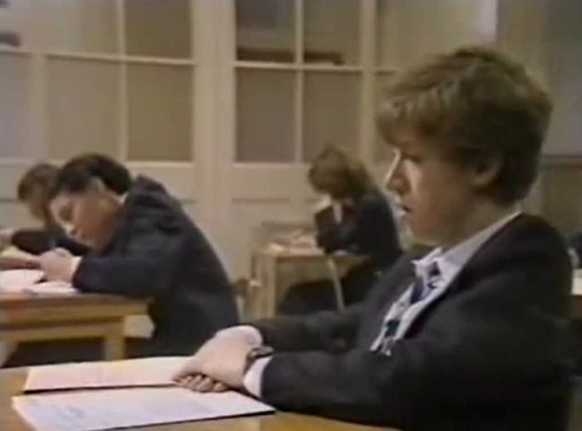
The classroom used for the exam is a cheerless place – shabby and joyless – no doubt this doesn’t help to improve the general tension that everybody’s feeling.  Over the next few years GH will undergo something of a transformation, most notably in the style and look of the school (the pending merger with Brookdale and Rodney Bennett has, in part, come about in order to explain why the school will look so different in the years to come).  One side-effect of the changes is the way that the crumbling Victorian nature of the school to date is replaced with a much more modern environment.  This is a shame in some ways, as the inner-city bleakness of the earlier years rather fades away.

Stewpot snaps out of his catatonic state once the exam starts but not in a positive way.  He has something of a breakdown and has to be lead out.  Prior to this, the silence in the room – as the others start writing – is used effectively to ramp up the tension as he stares at the paper blankly.  Mrs McClusky is on hand to give him a pep talk which sends him back.  She’s not prepared to put up with any nonsense from him.  “Don’t be such a stupid little fool. Stop being weak and pull yourself together.”  Fighting talk!  It’s just what he needs of course, and he’s able to go back and complete the paper.

Mrs McClusky later briefly mentions that exams put the children under a great deal of pressure, but there’s no debate as to whether this pressure is too great or if there’s anything that can be done to help the more vunerable pupils.  The message seems to be that you just have to get on with it the best you can.

Miss Gordon continues her quest to secure a nude model for the art club, whilst Mrs McClusky continues to be far from convinced it’s a good idea.  It would certainly liven up proceedings as we see them sketching a number of twigs, not terribly exciting!

Suzanne returns.  She’s looking very different (seemingly having modelled her appearance on Boy George) and outwardly is happy with her life outside Grange Hill.  But her inability to get a job depresses her (which ties in neatly to the exam theme of the episode).  Mr McGuffy offers to help, but Suzane isn’t convinced that exam passes are the answer.  “O Levels, A Levels, that’s all you teachers think about isn’t it? Look, what is the point? There are no jobs.”  This is an argument that’s been played out several times before, but Suzanne’s eventual grudging acknowledgment that he’s right leads him to suggest she attends sixth form college.

Suzanne meets up with Claire and the others, but this only serves to make her feel more isolated.  The others don’t ignore her deliberately, but their banter highlights that she’s no longer a member of the school community and therefore isn’t able to join in.  She’s got what she’s always wanted – Suzanne has long desired to leave Grange Hill – but now it’s happened the girl is a little lost and scared.

Her final conforontation with Mrs McClusky is an oft-repeated moment.  The headmistress is appaled by the sight of the bizarrely attired girl.  But Suzanne is able to have the final world by telling Mrs McClusky that since she no longer attends Grange Hill she can wear what she likes.  She then proceeds to sashay down the corridor, hips swinging impressively.

Mrs McClusky agrees that the art club can have a nude model.  Pogo, on hearing the news, can barely contain his excitement (he’s practically frothing at the mouth) and immediately signs up to join the club.  The eventual revelation that the model is a wrinkled old man rather than an attractive young woman is a nice (if obvious) gag.

Grange Hill. Series Seven – Episode Sixteen

grange hill s07e16

Written by Jane Hollowood. Tx 24th February 1984

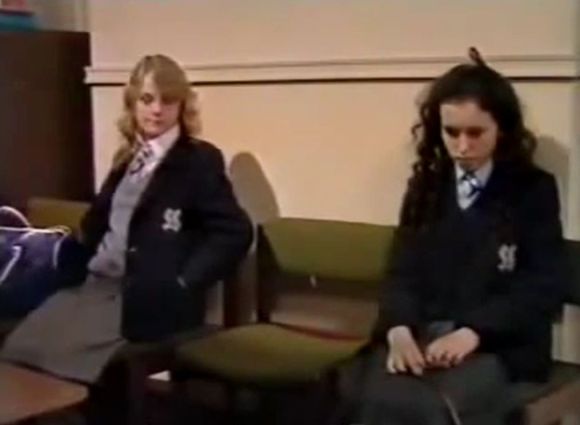
N3, Mr Baxter, Mr Knowles, Claire and Stewpot have headed out into the country for an orienteering weekend.  Jane Hollowood’s script develops a theme first seen in the previous years trip to Wales, namely that Mr Baxter struggles when he’s out of his comfort zone.
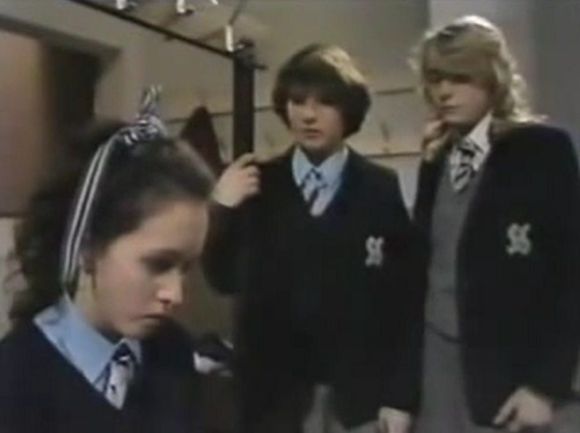
That he’s not terribly familiar with orienteering is made clear right from the first scene – the whole class head off in one direction, whilst he goes the opposite way!  He’s called back by Mr Knowles (with the children’s jeers ringing in his ears) who points out that he was holding his compass upside down.

Mr Knowles has organised a competition – teams of two people set off through the forest using their newly found orienteering knowledge to locate a series of checkpoints – and the wheel of fortune means that Mr Baxter and Roland have to pair up.

This is a genius move (again, the abrasive relationship between the pair was touched upon during the Wales trip).  It’s plain that Mr Baxter’s opinion of the desperately unathletic Roland has never been high, but from the moment they set out there’s a subtle change in their personal dynamic.  Mr Baxter, for all his surface bravado, is out of his depth, which means that it’s Roland who’s able work out the correct route they have to take.  For once the boy gets the chance to act in a positive manner.

But when Mandy and Sarah decide to hide one of the checkpoint markers it means that the mismatched pair of Mr Baxter and Roland find themselves hopelessly lost.  The teacher then sprains his ankle, which leaves them stranded in the forest, cold and hungry (and with night fast approaching).  This then leads into one of the key moments of the episode.

ROLAND: Everything I do is a disaster.
MR BAXTER: Rubbish. Listen, this was my fault not yours.
ROLAND: What about my mum walking out though? That wasn’t your fault.

There’s a world of pain from Roland in this short exchange.  Despite his visits to the school psychologist during series five, we’ve never really seen him express his fears, hopes or emotions before.  No doubt this is due to his friendless nature (true, Janet’s always been a more than willing listener, but Roland’s opinion about her has been made crystal clear on many occasions!)

Although Roland’s never been the most popular member of the class, the others (even Annette) are concerned about him.  Annette promises that if he comes back safely she’ll never tease him again (she then glances upwards, which suggests she’s said a quick prayer for his safe return – a very uncharacteristic thing for her to have done).

After the pair are finally rescued, Mr Baxter is packed off to hospital with a suspected broken ankle whilst Roland returns back to base.  He’s treated like a returning hero by the others, which is lovely to see (although I’ve always been a little perplexed as to how they managed to create such an impressive “welcome back Roly” banner in double quick time!)

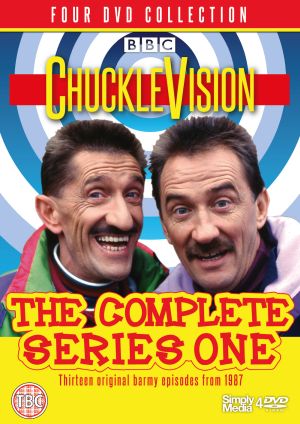
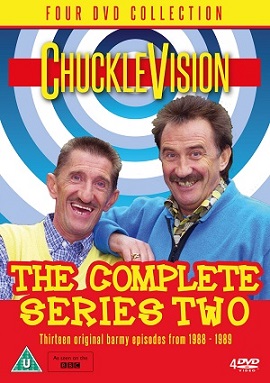
ChuckleVision – Complete Series One and Two. Simply Media DVD Review

164454- Chief Crazy Horse Sleeve.indd164454- Chief Crazy Horse Sleeve.indd

ChuckleVision was a television fixture for over two decades, running from 1987 to 2009 (notching up a staggering 292 episodes along the way).  But before Barry and Paul Elliott endeared themselves to several generations of children they’d had to endure a long, hard showbiz apprenticeship.   Winners of Opportunity Knocks in 1967 and New Faces in 1974 (a unique double) the brothers found further television exposure hard to come by, so had to be content with plying their trade around what passed for the variety circuit during the seventies and early eighties.

Their return to television, The ChuckleHounds (1985/1986), didn’t sound terribly promising – a pre-school programme which saw them dressed as dogs! – but it lead to ChuckleVision, where the boys were able to put their slapstick skills to fine use.  The first two series had a different format to what came later – Barry and Paul are studio-based presenters (although they do venture outside via film inserts) plus there’s magic from Simon Lovell and a regular slot featuring Billy Butler as a storyteller. But even though much was unfamiliar, the basic dynamic of the brother’s relationship was already firmly in place.  Barry (the short one) is stupid, Paul (the tall one) is equally as stupid but considers himself to be a cut above in the intellectual stakes.  It’s the sort of formula that had served Laurel and Hardy well for many years and the Chuckle Brothers, whilst not quite in the same league, still managed to wring plenty of comedy out of this basic premise.

Wordplay and puns also feature.  A sample from the first episode, Breakfast, will suffice.  Paul mentions that Wayne Sleep will be coming on the show later.  Barry looks downcast and tells Paul he’d better call the vet (for the lame sheep!)  It’s a groanworthy pun and it won’t be the last ….

Each episode of series one and two has a theme.  For example, episode three of series one is about Sport.  There’s quite a nice touch of satire as they cut away regularly for live snooker at the Crucible.  Each time they do so, we see a still picture of Steve Davis, clearly not moving an inch, whilst the commentator tries to fill the time as best he can.

The second series still has the brothers in a studio setting, but there seemed to have been a little more money in the budget, which meant that the fairly bare set from series one was replaced with something rather more lavish.  The basic format remains though, as does Billy Butler’s storytelling slot.  Amongst the memorable moments are Barry’s caveman outfit (in Farming) and their attempts to discover whether the truth is really out there in U.F.O.  The robot Barry, perfect in every way says Paul, is also rather chucklesome (“it hasn’t got a brain” says Barry.  You can probably guess the next line).

Originally released on DVD by Delta in 2011, they’ve now been brought back into print by Simply.  For fans of the later oft-repeated runs of ChuckleVision, these two series are certainly very different (opinions are split over whether Billy Butler is an asset or a bore – personally I rather like him). Each series runs for around 250 minutes, which makes the decision to issue them as four disc sets a little odd (they would have easily fitted on two discs per series)

Although nice to see them back in circulation it’s a little hard to fathom exactly who’s going to buy them.  The subset of bloggers, like myself, with an interest in the history of British television must be quite small, so it’s either going to sell to those who grew up with the series or young children yet to be introduced to the joys of the Chuckle Brothers.  The latter may be the most fruitful audience, as whilst these early shows can be a little slow there’s still plenty for youngsters to enjoy.  Those coming back to the show after a gap of twenty five years may be harder to please.  Numerous series, such as Pipkins and The Banana Splits have escaped onto DVD over the years, but after an initial nostalgic rush the adult viewer has probably found they lack a great deal of rewatch value.

ChuckleVision: The Complete Series One was released on the 25th of July 2016.  RRP £19.99.

ChuckleVision: The Complete Series Two will be released on the 29th of Augut 2016.  RRP £19.99.


BBC Landmark Sitcom Season

hancock.jpg

Running across BBC1, BBC2, BBC3 and BBC4, the upcoming Landmark Sitcom Season is a series of one-off specials designed to celebrate sixty years of the British sitcom (Hancock’s Half Hour, which debuted on BBC tv in 1956, has been taken as the starting point).  Of course, if any prove to be popular they can be developed into full series, which means that the cynics amongst us might regard this as little more than a season of pilots …..

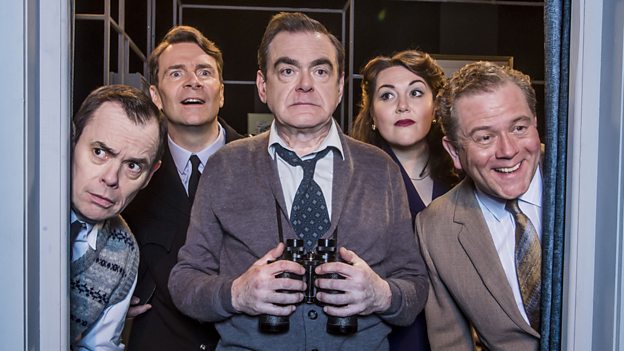
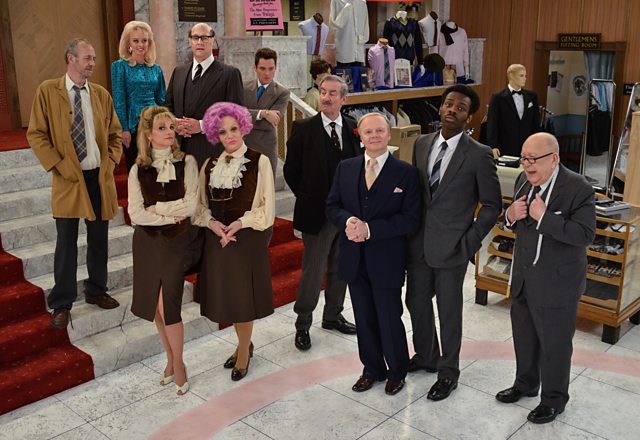
For the purposes of this blog, there’s seven which are of interest – four on BBC1 and the other three on BBC4.  BBC1 gives us Porridge, Are You Being Served, Goodnight Sweetheart and Young Hyacinth (a prequel to Keeping Up Appearances) whist BBC4 has Hancock’s Half Hour, Till Death Us Do Part and Steptoe and Son.

Goodnight Sweetheart is notable because it’s the only one able to reunite the original cast (alas, time has caught up with most of the stars from the others).  Marks and Gran have already revived another of their sitcoms, Birds of a Feather, on ITV, so it’s not difficult to believe that this has been made with one eye on a full series.

Young Hyacinth is another that’s easy to imagine has been crafted as a back-door pilot.  Writer Roy Clarke has form for this – First of the Summer Wine was an effective (if not terribly popular, ratings-wise) prequel to Last of the Summer Wine – and the current success of Still Open All Hours suggests that Clarke would be up for a revisit of another of his old shows.  Some other time I’ll cast an eye over Clarke’s whole career – it’s amazing that he’s still going strong and it has to be said that his CV is a varied one with a lot more to offer than just umpteen years of Summer Wine.

Are You Being Served looks to be a pitch-perfect recreation of the original series, complete with all the familiar catchphrases.  Whether this is a good or bad thing is very much down to personal taste of course ….

p044wkt3.jpg

Porridge looks to be doing something a little different.  It would have been easy enough to cast someone not physically dissimilar to Ronnie Barker (Peter Kay for example) and simply rehash old glories, but the clips show that it’s very much set in the present day (unlike Are You Being Served which remains stuck in the mid eighties) .  One positive is that the updated Porridge has been scripted by Clement and La Frenais themselves, although it’s slightly concerning that they’re not adverse to plagiarising themselves.  Familiar gags (“I won’t let you catch me”) and a martinet Scottish prison officer are present and correct.

Whilst the BBC1 revivals feature new scripts, the ones on BBC4 take a different approach.  Steptoe, Hancock and Till Death are newly recorded versions of wiped originals …. well sort of.  All the Steptoe episodes still exist, so they’ve chosen one which only remains as a poor quality B&W video recording.

These three episodes have a very different feel to their BBC1 counterparts.  The original sitcoms tended to be rather studio-bound, but these new recordings heighten this feel.  The lack of solid walls in the sets makes them seem rather theatrical and artificial, although it’s more than likely that this has something to do with the fact that BBC4 has a considerably lower budget than BBC1.

Although some of the efforts look interesting rather than rib-tickling, I have to say that I’m looking forward to the Hancock episode.  Kevin McNally has already recorded a number of missing HHH radio scripts for Radio 4 (jolly good they are too) and his performances make it clear just how much love and respect he has for the Lad Himself.

When the season’s up and running I’ll be blogging about some of my favourite British sitcom episodes.  So I guess now’s a good time to go off and do some research …..

Grange Hill. Series Seven – Episode Fifteen

grange hill s07e15

Written by John Godber. Tx 21st February 1984

When Annette turns up to school with a new bike, it worries Fay and Julie.  Remembering the tale of the camera, they wonder if this is further evidence of Mrs Firman’s mistreatment of her daughter.  Mind you, Annette doesn’t have the bike for long as Jimmy, Nigel and Roland see it as a nice little earner ….

Although Annette’s fate is the topic of this episode, she’s actually fairly peripheral to proceedings, whilst those concerned about her (Fay and Julie and Miss Gordon and Mrs Wilkins) are much more central.  Whilst Annette’s brand new bike suggests that Mrs Firman has been hitting her daughter again (and this is her way of apologising) there’s no actual evidence that this is so.

That’s not really important though, it simply serves as the catalyst to give Fay and Julie the final push they need to speak out.  It’s quite noteworthy that Julie tells Fay that when her mother hits her she doesn’t have any bruises.  Fay agrees with this, which suggests that she too has received physical chastisement from her parents (providing us with a window into a world where such things are commonplace).

They tell Miss Gordon, who along with Mrs Wilkins (Angela Galbraith) later visits Mrs Firman (Dorothy White).  Mrs Wilkins is introduced as coming from Grange Hill, although her precise role is unclear.  She’s a good listener though, as demonstrated when she patiently allows Mrs Firman to tell her tale.

Although Mrs Firman has lavished presents on her daughter (Nigel believes she lives in a big house) it’s a little hard to see how she manages it, especially after it’s revealed that her husband has left her after sixteen years of marriage.  She actuallyvlives in a modest house with nondescript fixtures and fittings (and is quite shabbily dressed).  At one point she tells them that she doesn’t want any sympathy.  Mrs Wilkins responds that they don’t intend to offer her any, but Annette could do with some.  After Mrs Firman expresses remorse it closes the chapter on this story.  This feels a little pat to be honest, but there’s always the possibility that it isn’t a definite ending.

Jimmy’s more Gripper-like in this episode.  Pinching Annette’s bike is rather out of character (remember, he started series seven as a businessman, keen to provide his customers with services) but it does bring Roland’s story-arc to a close.  Having seen Roland move from victim to bully, he now has to face the consequences of his actions after the police catch up with him and his two partners-in-crime.  Roland will remain a regular until the end of the 1987 series, but he’ll rarely feature as a central character again.

Annette and Fay have a brief, but memorable, fight.  It helps to clear the air and it means they’ll be able to pick up their friendship after this brief hiccup.

Grange Hill. Series Seven – Episode Fourteen

grange hill s07e14

Written by Frances Galleymore. Tx 17th February 1984

Diane’s stories about her imaginary boyfriend become more and more elaborate. But Julie seems to smell a rat ….

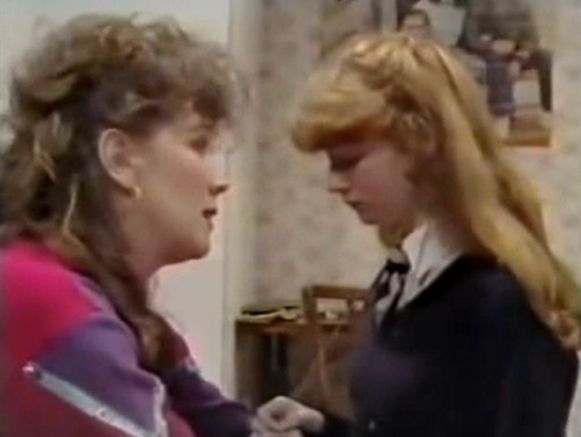
This episode gives us our one chance to take a look at Diane’s homelife.  Her mother, Gloria (Linda Marlowe), couldn’t be more different to her daughter.  She’s brassy, confident and seemingly not very interested Diane at all.  No surprise then that Diane prefers the safe haven of her bedroom (which, of course, has a big poster of Duran Duran on the wall) and the romantic certainty of teen magazines.

Mr McGuffy’s drama classes seem to be the inspiration behind her endless tales of Mark (he drives a car, works in a record shop, uses aftershave, looks a little like Shakin’ Stevens, etc, etc).  Do we interpret this as a cry for help, or is she secretly delighting in fooling everyone?  Diane’s usually portrayed as a victim (or at least a fairly passive character) so there’s evidence that she relishes stringing everybody along.

This includes her mother, who finds Diane’s stash of secret love letters.   This faintly echoes the storyline of Claire and her secret diary, but it’s plain that Diane intended her mother to find the letters just so she could create a scene.  Gloria has always complained that her daughter never seems to do anything or go anywhere, so it’s more than a little ironic that when she discovers Diane apparently has a boyfriend she’s dead against it.  Diane is then able to taunt her progressive mother most effectively.

If Diane’s managed to fool Fay and Janet, with Annette not really bothered either way, then Julie is the one who seems not to believe a word of it.  But she never comes out and calls Diane a liar to her face (Julie, unlike Annette, is rarely mean or spiteful) and doesn’t press matters after Diane tearfully brings the affair to a close (imaginary Mark is forced to leave town for somewhere up North).

The merger is steaming ahead, with Mrs McClusky keen to take charge.  I like that she calls Claire and Stewpot to her office and passes over paperwork for them to give to their parents, Mrs Scott and Mr Stewart (both of whom are prominent members of the PTA).  Some might see this as underhand, but there’s no doubt that Mrs McClusky is a skilled political animal ….

Miss Gordon is keen to bring a nude life model to the school.  Mrs McClusky reacts in shock (a lovely moment) as does Mr Keating later on (another fine comic scene).  We’ll have to wait a few episodes for the punchline, but it’ll be worth it.

Grange Hill. Series Seven – Episode Thirteen

grange hill s07e13

Written by John Godber. Tx 14th February 1984

Annette proudly displays her new Polaroid camera to the class.  She seems to have an indulgent mother who spoils her rotten – but this surface happiness hides darker secrets …..

The first of five GH episodes penned by John Godber, it provides answers to questions which were posed earlier in the series.  Annette’s mother suffers from depression and hits her daughter, so we can assume that the lavish presents are her way of saying sorry.  Knowing this explains a great deal about Annette’s behaviour (her willingness to taunt others, for example) but it also poses troubling questions.  She’s been this way since we first met her in the first year – has she really been abused all this time?

Everything comes to light after Julie jealously steals her camera.  She only meant it as a joke (this gives me nasty flashbacks to the sagas of Belinda’s clarinet and Fay’s hockey stick) but Annette doesn’t see the funny side.  They have a brief fight but Annette pulls away, clearly in pain.  This wasn’t Julie’s fault though – Annette has bruises on her arms, caused by her mother.

Earlier, the games mistress Miss Hartley also spotted the bruises and gently questioned her.  Annette insisted she fell and Miss Hartley, somewhat reluctantly, seemed to believe her.  We’ve seen this in the series before, where a teacher is aware that a pupil may be suffering abuse but decides not to act.  It’s no doubt an accurate reflection of real life, but it still feels disturbing.  Fay and Julie attempt to cheer Annette up, but there’s a sense that this story isn’t over yet.

Elsewhere, Roland’s smartened himself up – much to the delight of Janet (Simone Nylander).  She launches one of her trademark monologues as she fires question after question at the uncomprehending and uninterested Row-land.  It’s a nice moment of comic relief.

As is Roland’s transformation into a school bully.  After being bullied himself by Gripper, Roland’s now become a fully fledged member of Jimmy’s gang.  Jimmy, Nigel and Roland form an intimidating trio – Jimmy does most of the talking, Roland chips in with the odd word, whilst Nigel says nothing (although he sneers very effectively!)

Mrs McClusky, Mr Smart and Mr McGuffy discuss the merger, which now seems to be going ahead.  Mr Smart isn’t in favour, he declares it would be better if they went back to smaller schools which would give teachers a chance to spend more time with the pupils.  Mr McGuffy doesn’t see the logic in this, although there seems to be something in Mr Smart’s argument.  It’s interesting that Zammo’s mother, Mrs McGuire (Jenny Twigge) also expresses a desire to see the merger stopped.  Although she leans politically to the left (and no doubt Mr Smart leans very much to the right) they both seem to have come to the same conclusion.  Maybe for different reasons ….

Given that he’d just become Artistic Director of the Hull Truck Theatre in 1984, it’s no surprise that John Godber only penned a handful of scripts for GH.  His other episode for series seven concludes the storyline developed here and is just as dramatically satisfying.  His later work for the series is a little more light-hearted though (it includes the memorable affair of Mr Bronson’s stolen wig!).


Grange Hill. Series Seven – Episode Twelve

grange hill s07e12

Written by Barry Purchese. Tx 10th February 1984

Suzanne walks out of Grange Hill again, but this time it looks like she’s gone for good.  On her way out she encounters Mr McGuffy and Mr Smart.  Both want her to stay – although they speak to her in very different ways, as per their diametrically opposed characters.  Mr McGuffy is patient and understanding whilst Mr Smart is abrupt and hectoring.

Neither tactic works, although it’s Mr Smart who feels the most affronted.  He storms over to Mrs McClusky’s office to demand she does something, but the headmistress doesn’t share his anger.  Gwyneth Powell’s been a little underused this year, but she’s very cutting in this brief scene.

Although Suzanne’s left the school, she’ll return to the series in episodes seventeen and eighteen.  But this episode does see the final appearance of Mark Baxter as Duane Orpington.   Given the length of time he’d spent in the series it’s slightly surprising that he just seems to fade away.  One minute he’s there and the next he’s gone, with nobody appearing to notice (although I seem to recall that illness might have been the reason why Baxter didn’t appear in the rest of series seven).

Zammo eventually hands over Gluxo’s note to Jimmy.  Jimmy’s up for a scrap – provided it’s done with a sense of style – but Zammo’s not keen.  Jackie has forbidden him to get involved in any fighting, which leads to a simmering feeling of tension between him and Kevin.  Zammo doesn’t want to be thought of as a coward, but neither does he want to lose Jackie.  It’s a bit of a dilemma.

There’s the second mention of Diane’s boyfriend – and this time he’s got a name, Mark.  At the moment this doesn’t go any further, but it’s another seed planted which will come to fruition later in the series.

Roland’s chaotic home life is finally explained, as Janet (annoyingly helpful and inquisitive as ever) pops around and is told by Mr Browning that Roland’s mother has left home.  One parent families are such a fact of life now (and would also be in later series of Grange Hill) that it seems rather remarkable that this is one of the first instances in the series when it’s been explicitly stated that someone is missing a parent.

The big fight is an anti-climax, but on the plus side it means that Zammo doesn’t have to break his promise to Jackie.  Gluxo locks the Grange Hill boys into the warehouse where the fight was supposed to take place and calls the police.  That’s a somewhat uncharacteristic thing for Gluxo to have done, but GH couldn’t really have been seen to condone gang fighting, so this ending (even if it feels like a bit of a cop-out) does make sense.