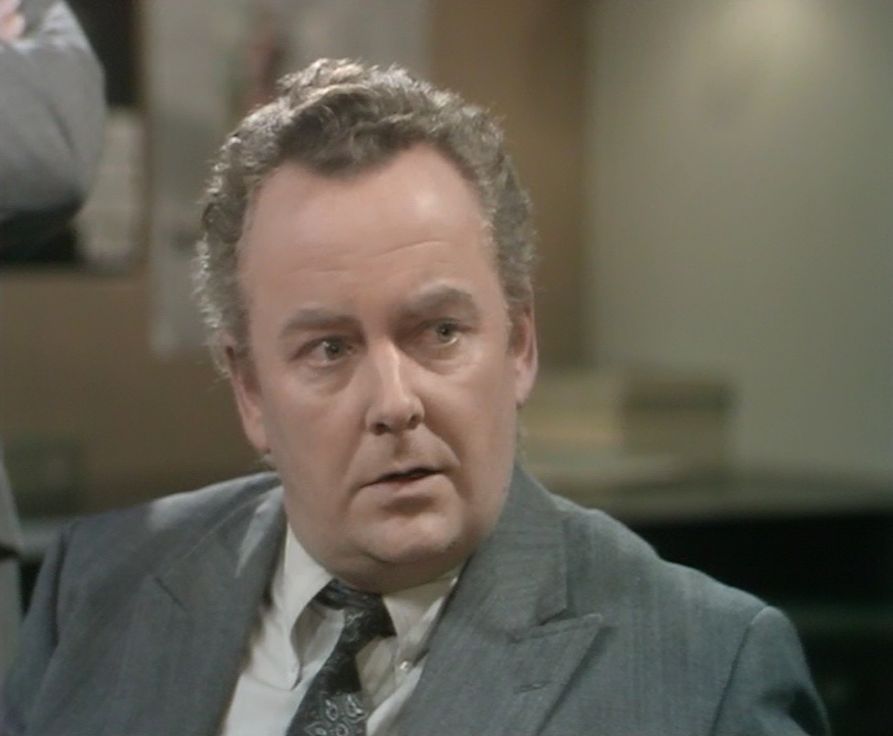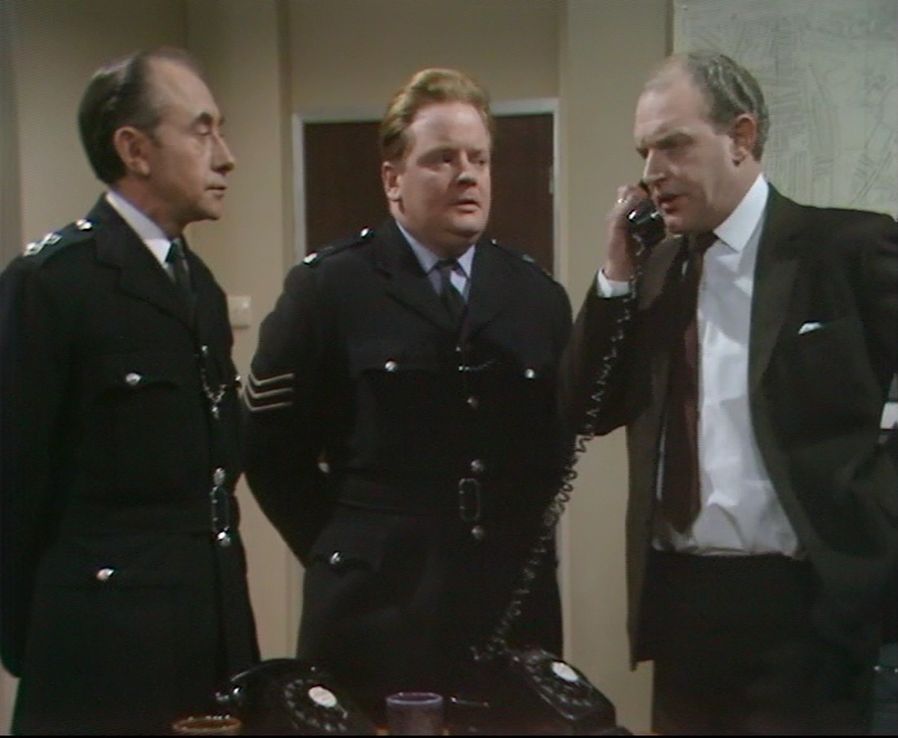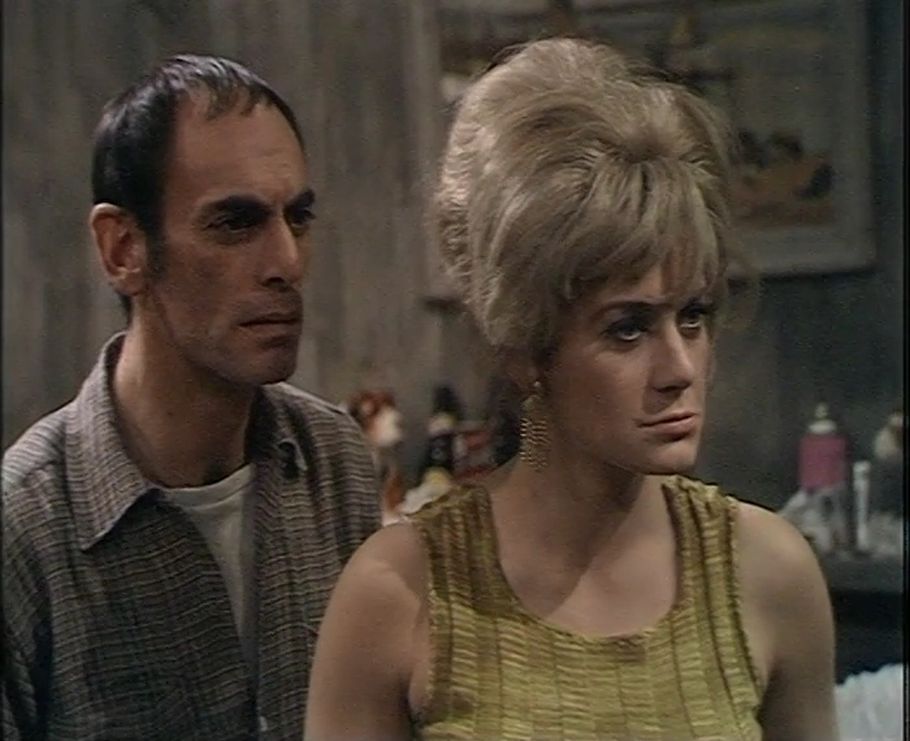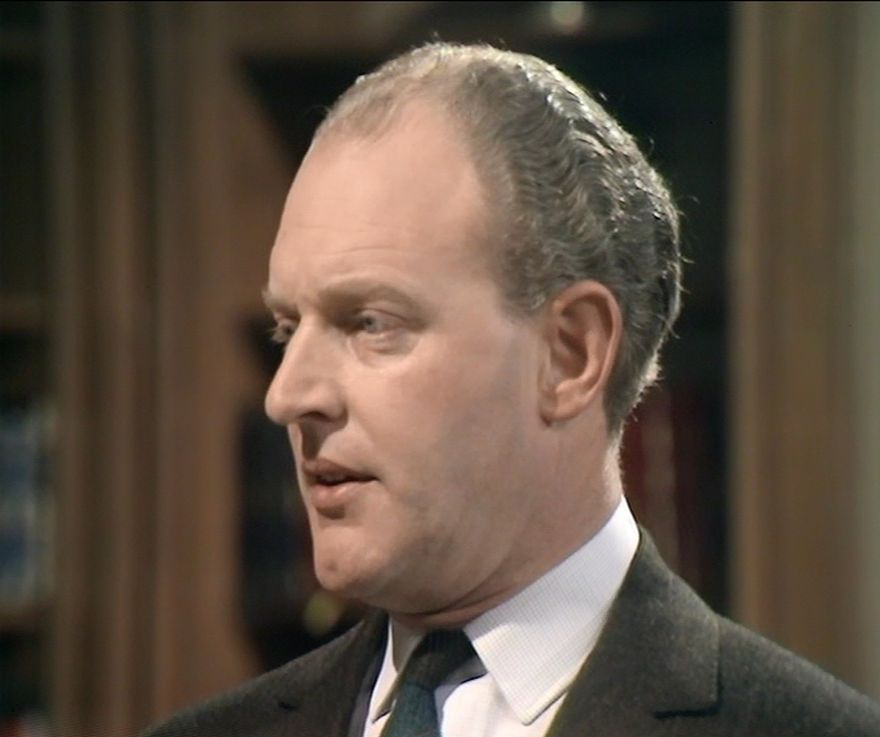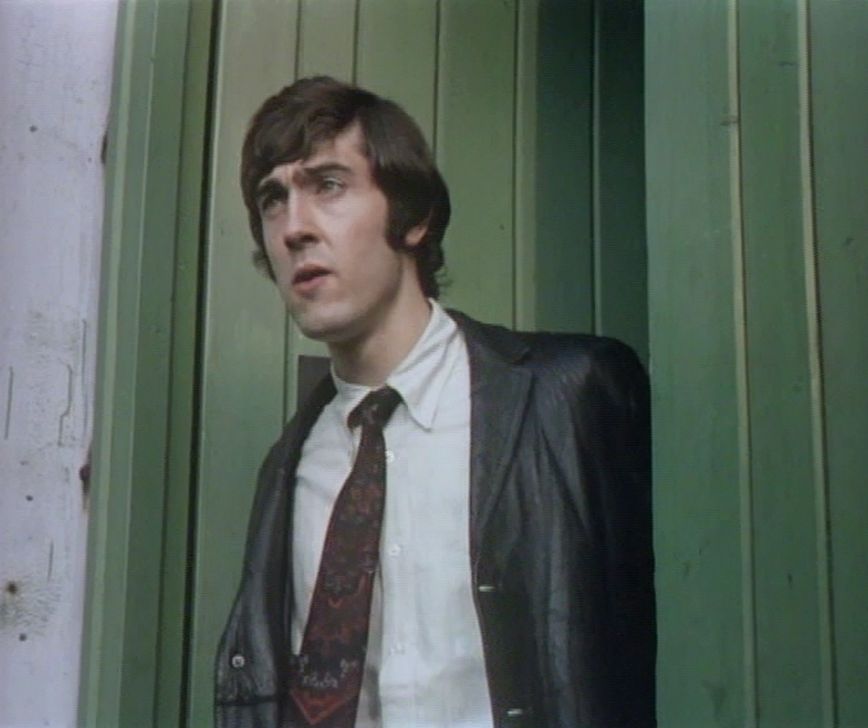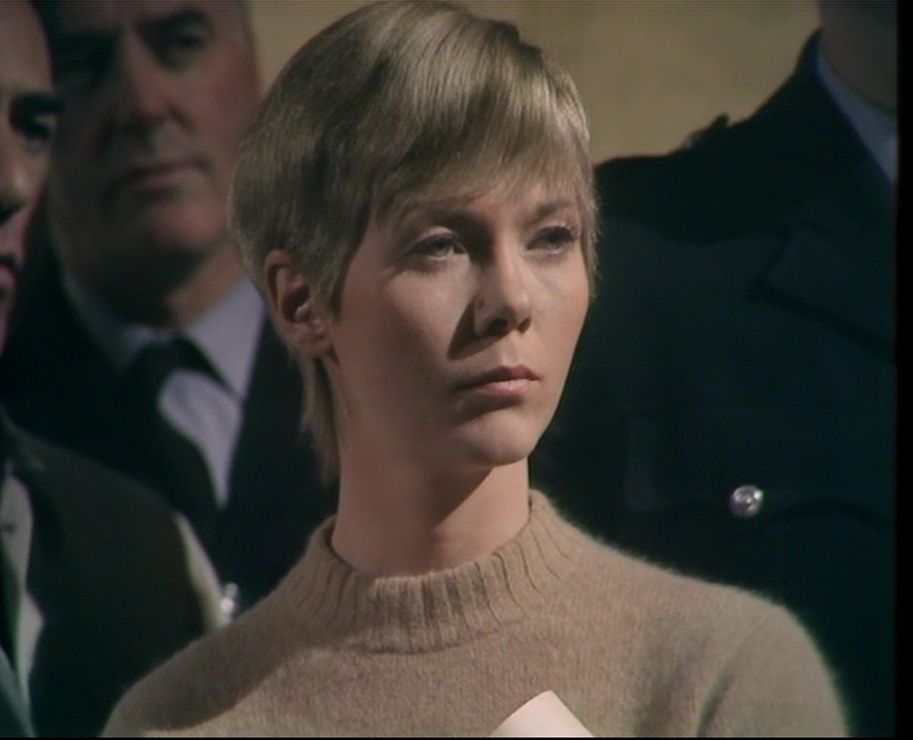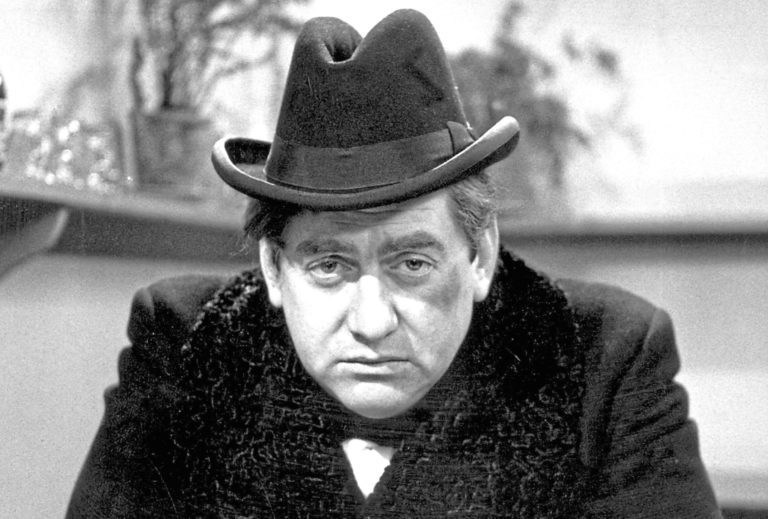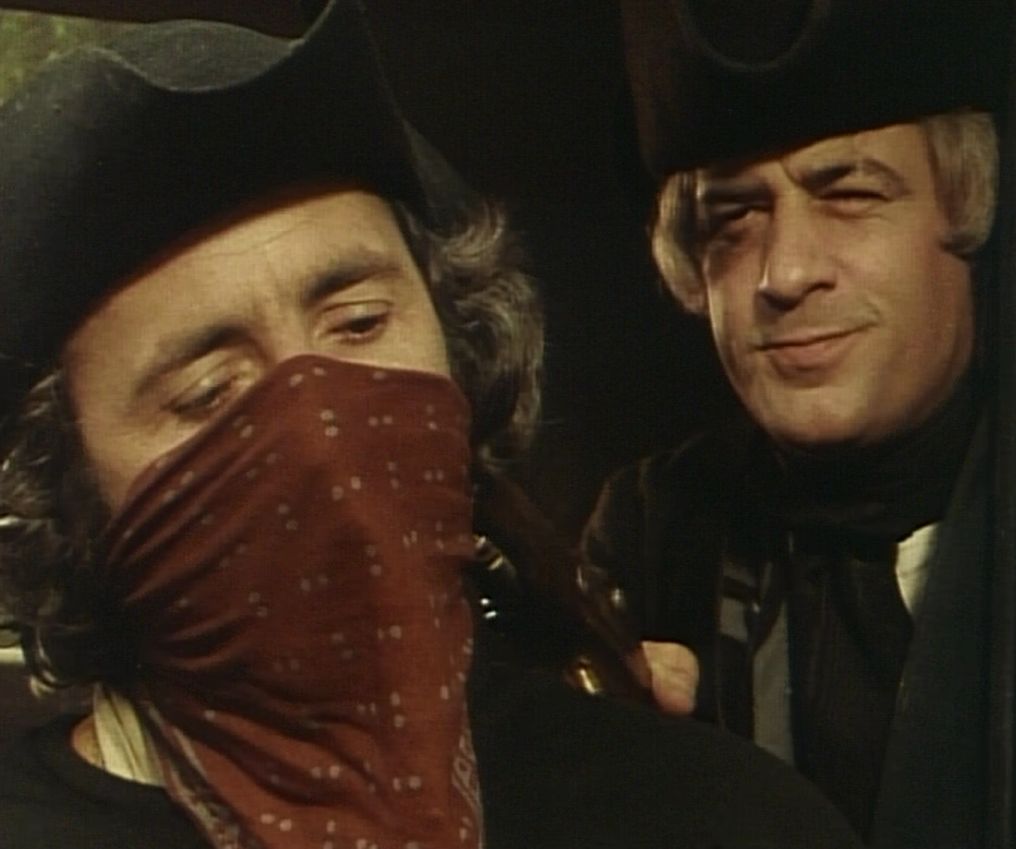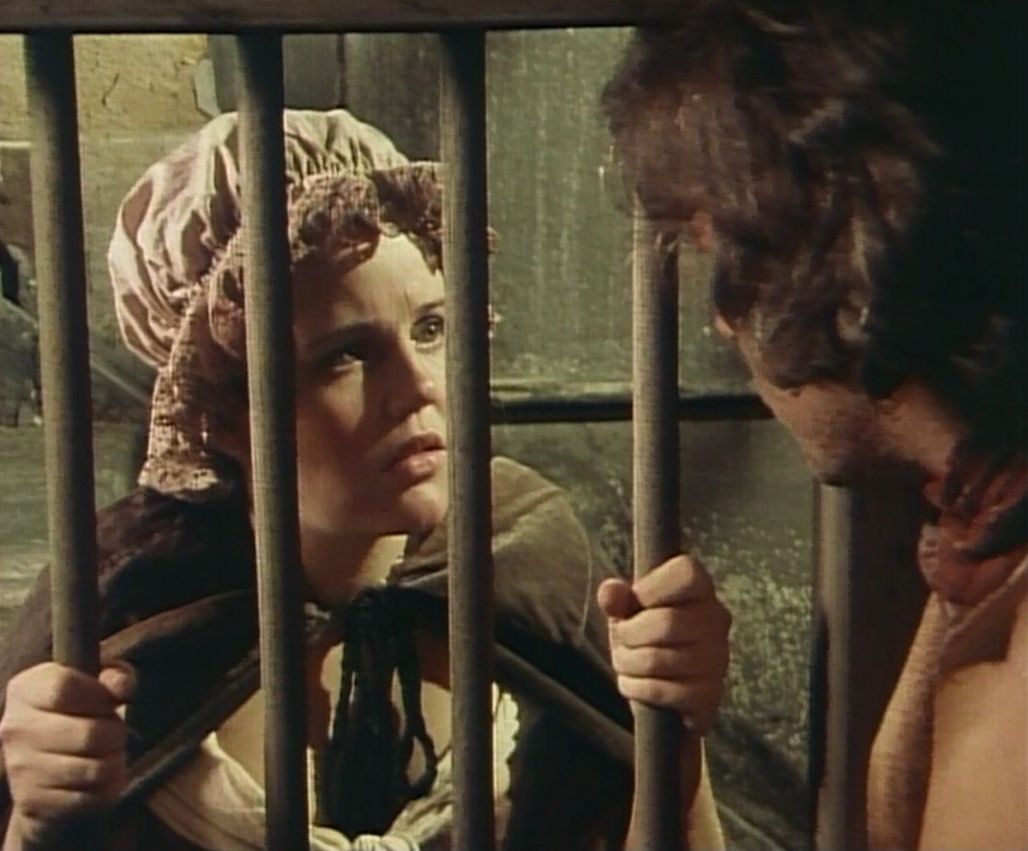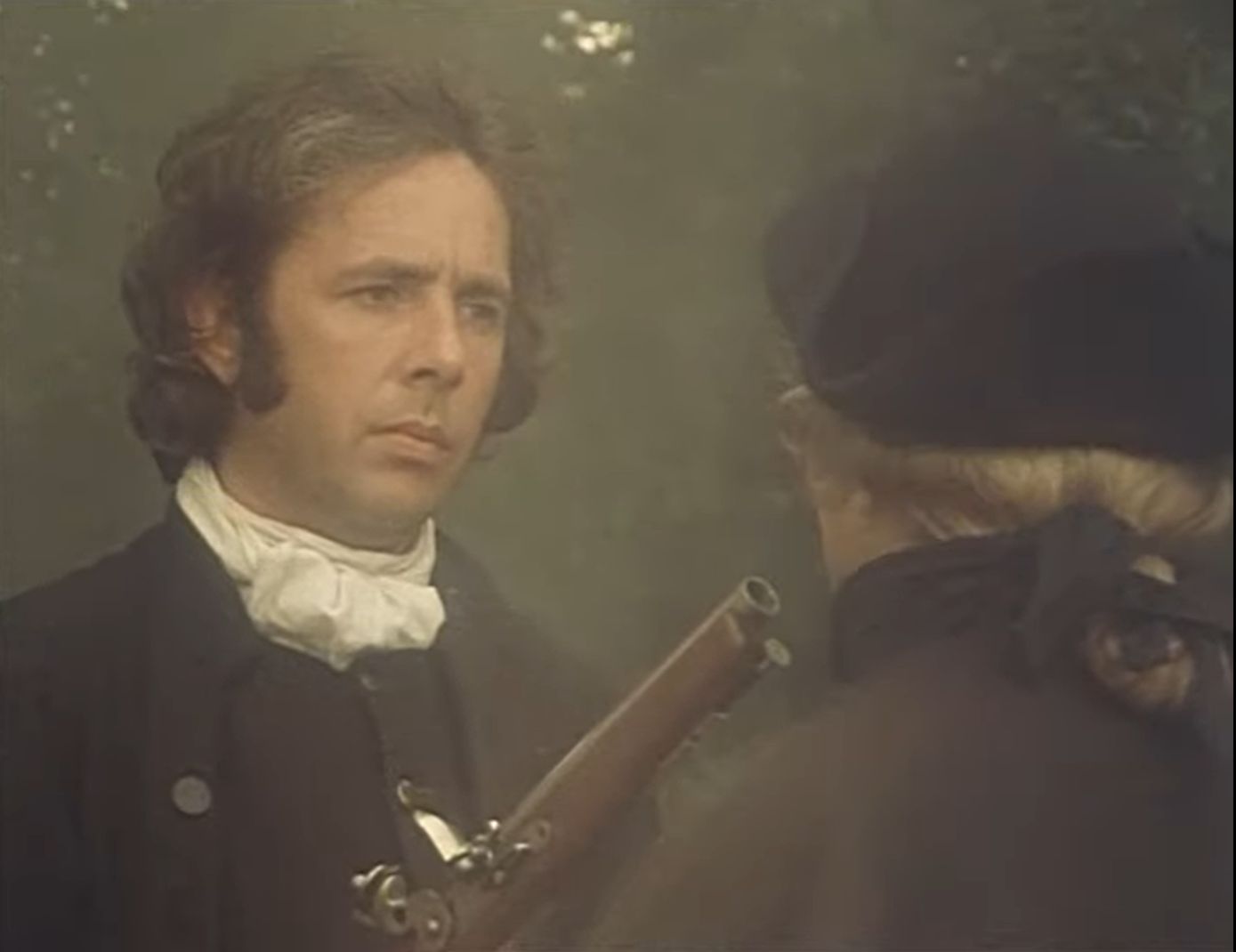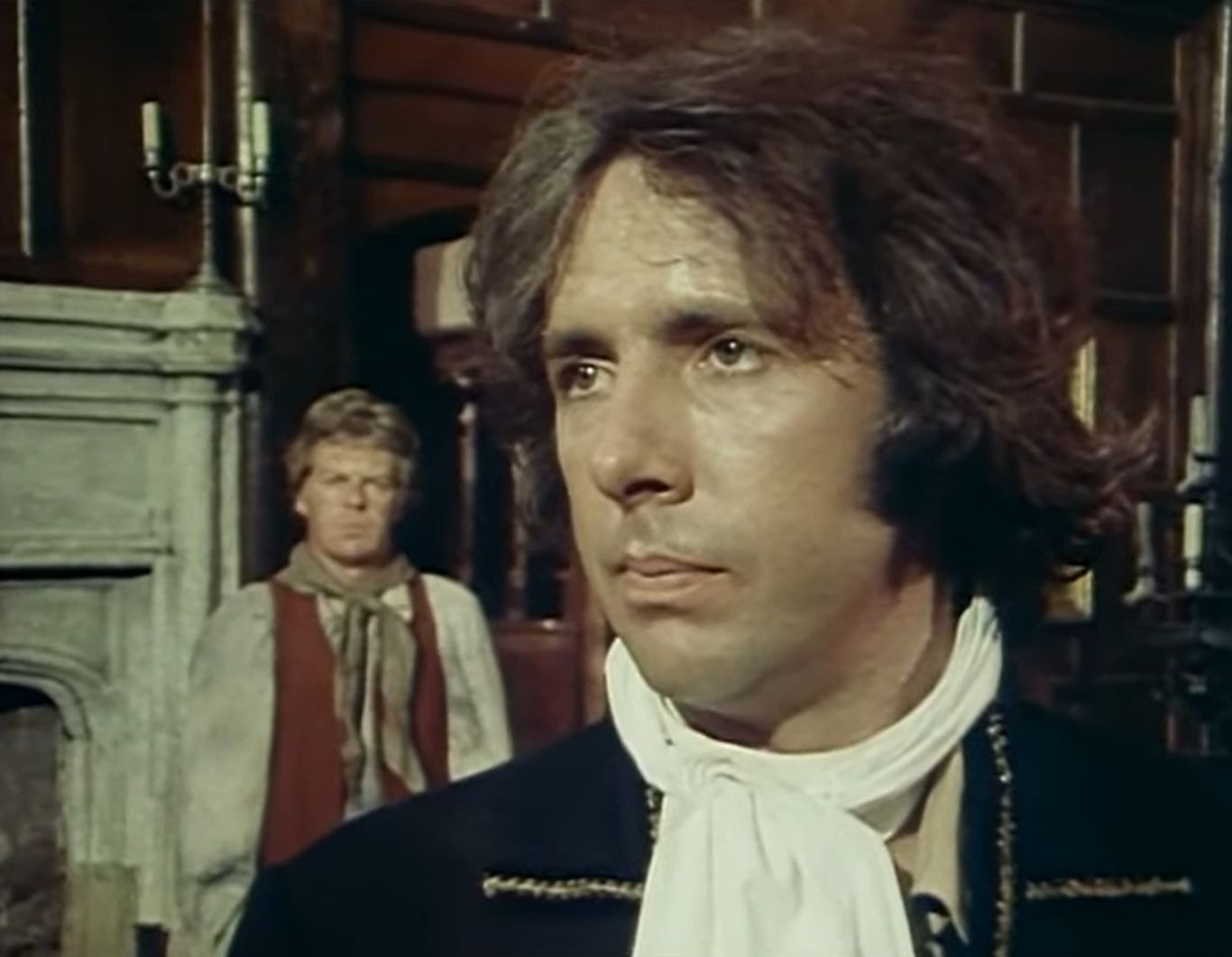
Softly Softly: Task Force – Like Any Other Friday …

S01E12 (12th February 1970). Written by Robert Barr, directed by Vere Lorrimer

It’s another Robert Barr script, so you can expect a story rich in procedural detail but possibly low in excitement.

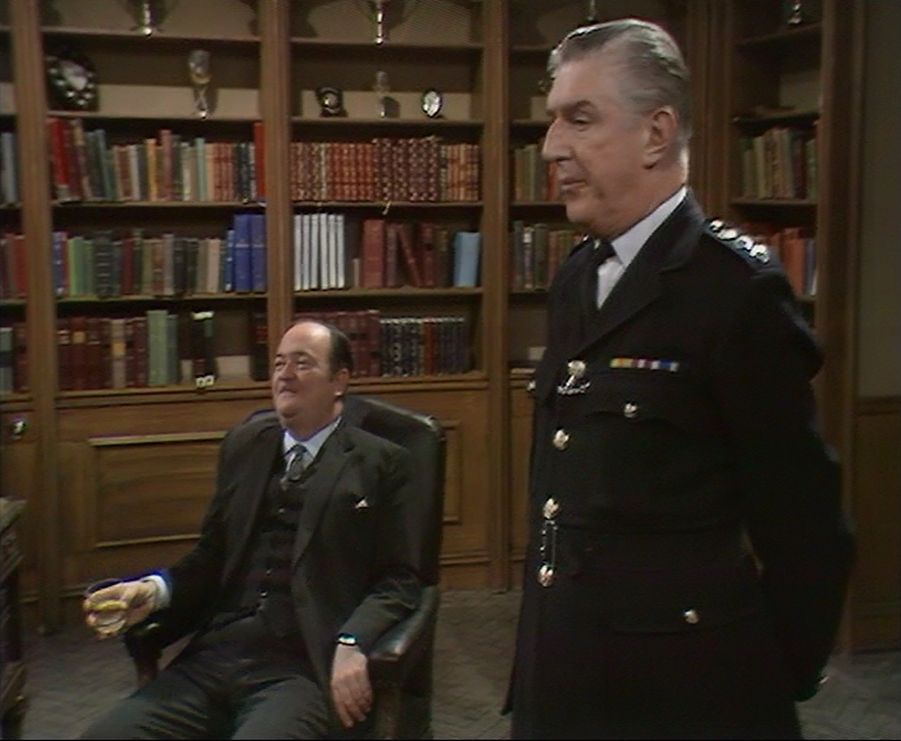
There’s been a robbery at the palatial home of Major Hartley. Hartley is currently out of the country, but his devotedly waspish Scottish housekeeper Miss Mathieson (Dorothy Smith) is on hand to give Evans all the details. I wonder why so many housekeepers are Scottish? Possibly it’s just a dramatic convention.

She tells Evans several times exactly how she maintains the house (when she opens the windows to air the rooms, etc). This stultifying detail is an early reminder that Barr’s hand is on the tiller today.

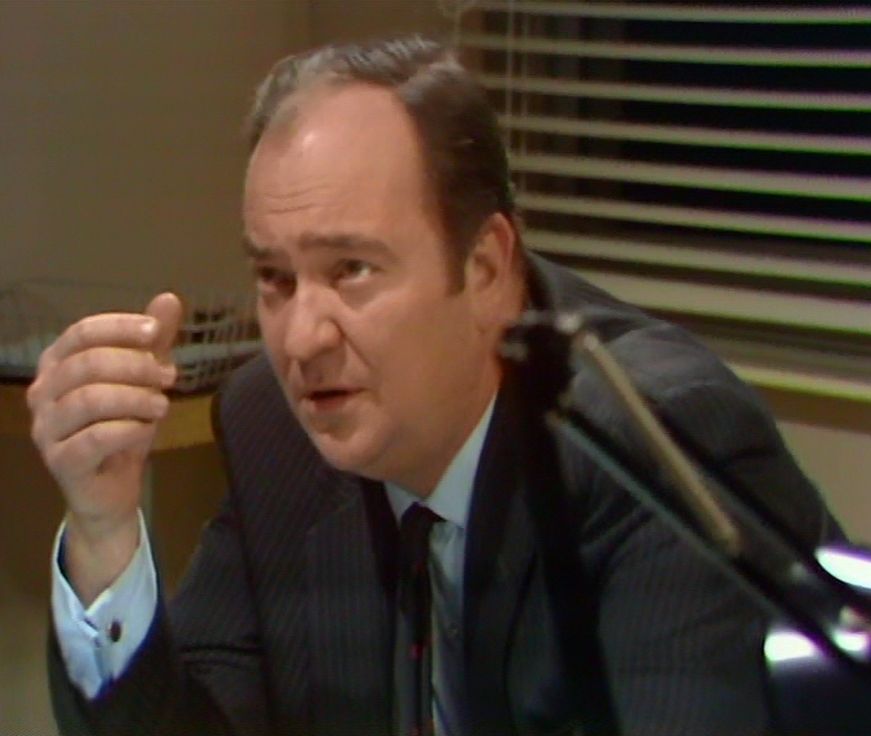
The story begins to pick up momentum when Watkins (Peter Madden) returns to the house. Watkins is Hartley’s manservant and clearly has something to hide. Madden’s on good form as the shifty Watkins, although it takes him an age to admit that four guns (army souvenirs) were stolen during the break-in.

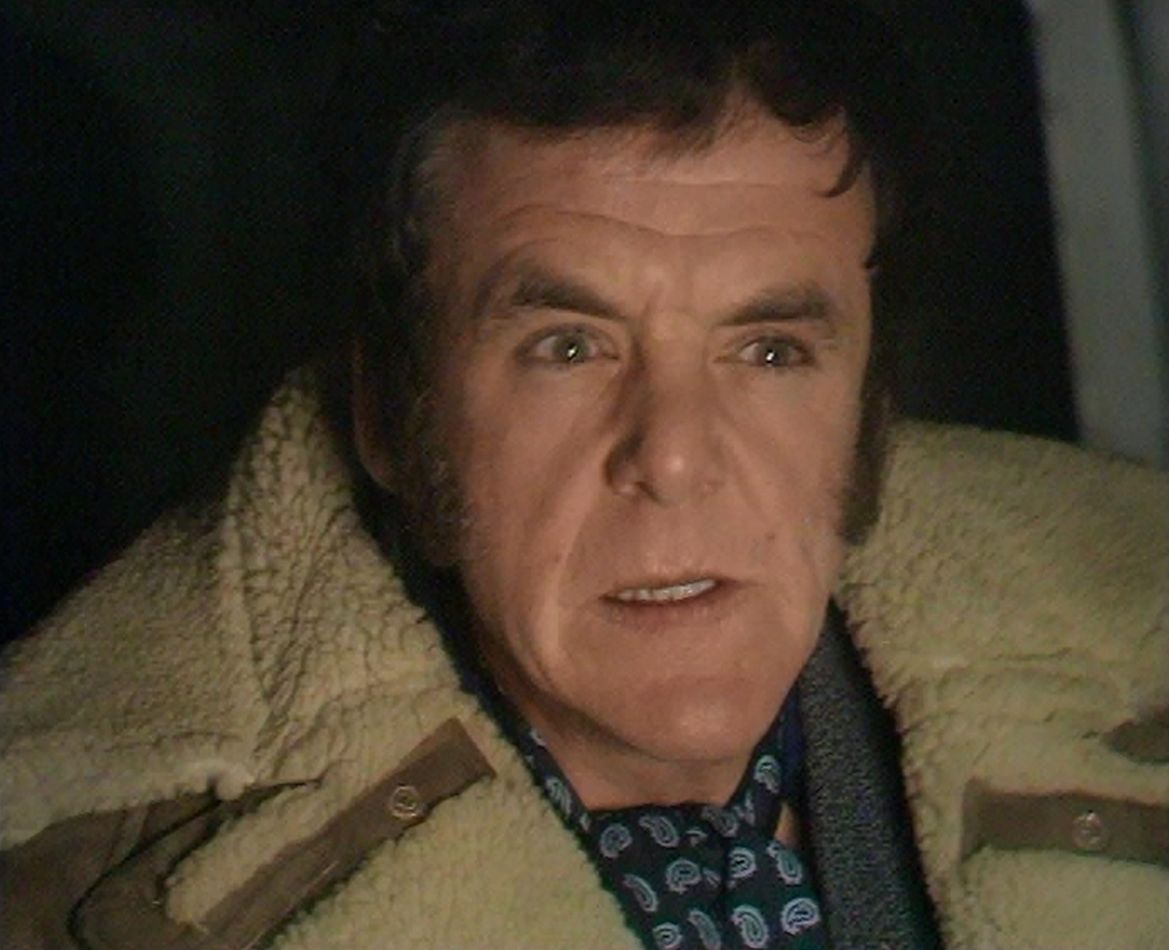
This revelation leads the Task Force, in the shape of Hawkins and Evans, to an ex-con called Alec Patterson (William Marlowe). Marlowe would later join the police force (as a series regular on The Gentle Touch) but during the early seventies he tended to operate on the wrong side of the law.

He’s excellent value as the cool and cocky Patterson. One observation – Patterson offers Hawkins and Evans a cigar each. Evans accepts, which is fair enough, but it seems slightly odd that he should light up as Hawkins continues his questioning!

Another familiar face – Tom Baker – makes a very brief appearance as a site foreman (possibly the first, but by no means the last, time he’d be on a building site). Although Baker could steal even the smallest of scenes (his earlier appearance on George and the Dragon is a good example of this) sadly the handful of lines he has today gives him nothing to work with. So he appears and disappears in a flash.

The story rather stutters to a conclusion. Given that Patterson and his criminal colleagues seem so well organised, it slightly beggars belief that they would be panicked into retrieving the guns (which is precisely what the Task Force have been waiting for). As they knew the police were watching them, why not wait for a few weeks until the heat had died down?

One another observation – John Watt gets married but it’s handled in an off-hand way (he simply mentions it in passing at the end – which explains his unexplained disappearance earlier in the story). Clearly SS:TF was a series with little interest in the private lives of its regulars …

Softly Softly: Task Force – Sprats and Mackerels

S01E11 (5th February 1970). Written by Elwyn Jones, directed by Peter Cregeen

Illegal immigration was clearly a hot topic during the late sixties/early seventies, as it featured in a number of popular series (apart from this episode, other examples can be found in programmes such as Strange Report and Special Branch).

What marks this one out as unusual is the fact that we never see the immigrants – although I think that’s mainly because, despite the story’s dock-based setting, the series wasn’t able to mount a location shoot there. This meant that filming inside the ship’s tanker (where the illegals were hiding) wasn’t possible.

Rumours have reached John Watt that the docks are a likely place for illegal immigrants to come ashore. He sends a number of coppers down to investigate – including WDC Donald, who masquerades as a fairly mature juvenile delinquent. This is an odd bit of plotting – Donald (in her disguised persona as a stroppy little madam) does manage to tease a lead out of café owner Bateson (Tommy Godfrey) but she’s swiftly chased away by Snow, who then proceeds to question him more closely.

Given this, Donald’s presence was entirely superfluous since Snow could have got the info by himself. Was this an intentional comment on the way Donald is sometimes side lined? It’s very much a man’s force, as the paternalistic Sgt. Evans implies (he appears to regard her like a daughter and so hates to see her getting into potential danger).

For those who like to spot familiar faces, there’s plenty to choose from today – like Joe Gladwin, Kenneth Cranham, Sally Geeson and Christopher Benjamin. Cranham (who’d have a larger role in 3.17 – Anywhere in the Wide World) is entertainingly truculent whilst Geeson also essays a decent cameo as a young girl who’s old before her time. Gladwin’s lugubrious features are always a pleasure to see whilst an avuncular and bearded Benjamin doesn’t have a great deal to do except puff on his pipe and look interested.

Gay Hamilton makes her first SS:TF appearance as Jean Morrow (although the same character had appeared in SS). Jean’s stuttering relationship with John Watt (which progresses slightly in this episode) helps to lighten the tone somewhat.

The lack of dock-based location filming does rob the episode ending of a certain impact (instead of seeing what’s happened, we can only be told about it). But that apart, it’s an above average effort.

Softly Softly: Task Force – Open and Shut

S01E10 (29th January 1970). Written by Allan Prior, directed by Frank Cox

The episode opens with a bang – as Tom Jarrett (Athol Coats) attempts to throttle the life out of Jerry Proctor (Douglas Rain). It’s just a slight pity that (as often happened with live or as live productions) the action cue wasn’t given slightly earlier as there’s a brief pause after the titles have rolled before they start acting …

Jarrett, Proctor and the blowsy Betty Brewer (Gillian Martell) have the first six minutes to themselves. This lengthy scene is somewhat indigestible, due to the overacting of both Coats and Martell (although Gillian Martell, unlike Coats, is given the opportunity to redeem herself later).

After this long scene of histrionics, it’s a blessed relief to switch over to Barlow who receives a report of murder. Jarrett is the victim, with Proctor and Betty insisting that the other did it. Both have clear motives – we’ve already seen the fight between the men and it’s also explained how the leech-like Betty has spent most of Jarrett’s money.

The episode title, as well as Hawkins’ blithe early assumption that Betty is guilty, will suggest to the informed viewer that things are not going to be as straightforward as they first appear. And so it turns out …

Post murder, Betty spends a large part of the episode apparently in a state of shock. We never learn if this is actually the case or if she’s simply shamming. The more affable Proctor begins to sweat when Barlow applies some pressure, but again we don’t know for certain whether he’s guilty or not – so it’s either impressive acting on his part or the squirming of an innocent man.

This open-ended conclusion (a disgusted Barlow stomps off to bed, after ordering that they both be charged with murder) is something in the episode’s favour. It’s good for once not to have everything neatly wrapped up just in time for the credits – after all, real life rarely works like that.

Although Open and Shut begins rather shakily, it gets into its stride with the performance of Douglas Rain a definite plus point.

Softly Softly: Task Force – Series One (Episodes 7 to 9)

S01E07 – The Aggro Boy. Written by Elwyn Jones, directed by Vere Lorrimer

Football hooliganism is the topic of today’s story. It’s viewed largely through the eyes of a teenage tearaway – Dixie Dickson (Barry McCarthy) – who ends up beaten to a bloody pulp after a revenge attack.

McCarthy (still acting today – his latest credit was a 2023 episode of Call The Midwife) gives a fine, brittle performance. We never really delve that deeply into Dixie’s character (he claims to enjoy a good punch up and that’s about it) but then Allan Prior’s script doesn’t demand any more of him.

Elwyn Jones offers an explanation for the explosion of violence on the terraces – young men with no Army or National Service experience, locked into dead end jobs …

Of course that can’t be the full story but it seems to satisfy Barlow who spends a large part of the episode trying to understand why. At one point he questions the truculent Dixie but can’t break him.

Those nostalgic for early 1970’s football will no doubt find the match footage appealing, although to me it all looks rather grim. Still, the amount of authentic location work is a definite plus point in the episode’s favour.

Winsdor Davies and Bernadette Milnes play Dixie’s parents. They’re not large roles but are still quite key. His parents know that he likes to dress up as a bovver boy, but seem to regard it as nothing more than a childish indulgence. Indeed, their indifference (they take it in turns to tease and mock him) might be one of the reasons why he’s turned into something of a yob.

S01E08 – Standing Orders. Written by Alan Plater, directed by Brian Parker

With Alan Plater on scripting duties, my expectations were pretty high for this one – and he didn’t let me down. Industrial unrest is the theme of Standing Orders with the Task Force – Harry Hawkins especially – caught in the middle and attempting to show favour to neither the strikers or the management.

Although there’s a little bit of bother from the strikers (cars are blocked from entering the factory, the odd brick is thrown) that’s not really developed by Plater. Indeed, the script seems at pains (just like Hawkins) to show no bias towards either side. Although Hawkins (and Plater) is less kindly disposed towards Bellamy (Christopher Matthews), a university student who – along with his long-haired friends – is parachuted in to wave some placards in solidarity with the workers.

Most of the regulars are present (with WDC Donald making a welcome return for the first time since 1.4) but it’s Hawkins who’s front and centre today (no mean feat with scene stealers like Barlow and Watt present). Hawkins’ refusal to back down when confronted by the irate Fleming (Stuart Saunders), a man convinced that Hawkins should have provided his lorries with police protection, is central to the latter part of the episode.

This incident allows Hawkins (and Plater) to make their feelings plain, which are applauded by Barlow and Watt. Katy Manning (billed as Katie) makes her television debut in a role that calls for little more than the ability to look cute and make terrible coffee. Robert Hartley (forever Grange Hill’s Mr Keating) is good value as a management type very eager to assist the police whilst Robert Flynn (Elliott) has a faintly pantomimic turn as an off-kilter striker who looks like he could turn nasty at the drop of a hat.

S01E09 – Private Mischief. Written by Elwyn Jones, directed by Ben Rea

This is very much an episode of two halves. It begins rather quietly with the Task Force tracking a group of unscrupulous private detectives who masquerade as police officers in order to get the information they require. My engagement level here was low, although there are a few points of interest such as Jeremy Young’s guest turn as the aggrieved Charleston (he’s one of the unfortunates targeted by the private detectives).

The story only kicks into gear when Scotland (Vincent Ball) and Fowler (Michael Beint) attack Sergeant Jackson in the mistaken belief that he’s working for a rival detective agency. Elwyn Jones’ script offers Jackson some nice character development – up until now he’s been pretty straitlaced (although still capable of the odd deadpan comment).

Taking him away from his desk and involving him in a spot of rough and tumble was unexpected, but it’s the motor that drives the remainder of the story. One interesting point occurs when Scotland and Fowler confront Jackson in the back of his car. The scene begins on location (shot on film at night) but quickly moves into the studio. That’s more than a little disconcerting, and I can only assume that they ran out of time on location (hard to imagine it would have been intentional – but given that so many car scenes in the series are on VT you can never be sure).

Everything’s now bubbling away nicely, but the tension’s ratcheted up further when Scotland (following his release from the police station) receives a vicious beating. Was this a revenge attack by Jackson? We sort of know that’s not the case, but it’s still dramatically satisfying to see him put through the mill a little (as well as noting the reactions of Barlow, Watt and Evans to the possibility that their colleague might be guilty).

It felt odd to me that Jackson was so quick to offer his resignation – purely because he was asked to account for his movements. As a police officer, surely he would have realised that it was just a matter of routine? But perhaps this was designed to show just how rattled the normally cool Jackson was (or maybe, as Barlow and Watt surmise, underneath his calm exterior there might be a vicious streak lurking).

The reveal of the actual attacker shouldn’t come as too much of a shock, but apart from my earlier grumble about the episode’s slow start there’s not too much I can find fault with. Aside from those mentioned, John Rolfe has a good cameo as a forthright lawyer who crumbles under Barlow’s withering attack and there’s also the familiar face of Reginald Barratt who plays an unflappable uniformed inspector.

Softly Softly: Task Force – Series One (Episodes 4-6)

S01 E04 – The Spoilt Ones. Written by Allan Prior, directed by Brian Parker

We’re on the wrong side of town today – where the streets are full of rubbish, the slum buildings are crumbling and everyone (including the children) seem to have fags permanently drooping from their mouths.

Old con Sid Stannnish (John Bennett) and his wife Jennie (Sally Sanders) exist in extreme squalor (you can almost feel the grime seeping out of the television screen). Their scenes of marital disharmony (violent squabbles followed by interludes of detente) carry something of a punch, although it’s true that they also feel a little artificial.

Maybe it’s because Bennett’s such a well known actor, but he doesn’t quite convince as the feckless Sid (a small time crook living off the money his wife makes). The less familiar Sally Sanders (Jennie is a horrific creation – thinking nothing of smacking her children about when they demand food) fares a little better.

Jennie is befriended by an undercover WDC Donald (pop her in a headscarf and she fits right in). It’s another nice role for Susan Tebbs with the episode ringing the changes by  mostly staying away from the police station (the main focus of the previous three episodes).

Neither Karen Williams or Stephen Proctor (as the two Stannish children) had lengthy acting careers but both impress as a pair maybe doomed to repeat the mistakes of their parents. That they hold the key to solving the mystery of the numerous petty thefts which have blighted the neighbourhood is a nice plot twist.

S01E05 – To Protect the Innocent … Written by Elwyn Jones, directed by Frank Cox

Cullen is unable to attend an important civic function, so deputises Barlow to stand in for him. Watt is tickled when he discovers that it’s a carol service down at the local nick. This is the cue for Watt and Sgt. Jackson to break into a spot of impromptu carol singing. Of course, it was pretty obvious that Barlow would then come into the room …

It’s a pretty light-hearted way to open proceedings and this tone continues when Sgt. Evans (maintaining his character of the cliché Welshman) sorrowfully regrets that he hasn’t been asked to attend. After all, everyone knows that singing is in the Welsh blood.

Slowly through, the mood darkens. This begins when an inmate, Jack Gregory (John Normington), spies Barlow in the crowd and asks to speak to him. Rather like John Bennett last time, Normington doesn’t quite convince as a hardened criminal, but overall Gregory is a well drawn character who isn’t easy to read (is he villain or victim?)

I like the way the story ebbs and flows – with the main plot thread (child abuse) only coming into focus fairly late on. Gregory claims that he’s concerned for the welfare of his young son, especially since the boy’s mother – Mary Lester (Nerys Hughes) – has disappeared.

Hughes only has two scenes, but both are key and despite her lack of screentime Mary Is pivotal to the story. Although Barlow and Watt both have plenty to do, it’s Barlow who’s gifted most of the best lines. Concerned for the safety of the child, he confronts Dr Raymond (John Bryans) in a scene that’s the undoubted highlight.

Donald Burton, Edward Jewesbury and David Neal also appear in an episode which poses tough questions – such as the dichotomy between punishment and rehabilitation – but doesn’t offer any pat answers.

S01 E06 – Any Other Night. Written by Robert Barr, directed by Peter Cregeen

It’s New Years Eve, but that doesn’t mean that crime takes a holiday. And since tonight’s crime (the theft of £800 worth of tyres) occurs at police headquarters, it’s both personal and embarrassing …

SS:TF was rarely a fast paced series, but Any Other Night is especially glacial. It’s not totally without interest though – the lengthy opening scene between Cullen and Barlow is all good character stuff (Cullen’s plan to get his senior officers working closer together seems to involve plying them with copious amounts of alcohol!)

Victor Maddern and Douglas Livingstone play the two tyre thieves. Maddern (possessor of a well lived-in face that always seemed to exude an air of defeat) was no stranger to tackling criminal roles of this type. Although his moment of fame in Dixon of Dock Green (“Dick Green Dock. Dock Green Dick”) was still a few years in the future.

Livingstone (who I’m sorry to note passed away in 2021) was coming to the end of his acting career, but his secondary career as a writer would continue for decades to come. He had plenty of fine writing credits to his name, such as the 1981 adaptation of The Day of the Triffids.

Basil Dignam as Chief Supt. Marshall is seemingly on hand to spar with Barlow – but in the end they end up the best of friends. Kenton Moore also makes a brief appearance. It’s hard not to think of The Ark in Space and Noah when he pops up – especially as he seems to pull rather Noah-ish faces at times (although in this episode he’s supposed to be happy and not in agony).

A couple of random observations. There’s a fair chunk of night filming, so clearly the episode had a healthy budget. At one point Evans is sitting in a police car with a colleague who turns out to be a non-speaking extra. This becomes clear when Evans continues to talk and his friend can only nod, raise his eyebrows, shrug his shoulders, etc, in response. Finally, the over-enthusiastic way a bunch of extras see in the New Year during a pub scene is quite the thing.

Softly Softly: Task Force – Series One (Episodes 1-3)

My New Year’s resolution is to rewatch all 149 episodes of Softly Softly: Task Force (I like a challenge). Hopefully I’ve got them all (and I’ll also have the stamina to stay the course). On both counts, time will tell ….

I won’t be able to jot down detailed reviews, but every so often I’ll put up brief capsule reviews of a handful of recently watched episodes, noting a few areas of interest.

S01E01 – Arrival. Written by Elywn Jones, directed by Peter Creegen

Strictly speaking (given the series title and music) this is actually the final episode of Softly Softly, but since it introduces all the new characters it’s easy to see why it’s been lumped under the Task Force banner.

DCS Barlow, now transferred to the Thameford division, is less than impressed with the level of efficiency he finds in his new force. There’s some good fun to be had with Barlow’s exasperation at their slack habits, although this quickly dissipates when everyone urgently begins the search for a missing child.

Professional Welshman Sgt. Evans (David Lloyd Meredith), by-the-book administrator Sgt. Jackson (David Allister), phlegmatic PC Snow (Terence Rigby) and his dog Inky, token female WDC Donald (Susan Tebbs) and chillingly friendly Chief Constable Cullen (Walter Gotell) are the new faces with Barlow, Harry Hawkins and (from episode two) John Watt providing links to the old series.

All of the newcomers’ characters are quickly delineated, and it’s good to see that WDC Donald gets a fair amount to do during these early episodes (although Barlow can’t resist a few “she’s only a woman” comments about her).

Like the second episode, in the end the crime turns out to be murder and (as with episode two) we never actually see the victim. The ending is grim indeed, but well handled – as always, Stratford Johns is excellent value.

S01E02 – Exercise. Written by Elwyn Jones, directed by Ben Rea

After a brief spasm of reluctance, John Watt agrees to take over the running of Task Force One. A move to Thamesford means promotion, but it also means working under Barlow again – which both men view with mixed emotions. It doesn’t take long before they click into harmonious gear, but I did like the flickers of friction before this happens (Cullen referring to them as a “pair of pansies”!  helps to date the episode).

As with episode one, it’s another where the crime feels a little distanced as we never see the victim (a Mrs Outwood, who dies in hospital following a violent attack). Patsy Smart (as a nosy neighbour) and Barry Jackson (Mr Outwood) are the familiar faces in a story that has a twist in the tale which I have to confess I didn’t see coming (although in retrospect, perhaps I should have done).

S01E03 – Diversion. Written by Robert Barr, directed by Vere Lorrimer

Barr wrote a good chunk of Task Force (25 episodes). His work is usually strong on procedure (as with today’s episode) but low on excitement. Diversion begins with a lengthy briefing concerning an operation to target a persistent housebreaker (you can’t help feeling a little cheated though – for now, this turns out to be a red herring as the story moves in another direction completely).

An armed robbery, led by Whitley (Brian Croucher), means that the Task Force are on high alert – organising road blocks and eagerly following up clues. A large part of the episode seems to take place in the information room, where the dogged Inspector Reid (Philip Ross) meticulously logs every scrap of information that comes his way (those who enjoy drinking games could try taking a slug of something every time he says “timed at …”)

Croucher’s rather wasted. Along with his accomplices, Whitley is riding a bus to freedom but little happens along the way (and even the moment when he’s disarmed is all over in a flash). Positive points – David Jackson (with a permanent grin on his face) plays a uniformed PC, Geoffrey Hayes (later, like Jackson, a Z Cars regular) makes a brief appearance and Reg Lye (as a newsagent with a memory that comes and goes) is another familiar face to spot.

Very Nearly An Armful (Tony Hancock on GOLD)

After languishing in obscurity for a fair few years, during the last week or so the name of Tony Hancock seemed to be everywhere.  There’s been scores of newspaper features, a Newsnight discussion (which was ever so slightly toe-curling) as well as plenty of internet chatter.

And it’s all been about the new two hour documentary Very Nearly An Armful, premiered on GOLD yesterday (14th January 2023) as well as the transmission of two colourised episodes – one from Hancock’s Half Hour (Twelve Angry Men) and the other from Hancock (The Blood Donor).

To be fair, it’s probably the colourised episodes which have caught the imagination (I don’t recall the same furore of interest when GOLD debuted documentaries about the likes of Porridge, Only Fools & Horses or dinnerladies).  Depending on where you stand, colourising Hancock is either a sacrilege or a sensible way to bring his material to a new audience reluctant to watch black and white material. I’ll turn my attention to the episodes later, but first the documentary ….

One of the problems facing any modern Hancock doco is the fact that virtually all of his friends and contemporaries are no longer with us. Earlier efforts (such as the peerless Heroes of Comedy – tx 2nd February 1998) featured substantial input from people who knew both the public and private Hancock (with their contributions supplemented by a handful of celebrity fans).

Now sadly, the reverse has to be the case. The majority of the talking heads in Very Nearly An Armful were recruited from the celeb ranks (plus a couple of members of the Tony Hancock Appreciation Society to provide more detailed background points). However, it was a pleasant surprise to find that two people who did know Tony – actress Nanette Newman and writer Richard Harris – were present.

Although neither made that great a contribution – especially Harris, since his association with Hancock (working on the short lived ATV series) was so brief – it was still more than welcome to have them as it helped to balance out the undoubted fannish love from the others.

Very Nearly An Armful had a mixed bag of contributors, but all seemed genuine in their love of the Lad (sometimes with shows of this type, you get the feeling that certain celebs – lured by a nice cheque – are quite happy to come along and speak about anyone, but that wasn’t the case here). Jack Dee was an ideal choice as host – like the others, his appreciation for Hancock shone through.

Even with two hours to play with, there were some surprising omissions. The radio incarnation of Hancock’s Half Hour (apart from – inevitably – Sunday Afternoon at Home) was glossed over very quickly which meant there was no time to discuss the contributions of Bill Kerr or Hattie Jacques. And out of Tony’s ‘rep’ of television actors, only Patricia Hayes merited a mention (Hugh Lloyd and John Le Mesurier could also have done with a spot of admiration).

There were plenty of well-chosen clips from Hancock’s Half Hour and Hancock (although surprisingly his debut television series – The Tony Hancock Show, written by Eric Sykes and transmitted on ITV – was omitted).

Since the documentary took a chronological approach, the second hour (Hancock’s decline and fall) was tough going at times. Partly this was because of the sadness of his spiral into alcoholism and failure (although Very Nearly An Armful only hints at how grim things really became) but it’s also fair to say that a two hour documentary, no matter how good, will always feel a little fatiguing for the viewer.

Points of interest in the second hour – a little love was shown for the ATV series, which was good to see. Alas, appreciation for The Punch & Judy Man was in very short supply, which did surprise me. Surely I can’t be the only one to enjoy it? There were also some snippets from his later ITV series which didn’t show the Lad at his best (wisely, no footage from the partly completed Australian series was used).

Although Very Nearly An Armful doesn’t shy away from Hancock’s difficult later years, it didn’t feel like a salacious investigation – which is a definite plus point. A slightly shorter edit might help to make it a better watch, but even in this form it’s a warm and affectionate tribute to a man who continues to inspire love and laughter today.

Prior to the broadcast of the colour Blood Donor, there was a short feature explaining how and why its come about. The most intriguing statement was from Kevin McNally, who said that Hancock’s programmes are slipping into obscurity because viewers no longer want to watch black and white material. Hmm …..

I think it’s more accurate to say that because stations like GOLD no longer air black and white programmes, the likes of Hancock’s Half Hour now have very few possible broadcasting outlets.

What makes McNally’s comment all the more surprising is the fact that Talking Pictures TV have been merrily broadcasting black and white television and films for a fair few years (earning many plaudits along the way). TPTV’s embrace of monochrome material and the enthusiasm of their audience for it rather destroys McNally’s argument I feel.

It’s possible to argue that younger people are more resistant to watching black and white programmes, but just how many young people would be tuned into GOLD on a Saturday evening? If you look at the limited range of GOLD’s programming (Only Fools & Horses, Porridge, Last of the Summer Wine, etc) then it’s difficult not to imagine that the average GOLD viewer is of a similar age to his or her TPTV counterpart. And if they can watch black and white programmes on TPTV, why not on GOLD?

An enormous amount of work went into the colourisation of these two episodes (click here) and you have to appreciate that, but I just find the whole thing rather pointless. In their colour state, the two episodes are perfectly watchable but I never felt I was looking at a genuine colour progamme (which rather defeats the object).

On the plus side, the episodes were restored prior to colourisation, so if you can turn the colour down (a tricky thing to do on a modern television) you’ll be able to see a definite improvement on the copies available on DVD.

The ironic thing is that few shows seem less suited to colour than Hancock’s Half Hour. The best of Hancock’s work takes place in a weary 1950’s post-war Britain that feels utilitarian and drab. Monochrome is ideal for this (as it would be for kitchen-sink dramas) so brightening everything up with artificial colour is an especially perverse move.

If GOLD do any more, or if they move onto other programmes like Steptoe & Son, then I won’t be watching as I’ll be quite happy to stick with my black and white originals. But if colourisation helps to open the shows up to a new audience (dubious though I think that is) then I can only wish them well.
Dick Turpin – The Champion (20th January 1979)

Turpin is looking for a place to lie low for a while, and the small village of Mudbury seems ideal. After arriving, he learns that the bible bashing preacher, Nightingale (John Grillo), is using his feared enforcer – Hogg (Robert Russell) – to extract regular payments from the villagers.

But the trouble really begins when the ever impulsive Swiftnick, after learning that Hogg has his heart set on becoming a prizefighter, rashly suggests that Turpin could easily defeat Hogg in a fight. Problem is, he hasn’t mentioned this to Dick yet ….

There’s no Glutton or Spiker in this episode, which is a plus. However good their characters are, if they keep reappearing week after week then the series would quickly become monotonous (for example, see the later series of Blakes 7 which suffered from a Servalan overkill).

In Glutton’s place, we’ve got the hell and damnation figure of Nightingale. John Grillo has an extensive list of television credits, so I really feel that I should know his work better than I do. After this though, I’ll be keeping an eye out for him as he’s very watchable as Nightingale.

A much more recognisable actor for me is Don Henderson, who plays Bracewell (a noted prizefighter). By one of the those remarkable coincidences which occur in these sort of series, Turpin rescues Bracewell from a highway attack just before reaching Mudbury. So after Turpin receives an early dose of punishment from Hogg, he rushes off to get Bracewell (who’s more than happy to challenge Hogg).

Once again, it’s no surprise that Swiftnick is to blame for Dick’s travails. Even before Turpin finds himself facing down Hogg, he bitterly tells his highway partner that “you’ll fall down your own mouth one of these days”.

If Grillo receives many of the best lines. leaving Henderson with the scraps, that means there’s not much left for the villagers. Still, Gerry Cowper briefly lights up the screen as Lucy, this week’s serving wench. And the always dependable Roy Evans (Fellowes) and Nicholas McArdle (Pollard) are plusses as well.
The comedy element is ramped up in this episode, which makes it an ideal vehicle for Richard O’Sullivan. He’s really in his element throughout – especially when (after Bracewell disappears) he finds he has to fight Hogg after all.

Hogg might be on the side of the baddies, but he seems to be an honest fighter. Not so Turpin, who uses every dirty trick in the book (or at least those permissible at Saturday tea-time) to gain an advantage. As the fight continues and Turpin barely manages to stay on his feet, Switnick frantically rushes about, looking for Bracewell.
Today’s plot niggles. Given that Bracewell is such an intimidating character, how did Nightingale and Hogg manage to spirit him away? No explanation is given, so you’ll have to make your own up. Oh, and out of all the places to hide Bracewell, the one chosen (the barn where the fight is taking place) has to be the worst.

Swiftnick and Lucy find Bracwell at the eleventh hour and he rushes over to take Turpin’s place – but (hurrah!) there’s no need as somehow Dick Turpin, in true David and Goliath style, has triumphed. Given this, you might wonder why Bracewell features in the story at all ….

Niggles apart, this is a fun romp – nothing more, nothing less.

Dick Turpin – The Capture (13th January 1979)

The Capture. Hmm, I wonder what this episode’s about then?

Turpin and Swiftnick aren’t getting on terribly well as Swiftnick’s rash and impulsive actions have almost led to disaster several times. As they ride up to the White Lion inn, the long suffering Turpin gives Swiftnick one last chance.

But he proves to be a less than effective lookout, instead spending most of his time chatting up a serving wench called Kate Doyle (Lesley Dunlop). Dunlop, who’d later co-star in a similar adventure series (Smuggler, with Oliver Tobias) is good value as Kate – all wide eyes and heaving bosoms.

When she makes conversation, Swiftnick (a pushover for a pretty face) just can’t help himself and he rashly reveals the identity of his friend. When, seconds later, Spiker and his goons crash through the door it seems to Turpin that Kate must have informed on them. She didn’t of course, and it seems bizarre that he could have thought so.

Turpin and Swiftnick escape by the skin of their teeth after another highly energetic fight sequence that slips into parody (after bamboozling Spiker again, Turpin makes time to stop and kiss a pretty girl before exiting) but is still entertaining.

Turpin decides that enough is enough and dumps the unwilling Swiftnick with a gunsmith called John Tanner (Harold Goodwin). Tanner’s reluctant to take on the boy as his apprentice, but changes his mind after Turpin gives him a handsome dowry! Goodwin sketches a nice cameo with limited screentime as does Annabelle Lee (as Jane Kelsey), the episode’s other notable guest actor.

Jane is a down on her luck actress, sentenced to three years imprisonment by Glutton for stealing two apples (a good example of Glutton’s draconian application of the law). She’s promised her freedom if she agrees to ensnare Turpin by posing as a wealthy aristocrat.

This part of the story doesn’t quite hold water. How does Turpin know the precise time and road that this faux lady will be travelling down? Still ignoring that plot niggle, there’s amusement to be gained from Jane’s over-enthusiastic acting as she plays the wilting heroine (quailing against the rough, tough Turpin). Given that some performances in the series can be just as florid (and they weren’t acting, if you see what I mean) this is possibly a little in-joke from Carpenter.

Jane wasn’t riding alone, as Spiker was hiding in her carriage. Easily overpowering Turpin, it looks like curtains for the highwayman ….

In a neat reversal of the first episode, in this one Swiftnick (with a little help from Kate) rescues Turpin. As expected, that redeems the boy in Turpin’s eyes and the pair ride off together in unity as the credits roll.

A good enough episode, but fairly predictable (had Kate actually turned out to be an informer that would have been a decent twist). On the plus side, the swordplay’s once again well staged and the Glutton/Spiker double act raises several laughs (the running gag of Spiker’s failure to knock before entering Glutton’s room, for example).

Dick Turpin – Swiftnick (6th January 1979)

Richard Carpenter, co-creator and writer of the majority of Dick Turpin, made no bones about the fact that the Turpin of this series bore no resemblance to his real-life counterpart. That’s understandable of course – the genuine Dick Turpin was a squalid thief and murderer with no redeeming features (hardly the ideal person to star in a Saturday evening tea-time series).

Carpenter’s Dick Turpin drew on the already established folklore which surrounded the character in order to create an idealistic outlaw, always ready with a wry quip to dispense justice in an England where the authorities were either lax or corrupt.

Given that Richard Carpenter would later tackle the legend of Robin Hood in Robin of Sherwood, it’s easy to imagine that he was having something a dry run in this series (thankfully though, RoS was allowed time to breathe with 50 minute episodes rather than Turpin‘s 25).

Like the Robin Hood of popular myth, the fictionalised Turpin (Richard O’Sullivan) returns home after fighting for king and country to discover his property has been seized. He then finds himself opposing Sir John Glutton (Christopher Benjamin) and Captain Nathan Spiker (David Daker) who are very close analogues to the Sheriff of Nottingham and Guy of Gisbourne.

Turpin doesn’t assemble a band of merry men, but he does (reluctantly) recruit one helper – the boyishly ingenuous Nick Smith (Michael Deeks) who is rechristened Switnick by Turpin.

Dick Turpin was the latest in a line of ITV series which stretched right back to the founding of the network in 1955 (The Adventures of Robin Hood, with Richard Greene, debuted just a few days after ITV’s launch). It’s easy to see why these sort of shows kept coming back and indeed why they remain so watchable today.

With only 25 minutes to play with, there’s no time for intricate plots or deep characterisation – you just need a few good guest actors, a simple storyline and a bit of action. This repeating formula does mean they can feel a little insubstantial at times, but they’re also great fun to dip into every so often.

Swiftnick is intriguingly set just after Turpin’s apparent hanging in York with a dogged Spiker insistant that the man who swung wasn’t in fact Turpin ….

That might explain why the episode opens with Turpin in disguise, as a doddery clerk, although it’s harder to understand why Turpin so gratuitously splashes his cash in The Black Swan (an inn run by Mrs Smith and her young son Nick).

Possibly he’s looking to unmask pretenders to his throne as Nick, posing as Turpin, later attempts a highway robbery on the apparently harmless clerk (the real Dick Turpin seems to be somewhat peeved that so many imposters are trading on his name).

Some of the redubbing on this episode is a little clumsy but the worst bit occurs when Nick faces down the ‘clerk’. Before Turpin reveals himself, the cringing clerk begs for mercy (but O’Sullivan doesn’t voice him). By now, most viewers would have twigged that the clerk was Turpin in disguise, so why O’Sullivan couldn’t have put on an accent is beyond me.

I’m also slightly confused by this part of the story. Nick is desperate for twenty guineas – unless this sun is paid immediately, Glutton will throw him and his mother out of the inn. Turpin seems sympathetic but sends the boy away with nothing. And yet in the next scene, Mrs Smith hands over this sum to Spiker (has Turpin somehow given the money to her?)

It seems likely, as Turpin and Mrs Smith (Jo Rowbottom) do have a history. Indeed, some of the dialogue seems to hint that she and Turpin fathered Nick (which would explain why Turpin agrees to look after the now outlawed Nick).

Dick Turpin: I’m going to ruin Glutton and everyone round him. I shall wear them down like water dripping on a stone and I’ll make my own justice.

Mrs Smith: Then make some for Nick. For you, and me and what we once … you know, the past.

If this part of the plot seems somewhat opaque, then the conclusion (Turpin masquerades as a Scottish doctor to bamboozle Glutton and rescue Nick) is great fun. Under the expert eye of stunt arranger Peter Diamond, both O’Sullivan and Daker demonstrate some quality swordplay moves. Their duel includes one of my favourite exchanges in the episode –

Captain Nathan Spiker: The sword is a gentleman’s weapon, Turpin.

Dick Turpin: Then why are you using it?

An effective opener then, but even this early on it’s possible to wonder how the triangle of conflict between Turpin/Spiker/Glutton can develop. Because all three seem to be such archetypes, it’s easy to imagine they’ll simply repeat today’s form of conflict (with Glutton apoplectic, Spiker defeated and Turpin riding off into the sunset) again and again. Or will Carpenter be able to throw a few surprises into the mix? Time will tell.
Back to Christmas 1982 (7th January 1983)

The new series of Grange Hill continues with episode two and the sorry saga of Fay’s missing hockey stick (my old thoughts on the episode can be found here).
Later on BBC1, there’s a new series – The Fourth Arm. Produced by Gerard Glaister, it’s a decent enough series when taken on its own merits, but compared to the likes of Colditz or Secret Army (both also Glaister productions) it falls a little short.

The cast is good – headed by Paul Shelley as Major Hugh Gallagher (effectively reprising his Secret Army role of Major Nick Bradley) and the likes of Michael J. Bird, Alfred Shaughnessy and Brian Finch contribute scripts.

For the curious, it’s recently been uploaded to YouTube, so it’s worth checking out.

The fourth series of The Gentle Touch continues on ITV. Tonight’s episode is Private Views, written by Tony Parker. Shortly before putting on a policeman’s uniform for Juliet Bravo as Danny Sparks, Mark Botham guested in this episode as Neil Finch.

And that wraps up my fortnight in 1982/1983. Thanks to those who’ve come along on the journey with me. Time for a quick breather and I’ll be back soon …

Back to Christmas 1982 (6th January 1983)

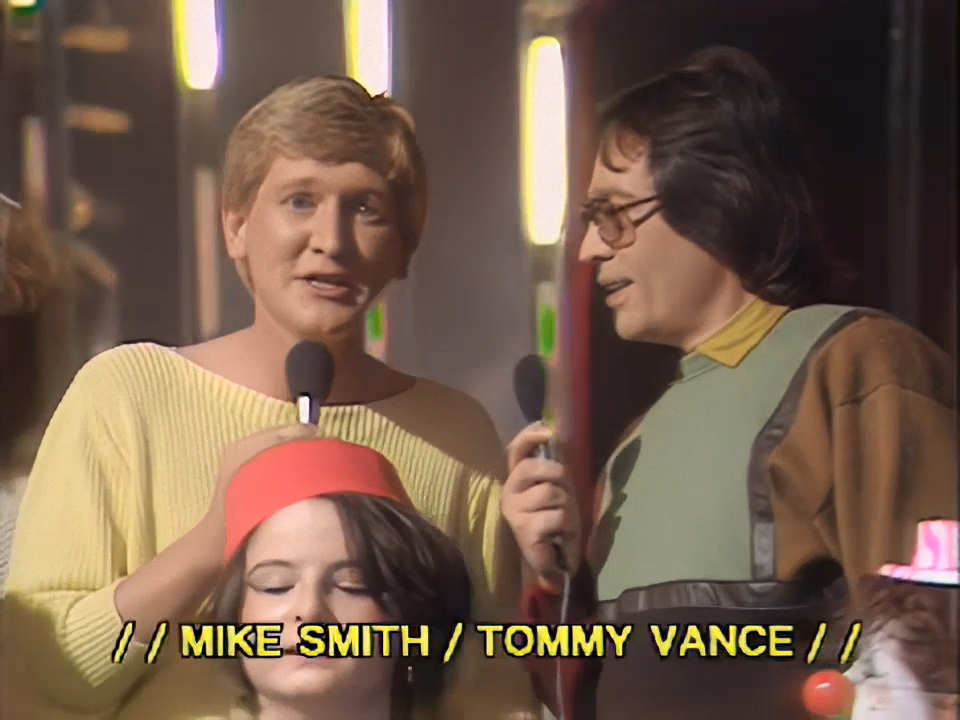
It’s time for the first TOTP of the new year. Tonight’s show offers a pretty decent line-up with Joe Jackson (Stepping Out), Ultravox (Hymn), Wah! (The Story of the Blues) and The Stranglers (European Female) all standing out.

There’s not a great deal more on BBC1 or BBC2 that’s appealing (or accessible) but I might put The Land That Time Forgot on my virtual VHS for later.

Like BBC1, ITV is filling out their early evening schedule with a movie (but Superman is a slightly higher budget effort than The Land That Time Forgot …).

C4 offers Treasure Hunt (stop the clock!) and the first episode of The Irish R.M, starring Peter Bowles.


Back to Christmas 1982 (5th January 1983)

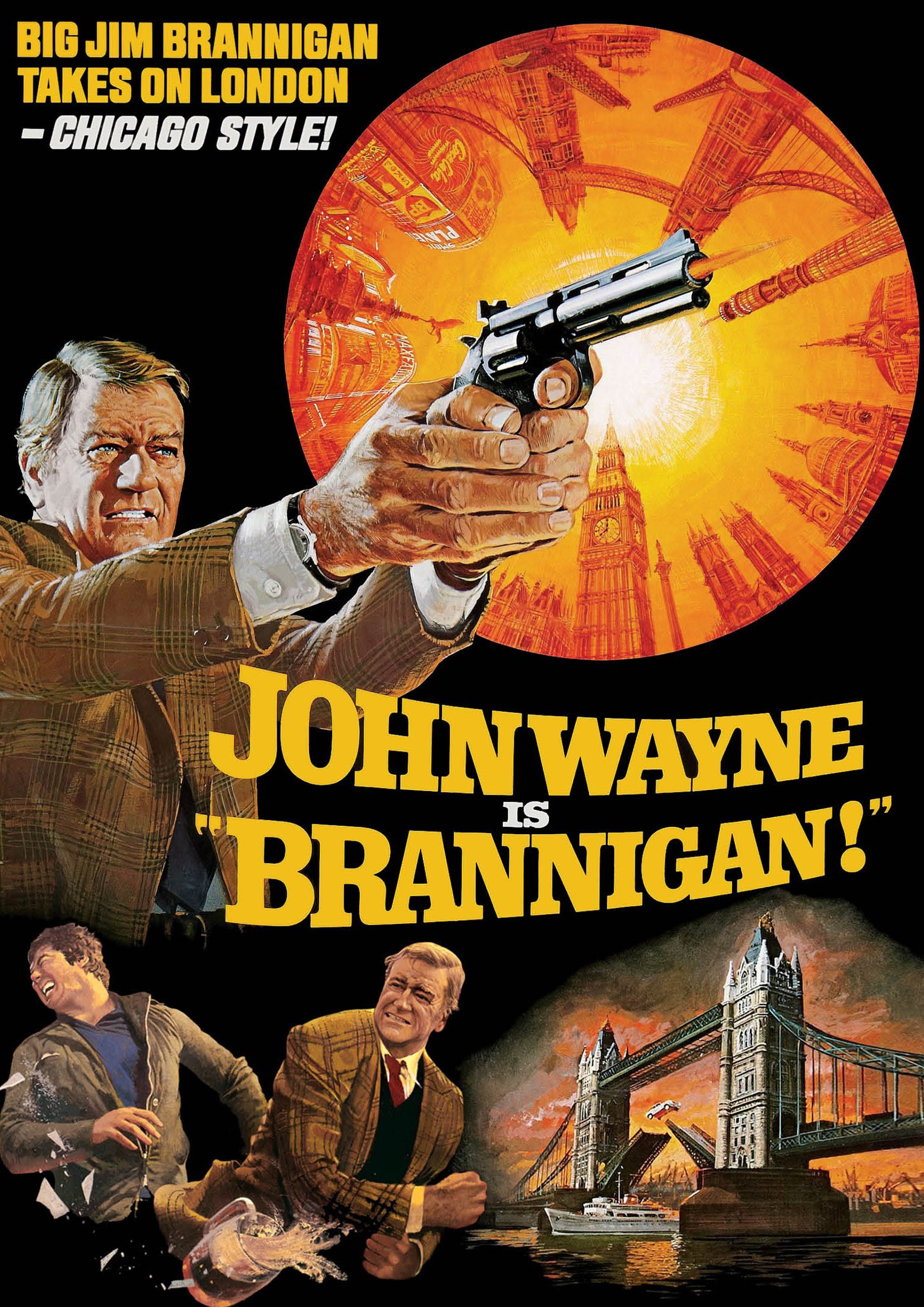
Dr Who continues his exciting adventure with the Arc of Infinity on BBC1 at 6.45 pm. That’s followed by John Wayne in Brannigan, which finds the Duke transported to mid seventies London.

Curiosity value alone (where else can you see John Wayne running into the likes of Lesley-Anne Down, Del Henney, Stewart Bevan, Brian Glover and James Booth?) makes this worth a watch.

Later on BBC2 there’s a slightly better film – The Spy Who Came in from the Cold. Richard Burton and Claire Bloom head an impressive cast in what’s still one of the best John Le Carre film adaptations.

I might have to put The Spy on the virtual VHS, as ITV’s evening schedule looks pretty strong. There’s some more Mike/Deirdre antics in Coronation Street, Benny Hill continues to ply his usual trade at 8.00 pm and at 9.00 pm there’s the first episode of Unknown Chaplin (narrated by James Mason).

Back to Christmas 1982 (4th January 1983)

A new series of Grange Hill begins today. This run – the sixth – remains one of my favourites (Gripper continues to dominate the series, although he’ll eventually receive his comeuppance). My previous thoughts on the episode (I see I was too pessimistic about a DVD release!) can be found here.

Later also on BBC1 there’s Beatlemania! (which can be found here), a fascinating fan’s eye view of the Beatles’ extraordinary rise and rise during 1963/1964. It’s interesting that back in 1982 the early years of the Beatles already seemed like ancient history (possibly because most of the available footage was shot in black and white). Kenny Everett and Bob Wooler (Cavern disc jockey) are also on hand with their opinions.

Over on ITV I’ll take The Return of the Pink Panther. Having already enjoyed several Peter Sellers films on BBC2 during the last few weeks, this’ll fit in nicely. Like Sellers’ other 1970’s Panther films, it’s broader than the two he made in the sixties, but it offers plenty of intermittent delights.

Back To Christmas 1982 (3rd January 1983)

There’s a definite post-Christmas feel to the BBC schedules today – with only the new series of Doctor Who catching my eye.

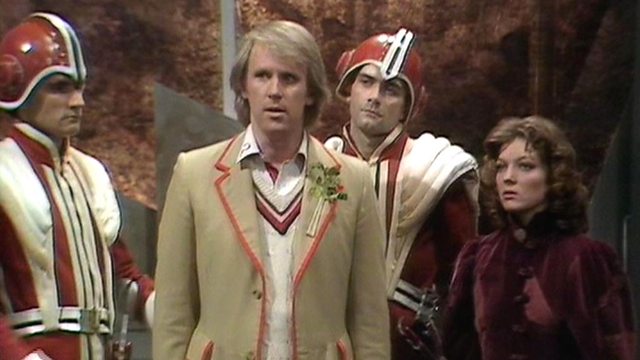
DW is in 20th anniversary mode – and the show begins as it means to go on with a story featuring the return of an old adversary. Since this baddie (Omega) made his sole appearance some ten years earlier, you could argue that the majority of the audience might be somewhat perplexed when the ‘great’ reveal is done.

But this, I guess, is the conflict between general audience/fan appreciation which continues to dog the series today. How far should you go in pandering to the fans? (who are never satisfied, whatever you  do).

After all this preamble, do I enjoy Arc of Infinity?  Well, not much. The location filming in Amsterdam is nice and it’s good to see Michael Gough guest star but it’s a bit of a dull run around. However, bonus points have to be issued in Nyssa’s direction – she’s finally grown up and become a more assertive character.

Which is a bit ironic, since her time with the series is now very limited ….

I’ll take another Laurel and Hardy film (Our Relations) on ITV and I’ll follow that up with Zulu, the ideal sort of film made for a quiet holiday afternoon. It launched Michael Caine’s career, after a lengthy series of false starts, but there’s plenty of value lower down the bill (Paul Daneman, Glynn Edwards, Neil McCarthy, Gary Bond).

Adele Rose is on scripting duty for Coronation Street and I’ll round off the evening with a late night Thriller repeat (Look Back in Darkness). Bradford Dillman and Catherine Schell star in a script by Terence Feely.

Back to Christmas 1982 (2nd January 1983)

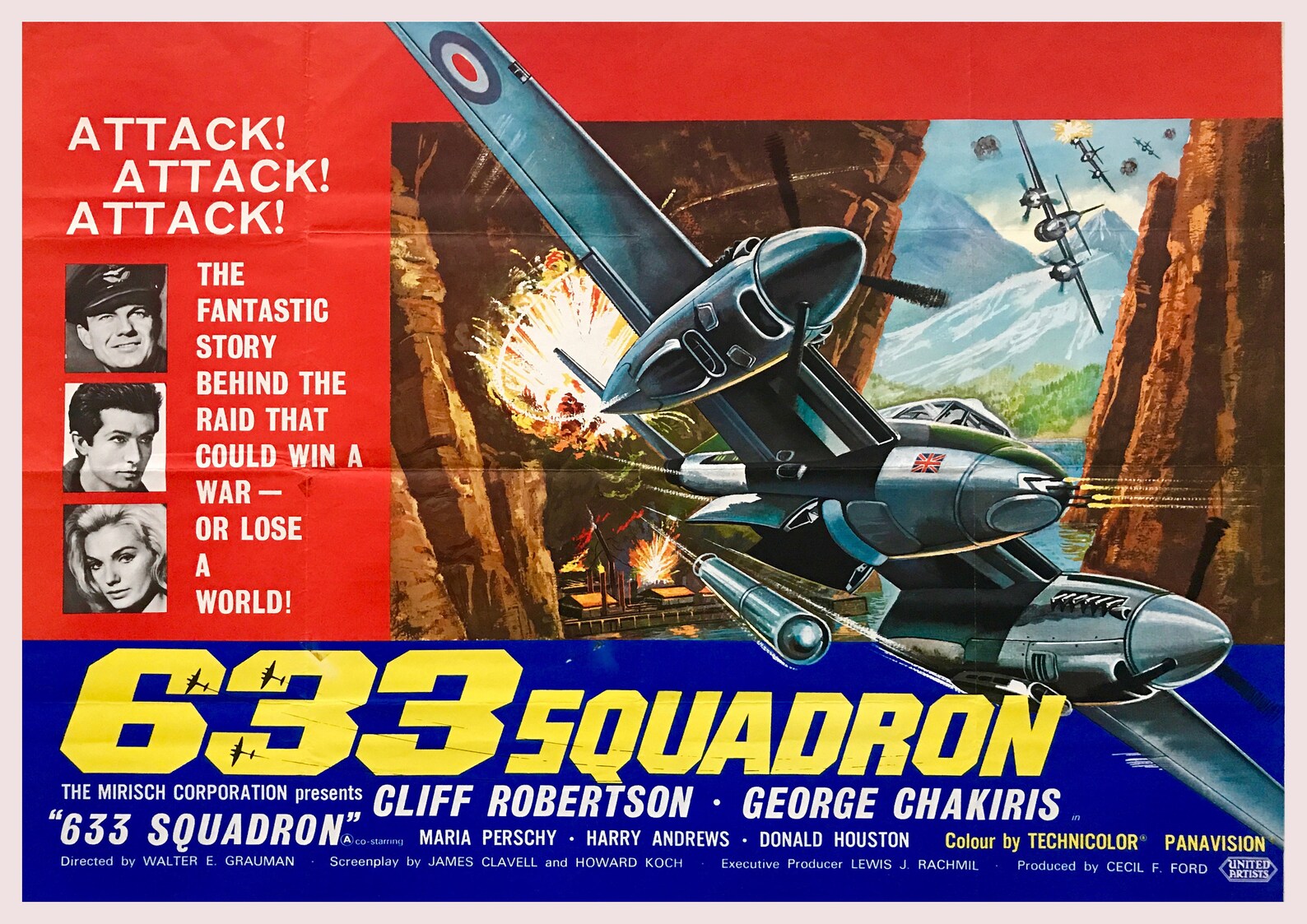
633 Squadron is an ideal Sunday afternoon film. Although it’s not perfect (you have to suspend your disbelief with some of the modelwork used for the climatic attack sequences) it’s still a stirring watch (Ron Goodwin’s score helps enormously). Although money (the film mirroring WW2) meant than an American – Cliff Robertson – had to take centre stage, there’s enough plucky Brits (Harry Andrews, Donald Houston, Angus Lennie, Michael Goodliffe) in supporting roles to cushion this blow.

A repeat run of The Good Life begins with the first episode, Plough Your Own Furrow (which I’ve previously written about here).

The Society Entertainer (S04E04) is today’s episode of Hi-De-Hi! Spike falls in love whilst Gladys clashes with her nemesis, Sylvia, who temporarily wrests control of Radio Maplin. Another quality episode, with all the original key cast members present and correct.

Switching over to ITV, if I’ve time for a second film I’ll go with The 7th Voyage of Sinbad. Later there’s Tales of the Unexpected, a series that’s often more miss than hit (but today’s cast – John Duttine, Peter Jeffrey – makes it an appealing pick).

Back to Christmas 1982 (1st January 1983)

Happy New Year!

BBC1 and BBC2 are offering two hardy Christmas perennial films – The Magnificent Seven and It’s A Wonderful Life. I’m going to plump for Jimmy Stewart on BBC2 ….

I’ll stay on BBC2 for some comic strip (ahem) action with Jane. An omnibus edition assembled from the first series broadcast in 1982, it’s all good clean politically incorrect fun. I’ve always had a soft spot for programmes which overdose on CSO and another soft spot for Glynis Barber, so this is win/win for me.

Then it’ll be over to ITV for Whicker’s World Aboard the Orient Express. Alan does his thing, although I don’t think there’s any murders to look forward to.

Back to Christmas 1982 (31st December 1982)

First up today will be Ghost in the Water. It comes from the producing/directing team of Paul Stone and Renny Rye (who were later responsible for that hardy Christmas perennial The Box of Delights). Although broadcast during children’s hour it’s not childish in tone – which means that, as I stated in my review a few years back, it could have easily slotted into the evening schedule. Something of a forgotten spooky classic.

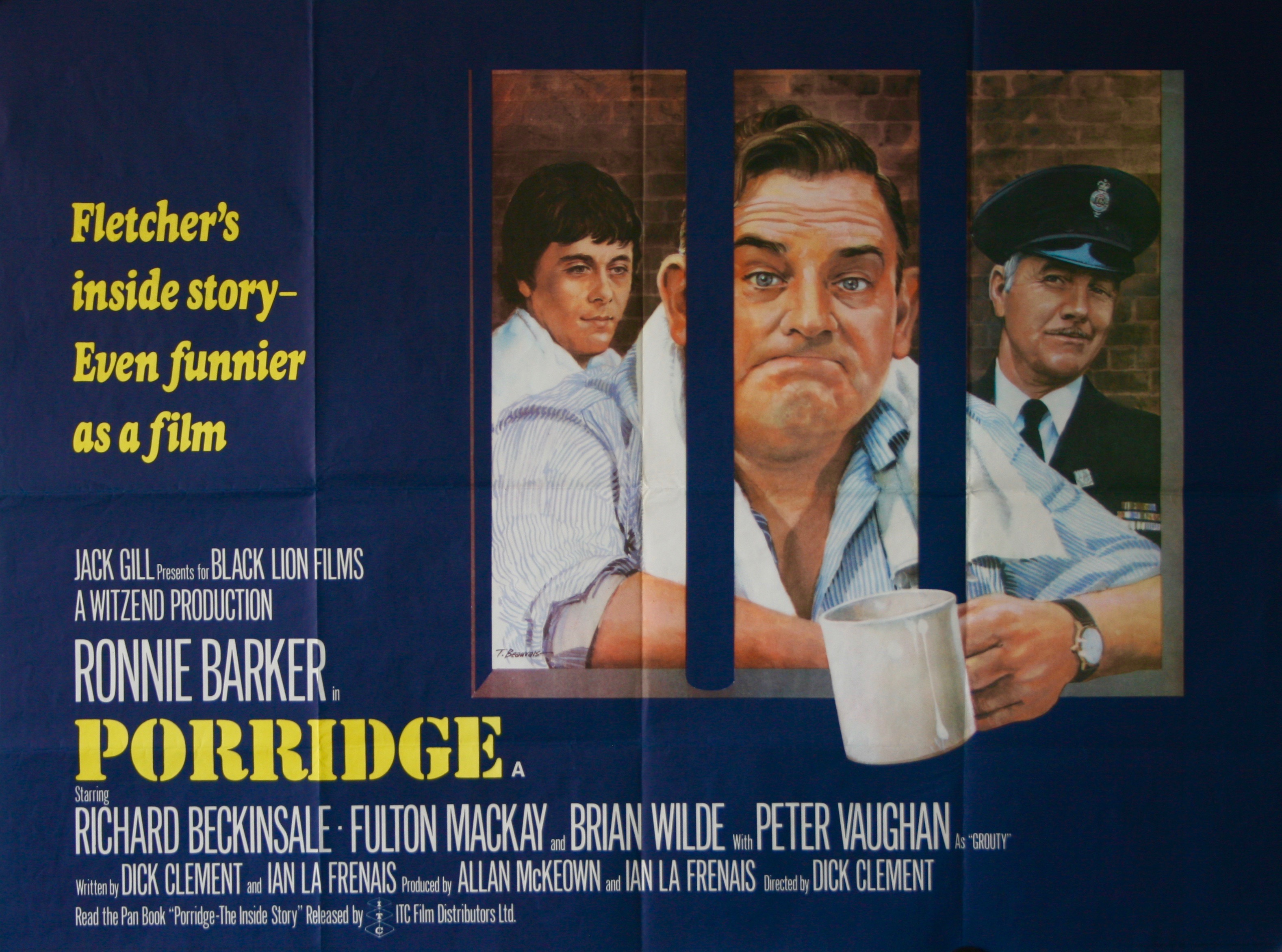
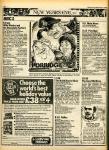
The feature film version of Porridge receives its television premiere tonight. Once upon a time, a gaggle of television sitcoms (and the odd drama as well) made their way to the big screen. Some were better than others (to put it mildly) but it can’t be coincidence that two of the best (The Likely Lads, Porridge) came from the pens of Clement and La Frenais.

Before the New Year dawns, there will just be time to catch your own, your very own, Leonard Sachs introducing some familiar faces (Doddy’s topping the bill) in tonight’s The Good Old Days.

It’s another quiet day on ITV and C4, but I’ll make time for Kim Wilde – First Time Out (available here on Youtube).

Back to Christmas 1982 (30th December 1982)

It’s time to almost see out the old year with TOTP and a gaggle of R1 presenters (one of whom we’ll say no more about). Today’s show offers another look back at some of the hits of the year – beginning with ABC and The Look of Love (Martin Fry eschewing the gold lamé suit in favour of something more sober). Other highlights include the Fun Boy Three (R.I.P. Terry Hall) and Bananarama with T’ain’t What You Do (It’s the Way That You Do It) and The Stranglers (Golden Brown).

We’re back in the period when an Only Fools and Horses Christmas special was a post-Xmas treat. That would all change next year, when Thicker Than Water would become the series’ first episode to debut on Christmas day (and two years later, the series would hit the big-time with the first of many feature length episodes – To Hull and Back). Back in 1982 though, things were more modest with just a half-hour slot available, although the episode (Diamonds are for Heather) is still a good one.

Ramping up the pathos (something which the series would also do in the future again and again) it’s a Christmas gift for David Jason, as Del’s relationship with single parent Heather (Rosalind Lloyd) and her young son Darren (Daniel Jones) deepens and he gets the chance to play both drama and comedy. It might get somewhat overlooked in favour of the later, longer specials – but if you’re able, then it’s worth digging this one out again for another watch.

‘Allo! ‘Allo! makes its debut immediately after Only Fools. The series proper wouldn’t begin until 1984 but all the building blocks of the show are already present and correct. Time for a complete rewatch? Maybe …

To round the evening off, I’ll take Force 10 From Navarone and A Voyage Round My Father on ITV.

Back to Christmas 1982 (29th December 1982)

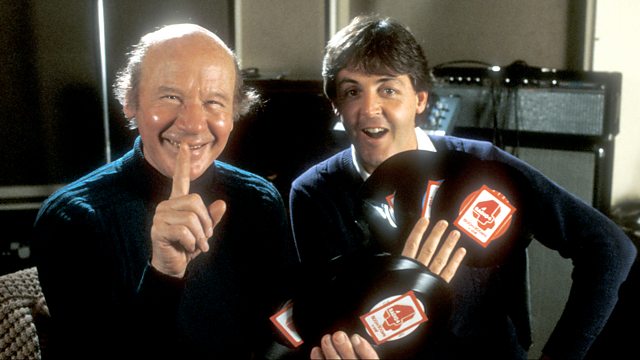
There’s another chance to see Arena‘s typically idiosyncratic celebration of Desert Island Discs on BBC1 this afternoon. Roy Plomley gets to dress up, whilst the likes of Frankie Howerd, Russell Harty, Trevor Brooking and Paul McCartney all make appearances. If you’re able to access it, then you can watch the programme via the iPlayer.

There’s an episode of Sink or Swim at 9:15 pm on BBC1. It’s a repeat of S01E04 (original tx ,1st January 1981) which will serve as a curtain raiser for the new series of Doctor Who, that kicks off next Monday.

ITV offers Coronation Street (where,  according to the TV Times, there’s not a lot of sweetness and light at the Rovers). In addition to the bickering at the Rovers, the relationship between Mike and Deirdre has just begun to simmer (although it won’t come to the boil until the new year).

And that’s about it for today. I’ll have to dig out a book I think ….