Grange Hill. Series Seven – Episode Eleven

grange hill s07e11

Written by Jane Hollowood. Tx 7th February 1984

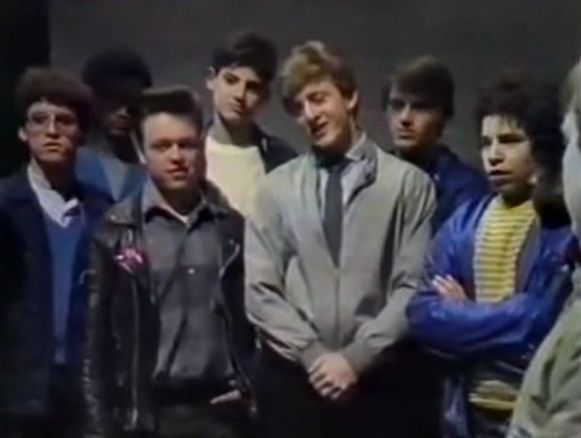
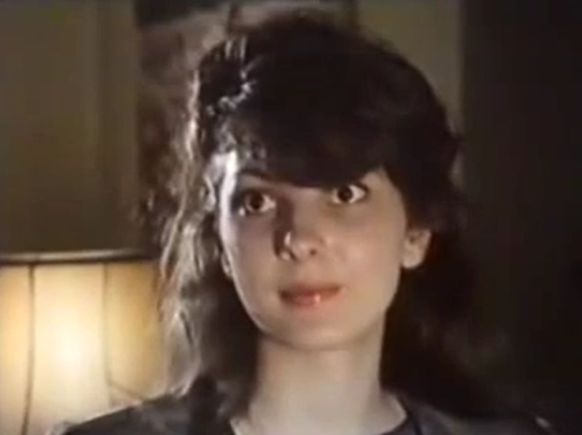
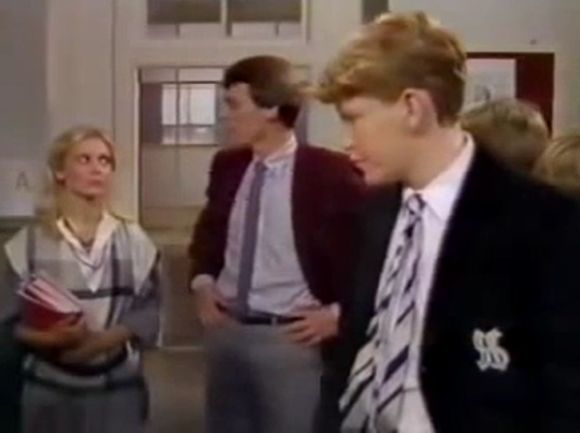
It’s the day of the sponsored walk.  Jackie decides to join Zammo, which causes him a little anxiety.  What will his friends say?  Unsurprisingly there’s a number of whistles and assorted comments, but they manage to get through unscathed.

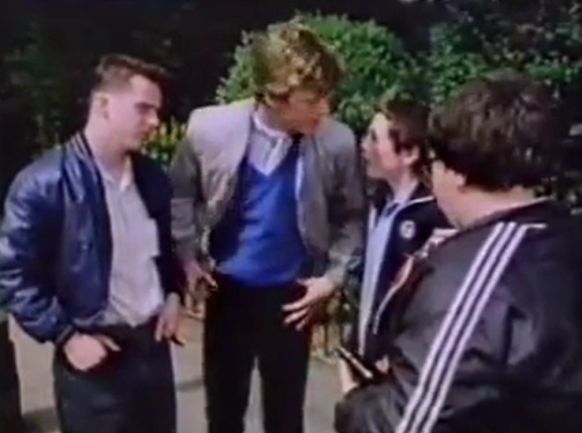
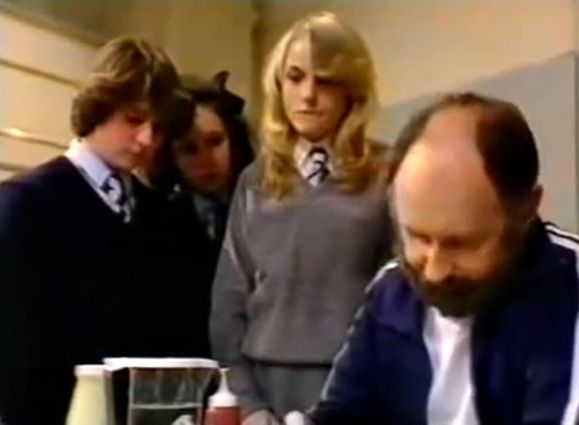
Roland’s still fretting about the amount of money he’s going to lose if Kilvert comes in first.  Jimmy’s no help, telling Roland that he (Jimmy) supplies the brains of the operation whilst Roland supplies the money.  But Jimmy and Nigel do their best to nobble Kilvert with one of the evergreen classics.

It’s the old “move the arrow so it points in the opposite direction” ploy, so beloved of the series, especially at the start of a new school year (when it can be guaranteed to catch a few unsuspecting first years out).  But Kilvert ignores the arrow pointing in the wrong direction and carries on remorselessly the right way.  It seems that nothing can stop him.

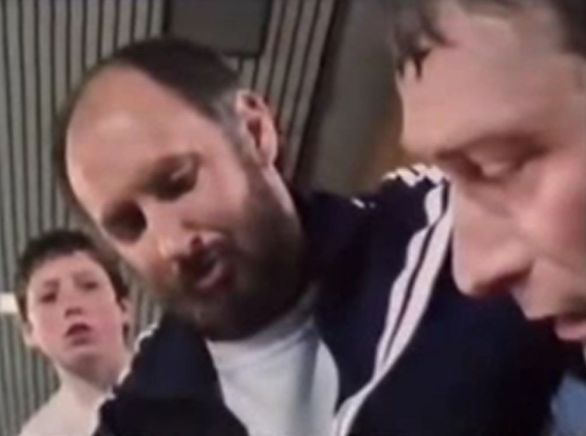
Jimmy decides to pinch a bike, since he’s tired of walking.  The one he chooses – a butcher’s bike complete with meat – belongs to Gripper.  It’s nice to see Mark Savage again, even if his screentime is very brief.  After popping up at the start to shout “oi, that’s my bike!” at the absconding Jimmy, you’d have expected him to make a few appearances throughout the episode.  But he doesn’t reappear until just before the end, where he’s less than pleased with Jimmy’s antics.  There’s a nod to Gripper’s long-established lack of learning as he fails to spell meat correctly.   “And what about the meat, eh? M e e t.  Meat”.  It’s ironic that Gripper’s probably lost his job thanks to Jimmy.  If he was attempting to go straight, it looks as if Grange Hill might have indirectly forced him back into a life of crime.

Stewpot’s desperate to get Claire alone so he can talk to her, and he asks Pogo to chat to Christine.  There’s no sign of Suzanne or Precious (or indeed Duane) so it looks as if this all-film episode saved a little money by pairing down some of the regulars.  There would have been no need for the others to be there, as Claire and Stewpot only needed one other person to talk to, and Christine and Pogo serve that function admirably.

The on/off/on/off drama of Stewpot and Claire looks to be off again, although she considers his offer to join him on an orienteering weekend (along with Mr Baxter, Mr Knowles and a bunch of third years).  Does she agree?  You’ll have to wait until episode sixteen to find out ….

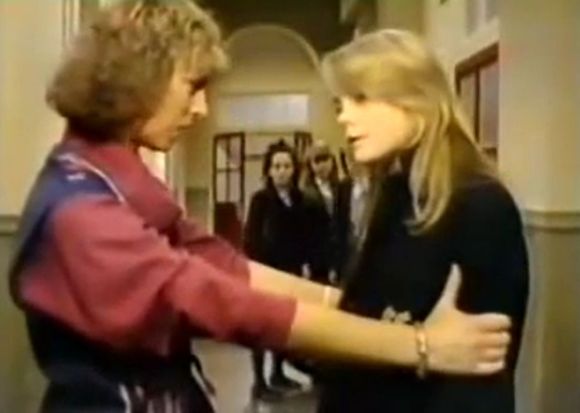
What’s quite nice is that Claire tells Stewpot that she can’t talk to him as she’s walking with Fay.  This partly might have been because Claire simply didn’t want to spend any time in his company, but there’s also the sense that she’s concerned about the younger girl.  Although their discussion happens off-screen, it seems to put an end to the rumours and innuendo about Fay’s crush on Miss Gordon.

Pogo drops out of the sponsored walk as he’s spotted an old girlfriend, Lucinda.  Played by Letitia Dean (credited as Titia Dean) it’s a nice little cameo.  Lucinda likes her food that’s for sure, but after Pogo treats her to a snack in the café he’s crestfallen to find out that she’s got a new boyfriend.  Poor Pogo.

Kilvert doesn’t win, Wu (Eliot Wong) does.  Jane Hollowood seems to have chosen this name so that when people ask who won the race, they can use the “Wu” – “Who?” gag (which they do several times).

Grange Hill. Series Seven – Episode Ten

grange hill s07e10

Written by Barry Purchese.  Tx 3rd February 1984

Although Mr Smart started series seven by pledging to be more approachable, he doesn’t seem to have made much progress.  Mr Howard and Miss Gordon look on as Mr Smart frog-marches Zammo and an older boy into the corridor.  He caught them fighting and it was Zammo who threw the first punch.

Mr Smart, with his usual tactic of bellow first and ask questions later (if at all), isn’t prepared to listen to what Zammo has to say.  Lee Macdonald does a good job of showing Zammo’s distress – the boy is visibly panting and unable to articulate clearly.  The reason for the fight – the older boy made a joke about Jeremy – stops the teacher in his tracks and as Miss Gordon takes charge of Zammo, Mr Howard attempts to smooth things over with Mr Smart.

Mr Smart is aware that yet again he’s made something of a hash of things.  But Mr Howard is exactly the wrong person to try and gently point this out – since he’s everything that Mr Smart isn’t.  Mr Howard is calm, friendly and approachable, which is why so many pupils – including members of Mr Smart’s form – prefer to come to him with their problems, which irritates Mr Smart no end.

Off-screen, Roland’s money-lending business has become a part of McClaren Enterprises.  This makes sense – Jimmy and Nigel are just the type of people who delight in collecting debts – and Jimmy sees a further chance to make a little money.  The upcoming sponsored walk might not be a race, but he still intends to run a book on who’s going to win.  Kilvert (Howard Selfe) is the red-hot favourite and Roland collects plenty of bets.  Unfortunately Kilvert isn’t interested in a cut of the proceeds if he promises not to finish first.  Which leaves both Roland and Jimmy with a problem …

Rumblings that Grange Hill might merge with Rodney Bennett and Brookdale are heard, but the key part of the episode concerns the innuendo directed at Fay.  What was implicit in earlier episodes is now very explicit, as Mandy, Sarah and Annette all delight in mocking the girl.  Envy might play a part – Fay is an all-rounder, good at most sports – but plain nastiness seems to be the main reason.  Mandy goes the furthest – suggesting that Fay isn’t interested in boys and likes to hang around the changing rooms in order to watch the other girls (she also mentions that she wouldn’t hang about in the showers with her).  Fay’s infatuation with Miss Howard is mentioned again, but there’s never been any evidence – it just appears that the others have put two and two together to make five.  It’s very disconcerting to see Annette, who’s supposedly Fay’s best friend, take part in this bullying, with only Julie prepared to fight Fay’s corner.

Zammo and Jackie run into Gluxo again.  It’s hard to take Gluxo  seriously because he’s such a cartoon villain, but for once he doesn’t attempt to cause Zammo any harm.  Instead, he gives him a letter for Jimmy McClaren.  An invitation for Grange Hill and Brookdale to meet and settle their differences in the old fashioned way – a big punch-up!

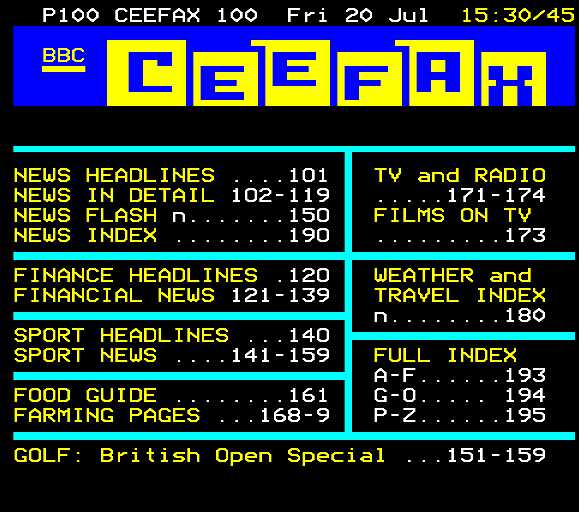
Pages from Ceefax (and other Teletext providers)

ceefax

I’ve been spending some time happily navigating around this website, which has archived pages from Ceefax and Oracle, as well as other teletext providers.  Each link takes you to a specific day, with all the pages accessible for viewing.

You may need to try a few browsers to find which one works best (I couldn’t input page numbers with IE, but everything worked fine with Firefox).  Navigation is simple – use the number buttons to input the page number you want, whilst the cursor keys left and right cycle you through the pages (if there’s more than one available on that page).

For anyone who used the service, there’s an undeniable nostalgic rush in viewing this relic from a bygone age.  Lovely stuff!

Grange Hill. Series Seven – Episode Nine

grange hill s07e09

Written by Margaret Simpson. Tx 31st January 1984

Two members of the Tasmanian delegation (Claire and Suzanne) are taken out to lunch by two representatives of the Russian delegation.  Claire and Guy (Jamie Wilson) enjoy very cordial relations, which includes a quick snog.  Alas, ever bolshy Suzanne isn’t as easily impressed – the two boys might be sophisticated and know their way around an Indian restaurant menu, but that cuts no ice with her.  They stand for everything she despises – rich and privileged people who’ve never had to fight for anything.

At the same time, Stewpot continues his pursuit of Trudy.  She agrees (a little half-heartedly) to accompany him to evening dance.  Pogo seems to think she’s going with him, but they’re both going to be disappointed.

Trudy and Guy used to be an item and they pick this moment to get back together again.  It’s a remarkable coincidence that Stewpot and Claire were the jilted couple – out of all the people Trudy and Guy could have chosen to hook up with, they pick Stewpot and Claire.  This disappointment throws them back together, so it looks as if their on-off relationship is now back on.  It’ll continue into series eight, where Stewpot two-times her with the most unexpected girl.  Even after all these years I can’t believe it, but we’ll leave that for another time.

If the others are letting their hormones do the talking, then Glenroy remains totally committed to the debates.  Unfortunately, his aggressive manner doesn’t meet with the approval of the debate moderator and he decides to go home.  This seems to be another jab suggesting that UN is a fairly toothless organisation – Glenroy is told to be polite and moderate his tone (just like the real UN) but he counters that people in the poorer parts of the world are suffering now.  Action, not words are required.  Mr McGuffy attempts to pour oil on troubled waters, but to no avail.  However, Glenroy is persuaded to stay.

John Eastlake (Robert Kenley) has been an insufferable presence for the last two episodes.  He’s another rich kid, but unlike most of them – who are portrayed in a reasonable light – Eastlake is prejudiced and narrow-minded.  He receives his come-uppance from the others (which includes his own school-friends) and this ensures that the balance is restored.  If only they could do that at the real UN …..

There possibly wasn’t enough material to stretch across two episodes (a compressed single episode might have been better) but there were several highlights – David Bellamy’s impassioned address last time and Steven Woodcock’s incendiary turn in this one.  And Gina Bellman in both episodes was an unexpected surprise (I’d quite forgotten she’d appeared in GH).

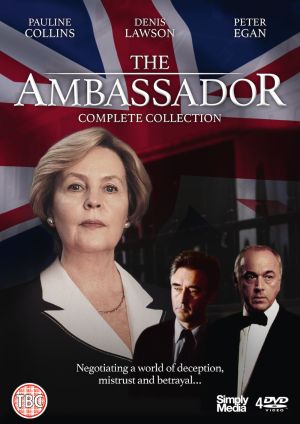
The Ambassador – Simply Media DVD Review

164454- Chief Crazy Horse Sleeve.indd

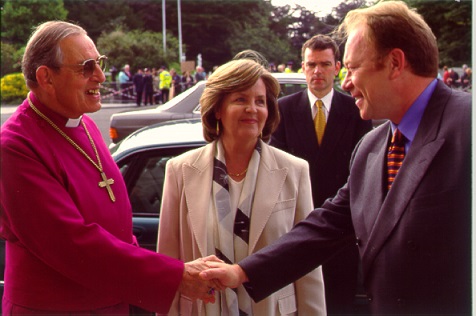
Harriet Smith (Pauline Collins) is the newly appointed British ambassador to Northern Ireland.  Recently widowed, she has to juggle the demands of her family (Harriet has two teenage sons who don’t understand why her job has to take precedence over them) as well as numerous day-to-day diplomatic challenges.

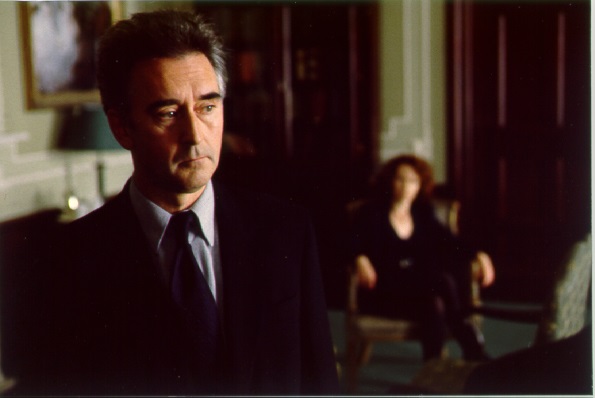
Thrust into a world where truth is often a flexible commodity, Harriet is fortunate to have the staunch support of commercial attaché John Stone (Denis Lawson).  But Stone also serves another master (MI6) which means that he occasionally pursues his own agenda, something which becomes more pronounced in the second series ….

It’s hard to argue that The Ambassador is a terribly realistic series, but it’s entertaining nonetheless.  Harriet seems just a little bit too good to be true – whilst everybody else stumbles around, she’s sometimes able to sort out seemingly insoluble problems in a matter of minutes.  But if the plotting can feel a little contrived at times, there’s also a pleasing sense that the world she now lives in is painted in shades of grey.  So even when she turns out to be right we can’t always expect a “happy” ending.

In the first series she clashes with Steven Tyler (William Chubb) and Kevin Flaherty (Owen Roe). It may not be entirely surprising that although both Tyler and Flaherty start off as implacable rivals they later become staunch allies. More interesting is the relationship she shares with John Stone.  Stone, with his MI6 connections, is invaluable whenever Harriet needs to dip into murky waters, but he seems to undergo something of a change between series.  In series one he tends to act in Harriet’s best interests but that’s not the case during the second series.  This does add a little spice to the stories though, and Lawson is an actor who’s always worth watching.

6646

Since she’s at the centre of most of the action, Pauline Collins is the glue that holds the series together, although it’s possible to argue that she has a little more to work with in the second series.  This is partly because Peter Egan is introduced as Michael Cochrane, who becomes Harriet’s love interest.  Her relationship with Michael helps to humanize her a little, as well as generating a rather unsurprising plot-twist when it turns out that he has a dramatic impact on her professional life ….

Out of the twelve episodes, the following were of particular interest.  A Cluster of Betrayals sees a hostage crisis take place at the embassy, as a distraught father (whose son died from radiation poisoning) brandishes a canister of nuclear waste in an attempt to draw attention to the pollution he claims has been created by leakages from British power plants.  Things aren’t going well until Harriet steps in to handle negotiations.  This is one of those episodes where it seems just a little too pat that Harriet is able to diffuse the situation when everybody else has failed.

Cost Price sees Harriet’s personal and professional lives collide as Michael is kidnapped.  Unable to negotiate directly for his release, she’s forced to watch proceedings from the sidelines.  Although both series were an excellent vehicle for Pauline Collins, the personal angle for Harriet in this episode helped to ramp up the tension a little more.

The final episode of series two, Getting Away From Murder, ensured that The Ambassador ended on a high.  After Tyler’s wife is found dead from an overdose, he’s accused by the Garda of murder.  He pleads diplomatic immunity (in order to not to derail some sensitive negotiations) leaving Harriet to wonder whether one of her key allies could really be a cold-blooded murderer.  With the truth not disclosed until just before the end, this is a very effective mystery story.

Thanks to strong central performances from Pauline Collins and Denis Lawson and quality support from the likes of Owen Roe, William Chubb, Peter Egan and Eve Matheson, The Ambassador is certainly a series that’s worth a look.  Guest appearances from the likes of Michael Angelis, Philip Jackson, T.P. McKenna, Frederick Treves, Geoffrey Whitehead, Michael Cochrane, Jack Dee and Tenniel Evans don’t hurt either.  Although Harriet may be rather too perfect, if you can suspend your disbelief then there’s plenty to hold your attention across both series

The Ambassador – Complete Collection is released by Simply Media on the 15th of August 2016.  RRP £34.99.

6649

Grange Hill. Series Seven – Episode Eight

grange hill s07e08

Written by Margaret Simpson. Tx 27th January 1984

Suzanne, Claire, Glenroy,  Pogo, Stewpot and Mr McGuffy have headed off into the country for the UN Weekend.  It’s taking place in palatial surroundings – which comes as a little bit of a culture shock for the North London kids.  Claire, who has to speak in the debate, is fretting that she’ll come off second best, as some of the other children come from privileged private schools and probably are used to this sort of thing.  Claire isn’t, which heightens her anxiety.

Glenroy is still smarting from the fact that somebody else nabbed Ethiopia (they had to plump for Tasmania) whilst Suzanne, Pogo and Stewpot don’t seem to have the UN at the top of their personal agendas.  Suzanne, despite her earlier protests, clearly wants to spend time with Glenroy whilst Pogo and Stewpot are happy to hang out with any attractive girl they can find.

Trudy (Gina Bellman) immediately catches their attention and they both make a beeline for her.  There then follows several excruciating scenes as Trudy, polite but clearly not terribly interested, has to suffer their separate charm offensives.  This was only Bellman’s second television credit (an episode of Into the Labrynth two years earlier was her first).

Excruciating also covers the scene where one of the more privileged public school boys makes conversation with two black girls.  He asks them where they come from – Hackney, they say.  After a few more questions he seems stunned to realise that they’re actually British (that his school is representing the UK is a clear irony).  Presumably his part of the country has no black people whatsoever ….

If Stewpot and Pogo seem to be making little progress with Trudy, then Suzanne’s equally frustrated as Glenroy seems happier to spend his time talking politics with others than spending time with her.  But although all this toing and froing takes up most of the episode, towards the end we do start to concentrate on the reason why everybody’s here.

David Bellamy is in the chair for the debate on world hunger and his opening address is a memorable one.  The plight of Ethiopia would be thrust onto British television screens later in the year, so it was obviously a topic that was high on many people’s agendas.

Bellamy tells them that chronic hunger “saps your energy and lowers your resistance to disease. That means you can’t work properly. Because you see the sort of work that the hungry people of the world have to do is physical work. And there are four hundred million people in the world today whose food intake is below that which would be needed for normal bodily maintenance … the money required to provide adequate food, water, education, health, housing and above all family planning has been estimated at seventeen billion dollars a year. That’s an enormous amount of money, about as much as the world spends on armaments every two weeks.”


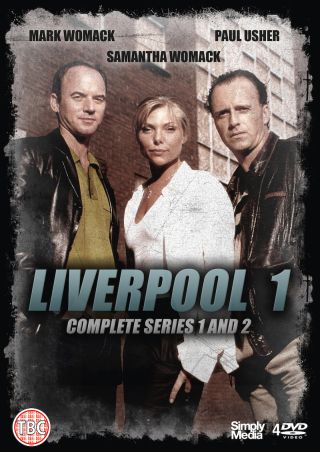
Liverpool 1 – Simply Media DVD Review

164454- Chief Crazy Horse Sleeve.indd

Running for two series and a total of twelve episodes between 1998 and 1999, Liverpool 1 was a decent attempt to produce an edgy, non-London based police series.  Although The Bill (1983 – 2010) was still very popular at the time, its long decline had definitely begun (an over-reliance on the tangled love-lives of the boys and girls at Sun Hill was one reason why).

But whilst it was past its best, since The Bill was such a dominant presence during the 1980’s and 1990’s it meant that rival series often struggled to generate a distinctive feel and tone.  Some that succeeded, such as Between the Lines (1992 – 1994), did so by focusing on a specific area which hadn’t been examined in depth before (in Between the Lines‘ case it was the work of the Met’s internal Complaints Investigation Bureau).

Although Liverpool 1 has the feel of a traditional police series, from the opening scene it’s also clear that we’re operating in unfamiliar territory.  Our first glimpse of DC Mark Callaghan (Mark Womack) is highly instructive – we see him break into a flat and start an argument with its male occupant.   Callaghan then begins to throw the man’s belongings (including the television set) out of the window, before also throwing out the man himself.  There can be no clearer way of demonstrating that DC Callaghan is a loose cannon.  He’s a far cry from George Dixon (or even Jack Regan).

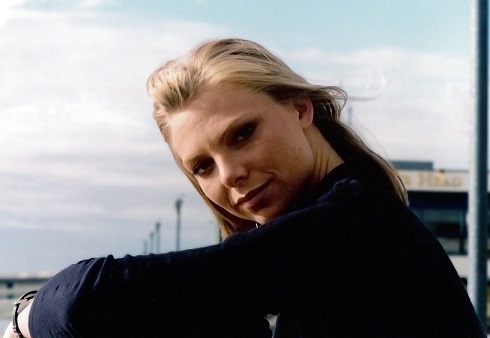
DC Isobel de Pauli (Samantha Janus) has recently transferred to Liverpool from the Met and is teamed up with Callaghan.  Their partnership begins as an inverse of the traditional “buddy” pairings of police shows.  Pauli is an experienced and capable officer, but initially she’s a little out of her depth – Liverpool has its own codes, traditions and criminal network which are a mystery to her.  It would normally be the job of her partner to instruct and guide her, but Callaghan is remote and unapproachable.
6643

The nature of Callaghan’s motives and loyalties are a major factor which help to drive the series.  As in Between the Lines, the division between the police and the criminals they’re pledged to catch is sometimes blurred.  Liverpool’s crime boss John Sullivan (Paul Usher) always seems to be present. He claims to be a legitimate businessman, but is that the truth?

Callaghan’s extended family comes into play. One of his brothers, Ian, is a priest whilst another, Patrick (Scott Williams), is not only a junkie but also acts as an informant.  Patrick’s evidence was supposed to put away Sullivan’s younger brother Mikey, but a procedural cockup meant that the case was dismissed.  With John Sullivan now threatening vengeance (a memorable low-key performance from Usher) this helps to increase the pressure on Callaghan, which is exacerbated after Patrick is shot and Mikey dies in Callaghan’s custody.  The revelation that Callaghan and Sullivan are “sort of” cousins just raises the stakes even higher and sets up one of the series’ running themes.

The developing relationship between Pauli and Callaghan is an intriguing one. Pauli is open and friendly whilst Callaghan is internalised and closed-off.  The “will they, won’t they?” question is inevitably aired.  Both are in relationships to begin with, but it wouldn’t be a complete shock if they did get together.  But there’s also a spark between Pauli and Sullivan, which doesn’t please Callaghan.  He bluntly points out to her just how vicious his cousin can be, although his own relations with him are sometimes cordial. Families can be complex ….

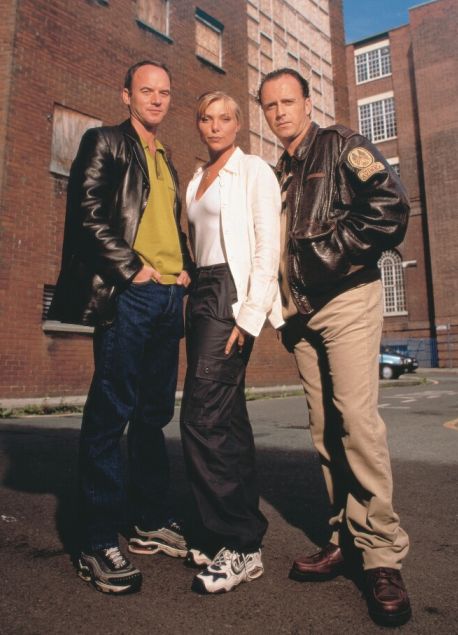
Although Callaghan and Pauli sometimes enjoyed a frosty relationship, it was a different story for Mark Womack and Samantha Janus.  They married in 1999 and are still together today (which is the reason why she’s credited on the packaging under her married name of Samantha Womack).
6636

In addition to Womack and Janus, Liverpool 1 has a strong supporting cast.  Tom Georgeson (a regular in Between the Lines) plays DI Howard Jones whilst Eamon Boland was another face familiar from previous police series (he’d appeared in The Chief).  Boland appears as Chief Inspector Graham Hill.  Andrew Lancel, who would later put in over a decade’s service in The Bill, has a non-police role as Ian Callaghan.  Paul Broughton and Katy Carmichael play the other two police regulars, DS Frank White and DC Joanna McMullan.  DS White is lovable but hopelessly disorganised (his inability to concentrate sometimes put the others, such as Pauli, in danger) whilst DC McMullan spends a large part of series one sniping at Pauli (although by series two this enmity seems to have disappeared).  The likes of Leslie Phillips, Ian McNeice, Del Henney and Victor McGuire make guest appearances although many of the one-off roles are played by less familiar television faces.

Apart from the continuing story of Callaghan’s clashes with Sullivan, one of the highlights of series one concerns the hunt for a missing boy.  George (Ian McNeice) is a convicted paedophile who comes under suspicion and is subjected to an intensive grilling by DI Jones. Both McNeice and Georgeson give stand-out performances.  The case sees Jones pushed to breaking point and Georgeson excels, especially towards the end.  The same episode sees Pauli attempt to forge a closer relationship with Callaghan by inviting him for supper with her and her partner. Neither are particularly keen, which infuriates her!

The second series has several intriguing plot-threads which develop over the course of the six episodes. Pauli is now single, her feelings for Callaghan are still mixed (to say the least) and John Sullivan wants to turn informer (or does he just want Pauli?).  The stand-alone plots are, like series one, concerned with the seamier side of life.  A good example is episode two, which sees piano teacher Peter Kitchen (Adrian Rawlins) accused of indecent assault by one of his teenage pupils, Simone Kelly (Rachel Townsend).  Pauli instantly believes her and disbelieves him, whilst Callaghan is more non-committal.  This once again shows a clear division between their characters – Pauli is instinctive and quick to react, whilst Callaghan prefers to be inscrutable and unreadable.  It’s another dramatic and powerful episode which serves as a fine vehicle for Janus.

Liverpool 1 never really seemed to catch the public’s attention and so it came to an end after only two series.  This was a pity, as Womack and Janus bounce off each other very effectively and they also interact well with the other regulars.

Liverpool 1 is released by Simply Media on the 15th of August 2016.  RRP £34.99.
6642

Grange Hill. Series Seven – Episode Seven

grange hill s07e07

Written by Frances Galleymore. Tx 24th January 1984

Following Jeremy’s death there’s an episode of reflection.  This is more than we had after Antoni Karamanopolis plummeted to his death from the shopping centre roof – his fate was discussed in a very offhand manner in the subsequent episode.

It’s Jeremy’s unpopularity which is uppermost in the minds of N3 as it causes several of them to wonder if they were somehow to blame for his death. Diane, because of the prank he played on her in the science lab whilst Fay is upset because he died after diving into the pool to retrieve her necklace (true, he was the one who had thrown it in in the first place, but grief and logic don’t always go hand in hand).

Zammo, Kevin and Annette have yet to turn up and it’s interesting that Fay declares she’s never going to talk to Annette again. It’s true that if Annette hadn’t caused Miss Hartley to leave the pool then the tragedy might not have happened, but this is just another example of the children’s attempts understand a situation that was outside of their control.

Janet, sensible as ever, declares that talking about it can only help, whilst Miss Gordon – who had been listening outside the classroom – agrees. She tells them it was nobody’s fault, Jeremy had s weak heart and he simply stayed under the water too long.

Wild rumours are sweeping the school though (lurid tales that he committed suicide) whilst Mrs McClusky comments that there are (unseen) reporters outside the school gates. From Grange Hill’s point of view the upcoming enquiry will be a formality – had they known Jeremy had a heart problem then he would never have been in the pool in the first place, but no blame seems to be attached to the teaching staff.

If the lesson had been supervised than at the very least Jeremy would have been extracted from the pool a lot quicker. Would this have saved his life? Impossible to say, but it’s slightly remarkable that Mrs McClusky doesn’t seem to draw this conclusion from the sad events.

Mr Baxter feels responsible and tenders his resignation, which Mrs McClusky refuses. Good playing from Michael Cronin during this episode. It’s also a nice moment when Fay and the others try to raise his spirits. As Julie said earlier, they all have to stick together in times like these.

Zammo wasn’t present to hear Miss Gordon tell the class that no-one was to blame. He’s at home with a stomach-ache and no doubt thoughts and regrets whilst Annette seems to be totally unaffected. She breezes into class as if nothing’s happened, a sharp contrast to the subdued attitudes of the others.

But Annette’s brave face is nothing more than an act and she later breaks down. It’s another nicely played moment in a reflective episode that ranks as one of the strongest of series seven. It often seems to be the way in soaps that whilst the deaths of characters are dramatic high-points, it’s the aftermath that really allows the actors to shine.

And to lighten the mood a little we learn that Precious isn’t very good at cutting hair ….

Laurence Olivier Presents – Cat on a Hot Tin Roof

cat

Written by Tennessee Williams, Cat on a Hot Tin Roof premiered in 1955 and won the Pulitzer Prize for Drama the same year. The play is set in a sumptuous mansion owned by Big Daddy, a Mississippi plantation owner. It’s his birthday and all his family plan to make it a memorable one. But what are their motives for appeasing the tyrannical Big Daddy?

His eldest son, Gooper, and his wife Mae, clearly want to ensure they are first in line for a share of the spoils once Big Daddy dies. His other son, Brick, isn’t interested in money – he seems more concerned with drinking himself into an alcoholic stupor. But Brick’s wife, Maggie, has been poor and doesn’t want to be again. If only she could produce a child (Gooper and Mae have an ever increasing brood) then she’s sure that Big Daddy would look kindly on them. But since Brick won’t sleep with her (and indeed barely seems to tolerate her) the chances of this seem slim.

Deceit and lies are the major themes of this play. It’s at the heart of Brick and Maggie’s relationship and it’s also reflected in the way Big Daddy is handled by his family. Big Daddy has terminal cancer, but for some (fairly unfathomable reason) it’s been decided to shield the truth from him and his wife, Big Mamma, at least for this evening. So that he can enjoy one last happy birthday?

Since he’s something of a monster (witness the way he speaks to Big Mamma immediately after he believes he’s been given the all-clear by the doctors) maybe not. Possibly Gooper and Mae decided that it would give them a better chance of maneuvering events to their best advantage – it’s plain they want to control the plantation and cut Brick and Maggie out completely.

Given the lies we hear throughout the piece, it becomes increasingly difficult to parse the truth from the untruths (no doubt what Williams intended). When Maggie makes a late shock announcement that she’s pregnant, it’s something which is hard to accept (especially given what we know about the state of their marriage) although both Big Daddy and Big Mamma do – or at least say they do. Once Maggie and Brick are alone she tells him they now have to make the lie come true. She also tells him that she loves him, a statement which Brick seems to doubt.

Cat on a Hot Tin Roof has two stand-out characters – Maggie and Big Daddy – although the others are far from ciphers. Act one mainly features Maggie and Brick and it’s clearly been designed as a tour-de-force for the actress playing her. Brick remains a passive, inactive character for most of the act, only sparking into life when Maggie suggests that his relationship with his late best friend, Skipper, was – on Skipper’s side at least – something more than friendship.

Real-life husband and wife Robert Wagner (Brick) and Natalie Wood (Maggie) were ideal casting, even if Wagner was probably a little too old to play an ex-football star a few years after his retirement.  But Wood is more than capable of taking Maggie’s lengthy monologues and breathing life into them – revealing Maggie in all her insecure glory – whilst Wagner looks on in a suitably immobile fashion. As the play progresses, Brick begins to spark into life a little more, but Wagner rarely breaks a sweat in the scenes he shares with his wife. Not really a criticism, since that’s how the part’s written, but it’s very much the case that he finds himself totally overshadowed by Wood. Although the two-handed scenes between Wagner and Olivier do give Wagner more of a chance to indulge in some dramatic fireworks.

Big Daddy is relentless in his goading of Big Mamma, finally causing her to tearfully tell him that she’s always loved him (“even your hate”) which gives him pause for thought. “Wouldn’t it be funny if that was true?”

Olivier, complete with a white wig and moustache, seems to be enjoying himself as Big Daddy. It offers him the chance to take a character on an emotional ride from elation to despair and there’s plenty of show-boating moments which he no doubt would have relished. Maureen Stapleton (who won an Oscar in 1981 for her role in Reds) is memorable in the small, but key, part of Big Mamma.

Gooper and Mae have less to do (they mainly exist to contrast with Brick and Maggie) but Jack Hedley and Mary Peach still manage to wring what they can from the roles, especially during the climatic scenes as the truth is eventually revealed.

Running just under 100 minutes, the adaptation sticks very close to the original. Although the play is wholly set in Brick and Maggie’s bedroom, here the action is opened up a little by moving around the house. There’s a few interesting camera angles (a low shot from Brick’s POV on the floor showing the impressive ceiling, for example) but in the main it’s content to remain a studio-bound, static and faithful recording of the original theatrical production.

Grange Hill. Series Seven – Episode Six

grange hill s07e06.jpg

Written by Barry Purchese. Tx 20th January 1984

Annette has received a letter inviting her to take part of the finals of the fashion contest she entered a few weeks back, but neither Miss Gordon or Mr Howard will allow her to take time off school.  This doesn’t bother her as she bunks off anyway.  Jeremy returns from suspension, as mischievous as ever.  The others give him the cold shoulder but he continues to act up during their swimming lesson, where tragedy strikes ….

Ms Firmin is her usual charming self, unable to hide her glee that she’s the only one from the school chosen for the finals.  Mandy sums her up succulently with a single word (“cow”).  It’s a mild form of abuse, but it still a slightly jolting moment.

The third years have a biology lesson where they witness a rat being dissected.  If this had occured a decade later there probably would have been a debate as to whether it should have happened at all.  But here, the teacher just gets on with it and those who want to stay do and those that don’t are free to sit in the other room.  There’s no suggestion that they don’t stay out of a sense of animal rights, simply that they felt a little squeamish.  This scene might be a little jarring for modern viewers, but it’s an accurate picture of school life back in the 1980’s.  Back then, animals were used in lessons and I personally don’t recall any objections being raised.

Jeremy can’t resist hiding Diane’s schoolbag in the same cupboard as the dissected rat, which has inevitable consequences.  It’s yet another idiotic action which further estranges him from the rest of the class and drives Mr Howard to despair.

For those keeping track of Mr Howard’s pursuit of Miss Gordon, this episode he bumps into her (literally) which seems to please him no end.  He’s certainly gained some ground on Mr Smart who hasn’t made a move for a few episodes …..

Annette’s dreams of stardom come to nothing when she realises that there’s hundreds of girls in the queue ahead of her (and they taunt her by pointing out that she’s the only one in school uniform).   She returns to school, downhearted, and refuses to get changed for swimming.  This initially seems to be just another case of her stroppiness, but then we see her roll up her jumper to look at her arm.  Together with the comments from previous episodes it’s another moment that suggests all isn’t well.  It’s also an example of how the series was now much more confident to develop plot-threads over an extended number of episodes, no doubt happy that the audience would be tuning in week after week and also that they’d be paying close attention.  Back in series two or three this would have probably been dealt with much sooner.

When I rewatched series six for this blog, I noticed that Mr Baxter mostly tended to show up on film.  And again the same thing seems to be happening here – this is the first time we’ve seen him during series seven and all his scenes here are on film.  Did Michael Cronin have other commitments which meant his time was limited, meaning many of his scenes had to be pre-filmed?

It’s rather nice to see Dennis Blanch as Mr Devereaux and he helps to serve as a reminder that I really should dig out Strangers to rewatch soon.  He’s in the one swimming pool, teaching the beginners, whilst Miss Hartley (Angela Newmarch) takes the main class in the other pool.  This isn’t the first time that pupils have been left unattended by the pool (series one, episode four) but this has fatal results.  Miss Hartley decides to go back into the changing room to speak to Annette, who’s still refusing to come out of the cubicle, although her visit proves rather fruitless.  As with the series one episode, it beggars belief that a whole class would be left to their own devices so close to water.  And the fact that nobody seems to be to blame is something we’ll discuss a little more next time.

The moment when Zammo surfaces to shout that Jeremy’s in trouble is a chilling one.  And the last few minutes, as Devereaux and Baxter frantically try to resuscitate the boy whilst the rest of the class looks on, is another striking image.  As Devereaux tells Baxter that it’s hopeless – the boy’s lungs must have filled with water immediately – the picture freeze frames.

World War Two: 1941 and the Man of Steel – Simply Media DVD Review

164454- Chief Crazy Horse Sleeve.indd

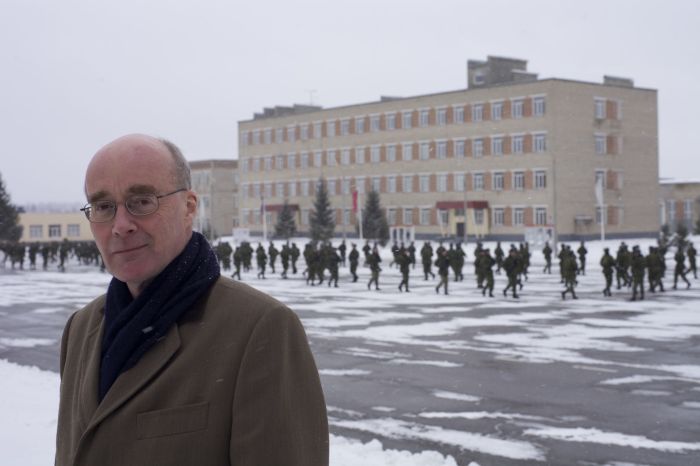
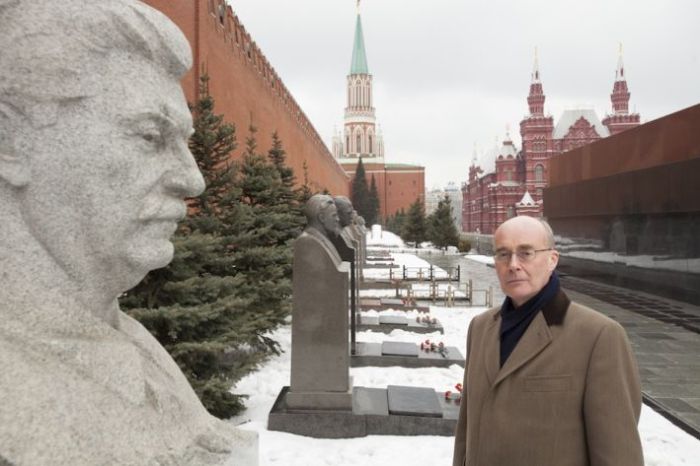
Originally broadcast in 2011 (the 70th anniversary of the German invasion of Russia) 1941 and the Man of Steel is a two-part documentary written and presented by David Reynolds.

It’s fair to say that the battles on the Eastern Front have never attracted the same level of interest (especially in the UK) as the conflicts in the West have.  But Reynolds convincingly argues that the Battle for Russia was just as critical – possibly even more so – than the Battle for Britain in deciding the future not only of the United Kingdom, but the rest of Europe as well.

Reynolds, a pleasingly idiosyncratic academic, makes this point with an amusing introductory speech, clearly designed to wrong-foot the viewer.  “He was a little man, about five foot five. In his sixties. Rather tubby. Enjoyed his drinks and his smokes. An unlikely hero perhaps. But in the dark days of the twentieth century he helped save Britain. And he was one of the biggest mass-murderers in history. Stalin was his party name”.

He then deftly paints a striking picture of Stalin, from his young days as a bank robber (albeit in a good cause – or at least the cause, Bolshevism, which he believed in) through to his years of terror in the 1920’s and 1930’s, where he brutally suppressed any opposition via show trials, torture and mass executions.

But Reynolds is able to argue that it was his dominant personality which helped to bring Russia to the brink of defeat in 1941.  If you create a society that functions only if the man at the top performs effectively, what happens when he begins to make mistakes?  Stalin’s first major miscalculation saw him fail to believe that an attack from Germany was imminent.  He had accurate intelligence from Britain, but his mistrust of the West caused him to disregard it – a fatal mistake.

6749

The first few days of the German offensive saw them make substantial gains whilst Stalin seemed powerless to act.  The news was no better during the next couple of months and Reynolds suggests that this pressure brought the Man of Steel to the point of a nervous breakdown – in a rare moment of candour he bitterly admitted to his colleagues that “Lenin founded our state and we’ve screwed it up”.  This picture of Stalin – a broken man, alone in his dacha and unwilling to answer the phone – is a compelling one.  When the politburo trekked out to see him, Stalin feared the worst (a coup) but in fact they wanted him back.  And it was their faith (a bitter irony when you consider how ruthless he’d been with anyone who dared oppose him) which seemed to spark him back into life.

How he then managed to turn things around is the crux of the documentary and Reynolds, using official documents and telegrams, illuminates the key moments.  Stalin began by falling back on his old methods of terror, but he also had to learn the gentle art of diplomacy – which wasn’t easy for someone who’d risen to the top by not listening to anybody.  But listen he did – and to a most unexpected source, Winston Churchill.  The British Prime Minister had been a savage opponent of Stalin’s Russia in the past, but political expediency now meant that the Man of Steel was a vital ally for the beleaguered British.

Churchill’s trip to Moscow in 1942 is a fascinating part of the story. Stalin attempted to push Churchill into launching an early invasion of France and then angrily called the British people cowards after he failed to get his own way.  Churchill took great umbrage at this slight and considered returning to Britain there and then, but the next day Stalin suggested they retire to his apartment for the evening – where they consumed a great deal of alcohol, leaving Churchill with a severe hangover the next day!  This moment helps to paint both leaders in a very human light and is also a good example of the strange dichotomy of Stalin’s character.  On the one hand he was a brutal and utterly ruthless tyrant, but, as here, he could be approachable and amenable (and remember, it was Churchill who nicknamed him “Uncle Joe”).

Twenty eight million Soviet citizens lost their lives during WW2 – a picture of death and devastation that’s almost unimaginable.  Had Stalin not been so reckless during the first year of the war, says Reynolds, then the death toll would have been considerably less, but he did ultimately achieve a crushing victory over Germany and this victory would help to shape world politics for the next four decades.

Running for ninety minutes (two 45 minute episodes) 1941 and the Man of Steel provides the viewer with a compact overview that still manages to feel quite comprehensive.  Reynolds, who has helmed a number of documentaries (including Long Shadow), certainly knows his stuff, although he may be something of an acquired taste.  He likes the odd dramatic flourish and his quirky sense of humour bubbles to the surface occasionally.  But his arguments are cogent and well thought out and he’s a very affable guide through this complex theatre of war.

1941 and the Man of Steel is released by Simply Media on the 8th of August 2016. RRP £19.99.

6744

Happy Ever After to be released by Simply Media – 26th September 2016

164454- Chief Crazy Horse Sleeve.indd

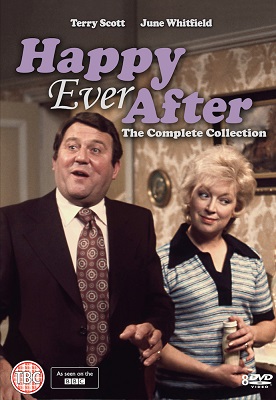
Happy Ever After will be released by Simply Media on the 26th of September 2016.  Review here.

Terry and June Fletcher (Terry Scott and June Whitfield – Terry and June) are a middle-aged, middle-class couple in middle England whose children recently left home. However their path to domestic bliss is soon interrupted by the permanent arrival of scatty Aunt Lucy (Beryl Cooke – The Bill) and her chatterbox mynah bird.

Running from 1974 to 1979 across 41 episodes, including the Comedy Playhouse pilot and Christmas specials, essentially the same characters would be transposed to the even longer-running Terry and June (1979-1987). Relive the exploits of TV’s happiest hapless couple from the beginnings of their perennial partnership in this original series, directed and produced by BAFTA winners Ray Butt (Only Fools and Horses) and Peter Whitmore (Yes Minister), which arrives on DVD 26 September 2016.


Sleepers to be released by Simply Media – 24th October 2016

164454- Chief Crazy Horse Sleeve.indd

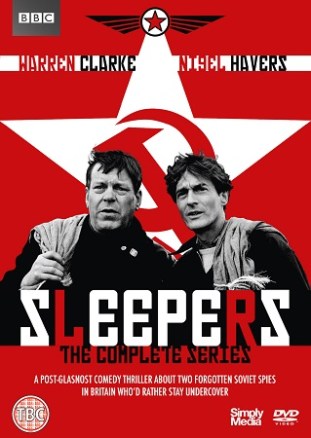
Sleepers will be released by Simply Media on the 24th of October 2016.  Review here.

Amidst the thaw of glasnost, the Kremlin discovers that two Soviet agents, sent to England under deep cover in 1965, have been ‘lost.’ Sultry, unrelenting KGB high-up Nina Grishina (Joanna Kanska – The Tall Guy) flies into London to lead the search and soon becomes embroiled in a tangle of CIA, KGB and MI-5 plots and counter-plots as the two lost agents, now utterly assimilated, try to avoid detection.

A cat-and-mouse chase follows, delivering a hilarious cross-cultural comedy thriller directed by BAFTA winner Geoffrey Sax (Doctor Who), which is released on DVD on 24 October 2016. Nigel Havers (Chariots of Fire) and Warren Clarke (Dalziel and Pascoe) star as the spies who’d rather stay undercover, alongside Michael Gough (Batman).


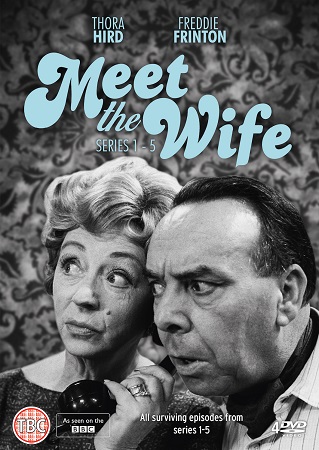
Meet the Wife to be released by Simply Media – 24th October 2016

164454- Chief Crazy Horse Sleeve.indd

Meet the Wife will be released by Simply Media on the 24th of October 2016.  Review here.

One of the BBC’s earliest domestic sitcoms, Meet the Wife affectionately dissects the trials and comforts of mid-life marriage after the kids have flown the nest.

Written by Ronald Chesney and Ronald Wolfe (On the Buses), and running for five series from 1963 to 1966, the series was immortalised in The Beatles’ ‘Good Morning, Good Morning’: ‘It’s time for tea and Meet the Wife’.

BAFTA-winning Dame Thora Hird DBE (Last of the Summer Wine) and Freddie Frinton (Dinner for One) are Thora and Fred Blacklock, a middle-aged couple in the north of England, just about managing to make ends meet. Fred is an amiable, hard-working plumber who likes a pint on the way home, while Thora has ideas of improving the couple’s social standing. Meet the Wife contains all remaining episodes from series 1-5 (including the Comedy Playhouse pilot ‘The Bed’), and is released on 24 October 2016.


Grange Hill. Series Seven – Episode Five

grange hill s07e05

Written by Margaret Simpson. Tx 17th January 1984

Although it’s been a while since we’ve seen Mrs Scott, Claire’s mother, she’s still the same fusspot that she’s always been.  And despite the fact that Claire’s now in the fifth form she still talks to her like she’s in the first year.  Nits are the problem – Claire’s had them and Mrs Scott is convinced she must have caught them from Suzanne.  Another example of the long-standing disdain that Mrs Scott has always held for Claire’s common (in her eyes) friend.

Jimmy’s upset that he hasn’t received the promised six hundred pounds from Pogo’s chain letter and forcibly makes his point.  This shows us Jimmy’s more menacing side, but events later in the episode prove that he’s far removed from the thuggish Gripper.  Mrs McClusky corners Mr Howard on the stairwell (a piece of the set that’s been seen so many time during the last few years that it’s almost become an old friend) and demands he finds out who’s responsible for the letters.

Mr Howard agrees, but is distracted by the passing Miss Gordon.  He walks a few paces to watch her retreating back with a wistful look on his face, whilst Mrs McClusky is still trying to gain his attention!  That’s the only reference to his pursuit of her in this episode, but it’s a nice dialogue-free throwaway moment nonetheless.

Mr McGuffy is attempting to recruit five pupils to go with him on a weekend trip organised by the UN.  Each school will pick a country and they’ll have a mock debate.  There’s a high level of cynicism on display – Suzanne likens the UN to the school council (with the one as effective as the other) whilst Glenroy tells the others that the UN exists to keep the poorer countries in their place.  Suzanne isn’t keen on going, but when she learns that Glenroy is, she perks up ….

Precious can’t go because she’s got a Saturday job at a hairdressers.  We’ll come back to this, with disastrous consequences for Christine’s hair, in a later episode.  There’s also the first mention of Anita’s gran for quite a while.  During series three she could hardly go a couple of sentences without mentioning her, but that hasn’t been the case recently.

This episode sees the last appearance of Allyson Rees as Miss Lexington, which makes me rather sad.  We learn that her first name is Jenny (a fact I don’t believe has been divulged before).  She and Mr Gordon are on hand to collar Pogo as he desperately tries to harness the power of the computer to salvage something from the chain letter fiasco.  Mr Howard suggests they ask their maths teacher why a market can never expand indefinitely.

There’s a lot of disappointed out-of-pocket kids after the chain letter scheme is wound up.  Jimmy extracts all the money held by Pogo and is quite happy to see it redistributed amongst those who lost out.  This makes it obvious that while he can be menacing, he also doesn’t always act in his own self-interest.  He gained nothing out of this (apart from being able to taunt Pogo) but perhaps we can put it down to another example of his canny business sense.  After all, all those people that have gained something might be potential customers in the future ….

Grange Hill. Series Seven – Episode Four

grange hill s07e04

Written by David Angus. Tx 13th January 1984

The opening scene gives us our first look at Jimmy McClaren (Gary Love) and his ever-present sidekick Nigel Flavin (Gary Hailes).  Although Jimmy has somewhat stepped into the void left by Gripper, he also bears more than a little resemblance to Pogo.

Jimmy’s a fixer – he’s happy to relive others of their money, but he likes to provide a service in return (unlike Gripper, who just liked the money).  Here, we see him plot to get someone onto the school football team (with the wheeze of stealing another boy’s boots) whilst Nigel later receives a payment after agreeing to arrange that a boy has his pick of the desks (he doesn’t like his current place and no-one else will move).

This transaction is overheard by Mr Keating and it provides us with the spectacle of Robert Hartley ear-wigging in the background as he desperately tries to hear what’s being said.  This will be Hartley’s final series as Mr Keating and I’m going to miss his firm (and usually fair) methods.

Gary Hailes would be another actor who’d make a seamless transfer from Grange Hill to EastEnders.  Gary Love would later become a regular in Soldier Soldier as well as maintaining a parallel career as a director.  Although neither continue in Grange Hill after 1984, they both manage to liven up the few episodes they do appear in.

Although Jeremy’s absent – suspended – following his bus-pass forgery, he continues to cast a shadow over Zammo.  Kevin doesn’t believe that Jeremy would ever get one of them into serious trouble, but Zammo isn’t so sure.

Annette dreams of stardom and decides to enter a fashion competition.  Her self-delusion is made plain after she boasts that she’ll have professional pictures taken, only to later be seen emerging from a photo booth, glammed up to the nines.   This storyline will pay off in a couple of episodes time.

After appearing in a one-off episode last year, Chris Jury’s Mr Knowles has now become a regular.  I’m not sure whether it was a performance choice or simply a stumble, but at one point Mr Knowles seems to forget Annette’s name for a second and then almost pronounces “historical” as “hysterical”.  An actor’s fumble maybe, but it’s also very in character for someone who’s no longer the helpless teacher we’ve previously seen, but isn’t yet totally in command of the class.

And there’s an outbreak of nits.  Eek!

An anonymous phone call to Mrs McClusky spells trouble for Zammo.  Nigel was passing at the time and is able to give Zammo a heads up – much to the despair of Jimmy, as he’s given away information for free!  Zammo believes that Gluxo was behind it, and recruits his friends for a showdown.  Unfortunately they start to drift away one by one after they fail to find him.  So that by the time the Brookdale boy does make an appearance, only Zammo and Kevin are left.

How Gluxo learnt that Zammo’s bus-pass was used by Jeremy is a mystery, which makes it much more likely that the anyonomous call was made by Jeremy (or someone on his behalf).  This ties back to Kevin’s comment earlier in the episode and although Jeremy wouldn’t have benefitted from grassing Zammo up, it seems like just the sort of thing he’d do.  So why didn’t Zammo consider the possibility?

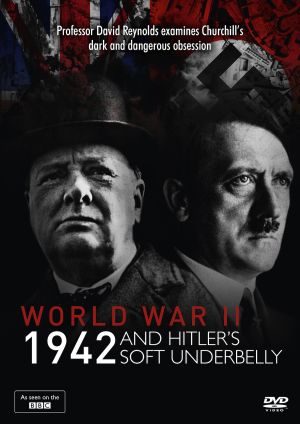
World War Two: 1942 and Hitler’s Soft Underbelly – to be released by Simply Media on the 5th of September 2016

164454- Chief Crazy Horse Sleeve.indd

Due in early September from Simply Media is another documentary written and presented by David Reynolds, 1942 and Hitler’s Soft Underbelly.  Review here.

The British fought the Second World War to defeat Hitler. World War Two 1942 and Hitler’s Soft Underbelly asks why, then, did they spend so much of the conflict battling through North Africa and Italy?

Reynolds reassesses Winston Churchill’s conviction that the Mediterranean was the ‘soft underbelly’ of Hitler’s Europe. Travelling to Egypt and Italian battlefields like Cassino, scene of some of the worst carnage in western Europe, he shows how, in reality, the ‘soft underbelly’ became a dark and dangerous obsession for Churchill.

Reynolds reveals a prime minister very different from the jaw-jutting bulldog of Britain’s ‘finest hour’ in 1940 – a leader who was politically vulnerable at home, desperate to shore up a crumbling British empire abroad, losing faith in his army and even ready to deceive his American allies if it might delay fighting head to head against the Germans in northern France. It arrives on DVD on 5 September 2016.


World War Two: 1941 and the Man of Steel – to be released on DVD by Simply Media on the 8th of August 2016

164454- Chief Crazy Horse Sleeve.indd

Due shortly from Simply Media is the two-part BBC documentary, 1941 and the Man of Steel, presented by David Reynolds.  This was originally broadcast in 2011.  Review here.

In World War Two 1941 and The Man of Steel, due for release on 8 August 2016, Reynolds examines Josef Stalin’s handling of the conflict between the Soviet Union and Germany during the Second World War. The name Stalin means ‘man of steel’, but Reynolds’ penetrating account reveals that the man himself was anything but.

Releasing to coincide with the 75th anniversary of Operation Barbarossa, the Nazi invasion of the Soviet Union in 1941, Reynolds reveals how the dictator’s mental frailties nearly caused his country to fall to the Nazis, and examines the compromises Stalin was forced to make to survive. He also investigates the events that led to Stalin eventually siding with the Allies, including Winston Churchill’s controversial visit to Moscow in 1942.

Travelling to the sites of the main battles and using original telegrams and official documents, he re-examines how Britain and America were drawn into alliance with Stalin, a dictator almost as murderous as the Nazi enemy.


Grange Hill. Series Seven – Episode Three

grange hill s07e03.jpg

Written by David Angus. Tx 10th January 1984

There’s something in Jeremy’s nature which means he can’t help being deceitful.  Even if it doesn’t gain him anything, he still delights in misdirection and falsehoods.  Because of this it’s a pity he didn’t stay in the series a little longer, as there would have been considerable mileage for this sort of insidious character.

At the start of this episode he tells Zammo that there’s no point in waiting for Jackie – she’s left without him (in a car, with a strange young man).  It’s all a complete tissue of lies as we see Jackie failing to catch up with them and then later stropping in the Brookdale playground because she can’t understand why Zammo didn’t wait for her.  Why do it?  Zammo was bound to find out the truth eventually, but even when he does Jeremy won’t admit that he lied – merely that he must have been mistaken.  He has all the makings of a first class politician.

Annette continues to flout the school rules by wearing make-up, but this goes unnoticed since (on doctor’s orders) she’s able to wear sunglasses indoors.  This seems rather futile – why bother to wear make-up if no-one can see it?! – but there you go.  Her man-eating tendencies are commented upon, as Julie mentions she fancies anything in trousers.  Annette responds that it’s better than fancying someone in a skirt.  She quickly backtracks and mentions a Scotsman, but the inference is that Fay’s keen interest in Miss Gordon has not gone unnoticed by her.  Unsurprisingly this would be a topic that Grange Hill would skirt around very delicately – although as series seven develops, the chatter that Fay has a crush on her form teacher begins to intensify.

But then Miss Gordon clearly has a certain something, as both Mr Smart and Mr Howard are both still valiantly attempting to broach her defences.  First, Mr Howard offers her a lift as he’s going her way (she innocently asks him which way is that?).  Alas, Mrs McClusky steps in and asks him to cover Mr Keating’s detention which leaves him very downcast.  Mr Smart finds it hard to hide his jubiliation though!  Mr Smart pops round to the art room later, but he finds himself no further forward as she politely declines his offer of a lift as she already has one.  This leaves Mr Smart perplexed, does this mean there’s another rival for her affections?

Roland’s still looking scruffy, although his transformation from victim to bully (well sort of) begins here.  He starts a money-lending business, with interest charged on late repayments and there seems to be no end of people willing to take him up on it.  When he later joins forces with Jimmy McClaren (still to make an appearance) his change of sides is even more pronounced.

Jeremy gets nabbed by the bus inspector, who was never going to fall for his fake pass.  Why didn’t he just pretend he didn’t have the fare?  He would have got slung off the bus, but that would  have been better than waving a forged pass about.