Rewatching Pyramids of Mars for the umpteenth time, a couple of things worried me in episode three. Of course, given that Robert Holmes had to cobble the story together at very short notice (and had clearly run out of steam by episode four) it isn’t too surprising that the odd plothole remained ….
After Sarah and the Doctor discover Lawrence Scarman’s body, Sarah is perturbed that the Doctor seems unmoved by Lawrece’s violent death. He responds that Lawrence isn’t Sutekh’s only victim, counting out the others. “Four men, Sarah. Five, if you include Professor Scarman himself.”
Hmm, okay. Lawrence, Doctor Warlock, Ernie Clements (“murdering swine!”), Namin and Collins make five, six if you include Professor Scarman. My first thought was that the Doctor was unaware of one of their deaths, or maybe he didn’t count Namin since he was a baddy?
And why did Marcus Scarman, after murdering his brother, gently prop him up into the rocking chair with such obvious care and attention? It creates a shock moment but doesn’t make much sense.
Just how many service robots were there? In actuality there were three, so if that was also the true figure why didn’t Professor Scarman immediately twig that that the faux-Mummy (containing a grumpy Tom Baker) was an imposter? Two robots had been guarding the pyramid and Scarman had seen a disassembled third just before killing Marcus.
And I’m not even going to ponder exactly when Sarah became so efficient with a rifle.
Not that any of this matters as Pyramids of Mars is still great (if rather nasty) fun. Can it really be nearly thirty years since I bought it on sell-through VHS? And a mere twenty three years since I taped the episodic repeat from BBC2, enabling me to see the scenes snipped from the official release for the first time. Time passages ….
Gonch and Hollo’s newest rubbish-dump acquisition is a plastic mannequin which they dress in school uniform and take to school. Unfortunately they drop him in the middle of an oncoming car when struggling to cross the busy road outside the school gates.
Since we can see a Lollipop leaning against the wall, it rather begs the question as to why there isn’t a Lollipop man or woman on duty. It’s mentioned that the teachers are currently assigned to road duty, with Mr Bronson taking his turn today. Alas, we don’t see him wielding the Lollipop, which is a shame.
Fay is increasingly infatuated with the laid-back Jean-Paul, much to Julian’s irritation. All of Fay’s previously held principles (such as a horror of cosmetics being tested on animals) seem to be slipping way, demonstrated best when she much prefers Jean-Paul’s present – perfume – to Julian’s – a rabbit.
Zammo and Jackie’s on-off-on-off relationship now seems to be back on, which leads to further tensions with Banksie. The school production of West Side Story comes to a crashing halt when they learn that copyright problems mean that they won’t be able to continue. A pity they didn’t check beforehand really …
No matter, the show must go on, even if it’s a different show from the one they’d originally planned.
Mr Smart continues his quest to tempt Miss Washington out for an evening of squash, but once again he’s foiled – this time because she’s too busy with the school play. Poor Mr Smart, he seems to have plenty of luck, all of it bad.
Gonch and Hollo liberate Henry, although taking it to Mr Baxter’s lesson probably wasn’t the wisest move. Michael Cronin, as ever, is on fine-form as Mr Baxter comes face to face with Henry.
Gonch’s latest money-making scheme is a video club, run during the lunchtimes with tapes “borrowed” from the shop where Vince’s dad works. We briefly get a glimpse of the film they’re watching and it’s noticeable that the picture quality is authentically bad (loads of interference) which was often par for the course with tapes from video rental shops. Although the picture here is so bad I would have been inclined to ask for my money back ….
There’s several snags with this arrangement – Vince can’t borrow the tapes for more than a day without his dad becoming suspicious and the lunch break is too short for the entire film to be seen, meaning they constantly have to fast-forward to the end, missing out most of the best bits. Never mind though, as the ever-resourceful Gonch has yet another idea – use the media studies room to copy their own tapes, which they can then sell!
Given the wave of thefts still sweeping the school, it really stretches credibility to breaking point to learn that the key to the media studies room is kept on the doorframe. Since there’s televisions and video-recorders aplenty inside you’d have assumed that a little extra security would have been taken in order to keep the equipment safe. It’s easy to see why this was done in plot-terms though – Gonch and the others need to gain access to the room and can’t have been seen to steal the key – but it still feels a tad contrived.
The builders discover that Gonch and Hollo liberated some of their building supplies in order to help Mr Light. Remarkably, they don’t seem terribly put out by this and are happy to do the repairs on Mr Light’s house for virtually nothing, although Gonch does promise to supply them with some good films on VHS.
Zammo, Mandy and Sarah observe a first-year girl being forced into a car against her will. The girl is Calley and the woman is Angela, her real mother. At first glance, this appears to be the latest instalment in Calley’s tale, but the focus quickly switches to the three fourth formers. We never really find out exactly what happened at the car – it’s plain that Calley didn’t want to go with Angela and (presumably) her husband, but she later denies this. Angela only has a few lines of dialogue, which means that this sequence is much more about providing an excuse for Zammo, Mandy and Sarah to be inside the school at lunchtime. And this is the last we see of Angela, meaning that this plot-line rather splutters to a stop in a less than dramatic fashion.
Zammo, Mandy and Sarah run into Mr Bronson, who immediately decides they’re responsible for the theft of yet another of Mr Smart’s squash racquets. All three, along with Mr Bronson and Mr Smart, head off to see Mrs McClusky, which leads into an interesting scene. Zammo is voluble in his defence, stating that Mr Bronson has had it in for him since the day they met. Mrs McClusky swiftly closes him down and asks the three of them to wait outside. After they leave, it’s plain that she is far from convinced of their guilt, which somewhat wounds Mr Bronson. That Mrs McClusky repeats Zammo’s doubts only after he’s left is something we’ve seen before – in front of pupils or parents she’ll always keep a united front with the staff, but behind closed doors it’s sometimes very different.
Having said all that, as Calley was nowhere to be seen when Zammo, Mandy, Sarah and Mr Bronson went to look for her, Mrs Clusky states that they’ll all still be in serious trouble unless she comes forward to collaborate their story. How this can be I’m not quite sure, since there’s no evidence at all to link them to this, or any other, theft. It helps to ramp up the tension – will Calley step forward to clear their name? – but it’s another moment which doesn’t quite work.
Episode eight opens in an unconventional way, as we see Robbie stepping away from the boy’s urinal! It’s not unusual to feature scenes in the toilets, but offhand I can’t think of many times when we actually see people doing the business, as it were
The scene introduces us to Gonch’s groping grab as well as moving forward his truanting plans (Hollo provides him with a stack of dental appointment cards – all they have to do is fill them out and they’ve a perfect excuse for being off school premises).
But what really interests me is how shabby and dilapidated the toilets are. There’s a whacking great piece of graffiti (“wham” – presumably somebody was a fan) which helps to make it look like the sort of place you really wouldn’t linger in. This isn’t reflected in the dialogue though, it’s simply taken as quite natural that it’s run down. We also saw this in the previous episode – one of the classrooms looked in quite a state, with nasty stains on the wall.
But if the children don’t appear concerned about the appearance of the school, it appears that others do, as two builders (played by Ben Thomas and Frank Jarvis) turn up to try and repair some of the damage. Jarvis in particular had an impressive list of credits – turning up in a score of popular television series (The Saint, Z Cars, Adam Adamant Lives!, Manhunt, Budgie, Softly Softly:Task Force, Callan, The Brothers, Dixon of Dock Green, Warshp, Target, The Professionals, etc). He also appeared in three different Doctor Who stories, although given that his final two were Underworld and The Power of Kroll, you can’t help but feel he rather drew the short straw ….
Ronnie’s hair has once again changed to “unconventional”, but this is a minor matter to begin with as Calley, having spent the night with her real mother, is in something of a state. Ronnie asks Miss Washington to speak to her, and just before the teacher leaves the classroom she asks her form to mark themselves in the register. This is an incredibly odd request (presumably a sign of Miss Washington’s inexperience) leading to an inevitably boisterous free-for-all.
Who should be passing at precisely this time? Why Mrs McClusky of course and she’s far from pleased. “I think this is the first time in all my experience I have ever heard of a teacher asking any class to mark themselves in.” And when Ronnie reappears, Mrs McClusky is staggered at her unconventional appearance. As previously touched upon, GH characters often tended to display echoes of those who had gone before them and Ronnie here has more than a touch of Trisha Yates about her. Both frequently railed against the conformity of school uniform, so Mrs McClusky’s comments could equally have easily been directed at Trisha.
Gonch and Hollo plan to “liberate” some of the school’s building materials to help Mr Light, whilst Miss Washington’s purse goes missing from the staffroom (surely Gonch’s groping grab couldn’t have been responsible?). And Patsy Palmer, an unspeaking extra, continues to steal a number of scenes as she prominently places herself in the frame …
The Witness for the Prosecution was an Agatha Christie short story, originally published in 1925. Like many of her short stories it was written for magazine publication, only appearing some years later in book form (The Hound of Death, 1933). Christie was never averse to reusing plots from her short stories and several ideas were later expanded into novels, but Christie elected to turn The Witness for the Prosecution into a stage-play, which debuted in 1953.
Although The Mousetrap is a theatre institution (running for sixty years and more), for me Witness for the Prosecution was Christie’s best play. She expanded the fairly thin material very nicely, creating the central character of Sir Wilfred Robarts for example. In 1957, the Billy Wilder film, starring Charles Laughton, Marlene Dietrich and Tyrone Power, hit the cinema screens and is for many the definitive version.
Sarah Phelps’ Christmas 2016 adaptation carried with it a certain weight of expectation then, partly because her work on And Then There Were None in 2015 had been so well received but also because the Wilder film remains popular with Christie aficionados. Sadly, Phelps’ Witness is much more of a curate’s egg than And Then There Was None was.
It’s interesting that Phelps went back to Christie’s original story, rather than the play. As the 1925 tale is rather brief and only features scanty characterisation, a large part of the teleplay had to be newly crafted by Phelps. So whilst the Queen of Crime’s voice can be heard, it’s only very faintly.
And the foggy yellow filter on the camera was an interesting visual choice I could have done without …
But on the positive side, the core cast were impressive. Toby Jones as Mayhew, a somewhat insignificant character at first glance, was faithful to the source material (albeit with a whole backstory created for him). The character of Leonard Vole is key and Billy Howle was suitably bewildered and endearing (the story only works if the audience immediately identifies with Vole and takes his side).
Emily French received something of a drastic makeover (a nice old lady in the Wilder film, a man-eating vamp here) but Kim Cattrall was entertaining enough and Annette Riseborough hit most of the right notes as Romaine Heilger. This is by far the hardest role to play in the piece (previous actresses to tackle the part include Dietrech in Wilder’s film and Diana Rigg in the 1982 tv movie remake).
Julian Jarrold’s direction boasted some impressive sequences, none more so than the quick cut in episode one when Emily French’s dead body is revealed. The traumatised visage of her maid and the way that her cat steps through the puddles of blood are both striking touches, and this section makes up for some of the more stodgy fare we see later.
Had it been a ninety minute one-off, it might have worked better, at two hours it rather outstays its welcome. The Witness for the Prosecution is not without merit, but my preferred viewing option remains the 1957 Wilder film (certainly worth a look if you’ve never seen it).
The disc contains several featurettes, the most substantial being From Page to Screen (running just under 25 minutes). This is of particular interest due to the way it highlights the differing expectations that may exist between a section of the audience (the Christie die-hards who know the original well) and the adapter, Sarah Phelps. Phelps discusses how she enjoyed the process of extrapolating character development from throwaway comments contained within Christie’s story, although I’m sure that some will regard Phelps’ additions with a slightly jaundiced eye.
If Witness was a tad disappointing, then we’re on firmer ground with 2015’s And Then There Were None. Originally published in 1939, Christie’s novel spawned several film adaptations, whilst she herself turned it into a successful stage play.
Eight people are invited to an isolated island by the mysterious Mr and Mrs Owen. When they arrive, the place seems deserted apart from two servants, Thomas and Ethel Rogers. And then they start to die, one by one, until none are left ….
Starring Douglas Booth, Charles Dance, Maeve Dermody, Burn Gorman, Noah Taylor, Anna Maxwell Martin, Sam Neill, Aiden Turner, Miranda Richardson and Toby Stephens, And Then There Was None has an agreeable air of star quality. Unsurprisingly there are a number of deviations from the original, but what remains is a much more faithful Christie experience than Witness was.
The most eye-opening change must be Detective Sergeant Blore’s (Gorman) crime. Here, he’s alleged to have beaten up a homosexual suspect to death, in the book he’s accused of perjury.
The ending is of particular interest. When Christie turned the novel into a play, she changed the denouement (which for me made the piece less effective). Phelps doesn’t attempt to mirror the book’s conclusion, which is probably the right move, although what she leaves us with – something of a mash-up between the book and play – works very well.
And Then There None contains a substantial making-of featurette, running to just under 42 minutes, which features interviews with all the main cast as well as key behind-the-camera personnel.
Sarah Phelps is now working on an adaptation of Christie’s 1958 novel Ordeal by Innocence, which seems to suggest that the BBC are keen to have “A Christie for Christmas” each year. Hopefully this next one will lean more towards And Then There Were None than The Witness for the Prosecution.
Two by Christie: The Witness for the Prosecution/And Then There Were None was released by Acorn/RLJ on the 9th of January 2017. RRP £29.99. Both titles are also available separately.
The French exchange students arrive. Mr Bronson is no doubt hoping for a rewarding cultural cross-pollination whilst I suspect that Fay and Julie are thinking about quite another form of pollination ….
Both seem impressed with the French boys, although it has to be said that most of the exchange students (both male and female) seem to be narcissistically self-obsessed. This may be a little unfair though, as their limited English obviously hampers them (expect various “comic” moments of misunderstanding) and it’s true that the Grange Hill types give them a welcome which varies enormously.
Amusingly, they’re treated very much little cattle as they get off the coach (“what’s your one like, I don’t think much of mine”) with Zammo being the worst offender. For some reason he’s very much taken against his one – a perfectly inoffensive chap – and proceeds to give him a hard time. No doubt this is because he’s still smarting over his on-off-on-off relationship with Jackie, but it’s still a rarity to see him behave in such a boorish manner.
A party at Julian’s finds everybody (to the strains of George Michael’s Careless Whisper, the perfect mid eighties smooch record) pairing off – even Roland, who’s rather taken with Fabienne (Jessica Harrison). Given that Roland is pretty anonymous during the rest of series eight, this is a nice piece of character development, especially given his long-running issues with making friends and forming relationships.
The other main thrust of the episode is the revelation that Calley is adopted and her real mother, Angela (Jean Heard), has returned to the area and is keen to establish contact with her daughter for the fist time. It’s a challenging role for Simone Hyams and her lack of acting experience is possibly exposed when the camera focuses on a close-up of e, overhearing her parents talking. We should be seeing horror, pain and confusion on her face, but instead Hyams can only manage mild inconvenience.
This is only a minor niggle though, since when she’s given dialogue she’s on much firmer ground. Her adoptive mother (played by Deidre Costello) tells her that they didn’t tell her when she was little because they thought she wouldn’t understand – Calley’s plaintive rejoinder that she’s “not been little for ages” is very nicely played and remains a memorable moment.
Ian Redford makes the first of a handful of appearances as Mr Legge – in this one he spies the absconding Gonch and Hollo and steers them reluctantly to their home economics class. Mr Legge is clearly something of a trendy teacher (sporting a lapel badge) and his easy-going nature, albeit also with a core of steel, comes across well here. He’s another of those short-lived characters who could easily have become a regular.
The cooking lesson also gives us another example that Ronnie is rather an iconoclast and a rebel (she breaks an egg over Trevor’s head). This part of the episode is also of interest thanks to the question of Ronnie’s hair. It’s in something of a Toyah style (as acknowledged) but shortly afterwards it turns back into a more normal style. I’m not sure exactly how she could have done this, so I’ll surmise it was done in order to match a later film sequence which featured her normal hairstyle.
We close on a cliffhanger – it’s late in the evening but Calley hasn’t returned home. Earlier, we’d seen her go off with Angela for a cup of tea, but where is she now?
Sion Tudor Owen makes the first of two appearances as English teacher Mr Dean. The actors name might be a bit of giveaway, as it turns out that Mr Dean is Welsh, very Welsh. He’s one of those teachers who attempts to adopt a chummy attitude with the pupils (as they dash off for their next lesson he tells them to be “careful out there” – clearly he was a fan of American police dramas).
Zammo tells Mr Bronson to keep his hair on. Oh dear. Zammo wasn’t referring to Mr Bronson’s still-unconfirmed hairpiece, but it irritates the touchy teacher. Michael Sheard continues to entertain ….
The Zammo/Jackie/Banksie triangle is still simmering away. Zammo can’t take Jackie to the UB40 concert as he’s working in the chipshop, leaving Banksie free to escort her to the gig. And the other love triangle – Stewpot/Claire/Annette – is reaching critical mass as Stewpot is taking Annette but starts to panic when Claire decides she wants to go as well. There’s a memorable encounter in the hallway between Claire and Annette. Claire tells Annette that if she was any thicker she’d clot!
Love continues to be in the air as Fay and Julian arrange a date at the concert (clearly UB40 have the power to bring numerous couples together). I do like the way that Stewpot greets Annette with a friendly kiss on the top of her head, given the difference in their heights it makes sense – he would have had to crouch down awkwardly to kiss her on the lips!
The fun stops when Claire turns up and Annette proudly tells him that Stewpot’s her man now. Claire offers him to the chance to leave with her, but he declines. Later, Precious tells her not to worry as there’s plenty more fish in the sea – we then cut to the fish shop as Kevin serves up a piece of cod. Well it amused me anyway.
One of the drawbacks about switching focus between the first and fourth years is that you sometimes have to wait a little while for continuing storylines to develop. So although we left (shock horror) Stewpot and Annette locked in an embrace at the end of the second episode, it’s only at the start of this instalment that the plot kicks forward.
Stewpot, still sporting something of a hangdog expression, has to confess to Annette that he’s yet to tell Claire that it’s all over. Stroppy Annette is far from pleased about this of course. Mind you, Claire is equally as stroppy so goodness knows how he’s going to choose between them – but his habit of lying to each of everybody is obviously going to catch him out pretty soon.
And Stewpot’s appearance, in school uniform, raises the interesting topic of uniform policy during series eight. Leaving aside for the moment why a sixth-former like Stewpot would be wearing school uniform (I can’t recall this happening at GH at any other time) we’re told early on that uniform is optional from the fourth form onwards. That some ex-Brookdale and Rodney Bennett pupils turn up at the start of term in their old uniforms is explained by the fact that they’re still clinging onto the memories and loyalties of their former schools. This doesn’t explain why so many of the old Grange Hill types in the fourth year are still wearing uniform though ….
There’s also something of a glaring continuity error between the studio and film sequences (fairly understandable since they were probably shot months apart). Inside the school Stewpot is wearing a blazer, jumper and no tie, but when he ventures outside he’s lost the jumper but gained a tie. It makes him look very odd, especially when Annette, two years his junior, is a vision beside him in orange.
The arrival of Mr Bronson sees something of a realignment of Mr Smart’s character. With Mr Bronson taking on the mantle of the hard (and occasionally fair) teacher, Mr Smart has become more conciliatory – although this may be simply due to the fact he enjoys baiting Mr Bronson. There’s a great example in this episode as Mr Smart nips into the last parking place in the school, leaving a highly aggrieved Mr Bronson with no other option than to park on the street. Watch how quickly Mr Bronson speeds off through the playground after he fails to persuade Mr Smart to give way – it’s lucky he didn’t knock anyone over.
Zammo continues to rail against the Brookies, whilst Banksie and Jackie get slightly closer. The constant fighting between the rival (and now non-existent) schools irritates Jackie no end, but all becomes clear – in story terms – when Miss Washington and Mr McCartney (Tony Armatrading) announce they plan to stage West Side Story. Casting Zammo and Banksie as the rival gang leaders with Jackie as the object of their rival affections is a perfect example of life and art imitating each other.
Calley’s latest wheeze is hypnosis, she certainly has a varied portfolio of interests. Meanwhile, the Grange Hill Bridge-Builders scheme (Mrs McClusky’s plan to help the local, aged community) and preparations for the school musical continue apace.
There are more thefts, including Ronnie’s Walkman (taken from the staffroom) and we also see Gripper’s sister, Emma (Bonita Jones), for the first time. Is there a connection between the two? Emma could have been developed as a regular – it’s been a while since GH has had a female bully – but instead she only makes a couple of appearances, meaning we have to wait until next year and the arrival of Imelda before the series gains such a character again.
Ronnie’s convinced that Gonch pinched her Walkman and Calley uses her hypnotic powers to try and confirm if this is so. But all it proves is that Gonch is a good actor as he manages to convince them all for a few moments that she really did hypnotise him.
The subject of Mr Bronson’s hair is touched upon. Previously it was believed that it was dyed (inevitably leading to the question about what it died of) but now everyone seems to know it’s a wig – or at least Precious does, especially after she collides with him. Mind you the way he anxiously checks it after the knock is a dead giveaway ….
Hollo plans to use the Bridge-Builders scheme to give his neighbour, Mr Light (James Ottoway) a helping hand. Of course, Hollo hasn’t bothered to ask him first, which makes things a little awkward at first. But after an unpromising beginning, Mr Light doesn’t quite turn out to be the stern curmudgeon we initially take him for (something of a cliché, true).
After unsuccessfully pursuing Miss Gordon for all of S7, Mr Smart’s on much firmer ground with Miss Washington – they’ve already fixed up a date at the squash court and it’s only episode three. He’s a quick mover! This episode also sees the first stirrings of Gonch’s skills as a salesman. He and Hollo have various things to sell, scavenged from the rubbish tip – and I do like the way he describes that they’ve come from a “tip-top” supplier ….
The ever patient CDT teacher Mr McKenzie (Nicholas Donnelly) appears for the first time. Donnelly would put in long service at Grange Hill, appearing for the next eight series and he’s perfect as the unflappable teacher (he seemed to specialise in such characters as he had an even longer-running but similar role in Dixon of Dock Green).
Calley is entertaining the others with some palm reading but Jane (Joann Kenny) is convinced it’s all a con. It’s plain that Calley is simply making stuff up, but we’re still invited to side with her as Jane’s plan to expose her backfires and she ends up as the one who’s ridiculed. This seems a little unfair, as Jane isn’t really positioned as a spiteful character.
A wave of thefts are sweeping the school, including Mr Smart’s squash racquets. It’s just one of a number of niggles which convince the teaching staff to make a direct appeal to Mrs McClusky. Mr Bronson is less than impressed with Mr Smart’s missing racquets, he’s more concerned with the lack of car-parking spaces. Mr Baxter, someone who’s tended to appear mostly on film during the last few seasons, is now back to being a VT character as well – he leads the deputation, but is far from impressed at the outcome, telling the others that he feels like a “right nana” after they fail to reach a consensus.
The bickering continues into the staff room and descends into a male/female debate, only terminated when Mr Baxter blows his whistle, which shuts Mr Bronson up! This is good stuff and it’s nice to focus a little more on the staff, something which we’ll see more of in later years.
And I have to spare a word for a scene-stealing extras right at the start, who have a brief conversation about fish fingers.
Annette’s got a new boyfriend. She’s coy about his identity though, only giving the other girls one piece of information – his name begins with “S”. First name or last name, they ask? She won’t say, but it’s the name he’s best known by.
The hunt for Mr S occupies the imagination of Fay, Julie and Diane. They reel off a list of (never seen) potential victims, but later are briefly convinced it’s Mr Smart! This only comes about due to a major piece of plot contrivance – Annette and Mr Smart have a chat about Mr Smart’s prowess as a squash player, whilst the others (out of sight down the corridor) misconstrue their conversation. Although given that Mr Smart and Annette aren’t exactly shouting and the girls were a fair distance away, it stretches credibility just a little that they could actually hear them. Oh well, it passes a few minutes and Fay’s shocked reaction is retrospectively ironic when you consider what happens a year later.
Mr S’s identity is revealed at the end of the episode. This could have been spun out for a few episodes more, but no matter – we now know that Stewpot prefers the charms of Annette over Claire (although strictly speaking he’s enjoying them both, as it were, at present). Mark Burdis’ end of episode expression is a classic, sheepish best describes it. Given the effort Stewpot spent trying to re-establish his relationship with Claire, it seems bizarre he’d risk it all for a liaison with Annette (who’s no less annoying this series than she’s been previously). But love is blind I guess.
In the nineties, Grange Hill would introduce several disabled pupils who weren’t characterised by their disability – that was simply a part of who they are. Eric Wallace (James Hickling) is the reverse, his few appearances in S8 all revolve around the fact that he’s partially deaf. To begin with, nobody seems aware of this and the fact that he sometimes appears to ignore people is put down to general ignorance.
It rather stretches credibility that he would have kept his deafness a secret (surely his parents would have mentioned it to the staff?) but it does enable us to have a nice moment with Mr Bronson. When the exasperated Mr Bronson, annoyed that Eric turned to the wrong page in the textbook, asks him ironically if he’s deaf, Eric says that yes, he partially is. That silences Mr Bronson quite effectively …..
Tensions between Jackie and Zammo continue to simmer away. Zammo and Mr Bronson still aren’t hitting it off, whilst Zammo is torn between being one the boys and spending time with his girlfriend (expanding the theme from last year). There’s also signs that Fay and Julian might be interested in each other – when it’s revealed that Julian is opposed to animal experimentation, Fay tells him that she is too. “Good for you” he says. It’s a slightly clunky exchange, but then Douglas Chamberlain’s overtly earnest delivery is probably part of the reason why.
The opening episode of series eight sees a mass influx of new characters, possibly a “new broom” policy instigated by producer Ben Rea (who had just taken over from Kenny McBain). This is the first time that a fresh crop of first years had been seen since 1982, so they were a little overdue, but – thanks to the closure of Rodney Bennett and Brookdale – we also see the fourth form strengthened with an influx of refugees from those two schools (many still clinging to old, tribal loyalties) whilst several long-running teachers also make their debut.
Most of the pupils from N1 are familiar archetypes – Calley Donnington (Simone Hyams) and Ronnie Birtles (Tina Mahon) aren’t too dissimilar from Trisha/Cathy or Fay/Annette whilst Gonch Gardner (John Holmes) and Hollo Holloway (Bradley Shepherd) could be another Pogo/Stewpot partnership, especially Gonch who’ll develop, just like Pogo, into the ultimate free marketer. And the role of the class bully, formally filled by the likes of Doyle, is taken here by the initially imposing Trevor Cleaver (John Drummond). But Barry Purchese also shakes things up a little. Calley, from her first scene, is just a little odd and offbeat, carrying to school something mysterious in a box which she plans to return to the pet shop later.
Few of N1 seem to have known each other prior to the first day, so friendships (Calley/Ronnie and Gonch/Hollo) are swiftly forged. But after Hollo, riding his brother’s bike, knocks into Gonch and the passing Mr Smart seems (rather unfairly) to put all the blame onto Gonch’s shoulders, friendship seems unlikely. Despite being pint-sized, Hollo is itching for a scrap and plans to settle this score with Gonch after school (but their enmity is short-lived as they soon form an efficient double-act).
Trevor’s bullying is swiftly undercut. He may impress the squeaky-voiced Robbie Wright (John Alford) but it doesn’t take long before Trevor is cut down to size. For the remainder of his time on the show he’ll remain an occasionally aggressive character, but more often than not he’s played for laughs – Trevor’s certainly no Gripper that’s for sure.
As for the sixth form, there’s now only three old pupils remaining – Stewpot, Claire and Precious. We briefly see Stewpot and Claire in passing, but rather like the fifth-formers back in 1982 they don’t really have storylines of their own any more – instead they exist to interact with the younger pupils.
Visually the series looks a little different, thanks to using two different schools. The old Grange Hill site now houses the form rooms for the fourth, fifth and sixth forms whilst the former Rodney Bennett school is the home for the first, second and third years. Since Brookdale has been “left to rot” it rather begs the question as to how three schools worth of pupils can now be crammed into just two schools – especially since the classes in Grange Hill always seemed to be full ….
An old story staple reappears here – two teachers squabbling over one classroom. It’s an interesting wrinkle that we’d previously seen Mr Smart and Mr Knowles at loggerheads (with Mr Smart the aggressor) whereas here Mr Bronson is the one who’s happy to exercise his full range of arrogance whilst Mr Smart is placed in a subservient role.
Another interesting visual touch is seen in the opening few seconds as we see a board which states that Mrs McClusky has been demoted to deputy head, Mr Humphries is now the headmaster. There was potential for decent character conflict between the two, but alas Mr Humphries rather ends up like Mr Lllewellyn – a character who’s always just out of shot or in an important meeting and can’t be disturbed.
Jackie’s in the same class as Zammo, which makes them happy, but she’s less impressed to see some of her former Brookdale classmates, especially the loutish Banksie (Tim Polley). For a touch of contrast there’s also the well-spoken ex-Rodney Bennett type Julian Fairbrother (Douglas Chamberlain) who tells the others about their new form-tutor, the intimidating Mr Bronson (Michael Sheard).
Several new teachers are introduced here, but it’s clear that Mr Bronson (“you, boy!”) is the one with the most potential for conflict and drama. Upon entering the class he looks for someone to browbeat and the unlucky recipient is Zammo. This is the start of a repeated pattern, we’ll see that he enjoys victimising people over an extended period of time (unlucky later subjects include Ant Jones and Danny Kendall). Sheard’s wonderful from his first scene and he’s able to brighten many an episode over the next five years.
The long-running Miss Booth (Karen Ford) also appears for the first time, but Miss Washington (Caroline Gruber) was a one series character only, a pity since Gruber is really rather lovely ….
There’s a lot to pack in with just twenty four minutes to play with, but series eight hits the ground running.
The story so far. Following the death of Robert Hammond, control of his thriving haulage firm was split four ways – equal shares were distributed to his three sons – Ted, Brian and David – whilst the fourth equal share went to his mistress Jenny Kingsley.
With no-one in overall control, there’s a constant power-struggle as elder son Ted (currently managing director) finds himself under attack from his two brothers, both convinced they could run the company better than him. And the trauma in the boardroom is matched by equal strife in their respective bedrooms.
We’ve previously seen that David’s (Robin Chadwick) recent marriage to the lovely, if rather doormat-like Jill (Gabrielle Drake), has had a few wobbles, mainly because his roving eye was elsewhere. He hadn’t actually been unfaithful, but Jill’s suspicions created a definite rift which they attempt to heal during this run of episodes.
Middle son Brian (Richard Easton) suffered even more spectacular marriage problems during the third series, although he remained blissfully unaware. His bored wife Ann (a wonderful performance by Hilary Tindall) found solace in the arms of smooth advertising type Nicholas Fox whilst chugging down far too many sleeping pills and drinking heavily. Her unhappiness at feeling trapped in a loveless marriage culminated in an overdose, although she appears to be quite her old self again now, even to the extent of restablishing contact with Nicholas.
Elder son Ted (Patrick O’Connell) doesn’t have any complaints on the marriage front, but that’s only because he’s single. He has his eye on someone though – Jenny Kingsley (Jennifer Wilson). His desire to wed his father’s mistress has been a running thread for a while, although Ted’s mother, the powerful matriarch Mary (Jean Anderson), strongly disapproves. This might have been one of the reasons why Mary keeled over at the end of series three with a heart attack.
So as series four begins, all three brothers face challenges in their personal lives whilst the business of running Hammonds also continues to cause them tremendous strife. And waiting in the wings is ambitious merchant banker Paul Merroney (Colin Baker), a man who always has his own agenda …..
Colin Baker and Murray Hayne
The series four opener, Emergency sees Mary seriously ill in hosptal. She was discovered (off-screen) by Ted and Jenny who had returned from a brief holiday with life-changing news – Ted had proposed and Jenny accepted. But their happiness quickly evaporates as he blames himself for leaving his mother on her own.
We then see a nice visual signifier of the bond between mother and son. Whilst Ted goes to the hospital to await further news, Jenny stays behind to contact Brian and David as the camera lingers on a framed portrait of Mary and Ted. It’s a clever, unspoken touch which forshadows the dominance Mary will exert over her elder son.
When Mary gets better she has no compunction in telling Ted that he can’t marry Jenny. He might be a hard-headed businessman but he always seems to come off second best with his mother. And this is enough to convince Jenny that marriage to Ted would be impossible.
Business matters take centre-stage again with episode two, Secret Meetings, as Brian and David plan to offer merchant banker Martin Farrell (Murray Hayne) a seat on the board – the first step in their plan to make Hammonds a public company. Of course they’ve yet to mention this to Ted, so sparks inevitably fly when they do. Having said this, it’s surprising that Ted accepts their plan meekly, but he’s got an idea up his sleeve – if Bill Riley also joined the board then (provided he always votes Ted’s way) the status quo would remain. This is classic Brothers, featuring plot and counterplot.
If David has always irritated me somewhat, then Brian is a much more sympathetic character, even if it’s impossible not to feel a little frustrated by the way he remained oblivious to Ann’s lengthy relationship with Nicholas Fox (Jonathan Newth). But even Brian’s blindness could only continue for so long without it seeming totally unbelievable, and when he finally twigs it’s the cue for high drama. His first reaction, of course, is to reach for a drink (heavy alcohol consumption, along with an equally herculean nicotine intake, is something of a feature of the series).
Richard Easton
Brian doesn’t confront Ann straight away, which enables him to calmly twist the knife and make her feel even more guilty than she already is. This is a good move – since you know the showdown will happen eventually, making us wait a little simply heightens the expectation. But Brian’s not backward in letting Ann know exactly what he thinks of her when the truth does emerge. “Your whole world begins and ends with yourself. You’re shallow, you’re superficial and utterly self-centered. Nothing matters to you but self, self, self!”
Ann doesn’t take this lying down. “You are a predictable bore, Brian. You don’t want a wife, you want a second mother. Somebody to cook and clean for you, and tuck you in and say, ‘there, there’ whenever you’re not feeling very well.” Both Richard Easton and Hilary Tindall are firing on all cylinders throughout (the end of episode five – Partings – as Brian knocks a shocked Ann to the floor is one of a number of stand-out moments). If Brian, following his separation from Ann, becomes something of a tortured figure then so does Ann herself. It slowly dawns on her that Nicholas Fox (a serial seducer) has no interest in a long-term relationship ….
David decides to become a racing driver (!) which means that Jill has to wait anxiously on the sidelines, hoping that he won’t be hurt. Frankly, this isn’t much of a role for Gabrielle Drake (compare and contrast to the plotlines dished out to Hilary Tindall) so it’s no surprise that she decided not to return for the fifth series.
Drake might also have been a little miffed that Jill didn’t turn up until the fourth episode and when she does finally make her first appearance it’s only to be once again verbally smacked down by David (he’s less than impressed with her anniversary gift to him – a penthouse flat – complaining that he doesn’t want to be a kept man). He eventually accepts it, but does so with his usual brand of charmless ill-grace.
Robin Chadwick and Gabrielle Drake
The on/off relationship between Ted and Jenny allows Martin Farrell to step in (much to Ted’s extreme annoyance) whilst Bill struggles with the responsibilities of having a seat on the board. He’s always been proud to have the respect of the men, will this change now he’s one of the executives?
Brian’s run of bad luck continues in Saturday, but the later part of series four focuses on company traumas. The decision to make Hammonds a public company offers up a new range of storytelling possibilities. Until now, boardroom squabbles have largely been confined between the three brothers, but now that anyone is free to buy shares everything changes.
And this is partly where Paul Merroney comes in. He’s introduced in the fifth episode as a colleague of Farrell’s, brought in to advise how Hammonds should go public and although his screentime throughout series four is quite limited, he’ll become more central in the years to come. But Colin Baker, in his first regular television role, certainly makes the most of the material he’s given.
The wonderful Richard Hurndall guests in Bad Mistake as Clifton, an influential investment manager crucial to Hammonds’ future. Ted’s blunt style leaves Clifton less than impressed, giving Hurndall a chance to demonstrate his familiar icy, amused detachment. This episode also marks the point where Merroney starts to have an influence on company policy, much to Ted’s disgust.
The series finale, the aptly named The Crucial Vote, sees Ted struggling to keep the board united as the infighting intensifies. There’s no doubt that there will be many more twists and turns to come in the battle for Hammonds, which bodes well for future series.
Interweaving numerous plot-threads across its fourteen episodes, series four of The Brothers continues to be highly addictive entertainment. Brian and Ann’s disintegrating marriage is the definite highlight although the unstable powder-keg that is Edward ‘Ted’ Hammond also entertains. Patrick O’Connell plays Ted as a man constantly struggling to keep his anger in check – which can be seen most clearly any time that Jenny and Martin Farrell exchange glances. David’s fleeting desire to be a racing driver is less easy to swallow, but at least the one racing-centric episode – The Race – is not without interest, especially for the authentic track footage.
If you’ve yet to sample the world of the Hammond brothers, then now – with the first four series available and the remaining three due out by the end of the year – would appear to be the ideal time to do so.
The Brothers – Series Four is released by Simply Media on the 9th of January 2017. RRP £29.99.
Richard Easton, Robin Chadwick and Patrick O’Connell
Although BBC4 are continuing to plug away with their archive TOTP repeats (we’ll shortly be hitting 1983) sadly there will continue to be considerable gaps. It’s understandable why any that feature Jimmy Savile get chopped, although DLT’s continuing blacklisting is a little harder to comprehend.
The recent news that the late Mike Smith elected not to authorise repeats of any shows in which he featured (a decision supported by his widow, Sarah Greene) is another blow. The reason for this isn’t clear, although it’s possible that Smith felt tainted by association with the likes of Savile.
Still, at least many of these “banned” shows are in circulation, although complete editions tend to get pulled quite quickly from YouTube (other video sharing sites tend to retain them a little longer). But one that has remained on YouTube for a number of years is the 1981 Christmas Special, which I’ve recently been revisiting.
It opens with the Teardrop Explodes and Reward. It’s still fairly early in Michael Hurll’s reign, so there’s not an excessive party atmosphere – Julian and the boys share the stage with a few depressed-looking tinsel Christmas trees and some balloons – but hey, with a song as strong as this you don’t really need much in the way of set dressing.
Up next are Ultravox with Vienna, which was held off the top spot by Joe Dolce (surely one of those facts that just about everybody knows). The rest of the band decided to dress quite normally, but Midge went for the full biker look. It means nothing to me (sorry). We do get a ballerina though, which is nice.
The lovely Kim Wilde sings Kids in America. Sigh …..
I’ve always liked the Human League, which means that this edition of TOTP is on a bit of a roll at present. The League perform Love Action (“this is Phil talking”) and it’s back in the day when Philip had plenty of hair whilst Susan and Joanne haven’t really gone down the glam route (but look most attractive, nonetheless).
The good stuff keeps coming, with Godley & Crème and Under Your Thumb. It’s not exactly a cheery party song, but the audience jig about a bit from side to side – which shows they’re attempting to get into the spirt of things. Perhaps wisely the camera tends to focus on Kevin and Lol, especially Kevin who’s in full emoting mode at the end.
There’s a Guy Works Down the Chip Shop Swears he’s Elvis saw Kirsty MacColl labelled as something of a novelty artist, but in the years to come she’d more than prove her quality as a singer/songwriter (and there’s nothing wrong with this song anyway). Thanks to Fairytale of New York she’s always present at Christmas, but MacColl shouldn’t just be for Christmas, she’s good enough to be enjoyed all year round. Make it your New Year’s resolution to check out her back catalogue, you won’t regret it.
Awkward interviews were a feature of TOTP during this era and Simon Bates draws the short straw when he encounters Adam Ant. Colin Blunstone and Dave Stewart are up next with their cover of What Becomes of the Broken Hearted. If you don’t already have it, then a copy of Odessey and Oracle by The Zombies should be a last minute Christmas present to yourself. The Zombies, with the core partnership of Blunstone and Rod Argent, are still going strong today – gigging and recording albums – and they’re well worth checking out.
Zoo dance to the Jacksons’ Can You Feel It. Linx have got into the Christmas spirit (their keyboard player is dressed as Santa!). Intuition is one of those songs that I haven’t heard for years, but it still sounds pretty good and fits perfectly into the Christmassy atmosphere.
Too Nice to Talk To is one of The Beat’s lesser-known hits, but it jigs along nicely. Spandau Ballet are next, and the good news is that they haven’t yet turned into slick balladeers. But the music (Chant No 1) wasn’t uppermost in my mind – where’s your shirt Martin Kemp? You’ll catch your death of cold in that drafty studio ….
Nothing screams early eighties like Toyah does. Why? It’s a Mystery (sorry again).
Laurie Anderson’s O Superman defies description and it’s wonderful that a fairly short-lived (Peter Powell mentions that they never featured it on the regular TOTPs as it exited the charts shortly after entering) and decidedly left-field hit made the Christmas edition.
Clare Grogan’s covered in streamers as Altered Images perform Happy Birthday. It’s another track that fits in perfectly with the happy, party vibe and it’s an undeniably slick slice of pop.
At this point in their career, Depeche Mode (with I Just Can’t Get Enough) look impossibly young and fresh-faced. Sensible clothes (especially jumpers) are well to the fore. Also well-turned out are OMD. As they perform Souvenir some of the dancers do a bit of smoochy dancing (watch where you’re putting those hands!) whilst members of the audience, in time-honoured TOTP fashion, turn around to gawp at the camera.
We end with a big old singalong as the groups and the DJs join forces to warble through All You Need is Love. Other familiar faces, like Justin Hayward, also pop up (was he just passing?) and it brings to an end an almost faultless edition of the show. Pop perfection pretty much from beginning to end.
This was the final regular edition of CNWTS, with the Two Ronnies on hand on introduce Cilla Black, the Young Generation, Lulu, Mike Yarwood & Adrienne Posta, The Liver Birds, The Goodies and Dad’s Army.
Unlike David Nixon and Jack Warner, the Ronnies took a much more active role in proceedings, which means that it feels somewhat like an extended Two Ronnies show (most notably at the start, which opens in the time honoured way – news items, followed by a Two Rons party sketch). This explains why the cut-down DVD version (excising all the other participants apart from Lulu and Cilla Black) still works pretty well as a Two Ronnies show in its own right.
The Young Generation back Lulu, as well as enjoying their own spot. There’s rather a lot of them, aren’t there? After Lulu and the Young Generation have leapt about for a few minutes, the Goodies arrive – via a film sequence which promises a grubby urchin the Christmas of his life (thanks to the Goodies Travelling Instant Five Minute Christmas). Dialogue-free, it’s packed with typical Goodies sight gags as well as a healthy dose of comic violence (would they be able to get away with hitting a boy over the head with an outsized mallet today? Probably not).
Up next is The Liver Birds, which sees Beryl (Polly James) and Sandra (Nerys Hughes) reflecting on various aspects of Christmas – overindulgence and family relationships being top of the agenda. The kind-hearted Sandra regards the remains of the turkey with sadness, whilst Beryl – always more pragmatic – has a different point of view. “Well, it’s his destiny isn’t it? I mean we’ve all got to die sometimes, it’s just that some of us go in black cars surrounded by flowers and some of us go in roasting tins surrounded by spuds.”
The Two Ronnies return for a some chat about their respective Christmases, which is notable for the number of times that Ronnie B stumbles over his lines. It’s a little odd that they didn’t do a retake, so either time was tight or it was decided that on Christmas Day the audience would be in a mellow mood and therefore more forgiving.
I’ve written elsewhere, about Mike Yarwood’s later career when his star was somewhat waning. Here, a decade earlier, he’s pretty much at the top of his game – although this is a sequence that’s very much of its time (and if I’m being honest, a few of the impressions are a little weak). The setting is a party at Number 10, so you won’t be surprised to hear that Harold Wilson and Edward Heath are in attendance (as is Frankie Howerd, for some strange reason). Adrienne Posta provides support, but the topical nature of the piece makes it less effective than the more universal nature of the rest of the programme.
As a child, I tended to find Ronnie C’s chair monologues rather dull. Now they’re often the highlight of their shows (funny how times and tastes change) so I’m glad one was included here. Ronnie C also joins Cilla Black for a little crosstalk and a song, although how much you get from this part of the show will probably depend on how high your tolerance to Cilla Black is.
For me, we’re on firmer ground with Dad’s Army. The platoon are incredibly proud to have been selected by the BBC to broadcast live to the nation on Christmas Day, but things aren’t as straightforward as Mainwaring would have hoped. The rehearsals are slightly chaotic – thanks to the script provided by the BBC. They’d assumed that the sergeant would be a cockney and the officer a gentleman, so Wilson is somewhat bemused that his part is full of slang whilst Mainwaring is incensed to be told that he doesn’t sound like an officer! When the BBC man suggests that maybe they swop roles, the expressions on the faces of both Le Mesurier and Lowe are a joy! With the rest of the platoon pitching in, notably to produce sound effects (Pike is in his element when asked to provide bird sounds) this is a nicely-written sequence with a decent pay off.
Following another quick Two Ronnies sketch, Cilla Black is back (along with a children’s choir – always a good bet at Christmas) to round things off before the Two Rons say goodbye with a selection of news item.
“And now it’s a Merry Christmas from me. And it’s a Happy New Year from him. Goodnight.”
Jack Warner is in the chair for the 1964 Stars, introducing Billy Cotton, Dick Emery, Top of the Pops, Andy Stewart, Terry Scott & Hugh Lloyd, The Likely Lads, Richard Briers & Prunella Scales, Benny Hill and Kathy Kirby.
The first observation is that they’ve not exactly splashed out with the set dressings for poor old Jack, who has to present his links in the middle of a cold and deserted studio – with only an armchair, a table, some candles, a Christmas tree and a few other assorted decorations for company. Still, pro that he is, he soldiers on regardless.
After Billy Cotton and his band gets the show off to a rousing start (“wakey, wakey!”) we move onto film as Dick Emery, in various guises, is stopped in the street and asked how he/she plans to spend Christmas. It’s interesting to compare and contrast Emery with Benny Hill (who later in the show also plays a variety of characters). I’d definitely have to give Hill the edge, although Emery has his moments, especially with the man-eating Mandy. “You are awful, but I like you”.
Top of the Pops are represented by …. the Barron Knights. Well, if you can’t afford the real groups I guess they were the next best thing. They’d had their first taste of chart success in 1964 with Call up the Groups and their Stars appearance isn’t too dissimilar – parodying popular groups and hits of the day by changing the lyrics, here with a Christmas theme.
Andy Stewart heads up to the North of Scotland for a bit of a toe-tapper, which is followed by Terry Scott and Hugh Lloyd in a seasonal Hugh and I skit. As with the series, Patricia Hayes, Jack Haigh, Molly Sugden and the luvverly Jill Curzon provide strong support. There’s more than a touch of Tony Hancock in Scott’s performance, meaning that it’s easy to imagine the curmudgeon of East Cheam in a similar situation – a house full of guests at Christmas that he’d sooner weren’t there (and the presence of Pat Hayes and Hugh Lloyd are obvious links to the Lad Himself). Scott dominates proceedings as he attempts to persuade the others to take part in a parlour game. A nice segment which doesn’t outstay its welcome.
As Jack Warner says, most of the shows and performers on CNWTS were household favourites, but The Likely Lads had only started a fortnight before – meaning that someone must have quickly spotted this was a series with potential. And it’s definitely a highlight of the programme, as even this early on both Clement/La Frenais and Bolam/Bewes seemed perfectly comfortable with the characters.
Terry’s keen to head out for an evening’s liquid refreshment, pouring scorn on those who stay in. “Catch me staying in. Bowl of nuts, box of dates and Christmas Night with the Stars. No thank you!” But Bob and Terry’s evening out never gets started, thanks to an escalating argument about the name of the elephant in the Rupert annuals. Bob maintains it was Edward Trunk whilst Terry is convinced it was Edward the Elephant. So Terry fetches his annuals from the loft to settle the argument once and for all.
The desire of Bob and Terry to hark back to their childhood was a theme of the series that would only grow stronger when it returned in the seventies as Whatever Happened to the Likely Lads? This small segment demonstrates that right from the start Clement and La Frenais recognised this aspect of their characters could produce comedy gold. A pity that it’s not available on the DVD (like many of the other Stars segments sadly) but then 2E did leave a whole episode off the original release …..
Billy Cotton introduces Ralph Reader’s Gang Show, which is followed by Benny Hill. It’s not surprising that the picture we have today of Benny Hill is from his years at Thames. Not only because those shows were incredibly successful worldwide, but they’re also the ones that are readily available on DVD. His 1960’s BBC shows are less accessible (although there is a R1 compilation). Maybe one day all that remains will be released on DVD, I hope so – since they contain some strong material which gives the lie to the oft repeated claim that Hill was a fairly low-brow performer.
His Stars segment, The Lonely One, is a good case in point. Shot on film, Hill not only plays the central character in the short mockumentary – a juvenile delinquent called Willy Treader – but all of the other parts as well. It’s very nicely done and Hill’s creations (possibly because he wrote the script too) feel more like real people than Dick Emery’s more broad characters did.
Richard Briers and Prunella Scales are up next in Marriage Lines. It’s cosy and twee, but Briers and Scales make it just about worthwhile. George and Kate Starling are expecting their first child which is reflected in their presents to each other – Kate gives him a sleeping bag (in case the baby gets too noisy, he can move to another room) whilst George gives her a maternity smock (seemingly not realising that she’s due to give birth in a month).
Although billed second, Kathy Kirby appears last to sing Have Yourself a Merry Little Chirstmas. It’s a fairly short and low-key ending, but overall the 1964 Stars is a consistently strong show with very little filler.
Running every year from 1958 to 1972 (with the exception of 1961, 1965 and 1966) Christmas Night with the Stars brought together some of the BBC’s top light entertainment and sitcom performers for a specially recorded program of seasonal highjinks. Only three complete editions – 1958, 1964 and 1972 – now exist and whilst the complete shows are not commercially available (although a cut-down version of the 1972 show was included on the Two Ronnies Christmas DVD) thanks to YouTube they are viewable at present.
Magician David Nixon is your host for the 1958 Stars, with Charlie Chester, the Beverley Sisters, Charlie Drake, Perry Como, Ted Ray, Tony Hancock, Vera Lynn, Jimmy Edwards, Billy Cotton & his Band and Jack Warner providing the entertainment.
If Charlie Chester’s remembered today it’s probably due to his later radio career (he had a Sunday R2 programme which ran until 1996). Possibly it’s a little unfair that Chester was labelled a cut-price Max Miller, but there’s a certain similarity in style – although Miller was undoubtedly better. Chester’s spot is amiable enough though, even if he was already looking like a relic from another age back then.
After a rather jolly song (if you don’t listen to the lyrics) from the Beverley Sisters, Charlie Drake makes his appearance. Drake plays a tuneless carol singer who gets short-shrift from his potential customers. Hmm, Charlie Drake. The studio audience clearly love him, collapsing into hysterics at the drop of a hat, but I have to confess that his shtick has always left me cold and this sketch didn’t change my opinion. Thanks, but no thanks.
Perry Como warbles away for a few minutes before Ted Ray and Kenneth Connor enjoy a nice two-handed sketch – Ray is a patient, convinced he’s swallowed something nasty and Connor is the doctor. Connor had worked with Ray both on radio and television and they clearly had a good working relationship which shows in the way they interact with each other. The material is a little thin (a view which seems to be shared by the studio audience – listen how the laughs tail off towards the end) but anything’s an improvement after Charlie Drake!
Next, David Nixon plucks the fairy off the top of the Christmas tree, which then proceeds to dance in front of his eyes. Today, this may look a little crude but considering how limited the technology was at the time, you have to admit that it’s very nicely done (CSO/Chromakey from a decade or more later sometimes didn’t look as good as this).
Up next is a real Christmas treat, Tony Hancock. Rather than the East Cheam skit we might have expected, Tony’s contribution is very different – he’s a budgie in a cage, less than impressed with the treatment he’s receiving from his owner. Because it’s such an unlikely scenario, this is possibly why it works – or maybe it’s just that Hancock was so good he could deadpan his way through a scene no matter how ridiculous he looked. With his familiar mixture of weary resignation, Hancock is on fine form. “Not good enough, stuck here all day with nothing to eat. Haven’t had a decent piece of millet since last Thursday.” Hancock, with just a shrug and a glance (even when dressed as a budgie) can express so much and is a delight.
David Nixon shows Vera Lynn a quick magic trick before she pops off to sing a few songs. Then we have Jimmy Edwards in Whack-O! It’s a series that’s been in the news as three previously missing episodes have recently been found, meaning that there’s now seven in existence. The premise of the series is something of an eye-opener (Edwards plays a headmaster who delights in caning the boys in his charge). A Muir/Norden vehicle that’s historically interesting rather than amusing, if it succeeds at all then it’s thanks to Edwards’ performance.
Billy Cotton and his Band are on hand for a good old singalong and knees-up, he certainly seems to get the studio audience animated. C’mon Simply/Network, etc – let’s get the remaining Billy Cotton shows on DVD, you know it makes sense!
It might seem a little odd to end in Dock Green as George Dixon (Jack Warner) toasts his family and friends around the dinner table, but Warner’s background was very much in LE – so much so that Dixon of Dock Green was for many years made by the Light Entertainment Department rather than the Drama Department. Warner delivers a lovely monologue and given that so little of Dixon exists, every little scrap is precious. Maybe one day someone will scoop up all the existing B&W Dixon material to compliment the (mostly) complete colour stories released by Acorn. C’mon again Simply/Network, etc – this makes sense too!
Christmas Night with the Stars 1958 has peaks and troughs, but overall it’s not a bad way to spend seventy minutes.
Upon hearing the news of Peter Vaughan’s death, I decided to grab one of his performances off the shelf to watch as a tribute. But as you’ll see from a quick skim of his résumé on IMDB, he was an incredibly prolific actor (over two hundred individual film and television credits), so which one to choose?
He’s solid throughout The Gold Robbers (1969) as DCS Craddock. It’s a series that I’ve now moved a little higher up my rewatch pile and I’d certainly recommend picking it up if you don’t own it. Another memorable performance came in the 1985 BBC adaptation of Bleak House, where he played Tulkinghorn. Vaughan’s trademark menace is clearly in evidence as he dominates every scene he’s in (frankly he makes Charles Dance, Tulkinghorn in the more recent adaption, look very ordinary).
Vaughan also graced numerous series with fine guest appearances. One such was The Casebook of Sherlock Holmes in 1991, where he played John Turner in The Boscombe Valley Mystery, opposite Jeremy Brett as Holmes . Generally, the last few series of Brett’s Sherlock Holmes are a little patchy – partly this was because of various real-life factors (Edward Hardwicke’s availability, Brett’s illness) but it’s mainly because most of the really good stories had already been adapted. The Boscombe Valley Mystery is something of a rarity then, a decent early tale that hadn’t been tackled, featuring a brief – but compelling – turn from Vaughan.
Having considered these and more, in the end I plumped for one of his signature roles – Grouty in Porridge. That Vaughan remains indelibly linked to Porridge is all the more remarkable when you consider that he only appeared in three television episodes (this one, No Way Out and Storm in a Teacup) as well as the feature film. But although his screentime is incredibly limited, it’s interesting how Genial Harry Grout casts a shadow over the whole series. He’s mentioned in several episodes before he makes his debut (quite late in fact, The Harder They Fall came towards the end of the second series) so the audience has already been well primed about exactly who he is.
Genial Harry Grout’s place in the narrative is quite straightforward. He always pops up to ask Fletch to do him a little favour, making Fletch an offer he can’t refuse. As seen throughout the series, Fletch either likes to steer clear of trouble or initiate it himself – only Grouty has the power to manipulate him. Most of Vaughan’s scenes in Porridge were played opposite Ronnie Barker and it’s a treat to watch the pair of them at work.
Grouty’s first scene is a case in point. Unlike every other prisoner, he has an impressively decorated cell – pictures on the wall, a bird in a cage, an expensive hi-fi system – which are clear signifiers of his special status. Quite why Mackay and the Governor turn a blind eye to this is a mystery that’s never answered (there are a few possibilities though – all of them sinister).
Offering Fletch a cup of cocoa and a Bath Olivier, Grouty settles down for a chat. He reminisces about his time in Parkhurst, this provides Vaughan with a killer line as he tells Fletch what happened to the pigeon he kept there. This is a mere preamble though, as Grouty soon makes his intentions clear – he has a rival (Billy Moffatt) who’s running a book on the inter-wing boxing tournament. Grouty wants him taken to the cleaners – so they have to nobble one of the boxers. The scene’s desgned to set up the premise of the episode, but thanks to the writing and playing this never feels obvious – instead, the audience is invited to enjoy the dangerous charm of Harry Grout.
Young Godber is the one chosen to take a dive and it’s down to Fletch to break the bad news. Both Barker and Beckinsale are wonderful throughout this later scene – capped by the revelation from Godber that he can’t take a dive for Grouty in the second round, because he’s already agreed to take a dive for Billy Moffatt in the first!
The exceedingly good Cyril Shaps plays the twitchy Jackdaw, the newest and weediest of Grouty’s gang, whilst Fulton Mackay has a couple of decent scenes (Brian Wilde only pops up briefly – on film – at the start though).
If the ending’s a little weak (it’s hard to believe that everyone – especially Grouty – was happy with the outcome) then thanks in no small part to the interplay between Barker and Vaughan, The Harder They Fall is still a classic half-hour.
Broadcast in early 1974, series three of The Brothers continues to chronicle the travails of the Hammonds, a family who are often at loggerheads as they squabble over the best way to run their business – Hammond Transport Services.
As seen in series one, the death of Robert Hammond initiated considerable strife and internecine bickering. Hammond’s eldest son Edward (initially played by Glyn Owen, but from series two by Patrick O’Connell) assumed he’d have sole responsibility of the company, so was more than a little taken aback when the terms of his father’s will were divulged. Equal shares were also left to his two brothers – Brian (Richard Easton) and David (Robin Chadwick) – as well as to his father’s secretary and mistress, Jenny Kingsley (Jennifer Wilson).
Mix in Robert Hammond’s widow Mary (Jean Anderson), an imposing matriarch keen to interfere at any given moment, as well as Brian’s rather forceful wife Ann (Hilary Tindall) and David’s more pliant wife Jill (Gabrielle Drake) and you have a combustible mixture with plenty of dramatic possibilities.
This helps to explain why The Brothers was a popular success, running for seven series between 1972 and 1976 (and indeed could have carried on a little longer still – there’s no sense by series seven that the concept had run out of steam). But although it clicked with the public it doesn’t seem to have been highly regarded by the BBC themselves. They appeared to have forgotten about it when preparing the drama budgets for 1977, meaning that there wasn’t any money left to commission an eighth series. It sounds barely credible, but it seems to be the case that one of the BBC’s top-rated dramas of the mid seventies ended because of an accounting quirk.
And it wasn’t just a success in the UK. Colin Baker delights in telling the following story. “A phone call came in from the foreign minister of Israel. He said that not only was he devastated not to be able to come and meet us as he was such a fan, but he suggested that had the Six Day War been launched on the Arab nations on the day that The Brothers was being shown instead of Yom Kippur, they would have had more of a chance of taking the nation by surprise because everybody watched The Brothers!” This seems so ridiculously unlikely that it must be true ….
The series also generated a rather bizarre spin off – an LP entitled Christmas with the Hammonds. Offering such delights as Edward ‘Ted’ Hammond and Paul Merroney warbling their way through Good King Wenceslas and a full-cast assault on The Twelve Days of Christmas it’s a wonky treat from beginning to end. Alas, it’s unavailable on CD, but the dedicated treasure hunter should be able to track down the original vinyl.
Created by Gerard Glaister and N. J. Crisp, it’s always interested me how Glaister could create and produce series such as Colditz and Secret Army on the one hand, but also dabble successfully in soap-like drama like as The Brothers and Howard’s Way as well (Trainer was something of a misfire though).
By the third run of The Brothers everything’s clicked nicely into place, although the introduction of Colin Baker as Paul Merroney (a character dubbed by some as a proto JR Ewing) is still a series away. Others yet to appear include Kate O’Mara (a regular from series five onwards) and Liza Goddard (who debuts in the sixth series). Hopefully if Simply keep up a healthy release rate then we’ll soon have the chance to enjoy all of their performances (Colin Baker fans won’t have too long to wait though, as series four is due for release in January 2017).
Richard Easton, Gabrielle Drake and Hilary Tindall
The third series opens with N.J. Crisp’s The Hammond Account. Brian has never been the most dynamic of characters, which means he tends to be manipulated by his much more ambitious wife Ann. Here, she’s keen that Brian should be managing director, rather than Ted. Several key threads are also introduced – such as the brothers debating how advertising could help to grow the company’s fortunes whilst Jill and David’s marriage starts to fray at the seams. Meanwhile on the shop floor, the trusty Bill Riley (Derek Benfield) is concerned that a new boardroom initiative will have a detrimental effect on driver recruitment ….
The first few moments of The Hammond Account also serves as a good introduction for new viewers, as we see David and Ted show a potential client, Mr Rogers (Robert MacLeod) around their site, explaining to him exactly how Hammonds operates. Shot on 16mm film, it’s a lovely slice of grimy seventies working life. Bill’s reluctance to countenance management employing non-union drivers is another reflection of that era.
Temptation is in the air in these early episodes. The smooth-as-butter advertising man Nicholas Fox (Jonathan Newth) is interested in Ann whilst David continues to find himself pursued by Julie Lane (Gillan McCutcheon). Hilary Tindall gives a wonderfully layered performance throughout the series as Ann. Given that Brian is a bit of a wet lettuce, you might expect that she’d be keen to seek solace elsewhere, but Ann does genuinely seem to love him. This is touched upon when she wonders why he doesn’t kiss her more often – he replies that he never knows whether she wants him to or not. Just a couple of lines of dialogue, but it illuminates both their characters very well.
Gabrielle Drake
Sadly, Jill is a much more pallidly drawn character than Ann. Gabrielle Drake is lovely of course, but she doesn’t have a great deal to work with (and since Jill rather devolves as time goes on, fading more and more into the background, it’s no surprise that Drake decided to leave after the next series). By contrast, Julie is a much more vivid presence, who also sports some rather fetching clothes. David’s tank top, which appears in episode two, is memorable too, albeit for a different reason.
The quartet of company directors – the three brothers plus Jenny – provides the series with plenty of decent character conflict. One such flashpoint occurs when Brian’s desire to move into Europe is temporarily blocked by David. Thanks to some dense plotting from the previous series, Hammond’s financial future has been secured by Jill (who has provided a substantial amount of capital to guarantee their loans). This becomes a source of considerable tension between the brothers. Both Richard Easton and Robin Chadwick raise the roof during these scenes.
Moving onwards, it’s pretty obvious from the title of the first non-Crisp story, Hijack, what direction Eric Paice’s story will take (we see a Hammond lorry, driven by Bill, hijacked and the goods stolen). There’s a decent amount of location filming as we follow Ted and Bill from Dover to Boulogne as Hammonds start to push into Europe.
Derek Benfield excels during the next episode, Riley, as Bill’s criminal conviction (even though it was all the way back in 1948) is raked up by the police, who decide he’s implicated in the hijack. Hugh Sullivan and Brian Grellis play the two coppers who delight in making Bill sweat. Grellis (DS Pritchard) is the good cop whilst Sullivan (DI Parsons) is most definitely the bad cop. Temporarily moving the focus away from the boardroom and bedroom squabbles and onto Bill Riley is a good move – since it helps to shake up the narrative a little.
The later part of series three sees the tensions in David and Jill’s marriage continue to simmer away (David’s always been more than a little smackable, so Jill has all my sympathy) whilst Ann finds herself increasingly drawn to the cravat-wearing Nicholas. And there’s a marvellously awkward dinner party as Mary entertains Jenny for the first time. Given that Jenny had a long-term affair with Mary’s late husband it’s not a surprise that their relationship has rarely ventured above glacial. But this brief moment of rapprochement quickly fades after Mary lends Jenny’s daughter, Barbara (Julia Goodman), a substantial sum of money to settle her new husband’s debts. It’s fair to say that Jenny’s not pleased about this ….
Because Jenny has no desire to be in debt to Mary, she decides to sell her Hammond shares – this sparks off an entertaining round of infighting which boils over in Conspirators. It’s a wonderfully entertaining 45 minutes from Eric Paice, packed with incident as David and Brian join forces to bid for Jenny’s shares (they also hope this will force Ted to leave the company). Ted reacts in fury when he learns what his brothers are planning, storming home and knocking back the scotches like they were water. In the end he persuades Jenny not to sell and clearly enjoys passing the news onto David and Brian.
Series three concludes in a suitably dramatic fashion with Return to Nowhere, which opens with the focus on Ann and ends with a cliffhanger centered around Mary.
With the writing credits shared pretty evenly between N.J. Crisp and Eric Paice, there’s a cohesive and coherent feel to the series. All of the regular cast get a good crack of the whip, but Hilary Tindall as Ann particularly impresses.
Picture quality across the thirteen episodes is generally very good. There’s the occasional spot of tape damage on a few episodes, but any such issues are quite brief.
Thanks to a first-rate cast and strong scripting, The Brothers – Series Three is consistently entertaining. It’s good news that the fourth series will follow shortly and also that the remaining three series are slated for release later in 2017.
The Brothers – Series Three is available now from Simply Media. RRP £29.99.
Once again, the Squire is forced to count the human cost of his quest for gold, since all three of his servants now lie dead. “Old Redruth. Joyce. And now Hunter. Loyal souls, all of them, who served and trusted me. I have much to account for, Livesey.”
The Doctor offers a brief word of comfort, but maybe Livesey’s gesture here is just an automatic one. It’s certainly debatable that Trelawney’s escapade can be judged to be an honourable one – as his intention was to keep the plundered gold for himself (after, presumably, sharing out a small portion to the others) he can hardly claim the moral high ground over Silver and his men.
Jim decides to take Ben Gunn’s boat and return to the Hispaniola. It’s a brave, if foolhardy venture, since it brings him into contact with the murderous Israel Hands. Patrick Troughton once again is on good form as Israel, reacting calmly to Jim’s statement that he’s returned to take possession of the ship.
Exactly why Jim decided that the pirates onboard would be happy to receive him is a slight mystery. True, Israel seems harmless enough to begin with (he’s incapacitated after a fight to the death with another pirate) but Jim wasn’to know this. You’d have assumed that after the horror of the stockade battle, with death all around him, Jim would have been a little more cautious. But if Trelawney has begun to learn the true cost of adventure, maybe Jim hasn’t.
All that we’ve seen of Israel has primed the audience to expect that he’ll turn on Jim when the moment is right, and so it proves. Israel’s pursuit of Jim is a nicely shot sequence from Michael E. Briant, especially as the pair climb the rigging to face their final reckoning.
The ever resourceful Jim returns to the island, only to find that Silver and the others have taken possession of the stockade. Alfred Burke is at his most affable, as Silver appears delighted to see the boy and offers him a chance to join them. Jim refuses and furthermore tells them all that they’ll never see the Hispaniola again.
This is something of a turning point – Jim’s life should now be forfeit, but Silver won’t kill the lad, which displeases the others intensely. Silver has been tipped the black spot, but even with his back to the wall he’s still able to run rings around the rest of his crew.
Silver, with his keen sense of self preservation, is looking to change sides and Jim is an important part of this. Ashley Knight is never better than In the scene where Livesey attempts to forcibly remove Jim from the stockade. Jim refuses, biting the Doctor’s hand at one point, because he gave Silver his word he wouldn’t attempt to escape. This action bounds Silver and Jim even tighter together.
The sting in the tail – the treasure is gone from its resting place – is the prelude for the final (albiet brief) bloody battle. Ben Gunn, of course, found the treasure nine months ago and brought it back to his cave. The reveal is done in a highly theatrical manner – a seemingly never-ending stream of coins gush out onto the cave floor as the faces of Silver, Livesey, Ben, Trelawney and Jim are overlaid. It was surely intentional that Livesey’s face was impassive whilst both Trelawney and Jim showed great pleasure.
As I said earlier, it doesn’t get much better than this. It’s something of a mystery why this excellent version of Treasure Island hasn’t appeared on DVD before, but it’s something that any devotee of this era of British television should have in their collection.
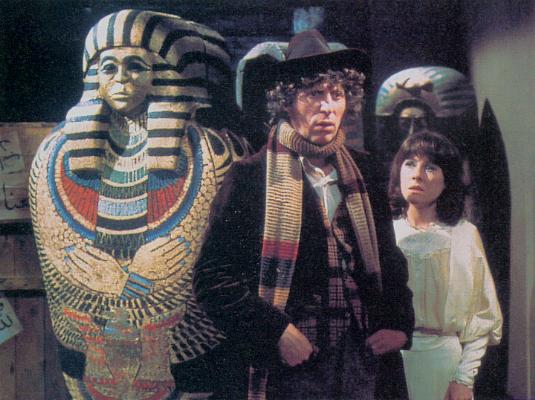

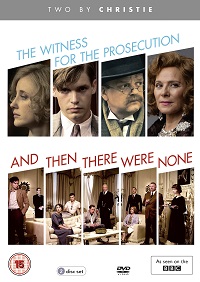
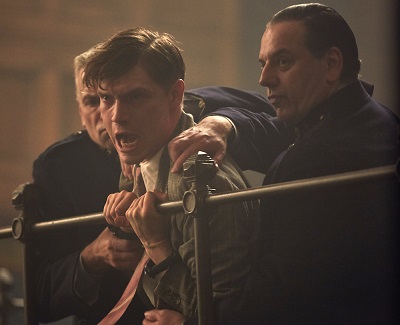
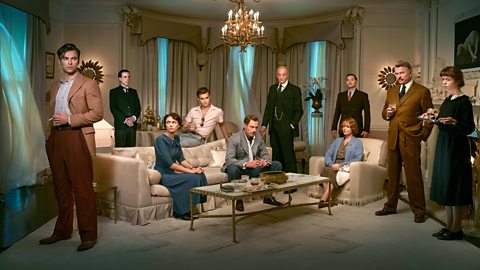

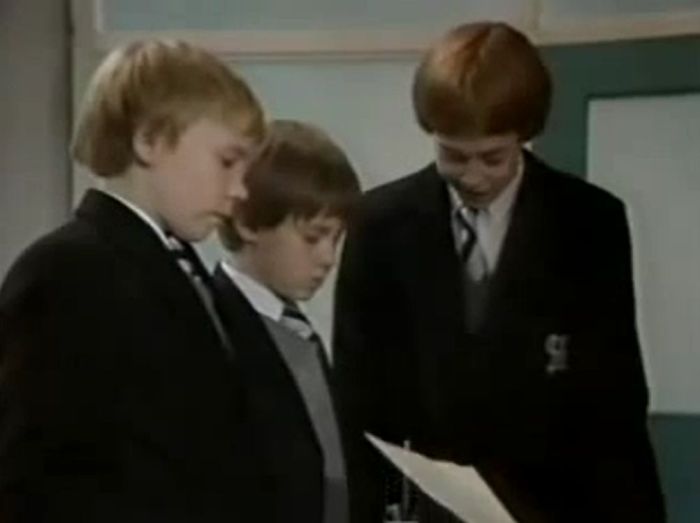
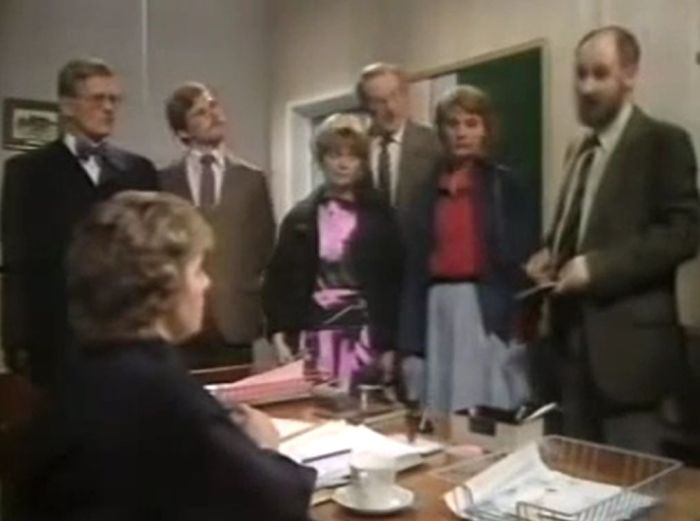

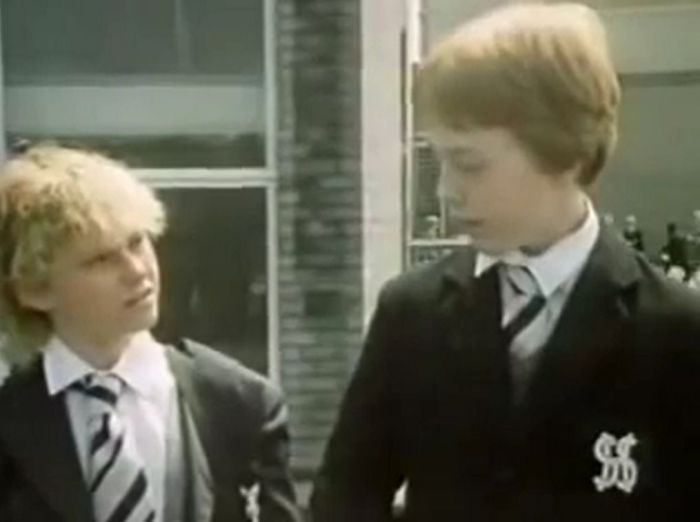
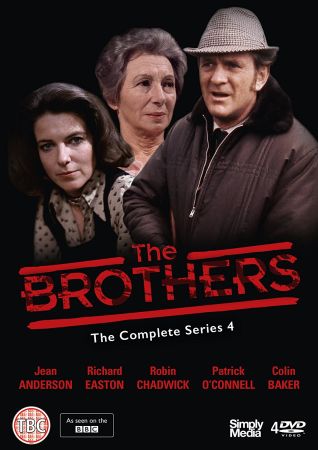
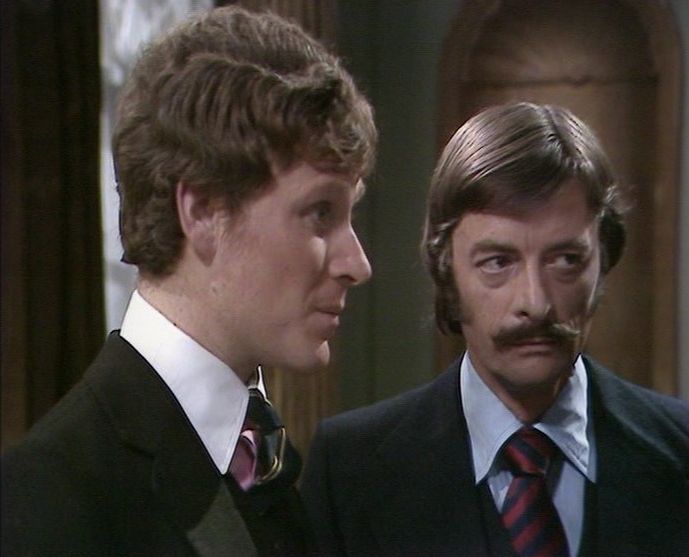
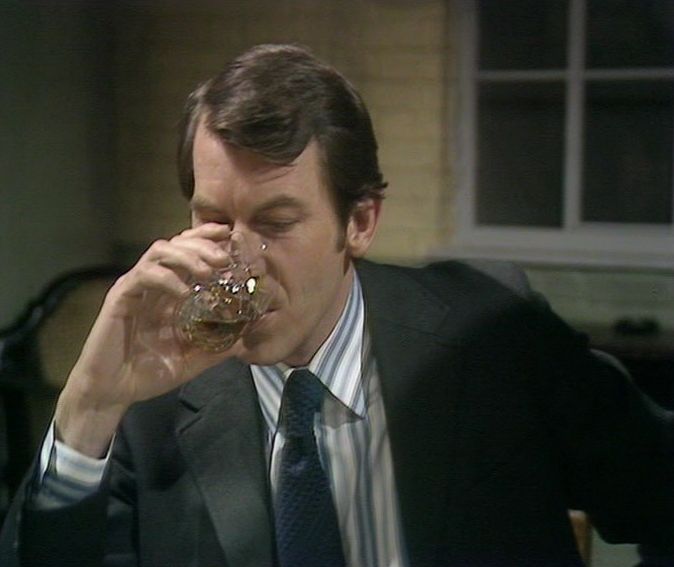

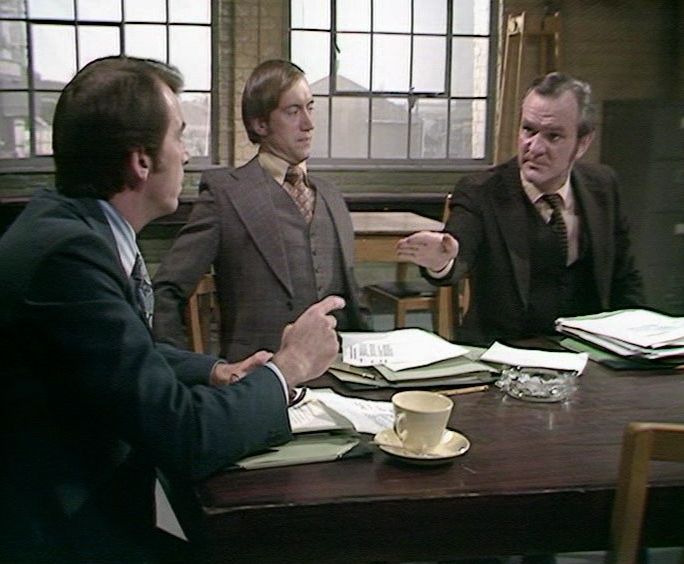


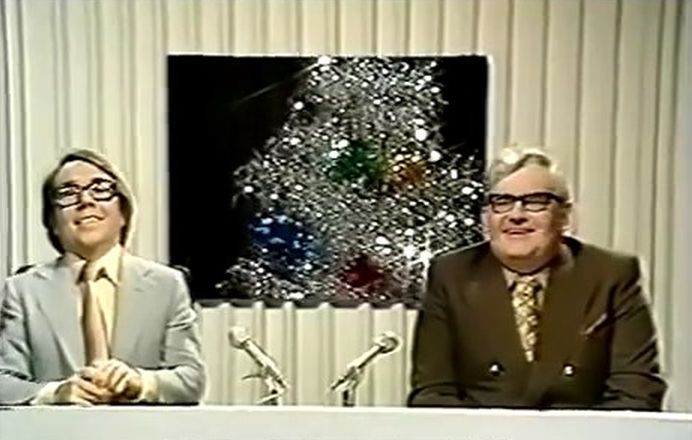


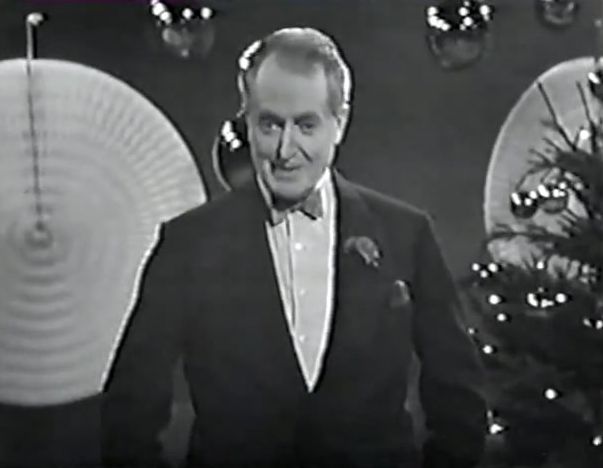


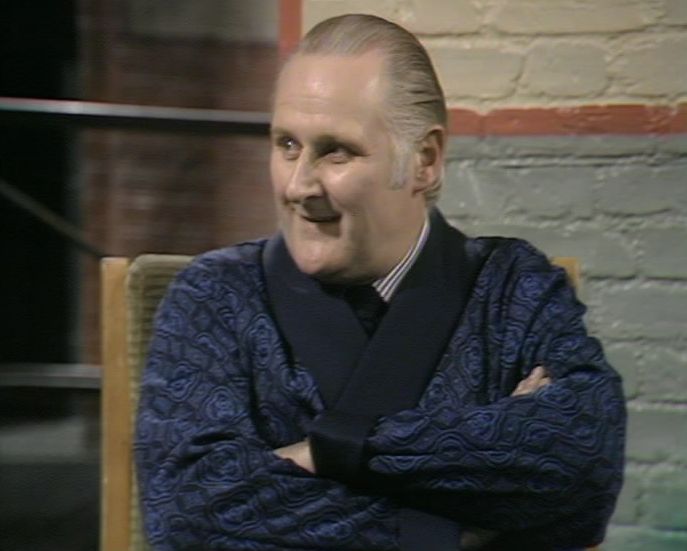
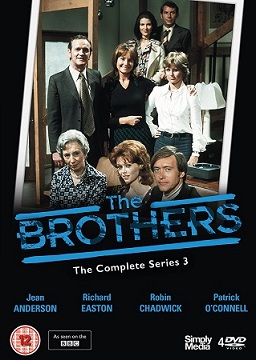
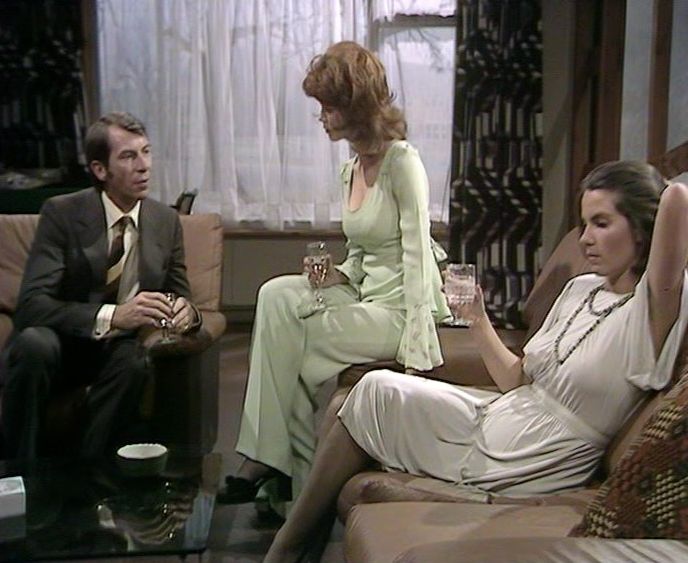


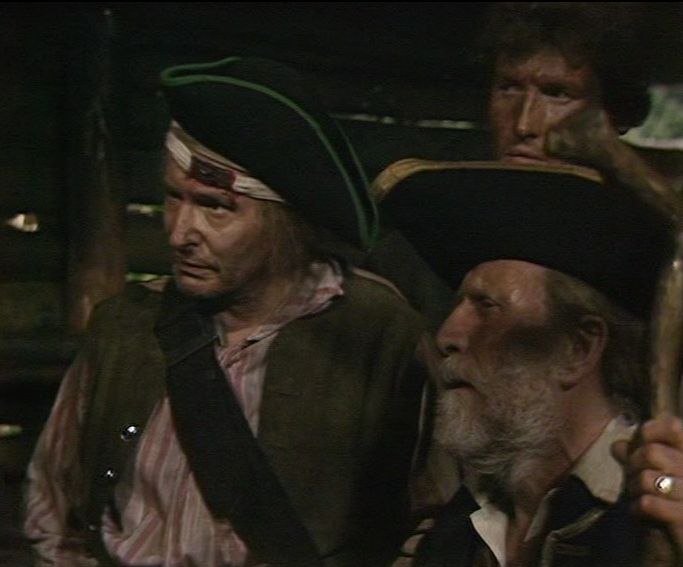
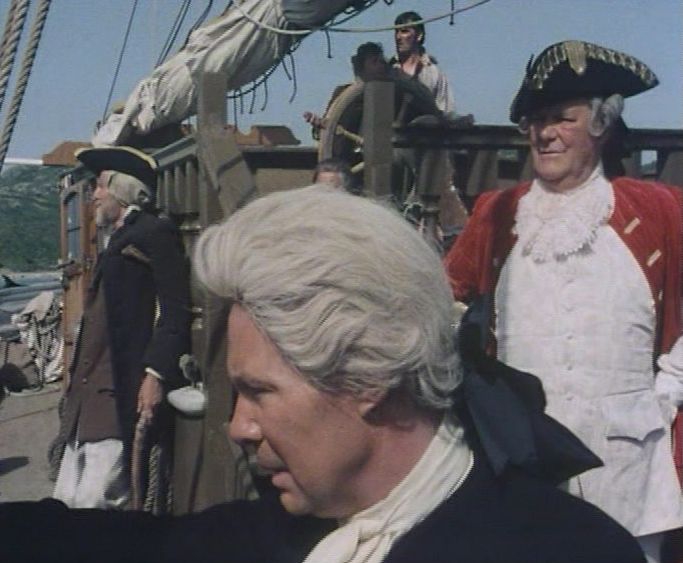
 Archive Television Musings