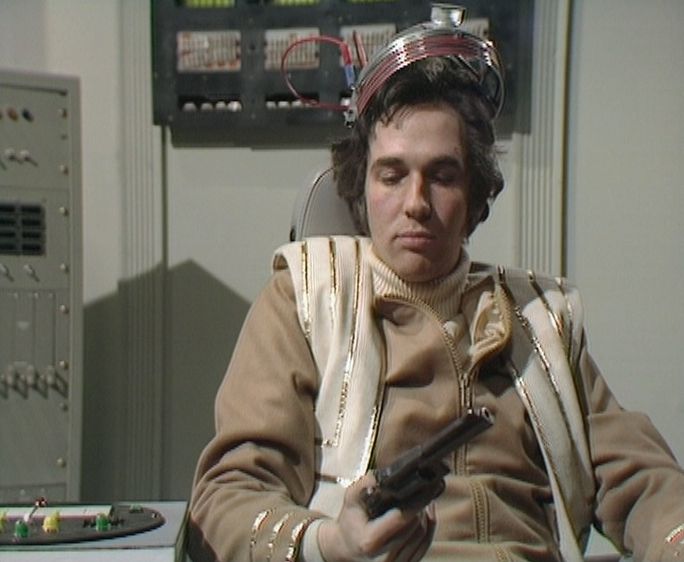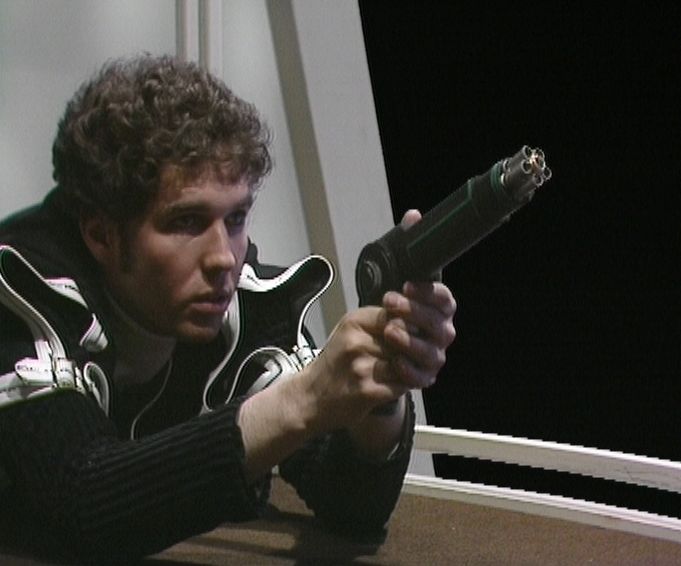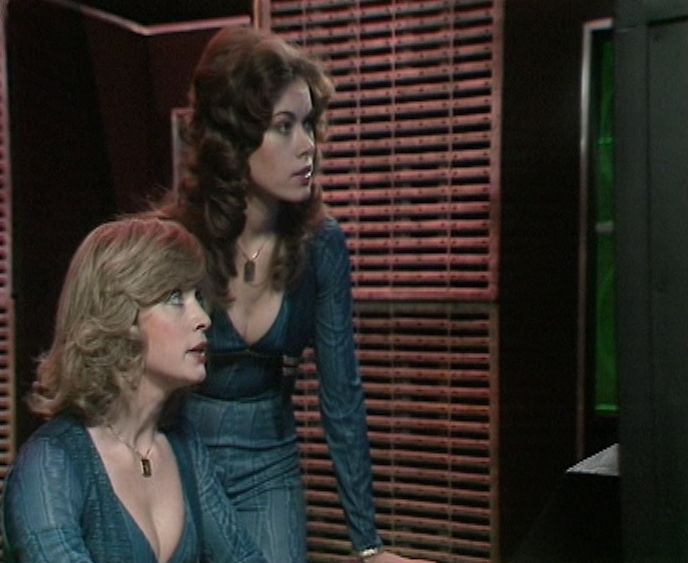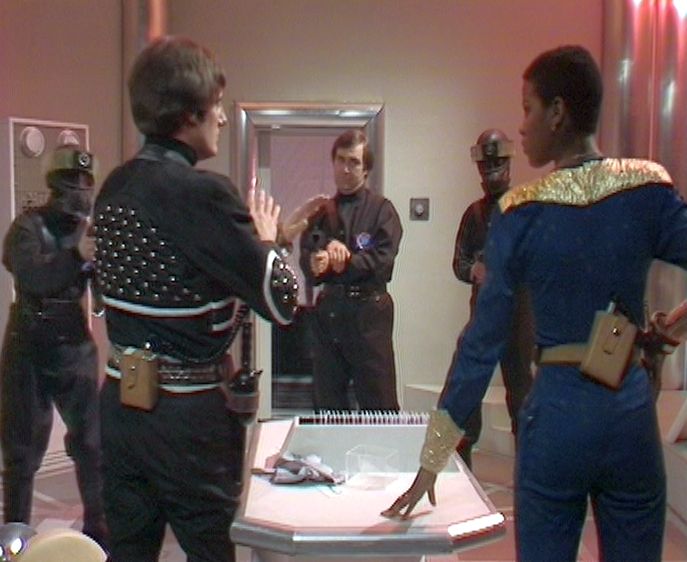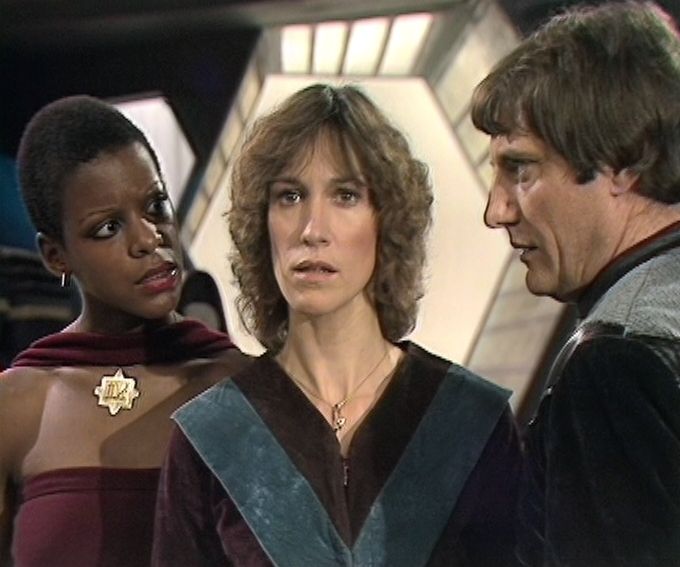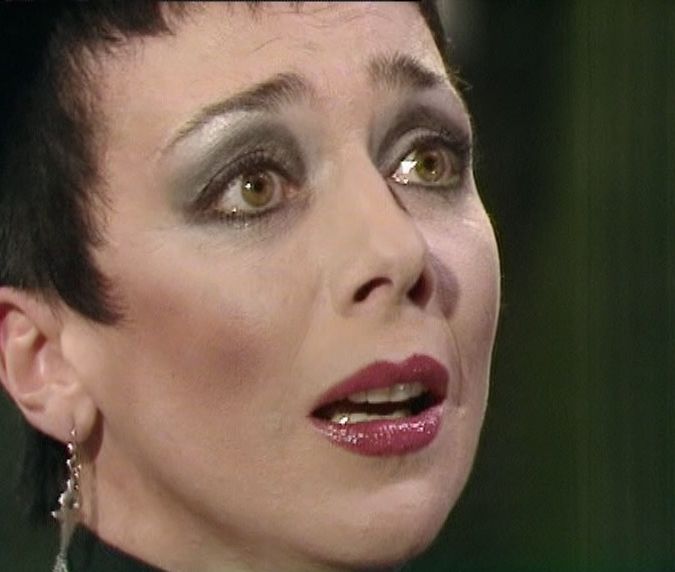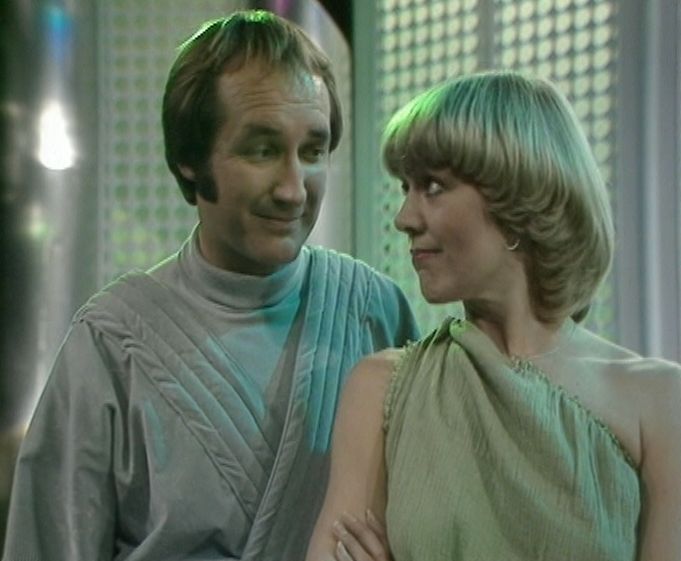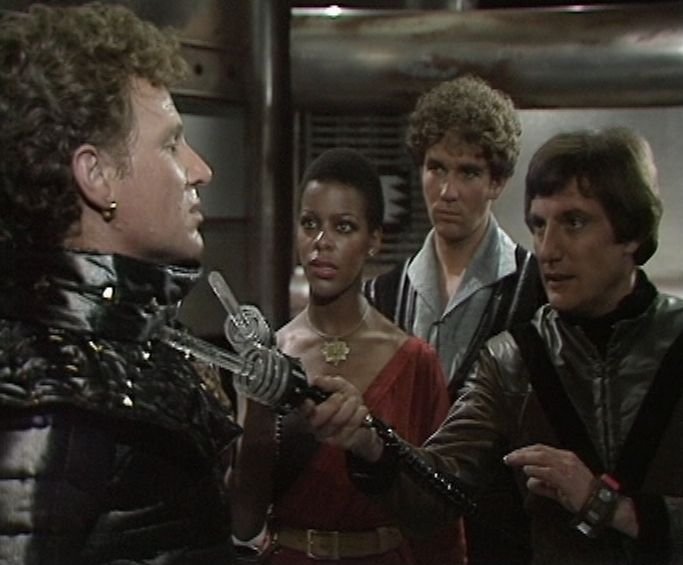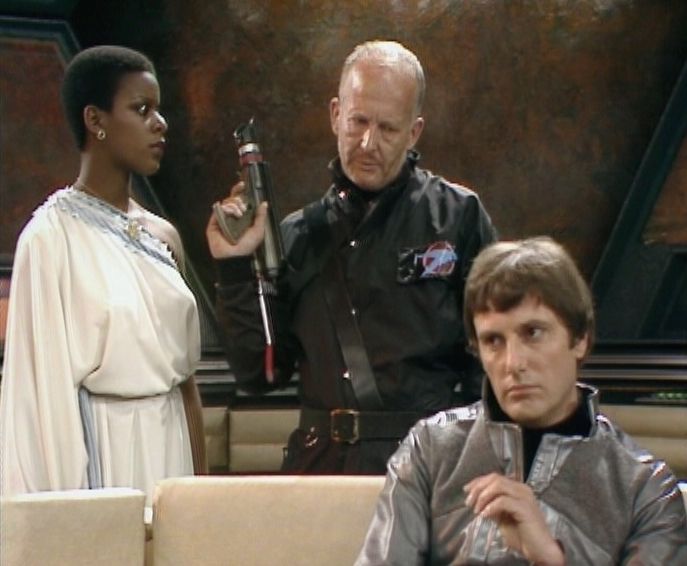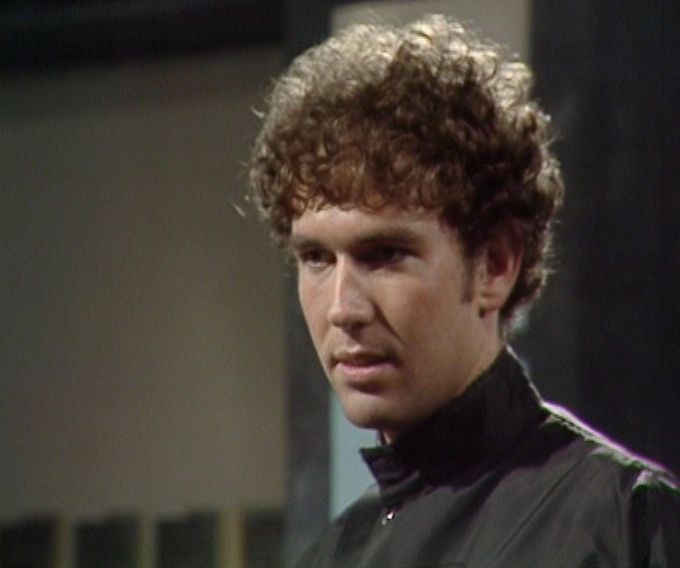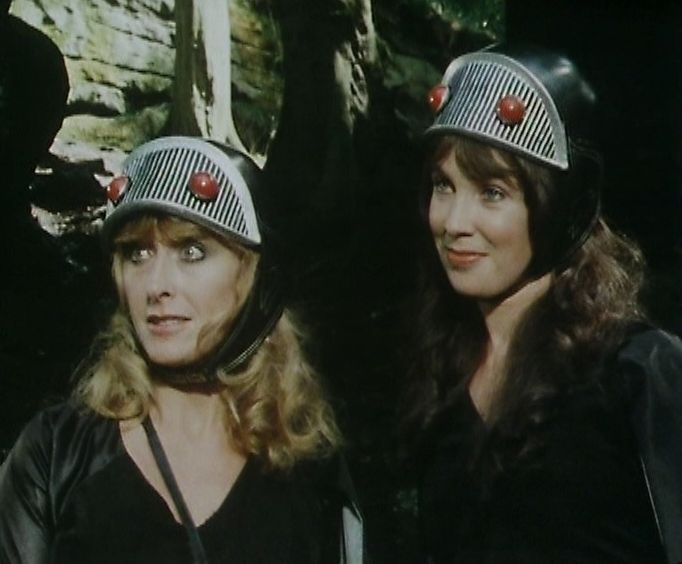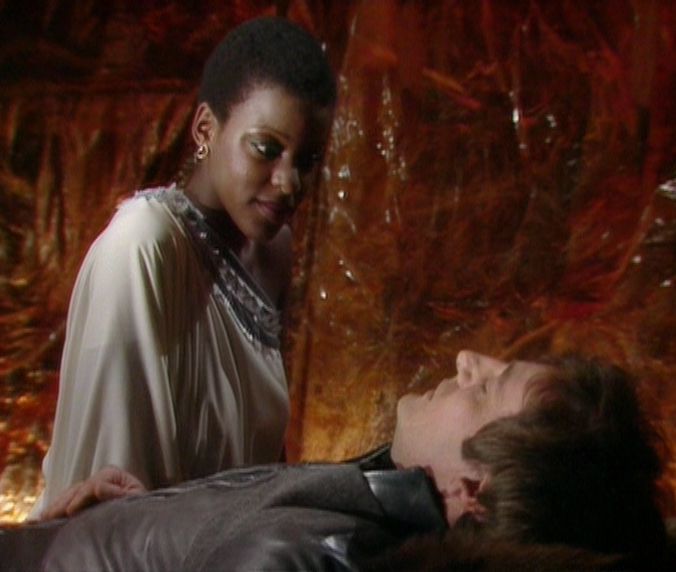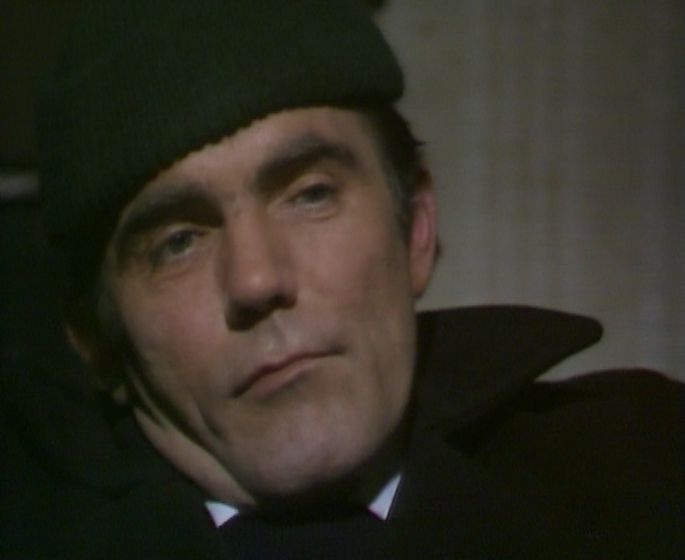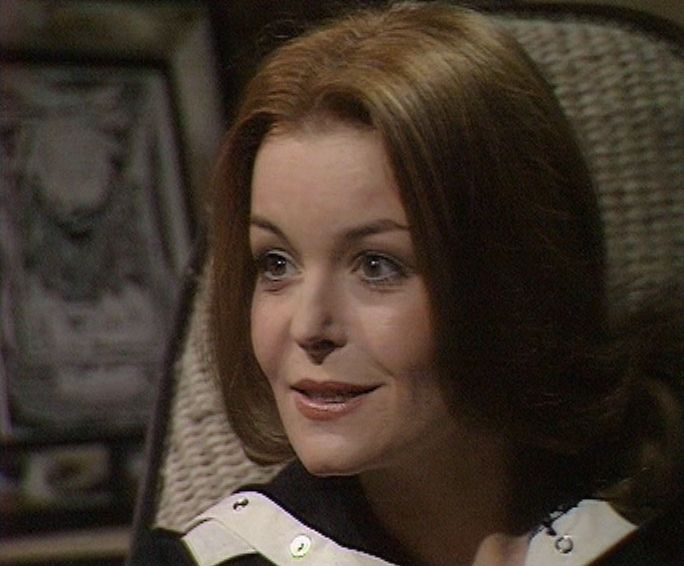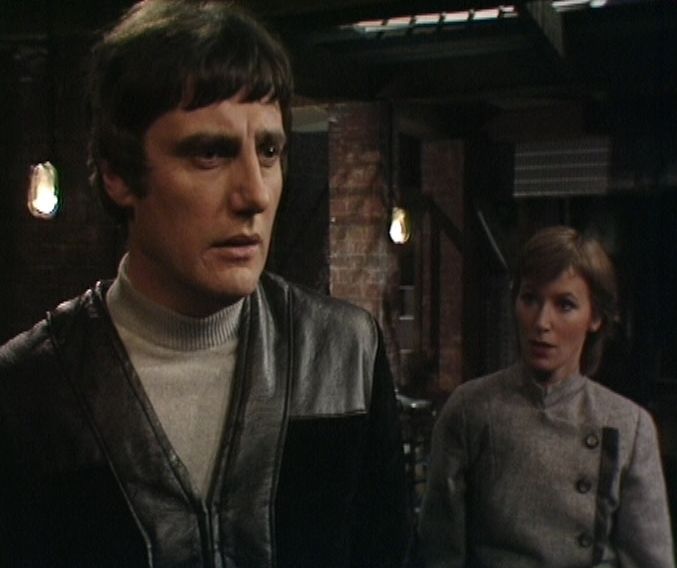
Grange Hill. Series Five – Episode Two

grange hill s05e02

Written by Alan Janes. Tx 8th January 1982

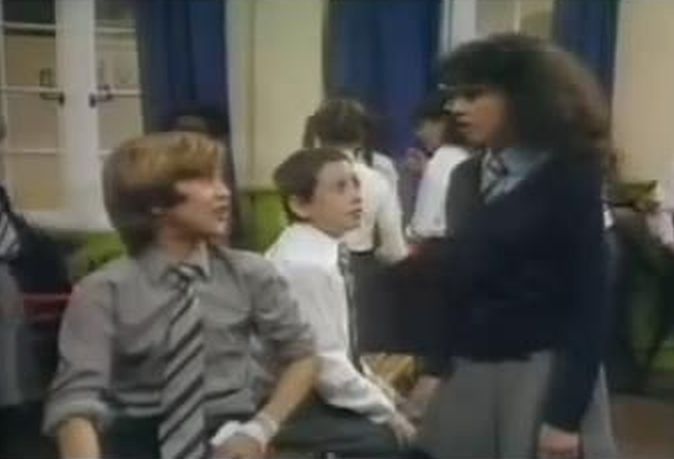
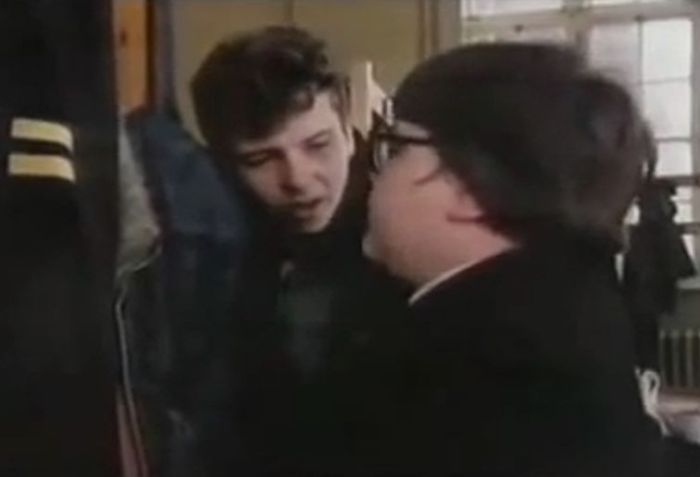
Gripper and Denny continue to extort money from Roland, but he’s far from their only victim.  Jonah and Zammo are also targeted and both (reluctantly) pay up.  Jonah doesn’t seem too bothered – ten pence a week seems a small price to pay for not getting your head kicked in – but Zammo sees the bigger picture.  If they give in now then Gripper will always be there and his demands will only increase.  Zammo briefly considers taking Gripper on, but quickly admits that it wouldn’t be an equal fight.  Neither seems to consider that if they find Gripper’s other victims there would be safety in numbers.

This episode provides us a good opportunity to stop and examine how proactive the school was at dealing with Gripper.  Jonah and Zammo tell Mr Hopwood about Gripper’s demands for money, but he seems initially disinterested – as it’ll be their word against his how can anything be proved?  However he does decide to ask Gripper to turn out his pockets – and finds a considerable amount of change – which does back up the boy’s story.  Hopwood warns Gripper to cease his actions (threatening him with physical violence in a way that wasn’t unfamiliar in the early series of Grange Hill) but that’s as far as he goes.  Surely experience would have told him that Gripper wouldn’t give up that easily?

Roland’s experiences are even more interesting.  He’s skipped school several times (in order to avoid Gripper) and most disturbingly of all deliberately cuts his hand with a chisel in woodwork.  He hopes to be sent home and is clearly upset to be told that the nurse will be able to deal with it by putting on a plaster.  Whilst this foreshadows the more extreme measures he’ll take later in the series to escape Gripper, it should have sent alarm bells ringing amongst the staff.  Mrs McClusky does want the boy to see an educational psychologist, but it’s plain that they consider the problem is purely down to Roland’s attitude.  Even after he’s told them that he’s been systematically bullied they don’t seem interested in finding out if his story was true.  Is it that they simply believe he’s making up tales to explain his bad behaviour?

Elsewhere, there’s light relief as Annette attempts to gain revenge on Jonah by throwing a stink-bomb at him.  She indirectly does him a good turn – he and Zammo were being threatened by Gripper at the time and the smell is enough to drive the older boy off.  Leaving us with the immortal line from Jonah.  “Cor Gripper, you’ve done something in your trousers”!

Grange Hill. Series Five – Episode One

grange hill s05e01

Written by Alan Janes. Tx 5th January 1982

Series Five opens with what I take to be a deliberate nod back to the very first episode as the camera tracks through the corridors of the eerily quiet school.  Before the pupils arrive it’s a haven of peace and quiet – although it’s no surprise that the silence doesn’t last for long.

Five new arrivals will be the focus of their year during series five (their classmates will also feature, but not to the same extent).  Jonah Jones (Lee Sparke) and Zammo McGuire (Lee Macdonald) are clearly cast from the same mould as Tucker Jenkins and his friends.   Jonah and Zammo are scamps and tearaways who can’t help but get into trouble – but since they lack malice the audience is invited to identify and side with them.

Annette Firman (Nadia Chambers) and Fay Lucas (Alison Bettles) bear more than a passing resemblance to Trisha and Cathy (and also Suzanne and Claire).  Annette is the rebel (like Trisha/Suzanne) whilst Fay is the more sensible one (like Cathy and Claire).  Although in later years Fay will go slightly off the rails as Cathy and Claire did.

Possibly the most significant of the new arrivals is Roland Browning (Erkan Mustafa).  Roland is friendless, overweight and becomes an instant target for Gripper and his new henchman Denny Rees (Julian Griffiths).  Gripper is a larger and more physically imposing figure from the youngster we saw in series four and it doesn’t take long before he makes poor Roland’s life a misery.  Because Roland is an isolated figure, he has no-one to turn to and his anguish only comes to an end towards the end of the series when he’s hospitalised following an accident with a car.  This is a very disturbing moment as it’s strongly inferred that he deliberately stepped out in front of it.

It’s certainly a far cry from the previous attempts by the series to show the effects of bullying.  Judy Preston was targeted by a gang of older girls during series one, but everything was neatly wrapped up in the space of a single episode.  For Roland there’s no quick solutions and the fact that the storyline was developed over a run of episodes is a sign that Grange Hill was becoming more confident to unfold longer storylines which wouldn’t have an immediate payoff (no doubt happy that the audience would stick with them).

GCE (Gripper’s Cash Enterprise) provides him and Denny with a nice little earner.  Roland is their latest victim and they force him to hand over twenty pence every Monday.  Gripper’s warning to Roland not to squeal is bleak in the extreme.  “You talk to anyone and I’ll put you in a wheelchair.”

The initial meeting between Jonah and Annette isn’t a promising one.  The girls beat the boys to the desk at the back of the classroom and Jonah isn’t prepared to take this lying down – although when Annette pushes him off his chair that’s exactly what happens!  As he lies sprawled on the ground this gives the camera the opportunity to view Miss Mooney’s attractive ankles and she decides the best place for him is right at the front.  Zammo wonders if his friend is going to take such an insult without attempting reprisals, whilst Jonah counters that there wasn’t anything he could do at the time.  Zammo’s solution – punch her on the jaw – is direct and has more than an echo of similar early encounters between Tucker and Trisha.  He was always promising her a knuckle sandwich but – as here – the threats were never followed through.

Jonah’s stink bomb helps to clear their classroom and earns the class the immediate disapproval of Mrs McClusky.  But he manages some form of redemption when he uses another of his stink bombs to force Roland out of the toilets (he’s locked himself in and refuses to come out).  It’s certainly more effective than Mr Thomson’s efforts.  Mr Hopwood had called the caretaker in – no doubt in the hope that he’d be able to lever the door off his hinges – but Thomson’s only response was to bang on it!  It’s a lovely comedy moment played to perfection by the always reliable Timothy Bateson.

Grange Hill – 1981 Christmas Special

xmas 81-01

Written by Phil Redmond, from a storyline by Paul Manning
Tx 28th December 1981

Although the 1981 Grange Hill Christmas Special isn’t quite the last hurrah for the class of 78, it’s close.  One of the surprising features about series five (which would begin transmission a week later, in January 1982) is just how marginalised Tucker and co are.  One episode does feature them strongly but otherwise the likes of Tucker, Alan, Benny and Justin only make one-off appearances (and when they do it’s so they can interact with the younger pupils – the focus is always on the new arrivals).

Tucker’s Luck, which began in 1983, would provide an afterlife for Tucker, Alan and Tommy, but the rest of the original cast just fade away over the course of the coming year.  This is in complete contrast to later eras, when the series became increasingly anxious to hang onto their regulars (by the 1990’s it was common for pupils to stay at the school for seven series – as the concept of the upper sixth form had been introduced).

But in a way it’s not hard to understand why this happened. The viewership of Grange Hill would tend it renew itself every five years or so, as older viewers moved on to be replaced by younger ones.  Therefore the new audience needed to have younger characters who they could identify with – hence the class of 82.

Returning to the 1981 Christmas Special, the storyline was written by Paul Manning (as part of a Blue Peter competition) and was developed into a script by Phil Redmond (how much of Manning’s story remained is an interesting one to ponder).  It opens with a bleary eyed Tucker telling Alan and Tommy that his brother has a job at an electrical wholesalers, which means he can bring home videotapes during the evening – as long as they get returned early the next day nobody’s any the wiser.  Titles such as Saturday Night Fever and Alien (“the X version?”) help to instantly date the episode to the very start of the video boom.  The novelty of being able to watch a film on demand, which meant you weren’t tied to the television schedule, is something that might be taken for granted now, but was a totally new concept then.

Grange Hill didn’t often do Christmas Specials, or episodes set at Christmas, so this one is something of a novelty.  There’s no snow, but various characters spend a lot of time shivering and rubbing their hands together, which creates a wintry atmosphere (but knowing how programmes tend to be recorded in advance it wouldn’t surprise me had this been recorded the previous summer!)  The school assembly scene is quite interesting – it’s shot very tightly which suggests that the number of pupils used were quite small.  The main news to come out of the assembly is that there will be an end of term disco, which the long-suffering Mr Sutcliffe is persuaded to organise.

Tucker’s delighted, as he spies a chance to make some money, and he persuades Mr Sutcliffe to let him organise it.  You’d have thought Mr Sutcliffe would know better by now, but there’s evidence that he’s somewhat under the weather (a running gag has various characters – Tucker, Mrs McClusky, Miss Mooney – pointing out how pale he looks).

Trisha and Cathy go shopping for clothes.  Trisha’s not mellowed over the years – she’s irritated at being dragged around numerous shops by Cathy who’s desperate to find just the right thing to wear for the disco.  Trisha’s determined not to make an effort, knowing that it’ll just be “the same old spotty faces making the same old spotty jokes.”

They’re both sporting new hairstyles, but the most remarkable transformation is that of Susi, who’s certainly changed since the end of series four.  If it hadn’t been for the voice, I probably wouldn’t have recognised her at first.  She’s still an item with Alan, although when he leaves school to go on the dole in Tucker’s Luck she brings their relationship to an end (which also means they didn’t have to contract her for the new series, which was a little bit of a shame).

Another thing which helps to date the episode is the admission price of 75p, which includes one drink and one sausage or one cracker.  Bargain!  Tucker’s state of the art disco equipment – complete with flashing lights – has been borrowed from his brother and it’s made very clear that should anything happen to it then Tucker’s life expectancy will be very short.

Some Brookdale ruffians attempt to steal the cashbox, which Mr Baxter rather unwisely left in Justin’s care, bad choice!  After Tucker manages to duff them up and stop them, they then decide to take the disco equipment.  It’s slightly odd that they could just walk out with this bulky equipment and nobody in the hall thought to raise the alarm, but there you go.  Needless to say, Tucker and the others are on hand to once again dispense some rough justice.  Remarkably, Doyle teams up with Tucker to beat off the Brookdale infiltrators.  Doyle only has a few brief scenes, but it’s a nice touch that his final Grange Hill appearance sees him on the right side for once.

This episode didn’t feature in the repeat run of the 1990’s (probably because of music clearance issues).  Some of the top artists of the era are featured – Madness, Ultravox, the Police, Squeeze, Cliff Richard (!).  Thanks to YouTube though (as for virtually every episode from series five onwards) it remains in circulation.

Blakes 7 – Terminal

terminal 01.jpg

As is probably well known, Terminal was due to be B7‘s final episode, but the show was granted a last-minute reprieve by BBC bigwigs who had apparently enjoyed the series so much they asked for an announcement to be broadcast over Terminal‘s end credits stating that the series would return.  Which came as something of a surprise to the cast and crew.

Having said that, it’s easy to see that Terry Nation crafted the script in such a way as to make a fourth series eminently possible.  Terminal ends with Blake and Servalan apparently dead (although both make a miraculous comeback in S4) and the Liberator destroyed (which doesn’t) but everyone else is alive and kicking.  But even if it’s not the final end it’s still an ominous, unsettling installment.  Paul Darrow’s performance (as well as the very brief return of Gareth Thomas) are the undoubted highlights and help to paper over some of the more glaring plot holes.

The main talking point has to be Avon’s bizarre behaviour. Terminal seems to look ahead to the increasingly paranoid man who’d lead the others through a number of misadventures during series four, losing just as often as winning.  If Rumours of Death started to chip away at his air of invulnerability (by revealing that he was never as close to defrauding the Federation’s banking systems as he’d previously thought) then Terminal is another nail in his coffin.  His obsession to find Blake has several consequences, the most serious is that it loses them the Liberator.  Enroute to their destination Zen detects unidentified matter in their path – he recommends going around it (“the consensus of computer systems favour a course deviation to avoid contact. In this environment, it is prudent to treat any unexplained phenomenon as potentially dangerous”) but Avon is adamant – there will be no course deviation.

Why?  It wouldn’t have cost them a great deal of time and would have been the prudent course of action.  And Avon’s always been prudent – never willing to risk either his life or that of the Liberator unnecessarily.  It’s tempting to think that Servalan’s operating a similar mental suggestion on Avon that we saw Blake suffer from in Voice from the Past.  That would also explain his burning desire to find Blake, which also seems very out of character – he spent two years trying to get rid of him!

There is the possibility that Avon is motivated to find Blake purely because of the get-rich plan that Blake was offering, although that doesn’t really hold water either – surely Avon has the ability to create his own get-rich plans if that’s what he wants?  And the Liberator is supposed to carry untold wealth anyway.

But for all the slight niggles about his motivation, the brief meeting between Avon and Blake is still magical.  It may last only a minute or so but it’s a reminder that as good as Darrow’s been during S3, he’s not had an equal – like Thomas – to measure himself against.

BLAKE: Well, you certainly took your time finding me.
AVON: There didn’t seem to be any hurry. Anyway, I always said I could manage very well without you.
BLAKE: It must have been so dull having no one to argue with.
AVON: Well, now, there were times when your simple-minded certainties might have been refreshing.
BLAKE: Careful, Avon. Your sentiment is showing.

Before teleporting down to the planet (an artificial satellite called Terminal) Avon makes it quite clear to the others exactly how he feels about them. “I don’t need any of you. I needed the Liberator to bring me here so I had no choice but to bring you along, but this is as far as you go. I don’t want you with me. I don’t want you following me. Understand this: anyone who does follow me, I’ll kill them.”  Not very friendly.

The obvious irony is that he does need them and despite the way he’s treated them they won’t just abandon him.  It’s all done in a typically understated way – no loud declarations of friendship and loyalty – but it’s there all the same.  Later, Avon explains to Servalan that he decided to do everything on his own as he felt it could be a trap – although she wonders if it had more to do with his desire not to share Blake’s mysterious treasure with them.  He smiles, but doesn’t deny it (this is a nice moment, as it offers several  different motivations for Avon’s actions).

Of course it all turned out to be a dream – Blake was never on Terminal and his image was created in Avon’s mind by some clever people working for Servalan.  This is yet another of her hopelessly over complicated schemes to capture the Liberator (in one way it’s a good thing this’ll be the last time she’ll have to do this).

If Servalan’s once again rather surplus to requirements, there’s two moments when she earns her money.  The first is when she tells Avon that Blake’s dead.  She appears to be quite emotional – was this Pearce’s choice or as scripted, I wonder?  And was it meant to imply Servalan’s sorrow at the death of a worthy enemy or (even though this seems unlikely) was she emphasising with the fact that the news would have upset Avon?

No prizes for guessing that the second is “Maximum Power!” as she finally gets command of the Liberator.  But by now it’s a very sick ship as the cloud of unidentified matter has caused irreparable damage .  It’s more than a little odd that neither Servalan or her underlings twig that something’s wrong – the whole ship’s covered with big gloopy blotches for goodness sake!

Her apparent death is an interesting moment – I wonder if they ever intended to keep her dead when S4 was being mooted.  Probably not, as she was such a powerful character, but her overuse during S3 had been a problem and a fresh adversary could have been what the series needed.

Is it wrong that I find the death of Zen to be more upsetting than the death of Gan?  Zen’s final words (“I have failed you. I am sorry”) always raises a sniffle and the slow disintegration of the Liberator is also mildly upsetting.

No story is ever perfect and the links (small men in monkey suits) help to keep this proud record going.  But apart from them, and a bit of a mid-episode sag, there’s not much wrong with Terminal (if you can accept Avon’s odd behaviour).

As they watch the Liberator disintegrate, Avon and the others face an uncertain future ….

terminal 02

Blakes 7 – Death-Watch

death 01

Anybody watching Death-Watch for the first time would probably wonder why Tarrant’s aboard the United Planets passenger liner Teal Star and why he’s wearing a very bad wig.  But this isn’t Del Tarrant, it’s his older brother Deeta (who could be Del’s twin).  Exactly how they can be so alike when Deeta’s several years older is anyone’s guess – but it’s the future, so things are obviously different there.

The opening moments contain quite a substantial info dump  – we’re told about Blood Feuds and an outbreak of war between the Vandor Confederacy and the United Planets of Teal – but this helps to quickly set the parameters of the episode, as does Deeta’s skill with a gun.  He’s First Champion of the United Planets of Teal, which makes him a valid target now that Vandor and Teal have declared war.  Deeta quickly deals with one assassin (whenever you see Stuart Fell you know there’s going to be some action) and then takes out another – Karla (Katherine Iddon).  Both these swift attacks help to emphasise how skilled a killer he is.

How does the Liberator crew get involved?  In a slightly contrived way, but it just about works.  Vila hears about the war between Teal and Vandor and he’s instantly excited (“break out the booze, girls. It’s fiesta time”).  It takes Tarrant to fill in some of the blanks.  Whenever Teal and Vandor declare war they both pick a champion to stand as a surrogate for their armies.  These two men meet in single combat to decide which side wins and which loses.  Cally’s not impressed, although Tarrant does his best to convince her.  “Look, two men fight for the honor of independent planetary systems of maybe twenty million people each. It’s hardly crude.”

According to Vila this means substantial festivities on the planet where the combat ground is situated.  But it shouldn’t come as any surprise to learn that B7‘s budget wouldn’t run to this – so no sooner do Vila and the others teleport down then they teleport back up, with Vila complaining that everything’s closed!  It’s possible that this wasn’t just budget-related though, as there are some sly satirical digs peppered throughout Chris Boucher’s script.  As the Liberator crew watch the viscast on the flight deck, there’s a suitably portentous voice-over (which even mentions “space, the final frontier”).  The V-O serves two purposes – it helps to explain exactly what will happen, but once it finishes we’re given a peep behind the scenes as a somewhat camp director flatters the V-O man that his speech “was your usual delicate mixture of enthusiasm and dignified cliche.”

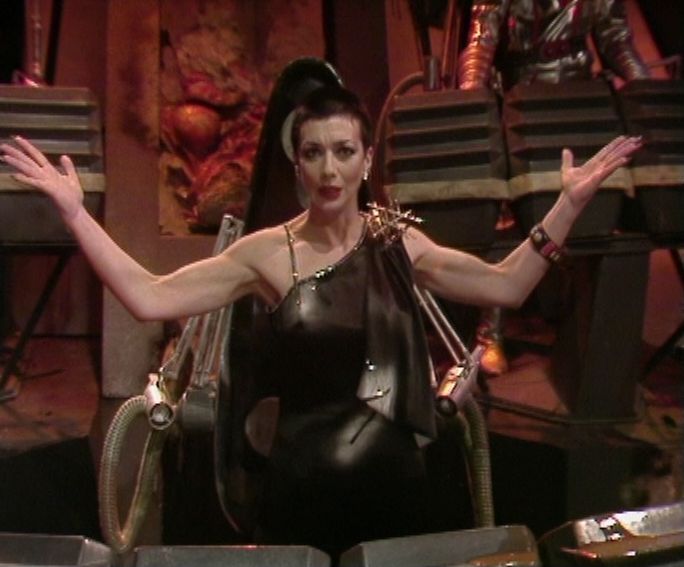
Servalan’s about, and acting as a neutral arbiter.  She doesn’t really do much though and this is definitely one story where she could have been excised without too much trouble.  However she does share one classic scene with Avon – where you could cut the sexual tension with a cricket stump.  Avon’s not got the most flattering costume – it’s the bulky shoulder pads which are the most distracting part – but he still manages to snarl and grab another snog from Servalan with aplomb.

Once he’s done that, he too heads back to the Liberator and settles down with the others to watch the action.  Rather charmingly they’ve got a decent selection of drinks and snacks to enjoy whilst they tune in to see Tarrant’s brother fight to the death.

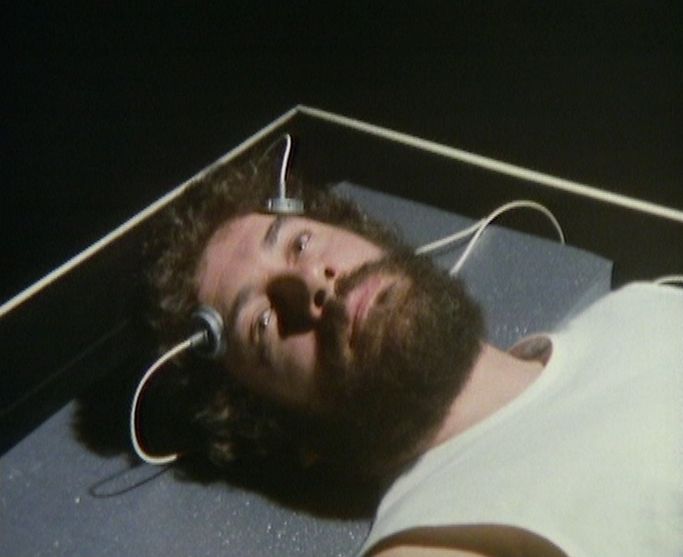
Although it’s fair to say that there’s nothing too original about any part of Boucher’s script, it’s interesting that some of the concepts (which would have been science fiction then) are closer to reality now.  Everybody has the option to feel exactly what one of the two champions feels, via the sensor net.  Deeta’s second, Max (Stewart Bevan) explains.  “Both men have had microsensors implanted in the brain. These are connected to a conductive mesh which is actually etched into the bone of the skull. When this mesh gets charged up it becomes a sort of transmitter.  You put it on your forehead. It’s activated through the optic nerves. Close your eyes and it feeds the signal directly into the brain, open them and it cuts out.  You can see what Deeta sees and feel a lot of what he feels, physically and emotionally.”  Our Virtual Reality isn’t quite there yet, but maybe one day ….

Once Deeta and Vinni (Mark Elliott) enter the killing ground, the camera often acts as their “eyes” allowing us to view the area as they would see it.  In this way it anticipated generations of first-person shooter computer games.  This choice of shot is used most effectively just after Vinni has fatally wounded Deeta – we see Vinni stand over the stricken Deeta and watch as he aims his gun directly at his opponent (i.e. the camera) to deliver the killing blow.

Whilst Deeta was hardly given any screentime to be developed as a rounded character, there were a few nice touches – such as the fact that he felt fear (so he wasn’t simply a mindless killer).  Stephen Pacey does do a good job to portray his pain at his brother’s death, although as is the way with B7 there’s no time to reflect – unfinished business has to be attended to.

Vinni’s an android and looks to be Servalan’s handiwork,  She has plenty of incentive for ensuring that Vandor and Teal go to war for real (the Federation would be handily placed to pick up the pieces and subdue the survivors).  Under the rules of Blood Feud Tarrant is able to challenge Vini and it’s probably not too hard to guess what happens next.

Most memorable part of the episode must be the silver combat suits that both Deeta and Vinni wear.  Remember this was 1980 not 1973, so quite why costume designer Nicholas Rocker decided to create something that Alvin Stardust could have worn is anyone’s guess.  Wembley Exhibition Halls and Southhall Gasworks make an excellent venue for the Deeta/Vinni battle (and should be familiar from numerous other television shows of the time).  I’d forgotten that Stewart Bevan was in this one, but then he wasn’t talking about mushrooms and didn’t have a Welsh accent, so that’s fair enough.

Death-Watch is a good opportunity for Stephen Pacey and it’s a decent sci-concept, well produced.

death 02

Blakes 7 – Moloch

moloch 01

Ah Moloch.  The one with Sabina Franklyn and the stupidest puppet alien you’re ever likely to see.  It’s odd, but apart from those two facts I couldn’t remember anything else about the story prior to rewatching it.  That’s surprising, since parts of the episode are certainly memorable (although not for the right reasons).

Avon’s been following Servalan’s ship for the best part of a month.  Quite why he’s suddenly taken such an interest in her movements isn’t clear, although it seems to be simply because he’s got nothing better to do.  In a way that sums up the actions of the Liberator crew during series three – a little light piracy here, some strange sci-fi adventures there, but as the Federation’s no longer the dominant menace it was you do get the sense they’re just marking time.

At the moment Vila’s taken over from Tarrant as the most annoying crewmember – no mean feat when you consider how irritating Tarrant can be.  Vila spends the first scene moaning about the time they’ve wasted following Servalan (although since nobody pays him any attention he needn’t have bothered).  If Michael Keating’s not best served by the start of the script then you have to give him full credit for throwing in a little bit of business as the Liberator looks set for a crash landing.  Most actors would just stagger from side to side as the camera shakes, but Keating gives us a forward roll.  Well done that man!

The planet, which turns out to be called Sardos, is initially depicted by a painting of some cliffs (with a little bit of smoke wafting across the screen).  Clearly the budget had run out by this point, although they did manage to build one model set – showing Servalan’s docked ship – which looks quite effective.

As it’s a Ben Stead script (writer, lest we forget, of Harvest of Kairos) it should come as no surprise that there’s more than a whiff of misogyny in the air.  Poola (Debbie Blythe), Chesil (Sabina Franklyn) and the other women are depicted as little more than toys for the men to play with.  After Poola spots the Liberator on a monitor screen she chooses not to report it, which incurs the wrath of Section Leader Grose (John Hartley).  The unseen Moloch (voiced by Deep Roy) tells him that she must suffer and orders that she’s given to his men.  Poola then receives a slap (albeit offscreen) although nothing else happens for the moment since Servalan then enters the room.  Poola pleads with her for mercy – which the former Supreme Commander naturally ignores – and Servalan then sums up the state of affairs on Sardos rather succinctly.  “Well, Section Leader, the records were accurate. Women, food, and inflicting pain – in no particular order.”  This is jaw-dropping stuff.

Grose is, well, gross.  As he enjoys a meal with Servalan and his second in command Lector (Mark Sheridan) he suggests that the attractive young waitress (no surprise that all the women are young and attractive) would look better with a “bit of dressing, and an apple between her teeth, eh?”  He then slaps her on the backside just to drive the point home.  Whether Ben Steed is satirising unreconstructed male attitudes to women or whether he’s approving of them is a moot point.

Vila and Tarrant reach Sardos by a circuitous route.  They teleport onto a T-16 space transporter carrying a cargo of convicts and, as they make planetfall, Vila makes a new friend – Doran (Davyd Harris).  Although he’s not quite the loveable rogue he appears.  “Ahh, my problem was always women” he tells Vila.  When Vila then asks if he likes them, Doran replies with a monosyllabic “no”.  He’ll fit right in on Sardos then.

Things then lurch in an even more unexpected direction as Grose reveals to Servalan the secret of his power – an energy mass transmuter which “takes ordinary planetary matter – usually rock – and converts it into energy.  The computer then restructures it into matter of every kind.”  That Servalan finds herself completely outmanoeuvred by Grose does stretch credibility, although he does tell her that “if your reconstituted Federation was worth a light, you wouldn’t have chased halfway across the galaxy to retrieve one legion. Already I suspect my fleet outnumbers yours. Soon, it’ll be the most powerful in the galaxy.”  It’s an interesting point, although this doesn’t quite tally with the impression given in previous stories that the Federation was slowly regaining its power.

As we head into the last twenty minutes, things get funnier and funnier (although not always intentionally).  Servalan is introduced to Colonel Astrid, Grose’s former commander.  It’s difficult to find the words to describe the Colonel, but imagine a tatty doll suspended in water and you’ll get the idea.  Moloch’s voice then pipes up and suggests that Servalan be given to Grose’s men.  That seems to be all that Moloch does – recommend that misbehaving women be passed over to the men to be sorted out.  Hmm, probably best to say nothing more.

Grose has been recruiting convicts like Doran to swell his ranks and Vila (his new best friend) has also been pressed into service.  Doran tells Vila that he has a treat for him – a woman.  That it turns out to be Servalan is an amusing reveal, as is the fact that they decide to briefly team up.  Since Michael Keating and Jacqueline Pearce had rarely shared any screentime together, their odd-couple partnership is the undoubted highlight of the episode.  A pity it couldn’t have lasted longer than a few minutes.

And then Moloch appears.  “That is how I reasoned you would look” says Avon, incredibly.  Mercifully he’s only onscreen for a brief moment although there’s also the spectacle of dead Moloch a few minutes later, which is even sillier than animated puppet Moloch.

Apart from all its other problems, the passivity of the female characters is a major negative.  If at least one of them turned out to be a fighter and had helped to defeat Grose and his men that would have made some amends for the way they were treated.  Chesil seems to be written that way – but right at the end she and Doran appear to be killed off.  It’s never explicitly stated that they’re dead, but since we never see them again it’s a reasonable assumption.

Moloch is just bizarre.  There’s the germ of a good idea – Servalan being held captive by a rogue section of the military – but the rest veers from the forgettable to the hilarious.

moloch 02

Blakes 7 – Ultraworld

ultra 01

The contrast between Sarcophagus and Ultraworld is immense – in one fell swoop we move from the sublime to the ridiculous.  It’s interesting that both writers (Tanith Lee previously, Trevor Hoyle here) were novelists with no previous scriptwriting experience (and Ultraworld turned out to be Hoyle’s only work for television).  The difference between their stories couldn’t be greater though – Lee offered up a lyrical fantasy whilst Hoyle’s effort is little more than a pulp-sf runaround.

This wasn’t Hoyle’s first brush with the series as he’d penned two novelisations based on episodes from series one and would follow this up with a third novelisation adapted from selected series four episodes.  If you’ve never read them then they’re worth tracking down, especially the first one, since it looks like it was adapted from Nation’s draft scripts (there are numerous small differences).

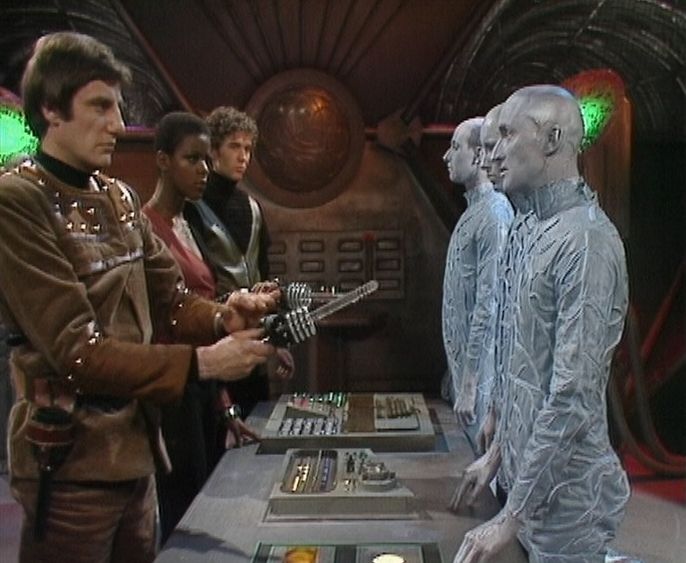
Ultraworld is an artificial world run by the three Ultras – who are blue-skinned aliens of varying baldness.  One looks to be completely bald, one is wearing a rather ill-fitting bald cap whilst the third clearly didn’t get the memo as he proudly sports hair at the sides and back.  So if the intention was to make them into a gestalt entity, someone wasn’t on the same page.  The Ultras are humourless, logical and, no surprise, not great conversationalists.

They exist to gather information (Ultraworld is nothing more than a massive computer) and it’ll come as no shock to learn that the Ultras plan to drain Avon and the others of all their knowledge and then take the Liberator for good measure.

There’s the odd nice moment.  Cally disappears from the Liberator and the others hear her crying for help from Ultraworld.  But it’s not her voice – it’s an artificial construct and this revelation is a disturbing reveal.  The location filming (at the Camden Town Deep Level Shelter) is impressive.  Previously used for the Doctor Who story The Sunmakers, it once again effectively doubles as a strange, alien environment.

But on the debit side, what has happened to Vila?  He spends the episode attempting to teach Orac jokes.  I think once example will suffice. “Where do space pilots leave their ships? At parking meteors.”  Alas, there’s many more where that came from, so it shouldn’t come as any surprise that this was rumoured to be Michael Keating’s least favourite episode (the proactive hero from City at the Edge of the World seems a long time ago).  It’s worth noting that Vila’s jokes do play an important part in the conclusion of the story, but that doesn’t make me any more disposed to enjoy them.

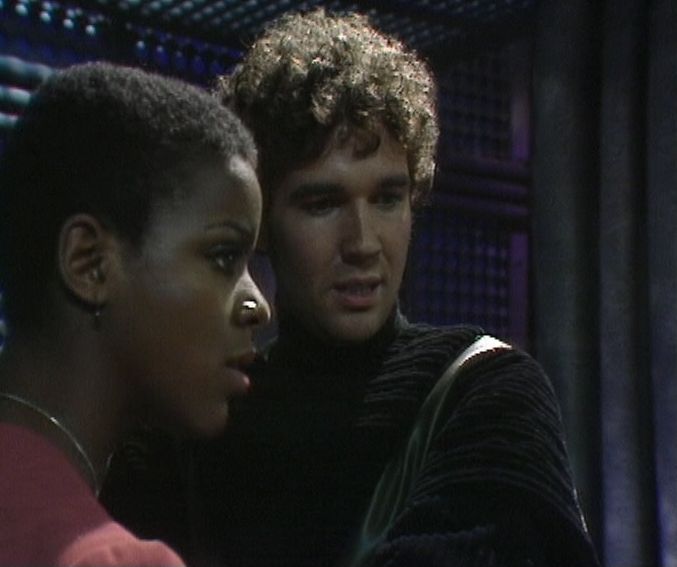
With Vila acting the fool and Cally and Avon sidelined, it falls to Dayna and Tarrant to carry the brunt of the action.  Although it’s not the greatest story ever, they make an attractive pair (and for once Tarrant isn’t particularly annoying).  They have to suffer the oddest part of the episode though, as the Ultras suddenly realise that Danya and Tarrant are girl/boy and decide that a bonding ceremony is in order.  It beggars belief that whilst they’ve accumulated masses of knowledge they know nothing of the ways of, ahem, human love.  So they’re keen for Danya and Tarrant to get it on, whilst they watch (yes, really!)  They do dangle a carrot – hinting they might let them go if they agree.

DAYNA: Tarrant, I think we should accept the offer. Then we can return to the Liberator.
TARRANT: You can’t be serious. You don’t believe what they say.
DAYNA: We have to believe if we hope to survive. Kiss me.
TARRANT: What?
DAYNA: I said, kiss me. Come on. I can’t be all that repulsive

It’s hard to take any of this seriously, especially when one of the Ultras pops up on the screen, asking “has the bonding ceremony begun?”, as soon as they start kissing – which rather puts a damper on things.

Complete with a giant pulsating brain, Ultraworld is pretty stupid sci-fi schlock, but it’s impossible not to derive some entertainment from it.  I’m glad it was more the exception than the norm though.

ultra 02

Blakes 7 – Sarcophagus

sarc 01

Tanith Lee was a prolific novelist whose output covered many genres, including fantasy (both children’s and adult), science fiction, horror and historical fiction.  Her two Blakes 7 scripts were her only ventures into television scriptwriting so it’s obvious that Chris Boucher took something of a chance when he commissioned her (writing a novel and writing a script are two very different disciplines).

We have to be grateful that Boucher did take the risk as Sarcophagus is unlike any previous Blakes 7 script.  If you favour the action/adventure model of B7 then this one may not be to your taste – it’s a fantasy tale that includes a musical interlude and a dialogue-free opening scene featuring hooded characters performing strange acts.  Although some of the plot elements are familiar – the Liberator spies a strange craft drifting in space/Cally gets taken over – Lee is able to take this hackneyed material and fashion something quite different from the norm.

Sarcophagus opens with a funeral aboard an alien vessel.  Various masked characters perform different rituals – we see a musician, a soldier, a conjurer, etc – and later we see the Liberator crew dressed in the same garb, performing the same actions.  The mysterious alien who takes over Cally’s body later reveals that she enjoys being attended to by intelligent minions, so it would appear that she is visualising how each of the crew would best serve her.  No surprise that Vila is the jester or that Tarrant is the soldier (shoot first, think later seems to be his motto in this story).  Unexpectedly, Dayna turns out to be musical (there’s a brief song mid-way through the episode, although this isn’t Blakes 7’s – The Musical, you may be glad to hear).

Since most of the action takes place aboard the Liberator and the only speaking roles are taken by the regulars, the script is a dense, dialogue heavy affair which has plenty of time to study how the various characters interact with each other.  The relationship between Avon and Cally is key to the story and early on there’s a revealing moment in Cally’s cabin.  She’s spent the last ten hours alone, thinking of her home planet and how she’ll never see it again.

AVON: I wish I could promise you that the sparkling company on the flight deck would take you out of yourself.
CALLY: I’m all right.
AVON: No, you’re not. But you will be. Regret is part of being alive. But keep it a small part.
CALLY: As you do?
AVON: Demonstrably.

Coming so soon after the events of Rumours of Death, it’s possible to argue that Avon’s referring not only to Cally, but also to himself.  Either way, it’s a quiet, reflective moment that’s handled well by Darrow and Chappell.

The most fun to be had comes from the clashes between Avon and Tarrant.  Tarrant’s still being irritating and obnoxious – although he’s correct when he surmises that something came back with Cally from the alien vessel.  It’s his bull-in-a-china-shop approach that wins him few admirers though.

AVON: Shut up, Tarrant.
TARRANT: Did you say something to me?
AVON: I said, shut up. I apologise for not realising you are deaf.
TARRANT: There’s something else you don’t realise. I don’t take any orders from you.
AVON: Well, now that’s a great pity, considering that your own ideas are so limited.

Darrow’s at his laconic best here, and it’s clear that Avon considers Tarrant to be no threat to his dominance at all (despite Tarrant’s claims to the contrary).

As the alien draws power from the Liberatordirector Fiona Cumming elects to turn the lights down.  This not only indicates that the ship is stricken, but it helps to increase the tension – which is furthered by the fact that both Orac and Zen are put out of commission.  There’s something particularly disturbing about hearing Zen’s speech get slower and slower (he’s such a solid, reassuring presence that it’s jarring when he’s no longer there).

If the flashbacks (or flashforwards, maybe) of the Liberator crew dressed in strange costumes are odd, then even odder is Vila’s decision to do some conjuring tricks, mid episode, on the flight deck.  It’s reasonable to assume that he decides to amuse himself in order to keep his spirits up (he’s alone and frightened of the increasing darkness) but after each trick there’s a massive round of applause.  Do we suppose that this non-diegetic sound was only heard in Vila’s head?  It’s only a throwaway moment but it’s another unusual, non-realistic touch.

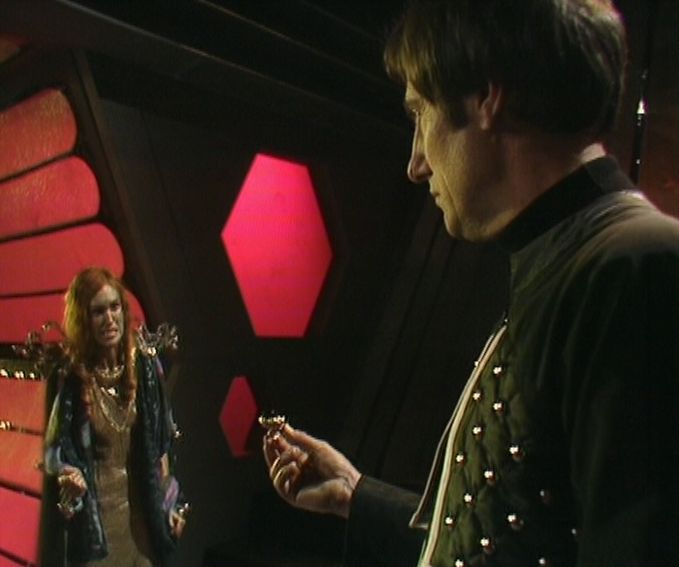
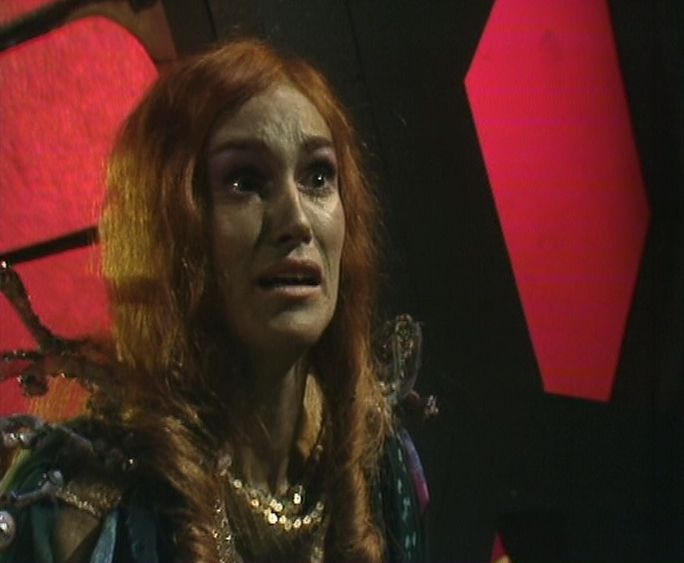
The alien who takes over Cally remains an indistinct character.  We learn that for her race, death is merely an interim state and that she requires Cally’s body in order to attain corporeal form once again.  She proves to be no match for Avon though – or rather it’s the part of her that’s still Cally who can’t bring herself to harm him.  Unexpectedly he kisses her, although all becomes clear when he uses this as an excuse to wrench a ring from her finger.  It’s the ring that’s allowed her to drain energy from Cally and when it’s removed, her power is broken.  Darrow’s excellent again here as he refuses her entreaties to return it (“That would be a little foolish, when I just went to so much trouble to get it”) as is Chappell, as the alien senses her end is nigh.

Avon! Avon, give it back to me. You must. You don’t know. I HAVE to keep this body. I have to live. I’ve waited so long. Centuries. More time than you could comprehend. How can you imagine what it must be like to be dead, to exist in nothingness, in nowhere. Blind, deaf, dumb, and yet to be sentient, aware, waiting. Centuries of waiting. I have to find my world again, my people, my home. I want to breathe and see and feel. And know. Don’t send me back into the dark, Avon, let me live.

With a dual role for Jan Chappell, this is very much her episode but it’s equally a good vehicle for Paul Darrow.  After a shaky few episodes early on, series three has hit a rich vein of form.

sarc 02

Blakes 7 – Rumours of Death

rumours 01

Rumours of Death features Blake 7‘s most effective cold opening.  Avon is a prisoner of the Federation and he’s in a pretty bad way.  Unshaven and in pain, he’s been a captive for five days and during that time he’s proven to be rather uncooperative.  He’s visited in his cell by the Federation’s top torturer, Shrinker (John Bryans) who is determined to get the truth out of him – one way or another.

Set-wise, this opening section is simply staged.  Avon’s cell is bare and we never venture any further into the Federation detention block.  But the illusion that Avon isn’t the only prisoner is effectively created by the off-camera screams of another poor unfortunate.  And as Shrinker brandishes a laser probe it seems likely that Avon will also be screaming soon.  Director Fiona Cumming chooses to keep the camera angle in this scene quite low – with Avon seated on the bed and Shrinker standing over him it helps to create the impression of the Federation man’s dominance.  A simple trick (like the off-camera screams) but nonetheless effective.

The attentive viewer wouldn’t have been fooled by Avon’s plight for too long.  It now becomes clear why he mentioned Shrinker in the previous episode (he’d told the rest of the crew that Shrinker was the key to understanding why Anna Grant, the woman he loved, died).  So when Shrinker appears here it’s clear that Avon’s plan is in full swing.  That he was prepared to withstand days of torture (it’s never explicitly stated what happened to him, but it clearly wasn’t pleasant) in order to lure Shrinker to his cell speaks volumes.  Whether for good or bad is debatable though.  Avon’s always been a driven, single-minded character, but the events of this episode seem to clearly indicate his future, tragic path – the loss of the Liberator, his inability to ever trust again and the cataclysmic events on Gauda Prime.

When Tarrant and Dayna teleport into the cell and take Avon and Shrinker back to the Liberator it’s remarkable how quickly Shrinker devolves into a whimpering, pathetic character.  The cliche that he was only a man who followed orders is aired, but there’s a faint sense of unreality about his total collapse.  Yes, it’s reasonable to assume that such a man would be powerless when stripped of his authority, but it might have played better had he kept a faint air of defiance.

The reactions of Tarrant, Dayna and Vila are noteworthy.  They surround the cowering Shrinker and goad him, causing a disgusted Cally to snap at them.  That Shrinker’s a mass-murderer is unquestionable and Tarrant tells her that he’s nothing more than an animal.  “Yes, and it’s contagious, isn’t it?” responds Cally.  With series three of Blakes 7 having largely abandoned the freedom fighter/terrorist attacks of the first two series, this brief exchange taps into some of the more interesting character moments from previous stories like Star One.  Shrinker is a monster, but if they behave like him can they claim to be any better?

Whilst this part of the plot is bubbling along nicely, we jump to Earth.  Sula (Lorna Helibron) and Chesku (Peter Clay) are two high-ranking officials in the Federation (and are also married).  Chesku is clearly a man with a great regard for his own oratorical skills and gives his wife a demonstration of part of a speech he plans to deliver later.  “The rabble which sought to challenge the established order lacked our inspiration, our unity, our leadership. They are crushed. Earth and the Inner Planets are once again united. Gentlemen, I give you a toast. Our inspiration, our unity, our leader: President Servalan.”

Sula responds that “I’m sure Servalan will be delighted. She is, after all, a tasteless megalomaniac.”  The faintly off-key nature of the episode continues after two Federation troopers turn up and, on Sula’s orders, shoot Chesku dead.  Peter Clay’s death (all flailing arms as he crashes into a bush) isn’t the most impressive, but never mind.  It helps to set up the events for the rest of the episode as it looks as if a palace revolution is taking place.  The power-struggles within the Federation following the war with the aliens is certainly something that could have been developed more during series three.  As it was, Servalan seemed to spend far too much time tussling with Avon and the others instead of attempting to secure her position.

Things get even stranger when Avon starts to question Shrinker.  Avon shows him a picture of Anna Grant, but he claims he doesn’t know her.  “I’ve killed hundreds and remembered them all, all of them, every last whining traitor. And there wasn’t one that died without telling me what I wanted to know. Not one.”  We then flashback to scenes of Anna in bed with Avon.  It’s maybe not immediately clear, but this is the same woman who now calls herself Sula.  In Space Fall we were told that Avon was nearly responsible for the greatest banking fraud in Federation history, but Shrinker now tells him that he was monitored right from the start (he was under the observation of an agent called Bartolomew from Central Security).  It’s another small moment which helps to emphasise that Avon’s not as infallible as he might appear.

Avon leaves Shrinker a prisoner in a cave with no escape and a gun for company.  Avon promised him a way out and this is it (“It’s a better deal than you gave any of your victims”).  With Shrinker’s information, he now decides to set course for Earth to confront Servalan and demand that she reveal the identity of Bartolomew.  This is the weakest part of the script – that Avon would decide to return to Earth seems foolhardy enough but that he chooses to do so on the same day that Anna/Sula decides to take out Servalan is one coincidence too many.

Greenlee (Donald Douglas) and Forres (David Haig) are two career officers who are on security duty at the lavish country house that serves as Servalan’s headquarters.  It seems that Chris Boucher took a leaf out of Robert Holmes’ book as Greenlee and Forres act as detached narrators for the first half of the episode – they help to fill in the blanks of what we’re seeing.  Although unlike most Holmesian double-acts they don’t make it to the end as they’re both mown down by Sula’s men.  The palace revolution is far from bloodless, but it’s comprehensive.

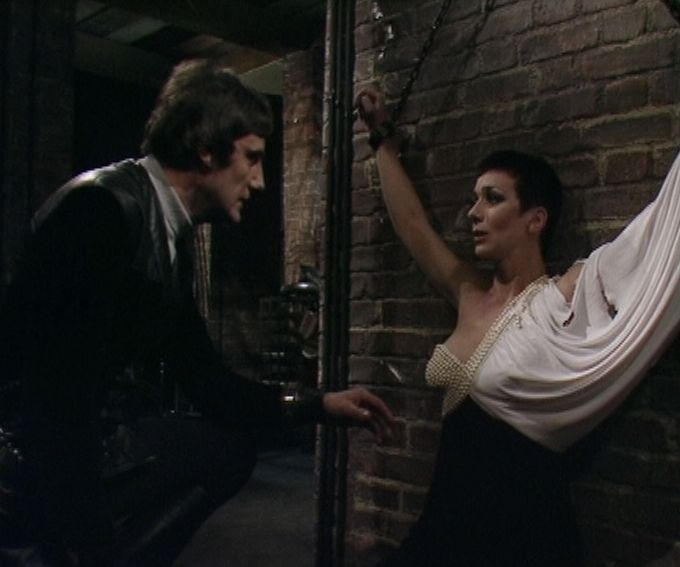
Jacqueline Pearce doesn’t have a great deal of screentime in this episode, but that’s not really a criticism.  Servalan’s been something of an overexposed character (especially during series three to date) so Rumours of Death works well by keeping her as more of a background character.  But her scene with Avon towards the end (she’s chained up in the cellar, helpless) is another key Avon/Servalan meeting that has no doubt launched a thousand fan-fics.

AVON: Is that it? Have you finally lost your nerve?  Have you murdered your way to the wall of an underground room?

SERVALAN: It’s an old wall, Avon, it waits. I hope you don’t die before you reach it.

That Avon is prepared to set Servalan free when Sula and others are close to destroying her power forever is intriguing (it looks as if everything that Blake fought for is within their grasp).  This is open to interpretation though.  Is Sula keen to replace her (as suggested earlier on) or does she really support the notion of a People’s Council?  If it’s the latter, then it’s ironic that Sula has been fighting for the same things that the Liberator crew did for so long.

It’ll come as no surprise that Anna = Sula = Bartolomew or that Avon kills her.  So Anna was a fiction who only existed for Avon.  But Sula’s dying words seem to suggest that she genuinely did love Avon.  But in the hall of mirrors that’s Rumours of Death can we believe her this time?

This is clearly a great vehicle for Paul Darrow, who makes the most of the material. There’s a few niggles (for example, Servalan is taken prisoner rather too easily and if Anna Grant never existed who was the man who claimed to be her brother in the series two episode Countdown?)  but overall this is a classy episode.
rumours 02

Blakes 7 – Children of Auron

auron 01

Servalan’s always been insanely ruthless, but Children of Auron is extreme, even by her standards.  She infects the whole population of Auron with a deadly pathogen to achieve two goals – firstly to capture the Liberator and secondly to continue her bloodline.

She explains why capturing the Liberator remains such a high priory – with the Federation in tatters she’ll be able to take control again quicker with the most powerful ship in the galaxy.  Does this really make sense?  The galaxy’s a big place and the Liberator, powerful though it is, is only one ship.  I can’t see that it would make that much difference (and anyway, it’s not ships she needs but good men).  The fact that she effectively wants to have children (although the technique on Auron is only able to create clones of herself) is even more startling.  Servalan’s never shown any sort of maternal instinct, so this revelation is rather hard to take.

It was perhaps inevitable that we’d return to Cally’s home planet one day and although there isn’t a great deal of time to develop its backstory, we still learn a little.  C.A. One (Ronald Leigh-Hunt) has kept Auron strictly neutral – any contact with outsiders has been discouraged, but the unfortunate result is that the pathogen is able to spread unchecked (few of his people have any sort of resistance to space viruses due to their strict isolationist policy).  It’s a shame that Leigh-Hunt doesn’t essay a subtler performance, as C.A. One ends up as little more than a bluff blusterer.

Cally has an identical twin, Zelda.  Given Auron’s skills in cloning this is reasonable enough (although credibility is stretched later in the series when we meet Tarrant’s identical twin – no cloning involved there).  Zelda isn’t a very proactive figure and doesn’t do a great deal to further the plot (although she has an inevitable and pointless death).  It’s a pity that more couldn’t have been done, as her demise does feel like a wasted opportunity.  Jan Chappell is, of course, excellent as both Cally and Zelda – especially when we see Cally take on Avon.  Avon is keen to head to Earth for a mission of vengeance (sowing the seeds for Rumours of Death).  Even when the plight of the Aurons is known he’s still disinclined to get involved, so there’s a nice tension that exists between them (which pays off later in Sarcophagus).

If Servalan’s going to rebuild the Federation then she needs good men, but alas they seem hard to find.  In Children of Auron she’s lumbered with a right pair – Deral (Rio Fanning) and Ginka (Ric Young).  They spend most of the episode bickering (Ginka’s unhappy that Deral was promoted ahead of him) and generally bumbling about.  Deral is unable to capture the Liberator even when only two of the crew are aboard and one of them is Vila, now back to his default setting of cowardly.

Ginka’s lack of judgement is even more striking.  Avon, Cally and Tarrant are taking refuge in the replication plant – they know they’re safe there, as Servalan wouldn’t destroy her own clones.  But Ginka is able to convince her that Deral switched her genetic material for his, so she gives the order to fire.  As the plant is destroyed Jacqueline Pearce gives one of her finest performances in the series – Servalan clearly feels intense pain as her clones go up in flames.  But Ginka obviously never stopped to think that possibly, just possibly, Servalan wouldn’t be terribly pleased when she discovered that he’d tricked her (as I said, he’s not the sharpest knife in the draw).  So he’s not long for this world (and neither is Deral) which leaves Servalan with yet another staffing crises.  Possibly she’s pining for the good old days with Travis.

If Auron remains a rather undeveloped world and Servalan’s schemes are barmy, that doesn’t stop Children of Auron from being a strong mid series episode.  Sandwiched between City at the Edge of the World and Rumours of Death it probably slightly pales in comparison, but it’s still much stronger than the likes of Volcano and Dawn of the Gods.
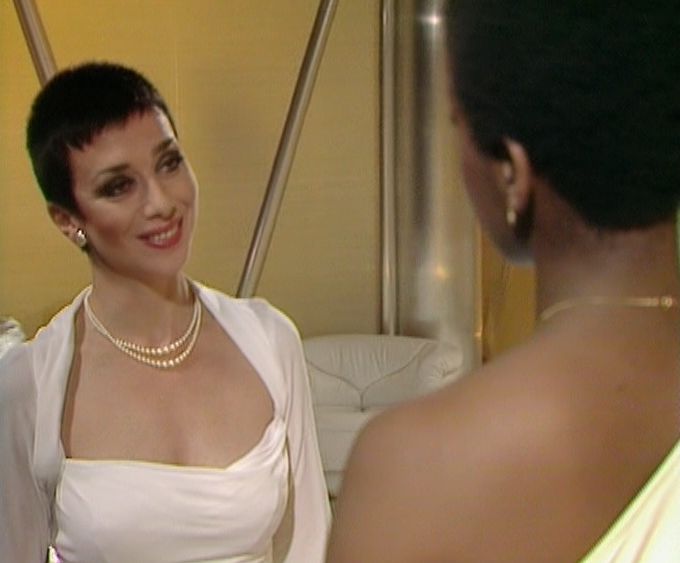
Ten points docked for the final scene though, as everybody has a good laugh on the bridge of the Liberator.  It’s not the first time it’s happened (the crew had a chuckle at the end of Breakdown, seemingly oblivious to the loss of life they’d just witnessed) but again it just feels so out of place.  We’ve just witnessed a planet devastated, so a little show of solemnity wouldn’t have been out of place.  Apart from that, this is decent stuff.

auron 02

Blakes 7 – City at the Edge of the World

city 01

Most of the regulars take centre-stage in at least one series three episode.  Avon features heavily in Aftermath and Rumours of Death, Cally’s the main character in both Children of Auron and Sarcophagus whilst Tarrant (and his identical twin brother) stars in Death-Watch.  Danya is the only one who doesn’t really have an episode of her own, unless you count her introductory tale, Aftermath.
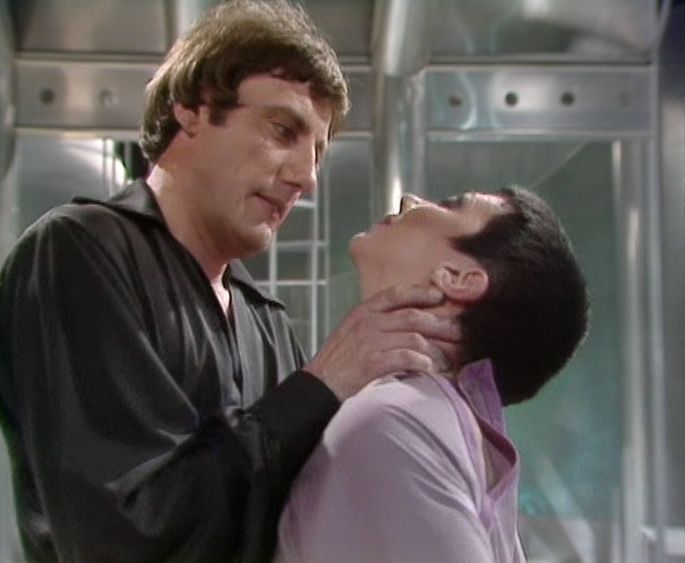
For everybody’s favourite thief, City at the Edge of the World is a chance to see a more proactive and heroic Vila.  Even when the script didn’t really feature him, Michael Keating could always be guaranteed to take whatever material he had and make it work to the best of his ability.  Unlike some actors he didn’t do this by upstaging others – it was simply down to his natural comic timing.  A great example can be found in Powerplay.  Vila, wounded and alone in a strange forest, attempts to frighten off any would-be attackers by pretending to be a whole troop of fighting men!  It’s an old gag – and only a throwaway moment – but Keating’s a delight to watch.

But there’s no doubt that it’s good to see Vila right in the thick of things for once.  Too often he tended to end up as either the butt of other people’s jokes or simply blissed out on adrenaline and soma.  In City at the Edge of the World he’s witty, resourceful and gets the girl.  What more could you ask for?

We open with Tarrant being irritating (yet again).  The Liberator needs crystals for its weaponry systems and he’s struck a deal with the mysterious inhabitants of a nearby planet.  It’s simple enough – the crystals in exchange for Vila’s help.  When Vila disappears and the box of crystals turns out to be a booby-trapped bomb, Tarrant is forced to eat humble pie (not before time!)

Vila’s been brought to the planet by Bayban the Butcher (Colin Baker).  A vision in black, Baker is clearly having a ball (Paul Darrow later repayed the favour by going even further over the top in the Doctor Who story Timelash).  It’s a cartoony performance but it works perfectly in this context.  Following a couple of stories that were played too straight, City bubbles along with an infectious sense of humour and many quotable lines.  This is one of my favourites, courtesy of Bayban who’s peeved to find out that he’s top of the Federation’s Most Wanted list – after Blake.  “What do you mean, ‘after Blake’? I was working my way up that list before he crept out of his creche. WORKING my way up. I didn’t take any political shortcuts.”

Bayban has a crack force of mercenaries, led by Kerril (Carol Hawkins) and Sherm (John J. Carney).  Carney, who’d previously given an excellent comic performance as Bloodaxe in the Doctor Who story The Time Warrior, is just as good here.  He’s got little to do except react to the others – but he does it so well.  Hawkins plays the unlikely love interest (or at least it’s unlikely to begin with).  Their first meeting is memorable – we see Vila cowering at her feet, whilst she mocks him (“little man”).  He then suggests she bathes more regularly (and uses mouthwash too).

The unexpected thaw in their relationship seems to happen after she changes out of her black leathers and into something more feminine.  Possibly Chris Boucher was attempting to make a point here.  She spends the early part of the story attempting to be one of the boys (and acting aggressively) but once she changes clothes she becomes a more passive and submissive character – effectively acting as Vila’s assistant.

To be honest the story isn’t the strongest – a mysterious race seek entry to a new world, but rather carelessly they’ve lost the key to the door.  Only their leader Norl (Valentine Dyall) ever speaks, so they remain rather undeveloped – but then they’re not really the focus here (it’s more of an excuse for Vila to demonstrate his skills and Colin Baker to chew the scenery).  Dyall is compelling though.  He had the sort of voice that instantly commanded attention, so whenever he speaks it’s hard not to listen.

Vila is given a chance to cross over to this new world with Kerril.  It’s a beautiful, unspoiled planet where they could live out their lives in peace.  He declines, and his reason gives an insight into what makes him tick.  “There’s nothing there worth stealing. You know why I neutralize security systems, open safes, and break into vaults? It’s because I can and most people can’t. It’s just that, it’s what makes me, me. Kerril, a thief isn’t what I am, it’s who I am.”

After a couple of average stories, City at the Edge of the World gets us back on track.

city 02

Blakes 7 – The Harvest of Kairos

harvest

The Harvest of Kairos has a feel of a hastily rewritten S2 episode.  Otherwise, how do you explain that Tarrant seems to have become Enemy Number One in Servalan’s eyes?  She spends the opening few minutes musing about what he’s going to do next, whilst her cringing subordinate Dastor (Frank Gatliff) hesitatingly breaks the bad news that there’s dissent among her crew.

Some believe that she’s too afraid to attack Tarrant(!).  Chief amongst the dissenters is a worker from the construction grades, Jarvik (Andrew Burt).  Since he’s clearly designed to be an alpha-male, Burt’s casting is eccentric (to put it mildly).  Burt, the original Joe Sugden from Emmerdale Farm, also has to battle with Ben Stead’s script and his first line to Servalan sets the tone.  “Woman, you’re beautiful” he says, before grasping her for a quick snog.  There’s always the possibility that Stead had his tongue in his cheek, but I’m not so sure (there’s the evidence of his subsequent B7 scripts for example).  The sexual politics are skewered towards the dominance of men, with even Servalan seeming to melt under Jarvik’s winning ways (“But first, there is the question of that degrading and primitive act to which I was subjected in the control room. I should like you to do it again”).

Jarvik also attempts to humanise the very inhuman Servalan.  “When was the last time you felt the warmth of the Earth’s sun on your naked back? Or lifted your face to the heavens, and laughed with the joy of being alive? How long since you wept at the death of a friend?”  It’s a decent enough line and if delivered well it could have some impact (it brings to mind similar comments from Kasabi during Pressure Point) but Burt rather torpedoes it.  He’s a good actor, just hopelessly miscast.

Meanwhile, onboard the Liberator Tarrant is being his usual annoying self.  He intends to steal a cargo of Kairopan (a highly valuable crystal found on the planet Kairos).  Kairos is a dangerous planet, so Tarrant plans to hijack the freighter after it’s left the planet.

As the Liberator comes under attack from Federation ships commanded by Jarvik (he’s been given a chance by the clearly impressed Servalan) Avon is strangely distracted.  Maybe this is as scripted, or possibly Paul Darrow simply wasn’t interested that week.  Avon’s absorbed with a mysterious crystal called sophron – it’s no ordinary rock, as it seems to have a capacity for reasoning that slightly exceeds Orac’s (and many other qualities as well).  No surprises that we never hear of it again, so its only function is to operate as a get out of jail free card.  After Jarvik’s plan to capture the Liberator succeeds, the crew are exiled to the definitely unfriendly Kairos.  Escape seems impossible, until Avon’s magic rock saves the day.

It’s jarring to see Servalan in control of the Liberator (a warm up for the apocalyptic events of Terminal) and once Avon and the others have been exiled to Kairos her victory seems complete.  We then lurch into the next unexpected event – Servalan is so taken with Jarvik that she’s keen to make him co-ruler, but first he has to prove himself.  And how does she decide to test him?  He has to take on Tarrant, man-to-man, and defeat him.  Yes, okay then.

Just when you think you’ve seen everything, up pops the silliest looking giant insect …..

The Harvest of Kairos is dumb fun.  It’s never less than entertaining (if you can stomach all the “ah well, he’s a man” talk) but it doesn’t fit as an early series three episode (had it come towards the end of the third series then Tarrant’s status would have been more credible).  Chris Boucher seems to have taken his eye off the ball, script-editing wise, but luckily he’d also been penning a number of decent stories and the next episode will see a marked upswing in quality.

Blakes 7 – Dawn of the Gods

image

Dawn of the Gods is very, very odd.  Logic and reason seem to take a holiday during this one, beginning with Orac’s bizarre behaviour.  He decides to investigate a nearby black hole, thereby endangering both the Liberator and its crew.  Once they enter the black hole, Cally hears voices in her head as a figure from Auron mythology – the Thaarn – has plans for her.

It would have made more sense for Cally to be drawn to the black hole by the Thaarn’s entreaties (which would have meant that Orac’s suicidal curiosity could have been dispensed with). Possibly this wasn’t done since it would have seemed like too much of a retread of The Web.

But as it stands, getting the Liberator into the black hole feels very contrived, as does the fact that the Thaarn has such an urgent need for Cally. I’ll say one thing for him though, he thinks big. “I’ve been alone with my plans for so long. Cally. Plans to build a new universe, with no one to share them with, until now. The universe, Cally. And the great univeral force that controls the universe, is gravity. The orbit of the planets, the slow turn of the galaxies. I have built a machine that can generate gravity. When it’s complete, it will be powerful enough to move planets, and stars. He who controls gravity, controls everything. We will be rulers of the universe, Cally.”

Exactly what Cally can offer him that no-one else can is never made clear. Presumably it’s telepathy, but you’d assume that someone who’s planning to create a new universe would be able to obtain a telepath from somewhere.

Like The Web, Dawn of the Gods has a bizarre creature, but here it’s unwisely held back until close to the end of the story. Let’s be generous and say that when the Thaarn does pop up he’s something of a disappointment – it certainly torpedoes any lingering credibility that James Follett’s script had.

But even before the Thaarn was revealed in all its glory, things were wobbling. Avon and the others meet several of the Thaarn’s underlings, the Caliph (Sam Dastor) and Groff (Terry Scully). The Caliph seems to have wandered in from a Charles Dickens play, whilst Groff sports a natty eyeshade. It makes a change from the usual sci-fi cliche of silver suits, but the reason for this cosplay isn’t clear. If you’d have told me it was budget related I might have believed you!

Dawn of the Gods does have the air of a low-cost episode, especially since the first half takes place aboard the Liberator. There’s a few decent bits of character interaction though – it’s particularly nice to see Avon, Vila, Cally, Dayna and Orac enjoying a game of Space Monopoly. Yes, even Avon! And Orac gets very peeved when the others become distracted.  It’s notable that the only one not playing is Tarrant (is he sulking by himself?) He’s certainly pretty insufferable, insulting Cally and generally rushing around trying to solve the crisis, but achieving very little.

So we’re currently in a bit of a dip, story-wise. I wonder if the next will be any better?

Blakes 7 – Volcano

volcano 01

Dayna and Tarrant have teleported down to the surface of Obsidian.  It’s a planet that has managed to remain unaligned from the Federation and also emerged unscathed from the recent galactic war.  Tarrant believes the planet would make a good base for them, but their pacifistic leader Hower (Michael Gough) isn’t interested.

Bad news, it’s an Allan Prior script.  Good news, it’s not Animals.  It’s not that much better though as Prior’s dialogue doesn’t exactly sparkle and few of the guest cast emerge with much credit.  Michael Gough, of course, is able to instill Hower with a certain dignity but Malcolm Bullivant, playing Hower’s son Bershar, is wooden in the extreme.  Frankly there’s more animation to be found in the extremely silly looking silver robot.  The Graham Williams era of Doctor Who (with its slapstick air) has many critics but the alternative is something like Volcano – an episode delivered with such an air of relentless earnestness that it becomes impossible to take it seriously.

Pacifistic planets are something of a sci-fi cliche.  Hower explains to Dayna how they’ve arrived at this state. “We have taught them peace from the cradle, and we have blocked, usually with a minute electric shock, every tendency towards an aggressive act. Plus of course, daily psychological propaganda. We have no war, no fights among ourselves, no lawlessness, no crime. Our people devote themselves to creation and not destruction. We are at peace here on Obsidian.”

This is all well and good, but what happens when the Federation turns up?  Although we’ve been told that the Federation are in disarray they seem in fine fettle here.  Led by Servalan (of course) their first act is to attempt to capture the Liberator.  This rather begs the question as to how Servalan knew the Liberator would be there.  And with an empire to rebuild you’d assume she’d have more pressing things on her mind than settling scores with Avon and co.  Volcano is one of those series three scripts that seems a little out of place, although it would have worked during series two (when the Federation was dominant).

The Federation, led by Mori (Ben Howard) are able to take over the Liberator with embarrassing ease.  This should be a dramatic highlight of the story but it’s pretty much a damp squib, even after we see Avon shot by Mori.  Ben Howard, a regular in the last series of Dixon of Dock Green, is the first of Servalan’s Travis substitutes and, bless him, he’s almost bad enough to make you pine for Brian Croucher.  The Battle Fleet Commander, played by Alan Bowerman, offers another amusingly rotten performance.

The Federation don’t hold the Liberator for very long and amazingly Servalan then decides to run away and fight another day.

SERVALAN: Without that ship we’ve lost a strategic advantage.
MUTOID: Madam?
SERVALAN: But, no one else has gained it. Without Blake the Liberator’s no immediate threat to our plans.
MUTOID: No, Madam President.
SERVALAN: Well the crew have no political ambitions.
MUTOID: They are merely criminals.
SERVALAN: So they’ll keep. Until the rule of law has been restored. Until my rule of law has been restored.

This doesn’t ring true – if Servalan doesn’t believe the Liberator poses a threat without Blake, why go to all that trouble to try and capture it?  The capture-the-Liberator sub-plot seems to have been rather awkwardly bolted onto the episode in order to pad out the running time.

One interesting part of the script is that Servalan’s assessment of Avon and the others seems spot on.  Tarrant tells Hower that they’re mercenaries and in exchange for the use of his planet he’ll offer them a percentage of their spoils.  I wonder if serious thought was ever given to turning them into a gang of intergalactic criminals?  This notion tends to be downplayed as we move through series three – pure sci-fi takes over – and when we reach series four there’s a return to the theme of the struggle against the Federation.

Hower’s decision to destroy his planet rather than see it colonised by the Federation should be a powerful one, but it’s another moment that doesn’t have a great deal of impact since we’ve never been given any cause to believe that Hower’s people are a real, functioning society.  Unfortunately, they’re just a series of faceless extras.

Although Volcano‘s problems are many, it’s by no means unwatchable.  It has its fair share of bad acting and illogical plotting, although that hardly makes it unique in the Blakes 7 universeIt’s undemanding stuff, but it’s frustrating as the series can do so much better.

volcano 02

Blakes 7 – Powerplay

powerplay 01

With the departure of Gareth Thomas, Blakes 7 needed a new central dynamic.  It’s easy to see how the Blake/Avon relationship was recreated with Avon/Tarrant, but there’s one major difference.  Tarrant, like Avon during series one and two, is presented as the questioning figure of the group – often wondering if the plan they’re embarking on is wise – but he clearly lacks Avon’s experience and so ends up as a much less forceful figure.

So whilst Blake/Avon was more of a meeting of equals, Avon/Tarrant has something of a father/son feel with poor Tarrant coming off second best more often than not.  No doubt this is also a consequence of the slow rise of Avon’s megalomania – as we’ll see (especially during series four) Avon becomes increasingly disinclined to listen to anyone – with disastrous results.

Stephen Pacey, like Josette Simon, does his best with the hand he’s dealt, although Tarrant does sometimes come over as intensely annoying (Harvest of Kairos, springs to mind).  But he does start off with an interesting character dynamic.  He’s presented as the enemy (so it comes as a surprise when he joins the crew at the end of the episode).  Tarrant is the leader of a Federation raiding party who’ve taken control of the Liberator (much to Avon’s barely concealed disgust) but in the end it turns out he wasn’t a Federation type after all, he was only pretending.  Hurrah!

powerplay 02

To be honest, there’s something of a lost opportunity here.  Tarrant claims that he’s a fugitive from the Federation but we’ve only got his word for it.  Could he really have been a Federation officer all along?  He’s certainly very convincing in the role.  The possibility that Tarrant may be untrustworthy and liable to sell them out at any minute would have provided a nice spark of tension, but this angle was never explored.

But if Tarrant is faux-Federation, then his second-in-command, Section leader Klegg (Michael Sheard), is Federation through and through.  With several day’s stubble and a perpetually irritated expression (like he’s just swallowed a space-fly) it’s a highly entertaining performance from Sheard – a cult film and television favourite of many, including me (he had umpteen Doctor Who‘s to his credit, along with films like Star Wars and Indiana Jones).

I wonder what Michael Keating and Jan Chappell felt when they received the first two scripts of series three?  They were barely in the first episode and spend episode two languishing in the sub-plot.  Both Vila and Cally seem to have landed on their feet after they’re taken to what appears to be a spotless hospital on the planet Chenga.  Vila thanks the two attractive young women – Zee (Primi Townsend) and Barr (Julia Fiddler) – most effusively for rescuing him. “You get paid for helping me? That’s what the primitives meant when they said that you get a bounty. You see, they’ve got it all wrong, they just don’t understand. You look after yourselves and thanks once again. I really, really mean that.”

It doesn’t take a genius to work out that Vila and Cally are being set up to take a fall.  The Chengans plan to harvest them for their organs – and wouldn’t you know it, the happy news is broken to them by Servalan.  If credibility was stretched to breaking point in the previous episode when she turned up on the same planet as Avon, there’s no words to explain how ridiculous it is that she just happens to bump into Vila and Cally.  Small universe, isn’t it?  Luckily the Liberator picks them up just before they’re sliced and diced.

Like Aftermath, this is a story that works well on a character level.  Terry Nation doesn’t provide us with any major surprises, but whilst it’s not subtle stuff it does clip along at a decent rate.

powerplay 03

Blakes 7 – Aftermath

aftermath 01

Following Gareth Thomas’ departure, Paul Darrow moved centre-stage and it’s easy to see how Aftermath was crafted to facilitate this transition.  In one way this was something of a risk – Avon (and Darrow) had worked so well during the first two series by operating as an outsider – someone who sat on the sidelines, caustically criticising Blake’s plans.  Therefore the series format had to be somewhat re-tooled (Avon’s dislike of Blake’s freedom-fighter heroics was so strong that it would have been implausible for him to simply pick up where Roj left off).

Instead we see the Federation retreat into the distance, at least for now.  Following the galactic war they’re no longer the dominant force they were (we’re told that 80% of the Federation fleet has been destroyed).  The war between humanity and the aliens is played out during the first few minutes of Aftermath in the most cut-price way imaginable – numerous model shots are reused from previous episodes in order to give the impression of a vast galactic battle.  It’s not terribly convincing, it must be said.

The Liberator has suffered severe damage, which means the crew have to head for the life capsules.  Avon says that Blake and Jenna have gone off together – whilst this may have been a script necessity to cover for the absence of Gareth Thomas and Sally Knyvette it does also make sense (since Jenna harboured a long, if subtle, pash for Blake).

I’ve never quite understood why Avon and Orac end up on the planet Sarran whilst Vila and Cally’s planetfall is somewhere else entirely – they all left at pretty much the same time so you’d have assumed they’d have ended up together.  The reason in script terms is obvious though – Keating and Chappell are written out of this one so that Darrow can establish his credentials as the new leader (similar to how The Way Back focused on Blake).

It’s a Terry Nation script, so it should come as no surprise that Sarron has its share of murderous primitives.  They’re led by Chel (Alan Lake) who observes the battle raging above the planet’s atmosphere.  “This is the day that was prophesied. The day our law foretold. They will come from the sky to destroy us. They will burn the stars to light their way. We must be prepared.”  Lake was never the most subtle of actors, but Chel isn’t a role that demands method acting so that’s fair enough.

Two hapless Federation troopers (played by Richard Franklin and Michael Melia) fall victim to Chel and his men but Avon is luckier as he’s rescued by Dayna (Josette Simon).  Following Sally Knyvette’s departure there was a vacancy for a new crew-member aboard the Liberator and Dayna certainly fits the bill.  The casting of a young, black actress would have been quite noteworthy at the time (1980) and Simon, despite her lack of experience, hits the ground running.  Although the question is, can Dayna’s character be maintained over the remainder of the series?  Jenna had been introduced as a hard-bitten smuggler but eventually found herself as little more than the Liberator’s teleport operator.  Dayna does turn out to be a little luckier, but Blakes 7 remains very much a boys show and the female characters tend, too often, to play second fiddle.

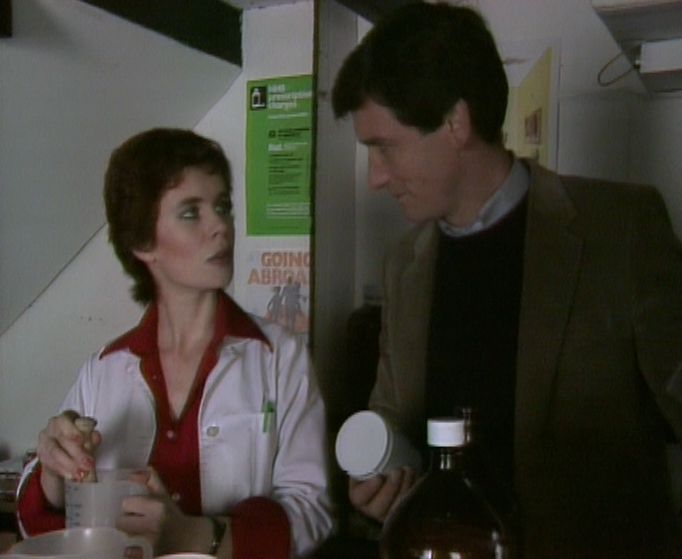
Still, Dayna has a good chunk of screen-time in this episode.  Her initial meeting with Avon is a memorable one – she kisses him on the lips, telling him that she was curious.  Avon, as befits his new status as a dashing action hero has an immediate response. “I’m all in favor of healthy curiosity. I hope yours isn’t satisfied too easily. I think you’ve cured my headache.”  The arrival of Servalan shakes things up.  Pearce and Simon share a lovely two-handed scene, which sees Servalan dripping with fake sincerity and Dayna barely able to hide her loathing.
aftermath 02

Dayna is presented as something of a flawed character – the life she’s led to date (an isolated one with her father) has left her with little understanding of other people.  She regards the Sarrans as animals, who exist to be killed as and when she decides.  Her potential awkwardness with others was something that could have been developed, but never really was.

A major change in series three concerns the relationship between Avon and Servalan. Let’s be honest, during the first two series they never had a relationship at all (try counting the number of lines they exchanged during the first twenty six episodes). All that changes now as we see that love/hate is in the air.  Servalan tells Avon that Star One is destroyed, which means that the Federation has been crippled.

AVON: So Blake’s rabble finally get freedom of choice. He won after all.
SERVALAN: Forget Blake. You have control of the Liberator now. There’s no more powerful ship in the galaxy. You have Orac. Avon! Don’t you see what that means?
AVON: You tell me about it.
SERVALAN: You could rebuild it all. All those worlds could be yours, Avon, they’re there for the taking. You and I could build an empire greater and more powerful than the Federation ever was or ever could have been. Now, Avon. At this moment we can take history and shape it in our own image. Think of it: absolute power. There is nothing you can imagine that we couldn’t do.
AVON: I am thinking of it.
SERVALAN: We can do it, Avon.
AVON: I know we can.
SERVALAN: We’ll be answerable to no one. Ours will be the only voice. Imagination our only limit. [They kiss. Avon grabs her by the throat and pushes her to the ground]
AVON: Imagination my only limit? I’d be dead in a week.

There’s no doubt that Avon and Servalan’s kiss (and his manhandling of her) launched a thousand fan-fics.  Darrow and Pearce are electrifying in this scene and it’s worth the price of admission alone.

The death of Dayna’s father, Hal Mellanby (Cy Grant) and her adopted sister Lauren (Sally Harrison) means that she no longer has any ties to the planet and is free to join the Liberator.  And the fact that Servalan killed her father will provide the series with some nice scenes of dramatic tension whenever the two meet again.

Although the primitives sub-plot of Aftermath is fairly tedious it doesn’t really impact on the main thrust of the story, which revolves around the Avon/Dayna/Servalan triangle.  All of them, especially Darrow, benefit from generous amounts of character development.

Unusually, we end on a cliffhanger.  Avon and Dayna return to the Liberator but find themselves on the wrong end of a Federation gun.  The curly-haired officer asks them why they’ve boarded a Federation ship ……

aftermath 03

The Nightmare Man – Episode Four

nightmare 04

The military arrive in force as Colonel Howard prepares to lead them in a expedition to recover a valuable piece of hardware.  Howard is remarkably blase as he informs Inskip that he’s invoked martial law and is therefore now in complete control of the island.

As the soldiers make their landing, Michael is still musing over the identity of the killer and the reason why he’s being hunted by the army.  “They lost contact with that craft and it ran aground here. Probably a power failure. Because what got out of it was no longer a man. Radioactive. Its mind in splinters.”

Douglas Camfield had been a Lieutenant in the West Yorkshire regiment, but due to health issues he was forced to leave in 1956.  His love of the military never left him though and can clearly be seen in some of his best directorial efforts.

The Web of Fear, The Invasion and Terror of the Zygons were three classic Camfield-directed Doctor Who‘s which all had a strong military angle.  And in some ways the last episode of The Nightmare Man resembles Zygons – the incongruous juxtaposition of the army and a small Scottish village, for example.

The revelation of the killer’s identity seems to be one of the main reasons why The Nightmare Man is viewed as a disappointment.  After three episodes of teasing the audience with various possibilities, the somewhat prosaic reality can’t help but feel like a letdown.  Especially as when we see him in the cold light of day he’s not a terrifying sight – although that may have been intentional (let’s be generous and give the production the benefit of the doubt).

Another slight disappointment is the way that Inskip fades away once Howard takes control.  But the fact that Howard isn’t all he appears to be is a decent twist, although the audience should have twigged this early on (after he tells Michael and Fiona that he has a great admiration for their police).

Positives. Maurice Roëves as Inskip and James Cosmo as his laconic sidekick Sergeant Carch. The slowly increasing sense of dread and fear as the attacks continue.

Negatives. Not every question is answered – for example we’re never told why the killer became cannibalistic or how he had super-human strength.  And if the killer looks rather unimpressive in the cold light of day, then that goes double for his craft. We’re expected to believe that it could travel thousands of miles in the water?  Sadly it looks like the filmiest, most unconvincing prop ever.

There’s no doubt that the dream-team combination of Holmes and Camfield would have been enough to interest many Doctor Who fans, but The Nightmare Man doesn’t really show either at their best.  The script is workmanlike (not having read the original novel I can’t say whether Holmes added many of his own touches).  His trademark humour isn’t really in evidence, although Carch gets some decent lines.  Camfield seems to perk up when the army arrive, but otherwise there’s few of the flourishes and innovative camera-angles for which he was known.

But whilst The Nightmare Man ends with a whimper rather than a bang, it still has its moments.   Not a classic, but there are worse ways to spend a few hours.

The Nightmare Man – Episode Two

nightmare 02

James Warwick was pretty ubiquitous on British television during the early 1980’s. By the time The Nightmare Man was broadcast he’d already appeared in several one-off Agatha Christie adaptations (Why Didn’t They Ask Evans?/The Seven Dials Mystery) and a few years later would star alongside Francesca Annis in Partners In Crime, also adapted from Christie’s books.  His earnest, square-jawed persona fitted the works of Agatha Christie like a glove and he plays Michael Gaffikin in a similar way.  His performance isn’t quite as good a match here though – at times it feels rather artificial (although it’s not as bad as his very wooden turn the following year in the Doctor Who story Earthshock).

The mysterious creature spends the early part of the episode lurking about (and killing the odd sheep).  Michael surmises that it could be the result of genetic experimentation whilst Inskip wonders why the woman killed in episode one (identified as Mrs Anderson) was dismembered and then taken miles away from spot where she was murdered.

Picture quality for the exteriors is pretty poor – due to the heavy mist (it does help to give the location work an unearthly atmosphere though).  But it’s difficult not to wonder just how more impressive it would have looked on film.

Because the police-force on the island is so small (limited to four of five officers) it’s reasonable that Inskip would ask for Michael and Fiona’s help.  Michael, having originally wondered if the creature came from the sea, now has another theory – that it’s extraterrestrial in origin.  Roëves continues to have many of the best lines as Inskip counters that “a straightforward homicidal maniac with bad teeth running amok is good enough for me.”

But when they find Dr Symonds’ body, Inskip is forced to admit that nothing human could have been responsible. Although it’s hard to see why, as Symonds’ body is intact (unlike the mutilated Mrs Anderson) with only a minimal amount of blood.  No doubt this is due to what was deemed permissible in a pre-watershed programme (a violently attacked body clearly wouldn’t have been). Camfield could have elected to play the scene just on the reactions of Inskip and the others, but since we’ve previously met Symonds, his death has more of an impact if we can see his face.

If the cliffhanger is a little of a damp squib, it does at least up the ante a little more.  Another death and still the mysteries deepen.  There’s a mysterious craft on the shoreline, traces of radiation and the possibility that somebody parachuted onto the island the previous night.  And it seems that the charming Colonel Howard is more than just an innocent visitor ….

The Nightmare Man – Episode One

nightmare 01

The Nightmare Man was adapted by Robert Holmes (from the novel by David Wiltshire) and directed by Douglas Camfield.  Since Holmes and Camfield were both experienced Doctor Who hands it’s tempting to view this as almost a Doctor Who story by proxy.  Holmes had a love of classic horror tales, so there’s no doubt that Wiltshire’s story of a series of mysterious deaths on a remote Scottish island would have right up his street.  Whilst there’s little blood or gore it does feel a touch more adult than his Doctor Who‘s, something which probably would have appealed to Holmes (he was always a writer who pushed against the boundaries – as Mary Whitehouse would attest to).

It’s slightly surprising that it’s shot on VT rather than film, especially since Camfield was a master with a film camera.  Presumably this was budget-related, as there’s only a handful of video effects.

Within the first few minutes we’ve met the main players.  Fiona Patterson (Ceila Imrie, sporting an impressive Scottish accent) runs the local shop whilst Michael Gaffikin (James Warwick) is an English dentist, in love with both the island and Fiona. Both run into a visitor, Colonel Howard (Jonathan Newth), who tells them that he’s planning to spend a few days exploring, whilst we also bump into Inspector Inskipp (Maurice Roëves).

But whilst all this seems normal enough, there’s something on the island which is far from normal.  This strange entity is shot from their POV and instantly creates an unsettling atmosphere.  When Michael finds a body on the golf course it appears the mysterious creature has claimed its first victim.  Inskipp is matter of fact about this grisly discovery.  “Aye, I do mean a body. We haven’t found all the pieces yet.”  During the episode we’re drip-fed more facts about the murder and nothing we hear sounds very comforting.  The body wasn’t dismembered with a knife – it was literally torn apart.

Camfield always cast his shows incredibly well and The Nightmare Man is no exception.  Maurice Roëves makes an immediate impression as Inskipp and does something with what could be a cliche role – the tough copper.  Although Camfield had a reputation for using a “rep” of actors it’s not really in evidence here, although Tony Sibbald (playing Dr Symonds) had appeared in his 1975 Doctor Who story Terror of the Zygons.

This does everything that an opening episode should.  It sets up the mystery efficiently and finishes on a strong cliff-hanger (Dr Symonds attacked by the mysterious creature).  Will the serial keep this quality up or will it end in an anti-climax?  Time will tell.

An Englishman’s Castle – Part Three

castle 03

Henry is dead – he was shot three times and a sign saying “delator” was hung around his neck.  With one of Peter’s sons now dead there’s a sense that his real life is turning into a soap operaOne example of this is when Peter’s wife is told of her son’s death.  She tells her husband that she won’t cry – instead she’ll behave as bravely as Peter’s fictional family.

Peter finds himself the prime suspect for Henry’s murder and is taken away by the special police for questioning.  The Inspector (Philip Bond) is initially affable, telling Peter it’s nothing more than an informal chat, but the mood darkens very quickly.  Kenneth More and Philip Bond share an excellent two-handed scene – like the rest of the serial it’s incredibly powerful, but very understated.

The Inspector occupies a room that’s virtually bare, and there’s never even the threat of violence, but he’s still able to inexorably pressurise Peter.  So Peter is forced to reveal that Henry told Harmer he was an informer – which gets Peter off the hook but spells trouble for Harmer.

As events get darker and darker, Kenneth More remains the solid centre of the story.  Now promoted to programme controller, Peter has the ultimate responsibility for initiating the revolution – a code-word inserted into the next episode of his soap opera will be the call to arms.

Philip Mackie’s three scripts are taut, with little or no padding.  It’s easy to imagine that the serial could have been developed into a series, as in one way we’ve only begun to scratch the surface of this world.  It would have been fascinating to see Peter’s soap-opera, which at times offers a meta-textual commentary on real-world events, expanded over more episodes.

Anybody looking for big-budget action scenes will be disappointed.  The revolution does begin in the last few minutes of this episode, but it happens off-screen (via sound effects).  The fates of some characters, including Peter, are clear at the end – but with others it’s left to the viewer’s own imagination to decide what may have happened to them.  It’s also notable that certain people’s motivations are very much open to interpretation – Harmer is a prime example.  In the first two episodes he was portrayed firmly as a man in sympathy with the German establishment, but in the final episode we’re asked to consider him in a different light.  Nothing is ever proven either way, so we’re not spoon-fed “facts” – the viewer is invited to weigh up the evidence and decide.

It’s a downbeat ending, but there’s also a possible glimmer of hope.  We’re left not knowing whether the revolution will succeed or fail, but whatever happens we’ve seen characters who have been personally redeemed, Peter amongst them.

At times this feels like a stage play (not a criticism, by the way).  People die off-screen, for example,  and other events are described but not seen.  Some may find this frustrating, but this style of storytelling ensures that the focus remains inexorably on the characters,  which is a major plus point when the cast is so strong.

This is first-rate drama and comes highly recommended.  Heading a very strong cast are Kenneth More, Isla Blair and Anthony Bate, all of whom dominate the screen.  Simply Media should be applauded for continuing to dip into the BBC archives and for anybody who enjoys classic British television, An Englishman’s Castle should be on your to-watch list.