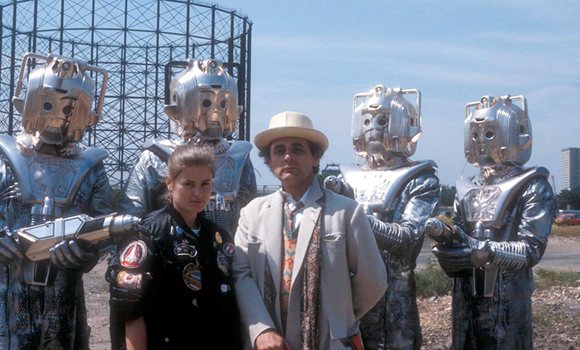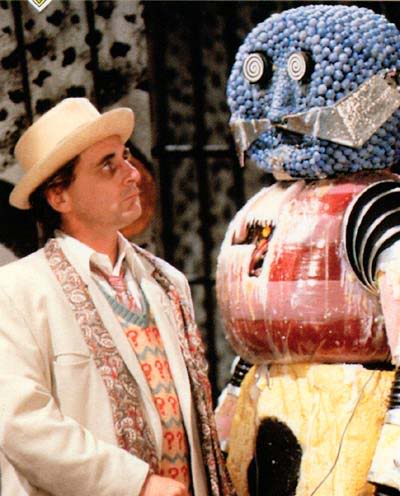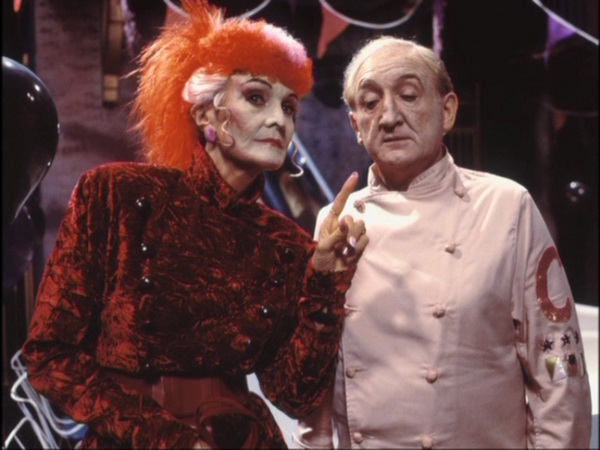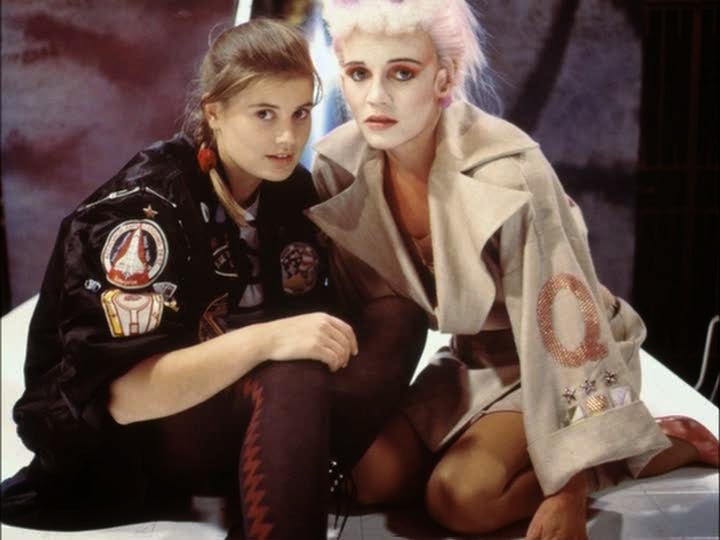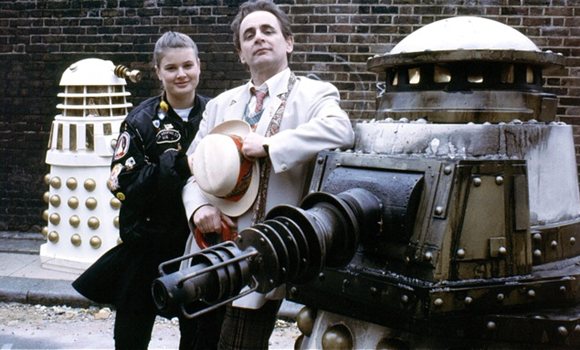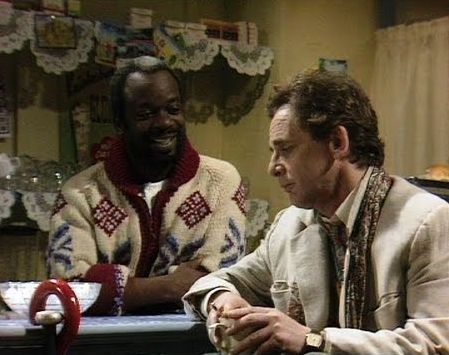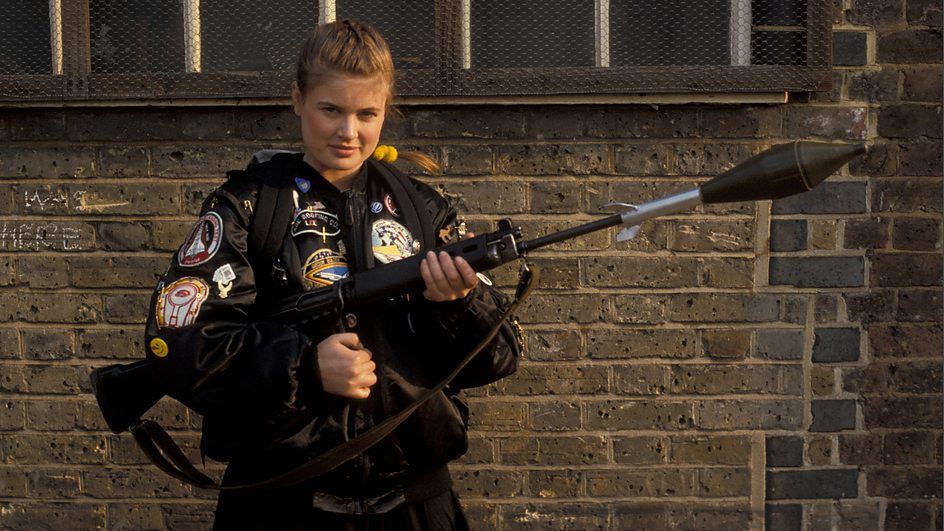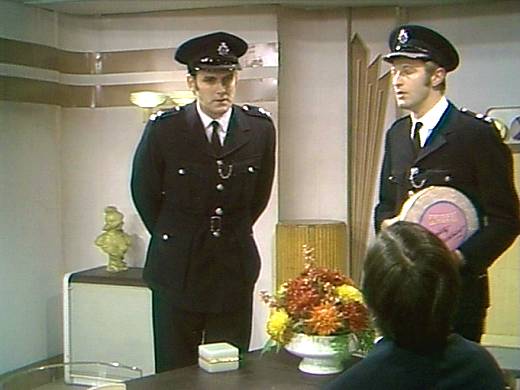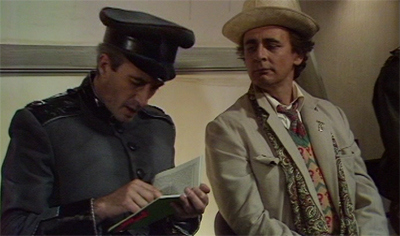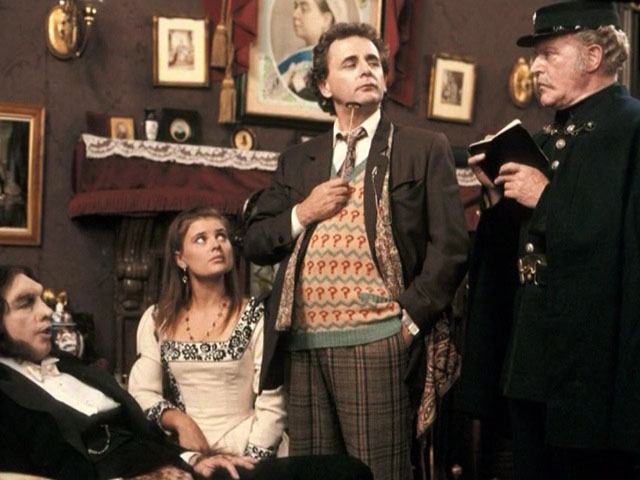
You are endlessly agitating, unceasingly mischievous. Will you never stop? Doctor Who – Ghost Light

ghost light

Ghost Light is definitely a story that’s bursting with ideas, although it could be that there were simply too many ideas and concepts for three episodes – as over the years many people have complained that the script is incomprehensible.

For me, whilst there are holes in the plot (although it’s hardly a unique Doctor Who story in that respect) the main thrust of the story and the performances have always been more than enough to draw me back to it.  And often when re-watching, I’ll pick up on another aspect that I’d previously overlooked.

There are other Doctor Who stories from the original run which can be said to have rich subtexts buried under the visible plot-lines (Warriors’ Gate and Kinda for example) but these were pretty much the exception that proved the rule – generally Doctor Who stories from 1963 – 1989 operated on a very linear level.

Ghost Light doesn’t always adhere to this.  Most of the answers are there (although you sometimes have to read between the lines) but some questions remain unanswered.  For example, if we accept that Josiah was one of Light’s specimens who managed to escape from the stone ship in 1881 and sent the house’s owner, Sir George Pritchard, to Java, how has he managed to evolve so quickly?  The evidence indicates that he was barely humanoid when he emerged (the husks) so it’s difficult to understand how he could evolve into a Victorian gentleman in a matter of a few short years.  And how could Nimrod have evolved from a Neanderthal into the perfect butler during the same short space of time?

Some of these points probably explain why Ghost Light has remained a frustrating experience for some, but for me the first rate cast more than makes up for these unanswered questions.

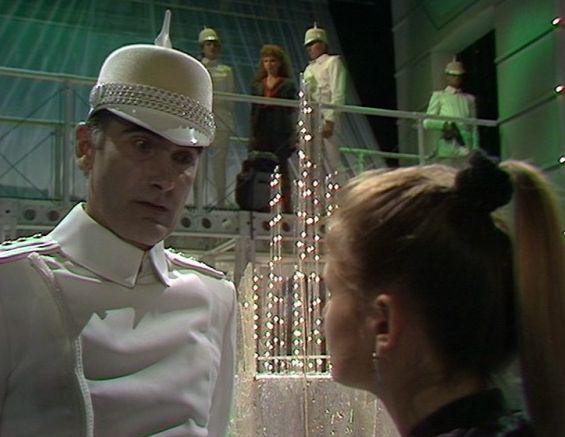
It’s probably the best-cast McCoy story.  Ian Hogg (a familiar face at the time from Rockliffe’s Babies) is wonderful as Josiah, managing to turn from menacing to pitiful at the drop of a hat.  Sylvia Syms has more of a one-note character for the majority of the story, although she does have a moment of tenderness in episode three (ironically just before Light deals with her).  Katharine Schlesinger has a very fresh-faced appeal as Gwendoline. Although she and her mother were both under the control of Josiah, the Doctor delivers a rather chilling verdict about her, “I could forgive her arranging those little trips to Java, if she didn’t enjoy them so much”.
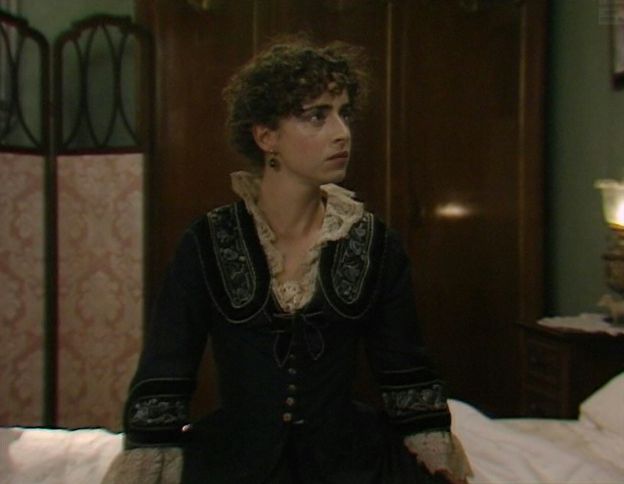
Gwendoline
Gwendoline

Michael Cochrane, Frank Windsor, Carl Forgoine and John Nettleton all add to the overall quality of the cast and the demise of Windor’s Inspector Mackenize gives us one of the great sick jokes of the series (“The cream of Scotland Yard”).

Sharon Duce is, interesting, as Control.  It’s certainly a performance that’s somewhat at odds with the rest of the cast, but although she’s initially off-putting it does work better after a few re-watches.  John Hallam is surprising fey as Light, but as with Duce it’s an acting choice that, after the initial surprise, does work.

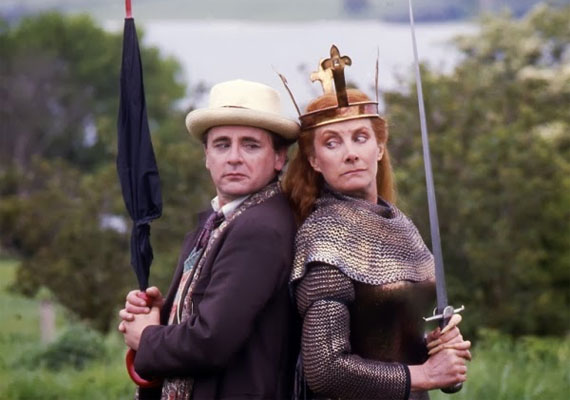
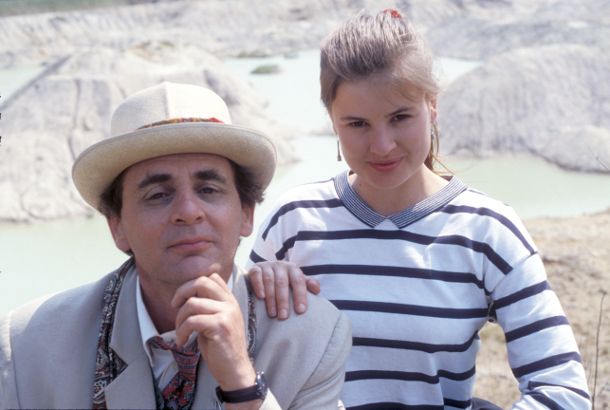
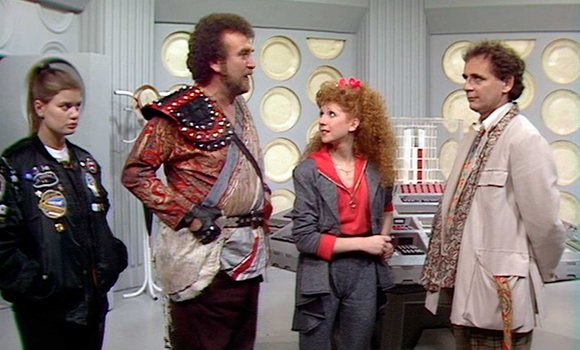
Following Battlefield which didn’t do McCoy and Aldred any favours, they’re both back on top form in this story.  With the Doctor deciding to take Ace back to the place where the ghosts of her past linger, this does put the spotlight on Aldred, which she’s more than able to deal with.

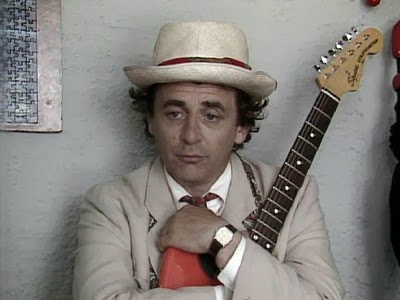
Maybe it was the studio environment or possibly the good actors around him, but McCoy’s at his best here.  The clip below shows just how good McCoy could be.  It’s slightly frustrating that he was rather inconsistent from story to story, but when he was good, he was very good.

If Light is defeated a little easily at the end (an occupational hazard of portraying powerful figures – the more powerful they are, the more of an anti-climax when they’re dealt with.  See Sutekh for another example of this) it’s possibly more important that the Doctor has cured Ace of the lingering trauma she felt about the events of 1983.

From the moment we met her in Dragonfire, it was clear that Ace was something of a damaged character – and this is another example of the Doctor subtly sorting out her psyche.  See also The Greatest Show in the Galaxy where he cured her fear of clowns and more seriously the upcoming Curse of Fenric where he attends to the tricky problem of her mother.

It’s possible to argue that the Doctor shouldn’t really be doing this, and it’s certainly not something he’s done before, but then he’s never really had a companion with quite so many problems as Ace.  And her journey is all the more remarkable when you consider that Aldred only appeared in 31 episodes.  Many companions have enjoyed far greater episode counts but few had the sort of character development enjoyed by Ace.

And her journey, central to this story, is one of the reasons why Ghost Light remains an outstanding example of late 1980’s Doctor Who.
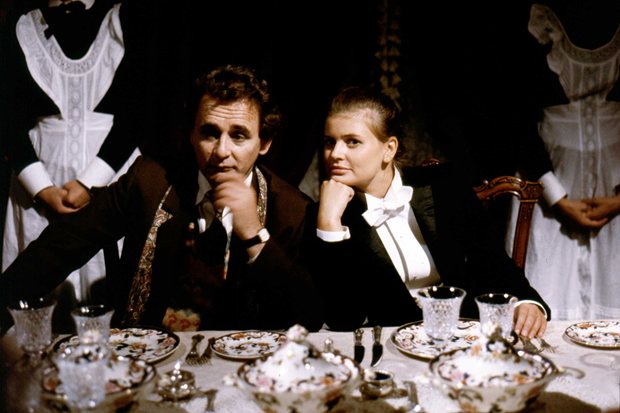
doctor and ace

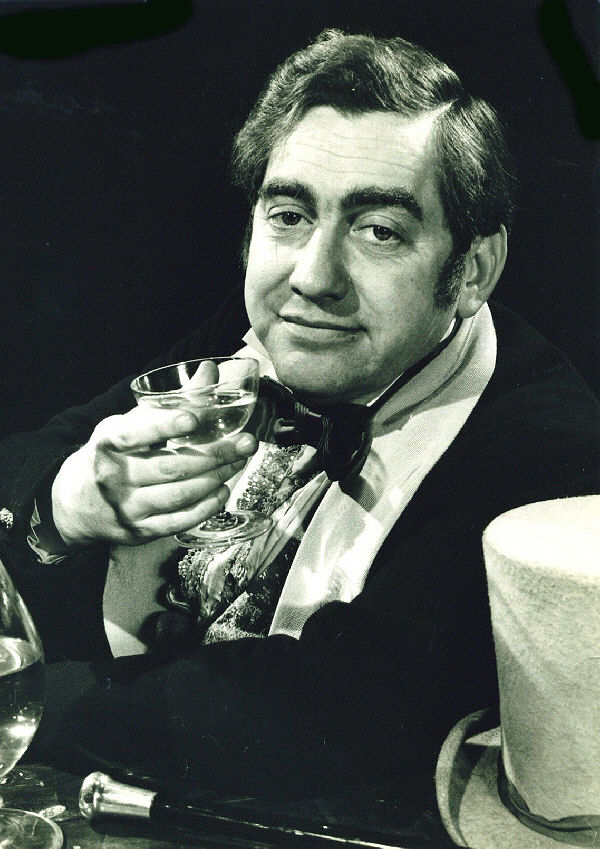
Tony Hancock in The Government Inspector (BBC 1958)

hancock

In 1958 Tony Hancock was riding high as the star of Hancock’s Half Hour, which was running on both BBC television and radio.

On the evening on the 9th of February 1958 he gave a rare straight acting performance in the BBC World Theatre production of Gogol’s The Government Inspector.

Hancock was bolstered by an impressive supporting cast (including Wilfred Brambell, Peter Copley and Noel Howlett) and he acquitted himself well – although he’s still recognisably Hancock.  Indeed, it would be easy to believe that some of his lines were written by Galton & Simpson, which is possibly why it was felt that this play would be a perfect fit for him.

This was such an obvious extra to include on the Hancock’s Half Hour DVD boxset, released a few years back, that its omission was baffling.  The only time it’s surfaced in recent years was when it was one of the programmes offered as part of the BBC Archive Trial (an online test service) in 2007.

Given that the BBC seem to have no interest at present in making this commercially available, I’ve decided to upload it my YouTube account.  Hopefully it’ll stay there for a while, which will allow a wider audience to enjoy this unique Hancock performance.


Monty Python’s Flying Circus – Series One, Episode Twelve – The Naked Ant

hilter

The Naked Ant opens with Idle and Cleese as two office workers who watch as their colleagues jump to their deaths.

Idle: Did you see somebody go past the window?
Cleese: What?
Idle: Somebody just went past the window. That way. (indicates down)
Cleese: Oh. Oh.
Idle: Another one.
Cleese: Huh?
Idle: Another one just went past downwards.
Cleese: What?
Idle: Two people have just fallen out of that window to their almost certain death.
Cleese: Fine, fine. Fine.
Palin: Look! Two people (another falls) three people have just fallen past that window.
Cleese: Must be a board meeting.
Idle: Oh yeah. (another falls past) Hey. That was Wilkins of finance.
Cleese: Oh, no, that was Robertson.
Idle: Wilkins.
Cleese: Robertson.
Idle: Wilkins.
Cleese: Robertson.
(Another falls.)
Idle: That was Wilkins.
Cleese: That was Wilkins. He was a good, good, er, golfer, Wilkins.

Next up, Palin is good as a hyperactive television presenter (“Too early to tell’ … too early to say… it means the same thing. The word ‘say’ is the same as the word ‘tell’. They’re not spelt the same, but they mean the same. It’s an identical situation, we have with ‘ship’ and ‘boat’ but not the same as we have with ‘bow’ and ‘bough’, they’re spelt differently, mean different things but sound the same. But the real question remains. What is the solution, if any, to this problem? What can we do? What am I saying? Why am I sitting in this chair? Why am I on this programme? And what am I going to say next?”).

Mr Hilter and the Minehead by-election is one of my favourite Python sketches.  It opens with Idle as a monumentally boring man who, along with his wife, has arrived at a boarding house run by a nice lady (Jones).  Idle had a knack for writing long droning monologues, of which this an excellent example, as he describes in great detail exactly how they traveled down.

Johnson: Well, we usually reckon on five and a half hours and it took us six hours and fifty-three minutes, with the twenty-five minute stop at Frampton Cottrell to stretch our legs, only we had to wait half an hour to get onto the M5 at Droitwich.
Landlady: Really?
Johnson: Then there was a three mile queue just before Bridgewater on the A38. We usually come round on the B3339 just before Bridgewater, you see…
Landlady: Really?
Johnson: Yes, but this time we decided to risk it because they’re always saying they’re going to widen it there.
Landlady: Are they?
Johnson: Yes well just by the intersection, there where the A372 joins up, there’s plenty of room to widen it there, there’s only grass verges. They could get another six feet…knock down that hospital… Then we took the coast road through Williton and got all the Taunton traffic on the A358 from Crowcombe and Stogumber …

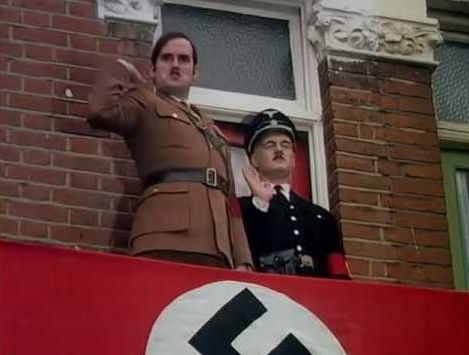
This could have made a decent little sketch on its own, but when the Johnsons enter the dining room they meet three strange characters who spin the sketch into a totally different direction.  Mr Hilter (Cleese), Ron Vibbentrop (Chapman) and Heimlich Bimmler (Palin).  All three are dressed in full Nazi regalia, which makes their attempts to hide their identities by slightly changing their names even more ludicrous.

Chapman has the least the do, Palin has a great monologue (“How do you do there squire, also I am not Minehead lad but I in Peterborough, Lincolnshire was given birth to, but stay in Peterborough Lincolnshire house all during war, owing to nasty running sores, and was unable to go in the streets play football or go to Nürnberg. I am retired vindow cleaner and pacifist, without doing war crimes“) but the bulk of the sketch rests on Cleese’s shoulders who is suitably manic as Adolf Hitler, forced to be polite to people he obviously considers to be his inferiors.

I love the concept of Hitler relaunching his quest for power via the Minehead by-election, as well as the puzzled stares of passers-by (who I assume weren’t extras and were just members of the public) as Hilter’s election campaign makes its way through the streets.

The 127th Upperclass Twit of the Year Show is another well known early Python sketch (it was re-filmed for And Now For Something Completely Different).  Cleese is a suitably hysterical commentator and he starts by introducing the runners and riders.

Vivian Smith-Smythe-Smith has an O-level in chemo-hygiene. Simon-Zinc-Trumpet-Harris, married to a very attractive table lamp. Nigel Incubator-Jones, his best friend is a tree, and in his spare time he’s a stockbroker. Gervaise Brook-Hampster is in the Guards, and his father uses him as a wastepaper basket. And finally Oliver St John-Mollusc, Harrow and the Guards, thought by many to be this year’s outstanding twit.

|n order to be crowned champion they have to complete a number of demanding tasks, such as walking in a straight line, kicking the beggar, reversing their sports car into an old woman, insulting the waiter and finally shooting themselves.

Palin is suitably grotty as Ken Shabby, who has come to ask Chapman for his lovely daughter’s hand in marriage.

Father: Mr Shabby… I just want to make sure that you’ll be able to look after daughter…
Shabby: Oh yeah, yeah. I’ll be able to look after ‘er all right sport, eh, know what I mean, eh emggh!
Father: And, er, what job do you do?
Shabby: I clean out public lavatories.
Father: Is there promotion involved?
Shabby: Oh yeah, yeah. (produces handkerchief and cleans throat horribly into it) After five years they give me a brush… eurggha eurgh … I’m sorry squire, I’ve gobbed on your carpet…

The final sketch (featuring Chapman as a politician who has fallen through the Earth’s crust and is forced to continue his broadcast whilst swinging upside down on a rope) doesn’t really engage, although Chapman is game to dangle about.  But overall this a strong show, particularly with the Minehead by-election and the Upper-Class Twits.

Next Up – Episode Thirteen – Intermission

Whenever this Doctor turns up, all hell breaks loose. Doctor Who – Battlefield

battlefield

After the success of Remembrance of the Daleks it was inevitable that Ben Aaronovitch would be asked to contribute another script.  Battlefield began life as a three-parter which was later expanded to four episodes, although Aaronovitch was to express his dissatisfaction with the story as it appeared on screen – feeling that it too obviously a three-part story with an extra episode bolted on.

But whilst there are script problems, there are also some rather dodgy performances which do drag the story down.  It’s probably (apart from Time and the Rani) Sylvester McCoy’s worst Doctor Who performance.  He’s all over the place and far too many times his line delivery is very poor (“There will be no battle here!”, ” If they’re dead”, etc, etc).  Comparing this and Ghost Light back to back is particularly instructive.  He’s at his best in Ghost Light (restrained and still) and very much at his worst in Battlefield (ranting and over-expressive).

Sophie Aldred has her poor moments as well (“Boom!”) whilst Christopher Bowen’s turn as Mordred is on the ripe side, to put it mildly.  Angela Bruce settles down as the story progresses, but she’s also not especially good to begin with (“Shame!”).

The start of a beautiful friendship?

It’s not all bad though – Marcus Gilbert has a nice comic touch as Ancelyn and James Ellis is always watchable.  His Tennyson ad-libs (“ Thou rememberest how, in those old days, one summer noon, an arm rose up from out the bosom of the lake clothed in white samite, mystic, wonderful, holding the sword“) work very well and it’s nice that Michael Kerrigan allowed him some space to indulge himself.

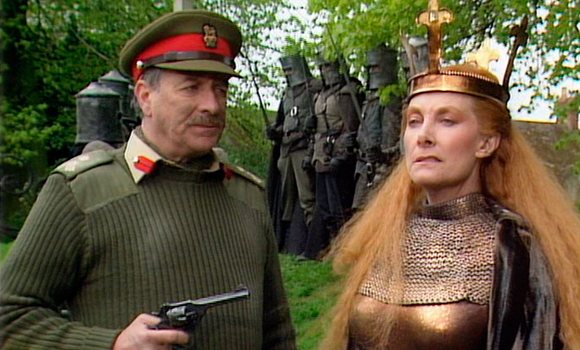
The main guest roles were filled by Nicholas Courtney and Jean Marsh.  Marsh manages to bring out the contrary nature of Morgaine, as she’s someone who is more than capable of destruction but also has her own moral code (observing remembrance for the dead and restoring Elizabeth’s sight).

Ben Aaronovitch was quite clear that bringing back Lethbridge-Stewart and UNIT was something of a fannish indulgence.  In many ways this undoes some of the good work from Mawdryn Undead.  It would have been the easy option in 1983 to have the Brigadier back with UNIT and fighting monsters, but instead they went for a more interesting story with a retired and somewhat broken-down figure.

"Ware this man. He is steeped in blood"
“Ware this man. He is steeped in blood”

Here, it’s pure fannish wish-fulfillment to have the Brig back in his old uniform and in charge (albeit temporarily) of UNIT.  It’s hard to believe, to be honest, that any military organisation would reinstate a retired soldier like this, so it may have been more credible to have had him along as a civilian advisor, due to his knowledge of the Doctor.  Courtney’s always good value (especially when facing down the Destroyer in the last episode) but after Mawdryn, this can’t help but feel like a little bit of a let-down.

As with many stories script-edited by Andrew Cartmel, some interesting material never made the screen (although it was restored for a special edition of the story when it was released on DVD).  Chief amongst the cuts was the disdain that Ace has for the Brig, something that is totally absent from the transmitted story.

The story is a little incoherent with various plot devices (a stranded nuclear missile convoy is introduced in the first episode and then forgotten about until the last ten minutes of the final episode) not used particularly well.  And the reason for Morgaine traveling to this universe is never made clear – has some catastrophe affected her own, maybe?  The plot is a little wooly at times, it’s made clear that Morgaine knows she’s traveled to another dimension, but at another point in the story the Doctor maintains that the Earth will be a battleground for a conflict that doesn’t belong here – implying that Morgaine is unaware she’s no longer in her own universe.

The reveal of the Destroyer at the end of the third episode does give the story a little more impetus and it has to be said that the design is wonderful.  Some seven years earlier, the Terileptils in The Visitation were able to curl their lips but that’s nothing compared to the lip-curling that the Destroyer indulges in.  It’s a good indication just how animatronics and technology in general had evolved over the course of seven years or so.

Flawed though Battlefield is, it’s still enjoyable – but it’s very much the weak link in S26.  And a special mention must go out to the closing scene.  Keff McCullough’s comedy tune as the girls leave is perhaps a fitting ending to a real curate’s egg of a story.

Monty Python’s Flying Circus – Series One, Episode Eleven – The Royal Philharmonic Orchestra Goes To The Bathroom

batley

So far, we’ve seen a variety of linking devices used throughout the series – this one features a group of undertakers (with Terry Jones as a suitably ghoulish one – “Are you nervy, irritable, depressed, tired of life? Keep it up”) who pop up between the sketches with a series of mostly visual sequences that are certainly memorable.  Are they funny?  Mmm, I can’t say they’re particularly rib-tickling, but some of the rather crude stop-motion footage has its moments.

There’s one stand-out sketch in this show, which kicks off with Cleese as Inspector Tiger.  Upon entering a Agatha Christie type drawing room, he launches into the following monologue.

This house is surrounded. I’m afraid I must not ask anyone to leave the room. No, I must ask nobody … no, I must ask everybody to… I must not ask anyone to leave the room. No one must be asked by me to leave the room. No, no one must ask the room to leave. I … I … ask the room shall by someone be left. Not. Ask nobody the room somebody leave shall I. Shall I leave the room? Everyone must leave the room… as it is… with them in it. Phew. Understand?

After some more mangled dialogue and a lobotomy, Tiger recreates the crime.  The lights go out and when they come on again he is dead (with a bullet hole in his forehead, an arrow through his throat and a bottle of poison by his side).  Then several of his colleagues turn up, each with a sillier name than the one previous.  Such as Chief Inspector Lookout (“Look out? What where?”) and Assistant Chief Constable Theresamanbehindyer (“Theresamanbehindyer? Ah, you’re not going to catch me with an old one like that”).

One-note though this sketch is,  it’s worth it just for Cleese’s Tiger.  And just as it begins to run out of steam, we move away with the undertakers promising that we’ll return to it as soon as something interesting happens.  Next up is some football chat with Idle as an interviewer and Cleese as Jimmy Buzzard, his none-too-bright interviewee.  I love Idle’s opening piece to camera.

From the plastic arts we turn to football. Last night in the Stadium of Light, Jarrow, we witnessed the resuscitation of a great footballing tradition, when Jarrow United came of age, in a European sense, with an almost Proustian display of modern existentialist football. Virtually annihilating by midfield moral argument the now surely obsolescent catennachio defensive philosophy of Signor Alberto Fanffino. Bologna indeed were a side intellectually out argued by a Jarrow team thrusting and bursting with aggressive Kantian positivism and outstanding in this fine Jarrow team was my man of the match, the arch-thinker, free scheming, scarcely ever to be curbed, midfield cognoscento, Jimmy Buzzard.

Cleese’s Buzzard (“Well Brian… I’m opening a boutique.”) is totally unable to respond to any of Idle’s questions and instead falls back onto a series of stock phrases.  It’s another nice performance from Cleese, particularly the expression of joy on his face when he thinks he’s thought of something interesting to say, which tends not to be anything worth waiting for.

We cut back to the drawing room (piled high with bodies) and then it’s onto Interesting People, which is odd.  There’s a basic premise (Palin as the host of a show which introduces us to interesting people) but that’s merely an excuse for a grab-bag of strange characters such as Jones as Mr Ali Bayan, who’s stark raving mad and Cleese as Mr Ken Dove, twice voted the most interesting man in Dorking. He shouts a lot.

As Python progressed, it tended to get stranger and more free-form and this is certainly one of the first series episodes that points the direction that the show would be heading in the future. Like many other episodes, it’s a bit like the Beatles’ White Album – there’s plenty to enjoy but it does feel bitty and fragmented. Not everything works, but at this point the hits outweigh the misses.

And with Professor R.J. Gumby lecturing on why he believed the Battle of Traflgar was fought near Cudworth and the Batley Townswomen’s Guild re-enacting the Battle of Pearl Harbour, there’s certainly something for everyone.

Next Up – Episode Twelve – The Naked Ant

There are acts that are cool and acts that amaze. Some acts are scary and some acts will daze. Doctor Who – The Greatest Show in the Galaxy

greatest

The Greatest Show in the Galaxy was originally slated for S26 as a studio-bound three-parter.  It was brought forward to form part of S25 and the episode count was upped to four – with an allocation for location filming.

Although the location work took place in a quarry (not an unusual location for Doctor Who) – Warmwell Quarry in Dorset was something special.  Visually, it looks stunning and the production was fortunate to have good weather, which along with the setting really helped to give the early part of the story an epic feeling.

When the planned studio sessions had to be cancelled due to an asbestos scare, the production set up shop in the car park at Elstree studios. It wasn’t always easy, but there was a feeling that this story was something special, so nobody wanted it to go the way of Shada.

There are two main themes that Stephen Wyatt develops across the tale – the first is that clowns are somewhat sinister and the second is that you should never trust a hippy. By his own admission, Wyatt was never a free-spirit during the 1960’s and his distrust for the “free-love” generation is clearly on show.  And what is Deadbeat, if not a warning about what happens if you do lots of drugs?

The founders of the Psychic Circus (including such far-out characters such as Flowerchild, Peacepipe and Juniperberry) had a dream to forge a real workers collective. According to Bellboy, “We had such high ideals when we started. We shared everything and we enjoyed making people happy. If we had a problem we’d all just sit round and talk it through. Oh, we were so happy. At least, I think we were”.

But something went wrong. Somehow the Gods of Ragnarok infiltrated the circus and it became a killing machine for their personal pleasure. Are the Gods (with their constant cries of “entertain us”) designed to parody the television audience or are they poking fun at the BBC management who seemed to be increasingly indifferent to Doctor Who?

Whizzkid (Gian Sammarco) is another meta-textual character – designed (although Wyatt was later to dispute this) as an archetypal Doctor Who fan. But when he has lines such as –

Although I never got to see the early days, I know it’s not as good as it used to be but I’m still terribly interested.

It’s hard to see how anyone could possibly dispute this, as by the late 1980’s it was common practice for the majority of Doctor Who fans to hark back to the glory days of the 1960’s and 1970’s and despair of the direction the current series was taking. As an aside, I love the comment on the audio commentary when Jessica Martin asks if any fans were offended by this character and Toby Hadoke responds that Doctor Who fans have a default setting of being offended!

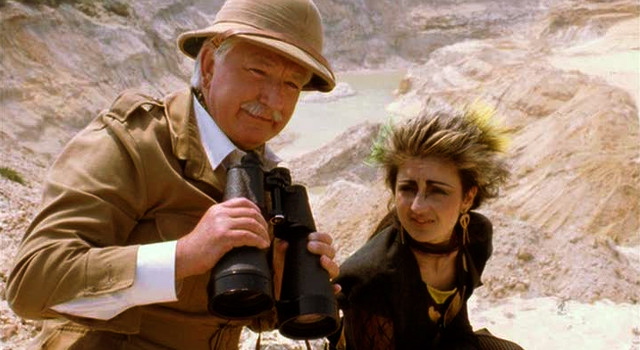
Whizzkid isn’t the only odd character drawn to the circus. There’s also Captain Cook (T.P. McKenna) and Mags (Jessica Martin). The Captain and Mags seem to have been written as a pastiche of the Doctor and Ace – another aspect of the story which is feeding off itself to create story ideas. McKenna gives a lovely turn as the amoral, boorish explorer and Martin is very appealing as his side-kick. A definite Doctor Who companion that never was, I think.

I think the Captain is about to launch into another long-winded anecdote

Greatest Show has some lovely imagery (the clowns driving in a silent hearse, for example) and a strong guest cast. There’s nice cameos from the likes of Peggy Mount and Daniel Peacock whilst Ian Reddington shows exactly how clowns can be creepy.

Given that S25 generally portrayed the Doctor as a cosmic schemer, this story is very much the odd one out. He fails to sense that there’s anything wrong at the end of the first episode (whilst Ace can hear Mags’ screaming) and he also doesn’t pick up on the signs that Mags is a werewolf. As Captain Cook says, “You really were extremely stupid this time, Doctor”.

Although there’s plenty to enjoy in Greatest Show, it might have been better off as a three-parter after all.  The story virtually grinds to a halt in episode three and episode four is also a bit of a disappointment.  The resolution happens very quickly, so it probably would have been better to have a more coherent ending and slightly less of the Doctor’s conjuring tricks.  It was no doubt good fun for McCoy, but the finale should have been a little more involving than simply some business with eggs, rope and straightjackets.

But even though the story rather dribbles away, the visual sweep, performances and the story ideas make up for the limp ending.  The Greatest Show in the Galaxy?  Mmm, at times I’d probably say it was.

Monty Python’s Flying Circus – Series One, Episode Ten

voc

There’s more playing with the conventions of television at the start of this one – the first sketch can’t begin until a plumber (Palin), who’s relaxing at home, has traveled to television centre to take part in the sketch.  After his totally irrelevant walk-on, we’re into the sketch proper which sees Cleese as a bank robber unsuccessfully attempting to find large piles of cash in a lingerie shop.

Continuity announcer David Uncton (Chapman) seemed to enjoy it (“Well that was a bit of fun wasn’t it. Ha, ha, ha“).  He’s then able to tell us about the evenings entertainment.

Well, let’s see what we’ve got next. In a few moments ‘It’s A Tree’ and in the chair as usual is Arthur Tree, and starring in the show will be a host of star guests as his star guests. And then at 9.30 we’ve got another rollocking half hour of laughter-packed squalor with ‘Yes it’s the Sewage Farm Attendants’. And this week Dan falls into a vat of human dung with hilarious consequences.

It’s A Tree really is a tree – with more than a passing resemblance to David Frost (“Ha, ha, ha, ha, super”).  Although Frost had employed most of the Pythons (The Frost Report/At Last The 1948 Show) there was always a slight needle between them – some of the Pythons had a fairly jaundiced view about how Frost would use the talent of others to advance his own career.

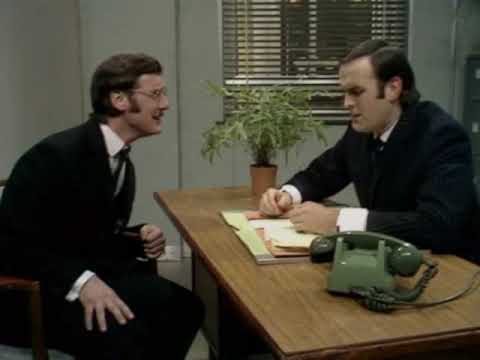
The Vocational Guidance Counselor sketch is the best thing in this show.  Palin’s a chartered accountant who seeks a change of career from chartered accountant to lion tamer.  Cleese is the counselor who’s more cautious (“It’s a bit of a jump isn’t it? I mean, chartered accountancy to lion taming in one go. You don’t think it might be better if you worked your way towards lion taming, say, via banking?”).

As previously discussed, when they went to University some of the Pythons faced possible careers as solicitors or chartered accountants – a career in comedy seemed like a distant dream.  So they never miss an opportunity to mock the grey little men, as Cleese does here.

Your report here says that you are an extremely dull person. You see, our experts describe you as an appallingly dull fellow, unimaginative, timid, lacking in initiative, spineless, easily dominated, no sense of humour, tedious company and irrepressibly drab and awful. And whereas in most professions these would be considerable drawbacks, in chartered accountancy they are a positive boon.

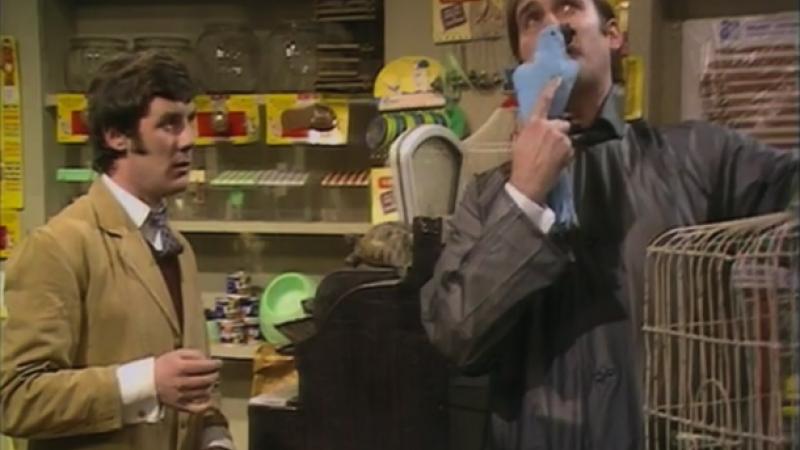
I also love Ron Obvious (Jones) who attempts a series of impossible feats (jumping the channel, eating Chichester Cathedral, tunneling to Java) egged on by his unscrupulous manager (Palin).   There’s another pet shop sketch with Palin and Cleese, although it has a darker tone than Dead Parrot.  Cleese wants a cat, but Palin only has dogs – but he suggests a neat conversion (“Listen, tell you what. I’ll file its legs down a bit, take its snout out, stick a few wires through its cheeks. There you are, a lovely pussy cat”).

And just as the show started with everybody hanging about waiting for Palin to arrive, so the last sketch ends in a similar way.  Palin is the husband with an unattractive wife (Jones) who attracts an unfeasibly large number of admirers.  Mid-way through the sketch, Palin pops off for a tinkle, which brings the proceedings to an abrupt halt (“Oh no you can’t do that. Here, we haven’t finished the sketch yet!”).

Next Up – Episode Eleven – The Royal Philharmonic Orchestra Goes To The Bathroom

We ride to destiny. Doctor Who – Silver Nemesis

silver

The Doctor is custodian of an ancient Gallifreyan artifact of almost unimaginable power.  One of the Doctor’s oldest enemies wants it (as do others) and after various adventures they acquire it.  But far too late they discover that they’ve fallen into the Doctor’s trap.

Sounds familiar? It should do, since it’s the plot of Remembrance of the Daleks. And then a month later exactly the same story was used in Silver Nemesis.  It’s hard to believe that Andrew Cartmel would have commissioned two writers to pen the same story, so presumably it was a coincidence.  But when the similarities became apparent, Silver Nemesis really should have been rewritten.

To be honest, Silver Nemesis really isn’t very good.  It’s similarity to Remembrance is only one of its problems.  I’ve always found the notion that the Doctor set his pocket watch to remind him that the Nemesis statue would crash to Earth in 1988 to be bizarre.  He has a time machine, so why didn’t he nip forward 350 years as soon as he’d launched the statue, in order to deal with the consequences?

And the scenes with the skinheads are particularly painful.  Why keep them in, since they don’t advance the plot at all, when other cuts were made which did impact the narrative?  The story would have probably been better as a four-parter, or a re-drafted three-parter, but what was transmitted was a bit of a mess.  The VHS edit (incorporating some of the cut footage) was an improvement – but the DVD only had the broadcast version.  If ever a story needed a re-edit, then it was this one – but sadly the DVD didn’t get it.

The Cybermen aren’t much cop (there’s a train of thought that posits it was all downhill for them after The Tenth Planet).  Even the briefest touch from a golden arrow is enough to kill them (whereas in Earthshock the Doctor had to grate Adric’s batch into their chest unit) and even worse, they run away when they spot gold on the ground.  As Ace would say, wimps!

Anton Diffring adds a touch of class as De Flores.  It’s not much of a part (he’s the leader of an inept bunch of neo-Nazis) but he does what he can.  Fiona Walker makes a fairly forgettable villain, although Gerard Murphy as Richard gives a nice, comic performance.

Silver Nemesis is also notable for dropping hints about the “truth” concerning the Doctor.  All this “more than a Time Lord” business was covered in depth later in the New Adventures, which was probably the best place for it.

This story is a perfectly inoffensive 75 minutes, but as its sandwiched between two stories that have considerably more scope and depth, it can’t help but look a little threadbare.

I make sweets that are so good, so delicious that sometimes, if I’m on form, the human physiology is not equipped to bear the pleasure. Doctor Who – The Happiness Patrol

hp

The Happiness Patrol is one of the greatest Doctor Who stories of all time.  That’s not possibly a view that’s particularly widely shared (it ranked only 172 out of 241 stories in the DWM 2014 poll).  But then The Gunfighters could only manage a ranking of 202 in the same poll, which is even more bizarre.

After watching The Happiness Patrol on its orignal transmission back in 1988, my first thought was that it was like Paradise Towers – only done right.  There’s a lot to enjoy in Paradise Towers, but some of the performances do let it down.  Happiness is cast so well, with no weak links.

Sheila Hancock is Helen A, an autocratic leader who has little time for anybody else’s point of view.  Saddled with an apparently subservient husband, Joseph C (Ronald Fraser), they were seen at the time as obvious caricatures of Margaret and Denis Thatcher.  The tone of Hancock’s delivery, for example, is clearly modeled on Thatcher.  Hancock told DWM in 2001 that she hated Mrs Thatcher “with a deep and venomous passion” so it’s not surprising that she took the material in the script and pushed it, possibly, even further.

Sheila Hancock and Ronald Fraser

But though Helen A can be seen as a Thatcher-clone, the script is pointing in another direction.  Take the final scene between Helen A and the Doctor.

HELEN: They didn’t understand me.
DOCTOR: Oh, they understood you only too well. That’s why they resisted you.
HELEN: I only wanted the best for them.
DOCTOR: The best? Prisons? Death squads? Executions?
HELEN: They only came later. I told them to be happy, but they wouldn’t listen. I gave them every chance. Oh, I know they laughed sometimes, but they still cried, they still wept.

Helen A had been running a reign of terror, with mass murders, referred to as “disappearances”.  Whilst Margaret Thatcher had many faults, “death squads and executions” weren’t amongst them.  This aligns Helen A and Terra Alpha much more with countries such as Chile, where political opponents of the military junta in the 1970’s also “disappeared”, never to be seen again.

Helen A has some loyal soldiers to call on – such as Daisy K (Georgina Hale) and Priscilla P (Rachel Bell).  Both Hale and Bell are great value, Hale’s drawling style of delivery can make the most out of even fairly mundane lines, whilst Bell is given some good scenes which highlight exactly how much of a fanatic she is (and just the type of solider Helen A requires when things turn desperate).

PRISCILLA: I used to work with explosives when I was in Happiness Patrol B, the anti-terrorist squad. We worked the night shift. I like working late at night.
ACE: Not interested.
PRISCILLA: Night times are when they come out.
ACE: Who?
PRISCILLA: The killjoys. Depressives, manic reactive indigenous. We got them. All of them.
ACE: What do you mean, got them?
PRISCILLA: They disappeared.
ACE: You make me sick.
PRISCILLA: I did a good job, and then they put me on this. It’s not fair. I know the streets. I’m a fighter.
ACE: No, you’re not. You’re a killer.

John Normington (Trevor Sigma) and Lesley Dunlop (Susan Q) had both guest-starred in S21, but had very different roles here.  Trevor Sigma is a much less showy part than Morgus (Trevor Sigma exists only on the periphery of the plot and his major contribution is to confirm exactly how many people have disappeared on Terra Alpha in the last six months).

Dunlop is much more central to the action and gives a very nice, understated performance (which isn’t easy in that costume).  In episode one she discusses the futility of her life and how she welcomes the possibility of her own death – something that it’s hard to find many examples of in the series, prior to this story.

But I did wake up one morning, and suddenly something was very clear. I couldn’t go on smiling. Smiling while my friends disappeared, wearing this uniform and smiling and trying to pretend I’m something I’m not. Trying to pretend that I’m happy. Better to let it end. Better to just relax and let it happen. I woke up one morning and I realised it was all over.

Sophie Aldred and Lesley Dunlop

Ronald Fraser has little to do throughout the story except react to other characters (although his final scene is a gem).  But Fraser’s lovely as the befuddled consort and he adds another touch of class to the story .  Richard D. Sharp (Earl Sigma) is very solid and provides a good foil for McCoy’s Doctor, which leads us onto the most controversial aspect of the story.

Yes, the Kandyman looks like Bertie Bassett.  For those who can’t get beyond that, The Happiness Patrol is clearly a disaster.  But the Kandyman is a wonderful creation – visually he looks great, he’s got some killer lines and despite the heavy costume, David John Pope gives him a definite character.

And there’s a fabulous relationship between the Kandyman and Gilbert M (Harold Innocent).  Virtually every scene they have together is laugh-out-loud funny, starting with the first when Gilbert returns to the Kandy Kitchen and the Kandyman angrily asks him “What time do you call this?“.

I also love this exchange in episode two.

KANDYMAN: What’s affected me? Help me!
GILBERT: It’s quite simple. Created as you are out of glucose based substances, your joints need constant movement to avoid coagulation.
KANDYMAN: What do you mean?
GILBERT: You’re turning into a slab of toffee. I saw this at the planning stage, and then I realised what the solution was.
KANDYMAN: What’s that?
GILBERT: I’ve forgotten.

The Kandyman does rather fade out of the story after episode two though.  He only has one good scene in the last episode before meeting a rather sticky end.  So whilst many people, I’m sure, would have been happy if he had fewer (or no) scenes, when re-watching the story I’m always disappointed he doesn’t have more.

The Doctor and Ace are in the thick of the action.  Ace gets to make friends with Susan Q and the Pipe People, as well as tangle with Helen A’s pet, Fifi.  Aldred continues to impress, especially since given her inexperience she’s always mixing with actors who have had much more experience than her – but she more than holds her own.

McCoy has several stand-out moments – the final scene with Helen A and the encounter with the two snipers in episode two (“Why don’t you do it then? Look me in the eye, pull the trigger, end my life. Why not?”).  This is a defining moment for the Seventh Doctor, which McCoy pulls off very well.  As previously mentioned, when he downplays, McCoy’s very effective.

The notion of the Doctor initiating a regime-change during the course of one night does seem a little unlikely, so it’s best to suppose that the rebellion was already well under way and the Doctor’s arrival was simply the spark that lit the flame.

There’s very little that I can find fault with – although I do wish that it had ended on the pull-back shot of Helen A comforting Fifi.  That seemed to be the ideal ending – and the typical good-bye scene with Susan Q and Earl Sigma that actually closed the story did seem like something of an anti-climax.

It would have been the easy option to fill all the stories from S25 with old monsters, but thankfully with The Happiness Patrol they wanted to do something different and they certainly succeeded.

Monty Python’s Flying Circus – Series One, Episode Nine – The Ant, An Introduction

lum

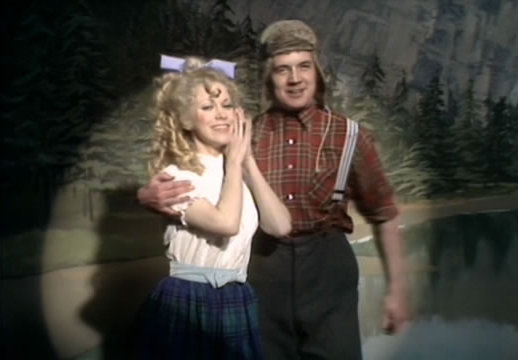
If Full Frontal Nudity is an example of Python at its best, then The Ant – An Introduction doesn’t quite hit the same heights.  It does have the Llamas and the Lumberjack Song but overall it’s a little more bitty and fragmented (not an uncommon problem for Python, particularly in later series).

It opens brightly with many fascinating facts about Llamas (“The llama is a quadruped which lives in the big rivers like the Amazon. It has two ears, a heart, a forehead, and a beak for eating honey. But it is provided with fins for swimming“).  The sketch is terminated by Chapman, wearing a dress and driving a moped, bursting a paper bag.  Which is as good as way as any, I suppose.

Sir George Head (Cleese) is planning an expedition to scale both both peaks of Mount Kilimanjaro and Idle is keen, at first, to join him. After Idle points out it only has one peak, it becomes clear that Head sees everything in double, which explains the failure of last year’s expedition (his brother was going to build a bridge between the two peaks).  It’s a nice enough sketch and does have, unusually, a punch-line.  After Idle has stormed out, it’s revealed there’s another Idle in the room who’s still keen to join Head.

The Lumberjack Song is another moment from these early shows which was to remain a staple of all their live performances.  The sketch which leads into it never did though, which is a pity as it has some nice moments.  Palin is a hairdresser with a “terrible un-un-uncontrollable fear whenever I see hair”. Jones is the hapless customer who obviously hasn’t noticed Palin’s blood-soaked overalls and simply wants a short back and sides.

I love the part when Palin switches on a tape recorder that has the sound of hair being cut as well as the typical small talk that hairdressers seem obliged to indulge in. And even when Jones misses a comment from the recording it’s clever enough to be repeated!

Given that most of the well-known Python songs were composed by Idle, the Lumberjack Song (written by Palin/Jones) is one of the exceptions.  Even though it’s incredibly familiar, it still manages to raise a smile, thanks to Palin’s enthusiasm, Connie Booth’s slow dawning realisation that Bevis isn’t quite the man she thought he was and the disgust of the Fred Tomlinson Singers (plus Cleese and Chapman).

And there’s a good follow-on, with another letter delivered in the style familiar from Points of View.

Dear Sir, I wish to complain in the strongest possible terms about the song which you have just broadcast, about the lumberjack who wears women’s clothes. Many of my best friends are lumberjacks and only a few of them are transvestites. Yours faithfully, Brigadier Sir Charles Arthur Strong (Mrs.) PS I have never kissed the editor of the Radio Times.

We then have our first sighting of a Gumby, before Idle appears as a smarmy Nightclub host.  There’s not a great deal of wordplay in this episode, so Idle’s monologue is welcome.

Good evening, ladies and gentlemen, and welcome to the Refreshment Room here at Bletchley. My name is Kenny Lust and I’m your compere for tonight. You know, once in a while it is my pleasure, and my privilege, to welcome here at the Refreshment Room, some of the truly great international artists of our time. And tonight we have one such artist. Ladies and gentlemen, someone whom I’ve always personally admired, perhaps more deeply, more strongly, more abjectly than ever before. A man, well more than a man, a god, a great god, whose personality is so totally and utterly wonderful my feeble words of welcome sound wretchedly and pathetically inadequate. Someone whose boots I would gladly lick clean until holes wore through my tongue, a man who is so totally and utterly wonderful, that I would rather be sealed in a pit of my own filth, than dare tread on the same stage with him.Ladies and gentlemen, the incomparably superior human being, Harry Fink!

By the end of this, Idle is prostrate on the floor, although he isn’t particularly concerned when he’s told that Fink hasn’t turned up, as Ken Buddha and his inflatable knees is a more than adequate subsistence.

After a film sequence featuring some visual comedy of the “hunting, shooting, fishing” type, we’re into the last sketch which features Chapman and Carol Cleveland as a young couple who are keen to enjoy a quiet night in.

Naturally enough, this doesn’t happen.  Firstly, Idle turns up at the door (“Remember me? In the pub. The tall thin one with the moustache, remember? About three years ago?”) playing essentially the same character from the Nudge, Nudge sketch.  A three-handed sketch with Idle, Chapman and Cleveland would have been logical – but Python rarely did logical, so instead we get an ever increasing guest list of grotesques.

There’s Cleese as Mr Equator (“Good evening. My name is Equator, Mr Equator. Equator. Like round the middle of the Earth, only with an L”) and Jones as his wife (“She smells a bit but she has a heart of gold”). Gilliam’s next, acting incredibly camp and wearing little more than a cape and a pair of speedos. He’s brought a friend (Palin) who’s had to bring his goat along (“He’s not well. I only hope he don’t go on the carpet.”)

As so often, Chapman is the sensible one, cast adrift in a sea of lunatics. And the point of the sketch? Well, Chapman is shot dead by Mr Equator and Cleveland disappears, so that’s a difficult one – maybe that the world is full of lunatics and it’s impossible to stop them?

Next Up – Episode Ten

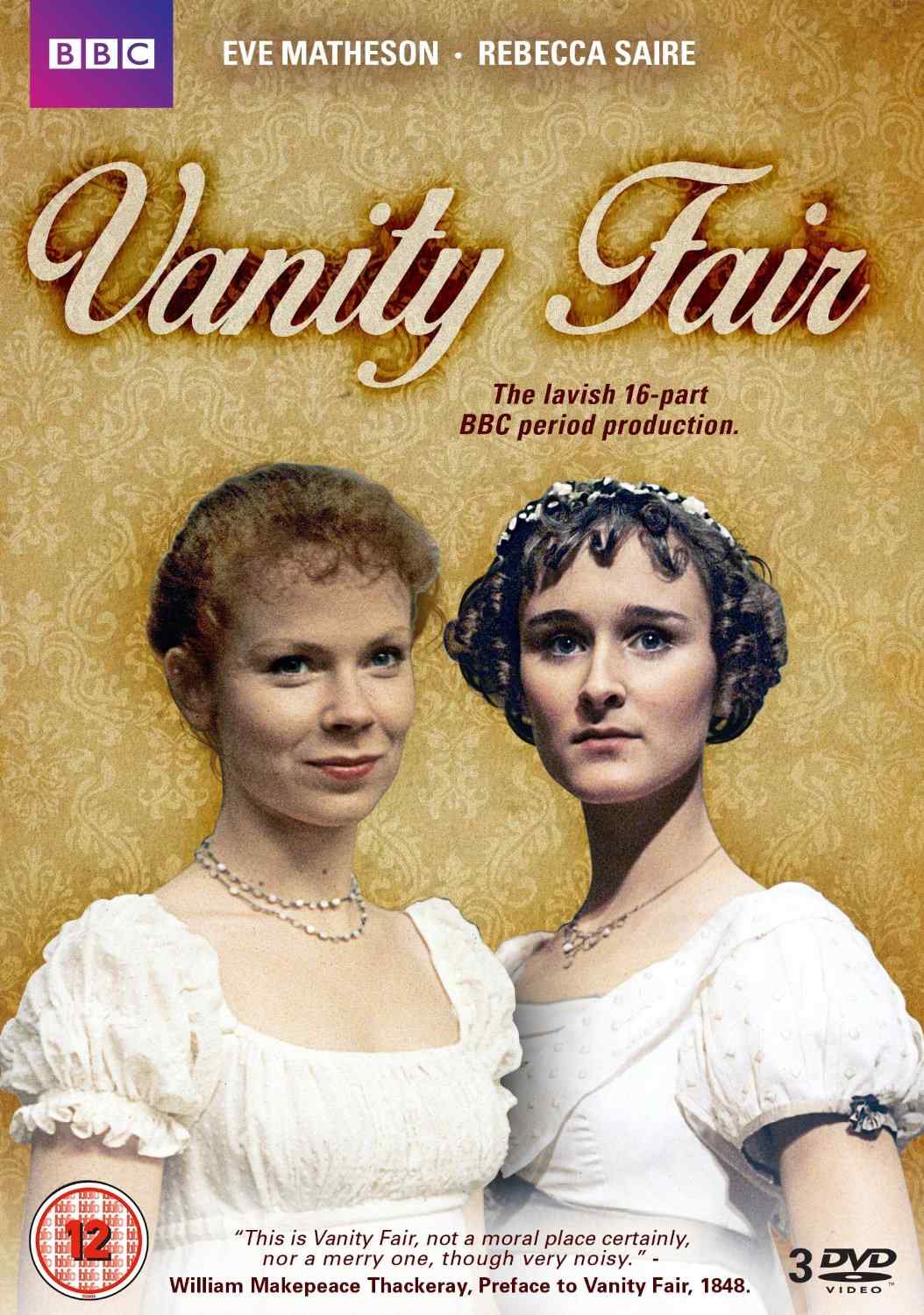
Vanity Fair (BBC 1987) forthcoming from Simply HE

vanity fair

The 1987 BBC Classic tation of Vanity Fair will be released by Simply HE at the end of November 2014.  Promotional blurb –

Eve Matheson and Rebecca Saire lead the cast in this 16-part adaptation of William Makepeace Thackeray s classic, filmed entirely at the Pebble Mill Studios. Set in the Napoleonic Wars, Vanity Fair is a rich and resplendent satire of English society in which according to Thackeray, there is great quantity of eating and drinking, making love and jilting, laughing and the contrary, smoking, cheating, fighting, dancing and fiddling. Becky (Eve Matheson), the penniless, orphaned daughter of an artist and a French opera dancer, and Amelia Sedley (Rebecca Saire), the sheltered child of a rich City Merchant are unlikely, but firm friends. From the drawing rooms of Regency London to the fields of Waterloo, Vanity Fair tells their story. Becky, an irrepressible schemer one of the most seductive social climbers of all time who will stop at nothing to get what she wants. While her friend, the meek and mild Amelia, pursues the opposite course. In the end both girls get what they want but not quite in the way they planned.

Whilst it’s pleasing to see Simply continue to release television programmes from the BBC archive, their quality control over the past year or so has been rather poor.  Various titles (Softly Softly: Taskforce, Spyship, Angels series 2, The Aphrodite Inheritence) have been afflicted by poor encoding which inadvertently “filmized” the VT sequences.

Thankfully, it appears that Vanity Fair doesn’t have these problems – so hopefully Simply have turned a corner with their QC procedures.

Monty Python’s Flying Circus – Series One, Episode Eight – Full Frontal Nudity

merely resting

I’ve previously touched upon how the Pythons generally eschewed punch-lines in favour of a style described by them as a “stream of consciousness”.  So the sketches could be linked by Terry Gilliam’s animations, vox pops from the man and woman in the street or, as in Full Frontal Nudity, a single character interrupting the sketches to complain that everything had got “too silly”.

Full Frontal Nudity treads a difficult path – not only do we have the Colonel bringing the majority of the sketches to an abrupt end with his complaints and criticisms, the Pythons also seem to delight in highlighting the inadequacy of their material.  Two sketches are terminated after the line delivered by the token female is criticized – with her wailing that “It’s my only line”.  When the Colonel curtails the opening sketch and orders the telecine to be run, Terry Jones comments that “The general public’s not going to understand this, are they?”.  And again it’s Jones (towards the end of the Dead Parrot sketch) who is apologetic for the sketch spluttering to an end, since “Oh yeah, it’s not easy to pad these out to thirty minutes”.

If you continually mock your own efforts, then there’s a real danger that the audience will agree – but by dropping this show eighth into the run it works much better than if it appeared earlier.  However, the Pythons weren’t the first to play with the format of the sketch show, it was Spike Milligan’s Q5 that really opened their eyes, as Terry Jones explains.

(Spike) made it so clear that we’d been writing in cliches, where we either did three minute sketches with a beginning, middle and end, or we did one joke with a blackout.

Once they found they were free from such self-imposed restrictions, the Pythons were able to experiment even further.  Full Frontal Nudity is one of more successful examples of this from the first series.

After a few vox pops on the merits of full frontal nudity, there’s a voice-over played over stock footage from WW2 – “In 1943, a group of British Army Officers working deep behind enemy lines, carried out one of the most dangerous and heroic raids in the history of warfare. But that’s as maybe. And now . . .”

This is the first wrong-footing moment as we jump to unoccupied Britain 1970 and Watkins (Idle) who’s a solider who wants to leave the Army because it’s dangerous (“A bloke was telling me, if you’re in the army and there’s a war you have to go and fight. I mean, blimey, I mean if it was a big war somebody could be hurt”). This is a nice, silly idea and it doesn’t go on too long.

We then meet Luigi and Dino (Palin and Jones), two Italians who are keen to offer the Colonel the benefits of their protection (“You’ve got a nice army base here, colonel. We wouldn’t want anything to happen to it”). The fact that they’re running a protection racket becomes clear very quickly, but the sketch continues for a while longer – possibly it was extended so that when the Colonel brings it to a halt (“No, the whole premise is silly and it’s very badly written. I’m the senior officer here and I haven’t had a funny line yet. So I’m stopping it”) it has a little more impact.

My favourite sketch in this episode is Buying a Bed.  Terry Jones and Carol Cleveland are newlyweds keen to buy a bed.  The problem is that Mr Verity (Idle) multiplies every figure by ten whilst Mr Lambert (Chapman) divides every figure by three.  At the start of the sketch you can’t help making mental calculations to follow the discussion of bed sizes, but this is fairly irrelevant as once Mr Lambert hears the word “mattress” he places a paper bag on his head and Mr Verity has to step into a tea-chest and sing Jerusalem to snap him out of it.  Yes, there’s only a illogical logic to this, but it works (I don’t know why, but it does).  And presumably the names of the two salesman were deliberately chosen to pay tribute to a certain well-known female television producer.

There’s also a sketch about a dead parrot, which has become quite well known.  The Dead Parrot is, of course, one of Python’s greatest hits, although like a lot of the material from the first series it’s received politely, but without wild enthusiasm, by the studio audience.  But they do warm up a little as Cleese gets to the end of his rant.

It’s not pining, it’s passed on. This parrot is no more! It has ceased to be. It’s expired and gone to meet its maker.This is a late parrot. It’s a stiff. Bereft of life, it rests in peace. If you hadn’t nailed it to the perch it would be pushing up the daisies. It’s rung down the curtain and joined the choir invisible. This is an ex-parrot.

When performed live it was no surprise that it tended to end after Cleese’s line “If you want to get anything done in this country you’ve got to complain till you’re blue in the mouth” as it meanders on for a few minutes more with the odd nice moment (arguing that the palindrome of Bolton would be Notlob rather than Ipswich) but this may be another sketch that’s been allowed to run on longer in order to justify bringing on the Colonel to stop it.

Hell’s Grannies and the even more bizarre follow-ups (baby snatchers and vicious gangs of keep left signs) end what is probably the best show from the first series of Python and one the strongest from all four series.  Others might have equally good sketches, but Full Frontal Nudity flows well from sketch to sketch with very little filler.

Next Up – Episode Nine – The ant, an introduction

An Age Of Kings – Episode Nine – The Red Rose and the White (Henry VI Part One)

eileen atkins
Eileen Atkins

Henry VI Part One is generally considered to be the weakest of Shakespeare’s history cycle.  This might explain why, uniquely, it was the only play adapted for An Age of Kings to be condensed down to a single episode. This obviously meant that major cuts had to be made – the exploits of Talbot in France are completely removed as are all the battle scenes.  What remains are the verbal skirmishes between the nobles in England as they symbolically choose either white or red roses to mark their allegiance.

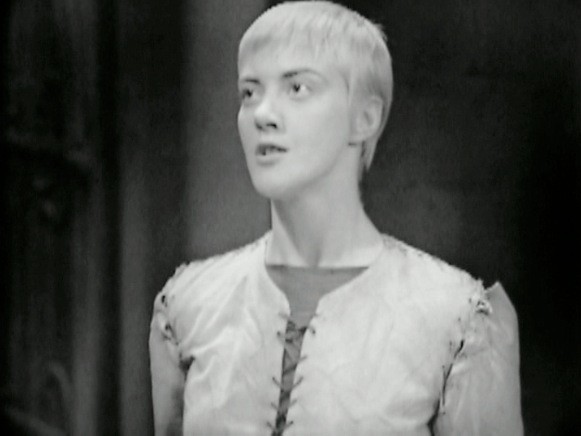
With the battles in France excised, what’s left are the scenes between the Dauphin (Jerome Willis) and Joan of Arc (Eileen Atkins).  These could have been cut too, which would have allowed all the events of the play to be centered in England, but I’m glad they were kept in.  Atkins gives a striking performance – her Joan is confident and self-assured and she easily captivates the Dauphin.

Dauphin, I am by birth a shepherd’s daughter,
My wit untrain’d in any kind of art.
Heaven and our Lady gracious hath it pleased
To shine on my contemptible estate:
Lo, whilst I waited on my tender lambs,
And to sun’s parching heat display’d my cheeks,
God’s mother deigned to appear to me
And in a vision full of majesty
Will’d me to leave my base vocation
And free my country from calamity:
Her aid she promised and assured success:
In complete glory she reveal’d herself;
And, whereas I was black and swart before,
With those clear rays which she infused on me
That beauty am I bless’d with which you see.
Ask me what question thou canst possible,
And I will answer unpremeditated:
My courage try by combat, if thou darest,
And thou shalt find that I exceed my sex.
Resolve on this, thou shalt be fortunate,
If thou receive me for thy warlike mate.

One of the drawbacks of such intensive cuts is that it severly reduces her role.  But the little we have of Joan is very impressive, all the more so since up until now there have been few decent roles for women in the history cycle.  Director Michael Hayes also creates some impressive shots – for example, when Joan’s nearly defeated and attempting to summon up demonic spirits to aid her, he zooms into her eyes and superimposes dancing figures onto her irises.  Such a trick would be commonplace now, but to achieve such an effect then and particlarly during a live broadcast is quite noteworthy.  Joan’s death is also another stand-out moment.  The flames are quite effective, as are her ear-splitting screams as the picture fades to black.

Back in England, the nobles are taking sides.  Given the cuts to the play and the number of characters we see, this isn’t particularity easy to follow and is probably one of the major drawbacks of condensing the play.  What is clear is that the Duke of Gloucester (John Ringham) is the protector of the young King, Henry VI (Terry Scully), and Winchester (Robert Lang) opposes Gloucester.

Both Ringham and Lang (familiar faces from previous episodes) give good performances and Scully manages (via his high-pitched tones) to indicate Henry’s youth and inexperience.  Another notable appearance is that of Mary Morris as Margaret, daughter of the Duke of Anjou.  Margaret would prove to be a major figure in the upcoming plays and Morris impresses here as she would do later on.  She was always an unusual actresses, with a style all of her own, and there’s more than a hint of that here.

Effectively, The Red Rose and the White stands as a prologue for the battles of the Wars of the Roses which will run for the remaining six episodes of the series.  It may not be the most distinguished part of An Age Of Kings, but thanks to some fine performances (particularly Eileen Atkins) it’s not without interest.

Next up – Episode Ten – The Fall of the Protector

What am I dealing with? Little green men? No, little green blobs in bonded-polycarbite armour. Doctor Who – Remembrance of the Daleks

remembrance

In 1988, Doctor Who celebrated it’s 25th anniversary.  So bringing back the Daleks (and setting the story in the location and timescale of the first episode from 1963) seemed to be as good a way as any to kick off the anniversary year.  Although there are various nods to the past (Coal Hill School, Totters Lane, etc) they aren’t allowed to overwhelm the story, which is traditional in some ways but also quite different in others.

On the traditional side, the Doctor and Ace link up with the military, who function as a surrogate UNIT.  Group Captain Gilmore (Simon Williams) is visually and character-wise a dead ringer for the Brigadier whilst Sgt Mike Smith (Dursley McLinden) performs the functions of Yates/Benton.  The Doctor’s role as scientific adviser is filled by Dr Rachel Jensen (Pamela Salem) and Allison (Karen Gledhill).

The early action in episode one is impressive.  After the fairly lightweight S24, it seems that Remembrance was an attempt to get back to basics.  The Doctor is a more withdrawn, mysterious figure than the open and, at times, guileless character from S24.  As with some of his earlier incarnations he has a lack of patience with the floundering humans (“Nothing you possess will be effective against what’s in there!”).

The thing “in there” was a Dalek and it’s the first one we see in the story and also the first to be destroyed.  This must be the Dalek story, to date, with the highest number of destroyed Daleks.  And whilst the Doctor put paid to this one with a few cans of Ace’s Nitro 9, he was mistaken about the military being unable to deal with them.  Some of their weaponry would later prove to be very useful.

If you like explosions, then Remembrance is certainly your sort of story, although there’s still time for some quieter, character-driven sequences.  One of the best occurs in episode two, as the Doctor is musing over whether he’s right to do what he’s decided to do.

JOHN: Can I help you?
DOCTOR: A mug of tea, please.
JOHN: Cold night tonight.
DOCTOR: Yes, it is. Bitter, very bitter. Where’s Harry?
JOHN: Visiting his missus. She’s in hospital.
DOCTOR: Of course. It’ll be twins.
JOHN: Hmm? Your tea. Sugar?
DOCTOR: Ah. A decision. Would it make any difference?
JOHN: It would make your tea sweet.
DOCTOR: Yes, but beyond the confines of my tastebuds, would it make any difference?
JOHN: Not really.
DOCTOR: But
JOHN: Yeah?
DOCTOR: What if I could control people’s tastebuds? What if I decided that no one would take sugar? That’d make a difference to those who sell the sugar and those that cut the cane.
JOHN: My father, he was a cane cutter.
DOCTOR: Exactly. Now, if no one had used sugar, your father wouldn’t have been a cane cutter.
JOHN: If this sugar thing had never started, my great-grandfather wouldn’t have been kidnapped, chained up, and sold in Kingston in the first place. I’d be a African.
DOCTOR: See? Every great decision creates ripples, like a huge boulder dropped in a lake. The ripples merge, rebound off the banks in unforeseeable ways. The heavier the decision, the larger the waves, the more uncertain the consequences.
JOHN: Life’s like that. Best thing is just to get on with it.

Tea and sympathy
Tea and sympathy

Eventually it becomes clear that the Doctor has lured the Daleks to Earth in order to allow them to steal the Hand of Omega (a mystical Time Lord device that the first Doctor dropped off sometime prior to the events of An Unearthly Child).  This story marks the start of the Doctor as a cosmic manipulator which after the series was cancelled was developed much, much further in Virgin’s range of New Adventures novels.

I have to admit to being somewhat uneasy with the Doctor’s actions in this story.  All of the deaths can be laid at his door, because if he’d removed the Hand of Omega from Earth then there would have been no reason for the Daleks to come here.  And when you tot up the number of people who died (as well as the fact that the Doctor also destroyed an entire planet – Skaro) it’s hard to argue that it was worth it.

The Doctor has been ruthless in the past (destroying the Ice Warriors’ fleet in The Seeds of Death, for example).  But at least in Seeds you could say that the Ice Warriors made the first move by attempting to invade Earth.  Here, the Doctor appeared to initiate events for no other reason than he fancied wiping out the Daleks.

The original Dalek story was concerned with, as Ian put it, “a dislike for the unlike” or as Ace says, “racial purity”.  This is also developed here, as we see two Dalek factions – the Renegades and Imperials.  It’s something of a surprise to find that Davros is now leading the Imperial Daleks, particularly when you remember he was captured by them at the end of Revelation of the Daleks.  Clearly Davros was a smooth talker!

The Dalek factions are intent on wiping each other out, since both sides consider the other to be an abomination, and this is also paralled with the humans.  It may seem a little crude now, but Mike’s views – “You have to protect your own, keep the outsiders out just that your own people can have a fair chance.” and the sign in the boarding house run by Smith’s mother (“No coloureds”) are attempts to connect Doctor Who to the real world, something which had rarely happened in the series before.

On a more trivial level, Daleks can now climb stairs and the cliff-hanger to episode one is a glorious moment.  The Daleks’ new extermination effect is very impressive as well and the Daleks themselves look pretty good – although they do have a tendency to wobble when out on the streets.  Historically, the Daleks always moved best on a smooth studio floor and whenever they were called out onto location they tended to be placed either on boards or tracks.  A new system was tried for this story, which allowed the Daleks to move more freely, although on cobbled streets they did tend to rock from side to side!

From Genesis onwards the Dalek stories were dominated by Davros, so only having him appear right at the end was a good move.  The battle computer was a clear attempt to fool the audience into believing that it was Davros, and  this works quite well – particularly the creepy moment when the girl (Jasmine Breaks) is revealed.  But as she was seen watching Radcliffe in the scene prior to this, it’s something of a mystery how she was able to get back to Radcliffe’s yard before he did.

"That's some serious hardware. Did you see that, Professor? Unsophisticated, but impressive."
“That’s some serious hardware. Did you see that, Professor? Unsophisticated, but impressive.”

Sophie Aldred has some good material to work with here.  She gets to attack the Daleks with a baseball bat (“Who are you calling small?”) and enjoys a close relationship with Mike that is instantly soured when it’s revealed he’s inadvertently helped the Daleks.

Remembrance also allows us to bid farewell to a number of Doctor Who stalwarts, all making their final contribution to the series.  Michael Sheard and Peter Halliday had both appeared in numerous stories dating back to the 1960’s whilst John Scott-Martin and Roy Skelton had also racked up numerous credits since the 1960’s as monsters and monster voices respectively.

Although I have issues with the Doctor’s actions, there’s no denying that Remembrance is a well-made story with some fine performances.  The return of the Daleks was a canny move, since it generated some good publicity and as the story didn’t disappoint it was surely responsible for hooking some new viewers into tuning in for the following adventure.

Monty Python’s Flying Circus – Series One, Episode Seven – You’re No Fun Anymore

scifi

Although the first six episodes of Python had spun about in various different ways, You’re No Fun Anymore is a departure from the norm.  The first five minutes or so seem to be operating in the usual way but the remainder is devoted to a single sketch – that of the tennis-playing blancmanges from outer-space.

We open with Eric Idle as a camel-spotter.

Interviewer: Well, now tell me, what do you do when you spot a camel?
Spotter: Er, I take its number.
Interviewer: Camels don’t have numbers.
Spotter: Ah, well you’ve got to know where to look. Er, they’re on the side of the engine above the piston box.
Interviewer: What?
Spotter: Ah – of course you’ve got to make sure it’s not a dromedary. ‘Cos if it’s a dromedary it goes in the dromedary book.
Interviewer: Well how do you tell if it’s a dromedary?
Spotter: Ah well, a dromedary has one hump and a camel has a refreshment car, buffet, and ticket collector.

The sketch terminates with Idle declaring “You’re no fun anymore” which leads into several other sketches where we only see the shots of the same punch-line – much to Idle’s chagrin who’s peeved that everybody else has pinched his line.

After the accountant sketch and a very worthwhile public-service announcement (“And now here is a reminder about leaving your radio on during the night. Leave your radio on during the night“) we’re into the heart of the episode, introduced by Michael Palin’s creepy redcoat.

Now we’ve got some science fiction for you, some sci-fi, something to send the shivers up your spine, send the creepy crawlies down your lager and limes. All the lads have contributed to it, it’s a little number entitled, Science Fiction Sketch.

Englishmen (and women and babies) are being transformed into stereotypical Scotsmen (complete with kilt, bushy red beard and bagpipe accompaniment).  The establishment are baffled, but luckily for us Graham Chapman is an expert in why people change from one nationality to the other and Donna Reading is his incredibly dumb (but pretty) girlfriend who asks all the questions you would expect someone to ask in this type of story.

reading and chapman

At this point in time the team don’t seem to have settled on Carol Cleveland as their default female performer which is reputably because director Ian McNaughton wanted to hire various different actresses in order to have a variety of pretty faces in the episodes.  Reading is fine but she lacks the sense of comedy timing that Cleveland would have brought to the part.

The sketch can be broken down into various smaller sketches, some of which would have worked well by themselves.  Probably the best of the bunch is John Cleese’s police Sergeant who simply can’t understand how Eric Idle and four friends can play a game of doubles.

Sergeant: A blancmange, eh?
Girl: Yes, that’s right. I was just having a game of doubles with Sandra and Jocasta, Alec and David…
Sergeant: Hang on!
Girl: What?
Sergeant: There’s five.
Girl: What?
Sergeant: Five people . . . how do you play doubles with five people?
Girl: Ah, well … we were…
Sergeant: Sounds a bit funny if you ask me … playing doubles with five people…
Girl: Well we often play like that… Jocasta plays on the side receiving service…
Sergeant: Oh yes?
Girl: Yes. It helps to speed the game up and make it a lot faster, and it means Jocasta isn’t left out.
Sergeant: Look, are you asking me to believe that the five of you was playing doubles, when on the very next court there was a blancmange playing by itself?.
Girl: That’s right, yes.
Sergeant: Well answer me this then – why didn’t Jocasta play the blancmange at singles, while you and Sandra and Alec and David had a proper game of doubles with four people?
Girl: Because Jocasta always plays with us. She’s a friend of ours.
Sergeant: Call that friendship? Messing up a perfectly good game of doubles?
Girl: It’s not messing it up, officer, we like to play with five.
Sergeant: Look it’s your affair if you want to play with five people … but don’t go calling it doubles. Look at Wimbledon, right? If Fred Stolle and Tony Roche played Charlie Pasarell and Cliff Drysdale and Peaches Bartcowitz… they wouldn’t go calling it doubles.
Girl: But what about the blancmange?
Sergeant: That could play Ann Haydon-Jones and her husband Pip.

There’s a certain wonky logic to the story.  The blancmanges are desperate to win Wimbledon and believe that if they turn all Englishmen into Scotsmen (as it’s well known that the Scots can’t play tennis) then they’ll have a clear run to the title.  This rather ignores all the other countries that are good at tennis, but this is a story about blancmange’s playing tennis so I’m not going to argue points of logic.

There are some (I assume) deliberately wobbly effects (an unconvincing flying saucer and the blancmanges themselves) which add to the general 1950’s b-movie feel.  Although the science fiction sketch isn’t wall-to-wall hilarity, there’s enough good stuff to hold the interest although it would be a long time before the Pythons would attempt something similar.

Next up – Episode Eight – Full Frontal Nudity

Monty Python’s Flying Circus – Series One, Episode Six – It’s The Arts

frog

After some silly captions (Python always loved captions) we move to It’s The Arts, which is designed to see how many times the name of a forgotten composer can be recited before it becomes incredibly irritating.  His name?  Johann Gambolputty de von Ausfern-schplenden-schlitter-crass-cren-bon-fried-digger-dingle-dangle-dongle-dungle-burstein-von-knacker-thrasher-apple-banger-horowitz-ticolensic-grander-knotty-spelltinkle-grandlich-grumblemeyer-spelter-wasser-kurstlich-himble-eisen-bahnwagen-guten-abend-bitte-ein-nürnburger-bratwürstel-gerspurten-mitz-weimache-luber-hundsfut-gumberaber-shönedanker-kalbsfleisch-mittleraucher-von-Hautkopft of Ulm.  Terry Jones is his only surviving relative who pegs out halfway through reciting his name.  Interviewee John Cleese doesn’t seem too concerned about this and pops off to grab a shovel to dig him a makeshift grave!

Michael Palin is very good as the boss of a crime syndicate that never actually breaks the law.

Right … this is the plan then. At 10:45 .. you, Reg, collect me and Ken in the van, and take us round to the British Jewellery Centre in the High Street. We will arrive outside the British Jewellery Centre at 10:50.  I shall then get out of the car, you Reg, take it and park it back here in Denver Street, right? At 10:51, I shall enter the British Jewellery Centre, where you, Vic, disguised as a customer, will meet me and hand me £5.18.3d. At 10:52, I shall approach the counter and purchase a watch costing £5.18.3d. I shall then give the watch to you, Vic. You’ll go straight to Norman’s Garage in East Street. You lads continue back up here at 10:56 and we rendezvous in the back room at the Cow and Sickle, at 11:15. All right, any questions?

It fits into a familiar pattern for Python – visually they look and sound like criminals, so the reveal that they aren’t is the key.  It maybe should have been more of a throw-away, but it’s worth it for Palin’s hysterical reaction when he discovers that one of his gang has left their car five minutes overdue on a parking meter.

Five minutes overdue. You fool! You fool! All right … we’ve no time to lose. Ken – shave all your hair off, get your passport and meet me at this address in Rio de Janeiro Tuesday night. Vic – go to East Africa, have plastic surgery and meet me there. Reg – go to Canada and work your way south to Nicaragua by July. Larry – you stay here as front man. Give us fifteen minutes then blow the building up. All right, make it fast.

Crunchy Frog is one of Python’s stand-out sketches – which is no doubt reinforced since it featured during most of their live performances, up to and including the O2 gigs earlier this year.  It’s possible to imagine it being performed by Cleese/Palin with Palin acting shifty and defensive as the Whizzo Chocolates boss (like the Dead Parrott/Chesse Shop sketches) but whilst that would have worked quite well, what we actually had was even better.  Terry Jones is proud of his confectioneries and puzzled as to why anybody could find them at all problematic.  Add in John Cleese’s pernickety high-pitched policeman and you have a classic sketch.

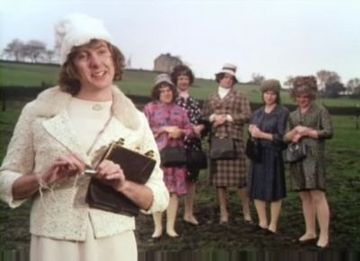
Most members of Python faced the possibility of a life in a dead-end job after they left University, so it’s not really a surprise that so many of their sketches feature grey little men who tend to be either Stockbrokers or Chartered Accountants.  One of these is Michael Palin in The Dull Life of a City Stockbroker who blithely ignores all the excitement around him (a wonderfully made-up John Cleese as Frankenstein’s monster killing people at the bus-stop and a topless lady in the newsagents, for example) and instead retreats into the excitement of his DC-style comic.  This leads into some nice Gilliam animation which then segues into the theatre sketch.

Graham Chapman is an inoffensive chap waiting for the curtain up and Eric Idle is a Red Indian who sits next to him.  This bizarre culture clash (“Me heap big fan Cicely Courtneidge. She fine actress … she make interpretation heap subtle … she heap good diction and timing … she make part really live for Indian brave. My father – Chief Running Stag – leader of mighty Redfoot tribe – him heap keen on Michael Denison and Dulcie Gray”) is the motor which drives the sketch. It’s also of interest, since Chapman and Idle appear to be sitting in the Python audience which allows us a quick look at the people who came to these early recordings.

Graham Chapman (as in the Theatre sketch) tended to play the more normal, grounded characters (see The Holy Grail and The Life of Brian for further examples of this).  So Twentieth Century Vole allows him a more grotesque character – the despotic film producer Irving C. Saltzberg.  This sketch allows us to see all six Pythons together (as well allowing Terry Gilliam his most lines to date) plus guest Ian Davidson.  The premise is simple – Saltzberg is a tyrant and his employees are all frightened yes-men who attempt to interpret their boss’ whims and provide him with the answer they think he wants.

Twentieth Century Vole has some good moments, although once you understand the premise of the sketch there’s no real surprises and it doesn’t spin off into an unexpected direction.  But it’s worthwhile for Saltzberg’s increasingly bizarre story ideas and, of course, “Splunge”!

Well now we’re getting somewhere. No, wait. A new angle! In the snow, instead of the tree, I see Rock Hudson, and instead of the dog I see Doris Day and, gentlemen, Doris Day goes up to Rock Hudson and she kisses him. A love story. Intercourse Italian style. David Hemmings as a hippy Gestapo officer. Frontal nudity. A family picture. A comedy. And then when Doris Day’s kissed Rock Hudson she says something funny like…

Next Up – Episode Seven – You’re No Fun Anymore

Do you fancy a quick trip round the twelve galaxies and then back to Perivale in time for tea? Doctor Who – Dragonfire

dragonfire

Back in 1987 Dragonfire topped the DWM best story poll.  Maybe this was because it was the most “traditional” story of the season and that was why it appealed to the fans.  But though it’s a decent enough romp, the lack of logic in the plot (and some of the performances) are a bit of a problem.

Edward Peel, as the villanious Kane, is one of Dragonfire’s highlights though.  Peel doesn’t have to do a great deal – except loom menacingly – but he looms very well.  He does has the benefit of playing against Patricia Quinn as Belazs, who has a nice line in frustration and despair.  Tony Osboa as Kracauer isn’t so good though – he’s rather overplaying throughout all his scenes.  And Kracauer is clearly not too bright.  Having agreed with Belazs that it would be a good idea to kill Kane, he then waits around after sabotaging the temperature controls for Kane to wake up and kill him.  Not a good move!

I also have to mention the ice statue created of Kane’s dead partner, Xana.  He’s clearly delighted with it – “A work of artistry, my friend. Incandescent artistry. I could almost believe Xana lives again.” – but it doesn’t look very impressive to me and not even a terribly good likeness of Xana from the brief picture of her that we see.

The Doctor and Mel are on the hunt for a Dragon, assisted, in his own unique way, by Glitz (Tony Selby) and Ace (Sophie Aldred).  The icy lower levels allow McCoy plenty of opportunities to slip and slide, whilst episode one ends with a notorious cliffhanger – as the Doctor, well, hangs off a cliff.  Apparently it should have been made clear that the Doctor had to go down since he couldn’t go back – but why wouldn’t he have waited for Glitz?  And how did Glitz get down in order to rescue the Doctor?

Bonnie Langford was uncertain for a long time whether or not to return for S25.  When Dragonfire was written it still wasn’t decided, so there were two endings scripted – either Mel went off with Glitz and Ace joined the Doctor, or Ace left with Glitz.  As it was, shortly after the first studio session Langford decided to leave after all, so Ace would become the Doctor’s new traveling companion.

Kane has a tempting offer for Ace

Sophie Aldred was incredibly inexperienced (Dragonfire was the first time she’d been inside a television studio) but she acquits herself well.  The character of Ace is not as well defined in this story as it would become – but given the fact that many companions never develop at all during their time on the show, the growth and journey of her character is quite remarkable.  For some fans in the late 1980’s, it was Aldred’s show with McCoy playing second fiddle.

Some of the plot-threads in this story will be picked up and developed across the next two seasons, and already we have the sense of a damaged girl hiding behind a tough, streetwise facade.

MEL: You’re from Earth?
ACE: Used to be.
MEL: Whereabouts on Earth?
ACE: Perivale.
MEL: Sounds nice.
ACE: You ever been there?
MEL: No.
ACE: I was doing this brill experiment to extract nitroglycerine from gelignite, but I think something must have gone wrong. This time storm blows up from nowhere and whisks me up here.
MEL: When was this?
ACE: Does it matter?
MEL: Well, don’t you ever want to go back?
ACE: Not particularly.
MEL: What about your mum and dad?
ACE: I haven’t got no mum and dad. I’ve never had no mum and dad and I don’t want no mum and dad. It’s just me, all right?
MEL: Sorry. What about your chemistry A level, then?
ACE: That’s no good. I got suspended after I blew up the art room.
MEL: You blew up the art room?
ACE: It was only a small explosion. They couldn’t understand how blowing up the art room was a creative act.

Things tick along quite nicely for the first two episodes.  The Doctor/Glitz and Mel/Ace make two good teams but everything collapses in episode three as there’s no escaping the major plot flaws.  Kane’s been imprisoned on Svartos for three thousand years, so why has he only decided now to escape?  And if the Dragon (the biomechanoid) is his jailer (and how exactly does this work?) then why does it contain the key which enables him to escape his exile?

And the silliest part of all – are we really supposed to believe that during the last three thousand years, when he’s been running the galactic equivalent of Bejam, he’s never once checked to see how things were going on his home planet of Proamon?  It was destroyed by a super-nova two thousand years ago and nobody thought to tell him or he didn’t discover this for himself?

There’s an echo of The Hand of Fear here, but at least Eldrad had a good excuse for not knowing about the current situation on Kastria as only his fossilised hand remained, buried deep in the Earth’s surface for millions of years.  Therefore you can’t blame him for not keeping up to date with the latest news (unlike Kane, of course).

Episode three also has the rather uninspiring bug hunt with McLuhan and Bazin and rather too much of the cutesy Stellar (Miranda Borman) for my taste.  So ultimately Dragonfire is a bit of a damp squib, though the future was looking brighter.

S23 and S24 had been difficult times for the series, but S25 and S26 would see something of a creative rebirth.  As it remained scheduled against Coronation Street there was a general public indifference and the critics were rarely kind either.  Doctor Who might have become a beleaguered and largely unloved series, but it still had a few tricks and surprises up its sleeve.

Monty Python’s Flying Circus – Series One, Episode Five – Man’s crisis of identity in the latter half of the twentieth century

confuse a cat

The long opening sketch, Confuse a Cat, seems to be an excuse for a sequence of frankly bizarre images, such as a penguin on a pogo stick (not a sentence that tends to get typed very often!).

Before this though, Graham Chapman’s vet is able to put his finger exactly on the cat’s problem.

You see …. your cat is suffering from what we vets haven’t found a word for. His condition is typified by total physical inertia, absence of interest in its ambiance – what we Vets call environment – failure to respond to the conventional external stimuli – a ball of string, a nice juicy mouse, a bird. To be blunt, your cat is in a rut. It’s the old stockbroker syndrome, the suburban fin de siecle ennui, angst, weltschmertz, call it what you will.

The rest of the episode contains shorter sketches linked by a series of vox-pops.  The Cleese/Palin sketch with Palin as the world’s most inept smuggler and Cleese as the customs officer is probably the best of the bunch, although as it features a punch-line it feels a little out of place as a Python sketch.  Possibly, like some of the other early sketches, it predated the series?

After this, Terry Jones attempts to chair a discussion on the points raised with a duck, a cat and a lizard.  Since all are stuffed, this doesn’t generate a great deal of debate.  Luckily though, there are plenty of men in the street who are able to offer an opinion, such as this stockbroker (played by John Cleese).

Well I think they should attack the lower classes, first with bombs and rockets, destroying their homes and then when they run helpless into the streets, mowing them down with machine guns. Ad then of course releasing the vultures. I know these views aren’t popular, but I have never courted popularity.

A Cleese/Chapman sketch featuring Cleese as a bizarre interviewer and Chapman as a bewildered interviewee doesn’t really go anywhere – there would be better examples of the domineering Cleese to come in future episodes.

Like a lot of Man’s crisis etc, the Encyclopedia Salesman sketch is a throwaway, but I’ve always rather liked it.

Next up – Episode Six – It’s The Arts

Here’s to the future. Doctor Who – Delta and the Bannermen

delta

Delta and the Bannermen is another good story from Doctor Who’s most unfashionable season.  It may be pretty light fare but there’s something infectious about the production that induces a feel-good factor.  Well, for some people anyway.  Others can’t get beyond the Ken Dodd factor.

Doddy is something of an infamous guest star, but he’s only on screen for a couple of minutes so he’s not really much of a problem.  His appearance does indicate that this isn’t going to be the most serious of stories, but while there may be plenty of comic moments everybody tends to play it pretty straight, well most of them anyway.

Richard Davies, as Burton, was a familiar face from British sitcoms (a regular on Please Sir and a guest at Fawlty Towers, for example) and his performance is pitched at that level.  After all, it’s difficult to deliver lines such as “now, are you telling me that you are not the Happy Hearts Holiday Club from Bolton, but instead are spacemen in fear of an attack from some other spacemen?” without having a certain comedy knack.  Davies has the knack and his bewildered but enthusiastic presence is one of Delta’s many strengths.

Hawk (Morgan Deare) and Weismuller (Stubby Kaye) are also good value, although they don’t have a great deal to do with the main plot and their subplot (looking out for an American satellite) is rather odd, to say the least.  But it’s Stubby Kaye! In Doctor Who! He may be dressed as the oldest teenager in town but he gives a charming turn.

The main plot (Gavrok hunting down the Chimerons) remains somewhat vague.  We never know why Gavrok hates the Chimerons, so he’s ultimately a rather sketchy villain.  This lack of motivation meant that it required a good actor to make something out of a fairly nothing role and Don Henderson certainly delivers.  Henderson was a popular television face (The XYY Man, Strangers and Bulman) and he’s able to generate a suitable level of boo-hiss villainy.

Sadly, the object of his pursuit (the Chimeron Queen, Delta) is something of a weak link.  Belinda Mayne gives a rather colourless, passionless performance and it’s hard to really connect with her or sympathise with the plight of her people.  The other main female lead (Sara Griffiths as Ray) was much better.  It’s easy to see why Ray was originally planned as companion material, although if she had joined she would needed to have brushed up on her end of episode acting.  At the end of episode one she’s threatened with death, but there’s a singular lack of anxiety on her face – just a look of mild inconvenience!

The rather lovely Sara Griffiths

Given the comic-strip nature of the story, Gavrok’s destruction of the Nostalgia Tours bus at the end of the second episode is very jarring.  The murder of thirty or forty people should be shocking (particularly those we know, like Murray) but it never really registers.  Partly because the effect doesn’t convince but also because it seems out of place in the story to date.

The likes of The Myth Makers had three episodes of comedy followed by a dark, violent fourth episode.  If things had taken a similar turn in Delta then this scene may have worked better, but events carry on as normal in episode three (with, for example, the bees attacking the Bannermen – a rather silly scene).

With two female guest roles and only three episodes, Bonnie Langford is a little sidelined in this story (she doesn’t do much at all in the last episode).  Sylvester McCoy is on fine form though.  I love his scenes with Ray in episode one, where he does his best to console her after she’s discovered that Billy (David Kinder) only has eyes for the lady from another planet.  His hesitant comforting of the sobbing girl shows a tender side to the Doctor that we don’t see very often.

“Love has never been known for its rationality”

And his confrontation with Gavrok at the end of episode two is very good, especially the last line.

GAVROK: Give me Delta and I will give you your life.
DOCTOR: Life? What do you know about life, Gavrok? You deal in death. Lies, treachery and murder are your currency. You promise life, but in the end it will be life which defeats you.
GAVROK: You have said enough. I have traversed time and space to find the Chimeron queen. I will not be defeated.
DOCTOR: As you will. I came here under a white flag and I will leave under that same white flag, and woe betide any man who breaches its integrity. Now step aside! Release those prisoners.
(A Bannerman moves to obey.)
DOCTOR: Gavrok, it’s over. You’re finished, and we’re leaving.
(But as the Doctor, Mel and Burton walk to the motorbike and sidecar, they hear the sound of cocking weapons behind them.)
DOCTOR: Actually, I think I may have gone a little too far.

All this, plus a guest appearance by the legendary Hugh Lloyd (Hugh and I, Hancock’s Half Hour) and a stack of great 1950’s music makes me genuinely puzzled as to why this remains amongst the also-rans in every Doctor Who poll.  You wouldn’t want every story to be like it, but once in a while it’s good to let your hair down and have a bit of a party – and Delta and the Bannermen certainly delivers that.

Ice Hot. Doctor Who – Paradise Towers

paradise

Like the rest of S24, Paradise Towers remains somewhat unloved by Doctor Who fandom.  Out of 241 stories, the 2014 DWM poll places Time and the Rani at 239, Paradise Towers at 230, Delta at the Bannermen at 217 and Dragonfire at 215.

Is Paradise Towers really the 11th worst Doctor Who story of all time?  I don’t think so, and whilst it has serious faults (hello Richard Briers, especially in episode four!) there’s plenty of things that do work.

Firstly, Sylvester McCoy is very good.  His performance is far removed from the prat-falling Doctor seen in Time and the Rani.  Here, the Doctor is content to watch and listen, and at times there’s a nice sense of stillness from him.  As will become clear when we move through his era, McCoy is at his best when he’s downplaying and at his worst when he has to shout and emote.

Most of his best scenes are with the Caretakers, and this one is a particular favourite.

DOCTOR: I suppose how you guard me is in that rulebook.
DEPUTY: Yes. Rule forty five B stroke two subsection five.
DOCTOR: I wouldn’t mind having a look at that rulebook, if that’s not against the rules. I mean, after all, I am a condemned man.
DEPUTY: Hmm.
(The Deputy consults the rule book.)
DEPUTY: Yes, we can count that as your last request. You’re entitled to one if you’re to undergo a three two seven appendix three subsection nine death. Not a pretty way to go.
(The Deputy passes over the rule book and the Doctor leafs through it.)
DOCTOR: How extraordinary. No, no. It can’t be true.
DEPUTY: What’s that?
DOCTOR: Oh no, no. It’s. You couldn’t possibly.
DEPUTY: If it’s there, it’s true. Rules are rules. Orders are orders.
DOCTOR: If you say so. I don’t want to make a fool of you.
DEPUTY: Read out what it says.
DOCTOR: Oh, very well, but I find it hard to credit
DEPUTY: Read it!
DOCTOR: It says here about a three two seven appendix three subsection nine death, that after you’ve been guarding the condemned prisoner for (checks his wristwatch) thirty five minutes, you must all stand up.
DEPUTY: But if we
DOCTOR: Yes, I know, I know, I find it extraordinary. I don’t really expect you to do it. But it is in there.
(The Deputy and the Caretaker stand up.)
DOCTOR: The Caretakers present must then move five paces away from the prisoner.
(They do so.)
DOCTOR: Five. Close their eyes and put their hands above their head.
(The Doctor tiptoes up to the back of the Deputy and carefully picks his trouser pocket, removing his wallet containing a selection of cards.)
DEPUTY: How long do we do this for?
DOCTOR: For about a minute and a half. You see, that’s how long the prisoner needs.
(The Doctor takes his umbrella from the Caretaker.)
DEPUTY: To do what?
DOCTOR: Find the key card to the door and escape.
DEPUTY: Sorry?
DOCTOR: Find the key card to the door and escape.

Rules are rules
Rules are rules

Clive Merrison, as the Deputy Chief Caretaker, gives a lovely comic performance throughout.  As everybody’s come up against the relentless grind of bureaucracy at some time, the rule-book spouting Deputy is something of a joy.  Richard Briers, as the Chief Caretaker, is pretty good in the first three episodes (although there are signs of the problems to come) but everything falls to pieces when he gets to episode four.

Once the Chief has been taken over by Kroagnon, Briers’ performance goes into free-fall.  It’s astonishingly bad and the question has to be why did JNT and director Nick Mallet allow him to do it?  This is probably the reason why the story is so poorly regarded, but even so, there’s some good material and performances in the rest of the story.

Tilda (Brenda Bruce) and Tabby (Elizabeth Spriggs) are great fun as the two old dears who want Mel to stay for lunch, as it were.  Their eventual fate (vanishing down the waste-disposal unit) is one of many points in the story which signify that this isn’t a Doctor Who that’s operating on a realistic level.  The tone of the piece and the performances are pitched more in the style of a slightly twisted fairy tale rather than the straight-ahead realism of, say, The Caves of Androzani.

The Kangs are interesting, with a slang language all of their own – but the casting seems a little off.  They appear have been written as gangs of teenage girls, but the actresses playing them look too old and sound too middle-class.  There’s possibly nothing that could really have been done though, since younger actresses would have had limitations on the hours they could have worked, which would have been a problem for the production.

There’s some nice satirical points in the story, particularly on the problems of urban decay.  At one time, tower blocks were seen as the only solution to the post-war housing problem, but only a few years after they were built they had become virtual prisons for some of their inhabitants.  Kroagnon’s opinion that Paradise Towers would be fine if only it wasn’t full of people is one that was shared by certain other architects.  But a building has to be designed to be lived in, not just to exist as a form of modern sculpture.

This type of tale is naturally not going to be to everyone’s tastes.  A frequent criticism of Paradise Towers is that it looks and feels like a children’s programme (an odd comment to make about a Doctor Who story surely) but I’d sooner have something like this, which is attempting something different, than another Dalek or Cybermen story.

Back in the late 1980’s, a term was coined for these types of stories – “Oddball”.  And whilst the series would later give the fans some of the things they wanted – the return of the Daleks, Cybermen, the Brigadier, etc – they would also throw a few Oddball stories into the mix.  And some of the Oddballs have aged pretty well, certainly they stand up to scrutiny better than the likes of Silver Nemesis or Battlefield.

It’s hard to imagine Paradise Towers ever being reclaimed as a classic (or even a halfway decent story) by most people, but thanks to some good performances (McCoy and Merrison particularly) it’s well worth pulling off the shelf and revisiting.