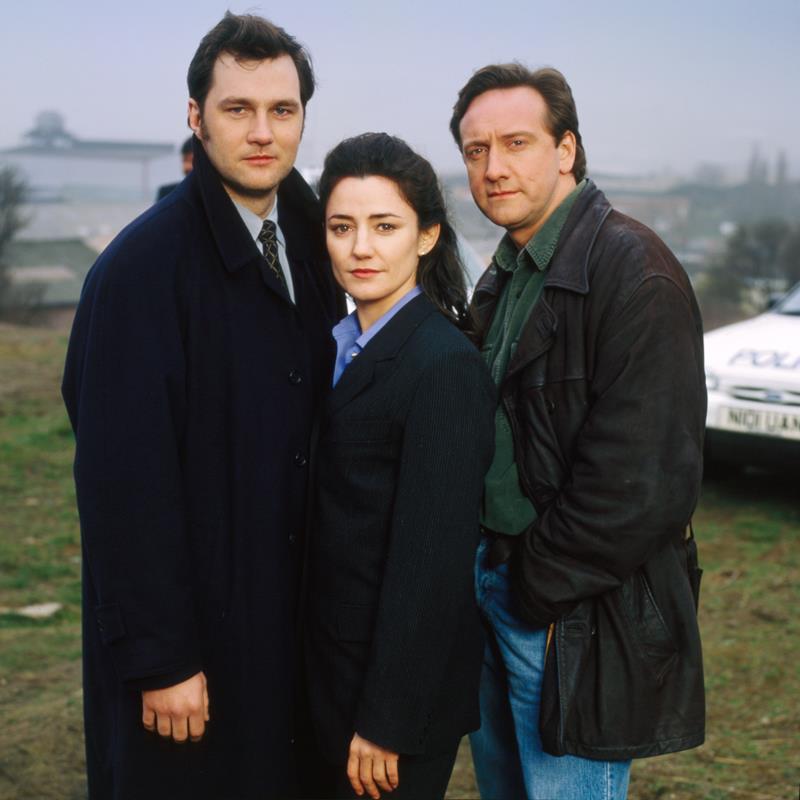
Doctor Who – The Web of Fear. Episode One

Following the news of Deborah Watling’s death, I’m sure I wasn’t the only one to reach for this story.  Back in the mid eighties though, if you wanted to see Victoria in action you were limited to either the second episode of The Abominable Snowman, episode three of The Enemy of the World or the first episode of this one (and that was always supposing that you were able to obtain a pirate VHS from a friendly contact).

It’s very pleasing that season five is now much better represented than it was back then and, for me, it’s the two stories returned in 2013 – The Enemy of the World and this one – which are the real jewels in the crown.

I first encountered Web 1 back in the late eighties, on a pirate tape along with a selection of other orphaned Hartnell and Troughton episodes (a bit like an early Lost in Time then, although the picture quality sometimes left a little to be desired).  It’s therefore an episode which I’m very familiar with, having rewatched it countless times across the decades (always wondering whether the rest of the story would maintain this strong opening).

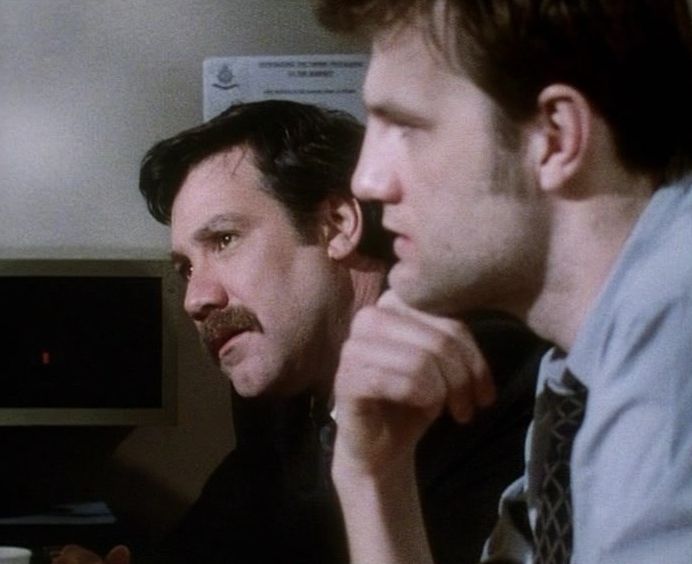
Non-controversial statement – Douglas Camfield was Doctor Who‘s best director.  It’s easy to see why he directed more stories than anybody else – his skill at crafting intriguing picture compositions (both in the studio and on film) was second to none and there’s plenty of examples to be found in this opener.

Since studio time was always limited, most directors wouldn’t spend too long on creating interesting visual images – simply getting the actors to hit their marks and deliver their lines without bumping into the scenery seemed to be the top priority.  Camfield, possibly due to the fact that he ran his productions with a military precision, was quite different as he was able to find the time to craft pleasing shot selections.

A good example can be found in the early TARDIS scenes.  The Doctor, Jamie and Victoria, staring at the scanner screen, are positioned with the Doctor in front, Victoria behind him and Jamie at the back.  In order to make this shot work, all three actors had to hit their marks exactly whilst the cameraman also had to be in precisely the right place.  If anybody was slightly off, then the composition wouldn’t work.  Many directors would simply have elected to line them up side by side (this would have been easier to shoot, but also would have looked unnatural – Peter Davison raises this point several times on his audio commentaries – the way that certain directors shot the TARDIS scenes very flatly).

I assume the reason why the confrontation between Travers (Jack Watling) and Julius Silverstein (Frederick Schrecker) is recorded on film was because the underground sets took all the available studio space.  Camfield always had an affinity with film (no surprise that he later graduated to all-film series like The Sweeney) which makes this scene a creepy pleasure.  It’s true that Jack Watling gives a very broad performance (“stubborn old goat!”) and his facial contortions are something to behold, but presumably he was playing the part as written.

Strong female characters aren’t terribly common during this period of the show, so Travers’ daughter Anne (Tina Packer) stands out rather.  A scientist in her own right, she’s acidly polite when the hapless Captain Knight (Ralph Watson) attempts to clumsily chat her up.

KNIGHT: What’s a girl like you doing in a job like this?
ANNE: Well, when I was a little girl I thought I’d like to be a scientist, so I became a scientist.
KNIGHT: Just like that?
ANNE: Just like that.

Compare and contrast this with The Invasion (which in its early drafts would have featured return appearances for Anne and Professor Travers). Anne’s replacement – Isobel – is a much more pallidly drawn character who’s happy to entertain romantic overtures from Knight’s counterpart – Captain Jimmy Turner.

Whilst I may love The Web of Fear dearly, it’s not a story that makes a lick of sense.  Firstly, if the Great Intelligence’s plan was to ensnare the Doctor, why envelop London in a web?  After all this wasn’t the early seventies – a time when the Doctor was resident on modern-day (to the viewers) Earth.

And the moment when the museum Yeti changes before our eyes from the cuddly Abominable Snowman version into the sleeker Web of Fear model might look good, but again it’s something which isn’t at all logical.

Quibbles apart, this opener effectively sets the story up.  We know what we’re dealing with (Yetis in the Underground!) and we’ve also been introduced to a varied cast of military characters who we’ll get to know better as the serial progresses.

For many long years there seemed to be little hope that we’d ever get to see the rest of the story.  And then in 2013 something remarkable happened …..

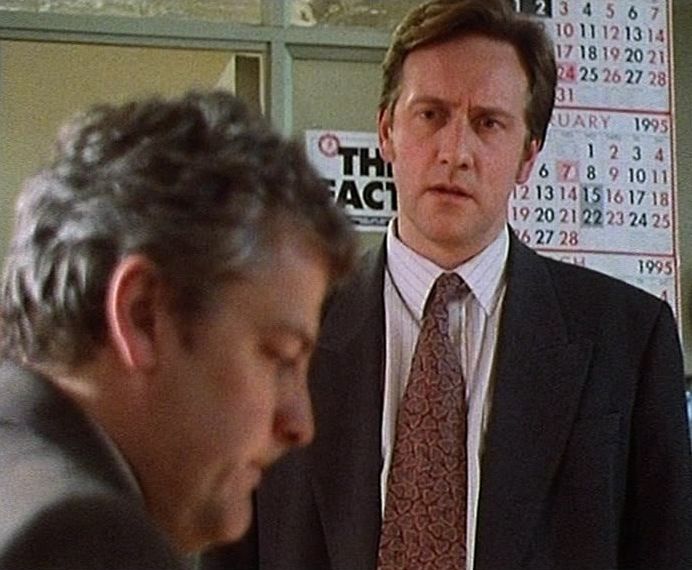
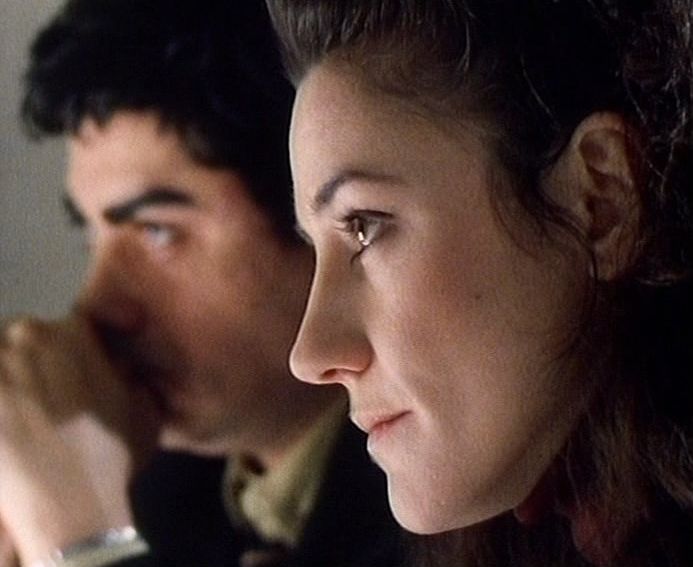
Out of the Blue – Series Two, Episode Six

blue s02e06

The team investigate the death of a fourteen year old prostitute called Justine Painton (Caroline O’Hara) ….

We’re pitched straight into the action. It’s late at night and in a run down part of town, Justine’s body is discovered. With a plastic bag over her head and rope marks on her wrists it seems that natural causes can be ruled out.

The officers stand around cracking weak jokes in the time honoured fashion (anything to take their minds off the actuality of the present situation). A brief moment of levity is provided when Becky sets the record straght about her night of limited passion with Lew (she knows that he would have already spun them his version of events). The only problem is that he hasn’t said a word ….

Justine’s mother, Fran (Siobhan Finneran), maitains a shrine to her daughter at home. Numerous school photos and beauty pagent trophies act as reminders of the girl she was, not what she’d become. Wasted potential (Becky and Warren view the cleaned up girl on the mortuary slab and Warren mentions how beautiful she was) is a theme of the story.

Family-man Ron finds the case a little hard to deal with. It’s not dificult to understand why (girls the same age as his daughter leading a dissolute life). One of Justine’s friends, Kirsty (Sarah Jane-Potts), tells him and Marty that Justine embraced life on the streets wholeheartedly. Is this the truth or simply an obfuscation? And what precisely did her mother know about her daughter’s new life?

One very striking moment occurs when Kirsty is speaking about Justine. The scene is overlaid with photographs of a younger Caroline O’Hara, which serves as an effective counterpoint between the past and the present.

It’s a remarkable coincidence that Richard Shaw (Pip Donaghy), the father of Warren’s ex-girlfriend Lucy, knew Justine intimately (he took bondage photographs of her). He offers to share his information, provided the police can arrange a meeting with his estranged daughter. Warren knows precisely where she is, because he’s been keeping tabs on her (mmm, a touch obsessive).

Local celebrity, boxer Vinnie Harper (Adam Kotz), was involved with Fran. But was he also intimate with Justine? The big guns (DI Temple and Lew) are wheeled out for a pulsating interrogation as we see Vinnie hauled over the coals.

Although Caroline O’Hara (making her screen debut) has very limited screentime (after all, her character is dead when we first see her) Justine still permeates every part of the story. Her death means that she’s robbed of her own voice, so others have to ascribe her with motivations and fill in her character for us.

Although answers are provided, justice is harder to come by. This was one of the strengths of Out of the Blue, a series which never felt obligated to pretend that life was fair. One of the final scenes – in which a distraught Lew makes this point to a resigned Temple – could be seen as a setup for the third series which never came. Would series three have finally been the point where Lew went too far?

We’ll never know, but while Out of the Blue never became a mainstream success, twenty years on it stands up as a flawed – but fascinating – series.

Deborah Watling (1948 – 2017)

image

I was very sorry to hear today that Deborah Watling has died at far too young an age. Whilst she’ll no doubt always be best remebered for Doctor Who, she had several other entries on her CV which are worth checking out.

Right at the beginning of her career was H.G. Wells’ Invisible Man (1958). Ten-year old Debbie played Sally, niece to Peter Brady, the invisible man of the title. Sally rarely played a central role in the stories but Debbie was always eye-catching and managed to steal more than a few scenes.

Her last dramatic television role was as the vampish Norma in Danger UXB (1979). Possibly not a series that’s terribly well-remebered today, but it’s a quality WW2 programme with a fine ensemble cast which I’ll have to dig out soon for a rewatch.

On the big screen, 1973 saw her act with two British pop stars from very different generations. Take Me High, a tale of Cliff Richard and brumburgers is a wonky guilty pleasure whilst That’ll Be The Day is in a different class altogether. Debbie played Sandra, a young girl used and rather abused by the feckless Jim MacLaine (David Essex). That’ll Be The Day is more than a David Essex star vehicle since it stands up as a decent film in its own right. It’s something else which I’ll no doubt be revisiting shortly.

Back In my convention-going days I had the opportunity to meet Debbie on several occassions and she was always a delight – an attentive and welcoming guest. Possibly my strongest memory of her comes from a small convention held in Weston-Super-Mare during the mid nineties.

As often happened, the timetable started to go a little awry which meant that nobody was terribly pleased when the auditorium was cleared for what appeared to be no good reason. But all turned out well in the end as it became clear that Debbie had been rehearsing a special entertainment – a song and dance routine where, showing a good deal of leg, she left most of us speechless! Happy days and a memory to treasure.

This is an obvious clip to end on, but it’s a very pertinent one. Thank you Debbie. RIP.

Out of the Blue – Series Two, Episode Five

blue s02e05

Three homeless people (one of them played by the highly recognisable Andy Devine – who would later appear as Shadrach in Emmerdale) are poisoned after a seemingly good Samaritan offers them a drink of champagne laced with prescription tranquillisers.

Temple’s mildly curious, but doesn’t regard it as much more than a sick joke.  It’s a sign of the times that the office only seems to have one computer and – as the victims use it to put together an identikit picture of their well-heeled poisoner – Temple gripes about the expense.  “Have you any idea how much that computer takes out of my budget? It’d be cheaper to hire Walt Disney”.

Temple’s given some good lines in this one.  A few minutes later he asks Becky and Warren exactly what they’re going to do.  “Put out an All Points Alert for Burlington Bertie?”  That’s a rather obscure reference which – back in the pre-internet nineties – would probably have perplexed a section of the audience.

Elsewhere, Bruce, Lew, Marty and Ron go in mob-handed to tackle Gibbs (Peter Jonfield), who appears to have a shop full of stolen goods – although annoyingly none of his stock appears to be on the stolen property register.  By racially taunting Bruce, Gibbs successfully manages to get under his skin – making him all the keener to nail him, although it also might serve to make him more reckless.

This subplot somewhat moves into the background once it’s discovered that Jackson (Devine) has been attacked again, only this time he’s dead.  Is it connected to the previous poisoning?  The descriptions of the suspects indicate not and the fact that one of them had red hair gives Marty the chance for a droll comeback.  “That’s handy, I’ve been looking for an excuse to arrest Mick Hucknall”.

They trawl the drug rehabilitation centres for clues, which sees Lew and Tony take diametrically opposing views on their usefulness.  It’s no surprise that the humanitarian Tony believes they help to prevent crime as well as getting people back on the straight and narrow whilst the more cynical Lew begrudges the fact that his taxes are used on such people.

Bruce has been operating on a tight-fuse for a while.  And after Warren makes an offhand remark (wondering if his obsessive nature is a family trait) Bruce takes it as a dig directed at his father and fisticuffs ensue.  This creates a nice sense of tension which, together with Lew’s off-kilter personality, means that the team have never been more dysfunctional.

Another soap favourite, Maggie Jones (Blance Hunt from Coronation Street) makes a brief appearance as Joan Palmer.  Bruce wants Joan to identify the property from Gibbs’ shop as hers, but when she’s unable to do so Bruce is once again frustrated.  Emma Bird, who also would have been a familiar face at the time (she’d played Maxine during the 1992/93 run of Casualty) makes an impression as Nikki, another of the poisoned down and outs.  She’s an actor who seems to have slipped off the radar, as her last screen credit (an episode of Liverpool 1) was all the way back in 1999.  And the eagle-eyed might spot a young Benedict Wong making a brief appearance as a wages clerk.

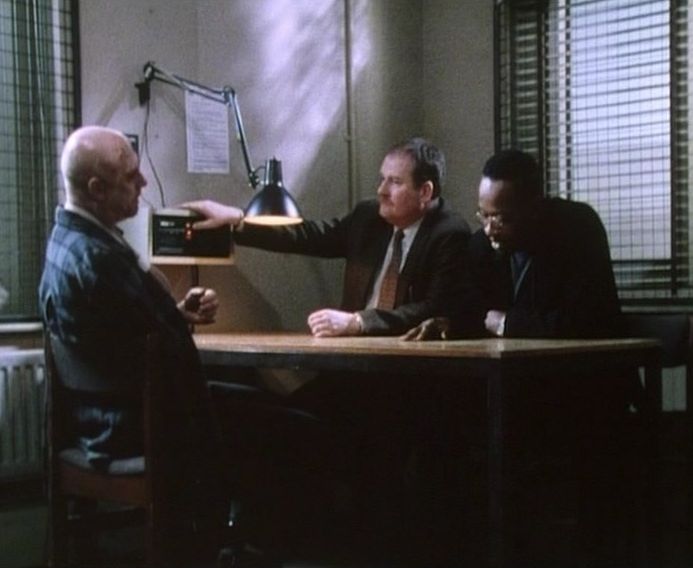
The team arrest a suspect, Eamon Timmer (Simon Tyrell), for Jackson’s murder.  He’s very talkative before the tape starts rolling (“I killed Jackson Hanley! I did it. And I’ll kill every tosser in this room”) but doesn’t say a word after the red light goes on.

Although none of the plots really engage, the interactions between the team (especially the continually wise-cracking Marty) helps to keep the interest levels up.  The final scene is especially intriguing. After Becky’s attempt to console Warren (still smarting over the end of his relationship with Lucy) comes to nothing, she winds up in bed with Lew.  Her post-coital expression makes it plain that she realises what a terrible mistake it was ….

Out of the Blue – Series Two, Episode Four

blue s02e04

Danny Caswell (David Prosho) makes a stand against local drug dealer Tommy Defty (Neil Stuke). But when Danny’s house is trashed and his car is torched he wonders if talking to the police was the best option. Meanwhile, Tommy continues to taunt the police, convinced that he’s untouchable.

This episode’s cold open is very effective. A typically bleak, run-down estate is the venue as Lew and Bruce rush over to Danny’s house. It’s not just the damage that’s disturbing as the imagery (stickmen hanging) is plainly designed to intimidate. But although Danny’s not scared off, the CPS, in the form of Barbara, decide that they haven’t good enough evidence to proceed.

Warren caustically refers to the CPS as “Couldn’t Prosecute Satan” whilst Marty has his own unique take on how they might deal with Tommy. “I could take me Black and Decker round his house and drill his arse”.

Danny and his wife, Diane (Kate Rutter), cooperated with the police and got nothing for their pains – except a burnt car, a trashed house and the enmity of Tommy’s crew. It’s not really a great advert for working with the police. A frustrated Danny later vandalizes Barbara’s house and when questioned by Temple angrily tells him why. “You’ve given up on us. You’ve pulled the ladder up after you”.

Lew’s off-kilter personality comes to the fore when he and Bruce question Tommy’s mother, Mrs Defty (Barbara Ewing). He fingers her drying underwear and lays a delicate hand on her shoulder. Later, he breaks into her bedroom for a chat ….

Lew’s mind games are effective, if unconventional (and no doubt illegal). He knows that Tommy’s mother, just like everybody else, lives in fear of him – so needling both her and him might be the way to chip away at his hard shell. Ewing (best known for Brass) is effective whilst Stuke (who has gone on to enjoy a considerable career) is excellent value as the cocky drug-lord.

The loose cannon that is Lew is the motor which drives this episode along. Mrs Defty sums it up well. “Tommy scares me right enough, but you scare me more”.

Warren’s relationship with Lucy seems to have hit an impasse after she starts chatting to Tommy at a nightclub (despite Warren telling her not to). This might be good news for Becky, who seemed a little perturbed that Lucy and Warren were becoming serious. It’s doubtful that Lucy and Becky will ever be friends though, especially after Lucy spits in her face.

When Lucy – an unstable person if ever there was one – declares that she’s heading off to be with Tommy it adds another complication to the story. Warren and Becky go riding to the rescue, which involves them planting drugs on Lucy so they can extract her without making Tommy suspicious.

Another strong story which features a victory of sorts, although the collateral damage also has to be taken into account.

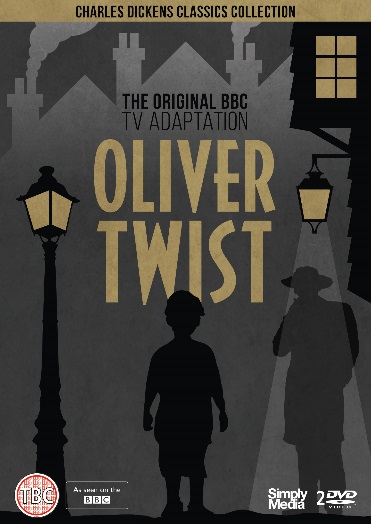
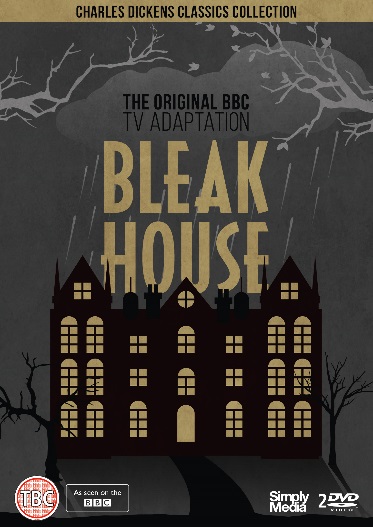
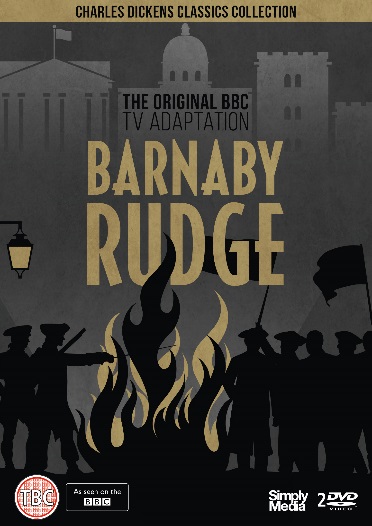
Olivier Twist/Bleak House/Barnaby Rudge to be released by Simply Media – 21st August 2017

Due on the 21st of August from Simply Media are another three classic Charles Dickens adaptations from the 1950’s and 1960’s.  Press release  –

Simply Media are delighted to announce the DVD release of three BBC Charles Dickens classic drama adaptations on 21st August 2017: Oliver Twist (1962), Bleak House (1959) and Barnaby Rudge (1960).

These rare and highly sought-after original BBC drama series are presented in their stunning black and white original form, and are all fondly remembered for their great production value and the fantastic acting talent in each production.

These will form a part of Simply Media’s Charles Dickens Classics Collection, with three other Charles Dickens classics already available on DVD from Simply Media: Dombey and Son (1969), Great Expectations (1967) and Our Mutual Friend (1958).


Oliver Twist (1962)

image003

The first ever BBC television adaptation of the Charles Dickens classic Oliver Twist. Adapted by Writers’ Guild of Great Britain award winner Constance Cox (The Forsyte Saga), who specialised in creating great adaptations of classic literature for screen, and featuring an atmospheric soundtrack composed by BAFTA-nominee Ron Grainer (Doctor Who).

This uncompromising adaptation of Dickens’ tale of a gang of orphan boys turned to crime changed the face of British Sunday teatime viewing. Cox’s unvarnished depiction of despair and depravity in the back alleys of 19th century London, and the cruel divide between rich and poor, shattered expectations of cosy family drama. But this is Oliver as Dickens intended, without the enforced jollity of the blockbuster Lionel Bart/Carol Reed musical.

BAFTA-nominees Max Adrian (The Devils) stars as villainous Fagin and Peter Vaughan (Game of Thrones / Our Friends in the North) an indelibly brutal Bill Sikes, Bruce Prochnik (Emergency-Ward 10) a gentle Oliver, Melvyn Hayes (It Ain’t Half Hot Mum) a spry Artful Dodger, and Carmel McSharry (Beryl’s Lot) the trapped and powerless Nancy. Interestingly, both Prochnik, who played Oliver, and Willoughby Goddard (William Tell), who played Mr. Bumble, reprised their roles in the original Broadway production of “Oliver!

This landmark BBC production was a gritty game-changer that raised the bar and stretched the boundaries of TV adaptation and serial drama.

Format: DVD / RRP: £19.99 / Certificate: PG

Catalogue Number: 169661 / Barcode: 5019322696612

Genre: TV Series – Drama / Run Time: 390 mins approx. on 2 discs


Bleak House 1959

image004

The first ever BBC television adaptation of the Charles Dickens classic Bleak House, also adapted by the prolific Constance Cox. Starring Andrew Cruickshank (Dr. Finlay’s Casebook), Diana Fairfax (Just William), Colin Jeavons (The French Lieutenant’s Woman), Timothy Bateson (Dad’s Army) and Michael Aldridge (Last of the Summer Wine).

Dickens’ elegant satire about a disputed inheritance and the self-serving workings of the legal system gripped the public’s imagination. Cruickshank stars as John Jarndyce and Fairfax as his ward Esther Summerson in this delightfully complex comic drama.

A mystery story in which Esther uncovers the truth about her birth and her lost mother Lady Dedlock (Iris Russell); a murder story featuring one of the first detectives in English fiction, Inspector Bucket (Richard Pearson); and at its heart a redemption tale about a desolate home transformed by compassionate love. A slick and satisfying examination of double-dealing and injustice.

Format: DVD / RRP: £19.99 / Certificate: U

Catalogue Number: 167536 / Barcode: 5019322675365

Genre: TV Series – Drama / Run Time: 390 mins approx. on 2 discs


Barnaby Rudge (1960)

image005

The acclaimed BBC adaptation of Dickens’ classic tale of the 1780s Gordon Riots Barnaby Rudge, adapted by Michael Voysey and directed by Z Cars’ Morris Barry, remains the only TV portrayal of Dickens’ tantalizing gothic drama.

Starring John Wood (War Games), Barbara Hicks (Brazil), Timothy Bateson (Harry Potter and the Order of the Phoenix) and BAFTA-nominee Joan Hickson (Agatha Christie’s Miss Marple).

On a stormy night in 1775 a ragged stranger (Nigel Arkwright) wanders into the Maypole Inn. Edward Chester (Bernard Brown – Crown Court), whose horse is lame, leaves the inn on foot to meet his beloved Emma Haredale (Eira Heath – A Man for All Seasons) at a masked ball. Joe Willet (Alan Hayward – Cash on Demand), quarrels with his father, Maypole landlord John (Arthur Brough – Are you Being Served?), and joins the army, only saying goodbye to Dolly (Jennifer Daniel – The Reptile), the pretty daughter of locksmith Gabriel Varden (Newton Blick – Morgan: A Suitable Case for Treatment). Varden’s household includes his formidable wife (Joan Hickson) and dithering maid Miss Miggs (Barbara Hicks).

Simple-minded Barnaby Rudge (John Wood) wanders in and out of the story, chattering with his pet raven Grip. Barnaby’s mother Mary (Isabel Dean) is visited by the stranger, and feels compelled to protect him.

As the stories interweave, Barnaby is caught up in the Gordon Riots, a violent demonstration against Catholics. Jailed with the ringleaders, will he hang for their actions?

Format: DVD / RRP: £19.99 / Certificate: PG

Catalogue Number: 169660 / Barcode: 5019322696605

Genre: TV Series – Drama / Run Time: 390 mins approx. on 2 discs

Out of the Blue – Series Two, Episode Three

blue s02e03

Terry Forrest (Thomas Craig) is the victim of a male rape. Chris Mannings (Fine Time Fontayne), a gay man who lives on Terry’s estate, becomes a suspect ….

An unusual topic to cover, the episode isn’t graphic but the aftermath of the assault resonates throughout. Unsurprisingly there’s some unreconstructed views offered by the team, notably Marty. When Temple tells him and Ron to hit the gay clubs to look for leads, he mutters “better get that frock ironed Ron”. Ron seems to find the case particularly distasteful. Becky tells him to think of it as an assault, rather than a rape, but this doesn’t seem to help.

Ron later explains his problems to Temple. “It’s just that if it’s a lass who’s been raped, then I can tell her that she’s safe, that I’m there to protect her. I looked at Terry Forrest today. What can I say to him. What can I offer him?”

When Mannings’ naked, battered body is dumped outside the police station, it’s obvious that the locals have dished out their own brand of summary justice. One of Forrest’s friends, Kevin Ryan (Karl Draper), seems to be implicated in the attack, but he denies it.

There are plenty of parallels to be found in real life with this sort of knee-jerk vigilante action, but the question here is whether Mannings is actually guilty. The wonderfully-named Fine Time Fontayne (unsurprisingly not the name he was christened with) impresses as Mannings as does Thomas Craig as Forrest.

As the story continues, there are varying degrees of empathy to be found. Lew, on hearing the news of Mannings’ beating, decides there’s little they can do to help the gay community ward off further attacks unless they “supply an armed guard for everybody on the estate with a Judy Garland album”.

It’s also an interesting wrinkle that Becky is the one who voices the opinion that Forrest might not have been raped after all – possibly it was consensual sex which then turned violent. It wouldn’t have been surprising, had this been a female rape, to hear the male officers express a similar viewpoint, so there’s an obvious irony at work here.

We eventually learn the identity of Forrest’s attacker. Given that the story had only given us a few possibilities it doesn’t come as a complete surprise, but the scene where the rapist offers his plea of self-justification is another nicely done moment.

Although the various personal traumas of the regulars – Marty’s marriage problems, Warren’s tense relationship with Lucy – are still bubbling away, for once they’re reduced to background noise as the policework dominates.

Out of the Blue – Series Two, Episode Two

blue s02e02

Zamwa Sidikki, owner of a minicab business, is discovered bludgeoned to death, a blood-covered baseball bat nearby. Racial or personal? That’s what Temple and the others have to discover.

Since Sadikki wasn’t the most popular of men there’s no shortage of suspects, such as his estranged son – Rafi (Raji James) – who had a falling out with his father several months ago. Gareth Chester (Neil Boorman), the only white driver employed by Sadikki, also seems to be a strong suspect. But possibly Sadikki’s daughter, Yasmin (Rina Mahoney), might hold the key.

Warren continues to let his lower regions rule his head as his relationship with Lucy continues. He thinks nothing of nipping away during the middle of the day for a moment of passion with his attractive, if flaky girlfriend. This flakiness is on show after she flashes him (and a delighted elderly passer-by) from her bedroom window.

It’s fair to say that his colleagues aren’t terribly sympathetic about Warren’s conquest. Bruce succinctly sums up their mood. “He’s been going off at us for years about respecting womankind. And then it turns out that kid Warren is just another copper who can’t keep his toolbox in his trousers”.

He’s not the only one with personal concerns though. Marty and his wife have decided to adopt (a storyline which bubbles away in the background for the remainder of the series) whilst Bruce’s father, Andy (Oscar James), suffers a paranoid attack.

James, instantly recognisable thanks to his three year stint on EastEnders, makes an immediate impact here. Andy, currently living with his daughter, comprehensively smashes up her kitchen, although it’s clear that he’s not responsible for his actions.

The tricky subject of mental health would have been a fruitful one to tackle over the course of the series, but it’s somewhat glossed over since this episode is the only time we meet Andy. But even given this, Lennie James has a couple of decent scenes as Bruce attempts to come to terms with his father’s illness.

Although Sidikki’s murder is never that engrossing a mystery, the script still clips along at a nice pace, helped no end by the dialogue. One of my favourite moments occurs when Marty, who can always be relied upon, loses his patience with a suspect. “I can always tell when you’re lying ‘cos your lips move. We are not being paid to stand around here listening to you feeding us your tripe and bollocks. Do we look like Richard and Judy?”

Out of the Blue – Series Two, Episode One

blue s02e01

A baby is snatched from the bus station and a major incident is launched.  But things turn out to be more complicated than they first appear ….

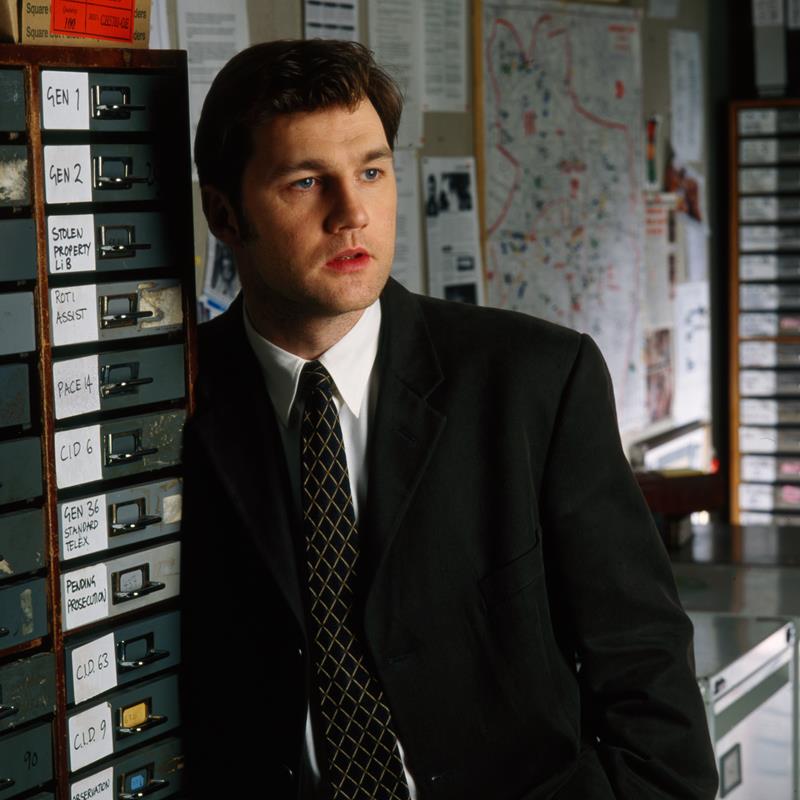
After a new title sequence we’re thrust straight into the action via a cold opening.  The reason for all the rushing about quickly becomes obvious, but despite the best efforts of everybody there’s no sign of the child.  It’s interesting that Jim ‘Lew’ Llewyn (David Morrissey) isn’t given a proper introduction (Lew has obviously been a member of the team for some time) but this probably works to the series’ benefit.  Showing Lew finding his feet might have worked dramatically, but it also would have slowed the main story down.

But although Lew seems to have fitted in well, bantering easily with the likes of Marty, a slightly discordant note is struck by Temple.  A brief throwaway comment from him makes it plain that he has little love for his latest recruit.  The reason will become a little clearer as we work through the second series.

Joanne Player (Keeley Forsyth) and Matt Pearson (Paul Nicholls) play the young couple who may not be telling the whole truth.  Both Forsyth and Nicholls were at the start of their careers with only a handful of credits prior to this (both of them had appeared in The Biz, for example).

When a witness later suggests that when they saw Joanne and Matt the baby wasn’t with them, the story veers off into a different direction.  Temple orders the floorboards at their flat to be lifted up, although Marty comments that if they were organised enough to concoct a fake story of abduction, it’s unlikely they’d be stupid enough to shove the child under their floorboards.

Love is in the air.  Tony is going out with a widow, a fellow member at his local church.  Since Bruce has decided that Tony may be a little out of practice with women, he decides to give him the benefit of his advice – although it seems that Bruce is more concerned with winding the anxious Tony up.

Meanwhile, Warren meets Lucy Shaw (Nicola Stephenson) for the first time.  To begin with it doesn’t appear that a relationship is on the cards, since she’s simply a witness in an investigation.  Her father, Richard Shaw (Pip Donaghy), is accused of taking bondage photographs.  Although he strenuously denies it, as time goes on his true colours are revealed.

Donaghy gives a chilling performance as a seemingly innocent family man.  But his one-on-one interview with Becky provides us with clear evidence that there’s more to him than meets the eye (although since he’s done nothing illegal he can’t be charged).  Shaw will return in the final episode, whilst his daughter features throughout.  When Warren learns that a distraught Lucy doesn’t want to return home, he takes her under his wing.  I have to say that the sight of Darrell D’Silva’s naked backside, as Warren and Lucy become intimately acquainted, was something of a surprise.

Even this early on it seems obvious that their relationship is doomed.  She seems to be vulnerable and unstable, which suggests that Warren’s simply taking advantage of her.  The sensible thing would be for both of them to walk away, but since both are flawed characters it’s not that simple.

Marty remains in fine form.  On spying a teenager defacing a Missing Persons poster with a marker-pen, he gives the young lad a taste of his own medicine by drawing a pair of glasses and a beard on his face!  Quite how Marty manages to get away with these sort of things is anybody’s guess, but I daresay a certain section of the audience would have approved of his brand of rough justice.

Although the main story is pretty bleak, there’s the odd moment of levity.  Lew stops a man, Phil Draper (Jim Millea), who’s acting suspiciously.  After Lew asks him to open the boot of his car, he reacts in horror as a sheep jumps out and beats a hasty retreat down the road.  Phil coolly suggests that the sheep must have already been there when he bought the car.

The ending might not come as too much of a surprise, but Nicholls and Forsyth are both effective.  Overall, another strong episode and  it provides a more than decent opening to the second series.

Out of the Blue – Series One, Episode Six

blue s01e06

The hunt for Franky’s killer begins in earnest ….

There’s a certain amount of dramatic licence at play here, since it seems more than a little unlikely that the close colleagues of a dead officer would be the ones leading the investigation to find his killer. Surely the fact they’d be emotionally involved would have ruled them out?

The opening plays as you’d expect – the team are shellshocked (Bruce is the one we follow into the station as – disorientated – he reels from the buzz and bustle of the crime scene) whilst Franky’s widow, Lorraine (Denise Stephenson), blames Temple and just about any other copper she can find for Franky’s death.

Although Temple later warns the others not to cut any corners, Marty – when questioning a suspect – spells out precisely what Franky’s death signifies. “Do you know what a dead copper means? It means the sky falls in on every little arsewipe who might know anything”.

Assistant Chief Constable Friel (Trevor Cooper) makes a small, but telling, contribtion. He informs Temple that he doesn’t want any of Franky’s dirty linen washed in public. They have to tell the truth about Franky’s activities, but anything unsavoury needs to be hidden from public consumption. The conflict between the need for truth (the truth, but not necessarily the whole truth) and police politics is clearly delineated here.

It’s hard not to feel that the unstable Victor was pushed into a corner by Franky. Temple later makes that point to the team, although most of them – especially Marty – don’t really want to hear. Even though Temple then goes on to say that he’s making the potential case of Victor’s defence laywers, there’s more than a kernel of truth in his statement.

Apart from a voice on the phone, we don’t see Victor until we’re well into the episode. The stake-out nature of the middle part of the story, as the team wait for him to surface, enables there’s a little time for various personal problems to be given an airing. Warren still hasn’t given up hope that he and Becky might become an item whilst Ron gives Marty some sage advice about children (Marty and his wife have been unable to conceive).

The tension that hangs over the episode, indeed the whole series, concerning Franky continues here. His colleagues have always been loyal and – toasting his memory in the pub – they continue to be. All except the newcomer Tony. “When everything else comes second best to your ambition. Your mates, your wife, your kids …”

Victor confesses but there’s little sense of celebration. The mood is best summed up by Marty in a short speech which could easily serve as the series’ raison d’etre. “Where’s the blame? I’ve been searching in me head for where the blame is. All day. Thinking and looking. Asking and asking. No, it’s kids going mad, but its not. Who teaches you to be stupid? Where does greedy start from? You know what I’ve decided? I can’t find it”.

The last scene – Franky entertains the others from beyond the grave via the power of VHS – proves to be something of a cathartic experience. If some questions about his character will remain unanswered for ever, at least this provides them with the opportunity of remembering his better side.  The truth then, but not the whole truth ….

Out of the Blue – Series One, Episode Five

blue s01e05

A woman called Anna Cornish is shot. Who did it and why was her body moved across town?

Although Mrs Cornish is a respected member of the local community (a black lawyer and a noted anti-drugs campaigner) the team can’t expect to receive much in the way of cooperation. Temple sums the mood up when he mentions that the community despises the police only slightly more than they hate each other.

The bleakness and hopelessness of mid nineties inner-city Britain is a running theme of Out of the Blue and gets developed in this episode. Mr Megson (Tony Barton) was the publican who wheeled Anna from away from his pub and he doesn’t waste any time in explaining why.  Anna was “a colonial cousin” and, according to him, a member of a race that doesn’t have a great respect for human life.

Megson believes that all of the estate’s problems can be dated to the arrival of the black community, which leaves us with the strong impression that he regarded Anna as little more than a piece of rubbish to be removed. It’s striking that Megson doesn’t seem to understand that he’s done anything wrong although when Bruce tells him that he may end up charged with manslaughter he starts to take attention.

A tip-offf leads them to three suspects, Shaun Hayley (Tim Evans), Bunny (John Muir) and Daniel Gelder (Taurean Mulholland). They’re only fifteen though. Could a group of fifteen year-olds really be responsible for this shooting? It’s a telling moment that nobody dismisses this out of hand. It clearly wouldn’t be the first time something like this has happened.

On the plus side, the episode doesn’t feature Franky whining about his epilepsy. Instead we see just how far he’ll go in order to get a result. Convinced that the shooting has a drug connection, he infiltrates a gang of low-lifes. First he shares their drugs and then he asks to buy a gun (because, he says, he wants to shoot a copper). By acting alone and without backup he’s taking an incredible risk – this seems to demonstrate he’s got something of a death-wish.  He’s remarkably convincing as an unstable psychopath ….

Nobody wins in this one since the shooters can be said to have been just as much victims as Anna was. Moments of levity are therefore few, although the spat between Marty and Ron is good fun (Ron’s aggrieved that Marty let slip about his philandering ways to the others).

The episode ends with Franky being confronted by Victor (Gary Sefton). Victor’s a drug dealer as well as Franky’s informant. Although Victor seems upset and a little unstable, Franky’s the sort of person you always imagine will win through, so when he’s stabbed and collapses in a large pool of his own blood on the office floor it’s a considerable jolt.

That the action then switches to the pub, where we see the others unwinding after another long day.  We’ve seen during the course of the first series how Franky has isolated himself from the others – declining to join them in the pub or for bowling nights on previous occasions – so the fact he dies alone whilst the others are together is clearly an intentional bitter irony.

Out of the Blue – Series One, Episode Four

blue s01e04

A women is found dead in a bus shelter located just outside her house. It looks as if she was sleeping there, but why? A baker, Mr Flood (Kenneth Cope), is once again sweeping up broken glass from his shattered shop windows. Convinced that no-one is taking him seriously he resorts to drastic action to make himself heard. Meanwhile, Franky has disappeared. He had been working unofficially on a cold case, so the team follow it up ….

Dave Norman, playing Ray Chaplin, has an easy time of it. Ray, a pimp, previously had his tongue cut out, so Norman didn’t have to go to the trouble of learning any lines. All he had to do was look moody and scribble down his answers to Becky and Warren.

This was the cold case Franky was working on, so it serves a dual purpose in the narrative – not only is there a mystery to be solved, but finding the answer might allow the team to discover Franky’s location.

Ron’s dalliances with his ex-wife become public knowledge around the office (although his curent wife remains in the dark). He’s yet to discover that Marty let this secret slip though, but I’ve a feeling he’s going to find out soon …

Bruce and Tony visit Mr Flood. Their different reactions speak volumes about their characters. Bruce wants to be out looking for Franky, so dealing with a case of broken windows seems completely trivial (he caustically refers to Mr Flood as Mr Pastry).  But Tony instantly emphasises with the victim – he can see that Mr Flood is living a life of quiet desperation (his life made a misery due to abuse and vandalism) and wants to help. So Tony is idealistic, Bruce realistic.

Tony later confides that as a uniformed officer he felt part of the community, but now he’s in plain clothes there’s more of a sense of isolation. The fact that we never actually see any of the tearaways who abuse Mr Flood is an interesting touch – as making the threat abstract means it becomes more problematic and insoluble.

Kenneth Cope nicely underplays as a man driven to the edge by antisocial behaviour.  The way he finally gets a little attention is a wrong-footing moment (although due to the way the camera coyly doesn’t focus on the action, it’s possibly not as impactful as it could have been).  No matter though, Cope still deftly sketches the character of Mr Flood – a man who doesn’t want to be labelled a victim, but urgently needs help.

The dead woman at the bus stop, Angela Grainger, was also a victim of antisocial behaviour.  In her case, she was driven to distraction by pounding music played at all hours by her next door neighbours. But did one of them attack her in the days before she died of a heart attack?

It can’t be a coincidence that Kenneth Cope’s daughter, Martha, appears as Marilyn Jowett, Angela Grainger’s neighbour. Another familiar face, Sheila Ruskin, pops up as Margot Gillespie, the doctor who tells Franky that his epilepsy isn’t operable.

Alternating between these two storylines as well as the search for Ray’s attacker and Franky’s continuing tantrums, it’s a packed episode. At one point, Ron confides that there’s no justice and by the time the credits roll it’s hard to disagree with him.

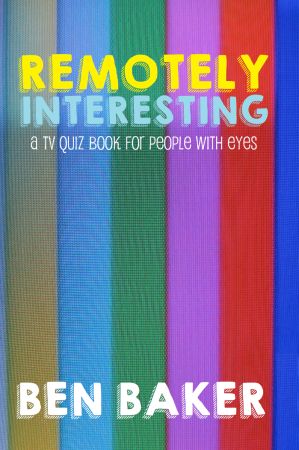
Remotely Interesting – Ben Baker (Book Review)

remotely.jpg

Who doesn’t love a television quiz?  I certainly do and Ben Baker’s third television quiz-book, Remotely Interesting, manages to entertainingly deliver as even this grizzled television watcher discovered some interesting new nuggets of information (the original title for Goodness Gracious Me, for example).

There’s plenty of variety across the many different rounds.  Eight Word TV Tango sees popular programmes boiled down to an eight word description (“Soft and septuagenarian soil-securers bumble for Britain”) whilst Points of Groo digs out letters sent to the Radio Times, TV Times and Look-In, challenging the reader to guess the programme under discussion.  Sadly (or possibly impressively) I did well here, even though the actual letters were new to me.  They all provided fascinating nuggets of social history (as Ben says, it takes a special type of person to write into a publication in order to proffer their opinion)

Belong in a Presidential Tweet is another entertaining section as Donald Trump (warning, Fake Trump) offers his own unique Twitter-styled take on popular programmes.  Theme from a Hummer Place (challenging you to identity popular television themes from every fourth word is listed) is a simple, but ingenious, idea.  “Don’t, beat, drum, right, not, some, born, of, come, nothing”.  Hmm, I’ll come back to that one.

Another fruitful area for quizzing are the lists of ten facts on various topics (five true, five false) scattered throughout the book.  How can you not love a book which asks you to ponder whether popular-ish Simpsons character Cletus (aka “the slack jawed yokel”) has children called Incest, Q*Bert and Stabbed In Jail?

Although I like to pride myself on my knowledge of television trivia, thanks to Remotely Interesting I now know many more useless factoids than I did before, which makes it a book that informs as well as entertains.  With over fifty sections and a wide variety of questions, it certainly has something for everyone.

As Ben explains on his blog.  “There’s rounds about robots, catchphrases, The Beatles on TV, theme tunes, live programmes, Netflix and the online revolution, game shows, spin-offs, remakes, famous mothers, kids shows, booze, radio transfers, foreigners, Great Telly Years (1969, 1990, 1982 and 1977) and a bunch of Christmas stuff for good measure! The suggested age range is anything from 18 to 65, and probably beyond! Its accessible but challenging where it needs to be with lots of speciality rounds for all the family”.

Remotely Interesting comes warmly recommended.  Further information can be found here.

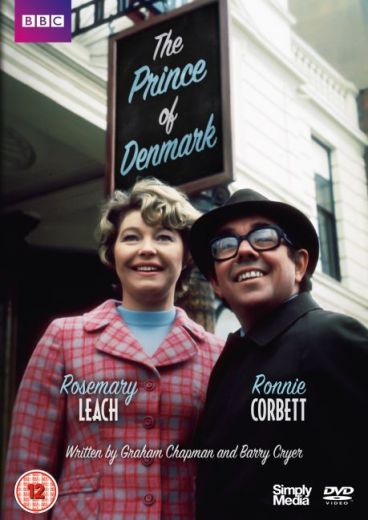
The Prince of Denmark – Simply Media DVD Review

167513.jpg

Although largely forgotten today, Barry Cryer and Graham Chapman had a lengthy sitcom partnership with Ronnie Corbett (they ended up penning three different comedy shows for him).  First, along with Eric Idle, they created No – That’s Me Over Here, which ran for three series between 1967 and 1970 on ITV.  The first two series no longer exist, although one episode is possibly held in private hands.   Series three is available from Network.

After Corbett and Barker moved from ITV to the BBC in the early seventies, Corbett’s sitcom career continued with Now Look Here (1971 – 1973).  Rosemary Leach, who had also appeared in No – That’s Me Over Here, returned, although since she was now playing Laura, rather than Rosemary, the series clearly wasn’t a direct continuation.  Mind you, Ronnie was still playing Ronnie and to all intents and purposes was pretty much the same character (unlike his long-time comedy colleague, Ronnie Barker, Corbett tended to stick with a very similar comic persona).

Something of a precursor to Sorry!, Corbett’s most popular sitcom success, Now Look Here saw Ronnie attempting to break free from the stifling influence of his mother.  The difference was that in Now Look Here he does (albeit his new house is just a few doors away) and by the second and final series he was married to Laura.  Although a release from Simply was announced, it was then pulled due to unspecified rights issues.  Hopefully these problems can be ironed out and it’ll reappear on the schedule at a later date.

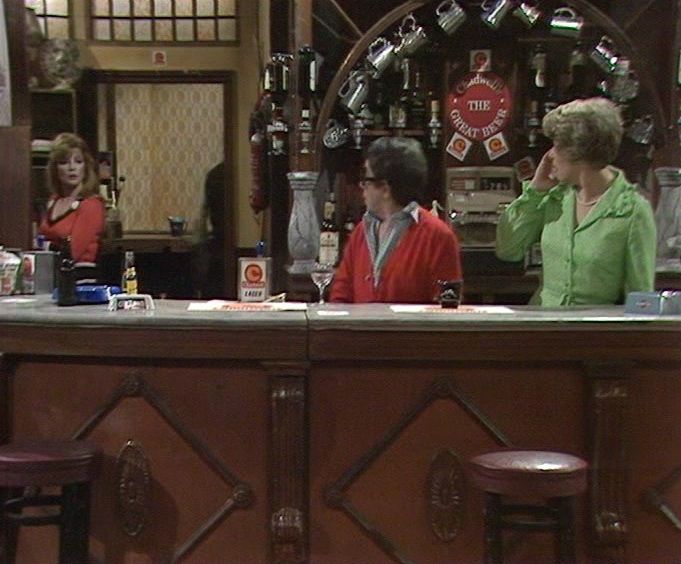
The Prince of Denmark (1974) followed on directly from Now Look Here.  This series saw Ronnie and Laura running a pub (hence the series’ title) which Laura had inherited.  Ronnie, despite knowing nothing about the pub game, blithely assumes he knows best and frequently overrides the good advice offered by those around him, with inevitably disastrous comic results.

prince 01
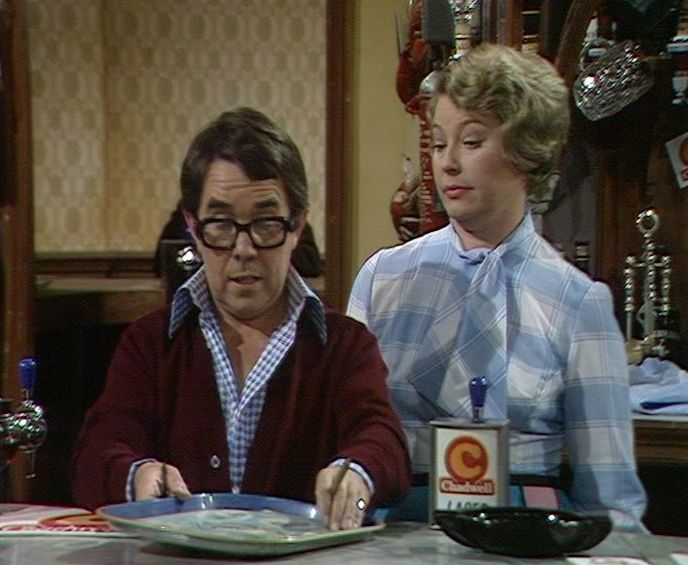
Ronnie Corbett & Rosemary Leach

The pub setting is a fruitful one, since it allows new comic characters to keep popping up in each show.  Making appearances were a host of familiar faces, including Derek Deadman, Richard Davies, Harold Goodwin, Mary Hignett, Claire Neilson (also a regular on The Two Ronnies) and Geoffrey Palmer. Penny Irving adds a touch of glamour as the pneumatic barmaid Polly.

The dependable David Warwick appeared in all six episodes as the long-suffering barman Steve whilst the pub also boasted several semi-regulars.  These included Mr Blackburn (Tim Barrett) who never manages to catch his train due to the fact he always stays for one more drink and a crossword addict (played by Michael Nightingale) who only talks in riddles.  The unmistakable Declan Mulholland, playing the abusive Danny, also helps to enliven a couple of episodes.

The first episode opens with Ronnie and Laura visiting their new pub incognito. Ronnie’s pedantic, uppity and pompous (complaining about the service and the fellow customers whilst also muttering darkly that there’s going to be changes) whilst Laura is much more patient and understanding. These traits will be repeated across the series time and time again.

And the price of Ronnie’s half a bitter and Laura’s small sherry? Twenty five pence, which is a bargain!

The start-up screen displays the following disclaimer. “Due to the archive nature of this material, modern audiences may find some of it editorially challenging. In order to present the content as transmitted, no edits have been made. We ask that viewers remain mindful of the period in which it was commissioned and transmitted”.

This seems to be due to the moment in the opening episode where we see a black customer, Reg (Lee Davis), tell the departing licensee, Mrs Bowman (Maggie Hanley) that her pies are disgusting (she suggests he eats a missionary instead). That’s the only slightly off-key joke I can find, which makes the disclaimer seem a little anti-climactic.

Since the first episode went out at 7:40 pm, it’s surprising to hear Declan Mulholland’s truculent troublemaker call Ronnie a bastard several times. Another interesting point is the later scene where Ronnie mistakes an ordinary customer for a Brewery bigwig and fawns over him whilst roundly abusing the real Brewery man.  Given Graham Chapman’s involvement, it’s highly likely that his old comedy partner John Cleese would have tuned in. Could this have inspired Cleese to pen the later Fawlty Towers episode The Hotel Inspectors?

By the third episode things are ticking along nicely. This one boasts a strong guest cast – Richard Davies, Claire Nielson, Geoffrey Palmer – and sees Ronnie cast as a confidant and sage to his customers. The only problem is his total lack of understanding.  For example, when Davies’ character mentions that he believes in a benign oligarchy, all Ronnie can do is nod sagely. Ronnie’s increasing desperation as he’s quizzed about his views on democracy is nicely done.

prince 02
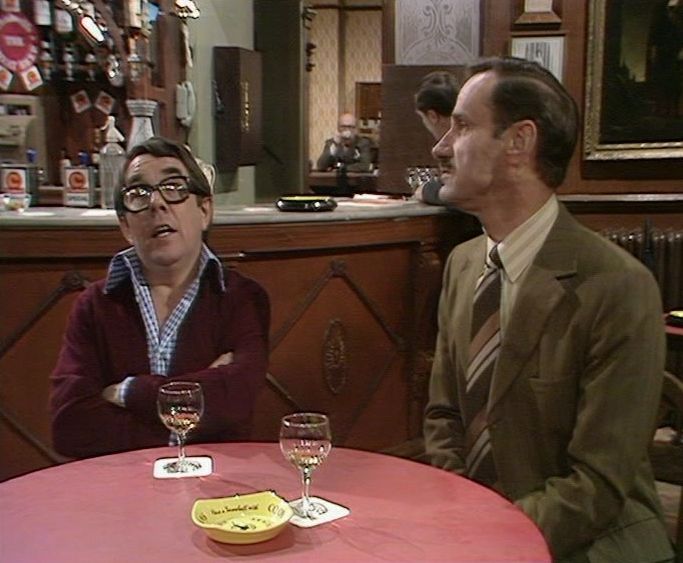
Ronnie Corbett & Geoffrey Palmer

Ronnie’s exuberant cheeky-chappy persona is precisely what Martin (Geoffrey Palmer) doesn’t need as he’s suffering from marriage problems. And when Martin’s wife, Alison (Claire Nielson), turns up, Ronnie once again puts his foot in it. Corbett and Palmer play off each other very well (is it just another coincidence that both Palmer and Nielson would later check into Fawlty Towers?). Although Corbett overplays somewhat, Palmer is a model of restraint and it’s probably their differing styles which helps to make this one flow nicely.

Show four opens with Ronnie in the kitchen, attempting (but failing disastrously) to make Laura a snack whilst she enjoys a quiet bath. Whilst it offers a change of pace from the bar scenes, the visual comedy on offer is somewhat laboured (and subject to some hard edits – one moment the pan is on fire, the next it isn’t).

Elsewhere, Ronnie’s prejudices are on display. He declares that all football supporters are hooligans unlike followers of rugby, who are gentlemen. Given this set-up, no prizes for guessing what happens when a large crowd of rugger fans turn up. The highly-recognisable Michael Sharvell-Martin pops up as Gerry, captain of the rugby team, whilst the equally-recognisable Harry Fielder and Pat Gorman (familiar background faces from this era of television) are also present.

Ronnie’s jukebox jiving in show five is a highlight and seems to briefly amuse what is otherwise a very muted audience. When Ronnie treats a couple of customers to his regular joke about the Irishman in the restaurant, the punchline doesn’t raise a titter either from them or the studio audience. This episode also seems to have the strongest Graham Chapman feel, as what begins as a quiet night quickly spins out of control. The comic escalation we see is a touch Pythonesque.

Although Ronnie’s character remains highly smackable throughout, Corbett’s timing ensures that he makes the most of the material he’s given. It’s just a slight pity that Rosemary Leach didn’t have more to work with.

This was an era where female members of comedy couples were often dominant (Terry & June, George & Mildred) and although Laura is clearly much more sensible and level-headed than her husband, she’s less well drawn than either June or Mildred. More often than not Laura isn’t called on to do much more than show exasperation at Ronnie’s latest flight of fancy.

No lost classic then, but The Prince of Denmark should be of interest to both Ronnie Corbett fans and devotees of seventies British sitcoms. Although the scripts can be a little weak in places (surprising given Cryer and Chapman’s track record) it’s still enjoyable fare, thanks to the familar faces guesting and Corbett’s energetic performance. Recommended.

The Prince of Denmark is released by Simply Media on the 17th of July 2017.  RRP £19.99.  It can be ordered directly from Simply here

prince 03

Out of the Blue – Series One, Episode Three

blue s01e03

When Ron’s daughter is discovered with a computer disc containing violent pornography, the team spring into action to track the perpetrator down …

This episode is of particular interest due to the computer porn angle. Given it was the mid nineties when computers – and the internet – were just beginning to establish themselves, it has to be a pretty early example of this type of storyline.

Bruce is puzzled by this brave new computer world (no doubt a section of the audience would have been just as perplexed as he was) but luckily there’s a young schoolboy on hand to explain the world of networks, notice boards, DOS and floppy discs.  We must be pretty much pre-internet for most people, since the images were distributed on 3.5″ discs, which helps to date the programme.

John Hannah’s been boiling away nicely for the last few episodes but now Franky’s been suspended Hannah takes the opportunity to ramp up the intensity level several notches. Franky blames Bruce for shopping him, but he’s blameless (it was Franky’s wife, Lorraine, who informed DI Temple).  When Franky later learns the truth, does he apologise to Bruce? Nope. Which provides more evidence that Franky’s a charmless, self-centered, self-pitying sort of chap. Possibly he’s a good thief-taker, but his social skills need more than a spot of work.

Poor Warren’s lack of success with the opposite sex leads the others, notably Ron and Marty, to offer him some well-meaning words of advice. Bruce is more caustic, he opines that Warren’s problem is due to the fact he dresses off the peg (at the Salvation Army!)

There’s a nice mid-episode change of pace as Ron, Marty and Becky attempt to track down a suspect in the computer porn case, Gary Lowell. They encounter Craig Page (Andrew Dunn) at Lowell’s house, who looks more than a little shifty. The fact that Lowell’s dead body is stuffed in a cardboard box might have something to do with that ….

The episode also features a back-street strip club which employs disabled performers. Warren, at the club in surveillance mode, is appalled. The camera coyly doesn’t show us the stripper, but we get a good insight into Warren’s distressed state of mind by the way the camera starts to weave and lose focus.

The mystery of who killed Gary isn’t much of a mystery after all, but it’s still a strong enough episode with a pre-dinnerladies Andrew Dunn making the most of his limited screentime.

Love on a Branch Line – Second Sight DVD Review

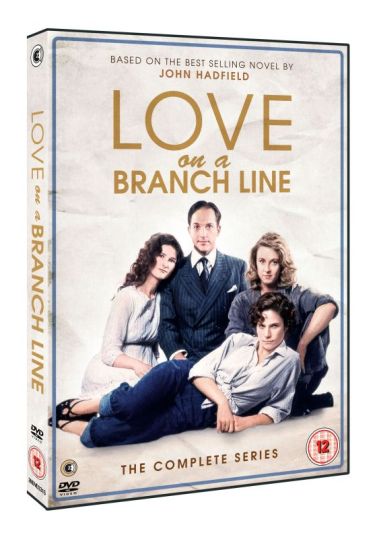
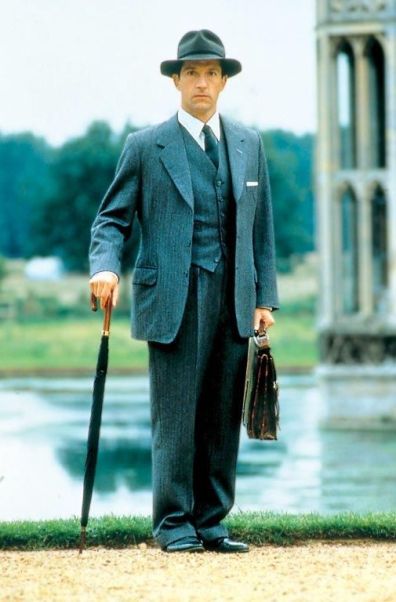
7457The year is 1957 and civil servant Jasper Pye (Michael Maloney) is stuck in a rut.  When his girlfriend mentions to a fellow party guest that he’s something of a bore, Jasper decides to take immediate action.  But his initial plan – to move to France and become a painter – is shelved after his superiors send him deep into the English countryside.
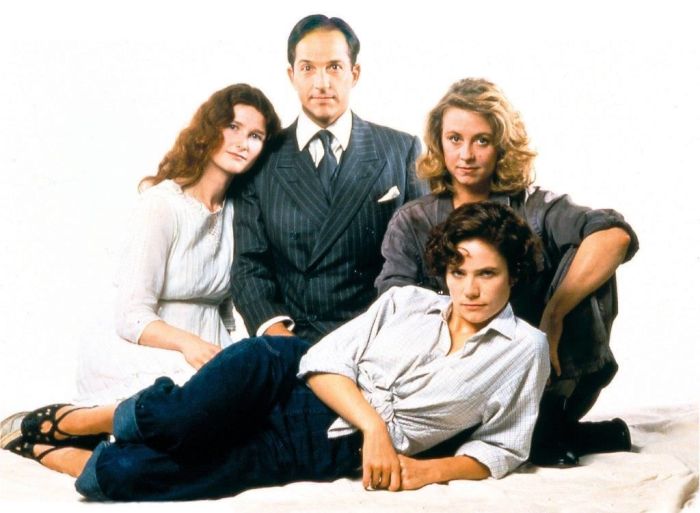
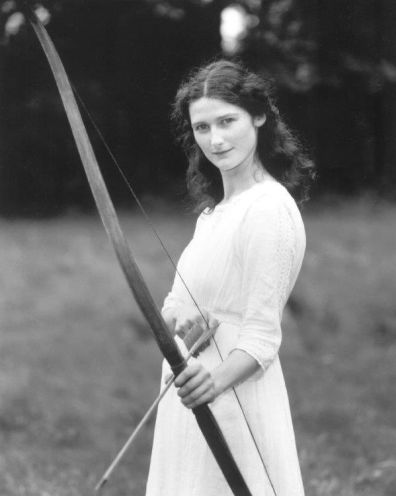
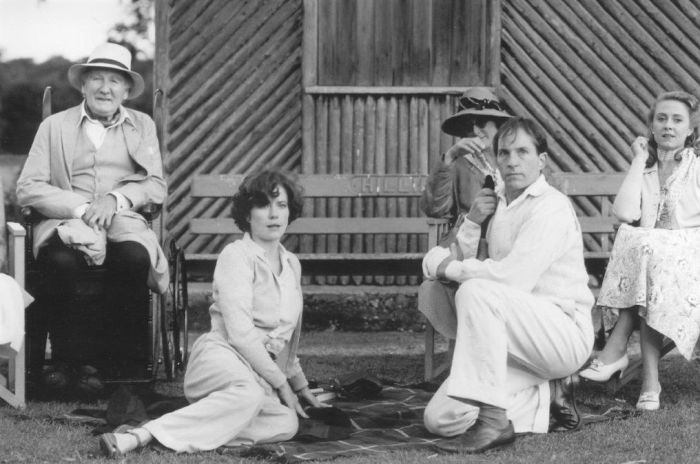
Since 1940, a small outpost of the Ministry of Information (Output Statistics) has been in residence at Arcady Hall.  Jasper is sent with the express mission of discovering a reason to close it down, but he finds himself constantly distracted.

The delightfully eccentric Lord Flamborough (Leslie Phillips), owner of Arcady Hall, is happy with the status quo – especially since the upkeep of his house depends on the subsidies he receives from a benevolent government.   Lady Flamborough (Maria Aitken) intrigues Jasper, but it’s Flamborough’s three daughters – Belinda (Abigail Cruttenden), Chloe (Cathryn Harrison) and Matilda (Charlotte Williams) – who all manage to bewitch him at different times …..

Based on John Hadfield’s 1957 novel, Love on a Branch Line is a serial which simply oozes class.  Adapted by David Nobbs (The Fall and Rise of Reginald Perrin) it has the sort of cast to die for.  Leslie Phillips looks to be enjoying himself enormously as Lord Flamborough, an idiosyncratic aristrocrat who, along with his wife, lives on a train at the defunct local station. He bought the station, track and train and he now indulges himself by travelling backwards and forwards.  That he never actually goes anywhere might be a not-so-subtle metaphor.

There’s no doubt that the serial’s appeal rests with the quintessentially English atmosphere it generates even if, as with the best examples of the genre (such as PG Wodehouse), events are clearly taking place in an idealised and stylised England that never was.  Therefore steam trains, cricket matches and village fetes are all very much to the fore.

7540
Charlotte Williams, Michael Maloney, Cathryn Harrison and (front) Abigail Cruttenden

When Jasper arrives he suspects that the team at the Statistics outpost, having been left to their own devices for so long, might be somewhat behind with their work.  Both the statistician Professor Pollux (Graham Crowden) and the data collector Quirk (Stephen Moore) have found numerous distractions over the years – Pollux has been researching the history of Arcady whilst cricket is Quirk’s passion.  Luckily for both of them, they have the efficient Miss Mounsey (Amanda Root) on hand to keep them in some sort of order.  Crowden and Moore are great value with Crowden (arch scene-stealer that he was) never failing to entertain every time he sidles onto screen.

Belinda (“the wicked one”) is the first of Lord Flamborough’s daughters encountered by Jasper. Within a few minutes she’s already kissed him, although this unexpected moment of pleasure is short-lived after Lady Flamborough interrupts them. As so often throughout the serial Michael Maloney’s comic timing is spot on (he delightfully leaps back in horror after Lady Flamborough calls out).

Matilda, the youngest daughter, is neatly summed up by her mother. “Funny girl. She spends all her time reading old-fashioned thrillers and wating to be seduced by a sinister monk. She’ll grow out of it”. Chole, the eldest, is plainly the apple of her father’s eye (“she’s a damn good engine driver”).  A later encounter at the pub with the drunken Lionel Virley (David Haig), husband to Chole, puts another piece of the jigsaw in place. Also there is railway enthusiast Mr Jones (the always entertaining Joe Melia).

7545
Charlotte Williams

Jasper quickly becomes a part of the local cricket team and is also drafted onto the local fete’s organising committee. That the fete is in aid of fallen women is something which has endless comic potential. Lord Flamborough declines to be chairman.  “I never could be trusted with fallen women”.  This line is delivered in the trademark Leslie Philips style.

By the end of the first episode Jasper’s been kissed by all three daughters and is somewhat perplexed by his experiences. He continues to ping between them like a pinball as the rest of the serial plays out.

A lovely comic moment occurs in episode two after Belinda decides that Jasper’s proposed painting of the Hall doesn’t sound terribly interesting. Surely he’d much prefer to paint her in the nude? Belinda’s very keen and Jasper doesn’t take too much persuading either (although he valiantly attempts to keep his mind on his art). Although he does wonder if they should ask Lady Flamborough’s permission so Belinda, stripped to the waist, casually leans out of the window and shouts down to her!

Further complications ensue when Pollux turns up with Miss Tidy (Gillian Rayne). Pollux is giving her a guided tour of the Hall and his desire to show her every nook and cranny means that Belinda is forced to beat a hasty retreat. The vision of a fully-frontal nude Abigail Cruttenden, albiet in long shot, was a slight surprise (I wonder what the original Sunday evening audience made of it?)

The sight of a desperate Jasper – convinced that Lord Flamborough knows about his dalliances with his daughters – dancing the Charleston whilst his Lordship tunelessly bashes away on the drums is another stand-out scene. Maloney cuts some impressive moves whilst Phillips is his usual louche self.

7546
Leslie Phillips, Abigail Cruttenden, Maria Aitken, Michael Maloney & Cathryn Harrison

The big cricket match occurs in the third episode. Unfortunately, Jasper and Lionel are locked in one of Arcady’s wine cellars with only several thousand bottles for company. Few actors can resist a spot of drunk acting and Michael Maloney and David Haig are certainly no exception as Jasper and Lionel take solace in some of the more obscure vintages.  Carrot whisky anyone?

Things look grim for the village since their two best batsman have failed to appear but – improbable as it may sound – Jasper and Lionel do eventually stagger up to the crease. But will they be able to save the day? The cricket match is another entertaining setpiece sequence, as is the aftermath (everybody crowds into the pub for a hearty rendition of Yes, We Have No Bananas).

Love on a Branch Line has a delicate path to tread regarding tone.  It would be easy for Jasper to appear as little more than a letch  – after all, he’s already seduced (or been seduced by) Belinda and Chloe and when the sweetly virginal Matilda comes crashing down his bedroom chimney it seems that his cup runneth over.  Luckily, the unreal tone of the serial – and Michael Maloney’s skilful playing – ensures this is never too much of a problem.

The concluding episode promises to bring a dash of reality to the Shangri La of Arcady.  Jasper’s recommendation that the Statistical Unit be closed down forthwith doesn’t please either Lord Flamborough or Pollux and the arrival of jazz musician Ozzie Tipton (Simon Gregor) seems to turn Belinda’s head.  But Jasper – pressganged into becoming a judge at the Fallen Women fete – might just have secured his own future after he awards first prize in the prettiest ankle contest to Miss Mounsey.

In the end everything turns out fine for everybody and as the credits roll you can be assured that the sun at Arcady will always continue to shine (just as it will at Blandings Castle).

With an experienced cast of comic hands, beautiful locations and a sharp script from David Nobbs, Love on a Branch Line is a treat from start to finish.  Abigail Cruttenden, Cathryn Harrison and Charlotte Williams all catch the eye (although it’s Abigail Cruttenden that we definitely see the most of) whilst Michael Maloney, as the lucky Jasper, reels from one unlikely encounter to the next with aplomb.

Originally released on DVD by Acorn back in 2006, it’s now been brought back into print by Second Sight.  It comprises of four 50 minute episodes and whilst there are no additional features, the episodes are subtitled.

Something of a forgotten gem, this really is something that any devotee of British archive television should have in their collection.  Highly recommended.

Love on a Branch Line is released by Second Sight on the 17th of July 2017.  RRP £15.99.

7541
Michael Maloney

Out of the Blue – Series One, Episode Two

blue s01e02

Ron and Marty are pursuing Neil Chettle (Matthew Wait). They’re convinced that he’s responsible for robbing a series of pensioners of their life savings, but there’s no solid evidence. Chettle’s clever, as by selecting only the elderly and infirm, it’s unlikely they’ll be able to pick him out of an identity parade ….

This second episode continues to put more meat on the bones of the regular characters. Becky’s fledgling relationship with PC Alex Holder (Stephen Billington) seems to have put Warren’s nose slightly out of joint whilst Tony’s casual statement that he believes in God somewhat nonplusses Marty (who then can’t resist questioning him on his beliefs).

This is a strong episode for Neil Dudgeon. Although the story isn’t doing anything we haven’t seen countless times before in other shows – Marty doggedly pursusing a cocky suspect who believes he’s untouchable – Dudgeon and Wait are still on top form. When the tables are turned and Chettle begins to target Marty’s wife, the pressure gets ramped up a notch, although this part of the plot is never really developed as much as it could have been.

Bruce continues to glower at Franky. Franky claims that he’s now perfectly fine but Bruce – he is a detective after all – doesn’t believe a word of it. This is confirmed later on by Franky’s retching and pained staring into the toilet mirror.

There’s a later oblique conversation between Bruce and DI Temple in which the senior officer seems to be warning Bruce against doing anything about Franky. Although this is contradicted towards the end when Temple spells out Franky’s options to him – none of which seem to appeal.

Broken marriages are a common sight in police series and Marty helps to explain why. He may still be married, but the job has plainly had a toxic effect. “I went home to Judy one time and I had to tell her that I’d been tying labels onto the toes of a kiddie who’d been strangled, and you know what she said to me? Do you know what my own wife said to me? Don’t touch me. Don’t touch me”.

Although the episode juggles several other plotlines – the mystery of how a man, dead for several months, has continued to open his mail and a potential robbery at a pub – it’s the feud between Marty and Chettle which dominates. Marty may be satisfied with the eventual outcome, but Ron isn’t. “Racing around like the caped crusader, you’ve turned this into a schoolroom brawl between you and him”.

Whilst the others enjoy an evening’s bowling, Franky – as befits a flawed hero – broods alone in the office, with only a cigarette for company.

Out of the Blue – Series One, Episode One

blue s01e01.jpg

Hugh Evans was sixty seven years old and dying of cancer. So why would somebody shoot him four times as he lay in his hospital bed? Meanwhile, as the only female detective, DS Rebecca Bennett is called upon to interview a traumatised rape victim.

Out of the Blue hits in ground runnng. In the opening few minutes as – somewhat oddly – all the detectives hot-foot it over to the hospital, the regulars’ characters are deftly sketched.

DC Marty Brazil (Neil Dudgeon) and DC Ron Ludlow (Peter Wight) make for an entertaining double-act. Marty is clearly the iconoclast of the team (thinking nothing of giving a man who spat in the street a hard time). Also making an early impression is Orla Brady as DS Rebecca ‘Becky’ Bennett (partly because she’s the only female detective in an all-male enclave).

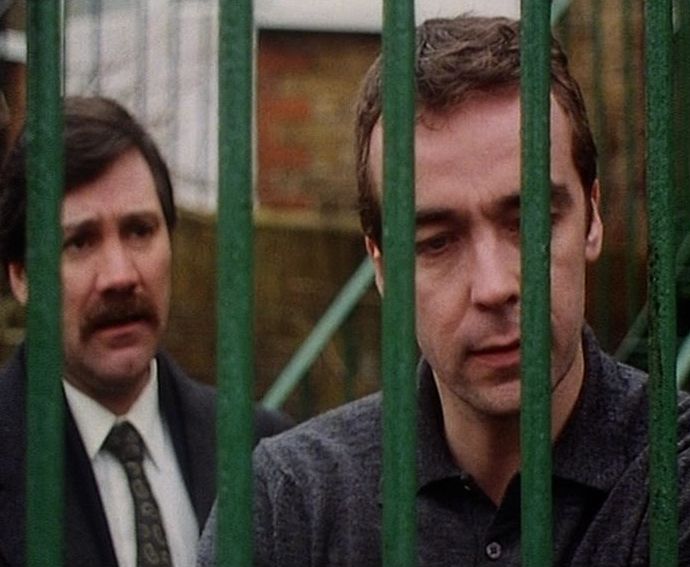
DS Franky Drinkall (John Hannah) and DC Bruce Hannaford (Lennie James) chase down a suspect in the shooting case, but it’s what happens afterwards which will haunt the remainder of the first series. Franky suffers an epileptic fit in the pub and refuses to report it to the medical officer. This not only puts his own career in jeopardy but swearing Bruce to secrecy only serves to complicate matters even further (as well as creating a simmering sense of tension).

Becky and DC Warren Allen (Darrell D’Silva) make up the third team and putting them together on the rape case helps to generate a certain amount of debate between them which defines both their characters, although at this point Becky is the one who’s received the most screentime.

DC Tony Bromley (Andy Rashleigh) has been newly transferred to the team and, as an outsider, serves as the audience identification figure. As he begins to understand how his new colleagues tick, so do we. Rounding off the squad is DI Temple (John Duttine). By far the most familiar television face, Duttine doesn’t have a great deal to do here (the harrased boss is a long-standing police series cliche) but having a quality actor in the role gives Temple the gravitas he needs.

Juggling two strong storylines, this opening episode is a solid one. The visual style (shaky camerawork and the occasional loss of focus as the camera – effectively acting as an unseen member of the team – moves from person to person) helps to give the story a little impetus.

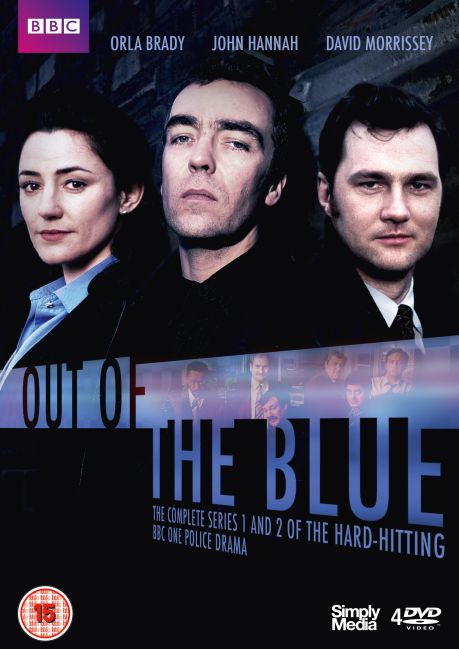
Out of the Blue – Simply Media DVD Review

Running for two series and twelve episodes between 1995 and 1996, Out of the Blue is a somewhat overlooked police series.  Filmed in Sheffield, it’s a bleak and unsettling show which doesn’t attempt to wrap each episode up with a happy ending (or at times a definite conclusion).  The frenetic hand-held camerawork gives the series a fly-on-the-wall atmosphere at times (seemingly inspired by the likes of Hill Street Blues and Homicide: Life on the Street).

If Out of the Blue has a flaw then it’s probably that there’s few surprises – many of the regulars are character types we’ve seen so often before (the unorthodox maverick, the woman making her way in a man’s world, etc).

But the fact that Out of the Blue didn’t attempt to reinvent the wheel shouldn’t count too strongly against it.  One plus point is the fact that all twelve episodes were scripted by Peter Bowker and Bill Gallagher (often together, sometimes apart). This gives the series a feeling of unity whilst the strong cast (a mixture of experienced hands and younger talent) is also something to be counted in its favour.

With a large cast of regulars and only six episodes to play with, the first episode of series one has to hit the ground running.  Several cases (the murder of a man already dying of cancer, the rape of a middle-aged woman) help to bring the motely group of detectives into sharp focus.

(L-R, Back Row) DC Bruce Hannaford (LENNIE JAMES), DC Tony Bromley (ANDY RASHLEIGH), DC Ron Ludlow (PETER WIGHT) and DC Marty Brazil (NEIL DUDGEON)
(L-R, Front Row) DS Frank ‘Franky’ Drinkall (JOHN HANNAH) DI Eric Temple (JOHN DUTTINE) DC Warren Allen (DARRELL D’SILVA) and DS Becky Bennett (ORLA BRADY)

DI Eric Temple (John Duttine) has the job of keeping them in order. He generally isn’t called on to do a great deal except bark some gruff orders, but having a familiar television face (and a good actor, of course) like Duttine helps to bring Temple to life.

DS Becky Bennett (Orla Brady) is the lone female detective, meaning that she’s a source of fascination for her unreconstructed male colleagues. Her decision during series one to conduct a clandestine affair with PC Alex Holder (Stephen Billington) will no doubt set tongues wagging …

DC Warren Allen (Darrell D’Silva) carries something of a torch for Becky, but his general persona – the nice guy who never gets the girl – suggests that he’s going to end up disappointed.

DC Marty Brazil (Neil Dudgeon) and DC Ron Ludlow (Peter Wight) make for a classic team. Marty is a wisecracking, unpredictable loose cannon (Dudgeon making the strongest impression during these early episodes) whilst Ron is the more dependable, solid type. Ron’s a devoted family man, although the fact that he’s still involved with his divorced ex-wife suggests he’s been taking his family duties rather too far (especially since his current wife has been kept totally in the dark).

Neil Dudgeon & Peter Wight

DS Franky Drinkall (John Hannah) is a high-flier, tipped for the top – although his epilepsy looks set to put paid to that. His long-suffering partner, DC Bruce Hannaford (Lennie James), has to take the brunt of his moody outbursts.

Although Hannah had been acting since the late eighties, Out of the Blue was his first regular television role. Almost immediately afterwards he would star as the unorthodox McCallum, which was just a slight change from playing the unorthodox Franky.  Since Franky is such a monumentally unlikeable character it’s to Hannah’s credit that he never attempts to soften his playing, instead he allows us to plainly see just what a monster DS Drinkall is.

Franky’s epilepsy and the fall-out from it, would be a running thread throughout the first series.  It’s just a pity that, due to the fact there were only six episodes, it isn’t a plotline that has much room to breathe (we learn about it in episode one, everyone else does in episode two, etc).  A longer episode count would have enabled it to be spread out a little more, which would have worked to the series’ benefit.

Rounding off the team is DC Tony Bromley (Andy Rashleigh).  Newly transferred, he spends much of the first episode as a silent observer, but he later makes his presence felt.  A former teacher (and a devout believer in God) he makes for an unlikely copper, but his character – a patient, non-judgemental listener – will prove to be useful on occasions.

Most of the episodes tend to juggle several storylines, with many of the crimes having clear consequences for both the victims and perpetrators. One of the most striking things about the series is how the lines are blurred between the law-breakers and the law-makers. We also see that a number of serious crimes weren’t triggered by evil intent, instead the criminals were motivated by fear or boredom.

This is more disturbing than plain malice and although Peter Bowker and Bill Gallagher don’t hammer the point home, it’s plainly suggested that both the system and the environment has its part to play in shaping the actions of those who operate on the wrong side of the law.

Following a dramatic conclusion to the first series, Out of the Blue returned for a second and final run of six episodes in late 1996.  The cast pretty much remained the same, although Becky’s love interest had departed.  The major change saw David Morrissey fill the gap left by the departed John Hannah.  Morrissey played DS Jim “Lew” Lewyn, a maverick copper with secrets.  Mmm, not at all like Franky then ….

David Morrissey

Although Lew’s not a terribly original character, he helps to shake up the established team.  Temple might have been aware of some of Franky’s less admirable traits, but there was no doubt that he respected him.  But Lew arrives with considerable baggage and Temple isn’t prepared to cut him the same sort of slack.

Whilst Lew is treating suspects to his own unique brand of policing, the others have various personal problems to overcome.  Warren’s run of bad luck on the emotional front seems to be over after he snags a new girlfriend – Lucy Shaw (Nicola Stephenson).  But she turns out to be somewhat unstable, so Warren’s soon back to square one and not even the solicitous Becky can cheer him up (he decides he doesn’t want her pity).

Bruce is also feeling the pressure.  He’s always been tightly wound, but there are times when even an innocent remark can set him off – on one notable occasion he and Warren come to blows at the pub.

The storylines continue to be as uncompromising as ever.  Episode three, which concerns a male rape, attracted a certain amount of attention at the time whilst the fourth – featuring Neil Stuke as Tommy Defty, a seemingly untouchable drug-dealer – is a particular highlight.  The final episode (revolving around the death of a fourteen-year old prostitute) is yet another strongly-scripted and well-played story.

Out of the Blue failed to be renewed for a third series.  Possibly this was because, as previously touched upon, it wasn’t doing anything we hadn’t seen before.  This was a pity because there was potential there – maybe an increased episode count would have helped to strengthen and broaden both the format and the characters.

Shot on 16mm film, Out of the Blue looks somewhat gritty and grainy.  This no doubt chimes with the series’ aesthetic – bright colours and sunshine wouldn’t have been the correct tone – but the picture quality probably also reflects the age of the masters (although what we have is perfectly watchable).

Although it never made a great deal of impact at the time, Out of the Blue is still of considerable interest.  Not only for the strong cast, but also for the way that it generates a snapshot of the seedier end of mid nineties Britain.  Warmly recommended.

Out of the Blue is released by Simply Media on the 10th of July 2017.  RRP £34.99. It can be ordered directly from Simply here.

David Morrissey, Orla Brady & Neil Dudgeon

Dunkirk – Arrow DVD Review

7452

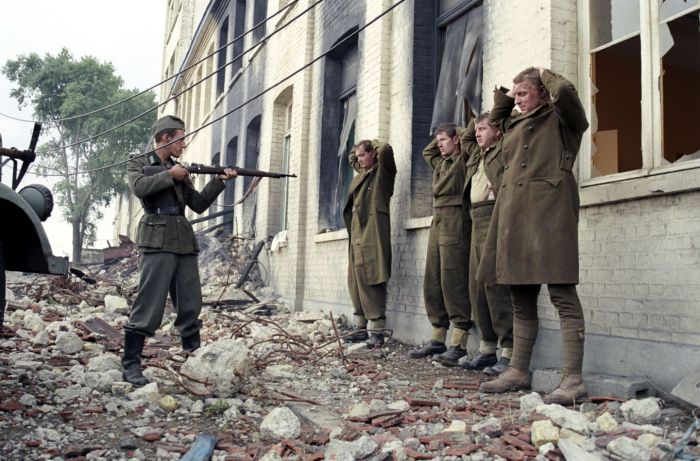
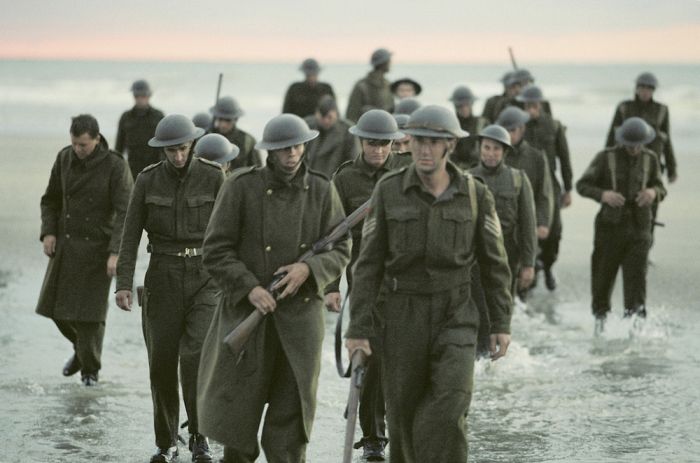
Even today, nearly eighty years on, the 1940 Dunkirk evacuation still resonates.  Possibly it has something to do with the British character – the way that a crushing military defeat could be turned around into a moral victory – or maybe it’s the logistical scale of the rescue (some 340,000 British, French and Belgian troops snatched from the shoreline by a raggle-taggle collection of ships and boats).

The British Expeditionary Force had found itself in trouble as soon as they landed in France.  The French army were in disarray, and although the BEF could boast substantial numbers, they were quickly outgunned and outmanoeuvred by the Germans.  Viscount General Gort, commander of the BEF, therefore faced a stark choice – stand and fight (and face certain capture or death) or attempt to force a retreat back to the port of Dunkirk (where hopefully as many men as possible could be rescued and live to fight another day).

The story of their rescue (and the story of the men back in England who coordinated it) is retold in this three-part 2004 drama-documentary scripted by Alex Holmes, Neil McKay and Lisa Osborne and directed by Holmes.  The drama-documentary is a curious beast – often it satisfies as neither a drama or a documentary – but Dunkirk fares better than most.

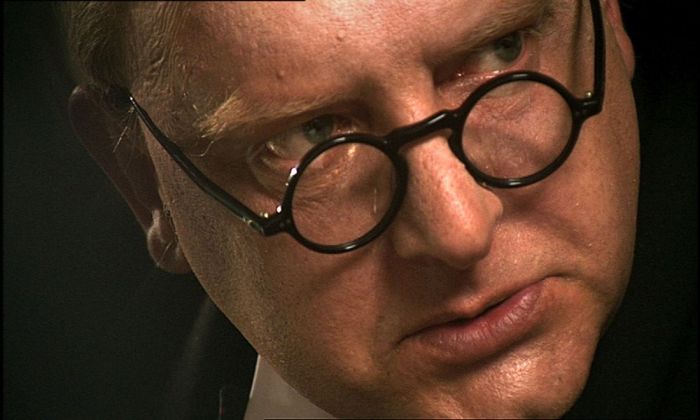
The authoritative tones of Timothy Dalton as the narrator certainly helps, as does the impressive list of players.  Simon Russell Beale as Winston Churchill, Benedict Cumberbatch as Lt Jimmy Langley, Phil Cornwell as Harry Noakes and Kevin McNally as Major General Harold Alexander are amongst the familiar faces on show whilst an intriguing piece of casting sees Richard Attlee play his grandfather, Clement Attlee.

Casting was key to Dunkirk‘s success, with several actors offering eerily accurate recreations of familiar historical characters.  Christopher Good as Neville Chamberlain for one, although he’s overshadowed (just as Chamberlain was in real life) by Simon Russell Beale’s towering Churchill.  So many good actors have had a crack at playing Winston Churchill over the years (Brian Cox being the most recent) but Russell Beale really nails the man.

7493.jpg

Russell Beale is never better than when, chairing a War Cabinet meeting, Churchill opines that “nations which go down fighting rise again. Those which surrender tamely are finished”.  Later he tells his colleagues that “if this long island story of ours is to end, let it end only when each one of us is choking in his own blood upon the ground”.  Russell Beale brings Churchill back to life with this classic and characteristic piece of oratory.

Alex Holmes would comment that Dunkirk wasn’t “revisionist but accurate. The notion that everyone leapt into boats at the drop of a hat to save their fellow man isn’t the whole story. There is great heroism but it is complex heroism”.  This comment highlights one of the problems inherent in mounting any drama or documentary which attempts to examine the Dunkirk evacuation.  Given the number of people who took part, it would clearly be wrong to treat them as simply a gestalt – they’re a group of individuals with diverse opinions and objectives.

Episode one – Retreat (original tx 18th February 2004) sees Churchill under pressure from his colleagues to sue for peace with Hitler.  He refuses and orders the evacuation to begin.  Private Alf Tombs (Clive Brunt) and his unit hold the Germans at bay for 48 hours, enabling many of their colleagues to escape, although this leads to their own capture.  Tombs lived to tell the tale, although as he explains here, many of his comrades weren’t so fortunate.  Meanwhile, Captain Bill Tennant (Adrian Rawlins), tasked with organising the operation on the ground, begins the evacuation.  But when the Luftwaffe begin to attack in earnest, the situation looks grim.

7500.jpg

Episode two – Evacuation (original tx 19th February 2004) finds the BEF on the coast of Dunkirk, awaiting rescue.  But with so many men and too few ships, the Admiralty begins to requisition any craft they can find – including cockle fishing boats from Leigh-on-Sea.  The heroic tale of one of the Leigh cockle boats – Renown – is featured heavily in this episode (further information on the Renown can be found here).

The final episode – Deliverance (original tx 20th February 2004) sees the embattered British still attempting to hold off the Germans.  Although many troops have already been lifted off the beach, a considerable number still remain. This puts their lives in the hands of soldiers such as Lt Jimmy Langley (Benedict Cumberbatch) who attempts to delay the Germans for as long as possible.  Although Langley is successful in buying more time for his colleagues he’s not so fortunate himself.  Langley’s autobiography (reviewed here) looks to be a fascinating read, especially his post-Dunkirk activities.

The bare statistics of Operation Dynamo, which ran between the 27th of May and the 3rd of June 1940, are eye-opening.  338,226 troops were evacuated from Dunkirk (98,780 men were lifted from the beaches whilst 239,446 were taken from the harbour and pier). Out of the 936 ships which took part, 236 were lost and 61 were put out of action (the number of small boats who sailed on their own initiative will never be known).

Dunkirk manages to put these bald facts into perspective by concentrating on the human and heroic endeavours of that hellish week.  It’s an absorbing and compelling tale brought to life across the three 60 minute episodes thanks to a mixture of fine performances and carefully selected archive footage.  Arrow’s release contains all three episodes on a single DVD and – apart from subtitles – offers no additional special features.  This is a slight shame, but the programme is the main thing.  Dunkirk is an exceptionally well-crafted drama-documentary and comes warmly recommended.

Dunkirk is released by Arrow on the 10th of July 2017.  RRP £15.99.

Dunkirk_2004