This isn’t – you’ll probably be grateful to hear – an attempt to unpick the temporal paradox at the heart of the story. I’ll leave that for another time ….
Rather, it’s simply a quick post about a few elements from episode one which caught my attention during my latest rewatch (and following on from my series of tweets about the story).
UNIT HQ always seemed to be on the move during the Pertwee era. In story terms you could argue that it made sense for a top secret organisation (despite what the The Three Doctors might suggest!) to be somewhat mobile. On a practical production level it’s a little harder to understand.
Especially given that the Pertwee era (following on from the somewhat shambolic production and scripting travails of the later Troughton years) had a much more efficient production base. You’d have assumed that by keeping certain sets – like the Doctor’s lab – in storage they’d have saved themselves a little bit of money. But no, in every new story it seems that the Doctor has moved his base of operations to a new room.
The Day lab is especially interesting. Although it’s never directly stated on-screen, it would appear that the Doctor has (for the first time since Inferno) removed the console from the TARDIS. Otherwise it would be perfectly possible to accept that what we see here is just a very strange console room. Two things count against that – one is that there’s a working telephone and the other is that the Brigadier doesn’t seem in the least put out when he ambles in to chat to the Doctor. Whereas in The Three Doctors he had a nervous breakdown when entering the TARDIS.
I still like to think that what we see here is a secondary control room though, even though the facts doesn’t really bear this out ….
The main oddity of the first episode is the very strange timeline. We’re told that Auderly House is a Government owned country house about fifty miles north of London. Given this, the current UNIT HQ can only be – at best – a few minutes away.
Otherwise, there’s no way to explain how the Doctor, Jo and the Brig (having travelled to Auderly in order to give Sir Reginald a hard time) can, once they’ve returned to the lab, discuss the strange apparitions the Doctor and Jo witnessed prior to their visit to Auderly (which only occurred a few “moments ago”).
So they travelled to Auderly, chatted to Sir Reginald and combed the grounds for any stray guerrillas, but all this only took a few moments. You’d swear the Doctor had a working time machine.
Following on from this point, Benton escorts the wounded guerrilla to the hospital. As the ambulance sets off, there’s still time for the Doctor to return from Auderly to the lab, run a metallurgical analysis on the guerrilla’s gun and then start footling around with his portable time machine. When he does this, the guerrilla vanishes from the ambulance, with an amazed Benton watching on. Again, how does this timescale work? If the hospital’s not several hours drive away, it makes no sense.
Maybe the original intention was to record the scene with the Doctor and the time machine on location? If so, that would have fitted nicely, since at that point only a few minutes would have elapsed between the guerrilla being bundled into the ambulance and the time machine springing into life.
If not, it appears that Terrance’s script editing was a little hit and miss that week ….
Major Adams (George A. Cooper), convinced that the Russians will attack sooner rather than later, has prepared for this eventuality by stockpiling an impressive array of food and other provisions. This proves to be an irresistible temptation for two young teenagers – Carol (Diana Walker) and Kenny (Mark Price) ….
The first of two episodes written by Ray Jenkins (a writer with an impressive track record across many popular series) Coins is a pretty low-key story which focusses more on the characters involved than it does the crime. The pilfering is pretty petty – some tins of food, a primus stove, etc – and is mainly of interest since it suggests that the perpetrator is somebody living rough.
Cooper’s role in the story is quite small (once Carol and Kenny are identified, Adams fades away) but as might be expected he’s terribly good value with what he is given to do. Adams (rather like Cooper’s most famous creation, Grange Hill’s Mr Griffiths) is somewhat pompous and self-important, but scratch a little below the surface and there’s hidden depths.
Adams’ war service and the things he saw might very well explain why he continues to run his life along such strict lines. His bachelor status and his self-professed pride in doing everything for himself is both admirable and slightly tragic.
There’s something of a jump (almost as if there was a missing scene) after Adams suggests that the young female thief might have been a papergirl who used to work the area. The long-suffering Roland is sent off to check this – but in the next scene we’re at the local care home, where Jean has arrived to speak to Carol. A spot of bridging dialogue, explaining that the ex paper girl was Carol, would have made this part of the story flow a little better.
Diana Walker’s acting career only encompassed this episode of Juliet Bravo and a limited run in Brookside a few years later. Her lack of acting experience helps to give Carol a natural, unforced air – with her mother in hospital (and unlikely to ever come out) she faces a bleak and uncertain future, with Kenny being the one bright light in her life.
Kenny’s disappearance drives the later part of the story, but it’s never suggested that he’s in any danger (or indeed is dangerous himself). His eventual discovery is more the solution to a puzzle, whilst his continuing absence allows the spotlight to be shone on his estranged parents – Bob (David Boyce) and Pat (Deidre Costello).
Joe Beck doesn’t take to Bob at all. Granted custody of his son, Bob seems to be a pretty decent sort of chap – true, he doesn’t often get to see his son (but that’s mainly because he’s working night shifts and sleeping during the day). As he tells Joe, he has to earn money to put food on the table. There’s something in Joe’s expression which suggests this is something of a feeble excuse and the way Boyce plays the scene does suggest that Bob is an inherently weak man.
But he must have seemed a better bet than Pat, since the court decided not to grant her custody. If Bob’s pallid and faded then Pat’s bold and brassy. But her confident public image proves to be decidedly brittle ….
Roland continues to provide a dollop of comic relief. Once again he demonstrates that he’s lacking in a sixth sense (referring to Jean as Wonder Woman, whilst unaware that she’s standing right behind him). But she keeps on giving him chances and decides to take him along to Pat’s house in order to discover whether Kenny is hiding out there. He’s told to dress in plain clothes – well, what he arrives in certainly isn’t a police uniform, but it couldn’t really be classed as plain clothes either.
It’s a slight frustration that this episode introduces us to the very capable WPC Gilbert (Helen Duvall) as sadly this would be her one and only appearance. Possibly it was felt that one female regular was sufficient, but these early episodes would have been stronger if there had been at least one female amongst the rank and file officers.
Fairly forgettable crime-wise then, but Coins is a decent character study.
DS Cole (Del Henney) arrives from London. An informant of his, Arthur Roberts, was discovered murdered on the moors and Cole has come to identify the body. His role should then be at an end, but the dogged Cole is determined to work out what happened and Jean is keen to assist ….
The first of three different Juliet Bravo roles for Del Henney, Cole is initially presented as a dour, humourless man. He’s less than impressed that the body’s been moved to the mortuary (he would have preferred to have viewed it in situ), seems incredulous that the scenes of crime officers haven’t found anything and is disgusted that so many people have trampled over the site.
The fact he’s been given PC Roland Bentley (Mark Drewry) as a driver seems to be yet another irritation for him. The garrulous Roland and the taciturn Cole seem like a match made in hell. But when Cole wryly grins after overhearing Roland on the radio, telling the station that Cole is a “right one”, it suggests that he might not be quite as dour as he initially appeared.
Roland is the first of a series of PCs who appear throughout the six series. Some are more gormless than others it has to be said, with Roland being somewhat high on the gormless scale. He’s long-suffering (tutting when Cole drags him on a trek across the moors), petulant (when Jean and Cole leave him alone on observation) and ever so slightly sickly (but as he tells Jean, he doesn’t often get car sick now and rarely when he’s driving ….)
Cole is received politely, if condescendingly, by Detective Superintendent Brunskill (John Rowe). Jean later confides to the Sergeant that Brunskill was hardly going to welcome him with open arms – a murder in this area is something of a rarity, so the thought of a London copper stealing their glory wouldn’t be appreciated. Cole solving the case doesn’t concern Jean, but she is bothered about the way that Brunskill’s men have commandeered her nick.
Henney’s greatest strength in this episode is his stillness. As befits Cole’s solitary nature, he’s much more of an observer than a talker (although he can be articulate when he wishes). The best example of Cole’s ability not to react can be seen when he finds himself on the end of a boozy diatribe from Joe Beck. Joe is celebrating twenty two years on the force (confusingly, he refers to this as his “silver handcuffs” which surely would be twenty five) and everybody – including Cole – has convened to the local pub for drinks.
But Joe, a man who’s had dealings with Flying Squad officers like Cole before, is keen to vent his spleen about those flash London coppers. Henney’s the picture of control during this scene – allowing a range of expressions (from amusement to irritation) – to play across Cole’s face. That Cole doesn’t confront Joe in public but does so instead in private (in the toilet shortly afterwards) is an interesting choice. Sparing Joe a public humiliation?
The rift between Jean and Joe now seems to have been healed (although they don’t exchange more than a few words during this episode). But after being rather stroppy in Shot Gun and now drunkenly boorish here, it’s fair to say that Joe hasn’t made a good early impression.
The relationship between Cole and Roberts is teased out as the episode continues. Cole respected his skill as a blag draughtsman and regrets his death. But the main reason why he carries this regret is that he was hoping to pin a really big crime on him one day. For Cole, everything – including relationships – comes back to the job eventually.
With Roberts represented on screen only by an unseen body under a mortuary covering, the script has to work to build up a picture of him. And his criminal associates are also – until the last few minutes – equally shadowy characters (spoken about, but only briefly seen). When they do appear, it’s the cue for a mild action scene as villains and police have a bit of a bundle. The Sweeney it isn’t (director Paul Ciappessoni wasn’t really an action director like, say, Douglas Camfield).
The dichotomy of Cole – he delights in roughing up the villains but also digs into his own pocket to buy a headstone for Roberts’ grave – means that by the end we still don’t really know what makes this enigmatic man tick. Henney would return but Cole wouldn’t, which is a bit of a shame as it would have been interesting to return to the character at a later date.
Doris Latham (Patricia Hayes) works part time as a tea lady at Doe Electrics. Elderly, Irish and genial, she would appear to be the most unlikely criminal you could ever hope to meet. But over the last four years she’s embezzled the company out of more than thirty thousand pounds ….
Although Patricia Hayes might be best known as a comedic actress (appearing alongside the likes of Tony Hancock, Arthur Askey and Benny Hill, amongst many others) she proved to be no slouch when she moved over to drama – winning a BAFTA for the 1971 Play For Today, Edna the Inebriate Woman, for example.
She continued acting well into the 1990’s, racking up credits on popular series such as Heartbeat and Lovejoy whilst her film career included such diverse roles as Daisy in the classic Ealing wartime propaganda film Went The Day Well? (1942) and Mrs Coady in A Fish Called Wanda (1988).
Fraudulently Uttered is, of course, enhanced no end by her performance (although the Irish accent took a few moments to get used to). As Doris is a female prisoner, Jean finds herself (as the only female officer at Hartley) cast in the role of her jailor (and also interrogator). A curious mixture of innocence and steel, Doris proves to be a tough nut to crack.
The sight of a little old lady locked in a cell at Hartley nick is a powerful one, but Doris’ belief in the righteousness of her actions – she admits stealing the money, but never kept any for herself – gives her a curiously detached air. Even when she asks Jean what her sentence will be, it doesn’t seem to concern her too much. As she says, with only a pension and a cat to go home to, what does it really matter?
The innocent Doris has been manipulated by the far from innocent Jimmy Harker (Ray Smith). Harker, a second hand car salesman, caught Doris’ sympathy after he fed her several sob stories. So as a result, she was quite prepared to steal huge sums of money for him …..
With my accountancy hat on, I have to say that I’m amazed the fraud was undetected for so long. Despite only being the tea lady, Doris was entrusted with taking the cheques at Doe for signing each week. This is just about credible, but it’s the next part which is difficult to swallow. Somehow Doris had stolen a company cheque book and from time to time would slip in one from this book. Fine so far, but when these dodgy cheques were cashed they’d show up on the bank statement with all the others – so surely then somebody would have realised that something was wrong (they wouldn’t have been able to tie them back to an invoice, the cheque numbers wouldn’t have matched the others, etc). Reconciling your bank statement back to your ledger is pretty basic stuff.
Taking my accountancy hat off, there’s still plenty to enjoy in this episode. Ray Smith is wonderful as Jimmy Harker. Harker purrs with silky villainy, taunting DCI Jim Logan (Tony Caunter) that he has nothing on him. But things start to unravel dramatically after Harker tells his associate, Edward Bass (Dicken Ashworth), to take Arthur Hill (Arthur Kelly) out to the quarry and persuade him (with a hammer) that he should keep quiet.
Hill might have been an unwitting part of the fraud, but his testimony could prove fatal for Harker. That Bass and Harker are an inept pair of villains is made clear after a frantic Bass phones Harker to tell him that although he only tapped Hill a few times (!), he thinks that he’s killed him. This is the signal for Harker to make a break for it ….
All Harker’s scenes so far have had a faint comic edge and his attempted getaway carries this theme on. The sight of Harker speeding away on a moped whilst two officers crawl behind in a commandeered car driven by a vicar (played by Hugh Latimer) makes this plain.
This part of the story also gets us back on film after the largely studio-bound nature of the rest of the episode. I like the moment when we see Harker jogging for freedom down the high street. Given the number of passers-by who stop and stare at him, it’s plain that the street wasn’t closed for filming. Therefore these ordinary members of public unexpectedly found themselves television stars for a few seconds.
Another strong script from Ian Kennedy-Martin, Fraudulently Uttered has a lighter tone than Shot Gun and is a highlight from the early run of the series, thanks to Patricia Hayes and Ray Smith.
Juliet Bravo carried on in a similar tradition to previous BBC police series such as Dixon of Dock Green, Z Cars and Softly Softly. What links them all is their low-key feel (murders and armed robberies were the exception rather than the rule).
It’s an interesting fact that series creator Ian Kennedy-Martin had also created The Sweeney (penning the original Armchair Cinema pilot, Regan). The Sweeney has long been regarded by many critics as a breath of fresh air – destroying the few remaining shreds of credibility of tired old warhorses such as Dixon and Z Cars.
The truth is a little different though. The surviving colour episodes of Dixon (most of which are now available on DVD) reveal a much more interesting programme than the “tired old dinosaur” of legend. And whilst The Sweeney blazed brightly for a while (with The Professionals and Dempsey and Makepeace following in its wake) there’s no reason why every subsequent police show had to follow this format.
Possibly due to its countryside setting, JB has come to be seen by some as a cosy Saturday night programme, a forerunner to Heartbeat. This is far from the mark though – Hartley may be an isolated town, but that’s not necessarily a good thing. Social and economic deprevation (the series debuted in 1980) is the background to many of the stories. Quiet desperation might be said to be one of the series’ recurring themes.
The major selling point of JB, of course, was the fact that a female inspector, Jean Darblay (Stephanie Turner), has been placed in charge of a station full of men. Today this wouldn’t raise an eyebrow, but the novelty of a female Inspector (or indeed a female leading a police series) would still have been strong back in 1980.
The forces of conservatism are represented by the two middle-aged sergeants, Joe Beck (David Ellison) and George Parrish (Noel Collins) with Joe being the most opposed to Jean’s appointment (his calculated insolence runs throughout this opening episode). Eventually she tells him outright not to call her “boss”. “Ma’am” will do instead.
The opening few seconds of the episode – a car gingerly traverses up a steep, deeply rutted road whilst an old woman with a trolly trudges down (with a factory chimney billowing out smoke in the distance) is a wonderful piece of visual shorthand. We’re instantly aware of exactly what sort of town Hartley is (a run-down environment which has seen better days).
The car driver – Rodney Maskell (Tony Melody) – is just as quickly established as a deeply unstable man. With camera angles shooting from low on the ground and from his POV, it helps to create a sense of queasy uneasiness. He’s arrived, at gunpoint, to take his teenage daughter, Maureen (Joanne Whalley) away with him.
After this drama, we switch over to the more humdrum world of Hartley nick. Jean’s already been resident for a short while, but it’s still clearly not something that Joe and George have come to terms with. Joe’s gleefully sorrowful comment that a parade at 9:30 will be difficult is just one round in their battle of wills.
Jean’s encounter with local informer Ted Watson (John Moore) is another. Joe and George have clearly indulged this elderly chap for years, but Jean is far from impressed when she learns that he expects to receive five pounds for his statement (he claims to have witnessed a rape on the moor). This subplot is notable for establishing the bleak tone of the series – Jean attempts to question the mother of the alleged rape victim, but doesn’t get very far. The father isn’t a great deal of help either (telling Jean that if her daughter becomes pregnant they’ll “summon the bastard”. If she’s not, then they won’t).
Jackie Shin (as Mr Porter) enjoys a vivid cameo here, as Porter explains to Jean that dragging his young daughter through the indignity of a court case is something he’s keen to avoid. His parting shot (“if you weren’t a bloody woman, I’d belt you one”) is nicely delivered too.
Mrs Maskell (Margaret Stallard) tells Jean that her husband has been on a downward turn ever since he lost his job (his old place of work – a now derilict mill – could be taken as a visual metaphor for the economic decline of the North). Of course, this is where he and Maureen are holed up (Jean decides to pop into the mill all by herself and is marched out at gunpoint by Maskell for her pains).
It’s hard to see this as anything other than a massive miscalculation on her part (although to be fair, Jean wasn’t aware that Maskell had a shotgun).
Whalley might have been eighteen at the time, but she’s easily able to play a diminutive fourteen year old. She doesn’t have many lines, but no doubt due to her later career she always catches the eye.
Tony Melody is compelling as a man on a verge of a nervous breakdown. His desire to shoot his wife (or indeed the police) is contrasted by his obvious love for his daughter. That she’s the only person he won’t shoot is later used by her as she timidly tells him that she’s prepared to walk out of the door. Melody and Whalley play these later scenes very well.
This looks like it was David Reynold’s only JB episode as director, a pity as there’s some lovely filmic moments peppered throughout (Shot Gun is a major location shoot, other episodes would be more studio based). Later moving to ITV, Reynolds would become a producer, working on many of the network’s top dramas and comedies.
Shot Gun establishes the series with a bang, informing us right from the start that we shouldn’t always expect a happy ending.
The Doctor and Ian are in trouble. They’ve gone down to explore the aqueduct, but aren’t aware that their map has been doctored (plus their guns are useless). I like the way that when they hear a noise they roll up the map to use as a weapon. Quite how effective a few pieces of paper would have been as a club is something of a moot point.
There’s a characteristic moment when the Doctor burbles on, not heeding Ian’s warnings that they’ve been surrounded! The Doctor and Ian are captured by the survivors of the spaceship which landed ten years ago. They’re a rum lot, to say the least. They’ve spent all this time down in the aqueduct, poisoning the water and patiently waiting for every last Sensorite to die. This single-minded course of destruction has driven them all quite mad, but even though they’ve regressed to a somewhat primitive state (they wield pointed sticks as weapons) it’s interesting that they still retain a rigid hierarchy with a clear chain of command that’s run along military lines.
John Bailey, as the Commander, is able to invest his character with a rather pathetic sense of honour and duty, and he makes quite an impression during the brief time he’s on screen. But Bailey was always a class actor (he returned twice to the series – first as Edward Waterfield in The Evil of the Daleks and then later as Sezom in The Horns of Nimon, where his dignified turn was in sharp contrast to the panto antics from most of the other cast members).
Susan gets a final chance to demonstrate her telepathy and also shares a scene with the First Elder where she reveals a sliver more about her home planet.
1ST ELDER: When I listen to you, you who are so young among your own kind, I realise that we Sensorites have a lot to learn from the people of Earth.
SUSAN: Grandfather and I don’t come from Earth. Oh, it’s ages since we’ve seen our planet. It’s quite like Earth, but at night the sky is a burned orange, and the leaves on the trees are bright silver.
1ST ELDER: My mind tells me that you wish to see your home again, and yet there is a part of you which calls for adventure. A wanderlust.
SUSAN: Yes. Well, we’ll all go home some day. That’s if you’ll let us.
The oddest thing about the conclusion of the story is that we don’t see the City Administrator receive his comeuppance. He just fades away as we’re told that he’ll be banished to the outer wastes. It’s one of those moments, and there are several others during the story, where it’s surprising that David Whitaker didn’t tweak the script a little in order to produce something a tad more dramatically satisfying.
But whilst there are various niggles, overall this is a pretty solid serial. It’s not the most sophisticated or layered tale, but anything with the original TARDIS crew (and indeed, anything with Hartnell) is always going to appeal to me.
Ian and Susan rescue the Doctor from the mysterious creature in the aqueduct. The Doctor implies that there’s something strange about the monster (otherwise how could it have ripped his coat to shreds but not touched his skin?). You have to assume that the monster, like the poisoned water, has been arranged by the (as yet) unseen survivors from the human spaceship which landed ten years ago. Quite how they were able to create the illusion of this monster is a mystery though (and if they are responsible, don’t the Sensorites think it’s strange that mysterious creatures suddenly appeared in the aqueduct some years ago? Where had they been before that?)
The Sensorites continue to maintain that they have a perfect society. “Our society is based upon trust. Treason or secret plotting is impossible.” But the continuing plots of the City Administrator (and the fact that he is able to recruit willing helpers) sharply contradicts this. It’s possible to argue that it’s only the arrival of the humans which has caused the Administrator to go off the rails, but this doesn’t quite hold up to scrutiny. Because he reacts so strongly (and with very little provocation) it does seem probable that he would have snapped soon anyway. And if the Sensorite nation is so peaceful and well-ordered, why do they need a Warrior class?
I like the way that that Sensorites are able to run the Doctor up a lovely cloak to replace his ruined coat. It’s hard to imagine that Sensorites themselves wearing cloaks, but maybe they do – otherwise surely they’d get a little chilly in the winter time?!
There’s a few line fluffs in this episode, but Hartnell’s not to blame for once. This is my favourite, courtesy of one of the Sensorites. “I heard them over, over, talking”.
Carol gets a decent share of the action in this episode. She shares some key scenes with the Sensorites, is overjoyed when John is returned to normality (which is a well-acted scene by Stephen Dartnell) and finds herself kidnapped at the end of the episode.
It’s unusual for a non-regular to be the focus of the cliff-hanger, especially as Susan could easily have been substituted for Carol. Maybe it was felt that since Susan was kidnapped at the end of episode five of The Keys of Marinus it would have felt too much like deja-vu had it happened again so quickly.
Hartnell’s in fine form in this episode. He’s gloriously tetchy when railing against the Sensorites (who refuse to give him the lock of the TARDIS back, which he wants so he can access his equipment to find a cure for Ian). They offer him their own laboratory facilities, which he accepts with very ill grace, but he can’t help himself and raises his voice on several occasions – even though he knows it causes the Sensorites pain.
Therefore it falls to Susan to act as the peacemaker between the Doctor and the Sensorites. It’s a nice, albeit brief, character moment for Carole Ann Ford who is clearly attempting to make the most of the thin material she has (after a strong start to the story, Susan is fading into the background again).
The Doctor’s in his element as he attempts to find a cure (surrounded by test-tubes you feel he’s very much in his natural environment). But the ease at which he does so is another weakness of the story. With six episodes to fill you’d have assumed they could have stretched it out a little longer and even when the City Administrator intercepts the antidote it doesn’t really matter, since Susan simply obtains another dose. Doctor Who and the Silurians has a better example of this type of plot-thread – after the Doctor is kidnapped by the Silurians his formula to stop the plague goes with him, so Liz has to frantically attempt to reassemble it from his notes.
The Doctor’s very pro-active in this episode and therefore quite different from the more self-centered character we saw earlier in the season. He travels down to the aqueduct in order to examine the source of the poison and, leaving his Sensorite guide at the entrance, ventures inside. When the First Elder and the others learn of this, there is general consternation.
1ST ELDER: Other expeditions have tried and failed. Most of our men do not return, and those that do speak of terrible things.
IAN: Well, I’ll have to go myself.
SUSAN: No you won’t.
IAN: We can’t stay here, Susan.
SUSAN: You’re too ill, Ian.
IAN: I’m not that ill.
SUSAN: All right. We’ll need someone to show us the way.
1ST ELDER: I beg you to change your minds. You cannot save your friend.
IAN: We’ll never know till we try, will we?
1ST ELDER: These people have fine qualities. The Second Elder and I have misjudged them, and I will tell him so.
The closing moment of the episode, as the Doctor hears the roar of a mysterious creature is an iconic one and also serves as a good example of Hartnell’s acting abilities. Later Doctors might have used the opportunity of an end-of-episode closeup as a chance to play to the camera, but Hartnell is very restrained. He keeps his face immobile whilst his eyes dash from right to left. It’s a very good indication that less is more and a small example of Hartnell’s class.
Whilst Barbara remains on the spaceship, the Doctor, Ian and Susan travel down with with John and Carol to the Sense-Sphere. John receives treatment from the Sensorites (helping to undo the damage they’ve created) whilst the Doctor agrees to investigate a mysterious plague which is killing an increasing number of Sensorites.
One of the main problems with The Sensorites is how simplistic some of the plotting is. We’re asked to accept that the Sensorites are a technically advanced race, but they’ve spent the last ten years dying from a mysterious disease for which they’ve been unable to either identify or find a cure for. The First Elder (Eric Francis) mentions that the Elders enjoy special spring water, but Ian, who’s very thirsty, doesn’t want to wait for it to arrive and drinks some of the normal water. He then keels over, which leads the Doctor to deduce that the water supply is poisoned.
If one wanted to be generous then we could assume that, due to the Sensorites different physiognomy, the symptoms of the poisoned water don’t manifest themselves so quickly. Otherwise, if a Sensorite toppled over immediately after drinking the water you’d have thought they would have twigged by now! Even so, testing the air, water, food, etc should have been amongst the first things to have been checked.
Again, if you wish to take a more sympathetic reading of the text, it could be that Newman was attempting to show how an isolationist nation like the Sensorites had partly brought this problem on themselves. Although they are technologically advanced, it’s only the input of an outsider which provides them with a solution – therefore their fear of aliens had prolonged their suffering.
But if this section of the story doesn’t quite convince, we also have some interesting exchanges between the Sensorites themselves. Although rudimentary, this dialogue serves to remind us that whilst they are nominally the “monster” of the story, in their own eyes they regard themselves as the heroes and it’s the humans who are the potentially threatening force.
2ND ELDER: In one degree I confess I am anxious. These creatures, these Earth people, are loud and ugly things. Why could we not have met them in the desert or in the mountains?
1ST ELDER: It is a failure of all beings that they judge through their own eyes. To them, we may appear to be ugly. What we must create between us is trust. That is why I have invited them to my palace.
2ND ELDER: But are we sure these Earth creatures are beings as you say? There are animals in the deserts and mountains, but we do not invite them in to our palaces. Perhaps these Earth creatures are animals too?
There’s also a brief insight into how their nation is ordered. “The Elders think and rule, the Warriors fight, the Sensorites work and play.” The Sensorite goes on to tell the Doctor, Ian and Susan that all are happy, but Ian’s ironic misquoting of Orwell (“some are happier than others, eh?”) helps to suggest that there may be chinks in their well-ordered society.
And although the Sensorites may look alike, they don’t possess a hive mind. This is made clear by the bitter words of the City Administrator (Peter Glaze) who regards the outsiders with resentment and fear. And it’s his low-level villainy that will provide the jeopardy over the final three episodes.
It sometimes feels as if Carole Ann Ford has spent the last fifty years complaining how underdeveloped Susan was. According to Ford, Susan was to be an active, Avengers-type girl with psychic powers, so she was later perturbed to receive scripts where she was called upon to play a character who appeared to be little more than a frightened fifteen year old girl.
Quite how much truth there is in the concept of a super-Susan is hard to establish. I’m not aware of any draft scripts that present the character in this way (and Sydney Newman, who more than anyone can be called Doctor Who‘s creator, was always clear that Susan was to be the audience identification figure – a normal teenage girl).
When the first story was being written, there was some talk about making her an alien princess, but it does seem that very quickly it was decided to keep her pretty much as an ordinary girl (even though it’s established that’s not the case). It was a constant source of frustration for Ford and led to her desire to leave the series at the earliest opportunity – although she was possibly unaware that the production team were equally keen to dispense with her services.
One remnant of super-Susan is touched upon in this episode – a skill with telepathy. Her ability to connect with the Sensorites causes her to act as their intermediary – which concerns the Doctor. It gives Ford a little more than normal to work with, which is welcome, and it allows us another brief look at the unearthly child from the opening episode.
Ian spends part of the episode being stalked, rather slowly, around the ship by the Sensorites. Frightening though they appear, the Sensorites aren’t aggressive – although they do insist that everybody has to come down to the Sense-Sphere to live with them, which doesn’t sound like the best proposition ever. The Doctor, as might be expected, isn’t happy. “I don’t make threats. But I do keep promises. And I promise you I shall cause you more trouble than you bargained for if you don’t return my property!”
Another remnant of the early aim of the series to educate as well as entertain is touched upon when the Doctor discusses how they might gain the upper hand with the Sensorites.
DOCTOR: It’s a fallacy, of course, that cats can see in the dark. They can’t. But they can see better than we humans, because the iris of their eyes dilates at night. Yes.
IAN: What are you driving at, Doctor?
DOCTOR: Oh, it’s all perfectly simple, Chesterton. You see, the Sensorites eyes are the exact opposite to that of a cat. The Sensorites eyes were completely dilated, that is, enormous, in light.
IAN: The conclusion being that they would contract in darkness.
DOCTOR: Exactly. And that is our best weapon. The Sensorites will be frightened of the dark.
There’s not a great deal going on this episode, apart from giving us our first proper look at the Sensorites. But it ends with a jolt – as Susan prepares to journey down to the Sense-Sphere alone (even if, as so often, the cliff-hanger is negated in the opening moments of the next episode).
It’s fair to say that The Sensorites is something of an unloved story amongst Doctor Who fans (often regarded as nothing more than an excellent cure for insomnia). I think this is a tad unfair (it’s never been a story I’ve struggled with too much). Yes, some of the plotting is a little simplistic, but then the series was still feeling its way during this point, so a little slack needs to be cut.
Probably the most notable part of the serial is that the Sensorites aren’t mindless monsters – they have an ordered society and their decision to imprison Maitland’s ship in an endless orbit is revealed to be an exercise in defence, not attack.
This possibly shouldn’t come as a surprise for anybody re-watching season one in order. We’ve yet to get to the point where non-humanoids are regarded as evil by default. So far only the Voord (underdeveloped as they are) match the template of a monster who desires to dominate others (later to become a familiar Doctor Who trope). Even the Daleks in their first appearance aren’t interested in conquest – survival is the only thing on their minds.
Quite a few six-parters employed a 4-2 or 2-4 format (good examples are The Seeds of Doom and The Talons of Weng Chiang). The Sensorites does something similar – episode one and two take place on Maitland’s spaceship whilst the remainder relocates to the Sense-Sphere. Although here it’s done for more practical reasons, as the studio was too small to house all the sets.
We open with a mystery – the TARDIS materalises inside a spaceship and the Doctor and his friends find two people – a man and a woman – who are both apparently dead. They’re just about to leave when the man stirs and shortly after he explains that they’ve been put into a deep sleep by the Sensorites, who live on the nearby planet.
Lorne Cossette (as Maitland) gives a strange and unconvincing performance, so it’s a blessed relief that he doesn’t travel down to the Sense-Sphere with the others later on. But there is a line of dialogue which suggests he’s been deeply affected by the Sensorites, so that might explain that Cosette isn’t just indulging in a spot of bad acting (although I’m not convinced). Ilona Rodgers (as Carol) has equally earnest dialogue but manages to make a slightly better job of things.
The Doctor’s still in full run-away mode – after a brief chat with Maitland and Carol, he decides there’s nothing he can do to help. So if the Sensorites hadn’t stolen the lock of his TARDIS he’d have been quite happy to nip off and leave them to their fate ….
But once circumstances force him to take action, he does so with gusto – elbowing Maitland aside as he takes control of the ship. Newman gives Hartnell some lovely lines, such as “it all started out as a mild curiosity in a junkyard, and now it’s turned out to be quite a great spirit of adventure.” My favourite comes a little later in the episode. “I learned not to meddle in other people’s affairs years ago. Now, now, now, don’t be absurd. There’s not an ounce of curiosity in me.”
Barbara and Susan meet the third member of the crew, John (Stephen Dartnell). Dartnell, who had played Yartek, leader of the Alien Voord in The Keys of Marinus, gives easily the best performance of the three crew-members. John was the most deeply affected by the Sensorites’ mental attacks and it’s left him in a very fragile state. Maitland believes that he’s potentially dangerous, although the reason for this is never explained. We later learn that the Sensorites have control of John’s mind – had they ordered him to do something violent prior to the Doctor’s arrival? If so, it seems rather out of character for the Sensorites, since it’s stressed that they haven’t actually hurt the Earth people.
The scenes of the zombie-like John stalking Susan and Barbara are effective, although it’s all done very slowly. But when he eventually does run them down it’s clear he poses them no threat – Barbara cradles him as a mother would a child.
The reveal of the monster at the end of episode one would become a familiar Doctor Who staple. We’ve already seen it happen in The Daleks and it happens again here. After an episode of discussing them, things would have fallen rather flat if they hadn’t convinced. So it’s lucky that our first glimpse of a Sensorite is eerie and unsettling.
After Ian successfully manages to re-enter the tomb (via a hazardous journey from a tunnel which starts in the garden) it seems that escape should now be a formality. But as this happens right at the beginning of the episode it’s obvious there will be complications.
Pulling the tomb door open from the outside doesn’t work, so Ian elects to go back through the tunnel and open it from inside again. But when Ian and Susan find Autloc senseless in the garden, attacked with Ian’s club, he finds himself once again the victim of a frame-up (this happened to him in the previous story, so he should be getting used to it by now).
It was Ixta, on Tlotoxl’s instructions, who attacked Autloc. This benefits Tlotoxl in several ways – it drives a wedge between Autloc and Barbara and also discredits Ian. With Susan due to be punished for her refusal to agree to an arranged marriage (her tongue and ears will be pierced with thorns) this final episode has skillfully drawn several different jeopardy threads together.
After Cameca frees Susan, it’s not clear why Ian doesn’t follow them. Instead, he disguises himself as a guard – presumably in order that he can fight Ixta to the death. Thankfully, this climatic fight was shot on film at Ealing and therefore is much more convincing than the others seen earlier in the story. Although it’s hard not to distracted by the wrinkly backdrop (a pity it couldn’t have been smoothed out a little better).
With Autloc having renounced his position and possessions in order to wander the wilderness it appears that all Barbara has achieved is to destroy one man. The Doctor offers a more encouraging spin on events, but it’s left to the viewers to decide whether he’s correct or simply trying to comfort her.
BARBARA: What’s the point of travelling through time and space if we can’t change anything? Nothing. Tlotoxl had to win.
DOCTOR: Yes.
BARBARA: And the one man I had respect for, I deceived. Poor Autloc. I gave him false hope and in the end he lost his faith.
DOCTOR: He found another faith, a better, and that’s the good you’ve done. You failed to save a civilisation, but at least you helped one man.
The Aztecs is undeniably a quality production – it’s well acted, well written and impressively directed by John Crockett (even allowing for the limitations of the studio).
Although I have to put my hand on my heart and admit that I do find it somewhat uninvolving (the comic-strip antics of The Keys of Marinus are much more entertaining). But it’s an excellent vehicle for Jacqueline Hill and William Hartnell, with William Russell also enjoying some decent material (Carole Ann-Ford is less involved, mainly because she was largely absent from the middle episodes).
Lee Kingley (Lennie James) finds himself sentenced to a lengthy stretch at HMP Mandrake. Despite his lack of prison experience he seems well equipped to survive its dog eat dog world, but he’ll need to watch his back ….
Broadcast on Channel 4 in early 2003, Buried garnered considerable critical acclaim during its short run (only eight episodes were made) but this didn’t translate into decent viewing figures (it averaged around one million per episode). This seemed to be the reason why a second series wasn’t commissioned, despite the fact that it won the BAFTA for Best Drama Series in 2004.
From the same stable as The Cops (BBC2, 1998 – 2001), Buried had a similar bleak, unsentimental tone allied to a realist style. It was produced by World Productions, a company who had made this style of drama their trademark during the 1990’s and 2000’s (Between the Lines and Cardiac Arrest, for example).
Following his television debut in 1988, Lennie James began to notch up an impressive list of credits during the next decade. He was part of the short-lived but memorable BBC1 police series Out of the Blue (1995/96) whilst prior to Buried he’d begun to make regular cinema appearances (Snatch, Twenty Four Hour Party People). America would then beckon (though we shouldn’t blame him for appearing in the forgettable remake of The Prisoner). More recently, he’s been a semi-regular on The Waking Dead.
Although Lee’s sentence is for GBH and firearms offences, the opening of the first episode floats the notion that he’s been the victim of a miscarriage of justice (he’s waiting to hear about his appeal). Lee’s older brother, Troy (Dave Fishley), is the real criminal of the family and he suggests that Lee’s been targeted in order to get at him. The truth is rather more prosiac though.
There are some questions you don’t ask in prison – the reason why someone’s inside being the main one (Lee, by making this faux paus, betrays his inexperience). As a new face he finds himself being sized up by the old hands – some are clearly dangerous whilst others seem friendlier. This mix of characters (on both sides of the fence) is one of Buried’s main strengths.
Teased out during the series is the uneasy relationship which exists between the immates and the prison officers. Detente is generally maintained (in some ways it’s not dissimilar to Porridge – do your time, keep your nose clean and you’ll be alright) with an ironic tolerance often shown from both sides. Some people, like psychiatrist Dr Nick Vaughan (Stephen Walters), are keen to try and dig a little deeper, but Lee – for one – keeps his distance.
Although he settles into prison life quite easily to begin with, towards the end of the first episode we begin to see that Mandrake is a place where violence and physical abuse between inmates is shrugged off as a regular occurrence. The sadistic Ronaldo (Francis McGee) is knifed during an argument in the showers and Lee not only shields the perpetrator (a rather pathetic, drug-addled type) but also claims responsibility for the assault. There is method in this seeming madness though – the more vicious you are, the greater respect you earn. And with Lee having already upset some of his fellow inmates, it does no harm to have his legend bulked up a little ….
Possibly the most intriguing instalment sees Troy moved into the same cell as his younger brother. It does seem odd that Troy would be transferred to Lee’s prison, but whatever the reason for the move, the simmering tension which exists between the pair is deftly drawn out.
Putting the brothers together makes sense from an official viewpoint – it’s hoped that Lee will prove to be a stabilising influence on the uncontrollable Troy – but Lee begins to suspect that there’s another reason. He’s convinced that their cell has been bugged (another character later comments on the corrosive nature of prison – how it’s a breeding ground for all kinds of paranoia).
Troy’s new found fascination with religion (he takes on the mantle of Jesus Christ) is another manifestation of this. He’s clearly a man on the verge of a nervous breakdown, but his ultimate fate causes Lee to despise the system even more. Whilst Troy’s abdication means that a new King – Lee – is crowned in his absence ….
Lee may now be a well-respected man but his increasing loss of personal control is a feature of episode four. This happens after one of his trusted sidemen – Kappa (James Wells) – is accused of being a paedophile. The truth of the matter is never settled, since the “evidence” (Kappa is alleged to have a picture of Lee’s young daughter stashed away) is suspect to say the least. But Lee – who’s already had to face the news that his wife has left him – isn’t thinking clearly and attacks Kappa in a bloody frenzy.
The latter part of the series continues to explore various familiar themes. Drugs remain an ever-present problem, with Nick placed under pressure due to the fact that the inmates in his secure unit – who are supposed to be clean – keep failing their drug tests. Can he find out who the supplier is? For a man who likes to believe he has the trust of the prisoners this means treading a very fine line.
Nick also has a prominent role to play in the sixth episode. Female officer DD Burridge (Jane Hazelgrove) is assaulted by a prisoner. She’s later forced to speak to Nick about her experience, but it’s hardly surprising that she’s somewhat hostile towards him (“I’m the victim, but I’m the one who’s being punished” she tells him). Hazelgrove, having skirted around the perimeters of several previous episodes, moves more into the forefront here and is very good value.
Although Buried could have gone to a second series, there’s something pleasingly circular about the final scene of the concluding episode (Lee – now an old hand – gently tells a new arrival that you should never ask anybody what they’re inside for). His journey – from an innocent new arrival to a hardened old lag – is now complete.
Buried is something of a hidden gem. The harsh tone and generally unlikeable characters might have been the reason why it didn’t capture a larger audience but fifteen years on it’s aged very well. A series which doesn’t pull its punches, Buried is an absorbing watch and comes warmly recommended.
Buried is released by Simply Media on the 16th Of April 2018, RRP £29.99. It can be ordered directly from Simply here.
Whilst it would be unfair to regard The Aztecs as worthy but dull, it’s undeniable that it’s always been a story that I’ve found it easier to admire than love. It’s certainly a less engaging experience than Marco Polo – possibly because Polo had three extra episodes to play with (allowing for more character development) but maybe it also has something to do with the fact that it’s harder to get involved with the sympathetic characters we meet in The Aztecs.
Polo and Ping-Cho both had interesting motivations which explained their actions (Polo wished to go home, Ping-Cho became increasingly anxious about being trapped in an arranged marriage). But neither Autloc’s crisis of faith or Cameca’s love for the Doctor has quite the same impact.
Both Autloc and Cameca find themselves manipulated (by Barbara and the Doctor). In Barbara’s case, it happens because of her desire to fundamentally change the course of Aztec society. Even when Autloc spells out to her that he will be ruined if she proves to be a false goddess, she appears to be unmoved.
BARBARA: Am I not a god? Support me. Tlotoxl won’t dare defy us both.
AUTLOC: If I take that course, there is no way back for me. In all humility, I beg you, do not deceive me or prove false to me.
Although the Doctor strikes up a friendship with Cameca in order to find out more about the tomb, it’s his misunderstanding of Aztec customs (especially what is signified when a man offers to make cocoa for a woman) which proves to be his downfall. It’s a lovely comic scene which Hartnell plays to perfection – his expression when he realises he’s become engaged is priceless, as is Ian’s reaction when the Doctor calmly tells him his happy news!
DOCTOR: Happy days, my dear.
CAMECA: The happiest of my life, dear heart. Was ever such a potion brewed? In bliss is quenched my thirsty heart.
DOCTOR: Very prettily put, my dear.
CAMECA: Oh, sweet-favoured man, you have declared your love for me, and I acknowledge and accept your gentle proposal.
It’s a light moment in an otherwise dark and dramatic episode.
The Doctor has attempted to persuade Barbara that interfering with Aztec society is doomed to failure (although he doesn’t specify why). She doesn’t accept this and it takes Ian to finally make her see the impossibility of her actions.
BARBARA: Tlotoxl’s evil and he’ll make everyone else the same.
IAN: They are the same, Barbara. That’s the whole point. You keep on insisting that Tlotoxl’s the odd man out, but he isn’t.
BARBARA: I don’t believe it.
IAN: Well, you must. If only you could stand away from this thing, you’d see it clearly. Autloc’s the extraordinary man here. He’s the reasonable one, the civilised one, the one that’s prepared to listen to advice. But he’s one man, Barbara. One man.
This is maybe a little unfair on Ian’s part. We don’t meet that many members of Aztec society throughout the story, but it’s probable that Cameca wouldn’t be opposed to the abolition of human sacrifice. Or maybe she would. One way that Ian’s point could have been proved beyond beyond all doubt would have been for the humane and gentle Cameca to mention her support for sacrifice – thereby showing us that the Aztecs’ beliefs were simply too far ingrained in every member of their society for Barbara to ever hope they could be changed.
Geoffrey Carr (Peter Barkworth) might be a successful businessman (he’s a key player in the burgeoning computer industry) but his private life is far less straightforward. Recently married to Frances (Harriet Walter), their relationship is best described as testy. Possibly due to the fact that she’s much younger than he is, they struggle to find any common ground whilst Claire (Frances’ headstrong teenage daughter from a previous marriage) is a further complication.
Geoffrey dutifully continues trying to please Frances though – even going to the expense of buying a crumbling Georgian house in the place where she grew up – County Wicklow, Ireland.
But the mid eighties is a period when the Troubles were at their height and as a wealthy Briton he proves to be an irresistible target. Frank Crossan (Derek Thompson), an IRA killer on the run, teams up with an idealistic teacher called Kate (Aingeal Grehan). Their plan is simple – kidnap Frances and Clare and demand a hefty ransom from Geoffrey. The resolution is far more complex though ….
Broadcast in six episodes during early 1985. The Price boasts strong performances from all the major players. It should go without saying that Peter Barkworth (1926 – 2006) is exemplary as Geoffrey, a man caught between the twin pincers of police interference and the machinations of high finance. Barkworth rarely, if ever, gave a bad performance and Geoffrey is a typically layered creation.
Peter Barkworth
It would be easy enough for Geoffrey – a self-centered but essentially decent man – to be portrayed in a fairly one-note manner, but Barkworth’s nuanced performance essays something much more subtle and ultimately much more satisfying.
Harriet Walter (b. 1950) continues to enjoy a very successful career (The Crown and Star Wars: The Force Awakens are amongst her recent credits). Frances is introduced as something of a contradictory person – she admits that she married Geoffrey for his money, but gets upset whenever he attempts to do any work. But once she’s kidnapped her character goes through a radical transformation.
An interesting piece of casting, in retrospect, saw the fourteen year old Susanna Reid playing Clare. This was her only television acting role (during the last fifteen years or so she’s become a very recognisable British television face – first as a newsreader and then as a breakfast television host).
Susannah Reid
Derek Thompson may have seemingly been playing the level-headed Charlie Fairhead in Casualty since the dawn of recorded time, but prior to checking into Holby City back in 1986 he essayed a variety of roles on both sides of the law. He was a regular on The Gentle Touch between 1980 and 1982 (as DS Jimmy Fenton) but during the late seventies and the early to mid eighties he could often be found playing baddies (The Long Good Friday, The Wild Geese 2 and – of course – The Price). Since Thompson was born in Belfast, the role of Frank Crossan gave him a rare opportunity to drop back into the Irish idiom.
Familiar faces such as Simon Jones, Hugh Fraser and Adrian Dunbar are welcome additions to the cast.
The opening scenes of the first episode intercuts between Frances (trying on expensive jewellery in a swanky shop) and Frank (holed up in a house on a graffiti-ridden estate, picking off British soldiers with a high powered rifle). That they live in two totally different worlds is immediately obvious but the intercutting hammers the point home.
Early on we get a sense of the tensions that exist between Geoffrey and Frances. “I can’t stand you” she screams. Barkworth’s ability to express a world of hurt with a single expression is put to good use here.
The closing scene of the first episode explodes in a burst of violence as Frances and Clare are snatched from their car by a posse of masked raiders. Kate may have been initially presented as someone keen to pursue the struggle for Irish independence peacefully, but here she’s keen for Frank to shoot a fleeing child who witnessed the kidnapping. As Frank, a hardened IRA man, couldn’t bring himself to fire, it’s a character moment that should be filed away for later.
Derek Thompson & Aingeal Grehan
Old computer hands will probably appreciate the opening few moments of episode two. Not only are there some chunky PCs on display but there’s also the slow, but steady, report of a dot matrix printer. It’s printing out news of Frances and Clare’s kidnap (this is a neat way of recapping the events of episode one without having to spell it out verbally).
As the pressure begins to mount, Barkworth excels as Geoffrey – a fundamentally decent man – is pushed and pulled in numerous directions. The police advise him not to pay the ransom – at least not at first – but how can he refuse when lives are at stake? Lansbury (Simon Jones) and Simon (David Lyon) are both on hand to help and advise (Lansbury works for Geoffrey’s company, Simon is an insurance man and a kidnap specialist).
But even if he wants to pay the ransom, how can he afford it? He’s simply not as wealthy as the kidnappers believe him to be and if he attempts to unfreeze his assets or sell any shares then he faces the possibility of losing control of his company. Does he love his wife and step-daughter that much? As the title states, is he prepared to pay the price?
The grim surroundings that Frances and Claire find themselves in (plus Claire’s asthma attacks) makes their incarceration even more of a nightmare. They at least have each other for company, but things are far from easy. Walter and Reid shine during these scenes, especially since the relationship between mother and daughter is very fluid – one minute loving, the next combative.
Harriet Walter and Susannah Reid
As the serial wears on and Frances becomes grimier and more desperate, so the tension begins to ramp up even more. Her transformation – from spoilt society queen to a hardened fighter – is a highlight of the latter part of the story, thanks to Harriet Walter’s performance (in the last few episodes things get especially dark for Frances).
The twisted relationship which can often exist between captor and captive is well drawn out too. Frank despises Frances and all she stands for … and yet. On her side, she’s content to play along with his mood swings – she’ll do anything if it means she can guarantee freedom for herself and Clare. Meanwhile, Geoffrey and his team are making their way to the rendezvous point with the money whilst the police attempt to follow ….
Needless to say, things don’t go to plan and the concluding episode develops into a tense stand-off between the kidnappers and the police. The violence, when it comes, is short and ugly. This occurs about fifteen minutes from the end, which then leaves ample time for those left alive to reflect on events.
An all-film production, picture-wise The Price is in a pretty good condition. The unrestored prints obviously show dirt and damage but it’s comparable to other releases of a similar vintage.
Despite being six episodes long, The Price never feels drawn out. Peter Barkworth, Harriet Walter and Derek Thompson all excel whilst the supporting cast provides solid support. A taut character-based drama, The Price grips throughout and comes highly recommended.
The Price is released on the 15th of April 2018, RRP £24.99 by Simply Media. It can be ordered directly from Simply here.
The Doctor is furious with Barbara for halting the sacrifice. We’ve seen an angry Doctor before, but not like this and it’s clear that Hartnell relishes the opportunity to really go for it. Hill is excellent as well and it’s one of those scenes that crackles with energy, although it’s notable that the Doctor doesn’t remain angry for very long (another sign of the general softening of his character).
TLOTOXL: I would ask you, how shall a man know his gods?
BARBARA: By the signs of their divinity.
TLOTOXL: And what if thieves walk among the gods?
BARBARA: Then indeed, how shall a man know?
This short exchange, beautifully delivered by Ringham and Hill, tells us everything we need to know. Tlotoxl is convinced that Barbara isn’t the spirit of Yetaxa, but lacks any proof. This means he’ll spend the remainder of the story using whatever means are at his disposal (in this episode it’s Ian) to chip away at the composure of the false goddess.
Having won a victory over Ixta with his magic thumb, Ian then faces a rematch – but Ixta will have a secret weapon (the unwitting help of the Doctor). It’s a slight contrivance that Ixta is the son of the man who built the temple, which means the Doctor (in exchange for non-existent temple plans) hands over a plant that will disable his opponent (who turns out to be Ian). Two coincidences, that’s rather a lot!
I like the way the Doctor describes himself to Cameca. “I am a scientist, an engineer. I’m a builder of things.” There may be the hint of pretence here, as he’s attempting to explain his interest in the temple, but there’s an essential truth to this statement. Much, much later he’ll become the defender of the universe (whose name alone makes monsters tremble in fear) and part of the charm of the series will be lost forever.
Carole Ann Ford’s off on holiday, so only appears in a single pre-filmed scene. It’s another nod back to Lucarotti’s previous story, as Susan reacts in horror to the thought of an arranged marriage (much as she did when she learnt of Ping-Cho’s intended fate).
The Doctor, realising that Tlotoxl means them great harm, asks Barbara to play up to Autloc. The more she can convince Autloc that she is Yetaxa, the more it will help them. Barbara’s happy to do this, no doubt because she still clings to the hope that she can bring about a fundamental change in their society, but it already poses the uncomfortable question about what Autloc’s fate will be once he realises his faith in Barbara was misplaced.
AUTLOC: If your words are denied, shall we not be living in defiance of the gods?
BARBARA: Famine, drought and disaster will come, and more and more sacrifices will be made. I see a time when ten thousand will die in one day.
AUTLOC: Where will it end, Yetaxa?
BARBARA: In total destruction. Your civilisation will pass forever from the land.
AUTLOC: You prophesy our doom.
Even this early on, we’ve been primed that there won’t be a happy ending. In this era of the programme, the Doctor’s main focus is survival – fighting injustice is something he does rather as an afterthought. But whilst later stories might see him toppling entire civilisations with a few words, you do get the sense that this isn’t going to happen here.
The fight between Ian and Ixta goes on a little too long (and like Ixta’s fight in the previous episode suffers from being shot on VT) but it does leave us with an excellent cliffhanger. As Ian faces death, Tlotoxl taunts Barbara to use divine intervention to save him ….
It’s apt that the episode opens with a scene between Barbara and Susan (we don’t see the Doctor and Ian until we’re a few minutes in). Barbara is very much the focus of the story, as might be guessed when we learn that she knows something about the Aztec civilisation.
As a history teacher, with a special interest in the Aztecs, she regards her surroundings with the eye of an expert. But if the story is designed to teach us anything, it seems to suggest that her book knowledge leaves her woefully unprepared to deal with the realities that she finds.
Susan operates as Barbara’s line-feeder here, helpfully informing the viewers that they’re in Mexico (sometime before 1430) as well as giving us the nugget of information that the Aztecs favoured human sacrifice. But Barbara is quick to point out that they had their cultured and civilised side as well and it’s this duality which will form the dramatic centre of the story.
It’s possible to see parallels between this and Lucarotti’s previous story, Marco Polo. Both feature two central guest characters – one who tends to side with the Doctor and his friends (Marco/Autloc) with the other standing in opposition to them (Tegana/Tlotoxl). What’s different about The Aztecs is how the four time-travellers are on shaky ground from their first appearance – Barbara is masquerading as the reincarnation of the goddess Yetaxa and so risks being unmasked at any moment. This gives the story a different feeling from Marco Polo, where Marco’s patronage ensured the Doctor and his friends had a sense of stability and security.
Autloc (Keith Pyott) and Tlotoxl (John Ringham) are two sides of the same coin. As High Priests of Knowledge and Sacrifice they both wield enormous power – although there’s the sense, from their first scene onwards, that they aren’t in harmony. Even before Barbara attempts to stop the practice of human sacrifice, Autloc is uneasy – maintaining that the rains will come with or without sacrifice.
Autloc is restrained and dignified whilst Tlotoxl gives the impression of a cut-price Richard III. Ringham made no secret of the fact that he modeled his performance on Olivier’s 1955 film of Richard III – the shuffling gait, the hunched back and the looks direct to camera are all dead giveaways. But whilst it’s not subtle, it’s certainly effective – meaning that Tlotoxl is a character whom your eye is always drawn towards (even when he’s not speaking).
Is Tlotoxl evil? His prime concern is to protect his people (since he’s correct that Barbara is a false goddess it’s not an easy question to answer). However reprehensible Barbara might find the notion of human sacrifice, her wish to mould the Aztecs in a twentieth century image is doomed to failure (and is it really any different from the Monk’s desire to accelerate human learning in The Time Meddler?).
At this point in the series’ history, messing about with time was strictly off limits. David Whitaker made his philosophy for the series quite clear. “The basis of time traveling is that all things are fixed and unalterable. Doctor Who is an observer.” This is odd – and does seem to refer more to the historical stories (after all, the Doctor is the prime-mover in organising the attack on the Daleks in the second story. Had he not been there it’s doubtful whether the Thals would have done anything by themselves).
The next script-editor, Dennis Spooner, would gleefully overturn this rule (such as in The Romans, where we learn that the Doctor inadvertently gave Nero the idea for burning Rome). The debate about changing history is a key part of The Aztecs, but when the Doctor says that you can’t rewrite history, does he mean that you shouldn’t or – like Whitaker – that it’s impossible? It’s hard to believe that he really meant the latter ….
DOCTOR: There’s to be a human sacrifice today at the Rain Ceremony.
BARBARA: Oh, no.
DOCTOR: And you must not interfere, do you understand?
BARBARA: I can’t just sit by and watch.
DOCTOR: No, Barbara! Ian agrees with me. He’s got to escort the victim to the altar.
BARBARA: He has to what?
DOCTOR: Yes, they’ve made him a warrior, and he’s promised me not to interfere with the sacrifice.
BARBARA: Well, they’ve made me a goddess, and I forbid it.
DOCTOR: Barbara, no!
BARBARA: There will be no sacrifice this afternoon, Doctor. Or ever again. The reincarnation of Yetaxa will prove to the people that you don’t need to sacrifice a human being in order to make it rain.
DOCTOR: Barbara, no.
BARBARA: It’s no good, Doctor, my mind’s made up. This is the beginning of the end of the Sun God.
DOCTOR: What are you talking about?
BARBARA: Don’t you see? If I could start the destruction of everything that’s evil here, then everything that is good would survive when Cortez lands.
DOCTOR: But you can’t rewrite history! Not one line!
John Crockett’s direction is rather good, helping to disguise the limitations of the small sets. The camera work is fluid and the movement of Tlotoxl helps to draw the eye (such as in the closing moments of the scene where Ian meets Ixta for the first time – Tlotoxl is a striking presence in the centre of the frame). The painted backdrops may look a little wrinkled, but they help to give several sets a sense of depth. This works especially well in the garden scenes (the Aztec pyramids in the background look rather impressive.)
If Barbara spends most of her time with Autloc and Tlotoxl, the the Doctor and Ian are also paired off with supporting characters. The Doctor makes the acquaintance of the charming Cameca (Margot Van der Burgh) whilst Ian meets the less charming Ixta (Ian Cullen). Ixta is a warrior and keen to ensure that Ian proves not to be a threat to his supremacy. There’s an early chance for Ixta to demonstrate his prowess – although this falls a little flat, due to the difficulties in staging fights in the studio. It ends up as less than convincing and it’s a pity it couldn’t have been shot on film.
The episode ends with Tlotoxl declaring that he will destroy the false goddess (and looking straight down the camera lens as he does). After just one episode all of the pieces of the story are firmly in place.
At the start of this episode Lyn and Stephen enjoy a relaxing post-coital moment. Lyn tells him that she’s his best client and that their experiences (with the names changed of course) will make valuable research material. Is she attempting to unsettle him with her talk of other partners – all part of her researches maybe? Stephen, although he’s immensely grateful to Lyn, can’t help but feel like an experiment subject. At one point he likens himself to a “smoking beagle”.
John Bird returns as Vice Chancellor Ernest Hemmingway with Frances White appearing as his ever-loyal secretary Dorothy Hampton. The members of the practice are called to an early morning meeting with the VC, where the drinks on offer – apple juice – doesn’t meet with the approval of Bob (“I’m not a bloody hippy”).
Hemmingway is a jargon-spouting bureaucrat, keen for the practice to pay its way. Stephen’s weak protestation (made even less impressive by the way he’s clutching his carton of apple juice) that they have an impressive treatment rate piques the VC’s interest for a fleeting second, but since it’s not actually something that’s generating income he’s unsure of how they can spin it into a success story.
Stephen’s encounter with Jeannie MacAllister (Geraldine Alexander) has unforseen consequences. She’s charming and Stephen is his usual affable and friendly self, but she’s also a journalist and despite Stephen’s protests that he can’t discuss confidential medical matters with her, he attempts to put a positive spin on their treatment successes. Alas, this means that he turns into Doctor Blue Eyes whilst their success at treating VD becomes a major talking point of the article.
But then there’s a rash – as it were – of cases of sexually transmitted diseases. Stephen and Rose Marie, of course, are delicate, patient and understanding with their patients whilst Bob is forthright, brisk and uncaring. “Below the waist I take it? Front or back? So we’ve got a bit of tool trouble, well, well, well”. Jock is his usual avuncular self, telling one student that it’s “one of the minor penalties extracted from us by the goddess aphorpdite”.
With thirteen cases in two days (“trouble with the trouser snake” as Bob puts it) Jock and the others have a race against time to stop the epidemic growing. Graham Crowden once again ramps the intensity up and effortlessly steals the scene as Jock rages to Bob that they have to tackle this undercover and with a Falklands spirit. Later bulletins to the troops (“we’re holding the enemy, but only just”) are delivered in the same entertaining military manner.
With only a limited number of extras on hand, a little bit of creative work ensures that the illusion of a stream of patients is created. First, we see a number of mute patients before rapidly cutting to close-ups of the doctors as they continue to work their way through a backlog of appointmemts. By this point we simply have to accept that the unseen people they’re talking to are actually there.
Bob’s rundown of which departments were the worst offenders is a classic VPP moment. “Arts Faculty produced the largest number of cases. Idle sods. Too much time on their hands. Whole department’s going down like dominos. Similar pattern with the secretaries and porters, and Communication Studies lived up to their name. Waitresses and bar staff were a problem till we sewed up the catering managers’ trousers with cobbler’s thread. Sociologists only appear to do it with each other and we’ve got control there. Engineers, you’ll be interested to hear, have a very low rate of sexual activity. Singing about it in the bar seems to be their only outlet. And Physical Sciences hardly troubled the scorer”.
The nuns – who have been ever-present background figures – call in to see Jock. Stephen’s shocked expression – surely, they can’t have … ? – offers Peter Davison a lovely reaction moment. The late twist that even the VC is affected is another gift for Davison as Stephen is forced to reluctantly approach Hemmingway in his den. Naturally, the VC immediatly jumps to the conclusion that Stephen’s attempting to blackmail him.
The VC is appreciative but as a skilled politician he finds it impossible to believe that Stephen won’t attempt to use this embarrassing information at a later date. So Stephen’s told gently but firmly that his days at Lowlands are strictly numbered ….
An old school friend of Bob’s, Jimmy Partington (David Gwillim), is able to put a potentially lucrative consultancy deal his way. Jimmy, now working for Hamburger – a major international pharmaceutical company – wants him to trial Confidan, a wonder drug that can cure just about any ill.
And with Jock under pressure from the Vice Chancellor, this could be just the sort of thing to prove their worth. Bob ropes Stephen in and the pair start to prescribe the drug (Stephen as and when required, Bob to anybody who walks through the door). Everything seems to be going swimmingly, until ….
Black Bob’s Hamburger Suit is, as the title suggests, a Bob-centric episode. This is a very good thing. Given a little more time and space, David Troughton is able to flesh out the character of Bob Buzzard very nicely. We start by dropping in on his home life (a swooping camera pan across a number of expensive-looking, but identical houses). After a few hurried and angry words with his wife, Daphne (Kay Stoneham), he’s straight into his car. His first job is drop his boys, Ollie and Simon, off at school.
Diminutive and bespectacled, they decide that daddy is in one of his rages. The way that Bob drives – aggressively and fast – suggests this is so, however much he denies it. His children don’t seem to have a very happy school life – duffed up by the boarders who refer to them as double-glazing salesmen. No doubt this is due to their impressive briefcases – gifts from a prestigious multi-national drugs company.
Bob is clearly happy to receive trinkets like this (as well as an expensive new suit of which he’s very proud) but until he meets Jimmy he doesn’t seem to be aware that further rewards could be his. Not only money, but a trip to Bermuda possibly. Only for him of course, no room for Marjorie. Delightfully this doesn’t seem to concern him that much. His off-hand comment when Jimmy asks how Marjorie is (“oh she’s all right I suppose”) is nicely done.
Bob, for all his aggressive outer shell, is little more than a child. Unlike the more machevilian Rose Marie, he doesn’t view Stephen as a threat (on the contrary, he invites him to join the Confidan project). And with everybody urged to develop papers or topics, Stephen – with nothing on hand – agrees with alacrity. Jock is working on a new book – The Sick University – whilst the ever industrious Rose Marie has dozens of projects to choose from.
Jock’s frequent asides into his tape recorder (as he compiles material for The Sick University) is an episode highlight. It causes some of his patients to run away although others are built of sterner stuff. “A typical consulation in the sick university. All is the same, all is new. One face, one body, taken at random from the long procession of pain. This is a young man. The unlined, greasy, pustules skin denotes innocence and ignorance. But then the eyes meet the eyes of the doctor and everything is changed, changed utterly. In that moment of acknowledgment, a shared mortality in which each symptom inscribes itself as an ideograph of the inevitable death that is all we humans share”.
And the pay-off? The young man’s come to him about his piles …
There’s yet another incredibly awkward conversation between Stephen and Rose Marie. She once again turns on the full power of her considerable sexuality to discomfort him (I love the production detail that plastic nipples were sown into Barbara Flynn’s costume – thereby ensuring that Rose Marie proved to be just that little more distracting at all times!)
When Rose Marie leans in even closer to tell Stephen that she finds him attractive, there’s another lovely touch from Davison as he swallows nervously and clears his throat. Once again, he’s mainly reacting, but it’s still done very well. It hard to take your eyes off Flynn though – the way she doesn’t break eye contact, how she uses her hand to draw attention to the points she’s making – it’s another masterclass in allure.
Rose Marie has come to tell him that he really should claim joint ownership of Bob’s paper. As we’ve already had a faint suggestion that there’s something wrong with Confidan, this is obviously another of Rose Marie’s manuvoures designed to embarrass and weaken her colleagues. There’s a very interesting cynical line reading from Davison late in the scene (“as a colleague and a friend?”) that seems to suggest he’s aware that Rose Marie is playing him, but this doesn’t seem to be as scripted as afterwards Stephen goes on merrily assisting Bob.
Both Bob and Stephen are presented somewhat as innocents. Lyn’s the one who suggests they set up a control group – supplied with a placebo – so their results can be compared against those prescribed Confidan. Stephen reacts in wonder at this (“that’s brilliant”) whilst she considers it to be simply common sense.
Lyn’s a constant presence throughout the episode. Whether she’s slowly drawing out Stephen’s confidence (first with a kiss and then by sharing the same bed) it’s plain that a great deal of his new-found resolve comes from her. The fact that he’s beginning to fall in love doesn’t please her though. She likes him a lot, but she also has interests elsewhere.
Bob’s noticed the change in him, approvingly putting it down to his “totty” (“she’s not my totty” Stephen weakly replies). Daphne refers to her as a “tart” and is highly undelighted that Bob’s invited her and Stephen to Sunday lunch. Daphne’s so utterly horrible during the scene where she and Bob are discussing the upcoming lunch, that it does shine a little light into what may be a fairly wretched home life for Bob. But when he plaintively asks Daphne if she actually loves him (again, a very child-like question) she does cease her sniping and responds to him as a mother would to her son.
Stephen and Lyn are left alone with Ollie and Simon while Bob and Daphne argue in the kitchen. The boys keen them entertained with a rundown of the terrible people their daddy has to work with. “The mad old fart and the uppity dyke. And the wet liberal. He’s so wet you could shoot snipe off his back”.
It’s no surprise to learn that Confidan has a major flaw (nothing serious, but it causes a nasty ear inflammation) which means that Bob has to reluctantly file a negative report. Stephen berates him over the fact that he already knew an American trial was similarly affected, but Bob weakly responds that he was assured the problems had been fixed. After all, if you can’t trust a major international pharmaceutical company who can you trust?
Black Bob’s Hamburger Suit has always been a favourite, thanks to the way it puts David Troughton front and centre. He seems to relish every line and delivers them perfectly. There are a number of stand-out scenes, but one of most memorable has to be when Bob – making an early start – discovers Jock attempting to hang himself (a bleak moment, albiet dealt with in a comic way).
After Bob is told to go away he does, all the way to his office. There’s a few exquisitely timed beats until he wheels around and returns to Jock. He then tells Jock that he shouldn’t really kill himself. Instead he prescribes him a course of Confidan ….
Threads may be nearly thirty five years old, but time has done nothing to dent its horrifying impact. Broadcast in 1984, during a period when the Cold War was still very chilly, it portrays in unflinching detail the aftermath of a nuclear attack.
Set in Sheffield, following the detonation of a 210 megaton bomb which has devastated the country and decimated the population, this docudrama (scripted by Barry Hines and directed by Mick Jackson) follows the path of several survivors, most notably Ruth Beckett (Karen Meagher).
Without fresh water or any form of sanitation, Sheffield quickly becomes a breeding ground for numerous diseases such as cholera and typhoid. And with food in short supply, a new class of scavenger criminal emerges and extreme measures – capital punishment – are applied in order to keep control.
But any form of control proves to be impossible as radiation sickness and damage to the ozone layer continues to thin an already shrinking population. Over time Britain returns to a state of medievalism – some toil in the fields using hand-held tools with the majority living in a state little better than animals. There are a few faint signs of hope – limited technology still exists – but the final scene (featuring Ruth’s daughter Jane) is as downbeat as it could possibly be.
Once the bomb drops, a remorseless, crushing feeling of despair permeates every frame as Ruth, the audience identification figure, finds herself buffeted through a series of horrendous adventures in which the normal rules of civilisation have been blown away. Images of a shell-shocked Ruth, wandering through a wrecked and nightmarish landscape, peopled with the dazed, disfigured and dying are incredibly affecting. The use of a narrator – Paul Vaughan – together with on-screen graphics and stills adds to the documentary feel and therefore helps to generate yet another level of unease. It’s also a useful storytelling device, since it enables key information to be clearly disseminated (had characters started reeling off reams of statistics it wouldn’t have worked as well).
Utilising the real Protect and Survive Public Information Films, voiced by the unmistakable tones of Patrick Allen (he later provided something similar for Frankie Goes To Hollywood’s Two Tribes) was a well judged move. Produced in the 1970’s (although never actually aired) they offered a fairly optimistic picture of what life after a nuclear attack would be like. So the juxtaposition between Allen’s confident tones and the reality as depicted on screen is striking and bleakly ironic.
Many images from Threads will linger long in the memory (burning cats, mothers cradling the charred corpses of their babies or the fact that rat has now become a prized foodstuff). It’s interesting to learn that Mick Jackson originally planned to use the cast of Coronation Street – how much more horrifying would it have been if we’d witnessed the Weatherfield regulars in such distress?
After the original transmission, Jackson received a letter of support from Neil Kinnock and he later learnt that President Reagan had watched the American broadcast. It’s to be hoped that copies of the current editions make their way to today’s world leaders ….
Threads has been released on DVD before (and was also released on BD in America by Severin Films earlier this year) but Simply’s two disc DVD set looks to be, at the moment, the definitive release. Although it might be assumed that Severin’s BD would have trumped Simply’s DVD, there’s some evidence to suggest that’s not the case. The BD used the TX prints (which due to their age were somewhat worn and faded) as the starting point for their restoration whilst Simply’s DVD was granted access to the fine grain CRI films (which have been in storage since 1984 and were both unfaded and undamaged).
If Simply can licence a BD at a later date (rights issues have prevented them from doing so at present) then that will be the best of all worlds, but even at the moment it seems that the upscaled Simply DVD will trump the Severin BD in terms of picture quality. The colour palette is obviously very muted and the picture displays evidence of grain, but that’s what I’d have expected (a lighter grade and the elimination of grain would be somewhat against the bleak intention of the piece).
What makes this DVD particularly appealing is the range of special features assembled. Contextual extras are always welcome on any release, but in the case of Threads – a programme of considerable significance – they become even more valuable. The two audio commentaries (one with Mick Jackson and the other with Karen Meagher) both contain fascinating production details as do the four documentaries –
Auditioning for the Apocalypse (9″ 18′)
Destruction Designer (9″ 21′)
Shooting the Annihilation (8″ 39′)
Stephen Thrower on Threads (28″ 59′)
Although in total they only run to an hour or so, a fair deal of ground is covered and together with the two commentaries ensure that pretty much all of the bases are covered. The PDF material from the Radio Times is also worth a look, with the letters pages (featuring strong opinions both for and against) being especially notable. A shame though that the Newsnight Nuclear Debate, which ran the same week as Threads, presumably wasn’t able to be licenced, as it would have been a valuable addition.
Everybody should see Threads at least once, although it’s understandable that it won’t be something which many will revisit on a regular basis. But it’s a programme that needs to be kept in circulation and – thanks to Simply’s new restoration – is now available in greater clarity than before.
Chilling, devastating and emotionally draining, this is an exceptional piece of British television drama.
Threads is released on the 9th of April 2018 by Simply Media, RRP £14.99, and can be ordered directly from Simply here.
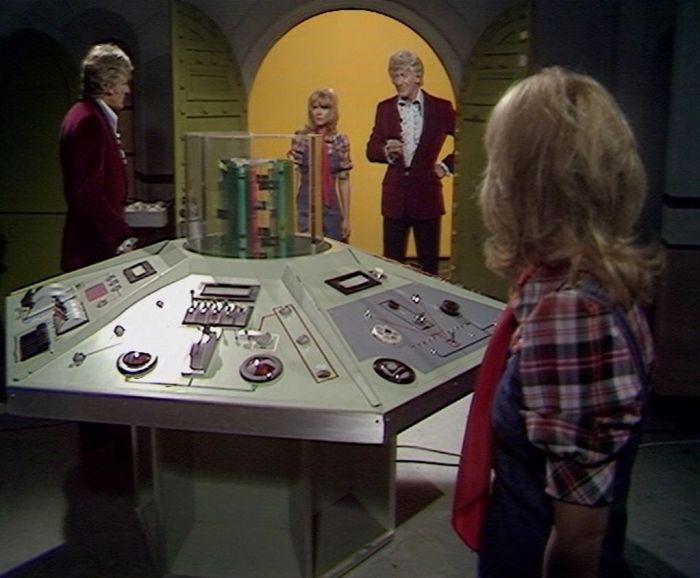

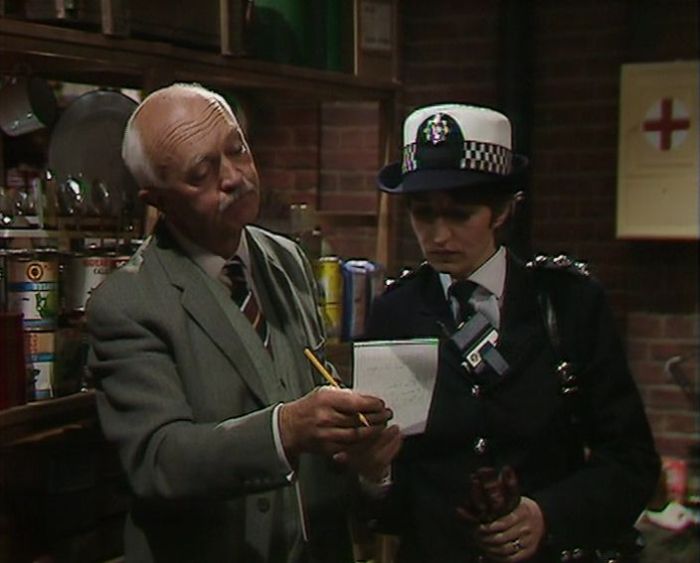


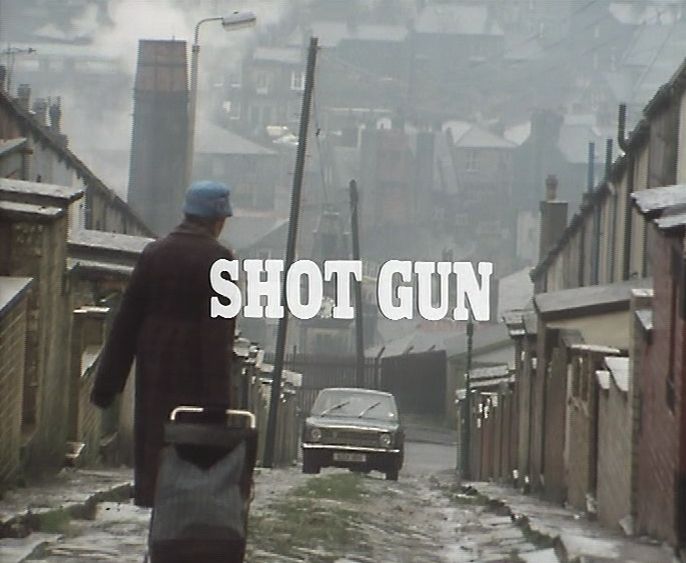


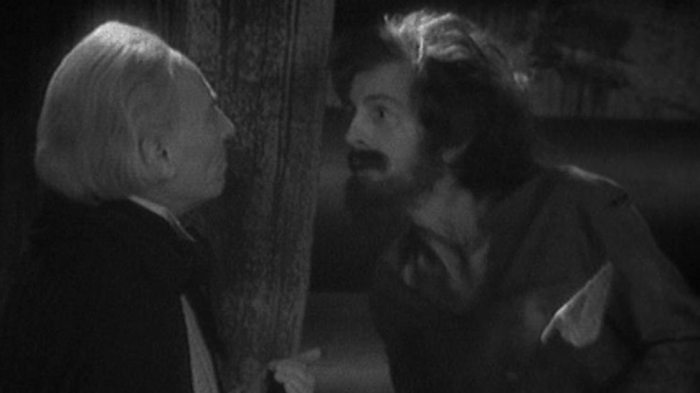
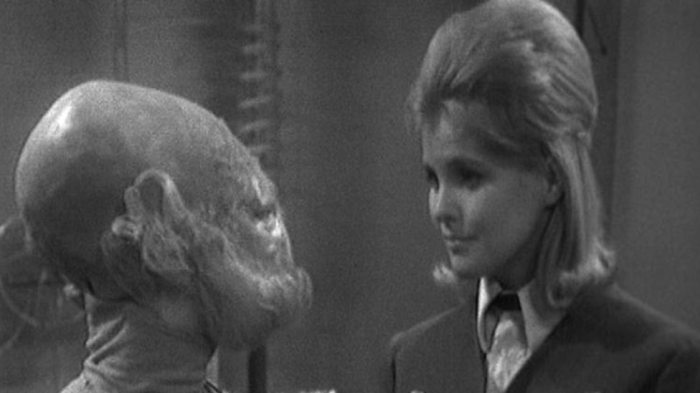
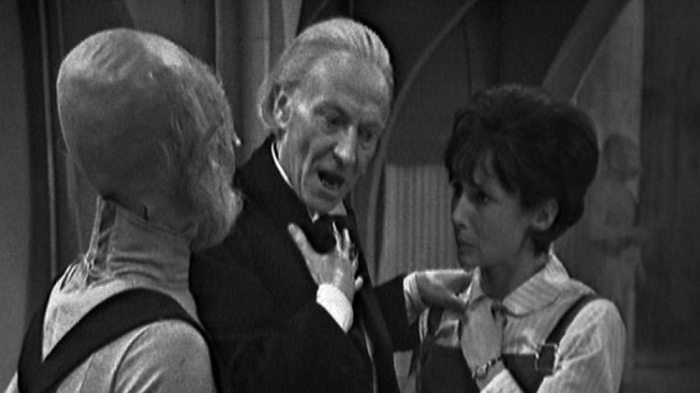
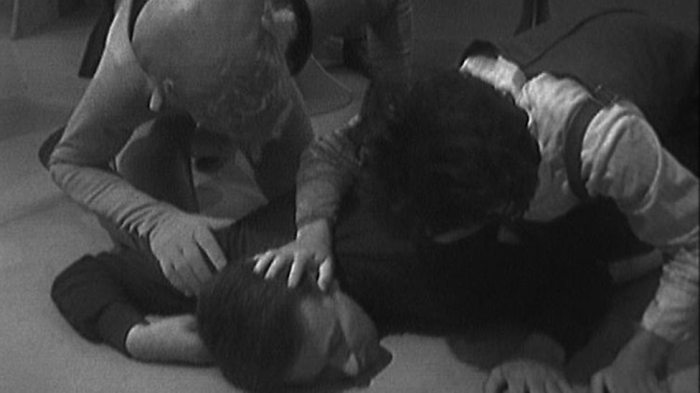
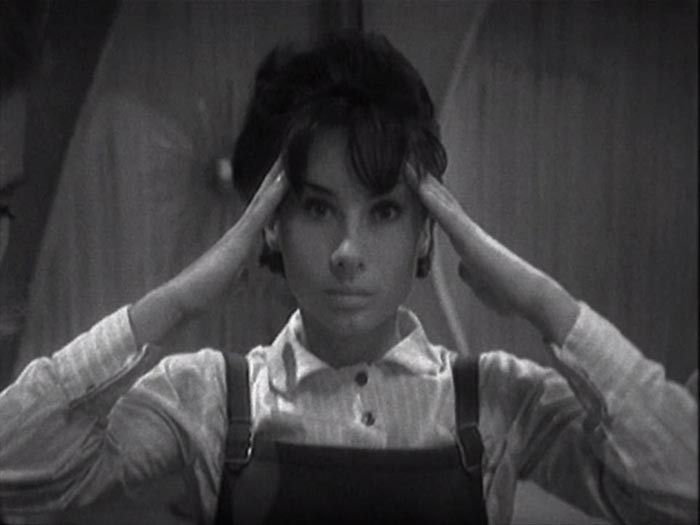
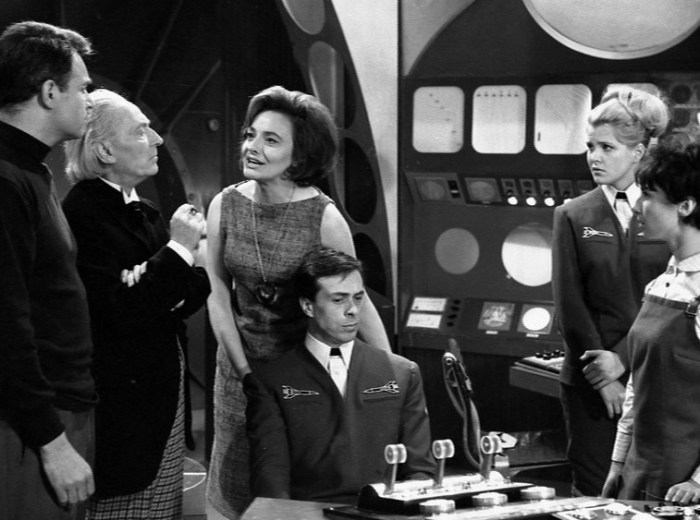
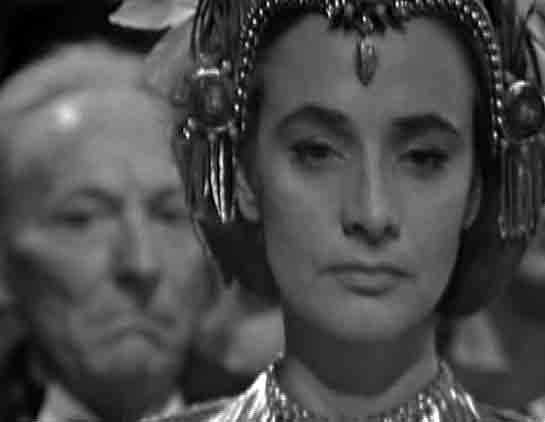
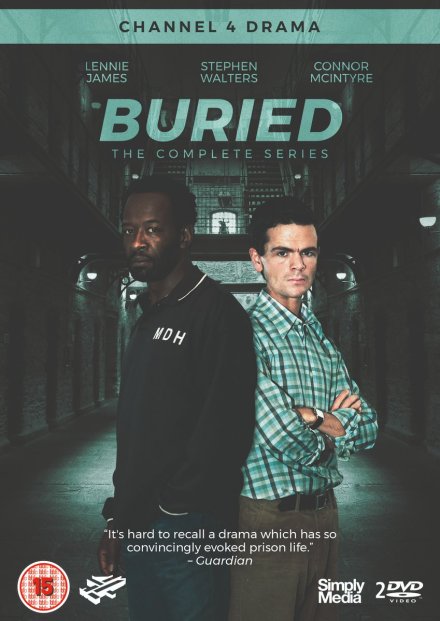
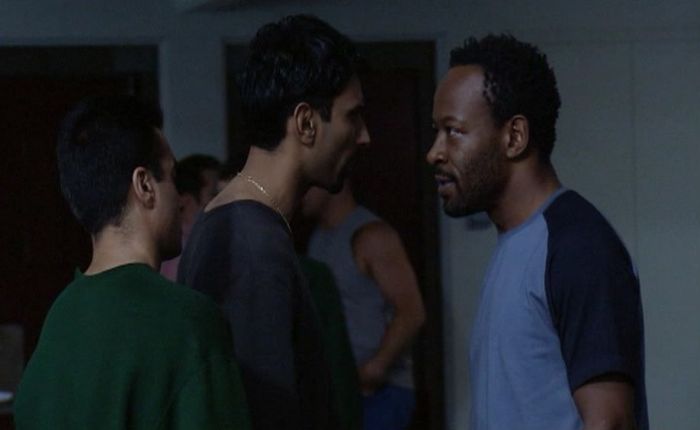
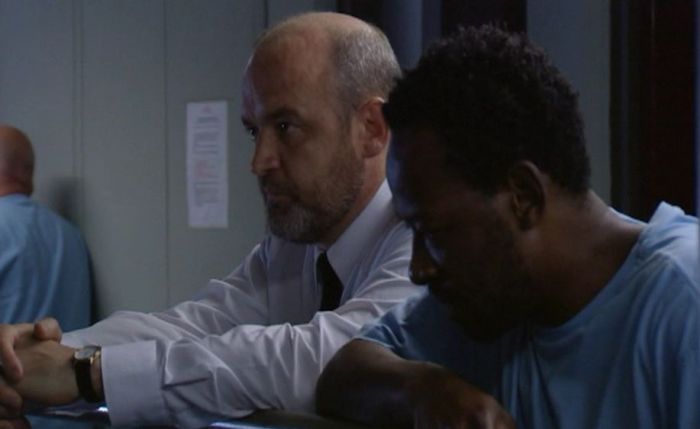
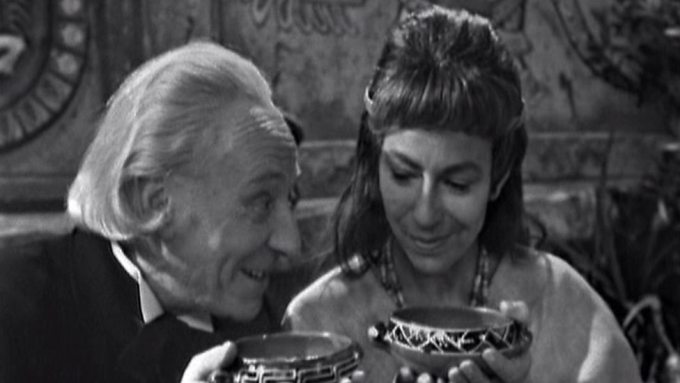
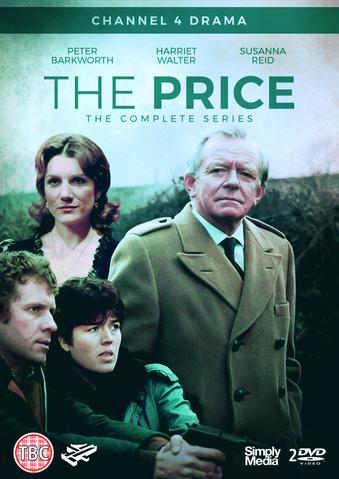
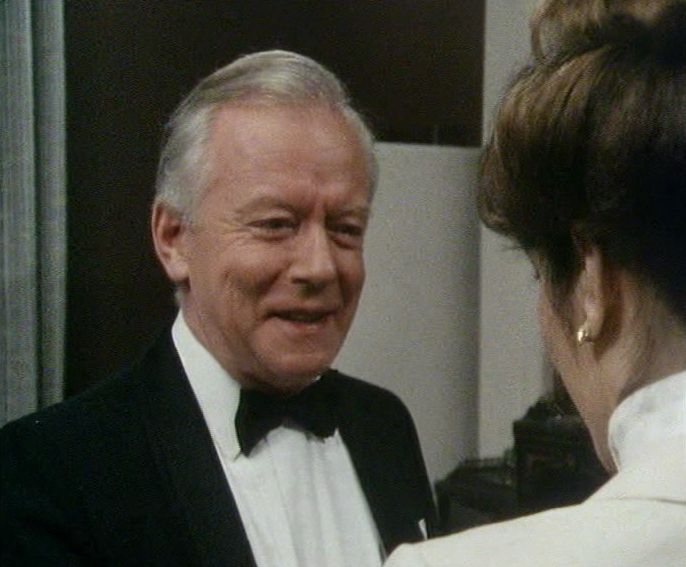
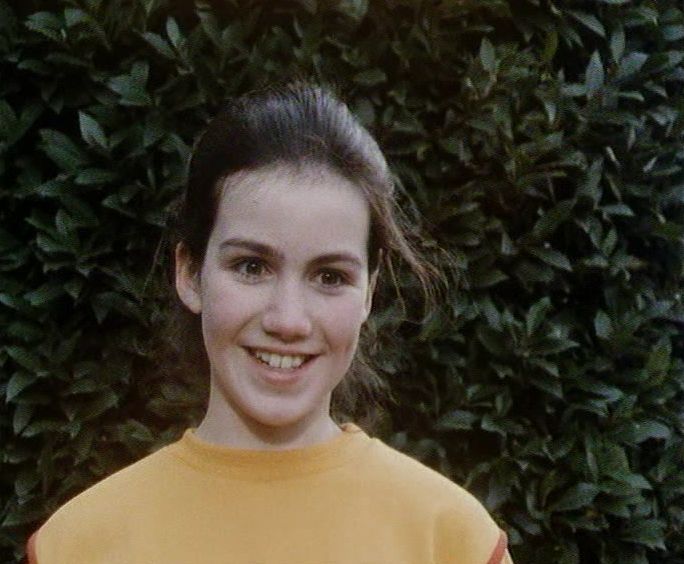
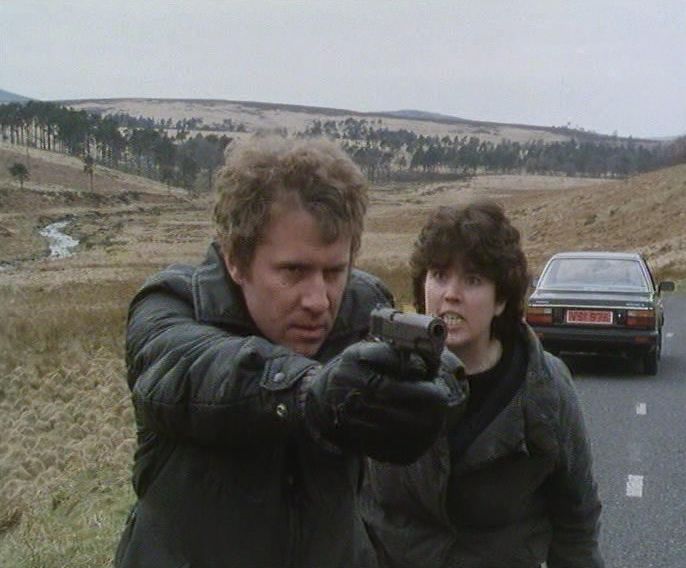
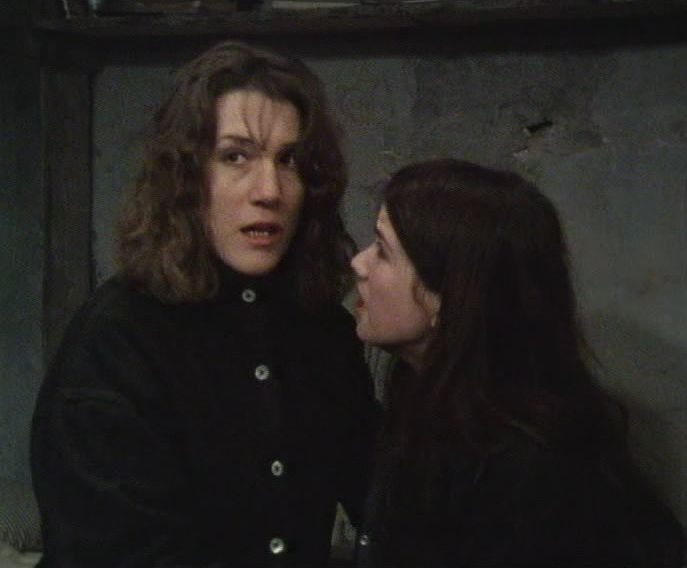
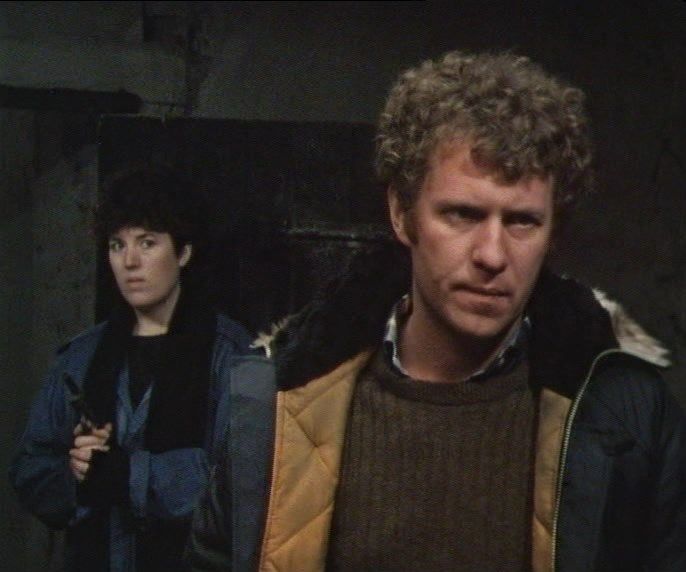
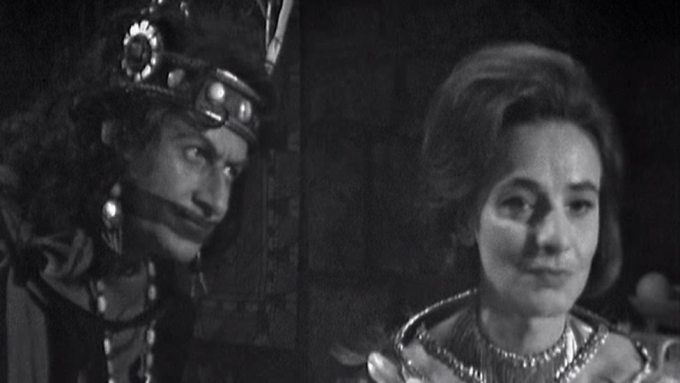
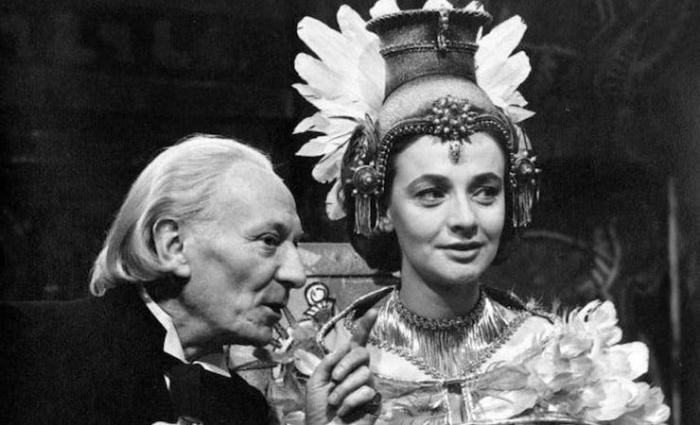
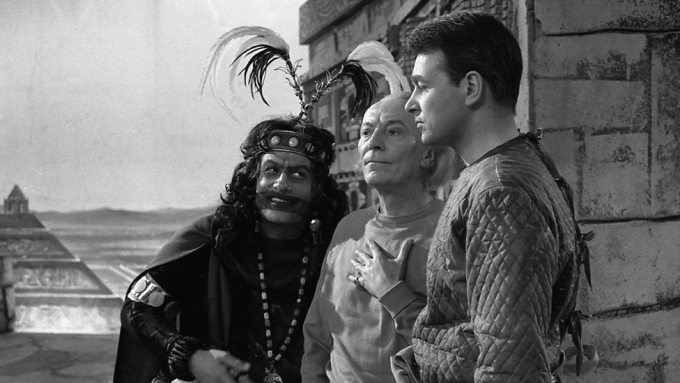


 Archive Television Musings