Grange Hill. Series Twelve – Episode Seven

gh 07-01

Written by Chris Ellis. Tx 24th January 1989

Outside of Grange Hill, Chris Ellis’ cv is somewhat slight, but he (I’m assuming he’s a he, although I’m happy to be corrected) was rather chucked in at the deep end when starting work on the series. He began by writing the last two episodes of series ten, followed by the opening two from series eleven. Ellis also contributed just two episodes this year, but his ones – seven and eight – are key. After a faltering start, this is where the drama really begins to ramp up.

We begin in a slightly subdued way though. Suzi is becoming extremely agitated about the clothes she’s received on trial from her mother’s catalogue whilst Tegs continues to live in extreme squalor, something which concerns his new social worker. Tegs is encouraged to clean up his act (and his body and his shirts) by Justine, who gives him some top cleaning tips. Although he balks at her offer to come into the bathroom and scrub his back!

Trevor’s put a bundle of his and other people’s money on Lucky Shark (the horsey picked out by Vince). In one of the most predictable story outcomes ever, it fails to win.

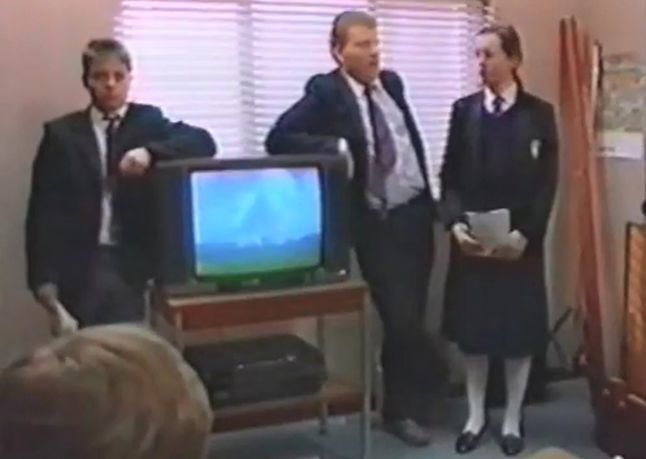
Mrs McClusky gets the chance to demonstrate her skills as an organiser after she directs the traffic down both sides of a particularly gloomy corridor. The school is still in something of a state of disrepair, which makes safe navigation a tad tricky. As touched upon before, it’s unusual to see Grange Hill looking quite so shabby – although this isn’t a major plot point.

It’s simply an excuse to demonstrate a couple of things – first that Mrs McClusky can still bellow with the best of them and secondly that Mr Bronson is far from pleased about Danny’s new school contract. The fact that he chooses this congested spot to argue the toss with her speaks volumes about him.

He quickly runs into Danny and airs his grievances. “School is not a restaurant where you can pick and choose from the menu”.  The problem is that Mr Bronson now appears to be totally powerless where Danny is concerned. Mind you, maybe Mr Bronson had a point when he earlier told Mrs McClusky that as deputy head he should have been consulted. Was this an oversight on her part, or did she simply not bother because she knew Danny wouldn’t get a fair hearing from him?

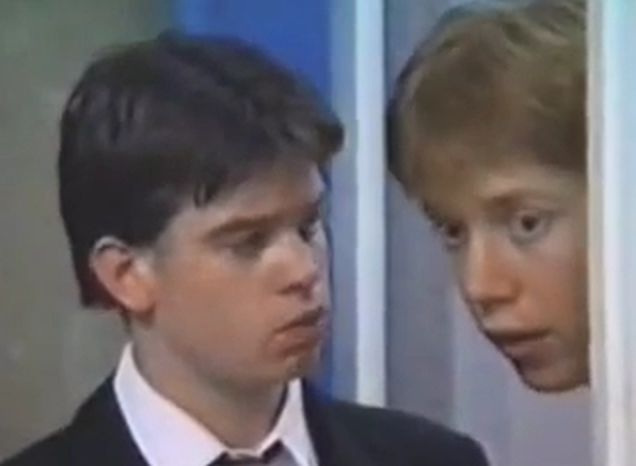
Mr Bronson has his revenge though – by warning Danny’s potential employers about the sort of person he is (or who Mr Bronson thinks he is). Cue a scene where both Mr Bronson and Danny berate each other at maximum volume. Given that Mr Bronson has been set to simmer for a number of episodes, his explosion is especially noteworthy.

This would make a reasonable but not terribly original episode ending. The fact that Danny appears to have stolen Mr Bronson’s car adds a little extra spice, but at present it’s still not clear how this part of the story will conclude ….

gh07-02

Grange Hill. Series Twelve – Episode Six

gh06-01

Written by Kay Trainor. Tx 20th January 1989

Gonch is keen to use the computer before school. Ziggy is a lot less keen, but Gonch exercises his powers of persuasion and Ziggy meekly agrees, even though he hasn’t had his breakfast (this is slightly hard to believe, but no matter). Also in school early is superswot Mandy – which is the cue for some outrageous physical comedy from George Christopher. Ziggy attempts to peek at her notes (all in a good cause though, beefing up GHS – Gonch’s Homework Service) before being rumbled and beating a hasty and undignified retreat.

Gonch, Ziggy and Robbie discuss GHS’ current travails. Robbie’s contribution is to explode angrily (no change there then) whilst Gonch has his eye on the main prize – Mandy Freemont. If only he can woo her, then her intellect will be on tap to enrich their faltering business venture. His plan is a subtle one – plonk down a cheap copy of Les Miserables on the desk and wait for her to spot that he’s a kindred spirit. How can it fail?

Mr MacKenzie gets his first decent chunk of dialogue for a good few episodes (chatting with Danny about the swimming pool competition). He then spots Gonch’s Les Mis at exactly the same time as Mandy does. Curses!

Helen still wants to be an engineer, but her lack of correct options is a problem. It will also be difficult to make her way in a profession that’s still very male dominated, but it looks likely that Helen has enough drive to make a go of it. Trev is in full mocking mode when he finds out, physically giving her a hard time and casting aspersions about her sexuality (wearing braces and interested in engineering? He’s convinced she’s turning into a man).

The hunt for Clarke’s bike is on. Long term viewers will have to decide for themselves whether this is a more thrilling storyline than the search for Belinda’s lost clarinet. Personally I don’t think there’s much to choose between them.

Today they spot it from the top of a towerblock but when they get downstairs the bike has gone.  We’re not quite in Harriet the Donkey territory yet, but it’s getting close.

It’s a been a while since we’ve had a staffroom scene. Miss Booth is still attempting to get support for her self defence class, but has one major problem – Mrs McClusky wants it done on a voluntary basis which is against union rules.  It’s interesting that Grange Hill didn’t do more with the theme of union unrest (anyone who went to school in Britain during the mid to late eighties will no doubt recall that strikes were common) but presumably it was either felt to be a topic too tricky for teatime or simply something that the kids wouldn’t find interesting.

It’s girls versus boys in the roller hockey. The whole class is an expert on skates, apart from Ziggy (which is the excuse for some more pratfalls from Mr Greaves). That fact that everybody possesses excellent rollerblade skills feels unlikely to me, unless there’s been a lot of off-screen practice.

Les Diapositives de Bretagne is tonight’s attraction at the local Community Centre. Ziggy and Robbie spot Mandy outside and tell her that Gonch is a big fan, so a Mandy/Gonch date is quickly arranged. It’s not a band though – instead Gonch has to sit through a terrible ordeal. Mr Bronson and his holiday slides from Brittany ….
gh06-02

Grange Hill. Series Twelve – Episode Five

gh 05-01

Written by Kay Trainor. Tx 17th January 1989

Mauler McCall, along with his willing gang of stooges, is behaving in time-honoured GH bully fashion – extracting money with menaces (a ten pence levy for anyone using the bike sheds).  Clarke and Matthew are two of his potential victims, but have managed to escape his clutches. For now ….
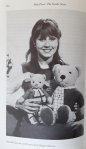
It’ll be interesting to see how these two characters develop this year. Matthew had a good chunk of screentime in S11, but it was all centered around a plotline that appears to have been resolved. Clarke has yet to emerge as a character in his own right – so far he’s served as little more than a line feed for his friend.
Mr Bronson’s eyesight is very keen. At some distance he’s able to spot Justine was wearing outrageous earrings. Ah well, I suppose this proves that he’s not totally obsessed with Danny – he still has time to give others a hard time as well.

It’s noticeable that the friction between Mrs McClusky and Mr Bronson has been downplayed recently. Compare this to 1986 when they were entertainingly at each others throats for multiple episodes. Maybe it was felt that the teacher’s interactions and relationships should take a back seat for a while? That’s certainly something which ebbs and flows over the course of the series. By the mid to late nineties it was back with a vengeance (Mr Robson’s love-life, for example …)

Calley and Robbie are arguing again. You may not be surprised to learn that Robbie’s acting like an alpha male just for a change.

The latest face off between Danny and Mr Bronson is intriguing. Danny has the chance of a work experience placement with Mr Tilley (Niven Boyd) but doesn’t turn up for the meeting. He can’t be located anywhere in the school (he’s working on the mosaic in the swimming pool).

But Mr Bronson obviously knew this, as after he sees Mr Tilley off he heads straight for the pool. So he could have instructed someone to fetch Danny but seems to have decided that since he had skipped registration and lessons he didn’t deserve any favours. So Danny’s placement chance has evaporated – something which will obviously do nothing to help his tottering relationship with Mr Bronson. Although we don’t witness the fallout in this episode, surprisingly enough.

Last time when Vince picked a winning horse for Trev, Trev didn’t put any money on it. This time he’s going to put a bundle on Vince’s next choice. I really don’t think you have to be a mind-reader to work out what’s going to happen next.

Miss Booth is keen to organise self defence classes for the pupils. I like the way she attempts to make her point by putting both her hands around Mrs McClusky’s throat! A rare moment of levity for Gwyneth Powell.

Clarke continues to be terrorised by a (rather friendly looking, it must be said) Alsatian on his paper round. Matthew – riding Clarke’s bike – attempts to draw him off but crashes the bike. That’s a moment low on excitement and the end of episode cliffhanger – Clarke’s bike has been stolen! – isn’t much better.

But I’m prepared to hang on in there and hope that more engaging fare is just round the corner.

gh 05-02

Grange Hill. Series Twelve – Episode Four

gh 04-01

Written by Margaret Simpson. Tx 13th January 1989

Calley, Ronnie and Fiona are busy planning Ronnie’s sixteenth birthday party. Fiona, the brazen hussy, has no compunction about approaching a group of (gasp!) older boys and offering them an invite – cue much girlish giggling ….

The girls have decided to throw two parties – an ‘A’ party (where all the cool kids will hang out) and an earlier ‘B’ party (where they can leave all the deadbeats and no-hopers). It’s a reasonable idea but is obviously doomed to failure. As if it wasn’t, the episode would no doubt lack a little spark.

Calley is suffering from divided loyalties. Robbie has an invite to the ‘A’ party (his belligerent and obnoxious nature means he’ll be perfect in the role of bouncer) but Ronnie and Fiona aren’t keen for Gonch and Ziggy to tag along. Calley knows that this will upset Robbie but the girls are adamant.  So Calley finds herself slightly excluded – with Fiona usurping her position as Ronnie’s best friend, as she did last year.

Ted and Robbie have a face-off about whether Calley is thick or not. Another episode, another mini-explosion from Robbie. Luckily Gonch is on hand to calm him down and explain that you have to keep a cool head in business.

Mr Griffiths doesn’t take kindly to being told to “shove off” by Danny, which is a fairly mild insult to cause the caretaker to react so strongly.  Mind you, given Grange Hill could never use the sort of language real-life pupils would spout every day, possibly the viewer is supposed to use their imagination and replace “shove” with something a little stronger.

Cue Mr Bronson stalking the corridors for his prey. He finally runs Danny to ground in Mr Robson’s registration class. Whilst a Mr Bronson rant and rave is always good fun there’s nothing more effective and menacing than when Michael Sheard dials it right down to icy calm.

We’re denied a big confrontation scene though as Danny is quickly passed from Mr Bronson to Mrs McClusky. Mrs McClusky attempts to bring Danny into line by dangling the carrot of work experience with a design firm in front of him. Given his general apathetic persona I think that’s a very generous offer. Will there eventually be a happy ending to the Danny story? Ah, best not to hold out too much hope on that score.

There then follows a fade to black as we move to Calley’s ‘B’ party. Geoffrey Beevers makes his second and final appearance as the somewhat hapless Mr Donnington. He doesn’t have a great deal to do but adds a touch of class nonetheless.

Boozy old Trev attempts to woo Georgina in the only way he knows how (this involves a fair amount of dancefloor groping). Thankfully Georgina’s ordeal doesn’t last long as Trev has to step outside for a pitstop and a few more glugs of alcohol. But he manages to make it back inside just in time to destroy Calley’s birthday cake. Throw in an appearance by Mauler and it’s pretty much the perfect evening.

This explains why the girls decide enough is enough and slink off quietly (cancelling the ‘A’ party). The gallant Ziggy walks Georgina home and offers her the chance to go to a UB40 gig. She’s not keen (on UB40 anyway) but maybe this is the beginning of a beautiful friendship.

gh 04-02

Grange Hill. Series Twelve – Episode Three

gh03-01

Written by Barry Purchese. Tx 10th January 1989

Trevor remains convinced that Vince has savant like powers (maybe the drink has addled what few wits remain in his head). He asks Vince to pick a horse running in one of the afternoon races. Will it romp home, thereby confirming what Trevor already thinks he knows, or will it fall at the first fence, meaning that this plotline will draw to a close? I predict the former ….

Quite a few characters are introduced with character traits which are quickly dropped after a year or two. It’s therefore interesting that five years in Cally still has a firm interest in horoscopes.

Mr Bronson’s obsession with Danny continues apace. This is made clear by the way he remains at the school gate just on the offchance he might turn up, something which doesn’t go unnoticed by both Miss Booth and Mrs McClusky. Is it healthy for a teacher of Mr Bronson’s seniority to have such a mania about one pupil? It seems not (Ant Jones is mentioned) but Mrs McClusky seems disinclined to raise the point with him.

Mauler’s latest act of cartoon villainy sees him insist that Gonch’s fledgling homework service sorts out his French work. I’ve probably said this before, but Gripper Stebson he ‘aint.

Still, at least he gets his comeuppance from Mr Viner, the structural engineer (yes, really). Mr Viner (Danny McCarthy) is on hand to inspect some of the damage in the school and his work intrigues Helen. But Miss Booth can only offer her work placements in childcare or secretarial work, which pales by comparison.

Trevor is desperate to find a television to see the horse race. The only one available is being used by a bunch of swotty kids (you can tell they’re swotty by the fact they’re wearing glasses – a not terribly subtle touch, but it does work). The most vocal of their number is Mandy Freemont (Melanie Hiscock) who makes her debut here.

Gonch, tagging along with Vince and Robbie, looks a little crestfallen at how upset Mandy is by their boorish intrusion. This sows a seed for later on in the season when she removes her glasses, lets down her hair and – gosh! – suddenly blossoms from an ugly duckling into a beautiful swan ….

Tegs and Justine spend the afternoon arguing about whether they should turn Mark in or not.  Since the police already know where he is and move in anyway, it’s a moot point and also something of a missed dramatic opportunity. Mark’s story therefore draws to a fairly speedy close, with Detective Bonner having the final word – telling a disbelieving Tegs that his brother wasn’t quite the innocent victim of bullying he claimed to be.

gh03-02

Grange Hill. Series Twelve – Episode Two

gh7

Written by Barry Purchese. Tx 6th January 1989

This episode opens with another look at Teg’s grimy homelife. Bedclothes that look like they haven’t been washed for months (if ever) and barking dogs outside the house help to add to the general feeling of squalor. The question of Teg’s brother, Mark, continues to bubble away.

The conflict between Mr Bronson and Danny Kendall begins to hot up. Danny’s not in class – he’s out in the corridors putting up posters for the forthcoming Mosaic competition – and Mr Bronson, after stalking through the building, eventually runs him to ground. There’s a definite air of menace to Mr Bronson here (although this was punctured when he earlier ran into Mrs Stone and her class). Whenever Michael Sheard drops his voice to a whisper, it’s incredibly effective (much more so than Mr Bronson ranting at full throttle).

Ronnie’s sixteenth birthday party is fast approaching. Who will she invite? Well not Trevor (still acting in an incredibly boorish fashion) or Ziggy (still acting in an incredibly annoying fashion). Robbie, due to his relationship with Calley, has an automatic invite, although it’s amusing that the girls are more interested in using him as a bouncer. He seems happy enough though, so for once Robbie manages to get through a scene without shouting.

Chrissie and Susi plan to order some clothes from Susi’s mother’s mail order catalogue on approval (in order that they can wear them for a while and then send them back). This is a sort of ho-hum plotline which will carry on for a time.

Much more entertaining is the revelation that Vince has psychic powers. Well not really, but when he saves Georgina from serious injury (telling her not to walk down a corridor just seconds before the ceiling collapses) it appears to be so. In the previous episode Mrs McClusky and Mr Griffiths had discussed the state of the school – he contested it was falling down whilst she maintained it was only a little frayed around the edges.

It’s true that the corridors look to have been dirtied down – presumably deliberately in order to create this sort of run down impression. It’s only a small visual touch, but it helps to give the impression that money is tight.

Are Ziggy and Robbie stupid? Time and time again they’ve come off badly thanks to Gonch’s money making schemes but they never seem to learn. And once again they’re drawn, like moths to the flame, to Gonch once more. But now that Gonch is computer savvy, maybe everything will run smoothly ….

Nice to see an old computer chestnut getting an airing here – with just a single button click, Ziggy’s able to wipe all the data on Gonch’s computer.

When Justine discovers that Mark is holed up in Tegs’ house it binds her into their criminal world. And after Tegs and Justine leave the house they run into a policeman called Bonner (Roy Spencer). Bonner is blasé about asking Tegs to empty his pockets (since Tegs complies so rapidly it’s clearly a very common occurrence).

Tegs’ father makes a very brief appearance. He doesn’t return until series thirteen, which is something of a shame as he’s played by Alan Ford, an actor with considerable presence and an impressive track record.

After the police leave, Tegs and Justine discover Mark hiding behind the fireplace (despite the fact it’s a gas fire he’s covered in soot). This amuses them both, which provides us with the episode ending. It also helps to reiterate that Justine is now on the side of the law-breakers, not law-makers, which is interesting to see.

gh10.jpg

Grange Hill. Series Twelve – Episode One

gh1.jpg

Written by Barry Purchese. Tx 3rd January 1989

Series twelve opens with a sweeping shot tracking through a fairly bleak towerblock environment. The view then switches to an overhead shot. This is Clarke’s paper-round stamping ground (and one which fills him with a sense of despair – having to deliver papers to the top floor of a block of flats isn’t an enticing prospect).

Along the way poor Clarke finds himself berated by several unhappy customers, most notably Alec Wallis (a very familiar television face). He also has to tangle with an unfriendly dog (not the most thrilling of ways to kick off the new series, I have to say).

We’re then gradually reintroduced to the regulars via a series of vignettes. Justine isn’t enjoying breakfast television (“I hate Anne Diamond”) whilst Tegs is spark out in front of his. Meanwhile, Vince confides to Trevor and Ziggy that Grange Hill is just so predictable. “Some little kid’s gonna be in trouble ‘cos they’re wearing the wrong uniforms. Robbie and Calley will be on to each other like an old married couple. Gonch’ll have some new money making racket. Somebody’ll be pining after Georgina Hayes. Bronson will be gunning for Danny Kendall”.

This seems to be a sly – and not totally inaccurate – swipe at the way that the storylines in recent years have become a little predictable. And when we see a grumpy Calley and Robbie taking lumps out of each other, the first of Vince’s predictions have come true . I swear that Robbie gets angrier every time he appears ….

Trevor’s not turned into a more attractive character since last year. Especially since he’s taken to swigging from cans of lager first thing in the morning and lusting after Georgina. Quite why Trev thinks that Georgina would be interested in beery old him is anybody’s guess.

Another familiar theme from last year gets another outing here (Justine’s obsession with flouting the school regulations). Today she’s plastering on the make-up. This exasperates her older sister, Tracey (Penny-Belle Fowler), who’s been left in charge whilst their mother’s away. This absence isn’t expanded upon – it’s simply accepted as natural that parents will sometimes leave their children to fend for themselves.

Gonch is fulfilling his accepted role in Vince’s world by launching GHS (Gonch’s Homework Service). And now he’s entered the computer age (with a bedroom PC) there will be no stopping him. Buckle up, it’s probably going to be a bumpy ride.

Ziggy attempts to start Mr Bronson’s stalled car. He’s remarkably confident of success (which of course turns out to be misplaced). Mauler, ambling by, suggests a jump start. Mr Bronson, isolated in his car, seems a little vulnerable – although it seems to be that the boys only have his best interests at heart.

Teg’s older brother, Mark, was an oft-mentioned but never seen character last year (due to the fact he was banged up in prison). Now (played by Adam Ross) he makes a sudden appearance. Tegs is delighted to see him and equally delighted to learn that he’s escaped from the nick. Tegs and Mark clearly have a close relationship (Mark is appalled, but resigned, to learn that Tegs has been fending for himself whilst Tegs’ hero-worship of his elder sibling is plain to see).

Helen has one of the standout lines of this, or any other GH episode, describing their forthcoming GCSE’s as “General Collapse of Secondary Education”. But Helen, sporting a new haircuit, barely has time to expand on this theme to Ronnie and Fiona before Georgina comes running up to them – desperate to escape Trevor’s lumbering clutches. Their collective response (“ewwwwwwww”) speaks volumes.

One person who’s not acting in a totally predictable manner is Danny, who for once is in school nice and early. But he hasn’t turned over that much of a new leaf because whilst he’s got a good reason to be there (helping Mr MacKenzie) he simply can’t bring himself to submit to the questioning of Mrs McClusky and Mr Griffiths. So he leaves school yet again ….

The episode closes with a slow close-up on Mr Bronson, who’s in no doubt that Danny’s comeuppance is long overdue. This sets into motion one of S12’s key themes. “It is time that young man was brought into line”.

gh6.jpg

Doctor Who Magazine Flashback – Issue 193

dwm197-01

Recently I’ve been digging through my piles of DWW and DWM. 40+ years of collecting the magazine means that a chronological re-read would be a little impractical (although it would make a good blog project for someone). Instead I’ve decided to use the randomizer (a useful device, even if it lacks true discrimination) to select some issues for me to peruse. First landing spot is issue 193 (November 1992) with Gary Russell in the editors seat.

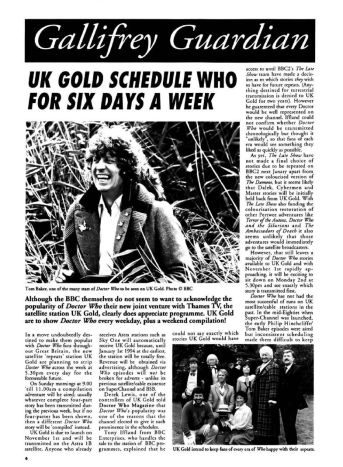
Top news in the Gallifrey Guardian was the fact that Who would be running six days a week on UK Gold. Hurrah! Difficult to imagine now, but in those far off days access to the series was pretty limited unless you had access to the pirate video network. And even if you did, you may very well have been struggling to make out blobs in a snowstorm (some of those nth generation dubs were very hard on the eyes).

dwm197-02

Marcus Hearn interviewed Roy Castle about his career and specifically his role as big-screen Ian. Castle always came across as a lovely chap and this interview does nothing to dispel this view. He had fond memories of Peter Cushing (another person you never hear a bad word about).

dwm197-03

Controversy Corner tackled the thorny topic of canon. Shudder. That’s a kettle of worms you never really want to open.

dwm197-04

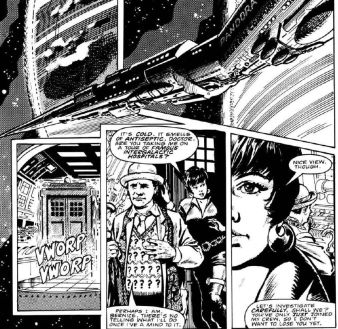
The Android Invasion received a typically thorough archive feature from Andrew Pixley whilst the comic strip featured part one of Pureblood. Slightly squidgy looking Sontarans were the baddies whilst there were a fair few swearwords (well, “cruck”) thrown about – possibly in homage to the New Adventures. After all, this was still at the point when the various spin offs (comics, books) were attempting to live in harmony – hence Benny accompanying the Doctor on his travels.

dwm197-05

There’s an interesting interview with Brian Hodgson which covers all the bases you’d expect (such as how a piano and a key were integral to creating the TARDIS sound).

dwm197-06

The postbag was still mildly fuming at Gary Russell’s review of Earthshock in DWM 191. Although if you really want to read a thorough demolition of the story then you’d be advised to check out Martin Wiggins’ piece in the relevant issue of In Vision.

dwm197-07

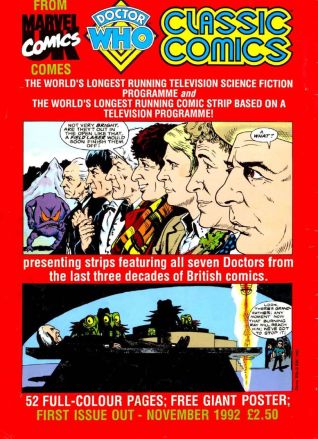
And that’s about that for this issue, apart from a back-page plug for issue one of Classic Comics. Which are also probably worth digging out for a re-read ….

dwm197-08

Dempsey & Makepeace – Series 1 DVD Comparisons

The news that Dempsey & Makepeace will shortly be returning to ITV4 has reignited the conversation about the series and cuts. Since it’ll be running in a daytime slot there’s no doubt that the shows will be fairly heavily edited for violence.

Usually this wouldn’t be a problem as you’d be able to watch the series uncut on DVD.  But sadly the Network releases are badly flawed – they seem to comprise cut prints assembled for daytime screenings on Granada Plus.

Not every episode is edited, but around 60 – 70% of the series is affected to a greater or lesser degree.  A decade or so ago it seemed that Portugal were selling virtually uncut DVDs, but those are now long out of print.

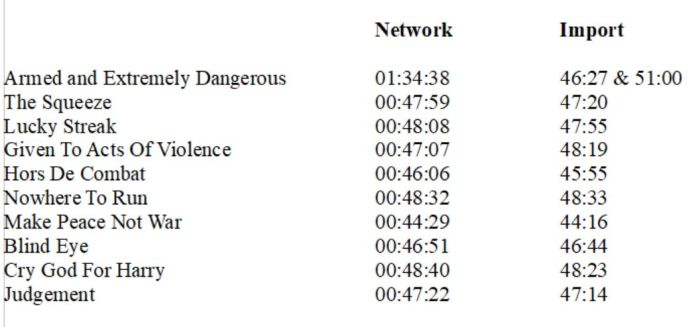
The only foreign import I can currently see is this Season 1 release, so I thought it would be interesting to compare the running times of both to work out which offers the best value.

listing

The import splits the pilot into a two-parter and runs for nearly three extra minutes (some of this may be down to the additional credit sequences though). Given to Acts of Violence is the other episode which is longer on the import – over a minute, compared to the Network DVD.

The other episodes are either the same, or the Network release is slightly longer (although this may be down to Network leaving “dead air” after the episode has finished – something that happened on a fair few of their releases).

So whilst the import DVD looks to be slightly less cut, it still seems not to be quite the whole picture (I find it difficult to believe that Make Peace Not War would have clocked in at under forty five minutes. For an hour long slot in the mid eighties that seems remarkably skimpy).

What’s certain is that the series is crying out for a restored BD release. The masters exist (or at least they did a decade ago) at LWT, but as The Sweeney BDs stalled after series one, I think it’s more than likely that we’ll have to soldier on with what we’ve got …

Robin of Sherwood – Fitzwarren’s Well (audio review)

RoS - Fitzwarren's Well

Fitzwarren’s Well is the latest welcome addition to Spiteful Puppet’s ever-growing collection of Robin of Sherwood audios and books. Released as a download at the beginning of July 2020, Jennifer Ash’s story manages to perfectly capture the tone and feel of the original series.

Fitzwarren’s Well isn’t simply a slavish recreation though, since Marion is allowed to take centre stage (something which unfortunately never happened on television). Had ROS continued for a fourth series it would have been interesting to see each character take their turn to lead an episode, and maybe Marion’s would have played out something like this.

Listening to audio plays in which actors recreate their famous television roles from decades earlier can occasionally be a slightly uncomfortable experience.  Some sound so different from their youthful television personas that considerable suspension of belief is required. There’s no such problems with Judi Trott though, who seems to have discovered the formula of eternal youth ….

On audio Trott still comes across as the Marion of old, albeit with a touch more steel (which works well in this story, as she’s forced to take charge after a mysterious fever lays most of the Merries low). I love the fact that Judi Trott repurposed the Gypsy caravan which sits in her garden as a makeshift recording studio – that just feels so right somehow.

judi trott

Given cryptic pointers by Herne (once again played by Daniel Abineri) Marion sets out for Beeston. On the way she runs into Will (Jon Culshaw) who had been off on an adventure of his own. This is a relief – not only because it means that Marion won’t have to keep talking to herself, but also because the Will/Marion relationship is nicely teased out as they make their way through the forest.

Culshaw might not sound exactly like Ray Winstone did as Will Scarlett, but then Ray Winstone today doesn’t really sound like Will Scarlett either. Culshaw has no problems once again in making the part his own, helped no end by Jennifer Ash’s script (I love the image of the amorous, boot-buying Will).

Ian Oglivy’s role is quite small but it’s also pivotal in teasing out the strands of the story. Sarah Greene has a more substantial part as the Lady of the Well whilst renaissance man Barnaby Eaton-Jones not only produced and directed the play, he also found time to play the boo-hissable villain Fitzwarren. Mind you, it’s impossible not to feel a little sorry for Fitzwarren at the end – not a nice way to go ….

Recorded during lockdown, all the parts were remotely captured and then expertly pieced together by sound designer and editor Joseph Fox. This isn’t an uncommon method of production, but it takes real skill to create the illusion that all the actors were together at the same time.  Fitzwarren’s Well certainly delivers on that score – not once was the spell broken for me.

With Robin of Sherwood beginning a repeat run on ITV4 soon, this audio couldn’t have come at a better time. The 43 minute play was devoured by me in a single sitting and thanks to the efforts of the cast breezed along very merrily (sorry). Along with Spiteful Puppet’s other ROS audios and books it’s well worth checking out.

Fitzwarren’s Well is available for download now from Spiteful Puppet, price £7.99.

Doctor Who – The Myth Makers. Part Four – Horse of Destruction

The massacre begins and the humour disappears. Probably one of the reasons why this feels especially jarring is the way the audience has been invited to feel comfortable in the presence of both Priam and Paris.

If the Greeks (Agamemnon, Odysseus, Achilles) have been depicted as single-minded warriors, then the Trojans were allowed a little more personality.  This makes their brutal demise all the more shocking.

Donald Cotton later concludes The Gunfighters in a similar orgy of violence, but since the Clantons were positioned throughout that story as “bad” and the likes of Earp, Holliday and Masterton were depicted as “good” it doesn’t have nearly the same impact.

There are some who view the sudden gear-change in Horse of Destruction from comedy to tragedy as a weakness, but to me it’s a clear strength – The Myth Makers shows us that there’s not always a “good” or “bad” side.

Similar themes had been explored in previous historicals, for example The Crusade.  David Whitaker’s script may have been much more straight-laced, but it had a similar sense of ambiguity about which side the viewer should support.

The use of comedy by Donald Cotton throughout this story is revealed in Horse of Destruction to be a dramatic device, designed to lure us into a false sense of security.  It’s a common trick, but not common in Doctor Who, which makes it noteworthy.

Another interesting aspect about the ending of The Myth Makers is just how downbeat it is.  This began a trend (although you could also say that it really started in Galaxy 4, with the Doctor leaving the Drahvins to their fate) which then continued in both The Daleks’ Master Plan and The Massacre.

Normally Doctor Who stories end on an optimistic note – although there’s often been a tremendous loss of life, it’s accepted that the ends justify the means.  Tyranny has been overthrown and the survivors can begin the task of rebuilding their world.

The Myth Makers offers no such comfort as destruction still rages. Steven is injured and Vicki elects to stay in this uncertain world with Trolius, the man she loves.  Possibly the relationship between Vicki and Trolius is the one positive thing we can take from the story (if they can somehow survive).

Vicki, like Susan before her and many companions to come, is shown to have completed a journey by the time she leaves the TARDIS.

When the girl joined the TARDIS crew in The Rescue, her awkwardness with people and her single-minded devotion to the Doctor meant that she spends the next few stories (The RomansThe Web PlanetThe Crusade) virtually glued to his side.

The Space Museum was key in the way that it showed a much more independent Vicki, happy to organise a planet-wide revolution!  After that she seemed much more comfortable by herself or outside of the Doctor’s orbit – which meant that, like Susan before her, she’s now made the transition from child to adult.

The Doctor and Vicki only share a single scene (apart from a few lines in episode one, it’s the only time they talk).  It’s noteworthy that it stops just at the point when Vicki’s preparing to tell the Doctor that she wishes to stay.

Given how both The Dalek Invasion of Earth and some later companion departures would milk the moment of leaving, it’s an odd choice which does leave the audience feeling slightly short-changed.

Whatever Vicki said, it must have been a powerful argument since the Doctor is happy for her to head off alone into the city to try and find Troilus.  This seems uncharacteristic in the extreme, but if writing out Maureen O’Brien was an eleventh hour decision then the options were limited.

An ailing Steven is back in the TARDIS, being tended by Cassandra’s handmaiden Katarina (Adrienne Hill).  The savvy viewer will know by now that as one door closes, another opens – so Katarina must be Vicki’s replacement …..

Doctor Who – The Myth Makers. Part Three – Death of a Spy

When Steven is brought into Vicki’s presence it spells trouble for both of them.  How can Vicki know Steven (alias Diomede) if he’s a Greek warrior?  Cassandra’s convinced that she’s a spy and orders her immediate execution, but the order is countermanded by Paris.  “I will not tolerate interference from a fortune-teller of notorious unreliability.”

Barrie Ingham continues to be the recipient of some first-class lines – Paris then tells his sister to “get back to your temple before you give us all galloping religious mania.”

Priam’s in a quandary.  He likes Vicki, but can’t ignore the fact that she could, as Cassandra says, be a spy.  So he gives her an ultimatum.  “Now if you are what you really say you are, as a pledge of good faith to us, you must either give me information that will lead to our speedy victory, or use your supernatural powers to turn the tide of battle in our favour.”

For all the humour we’ve seen (or rather heard) so far, this is the point in the story where the approaching darkness begins to take hold.  Steven and Vicki are prisoners in the city – locked in the dungeons – with Vicki only given a day to produce a miracle which will bring an end to the ten-year war.  Meanwhile the Doctor, outside the city walls with the Greeks, has been forced to provide a similar solution for them.

Whilst Vicki still has an air of unflappability, Steven can see how perilous their current situation is.  He’s been a member of the TARDIS crew long enough to know that if the Doctor comes up with a successful plan it’ll mean the death of everybody inside the city.

Hartnell’s more centre-stage in this episode, as the Doctor outlines several schemes to Agamemnon.  The first – gliders launched with catapults – is completely ridiculous, but Agamemnon appears to consider it.  He takes the wind out of the Doctor’s sails when he tells him that he (the Doctor) will be the first test pilot!  This is another moment where it’s a pity that Hartnell’s reaction is lost to us.

In desperation the Doctor turns to the wooden horse.  Earlier he’d declared that the horse was a myth (another inspiration for the story title?) invented by Homer, but with time running out he casually mentions to Agamemnon that a hollow wooden horse filled with Greek soldiers should do the trick.

Agamemnon agrees and very quickly it’s built.  Indeed, considering it’s size, it does seem remarkable that it was constructed in a matter of hours.  The Greeks were clearly fast builders.

Apart from the war preparations, another key part of this episode is the relationship between Trolius and Vicki.  As Trolius, James Lynn had a fairly thankless role.  Most of the guest cast were gifted sparkling bon mots, but Trolius was written as young, earnest and a little dull.  However it’s made clear right from the start that he and Vicki are kindred spirits.

VICKI: Well, you’re not in the war, are you? You’re far too young.
TROILUS: I’m seventeen next birthday!
VICKI: That’s hardly any older than me. You shouldn’t be killing people at your age.
TROILUS: Well, between you and me, I don’t honestly enjoy killing at all. But I love adventure.
VICKI: Yes. I know what you mean.

Since all the Greek soldiers appear to have left the plains, Priam is delighted and orders Vicki’s release.  She’s nonplussed, but when Paris pops up to tell them that he’s found the Great Horse of Asia outside, all becomes clear.  Cassandra’s still (correctly) forecasting their doom, which gives Paris my favourite line in the story (the final one below).

CASSANDRA: Yes, ask her! Go on, ask her! She knows what it is. It’s our doom! It’s the death of Troy, brought upon us by that cursed witch!
PARIS: Now understand me, Cassandra. I will not have one word said against that horse.
TROILUS: And neither will I against Cressida.
CASSANDRA: Will you not? Then woe to the House of Priam. Woe to the Trojans.
PARIS: I’m afraid you’re a bit late to say ‘whoa’ to the horse. I’ve just given instructions to have it brought into the city.

Doctor Who – The Myth Makers. Part Two – Small Prophet, Quick Return

The Myth Makers is far removed from the sober, earnest historical stories of season one such as John Lucarotti’s Marco Polo and The Aztecs.  There, historical accuracy was key – with the Doctor content to be merely an observer.  Here, the characters often speak in modern (i.e. 1960’s) idioms with the Doctor merrily changing the course of history as he bumbles along.

But one of the strengths of the third season is that there was room for both The Myth Makers and The Massacre (Lucorotti’s final script for the series) which was bleak in the extreme.  This variety is a strong reason why John Wiles’ time as producer has come to be celebrated by a certain section of Doctor Who fandom.

Conversely, the next producer, Innes Lloyd, has seen his stock fall over the years.  The argument runs that if Wiles favoured innovation then Lloyd (with a reliance on “base under siege” stories and monsters) constricted Doctor Who’s format and curtailed its creativity.  It’s a reasonable point, but it’s also worth wondering exactly what the target audience at this time – mainly made up of children – would have made of The Myth Makers.

It’s packed full of witty wordplay, but most of that would presumably have sailed over their heads.  Any adults watching, or fans in the decades to come, will no doubt derive considerable pleasure from Donald Cotton’s scripts, but it’s easy to imagine that the kids at the time were sighing and waiting for the Daleks to turn up.

So although Lloyd might have tightly formatted the series, he did so because of concerns that the ratings were slipping (it’s all very well being innovative and experimental, but if nobody’s watching then you’ve got a bit of a problem).

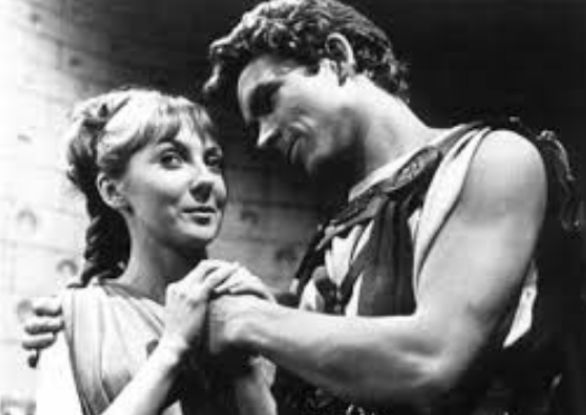
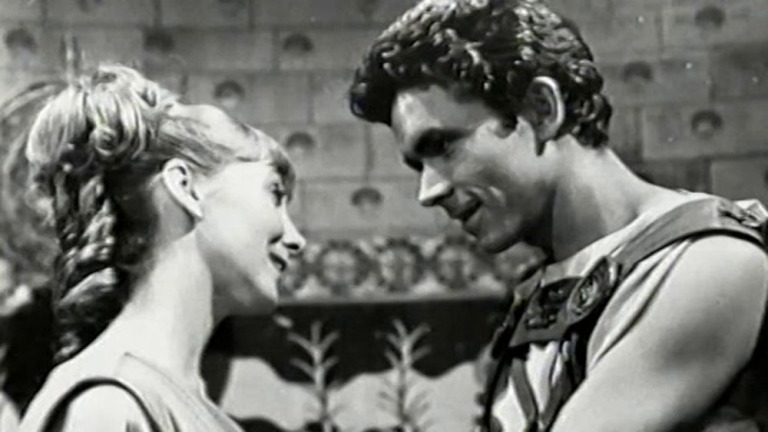
Having met the Greeks in episode one, we now run into some of the main Trojans.  Barrie Ingham, as Paris, is a delight – Paris is depicted as a handsome and feckless warrior who’s keen to avoid bloodshed at almost any costs.

Sent out by his father, King Priam (Max Adrian) to avenge the death of his brother Hector, he has to report back that he was unable to challenge Achilles (“I sought Achilles, father, even to the Grecian lines, but he skulked within his tent. He feared to face me”).  At face value this dialogue seems straightforward enough, but it’s played in such a way as to suggest that Paris didn’t try very hard at all.

Priam is less than sympathetic. “Well go back and wait until he gets his courage up. Upon my soul, what sort of brother are you? Furthermore, what sort of son?” But Paris hasn’t come back empty-handed, he proudly reveals his prize – the TARDIS – to a less than impressed Priam.

His sister Cassandra (Frances White) is equally unimpressed – and then prophecies that this strange object will spell their disaster.  It’s an unspoken irony that although nobody ever pays attention to Cassandra’s numerous warnings of doom, she proves to be completely right!

Vicki emerges from the TARDIS to enchant Priam. Maureen O’Brien would be the first companion to find herself written out of the series at short notice – something which would happen several more times over the next few years as incoming producers decided to be the broom that swept clean.

This was a pity, as O’Brien (even if she had little to work with on many occassions) always gave Vicki a questing, mischievous air. And since it can’t really be claimed that her short-term replacements (Katarina, Dodo) were any sort of improvement, I’ll certainly miss her.

When Priam renames her Cressida and she catches the eye of his younger son, Troilus, a section of the audience would probably have been able to guess what was going to happen. But would the child viewers have (excuse the pun) cottoned on, or is this another example of a literary joke that was only accessible to a minority of the audience?

Steven, learning that Vicki is somewhere within the Trojan city, elects to be captured as a Greek prisoner so that he can find her. He does so via a witty scene with Paris.

Paris is stalking the plains, urging Achilles to face him in single combat, but the sense that he isn’t terribly keen for a confrontation is made obvious after he decides to only quietly shout out Achilles’ name! A lovely moment, as is the banter between Paris and Steven.

PARIS: Achilles! (quietly) Achilles! Come out and fight, you jackal! Paris, prince of Troy, brother of Hector, seeks revenge. Do you not dare to face me?
STEVEN: I dare to face you, Paris. Turn and draw your sword.
PARIS: Ah. No, you’re not Achilles. Are you?
STEVEN: I am Diomede, friend of Odysseus.
PARIS: Oh, Diomede, I do not want your blood. It’s Achilles I seek.
STEVEN: And must my Lord Achilles be roused to undertake your death, adulterer?
PARIS: Yes, well, I’m prepared to overlook that for the moment. I assure you I have no quarrel with you.
STEVEN: I’m Greek, you’re Trojan. Is not that quarrel enough?
PARIS: Yes, well personally, I think this whole business has been carried just a little bit too far. I mean, that Helen thing was just a misunderstanding.

Barrie Ingham’s performance punctures the heroic myth of his character and helps to further push the story into being a very ironic retelling of familiar stories.

What of the Doctor though?  He’s about, although he does very little in this episode.  This will be a continuing trend during season three, as Hartnell tends to be moved more to the sidelines.  Was this because of concerns about his increasing ill health?  Possibly, although there are some who maintain that Wiles (and later Lloyd) were planning to gently ease him out of the series – and downplaying his role was the first step.

Doctor Who – The Myth Makers. Part One – Temple of Secrets

John Wiles’ stint as producer was fairly brief and, by all accounts, rather unhappy. His thorny relationship with William Hartnell was a major issue and he was also frustrated that he inherited several scripts (especially The Daleks’ Master Plan) which he would never have commissioned.

The Myth Makers would have been another script commissioned by the previous production team, but it does seem to fit the Wiles mould – since it’s doing something a little different.  We’ve had comedy historicals before – most notably The Romans – but The Myth Makers cranks up the comedy to a higher level.  And then, after three weeks of hi-jinks, everything turns very dark ….

Sadly, John Wiles doesn’t seem to have placed any value in John Cura’s telesnaps as none were taken for the episodes he produced. This is a particular problem for stories like the The Myth Makers as we only have a handful of publicity photographs available to try and conjure up the visual aspects of the serial.

The Loose Cannon recon – complete with numerous photo montages – is a noble effort, but since Donald Cotton’s script is so dialogue heavy (as opposed to say, Galaxy 4, which had long sections of silence punctuated by the beeping of the Chumblies) I don’t find any real hardship in just listening to the audio for this one.

In order to enjoy The Myth Makers you have to accept one basic premise – the Doctor has turned into a buffoon. For anyone who has issues with the more comedic Doctor of the late seventies this may be an issue, but if you can go with the flow then you’ll be able to enjoy one of Hartnell’s best comedy performances.

The Doctor’s startling lack of judgement is shown right from the start, after he observes two warriors fighting an intense battle. He decides to blithely pop his head out of the TARDIS and ask them the way!  When Steven wonders why they’re fighting, the Doctor tells him that he hasn’t “the remotest idea, my boy. No doubt their reasons will be entirely adequate. Yes, I think perhaps I’d better go and ask them where we are.”

The distracting arrival of the TARDIS enables Achilles (Cavan Kendall) to strike down his opponent, Hector (Alan Haywood). Achilles treats the materialisation of the TARDIS as a divine intervention, so it’s plain to him that the Doctor must be Zeus, father of the gods.The

In a script packed with sparkling lines, I love this one from Achilles as he explains his thoughts to the Doctor.  “To Europa, you appeared as a bull. To Leda, as a swan. To me, in the guise of an old beggar.”  It’s just a shame that we have to imagine Hartnell’s offended reaction!

The comedy continues when Odysseus (Ivor Salter) turns up. He treats Achilles with a mocking contempt, demonstrated best after he finds it impossible to believe that Achilles could have defeated Hector in a fair fight.

ODYSSEUS: But what a year is this for plague. Even the strongest might fall! Prince Hector, that he should come to this. You met him here, you say, as he lay dying?
ACHILLES: I met him, Odysseus, in single combat.
DOCTOR: Oh yes, it’s true!
ODYSSEUS: And raced him round the walls till down he fell exhausted. A famous victory!

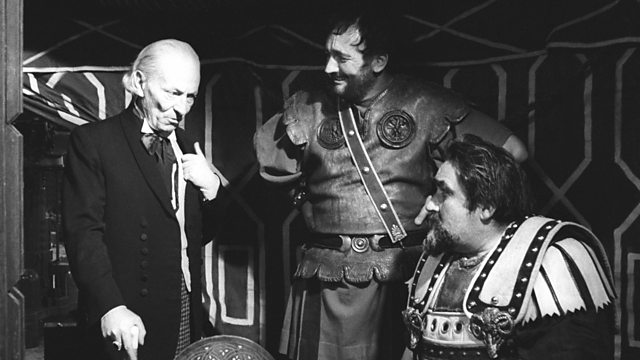
With the Doctor now in the tender care of Odysseus, who’s not yet sure if he’s a god or a spy, we next meet Menelaus (Jack Melford) and Agamemmon (Francis De Wolff). Menelaus is the reason for this whole expedition, since it was his wife, Helen, who was abducted ten years ago.

Menelaus doesn’t seem terribly bothered about the whole thing though. “It wasn’t the first time she’s allowed herself to be abducted. I can’t keep on going off to the ends of the Earth to get her back. It makes me a laughing stock.”

The wonderful dialogue continues throughout the rest of the episode and Francis De Wolff (who had previously played the much less impressive role of Vasor in The Keys of Marinus) seems, like Ivor Salter, to be having a ball.

Steven heads out in search of the Doctor and finds himself in trouble, whilst the Doctor learns that his temple (i.e. the TARDIS) has, in true cliffhanger fashion, disappeared …..

Blankety Blank – The Dawson era

les blank

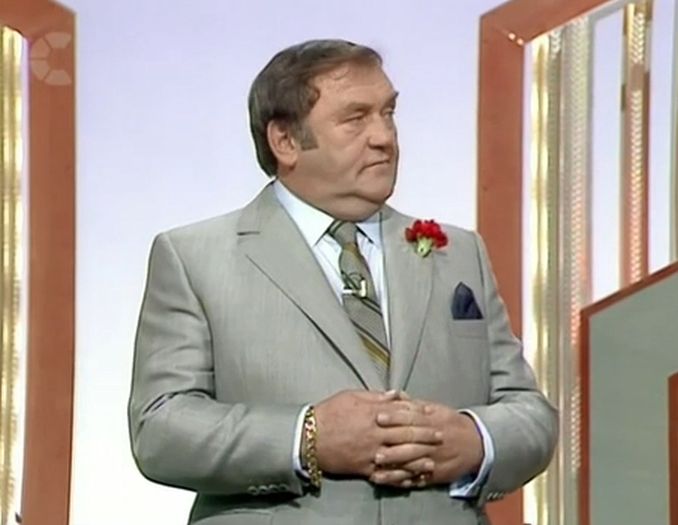
Recently I’ve been watching far too much Blankety Blank (well, it keeps me off the streets). Having exhausted all the available Wogan editions I’ve now moved onto the Les Dawson era.

For those in the UK, Challenge have just begun rescreening a selection of Dawson editions – there’s also a fair few scattered about YouTube.

Blankety Blank was a format tailor-made for Dawson, although there’s nothing he does (mocking the contestants, panellists, prizes, questions, etc) which Terry Wogan didn’t do first. I love Les, but I have to confess that my Blankety Blank heart remains with Terry.

There’s a few little wrinkles I noticed during the Dawson years – most notably now it’s always ladies first and the contestants no longer have a choice of either A or B. That lack of a random factor could be open to abuse (although I find it hard to believe anybody seriously rigged the show).  Also, the female contestants tend to be younger (very rare that an old dear pops up).

Below is a link to Les’ first show – complete with the snapping of Terry’s iconic microphone!

You could always mention the war …

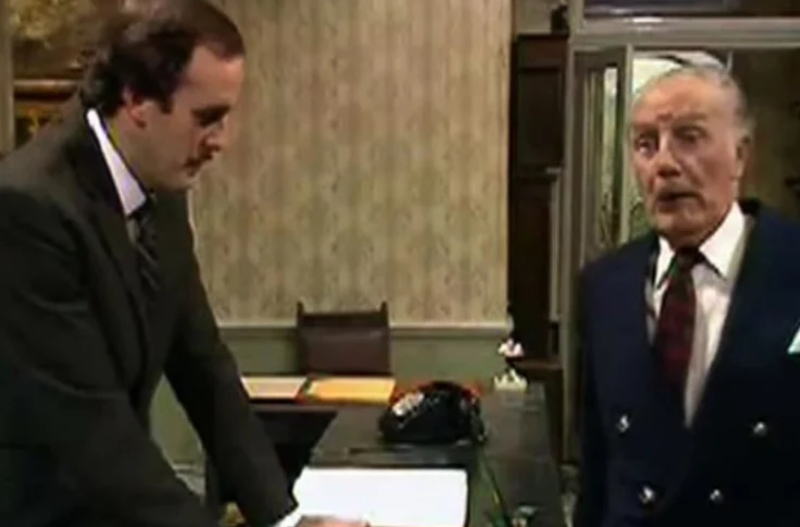
The only thing that surprised me about the recent Fawlty Towers storm in a tea cup is that UK Play hadn’t already been using the edited version of The Germans (snipped – apparently with John Cleese’s approval in 2013 – for BBC repeat showings).

Now this “banned” episode will be back, albeit with a disclaimer at the beginning, which seems fair enougb. And despite what some people think, the issue was never anything to do with insulting the Germans. That’s still perfectly okay …

My preference would always be to have things complete, but in the world of UK daytime cable and satellite re-runs that’s rarely so (although the pitchfork-wielding mob on Twitter yesterday didn’t seem to realise this. Which is probably just as well).

It’s no surprise that programmes originally made for a post watershed slot, like The Sweeney and The Professionals, will be cut for a 9.00 am repeat showing. But it seems that the cheapskates at ITV4 don’t bother to run the unedited version in their late night schedules – it’s far easier just to stick on the edited master again.

Mind you, given the rotten picture quality of both series on ITV4 (they’re also cropped into widescreen as the final indignity) I remain slightly amazed that anyone actually bothers with them.

Other tweaks are more amusing (to me at least). Fletcher might have enjoyed ogling the Page Three girls of The Sun during the seventies, but Porridge watchers today on UK Play are denied this treat – the offending breasts have been pixelated.

Television edits are nothing new. Galton and Simpson approved trims to a number of Hancock’s Half Hour episodes back in the 1980’s for VHS and repeat broadcasting (trimming frames here and there to tighten up the epjsodes). David Croft also oversaw the editing of selected Are You Being Served? episodes for a daytime repeat slot. Alas, these ended up being released in error on the R2 DVDs.

Rewinding back even further, 1976 episodes of Doctor Who (The Deadly Assassin) and I, Claudius (Zeus, By Jove!) were both trimmed for repeat showings. The Doctor Who episode was subsequently recovered and restored, but I, Claudius remains only in its edited state.

That’s incredibly annoying, but it does highlight the fact that content edits are nothing new.

For me, if the originals are available (on DVD, say) then I can’t get too worked up about what the umpteenth re-run on television looks like. Not too many DVDs have been edited for content (The Goodies for example – packed with contentious moments – sailed through unedited when Network released the complete series a while back).

Most edited DVDs fall into the AYBS? camp, cut television masters used because the bods at 2 Entertain (it was almost always 2 Entertain) couldn’t be bothered to find the original versions.

And we haven’t even got into the terrority of actors blacking/yellowing up yet (either for drama or comedy). John Bennett’s turn in The Talons of Weng Chiang continues to infuriate a vocal minority of Doctor Who fans. And a minority of that minority believe that because they dislike it, nobody should ever watch the story again – which is where the fun really begins.

Personally I take each archive programme as it comes. There’s plenty of moments which make me wince or tut, but there’s so many more which still enthral and entertain. And the more you watch from a certain era, the better an understanding of that time you’ll get. Taking the odd moment out of context is where the trouble tends to begin.

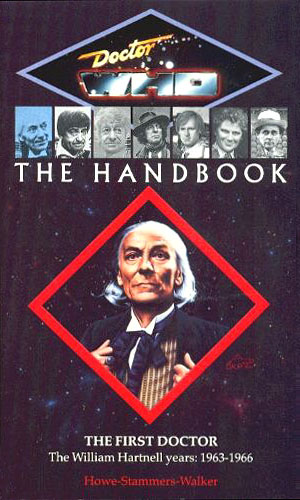
Doctor Who – The Handbook: The First Doctor by David J. Howe, Mark Stammers and Stephen James Walker

It was good fun being a Doctor Who fan in the 1990’s. Maybe this was because there were no new television stories to be ripped to shreds (apart from the quickly forgotten American TV movie). So DW fandom stopped complaining about the present and began to really dig into the past. 

A hefty and lavishly illustrated hardback (The Early Years by Jeremy Betham, 1986)  had already stoked my interest in the series’ first faltering steps, but it was this modestly priced, modestly sized paperback published in 1994 which really took my breath away.

To be a DW fan back then meant that studying the sacred texts (The Making of Doctor Who and DWM especially) was a solemn duty. Slowly the nascent fan would begin to drink in all the lore and history – which stories were classics, which were turkeys, how jabolite was used, the companion who lost their knickers the most, etc, etc.

One of the most important lessons concerned the first few months of the show. We all knew that things looked dicey in the early weeks until the Daleks arrived in the second story – after that, the long term future of the show was assured.

Um, not quite.

The heart of The First Doctor Handbook was the Production Diary. This laid bare just how hand-to-mouth those early years were and how often the series teetered on the edge of cancellation. I seem to recall some info had already appeared in The Frame, but most of it was new to me.

Frankly, it’s an astonishing and eye-opening read (one day, when all the files are available, I’d love to see the production history of the first 26 years of the series tackled in a single volume, or indeed a number of volumes).

The Production Diary might account for a large chunk of the book, but the interview material (both from and about Hartnell) is also of interest. More information about Hartnell has become available since, but this deftly edited selection of quotes still stands up well.

The Handbook also includes an obligatory episode guide which is somewhat of its time (The Gunfighters receives a firm thumbs down for example).

I have far too many DW books (including a fair few I’ve rarely touched in decades) but The First Doctor Handbook is one I do find myself coming back to every so often. For anyone interested in the painful birth of the series it’s a must read. 

The Guinness Book of Classic TV by Paul Cornell, Martin Day and Keith Topping

classictv

Imagine, if you can, a time before the Internet. Back in those far off days, obtaining information about your favourite television programme (especially if it was slightly obscure) was both difficult and time-consuming.

So The Guinness Book of Classic TV (2nd edition, 1996) was a real godsend. To be able to have episode guides close at hand for series such as Doctor Finlay’s Casebook was very welcome, even if there was no way to actually watch the programmes.  Still, we could dream about a time when all this material would be available at the touch of a button ….

Over 100 programmes were covered, including the likes of The Troubleshooters, The Forsyth Saga, The Army Game, Up Pompeii!!, Citizen Smith, Hancock’s Half Hour, The Young Ones, Absolutely Fabulous, Watch with Mother, Dixon of Dock Green, Callan, Edge of Darkness, Doctor Who, The Avengers, Sapphire & Steel, Upstairs Downstairs, Colditz, Secret Army and I Claudius.

The opening analysis – an absorbing ten-page trot through the history of Coronation Street – begins the book with a bang and this high standard is maintained throughout. Mind you, given this is a Cornell/Day/Topping tome it’s unlikely that you’re going to agree with all their opinions (poor Crossroads is given a bit of a kicking).

It’s also interesting to find the later years of Dixon of Dock Green labelled as a dangerous and embarrassing anacronym. That was certainly a widely held view back in the nineties although the DVD release of most of the existing colour episodes has helped to rehabilitate the show in recent years.

There are a few omissions – Public Eye and Sergeant Cork for example – although in the pre-DVD age that’s not really surprising (Cork especially languished in obscurity prior to its emergence on DVD, so if it wasn’t available twenty five years ago you can’t really blame them for ignoring it).

The Guinness Book of Classic TV has aged well. As I’ve said, a few entries are slightly eyebrow raising but most of the book is packed with pithy and well-constructed capsule reviews. It’s been a well-thumbed favourite on my bookshelf for over twenty years and I’m sure I’ll keep coming back to it for many years to come.

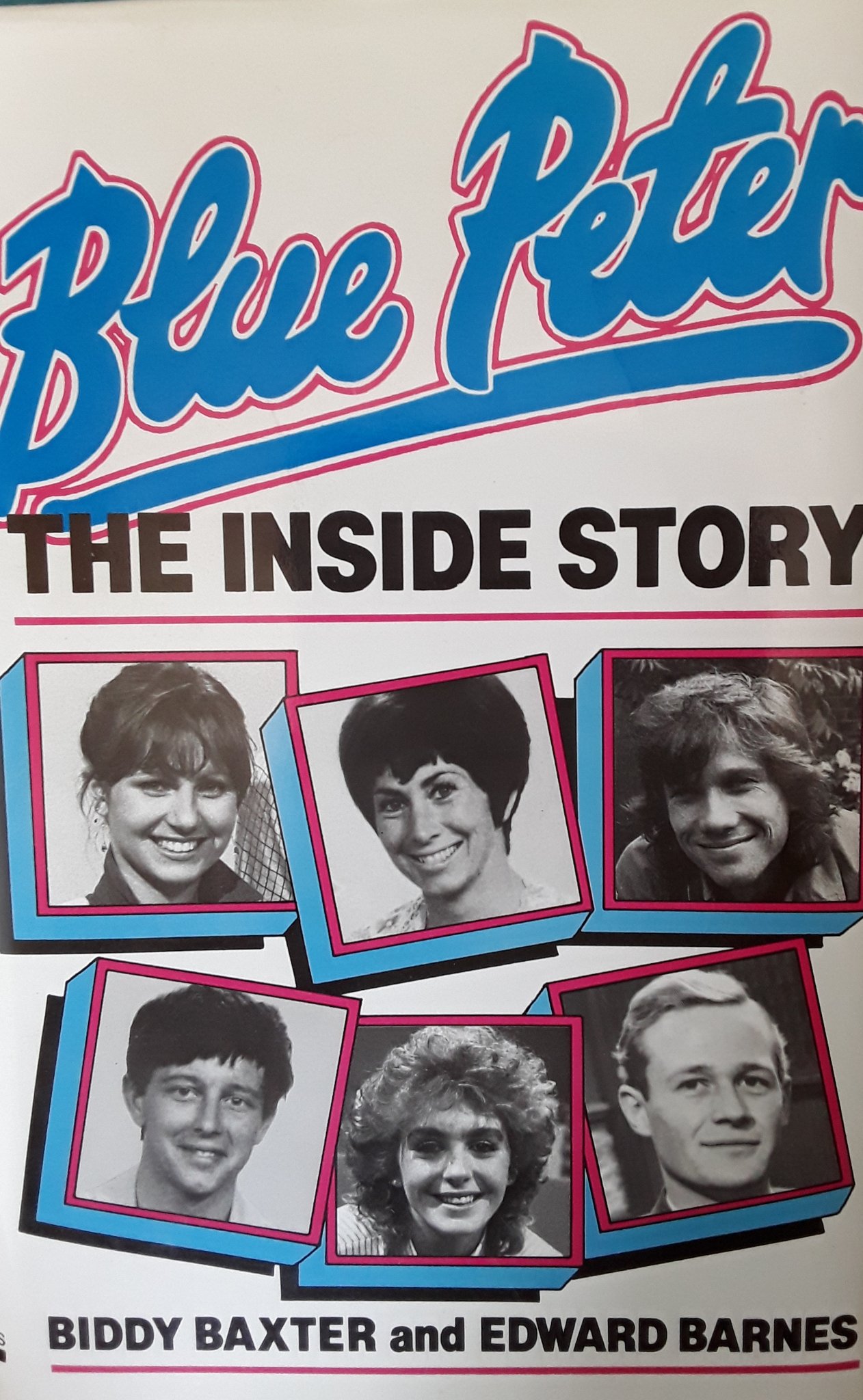
Blue Peter – The Inside Story by Biddy Baxter and Edward Barnes

I’ve been digging through my collection of television books during the past few months (unearthing some which haven’t seen the light of day for a while) and I thought it might be a good idea to highlight a few which I’ve enjoyed revisiting.

Blue Peter – The Inside Story was published by Ringpress Books in 1989, running to 236 pages. Although very much the authorised story, it’s still packed with interesting detail. That 1989 was a very different time is confirmed by the revelation that when the original Petra died after just a few days, they calmly went out and bought a ringer (and no-one was any the wiser).

Later scandals which befell BP (Socks-gate, the phone -in) don’t seem any worse than this but I don’t recall the Petra revelation causing any sort of ripple in the press back in 1989.

Down the years some presenters were more of a handful then others. It’s easy to see that Biddy had her favourites and it’s also noticeable that some long-runners (like Peter Purves) were appreciated rather than loved.

The sticky relationship with John Noakes can’t be avoided and his exit from the programme (which was rather uncomfortable due to concerns he would use Shep for advertising purposes) isn’t swept under the carpet. The travails of Janet Ellis and Michael Sundin are also touched upon (it’s quite obvious there was little love for Sundin in the BP production office).

Second hand copies are plentiful and quite inexpensive, so there shouldn’t be too much trouble in picking up a copy. Blue Peter – The Inside Story is well worth a place on your bookshelf.

Doctor Who – Mission to the Unknown

Mission to the Unknown is a bit of an oddity.  After Verity Lambert decided that Planet of Giants was a tad dull and could do with losing an episode, the production team were told they had to add this “spare” episode onto another story.

Considering that the BBC has always been rather cash conscious, this has always struck me as a strange move.  Four episodes were budgeted and paid for on Planet of Giants, even if only three made it onto the screen, so effectively Lambert and co were given a “free” episode.  Surely the scheduling bods could have slipped a few Tom and Jerry cartoons on one week and no-one would have been that bothered?

Anyway, it seems that the original idea was to bolt an extra episode onto a Terry Nation Dalek script.  If that means The Chase then I think we dodged a bullet there.  I was already losing the will to live with six episodes, so seven might just have pushed me over the edge.

Or maybe they were referring to The Dalek Invasion of Earth which was the final story in the first production block (it begin in late November 1964).

And for no other reason than the fact that I love original Doctor Who paperwork, here’s Donald Wilson’s memo from 1964 to prove that I’m not talking complete nonsense.

So if the circumstances surrounding the creation of Mission to the Unknown were a little unusual, it’s also strange that it’s not sitting directly before The Daleks’ Master Plan.  It works as a prologue for that story very well, but the fact you have four weeks of The Myth Makers between the two would have presumably puzzled many of those watching at home.

I’ve a strong suspicion that Terry Nation leapt at the chance to write a Dalek script which didn’t include the Doctor.  He was already working on his proposal for a big-budget American series featuring the Daleks (but not that strange old man in the police box) so it’s easy to see Mission to the Unknown (and large parts of The Daleks’ Master Plan) as a dry run for this.

The American series would have featured plucky members of the space corps (similar to Marc Cory, Sara Kingdom and Bret Vyon) facing off against the Daleks week after week.The television series came to nothing, but the seventies Dalek annuals give you a flavour of what it might have been like.

Anyway, back to today’s episode. We open in a jungle on Kembel, which has plenty of lush, aggressive vegetation.  You’d better get used to it as there’s going to be lots of jungle action once we hit The Daleks’ Master Plan proper.  We see someone who we later learn is Jeff Garvey (Barry Jackson).  His first words (“I must kill… must kill… must kill”) have a slightly ominous ring about them. He doesn’t seem at all well.

Elsewhere, space captain Gordon Lowery (Jeremy Young) is complaining to space agent Marc Cory (Edward de Souza) about this inhospitable planet.  It’s clear that Cory’s the man in charge though, which is confirmed when he shoots Garvey dead.  Lowery’s a tad upset about this, but Cory explains that Garvey had been infected by a Varga plant and it was him or them.

Cory then reveals his true identity to Lowery.  “Space Security Service. Licensed to kill.” Yep, this was very much the time when Sean Connery’s portrayal of James Bond was dominating cinema screens and Cory is a blatant attempt to steal a little of 007’s thunder.  It’s an unusual move for Doctor Who though, which until now hasn’t tended to be influenced that much by contemporary popular culture.

Cory explains that he’s on the trail of the Daleks.  They haven’t bothered the Earth for a thousand years, but all that seems to have changed as a Dalek ship has been spotted in the vicinity.  This shattering revelation is followed by the most melodramatic music cue possible.

Wait! Garvey’s not dead.  Instead he’s suffered a far worse fate – he’s turned into a Varga plant!

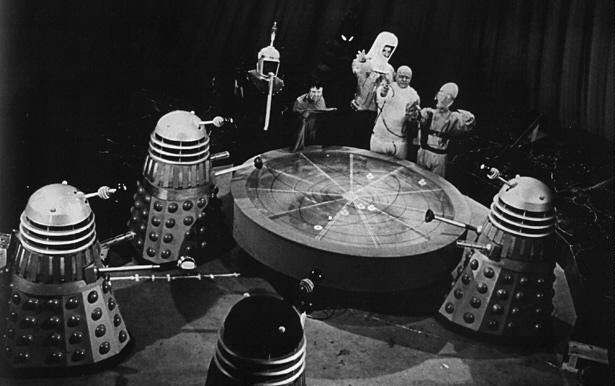
The Daleks are also on Kembel and they’re here to chair a meeting between the leaders of the seven galaxies.  Some of the representatives we see here also pop up in The Daleks’ Master Plan, although by then some were played by different actors.

And some of the representatives in The Daleks’ Master Plan are totally different from how they look in this episode, which is another puzzle.  Luckily there are those who have pondered these issues long and hard.  For the curious, I can recommend this post by Jac Rayner on her blog Delegate Detective.

Whatever names they have or whichever actor is playing them, the delegates are a rum lot who certainly don’t have a lot of love for our precious planet Earth.  As Malpha (Robert Cartland) succinctly puts it.  “This is indeed an historic moment in the history of the universe!  We six from the outer galaxies, joining with the power from the solar system – the Daleks!  The seven of us represent the greatest war force ever assembled!  Conquest is assured!”

That spells trouble.  I hope the Doctor is somewhere around …..